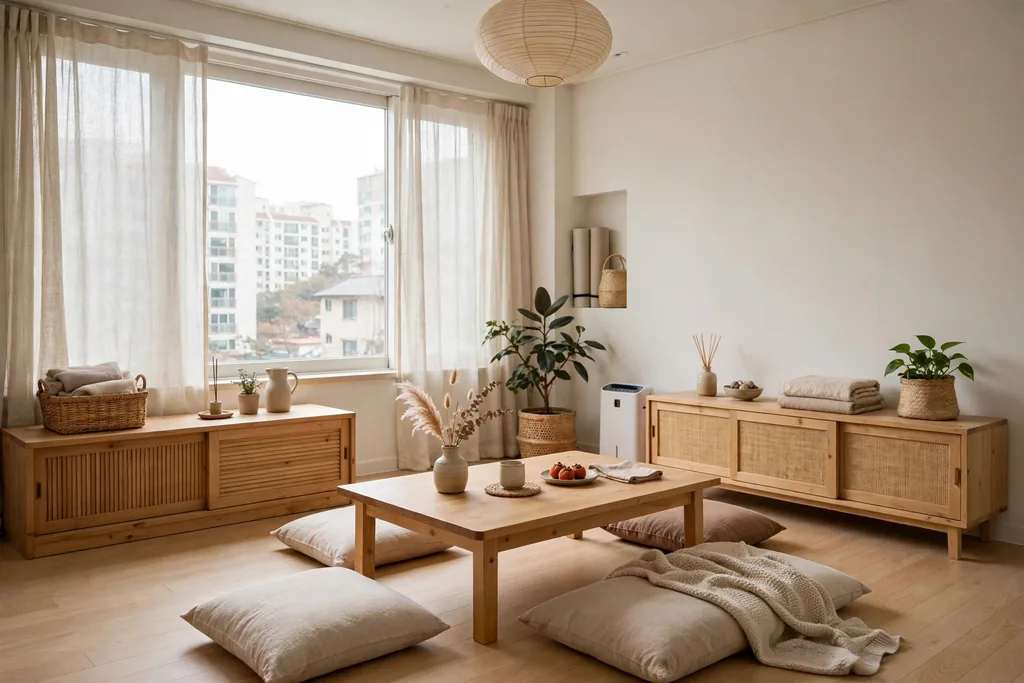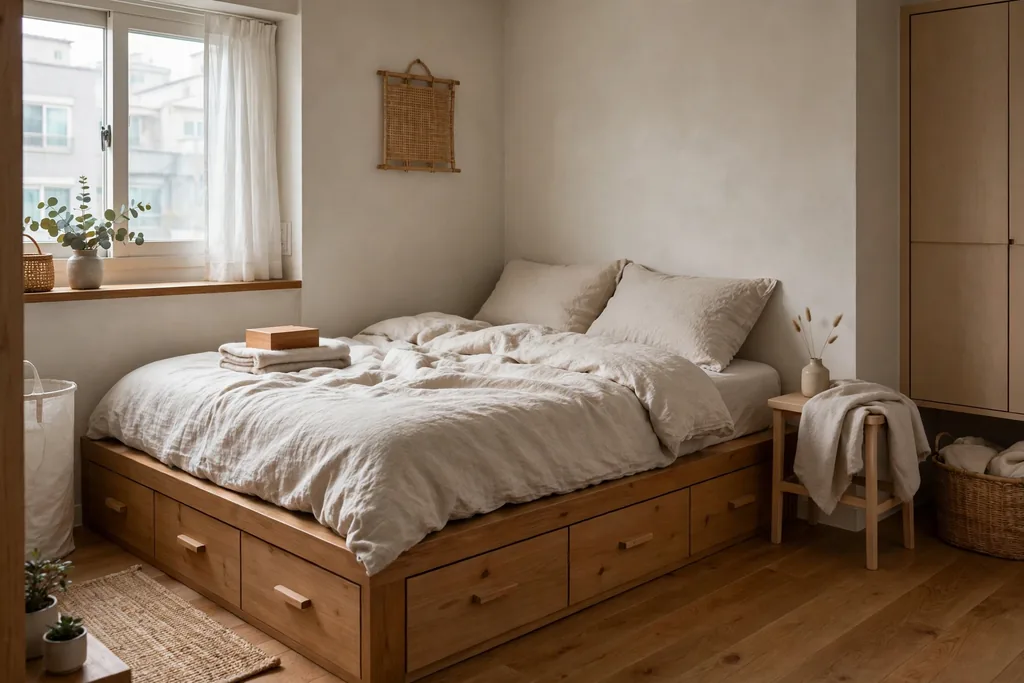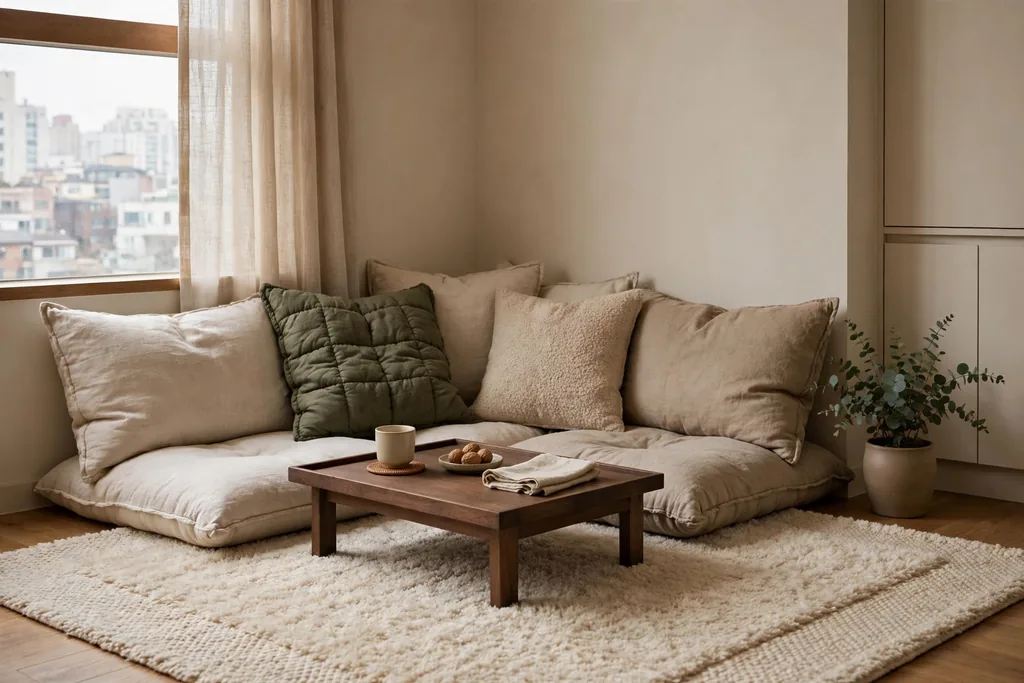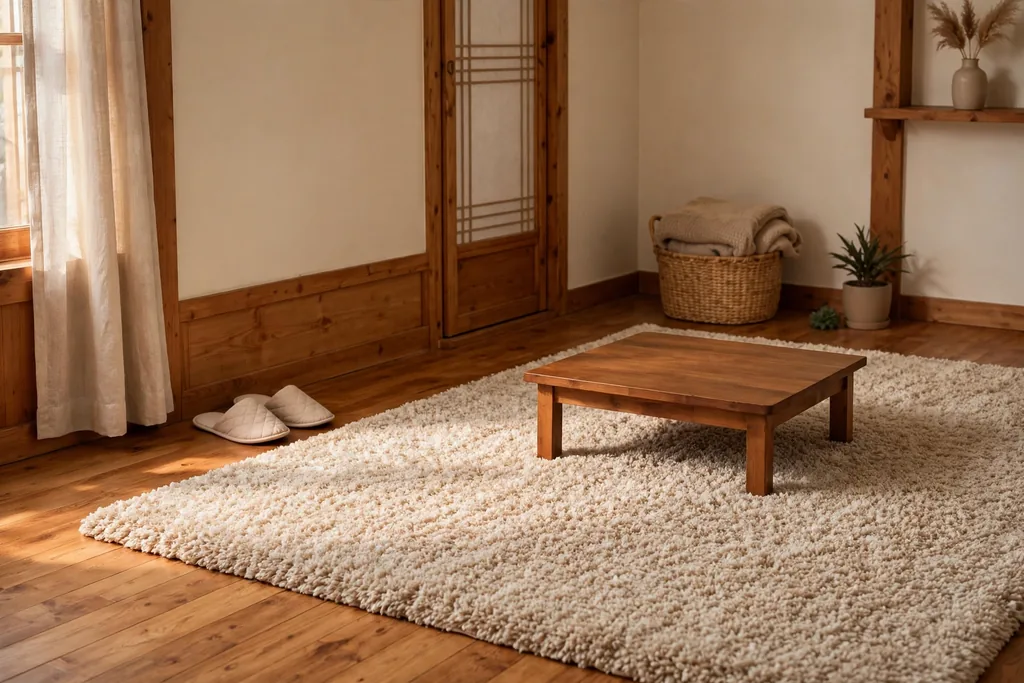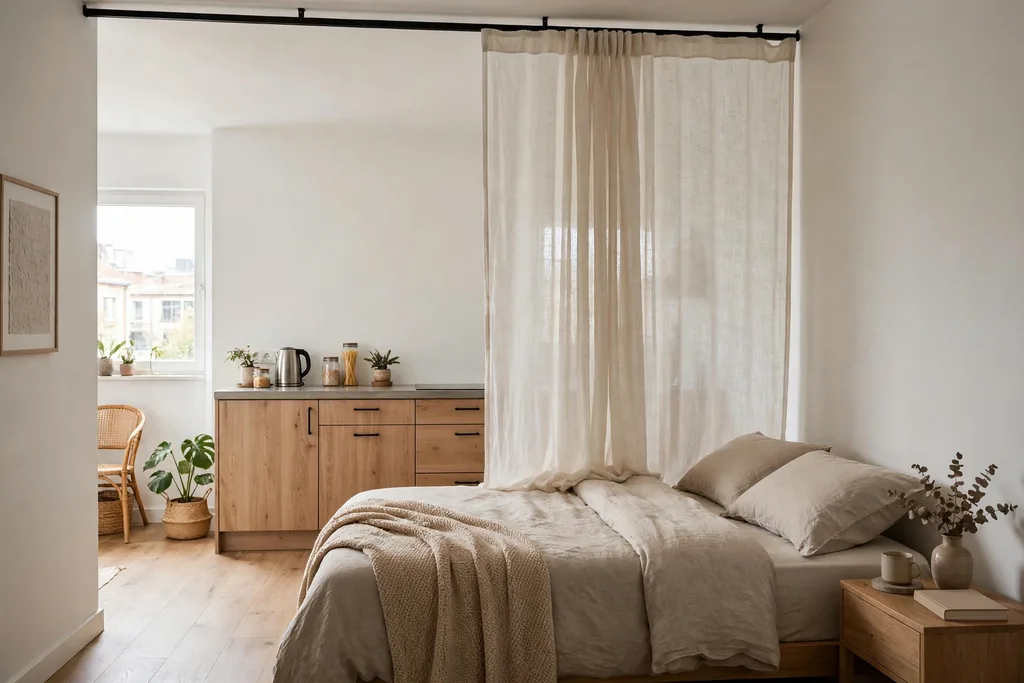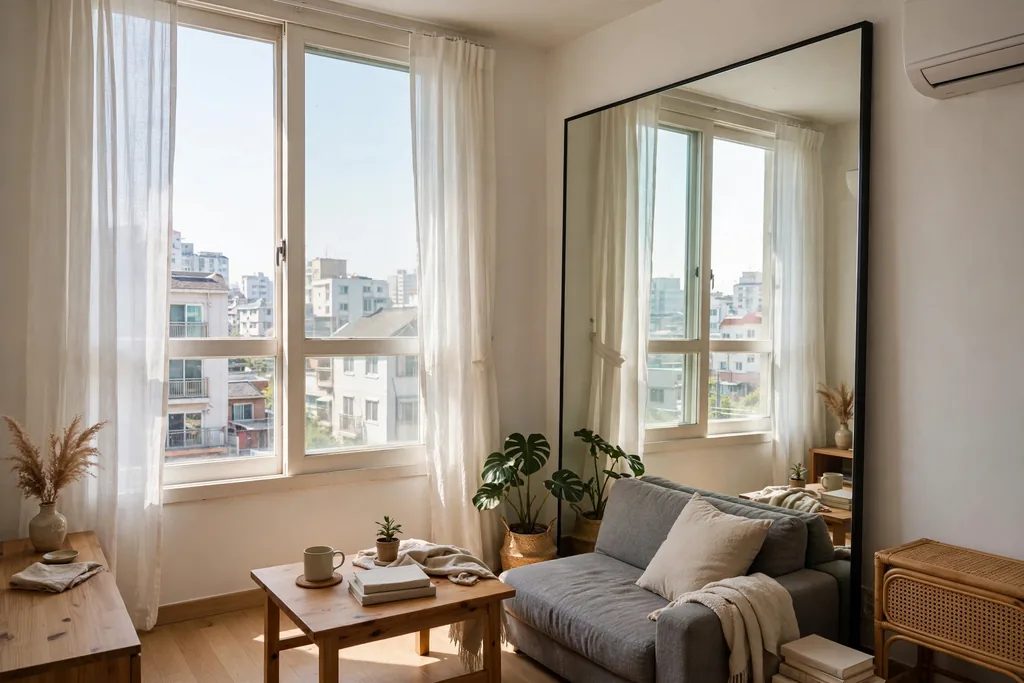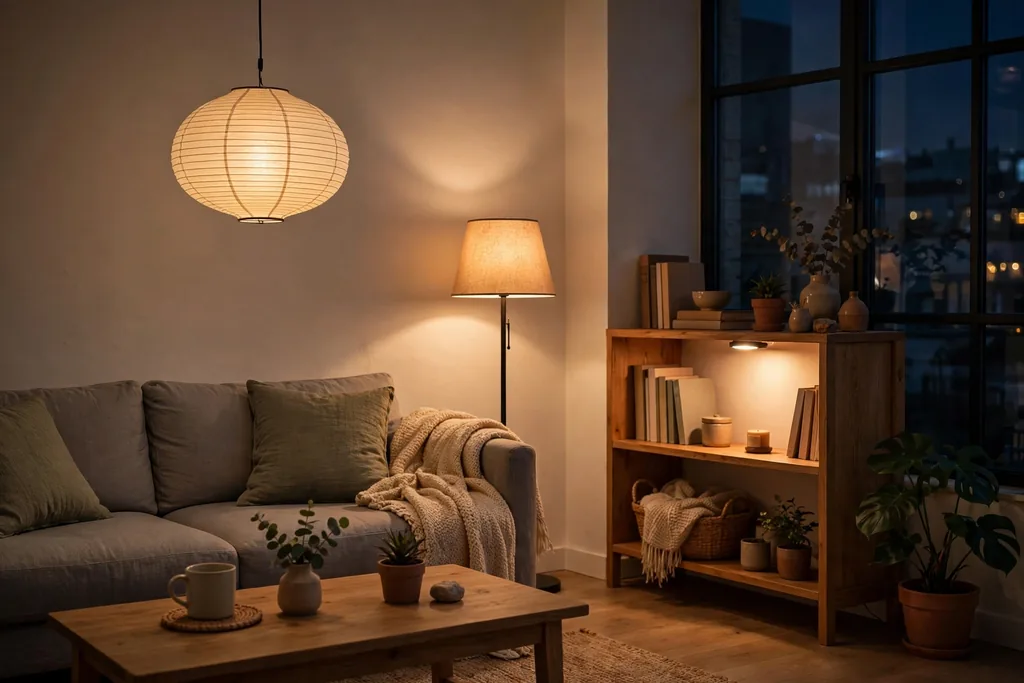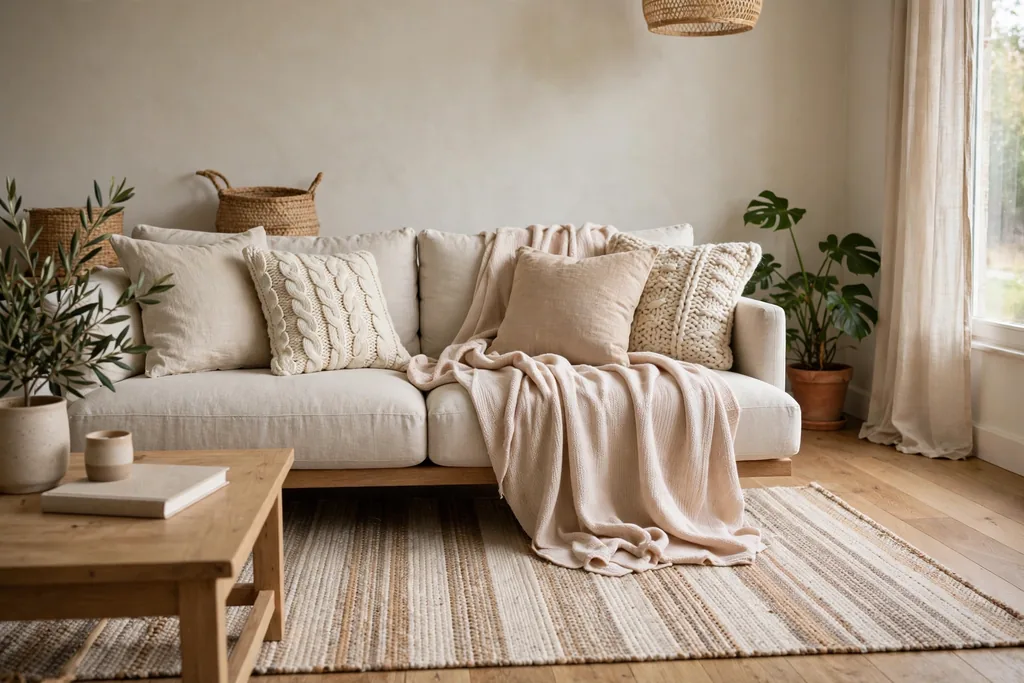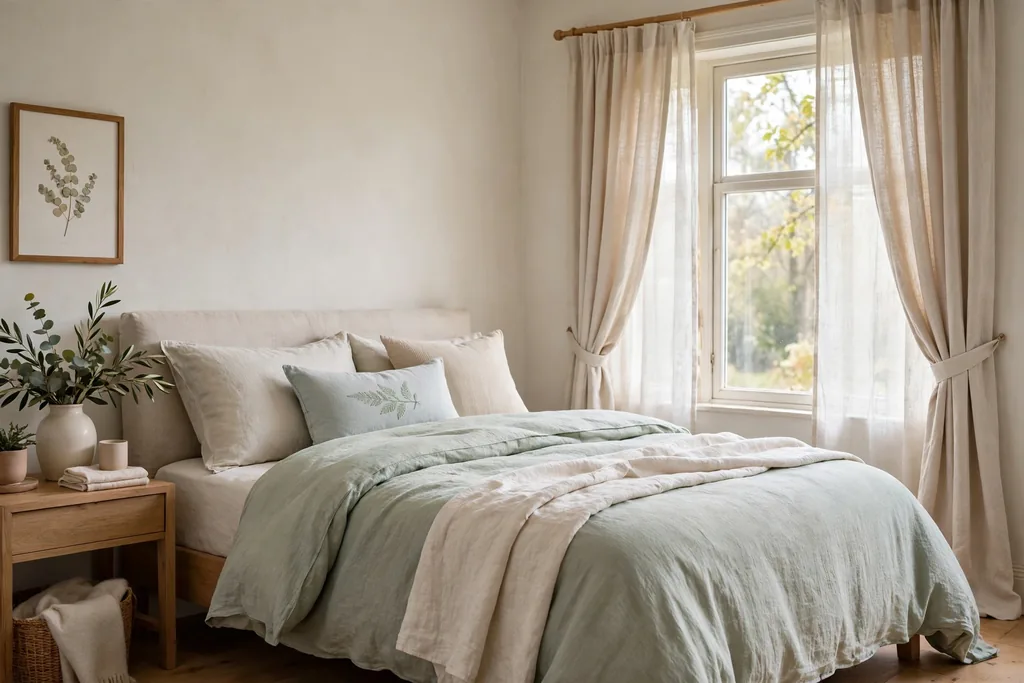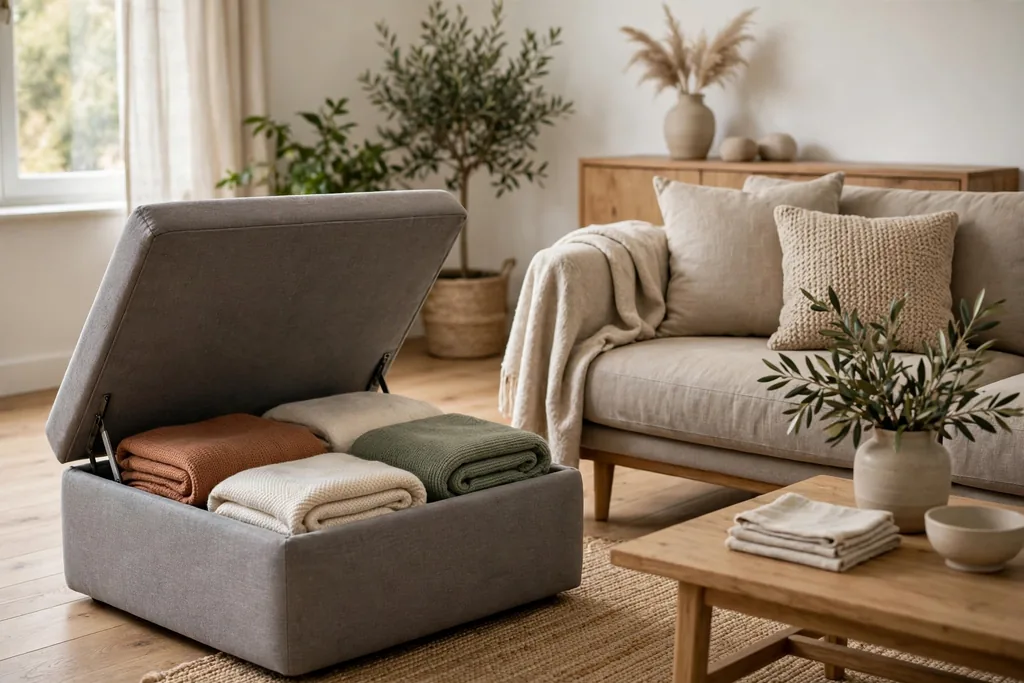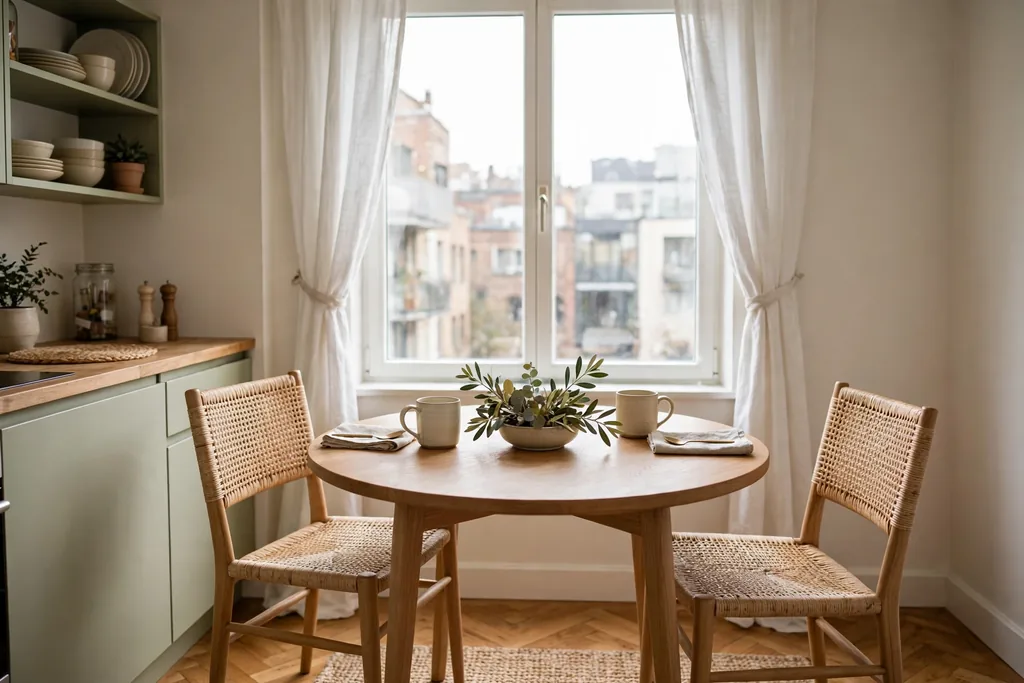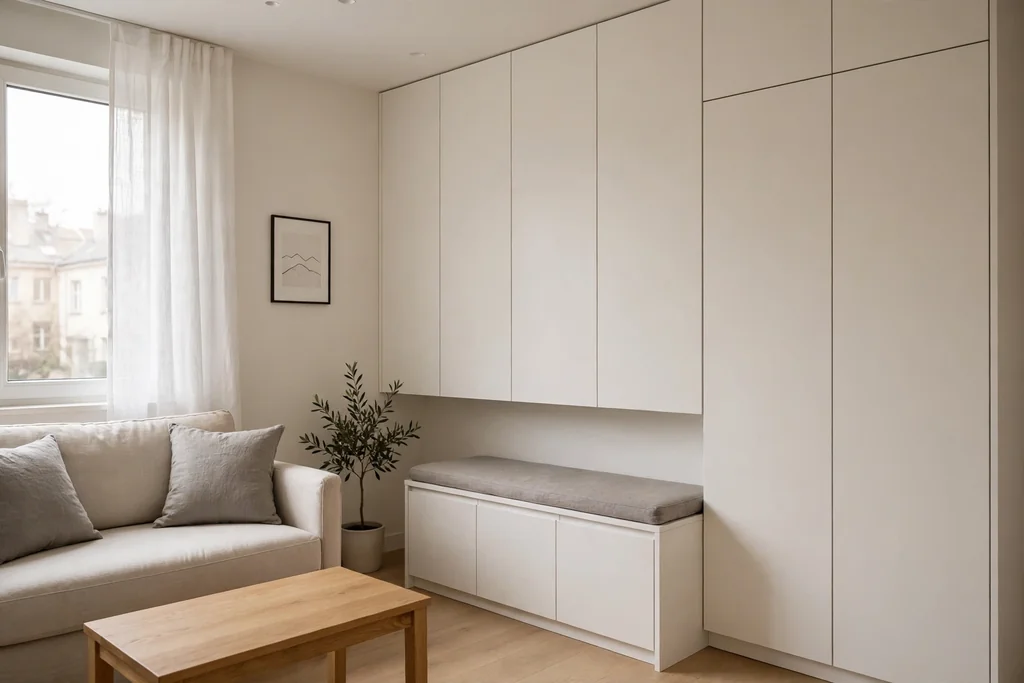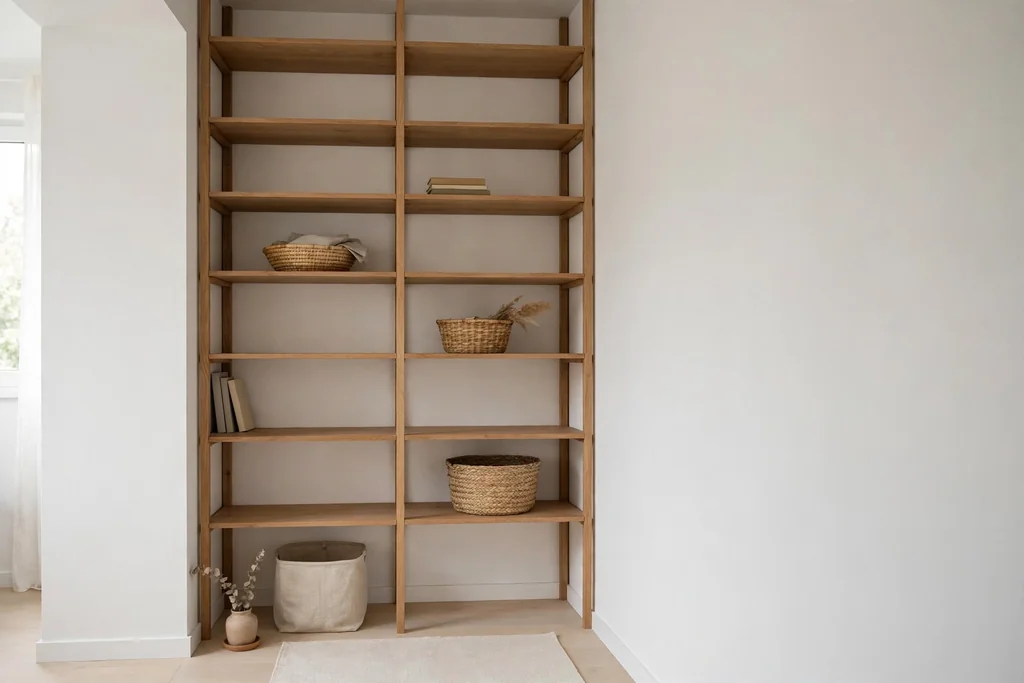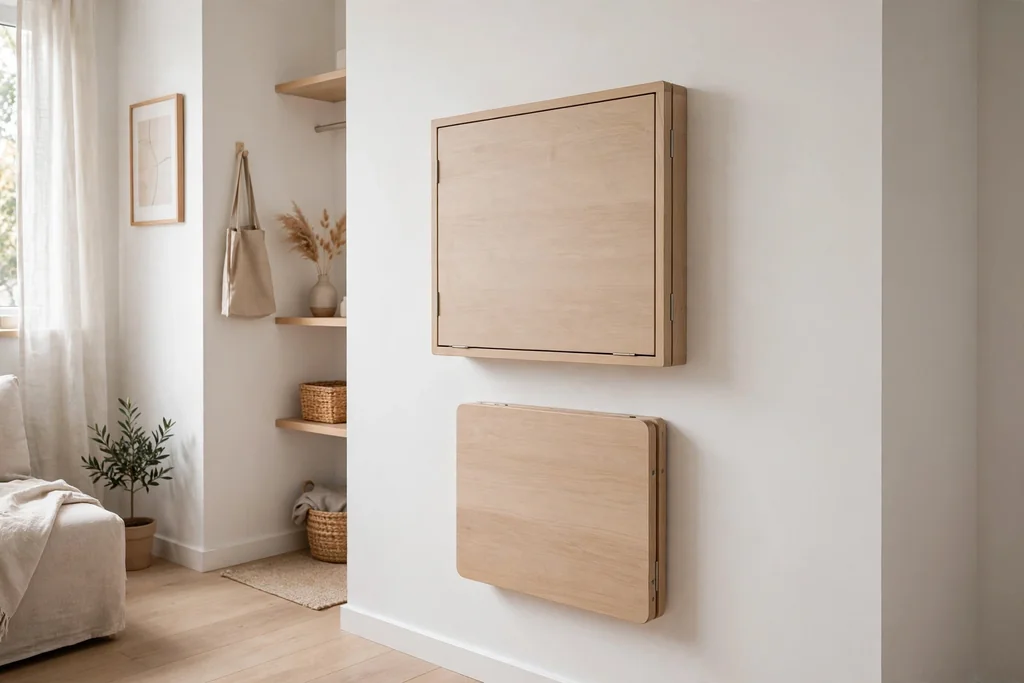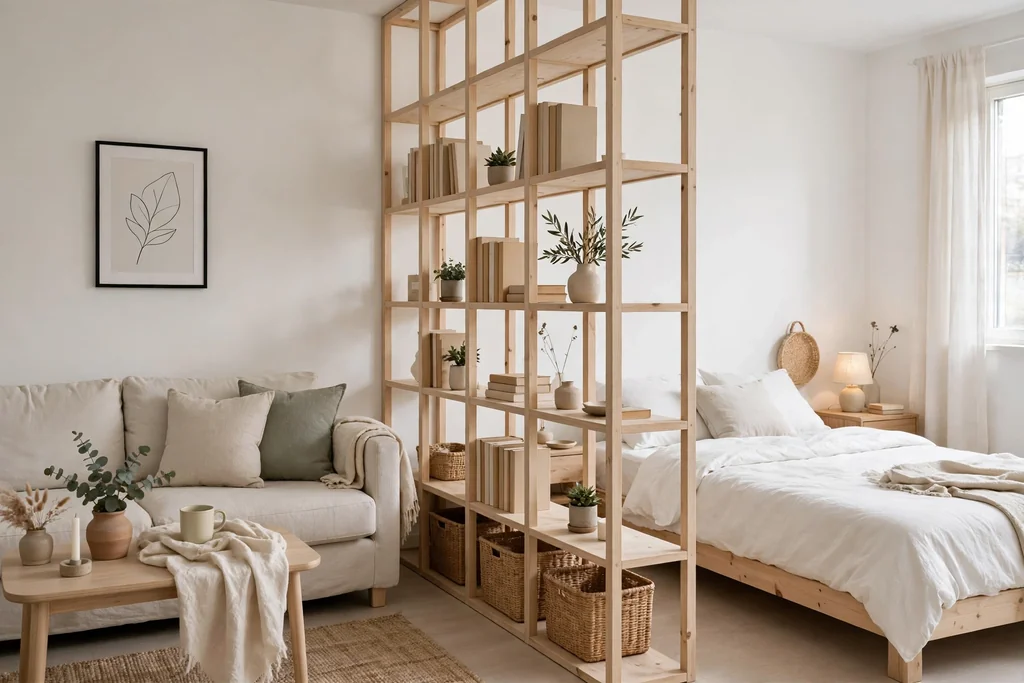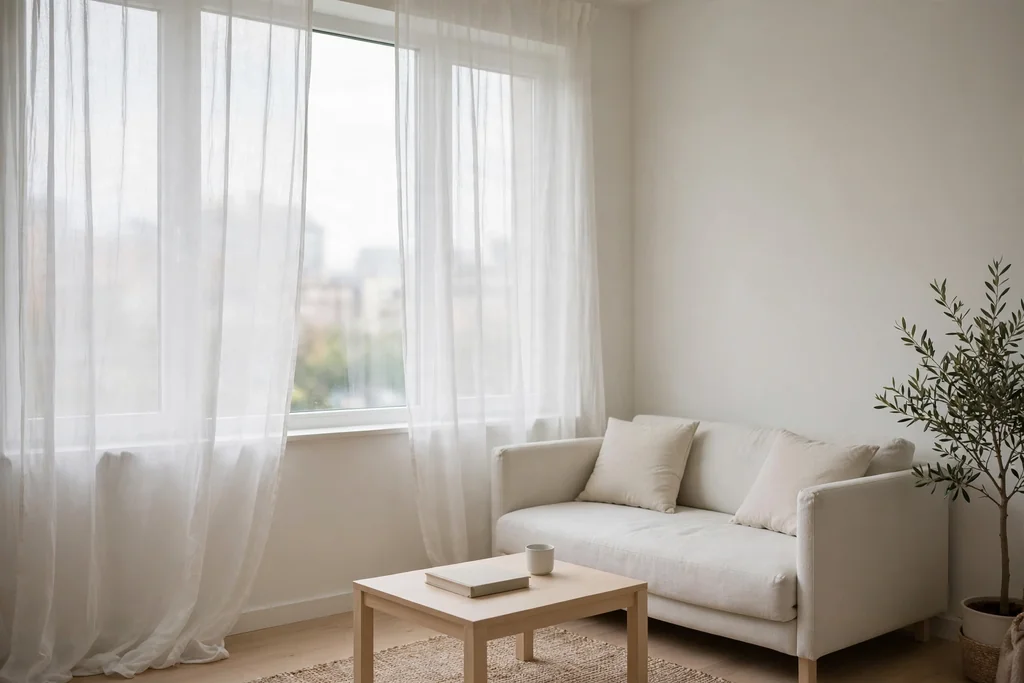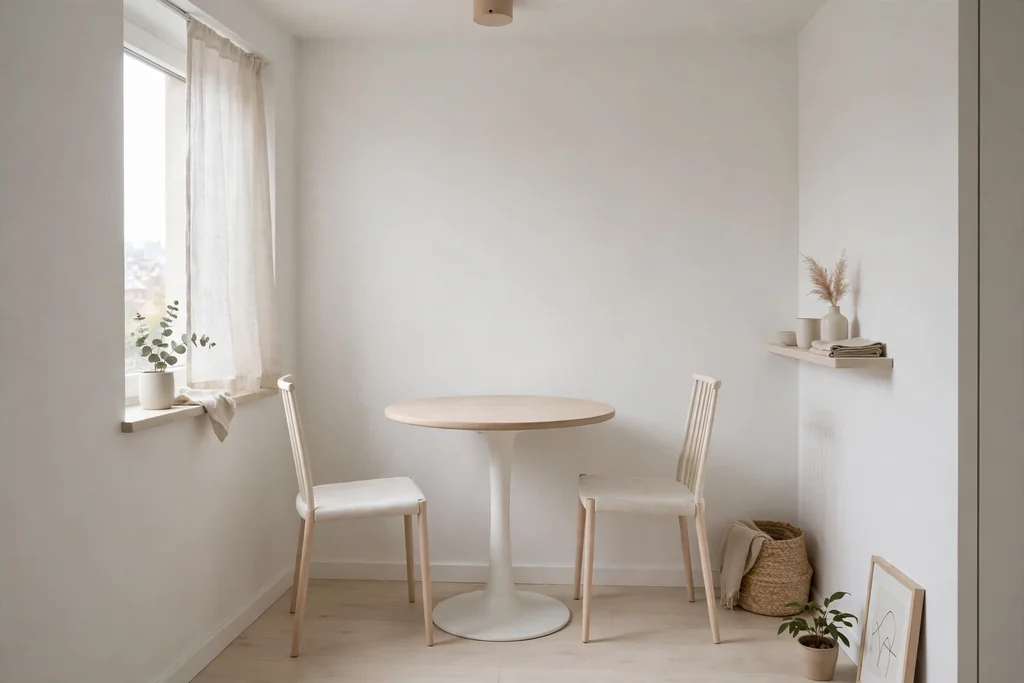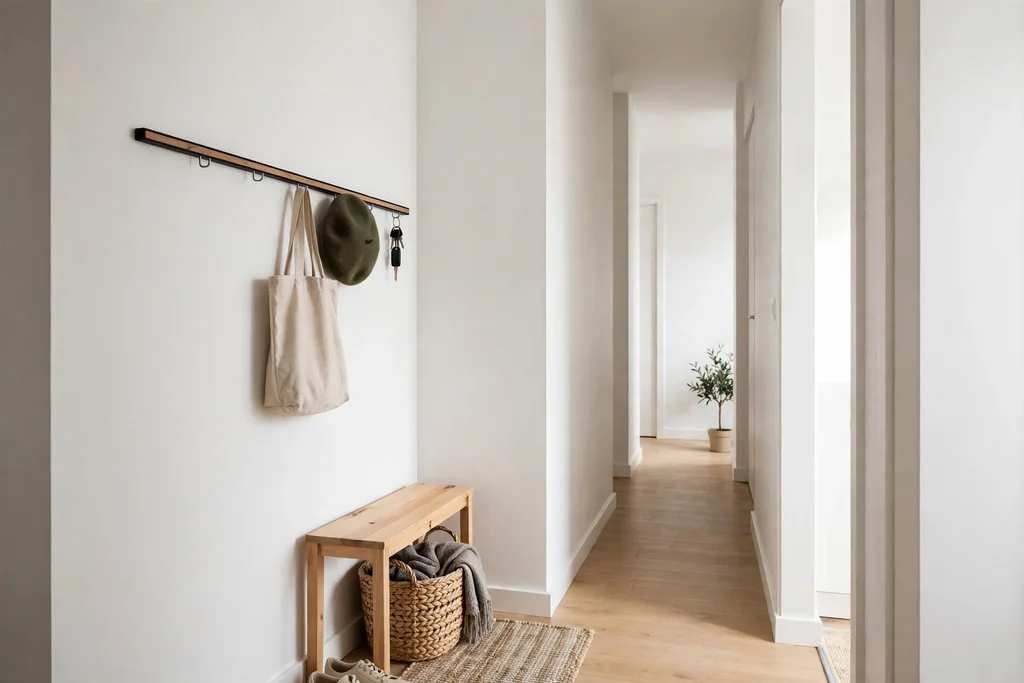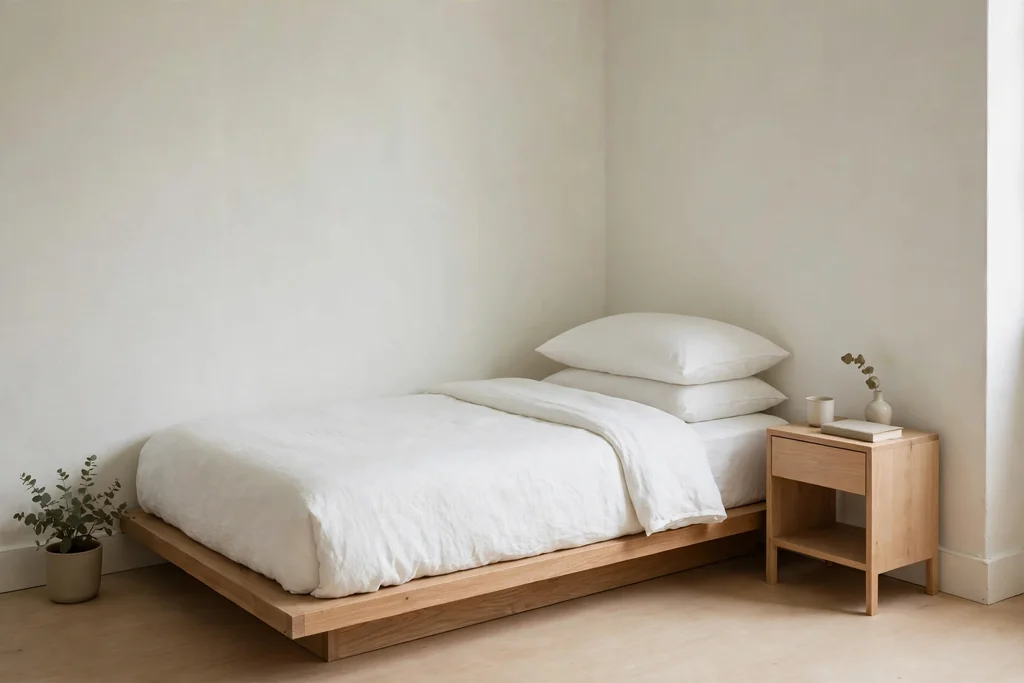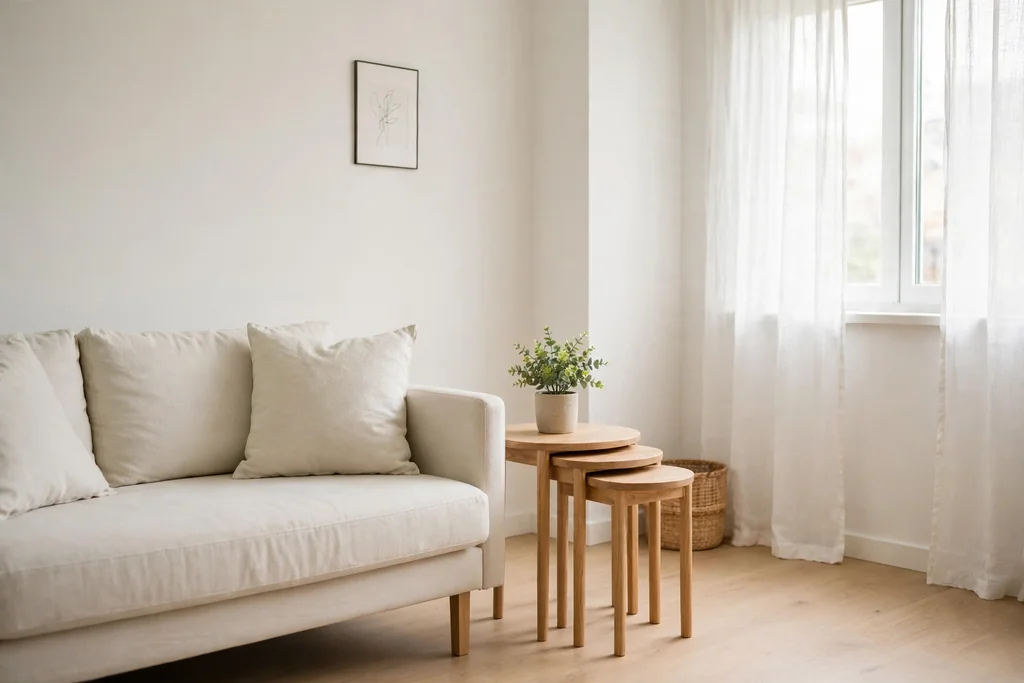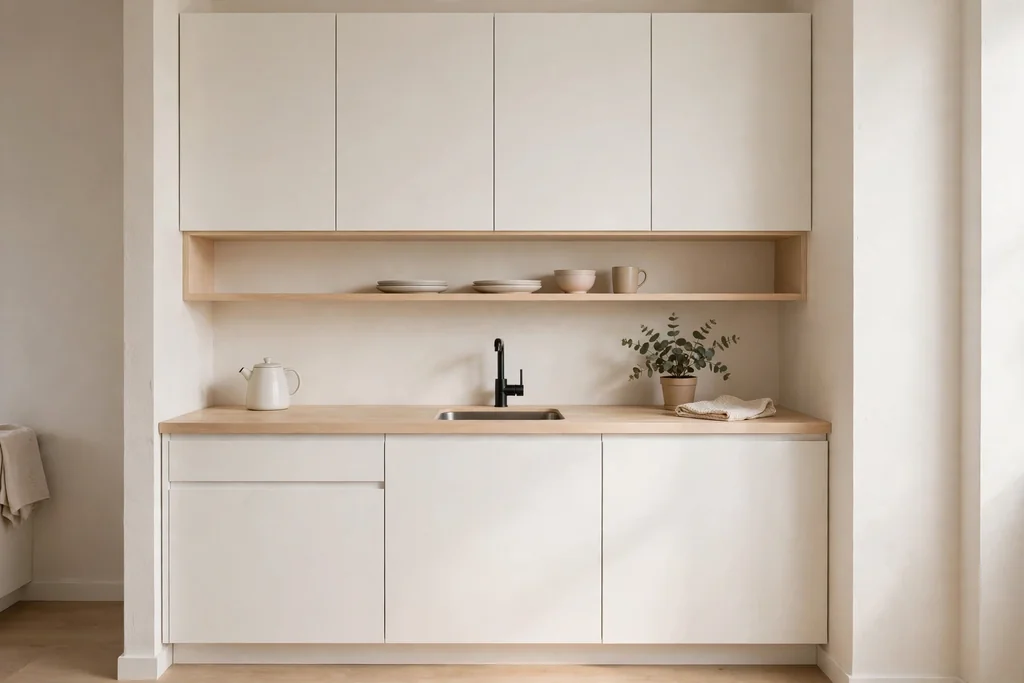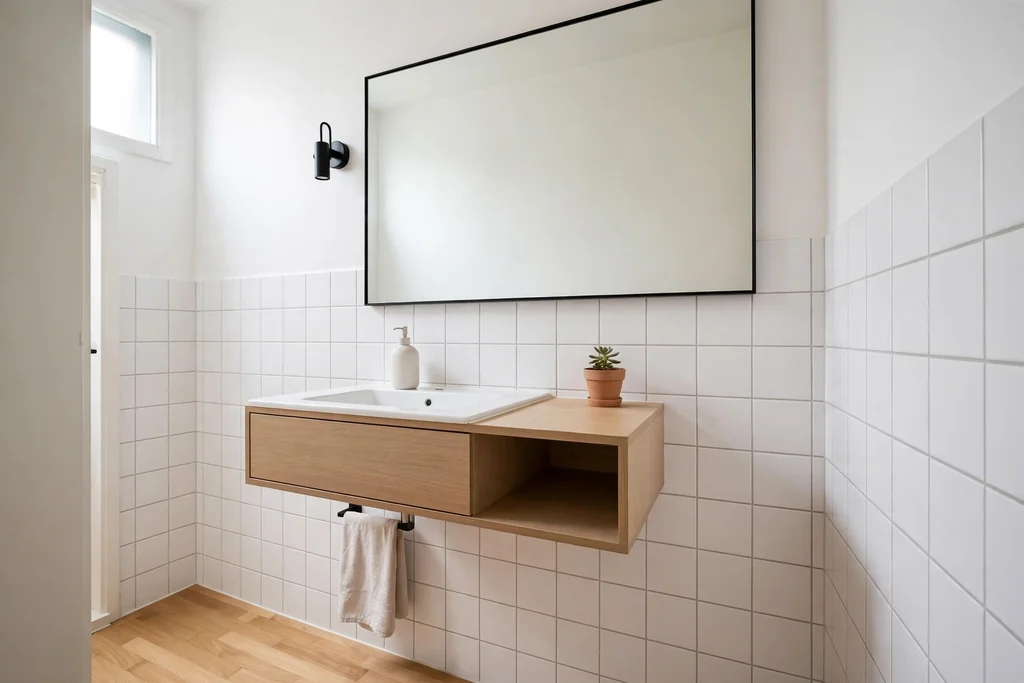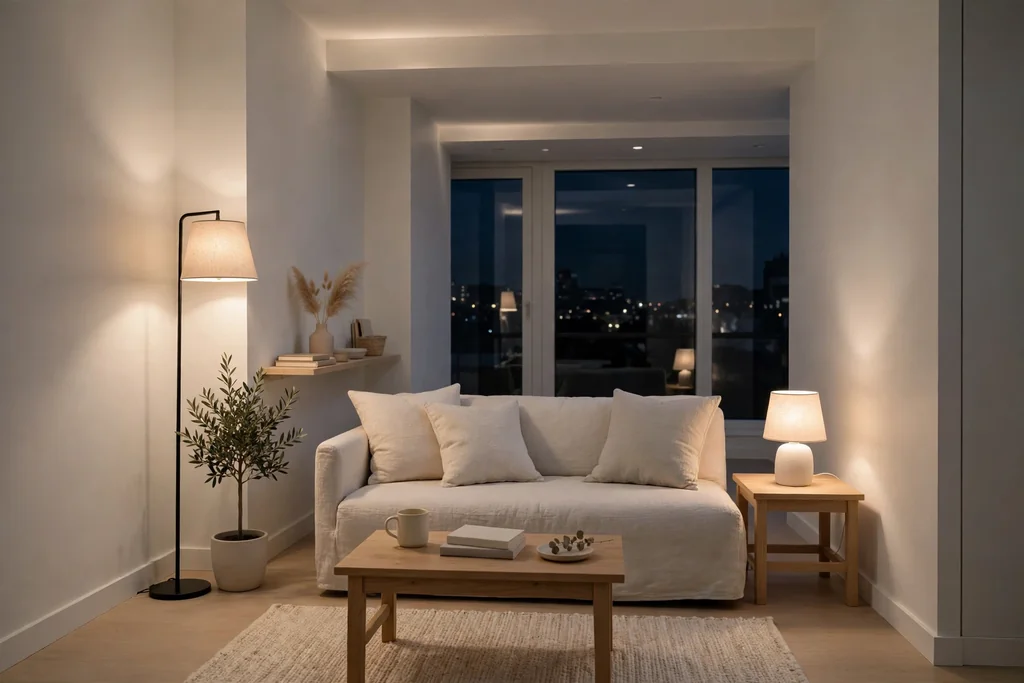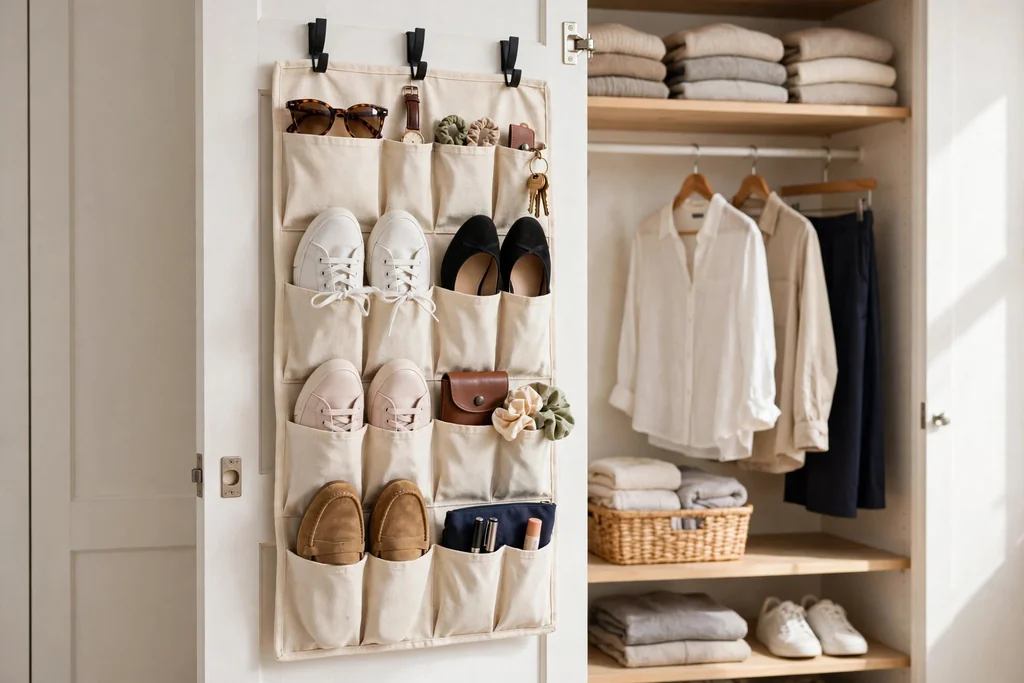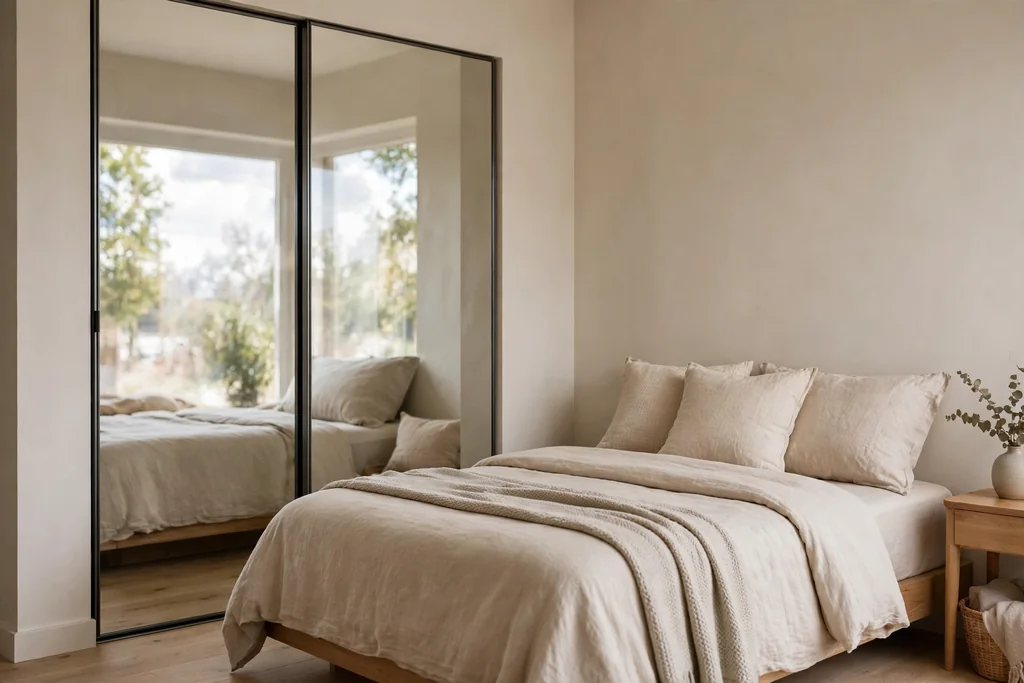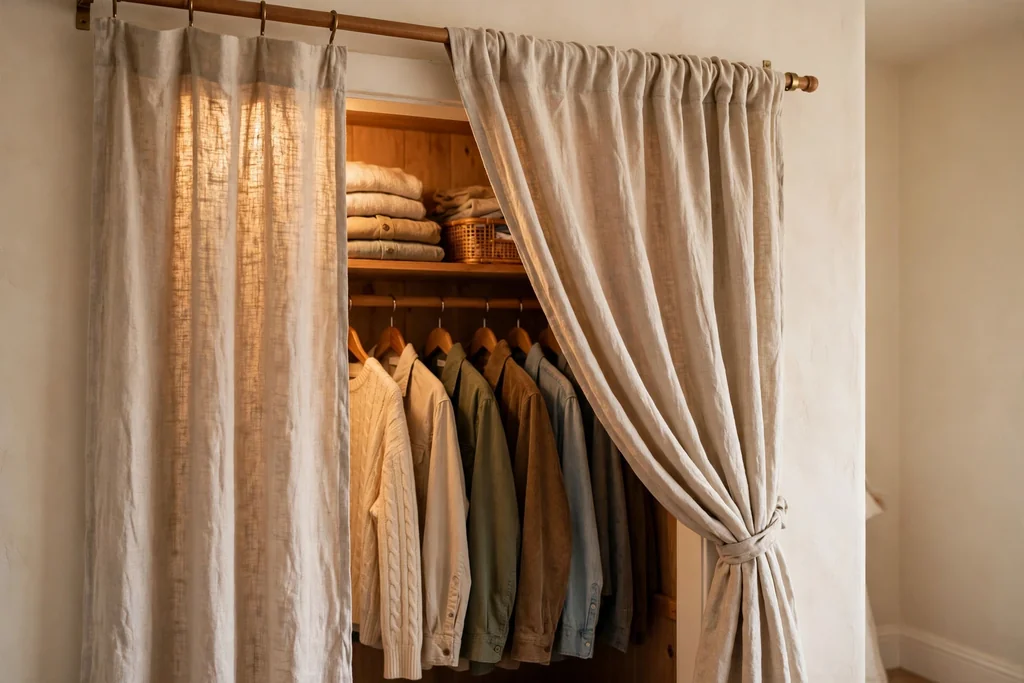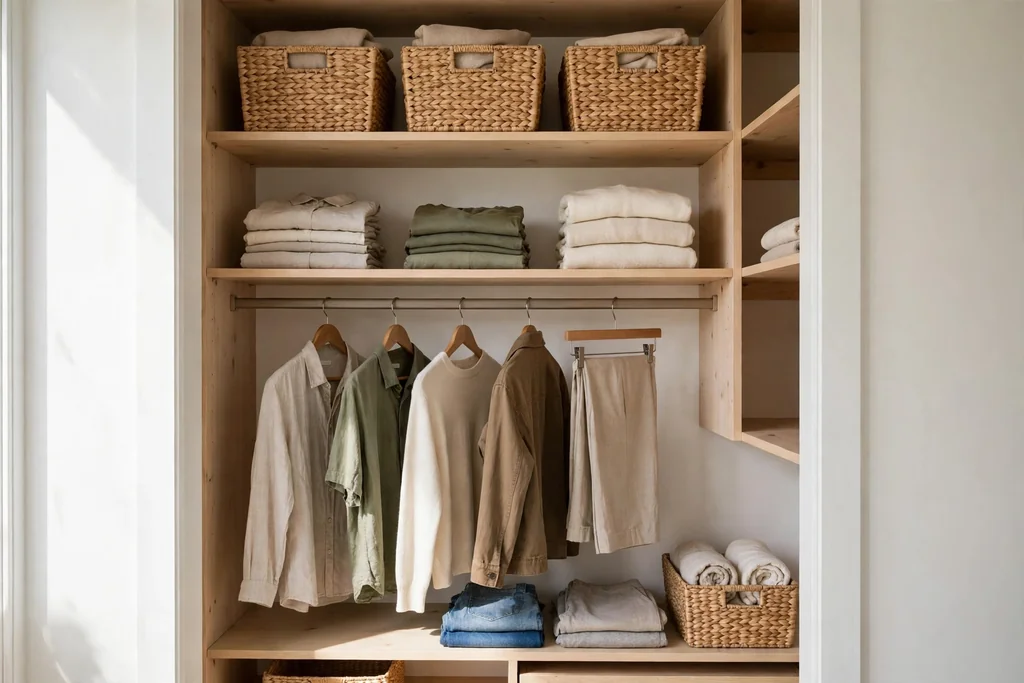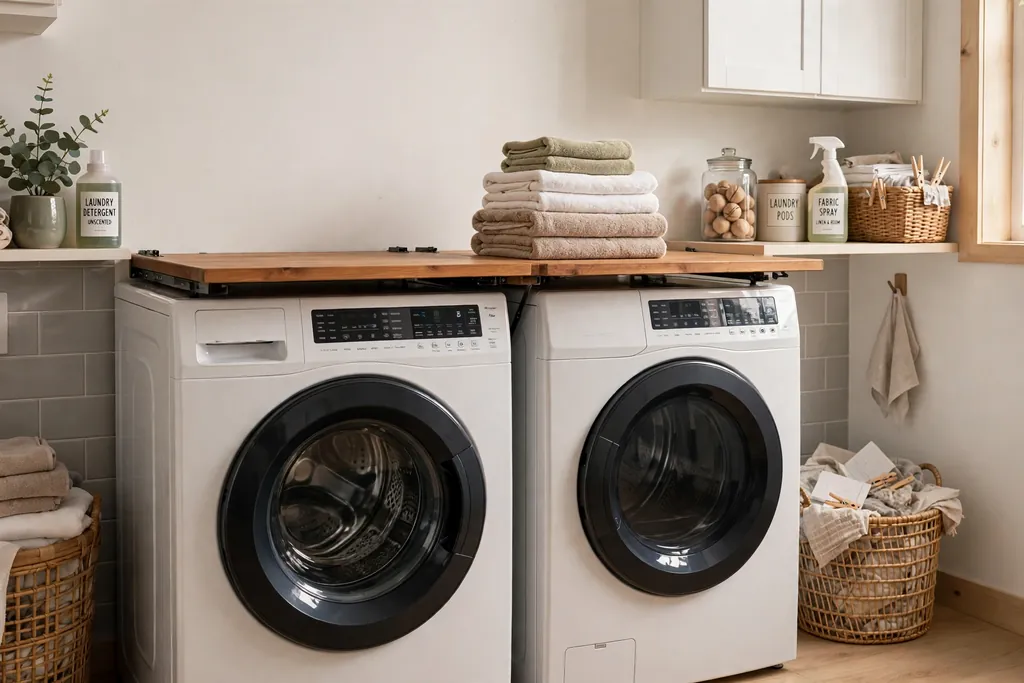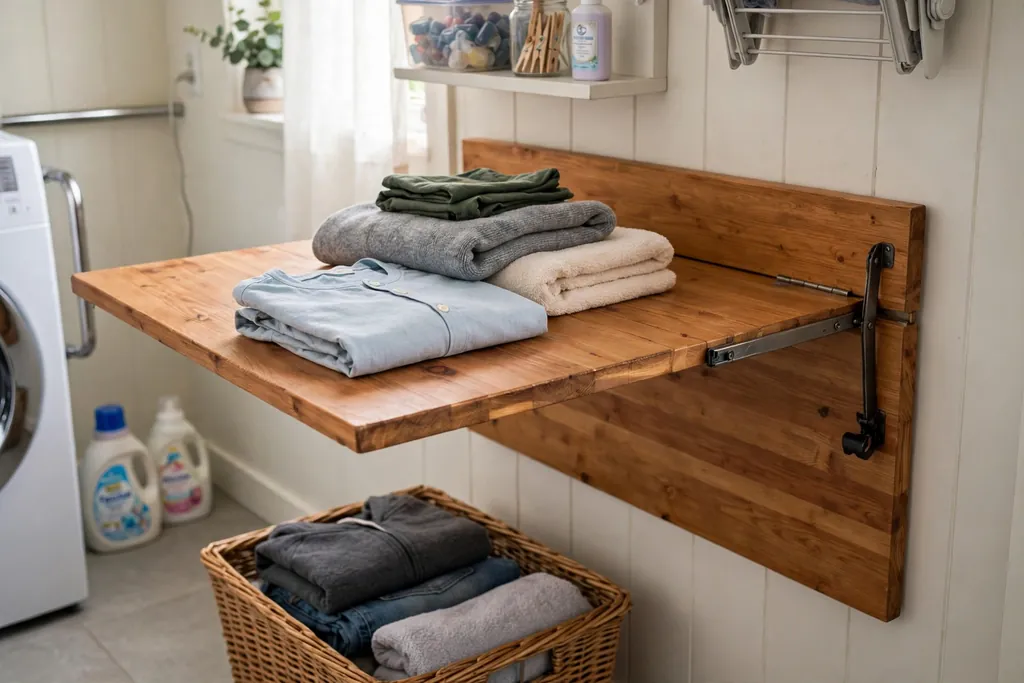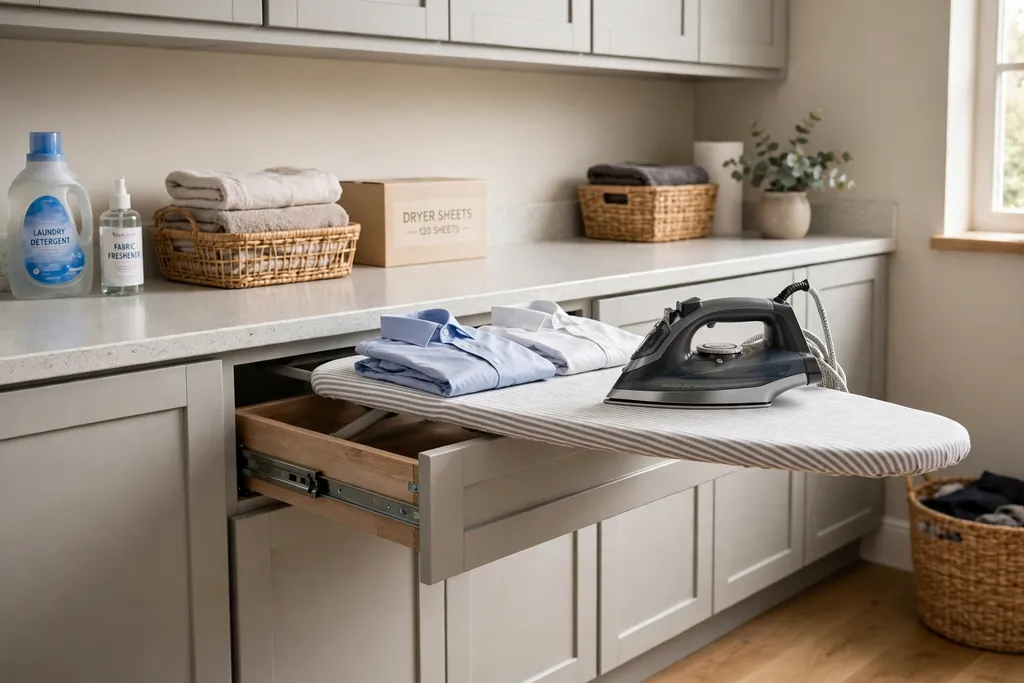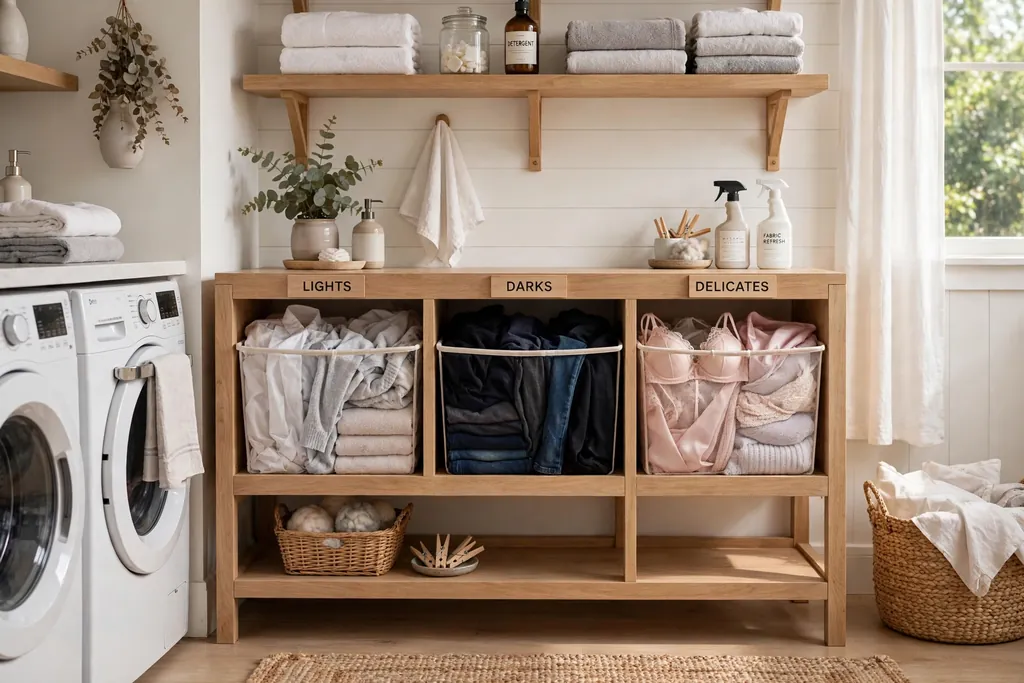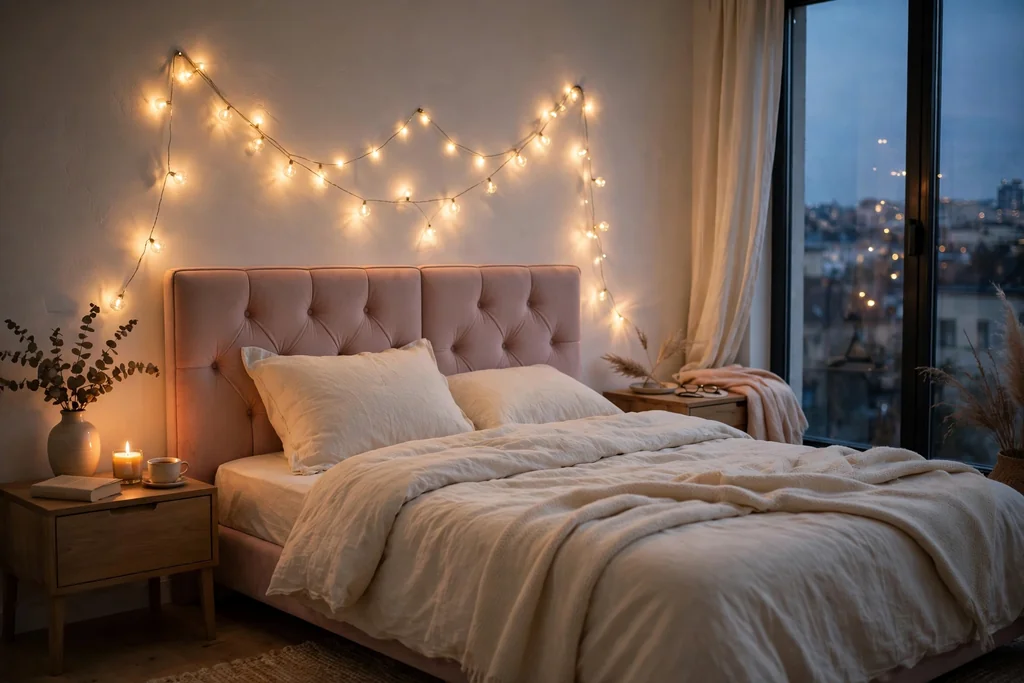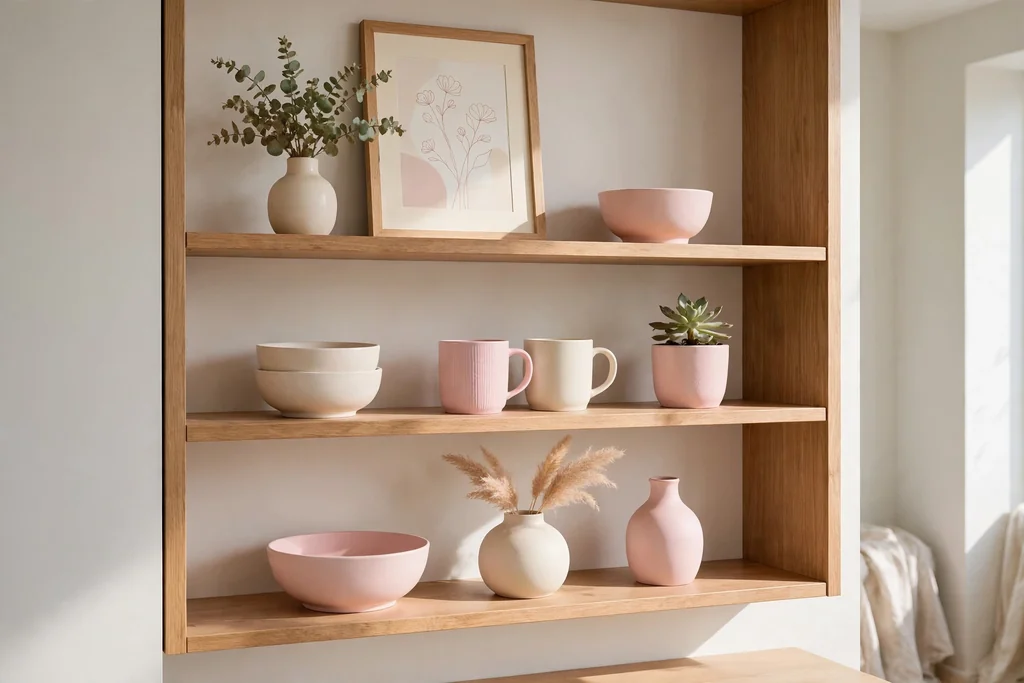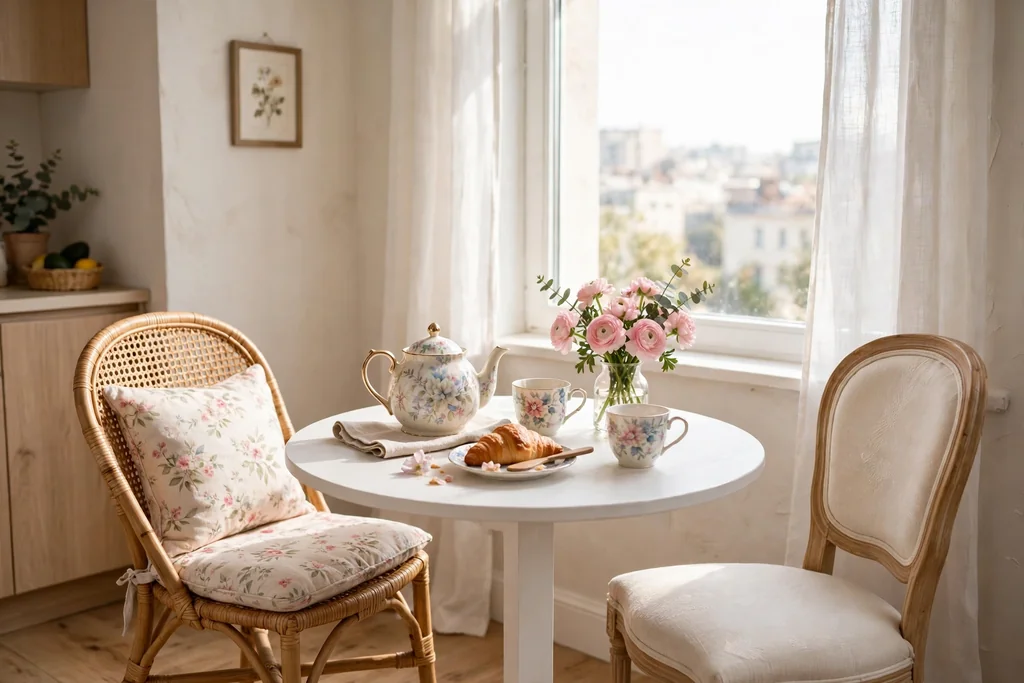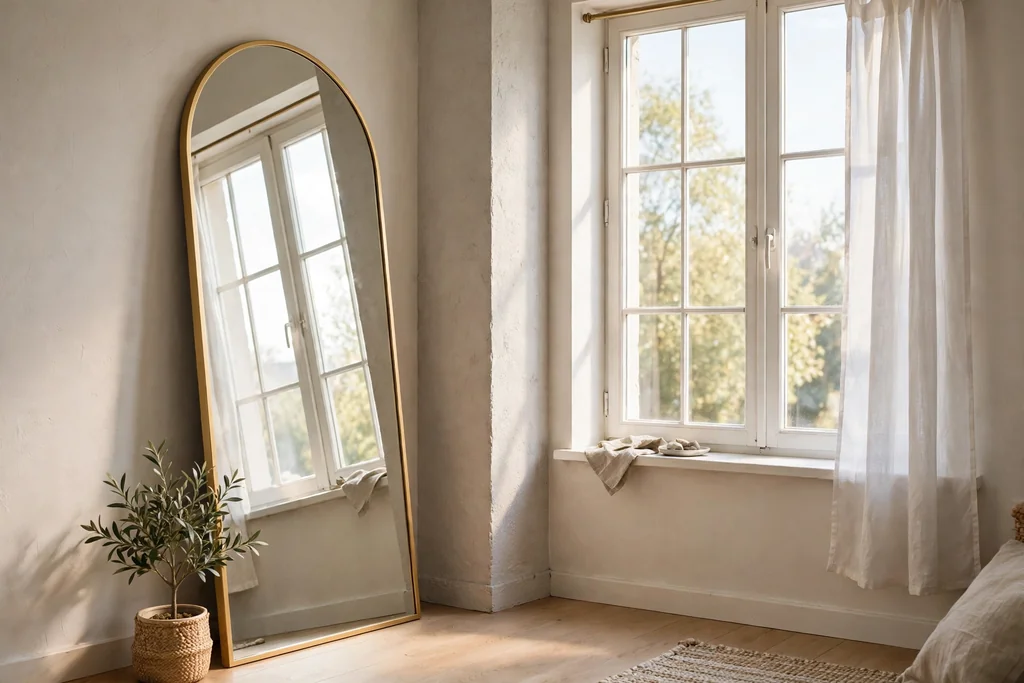
Category: Small Spaces

Space-saving layouts, storage, and decorating ideas for compact homes.

  • 22 Christmas Decor Ideas for Apartments to Try Now

    22 Christmas Decor Ideas for Apartments to Try Now

    Christmas in an apartment works best when every decoration earns its place. Floor space is limited, walls may be off limits for nails, and one room often has to serve as living room, dining room, and guest space all at once. These 22 Christmas decor ideas for apartments focus on slim trees, light, garlands, and small swaps that bring festive warmth without crowding the room. Start with one focal point, such as the tree or the window, then add a few smaller touches around it. For layout help in a one room home, the zoning advice in these studio apartment decorating ideas pairs well with the ideas below.

    Key Takeaways

    • Pick one focal point first, usually the tree or the main window, and keep the rest of the decor light around it.
    • Choose slim, tall, or flat shapes that use wall and window space instead of floor space.
    • Favor renter friendly fixings such as suction hooks, tension rods, and removable adhesive hooks, and check your lease before drilling.
    • Repeat one or two colors across the room so small touches read as one scheme, not a pile of extras.
    • Keep walkways, doors, and heaters clear, and keep candles and lights away from curtains and paper.
    • Pack decor in labeled boxes by zone so next December starts with the tree box, not a search.

    1. Slim Pencil Tree in a Corner

    Slim pencil Christmas tree in a small apartment corner with small ornaments.

    A slim pencil tree fits corners that a full tree never could, and it still gives you branches to dress from top to bottom. Choose a tree that is tall rather than wide, and set it in a corner where it does not block a door or a walkway. A narrow tree suits a studio or a one bedroom apartment because the base takes up little floor, while the height draws the eye up and makes the room feel dressed for the season.

    Dress it with small ornaments and one short string of lights, since large baubles can overwhelm narrow branches. Keep heavier ornaments near the trunk and lighter ones near the tips so branches do not droop. A small basket or a fabric tree skirt hides the stand, and a few wrapped empty boxes beside it can stand in for gifts until real ones arrive.

    2. Tabletop Tree on a Console or Sideboard
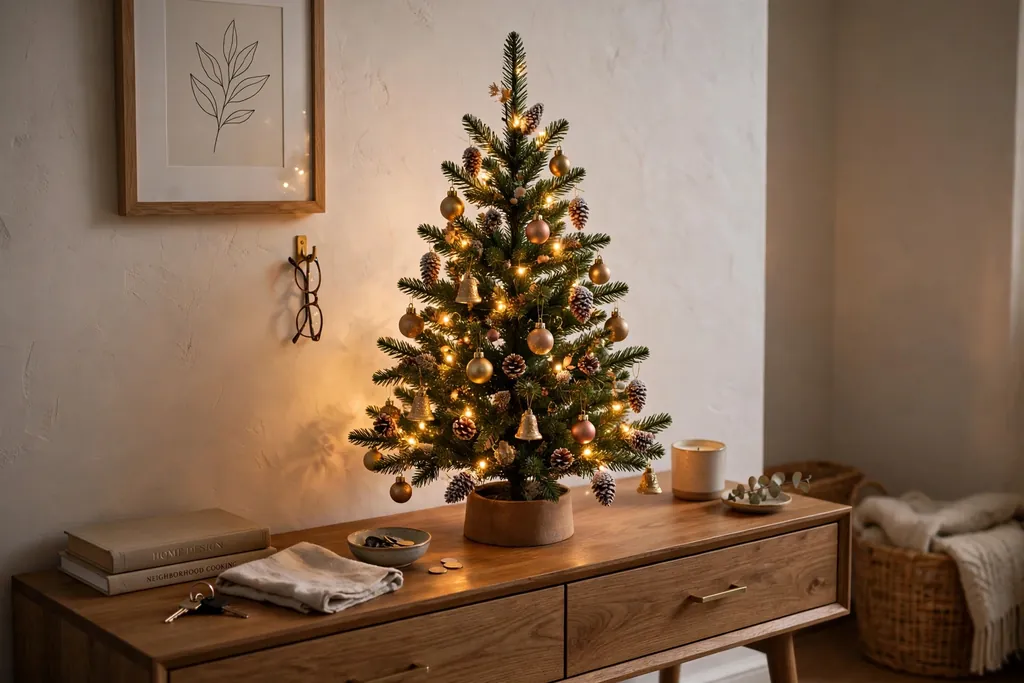
    Small tabletop Christmas tree on an apartment console with miniature ornaments.

    A tabletop tree gives you a full decorating moment on a surface you already own, with no floor space used at all. Set a small tree on a console, a sideboard, or a sturdy shelf, and treat the surface around it as part of the display. This works well in apartments with no free corner, and it is easy to move if guests need the table later.

    Keep the tree in scale with the surface, with room beside it for a candle or a small stack of books. Use miniature ornaments and a short light string made for small trees, and check that the tree is stable before adding anything heavy. When the season ends, the tree packs away in one box, which suits renters and small storage closets.

    3. Curtain Lights Across the Main Window
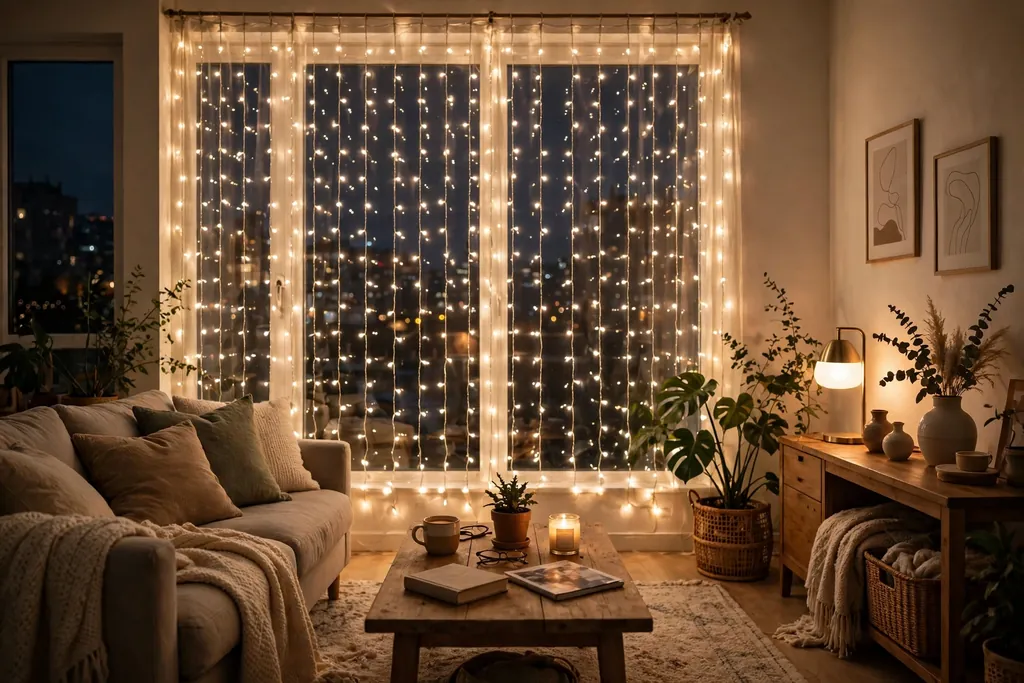
    Apartment window covered with warm curtain lights in the evening.

    Curtain lights turn the largest window in the apartment into the festive focal point, and they are visible from inside and outside. Hang a curtain light panel from a tension rod or from small suction hooks at the top of the window frame, and let the strands fall straight down. The glow softens the room in the evening and makes even a plain window feel dressed.

    Choose warm white lights for a calm look, or one color if the rest of your decor follows it. Keep the plug and any timer where you can reach them without moving furniture, and keep the strands clear of curtains that could catch on them. If you rent, test suction hooks on your window frame first, since some frames hold better than others.

    4. Garland Along a Doorway or Arch
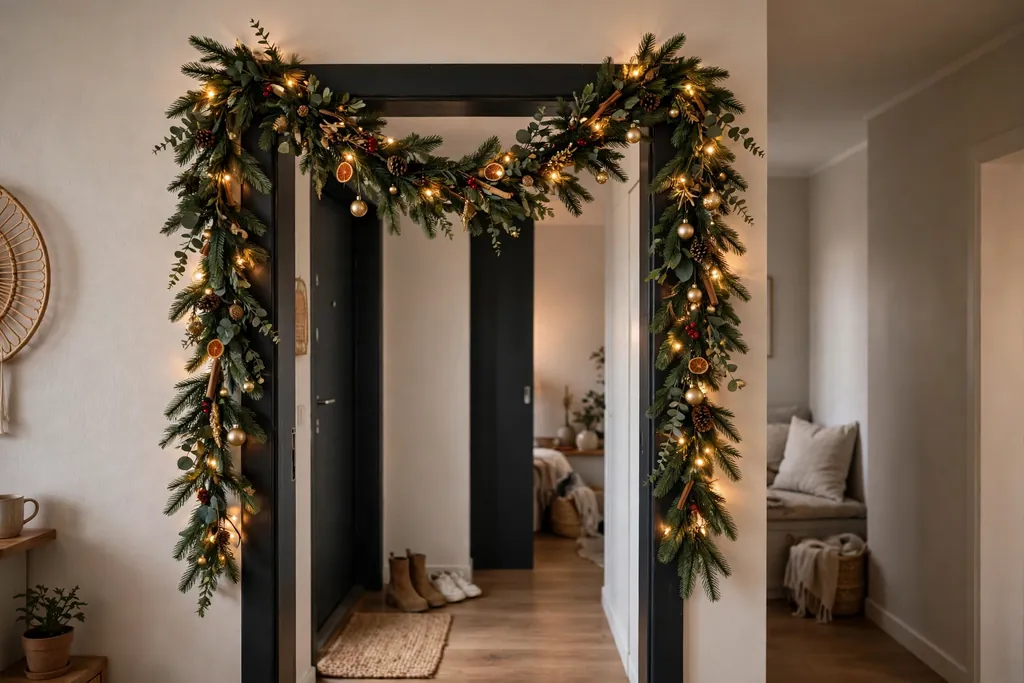
    Faux garland draped over an apartment doorway with small ornaments.

    A garland along a doorway frames the passage between rooms and adds greenery without using a single inch of floor. Drape a faux garland over the top of a door frame and let the ends fall down each side, or run it along an arch if your apartment has one. Faux garland suits apartments because it sheds less than fresh greenery and can be reused year after year.

    Fix it with removable hooks at the top corners, and weave in a short light string or a few small ornaments if you like. Keep the garland high enough that no one brushes it with their head, and keep it away from door hinges so the door still closes. A plain garland with pinecones reads calm, while one with berries or bells reads more playful.

    5. Wreath on the Front Door with a Removable Hook
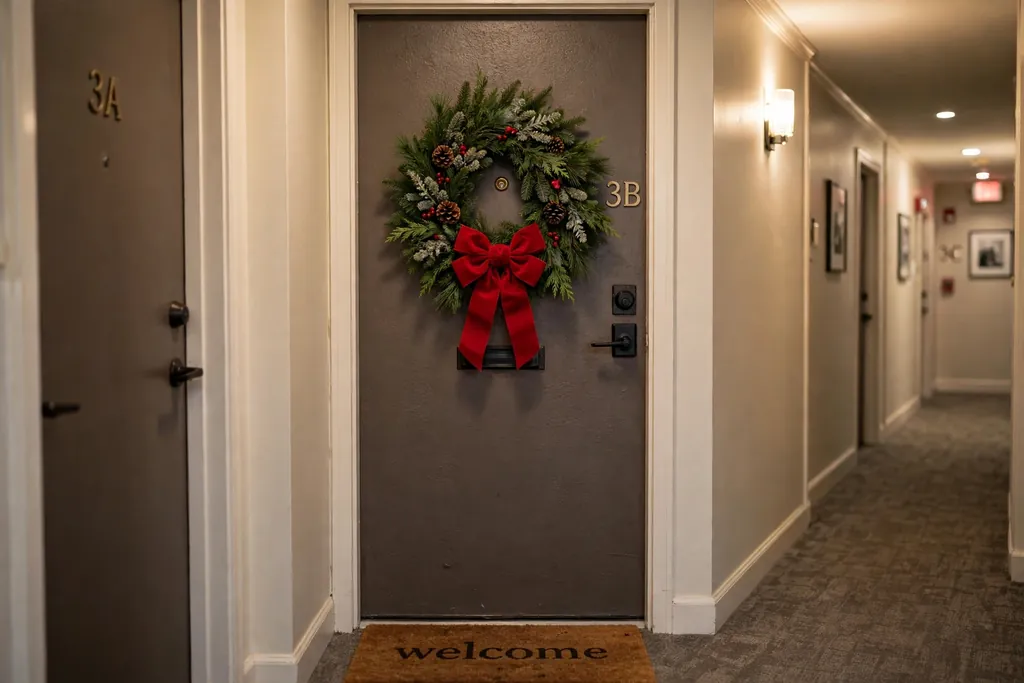
    Evergreen Christmas wreath with a bow on an apartment front door.

    A wreath on the front door is the first festive sign guests see, and it needs no space inside at all. Hang it from an over door hook or a removable adhesive hook rated for the wreath weight, so you leave no mark on the door. A simple evergreen wreath suits most doors, and a bow in your scheme color ties it to the decor inside.

    Check your building rules first, since some apartments limit door decor in shared hallways. Keep the wreath light enough that the hook holds through wind and door slams, and bring it inside during storms if your door faces the weather. A wreath with dried orange slices or cinnamon sticks adds scent as well as color when you pass it.

    6. Flat Wall Tree Made from Lights
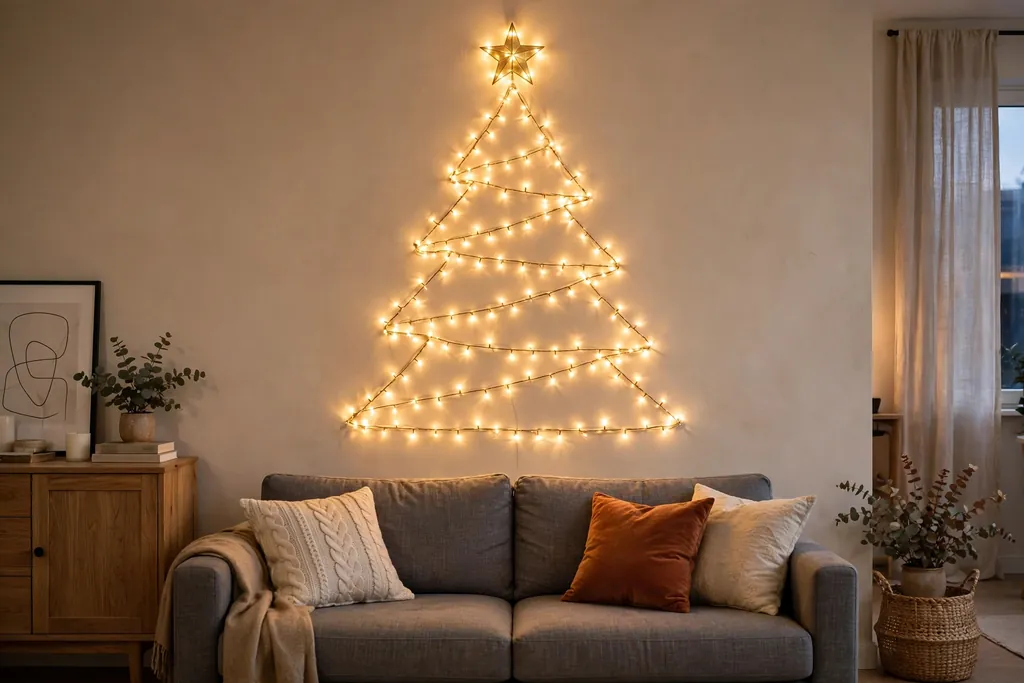
    Flat Christmas tree shape made from string lights on an apartment wall.

    A flat wall tree is made from a string of lights or a row of branches fixed to the wall in a triangle shape, and it takes up no floor space at all. Start with a small hook or removable adhesive strips at the top point, then zigzag lights down and out to form the tree shape, finishing with a star or a bow at the top. This suits a wall above a sofa, a bed, or a console.

    Keep the shape simple and symmetrical by marking the outline lightly with painter tape first, then following it with the lights. Add a few flat ornaments clipped to the lights if you want more detail, but keep them light so the strips hold. This is a good pick for a home with a curious pet or a toddler, since there is nothing at floor level to pull down.

    7. Stockings Hung from a Shelf or Ladder

    Christmas stockings hung in a row from a shelf in a small apartment.

    Apartments often have no mantel, but stockings still have a home on a shelf, a blanket ladder, or a sturdy picture ledge. Hang one stocking per person from small hooks clipped to the shelf edge, with enough space between them that they do not crowd each other. A shelf above a sofa or beside the tree works well, since the stockings become part of the display.

    Choose stockings in one fabric family, such as knit, felt, or linen, so the row looks planned rather than random. Keep them out of reach of heaters and open flames, and stuff the toes lightly so they hold their shape. If you have no shelf, a freestanding blanket ladder leaned against a wall gives you the same row with no fixings at all.

    8. Windowsill Display with Candles and Greenery

    Apartment windowsill with candles, greenery, and small Christmas figures.

    A windowsill is a ready made display shelf that is often left empty, and at Christmas it can hold candles, greenery, and small figures. Line the sill with a short faux garland or a row of small pine branches, then add candle holders at different heights and one or two small houses or trees. The display catches daylight by day and candle glow by night.

    Use battery candles if the sill sits near curtains or if you have pets, since real flames near fabric need constant watching. Keep the display shallow so the window still opens, and place a tray under the greenery to catch dropped needles or glitter. A windowsill display works in every room, so you can repeat it in the bedroom with softer colors.

    9. Cozy Throw and Cushion Swap
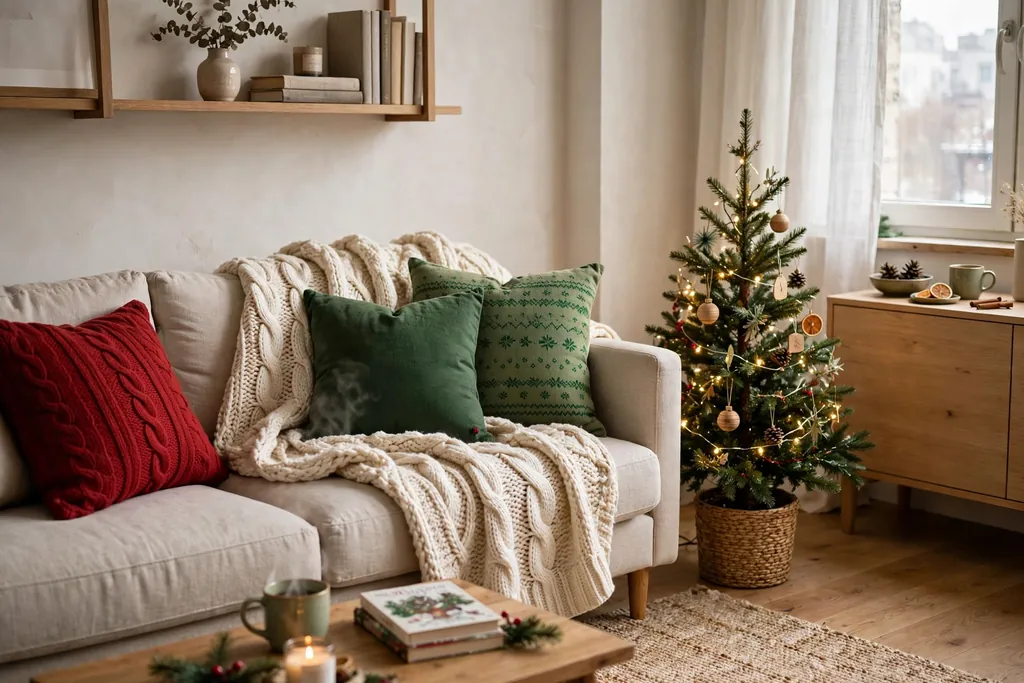
    Apartment sofa with festive red and green cushions and a knit throw.

    Swapping throws and cushion covers is the fastest way to make a room feel festive without buying new furniture or using more space. Choose covers in deep red, forest green, or a warm plaid, and pair them with a thick knit or wool throw folded over one sofa arm. The room reads as Christmas at a glance, and the layers are useful on cold evenings too.

    Store the everyday covers in one bag so the swap back in January takes minutes. Keep the total number of cushions the same, so the sofa does not gain bulk, and wash the festive covers before storing them. This idea pairs well with the layering advice in these cozy apartment living room ideas, which focus on textiles that earn their place in a small room.

    10. Small Dining Table Centerpiece
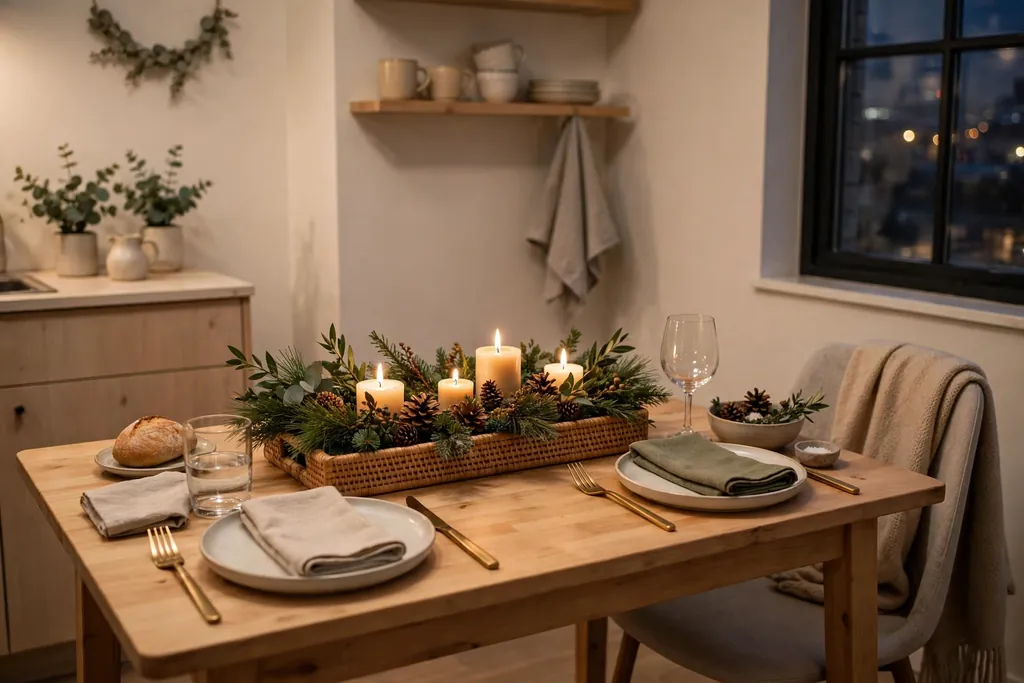
    Small apartment dining table with a low Christmas centerpiece tray and candles.

    A small dining table needs a centerpiece that leaves room for plates, glasses, and elbows. Use a low tray or a shallow bowl as the base, then add a short candle cluster, a few pinecones, and a sprig of greenery. The tray keeps the pieces together, so you can lift the whole centerpiece away when you need the full table.

    Keep the centerpiece below eye level so guests can see each other across the table, and keep candles away from paper napkins and place cards. A tray in wood or metal suits most tables, and a few small ornaments in your scheme color tie it to the tree. For everyday meals during December, the same tray works with just the greenery and one candle.

    11. Kitchen Counter Mini Village

    Small Christmas village houses with lights along an apartment kitchen counter.

    A kitchen counter can hold a small Christmas village along the back edge, where it does not block prep space. Set two or three small houses, a tiny tree, and a short light string on a narrow board or tray, and push the board against the backsplash. The village adds festive detail to a room that often gets skipped, and the tray keeps crumbs and spills off the pieces.

    Keep the village away from the stove and the sink splash zone, and use battery lights so no cord crosses the counter. Choose houses in one scale so the scene reads as a street rather than a mix of sizes. If counter space is tight, a single house and a small tree on a windowsill give the same effect in a smaller footprint.

    12. Balcony String Lights and a Small Outdoor Tree
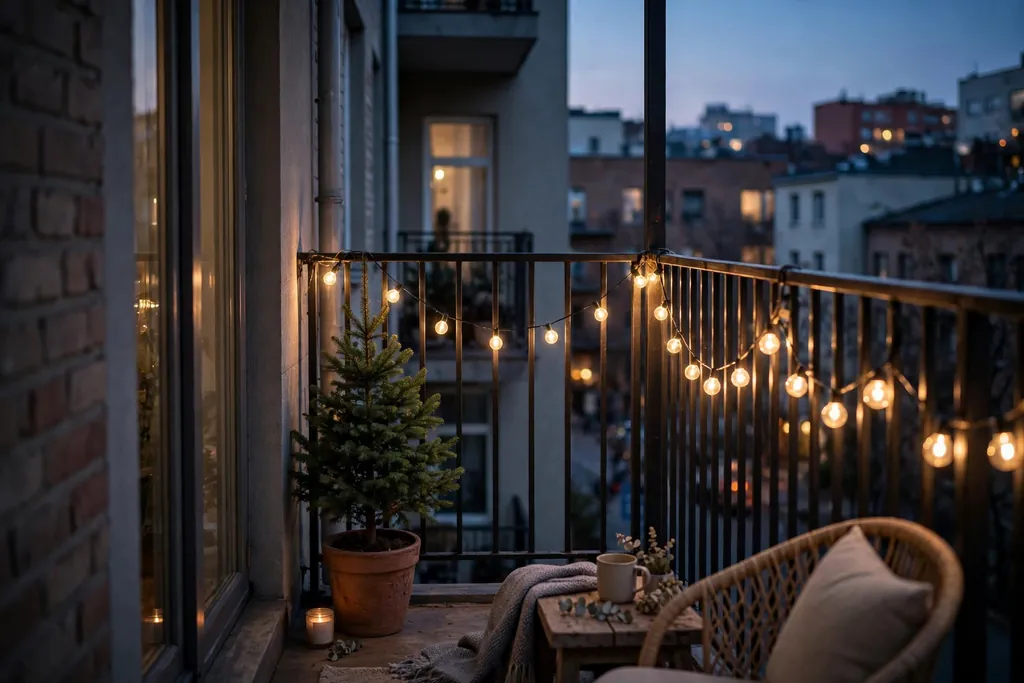
    Small apartment balcony with string lights along the railing and a potted evergreen.

    A balcony can carry Christmas decor too, even if it is only a few feet wide. Run one string of outdoor rated lights along the railing, and add a small potted evergreen or a tabletop tree by the door if there is room. The lights make the balcony feel like part of the home in the evening, and they are visible from the living room through the glass.

    Check that your lights are rated for outdoor use and that the plug stays dry, and check building rules about balcony decor before you hang anything over the railing. Keep the display simple so wind cannot catch large pieces, and bring fabric items inside in bad weather. A doormat in a festive color at the balcony door ties the outside in.

    13. Entry Console Vignette
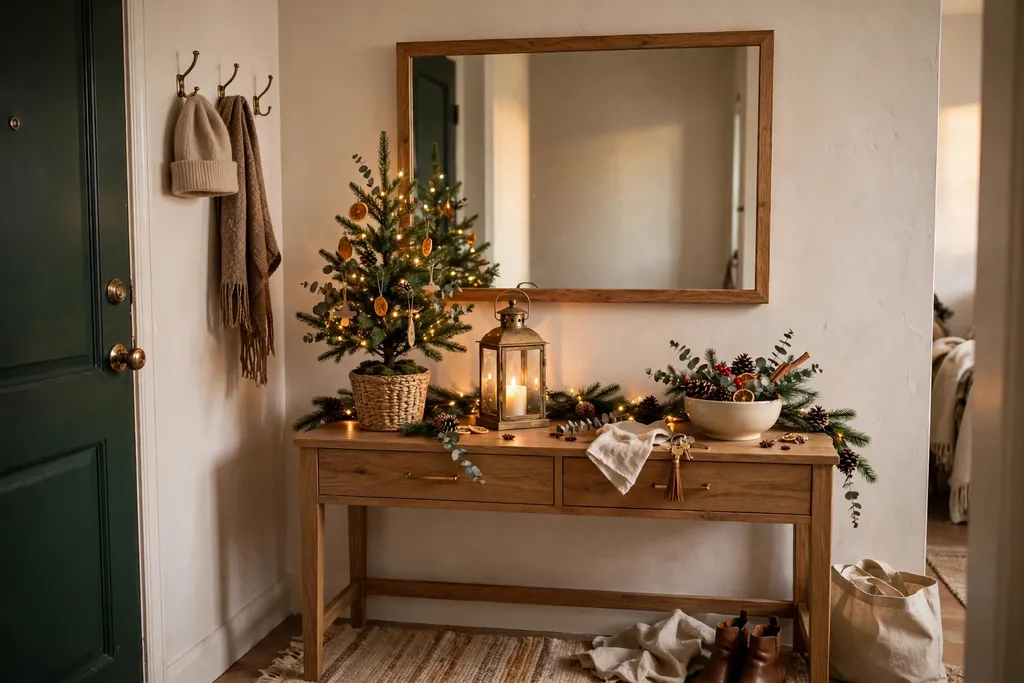
    Apartment entry console with a small tree, lantern, and bowl at Christmas.

    The entry is the first space guests see, and a small console or shelf there can hold a complete Christmas vignette. Set a small tree or a vase of branches on one end, a candle or a lantern in the middle, and a bowl for keys and small items at the other end. The vignette sets the festive tone before guests reach the living room.

    Keep the entry clear for coats and shoes, so the decor sits on the console rather than on the floor. A mirror above the console bounces light from the vignette and makes a narrow entry feel wider. Change one piece, such as the branches or the candle color, if you want the entry to feel fresh for a party without redoing the whole room.

    14. Ornament Bowl on the Coffee Table

    Glass bowl filled with Christmas ornaments on an apartment coffee table.

    An ornament bowl is a low effort centerpiece that uses pieces you already own. Fill a wide glass bowl or a wooden bowl with spare ornaments in two or three colors, add a short string of fairy lights or a few pinecones, and set it on the coffee table. The bowl reads as festive from across the room, and it can be moved aside in seconds when you need the table.

    Choose shatterproof ornaments if the bowl sits low enough for pets or small children to reach, and keep the bowl away from the table edge. A bowl in clear glass shows the ornaments best, while a wooden bowl suits a rustic scheme. Swap the ornaments for pinecones and dried oranges after Christmas if you want the bowl to stay out into January.

    15. Removable Window Decals and Paper Snowflakes
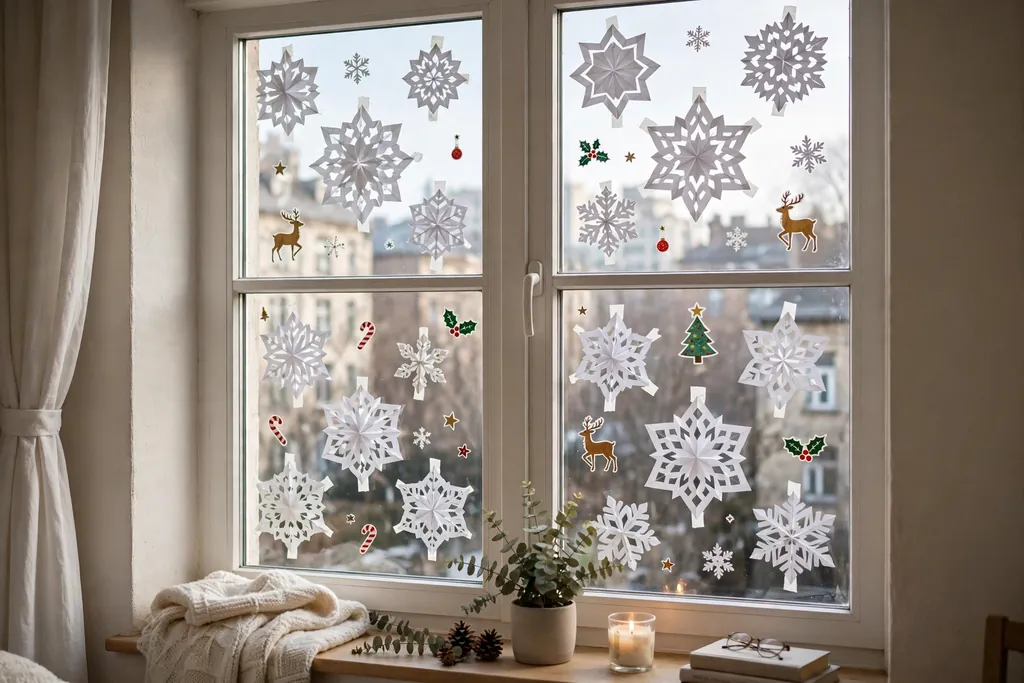
    Apartment window decorated with paper snowflakes and removable decals.

    Removable window decals and paper snowflakes dress the glass without paint, nails, or lasting marks, which makes them ideal for rentals. Press decals onto clean glass in a loose pattern, or cut snowflakes from white paper and fix them with small dots of removable putty. Both catch light and look cheerful from inside and outside.

    Keep the pattern light near the middle of the window so daylight still comes in, and denser near the edges if you want a framed effect. Remove decals slowly in January and wash the glass after, since adhesive can leave a faint film. Paper snowflakes suit a kids room or a kitchen window, where a handmade touch feels at home.

    16. Candle Cluster with Greenery on a Tray
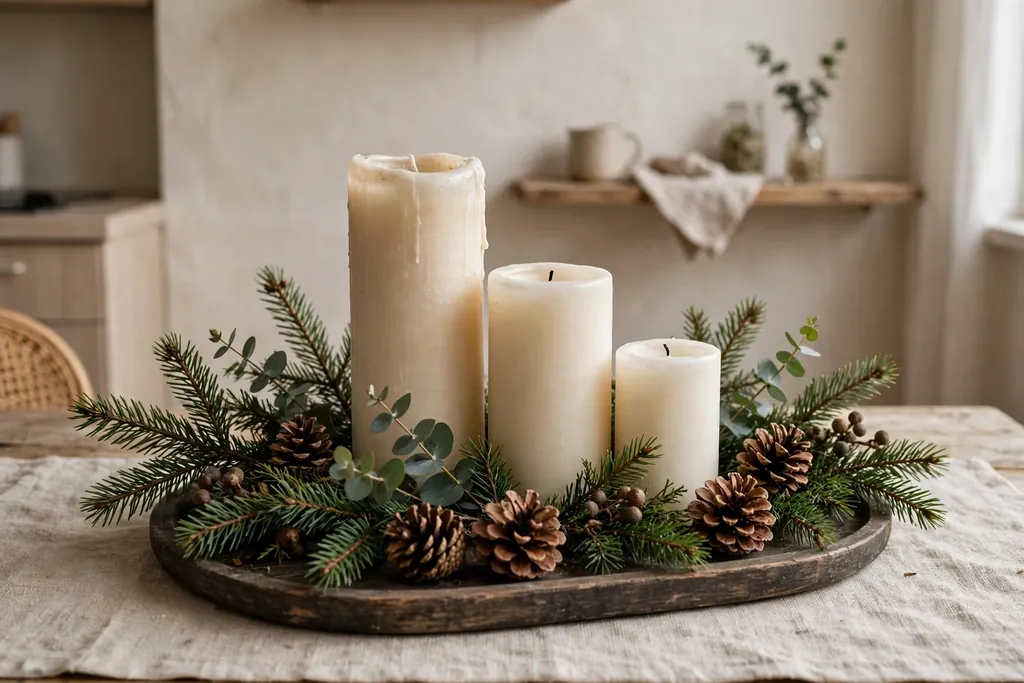
    Cluster of candles with greenery on a tray in a small apartment.

    A cluster of candles on a tray gives warm light and a festive scent without a large display. Group three candles of different heights on a round or rectangular tray, tuck short sprigs of faux greenery around the bases, and add a few small ornaments or pinecones. The tray contains wax drips and keeps the group together as one piece.

    Use real candles only where you can watch them, and switch to battery candles in bedrooms or near curtains. Keep the tray on a stable surface away from walkways, and trim wicks before lighting so flames stay small. A tray in gold or wood adds warmth, while a white ceramic tray keeps the look calm and simple.

    17. Bookshelf Styling with Garland and Ornaments
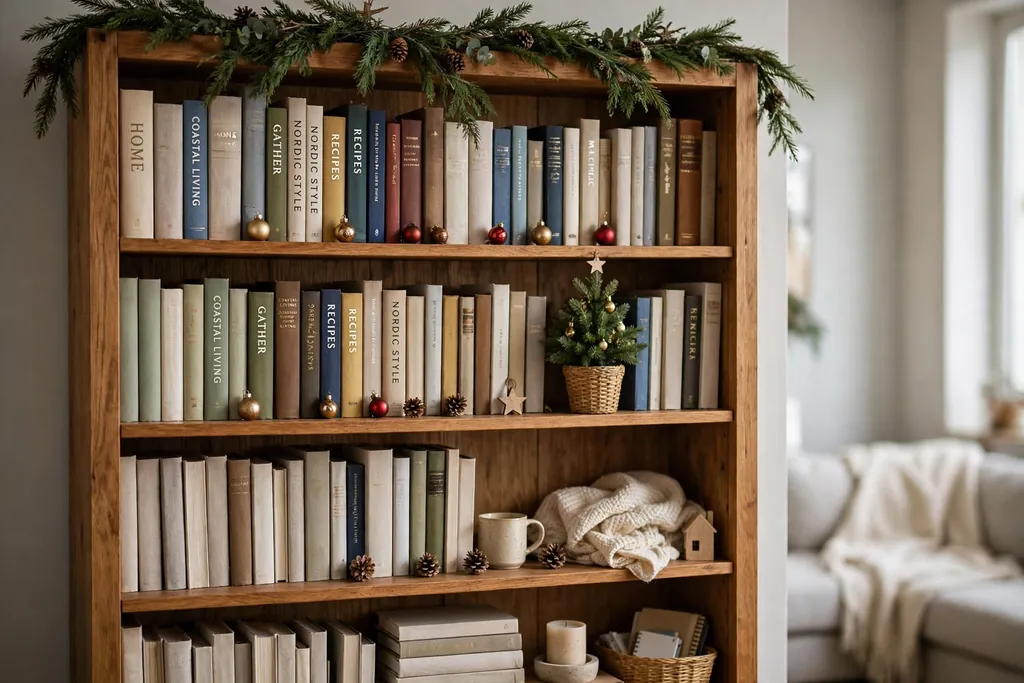
    Apartment bookshelf styled with a garland, small ornaments, and books.

    A bookshelf can carry Christmas decor on shelves you already have, with no new furniture needed. Drape a short garland along one shelf edge, tuck small ornaments between books, and add a tiny tree or a candle on the top shelf. The books stay usable, and the shelf reads as festive without losing its everyday job.

    Work on one or two shelves rather than every shelf, so the display feels chosen rather than crowded. Keep heavy ornaments low and light ones high, and leave breathing space around each festive piece. A garland in the same green as the tree ties the shelf to the rest of the room, and a few books turned with their spines out in red or green covers add color for free.

    18. Bedroom Mini Tree and Bedside Lights
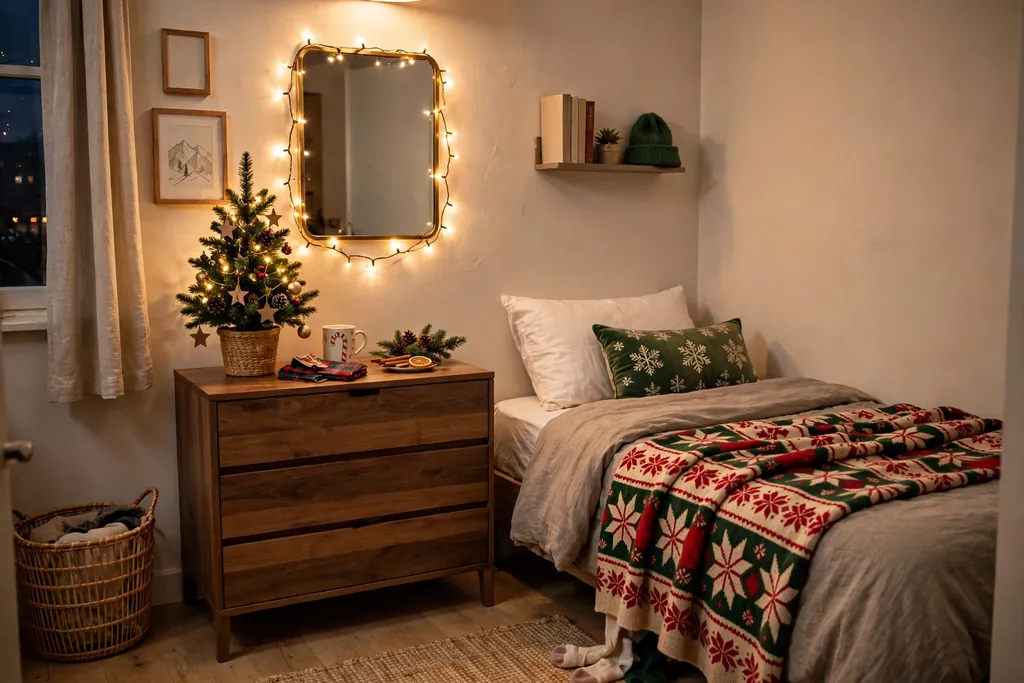
    Small apartment bedroom with a mini Christmas tree on a dresser and bedside lights.

    A bedroom deserves a festive touch too, and a mini tree on a dresser or a nightstand brings Christmas into the room where you wake up. Pair the tree with a short light string along the headboard or around a mirror, and add a festive cushion or throw on the bed. The scale stays small, so the room still feels calm at night.

    Use battery lights with a timer so the lights switch off on their own, and keep the tree away from bedding and curtains. A mini tree in a pot or a basket looks finished without a stand, and a few ornaments in the bedroom scheme color tie it to the main tree. If space is very tight, lights alone around the mirror give the same evening glow.

    19. Gallery Wall Seasonal Print Swap
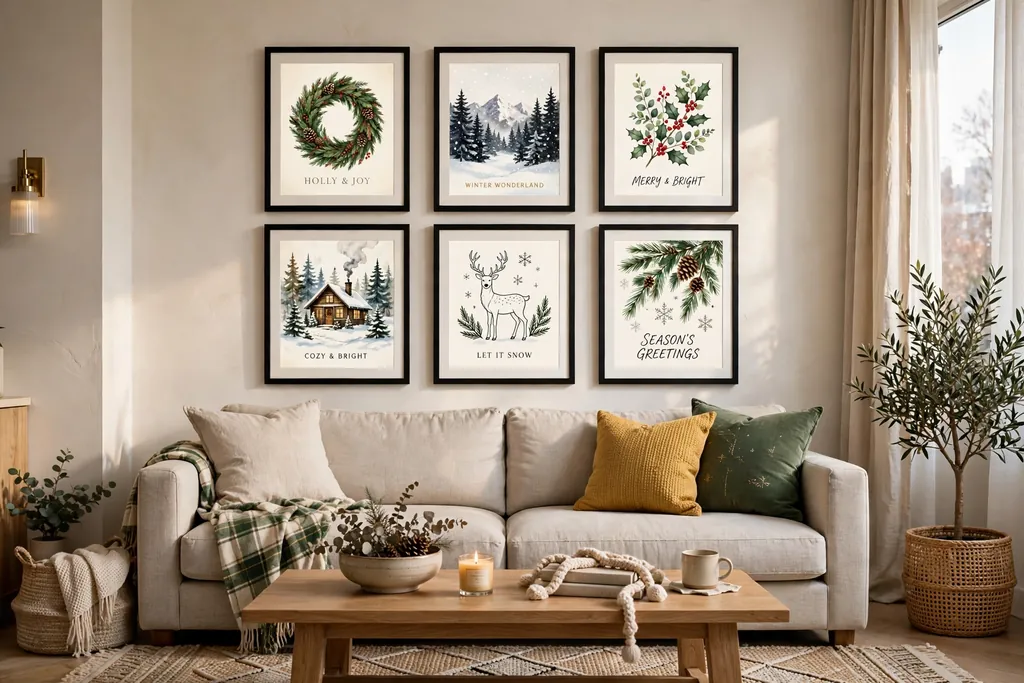
    Apartment gallery wall with seasonal Christmas prints in matching frames.

    Swapping a few framed prints for seasonal ones changes a wall in minutes, with no new holes if you reuse the same frames. Choose two or three prints with trees, wreaths, or winter scenes in colors that match your decor, and swap them into frames you already hang. The wall feels festive, and the everyday prints wait in a folder for January.

    Keep the frames and sizes the same, so the swap is a straight exchange rather than a rehang. A gallery wall above a sofa or along a hallway works best, since it is seen often but holds no furniture. If you have no spare prints, a few pages from a calendar or simple paper stars in the frames give the same seasonal change at low cost.

    20. Gift Wrap Station in a Basket

    Basket of Christmas wrapping paper, ribbons, and tags beside an apartment tree.

    A basket of wrapping paper, ribbons, and tags doubles as decor when it is kept tidy and in scheme colors. Stand a few rolls of paper upright in a tall basket or a laundry hamper by the tree, add a jar of ribbons and a small dish of tags, and keep scissors and tape in a pouch on the side. The station looks festive and saves a search every time you wrap a gift.

    Keep the basket in a corner where it does not block a walkway, and choose paper in your scheme colors so the basket reads as part of the decor. Wrap gifts in batches rather than one at a time, and put finished gifts under the tree or in a lidded box so the station stays clear. A basket with handles makes the whole station easy to move for a party.

    21. Advent Calendar as Wall Display
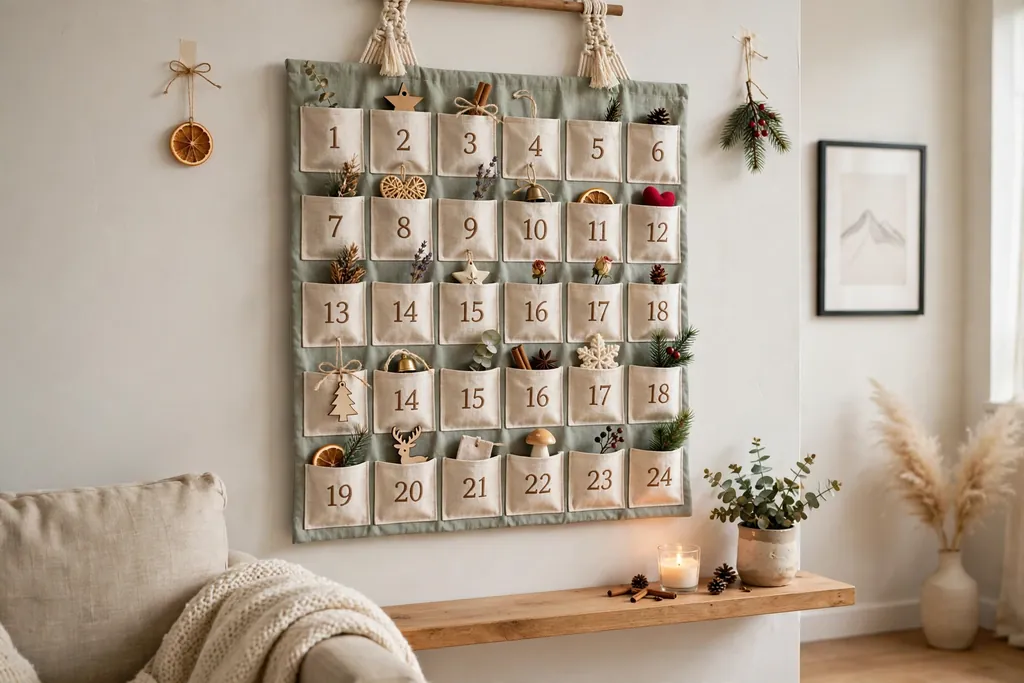
    Fabric advent calendar with pockets hung on an apartment wall.

    An advent calendar can be a wall display in its own right, not just a countdown tool. Hang a fabric calendar with pockets, a wooden calendar with drawers, or a simple string of numbered bags from a tension rod or a row of removable hooks. Fill the pockets with small treats, notes, or tiny ornaments, and hang it where you pass it every morning.

    Choose a calendar that fits the wall space you have, since a large calendar can crowd a small hallway. Keep it at a height children can reach if they open it, and refill it weekly rather than daily if that suits your routine. A calendar in felt or wood can be reused for years, which suits small storage as well as small rooms.

    22. Pack Away System with Labeled Zone Boxes
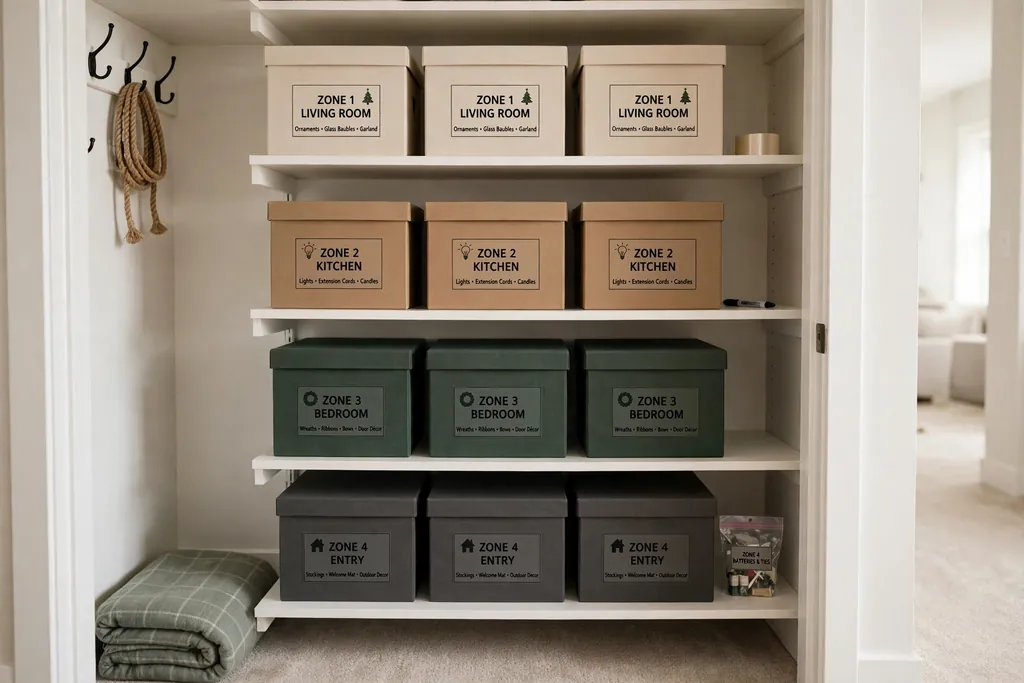
    Labeled Christmas storage boxes sorted by zone in an apartment closet.

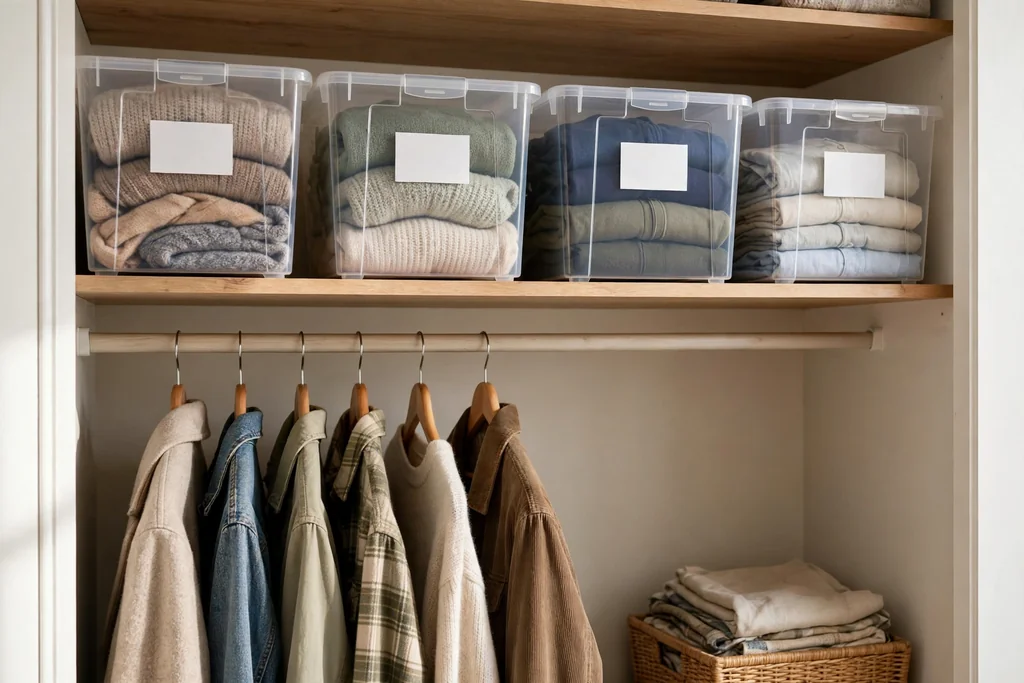
    A pack away system is the idea that makes next Christmas easy, and it starts while you decorate this year. Sort decor by zone as you put it up, such as tree, window, table, and entry, and keep a short list of what belongs in each zone. In January, pack each zone into its own labeled box or bag, with lights wrapped around cardboard so they do not tangle.

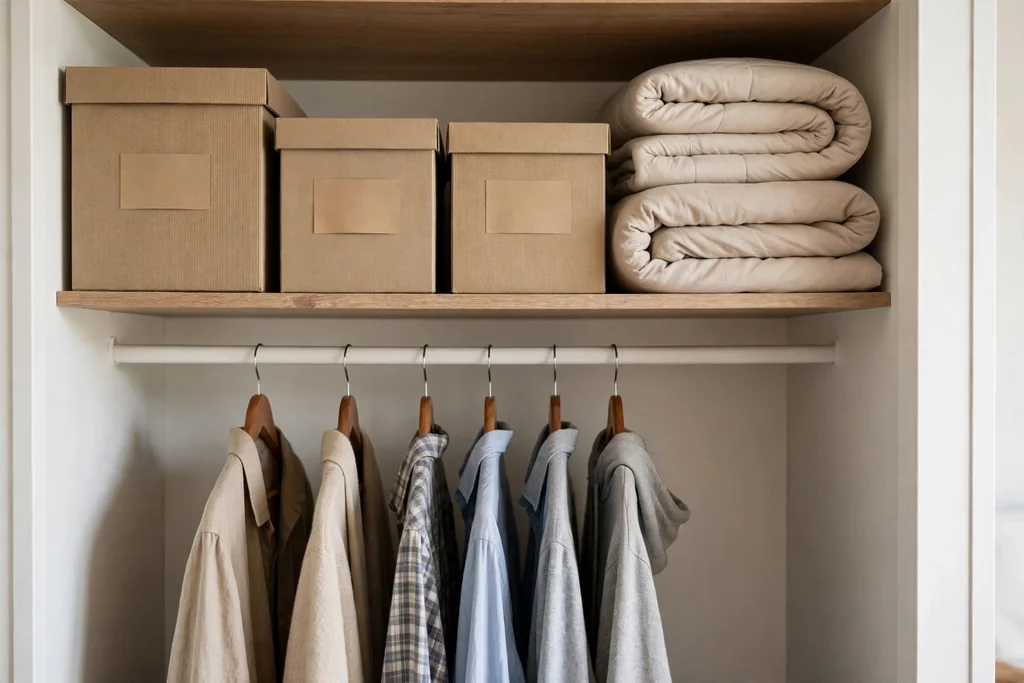
    Store the boxes where you can reach them without moving everything else, such as on one closet shelf or under the bed. Label each box on two sides, and put the first box you will need next year, usually the tree box, at the front. A good pack away system means next December starts with decorating, not with untangling lights and hunting for the stockings.

    Conclusion

    Christmas decor in an apartment is about choosing well, not fitting more in. A slim tree, lights on the window, a wreath on the door, and a few small swaps in textiles and table displays can make a small home feel fully festive. Start with the focal point that matters most to you, add renter friendly touches that leave no marks, and keep walkways clear so the room still works for everyday life. Try one or two ideas this weekend, live with them for a few days, and add more only where they truly add warmth. If an idea here helped your space, save this post to your apartment decorating board on Pinterest so you can find it when you are ready for the next change. For more small room layout help, revisit these studio apartment decorating ideas.

    FAQs

    How do I decorate a small apartment for Christmas without cluttering it?

    Pick one focal point, such as a slim tree or a lit window, and keep the rest of the decor small and light. Use walls, windows, and shelves for display instead of the floor, repeat one or two colors across the room, and keep the number of cushions and table pieces the same as usual. Remove one everyday item for every large festive piece you add, so the room gains warmth without losing walking space.

    What size Christmas tree works best in an apartment?

    A slim pencil tree or a tabletop tree usually fits best. Measure the corner or surface first, including ceiling height and the space needed to walk past the tree, then choose a tree narrower than the space allows. A tall slim tree gives height without taking floor space, while a tabletop tree suits a home with no free corner at all. A flat wall tree made from lights is a good option when even a slim tree will not fit.

    Can I hang Christmas decor in a rental without damaging walls?

    Yes, in most cases. Use removable adhesive hooks rated for the weight, suction hooks on glass and smooth frames, tension rods in windows, and over door hooks for wreaths. Test one hook in a hidden spot first, follow the maker instructions for removal, and check your lease and building rules before hanging anything heavy or anything in a shared hallway.

    How do I make an apartment feel festive without a fireplace or mantel?

    Use the surfaces you do have. Hang stockings from a shelf, a blanket ladder, or a picture ledge, dress a windowsill with candles and greenery, and style a bookshelf with a short garland. A console vignette at the entry and a centerpiece on the dining table give the same sense of a dressed home, and a wreath on the front door sets the tone before guests step inside.

    Are real or faux Christmas trees better for apartments?

    Faux trees suit most apartments because they come in slim sizes, shed less, and pack away in one box for reuse. Real trees need a stand with water, regular watering, and a plan for disposal in January, which can be awkward without a car or a large hallway. If you love a real tree, a small tabletop real tree or a potted evergreen gives the scent and look with less mess and easier disposal.

    How do I store Christmas decor in a small apartment?

    Sort decor by zone, such as tree, window, table, and entry, and pack each zone in its own labeled box or bag. Wrap lights around cardboard to stop tangling, put fragile ornaments in divided boxes or wrapped in tissue, and store the boxes on one closet shelf or under the bed. Put the tree box at the front so next December starts with the focal point, not a search through every box.
  • 22 Urban Gardening Solutions for Small City Spaces

    22 Urban Gardening Solutions for Small City Spaces

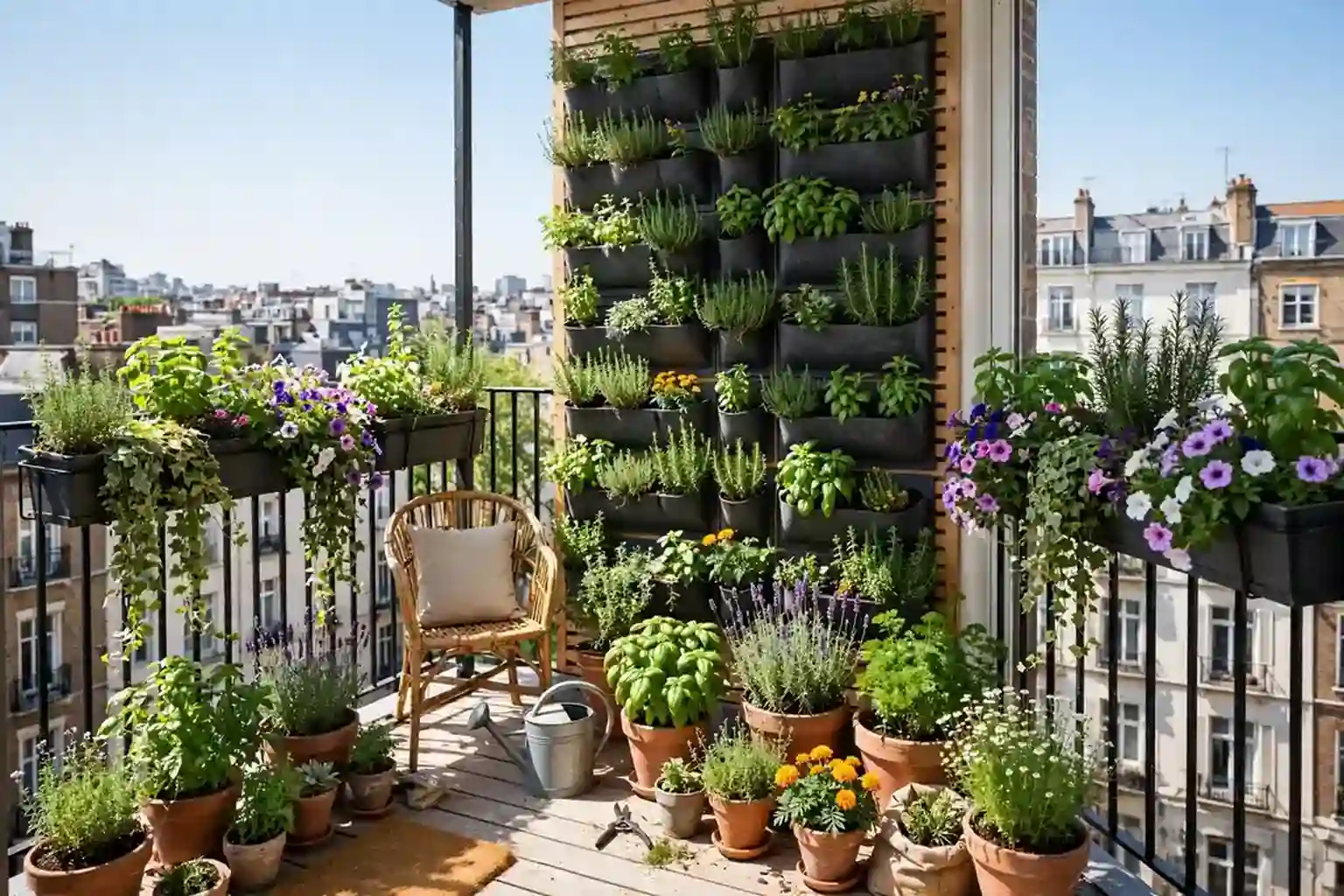
    City living does not have to mean giving up on growing things. A railing, a windowsill, a sunny wall, or a shared courtyard can all hold a garden, as long as each spot is matched to plants that suit its light, wind, and watering needs. These 22 urban gardening solutions cover balconies, rooftops, indoor shelves, and shared plots, with options for renters, for food growers, and for people who only have an hour a week. Start with the sunniest spot you already have, add one container at a time, and let the garden grow around how you actually live.

    Key Takeaways

    • Match plants to the spot: sun lovers need six or more hours of direct sun, while herbs and leafy greens cope with less.
    • Use light containers with drainage holes, and raise pots on feet so water can leave freely and does not stain the surface below.
    • Water containers more often than ground beds, since pots dry out fast in sun and wind, and mulch the surface to hold moisture.
    • Grow up, not out, on a balcony: rails, walls, shelves, and hanging baskets add growing room without taking floor space.
    • Keep heavy items near walls and load bearing edges, and check building rules before fixing anything to a railing, wall, or roof.
    • Start with crops you eat weekly, such as herbs, salad leaves, and tomatoes, so the garden earns its space from the first season.

    1. Balcony Rail Planters

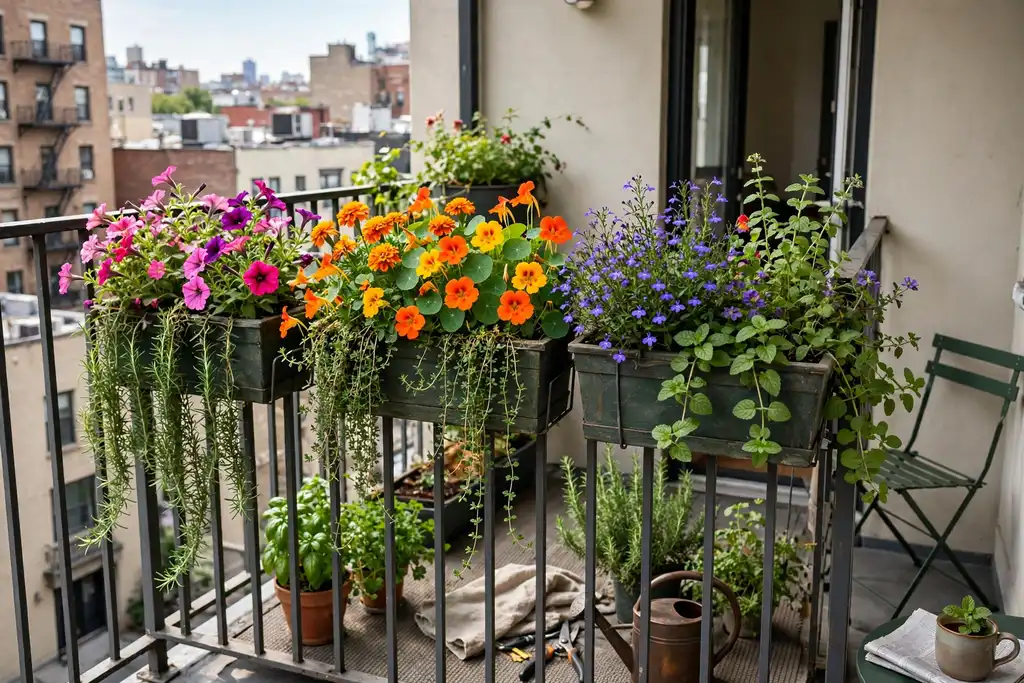
    Balcony railing planters with colorful flowers and trailing herbs on a small city apartment balcony.

    Hang planters over the balcony rail to grow flowers and trailing herbs without using any floor space. Rail planters suit renters, since most types hook on and lift off, and they put plants right where sun and air reach them. Choose planters with drainage holes and a drip tray or liner so water does not fall on neighbors below.

    Plant trailing herbs such as thyme and oregano at the front, with upright flowers or compact vegetables behind them. Check the rail width before buying, and secure each planter so wind cannot lift it. Water rail planters often in hot weather, since their shallow soil dries fast, and feed lightly through the season as the label advises.

    2. Vertical Pallet Wall Garden

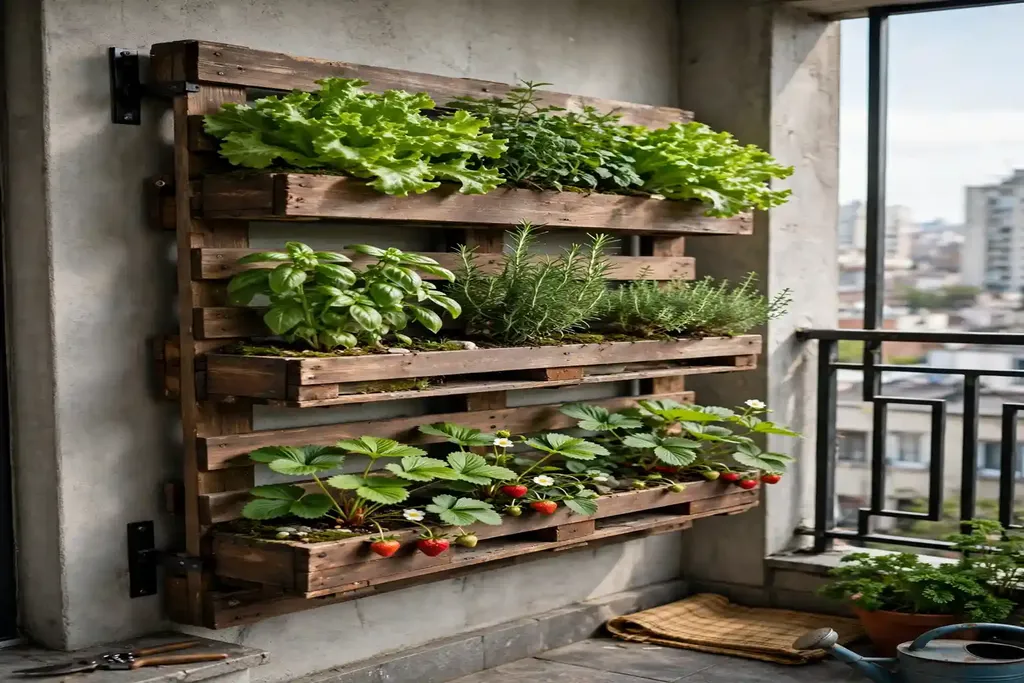
    Vertical pallet wall garden mounted on a city balcony wall

    Fix a wooden pallet to a sheltered balcony wall and plant each slat row for a garden that takes almost no floor space. A pallet wall suits salad leaves, strawberries, and herbs, all of which grow well in shallow soil. Line the back and sides with landscape fabric, fill each row with potting mix, and plant through the gaps.

    Water from the top so moisture reaches every row, and check the lowest row most, since water can collect there. Fix the pallet firmly to the wall, and keep the total weight in mind if the wall is a partition rather than a structural wall. In winter, move tender plants to a sheltered spot and let the pallet dry between waterings.

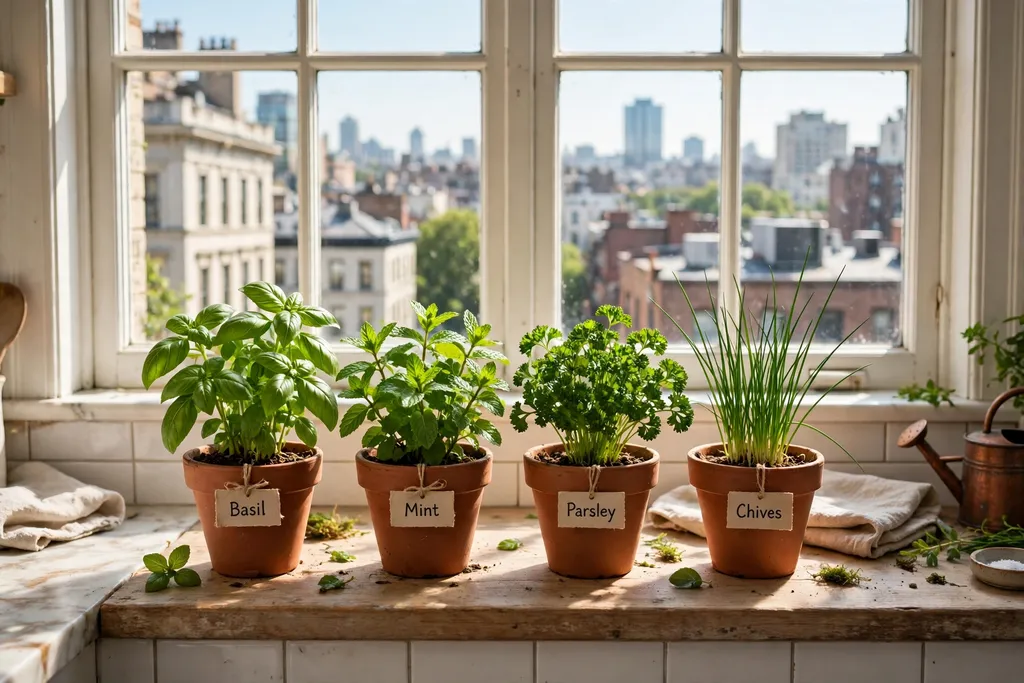
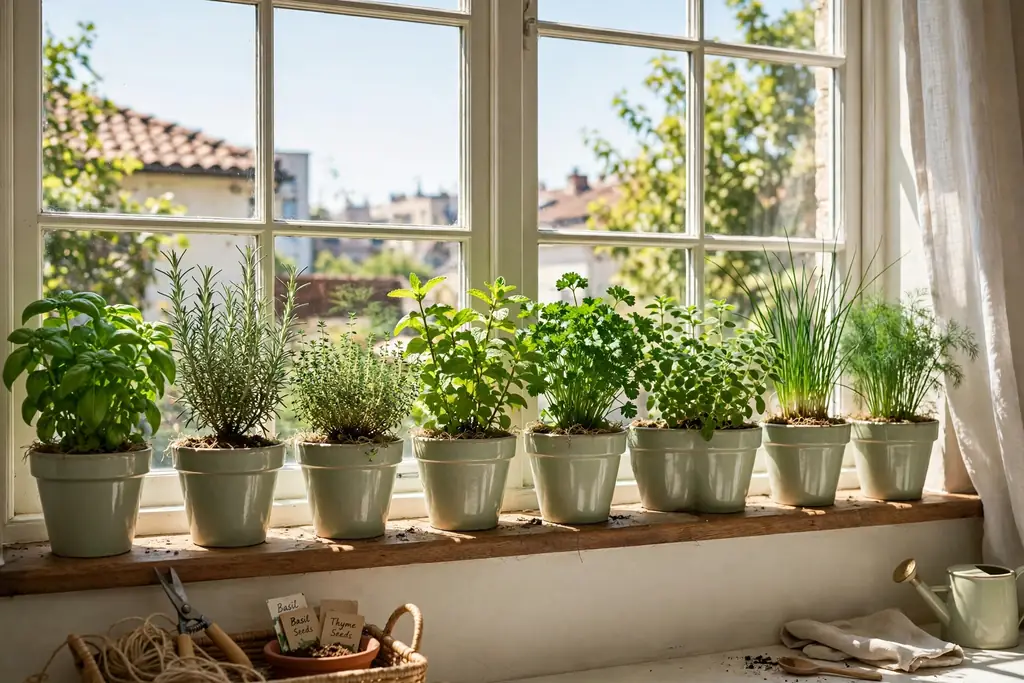
    3. Windowsill Herb Garden

    Sunny kitchen windowsill herb garden with small pots of basil

    Grow herbs in small pots on a sunny windowsill for fresh leaves a few steps from cooking. Basil, mint, parsley, chives, and thyme all grow well indoors with bright light, and a windowsill garden needs no outdoor space at all. Use pots with drainage holes and saucers, and rotate pots weekly so plants grow evenly toward the light.

    Keep mint in its own pot, since it spreads fast and can crowd out neighbors. Pick little and often to keep plants bushy, and water when the top inch of soil feels dry. If winter light is weak, move the pots to the brightest window you have, and trim leggy stems back in spring to encourage fresh growth.

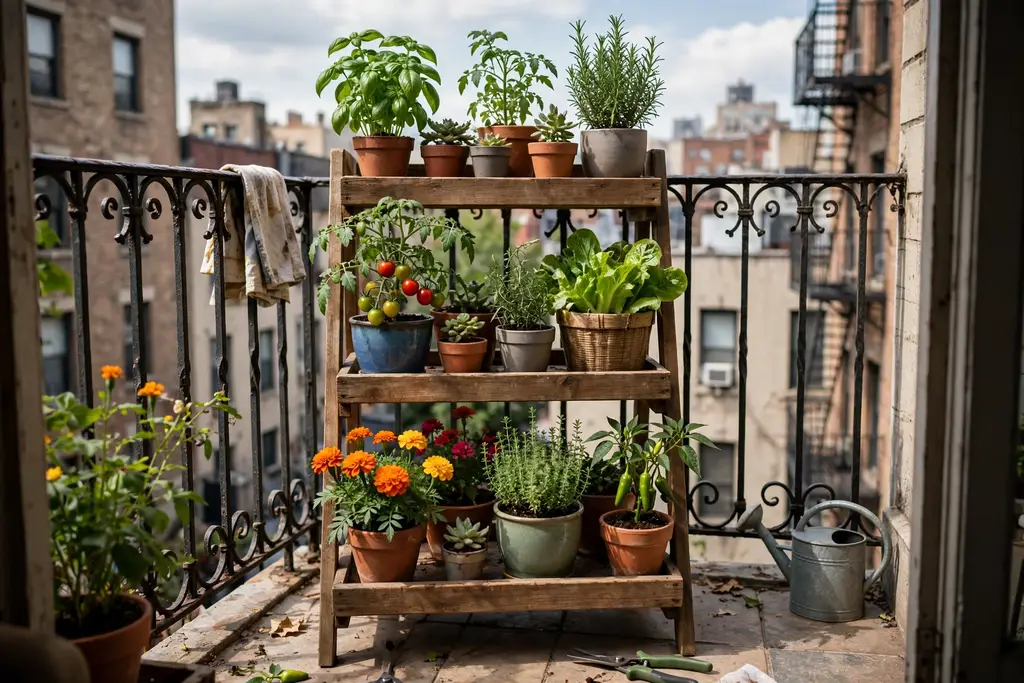
    4. Tiered Plant Stand

    Tiered plant stand with stacked pots of vegetables

    Use a tiered plant stand to stack pots in layers, so one square foot of floor holds three or four times the plants. Tiered stands suit balconies and small patios, where floor space is the limit. Put sun lovers on the top tier, shade tolerant plants lower down, and trailing plants on the edges so they can spill over.

    Choose a stand that is stable in wind, and place heavier pots on the lowest tier to keep it steady. Water the top tier first, since drips will reach the tiers below, and check lower pots for overwatering. A folding stand can come inside in winter, which suits renters and people with no storage shed.

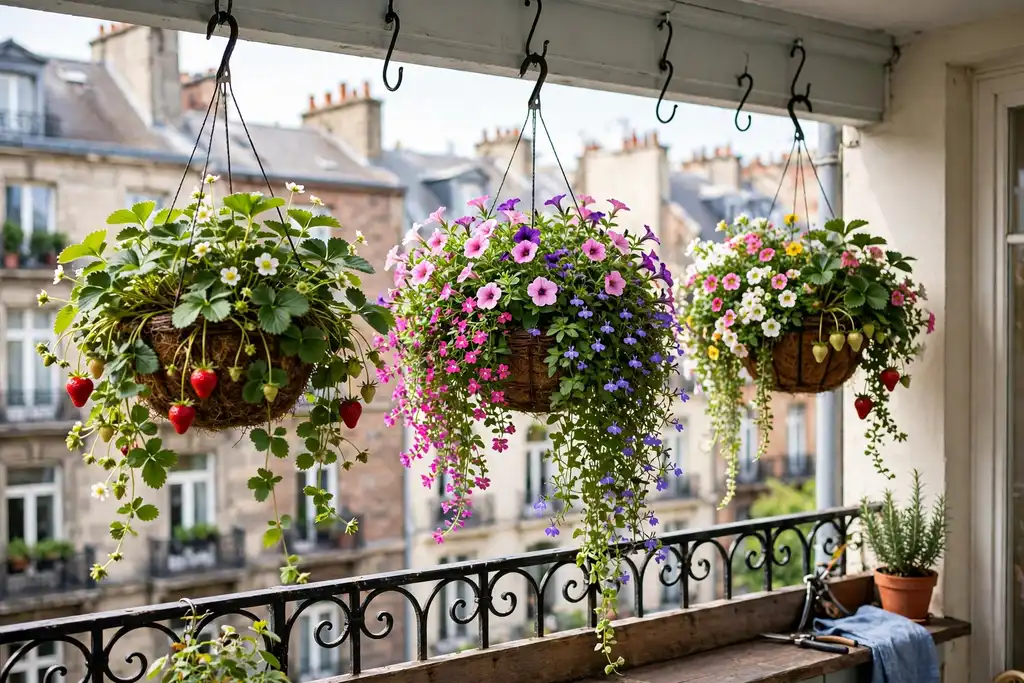
    5. Hanging Baskets from Ceiling Hooks

    Hanging baskets with trailing flowers and strawberries suspended above a small city balcony.

    Hang baskets from sturdy ceiling hooks to grow flowers, strawberries, and trailing herbs above head height. Hanging baskets use air space that otherwise goes unused, and they bring color to eye level on a plain balcony. Use light baskets with liners that hold moisture, and hang them where you can reach them with a watering can.

    Water hanging baskets daily in hot weather, since they dry out faster than ground level pots. Choose trailing plants such as lobelia, trailing rosemary, or strawberries for the edges, and upright plants for the center. Check the hook rating and the ceiling fixing before hanging a watered basket, since wet soil is much heavier than dry soil.

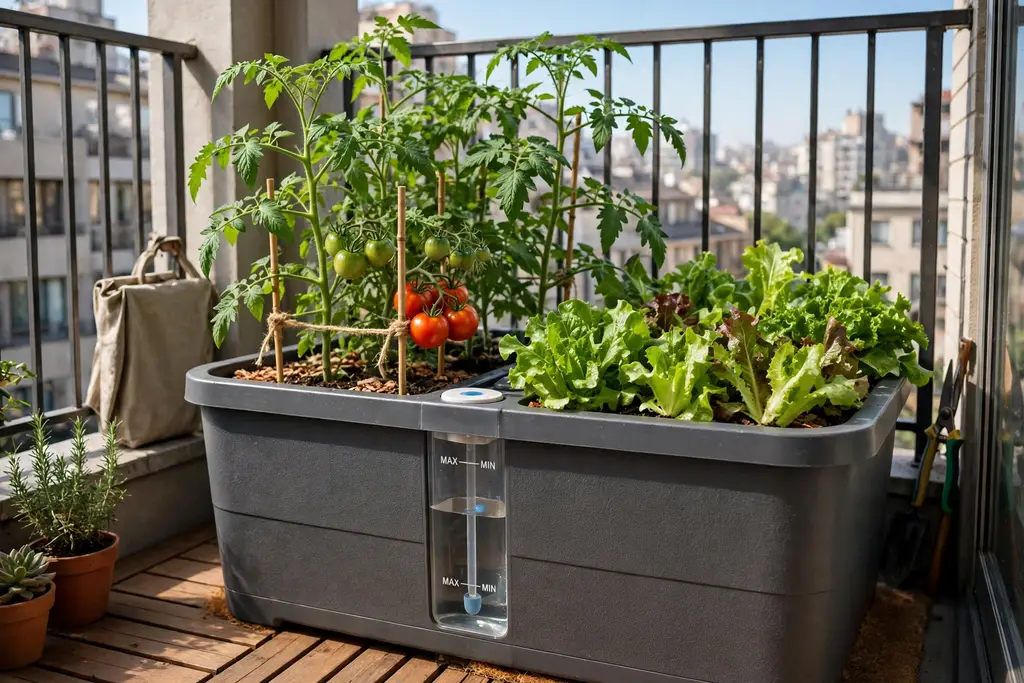
    6. Self Watering Containers

    Self watering container garden with a water reservoir tub planted with tomatoes and salad leaves on a city balcony.

    Grow tomatoes, peppers, and salad leaves in self watering containers that hold a water reservoir below the soil. A reservoir keeps moisture steady, which suits busy growers and hot balconies where pots dry out between waterings. Fill the reservoir as the maker advises, and top up when the gauge or filler pipe shows it is low.

    Use a light potting mix, not heavy garden soil, so water can wick up evenly. Mulch the surface to slow evaporation, and feed as the crop type requires, since reservoir watering can wash nutrients down over time. In rainy spells, check that the reservoir is not overflowing, and empty it before frost if the container could crack.

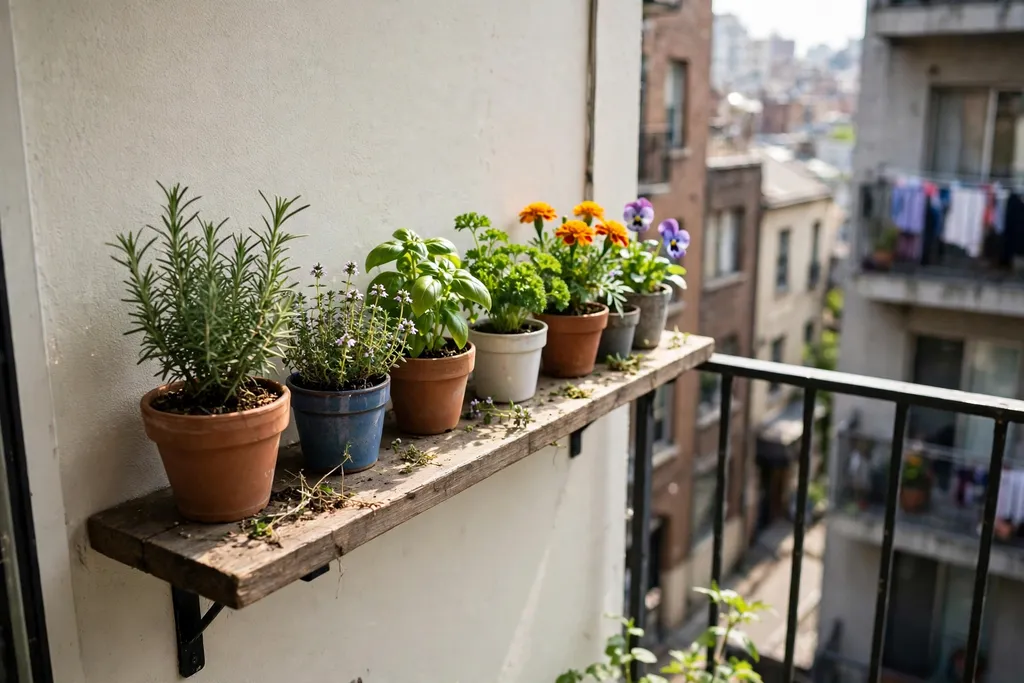
    7. Narrow Ledge Shelf Along the Wall

    Narrow wooden shelf ledge along a balcony wall holding small pots of herbs and flowers.

    Fix a narrow shelf along a balcony wall to hold small pots in a line, turning a dead strip of wall into a growing ledge. A ledge shelf suits shallow pots of herbs, succulents, and small flowers, and it keeps pots off the floor where space is tight. Choose a shelf depth that fits your pots with room to spare, and fix brackets firmly into the wall.

    Keep heavier pots near the brackets, and leave a gap at one end for a watering can. A second shelf above the first doubles the growing room, as long as lower plants still get light. If the balcony is rented, a freestanding narrow shelf unit gives a similar result without drilling.

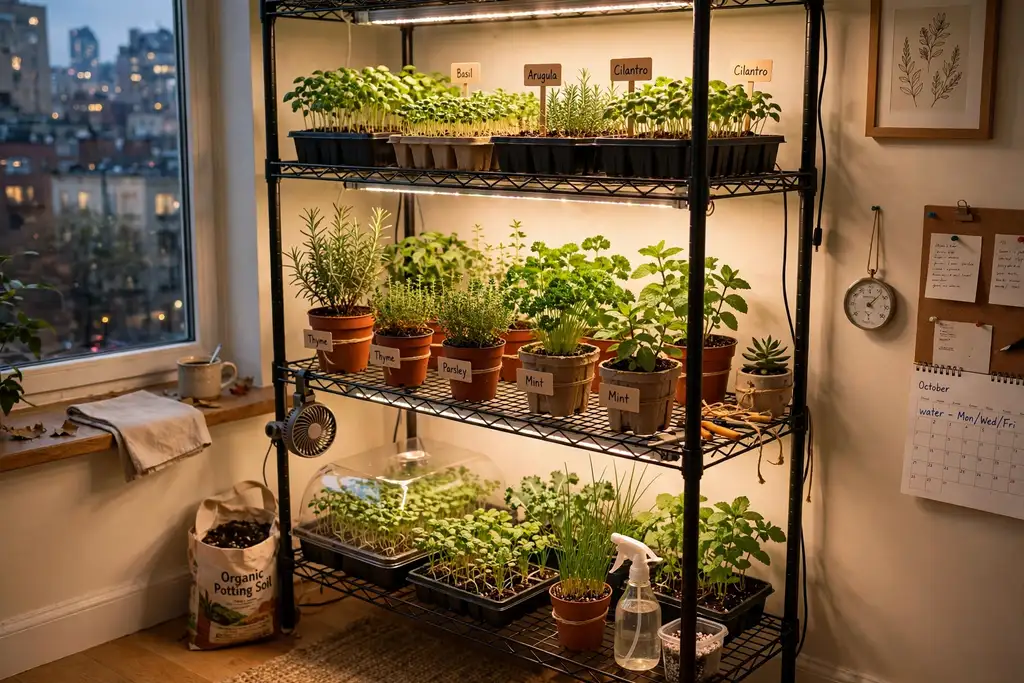
    8. Indoor Grow Light Shelf

    Indoor grow light shelf garden in a city apartment

    Set up a shelf with grow lights to raise seedlings, herbs, and leafy greens indoors all year. A grow light shelf suits flats with little natural light, and it lets you start seeds weeks before outdoor planting. Place lights close above the plants, raise them as plants grow, and run them on a timer for steady daily light.

    Start with herbs and salad leaves, which need less light than fruiting crops. Keep the shelf near a water source, and use trays under pots to catch drips. Check plants daily for dry soil, since indoor air can dry pots fast, and give seedlings a gentle fan breeze now and then to keep stems sturdy.

    9. Community Garden Plot Share

    Community garden plot in a city with neat raised beds and gardeners tending vegetables

    Join a community garden and take a shared or single plot if your home has no outdoor space at all. Community plots give room for vegetables, fruit, and flowers, plus shared tools, water, and advice from nearby growers. Ask about plot size, fees, rules, and waiting lists before joining, since popular gardens fill fast.

    Grow crops you eat often, and visit at least once a week in the growing season for watering and picking. Share the work fairly if the plot is shared, and label your rows so everyone knows what is planted where. A community plot also suits crops that need more room, such as squash and beans, which rarely fit a balcony pot.

    10. Rooftop Container Garden

    Rooftop container garden with lightweight pots of tomatoes

    Grow in lightweight containers on a roof terrace, where sun is often stronger and more even than at street level. Rooftop containers suit vegetables, herbs, and flowers, but wind, weight, and drainage need care. Use light pots, a free draining mix, and plants that cope with wind, and keep heavy items near load bearing walls where possible.

    Check building rules and weight limits before placing any container on a roof, and never block drains, access routes, or fire escapes. For roof planting, shade, and seating ideas that pair with containers, see these rooftop garden ideas. Water roof pots often, since sun and wind dry them fast, and add a wind screen on the windward side if plants keep getting battered.

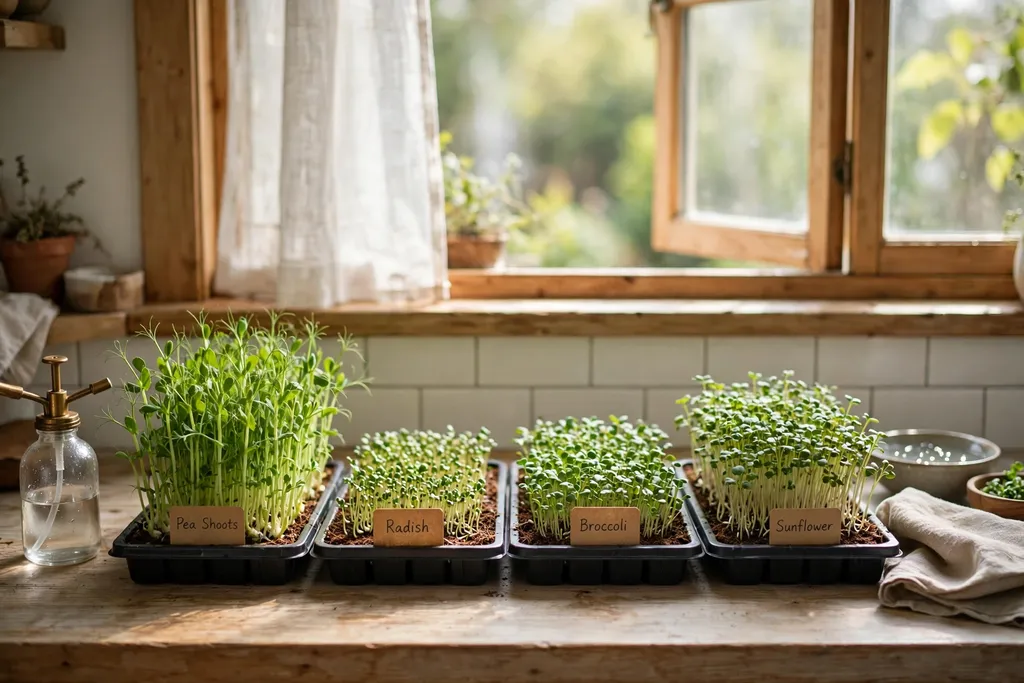
    11. Microgreen Trays Indoors

    Indoor microgreen trays on a kitchen counter near a window

    Grow microgreens in shallow trays on a kitchen counter for fast harvests in very little space. Radish, pea shoots, broccoli, and mustard microgreens are ready in one to three weeks, and they need only a sunny windowsill or a small grow light. Sow seed evenly on damp growing mix, cover until sprouts appear, then give light and water daily.

    Harvest with clean scissors just above the soil line, and wash greens gently before eating. Start a new tray each week for a steady supply, and compost the used mix or reuse it for non edible plants. Microgreens suit small kitchens well, since a tray takes less room than a single large pot.

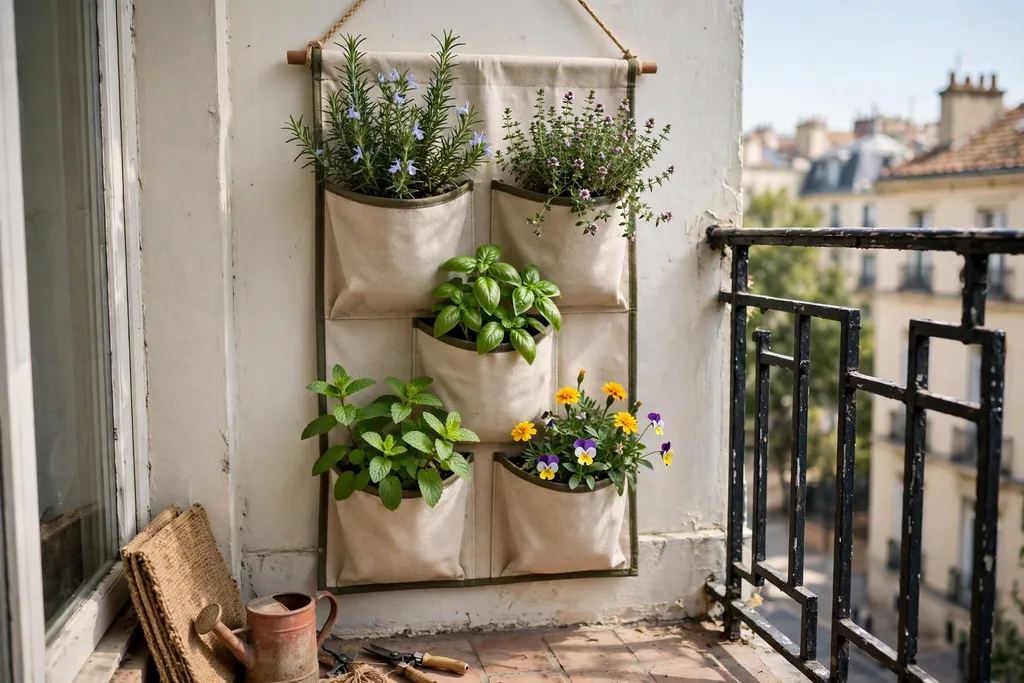
    12. Fabric Pocket Planter Wall

    Fabric pocket planter wall hanging on a small balcony

    Hang a fabric pocket planter on a wall or fence and plant each pocket with herbs, strawberries, or small flowers. Pocket planters suit narrow balconies and rented walls, since they hang from hooks and leave the floor free. Fill each pocket with potting mix, plant one or two plants per pocket, and water slowly from the top.

    Check that the wall can hold the weight of wet pockets, and use a drip tray or a waterproof backing if the wall must stay dry. Smaller pockets dry out fast, so water often in summer and group thirsty plants together. In winter, empty tender plants from the pockets and store the planter dry to keep the fabric in good shape.

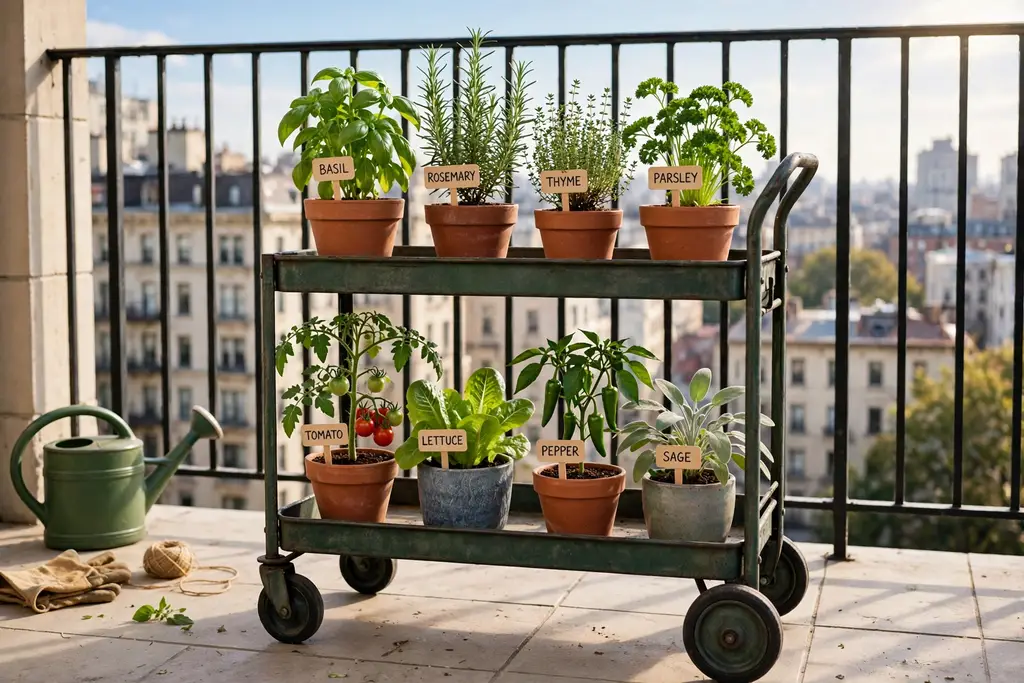
    13. Rolling Planter Cart

    Rolling planter cart with wheels holding pots of herbs and vegetables on a sunny city balcony.

    Put pots on a rolling cart with wheels so you can chase the sun across a balcony or move plants under cover before a storm. A rolling cart suits balconies where sun moves during the day, and it makes watering and cleaning easier, since the whole group moves at once. Choose a cart with locking wheels, and lock them once the cart is in place.

    Group plants with similar water needs on one cart, so watering stays simple. Keep the cart balanced, with heavier pots low, and check that wheels roll over thresholds without tipping. In winter, roll tender plants indoors or to a sheltered corner, and bring the cart back out when frost risk passes.

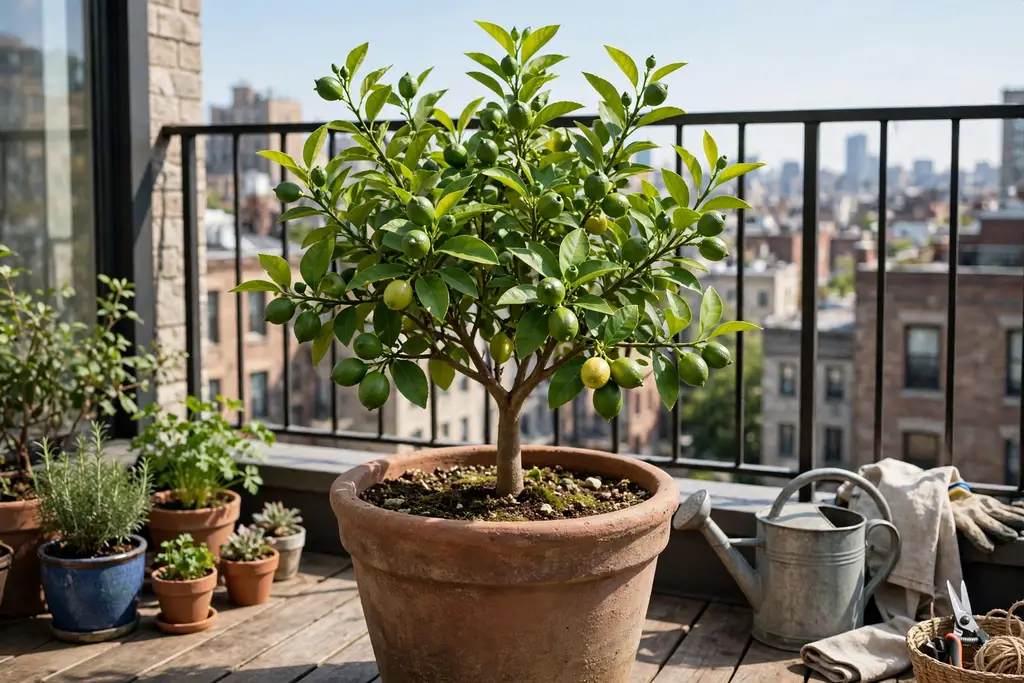
    14. Dwarf Fruit Tree in a Pot

    Dwarf fruit tree in a large pot on a city balcony with small lemons growing.

    Grow a dwarf fruit tree, such as a lemon, fig, or apple on dwarf rootstock, in a large pot on a balcony or patio. Dwarf trees stay small enough for containers, and they give fruit, flowers, and structure in one plant. Choose a pot at least as wide as the tree label advises, with drainage holes, and use a free draining mix.

    Water deeply but less often than small pots, and feed in the growing season as the tree type requires. Prune lightly each year to keep the shape compact, and move the pot to a sheltered spot in hard frost if the variety needs it. Check the mature size on the label before buying, since even dwarf trees need room to grow.

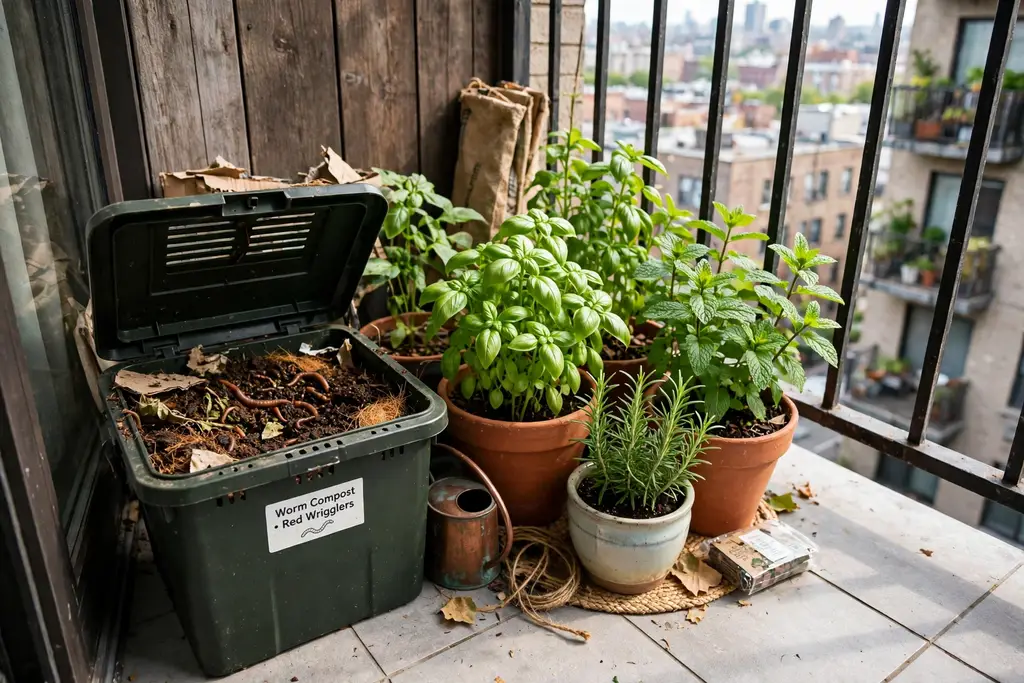
    15. Balcony Worm Bin

    Small balcony worm compost bin beside pots of healthy green plants on a city balcony.

    Keep a small worm bin on a balcony to turn kitchen scraps into rich compost for your pots. A worm bin suits city homes with no garden compost heap, and it gives a steady supply of worm castings that feed container plants. Feed the worms vegetable scraps, torn paper, and eggshells, and avoid meat, dairy, and oily food.

    Keep the bin in shade, since worms dislike heat, and keep the contents damp like a wrung out sponge. Harvest castings a few times a year, and mix a small amount into potting mix rather than using it straight. If the bin smells, add dry paper and cut back on feeding until the balance returns.

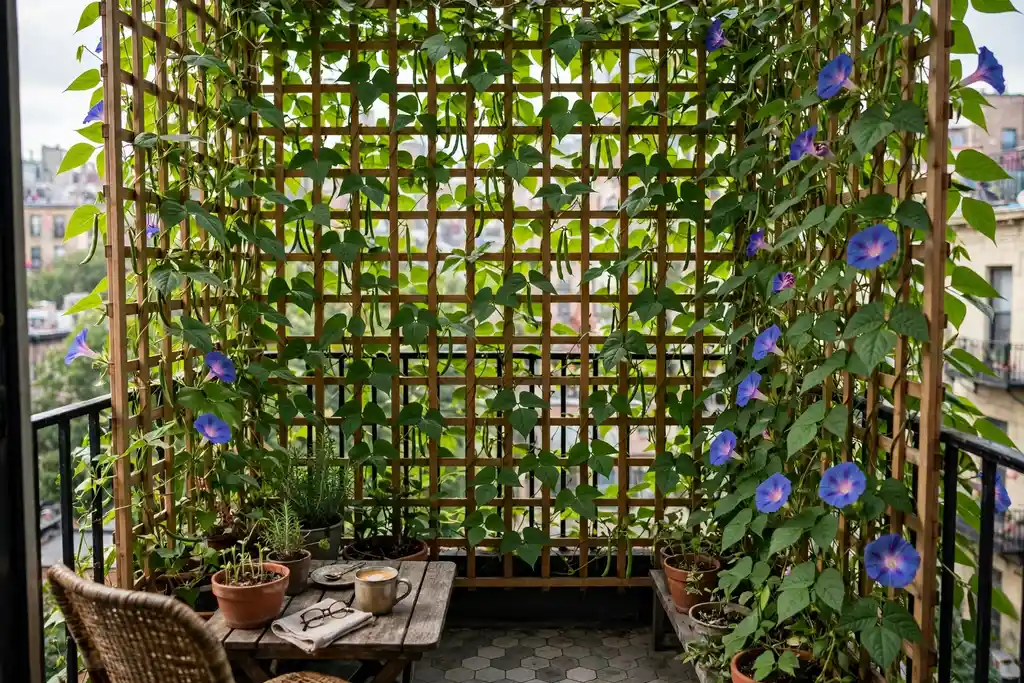
    16. Climbing Trellis Screen

    Trellis screen with climbing beans and morning glory flowers giving privacy on a small city balcony.

    Train climbing beans, peas, or morning glory up a trellis screen to grow food and flowers vertically while adding privacy. A trellis screen suits a balcony edge where neighbors can see in, and it shades a sunny seating spot in summer. Fix the trellis firmly, since a planted screen catches wind, and tie stems loosely as they grow.

    Plant annual climbers each spring for a fresh screen, or use a perennial climber where winters allow it. Water the base well, since climbers in pots dry out fast, and feed through the season for steady growth. Keep the trellis clear of drains and access routes, and prune back growth that blocks light to lower plants.

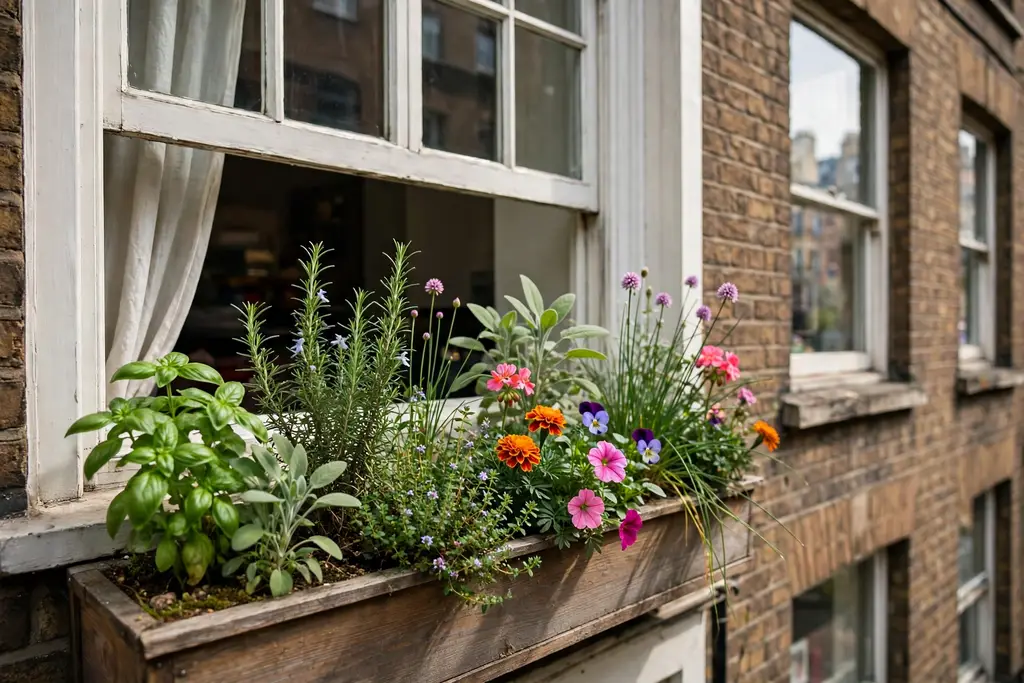
    17. Window Box with Herbs and Flowers

    Window box outside a city apartment window planted with herbs and colorful flowers.

    Fix a window box outside a window to grow herbs and flowers in a spot that needs no floor space at all. Window boxes suit kitchens and bedrooms, where herbs are close to hand and flowers can be seen from inside. Use a box with drainage holes, secure brackets rated for the full wet weight, and check building rules before fixing anything outside.

    Mix herbs such as parsley and chives with trailing flowers for color and use in one box. Water window boxes often, since they are shallow and exposed, and deadhead flowers to keep them blooming. In winter, swap tender plants for hardy herbs or evergreen foliage so the box still looks cared for.
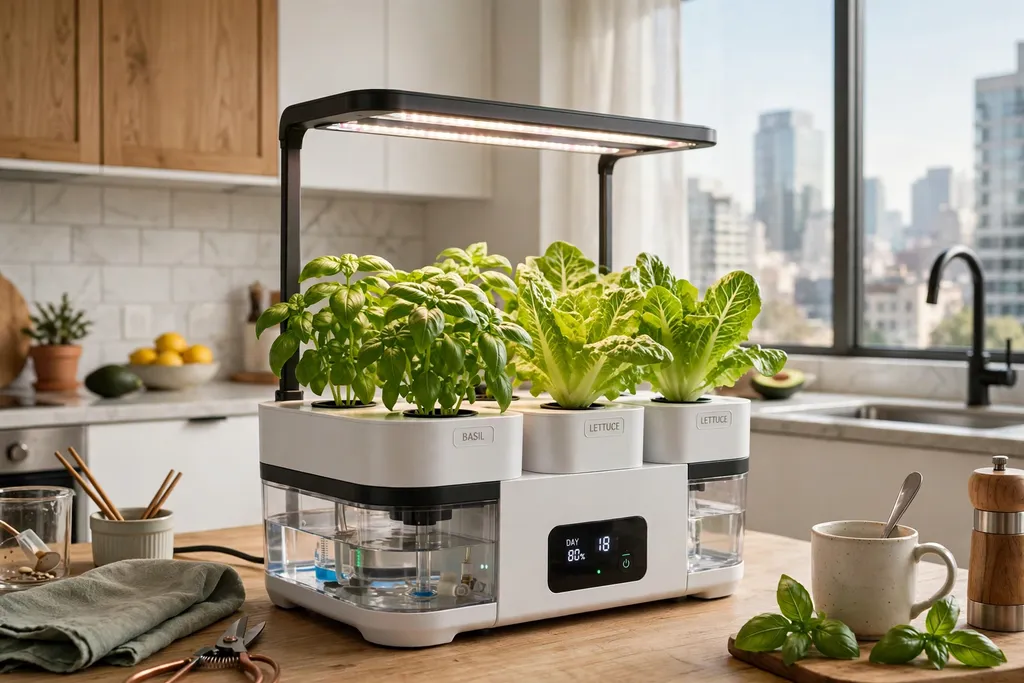
    18. Countertop Hydroponic Garden

    Small countertop hydroponic garden unit growing lettuce and basil in a bright city apartment kitchen.

    Grow lettuce, basil, and strawberries in a small countertop hydroponic unit that feeds plants with nutrient water instead of soil. A hydroponic unit suits flats with no outdoor space, since it needs only a counter, power, and water. Follow the unit instructions for nutrient strength, water level, and light hours, and change the water as advised.

    Start with leafy crops, which grow fast and forgive small mistakes. Keep the unit clean between crops, since algae can build up in standing water, and check roots for rot if growth slows. A hydroponic unit also suits winter growing, when outdoor pots slow down and fresh leaves are harder to come by.

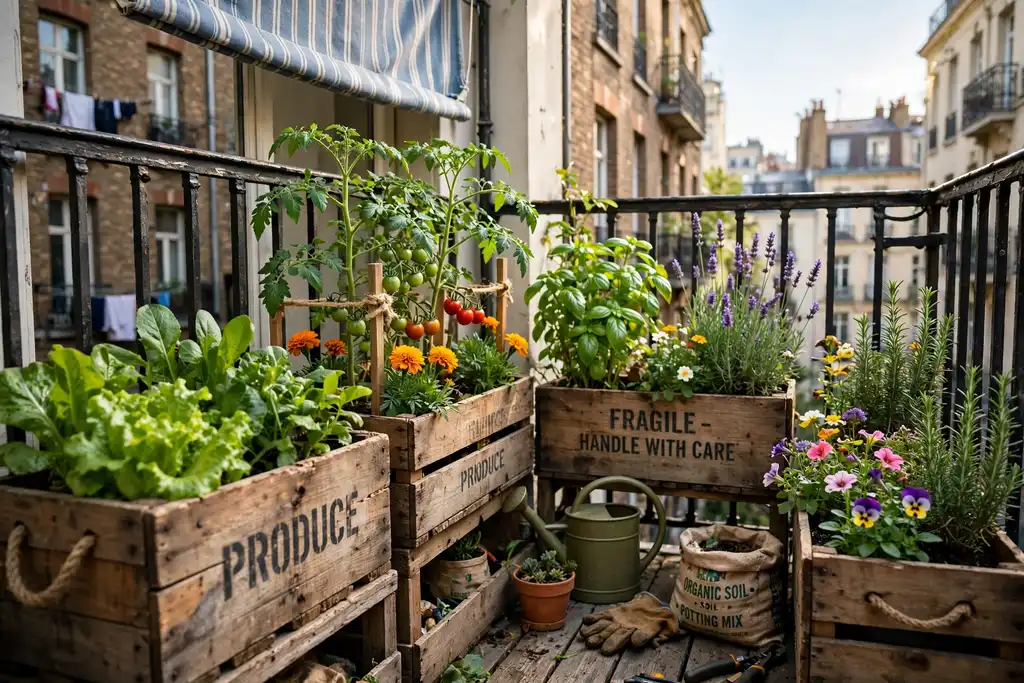
    19. Repurposed Crate Garden

    Repurposed wooden crates turned into planters with vegetables and flowers on a small city balcony.

    Turn sturdy wooden crates into planters for vegetables and flowers, lining each crate and drilling drainage holes before filling it. Crate gardens suit small budgets and small balconies, since crates stack, move, and fit awkward corners. Line the inside with landscape fabric to hold soil while letting water drain.

    Raise crates on feet or bricks so air flows beneath them and the wood dries between waterings. Plant shallow rooted crops such as salad leaves, radishes, and herbs in single crates, and stack crates in steps for taller plants. Replace or repair crates when the wood softens, since a rotten crate can spill soil onto the balcony.

    20. Shared Courtyard Raised Bed

    Shared courtyard raised bed garden between city apartment buildings with vegetables

    Share a raised bed in a building courtyard with neighbors, so everyone gets growing room without owning a garden. A shared bed suits herbs, salads, and flowers that many people use, and it spreads the work of watering and weeding across the group. Agree who plants what, who waters on which days, and how the harvest is shared before planting.

    Build the bed with good drainage and a path beside it wide enough to work from. Keep one section for each household if sharing gets complicated, and label crops so no one picks the wrong plant. A courtyard bed also gives a reason to meet neighbors, which often keeps the bed watered even when one household is away.

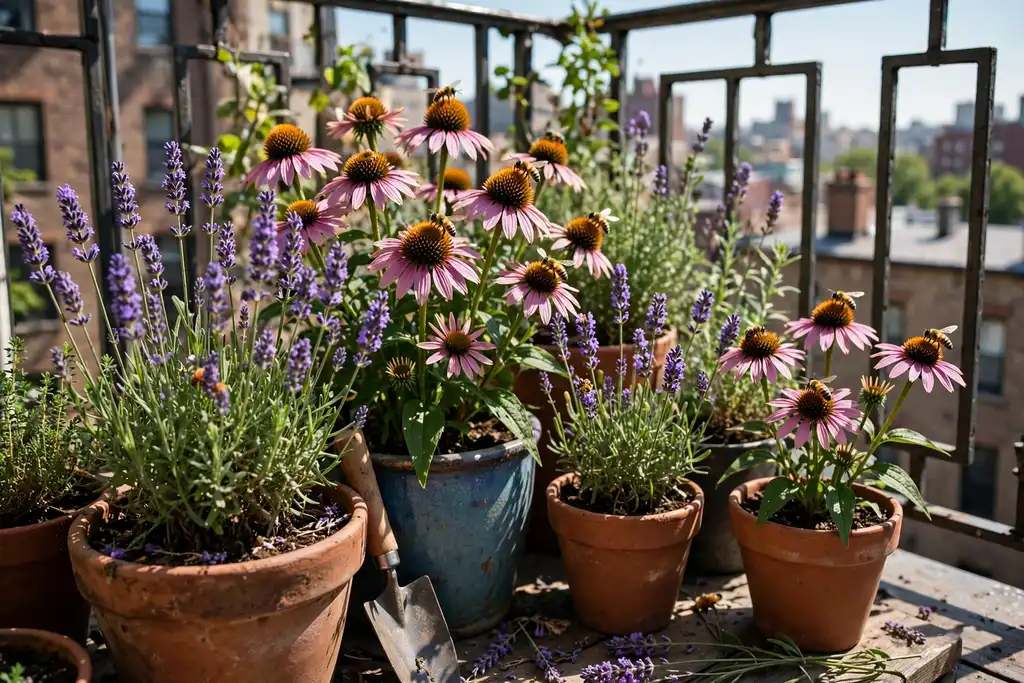
    21. Pollinator Pot Cluster

    Cluster of pots with pollinator flowers

    Group pots of pollinator friendly flowers, such as lavender, coneflowers, and single open blooms, into a cluster on a balcony or doorstep. Pollinators visit city balconies when flowers are grouped in drifts, not scattered as singles, so plant three or five of each type together. Choose plants that flower in different months, so food is available from spring to autumn.

    Avoid spraying open blooms, and leave some seed heads standing in autumn for birds. Place the cluster where bees can reach it without crossing a busy seating area, and keep a shallow dish of water with pebbles nearby in hot weather. A pollinator cluster also adds color and scent near seating, which makes a small outdoor space feel alive in summer.

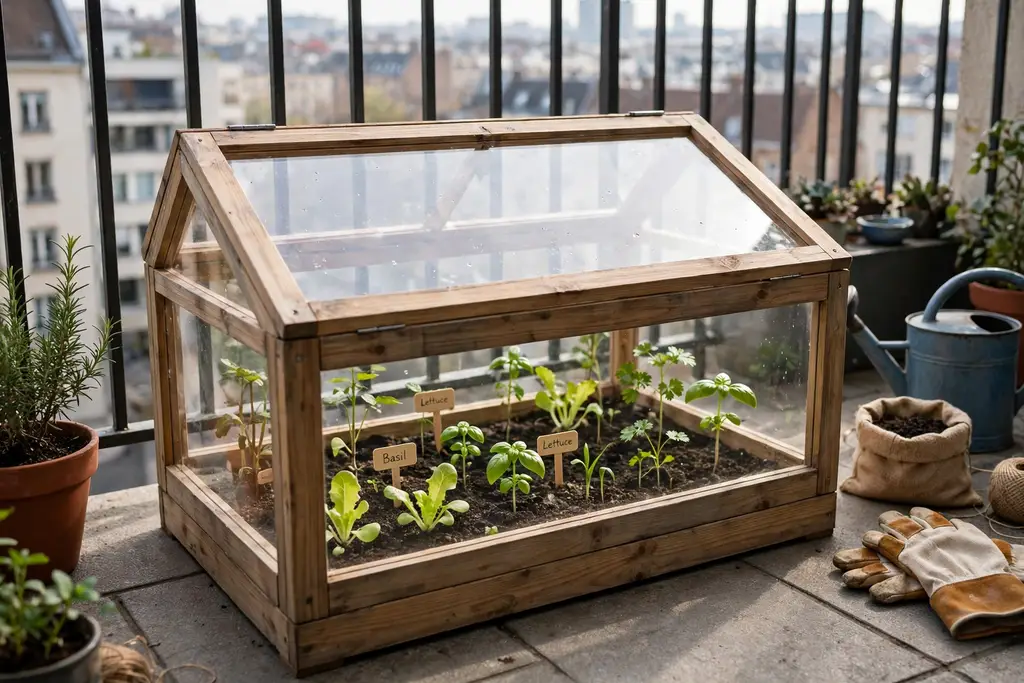
    22. Cold Frame Mini Greenhouse

    Small cold frame mini greenhouse with a clear lid protecting young plants on a city balcony.

    Place a small cold frame with a clear lid on a balcony to protect young plants and stretch the growing season. A cold frame warms soil in spring, shelters seedlings from wind, and keeps salads growing later into autumn. Open the lid on warm days for air, and close it at night or before frost to hold warmth inside.

    Start seeds in the cold frame a few weeks earlier than outdoors, and harden plants off by opening the lid longer each day before moving them out. Water sparingly, since a closed lid holds moisture, and check for overheating on sunny days. A folding cold frame can pack away in summer, which suits balconies with no storage room.

    Conclusion

    A small city space can hold a real garden when each spot is used for what it suits best. Rails and walls carry herbs and flowers, shelves and carts add room without new floor space, and shared plots and courtyards give room for bigger crops. Start with one container in your sunniest spot, learn how fast it dries out, and add the next idea only when the first one is thriving. For level and structure ideas that pair with stepped containers and small outdoor areas, see these tiered garden ideas. Save the solutions that fit your light, your lease, and your routine, and let the garden grow one pot at a time.

    FAQs

    What is the easiest urban gardening solution for a beginner?

    A windowsill herb garden is the easiest place to start. It needs only a sunny window, small pots with drainage, and herbs such as basil, mint, and parsley that you use often. Water when the top inch of soil feels dry, pick little and often, and move the pots to the brightest window in winter.

    Can I grow vegetables on a small balcony?

    Yes, if you choose compact crops and match them to your sun. Salad leaves, herbs, radishes, dwarf tomatoes, and climbing beans all grow well in pots. Use containers at least as deep as the crop label advises, water often in hot weather, and feed through the season, since pot soil runs out of nutrients faster than garden soil.

    How do I water container plants when I am away?

    Self watering containers, a reservoir system, or a simple drip setup help most, since pots dry out fast in sun and wind. Move pots into shade before you leave, mulch the surface, and ask a neighbor to check thirsty plants in a heatwave. Grouping pots together also slows drying, since the group shades its own soil.

    What grows well in shade on a city balcony?

    Leafy greens such as lettuce, spinach, and chard cope with partial shade, as do herbs such as mint, parsley, and chives. Ferns, hostas in pots, and shade tolerant flowers such as impatiens and begonias also do well out of direct sun. Avoid fruiting crops in deep shade, since they need strong sun to ripen.

    Do I need permission to garden on a balcony or roof?

    Often, yes, so check first. Building rules may cover weight limits, fixing things to rails and walls, water drainage onto neighbors, and roof access. Ask the building manager or landlord before drilling, hanging heavy planters, or placing containers on a roof, and keep drains, fire escapes, and access routes clear at all times.

    How do I keep a small urban garden low cost?

    Start with what you already have: reuse crates and tubs with drainage holes added, swap cuttings and seeds with neighbors, and grow from seed rather than buying large plants. A community plot or shared courtyard bed spreads costs further, and compost from a small worm bin feeds pots without buying bags of feed every season.


  • 14 Japanese Apartment Design Ideas to Inspire Your Next Room Refresh

    14 Japanese Apartment Design Ideas to Inspire Your Next Room Refresh

    A Japanese apartment feels calm because every piece has a clear job and the floor stays open. Low furniture, natural wood, soft paper light and one well placed plant can make a small room feel larger, quieter and easier to keep tidy. These 14 Japanese apartment design ideas adapt those habits for rented rooms and small homes, without a remodel. You will find tatami zones, shoji screens, genkan entries, hidden storage and flexible rooms that change from day to night. Start with one idea, such as clearing the floor or adding a low table, and let the rest follow at your own pace.

    Key Takeaways

    • Keep the floor open first, then add furniture. Empty floor space is part of the design, not wasted space.
    • Choose low, light furniture in natural wood so sight lines stay clear across a small room.
    • Give every item a closed home, so surfaces stay clear and tidying takes minutes.
    • Use soft, layered light from paper lamps and low lamps instead of one harsh ceiling light.
    • Add nature in small doses: one plant, one branch, or a view framed by a clear window.
    • Let one room do two jobs with sliding screens, a foldaway table, or a futon that stores away by day.

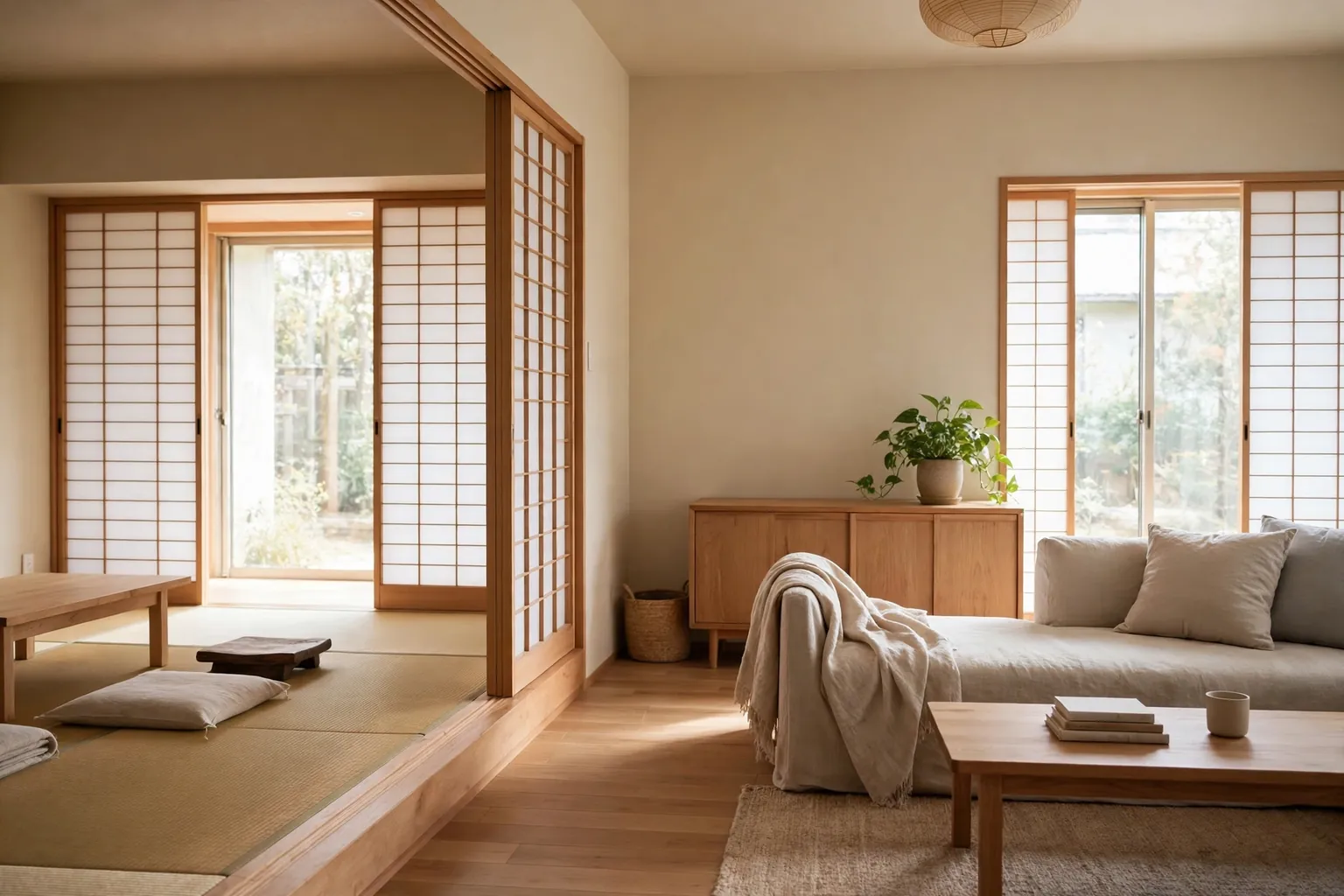
    1. Tatami Zone for Floor Living

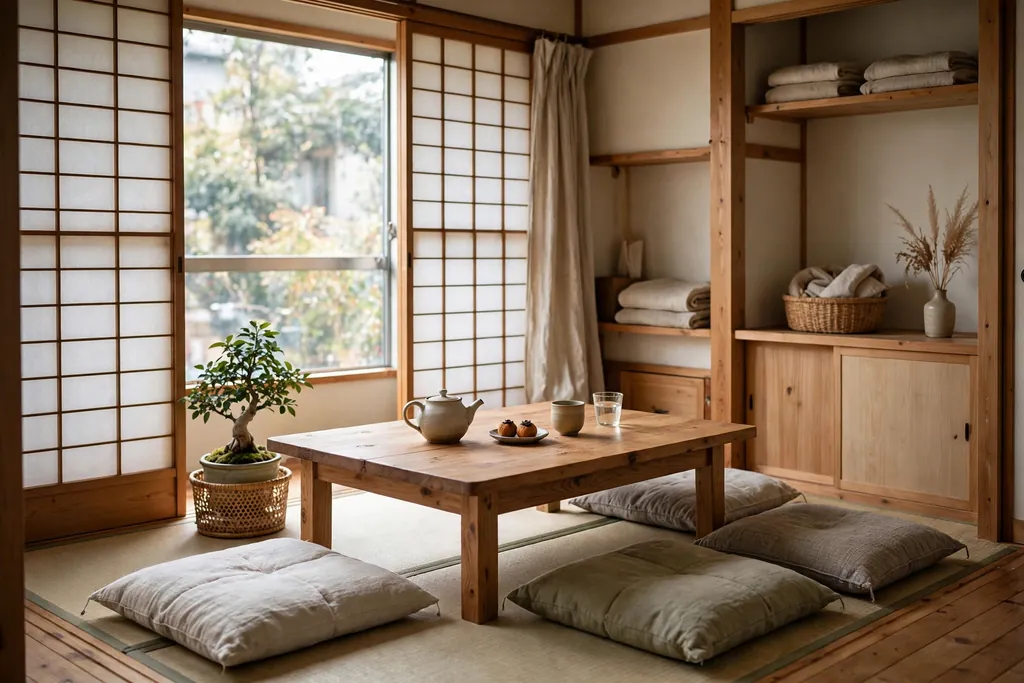
    Tatami mat zone in a small apartment with floor cushions and a small tray.

    Lay a tatami mat, or a woven rush rug that echoes tatami, in one clear corner to mark a floor living zone. This spot becomes the place for tea, reading, or sitting with friends, and it changes how the whole room feels because the floor itself becomes seating. Keep the zone free of tall furniture so the low line of sight stays open.

    Add floor cushions, called zabuton, and a small tray for cups, and remove shoes before stepping onto the mat, as you would on real tatami. A woven mat is easier to clean and move than fixed flooring, which suits renters. If the room is carpeted, a firm mat on top still gives a clear edge and a sense of place.

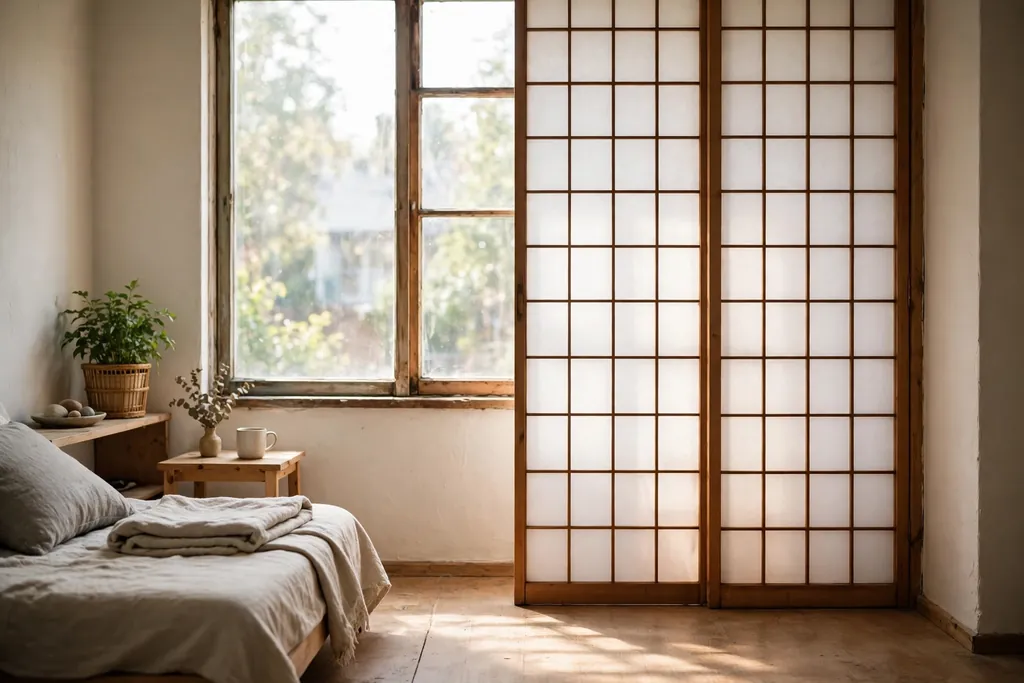
    2. Shoji Screens for Soft Light

    Shoji screen beside a bright window spreading soft light through a small apartment.

    Use a shoji screen, or a freestanding screen with translucent paper panels, beside a window or across a doorway to soften daylight. Shoji screens spread light evenly through a room and give privacy without blocking the sun, which matters in a small apartment where a solid curtain can darken the whole space.

    Place the screen where it catches morning or afternoon light, and keep the path behind it clear so it can slide or fold easily. A lightweight freestanding screen needs no wall fixing, so it suits rented homes. Choose a simple wooden frame and plain paper, and avoid patterned screens that compete with the calm palette of the room.

    3. Low Platform Bed in a Sleeping Nook

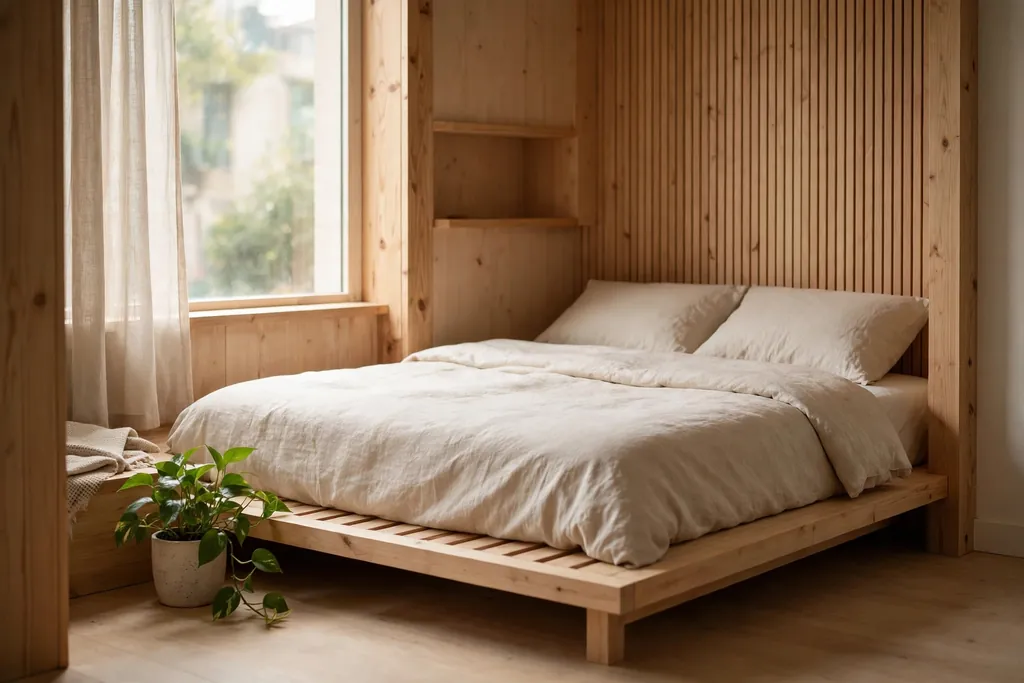
    Low platform bed in a quiet apartment sleeping nook with plain bedding and a plant.

    Set a low platform bed, or a futon on a low wooden base, in the quietest corner of the room to create a sleeping nook that feels grounded. A low bed keeps the ceiling height visible and makes a small bedroom feel taller, while the simple frame leaves room for a plant or a small shelf beside it.

    Keep bedding in warm white, soft grey, or pale beige, and fold a throw at the foot of the bed instead of piling cushions. If space is very tight, a futon that rolls away by day frees the same floor for living space, which is the flexible approach used in many Japanese homes. The zoning advice in these studio apartment decorating ideas helps a sleeping nook share a room with living and work zones.

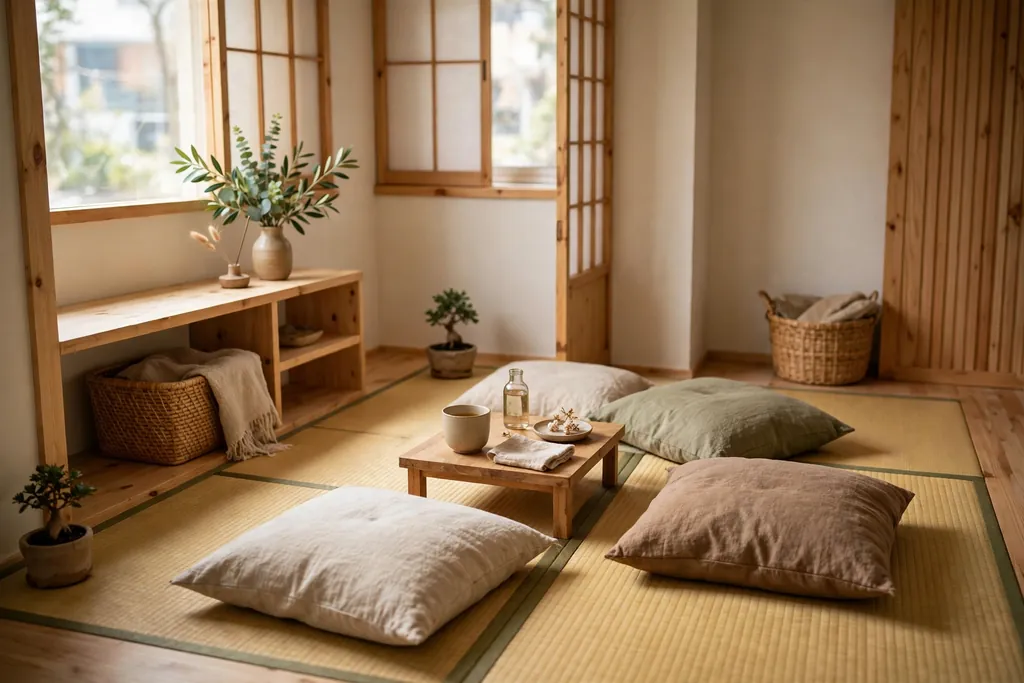
    4. Low Wooden Table with Floor Cushions

    Low wooden table with floor cushions in a small Japanese apartment living area.

    Place a low wooden table, called a chabudai in a traditional setting, at the centre of the tatami zone for meals, work, and conversation. Sitting on floor cushions around a low table keeps the room open, and the table itself becomes a gathering point that does not block views across the apartment.

    Choose a table with a plain wood top and simple legs, sized so everyone can reach the centre without stretching. Store the cushions in a basket or on a low shelf when the table is not in use, so the zone stays clear. A foldaway low table gives the same effect in a room that also needs floor space for exercise or guests.

    5. Genkan Entry with a Step and Shoe Storage

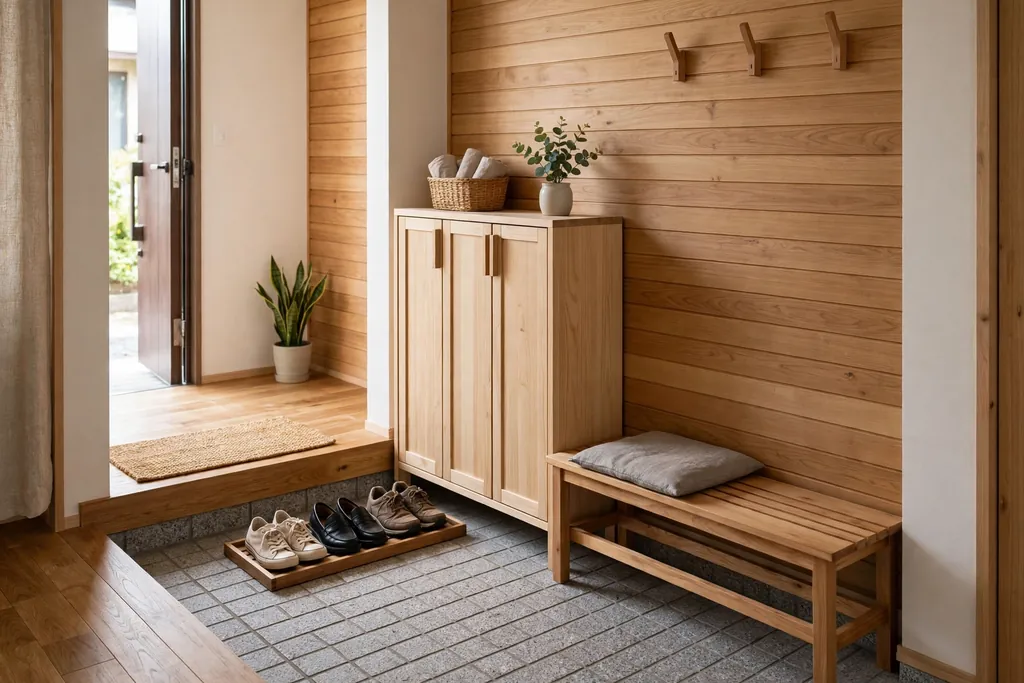
    Genkan style apartment entry with a shoe tray, low bench, and a slim shoe cabinet.

    Create a genkan style entry by marking a clear shoe zone just inside the door, with a low step, a tray, or a different rug from the main floor. This small change keeps outdoor dirt out of the living area and gives every arrival a clear first step: shoes off, shoes stored, then step into the home.

    Use a slim shoe cabinet, a low bench with baskets beneath, or wall hooks for a bag and a coat, keeping the entry to one tidy group. A tray catches wet shoes, and a small dish holds keys. Keep the entry clear of parcels and extra coats, since a calm entry sets the tone for the rest of the apartment.

    6. Hidden Storage Behind Flat Doors

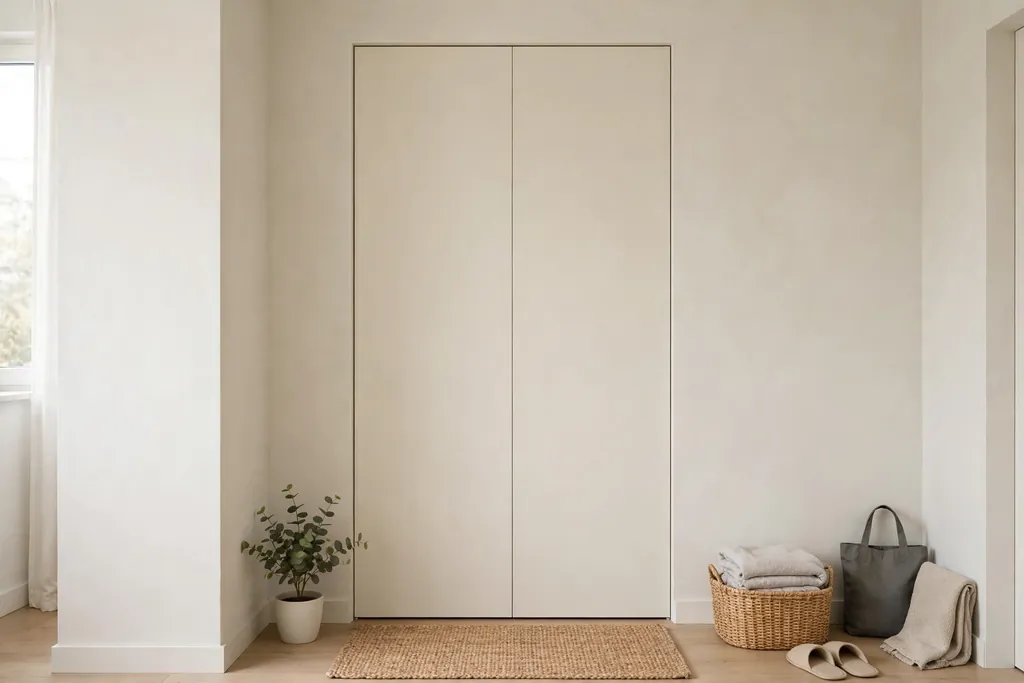
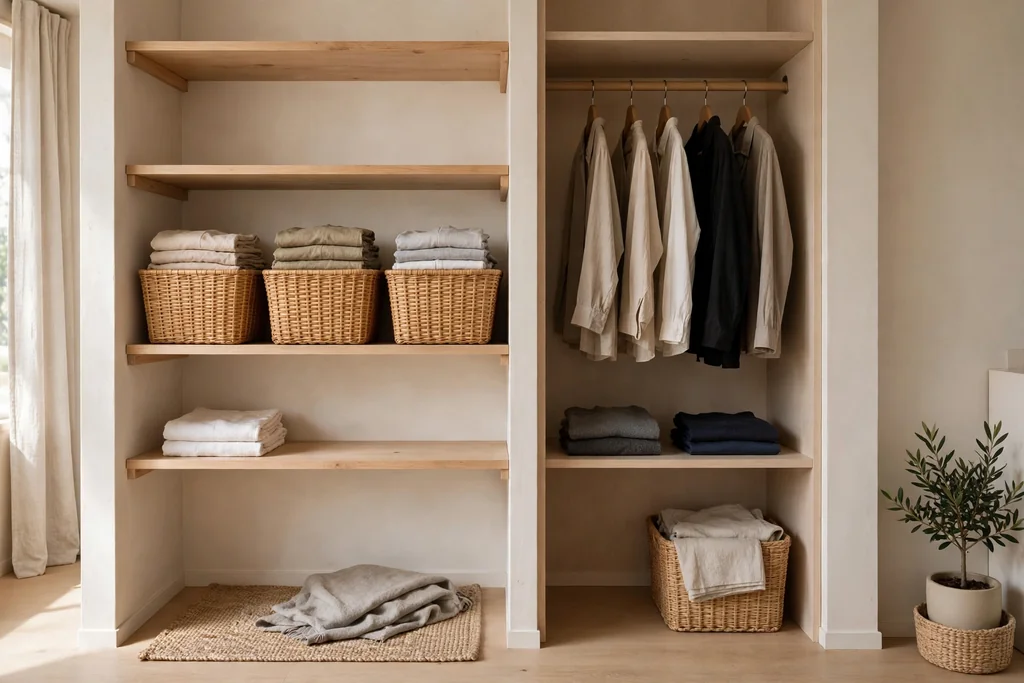
    Apartment closet with flat plain doors blending into a pale wall, closed and tidy.

    Hide storage behind flat, handle free doors or simple curtain panels so clothes, cleaning items, and spare bedding stay out of sight. Japanese apartments often use large closets, called oshiire, with plain doors that blend into the wall, and the same idea works with a freestanding wardrobe or a closet fitted with plain fronts.

    Sort each closet by use, with daily items at hand height and seasonal items up high, and label boxes inside so nothing needs a long search. The basket and bin grouping in these bedroom storage ideas works well inside a plain closet too. Leave one shelf partly empty, so new items have a place instead of landing on a chair.

    7. Washi Paper Lighting for a Soft Glow

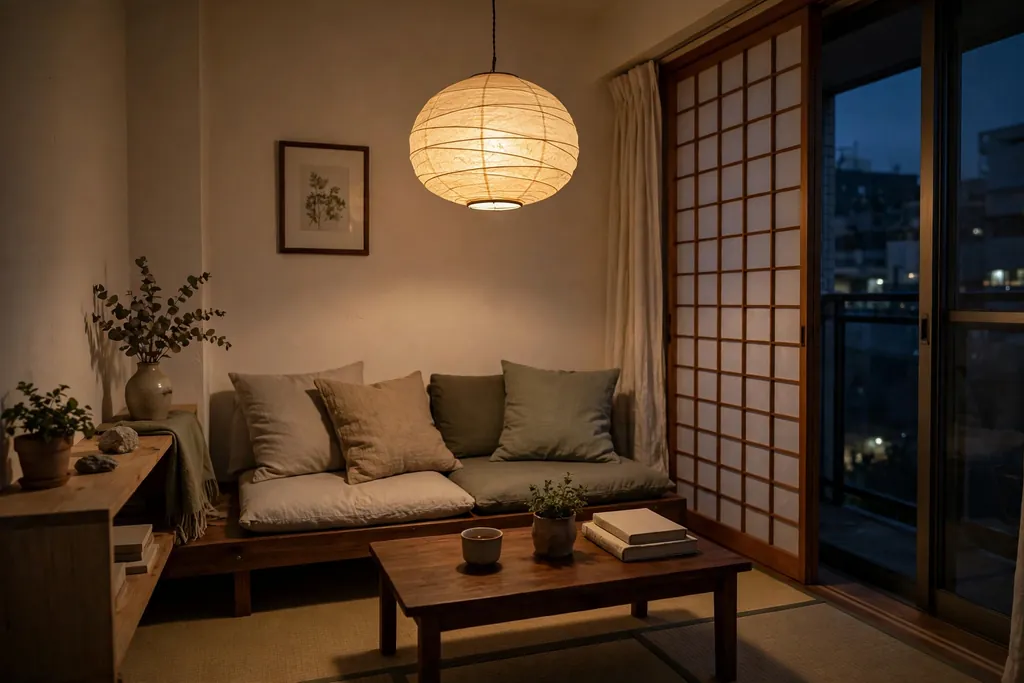
    Small apartment in the evening lit by a washi paper lamp with a soft warm glow.

    Light the room with washi paper lamps, paper lanterns, or a lamp with a plain fabric shade that spreads a soft glow. Paper light feels warm and even, and it suits evening meals, reading, and quiet time far better than a single bright ceiling light in a small room.

    Layer the light at two or three heights: a floor lamp or paper lantern at seating height, a small table lamp beside the bed, and daylight through a shoji screen by day. Use warm bulbs and a dimmer where you can, and keep lamp shades plain so the light, not the lamp, is the focus. Paper shades need care near heat, so check the bulb guidance for your lamp.

    8. Natural Wood and Bamboo Accents

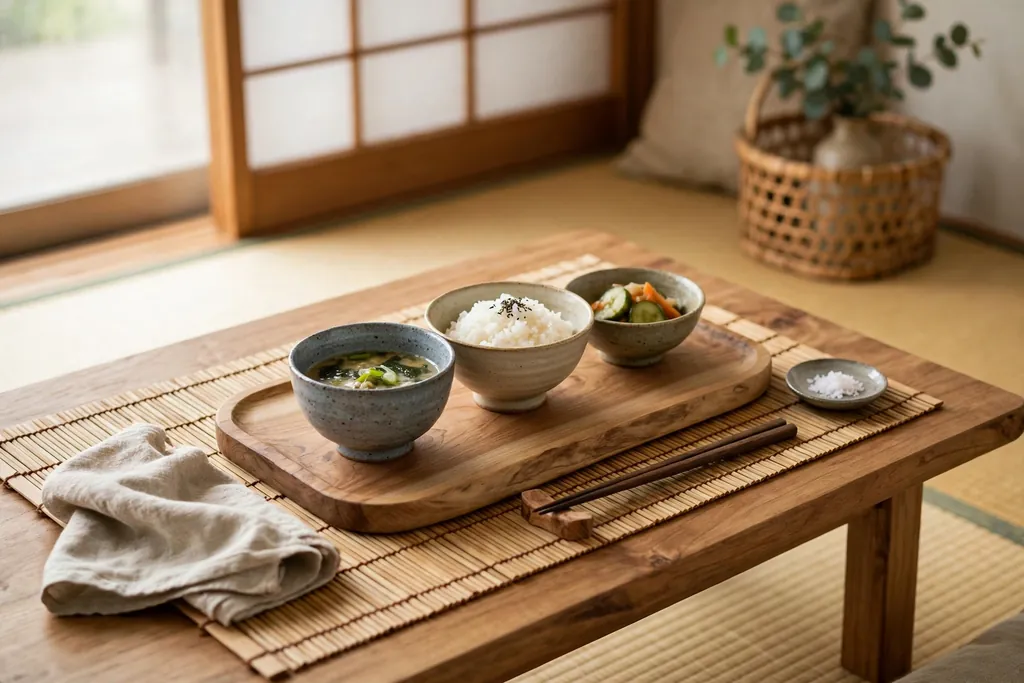
    Japanese apartment detail with natural wood tray, bamboo mat, and ceramic bowls.

    Bring in natural wood and bamboo through a bench, a tray, a shelf, or chopstick rests and small bowls, rather than through large new furniture. Wood grain, bamboo, and woven fibres add warmth and texture to a room that might otherwise feel plain, and they age with small marks that suit a lived in home.

    Keep the wood tones close together, such as light oak, pale bamboo, and warm walnut in small doses, so the room reads as one calm palette. A wooden tray on the low table, a bamboo mat in the entry, and a wood frame on the wall are enough. Avoid glossy or heavily patterned finishes, which can make a small room feel busy.

    9. One Focal Plant and a Framed View

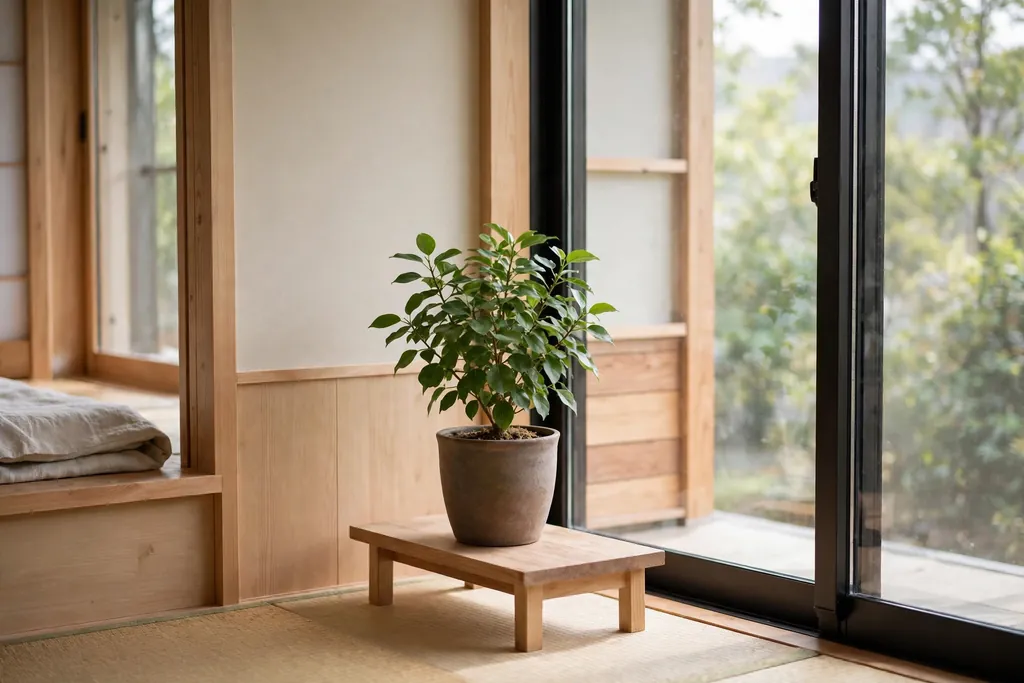
    Single potted plant on a low stand in a calm Japanese apartment beside a clear window.

    Choose one focal plant, such as a small pine, a bamboo stem in a ceramic vase, or a bonsai on a low stand, and place it where you see it from your main seat. One plant, given a clear spot and a plain pot, draws the eye and brings nature indoors without filling every surface with greenery.

    Frame the view too: keep one window clear of clutter, or hang one simple print of a mountain, a river, or a branch on an otherwise plain wall. Match the plant to the light it will actually get, use a saucer under the pot, and start with one plant before adding more. A single strong plant beats a crowded shelf of plants that are hard to care for.

    10. Warm Neutral Palette with Linen and Cotton

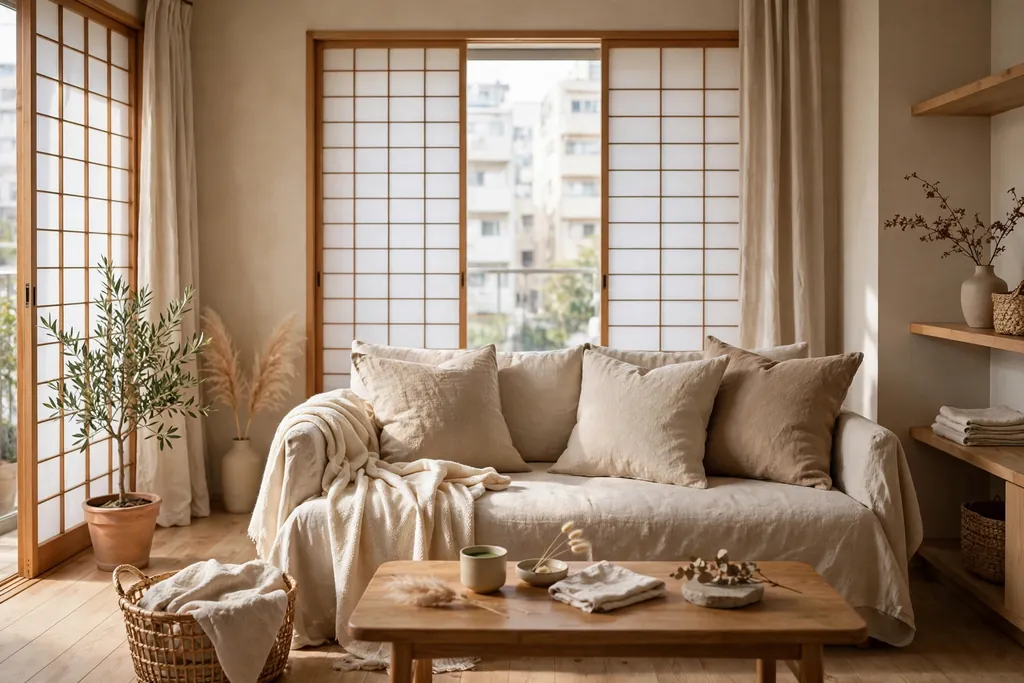
    Japanese apartment living room in warm neutrals with linen cushions and a cotton throw.

    Use a warm neutral palette of soft white, warm beige, pale grey, and muted clay on walls, bedding, and large furniture, then add texture with linen, cotton, and wool. Texture, rather than strong colour, gives a Japanese apartment its warmth: a linen cushion, a cotton throw, a wool rug, and a woven basket each feel different to touch.

    Keep strong colour to one or two small accents, such as a dark ceramic vase or a deep green plant pot, and repeat that accent in one other spot so the room feels linked. If you rent and cannot paint, a large rug, curtains in a warm neutral, and bedding in the same palette give the same calm base with no fixed change.

    11. Sliding Fusuma Panels for a Flexible Room

    Sliding panels partly open between a sleeping nook and a living area in a small apartment.

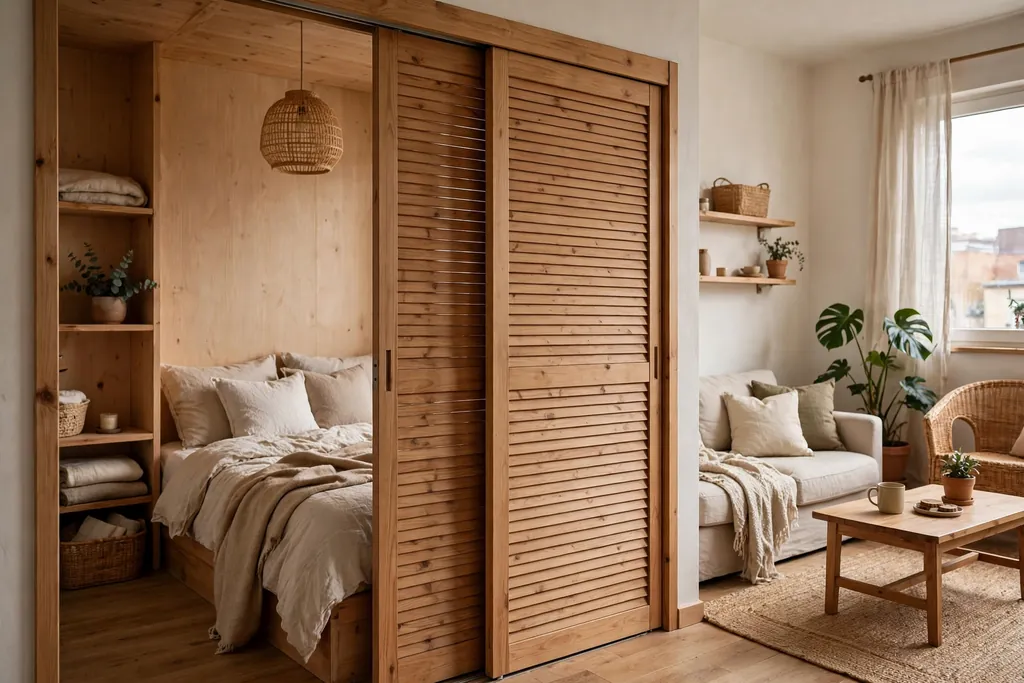
    Use sliding panels, a ceiling track curtain, or a freestanding screen to divide one room into two zones that can open again in seconds. Fusuma panels are opaque sliding doors in a traditional home, and a modern version lets a sleeping nook close at night and open into the living area by day.

    Keep the divider light and simple, with plain panels that slide easily on a track, and leave a clear walking route around one end so the division never feels like a wall. A curtain on a ceiling track gives a softer, renter friendly version of the same idea. The divider guidance in these cozy apartment living room ideas shows how an open divider can mark a boundary without blocking light.

    12. Compact Kitchen with Clear Counters

    Compact Japanese apartment kitchen with clear counters and a small tray of daily items.

    Keep kitchen counters clear by storing appliances in one cabinet, using a tray for daily items, and giving every tool a fixed spot. Japanese apartment kitchens are often compact, so they work because only daily items stay out: a kettle, a cutting board, and a small tray for oils or tea.

    Use vertical storage inside cabinets, such as shelf risers and hooks on the inside of doors, and a rolling cart that parks beside the counter when extra prep space is needed. Wipe counters after cooking and return items to their cabinet the same evening, so the kitchen stays ready for the next meal. A clear counter also makes a small kitchen feel larger and calmer.

    13. Engawa Style Window Seat and Balcony Link

    Low window seat bench with a cushion beside a bright apartment window.

    Turn the strip beside the window into an engawa style seat, with a low bench, a cushion, and a clear view outside, so the room feels linked to the balcony or the street. This narrow seat works for morning tea, reading, or putting on shoes, and it gives a small apartment a breathing space at its edge.

    Keep the seat cushion in a washable cover, add a small shelf or hook nearby for a book and a cup, and keep the window glass clear so daylight reaches deep into the room. If you have a balcony, carry a mat and a small table outside in good weather, then bring them back in, so the outdoor space extends the room without a permanent setup.

    14. Tokonoma Alcove with One Rotating Display

    Small alcove display with a single vase and branch on a plain shelf in a Japanese apartment.

    Set aside one small alcove, shelf, or wall niche as a tokonoma style display, with one object at a time: a vase with a single branch, a small ceramic bowl, or one framed print. Rotating the display with the seasons, or when you find a new piece, keeps the room feeling fresh without buying new furniture.

    Keep the alcove plain, with a clear background and no other objects competing for attention, and place it where you pass it daily, such as beside the entry or at the end of a hallway. Change the display only when the season changes or the branch fades, so the single object gets time to be noticed. This quiet focal point sums up the whole approach: less on show, more noticed.

    Conclusion

    A Japanese apartment design is not about buying a full set of new furniture. It is about an open floor, low furniture, natural materials, soft light, and storage that keeps surfaces clear. Start with the floor and the entry, add a low table and a paper lamp, and finish with one plant and one display that you truly notice. Work through this list one idea at a time, live with each change for a week, and keep only the ideas that make daily life easier. For small rooms, the zoning and storage ideas in these studio apartment decorating ideas and bedroom storage ideas pair well with the Japanese habits above.

    Keep this list handy for your next room refresh, and save it to your apartment decorating board on Pinterest so you can find the tatami zone, shoji screen, and genkan ideas when you are ready for the next change.

    FAQs

    How can I make a small apartment feel Japanese without a remodel?

    Start with the floor, the light, and the storage. Clear one floor zone, add a low table and floor cushions, swap a harsh ceiling light for a paper lamp and a low lamp, and hide clutter behind plain doors or baskets. A warm neutral palette, one plant, and natural wood accents complete the look with no drilling or painting, and each change can be reversed when you move.

    What is a tatami room, and can I use tatami in a rented apartment?

    A tatami room is a room floored with woven rush mats, used for sitting, eating, and sleeping on the floor. In a rented apartment, a woven rush rug or a set of tatami style mats laid over the existing floor gives a similar zone without fixing anything down. Remove shoes before stepping on the mat, keep it dry, and vacuum it gently, and move it easily when you need the floor for other uses.

    What is the difference between shoji and fusuma screens?

    Shoji screens are translucent, with paper over a wooden lattice, so they soften light and give privacy while still letting daylight through. Fusuma panels are opaque sliding panels, used as doors or room dividers that close a space fully. In a small apartment, a shoji style screen suits a window or a light divider, while a fusuma style panel or a ceiling track curtain suits a sleeping nook that needs full privacy at night.

    How do I keep a Japanese style apartment tidy every day?

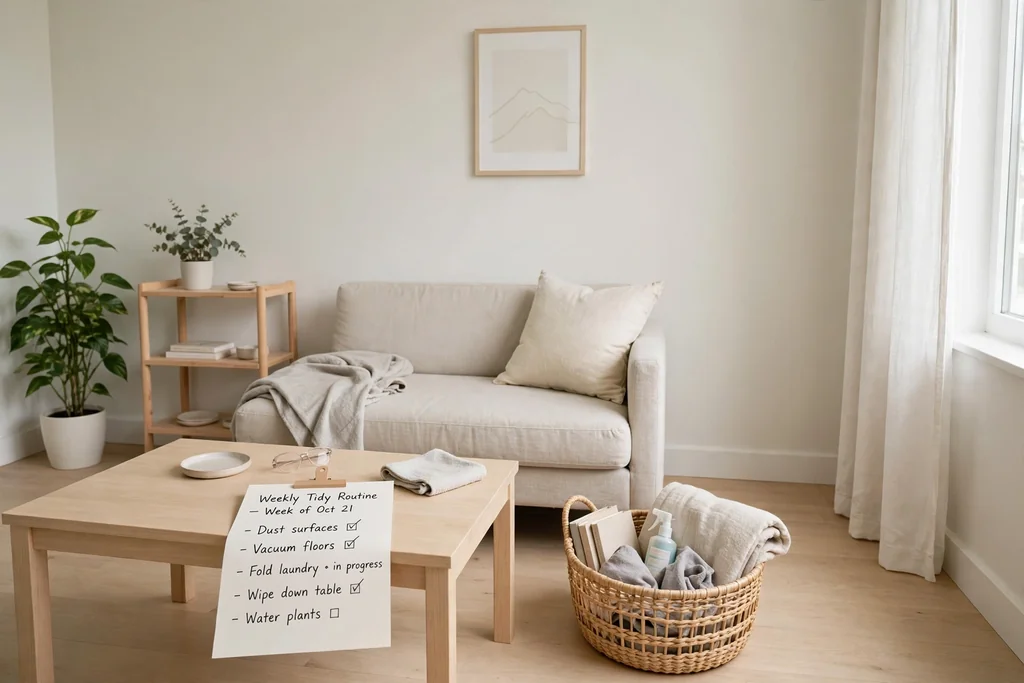
    Give every item a closed home and follow a short daily reset: shoes in the genkan cabinet, dishes back in the kitchen cabinet, cushions in their basket, and the low table cleared after meals. Keep only daily items visible, and do a ten minute reset each evening so clutter never builds up. A room with few visible items is easier to tidy than a room with open shelves full of small objects.

    What colours and materials suit a Japanese apartment?

    Warm neutrals suit the base: soft white, warm beige, pale grey, and muted clay, with natural wood, bamboo, linen, cotton, wool, paper, and ceramic for texture. Keep strong colour to one or two small accents, such as a dark vase or a green plant pot, and repeat it once elsewhere in the room. Plain finishes and visible wood grain matter more than pattern, so choose simple fabrics and matte surfaces.

    Can a Japanese apartment design work with a sofa and a television?

    Yes, if you keep the low, open feel. Choose a low sofa with slim legs, a low media bench instead of a tall unit, and a plain wall behind the television with one small display beside it. Keep cables hidden, keep the floor in front of the sofa clear, and use a paper lamp for evening viewing instead of a bright ceiling light. The room can still feel calm when the largest pieces sit low and surfaces stay clear.


  • 29 Korean Apartment Design Ideas to Make Any Room Feel Cozier

    29 Korean Apartment Design Ideas to Make Any Room Feel Cozier

    A Korean apartment often works hard in a small footprint, with one room serving as a living room, a dining spot, and a place to rest. That inviting look is not about buying new furniture. It comes from low lines, warm wood, soft layers, and light that stays gentle in the evening. These 29 Korean apartment design ideas cover the living room, bedroom, kitchen, entry, and balcony, with storage and seating that suit rented and compact homes. Start with one calm base and one comfortable seat, then add layers that fit your routine. For small space layout basics, the zoning ideas in these studio apartment decorating ideas pair well with the room by room ideas below.

    Key Takeaways

    • Start with a calm base of warm white, soft beige, and light wood, then add color in cushions, throws, and art you can move.
    • Keep furniture low and light in look, so a small room keeps its sense of height and air.
    • Give every daily routine a spot: sleeping, eating, working, reading, and coming home each deserve a small zone.
    • Layer light at more than one level, with a paper lamp, a floor lamp, and a small warm light for evenings.
    • Use hidden storage and furniture that does two jobs, so surfaces stay clear and the room stays easy to tidy.
    • Add soft texture and one or two plants, rather than filling every shelf, to keep the room warm without clutter.

    1. Warm Wood and White Base

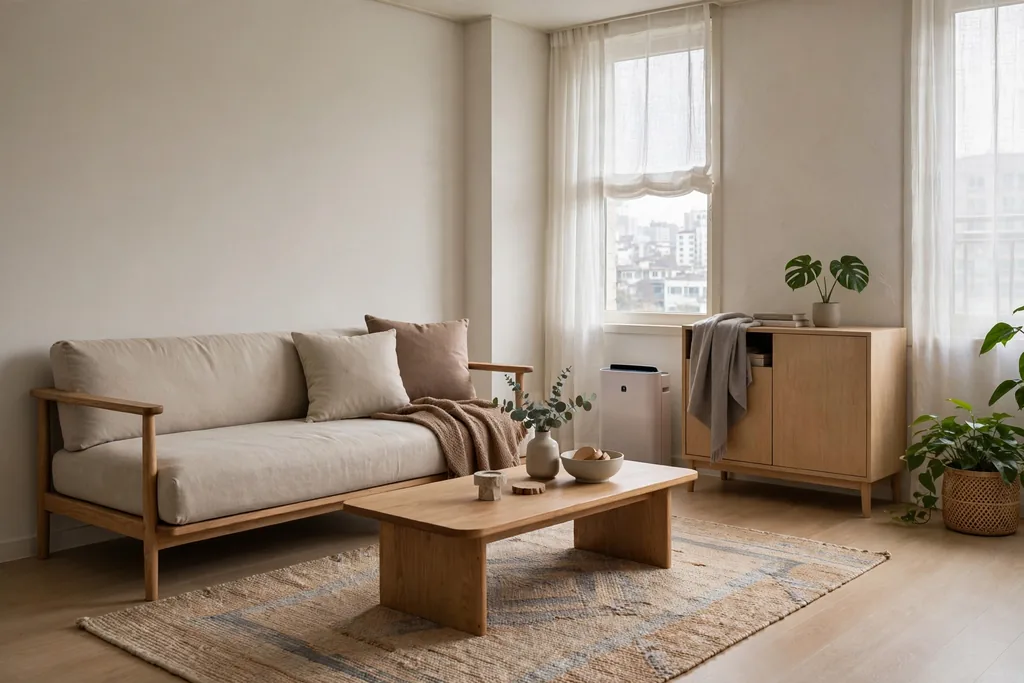
    Korean apartment living room with warm white walls, light wood floor, and low wood furniture.

    Pair warm white walls with light wood floors and furniture to set a calm base for the whole apartment. Light wood on a bed frame, a low table, or open shelves adds warmth without darkening a small room, and white walls keep daylight moving through the space. Keep the largest pieces in these two tones, so smaller items in soft beige, sage, or muted blue can sit against them without clashing.

    If you rent and cannot change floors or wall color, get the same base from a large light rug, light wood toned furniture, and plain white or cream bedding. Repeat the wood tone in two or three places, such as a shelf, a frame, and a tray, so the room reads as planned rather than random. Avoid mixing many dark and light wood tones in one room, since that can make a small space feel busy.

    2. Low Platform Bed With Storage

    Low platform bed with storage drawers and neutral bedding in a small Korean bedroom.

    Choose a low platform bed to give the bedroom a grounded, restful feel and to free up visual height above the bed. A low frame suits a small bedroom because it leaves more wall visible, which makes the room feel taller, and it pairs well with a simple padded headboard or a plain wall with one piece of art. Keep bedding in soft, solid colors with one folded throw at the foot of the bed.

    Use drawers or boxes under the platform for off season clothes, spare bedding, or bags, so the room needs one less chest of drawers. Measure the platform height before you buy, so you can sit on the edge of the bed with ease and so drawers open fully without hitting a rug. Keep the top of the bed made each morning, since a low bed is the first thing the eye meets in a small bedroom.

    3. Floor Seating Corner for Relaxed Living

    Floor seating corner with thick cushions, low tray table, and soft rug in a Korean apartment.

    Build a floor seating corner with thick floor cushions, a low tray table, and a soft rug for reading, tea, and quiet evenings. Floor seating suits a Korean inspired living room because it keeps the eye line low and leaves the room feeling open, and it can be packed away when you need floor space for guests or exercise. Choose cushions with firm filling and washable covers, so the corner stays comfortable and easy to keep fresh.

    Place the corner near a window or a wall with a shelf for books and a cup, and add a small basket for throws so the corner works as a complete spot. If sitting on the floor is hard on your knees, add a low backrest cushion or a short bench beside the cushions for support. Keep the rug large enough for all the cushions, so the corner reads as one seating group rather than scattered pads.

    4. Warm Floor Layers Inspired by Ondol Living

    Thick rug and low table on a warm apartment floor with slippers by the wall in a Korean home.

    Take inspiration from ondol floor living by making the floor itself a comfortable place to sit and rest. Use a thick rug over a soft underlay, warm slippers by the door, and a low table for meals or tea, so the floor feels like part of the living space rather than just a surface to walk on. This approach suits apartments with hard floors, which can feel cold in winter and echoey all year.

    Add a washable rug in the living area and a smaller rug beside the bed, and keep a pair of indoor slippers at the entry so the floor stays clean for sitting. If your home has underfloor heating, check the rug maker guidance for heat suitability before you buy a very thick rug. A floor level lifestyle works best when the floor is kept clear, so store shoes, bags, and chargers off the floor in a basket or cabinet.

    5. Sliding Doors and Light Room Dividers

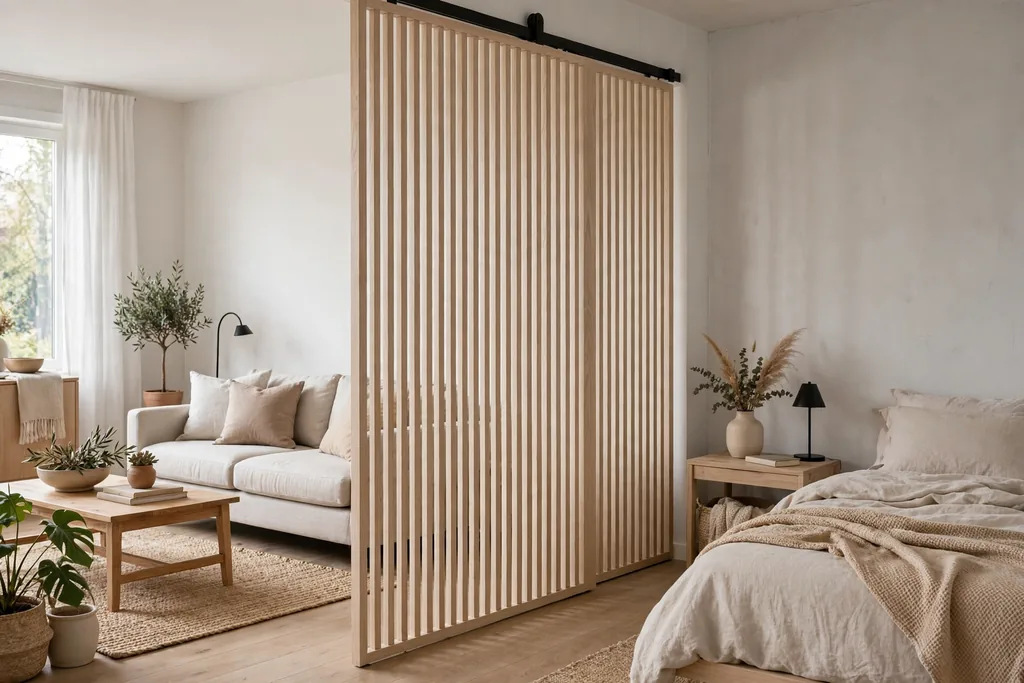
    Light sliding divider with pale wood slats separating sleeping and living zones in a studio apartment.

    Use a sliding door, a light curtain, or an open shelf unit to divide a studio or a long room without blocking daylight. A divider that slides or hangs gives you privacy for sleep or work when you need it, and opens the room again during the day, which matters in a one room home. Choose a light material, such as pale wood slats, sheer fabric, or an open shelf, so light still reaches both sides.

    Hang a ceiling track curtain if a solid divider would block too much light, and extend the track past the bed or desk so the curtain stacks out of the way. An open shelf divider adds storage as well as a boundary, but keep the shelves partly open so the room does not feel walled in. Check your lease before fixing a track to the ceiling, and use a freestanding screen if fixing is not allowed.

    6. Paper Lantern Light for Soft Evenings

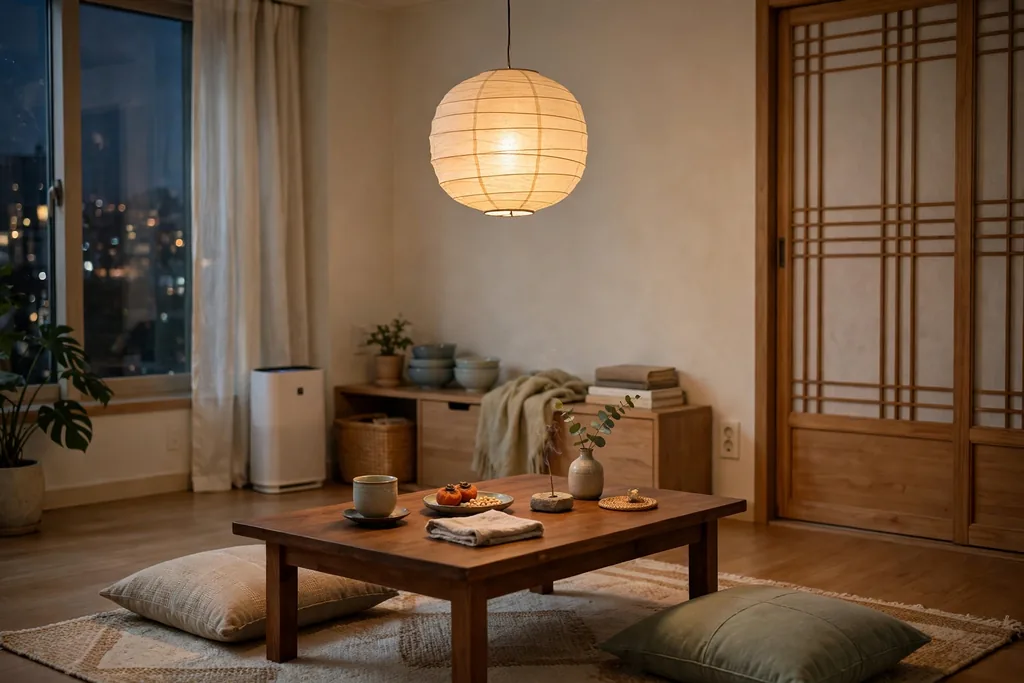
    Paper lantern lamp glowing softly over a low table in a cozy Korean apartment living room.

    Hang a paper lantern or place a paper shaded lamp in the living room or bedroom for soft, even evening light. Paper shades spread light gently and hide the harsh point of a bare bulb, which helps a small room feel calm after dark. Choose a warm white bulb and a shade size that suits the room, since a very large lantern can dominate a small ceiling.

    Hang the lantern over a seating area or a low table, not over a walkway where it could be bumped, and keep it clear of curtains and bedding. A floor standing paper lamp works well in a corner where ceiling hanging is not allowed, and it can move with you when you rearrange the room. Pair the paper light with one smaller lamp, so you can read without turning on a bright overhead light.

    7. Built In Look Wardrobe Wall

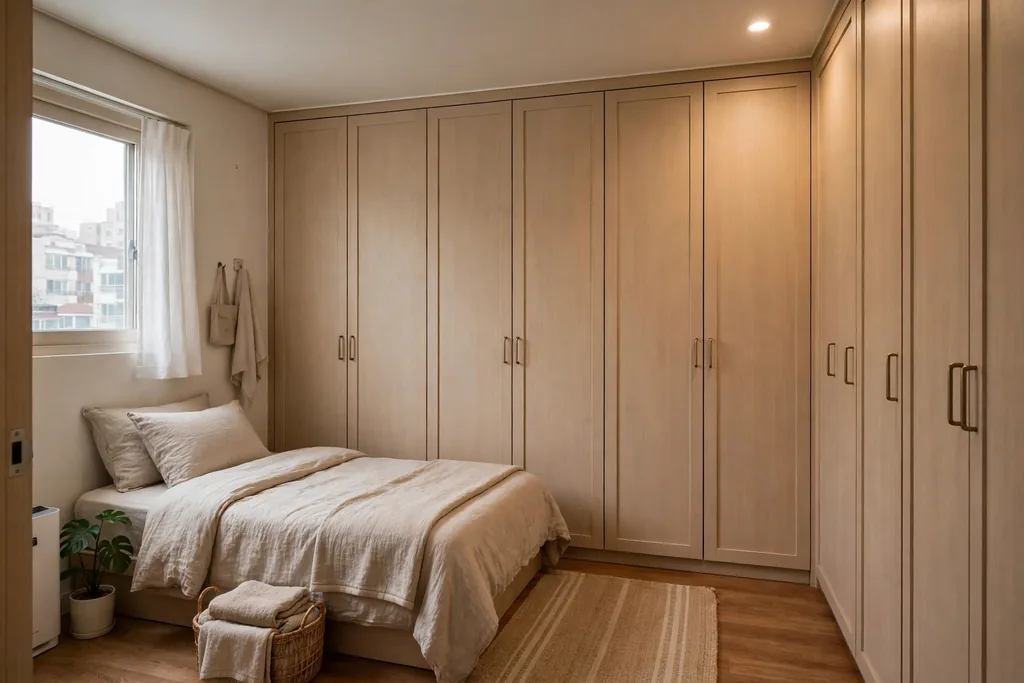
    Full wall of matching light wardrobes with simple handles in a small Korean bedroom.

    Give the bedroom a built in look by running wardrobes or tall cabinets along one full wall in a single color. A wall of matching doors reads as architecture rather than a row of separate wardrobes, and it hides clothes, bedding, and bags behind closed fronts. Keep handles simple and the color close to the wall color, so the wall feels calm rather than heavy.

    If built in units are not possible in a rental, use two matching freestanding wardrobes with a top board or a curtain rail across them to link the look. Inside, use boxes and hanging shelves to sort clothes by season or use, since a tidy inside makes the outside easier to keep closed. Leave one section for daily clothes at hand height, and store off season items up high or under the bed.

    8. Fold Away Table for Dining and Work

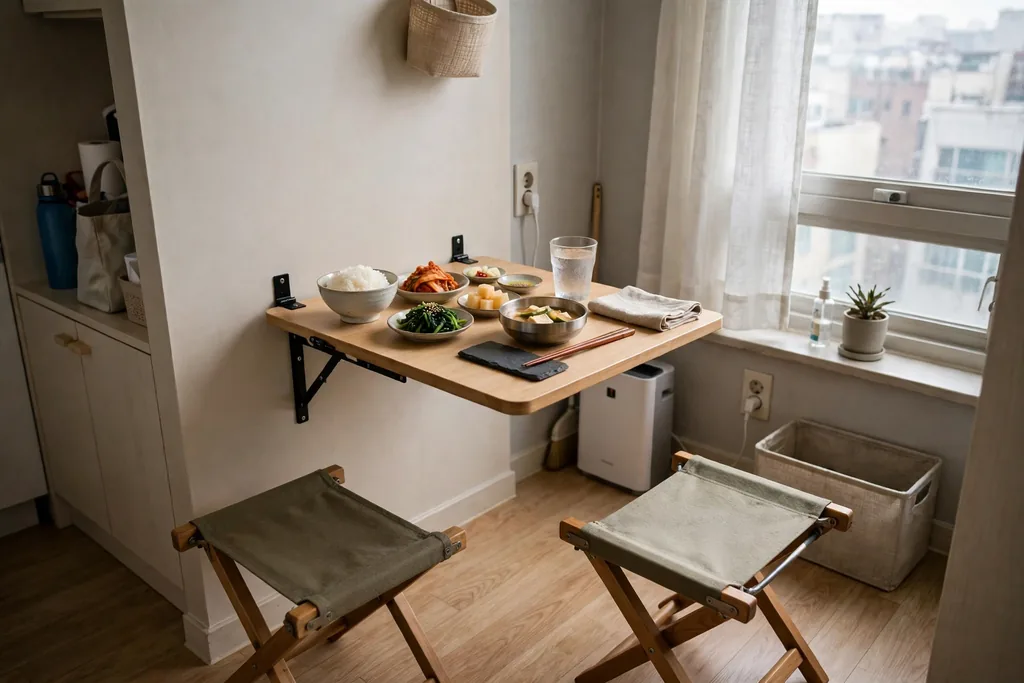
    Fold down wall table set for a meal with folding stools in a small Korean apartment.

    Use a fold down wall table or a drop leaf table so a small apartment can have a real dining spot without a table standing in the middle of the room all day. Fold it down for meals, study, or a puzzle, then fold it away to free the floor for walking or guests. Two stackable stools or folding chairs stored nearby complete the setup without a full dining set.

    Fix a wall table firmly into studs or suitable anchors, and check the weight rating before you load it with books or a laptop. A drop leaf table on casters is a good choice if wall fixing is not allowed, since it can roll to the wall when closed. Keep the table clear as a habit, because a fold away table only helps if folding it away stays easy, and keep a small tray for condiments so meals do not spread across the whole surface.

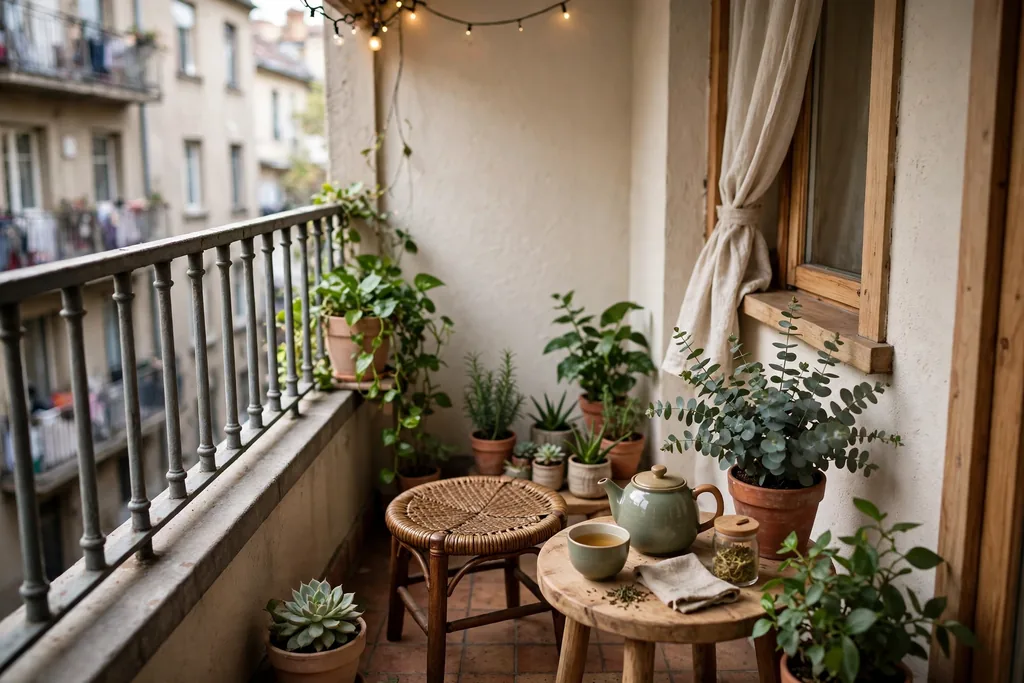
    9. Balcony Turned Into a Tea Nook

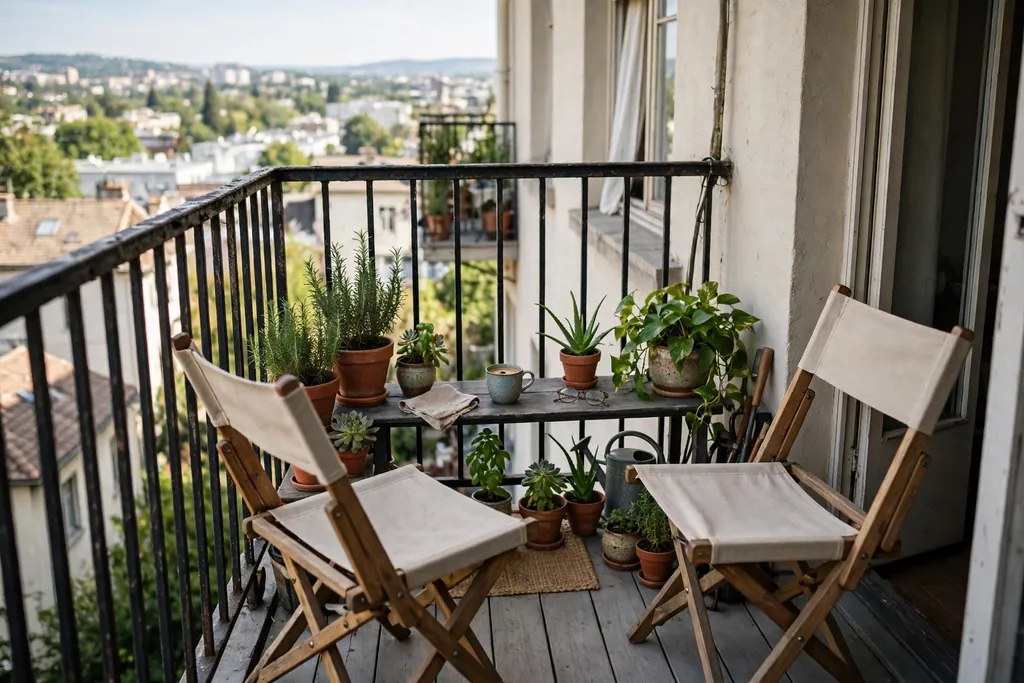
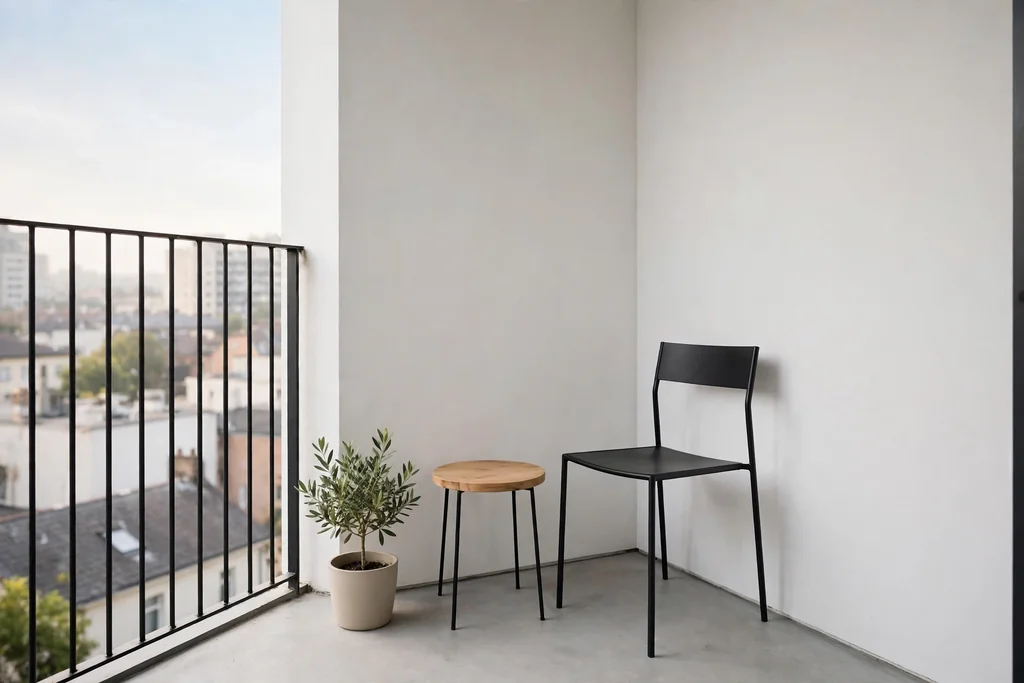
    Small apartment balcony tea nook with a low stool, side table, and potted plants.

    Turn a small balcony into a tea nook with a low stool, a small side table, and one or two pots, so the balcony becomes a daily pause rather than a storage ledge. Many Korean apartments have a balcony used for laundry or storage, and carving out even a chair sized corner for sitting gives that space a second job. Choose weather resistant pieces that can stay outside, and bring cushions in when rain is forecast.

    Keep the nook to what fits without blocking the door or a drying rack, and add a small tray for a teapot and cups so the spot feels ready to use. A trailing plant or a small herb pot adds green without taking floor space, and a wind screen or a tall pot can cut drafts on an open balcony. Check building rules before fixing anything to the railing, and keep the route from the door clear for safety.

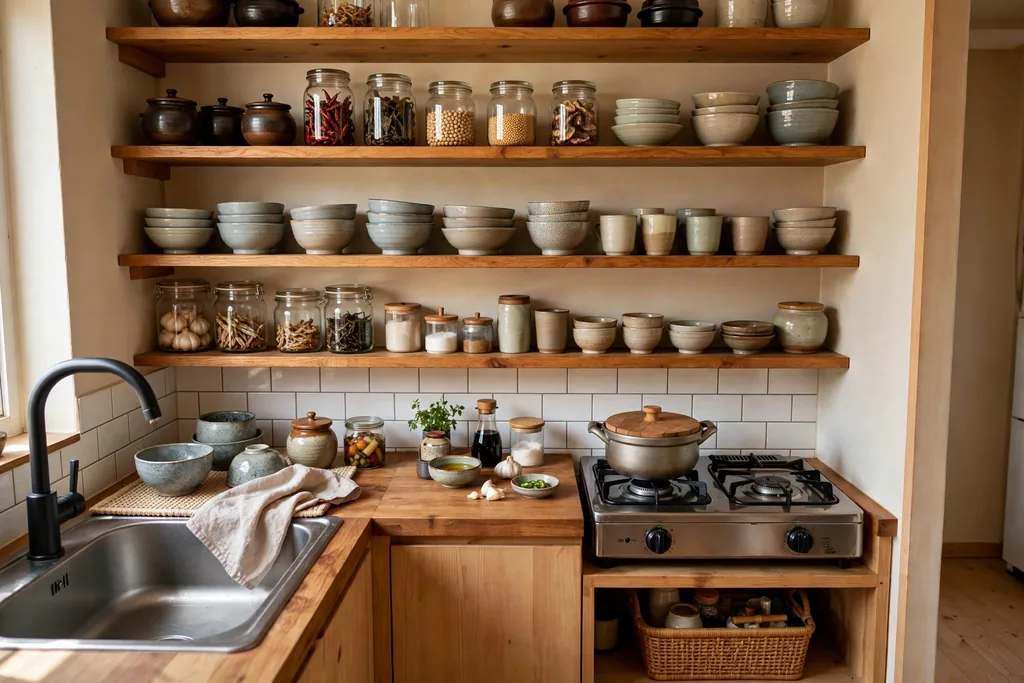
    10. Compact Kitchen With Open Shelves

    Compact Korean kitchen with open wood shelves holding bowls, cups, and jars.

    Open up a compact kitchen with one run of open shelves for daily bowls, cups, and jars, while keeping less used items behind closed doors. Open shelves make a small kitchen feel less boxed in, and they put daily items within one reach, which speeds up cooking and tidying. Keep the shelf display to items you use weekly, in matching or plain colors, so the shelf reads as tidy rather than crowded.

    Place heavy items low and light items high, and anchor shelves firmly following the maker instructions. Group similar items together, such as bowls in one stack and mugs in one row, and leave a little empty space at the end of each shelf. A small rail under the shelf for utensils or cups adds storage without another shelf, and a tray on the counter can hold oils and sauces used daily.

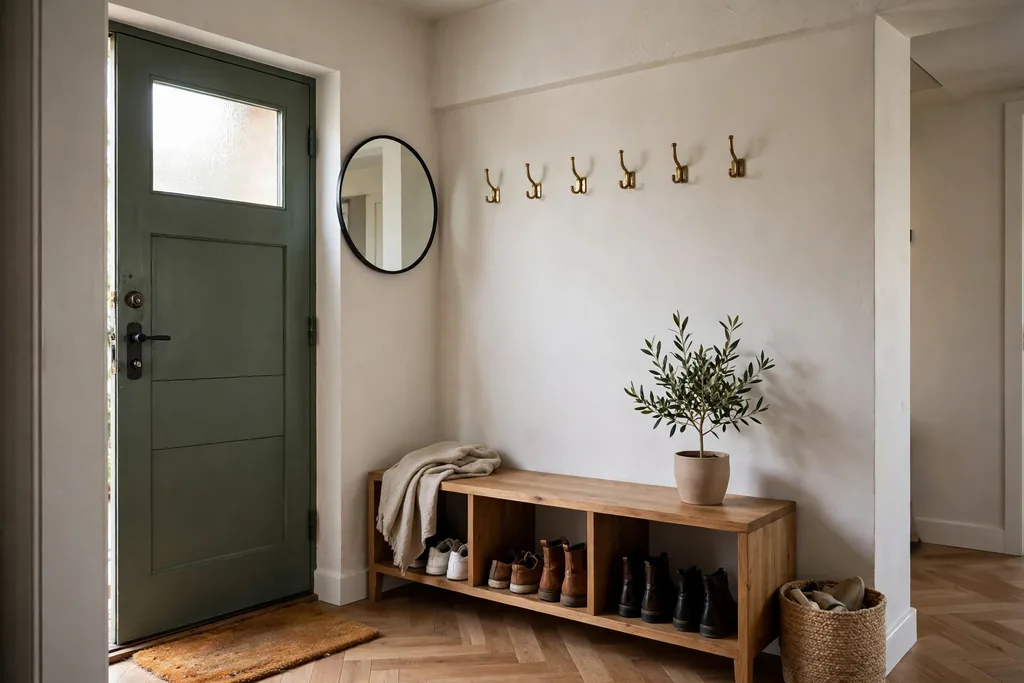
    11. Entryway Shoe Cabinet and Bench

    Apartment entry with a low shoe cabinet bench, hooks, and a mirror by the front door.

    Set a low shoe cabinet with a bench top by the front door, so shoes, keys, and bags have a home the moment you come in. A bench top gives you a seat for putting on shoes, and closed cabinet doors hide footwear that would otherwise spread across the entry floor. Add a small tray or dish on top for keys and a hook row above for coats and bags.

    Measure the entry before you buy, and leave a clear path from the door into the room, since a cabinet that blocks the walkway will be worked around rather than used. Keep daily shoes in the cabinet and off season shoes in a box elsewhere, so the cabinet never overflows. A mirror above the bench gives a last check before leaving and bounces light into a narrow entry.

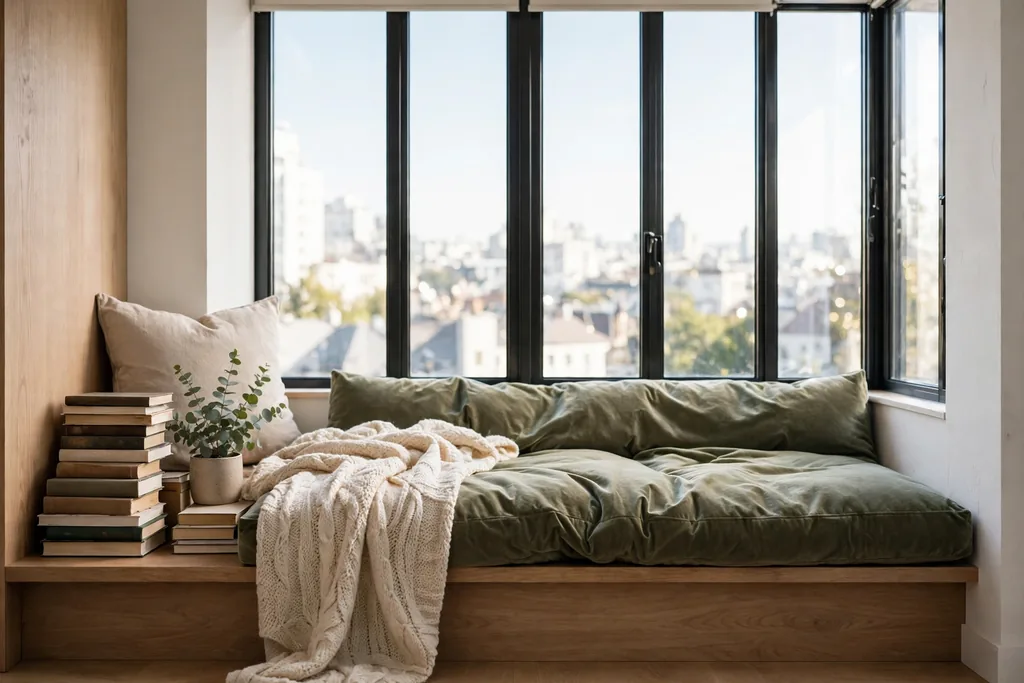
    12. Window Reading Nook With Deep Cushions

    Window reading nook with a deep cushion, throw, and books beside a bright apartment window.

    Make a window reading nook with a deep cushion on a low bench or a wide sill, a throw, and a small shelf for books. A window seat uses a stretch of wall that often stays empty, and it gives the apartment a quiet corner for reading, looking out, and slow mornings. Choose a cushion with a washable cover, since a seat beside a window collects dust and light fading faster than other seats.

    Add a small wall lamp or a clip light for evening reading, and keep a basket beside the seat for the current book and a throw. If a built in bench is not possible, a low storage bench pushed against the window wall does the same job and adds a place for shoes or bags underneath. Keep the window opening clear, and check that cushions do not block a vent or a radiator.

    13. Low Sofa and Low Coffee Table Living Room

    Low sofa with slim arms and a low coffee table on a rug in a Korean apartment living room.

    Choose a low sofa with slim arms and a low coffee table to keep the living room feeling open and grounded. Low furniture leaves more wall visible above it, which helps a small room feel taller, and it suits floor cushions and a low rug layered beside it. Pick a sofa depth that lets you sit with feet on the floor, and a coffee table height that sits just below the seat height for easy reach.

    Keep the coffee table surface mostly clear, with one tray for remotes and a small plant or candle, so the room stays easy to tidy. A sofa with raised legs shows more floor underneath and can make the room feel lighter, while a sofa close to the floor reads cozier and more grounded. The seating guidance in these cozy apartment living room ideas shows how one rug and a floated seating group can define the living zone in a small home.

    14. Plants at Different Heights by the Window

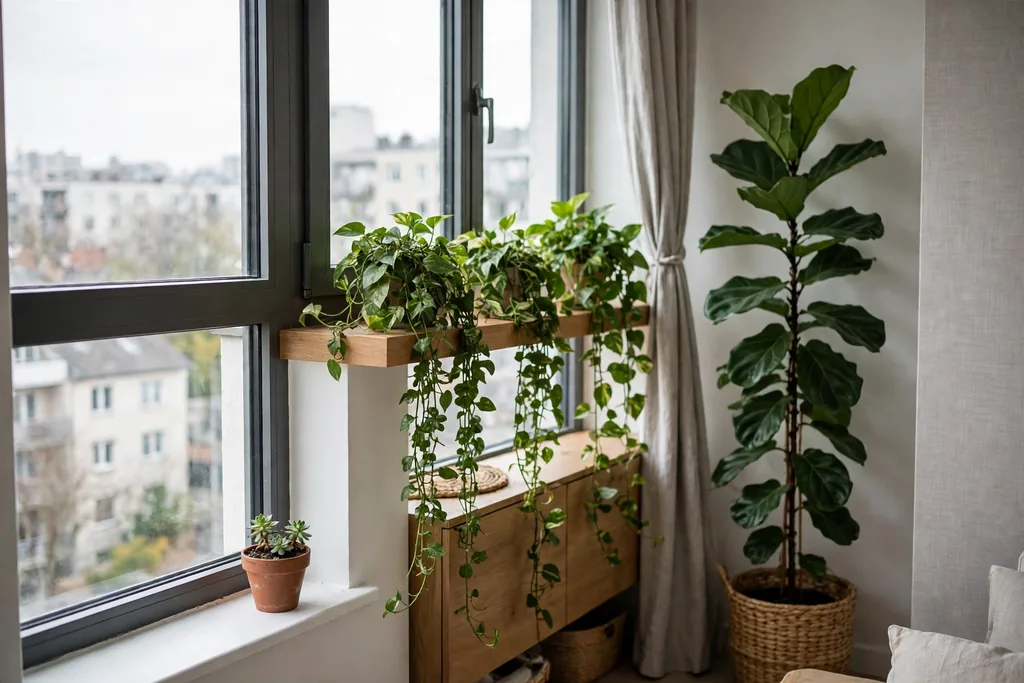
    Apartment window with plants at three heights, a tall floor plant, trailing shelf plants, and a small pot.

    Place plants at three heights near a window: a tall floor plant in a corner, trailing plants on a shelf, and a small pot on the sill or a side table. Plants at different heights keep green from crowding one surface, and they soften the straight lines of shelves and window frames. Match each plant to the light it will actually get, since a bright window suits different plants than a dim corner.

    Start with three or four plants rather than a dozen, so watering stays manageable, and group plants that need similar water together. Use saucers under pots on wood floors, and wipe leaves now and then so they stay healthy in a small room. A tall plant can also screen a view you do not love, while trailing plants soften a shelf edge without taking floor space.

    15. Neutral Bedding With One Soft Accent

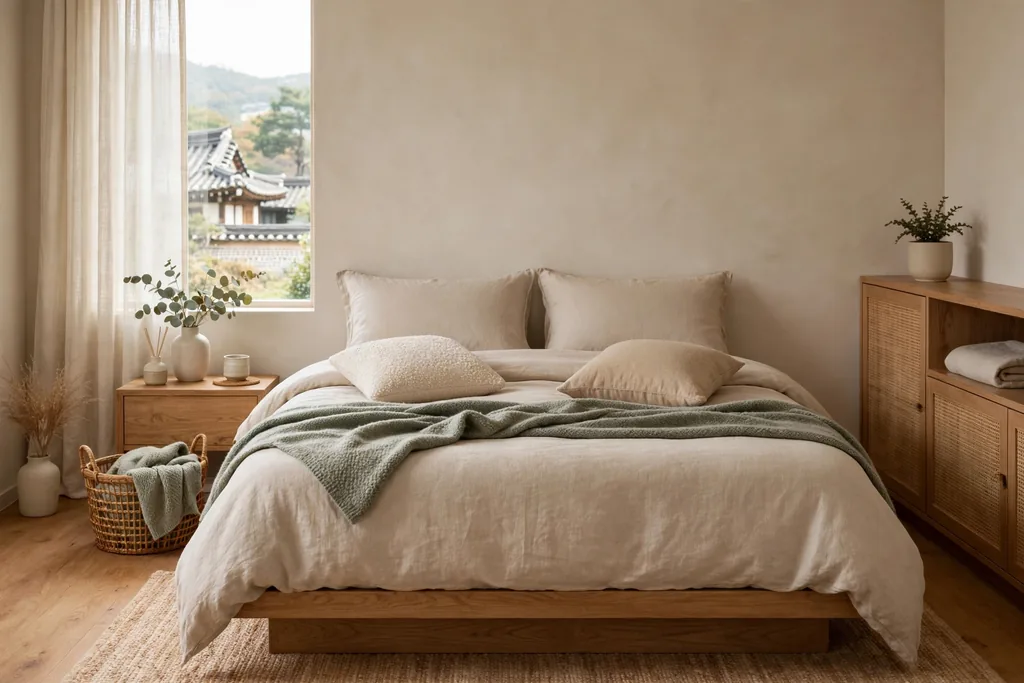
    Bed dressed in neutral bedding with one soft accent throw and cushions in a Korean bedroom.

    Dress the bed in neutral bedding in white, cream, or soft beige, then add one accent color in a throw and two cushions. A neutral bed makes a small bedroom feel restful and lets you change the mood by swapping only the throw and cushions, rather than buying new bedding. Choose natural feeling fabrics such as cotton or linen blends, with a lighter layer for warm nights and a warmer layer for cold ones.

    Keep sleeping pillows separate from daytime cushions, and store extra bedding in one labeled box so the bed never doubles as a storage pile. Make the bed each morning, since a made bed sets the tone for the whole bedroom, especially in a studio where the bed is visible from the living area. Fold the throw at the foot of the bed so it looks intentional rather than tossed aside.

    16. Wall Mounted Desk for a Work Corner

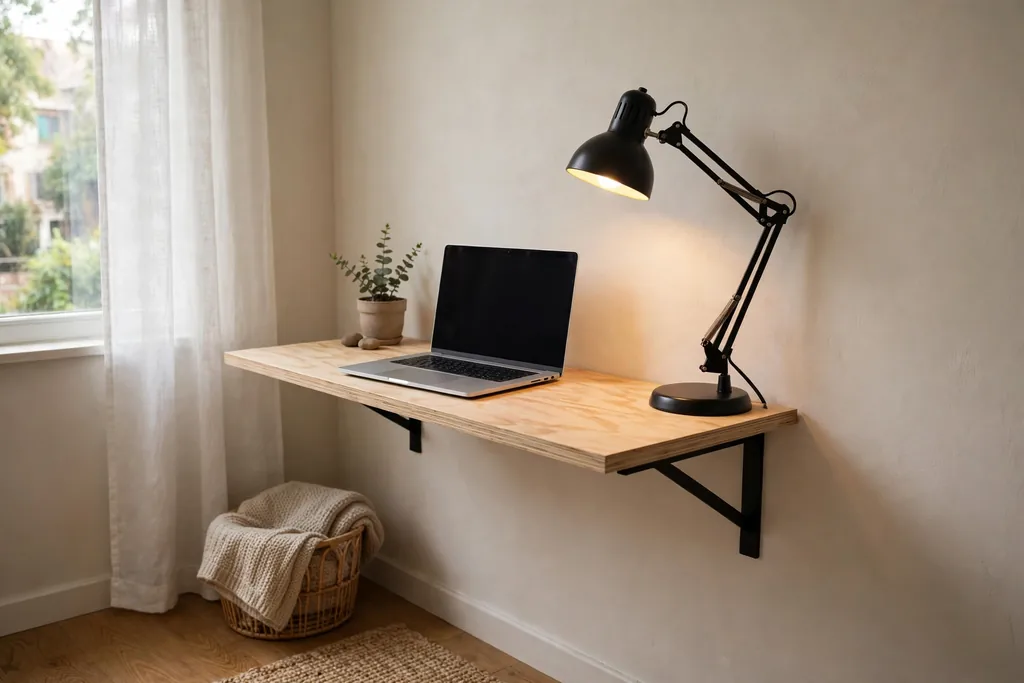
    Slim wall mounted desk with a laptop and task lamp in a quiet apartment work corner.

    Mount a fold down or slim wall desk in a quiet corner to give work a clear home that closes away at the end of the day. A wall desk needs little floor space, and closing it at night marks the shift from work to rest, which matters when the living room is also the office. Mount it at a comfortable writing height, and keep a small shelf above it for a laptop, notebook, and charger.

    Choose a chair that slides fully under a nearby table or folds flat, so the work corner does not block the room when work ends. Keep work papers in one tray or drawer, and put the charger in a fixed spot so cables do not spread across the floor. If wall fixing is not allowed, a narrow console table against the wall with a laptop stand gives a similar corner without drilling.

    17. Curtain Divider for a Studio Sleeping Zone

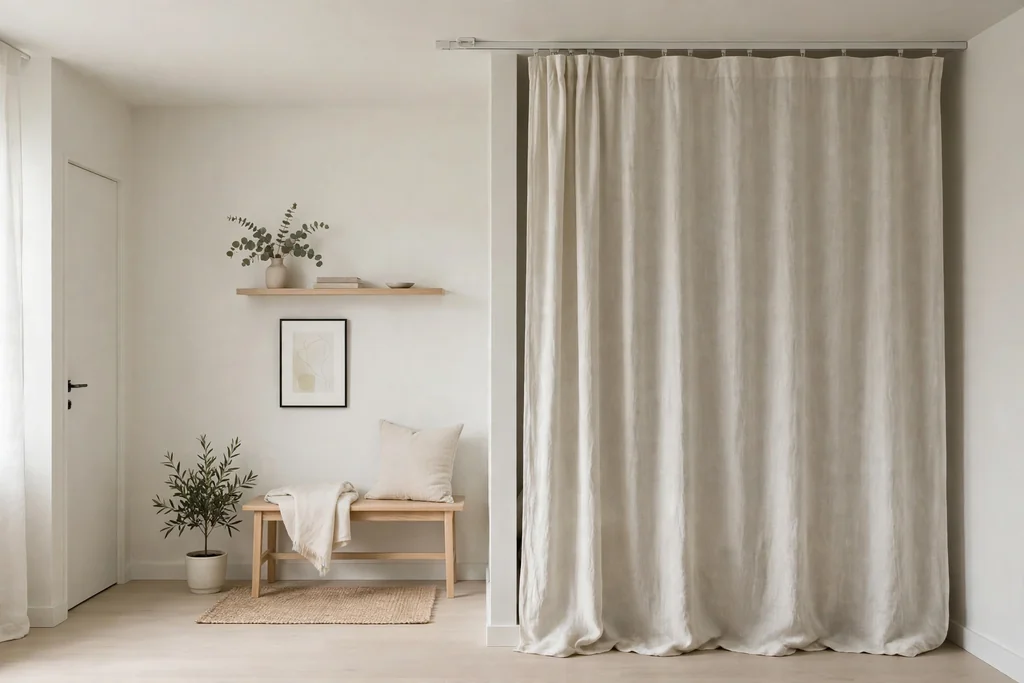
    Light curtain on a ceiling track partly drawn across a bed zone in a studio apartment.

    Hang a curtain from a ceiling track to close off the sleeping zone in a studio at night and open the whole room again in the morning. A curtain divider is softer and lighter than a solid screen, and it can be drawn in seconds, which suits a room that changes jobs through the day. Choose a fabric heavy enough to block the view of the bedding, but light enough to slide easily with one hand.

    Hang the curtain as close to the ceiling as possible so the sleeping area feels taller, and extend the track a little past the bed on each side so the curtain stacks out of the way during the day. Washable fabric is a practical choice, since a bed curtain collects dust and cooking smells faster than a window curtain. Keep the curtain clear of a heater or a lamp, and check the track fixings suit your ceiling type before you buy.

    18. Large Mirror Opposite the Window

    Large mirror opposite a bright window in a small Korean apartment living room.

    Place a large mirror opposite or beside a window to bounce daylight deeper into the room and make the far wall feel farther away. In a small apartment, that extra sense of depth matters, because the room has no hallway or second room to give your eyes a break. Lean a full length mirror against the wall if hanging is not allowed, and secure it so it cannot slide on a smooth floor.

    Check what the mirror reflects before you fix its position, since a mirror that reflects a messy corner doubles the mess. Aim it toward the window, a plant, or a calm stretch of wall for the best result. One large mirror usually works better than several small ones scattered across the room, and a simple frame in light wood or black suits most Korean inspired rooms.

    19. Layered Warm Light for Evenings

    Apartment living room in the evening lit by a paper lamp, floor lamp, and small shelf light.

    Layer light at three levels for evenings: a soft ceiling or paper light for the whole room, a floor or table lamp where you sit, and a low glow on a shelf or side table. A single ceiling light flattens a small room and feels harsh after dark, while layered light lets you shift from a bright daytime room to a calm evening one. Use warm white bulbs throughout, so the levels agree rather than clash.

    Put the brightest light where you need to see, such as beside the reading chair, and keep the overall level soft in the evening. Dimmable bulbs or smart plugs let you change the mood without rewiring, which matters in a rental where electrical changes are limited. Switch off the harsh overhead light after dinner and let the lamps set a calmer mood for the night, with a small light left on near the entry for coming home.

    20. Textile Layers for Warmth Without Clutter

    Living room layered with a flat weave rug, soft throw, and linen and knit cushions on a sofa.

    Layer textiles for warmth: a flat weave rug to anchor the seating, a softer rug or throw on top in the sitting zone, and cushions in two textures such as linen and knit. Hard apartment floors can feel cold and echoey, and textiles soften them faster than new furniture. Start with the rug, since it defines the seating group, then add a throw folded over one sofa arm and cushions that repeat one accent color.

    Choose washable covers where you can, since apartment seating sees daily use, and shake out or vacuum the layers regularly so they stay fresh. Limit strong color to two or three accents, such as a cushion, a piece of art, and a plant pot, and repeat those accents in more than one spot so the room feels connected. Remove one item for every new decorative piece you add, and the room will stay warm rather than crowded.

    21. Display Shelf for Books and Keepsakes

    Single display shelf with books, a small vase, and keepsakes above a low console in an apartment.

    Dedicate one shelf, not every shelf, to books and keepsakes, so display feels chosen rather than crowded. A single display shelf with books, a small vase, and one or two meaningful objects gives the room personality without filling every surface. Arrange books in a mix of upright rows and one flat stack, and leave empty space at one end so the shelf looks intentional.

    Keep the rest of the shelving for closed storage or plain daily items, so the display shelf stands out. Rotate the display with the seasons or when you find a new print, rather than adding more objects each time. Use a picture ledge for art you can swap easily, which suits renters who want to limit holes, and lean the largest frame at the back with smaller frames in front.

    22. Dining Nook With Bench Seating

    Dining nook with a bench against the wall and a small table set for a meal in an apartment.

    Build a dining nook with a bench against the wall and a small table, so a tight corner can seat three or four people without a full dining set. A bench tucks close to the wall, needs no chair clearance behind it, and can hold storage underneath for placemats or board games. Pair it with one or two chairs on the open side, so people can slide in and out with ease.

    Keep the table size modest, with room for plates and a low centerpiece that people can talk across, and store extra placemats and napkins in a nearby drawer or basket. A cushion on the bench makes a long meal comfortable, and a washable cover keeps it practical near food. Site the nook near the kitchen if you can, so carrying food is short, and keep the route to the table clear.

    23. Bathroom With Warm Wood and Closed Storage

    Small bathroom with light wood accents, closed storage, and rolled towels on a shelf.

    Warm up a plain bathroom with light wood accents, such as a wood framed mirror, a wood tray, and a wood stool, paired with closed storage for toiletries. Wood softens tile and white fittings, and closed storage keeps counters clear, which matters most in a small bathroom. Choose wood items made for damp rooms, and wipe them dry after showers so they last.

    Add a wall shelf above the toilet or beside the mirror for daily items, with matching dispensers so the shelf reads as tidy. Keep towels rolled on the shelf or in a basket, and store backup supplies in a cabinet rather than on the counter. A small plant that suits humidity, placed where it will not be splashed, adds green without taking counter space, and a warm light bulb keeps the room from feeling clinical.

    24. Balcony Drying and Laundry System

    Tidy balcony laundry setup with a folding drying rack and a basket beside potted plants.

    Set up a tidy laundry system on the balcony or in a utility corner, with a folding drying rack, a basket for clean laundry, and a small shelf for supplies. Many small apartments dry clothes indoors or on a balcony, and a planned system keeps that daily job from taking over the living room. Choose a rack that folds flat against the wall when not in use, and keep pegs and hangers in one small box.
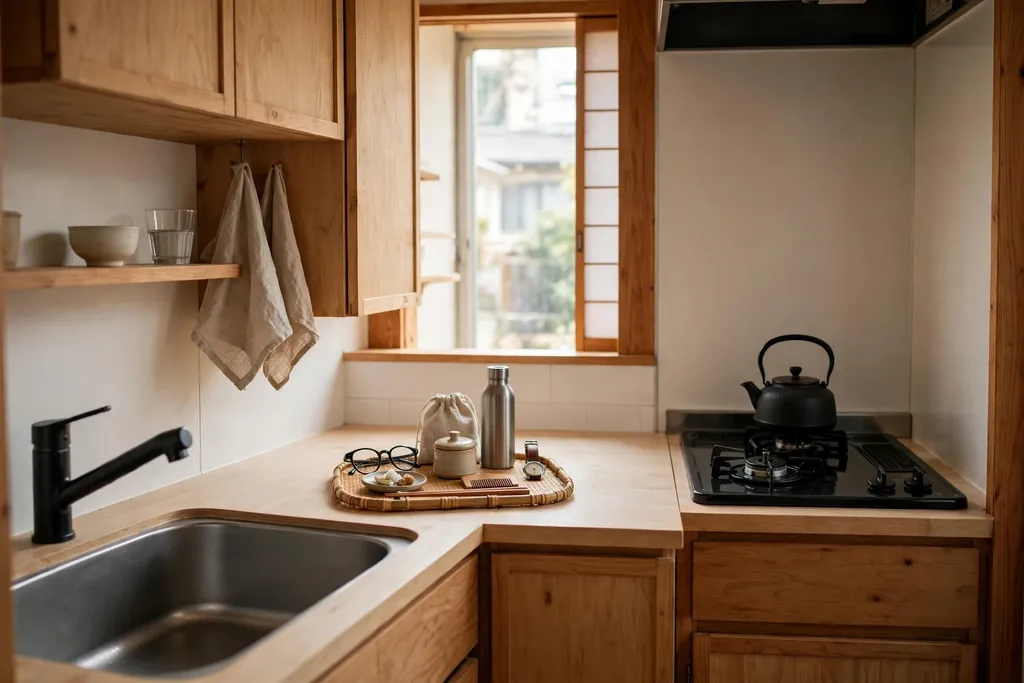
    Sort laundry into one basket for washing and one for folding, so clean clothes do not pile on chairs. If the balcony is the drying spot, keep the rack clear of the tea nook seat and the door route, and bring clothes in before evening damp sets in. A lidded basket for dirty laundry near the bathroom or bedroom stops piles from forming in the living area, and a weekly laundry day keeps the system working.

    25. Seasonal Bedding and Curtain Swap

    Bedroom with fresh seasonal bedding and curtains in soft tones beside a window.

    Swap bedding and curtains with the seasons to change the feel of the apartment without buying new furniture. Use lighter cotton bedding and sheer curtains in warm months, and warmer bedding with heavier curtains in cold months, so the room suits the weather and feels fresh twice a year. Store the off season set in one labeled box under the bed or on top of the wardrobe.

    Choose curtain colors that match the bedding accent, so the swap feels planned across the room, and wash the stored set before you pack it away. A seasonal swap is also a good time to check cushions, throws, and rugs for wear, and to rotate the display shelf. Keep the swap to one afternoon, and put the new set on the bed and windows the same day, so the room changes in one clear step.

    26. Hidden Storage in Every Room

    Living room with a storage ottoman open showing folded throws beside a low sofa.

    Give every room one piece of hidden storage: a storage ottoman in the living room, a platform bed in the bedroom, a bench with a lid in the entry, and a cabinet in the bathroom. Hidden storage keeps daily clutter out of sight without adding more furniture to the floor plan, and it makes tidying a matter of putting things back rather than deciding where they belong. Choose pieces with lids or doors that open fully without hitting nearby furniture.

    Keep only items you reach for often inside each hidden store, because a storage seat filled with things you never use becomes a box you never open. Label boxes inside wardrobes and cabinets, and do a short reset once a week, walking each room with a basket and returning anything that has drifted out of place. When everything has a home, a small apartment stays calm even on busy days.

    27. Calligraphy and Print Accent Wall

    Accent wall with framed Korean calligraphy prints in light wood frames above a low console.

    Create one accent wall with framed Korean calligraphy, a Hangul print, or a simple landscape print in a plain frame, rather than covering every wall with art. One focused wall gives the room a cultural anchor and a talking point, while the other walls stay calm and give the eye rest. Choose prints in muted colors that match the room accent, and keep frames in one finish, such as light wood or black, so the group reads as a set.

    Hang the group at eye level above a sofa, a low console, or the bed, and lay the frames on the floor first to test the layout before anything goes up. Use adhesive strips or picture ledges if drilling is not allowed, and check the weight rating for each frame. Leave one wall in the room free of art, so the accent wall stands out and the small room does not feel crowded.

    28. Small Kitchen Table for One or Two

    Small round kitchen table for two set by a window with a low centerpiece in an apartment.

    Set a small round table for one or two people in the kitchen corner or by a window, so everyday meals have a proper place even when a full dining room is missing. Eating at a table, even a small one, turns a solo dinner into a pause in the day rather than a task finished standing up. Choose a pedestal base, so chairs tuck in and no one bumps a corner leg, and keep the centerpiece low and moveable.

    Store placemats and napkins in one nearby drawer, so setting the table does not become a search through cupboards, and keep the table clear between meals so it can switch to work or a puzzle. The solo living ideas in these solo apartment ideas show how one small table can serve meals, work, and guests in a home for one person. A round table also suits a tight corner, since it has no sharp corners to catch a hip in a walkway.

    29. Evening Wind Down Corner With Tea

    Evening wind down corner with a comfortable chair, warm lamp, tea on a side table, and a throw.

    Finish the apartment with an evening wind down corner: a comfortable chair or floor cushion, a small side table for tea, a warm lamp, and a basket for a book and a throw. A wind down corner gives the end of the day a place of its own, separate from the work corner and the dining table, so evenings feel slower and more restful. Keep the corner away from screens where possible, or turn the main screen off when you sit there.

    Set a simple tea ritual for the corner: a teapot or mug, a small tray, and a place for the cup when you finish, so the corner is ready each evening without setup. Add a candle style light or a dim lamp, and keep the throw folded in the basket so the corner looks inviting even when empty. Use the corner for reading, tea, and quiet talk, and let it be the last lit spot in the apartment before bed.

    Conclusion

    A Korean apartment feels cozier when the base stays calm, the furniture stays low, and every daily routine has a small, clear spot. Start with warm wood and white, one comfortable seat, and layered light, then add the storage, textile, and balcony ideas that solve your biggest daily frustrations. Try one or two ideas this weekend, live with them for a week, and adjust before adding more. Pick the idea that fits the room you use most, set it where you will actually sit, eat, or sleep, and let the rest of the apartment grow around it one calm layer at a time. Save this list on Pinterest before your next home trip, and work through it one room at a time.

    FAQs

    How can I make a small Korean apartment feel cozy without clutter?

    Start with a calm base of warm white and light wood, then add warmth through textiles and light rather than more objects. Use a rug to anchor seating, layer light at more than one level, and give every everyday item a home in closed storage. Add one accent color in cushions and art, and remove one item for every new decorative piece you bring in, so the room stays warm rather than crowded.

    What colors work best for a Korean apartment?

    Warm white, soft beige, and light wood form a calm base that suits small rooms and daylight. Add muted accents such as sage, soft blue, dusty pink, or warm grey in cushions, throws, and art, and repeat one accent in two or three spots so the room feels connected. Keep strong color to small, moveable items, so you can change the mood without repainting or replacing large furniture.

    Is low furniture practical in a small apartment?

    Yes, when it is chosen for comfort as well as looks. A low platform bed, a low sofa, and a low table leave more wall visible, which helps a small room feel taller, and they pair well with floor cushions and rugs. Check seat heights before you buy, add a backrest cushion for floor seating if needed, and keep walkways clear, so low furniture feels restful rather than hard to use.

    How do I add Korean style to a rental without permanent changes?

    Use renter friendly pieces first: freestanding shelves, curtains on a track or tension rod, picture ledges, rugs, paper lamps, and low furniture that moves with you. Avoid drilling, painting, or changing fixed fittings until you check your lease, and use adhesive strips rated for the weight of each frame. A calm base, warm wood tones, and soft light give the Korean inspired feel without any permanent work.

    What is the easiest Korean apartment idea to start with?

    Start with bedding, light, and one rug. Swap in neutral bedding with one soft accent throw, add a paper shaded lamp for warm evening light, and lay a rug that anchors the main seating group. These three changes affect how the room feels every day, need no building work, and cost less than new furniture. Once that base works, add a floor seating corner or a display shelf one step at a time.

    How can I store more in a Korean apartment without adding bulky furniture?

    Use furniture that does two jobs and storage that hides away: a platform bed with drawers, a storage ottoman, a bench with a lid in the entry, and a wardrobe wall with closed doors. Take storage up the wall on one wall only, keep heavy items low, and use boxes inside cabinets so each category has a home. A short weekly reset keeps hidden storage working, since a tidy inside is what keeps the outside looking calm.


  • 22 Apartment Ideas for Couples to Make Every Corner Count

    22 Apartment Ideas for Couples to Make Every Corner Count

    Sharing an apartment means sharing every decision, from where the sofa goes to who gets the top shelf. A room that works for one person can feel cramped or uneven for two, especially when schedules, hobbies, and sleep habits differ. The ideas below focus on fair splits, shared zones, and small routines that keep a rented home calm. Start by agreeing on a simple base palette and a few ground rules, then pick the ideas that solve your most frequent friction points first. For wider small space guidance, see these studio apartment decorating ideas.

    Key Takeaways

    • Agree on a calm base palette first, then let each person add personal touches in their own zone so the home reads as shared, not split down the middle.
    • Give each person a defined home for daily items, such as a bedside table, a closet section, a bathroom basket, and an entry hook, so clutter has a fair place to go.
    • Use zones rather than walls to mark sleeping, working, cooking, and relaxing areas, especially in a studio or one bedroom apartment.
    • Favor renter friendly changes, such as freestanding furniture, removable hooks, baskets, and layered light, and check your lease before drilling or mounting anything heavy.
    • Build two-person routines into the layout, such as a breakfast nook, a shared calendar spot, and a laundry system, so the home supports daily life for both people.
    • Test a layout for a week before buying more furniture, since a small change in placement often solves a problem that new storage would only hide.

    1. Start With a Shared Style Board

    Couple arranging color swatches and room photos on a shared style board.

    Make a simple board, on paper or on a phone, with colors, materials, and room photos you both like. Each person adds five images, then you keep only the ones you both can live with and note the ones that are a firm no. This step prevents the common pattern where one person chooses everything and the other quietly dislikes the result.

    Use the board as a shopping filter. When a new cushion, rug, or lamp does not fit the agreed colors or materials, leave it in the shop. Revisit the board when a room feels stuck, and swap one image out for a new shared favorite. A board you both built is easier to defend than a single taste imposed on a shared home.

    2. Give Each Person a Bedside Table

    Bedroom with two matching bedside tables, lamps, and books on each side of the bed.

    Two bedside tables, even small ones, give each person a lamp, a book, a glass of water, and a charging spot without negotiating over one shared surface. Matching tables keep the bed looking balanced, while different lamps or books let each side keep its own character.

    Keep the tops to three items each as a habit, so the tables stay useful rather than becoming extra storage. If floor space is tight, use wall mounted shelves or narrow stools at the same height as the bed. The point is parity: neither person should have to reach across the bed for a light or a phone charger.

    3. Split the Closet Into Two Clear Zones

    Shared closet divided into two clear zones with separate rails and shelves.

    Divide the closet by person, not by garment type alone, and mark the split with a divider, a different hanger color, or a labeled shelf. Each person then owns one section for hanging clothes, one shelf, and one drawer or basket, which makes tidying a personal job rather than a shared argument.

    Review the split when seasons change, since one person may own more coats or more folded knitwear. Keep a shared section only for items you truly share, such as spare bedding or bags. A fair split that is visible every morning works better than a verbal agreement that fades after a week.

    4. Build a Two-Person Entry Landing

    Apartment entry with two hooks, two trays, and a shoe basket by the door.

    An entry landing with two hooks, two small trays, and one shared basket for shoes stops bags and keys from spreading across the living room. Each person gets a hook at their own height and a tray for keys, sunglasses, and a wallet, while the basket holds shoes that would otherwise block the door.

    Place a small bench or stool nearby if there is room, so shoes can be changed without balancing in the hall. Empty the trays once a week, since an entry that collects mail and loose change soon stops working as a landing. A clear entry also sets a calm tone for the rest of the apartment.

    5. Make a Breakfast Nook for Two

    Small breakfast nook for two with a round table, two chairs, and coffee by a window.

    A small table with two comfortable chairs, set near a window or in a kitchen corner, gives a couple a daily meeting point that is not the sofa or the bed. Keep the table clear overnight, so breakfast does not start with clearing yesterday’s work or mail. A washable tablecloth or two placemats mark it as a dining spot, even in a kitchen that doubles as a workspace.

    Add one small shared ritual, such as coffee together before phones come out, and the nook earns its floor space fast. If a full table will not fit, a fold down wall table with two folding chairs gives the same two-person ritual in a fraction of the space. Store the chairs where they are easy to reach, or the nook will sit unused.

    6. Set Up Side-by-Side Workstations

    Two side-by-side desks with lamps and laptops in a bright apartment work corner.

    Two desks side by side, or one long desk shared down the middle, let a couple work in the same room without competing for the only good spot. Each person needs their own lamp, power strip, and a small tray for pens and notebooks, even when the desk surface is shared.

    Agree on quiet hours and call rules before the first workday, since shared work space fails on noise more often than on size. Use a small divider, a plant, or a shelf unit between the two halves if focus matters more than conversation. Keep cables in one channel along the back of the desk, so neither workstation creeps into the other.

    7. Arrange the Sofa for Movie Nights Together

    Couple relaxing on a sofa with a throw, cushions, and a low table for movie night.

    A sofa that seats two comfortably, with a shared throw, two cushions, and a low table within reach, turns an ordinary evening into a shared habit. Place the sofa so both seats have a clear view of the screen and a lamp behind, rather than one good seat and one awkward corner.

    Add a small basket for remotes, chargers, and snacks, and a tray on the table to keep drinks steady. Keep one seat free of work bags and laundry, so sitting down together does not require a tidy up first. The living room ideas in these cozy apartment living room ideas pair well with this setup when the living area is small.

    8. Create Two Reading Chairs in One Corner

    Two armchairs angled toward each other with a shared side table and floor lamp.

    Two armchairs angled toward each other, with a shared side table and a floor lamp between them, give a couple a place to read side by side without sharing one sofa. Each chair keeps its own throw and book, while the shared table holds two drinks and one lamp that serves both readers.

    Choose chairs that fit the corner with a clear walkway around them, and avoid pushing them so close that neither person can stand up easily. A small basket beside one chair holds current books for both people. This corner suits evenings when one person wants quiet and the other wants company in the same room.

    9. Divide Kitchen Work Into Two Zones

    Two people cooking together in a small kitchen with separate prep and stove zones.

    A small kitchen works better for two cooks when each person has a zone: one at the stove and one at the counter, or one washing and one prepping. Keep the most used tools for each job near its zone, such as knives and boards near prep and pans near the stove, so neither cook has to cross the other for every step.

    Use a rolling cart as a shared middle station for ingredients and finished dishes, and park it out of the walkway when cooking ends. Label one shelf or basket per person for snacks and lunch items, so shared shelves stay fair. Cook together once a week with a simple recipe, and adjust the zones based on where you actually bump into each other.

    10. Set a Table for Two, Even in a Small Room

    Small dining table set for two with placemats, two chairs, and a plant centerpiece.

    A table set for two, with placemats, two chairs pulled out, and a small candle or plant in the middle, makes weeknight dinners feel planned rather than rushed. Keep the table size honest: a round table for two fits a corner better than a large table that blocks the kitchen walkway.

    Store extra chairs elsewhere and bring them out only for guests, so the daily table stays set for two. Clear the table after dinner as a shared job, with one person clearing and one wiping, so the ritual ends cleanly. A table that is always ready invites slower meals, which is the point of the setup.

    11. Share the Bathroom With Separate Baskets

    Small apartment bathroom with two labeled baskets and a shared tray by the sink.

    Two baskets, one per person, on a shelf or under the sink, end most bathroom clutter in a shared apartment. Each basket holds daily toiletries, hair tools, and small items, while shared items such as soap and towels live in a separate tray. This split keeps counters clear without a daily negotiation over shelf space.

    Add a second towel rail or two hooks if there is wall room, and keep a small stool or tray for items used by both people. The bathroom ideas in these apartment bathroom ideas cover renter friendly storage that suits this split, from over door organizers to tension shelves. Review the baskets monthly and remove anything neither person has used.

    12. Build a Gallery Wall From Both Lives

    Gallery wall above a sofa mixing photos and prints from two people in matching frames.

    A gallery wall that mixes photos, prints, and small mementos from both people tells a shared story instead of decorating for one taste. Each person chooses three pieces, then you arrange them together on the floor first, balancing sizes and frames before hanging anything.

    Use one frame color or one mat color to tie different images together, and leave one empty space for a future piece you find together. Keep the wall to one area, such as above the sofa or along a hall, so the rest of the apartment stays calm. Rotate one piece each season, so the wall grows with the household rather than freezing at move in day.

    13. Solve Sleep Differences With Two Duvets

    Bed made with two separate duvets and different pillows for each sleeper.

    Two separate duvets on one bed, a common approach in colder climates, let each person choose their own warmth without stealing covers in the night. Each duvet is sized for one person, so turning over does not pull warmth from the other side, and washing one duvet is easier than washing a large shared one.

    Add separate pillows in different firmness if sleep needs differ, and keep a shared throw folded at the foot of the bed for cooler nights. Agree on a bedtime light rule, such as one reading lamp on the side of the early riser, so different schedules disturb sleep less. Test the setup for a week before judging it, since it looks unusual but feels practical fast.

    14. Put a Shared Calendar on the Wall

    Shared wall calendar with two pen colors marking events near an apartment kitchen.

    A wall calendar, a whiteboard, or a framed planner near the entry or kitchen gives a couple one place to see bills, guests, travel, and work deadlines. Each person adds their own events in a different pen color, and shared events get both colors or a shared symbol, so the week is visible at a glance.

    Review the calendar together once a week, for five minutes, and move anything that clashes before it becomes a problem. Keep the board to dates and short notes, not long lists, and wipe it clean at the start of each month. A visible shared plan reduces the need to ask the same scheduling questions every day.

    15. Make the Balcony a Spot for Two

    Small balcony with two folding chairs, a narrow table, and potted plants.

    A balcony with two chairs, a small table, and one shared plant pot gives a couple an outdoor room, even when the space is narrow. Foldable chairs suit a small balcony, since they can be stored inside during storms, while a narrow table holds two cups without blocking the door.

    Add a windproof candle or a small solar lamp for evenings, and keep a watering can nearby if plants share the space. Agree on one balcony job each, such as one person watering and one sweeping, so the small outdoor area stays inviting. Use the balcony for morning coffee or evening air, not for storage, or it will stop feeling like a room.

    16. Keep a Sofa Bed Ready for Guests

    Living room with an open sofa bed made up with sheets and pillows for a guest.

    A sofa bed, or a daybed with proper bedding stored nearby, lets a couple host overnight guests without giving up a room. Keep the bedding in one labeled basket or drawer, with sheets, pillows, and a throw, so making up the bed takes minutes rather than a search through the closet.

    Test the sofa bed mechanism before guests arrive, and keep the living area clear enough that the bed can open fully. Agree on a simple guest rule, such as one night or a weekend, so hosting stays enjoyable for both hosts. A guest ready living room also helps when one person needs the bedroom for rest while the other hosts a friend.

    17. Grow a Shared Window Garden

    Sunny windowsill garden with herbs and potted plants in matching pots.

    A windowsill garden with herbs, small potted plants, or trailing greens gives a couple a low cost shared project with a daily payoff. Choose plants that match the actual light on that sill, and place them in matching pots so the collection reads as one arrangement rather than a random row.

    Split care by task, not by plant, so one person waters and the other prunes or feeds, and both people notice when a plant needs help. Keep a small tray under the pots to protect the sill, and rotate pots weekly so growth stays even. Herbs near the kitchen earn their place fastest, since they go straight into cooking.

    18. Create a Listening Corner for Music and Podcasts

    Cozy listening corner with a speaker, headphones on hooks, and a small record shelf.

    A listening corner with a speaker, two headphones, and a small shelf for records or books gives a couple a shared sound setup without sound filling the whole apartment. Place the speaker where both seats can hear it at low volume, and keep headphones on hooks nearby for times when one person wants quiet.

    Agree on volume and quiet hours, especially in a building with thin walls, and use a rug under the corner to soften sound. A shared playlist or a weekly podcast pick turns the corner into a habit, not just equipment. Keep cables tidy with one small box, so the corner stays easy to use rather than a tangle to avoid.

    19. Run a Shared Laundry System

    Laundry corner with two hampers, a drying rack, and a shelf for detergent.

    A laundry system with two hampers, one for lights and one for darks, plus a shared drying rack, keeps a couple’s washing fair and visible. Each person sorts their own clothes into the hampers, and washing becomes a shared job on a set day rather than a surprise pile.

    Add a small shelf for detergent and a basket for items that need special care, and keep the drying rack near a window or a ventilated spot. Fold together when the load finishes, since folding is faster with two people and clothes reach drawers sooner. Review the system when seasons change, since heavy winter washing needs more rack space than summer washing.

    20. Keep a Travel and Memory Shelf

    Wall shelf with travel photos, small souvenirs, and keepsakes from two people.

    One shelf for travel photos, tickets, small souvenirs, and shared keepsakes gives a couple a place to remember trips and milestones without filling every surface. Each person adds items in turn, and the shelf is edited together once a year, keeping only pieces that still mean something to both people.

    Use small boxes or trays on the shelf for loose items, so the display stays tidy and dusting stays simple. Place the shelf where you both see it daily, such as a hall or living room wall, rather than in a bedroom corner. A single shared shelf honors both histories better than two separate collections competing for wall space.

    21. Layer Evening Light for Two Routines

    Apartment living room in the evening with layered floor, table, and low lamps.

    Evening light should serve two routines at once: one person reading and one winding down, or one cooking and one relaxing. Use three levels, a soft ceiling or floor light for the room, a task lamp where one person reads or works, and a low lamp or candle style light near the sofa for the other person.

    Put lamps on separate switches or smart plugs, so each person can set their own side without affecting the other. Keep bright overhead light off in the evening when possible, since softer layers help the apartment feel calm after a busy day. Check glare from each seat before settling lamp positions, so neither person sits in a harsh beam.

    22. Try a Seasonal Room Swap

    Apartment reading corner moved to the sunny side of the room with a chair and plant.

    A seasonal swap, where you move one zone or one piece of furniture for a season, keeps a shared apartment fresh without new purchases. Swap the reading corner to the sunny side in winter, move the balcony chairs inside during cold months, or trade closet sections when heavy coats arrive.

    Test each swap for a week, and keep only the changes both people prefer, returning the rest to their old spots. Note what worked on the shared calendar, so next year the swap takes minutes. A home that changes a little with the seasons suits two people better than a layout fixed on move in day and never questioned again.

    Conclusion

    A good apartment for two is not about perfect matching furniture or a larger floor plan. It is about fair splits, clear zones, and routines that let both people feel at home in the same rooms. Start with the shared style board and the entry landing, then add the bedroom, bathroom, and kitchen ideas that remove your most frequent daily friction. Live with each change for a week, keep what both of you like, and adjust the rest together. Save this guide to Pinterest so you can return to the ideas when your next season, guest visit, or move in calls for a fresh arrangement.

    FAQs

    How can a couple decorate a small apartment without arguing about style?

    Start with a shared style board where each person adds five images and you keep only the ones you both accept. Agree on a calm base palette for large pieces, then let each person choose personal touches in their own zone, such as their bedside table or reading chair. Revisit the board when a room feels stuck, and judge new items against it before buying.

    How do two people share a small closet fairly?

    Divide the closet by person and mark the split visibly with a divider or different hanger colors. Give each person a hanging section, a shelf, and a drawer or basket, and keep shared items such as spare bedding in a separate section. Review the split each season, since coat and knitwear needs change through the year.

    What is the best layout for a couple in a studio apartment?

    Use zones rather than walls: a rug and sofa back for living, a curtain or open shelf for sleeping, and a small table for dining or work. Keep one calm base color across zones, and give each person a defined personal spot, such as a bedside shelf and a work corner. The studio zoning ideas linked in the introduction show how rugs, dividers, and curtains can mark those zones without blocking light.

    How can a couple share a bathroom without clutter?

    Give each person a basket for daily items and keep shared soap, towels, and cleaning items in a separate tray. Add a second towel hook or rail if wall space allows, and review both baskets monthly to remove unused products. Counters stay clear when every item has a named home, and the split makes tidying a personal job.

    How do couples handle different sleep schedules in one bedroom?

    Use separate duvets and pillows in different firmness if warmth or support needs differ, and agree on a bedtime light rule so one reading lamp does not disturb the other person. A white noise machine or headphones can help when one person rises earlier. Test the setup for a week, since small sleep changes often need a few nights to judge fairly.

    Can a couple work from home together in a small apartment?

    Yes, with side-by-side desks or one long shared desk, separate lamps and power strips, and agreed quiet hours and call rules. A plant or low shelf between the two halves helps focus without building a wall. Keep cables in one channel and clear both desks at the end of the day, so work does not spread into evening living space.


  • 24 Minimalist Small Apartment Ideas for Homes of Every Size

    24 Minimalist Small Apartment Ideas for Homes of Every Size

    A small apartment feels calm when every piece has a clear job and nothing extra crowds the floor. Minimalist decorating is not about empty rooms. It is about choosing fewer, better pieces, keeping surfaces clear, and giving storage a fixed place so daily life stays easy. These 24 minimalist small apartment ideas cover colour, furniture size, storage, light, and simple zones for sleeping, working, eating, and relaxing. Start with the spot that bothers you most, such as a cluttered entry or a sofa that is too large, then add one idea at a time and live with it before you change more.

    Key Takeaways

    • Keep one calm base palette across the apartment, so rooms read as one home rather than a set of competing corners.
    • Choose furniture sized for the room, with clear walkways, rather than pieces borrowed from a larger home.
    • Give every item a home, and favour closed storage for the things you do not need to see every day.
    • Use height, mirrors, and light to make a small room feel open, without adding more furniture.
    • Keep only one or two display pieces per surface, and move the rest into closed storage or out of the home.
    • Review the apartment once a week, since small rooms show clutter faster than large ones.

    1. Keep One Calm Base Palette

    Small minimalist apartment in one calm warm white palette with pale wood floor and a low sofa.

    Use one calm base colour on walls, large furniture, and bedding, such as warm white, pale grey, or soft beige. When the biggest surfaces agree, the apartment reads as one calm room instead of several small areas competing for attention. This base also makes it easier to change accent items later, since cushions, art, and a rug can change without repainting or replacing furniture.

    Add colour in small, movable layers: a cushion, a throw, a plant pot, or a framed print. Keep the base colour consistent from the living area into the entry and sleeping area, since a small apartment has few doors to hide a sudden colour change behind. If a wall colour already works, build around it rather than starting again.

    2. Choose Right-Size Furniture

    Small minimalist apartment with a low sofa and slim armchair leaving a clear walkway.

    Measure the room and the doorways before you buy, then choose furniture made for apartments rather than full-size pieces. A low, slim sofa, a narrow armchair, and a small side table leave room to walk, sit, and open doors without squeezing past corners. In a small room, a piece that is slightly too large affects every other choice, from rug size to storage placement.

    Leave a clear walkway through the main path of the room, and check that drawers, doors, and chairs can open fully. Furniture with visible legs also helps, since floor showing beneath a sofa or cabinet makes the piece look lighter. If a piece blocks a path, it is too large for that spot, even if it fits on paper.

    3. Let One Sofa Do Two Jobs

    Small minimalist apartment with a sofa bed dressed as a sofa and bedding folded in a basket.

    Choose a sofa that also works as a bed, or a daybed that reads as seating by day, when the apartment has no guest room. A sofa bed gives visitors a real place to sleep without a second bed taking up floor space all week. A daybed suits a studio or a small living room where the same piece must serve both sitting and sleeping.

    Dress a daybed with firm cushions along the wall so it reads as a sofa during the day, and keep proper sheets folded nearby for the night. For a sofa bed, test the fold-out action before you buy, and store bedding close to the sofa so changing it over stays quick. This one change can free a whole corner for a desk, a reading chair, or clear floor.

    4. Favour Closed Storage

    Small minimalist apartment living room with closed storage bench and hidden cabinets.

    Use closed storage for most everyday items, so surfaces stay clear even when the cupboards are full. Cabinets with plain fronts, a storage bench, and a closed media unit hide chargers, games, spare linens, and paperwork without adding visual noise. Closed storage suits a minimalist apartment well, since the room stays calm even on a busy day.

    Sort each closed unit by use, such as one cabinet for cleaning supplies and another for linens, and label the inside of a door if more than one person uses it. Keep one open shelf or one tray for daily items only, such as keys and a phone charger, so the open spot does not grow into a pile. When a cabinet fills up, that is a signal to pass on items you no longer use.

    5. Run Shelving to the Ceiling

    Small minimalist apartment with open shelves reaching to the ceiling holding books and baskets.

    Run shelves up to the ceiling on one wall, such as the wall above a desk or beside the bed, to use height that often stays empty. High shelves hold books, baskets, and items you use less often, and they free lower wall space for art, a mirror, or a work surface. One tall run of shelves usually works better than shelves on every wall, which can make a small room feel boxed in.

    Put everyday items at arm height and lighter, rarely used items up high, and use closed boxes on the top shelf so the highest row looks tidy from below. Fix shelves into studs or proper anchors, and do not overload them beyond the maker rating. A small step stool stored nearby makes the top shelf genuinely usable.

    6. Add a Fold-Down Desk

    Small minimalist apartment with a fold-down desk closed flat against a white wall.

    Fit a fold-down desk on the wall for work, study, or bills, and fold it away when the workday ends. A wall desk gives you a real work surface without a desk standing in the middle of the room all day, which matters in a small apartment where one room must serve several jobs. Two small shelves above it can hold notebooks and chargers.

    Fix a wall desk firmly into studs or suitable wall anchors, and check the weight rating before you load it with books or a laptop. Keep the desk clear as a habit, since a fold-away desk only helps if folding it away stays easy. If wall fixing is not allowed, a slim console table that doubles as a desk gives a similar result with no drilling.

    7. Place a Mirror Opposite the Window

    Small minimalist apartment with a large mirror opposite a bright window.

    Place a large mirror opposite or beside a window to bounce daylight deeper into the room and make the far wall feel farther away. In a small apartment, that extra sense of depth matters, since there is no hallway or second room to give your eyes a break. Lean a full-length mirror against the wall if hanging is not allowed, and secure it so it cannot slide on a smooth floor.

    Check what the mirror reflects before you fix its position, since a mirror facing a messy corner doubles the mess. Aim it toward the window, a plant, or a calm stretch of wall for the best result. A mirror with a simple frame suits most apartments, and one large mirror usually works better than several small ones scattered across the room.

    8. Divide With an Open Bookshelf

    Small minimalist apartment with an open bookshelf dividing living and sleeping areas.

    Use an open bookshelf as a soft divider between living and sleeping areas in a studio or a one-room apartment. Unlike a solid wall or a tall wardrobe, an open shelf still lets light and air pass through, while giving the sleeping area a sense of privacy. Place books, baskets, and a few display pieces on the living side, and keep the bedroom side tidy so it does not become a second display wall.

    Anchor the shelf to the wall if your lease allows it, following the maker instructions, since a tall freestanding shelf can tip. If anchoring is not allowed, choose a low, wide unit instead of a tall narrow one, and keep heavy items on the lowest shelves. For more zoning ideas in a one-room home, these studio apartment decorating ideas show how rugs, curtains, and shelves can mark each zone.

    9. Use Sheer Curtains for Soft Light

    Small minimalist apartment with sheer white curtains softening daylight at a large window.

    Hang sheer curtains at the window to soften daylight and give privacy without blocking light. Sheers suit a minimalist apartment because they add softness without heavy fabric, dark colour, or a busy pattern competing with the room. They also let you keep the window mostly uncovered during the day, which helps a small room feel open.

    Hang the curtain rod close to the ceiling and a little wider than the window, so the window looks taller and the curtains stack clear of the glass when open. Choose a washable fabric, since window curtains collect dust, and keep the same treatment on windows in one open room so the space reads as planned. If you need darkness for sleep, add a simple blind behind the sheer layer.

    10. Pick a Round Table for Dining

    Small minimalist apartment corner with a round pedestal dining table and two slim chairs.

    Choose a round pedestal table for dining in a small apartment, since the round shape has no sharp corners to bump into and a single central leg leaves room for chairs on all sides. A small round table seats two to four people in a tight corner, and chairs can tuck fully underneath when the meal ends. This keeps the dining spot from taking over the living area.

    Place the table where chairs can pull out without hitting a wall or a sofa, and keep the tabletop clear between meals with only a small vase or candle as a centrepiece. If you often host more people, an extendable round table gives extra seats on occasion without a large table standing in the room every day. For rooms that must hold both a sofa and a table, these small living room dining room combo ideas cover shared layouts and storage.

    11. Set Up a Simple Entry Zone

    Small minimalist apartment entry with a wall hook rail, small bench, and a basket.

    Give the entry a simple zone with a hook rail, one small bench or stool, and one basket for shoes or bags. Without a zone, coats, keys, and parcels land on the first chair or table inside the door, and that clutter spreads into the living room. A defined entry stops the mess at the door, even when the entry is only a short stretch of wall.

    Keep the zone to the items you use daily, and move seasonal coats and spare bags into closed storage elsewhere. A small tray or dish for keys and a hook at a height children can reach, if children live in the home, make the zone work for everyone. Check the zone each evening, since a one-minute reset keeps it from growing back into a pile.

    12. Choose a Low Platform Bed

    Small minimalist apartment bedroom corner with a low platform bed and plain white bedding.

    Choose a low platform bed for a small sleeping area, since a low frame keeps the room feeling open and leaves wall space above the bed for a shelf or a single print. A platform bed also avoids a bulky headboard and a tall frame competing with the rest of the room, which helps a small bedroom or a studio corner feel calm at night.

    Use the space under the platform for flat storage boxes if the design allows it, and keep bedding in one calm colour so the bed reads as a quiet block rather than a busy pattern. For more bedroom storage that keeps the room restful, these bedroom storage ideas cover under-bed drawers, wardrobes, and closed nightstands. Keep the bedside to one lamp and one book, and move chargers and clutter into a drawer.

    13. Use Nesting Tables You Can Move

    Small minimalist apartment with nesting side tables beside a pale sofa.

    Use nesting tables beside the sofa instead of one heavy coffee table, since they stack into a small footprint when you are alone and pull apart into two or three side tables when friends visit. That flexibility suits a room where the layout changes through the day, from work to rest to guests, without buying extra furniture for each use.

    Choose tables light enough to move with one hand, with stable legs that do not wobble on a rug. Round tops are a good choice in tight walkways, since they have no sharp corners to catch a hip. Keep the largest table beside the sofa and tuck the smaller ones under it or beside the bed, so they are close when needed and out of the way when not.

    14. Keep Kitchen Fronts Flat and Plain

    Small minimalist apartment kitchen with flat white cabinets and a tidy pale wood counter.

    Choose flat, plain kitchen fronts in one light colour, with simple handles or handle-free doors, to keep a small kitchen calm. Busy door profiles, mixed finishes, and open racks full of mixed items make a small kitchen look crowded fast, even when it is tidy. Plain fronts let the worktop and a few daily items take the focus instead.

    Keep only daily items on the worktop, such as a kettle and a chopping board, and store the rest behind closed doors. Group items inside cabinets by use, such as cooking in one cabinet and baking in another, so you open one door for one task. If a full kitchen change is not possible, painting or replacing only the most visible fronts can give a similar calm effect.

    15. Fit a Floating Vanity in the Bathroom

    Small minimalist apartment bathroom with a floating vanity and large mirror.

    Fit a floating vanity in a small bathroom, since floor showing beneath the unit makes the room look larger and cleaning the floor becomes easier. A floating vanity with one drawer and a simple mirror above it gives a place for daily items without a bulky cabinet filling the wall. Keep the counter to a soap dish, a toothbrush holder, and one small plant or candle at most.

    Store spare supplies in a closed cabinet or a basket on a high shelf, rather than on the vanity top, so the bathroom stays calm on busy mornings. Choose a vanity depth that leaves a clear path to the door and the shower, and check the plumbing position before you buy. A large mirror above the vanity also bounces light around a small bathroom, much like a mirror in a living room.

    16. Layer Light at Different Heights

    Small minimalist apartment living room with layered lighting from a floor lamp and table lamp.

    Layer light at different heights instead of relying on one ceiling light for the whole apartment. A floor lamp beside the sofa, a small table lamp on a shelf, and a task light at a desk or kitchen counter each serve one job, and together they make a small room feel warm in the evening without harsh overhead light. Dimmer switches, where already fitted, let you lower the light for rest and raise it for cleaning.

    Keep lamp shades in one calm colour family, and choose warm bulb tones across the room so zones do not clash. Place lights where you actually sit, read, and work, rather than centring them on the ceiling alone. If floor space is tight, a wall lamp or a clip-on shelf light gives layered light without a lamp base taking up floor room.

    17. Hang One Large Artwork

    Small minimalist apartment with one large framed artwork above a low sofa.

    Hang one large artwork on the main wall instead of many small frames scattered across the room. One large piece gives the eye a clear focus and leaves the rest of the wall calm, which helps a small apartment feel planned rather than crowded. A single print, photograph, or textile in a simple frame suits most rooms and is easy to change later.

    Hang the centre of the artwork at eye level from a standing position, and leave blank wall around it so the piece has room to breathe. If you love a collection, group it in one tight grid on one wall only, rather than spreading small frames across every wall. Keep the frame style simple and consistent with the room, so the art adds interest without adding noise.

    18. Add Warmth With Natural Texture

    Small minimalist apartment sofa with linen cushions, a wool throw, and a woven basket.

    Add warmth with natural texture instead of extra colour or pattern, using linen, wool, cotton, wood, and woven baskets. Texture gives a minimalist room depth without clutter, since a linen cushion, a wool throw, and a wooden tray each feel different to the eye and to the touch while staying in one calm palette. This is a good way to keep a pale room from feeling cold or bare.

    Limit texture to a few places: bedding, sofa cushions, a rug, and one or two baskets. Too many textures in one room can feel as busy as too many colours, so repeat one or two materials across the apartment for a planned look. Choose washable covers where possible, since textured fabrics in a small home are used daily and need regular cleaning.

    19. Build a Window Seat With Storage

    Small minimalist apartment window seat bench with storage baskets underneath.

    Build a window seat from a low bench or a pair of sturdy cabinets topped with a cushion, and use the space underneath for shoes, bags, or spare bedding. A window seat turns an otherwise empty stretch of wall into a reading spot, a dining bench, or a place to sit while you put on shoes, without adding a separate chair and a separate storage unit.

    Add a small shelf or a wall hook nearby for a book, a phone, or a cup, so the seat works as a complete spot rather than a bare bench. Keep the cushion in a washable cover, since a seat beside a window collects sun and dust, and keep the cushion firm enough to sit on for a full meal or a long read. If you rent, a freestanding bench gives most of the same benefit with no fixed building work.

    20. Add a Slim Rolling Cart

    Small minimalist apartment kitchen with a slim rolling cart beside the counter.

    Add a slim rolling cart to a small kitchen or bathroom, since it adds a work surface and storage that can move where it is needed and park out of the way when it is not. Use it as extra counter space beside the stove, a coffee station in the morning, or a side table when friends visit. Shelves or drawers in the cart can hold utensils, dry goods, or cleaning supplies that have no home in a small kitchen.

    Pick a cart that fits through the gap between your counters and your seating area, and check its height against your worktop so it feels comfortable to use. Lock at least one wheel when the cart is in use, especially on a smooth floor, and keep the top clear of items you need to reach daily. A cart with a plain finish in the kitchen palette will blend in rather than add a new colour to the room.

    21. Use Matching Baskets for Open Storage

    Small minimalist apartment shelves with matching woven baskets holding folded clothes.

    Use matching baskets on open shelves or in a closet, so open storage reads as planned rather than patched together. Baskets of one material, such as woven seagrass or cotton, in no more than two sizes, give closed storage without doors and let you pull out one basket instead of searching a whole shelf. Label the front of each basket, so everyone in the home knows where items belong.

    Sort baskets by type, such as scarves in one, chargers in another, and spare linens in a third, and keep each basket light enough to lift with one hand. Replace a basket when the weave frays, since a damaged basket snags clothes. Open shelves with baskets suit a room that needs soft texture as well as order, and they work well in closets, entry zones, and bathroom shelves.

    22. Keep the Balcony Simple

    Small minimalist apartment balcony with one slim chair, a small table, and one plant.

    Keep a small balcony simple with one slim chair, one small table, and one plant, rather than a full outdoor set that crowds the space. A balcony in a small apartment works best as a single-purpose spot: morning coffee, evening air, or a place for one plant to grow. One chair also leaves room to step outside, water plants, and clean the floor without moving furniture each time.

    Choose weatherproof pieces that fold or stack, so the balcony can clear quickly in bad weather or when you need the space for drying laundry. Keep the balcony floor mostly clear, and store cushions inside when not in use, since a small outdoor space shows clutter from inside the apartment too. If the balcony is tiny, a rail-mounted table and one folding chair give a seat without any floor-hungry furniture.

    23. Screen the Bed With a Curtain

    Small minimalist apartment with a curtain on a ceiling track screening a bed alcove.

    Screen a bed alcove with a curtain on a ceiling track, so you can close off the sleeping area at night and open the whole room again in the morning. This works well in a studio where a bookshelf divider would block too much light, or where the bed sits in an alcove with no room for furniture around it. A curtain also softens the edge between sleeping and living without building a wall.

    Hang the curtain as close to the ceiling as possible so the bed area feels taller, and extend the track a little past the bed on each side so the curtain can stack out of the way during the day. Choose a fabric heavy enough to block the view of the bedding, but light enough to slide easily with one hand. Washable fabric is a practical choice, since a bed curtain collects dust and cooking smells faster than a window curtain.

    24. Run a Short Weekly Reset

    Small minimalist apartment living room with a clear floor and one basket for tidying.

    Run a short weekly reset to keep a minimalist apartment calm, since small rooms show clutter faster than large ones. Set aside fifteen minutes once a week to return items to their homes, clear surfaces, wipe the kitchen and bathroom tops, and check the entry zone. A regular reset stops small piles from growing into a full tidy-up, and it makes daily life easier during the week.

    Use one basket for the reset: carry it through the apartment, collect items that belong elsewhere, and put each one away before the basket goes back to its home. At the end of the reset, check for one item to pass on, donate, or recycle, so the apartment does not slowly refill. A weekly reset works best when it stays short and regular, rather than long and rare.

    Conclusion

    A minimalist small apartment works when the base stays calm, the furniture fits the room, and every item has a home. You do not need to change everything at once. Pick the idea that solves your biggest daily frustration, whether that is a cluttered entry, a sofa that is too large, or a kitchen with no clear surface, and live with that change for a week. Then add the next idea that fits your space, your lease, and your budget. Small, steady choices keep the apartment easy to live in, easy to clean, and easy to enjoy. Save this guide to revisit when you move, redecorate, or need a fresh idea for one corner at a time.

    FAQs

    1. What is the first step for a minimalist small apartment?

    Start by clearing one surface and one storage spot, such as the entry and a single drawer, before you buy anything. Measure the room, list what you use daily, and give those items fixed homes first. Once daily items have places, it becomes clear what is extra and what still needs a storage solution.

    2. How do I keep a minimalist apartment from feeling cold?

    Use warm base colours, such as warm white or soft beige, and add natural texture through linen, wool, wood, and woven baskets. Layer light at different heights, add one plant, and keep one large artwork rather than bare walls everywhere. Warmth in a minimalist home comes from texture and light, not from filling every surface.

    3. Can I make a small apartment minimalist while renting?

    Yes. Focus on freestanding furniture, removable hooks, curtains, rugs, baskets, and rolling carts, and check your lease before you drill or mount anything heavy. A fold-down desk, a bookshelf divider, and a curtain for a bed alcove can all work without permanent changes, and they move with you to the next home.

    4. How much storage does a minimalist apartment need?

    It needs enough closed storage for daily items, seasonal items, and cleaning supplies, plus one open spot for items you reach for every day. Measure what you own before you buy storage, and keep one shelf or drawer partly empty at the start, so new items have a place without pushing older items onto surfaces.

    5. What furniture should I avoid in a small apartment?

    Avoid oversized sofas, heavy coffee tables with no storage, and single-purpose pieces that block walkways or door swings. If a piece forces you to squeeze past it daily, or if it holds only one small job, a smaller or multipurpose piece usually serves the room better. Test door, drawer, and chair clearance before you commit.

    6. How often should I tidy a minimalist small apartment?

    Do a one-minute reset each evening for the entry and kitchen surfaces, and a short weekly reset for the whole apartment. Small rooms show clutter quickly, so frequent short resets work better than a long tidy-up once a month. During the weekly reset, pass on one item you no longer use to stop the home slowly refilling.


  • 11 Sensory Room Ideas to Refresh Your Space

    11 Sensory Room Ideas to Refresh Your Space

    A sensory room is a place where light, sound, touch, and movement are kept gentle on purpose. It can be a whole spare room, a corner of a living room, or a small nook by a window, and it does not need specialist equipment to work well. The best rooms start with one calm base, soft light, a comfortable seat, and a clear floor, then add one or two features that suit the person using it. These 11 sensory room ideas cover lighting, texture, sound, scent, and movement, so you can build a room that helps someone rest, focus, or settle after a busy day.

    Key Takeaways

    • Start with a calm base: soft light, a plain rug, and one comfortable seat, before adding any special features.
    • Choose one sense at a time, such as light or touch, and test it for a week before adding another.
    • Keep the room uncluttered, since too many bright items at once can undo the calm you are trying to create.
    • Give everything a home, such as a basket or a low shelf, so the room is easy to reset after use.
    • Make controls easy to reach, so lights, sound, and seating can be adjusted without help.
    • Use washable covers and wipe clean surfaces where hands, feet, and play materials touch them daily.

    1. Soft Glow Lighting Corner

    Sensory room corner lit by soft warm lamps and string lights beside a cushioned chair.

    Set the lighting low and warm first, since bright overhead light is often the first thing that makes a room feel harsh. Use two or three small lamps with warm bulbs, a salt lamp, or a string of fairy lights, and put them on a dimmer or a smart plug so the level can change through the day. This suits almost any sensory room, because soft light calms the whole space before a single feature is added.

    Keep the lamps at different heights, such as one on a low table and one on the floor, so the glow spreads evenly instead of pooling in one spot. The layered lighting approach in these cozy apartment living room ideas works well here, even in a larger room. Avoid flashing or fast color changing modes for the main lights, and save stronger color for one feature, such as a bubble tube, so the room keeps one clear focal point.

    2. Bubble Tube Focal Point

    Tall glowing bubble tube with rising bubbles in the corner of a calm sensory room.

    A tall bubble tube gives the room a slow, steady focal point to watch, with bubbles rising through color changing water. Place it in a corner where it can be seen from the main seat, on a stable base, and keep the area around it clear so the tube is easy to reach for switching it on and off. It suits children and adults who like to watch movement, and it works as a quiet activity on its own.

    Choose a tube size that fits the room, since a very tall tube can dominate a small corner. Keep a towel nearby for small splashes when the tube is filled or cleaned, and follow the maker guidance for water changes and cleaning. If a real bubble tube is out of budget, a tall lamp with a slow color fade, or a jar of water with a light beneath it, gives a similar slow glow at a much lower cost.

    3. Touch and Texture Wall

    Tactile sensory wall panel with fabric, wood, felt, and bumpy tile sections at hand height.

    Fix a panel of different textures to one wall at hand height, using sections of soft fabric, smooth wood, ribbed felt, bumpy silicone, and cool metal. A texture wall invites touch without needing a table full of loose items, and it suits a hallway end, a bedroom wall, or the side of a play corner. Keep each section large enough to explore with a whole hand, not just a fingertip.

    Mount the panel firmly, with no sharp edges or loose pieces that could come away, and check the fixings often if children use the wall daily. Mix only four or five textures to start, since too many in one panel can feel busy rather than interesting. Label nothing on the panel itself, and let the person using it find their favorites by touch, then add more sections only for textures they return to often.

    4. Calm Corner Nook

    Quiet calm corner nook with a beanbag, a weighted blanket, and a low bookshelf.

    Build a small nook with a beanbag or a deep floor cushion, a weighted blanket, and a low shelf holding two or three quiet items, such as books or a soft toy. Tuck it into a corner or beside a window, and use a rug to mark where the nook begins, so the rest of the room can stay open. This suits small homes well, since a nook needs only a corner, not a whole room.

    The zoning advice in these studio apartment decorating ideas helps a nook share a room with sleeping or living areas, using a rug and a curtain rather than a wall. Keep the nook free of screens and noisy toys, and keep the blanket within reach so the person using it can choose pressure and warmth for themselves. A basket beside the seat holds the blanket and books when the nook is not in use.

    5. Fiber Optic Star Ceiling

    Darkened sensory room corner with fiber optic star lights glowing on the ceiling.

    Hang fiber optic strands from the ceiling, or fix a star light panel above the main seat, so the room has a field of tiny twinkling lights to lie under. This works best in a room that can be darkened, since the stars show up most clearly when other lights are low. It suits bedtime wind downs, quiet reading, and anyone who likes to look up and rest.

    Keep the light source box out of reach and easy to switch off, and choose a slow twinkle setting rather than a fast flash. A dark curtain over the window helps the stars show during the day, and a plain ceiling color makes the points of light stand out. If ceiling fixing is not allowed, a fiber optic lamp on a side table, or a star projector aimed at the ceiling, gives a similar effect without any drilling.

    6. Sound Zone for Listening

    Small sound zone with a comfortable chair, headphones on a hook, and a small speaker.

    Give sound its own zone with a comfortable chair, a small speaker, and a pair of headphones hung on a hook nearby. Play slow nature sounds, soft instrumental music, or white noise at a low volume, and keep the controls simple, such as one speaker with a single volume dial. A sound zone suits people who settle best with steady background sound, and it keeps audio from filling the whole house.

    Add soft wall panels or a thick rug in the zone, since hard floors and bare walls make sound echo and feel louder than it is. Keep a short list of favorite sounds near the speaker, so the choice is quick and does not become a long search. If headphones are used, set a volume limit where the device allows it, and keep the listening time short for young children, with breaks for quiet.

    7. Gentle Swing or Hammock Chair

    Indoor hanging hammock swing chair with soft cushions and a thick rug underneath.

    Hang a hammock chair or a pod swing from a ceiling joist or a sturdy freestanding frame, with a thick rug underneath and cushions inside. Slow swinging gives gentle movement that many people find settling, and a pod shape adds a sense of enclosure without closing the room off. This suits a corner with clear space around it, so the swing can move without hitting furniture.

    Fix the swing only with hardware rated for the weight it will carry, following the maker instructions, and test it with an adult before a child uses it alone. Keep the swing low enough that feet can touch the floor to stop it, and keep the floor beneath it soft. If ceiling fixing is not allowed, a freestanding frame gives the same movement and can move rooms when the layout changes.

    8. Tactile Table for Hands-On Play

    Low tactile play table with trays of kinetic sand, smooth stones, and textured balls.

    Set up a low table with trays for hands-on materials, such as kinetic sand, smooth stones, dried beans in a closed tray, textured balls, and scoops. A tactile table suits children who learn through touch, and it keeps messy materials in one place with a wipe clean mat underneath. Change only one tray at a time, so the table stays inviting rather than overwhelming.

    Store the materials in lidded boxes on a low shelf beside the table, using the closed storage approach in these bedroom storage ideas to keep small items sorted and dust free. Keep a damp cloth nearby for quick cleanups, and check small items often for wear, removing anything cracked or broken. A timer on the table can help end play calmly, since a clear finish is part of what makes the table work day after day.

    9. Slow-Moving Projected Visuals

    Calm sensory room wall showing a slow-moving projected image of ocean waves.

    Aim a small projector at a plain wall to show slow-moving visuals, such as ocean waves, drifting clouds, or an aurora scene, with the sound off or very low. Projected visuals suit a room where a screen would feel too bright or too busy, since the image is large, soft, and easy to watch from floor cushions. This works well in the evening, when the room can be darkened.

    Keep the projector on a stable shelf out of the walking route, and keep the image slow, since fast cuts and bright flashes undo the calm effect. Choose one scene per session, rather than flipping between scenes, and set a clear end time. If a projector is not available, a slow-moving lava style lamp, or a light that casts moving water patterns on the wall, gives a smaller version of the same gentle motion.

    10. Gentle Scent Station

    Small scent station shelf with an aroma diffuser giving off gentle mist.

    Set up a small scent station on a shelf with an aroma diffuser, two or three mild scents, and a dried lavender bundle, placed near the main seat but out of reach of small hands. Scent can help mark the room as a place to rest, since the same gentle smell each time becomes part of the routine. Keep the scent light, since a strong smell can be as tiring as a loud noise.

    Use only scents the person using the room enjoys, and test one scent at a time for a few days before adding another. Keep the diffuser clean following the maker guidance, and never leave it running in a closed room for long periods. If anyone in the home has asthma, allergies, or scent sensitivity, skip the diffuser and use a plain cloth pouch of dried lavender instead, which gives a faint scent with no mist.

    11. Texture Path for Bare Feet

    Indoor sensory stepping path of flat mats with different textures arranged in a curve.

    Lay a gentle path of flat texture mats across the rug, such as a soft grass-like mat, a smooth pebble mat, a ribbed foam mat, and a cork mat, arranged in a curve that can be walked in bare feet or socks. A texture path suits children who seek touch through their feet, and it adds movement to the room without needing large equipment. Keep the path short, with only three or four mats to start.

    Fix the mats to the rug or floor with a non-slip backing, so they do not slide when stepped on, and check the edges often for curling. Walk the path slowly the first few times, and remove any mat that feels painful rather than interesting, since the goal is pleasant touch, not a test of endurance. Store spare mats in a basket at the end of the path, so the route can change shape without new purchases.

    Conclusion

    A good sensory room is built slowly, one calm choice at a time, not bought in a single order. Soft light, a comfortable seat, and a clear floor do most of the work, and one or two favorite features, such as a bubble tube, a texture wall, or a swing, give the room its character. Start with the idea that suits the person using the room best, live with it for a week, and add another only when the first one earns its place. The storage ideas in these bedroom storage ideas and the zoning tips in these studio apartment decorating ideas pair well with this guide when the sensory room shares space with a bedroom or a studio. Pick the ideas that fit your room, your budget, and the person using it, and save this guide to Pinterest so you can find your favorite setup again.

    FAQs

    What is a sensory room?

    A sensory room is a space where light, sound, touch, scent, and movement are kept gentle and easy to control. It can be a whole room or a small corner, and its purpose is to give someone a place to rest, focus, or settle. The room usually has soft lighting, comfortable seating, and a few chosen features, such as a texture wall or a bubble tube, rather than a large collection of equipment.

    How much space do I need for a sensory room at home?

    A corner of a room is enough to start. A calm nook needs only space for a seat, a rug, and one feature, such as a lamp or a texture panel. A whole spare room gives more choice, such as a swing or a projector, but it is not required. Start with the space you have, and add features that fit it, rather than clearing a room before you begin.

    What is the best lighting for a sensory room?

    Soft, warm, dimmable light works best for most sensory rooms. Use two or three small lamps at different heights, rather than one bright ceiling light, and keep flashing or fast color changing modes off for the main lights. Save stronger color for one feature, such as a bubble tube or a star ceiling, so the room keeps one clear focal point.

    How do I build a sensory room on a small budget?

    Start with free or low cost changes: dim the lights, add a rug and cushions you already own, and make a texture panel from fabric and cardboard. Then add one low cost feature at a time, such as fairy lights, a scent pouch, or a tactile tray with sand and stones. A bubble tube, a swing, or a projector can wait until you know which sense the person using the room responds to most.

    Are sensory rooms only for children?

    No. Sensory rooms suit children, teens, and adults, and the features change with the person using the room. A child may use a tactile table and a texture path, while an adult may prefer a sound zone, a scent station, and a swing chair for winding down after work. The same calm base, soft light, a comfortable seat, and a clear floor, works at any age.

    How do I keep a sensory room calm instead of overstimulating?

    Add one feature at a time, and keep the rest of the room plain. Limit bright colors, loud sounds, and strong scents, and give every item a home so the room can be reset quickly. Watch how the person using the room responds, and remove anything that causes restlessness or avoidance. A room with three well chosen features usually works better than a room filled with ten.


  • 26 Creative Closet Ideas for Small Spaces

    26 Creative Closet Ideas for Small Spaces

    A small closet can still hold a lot when every inch has a job. The trick is not a bigger closet, but a better layout: rails at two heights, shelves that reach the ceiling, and small tools that keep shoes, bags, and accessories visible instead of buried. These 26 creative closet ideas for small spaces cover reach-in closets, corners, entry closets, and rooms with no closet at all, with renter friendly options alongside built-in ones. Start by emptying the closet and sorting what you wear, then pick the ideas that fit your width, height, and door type. For the wider storage picture, these bedroom storage ideas show how a closet can share the load with the rest of the room.

    Key Takeaways

    • Measure width, depth, and height before buying anything, since a few inches decide whether a rail, drawer, or shoe shelf fits.
    • Hang short clothes on two rails to double hanging space, and reserve one tall section for coats and long dresses.
    • Put daily items at eye and hand level, seasonal items up high, and rarely worn pieces at the back or in boxes.
    • Use slim, matching hangers and shelf dividers, since mixed hangers and collapsing stacks waste more space than they save.
    • Give shoes, bags, and accessories their own homes, so they stop landing on the closet floor.
    • Add light inside the closet, since a dark closet hides what you own and makes getting dressed slower.

    1. Double Hanging Rails for Short Clothes

    Small closet with two hanging rails holding shirts and jackets.

    Fit two rails, one above the other, in the section that holds shirts, jackets, and folded trousers. Short clothes need far less height than a single long rail allows, so a second rail turns dead air below the first rail into a full row of hanging space. This is the single biggest gain in most small closets, and it suits both built-in systems and freestanding rail kits.

    Measure your longest shirt first, then set the lower rail so shirts clear the floor or a shoe shelf below. Keep one section of the closet at full height for coats and long dresses, so nothing gets folded that should hang. Use the same hanger style on both rails, since mixed hangers crowd the rail and make clothes hard to slide.

    2. A Shelf That Reaches the Ceiling

    Closet shelf near the ceiling holding labelled boxes and spare bedding.

    Run a shelf close to the ceiling for items you reach for a few times a year, such as spare bedding, holiday clothes, or luggage. The top of a closet is often empty because the standard shelf sits too low, leaving a gap that collects dust and nothing else. A high shelf claims that gap for real storage.

    Keep a small step stool nearby, since a shelf you cannot reach safely becomes a place where things are forgotten. Use closed boxes or bins on the high shelf, so the top row looks tidy from below and dust stays off the contents. Label each box on the side that faces out, and keep the weight light enough to lift down with one hand.

    3. Slim Matching Hangers

    Closet rail with slim matching hangers holding neatly spaced clothes.

    Swap bulky hangers for slim, matching ones, and watch a crowded rail breathe. Thick wooden and plastic hangers each take more width than the garment on them, and mixed shapes catch on each other when you pull one item out. Slim hangers line up neatly and let clothes slide freely.

    Choose one hanger type for the whole closet, with clips for trousers and skirts if you hang those items. Keep a small count of sturdy hangers for heavy coats, since slim hangers can bend under a winter coat. When the rail fills again, the hanger count is a useful signal: if you need more hangers, it may be time to pass on clothes you no longer wear.

    4. A Drawer Unit at the Base

    Small drawer unit at the base of a closet holding folded clothes.

    Place a small drawer unit or a set of stacking drawers on the closet floor for folded items, underwear, and accessories. Drawers beat open piles because each drawer holds one category, and you can open one without disturbing the rest. A unit with three or four shallow drawers suits a reach-in closet better than one deep drawer.

    Sort drawers by type, such as tops in one, sleepwear in another, and gym clothes in a third, and add small dividers inside so stacks stay upright. Leave a little air above the top drawer so the rail above it still clears hanging clothes. If the closet has no floor space to spare, a hanging shelf unit with drawer inserts gives a similar result.

    5. Slanted Shoe Shelves

    Slanted shoe shelves at the base of a closet showing pairs of shoes.

    Fit slanted shelves at the base of the closet so shoes sit at an angle, visible at a glance, instead of stacked in a dark pile. A slant shows each pair, which makes it easier to pick shoes in the morning and harder to forget pairs at the back. Two or three low shelves hold a surprising number of pairs in a narrow footprint.

    Keep tall boots off slanted shelves, since they slide, and store boots upright on the floor beside the shelves or in tall boot holders. Wipe shoes before putting them away, so dirt does not build up on the shelf below. If you buy shoes often, leave one shelf partly empty, since a full shoe shelf is the first place overflow lands on the floor.

    6. Labelled Clear Bins Up Top

    Clear labelled bins on a closet top shelf holding seasonal clothes.

    Store seasonal clothes and rarely used items in clear bins on the top shelf, with a label on each bin. Clear sides let you see what is inside without pulling every box down, and labels save you from opening three bins to find one item. This works well for swimwear in winter, heavy knitwear in summer, and occasion clothes.

    Keep bins shallow enough to lift safely from a step stool, and avoid packing them so full that the lid will not close. Put a short list on the label, such as “winter hats, gloves, scarves,” rather than a single vague word. Review the bins each season when you swap clothes, and move out anything you did not wear during its season.

    7. An Organizer on the Inside of the Door

    Pocket organizer on the inside of a closet door holding shoes and accessories.

    Hang a pocket organizer or a row of hooks on the inside of the closet door for shoes, accessories, and small items that otherwise fill shelves. The door is unused space in most closets, and a flat organizer adds storage without taking a single inch of rail or shelf. Clear pockets suit shoes and small accessories, while fabric pockets give a calmer look.

    Keep heavy items off a hanging organizer, since weight can pull it off the door or stop the door closing fully. Sort pockets by use, such as daily shoes at eye level and occasion pairs higher up. If the door is used often, choose hooks with a soft backing to protect the door surface, and check that nothing rattles when the door moves.

    8. Mirrored Sliding Doors

    Small bedroom closet with mirrored sliding doors reflecting daylight.

    Replace hinged doors with mirrored sliding doors to save swing space and bounce light around the room. A hinged door needs clear floor in front of it, which a small bedroom may not have, while a sliding door moves along the wall instead. The mirror also gives you a full length view for dressing without a separate mirror taking wall space.

    Check what the mirror reflects before fitting it, since a mirror facing a messy corner doubles the mess. Keep the track clean, since dust in the track makes sliding doors stick. If sliding doors are not possible, a mirror fixed to the inside of a hinged door gives the same dressing view without changing the door type.

    9. A Curtain in Place of Doors

    Closet fronted by a soft linen curtain in a small bedroom.

    Hang a curtain in place of closet doors for a soft, flexible front that costs little and needs no swing space. A curtain suits a closet in a tight corner or a room where a door would hit the bed, and it hides the closet contents when closed while opening fully for access. Choose a washable fabric, since closet curtains collect dust.

    Hang the curtain as close to the ceiling as the opening allows, so the closet looks taller, and extend the rod past the opening so the curtain stacks neatly to one side. Pick a fabric heavy enough to hide the contents but light enough to slide with one hand. If you like an open look, tie the curtain back during the day and close it at night.

    10. An Open Closet With Matching Baskets

    Open closet with matching baskets on shelves and clothes on rails.

    Remove the doors and style the closet as open storage with matching baskets for the items you want hidden. An open closet works well in a small room because there is no door to work around, and it forces a tidy habit, since everything is visible. Baskets give closed storage without doors, one basket per category.

    Use baskets of one material and no more than two sizes, and label the front of each one, so the open closet reads as planned rather than patched together. Keep daily clothes on the rails and folded stacks neat, since an open closet shows every pile. Dust the open shelves weekly, since open storage collects lint faster than closed storage.

    11. L-Shaped Shelving in a Corner Closet

    Corner closet with L-shaped shelves holding folded clothes and shoes.

    Wrap shelves around the corner in an L shape to use both walls of a corner closet instead of only the front wall. Corner closets often waste one side, since a single straight rail leaves the return wall empty. L-shaped shelves turn that return wall into folded clothes storage, shoe shelves, or accessory space.

    Keep the deepest corner for rarely used items, since reaching into a corner is awkward, and put daily items on the easy side. A small turntable in the corner section helps for accessories or shoes, so nothing hides at the back. Leave the middle of the closet clear for hanging, so the corner shelves do not block access to the rail.

    12. Zones by Use: Daily, Work, and Occasion

    Closet divided into daily, work, and occasion zones on separate rails.

    Divide the closet into zones by use, with daily clothes at the front, work clothes together, and occasion clothes at the back or up high. Zoning stops the morning search through everything you own, since you only open the zone you need. It also makes it clear which zone is overfull when the closet starts to feel tight.

    Hang each zone in the same order every time, such as tops, then trousers, then jackets, so the eye learns where things live. Keep a small gap between zones, even if it is only one empty hanger, so the sections stay distinct. Review the occasion zone once a year, since clothes kept for rare events are the ones most likely to stay unworn.

    13. Shelf Dividers for Folded Stacks

    Closet shelf with dividers keeping folded knitwear stacks upright.

    Add shelf dividers to keep folded stacks upright and separate, so one pulled jumper does not topple the whole shelf. Folded clothes slide and collapse without a boundary, and dividers give each stack its own slot, like books on a shelf. This works best for knitwear, jeans, and T-shirts stored on open shelves.

    Fold clothes to the same width so stacks line up, and file them in rows rather than tall piles where you can. Keep each stack to a height you can lift with one hand, and leave one slot empty for new items or laundry in progress. Wipe the shelf when you refold, since folded stacks collect lint at the edges.

    14. Hooks and Rings for Scarves, Belts, and Ties

    Scarves, belts, and ties hanging on hooks and rings in a closet.

    Hang scarves, belts, and ties on hooks, rings, or a multi-loop hanger instead of folding them into a drawer. Small accessories tangle in drawers and disappear at the bottom of piles, while hanging keeps each one visible and ready to grab. A single ring hanger can hold many scarves in the width of one garment.

    Sort by color or by season on the hanger, so you can find a match without pulling everything off. Keep heavy belts on a hook rather than a ring, since weight can stretch a fabric loop. If you own very few accessories, a row of small hooks on the closet side wall does the same job with less hardware.

    15. Side-Wall Hooks for Bags and Hats

    Closet side wall with hooks holding bags and hats.

    Fix a row of hooks on the closet side wall for bags, hats, and tomorrow’s outfit. Side walls are often bare, yet they sit at hand height and hold items that otherwise land on the floor or on a chair. One hook per bag keeps straps from tangling, and hats hung by their inner band keep their shape better than hats stacked in a pile.

    Keep the heaviest bag on the lowest hook, and check that hooks are fixed into studs or with fixings rated for the load. Leave a gap between hooks so bags do not press against each other and mark the leather or fabric. If you rent, removable hooks give a similar result, but check their weight rating and test one hook before loading them all.

    16. A Pull-Out Valet Rod

    Pull-out valet rod under a closet shelf holding one planned outfit.

    Fit a pull-out valet rod under a shelf for a temporary hanging spot while you plan an outfit or unpack laundry. A valet rod pulls out when you need it and pushes back flush when you do not, so it takes no permanent space. It suits small closets because it gives you a staging area without a chair or a hook on the door.

    Use the rod for one outfit at a time, such as tomorrow’s clothes or items that need steaming, and clear it daily so it does not become a second rail. Fix it near the front of the closet, where it is easy to reach, and check that it clears the door when pulled out. A valet rod also helps when steaming, since you can hang the garment where you can work around it.

    17. A Pull-Down Rail for High Closets

    Tall closet with a pull-down rail lowered to hand height.

    Fit a pull-down rail in a tall closet so high hanging space is usable without a step stool every day. A pull-down rail lowers clothes to hand height with a handle, then lifts them back up, which makes the top half of a tall closet as useful as the bottom half. This suits rooms with high ceilings where the upper rail would otherwise sit empty.

    Check the weight rating before loading it, and keep heavy coats on the lower rail, since a loaded pull-down rail is harder to lift. Follow the maker instructions closely, since the rail carries weight above your head. If a pull-down rail is out of reach, a high shelf with labelled bins is a simpler use of the same space.

    18. Battery Light Inside the Closet

    Closet interior lit by a warm LED strip above the hanging rail.

    Add a battery light or a motion sensor strip inside the closet so you can see colors and details without room light alone. Closets are often dark, especially with sliding doors, and poor light leads to mismatched clothes and forgotten items at the back. A strip along the top or a small light under each shelf makes a clear difference.

    Choose a warm white light so colors look true, and place it where it lights the clothes rather than your eyes. Rechargeable strips suit renters, since they stick on and need no wiring, but check the battery or charge level monthly. If the closet has a power point nearby, a plug-in strip gives steadier light, but keep cables away from hanging clothes.

    19. A Turntable for Deep Corners

    Turntable in a deep closet corner holding shoes and small bags.

    Place a turntable in a deep corner section for shoes, bags, or accessories that would otherwise hide at the back. Deep closet corners are hard to reach, and items pushed to the back tend to stay there. A turntable brings the back to the front with one spin, so every item stays in rotation.

    Keep the turntable light enough to spin with one hand, and group similar items on it, such as shoes on one and small bags on another. Avoid stacking items on a turntable, since a tall stack topples when it spins. If the corner is very deep, a turntable on a low shelf works better than one on the floor, where it is harder to see.

    20. A Rolling Cart for Accessories

    Slim rolling cart in a closet holding accessories on tiers.

    Keep a slim rolling cart in the closet for accessories, underwear, or laundry in progress, and roll it out when you need it. A cart suits a narrow gap beside the hanging section, and it moves to the mirror or the bed when you are choosing accessories. Tiers keep categories separate, with daily items on top and spares below.

    Choose a cart with wheels that lock, so it does not drift when you pull a drawer or a tier. Keep the cart to one routine, such as accessories and jewelry, rather than general overflow, since a cart filled with mixed items becomes a second closet floor. Wipe the tiers regularly, since small accessories shed lint and dust.

    21. Seasonal Swap Boxes

    Labelled seasonal swap boxes on a closet shelf with folded clothes.

    Rotate clothes by season using labelled swap boxes, so only the current season hangs in the main closet. A small closet cannot hold every season at once without crowding, and swapping twice a year frees a full rail for the clothes you actually wear now. Keep the out-of-season box on the top shelf or in another room.

    Wash and fold clothes before packing them away, and add a short list to the box lid so you know what is inside without opening it. When the season changes, swap the boxes in one session and review each item as you hang it back up. Anything you did not wear last season is a good candidate to pass on before it goes back in the box.
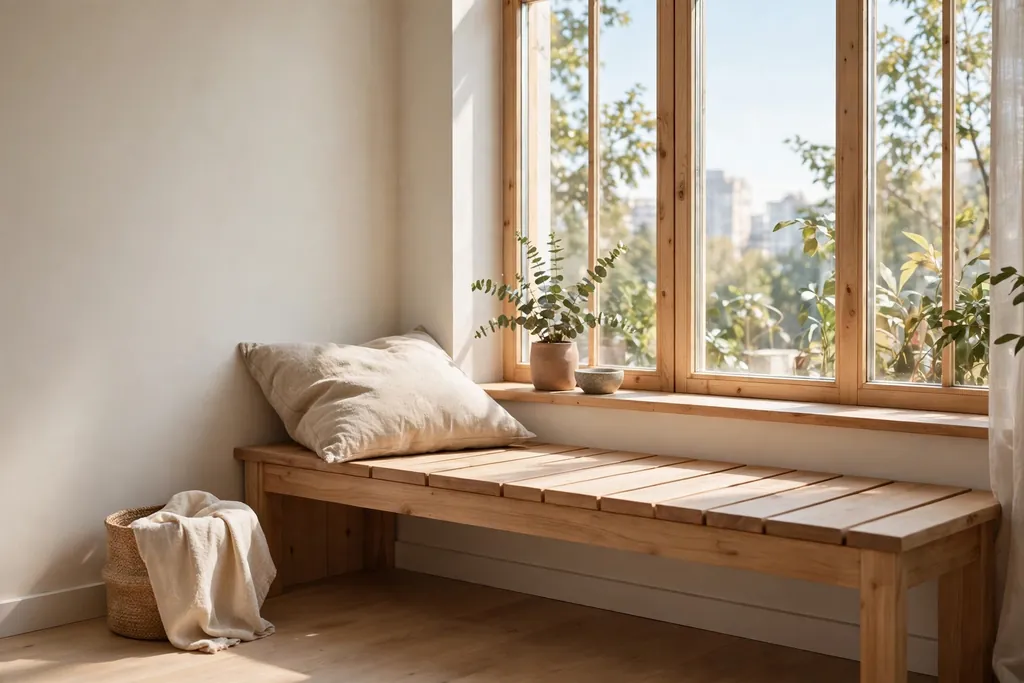
    22. A Low Double Rail for Kids

    Child's closet with a low double rail holding small clothes at child height.

    Set a low double rail in a child’s closet so small clothes hang at a height kids can reach. Children’s clothes are short, so two low rails fit easily, and a rail at child height lets kids choose and hang up their own clothes. This builds a tidy habit early, since putting clothes away is simple when the rail is within reach.

    Place daily clothes on the lower rail and occasion or next-size clothes on the upper rail, and label the sections with pictures for younger children. Keep the floor below clear for shoes and a small basket for laundry, so the closet stays easy to use. As the child grows, raise the rails, so the same closet grows with them.

    23. An Entry Closet as a Mudroom Station

    Entry closet set up as a mudroom station with coat hooks and shoe shelf.

    Turn the entry closet into a mudroom station with hooks for coats, a shoe shelf below, and a basket for hats, gloves, and keys. Entry closets often hold a mix of coats and random household items, which makes the front door area messy. Giving the entry closet one clear job keeps coats, shoes, and bags by the door instead of spread through the house.

    Hang one hook per person at a height each person can reach, and keep a tray or a low shelf for wet shoes so the floor stays dry. Add a small basket for each person if space allows, so gloves and scarves have a home. Clear the entry closet each season, since coats and gear change with the weather and old items pile up fast.

    24. A Spare Closet as a Mini Office

    Spare closet converted into a mini office with a desk board and shelves.

    Convert a spare closet into a mini office when clothes can move elsewhere, with a desk board at sitting height, shelves above, and a light under the top shelf. A closet office suits a small home with no spare room, since the closet already has walls, a power point nearby in many homes, and a door that can close the work away. Remove the doors or keep them for closing time at the end of the day.

    Fit the desk board firmly into studs or with brackets rated for the load, and keep cables tidy with clips along the wall. Use the upper shelves for books and supplies, and leave the desk surface clear for daily work. If the closet must still hold some clothes, hang a short rail on one side and keep the desk on the other, so both jobs share the space.

    25. A Sliding Door That Saves Swing Space

    Small bedroom closet with a sliding barn style door saving floor space.

    Swap a hinged closet door for a pocket door or a barn style sliding door to free the floor space the door swing used to need. In a small bedroom, the swing of a hinged door can block a bed, a dresser, or a walkway, while a sliding door moves along the wall. This change alone can make a tight room feel easier to move around in.

    Check the wall beside the closet for switches, vents, and light fittings before choosing a barn door, since the door needs a clear track. A pocket door needs wall space inside the wall, so it suits a remodel more than a quick swap, and it needs a builder to fit it well. For a simpler change, removing the door and hanging a curtain, as in Idea 9, gives most of the same floor gain. The zoning advice in these studio apartment decorating ideas helps when a closet without a hinged door sits in a room that also serves as a living area.

    26. A Front Capsule Rail for the Week

    Front closet rail holding a week's outfits in day order.

    Keep a short rail or a few hangers at the front of the closet for the week’s outfits, chosen in one session. A capsule rail stops the daily search through the whole closet, since the week’s clothes are already picked and visible. It also shows at a glance whether the week needs laundry, ironing, or a fresh choice.

    Pick outfits on a quiet evening, and hang them in day order from left to right, with accessories on the same hangers where possible. Keep the capsule rail to five or seven outfits, so it stays a short, useful row rather than a second full closet. At the end of the week, return unworn items to their zones and pick the next set, so the system resets cleanly.

    Conclusion

    A small closet works best when it has a clear layout, not more stuff in it. Double rails, high shelves, slim hangers, and a home for shoes and accessories cover most of the gain, and small additions such as a light, a valet rod, or a door organizer make the closet easier to use every day. Start with one change, such as the double rail or the shelf dividers, and live with it for a week before adding another, so each addition earns its place. The storage ideas in these bedroom storage ideas and the zoning tips in these studio apartment decorating ideas pair well with this guide when the closet shares a room with sleeping or living space. Pick the ideas that fit your closet, your lease, and your routine, and save this guide to Pinterest so you can find your favorite setup again.

    FAQs

    How do I organize a very small reach-in closet?

    Start by emptying the closet and sorting clothes into keep, seasonal, and pass on piles. Then measure the width, depth, and height, fit double rails for short clothes, add a drawer unit or shoe shelves at the base, and use the top shelf for labelled bins. Keep daily items at eye level and seasonal items up high, and review the closet each season so it does not fill up again.

    What is the best way to double hanging space in a small closet?

    Fit a second rail below the first for shirts, jackets, and trousers, and keep one full height section for coats and long dresses. Use slim, matching hangers so clothes slide freely and take less width. This combination usually adds more usable space than any other single change in a reach-in closet.

    How can renters improve a small closet without drilling?

    Use freestanding rail kits, hanging shelf units, over door organizers, removable hooks, and battery lights, all of which need no drilling. A rolling cart and matching baskets also add storage without fixing anything to the wall. Check your lease before using removable hooks on painted surfaces, and test one hook first.

    How do I keep shoes tidy in a small closet?

    Give shoes their own shelves, such as slanted shelves at the base of the closet or a door organizer for flat pairs, and keep boots upright on the floor. Sort daily shoes at eye or hand level and occasion shoes higher up. Leave one shelf partly empty, since a full shoe shelf pushes overflow onto the floor.

    Should I remove closet doors in a small room?

    Removing doors can help when a hinged door blocks a bed or a walkway, and a curtain or sliding door gives most of the same floor gain with a tidier front. An open closet suits you if you keep clothes neat, since everything stays visible. If you prefer hidden storage, sliding doors or a curtain hide the contents without needing swing space.

    How often should I rotate and review a small closet?

    Swap seasonal clothes twice a year, and review the whole closet at the same time, checking each item as you hang it back up. A quick monthly check of the shoe shelf, the top bins, and the door organizer stops small piles from becoming clutter. Pass on anything you did not wear during its season, so the closet keeps room for what you wear now.


  • 31 Smart Laundry Room Organization Ideas for More Style

    31 Smart Laundry Room Organization Ideas for More Style

    A laundry room works hard, yet it often gets the least planning in the house. Clothes pile on the washer, detergent bottles crowd the shelf, and clean towels end up in a heap because nothing has a set home. These 31 smart laundry room organization ideas fix that with storage that suits small rooms, rentals, and family homes alike. You will find wall storage, sorting stations, folding spots, drying options, and small habits that keep the room tidy between wash days. Start with the clutter point that bothers you most, then add one idea at a time.

    Key Takeaways

    • Give every group a home: detergent, towels, hampers, drying clothes, and small supplies each need one set spot.
    • Use the walls and the space above the machines first, since floor space in a laundry room is usually scarce.
    • Sort at the source with labeled bins, so wash day starts with loads already grouped.
    • Keep daily items at easy reach and move seasonal or bulky items to a high shelf.
    • Add one folding surface and one drying option, since those two jobs cause most of the pileups.
    • Label bins and review the room once a season, so new items do not quietly take over.

    1. Open Shelves Above the Machines

    Open wooden shelves above a washer and dryer holding folded towels, detergent bottles, and baskets.

    Fit two open shelves above the washer and dryer for detergent, folded towels, and baskets you reach for every wash day. Open shelves keep daily items visible, so you can see at a glance what needs refilling, and they cost less than cabinets. Keep the lowest shelf high enough to load the machines without bumping your head, and leave a clear gap above the machines for hoses and lids.

    Group items by job on each shelf: washing supplies on one, towels and cloths on another. Use matching baskets for small items, so the shelves read as tidy rather than crowded. For wall storage lessons that carry over well here, these kitchen wall storage ideas show how to group items and leave breathing room on open shelves.

    2. Closed Cabinets Above the Machines

    White closed cabinets above a washer and dryer in a tidy laundry room, with folded towels on the counter below.

    Choose closed cabinets above the machines when you want a calmer look or need to keep supplies away from children and pets. Doors hide mismatched bottles, spare parts, and cleaning products, which matters in a room guests may pass through. Pick shallow cabinets that still clear the machine lids, and fix them into studs or with fixings rated for the load.

    Keep one shelf inside each cabinet for daily supplies and a higher shelf for spares. Label the inside of a door with a short list of what lives where, so family members put things back in the right place. Closed cabinets pair well with one open shelf below them for the two or three items you grab every load.

    3. Floor-to-Ceiling Storage Tower

    Tall floor-to-ceiling storage tower cabinet beside a washer, with shelves holding towels, baskets, and cleaning supplies.

    Add a tall, narrow storage tower beside the machines to hold towels, bedding, ironing supplies, and bulk detergent in one unit. A tower uses vertical space that a short cabinet wastes, and it keeps the room from spreading into other rooms. Measure the width, the door swing, and the space needed to pull the machine out for service before you order.

    Plan the inside from the top down: rarely used items high, daily towels at eye level, and heavy detergent low. Leave one shelf partly empty at the start, so new supplies have a place. A tower with doors keeps dust off folded towels, which matters in a room where lint is always in the air.

    4. Slim Pull-Out Pantry Between the Machines

    Slim tall pull-out pantry slid open beside a washing machine, with shelves of detergent bottles and cleaning supplies.

    Fit a slim pull-out pantry in the gap beside a machine for detergent, stain spray, and cleaning bottles. The whole unit slides out, so you can see every bottle without reaching to the back of a deep cupboard. Measure the gap, the skirting boards, and the machine door swing first, since pull-outs need a clear path to open fully.

    Group bottles by job, such as washing, stain care, and freshening, and put heavy bottles low. Wipe the shelves now and then, since drips from detergent bottles collect fast. If the gap is too narrow for a fitted unit, a slim freestanding pull-out cart gives much of the same benefit.

    5. Rolling Cart in the Side Gap

    Slim rolling cart in the narrow gap beside a washer and dryer, holding detergent, dryer sheets, and spray bottles.

    Slide a slim rolling cart into the side gap beside the washer or dryer for supplies you use every load. A cart moves out for cleaning, moves to the folding spot when needed, and costs little compared with fitted storage. Choose a cart with wheels that lock, so it stays put while you pull a bottle from it.

    Use the top tier for daily detergent and dryer sheets, the middle for stain care, and the lowest for spare supplies. Keep the cart narrow enough to slide without scraping the machine, and do not overload it, since a heavy cart is hard to move and can mark the floor. Wipe the tiers weekly, since laundry rooms collect lint and drips.

    6. Labeled Bins on Open Shelves

    Open laundry room shelves with matching labeled bins and baskets holding towels and supplies.

    Place matching labeled bins on open shelves for towels, cloths, pegs, and small supplies, so each group has a visible home. Labels stop the slow drift where one bin ends up holding a mix of everything, and they help everyone in the house put things back correctly. Use short, plain labels such as towels, cloths, pegs, and spares.

    Keep bins light enough to lift with one hand, and store heavy detergent elsewhere. Line a bin with fabric if it holds small items that slip through the weave. Replace a bin when it frays or cracks, since a damaged bin snags towels and looks untidy even when it is full.

    7. Clear Jars for Detergent, Pods, and Powders

    Clear glass jars filled with laundry detergent powder, pods, and pegs on a laundry room shelf beside a washer.

    Decant detergent powder, pods, and pegs into clear jars on a shelf, so you can see stock levels and grab the right product fast. Clear jars also stop half empty boxes from collapsing and spilling across a shelf. Use jars with lids that close firmly, and keep them out of reach of small children, since detergent pods and powders need safe storage.

    Label each jar with the product name and the dose, since powders and pods can look alike once they leave their boxes. Keep a small scoop in the powder jar, and refill jars from bulk packs stored in a cabinet. Wash and dry jars fully before refilling, so damp powder does not clump.

    8. Fold-Down Wall Drying Rack

    Fold-down wall-mounted drying rack in a laundry room with clothes hanging to dry.

    Fix a fold-down drying rack to the wall for clothes that cannot go in the dryer. It folds flat when not in use, so it suits small rooms where a freestanding rack would block the walkway. Fix it into studs or with fixings rated for wet clothes, which weigh more than dry ones, and site it where drips will not fall on clean laundry.

    Hang items with space between them, so air moves and clothes dry faster. Keep the rack clear of the machine doors and the folding counter, so you can still move around the room. Fold it away after clothes dry, and wipe the bars now and then to stop dust settling on damp fabric.

    9. Retractable Clothesline Across the Room

    Retractable clothesline stretched across a bright laundry room with shirts and towels hanging to dry.

    Stretch a retractable clothesline across the laundry room for a drying line that disappears when wash day ends. It suits rooms with a clear wall-to-wall run and no room for a permanent rack. Fix both ends firmly, and test the line with a wet load before you rely on it, since a sagging line drops clothes onto the floor.

    Use the line for shirts, towels, and items that benefit from air drying, and retract it once clothes are dry so the room feels open again. Keep the line clear of shelves and light fittings, and wipe it before use if the room is dusty. A retractable line also works well above a bathtub in a combined laundry and bathroom space.

    10. Hanging Rod for Air-Dry Clothes

    Clothes hanging on hangers from a wall-mounted rod in a laundry room, above a folding counter with folded shirts.

    Mount a hanging rod on the wall or under a shelf for shirts and delicates on hangers. A rod keeps air-dry clothes off chairs and door handles, and it lets you move a whole load to the closet in one trip. Fix the rod into studs, since a rod full of wet clothes carries real weight, and leave clearance below for the longest garment.

    Hang clothes with a small gap between hangers, so air reaches each piece. Keep a few empty hangers on the rod, so you are not hunting for one when a load finishes. If wall space is short, a short rod inside a tall cabinet gives the same benefit for a smaller number of items.

    11. Over-Door Rack for Sprays and Small Supplies

    Over-door rack on a laundry room door holding spray bottles, lint rollers, and small cleaning supplies.

    Hang an over-door rack on the laundry room door for spray bottles, lint rollers, and small supplies. It uses space that otherwise holds nothing, needs no drilling, and keeps supplies visible when you walk in. Choose a rack with a flat profile, so the door still closes fully and does not mark the frame.

    Limit the rack to items you use weekly, since an overloaded door is hard to open and looks messy. Put the heaviest bottle lowest, and keep the top hooks for light items such as a lint roller. If the door is used often, choose a rack with a soft backing to protect the door surface.

    12. Pegboard Wall for Brushes and Tools

    Pegboard wall in a laundry room with hooks holding brushes, a lint roller, scissors, and small cleaning tools.

    Fix a pegboard to a free wall for brushes, a lint roller, scissors, and small laundry tools. Hooks move as your tool set changes, so the board stays useful even when supplies change. Paint or stain the board to match the room, and frame the edges so it looks finished rather than like a workshop offcut.

    Plan the layout on the floor first, with the most used tools at easy reach and heavier items low. Leave space around each item, so you can lift it off without knocking its neighbor. A small shelf or cup at the base of the board holds a timer, a stain pen, and other small tools that do not hang well.

    13. Magnetic Caddy on the Side of a Machine

    Magnetic caddy attached to the side of a washing machine holding dryer sheets, a lint roller, and stain spray.

    Attach a magnetic caddy to the side of a metal washer or dryer for dryer sheets, a lint roller, and stain spray. It keeps the most used small items within arm’s reach of the machine, without taking shelf or counter space. Check that your machine side is magnetic first, since some machines have a nonmagnetic finish, and keep the caddy light.

    Use one pocket for dryer sheets, one for a lint roller, and one for stain spray, so each item has a set slot. Wipe the caddy now and then, since lint settles on flat surfaces near a dryer. If the caddy slides when you pull an item, move heavier items to a shelf and keep only light items in the caddy.

    14. Folding Counter Over Front-Load Machines

    Wooden folding counter installed over front-load washer and dryer machines, with a stack of folded towels.

    Fit a wooden counter over front-load machines to create a folding surface at a comfortable height. A counter stops clean clothes from piling on the machines themselves, and it gives you a clear place to fold each load as it finishes. Measure the machine depth and leave room for hoses and ventilation, and check the machine manual before fitting a fixed counter.

    Keep the counter mostly clear, with only a small basket for pegs or a spray bottle at one end. Fold straight from the dryer onto the counter, then carry folded stacks away, so the surface is ready for the next load. Wipe the counter after folding, since lint and stray socks collect there fast.

    15. Fold-Down Folding Table

    Fold-down wooden table fixed to a laundry room wall, open with folded clothes on it, above a laundry basket.

    Fix a fold-down table to a free wall when a fixed counter will not fit. It folds flat when not in use, which suits small rooms and hallways where the laundry area shares space with a walkway. Fix it to studs, since it must hold a pile of clothes and leaning elbows, and choose a size that fits the room without blocking a door.

    Fold it down only when the room is clear of through traffic, so no one walks into the open edge. Keep a basket below it for clothes waiting to be folded, and fold the table away after each session so the room stays open. A small shelf above the table holds pegs and a spray bottle within reach.

    16. Pull-Out Ironing Board in a Drawer

    Pull-out ironing board slid out from a drawer under a laundry room counter, with an iron resting on it.

    Fit a pull-out ironing board in a drawer under the counter for ironing without storing a full board. It slides away when not needed, which suits small rooms where a standing board would live in the way. Measure the drawer depth and the board length first, since the board must fit fully inside when closed.

    Keep the iron in a heat safe spot nearby, and let the board cool before sliding it back in. A pull-out board suits quick touch ups and small loads, while a full board still suits a large ironing session. If a pull-out board will not fit, a compact tabletop board stored upright in a tall cabinet is a good second choice.

    17. Three-Bin Sorting Station

    Laundry sorting station with three labeled bins for lights, darks, and delicates.

    Set up three bins labeled lights, darks, and delicates, so each load is sorted before wash day. Sorting at the source saves time, stops a dark sock from joining a white load, and makes wash day a matter of carrying one bin to the machine. Place the station where dirty clothes naturally arrive, such as near the laundry door or the hallway.

    Use bins that are easy to carry or that lift out of a frame, and empty each bin as soon as it fills. Wash the bins now and then, since dirty laundry leaves a smell in fabric bins. If three bins will not fit, start with two, one for lights and one for darks, and add a small delicates bag that hangs on a hook.

    18. Tilt-Out Hamper in a Cabinet

    Wooden cabinet with a tilt-out laundry hamper pulled open showing clothes inside.

    Build or buy a cabinet with a tilt-out hamper to hide dirty laundry behind a furniture front. The hamper tilts open for loading and closes to hide the pile, which keeps the room looking tidy even between wash days. Choose a hamper bag that lifts out for carrying to the machine, and wash the bag regularly.

    Keep the cabinet near the machines, so the trip from hamper to washer is short. Do not overload the hamper, since a full bag is heavy and can strain the tilt mechanism. A tilt-out hamper suits a laundry room that doubles as a hallway or a bathroom, where an open hamper would always be on view.

    19. Cubby Shelf for One Basket Per Person

    Wall of cubby shelves in a laundry room, each cubby holding a woven basket for one person's laundry.

    Build a cubby shelf with one basket per person for clothes waiting to be washed or folded. Each person has a set cubby, so clean clothes do not mix and dirty clothes do not pile on the floor. Label each cubby with a name or a color, and keep the baskets the same size so the shelf looks planned.

    Empty each cubby on wash day, and return folded clothes to the same cubby, so the owner can collect them easily. Keep the cubbies at a height everyone can reach, or give children lower cubbies and adults higher ones. A cubby shelf also works well in a mudroom that shares space with laundry.

    20. Lost Sock and Small Items Basket

    Small basket on a laundry room shelf holding single socks and small laundry items, beside a washer.

    Keep a small basket on a shelf for single socks, hair ties, and small items found in the washer or dryer. A set spot for strays stops them from piling on the machine or getting thrown away, and it gives you one place to check when a sock goes missing. Empty the basket once a month, and pair up what you can.

    Put the basket near the machines, where strays are found, and keep it small, so it does not become another junk basket. If a sock stays single for a season, it is fair to let it go. A small basket also suits coins and buttons found in pockets, which you can return to their owner from one place.

    21. Stain Treatment Caddy by the Machine

    Small stain treatment caddy with spray bottles, a brush, and a cloth on a laundry room counter beside a washing machine.

    Keep a stain treatment caddy by the machine with spray, a brush, a cloth, and a stain guide card. Treating a stain at once works better than treating it after a wash, and a caddy means you do not hunt for supplies while the stain sets. Keep the caddy in one spot, such as on the counter end or in the pull-out pantry.

    Use the caddy only for stain care, so it stays stocked and ready. Refill the spray before it runs out, and replace a worn brush, since a stiff brush can damage fabric. Keep stain products out of reach of small children, and follow the care label on each garment before treating it.

    22. Drawer Dividers for Small Laundry Supplies

    Open laundry room drawer with dividers organizing small supplies such as pegs, dryer balls, stain pens, and measuring cups.

    Fit dividers in a laundry drawer for pegs, dryer balls, stain pens, measuring cups, and spare buttons. Dividers stop small supplies from sliding into one mixed pile, and they make a drawer work much harder without new furniture. Use adjustable dividers or small boxes inside the drawer, and sort by job, so you can see each group at a glance.

    Keep only laundry supplies in the drawer, and move anything you reach for less than once a month elsewhere. Wipe the drawer now and then, since lint and powder settle in drawers near a washer. If the drawer is deep, use shallow trays on top for the smallest items, so nothing hides at the bottom.

    23. Under-Sink Organizer for Cleaning Bottles

    Under-sink cabinet in a laundry room with stacked organizers and cleaning bottles arranged neatly around the pipes.

    Fit stacked organizers under the laundry sink for cleaning bottles, sponges, and gloves, arranged around the pipes. The space under a sink is often wasted, yet it sits close to water and drains, which suits cleaning supplies. Measure around the pipes first, and choose organizers that slide out, so bottles at the back stay reachable.

    Group bottles by job, keep the most used ones at the front, and put a small tray under any bottle that drips. Wipe the organizers now and then, since leaks and drips collect under sinks. Keep products that must stay out of reach of children in a cabinet with a latch, rather than an open under-sink shelf.

    24. Shelves in a Stacked Machine Closet

    Stacked washer and dryer in a small closet with shelves above and beside holding baskets, detergent, and folded towels.

    Add shelves above and beside stacked machines in a closet for baskets, detergent, and folded towels. A stacked closet has little floor space, so shelves do most of the storage work, and they keep supplies close to the machines. Fix shelves into studs, leave room to pull the machines out for service, and keep the top shelf for light items only.

    Use small baskets on the shelves for pegs and dryer sheets, so nothing falls behind the machines. Keep a step stool nearby if the top shelf is high, so you actually use it instead of piling items on the floor. For small space planning that applies here too, these small kitchen remodel ideas show how to use height and corners when floor space is short.

    25. Hanging Pockets on the Inside of a Cabinet Door

    Inside of a laundry cabinet door with hanging pockets holding spray bottles, cloths, and small supplies.

    Hang a pocket organizer on the inside of a cabinet door for spray bottles, cloths, and small supplies. The pockets use space that otherwise holds nothing, keep supplies hidden when the door closes, and cost little. Choose pockets sized to your bottles, so tall bottles do not tip out when the door moves.

    Keep the heaviest bottles low in the pockets, and check the door hinges now and then, since added weight can loosen them over time. Use one pocket per group, such as stain care, freshening, and cloths, so you can find an item without emptying the whole organizer. This idea suits renters, since it needs no drilling.

    26. Wall Baskets for Cloths and Small Supplies

    Woven baskets hanging on hooks on a laundry room wall, holding cleaning cloths, pegs, and small supplies.

    Hang woven baskets on wall hooks for cleaning cloths, pegs, and small supplies. Wall baskets keep soft items off counters and shelves, add warmth to a plain laundry room, and let you grab a cloth with one hand. Use hooks fixed into studs, since a full basket carries weight, and keep baskets at easy reach height.

    Sort cloths by job, such as dusting, wiping, and polishing, with one basket per job, so you do not grab the wrong cloth. Wash the baskets now and then, since laundry rooms collect lint, and replace a basket when the weave frays. A row of matching baskets looks planned, while mixed baskets can still work if each holds one clear group.

    27. Color-Coded Baskets for Each Family Member

    Row of laundry baskets in different colors on a shelf in a laundry room, each holding folded clothes.

    Give each family member a basket in a set color for their laundry, so loads stay separate from hamper to closet. Color coding stops mix ups, helps children take part, and makes it easy to see whose laundry is waiting. Use the same color for the hamper basket, the folding basket, and a shelf label, so the system is clear at a glance.

    Keep the baskets the same size and shape, so they stack or sit neatly on a shelf. Empty each basket on wash day, and return folded clothes in the same basket, so the owner can put them away. If the household is large, use two colors per person, one for dirty laundry and one for clean, to keep the flow clear.

    28. High Shelf Bin for Seasonal and Bulky Items

    High shelf in a laundry room with a large labeled bin for seasonal and bulky bedding, above cabinets and a washer.

    Place a large labeled bin on a high shelf for seasonal bedding, beach towels, and bulky items you use a few times a year. High storage keeps bulky items out of daily circulation, while still keeping them in the laundry room where they are washed and stored. Label the bin clearly, so you do not open three bins to find one item.

    Use a bin with a lid, to keep dust off bedding, and keep it light enough to lift down safely, or use a step stool. Review the bin once a year, and move out items you did not use, so the high shelf does not become a store for things no one needs. Keep the bin clear of pipes and vents, so air still moves around it.

    29. Shelf Dividers for Folded Linens

    Laundry room shelf with shelf dividers keeping stacks of folded towels and bed linens upright and separated.

    Fit shelf dividers on linen shelves to keep stacks of towels and bedding upright and separated. Dividers stop tall stacks from toppling into each other, and they make it easy to pull one towel without disturbing the rest. Use dividers sized to your shelf depth, and sort stacks by type, such as bath towels, hand towels, and bedding.

    Leave one section partly empty, so new towels have a place without pushing older stacks over. Fold towels to a similar size, so stacks sit evenly between dividers. For storage grouping ideas that work for linens as well as clothes, these bedroom storage ideas show how matching bins and dividers keep shelves calm.

    30. Pet Wash Supply Bin

    Laundry room corner with a dedicated bin holding pet towels, a pet bed cover, and pet hair roller supplies beside a washer.

    Keep a separate bin for pet towels, pet bed covers, and pet hair rollers, so pet laundry does not mix with family laundry. Pet hair and smells transfer easily in a shared wash, and a set bin makes it easy to run pet items as their own load. Label the bin clearly, and keep it near the machines, where pet items are washed.

    Wash pet items on their own, check pockets and seams for treats or small toys, and clean the lint filter after a pet load, since pet hair clogs it fast. Keep a spare pet towel in the bin, so a muddy walk does not leave you hunting for a clean one. Replace the bin if it starts to hold a smell, even after washing.

    31. Chalkboard Laundry Plan and Care Notes

    Small chalkboard on a laundry room wall showing a weekly laundry plan, beside shelves with baskets and a washer.

    Hang a small chalkboard in the laundry room for the weekly wash plan, care notes, and a running list of supplies to buy. A fixed plan stops the pileup where every load waits until the weekend, and care notes stop a wool sweater from joining a hot wash. Write the plan at the top, care notes in the middle, and the shopping list at the bottom.

    Wipe the board clean each week, so old items do not linger and get bought twice. Keep the board near the machines, with chalk or chalk markers in a small cup hung alongside. A magnetic chalkboard adds a second use, holding care labels and school notes with magnets, as long as paper stays clear of steam from the washer.

    Conclusion

    A smart laundry room is not about buying more storage, it is about giving every item a set home and keeping the daily jobs easy. Start with one wall, one sorting station, and one folding surface, then add drying space and small supply storage only where a pile still forms. Measure before you buy, fix heavy storage well, and label bins so everyone in the house can keep the system going.

    Pick one idea from this list today, set it where you actually do laundry, and let the room prove its worth for a week before you add the next change. Save this list on Pinterest before your next laundry room tidy, and work through it one area at a time: storage first, then sorting, then the folding and drying details that make wash day calmer.

    FAQs

    How do I organize a very small laundry room?

    Start with the walls and the space above the machines, since floor space is usually the scarcest resource. Add one shelf or cabinet, one sorting bin, and one folding option, such as a fold-down table, before buying anything else. Keep daily items at easy reach, move seasonal items high, and review the room once a season to remove what you no longer use.

    What should I store in laundry room cabinets?

    Store detergent, stain care, cleaning products, spare pegs, dryer sheets, and folded towels in laundry cabinets, grouped by job. Keep daily items at eye level, spares higher, and heavy bottles low. Keep products that need safe storage, such as detergent pods, out of reach of small children, and keep a small gap between groups so you can see stock levels.

    How can I keep laundry from piling up between wash days?

    Sort clothes at the source with labeled bins for lights, darks, and delicates, and wash a load when a bin fills rather than waiting for a free day. Fold straight from the dryer onto a counter or table, and return folded clothes to their owner the same day. A weekly plan on a chalkboard helps, since it spreads loads across the week instead of saving them all for the weekend.

    What is the best drying option for a small laundry room?

    A fold-down wall rack or a retractable clothesline usually works best in a small room, since both disappear when not in use. A hanging rod suits shirts and delicates on hangers, while a small freestanding rack suits a room with floor space to spare. Hang items with space between them, so air moves and clothes dry faster, and site drying space where drips will not fall on clean laundry.

    How do I stop losing socks in the laundry?

    Use mesh wash bags for small socks, check pockets before washing, and keep a small lost sock basket near the machines for strays. Pair socks as soon as they leave the dryer, and check the machine seal and filter for socks that slip out of a load. Empty the lost sock basket once a month, pair what you can, and let go of singles that have waited a season.

    Should laundry supplies be stored in open or closed storage?

    Use both: open shelves for daily items you grab every load, and closed cabinets for mismatched bottles, spare supplies, and products that need safe storage. Open storage works best when items are grouped in matching bins, while closed storage suits rooms guests pass through. Mix the two, with daily supplies open at easy reach and spares closed above them, for a room that is both handy and calm.


  • 26 Tiny Laundry Room Ideas for a Cozy Seasonal Update

    26 Tiny Laundry Room Ideas for a Cozy Seasonal Update

    A tiny laundry room can still work hard when every inch has a job. The trick is to move storage up the walls, use the gaps beside and above the machines, and give folding, drying, and sorting each a small, clear spot. These 26 tiny laundry room ideas cover stacked machines, fold-down shelves, slim carts, drying solutions, and sorting systems, plus simple seasonal swaps that keep the room feeling cozy all year. Start with the change that solves your biggest daily annoyance, whether that is nowhere to fold, nowhere to dry, or nowhere to put supplies, then add one more idea at a time.

    Key Takeaways

    • Measure first: machine width, door swing, vent and hose clearance, and the gap beside the machines decide which ideas will fit.
    • Use the walls: shelves, peg rails, fold-down boards, and over-door storage add room without taking floor space.
    • Give every job a spot: washing, drying, folding, sorting, and supplies each need one clear place, even if that place is small.
    • Keep daily items at hand height and seasonal or rarely used items higher up, so the room stays easy to use.
    • Swap, do not stack: seasonal towels, rugs, and scents refresh the room without adding clutter.
    • Keep paths, vents, and lint filters clear, and leave room to open machine doors and pull out hampers fully.

    1. Stack the Washer and Dryer Into One Tower

    Stacked washer and dryer tower in a narrow laundry closet with a shelf beside it.

    Stacking the washer and dryer frees a full machine width of floor space, which can become a hamper spot, a slim cabinet, or simply room to stand and fold. A stacking kit made for your exact machines keeps the dryer steady and safe, so check the maker guidance before you buy. Put the washer on the bottom, since it is heavier and vibrates more, and keep the controls within easy reach.

    Leave the clearance the maker asks for around the tower, and keep the vent hose and water hoses free of kinks. A small step stool nearby helps shorter household members reach the dryer controls and the top of the tower. If stacking is not possible in a rental, ask about a stacking kit rather than moving plumbing, since the kit is the part that makes the tower stable.

    2. Add a Countertop Over Front-Loading Machines

    Wood countertop over two front-loading washing machines with folded towels on top.

    A countertop across the top of two side-by-side front-loading machines turns wasted space into a folding surface. Use a board cut to fit the full width, with a small lip or rail at the back so items do not slide behind the machines. A light wood or laminate board wipes clean and suits most rooms.

    Keep the counter clear of heavy items, since you need to reach the machine tops for cleaning and service. Use it for folding, for a small basket of daily supplies, and for a plant or a framed print at one end. If your machines are different heights, level the board with small feet or a support cleat on each side wall.

    3. Install a Fold-Down Folding Shelf on the Wall

    Fold-down wall shelf in a small laundry room with a basket of folded clothes on it.

    A fold-down shelf gives you a folding table only when you need it, then folds flat against the wall when the room is in use for loading machines. Mount it at counter height on the clearest wall, with brackets rated for the weight of a full basket of laundry. A shelf about the depth of a folded towel stack is enough, since deeper shelves crowd the walkway.

    Fold it down for sorting and folding, and fold it up before you open machine doors or carry a basket through. Keep the wall above it free for a small shelf or a peg rail, so supplies stay close without sitting on the folding surface. This idea suits a narrow room best, where a fixed table would block the path.

    4. Slide a Slim Rolling Cart Into the Gap Beside the Machines

    Slim rolling cart pulled out from the gap beside a washing machine with detergent bottles.

    The narrow gap beside a washer or dryer is often wasted, yet a slim rolling cart fits it well and pulls out when you need supplies. Choose a cart narrower than the gap, with two or three tiers and wheels that lock, so it stays put during wash cycles. The top tier can hold detergent and stain spray, the middle tier dryer sheets and cloths, and the lowest tier spare supplies.

    Label the front edge of each tier if the household shares the room, so everyone returns items to the same spot. Wipe the tiers often, since detergent drips collect fast in a small space. A cart like this also works beside a bed or a vanity, and the same logic appears in these bedroom storage ideas, where slim carts serve one routine rather than general overflow.

    5. Hang a Fold-Away Wall-Mounted Drying Rack

    Fold-away wall-mounted drying rack with shirts hanging in a small laundry room.

    A wall-mounted drying rack that folds flat gives you drying space without a floor rack blocking the room. Mount it on a wall with clear air flow, away from the machines, and open it only on wash days. Bars spaced a few inches apart dry shirts, small items, and delicates faster than a crowded rail.

    Hang heavier items, such as jeans, near the wall brackets where the rack is strongest, and lighter items toward the outer edge. Close the rack when it is empty so the room feels open again. If the wall is shared with a living space, check for pipes and wiring before drilling, and use fixings rated for a full, wet load.

    6. Run a Retractable Clothesline Across the Room

    Retractable clothesline stretched across a tiny laundry room with clothes hanging.

    A retractable clothesline stretches across the room for drying, then reels back into a small housing when you are done. Mount the housing on one wall and the hook on the opposite wall, at a height where hangers and clothespins are easy to reach. One line suits delicates and a few shirts, while two parallel lines handle a full small load.

    Use the line for items that should not go in the dryer, and keep it away from the dryer vent so warm air does not blow lint onto clean clothes. Wipe the line before use if the room is dusty, and retract it after each load so it does not become a permanent obstacle. This is a good renter option when the housing uses small screws that are easy to patch later.

    7. Fit Cabinets Up to the Ceiling

    White cabinets reaching to the ceiling above a washer and dryer in a small laundry room.

    Cabinets that run to the ceiling use the full wall height for supplies that you reach for weekly rather than daily. Keep detergent and daily items on the lowest shelf, and move seasonal supplies, spare linens, and bulk buys to the top shelves. Closed doors hide the visual noise of bottles and boxes, which matters in a room you see every day.

    Add a small step stool that lives in the room, so the top shelves stay usable rather than decorative. Label the inside of each door with the shelf contents if the household shares the room. Leave a gap above the machines for venting and service access, and never block a vent or a shut-off valve with a fixed cabinet.

    8. Use Open Shelves With Matching Labelled Baskets

    Open wood shelves with matching labelled baskets above a washing machine.

    Open shelves above the machines or on a clear wall hold baskets that hide supplies while keeping them easy to grab. Use baskets in one material, such as cotton rope or woven seagrass, in two sizes at most, and label each one by job, such as washing, drying, stain care, and cleaning. Matching baskets make open shelves look planned rather than patched together.

    Keep each basket light enough to lift with one hand, since high shelves and heavy baskets are a poor mix. Put daily supplies at hand height and spare stock higher up. Once a month, empty each basket and return only what you actually used, since laundry shelves quietly collect empty bottles and single socks.
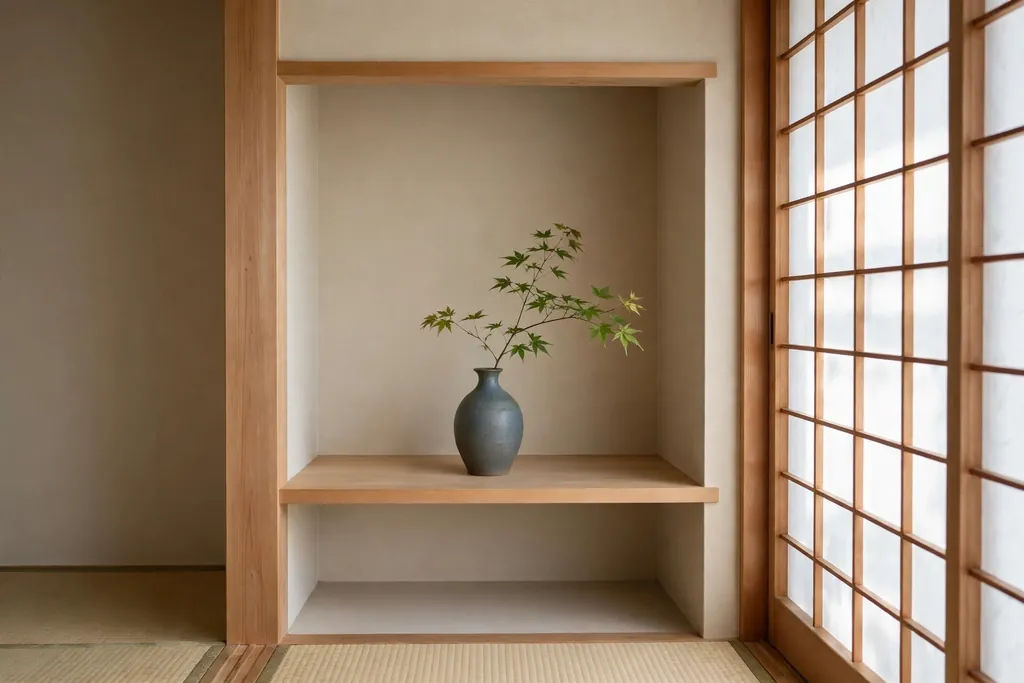
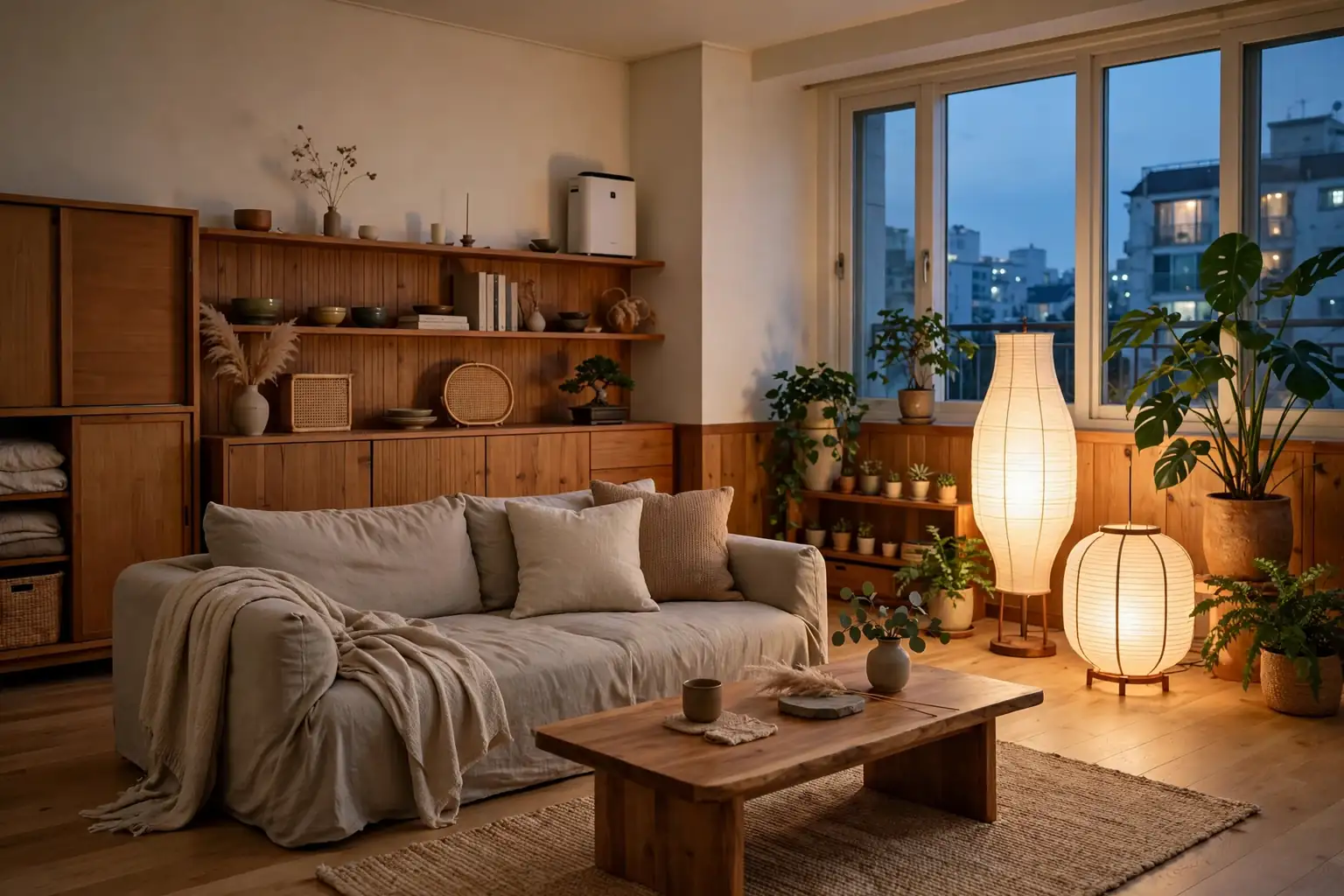
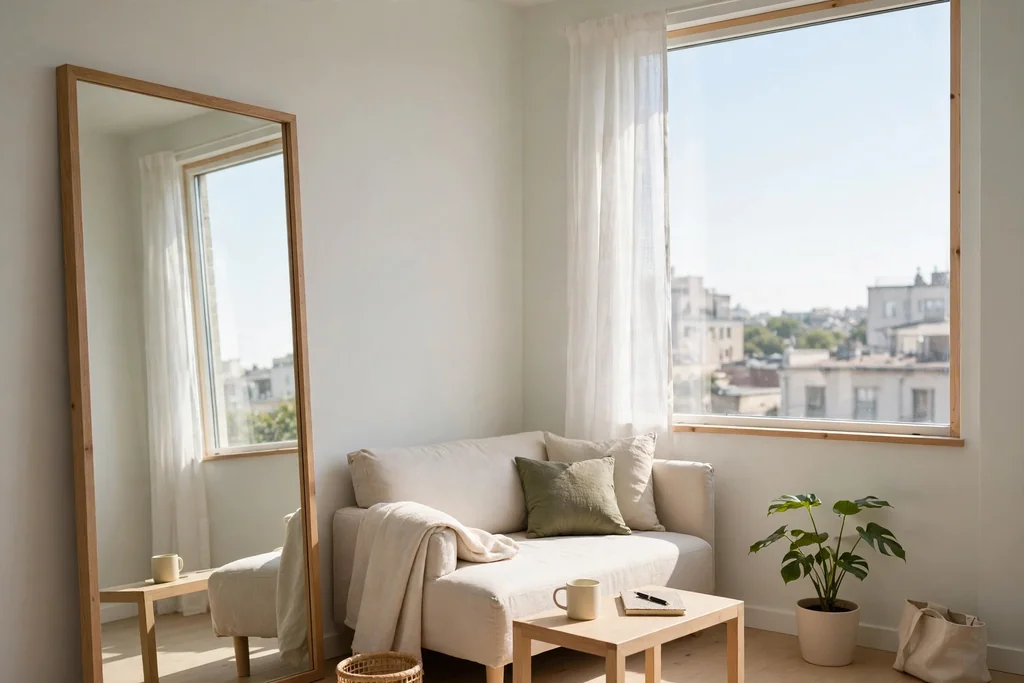
    9. Mount a Peg Rail for Tools and Everyday Supplies

    Wood peg rail on a laundry room wall holding a lint roller, brush, and tote bag.

    A peg rail along one wall holds a lint roller, a small brush, scissors, a measuring cup, and a tote bag on hooks that you can move as needs change. Mount the rail at hand height, with hooks spaced so items do not knock together. A rail with a small shelf on top adds room for a jar of clothespins or a small plant.

    Group hooks by job, so stain care tools sit together and drying tools sit together. Keep the rail clear of the machine door swing, and use hooks with a closed end so items do not slide off when a machine vibrates. A peg rail also suits a hallway or entry, since it uses wall space that a cabinet would waste.

    10. Add a Tilt-Out or Pull-Out Hamper

    Pull-out hamper drawer open in a laundry cabinet with clothes inside.

    A tilt-out or pull-out hamper hides dirty laundry inside a cabinet front, so the room looks tidy even on wash day eve. A single tilt-out bin suits a small household, while a pull-out unit with two bins lets you sort lights and darks as you go. Line the bins with washable bags that lift out for carrying to the machines.

    Keep the hamper near the machines, with enough clearance for the front to open fully. Empty it on a set day each week, and wipe the bin monthly to stop odors. If a built-in unit is not possible, a slim lidded hamper in the same spot gives most of the same benefit with no fitting work.

    11. Sort With Three Slim Bins on a Low Shelf

    Three slim sorting bins labelled for lights, darks, and delicates on a low shelf.

    Three slim bins, one each for lights, darks, and delicates, turn sorting into a habit rather than a wash day chore. Set them on a low shelf or in a row under a countertop, with labels on the front of each bin. Slim bins fit where a wide hamper would block the path, and they stack neatly when one is empty.

    Teach the household one rule: clothes go in a bin, not on the machine or the floor. Wash a bin when it is full, and return the empty bin to its spot right away. If space allows only two bins, use one for everyday loads and one for delicates, and sort the rest at the machine.

    12. Put a Tall Narrow Cabinet in the Dead Corner

    Tall narrow cabinet in a laundry room corner holding brooms and cleaning supplies.

    A tall, narrow cabinet fits a corner or a strip of wall that is too small for a wide unit, and it holds brooms, mops, ironing supplies, and tall bottles upright. Choose a cabinet with adjustable shelves, so tall items fit on one shelf and small items stack on another. A door keeps the contents out of sight, which helps a tiny room feel calm.

    Measure the door swing before you buy, since a cabinet door that hits a machine door wastes the whole unit. Keep the heaviest items low, and put the iron and cleaning sprays where you can reach them without moving other items. A narrow cabinet also works in a bathroom, where the same dead corner problem appears.

    13. Use the Machine Sides With Magnetic Shelves and Hooks

    Magnetic shelves and hooks on the side of a washing machine holding detergent and a lint roller.

    The flat metal sides of a washer or dryer can hold magnetic shelves and hooks for detergent, a lint roller, and a small basket of clothespins. Magnetic storage uses no wall space and no drilling, which suits renters and very tight rooms. Choose magnets rated for the weight you plan to hang, and test them with a full bottle before trusting them.

    Keep magnetic items off the door seals and control panels, and remove them before a service visit. Wipe the machine side first, so dust does not weaken the grip. This idea works best for light, daily items, while heavy bulk supplies stay on a shelf or in a cabinet.

    14. Hang an Over-Door Organizer for Sprays and Small Items

    Over-door organizer with clear pockets holding sprays and small laundry items.

    An over-door organizer with clear pockets turns the inside of the laundry room door into storage for stain sprays, dryer balls, clothespins, and spare supplies. Hang it on the inside face so the pockets do not show from the hall, and keep heavy bottles low so the door still swings freely. Clear pockets let you see each item at a glance, which stops duplicate buying.

    Reserve the top pockets for light items, such as mesh wash bags and spare cloths. The same door trick works in a small bathroom, and these apartment bathroom ideas show how an over-door organizer keeps toiletries visible without a new cabinet. Trim the hooks if the door rubs the frame, and check that the door still latches.

    15. Fix a Wall-Mounted Ironing Board Cabinet

    Wall-mounted ironing board folded down from a slim cabinet in a laundry room.

    A wall-mounted ironing board folds down from a slim cabinet when you need it and folds away when you do not, freeing the floor space a freestanding board would take. Mount it near an outlet, at a height that suits the main iron user, and keep the cabinet stocked with the iron, a spray bottle, and a small pressing cloth. A cabinet door hides the board completely between uses.

    Let the iron cool before folding the board away, and keep the cord wrapped so it does not catch on the cabinet edge. If ironing is rare in your home, the same cabinet can hold a steamer and a lint roller instead, so the wall space still earns its keep.

    16. Keep a Foldable Step Stool Tucked in a Slim Slot

    Foldable step stool tucked in a slim slot beside a washing machine.

    A foldable step stool that lives in a slim slot beside the machines or behind the door makes high shelves usable every day, not just on step ladder days. Choose a stool that folds flat to an inch or two thick, with a non-slip top and feet that grip tile or vinyl. A slot about the width of the folded stool keeps it from sliding into the walkway.

    Hang the stool on a hook if floor space is truly zero, and keep it in the laundry room rather than another room, so reaching a high shelf never becomes a reason to skip putting things away. Check the stool weight rating, and replace it if the hinges loosen or the feet wear smooth.

    17. Cover a Utility Sink With a Removable Board for Folding Space

    Wood board resting over a utility sink in a laundry room with folded clothes on top.

    A board cut to rest over a utility sink turns the sink into a folding surface or a sorting spot when the sink is not in use. Use a light board with handles or finger holes at each end, so you can lift it off quickly for hand washing. A board with a small lip at the back stops folded items from sliding into the sink.

    Store the board upright beside the sink when it is not in use, and dry the sink rim before laying the board down, so moisture does not warp it. This idea suits a room with a sink but no counter, since it adds a work surface with no fixed fitting and no lost sink use.

    18. Add Under-Shelf Hooks and a Rail for Spray Bottles

    Spray bottles hanging from hooks under a laundry room shelf.

    Hooks under a shelf and a short rail under a cabinet hold spray bottles by their triggers, keeping them off the counter and easy to grab. Mount the hooks in a row with room between bottles, so you can lift one without knocking the next. A rail with sliding hooks adjusts as your bottle collection changes.

    Keep stain sprays and cleaning sprays on separate hooks, and label the rail if the household shares the room. Check that bottles hang clear of the machines below, since vibration can loosen a poorly seated hook. This small change often frees more counter space than a new shelf, because bottles are the items that crowd a laundry counter most.

    19. Place a Small Rug and Swap It With the Seasons

    Small washable rug in warm autumn colors in front of a washing machine.

    A small, washable rug in front of the machines softens a hard floor and catches lint and drips before they spread. Choose a low pile rug that fits the clear floor area without curling under a machine door, and add a non-slip pad beneath it. Wash the rug with a towel load on a regular cycle, so it never becomes a source of dust.

    Keep a second rug in rotation, one in a warm autumn palette and one in a lighter spring palette, and swap them with the seasons for an easy refresh. A rug swap is one of the cheapest seasonal updates in the home, since it changes the whole feel of the room in under a minute.

    20. Swap Hand Towels, Curtain, and Basket Liners for a Seasonal Palette

    Rust and cream hand towels and basket liners in a small laundry room.

    Hand towels, a small window curtain, and basket liners are the fastest seasonal swap in a tiny laundry room, since they carry most of the room color. Choose one palette per season, such as warm rust and cream for autumn, deep green and natural linen for winter, and fresh sage and white for spring. Swap all three at once, so the room reads as a set rather than a single new towel.

    Store the off-season set in one labelled basket on a high shelf, so the swap takes minutes and the old set does not pile up elsewhere. Wash the set before storing it, and fold it as a bundle, so next season starts tidy. This habit also stops the slow build-up of single towels that no longer match anything.

    21. Set Up a Seasonal Scent Station

    Small tray with dryer balls, linen spray, and sachets on a laundry room shelf.

    A small scent station on one shelf or tray groups dryer balls, a linen spray, sachets for drawers, and a jar of baking soda for freshening loads. Keep the tray to one small group, so it reads as a station rather than clutter, and refill it when you swap the seasonal towels. A woody or spiced scent suits autumn and winter, while a clean cotton or herbal scent suits spring and summer.

    Label the linen spray clearly, and keep scent products away from the dryer heat and out of reach of small children. A scent station also helps a small room smell fresh between loads, since laundry rooms hold damp air longer than larger rooms. Rotate scents with the seasons, and retire any product that no longer smells pleasant.

    22. Add a Lost-Sock Bin and a Lint Bin on the Wall

    Two small labelled wall bins for lost socks and lint near a dryer.

    A small wall bin for single socks and a small bin for lint stop two common laundry annoyances from spreading across the room. Mount both bins near the machines, at a height where you can drop items in with one hand while holding a basket. Check the sock bin on wash day, and pair socks before they reach the drawer.

    Empty the lint bin after every dryer load, and keep it away from the dryer vent so lint does not blow back into the room. Two small bins beat one large bin here, since lint and socks have different jobs and different emptying rhythms. Label each bin, so guests and family members use the right one without asking.

    23. Label Every Bin and Shelf With a Simple Family Load System

    Labelled bins and shelves in a tidy small laundry room with a simple sorting system.

    Labels turn a tidy laundry room into a room the whole household can keep tidy. Use one simple system, such as lights, darks, delicates, and towels, and put the same label words on bins, shelves, and the hamper. Short labels in a clear, readable style work better than long explanations, since laundry is a quick job done on the move.

    Print or write labels on cards that slide into holders, so you can change them when routines change. Put a label at the front of each shelf, not on top, since front labels are the ones you see when you walk in. Review the labels each season, and remove any label for a category the household no longer uses.

    24. Brighten the Room With a Warm Plug-In Light and a Small Mirror

    Tiny laundry room with a warm plug-in light and a small mirror on the wall.

    Many tiny laundry rooms have one harsh overhead light and no window, which makes sorting colors hard and the room feel cramped. A warm plug-in light on a shelf or a battery light under a cabinet softens the room and helps you tell navy from black. Add a small mirror on the clearest wall, since it bounces light and makes the room feel wider.

    Keep plug-in lights away from water and the dryer vent, and choose warm white bulbs so the room feels calm rather than clinical. A mirror also helps you check a shirt for lint before it goes in the dryer. If wiring changes are not allowed in a rental, plug-in and battery options give most of the benefit with no electrician visit.

    25. Keep a Folding Basket Station Ready at the Door

    Folding basket station near a laundry room door with hangers and a mending bag.

    A folding basket station near the door holds one empty basket, a small stack of hangers, and a bag for items that need mending, so clean laundry moves out of the room instead of piling on the machines. Hang the hangers on a hook and set the mending bag on a shelf, so the station takes almost no floor space. When a load finishes, fold straight into the basket and carry it out.

    Keep only one basket at the station, since two baskets invite a pile. Return the empty basket right after putting clothes away, so the station is ready for the next load. This habit matters most in a tiny room, where a single basket left on the machines blocks the next wash.

    26. Finish With One Framed Print and a Hardy Plant

    Tiny laundry room corner with a framed print and a pothos plant on a high shelf.

    One framed print and one hardy plant give a tiny laundry room a finished feel without adding clutter or a cleaning burden. Choose a print in a moisture-safe frame, hung where steam from the dryer will not reach it directly, and a plant that copes with warm, humid air, such as pothos in a hanging pot or on a high shelf. One plant usually looks better than a crowded collection in a small room.

    Water the plant on wash day, so plant care joins an existing routine and is less likely to be forgotten. Keep the print and the plant in the same palette as the seasonal towels, so the room feels planned. Swap the print with the seasons if you like, but keep the count to one, since the room has little wall space to spare.

    Conclusion

    A tiny laundry room does not need a remodel to work well. It needs clear jobs for each wall, each gap, and each shelf, plus a few habits, such as sorting as you go, folding straight into a basket, and emptying lint after every load. Seasonal swaps for towels, rugs, and scents keep the room feeling fresh without new furniture or new clutter. Pick the one idea that fixes your biggest daily frustration, live with it for a week, then add the next idea that the room still needs. Small rooms reward small, steady changes more than one big overhaul.

    FAQs

    1. What is the best first change for a tiny laundry room?

    Start with the problem that annoys you daily. If folding space is missing, add a fold-down shelf or a countertop over the machines. If supplies are scattered, add a slim cart or labelled baskets first. One clear fix shows results fast and makes the next change easier to choose.

    2. Can I stack a washer and dryer in a rental?

    It depends on your machines and your lease. Use a stacking kit made for your exact models, and ask the landlord before moving machines, changing vents, or altering plumbing. If stacking is not allowed, a slim cart, over-door storage, and wall shelves add room without moving the machines.

    3. How do I dry clothes in a tiny laundry room without a floor rack?

    Use a wall-mounted fold-away rack, a retractable clothesline, or a line over the bath or sink area where air can move. Hang items with space between them, keep the rack away from the dryer vent, and fold racks away when empty so the room stays open.

    4. What should I store on high shelves in a laundry room?

    Put seasonal supplies, spare linens, bulk buys, and rarely used items on high shelves, and keep daily detergent, stain spray, and dryer supplies at hand height. Keep a foldable step stool in the room, so high shelves stay usable, and label each shelf so the household can find things without moving everything.

    5. How can I make a laundry room feel cozy for each season?

    Swap the small, colorful items: hand towels, a rug, basket liners, and the scent station. Choose one palette per season and swap all of them at once, then store the off-season set in one labelled basket. These swaps change the room fast and cost far less than new furniture.

    6. How do I stop a tiny laundry room from smelling damp?

    Keep air moving, wipe up drips, leave machine doors open briefly after a wash so drums dry, and clean the lint filter after every dryer load. A scent station with dryer balls and linen spray helps, but it cannot replace dry surfaces and clear vents, so check hoses and vents if damp smells persist.


  • 22 Front Walkway Ideas to Make Small Spaces Work Harder

    22 Front Walkway Ideas to Make Small Spaces Work Harder

    A front walkway in a small yard has to do more than lead to the door. It needs a clear route for guests, a safe step in wet weather, room for a parcel drop, and a first view that feels cared for, all in a few short metres. One strong material, neat edging, and a plant or light repeated along the route can make a small front yard feel finished. These 22 front walkway ideas cover stone, brick, gravel, wood, and concrete, plus lighting, planting, and small seating spots that fit a tight plot. Measure your path width and door landing first, then pick the idea that suits your slope, shade, and budget.

    Key Takeaways

    • Keep the main route at least wide enough for two people to pass with a bag or a pram, and keep it clear of pots and bins.
    • Choose one main path material and repeat it at the door landing, so a short walk looks planned rather than patched together.
    • Edge every loose material, such as gravel or mulch, so it stays on the path and off the lawn.
    • Add light at ankle height along the path, not only at the porch, so the route is safe after dark.
    • Use planting beside the path, not on it, and keep shrubs trimmed back from the walking line.
    • In a small yard, let the path do two jobs, such as a seating pad, a bench nook, or a planter border, instead of adding separate features.

    1. Straight Flagstone Path with Ground Cover Joints

    Straight narrow flagstone front walkway with low green ground cover plants growing between the stone joints.

    Lay large flat flagstones in a straight line from the street or driveway to the door, and plant low ground cover between the joints. The straight line suits a small yard because it wastes no space on curves, and the wide stones give a steady step for all ages. Ground cover softens the stone and keeps weeds down once it fills in.

    Set each stone level with its neighbours, with a firm base under it, so no stone rocks when stepped on. Leave joints wide enough for the plants you choose, and water them until they root. This path pairs well with a simple front door color, and the door shades in these blue front door colors show how a painted door can anchor a stone walk.

    2. Stepping Stones Set in Gravel

    Stepping stone front walkway set in pale gravel, with large flat stones leading to a house front door.

    Set large stepping stones in a bed of pale gravel for a path that drains well and costs less than a full paved walk. The stones give a firm step, while the gravel fills the gaps and stops mud from forming in wet weather. This suits a small yard where you want a relaxed look without a solid slab of paving.

    Space the stones at a natural walking stride, and test the spacing by walking it before you fix them in place. Use a landscape fabric and edging under the gravel to keep it in place. Keep the gravel level just below the stone tops, so a shoe does not catch, and rake it back into place after heavy rain.

    3. Brick Herringbone Walkway

    Brick herringbone pattern front walkway in warm red brick leading to a house front door.

    Lay bricks in a herringbone pattern for a walkway that looks formal and stays firm underfoot. The interlocking pattern spreads weight well, which helps a path that gets daily use, and brick suits older homes and cottages as well as newer brick facades. A herringbone walk also hides small repairs better than a simple running bond.

    Use a firm, level base and a border row of bricks set on edge to hold the pattern in place. Keep the joints tight and fill them with sand, then sweep in more sand after the first rain. Brick can get slippery when wet, so choose a brick with a rough face for the walking surface, and clean moss from shaded spots each season.

    4. Gentle Curved Gravel Path

    Gentle curved gravel front walkway with dark metal edging winding through a small front garden to a house front door.

    Give a small front yard a softer feel with one gentle curve in a gravel path, rather than a sharp bend that wastes space. A single curve slows the eye down and makes a short walk feel longer, and it lets you plant a small bed in the curve where a straight path would leave a bare corner. Keep the curve wide and easy to walk, not a tight S shape.

    Edge the gravel with steel, stone, or brick so it does not drift onto the lawn. Use a firm base and a gravel size that packs down, rather than large loose stones that roll underfoot. Add one focal plant or pot at the curve, so the bend has a reason to be there, and keep the path wide enough for a wheelie bin on collection day.

    5. Concrete Pavers with Grass Joints

    Concrete paver front walkway with strips of green grass growing between large square pavers.

    Lay large concrete pavers with strips of grass between them for a path that looks green and modern while staying firm to walk on. The grass joints break up a hard surface, help rain soak in, and keep a small yard from feeling paved over. This works best where the path gets some sun, since grass in deep shade thins out.

    Set the pavers level on a firm base, with joints wide enough to mow or trim. Choose a tough grass or ground cover for the joints, and keep the grass cut short so it does not trip anyone. In a dry spell, water the joints first, since they dry out faster than a lawn, and top up any bare patches in spring.

    6. Wide Door Landing with Matched Planters

    Wide paved landing pad at a house front door with matching planters holding green shrubs on both sides.

    Widen the paved area right at the front door into a landing, and flank it with two matching planters. A landing gives guests a place to stand while the door opens, room for a parcel, and a safe step that is not crowded by pots. Matching planters make the door the clear focus, even on a short walk.

    Make the landing at least as wide as the door plus room to step aside, and keep the surface level with the threshold. Choose planters that are heavy enough not to tip, and plant them with shrubs that stay in shape, rather than tall plants that block the door or the house number. Water the planters on a set day each week, so they stay full through the season.

    7. Low Steps for a Sloped Front Yard

    Low wide stone steps forming a front walkway up a gentle slope to a house front door, with low plants beside the steps.

    Turn a sloping front yard into a series of low, wide steps instead of a steep ramp of paving. Low steps give a safe, steady climb, and each step can double as a small planting ledge or a place to set a pot. Wide steps suit small yards because they feel less steep than narrow, tall steps.

    Keep each step the same height, since a single uneven step is the one people trip on. Use a rough, non slip surface, and add a handrail if the slope is steep or if older guests visit often. Check the step depth by walking it with a bag in each hand, and keep the edges clear of loose stones and leaves in autumn.

    8. Wood Plank Boardwalk Path

    Wood plank boardwalk style front walkway over a small front garden bed to a house front door.

    Lay wood planks as a boardwalk path across a small front garden for a warm, informal walk that suits a cottage or a coastal home. Timber softens a yard full of stone and brick, and planks can bridge a damp or uneven patch without a full concrete base. A boardwalk also lifts the walking surface slightly, which helps after rain.

    Choose timber rated for outdoor ground contact, and leave small gaps between planks for drainage. Fix the planks firmly so none lift or rock, and add a non slip finish or grooves on shaded boards. Plan to clean and reseal the timber each year, since an unsealed boardwalk greys and roughens fast in sun and rain.

    9. Patterned Tile Inset Walkway

    Front walkway with patterned decorative tile insets set into plain stone paving, leading to a house front door.

    Set patterned tiles as insets into a plain stone or concrete walk for a path with one clear detail, rather than a whole walk of busy pattern. A tile inset at the door, at a bend, or as a repeated band gives a small yard a crafted look without the cost of tiling the full path. It also lets you echo a tile color already used at the porch or door.

    Keep the tiles level with the surrounding paving, and use tiles rated for outdoor frost and foot traffic, not indoor wall tiles. Fix them on a firm bed so they do not crack or lift in winter. Choose a pattern that reads well from standing height, since a tiny detailed tile will be lost underfoot, and seal the tiles to protect the color.

    10. Solar Light Lined Evening Path

    Front walkway at dusk lined with small solar path lights glowing warmly on both sides, leading to a house front door.

    Line a short front walk with small solar path lights so the route is safe and welcoming after dark, with no wiring to run. Solar lights suit a small yard because a handful of lights covers the whole path, and they switch on by themselves at dusk. Place them where they mark the edge, not in the middle of the walking line.

    Space the lights evenly, and keep them clear of shrubs that shade the solar panel during the day. Choose warm white lights for a calm evening look, and check that the path still gets light from the porch as well, since solar lights alone can be dim on a cloudy winter day. Clean the panels twice a year to keep them charging well.

    11. Raised Bed Border Along the Walk

    Front walkway bordered by a low raised garden bed with flowers and herbs on one side, leading to a house front door.

    Build a low raised bed along one side of the walk for flowers, herbs, or small shrubs, so the path gains planting without losing walking width. A raised bed defines the edge of the walk, keeps soil off the path, and makes weeding and watering easier than a ground level bed. It suits a small yard where every bed must earn its place.

    Keep the bed wall low, so it does not feel like a wall beside a narrow path, and cap it with a flat stone that can hold a pot or a trowel. Fill it with plants that stay within the bed, and trim any stems that lean over the walk. Water the bed deeply but less often, so roots grow down rather than spreading across the path.

    12. Permeable Pavers for a Wet Front Yard

    Permeable paver front walkway with small gaps filled with gravel between pavers, leading to a house front door.

    Use permeable pavers with gravel filled gaps for a front walk that lets rain soak through instead of pooling on the surface. This suits a yard that stays wet, a path at the bottom of a slope, or a home where runoff from paving is a problem. The gaps also give a small yard a lighter, less solid look than a full slab.

    Lay the pavers on a free draining base, following the maker guidance for your soil type, and fill the gaps with clean gravel, not soil that will wash out. Keep the path swept, since leaves and mud can clog the gaps over time. Check after heavy rain that water drains away, and top up the gravel in any gaps that settle.

    13. Narrow Path with a Built In Bench Nook

    Narrow front walkway with a small bench nook beside the path near a house front door, with potted plants.

    Cut a small bench nook into the side of a narrow front walk, so there is a place to sit, wait, or set down bags without blocking the path. A nook works in a small yard because it uses a corner or a gap beside the path, rather than a separate seating area that needs its own paving. A low stone or wood bench is enough, with one pot beside it.

    Keep the bench clear of the main walking line, and make sure the nook does not narrow the path below a comfortable width. Choose a bench material that copes with rain, and add a cushion only if you will bring it inside in wet weather. Keep the nook tidy, since a bench that collects parcels and tools soon blocks the walk it was meant to serve.

    14. White Gravel Path with Dark Edging

    White gravel front walkway with dark stone edging in a straight line to a house front door.

    Lay white gravel inside a dark stone or brick edge for a crisp, high contrast path that makes a small front yard look larger and brighter. The dark edge frames the pale gravel and stops it from spreading, while the white surface bounces light back toward the house on a dull day. This suits a modern or coastal home with pale siding.

    Use a firm base and landscape fabric under the gravel, and choose a gravel size that packs down underfoot. Rake the gravel weekly in the first month, until it settles, and top it up once a year. Keep leaves off the white surface in autumn, since they stain it, and avoid placing the path under a tree that drops sap or berries.

    15. Stamped Concrete That Looks Like Stone

    Stamped concrete front walkway with a stone pattern texture leading to a house front door.

    Use stamped concrete for a walk that has the look of stone slabs at a lower cost and with fewer joints to weed. Stamped concrete suits a small yard because it can be poured as one firm, level surface, with no loose stones to shift. The pattern can match the house style, from large slabs to a cobble look.

    Choose a pattern and color that suit the house, and keep the color close to the natural stone it copies, rather than a bright tint that dates fast. Add a non slip finish, since smooth concrete gets slick in rain, and seal it every few years to protect the color. Plan the joints in the concrete so cracks form along the pattern lines, not across the middle of the walk.

    16. Path with a Small Rain Garden Beside It

    Front walkway beside a small rain garden with native grasses and stones, leading to a house front door.

    Place a small rain garden beside the front walk, a shallow planted dip that catches rain from the path and roof, so the walk stays drier and the yard gains a planting feature. A rain garden suits a small yard because it can be as small as a single bed, planted with grasses and flowers that cope with wet and dry spells.

    Site the rain garden where water already flows, not at the highest point of the yard, and keep it clear of the walking line. Use plants that suit your soil and sun, and mulch the bed to hold moisture in dry weeks. Clear leaves from the inlet after storms, so water can still flow in, and check that the garden drains within a day after rain.

    17. Arched Trellis Entry Over the Walk

    Front walkway passing under a wooden trellis arch with climbing green vines at the start of the path.

    Put a wooden or metal trellis arch over the start of the front walk, with climbing plants growing up the sides, so the entry to the yard has a clear frame. An arch marks the start of the walk, gives a small yard a sense of arrival, and adds height without taking ground space. It suits a cottage, a garden home, or a house with a plain front fence.

    Keep the arch wide enough for two people and tall enough to walk under without ducking, even once plants grow in. Fix the posts firmly, since a trellis catches wind, and prune the climbers each year so they do not narrow the path or block the house number. Choose a climber that suits your sun and that you can reach to prune from a step ladder.

    18. Two Tone Path: Stone and Brick Mix

    Front walkway mixing large flat stones with brick edging and brick bands across the path, leading to a house front door.

    Mix stone slabs with brick bands across the path for a two tone walk that ties together a stone house and a brick feature, or a brick house with stone steps. The mix adds interest to a short walk without needing a pattern across the whole surface, and the brick bands can mark the door landing or a bend. This suits a small yard where one material alone would look plain.

    Keep the stone and brick level with each other, since a lip between materials is a trip risk. Use the brick as a band or a border, not as random patches, so the mix looks planned. Match the brick color to an existing feature, such as the house brick or a chimney, so the path feels part of the home rather than an extra idea.

    19. Path That Widens into a Small Seating Pad

    Front walkway widening into a small paved seating pad with two chairs and a small table near a house front porch.

    Widen the front walk at one point into a small paved seating pad with two chairs and a tiny table, so the walk becomes a place to sit as well as a route. A seating pad suits a small yard because it uses the path itself, rather than a separate patio, and it gives a front yard a social use. Place it where it gets morning or evening sun, depending on when you will sit there.

    Keep the pad clear of the main walking line, so guests can still pass without stepping around chairs. Choose chairs that fold or stack, so the pad can clear fast for a delivery or a gathering. Add one pot and a small mat, and keep the pad swept, since a seating pad that collects leaves soon looks unused.

    20. Low Hedge Lined Formal Path

    Formal straight front walkway lined with low clipped green hedges on both sides leading to a house front door.

    Line a straight front walk with low clipped hedges on both sides for a formal, tidy look that suits a traditional or symmetrical house front. Low hedges frame the path, hide bare soil, and give a small yard a finished edge in every season. Keep the hedges low, so they do not close in a narrow path or hide the door from the street.

    Choose a hedge plant that stays dense at a low height with one or two trims a year, and plant it back from the path edge so it does not narrow the walk as it grows. Water new hedges well in the first year, and trim them in late spring and late summer. Leave a gap in the hedge at any side gate, so the path still connects to the rest of the yard.

    21. Path with House Numbers Set into the Walk

    Front walkway with a low stone pillar and house number sign beside the path near the street, leading to a house front door.

    Set the house number into the walk itself, on a stone pillar, a low wall, or a plaque beside the path near the street, so visitors and deliveries find the house fast. A clear number at the path start saves guests from hunting along the facade, and it gives a small yard a practical detail that also looks finished. This suits a house set back from the street or hidden by planting.

    Place the number where it can be read from the street, with good contrast against its background, and light it if the path is used after dark. Keep the number clear of shrubs that will grow over it, and check it each spring after winter growth. Match the number style to the house, so it reads as part of the entry rather than a last minute addition.

    22. Seasonal Planter Rotation Along a Short Walk

    Short front walkway lined with seasonal flower planters in terracotta pots with colorful blooms, leading to a house front door.

    Line a short front walk with pots that change with the seasons, from spring bulbs to summer flowers to autumn foliage and winter evergreens, so a small path always looks cared for. A pot rotation suits a small yard because pots can move, swap, and refresh without digging a bed, and a short walk needs only a few pots to look full. Keep the pots on one side, or in pairs, so the walking line stays clear.

    Choose pots that are frost proof if they stay out in winter, and group them by water need, so watering stays simple. Swap the planting four times a year, or at least twice, and compost spent plants rather than leaving them to fade by the door. Keep a spare pot ready, so a failed plant can be replaced in minutes, not weeks.

    Conclusion

    A small front walk works hardest when it is clear, level, and easy to keep. Start with the route itself: a firm surface, neat edging, and a landing at the door. Then add one or two extras that suit your yard, such as lights for dark evenings, a raised bed for planting, or a bench nook for waiting. Avoid adding every idea at once, since a short walk gets crowded fast. Pick the material that suits your house, test the width by walking it with bags, and keep plants and pots off the walking line. A walk built this way welcomes guests, copes with rain, and still leaves room in a small yard for the lawn and beds beside it.

    Keep this list handy for your next free weekend, and start with the step that fixes the biggest daily problem: drainage, darkness, or a narrow landing. Then add the planting and seating details that make the walk yours.

    FAQs

    How wide should a front walkway be in a small yard?

    Aim for a main walk at least 1.2 metres wide, so two people can pass and a pram or a wheelie bin fits. A walk narrower than 1 metre feels cramped and makes it hard to step aside at the door. If space is tight, keep the full width clear of pots, bins, and overhanging shrubs, and widen the area at the door into a landing, even if the rest of the walk stays narrow.

    What is the cheapest front walkway material for a small space?

    Gravel with stepping stones is usually the lowest cost option, since it needs no large slabs and little skilled labour. A firm base, edging, and landscape fabric keep the gravel in place and cut long term upkeep. Concrete pavers are a step up in cost but last longer with less raking. Get a local quote for both, since delivery and base work change the total more than the surface material alone.

    How do I stop a gravel front walkway from spreading onto the lawn?

    Edge the gravel with steel, brick, or stone set at or just above the gravel level, and lay landscape fabric under the gravel to stop it sinking into soil. Use a gravel size that packs down, rather than large round stones that roll. Rake the gravel back into place after heavy rain, and top it up once a year, since some loss at the edges is normal even on a well edged path.

    What lighting works best along a short front walkway?

    Use low path lights at ankle height along the edges, plus a porch light at the door, so the whole route is lit without glare. Solar lights suit a short walk because a few lights cover it and no wiring is needed, but they need sun on the panel during the day. For a shaded walk, use wired low voltage lights instead, and keep the light warm white for a calm evening look.

    How can I make a front walkway safer in wet or icy weather?

    Choose a rough, non slip surface, keep the walk level with no rocking stones, and clear leaves, moss, and ice promptly. A permeable paver or gravel path drains better than a solid slab, which helps in rain. In winter, keep a grit bin near the door and treat the walk before ice forms, rather than after. Add a handrail if the walk includes steps or a slope.

    Do I need planning permission for a new front walkway?

    In many areas a simple like for like path replacement needs no permission, but rules differ by location, especially for a paved front garden, a listed home, or a home in a conservation area. Check your local planning rules before you pave a large area or change drainage, since some areas limit impermeable paving at the front. If in doubt, ask your local planning office with a simple sketch of the planned walk.


  • 22 Dreamy Girly Apartment Ideas to Bring More Personality Home

    22 Dreamy Girly Apartment Ideas to Bring More Personality Home

    A dreamy girly apartment is not about filling every corner with pink. It is about soft color, gentle light, and small personal details that make a small space feel like yours the moment you walk in. Think blush and cream, sheer fabric, fresh flowers, and furniture that works hard while still looking pretty. These 22 dreamy girly apartment ideas cover the living area, bedroom, kitchenette, bathroom, and entry, so you can refresh one corner at a time. Pick the ideas that fit your rooms, your lease, and your budget, and keep the details that show your taste rather than copying a whole look.

    Key Takeaways

    • Start with one soft base palette, such as blush, cream, and pale gold, and repeat it in cushions, bedding, art, and storage so rooms feel connected.
    • Choose renter friendly changes first: sheer curtains, removable wallpaper, leaning mirrors, layered rugs, and freestanding shelves need little or no permanent fixing.
    • Give every pretty piece a job, so trays, baskets, jars, and rails keep clutter tidy while still looking good in the open.
    • Layer light with daylight, table lamps, and warm fairy lights, rather than relying on one bright ceiling light.
    • Add personality in small, changeable layers: photos, keepsakes, flowers, and seasonal cushions are easier to swap than large furniture.
    • Keep one calm area in each room, so soft color and pretty detail feel dreamy rather than busy.

    1. Anchor the Living Area With a Blush Velvet Sofa

    Blush pink velvet sofa with cream cushions and a soft throw in a bright small apartment living room.

    A blush velvet sofa sets a soft tone for the whole living area. Velvet catches light gently, and the pale pink works with cream walls, light wood floors, and gold or brass details. Keep the sofa shape simple, with clean arms and short legs, so it suits a small apartment and leaves room for a coffee table and a side chair.

    Style it with cream cushions and one small patterned cushion in a floral or stripe. A light throw folded over one arm adds warmth without covering the color. If you rent, choose a washable or stain resistant velvet, and keep drinks on coasters to protect the fabric. This one anchor piece lets the rest of the room stay simple, which is often what makes a small space feel calm.

    2. Dress the Bed With a Sheer Canopy

    Apartment bed dressed with sheer white canopy drapes, blush floral bedding, and cream cushions.

    A sheer canopy gives a bedroom a soft, romantic feel without a heavy frame. Hang light voile panels from a ceiling mounted ring or a slim four poster frame, and let them fall to just above the floor. White or pale pink voile keeps the bed bright and lets air move through the room.

    Tie the panels back during the day so the bed still feels open, and let them fall at night for a sense of enclosure. Keep bedding simple underneath, in cream or a small floral print, so the canopy stays the main feature. This works well in a rented room because a ceiling ring needs only a few small fixings, and the panels can move with you.

    3. Hang a Pastel Gallery Wall of Personal Prints

    Gallery wall of framed pastel floral and botanical prints in white frames above a small apartment sofa.

    A gallery wall adds personality to a plain wall and lets you mix art, photos, and prints you love. Choose frames in one finish, such as white or light wood, and vary the sizes for interest. Lay the arrangement on the floor first, starting with the largest piece in the middle, then fill outward with smaller frames.

    Keep the spacing even, about a hand width between frames, and hang the center of the group at eye level from where you usually sit. Mix pastel floral prints, line drawings, and one personal photo so the wall feels collected over time. Use removable hooks or picture hanging strips if your lease limits nails, and swap one print when your taste changes.

    4. Layer Cloud Soft Bedding in Blush and Cream

    Apartment bed with layered cloud soft bedding in blush pink and cream, ruffled cushions, and a knit throw.

    Cloud soft bedding is the fastest way to make a bedroom feel dreamy. Choose a duvet in blush or cream, then layer it with a waffle throw and a linen cushion in a solid tone. The mix of soft textures keeps the bed inviting without looking busy, and it suits both plain walls and a patterned headboard wall.

    Fold the duvet back a third at the top to show a second layer, and place sleeping pillows flat with two decorative cushions in front. Wash bedding in cool water and skip heavy ironing, since a slightly relaxed look suits linen and cotton. Change the throw with the seasons, using a lighter cotton in summer and a thicker knit in winter.

    5. Set Up a Vanity Corner With Warm Globe Lights

    Small apartment vanity corner with a white desk, round mirror framed by warm globe lights, and a small vase of flowers.

    A vanity corner turns a spare stretch of wall into a place for getting ready. Use a small desk or console table, a stool that tucks underneath, and a round mirror framed by warm globe lights. A tray keeps perfume, a brush, and daily jewelry in one place, and a small drawer or box holds the rest.

    Place the vanity near natural light if you can, so makeup and hair are easier in the morning. Keep the surface clear except for the items you use every day. A small vase of flowers or a framed print above the mirror makes the corner feel finished rather than like a desk that happens to hold a mirror. For more small apartment zoning ideas, these studio apartment decorating ideas show how one clear job per zone stops a small room from feeling crowded.

    6. Layer Sheer Curtains for Soft Daylight

    Bright apartment window with layered sheer white and blush curtains filtering soft daylight over a small sofa.

    Layered sheer curtains soften daylight and make a small room feel dreamy even on a plain day. Hang a sheer white panel closest to the glass, then a blush or cream panel in front of it, on a rod set close to the ceiling and wider than the window frame. The extra width lets the panels stack on the wall, not over the glass, so you keep the light.

    Choose a light, washable fabric that filters light rather than heavy drapes, which can overwhelm a small room and collect dust. Hem or clip curtains so they just clear the floor or a radiator, and check that they do not block heaters or vents. One fabric across the flat, in the same tones, looks more polished than a different curtain in every room.

    7. Make a Reading Nook With a Cloud Chair

    Cozy apartment reading nook by a window with a deep cream boucle armchair, soft throw, floor lamp, and a book.

    A deep armchair by the window makes a quiet corner for reading, tea, and slow mornings. Choose a soft boucle or velvet chair in cream or blush, place it at a slight angle to the glass, add a floor lamp behind one shoulder, and keep a small side table within reach for a drink and a book. A cushion on the chair adds comfort on cold days.

    Add a basket beside the chair for books and a throw for evenings, and keep the window track clear so the window still opens for air. This single purpose corner works best when it stays just for reading, so resist using it as a dumping spot for bags and laundry. A small plant on the side table gives the nook life without taking floor space.

    8. Add a Pastel Accent Wall With Peel and Stick Paper

    Apartment bedroom with a soft pastel pink floral accent wall behind a bed with plain cream bedding.

    Removable pastel wallpaper gives a bedroom or living room a focal wall without paint or a long commitment. Choose a small scale floral in blush and cream so the pattern reads as soft rather than busy, and apply it to one wall only, usually behind the bed or the sofa. Smooth out air bubbles as you go, working from the top down.

    Keep the rest of the room plain so the pattern can breathe. Plain bedding, a simple rug, and solid cushions stop the room from feeling crowded. When you move, peel the paper off slowly from a corner, following the maker instructions, and check the wall underneath before you leave. Test a small piece first on textured or freshly painted walls.

    9. Drape Fairy Lights Above a Padded Headboard

    Apartment bedroom at dusk with warm fairy string lights above a padded blush headboard and cream bedding.

    Warm fairy lights above a padded headboard give a bedroom a soft evening glow. Choose a blush or cream upholstered headboard, then drape one short string of warm white lights along the top edge or around a mirror above the bed. Keep the lights away from bedding and curtains for safety, and use a timer plug so they switch on at dusk.

    Turn off the main ceiling light in the evening and let the smaller lights do the work. This suits a headboard, a mirror frame, or a bookshelf, but keep the string short so the glow stays gentle rather than bright. A dimmer or low wattage bulbs help too, and battery lights suit a spot with no nearby outlet.

    10. Style Open Shelves With Pastel Ceramics

    Open apartment shelves styled with pastel pink and cream ceramic bowls, mugs, and vases, a small plant, and a framed print.

    Open shelves suit a girly kitchen or living room when the display stays calm. Group pastel bowls, mugs, and vases in one or two tones, and leave gaps between groups so the shelf does not look crowded. Put heavy pieces low, store the prettiest ceramics at eye level, and add one small plant or framed print per shelf for life.

    Keep closed cupboards for the rest, including food, cleaning supplies, and mismatched items. Wipe shelves often, since open storage gathers dust faster than closed cabinets. If a shelf starts to feel busy, remove one group rather than adding another, and let the pastel tones repeat the colors already in your cushions and bedding.

    11. Build a Pretty Tea Corner for Slow Mornings

    Small apartment breakfast corner with a round white table, two chairs, a floral teapot and cups, and pink flowers.

    A round table in a bright corner makes a tea corner that seats two without blocking a walkway. Pair it with two pretty chairs, a floral teapot and cups, and a small vase of pink flowers. A washable runner protects the surface, and a pendant or wall light above the table marks the corner as its own place.

    Keep the table clear between meals so it can double as a laptop spot or a place to read. A small tray holds sugar, spoons, and napkins, so the corner stays tidy. If floor space is tight, choose a pedestal base rather than four legs, since it leaves more room for feet and chairs, and keep one chair tucked in when the corner is not in use.

    12. Lean an Arched Mirror Against the Wall

    Tall arched full length mirror with a slim gold frame leaning against a wall opposite a bright apartment window.

    An arched mirror makes a small apartment feel larger and brighter, and its curved top softens straight walls and square furniture. Lean it against a wall opposite a window so it reflects daylight, and secure the top to the wall with a small fixing or strap for safety. A slim gold or white frame suits a girly room and keeps the mirror light to move.

    Use the mirror as a dressing check near the bedroom or entry, and keep the area in front of it clear. A small plant or stool beside it softens the edge, but avoid placing clutter in front of the glass, since the reflection will double it. Clean the mirror with a dry cloth to avoid streaks, and check what it reflects before you fix its position.

    13. Layer Rugs to Zone an Open Plan Room

    Open plan small apartment living area with layered cream and blush rugs marking a sofa zone.

    In a studio or open plan apartment, rugs mark where one room ends and another begins. Use a large flat weave rug under the sofa to set the living zone, and a smaller, softer rug beside the bed for the sleeping zone. Leave a border of bare floor around each rug so the rooms still read as one apartment.

    Choose rugs in related tones, such as cream, blush, and pale gold, rather than matching sets. A rug pad keeps layers in place on smooth floors and adds comfort underfoot. In a dining corner, one rug large enough for pulled out chairs works better than two small ones that bunch under feet. Shake rugs outside regularly, since small rooms show dust fast.

    14. Create a Keepsake Shelf That Shows Your Story

    Apartment wall shelf styled as a personal keepsake display with framed photos, a trinket dish, a candle, and dried flowers.

    A keepsake shelf is where personality shows most clearly, because it holds the things only you would choose. Use one shelf, not a whole wall, and group framed photos, a small trinket dish, a candle, dried flowers in a vase, and one favorite book. Leave gaps between groups so each piece can be seen.

    Rotate the display with the seasons or with new memories, rather than adding more each time. A shelf that changes slowly feels collected, while a shelf that only grows feels crowded. Keep fragile pieces away from doorways and high traffic spots, and dust the shelf when you change it, so the display stays part of the room rather than a forgotten corner.

    15. Grow Trailing Plants in Pastel Pots

    Bright apartment window shelf with trailing green plants in pastel pink and cream pots in soft sunlight.

    Trailing plants soften a window and add life to a girly apartment without taking floor space. Fit a shelf across the window or just below it, and place two or three trailing plants in pastel or cream pots. Pothos, string of hearts, and trailing ivy suit bright, indirect light and forgive a missed watering.

    Water only when the top of the soil feels dry, and trim long trails back to keep the shape full. Rotate pots every few weeks so growth stays even. Keep plants clear of curtains and blinds, and use a saucer under each pot to protect the shelf from water marks. One shelf of plants is often enough, since more pots can crowd the light.

    16. Hide Clutter in Pretty Baskets and Labeled Boxes

    Apartment living corner with woven baskets and lidded cream storage boxes with small labels beside a sofa.

    Baskets and boxes keep a girly apartment looking calm even when life is busy. Use woven baskets for blankets, lidded boxes for papers and cables, and small labeled boxes inside drawers for jewelry, chargers, and spare keys. Labels matter, since you will only keep using a system you can find things in.

    Choose baskets in natural tones with a blush or cream liner, and keep one style per room so storage looks planned. Place a basket by the sofa for throws, one by the door for scarves and gloves, and one in the bedroom for laundry. Empty each basket once a month and return anything that no longer belongs there, so storage stays a help rather than a hiding place.

    17. Style a Bedside Table for Night and Morning

    Apartment bedside table styled for slow mornings with a small lamp, a book, a carafe of water, and a tiny vase with one pink flower.

    A bedside table works hardest at night and first thing in the morning, so style it for both. Keep a small lamp, a book, a carafe of water, and a tiny vase with one flower, and leave room for a phone and a candle. Three or four items are enough, since a crowded bedside is harder to use in the dark.

    Add a small dish for jewelry and a charger cable kept tidy in a clip, so the surface stays clear. If floor space is tight, a floating shelf at mattress height gives a similar result without a table. Clear the bedside each morning as part of making the bed, so the room starts the day calm. The same tidy, one job approach in these college apartment decor ideas helps small bedrooms stay polished without extra furniture.

    18. Give the Entry a Small Dreamy Moment

    Small apartment entry with wall hooks, a small round mirror, a console with fresh flowers, and a tray for keys.

    The entry sets the tone for the whole apartment, even if it is only a stretch of wall by the door. Add wall hooks for a bag and a coat, a small round mirror for a last check, and a console or shelf with a vase of fresh flowers and a tray for keys. Keep the palette soft, so the entry feels like part of the home rather than a separate hallway.

    Leave one hook free for guests, and keep the tray to keys, sunglasses, and one small item, so it stays easy to clean. A small rug or runner marks the entry zone and protects the floor, and a basket below holds shoes out of the walkway. This one small moment makes coming home feel cared for, without needing a large hall table.

    19. Soften the Kitchenette With Pastel Jars and Mugs

    Small apartment kitchenette counter styled with glass jars, pastel mugs on hooks, and a small vase with herbs.

    A kitchenette feels more personal when daily items look good in the open. Use glass jars for tea, coffee, and dry goods, pastel mugs on hooks or a small rail, and a small vase with herbs on the counter. Keep the colors to blush, cream, and one pale accent, so the kitchenette matches the rest of the apartment.

    Keep the counter clear except for what you use each day, and store the rest in a cupboard. A pretty tea towel, a small tray for oils or spoons, and one plant give the kitchenette warmth without clutter. Wipe jars and mugs often, since a small kitchen shows dust and splashes fast, and replace herbs when they fade so the corner always looks fresh.

    20. Give the Bathroom a Pretty Tray and Fresh Towels

    Small apartment bathroom sink with a ceramic tray holding soap and hand cream, folded blush towels, and a single pink flower stem.

    A bathroom feels more cared for when daily items sit on a tray instead of scattered around the sink. Use a small ceramic or bamboo tray for soap, hand cream, and a candle, and fold fresh towels in blush or white on a shelf or rail nearby. A small vase with a single stem adds a finishing touch.

    Keep the tray to three or four items so it stays easy to clean. Swap hand towels often, and store spare towels rolled in a basket if shelf space is tight. A pretty shower curtain in a soft print ties the room together, and a small bath mat in cream keeps the floor dry and warm underfoot. For a fuller girly take on the whole flat, these girly apartment ideas cover living, bedroom, kitchenette, and bathroom in one place.

    21. Make a Work Corner Pretty Without Losing Focus

    Small apartment work corner with a slim white desk, pretty chair, warm desk lamp, wall shelf with books, and a small plant.

    A small work corner works best when everything has a place and one pretty touch makes it yours. Use a slim desk against a wall, a chair that slides fully underneath, and a wall shelf above for books and supplies. A pen pot, a small tray for loose items, and a cable tidy keep the surface clear for work.

    Add one pretty touch, such as a framed print, a small plant, or a ceramic pen holder, and keep the rest practical. A desk lamp with warm light helps for evening work, and a closed box on the shelf hides chargers and spare cables. Clear the desk at the end of each day so the corner looks good even when you are not working, and face the chair toward a wall or window rather than toward the bed.

    22. Refresh the Look With a Seasonal Swap

    Apartment living room sofa restyled for a new season with fresh cushions in soft pink and cream and a vase of seasonal flowers.

    A seasonal swap keeps a dreamy apartment feeling personal without buying new furniture. Keep one soft base, such as cream bedding and a blush sofa, then change cushions, throws, and flowers with the season. Lighter cotton and fresh pastel flowers suit spring and summer, while a thicker knit throw and dried flowers suit cooler months.

    Store the off season set in one labeled box, so the swap takes minutes rather than a full tidy. Change only two or three items at a time, so the room still feels familiar, and keep the new colors close to your base palette. This small habit lets your taste show through the year, and it stops a pretty room from feeling fixed in one season.

    Conclusion

    A dreamy girly apartment grows from small, personal choices rather than one big redecoration. Start with a soft base palette, add one anchor piece per room, layer gentle light, and let keepsakes, flowers, and pretty storage show your taste. Try one idea from this list this week, such as sheer curtains, a keepsake shelf, or a bedside reset, then add the next corner when you are ready. Save the ideas you love, and let your apartment change slowly with you.

    FAQs

    What colors work best for a dreamy girly apartment?

    Blush, cream, pale gold, and soft white make a calm base that suits small rooms. Add one pale accent, such as sage, lilac, or dusty blue, in cushions or art, and repeat the base tones across rooms so the flat feels connected rather than patchy.

    How can I make a girly apartment feel dreamy without spending a lot?

    Start with changeable layers: sheer curtains, bedding, cushions, flowers, and a keepsake shelf. These cost less than new furniture, suit rented rooms, and can move with you, while still changing how a room feels at once.

    What is the best first idea for a small rented apartment?

    Layered sheer curtains and layered rugs are a strong first step, since they soften light, zone a studio, and need little or no wall fixing. Add a leaning mirror next, secured as the maker advises, for more daylight and a sense of space.

    How do I keep a girly apartment from looking cluttered?

    Give every pretty piece a job, keep one style of basket per room, and leave gaps on shelves and trays. Choose one calm area in each room, such as a plain wall or a clear table, so soft color and detail feel dreamy rather than busy.

    Can a dreamy girly look work in a studio apartment?

    Yes, if each zone has one clear job. Use rugs to mark living and sleeping areas, a soft base palette across the room, and storage that hides clutter, so the studio reads as one calm home rather than several small rooms pushed together.

    How often should I change cushions, flowers, and small details?

    Change flowers when they fade, and swap cushions and throws with the seasons or when your taste changes. A seasonal swap, stored in one labeled box, keeps the look fresh without a full redecoration, and it lets you keep favorites in rotation.