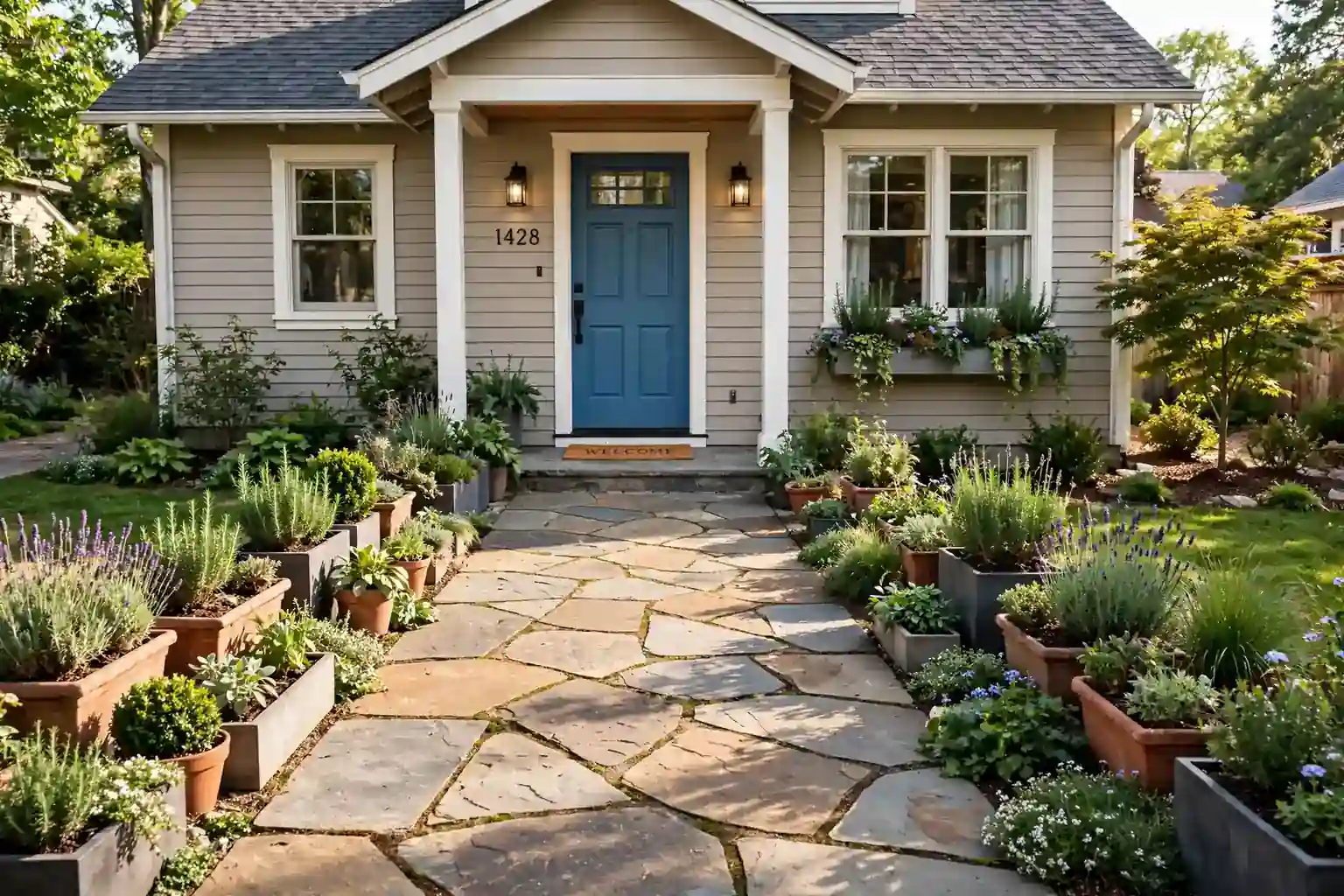
A front walkway in a small yard has to do more than lead to the door. It needs a clear route for guests, a safe step in wet weather, room for a parcel drop, and a first view that feels cared for, all in a few short metres. One strong material, neat edging, and a plant or light repeated along the route can make a small front yard feel finished. These 22 front walkway ideas cover stone, brick, gravel, wood, and concrete, plus lighting, planting, and small seating spots that fit a tight plot. Measure your path width and door landing first, then pick the idea that suits your slope, shade, and budget.
Key Takeaways
- Keep the main route at least wide enough for two people to pass with a bag or a pram, and keep it clear of pots and bins.
- Choose one main path material and repeat it at the door landing, so a short walk looks planned rather than patched together.
- Edge every loose material, such as gravel or mulch, so it stays on the path and off the lawn.
- Add light at ankle height along the path, not only at the porch, so the route is safe after dark.
- Use planting beside the path, not on it, and keep shrubs trimmed back from the walking line.
- In a small yard, let the path do two jobs, such as a seating pad, a bench nook, or a planter border, instead of adding separate features.
1. Straight Flagstone Path with Ground Cover Joints
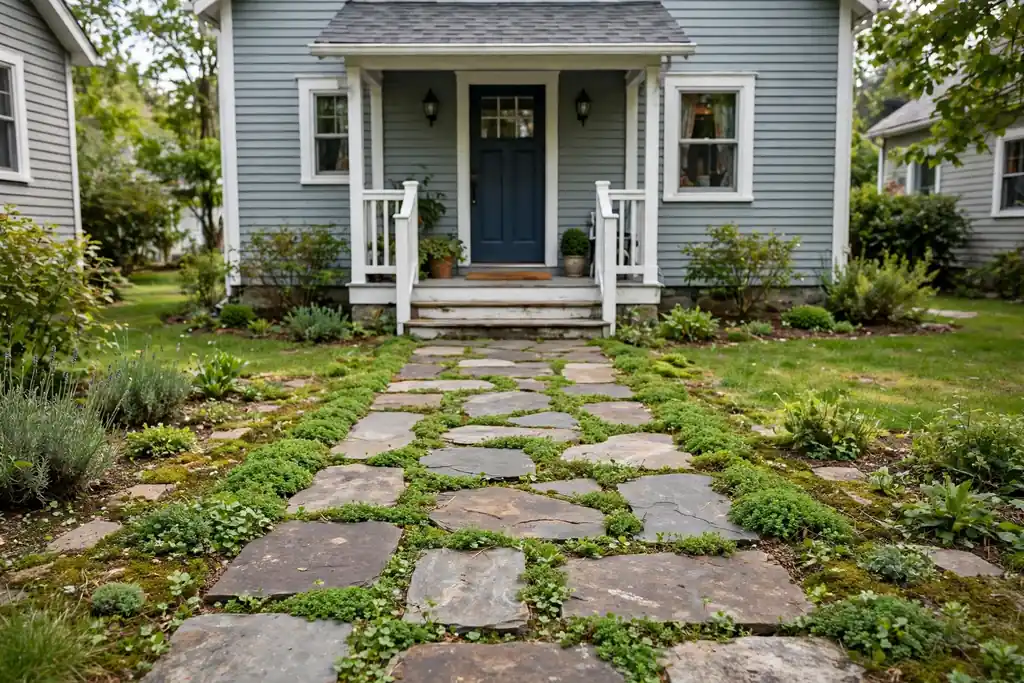
Lay large flat flagstones in a straight line from the street or driveway to the door, and plant low ground cover between the joints. The straight line suits a small yard because it wastes no space on curves, and the wide stones give a steady step for all ages. Ground cover softens the stone and keeps weeds down once it fills in.
Set each stone level with its neighbours, with a firm base under it, so no stone rocks when stepped on. Leave joints wide enough for the plants you choose, and water them until they root. This path pairs well with a simple front door color, and the door shades in these blue front door colors show how a painted door can anchor a stone walk.
2. Stepping Stones Set in Gravel
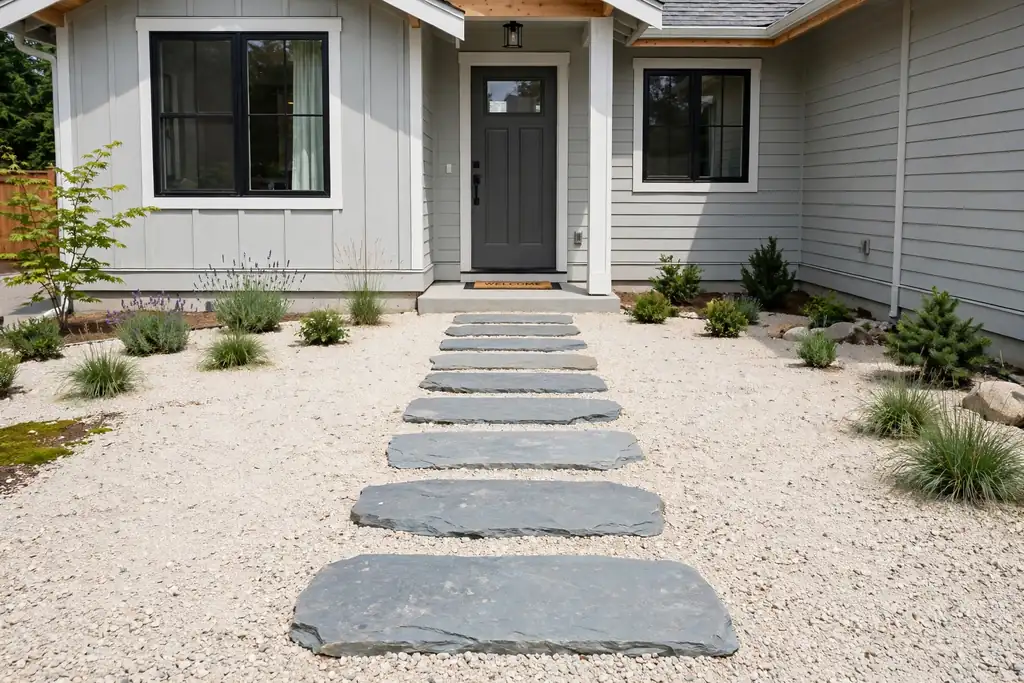
Set large stepping stones in a bed of pale gravel for a path that drains well and costs less than a full paved walk. The stones give a firm step, while the gravel fills the gaps and stops mud from forming in wet weather. This suits a small yard where you want a relaxed look without a solid slab of paving.
Space the stones at a natural walking stride, and test the spacing by walking it before you fix them in place. Use a landscape fabric and edging under the gravel to keep it in place. Keep the gravel level just below the stone tops, so a shoe does not catch, and rake it back into place after heavy rain.
3. Brick Herringbone Walkway
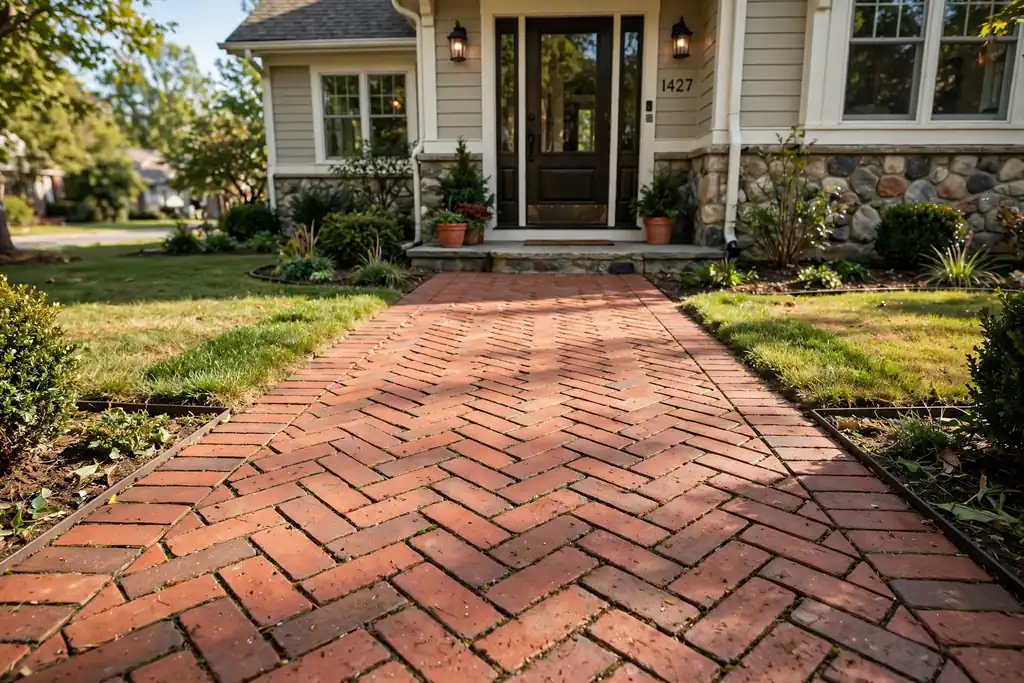
Lay bricks in a herringbone pattern for a walkway that looks formal and stays firm underfoot. The interlocking pattern spreads weight well, which helps a path that gets daily use, and brick suits older homes and cottages as well as newer brick facades. A herringbone walk also hides small repairs better than a simple running bond.
Use a firm, level base and a border row of bricks set on edge to hold the pattern in place. Keep the joints tight and fill them with sand, then sweep in more sand after the first rain. Brick can get slippery when wet, so choose a brick with a rough face for the walking surface, and clean moss from shaded spots each season.
4. Gentle Curved Gravel Path
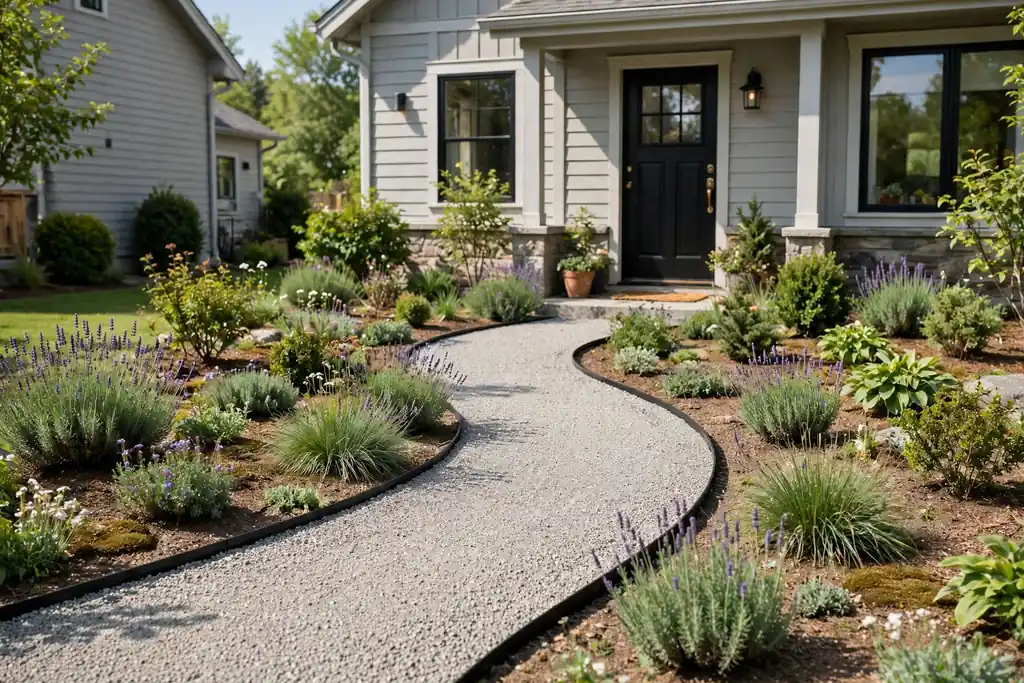
Give a small front yard a softer feel with one gentle curve in a gravel path, rather than a sharp bend that wastes space. A single curve slows the eye down and makes a short walk feel longer, and it lets you plant a small bed in the curve where a straight path would leave a bare corner. Keep the curve wide and easy to walk, not a tight S shape.
Edge the gravel with steel, stone, or brick so it does not drift onto the lawn. Use a firm base and a gravel size that packs down, rather than large loose stones that roll underfoot. Add one focal plant or pot at the curve, so the bend has a reason to be there, and keep the path wide enough for a wheelie bin on collection day.
5. Concrete Pavers with Grass Joints
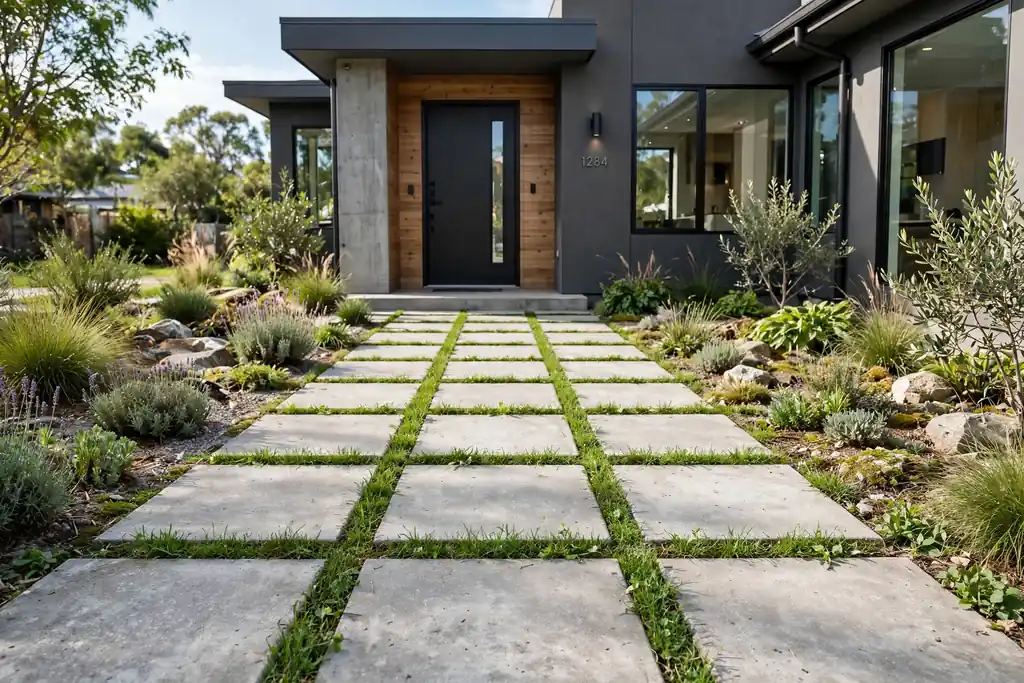
Lay large concrete pavers with strips of grass between them for a path that looks green and modern while staying firm to walk on. The grass joints break up a hard surface, help rain soak in, and keep a small yard from feeling paved over. This works best where the path gets some sun, since grass in deep shade thins out.
Set the pavers level on a firm base, with joints wide enough to mow or trim. Choose a tough grass or ground cover for the joints, and keep the grass cut short so it does not trip anyone. In a dry spell, water the joints first, since they dry out faster than a lawn, and top up any bare patches in spring.
6. Wide Door Landing with Matched Planters
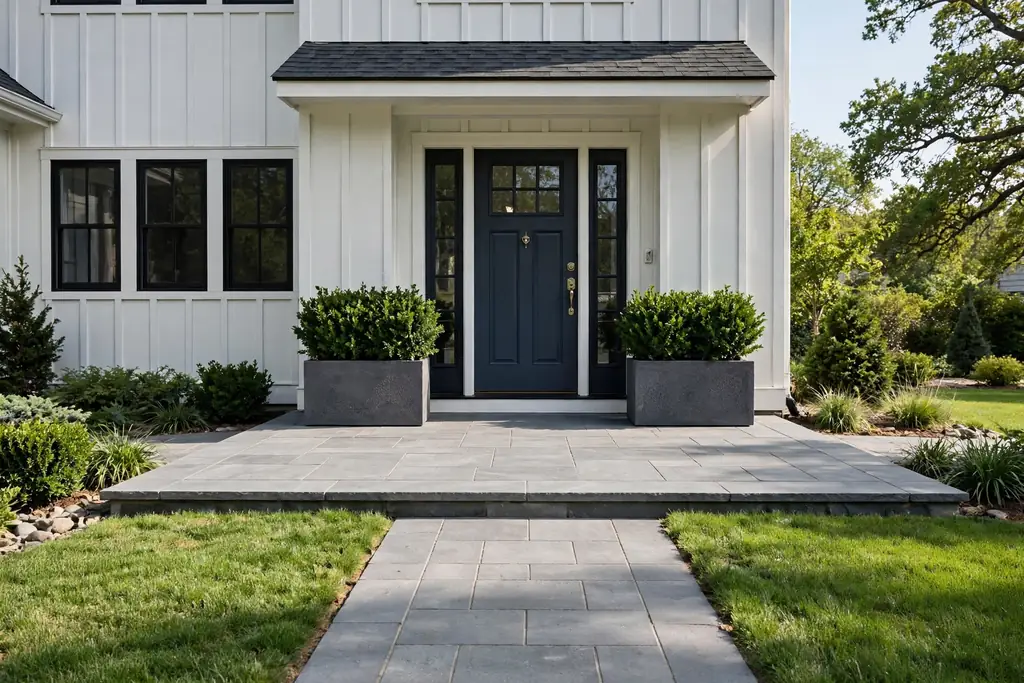
Widen the paved area right at the front door into a landing, and flank it with two matching planters. A landing gives guests a place to stand while the door opens, room for a parcel, and a safe step that is not crowded by pots. Matching planters make the door the clear focus, even on a short walk.
Make the landing at least as wide as the door plus room to step aside, and keep the surface level with the threshold. Choose planters that are heavy enough not to tip, and plant them with shrubs that stay in shape, rather than tall plants that block the door or the house number. Water the planters on a set day each week, so they stay full through the season.
7. Low Steps for a Sloped Front Yard
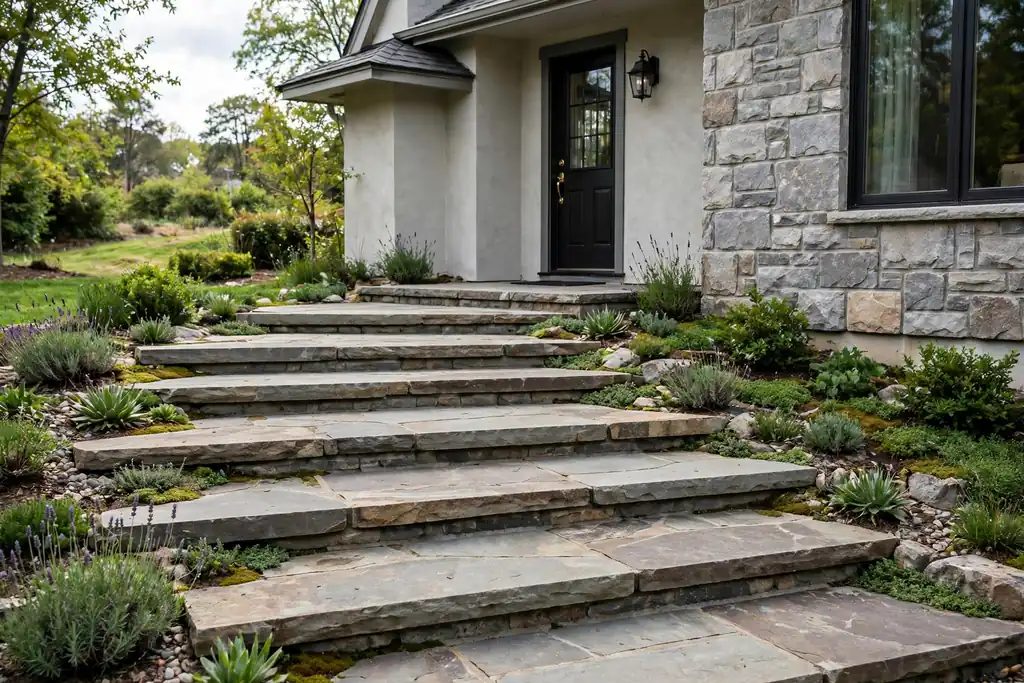
Turn a sloping front yard into a series of low, wide steps instead of a steep ramp of paving. Low steps give a safe, steady climb, and each step can double as a small planting ledge or a place to set a pot. Wide steps suit small yards because they feel less steep than narrow, tall steps.
Keep each step the same height, since a single uneven step is the one people trip on. Use a rough, non slip surface, and add a handrail if the slope is steep or if older guests visit often. Check the step depth by walking it with a bag in each hand, and keep the edges clear of loose stones and leaves in autumn.
8. Wood Plank Boardwalk Path
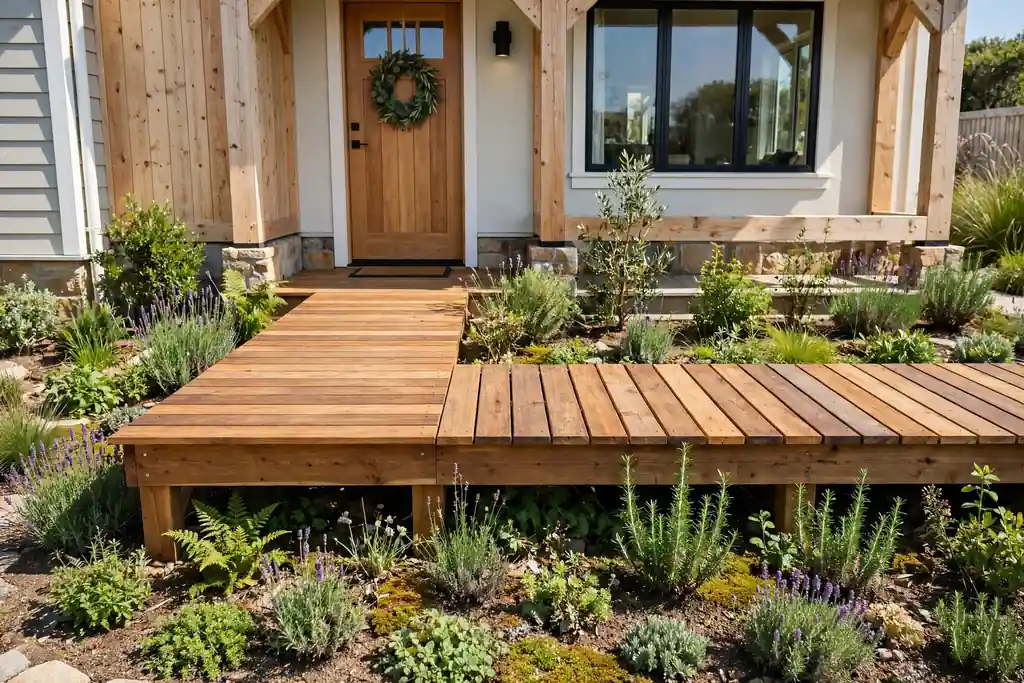
Lay wood planks as a boardwalk path across a small front garden for a warm, informal walk that suits a cottage or a coastal home. Timber softens a yard full of stone and brick, and planks can bridge a damp or uneven patch without a full concrete base. A boardwalk also lifts the walking surface slightly, which helps after rain.
Choose timber rated for outdoor ground contact, and leave small gaps between planks for drainage. Fix the planks firmly so none lift or rock, and add a non slip finish or grooves on shaded boards. Plan to clean and reseal the timber each year, since an unsealed boardwalk greys and roughens fast in sun and rain.
9. Patterned Tile Inset Walkway
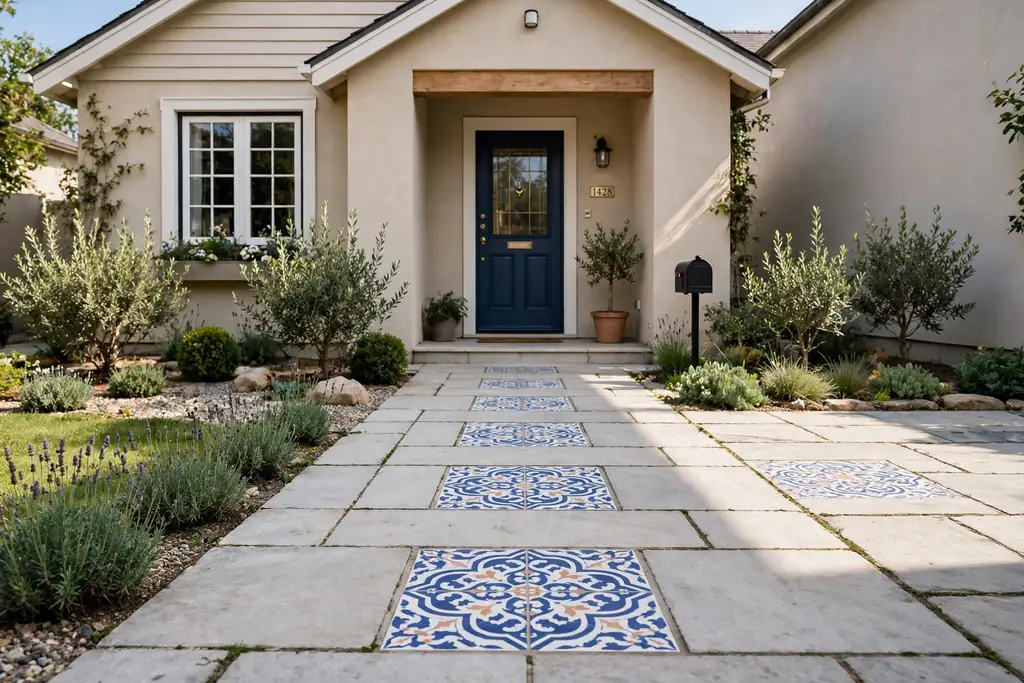
Set patterned tiles as insets into a plain stone or concrete walk for a path with one clear detail, rather than a whole walk of busy pattern. A tile inset at the door, at a bend, or as a repeated band gives a small yard a crafted look without the cost of tiling the full path. It also lets you echo a tile color already used at the porch or door.
Keep the tiles level with the surrounding paving, and use tiles rated for outdoor frost and foot traffic, not indoor wall tiles. Fix them on a firm bed so they do not crack or lift in winter. Choose a pattern that reads well from standing height, since a tiny detailed tile will be lost underfoot, and seal the tiles to protect the color.
10. Solar Light Lined Evening Path
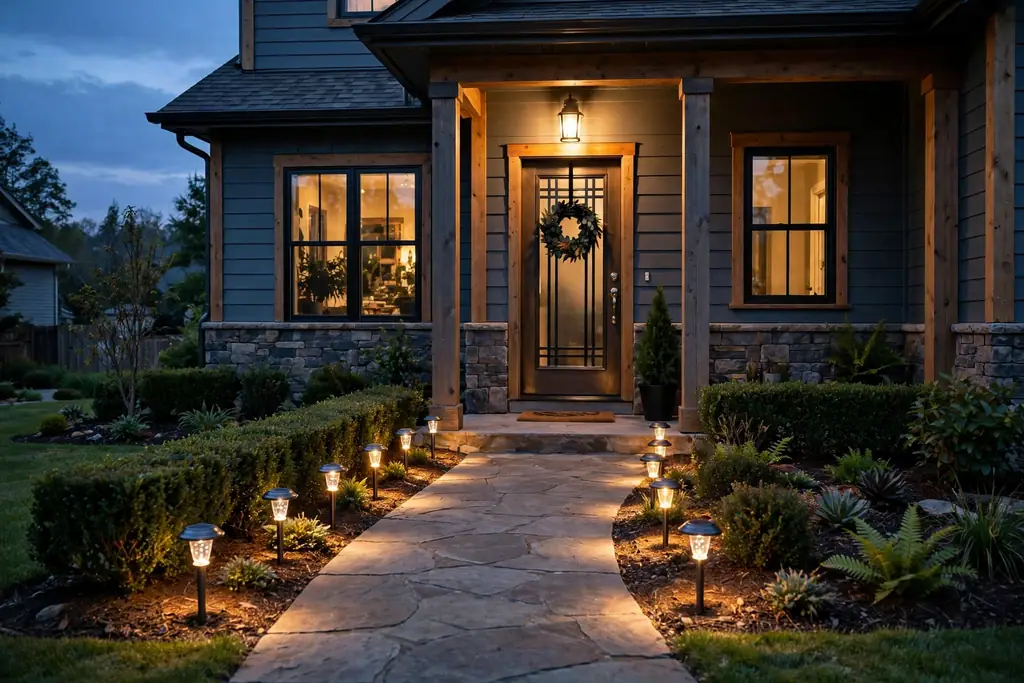
Line a short front walk with small solar path lights so the route is safe and welcoming after dark, with no wiring to run. Solar lights suit a small yard because a handful of lights covers the whole path, and they switch on by themselves at dusk. Place them where they mark the edge, not in the middle of the walking line.
Space the lights evenly, and keep them clear of shrubs that shade the solar panel during the day. Choose warm white lights for a calm evening look, and check that the path still gets light from the porch as well, since solar lights alone can be dim on a cloudy winter day. Clean the panels twice a year to keep them charging well.
11. Raised Bed Border Along the Walk
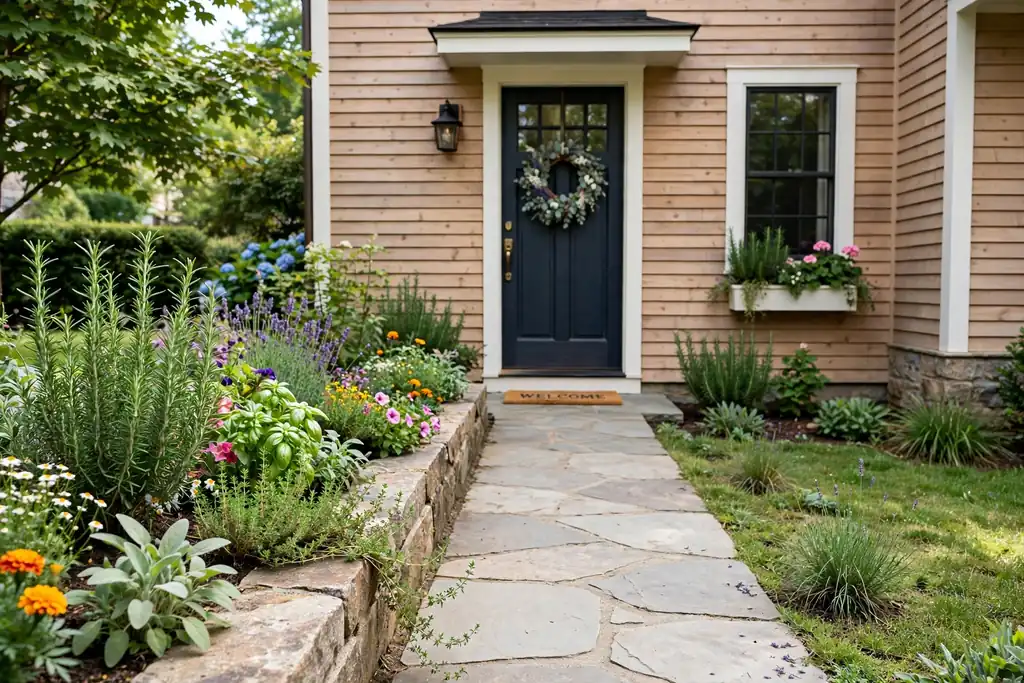
Build a low raised bed along one side of the walk for flowers, herbs, or small shrubs, so the path gains planting without losing walking width. A raised bed defines the edge of the walk, keeps soil off the path, and makes weeding and watering easier than a ground level bed. It suits a small yard where every bed must earn its place.
Keep the bed wall low, so it does not feel like a wall beside a narrow path, and cap it with a flat stone that can hold a pot or a trowel. Fill it with plants that stay within the bed, and trim any stems that lean over the walk. Water the bed deeply but less often, so roots grow down rather than spreading across the path.
12. Permeable Pavers for a Wet Front Yard
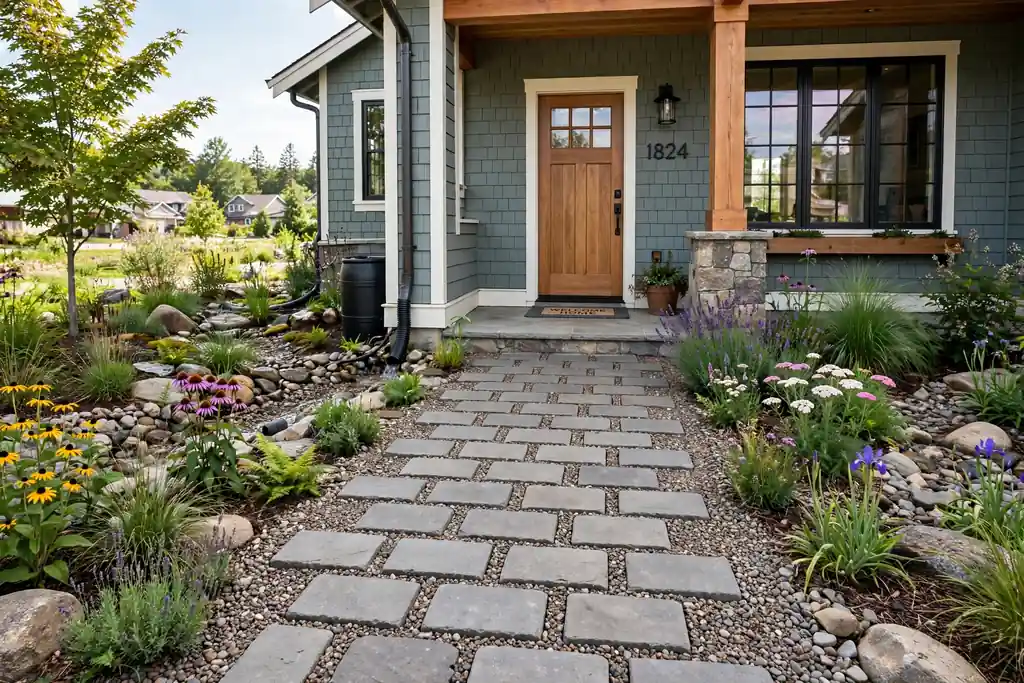
Use permeable pavers with gravel filled gaps for a front walk that lets rain soak through instead of pooling on the surface. This suits a yard that stays wet, a path at the bottom of a slope, or a home where runoff from paving is a problem. The gaps also give a small yard a lighter, less solid look than a full slab.
Lay the pavers on a free draining base, following the maker guidance for your soil type, and fill the gaps with clean gravel, not soil that will wash out. Keep the path swept, since leaves and mud can clog the gaps over time. Check after heavy rain that water drains away, and top up the gravel in any gaps that settle.
13. Narrow Path with a Built In Bench Nook
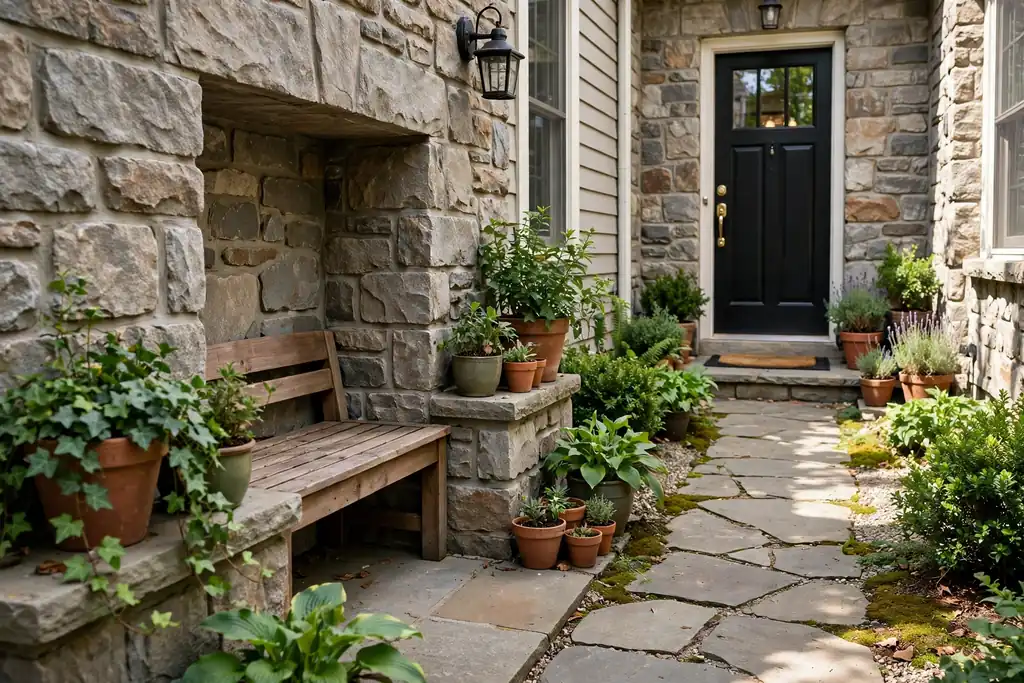
Cut a small bench nook into the side of a narrow front walk, so there is a place to sit, wait, or set down bags without blocking the path. A nook works in a small yard because it uses a corner or a gap beside the path, rather than a separate seating area that needs its own paving. A low stone or wood bench is enough, with one pot beside it.
Keep the bench clear of the main walking line, and make sure the nook does not narrow the path below a comfortable width. Choose a bench material that copes with rain, and add a cushion only if you will bring it inside in wet weather. Keep the nook tidy, since a bench that collects parcels and tools soon blocks the walk it was meant to serve.
14. White Gravel Path with Dark Edging
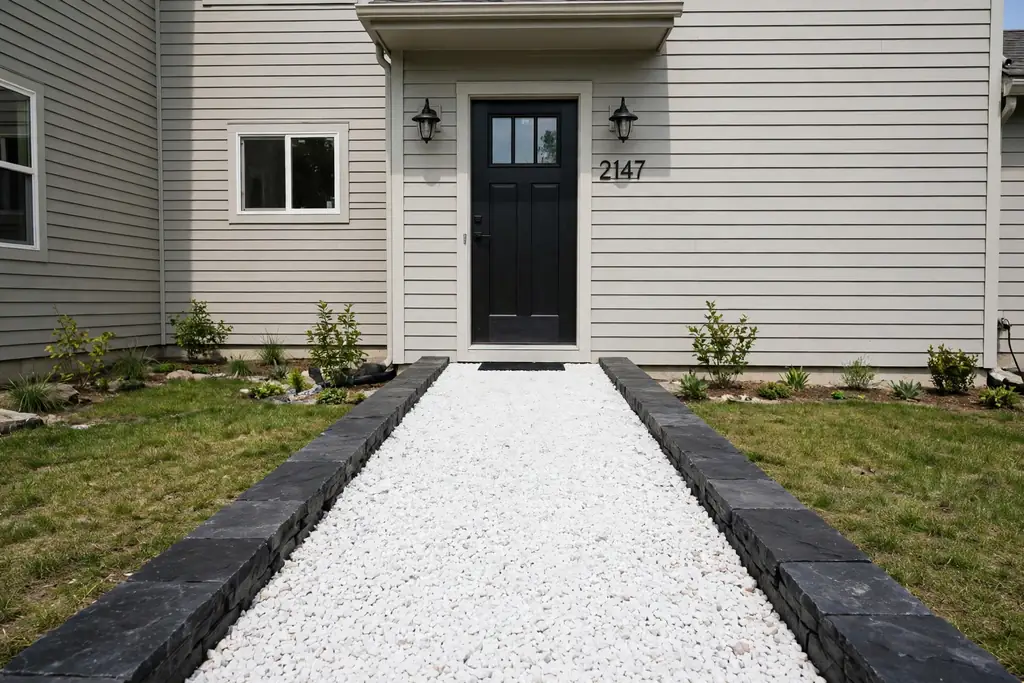
Lay white gravel inside a dark stone or brick edge for a crisp, high contrast path that makes a small front yard look larger and brighter. The dark edge frames the pale gravel and stops it from spreading, while the white surface bounces light back toward the house on a dull day. This suits a modern or coastal home with pale siding.
Use a firm base and landscape fabric under the gravel, and choose a gravel size that packs down underfoot. Rake the gravel weekly in the first month, until it settles, and top it up once a year. Keep leaves off the white surface in autumn, since they stain it, and avoid placing the path under a tree that drops sap or berries.
15. Stamped Concrete That Looks Like Stone
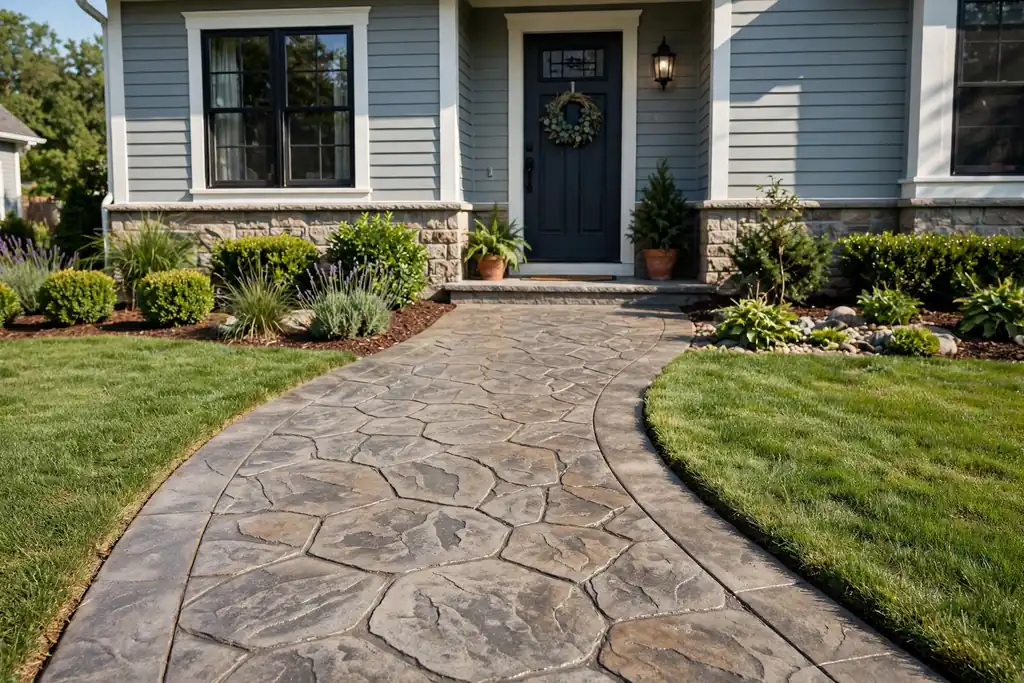
Use stamped concrete for a walk that has the look of stone slabs at a lower cost and with fewer joints to weed. Stamped concrete suits a small yard because it can be poured as one firm, level surface, with no loose stones to shift. The pattern can match the house style, from large slabs to a cobble look.
Choose a pattern and color that suit the house, and keep the color close to the natural stone it copies, rather than a bright tint that dates fast. Add a non slip finish, since smooth concrete gets slick in rain, and seal it every few years to protect the color. Plan the joints in the concrete so cracks form along the pattern lines, not across the middle of the walk.
16. Path with a Small Rain Garden Beside It
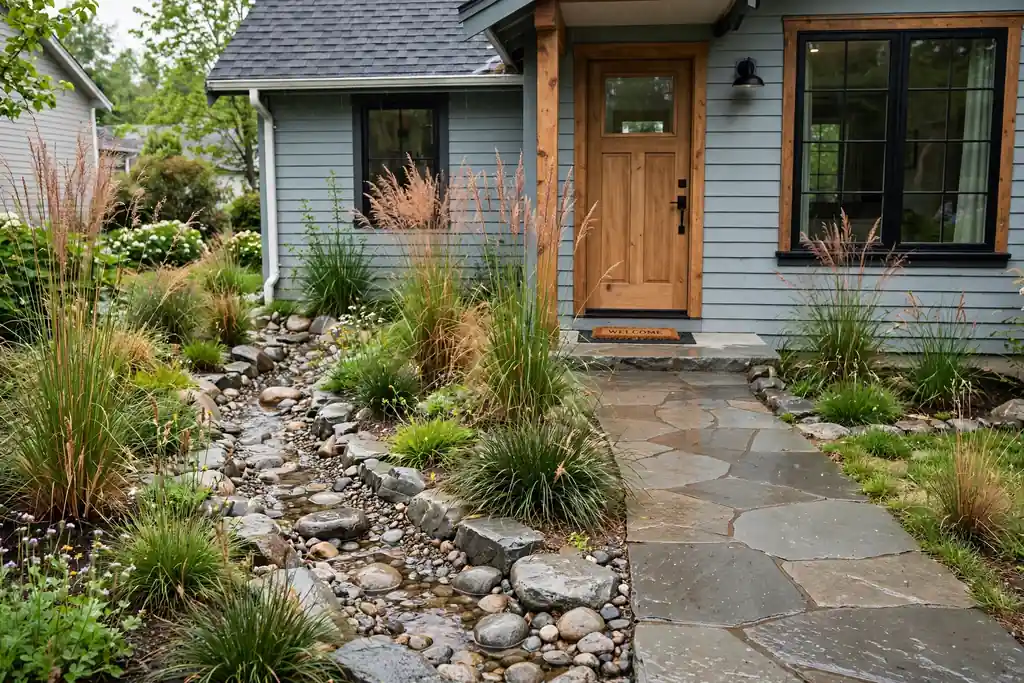
Place a small rain garden beside the front walk, a shallow planted dip that catches rain from the path and roof, so the walk stays drier and the yard gains a planting feature. A rain garden suits a small yard because it can be as small as a single bed, planted with grasses and flowers that cope with wet and dry spells.
Site the rain garden where water already flows, not at the highest point of the yard, and keep it clear of the walking line. Use plants that suit your soil and sun, and mulch the bed to hold moisture in dry weeks. Clear leaves from the inlet after storms, so water can still flow in, and check that the garden drains within a day after rain.
17. Arched Trellis Entry Over the Walk
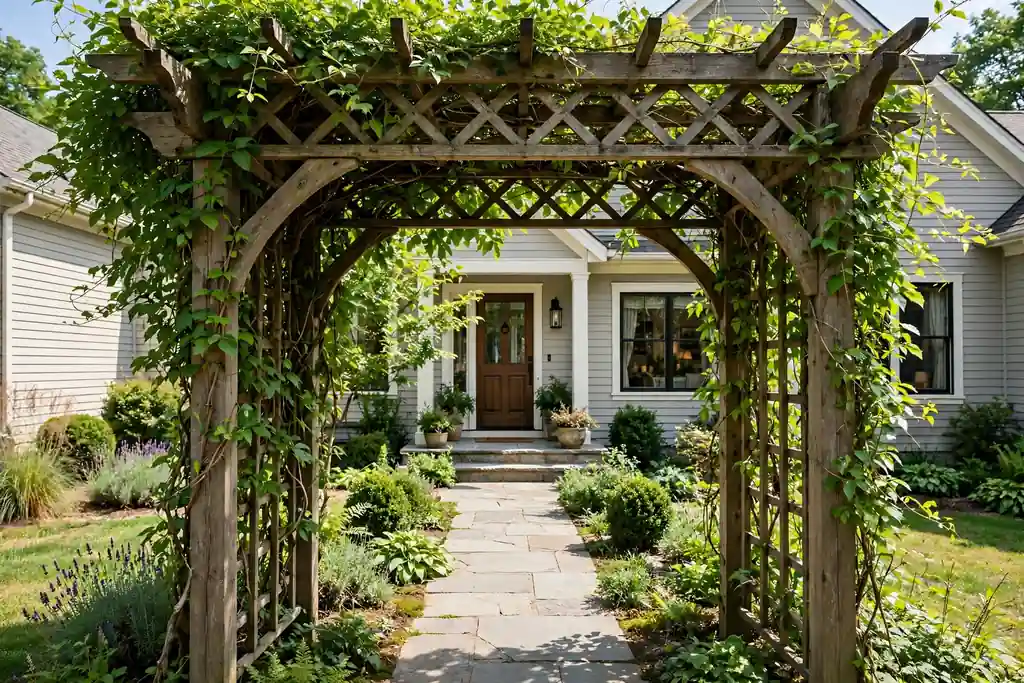
Put a wooden or metal trellis arch over the start of the front walk, with climbing plants growing up the sides, so the entry to the yard has a clear frame. An arch marks the start of the walk, gives a small yard a sense of arrival, and adds height without taking ground space. It suits a cottage, a garden home, or a house with a plain front fence.
Keep the arch wide enough for two people and tall enough to walk under without ducking, even once plants grow in. Fix the posts firmly, since a trellis catches wind, and prune the climbers each year so they do not narrow the path or block the house number. Choose a climber that suits your sun and that you can reach to prune from a step ladder.
18. Two Tone Path: Stone and Brick Mix
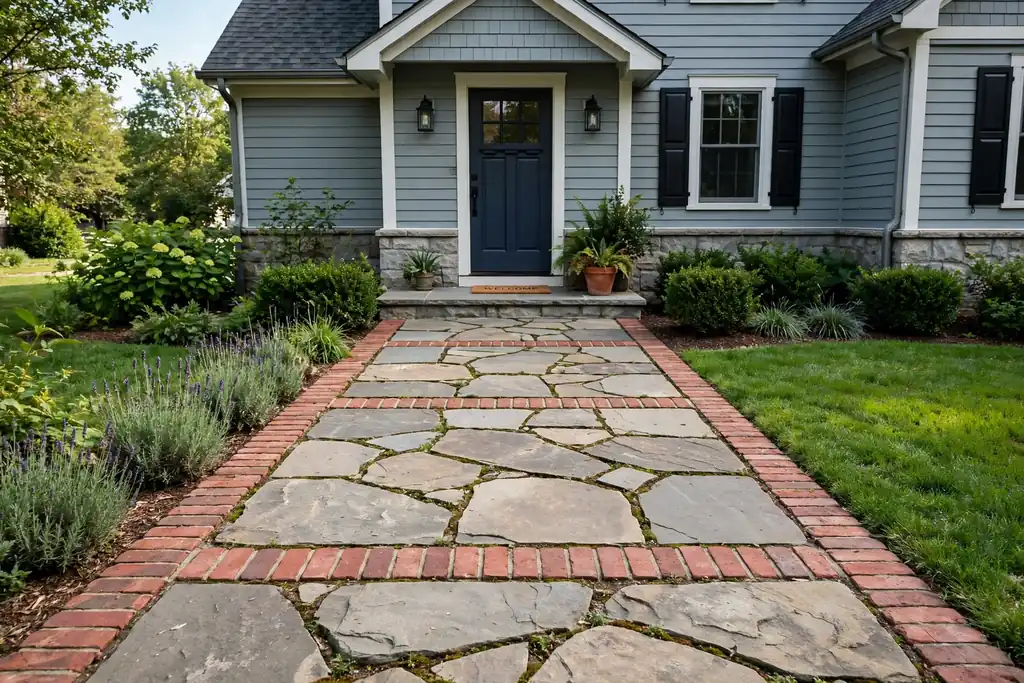
Mix stone slabs with brick bands across the path for a two tone walk that ties together a stone house and a brick feature, or a brick house with stone steps. The mix adds interest to a short walk without needing a pattern across the whole surface, and the brick bands can mark the door landing or a bend. This suits a small yard where one material alone would look plain.
Keep the stone and brick level with each other, since a lip between materials is a trip risk. Use the brick as a band or a border, not as random patches, so the mix looks planned. Match the brick color to an existing feature, such as the house brick or a chimney, so the path feels part of the home rather than an extra idea.
19. Path That Widens into a Small Seating Pad
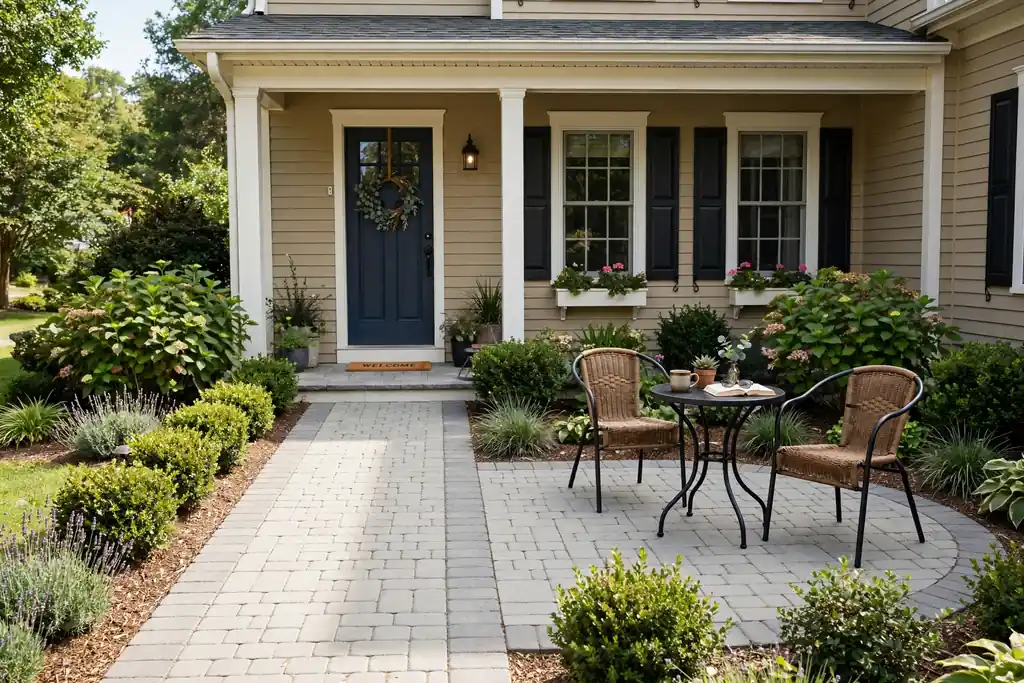
Widen the front walk at one point into a small paved seating pad with two chairs and a tiny table, so the walk becomes a place to sit as well as a route. A seating pad suits a small yard because it uses the path itself, rather than a separate patio, and it gives a front yard a social use. Place it where it gets morning or evening sun, depending on when you will sit there.
Keep the pad clear of the main walking line, so guests can still pass without stepping around chairs. Choose chairs that fold or stack, so the pad can clear fast for a delivery or a gathering. Add one pot and a small mat, and keep the pad swept, since a seating pad that collects leaves soon looks unused.
20. Low Hedge Lined Formal Path
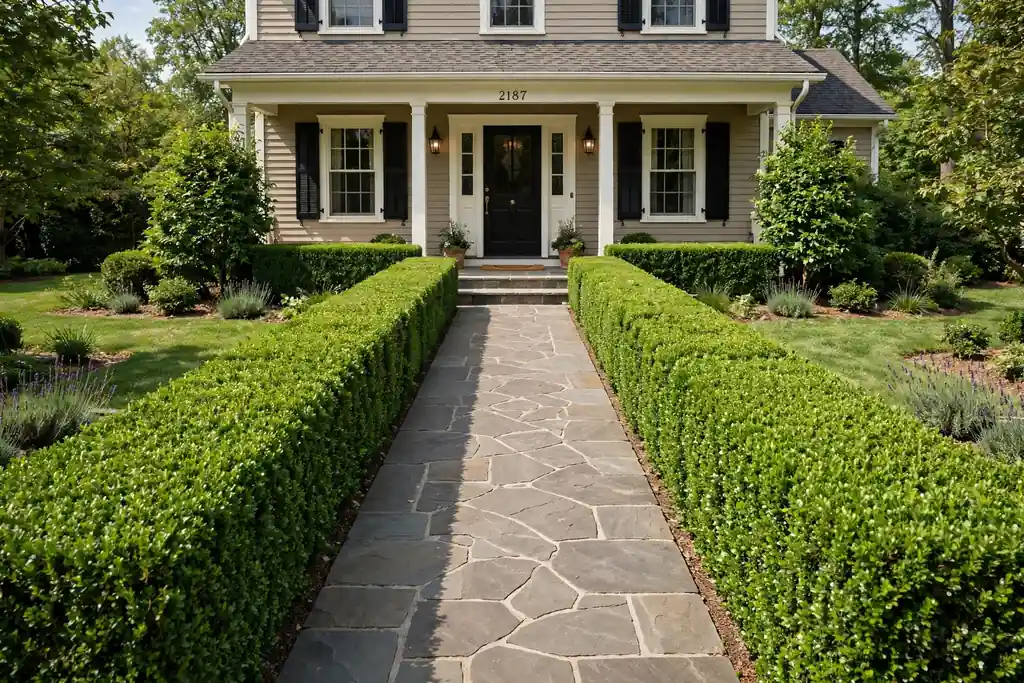
Line a straight front walk with low clipped hedges on both sides for a formal, tidy look that suits a traditional or symmetrical house front. Low hedges frame the path, hide bare soil, and give a small yard a finished edge in every season. Keep the hedges low, so they do not close in a narrow path or hide the door from the street.
Choose a hedge plant that stays dense at a low height with one or two trims a year, and plant it back from the path edge so it does not narrow the walk as it grows. Water new hedges well in the first year, and trim them in late spring and late summer. Leave a gap in the hedge at any side gate, so the path still connects to the rest of the yard.
21. Path with House Numbers Set into the Walk
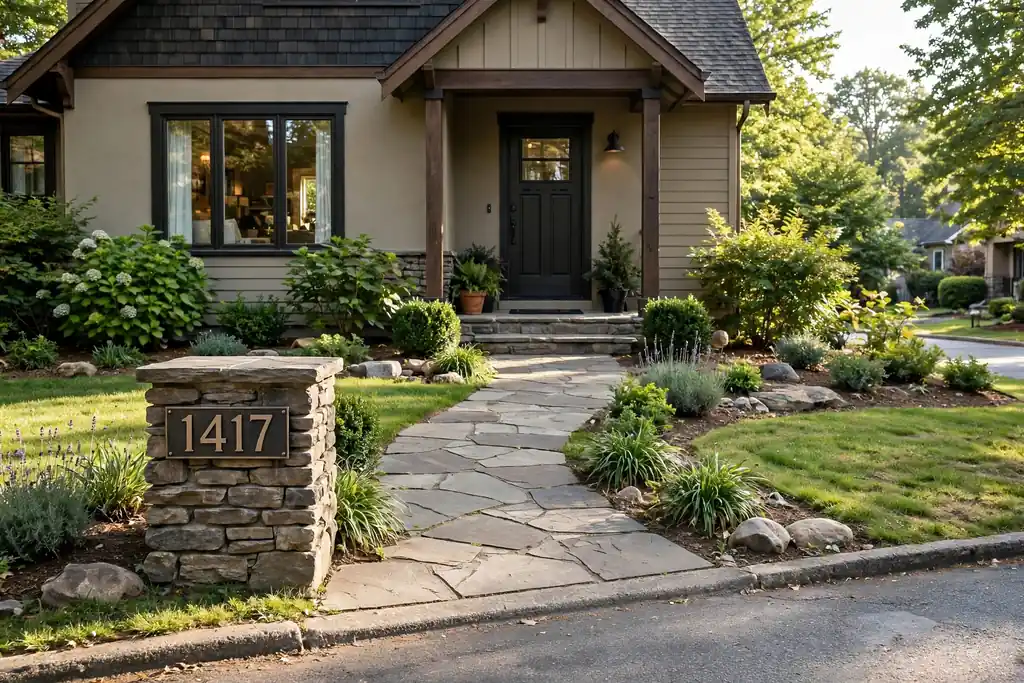
Set the house number into the walk itself, on a stone pillar, a low wall, or a plaque beside the path near the street, so visitors and deliveries find the house fast. A clear number at the path start saves guests from hunting along the facade, and it gives a small yard a practical detail that also looks finished. This suits a house set back from the street or hidden by planting.
Place the number where it can be read from the street, with good contrast against its background, and light it if the path is used after dark. Keep the number clear of shrubs that will grow over it, and check it each spring after winter growth. Match the number style to the house, so it reads as part of the entry rather than a last minute addition.
22. Seasonal Planter Rotation Along a Short Walk
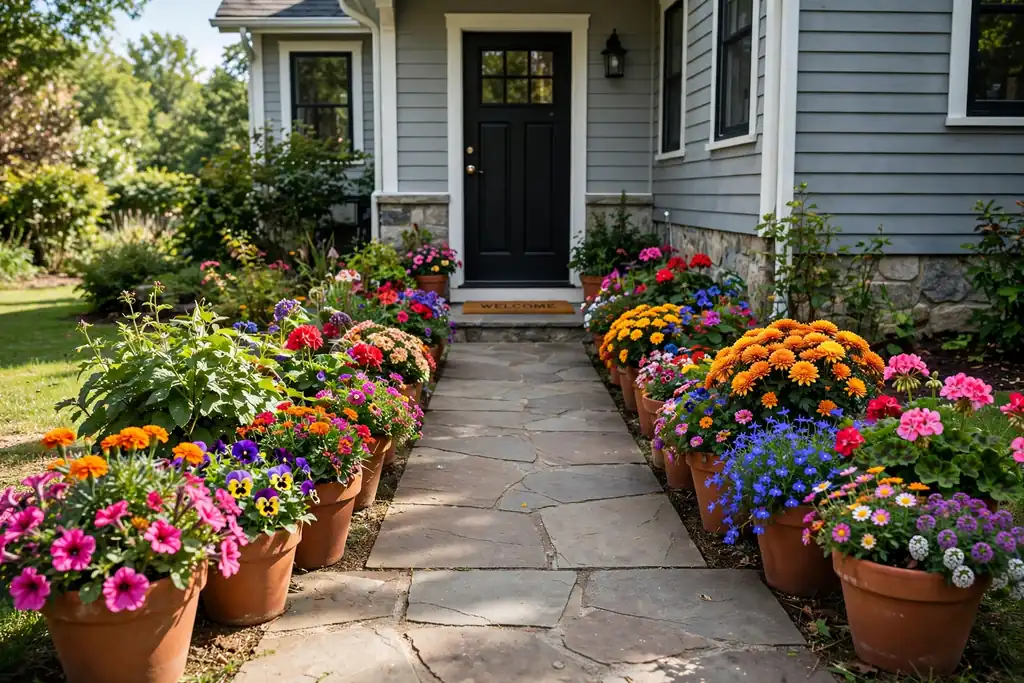
Line a short front walk with pots that change with the seasons, from spring bulbs to summer flowers to autumn foliage and winter evergreens, so a small path always looks cared for. A pot rotation suits a small yard because pots can move, swap, and refresh without digging a bed, and a short walk needs only a few pots to look full. Keep the pots on one side, or in pairs, so the walking line stays clear.
Choose pots that are frost proof if they stay out in winter, and group them by water need, so watering stays simple. Swap the planting four times a year, or at least twice, and compost spent plants rather than leaving them to fade by the door. Keep a spare pot ready, so a failed plant can be replaced in minutes, not weeks.
Conclusion
A small front walk works hardest when it is clear, level, and easy to keep. Start with the route itself: a firm surface, neat edging, and a landing at the door. Then add one or two extras that suit your yard, such as lights for dark evenings, a raised bed for planting, or a bench nook for waiting. Avoid adding every idea at once, since a short walk gets crowded fast. Pick the material that suits your house, test the width by walking it with bags, and keep plants and pots off the walking line. A walk built this way welcomes guests, copes with rain, and still leaves room in a small yard for the lawn and beds beside it.
Keep this list handy for your next free weekend, and start with the step that fixes the biggest daily problem: drainage, darkness, or a narrow landing. Then add the planting and seating details that make the walk yours.
FAQs
How wide should a front walkway be in a small yard?
Aim for a main walk at least 1.2 metres wide, so two people can pass and a pram or a wheelie bin fits. A walk narrower than 1 metre feels cramped and makes it hard to step aside at the door. If space is tight, keep the full width clear of pots, bins, and overhanging shrubs, and widen the area at the door into a landing, even if the rest of the walk stays narrow.
What is the cheapest front walkway material for a small space?
Gravel with stepping stones is usually the lowest cost option, since it needs no large slabs and little skilled labour. A firm base, edging, and landscape fabric keep the gravel in place and cut long term upkeep. Concrete pavers are a step up in cost but last longer with less raking. Get a local quote for both, since delivery and base work change the total more than the surface material alone.
How do I stop a gravel front walkway from spreading onto the lawn?
Edge the gravel with steel, brick, or stone set at or just above the gravel level, and lay landscape fabric under the gravel to stop it sinking into soil. Use a gravel size that packs down, rather than large round stones that roll. Rake the gravel back into place after heavy rain, and top it up once a year, since some loss at the edges is normal even on a well edged path.
What lighting works best along a short front walkway?
Use low path lights at ankle height along the edges, plus a porch light at the door, so the whole route is lit without glare. Solar lights suit a short walk because a few lights cover it and no wiring is needed, but they need sun on the panel during the day. For a shaded walk, use wired low voltage lights instead, and keep the light warm white for a calm evening look.
How can I make a front walkway safer in wet or icy weather?
Choose a rough, non slip surface, keep the walk level with no rocking stones, and clear leaves, moss, and ice promptly. A permeable paver or gravel path drains better than a solid slab, which helps in rain. In winter, keep a grit bin near the door and treat the walk before ice forms, rather than after. Add a handrail if the walk includes steps or a slope.
Do I need planning permission for a new front walkway?
In many areas a simple like for like path replacement needs no permission, but rules differ by location, especially for a paved front garden, a listed home, or a home in a conservation area. Check your local planning rules before you pave a large area or change drainage, since some areas limit impermeable paving at the front. If in doubt, ask your local planning office with a simple sketch of the planned walk.