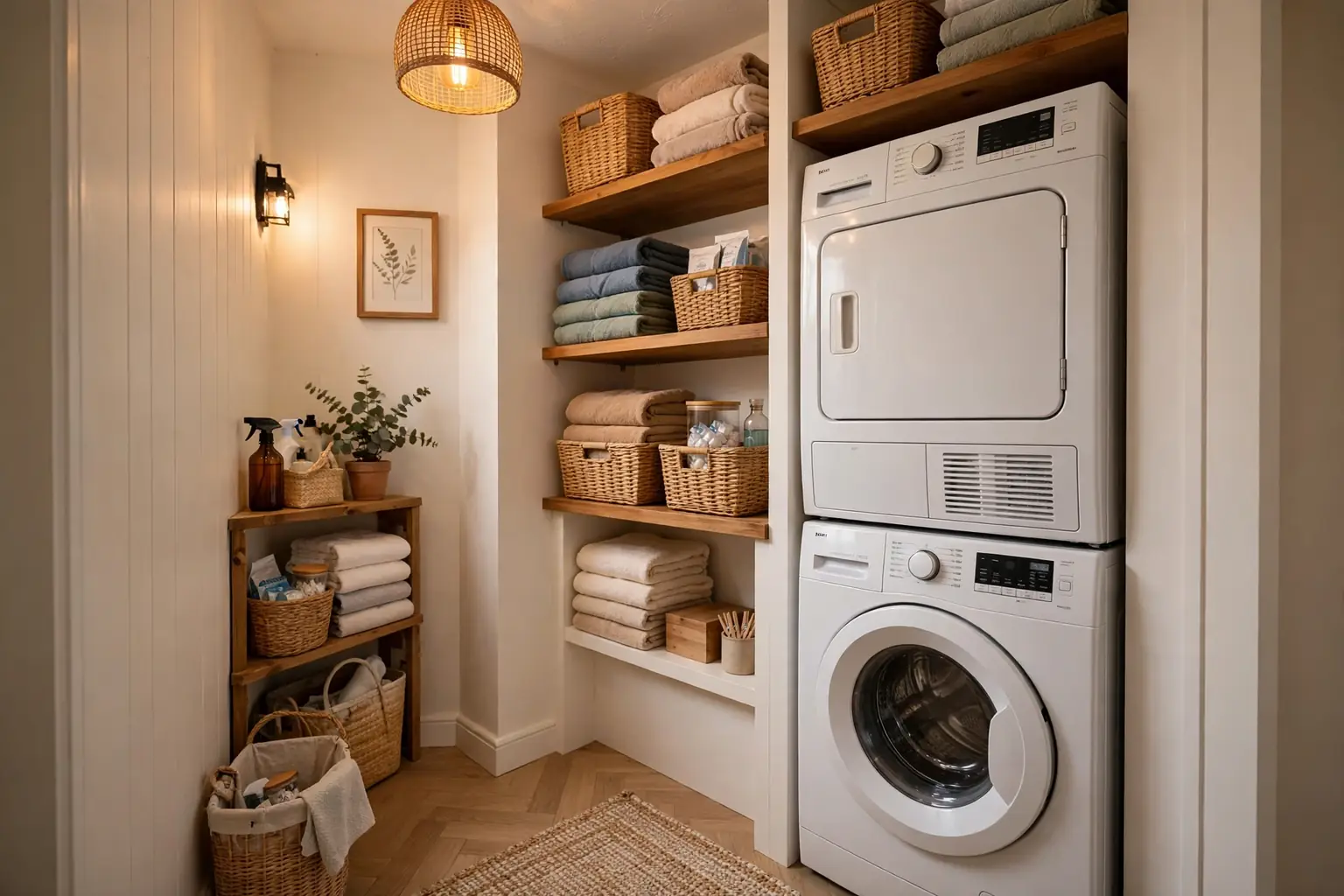
A tiny laundry room can still work hard when every inch has a job. The trick is to move storage up the walls, use the gaps beside and above the machines, and give folding, drying, and sorting each a small, clear spot. These 26 tiny laundry room ideas cover stacked machines, fold-down shelves, slim carts, drying solutions, and sorting systems, plus simple seasonal swaps that keep the room feeling cozy all year. Start with the change that solves your biggest daily annoyance, whether that is nowhere to fold, nowhere to dry, or nowhere to put supplies, then add one more idea at a time.
Key Takeaways
- Measure first: machine width, door swing, vent and hose clearance, and the gap beside the machines decide which ideas will fit.
- Use the walls: shelves, peg rails, fold-down boards, and over-door storage add room without taking floor space.
- Give every job a spot: washing, drying, folding, sorting, and supplies each need one clear place, even if that place is small.
- Keep daily items at hand height and seasonal or rarely used items higher up, so the room stays easy to use.
- Swap, do not stack: seasonal towels, rugs, and scents refresh the room without adding clutter.
- Keep paths, vents, and lint filters clear, and leave room to open machine doors and pull out hampers fully.
1. Stack the Washer and Dryer Into One Tower
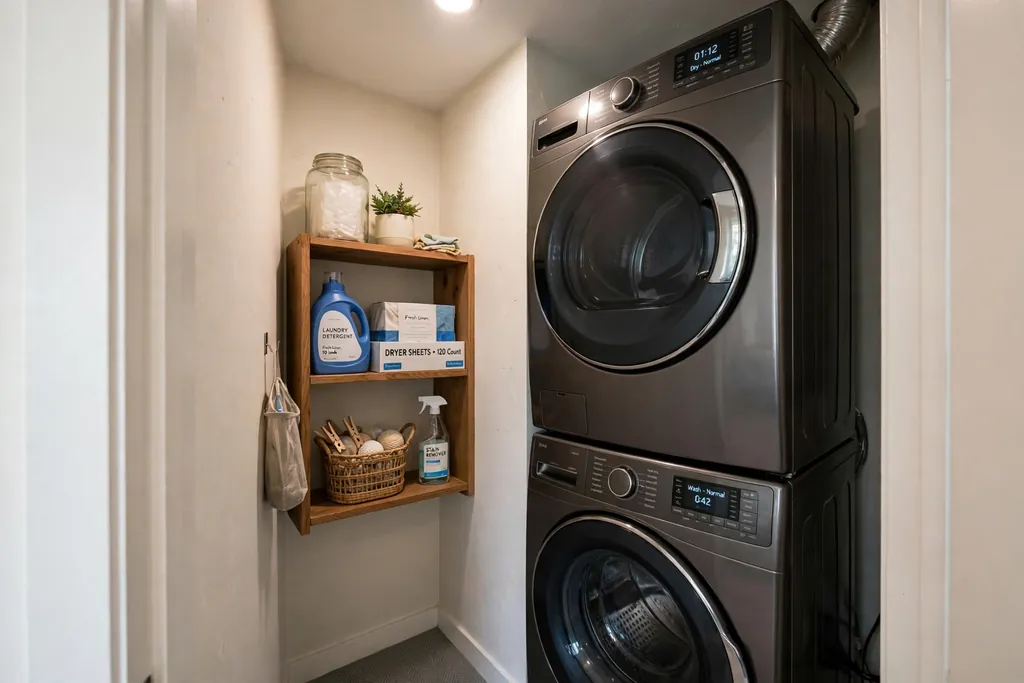
Stacking the washer and dryer frees a full machine width of floor space, which can become a hamper spot, a slim cabinet, or simply room to stand and fold. A stacking kit made for your exact machines keeps the dryer steady and safe, so check the maker guidance before you buy. Put the washer on the bottom, since it is heavier and vibrates more, and keep the controls within easy reach.
Leave the clearance the maker asks for around the tower, and keep the vent hose and water hoses free of kinks. A small step stool nearby helps shorter household members reach the dryer controls and the top of the tower. If stacking is not possible in a rental, ask about a stacking kit rather than moving plumbing, since the kit is the part that makes the tower stable.
2. Add a Countertop Over Front-Loading Machines
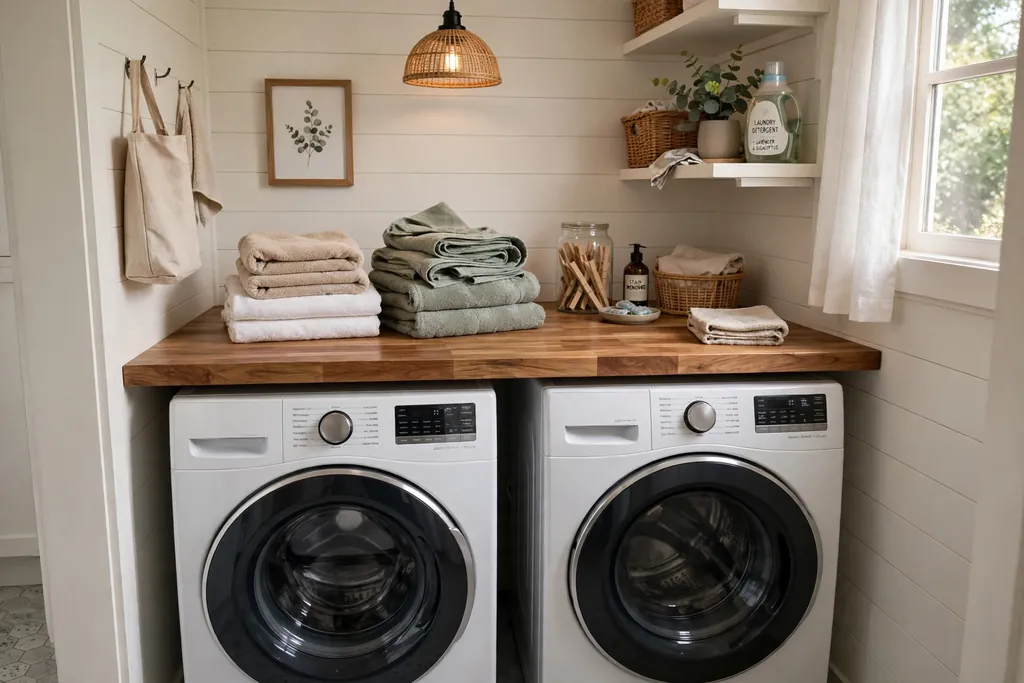
A countertop across the top of two side-by-side front-loading machines turns wasted space into a folding surface. Use a board cut to fit the full width, with a small lip or rail at the back so items do not slide behind the machines. A light wood or laminate board wipes clean and suits most rooms.
Keep the counter clear of heavy items, since you need to reach the machine tops for cleaning and service. Use it for folding, for a small basket of daily supplies, and for a plant or a framed print at one end. If your machines are different heights, level the board with small feet or a support cleat on each side wall.
3. Install a Fold-Down Folding Shelf on the Wall
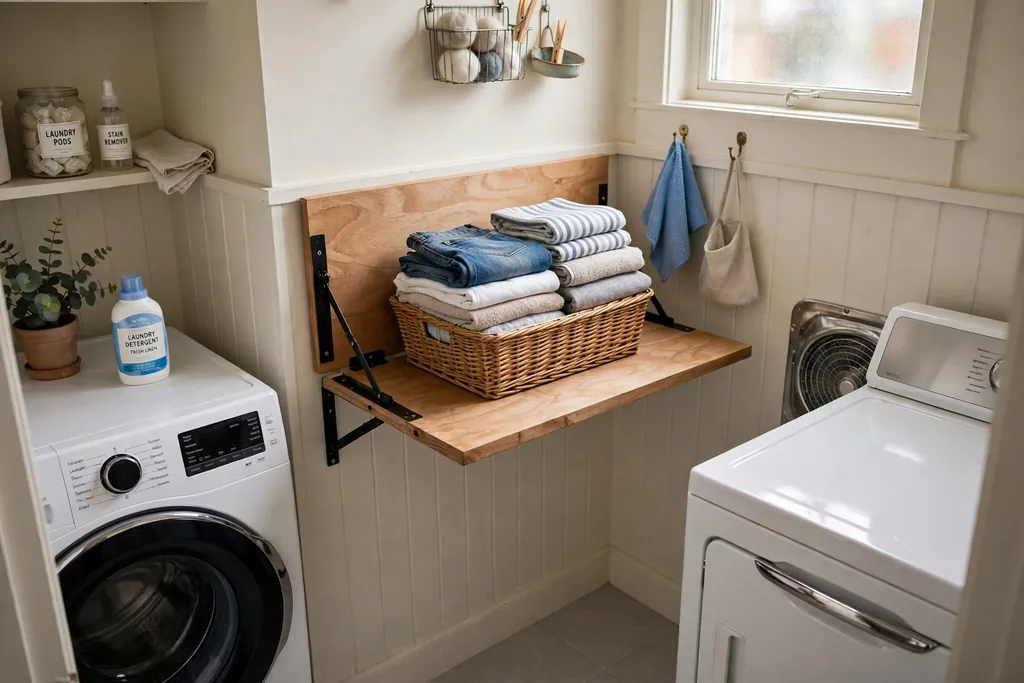
A fold-down shelf gives you a folding table only when you need it, then folds flat against the wall when the room is in use for loading machines. Mount it at counter height on the clearest wall, with brackets rated for the weight of a full basket of laundry. A shelf about the depth of a folded towel stack is enough, since deeper shelves crowd the walkway.
Fold it down for sorting and folding, and fold it up before you open machine doors or carry a basket through. Keep the wall above it free for a small shelf or a peg rail, so supplies stay close without sitting on the folding surface. This idea suits a narrow room best, where a fixed table would block the path.
4. Slide a Slim Rolling Cart Into the Gap Beside the Machines
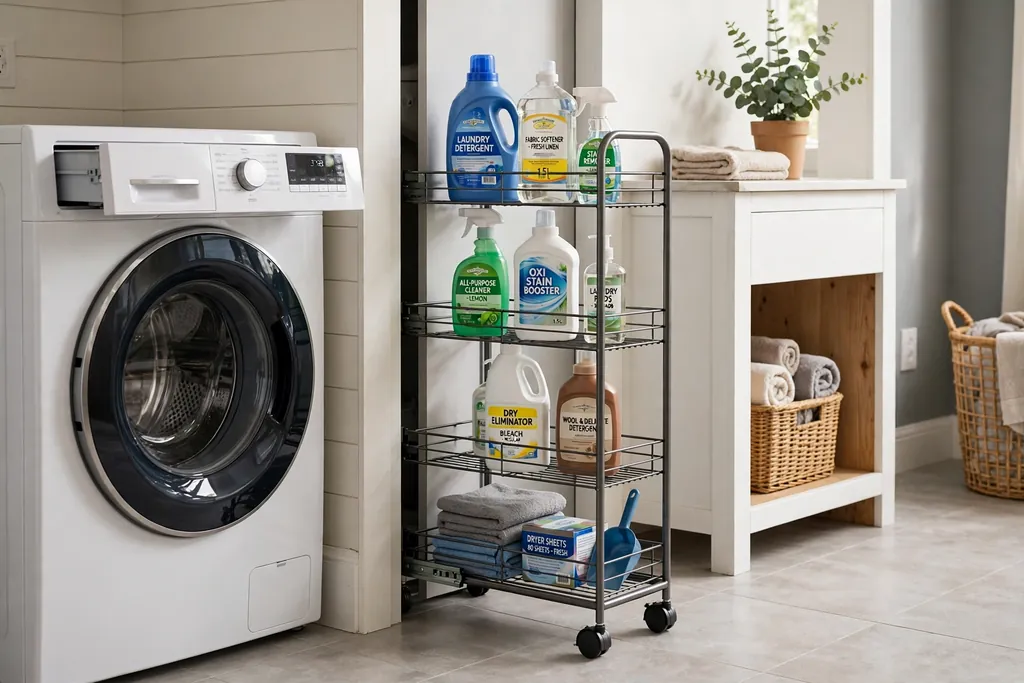
The narrow gap beside a washer or dryer is often wasted, yet a slim rolling cart fits it well and pulls out when you need supplies. Choose a cart narrower than the gap, with two or three tiers and wheels that lock, so it stays put during wash cycles. The top tier can hold detergent and stain spray, the middle tier dryer sheets and cloths, and the lowest tier spare supplies.
Label the front edge of each tier if the household shares the room, so everyone returns items to the same spot. Wipe the tiers often, since detergent drips collect fast in a small space. A cart like this also works beside a bed or a vanity, and the same logic appears in these bedroom storage ideas, where slim carts serve one routine rather than general overflow.
5. Hang a Fold-Away Wall-Mounted Drying Rack
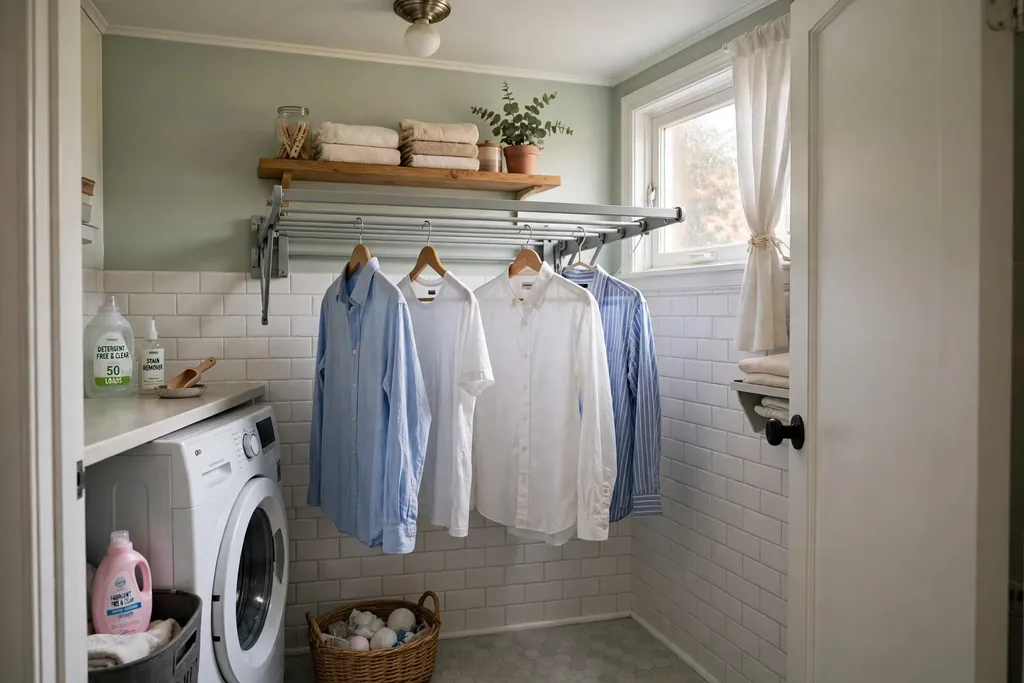
A wall-mounted drying rack that folds flat gives you drying space without a floor rack blocking the room. Mount it on a wall with clear air flow, away from the machines, and open it only on wash days. Bars spaced a few inches apart dry shirts, small items, and delicates faster than a crowded rail.
Hang heavier items, such as jeans, near the wall brackets where the rack is strongest, and lighter items toward the outer edge. Close the rack when it is empty so the room feels open again. If the wall is shared with a living space, check for pipes and wiring before drilling, and use fixings rated for a full, wet load.
6. Run a Retractable Clothesline Across the Room
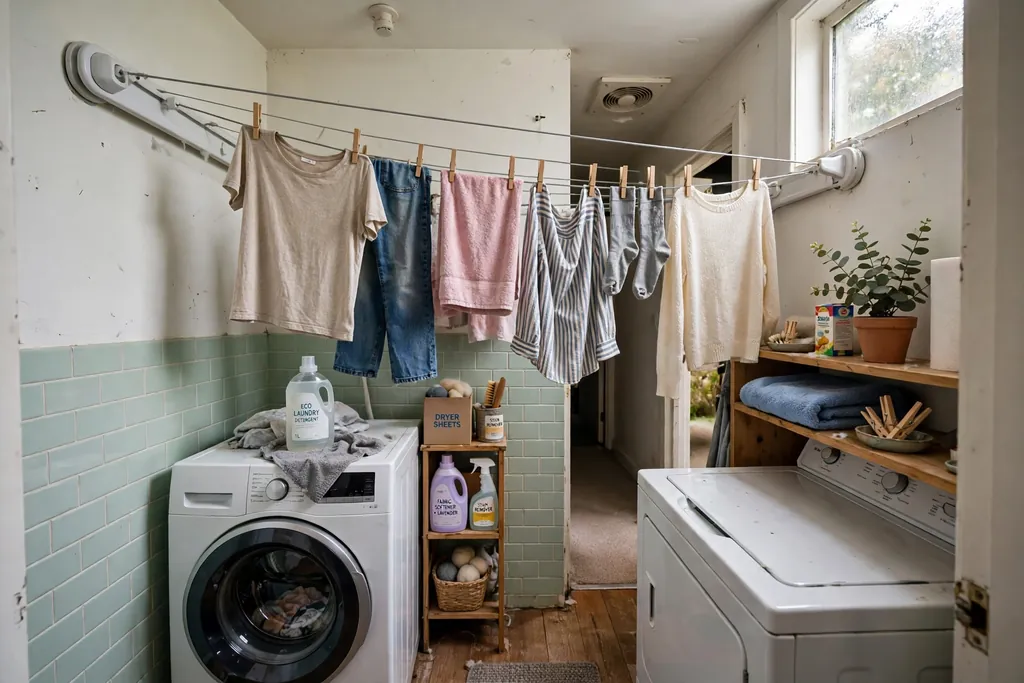
A retractable clothesline stretches across the room for drying, then reels back into a small housing when you are done. Mount the housing on one wall and the hook on the opposite wall, at a height where hangers and clothespins are easy to reach. One line suits delicates and a few shirts, while two parallel lines handle a full small load.
Use the line for items that should not go in the dryer, and keep it away from the dryer vent so warm air does not blow lint onto clean clothes. Wipe the line before use if the room is dusty, and retract it after each load so it does not become a permanent obstacle. This is a good renter option when the housing uses small screws that are easy to patch later.
7. Fit Cabinets Up to the Ceiling
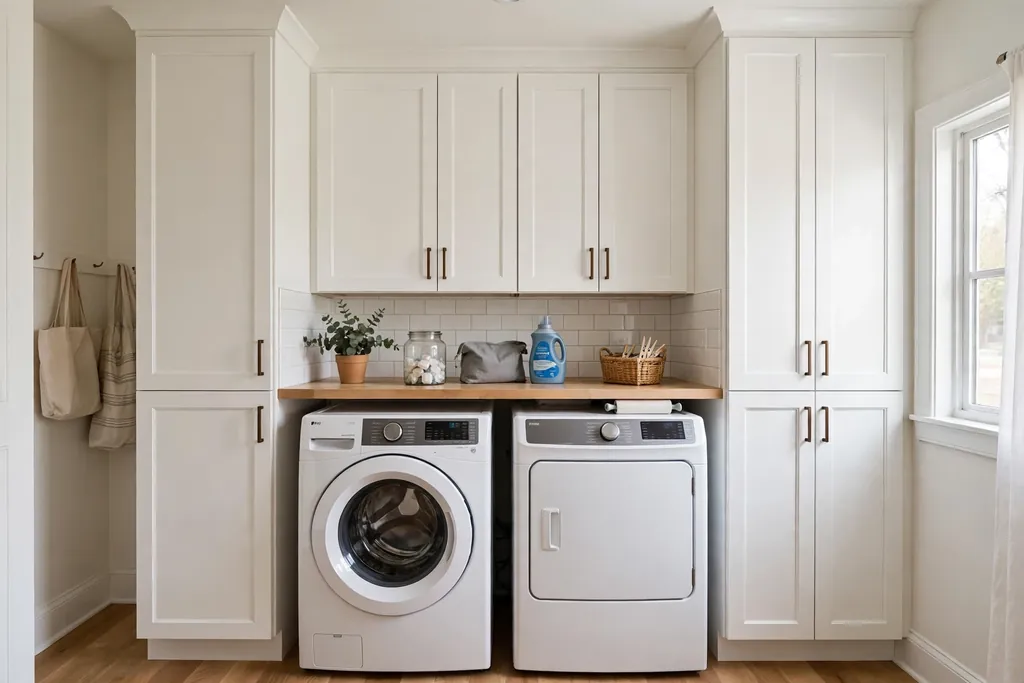
Cabinets that run to the ceiling use the full wall height for supplies that you reach for weekly rather than daily. Keep detergent and daily items on the lowest shelf, and move seasonal supplies, spare linens, and bulk buys to the top shelves. Closed doors hide the visual noise of bottles and boxes, which matters in a room you see every day.
Add a small step stool that lives in the room, so the top shelves stay usable rather than decorative. Label the inside of each door with the shelf contents if the household shares the room. Leave a gap above the machines for venting and service access, and never block a vent or a shut-off valve with a fixed cabinet.
8. Use Open Shelves With Matching Labelled Baskets
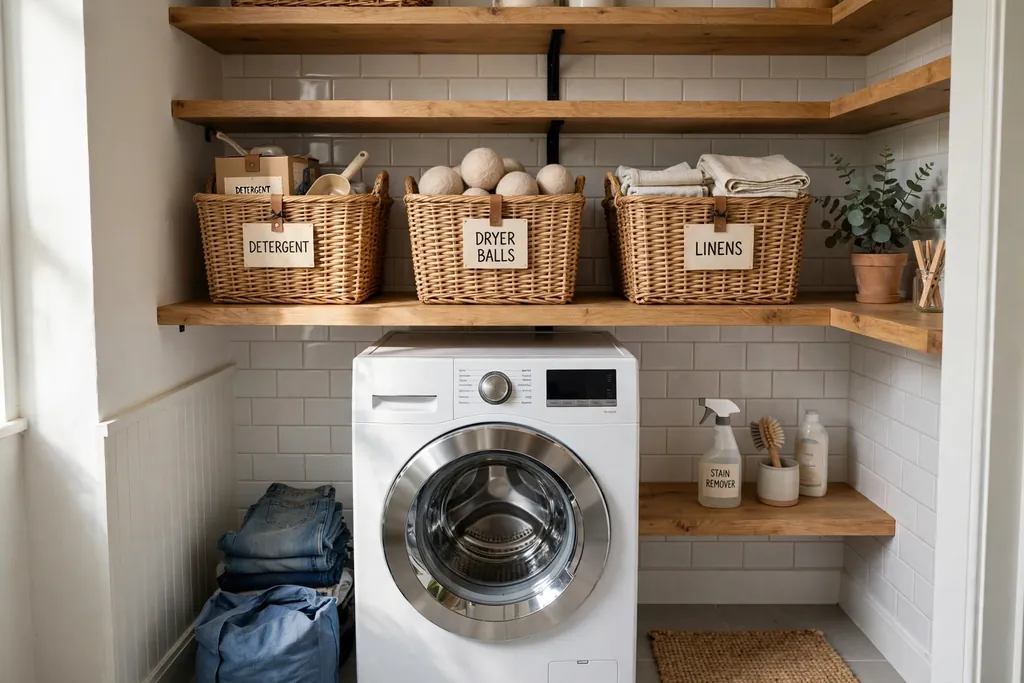
Open shelves above the machines or on a clear wall hold baskets that hide supplies while keeping them easy to grab. Use baskets in one material, such as cotton rope or woven seagrass, in two sizes at most, and label each one by job, such as washing, drying, stain care, and cleaning. Matching baskets make open shelves look planned rather than patched together.
Keep each basket light enough to lift with one hand, since high shelves and heavy baskets are a poor mix. Put daily supplies at hand height and spare stock higher up. Once a month, empty each basket and return only what you actually used, since laundry shelves quietly collect empty bottles and single socks.
9. Mount a Peg Rail for Tools and Everyday Supplies
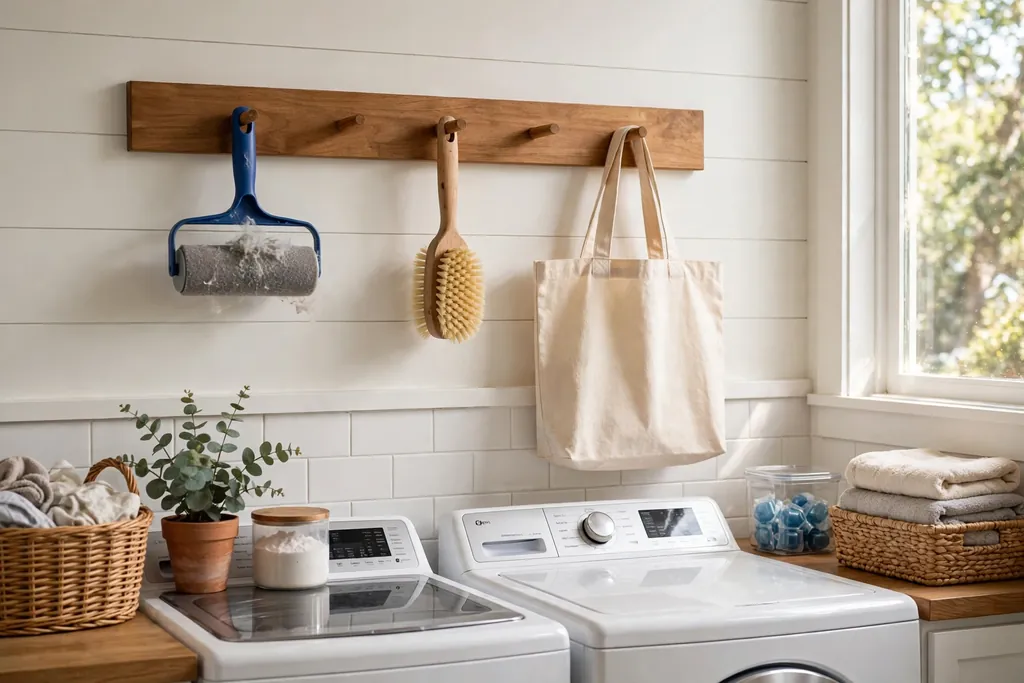
A peg rail along one wall holds a lint roller, a small brush, scissors, a measuring cup, and a tote bag on hooks that you can move as needs change. Mount the rail at hand height, with hooks spaced so items do not knock together. A rail with a small shelf on top adds room for a jar of clothespins or a small plant.
Group hooks by job, so stain care tools sit together and drying tools sit together. Keep the rail clear of the machine door swing, and use hooks with a closed end so items do not slide off when a machine vibrates. A peg rail also suits a hallway or entry, since it uses wall space that a cabinet would waste.
10. Add a Tilt-Out or Pull-Out Hamper
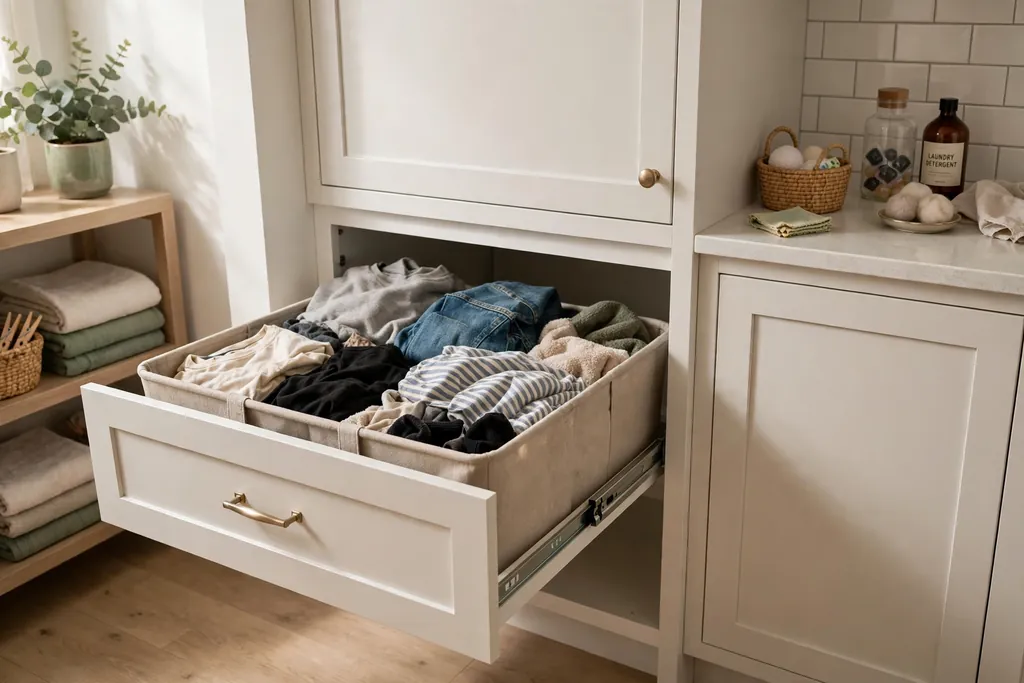
A tilt-out or pull-out hamper hides dirty laundry inside a cabinet front, so the room looks tidy even on wash day eve. A single tilt-out bin suits a small household, while a pull-out unit with two bins lets you sort lights and darks as you go. Line the bins with washable bags that lift out for carrying to the machines.
Keep the hamper near the machines, with enough clearance for the front to open fully. Empty it on a set day each week, and wipe the bin monthly to stop odors. If a built-in unit is not possible, a slim lidded hamper in the same spot gives most of the same benefit with no fitting work.
11. Sort With Three Slim Bins on a Low Shelf
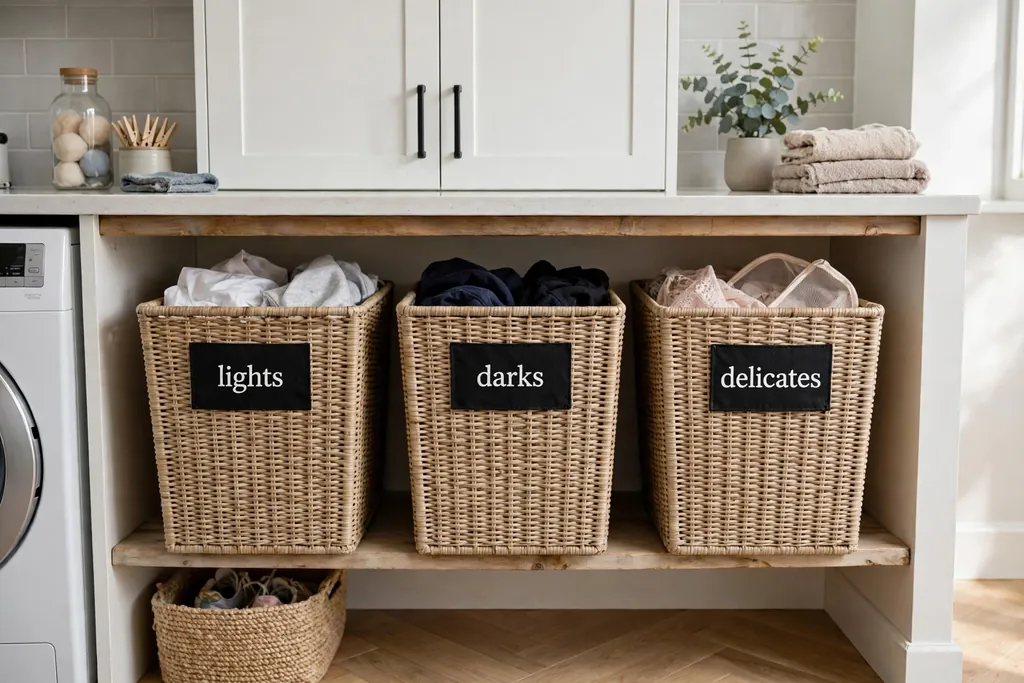
Three slim bins, one each for lights, darks, and delicates, turn sorting into a habit rather than a wash day chore. Set them on a low shelf or in a row under a countertop, with labels on the front of each bin. Slim bins fit where a wide hamper would block the path, and they stack neatly when one is empty.
Teach the household one rule: clothes go in a bin, not on the machine or the floor. Wash a bin when it is full, and return the empty bin to its spot right away. If space allows only two bins, use one for everyday loads and one for delicates, and sort the rest at the machine.
12. Put a Tall Narrow Cabinet in the Dead Corner
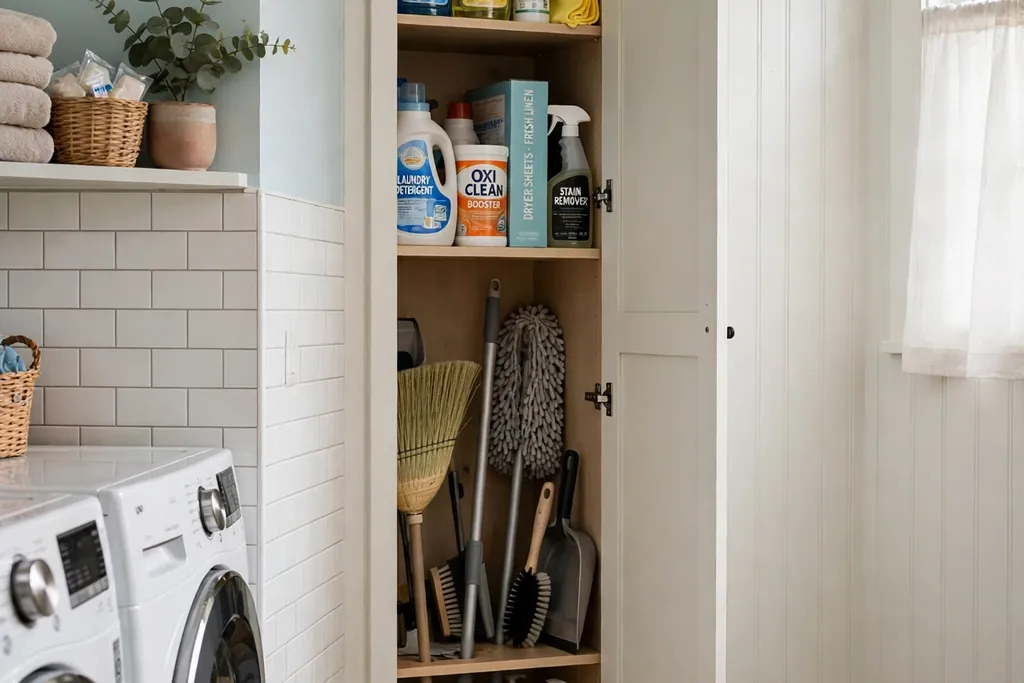
A tall, narrow cabinet fits a corner or a strip of wall that is too small for a wide unit, and it holds brooms, mops, ironing supplies, and tall bottles upright. Choose a cabinet with adjustable shelves, so tall items fit on one shelf and small items stack on another. A door keeps the contents out of sight, which helps a tiny room feel calm.
Measure the door swing before you buy, since a cabinet door that hits a machine door wastes the whole unit. Keep the heaviest items low, and put the iron and cleaning sprays where you can reach them without moving other items. A narrow cabinet also works in a bathroom, where the same dead corner problem appears.
13. Use the Machine Sides With Magnetic Shelves and Hooks
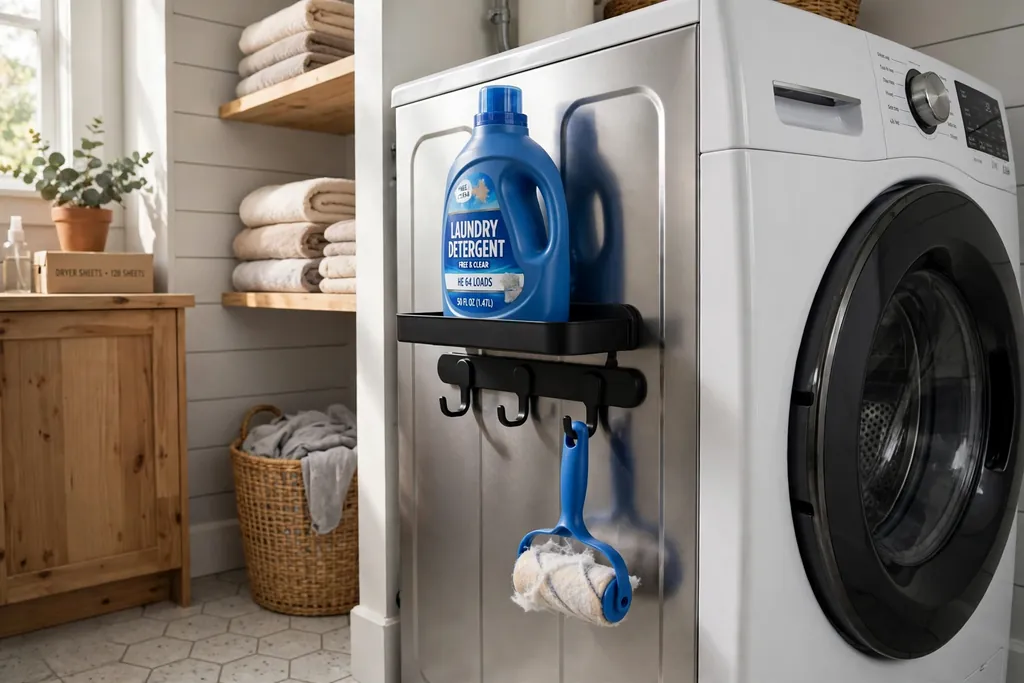
The flat metal sides of a washer or dryer can hold magnetic shelves and hooks for detergent, a lint roller, and a small basket of clothespins. Magnetic storage uses no wall space and no drilling, which suits renters and very tight rooms. Choose magnets rated for the weight you plan to hang, and test them with a full bottle before trusting them.
Keep magnetic items off the door seals and control panels, and remove them before a service visit. Wipe the machine side first, so dust does not weaken the grip. This idea works best for light, daily items, while heavy bulk supplies stay on a shelf or in a cabinet.
14. Hang an Over-Door Organizer for Sprays and Small Items
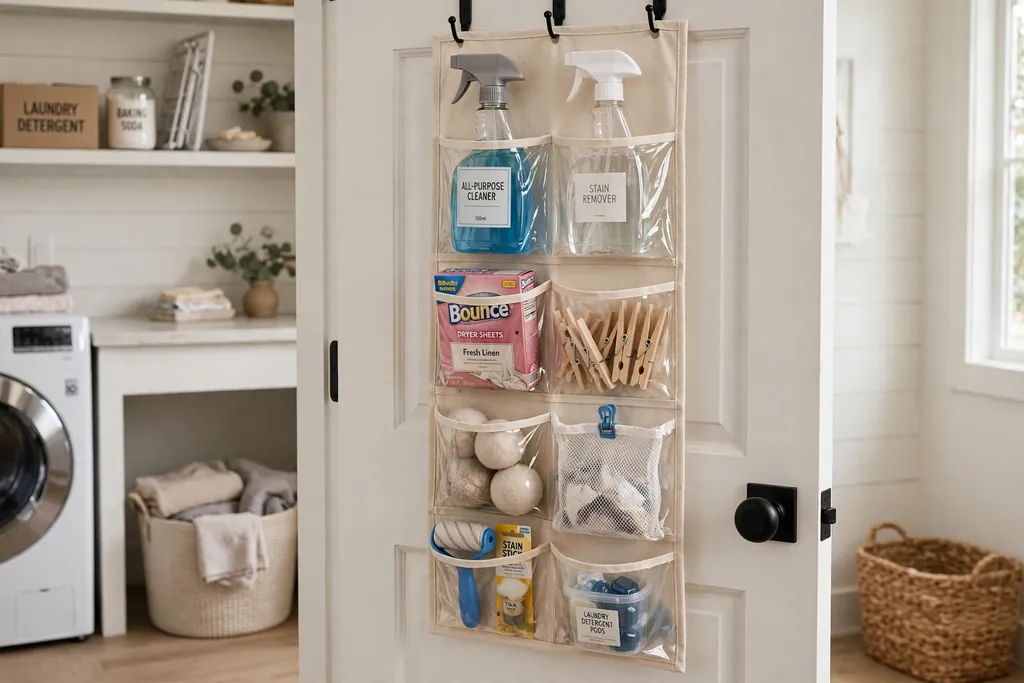
An over-door organizer with clear pockets turns the inside of the laundry room door into storage for stain sprays, dryer balls, clothespins, and spare supplies. Hang it on the inside face so the pockets do not show from the hall, and keep heavy bottles low so the door still swings freely. Clear pockets let you see each item at a glance, which stops duplicate buying.
Reserve the top pockets for light items, such as mesh wash bags and spare cloths. The same door trick works in a small bathroom, and these apartment bathroom ideas show how an over-door organizer keeps toiletries visible without a new cabinet. Trim the hooks if the door rubs the frame, and check that the door still latches.
15. Fix a Wall-Mounted Ironing Board Cabinet
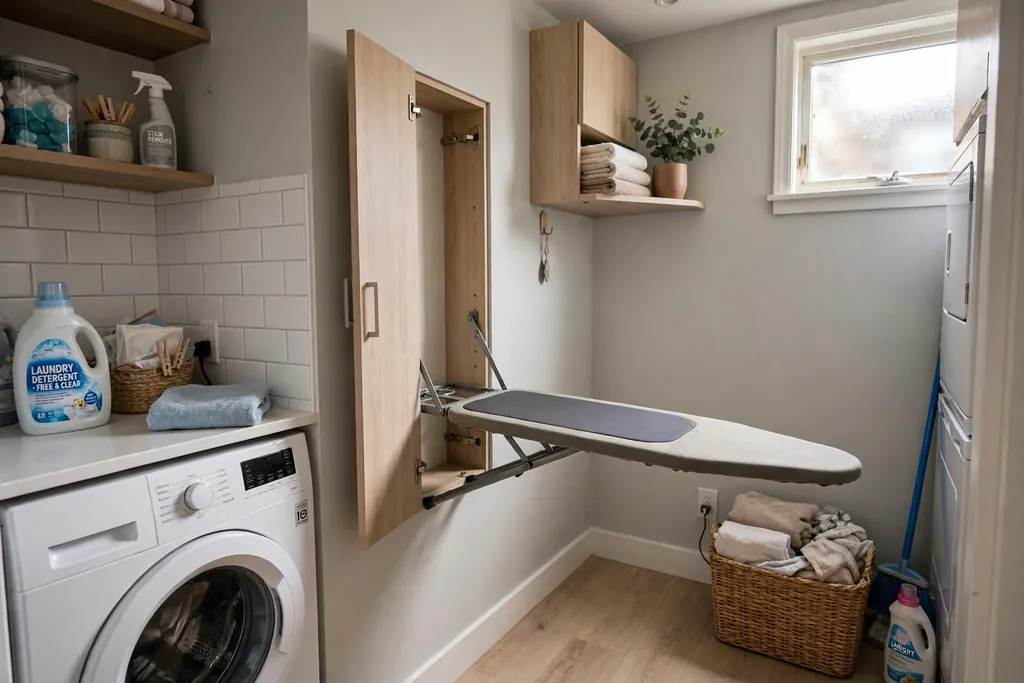
A wall-mounted ironing board folds down from a slim cabinet when you need it and folds away when you do not, freeing the floor space a freestanding board would take. Mount it near an outlet, at a height that suits the main iron user, and keep the cabinet stocked with the iron, a spray bottle, and a small pressing cloth. A cabinet door hides the board completely between uses.
Let the iron cool before folding the board away, and keep the cord wrapped so it does not catch on the cabinet edge. If ironing is rare in your home, the same cabinet can hold a steamer and a lint roller instead, so the wall space still earns its keep.
16. Keep a Foldable Step Stool Tucked in a Slim Slot
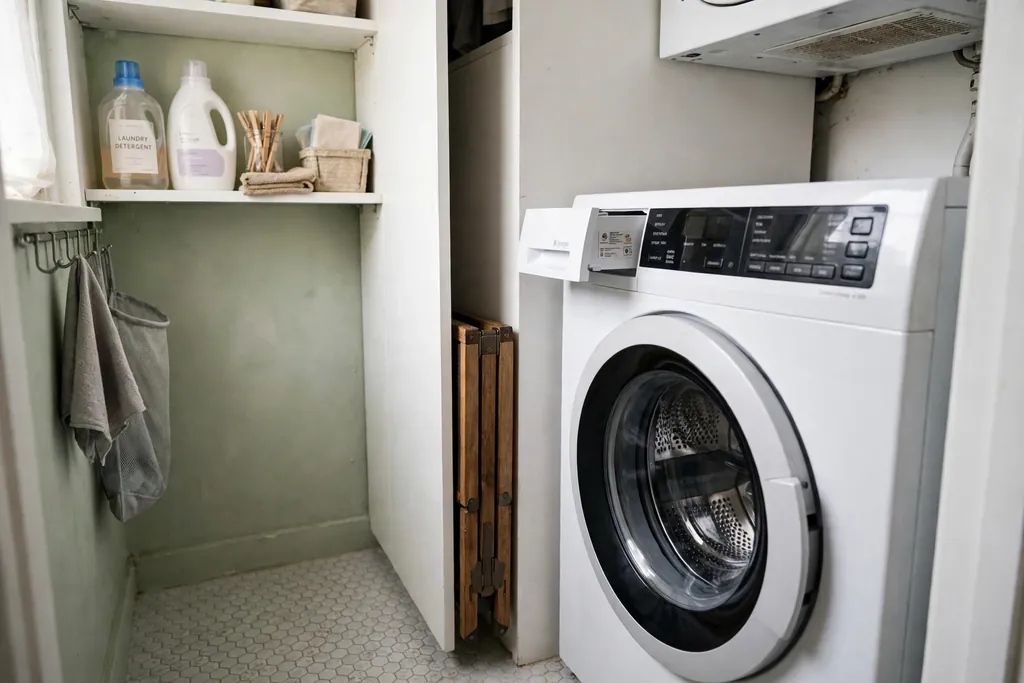
A foldable step stool that lives in a slim slot beside the machines or behind the door makes high shelves usable every day, not just on step ladder days. Choose a stool that folds flat to an inch or two thick, with a non-slip top and feet that grip tile or vinyl. A slot about the width of the folded stool keeps it from sliding into the walkway.
Hang the stool on a hook if floor space is truly zero, and keep it in the laundry room rather than another room, so reaching a high shelf never becomes a reason to skip putting things away. Check the stool weight rating, and replace it if the hinges loosen or the feet wear smooth.
17. Cover a Utility Sink With a Removable Board for Folding Space
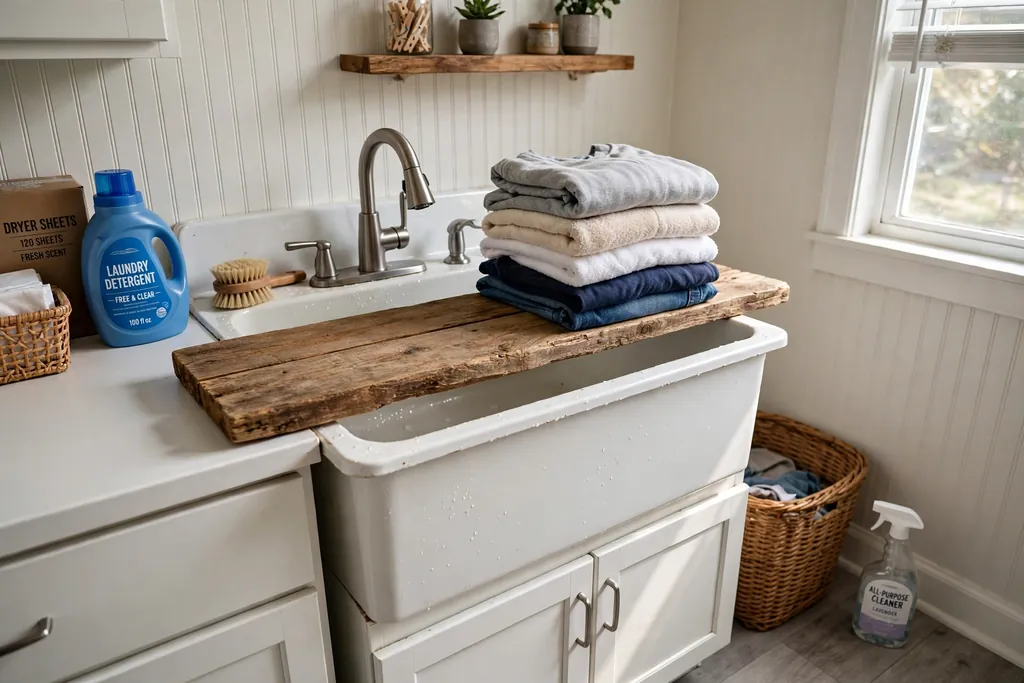
A board cut to rest over a utility sink turns the sink into a folding surface or a sorting spot when the sink is not in use. Use a light board with handles or finger holes at each end, so you can lift it off quickly for hand washing. A board with a small lip at the back stops folded items from sliding into the sink.
Store the board upright beside the sink when it is not in use, and dry the sink rim before laying the board down, so moisture does not warp it. This idea suits a room with a sink but no counter, since it adds a work surface with no fixed fitting and no lost sink use.
18. Add Under-Shelf Hooks and a Rail for Spray Bottles
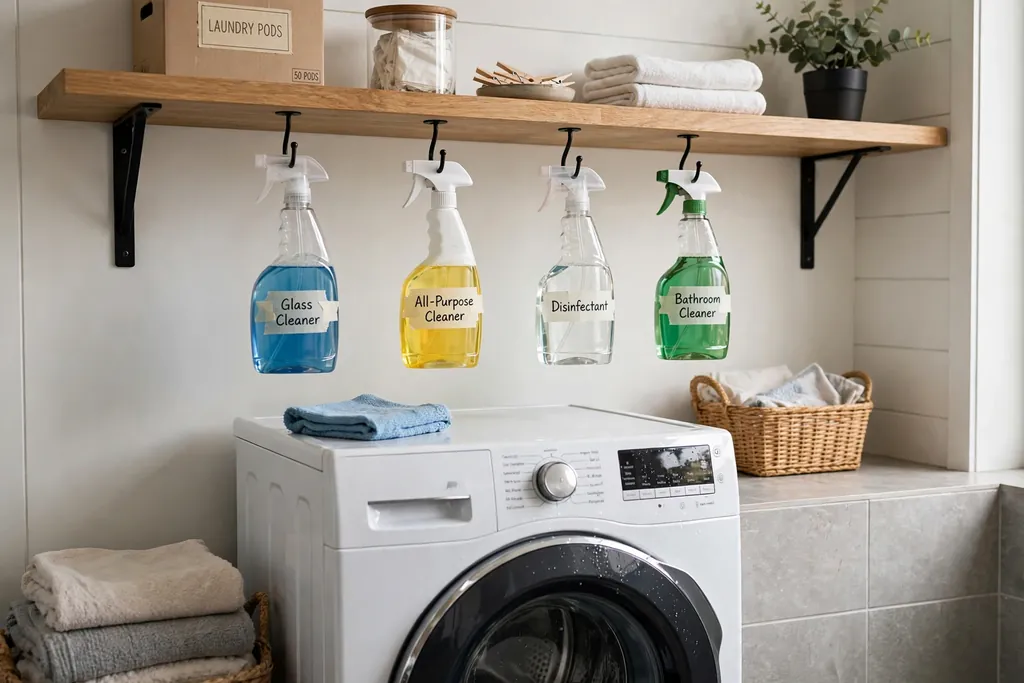
Hooks under a shelf and a short rail under a cabinet hold spray bottles by their triggers, keeping them off the counter and easy to grab. Mount the hooks in a row with room between bottles, so you can lift one without knocking the next. A rail with sliding hooks adjusts as your bottle collection changes.
Keep stain sprays and cleaning sprays on separate hooks, and label the rail if the household shares the room. Check that bottles hang clear of the machines below, since vibration can loosen a poorly seated hook. This small change often frees more counter space than a new shelf, because bottles are the items that crowd a laundry counter most.
19. Place a Small Rug and Swap It With the Seasons
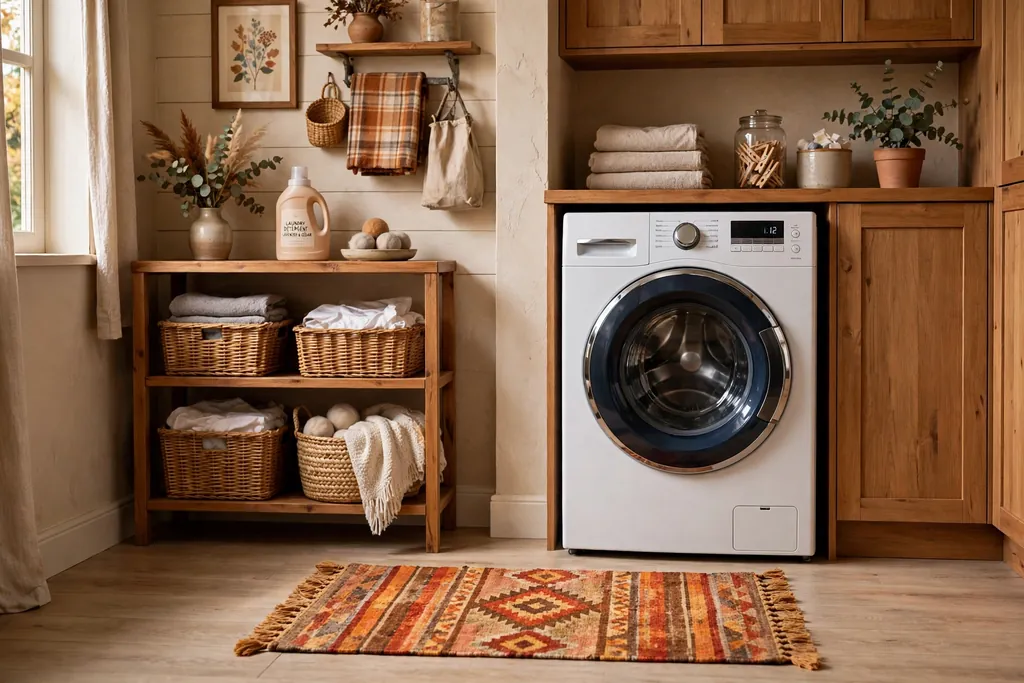
A small, washable rug in front of the machines softens a hard floor and catches lint and drips before they spread. Choose a low pile rug that fits the clear floor area without curling under a machine door, and add a non-slip pad beneath it. Wash the rug with a towel load on a regular cycle, so it never becomes a source of dust.
Keep a second rug in rotation, one in a warm autumn palette and one in a lighter spring palette, and swap them with the seasons for an easy refresh. A rug swap is one of the cheapest seasonal updates in the home, since it changes the whole feel of the room in under a minute.
20. Swap Hand Towels, Curtain, and Basket Liners for a Seasonal Palette
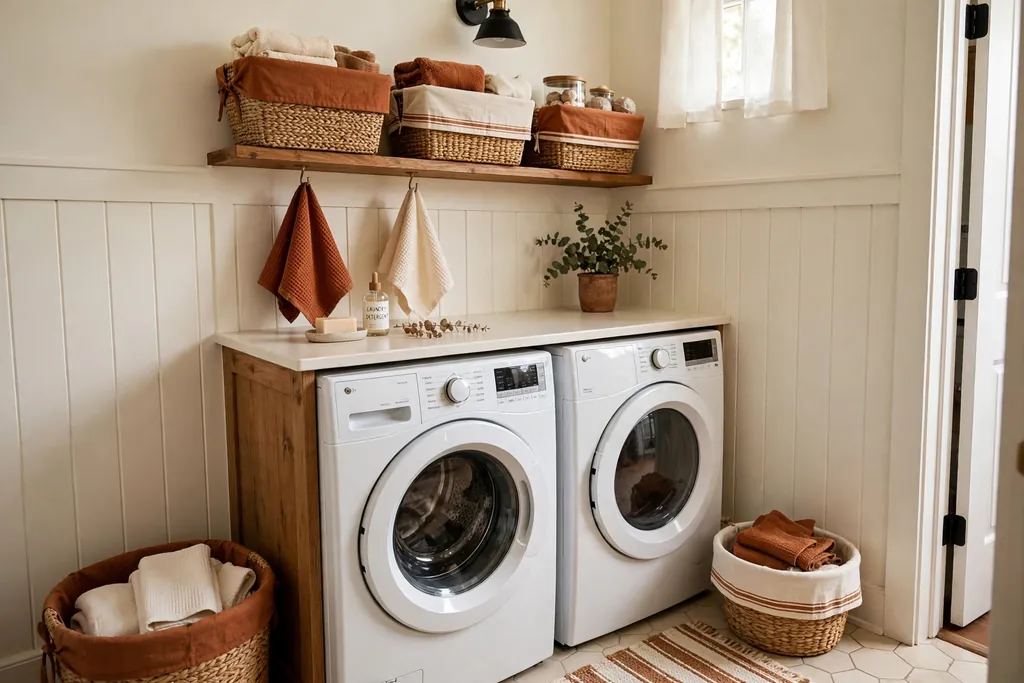
Hand towels, a small window curtain, and basket liners are the fastest seasonal swap in a tiny laundry room, since they carry most of the room color. Choose one palette per season, such as warm rust and cream for autumn, deep green and natural linen for winter, and fresh sage and white for spring. Swap all three at once, so the room reads as a set rather than a single new towel.
Store the off-season set in one labelled basket on a high shelf, so the swap takes minutes and the old set does not pile up elsewhere. Wash the set before storing it, and fold it as a bundle, so next season starts tidy. This habit also stops the slow build-up of single towels that no longer match anything.
21. Set Up a Seasonal Scent Station
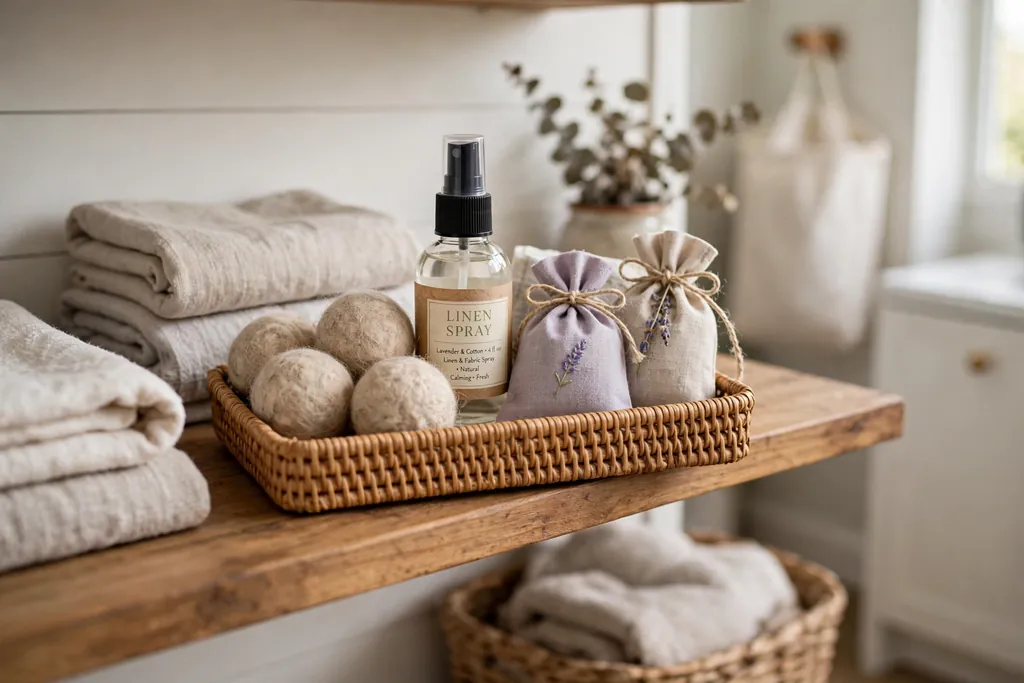
A small scent station on one shelf or tray groups dryer balls, a linen spray, sachets for drawers, and a jar of baking soda for freshening loads. Keep the tray to one small group, so it reads as a station rather than clutter, and refill it when you swap the seasonal towels. A woody or spiced scent suits autumn and winter, while a clean cotton or herbal scent suits spring and summer.
Label the linen spray clearly, and keep scent products away from the dryer heat and out of reach of small children. A scent station also helps a small room smell fresh between loads, since laundry rooms hold damp air longer than larger rooms. Rotate scents with the seasons, and retire any product that no longer smells pleasant.
22. Add a Lost-Sock Bin and a Lint Bin on the Wall
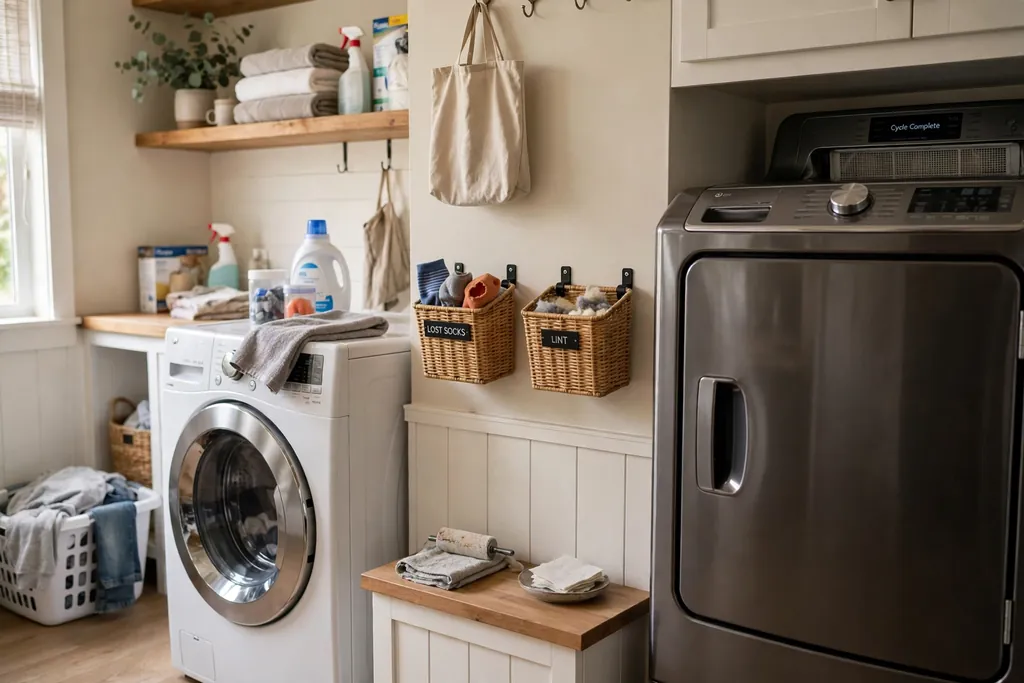
A small wall bin for single socks and a small bin for lint stop two common laundry annoyances from spreading across the room. Mount both bins near the machines, at a height where you can drop items in with one hand while holding a basket. Check the sock bin on wash day, and pair socks before they reach the drawer.
Empty the lint bin after every dryer load, and keep it away from the dryer vent so lint does not blow back into the room. Two small bins beat one large bin here, since lint and socks have different jobs and different emptying rhythms. Label each bin, so guests and family members use the right one without asking.
23. Label Every Bin and Shelf With a Simple Family Load System
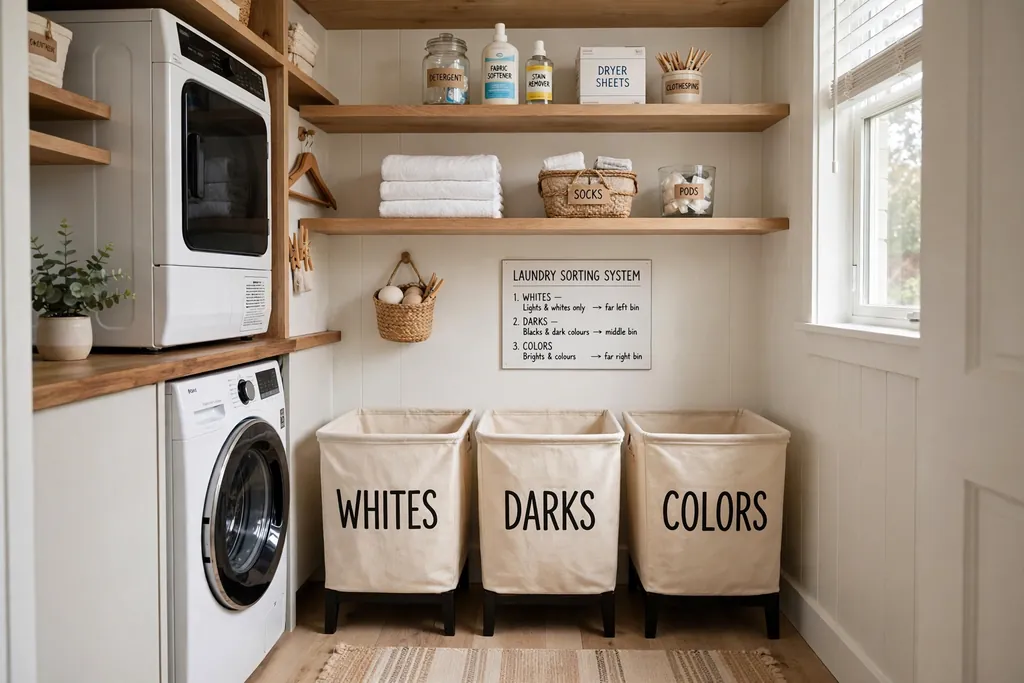
Labels turn a tidy laundry room into a room the whole household can keep tidy. Use one simple system, such as lights, darks, delicates, and towels, and put the same label words on bins, shelves, and the hamper. Short labels in a clear, readable style work better than long explanations, since laundry is a quick job done on the move.
Print or write labels on cards that slide into holders, so you can change them when routines change. Put a label at the front of each shelf, not on top, since front labels are the ones you see when you walk in. Review the labels each season, and remove any label for a category the household no longer uses.
24. Brighten the Room With a Warm Plug-In Light and a Small Mirror
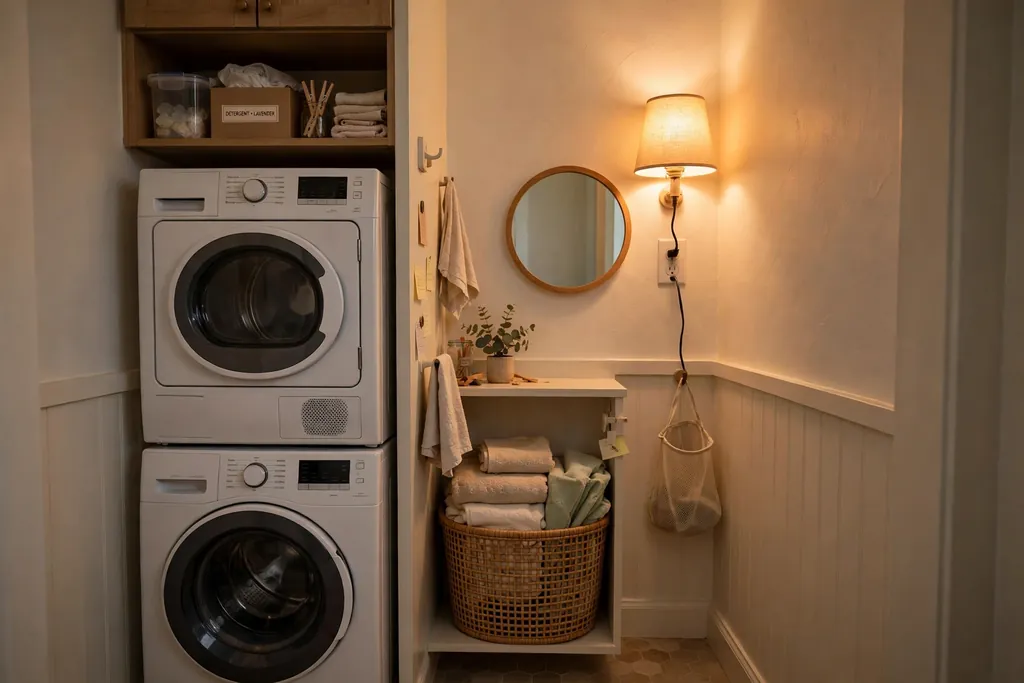
Many tiny laundry rooms have one harsh overhead light and no window, which makes sorting colors hard and the room feel cramped. A warm plug-in light on a shelf or a battery light under a cabinet softens the room and helps you tell navy from black. Add a small mirror on the clearest wall, since it bounces light and makes the room feel wider.
Keep plug-in lights away from water and the dryer vent, and choose warm white bulbs so the room feels calm rather than clinical. A mirror also helps you check a shirt for lint before it goes in the dryer. If wiring changes are not allowed in a rental, plug-in and battery options give most of the benefit with no electrician visit.
25. Keep a Folding Basket Station Ready at the Door
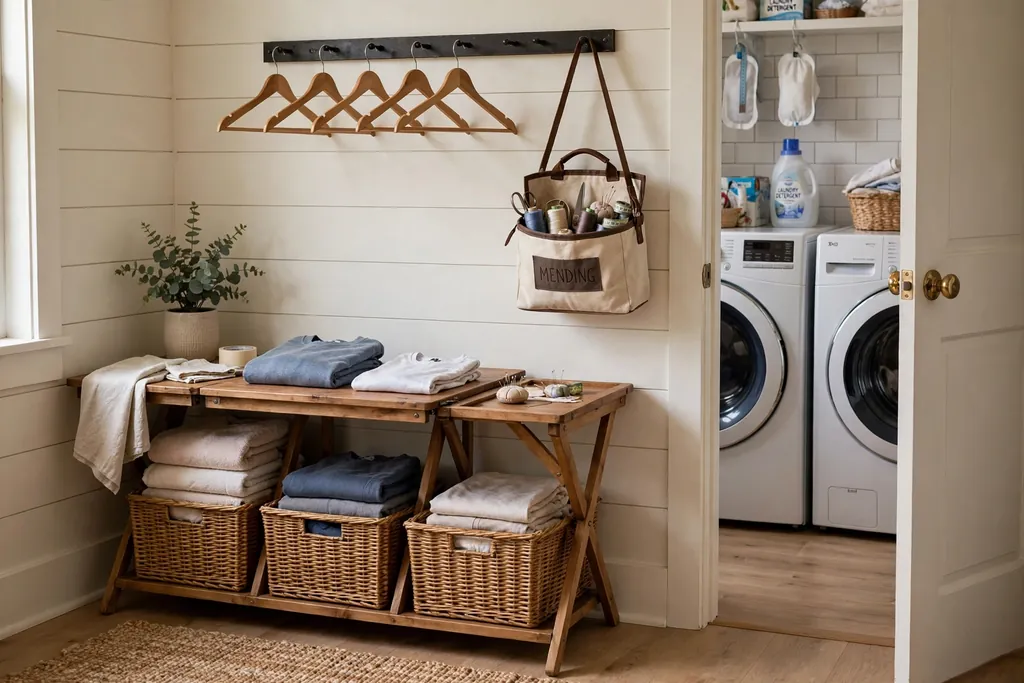
A folding basket station near the door holds one empty basket, a small stack of hangers, and a bag for items that need mending, so clean laundry moves out of the room instead of piling on the machines. Hang the hangers on a hook and set the mending bag on a shelf, so the station takes almost no floor space. When a load finishes, fold straight into the basket and carry it out.
Keep only one basket at the station, since two baskets invite a pile. Return the empty basket right after putting clothes away, so the station is ready for the next load. This habit matters most in a tiny room, where a single basket left on the machines blocks the next wash.
26. Finish With One Framed Print and a Hardy Plant
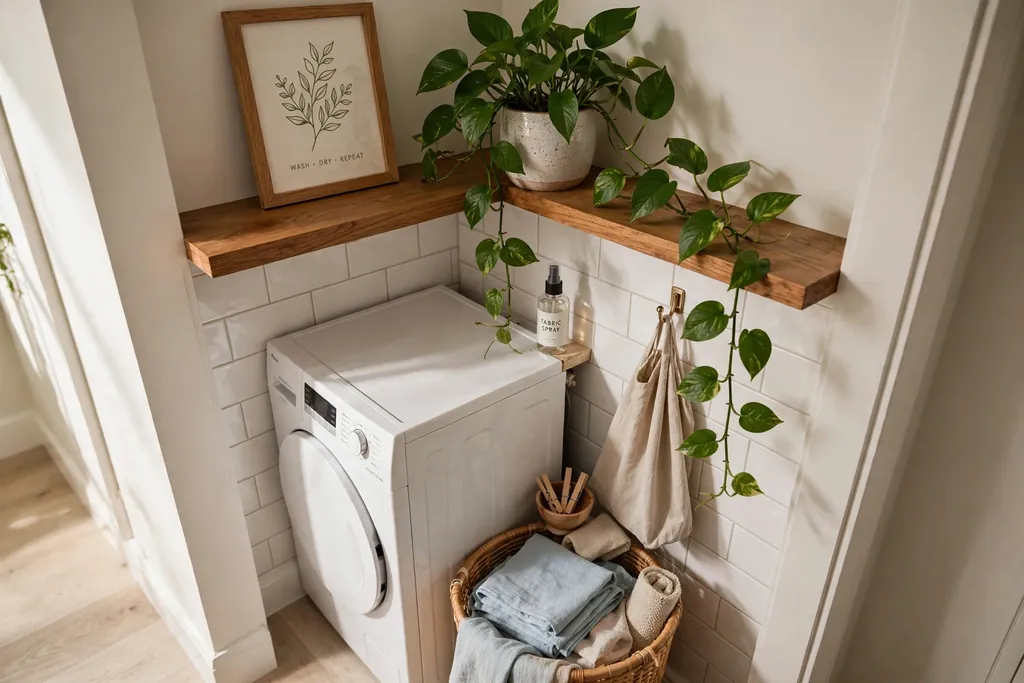
One framed print and one hardy plant give a tiny laundry room a finished feel without adding clutter or a cleaning burden. Choose a print in a moisture-safe frame, hung where steam from the dryer will not reach it directly, and a plant that copes with warm, humid air, such as pothos in a hanging pot or on a high shelf. One plant usually looks better than a crowded collection in a small room.
Water the plant on wash day, so plant care joins an existing routine and is less likely to be forgotten. Keep the print and the plant in the same palette as the seasonal towels, so the room feels planned. Swap the print with the seasons if you like, but keep the count to one, since the room has little wall space to spare.
Conclusion
A tiny laundry room does not need a remodel to work well. It needs clear jobs for each wall, each gap, and each shelf, plus a few habits, such as sorting as you go, folding straight into a basket, and emptying lint after every load. Seasonal swaps for towels, rugs, and scents keep the room feeling fresh without new furniture or new clutter. Pick the one idea that fixes your biggest daily frustration, live with it for a week, then add the next idea that the room still needs. Small rooms reward small, steady changes more than one big overhaul.
FAQs
1. What is the best first change for a tiny laundry room?
Start with the problem that annoys you daily. If folding space is missing, add a fold-down shelf or a countertop over the machines. If supplies are scattered, add a slim cart or labelled baskets first. One clear fix shows results fast and makes the next change easier to choose.
2. Can I stack a washer and dryer in a rental?
It depends on your machines and your lease. Use a stacking kit made for your exact models, and ask the landlord before moving machines, changing vents, or altering plumbing. If stacking is not allowed, a slim cart, over-door storage, and wall shelves add room without moving the machines.
3. How do I dry clothes in a tiny laundry room without a floor rack?
Use a wall-mounted fold-away rack, a retractable clothesline, or a line over the bath or sink area where air can move. Hang items with space between them, keep the rack away from the dryer vent, and fold racks away when empty so the room stays open.
4. What should I store on high shelves in a laundry room?
Put seasonal supplies, spare linens, bulk buys, and rarely used items on high shelves, and keep daily detergent, stain spray, and dryer supplies at hand height. Keep a foldable step stool in the room, so high shelves stay usable, and label each shelf so the household can find things without moving everything.
5. How can I make a laundry room feel cozy for each season?
Swap the small, colorful items: hand towels, a rug, basket liners, and the scent station. Choose one palette per season and swap all of them at once, then store the off-season set in one labelled basket. These swaps change the room fast and cost far less than new furniture.
6. How do I stop a tiny laundry room from smelling damp?
Keep air moving, wipe up drips, leave machine doors open briefly after a wash so drums dry, and clean the lint filter after every dryer load. A scent station with dryer balls and linen spray helps, but it cannot replace dry surfaces and clear vents, so check hoses and vents if damp smells persist.