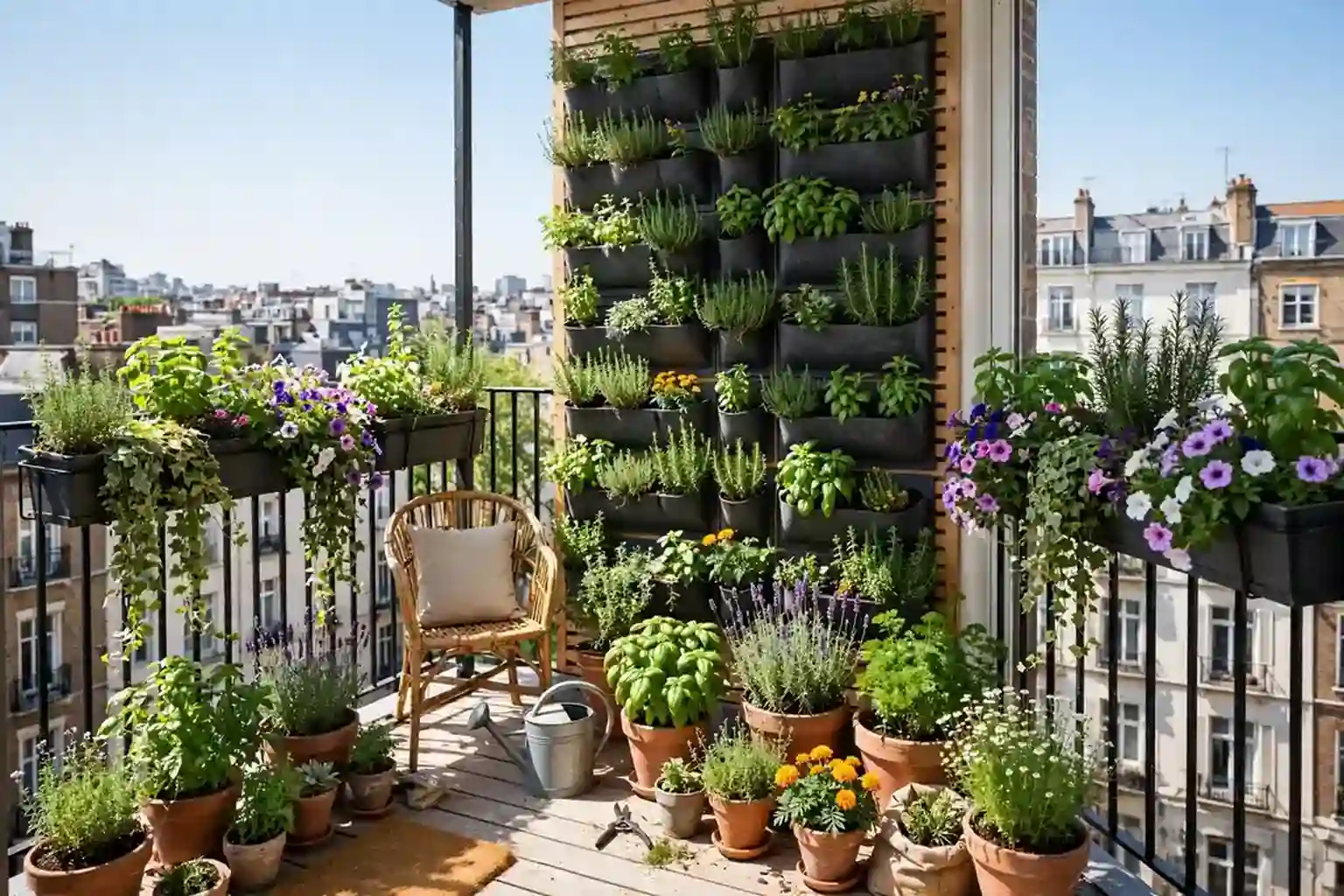
City living does not have to mean giving up on growing things. A railing, a windowsill, a sunny wall, or a shared courtyard can all hold a garden, as long as each spot is matched to plants that suit its light, wind, and watering needs. These 22 urban gardening solutions cover balconies, rooftops, indoor shelves, and shared plots, with options for renters, for food growers, and for people who only have an hour a week. Start with the sunniest spot you already have, add one container at a time, and let the garden grow around how you actually live.
Key Takeaways
- Match plants to the spot: sun lovers need six or more hours of direct sun, while herbs and leafy greens cope with less.
- Use light containers with drainage holes, and raise pots on feet so water can leave freely and does not stain the surface below.
- Water containers more often than ground beds, since pots dry out fast in sun and wind, and mulch the surface to hold moisture.
- Grow up, not out, on a balcony: rails, walls, shelves, and hanging baskets add growing room without taking floor space.
- Keep heavy items near walls and load bearing edges, and check building rules before fixing anything to a railing, wall, or roof.
- Start with crops you eat weekly, such as herbs, salad leaves, and tomatoes, so the garden earns its space from the first season.
1. Balcony Rail Planters
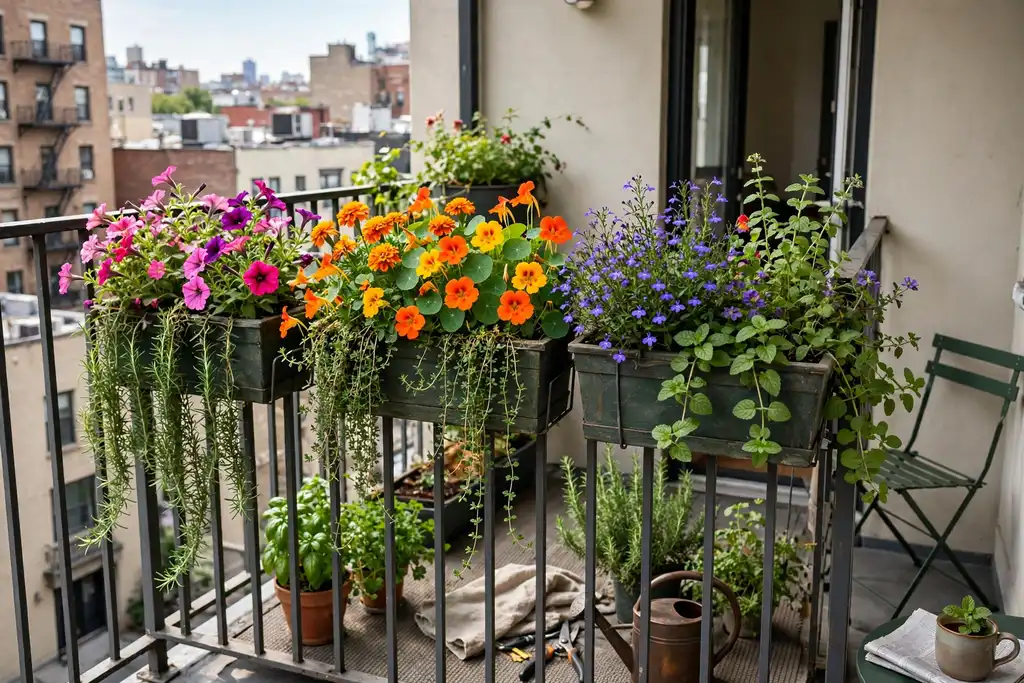
Hang planters over the balcony rail to grow flowers and trailing herbs without using any floor space. Rail planters suit renters, since most types hook on and lift off, and they put plants right where sun and air reach them. Choose planters with drainage holes and a drip tray or liner so water does not fall on neighbors below.
Plant trailing herbs such as thyme and oregano at the front, with upright flowers or compact vegetables behind them. Check the rail width before buying, and secure each planter so wind cannot lift it. Water rail planters often in hot weather, since their shallow soil dries fast, and feed lightly through the season as the label advises.
2. Vertical Pallet Wall Garden
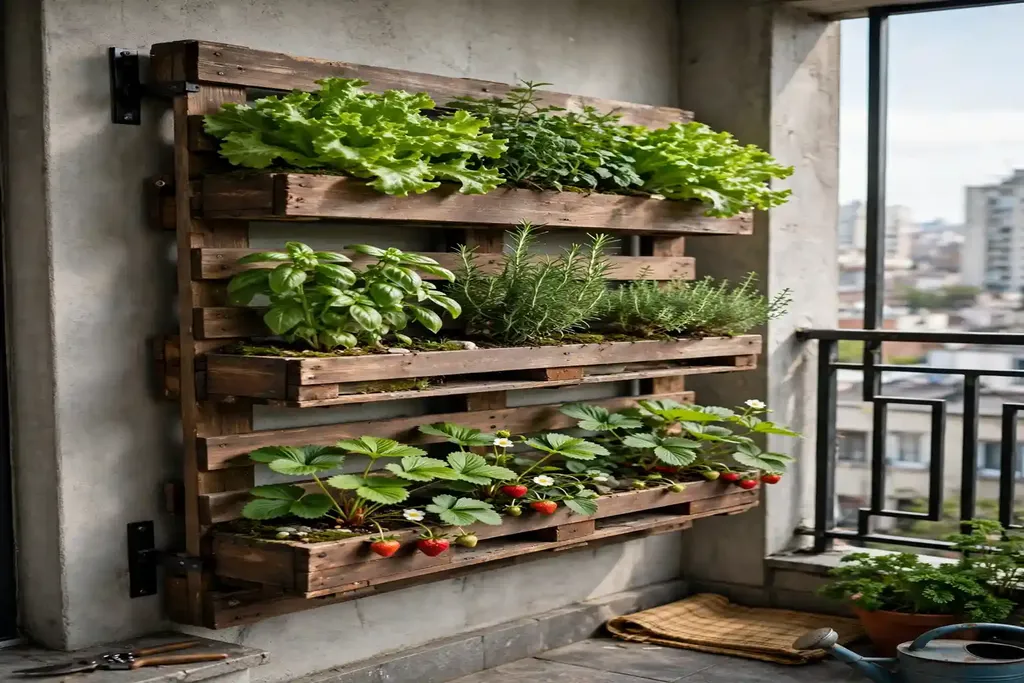
Fix a wooden pallet to a sheltered balcony wall and plant each slat row for a garden that takes almost no floor space. A pallet wall suits salad leaves, strawberries, and herbs, all of which grow well in shallow soil. Line the back and sides with landscape fabric, fill each row with potting mix, and plant through the gaps.
Water from the top so moisture reaches every row, and check the lowest row most, since water can collect there. Fix the pallet firmly to the wall, and keep the total weight in mind if the wall is a partition rather than a structural wall. In winter, move tender plants to a sheltered spot and let the pallet dry between waterings.
3. Windowsill Herb Garden
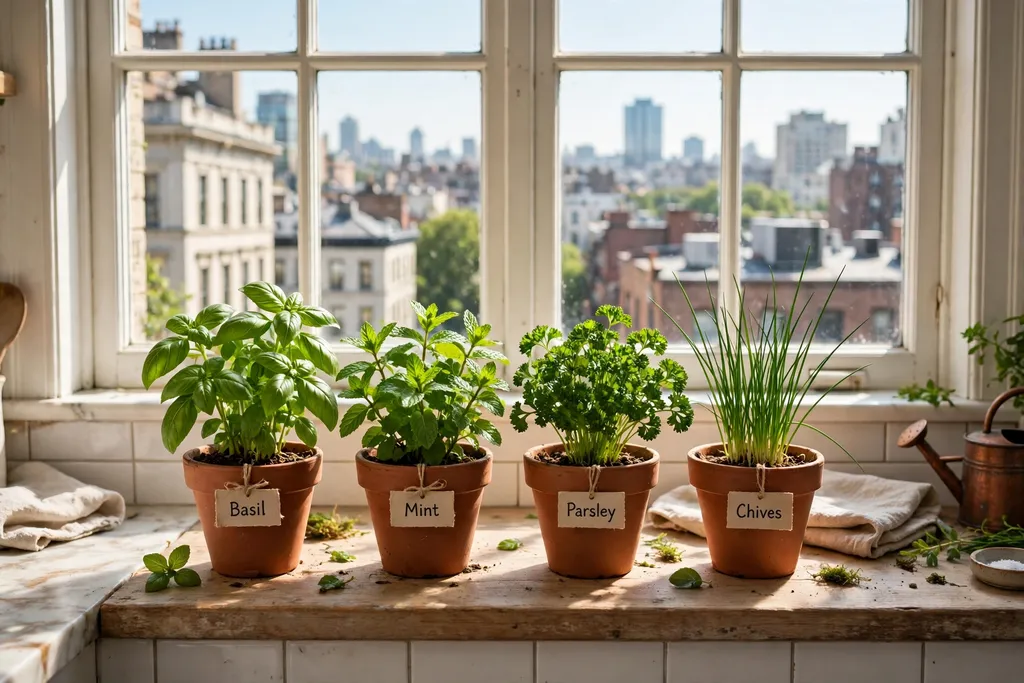
Grow herbs in small pots on a sunny windowsill for fresh leaves a few steps from cooking. Basil, mint, parsley, chives, and thyme all grow well indoors with bright light, and a windowsill garden needs no outdoor space at all. Use pots with drainage holes and saucers, and rotate pots weekly so plants grow evenly toward the light.
Keep mint in its own pot, since it spreads fast and can crowd out neighbors. Pick little and often to keep plants bushy, and water when the top inch of soil feels dry. If winter light is weak, move the pots to the brightest window you have, and trim leggy stems back in spring to encourage fresh growth.
4. Tiered Plant Stand
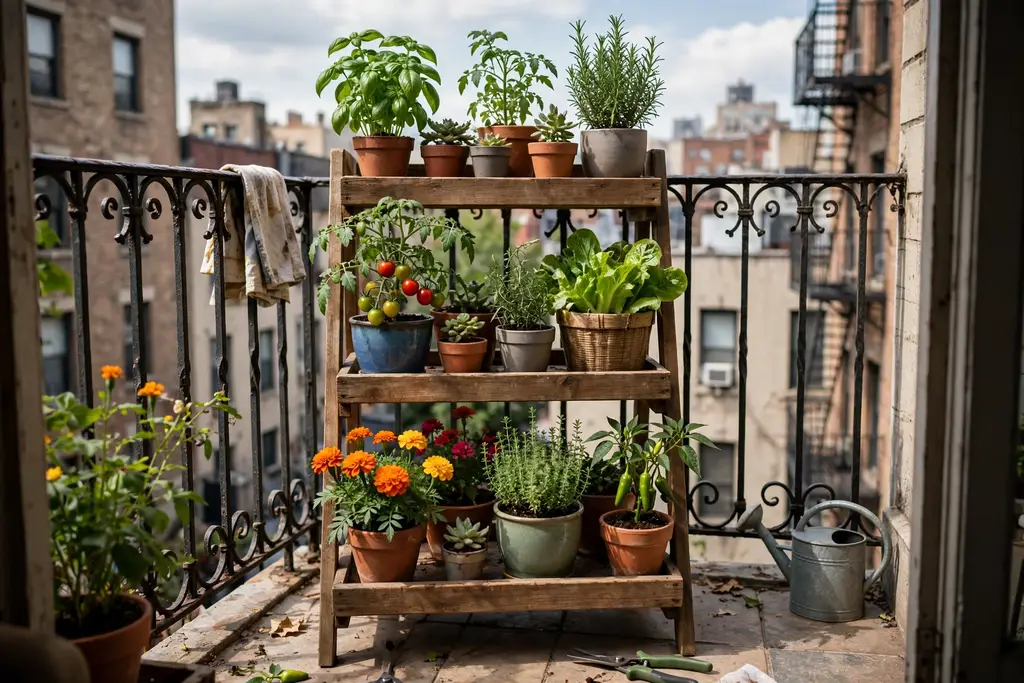
Use a tiered plant stand to stack pots in layers, so one square foot of floor holds three or four times the plants. Tiered stands suit balconies and small patios, where floor space is the limit. Put sun lovers on the top tier, shade tolerant plants lower down, and trailing plants on the edges so they can spill over.
Choose a stand that is stable in wind, and place heavier pots on the lowest tier to keep it steady. Water the top tier first, since drips will reach the tiers below, and check lower pots for overwatering. A folding stand can come inside in winter, which suits renters and people with no storage shed.
5. Hanging Baskets from Ceiling Hooks
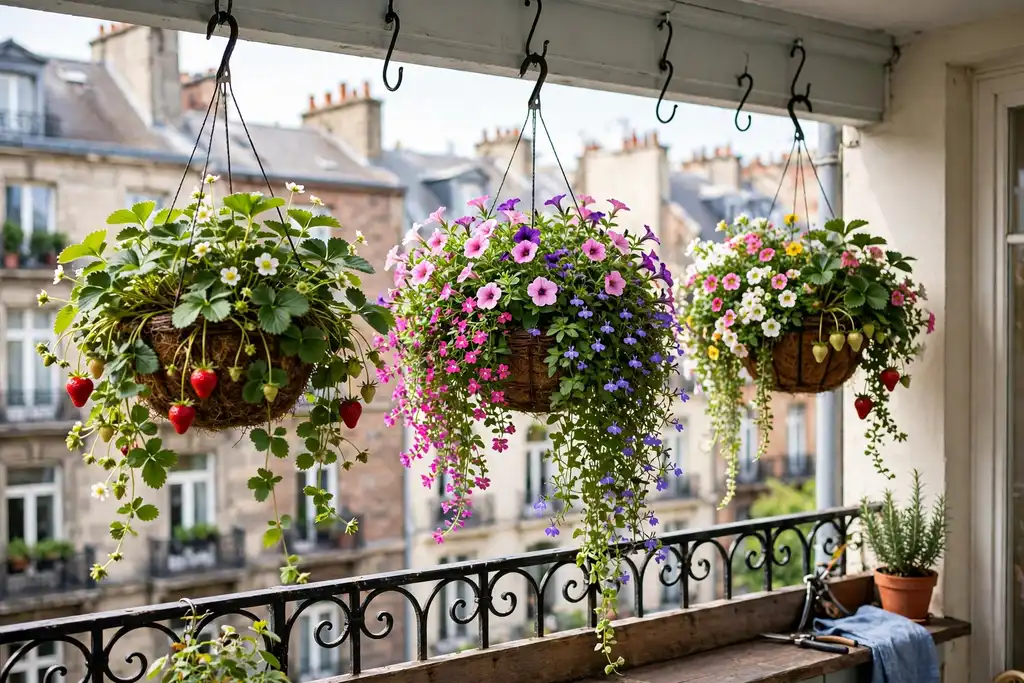
Hang baskets from sturdy ceiling hooks to grow flowers, strawberries, and trailing herbs above head height. Hanging baskets use air space that otherwise goes unused, and they bring color to eye level on a plain balcony. Use light baskets with liners that hold moisture, and hang them where you can reach them with a watering can.
Water hanging baskets daily in hot weather, since they dry out faster than ground level pots. Choose trailing plants such as lobelia, trailing rosemary, or strawberries for the edges, and upright plants for the center. Check the hook rating and the ceiling fixing before hanging a watered basket, since wet soil is much heavier than dry soil.
6. Self Watering Containers
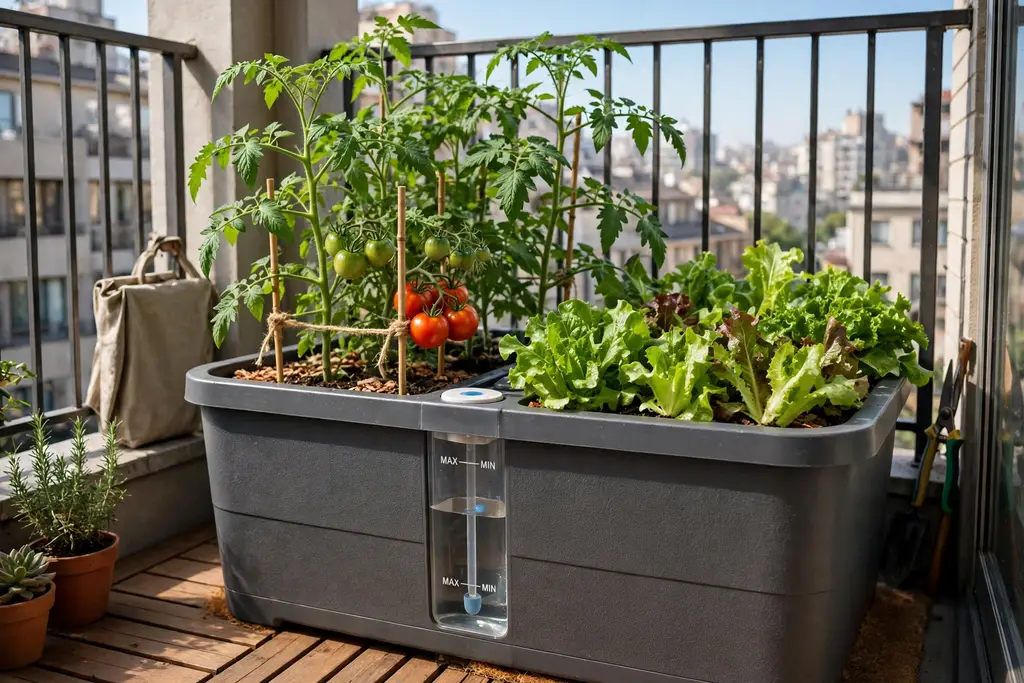
Grow tomatoes, peppers, and salad leaves in self watering containers that hold a water reservoir below the soil. A reservoir keeps moisture steady, which suits busy growers and hot balconies where pots dry out between waterings. Fill the reservoir as the maker advises, and top up when the gauge or filler pipe shows it is low.
Use a light potting mix, not heavy garden soil, so water can wick up evenly. Mulch the surface to slow evaporation, and feed as the crop type requires, since reservoir watering can wash nutrients down over time. In rainy spells, check that the reservoir is not overflowing, and empty it before frost if the container could crack.
7. Narrow Ledge Shelf Along the Wall
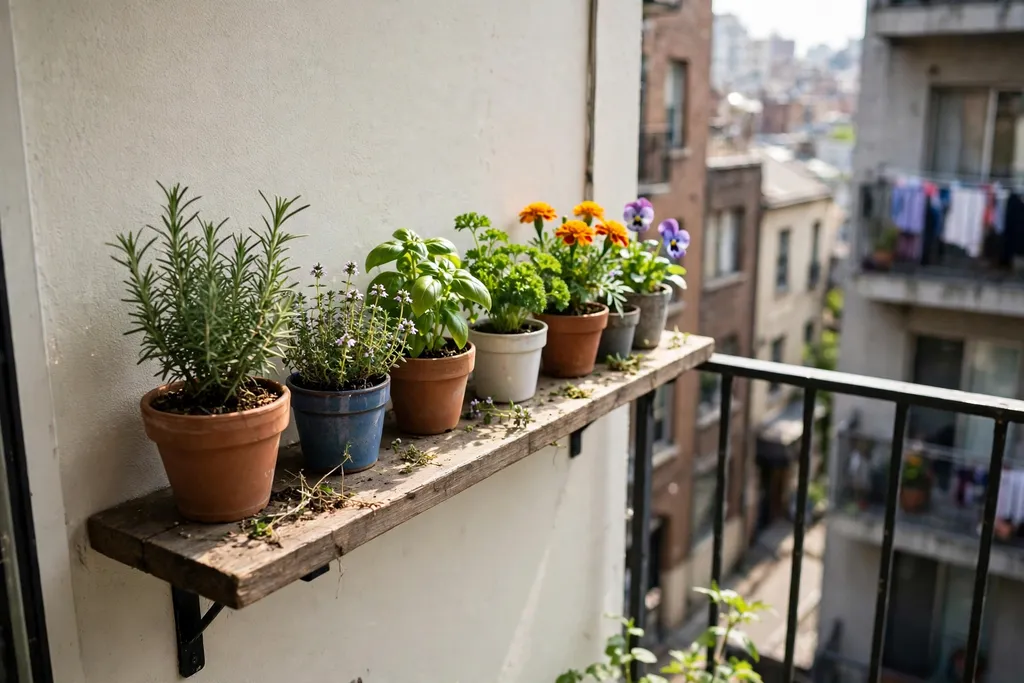
Fix a narrow shelf along a balcony wall to hold small pots in a line, turning a dead strip of wall into a growing ledge. A ledge shelf suits shallow pots of herbs, succulents, and small flowers, and it keeps pots off the floor where space is tight. Choose a shelf depth that fits your pots with room to spare, and fix brackets firmly into the wall.
Keep heavier pots near the brackets, and leave a gap at one end for a watering can. A second shelf above the first doubles the growing room, as long as lower plants still get light. If the balcony is rented, a freestanding narrow shelf unit gives a similar result without drilling.
8. Indoor Grow Light Shelf
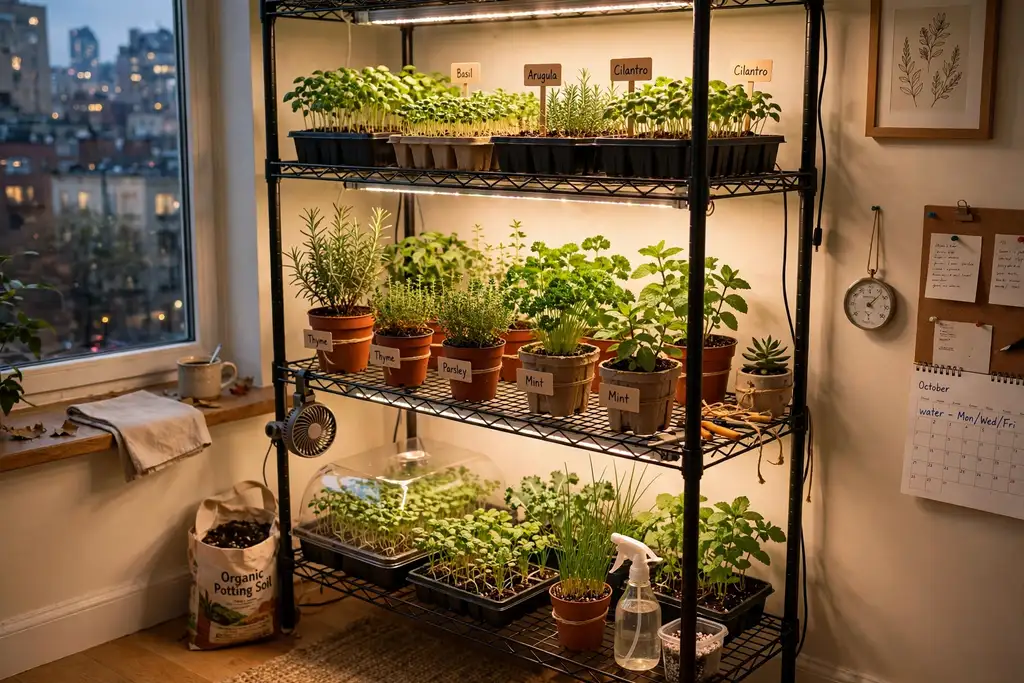
Set up a shelf with grow lights to raise seedlings, herbs, and leafy greens indoors all year. A grow light shelf suits flats with little natural light, and it lets you start seeds weeks before outdoor planting. Place lights close above the plants, raise them as plants grow, and run them on a timer for steady daily light.
Start with herbs and salad leaves, which need less light than fruiting crops. Keep the shelf near a water source, and use trays under pots to catch drips. Check plants daily for dry soil, since indoor air can dry pots fast, and give seedlings a gentle fan breeze now and then to keep stems sturdy.
9. Community Garden Plot Share
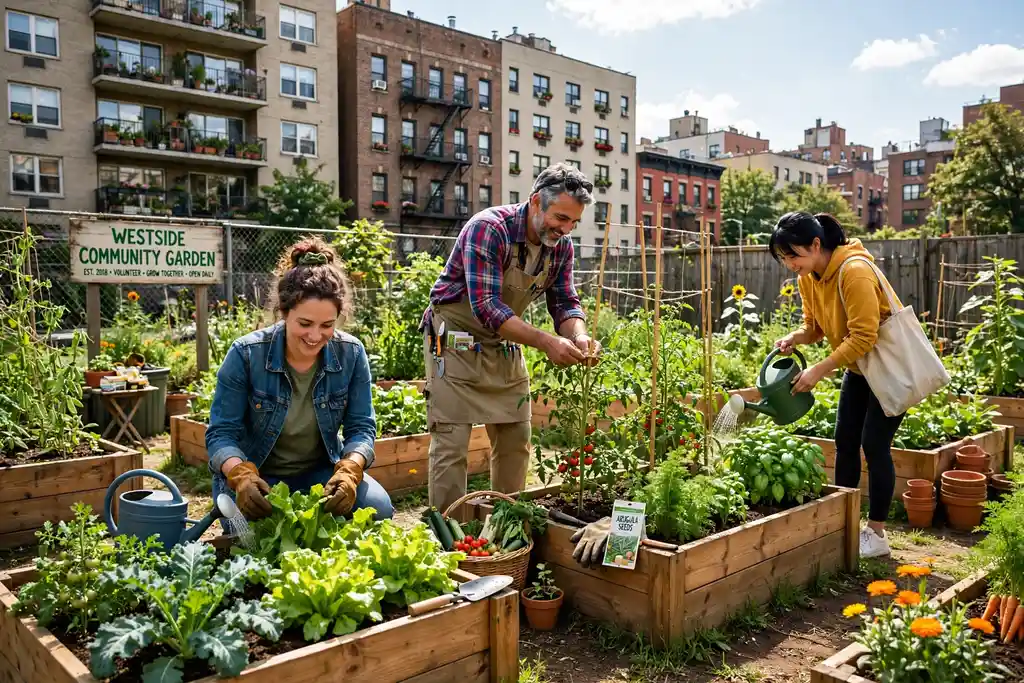
Join a community garden and take a shared or single plot if your home has no outdoor space at all. Community plots give room for vegetables, fruit, and flowers, plus shared tools, water, and advice from nearby growers. Ask about plot size, fees, rules, and waiting lists before joining, since popular gardens fill fast.
Grow crops you eat often, and visit at least once a week in the growing season for watering and picking. Share the work fairly if the plot is shared, and label your rows so everyone knows what is planted where. A community plot also suits crops that need more room, such as squash and beans, which rarely fit a balcony pot.
10. Rooftop Container Garden
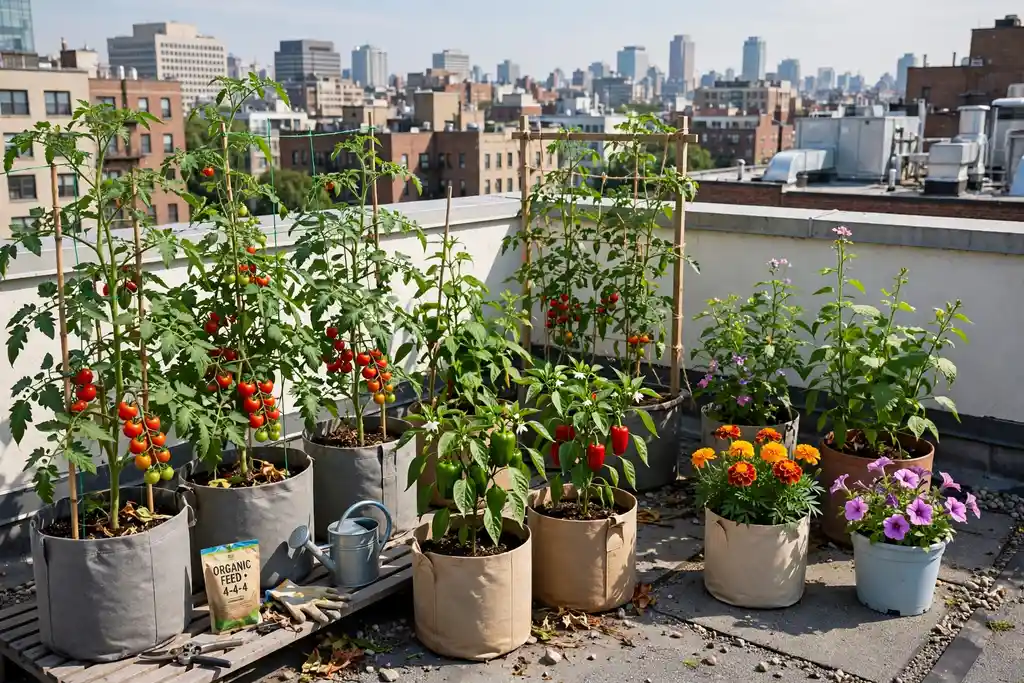
Grow in lightweight containers on a roof terrace, where sun is often stronger and more even than at street level. Rooftop containers suit vegetables, herbs, and flowers, but wind, weight, and drainage need care. Use light pots, a free draining mix, and plants that cope with wind, and keep heavy items near load bearing walls where possible.
Check building rules and weight limits before placing any container on a roof, and never block drains, access routes, or fire escapes. For roof planting, shade, and seating ideas that pair with containers, see these rooftop garden ideas. Water roof pots often, since sun and wind dry them fast, and add a wind screen on the windward side if plants keep getting battered.
11. Microgreen Trays Indoors
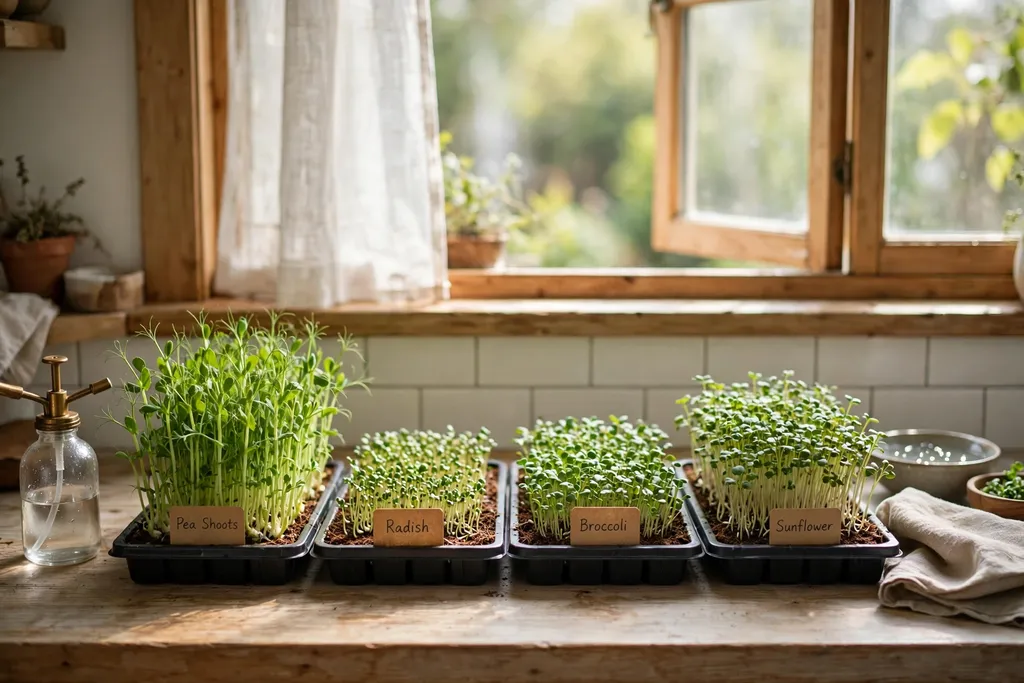
Grow microgreens in shallow trays on a kitchen counter for fast harvests in very little space. Radish, pea shoots, broccoli, and mustard microgreens are ready in one to three weeks, and they need only a sunny windowsill or a small grow light. Sow seed evenly on damp growing mix, cover until sprouts appear, then give light and water daily.
Harvest with clean scissors just above the soil line, and wash greens gently before eating. Start a new tray each week for a steady supply, and compost the used mix or reuse it for non edible plants. Microgreens suit small kitchens well, since a tray takes less room than a single large pot.
12. Fabric Pocket Planter Wall
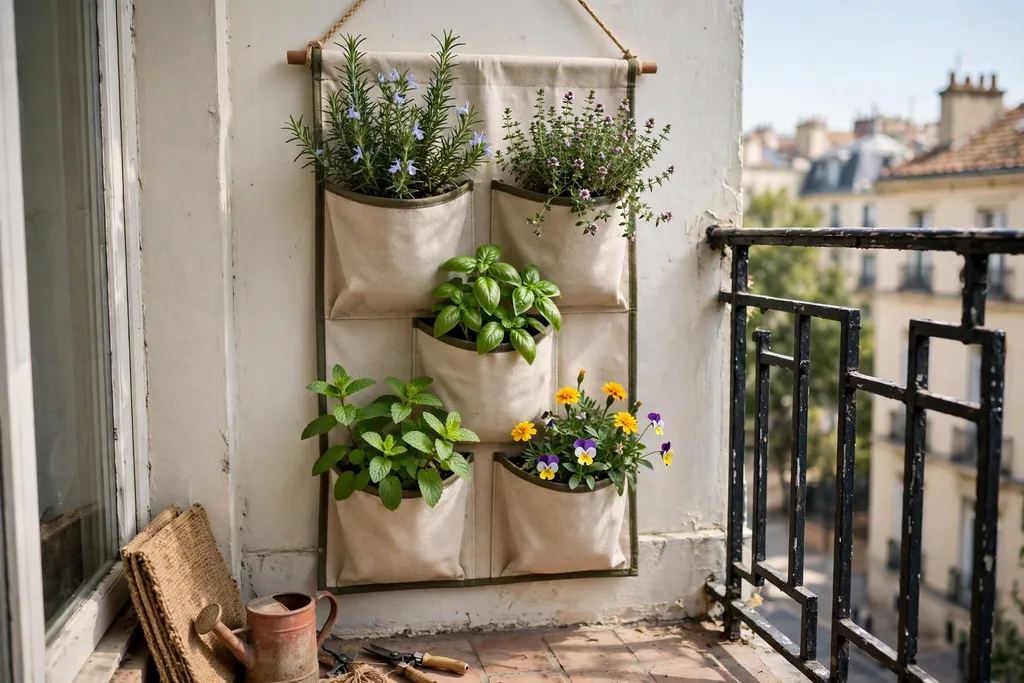
Hang a fabric pocket planter on a wall or fence and plant each pocket with herbs, strawberries, or small flowers. Pocket planters suit narrow balconies and rented walls, since they hang from hooks and leave the floor free. Fill each pocket with potting mix, plant one or two plants per pocket, and water slowly from the top.
Check that the wall can hold the weight of wet pockets, and use a drip tray or a waterproof backing if the wall must stay dry. Smaller pockets dry out fast, so water often in summer and group thirsty plants together. In winter, empty tender plants from the pockets and store the planter dry to keep the fabric in good shape.
13. Rolling Planter Cart
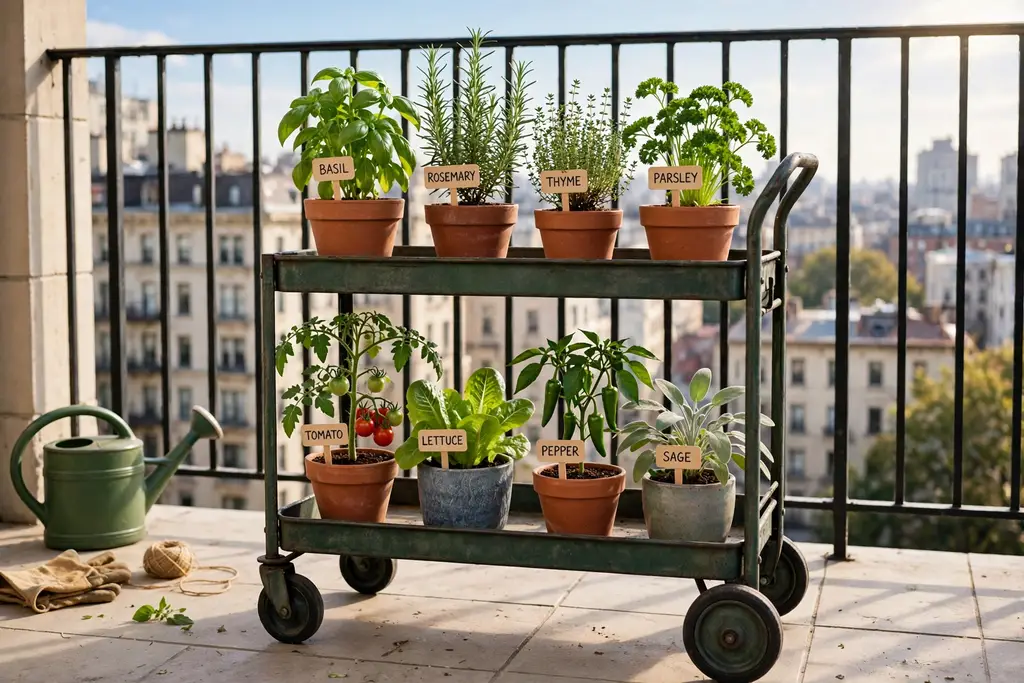
Put pots on a rolling cart with wheels so you can chase the sun across a balcony or move plants under cover before a storm. A rolling cart suits balconies where sun moves during the day, and it makes watering and cleaning easier, since the whole group moves at once. Choose a cart with locking wheels, and lock them once the cart is in place.
Group plants with similar water needs on one cart, so watering stays simple. Keep the cart balanced, with heavier pots low, and check that wheels roll over thresholds without tipping. In winter, roll tender plants indoors or to a sheltered corner, and bring the cart back out when frost risk passes.
14. Dwarf Fruit Tree in a Pot
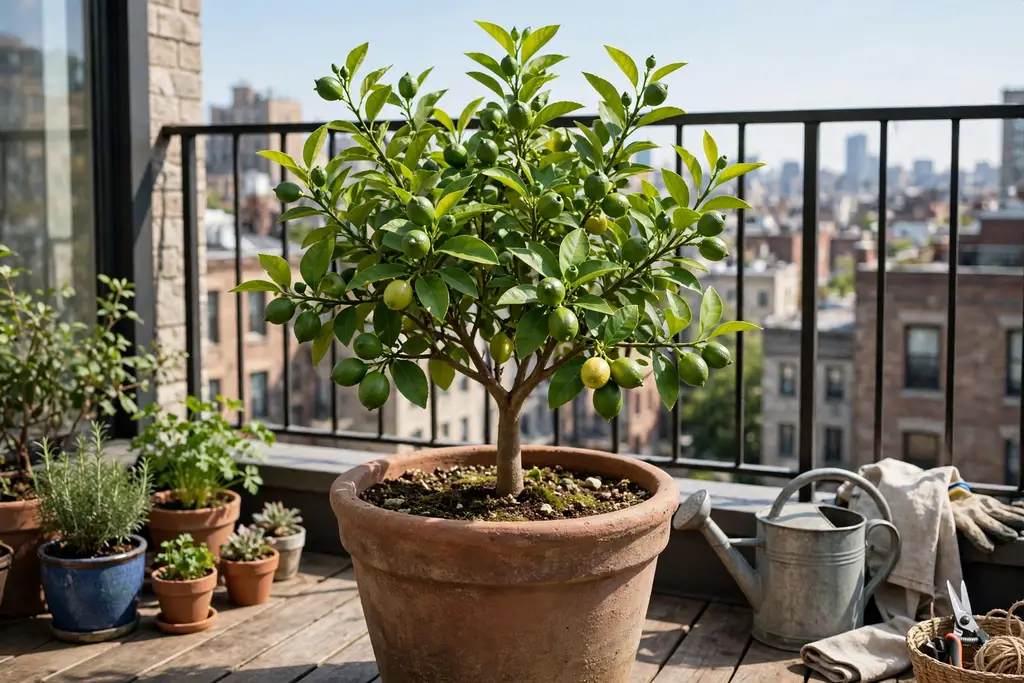
Grow a dwarf fruit tree, such as a lemon, fig, or apple on dwarf rootstock, in a large pot on a balcony or patio. Dwarf trees stay small enough for containers, and they give fruit, flowers, and structure in one plant. Choose a pot at least as wide as the tree label advises, with drainage holes, and use a free draining mix.
Water deeply but less often than small pots, and feed in the growing season as the tree type requires. Prune lightly each year to keep the shape compact, and move the pot to a sheltered spot in hard frost if the variety needs it. Check the mature size on the label before buying, since even dwarf trees need room to grow.
15. Balcony Worm Bin
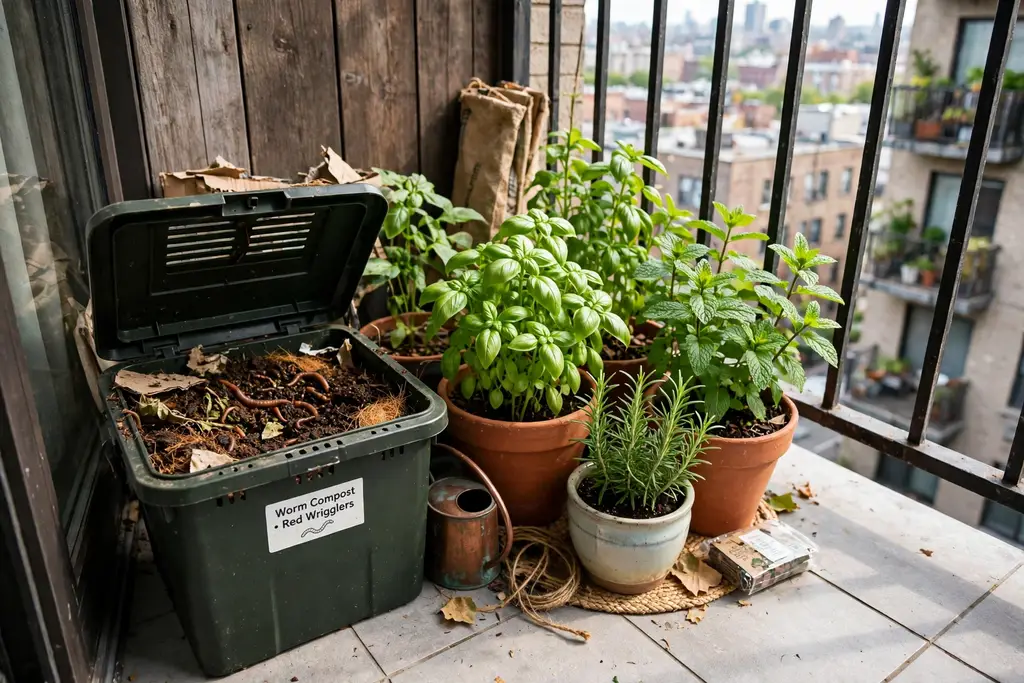
Keep a small worm bin on a balcony to turn kitchen scraps into rich compost for your pots. A worm bin suits city homes with no garden compost heap, and it gives a steady supply of worm castings that feed container plants. Feed the worms vegetable scraps, torn paper, and eggshells, and avoid meat, dairy, and oily food.
Keep the bin in shade, since worms dislike heat, and keep the contents damp like a wrung out sponge. Harvest castings a few times a year, and mix a small amount into potting mix rather than using it straight. If the bin smells, add dry paper and cut back on feeding until the balance returns.
16. Climbing Trellis Screen
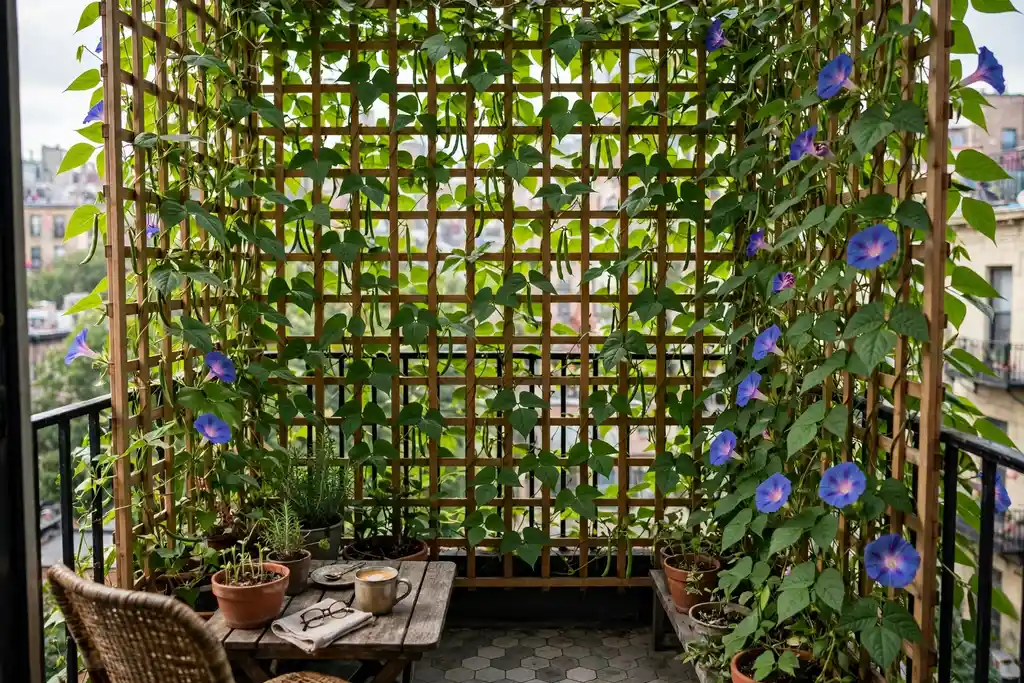
Train climbing beans, peas, or morning glory up a trellis screen to grow food and flowers vertically while adding privacy. A trellis screen suits a balcony edge where neighbors can see in, and it shades a sunny seating spot in summer. Fix the trellis firmly, since a planted screen catches wind, and tie stems loosely as they grow.
Plant annual climbers each spring for a fresh screen, or use a perennial climber where winters allow it. Water the base well, since climbers in pots dry out fast, and feed through the season for steady growth. Keep the trellis clear of drains and access routes, and prune back growth that blocks light to lower plants.
17. Window Box with Herbs and Flowers
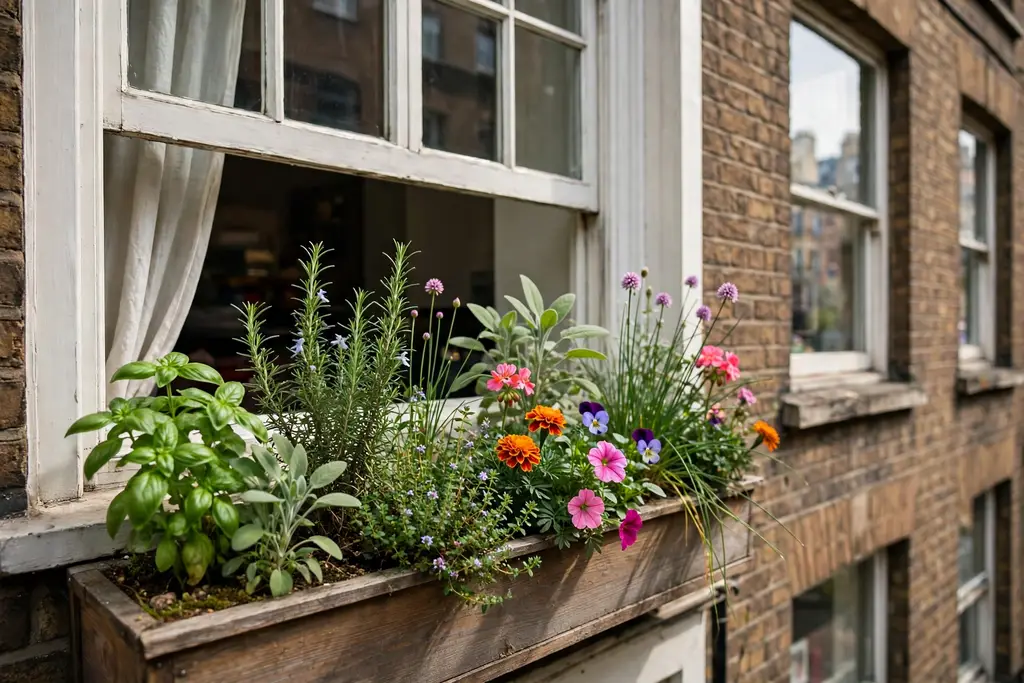
Fix a window box outside a window to grow herbs and flowers in a spot that needs no floor space at all. Window boxes suit kitchens and bedrooms, where herbs are close to hand and flowers can be seen from inside. Use a box with drainage holes, secure brackets rated for the full wet weight, and check building rules before fixing anything outside.
Mix herbs such as parsley and chives with trailing flowers for color and use in one box. Water window boxes often, since they are shallow and exposed, and deadhead flowers to keep them blooming. In winter, swap tender plants for hardy herbs or evergreen foliage so the box still looks cared for.
18. Countertop Hydroponic Garden
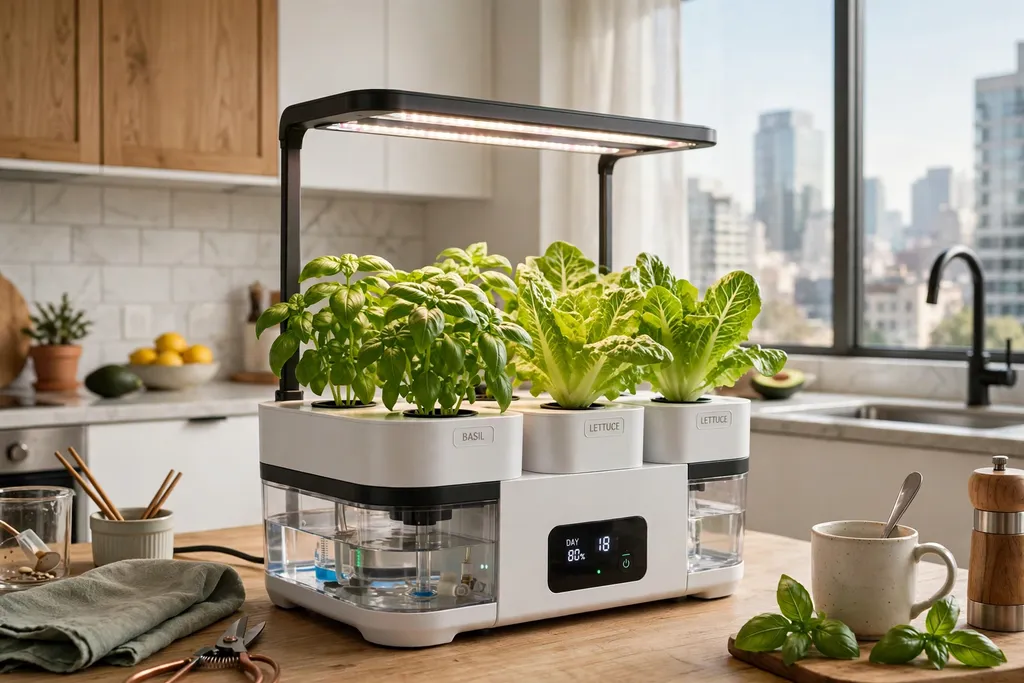
Grow lettuce, basil, and strawberries in a small countertop hydroponic unit that feeds plants with nutrient water instead of soil. A hydroponic unit suits flats with no outdoor space, since it needs only a counter, power, and water. Follow the unit instructions for nutrient strength, water level, and light hours, and change the water as advised.
Start with leafy crops, which grow fast and forgive small mistakes. Keep the unit clean between crops, since algae can build up in standing water, and check roots for rot if growth slows. A hydroponic unit also suits winter growing, when outdoor pots slow down and fresh leaves are harder to come by.
19. Repurposed Crate Garden
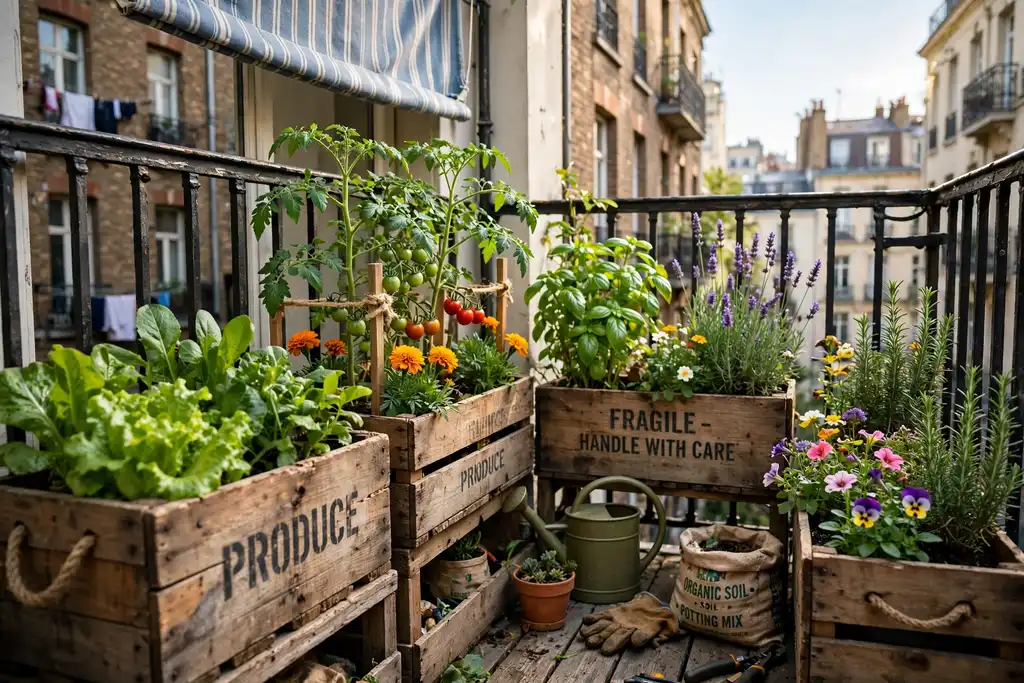
Turn sturdy wooden crates into planters for vegetables and flowers, lining each crate and drilling drainage holes before filling it. Crate gardens suit small budgets and small balconies, since crates stack, move, and fit awkward corners. Line the inside with landscape fabric to hold soil while letting water drain.
Raise crates on feet or bricks so air flows beneath them and the wood dries between waterings. Plant shallow rooted crops such as salad leaves, radishes, and herbs in single crates, and stack crates in steps for taller plants. Replace or repair crates when the wood softens, since a rotten crate can spill soil onto the balcony.
20. Shared Courtyard Raised Bed
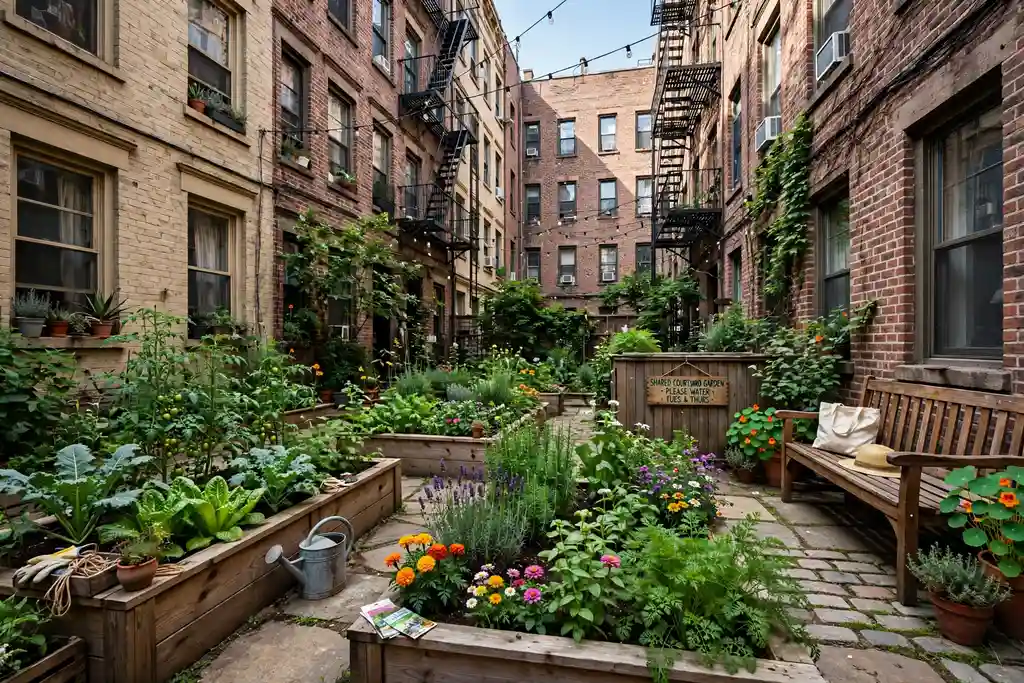
Share a raised bed in a building courtyard with neighbors, so everyone gets growing room without owning a garden. A shared bed suits herbs, salads, and flowers that many people use, and it spreads the work of watering and weeding across the group. Agree who plants what, who waters on which days, and how the harvest is shared before planting.
Build the bed with good drainage and a path beside it wide enough to work from. Keep one section for each household if sharing gets complicated, and label crops so no one picks the wrong plant. A courtyard bed also gives a reason to meet neighbors, which often keeps the bed watered even when one household is away.
21. Pollinator Pot Cluster
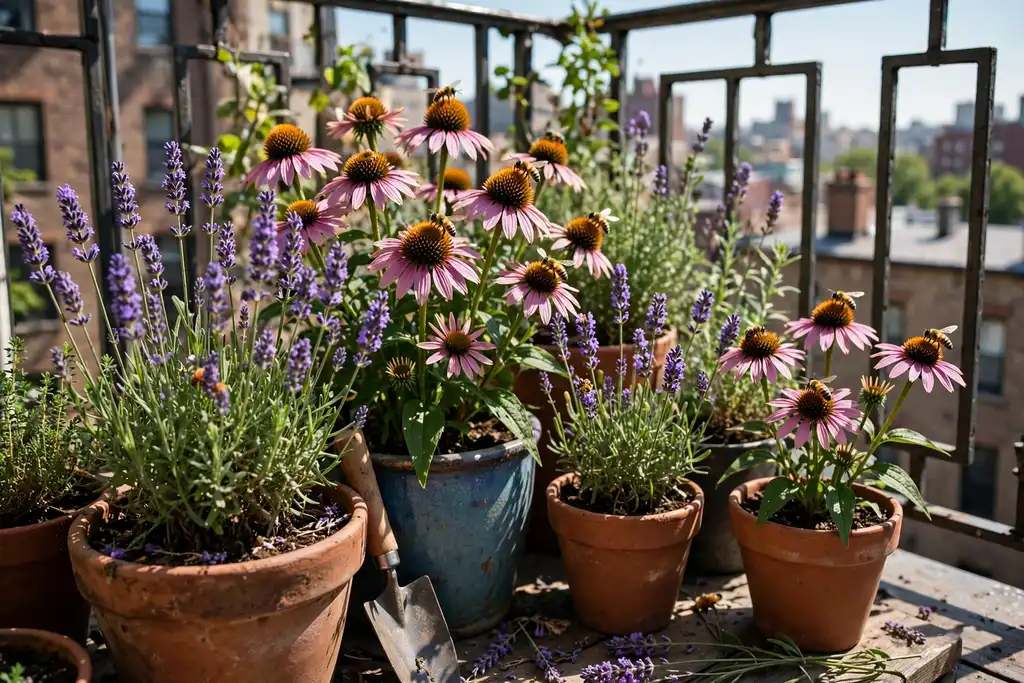
Group pots of pollinator friendly flowers, such as lavender, coneflowers, and single open blooms, into a cluster on a balcony or doorstep. Pollinators visit city balconies when flowers are grouped in drifts, not scattered as singles, so plant three or five of each type together. Choose plants that flower in different months, so food is available from spring to autumn.
Avoid spraying open blooms, and leave some seed heads standing in autumn for birds. Place the cluster where bees can reach it without crossing a busy seating area, and keep a shallow dish of water with pebbles nearby in hot weather. A pollinator cluster also adds color and scent near seating, which makes a small outdoor space feel alive in summer.
22. Cold Frame Mini Greenhouse
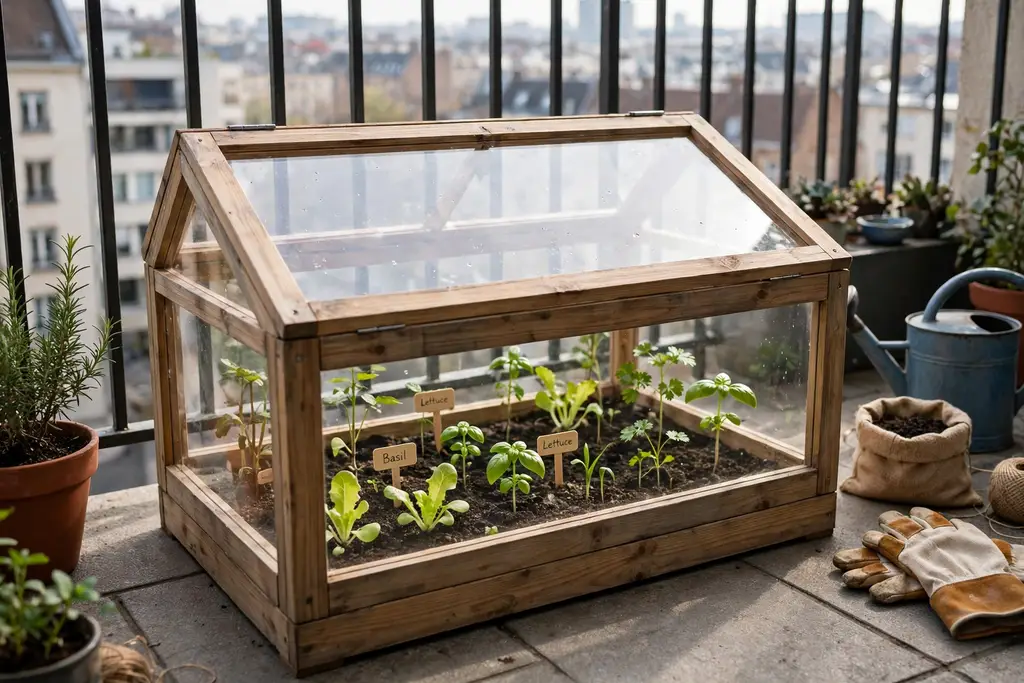
Place a small cold frame with a clear lid on a balcony to protect young plants and stretch the growing season. A cold frame warms soil in spring, shelters seedlings from wind, and keeps salads growing later into autumn. Open the lid on warm days for air, and close it at night or before frost to hold warmth inside.
Start seeds in the cold frame a few weeks earlier than outdoors, and harden plants off by opening the lid longer each day before moving them out. Water sparingly, since a closed lid holds moisture, and check for overheating on sunny days. A folding cold frame can pack away in summer, which suits balconies with no storage room.
Conclusion
A small city space can hold a real garden when each spot is used for what it suits best. Rails and walls carry herbs and flowers, shelves and carts add room without new floor space, and shared plots and courtyards give room for bigger crops. Start with one container in your sunniest spot, learn how fast it dries out, and add the next idea only when the first one is thriving. For level and structure ideas that pair with stepped containers and small outdoor areas, see these tiered garden ideas. Save the solutions that fit your light, your lease, and your routine, and let the garden grow one pot at a time.
FAQs
What is the easiest urban gardening solution for a beginner?
A windowsill herb garden is the easiest place to start. It needs only a sunny window, small pots with drainage, and herbs such as basil, mint, and parsley that you use often. Water when the top inch of soil feels dry, pick little and often, and move the pots to the brightest window in winter.
Can I grow vegetables on a small balcony?
Yes, if you choose compact crops and match them to your sun. Salad leaves, herbs, radishes, dwarf tomatoes, and climbing beans all grow well in pots. Use containers at least as deep as the crop label advises, water often in hot weather, and feed through the season, since pot soil runs out of nutrients faster than garden soil.
How do I water container plants when I am away?
Self watering containers, a reservoir system, or a simple drip setup help most, since pots dry out fast in sun and wind. Move pots into shade before you leave, mulch the surface, and ask a neighbor to check thirsty plants in a heatwave. Grouping pots together also slows drying, since the group shades its own soil.
What grows well in shade on a city balcony?
Leafy greens such as lettuce, spinach, and chard cope with partial shade, as do herbs such as mint, parsley, and chives. Ferns, hostas in pots, and shade tolerant flowers such as impatiens and begonias also do well out of direct sun. Avoid fruiting crops in deep shade, since they need strong sun to ripen.
Do I need permission to garden on a balcony or roof?
Often, yes, so check first. Building rules may cover weight limits, fixing things to rails and walls, water drainage onto neighbors, and roof access. Ask the building manager or landlord before drilling, hanging heavy planters, or placing containers on a roof, and keep drains, fire escapes, and access routes clear at all times.
How do I keep a small urban garden low cost?
Start with what you already have: reuse crates and tubs with drainage holes added, swap cuttings and seeds with neighbors, and grow from seed rather than buying large plants. A community plot or shared courtyard bed spreads costs further, and compost from a small worm bin feeds pots without buying bags of feed every season.