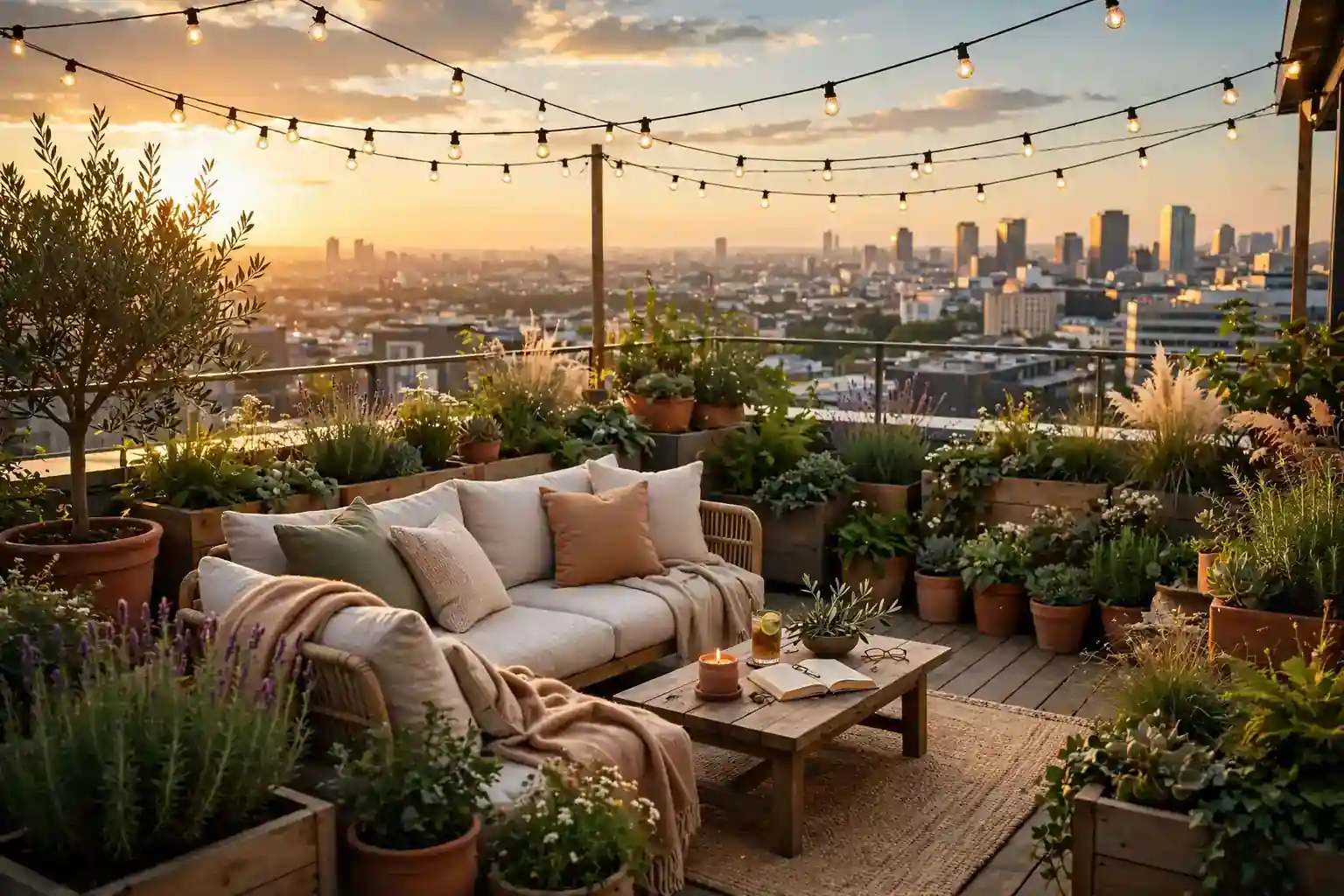
A rooftop can feel like wasted space when it is only bare paving, a railing, and a view. With the right planting, a seat that invites you to stay, and shade for hot afternoons, that same roof can become the room you use most in warm weather. These 22 rooftop garden ideas cover planters, edible beds, privacy screens, dining spots, lighting, and storage, all chosen with roof realities in mind: wind, strong sun, drainage, and weight. Start with access, water, and one comfortable seat, then add planting around it. For ground level lessons on working with levels and structure, the ideas in these tiered garden ideas show how to give each level a clear job.
Key Takeaways
- Check the roof first: weight limits, drainage, access, wind, and building rules shape every choice before you buy a planter.
- Use light containers, free draining soil mix, and plants that cope with wind and sun, and keep heavy items near load bearing walls where possible.
- Give the roof zones: one for sitting, one for growing, and one for storage, so it feels like a garden, not a storage deck.
- Add shade, a wind screen, and warm light early, since comfort decides whether you actually use the roof.
- Keep paths clear, pots off drains, and a watering can or hose point within easy reach.
- Choose a mix of evergreen structure and seasonal color, so the roof looks cared for in every season.
1. Raised Beds Along the Parapet
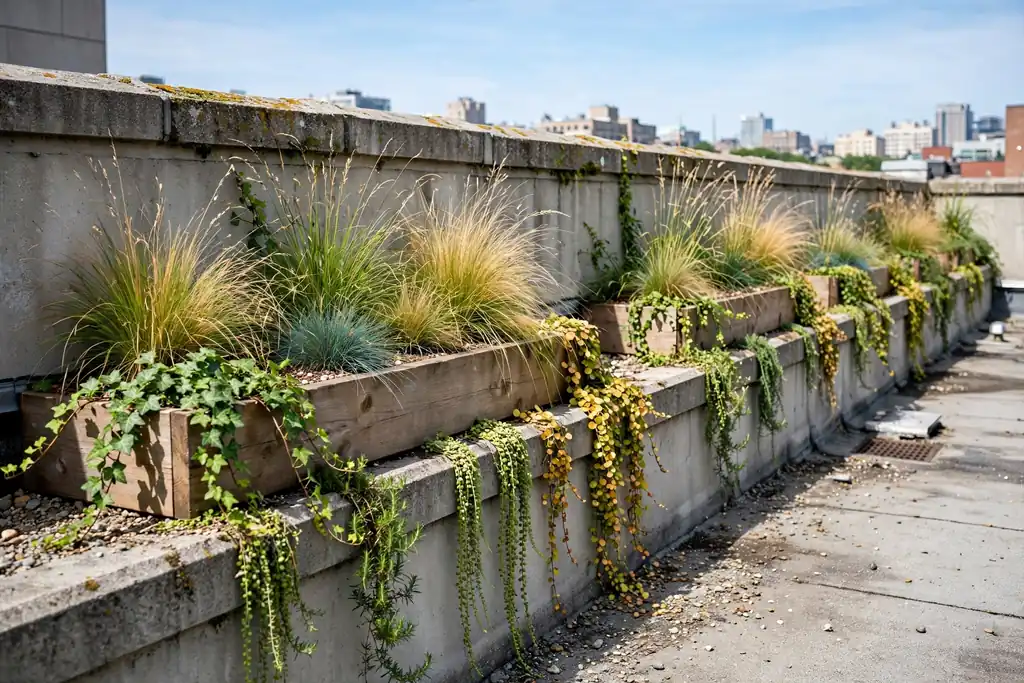
Run low raised beds along the parapet wall to give the roof a planted edge and a clear border. Low beds keep the planting below the railing line, so the view stays open while the edge still reads as a garden. Choose beds made for roof use, with a light frame and good drainage holes, and fill them with a light, free draining mix rather than heavy garden soil.
Plant wind tolerant shrubs, grasses, and trailing plants at the front, and keep taller plants toward corners where wind is less direct. Leave a gap behind each bed so you can reach the wall and keep drains clear. Water slowly, since roof beds dry out fast in sun and wind, and mulch the surface to hold moisture between waterings.
2. Clusters of Lightweight Pots
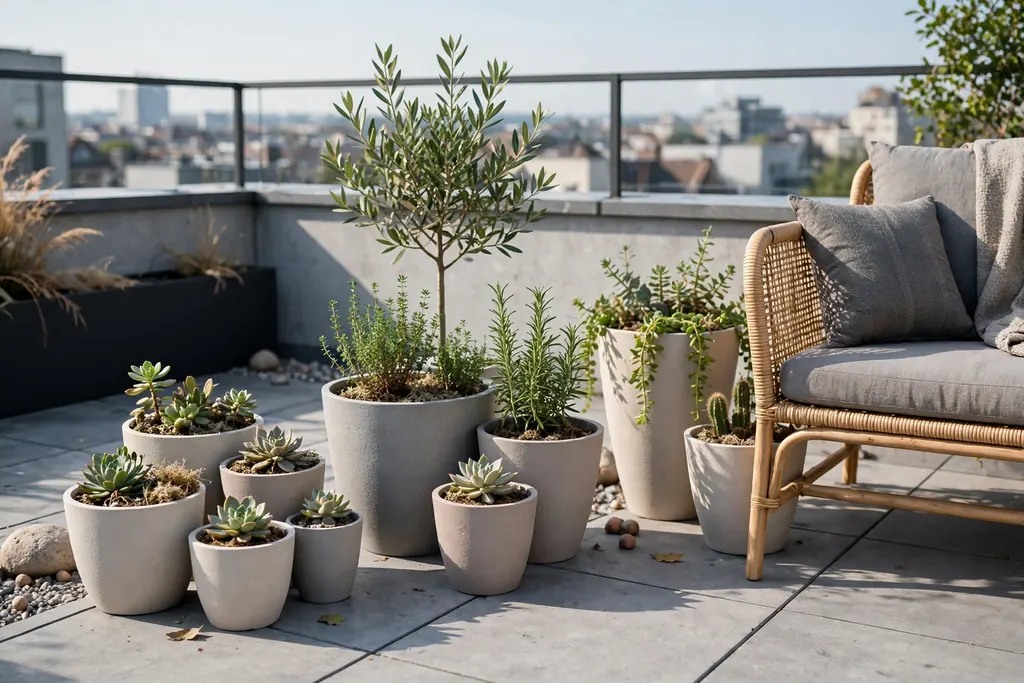
Group lightweight pots in clusters of three or five near seats, steps, and doorways to make planting feel deliberate instead of scattered. Pots suit rented roofs and shared roofs, since you can move them, change them with the seasons, and take them with you. Use fiberglass, resin, or light metal pots, and raise them on feet so water drains freely and does not stain the roof surface.
Mix one tall plant, one mid height plant, and one trailing plant in each cluster for a full look. Check the weight of a watered pot before you place a group, and spread heavy pots across the roof rather than loading one corner. Keep a saucer or tray under pots on paved roofs only if it does not block drainage.
3. Living Wall Panels on a Sheltered Wall
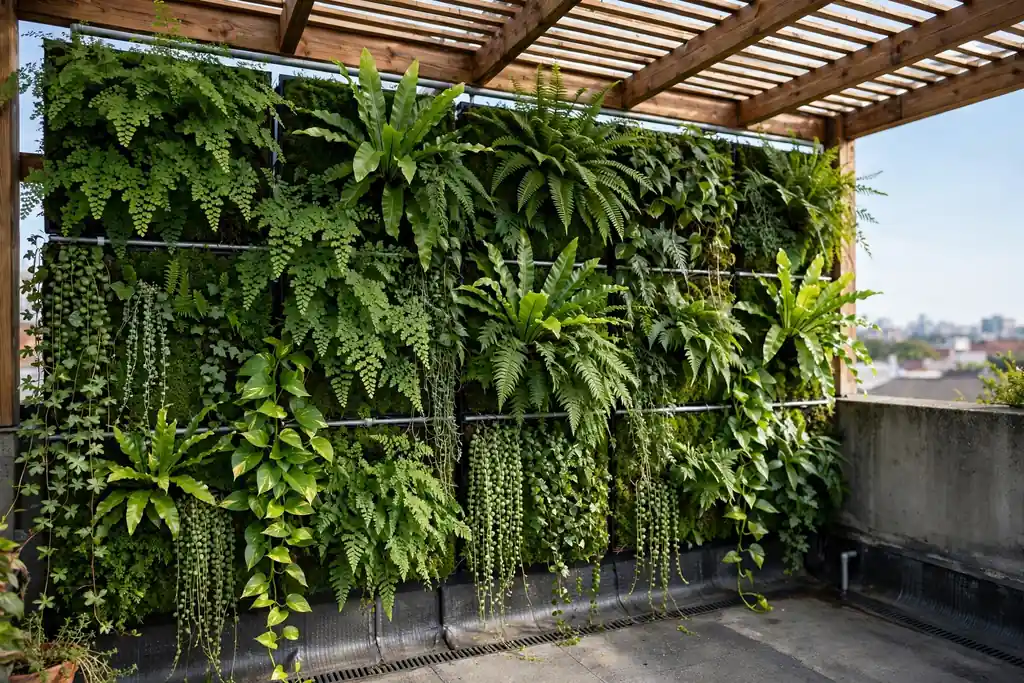
Fix living wall panels to a sheltered wall or a sturdy frame to grow a green wall without using floor space. This suits small roofs where every square foot counts, and it gives a plain wall color, scent, and texture at eye level. Choose panels with individual pockets or trays, so you can replace one plant without disturbing the rest.
Plant ferns, trailing herbs, and small perennials that suit your light level, and water from the top so moisture reaches each pocket. Check the fixings and the weight of the panels when wet, since a planted wall is much heavier after watering. Keep panels away from vents and access hatches, and leave room to reach the plants for trimming.
4. Pergola with Climbing Plants
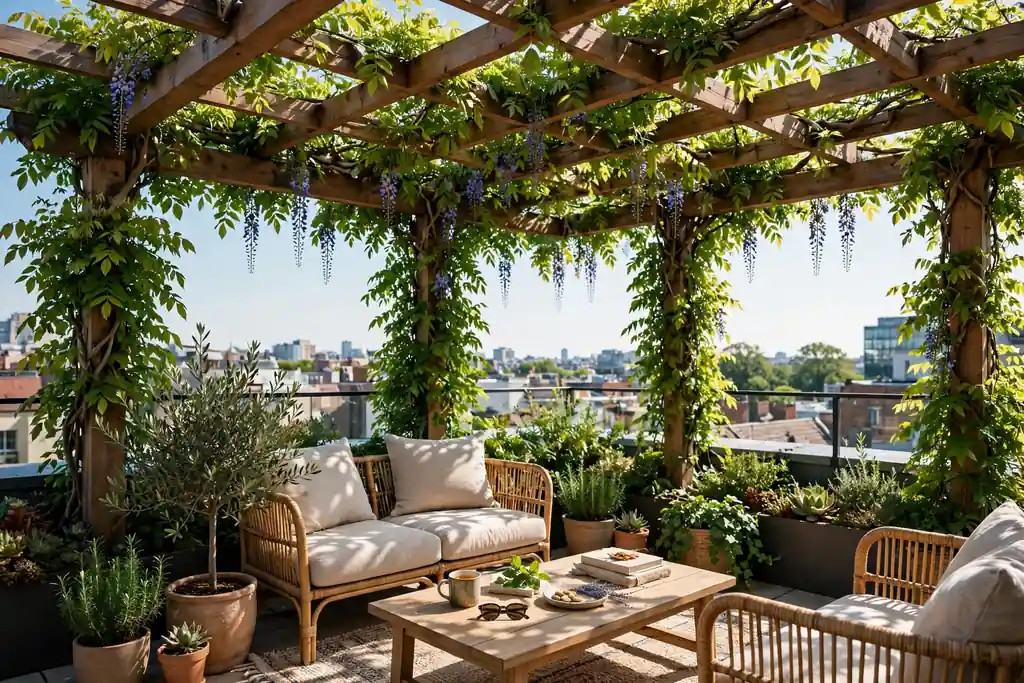
Build or place a pergola over the main seating area and train climbers such as jasmine, clematis, or grape vine over the top. A pergola gives dappled shade, a sense of enclosure, and a frame for string lights, without closing the roof in. On a roof, choose a light frame that is fixed or weighted to suit wind, and check building rules before you fix anything to the structure.
Train climbers along wires or a light trellis on top of the frame, and tie stems loosely as they grow. Prune after flowering as the plant type requires, and keep climbers clear of gutters and drains. A pergola also marks the sitting zone, which helps the rest of the roof feel organized around it.
5. Lounge Sofa Corner with Soft Cushions
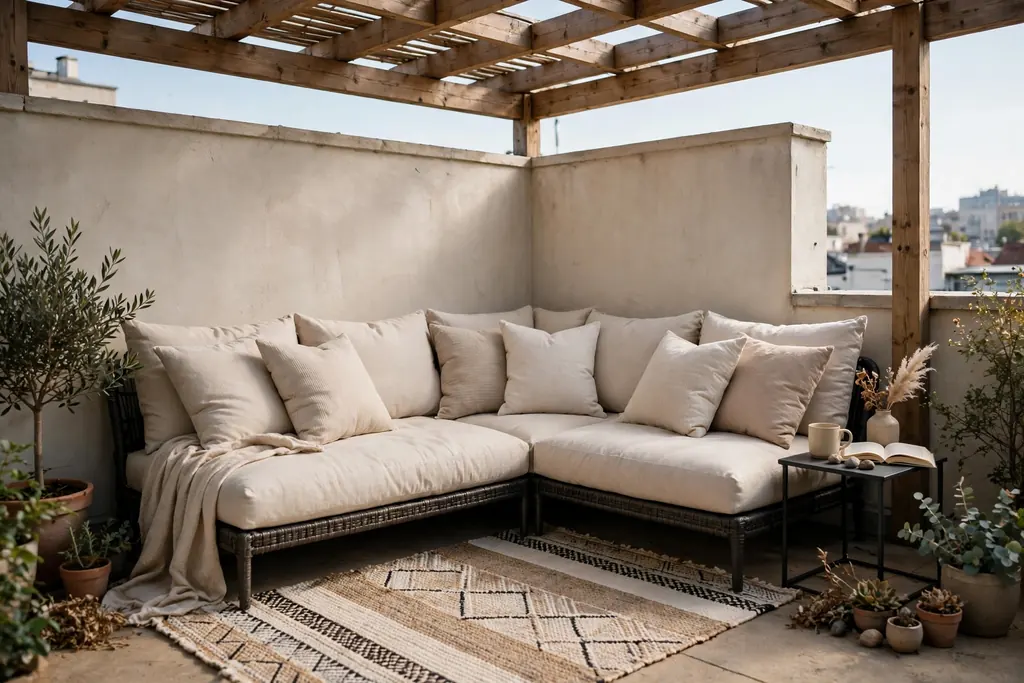
Set a low outdoor sofa in a sheltered corner, with deep cushions, a throw, and a small side table, to make the roof a place for long sits rather than quick visits. A corner layout uses dead space well and faces the view, which is often the best part of a roof garden. Choose weather resistant cushions with removable covers, and store them in a dry box when rain is forecast.
Add a rug under the sofa to soften paving and define the zone. For seating ideas that work outdoors as well as in, these garden bench ideas show how to choose a spot first and match the seat to it. Keep the sofa away from the roof edge and leave a clear path behind it for access.
6. Bistro Nook for Morning Coffee

Place a small bistro table and two chairs near the door or in a sunny morning spot for coffee, reading, and quiet starts to the day. A bistro set needs little space, folds away if needed, and still gives the roof a daily purpose. Choose a stable table that does not wobble on paving, and chairs that stack or fold for stormy days.
Add one pot of herbs or flowers beside the table so the nook feels planted, not bare. A light cushion on each chair makes a short sit last longer. Site the nook where morning sun reaches it but wind is broken by a wall or screen, and keep the route from the door clear so you can carry cups safely.
7. Hanging Chair in a Sheltered Spot
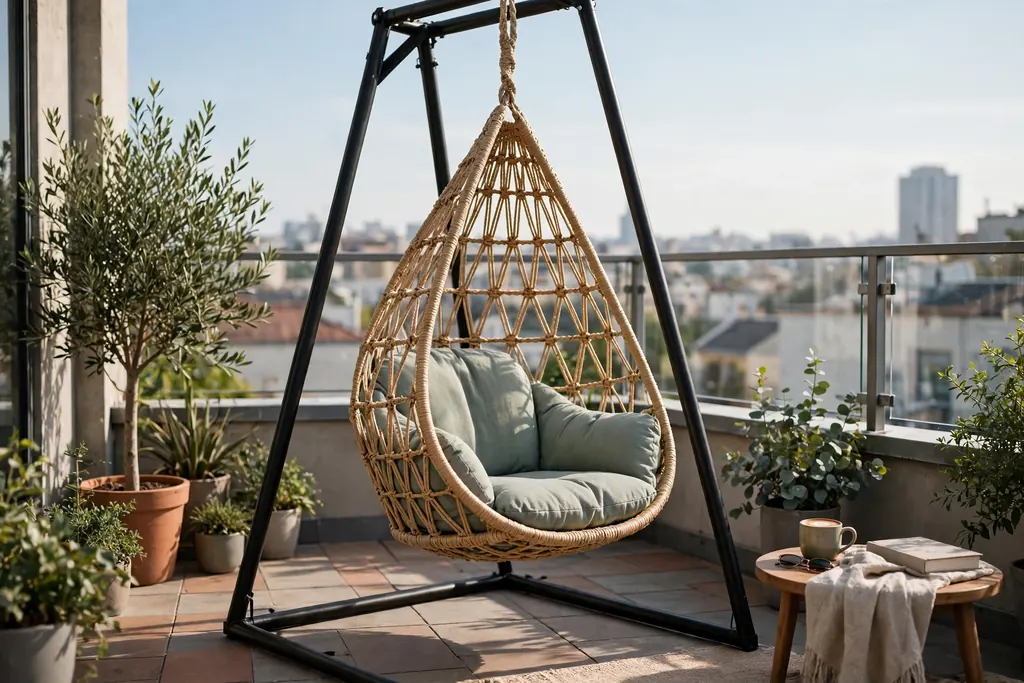
Hang a chair from a sturdy freestanding frame in a sheltered spot for a cozy reading seat that moves gently in the breeze. A hanging chair suits a roof because it takes little floor space and adds a soft, curved shape among straight planters and paving. Check the frame weight rating, set it on level ground, and keep a clear swing zone around it.
Add a cushion and a small blanket for cooler evenings, and a side stool for a book and a drink. Avoid hanging a chair from a pergola or railing unless that structure is rated for the load, since a roof frame is not always built for swinging weight. Bring cushions inside in wet weather to keep them fresh.
8. Dining Table for Rooftop Meals
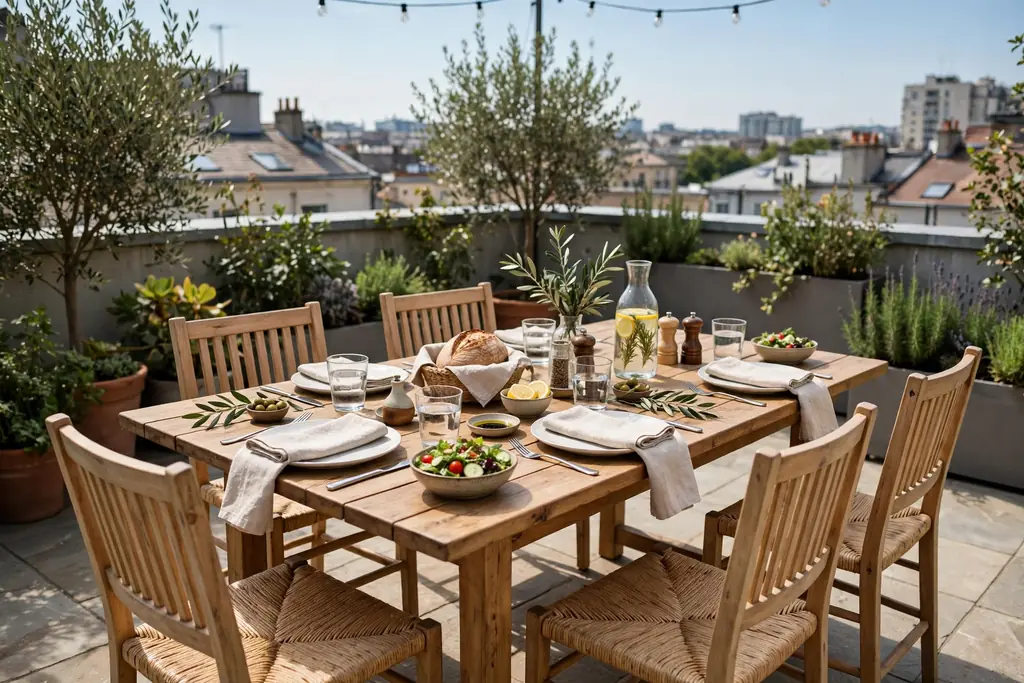
Set a dining table with four to six chairs in the flattest, least windy part of the roof for meals outside. Eating on a roof feels special, but it only works if plates stay put and chairs do not scrape on every gust. Choose a heavy enough table for wind, chairs that are easy to move, and a shade option for midday meals.
Keep the table near the door or the cooking area if you can, so carrying food is short and safe. A tablecloth weight or a bare wood top avoids flapping fabric in wind. Add a centerpiece pot that is low enough to see across, and clear the table after meals so wind does not turn loose items into clutter.
9. Fire Bowl Corner for Evenings
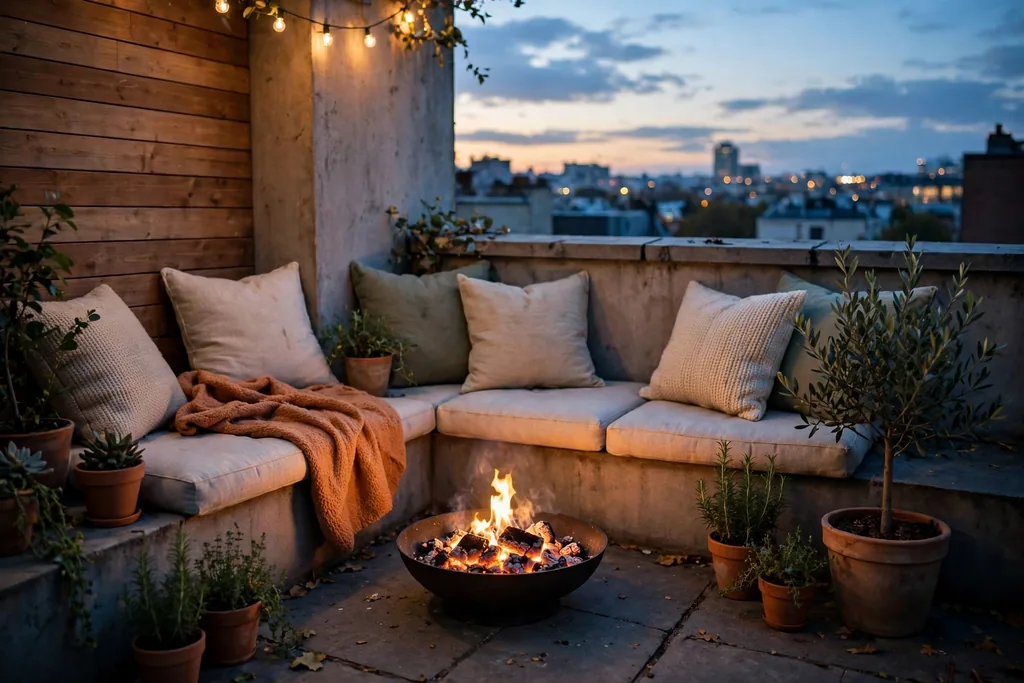
Place a small fire bowl or tabletop flame feature in a seating corner for warmth and glow on cool evenings, only where building rules and local rules allow it. A fire feature makes a roof usable later in the year, and it gives evening gatherings a focal point. Check rules first, keep the feature away from planters, cushions, and overhanging climbers, and keep water or a fire blanket nearby.
Use the feature only in calm weather, on a stable, heat resistant base, and never leave it lit unattended. If open flame is not allowed on your roof, a cluster of large lanterns with candles or battery lights gives a similar glow without the risk. Store fuel safely and away from the seating area.
10. String Lights and Solar Lanterns
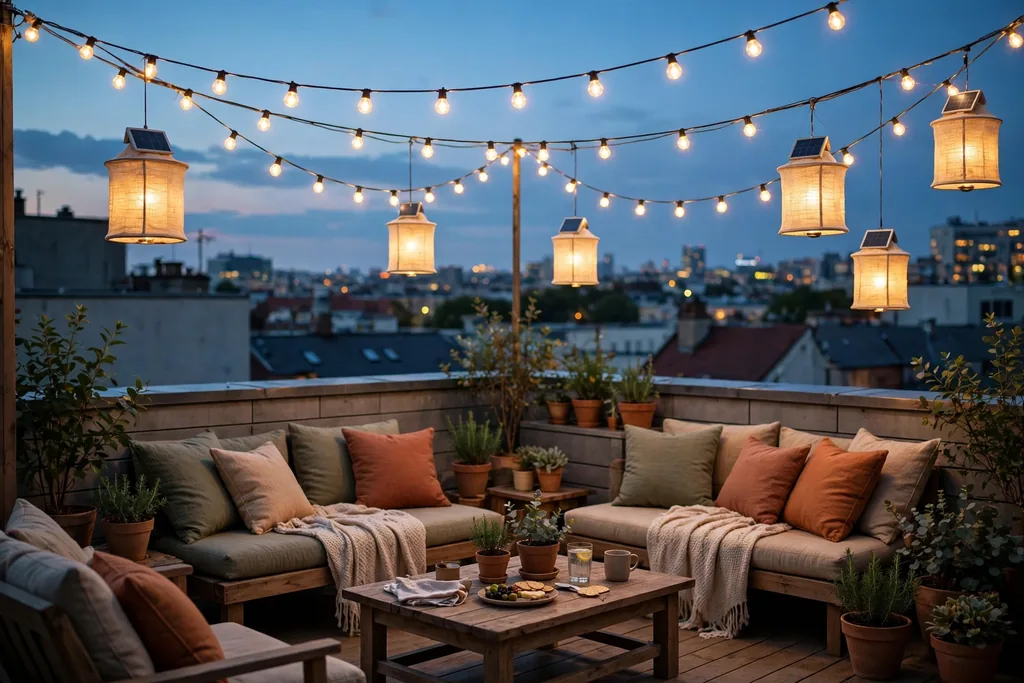
String warm white lights along a pergola, a railing, or a screen, and add solar lanterns along paths and near seats, to keep the roof usable after sunset. Light at roof level should be soft and low, so it feels cozy rather than harsh, and so it does not glare into neighboring windows. Solar lights suit roofs because they need no new wiring, but they need sun on their panels during the day.
Place lanterns where they mark steps and edges, and keep cables out of walkways. Bring battery lights inside in winter if the maker advises it. Test the light level at dusk before guests arrive, and add one brighter task light near a cooking or reading spot if needed.
11. Privacy Trellis Screens
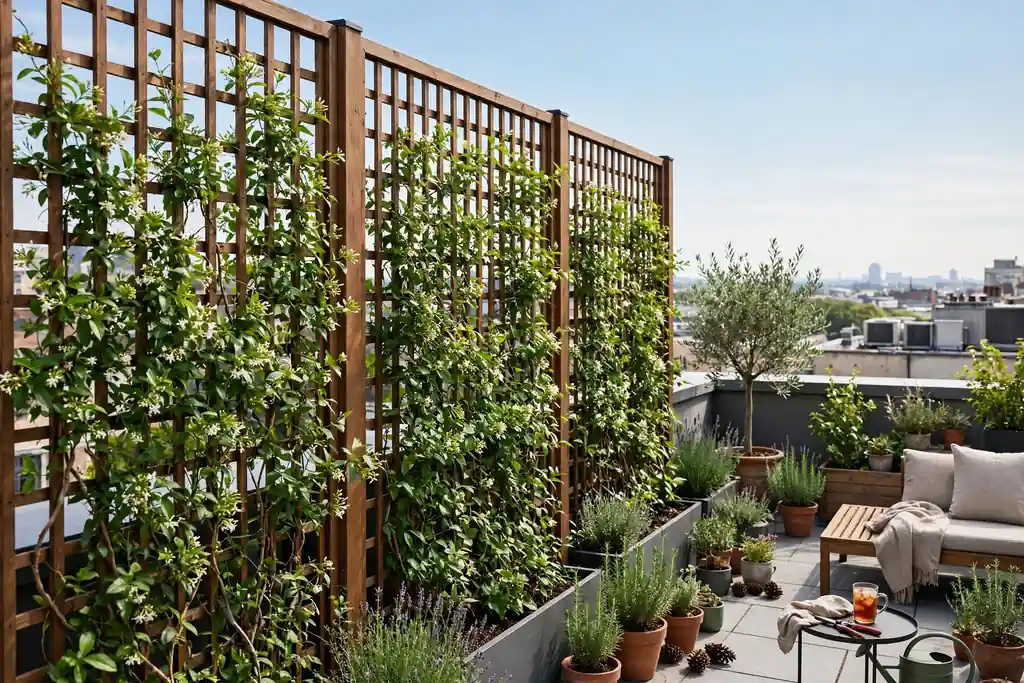
Stand trellis screens or slatted panels along one or two sides to cut wind and give privacy without building a solid wall. Screens suit city roofs where neighbors can see in, and they give climbers a place to grow. Choose panels that let some air through, since a solid screen catches more wind and puts more load on its fixings.
Fix screens firmly or weight their bases, and check that they do not block fire escapes, access hatches, or ventilation. Plant climbers at the base for a green screen in summer, and keep the panels clear of drains. A screen on the windward side often makes the whole roof feel calmer, even before plants cover it.
12. Herb Pots by the Cooking Spot
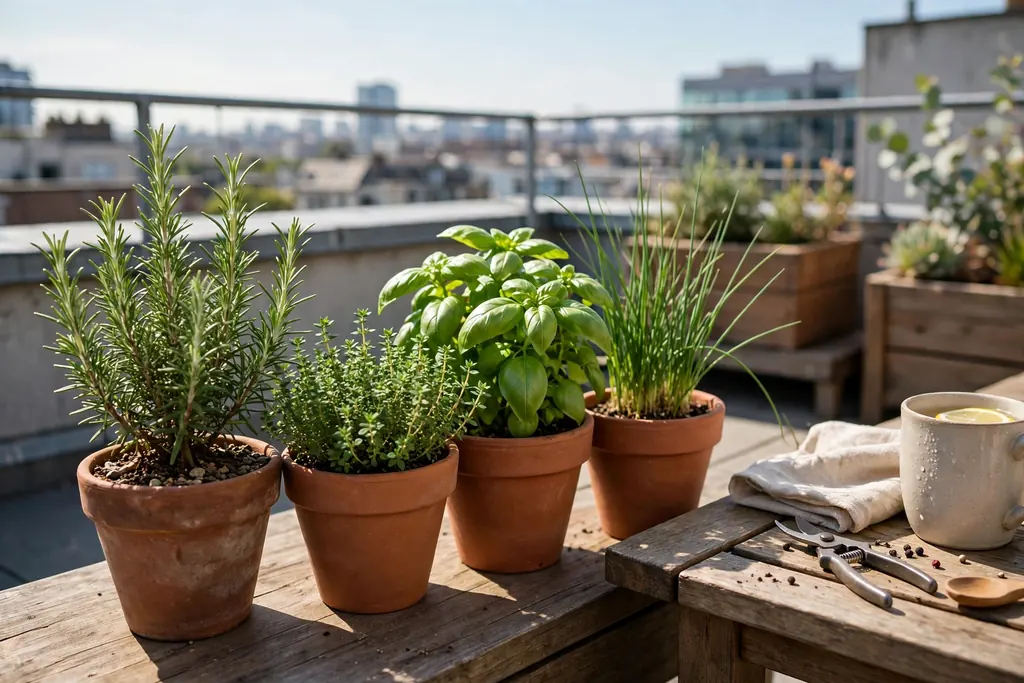
Group herb pots near the dining table or the door for fresh leaves within a few steps of cooking. Herbs such as rosemary, thyme, basil, mint, and chives grow well in pots, and they add scent as well as flavor. Grow mint in its own pot, since it spreads fast and can take over a shared planter.
Label herbs while they are young, water pots often in hot weather, and pick little and often to keep plants bushy. Keep the herb group on a tray or in a wooden crate so watering does not stain paving. In winter, move tender herbs to a sheltered corner or indoors, and replace annual herbs each spring.
13. Vegetable Beds for a Small Harvest

Grow vegetables in raised beds or deep containers on the sunniest part of the roof for salads, tomatoes, beans, and peppers in season. Roof vegetables need sun, water, and wind shelter, and they reward daily visits, since you will water, pick, and check plants often. Start with one or two beds, and grow crops you eat weekly rather than filling every bed at once.
Use a light soil mix, mulch to hold moisture, and water at the base in the morning or evening. Support tall crops with canes tied to a frame, and rotate crops between beds each year so the same family does not grow in the same soil season after season. Keep paths wide enough for a watering can and a harvest basket.
14. Pollinator Flower Border

Plant a flower border with coneflowers, salvias, lavender, and single open blooms to draw bees and butterflies to the roof. Pollinators visit roofs when flowers are grouped in drifts, not scattered as singles, so plant three or five of each type together. For color grouping ideas, these pink flower garden ideas show how drifts of one color read clearly from a distance.
Choose plants that flower in different months, so food is available from spring to autumn. Avoid spraying open blooms, and leave some seed heads standing in autumn for birds. A pollinator border also adds color and scent near seating, which makes the roof feel alive in summer.
15. Gravel Garden with Succulents and Grasses
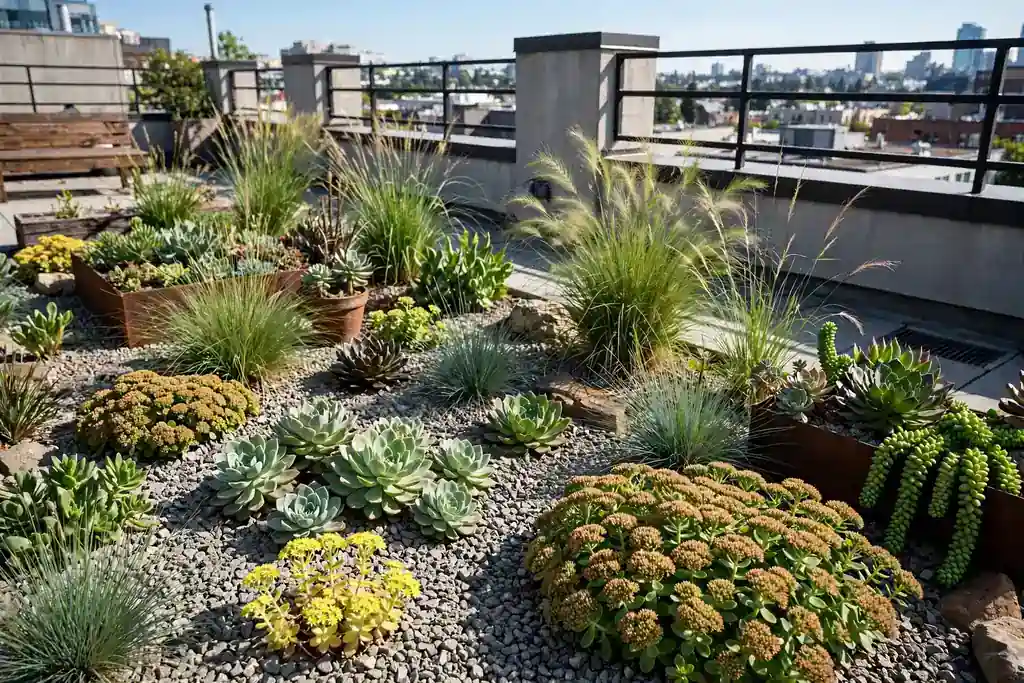
Lay a gravel garden in a shallow, light tray or a defined bed for succulents, sedums, and ornamental grasses that cope with sun, wind, and dry soil. Gravel suits roofs because it drains fast, stays light, and needs little watering once plants settle. Use a shallow layer of gravel over a free draining mix, and keep the planting low and open so the stones stay visible.
Choose succulents rated for your winter cold, since roof cold can be sharper than ground level cold. Top dress with gravel to keep plant crowns dry and suppress weeds. A gravel bed near a path gives a close view of small flowers and leaf shapes that would be lost in a large border.
16. Soft Turf Patch for Barefoot Sitting
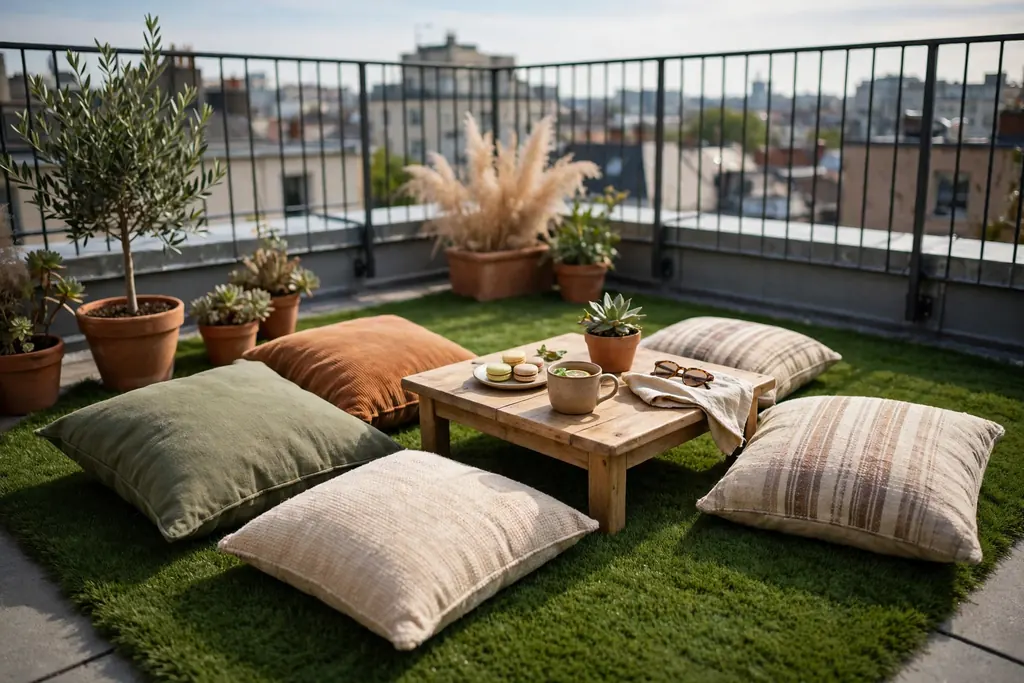
Lay a patch of artificial turf or a large outdoor rug on a flat, dry part of the roof for barefoot sitting, play, and picnics. A soft patch breaks up hard paving and gives children and pets a comfortable spot, without the watering and mowing of real grass on a roof. Choose a turf or rug made for outdoor use, with drainage holes or a breathable backing.
Keep the patch away from drains and door thresholds, and lift it now and then to clean beneath it. Add floor cushions and a low table on the patch for a casual lounge. If you use a rug, bring it inside during long wet spells so it dries fully and does not trap moisture on the roof surface.
17. Small Water Bowl or Fountain

Set a wide, shallow water bowl or a small solar fountain in a sheltered corner for sound, reflection, and birds. Moving water masks street noise, which makes a roof seating area feel more private, and a still bowl reflects sky and planting. Choose a light bowl, keep the water shallow, and place it where you can reach it for cleaning.
Refresh the water often, especially in hot weather, and keep the bowl clear of fallen leaves. If mosquitoes are a problem in your area, a small solar fountain that keeps water moving helps. Keep the feature away from seating cushions and electrical items, and empty it before frost if the bowl could crack.
18. Shade Sail Over the Seating Zone
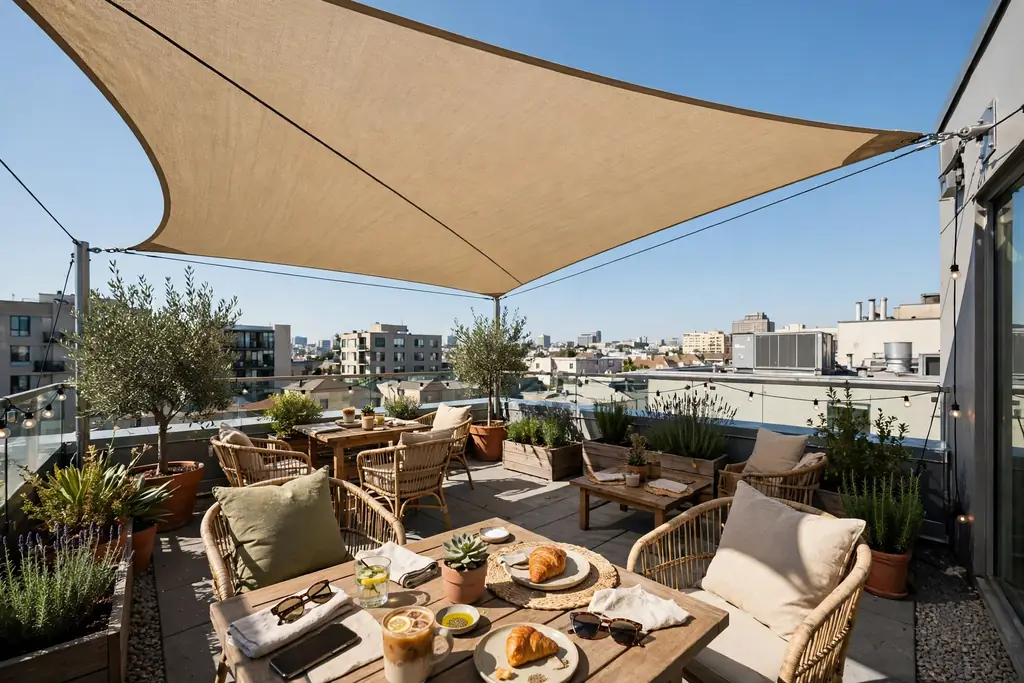
Stretch a shade sail over the seating zone for instant shade on hot roofs where a pergola would be too heavy or too fixed. A sail gives broad shade, moves with the breeze, and can be taken down in storms. Fix it to strong points rated for wind load, with a slight slope so rain runs off one side rather than pooling in the middle.
Choose a light, breathable fabric in a warm neutral, and test the shade pattern at midday before you fix the final points. Keep the sail clear of fire features and climbing plants that could snag it. A sail plus a screen on the windward side often makes a hot, exposed roof comfortable for most of the day.
19. Storage Bench That Hides Roof Gear
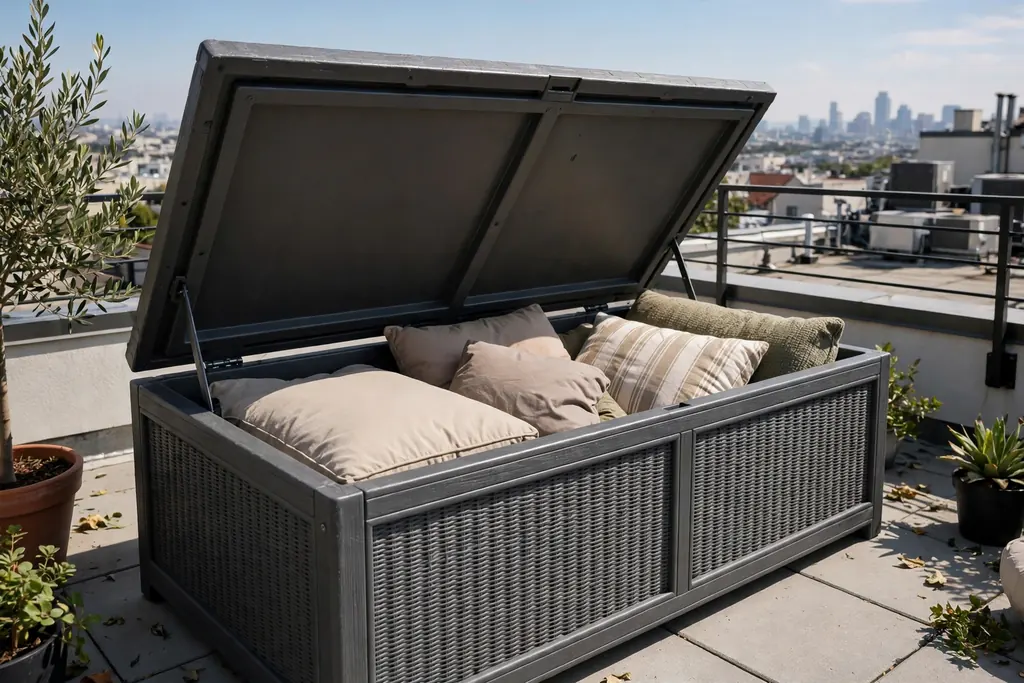
Use a weatherproof storage bench near the door to hide cushions, watering cans, tools, and small pots, while adding an extra seat. Roof gear gathers fast, and a bench keeps it dry and out of sight without taking a whole storage cupboard. Choose a bench made for outdoor use, with a lid that closes fully to keep rain out.
Keep heavy items at the bottom so the bench stays stable in wind, and leave clearance behind it so the lid opens fully. A storage bench beside the lounge corner means cushions are close at hand, so you are more likely to use the roof on a whim. Check the lid action before you rely on it, since a heavy lid with no stay can pinch fingers.
20. Outdoor Rug and Floor Cushion Lounge

Lay a large outdoor rug and add floor cushions, a low table, and a basket for throws to make a relaxed lounge that can change shape for guests. Floor seating suits roofs because it is light, flexible, and easy to pack away in a storm. Choose a washable rug and cushions with removable covers, and keep the setup on a dry, level patch.
Move the lounge to follow shade during the day, and stack cushions in the storage bench at night. Keep food and drinks on a low tray so cups do not tip on soft seating. This lounge pairs well with string lights in the evening, when low seating and warm light make a small roof feel like a room.
21. Vine Arch Over the Roof Entry

Place a light arch over the steps or doorway onto the roof and train a vine or climbing rose over it to mark the entry. An arch turns the arrival onto the roof into a moment, and it frames the view beyond. Choose a light metal or wood arch that is fixed or weighted for wind, and keep the path beneath it clear and wide enough to walk through comfortably.
Train climbers away from the walking line, so stems and thorns do not brush passers by, and prune after flowering as the plant type requires. A narrow arch fits a roof entry better than a wide one, since the arch already takes up visual space. Add one pot on each side to anchor the arch in planting.
22. Four Season Backbone with Seasonal Pots
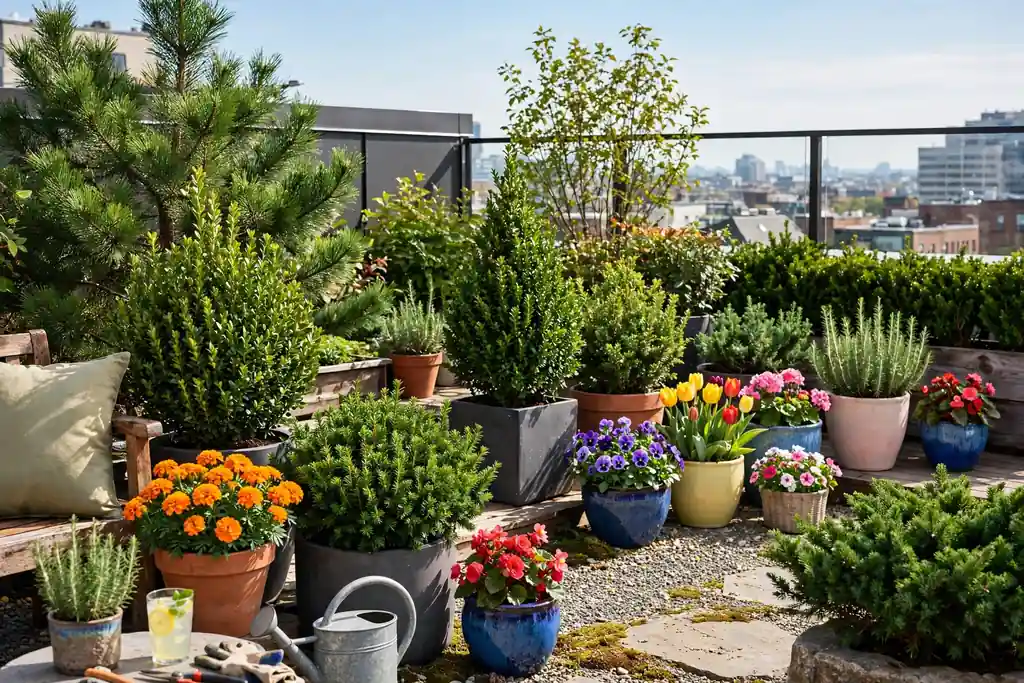
Build the roof around evergreen shrubs, grasses, and small trees for year round structure, then swap seasonal pots in and out for color. Evergreens keep the roof from looking bare in winter, while seasonal pots let you change the mood without replanting beds. Choose evergreens that cope with wind and pots, such as boxwood, small pines, and hardy grasses, and check their mature size before planting.
Refresh seasonal pots in spring with bulbs and annuals, in summer with flowering pots, and in autumn with grasses and late color. Keep one or two pots empty in reserve, so swaps are quick. This backbone plus seasonal change approach keeps a roof garden current without a full redesign each year.
Conclusion
A good rooftop garden starts with the roof itself, not the shopping list. Check weight, drainage, wind, and building rules, then choose one comfortable seat, one shade option, and planting that suits sun and wind. Add zones for sitting, growing, and storage, and keep paths, drains, and access clear. Pick one idea from this list, set it where you will actually sit, and add planting, light, and color only after that first seat feels right.
Save this list on Pinterest before your next garden trip, and work through it one area at a time: structure first, then planting, then the comfort details that make the roof yours.
FAQs
What plants grow best in a rooftop garden?
Wind tolerant, sun loving plants do best, such as grasses, lavender, sedums, succulents, rosemary, and hardy shrubs. Choose plants rated for your winter cold, since roofs can be colder and windier than ground level gardens. Group plants in drifts, water pots often, and use a light, free draining soil mix so roots do not sit wet after rain.
How do I check if my roof can hold a garden?
Check your building rules, lease, or management plan first, and ask a structural professional if you plan heavy planters, soil beds, water features, or a pergola. Keep heavy items near load bearing walls where possible, use light containers and soil mix, and spread weight across the roof. Never block drains, fire escapes, or access hatches with planters or furniture.
How often do rooftop plants need watering?
Rooftop pots often need watering daily in hot, windy weather, since wind and sun dry soil fast. Check soil with a finger before watering, water at the base in the morning or evening, and mulch the surface to hold moisture. Larger beds hold water longer than small pots, and self watering pots or a drip system can help if you are away for a few days.
How can I make a rooftop garden private without a solid wall?
Trellis screens, slatted panels, tall grasses, and climbers give privacy while letting air through, which matters in wind. A screen on the side neighbors see most often, plus planting at different heights, usually feels private without closing the roof in. Keep screens clear of fire escapes and vents, and fix them firmly for wind.
Is a rooftop vegetable garden worth the effort?
Yes, if you grow crops you eat often and you visit the roof daily. Salads, herbs, tomatoes, beans, and peppers suit sunny roofs, and pots or raised beds keep the work contained. Start with one or two beds, water little and often, and support tall crops. Daily picking and watering become part of the routine, which is why small roof harvests often succeed.
What is the easiest rooftop garden idea to start with?
Start with a cluster of lightweight pots, one comfortable seat, and a shade option. Pots can move, change with the seasons, and need no building work, while a seat and shade decide whether you use the roof at all. Once that setup works, add a screen, lights, or a raised bed one step at a time.