
Sunflowers do more than add height. They mark an entrance, screen a patio, feed bees and birds, and give you stems to cut through summer. These 24 sunflower garden ideas cover tall borders, small pots, vegetable beds, meadow patches, and seating corners, so there is a workable option for a large yard, a narrow side strip, or a rented patio. Start with the sunniest spot you have, since sunflowers need full sun to stand tall and flower well, then pick one structure, such as a border or a screen, and add pots or a cutting row around it.
Key Takeaways
- Give sunflowers full sun and room to grow: tall types need space and staking, while dwarf types suit pots and small beds.
- Mix heights on purpose, with tall sunflowers at the back, mid height flowers in the middle, and low plants at the front.
- Stagger sowing by two or three weeks for a longer run of blooms instead of one short peak.
- Leave some seed heads standing in autumn for birds, and save a few heads for seed if you want the same plants next year.
- Use pots, planters, and a single raised bed when ground space is limited or the garden is rented.
1. Plant a Tall Sunflower Border Along a Fence

A row of tall sunflowers along a fence is the simplest way to get height fast. Sow or plant in a single row about a foot from the fence, spacing plants according to the packet, and tie stems loosely to the fence or to stakes as they grow. The fence gives support in wind and a plain backdrop that shows the yellow heads clearly. Plant low flowers such as marigolds or nasturtiums in front so the bare lower stems are covered. In a windy garden, choose a sheltered fence run and water deeply rather than lightly, so roots grow down and hold the plants steady.
2. Mix Sunflowers Into a Cottage Border

Sunflowers sit naturally in a loose cottage border with zinnias, cosmos, and dahlias. Plant tall sunflowers toward the back, mid height zinnias and cosmos in the middle, and low edging plants at the front, and let the shapes overlap instead of lining everything up in strict rows. The mix gives color from early summer into autumn and keeps the bed looking full even before the sunflowers open. For color pairing ideas that work beside yellow, see these pink flower garden ideas, which show how a second strong color can sit beside a tall flower without crowding it.
3. Grow a Sunflower Arch Over a Garden Path

Two rows of sunflowers trained over a simple arch or a pair of posts with a crossbar make a sunny tunnel over a path. Plant one row on each side of the path, tie the main stems to the supports as they grow, and guide side shoots across the top rather than letting them sprawl. The arch needs a wide, level path underneath and a support strong enough to carry wet, heavy heads in late summer. Keep the path clear by trimming leaves that hang at head height, and plant low flowers at the feet of the arch so the base looks finished.
4. Grow Dwarf Sunflowers in Pots on the Steps
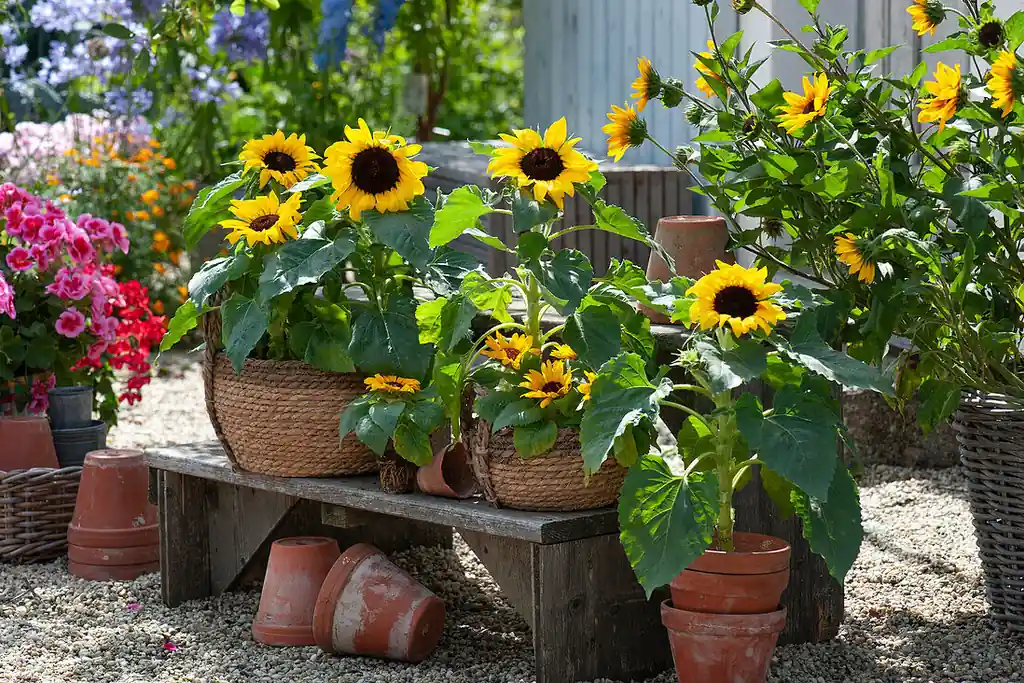
Dwarf sunflowers are the answer when a tall border will not fit. Plant one dwarf plant per medium pot, or three in a large pot, in fresh potting mix with drainage holes, and set the pots on sunny steps, beside a door, or along a patio edge. Pots dry out faster than beds, so check the soil with a finger and water when the top feels dry. Group pots in odd numbers and in different heights for a fuller look than a single pot alone. Deadhead spent blooms to keep new flowers coming, and move pots to follow the sun if one spot turns shady.
5. Keep a Cutting Row for Summer Bouquets
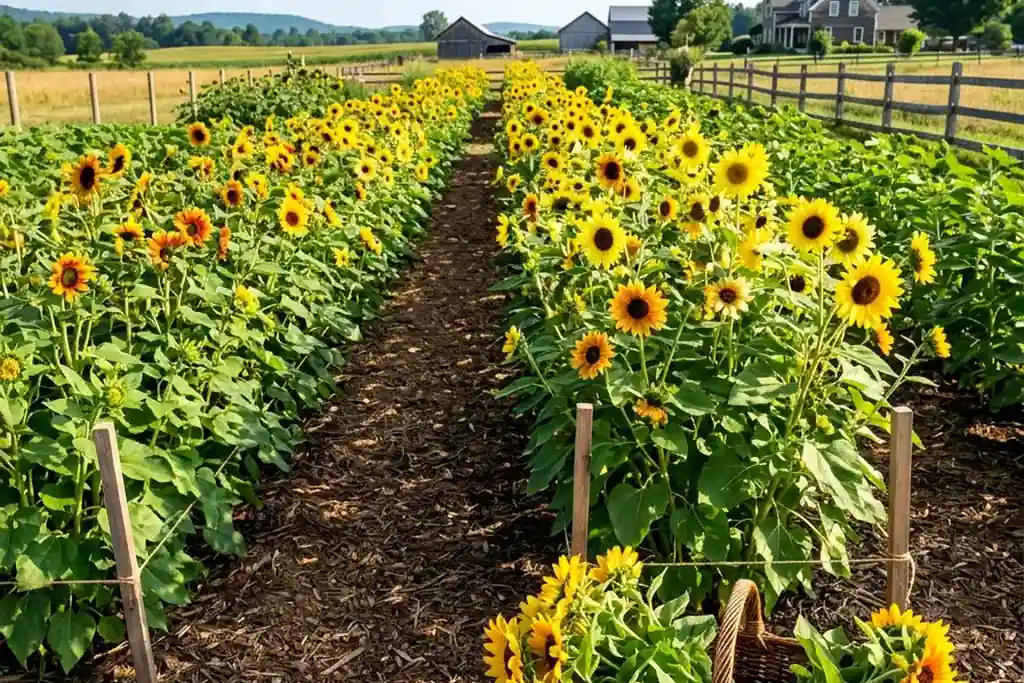
A cutting row is planted for picking, not for display, so space plants in straight rows you can walk beside and cut from. Sow a mix of tall and branching sunflower types so you get both single large heads and smaller stems for mixed bunches. Cut in the morning, strip the lower leaves, and stand stems in a bucket of water straight away. Picking often encourages branching types to make more buds. Keep this row apart from the display border, so cutting never leaves a gap in the bed you look at from the house.
6. Use Sunflowers as a Summer Privacy Screen
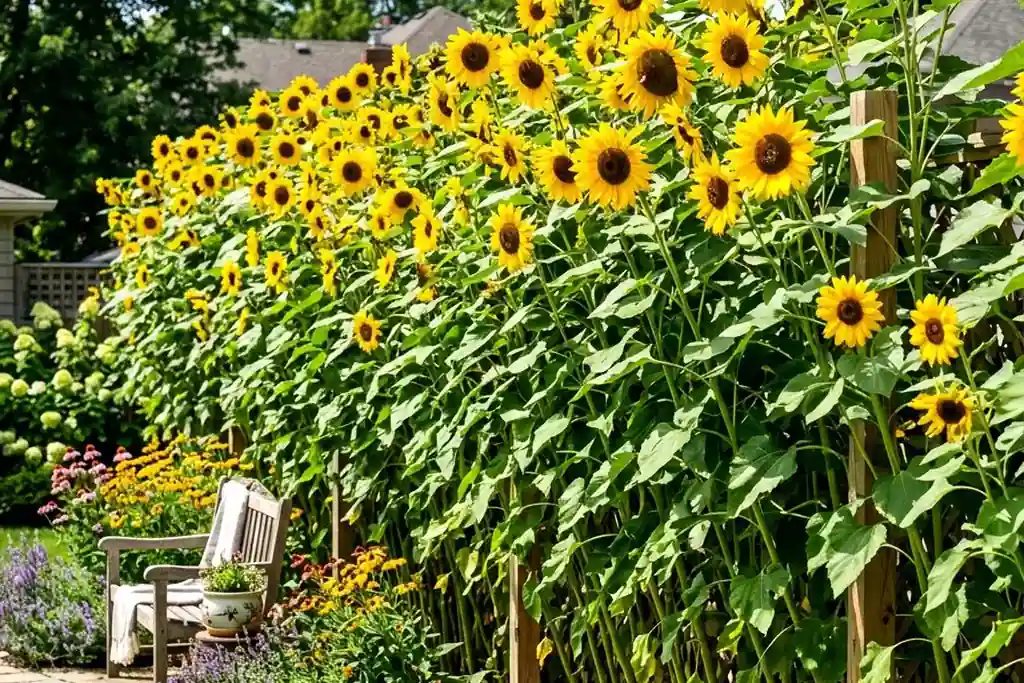
A dense row of tall, branching sunflowers makes a living screen for one season. Plant two staggered rows in front of a patio, a seating area, or a neighbor facing window, and let the foliage fill in through summer. The screen works from about midsummer until the first hard frost, so it suits a summer seating spot rather than year round privacy. Stake the outer row well, since a screen catches more wind than a single row. When the season ends, cut the stems down and compost the foliage, saving any seed heads you want for birds or for next year.
7. Frame a Front Path With a Sunflower Welcome Bed
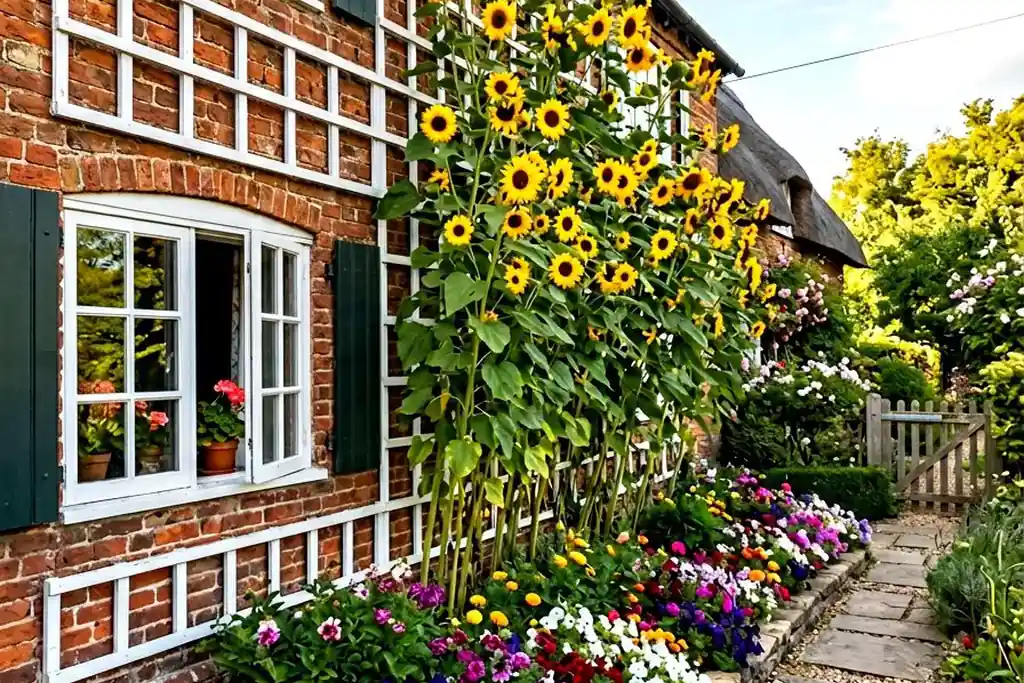
A sunflower bed beside a front path greets visitors before they reach the door. Plant tall types at the back of the bed, away from the path, and shorter or dwarf types near the paving, so blooms do not lean over walkers or block the view of the house number. Keep the bed edged and the path clear, and repeat one or two sunflower varieties along the whole run so the planting reads as a plan. Water the bed well in dry spells, because a path bed dries out faster than a bed in open lawn.
8. Grow Sunflowers Beside the Vegetable Garden
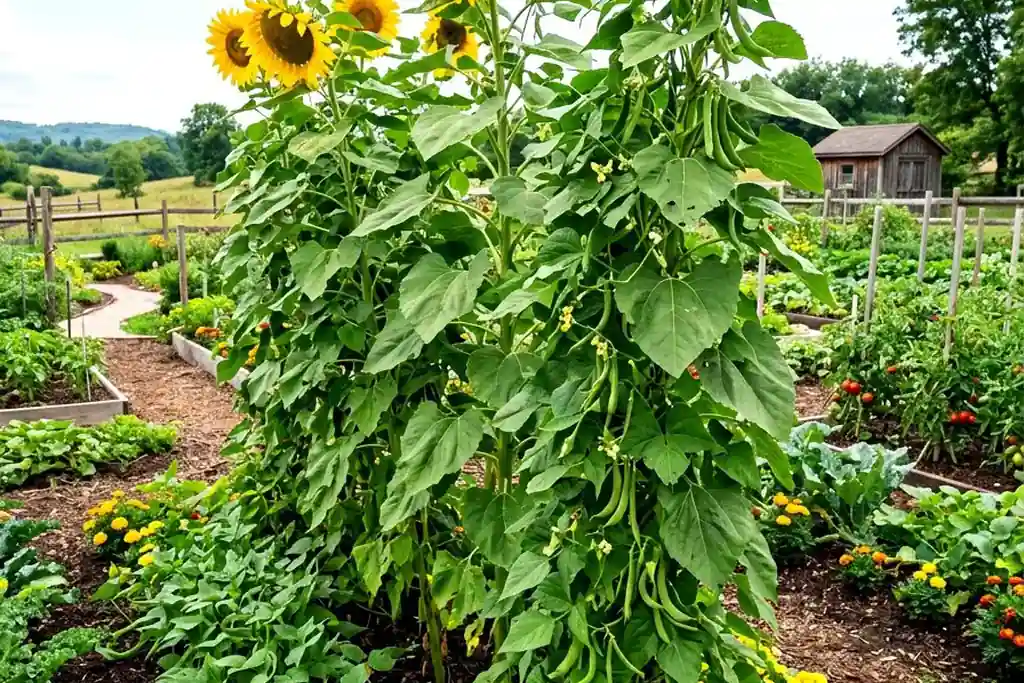
Sunflowers earn their place beside vegetables by bringing in bees and other pollinating insects. Plant a row along the sunny edge of the vegetable bed, on the north side where tall stems will not shade low crops, and leave a clear path for harvesting. The tall plants also give light shade to leafy crops in hot afternoons. Watch for birds on ripening heads if you plan to harvest seed, and cover heads with a light cloth bag once petals fade if you want to keep the seed for yourself.
9. Sow a Sunflower Meadow Patch

A loose meadow patch mixes sunflowers with cosmos, cornflowers, and other annuals for a natural, unclipped look. Clear weeds from a sunny patch, rake the soil, and sow the mix thinly in spring after frost risk has passed. The first weeks can look sparse, so mark the patch edges with a mown strip or a simple stone edge to show it is planned. Let the patch stand into autumn so birds can use the seed heads, then cut it down once the season is over. This relaxed style also pairs well with the loose planting in these hippie garden ideas.
10. Build a Sunflower Corner Around a Garden Bench
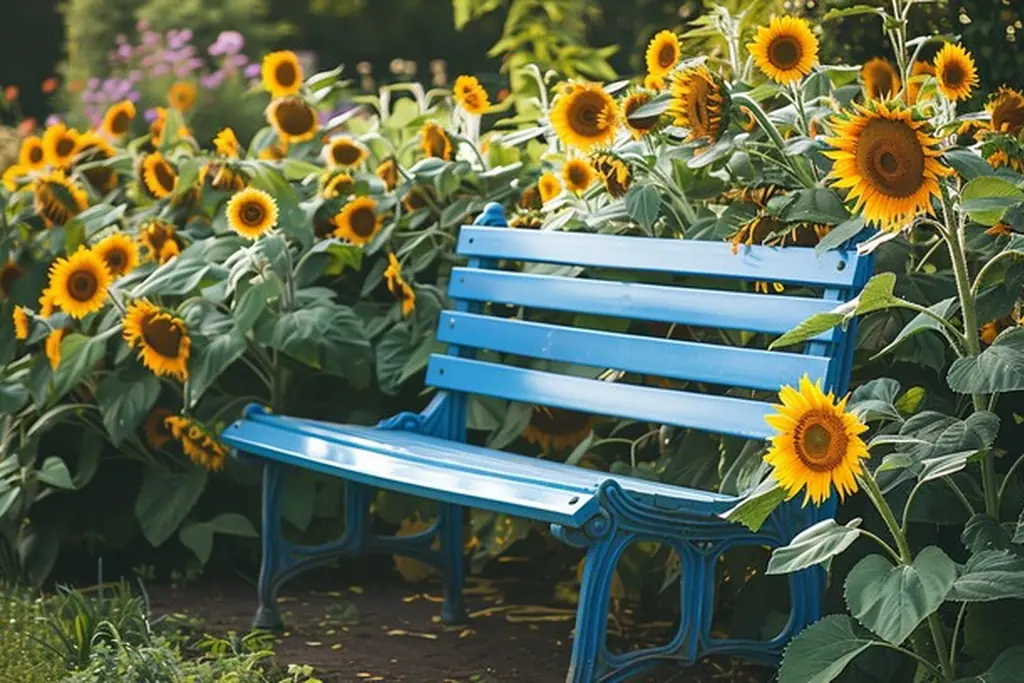
Planting sunflowers around a bench turns a seat into a destination. Place tall sunflowers behind the bench for a backdrop, mid height flowers at the sides, and low plants at the front, leaving a clear step of paving at the bench feet. Scented flowers nearby, such as sweet peas or lavender in pots, add to the spot in the evening. For seat styles and placement that suit a small corner, see these garden bench ideas. Keep plants off the seat edges so the bench stays easy to sit on, and cut any stems that lean across the sitting space.
11. Fill Balcony Planters With Dwarf Sunflowers
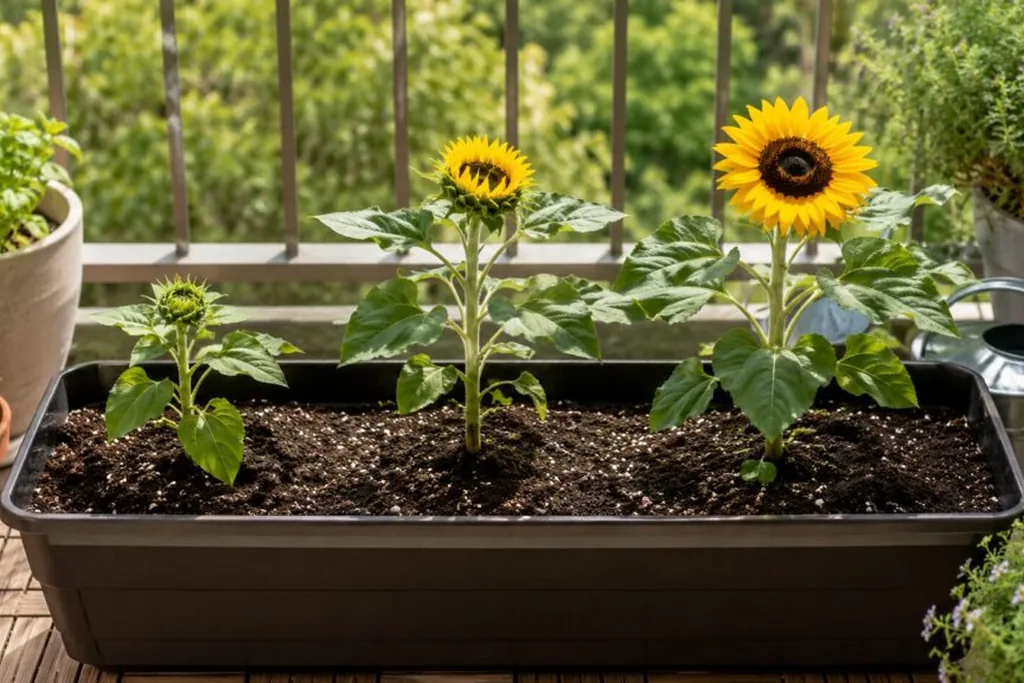
A balcony or a railing planter can hold dwarf sunflowers if it gets at least six hours of sun. Use a deep planter with drainage, fresh potting mix, and one plant per small planter or two or three in a long trough, and fix the planter firmly so wind cannot move it. Water often in hot weather, since shallow planters dry out fast, and feed lightly through the season. Choose a compact, branching variety so one plant gives several heads rather than a single tall stem that topples in wind.
12. Stack Heights in a Raised Bed Corner
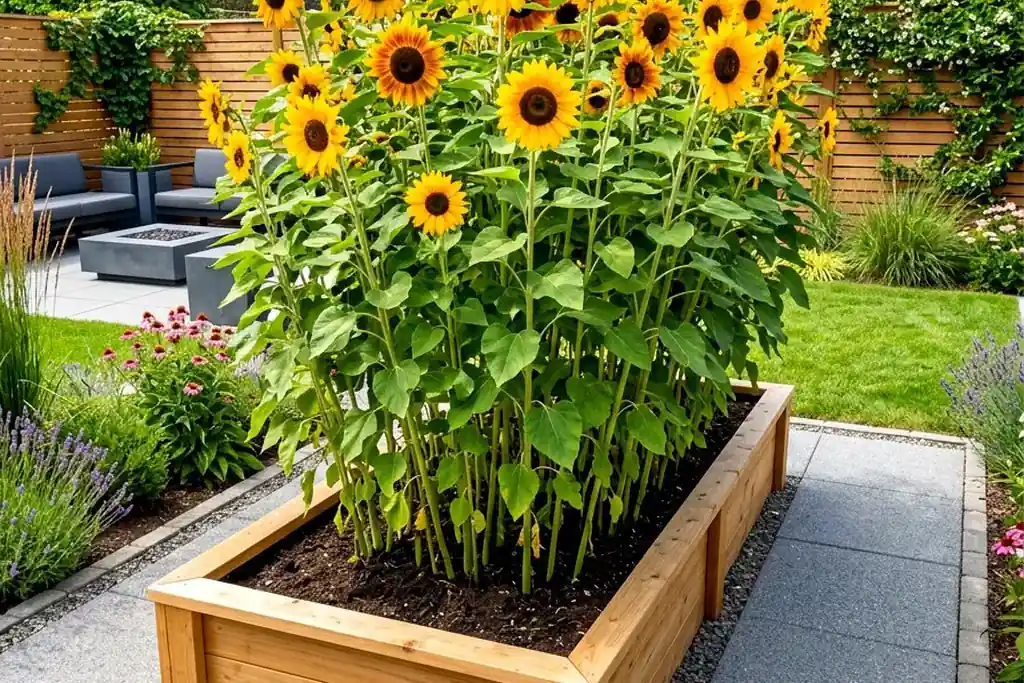
A raised bed corner is a good place to stack sunflower heights in a small footprint. Plant one or two tall sunflowers at the back corner, branching mid height types beside them, and dwarf types or low flowers along the front edge. The raised bed warms up early, drains well, and keeps the planting contained and easy to reach from all sides. Fill the bed with a mix of garden soil and compost, water deeply after planting, and mulch the surface to hold moisture through dry weeks.
13. Plant a Sunflower Circle for Children
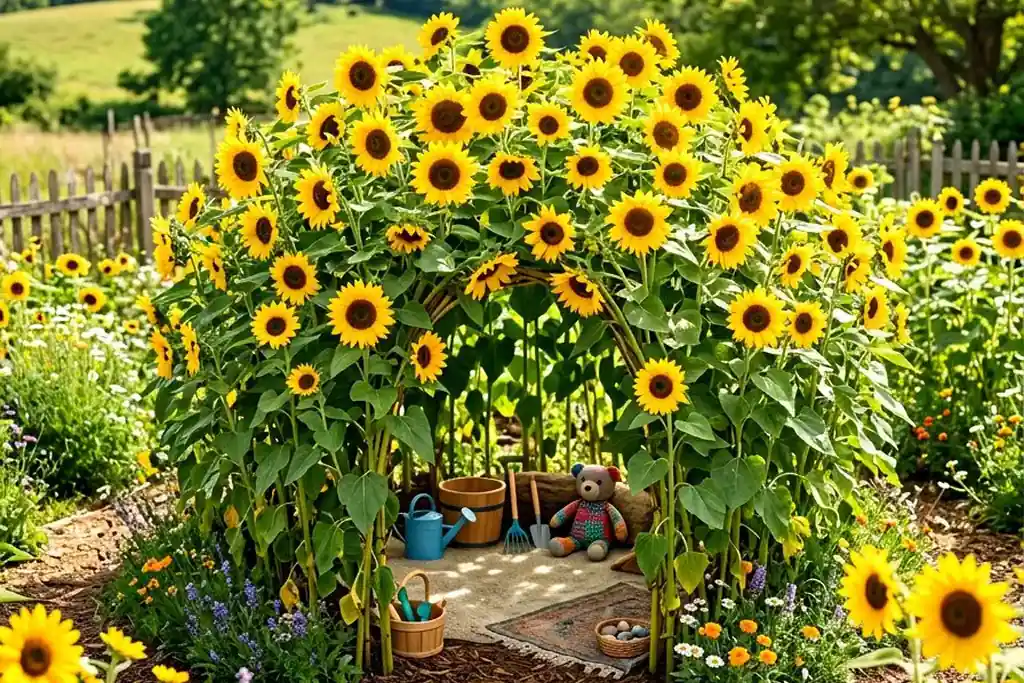
A circle of tall sunflowers with a gap for a door makes a simple living den for children. Mark a circle about six to eight feet across, plant tall sunflowers around the edge, and leave one opening as the entrance. Inside, keep the ground clear or lay a flat stone or two for sitting. The circle needs full sun and regular water while plants establish. The den lasts one season, so sow it fresh each spring, and check the plants often for stems that lean into the entrance.
14. Plant Sunflowers Around a Mailbox Post
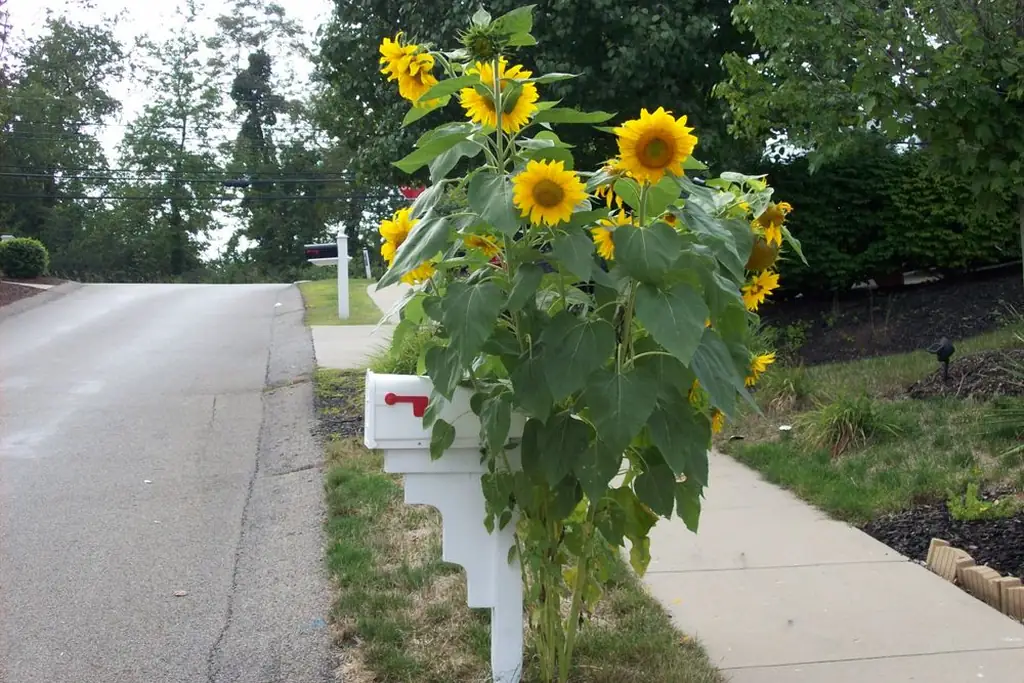
A small group of sunflowers around a mailbox post gives a plain entrance a clear focal point. Plant dwarf or mid height types, not giant types, so blooms do not block the mailbox, the house number, or the view of the street. Keep plants clear of the box door and the path the mail carrier uses, and trim any stems that lean over the pavement. One or two pots beside the post can give the same effect where the ground is paved or the soil is poor.
15. Use a Narrow Side Strip for a Single Sunflower Row
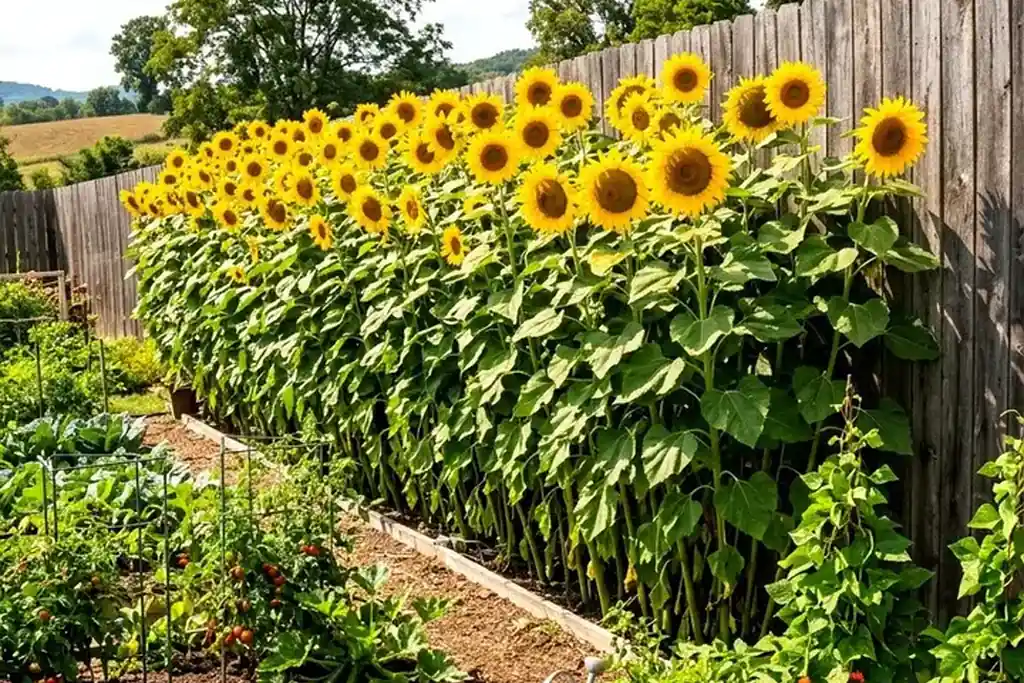
A narrow side strip between a house and a fence often gets wasted, but a single row of sunflowers can fill it well. Choose a variety matched to the strip width, plant in one row down the sunny side, and keep the path beside it clear for access. The strip warms up against a wall, which suits sunflowers, but it can also dry out fast, so mulch and water deeply. Pick a branching type if you want flowers along the whole row rather than one head per plant.
16. Edge a Sunflower Bed With Herbs
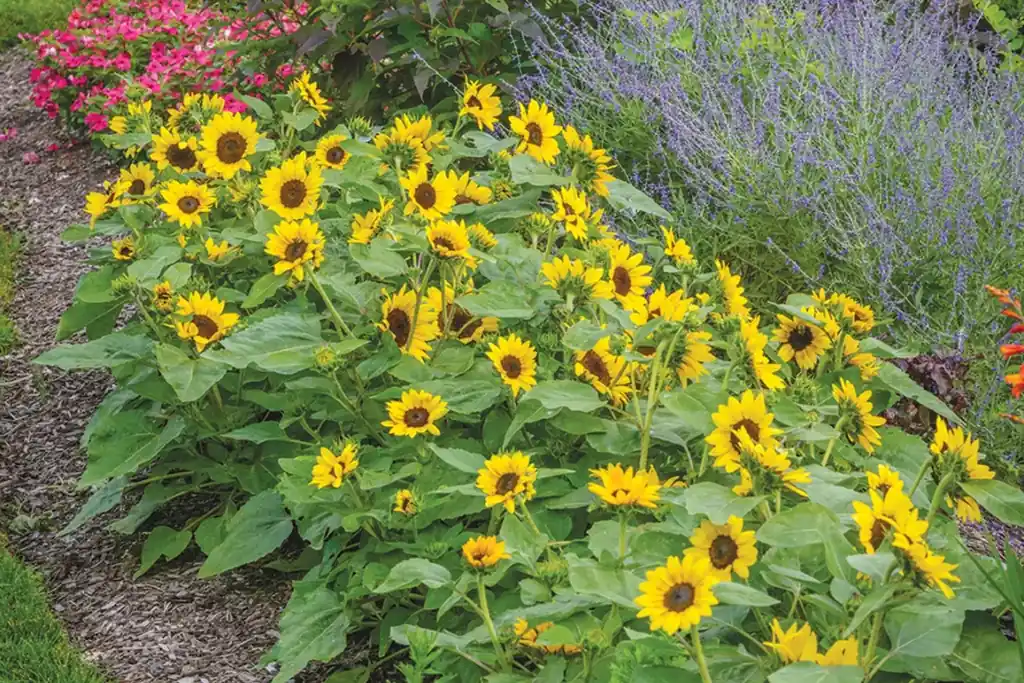
Low herbs such as thyme, chives, and parsley make a useful edge for a sunflower bed. Plant the herbs along the front edge where you can reach them for cooking, and keep the tall sunflowers behind so they do not shade the herbs for most of the day. The herb edge also covers bare soil, cuts down on weeds, and gives the bed a tidy front line. Trim herbs often to keep them compact, and replace any that get leggy with fresh plants in the same spots.
17. Train Sunflowers Against a Sunny Wall on a Trellis
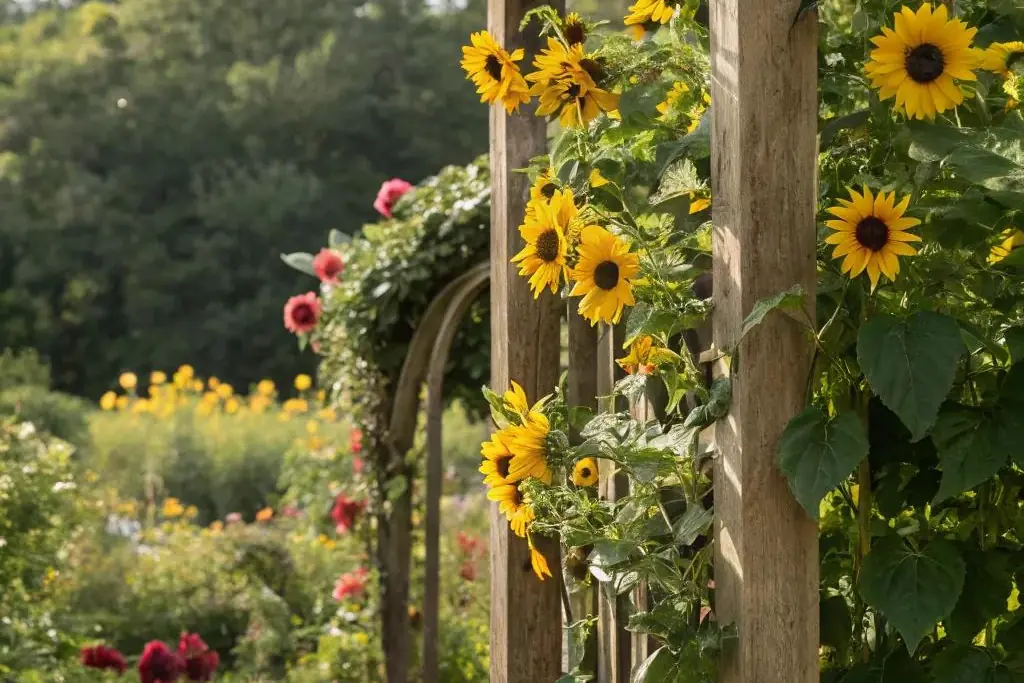
A trellis fixed to a sunny wall lets sunflowers grow upward in a bed too small for a free standing row. Fix the trellis firmly, plant sunflowers at its base, and tie stems in loosely as they grow, guiding side shoots across the panel. The wall reflects heat, which sunflowers like, but the soil at a wall base can be dry, so water well and mulch the bed. Leave a small gap between trellis and wall for air to move, which helps keep leaves healthy.
18. Leave Seed Heads Standing for Birds
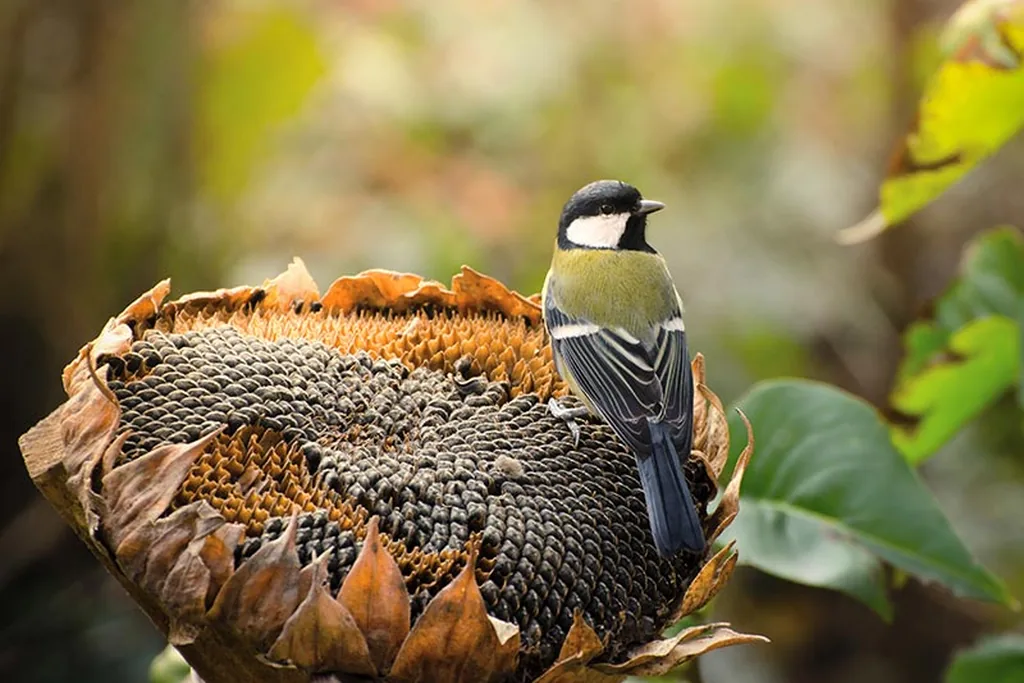
Once petals fade, the seed heads are still useful. Leave several heads standing on their stems through autumn so birds can feed directly from them, and cut a few heads to hang from a branch or a feeder where you can watch the visitors. This is the lowest effort sunflower idea on the list, and it extends the value of the planting well past flowering. Cut the stems down only after the heads are empty and the stems turn brittle, and save a dry head indoors if you want seed for sowing next spring.
19. Cut Sunflower Stems for the Table

A few cut sunflower stems can carry a table arrangement on their own. Cut stems in the morning when heads are just open, choose straight stems of different heights, and place them in a tall, heavy vase that will not tip. Strip leaves below the water line and change the water every two or three days. One large head in a jug suits a kitchen table, while a group of mixed heights works for a longer dining table. Keep arrangements away from ripening fruit bowls, since the gas from fruit can shorten the life of cut flowers.
20. Add Evening Seating Among the Sunflowers

Sunflowers look their best in low evening light, so place a couple of chairs or a small table at the end of a sunflower row for summer evenings. Keep the seating on a firm, level surface, and leave a clear gap between chairs and stems so you can sit without brushing against leaves. A string of outdoor lights on a nearby fence or post extends the use of the spot after sunset, but keep lights clear of dry foliage in late summer. Move the chairs as the sunflowers grow so the seating stays in the open, not hidden inside the row.
21. Plant Sunflowers Down a Sunny Slope

A sunny slope suits sunflowers because water drains away and the heads face the sun. Plant rows across the slope rather than straight up and down, so water soaks in instead of running off, and mulch each row to hold moisture. Tall types at the top of the slope and shorter types lower down keep the display even when seen from below. For stepped layouts that suit steeper ground, see these tiered garden ideas. Stake plants on exposed slopes, since wind moves faster across open ground.
22. Fill a Fence Corner Where Two Beds Meet
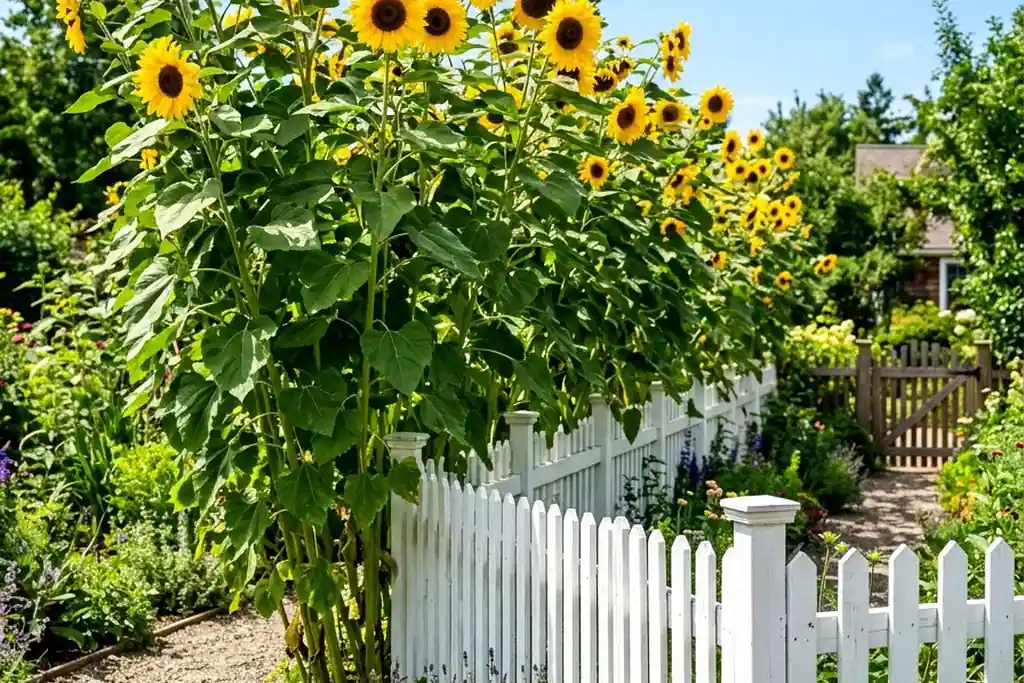
A fence corner where two beds meet is often left empty, but it is a strong spot for a group of sunflowers. Plant a cluster of tall and branching types in the corner itself, with lower flowers fanning out along both fence runs, so the corner reads as one planting rather than two separate beds. The corner gives shelter from wind on two sides, which helps tall stems stay upright. Keep a clear access path to the corner for watering and for cutting, so the group does not become hard to reach by midsummer.
23. Frame the View From a Kitchen Window
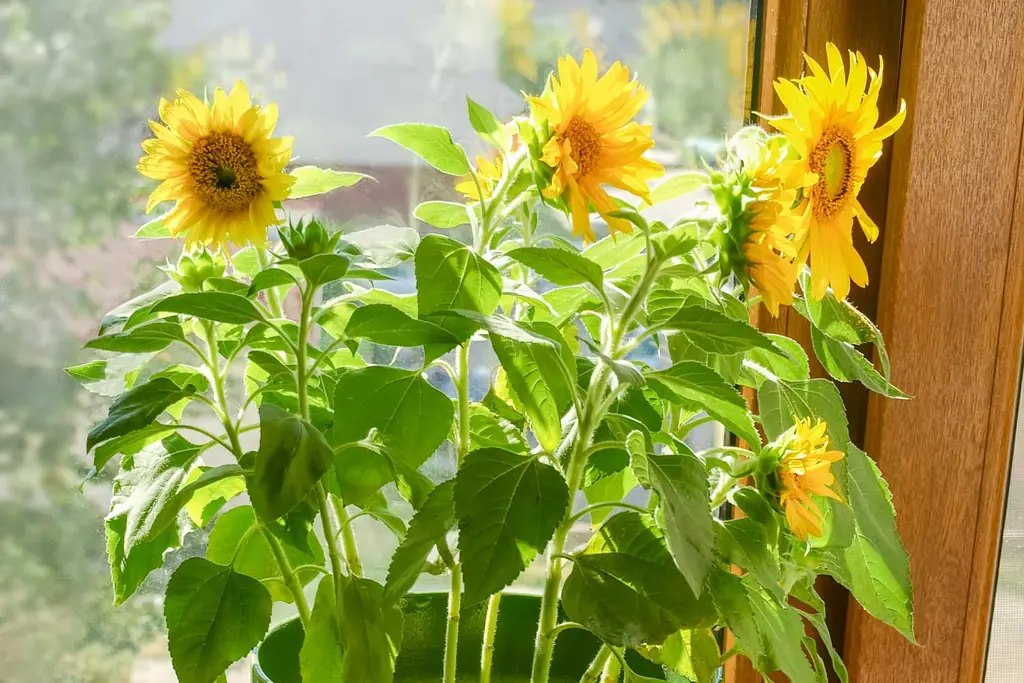
Plant sunflowers outside a kitchen window so the blooms are part of the daily view. Put tall types a little to one side of the window rather than straight in front of it, so they frame the glass without blocking light, and add dwarf types directly below the sill for color at eye level. The bed needs the same sun and water as any sunflower row, but its payoff is daily, since you see it while cooking and washing up. Keep the window side of the bed weeded and the glass clear, so the view stays the point of the planting.
24. Group Containers by a Garden Gate
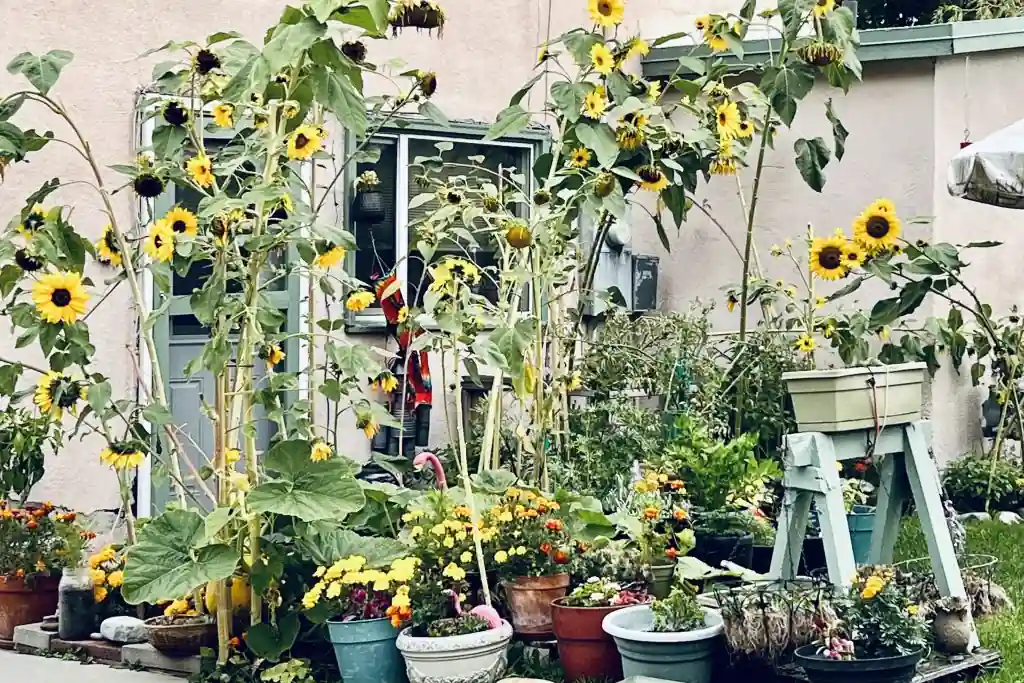
A group of pots by a garden gate gives the entrance color without digging a new bed. Use large, heavy pots so tall or mid height sunflowers do not topple in wind, group three or five pots in different sizes, and mix one tall variety with dwarf types for varied heights. Water pots often in hot weather and feed lightly through the season. The group can be moved for a party, for mowing, or for winter storage, which makes it a flexible option for a rented garden or a gate that also needs clear access.
Conclusion
A sunflower garden does not need every idea on this list. Pick one structure, such as a fence border, a cutting row, or a privacy screen, then add two or three supporting pieces, such as dwarf pots by the door, a bench corner, and a meadow patch. Stagger sowing for a longer season, stake tall stems early, and leave some seed heads for birds when flowering ends. Work through the list one area at a time, starting with the sunniest spot you have, and the garden will look planned rather than planted at random.
Save this list on Pinterest before your next seed order, and start with the spot you see most often each day.
FAQs
When should I sow sunflower seeds?
Sow sunflower seeds in spring after the last frost, directly where they will grow or in pots under cover for an earlier start. In most gardens, sowing from mid spring into early summer gives flowers from midsummer into autumn. Check the packet for your variety, since sowing depth and spacing vary between dwarf and giant types, and stagger sowings by two or three weeks for a longer display.
How much sun do sunflowers need?
Sunflowers need full sun, meaning at least six hours of direct sun a day, to grow tall and flower well. In part shade they grow leggy, lean toward the light, and make fewer, smaller heads. If your garden is mostly shaded, use dwarf types in pots placed in the sunniest spot you have, and move the pots as the sun moves through the season.
Do sunflowers need staking?
Tall and giant types usually need staking, especially in windy gardens or rich soil that pushes fast, soft growth. Put stakes in at planting time or soon after, so you do not damage roots later, and tie stems loosely with soft twine. Dwarf and compact branching types in sheltered spots often stand on their own, but a short stake still helps once heavy heads open.
Can I grow sunflowers in pots?
Yes, if you pick the right variety and pot. Dwarf and compact types suit pots, while giant types need very large, heavy containers and still may topple. Use a pot with drainage holes, fresh potting mix, and regular watering, since pots dry out faster than beds. One plant per medium pot, or three in a large pot, gives the best balance of roots and flowers.
How do I keep sunflowers flowering longer?
Stagger sowing, deadhead spent blooms on branching types, and water deeply during dry spells. Branching varieties make new buds after cutting, so a cutting row often flowers longer than a row left untouched. Feed container plants lightly through the season, and replace tired annuals in pots with fresh plants if the display fades before autumn.
Should I leave sunflower heads for birds or save the seed?
You can do both. Leave several heads standing in the garden for birds through autumn, and cut one or two dry heads to store indoors for seed. To save seed, let a head dry fully on the plant, rub the seeds out once the back of the head turns brown, and store them in a dry, labelled envelope. Check local advice if you plan to eat saved seed, and keep stored seed away from damp.