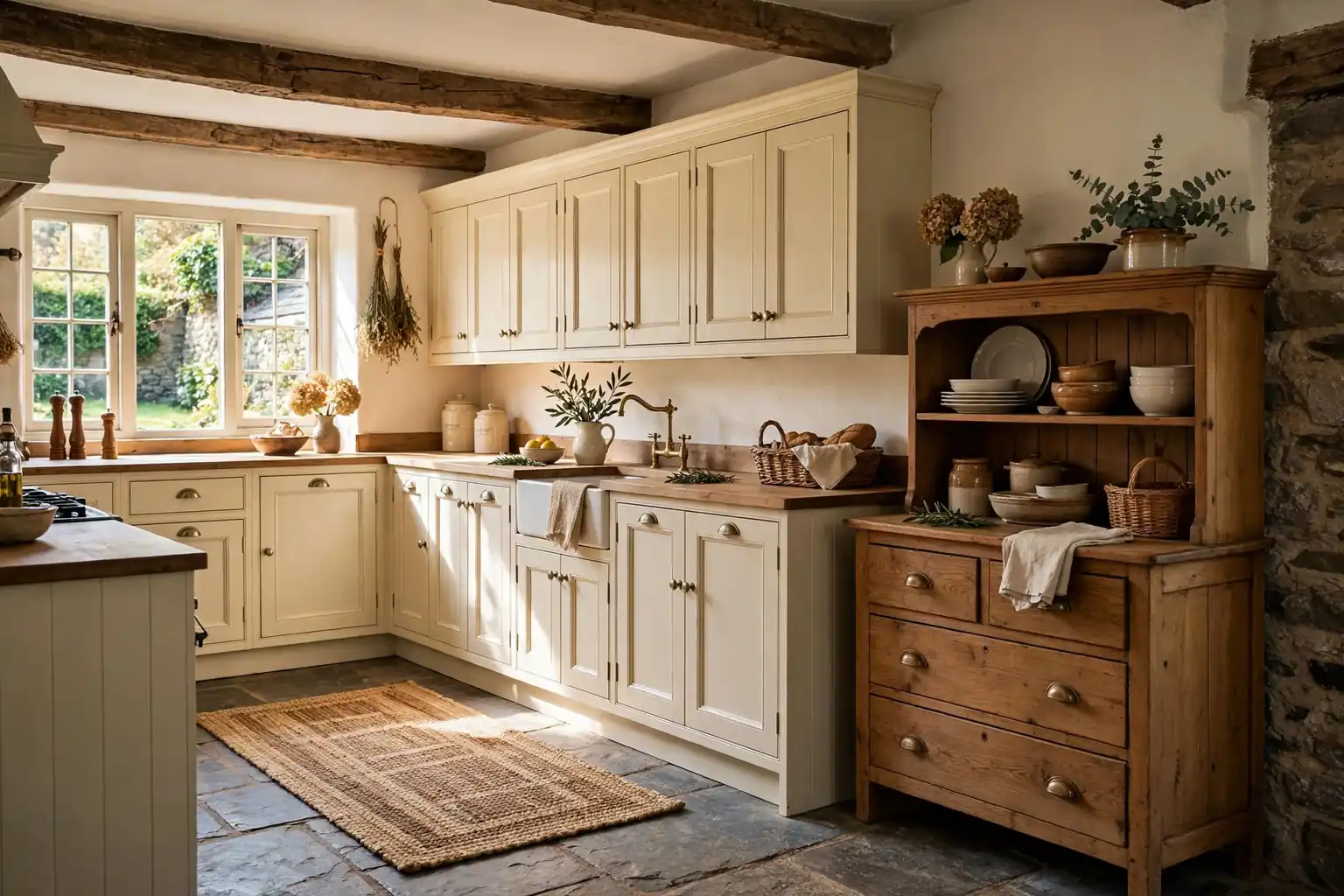
An Irish kitchen earns its warmth from useful things done well: a deep sink, a dresser full of everyday pottery, a wood table that seats everyone, and light that stays soft through a grey afternoon. These 34 Irish kitchen ideas cover cabinets, worktops, storage, seating, textiles, and seasonal touches, so you can borrow one idea or build a whole cottage look over time. Start with the parts you touch daily, such as the sink, the cooker, and the table, then add colour and pattern around them. For a lighter base to pair with cream or sage cabinets, these white kitchen ideas show how pale units keep a small room bright.
Key Takeaways
- Start with the working core: a deep sink, a clear worktop, and a table or island you can sit at.
- Cream, sage, navy, and warm wood make a calm base that suits both old cottages and newer homes.
- A dresser, open shelves, and a pantry keep everyday pottery and jars in reach and on show.
- Natural linen, wool, wood, and stone add warmth without needing a full refit.
- Layer light with pendants, under-cabinet strips, and daylight from a clear window.
- Change the season with textiles, greenery, and table displays, not with new cabinets.
1. Cream Shaker Cabinets with Brass Knobs
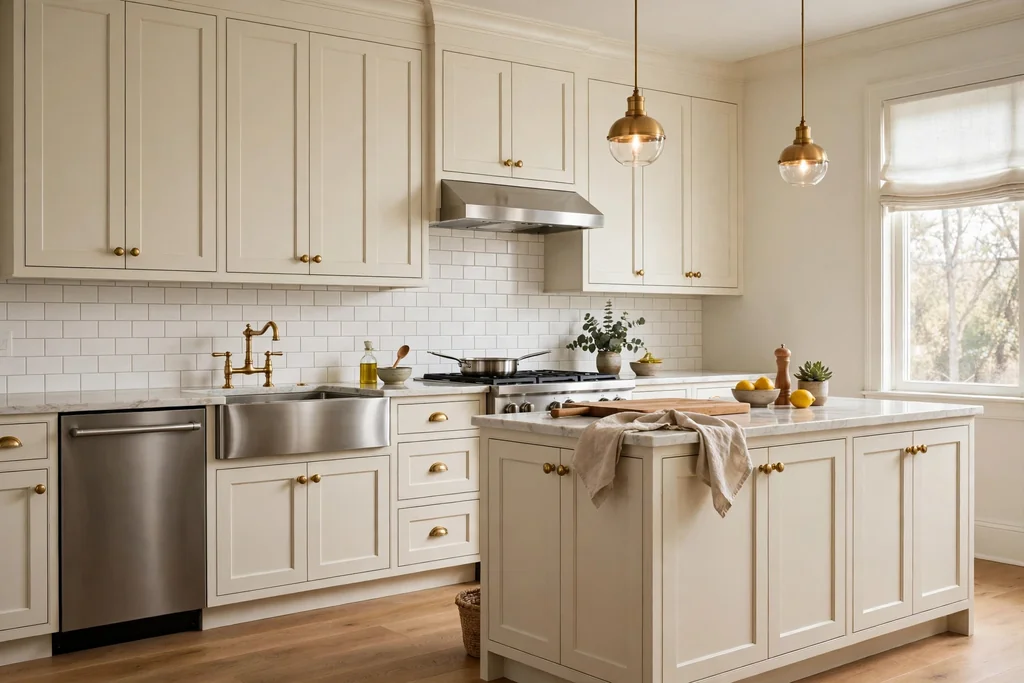
Cream Shaker cabinets give an Irish kitchen a calm, classic base that works with wood floors, stone counters, and coloured islands. The flat panelled doors suit both cottages and newer homes, and cream keeps the room bright on dull days. Brass knobs add a warm detail that suits the cream without looking fussy.
Keep wall colour warm white so the cream reads as cream, not yellow, and repeat the brass on the tap or pendant fittings for a tied look. If your cabinets are sound, painting them cream and swapping the knobs can give most of the effect for far less work than a full refit.
2. Sage Green Painted Cabinets
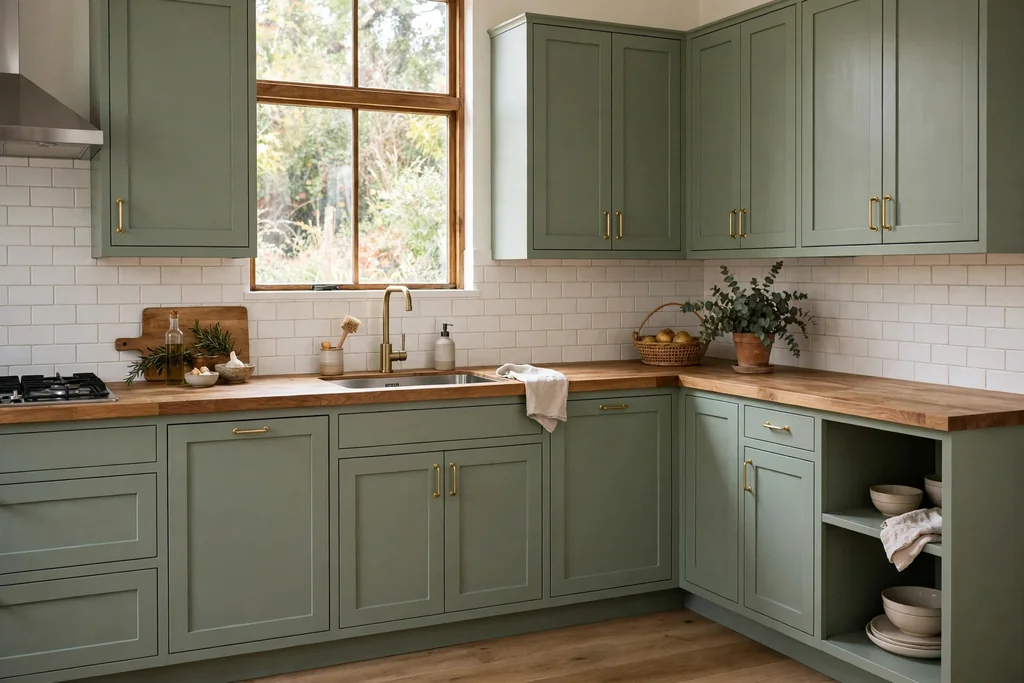
Sage green cabinets bring a soft country colour into the kitchen without darkening it. The green sits well with cream walls, wood worktops, and white pottery, and it suits a cottage or a farmhouse style home. It also hides everyday marks better than a very pale finish.
Pair sage units with brass or dark bronze handles, and keep the worktop warm wood or pale stone so the green stays the main colour. Paint a test patch beside the window and beside the cooker, since sage can look greyer in low light than it does in the shop.
3. Deep Navy Island with Cream Units
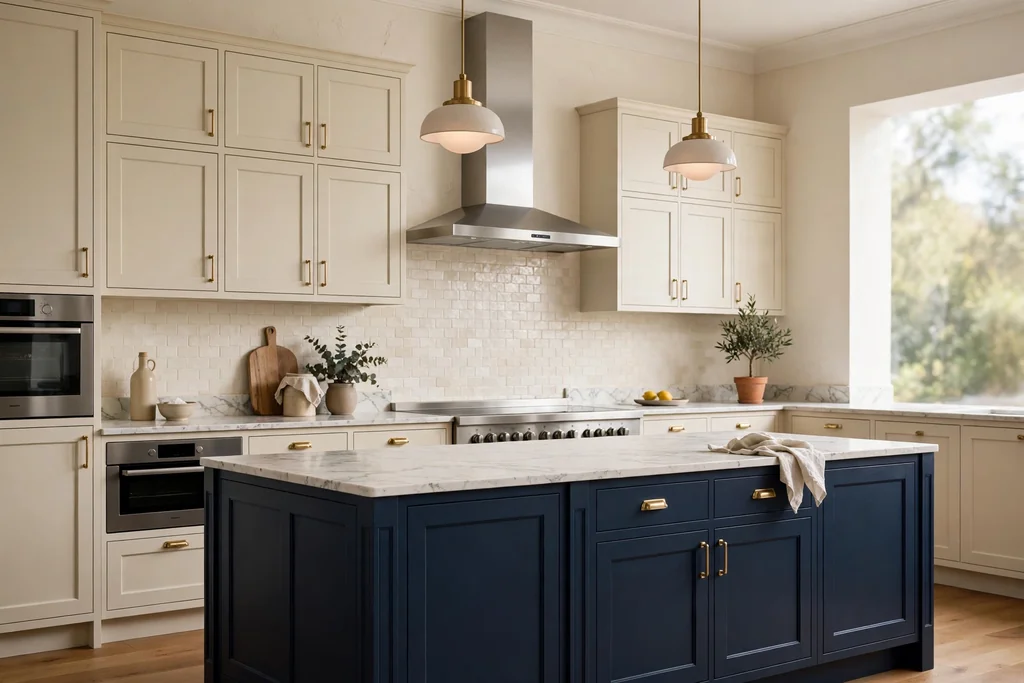
A deep navy island gives the kitchen a clear centre while cream units around the walls keep the room light. The contrast suits a larger kitchen best, where the island can hold seating, storage, and a worktop in one place. Navy also pairs well with brass, wood, and white pottery.
Keep the island top pale or wood so the navy does not feel heavy, and use the same navy on one dresser or a bench cushion to link the room. If the kitchen is small, use navy on a single run of base units instead of a full island.
4. Wood Dresser for Everyday Pottery
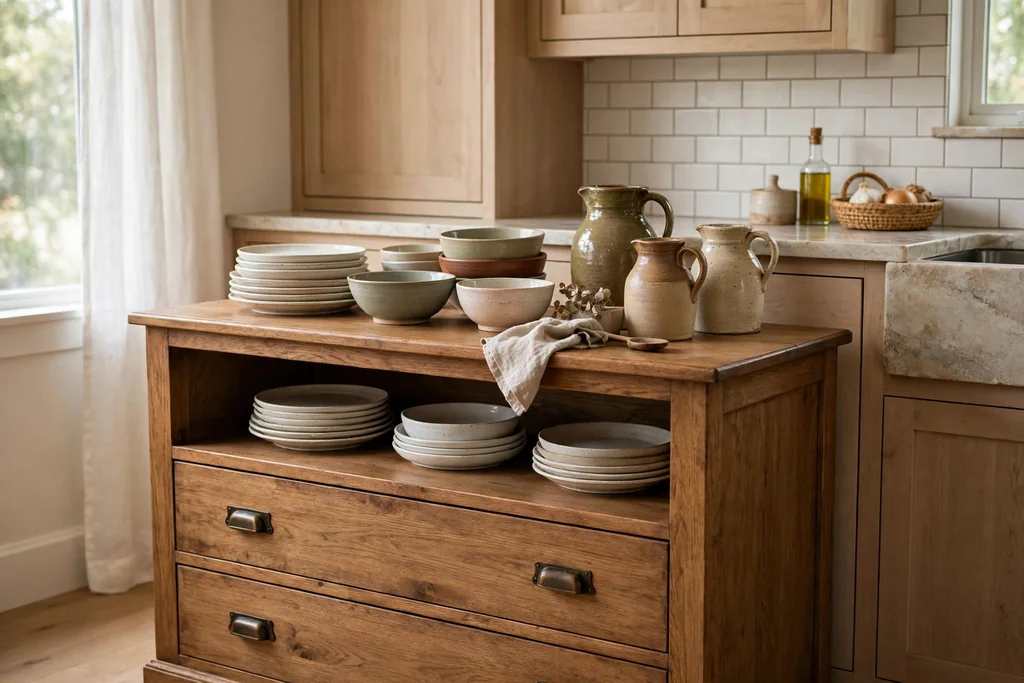
A freestanding wood dresser is the heart of many Irish kitchens, holding plates, bowls, jugs, and mugs where they are easy to reach. It adds storage without fitted units, and the open top lets you show pottery and a small plant. A dresser also suits a rented home, since it moves with you.
Group plates by size, keep daily mugs on hooks or on the lowest shelf, and leave one shelf partly clear so the display does not look crowded. A painted dresser in cream or sage can match the cabinets, while a plain wood dresser adds warmth to a pale room.
5. Belfast Sink with a Bridge Tap
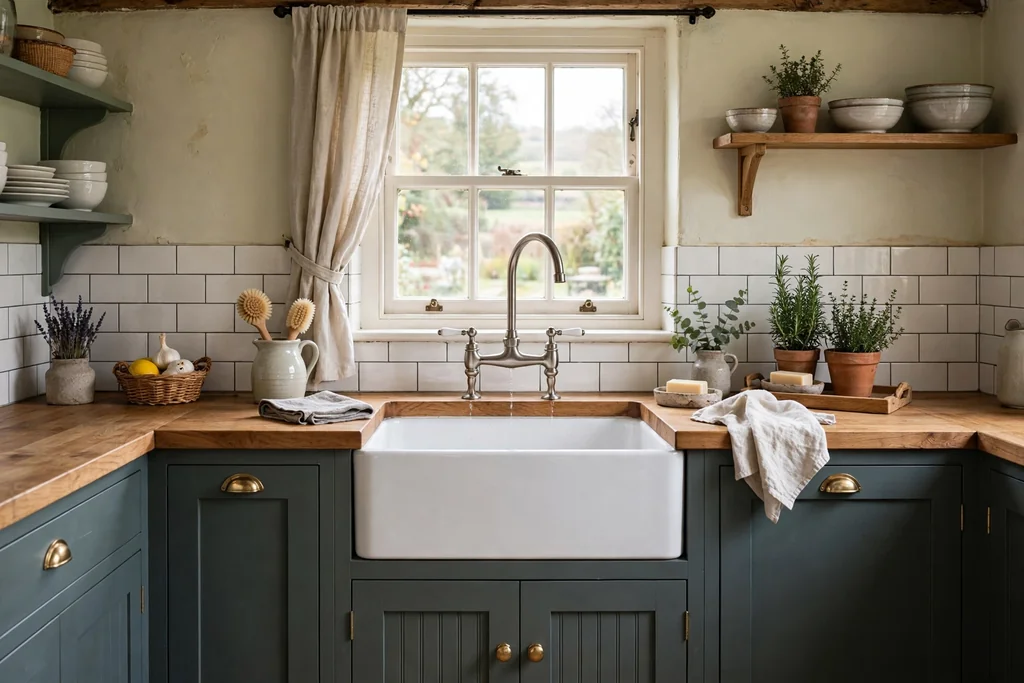
A Belfast sink suits an Irish kitchen because it is deep, wide, and practical for large pots, baking trays, and flower buckets. The front apron gives it a farmhouse look, and a bridge tap with two handles suits the period style. It works best with a wood or stone worktop that can support its weight.
Check the cabinet and floor support before fitting, since a ceramic Belfast sink is heavy when full of water. Keep a wooden draining board or a rack beside it, and choose a tap height that clears tall pots without splashing.
6. Open Shelving with Stoneware and Jugs
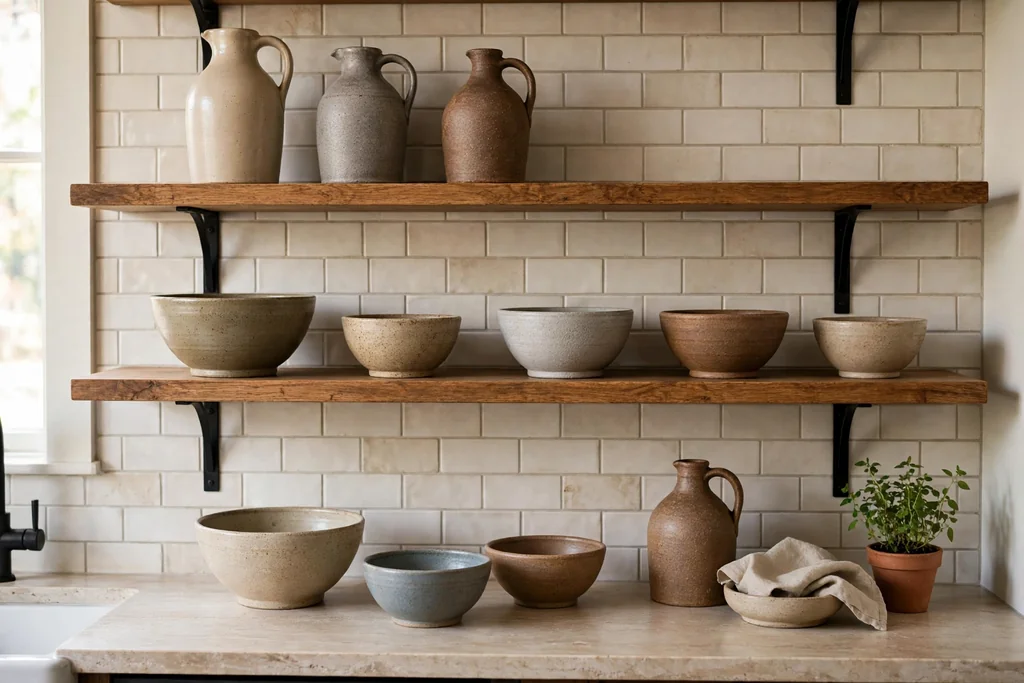
Open shelves above a worktop put stoneware, jugs, and bowls on show and free up cupboard space for less pretty items. They suit a cook who reaches for the same bowls daily, and they make a plain wall feel lived in. Keep the shelves to two or three runs so the wall does not look cluttered.
Use the same colour family for most pieces, with one or two patterned jugs for interest, and keep heavy items low. Wipe shelves weekly, since open storage gathers dust and cooking grease faster than closed cupboards.
7. Patterned Floor Tiles for a Cottage Floor
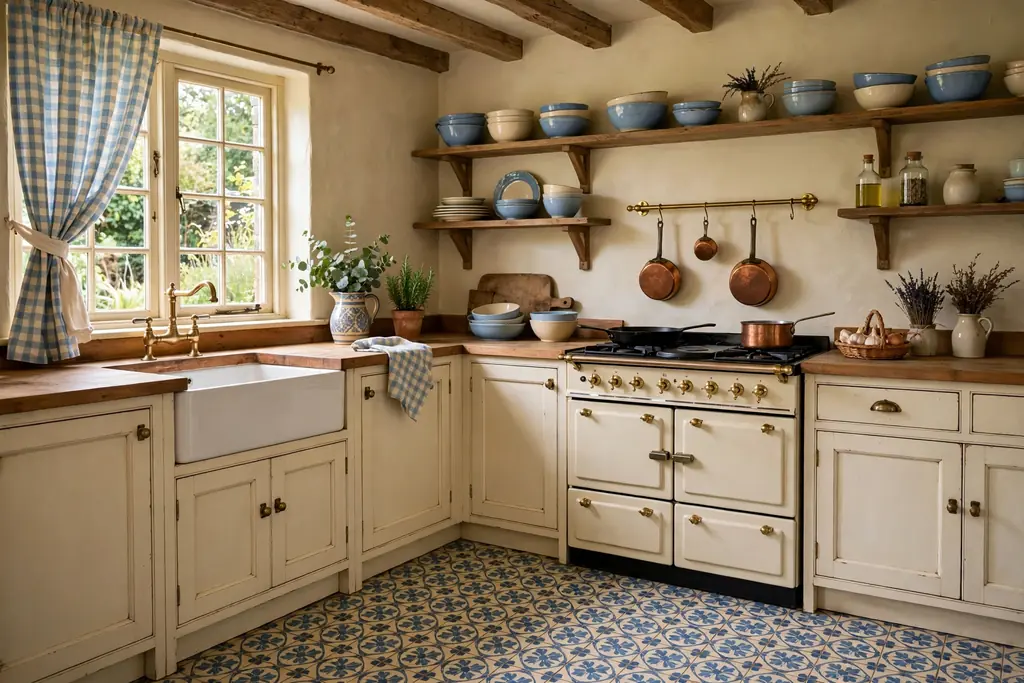
Patterned floor tiles in soft blue, cream, and grey give a cottage kitchen a firm, easy to clean floor with plenty of character. They suit the area by the sink and cooker, where spills are common, and they pair well with plain cabinets. For tile ideas around the cooker and sink, these kitchen backsplash ideas show how pattern can stay calm when the rest of the room is plain.
Lay the pattern straight and keep grout a mid tone, since very pale grout stains in a kitchen. If patterned tiles feel too bold for the whole floor, use them in a bordered panel by the sink and plain tiles or wood elsewhere.
8. Exposed Beams and a Plank Ceiling
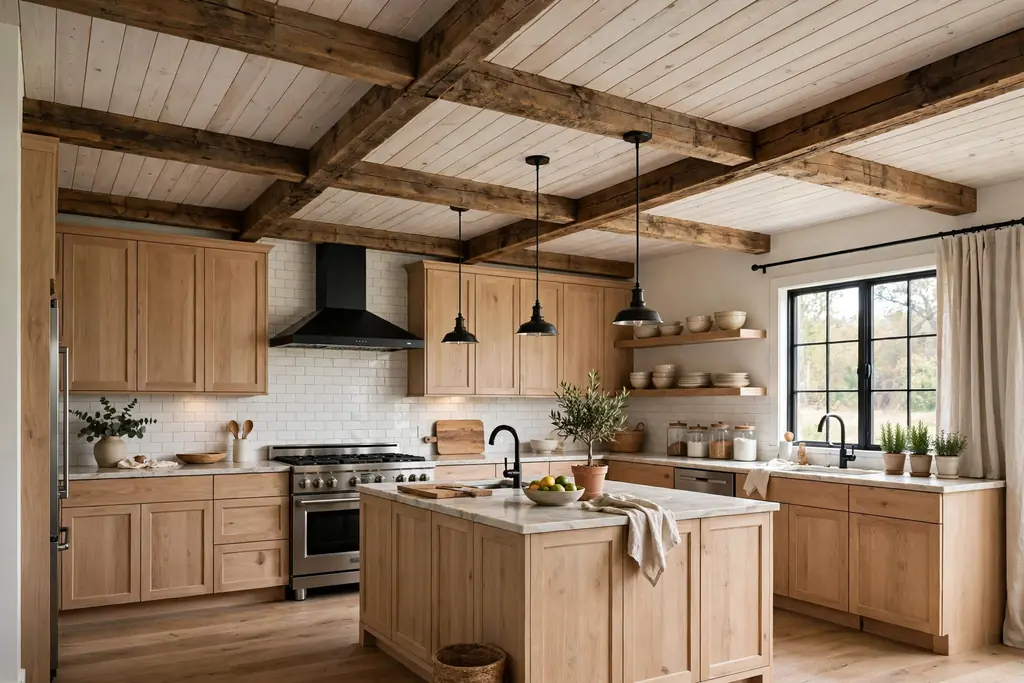
Exposed beams and a painted plank ceiling give a kitchen a cottage structure that feels honest and warm. Pale painted planks keep the ceiling light, while darker beams add contrast and a sense of age. This suits a kitchen with good ceiling height, where beams do not press down on the room.
Keep lighting simple with pendants hung below the beams, and avoid fixing heavy items to the beams without checking their strength. If the beams are not original, a few well placed wood beams can give the same look without a full ceiling rebuild.
9. Stone Alcove for the Cooker
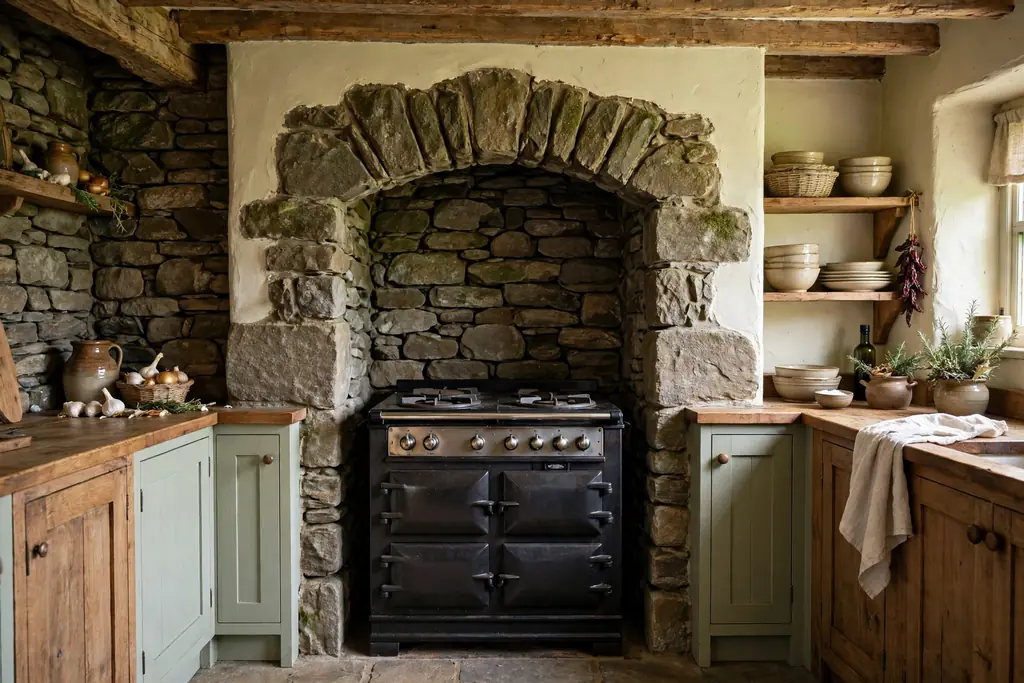
A stone or plaster alcove around the cooker gives the kitchen a hearth-like centre and keeps heat and splashes contained. It suits a range cooker best, and it gives a natural place for a shelf holding oils, herbs, and a clock. The alcove also frames the cooker as the working heart of the room.
Keep the alcove wide enough to move pots safely, and use a heat-safe surface behind the cooker. A wood mantel shelf above the alcove holds small items, but keep it clear of direct heat and steam.
10. Cream Range Cooker as the Focal Point
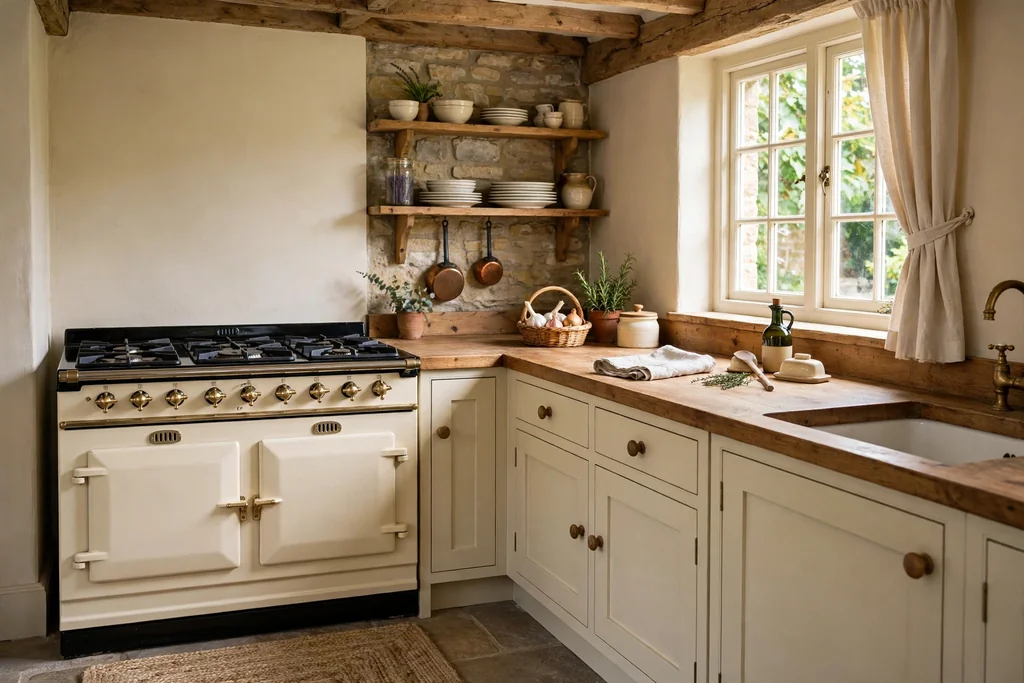
A cream range cooker brings steady heat, oven space, and a classic look to an Irish kitchen, and it suits baking, roasting, and slow cooking. Its size makes it a natural focal point, so the rest of the kitchen can stay plain around it. Cream suits both painted and wood cabinets.
Plan the layout so there is worktop on at least one side for hot trays, and keep a rail or hook nearby for oven gloves and towels. A range needs good ventilation and a heat-safe floor, so check the maker guidance before choosing the model.
11. Linen Cafe Curtains at the Window
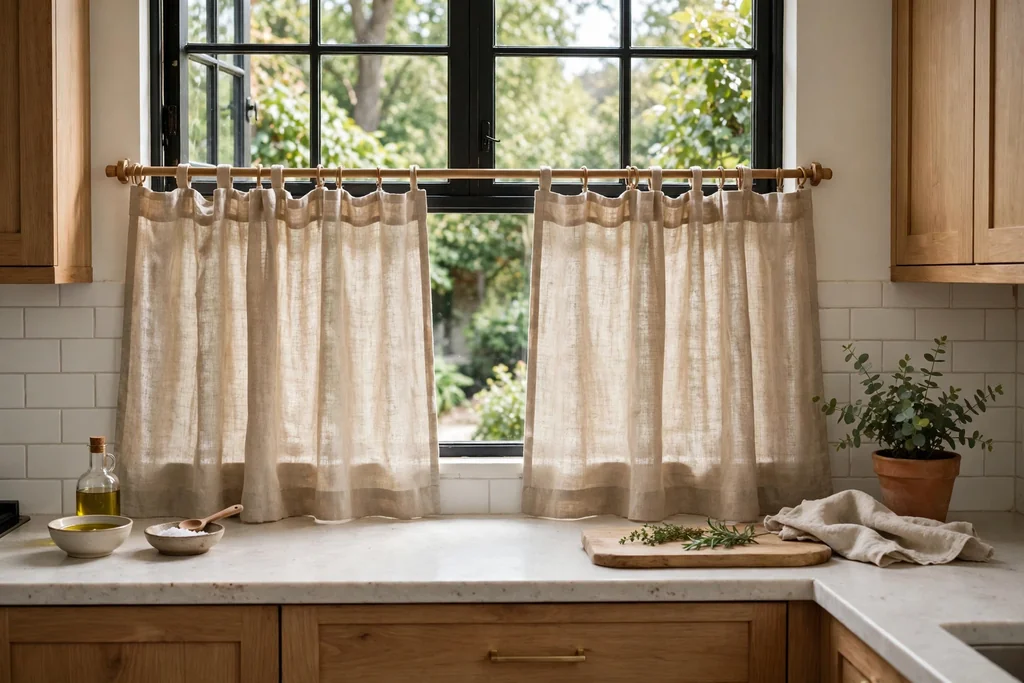
Linen cafe curtains cover only the lower half of the window, giving privacy at the sink while letting daylight in above. Natural linen suits a cottage kitchen, softens a plain window, and washes well. They suit a kitchen that faces a road or a neighbour.
Hang them on a slim tension rod inside the frame so they are easy to remove for washing, and choose a plain weave in cream, oatmeal, or soft green. Keep the fabric clear of the tap and cooker, and pair them with a clear sill for herbs or a small plant.
12. Herb Garden on the Windowsill
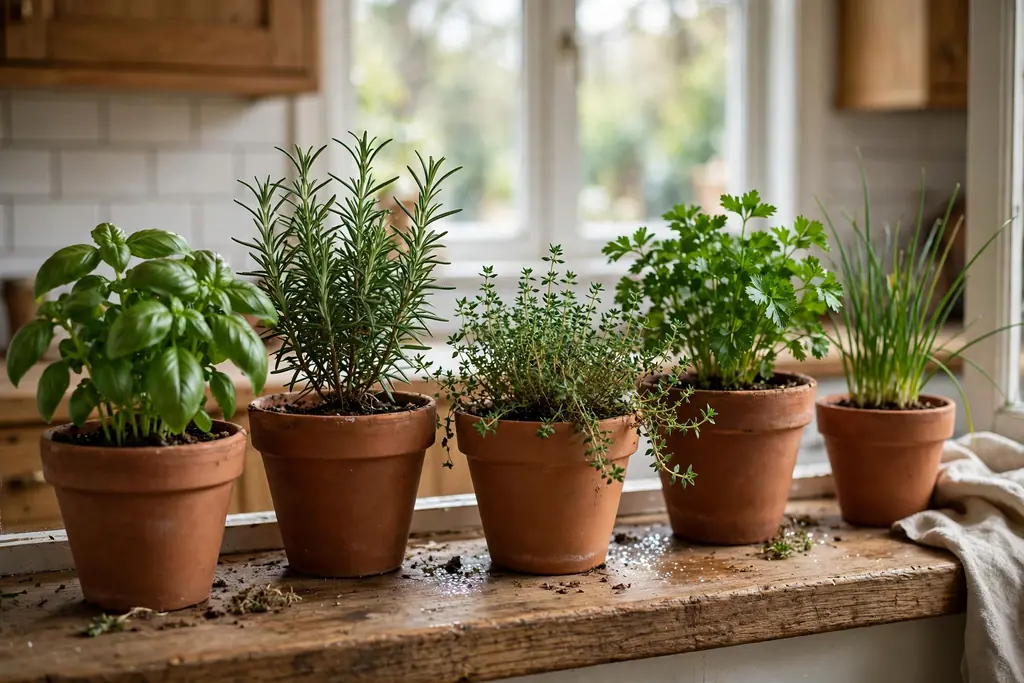
A windowsill herb garden keeps parsley, chives, mint, and thyme within reach of the chopping board, and it adds green to the kitchen all year. Small terracotta pots suit the cottage look, and a tray under them catches water. For ideas on dressing the space above the sink, these above kitchen sink ideas pair well with a herb sill.
Give herbs the brightest sill you have, water little and often, and keep mint in its own pot since it spreads fast. Snip herbs often, since regular cutting keeps plants bushy and useful.
13. Butcher Block Island Top
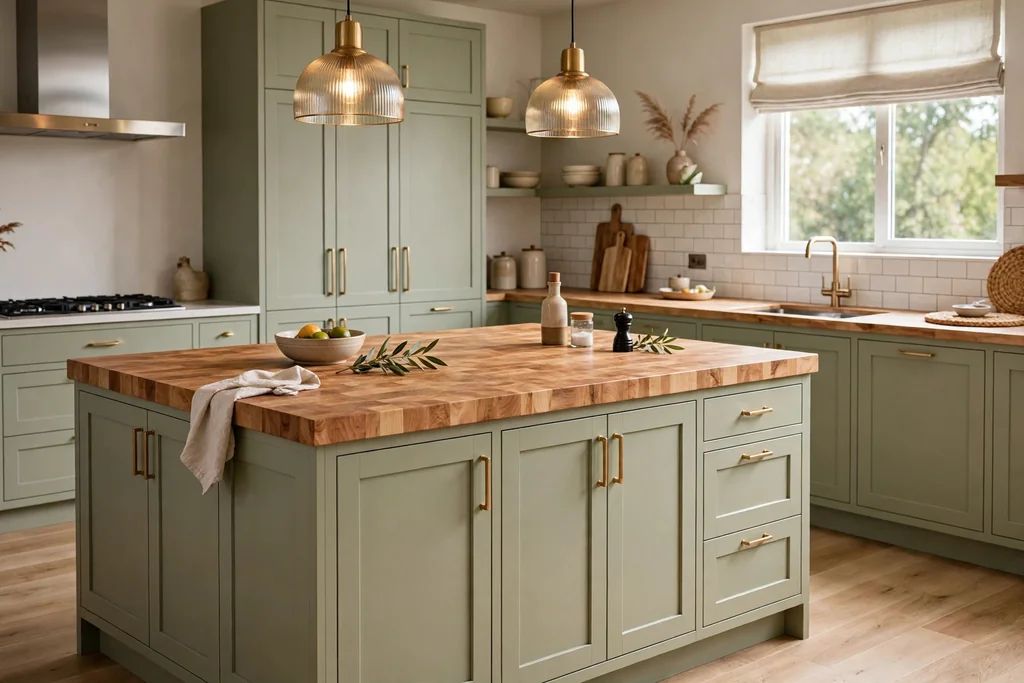
A butcher block top on an island adds a warm, hard working surface for chopping, rolling pastry, and serving. Wood is kinder to knives than stone, and it suits cream, sage, and navy cabinets alike. It also ages well, gaining marks that suit a lived-in kitchen.
Oil the top regularly with food-safe oil, wipe spills promptly, and use a board for raw meat to keep the surface hygienic. Sand out deep marks once a year if needed, then re-oil so the top stays sealed.
14. Farmhouse Table with Bench Seating
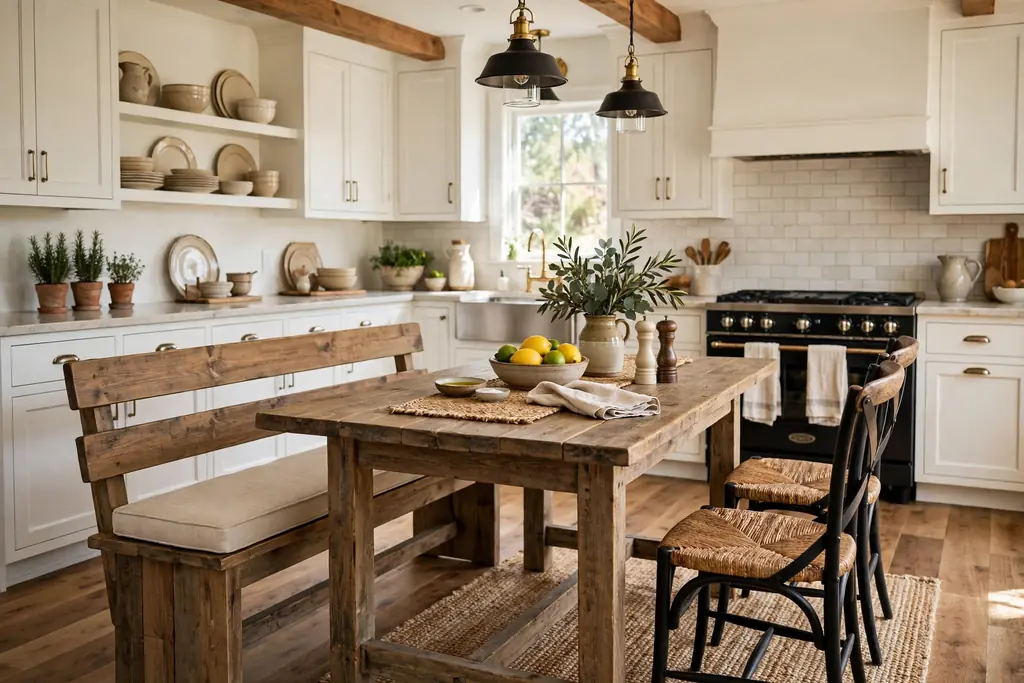
A long farmhouse table with bench seating seats family and guests without needing many chairs, and it doubles as a prep surface and a homework table. Wood tops suit the cottage look, and benches tuck under the table when not in use. This suits a kitchen with room for a table away from the main cooking path.
Leave enough room to pull a bench out and walk past, and choose a table height that suits both dining and food prep. A washable runner protects the wood during meals and lifts off for baking days.
15. Window Banquette Seating
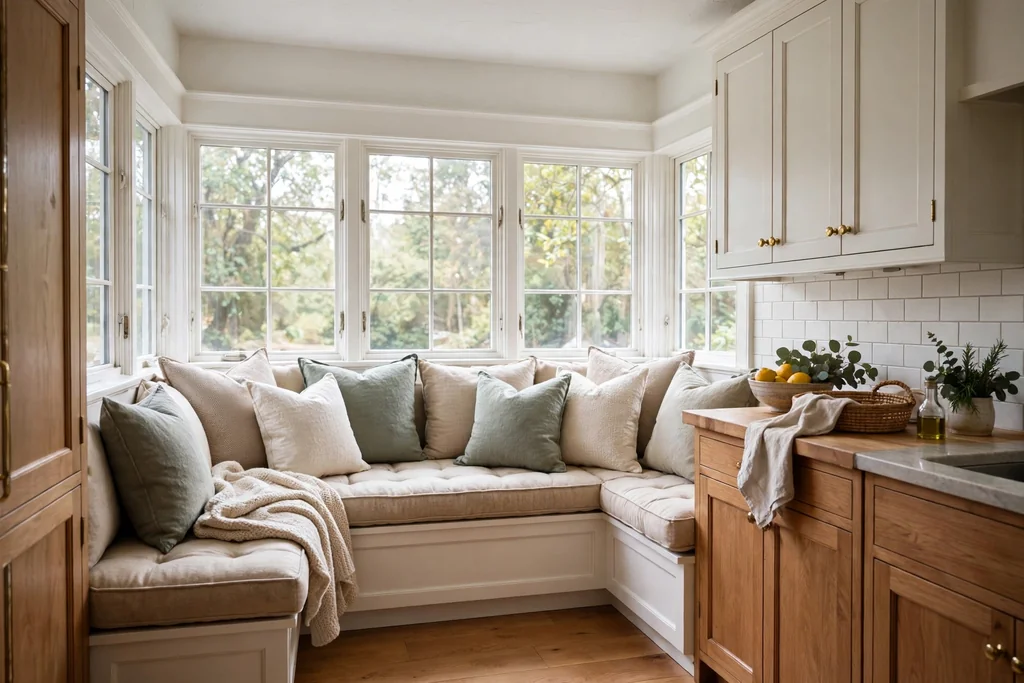
A banquette in a bay or beside a window gives a kitchen a cosy eating corner with storage under the seat. It suits a small kitchen, since it uses a corner that chairs would crowd, and it makes breakfast feel like a treat. Cushions in a check or plain linen keep the seat comfortable.
Build the base with lift-up lids or drawers for table linen and rarely used items, and keep the table small enough to slide in and out of easily. Add a pendant or wall light above the table so the corner works well in the evening too.
16. Walk-In Pantry with Glass Jars
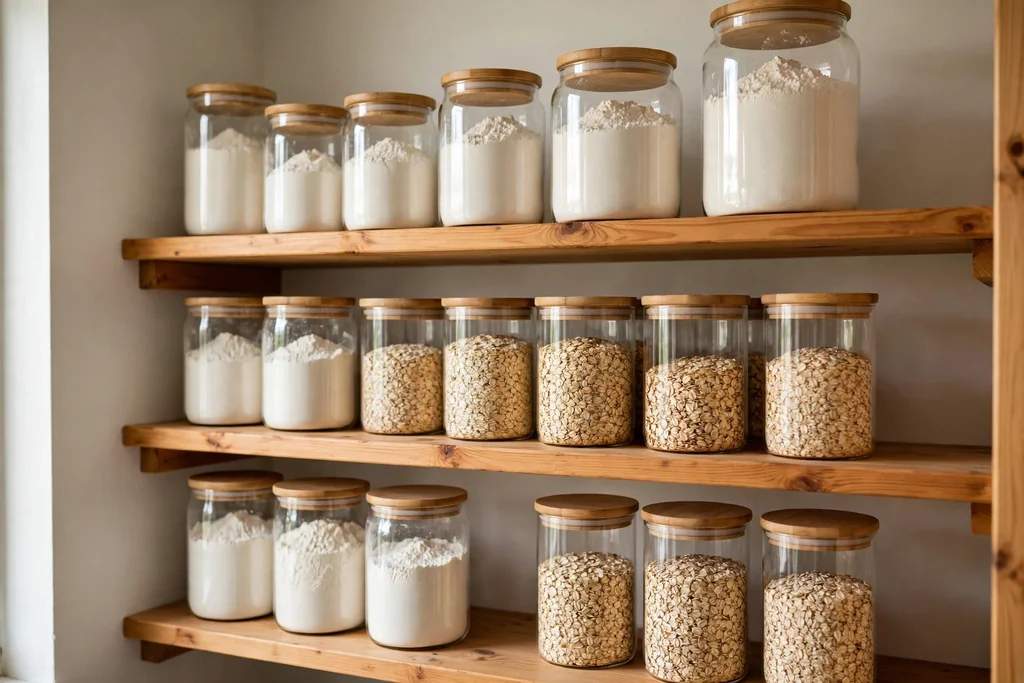
A walk-in pantry or a tall larder cupboard keeps flour, oats, rice, and dried goods in glass jars where you can see what you have. Clear jars cut waste, since you notice when a staple runs low, and they look neat on wood shelves. This suits a baker and a busy family kitchen alike.
Label jars clearly, keep heavy jars low, and group baking, breakfast, and cooking items in zones. Store food away from the cooker heat, and check jar seals regularly so flour and oats stay fresh.
17. Copper Pot Rail over the Worktop
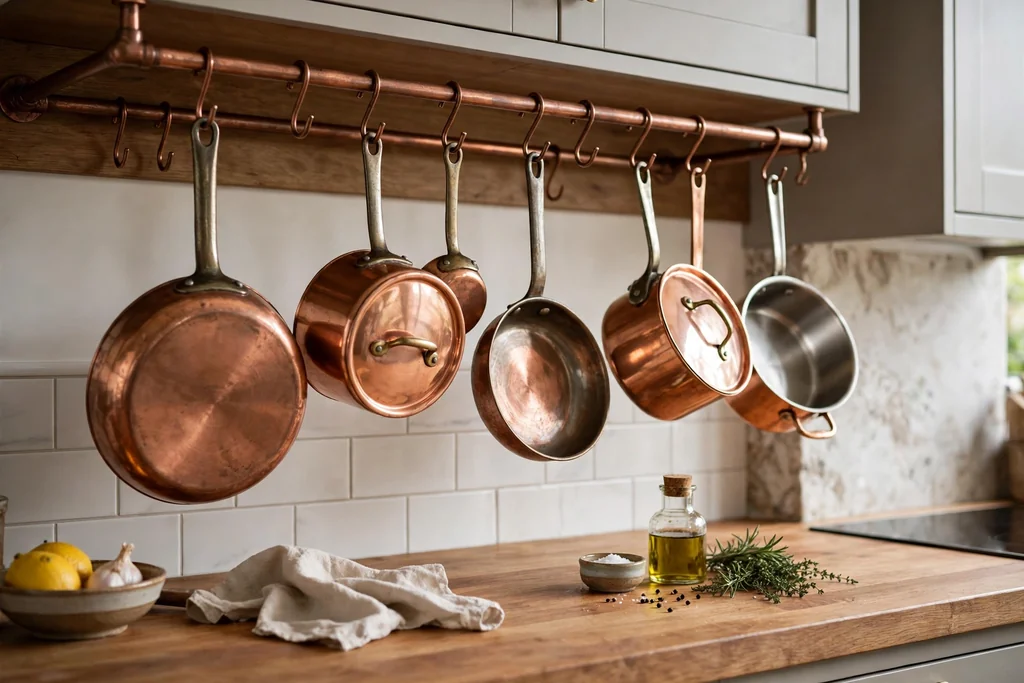
A copper pot rail over a worktop or island keeps pans in reach and frees cupboard space for plates and food. Copper suits cream and wood kitchens, and it warms up as it ages. It works best for pans you use weekly, not for pieces that sit unused.
Fix the rail into studs or solid wall, since full pans are heavy, and hang pans by size so the rail looks ordered. Polish only if you prefer a bright finish, or leave the copper to darken for a softer cottage look.
18. Wall Plate Rack for Patterned Plates
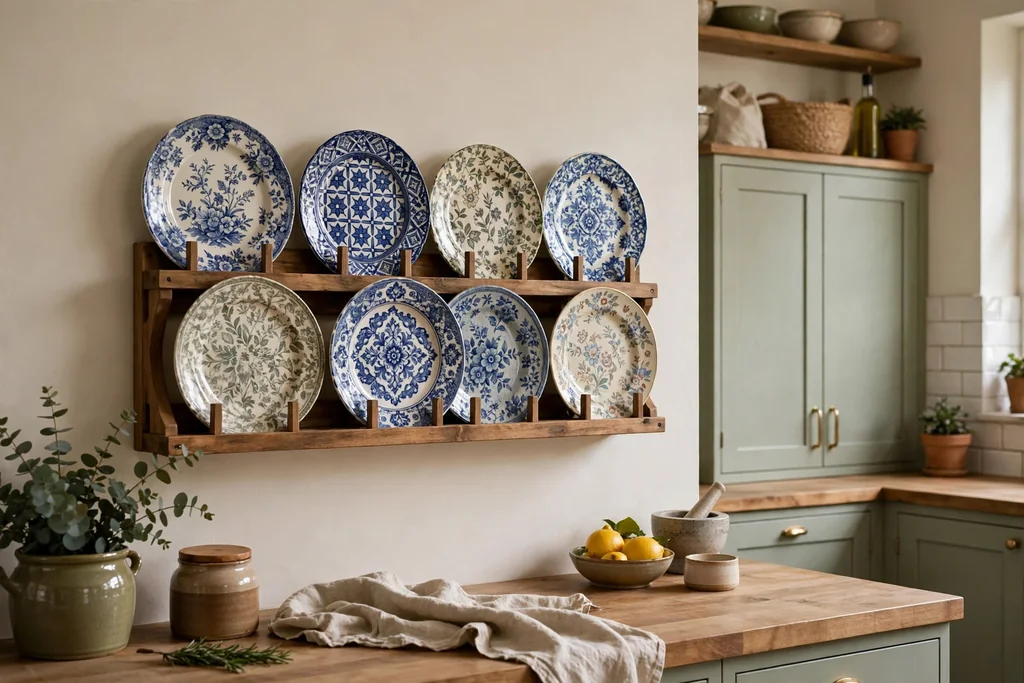
A wall plate rack shows patterned plates and platters as decoration while keeping them easy to grab for serving. It suits a dining wall or the side of a dresser, and it adds colour without a full wall of open shelves. For more ways to dress a plain kitchen wall, these kitchen wall decor ideas show how one display can anchor a room.
Use plates with a shared colour or pattern family, and fix the rack firmly so heavy platters stay safe. Keep daily plates in the dresser or a cupboard, and reserve the rack for serving pieces and favourites.
19. Wool Runner and Woven Seat Pads
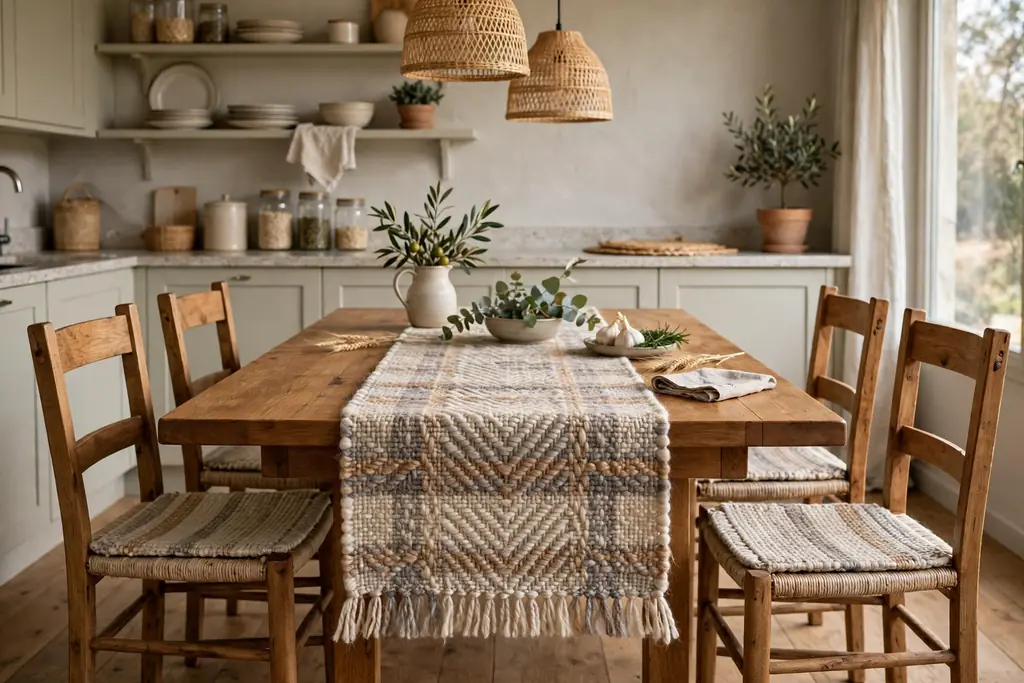
A woven wool runner on the table and woven seat pads on chairs add texture and warmth to a cottage kitchen. Wool suits cooler rooms, and a runner protects the table while giving meals a finished look. Natural tones with one muted check or stripe keep the look calm.
Choose washable or easily brushed wool blends for chairs, since kitchen seats see spills. Swap the runner with the season, using a heavier weave in winter and a lighter linen runner in summer.
20. Warm White Walls with Wood Trim
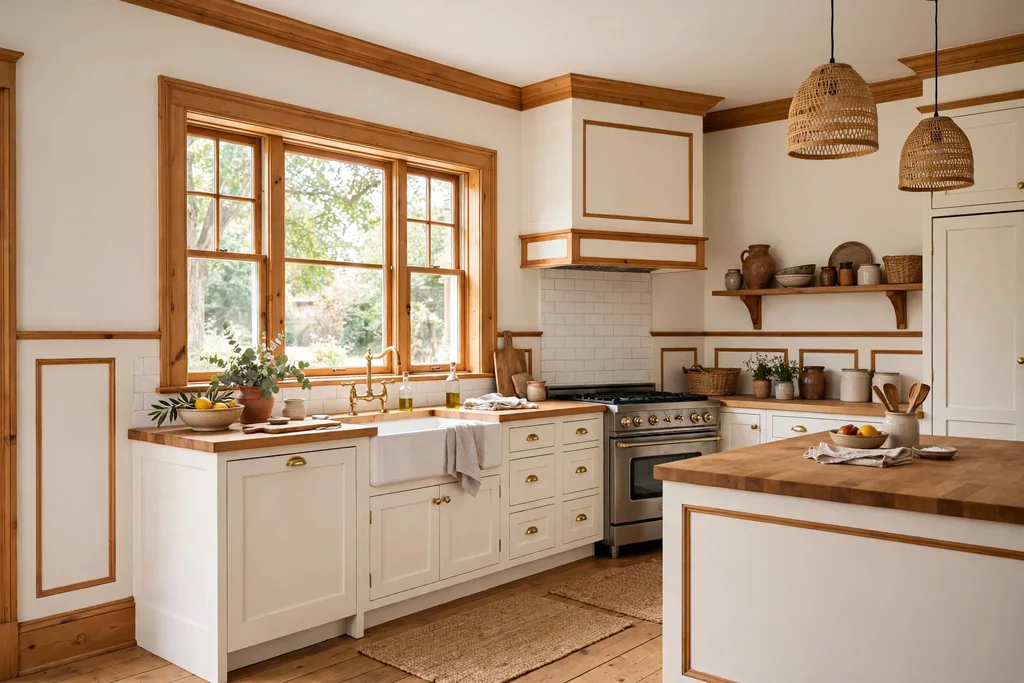
Warm white walls with painted wood trim, such as a dado rail or window architrave, give a kitchen a clean base that still feels cottage-like. The trim adds shape to plain walls, and warm white avoids the cold look of a bright white in a north-facing room. This base suits any cabinet colour.
Paint trim in the same warm white or one shade deeper, and keep wall art simple so the trim stays visible. If the room is small, keep the dado low so the wall still feels tall.
21. Dark Slate Worktop with Cream Units
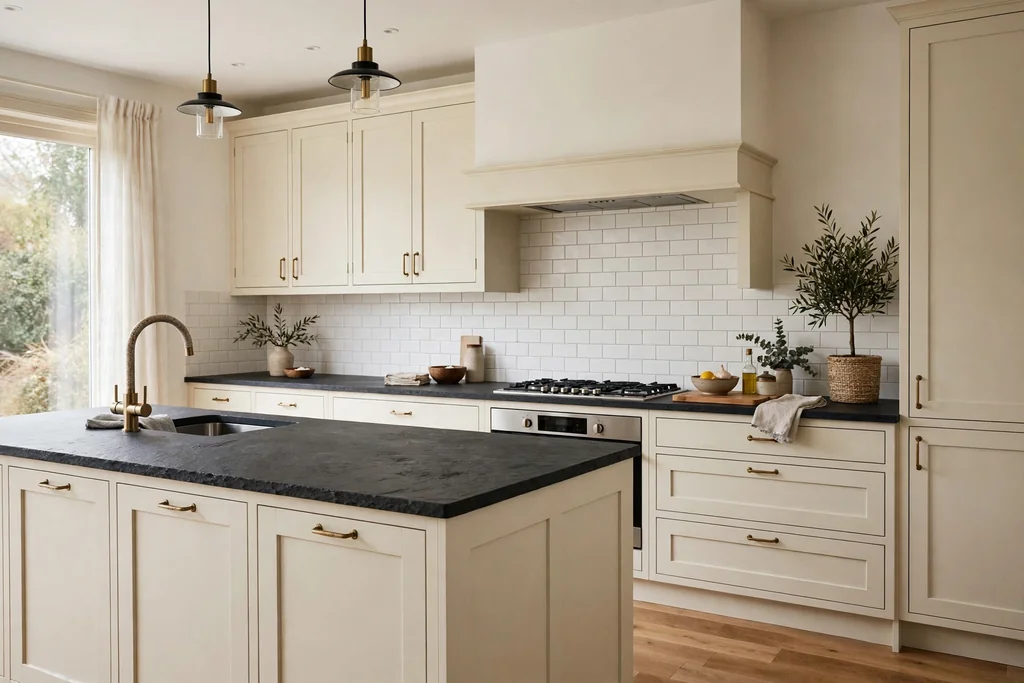
A dark slate worktop gives cream units a firm contrast and a practical surface for hot pots and baking. Slate suits a cottage kitchen because it looks natural and ages without a polished shine. It also pairs well with brass taps and wood dressers.
Seal slate as the supplier advises, wipe acidic spills promptly, and use trivets for very hot pans to protect the seal. Keep the worktop clear of clutter so the dark surface does not make the room feel smaller.
22. Enamel Pendant Lights over the Island
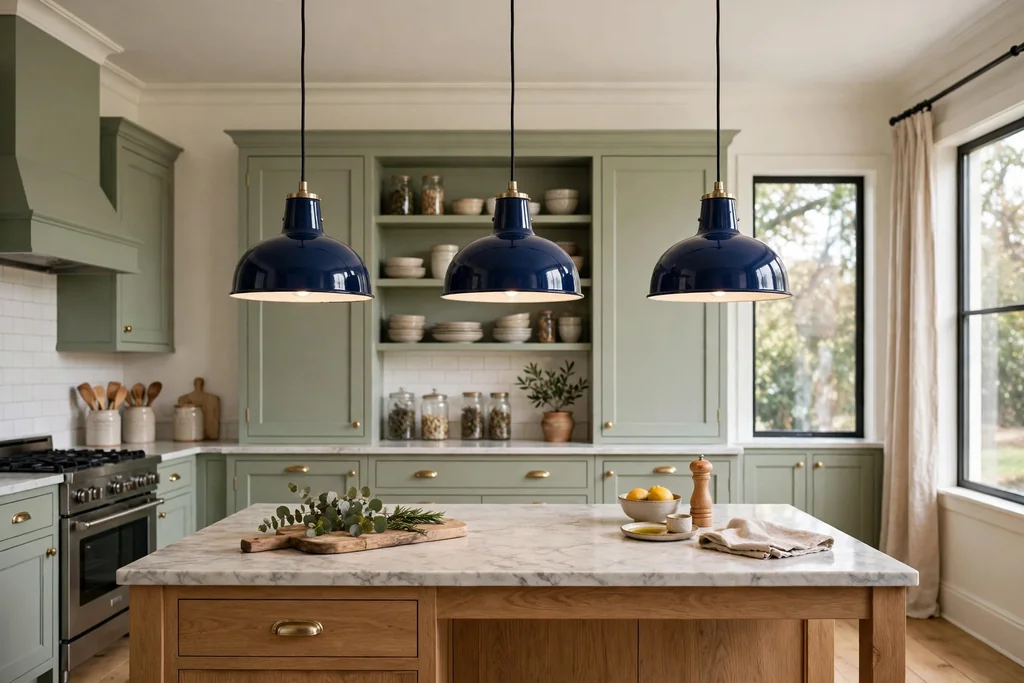
Enamel pendant lights in cream, sage, or navy hang over an island or table and give focused light where you chop and eat. The enamel shade suits a farmhouse kitchen, and the shape directs light down without glare. Two or three pendants suit a long island better than one large fitting.
Hang pendants high enough to see across the island, and use warm white bulbs so the light feels soft in the evening. Put pendants on a dimmer if you can, so the same lights suit cooking and dining.
23. Under-Cabinet Lighting for Worktops
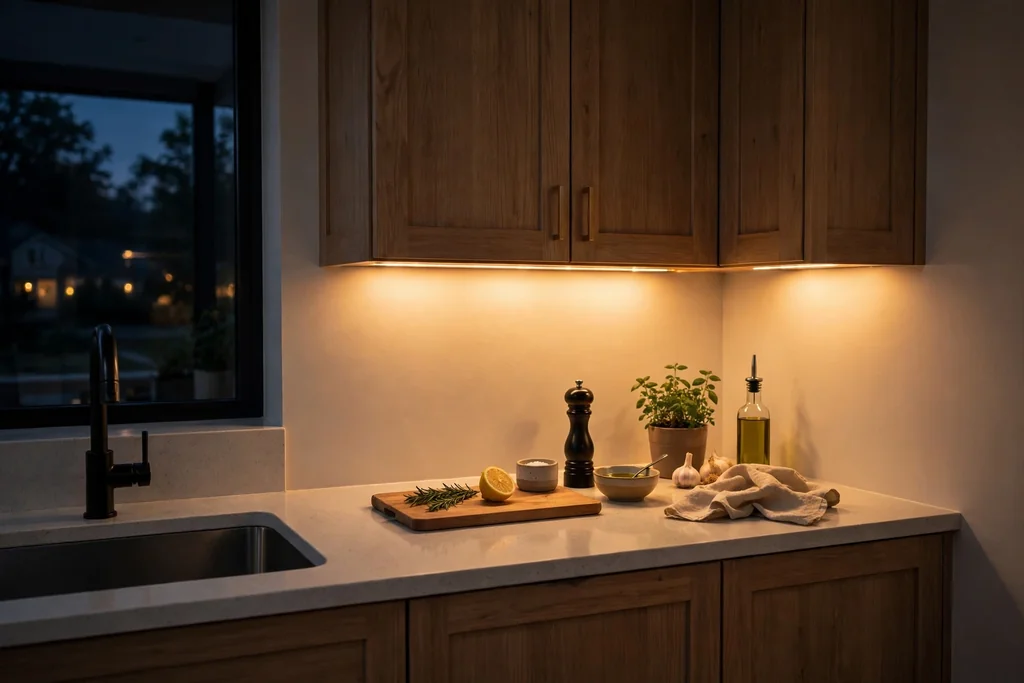
Under-cabinet strips light the worktop directly, which makes chopping safer and the kitchen feel warm after dark. They suit kitchens with wall cabinets, and they remove the shadow your body casts under a ceiling light. Warm white strips suit a cottage kitchen better than a cool blue white.
Fit strips near the front of the cabinet so light falls on the worktop, not the wall, and hide the driver in a cupboard. Add a separate switch or dimmer so task light and room light can work apart.
24. Vintage Rug Runner by the Sink
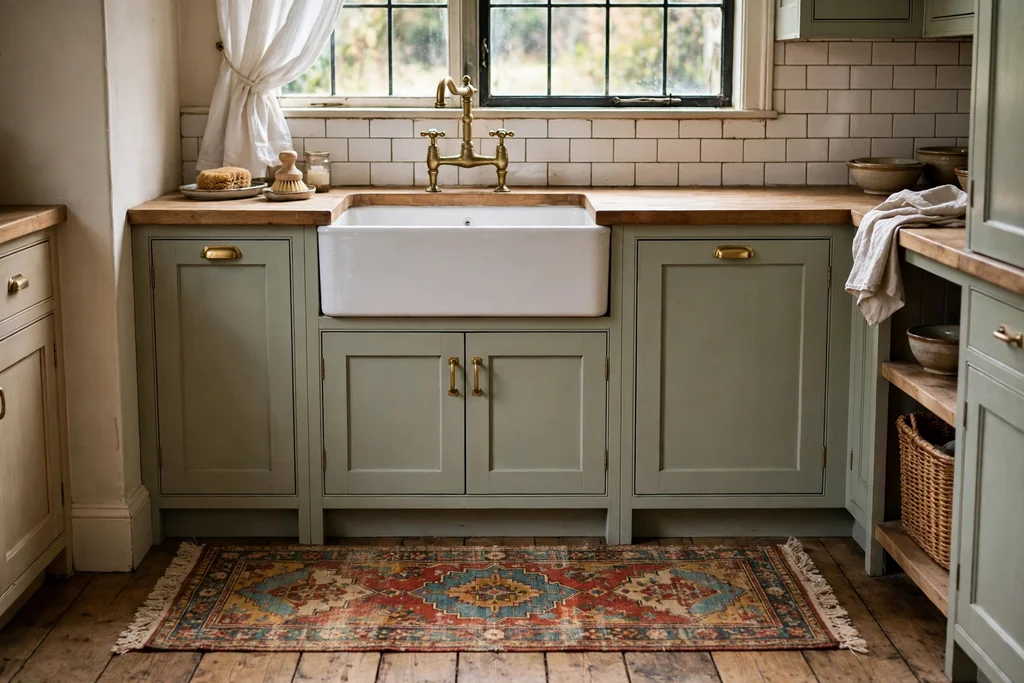
A vintage style rug runner by the sink softens a hard floor and warms the busiest spot in the kitchen. A flat weave runner is easier to clean than a thick pile rug, and a muted pattern hides splashes between washes. It suits a Belfast sink area and a long galley kitchen alike.
Choose a washable runner or one you can shake out outdoors, and use a non-slip mat under it. Keep the runner clear of the cooker, and wash it regularly since the sink area sees water and food daily.
25. Glass-Front Cabinets for Glassware
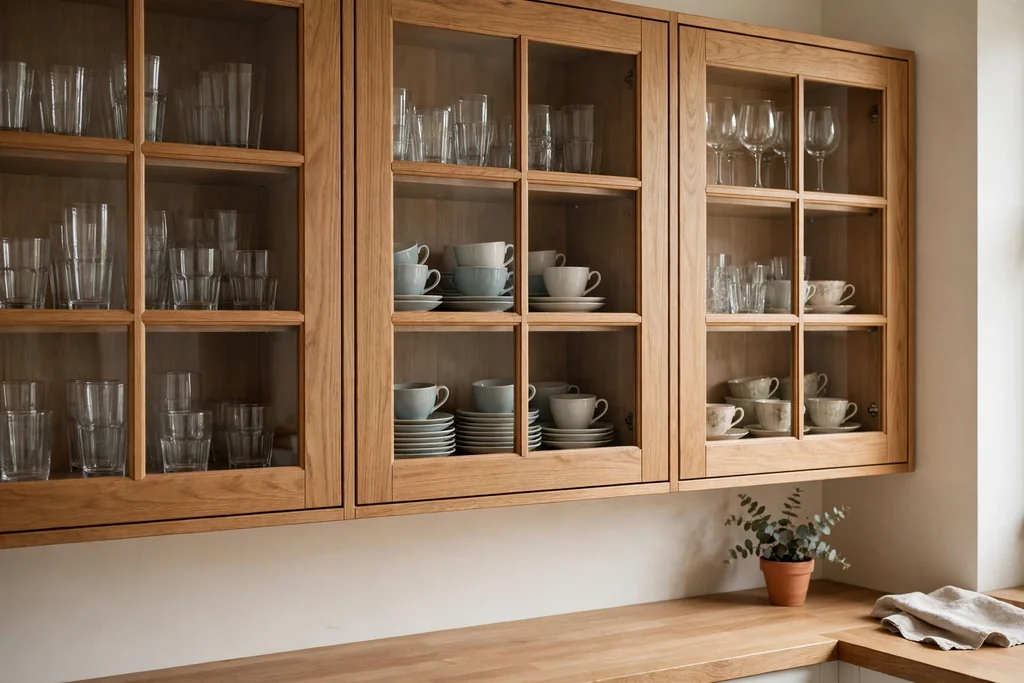
Glass-front cabinets show glasses, teacups, and small jugs while keeping them behind glass and free of dust. They suit a wall run above a worktop or beside a dresser, and they break up a long run of solid doors. Clear glass suits a tidy display, while ribbed glass hides less neat shelves.
Keep the display simple, with glasses grouped by type and daily items at hand height. If the cabinet is high, keep a stable step stool nearby so reaching glasses stays safe.
26. Check Cushions on the Banquette
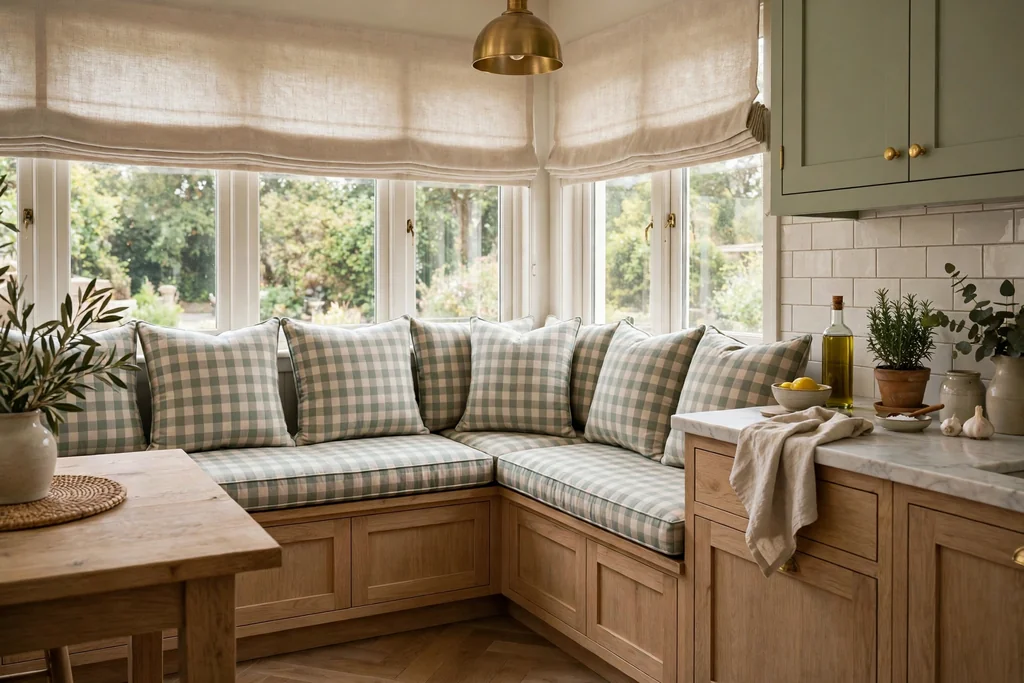
Check cushions in muted green, navy, or red give a banquette or bench a cottage pattern without needing new furniture. Checks suit wood seats and plain linen curtains, and they are easy to swap with the season. This is a low cost way to add an Irish country feel.
Use removable covers for washing, and mix one check with plain cushions so the pattern does not crowd the seat. Keep cushion fill firm enough to support sitting through a long meal.
27. Spring Flowers on the Kitchen Table
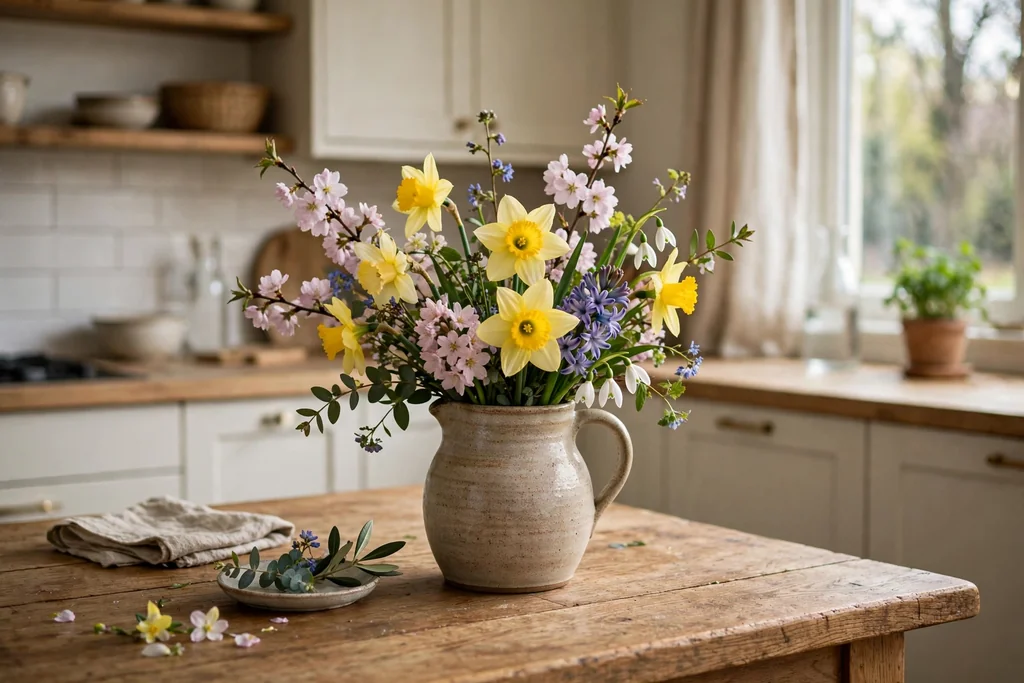
Spring flowers on the kitchen table, such as daffodils, tulips, or a jug of garden stems, mark the season with almost no effort. A simple jug or glass jar suits a cottage table better than a tall formal vase, and it keeps sight lines clear across the table. Change the stems weekly as they fade.
Keep the arrangement low and to one side if the table is used for prep, and use a tray under the jug to catch drips. Pair spring flowers with a plain linen runner so the colour of the stems stands out.
28. Autumn Apple and Harvest Display
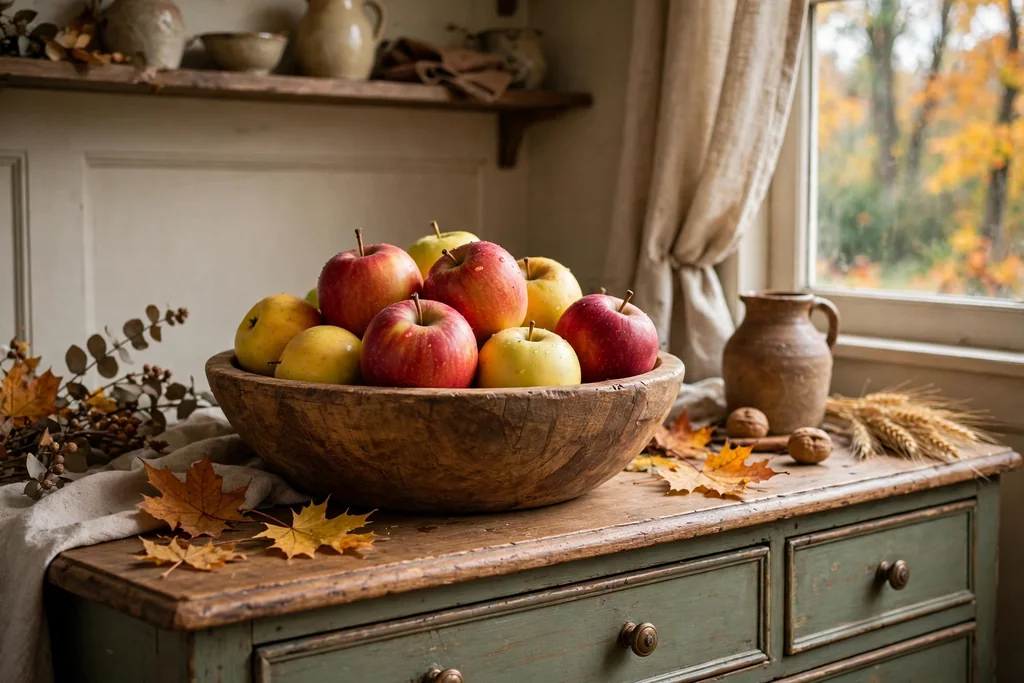
An autumn display of apples in a wood bowl, with a few leaves and a candle on the dresser, brings harvest colour into the kitchen. It suits the table or dresser top, and it uses fruit you can eat rather than items that sit unused. Keep the display simple so it still feels like a kitchen, not a shop window.
Use a shallow bowl so fruit stays visible, and replace any soft fruit promptly. Pair the bowl with a woven runner and warm light in the evening for a harvest table feel.
29. Evergreen Garland on the Dresser at Christmas
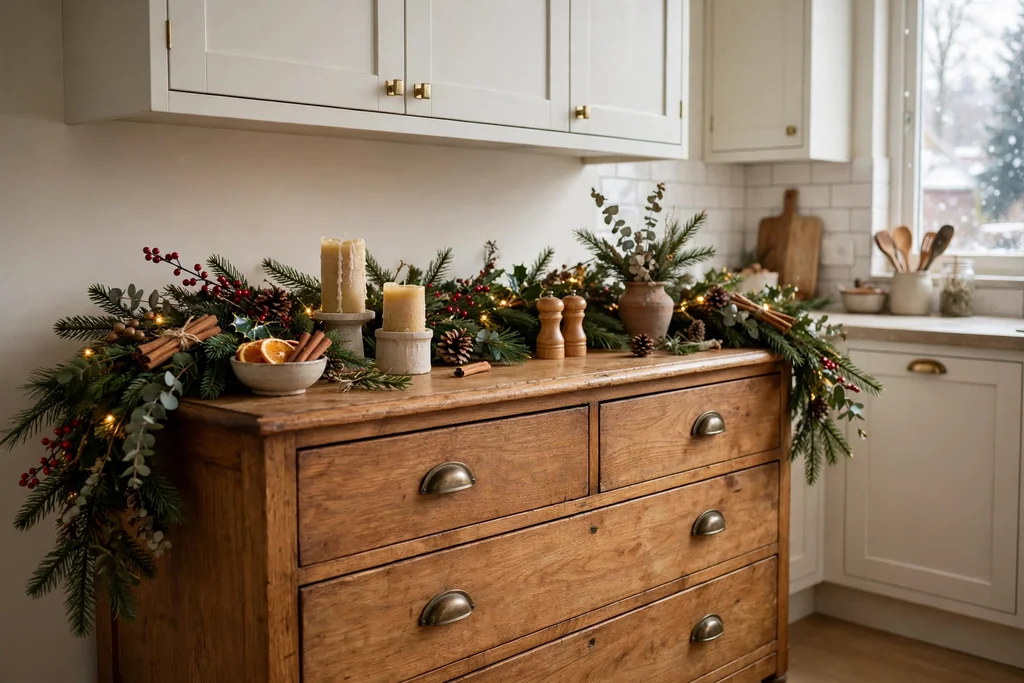
An evergreen garland along the dresser top or mantel gives a kitchen a Christmas feel without taking worktop space. Fresh greenery suits a cottage kitchen, and it pairs well with candles, dried oranges, and a few baubles. Keep the garland clear of the cooker and open flame.
Use a faux garland if fresh greenery drops needles near food, and check candles are in stable holders away from the garland. Take the garland down promptly after Christmas so the dresser returns to daily use.
30. Tea Station with a Teapot Collection
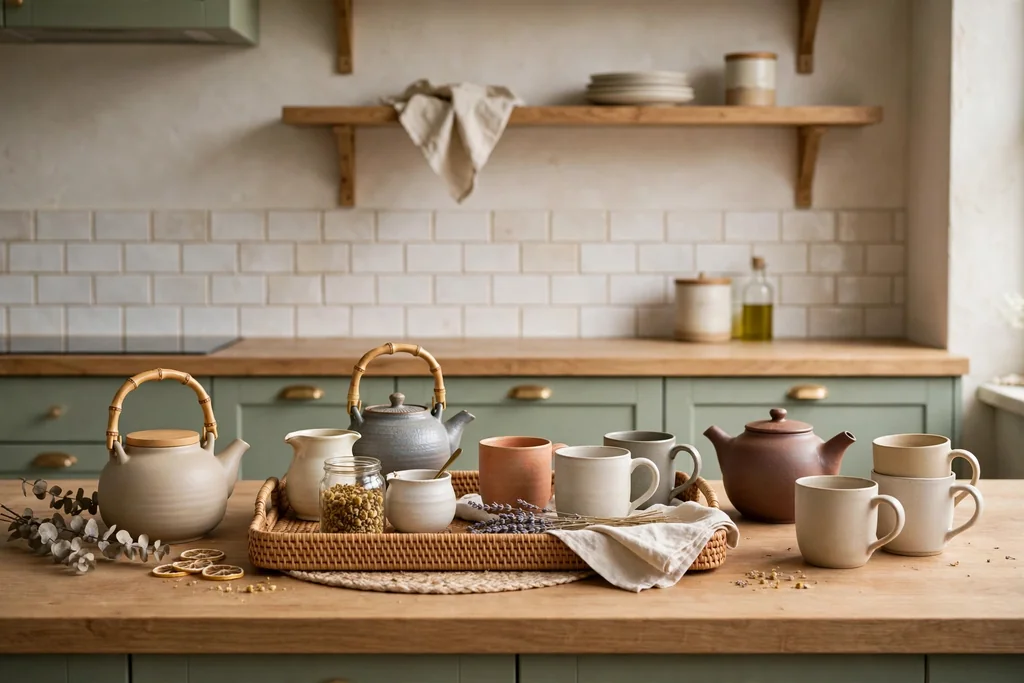
A tea station on a dresser shelf or a small trolley keeps teapots, mugs, tea caddies, and a kettle in one place for daily tea. It suits a kitchen where tea is a ritual, and it stops tea items spreading across worktops. A tray under the station catches drips and keeps the area tidy.
Group teapots by size, keep daily mugs at the front, and store rarely used pots higher up. Add a small jar of biscuits or a sugar bowl, and keep the station near the kettle so making tea stays a short task.
31. Baking Corner with Boards and Scales
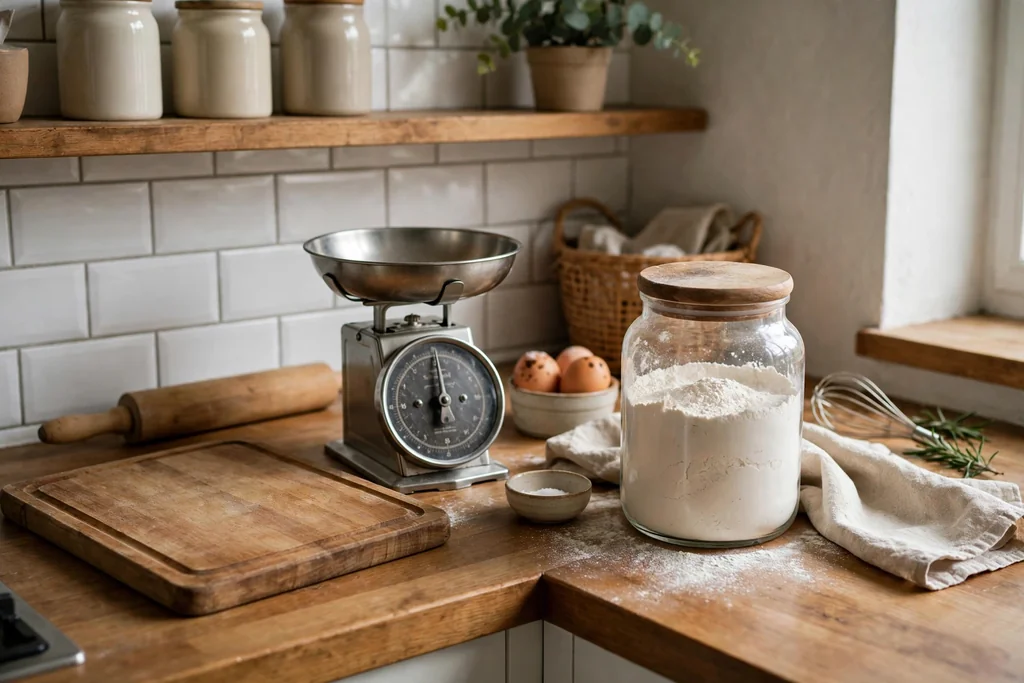
A baking corner with a marble or wood board, scales, a flour jar, and a rolling pin keeps baking tools together and ready. It suits a kitchen with a clear stretch of worktop near the oven, and it makes weekend baking far simpler. Keep the corner tidy so it can still serve as prep space.
Store flour in a sealed jar, keep the board upright or flat where it will not warp, and hang measuring cups on a hook nearby. Wipe the board after each bake, and keep a clean tea towel in the corner for hands and spills.
32. Mudroom Hooks by the Kitchen Door
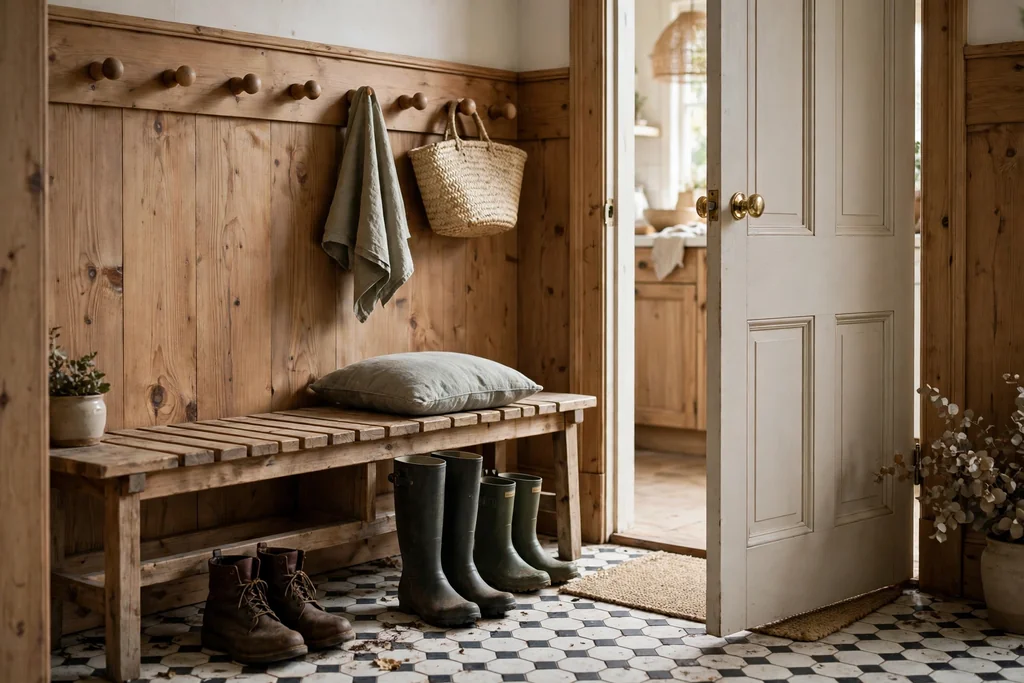
Hooks, a bench, and a tray by the kitchen door give coats, bags, and boots a home before they reach the kitchen floor. This suits a back door or a utility link, and it keeps a cottage kitchen tidy through wet weather. A row of wood pegs suits the country look better than a tall metal rack.
Label or assign hooks by person if the household is large, and keep a basket for hats and gloves. Sweep the tray area weekly, since boots bring in mud and leaves.
33. Narrow Island on Castors for a Small Kitchen
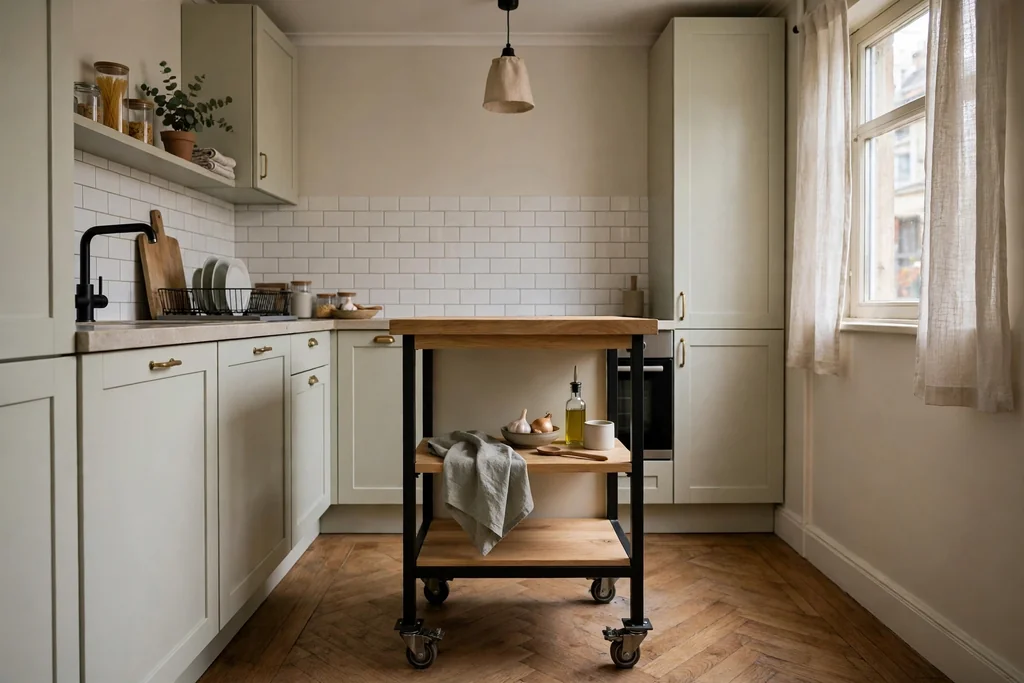
A narrow island on castors gives a small kitchen extra worktop and storage that can move out of the way when needed. It suits a galley or a small cottage kitchen, where a fixed island would block the path. For more small kitchen planning, these kitchen ideas on a budget show how one movable piece can do the work of a larger refit.
Choose an island with a towel rail and a shelf, lock the castors while chopping, and keep its top clear for daily use. Measure doorways before buying, so the island can move to another room if needed.
34. Coastal Irish Kitchen with Pale Blue and Driftwood
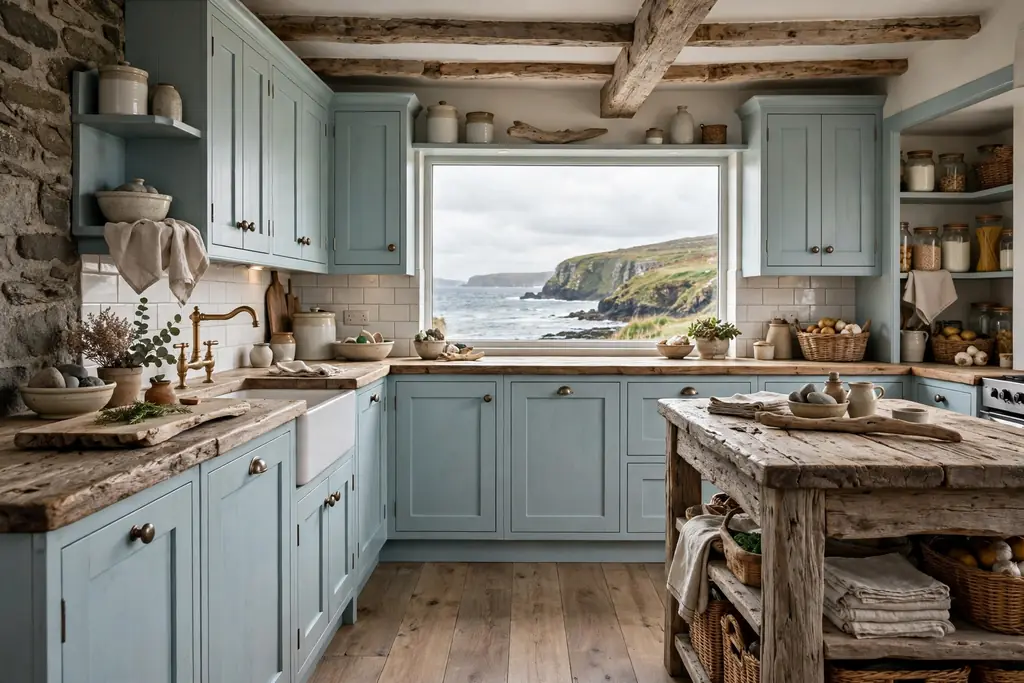
A coastal Irish kitchen uses pale blue cabinets, driftwood tones, and sea glass accents to bring a seaside cottage feel inland. Pale blue keeps the room bright, wood adds warmth, and a few coastal details, such as a shell print or a rope-handled basket, finish the look without turning it into a theme room.
Keep coastal details to a few pieces, and use plain linen and wood for the rest so the room still works as a kitchen. Pale blue suits cream walls and a light wood floor, and it pairs well with white pottery and brass fittings.
Conclusion
An Irish kitchen works best when the practical parts come first and the pretty parts earn their place. Cream or sage cabinets, a deep sink, a dresser, and a wood table give you a base that lasts, while linen, wool, light, and seasonal displays let you change the mood through the year. Pick the ideas that suit your room, your budget, and the way you cook, and add them one at a time. A kitchen that is easy to use, easy to clean, and pleasant to sit in will feel warm in every season, and these white kitchen ideas can help you keep that base light as you add colour.
FAQs
What makes a kitchen feel Irish rather than just farmhouse?
An Irish kitchen leans on cottage details such as a Belfast sink, a wood dresser, linen curtains, and natural materials like wood, stone, and wool, rather than on one style label. The look comes from useful pieces used daily, not from themed decoration, so a dresser full of real pottery reads as Irish more than a sign or a print does.
What colours suit an Irish kitchen best?
Cream, warm white, sage green, navy, and pale blue all suit an Irish kitchen, with wood tones to warm them up. Cream and sage suit small or north-facing rooms, while navy works best as an island or a single run of units. Keep walls warm white so the cabinet colour reads clearly.
Is a Belfast sink practical for a modern kitchen?
Yes, a Belfast sink is practical if the cabinet and floor can support its weight and you have worktop beside it for draining. Its depth suits large pots and baking trays, and a bridge tap suits the style. Check plumbing and support before fitting, and choose a draining board or rack to match.
How can I get an Irish cottage look in a small kitchen?
Use a dresser or open shelves instead of extra fitted units, a narrow island on castors, and a banquette in a corner to save floor space. Keep cabinets cream or sage, use linen curtains and a washable runner, and let one or two seasonal displays do the decorating work.
How do I update an Irish kitchen for each season?
Change textiles and table displays rather than cabinets: spring flowers in a jug, an autumn bowl of apples, and an evergreen garland on the dresser at Christmas. Swap cushion covers and runners with the season, and keep the base of cream, wood, and stone the same all year.
What is the best worktop for an Irish cottage kitchen?
Butcher block suits baking and everyday prep, while slate or stone suits heat and a more formal look. Wood needs regular oiling, and slate needs sealing, so choose based on how much care you want to give. Many kitchens pair a wood island top with a stone run by the sink and cooker.