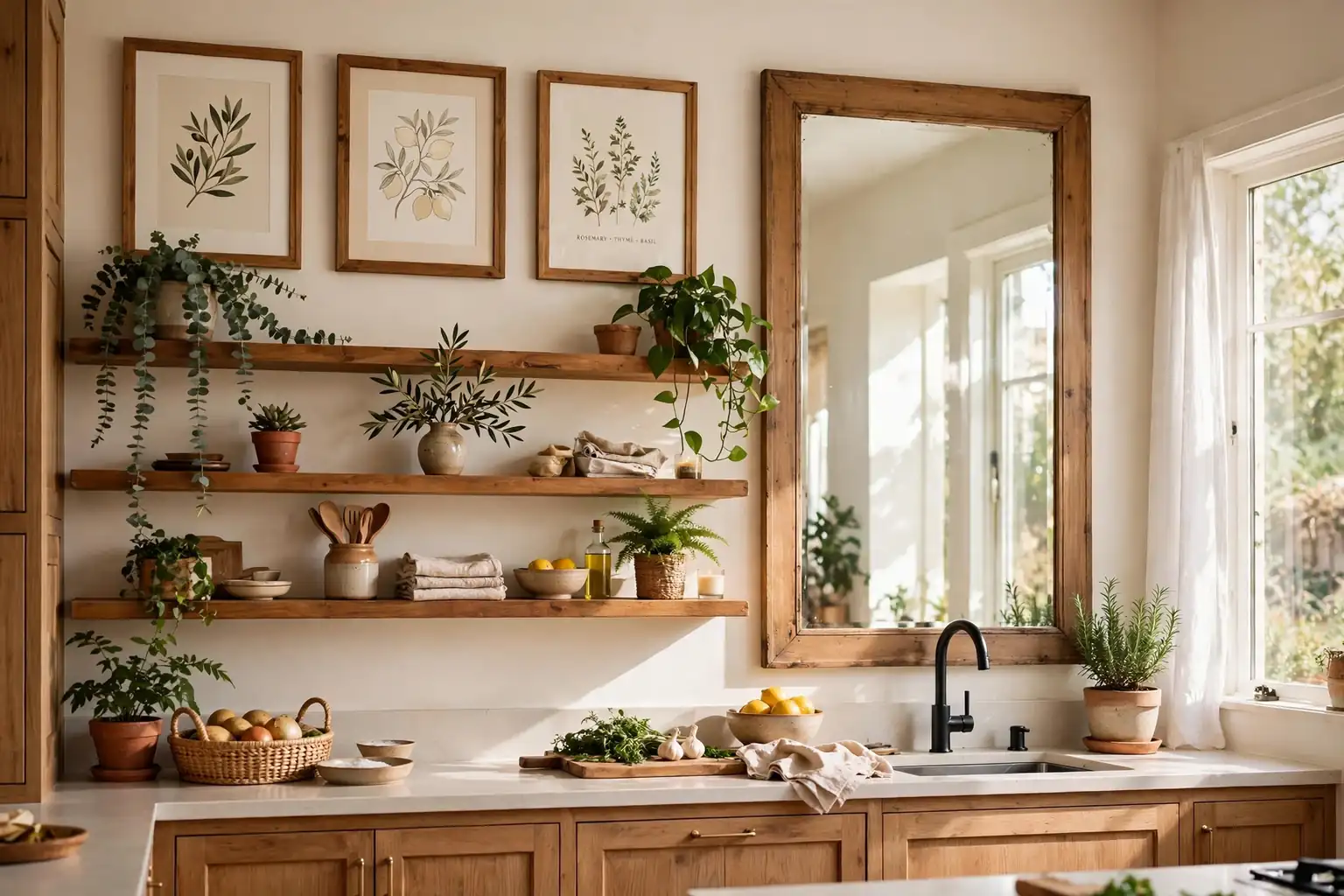
Kitchen walls often stay blank while counters fill up, yet a wall is one of the easiest places to add warmth and character. The best kitchen wall decor does two jobs at once: it looks good from the table, and it survives steam, splashes, and daily cooking. These 22 kitchen wall decor ideas cover framed art, plates, mirrors, baskets, tile, shelves, and useful displays, so you can start with one wall and add more later. If your wall also needs to work harder for storage, these kitchen wall storage ideas pair well with the decor ideas below.
Key Takeaways
- Start with the wall you see most, usually the one opposite the door or above the table, and finish that wall before adding decor elsewhere.
- Keep one repeat through the room, such as wood, black metal, or brass, so mixed art and displays still look planned.
- Hang art and shelves clear of stove steam and sink splashes, and choose wipeable frames and finishes near the cooking zone.
- Mix sizes on a gallery wall: one large piece, a few medium pieces, and small fillers, with even gaps between frames.
- Leave some wall empty. A calm stretch of paint or tile helps a busy display read as decor rather than clutter.
- Test hanging with paper templates taped to the wall before you drill, especially for a plate wall or a large gallery group.
1. Framed Print Gallery Wall
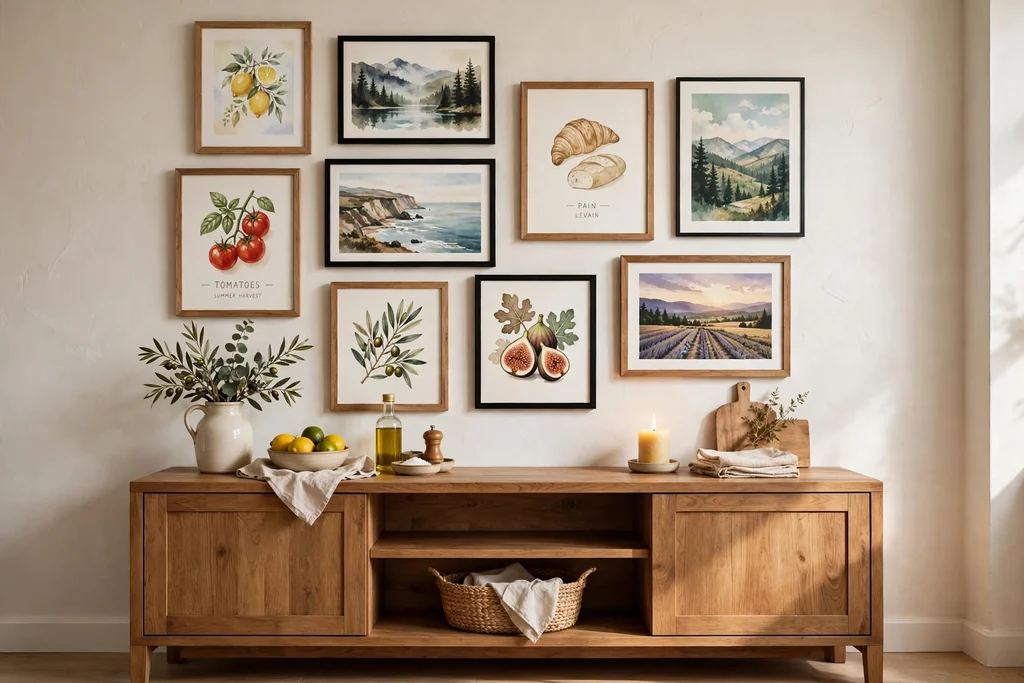
A gallery wall suits a long blank kitchen wall, a stair wall beside the kitchen, or the wall above a sideboard. Mix food prints, landscape prints, and simple line art in frames of one color, so the group looks collected rather than random. Start with the largest frame near the center, then build outward with medium and small frames, keeping gaps of about two inches between them.
Lay the whole group on the floor first and photograph it, so you can check the balance before you hang anything. Use paper templates on the wall to test the layout at eye level, with the center of the group about 57 inches from the floor. If the wall sits above a table or sideboard, hang the lowest frame six to eight inches above the furniture so the group links to it.
2. Picture Ledge with Leaning Art
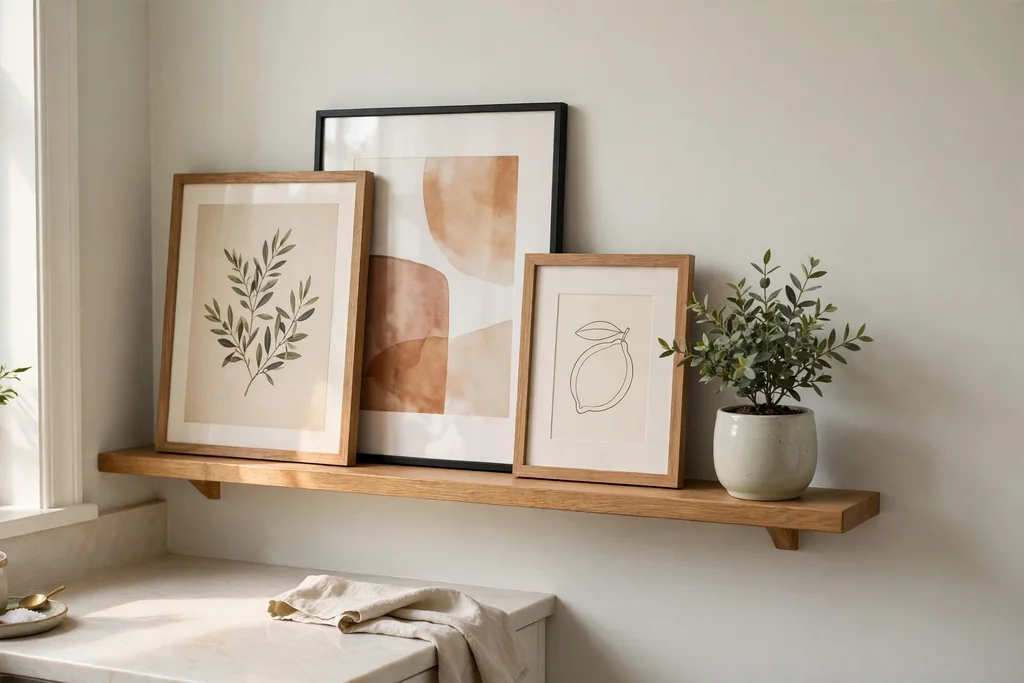
A picture ledge lets you change kitchen art without new holes each time, which suits renters and anyone who likes a seasonal swap. Fix one or two slim ledges to a wall, then lean framed prints, a small cutting board, and a tiny plant along them, overlapping the frames slightly for a layered look. The ledge lip stops pieces sliding forward, while the shallow depth keeps the shelf from jutting into the room.
Keep the heaviest frame at one end and the tallest piece near the center, so the row does not tip visually to one side. Swap one print by season, such as a botanical print in spring and a warm landscape in autumn, and keep the rest of the ledge the same. Dust the ledge during your usual kitchen clean, since horizontal surfaces near cooking gather grease film faster than wall art hung flat.
3. Oversized Wall Clock
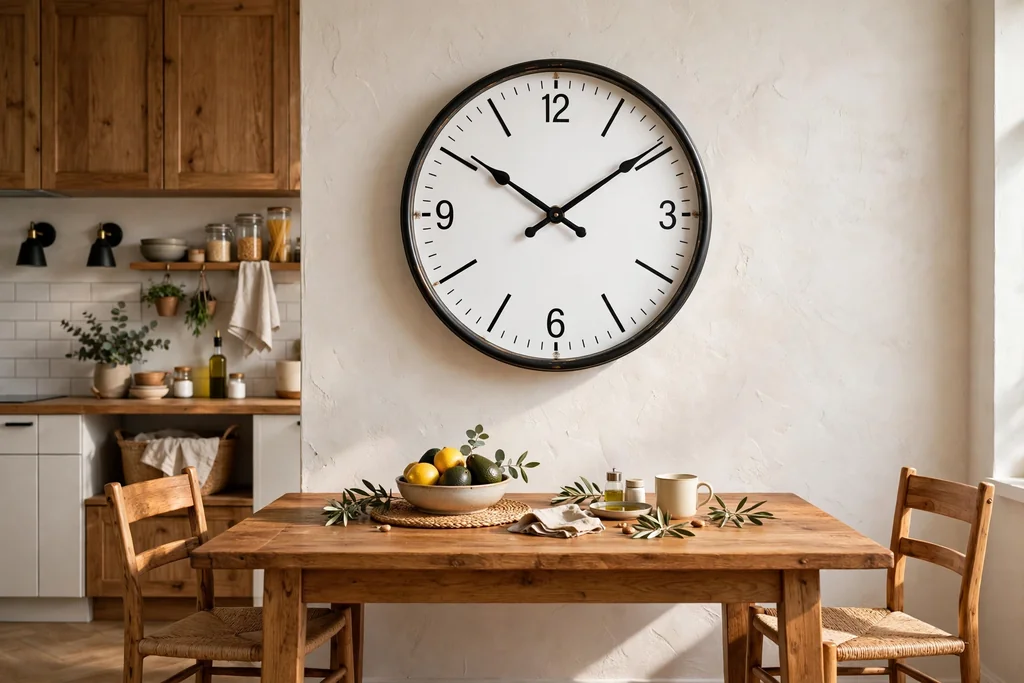
An oversized clock gives a kitchen wall a clear focal point and a useful job, especially on a wall that is too large for a small print. Choose a clock with a plain face and clear numbers, so you can read it from the stove, and a frame in wood or black metal that repeats a finish already in the room. A clock of 24 inches or more suits a large wall, while a smaller clock can disappear on the same wall.
Hang the clock at eye level on a wall you face while cooking or eating, not above a heat source where steam can damage the movement. Check the hanging fixings for the weight, and keep the clock level so the hands read true. If the ticking bothers you at night in an open plan room, choose a silent movement model before you buy.
4. Chalkboard Menu Wall
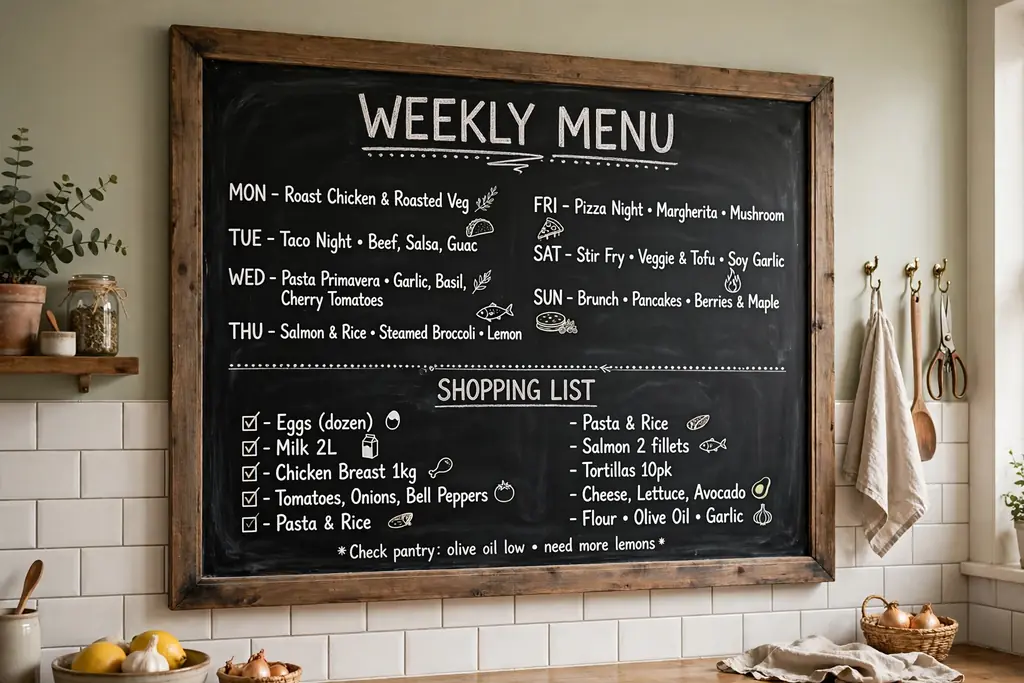
A chalkboard wall turns a kitchen wall into a planning tool as well as decor. Paint one panel, or hang a large framed chalkboard, near the kitchen entry or beside the pantry, and use it for the weekly menu, a shopping list, and notes for the household. A neat header, a menu section, and a list section keep the board readable, even when the writing is quick.
Use chalk markers for headings that stay all week, such as days of the week, and plain chalk for items that change daily. Wipe the board clean each week with a damp cloth, so old items do not linger and get bought twice. Keep the board away from the stove splash zone, and hang a small cup beside it for chalk and markers, so the tools stay with the board.
5. Plate Wall Display
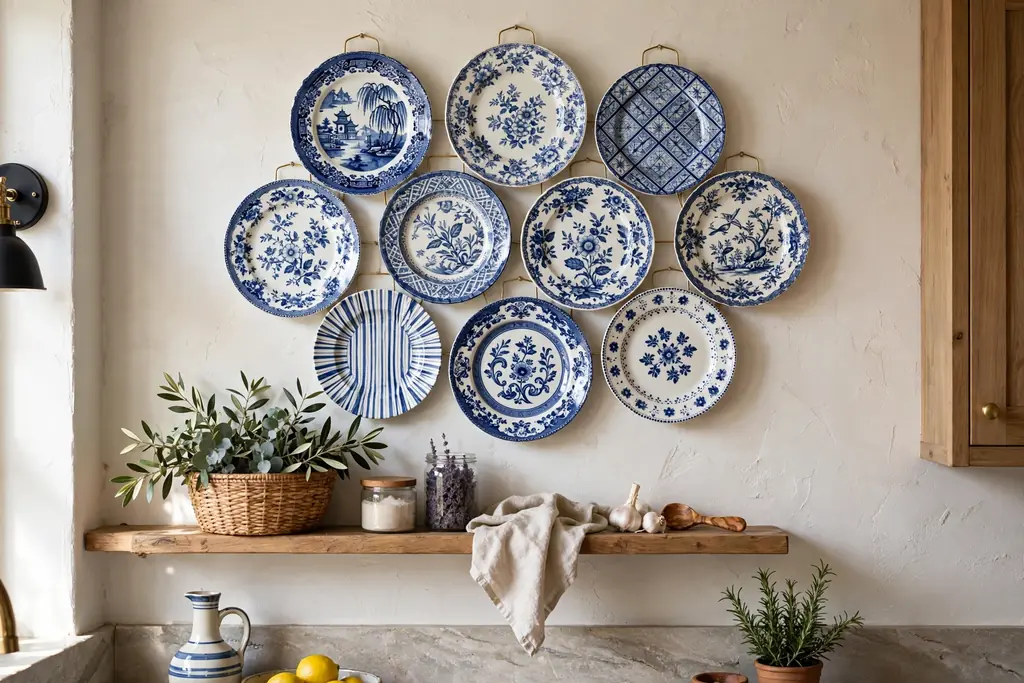
A plate wall shows off plates you already own, from plain white dinner plates to patterned serving plates and pieces picked up on travels. Choose plates in a limited palette, such as blue and white, cream and green, or warm terracotta, so the wall reads as a set rather than a random collection. Mix sizes, with large chargers at the center and smaller plates around them.
Use plate hangers rated for each plate size, and test one hanger before you hang the full group. Paper templates help here too, since plates are round and gaps are easy to misjudge by eye. Hang the group where it will not be knocked by a door swing or a chair back, and dust the plates during a normal clean, since open plates near cooking gather film.
6. Botanical Herb Prints
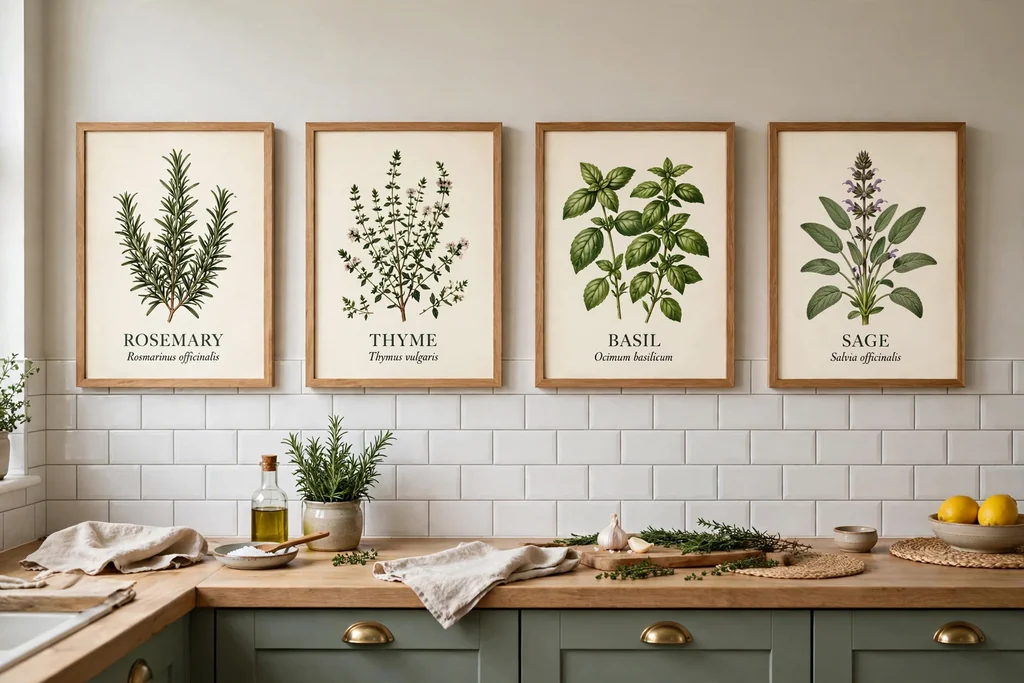
Botanical prints of herbs, such as basil, rosemary, thyme, and mint, suit a kitchen because they link the wall to what you cook. Choose prints with a plain background and a simple frame, so the plant shapes carry the interest, and hang them as a row of three or four above a counter, or as a pair beside a window. A row works best when the prints are the same size and the frames match.
Pair the prints with a real herb pot on the counter below, if the light allows, so the wall art and the cooking herbs echo each other. Keep framed prints clear of direct stove steam, which can warp paper and cloud glass over time. If the wall is damp or steamy, choose prints behind sealed acrylic rather than open glass.
7. Large Mirror on a Blank Wall
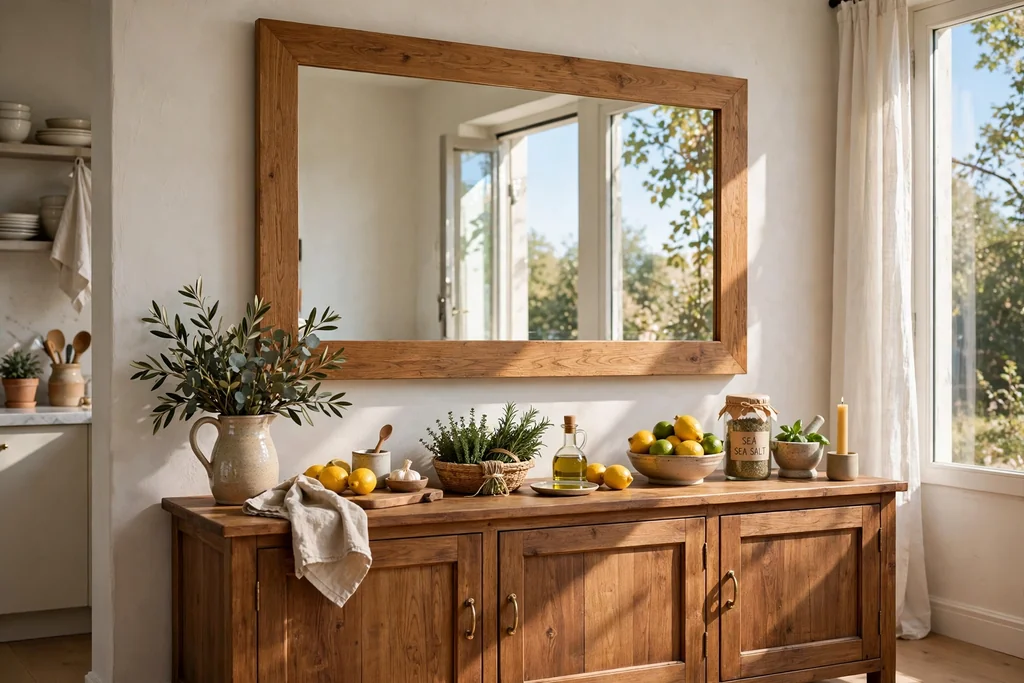
A large mirror makes a small or dark kitchen feel brighter, because it bounces daylight from a window across the room. Hang one mirror, rather than several small ones, on the wall opposite a window or beside a dining nook, and choose a frame in wood, brass, or black that matches another finish in the room. A mirror above a sideboard or console also gives a place to check the room before guests arrive.
Keep the mirror clear of the stove and sink splash zones, where steam and water spots will need constant wiping. Fix it into a stud or with fixings rated for its weight, and check that it does not reflect a cluttered corner back into the room. For more ways to use light beside a mirror, see these kitchen window decor ideas for treatments that keep daylight in the room.
8. Woven Basket Wall Grouping
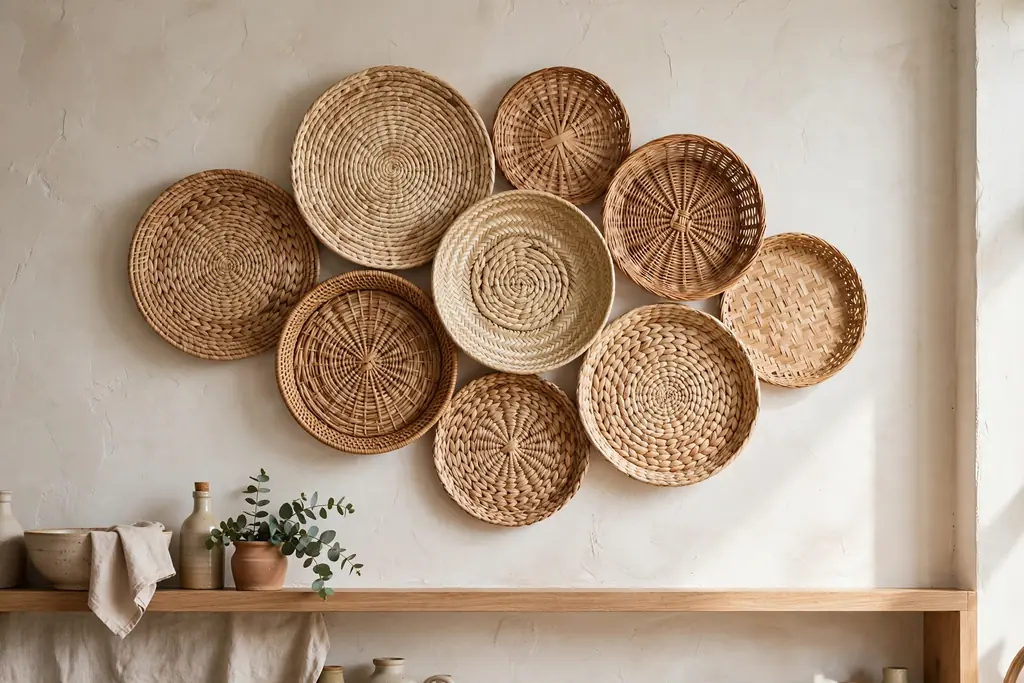
A grouping of flat woven baskets adds warm texture to a kitchen wall, with no glass to clean and no heavy frames to hang. Choose baskets in natural tones, such as seagrass, rattan, and pale wood, in a mix of sizes, and arrange them in a loose cluster with the largest basket near the center. The round shapes soften a room full of straight cabinet lines and square tiles.
Hang baskets with small nails or removable hooks, testing the hold before you step back, since woven baskets are light but can slip off a smooth hook. Keep the group clear of the stove, where heat can dry and weaken natural fibers. Dust the baskets with a soft brush during a normal clean, and swap one basket by season if you want a change without redoing the whole wall.
9. Feature Tile Panel Above the Range
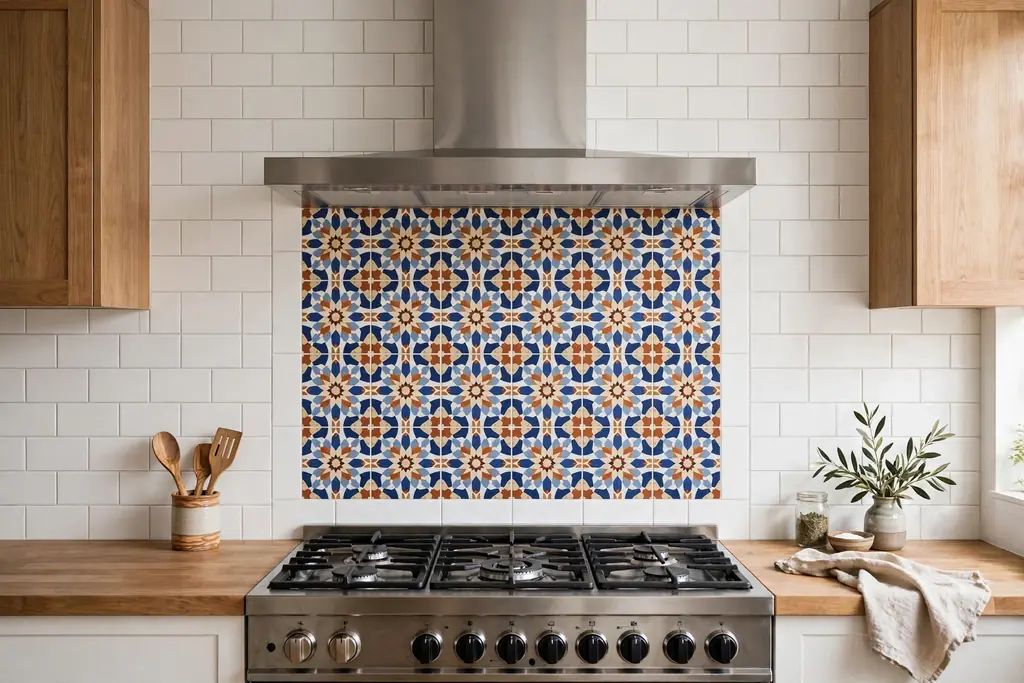
A feature tile panel above the range gives the cooking wall a clear center, without tiling the whole room. Choose a patterned tile, a handmade look tile, or a bold color in a framed panel shape, such as a rectangle or an arch, and keep the tiles around it plain so the panel stands out. A panel that runs from the counter to the underside of the range hood looks planned and finished.
Use tiles rated for heat and splashes, and seal the grout so cooking splashes wipe off easily. Measure the panel to sit centered over the range, with equal space on each side, and check that the hood or shelf above does not cut the panel at an awkward height. If you rent, a removable tile-look panel or a framed tile board gives a similar focus without changing the wall.
10. Wood Peg Rail for Mugs and Tools
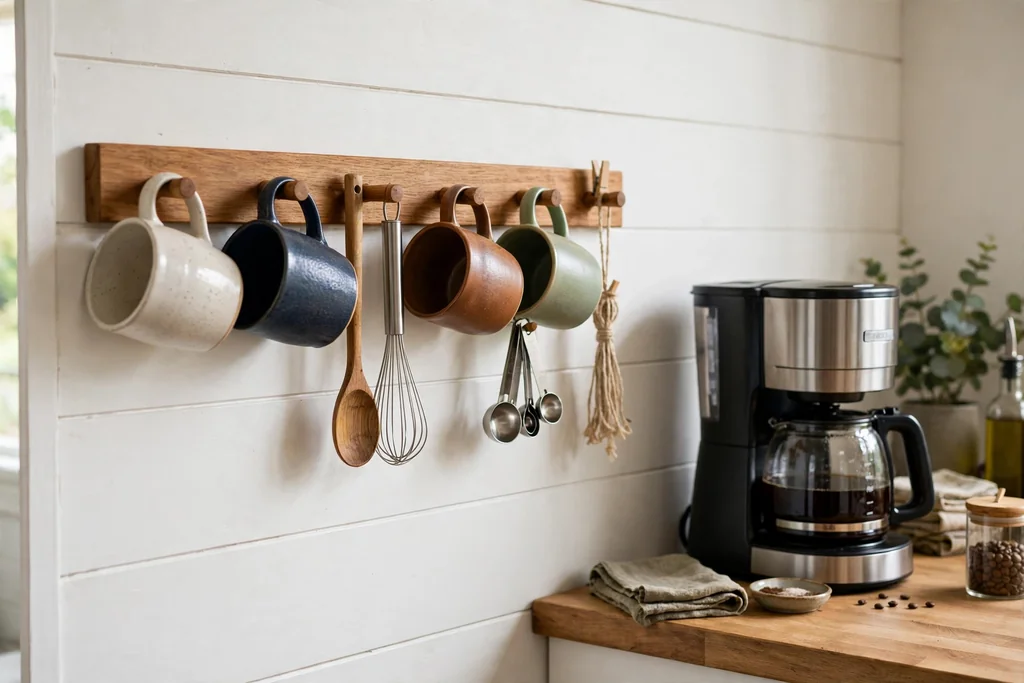
A wood peg rail on a kitchen wall holds mugs, small tools, and one or two small art pieces, so the wall works as well as it looks. Fix a rail with sturdy pegs beside the coffee maker or near the prep counter, and hang daily mugs by their handles, with space between them so handles do not lock together. One small framed print or a tiny plant at one end keeps the rail from looking like plain storage.
Keep the rail to the mugs and tools you use every week, and store spares elsewhere, so the rail stays calm rather than crowded. Hang heavier items near the rail brackets, where the rail is strongest, and wipe the rail often, since steam and grease settle on wood near the stove. A peg rail also suits a short wall or a narrow gap between cabinets that is too small for a shelf.
11. Floating Shelves with Ceramics and Art
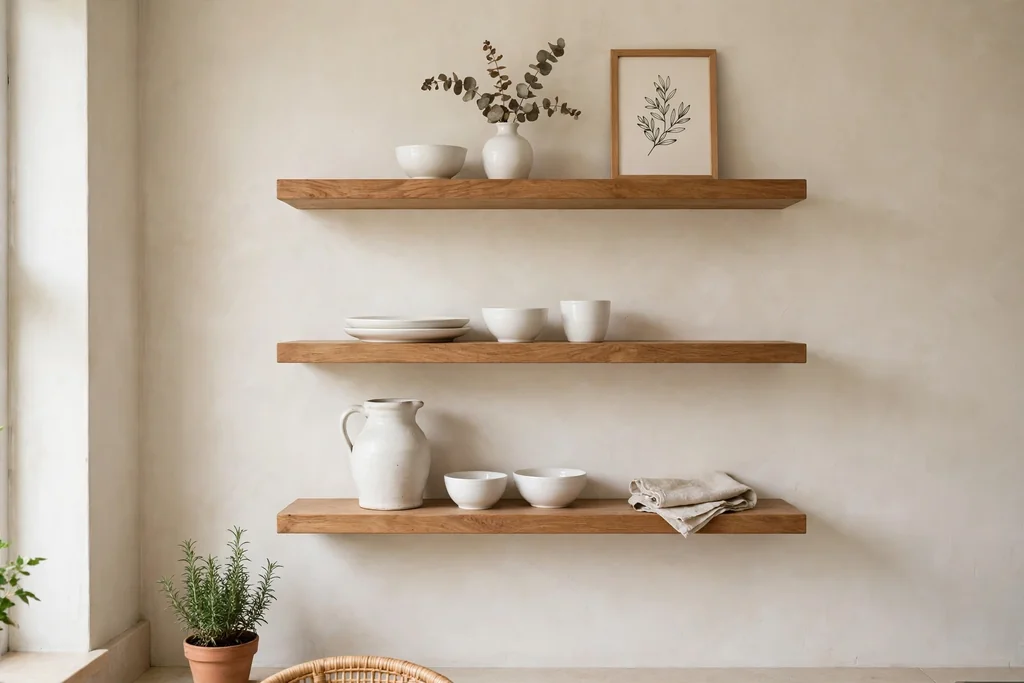
Floating shelves on one kitchen wall give you a place for ceramics, small art, and cookbooks, with the wall itself still visible between shelves. Fix two or three shelves in wood or painted board, spaced to fit the tallest item you plan to display, and style each shelf with a mix of stacked plates, a jug, and one small framed print leaning against the wall. Leave breathing room between groups so the shelves read as tidy.
Keep daily dishes on the lowest shelf, where they are easy to reach, and decorative pieces higher up. Dust open shelves weekly, since open storage near cooking collects film, and keep shelves clear of direct stove steam. If the wall is long, leave a gap between shelf groups, rather than running shelves end to end, so the wall keeps some calm space.
12. Framed Family Recipe Art
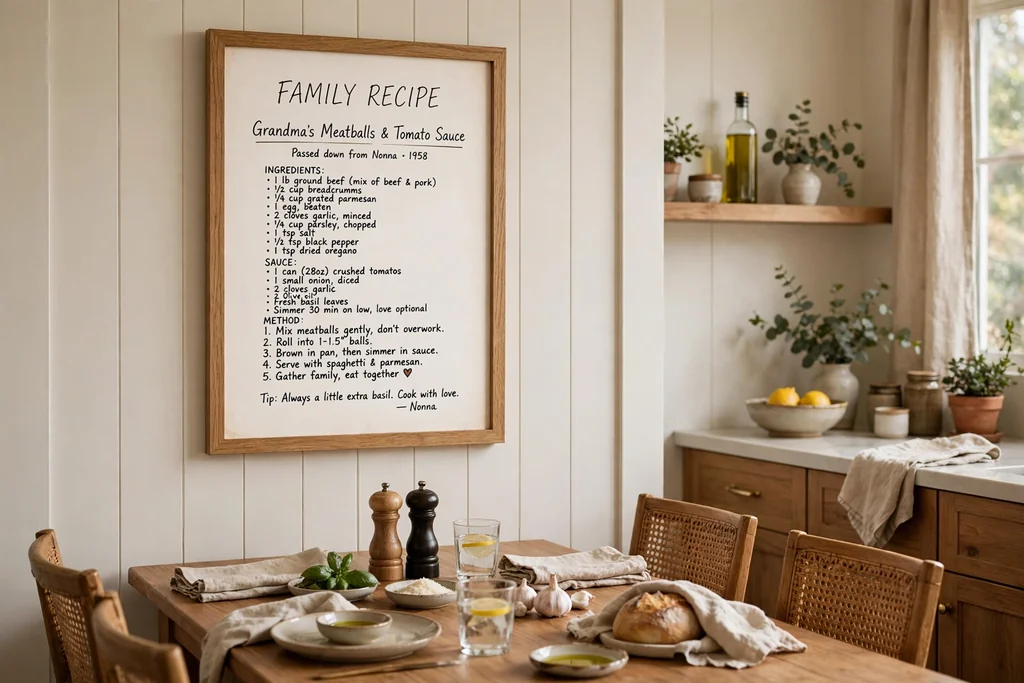
Framed recipe art turns a handwritten family recipe, a favorite recipe card, or a printed recipe in a clear layout into kitchen wall decor with personal meaning. Scan or photograph the original recipe, print it at a size that suits the frame, and keep the original safe away from steam and light. A simple frame and a plain mat let the handwriting or the recipe layout carry the interest.
Hang recipe art near the dining area or on a wall away from the stove, where steam will not damage the paper over time. Pair one recipe frame with a small shelf below for the ingredients jar or a wooden spoon, if the wall allows, so the art links to cooking. If the recipe is long, choose one short recipe, such as a cake or a soup, so the text stays readable from a few steps away.
13. Wall Pot Rail with Copper Pans
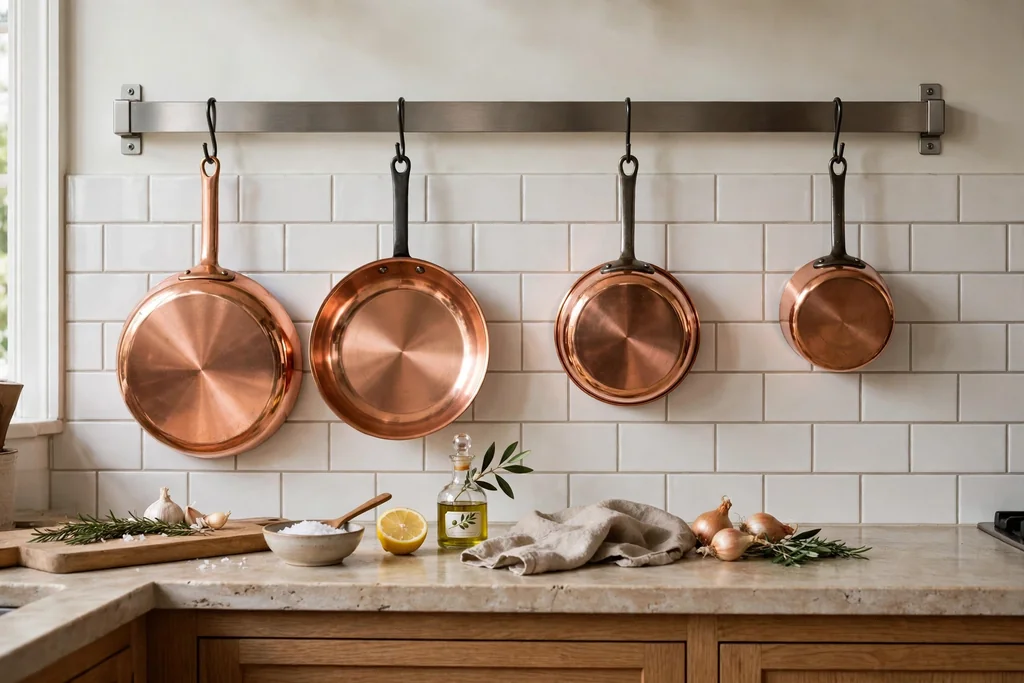
A wall pot rail with copper pans gives a kitchen wall warm metal color and a useful hanging spot for pans you reach for often. Fix a steel or wood rail with S-hooks above a counter or beside the range, with enough clearance below for the longest pan to hang without hitting the counter. Hang the heaviest pan nearest a wall bracket, where the rail is strongest, and keep lids on a separate hook so they do not tangle with pans.
Polish copper pans now and then if you want a bright shine, or let them darken gently for a softer, lived in look. Wipe the rail weekly, since steam and grease settle on horizontal metal near the stove. If the wall space is short, a single rail for two pans and a colander still adds color and frees a cabinet, without covering the whole wall.
14. Cutting Board Display Wall
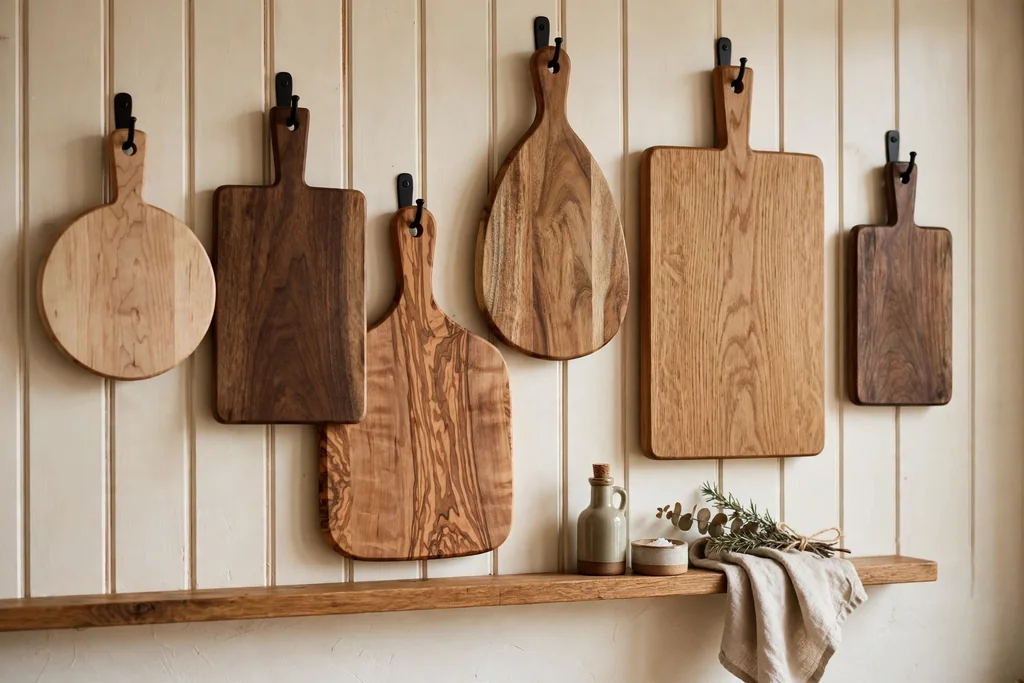
A cutting board display wall uses boards you already own as warm wood decor, sorted by size and shape on hooks or a rail. Hang boards of different woods and tones, such as pale beech, mid oak, and dark walnut, with the largest board near the center and smaller boards around it. The wood tones warm a kitchen with white cabinets or pale tiles, and the boards stay dry and visible between uses.
Use hooks that grip the hanging hole, or a small loop of cord through it, and let boards dry fully before hanging them flat against the wall. Sand any rough edges that could snag a cloth, and replace a board once deep cuts make it hard to clean, no matter how good it looks on the wall. Keep the display near the prep counter, so a board is easy to lift down when you start cooking.
15. Framed Typography and Word Art
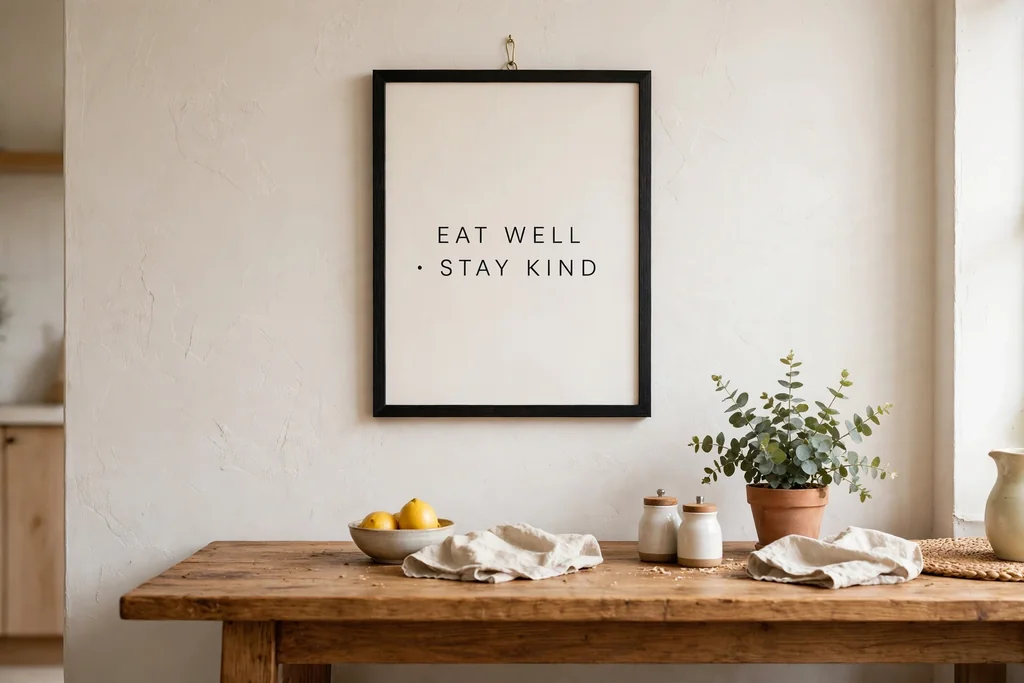
Framed typography, such as a simple word, a short phrase, or a market style sign, adds a clear message to a kitchen wall without a busy picture. Choose one phrase that fits how you cook, such as a welcome note, a market list, or a short cooking saying, in plain lettering on a pale background, and hang it where guests see it on entry. One typography piece works best; two or three competing phrases can make the wall feel noisy.
Match the frame to other frames in the room, and keep the lettering large enough to read from the table. If the phrase uses dark lettering on a light ground, it will read well in daylight and in evening light. Keep word art clear of the stove, where steam can damage paper, and choose a wipeable frame finish for a kitchen wall.
16. Painted Beadboard Wall Paneling
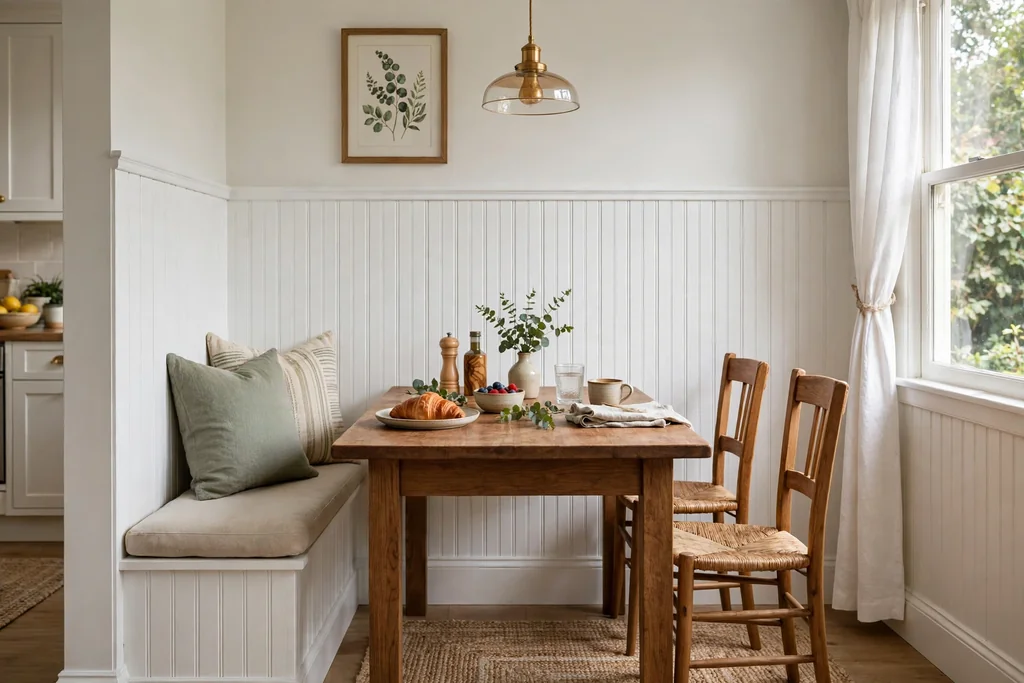
Painted beadboard paneling adds texture to a plain kitchen wall, with narrow vertical grooves that catch light and give flat walls shape. Fit beadboard panels to one wall, such as the dining nook wall or the wall behind a sideboard, and paint them the same color as the trim or one shade darker than the walls, so the texture, not a color change, does the work. The paneling suits farmhouse, cottage, and coastal kitchens, and it also protects a lower wall from chair scuffs.
Finish the top edge with a slim cap rail, so the paneling looks finished rather than cut off mid wall. Wipe the grooves with a soft cloth during a normal clean, since crumbs and dust settle in the channels more than on a flat wall. If you rent, a removable beadboard look panel or a painted board fixed with removable strips gives a similar texture without changing the wall itself.
17. Memo Board for Recipes and Notes
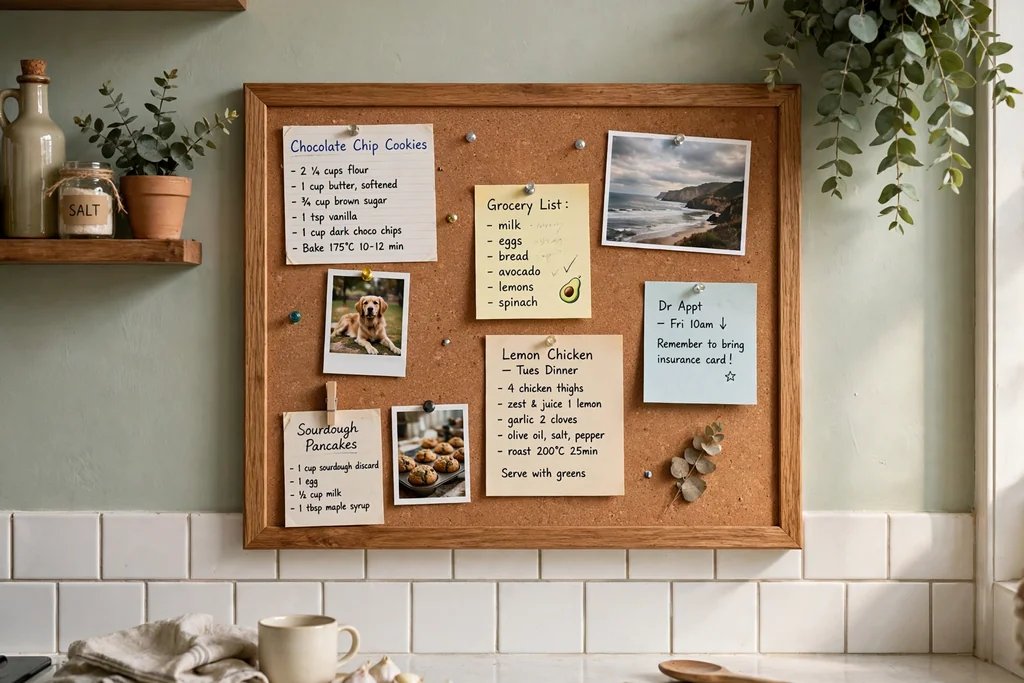
A memo board, such as a cork board, a fabric covered board, or a magnetic board, gives recipes, notes, photos, and children’s art a fixed place on a kitchen wall. Hang the board near the kitchen entry or beside the fridge, with pins or magnets in a small cup nearby, and keep the board to current items only, clearing it once a month so old notes do not build up. A board with a frame in wood or black metal looks planned rather than makeshift.
Group items by use, such as recipes at the top, notes in the middle, and photos at one side, and leave one corner free so new items have a place to go. Keep paper clear of stove steam and sink splashes, and use a board with a wipeable surface if it sits near the cooking zone. A memo board also suits a family kitchen, where one wall can hold the whole household schedule.
18. Seasonal Wreath on a Wall Hook
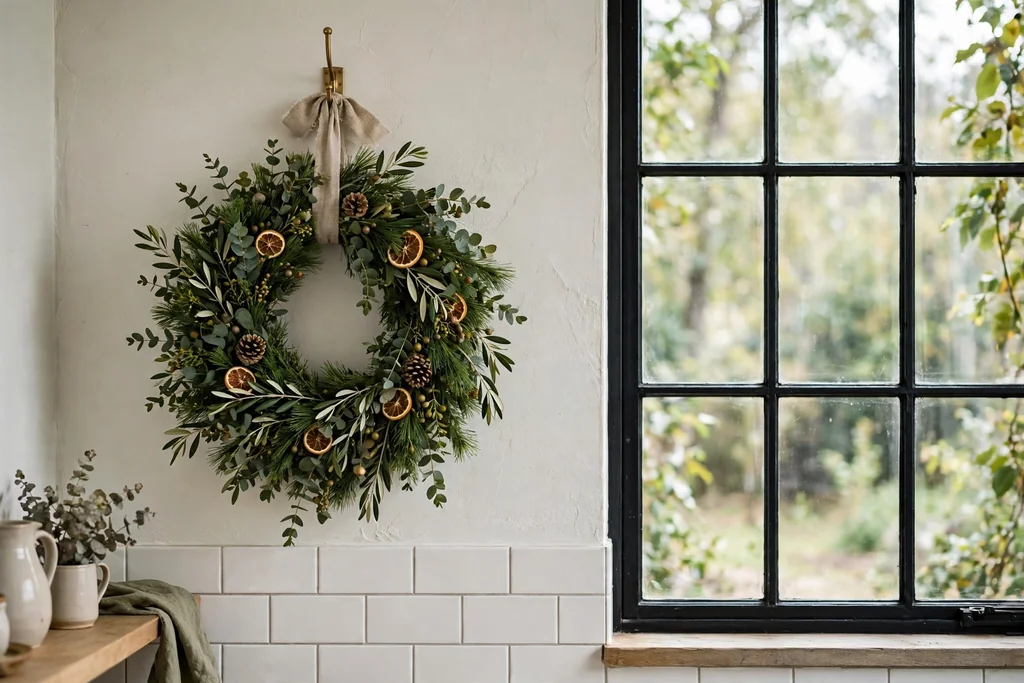
A seasonal wreath on a wall hook adds a clear seasonal note to a kitchen wall, with no shelf or counter space used. Hang a plain green wreath, a dried herb wreath, or a simple twig wreath from a sturdy hook on a wall beside a window or above a sideboard, and keep the size modest, about a third of the wall width, so it does not crowd the room. Swap the wreath by season, with a fresh green wreath in winter and a dried herb wreath in summer.
Use a hook rated for the wreath weight, fixed into a stud or with a wall fixing suited to your wall type, and check that the wreath does not block a cabinet door or a light switch. Keep dried foliage away from the stove and direct steam, where it can dry out and become a fire risk. A wreath also pairs well with a small framed print beside it, if the wall is wide enough for both.
19. Wall Sconces Paired with Art
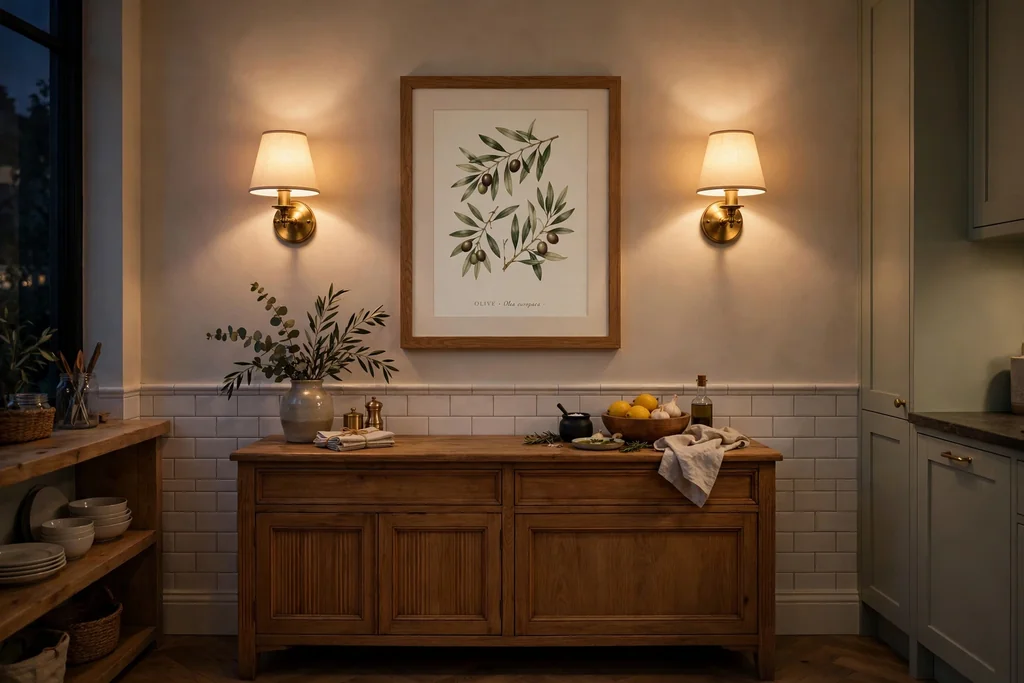
Wall sconces paired with art give a kitchen wall light as well as decor, which matters in the evening when a dark wall can feel blank. Fix two sconces, one on each side of a framed print or a mirror, above a sideboard or a dining nook, and choose a finish that repeats another metal in the room, such as brass or black. The sconces frame the art and add a warm pool of light at eye level.
Use warm white bulbs, and put the sconces on a dimmer if your wiring allows it, so evening meals feel calm. Check that the sconces sit clear of cabinet doors and steam, and keep the wiring tidy with a proper wall fix. If wiring a new sconce is not practical, a battery sconce or a plug in picture light above the art gives a similar glow with less work.
20. Wall Mounted Spice Jar Rack
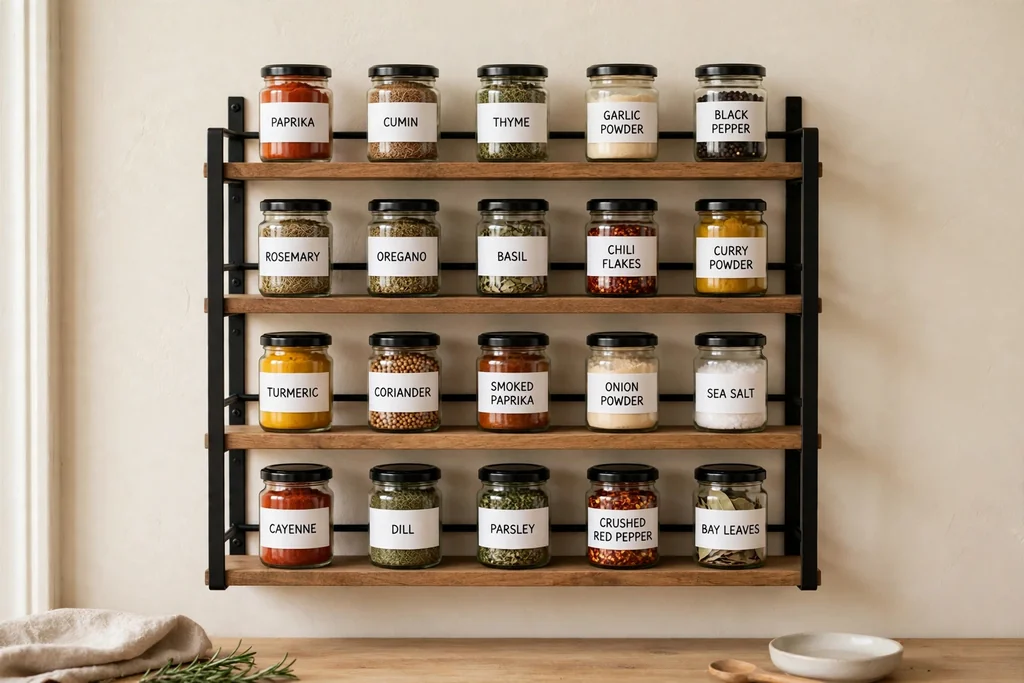
A wall mounted spice jar rack turns small jars into a neat, colorful wall display, with spices at eye level and within reach of the prep counter. Fix a rack with rows of small jars, all the same size, on a wall near the prep area but clear of stove heat, and label each jar on the lid or side so you can find the right spice at a glance. Group spices by use, such as everyday cooking, baking, and heat, so the rack stays easy to use.
Keep the rack to the spices you cook with often, and store bulk refills in a cabinet, so the wall display stays tidy rather than crowded. Check jar dates twice a year, and refill from larger store packs kept in a cool cabinet. A rack that holds 12 to 20 jars suits most home cooks, and a uniform jar size keeps the wall looking planned.
21. Painted Arch Accent Behind the Nook
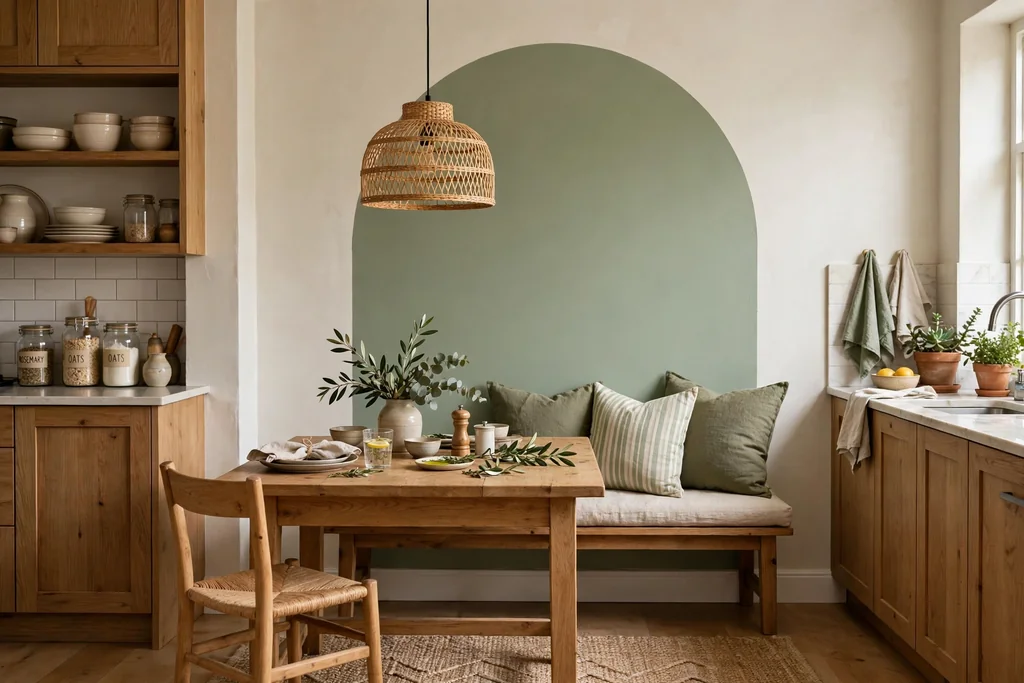
A painted arch accent behind a dining nook gives a plain kitchen wall a soft shape, with no new furniture needed. Paint a wide arch, in a color already used in the room, such as sage, terracotta, or soft blue, on the wall behind a table and bench, and let the arch frame the seating area like a quiet backdrop. The arch suits a nook wall, a sideboard wall, or a short wall at the end of a counter run.
Mark the arch outline with painter tape or a pencil line before you paint, and step back often to check the shape, since an arch that is too narrow can look like a doorway. Keep the paint finish wipeable, since a nook wall takes scuffs from chairs and bags. Pair the arch with one framed print inside it, or leave it plain, so the shape itself carries the interest.
22. Woven Textile Wall Hanging
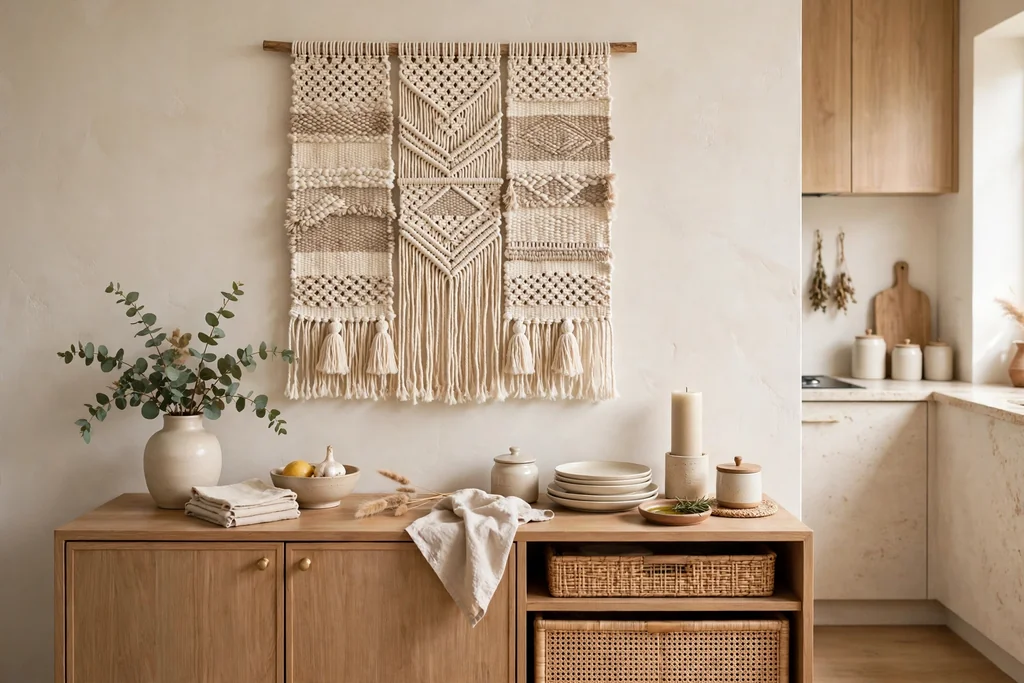
A woven textile wall hanging, such as a macrame piece, a woven wall panel, or a framed piece of patterned fabric, adds soft texture to a kitchen wall, which hard tiles and cabinets often lack. Hang one textile piece on a wall away from the stove and sink, such as the dining nook wall, and choose natural tones, such as cream, beige, and soft brown, so the piece links to wood and linen elsewhere in the room. One large textile works better than several small ones competing for attention.
Fix the hanging with a sturdy hook or a slim rod, and check that it hangs level and clear of chair backs. Keep textiles away from steam and splashes, since fabric holds moisture and cooking film, and vacuum or shake the piece gently during a normal clean. A textile hanging also suits a rented kitchen, since it needs only one or two small fixings and leaves little mark when removed.
Conclusion
A refreshed kitchen wall rarely needs a full remodel or a wall full of new purchases. Start with the wall you see most, choose one repeat finish, and pick one idea that fits that wall, whether it is a gallery wall, a mirror, a plate display, or a simple peg rail. Hang pieces clear of steam and splashes, test layouts with paper templates, and leave some wall empty so the decor you chose can be seen. Small moves, such as a chalkboard, a wreath, or a basket group, let you test a look before a larger change, and they suit renters as well as owners. For a bright base to pair with these wall ideas, see these white kitchen ideas for cabinets, counters, and light that sit well beside warm wall decor.
Save this list for your next free hour in the kitchen, and work through it in order: measure the wall, choose the repeat finish, hang the largest piece first, then add smaller pieces around it.
FAQs
What is the best kitchen wall decor for a small kitchen?
Choose one large piece, such as a mirror or a clock, rather than many small pieces, since one clear focal point makes a small wall feel calm. A picture ledge also works well, because it holds art without covering the whole wall, and a peg rail adds decor plus a useful hanging spot. Keep the rest of the wall empty, and repeat one finish from elsewhere in the room, so the decor looks planned.
How do I hang kitchen wall decor without damaging the walls?
Use removable hooks or strips for light frames, baskets, and textiles, and check the weight rating before you hang anything. For heavier pieces, such as a large mirror or a pot rail, fix into a stud or use wall fixings rated for the weight and your wall type. Test layouts with paper templates taped to the wall first, so you drill only once, and keep a small tube of filler handy for small holes when you move a piece.
What kitchen wall decor works near the stove?
Keep fabric, paper, and dried foliage well away from the stove, and choose wipeable, heat safe materials for the cooking wall, such as tile, metal, glass, and sealed wood. A feature tile panel, a metal pot rail, and a clock with a wipeable frame all suit a cooking wall, while framed prints and textiles belong on a wall away from steam and splashes. Wipe the cooking wall often, since grease film builds up there faster than elsewhere.
How high should I hang kitchen wall art?
Hang the center of a single piece or a gallery group at about eye level, roughly 57 inches from the floor, so it reads well from standing height. Above a table, sideboard, or counter, hang the lowest frame six to eight inches above the furniture, so the art links to the piece below it. If the wall sits above a tall cabinet or a range hood, center the art in the visible wall space that remains, rather than using the full wall height.
Can I mix different kitchen wall decor ideas on one wall?
Yes, if you keep one repeat through the group, such as one frame color, one metal finish, or one wood tone. A gallery wall can sit beside a peg rail, and a mirror can sit above a sideboard with a small wreath beside it, as long as the finishes repeat and some wall stays empty. Start with the largest piece, then add smaller pieces around it, and step back often to check that the wall still feels calm.
What is a low cost way to refresh a kitchen wall?
Start with what you already own: plates from a cabinet, cutting boards from a drawer, a framed recipe print, or a wreath from another room. A chalkboard panel, a peg rail, and a basket group are also low cost, since they need few fixings and no new furniture. Paint is another low cost change, whether it is a full wall, a beadboard panel, or a painted arch behind a nook, and it can shift the whole room before you buy any art.