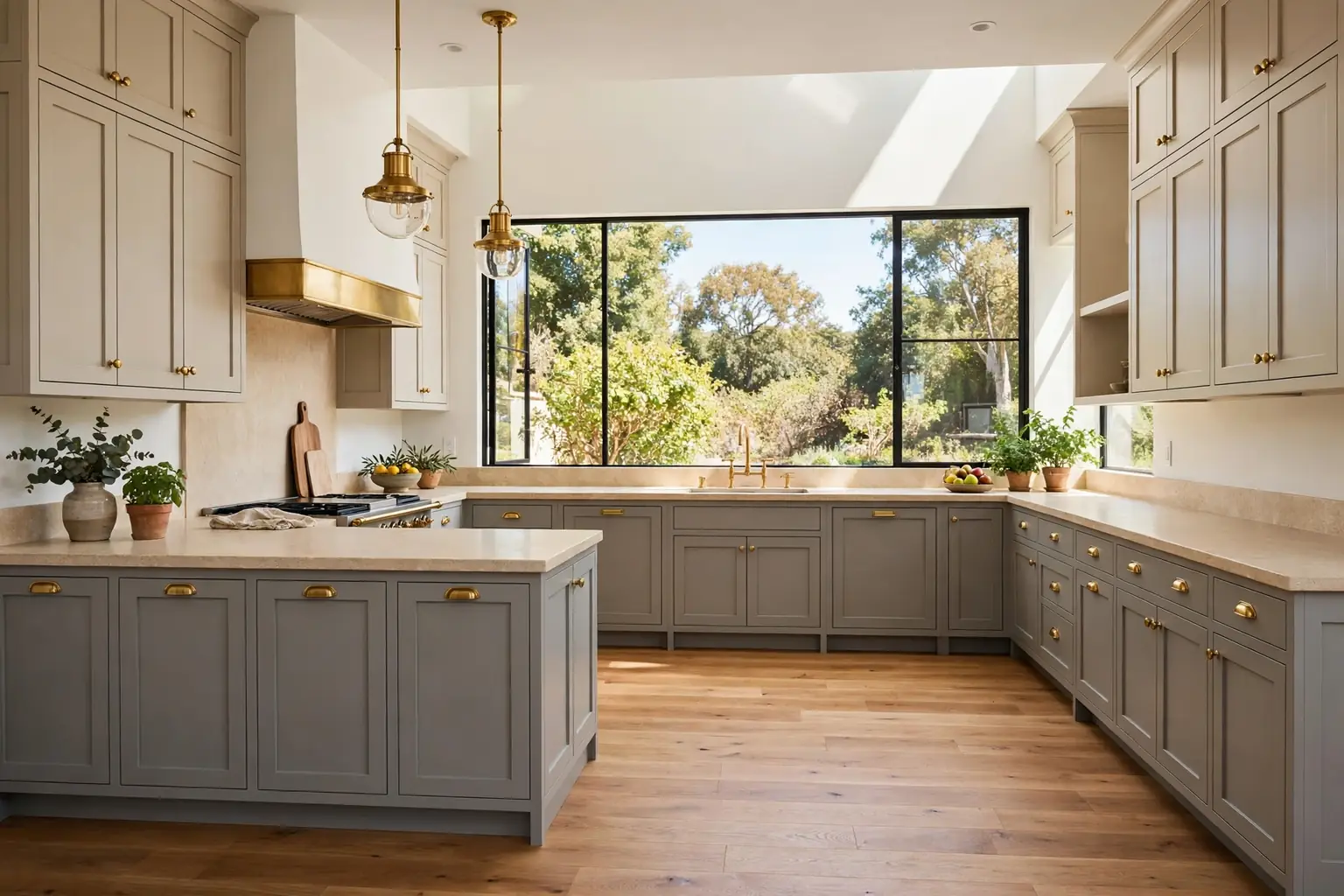
Grey and beige can look calm, but the pairing also has room for personality when the tones are chosen with care. Grey brings structure and a cool edge, beige brings warmth and softness, and the space between them, greige, is where the two meet without clashing. These 28 grey and beige kitchen ideas cover cabinets, counters, tile, islands, lighting, storage, and small styling moves you can try in stages. Start with the change that fixes your biggest frustration, test large samples in daylight and evening light, and keep one repeated metal and one wood tone so the room reads as planned. For a deeper look at grey alone, these grey kitchen ideas show how shade and light change the result.
Key Takeaways
- Start with the undertone: warm greys pair with warm beige, cool greys need a beige with a little grey in it, or the two tones will fight.
- Use one bridge material, such as greige paint, warm wood, or brass, to link grey and beige so the room reads as one scheme.
- Put the stronger tone where it earns its place, such as an island or a lower cabinet run, and keep the rest of the room calmer.
- Repeat one metal finish and one wood tone through the room so separate grey and beige pieces feel planned.
- Test large samples beside your floor, counter, and cabinet color in daylight and evening light before a large change.
- Keep at least one light surface, such as a pale counter or a light floor, so a grey and beige kitchen stays easy to work in.
1. Grey Lower Cabinets with Beige Upper Cabinets
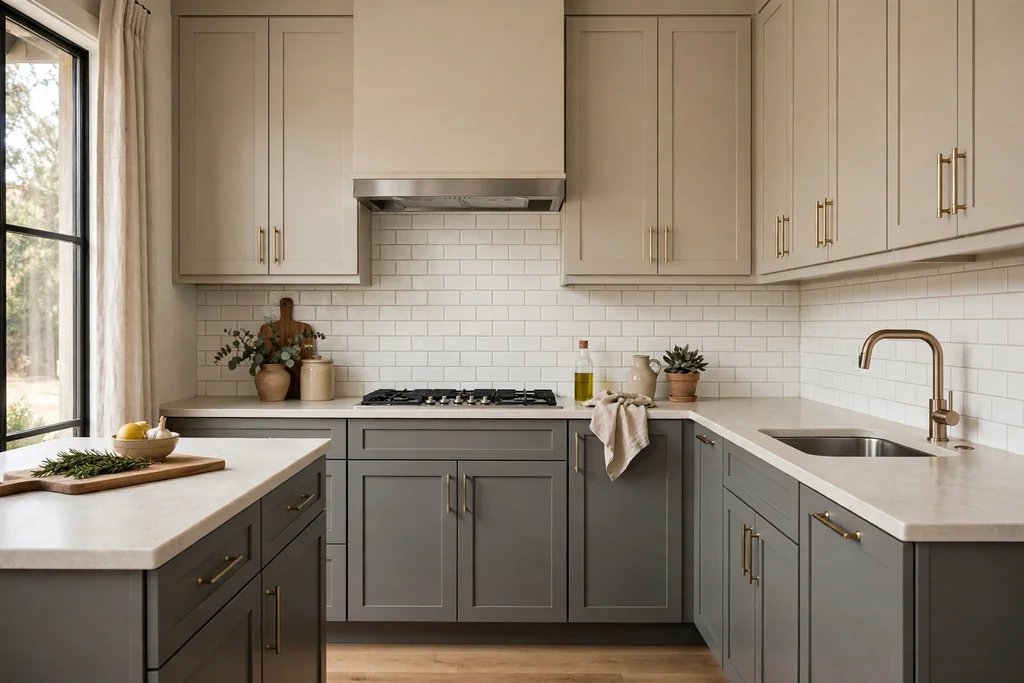
Grey base cabinets with beige wall cabinets split the room in a useful way: the darker lower run grounds the kitchen and hides scuffs near the floor, while the lighter uppers keep the wall from closing in. The split also makes the two colors read as a deliberate choice, not a mismatch, when the same handle style runs across both. A light counter between the two tones helps the join feel clean.
Keep the backsplash pale and simple, and add under cabinet lighting so the grey run does not cast a shadow over the counter. Use the same metal finish on both runs, and keep wall color close to the beige uppers so the upper cabinets blend gently into the wall. If you are repainting, test the grey and beige side by side, since grey shifts a lot under kitchen lighting.
2. Warm Greige Cabinets Across the Whole Kitchen
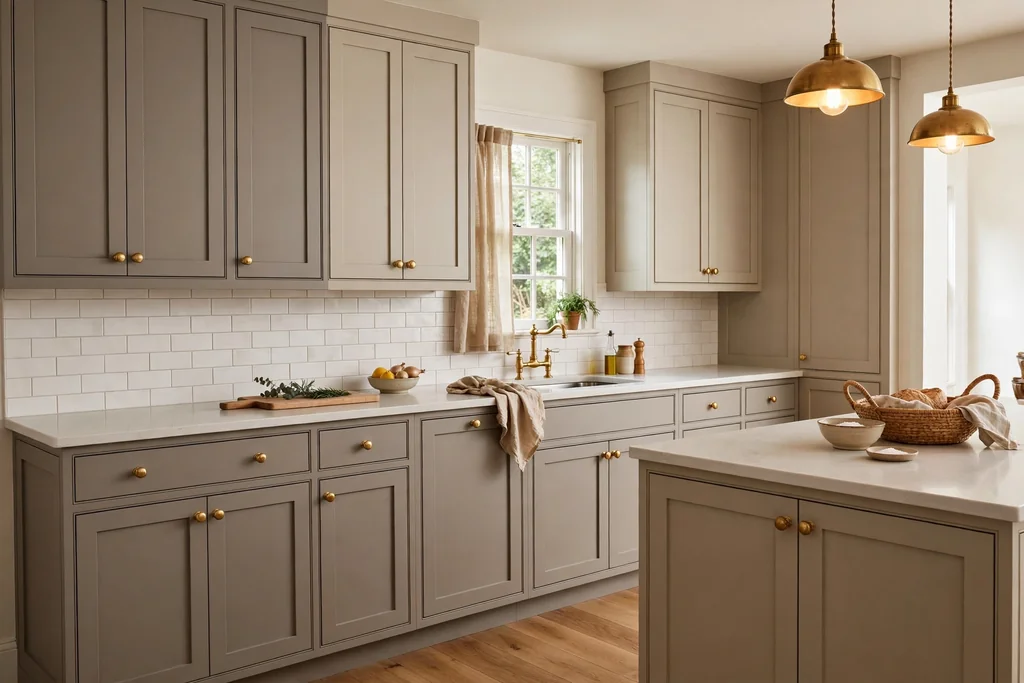
Greige, a blend of grey and beige, is the simplest bridge between the two colors, and it works across a whole kitchen when you want one calm cabinet color. It suits rooms with warm wood floors, cream tiles, or brass hardware, because the beige in the mix links to those tones. A greige kitchen also leaves room for personality in tile, lighting, and seating, since the cabinets stay quiet.
Choose a greige with the undertone your room needs: a warm greige for a north facing room, a cooler greige for a bright room with a lot of grey stone. Pair it with a pale counter and a simple backsplash so the cabinet color stays the focus. Greige shifts tone through the day, looking greyer in morning light and warmer at night, so test a large sample in both lights before ordering.
3. Beige Perimeter Cabinets with a Grey Island
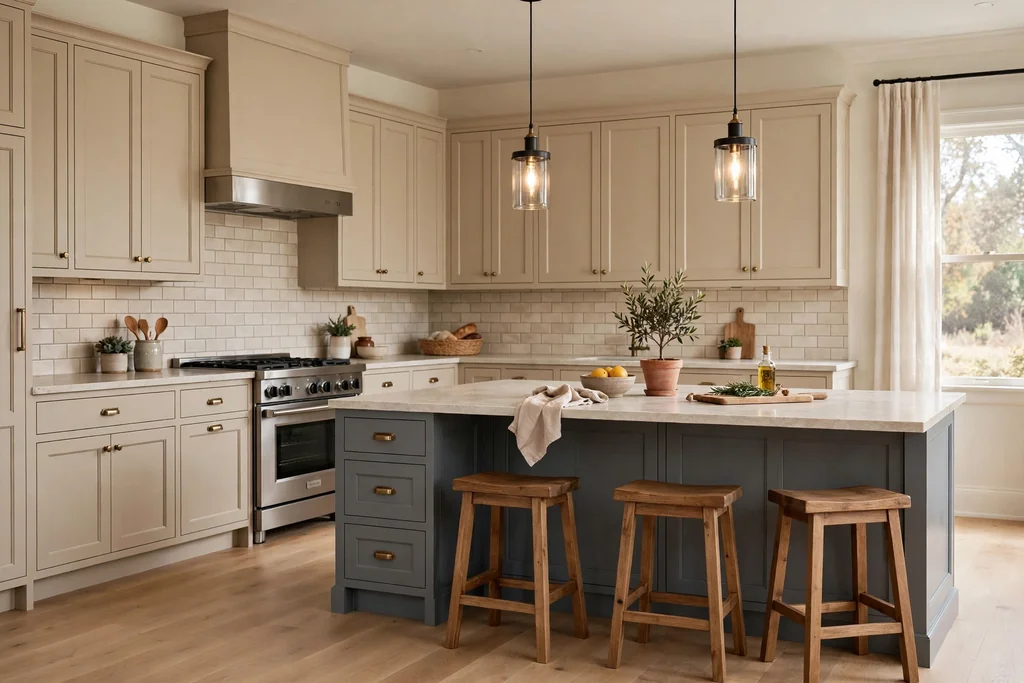
Beige cabinets around the walls with a grey island give a kitchen a clear center without repainting every cabinet. The island reads as a feature because it is one shade deeper than the surrounding cabinets, and it gives the room a working center and a place to gather. A light stone top on the island keeps prep work visible against the dark base.
Add seating on one side only, so the working side stays clear for cooking, and choose stools that slide fully under the overhang. Keep the island hardware in the same finish as the perimeter cabinets, so the two colors link. If your room is small, a narrow island on wheels can give the same prep and seating benefit and roll away when you need the floor back.
4. Grey Cabinets with a Warm Beige Quartz Counter
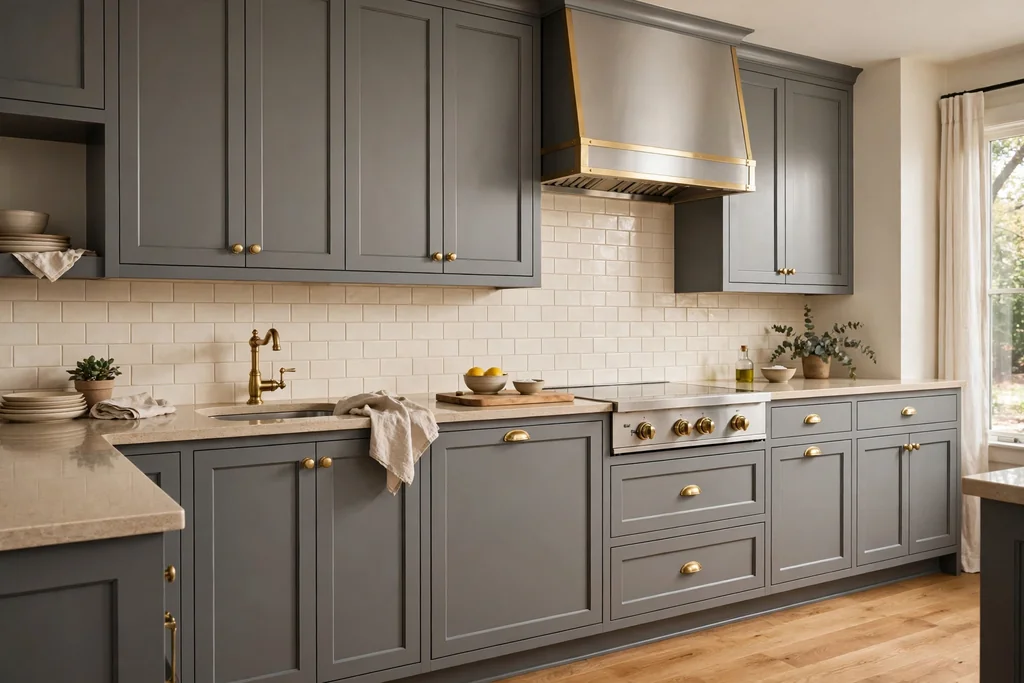
A warm beige quartz counter softens grey cabinets at once, adding a honey toned surface that keeps the room from feeling cold. Quartz suits daily cooking, since it is hard wearing and easy to wipe, and a warm beige tone links the cabinets to wood floors, cream tile, or brass hardware. Use the beige counter on the main prep run, where it shows most and where its warmth matters most.
Keep the backsplash simple, such as a plain cream or pale grey tile, so the counter and cabinets carry the room. Wipe spills promptly near the sink side, and use trivets under hot pans even on quartz, since heat can mark the surface over time. If you want more contrast, pick a beige quartz with a soft vein pattern rather than a flat color.
5. Beige Cabinets with a Grey Veined Stone Counter
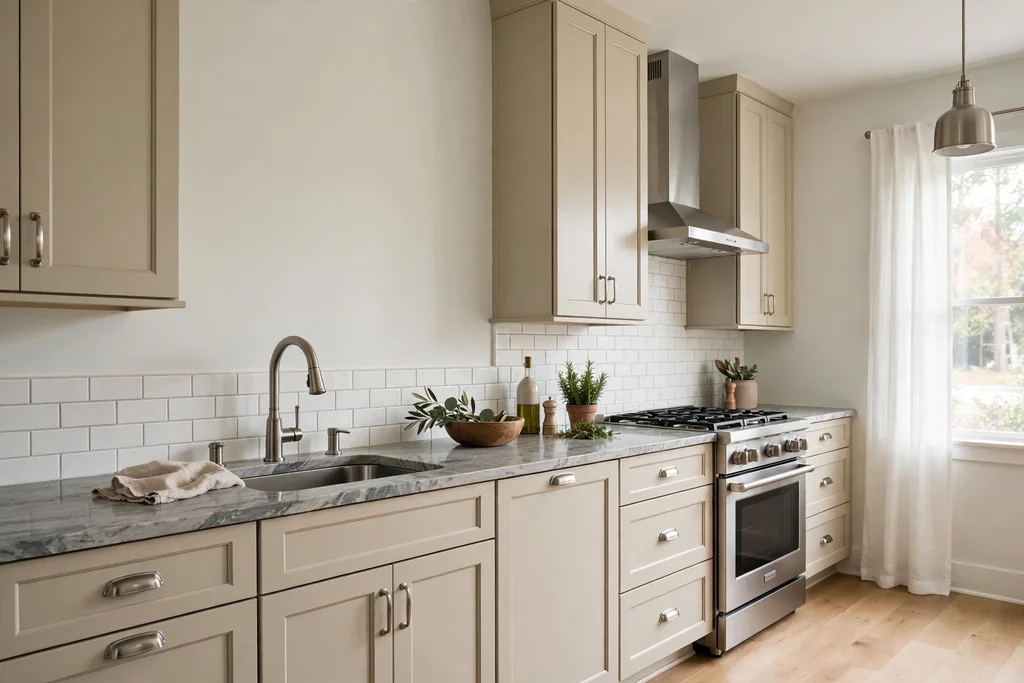
A grey veined stone counter gives beige cabinets a cool thread that stops the room from feeling too warm or flat. The veining adds movement to an otherwise plain surface, and it links beige cabinets to grey floors, a grey island, or grey hardware. Choose a slab with gentle veining if you want a calm look, or a bolder vein pattern if the counter is meant to be the main feature of the room.
Stone needs more care than quartz, so seal it as advised by the supplier, wipe acidic spills such as citrus, tomato, and wine quickly, and use trivets under hot pans. If you love the look but cook daily with acidic foods, consider stone on an island used for serving and a harder wearing surface on the main prep run. The contrast between beige cabinets and a grey veined counter is one of the simplest ways to give this pairing personality.
6. Beige Zellige Backsplash with Grey Cabinets
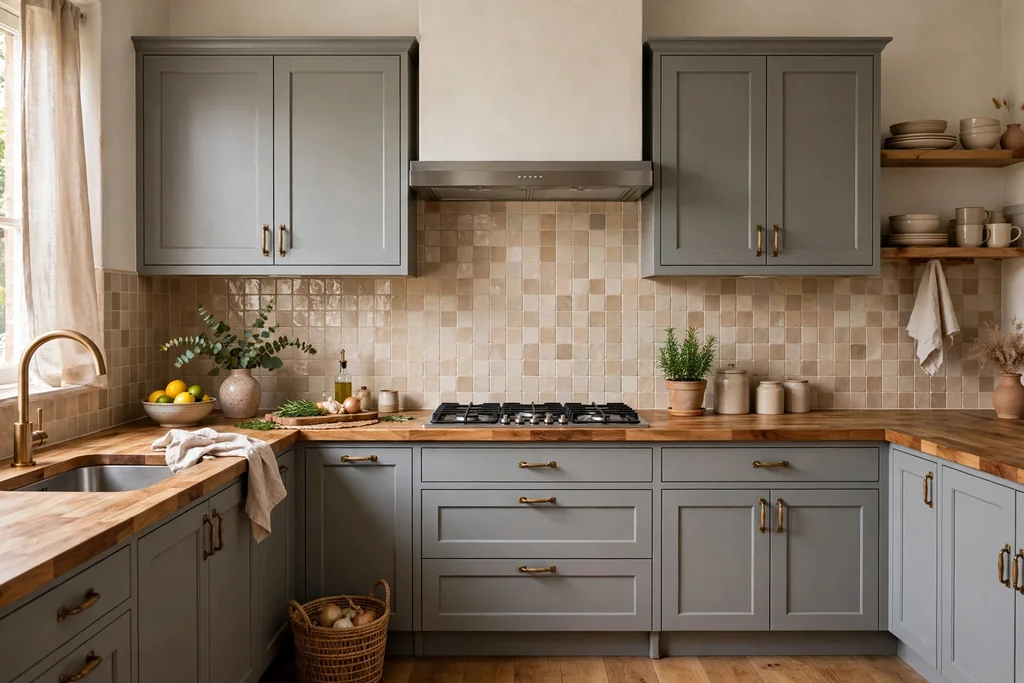
A handmade beige zellige backsplash adds texture to grey cabinets, with slight variations in tone and surface that catch light in a way flat tiles cannot. Each tile differs a little from the next, so the backsplash reads as crafted rather than factory made. In a soft beige, zellige adds warmth without color, which suits a grey kitchen that still wants character.
Use zellige on the backsplash only, and keep counters and cabinets plain, so the texture stays the focus. The uneven glaze means grout lines look softer, and the wall feels warmer than a gloss subway tile wall. Order extra tiles, since handmade batches vary and a few spares help if a tile chips later. Wipe the surface with a soft cloth, and seal the grout to keep cooking splashes from staining it.
7. Grey Subway Tile Backsplash with Beige Cabinets
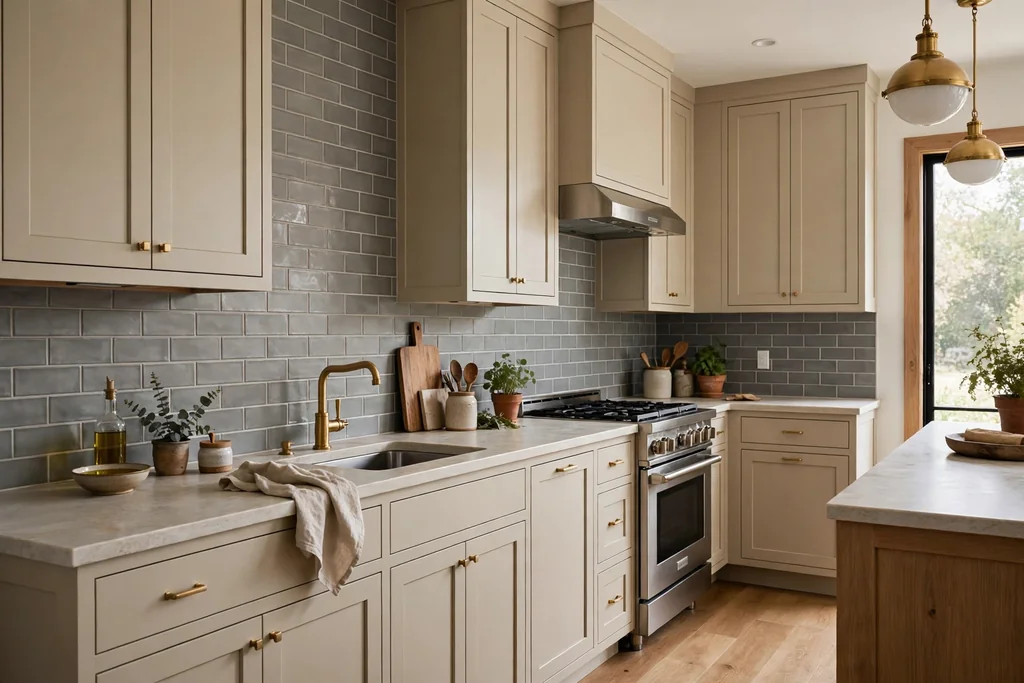
Grey subway tile run from counter to cabinet gives beige cabinets a tidy, classic wall that ties the room to grey floors or a grey island. The brick pattern adds rhythm without a bold pattern, and the grout lines give the wall texture that plain paint lacks. A light to mid grey tile suits most kitchens, while a darker grout keeps the pattern visible and hides everyday marks.
Seal grout behind the range and sink, where splashes and steam reach it first. Keep the tile height even across the run, and stop it at a clear line, such as the underside of the cabinets or a shelf, rather than fading out mid wall. If the room is small, a glossy grey tile reflects more light than a matte one, which helps a compact kitchen feel brighter.
8. Beige Plaster Hood on a Grey Cooking Wall
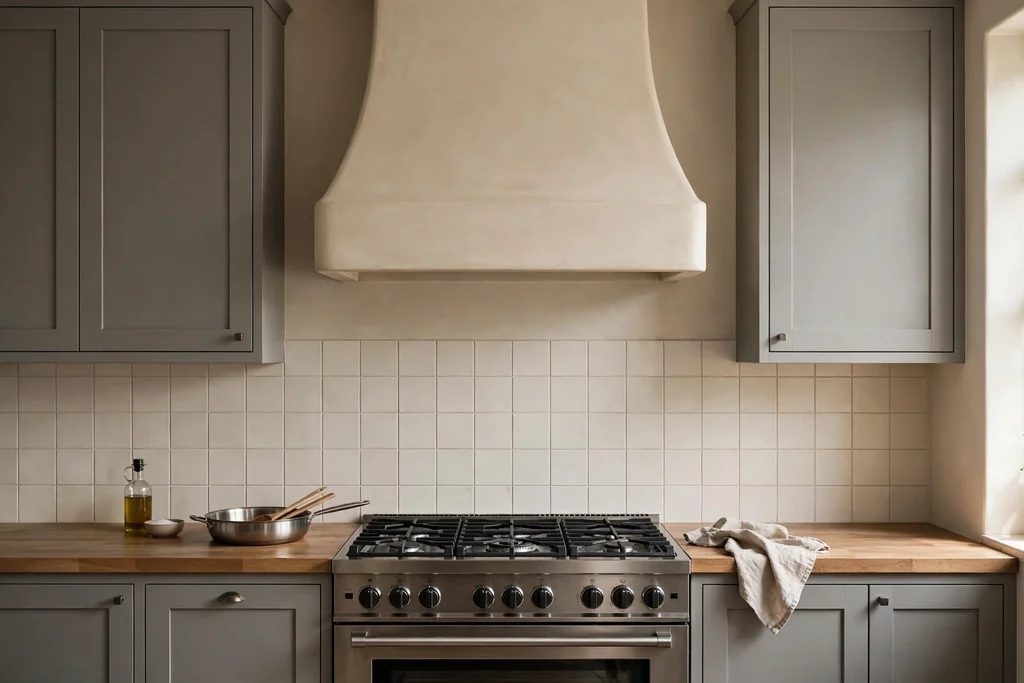
A beige plaster range hood turns the cooking wall into a focal point without changing every cabinet. The hood shape stays simple, such as a straight chimney or a soft curved canopy, while the beige plaster finish links it to beige counters or a beige island top nearby. This works well when the rest of the wall is quiet, with plain tile and grey cabinets, so the hood carries the interest.
Choose a washable paint finish for the plaster, since hood surfaces collect grease film, and keep decorative trim clear of the heat zone. If the hood sits over a range, check that any added panels can be wiped clean and do not trap heat. For a softer version, paint the hood the same beige as the walls and add a darker grey tile behind the range instead.
9. Grey Island with Beige Upholstered Stools
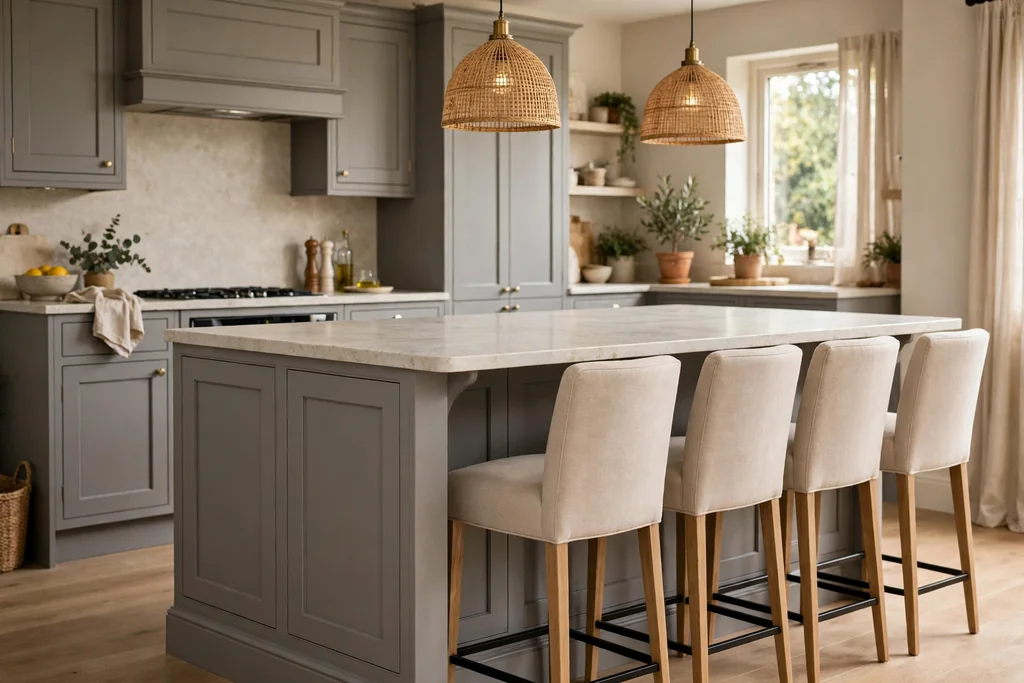
Beige upholstered stools at a grey island soften the hardest working piece of furniture in the kitchen. The beige seat fabric warms the grey base and the stone top, while a wood or metal stool frame links to hardware elsewhere in the room. Stools that slide fully under the overhang keep the walkway clear and the island looking tidy when no one is sitting there.
Choose a wipeable fabric or a removable cover if the stools will be used for daily meals, since kitchen stools take spills. Keep the seat height matched to the counter overhang, and leave enough knee room so adults can sit comfortably. If the island is used for homework or coffee as well as cooking, a footrest on the stool makes a long sit much easier.
10. Beige Banquette Nook in a Grey Kitchen
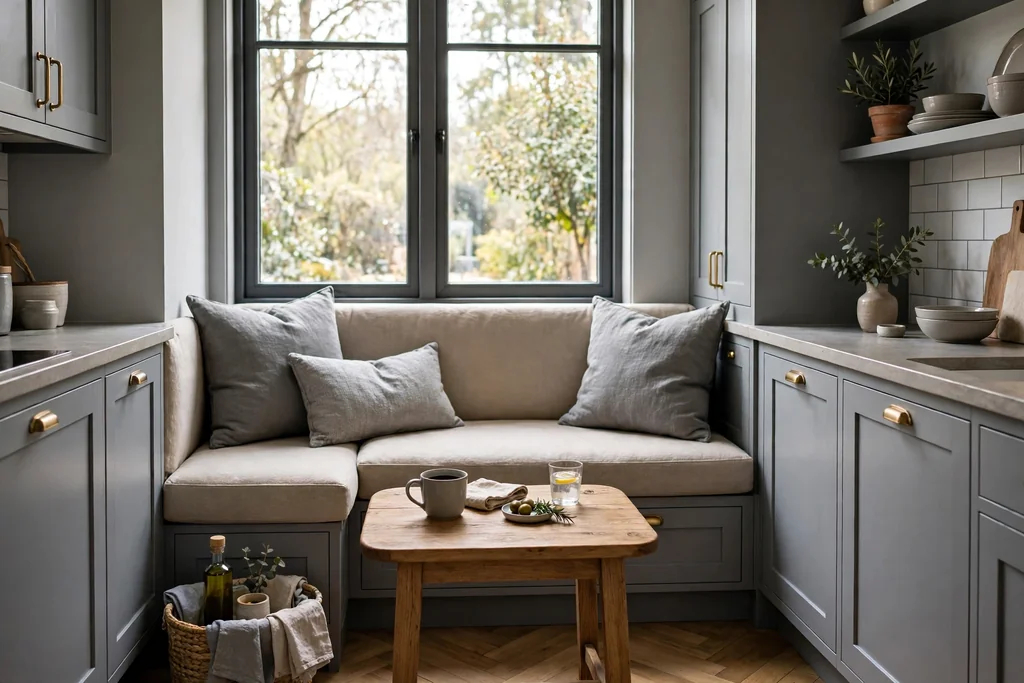
A built in banquette nook turns an awkward corner of a grey kitchen into the most used seat in the house. A bench along the wall in beige upholstery, grey cushions, a small pedestal table, and two chairs give a family a place for breakfast, homework, and coffee, without a full dining room. The bench base can hold storage for table linens, board games, or rarely used baking trays, so the nook earns its floor space twice over.
Keep the bench fabric wipeable, and choose cushions in a mix of beige and grey so the nook links both cabinet colors. A wood table warms the corner, while a washable runner protects the top. If the nook sits by a window, keep the bench low enough that the sill stays clear, and leave a clear path to the table so no one has to climb over the bench.
11. Beige Wood Floor with Grey Cabinets
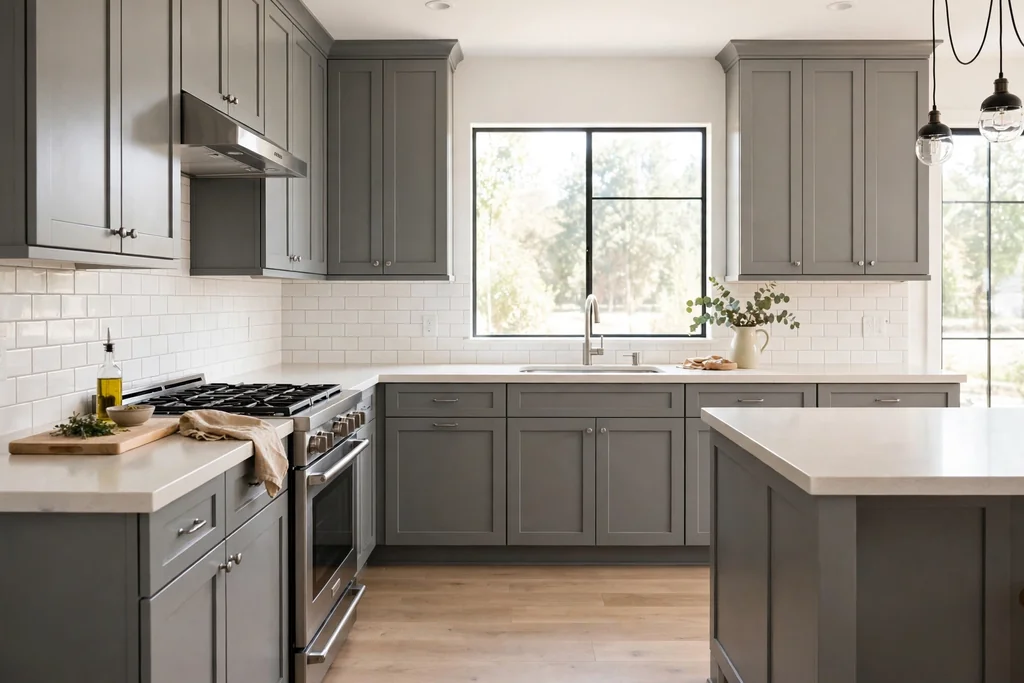
A warm beige toned wood floor is the easiest way to keep grey cabinets from feeling cold, since the floor covers a large area and links to wood counters, shelves, or a wood island top. Choose a mid tone wood with a matte finish, since kitchen floors see water and grease, and keep the rest of the floor scheme simple, with plain walls and a single rug or runner if you want extra warmth.
Seal the wood well near the sink and stove, where spills land first, and check that the floor suits underfloor heating if you have it. Clean spills promptly, and use felt pads under stools and chairs so the surface stays even over time. A beige wood floor also suits a grey and beige kitchen in an open plan room, where the same floor can run into the living area and tie the two spaces together.
12. Grey Patterned Floor Tile with Beige Cabinets
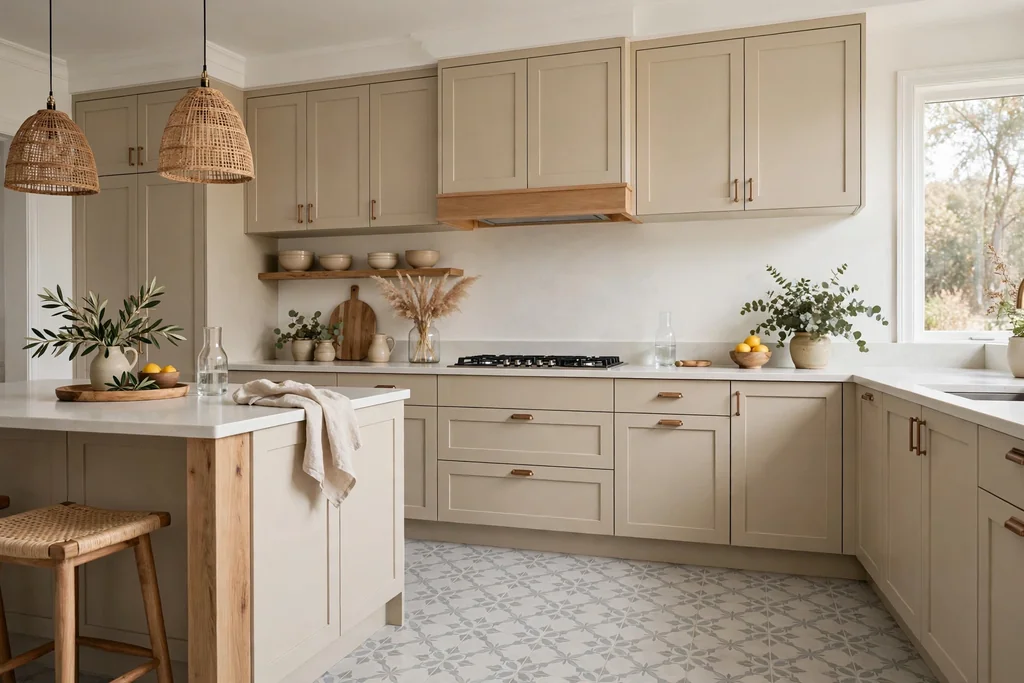
Grey patterned floor tile gives beige cabinets pattern at ground level, where it adds interest without competing with cabinets or counters. The pattern draws the eye across the room, which helps a long or narrow kitchen feel wider, and the grey tone links to a grey island, grey hardware, or a grey backsplash. Choose a mid grey tile with a non slip finish, since kitchen floors see water and grease.
Keep the rest of the floor scheme simple, with plain walls and no second pattern nearby. Grout color matters here: a grout close to the tile tone keeps the floor calm, while a contrasting grout makes the pattern louder. Clean grout lines regularly near the sink and stove, where spills land first, and check that the tile suits underfloor heating if you have it.
13. Beige Panelled Dining Wall in a Grey Kitchen
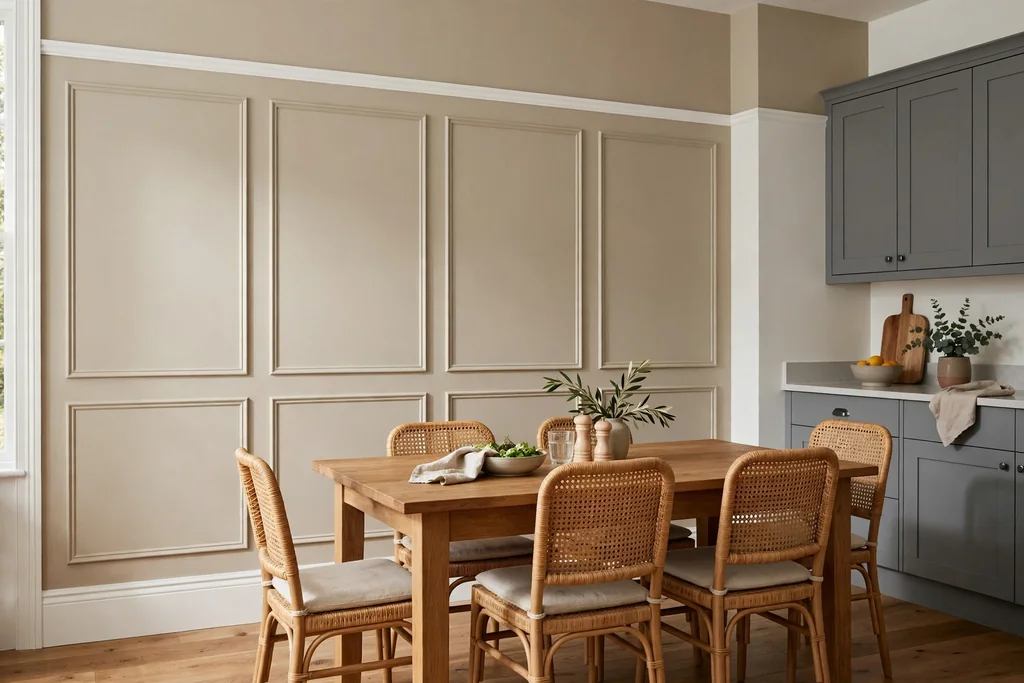
Beige painted panelling, such as beadboard or simple Shaker style panels, adds texture to a kitchen dining wall without a strong color. The vertical lines draw the eye up, which helps a low ceiling feel taller, and the painted boards wipe clean more easily than plain plaster near a walkway or dining nook. A soft beige panel with white trim above keeps the look light, while the grey cabinets nearby keep it from feeling too sweet.
Stop the panelling at a clear height, such as chair rail height on a dining wall, or run it full height on one feature wall only. Seal the paint well at the base, since mops and spills reach that low strip first. This idea pairs well with a wood table and simple chairs, where the panel texture gives the eating area a finished feel without new furniture.
14. Beige Limewash Wall with Grey Cabinets
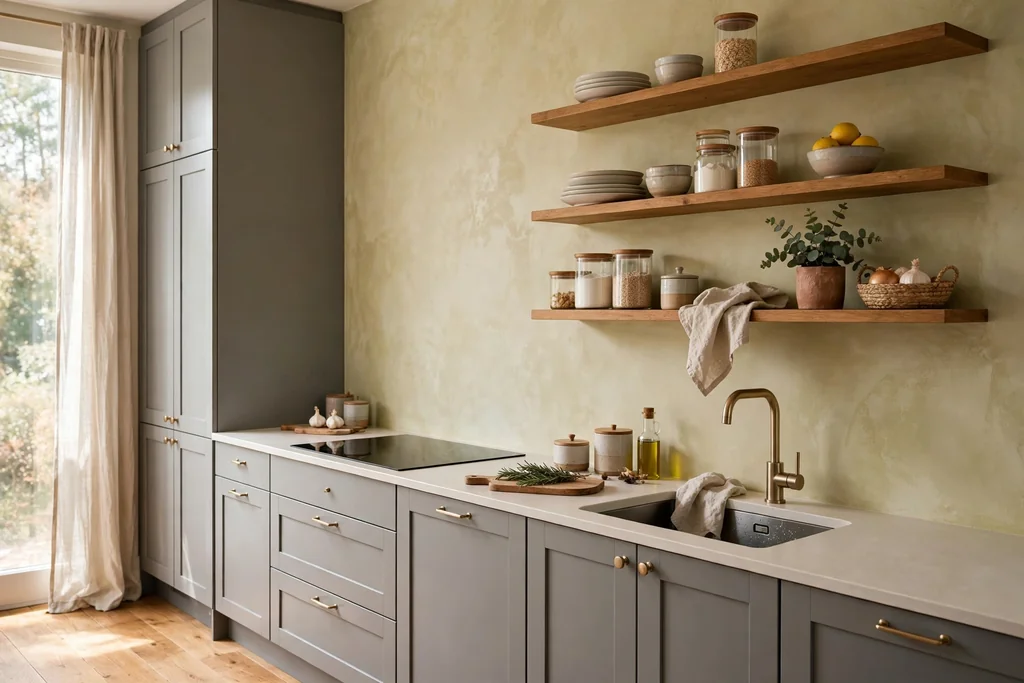
A soft beige limewash or plaster wall gives grey cabinets a warm, cloudy backdrop that flat paint cannot match. The subtle movement in the finish adds depth without pattern, and it suits kitchens with wood shelves, stone counters, or linen shades. Keep the limewash to one or two walls, so the texture stays a feature rather than a distraction across the whole room.
Limewash needs a suitable base and a sealer in a kitchen, since walls near the stove and sink collect grease film and splashes. Wipe the surface with a soft cloth, and keep the cooking wall in tile or stone instead, so the limewash sits on a wall that stays cleaner. Pair the beige wall with grey cabinets and warm wood, and the room will feel calm, layered, and personal rather than flat.
15. Brass Hardware Bridging Grey and Beige
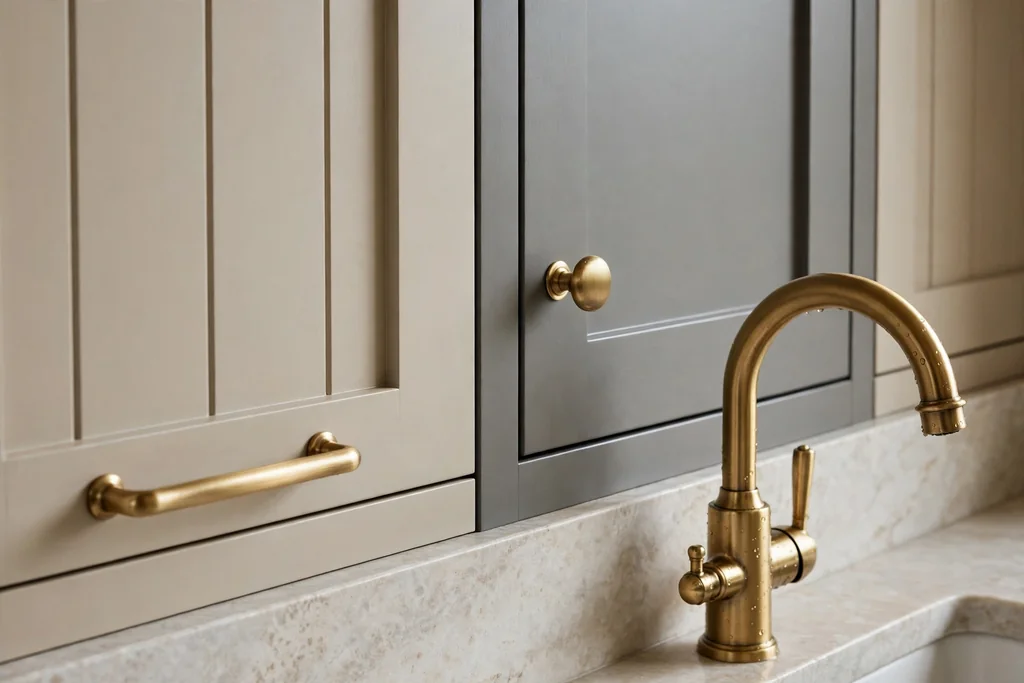
Brass hardware is the fastest way to warm a grey and beige kitchen, since it changes the look of every door without repainting a single cabinet. Brushed brass bars on drawers and knobs on doors repeat a warm metal through the room, and the contrast against grey, pale or dark, keeps the cabinets from feeling flat, while the same brass links to beige counters and wood tones. This swap suits renters and owners alike, because the old handles can go back on later.
Use one brass finish across the whole kitchen, and repeat it at least twice more, such as on the tap or a pendant light, so the hardware reads as a set. Wipe brass pulls often near the stove, since kitchen grease dulls metal, and keep the original screws and handles in a labelled bag. If brass feels too yellow beside your cabinets, pick a brushed or aged brass rather than a bright polished one.
16. Matte Black Hardware on a Two-Tone Kitchen
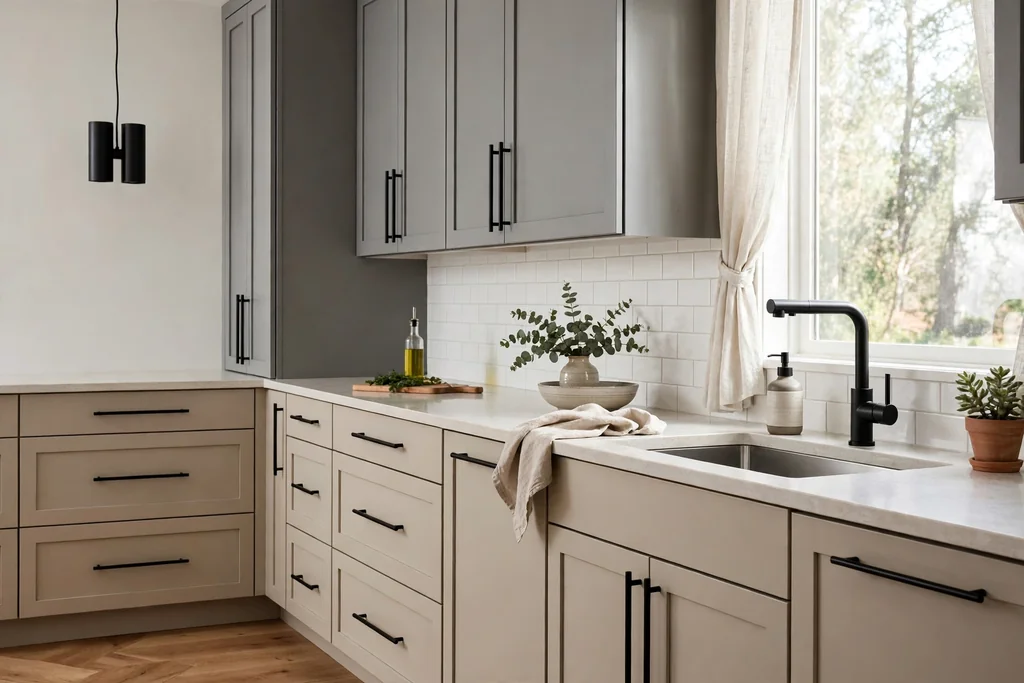
Matte black hardware gives a grey and beige kitchen definition, since each knob and pull draws a clear line against both cabinet colors. Matte black bar pulls suit a modern kitchen, while small black knobs suit a traditional one. The contrast also helps in a large kitchen, where a long run of grey and beige cabinets can blur into one pale mass.
Repeat the black in one or two other places, such as the tap, a pendant light, or a stool frame, so the hardware looks planned rather than added alone. Keep the rest of the room soft, with wood or stone counters and a pale backsplash, so the black stays an accent. If you are updating existing cabinets, swapping hardware is a low cost change that you can test on one drawer bank before you buy pulls for the whole kitchen.
17. Warm Pendants with Beige Shades over a Grey Island
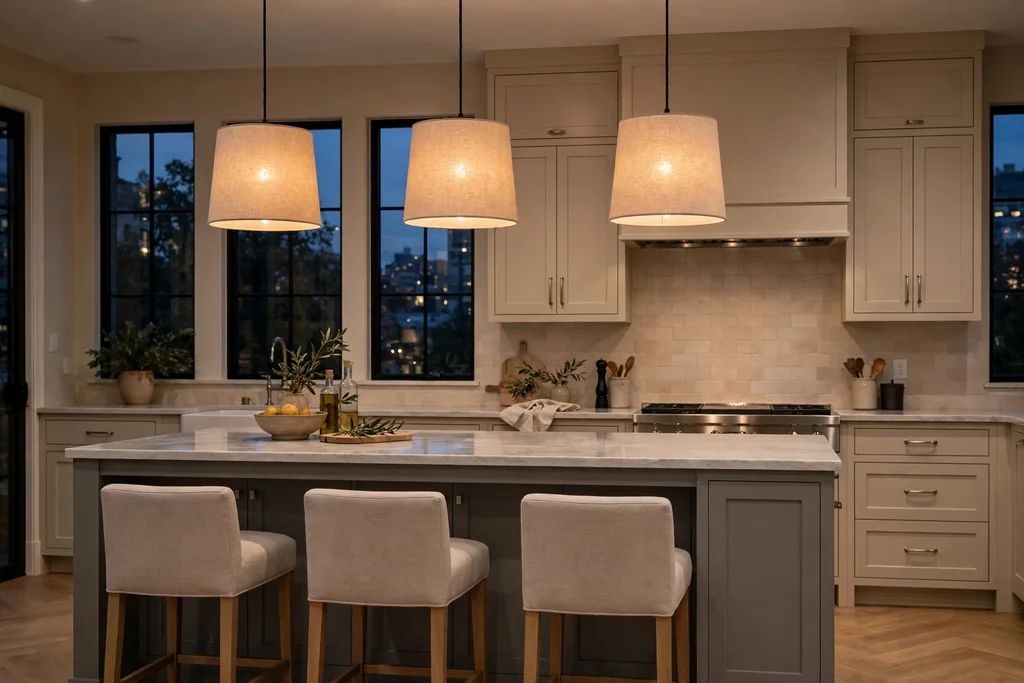
Pendant lights with beige linen shades over a grey island add warmth at eye level and soften the hardest surface in the room. The beige shade glows warm in the evening, while the grey island base stays grounded below it. Hang two or three pendants in a row, spaced evenly, with the lowest point well above head height and clear of steam from the hob.
Match the pendant frame to the tap or handles, and keep the rest of the ceiling lights plain. Use warm white bulbs so the room reads warm in the evening, not cold, and put the pendants on a dimmer if your wiring allows it, so evening meals feel calm. Dust the shades often, since kitchen pendants collect grease film over time, and choose washable linen if the island sits near the stove.
18. Under Cabinet Light Warming a Beige Counter
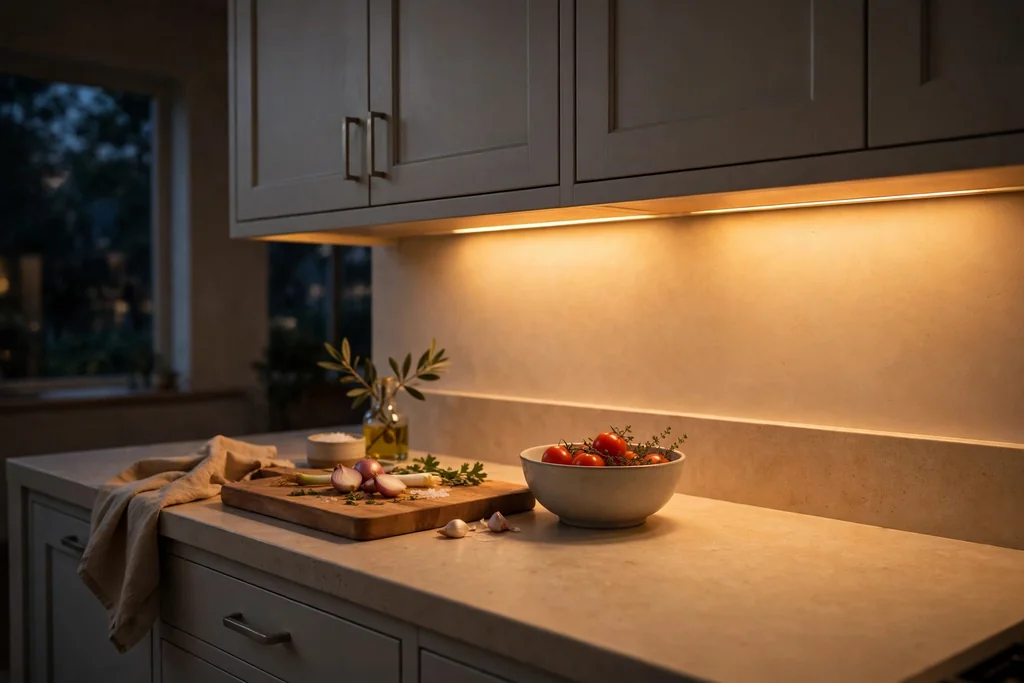
Under cabinet lighting is the small change that makes a beige counter glow and a grey kitchen feel warmer after dark. A warm white strip under the wall cabinets lights the work surface without glare, shows the true color of food and stone, and stops the grey upper cabinets from casting a shadow over the counter. It also makes evening cooking safer, since knives and hot pans stay clearly visible.
Choose warm white, not cool white, so the beige counter reads warm rather than washed out, and put the strip on a dimmer or a separate switch if you can. Hide the strip behind a small lip or rail so you see the light, not the fitting. Wipe the strip cover often, since kitchen grease dulls light output over time, and check that the strip sits clear of steam from the kettle and hob.
19. Glass Front Beige Cabinets Showing Grey Stoneware
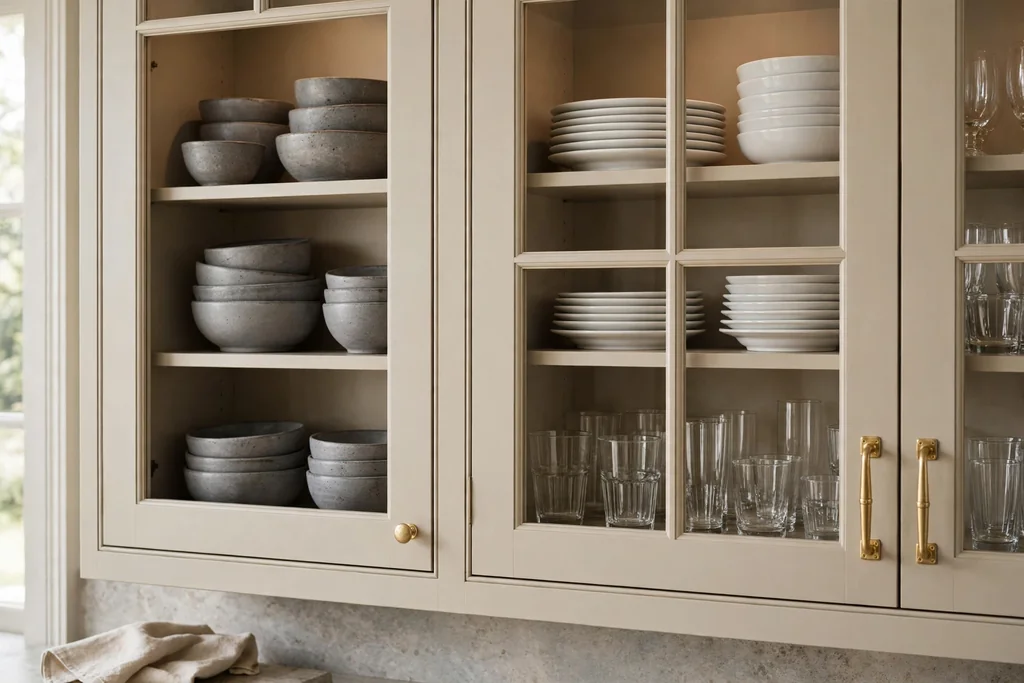
Glass front beige cabinets break up a wall of solid doors and give you a place to show the pieces you actually use, such as grey stoneware bowls, white dishes, and glassware. They make a kitchen feel lighter, because the eye sees through the cabinet rather than stopping at a solid door. Use them on one run of cabinets, or on either side of a window or range, rather than everywhere, so the display stays calm.
Keep what you show to a small set of matching or related pieces, and leave some space on each shelf so the cabinet does not look crowded. Clear glass shows everything, so it suits tidy households; reeded glass softens the view and hides a less perfect shelf. Add a small light inside the cabinet if you want the display to glow in the evening, and keep the items you reach for daily on lower shelves.
20. Beige Wood Open Shelves in a Grey Kitchen
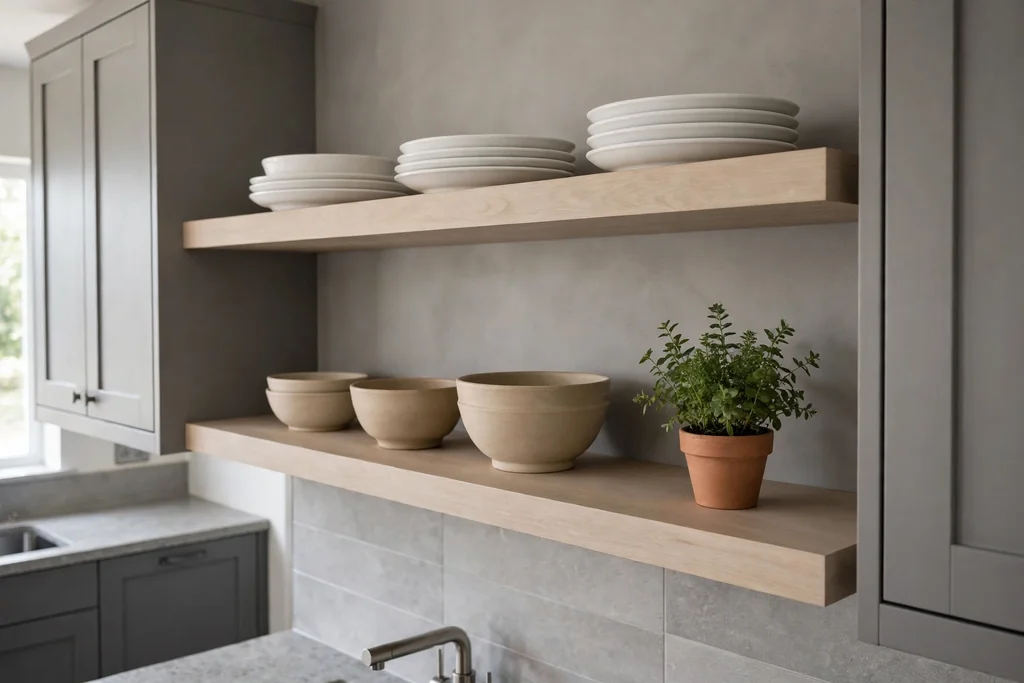
Open beige wood shelves on one short run give a grey kitchen warmth and a place for daily dishes, without giving up all closed storage. Two or three shelves in pale wood hold everyday plates, beige bowls, and mugs within easy reach, and they stop the wall from feeling like a solid block of grey doors. This idea works best when you keep the shelves to items you use often, so nothing sits long enough to gather dust.
Style each shelf with a mix of stacked plates, a jug, and one small plant, and leave breathing room between groups so the shelves read as tidy, not crowded. Keep the rest of the kitchen storage closed, so the open shelves are a feature rather than a necessity. Dust open shelves weekly, since open storage collects cooking film, and keep shelves clear of direct stove steam.
21. Grey Pantry Wall with a Beige Open Niche
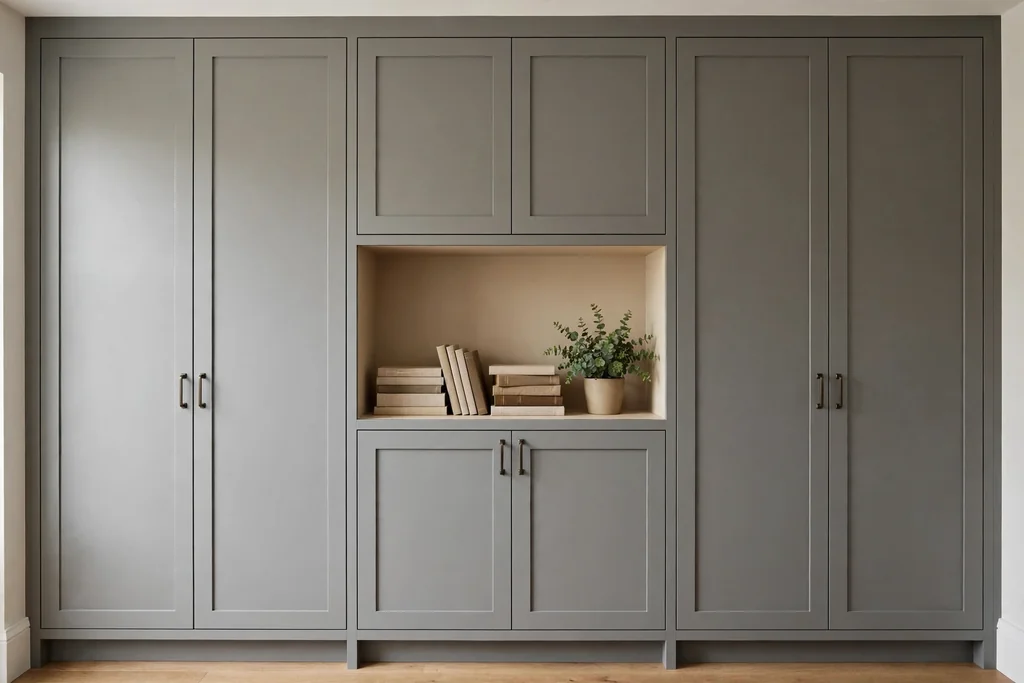
A floor to ceiling pantry wall in grey gives a kitchen a large amount of closed storage that reads as one calm panel rather than a row of mismatched cupboards. Use the same grey and the same handle style across the whole wall, and keep the top section for rarely used items, daily food at hand height, and heavy items low. This wall suits a large kitchen, or a small one where a separate pantry room is not possible.
Add one open niche in beige, such as a shallow shelf for cookbooks or a coffee station, so the tall grey run does not feel like a blank wall. Keep the pantry wall clear of the main cooking path, so doors can open without blocking the stove or sink. Label the inside of doors or shelf fronts if more than one person cooks, so items return to the same spot.
22. Beige Coffee Niche in a Grey Kitchen
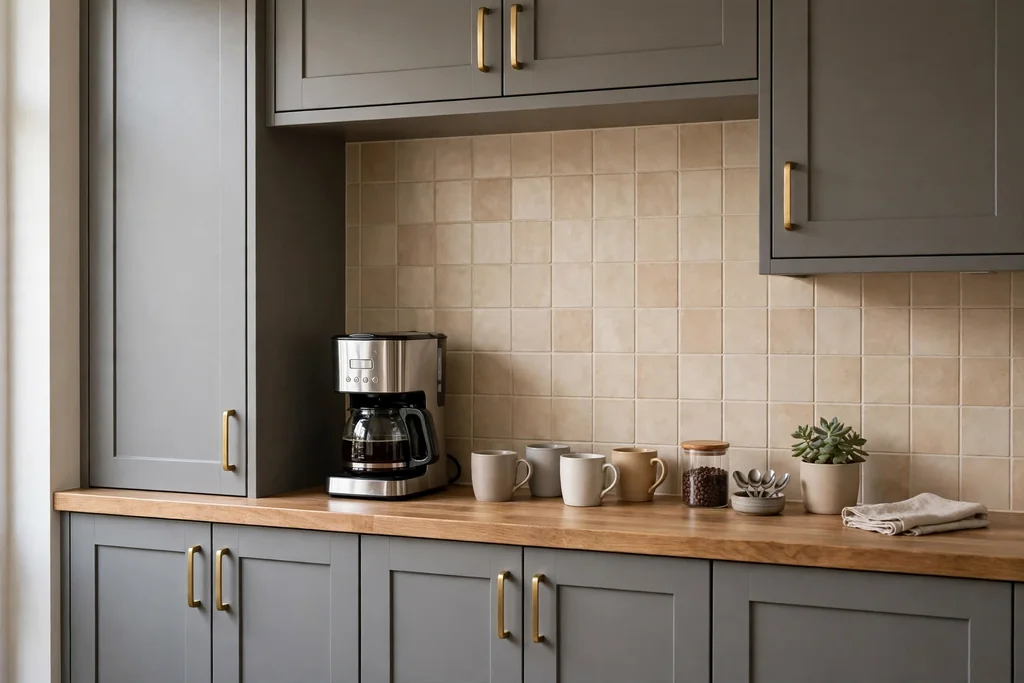
A coffee niche in beige tile or beige painted panels gives a grey kitchen a clear home for the coffee pot, mugs, and supplies, and keeps them off the main prep counter. Use a shallow niche on a side wall or inside a pantry wall, with closed storage below for beans, filters, and extra mugs. The beige back panel warms the grey cabinets around it and makes the niche read as a planned feature.
Keep the niche near a power point and clear of the stove, and wipe the back panel often, since coffee splashes land there first. Store only the daily coffee items in the niche, so it stays tidy, and keep the rest of the supplies in closed storage below. A small tray under the pot catches drips and lifts away in one move for cleaning.
23. Grey Composite Sink with a Brass Tap in a Beige Counter
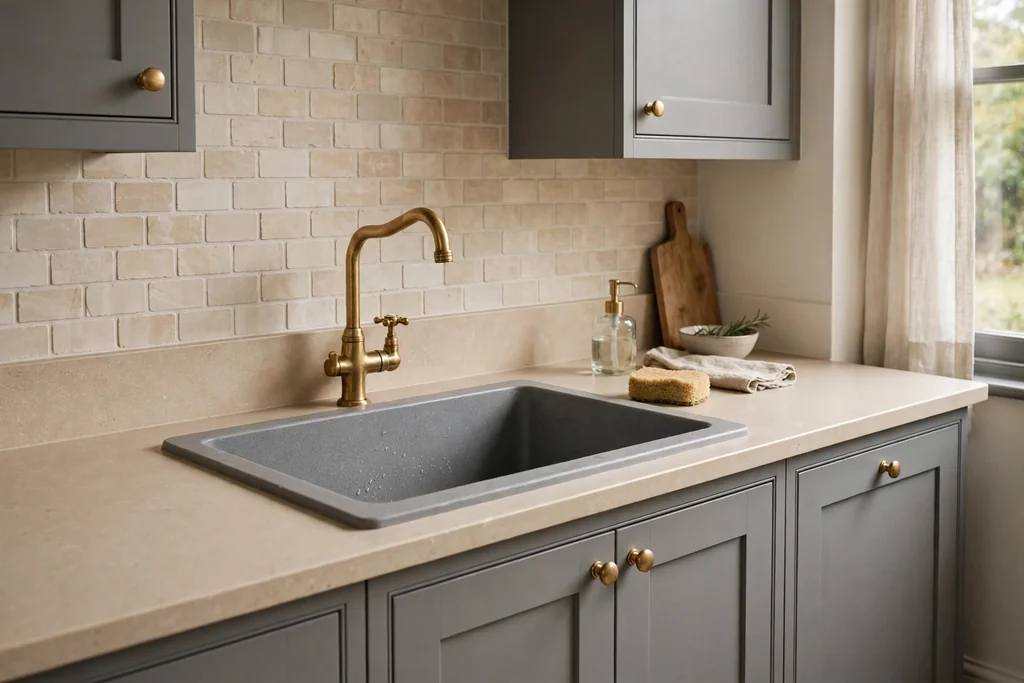
A grey composite sink set into a beige counter gives the sink run a quiet contrast that suits daily use. Composite sinks hide light marks better than bright white, and the grey tone links to grey cabinets, a grey island, or grey hardware nearby. Pair the sink with a brass tap, so the warm metal bridges the grey sink and the beige counter in one detail.
Choose a single large basin if you wash large pots and baking trays, and check the cabinet size before you order, since composite sinks need a firm base unit. Wipe the sink after use if your water leaves marks, and use a sink grid or mat to protect the base from heavy pans. Keep the area around the sink clear, with a dish rack or a folded linen cloth nearby, so the sink run stays easy to wipe.
24. Beige Linen Shade at the Grey Kitchen Window
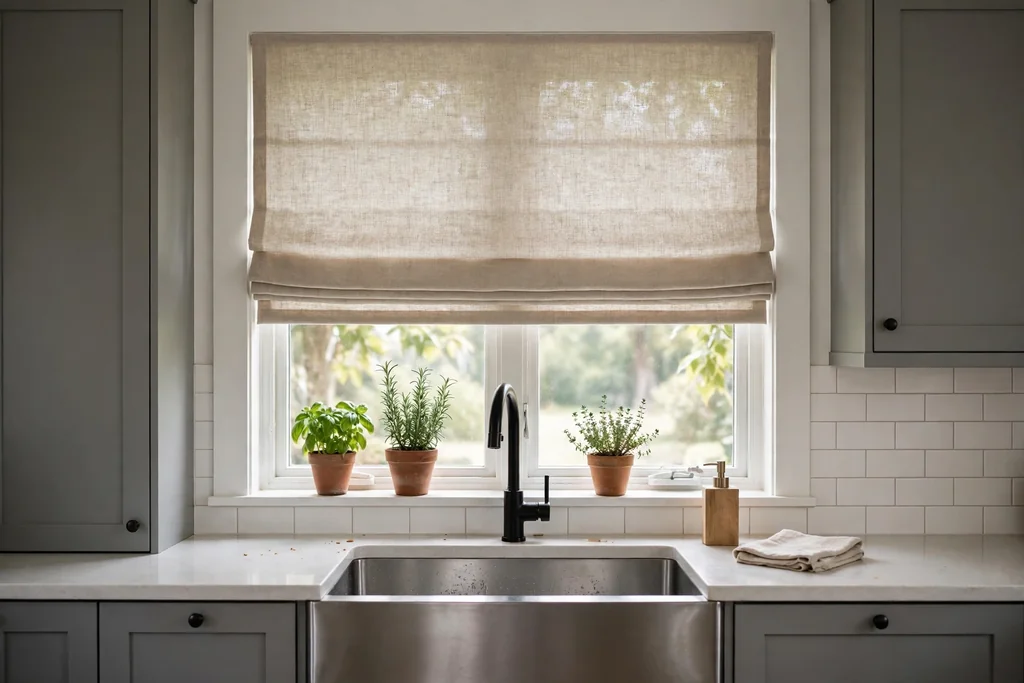
A beige linen roman shade at the kitchen window softens grey cabinets and filters daylight without blocking it. A relaxed style, with a soft curve at the bottom, feels less formal than flat tailored folds and suits most kitchens. Pick a washable cotton or linen blend in a color already used on towels or seat cushions so the shade links to the room, and mount it inside the frame for a clean line on a small window, or just above the frame to make a short window look taller.
Keep cords short and secured, and follow current cord safety guidance if children use the room. Keep the shade clear of the stove if the window sits near it, and wash the fabric on a regular schedule, since kitchen shades pick up grease film over time. For more ways to dress the window without blocking light, see these kitchen window decor ideas.
25. Grey and Beige Patterned Runner Rug
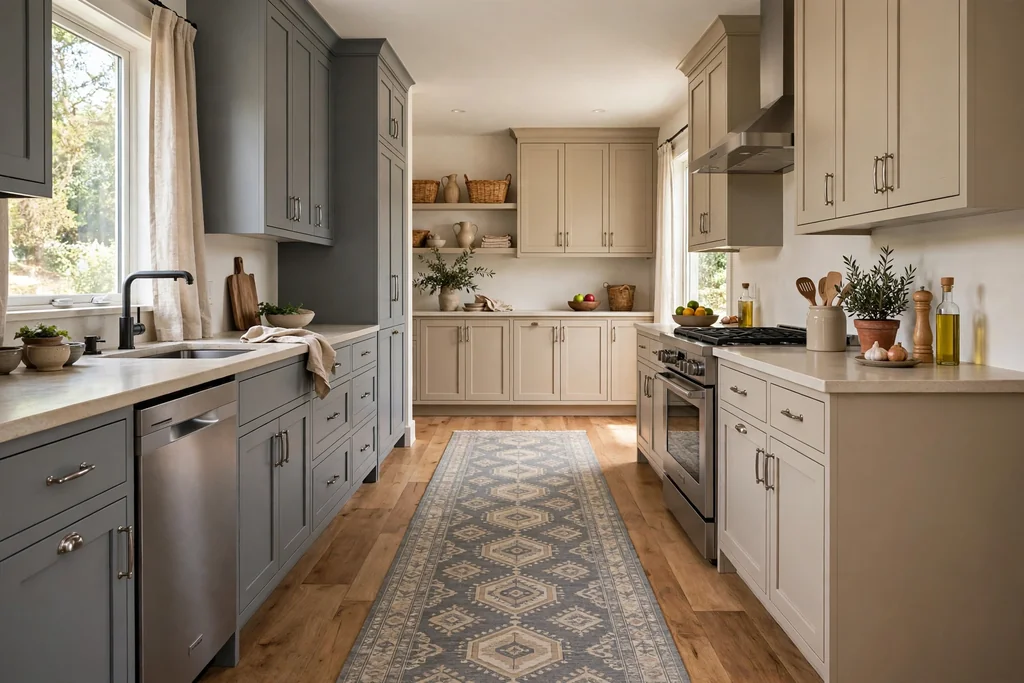
A long runner in a grey and beige pattern adds softness to a hard kitchen floor and ties the two cabinet colors together at ground level. The pattern works best in a galley kitchen or along a long cabinet run, where the runner leads the eye down the room. Choose a low pile, washable runner, since kitchen runners take spills, foot traffic, and crumbs every day.
Keep the runner clear of the stove and sink splash zones if you can, or choose a rug with a non slip backing so it stays put on a hard floor. A pattern with both grey and beige in it does more work than a plain rug, because it repeats both colors in one piece. Shake the runner outside weekly, and wash it on a regular schedule so cooking grease does not build up in the fibers.
26. Beige Ceramics and Grey Stoneware on the Counter
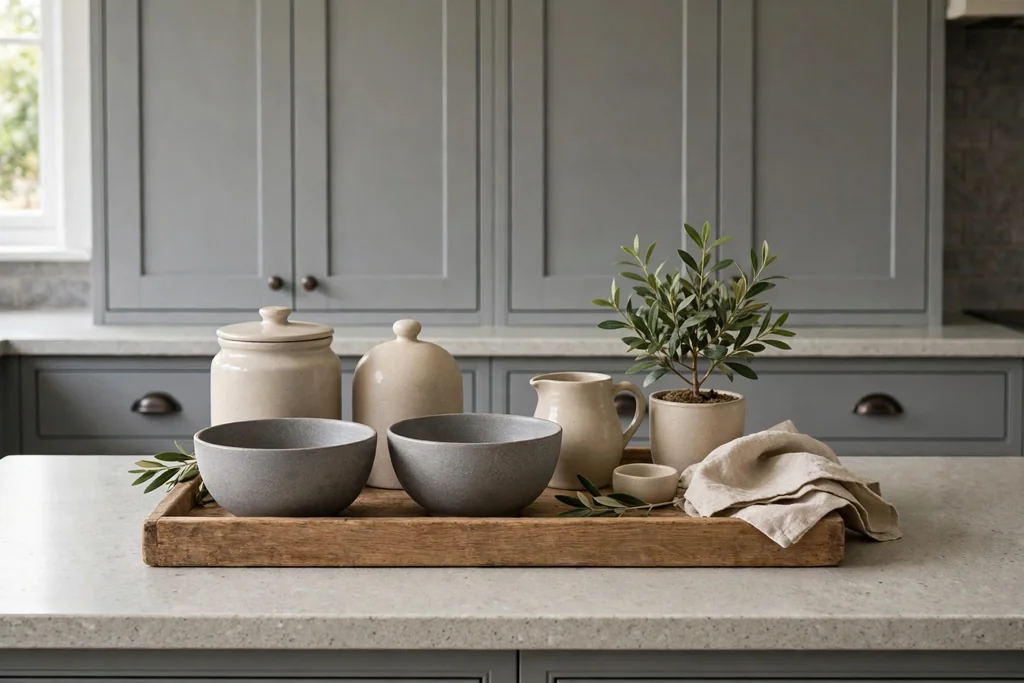
A small group of beige ceramics and grey stoneware on the counter gives a grey and beige kitchen personality without filling every surface. A beige jug, a grey bowl, a wood board, and a small plant are enough: the mix repeats both colors, adds texture, and keeps the counter useful. Group the pieces on one tray or board, so the whole group lifts away in one move when you need the counter for cooking.
Keep the rest of the counter mostly clear, so this one group reads as a styled corner rather than clutter. Choose pieces you actually use, such as a salt cellar, an oil bottle, or a fruit bowl, so the display earns its place. Wipe the tray weekly, since counters near the stove collect a light film of cooking grease, and swap one piece by season if you want a change without buying new cabinets.
27. Beige Dining Table with Grey Chairs in an Open Kitchen
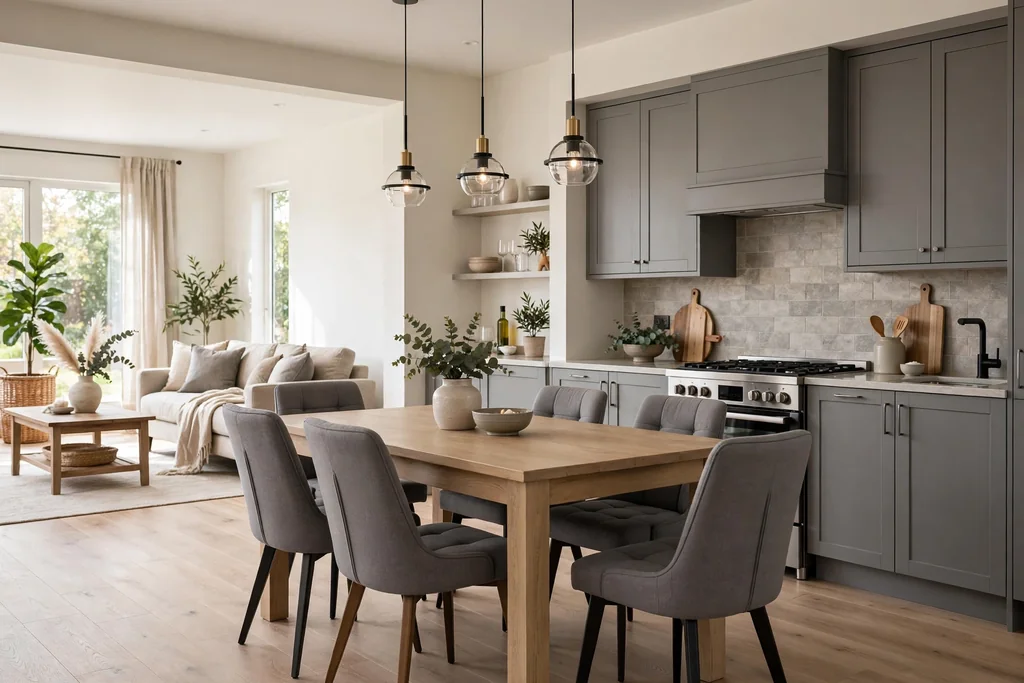
A beige wood dining table with grey upholstered chairs gives an open plan kitchen a clear eating zone that links both cabinet colors. The wood table warms the room, the grey chairs repeat the grey cabinets, and the table itself becomes the bridge between the kitchen and the living area. A pedestal base suits a small space, since it leaves leg room on all sides, while a trestle base suits a long room.
Choose washable chair fabric if the table is used for daily meals, and keep the table centerpiece low, such as a small plant or a bowl of fruit, so people can talk across it. A washable runner protects the wood top and adds a second layer of beige. Keep the chairs tucked in when not in use, so the walkway between the kitchen and the table stays clear.
28. Rental Friendly Grey and Beige Swaps
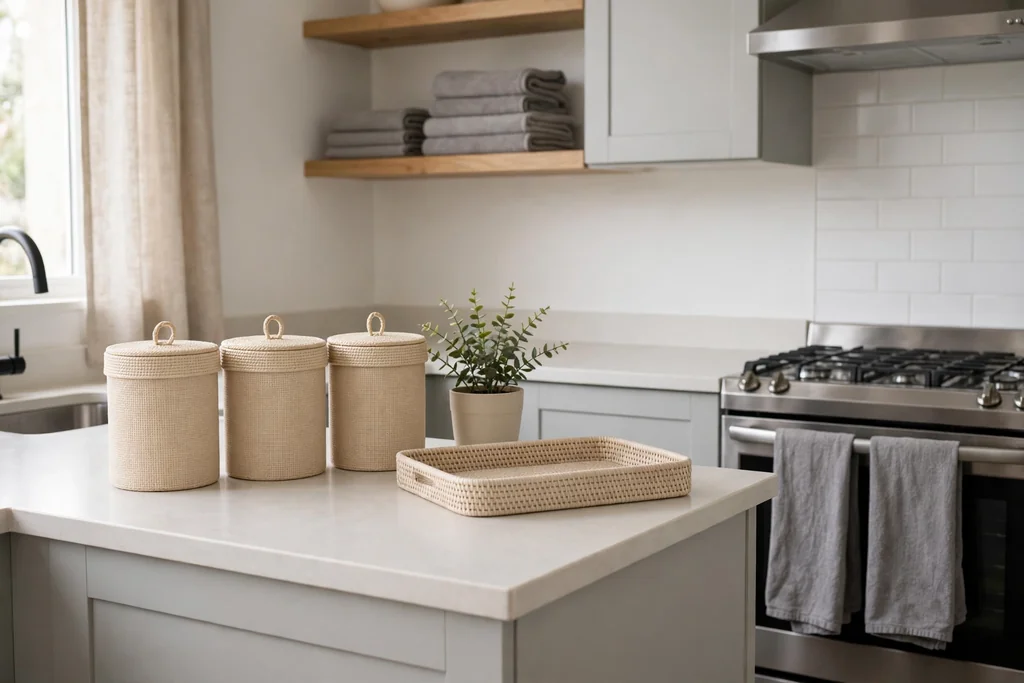
If you rent, you can still get the grey and beige look without painting a cabinet. Swap in beige canisters, grey towels, a beige tray, grey placemats, and one or two plants, and keep the changes removable. A beige runner, grey chair cushions, and a new set of knobs, with the old ones kept in a labelled bag, can shift the whole room for a low cost, and every piece can move with you.
Start with the changes that show most: a tray on the counter, a runner on the floor, and one open shelf styled in grey and beige. Test each small change for a week before adding the next one, so the room builds up in layers rather than filling up at once. Keep the largest surfaces, such as cabinets and walls, as they are, and let the removable pieces carry the grey and beige story.
Conclusion
A grey and beige kitchen works best when the two colors have a bridge between them, whether that bridge is greige paint, warm wood, brass, or a patterned runner. Start with the change that fixes your biggest frustration, test large samples in daylight and evening light, and keep one metal and one wood tone repeated through the room. Work through the list in order, cabinets and counters first, then tile and lighting, then seating and storage, and finally the small counter and rug touches. For a brighter starting point, these white kitchen ideas show how pale cabinets and warm accents work together.
Save this list for your next free hour in the kitchen, and try one idea first: a hardware swap this week, a shade or runner next week, and a larger cabinet or counter change when you are ready.
FAQs
How do I stop grey and beige from clashing in a kitchen?
Match the undertones first. Warm greys pair with warm beige, while cool greys need a beige with a little grey in it. Test large samples of both colors side by side, beside your floor and counter, in daylight and evening light. If the two tones still fight, add a bridge material, such as greige paint, warm wood, or brass, and keep the stronger tone to one area, such as an island or a lower cabinet run.
What is greige, and is it a good choice for a grey and beige kitchen?
Greige is a blend of grey and beige, and it is a good choice when you want one calm cabinet color that links both tones. It suits rooms with warm wood floors, cream tiles, or brass hardware, because the beige in the mix links to those tones. Greige shifts tone through the day, looking greyer in morning light and warmer at night, so test a large sample in both lights before ordering.
Should grey or beige be the main color in the kitchen?
Use the color that suits your light as the main color, and the other as the accent. Pale and warm greys suit small or north facing rooms, while beige suits rooms that need warmth. In most kitchens, one color on the perimeter cabinets and the other on the island, the counter, or the seating gives the clearest result, since the room keeps one calm base and one clear feature.
What counter works best with grey and beige cabinets?
A warm beige quartz counter softens grey cabinets, while a grey veined stone counter cools beige cabinets. Quartz is hard wearing and easy to wipe, which suits daily cooking, while stone needs sealing and prompt cleanup of acidic spills. Pick the counter that links to the rest of the room, such as wood floors or brass hardware, and keep the backsplash simple so the counter and cabinets carry the room.
What hardware finish suits a grey and beige kitchen?
Brass is the warmest bridge, since it links grey and beige and repeats well on taps and lights. Matte black gives a clearer, more modern line against both colors, while brushed nickel stays quiet and suits a cooler grey and beige scheme. Use one finish across the whole kitchen, repeat it at least twice more, and test it against your cabinet samples before buying pulls for the whole room.
Can I get a grey and beige kitchen look without repainting?
Yes, if you start with the changes that show most. Swap hardware to one finish, add a beige linen shade, style one tray in grey and beige ceramics, lay a patterned runner, and add grey chair cushions or beige canisters. Paint is a larger change, but removable pieces can carry the grey and beige story in a rental, and you can test each small change for a week before adding the next one.