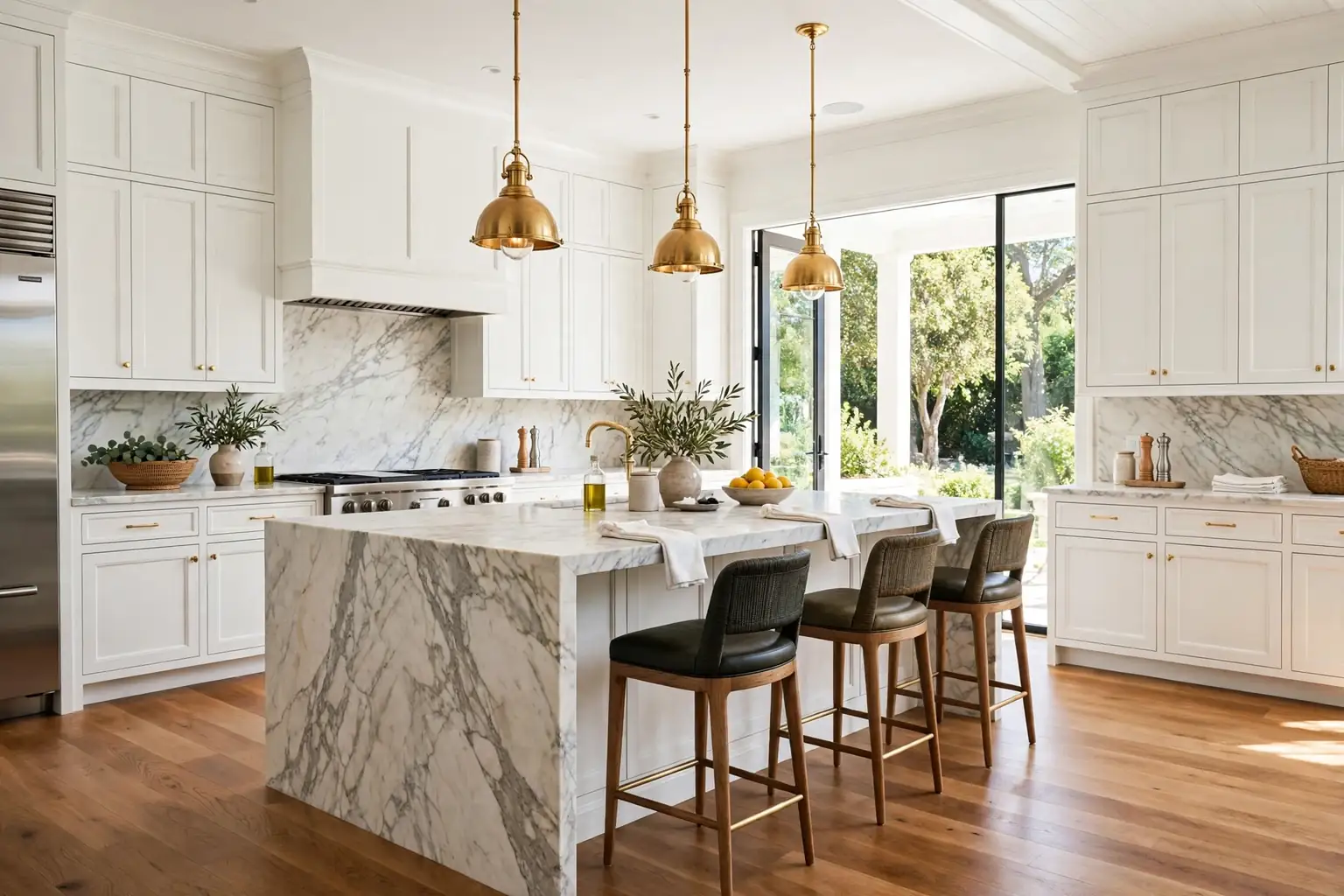
An elegant kitchen does not need to feel formal. The rooms that work best pair one or two refined materials, such as marble, brass, or warm wood, with soft color, good light, and places to sit and cook without fuss. That balance keeps a kitchen feeling cozy as well as current. These 23 elegant kitchen ideas cover cabinets, counters, islands, lighting, storage, and small styling moves you can try in stages. Start with the change that fixes your biggest daily frustration, and test large samples in daylight and evening light. If you want a bright starting point, these white kitchen ideas show how pale cabinets and warm accents work together.
Key Takeaways
- Pair one refined material, such as marble or brass, with one warm material, such as wood or linen, so the room feels elegant without feeling cold.
- Keep the palette calm: two or three main colors, one metal finish repeated through the room, and one wood tone.
- Choose cabinet style first, since it sets the tone for hardware, backsplash, and lighting choices that follow.
- Layer the light: daylight, under cabinet task light, and pendants or a chandelier, so the kitchen glows at night as well as by day.
- Give coffee, baking, and prep each a home, and keep counters mostly clear, so elegant details stay visible and cooking stays easy.
- Test large samples beside your floor, counter, and cabinet color in daylight and evening light before a large change.
1. Classic White Shaker Cabinets with Brass Hardware
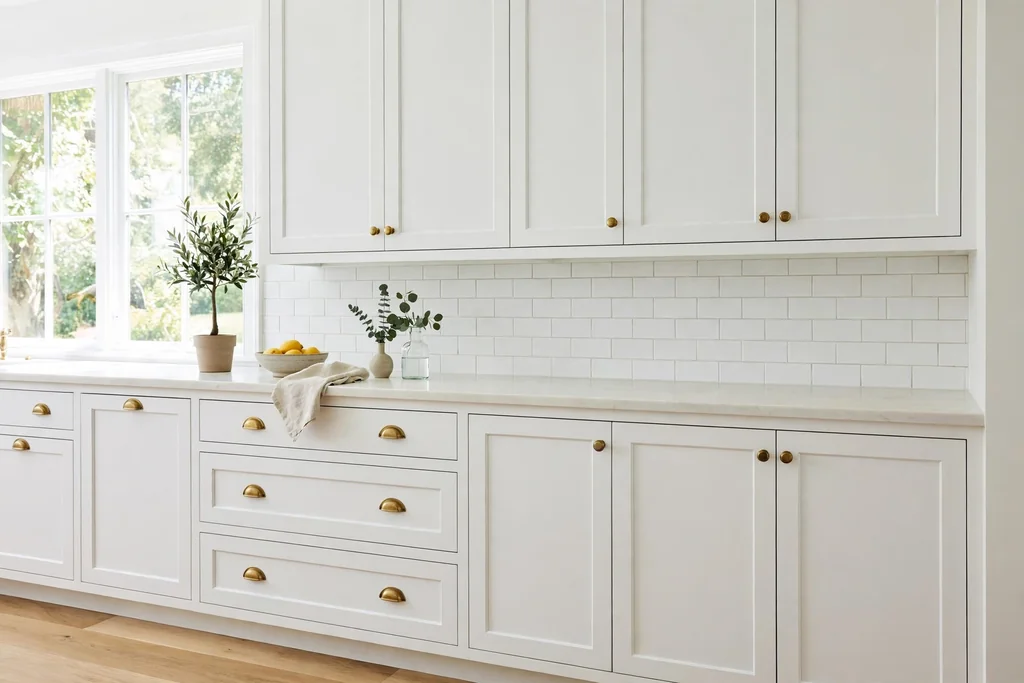
White Shaker cabinets are the calm base of many elegant kitchens, because their simple recessed panel suits traditional, farmhouse, and transitional homes alike. The frame gives the cabinets shape without fussy detail, so the room reads as finished rather than plain. Pair them with a soft white paint that has a warm undertone, and keep the walls a shade lighter or darker so the cabinets stand out gently.
Choose cup pulls or simple knobs in brushed brass, and repeat that finish on the tap, so the metal reads as one thread through the room. Shaker cabinets also take well to a mix of closed storage below and glass fronts above, which stops a long run of white doors from feeling heavy. If you are repainting existing cabinets, test the white beside your counter and floor first, since white shifts a lot under kitchen lighting.
2. Soft Greige Cabinets with a Warm Wood Counter
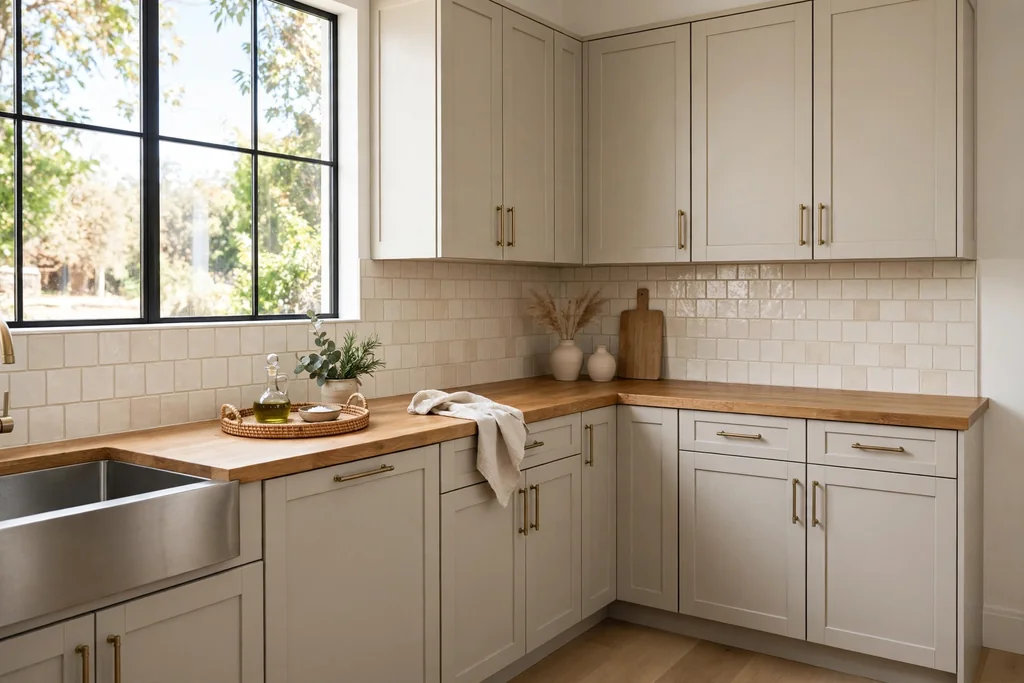
Greige, a blend of grey and beige, warms an elegant kitchen without leaving the neutral family. It suits rooms with warm wood floors, cream tiles, or brass hardware, because the beige in the mix links to those tones. A wood counter on top adds a second warm layer and stops the room from feeling cool or flat, especially in a kitchen with limited daylight.
Oil or seal the wood counter near the sink and stove, and wipe spills promptly so the surface stays even. Keep the backsplash simple, such as a plain cream or pale grey tile, so the greige and wood carry the room. Greige shifts tone through the day, looking greyer in morning light and warmer at night, so test a large sample in both lights before ordering.
3. Marble Counters with Gentle Veining
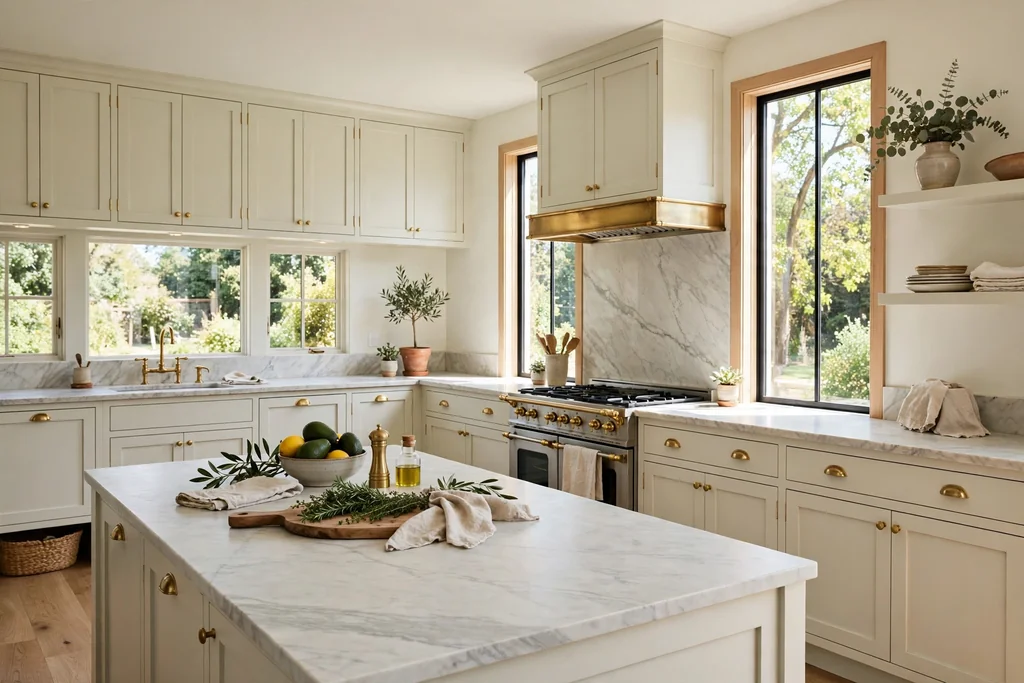
Marble counters are the classic partner for elegant cabinets, with soft grey veining that adds movement to an otherwise plain surface. The stone suits traditional and transitional kitchens, and it looks at home with Shaker cabinets, brass hardware, and a subway tile backsplash. Choose a slab with gentle veining if you want a calm look, or a bolder vein pattern if the counter is meant to be the main feature of the room.
Marble needs more care than quartz, so seal it as advised by the supplier, wipe acidic spills quickly, and use trivets under hot pans. If you love the look but cook daily with citrus, tomato, and wine, consider marble on an island used for serving and a harder wearing surface on the main prep run. The contrast between pale cabinets and a veined stone counter is one of the simplest ways to make a kitchen feel finished.
4. A Calm Island with Seating and a Light Stone Top
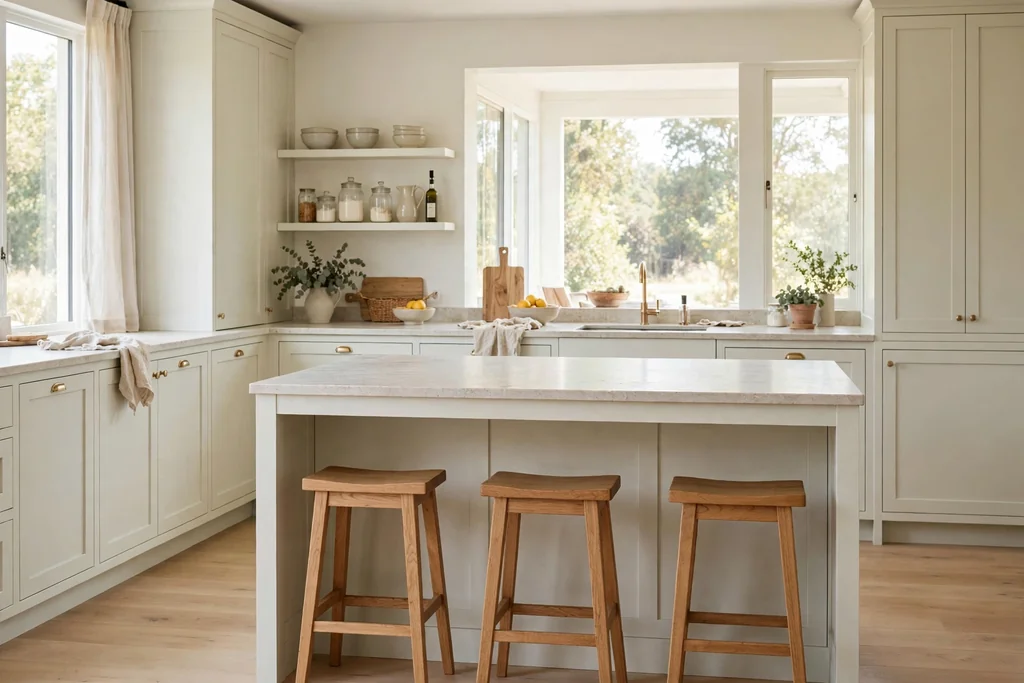
A large island with seating gives an elegant kitchen a clear working center and a place to gather, without repainting every cabinet. Keep the island front simple, with no handles or panels competing with the stone, and choose a light, easy to clean top, such as pale quartz or white stone, so prep work stays visible against the base. Add seating on one side only, so the working side stays clear for cooking.
Leave a clear walkway on the cooking side, and choose stools in wood or rattan that slide fully under the overhang. A wood stool warms the stone, while a linen cushion softens the seat for long mornings. If your room is small, a narrow island on wheels can give the same prep and seating benefit and roll away when you need the floor back.
5. A Brass Tap with Matching Hardware
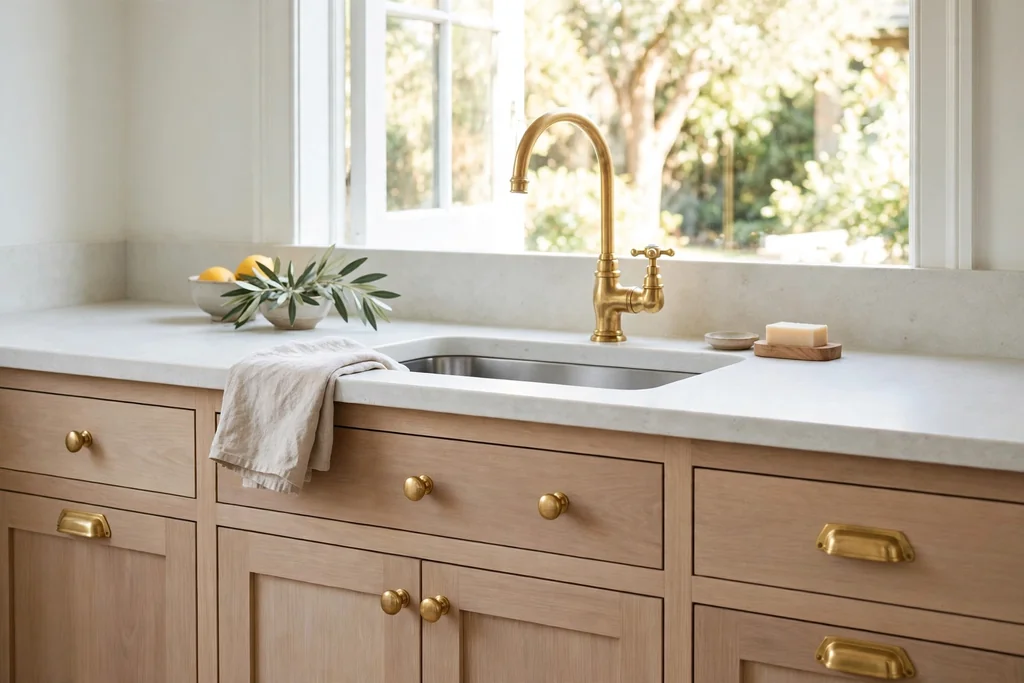
A brass tap at the sink brings warm metal to the heart of the work zone, and it pairs well with matching knobs and pulls across the room. Brass warms pale cabinets in a way that black or chrome cannot, adding a soft golden glow that suits traditional, farmhouse, and transitional kitchens. Unlacquered brass deepens in tone over time, while lacquered brass keeps a steady shine, so choose the finish that fits how much change you want to live with.
Match the brass to the tap and to any pendant or shelf brackets, so the metal reads as one set. If brass feels too yellow beside your cabinets, pick a brushed or aged brass rather than a bright polished one. Dry the tap after use if your water leaves marks, and wipe pulls often near the stove, since kitchen grease dulls metal over time.
6. Layered Pendant Lights Over the Island
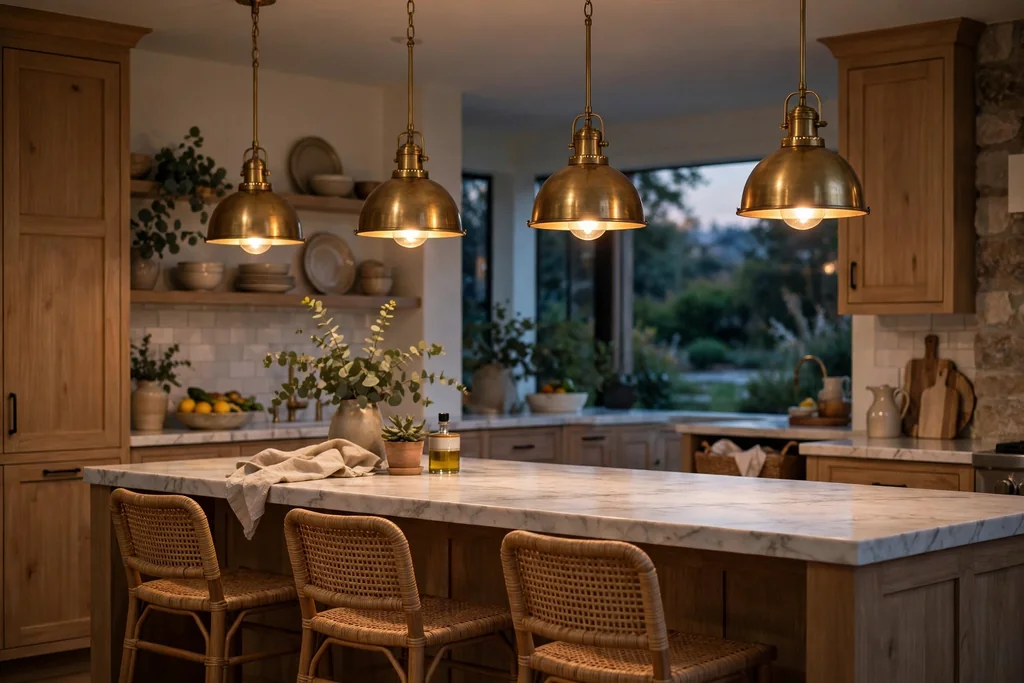
Hang two or three pendant lights over the island for warm light and a clear accent at eye level. Pendants work well in a row, spaced evenly, with the lowest point well above head height and clear of steam from the hob. A slim brass dome, a glass shade, or a linen shade all suit an elegant kitchen, while the shade shape should stay simple so the light, not the fitting, does the work.
Match the pendant finish to the tap or handles, and keep the rest of the ceiling lights plain. Use warm white bulbs so the room reads warm in the evening, not cold, and put the pendants on a dimmer if your wiring allows it, so evening meals feel calm. Dust the shades often, since kitchen pendants collect grease film over time.
7. Glass Front Cabinets for Display
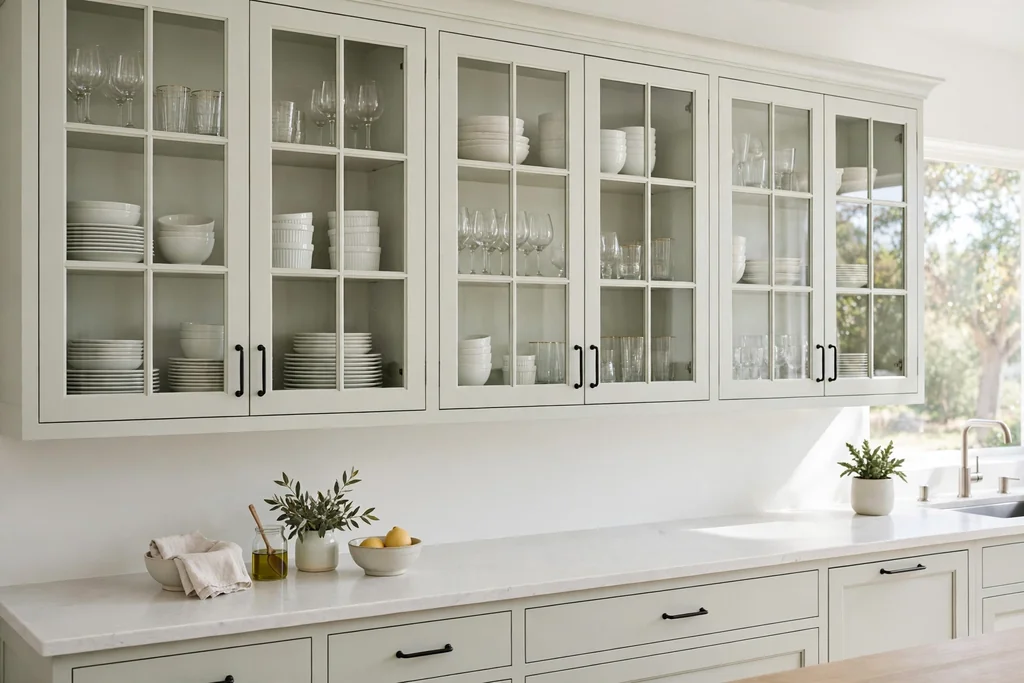
Glass front upper cabinets break up a wall of solid doors and give you a place to show the pieces you actually use, such as white dishes, glassware, and wooden bowls. They make a kitchen feel lighter, because the eye sees through the cabinet rather than stopping at a solid door. Use them on one run of cabinets, or on either side of a window or range, rather than everywhere, so the display stays calm.
Keep what you show to a small set of matching or related pieces, and leave some space on each shelf so the cabinet does not look crowded. Clear glass shows everything, so it suits tidy households; reeded glass softens the view and hides a less perfect shelf. Add a small light inside the cabinet if you want the display to glow in the evening, and keep the items you reach for daily on lower shelves.
8. A Floor to Ceiling Pantry Wall
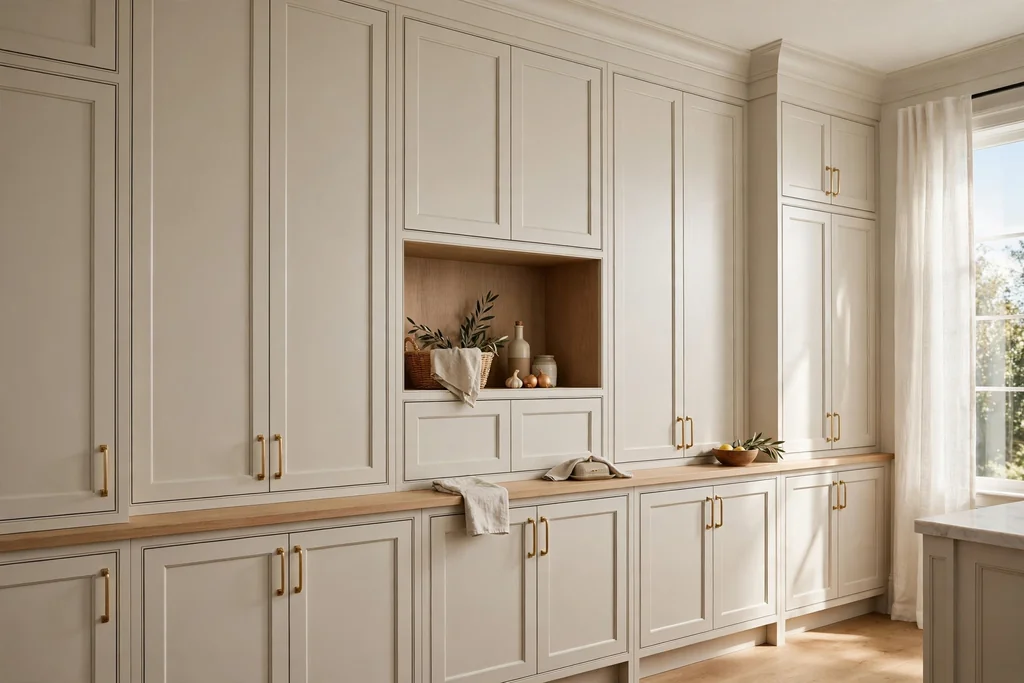
A floor to ceiling pantry wall in a soft neutral gives a kitchen a large amount of closed storage that reads as one calm panel rather than a row of mismatched cupboards. Use the same cabinet color and the same handle style across the whole wall, and keep the top section for rarely used items, daily food at hand height, and heavy items low. This wall suits a large kitchen, or a small one where a separate pantry room is not possible.
Add one open niche in the pantry wall, such as a shallow shelf for cookbooks or a coffee station, so the tall run does not feel like a blank wall. Keep the pantry wall clear of the main cooking path, so doors can open without blocking the stove or sink. Label the inside of doors or shelf fronts if more than one person cooks, so items return to the same spot.
9. Open Wood Shelves Styled with Room to Breathe
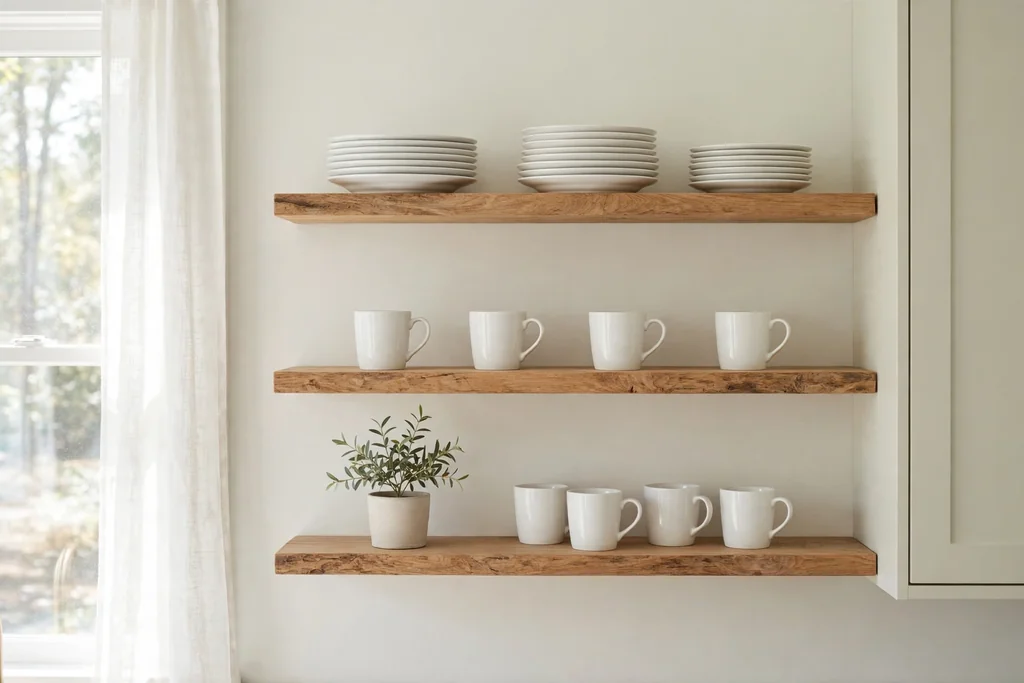
Open wood shelves on one short run give an elegant kitchen warmth and a place for daily dishes, without giving up all closed storage. Two or three shelves in pale wood hold everyday plates, mugs, and bowls within easy reach, and they stop the wall from feeling like a solid block of doors. This idea works best when you keep the shelves to items you use often, so nothing sits long enough to gather dust.
Style each shelf with a mix of stacked plates, a jug, and one small plant, and leave breathing room between groups so the shelves read as tidy, not crowded. Keep the rest of the kitchen storage closed, so the open shelves are a feature rather than a necessity. Dust open shelves weekly, since open storage collects cooking film, and keep shelves clear of direct stove steam.
10. A Plaster Range Hood as a Quiet Focal Point
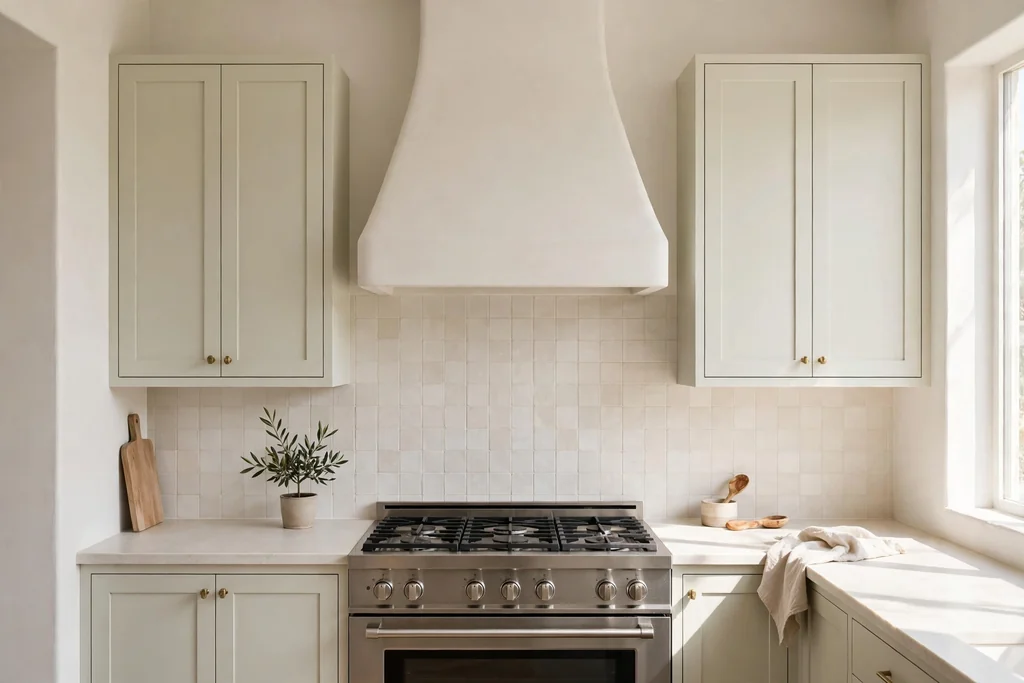
A plaster range hood turns the cooking wall into a focal point without changing every cabinet. The hood shape stays simple, such as a straight chimney or a soft curved canopy, while the plaster finish links it to pale walls and cabinets below. This works well when the rest of the wall is quiet, with plain tile and pale cabinets, so the hood carries the interest.
Choose a washable paint finish for the plaster, since hood surfaces collect grease film, and keep decorative trim clear of the heat zone. If the hood sits over a range, check that any added panels can be wiped clean and do not trap heat. For a softer version, paint the hood the same color as the walls and add a darker tile behind the range instead.
11. A Full Height Stone Slab Backsplash
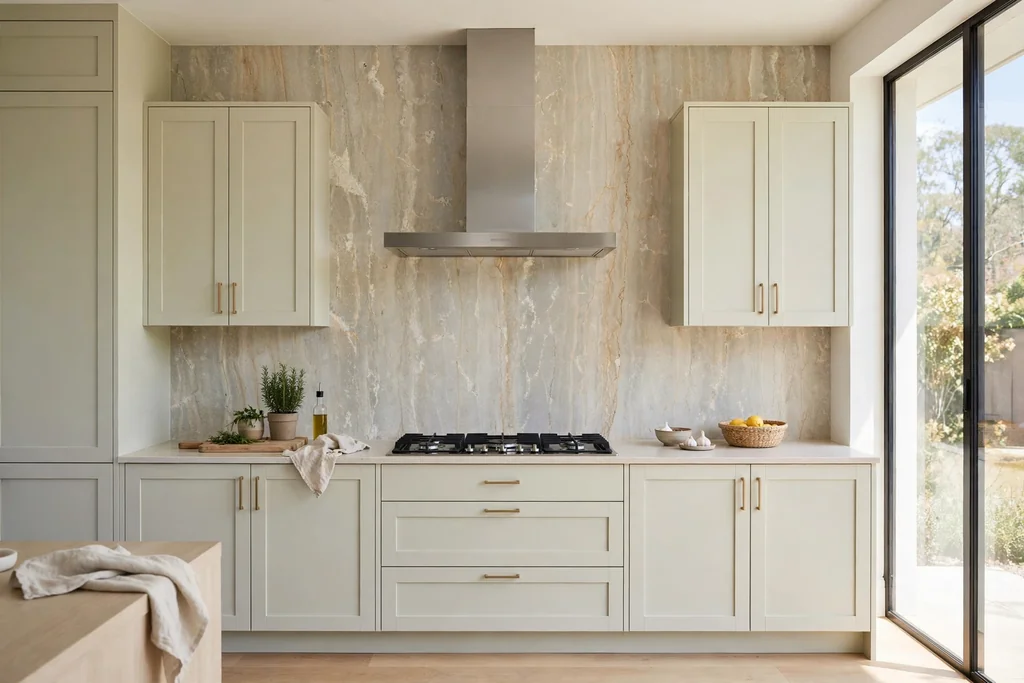
A full height stone slab backsplash, run from counter to ceiling or to the underside of a shelf, gives an elegant kitchen a seamless wall with no grout lines to clean. The same stone as the counter makes the wall and work surface read as one planned surface, which suits open plan rooms where the cooking wall stays in view. Choose a slab with gentle veining for a calm look, or a bolder vein for a clear feature wall.
Keep counters and cabinets plain, so the stone stays the focus, and stop the slab at a clear line, such as the underside of the cabinets or a shelf, rather than fading out mid wall. Order the slab from the same batch as the counter where possible, so the veining and tone match. Wipe the surface with a soft cloth, and seal it as advised by the supplier to keep cooking splashes from staining it.
12. Herringbone Wood Floors
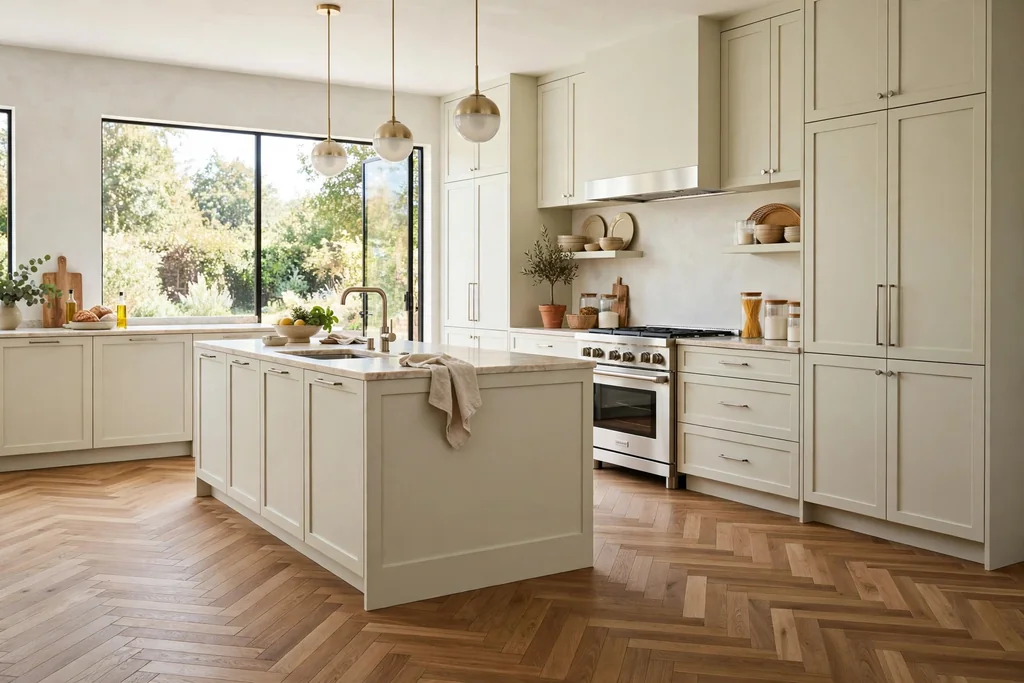
Herringbone wood floors give an elegant kitchen pattern at ground level, where it adds interest without competing with cabinets or counters. The angled layout draws the eye across the room, which helps a long or narrow kitchen feel wider, and the warm wood tone links to counters, shelves, or a wood island top. Choose a mid tone wood with a matte finish, since kitchen floors see water and grease.
Keep the rest of the floor scheme simple, with plain walls and a single rug or runner if you want extra warmth. Seal the wood well near the sink and stove, where spills land first, and check that the floor suits underfloor heating if you have it. Clean spills promptly, and use felt pads under stools and chairs so the pattern stays even over time.
13. A Banquette Nook for Everyday Meals
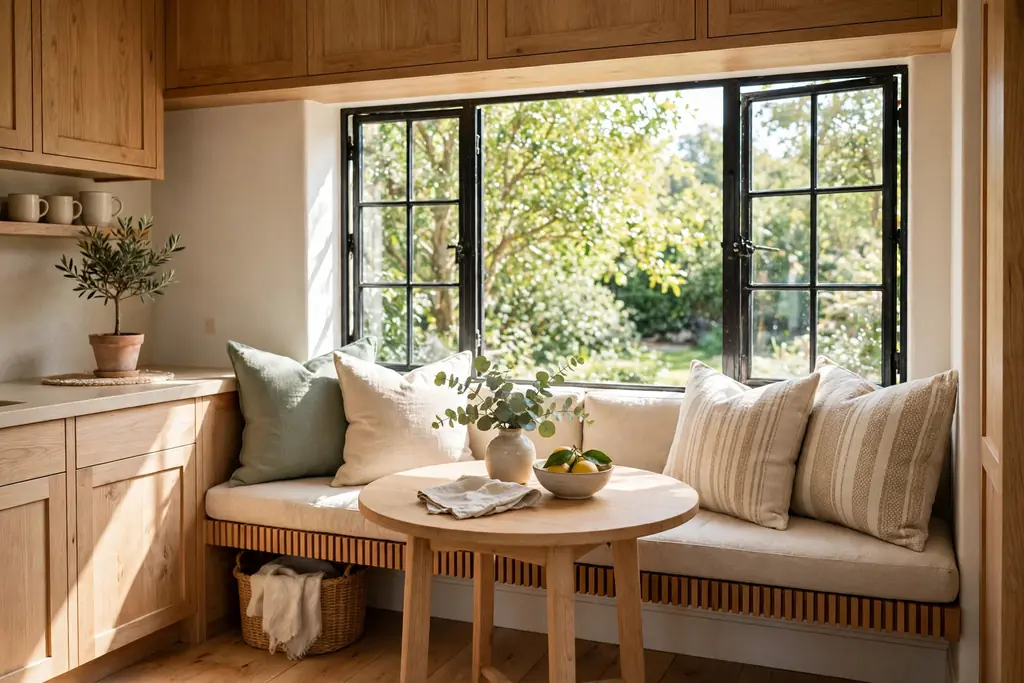
A built in banquette nook turns an awkward corner into the most used seat in the house. A bench along the wall, a small pedestal table, and two chairs give a family a place for breakfast, homework, and coffee, without a full dining room. The bench base can hold storage for table linens, board games, or rarely used baking trays, so the nook earns its floor space twice over.
Dress the bench with a washable cushion and two or three pillows in linen or cotton, and keep the table clear apart from a small vase or a salt and pepper set. A banquette suits a window corner best, where daylight does the decorating, and it pairs well with a wood table and simple chairs. Measure the bench depth first, so adults can slide in and out without moving the table.
14. A Chandelier Over the Dining Table
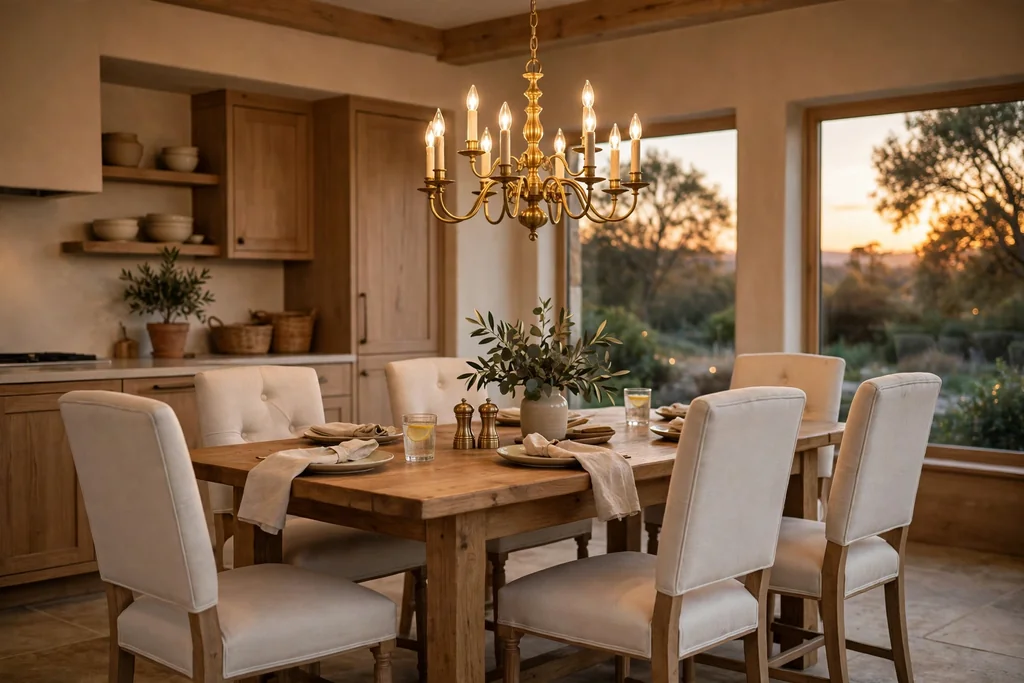
Hang a chandelier, or a cluster of small pendants, over the kitchen dining table for a dining change that also warms the whole open plan room. A slim ring, a small multi arm chandelier, or a linen drum shade in brass or black suits a table for four to six, and it pairs well with a wood table and cream chairs. Keep the lowest point well above the table so people can see each other across it.
Use warm white bulbs, and put the light on a dimmer if your wiring allows it, so evening meals feel calm. Dust the fitting often, since dining lights collect dust from the whole room. If the dining area is small, a single pendant over the table gives the same note with less visual weight, and it leaves the ceiling feeling higher.
15. Linen Roman Shades at the Window
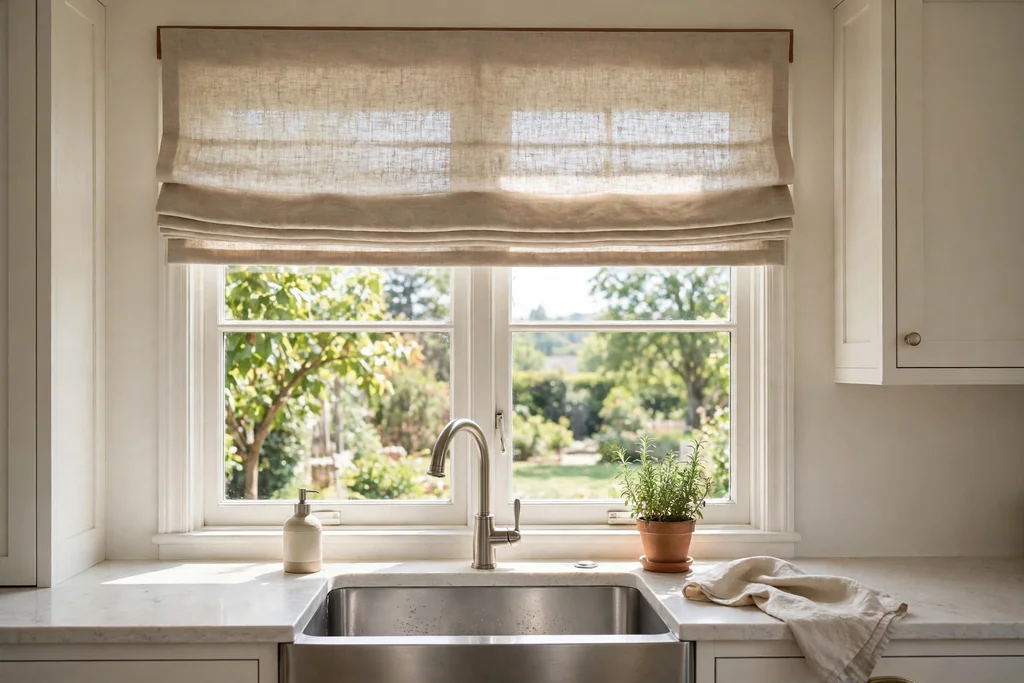
A roman shade gives a kitchen window a tailored finish and folds up into a neat stack when you want the full view. A relaxed style, with a soft curve at the bottom, feels less formal than flat tailored folds and suits most elegant kitchens. Pick a washable cotton or linen blend in a color already used on towels or seat cushions so the shade links to the room.
Mount the shade inside the frame for a clean line on a small window, or just above the frame to make a short window look taller. Keep cords short and secured, and follow current cord safety guidance if children use the room. For more ways to dress the window without blocking light, see these kitchen window decor ideas.
16. A Coffee Niche with Closed Storage
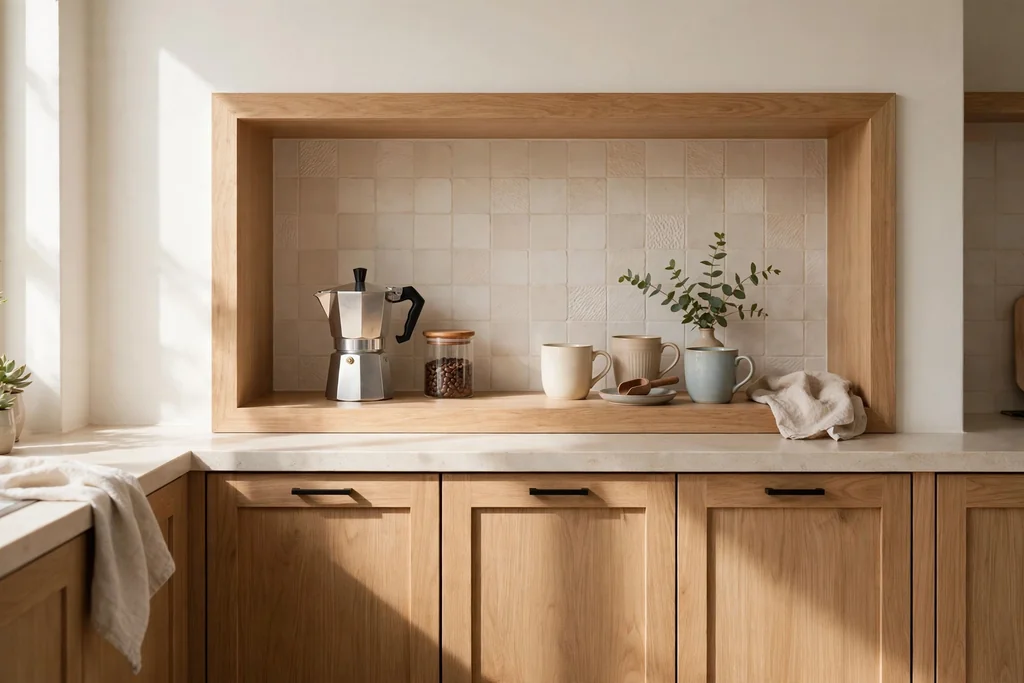
A coffee niche groups your morning items in one place, so the main counter stays clear for cooking. Set a small section of counter, or one shelf inside a pantry wall, aside for the coffee pot, mugs on hooks or a stand, and a jar of coffee, with closed storage below for filters and spare supplies. A defined station feels dressed when you add a small plant or a wooden tray beside it.
Keep the niche away from the sink splash zone and the stove, and wipe it often, since drink areas gather drips. Lift a tray aside in one move when you need the counter for prep. If the counter is short, shrink the station to a mug stand and one jar on a small tray, and store the rest in the cabinet below.
17. A Small Wine and Drinks Niche
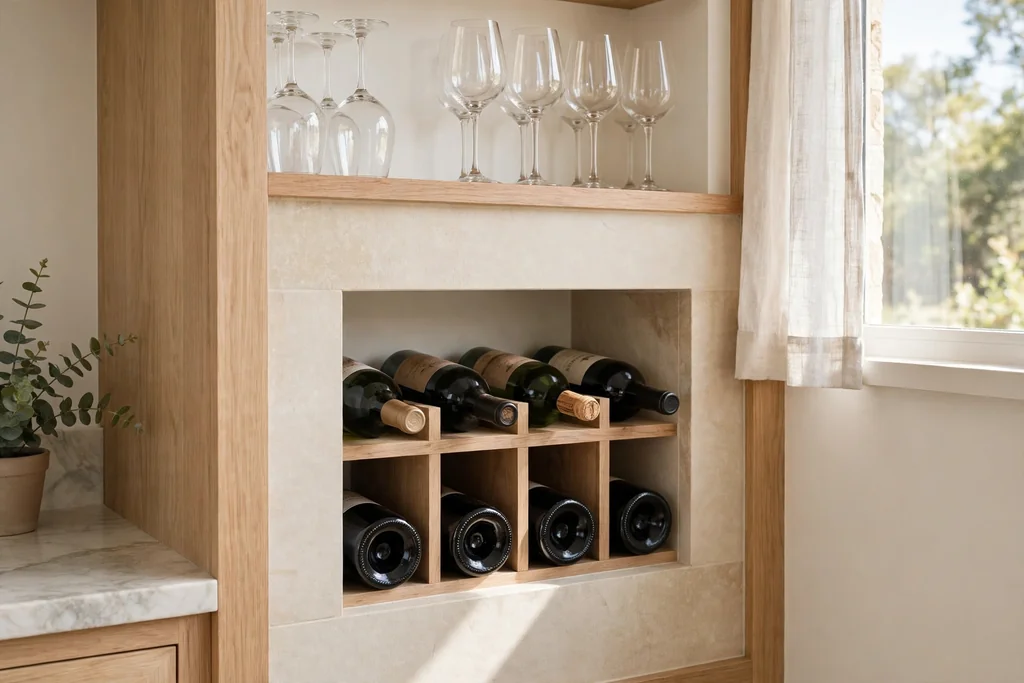
A small wine and drinks niche adds a grown up, elegant note to a kitchen without a full bar build. Use one base cabinet, a short run of open cubbies, or a pull out rack near the dining area for bottles, glasses, and a small tray, and keep the rest of the kitchen storage for daily cooking. A niche near the dining table works best, since glasses travel a short distance to the table.
Store bottles on their sides in a cool spot away from the oven and direct sun, and keep glasses upright on a shelf above, so the niche stays tidy. A single tray on the counter above the niche holds a jug and glasses for serving, and it lifts away in one move when the counter is needed for prep. Keep the niche to a size you will actually use, so it does not become a second pantry.
18. Panel Ready Appliances for a Furniture Look
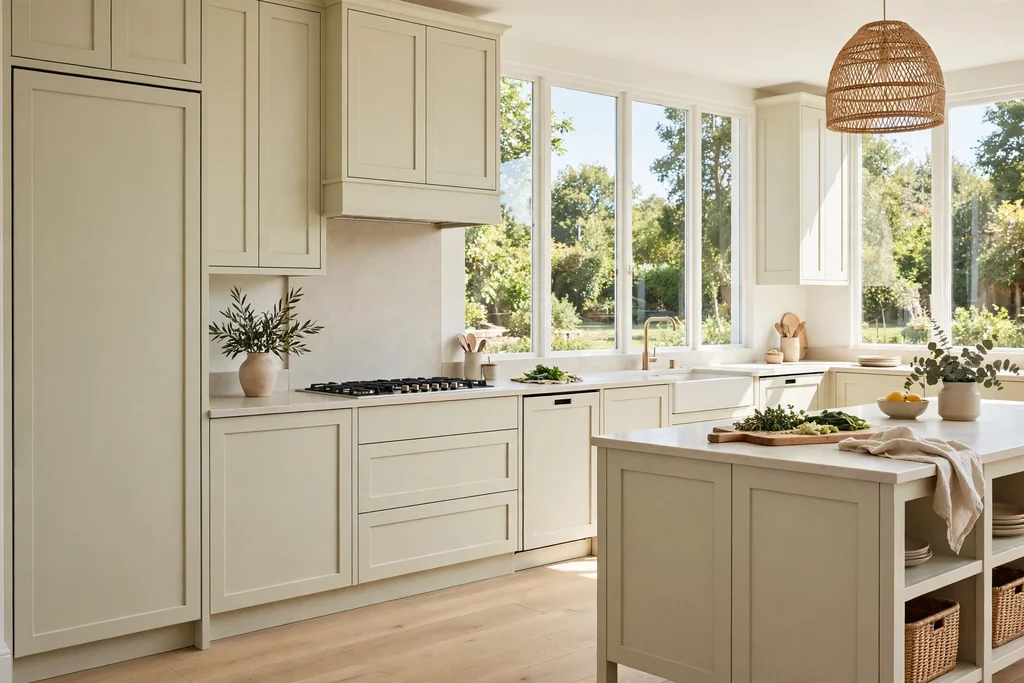
Panel ready appliances, fitted with cabinet fronts that match the rest of the kitchen, make a fridge or dishwasher read as furniture rather than as a machine. The kitchen wall stays calm, with one color and one handle style running across it, which suits elegant rooms where the cooking wall stays in view from the living area. This works best for a fridge and a dishwasher, the two large appliances that break up a cabinet run most.
Check the appliance model accepts a panel, and confirm the panel weight and hinge rating before ordering, since a heavy panel needs the right fitting. Keep one appliance visible if you prefer, such as a range in a matching color, so the room does not feel too uniform. Wipe panel fronts with the same care as cabinet doors, since they sit in the same splash and grease zones.
19. Soft Patterned Tile on the Floor
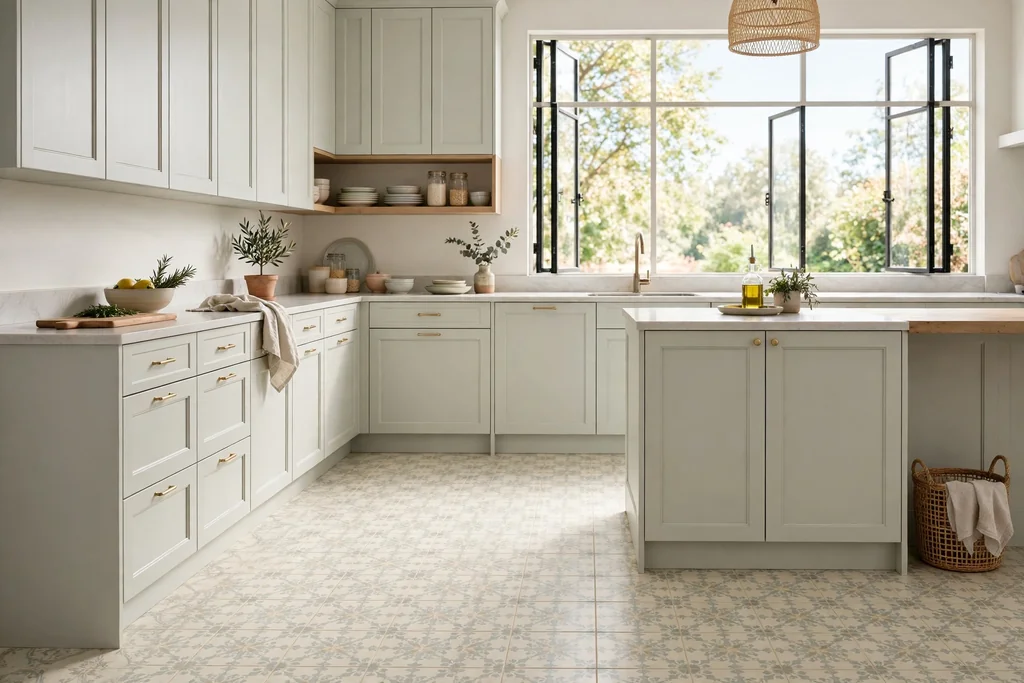
Soft patterned floor tile gives an elegant kitchen interest at ground level in a material that handles water better than wood. Choose a pattern in pale grey, cream, and one soft accent, such as sage or dusty blue, so the floor reads as calm rather than busy. A classic encaustic look or a simple geometric tile suits traditional and transitional kitchens, and it pairs well with pale cabinets and a wood island top.
Keep the rest of the room plain, with a simple backsplash and one rug or runner at most, so the floor can carry the pattern. Grout color matters here: a grout close to the tile tone keeps the floor calm, while a contrasting grout makes the pattern louder. Clean grout lines regularly near the sink and stove, where spills land first, and check that the tile has a non slip finish.
20. Fresh Flowers and a Low Table Centerpiece
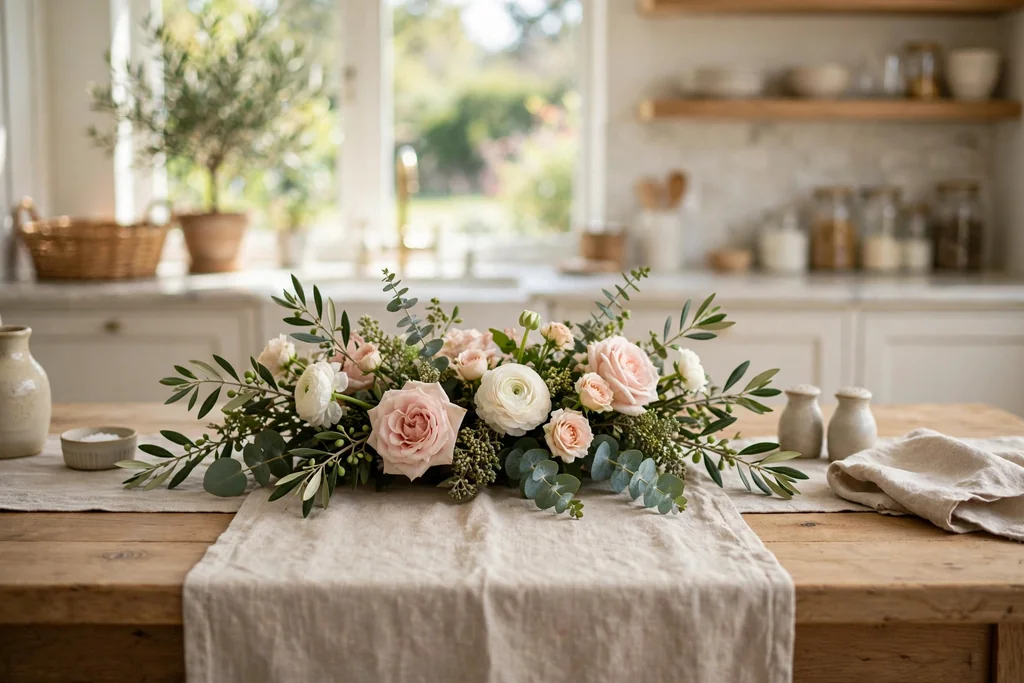
A low centerpiece on the kitchen table, built from a small vase of fresh flowers, a plain linen runner, and one candle in a glass holder, makes daily meals feel cared for without getting in the way. Low pieces let people see each other across the table and leave room for serving dishes at meals. Keep everyday settings simple, with plain napkins in a warm tone doing most of the work.
Change the flowers by season, and keep the runner washable, since kitchen tables take daily spills. Use a glass candle holder or a flameless candle near table linen, and keep the centerpiece clear of the hob. Lift the whole arrangement off in one move when the table is needed for homework, baking, or board games, so the table stays useful as well as pretty.
21. Under Cabinet Lighting for Evening Cooking
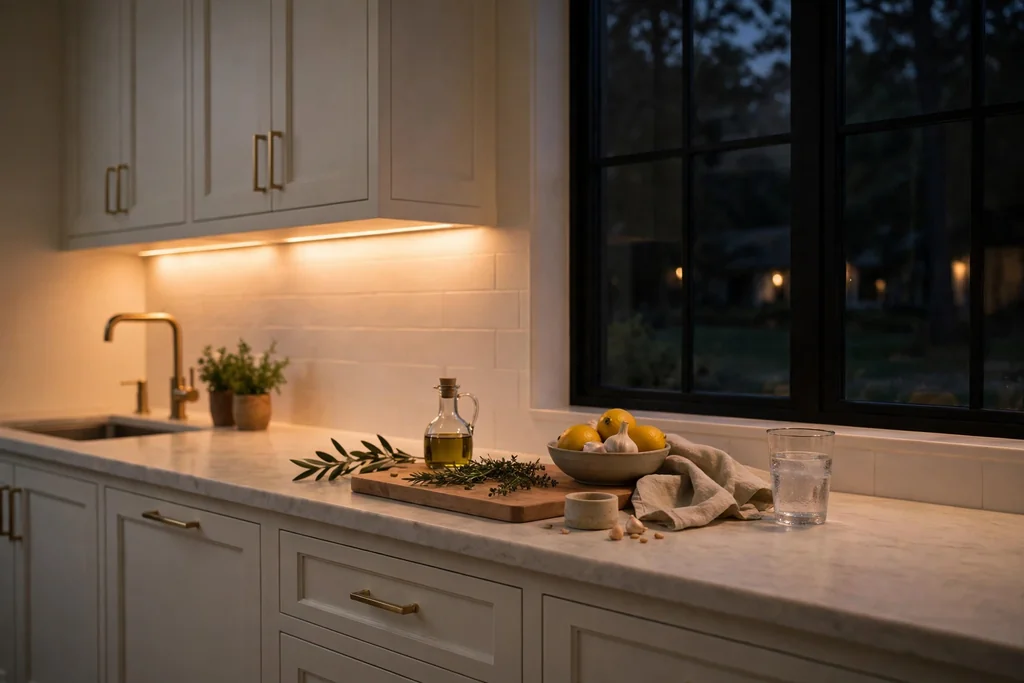
Under cabinet lighting turns an elegant kitchen into a room that works well after dark, with a clear pool of light on the counter where you chop and read recipes. A slim LED strip or puck lights under the upper cabinets light the work surface without lighting the whole room, which keeps evening cooking calm. Choose warm white light, so wood, stone, and brass read warm rather than cold.
Fit the lights toward the front of the cabinet underside, so the light falls on the counter and not on the backsplash alone, and put them on a dimmer or a separate switch from the ceiling lights. Wipe the light covers often, since they sit close to cooking steam and grease. If your kitchen has no upper cabinets on one run, a small picture light or a shelf light gives the same task light in that spot.
22. Curated Ceramics and Cookbooks on Display
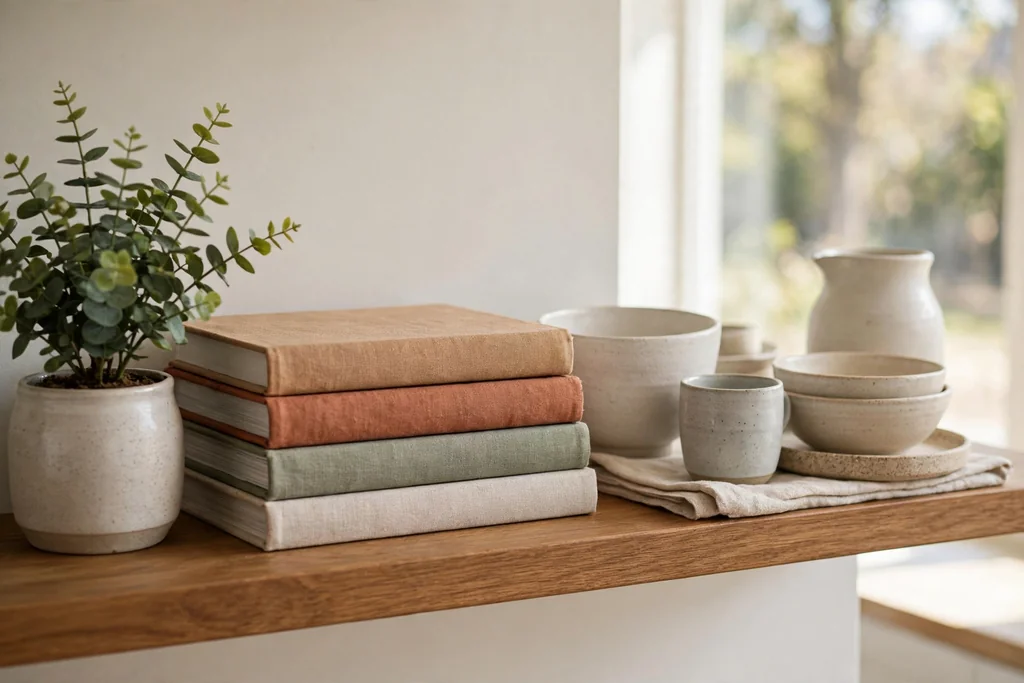
A small display of curated ceramics and cookbooks gives an elegant kitchen a lived in feel, without the clutter of a full open shelf wall. Choose one shelf, one niche, or the top of a pantry wall, and set out a few pieces you love: a handmade bowl, a cream jug, a stack of three or four cookbooks lying flat, and one small plant. The display should look collected over time, not bought in one trip.
Keep the group to pieces in a limited palette, such as cream, wood, and one soft accent, and leave clear space around the group so each piece can be seen. Dust the display weekly, and keep cookbooks you use often at hand height, with the rest stored in a closed cabinet. Swap one piece by season, such as a vase of fresh stems, to keep the same shelf feeling fresh through the year.
23. Clear Counters with One Styled Tray
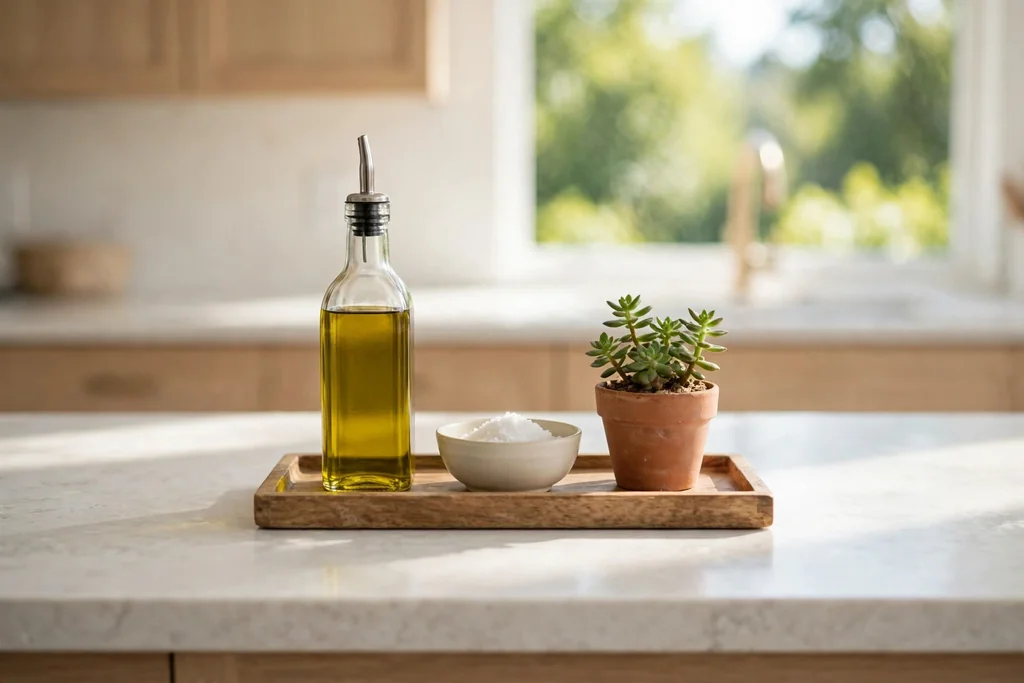
Clear counters are the simplest elegant move of all, and they cost nothing. Keep daily cooking tools in drawers and cabinets, and leave the counter clear apart from one styled tray holding the items you reach for most, such as olive oil, salt, and a small plant, or a soap dispenser and a folded linen cloth by the sink. One tray groups small items so the counter reads as tidy rather than empty.
Choose a tray in wood, stone, or brass that matches the room, and limit it to three or four items, so it stays a styling choice rather than storage. Lift the whole tray aside in one move when you need the counter for prep, and wipe it weekly, since trays near cooking gather grease film. If the counter is short, use a smaller tray by the sink only, and keep the rest of the run completely clear.
Conclusion
An elegant kitchen that feels both cozy and current comes down to a few calm choices repeated well. Start with pale or greige cabinets, add one refined material such as marble or brass, and warm the room with wood, linen, and layered light. Keep storage closed where it counts, give coffee and dining their own small homes, and leave counters mostly clear so the details you chose can be seen. Small moves, such as a roman shade, a styled tray, or a low flower arrangement, let you test the look before a larger change, and they suit renters as well as owners. For a cooler balance to the warm wood and brass here, see these grey kitchen ideas for cabinets, counters, and islands that sit well beside elegant neutrals.
Save this list for your next free hour in the kitchen, and work through it in order: cabinets and counters first, then lighting and seating, then one storage change, and finally the small table and tray touches.
FAQs
What makes a kitchen look elegant without feeling formal?
Keep the palette calm, the materials honest, and the room useful. Pale or greige cabinets, one refined material such as marble or brass, warm wood, and layered light give a kitchen an elegant feel, while a banquette, a coffee niche, and washable linen keep it comfortable for daily life. Avoid too many competing finishes, and let one or two details, such as a plaster hood or a stone backsplash, carry the interest while the rest of the room stays quiet.
What colors work best for an elegant kitchen?
White, warm white, greige, soft grey, cream, and pale sage work best, because they let marble veining, brass, and wood stand out without competing with them. Keep the main palette to two or three colors, plus one metal finish and one wood tone, and test large samples in daylight and evening light before committing. If the room starts to feel cold, add wood on the floor, island top, or shelves, and switch to warm white bulbs in the evening.
Is marble a practical choice for an elegant kitchen?
Marble looks elegant and suits traditional and transitional kitchens, but it needs more care than quartz. Seal it as advised by the supplier, wipe acidic spills such as citrus, tomato, and wine quickly, and use trivets under hot pans. If you cook daily with acidic foods, consider marble on an island used for serving and a harder wearing surface on the main prep run, so you get the look where it shows most and easier care where you work most.
How can I make an elegant kitchen feel cozy?
Add warm materials and soft light: wood floors or an island top, linen shades or cushions, a banquette with pillows, fresh flowers on the table, and warm white bulbs on a dimmer. Keep one or two personal touches on display, such as ceramics or cookbooks, and leave counters mostly clear so the room feels calm rather than staged. Cozy comes from texture and light, not from filling every surface.
Can I get an elegant kitchen look on a small budget?
Yes, if you start with the changes that show most. Swap hardware to one brass finish, add under cabinet lighting, style one open shelf or tray, hang a linen shade, and clear the counters. Paint is another low cost change, since a fresh cabinet color and a simple backsplash can shift the whole room. Save larger changes, such as stone counters or a pantry wall, for a later stage, and test each small change for a week before adding the next one.
How do I keep an elegant kitchen easy to clean?
Choose washable, wipeable finishes near the stove and sink, keep counters mostly clear, and give every daily item a closed home. Wipe brass and taps weekly, dust open shelves and light shades often, seal stone and grout as advised, and use washable linen for shades, cushions, and runners. A room with fewer items on display takes less time to clean, and a single tray that lifts away in one move makes wiping the counter a one minute job.