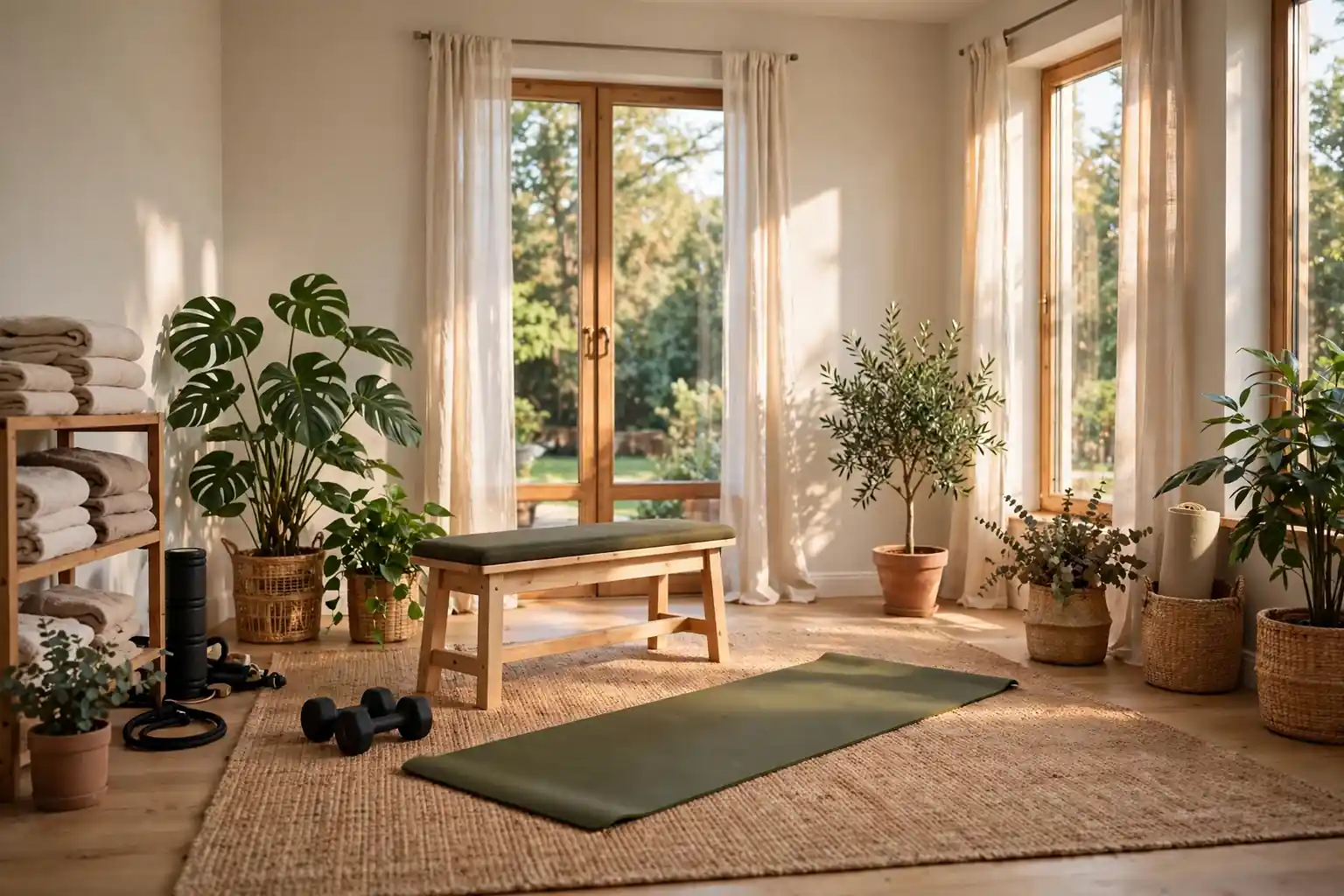
A home gym works best when it feels like part of your home, not a spare room full of equipment you avoid. Warm light, a soft rug, a plant, and a chair you actually sit in can make the difference between a corner you use daily and one you walk past. These 33 home gym ideas cover small corners, spare rooms, garages, and basements, plus storage, lighting, and small comforts that keep workouts simple. Start with the space you have and the equipment you will truly use. For small rooms, the zoning advice in these studio apartment decorating ideas helps a gym corner share space with living or sleeping areas.
Key Takeaways
- Start with one clear zone, even if it is only a mat and a rug, and keep the walking route into it clear.
- Choose equipment you will use at least three times a week before buying anything large or fixed.
- Put small gear in closed storage and keep only daily items visible, so the room still feels like home.
- Layer light: daylight or a bright lamp for workouts, plus a softer lamp for stretching and cool downs.
- Use warm materials such as wood, cotton, wool, and plants to soften rubber, metal, and plastic.
- Leave space to stretch, sit, and store a towel and water, since comfort is what brings you back tomorrow.
1. Quiet Corner Nook with a Rug
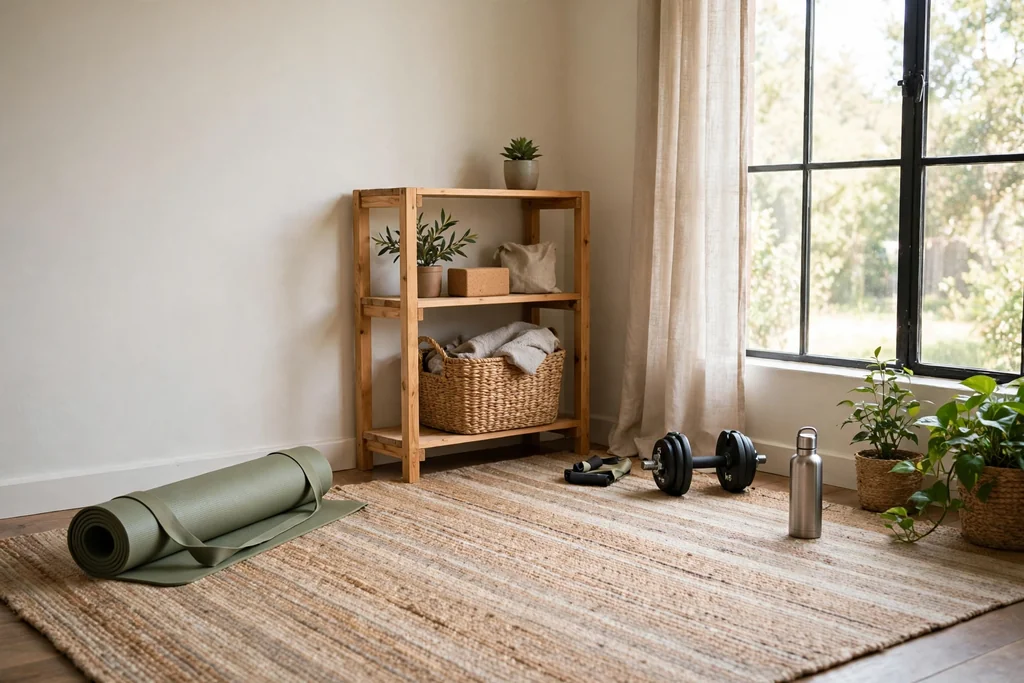
Claim one quiet corner with a large rug, a mat, and a small shelf, and treat it as your gym even if the rest of the room stays as it is. The rug marks the zone, cushions your feet, and makes the corner feel like a room within a room. This suits renters and small homes, since nothing needs to be fixed to the wall.
Keep the corner near a window or a lamp if you can, and add a basket for bands, a towel, and a water bottle. Roll the mat out only when you train, and fold it away if the corner also serves guests. A rug with a low pile is easier to clean and safer under a mat than a thick shag rug.
2. Spare Bedroom Turned Full Gym Room
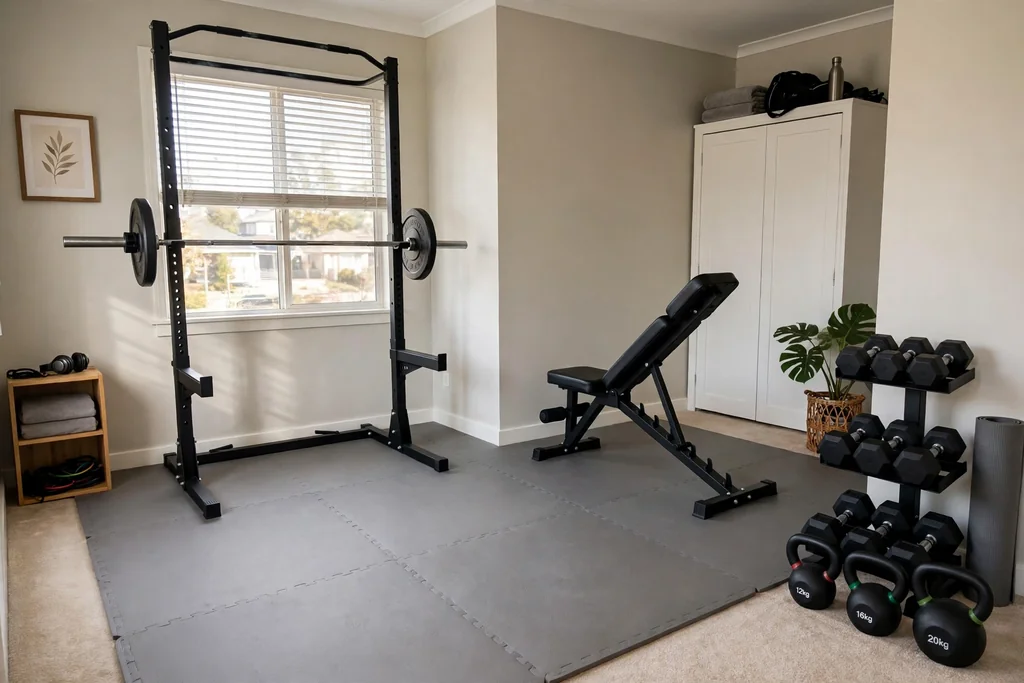
Turn a spare bedroom into a full gym room by clearing the bed and giving each type of training its own wall: cardio by the window, strength along one wall, and stretching in the clear middle. A spare room lets you leave equipment out, which removes the setup step that often stops a workout before it starts.
Keep a chair and a small table in the room too, so it still feels lived in rather than bare. Use the closet for gear storage, with bins on shelves for small items. If guests still need the room sometimes, choose foldable equipment and a foldaway bed, so the room can change roles in an evening.
3. Garage Corner with Rubber Flooring
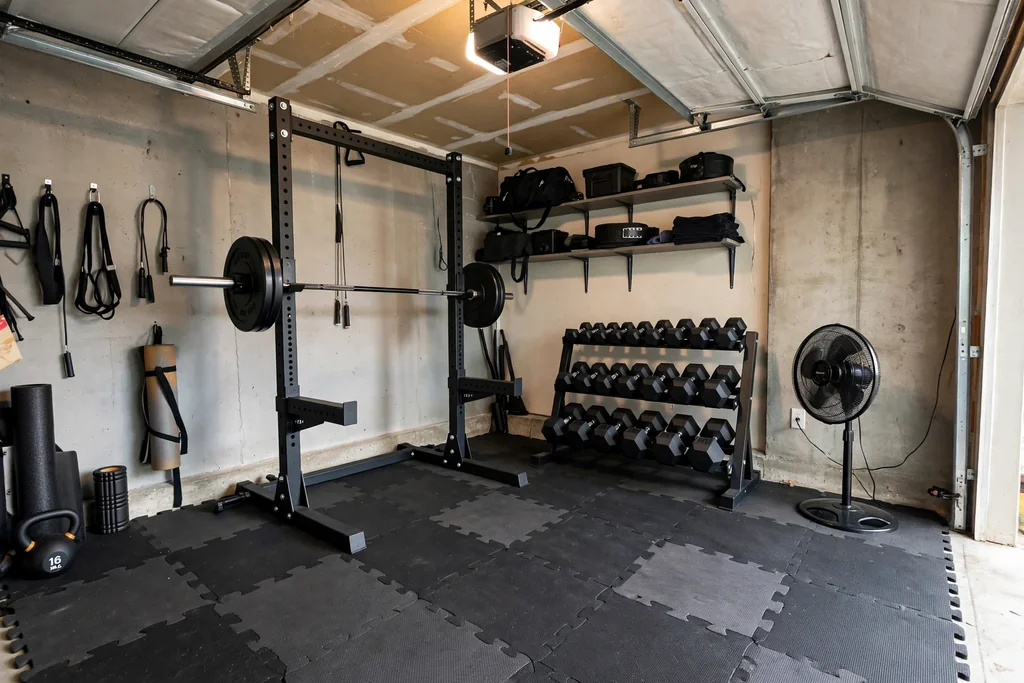
Set up a gym corner in the garage with interlocking rubber tiles over the concrete floor. Rubber protects the floor, softens dropped weights, and gives grip for shoes, which matters more in a garage than in a carpeted room. Start with one corner, not the whole garage, so parking and storage still work.
Add a fan for summer, a small heater for cold mornings if your garage allows it, and bright overhead light, since garages are often dim. Keep gear on a rack or shelf off the floor, away from damp and dust. A rug on top of the rubber near the stretching area adds warmth under bare feet.
4. Basement Zone with Bright Lighting
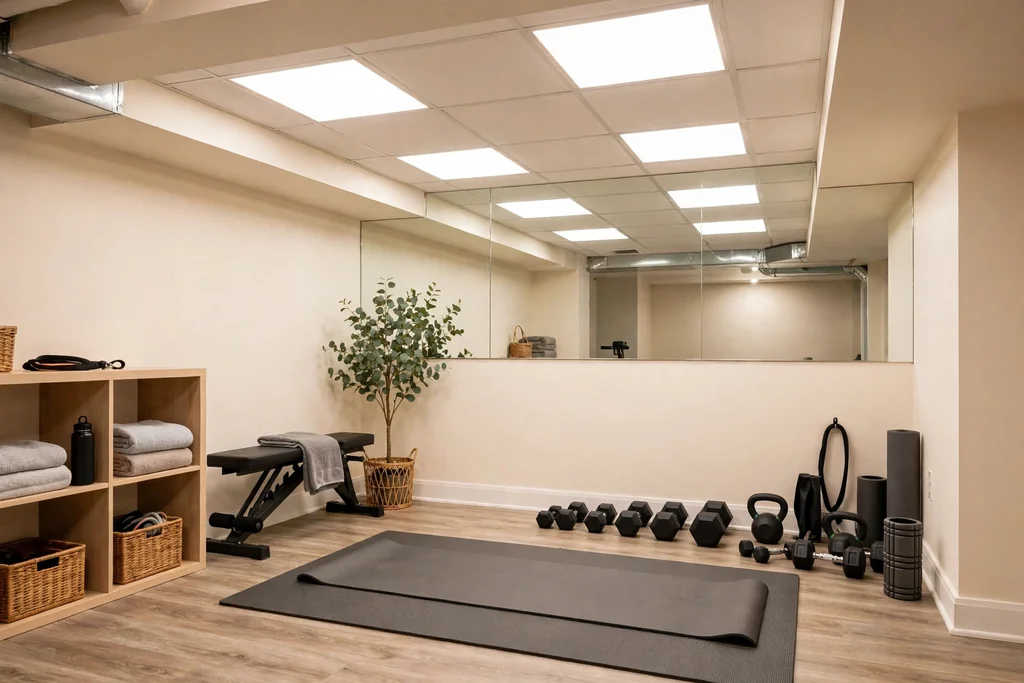
Make a basement gym zone feel welcoming with bright, even lighting first, since low ceilings and small windows can make a basement feel closed in. Use two or three light sources, such as ceiling lights plus a floor lamp, and paint the walls a pale warm white so light bounces around the room.
Keep the layout open in the middle for floor work, with equipment along the walls. A dehumidifier helps in damp basements, and a rug over the cold floor makes stretching far more pleasant. Add a mirror on one wall, since it helps with form and makes the space feel larger.
5. Living Room Gym Behind a Curtain
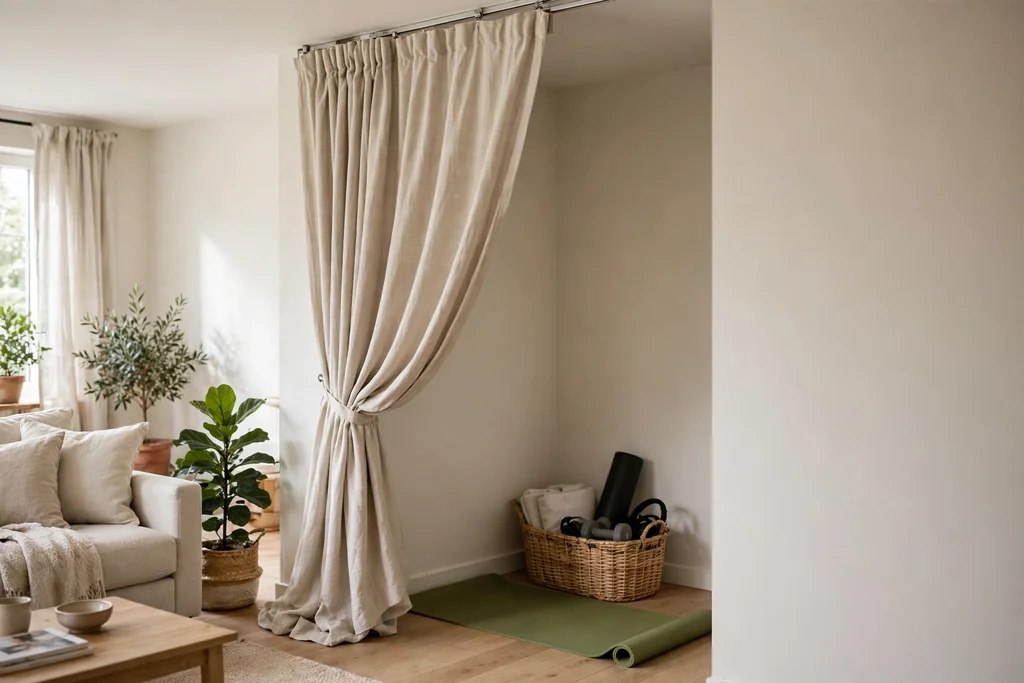
Hide a living room gym behind a ceiling track curtain, so you can close it away when guests visit and open it in seconds for a workout. The curtain works like a soft wall, and it suits a corner with a mat, bands, and a few dumbbells that would otherwise sit in view all day.
Choose a washable curtain in a warm neutral that matches the room, and extend the track past the gym zone so the curtain stacks neatly to one side. Keep the gym gear in a basket or on a low shelf behind the curtain, so closing it truly tidies the room. This is a good fit for the divider ideas in these cozy apartment living room ideas.
6. Fold Away Wall Gym in a Small Room
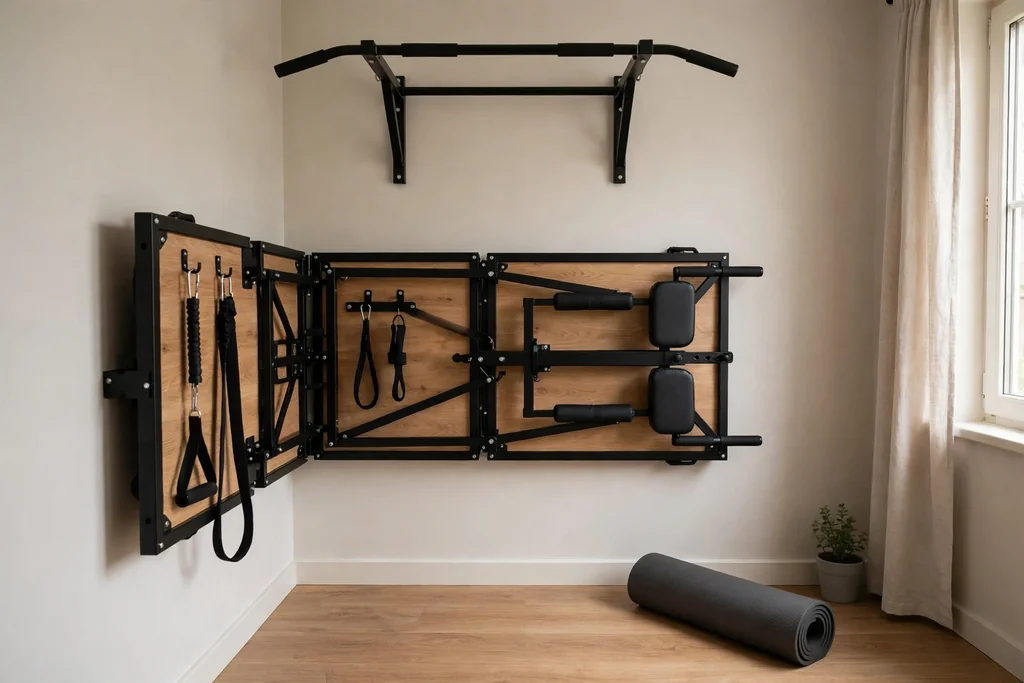
Use a fold away wall unit with a pull up bar, dip bars, or a fold down bench that folds flat when not in use. Wall gyms suit small rooms because the floor stays free for the rest of the day, and the workout zone appears only when you need it.
Fix the unit into studs or with fixings rated for your wall type, and follow the maker instructions closely, since these units carry body weight. Keep a mat rolled beside the unit and a small hook for bands, so setup takes under a minute. If wall fixing is not allowed, a freestanding rack gives a similar result with more floor space used.
7. Dumbbell Rack Beside a Window
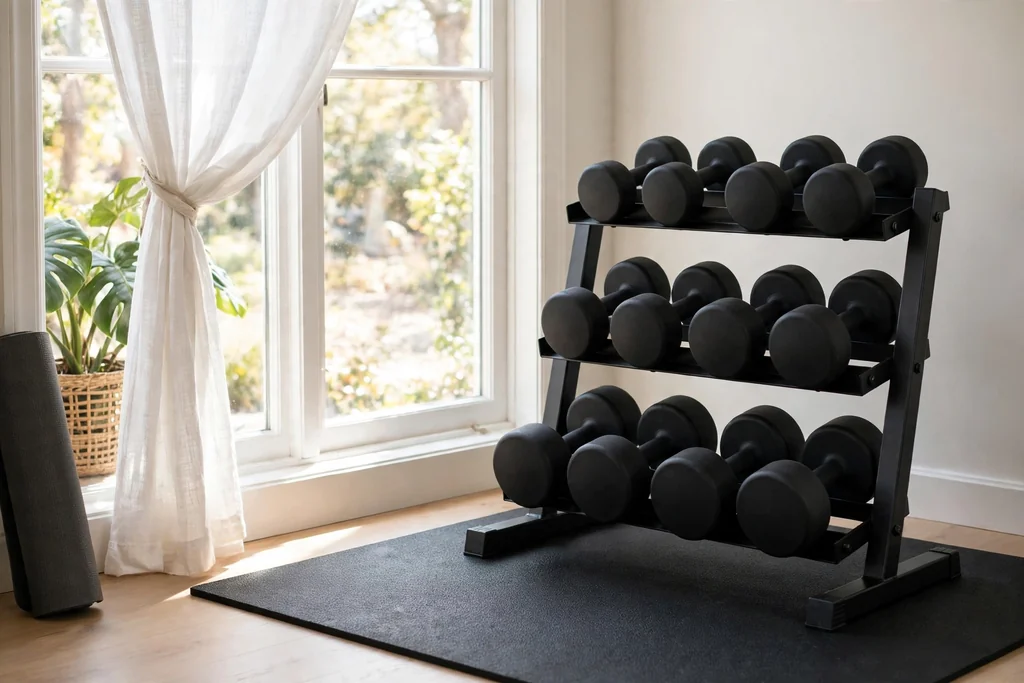
Place a compact dumbbell rack beside a window, where daylight makes the weights easy to see and the corner feels pleasant rather than gloomy. A tiered rack keeps pairs in order by weight, so you are not hunting through a pile on the floor before each set.
Choose a rack sized to the weights you own now, with room for one heavier pair as you progress. Keep the floor under the rack clear and use a rubber mat beneath it to protect wood or tile. Wipe handles weekly, since hand sweat builds up on metal and rubber grips.
8. Yoga and Stretching Corner
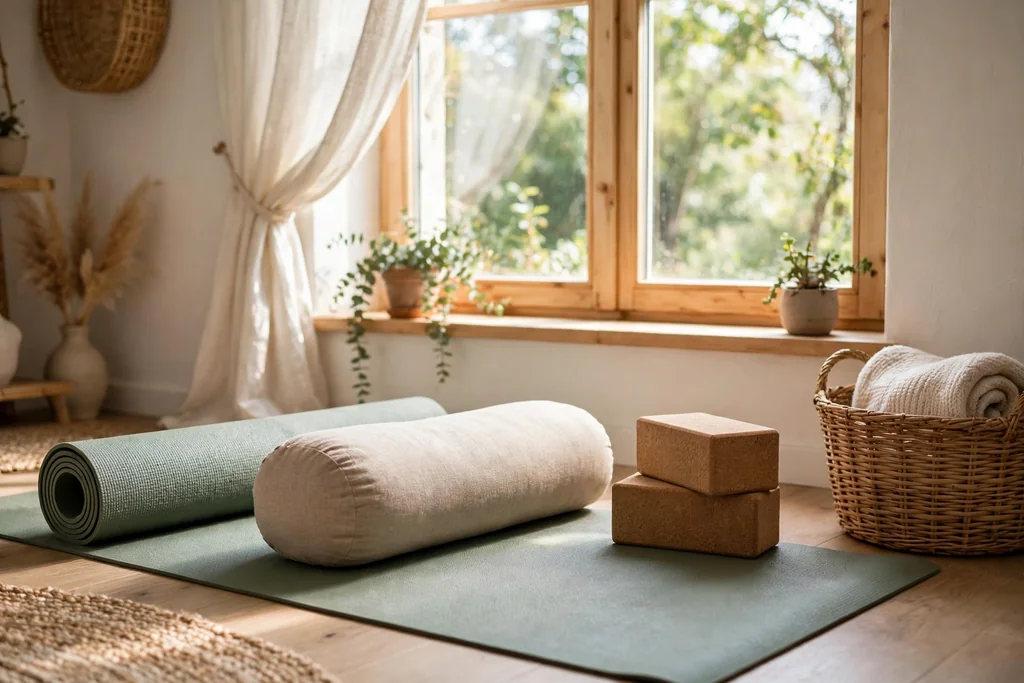
Build a yoga and stretching corner with a good mat, a bolster or firm cushions, blocks, and a strap, all stored in one basket or on a low shelf. A dedicated stretching corner invites short daily sessions, not only long workouts, which is where flexibility gains actually come from.
Place the corner where you can see out of a window or toward a calm wall, and keep the floor clear of clutter so you can move freely. A soft lamp for evening stretching helps the body wind down, and a washable mat cover keeps the setup fresh. Keep the props you use weekly within reach, and store extras elsewhere.
9. Cardio Corner with a Bike or Treadmill
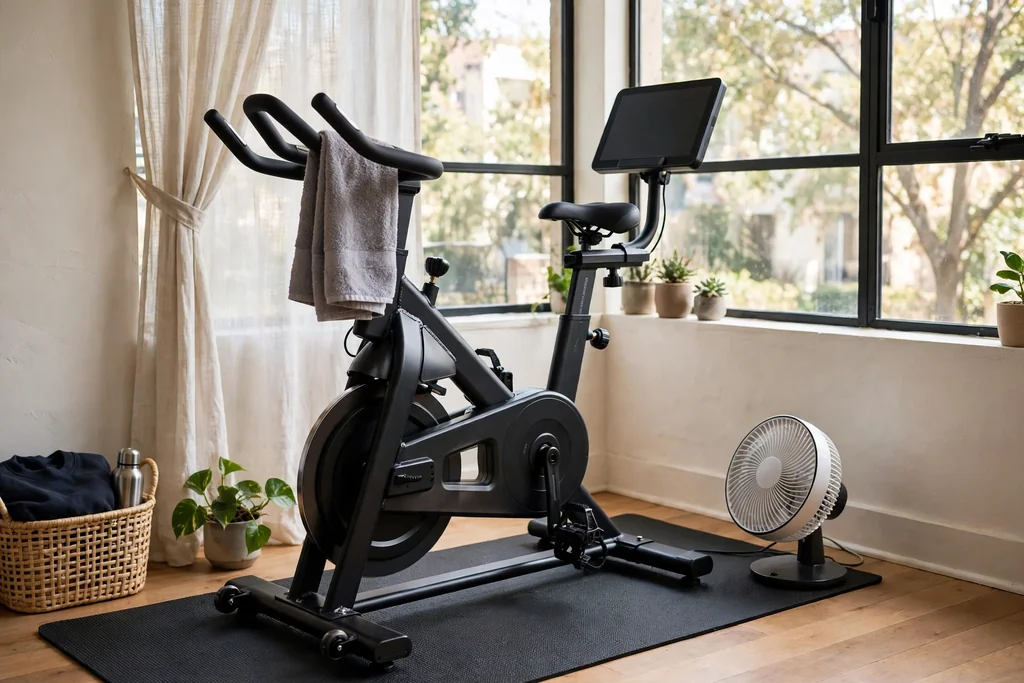
Give cardio its own corner with one machine, a mat beneath it, and a small fan, rather than squeezing a machine into a walkway. One machine you enjoy beats three you avoid, and a clear corner makes it easier to step on and start.
Face the machine toward a window, a television, or a bookshelf, since a blank wall gets dull fast. Keep a towel on the handlebar hook and a bottle on a small stool nearby, so you do not stop mid session to fetch them. Leave space around the machine for safe mounting and dismounting, following the maker guidance.
10. Strength Station with a Bench and Rack
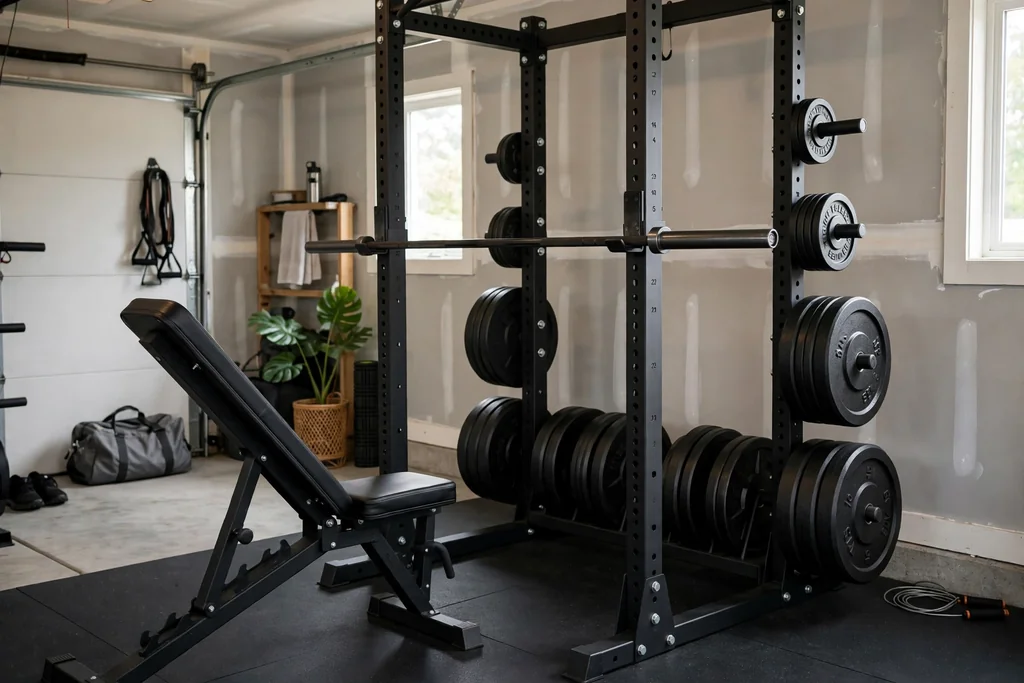
Set up a strength station with an adjustable bench and a squat rack or sturdy stand along one wall, with weight plates stored on pegs or a low rack. Keeping the heavy gear in one station stops plates from spreading across the room, and it gives lifting a clear, safe footprint.
Check the ceiling height before buying a rack, and leave room to step back from the bench. A rubber floor under the station protects the floor and gives grip. Keep a notebook or phone stand nearby for tracking sets, and tidy plates back onto the rack after each session, so the next workout starts clean.
11. Resistance Band Wall Station
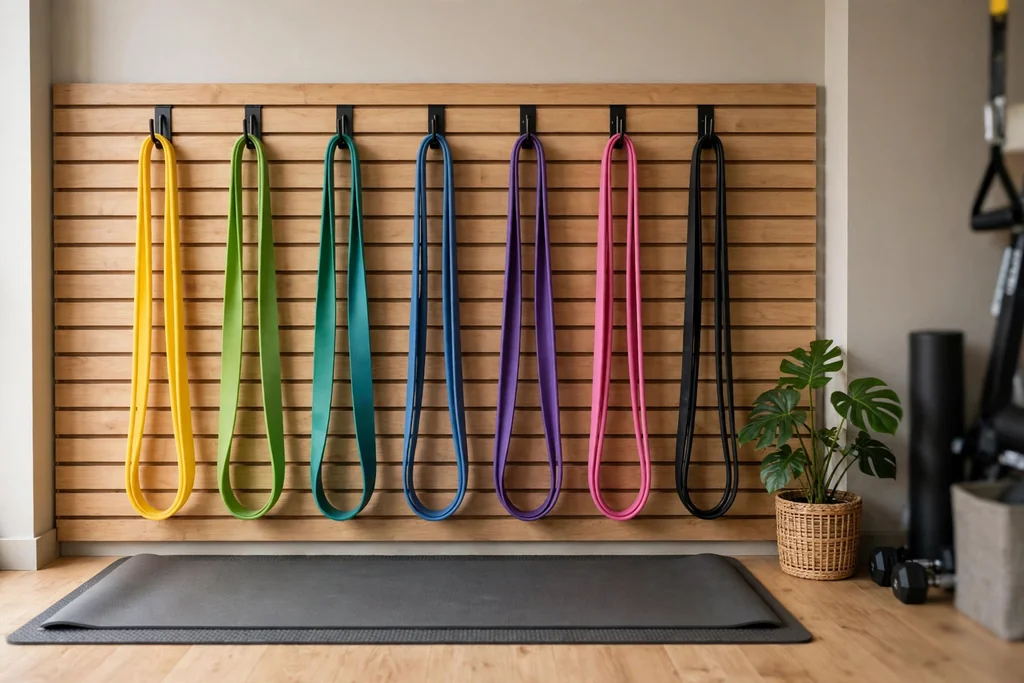
Fix a resistance band anchor to a wall or door frame mount, with bands hung on hooks in order of resistance, for a strength setup that takes almost no floor space. Bands suit small rooms, travel style training at home, and warm ups before heavier work, and they store in a drawer when not in use.
Label each band by resistance if the colors are hard to tell apart, and check bands for nicks before use, replacing any that look worn. Keep the anchor at a height that suits both high and low pulls, or use two anchors if your wall allows it. A mat beneath the station gives you a clear spot to stand.
12. Kettlebell Corner on a Mat
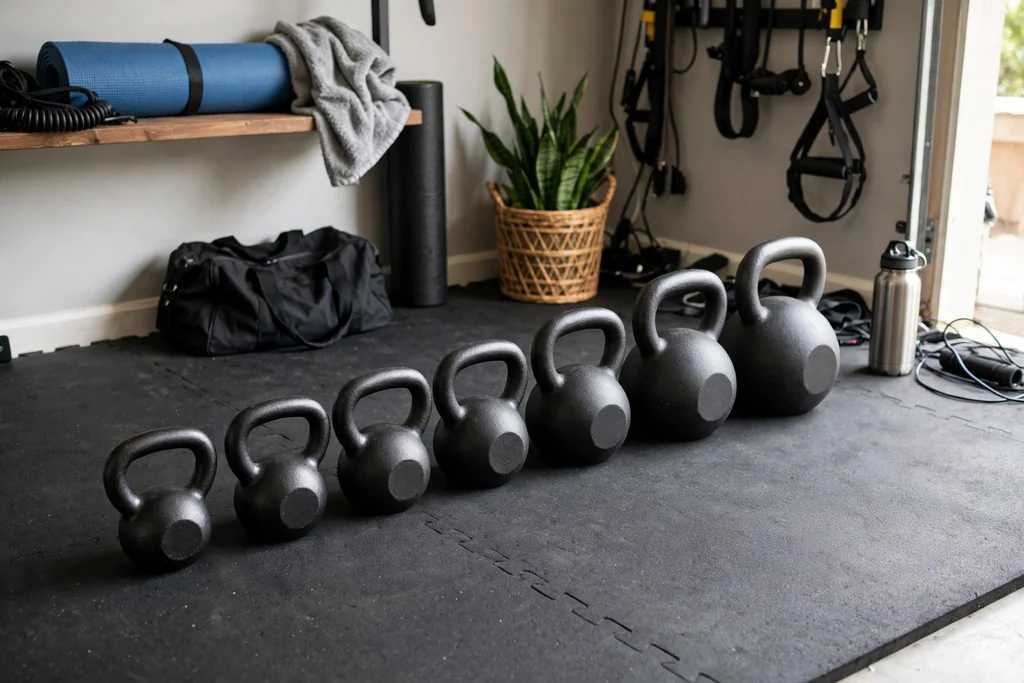
Keep kettlebells in one corner on a thick mat, sorted by weight with the heaviest at the back, so you can grab one safely without bending over a pile. A kettlebell corner suits swings, carries, and squats, and it needs only a small square of floor if the ceiling is clear above.
Choose a mat that grips the floor and stays flat, since kettlebells roll on thin mats. Keep the swing path clear of furniture and breakables, and store a towel nearby for grip. If you train barefoot, a rubber mat is kinder to feet than bare concrete or tile.
13. Pilates and Mat Workout Zone
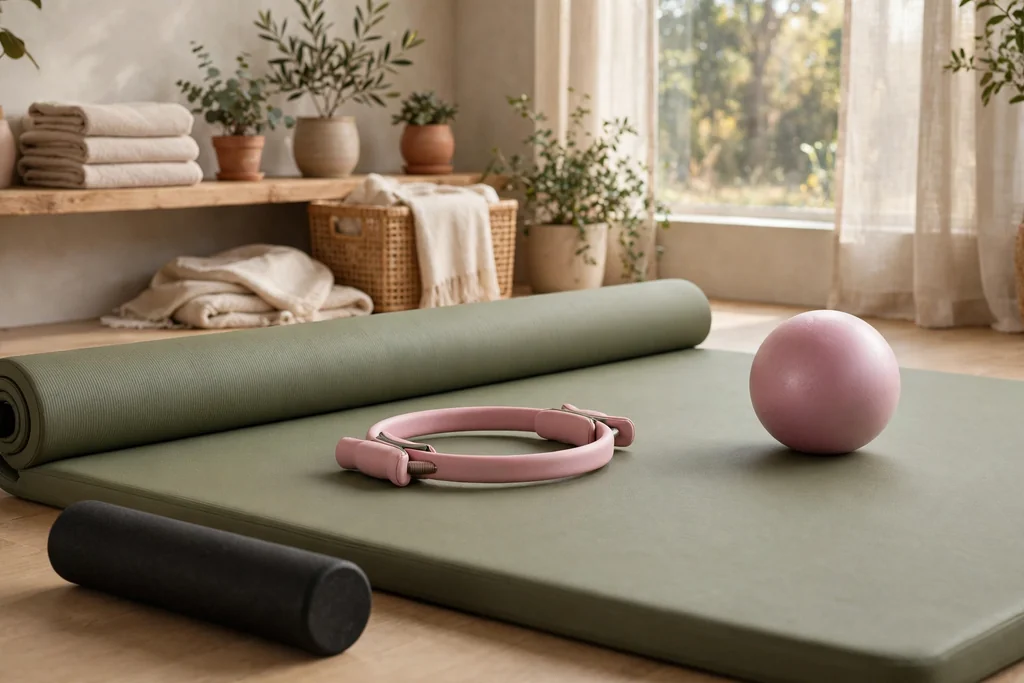
Make a Pilates and mat workout zone with a thick mat, a small ball, a ring, and a foam roller, grouped on a low shelf or in a wide basket. Mat work needs floor space more than equipment, so keep this zone clear and wide rather than filling it with machines.
A pale rug under the mat softens hard floors and marks the zone in a shared room. Keep a wall nearby for balance work, and a small mirror if you want to check alignment. Wipe the mat after each session, and air it out now and then, since mat gear picks up sweat fast.
14. Boxing Corner with a Freestanding Bag
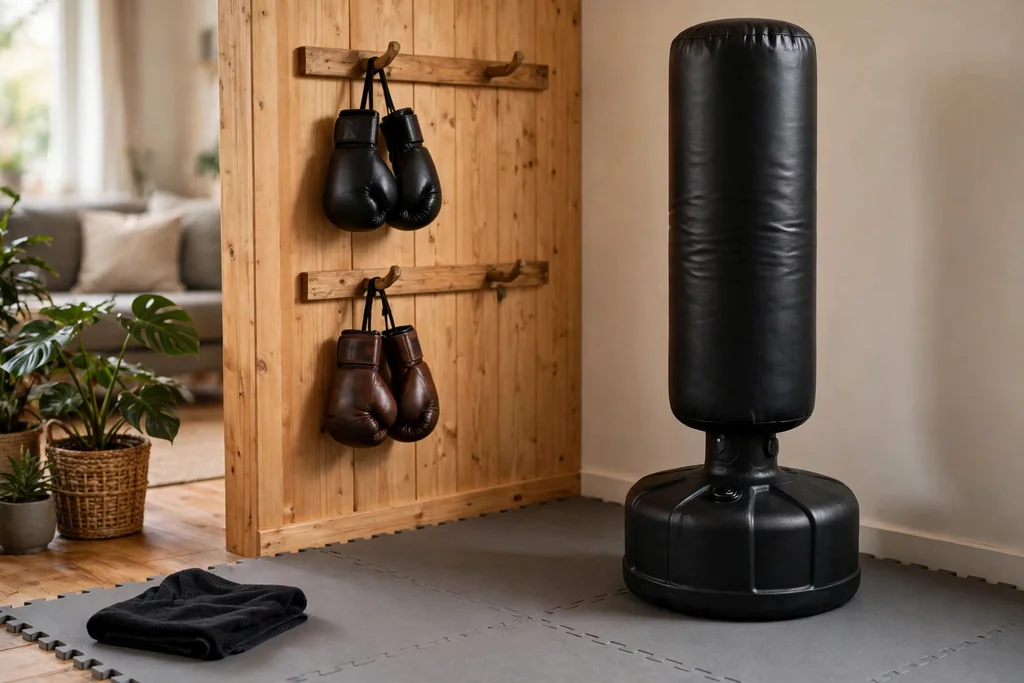
Set up a boxing corner with a freestanding bag, hand wraps, and gloves hung on wall hooks, for cardio and stress relief in a small footprint. A freestanding bag suits homes better than a hanging bag for most people, since it needs no ceiling fixing and can move to a corner when not in use.
Place the bag on a mat to stop it sliding, and leave a full step of space around it for footwork. Keep wraps and gloves on hooks so they air out between sessions, and wipe the bag surface weekly. If noise matters to neighbors below, train on a thick mat and avoid late night sessions.
15. Pull Up Bar in a Doorway
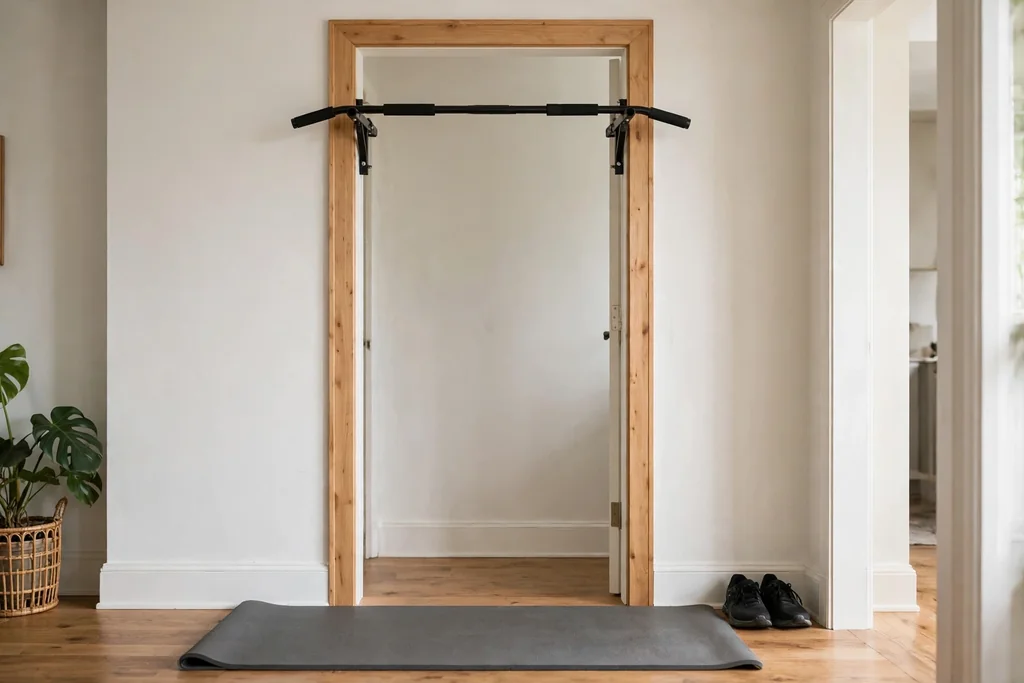
Fit a doorway pull up bar for a simple strength tool that uses no floor space at all. Doorway bars suit apartments and small homes, and they let you add a few reps through the day, not only during a planned workout.
Check that your door frame suits the bar type you choose, and follow the maker weight guidance. Keep a small step nearby if you need help reaching the bar, and remove the bar when guests need the doorway clear. Pair the bar with bands for assisted reps while you build strength.
16. Mirror Wall for Form Checks
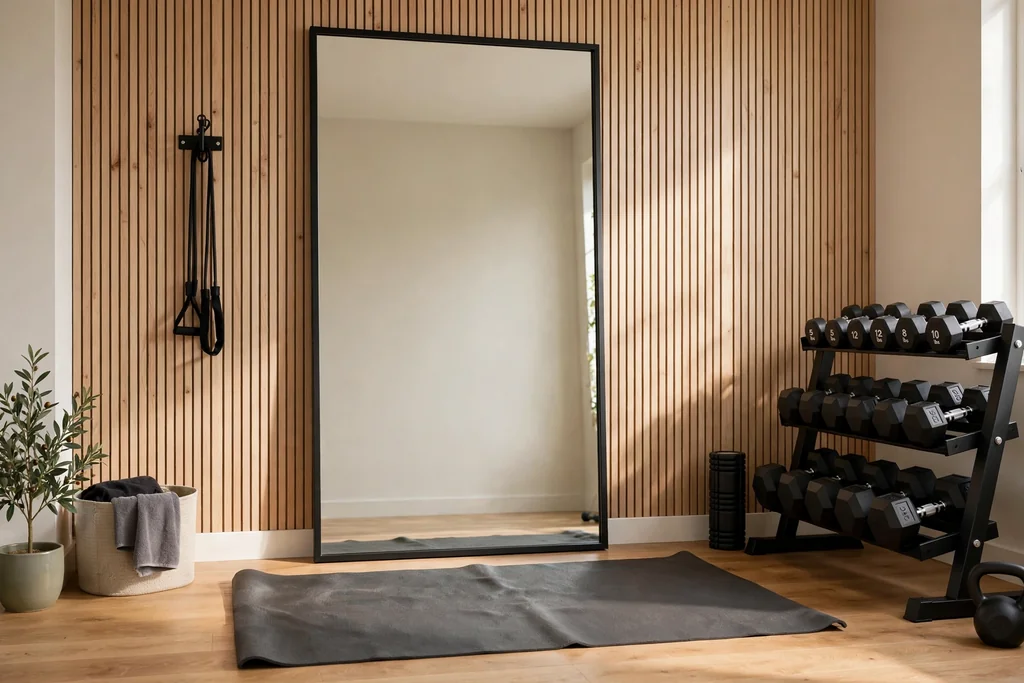
Add a large mirror, or a row of mirror panels, on one gym wall, so you can check form during squats, lunges, and stretches. A mirror also bounces light around the room and makes a small gym feel larger, which helps a spare room or basement feel less closed in.
Fix mirrors with hardware suited to their weight, or lean a large mirror securely against the wall if hanging is not allowed. Check what the mirror reflects before fixing it, aiming it toward a window or a calm wall rather than clutter. Clean the mirror weekly, since gym mirrors show dust and fingerprints fast.
17. Open Shelving for Small Gear
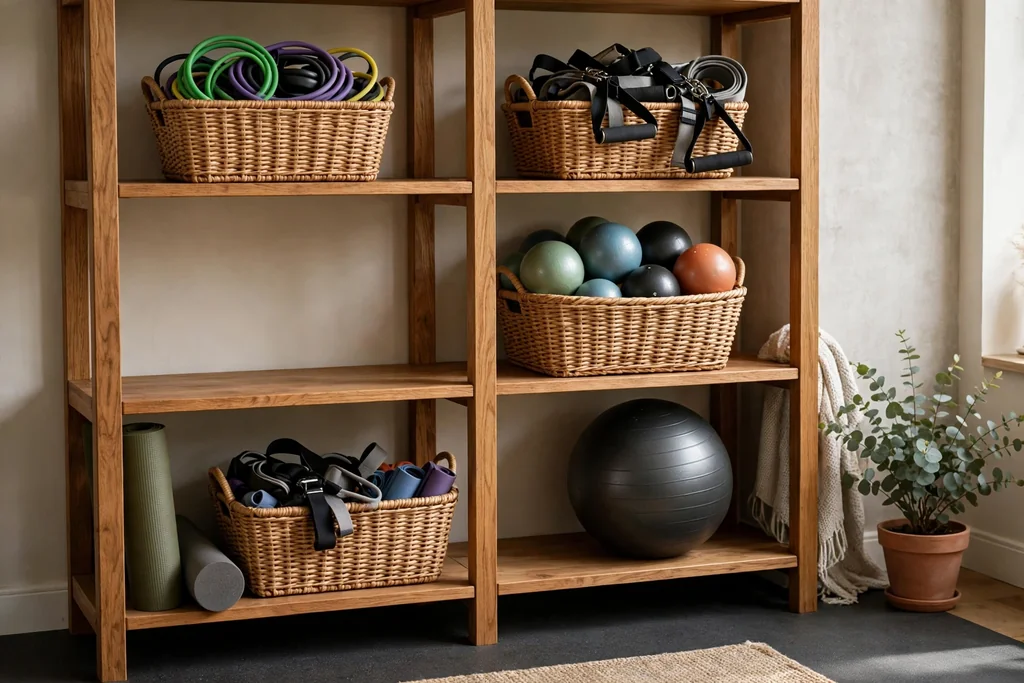
Use open shelves on one gym wall for small gear such as bands, balls, straps, and hand grips, grouped in baskets by type. Open shelves keep gear visible, so you reach for it instead of forgetting it in a closed box, and they use wall space that would otherwise sit empty.
Keep heavy items low and light items up high, and leave one shelf partly empty so the wall does not look crowded. Label baskets if several people share the gym, and anchor tall shelving to the wall following the maker instructions. The basket grouping method in these bedroom storage ideas works just as well for gym gear.
18. Rolling Cart for Workout Gear
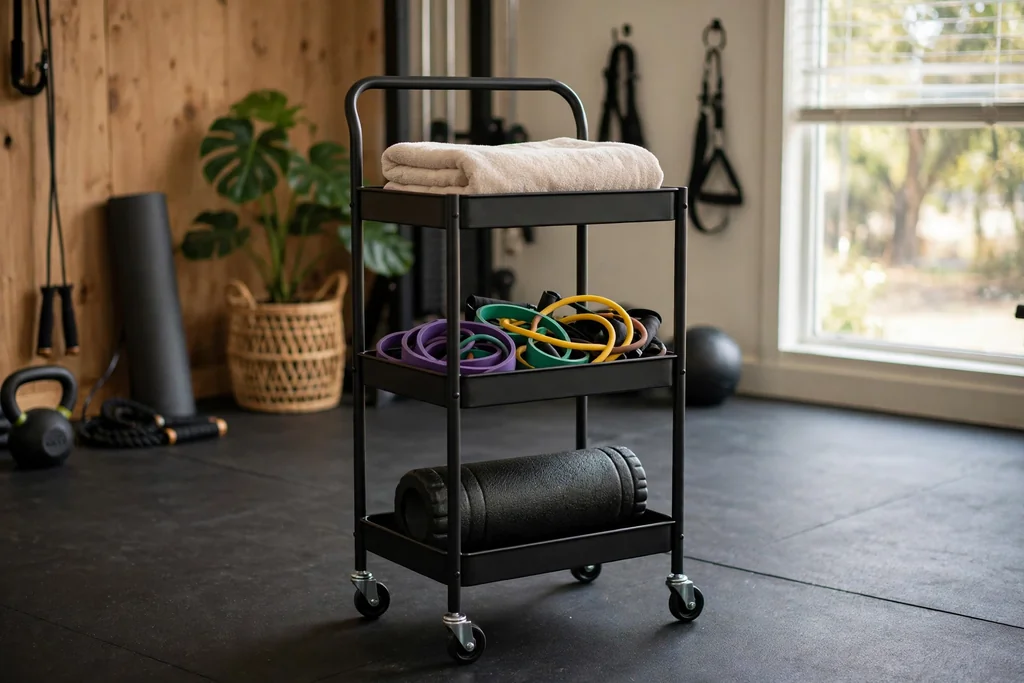
Keep workout gear on a rolling cart with two or three tiers, so the gym can move to the living room, the patio, or a spare room as needed. The top tier can hold a towel, bottle, and phone, the middle tier bands and small weights, and the lowest tier a mat or foam roller.
Choose a cart with locking wheels, so it stays put during a workout, and a small footprint that fits through doorways. Keep the cart to one routine at a time, such as stretching or strength, rather than loading it with everything you own. Wipe the tiers weekly, since gym carts collect dust and sweat.
19. Wood and Warm Neutral Palette
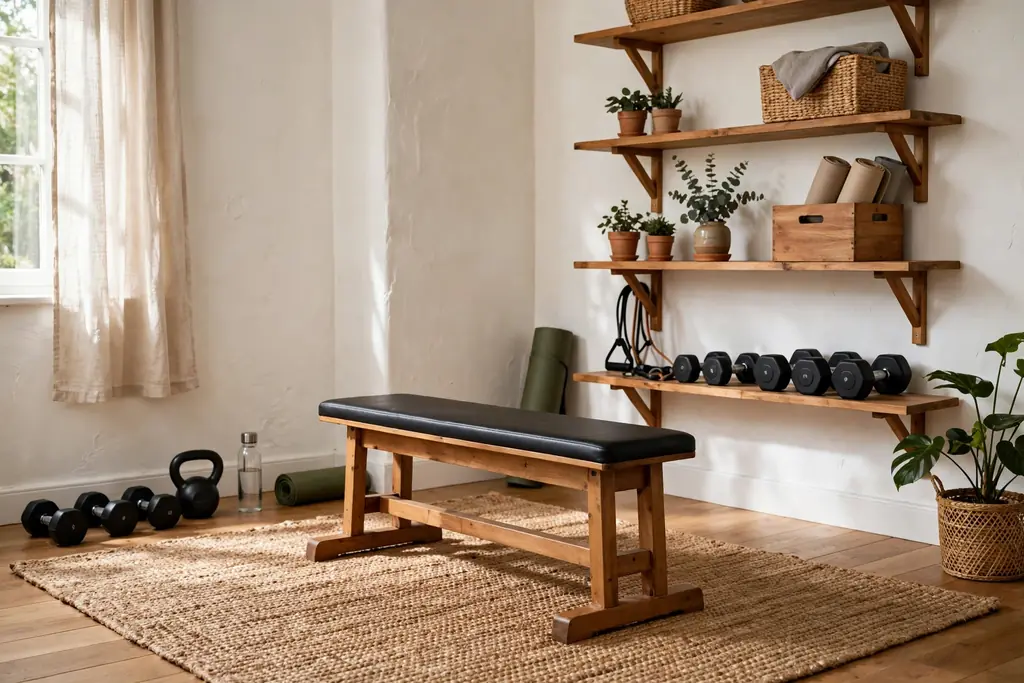
Use wood and warm neutrals for the gym room: a wood bench, a warm white wall, a natural rug, and wood shelving, to soften black rubber and metal. A warm palette makes the room feel like part of the home, and it invites you in on cold mornings when a bare concrete gym would not.
Keep the largest surfaces calm, such as walls and floors, and add color in small items like a towel, a plant pot, or a framed print. If you rent and cannot paint, a large rug, curtains, and wood furniture give the same warmth with no fixed change. Avoid painting every wall a strong color, since it can make a small gym feel busy.
20. Plants and Natural Light
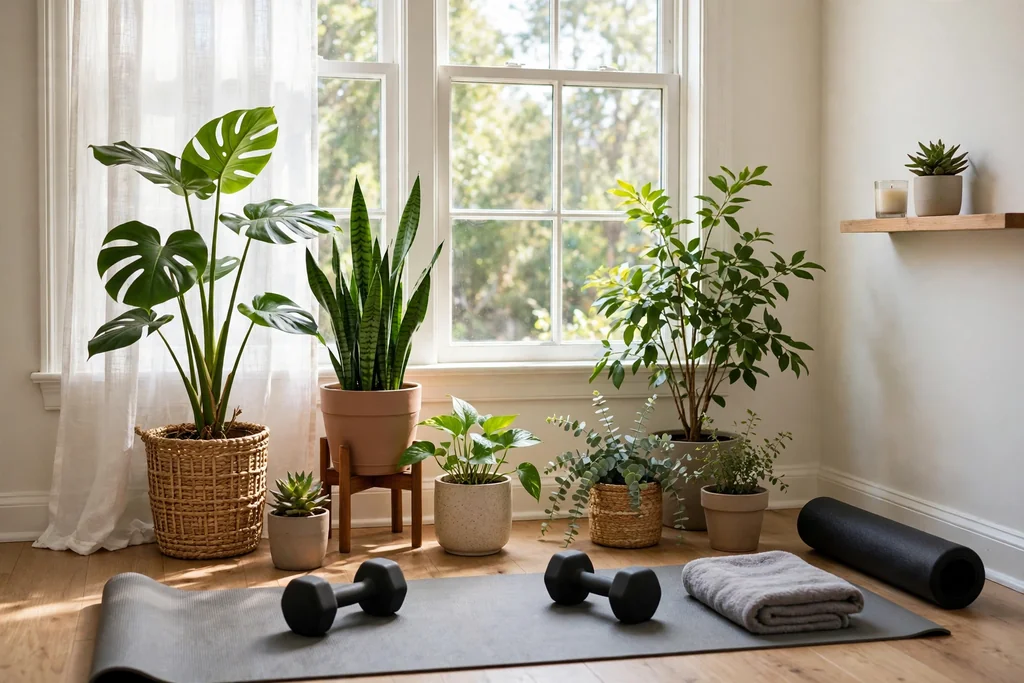
Add plants and natural light to the gym corner, with a tall plant in one corner, a trailing plant on a shelf, and a small pot near the window. Plants soften hard equipment, clean up the look of a rubber floor, and make the room feel lived in rather than clinical.
Match each plant to the light it will actually get, and use saucers under pots on wood floors. Keep plants clear of the swing path for kettlebells and the space around a treadmill, so leaves do not get knocked. Start with three or four hardy plants, and add more only once watering stays manageable.
21. Workout Tracker on a Chalkboard or Whiteboard
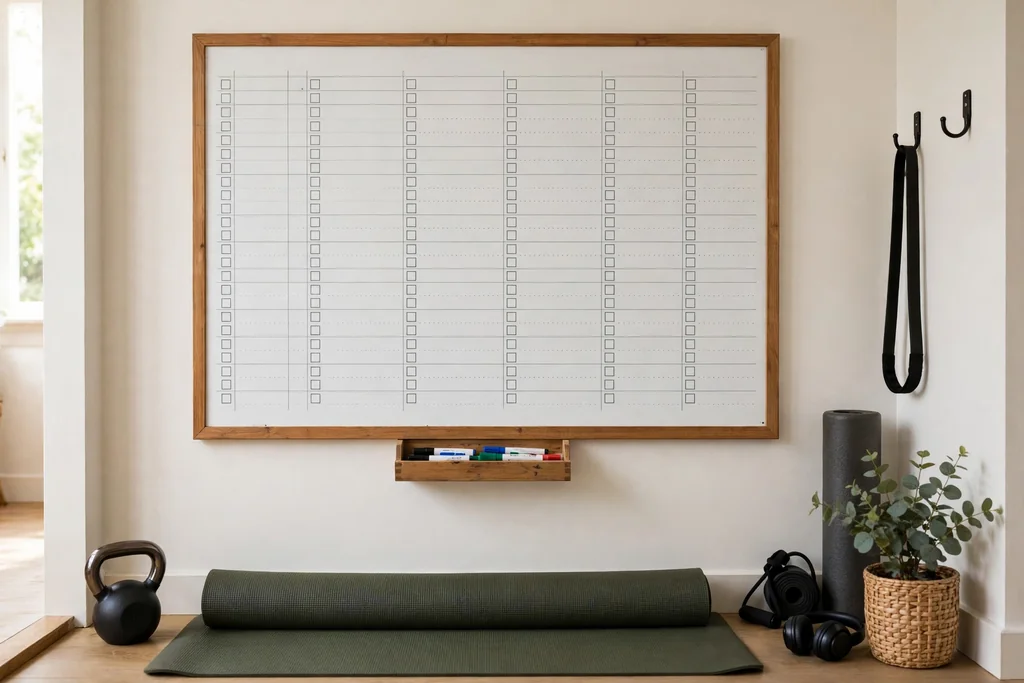
Hang a chalkboard or whiteboard in the gym for tracking workouts, writing the week plan, and noting small wins. Seeing the plan on the wall removes the daily decision of what to do, and crossing off sessions gives a simple sense of progress.
Keep the board at eye level near the main training spot, with markers or chalk in a small tray beneath it. Update it once a week, not daily, so it stays a plan rather than a chore. If several people share the gym, give each person a column, so plans do not get mixed up.
22. Television or Tablet Workout Station
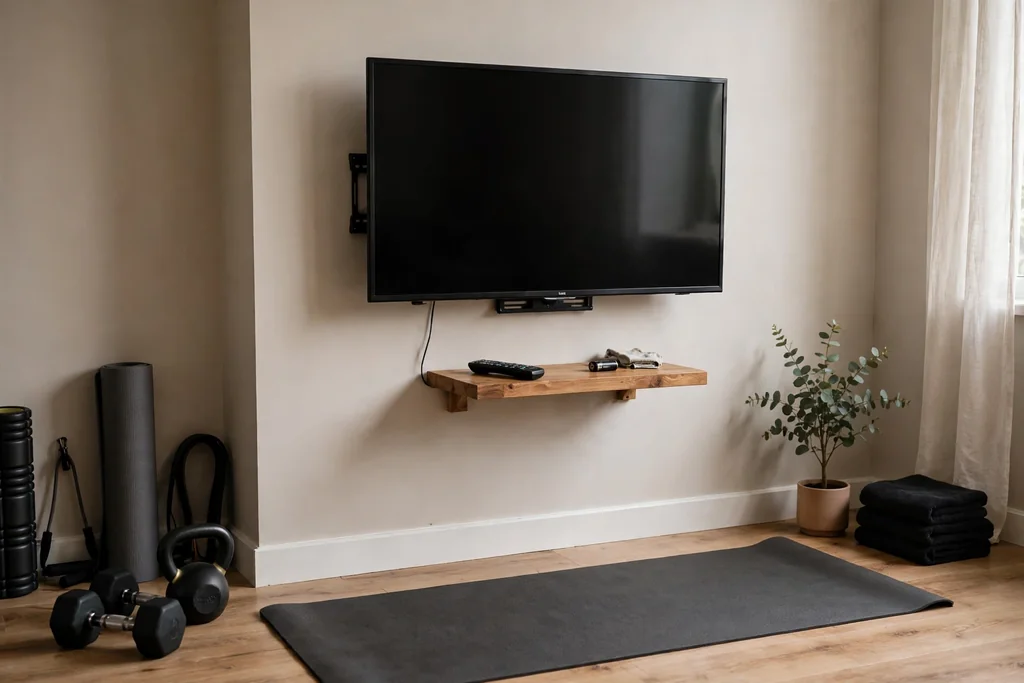
Mount a television or a tablet holder at eye level for follow along workouts, with a small shelf beneath it for a remote and a charger. A screen station suits cardio, dance, yoga, and guided strength sessions, and it gives a small gym a clear focal point beyond the equipment.
Set the screen height so you can see it from a mat and from standing, and keep cables tidy with clips or a cable cover. Use a stand rather than a wall mount if you rent, and keep the volume at a level that suits others in the home. Store the tablet on the shelf after sessions, so it does not sit on the floor.
23. Speaker and Music Corner
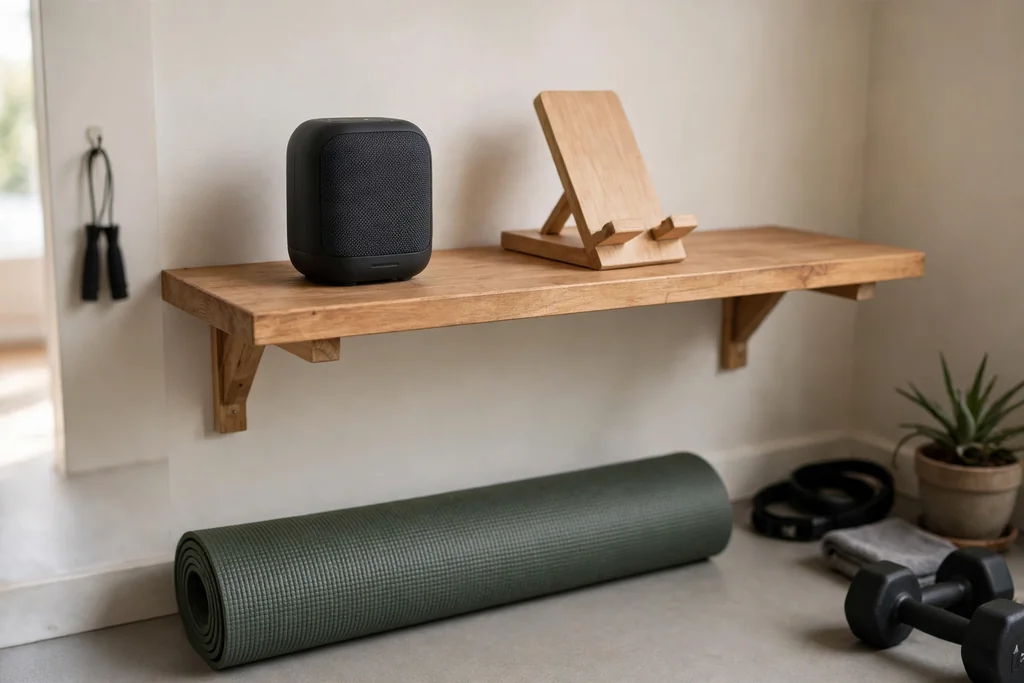
Place a small speaker on a shelf in the gym, with a phone stand nearby, so music or a podcast starts with one tap. Music helps many people start a workout on low energy days, and a dedicated speaker beats balancing a phone on a windowsill.
Keep the speaker off the floor and away from sweat and water bottles, and keep the volume fair to others in the home, especially early in the morning. A small shelf at hand height works well, with a charger cable clipped beside it. If you share walls with neighbors, keep bass low and use headphones for late sessions.
24. Recovery Corner with a Foam Roller
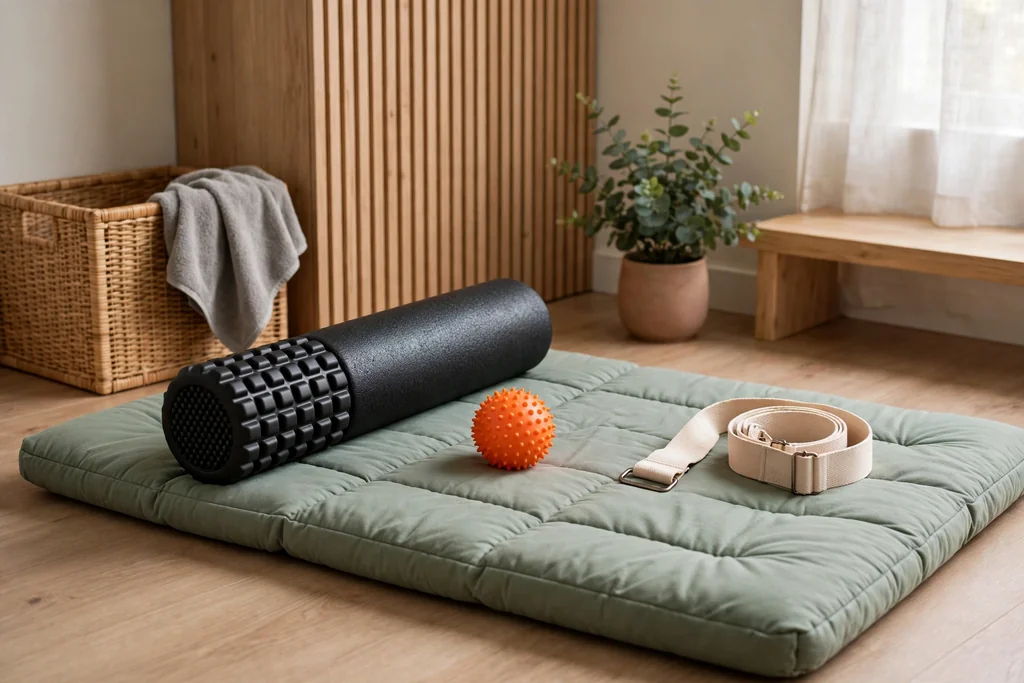
Make a recovery corner with a foam roller, a massage ball, a stretching strap, and a soft mat, placed where you can sit after training without moving furniture. Recovery gear is easy to skip when it lives in a closet, and a visible corner makes a five minute cool down part of the routine.
Add a low stool or cushion to sit on, and keep the corner near a wall for supported stretches. Wipe rollers and balls after use, and replace a roller once it loses its shape. A small basket keeps the recovery tools together, so they do not drift around the room.
25. Towel and Water Station
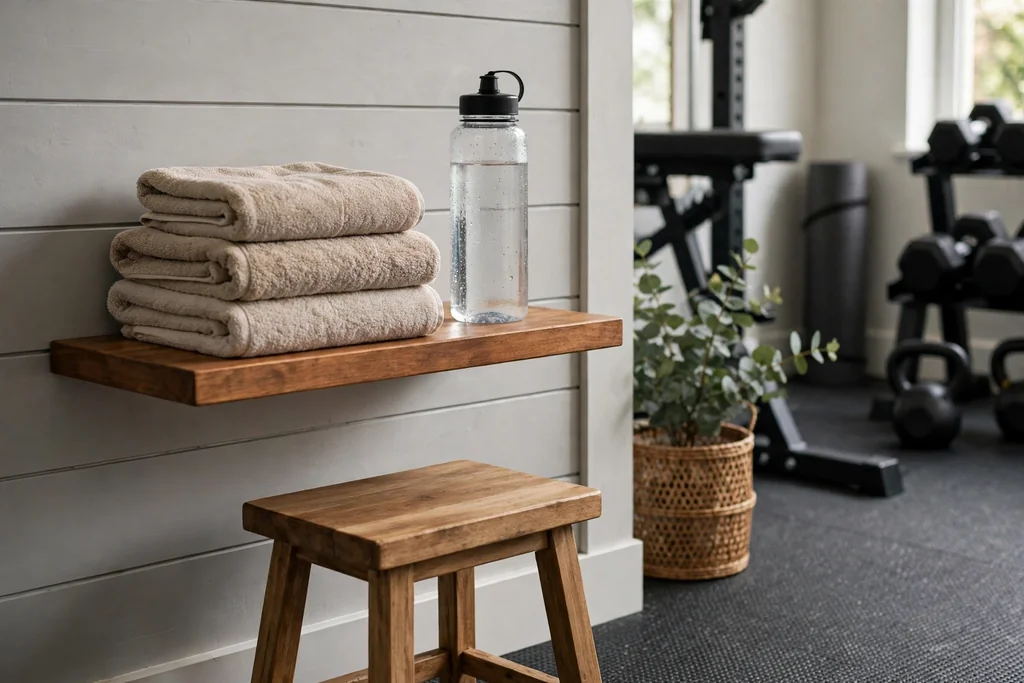
Set up a towel and water station on a small stool, shelf, or wall rail near the gym entrance, with clean towels folded, a bottle, and a small bin for used towels. A station stops mid workout trips to the bathroom, and it makes the gym feel cared for rather than improvised.
Keep the station stocked once a week, with two towels per person if the gym is shared. Use a washable basket for used towels, and empty it after each training day. If space is tight, a single wall hook for a towel and a shelf for a bottle gives most of the same benefit.
26. Shoe and Boot Tray by the Door
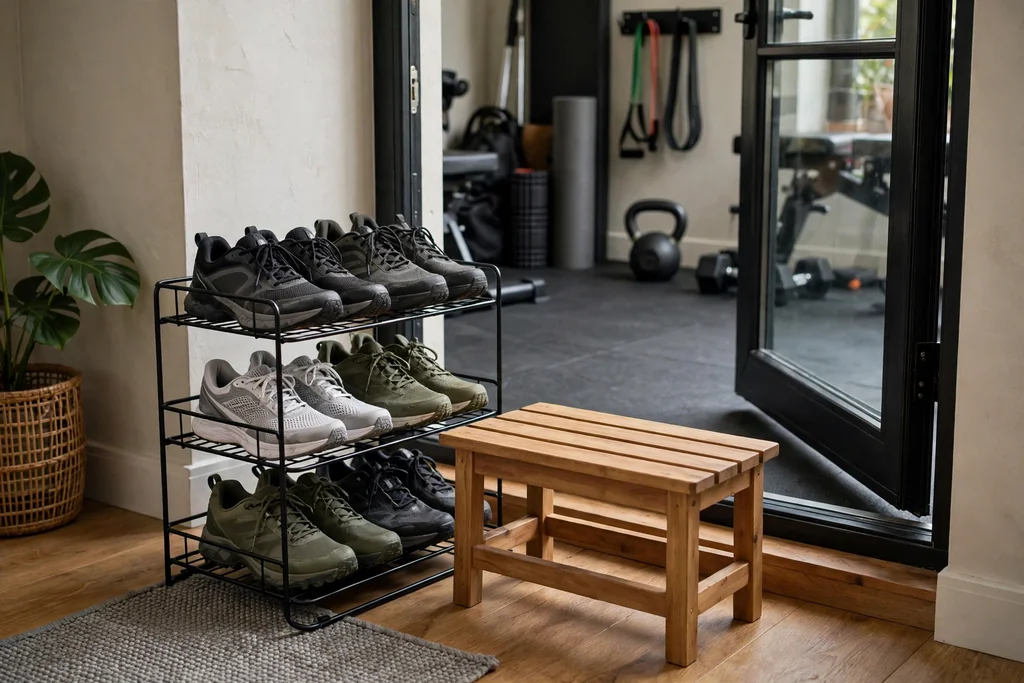
Place a shoe tray by the gym door for training shoes, so outdoor dirt stays out of the workout zone and shoes have one clear home. A tray also stops shoes from piling by the door, which is a common clutter point in garage and basement gyms.
Choose a tray with a lip to catch mud and water, and wipe it weekly. Keep only training shoes on the tray, and store other shoes elsewhere, so the tray does not become general storage. If the gym shares an entry with the home, a small bench beside the tray gives a place to sit while changing shoes.
27. Family Friendly Shared Gym Corner
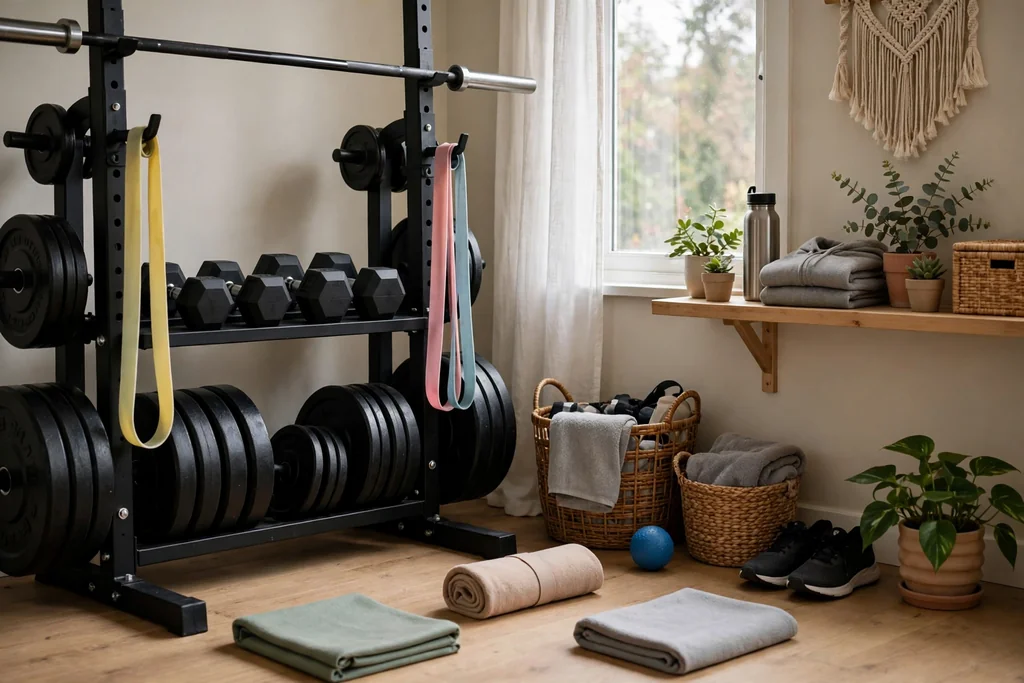
Build a shared gym corner that works for the whole household, with adult gear on a rack, lighter bands and a small mat for younger users, and clear rules about tidying up. A shared corner works when each person has a basket or shelf, so gear does not mix and small items do not go missing.
Keep heavy weights out of reach of small children, and store them on a low rack with plates secured. Add a simple wall chart for shared sessions, such as family stretching on weekends, so the gym feels like a shared room rather than one person’s project. Tidy the corner together after shared sessions, so it stays welcoming for the next person.
28. Renter Friendly No Drill Setup
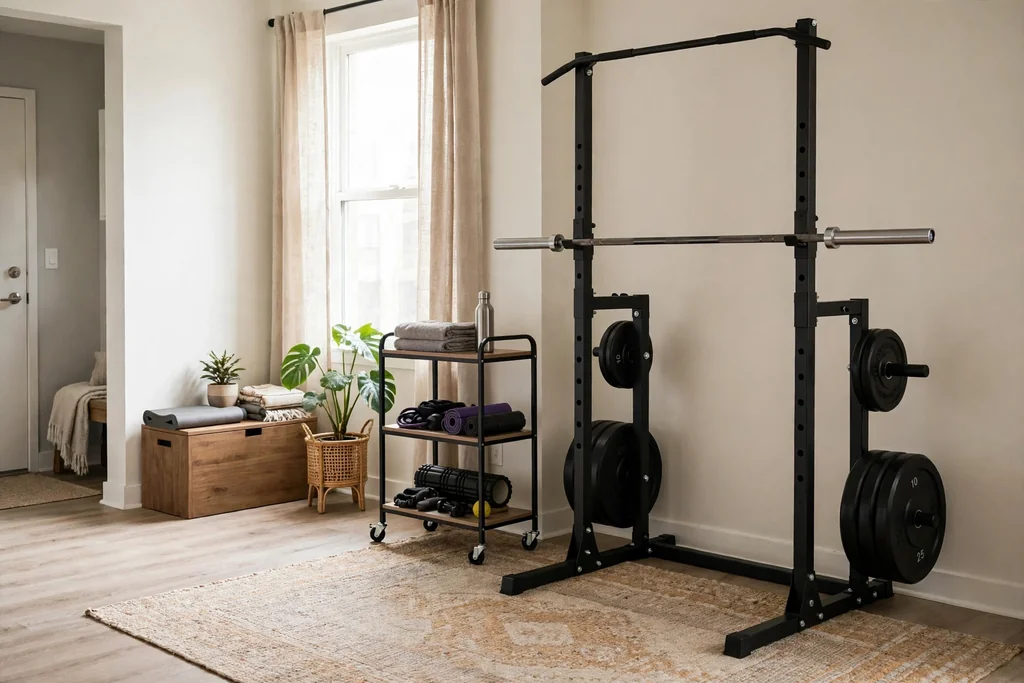
Build a renter friendly gym with no drilling at all: a freestanding rack, a doorway pull up bar, a rolling cart, baskets, and a rug, all of which move with you. Renters often skip a home gym because they assume it needs fixed equipment, but most daily training needs no wall fixing.
Use removable hooks for bands and towels, and lean a mirror securely against the wall instead of hanging it. Keep the old room layout in mind, so the gym packs into a few boxes at moving time. Check your lease before any fixing, and keep receipts for freestanding gear, so the setup stays simple to move.
29. Budget Starter Kit on One Shelf
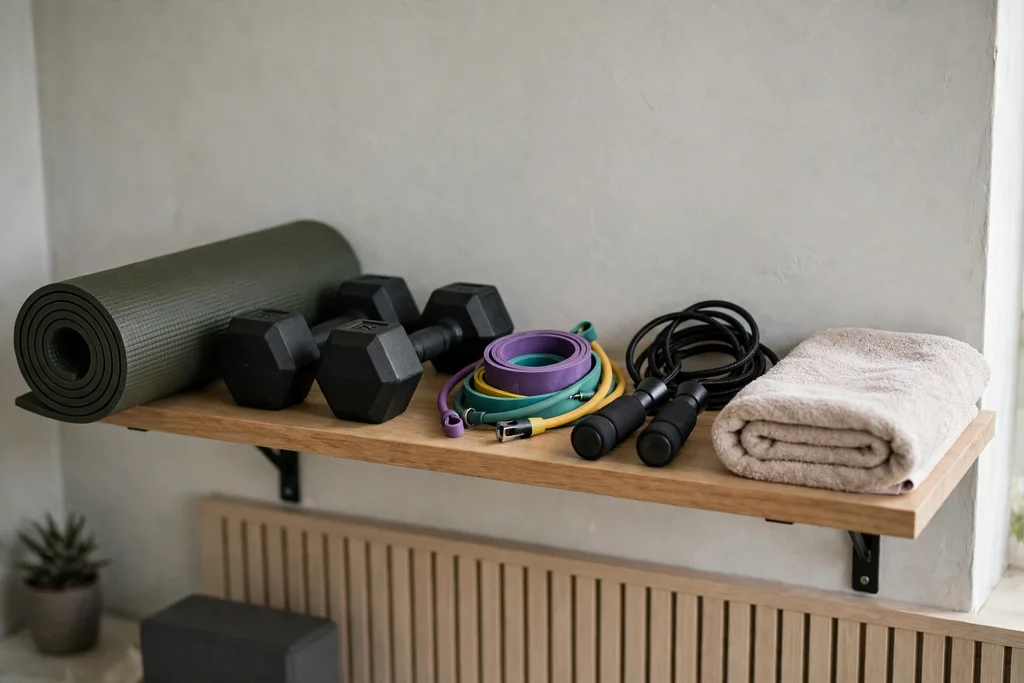
Start with a budget starter kit on one shelf: a mat, two sets of dumbbells, a set of bands, a skipping rope, and a towel. One shelf of gear covers strength, cardio, and stretching, and it lets you learn what you enjoy before spending on larger machines.
Buy the mat first, since floor comfort affects every session, then add weights in pairs as you progress. Keep the shelf near the training spot, not in a distant closet, so setup takes seconds. Review the kit after a month, and add only the item that would remove a real limit in your current routine.
30. Morning Light Workout Nook
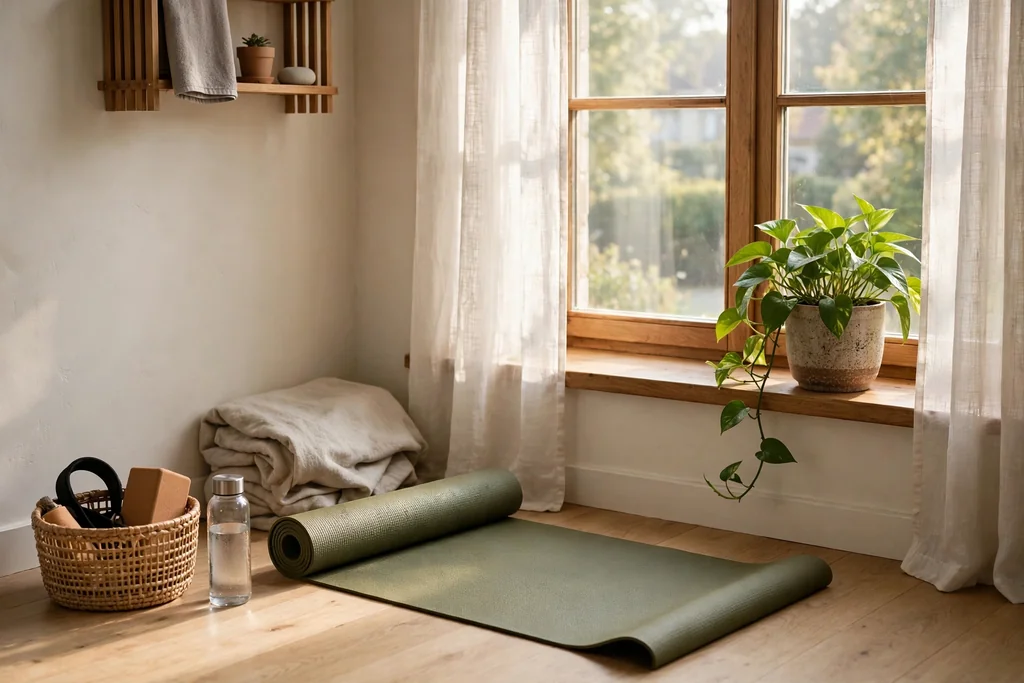
Place the workout nook where morning light lands, such as beside an east facing window, so early sessions feel bright and alert. Morning light helps many people wake up, and a bright nook is more inviting at 6 am than a dark basement corner.
Keep the window clear of tall equipment, so light reaches the mat, and use a light curtain for privacy rather than a heavy blind that blocks daylight. In winter, add a bright lamp on a timer near the nook, so the space still feels bright on dark mornings. A plant on the windowsill adds green to the first view of the day.
31. Evening Wind Down Stretching Space
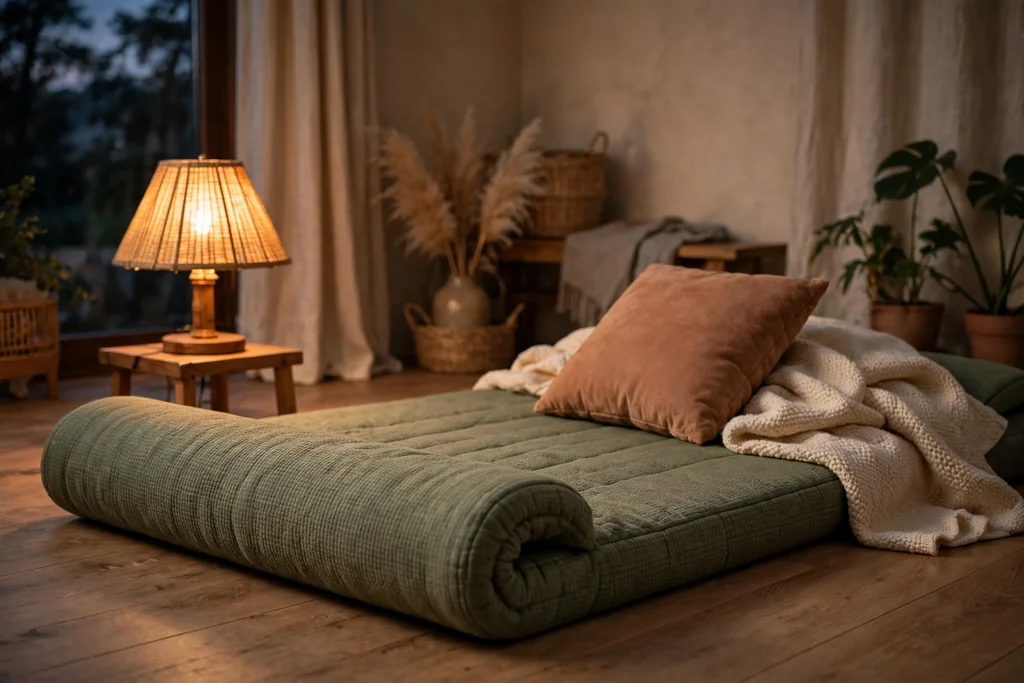
Make an evening stretching space with a soft lamp, a thick mat, a blanket, and a cushion, for gentle movement after work. Evening sessions work best when the light is low and the pace is slow, which is the opposite of a bright morning cardio corner, so keep the two moods separate if you can.
Use the same corner as the morning nook if space is tight, and change the mood with a lamp and a blanket rather than moving furniture. Keep screens off during evening stretching, or dim them, so the body winds down. A short ten minute routine done often beats a long routine done rarely.
32. Balcony or Patio Extension for Fresh Air
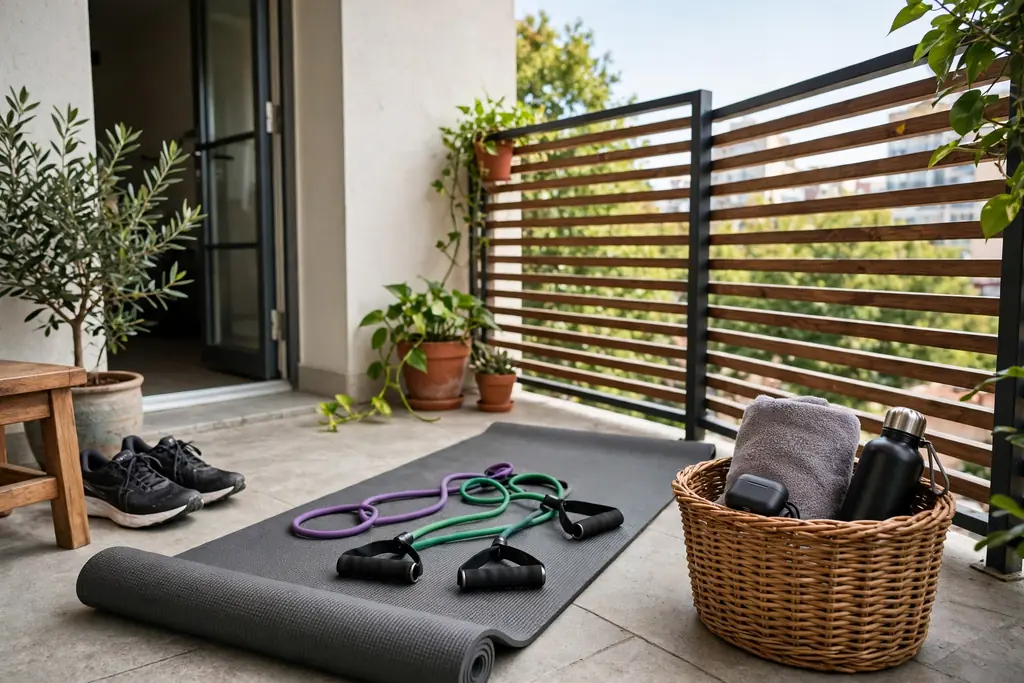
Extend the gym to a balcony or patio in good weather, with a mat, bands, and a bottle carried out in a basket, so workouts get fresh air without a permanent outdoor setup. Outdoor sessions suit yoga, bodyweight work, and stretching, and they break the routine of training in the same room daily.
Keep outdoor gear simple and portable, and bring it back inside after each session, since rain and sun damage mats and bands. Check the balcony floor for grip, and avoid heavy weights outdoors unless the surface suits them. A small outdoor rug marks the spot and keeps feet off hot or cold paving.
33. Lived-In Finish with a Chair, Throw, and Prints
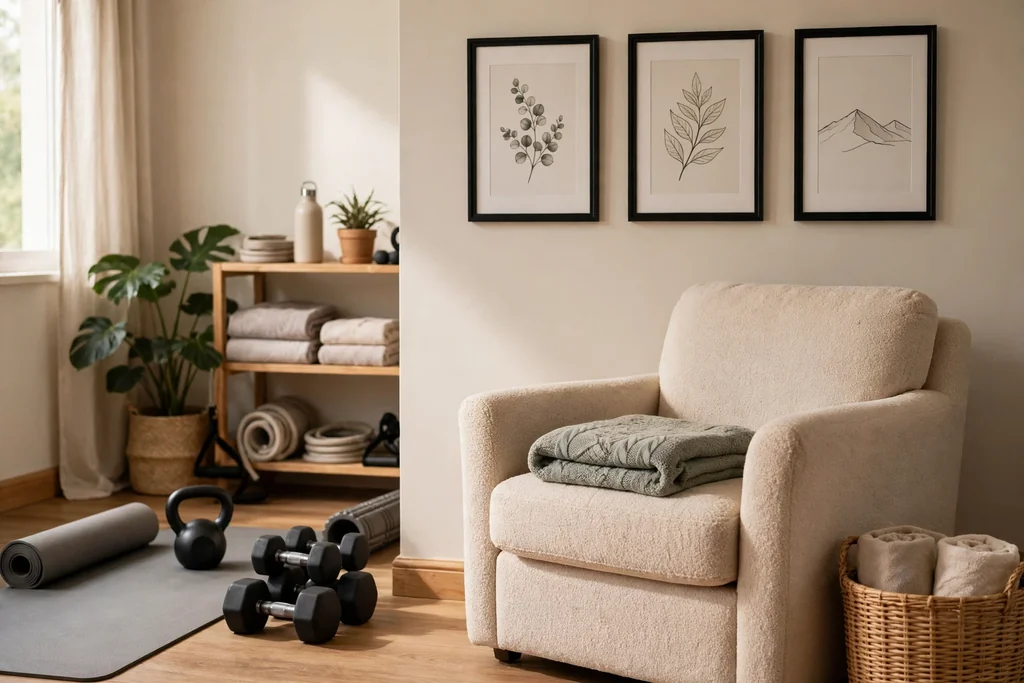
Finish the gym with lived-in touches: a comfortable chair for resting between sets, a throw folded over it, a basket for magazines or a book, and framed prints on the wall. These touches turn a bare equipment room into a room you enjoy being in, which is the point of a home gym.
Choose a chair with a washable cover, since gym rooms collect sweat and dust, and keep the throw in a basket when you train, so it stays clean. Hang prints at eye level, away from swing paths and sweat zones. The goal is a room that looks used and loved, not a showroom: a book left open, a plant watered, a towel folded ready for tomorrow.
Conclusion
A welcoming home gym is not about owning the most equipment. It is about one clear zone, gear you actually use, storage that keeps the room calm, and warm touches that make you want to step in. Start with a rug and a mat, add the equipment for the training you enjoy, and finish with light, plants, and a place to sit and recover. Work through this list in order: zone first, then equipment, then storage, then comfort, and adjust after a week of real use. For small rooms, the zoning and storage ideas in these studio apartment decorating ideas and bedroom storage ideas pair well with the gym corners above.
Keep this list handy for your next free hour at home, and build your gym one corner at a time: a mat today, a rack this weekend, and a chair and a plant to finish the room.
FAQs
How much space do I need for a home gym?
Most people need only a mat sized area to start, roughly enough room to lie down with arms out and stand with a step in each direction. A corner with a mat, a rack, and a basket covers strength, stretching, and band work. Larger machines need their own footprint plus safe space around them, so measure the machine and the clearance the maker advises before buying. Start small, and add machines only when you have a clear spot for them.
What is the best home gym setup for a small apartment?
Use a corner zone with a mat, bands, a set of dumbbells, and a doorway pull up bar, all stored on a rolling cart or in baskets. Fold away and freestanding gear suits apartments better than fixed racks, since the floor stays free for the rest of the day. A curtain or an open shelf can mark the gym zone without blocking light, and a mirror on one wall helps with form in a tight space.
How do I make a home gym feel welcoming instead of bare?
Add warm materials and everyday comforts: a wood bench, a natural rug, plants, a soft lamp for stretching, and a chair with a throw. Keep small gear in baskets and closed storage, so only daily items stay visible, and hang a print or two at eye level. A towel and water station, plus a place to sit and recover, makes the room feel cared for, which is what brings you back daily.
How can renters build a home gym without drilling?
Choose freestanding and portable gear: a freestanding rack, a doorway pull up bar, a rolling cart, baskets, and a rug. Use removable hooks for bands and towels, and lean a mirror securely against the wall rather than hanging it. Check your lease before any fixing, and keep the setup to pieces that pack into a few boxes, so moving stays simple.
What home gym equipment should beginners buy first?
Start with a good mat, a set of light dumbbells, a set of resistance bands, and a towel. That kit covers strength, stretching, and light cardio, and it fits on one shelf. Add a foam roller next for recovery, then a bench or a kettlebell once you know which training you enjoy most. Avoid buying a large machine first, since it takes the most space and money before you know if you will use it daily.
How do I keep a home gym tidy when it shares a room?
Give every item a home: a rack for weights, baskets for small gear, a cart for daily items, and a tray for shoes. Put gear back after each session, and keep a weekly ten minute reset to return anything that drifted out of place. Close a curtain or fold away the mat if the room serves guests, and keep only daily items visible, so the shared room still feels like home.