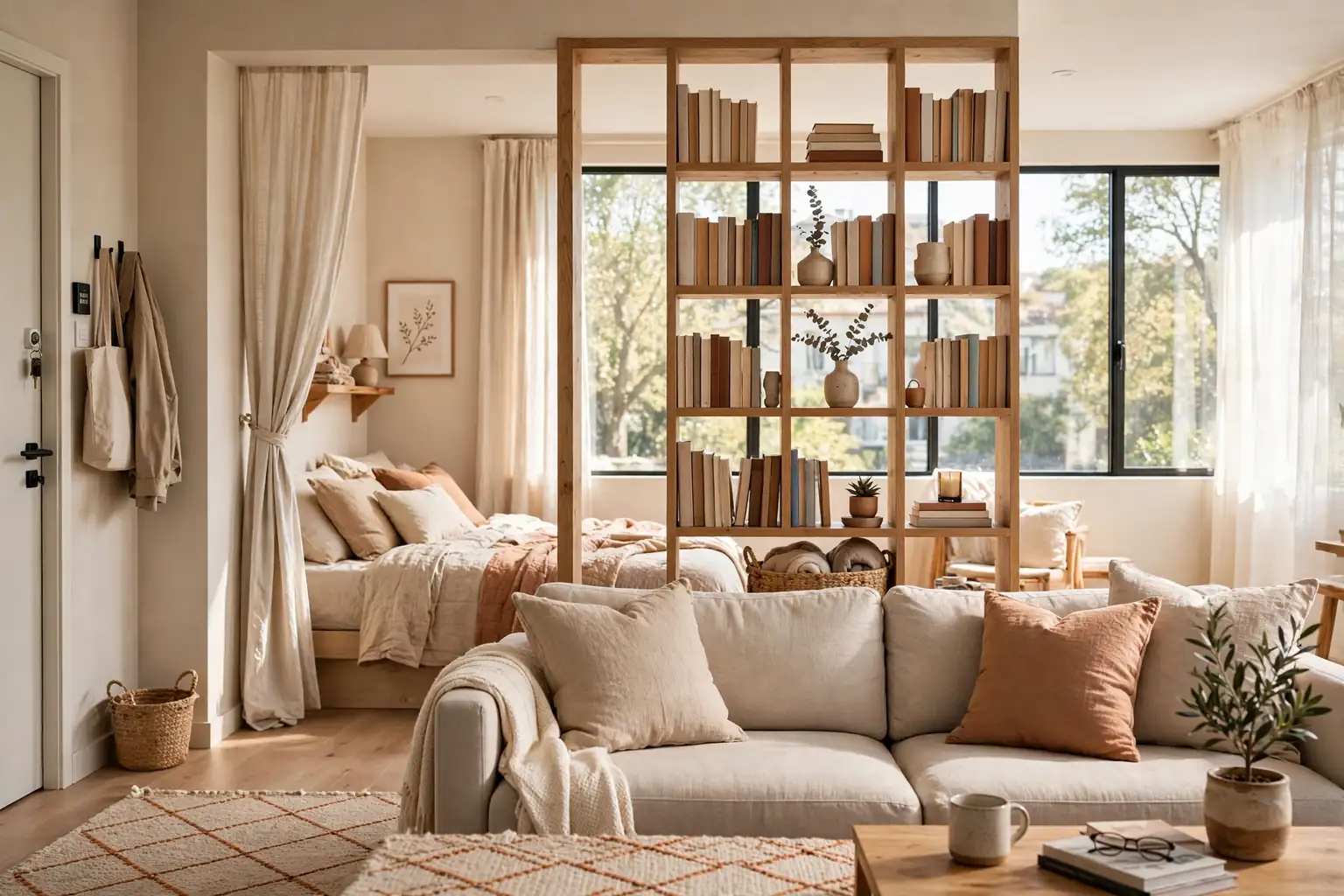
A studio apartment asks one room to do a lot. It is a bedroom at night, a living room in the evening, and often a workspace and a dining spot in between. That can feel crowded, but it can also feel simple and easy to keep up once each activity has a clear place. These studio apartment decorating ideas start with zoning and layout, then cover storage, light, and small details that make a one room home feel calm. Pick the ideas that fit your floor plan and your lease, start with the bed and the main seating, and change one zone at a time so the room stays usable while you work.
Key Takeaways
- Give every activity a zone, even if a zone is only one rug, one chair, or one stretch of wall.
- Use vertical storage and furniture that does two jobs so the floor stays clear for walking.
- Keep one calm base palette across the room, then add colour and texture in items you can move.
- Layer light at different heights instead of relying on one ceiling light for the whole room.
- Choose renter friendly options first, such as freestanding shelves, curtains, and removable hooks, and check your lease before you drill or mount anything heavy.
1. Zone the Room With a Rug and a Sofa Back
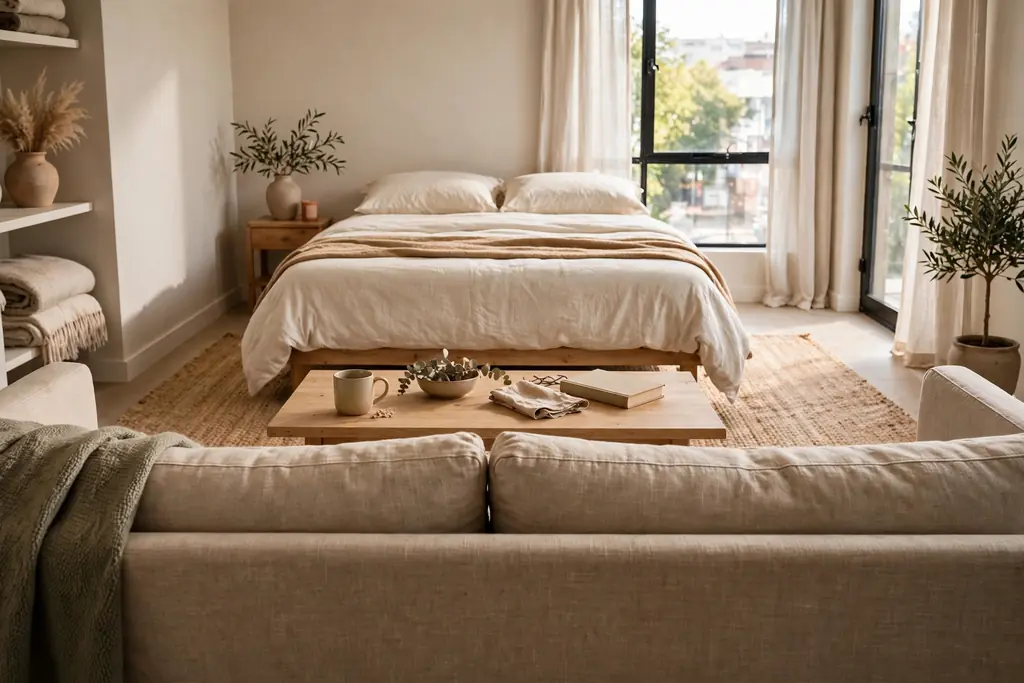
Turn the back of the sofa toward the bed to mark where the living area ends and the sleeping area begins. A rug under the sofa and coffee table strengthens that boundary, and it gives your feet a clear signal that this part of the room is for sitting and relaxing. Keep a walkway of at least enough space to pass comfortably between the sofa and the bed, and avoid pushing furniture tight against every wall just because the room is small.
Choose a rug large enough to sit under the front legs of the sofa and the main chair, so the seating group reads as one unit rather than scattered pieces. A flat weave rug is easier to clean and easier to slide a chair across than a thick pile rug, which matters in a room you cross many times a day. If you rent, a rug also protects the floor and adds warmth without any permanent change.
2. Divide the Room With an Open Bookshelf
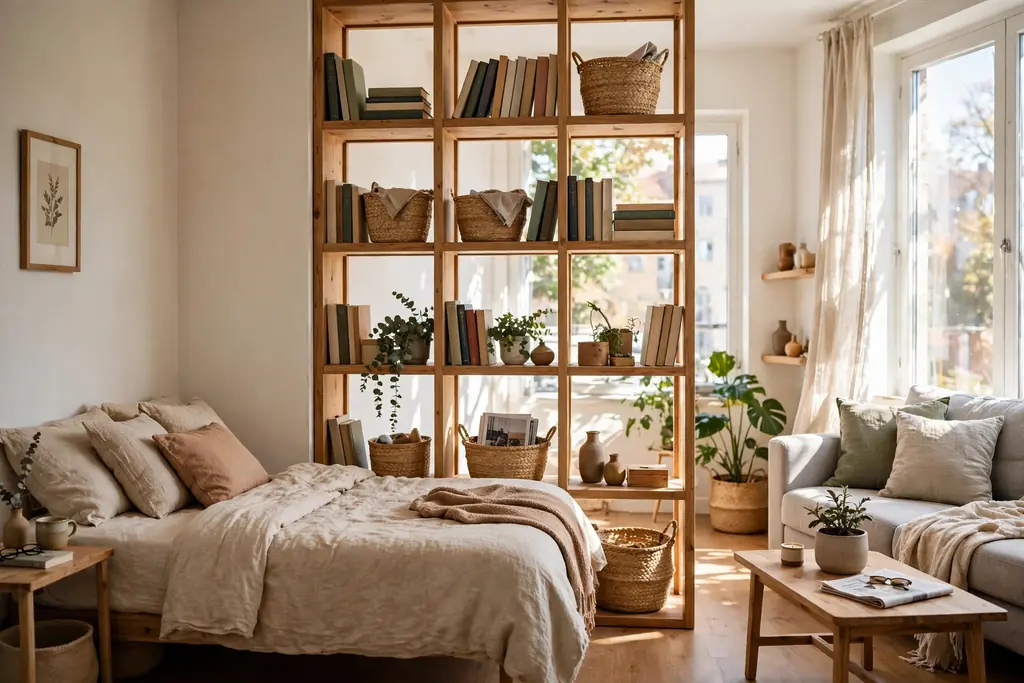
An open bookshelf standing with its back to the bed works as a room divider that still lets light and air pass through. Unlike a solid wall or a tall wardrobe, it keeps the studio feeling open while giving the sleeping area a sense of privacy. Place books, baskets, and a few display pieces on the living room side, and keep the bedroom side tidy so it does not become a second display wall you have to maintain.
Anchor the shelf to the wall if your lease allows it, following the maker instructions, because a tall freestanding shelf can tip. If anchoring is not allowed, choose a low, wide unit instead of a tall narrow one, and keep heavy items on the lowest shelves. Leave some open space on each shelf so the divider reads as furniture, not as a wall of clutter.
3. Screen the Bed With a Curtain on a Ceiling Track
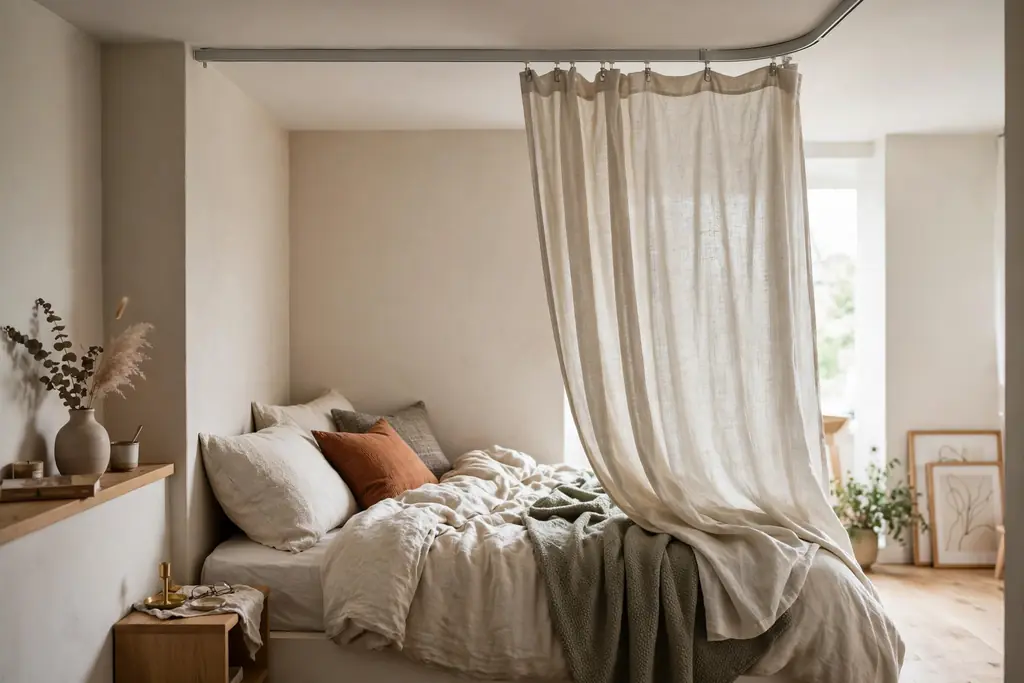
A ceiling mounted curtain track lets you close off the bed at night and open the whole room again in the morning. This works well when a bookshelf divider would block too much light, or when the bed sits in an alcove with no room for furniture around it. Choose a fabric heavy enough to block the view of the bedding, but light enough to slide easily along the track with one hand.
Hang the curtain as close to the ceiling as possible so the bed area feels taller, and extend the track a little past the bed on each side so the curtain can stack out of the way during the day. Washable fabric is a practical choice here, since a bed curtain collects dust and cooking smells faster than a window curtain. Check that the track fixings suit your ceiling type before you buy.
4. Raise the Bed Onto a Storage Platform
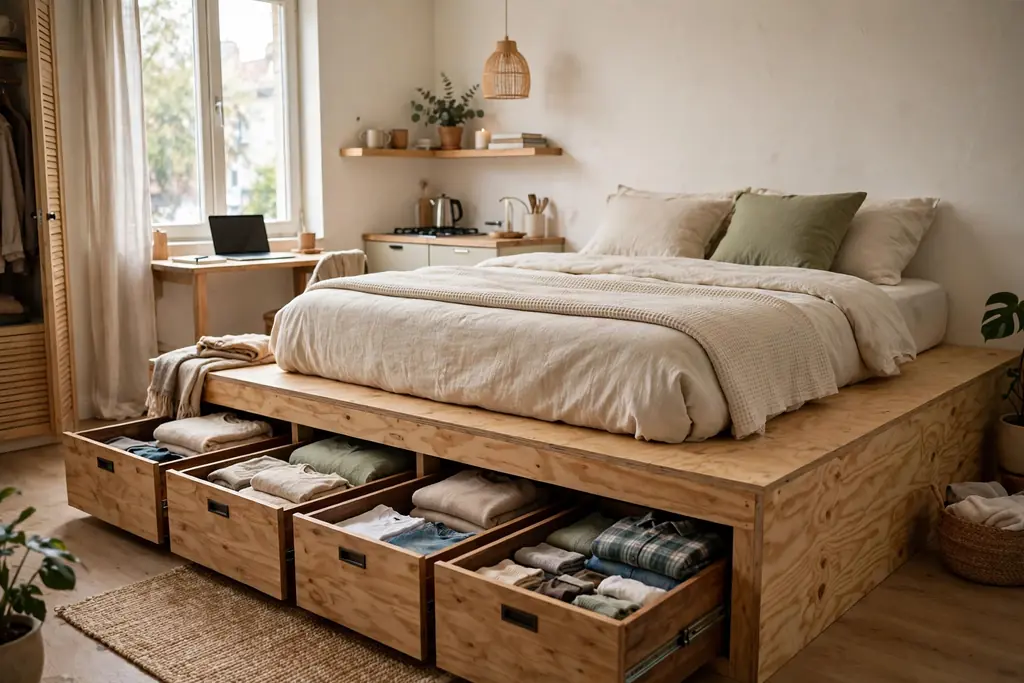
A low platform under the bed turns dead space into useful storage without adding a single piece of furniture to the floor plan. Deep drawers in the platform can hold off season clothes, spare bedding, and bags, while the raised sleeping surface also makes the bed feel like its own zone. This idea suits studios where a wardrobe is small or missing, and where floor space is too tight for extra chests.
Keep the platform height modest so getting in and out of bed stays comfortable, and choose drawers that open fully without hitting the wall or the rug. Label the drawers or keep a short list of what lives in each one, because deep storage only helps if you can find things again. If you move often, look for a platform that breaks down into flat panels rather than a fixed built in unit.
5. Use a Wall Bed for a True Living Room by Day
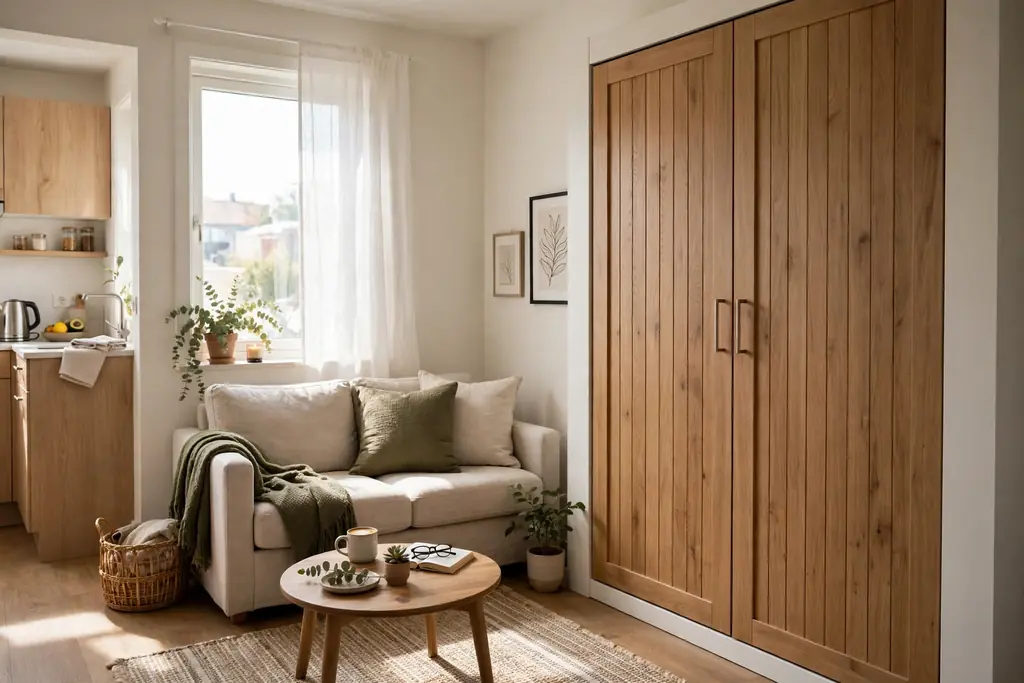
A wall bed folds up into a cabinet during the day and folds down at night, which frees the whole sleeping footprint for living space. That is a real difference in a studio, where the bed can otherwise take up a third of the room around the clock. Modern wall beds often include a sofa or a desk on the front of the cabinet, so the space stays useful even when the bed is stored.
This is a larger purchase and usually needs secure wall fixing, so check your lease and your wall type first, and have it installed by someone experienced with the system. Measure the folded down length carefully, including room to walk around the end of the bed, and keep the bedding stored on the bed itself if the design allows it. If a wall bed is out of reach, a good sofa bed is a simpler version of the same idea.
6. Let a Daybed Do Double Duty
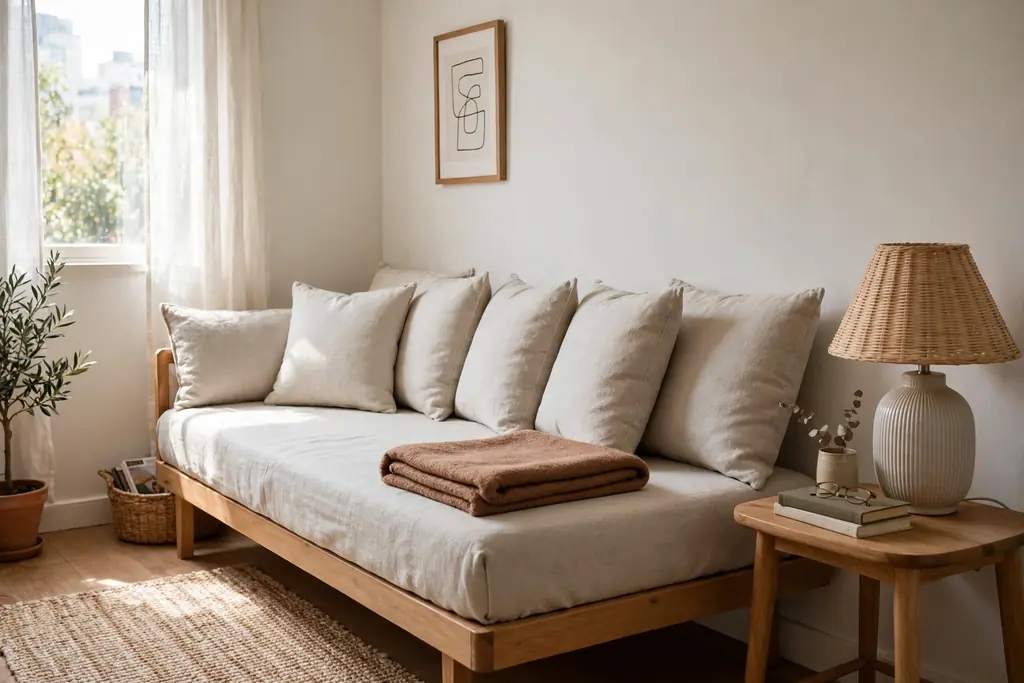
A daybed looks like a deep sofa during the day and sleeps like a bed at night, which makes it a natural fit for a studio with no separate bedroom. Dress it with a row of firm cushions along the wall so it reads as seating, and add a throw that you can fold away at bedtime. Guests can sit on it without feeling they are sitting on your bed, and you avoid buying both a sofa and a bed for one small room.
Comfort matters here, because a daybed is used every day in both roles. Choose a mattress thick enough to sleep on properly, not a thin pad meant for occasional naps, and test the cushion arrangement before you commit. Keep a set of proper bed sheets folded nearby, or in a basket under the daybed, so the change from sofa to bed takes a minute rather than a search through the closet.
7. Choose a Fold Down Dining Table
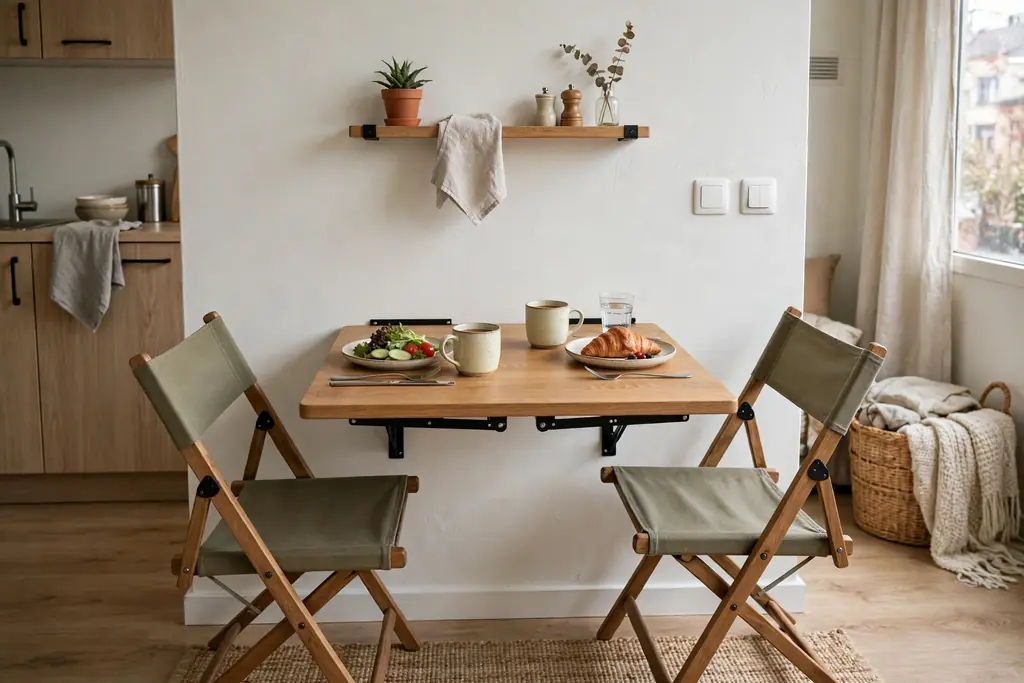
A table that folds down from the wall, or a drop leaf table that folds flat, gives you a real dining spot without a table standing in the middle of the room all day. Fold it down for meals, work, or a puzzle, then fold it away to free the floor for walking, exercise, or a guest mattress. Two stackable stools or folding chairs stored nearby complete the setup without a full dining set.
Fix a wall mounted table firmly into studs or suitable wall anchors, and check the weight rating before you load it with books or a laptop. A drop leaf table on casters is a good alternative if wall fixing is not allowed, since it can roll to the wall when closed. Keep the table clear as a habit, because a fold away table only helps if folding it away stays easy.
8. Add a Kitchen Cart as a Moving Island
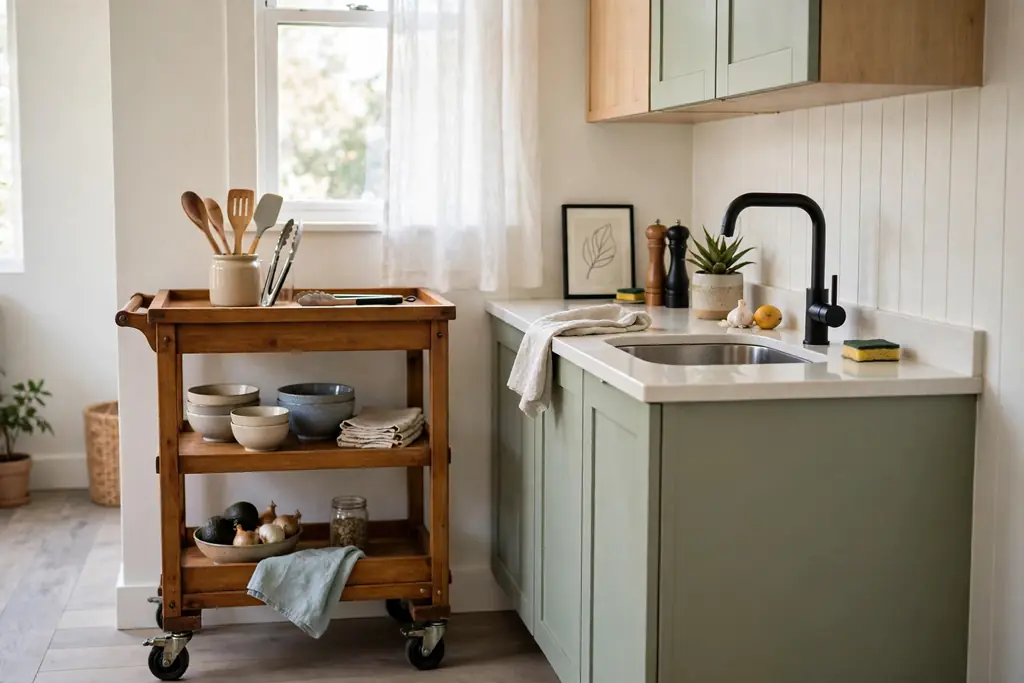
A kitchen cart on wheels adds counter space, storage, and a serving surface that can move where it is needed and park out of the way when it is not. Use it as a prep surface beside the stove, a coffee station in the morning, or a side table when friends visit. Drawers or shelves in the cart can hold utensils, dry goods, or cleaning supplies that have no home in a small kitchen.
Pick a cart that fits through the gap between your counters and your seating area, and check its height against your worktop so it feels comfortable to use. Lock at least one wheel when the cart is in use, especially on a smooth floor, and keep the top clear of items you need to reach daily. A butcher block top adds a warm surface that can double as a chopping board with proper care.
9. Run Shelving All the Way to the Ceiling
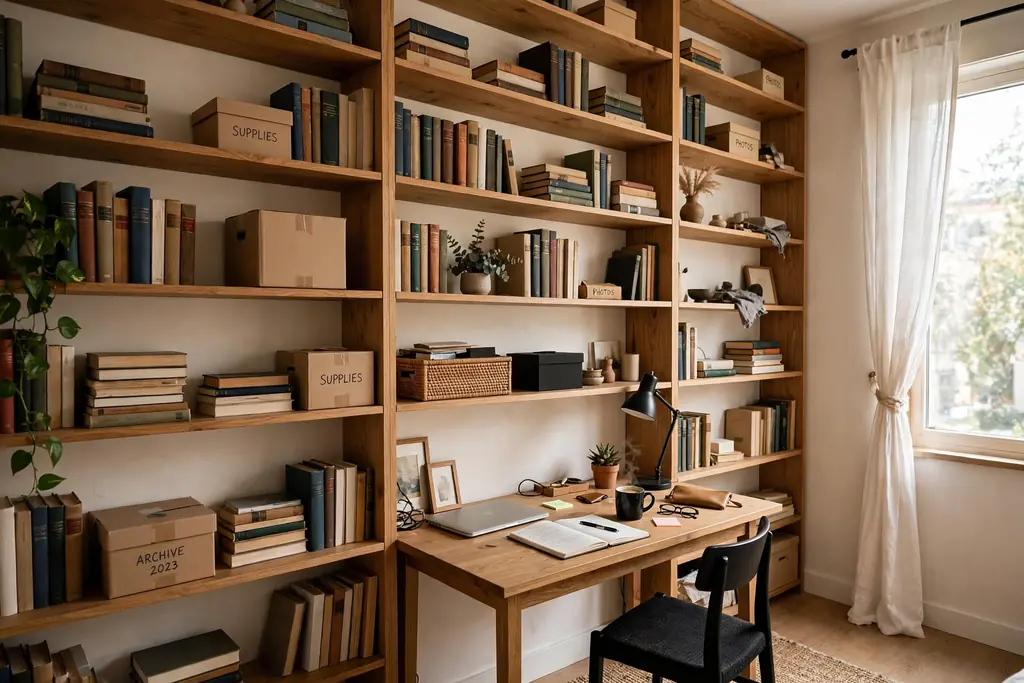
The wall above eye level is often empty in a studio, yet it can hold books, baskets, and items you use less often. Running shelves up to the ceiling makes the room feel taller and frees lower wall space for art, a mirror, or a work surface. This idea works best on one wall, such as the wall above a desk or beside the bed, rather than on every wall at once.
Place everyday items at arm height and lighter, rarely used items up high, and use closed boxes on the top shelf so the highest row looks tidy from below. The grouping approach in this guide on how to style open shelves helps open shelving stay balanced instead of turning into crowded rows. Fix shelves into studs or proper anchors, and do not overload them beyond the maker rating.
10. Use the Space Above Doors and Windows
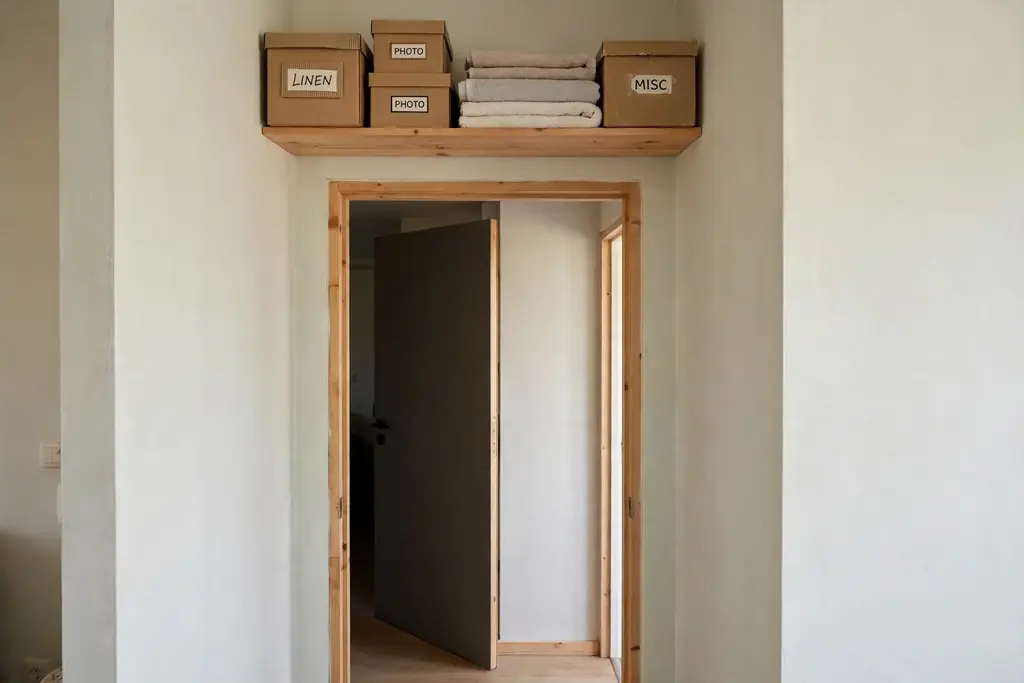
A single shelf above a door or a window can hold items that would otherwise sit on the floor, such as spare towels, board games, or off season accessories in labelled boxes. This spot is easy to overlook because it sits outside the normal line of sight, yet it is simple to use with one shelf and two brackets. It works well near the entry, above a bathroom door, or over a closet opening.
Keep the shelf shallow enough that items do not hang over the edge, and keep it light, since reaching above a doorway with a heavy box is awkward. A small step stool stored nearby makes the shelf genuinely usable instead of a place where things go and are forgotten. Do not block a door swing or a window opening mechanism when you place the shelf.
11. Place a Large Mirror Opposite the Window
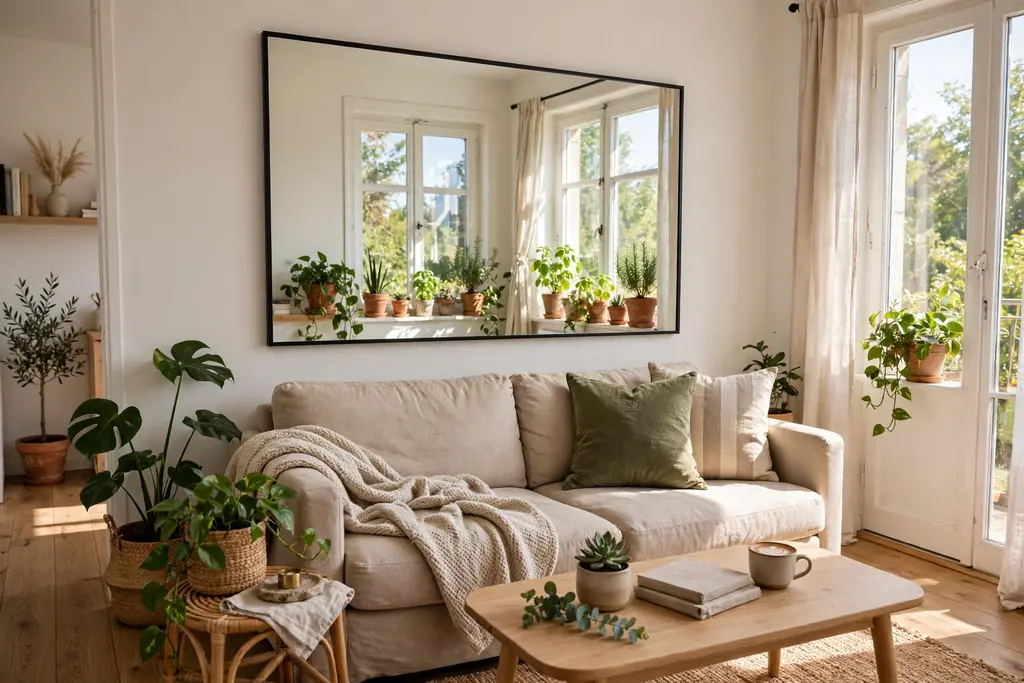
A large mirror placed opposite or beside a window bounces daylight deeper into the room and makes the far wall feel farther away. In a studio, that extra sense of depth matters, because the room has no hallway or second room to give your eyes a break. Lean a full length mirror against the wall if hanging is not allowed, and secure it so it cannot slide on a smooth floor.
Check what the mirror reflects before you fix its position, since a mirror that reflects a messy corner doubles the mess. Aim it toward the window, a plant, or a calm stretch of wall for the best result. A mirror with a simple frame suits most studios, and one large mirror usually works better than several small ones scattered across the room.
12. Keep One Calm Base Colour Across Zones
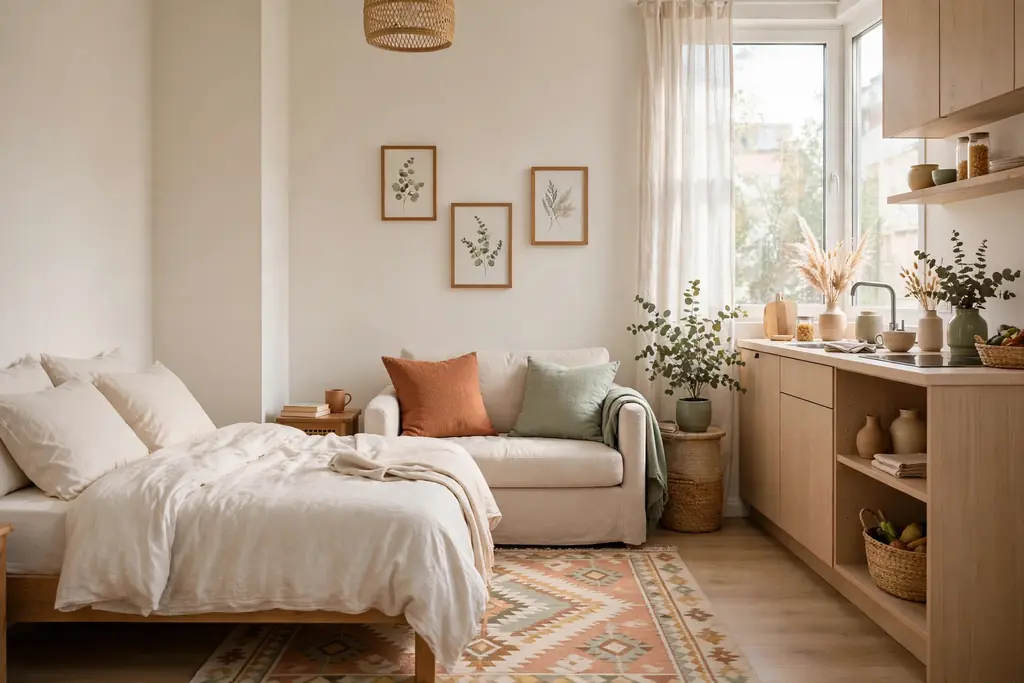
Using one calm base colour on walls, large furniture, and bedding helps a studio read as one room instead of several small rooms pushed together. Soft white, warm grey, or pale warm beige all work, and they let the zones blend rather than compete. This does not mean the room has to be plain. It means the biggest surfaces agree, so smaller items can add character without visual noise.
Add colour in layers you can change: cushions, throws, art, a rug, or a plant pot. If you tire of an accent, you can swap those items without repainting or replacing furniture. Keep the base colour consistent into the kitchen and entry areas too, since a studio has no doors to hide a sudden colour change behind.
13. Pick a Storage Ottoman Instead of a Coffee Table
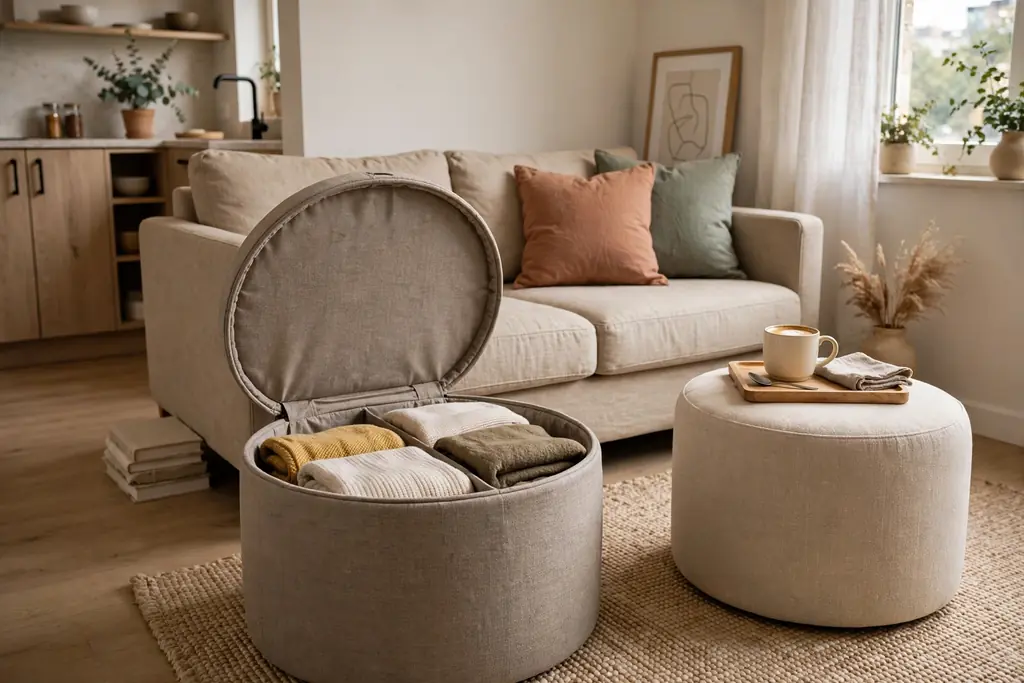
A storage ottoman gives you a footrest, an extra seat, and a hidden box for throws, magazines, chargers, and board games, all in the footprint of a coffee table. In a studio, that kind of double duty matters more than a table that only holds drinks. Choose an ottoman with a firm, flat lid if you still want a place to set a cup, and add a small tray to keep drinks steady.
Measure the ottoman against your sofa height so it works comfortably as a footrest, and check that the lid opens without hitting the sofa cushions. Keep only items you reach for often inside it, because a storage seat filled with things you never use becomes a box you never open. A lighter ottoman is easier to move aside when you need floor space for guests.
14. Use Nesting Tables You Can Move Apart
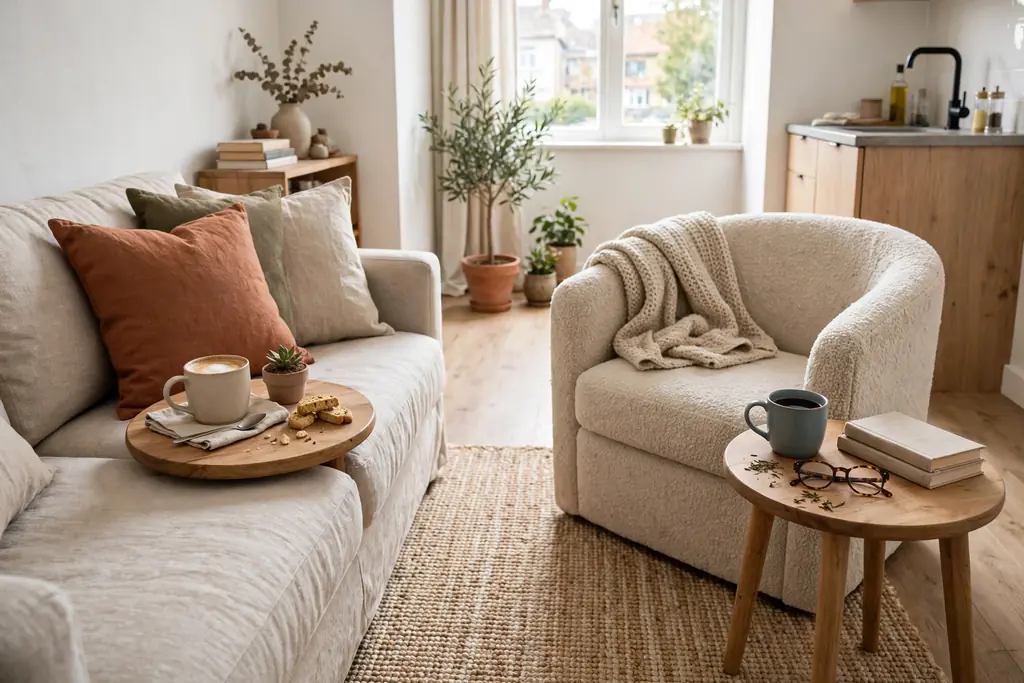
Nesting tables stack into one small footprint when you are alone, then pull apart into two or three side tables when friends visit or when you need a surface beside both the sofa and the bed. That flexibility is hard to get from a single heavy coffee table, and it suits a room where the layout changes through the day. Keep the largest table beside the sofa and tuck the smaller ones under it or beside the bed.
Choose tables light enough to move with one hand, with stable legs that do not wobble on a rug. Round tops are a good choice in tight walkways, since they have no sharp corners to catch a hip. If you work from the sofa sometimes, one nesting table at the right height can also serve as a laptop perch for a short session.
15. Build a Window Seat With Storage Underneath
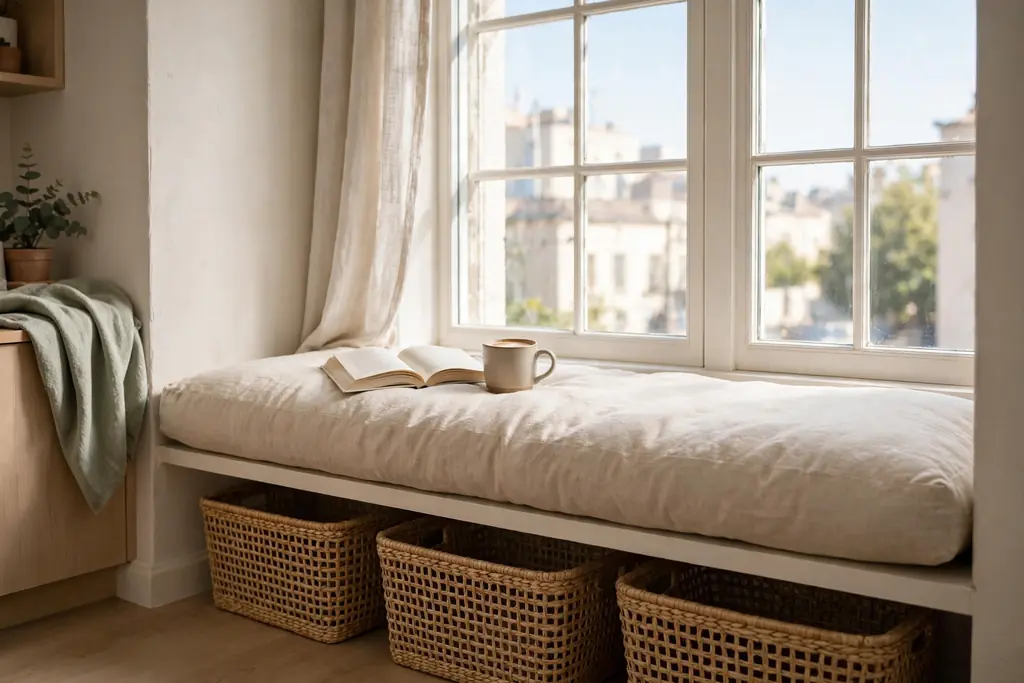
A window seat turns an otherwise empty stretch of wall into a reading spot, a dining bench, or a place to sit while you put on shoes, and the space underneath can hold shoes, bags, or spare bedding. Build it from a low bench or a pair of sturdy cabinets topped with a cushion, rather than a fixed structure, if you rent. A cushion in a washable cover keeps the seat practical beside a window that may collect condensation or dust.
Add a small shelf or a wall hook nearby for a book, a phone, or a cup, so the seat works as a complete spot rather than a bare bench. Keep the cushion firm enough to sit on for an hour, and leave the window mechanism and any radiator vents clear. In a studio with limited seating, a window seat can be the extra chair you did not think you had room for.
16. Set Up a Small Entry Zone by the Door
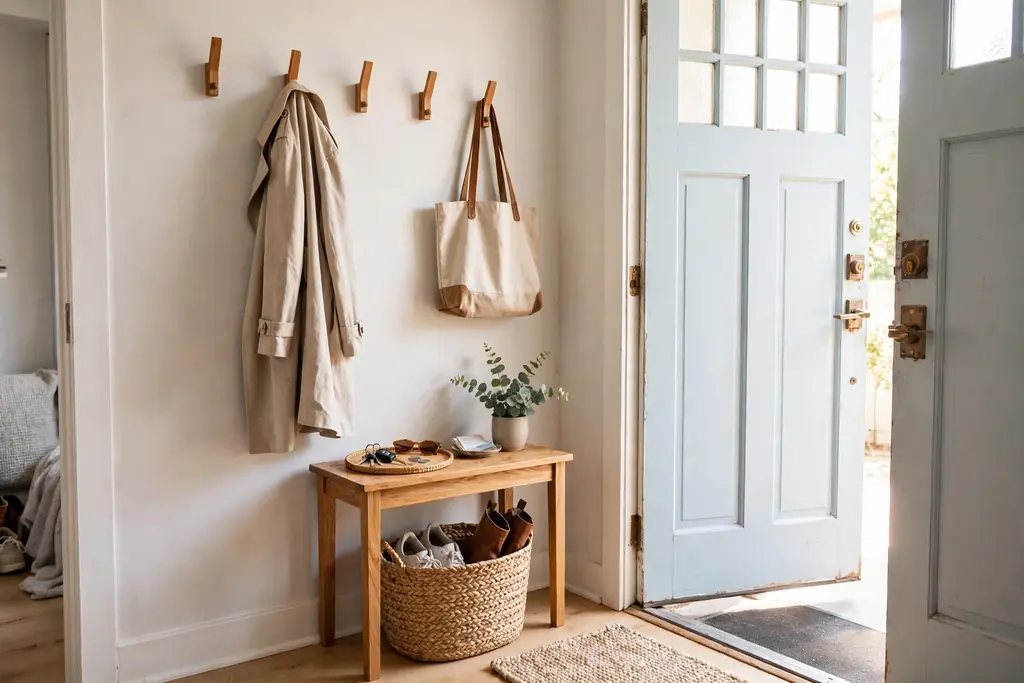
Even a studio needs a place for keys, a bag, shoes, and a coat, or those items will spread across the living area. A narrow console, a small bench, or a row of wall hooks beside the door creates an entry zone without a hallway. Add a small tray for keys and mail, and a basket or boot tray for shoes, so the first thing you see when you come home is order rather than a pile.
Keep the entry zone shallow, since a deep unit beside the door can block the swing or narrow the walkway into the room. Wall hooks work well if floor space is very tight, and a mirror above the console lets you check your coat before you leave. Empty the tray once a week so it stays a landing spot, not a second storage drawer.
17. Grow Plants Up the Wall, Not Across the Floor
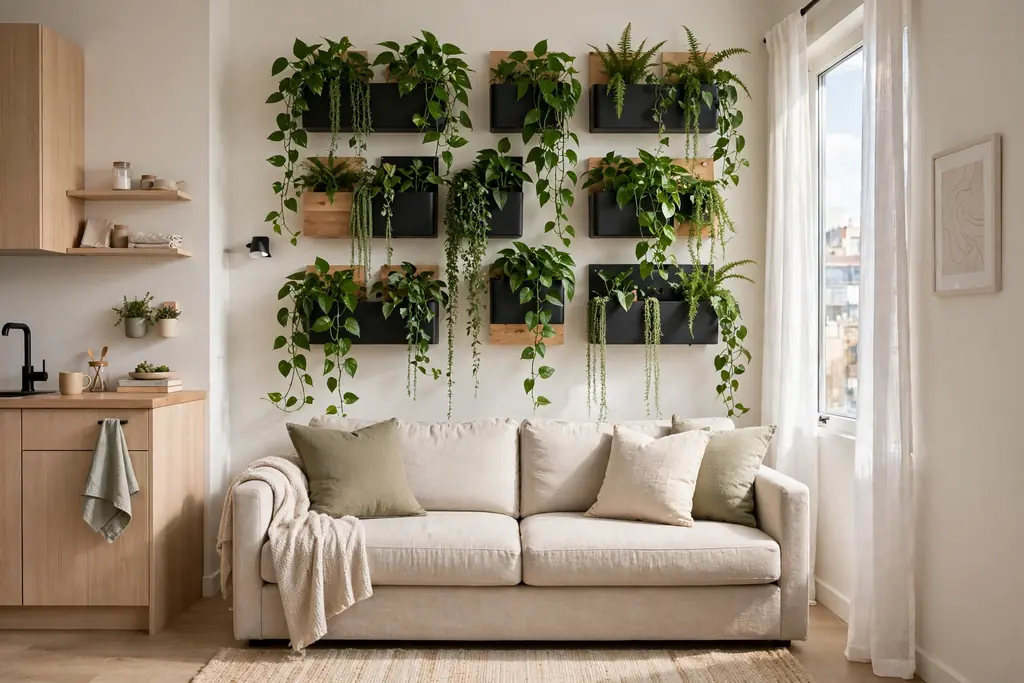
Plants make a studio feel alive, but large floor pots eat the very floor space you are trying to save. Wall mounted planters, a hanging rail, or a tall narrow plant stand keep greenery at eye level without blocking walkways. Trailing plants on a high shelf add softness above a desk or a sofa, and small pots on a window ledge use space that furniture cannot use anyway.
Match each plant to the light it will actually get, and choose pots with saucers or liners so watering does not mark the wall or the floor. Start with two or three plants and learn how they do before you add more, since a crowded plant wall needs more care than a few healthy ones. If natural light is low, choose plants known for tolerating shade and check their care needs before you buy.
18. Hide Everyday Clutter in Closed Bins and Baskets
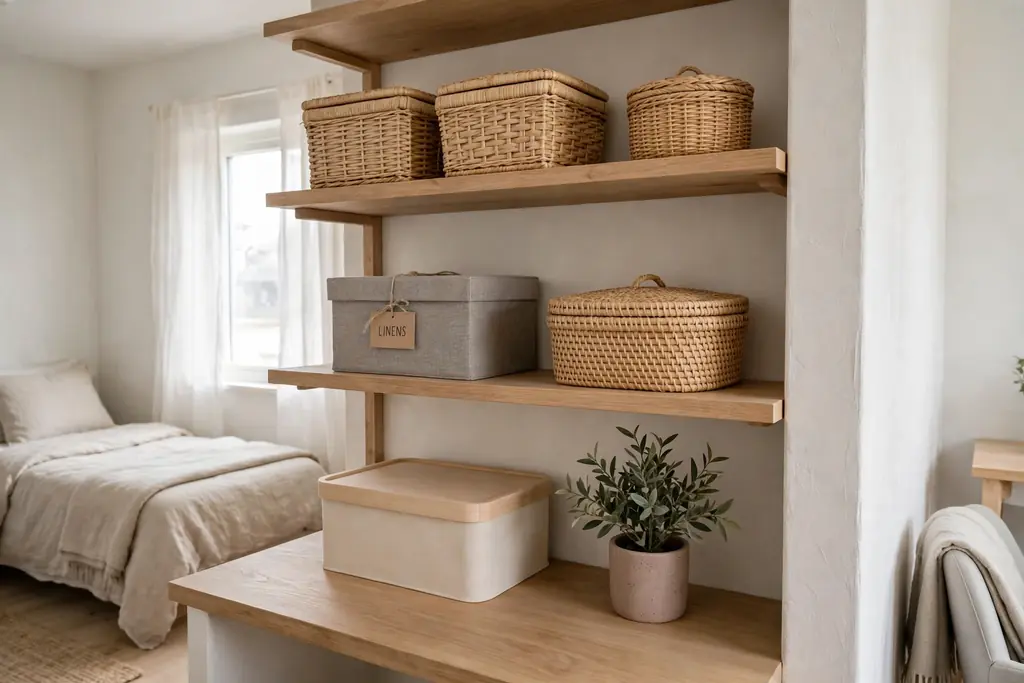
Open storage shows everything, and in a studio that means the whole room shows everything. Closed bins, baskets with lids, and boxes inside open shelves hide chargers, cleaning supplies, paperwork, and hobby gear while keeping them within reach. Use one type of container per zone, such as baskets in the living area and boxes in the closet, so the room looks settled even when the contents are mixed.
Label boxes you do not open often, and keep a rule that anything without a home gets a decision, not a new bin. Buying more containers rarely solves clutter on its own. The goal is fewer visible piles, not more hidden ones, so review the bins every few months and pass on what you no longer use. Natural baskets add texture, while plain boxes suit a shelf you want to look quiet.
19. Hang a Picture Ledge Instead of Many Frames
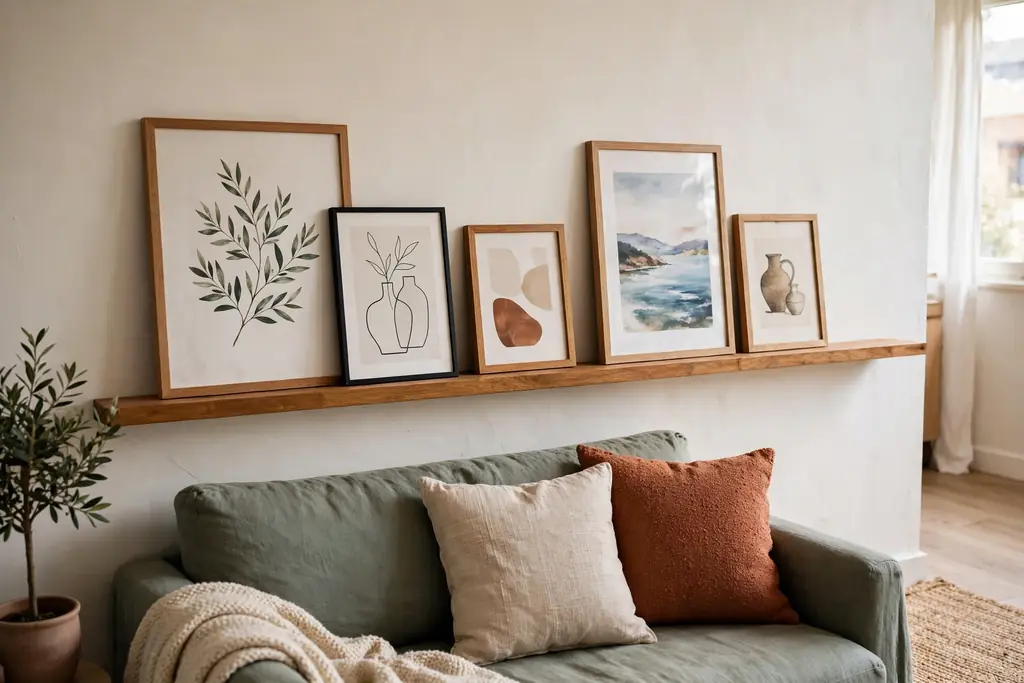
A picture ledge lets you lean art and photos along one shelf and swap them without new holes in the wall each time. That is a clear advantage in a rental, and it also lets you layer frames of different sizes for a collected look. Place the ledge at eye level above a sofa, a desk, or a low cabinet, and keep the arrangement to a few pieces so the wall does not feel crowded.
Secure the ledge firmly, since leaning frames can slide if the shelf tips forward, and keep heavier frames at the back where the wall supports them. Rotate the art with the seasons or when you find a new print you like, rather than adding more frames around it. One well chosen ledge usually gives a studio more personality than a full gallery wall that fights for wall space with shelves and mirrors.
20. Layer Light at Three Heights
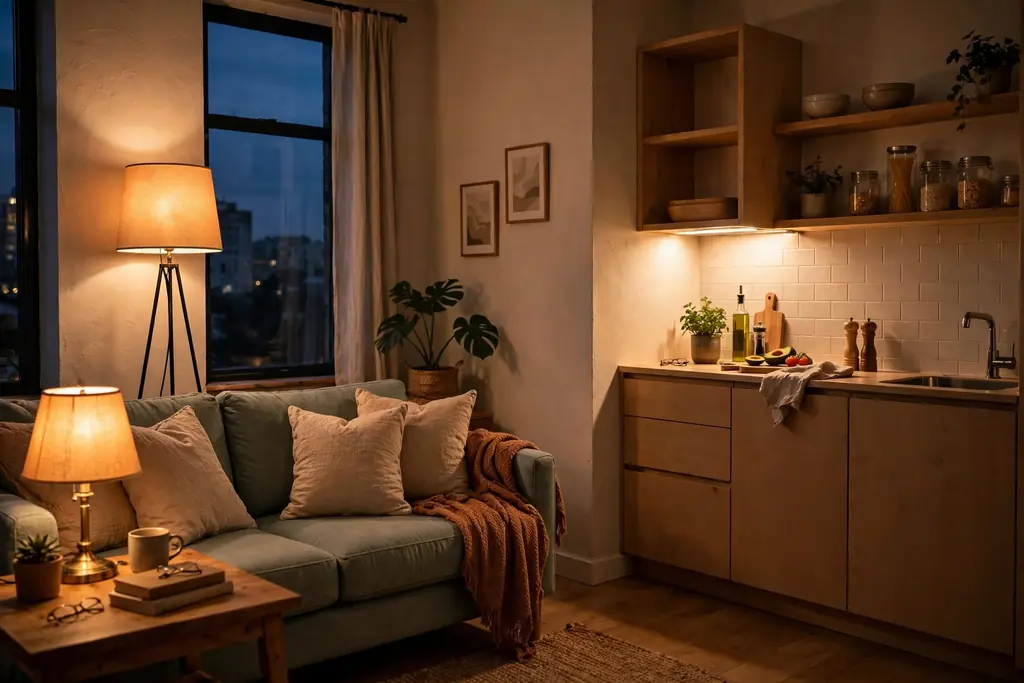
One ceiling light makes a studio feel flat and can leave corners dark, while light at three heights makes the same room feel layered and calm. Use a ceiling light or a tall floor lamp for general light, a table lamp or a wall light beside the sofa and the bed for reading, and a small light under a shelf or in the kitchen area for tasks. Dimmer switches or smart bulbs, where your lease and wiring allow, let you shift from bright daytime work light to softer evening light.
Place a lamp near each zone rather than clustering all the lights on one side of the room, and choose warm white bulbs for living and sleeping areas. Keep cords tidy with clips or a cord cover so lamps do not add tripping hazards to narrow walkways. If you cannot add wall lights, a plug in wall light or a clamp lamp on a shelf gives a similar layered effect without wiring work.
21. Turn an Alcove Into a Compact Work Nook
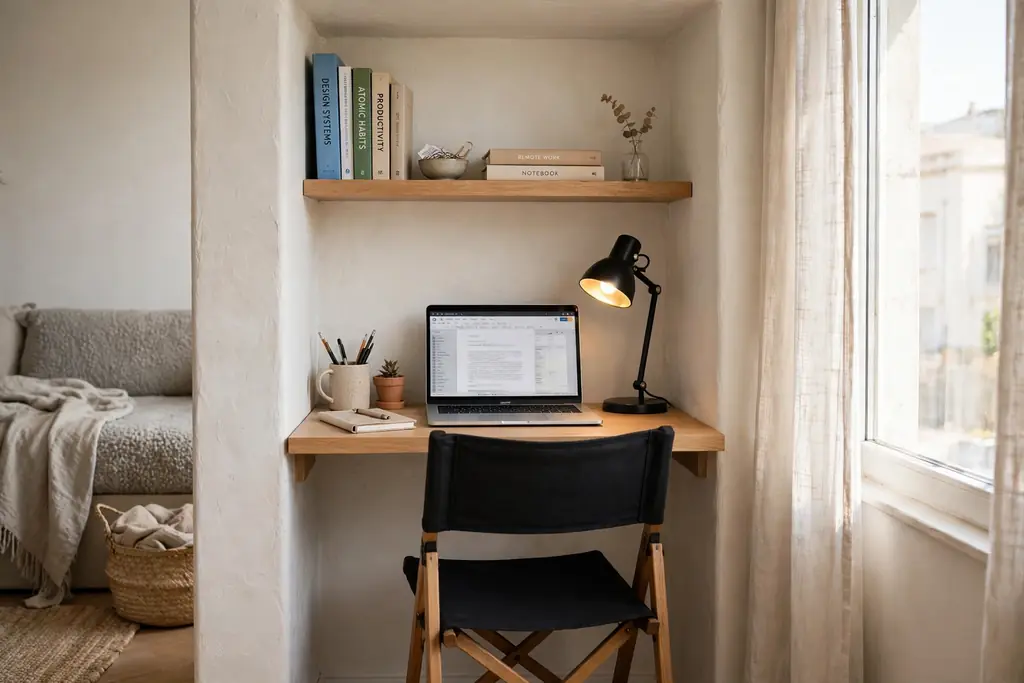
Many studios have an alcove, a wide closet, or a shallow recess that is too small for a bed but just right for a desk. A wall mounted desk or a narrow console in that spot creates a work nook that stays out of the main walkway and can be closed off with a curtain at the end of the day. Add a shelf above the desk for books and supplies, and a task lamp so you are not working in the shadow of the room light.
Keep the chair light enough to tuck under the desk, or choose a folding chair you can hang on the wall when work is done. The same zoning thinking used in these small living room layout ideas applies here: give the main activity the best light you can, keep the route past the nook clear, and let one corner stay soft rather than filling every inch. If the alcove has no outlet nearby, plan a safe cable route before you set up monitors or chargers.
22. Keep One Flexible Corner for Guests and Projects
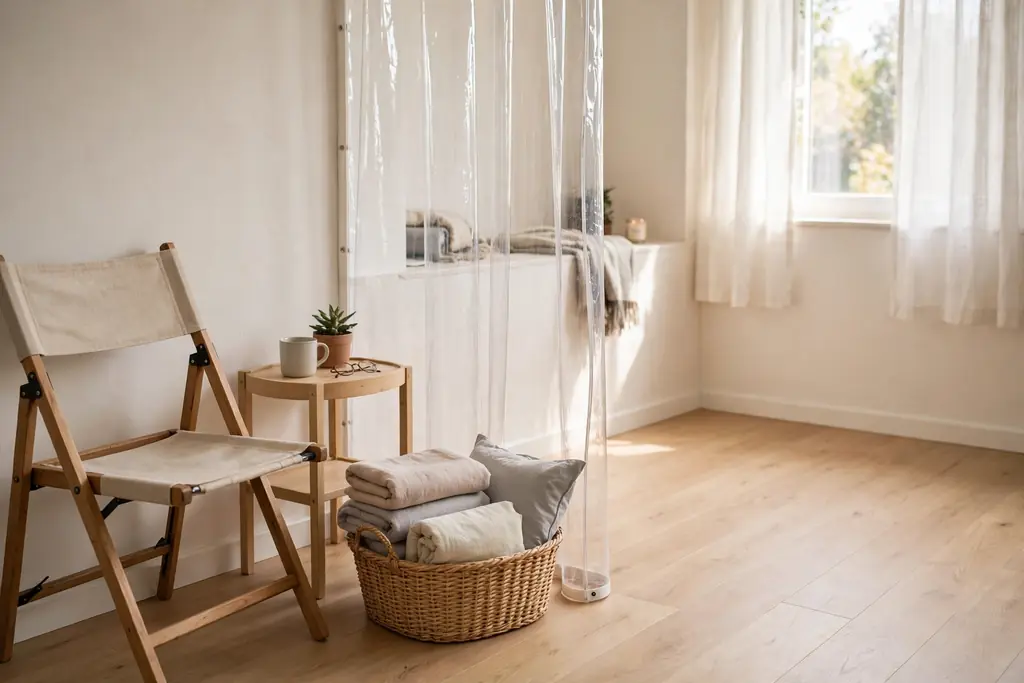
A studio has no spare room, so one corner needs to stay flexible for the things that do not happen every day: a guest sleeping on an air mattress, a craft project spread out for a weekend, or a workout that needs floor space. Keep that corner free of heavy furniture, with only light pieces you can move, such as a folding chair, a small side table, and a basket that holds guest bedding. When the corner is empty, it simply gives the room breathing space, which is useful on its own.
Store guest bedding in the storage ottoman or the platform bed drawers so setting up for a visitor takes minutes. A folding screen or the bed curtain from idea 3 can give a guest a little privacy without a permanent wall. Protect the arrangement by making it a habit: if a box lands in the flexible corner, move it to its proper home the same day.
Conclusion
A studio apartment works best when each part of the room has a job and nothing blocks the way between jobs. Start with zoning, using a rug, a shelf, or a curtain to mark the sleeping area, then add storage that goes up the wall and furniture that does more than one thing. Keep the base palette calm, layer the light, and leave one corner flexible for guests and projects. You do not need to use all 22 ideas at once. Pick two or three that solve your biggest daily annoyance, live with them for a few weeks, and then add the next change. A small room rewards that patient approach, and it is the fastest way to a home that feels easy to live in. If an idea here helped, save this post to your small spaces board for the next time you refresh the room.
Frequently Asked Questions
How do I divide a studio apartment without building a wall?
Use furniture and soft boundaries instead of a wall. A sofa back, an open bookshelf, a curtain on a ceiling track, or a rug under the seating area can each mark a zone while keeping light and air moving through the room. Choose the divider that fits your floor plan: a bookshelf suits a long room, a curtain suits a bed in an alcove, and a rug suits a room where you want the whole space to stay open during the day.
What is the best bed setup for a small studio apartment?
The best setup depends on how much living space you need during the day. A wall bed frees the most floor space, a daybed works as both sofa and bed, and a raised platform bed adds storage without a second piece of furniture. If you keep a standard bed, place it where it blocks the least daylight and leave a clear walkway around at least one side so making the bed and changing sheets stays easy.
How can I add storage to a studio apartment without it looking crowded?
Use vertical storage, closed containers, and furniture with hidden storage, such as a platform bed, a storage ottoman, or a bench with space underneath. Keep one wall of open shelves tidy with the grouping tips in the open shelf guide linked above, and hide everyday clutter in bins and baskets. Review stored items every few months so containers hold things you use, not things you have forgotten.
What colours work best in a studio apartment?
One calm base colour across the large surfaces helps a studio feel like one room rather than several small zones. Soft white, warm grey, and pale warm beige are safe bases that suit most light conditions. Add stronger colour in cushions, throws, art, and rugs, which you can change without repainting. If the room gets little daylight, a warmer pale base usually feels more welcoming than a cool white.
How do I make a studio apartment feel bigger?
Let daylight in, keep walkways clear, and choose furniture sized to the room rather than furniture you hope to grow into. A large mirror opposite a window, light coloured large surfaces, and legs you can see under sofas and tables all help the eye travel farther. Removing one oversized piece often makes a bigger difference than adding several small decorative items.
Can I decorate a studio apartment well as a renter?
Yes, with renter friendly choices. Freestanding shelves, curtains on tension or ceiling tracks where allowed, removable hooks, rugs, mirrors leaned against a wall, and furniture that does two jobs all change a room without permanent work. Always check your lease before drilling, mounting heavy items, or changing fixtures, and keep the original fittings so you can restore the room when you move out.