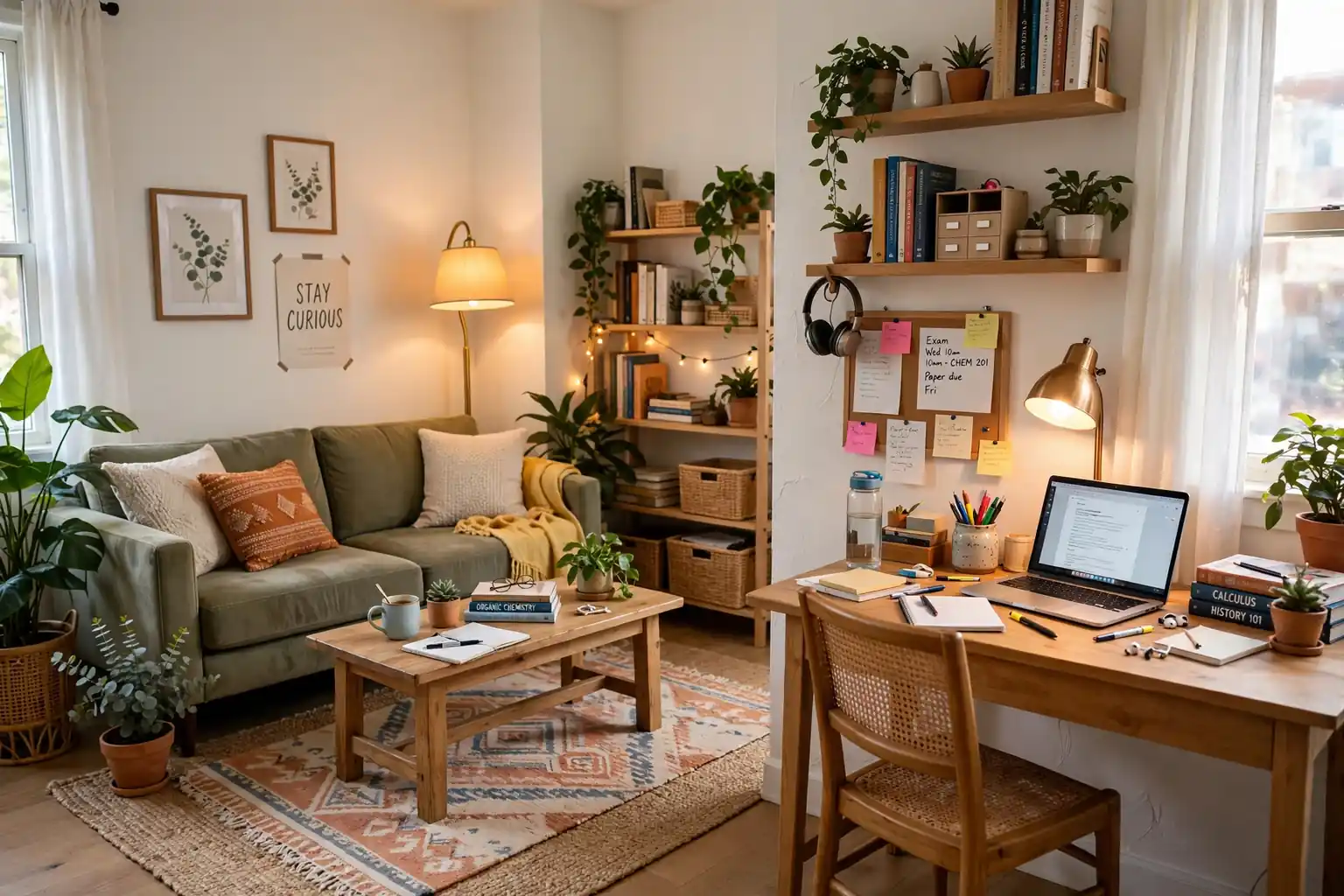
A college apartment has to do a lot in very little room: sleep, study, eat, host friends, and store everything you own. The difference between a cluttered rental and a polished one is rarely a big purchase. It is usually a clear zone for each activity, storage that stays hidden or tidy, and a few repeated finishes so the eye rests instead of jumping from one random item to the next. These 23 college apartment decor ideas are chosen for rented rooms, shared flats, and tight budgets, with an emphasis on pieces you can move, remove, or take to your next place.
Key Takeaways
- Give every activity a zone: sleeping, studying, eating, and relaxing each need a spot, even if the spot is only a chair and a lamp.
- Choose renter friendly fixes first: removable wallpaper, adhesive hooks, tension rods, and leaning mirrors avoid wall damage and deposit disputes.
- Hide the clutter, show a few favorites: closed bins, under bed boxes, and a tidy shelf beat open piles every time.
- Repeat one or two finishes, such as light wood and black metal, so mixed secondhand finds look intentional.
- Pick furniture that does two jobs, such as a daybed, a storage ottoman, or a rolling cart, before adding single purpose pieces.
1. Divide a Studio With an Open Bookcase
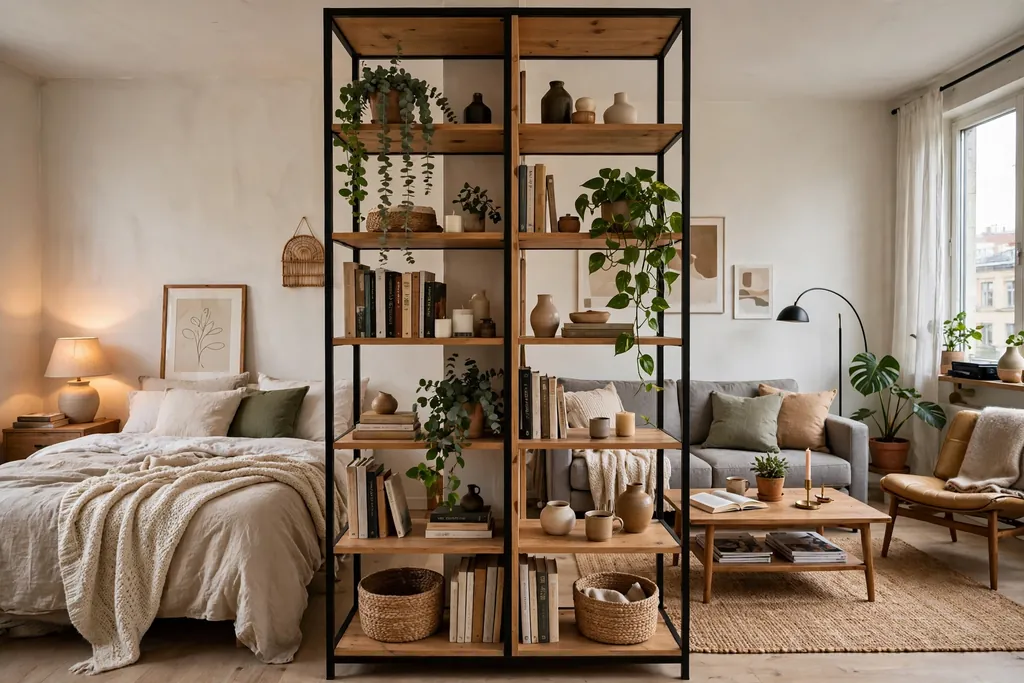
An open bookcase makes a wall that still lets light through, which is why it suits a studio better than a solid screen. Place it with its back to the bed and its shelves facing the living side, so the sleeping area feels separate while the room stays bright. Keep the lower shelves for books and storage boxes and the upper shelves lighter, with a plant or a few framed prints, so the divider does not feel top heavy.
Anchor the bookcase to the wall if your lease and the manufacturer guidance allow it, since a tall unit can tip. For more help deciding what goes where in a tight room, see these small living room layout ideas. If you share the flat, agree on which side each person keeps tidy, because a divider only works when both sides stay usable.
2. Add a Peel and Stick Accent Wall Behind the Bed
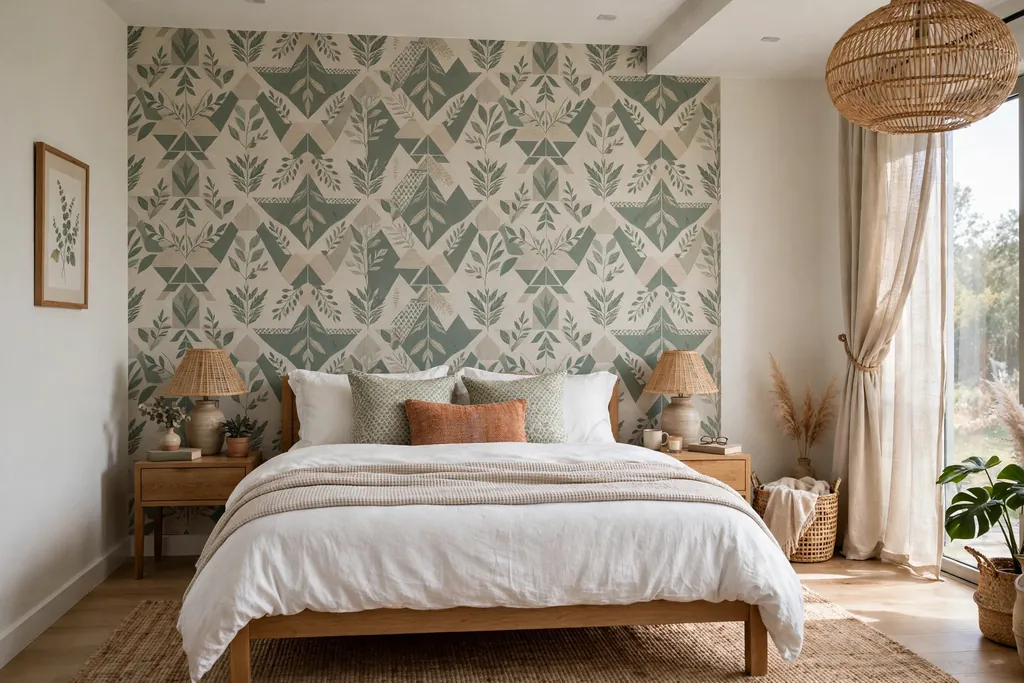
Peel and stick wallpaper gives a bedroom a focal point without paint, paste, or a repair bill at move out. One wall behind the bed is enough: a soft stripe, a small scale pattern, or a plain linen look reads as deliberate, while covering every wall can shrink a small room. Measure the wall, order a little extra for pattern matching, and start at a top corner, smoothing down slowly to push out air bubbles.
Test a small piece first, especially on textured or freshly painted walls, and follow the product instructions for removal. If the paper starts to lift at a humid window wall, choose a drier wall instead. Keep bedding and art simple on this wall, so the pattern stays the main event rather than competing with a busy headboard.
3. Build a No Damage Gallery Wall
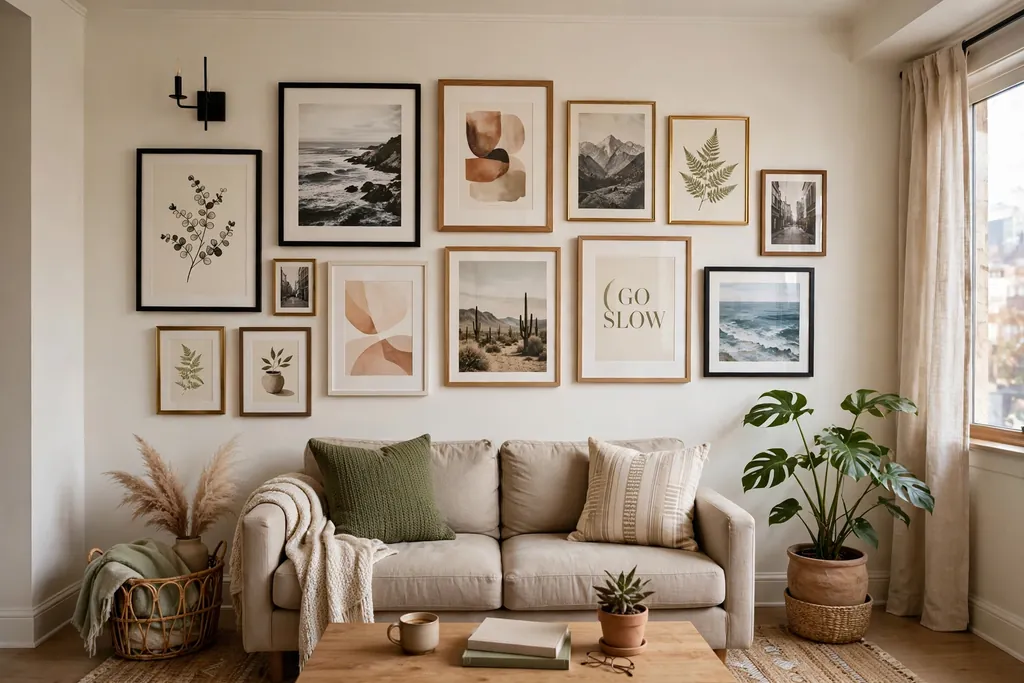
A gallery wall pulls a plain rental wall together, and adhesive strips or picture ledges keep it deposit friendly. Start on the floor: lay out frames in one row or a loose grid, leave even gaps, and photograph the layout before anything goes up. Mix frame sizes but keep one finish, such as black or light wood, so prints, photos, and posters look like a set rather than a random collection.
Use strips rated for the weight of each frame, press firmly, and wait the time stated on the pack before hanging. In a shared flat, a gallery wall above a sofa or along a hallway works better than one in a bedroom doorway, where frames get knocked. Swap one print each term to keep the wall fresh without starting over.
4. Use a Daybed as a Sofa by Day
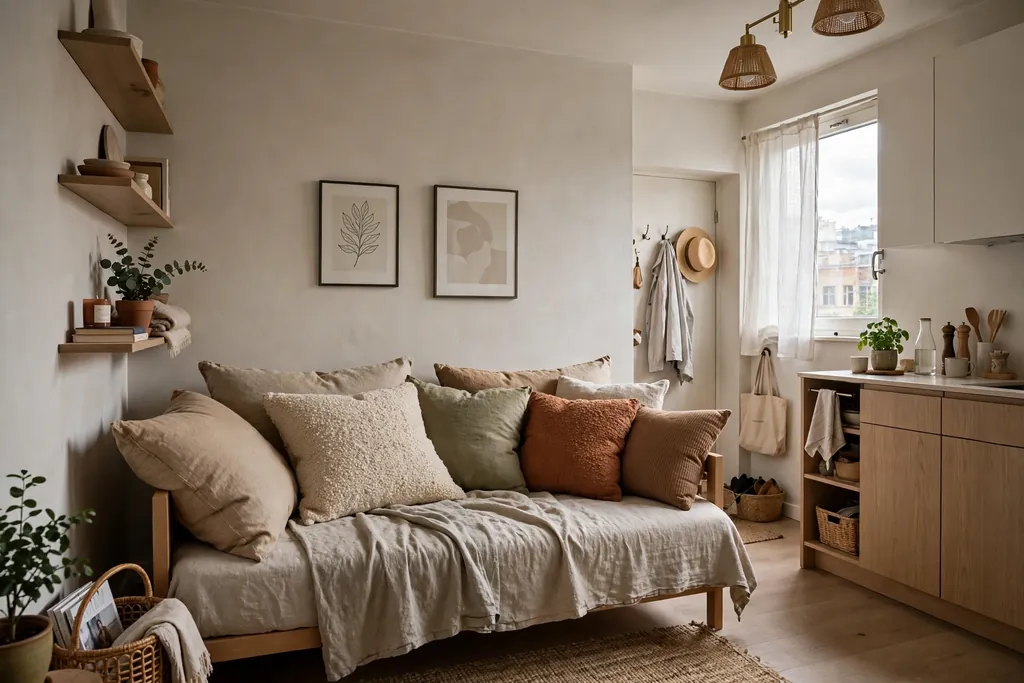
A daybed solves the classic studio problem: a bed that takes over the room all day. With a firm mattress, a row of large cushions along the wall, and a throw folded at one end, it reads as a deep sofa during the day and still sleeps well at night. Choose a frame with a trundle or drawers underneath if you need extra storage for bedding or out of season clothes.
The trick is bedding discipline. Make the bed each morning, stack sleeping pillows in a closet or a large basket, and keep only the daytime cushions on show. A daybed placed against the longest wall, rather than floating in the middle of the room, leaves the most floor space for a table and chairs.
5. Install a Fold Down Wall Desk
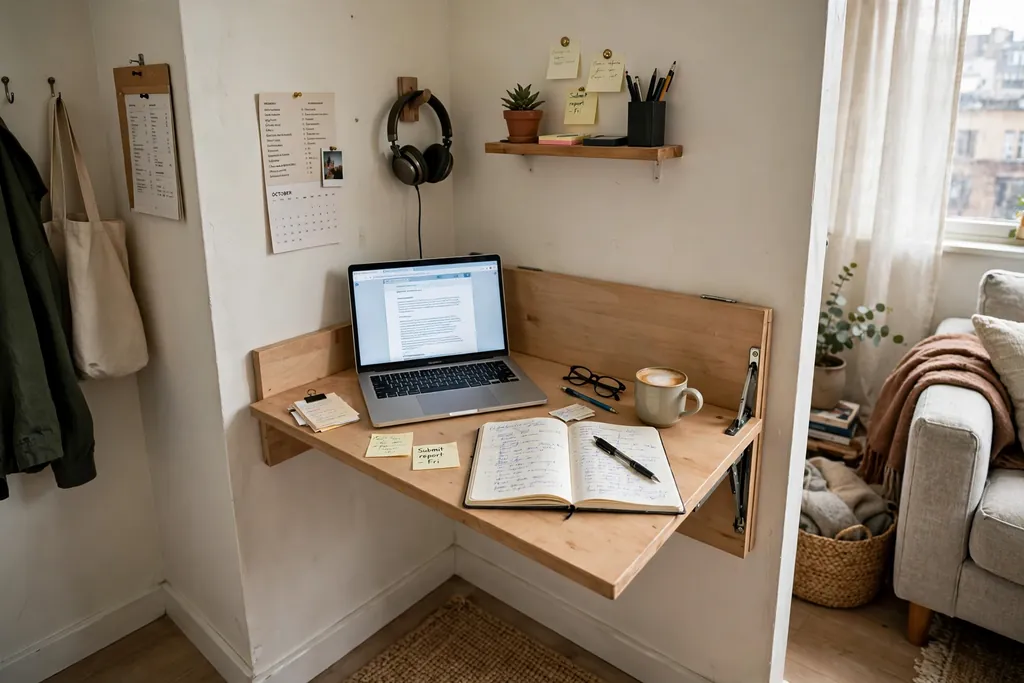
A fold down desk gives you a real work surface that disappears when class is over. Mounted at standing or sitting height on a bedroom or hallway wall, it folds flat against the wall when closed, often with a small shelf or pinboard on its outer face. Inside, keep a laptop, a notebook, and a pen cup, and nothing else, so closing it takes seconds.
Check the wall type and fixings before you buy, and mount into studs or use fixings rated for the wall material. This idea suits a room too small for a full desk, but it is not a good spot for a heavy monitor or a printer. Pair it with a chair you can tuck elsewhere, such as a dining chair, rather than a bulky office chair that blocks the walkway.
6. Layer Rugs to Define the Living Zone
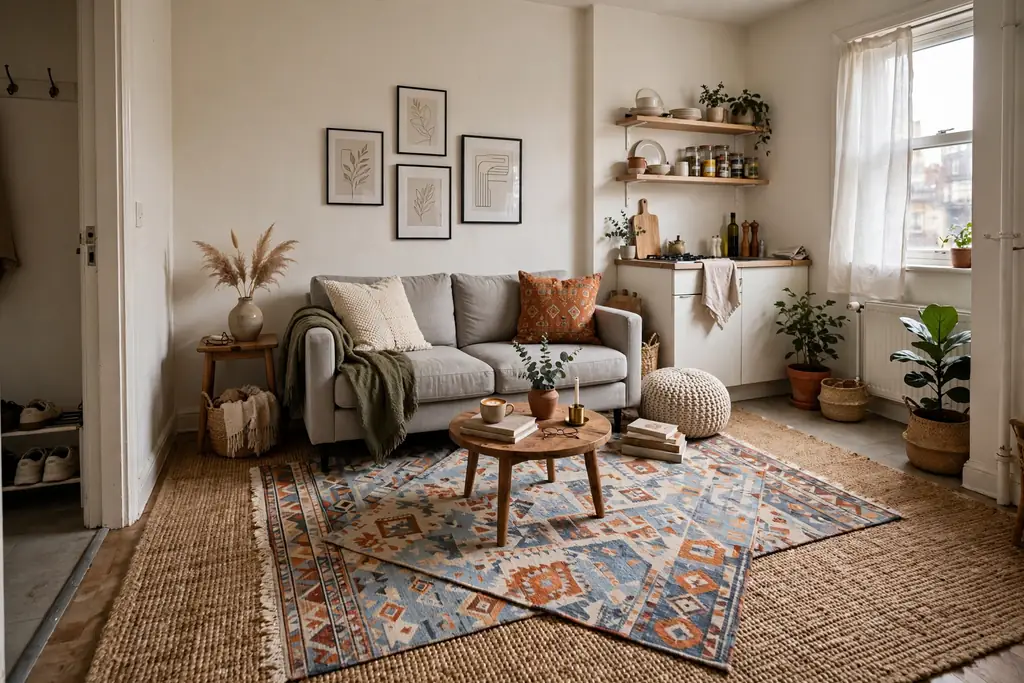
Two rugs layered together can mark a living zone in a studio without building anything. Start with a larger, flat, inexpensive rug in a neutral tone, then add a smaller patterned or textured rug on top, angled slightly or centered on the seating. The base rug protects rental floors and covers worn carpet, while the top rug adds color and softness where feet actually land.
Use a rug pad or rug tape underneath to stop slipping, and keep rug edges out of door swings and chair paths. In a shared flat, a rug also signals a shared living area versus a private bedroom corner, which helps everyone respect the boundary. Shake rugs outside regularly, since small rooms show dust fast.
7. Roll a Kitchen Cart Into Service
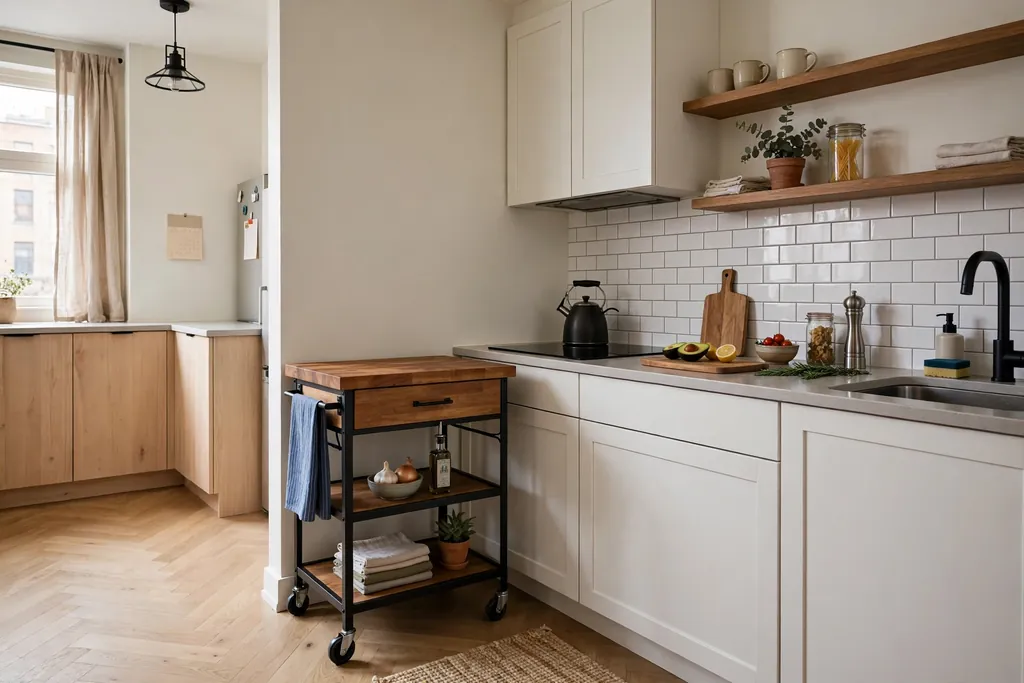
A rolling kitchen cart is extra counter space, extra storage, and a serving table in one narrow piece. In a small kitchen, park it beside the fridge or against a blank wall, load the top with a cutting board and everyday cooking items, and use the shelves below for pots, dry goods, or cleaning supplies. When friends come over, roll it to the table as a drinks or snack station, then roll it back.
Measure doorways and the gap beside your counters before ordering, and lock the wheels when you cook on it. A cart with a butcher block top is useful for prep, while a metal cart wipes clean more easily. Keep the top clear at night, so the cart does not turn into another pile of clutter.
8. Style Open Shelves Above the Desk
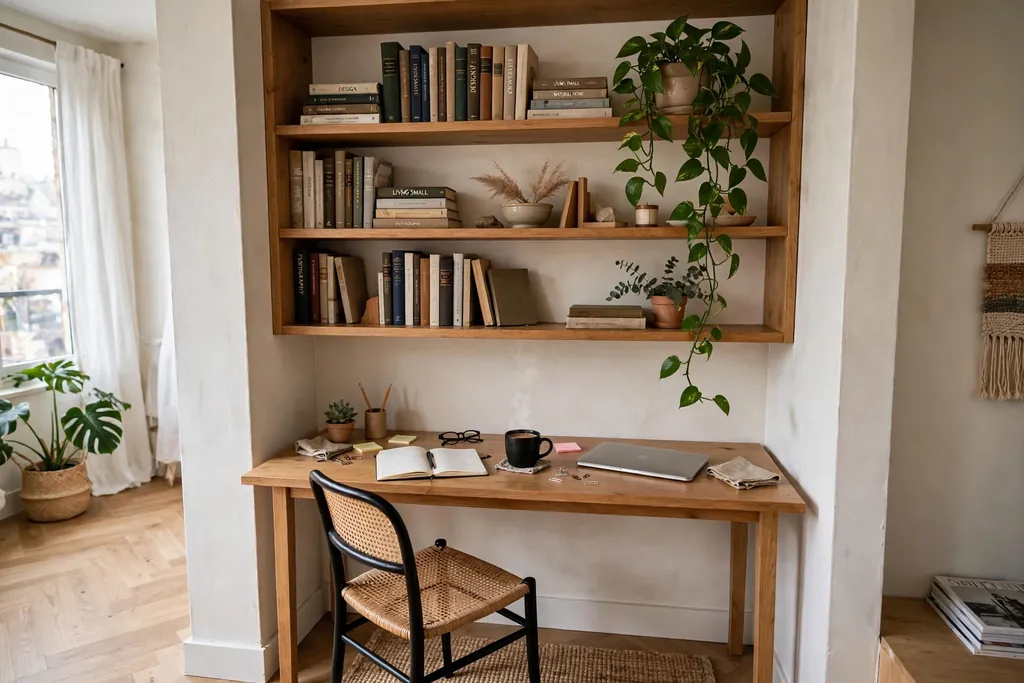
Shelves above a desk use wall space that would otherwise sit empty, and they keep reference books and supplies within reach without crowding the work surface. Fit one or two shelves at a height you can reach while seated, and leave the lowest shelf mostly for items you grab daily. Group books upright, add one small plant or framed photo, and leave gaps so the shelves breathe.
For a method that keeps shelves calm rather than crowded, see how to style open shelves. Keep heavy books low and light items high, check shelf load limits, and avoid placing anything fragile directly above a laptop. If your lease forbids drilling, use a freestanding shelf unit or a desk hutch instead.
9. Hang Curtains High and Wide
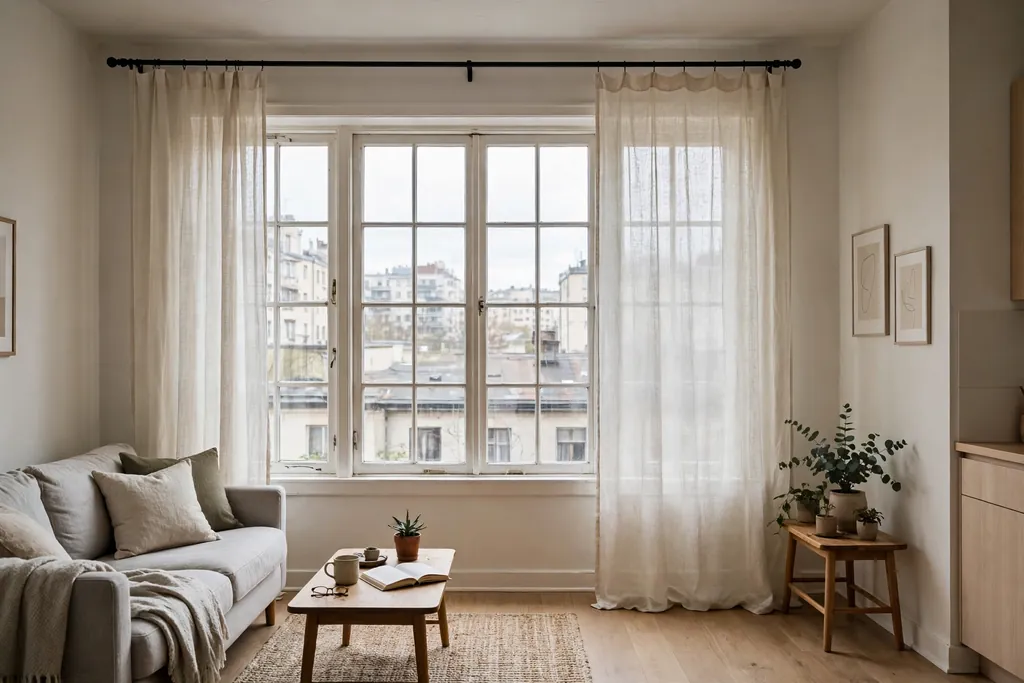
Hanging a curtain rod close to the ceiling and wider than the window frame makes a small window look taller and wider, and it lets more daylight in when the curtains are open. Choose a light, washable fabric that filters light rather than heavy drapes, which can overwhelm a small room and collect dust. A rod that extends past the frame on each side means the curtain panels stack on the wall, not over the glass.
Use a tension rod inside the frame if drilling is not allowed, or adhesive rod holders rated for the curtain weight. Hem or clip curtains so they just clear the floor or the radiator, and check that they do not block heaters or vents. One pair per window, in the same fabric across the flat, looks more polished than a different curtain in every room.
10. Swap the Coffee Table for a Storage Ottoman
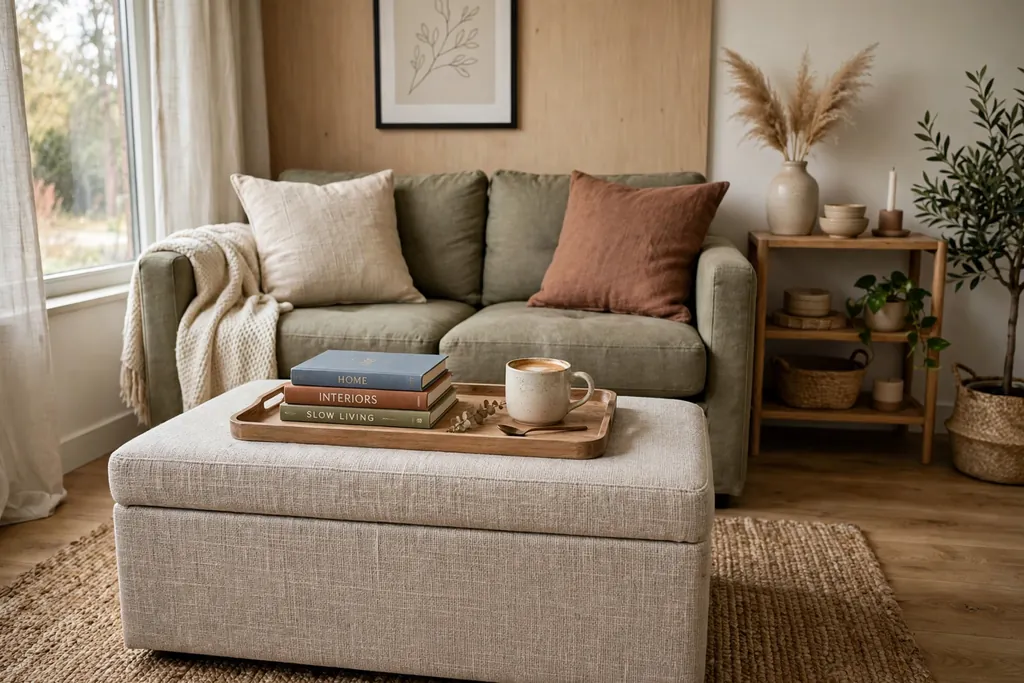
A storage ottoman gives you a footrest, a coffee table, and a hiding place for blankets, chargers, and board games. Choose a firm topped ottoman so mugs and books sit steady, or add a tray on top of a soft one to create a stable surface. The tray also corrals remotes and coasters, so the ottoman never looks like a dumping ground.
Size matters: the ottoman should be roughly two thirds the length of your sofa and low enough to put feet up comfortably. Inside, use one small pouch for chargers so cables do not tangle with blankets. When guests stay over, the ottoman doubles as extra seating, which is handy in a flat with no spare chair.
11. Float a Bedside Shelf Instead of a Nightstand
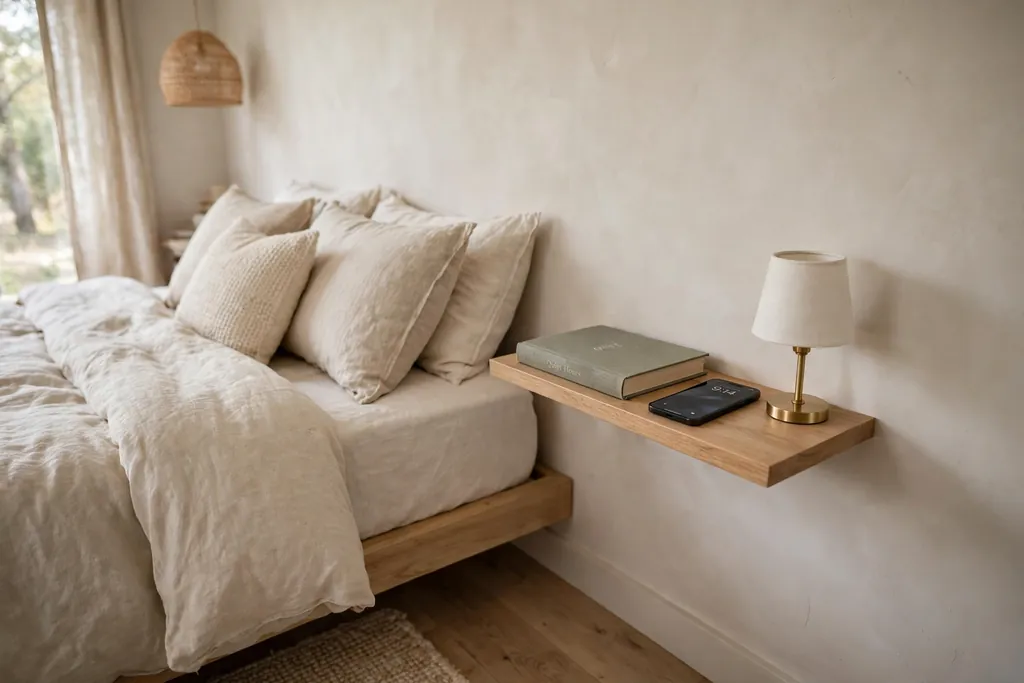
A small floating shelf beside the bed holds a phone, a book, and a glass of water without taking up floor space. This matters in a bedroom where a nightstand would block a door, a radiator, or a closet. Mount the shelf at mattress height or just above, and add a small clip on light or a wall mounted lamp so you do not need a table lamp as well.
Keep the shelf to three or four items at most, and put chargers in a small dish so cables stay tidy. If drilling is not allowed, a bedside caddy that hangs over the mattress edge or a narrow rolling cart beside the bed gives a similar result. The goal is a clear floor for laundry baskets and bags, which pile up fast in student rooms.
12. Tame a Shared Closet With Labeled Bins
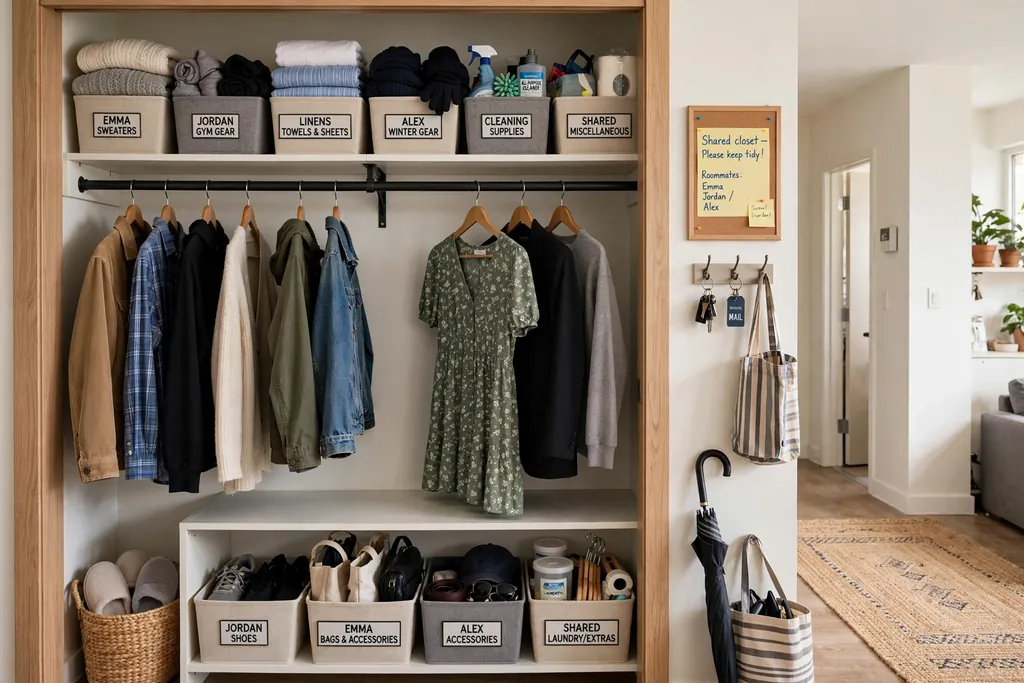
Shared closets fail when everything is tossed on one shelf and nobody knows what belongs to whom. Give each person a labeled bin or a color coded box for accessories, chargers, and seasonal items, and keep shared items, such as cleaning supplies, in one clearly marked bin. Stack bins so labels face out, and put the most used bin at hand height.
Measure the closet before buying bins, and leave one empty bin for donations or items waiting to go home. A hanging shelf organizer works well for folded clothes in a closet with no drawers. Agree on a quick reset once a week, because even the best bin system drifts if nobody returns items to the right box.
13. Make a Small Dining Nook With a Round Table
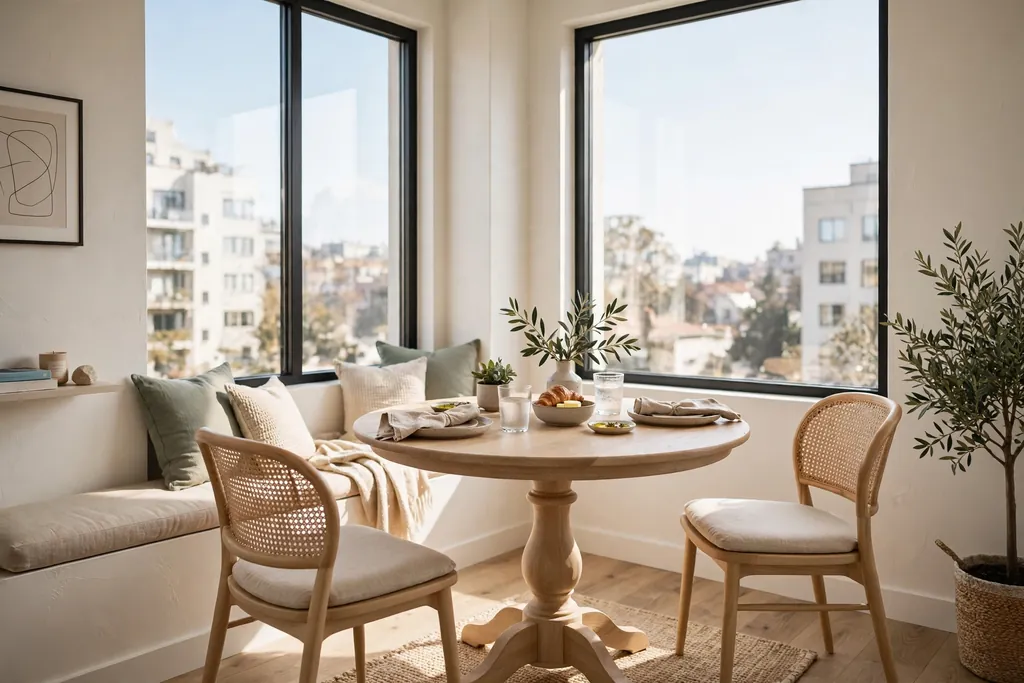
A round pedestal table fits a dining nook better than a rectangular table, because there are no corners to bump into and chairs tuck in neatly when not in use. Place it in a bright corner near the kitchen, add two chairs and a small bench if space allows, and keep the centerpiece low so people can talk across the table. A washable runner protects the surface during study sessions and meals alike.
For table styling that stays usable day to day, see these ideas for everyday dining table decor. In a studio, the same table can serve as a second study spot, but keep dining items in a nearby basket so the table can switch jobs in a minute. A pendant light or a clip on lamp above the table marks the nook as its own zone.
14. Lean a Floor Mirror Opposite the Window
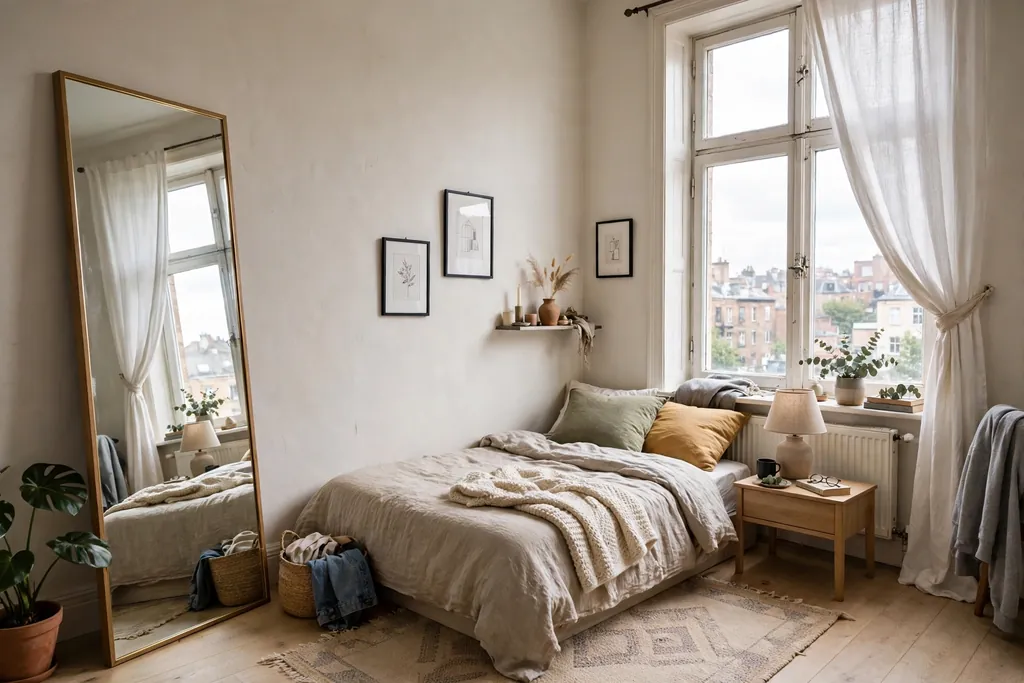
A leaning floor mirror opposite or beside a window bounces daylight across a dark room and makes a narrow bedroom feel wider. Choose a mirror tall enough to reflect the window and part of the room, not just the ceiling, and secure the top to the wall with a strap or hook if the manufacturer recommends it. A thin frame in black, wood, or gold keeps the mirror from dominating the wall.
Place the mirror where it reflects something pleasant, such as plants or a tidy shelf, rather than a pile of laundry. In a shared flat, a mirror by the door also works as a last check before leaving, which frees up bathroom time in the morning. Keep the glass clean, since smudges show up fast when a mirror catches direct light.
15. Set Up a Dedicated Study Corner
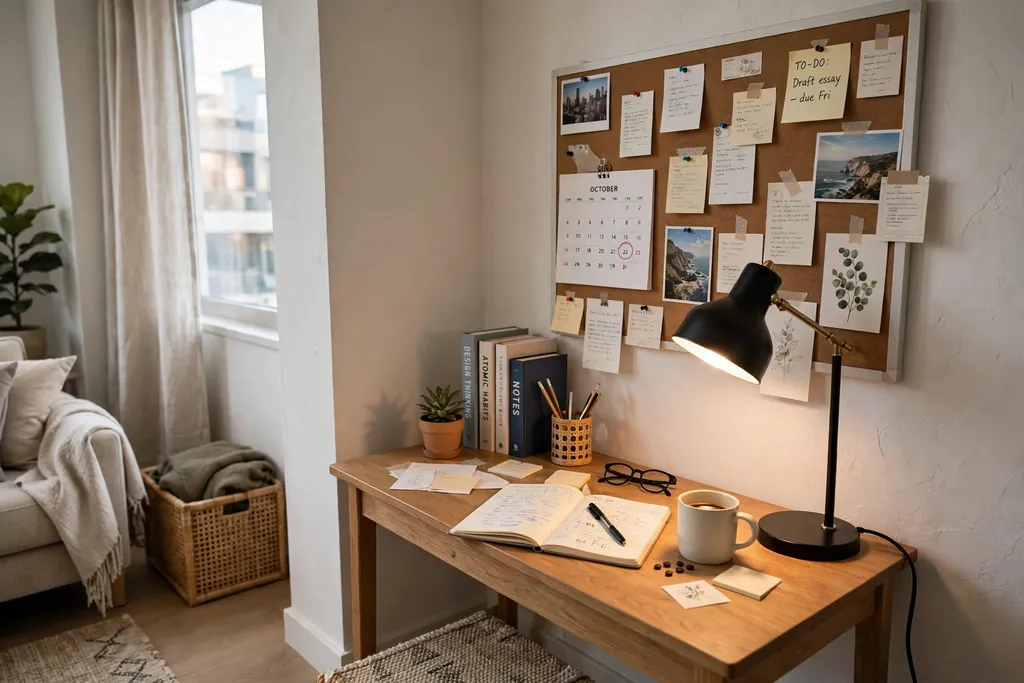
A study corner works best when it is used for study only, even if it is just a chair, a small table, and a lamp in a corner. Face the chair toward a wall or window rather than toward the bed or television, keep textbooks and chargers in one tray or shelf, and use a task lamp with a warm white bulb for evening work. A small pinboard or whiteboard above the desk holds deadlines and class times where you will actually see them.
Keep the corner clear at the end of each study session, so the next session starts without a tidy up. Noise cancelling headphones, a water bottle, and a phone stand belong here, while snacks and gaming gear belong elsewhere. When the corner is small, a consistent routine matters more than a large desk.
16. Hide an Open Closet Behind a Curtain
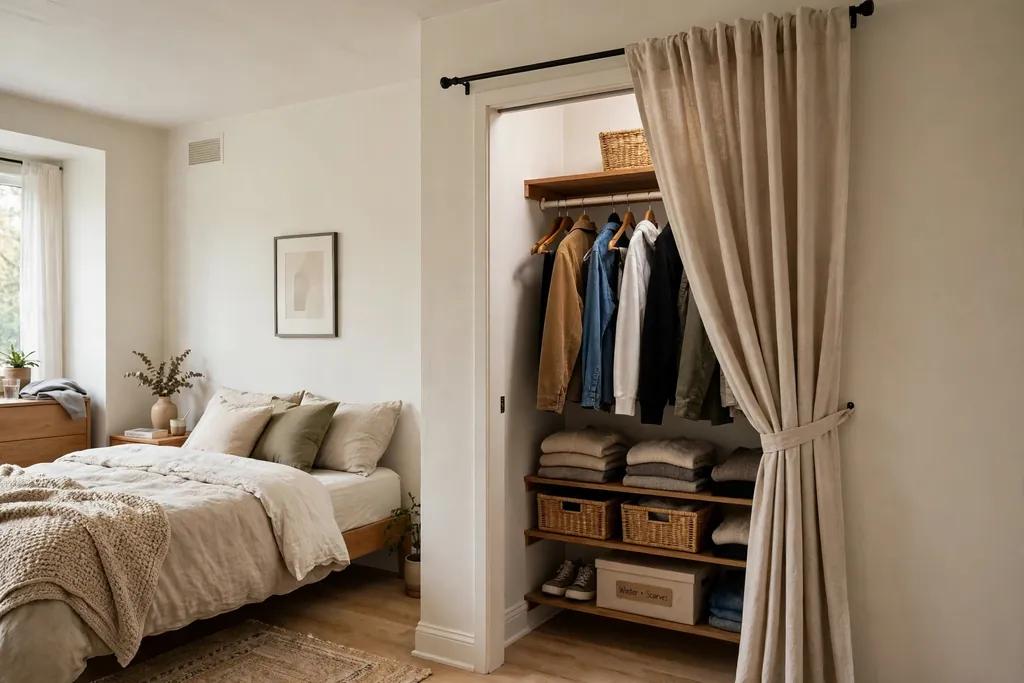
Many college apartments have closets with no doors, or doors that were removed to save space. A curtain on a tension rod inside the closet frame hides visual clutter instantly, costs little, and can be changed each year. Choose a plain fabric that matches your bedding or curtains, hang it so it just covers the opening, and keep the rod inside the frame so the curtain does not catch on passing bags.
This is a cover, not a fix, so keep the closet itself organized with bins and hanging shelves, or the curtain will bulge and snag. A curtain also softens a room acoustically and adds a layer of texture that bare closet doors lack. If the closet holds a washer or a water heater, check ventilation and access rules before covering it.
17. Grow Plants on the Windowsill and in a Hanging Planter
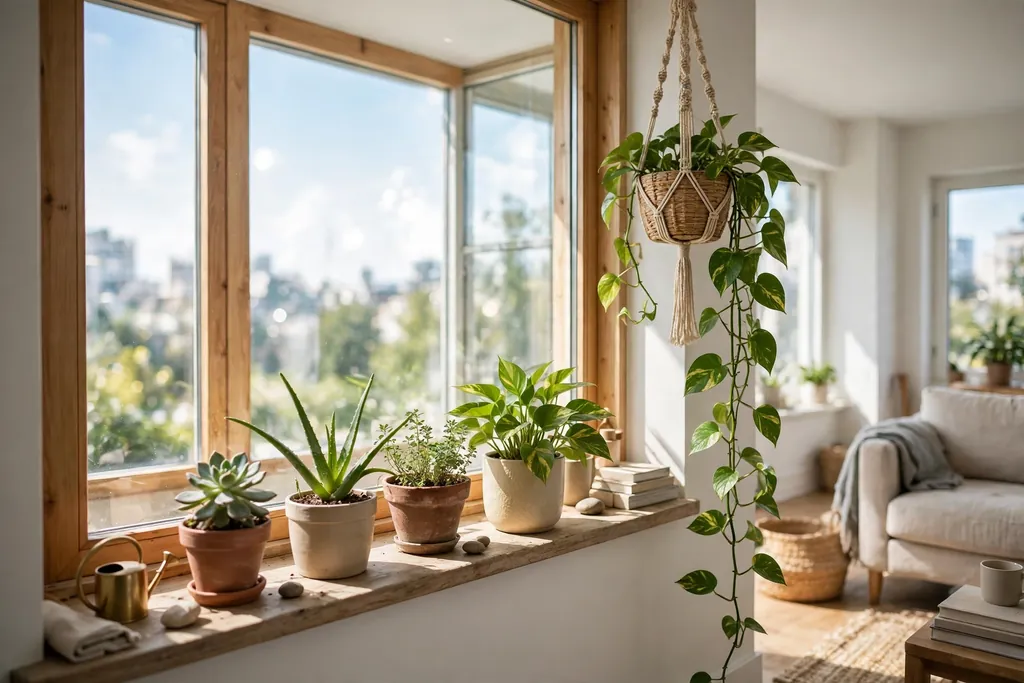
Plants make a rental feel lived in, and a windowsill plus one hanging planter give you greenery without losing floor or desk space. Start with forgiving plants suited to your light, such as pothos, spider plants, or snake plants, and use pots with drainage holes and saucers to protect sills and floors. Group three pots of different heights on the sill, and hang one trailing plant near, but not over, a walkway or a bed.
Water only when the top of the soil feels dry, and check plant safety if pets visit the flat. A hanging planter also draws the eye upward, which helps a low ceiling room feel taller. If you travel home often, choose plants that cope with a missed watering, and ask a flatmate to check them during breaks.
18. Use a Garment Rack as an Open Wardrobe
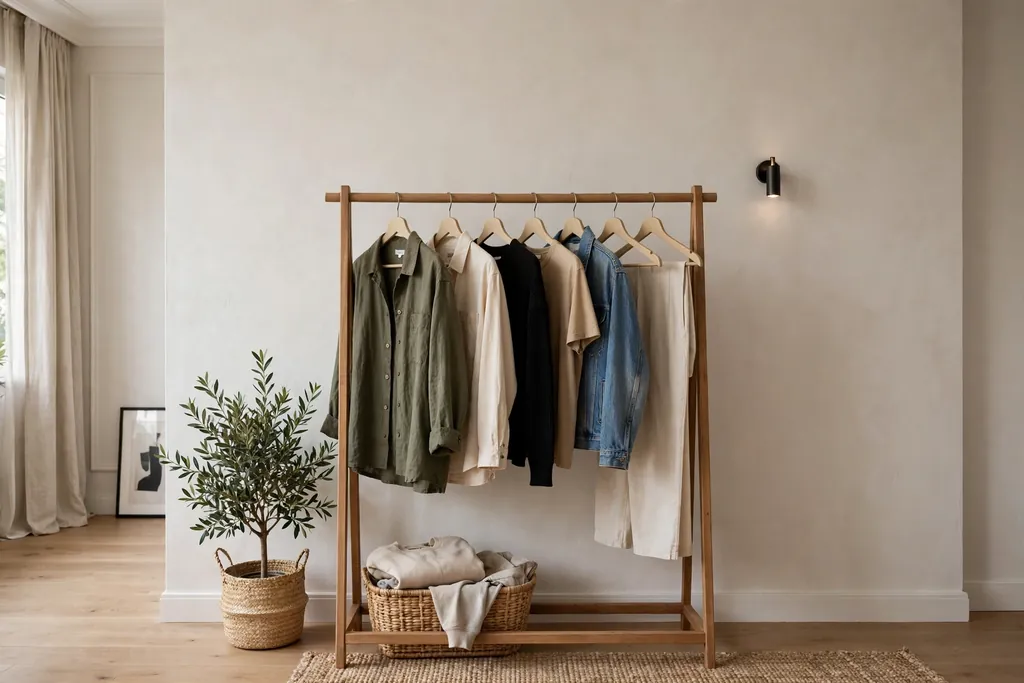
A garment rack turns clothes into a display and frees a cramped closet for shoes, bags, and bins. Choose a sturdy rack with a lower shelf, hang your most worn outfits and one or two favorite jackets at the front, and keep the rest folded or boxed. Matching hangers, in one color and material, make a mixed wardrobe look tidy at a glance.
Edit ruthlessly: an open rack only looks good when it is not overloaded. Rotate seasonal clothes in and out, and keep a small basket on the lower shelf for shoes or a laundry bag. Place the rack against a wall, not in the middle of the room, and leave space beside it so clothes do not brush against bedding or curtains.
19. Layer Bedding for a Bed That Looks Made
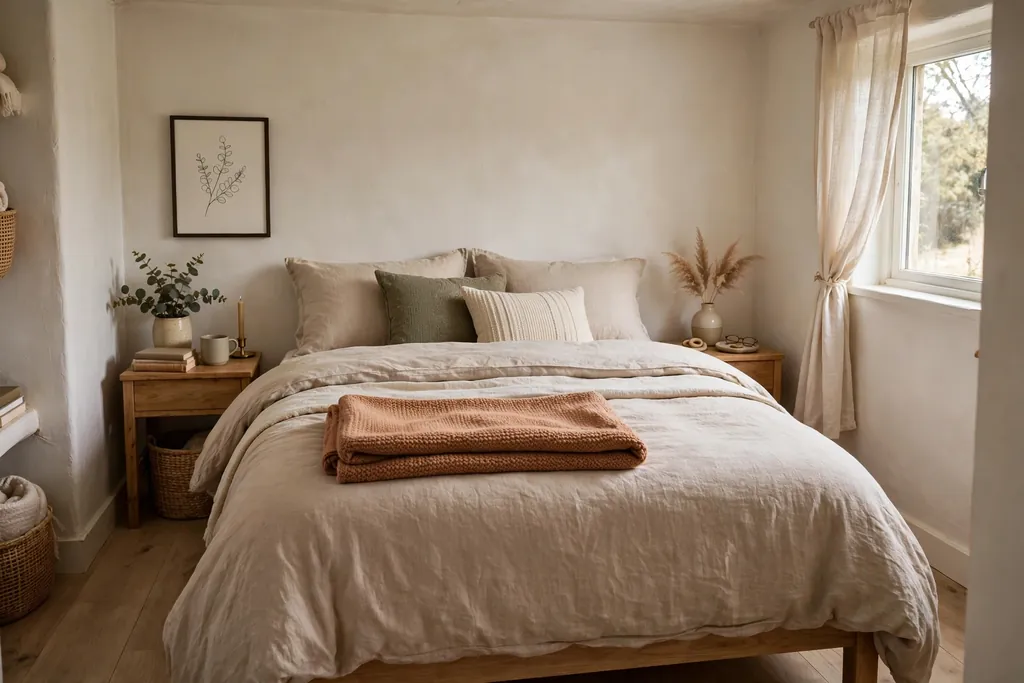
A made bed anchors a small bedroom, and layering is the fastest way to make it look intentional. Start with washed sheets, add a light duvet in a solid color, fold a throw across the foot, and finish with two sleeping pillows plus one or two cushion covers you actually like. Washable fabrics matter here, since student bedding gets heavy use and frequent washes.
Choose one calm color for the duvet and let the throw or cushions carry the pattern, so the bed does not clash with posters or rugs. Tuck the top sheet and duvet at the foot for a tidy edge, and shake cushions daily rather than remaking the whole bed. A bed that looks made also makes the rest of the room look tidier, even when a desk chair holds a jacket or two.
20. Create an Entry Drop Zone by the Door
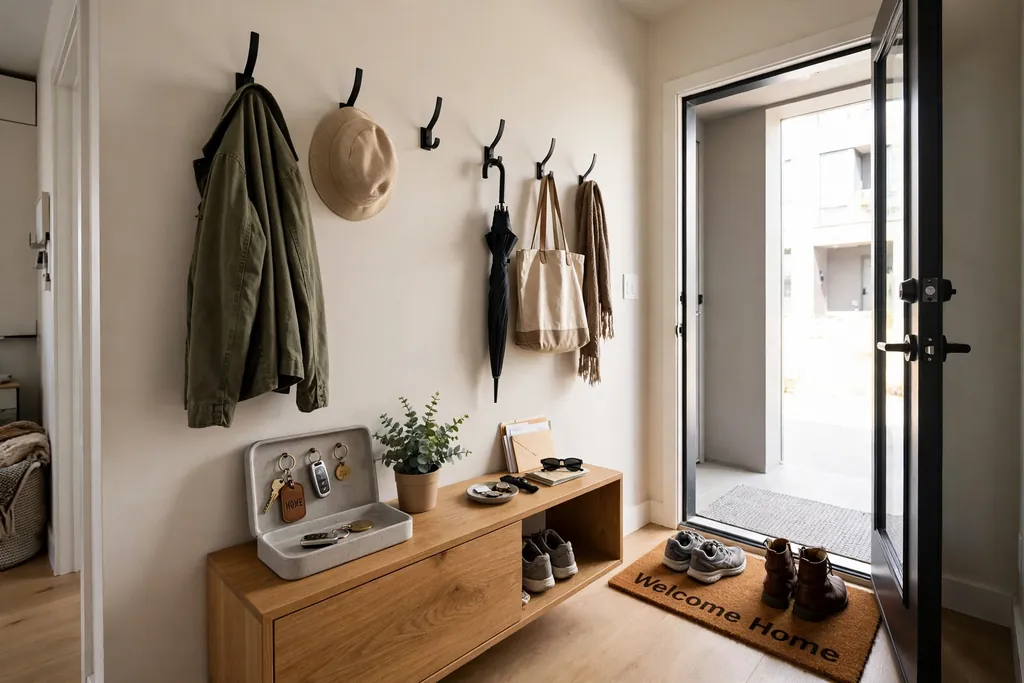
An entry drop zone stops bags, keys, and shoes from spreading across the whole flat. By the front door, fit a row of adhesive or screw in hooks at staggered heights, a small tray or dish for keys and cards, and a mat or boot tray for shoes. If there is no hallway, a narrow bench or a wall mounted shelf beside the door does the same job in less space.
Give each flatmate one hook and a small section of the tray, and keep the zone to what fits there. When the hooks are full, something needs to go to its proper home. A mirror or a small pinboard above the tray also gives you a spot for reminders, parcel notes, and outgoing mail, so nothing important gets lost in a coat pocket.
21. Roll Seasonal Clothes Under the Bed
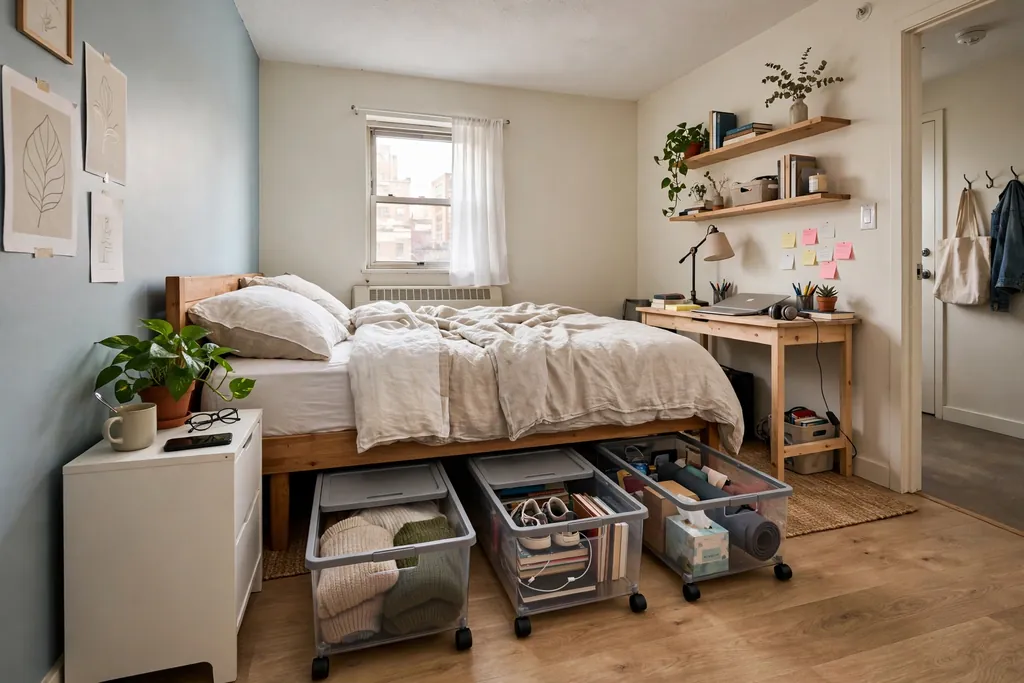
Under bed rolling bins are the easiest storage to use, because you can pull them out, find what you need, and push them back without lifting anything heavy. Use flat, lidded bins on wheels for out of season clothes, extra bedding, and shoes, and label the short end that faces out. Vacuum bags inside a bin can shrink bulky winter coats, but leave room for air so zips and seams do not strain.
Measure the clearance under your bed frame, including any slats, before buying bins. Keep everyday clothes in the closet or dresser, and reserve under bed space for items you reach for monthly, not daily, or the bins will live permanently in the middle of the floor. Clean under the bed when you swap seasons, since dust gathers there fast.
22. Soften Overhead Light With Warm Lamps and Lanterns
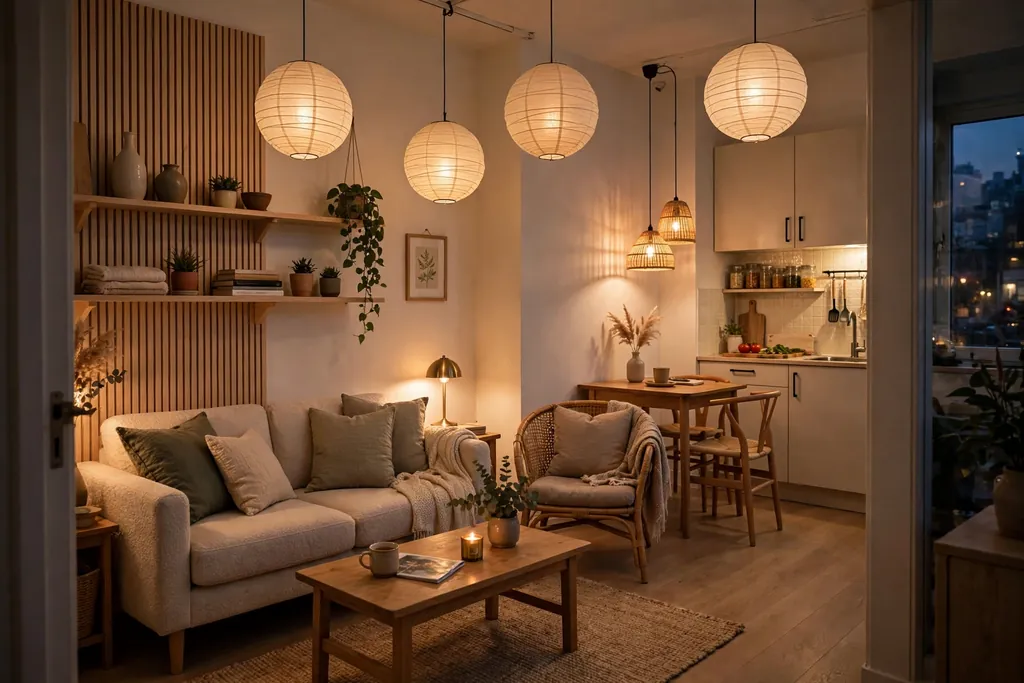
Harsh ceiling lights make a small apartment feel like a classroom, while warm lamps make the same room feel like home. Use a floor lamp in the living corner, a small table lamp on the desk or shelf, and a paper lantern or a string of warm white lights along a shelf or curtain rod for evening glow. Choose warm white bulbs, keep lights away from bedding and curtains, and use a power strip with a switch so you can turn a group of lamps off at once.
Battery fairy lights are useful where outlets are scarce, but check that they are rated for indoor use and turn them off when you leave. Layering light also helps at night: a bright task lamp for study, a soft lamp for relaxing, and no overhead light at all after dinner gives one room two very different moods without any building work.
23. Personalize With DIY Art and a Memory Board
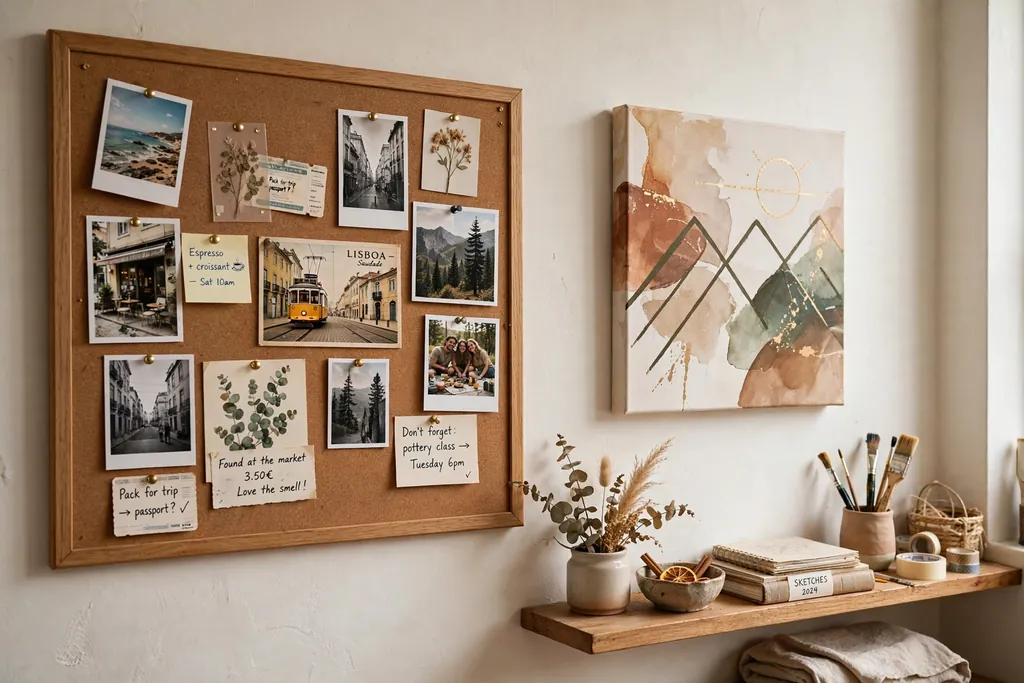
DIY art and a memory board give a rental personality that shop bought posters alone cannot. Paint or draw a simple abstract piece on canvas, print your own photos in a consistent size, or frame a piece of fabric you like. Beside it, pin ticket stubs, postcards, photos, and notes to a cork board or a magnetic board, arranged in loose rows with space between items so the board reads as a collection, not a pile.
This differs from a framed gallery wall because it is meant to change: swap items in and out as terms pass, and keep the board to one wall so the room does not feel covered in paper. Use pins or magnets rather than tape on painted walls, and keep anything valuable or irreplaceable in a frame or a folder instead. A memory board also makes a good gift wall for flatmates, with one section each.
Conclusion
A polished college apartment does not need matching furniture or a large budget. It needs a plan: zones for sleeping, studying, and eating, storage that closes or rolls away, renter friendly walls, and warm light in the evening. Start with the change that fixes your biggest daily annoyance, whether that is a cluttered closet, a dark corner, or a bed that takes over the room. Add one idea at a time, live with it for a week, and only then add the next, so each piece earns its place.
Save this list on Pinterest before your next move or room refresh, and work through it zone by zone: entry first, then sleep, then study, then living and dining. Small, reversible changes add up, and the result is a flat that feels calm to come home to, easy to study in, and simple to hand back at the end of the year.
FAQs
How can I decorate a college apartment without losing my deposit?
Use removable and non damaging methods first: adhesive hooks and strips rated for the weight, peel and stick wallpaper tested on a small area, tension rods, leaning mirrors, and freestanding furniture. Photograph the flat when you move in, keep packaging and instructions for anything you mount, and remove adhesive items slowly following the product guidance. Check your lease for rules on nails, paint, and wall mounting before you start, and ask your landlord in writing if you are unsure.
What is the best furniture for a small college apartment?
Choose pieces that do two jobs and move easily: a daybed, a storage ottoman, a rolling kitchen cart, a round pedestal table, and a garment rack. Measure doorways, stairwells, and lift access before buying, and prefer flat pack or secondhand pieces you can take apart for the next move. Avoid oversized sofas, heavy wardrobes, and single purpose items until you know how much floor space you truly have after a week of living there.
How do I make a shared college apartment look tidy?
Agree on zones and shared storage from the first week: one hook and one bin per person, a shared cleaning rota, and a rule that shared surfaces get cleared each evening. Use labeled bins in closets, a drop zone by the door, and closed storage for shared supplies. Keep personal items in bedrooms and shared items in living spaces, and do a short weekly reset together, which prevents small piles from becoming a flat wide problem.
How can I make a small apartment feel bigger?
Let in daylight, keep floors as clear as possible, and use light colors on large surfaces such as bedding, rugs, and curtains. Hang curtains high and wide, lean a mirror opposite a window, and choose low, leggy furniture that shows floor underneath. Use vertical storage on walls and doors, keep one clear walkway through each room, and limit large patterns to one or two accents, such as a rug or a throw, rather than every surface.
What lighting works best in a college apartment?
Layer warm light instead of relying on one harsh ceiling fitting. A task lamp for study, a floor or table lamp for relaxing, and a soft lantern or string lights for evenings cover most needs. Warm white bulbs feel calmer than cool white in bedrooms and living areas, while a brighter task lamp helps at a desk. Keep lights away from bedding and curtains, switch lights off when you leave, and check that any string lights are rated for indoor use.
How do I decorate a college apartment on a tight budget?
Start with what you already own, then add secondhand and DIY pieces one zone at a time. Thrift shops, campus buy and sell groups, and flatmate swaps are good sources for frames, rugs, lamps, and tables. Paint or cover a canvas yourself, print photos at home or at a library, and use plants propagated from cuttings. Spend first on storage and lighting, which change how a room feels most, and leave purely decorative items until the practical pieces are in place.