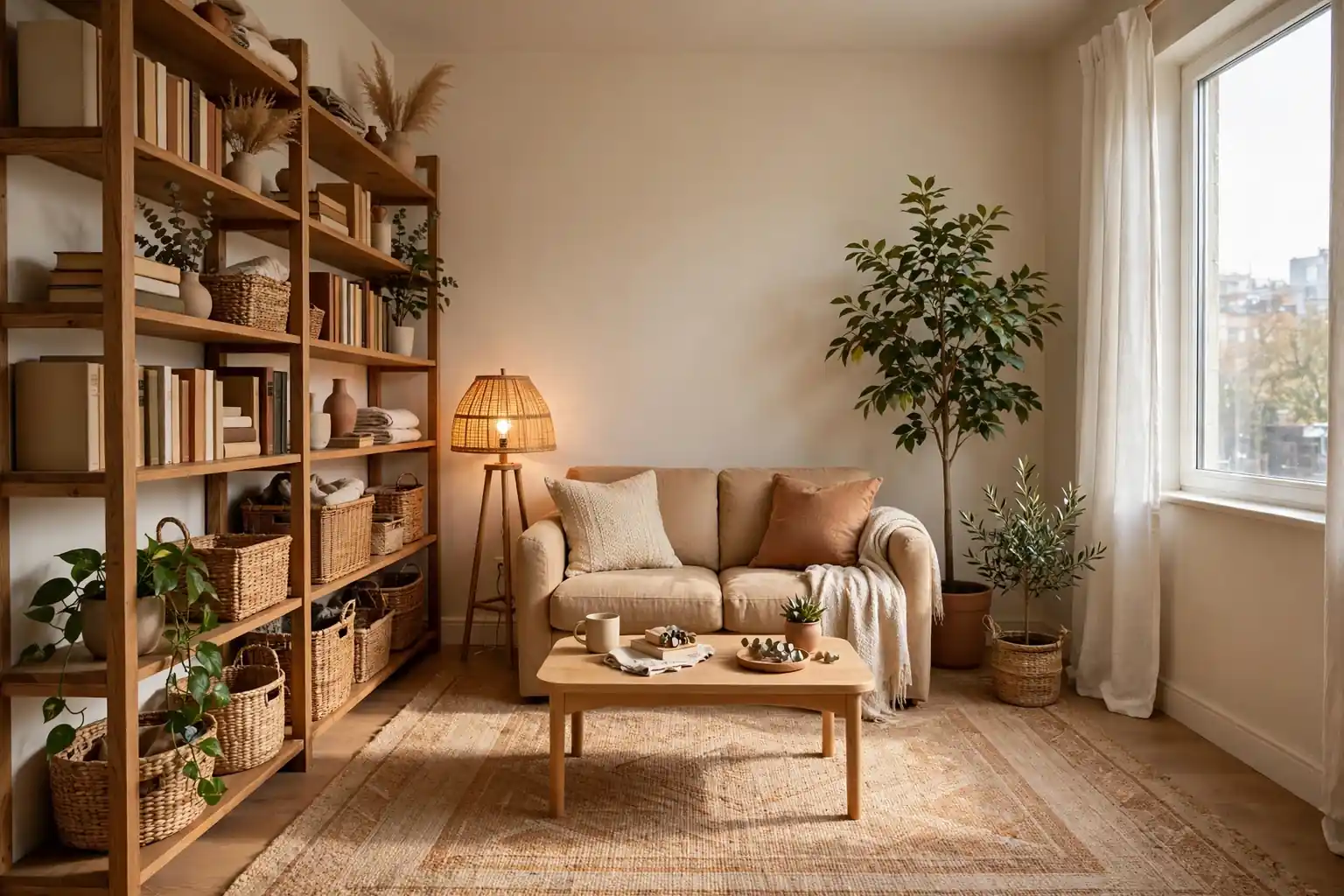
A small apartment living room has to do a lot in a few square feet. It is where you relax after work, welcome friends, read, and sometimes answer emails, and it has to feel cozy through all of it. The ideas below focus on choices that earn their floor space: furniture sized to the room, storage that uses the walls, light at more than one level, and soft layers that make the room inviting. Start with the layout, add storage where it helps most, and finish with the textures and plants that make the room feel like home.
Key Takeaways
- Measure first, then choose furniture that fits the room and leaves clear walking routes.
- Let one rug and a floated seating group define the living zone, even in a studio.
- Use walls for storage and light for warmth: tall shelves, mirrors, and lamps at three levels.
- Pick furniture that does two jobs, such as a storage ottoman or a fold-down desk.
- Finish with layered textiles and plants at different heights so the room feels soft and lived in.
1. Float the Sofa and Let a Rug Define the Zone
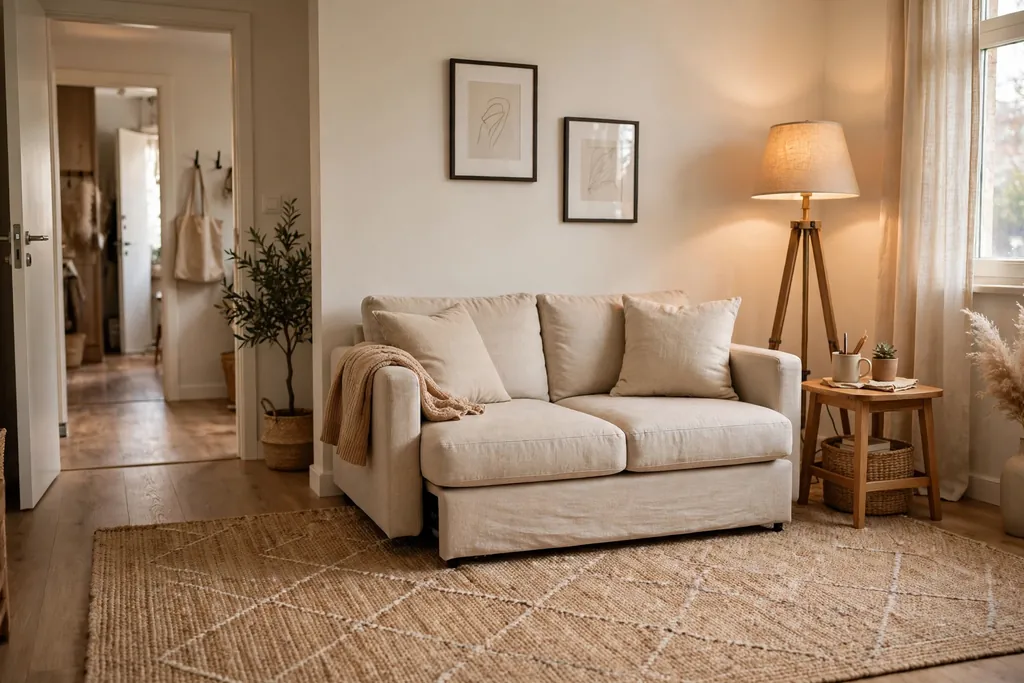
Pushing every piece of furniture against the walls is a common instinct in a small apartment, but it often leaves an awkward empty middle and a room that feels like a corridor. Try pulling the sofa a few inches off the wall and setting it on a rug that is large enough for the front legs of the seating to rest on it. The rug marks the living zone, the gap behind the sofa gives the room breathing space, and a slim console or shelf behind the sofa can hold books or a lamp. Tape the footprint on the floor before you move heavy pieces, and keep the main walking route clear. The measuring and layout advice in these small living room layout ideas works well alongside this approach.
2. Start With a Warm Neutral Base, Then Layer Texture
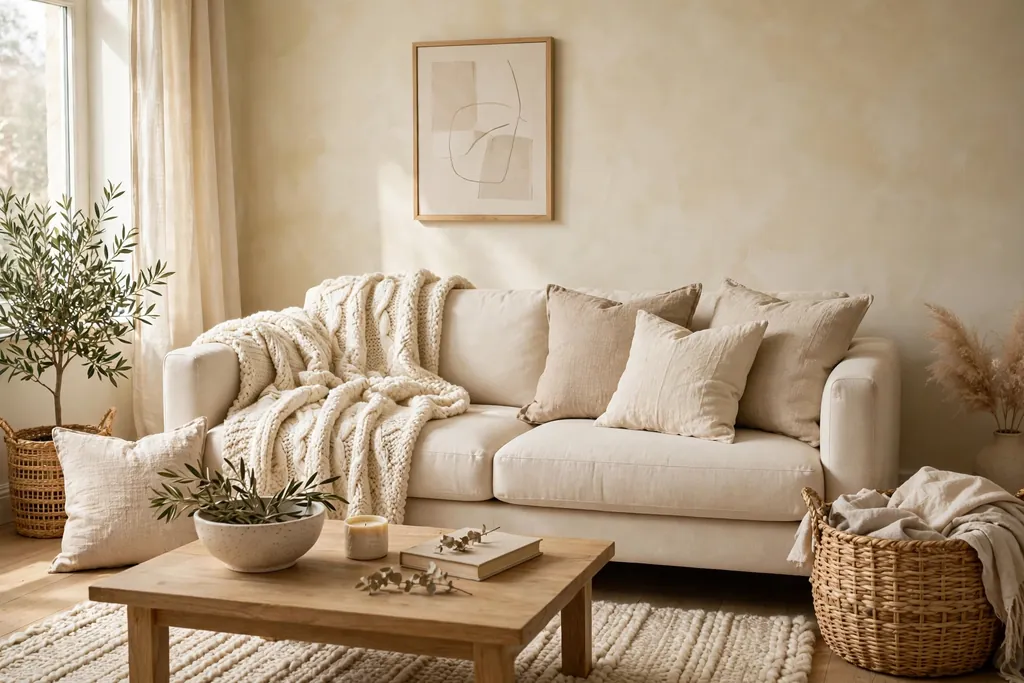
A calm base makes a small room feel settled rather than busy. Warm white, soft oatmeal, or pale greige on the walls and the largest furniture gives you a background that suits almost any accent you add later. The coziness comes from texture rather than from adding more color: a nubby throw over a smooth sofa, a woven basket beside a plain side table, linen cushions against cotton ones. Limit strong color to two or three accents, such as a cushion, a piece of art, and a plant pot, and repeat those accents in more than one spot so the room feels connected. If you rent and cannot paint, the same effect comes from a large rug, curtains, and a sofa cover in warm neutrals.
3. Choose Furniture That Does Two Jobs
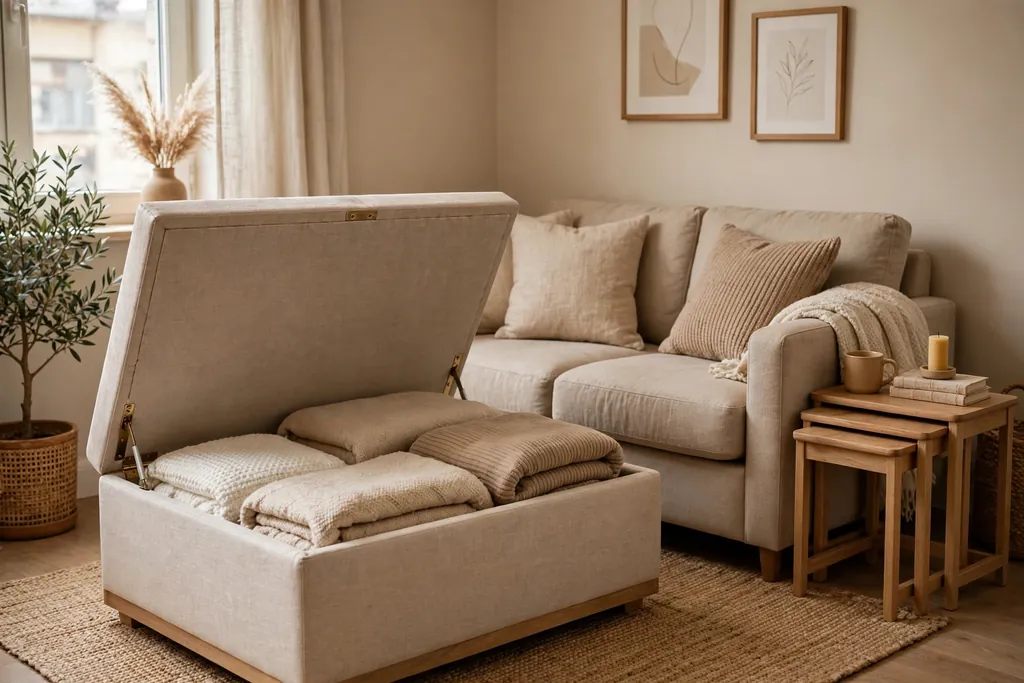
In a small apartment, every large piece should earn its place twice. A storage ottoman holds blankets and serves as a coffee table or extra seat. A sleeper sofa or a daybed lets the living room host an overnight guest without a spare room. Nesting tables tuck away when the room is quiet and spread out when friends visit. When you compare options, check the second job as carefully as the first: open the ottoman lid fully, test the sleeper mechanism, and make sure nesting tables are stable on their own. One piece doing two jobs well beats two pieces that each do one job poorly and crowd the floor.
4. Take Storage Up the Wall With One Tall Shelf Run
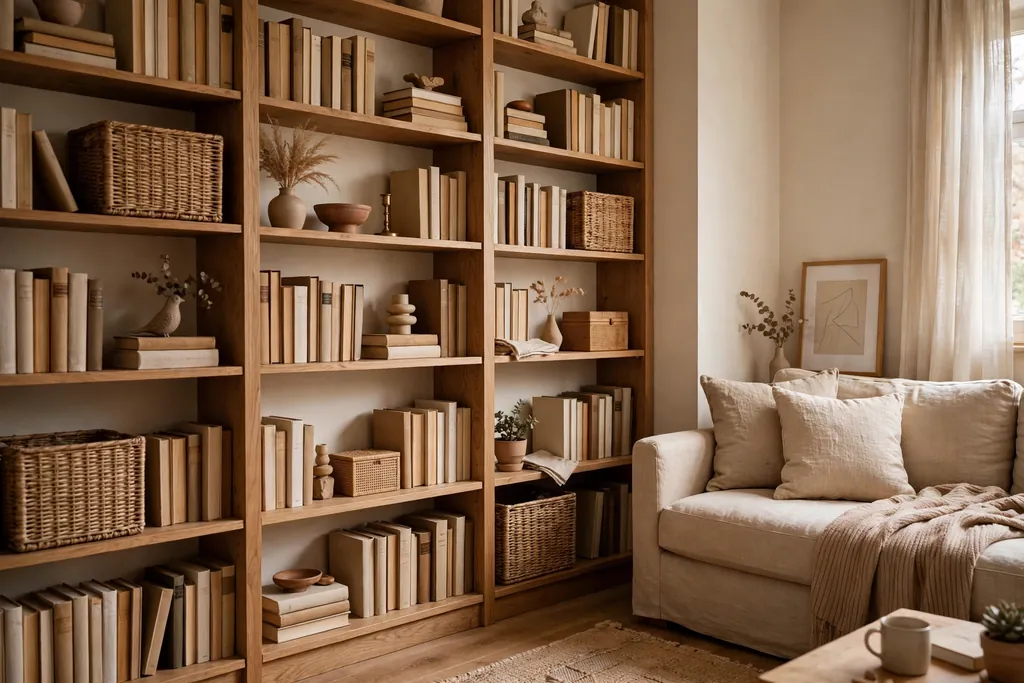
Floor space is scarce in an apartment, but wall space above head height is often empty. One tall bookcase or a run of shelves on a single wall can hold books, media, and everyday items without spreading storage across the room. Keep heavy items low, everyday items at hand height, and lighter display pieces up high, and anchor tall furniture to the wall following the maker’s instructions. Leave some open space on each shelf so the wall reads as storage with breathing room rather than a packed warehouse. The grouping method in this guide on how to style open shelves helps a working shelf stay tidy: start with the largest pieces, vary the shapes, and leave visible gaps.
5. Bounce Daylight With a Mirror and a Glass-Topped Table
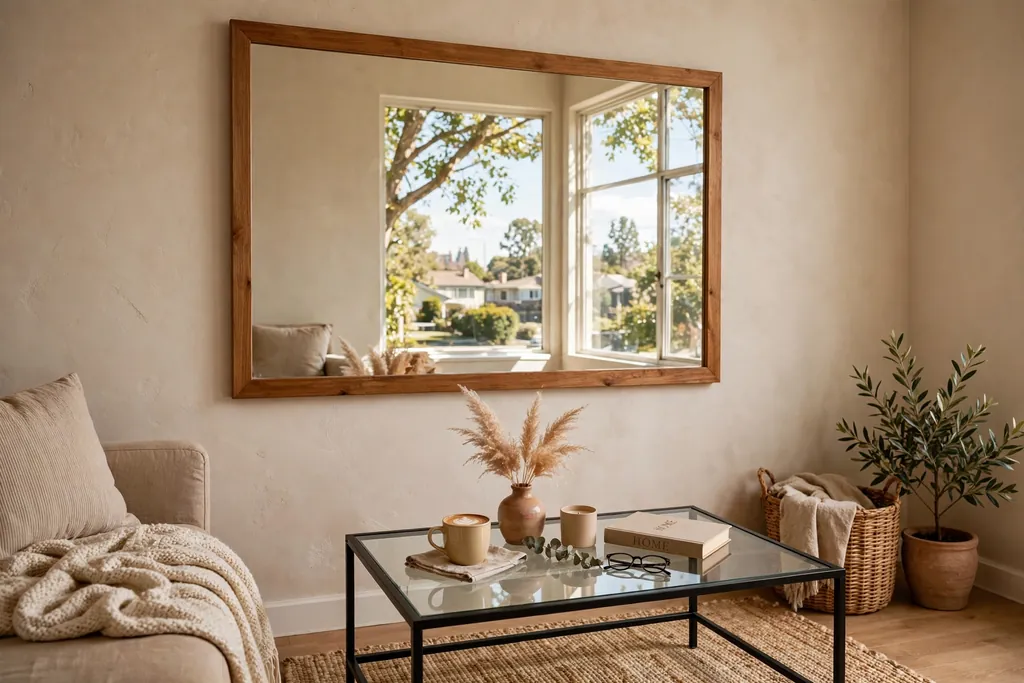
A mirror placed opposite or beside a window reflects daylight deeper into the room and gives the eye a second view of the space, which makes a small room feel wider. Choose a mirror large enough to reflect something pleasant, such as the window view or a plant, rather than a blank wall or clutter. Pair it with see-through surfaces where you can: a glass-topped coffee table or acrylic side table shows the rug and floor beneath it, so the center of the room looks less solid. Fix mirrors with hardware suited to their weight, and check for glare at different times of day before settling on a final position.
6. Carve Out a Reading Corner by the Window
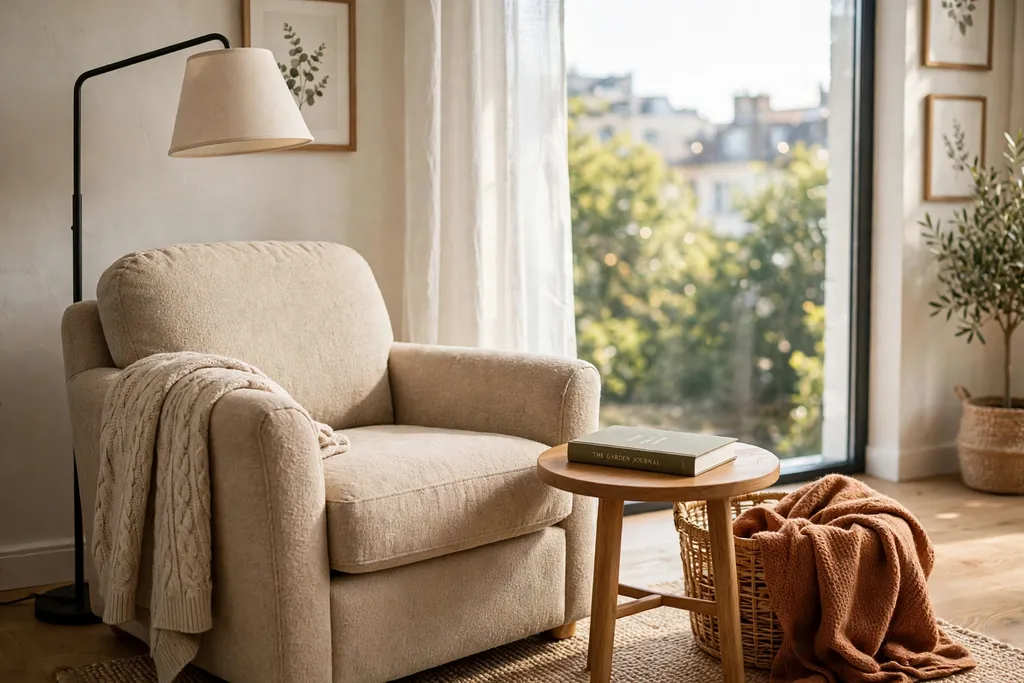
A reading corner needs only three things: a comfortable chair, light aimed at the page, and a surface for a drink and a book. The window end of a living room is a natural spot, since it offers daylight and a view during the day. Angle the chair slightly toward the room so the corner feels part of the living space rather than cut off from it, and add a floor lamp behind the chair shoulder for evening reading. A small basket beside the chair holds the current book and a throw. The seating guidance in these fireplace seating ideas applies here too: give each regular seat its own light and a reachable surface instead of filling every gap with furniture.
7. Divide a Studio Without Blocking the Light
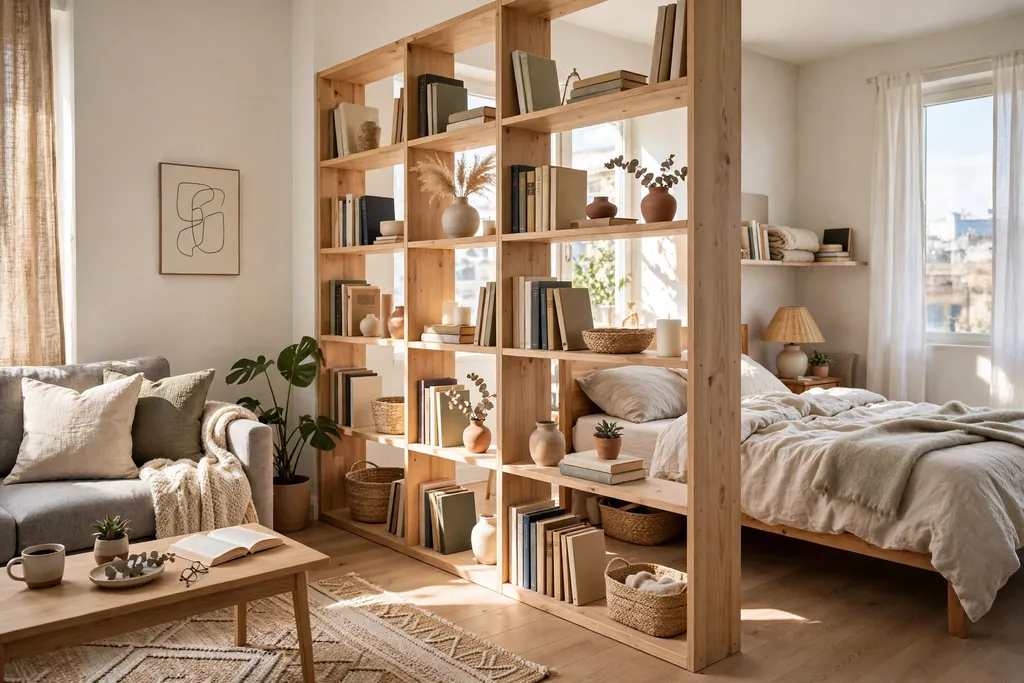
In a studio apartment, the living room and sleeping area share one open space, and a solid divider would cut the light and make both areas feel smaller. An open bookcase used as a room divider marks the boundary while letting light and air pass through, and it adds storage on both sides. A curtain hung from a ceiling track is a softer option that can be drawn for privacy and pulled back during the day. Whichever you choose, keep the divider low enough or open enough that daylight still reaches the far side of the room, and leave a clear walking route around at least one end so the division never feels like a wall.
8. Add a Fold-Down Desk for a Work Corner That Closes Away
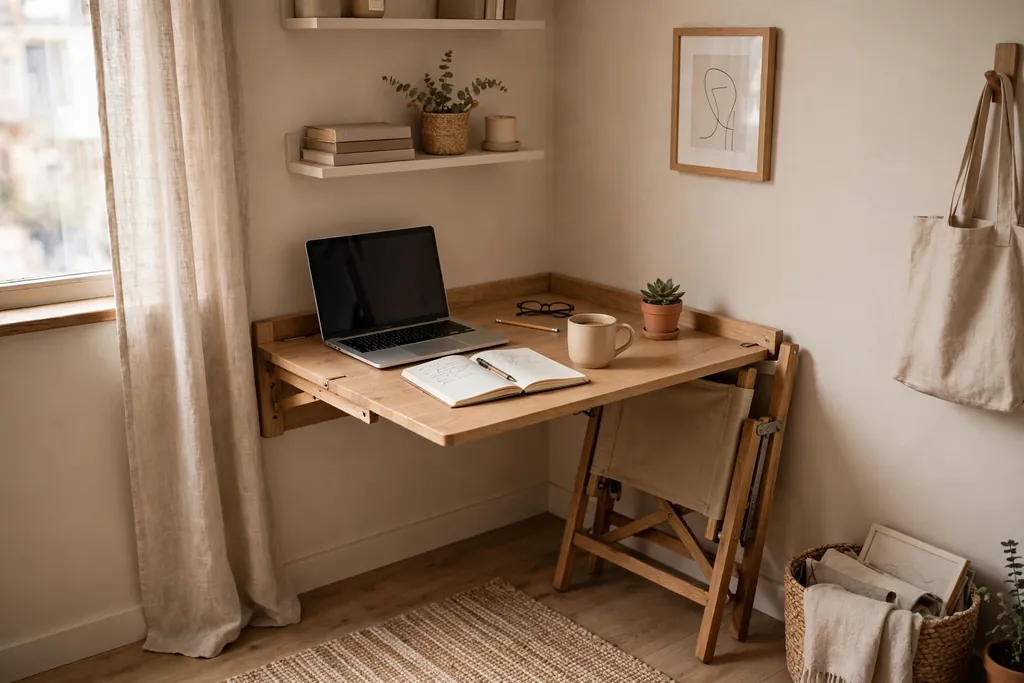
Working from the living room is easier when the work setup can disappear at the end of the day. A wall-mounted fold-down desk gives you a proper work surface that folds flat against the wall when you finish, leaving the room free for relaxing in the evening. Mount it at a comfortable writing height, fix it into wall studs or with fixings suited to your wall type, and keep a small shelf or pocket above it for a laptop, notebook, and charger. A chair that slides fully under a nearby table, or a folding chair hung on a hook, completes the corner without a permanent desk footprint. Close the desk at night as a small ritual that separates work time from rest time.
9. Layer Light at Three Levels Instead of One Ceiling Light
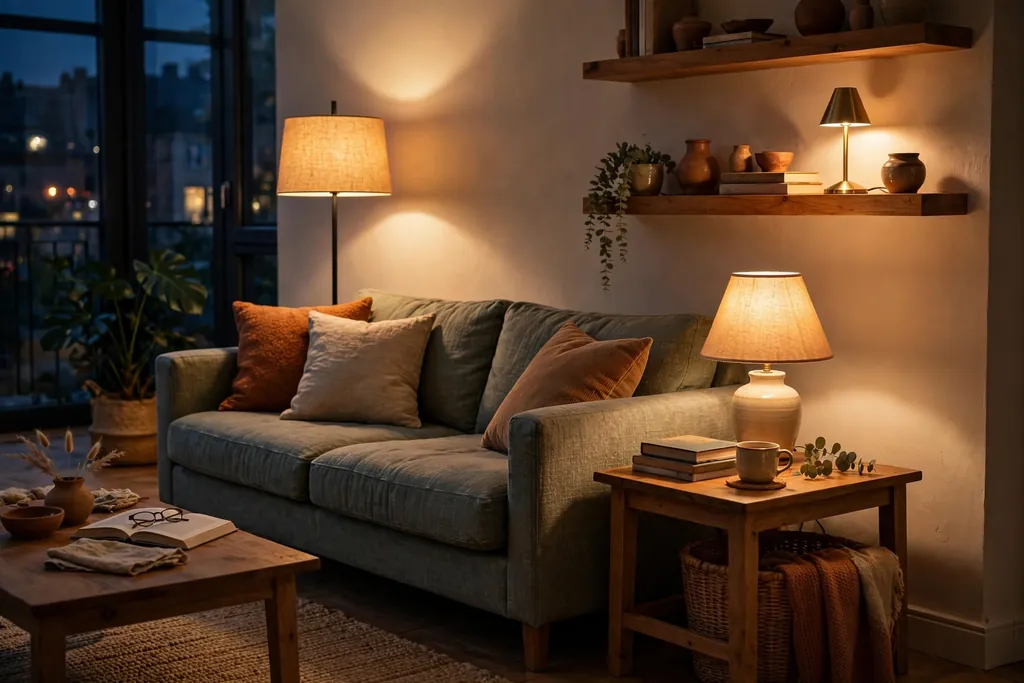
A single ceiling light flattens a small room and makes it feel harsh in the evening. Three levels of light work better: ambient light from a ceiling fixture or a tall floor lamp, task light from a table lamp or reading lamp where you sit, and a low glow from a small lamp on a shelf or a candle-style light on a side table. Put the brightest light where you need to see, such as beside the reading chair, and keep the overall level soft in the evening. Dimmable bulbs or smart plugs let you shift from a bright daytime room to a calm evening one without rewiring anything, which matters in a rental where electrical changes are limited.
10. Use a Picture Ledge for Art You Can Rotate
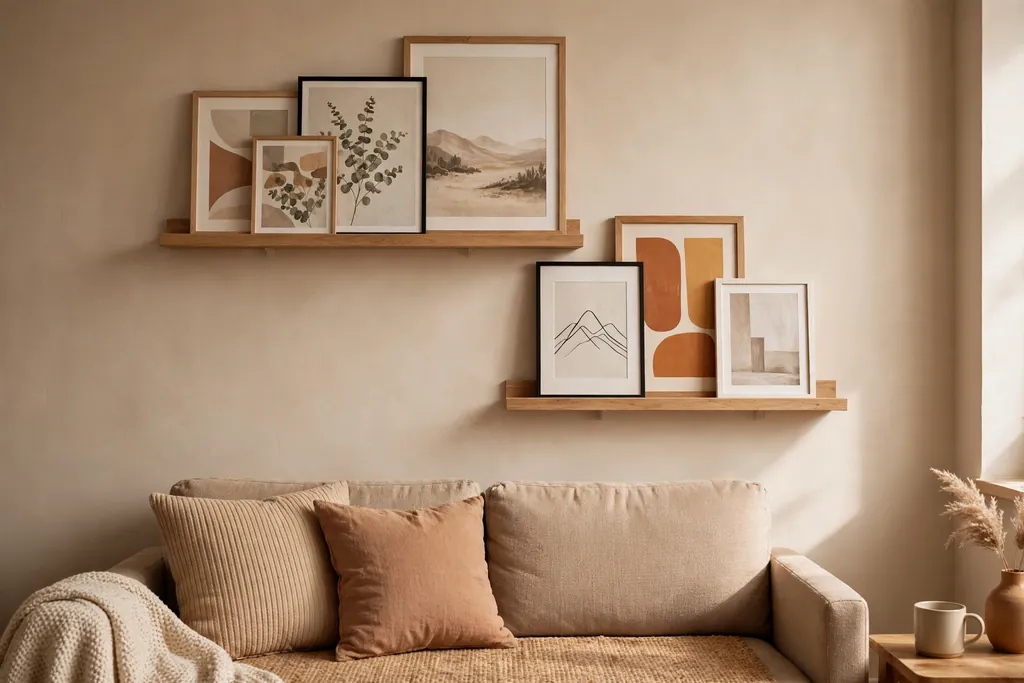
A narrow picture ledge lets you lean framed prints and small art against the wall instead of hanging each piece separately, which suits renters who want to limit holes and anyone who likes to change the display. Hang one or two ledges at eye level, overlap frames of different sizes, and lean the largest frame at the back. Rotating the art with the seasons or when you find a new print keeps the room feeling fresh without buying new furniture. Keep the ledge clear of the walkway and secure the frames so they cannot slide off, and leave one end of the ledge empty so the arrangement looks intentional rather than crowded.
11. Layer Rugs and Soft Textiles for Warmth
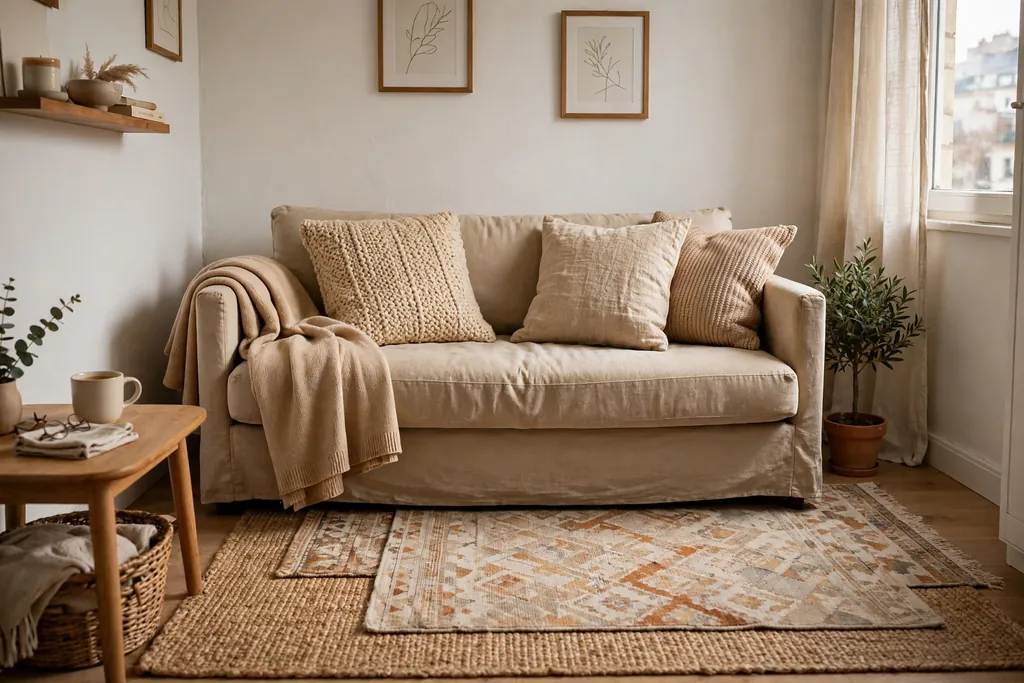
Hard apartment floors can make a living room feel cold and echoey, and rugs plus textiles are the fastest way to soften them. Start with a flatweave rug large enough to anchor the seating group, then layer a smaller, softer rug on top at an angle if the floor still feels bare. Add a throw folded over one sofa arm and cushions in two textures, such as linen and knit, rather than matching sets. Choose washable covers where you can, since apartment living rooms see daily use, and shake out or vacuum the layers regularly so they stay fresh. The goal is a room that invites you to sit down, not a display that asks you to keep off the furniture.
12. Grow Plants at Three Heights
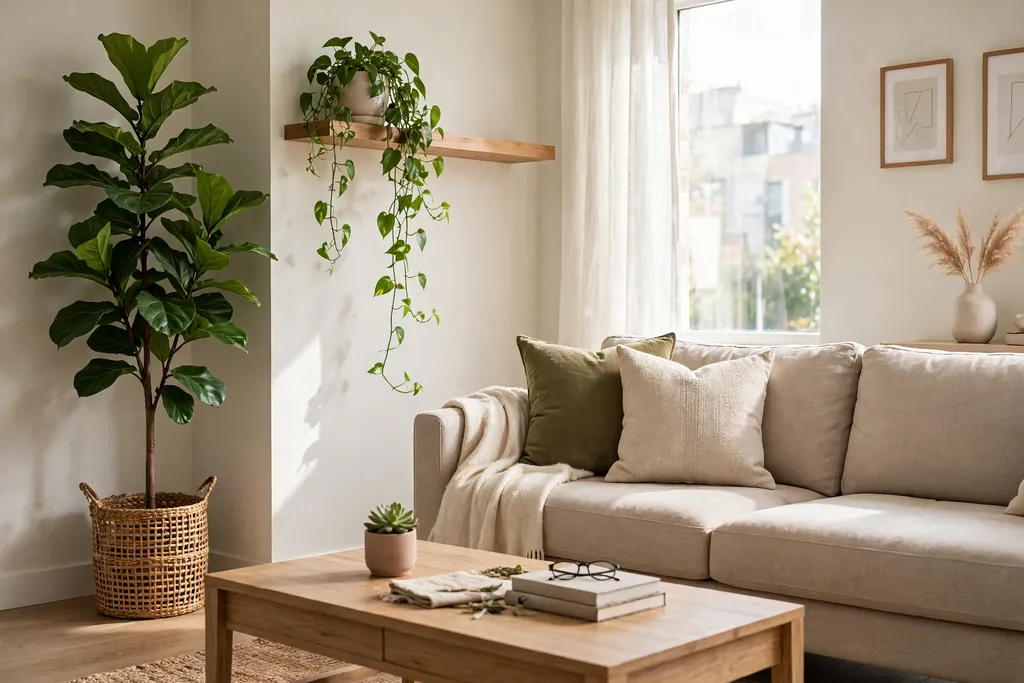
Plants bring life to a small living room, and placing them at three heights keeps them from crowding a single surface. A tall floor plant fills an empty corner, trailing plants on a shelf soften the storage wall, and a small potted plant on the coffee table or windowsill adds green at eye level when you sit down. Match each plant to the light it will actually get: bright direct light by a south-facing window suits different plants than a dim north-facing corner, so check the plant label before buying. Group plants that need similar watering together, use saucers under pots on wood floors, and start with three or four plants rather than a dozen so care stays manageable.
13. Give Everything a Home With Baskets, Trays, and a Landing Zone
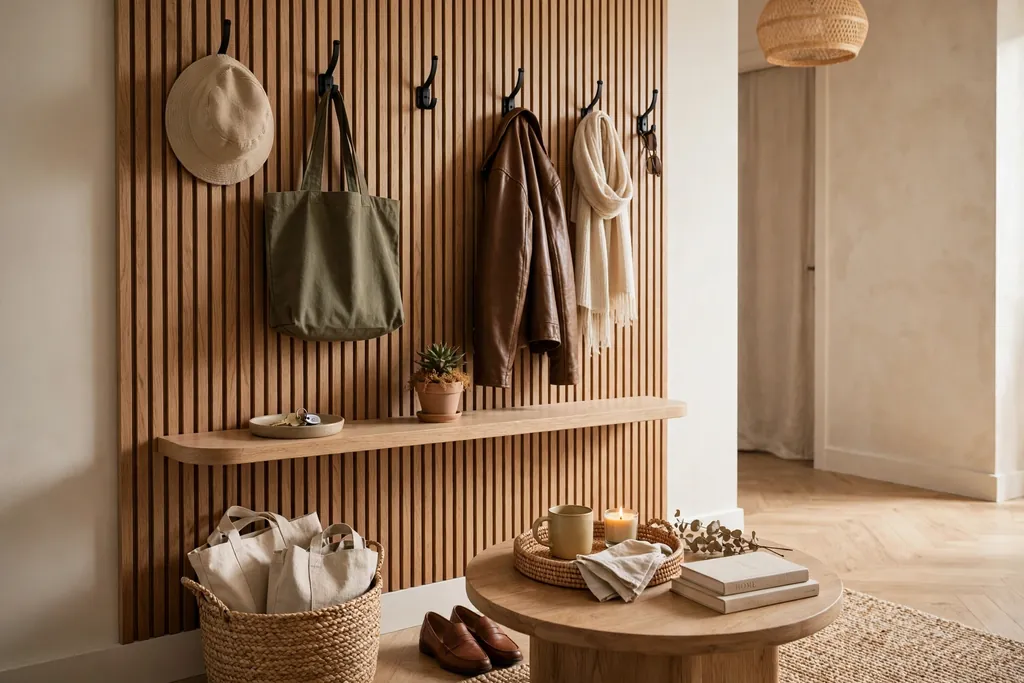
A cozy room stays cozy only if clutter has somewhere to go. Give each category of everyday item a home: a basket for throws, a lidded box for remote controls and chargers, a tray on the coffee table to corral coasters and a candle. Near the door, a small landing zone with a hook for keys, a dish for small items, and a basket for bags stops clutter from migrating onto the sofa. Once a week, walk the room with a basket and return anything that has drifted out of place; a ten-minute reset keeps the room calm without a deep clean. When everything has a home, tidying becomes putting things back rather than deciding where they belong.
Conclusion
A cozy apartment living room is not about fitting more into the room. It is about choosing furniture that fits, storage that uses the walls, light at more than one level, and soft layers that invite you to stay. Start with the layout and one rug, add the storage and lighting ideas that solve your biggest daily frustrations, and finish with plants and textiles. Try one or two ideas this weekend, live with them for a week, and adjust before adding more. If an idea here helped your space, save this post to your apartment decorating board on Pinterest so you can find it when you are ready for the next change.
Frequently Asked Questions
How do I make a small apartment living room feel cozy without cluttering it?
Start with the room’s base: a rug that anchors the seating, soft lighting at more than one level, and textiles in warm neutrals. Then give every everyday item a home, such as a basket for throws and a tray for small items on the coffee table. Coziness comes from layers you can touch and light you can adjust, not from filling every surface. Remove one item for every new decorative piece you add, and the room will stay comfortable instead of crowded.
What size sofa works best in a small apartment living room?
Measure the wall or the rug zone first, then choose a sofa that leaves clear walking routes on at least two sides. A loveseat or a compact two-seater often fits better than a full three-seater, and a sofa with slim arms and raised legs takes up less visual space than a bulky low frame. Mark the footprint with tape on the floor and walk around it before ordering, including the space needed to open nearby doors and drawers.
How can I add storage to an apartment living room without renovating?
Use the walls and the furniture you already have. A tall bookcase or shelf run stores a lot without using more floor space, a storage ottoman hides blankets, and baskets inside open shelving keep small items sorted. Wall-mounted shelves and a fold-down desk add function with only a few fixings, and both can usually be removed and patched when you move out. Check your lease and use fixings suited to your wall type.
What is the best lighting for a small apartment living room?
Layer three levels: ambient light for the whole room, task light where you read or work, and a low glow for the evening. A floor lamp behind the seating, a table lamp beside the sofa, and a small lamp on a shelf cover most rooms. Dimmable bulbs let you shift from bright daytime light to a calm evening mood. Avoid relying on a single overhead light, which tends to make a small room feel flat and harsh after dark.
Can I divide a studio apartment living room without blocking light?
Yes. An open bookcase divider, a curtain on a ceiling track, or a low console marks the boundary between living and sleeping areas while letting daylight pass through. Keep the divider open or low enough that light reaches both sides, and leave a clear walking route around at least one end. Avoid tall solid wardrobes or closed screens in the middle of the room, since they cut the light and make both areas feel smaller.
How do I choose a rug for a small apartment living room?
Pick a rug large enough for the front legs of the sofa and chairs to rest on it, since a rug that is too small makes the seating look scattered. A flatweave rug is easy to clean and layer, and a warm neutral tone keeps the room calm while patterned cushions or art add interest. If the floor is cold, layer a smaller plush rug on top in the seating area. Measure the zone with tape before buying, and check that doors can still open over the rug’s thickness.