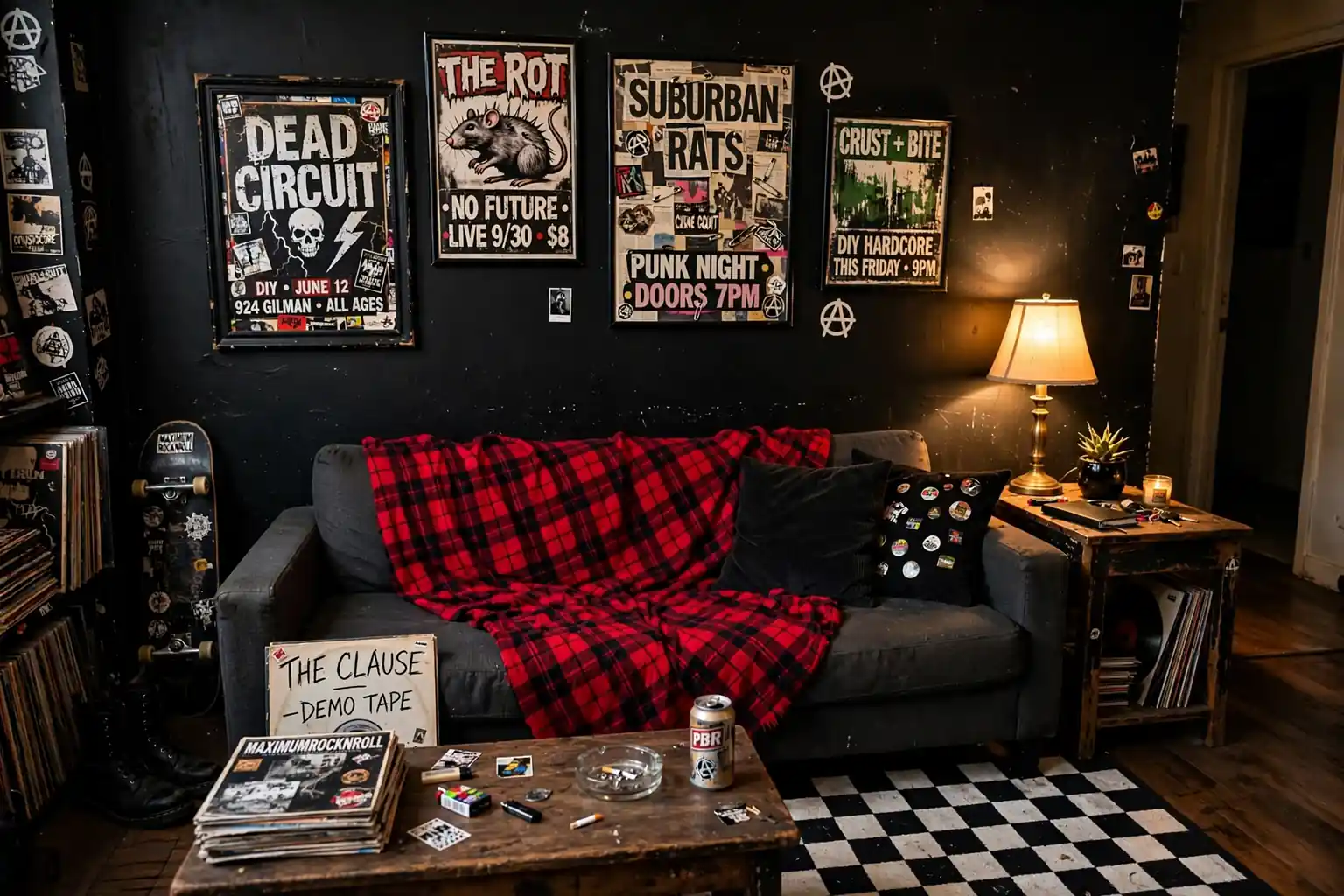
Punk style in a small apartment does not need ripped walls, permanent paint, or a landlord dispute. It needs attitude, texture, and a few strong pieces you can take with you when you move. Posters in clip frames, a wall of cut-and-paste collage, thrifted leather, plaid, checkerboard, and studs all carry the look, and removable fixings keep every one of them renter-friendly. These 32 punk apartment ideas start with walls, move through textiles and furniture, and finish with cozy seasonal layers so the room feels warm as well as loud. Pick the ideas that fit your space and your lease, and build the look one wall at a time.
Key Takeaways
- Keep punk decor renter-friendly: use clip frames, removable strips, freestanding furniture, and peel-and-stick panels instead of anything that damages walls.
- Start with one bold wall, then repeat black, red, plaid, and metal in smaller doses so the room reads as punk rather than cluttered.
- Thrift first: band tees, leather chairs, trunks, crates, and old frames give the look more character than new matching sets.
- Balance the hard edges with cozy seasonal layers: warm light, chunky throws, and plaid bedding for autumn and winter.
- Rotate posters and small displays with the season so the apartment keeps changing without new holes in the wall.
1. Build a Poster Gallery Wall With Clip Frames
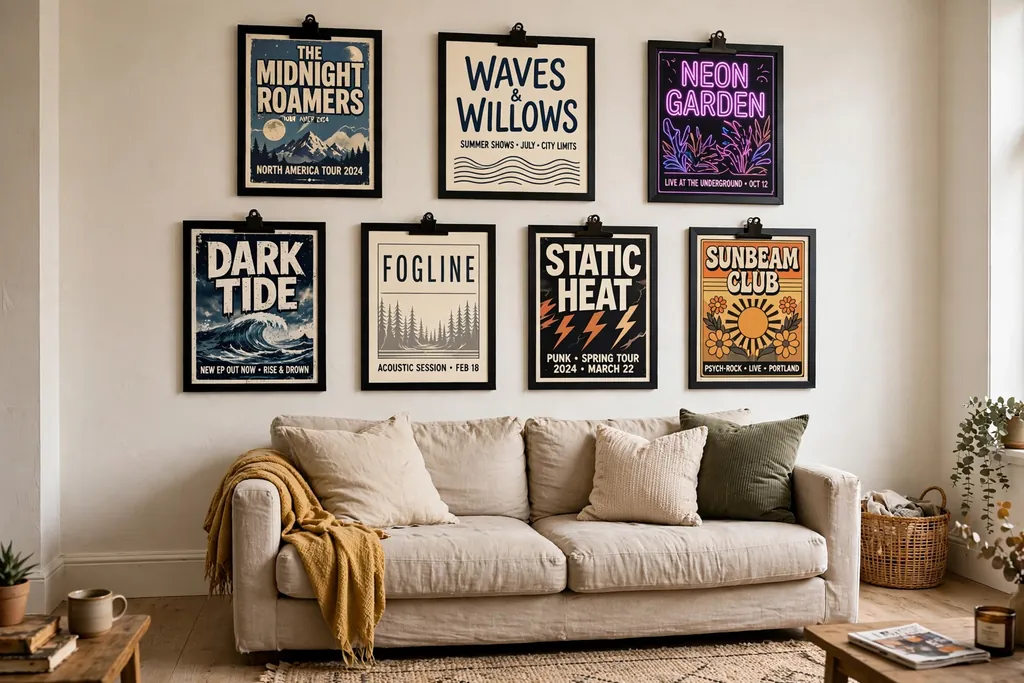
A poster gallery is the fastest way to make a plain rental wall read as punk. Use clip frames or magnetic poster hangers so the posters stay flat, protected, and easy to swap, and hang them with removable adhesive strips rated for the frame weight. Mix band posters, gig flyers, and one large graphic print, and keep the spacing even so the wall looks deliberate rather than pasted up in a hurry. If your lease bans nails, a single picture ledge gives you the same gallery effect with only two fixings, and you can rest extra prints along it.
Start with the posters you already love instead of buying a matching set. A wall built from real gigs, favorite records, and thrifted finds tells your own story, and it costs far less than framed art bought all at once. Leave one gap in the arrangement on purpose: it gives you a slot for the next poster and stops the wall from feeling finished and frozen.
2. Make a Cut-and-Paste Collage Wall
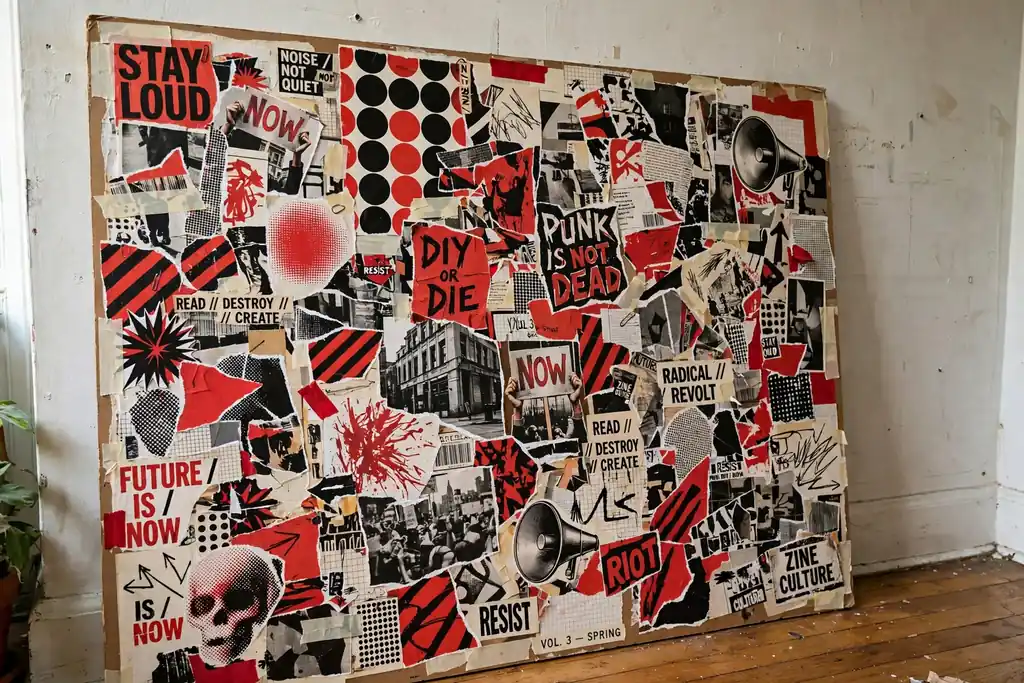
Collage is punk’s home craft, and it works on a board rather than directly on the wall, which keeps it fully removable. Cover a large foam board or plywood panel with torn pages from old magazines, zines, flyers, and photocopied lyrics, then seal it with a clear matte finish so the edges stay down. Lean the finished board against the wall or hang it from two removable hooks, and you have a piece of wall art with real texture and no damage to the plaster behind it.
Keep the palette tight so the collage reads as one artwork instead of loose paper. Black, white, red, and one metallic shade will pull even a wild mix of images together. Add hand-lettered words or short slogans in marker for the classic zine feel, and leave a few torn edges visible: neat, trimmed collage loses the energy that makes this idea work.
3. Try Peel-and-Stick Black Accent Panels
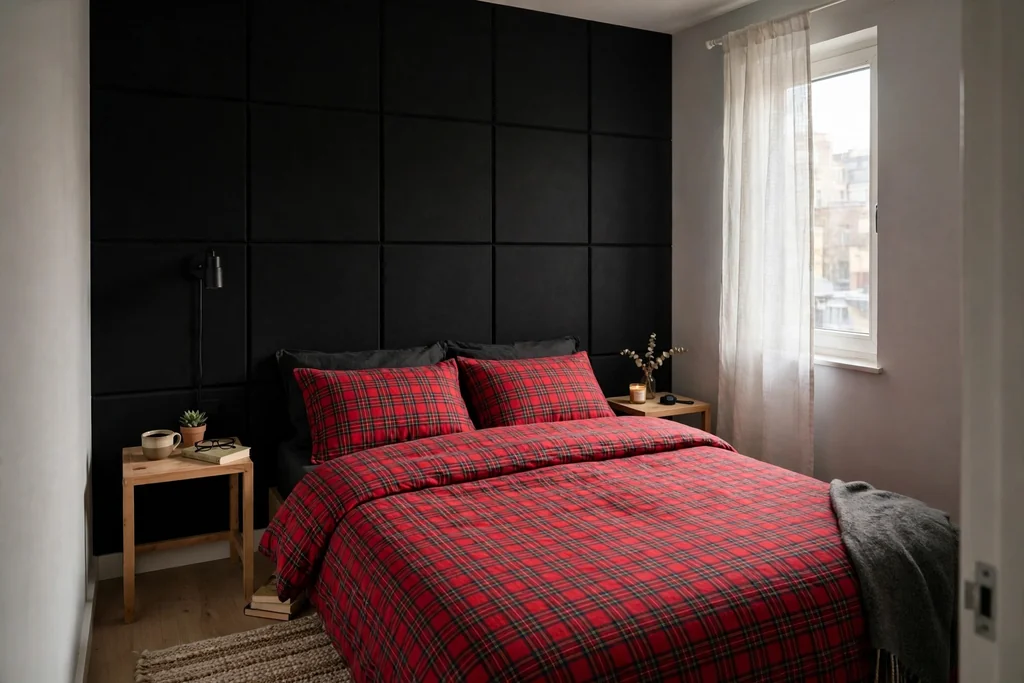
A black accent wall sounds permanent, but peel-and-stick panels make it a weekend project you can reverse. Foam brick panels, wood-look planks, or plain matte panels stick to one wall and peel off when you move, provided you follow the maker’s removal steps and test a small piece first. One wall is enough in a small apartment: black behind a bed or a sofa adds depth and makes posters and records stand out sharply against it.
Check your lease and the panel instructions before you commit to a full wall, and avoid sticking panels over damaged paint or textured wallpaper, where removal gets harder. If a full wall feels too dark, panel only the lower half or a single wide strip behind the bed, and keep the rest of the room pale so the black reads as a feature rather than a cave.
4. Display Vinyl on Picture Ledges
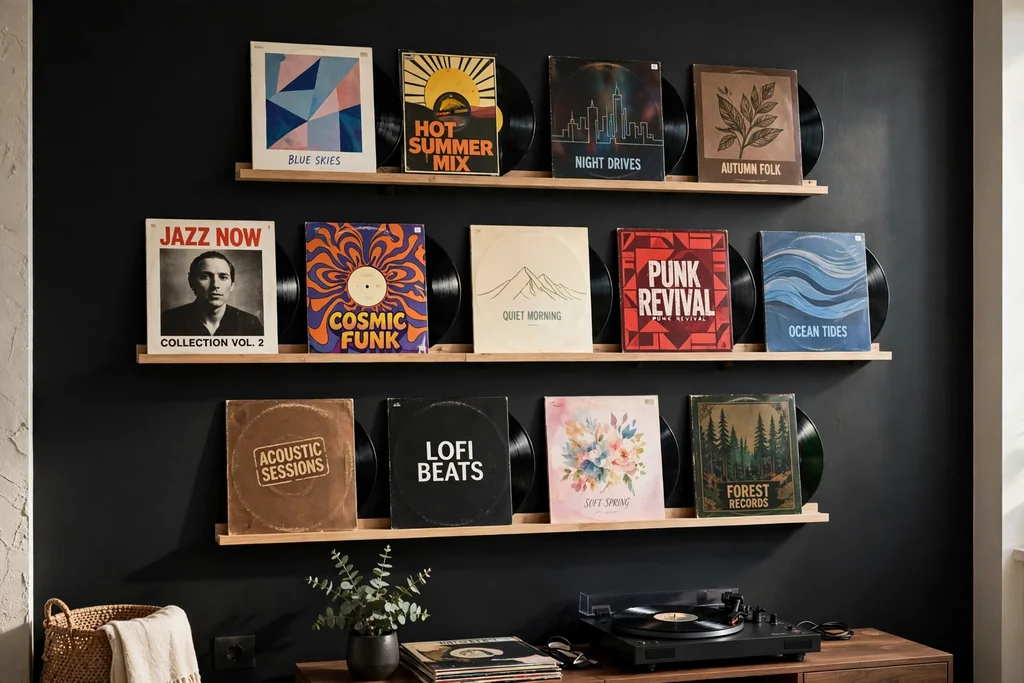
Vinyl sleeves are ready-made punk art, and picture ledges show them off without a single nail through a record. Fix two or three slim ledges to one wall with the fixings your lease allows, then stand favorite sleeves along them with the artwork facing out. Rotate the front row whenever a new record arrives or the season changes, and keep the records themselves in sleeves on a shelf nearby so the displayed covers stay clean and unwarped.
Group the sleeves by color or by era for a calmer look, or mix them wildly for a record shop wall. Either way, keep the ledges level and leave a little space at each end so the row does not look crammed. A small clip-on light above the top ledge turns the display into an evening feature without any wiring work.
5. Frame Band Tees as Wall Art
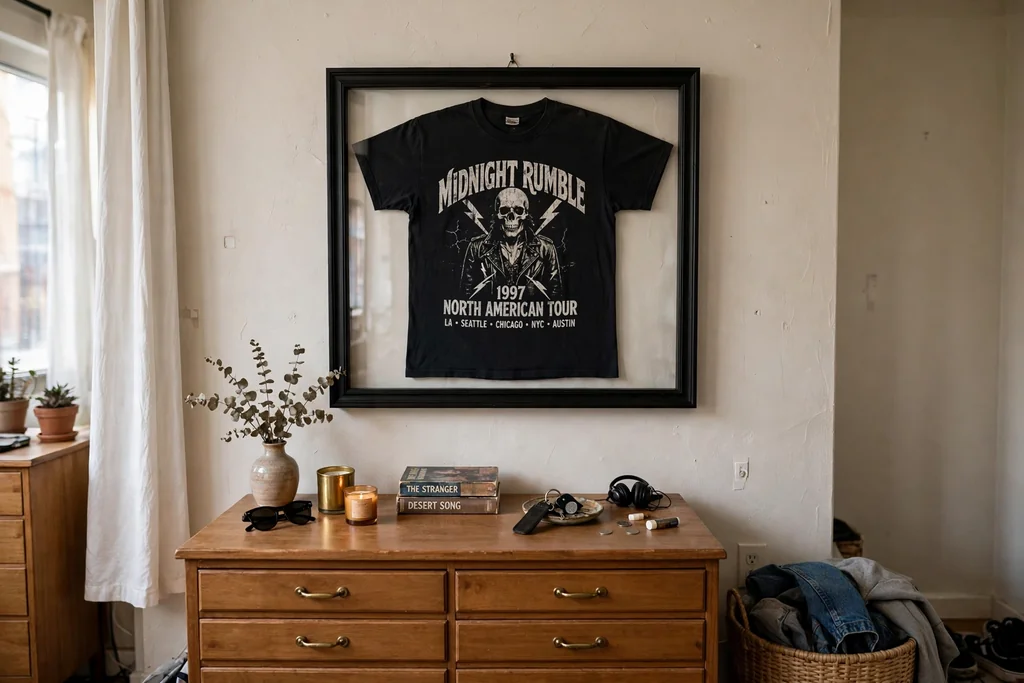
A favorite band tee that no longer gets worn still deserves wall space. Stretch it over a canvas frame or mount it in a deep shadow box frame, and hang it like a print: the graphic becomes the artwork, and the shirt itself stays safe from further wear. This works best with tees that have one strong front graphic, and a plain black frame keeps the focus on the design rather than the mounting.
Use tees you already own before buying vintage shirts for display, since the ones tied to real gigs carry more meaning. One framed tee over a dresser or beside the poster wall is a statement; three in a row above a sofa makes a full gallery. Keep framed tees out of direct sun so the print does not fade over a season.
6. Pin Tickets and Flyers to a Cork Board
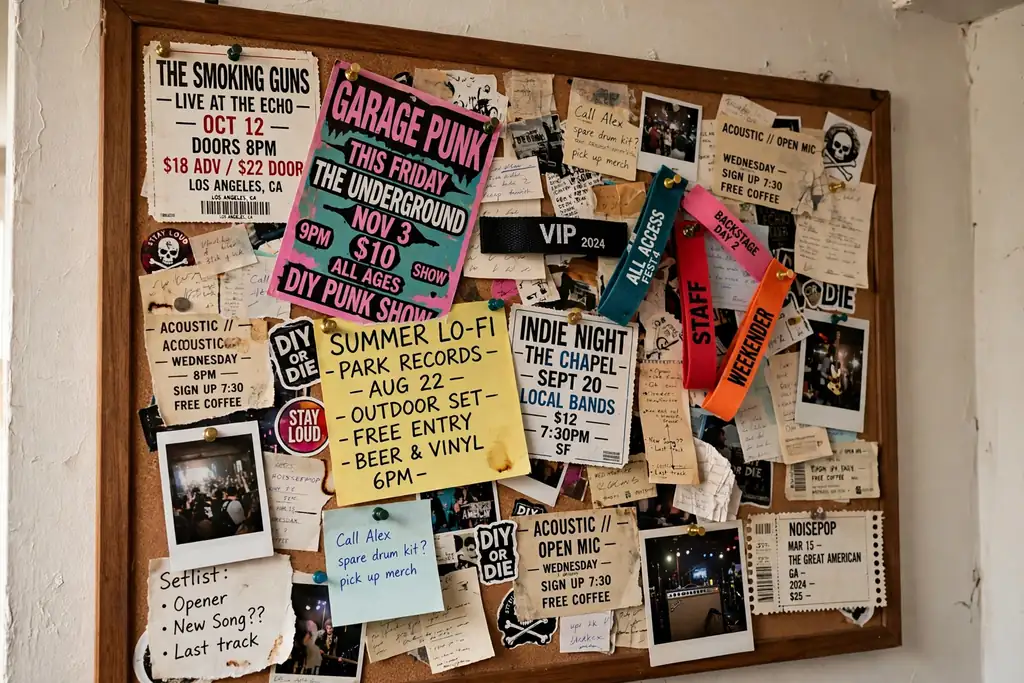
Gig tickets, flyers, and wristbands pile up in drawers, but pinned to a board they become a living record of shows. Cover a cork board or a fabric-wrapped board with your collection, overlap the edges slightly, and add short notes about the date or the venue in marker. Hang the board with removable strips or lean it on a dresser, and keep adding to it: the board should grow messier and better over time.
Sort loosely by year or by band rather than trying for a neat grid, since a little overlap suits the material. If a ticket is precious, pin through a corner or slip it into a clear sleeve first so the board does not damage it. This is also an easy seasonal swap: pull the summer festival tickets to the front in June and the autumn gig stubs forward in October.
7. Hang Painted Skateboard Decks as Art
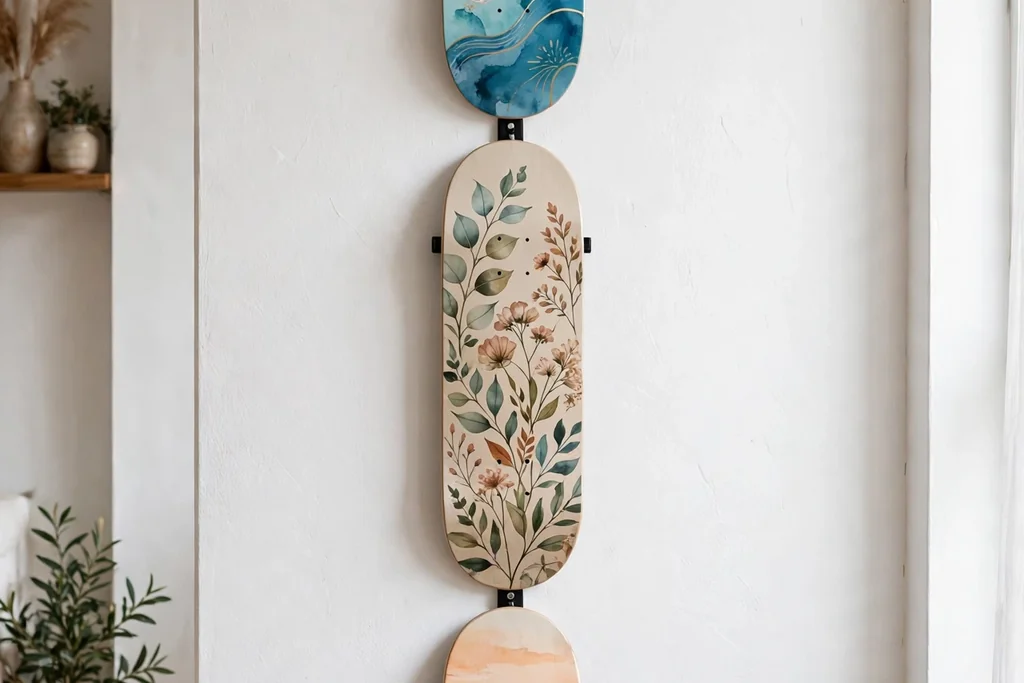
Old skateboard decks make strong, narrow wall art that suits a punk apartment better than another framed print. Paint a used deck in black with a stencil, a slogan, or a simple graphic, or leave a worn deck as it is if the scratches tell a story. Hang decks vertically in a row of two or three using the truck holes and removable hooks, or lean one tall deck in a corner beside the door.
Check secondhand shops and skate shops for cheap used decks before buying new ones to paint, and sand lightly so paint grips. Keep the graphics simple: one bold shape or word reads clearly from across the room, while a fussy design disappears on a narrow board. A deck hung above a shoe rack ties the entryway into the rest of the room.
8. Paint Stencil Art on Canvas
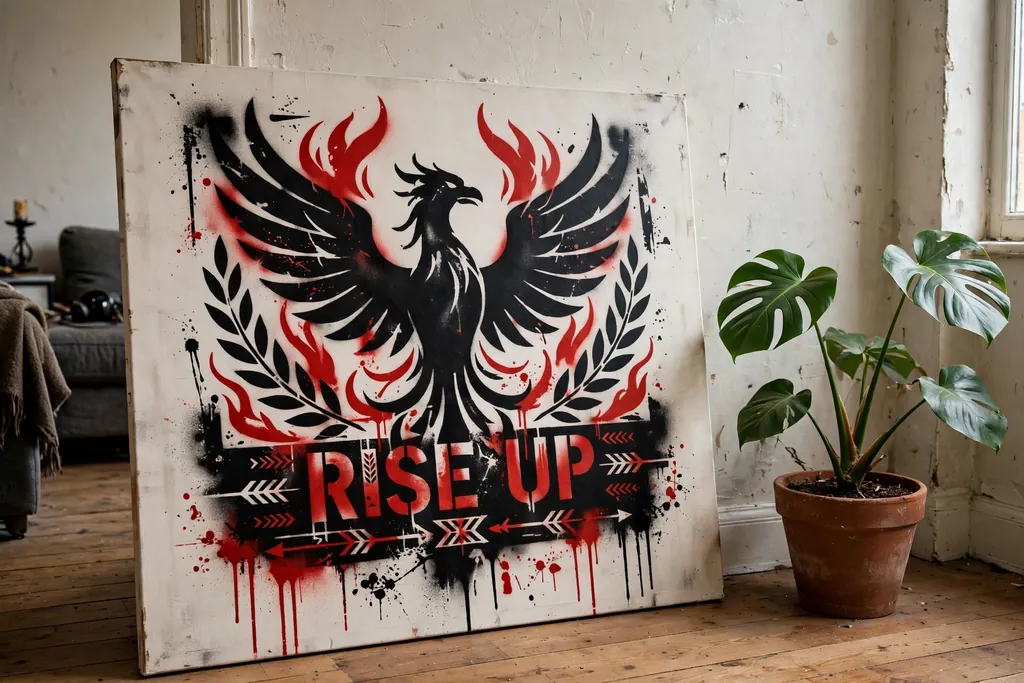
Stencil art gives you the street-poster look without touching the landlord’s walls. Cut a simple stencil from card or buy a reusable one, then spray or sponge paint it onto a plain canvas in black, white, and red. One word, one symbol, or one repeated shape is enough: a safety pin, a lightning bolt, or a band-style slogan all work at canvas size. Hang the finished canvas with a removable strip, and make a second one when you want a pair.
Practice on scrap card first, because stencil paint bleeds if the brush is too wet. Keep the canvas palette to two or three colors so it sits comfortably beside posters rather than competing with them. Canvases are light, cheap, and easy to carry to the next apartment, which makes them ideal renter art.
9. Paint Thrifted Frames Black and Silver
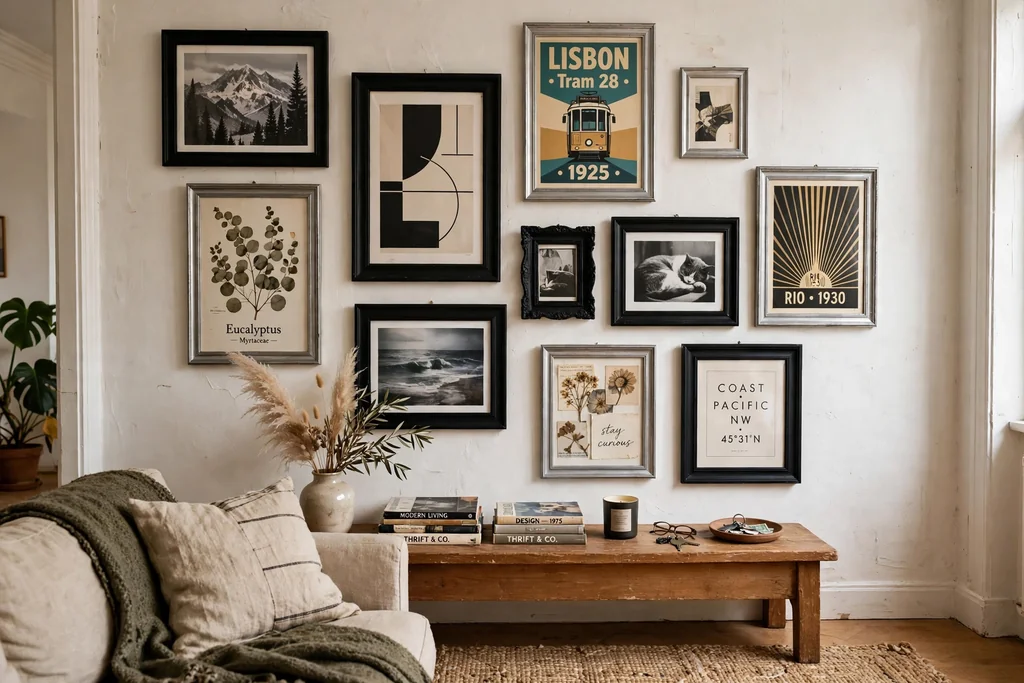
A wall of mismatched thrifted frames looks intentional once they share a finish. Collect old frames in different shapes and sizes, clean them, and spray them matte black with a few picked out in silver for contrast. Fill them with posters, flyers, photos, and collage pieces, and hang the group as one gallery: the shared finish ties wildly different contents together and hides the fact that nothing matched to begin with.
Work outdoors or in a ventilated space when spray painting, and let frames dry fully before glazing them. Keep one or two frames empty for a while if you like the collected look: an empty frame in a gallery wall reads as a deliberate pause, and it gives you a ready slot for the next find. This is one of the cheapest ways to make a rental wall look styled rather than improvised.
10. Add an LED Neon-Style Slogan Sign
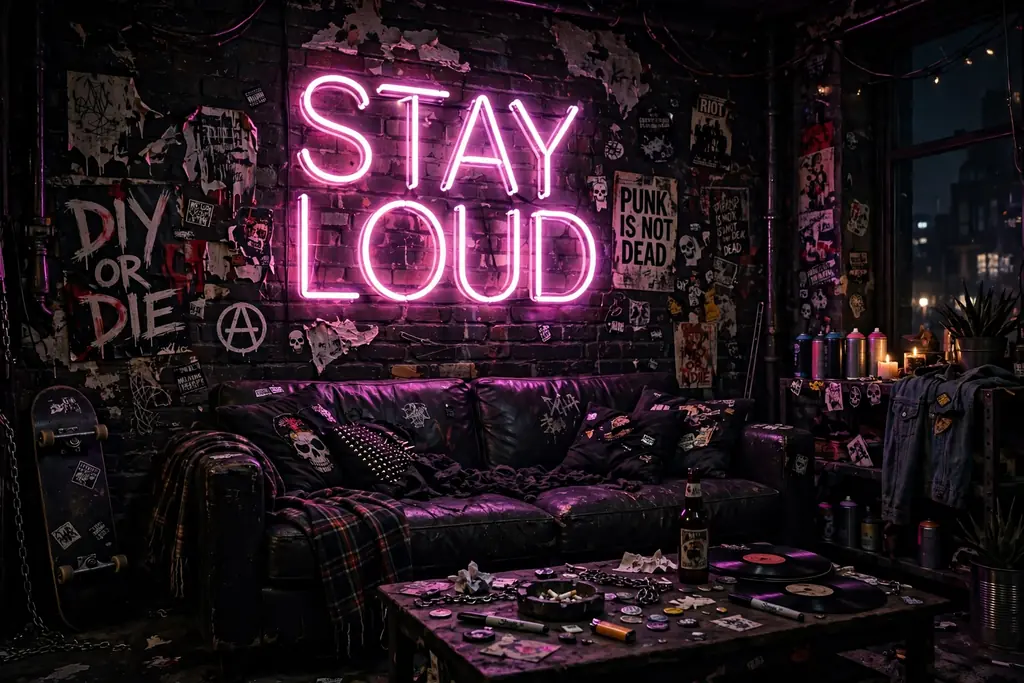
A neon-style LED sign gives a punk apartment its evening glow without the cost, heat, or wiring of real neon. Choose one short slogan or word in a script or block style, and mount it with the adhesive kit or stand it on a shelf. LED signs run cool, use a standard plug, and come off the wall cleanly, which makes them a safe bet for renters who want a bold focal point above a bed or a sofa.
Keep the slogan short and personal rather than generic, since the sign becomes the room’s catchphrase. One sign is enough: two competing glowing slogans fight each other and wash out the posters nearby. Pair the sign with dimmer main lighting in the evening so the glow carries the room instead of competing with a bright ceiling light.
11. Anchor the Floor With a Checkerboard Rug
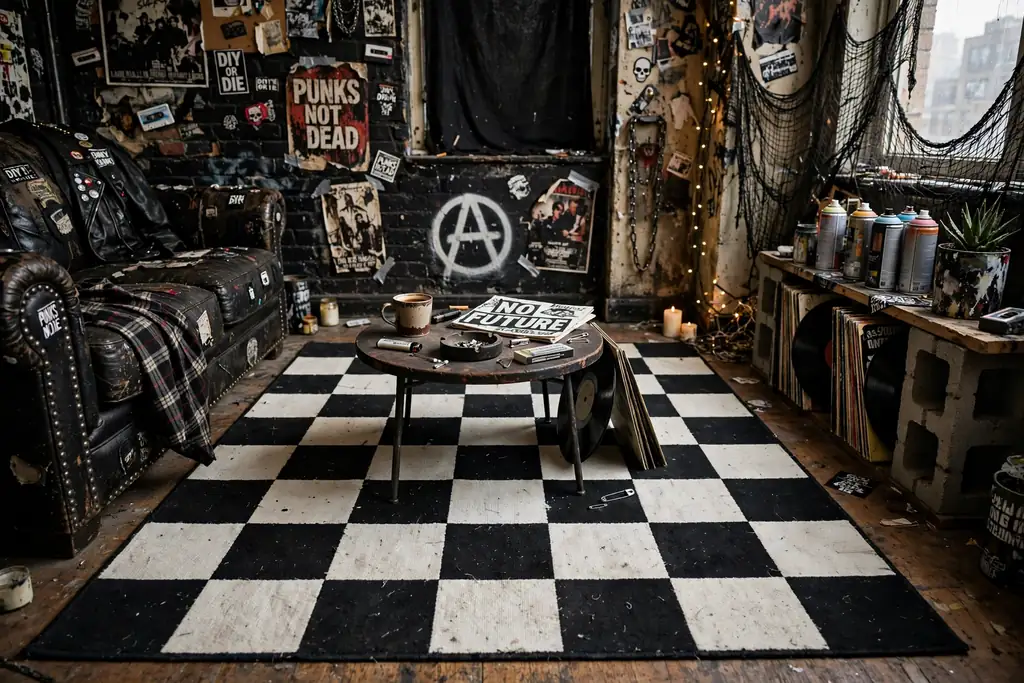
Checkerboard is punk’s floor pattern, and a rug delivers it without touching the floorboards. A black and white checkerboard rug under a coffee table or beside the bed sets the palette for the whole room and hides tired rental carpet. Choose a flat weave or low pile rug for a small space, since it is easier to clean and lets chair legs and crate shelves slide without catching.
Size matters more than pattern here: a rug that is too small floats in the middle of the room, while one that reaches under the front legs of the sofa or bed grounds the seating area. If a full checkerboard feels loud, use a smaller checkerboard runner in the hallway or a checkerboard mat by the door, and let the main rug stay plain black.
12. Layer Plaid and Leather-Look Bedding
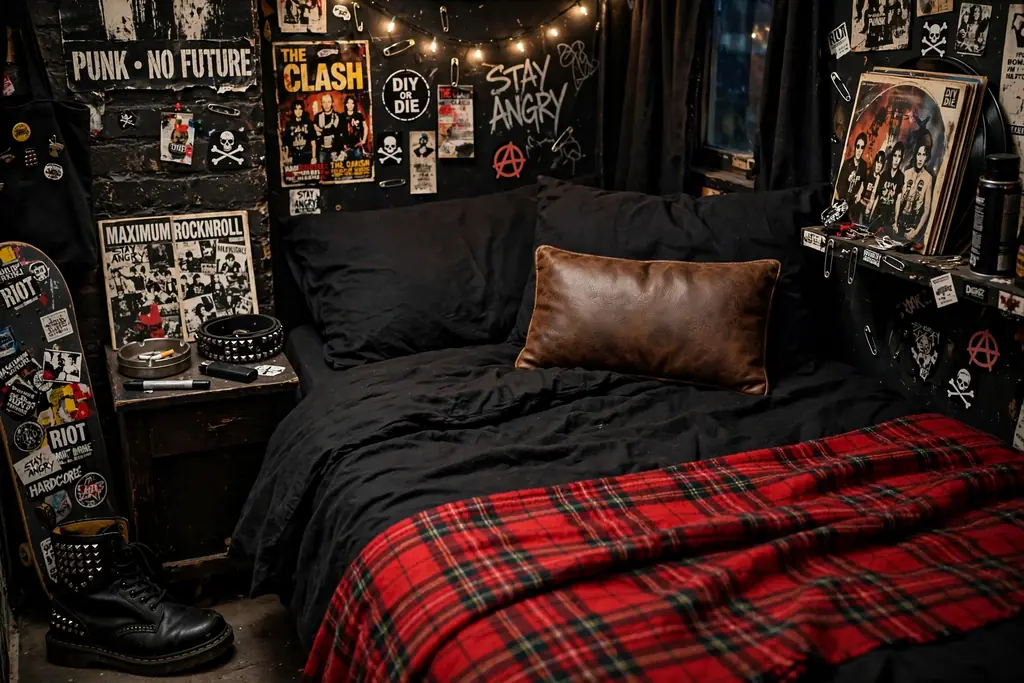
Punk bedding works in layers rather than a matching set. Start with plain black or charcoal sheets, add a plaid duvet cover or a plaid throw folded across the foot, and finish with one leather-look cushion or a studded cushion cover. The mix of soft plaid and hard leather texture reads as punk without needing a themed bedding set, and every layer can move to the sofa in summer or come back for winter.
Keep the palette to black, red or green plaid, and one metal accent so the bed does not turn into a costume. A plain black bed frame or a freestanding headboard panel (see Idea 29) lets the bedding carry the pattern. Wash plaid throws separately the first time, since strong red dyes can run onto pale sheets.
13. Sew a Patched Denim Throw
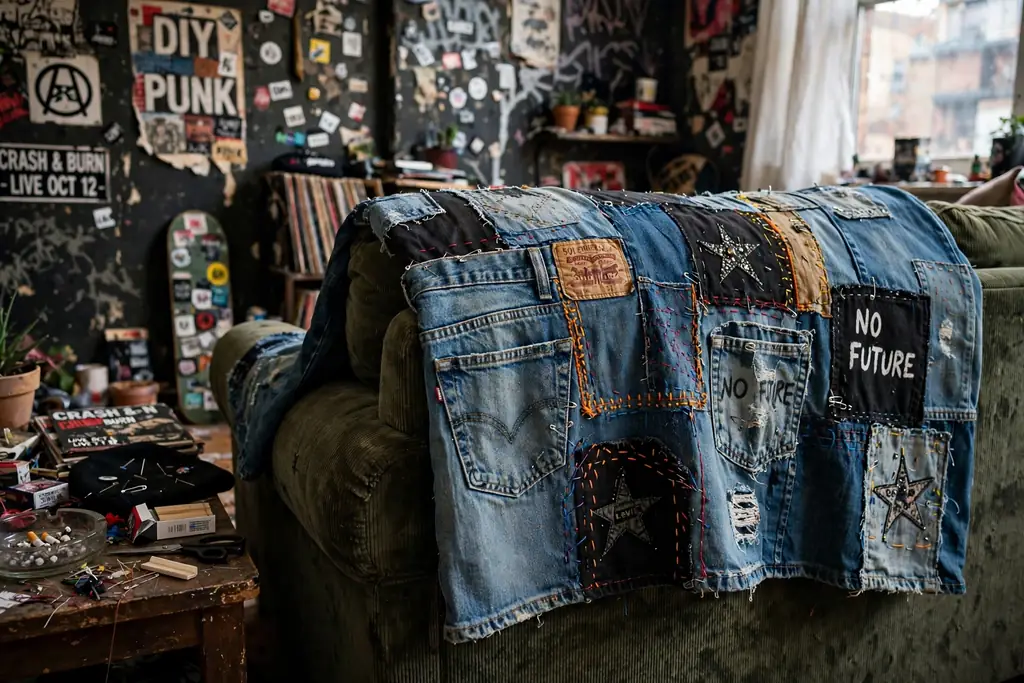
A patched denim throw is punk craft at its most useful: squares cut from old jeans, stitched together with visible seams and a few iron-on patches, make a heavy, durable blanket for the sofa or the bed. Use jeans you already own or thrifted pairs, mix light and dark washes, and back the throw with a soft fleece or old sheet so it feels good against skin. No sewing machine is needed if you use iron-on hemming tape for the joins, though stitched seams last longer.
Leave a few pockets and seams from the original jeans in the patchwork: they add texture and small storage for a remote or a phone. Finish the edges with a simple folded hem rather than a neat binding, since a slightly raw edge suits the material. A denim throw also survives washing well, which matters for a blanket that will live on a much-used sofa.
14. Make Studded Cushion Covers
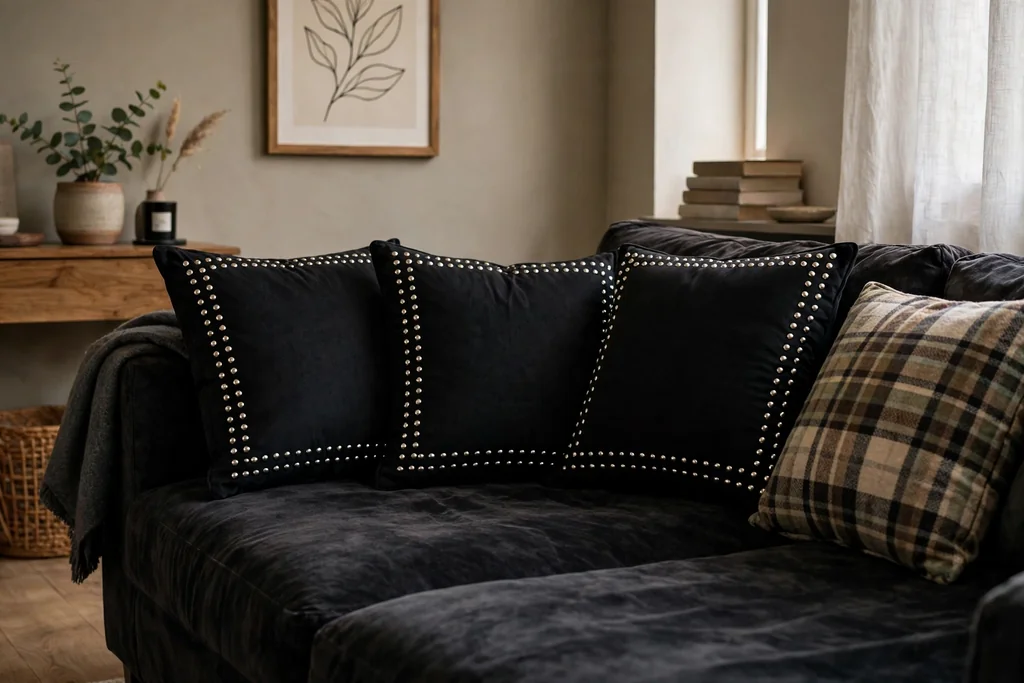
Studs turn plain cushion covers into punk furniture in an afternoon. Buy plain black or charcoal covers, then press or screw studs along the edges, in a border, or in one bold shape such as a star or a lightning bolt. Studs with screw backs grip better than glue-on versions and survive washing if you remove the cover first and fasten it inside out. Keep the studded cushions to one or two per sofa so the seating stays comfortable rather than spiky.
Mix one studded cover with plain velvet, denim, and plaid cushions so the texture contrast does the work. If you share the sofa with pets or small children, keep studs to the front face and the corners rather than the seat edge where hands and paws land. Spare studs in a small tin make repairs easy when one works loose.
15. Trim Curtains With Safety Pins
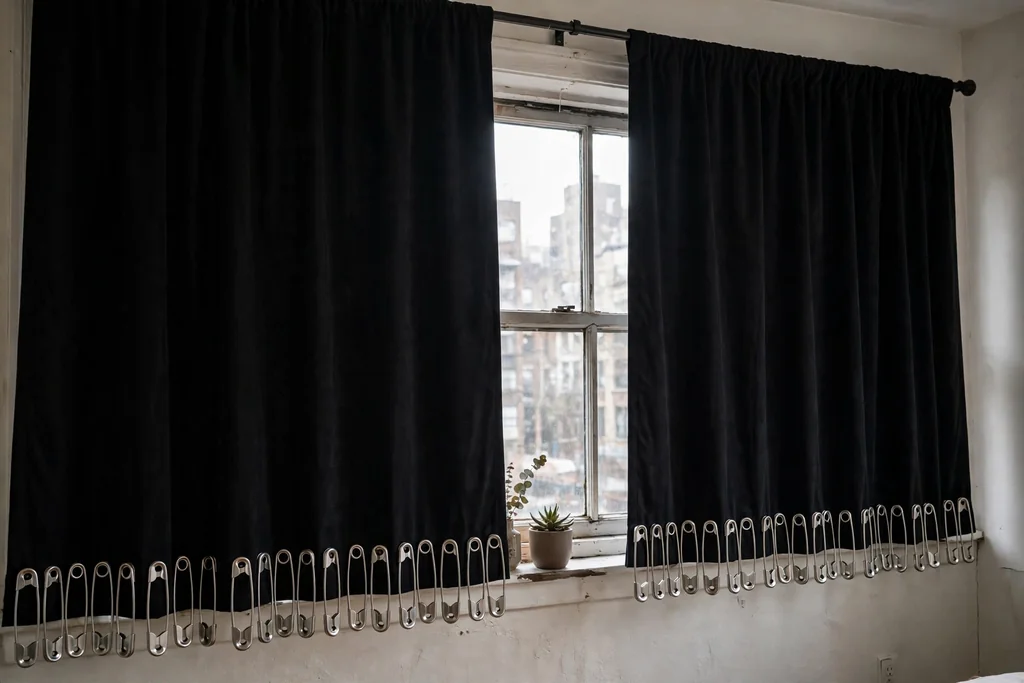
Safety pins are the cheapest punk trim in existence, and curtain hems are a perfect place for them. Pin a row of large silver safety pins along the bottom hem of plain black curtains, or cluster them at the tieback point where the curtain gathers. The pins catch the light, add metal to a soft textile, and come off in seconds when you want the curtains plain again or when laundry day arrives.
Use closed pins in a single size for a tidy row, or mix sizes for a more improvised feel, but keep them to the outer hem where they will not snag skin or bedding. If the curtains are light fabric, pin through the hem fold rather than a single layer so the weight does not pull the fabric. This is a good first punk DIY: it costs almost nothing and changes the whole window.
16. Sew Patchwork Curtains From Thrifted Fabric
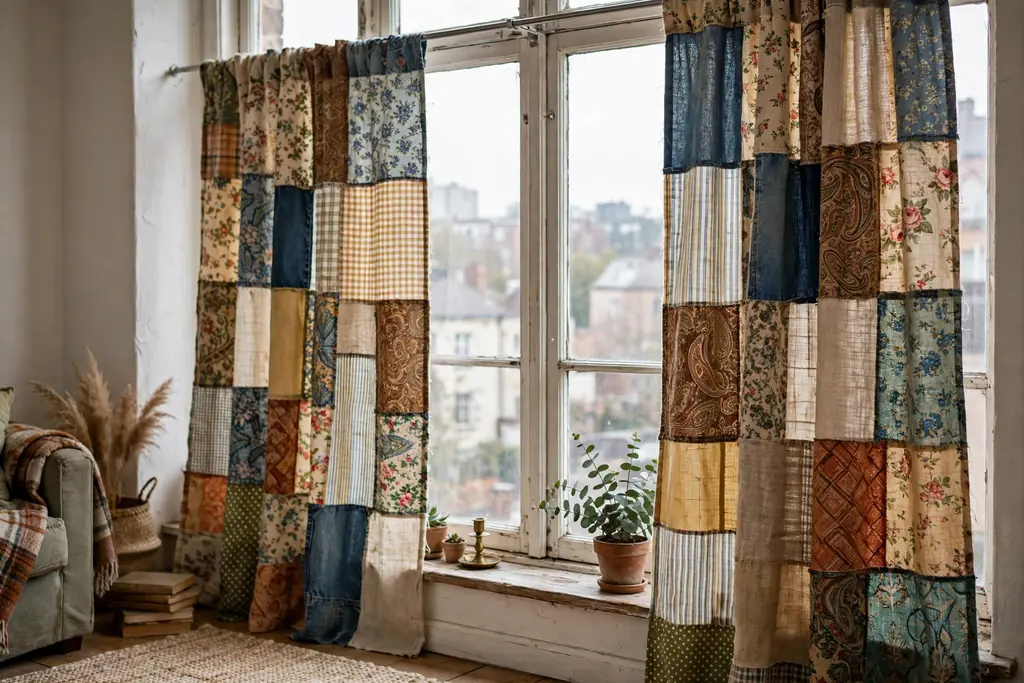
Patchwork curtains made from thrifted shirts, bandanas, and fabric scraps give a window real punk character for very little money. Cut the fabric into rough squares, join them into two panels with visible stitching, and hang them on a tension rod so no drilling is needed. The panels do not need to match each other exactly: a shared dark background or a repeated red accent will hold the pair together visually.
Line the panels with a plain dark sheet if the room needs more privacy or darkness, since patchwork alone can be thin. Keep the panels to window length rather than floor length in a small room, where long curtains eat floor space and collect dust. Wash thrifted fabric before sewing, since mixed dyes and old finishes can mark each other.
17. Layer Sheer and Black Curtains
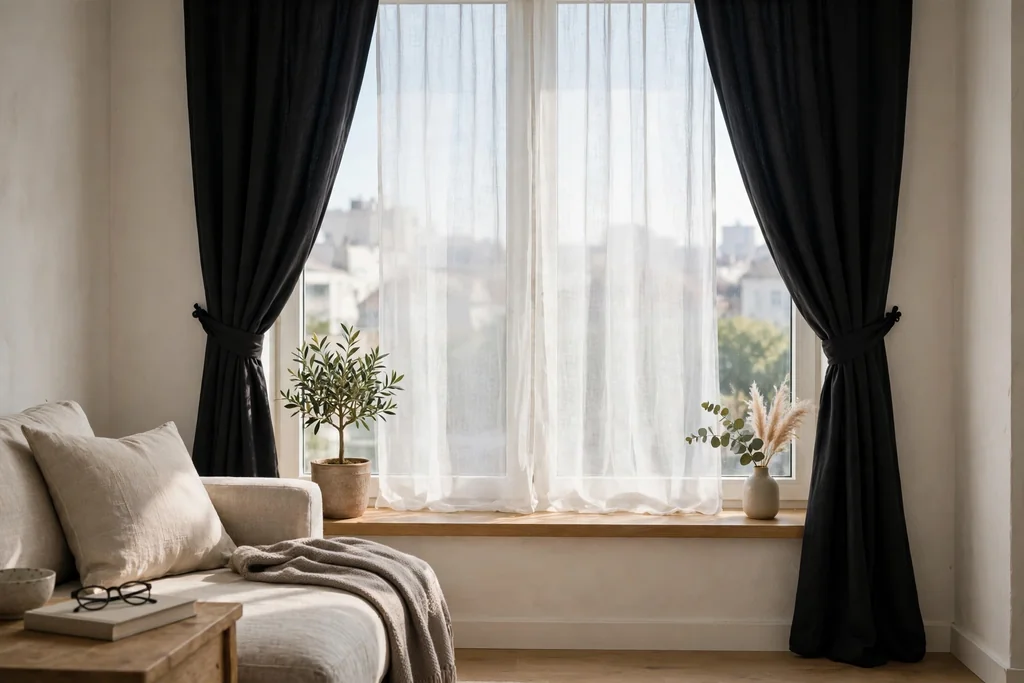
Layered curtains solve the punk apartment’s light problem: black curtains alone make a small room dark all day, while sheers alone feel too soft for the look. Hang a sheer panel closest to the glass for daytime privacy and a black curtain in front for evenings and sleep, both on a tension rod or a removable hook rail. By day you get filtered light and a view of the window frame; by night the black layer closes the room down and makes lamps and the LED sign glow properly.
Choose a plain sheer without a pattern so the black layer stays the star, and keep both layers the same length for a clean drop. This layering also helps in winter, since two layers insulate better than one and cut draughts at the window. Tie the black layer back with safety-pin tiebacks from Idea 15 for a detail that ties the window together.
18. Build Freestanding Pipe Shelving
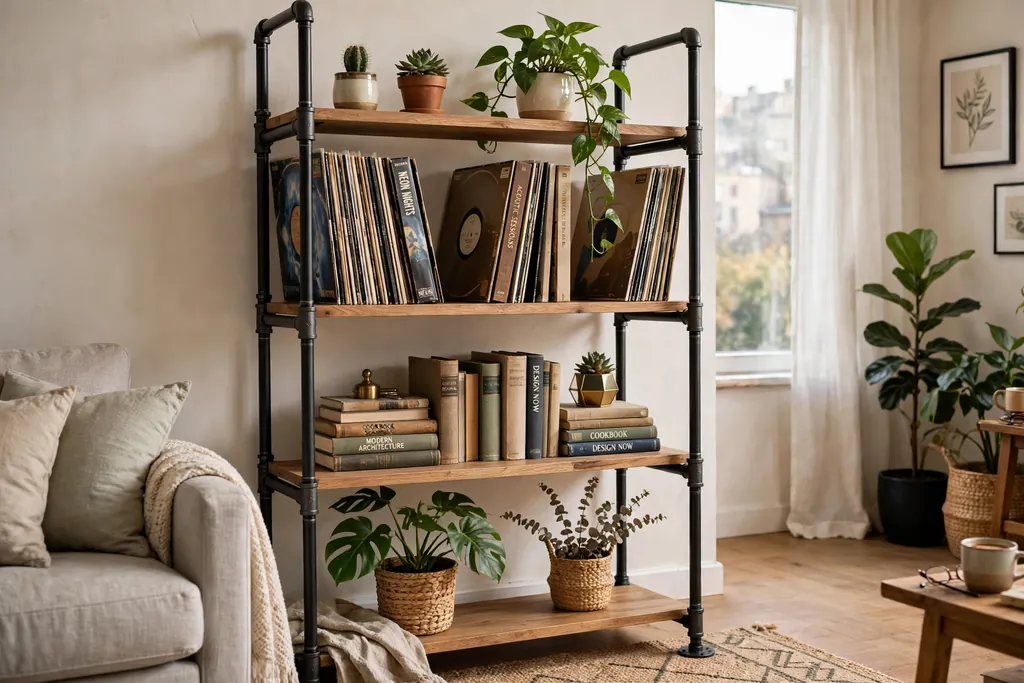
Freestanding pipe shelving gives a punk apartment industrial storage without drilling into rental walls. A simple frame of metal pipes and wood boards stands on its own, holds records, books, and plants, and moves with you when the lease ends. Buy a kit or assemble one from pipe lengths and boards, and check the weight rating before loading the top shelves with vinyl. The same shelf-styling sense in this guide on how to style open shelves keeps a pipe shelf from turning into a cluttered stack: heavy items low, breathing space between groups, and one or two objects per section.
Keep the wood boards plain or stain them dark rather than painting them bright, since the metal frame already supplies the industrial edge. Anchor the unit if the maker recommends it for tall frames, especially in homes with children or pets, and keep the bottom shelf for heavier items so the unit stays stable. One pipe shelf beside the listening corner (Idea 23) holds records, a speaker, and a few plants in one place.
19. Stack Milk Crates as Modular Shelves
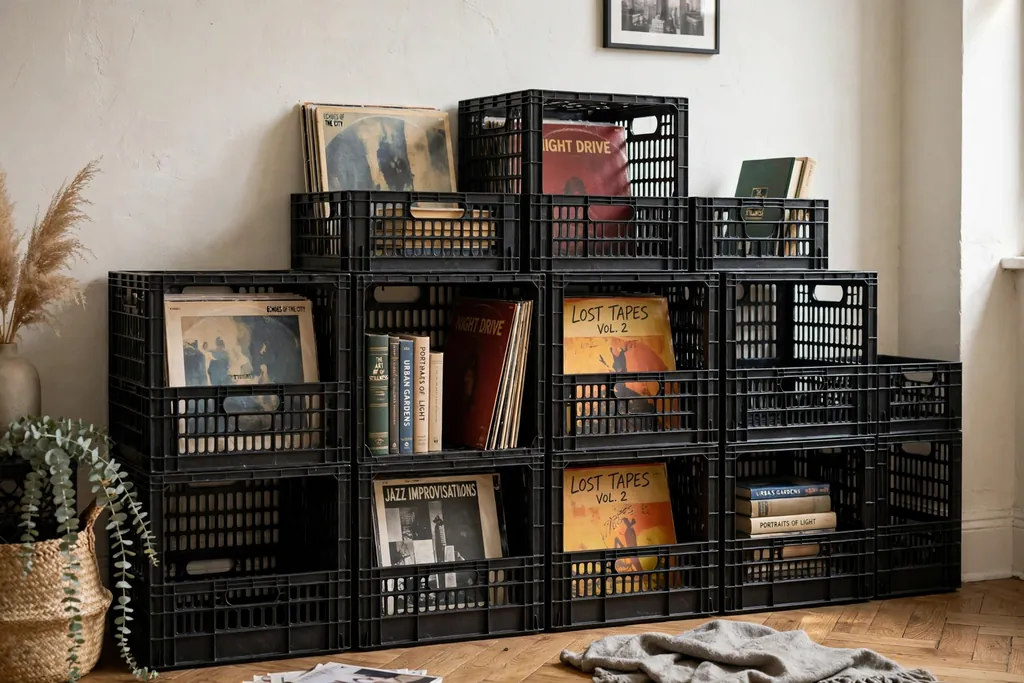
Milk crates are the classic punk storage unit: cheap, stackable, and easy to rearrange when the room changes. Stack sturdy crates in a grid against one wall for records, books, and folded clothes, and zip-tie or clip them together so the stack stays steady. Paint the crates matte black for a uniform look, or leave them in mixed colors for a more improvised feel that suits a collage wall nearby.
Store records upright in the crates with the spines facing out, since flat stacks warp and hide the covers you want to see. Keep the stack to three or four crates high unless it is fixed to the wall, and put the heaviest crates at the bottom. When you move, the crates pack your belongings and rebuild the shelf in the next apartment in an afternoon.
20. Create a Leather Chair Reading Corner
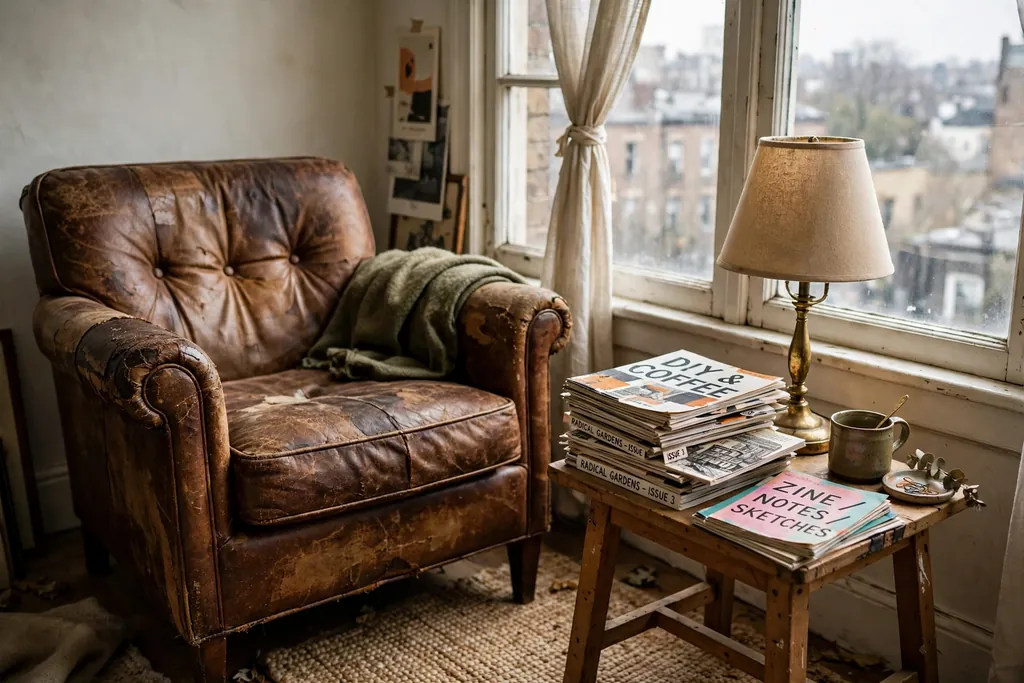
One good thrifted leather chair makes a punk reading corner that no new matching set can copy. Look for a worn armchair with a solid frame, clean and condition the leather, and place it beside a window or a lamp with a small side table and a stack of zines or paperbacks. Worn leather is a feature here, not a flaw: scuffs and creases give the chair the history that punk style values, and a throw over one arm adds the cozy layer for colder months.
Plan the corner’s footprint before you buy, using the same measure-first thinking as these small living room layout ideas: tape the chair’s size on the floor, check the walkway stays clear, and leave room for the side table. If a full leather chair is too big for the room, a leather-look pouf or a single leather cushion on an existing chair gives the same material note in less space.
21. Use a Trunk as a Coffee Table
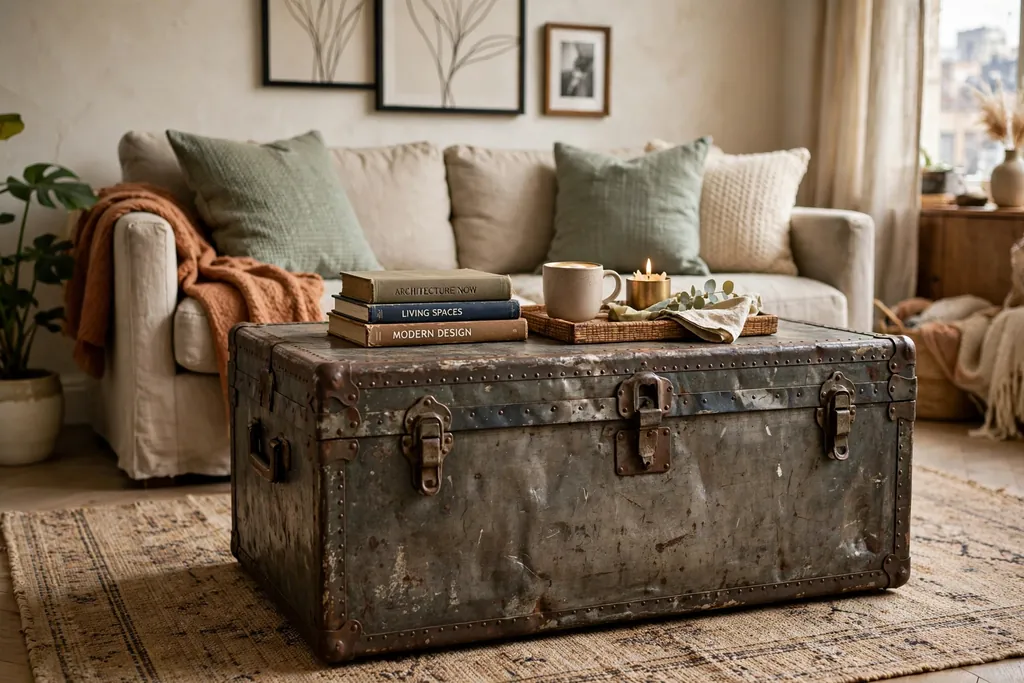
A battered trunk works as a coffee table, a blanket box, and a punk statement all at once. Secondhand shops sell old metal and wood trunks cheaply, and one in front of the sofa holds throws, board games, and spare cables out of sight. Put a tray on top for drinks so cups do not wobble on a curved lid, and keep the inside organized with one basket so the trunk stays useful rather than becoming a junk box.
Check the lid hinges and latches before buying, and add felt pads underneath so the trunk does not scratch rental floors. A trunk with travel stickers or stenciled markings needs no extra decoration, while a plain trunk takes paint or patches well. If the trunk is too tall for comfortable use, a flat-topped one at sofa seat height is the better pick.
22. Hang a Jacket and Boot Rail by the Door
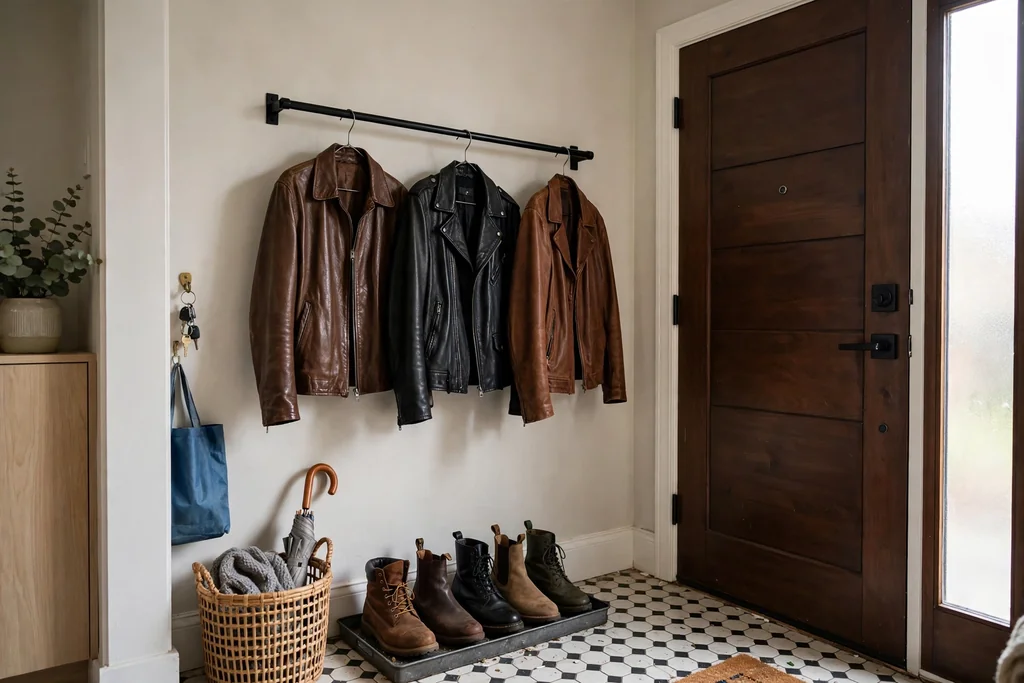
Leather jackets and boots are punk decor in their own right, so give them a proper display by the door instead of hiding them in a closet. Fix a sturdy rail or a row of heavy hooks near the entry with removable fixings rated for the weight, hang one or two jackets where they can be seen, and line boots up on a tray beneath. The entry then reads as a styled part of the apartment rather than a pile of outdoor gear, and jackets stay aired and easy to grab.
Keep the rail to the jackets you actually wear, and rotate them with the season: heavy leather in winter, a denim jacket in summer. A small dish on the rail shelf holds keys and pins, and a boot tray with raised edges keeps wet soles off the floor. If wall fixings are limited, a freestanding coat stand in black metal does the same job with no holes at all.
23. Set Up a Turntable Listening Corner
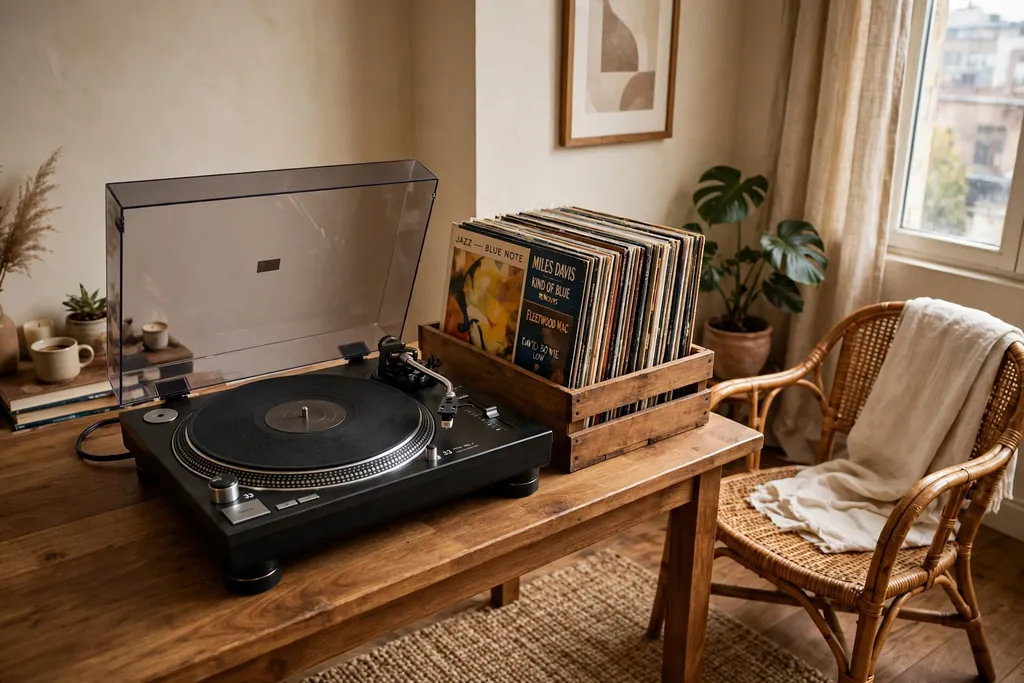
A listening corner gives the record collection from Idea 4 a job and the room a social center. Place the turntable on a stable, level surface away from speakers that vibrate, keep records upright beside it in crates or on a low shelf, and add one comfortable seat close enough to flip sides without standing. A small lamp with warm light makes evening listening feel intentional, and a notebook for tracking favorite tracks turns the corner into a hobby rather than a display.
Keep the setup simple and safe: a level surface, a dust cover when the turntable is idle, and cables tucked against the wall so nobody trips. If space is tight, a wall-mounted ledge for the turntable and a crate of records below it fits a corner that a full cabinet cannot. This corner also anchors the poster wall nearby, since the music on the wall is the music playing in the room.
24. Frame a Mirror With Studs
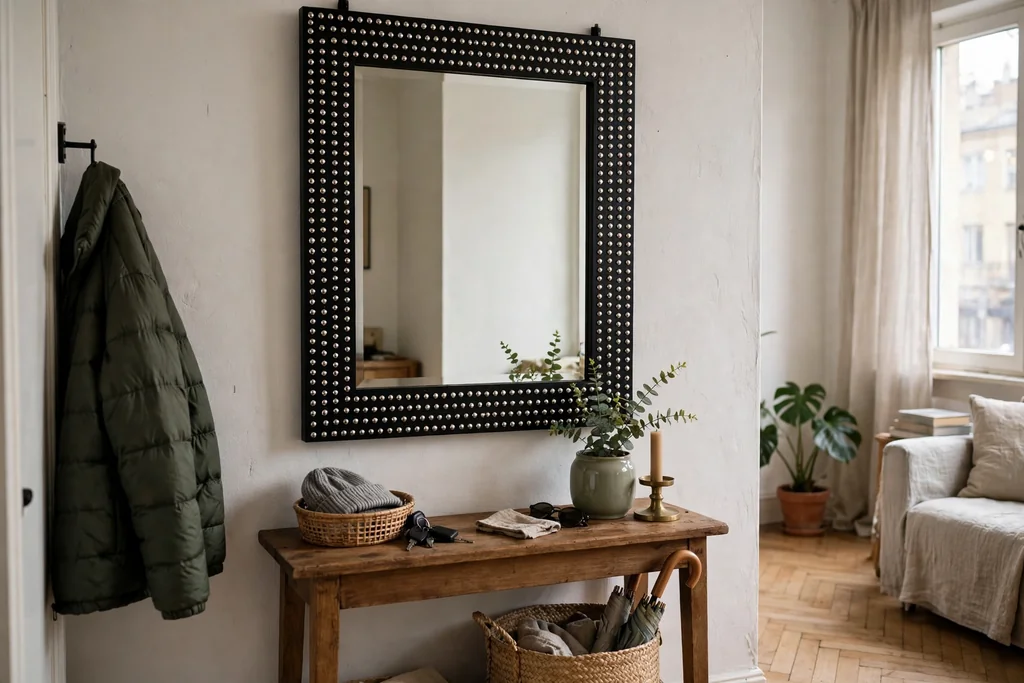
A plain mirror gets a punk edge when its frame is studded, and the mirror itself brightens a small dark room. Buy a cheap framed mirror, press screw-back studs around the frame in an even row or a scattered pattern, and hang it with a fixing rated for its weight. The studs catch light from the window and the LED sign, and the mirror doubles the visual size of a small apartment while reflecting the poster wall opposite.
Keep studs off the glass edge itself so cleaning stays easy, and check the frame is solid wood or sturdy composite before adding studs, since thin plastic frames crack under pressure. Hang the mirror where it reflects something worth seeing, such as the record ledges or the window, rather than a blank wall or a cluttered corner.
25. String a Safety-Pin Garland Across a Shelf
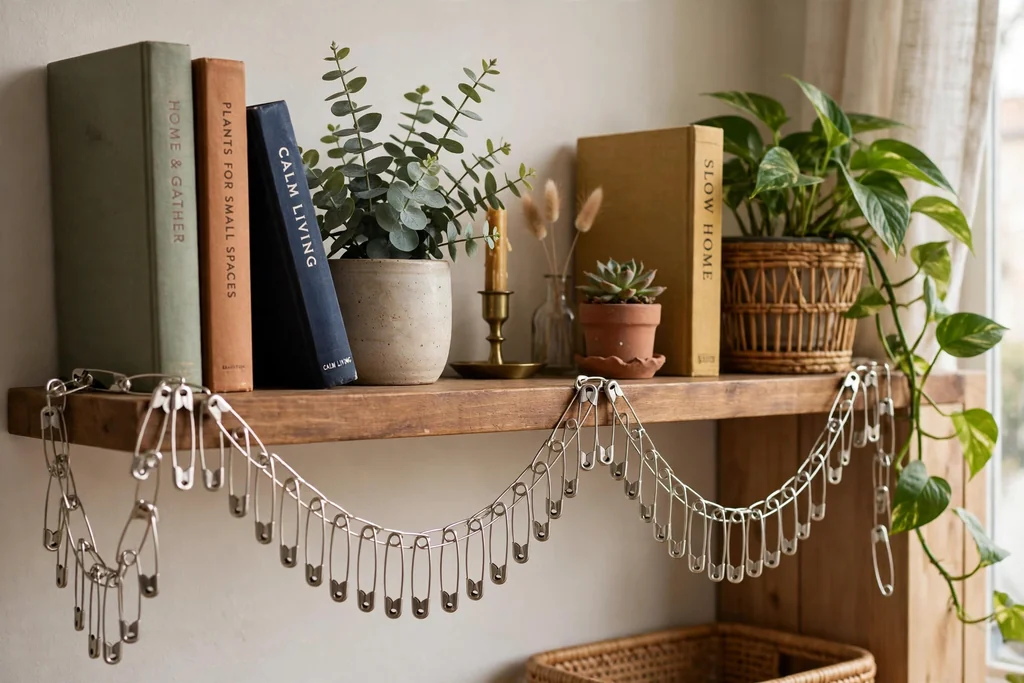
A garland of safety pins linked together makes a cheap, flexible punk decoration for a shelf, a mirror, or a doorway. Link large silver pins into a chain, add a few small charms, buttons, or fabric scraps at intervals, and drape it along the front edge of a shelf or across a mirror frame. The garland moves easily, stores flat, and changes the look of a shelf without moving anything on it.
Keep the garland to one shelf or one doorway so it reads as an accent rather than clutter, and use closed pins throughout so nothing snags. For a seasonal version, thread small autumn leaves cut from felt or red and black fabric scraps onto the chain in October, then strip them back to plain metal in spring. The garland also works as a curtain tieback in a pinch.
26. Show Buttons and Badges in a Shadow Box
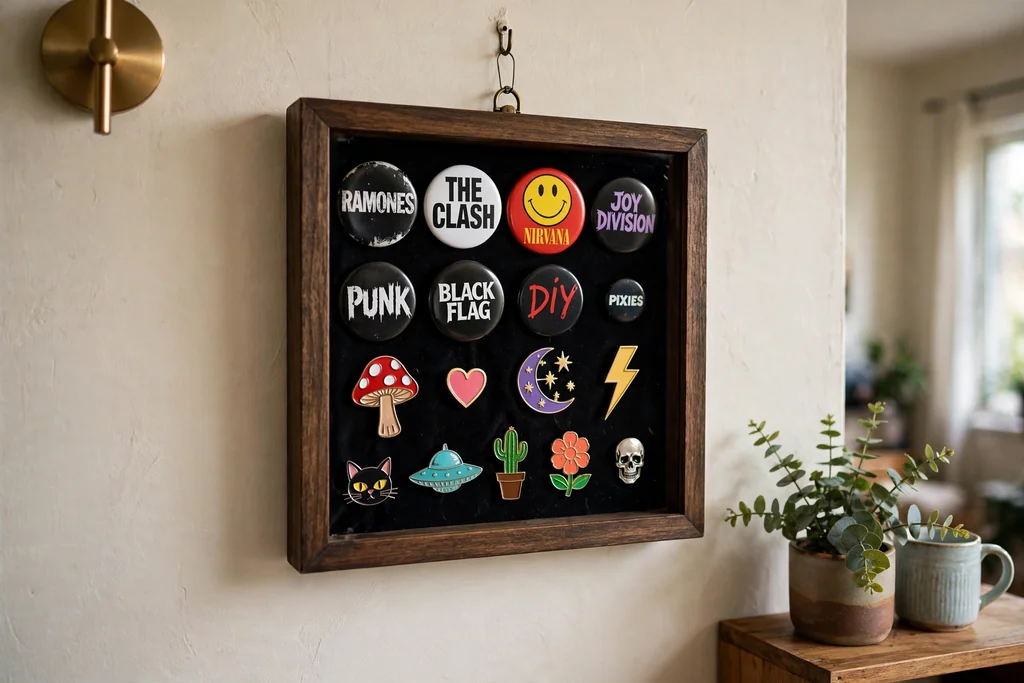
Band buttons, enamel pins, and badges collect fast and vanish into drawers, but a shadow box turns them into wall art. Pin or glue them to a fabric-covered backing inside a deep frame, group them by band or by color, and hang the box near the poster wall. A shadow box keeps small items dust-free and visible, and it is easy to open and rearrange when a new badge joins the collection.
Use a backing fabric in black or charcoal so metal badges stand out, and leave a little space around each group rather than filling every inch. If a badge is rare or signed, mount it with a pin through the backing rather than glue so it stays undamaged. One shadow box over a dresser is enough; a second box can hold ticket stubs and small photos beside it.
27. Fill a Corner With Black Plant Pots
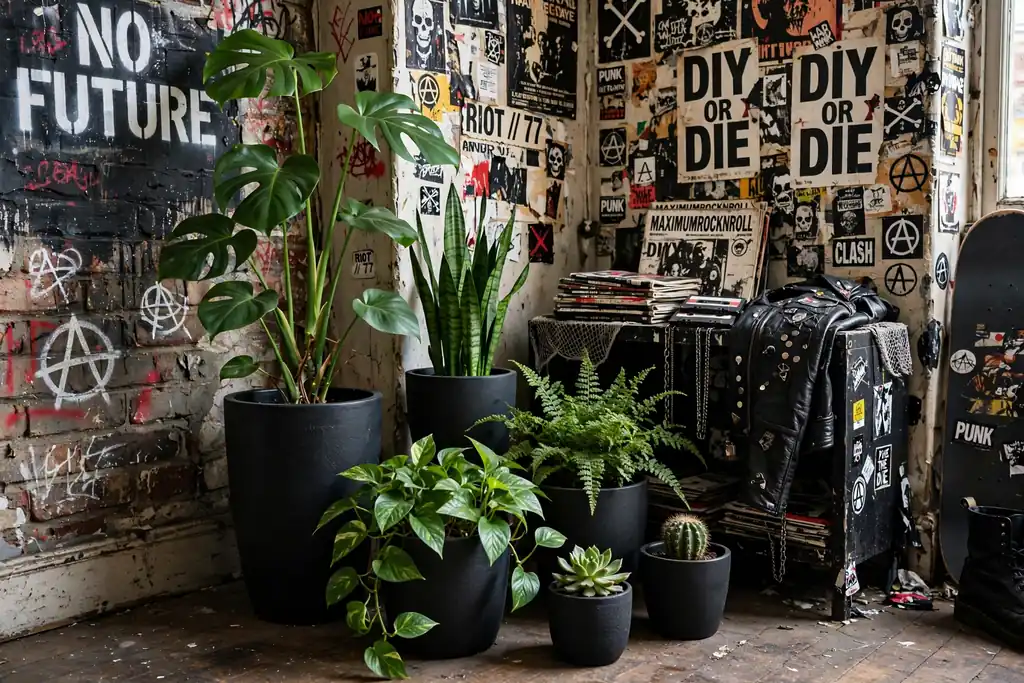
Plants soften punk’s hard edges, and black pots keep them in the palette. Group three or five plants of different heights in matte black pots in one corner, using a metal plant stand for the tallest and the floor for the largest. Trailing plants on a high shelf add green at eye level, while a single large plant beside the leather chair (Idea 20) makes the reading corner feel lived in rather than staged.
Match plants to the light the corner actually gets, and use pots with drainage holes and saucers so watering does not mark rental floors or sills. If real plants are a struggle, one or two good faux plants mixed with real ones keep the corner green without the upkeep. Keep plants off the turntable and the record crates, where soil and water do real damage.
28. Hang a Photo String With Clips
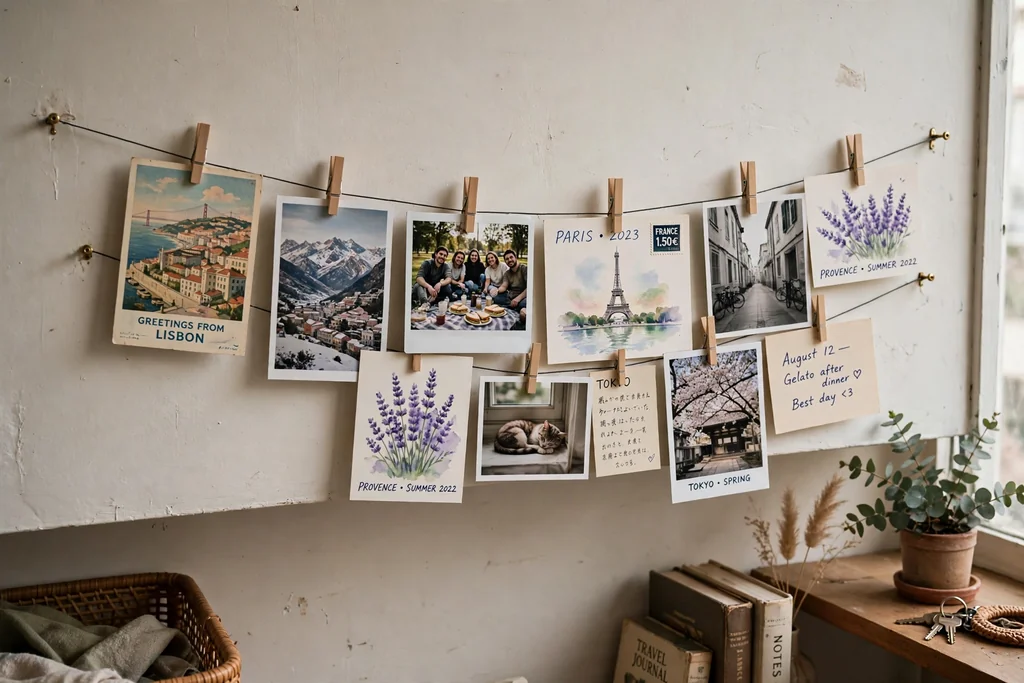
A string of photos clipped along a wire or cord is punk’s answer to a formal gallery wall: informal, cheap, and easy to change. Fix a wire or a length of cord across one wall with removable hooks, then clip photos, postcards, gig snaps, and small prints along it with black binder clips or metal clips. Swap photos with the season, move the string to a new wall when you rearrange, and take the whole display down in minutes when you move.
Keep the clips evenly spaced and the photos at a similar size so the string looks deliberate rather than tangled. Print photos at home or use a cheap print service rather than risking originals on a wall that gets sun, and keep the string away from the stove or a heater where heat and grease damage prints. Two parallel strings make a fuller display on a wide wall.
29. Add a Freestanding Studded Headboard Panel
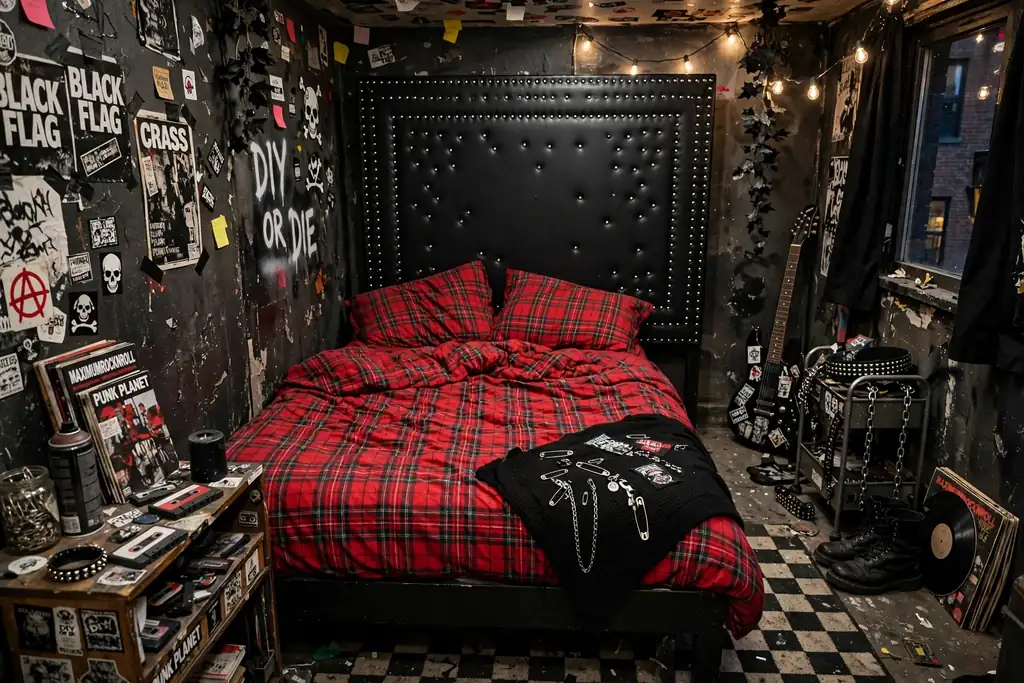
A freestanding headboard panel gives a bed punk structure without a single wall fixing. Cover a plywood panel or an old door in black fabric or leather-look material, add a row of studs around the edge or in a diamond pattern, and stand it behind the bed on feet or lean it securely against the wall. The panel frames the bedding from Idea 12, hides a plain rental wall, and moves with you to the next bedroom.
Make the panel slightly wider than the bed so it reads as furniture rather than a board, and check it stands stable before leaning anything against it. If a full panel is too much work, a row of three upholstered and studded squares hung with removable strips gives a similar effect in a smaller, lighter form. Keep the stud pattern simple: a border or one shape reads clearly, while studs everywhere turn to noise.
30. Layer Cozy Light for Dark Evenings
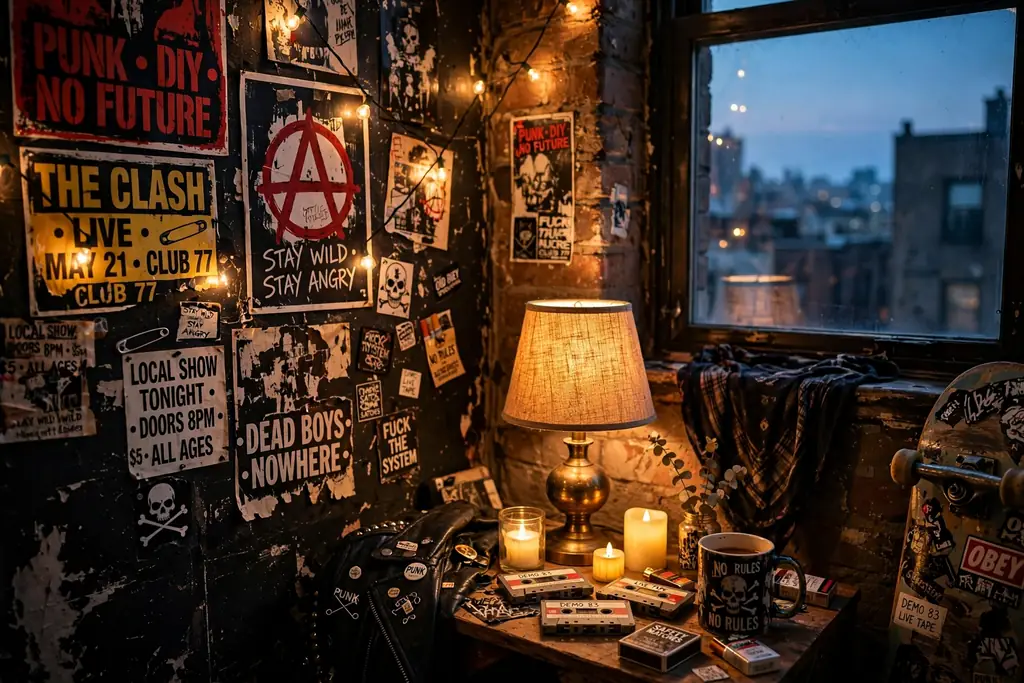
Punk rooms often go too dark in winter, so layer the light instead of relying on one ceiling fitting. Combine warm string lights along a shelf, a small table lamp with a warm bulb beside the chair, and battery or plug-in LED candles on the trunk table or the mantel. Warm light softens black walls and leather, makes posters readable in the evening, and gives the room a cozy seasonal feel without changing any decor.
Keep real candles away from curtains, bedding, and posters, and use LED candles where a flame would sit near fabric. Put string lights on a timer so they switch on at dusk without thinking about it, and keep one brighter task light for reading or sewing so the cozy layers never make the room impractical. Dimmer plugs on lamps let you shift the room from bright daytime work to evening glow in one move.
31. Swap Throws and Cushions for the Season
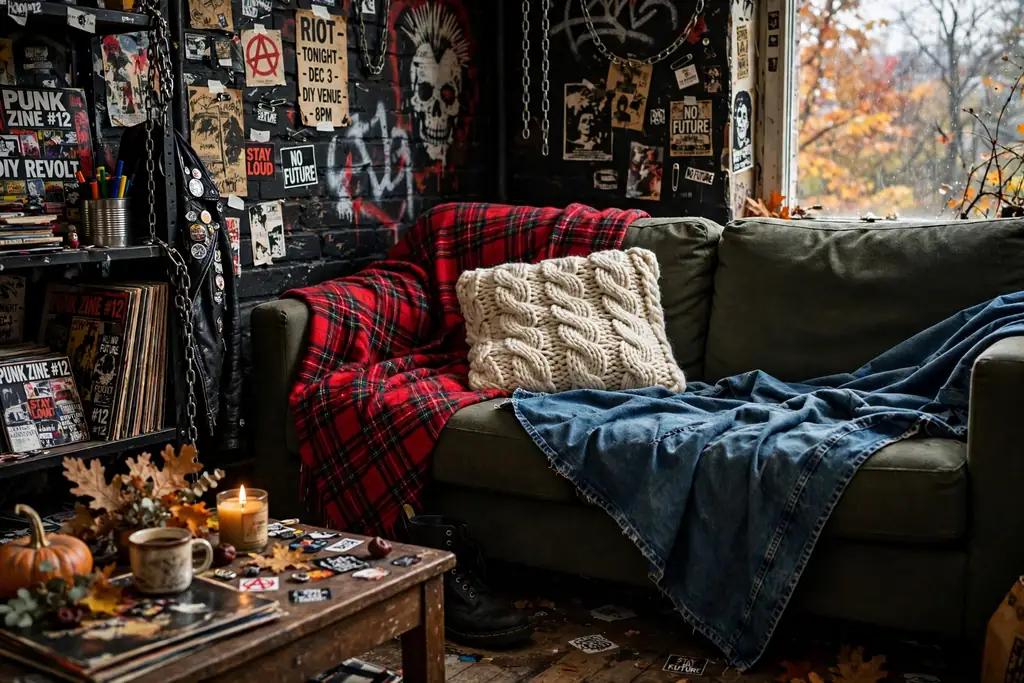
The cheapest seasonal update in a punk apartment is a throw and cushion swap, not new furniture. In autumn, bring out the plaid throw, the patched denim blanket, and a chunky knit cushion; in spring, swap them for lighter black cotton and a single red accent cushion. Store the off-season set in the trunk coffee table (Idea 21) so the swap takes ten minutes and costs nothing new.
Keep a small box of seasonal extras with the throws: felt leaves for the safety-pin garland, a darker table runner, and the autumn gig tickets for the cork board. Rotating textiles this way keeps the room feeling current through the year, and it stops the punk look from feeling frozen in one season. Wash throws before storing them so they come out fresh for the next swap.
32. Run a Rotating Poster Swap Each Season
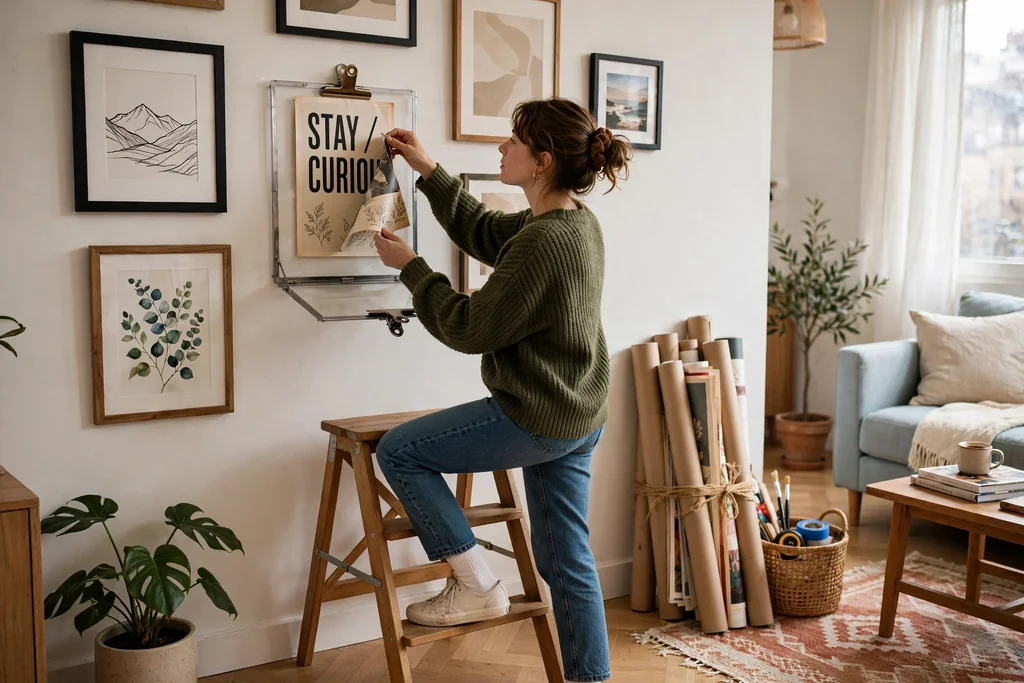
A rotating poster system is the seasonal update that ties this whole list together. Keep the gallery wall frames and ledges fixed, but change the posters inside them four times a year: darker, moodier prints for autumn and winter, brighter gig posters for spring and summer. Store spare posters flat in a portfolio or rolled in a tube, and note the season on the back of each one so the swap takes minutes.
Plan the swap around the posters you already own before buying new ones, and let one or two favorites stay up all year as anchors. A seasonal swap keeps the apartment feeling fresh without new holes, new furniture, or new spending, and it gives visitors something new to notice each time they come round. It also makes the room yours in a way a fixed gallery never quite manages.
Conclusion
A punk apartment works best when it is bold, personal, and easy to undo. Start with one poster wall, add thrifted leather, plaid, and metal in small doses, and keep every fixing removable so the lease stays safe. Then layer in the cozy seasonal details: warm light, heavy throws, and a poster swap that marks the change of season. The result is a small space with real attitude that still feels warm on a dark evening, and every piece in it can move with you to the next apartment. Save this list on Pinterest, pick your first three ideas this weekend, and build the room around the music and the posters you already love.
FAQs
How can I decorate a punk apartment without losing my deposit?
Use removable fixings throughout: adhesive strips rated for the weight, clip frames, tension rods, freestanding furniture, and peel-and-stick panels tested on a small area first. Avoid nails, screws, and paint unless your lease allows them in writing, and photograph the walls when you move in so you have a record of their original condition. Keep heavy items on freestanding shelves rather than wall fixings, and remove adhesive products slowly following the maker’s steps when you move out.
What colors work best for punk apartment decor?
Black is the base, with red, white, and silver as the classic accents, plus plaid in red, green, or black and white checkerboard for pattern. Keep the palette to three or four colors across the room so the look reads as deliberate rather than chaotic, and let one strong pattern, such as plaid bedding or a checkerboard rug, carry each area. Pale walls or a single black accent wall keep small rooms from feeling too dark.
Where can I find punk decor on a small budget?
Thrift shops, charity shops, secondhand markets, and your own closet are the best sources: old jeans for patchwork, band tees for framing, crates for shelving, and trunks for tables. DIY projects such as collage boards, stencil canvases, studded cushions, and safety-pin trim cost very little and look more personal than bought decor. Buy new only for items where safety matters, such as fixings rated for the weight they hold and LED lights with proper plugs.
How do I keep a small punk apartment from looking cluttered?
Give every collection one home: posters on one wall, records on ledges or in crates, badges in a shadow box, and jackets on one rail. Leave breathing space on shelves and one empty stretch of wall, and repeat the same few colors so different objects feel connected. If a surface fills up, rotate items into storage in the trunk table rather than adding another shelf, and use the seasonal poster swap to change the room without adding to it.
Can punk decor work in a small studio apartment?
Yes, if you scale it to zones rather than spreading it everywhere. Use one poster wall as the focal point, one statement rug to anchor the seating area, and one leather chair or trunk as the furniture anchor, then keep the rest of the room plain. Freestanding and modular pieces such as crate shelves and pipe shelving suit studios because they divide space without building walls, and layered curtains and warm lighting keep a single room feeling cozy at night.
How do I make a punk apartment cozy for autumn and winter?
Layer warm light, heavy textiles, and plaid: string lights and LED candles for glow, a patched denim throw and a plaid blanket for the sofa and bed, and layered curtains to cut draughts. Swap in darker posters and autumn gig tickets on the boards, and keep one reading corner with a lamp and a throw as the warmest spot in the room. Cozy layers work best against punk’s hard edges, since leather, metal, and black walls look warmer once soft textures and warm light join them.