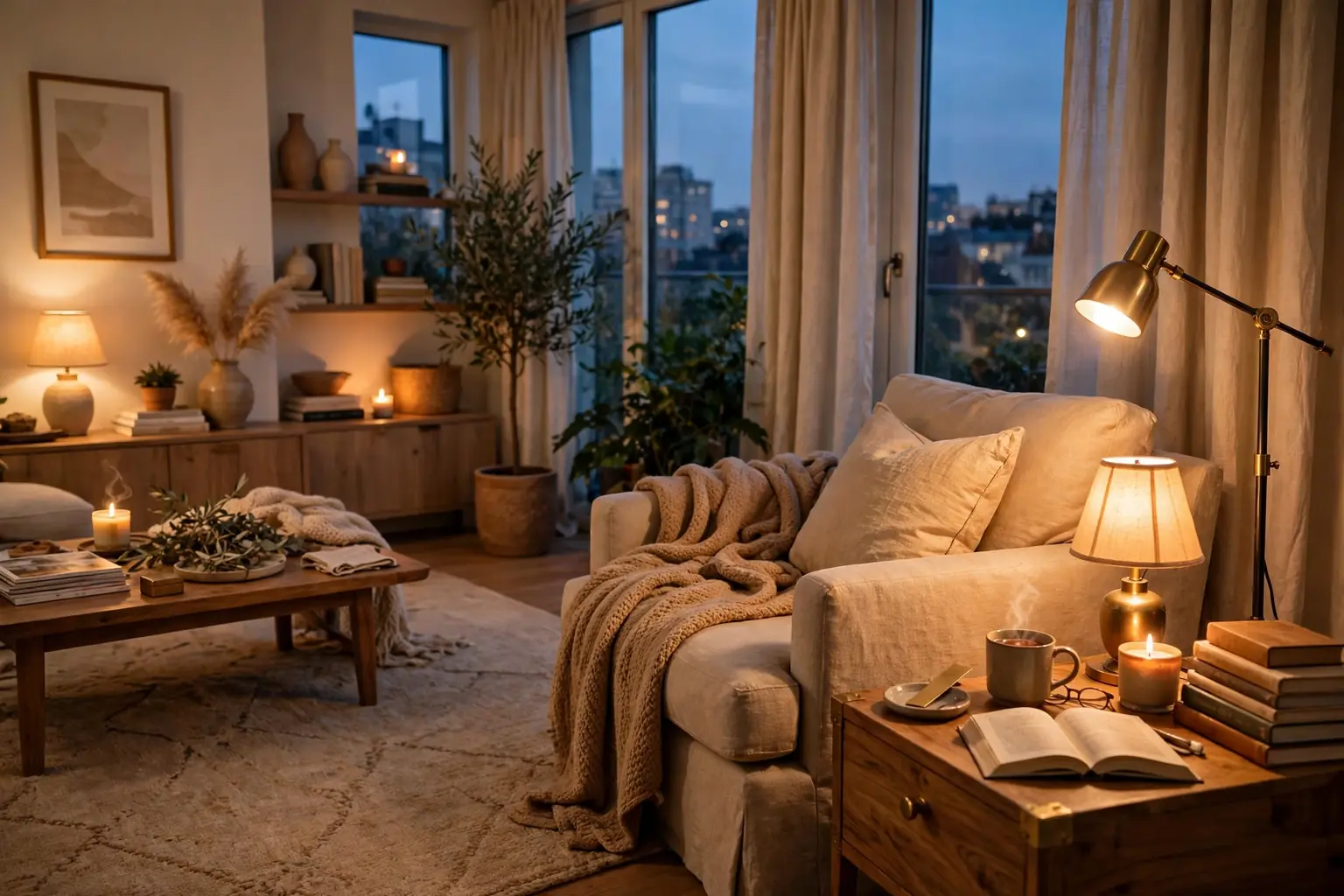
Luxury in a small apartment rarely comes from one expensive piece. It comes from warm light, soft layers, clear surfaces, and a few well chosen details that make daily life feel cared for. These luxury apartment decor ideas are made for renters and modest budgets: most need no drilling into masonry, no permanent change, and no matching set. Pick the ideas that suit the room you use most, start with light and texture, and leave room for the things you actually live with, from books and blankets to a favorite mug by the chair.
Key Takeaways
- Start with layered, warm lighting, because light sets the mood more than any single object.
- Use large, soft layers: a rug that fits the seating area, curtains hung high and wide, and bedding or cushions with varied texture.
- Keep surfaces calm with hidden storage, a tray to gather small items, and breathing space on shelves.
- Repeat one warm metal or one wood tone in small doses, rather than filling every surface with shine.
- Let the apartment look lived in: books in use, a plant that is cared for, fresh flowers when you can, and a chair that invites sitting.
1. Layer lamps for warm evening light
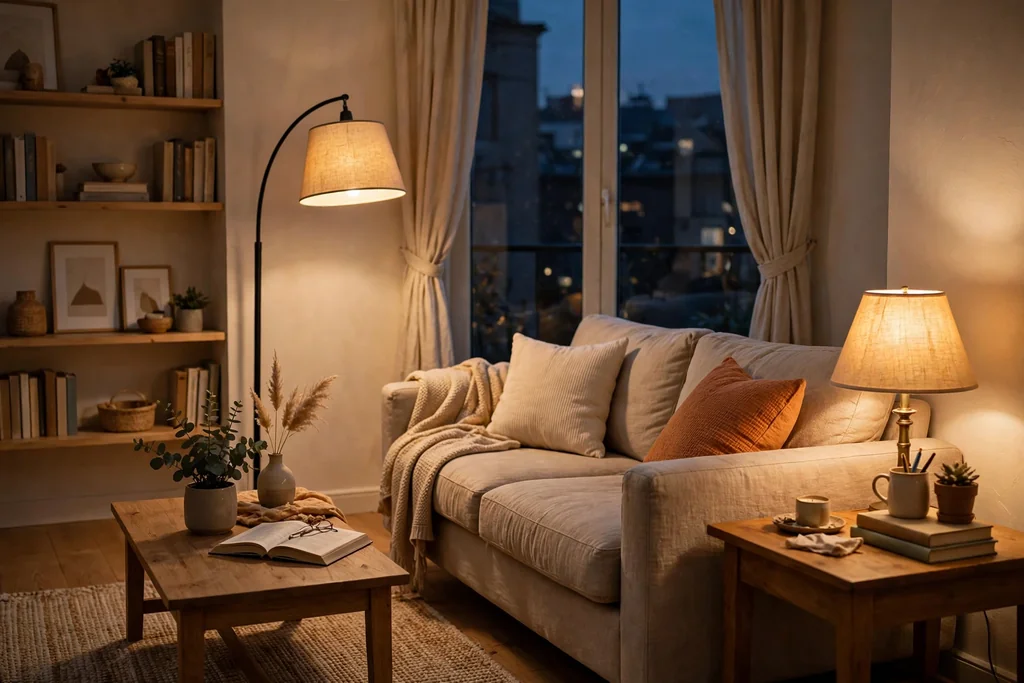
Overhead light alone can make a small apartment feel flat and cold. Instead, use three points of light at different heights: a floor lamp beside the sofa, a table lamp on a side table or shelf, and a small lamp or candle style light in a corner. Warm toned bulbs help the room feel calm in the evening, and a plug in dimmer or a lamp with a dimmer switch lets you lower the light for reading or conversation without changing any wiring.
Place lamps where you actually sit, read, or cook, not just where a socket happens to be. A lamp beside the sofa gives reading light without glare on a screen, while a lamp on a console near the door makes coming home feel welcoming. If a room has only one socket in a useful spot, a short, tidy power strip hidden behind furniture can serve two lamps, provided cords stay clear of walkways and are not run under rugs.
2. Lean a large mirror near a window
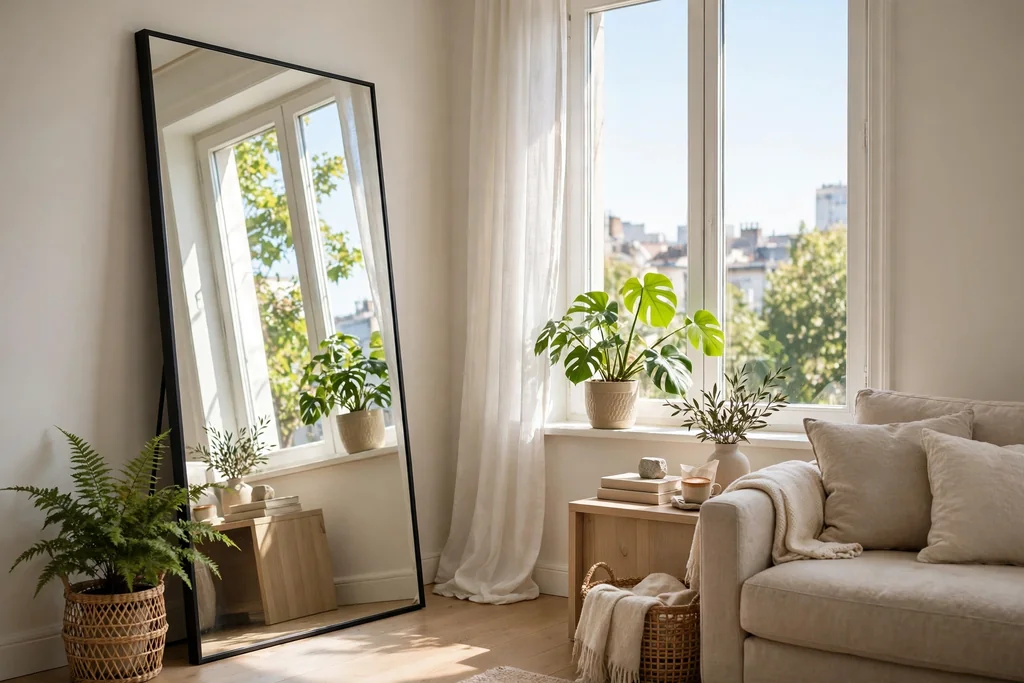
A large mirror placed near a window can bounce daylight deeper into a small room and make a wall feel wider. Leaning a full length mirror against a wall is often renter friendly, since it needs no heavy fixing, but it must stand on a level floor, sit against a stable wall, and stay clear of door swings and busy walkways. In a narrow hall or bedroom corner, a leaning mirror also gives a practical place to check an outfit before leaving.
Angle the mirror so it reflects a window, a plant, or a piece of art, rather than a blank wall or a cluttered corner. That reflected view is what adds depth. If the mirror catches direct sun at one time of day, shift it slightly or add a sheer curtain to soften the glare. A simple frame in wood or warm metal keeps the look calm, and one large mirror usually works better in a small room than several small ones competing for attention.
3. Hang curtains high and wide
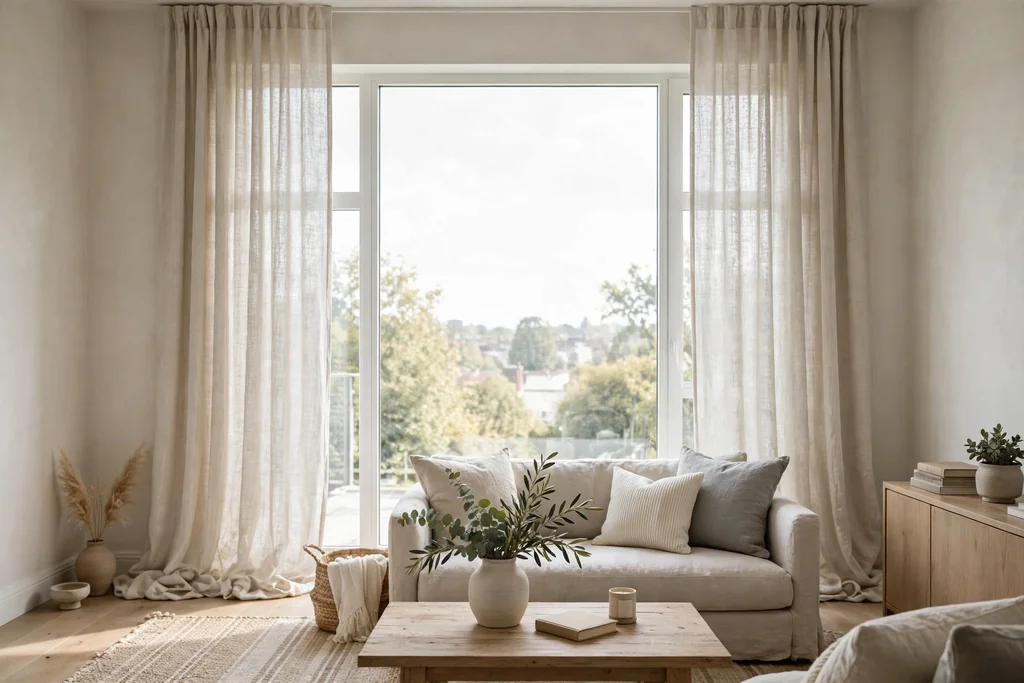
Curtains hung close to the ceiling and wider than the window frame make a window look taller and let more light in when they are open. Use a tension rod inside the frame or a removable hook system if drilling is not allowed, and check the weight of the fabric against the fixing you choose. A linen look fabric in a soft neutral drapes well and filters light, while a heavier outer layer can be added in a bedroom for privacy and better sleep.
Let the curtains fall to just above the floor, rather than pooling or stopping halfway down the wall, so the room looks finished and the fabric stays clean. Keep the color close to the wall color for a calm effect, or choose one warm tone from the rug or art to tie the room together. In a small room, plain fabric usually reads as more polished than a busy pattern, and it is easier to pair with cushions and throws that change with the seasons.
4. Anchor the seating area with a large rug
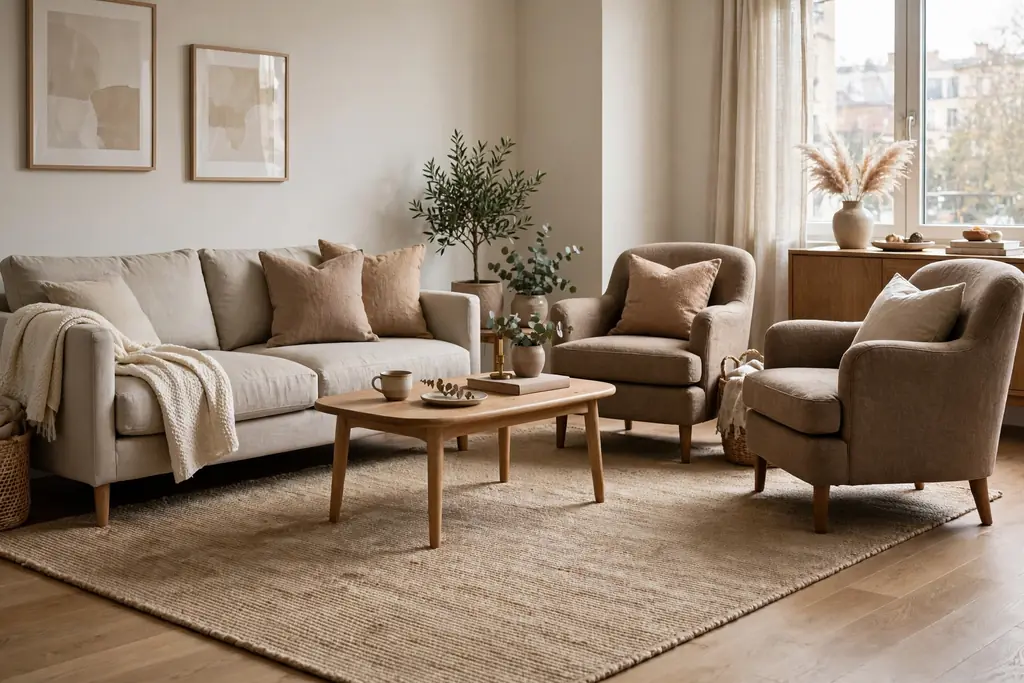
A rug that is large enough for the front legs of the sofa and chairs to sit on it will pull a seating area together, while a rug that is too small can make the same furniture look scattered. Measure the seating zone before choosing, and leave a clear border of floor around the rug so the room still breathes. A low pile rug is easier to clean in a small apartment, and a rug pad underneath keeps it in place and adds softness underfoot.
Choose a color that can live with daily use: a warm neutral, a soft pattern, or a tone drawn from the art on the wall. The rug does not need to match the cushions exactly. It needs to ground the furniture and add texture that bare floors lack. If the apartment has a mix of floor types, one rug in the main sitting area is often enough, and a smaller rug by the bed or door can echo the same tone without repeating the same pattern everywhere.
5. Build a gallery wall with one large piece
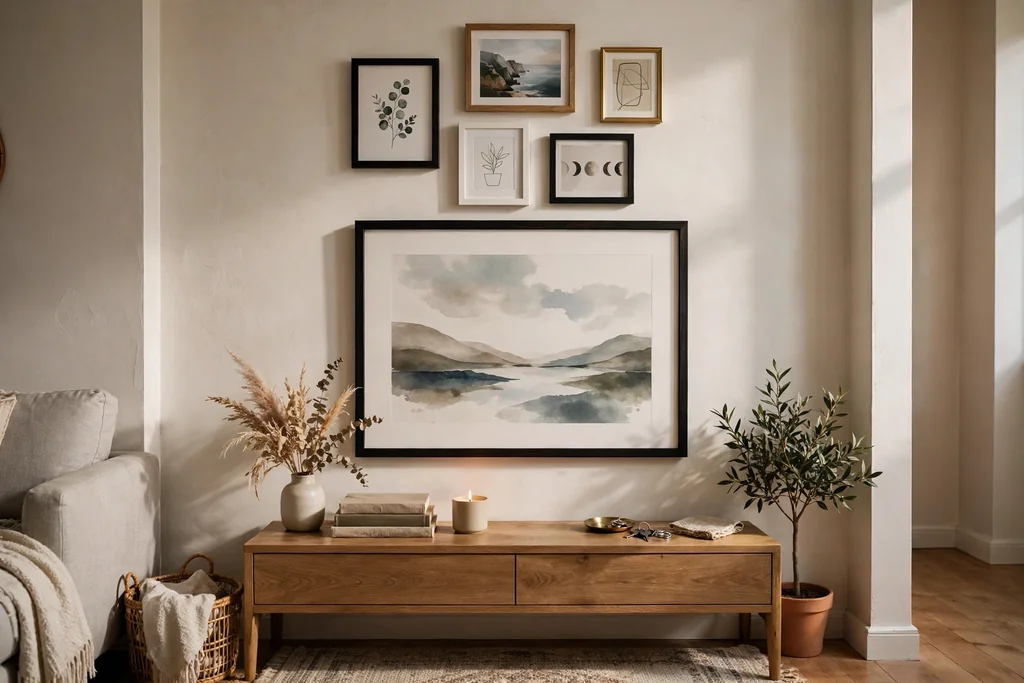
A gallery wall feels considered when one larger piece leads the arrangement and smaller frames support it, rather than many equal sized frames competing. Start with the large piece at eye level, then add two or three smaller works around it, leaving even gaps between frames. Prints, photographs, and textile art can sit side by side if they share one frame tone or one color that repeats across the group.
Use removable picture hanging strips rated for the frame weight where drilling is not allowed, and check the wall surface first, since strips do not suit every finish. Lay the arrangement on the floor first and photograph it, so you can adjust spacing before anything goes on the wall. A gallery wall above a sofa, console, or desk works best when the total width is a little narrower than the furniture below it, which keeps the grouping feeling anchored rather than floating.
6. Layer bedding like a hotel bed, then soften it
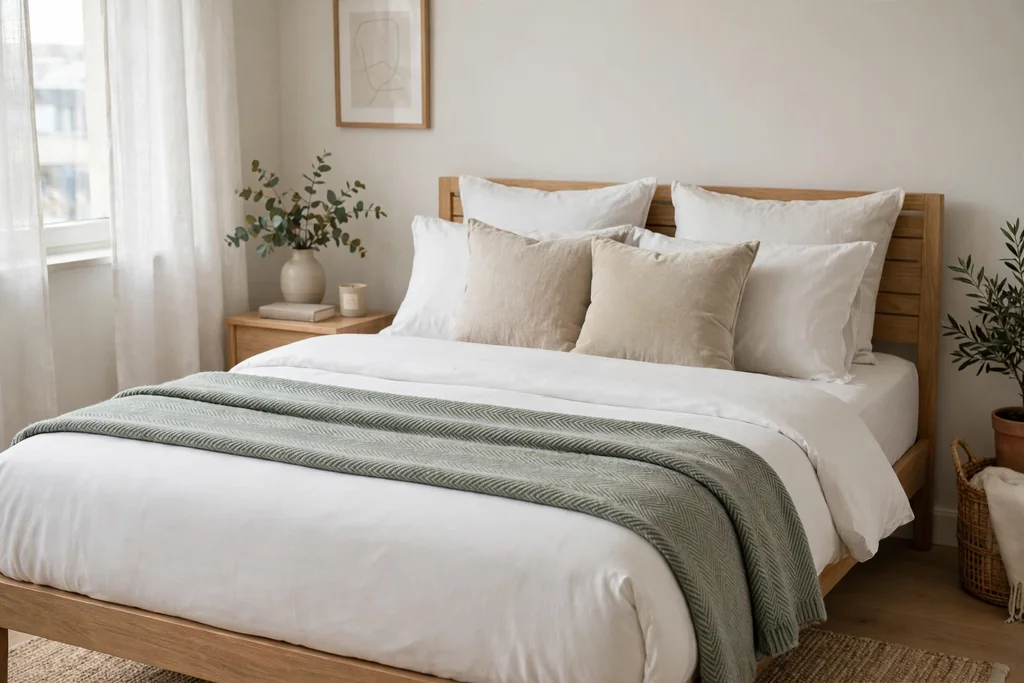
Start with clean, well fitted sheets, add a light duvet or cover, then fold a second blanket or quilt across the lower third of the bed. That layered look reads as hotel quality, but it stays welcoming when the top layer is soft and a little rumpled rather than pulled tight. A pair of sleeping pillows plus one or two larger square pillows gives structure at the head of the bed without turning bedtime into a daily rebuilding task.
Keep the palette calm: white or soft neutral sheets, one warm blanket tone, and a cushion or two in a texture you like, such as cotton, linen, or a soft knit. Texture matters more than pattern here, because it is what you feel when you sit on the bed. Shake out the layers each morning, straighten the fold, and leave the bed made but not stiff, so the room feels cared for and still easy to live in.
7. Add removable upholstered headboard panels
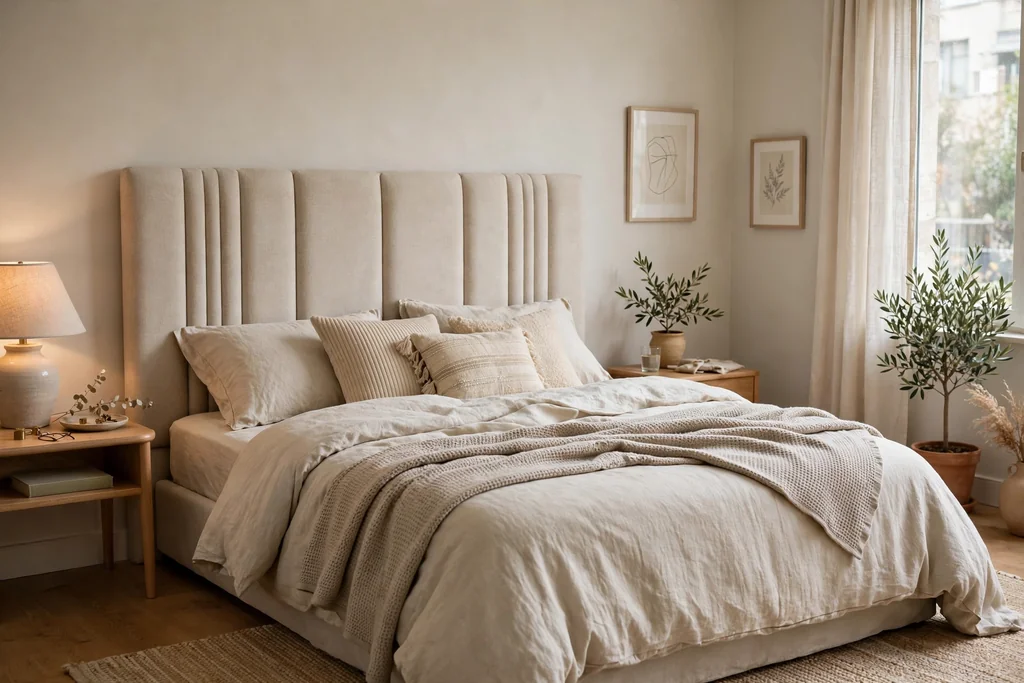
If a rental bed has no headboard, or the wall behind the bed feels bare, upholstered panels can add softness without a permanent fixture. Some panels hang from a rail or hook system, others attach to the bed frame, and some simply lean against the wall behind the pillows. Choose a fabric that can be spot cleaned, and check the fixing method against your lease and wall type before buying.
Panels work best in a calm color that pairs with the bedding, such as oatmeal, warm grey, or a soft sage, rather than a loud print that fights the cushions. Two or three panels across a double bed give a tailored look, while a single wide panel suits a smaller room. Keep the top of the panels a little above pillow height, so sitting up to read feels supported and the bed looks finished even when the pillows are stacked for the day.
8. Make a sculptural reading chair corner
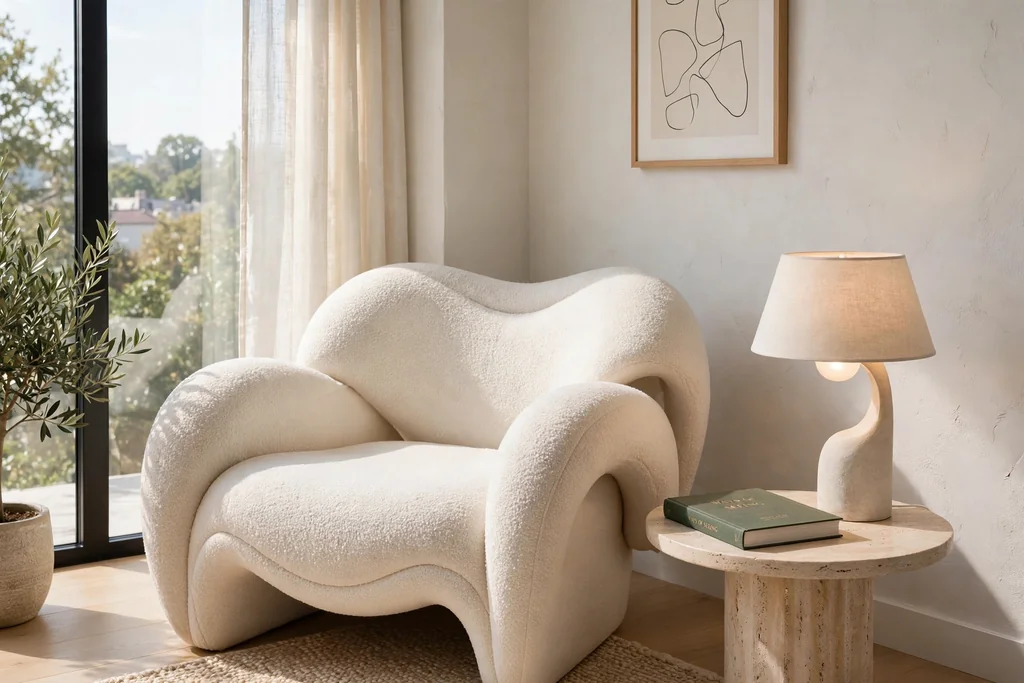
One comfortable chair with a clear shape can become the luxury corner of a small apartment, even when the rest of the room stays simple. Look for a chair you can sit in for an hour: good seat depth, support for the lower back, and arms at a height that lets you hold a book or cup without hunching. A curved back, a rounded boucle style fabric, or a classic wing shape each gives a distinct silhouette, so choose the shape that suits the room rather than copying a look from a photo.
Place the chair near a window or a lamp, add a small side table for a book and a drink, and keep a throw folded over one arm. That trio, chair, table, and light, is what makes the corner usable, not just decorative. If floor space is tight, a chair with slim legs and an open base will feel lighter than a bulky recliner, and it can move to the living area when guests visit.
9. Style bookshelves with breathing space
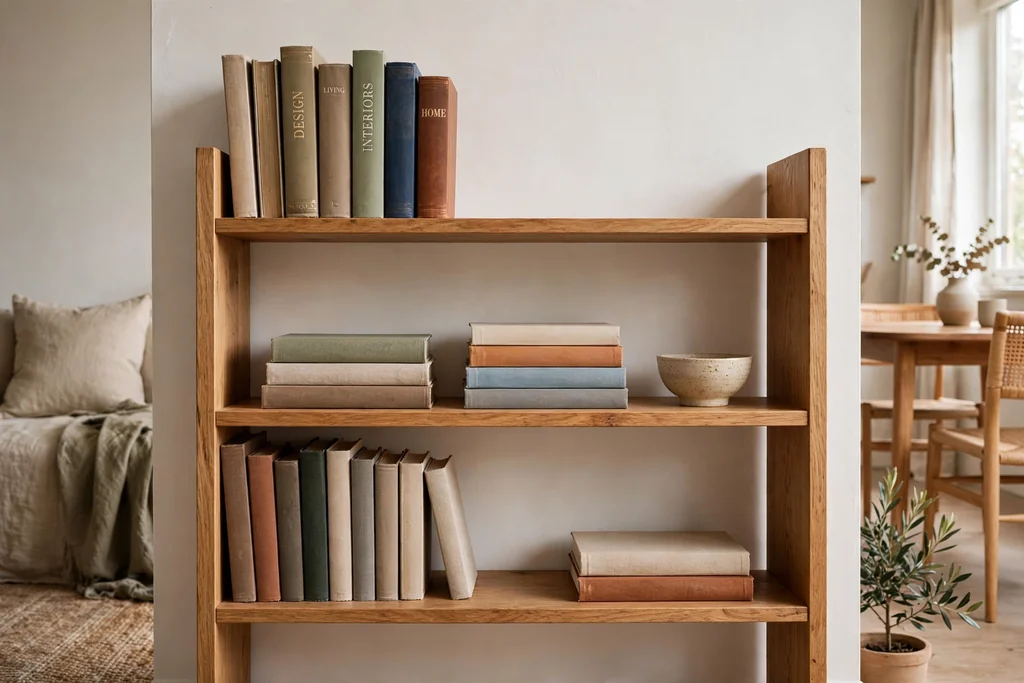
A bookshelf feels luxurious when it is edited, not full. Keep the books you read and love, group them in upright rows and a few horizontal stacks, and leave some empty space on each shelf so the eye can rest. A small ceramic bowl, a framed photo, or a plant can sit beside a stack, but each shelf needs only one or two objects besides books. The same grouping approach in this guide on how to style open shelves helps a shelf stay tidy instead of turning into storage that creeps outward.
Sort by a simple rule that you can keep up, such as grouping by size or by subject, and put heavy books low. If a shelf holds items you use daily, keep them at hand height and put display pieces higher. Step back across the room after styling: if one shelf looks packed while another looks bare, move a stack or remove one object rather than adding more. A shelf that breathes makes the books themselves look better.
10. Gather the coffee table on a tray
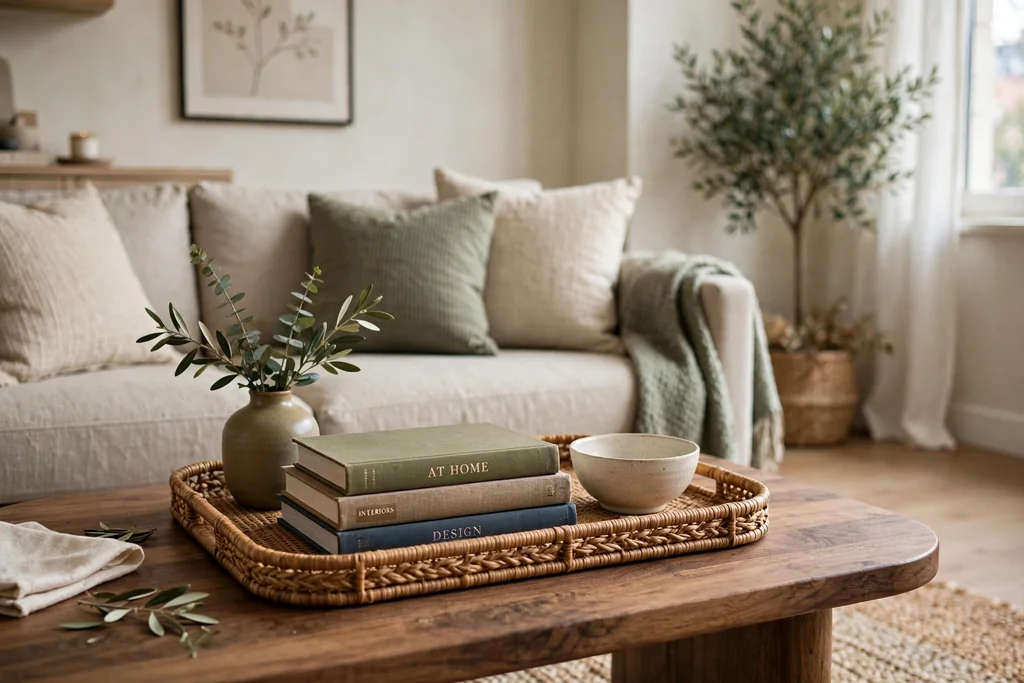
A tray turns a coffee table from a scattered surface into one intentional arrangement. Choose a tray that leaves room on the table for cups and a book, then add three kinds of items at different heights: something low and flat, such as a book or magazine stack, something rounded, such as a small bowl, and something with height, such as a short vase or candle holder. Keep the total grouping compact so the table stays usable for daily life.
Use materials that echo the room, such as wood, woven fiber, or warm metal, and keep the tray itself easy to lift so you can clear the table quickly for a meal or a game. Rotate one item with the seasons, such as fresh greenery or a different book, rather than replacing the whole arrangement. A tray also protects the table surface from rings and scratches, which matters in a rental where the furniture may need to last.
11. Dress the dining table for everyday use
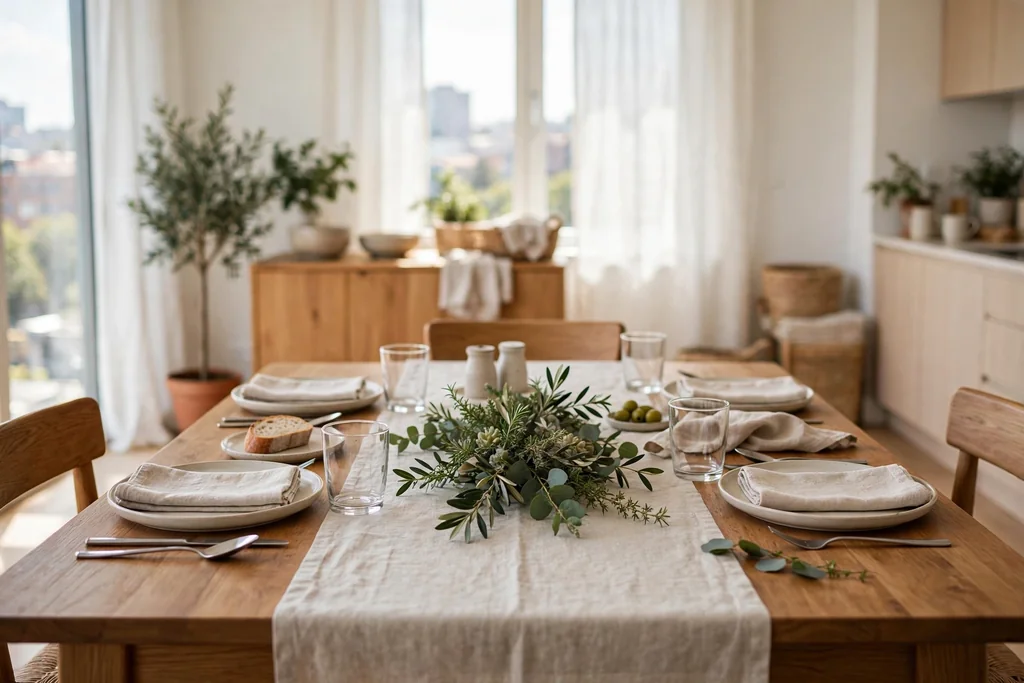
A dining table looks welcoming when it is dressed for real meals, not only for guests. Start with a washable runner or placemats in a soft neutral, add a low centerpiece that does not block sightlines, and keep the rest of the table clear for serving dishes. A short vase with greenery, a shallow bowl, or a pair of candle holders at a safe distance from fabric gives the table a finished feel without making dinner awkward. These everyday dining table decor ideas show how one anchor piece and open sightlines keep a table practical.
Choose linens you can wash easily, since a table that is hard to clean will soon be left bare. Keep chairs pushed in, wipe the surface after meals, and return the centerpiece to the middle so the table is ready for the next meal. That small reset, done daily, is what keeps a dining area feeling cared for, and it costs nothing beyond a few minutes.
12. Style one kitchen shelf or counter run
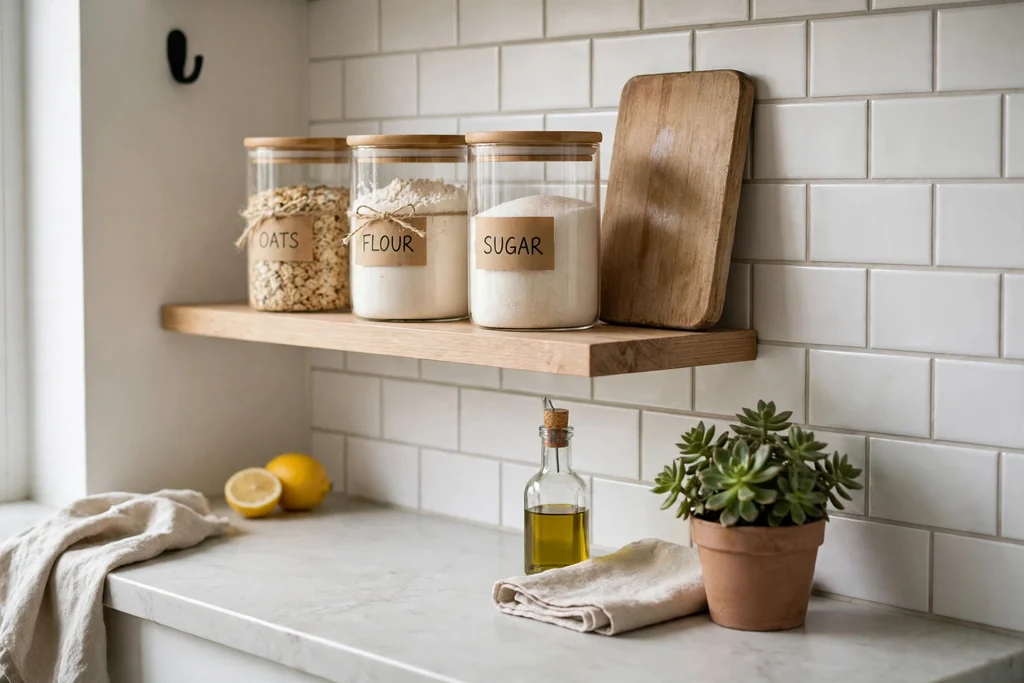
In a small apartment kitchen, styling one shelf or one short run of counter is more effective than decorating every surface. Choose matching canisters or jars for items you use often, such as coffee, tea, or grains, and place them in a row with space to reach each one. Add a wooden board leaning against the wall, a small plant in a pot that suits the light, and one or two everyday items in a material that repeats elsewhere, such as ceramic or wood.
Keep the working counter near the stove and sink clear for cooking, and do not place decor where it blocks ventilation or sits close to heat. Decanting dry goods can make a shelf look calm, but label jars if the contents are not obvious, and keep anything perishable in proper sealed storage. A single styled run, kept clean and useful, makes the whole kitchen feel more considered without adding clutter to a small work space.
13. Set a welcoming entry console vignette
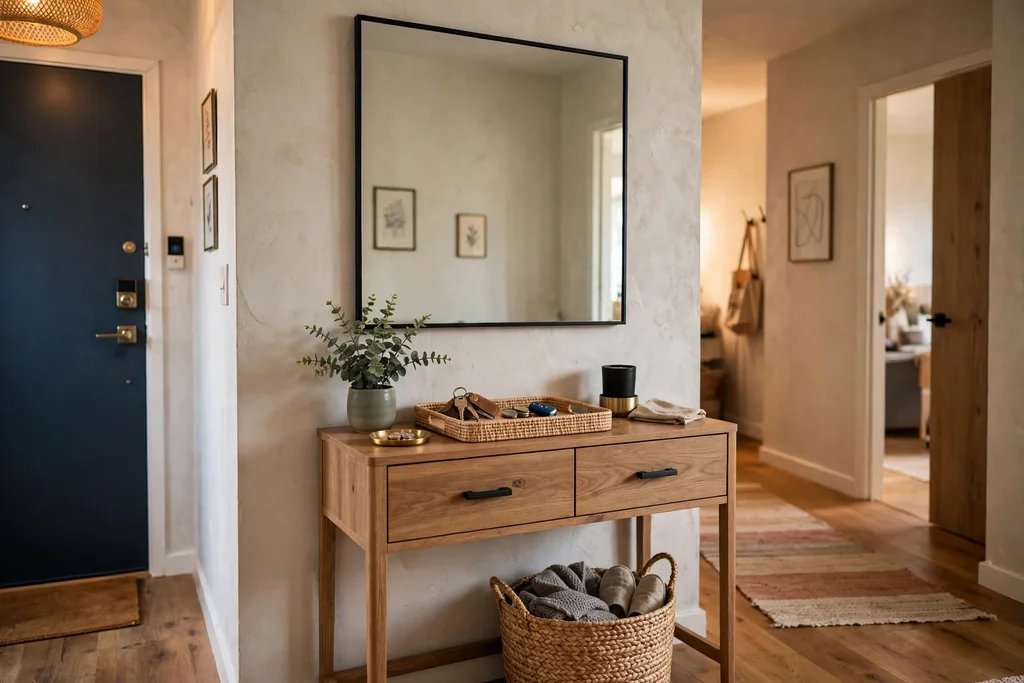
The entry is the first impression of an apartment, and a small console or narrow shelf can set a calm, welcoming tone. Place a tray or small dish for keys, a mirror or piece of art above, and a basket or hook nearby for bags. A small vase with greenery or a candle style light adds warmth, but keep the surface mostly clear so mail and keys do not pile up around the decor.
If there is no room for a console, a wall shelf at hand height plus a hook rail can do the same job in a narrow hall. Keep the entry light warm and easy to switch on when coming home, and leave floor space clear for shoes in a tray or basket by the door. An entry that works for daily arrivals will look welcoming on its own, because it is tidy, lit, and ready to use.
14. Use warm metal in small, repeated touches
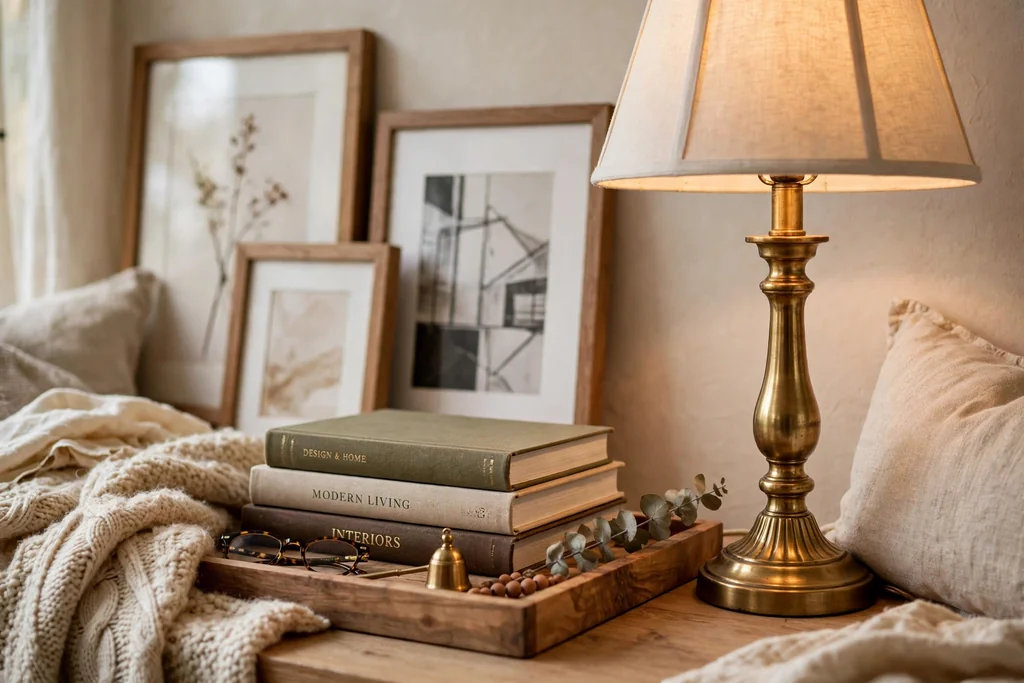
Warm metal, such as brass or brushed gold tone, adds a sense of polish when it appears in small doses across a room. A lamp base, two picture frames, a tray edge, or a planter rim can carry the tone, and repeating it two or three times ties the room together. The key is restraint: one metal repeated sparingly reads as intentional, while metal on every surface can feel busy and cold.
Pair warm metal with soft materials, such as wood, linen, and ceramic, so the shine is balanced by texture. In a kitchen or bathroom, a matching tap finish or cabinet pull can be part of the same story, but only change fixtures if your lease allows it and the original parts are kept safe for move out. If in doubt, keep metal to movable pieces, such as lamps, frames, and trays, which travel with you to the next home.
15. Give one statement plant a good planter
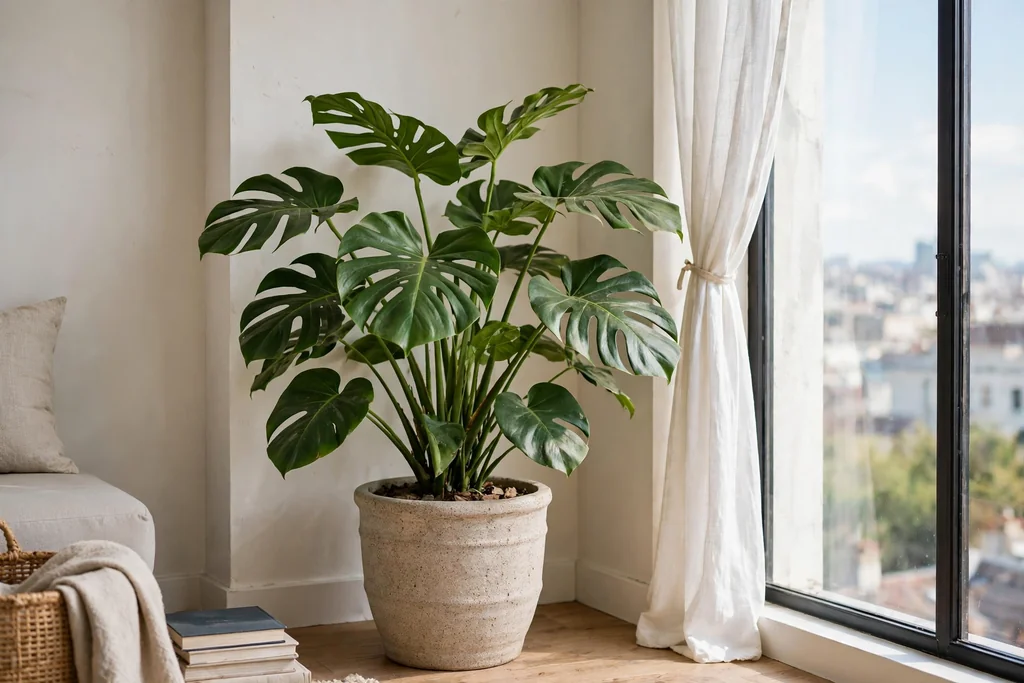
One large, healthy plant in a well chosen planter can do more for a room than several small plants scattered on every surface. Choose a plant that suits the light in your apartment, such as a tall leafy plant for a bright corner or a hardy trailing plant for a shelf, and check its care needs before buying. A ceramic, terracotta, or woven planter that fits the pot, with a saucer to protect the floor, will look far more polished than a plain nursery pot left on show.
Place the plant where it has room to grow and where you will notice it daily, so watering and care become part of the routine. Rotate it occasionally for even growth, wipe large leaves clean, and prune dead leaves promptly. A plant that is cared for adds life and softness to a room, while a struggling plant in a corner does the opposite, so start with one plant you can keep well and add more only when the first one thrives.
16. Turn the bathroom into a spa style reset
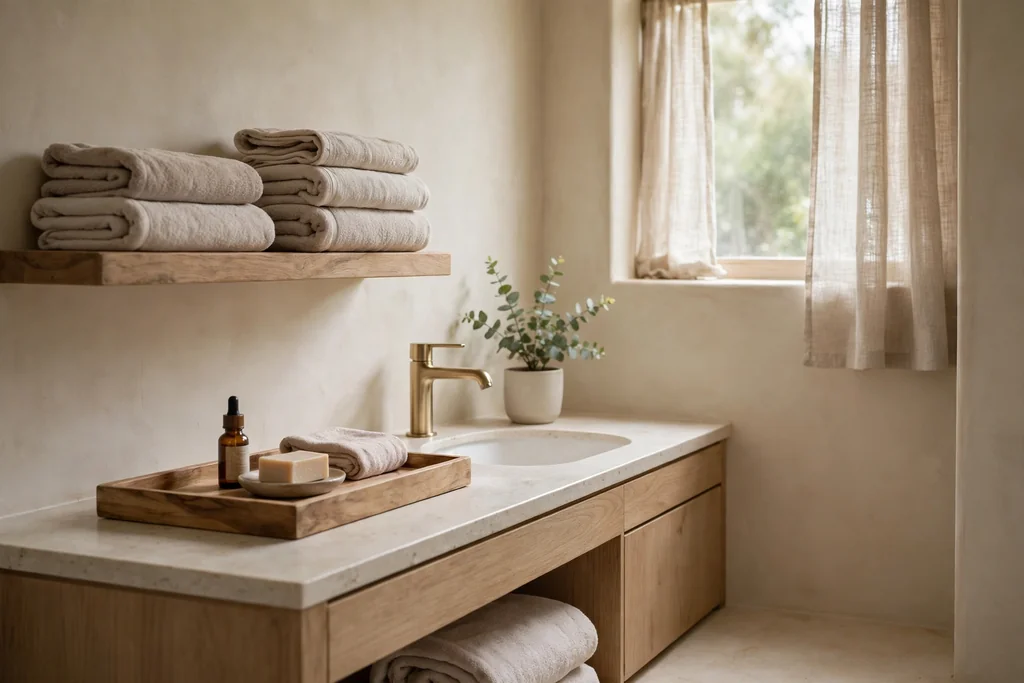
A small bathroom can feel like a spa with a few practical changes, none of which need renovation. Start with thick, clean towels in one soft color, rolled or folded neatly on a shelf or rail. Add a small wooden tray or stool beside the bath or sink for soap, a candle style light, and a small plant that likes humidity, and keep everyday bottles grouped in one basket so the counter stays clear.
Use a shower curtain or bath mat in a calm tone that matches the towels, and keep the mirror and taps clean so light reflects well. Scent can come from a simple diffuser or a bundle of greenery hung away from direct water, but keep scented items away from open flames and check for allergies in the household. The goal is a bathroom that feels calm when you step in, with everything you need in reach and nothing extra crowding the sink.
17. Hide everyday clutter in closed storage
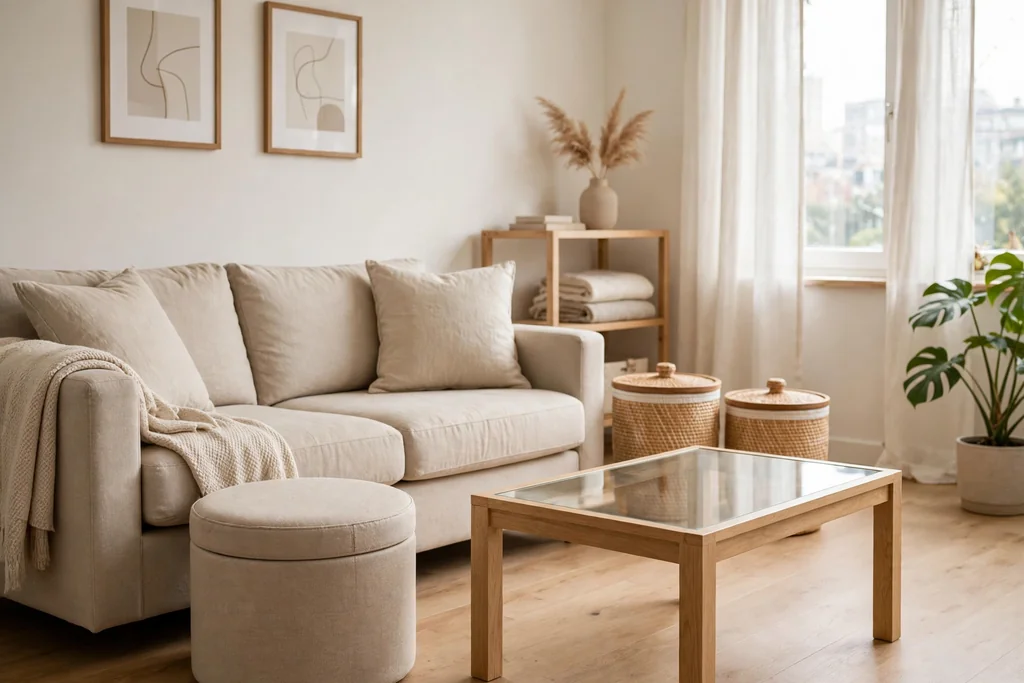
Luxury often looks like calm surfaces, and calm surfaces in a small apartment depend on closed storage. Use a storage ottoman for blankets and chargers, lidded baskets for toys or hobby supplies, and a cabinet or box inside a closet for paperwork and cables. When everyday items have a closed home, the open surfaces can hold only the few pieces you enjoy seeing, such as a book, a plant, or a framed photo.
Do a quick reset once a day: return items to their closed homes, wipe the main surfaces, and leave one surface, such as the coffee table or kitchen counter, mostly clear. That habit matters more than buying new storage, because even good baskets fill up if nothing leaves them. Measure doorways and closet openings before buying larger storage, and choose pieces that can serve two jobs, such as an ottoman that is also a seat or a bench that holds shoes by the door.
18. Layer cushions and a throw by texture, not by set
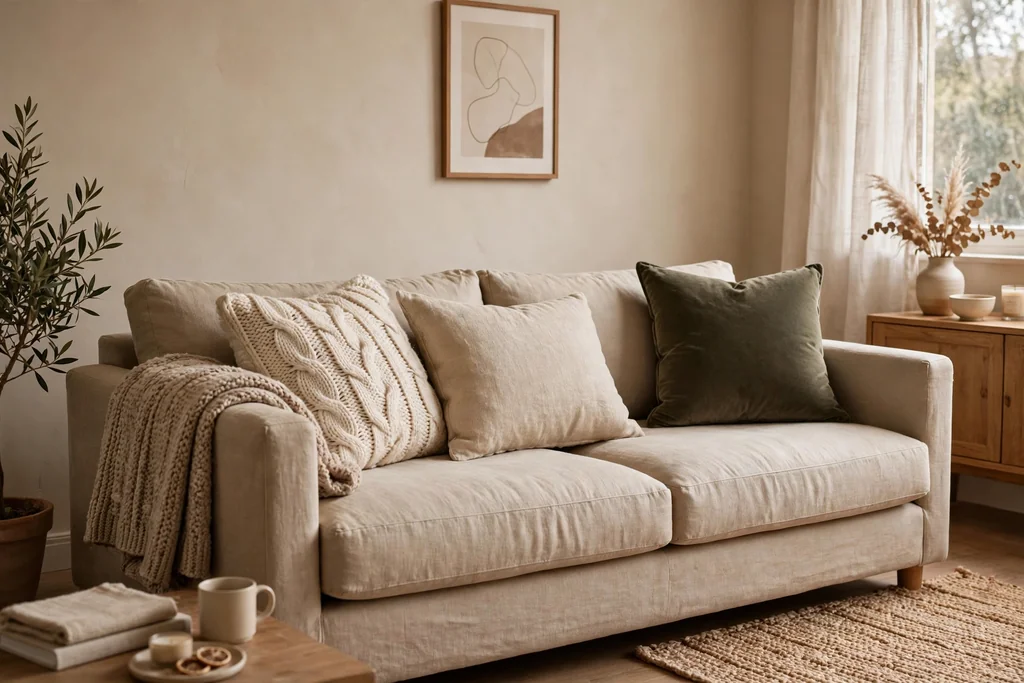
Cushions look most welcoming when they share a color family but differ in texture, rather than arriving as an identical set. Pair a smooth linen cushion with a soft knit, a woven cotton, or a velvet touch, in tones drawn from the rug, art, or curtains. Two or three cushions on a small sofa are usually enough, and a larger sofa can carry four if one is a plain, larger square that anchors the group.
Drape a throw over one arm or folded across a corner of the sofa, not spread flat over the whole seat, so the sofa still invites sitting. Choose a throw weight that suits the season, and wash covers regularly so they stay soft and clean. When cushions differ in texture but share warm tones, the sofa feels layered and lived in, and it is easy to swap one cushion for a seasonal color without redoing the whole room.
19. Layer scent gently through the rooms
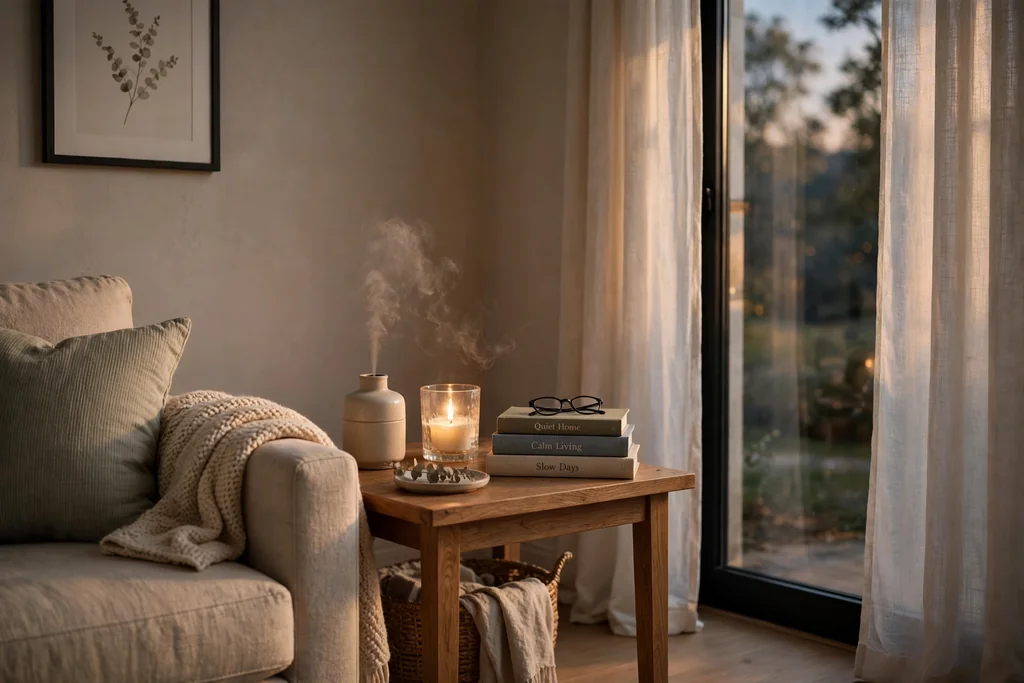
Scent is one of the quietest ways to make an apartment feel welcoming, and it works best when it is gentle and consistent. Choose one scent family for the main living area, such as warm wood, soft citrus, or clean linen, and use it in one or two forms, such as a candle or a diffuser, rather than several competing scents in one room. Place scent near the entry or living area, where guests notice it first, and keep it subtle enough that it is noticed on arrival rather than overpowering the room.
Follow safety basics: never leave a lit candle unattended, keep flames away from curtains, bedding, and plants, and consider flameless options in bedrooms or homes with children or pets. Ventilate the room regularly, and store scented products away from heat. A home that smells clean and calm, without a strong perfume in every corner, feels cared for in a way that decor alone cannot achieve.
20. Keep fresh flowers or greenery in one spot
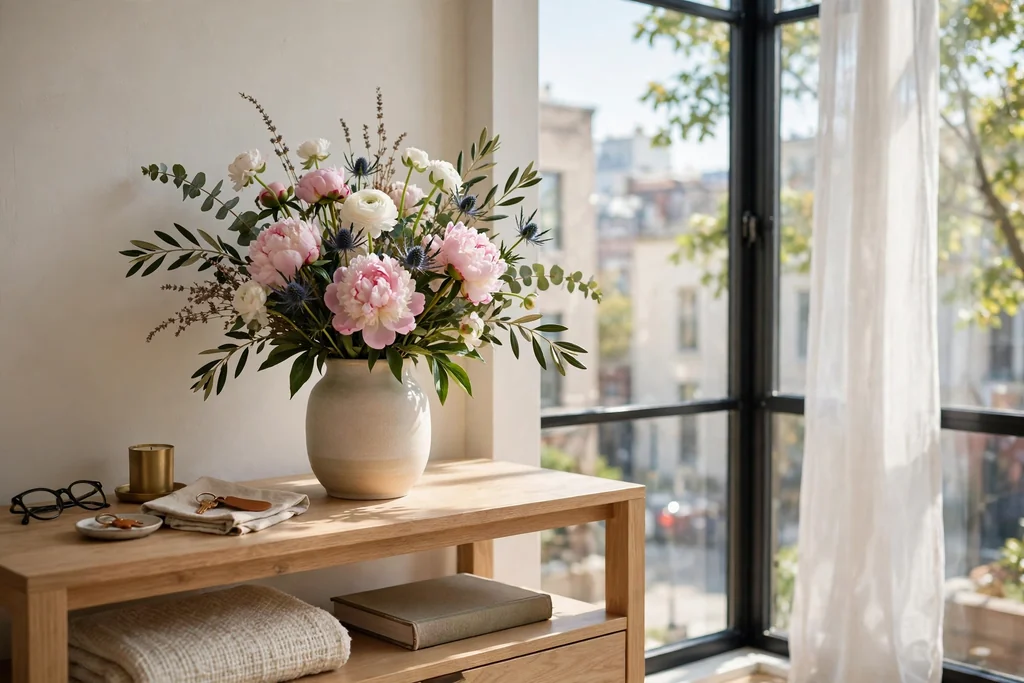
A single vase of fresh flowers or a bunch of greenery on a table, console, or kitchen counter adds life and color without filling the apartment with decor. Choose stems that suit the season and the vase you already own, trim them at an angle, change the water every couple of days, and remove faded stems promptly so the arrangement stays fresh. One good bunch, placed where you see it often, will be enjoyed more than several small arrangements that are hard to maintain.
If fresh flowers are not practical every week, a hardy green stem, such as eucalyptus style greenery or a branch from a garden plant where allowed, can last longer in a vase. Keep flowers away from food preparation areas and check plant safety if children or pets can reach them. The point is not a perfect florist arrangement, but a living detail that shows the home is tended, and that changes naturally through the year.
21. Make a tiny balcony or window ledge feel considered
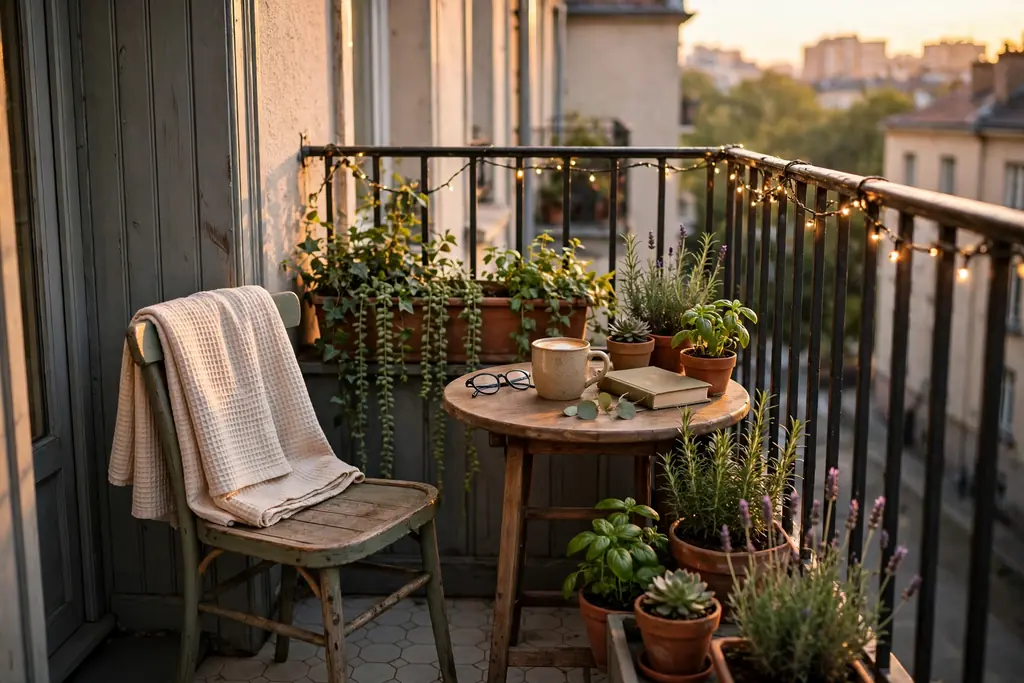
Even a tiny balcony, Juliet rail, or deep window ledge can become a small outdoor luxury with a few careful choices. Add one comfortable seat or a small bistro style chair if space allows, a small table or ledge shelf for a cup, and a planter or two that suit the sun and wind on that side of the building. A weather resistant cushion in a washable cover and a small outdoor light that is safe for the space make the spot usable in the evening as well as in daylight.
Keep the balcony floor clear and check building rules about what can be hung or placed on rails before adding anything. Store cushions indoors in wet weather, and choose planters with drainage and saucers so water does not stain the floor below. A tiny outdoor spot that is clean, planted, and easy to sit in will be used far more than a larger balcony filled with storage, and it gives the apartment a sense of extra room.
22. Carve out a small desk nook with good light
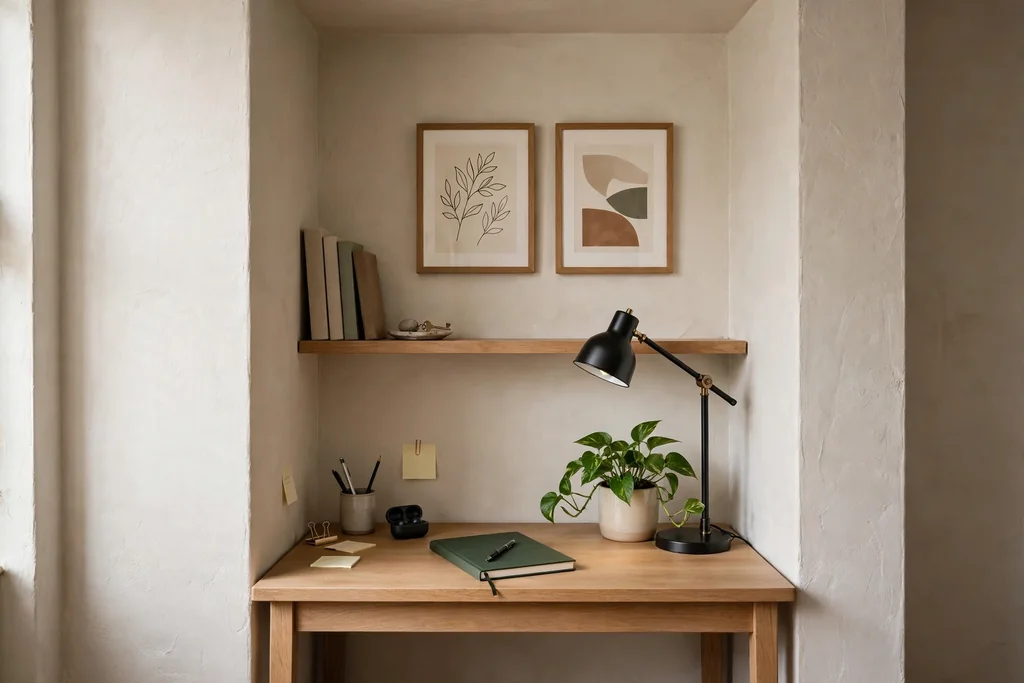
A small desk nook can feel like a luxury when it has good light, a comfortable chair, and closed storage for work items at the end of the day. Tuck a slim desk into an alcove, against a window wall, or at the end of a living room, and add a task lamp with warm light, a small shelf or drawer for supplies, and one piece of art or a plant to make the spot pleasant. Keep the desk surface mostly clear, with only the items for the current task in reach.
Position the desk so daylight falls from the side rather than directly behind a screen, which can cause glare, and add a curtain or blind control if the sun is strong at one time of day. At the end of work, close the drawer, stack papers in a tray, and leave the chair pushed in, so the nook blends back into the living space. That boundary between work and rest is what makes a small desk area feel considered, rather than like a workstation that has taken over the room.
Conclusion
A welcoming, lived in luxury apartment is not built in one shopping trip. It is built by layering warm light, soft texture, and calm surfaces, then keeping the pieces you use every day in good order. Start with the room you spend the most time in, add one idea at a time, and live with each change for a week before adding the next. Save this post on Pinterest if you want to return to these ideas as your apartment changes, and choose the details that make your home feel both polished and truly yours.
Frequently Asked Questions
How can I make a rental apartment look luxurious without permanent changes?
Use movable and removable pieces: layered lamps, a large rug, curtains on a tension rod or removable hooks, leaning mirrors, upholstered panels that hang or lean, and trays, baskets, and planters that travel with you. Check your lease and wall type before hanging anything heavy, keep original fixtures safe if you swap a pull or shade, and focus on light, texture, and tidy surfaces, which change a room more than any single permanent alteration.
What is the first luxury apartment idea to try on a modest budget?
Start with lighting and one soft layer. Add a warm table or floor lamp beside the seat you use most, and a throw or cushion in a texture you enjoy. Those two changes affect how the room feels every evening, cost less than replacing furniture, and work in almost any small apartment. A rug is the next step if the floor feels bare, because it anchors the seating area and adds warmth underfoot.
How do I keep a small luxury apartment from looking cluttered?
Give everyday items a closed home, such as a storage ottoman, lidded baskets, or a cabinet, and keep open surfaces for a few chosen pieces only. Leave breathing space on shelves, use a tray to gather small items on a table, and do a short daily reset of the main surfaces. If a surface fills up again quickly, it usually needs more closed storage nearby, not more decor.
Can luxury decor work in a very small studio apartment?
Yes, if each piece serves a clear job and the palette stays calm. Choose furniture that can do two jobs, such as a storage ottoman or a desk that doubles as a console, repeat one warm metal or wood tone in small doses, and use mirrors, curtains hung high, and a large rug to make the main zone feel wider. Keep one corner for rest, one for work, and one clear walkway, so the studio feels zoned rather than crowded. The layout thinking in these small living room layout ideas scales well to a studio, because it starts with the main job of the room and clear routes through it.
What colors make a small apartment feel warm and luxurious?
Warm neutrals usually work best: soft white, oatmeal, warm grey, camel, and muted sage or clay as an accent. Add depth with texture, such as linen, wool, wood, and ceramic, rather than many bright colors at once. One warm metal tone and one wood tone, repeated sparingly, help the palette feel intentional. If you love color, use it in one place, such as art, cushions, or a throw, and keep the larger surfaces calm.
How often should I refresh apartment decor to keep it feeling lived in?
Refresh one small layer with the seasons, rather than redoing the room. Swap a throw or cushion cover, change the flowers or greenery, rotate art or books on a shelf, and update scent for the time of year. A short weekly tidy and a seasonal swap keep the apartment feeling cared for without constant buying, and they let the home change naturally as your routine and the light through the windows change too.