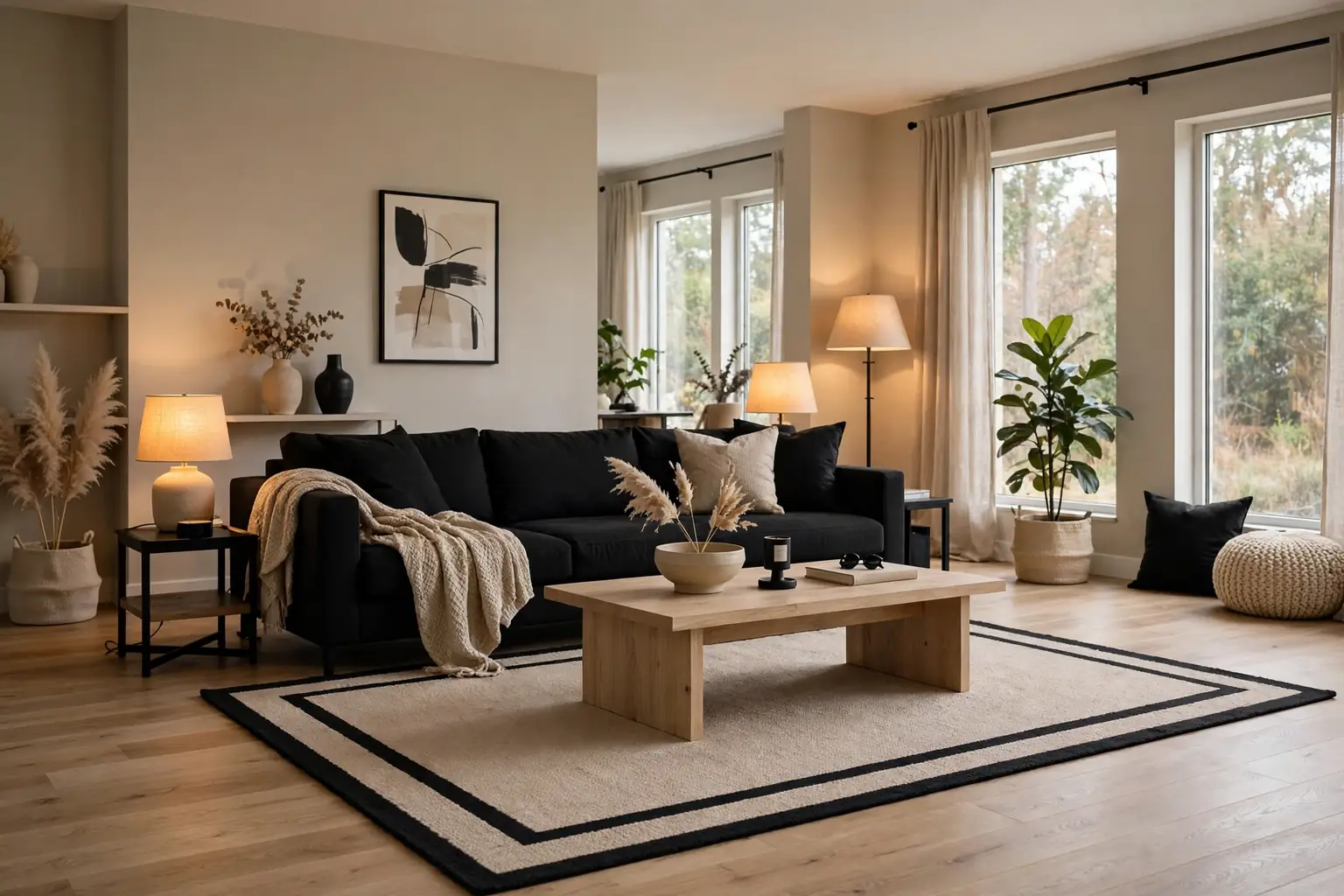
Black and beige is a pairing that looks simple and can go wrong fast. Too much black makes a room feel heavy and closed in, while too much beige can feel flat and unfinished. The rooms that get it right use beige for the large, light surfaces and black in clear, repeated doses: a sofa, a frame set, a table, a lamp. These 28 black and beige living room ideas show how to set that balance in rooms of different sizes and styles, from a bold black sofa wall to quiet details such as black piping on a beige sofa. Start with the biggest piece first, then repeat the darker tone two or three times around the room so it reads as a plan.
Key Takeaways
- Let beige carry the large surfaces: walls, the biggest rug, and often the largest sofa, so black can act as contrast instead of closing the room in.
- Repeat black at least three times, such as a sofa, a table, and frames, so one dark piece does not look like a mistake.
- Use texture to soften the contrast: linen, boucle, wool, leather, wood grain, and woven baskets all count as contrast here.
- Keep lighting warm and layered, since black absorbs light and beige reflects it, and the two need different handling.
- Test paint and fabric samples in daylight and evening light before committing, since black and beige both shift a lot between the two.
- In a small room, keep black slim and low, and let beige cover more wall and floor area.
1. Anchor the Room With a Black Sofa on Beige Walls
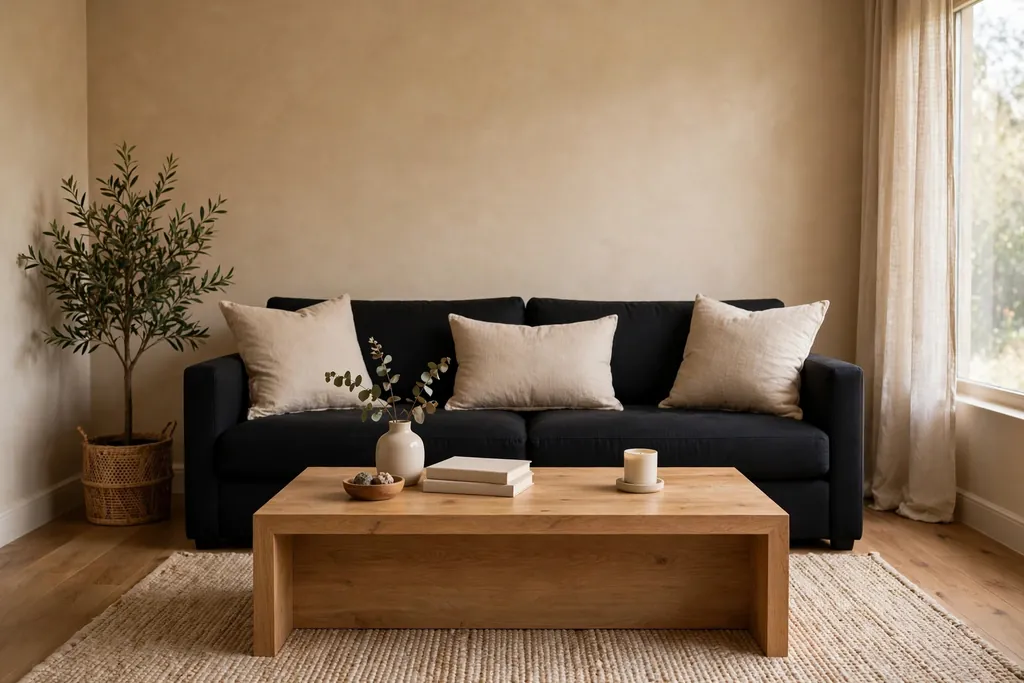
Put a black sofa against warm beige walls for the clearest version of this pairing. The beige keeps the room light, while the black sofa gives it a firm center that does not need much else to look finished. Keep the wall beige warm rather than grey beige, so the sofa reads as rich instead of stark, and leave beige visible above and beside the sofa with a light rug edge or a beige throw.
Add two or three beige cushions in different textures, such as linen and knit, so the sofa does not look like a solid block. A wood or black coffee table in front repeats the dark tone at a lower level. For more help with a dark sofa shape and shade, these grey couch living room ideas cover how a dark sofa behaves in rooms of different sizes and light levels.
2. Reverse It With a Beige Sofa and Black Accent Chairs
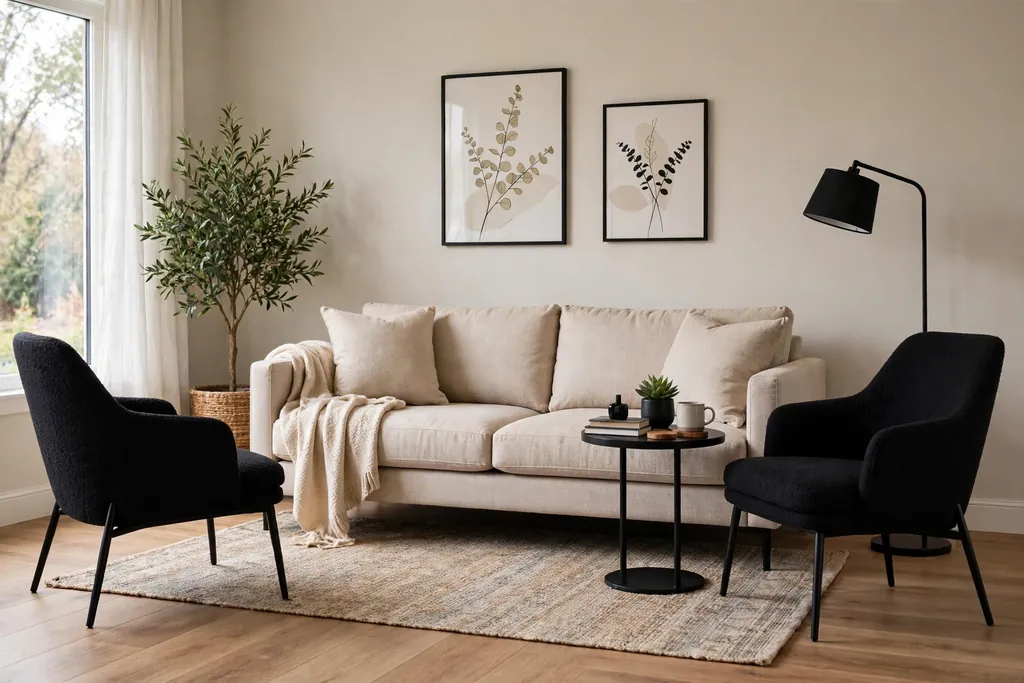
Reverse the usual balance when you want a lighter room that still feels grounded. A beige sofa keeps the largest piece light, while two black accent chairs pull the eye across the room and stop the beige from floating. Choose chairs with a different shape from the sofa, such as slim legs against a soft sofa frame, so the pairing reads as a deliberate contrast.
Place a small black side table between the chairs to repeat the chair tone and give each chair a surface. This arrangement suits rooms with good daylight, since beige upholstery shows marks more easily in bright light, so washable covers are a practical choice if the sofa gets daily use.
3. Paint One Black Feature Wall Behind the Sofa
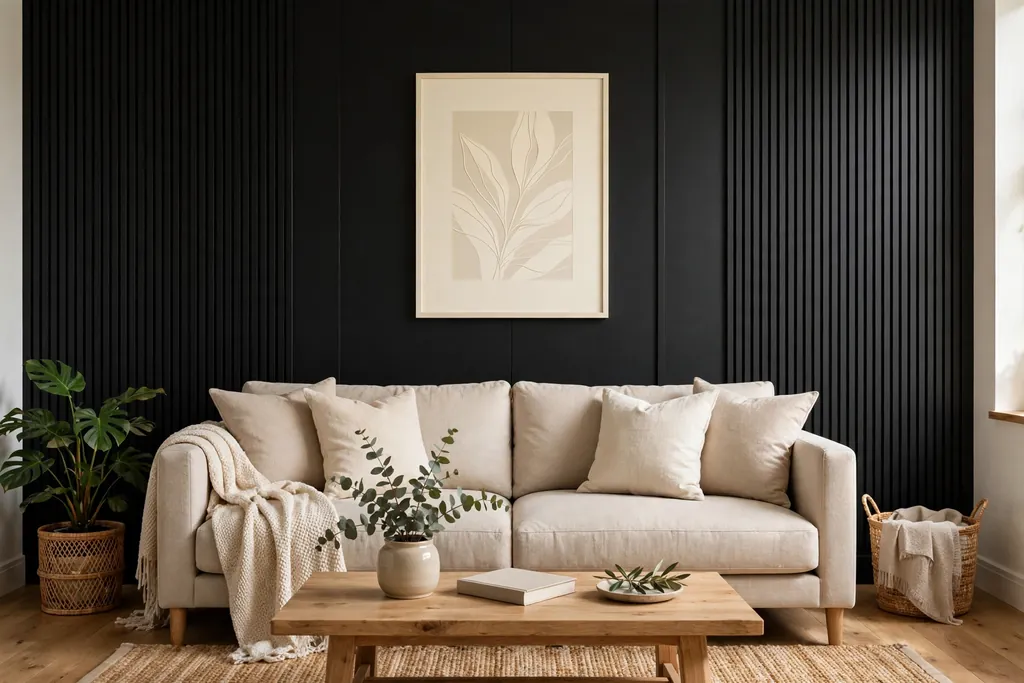
Paint one wall black behind the sofa and keep the other walls beige to give the room depth without darkening the whole space. A matte or eggshell black finish reads softer than a high gloss finish, and it makes beige cushions and light art stand out against it. Hang a beige or cream framed print on the black wall so the seating zone has a clear focal point.
This idea suits a room with a long, unbroken sofa wall. In a room with many doors or windows on that wall, a black feature wall can look broken up and lose its effect, so test the tone on a large board first and check it in daylight and evening light.
4. Frame the View With Black Window Frames and Beige Walls
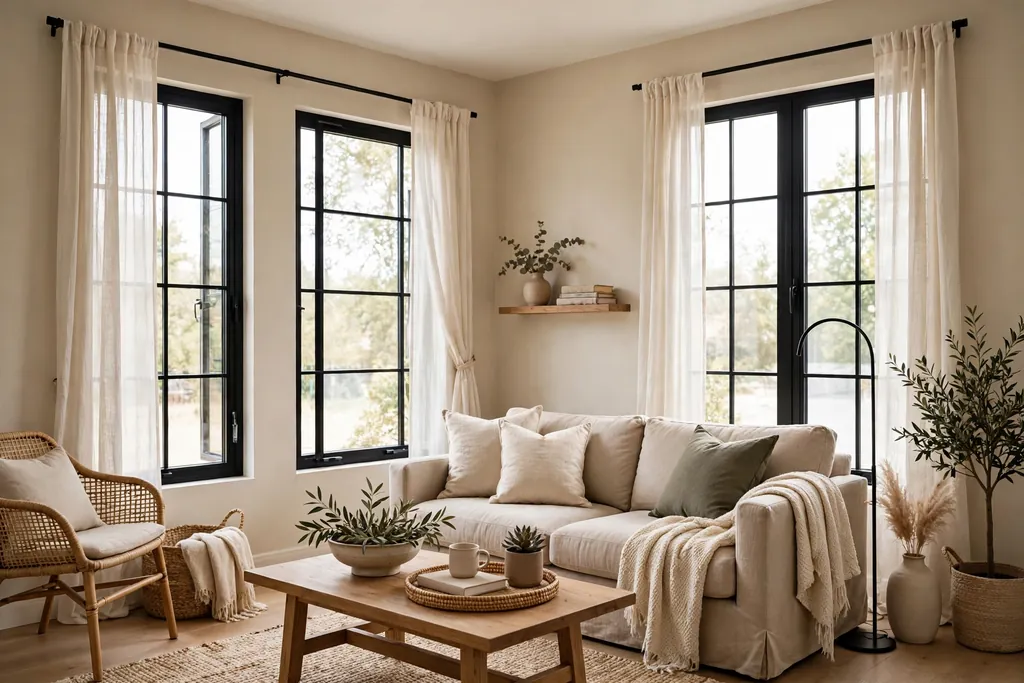
Black window frames give a beige room a sharp outline and make the view outside feel like a framed picture. This works best when the frames are repeated elsewhere, such as in picture frames or a black lamp, so the windows do not stand alone. Keep the walls a warm beige and the window treatments light, so the dark frames read as detail rather than heaviness.
If replacing frames is not an option, painting existing frames black gives a similar outline for less work, but check the paint suits the frame material and can handle sun and condensation. Clean the frames regularly, since dust shows more clearly on black than on white.
5. Set the Balance With a Striped Black and Beige Rug
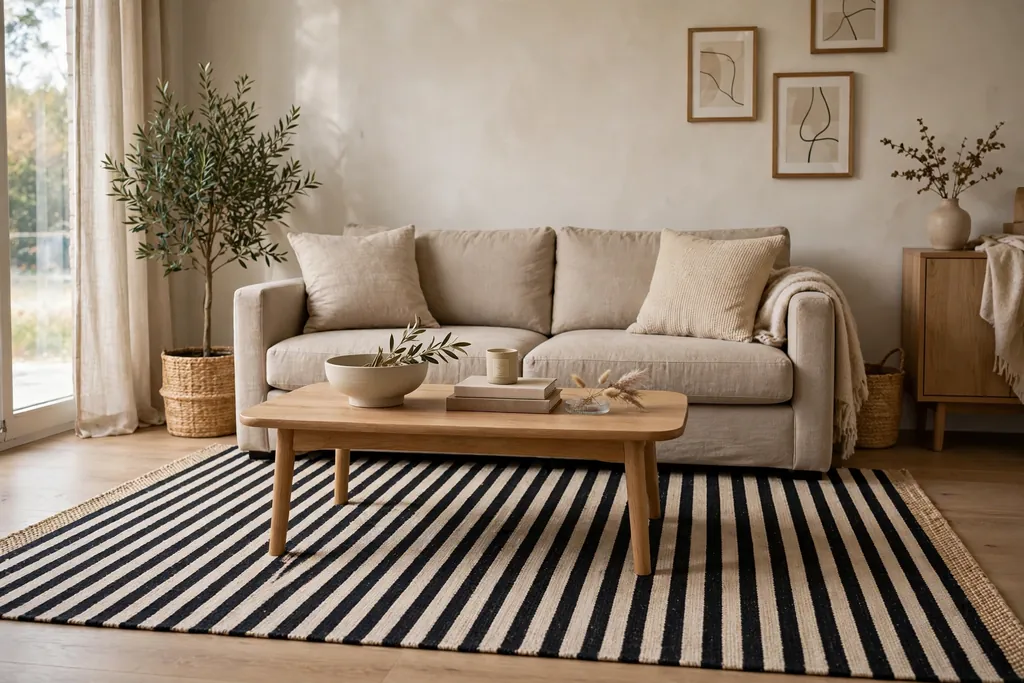
A striped rug in black and beige sets the room balance at floor level in one move. Wide stripes in soft black and warm beige feel calm, while narrow stripes in stronger contrast feel livelier. Run the stripes across the room to make it feel wider, or toward the window to draw the eye outward.
Size the rug so the front legs of the sofa and chairs rest on it, and keep the rest of the seating fairly plain so the rug leads the pattern story. A flatweave rug suits a busy room, since it is easy to clean and chairs slide across it without catching.
6. Ground a Beige Sofa With a Black Coffee Table
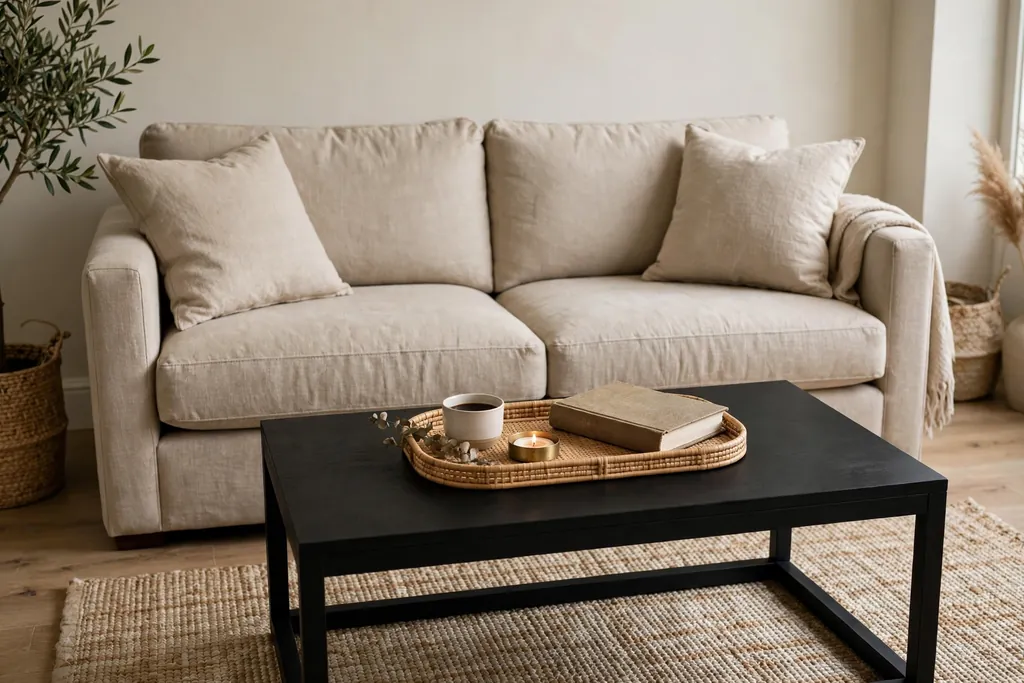
When the sofa, walls, and rug are all beige, a black coffee table is enough dark tone to ground the room without repainting anything. Choose a table with a simple shape and a matte finish, so it reads as a solid anchor rather than a shiny object. Keep the top mostly clear, with one tray, a book stack, or a small plant, so the table shape stays visible.
A lower, wider table suits a long sofa, while a round table suits a tight seating group where corners would catch shins. Wipe the top after use, since dust and rings show more readily on black than on wood.
7. Build a Black Media Console With Beige Decor on Top
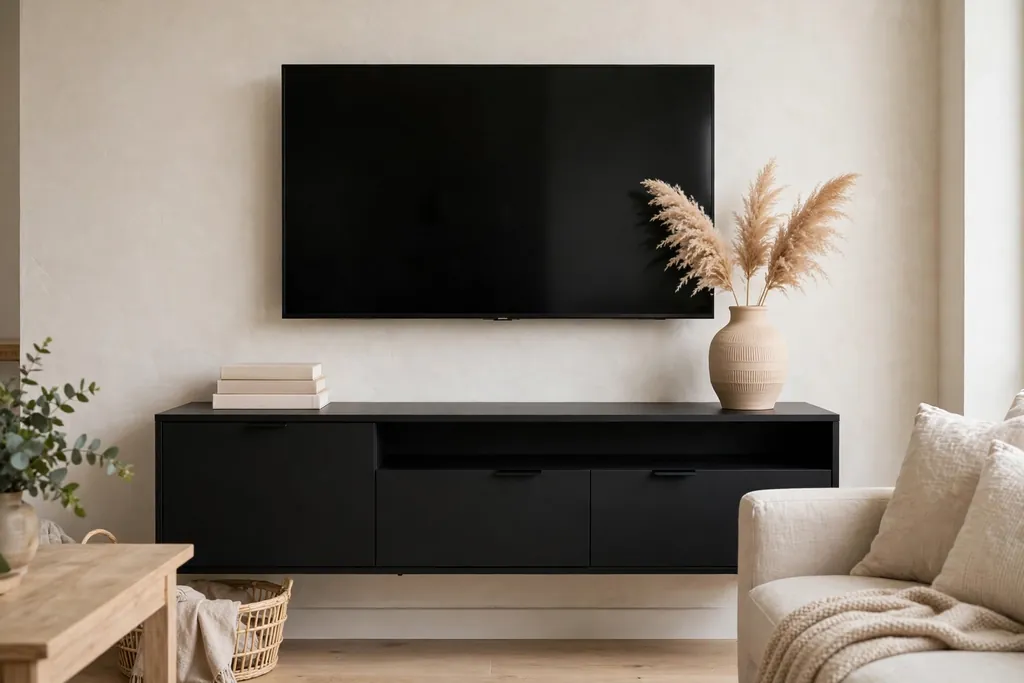
A television wall can look like a blank screen and dark boxes, but a black media console grounds it and beige decor softens it. Choose a console in black wood or matte black that is wider than the television, so the screen does not overhang the furniture, and keep cables hidden inside or behind the console.
Style the top with light objects, such as a beige vase, a stack of light books, or a small plant, and leave space around the television vents following the maker guidance. If the room is used for conversation as well as viewing, place the console and seating so chairs can turn toward each other without moving heavy furniture.
8. Hang a Gallery Wall in Black Frames on a Beige Wall

Black frames on a beige wall give a gallery wall structure without adding color that competes with the art. Use frames in one black tone, vary the frame sizes while keeping the spacing even, and plan the layout on the floor first, starting with the largest piece in the center, then building outward.
Mix art, photographs, and one textile piece, such as a woven hanging, for texture. Keep the bottom of the gallery above sofa back height if it hangs over seating, so nobody brushes against the frames when sitting down. Mark hanging points with tape before making holes.
9. Pair a Black Fireplace Surround With a Beige Mantel Display
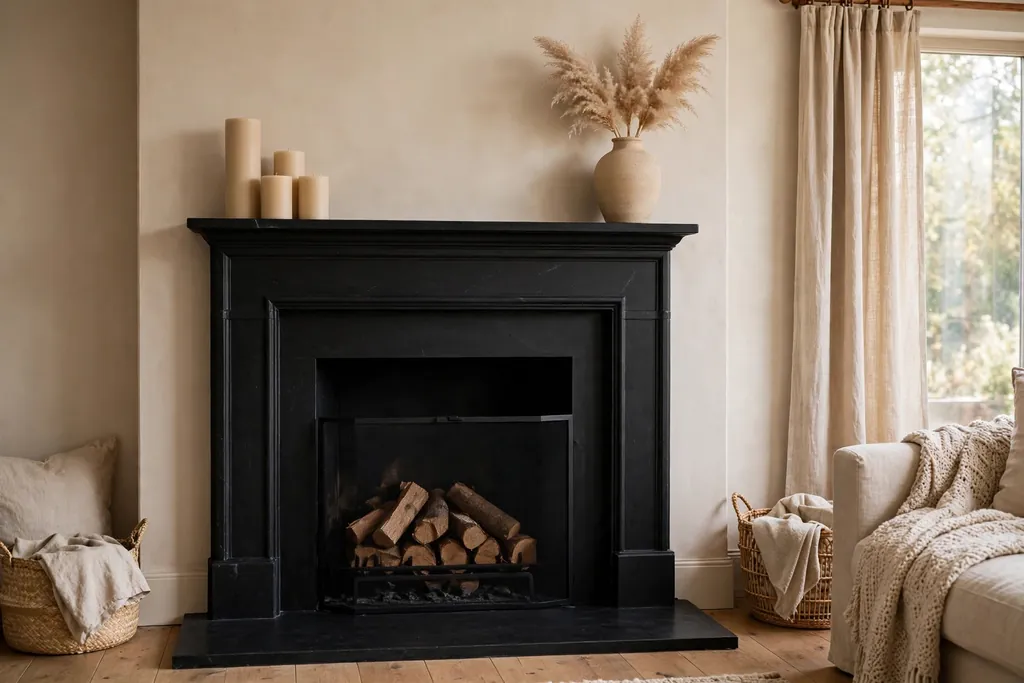
A fireplace is a natural focal point, and a black surround with beige styling on the mantel keeps it warm rather than gloomy. If the surround is black stone, tile, or painted wood, keep the mantel objects light: beige candles, a beige vase, light framed art, or a beige clock. Leave breathing space between objects so the mantel does not look crowded.
Keep anything that can burn well clear of the fire opening, following the fireplace maker instructions. A mirror or light art above the mantel reflects light back into the room, which matters most when the surround itself absorbs light.
10. Paint an Interior Door Black in a Beige Room
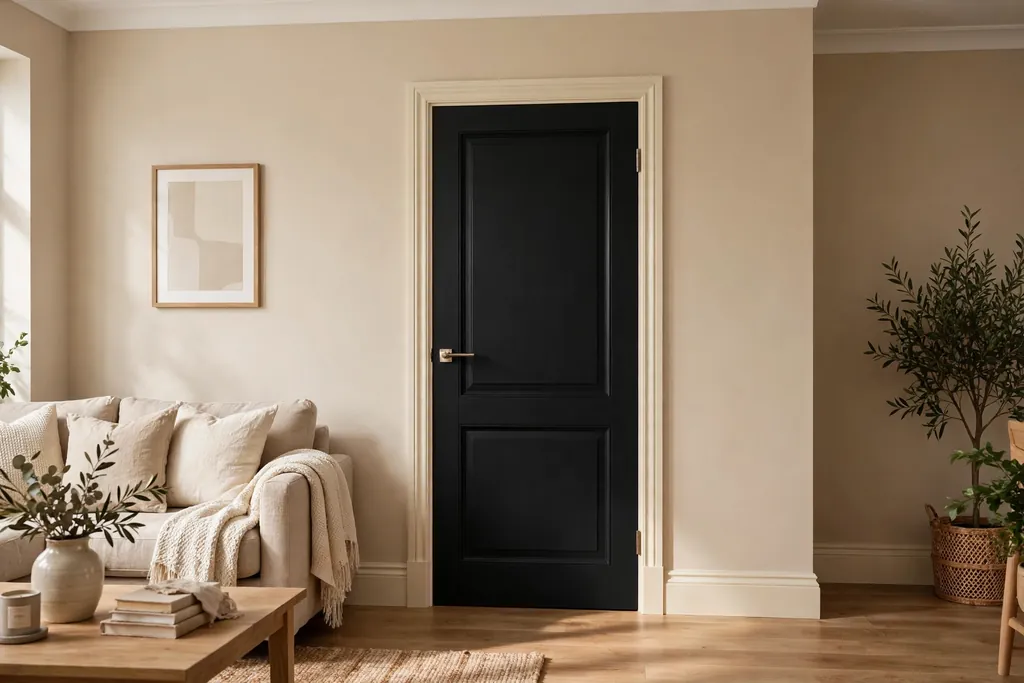
Paint an interior door black to add a strong vertical line of contrast without changing any furniture. A black door suits a beige hallway opening into the living room, or a living room door that would otherwise disappear into beige walls. Keep the trim beige or cream, so the door reads as a deliberate feature rather than a dark hole.
Use a durable paint suited to doors, since doors get touched daily, and check the finish in evening light before painting every door in the house. One or two black doors are enough; painting all of them can make a small home feel chopped up.
11. Mix Black and Beige Patterns in Cushions and Throws

Pattern is where black and beige can play without changing any furniture. Combine one large scale pattern, such as wide stripes or a bold check, with one small scale pattern, such as a dot or a fine stripe, and keep the rest plain so the eye has somewhere to rest. Use the same two tones in every pattern, so a black and beige stripe sits happily beside a beige cushion with a black border.
Swap cushion covers with the seasons if you like a change: heavier wool or knit textures for cold months, lighter linen for warm months. Keep the total number of patterned cushions to three or four on a standard sofa, since more than that can make the seating look busy.
12. Choose a Beige Sectional With a Black Ottoman
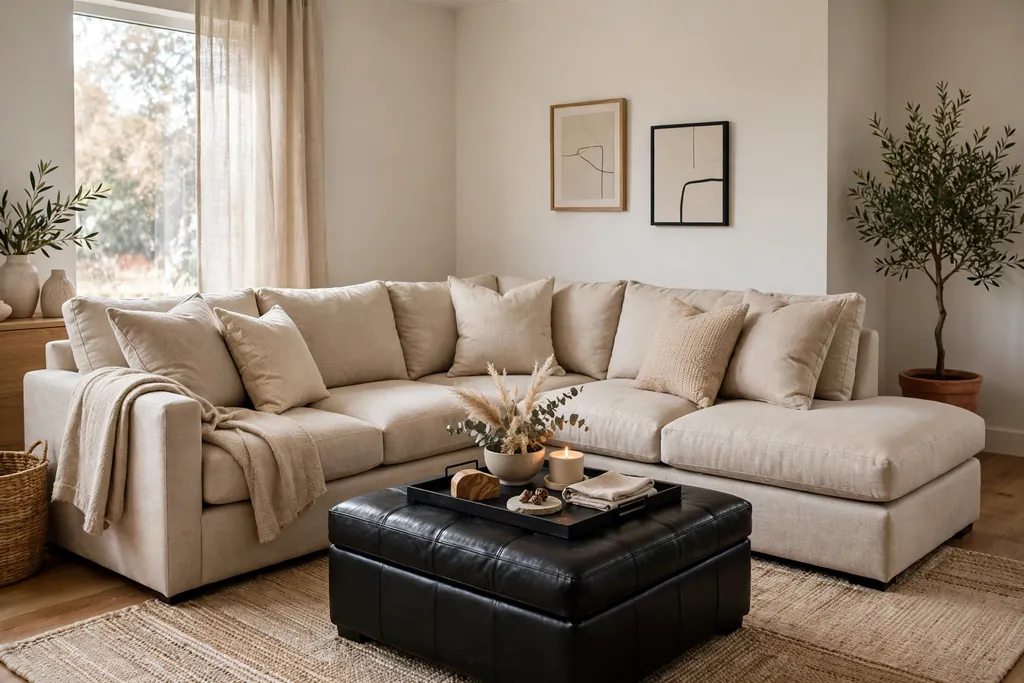
A beige sectional gives a large family room a light base, while a black ottoman keeps it from feeling washed out. Pick cushions in two tones, such as beige and a darker taupe, plus one patterned cushion that combines black and beige, so the dark tone is repeated across the sectional rather than sitting in one spot.
A black leather or wood ottoman can serve as a coffee table with a tray on top, and as extra seating when guests visit. Measure the full sectional, including the chaise or return, before ordering, and leave a clear walking route around at least one end so the large piece does not block the room.
13. Style Black Shelves With Beige Ceramics and Books

Black shelves, whether built in or freestanding, look their best when the objects on them include plenty of beige. Place beige ceramics, light books with beige spines, and a beige vase among darker wood and leather bound books, and leave open gaps so each shelf reads as a display rather than storage.
Start with the largest pieces, vary the shapes, and leave visible gaps. Anchor tall shelving to the wall following the maker instructions, keep heavy items low, and put everyday items at hand height so the shelves stay useful as well as decorative.
14. Create a Reading Nook With a Black Chair and a Beige Lamp
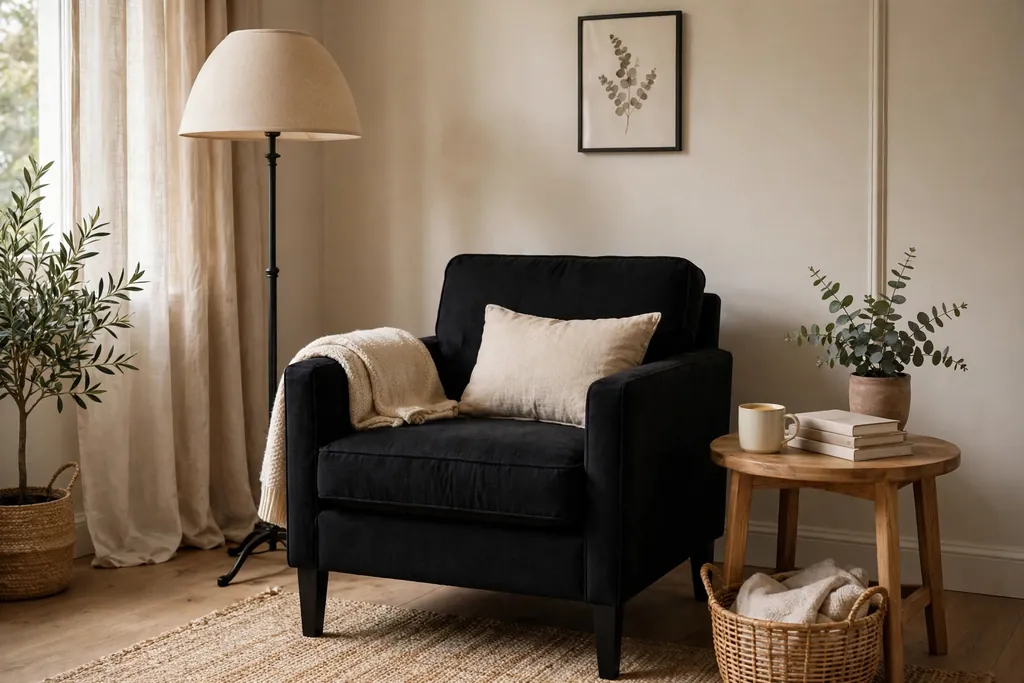
A reading nook needs a comfortable chair, light aimed at the page, and a surface for a drink, and black and beige suits all three. Choose a black armchair with a supportive back and seat depth that fits the main reader, add a beige shaded floor lamp behind the chair shoulder, and place a small side table within reach.
A beige throw over the chair arm links the lamp shade to the seating, and a basket beside the chair holds the current book and an extra throw. Angle the chair slightly toward the room so the nook feels part of the living space, and test the lamp position in the evening, since a shade that looks beige in daylight can glow warm or dull depending on the bulb.
15. Layer Warm Light at Three Levels
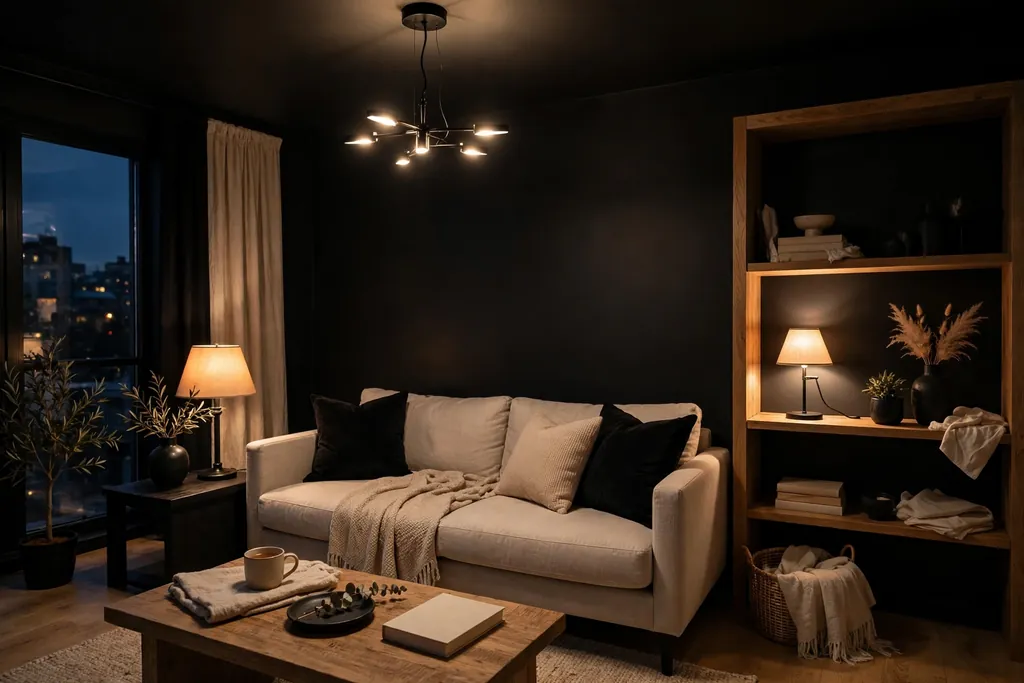
Black absorbs light, so a black and beige room needs more than one ceiling light to feel warm after dark. Use three levels: ambient light from a ceiling fixture or tall floor lamp, task light from a table lamp beside the seating, and a low glow from a small lamp on a shelf or side table. Choose warm white bulbs for all three, so the beige tones glow rather than turning grey, and use dimmers where possible to shift from bright daytime to calm evening light.
Place the brightest light where you read or work, and keep the overall level soft in the evening. Check for glare on the television and on any glass fronted frames before fixing lamp positions.
16. Pair Black Side Tables With Beige Lamp Shades
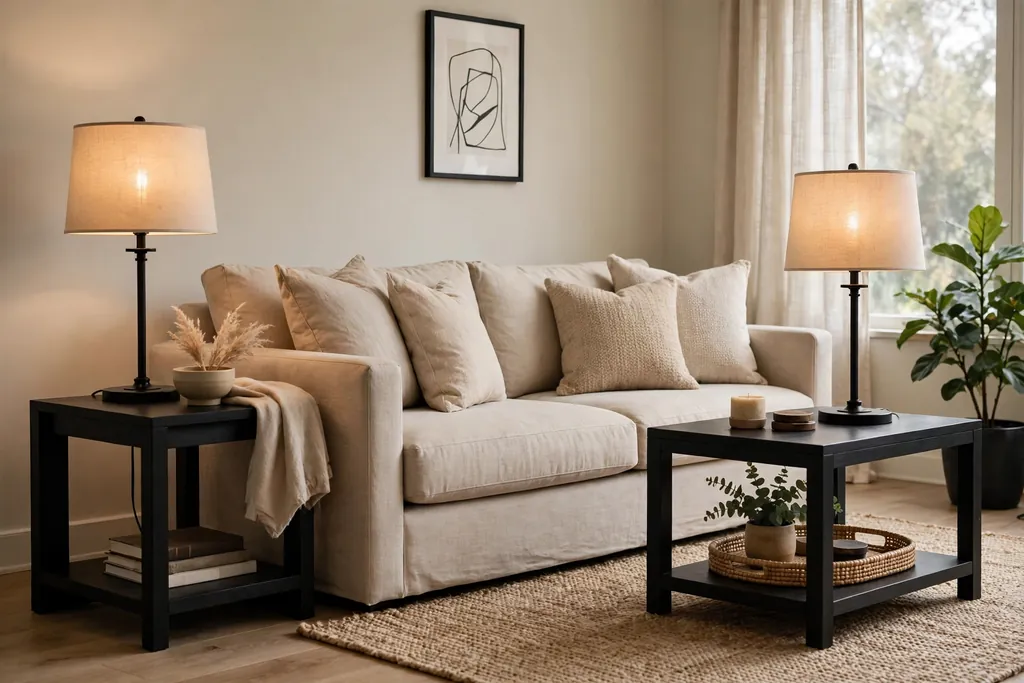
Black side tables beside a beige sofa give every seat a dark anchor at a useful height, while beige lamp shades on top soften the contrast and spread warm light. Choose tables just tall enough to reach easily from the sofa, and shades in white or beige so the light stays soft rather than harsh.
Keep each table to one lamp and one small item, such as a book or a small plant, so it stays useful rather than becoming another display shelf. A table with a lower shelf can hold a book or a basket underneath, which keeps the top clear.
17. Add Beige Boucle Chairs Beside a Black Side Table
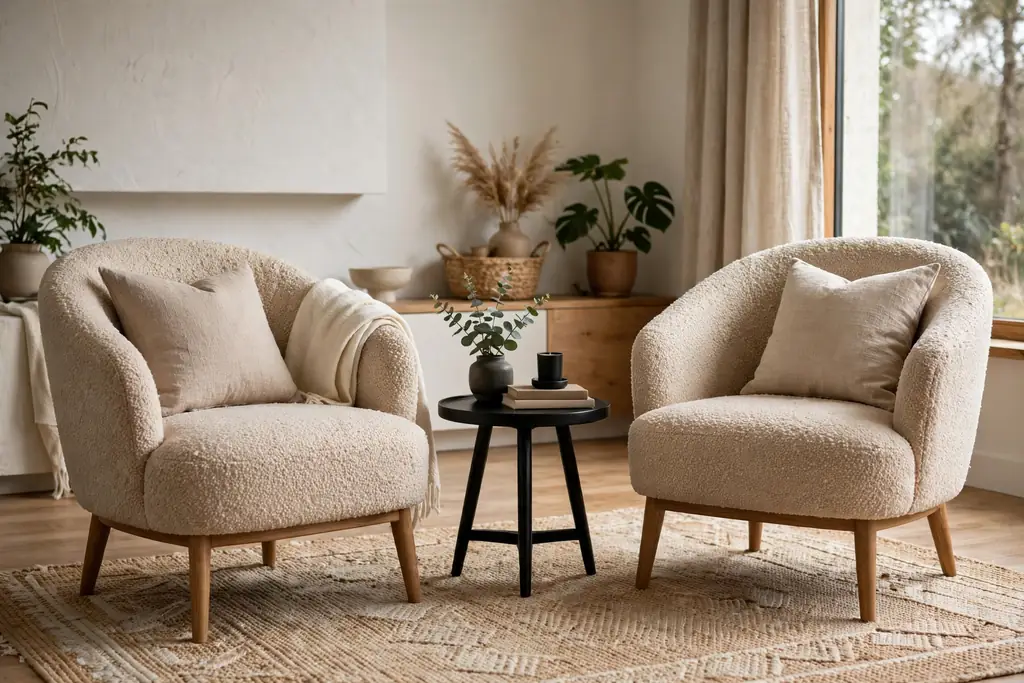
Beige boucle chairs add soft, nubby texture that stops a black and beige room from feeling hard or flat. Place a pair facing the sofa or angled toward the fireplace, with a small black side table between them, so the chairs form a conversation pair rather than two spare seats.
Boucle shows marks more easily than smooth fabric, so washable covers or a fabric protector suited to the material are worth considering in a room used daily. Keep the chairs clear of direct sun where possible, since pale boucle can fade unevenly over time.
18. Keep Throws in a Black Woven Basket

A black woven basket by the sofa solves two problems at once: it stores throws where they are actually used, and it adds black texture at floor level. Roll or fold throws in beige, cream, and one black throw neatly so the basket looks inviting rather than stuffed, and keep only the throws that are used regularly in it, storing spares elsewhere.
Choose a basket with a sturdy base and handles, and a size that fits beside the sofa without blocking a walking route. Shake out throws regularly so dust does not settle into the weave. For a warmer take on the same neutral idea, these brown and cream living room ideas show how texture carries a two tone room.
19. Try a Geometric Black and Beige Accent Wall
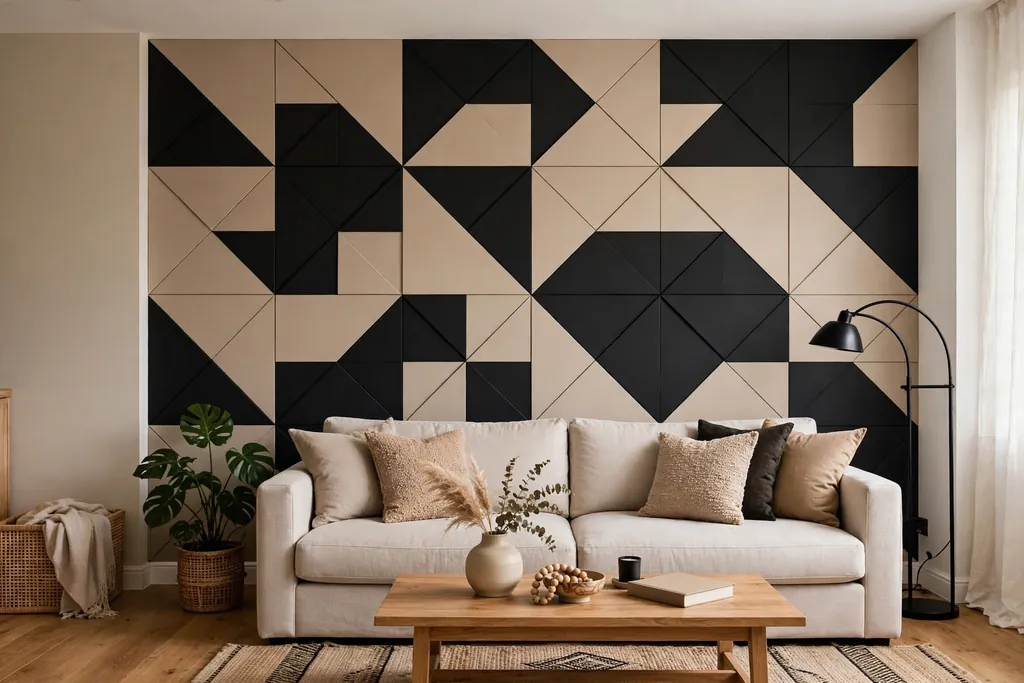
A geometric accent wall in black and beige adds pattern at wall scale without needing a busy rug or patterned sofa. Paint large blocks, arches, or a simple grid in matte black on a beige base, and keep the rest of the room plain so the wall leads. This suits a room with one clear, mostly empty wall, such as the wall behind a television or a side wall with no doors.
Plan the shapes with tape on the wall first, and step back to check the scale from the sofa before painting. If the pattern feels too strong, painting only the lower half of the wall in the geometric design, with plain beige above, softens it.
20. Hang Black Pendant Lights Over the Seating Zone
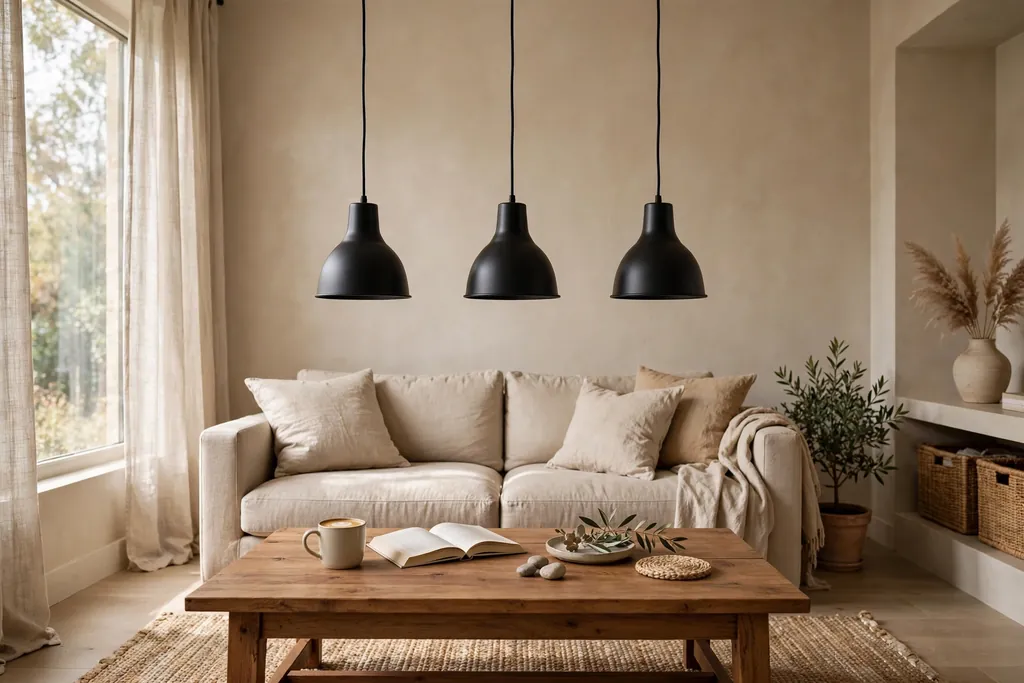
Black pendant lights over a coffee table or a side seating zone repeat the dark tone at ceiling height, which balances a black sofa or black frames at floor level. Choose simple shapes, such as a dome or a cone, in matte black, and hang them high enough to see under but low enough to pool light where people sit.
Use warm white bulbs and a dimmer, so the pendants can shift from bright task light to soft evening glow. Keep cords tidy and the pendants clear of walkways, and check that the light does not glare into eyes when seated.
21. Lay a Beige Rug With a Black Border
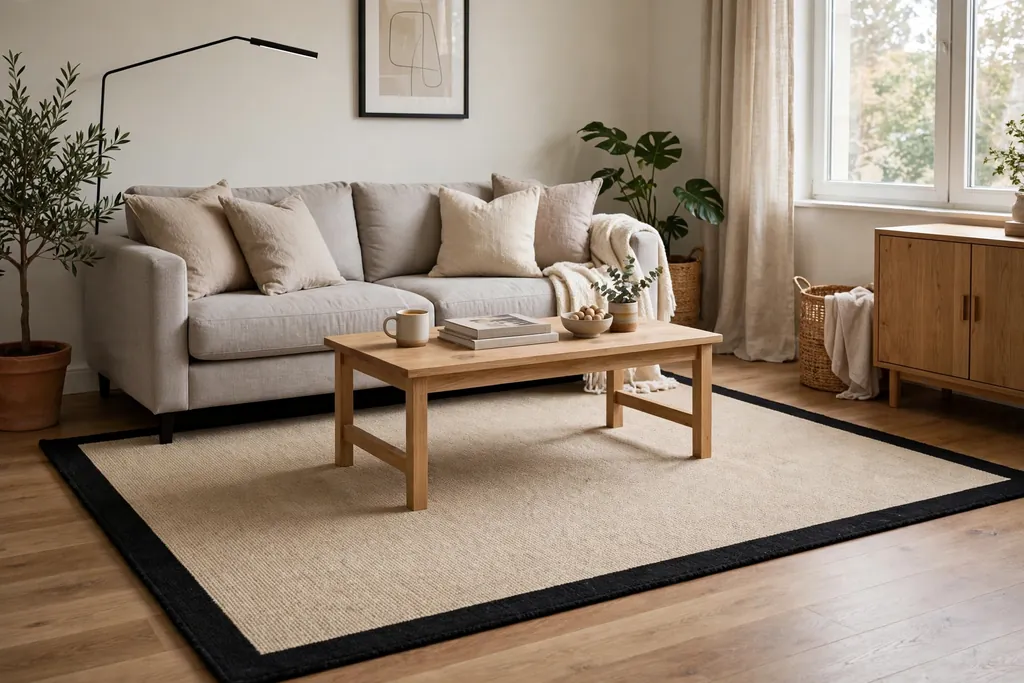
A beige rug with a black border frames the seating group like a picture frame, and it suits a room where the coffee table and sofa already carry detail, since the center of the rug stays quiet under the table. The border adds interest at the edges, where it is most visible, and it ties black furniture to a beige floor plan.
Choose a border color that is a true black rather than a faded grey, so it reads clearly against the beige center, and keep the border width in proportion to the rug size, so a small rug does not end up all border and no center. For more help with size and placement, see these living room rug ideas.
22. Contrast a Beige Sofa With a Black Leather Chair
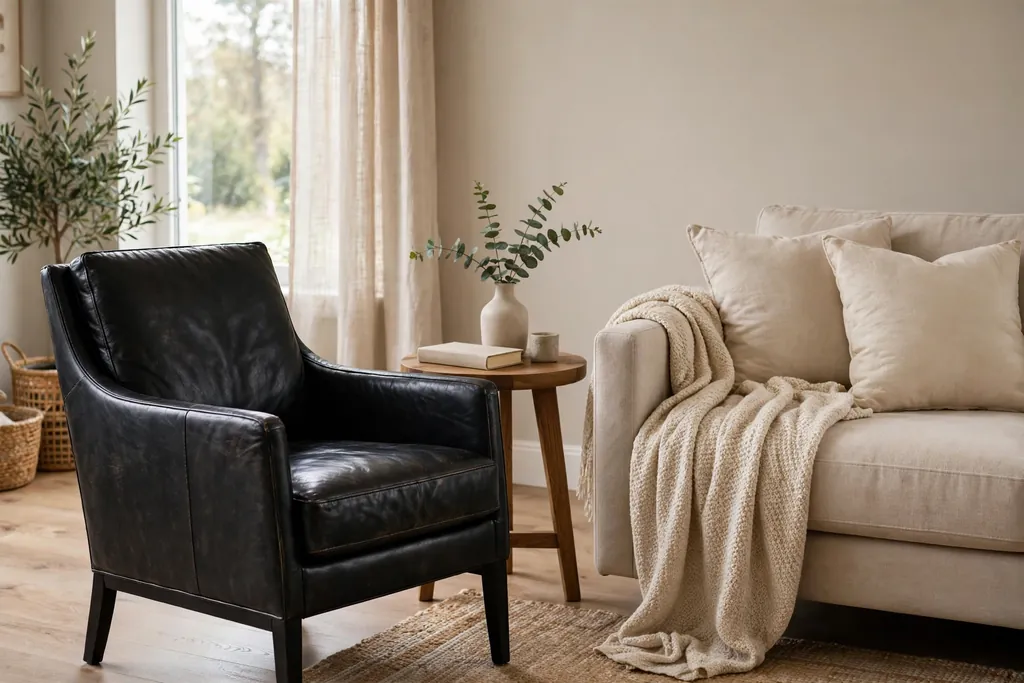
A black leather chair beside a beige fabric sofa adds contrast in texture, and that contrast is what stops the room from feeling flat. Place the chair at an angle to the sofa, with a small side table between them, so the two seats form a conversation corner rather than a matched set.
Leather needs simple care: wipe spills promptly, keep it out of direct sun where possible, and condition it as the maker advises. If the chair is new and the sofa is old, a beige throw over the chair arm can soften the contrast until the leather settles in.
23. Use Beige Cabinetry With Black Hardware
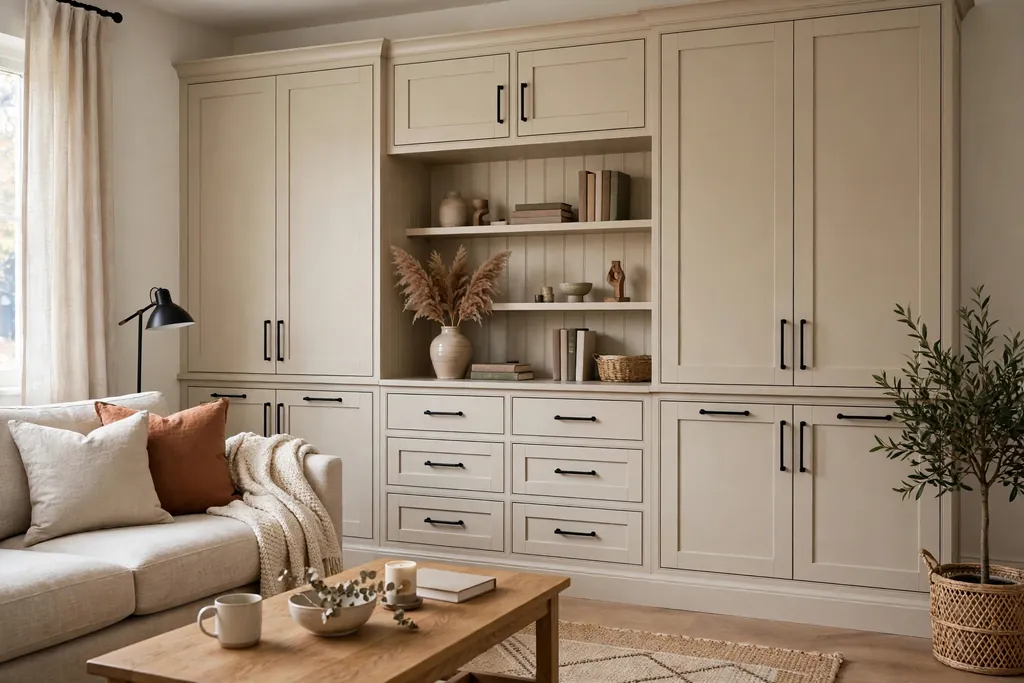
Beige built in cabinetry or a beige sideboard with black hardware gives a living room storage that fits the palette without a separate dark furniture piece. Black handles, knobs, and hinges repeat the dark tone in small, even doses across a large beige surface, which keeps the unit from looking plain.
Choose hardware in one black finish, such as matte black, rather than mixing black with chrome or brass on the same unit. Check the handle size against the door or drawer size, since small handles on large doors look lost, and large handles on small drawers feel heavy.
24. Place a Black Arch Floor Lamp Behind the Seating
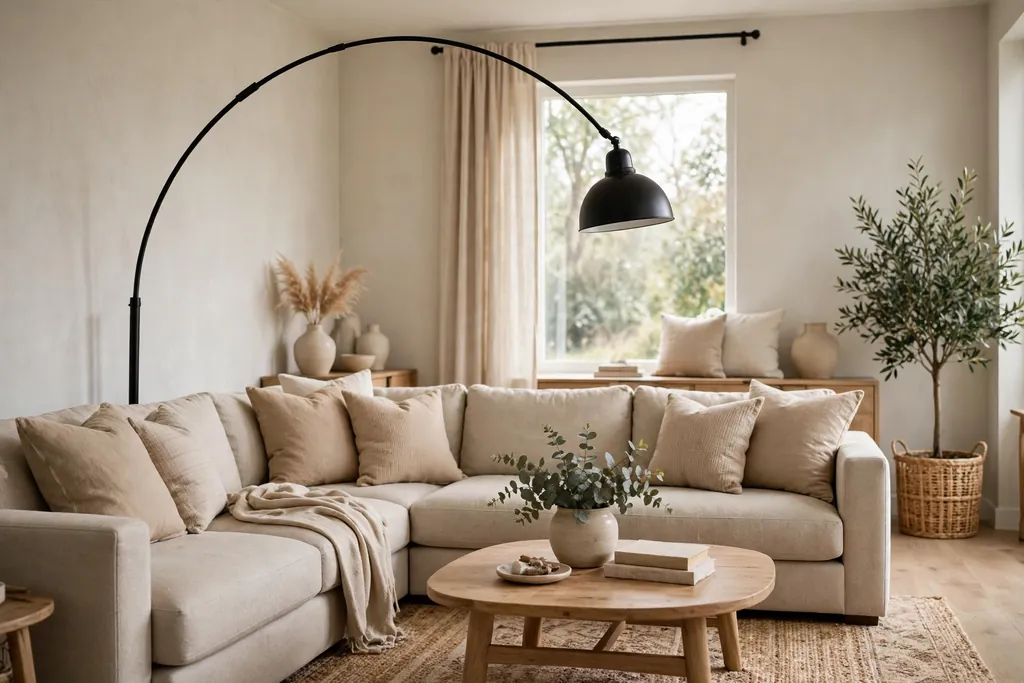
A black arch floor lamp behind the sofa brings light over the seating group without a ceiling fixture, and its curved shape softens a room full of straight lines. Place the base behind the sofa or beside it, with the arc reaching over the coffee table or a reading seat, and keep a clear path behind the base so nobody trips over it.
Choose a heavy base that cannot tip easily, and a shade that directs light down onto the seating rather than into eyes. A dimmer lets the lamp work as both reading light and evening glow, which suits a room used through the day.
25. Hang One Large Black and Beige Abstract Canvas
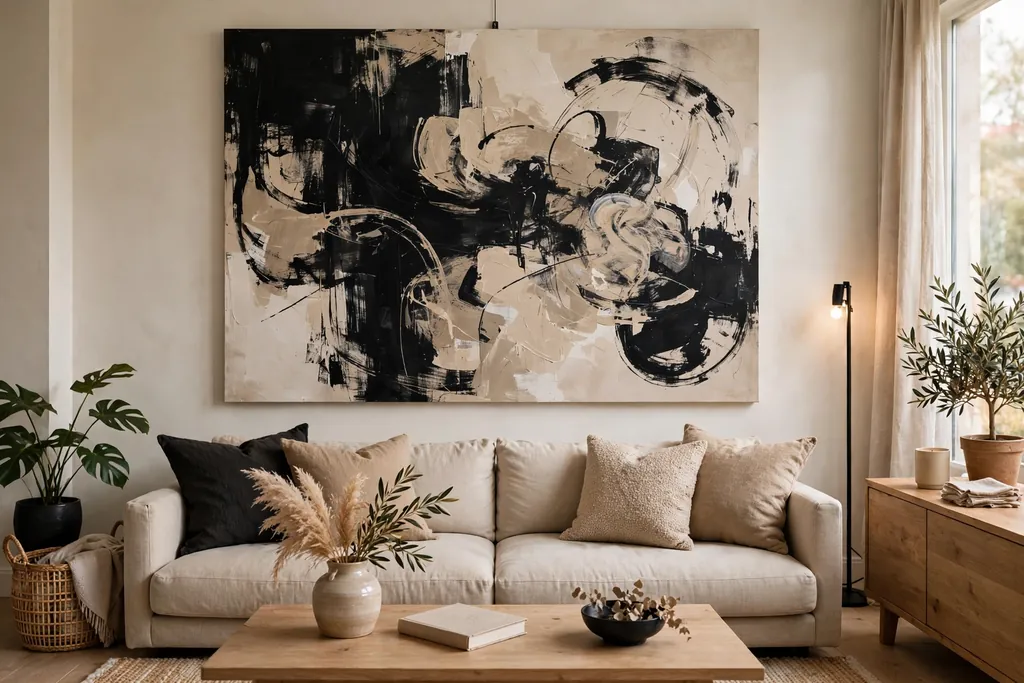
One large abstract canvas in black and beige gives a plain wall a focal point without the busy feel of a full gallery wall. Choose a piece with both tones in clear balance, such as broad beige washes with black marks, and hang it centered over the sofa with its outer edges inside the sofa width.
Keep the rest of that wall plain, so the canvas leads, and repeat one tone from the canvas in a cushion or throw so the art feels linked to the room. Hang the center of the canvas at eye level when seated, and use fixings rated for the canvas weight.
26. Choose a Tailored Beige Sofa With Black Piping
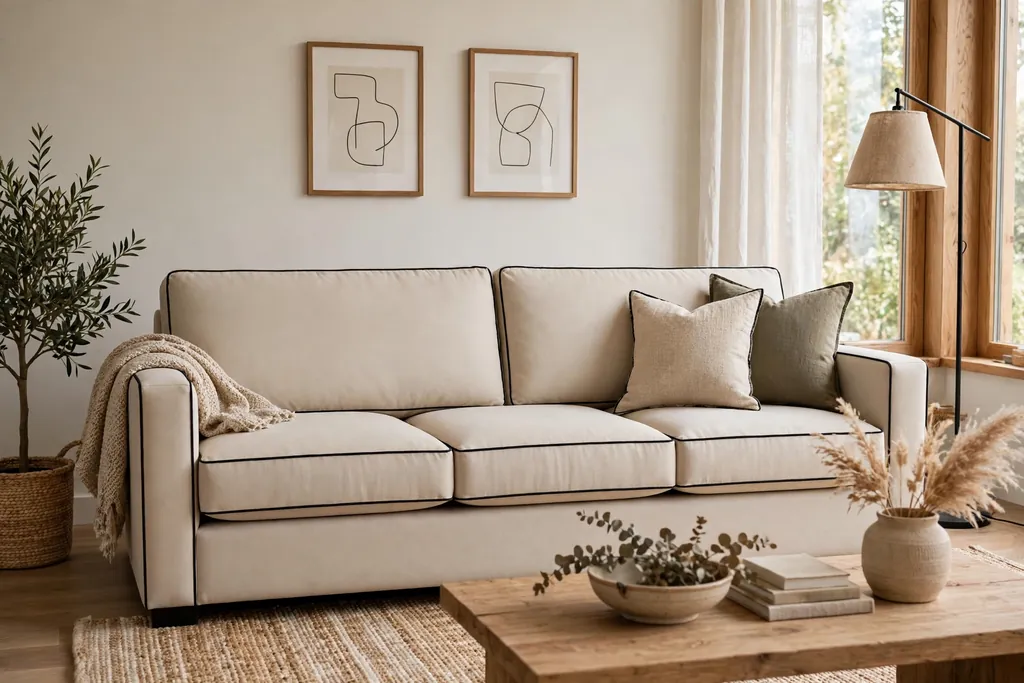
A tailored beige sofa with black piping adds contrast at seam level, which is a quiet way to carry the palette without a second dark furniture piece. The piping outlines the cushions and arms, so the sofa shape reads clearly against beige walls, and it suits a formal or tailored room better than a loose slipcovered sofa.
Keep the rest of the seating plain, since the piping already supplies the detail, and repeat the black in one other place, such as a side table or frames, so the piping does not stand alone. Check that the piping is well sewn and even, since uneven piping shows clearly on a pale sofa.
27. Build a Window Seat With a Beige Base and Black Cushions
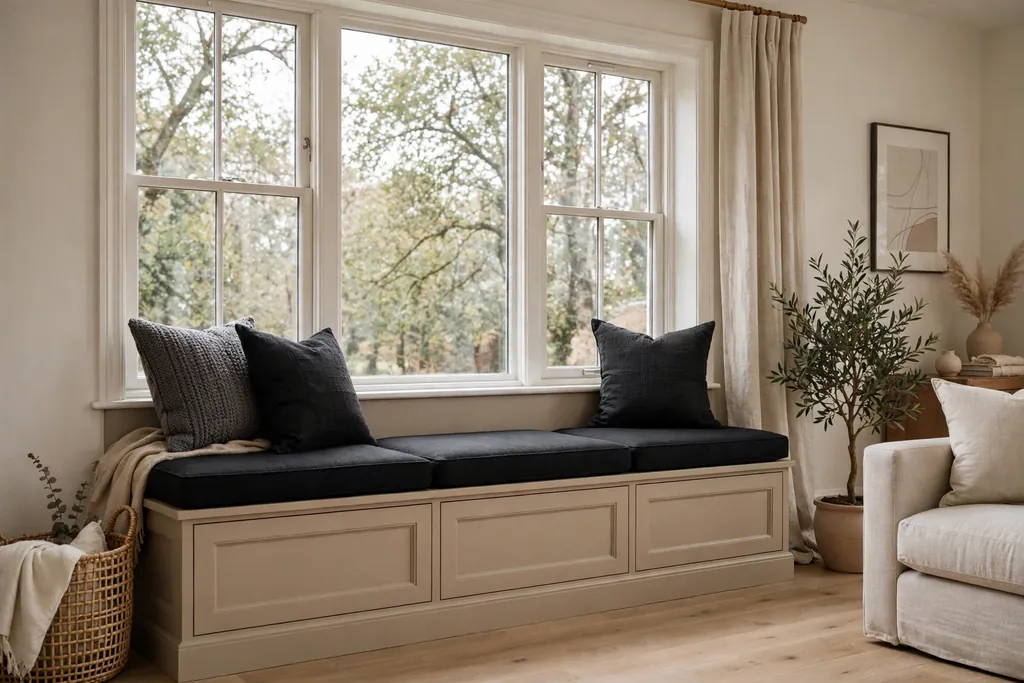
A window seat with a beige base and black cushions turns an often empty window wall into a useful seat that fits the palette. Build or place a low bench under the window, cover the base in beige, and add black seat cushions with beige throw cushions on top, so the seat is comfortable and the contrast is clear.
Add storage inside the bench for throws, games, or books, and keep the window seat clear of heavy curtains that would block the light. This idea suits a bay window or a wide window wall, and it gives a small living room an extra seat without another armchair.
28. Keep a Small Room Open With Slim Black Furniture and Beige Walls
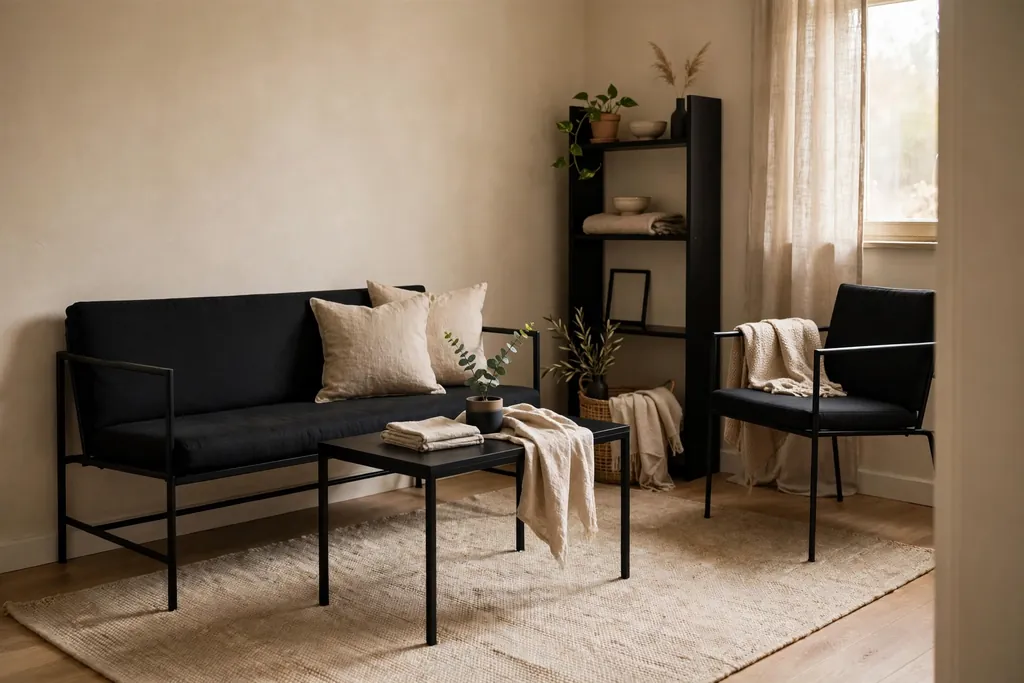
In a small living room, black can still work if the furniture stays slim and low. Choose a black sofa with slim arms, a narrow black coffee table, and open legged chairs, and keep the walls, rug, and curtains beige, so the room keeps its light. Slim legs let floor show beneath furniture, which makes the room feel larger than closed bases would.
Keep black to three or four slim pieces and let beige cover the rest, and use a mirror or light art on one wall to bounce daylight around the room. Avoid a large black sectional or a tall black bookcase in a small room, since a single bulky dark piece can close the space in.
Conclusion
A good black and beige living room starts with the balance, not the shopping list. Let beige carry the large, light surfaces, repeat black in three or four clear places, and add texture and warm light so the contrast feels soft rather than stark. Pick one idea from this list, such as a black sofa on beige walls or a beige rug with a black border, set it where you will actually sit, and add the next dark detail only after that first pairing feels right.
Save this list on Pinterest before your next room refresh, and work through it one area at a time: seating first, then walls and floors, then the small details that make the room yours.
FAQs
How much black should a beige living room have?
Use black for roughly one third of the visible contrast, not half the room. A good starting point is three or four black pieces, such as a sofa, a table, frames, and a lamp, with beige on the walls, the largest rug, and most of the upholstery. If the room starts to feel heavy, swap one black piece for beige, or add a beige throw and lighter art, rather than repainting a wall.
What beige paint goes best with black furniture?
A warm beige with a slight yellow or pink undertone suits black furniture best, since it keeps the room feeling warm rather than grey. Test two or three warm beige samples on the wall and check them in morning light and evening lamplight before painting the whole room, since beige shifts a lot between the two. Keep the ceiling and trim in a matching warm white so the room reads as one calm space.
Can a black sofa work in a small living room?
Yes, if the sofa stays slim and low and the rest of the room stays beige. Choose slim arms, open legs, and a low back, keep the walls and rug beige, and add a mirror or light art to bounce daylight around the room. Avoid pairing a black sofa with a black rug and black curtains in a small room, since that much dark tone at every level can close the space in.
How do I stop a black and beige room from looking flat?
Add texture, not more color. Mix linen, boucle, wool, leather, wood grain, and woven baskets, and vary the finishes between matte black and soft beige fabric. Layer lighting at three levels, and add one pattern, such as stripes or a geometric rug, so the eye has somewhere to rest. A room with five textures in two tones feels richer than a room with two textures in five colors.
What rug works best with a black and beige living room?
A rug that repeats both tones works best, such as a beige rug with a black border, a black and beige stripe, or a geometric pattern in the two tones. Size the rug so the front legs of the sofa and chairs rest on it, and keep the rug pattern simpler if the cushions are patterned, or the cushions simpler if the rug is busy. A flatweave rug suits a busy room, while thick wool suits a quiet seating corner.
Is black and beige too cold for a family living room?
Not if the beige stays warm and the lighting stays warm. Choose a warm beige for walls and large upholstery, add wood tones in a coffee table or side table, use warm white bulbs at more than one height, and keep soft throws within reach of every seat. With those layers in place, black reads as a grounding contrast rather than a cold statement, and the room stays easy to live in daily.