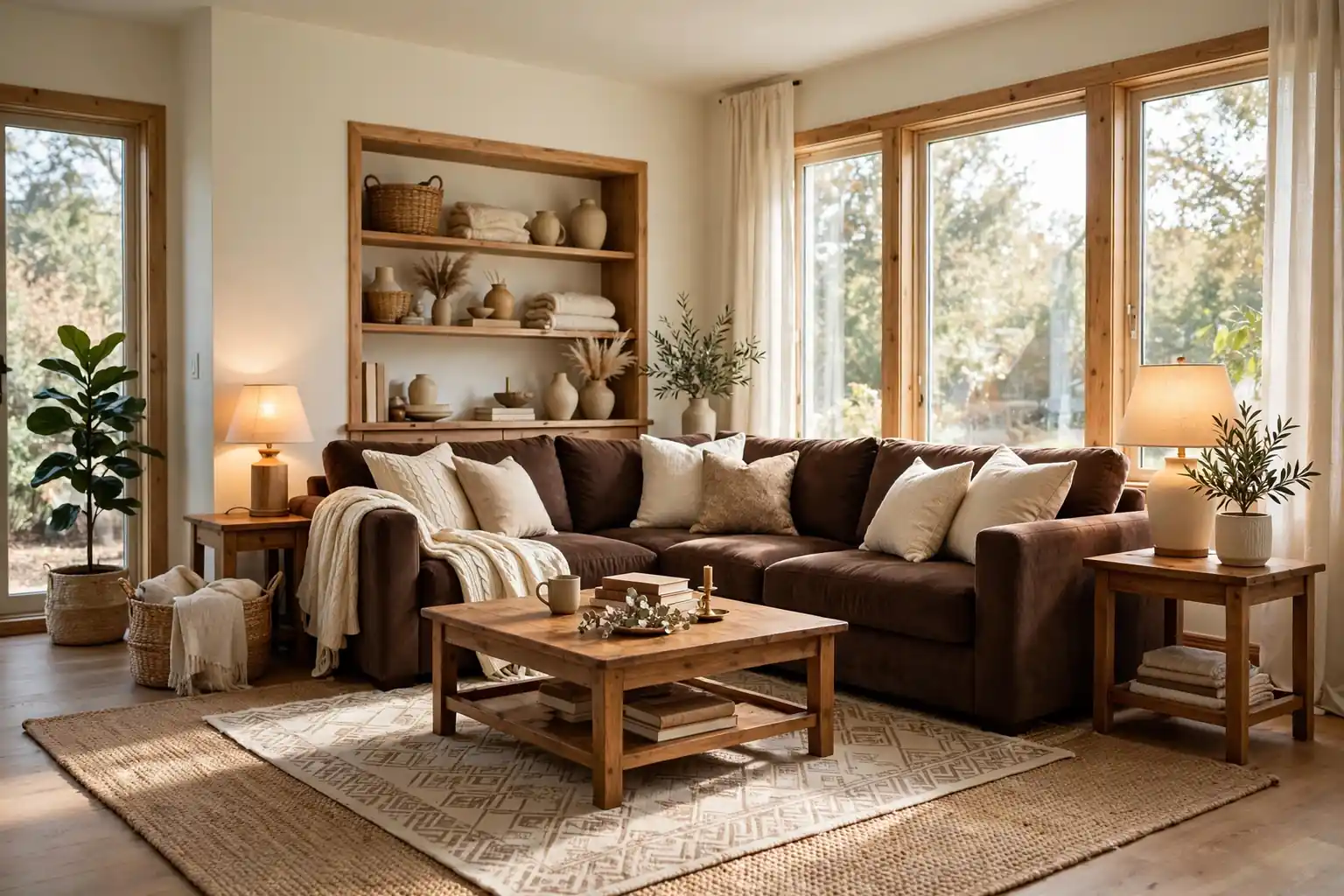
Brown and cream is a pairing that can feel calm in the morning and cozy in the evening, but only when the balance is right. Too much dark brown can make a room feel heavy, while too much cream can feel flat and hard to keep clean. The ideas below show how to pair the two in different ways: a dark sofa against light walls, wood tones that warm up cream upholstery, rugs that tie the seating together, and lighting that keeps brown from looking dull. Pick the balance that fits your room size, your daylight, and how the room is used every day.
Key Takeaways
- Let cream do the light work: use it on walls, large rugs, and the biggest upholstery piece when the room is small or dark.
- Let brown anchor the room: use it for the sofa, wood furniture, or one feature wall, not for every surface at once.
- Repeat each tone at least twice, such as brown cushions with a brown wood table, so the pairing looks planned.
- Add texture to avoid flatness: leather, linen, wool, woven baskets, and wood grain all count as contrast here.
- Keep lighting warm and layered, since brown absorbs light and cream reflects it, and the two need different handling.
1. Anchor the Room With a Chocolate Sofa on Cream Walls
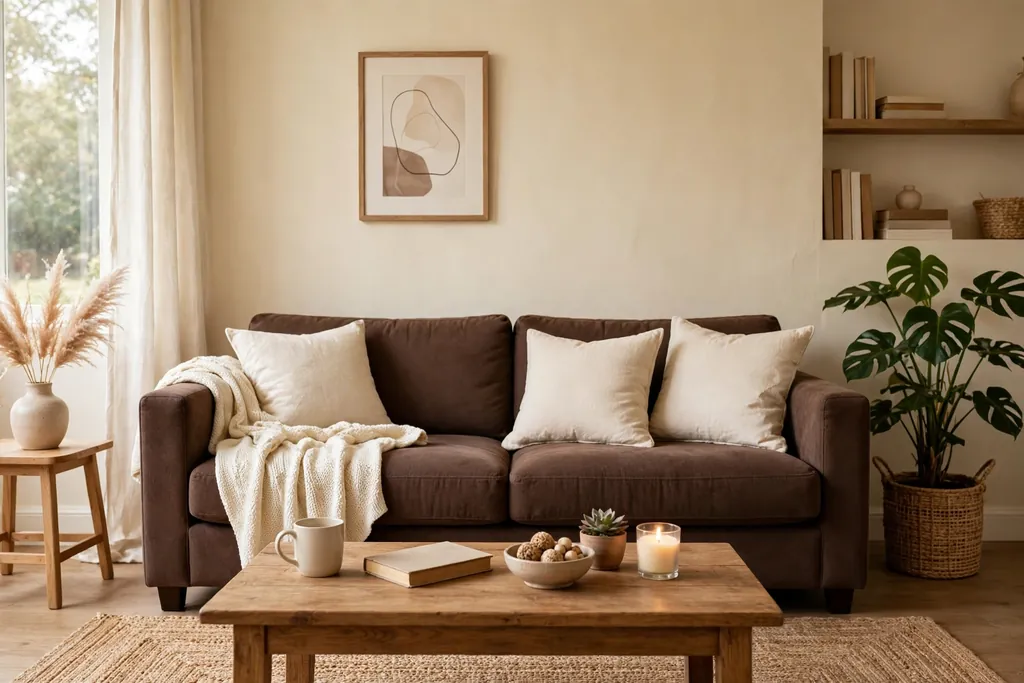
A chocolate brown sofa against cream walls is the simplest version of this pairing, and it works because the contrast is clear without being harsh. Keep the walls a warm cream rather than a cold white, so the brown reads as rich instead of stark. Add cream cushions on the sofa to link the two tones, and a wood coffee table to add a middle tone between them. Leave some cream visible above and beside the sofa, such as a cream throw or a light rug edge, so the dark piece does not fill the whole view. Measure the sofa against the wall first, since a dark sofa that is too large for the wall will dominate the room no matter how light the paint is.
2. Soften a Brown Leather Sofa With Cream Throws and Cushions
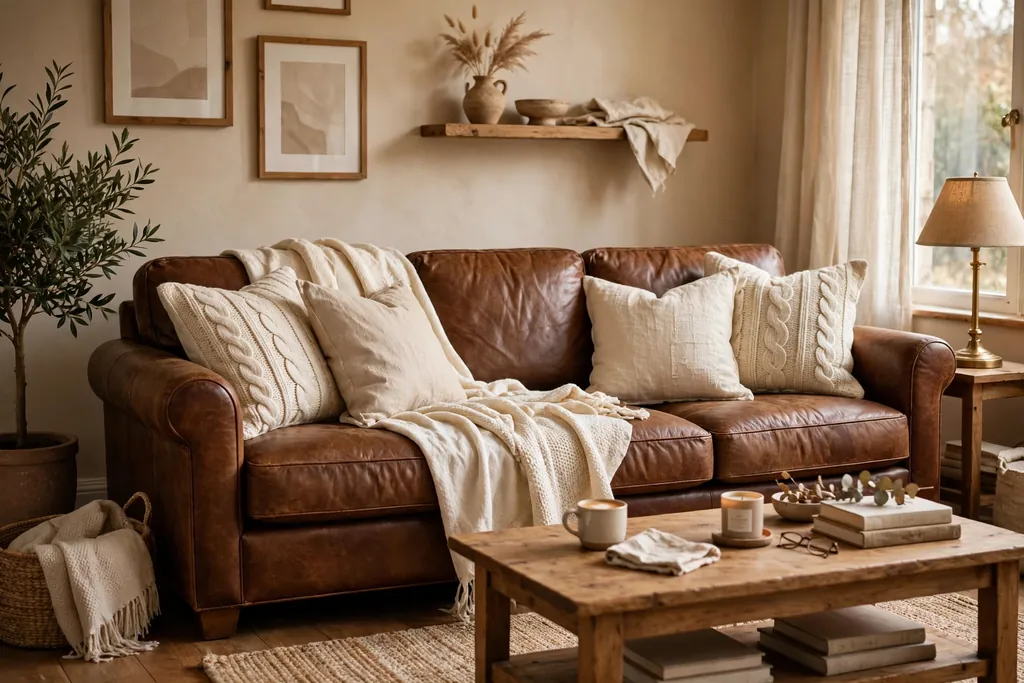
Brown leather brings a smooth, durable surface to a living room, but on its own it can look formal and a little cold. Cream throws and cushions soften it at once: drape a cream throw over one arm, add two cream cushions in different textures, such as linen and knit, and keep one brown cushion so the sofa tone is repeated. This keeps the leather visible, which is the point of choosing it, while making the seat inviting for long evenings. Wipe leather following the maker instructions, and keep it out of strong direct sun where it can fade unevenly. If the room also has a fireplace, the seating guidance in these fireplace seating ideas helps you place the sofa at a comfortable distance from the hearth.
3. Pair a Cream Sofa With Dark Brown Accent Chairs
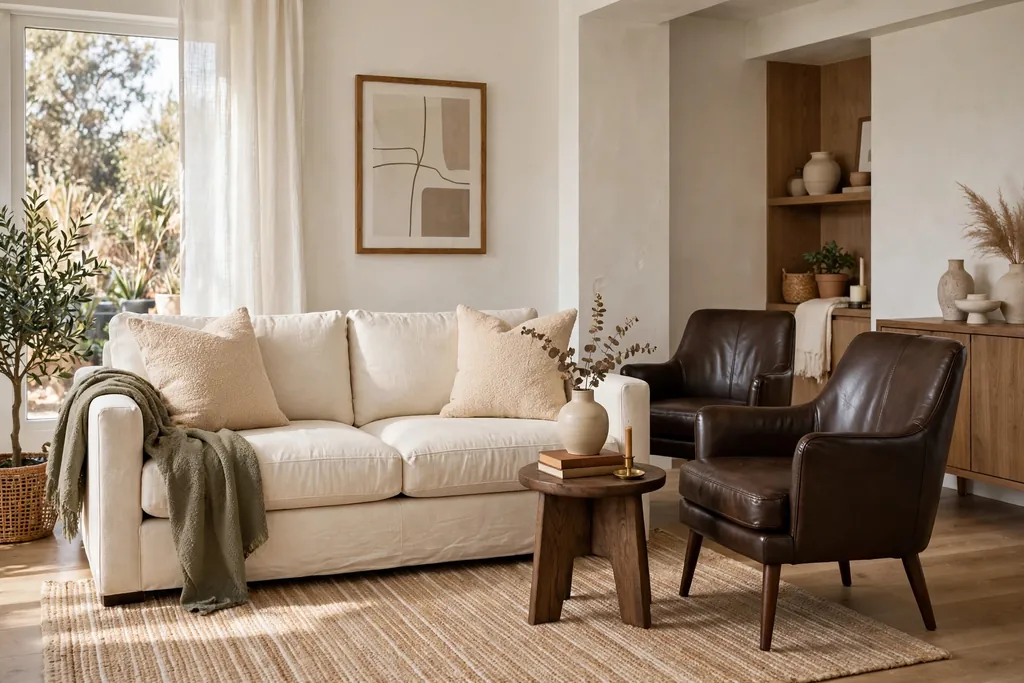
Reversing the usual balance gives a lighter room that still feels grounded. A cream sofa keeps the largest piece light, while two dark brown accent chairs pull the eye across the room and stop the cream from floating. Choose chairs with a different shape from the sofa, such as slim wooden legs against a soft sofa frame, so the pairing reads as a deliberate contrast rather than a mismatched set. A brown side table between the chairs repeats the chair tone and gives each chair a surface. This arrangement suits rooms with good daylight, since cream upholstery shows marks more easily in bright light, so pick washable covers if the sofa gets daily use.
4. Define the Seating Zone With a Layered Brown and Cream Rug
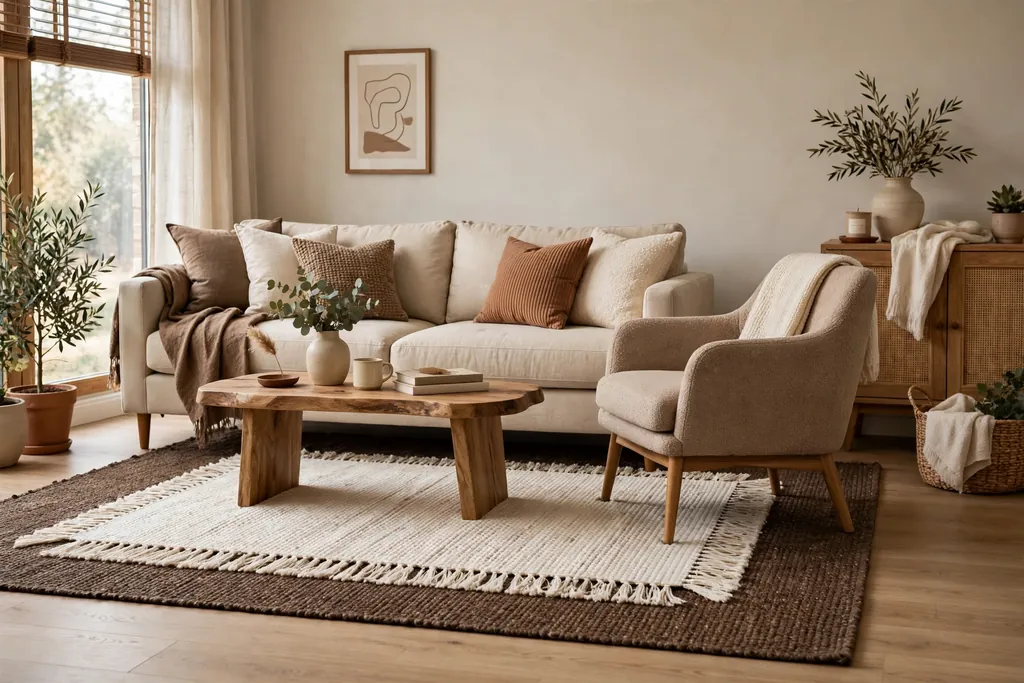
A rug is the fastest way to set the brown and cream balance for the whole seating group. Start with a large rug in a warm neutral, then layer a smaller rug with a brown pattern on top, or choose one rug that already combines both tones in a border or geometric pattern. The front legs of the sofa and chairs should rest on the rug, so measure the seating footprint before buying. A patterned rug also hides everyday wear better than a plain cream rug, which matters in a room with pets or children. Keep the rug flat and secured at the edges so it does not curl into a walking route.
5. Warm a Cream Room With a Dark Wood Coffee Table
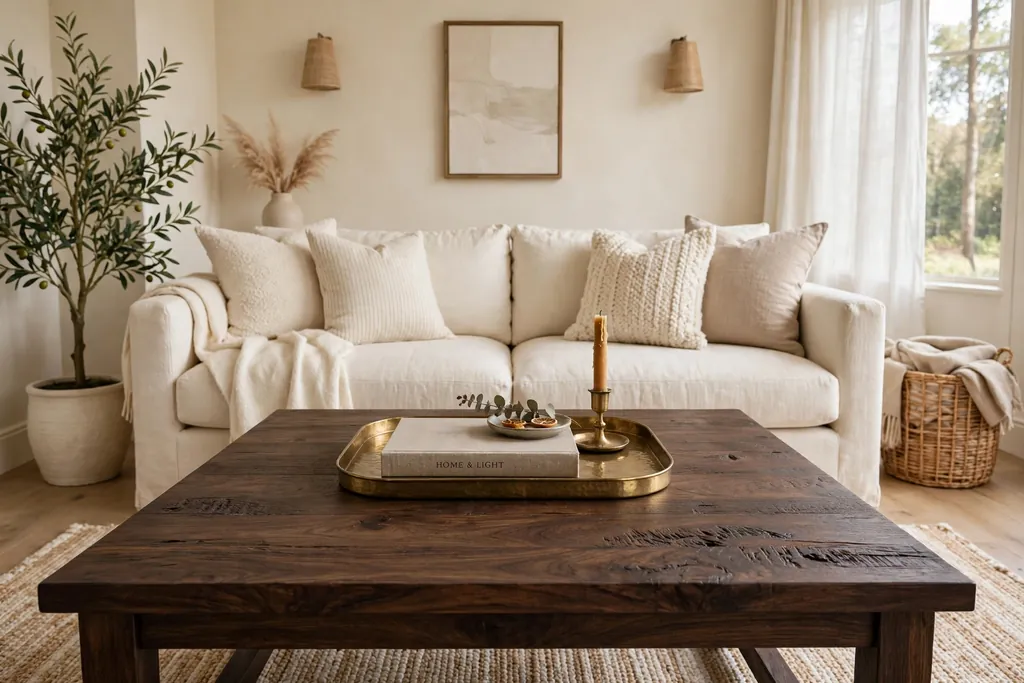
When the sofa, walls, and rug are all cream, a dark wood coffee table is enough brown to warm the room without repainting anything. Look for visible wood grain and a warm walnut or oak tone rather than a flat black-brown finish, since grain adds the texture that plain cream lacks. Keep the table top mostly clear, with one tray, a book stack, or a small plant, so the wood itself stays visible. A lower, wider table suits a long sofa, while a round table suits a tight seating group where corners would catch shins. Treat wood following the maker guidance, and use coasters for hot drinks to protect the finish.
6. Build a Brown Fireplace Surround With Cream Mantel Styling

A fireplace is a natural focal point, and a brown surround with cream styling on the mantel keeps it warm rather than gloomy. If the surround is dark wood, brick, or stone in brown tones, keep the mantel objects light: cream candles, a cream vase, light framed art, or a cream clock. Leave breathing space between objects so the mantel does not look crowded, and keep anything that can burn well clear of the fire opening, following the fireplace maker instructions. A mirror or light art above the mantel reflects light back into the room. The layout advice in these fireplace seating ideas also helps you set chairs at a comfortable distance from the hearth.
7. Add a Brown Feature Wall Behind the Sofa
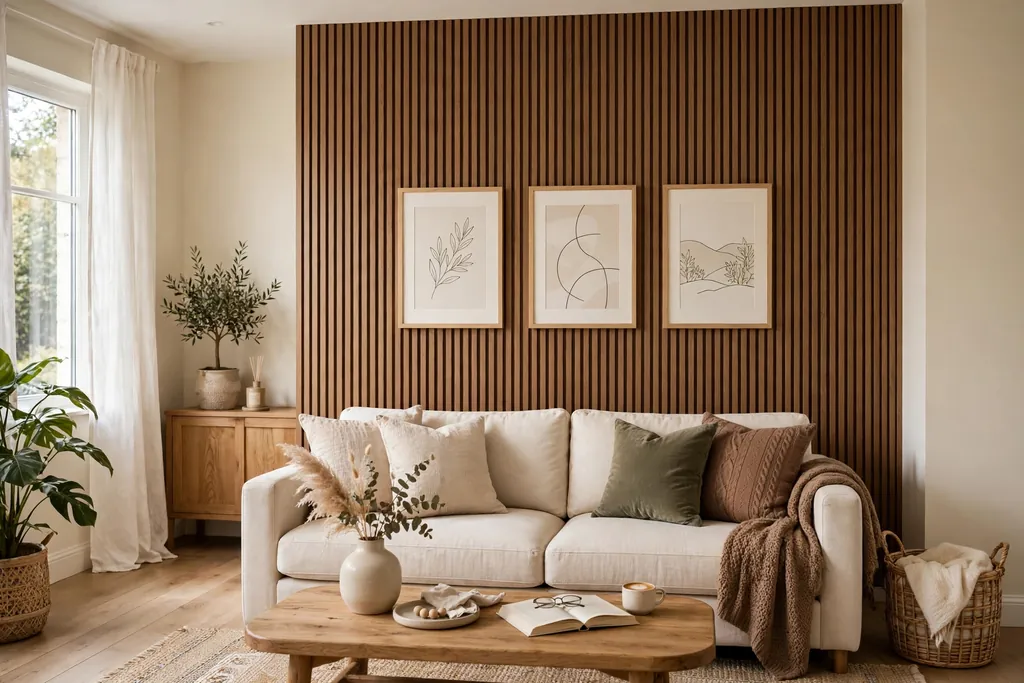
One brown wall behind the sofa gives the room depth, while the other walls stay cream to keep the light. Paint, wood paneling, or a textured wallcovering in a warm mid-brown all work, but test the tone in daylight and in evening light before committing, since brown shifts a lot between the two. Hang cream or light-framed art on the brown wall so the sofa zone has a clear focal point, and keep the sofa cushions partly cream to link the wall to the seating. This idea suits a room with a long, unbroken sofa wall; in a room with many doors or windows on that wall, a brown feature wall can look broken up and lose its effect.
8. Mix Brown and Cream Patterns in Cushions and Throws
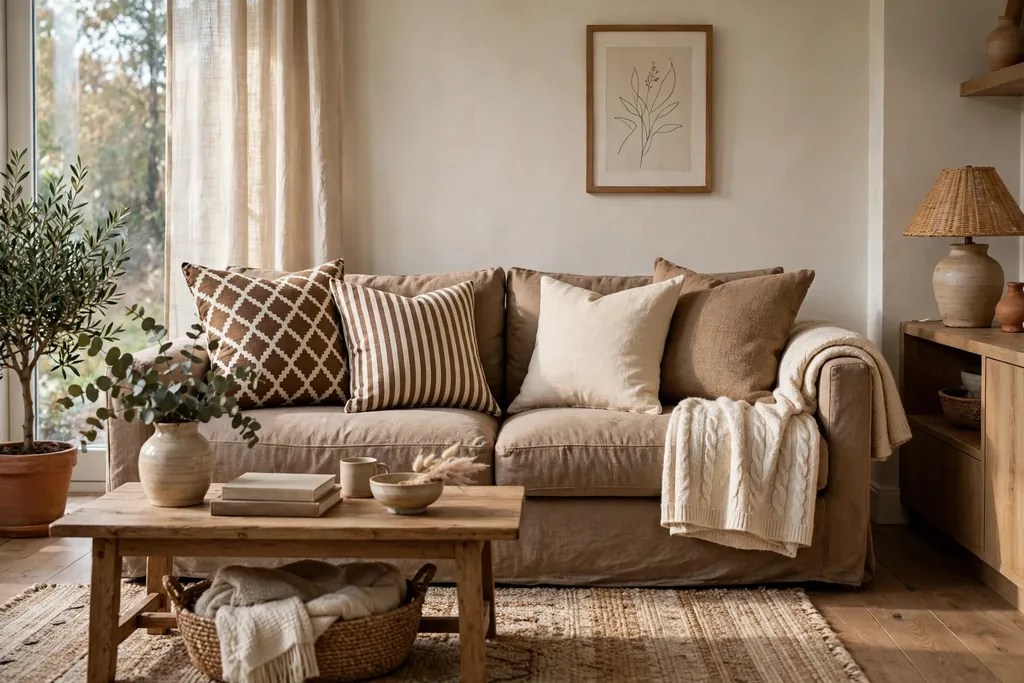
Pattern is where brown and cream can play without changing any furniture. Combine one large-scale pattern, such as wide stripes or a bold check, with one small-scale pattern, such as a dot or a fine stripe, and keep the rest plain so the eye has somewhere to rest. Use the same two tones in every pattern, so a brown and cream stripe sits happily beside a cream cushion with a brown border. Swap cushion covers with the seasons if you like a change: heavier wool or knit textures for cold months, lighter linen for warm months. Keep the total number of patterned cushions to three or four on a standard sofa, since more than that can make the seating look busy.
9. Dress Windows With Cream Curtains and Brown Hardware
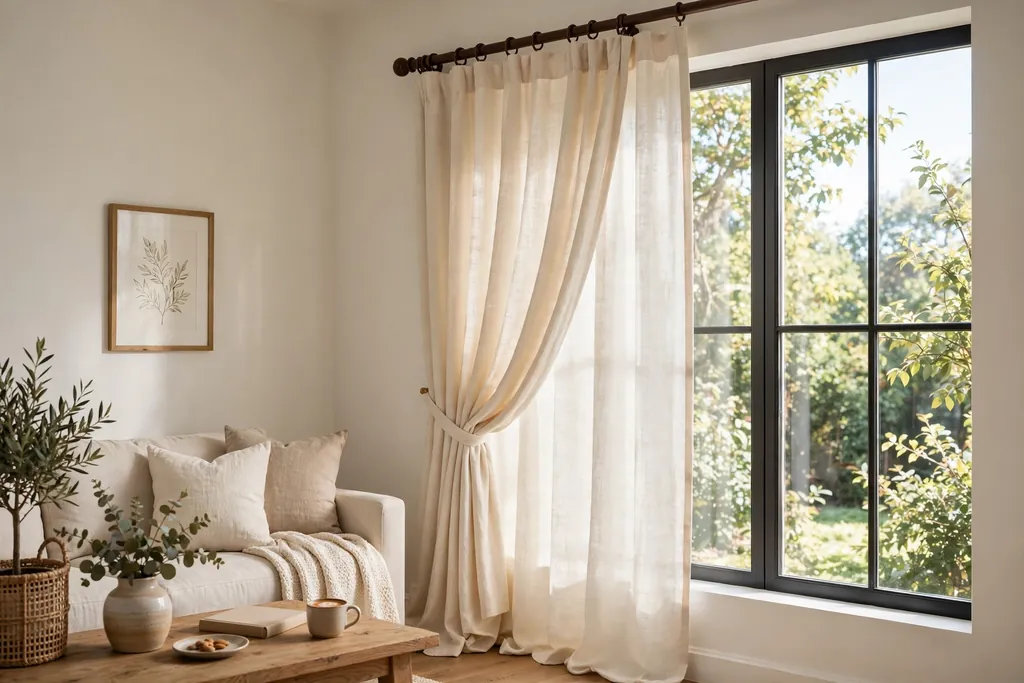
Cream curtains soften daylight and make a brown room feel lighter, while dark brown curtain rods, rings, or tiebacks add the brown tone at window height. Hang the rod wider than the window frame and higher than the top of the frame, so the curtains can be drawn fully clear of the glass during the day and the window looks larger. Choose a curtain fabric heavy enough to hang in clean folds, such as linen or a cotton blend, and check that it can be washed or cleaned easily, since cream near a window shows dust. If privacy matters at night, add a simple blind behind the curtains rather than a second heavy layer.
10. Hang a Gallery Wall in Brown Frames on a Cream Wall

Brown frames on a cream wall give a gallery wall structure without adding color that competes with the art. Use frames in one brown tone, or two closely related wood tones, and vary the frame sizes while keeping the spacing even. Plan the layout on the floor first, starting with the largest piece in the center, then build outward, and mark the hanging points on the wall with tape before making holes. Mix art, photographs, and one textile piece, such as a woven hanging, for texture. Keep the bottom of the gallery above sofa back height if it hangs over seating, so nobody brushes against the frames when sitting down.
11. Style Brown Built-In Shelves With Cream Ceramics

Brown wood shelves, whether built-in or freestanding, look their best when the objects on them include plenty of cream. Place cream ceramics, light books with cream spines, and a cream vase among darker wood and leather-bound books, and leave open gaps so each shelf reads as a display rather than storage. The grouping method in this guide on how to style open shelves works well here: start with the largest pieces, vary the shapes, and leave visible gaps. Anchor tall shelving to the wall following the maker instructions, keep heavy items low, and put everyday items at hand height so the shelves stay useful as well as decorative.
12. Create a Reading Nook With a Brown Armchair and a Cream Lamp
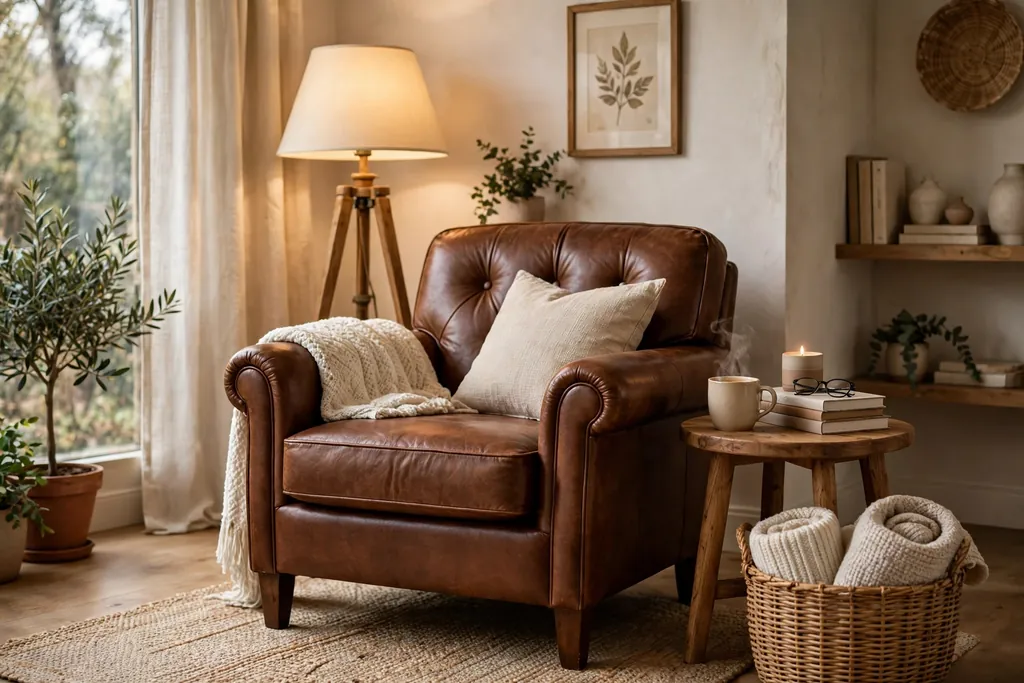
A reading nook needs a comfortable chair, light aimed at the page, and a surface for a drink, and brown and cream suits all three. Choose a brown armchair with a supportive back and seat depth that fits the main reader, add a cream-shaded floor lamp behind the chair shoulder, and place a small brown side table within reach. A cream throw over the chair arm links the lamp shade to the seating, and a basket beside the chair holds the current book and an extra throw. Angle the chair slightly toward the room so the nook feels part of the living space, and test the lamp position in the evening, since a shade that looks cream in daylight can glow warm or dull depending on the bulb.
13. Keep Throws and Blankets in a Brown Woven Basket
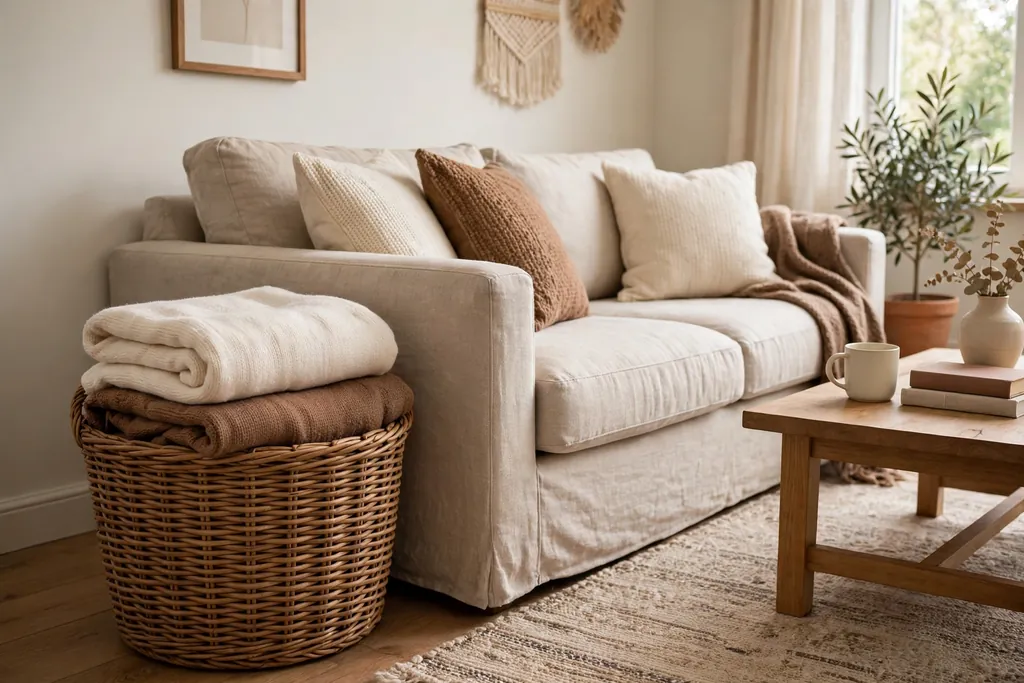
A brown woven basket by the sofa solves two problems at once: it stores throws where they are actually used, and it adds brown texture at floor level. Roll or fold throws neatly so the basket looks inviting rather than stuffed, and keep only the throws that are used regularly in it, storing spares elsewhere. Choose a basket with a sturdy base and handles, and a size that fits beside the sofa without blocking a walking route. A basket also works beside a reading chair or at the end of a sofa, and it is easy to move when the room is rearranged. Shake out throws regularly so dust does not settle into the weave.
14. Ground a Media Wall With a Brown Console and Cream Decor
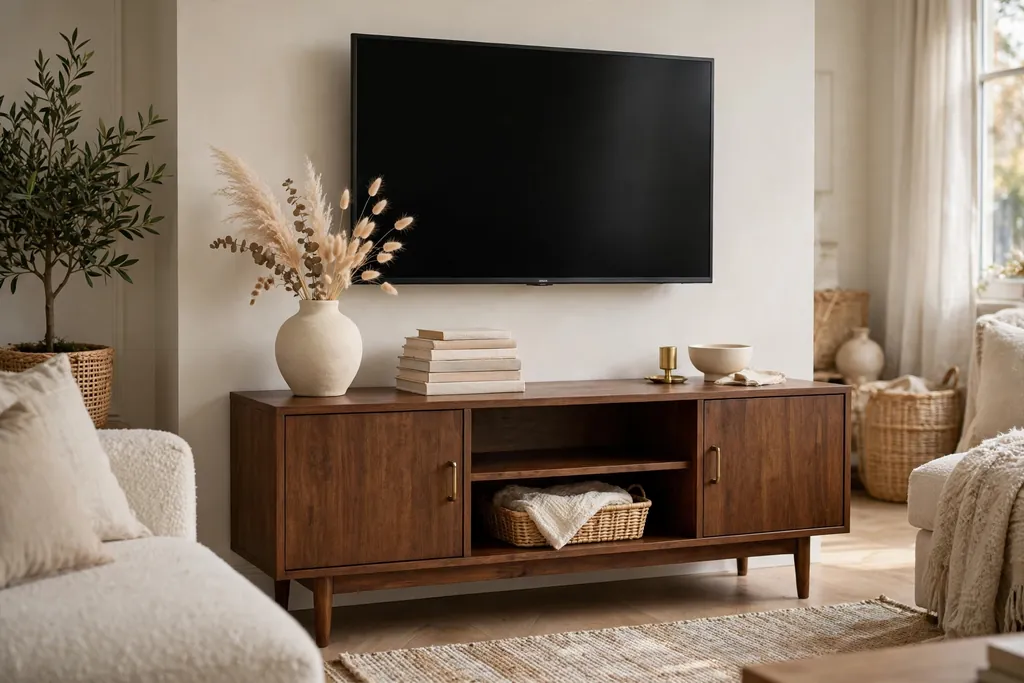
A television wall can look like a blank screen and dark boxes, but a brown media console grounds it and cream decor softens it. Choose a console in warm brown wood that is wider than the television, so the screen does not overhang the furniture, and keep cables hidden inside or behind the console. Style the top with light objects, such as a cream vase, a stack of light books, or a small plant, and leave space around the television vents following the maker guidance. If the room is used for conversation as well as viewing, place the console and seating so chairs can turn toward each other without moving heavy furniture.
15. Layer Warm Light at Three Levels
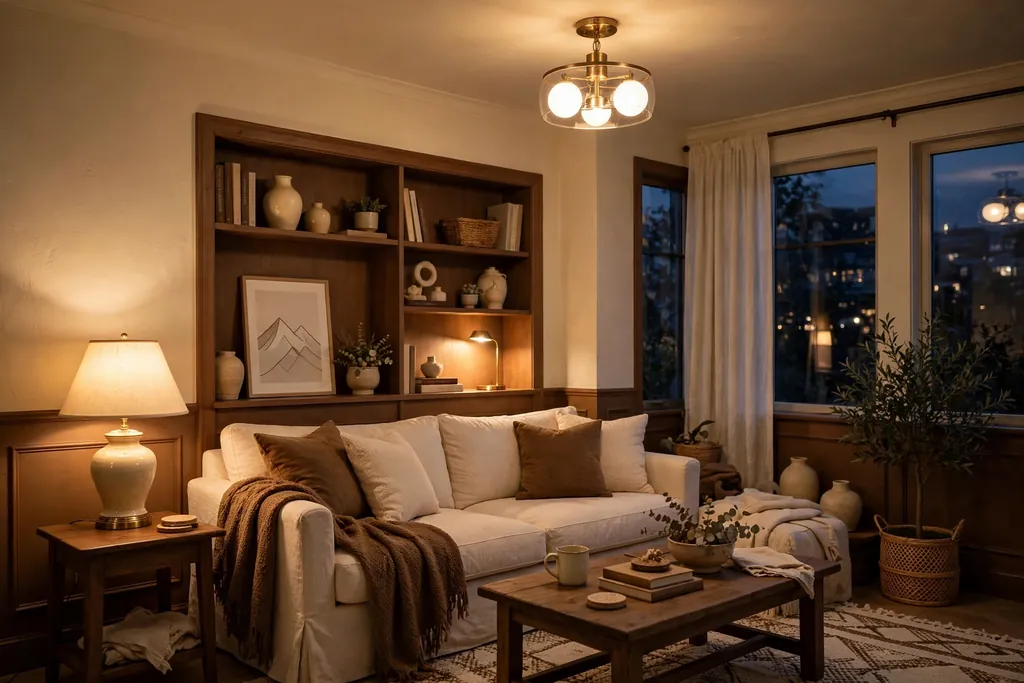
Brown absorbs light, so a brown and cream room needs more than one ceiling light to feel warm after dark. Use three levels: ambient light from a ceiling fixture or tall floor lamp, task light from a table lamp beside the seating, and a low glow from a small lamp on a shelf or side table. Choose warm white bulbs for all three, so the cream tones glow rather than turning grey, and use dimmers where possible to shift from bright daytime to calm evening light. Place the brightest light where you read or work, and keep the overall level soft in the evening. Check for glare on the television and on any glass-fronted frames before fixing lamp positions.
16. Choose a Cream Sectional With Brown Cushions and an Ottoman
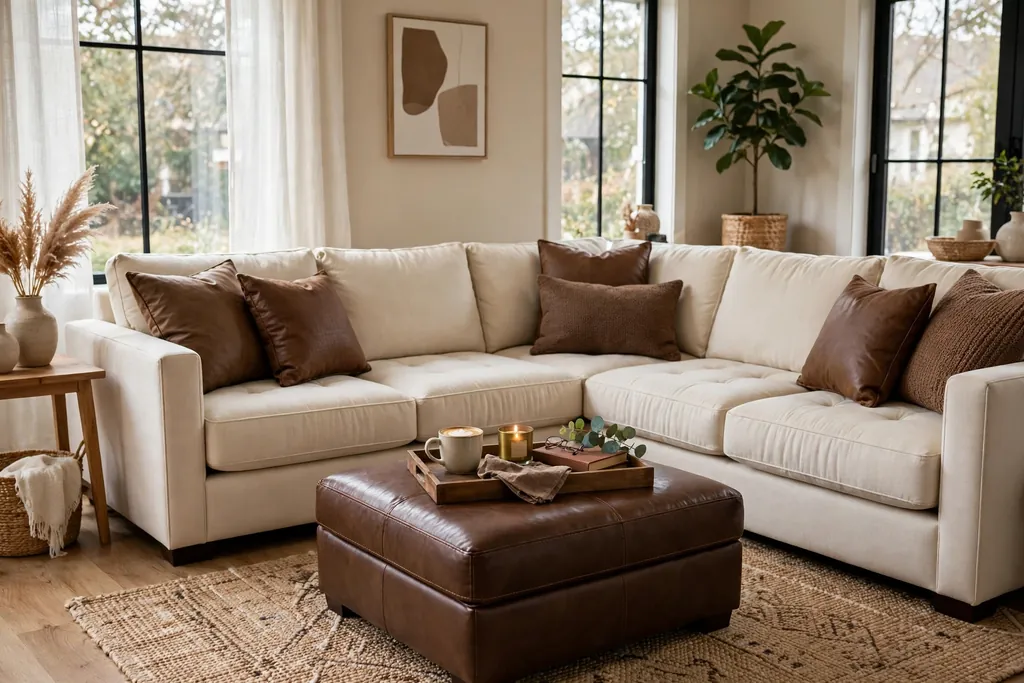
A cream sectional gives a large family room a light base, while brown cushions and a brown ottoman keep it from feeling washed out. Pick cushions in two brown tones, such as a mid-brown and a darker chocolate, plus one patterned cushion that combines both, so the brown is repeated across the sectional rather than sitting in one spot. A brown leather or wood ottoman can serve as a coffee table with a tray on top, and as extra seating when guests visit. Measure the full sectional, including the chaise or return, before ordering, and leave a clear walking route around at least one end so the large piece does not block the room.
17. Layer a Jute Rug Under a Cream Wool Rug
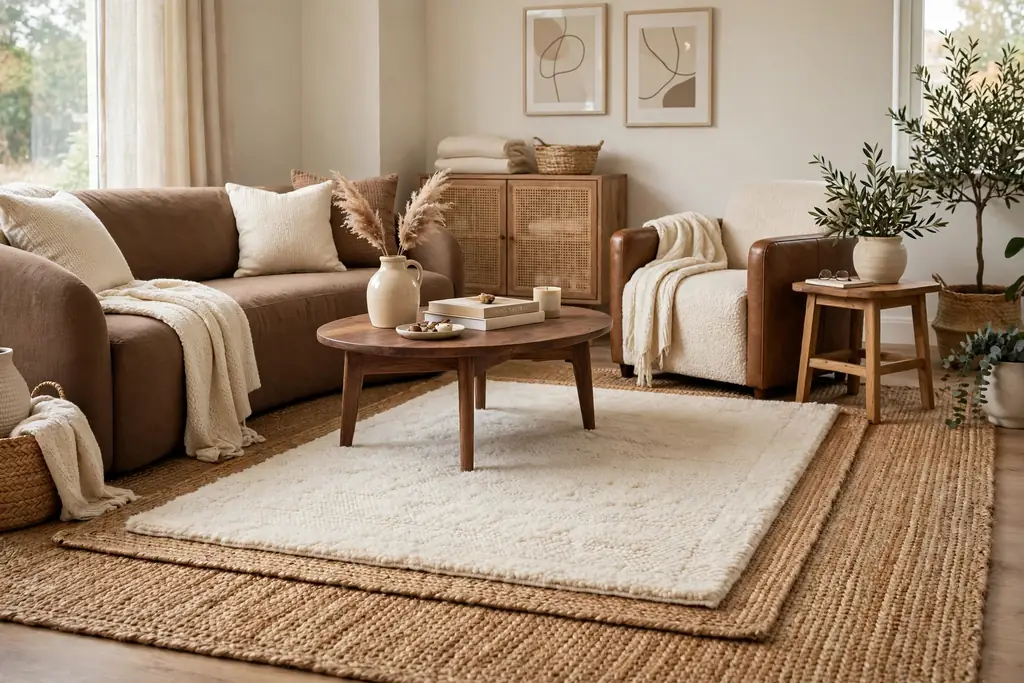
Two rugs in natural fibers add the texture that makes brown and cream feel cozy rather than flat. Start with a larger jute rug in a warm tan-brown, which is durable and hides wear, then layer a smaller cream wool rug on top in the seating area for softness underfoot. Angle the top rug slightly if the room feels too formal, or keep it straight for a calmer look. Check that doors can still open over the combined thickness, and use a rug pad under the layers so they do not slip. Vacuum both layers regularly, since natural fibers trap dust, and spot clean following the maker guidance for each fiber.
18. Use Brown and Cream Planters at Different Heights

Plants bring green into a brown and cream room, and the planters can carry the room palette. Use brown terracotta or wood planters for larger floor plants, cream ceramic pots for table plants, and one trailing plant on a shelf to add green at a higher level. Match each plant to the light it will actually get, and use saucers under pots on wood floors. Start with three or four plants rather than filling every surface, so care stays manageable and the brown and cream balance stays visible. Group plants that need similar watering together, and rotate them occasionally so growth stays even.
19. Bring in a Brown Leather Ottoman as a Coffee Table
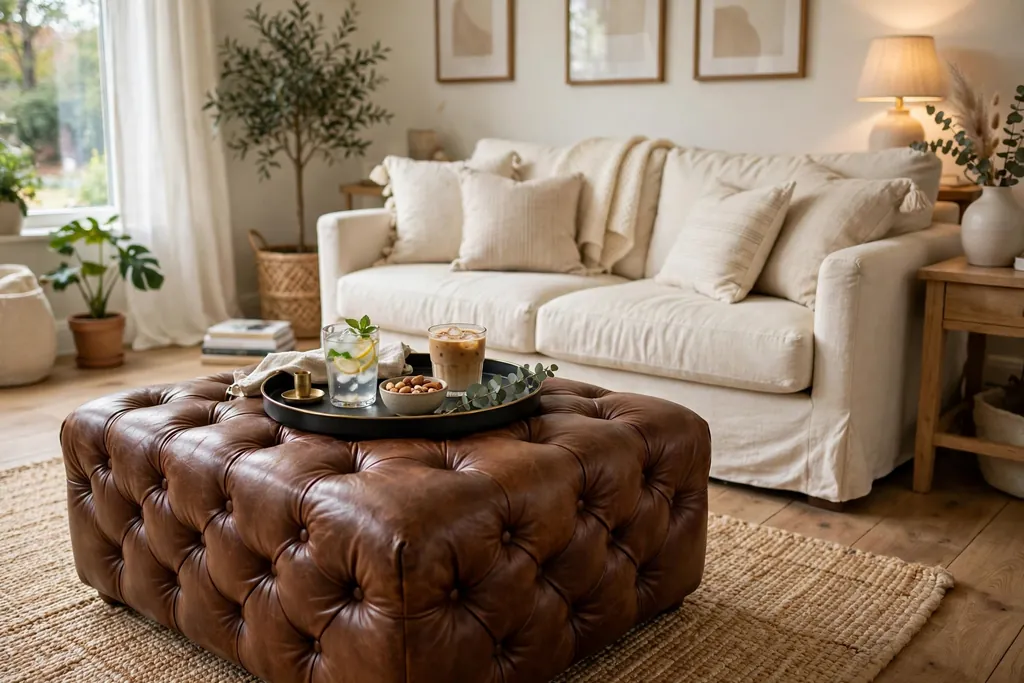
A brown leather ottoman with a tray on top works as a coffee table, a footrest, and extra seating, which makes it useful in a room where a hard table would feel too formal. Choose an ottoman that is about the same height as the sofa seat, so it is comfortable for feet and for setting down a tray, and check that the tray is stable and large enough for drinks. Keep the rest of the room lighter, with cream cushions and a light rug, so the dark ottoman reads as an anchor rather than a heavy block. If storage matters, choose an ottoman with a lift-off top that holds throws or remote controls, and test the lid before buying.
20. Zone an Open Plan Room With Brown and Cream
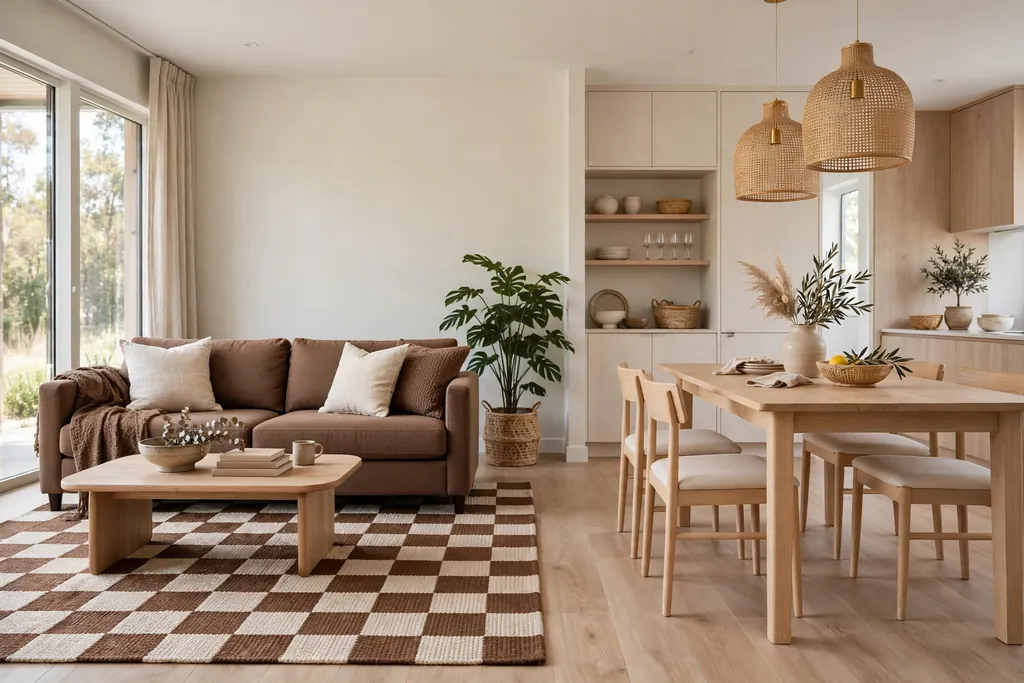
In an open plan room, brown and cream can mark the living zone without a wall or divider. Use a large rug in brown and cream tones to define the seating area, repeat the brown in the sofa or chairs, and keep the dining or kitchen side lighter, with cream chairs or light wood. A console table behind the sofa, in brown wood, marks the boundary and gives a surface for a lamp or books. Keep the walking route between zones clear, and repeat one tone across the boundary, such as cream cushions on both the sofa and a dining bench, so the two zones feel connected rather than split into separate rooms.
21. Add a Brown Wood Sideboard for Storage and Display
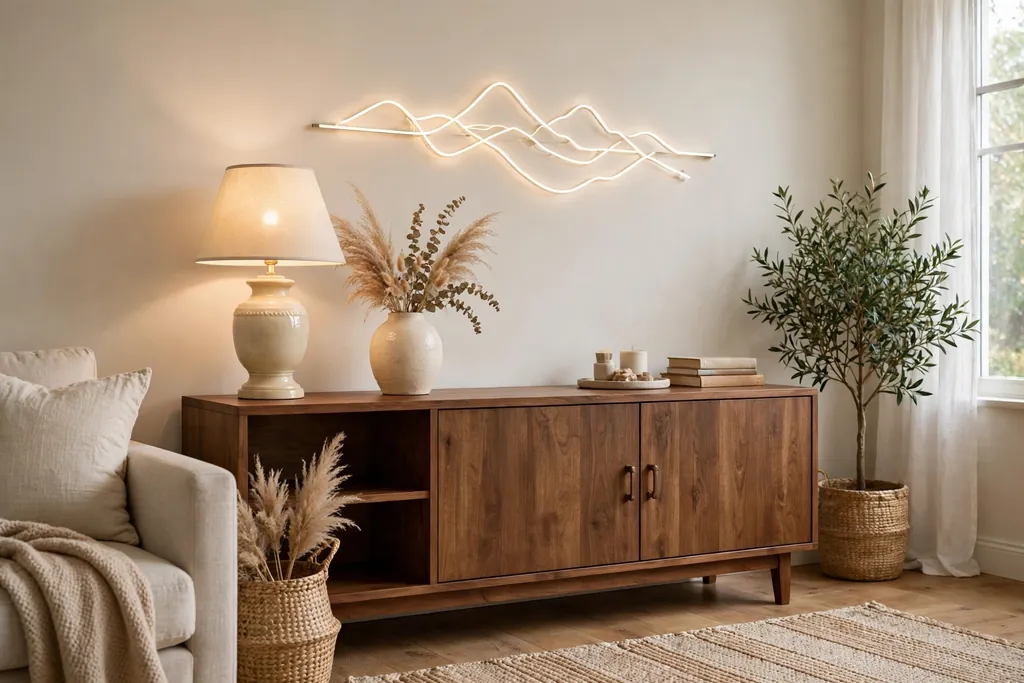
A brown wood sideboard along one wall gives a living room closed storage for games, media, and everyday clutter, plus a display surface on top. Keep the top styling light: a cream lamp, a cream vase, or light framed art above it, so the dark wood does not make the wall feel heavy. Inside, use boxes or baskets to sort small items, and keep the items used most often at hand height. Check the sideboard depth against the walking route, since a deep piece on a narrow wall can pinch the passage. A sideboard also works as a room divider in a larger open plan room, with the back facing the next zone.
22. Pick a Washable Cream Slipcovered Sofa for Family Living
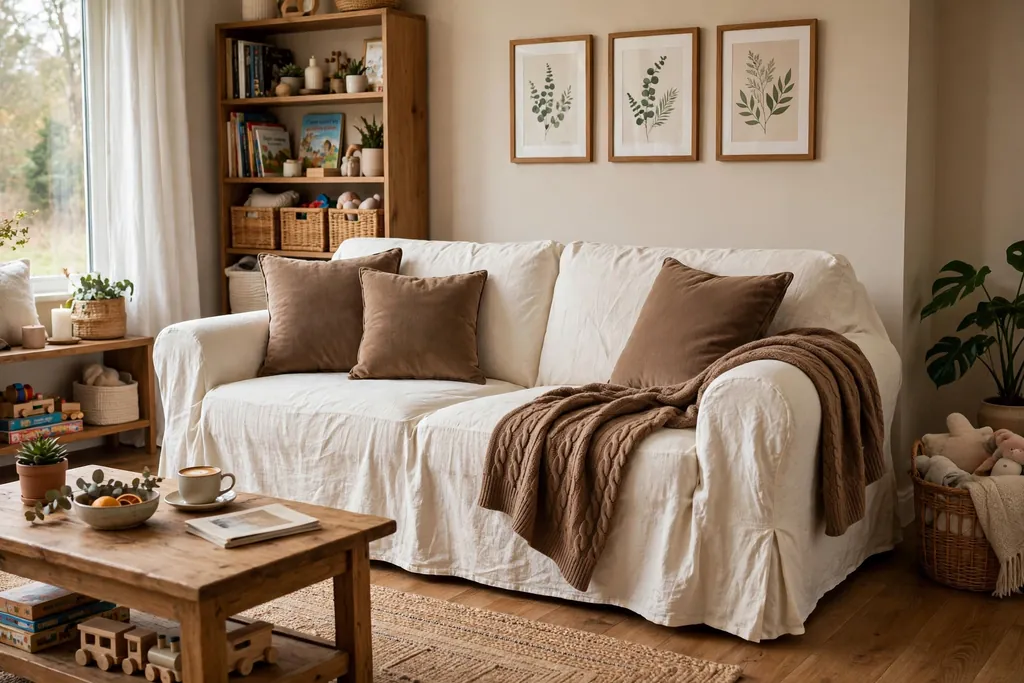
A cream slipcovered sofa is a practical choice for a family living room, because the covers can be removed and washed, which matters when cream is the main upholstery tone. Pair it with brown cushions, a brown throw, and a brown wood table, so the room still reads as brown and cream even though the largest piece is light. Check the slipcover fit and washing guidance before buying, and keep a spare set of cushion covers if the sofa gets heavy daily use. This idea suits rooms with children or pets best, since the washable covers remove the worry that usually comes with a cream sofa, and the brown accents hide everyday wear on cushions and throws.
Conclusion
Brown and cream works best when each tone has a clear job: cream brings light, brown brings weight, and texture links the two. Start with the largest pieces, such as the sofa and the rug, and set their balance first. Then repeat each tone in smaller pieces, cushions, tables, lamps, and planters, so the room looks planned from every seat. Add warm layered light last, since it changes how both tones read in the evening. Try one or two ideas this weekend, live with them for a week, and adjust the balance before adding more. If an idea here helped your room, save this post to your living room board on Pinterest so you can find it when you are ready for the next change.
Frequently Asked Questions
What is the best balance of brown and cream in a living room?
Start with about two parts cream to one part brown in a small or dark room, and move toward an even split in a large room with good daylight. Let cream cover walls and large rugs, and let brown anchor the sofa, wood furniture, or one feature wall. Repeat each tone at least twice in smaller pieces, so neither tone looks like an accident. If the room starts to feel heavy, add cream cushions or a light throw; if it feels flat, add a brown wood table or darker cushions.
Will a brown sofa work with cream walls in a small living room?
Yes, if the sofa is sized to the wall and the cream is warm rather than cold white. A chocolate sofa on cream walls gives a clear focal point, and cream cushions plus a light rug keep the dark piece from filling the view. Measure the sofa footprint and leave clear walking routes on at least one side. The small room layout advice in these cozy apartment living room ideas also helps with sizing furniture to a limited floor plan.
How do I keep a cream sofa clean in a brown and cream living room?
Choose washable slipcovers or removable cushion covers where possible, and check the washing guidance before buying. Keep throws on the seats used most often, vacuum upholstery regularly, and deal with spills promptly following the fabric maker guidance. Brown cushions and throws on a cream sofa also help, since they take the wear on armrests and seat edges. Avoid placing a cream sofa in strong direct sun for long periods, since light can fade fabric unevenly.
What wood tones work best with brown and cream decor?
Warm walnut, mid-brown oak, and honey-toned wood all sit well between chocolate brown and cream, because they add a middle tone. Avoid mixing too many wood finishes in one room: pick one main wood tone for large furniture, and repeat it in smaller pieces such as frames or a tray. If existing furniture mixes tones, a rug or cushions in brown and cream can tie them together without replacing anything.
How can I make a brown and cream living room feel warm at night?
Layer light at three levels, with warm white bulbs throughout, and use dimmers to lower the overall level in the evening. A table lamp beside the seating, a floor lamp behind a reading chair, and a small lamp on a shelf give a warm glow without a harsh ceiling light. Cream shades soften the light, while brown wood and leather catch the warm glow and look richer. Check for glare on screens and glass frames before fixing lamp positions.
Can brown and cream work in a modern living room?
Yes. Keep the shapes simple, such as a low-profile sofa, a plain wood table, and slim-framed art, and let the brown and cream tones do the work rather than adding ornate detail. A cream sofa with brown accent chairs, a brown leather ottoman, and a single patterned rug can feel modern without feeling cold. Add one natural texture, such as jute, wool, or woven baskets, so the clean lines still feel inviting.