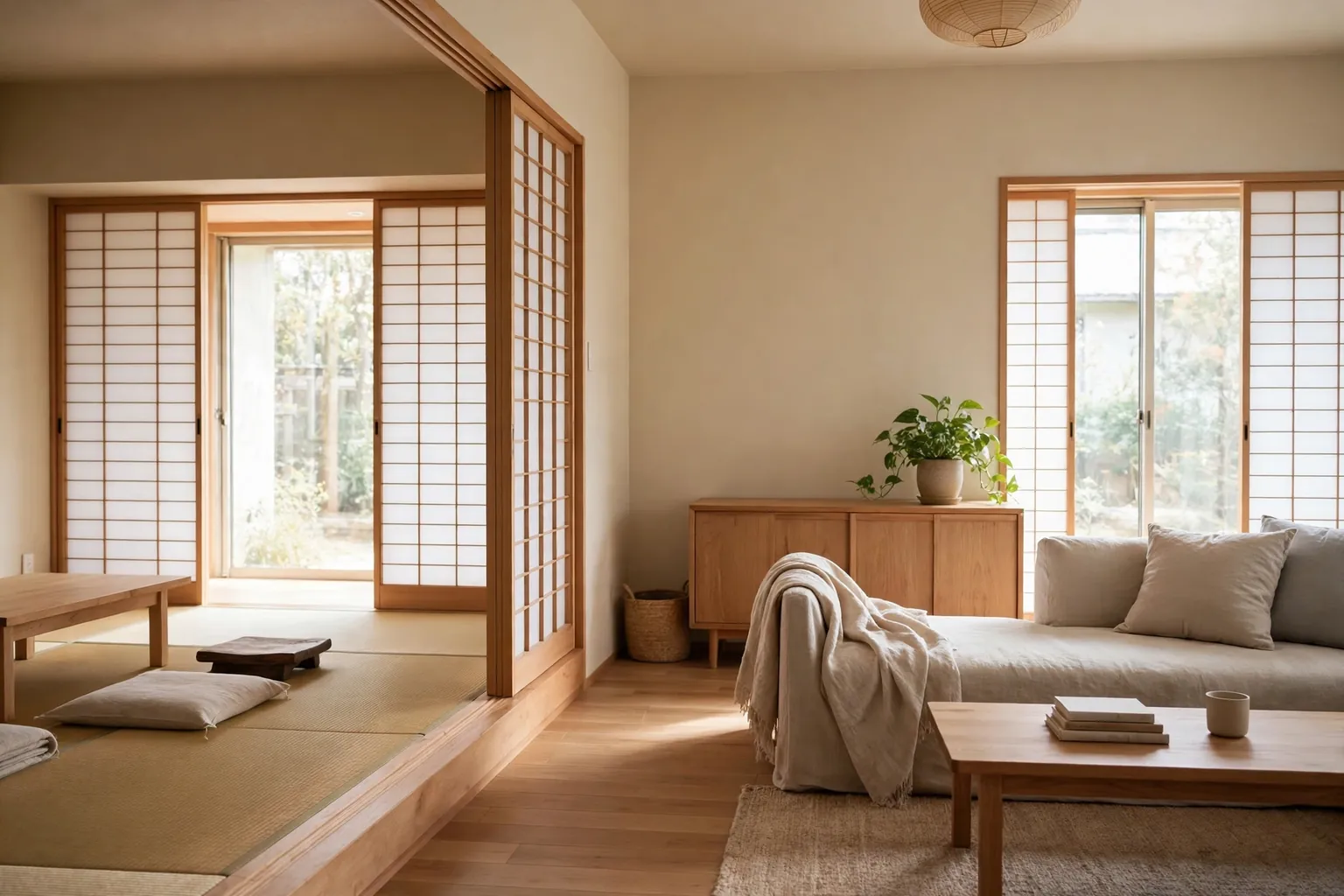
A Japanese apartment feels calm because every piece has a clear job and the floor stays open. Low furniture, natural wood, soft paper light and one well placed plant can make a small room feel larger, quieter and easier to keep tidy. These 14 Japanese apartment design ideas adapt those habits for rented rooms and small homes, without a remodel. You will find tatami zones, shoji screens, genkan entries, hidden storage and flexible rooms that change from day to night. Start with one idea, such as clearing the floor or adding a low table, and let the rest follow at your own pace.
Key Takeaways
- Keep the floor open first, then add furniture. Empty floor space is part of the design, not wasted space.
- Choose low, light furniture in natural wood so sight lines stay clear across a small room.
- Give every item a closed home, so surfaces stay clear and tidying takes minutes.
- Use soft, layered light from paper lamps and low lamps instead of one harsh ceiling light.
- Add nature in small doses: one plant, one branch, or a view framed by a clear window.
- Let one room do two jobs with sliding screens, a foldaway table, or a futon that stores away by day.
1. Tatami Zone for Floor Living
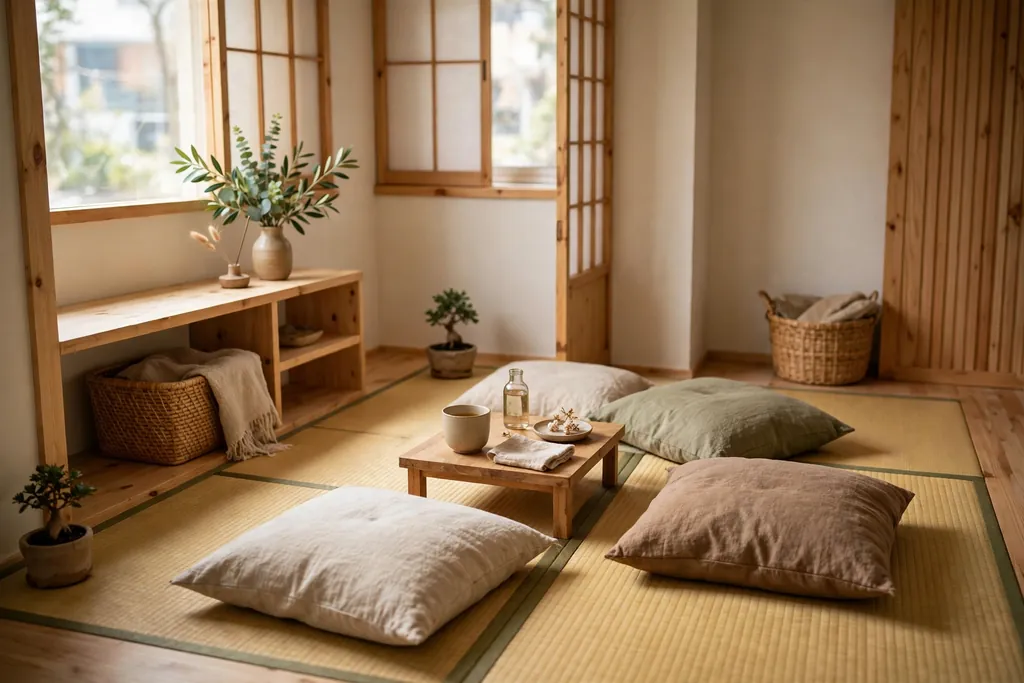
Lay a tatami mat, or a woven rush rug that echoes tatami, in one clear corner to mark a floor living zone. This spot becomes the place for tea, reading, or sitting with friends, and it changes how the whole room feels because the floor itself becomes seating. Keep the zone free of tall furniture so the low line of sight stays open.
Add floor cushions, called zabuton, and a small tray for cups, and remove shoes before stepping onto the mat, as you would on real tatami. A woven mat is easier to clean and move than fixed flooring, which suits renters. If the room is carpeted, a firm mat on top still gives a clear edge and a sense of place.
2. Shoji Screens for Soft Light
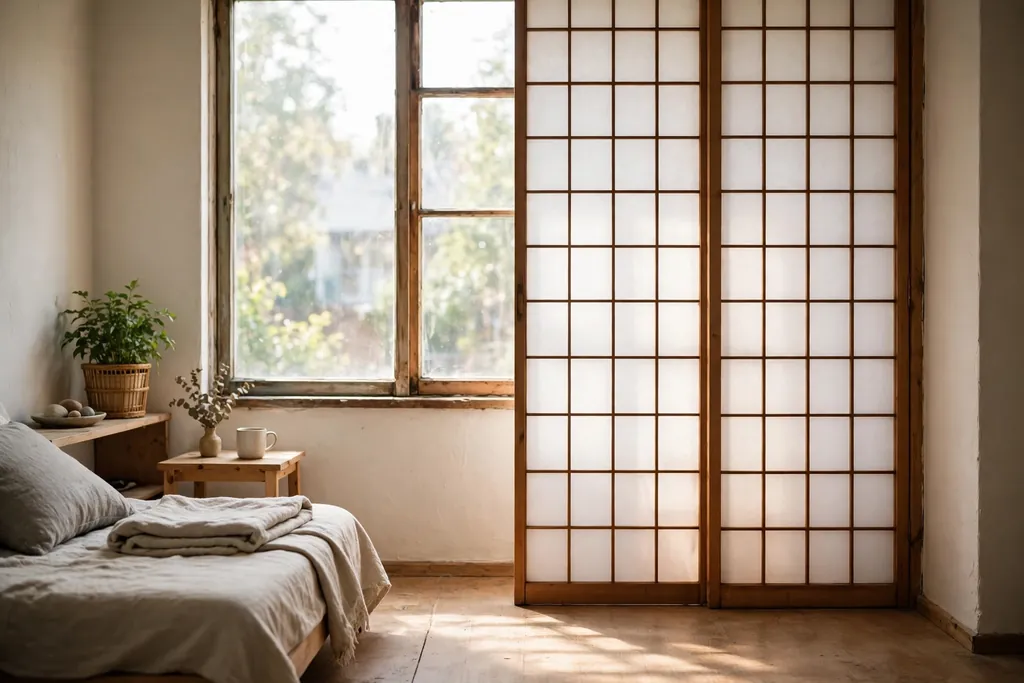
Use a shoji screen, or a freestanding screen with translucent paper panels, beside a window or across a doorway to soften daylight. Shoji screens spread light evenly through a room and give privacy without blocking the sun, which matters in a small apartment where a solid curtain can darken the whole space.
Place the screen where it catches morning or afternoon light, and keep the path behind it clear so it can slide or fold easily. A lightweight freestanding screen needs no wall fixing, so it suits rented homes. Choose a simple wooden frame and plain paper, and avoid patterned screens that compete with the calm palette of the room.
3. Low Platform Bed in a Sleeping Nook
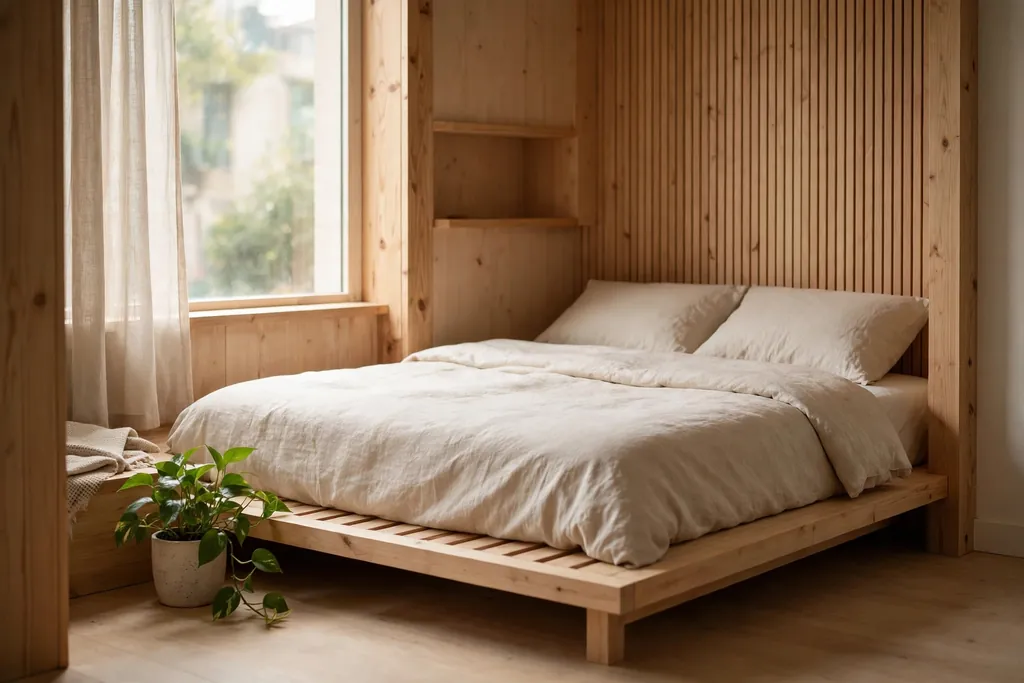
Set a low platform bed, or a futon on a low wooden base, in the quietest corner of the room to create a sleeping nook that feels grounded. A low bed keeps the ceiling height visible and makes a small bedroom feel taller, while the simple frame leaves room for a plant or a small shelf beside it.
Keep bedding in warm white, soft grey, or pale beige, and fold a throw at the foot of the bed instead of piling cushions. If space is very tight, a futon that rolls away by day frees the same floor for living space, which is the flexible approach used in many Japanese homes. The zoning advice in these studio apartment decorating ideas helps a sleeping nook share a room with living and work zones.
4. Low Wooden Table with Floor Cushions
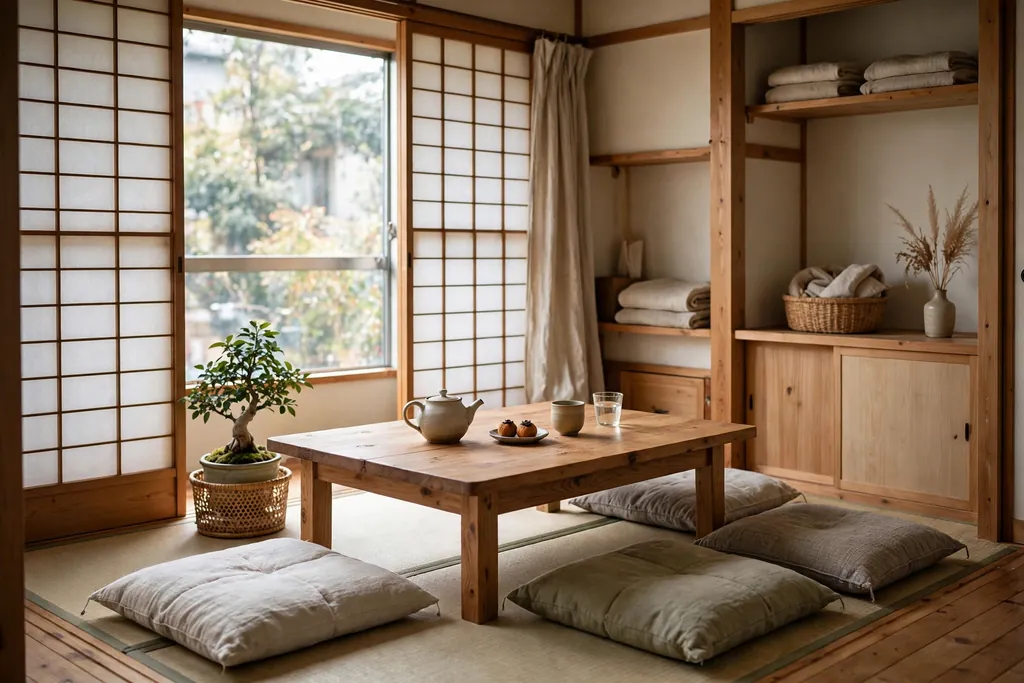
Place a low wooden table, called a chabudai in a traditional setting, at the centre of the tatami zone for meals, work, and conversation. Sitting on floor cushions around a low table keeps the room open, and the table itself becomes a gathering point that does not block views across the apartment.
Choose a table with a plain wood top and simple legs, sized so everyone can reach the centre without stretching. Store the cushions in a basket or on a low shelf when the table is not in use, so the zone stays clear. A foldaway low table gives the same effect in a room that also needs floor space for exercise or guests.
5. Genkan Entry with a Step and Shoe Storage
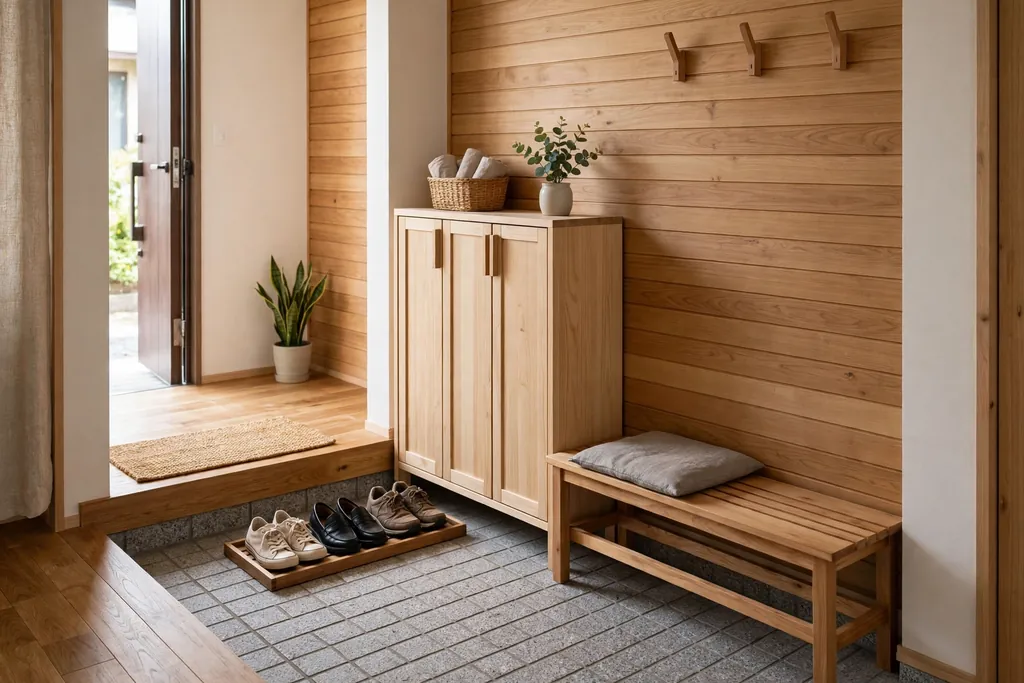
Create a genkan style entry by marking a clear shoe zone just inside the door, with a low step, a tray, or a different rug from the main floor. This small change keeps outdoor dirt out of the living area and gives every arrival a clear first step: shoes off, shoes stored, then step into the home.
Use a slim shoe cabinet, a low bench with baskets beneath, or wall hooks for a bag and a coat, keeping the entry to one tidy group. A tray catches wet shoes, and a small dish holds keys. Keep the entry clear of parcels and extra coats, since a calm entry sets the tone for the rest of the apartment.
6. Hidden Storage Behind Flat Doors
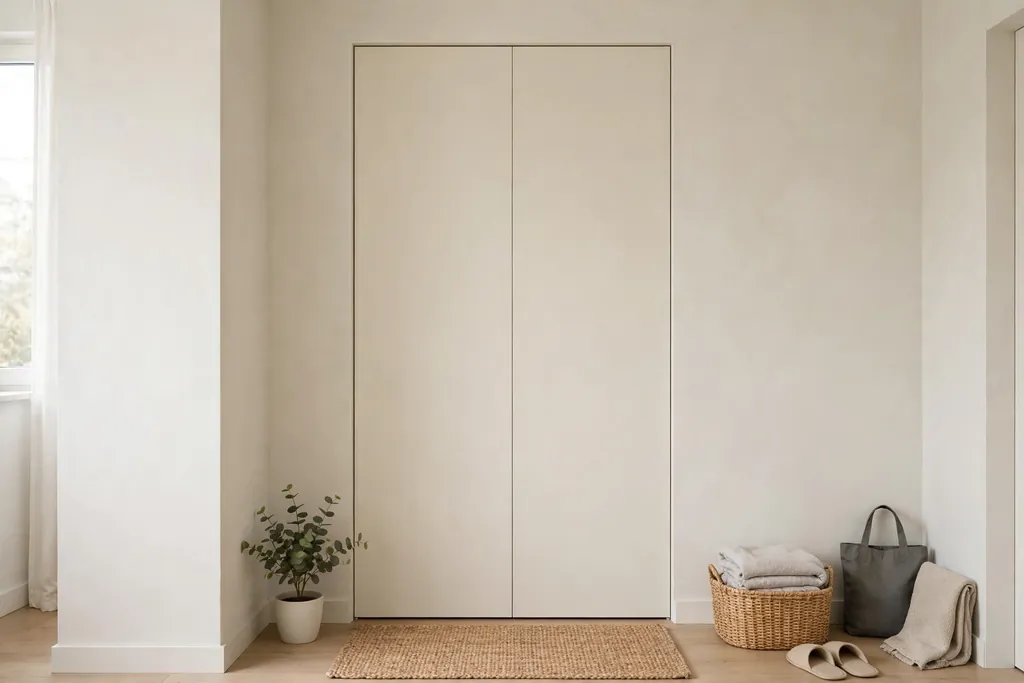
Hide storage behind flat, handle free doors or simple curtain panels so clothes, cleaning items, and spare bedding stay out of sight. Japanese apartments often use large closets, called oshiire, with plain doors that blend into the wall, and the same idea works with a freestanding wardrobe or a closet fitted with plain fronts.
Sort each closet by use, with daily items at hand height and seasonal items up high, and label boxes inside so nothing needs a long search. The basket and bin grouping in these bedroom storage ideas works well inside a plain closet too. Leave one shelf partly empty, so new items have a place instead of landing on a chair.
7. Washi Paper Lighting for a Soft Glow
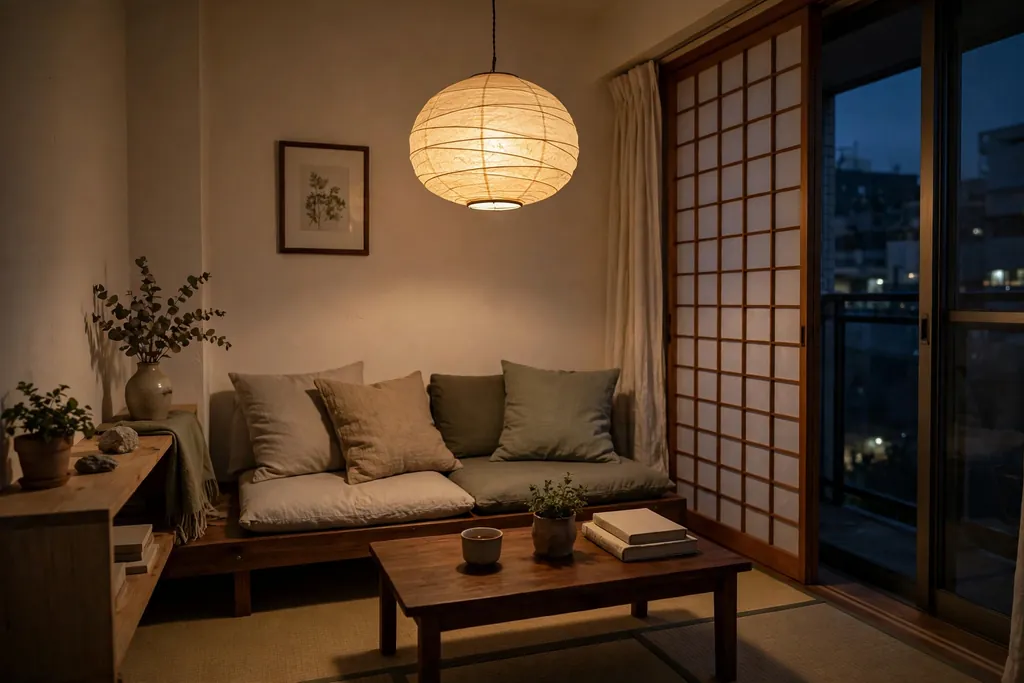
Light the room with washi paper lamps, paper lanterns, or a lamp with a plain fabric shade that spreads a soft glow. Paper light feels warm and even, and it suits evening meals, reading, and quiet time far better than a single bright ceiling light in a small room.
Layer the light at two or three heights: a floor lamp or paper lantern at seating height, a small table lamp beside the bed, and daylight through a shoji screen by day. Use warm bulbs and a dimmer where you can, and keep lamp shades plain so the light, not the lamp, is the focus. Paper shades need care near heat, so check the bulb guidance for your lamp.
8. Natural Wood and Bamboo Accents
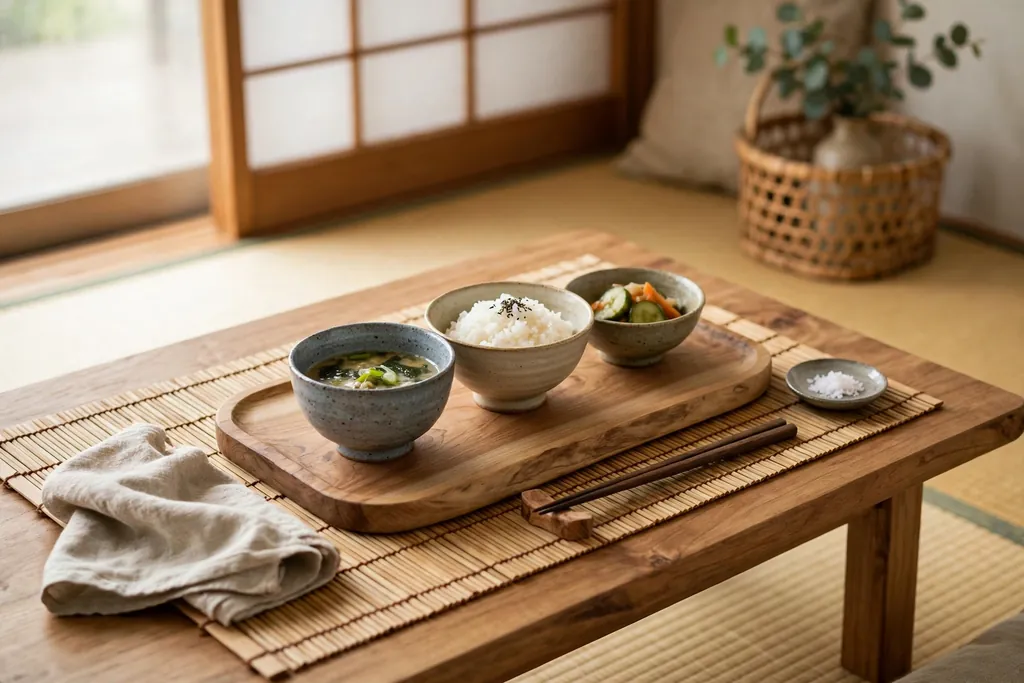
Bring in natural wood and bamboo through a bench, a tray, a shelf, or chopstick rests and small bowls, rather than through large new furniture. Wood grain, bamboo, and woven fibres add warmth and texture to a room that might otherwise feel plain, and they age with small marks that suit a lived in home.
Keep the wood tones close together, such as light oak, pale bamboo, and warm walnut in small doses, so the room reads as one calm palette. A wooden tray on the low table, a bamboo mat in the entry, and a wood frame on the wall are enough. Avoid glossy or heavily patterned finishes, which can make a small room feel busy.
9. One Focal Plant and a Framed View
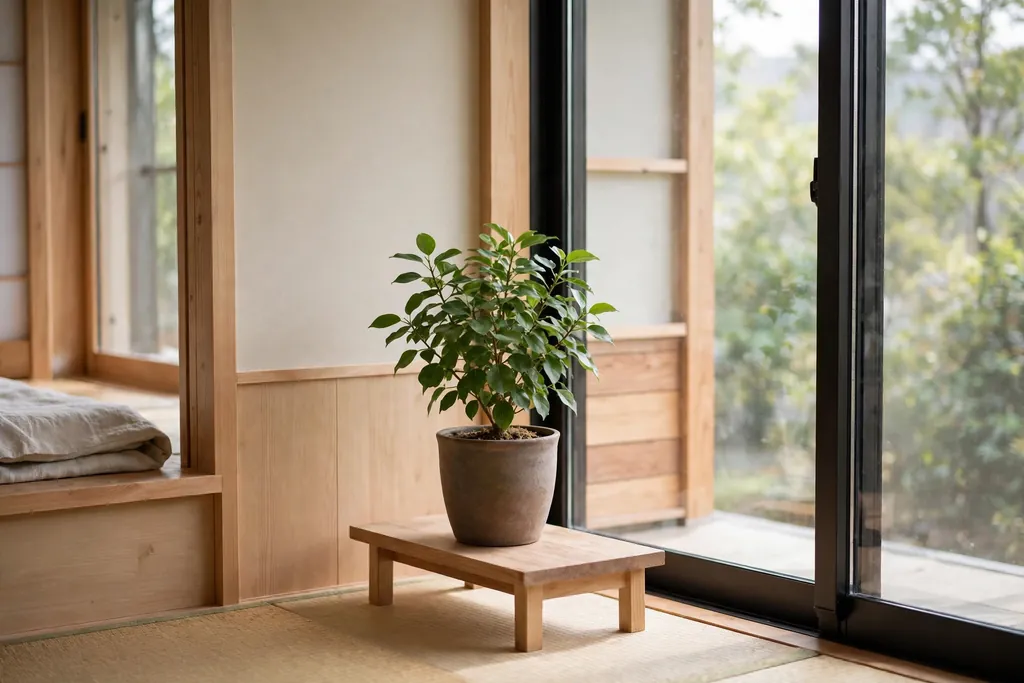
Choose one focal plant, such as a small pine, a bamboo stem in a ceramic vase, or a bonsai on a low stand, and place it where you see it from your main seat. One plant, given a clear spot and a plain pot, draws the eye and brings nature indoors without filling every surface with greenery.
Frame the view too: keep one window clear of clutter, or hang one simple print of a mountain, a river, or a branch on an otherwise plain wall. Match the plant to the light it will actually get, use a saucer under the pot, and start with one plant before adding more. A single strong plant beats a crowded shelf of plants that are hard to care for.
10. Warm Neutral Palette with Linen and Cotton
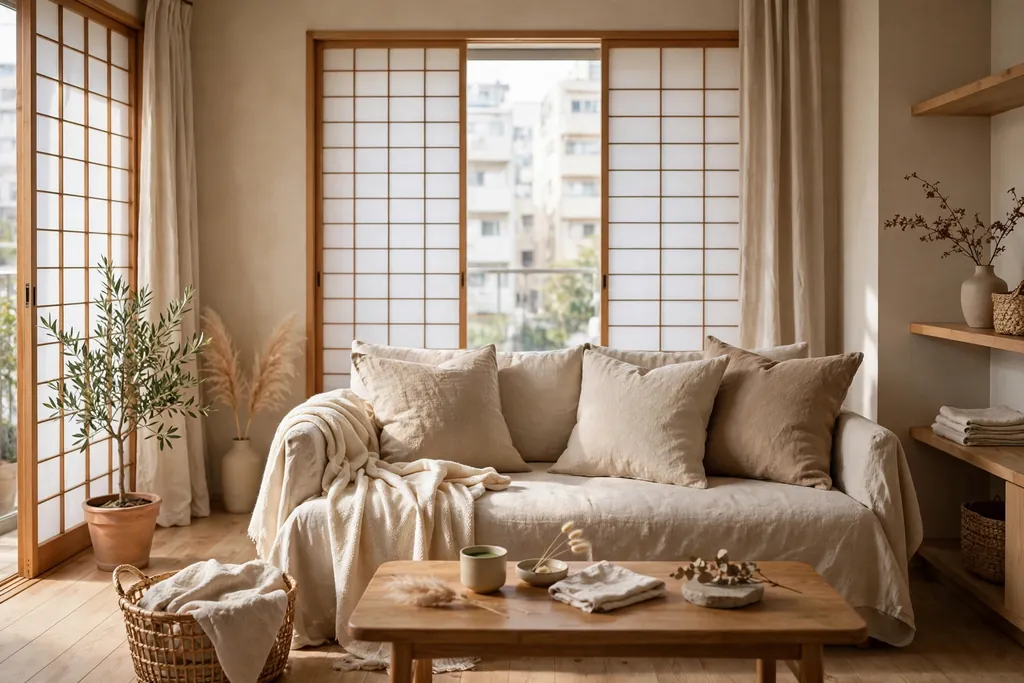
Use a warm neutral palette of soft white, warm beige, pale grey, and muted clay on walls, bedding, and large furniture, then add texture with linen, cotton, and wool. Texture, rather than strong colour, gives a Japanese apartment its warmth: a linen cushion, a cotton throw, a wool rug, and a woven basket each feel different to touch.
Keep strong colour to one or two small accents, such as a dark ceramic vase or a deep green plant pot, and repeat that accent in one other spot so the room feels linked. If you rent and cannot paint, a large rug, curtains in a warm neutral, and bedding in the same palette give the same calm base with no fixed change.
11. Sliding Fusuma Panels for a Flexible Room
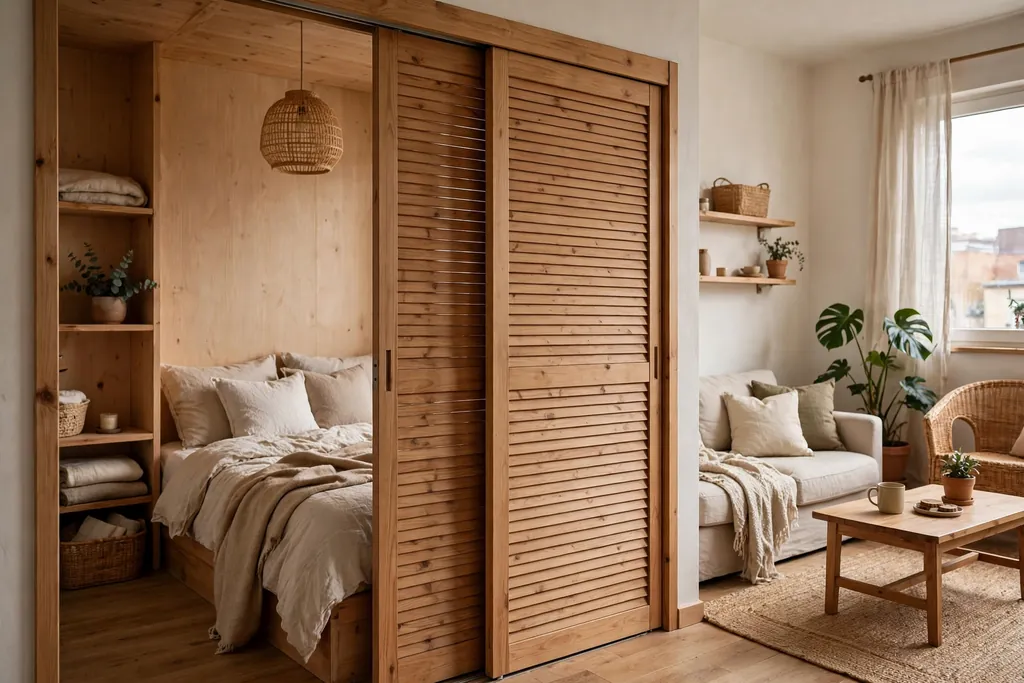
Use sliding panels, a ceiling track curtain, or a freestanding screen to divide one room into two zones that can open again in seconds. Fusuma panels are opaque sliding doors in a traditional home, and a modern version lets a sleeping nook close at night and open into the living area by day.
Keep the divider light and simple, with plain panels that slide easily on a track, and leave a clear walking route around one end so the division never feels like a wall. A curtain on a ceiling track gives a softer, renter friendly version of the same idea. The divider guidance in these cozy apartment living room ideas shows how an open divider can mark a boundary without blocking light.
12. Compact Kitchen with Clear Counters
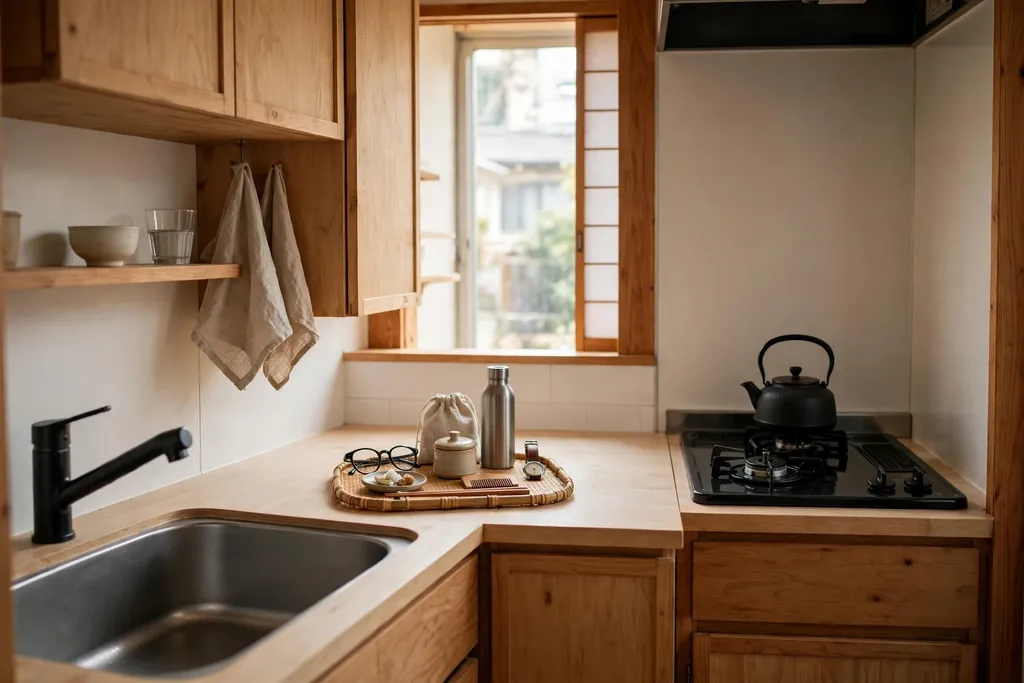
Keep kitchen counters clear by storing appliances in one cabinet, using a tray for daily items, and giving every tool a fixed spot. Japanese apartment kitchens are often compact, so they work because only daily items stay out: a kettle, a cutting board, and a small tray for oils or tea.
Use vertical storage inside cabinets, such as shelf risers and hooks on the inside of doors, and a rolling cart that parks beside the counter when extra prep space is needed. Wipe counters after cooking and return items to their cabinet the same evening, so the kitchen stays ready for the next meal. A clear counter also makes a small kitchen feel larger and calmer.
13. Engawa Style Window Seat and Balcony Link
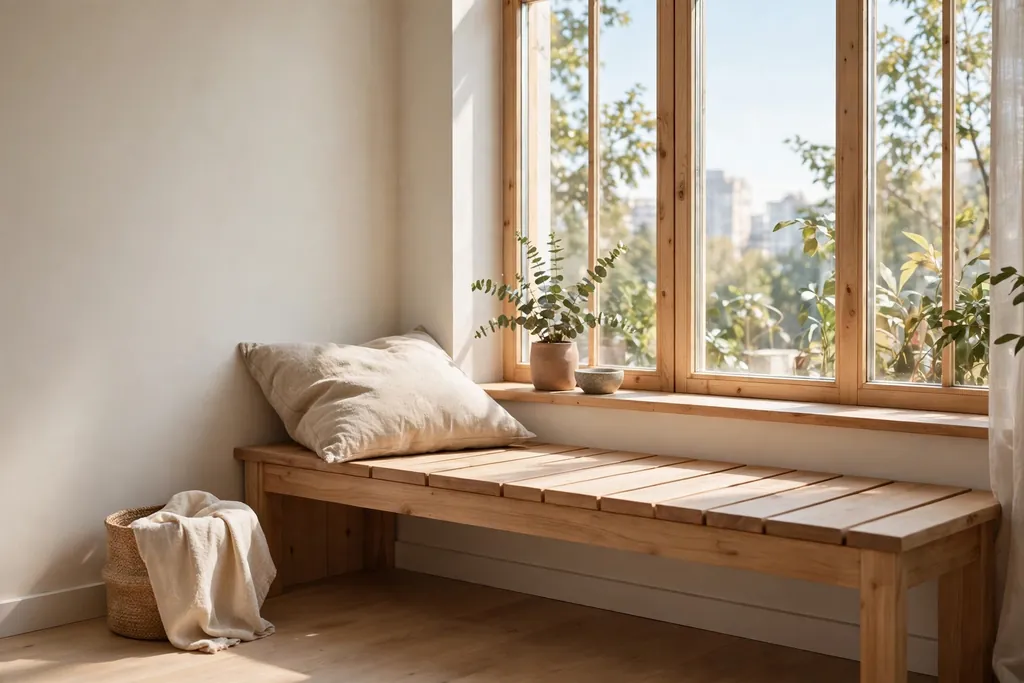
Turn the strip beside the window into an engawa style seat, with a low bench, a cushion, and a clear view outside, so the room feels linked to the balcony or the street. This narrow seat works for morning tea, reading, or putting on shoes, and it gives a small apartment a breathing space at its edge.
Keep the seat cushion in a washable cover, add a small shelf or hook nearby for a book and a cup, and keep the window glass clear so daylight reaches deep into the room. If you have a balcony, carry a mat and a small table outside in good weather, then bring them back in, so the outdoor space extends the room without a permanent setup.
14. Tokonoma Alcove with One Rotating Display
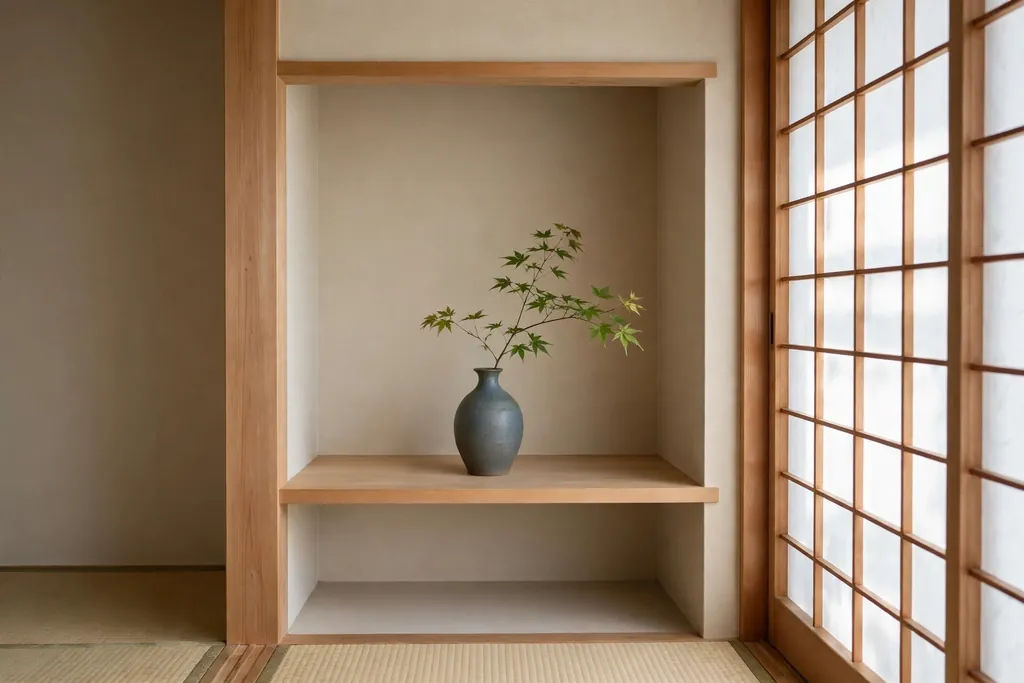
Set aside one small alcove, shelf, or wall niche as a tokonoma style display, with one object at a time: a vase with a single branch, a small ceramic bowl, or one framed print. Rotating the display with the seasons, or when you find a new piece, keeps the room feeling fresh without buying new furniture.
Keep the alcove plain, with a clear background and no other objects competing for attention, and place it where you pass it daily, such as beside the entry or at the end of a hallway. Change the display only when the season changes or the branch fades, so the single object gets time to be noticed. This quiet focal point sums up the whole approach: less on show, more noticed.
Conclusion
A Japanese apartment design is not about buying a full set of new furniture. It is about an open floor, low furniture, natural materials, soft light, and storage that keeps surfaces clear. Start with the floor and the entry, add a low table and a paper lamp, and finish with one plant and one display that you truly notice. Work through this list one idea at a time, live with each change for a week, and keep only the ideas that make daily life easier. For small rooms, the zoning and storage ideas in these studio apartment decorating ideas and bedroom storage ideas pair well with the Japanese habits above.
Keep this list handy for your next room refresh, and save it to your apartment decorating board on Pinterest so you can find the tatami zone, shoji screen, and genkan ideas when you are ready for the next change.
FAQs
How can I make a small apartment feel Japanese without a remodel?
Start with the floor, the light, and the storage. Clear one floor zone, add a low table and floor cushions, swap a harsh ceiling light for a paper lamp and a low lamp, and hide clutter behind plain doors or baskets. A warm neutral palette, one plant, and natural wood accents complete the look with no drilling or painting, and each change can be reversed when you move.
What is a tatami room, and can I use tatami in a rented apartment?
A tatami room is a room floored with woven rush mats, used for sitting, eating, and sleeping on the floor. In a rented apartment, a woven rush rug or a set of tatami style mats laid over the existing floor gives a similar zone without fixing anything down. Remove shoes before stepping on the mat, keep it dry, and vacuum it gently, and move it easily when you need the floor for other uses.
What is the difference between shoji and fusuma screens?
Shoji screens are translucent, with paper over a wooden lattice, so they soften light and give privacy while still letting daylight through. Fusuma panels are opaque sliding panels, used as doors or room dividers that close a space fully. In a small apartment, a shoji style screen suits a window or a light divider, while a fusuma style panel or a ceiling track curtain suits a sleeping nook that needs full privacy at night.
How do I keep a Japanese style apartment tidy every day?
Give every item a closed home and follow a short daily reset: shoes in the genkan cabinet, dishes back in the kitchen cabinet, cushions in their basket, and the low table cleared after meals. Keep only daily items visible, and do a ten minute reset each evening so clutter never builds up. A room with few visible items is easier to tidy than a room with open shelves full of small objects.
What colours and materials suit a Japanese apartment?
Warm neutrals suit the base: soft white, warm beige, pale grey, and muted clay, with natural wood, bamboo, linen, cotton, wool, paper, and ceramic for texture. Keep strong colour to one or two small accents, such as a dark vase or a green plant pot, and repeat it once elsewhere in the room. Plain finishes and visible wood grain matter more than pattern, so choose simple fabrics and matte surfaces.
Can a Japanese apartment design work with a sofa and a television?
Yes, if you keep the low, open feel. Choose a low sofa with slim legs, a low media bench instead of a tall unit, and a plain wall behind the television with one small display beside it. Keep cables hidden, keep the floor in front of the sofa clear, and use a paper lamp for evening viewing instead of a bright ceiling light. The room can still feel calm when the largest pieces sit low and surfaces stay clear.