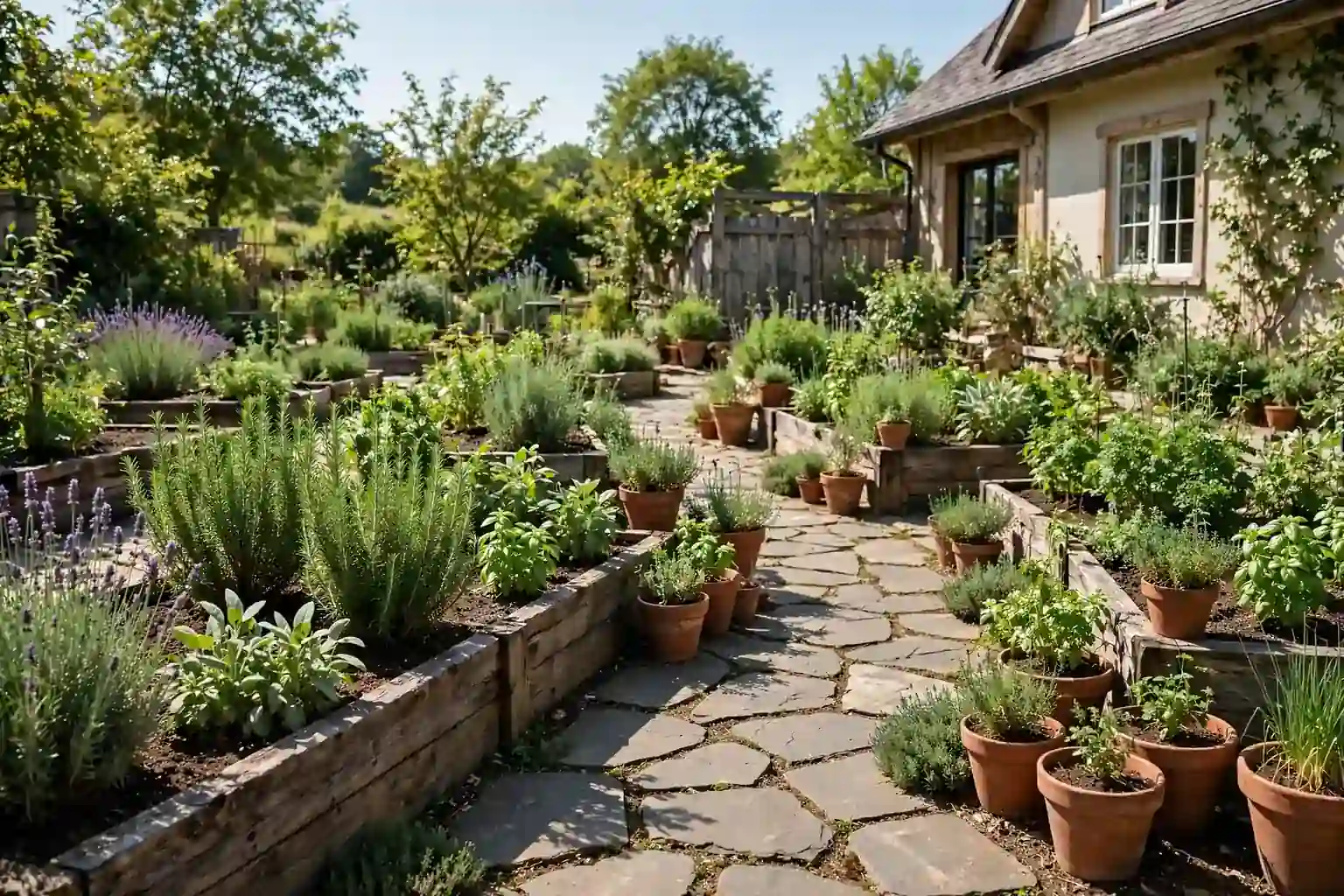
Fresh herbs change how a kitchen feels. A pot of basil by the sink, a row of chives by the back door, or a sunny bed full of rosemary means flavor is within reach, and the garden itself smells good on a warm day. These 33 herb garden ideas cover pots, raised beds, walls, balconies, and full garden beds, so there is an option for a small flat, a rented patio, or a large yard. Start with the herbs you cook with most, give them sun and drainage, and add one idea at a time. For stepped layouts that suit a slope or a small yard, these tiered garden ideas show how to give each level a clear job.
Key Takeaways
- Start with the herbs you cook with weekly, and add less used herbs only after the first group is thriving.
- Most culinary herbs need sun and free draining soil, while mint, parsley, chives, and lemon balm cope better with shade and moisture.
- Grow mint in its own pot, since it spreads fast and can take over a shared bed or planter.
- Pick little and often to keep plants bushy, and water pots more often than beds, since containers dry out fast.
- Label herbs while they are young, since many look alike before they flower or develop their scent.
- Keep the herb garden close to the kitchen door or the cooking area, so picking becomes part of cooking, not a separate trip.
1. Kitchen Windowsill Pot Row
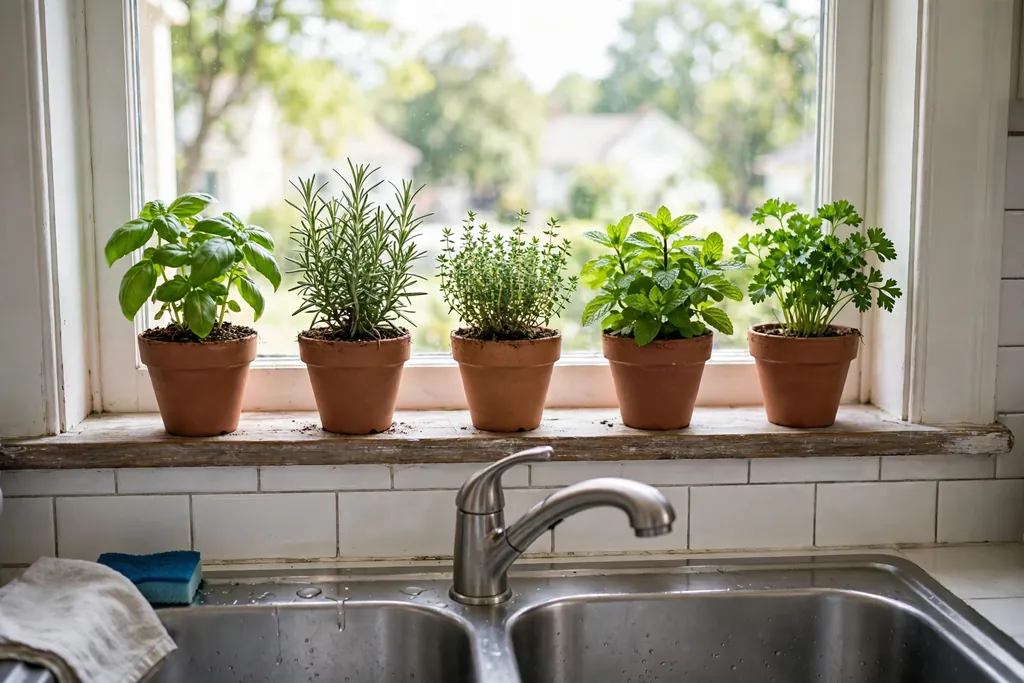
Line up small pots of basil, parsley, and chives along a bright kitchen windowsill for herbs you can snip while you cook. A windowsill row suits a flat or a house with no outdoor space, and it keeps the most used herbs in sight, which means they get picked and watered. Use pots with drainage holes and a saucer under each one, and turn the pots every few days so growth stays even.
Water when the top of the soil feels dry, and feed lightly through the growing season as the pot label directs. Replace annual herbs such as basil each year, and move tender pots away from cold glass on frosty nights. Keep a small pair of scissors nearby so picking is quick and clean, and pinch out the growing tips of basil often to stop it running to seed too soon.
2. Terracotta Pot Cluster by the Back Door
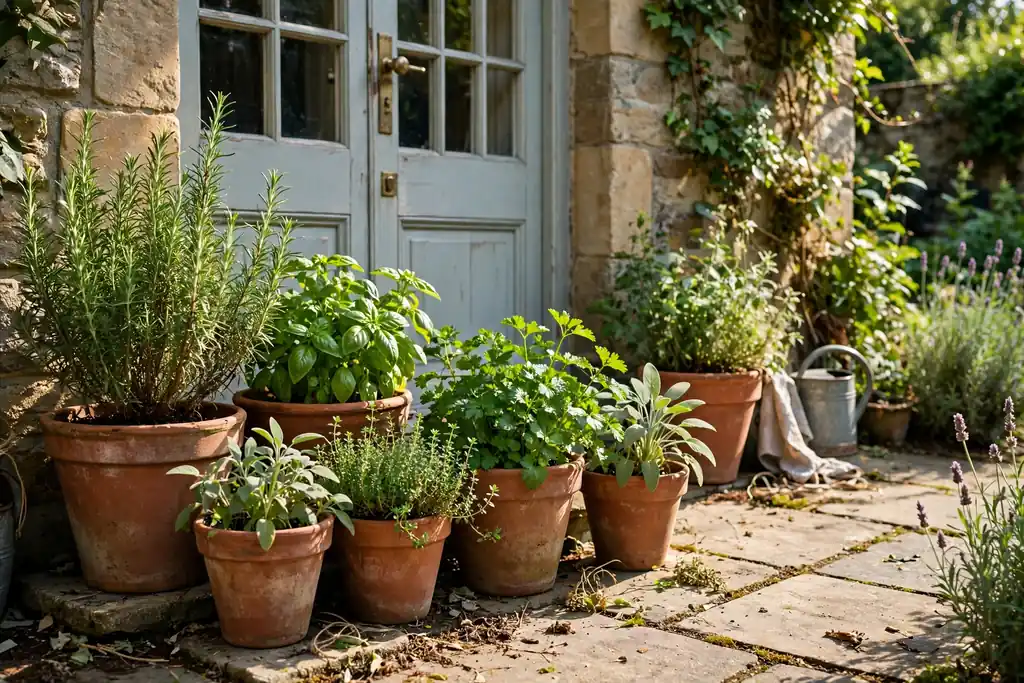
Group terracotta pots in different sizes by the back door for a herb garden you pass every day. Terracotta suits herbs because it breathes and dries out between waterings, which Mediterranean herbs in particular like. A cluster also looks planned, even with only four or five pots, if you repeat one pot style and vary the heights.
Put tall rosemary at the back, mid height sage and thyme in the middle, and trailing thyme or oregano at the front of the group. Raise pots on feet in wet weather so water drains freely, and move tender pots to a sheltered spot in winter. Sweep fallen leaves from the pots, and check the soil with a finger before watering, since a terracotta pot in sun can dry out in a day.
3. Raised Bed Herb Patch
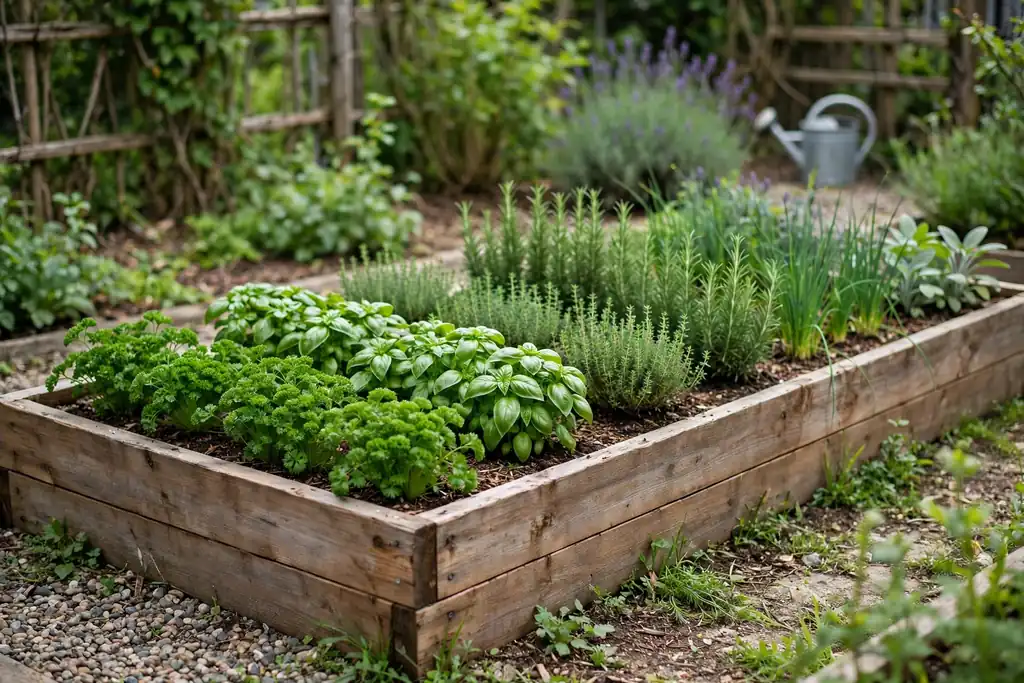
Build or buy one low raised bed for herbs and keep it close to the kitchen door. A raised bed warms up early, drains well, and keeps herbs at a comfortable picking height, which matters if bending is hard. Keep the bed no wider than you can reach across from one side, so you never have to step on the soil to pick.
Fill the bed with a mix of garden soil and compost, and plant in groups by water need: rosemary, thyme, and sage in the driest corner, parsley and chives where soil stays a little damper. Mulch the surface with gravel for dry loving herbs or with compost for leafy herbs, and edge the bed with a flat stone where you can stand to pick. Rotate annual herbs to a new spot in the bed each year.
4. Stone Herb Spiral
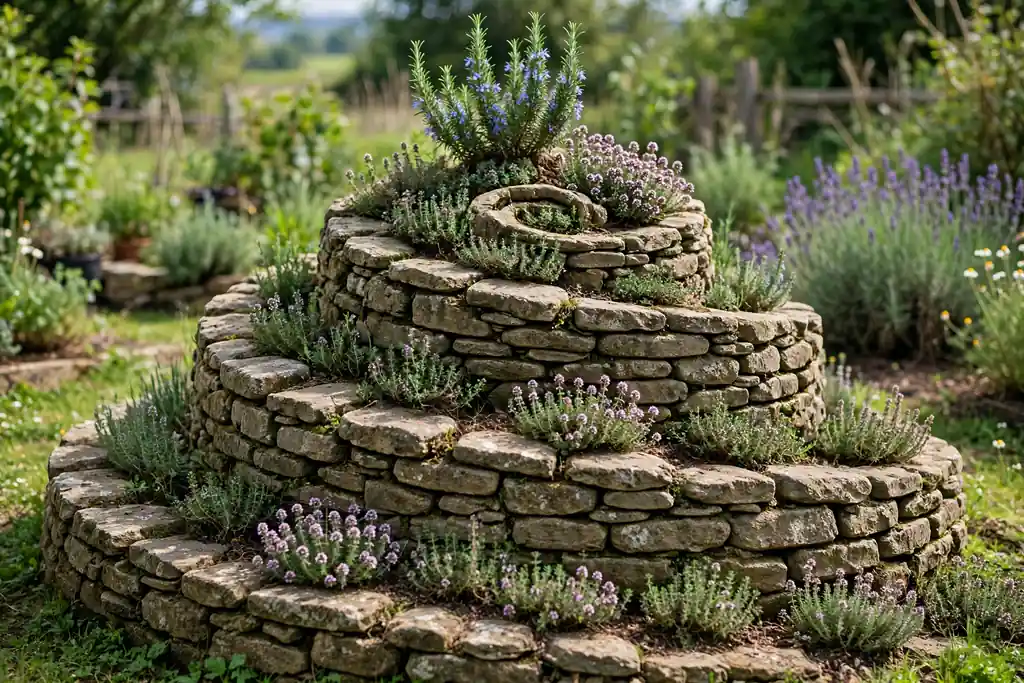
Build a stone spiral that rises from ground level to a raised center for herbs with different soil and water needs in one small footprint. The top of the spiral stays dry and sunny, which suits rosemary, thyme, and sage, while the lower, shadier base suits parsley, chives, and mint in its own pot sunk into the soil. A spiral also gives a garden a clear focal point without taking up a whole bed.
Lay the spiral with stones or bricks, fill it with free draining soil, and leave a narrow path or flat stones around it for picking. Plant the tallest herbs at the center so they do not shade the lower levels, and water the top more often, since raised soil dries fast. A spiral near a path works well, since you can reach every level without stepping into the bed.
5. Vertical Pallet Herb Wall
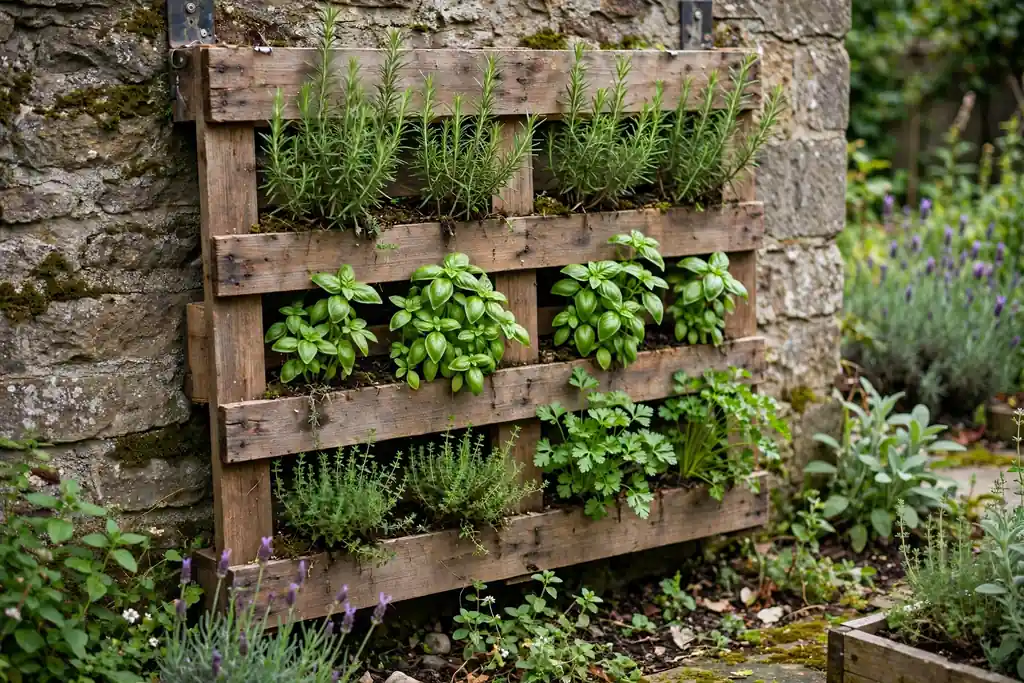
Fix a wooden pallet upright against a sunny wall or fence and plant herbs in its slats for a herb garden that uses almost no floor space. A pallet wall suits a small patio, a balcony wall, or a narrow side passage, and it brings herbs to eye level, which makes picking easy. Line the back and base of each slat row with landscape fabric, fill with potting mix, and plant small herbs such as thyme, chives, parsley, and trailing oregano.
Water slowly from the top so moisture reaches each row, and check the lower rows, which can stay wetter than the top. Fix the pallet firmly to the wall or to posts, since a planted pallet is heavy when wet. Replace the fabric and mix every year or two, and keep the pallet clear of damp ground by standing it on feet or a low plinth.
6. Hanging Herb Baskets
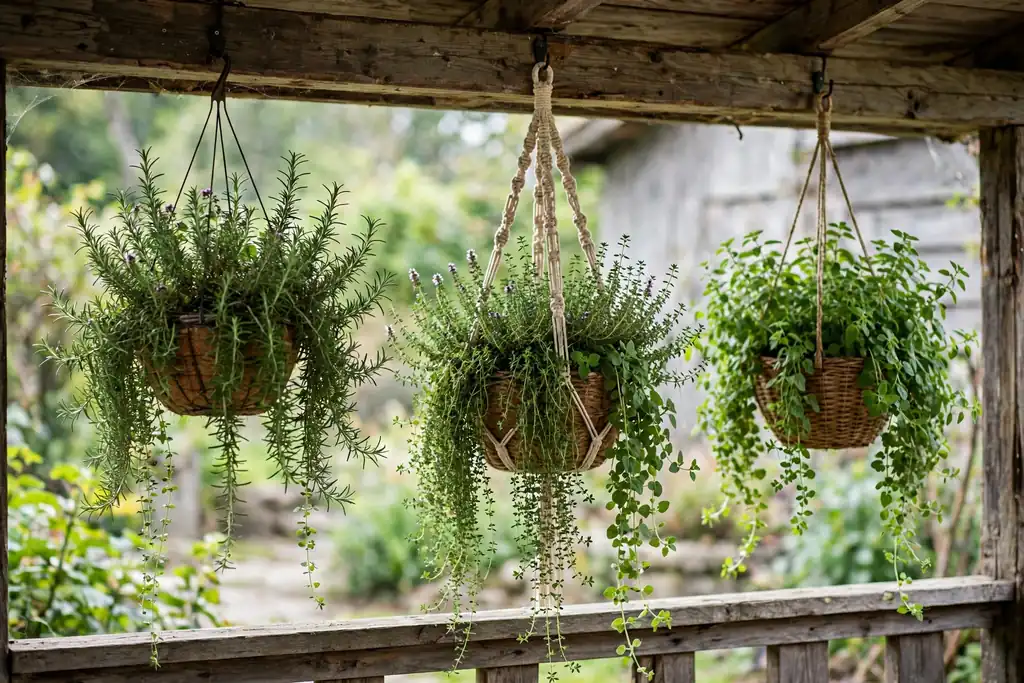
Hang baskets of herbs from a porch beam, a pergola, or sturdy wall brackets to use air space above a patio or path. Hanging baskets suit trailing herbs such as thyme, oregano, and trailing rosemary, mixed with upright parsley or chives in the center. They also keep herbs away from slugs, which can be a help in a damp garden.
Line baskets with coir or moss, fill with potting mix, and water often, since baskets dry out faster than any other container. Hang baskets where you can reach them for watering and picking without a ladder, and take them down in strong wind. Feed lightly through the season, and refresh the mix each spring so plants do not run out of food mid summer.
7. Ladder Shelf Herb Display
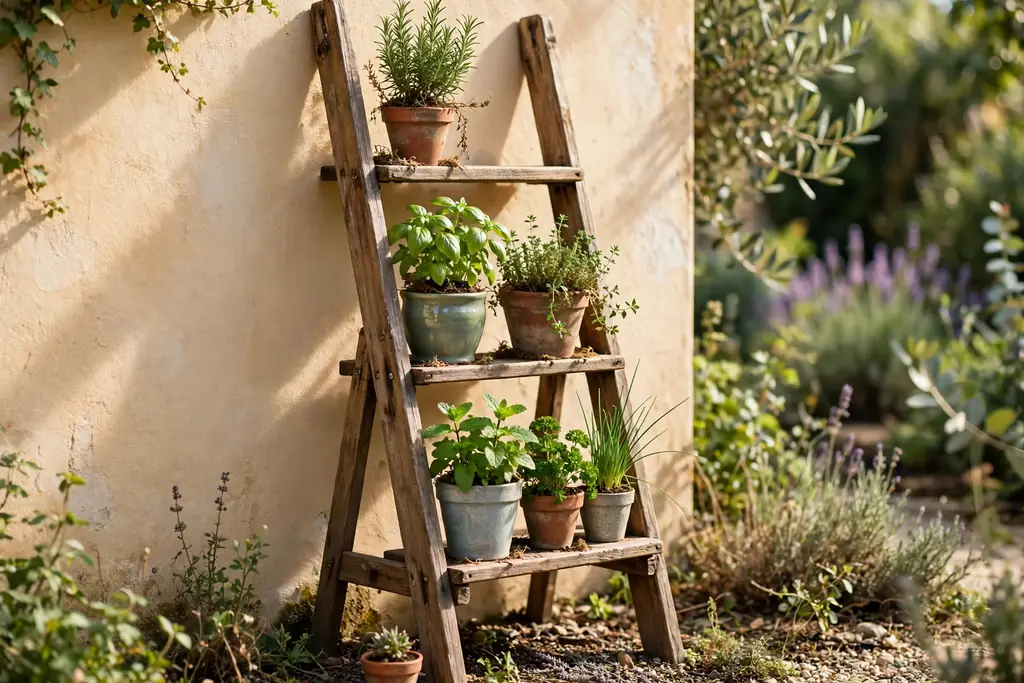
Lean an old wooden ladder or a tiered shelf unit against a sunny wall and set herb pots on each rung or shelf. A ladder display suits a patio corner or a balcony, and it gives each pot its own light and air, which helps herbs stay compact. It also makes a small collection look like a display, not a row of spare pots.
Put sun loving herbs on the top shelves and shade tolerant herbs lower down, where taller plants cast a little shade. Fix the ladder or shelf so it cannot tip, and use pots that fit the shelf depth so they do not overhang the edge. Water each pot on its own, since top pots dry faster, and move the whole unit to follow the sun if one side turns shady.
8. Window Box Herb Garden
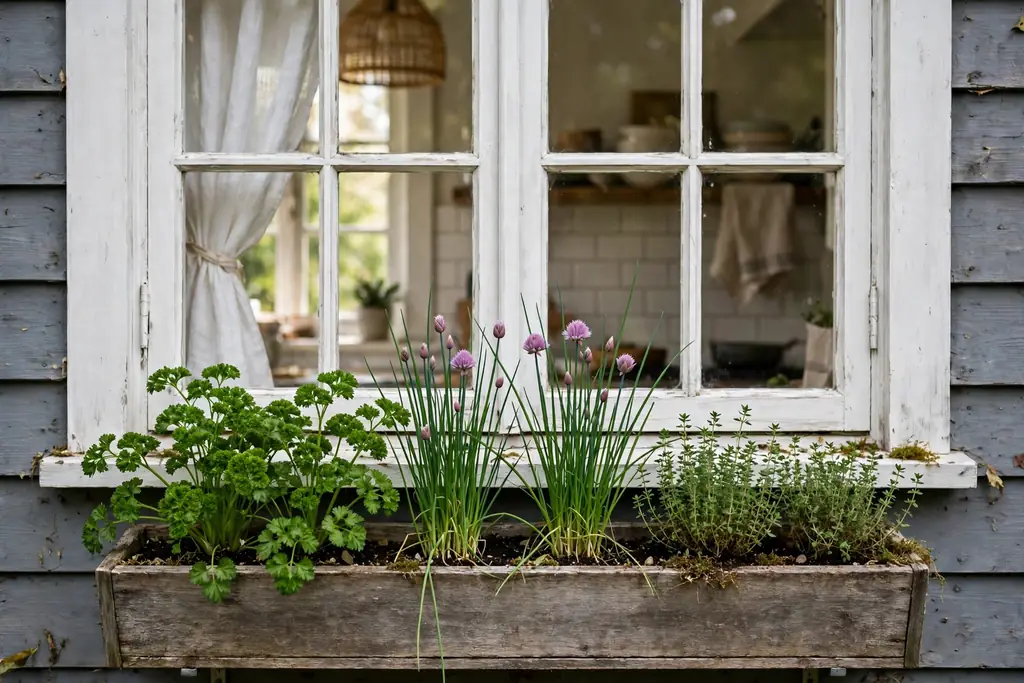
Fix a window box under a kitchen window and plant it with the herbs you reach for most, such as parsley, chives, basil, and thyme. A window box puts herbs at hand height for picking from inside or outside, and it suits a house with no garden bed at all. Choose a box with drainage holes and a firm bracket rated for the weight of wet soil.
Plant low, compact herbs so they do not block light from the window, and trim them often to keep the box tidy. Water window boxes often in hot weather, since shallow soil dries fast, and feed lightly through the season. In winter, move tender herbs indoors and replace the box planting with hardy parsley, chives, and thyme.
9. Balcony Railing Planters
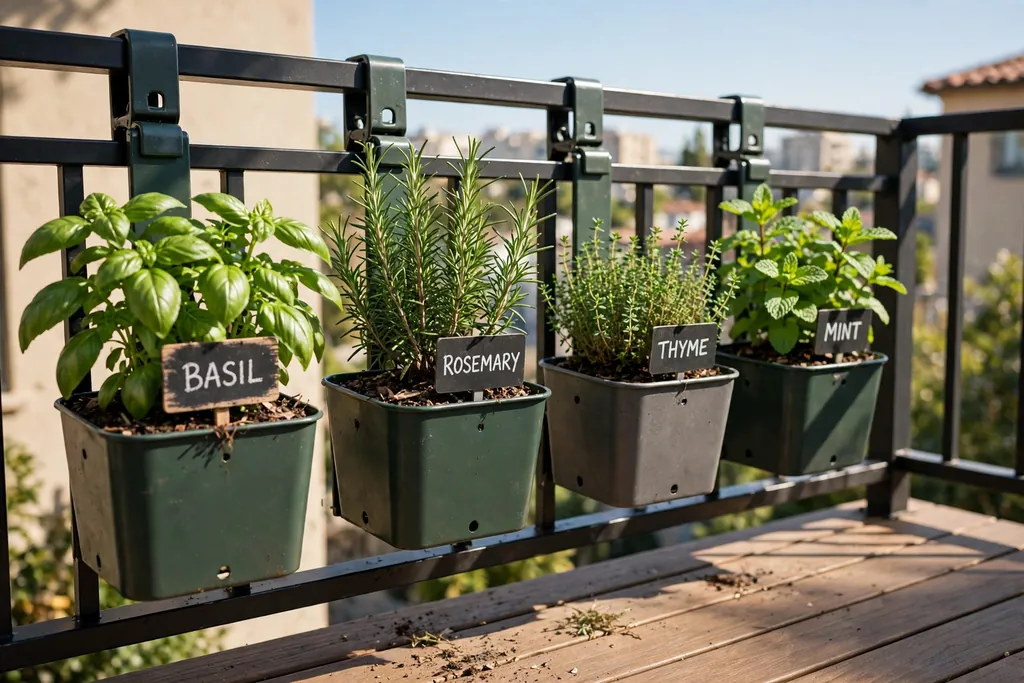
Clip planters to a balcony railing for a herb garden that fits a flat with no ground space. Railing planters suit compact herbs such as basil, parsley, chives, thyme, and mint in its own planter, and they leave the balcony floor clear for a chair and a table. Fix each planter firmly, and check the railing weight limit before loading a long run of planters.
Use a light potting mix, since a heavy soil mix adds weight and holds too much water on a balcony. Water often, since railing planters are exposed to wind and sun, and bring tender herbs inside before frost. Keep a drip tray or a liner in place so watering does not drip onto neighbors below, and trim herbs often to stop them shading each other.
10. Indoor Herb Shelf With Grow Lights
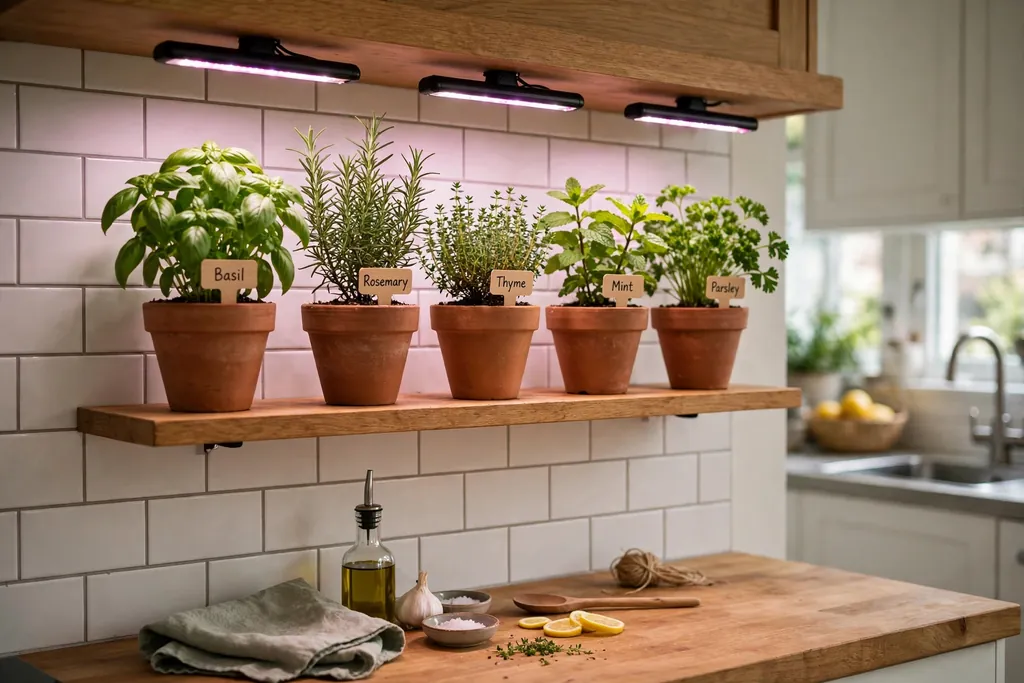
Set up a shelf unit with a simple grow light over each shelf for herbs through winter or in a kitchen with little natural light. A lit shelf suits basil, parsley, chives, and mint, and it keeps fresh leaves available when outdoor herbs slow down. Place the shelf near a power point, keep the lights on a timer as the light maker directs, and leave space above each pot for growth.
Water pots when the top of the soil feels dry, and turn pots often so plants grow straight toward the light. Keep the shelf away from radiators, which dry pots fast, and wipe the light fittings free of dust so light reaches the plants. Start with two or three herbs on one shelf, and add more only when the first group is growing well.
11. Wall Rail With Hanging Pots and Jars
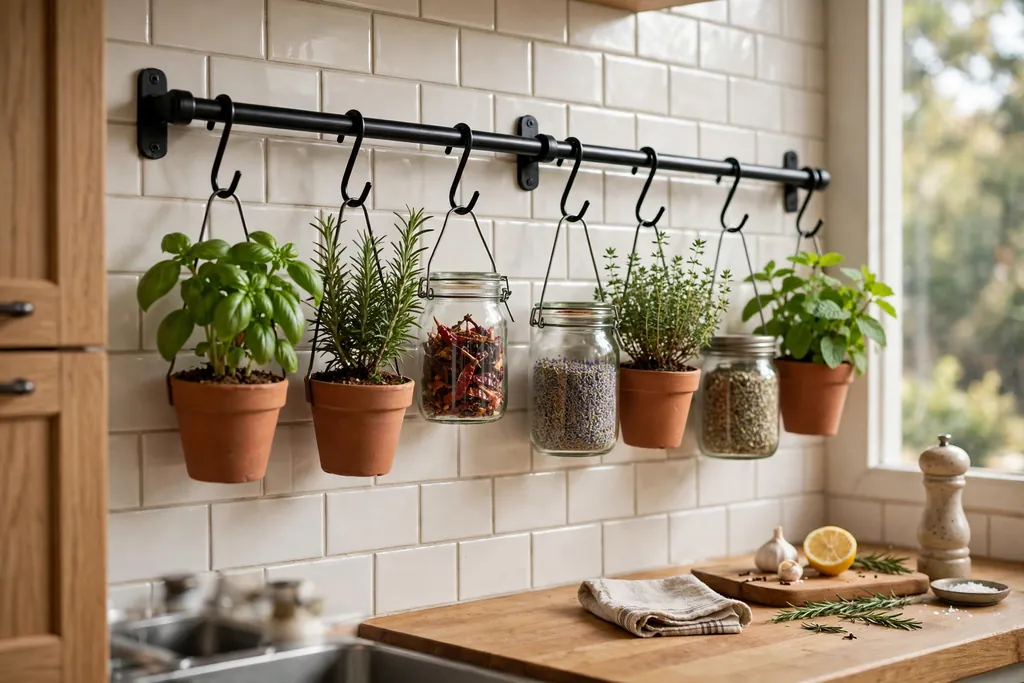
Fix a metal rail to a kitchen or patio wall and hang small pots and jars from hooks along it for herbs at arm height. A wall rail suits a narrow kitchen wall, a pantry door, or a sheltered patio wall, and it keeps herbs visible, which helps you remember to pick and water them. Use small pots for parsley, chives, and thyme, and keep mint in a separate jar or pot so it cannot spread.
Hang pots with a gap between them so air moves and leaves dry after watering, and use hooks that hold the full weight of a watered pot. Water each pot on its own, since small pots dry at different rates, and label each pot while plants are young. Bring tender herbs inside in cold weather, and refresh the potting mix each spring.
12. Round Herb Wheel Bed
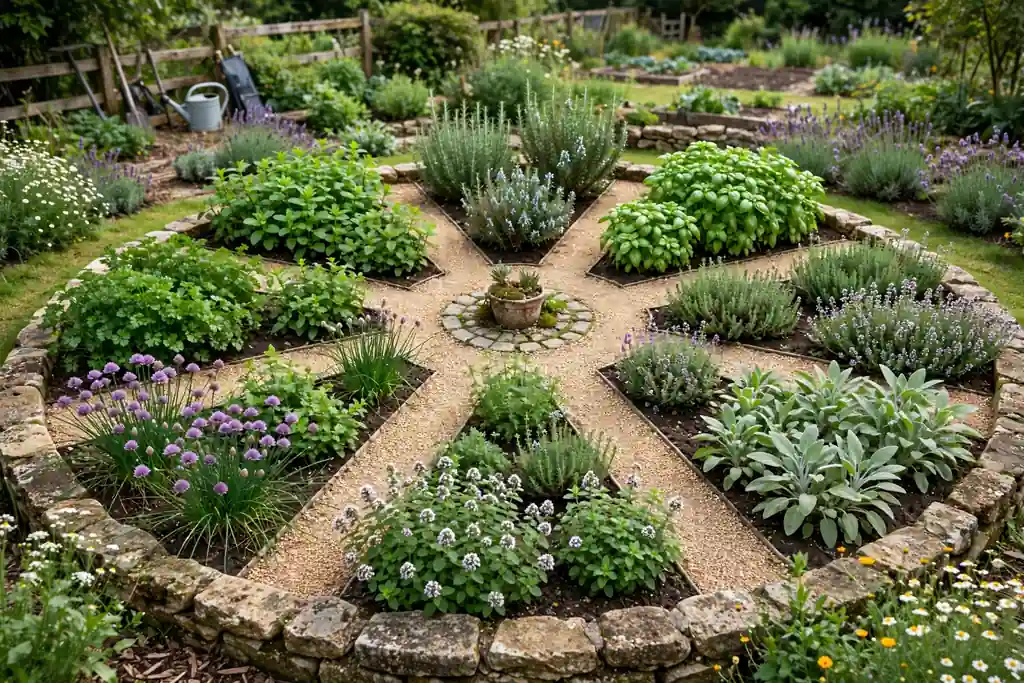
Mark out a round bed with paths like wheel spokes and plant a different herb in each wedge for a herb garden that is easy to pick from and easy to explain to visitors. A wheel bed suits a sunny lawn corner or a front garden, and the paths mean you can reach every wedge without stepping on soil. Edge each wedge with low stones, bricks, or a narrow box hedge if you want a formal look.
Plant tall herbs such as rosemary and sage near the center, where they act as a focal point, and low herbs such as thyme and chives at the outer edge. Keep the center clear enough to stand on while picking, or place a flat stone there as a standing spot. Water the wedges by need, not by routine, since dry loving herbs and leafy herbs sit side by side in this layout.
13. Kitchen Counter Herb Station
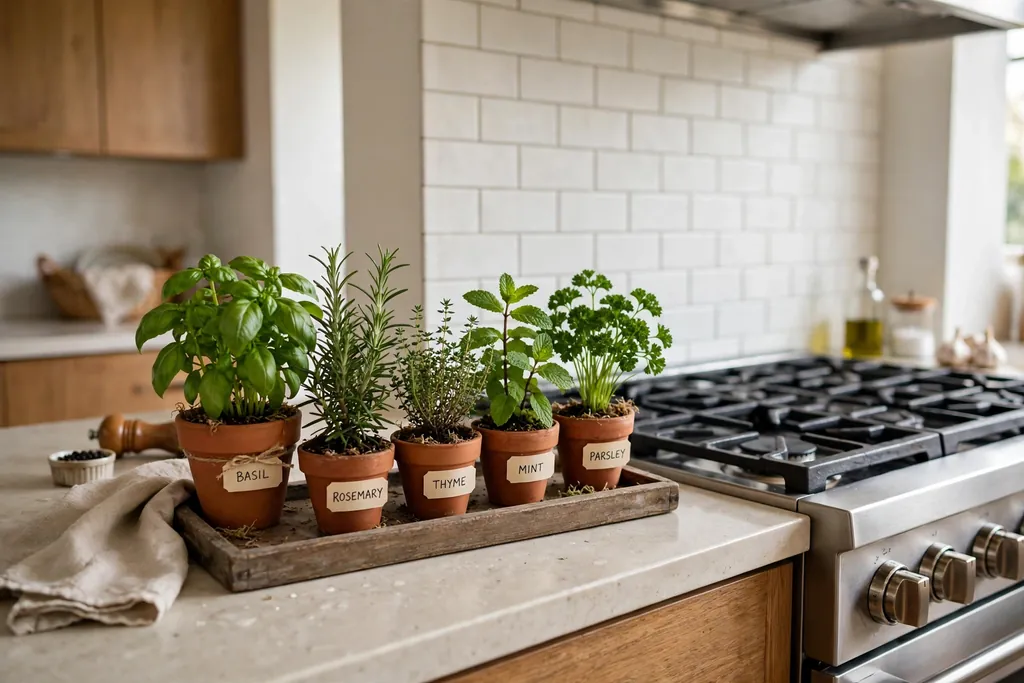
Set a tray of small herb pots on a kitchen counter near the stove for the herbs you use daily, such as basil, parsley, and chives. A counter station suits cooks who want herbs within arm’s reach, and it works even in a home with no garden at all. Use a tray with a lip to catch water, pots with drainage holes, and a small pair of scissors kept with the tray.
Keep the station in the brightest spot on the counter, and move pots to a windowsill for a few hours if the counter is dark. Water little and often, since small counter pots dry fast near a warm stove, and replace annual herbs when they get leggy. Keep only three or four pots on the counter, and grow spares on a windowsill or outside so the station stays tidy.
14. Wooden Crate Herb Garden
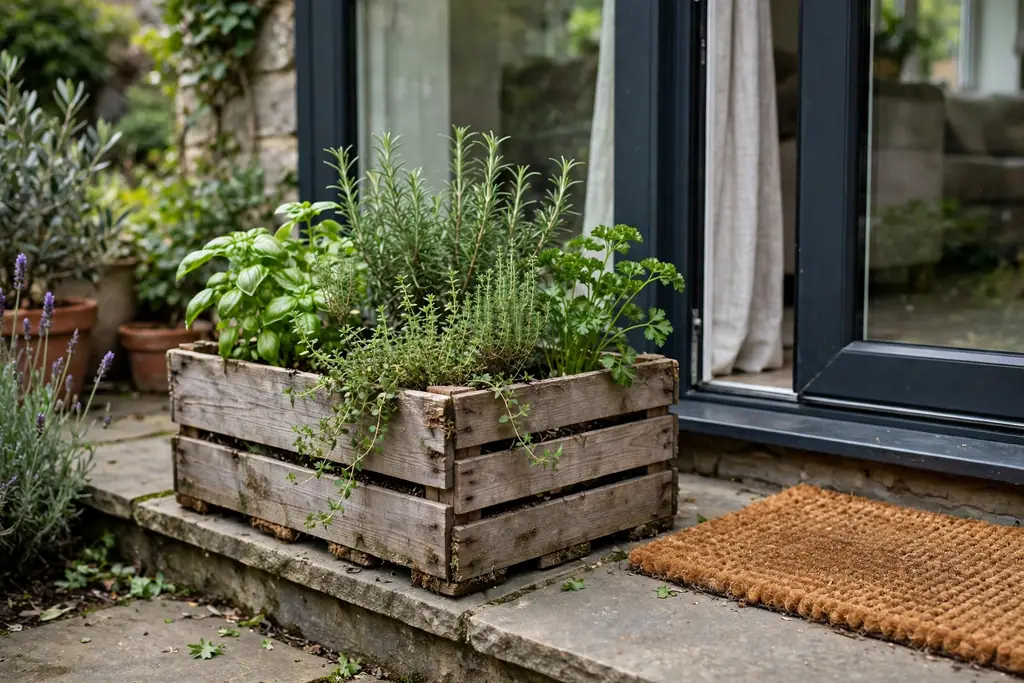
Plant herbs in a wooden crate lined with landscape fabric for a movable herb garden that suits a patio, a doorstep, or a rented home. A crate gives herbs a deep enough root run for parsley, chives, sage, and thyme, and it can be carried to a sunnier spot or taken with you when you move. Line the crate, add drainage holes in the base, and fill with potting mix.
Plant one tall herb at the back of the crate, mid height herbs in the middle, and a trailing herb at the front edge. Water crates often in hot weather, since wood sides dry out, and stand the crate on feet so the base does not sit in water. Replace the lining and mix every year or two, and check the wood for rot each spring.
15. Galvanized Trough Herb Garden
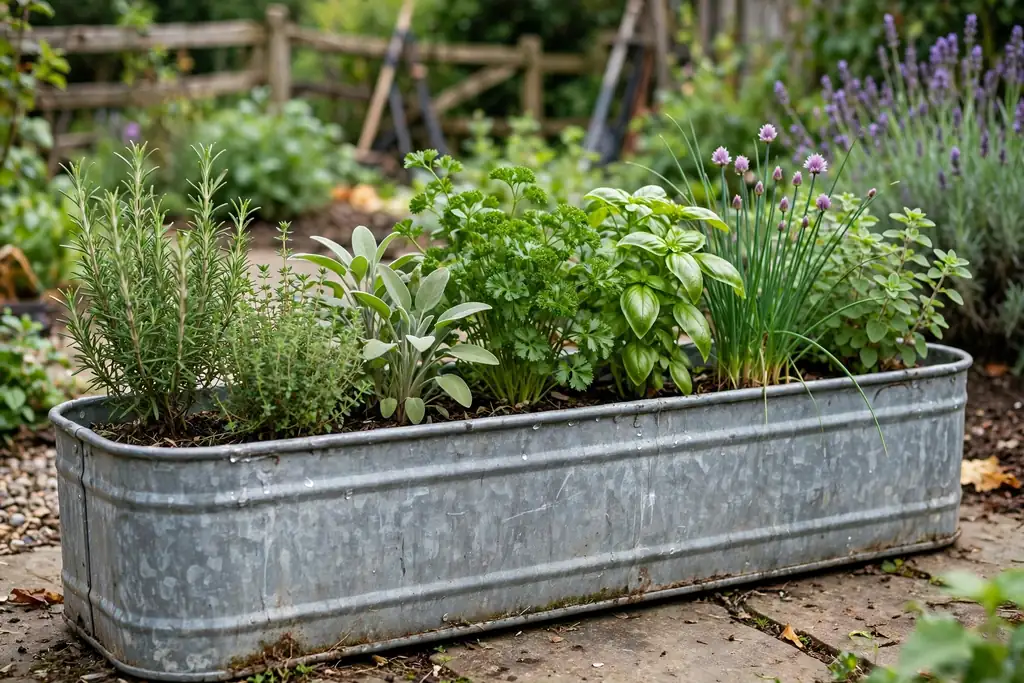
Use a galvanized metal trough as a long, narrow herb bed for a patio, a balcony, or beside a kitchen door. A trough suits a row of herbs in cooking order, such as basil, parsley, chives, thyme, and oregano, and its height makes picking easy without bending. Drill drainage holes in the base if the trough has none, and raise it on feet or bricks so water drains freely.
Fill the trough with a free draining mix, and plant dry loving herbs at one end and leafy herbs at the other, so watering can suit each group. Metal heats up in sun, so water trough herbs more often in hot weather and mulch the surface to hold moisture. In winter, move a small trough to a sheltered spot, and protect tender herbs with fleece on frosty nights.
16. Herb Edging Along a Garden Path
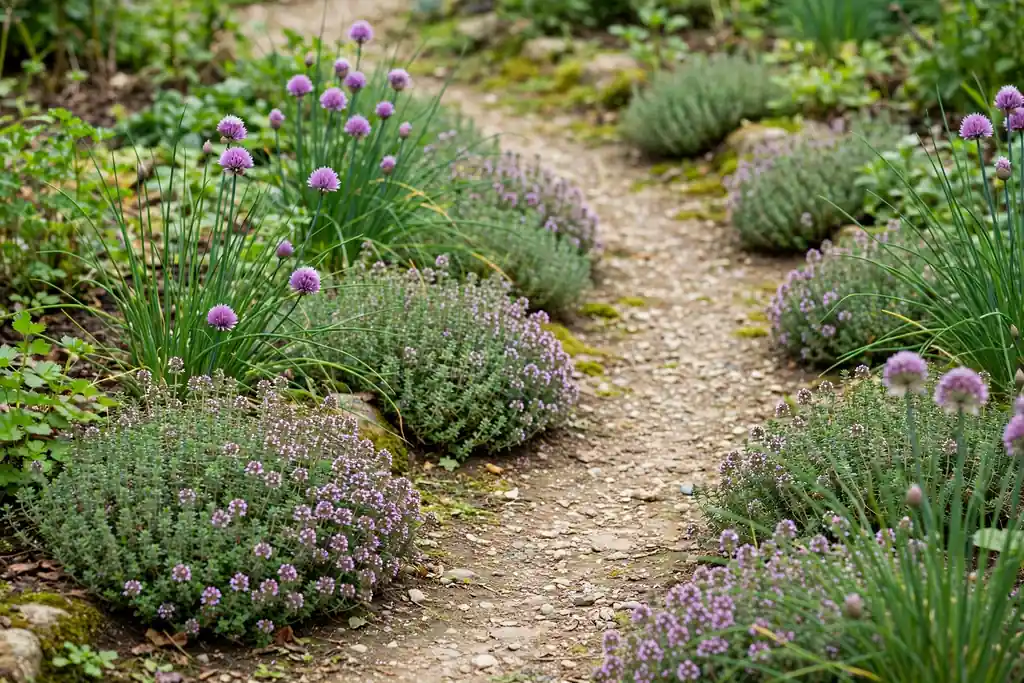
Plant low herbs such as thyme, chives, and parsley along the edge of a garden path so every walk past brushes scent into the air. A herb edge suits a path to the kitchen door, a vegetable garden, or a seating area, and it turns a plain edge into a useful planting. Keep the herbs low and trimmed back from the path so walkers do not trip or crush the plants.
Plant in a single row or a double row beside the path, and leave gaps at path junctions so you can step off the path without trampling herbs. Water path herbs well in their first season, and trim them after flowering to keep the edge tidy. Replace any herb that grows woody or bare in the center, and fill gaps with fresh plants in spring.
17. Flowering Herb Border for Pollinators
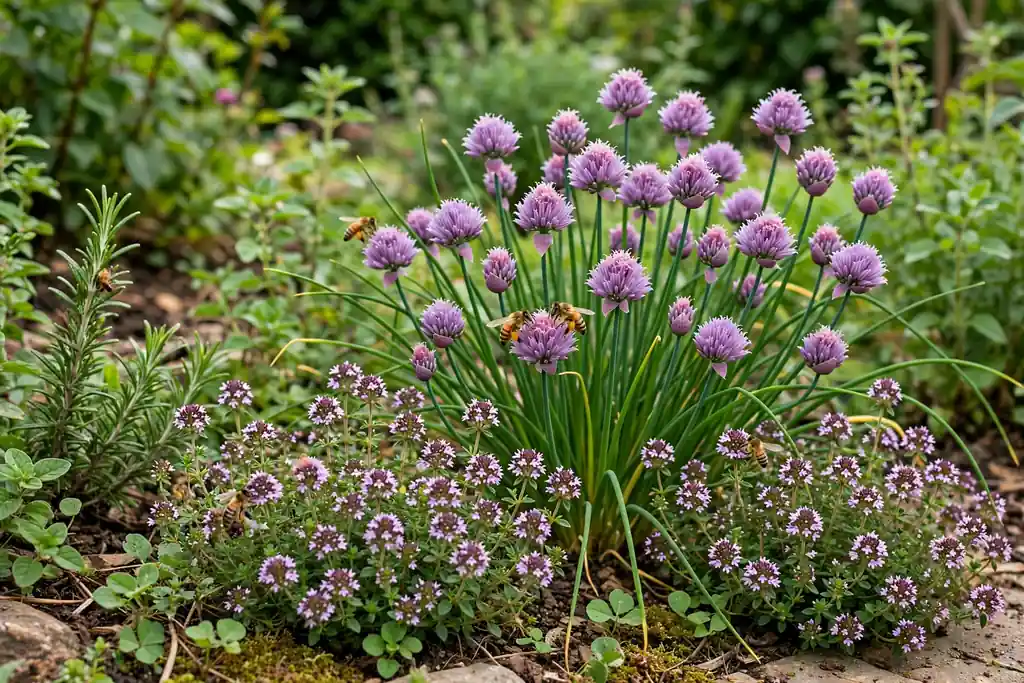
Let some herbs flower in a dedicated border for bees and other pollinating insects, using chives, thyme, oregano, sage, lavender, and borage. A flowering herb border suits a sunny garden edge, and it gives you both cooking leaves and flowers for the table, if you pick only part of each plant. Leave a patch of each herb unpicked so it can flower, and cut other plants back for fresh leaves.
Plant in drifts rather than single plants, so pollinators can find the flowers easily, and avoid spraying the border, since sprays harm the insects you want to attract. For tall flower color beside herbs, these sunflower garden ideas show how height and color can sit beside lower planting without crowding it. Cut back spent flower stems in autumn, and leave a few seed heads standing for birds.
18. Tea Herb Patch
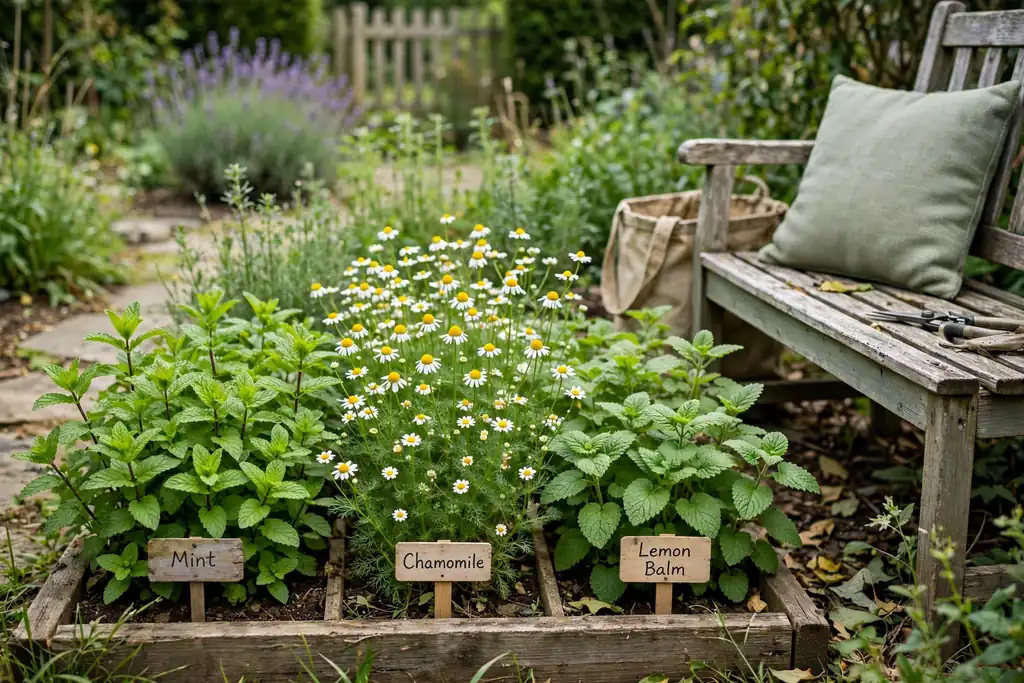
Plant a small patch for tea herbs, such as mint, chamomile, lemon balm, lemon verbena, and fennel, for fresh leaves to brew through summer. A tea patch suits a sunny, sheltered corner near a seat, so you can pick and brew in one short trip. Grow mint and lemon balm in their own pots sunk into the bed, since both spread fast and can crowd slower herbs.
Pick leaves in the morning, when scent is strongest, and use fresh leaves or dry a small batch for winter. Keep the patch well watered in hot weather, since tea herbs such as mint and lemon balm like moisture, and trim plants often to keep them bushy. Label each herb clearly, since tea herbs look alike when young, and check that any herb you brew is a variety meant for food use.
19. Mediterranean Herb Bed
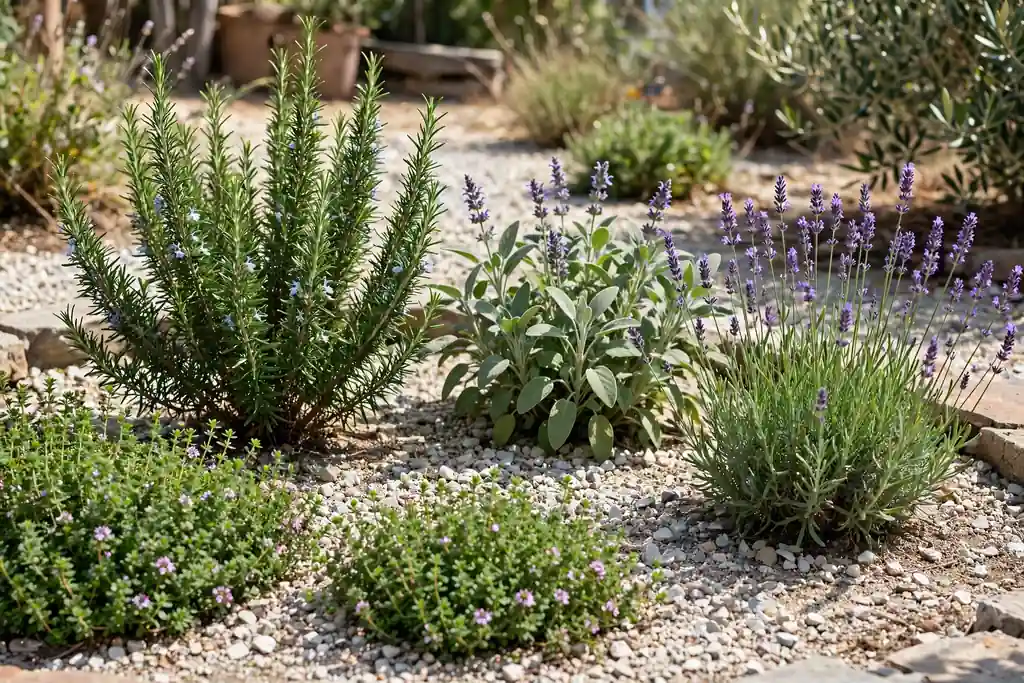
Plant a dry, sunny bed with rosemary, thyme, sage, oregano, and lavender for the herbs that suit hot, free draining soil. A Mediterranean bed suits a south facing border, a gravel garden, or a sunny slope, and it needs less water than a leafy herb bed once plants are established. Use gravel mulch to hold heat, keep crowns dry, and cut down on weeds.
Space plants by their mature size, not by how they look in the pot, since rosemary and sage grow wide. Water new plants well in their first season, then water only in long dry spells, and prune after flowering to keep plants compact. Protect tender rosemary in cold areas with fleece or by growing it in a pot that moves under cover in winter.
20. Asian Cooking Herb Bed
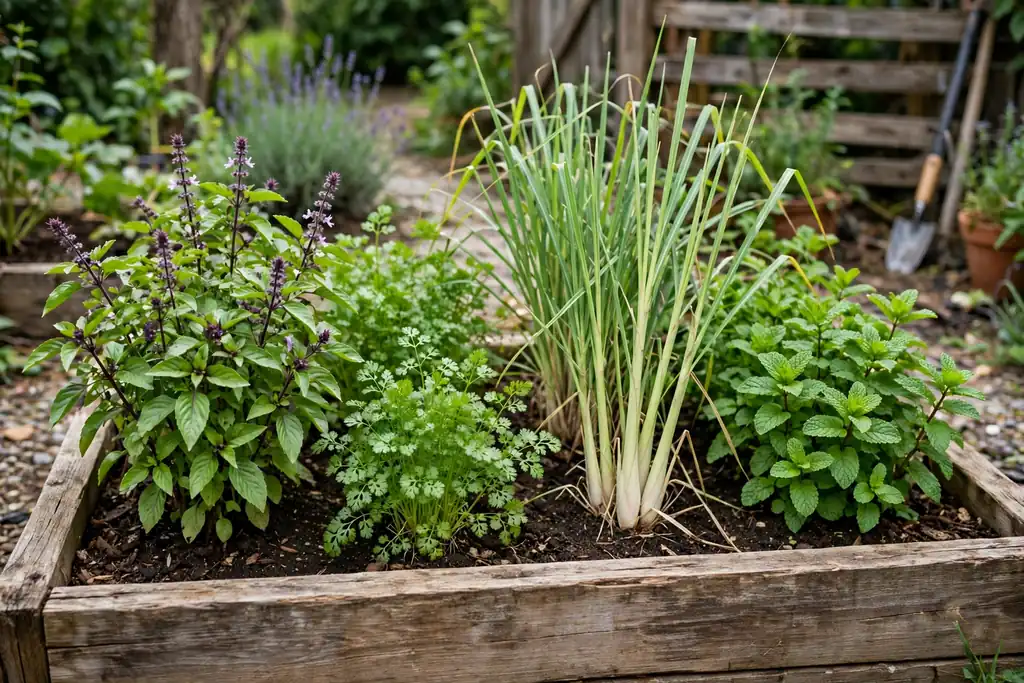
Grow Thai basil, coriander, mint, lemongrass, and shiso in one bed for the herbs used most in Asian cooking. An Asian herb bed suits a warm, sunny spot with rich, moist soil, and it works well in a raised bed where soil warms early. Grow mint in its own pot, and give lemongrass the sunniest corner, since it needs heat to grow well.
Water this bed more often than a Mediterranean bed, since coriander and shiso wilt fast in dry soil, and sow coriander in small batches every few weeks for a steady supply. Pick Thai basil often to stop it flowering too soon, and move lemongrass indoors before frost in cold areas. Keep the bed close to the kitchen, since these herbs are often picked at the last minute before cooking.
21. Salsa Herb Patch
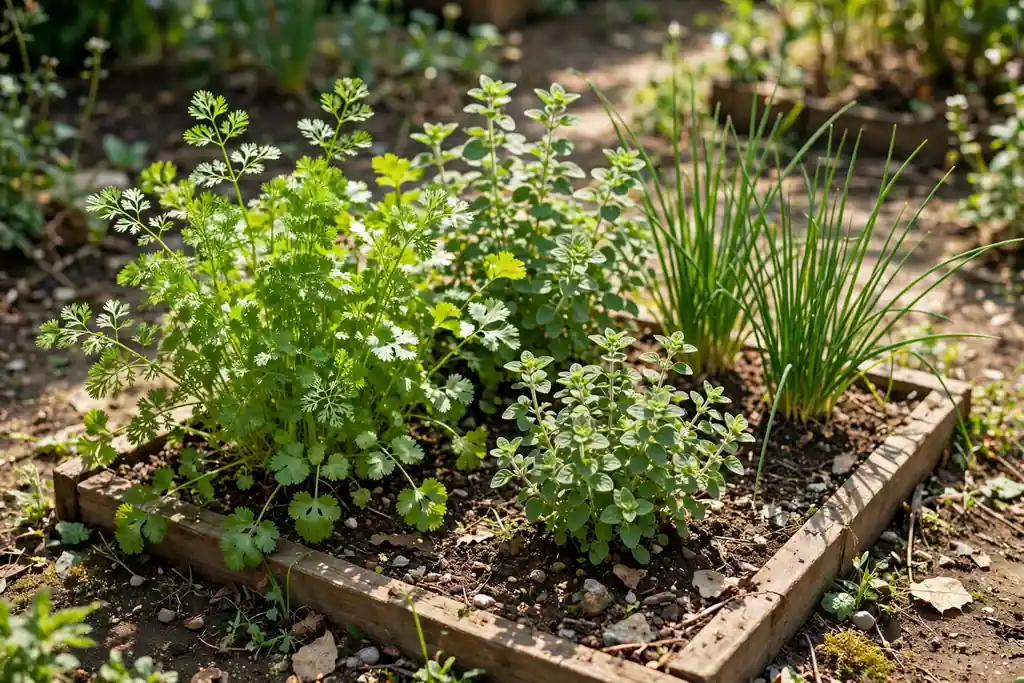
Plant coriander, oregano, and chives in a small patch for salsa and fresh sauces, with a pot of mint nearby for drinks. A salsa patch suits a sunny bed near the vegetable garden or a large pot by the kitchen door, and it keeps the herbs you chop fresh together in one place. Sow coriander in batches through the season, since it runs to seed fast in hot weather.
Pick coriander leaves little and often, and cut chives with scissors to keep them coming back. Water the patch well in hot weather, since soft herbs wilt fast, and mulch the surface to hold moisture. Grow the patch close to tomatoes or peppers if you grow them, so salsa ingredients are picked in one trip, and replace annual coriander each year.
22. Salad Leaf and Soft Herb Bed
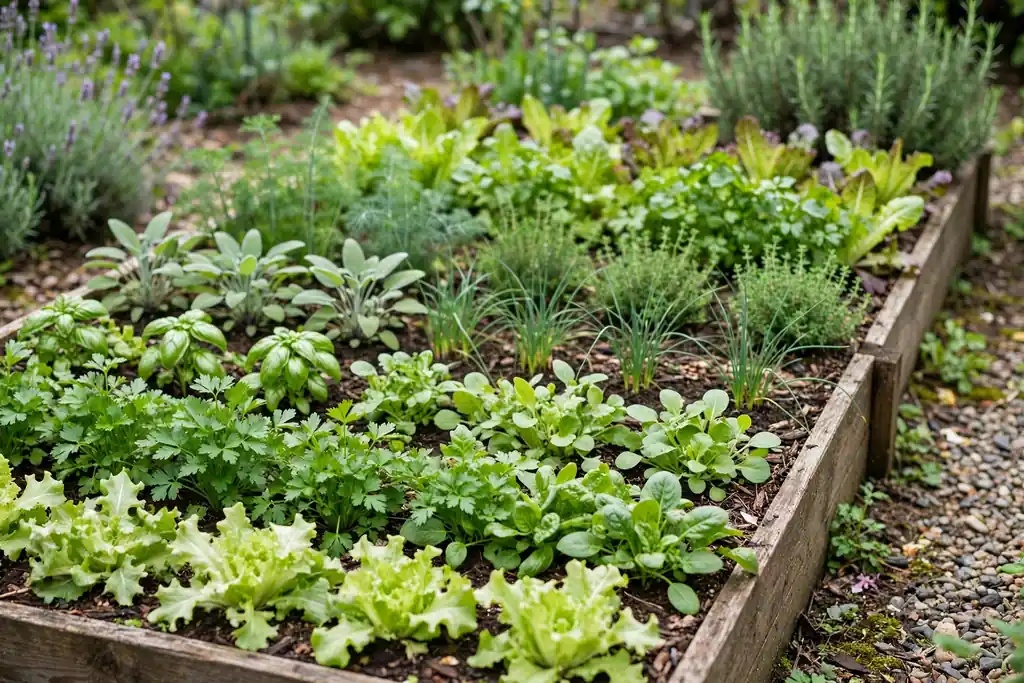
Mix soft herbs such as parsley, chives, dill, sorrel, and tarragon with salad leaves in one bed for picking a bowlful in minutes. A salad herb bed suits a spot with morning sun and afternoon shade, since soft herbs and leaves wilt in fierce midday heat. Sow salad leaves in rows between herb plants, and pick leaves from the outside of each plant so the center keeps growing.
Water this bed often, since leafy plants need steady moisture, and feed lightly through the season. Cut dill and parsley back hard if they get tall and leggy, and let one dill plant flower for seeds and for pollinators. Keep the bed close to the kitchen, and pick in the morning for the crispest leaves.
23. Herb Drying and Storing Corner
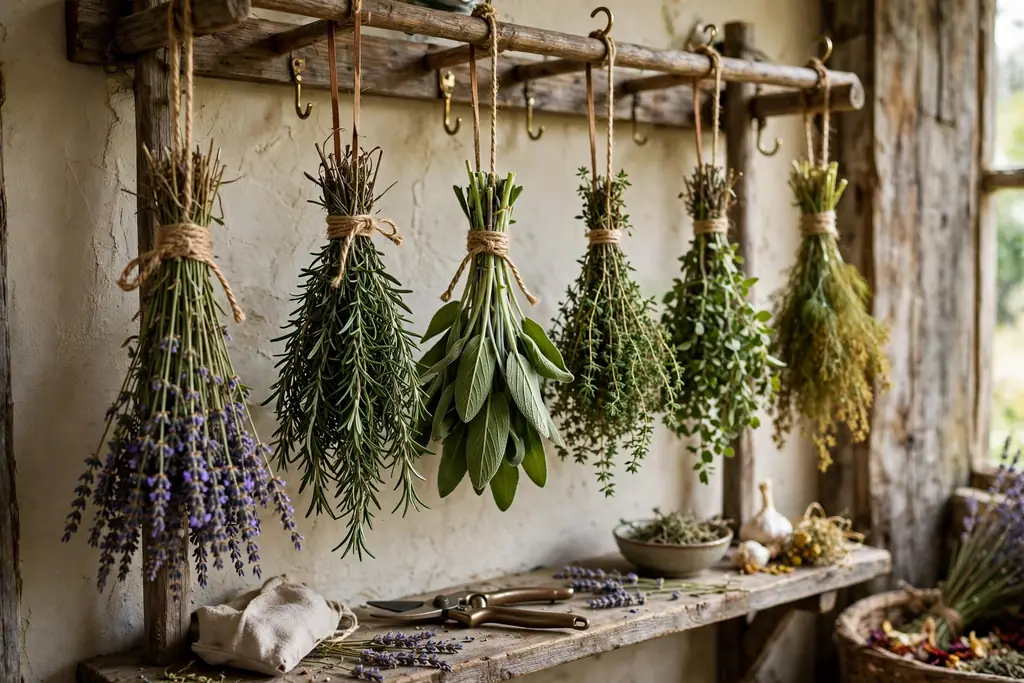
Set aside a dry, airy corner for drying herbs, with a rack, hooks, or a drying frame near the herb garden or in a shed. A drying corner turns a summer glut into winter flavor, and it suits gardeners who grow more than they can use fresh. Tie small bunches of thyme, oregano, sage, and rosemary, hang them upside down out of direct sun, and label each bunch while you can still tell them apart.
Dry herbs until leaves crumble easily, then strip leaves into labeled jars and store them away from light and heat. Keep the drying area clean and dry, and check bunches for damp, since damp herbs spoil fast. Use dried herbs within a year for the best flavor, and keep a note of which varieties dried best so you can plant more of them next year.
24. Shade Tolerant Herb Corner
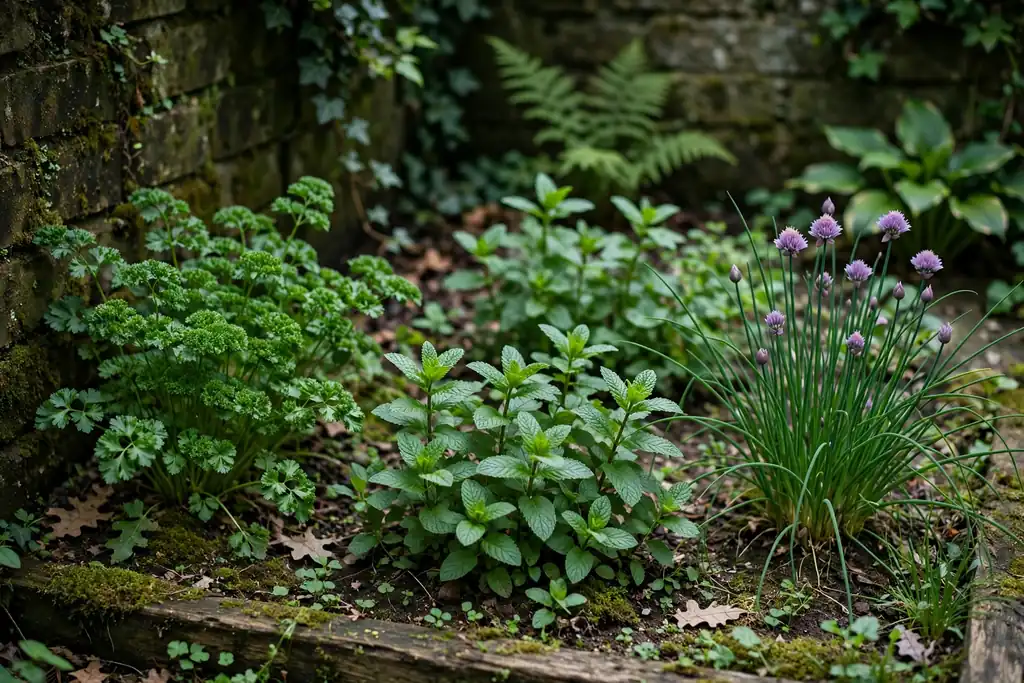
Plant parsley, mint, chives, lemon balm, and sweet woodruff in a shady corner where sun loving herbs would fail. A shade herb corner suits a north facing bed, a spot under a tree with dappled light, or a side passage that gets only morning sun. These herbs like moisture, so this corner often needs less watering than a sunny bed, but it still needs drainage so roots do not sit in water.
Grow mint and lemon balm in pots sunk into the bed to stop them spreading, and mulch with compost to hold moisture and feed the soil. Pick shade herbs often to keep them bushy, and cut back any plant that gets leggy in low light. Check for slugs in damp shade, and lift pots onto feet or gravel if slugs become a problem.
25. Sunny Gravel Herb Bank
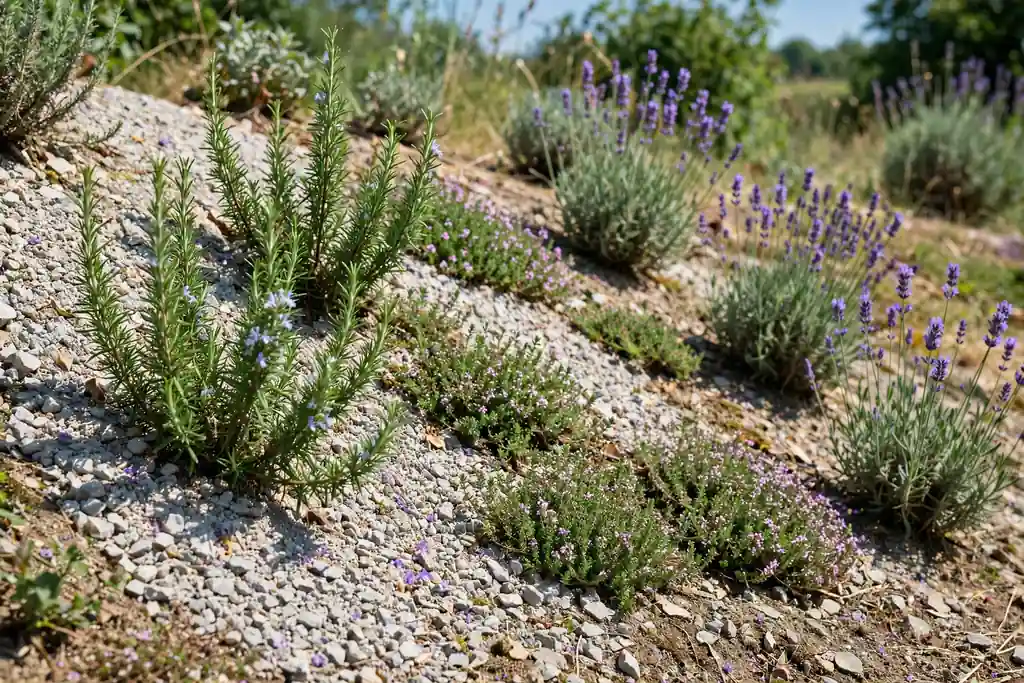
Plant rosemary, thyme, sage, and lavender on a sunny gravel bank or a sloped bed for herbs that want sharp drainage and heat. A gravel bank suits a front garden slope, a dry border, or a spot where soil stays thin and stony, and it needs less watering than a flat bed once plants are established. Use gravel mulch to reflect heat, keep crowns dry, and cut down on weeds.
Plant into pockets of free draining soil mix, not into bare gravel, and water new plants well until roots establish. Prune after flowering to keep plants compact and to stop woody growth taking over the bank. Keep the bank clear of fallen leaves in autumn, since damp leaves rot herb crowns, and replace any plant that outgrows its pocket with a smaller variety.
26. Wheelbarrow Herb Garden
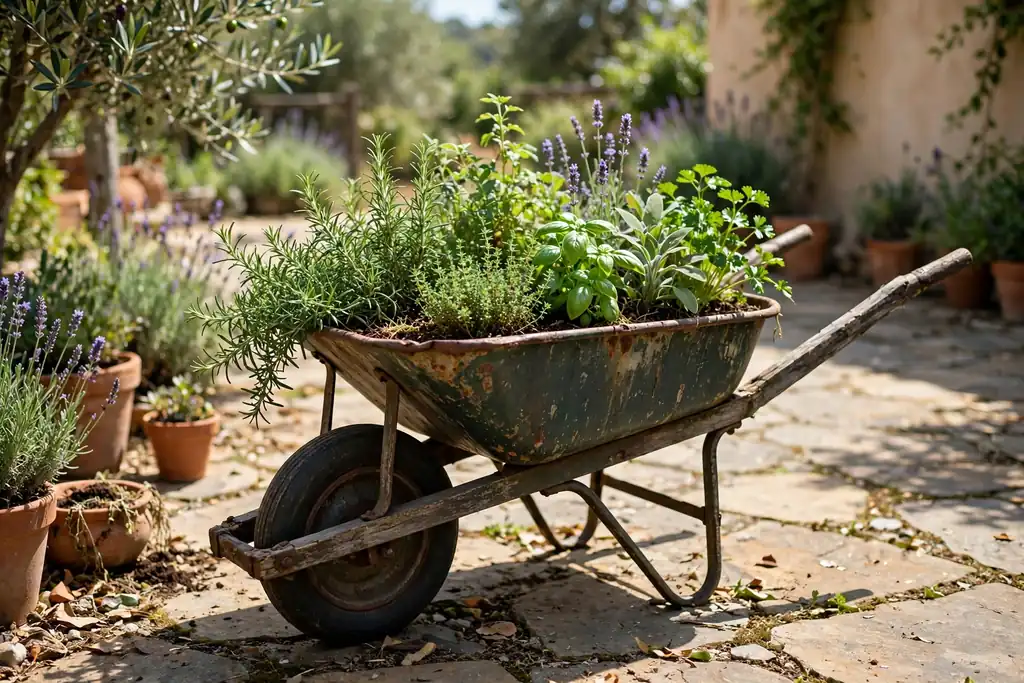
Plant herbs in an old wheelbarrow for a movable herb garden that can follow the sun or move under cover in a storm. A wheelbarrow suits a small patio, a rented garden, or a gardener who wants herbs at a comfortable height without building a bed. Drill drainage holes in the base, fill with potting mix, and plant a mix of tall rosemary at the back, mid height sage and thyme in the middle, and trailing thyme at the front.
Move the wheelbarrow to the sunniest spot in spring and to shelter before frost, and lock the wheel or chock it so it cannot roll. Water wheelbarrow herbs often, since the shallow soil dries fast, and refresh the mix each spring. Keep the handles clear so the barrow can still be moved, and check the tray for rust each year.
27. Herbs Grown in Water on a Sill
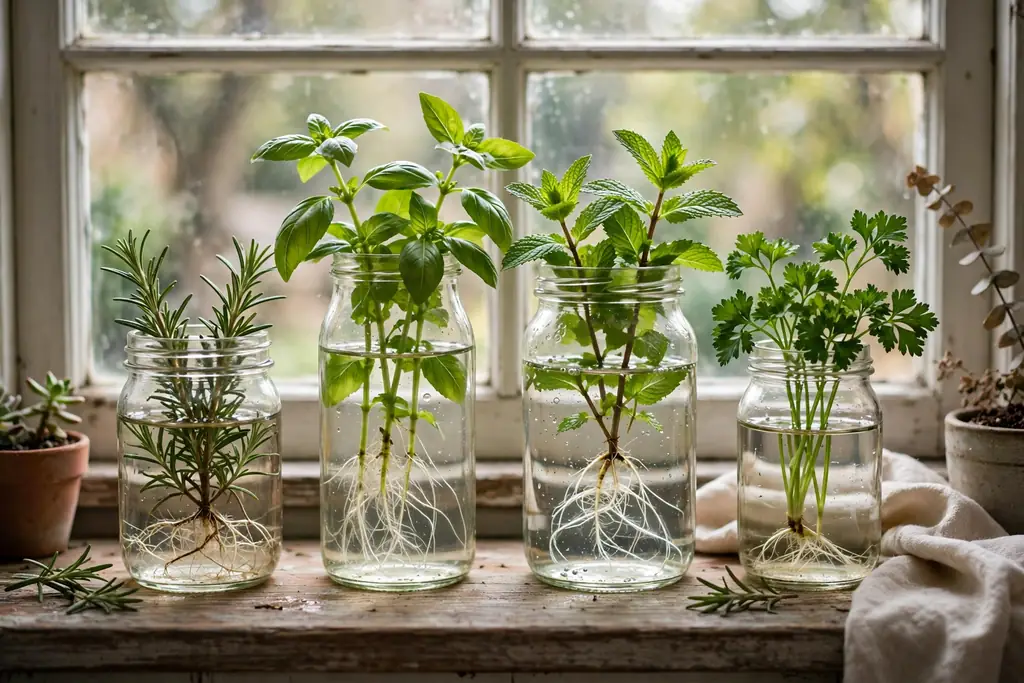
Root cuttings of mint, basil, and oregano in jars of water on a bright windowsill for herbs with no soil at all. A water herb setup suits a small kitchen, a classroom, or a gardener who wants to see roots grow, and it gives fresh leaves while cuttings establish. Use clean jars, change the water every few days, and keep jars out of direct midday sun, which heats the water and grows algae.
Take cuttings just below a leaf joint, strip the lower leaves, and stand the stems in water until roots are an inch or two long. Move rooted cuttings into pots for long term growing, since water alone runs out of food, and keep a few jars going for a steady supply of cuttings. Label each jar, since mint and oregano cuttings look alike in water.
28. Formal Herb Knot Garden

Lay out a formal knot garden with low box or lavender hedging in interwoven shapes, and fill each section with a different herb. A knot garden suits a front garden, a courtyard, or a garden with a formal style, and it looks good in winter, when the hedging keeps its shape. Keep the design simple, with two or three interwoven shapes, so trimming stays manageable.
Plant thyme, sage, chives, and parsley inside the hedging shapes, and keep the hedging trimmed twice a year to hold the pattern. Edge the knot with gravel paths so you can reach each section for picking and trimming without stepping on plants. Water new hedging well in its first season, and replace any hedge plant that dies so the pattern stays clear.
29. Stacked Tower Planter for a Small Patio
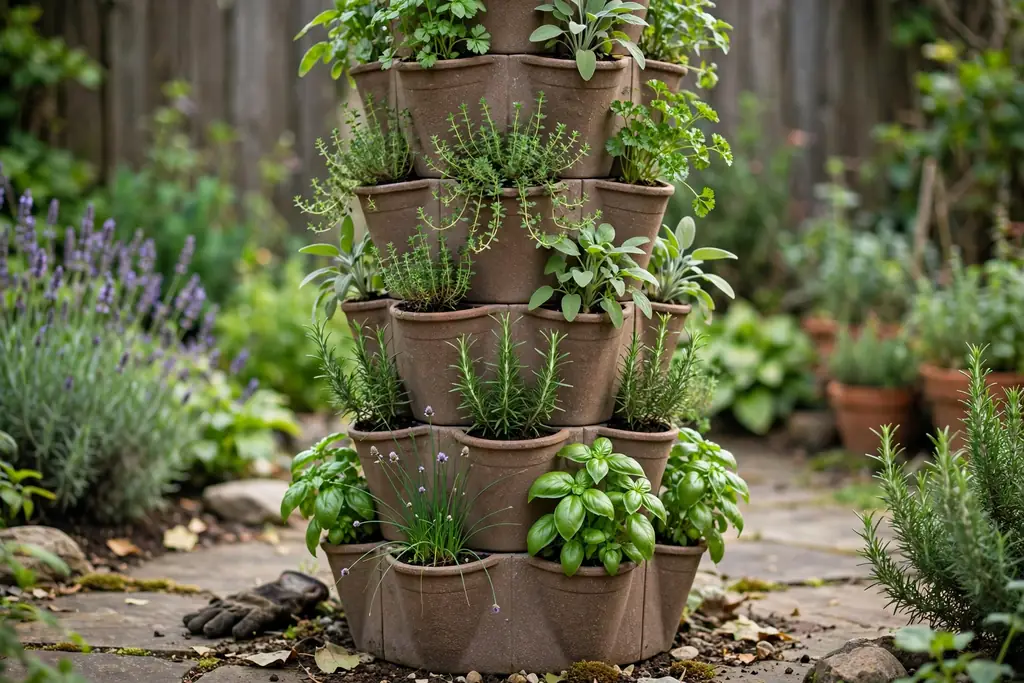
Use a stacked tower planter with pockets on each level for herbs on a small patio or balcony. A tower planter suits a gardener with only a square foot of floor space, and it holds more plants than a single pot by using height. Plant trailing thyme and oregano in the lower pockets, mid height parsley and chives in the middle, and basil or rosemary at the top.
Water from the top slowly so moisture reaches each level, and turn the tower every few days so all sides get sun. Check the lower pockets, which can stay wetter than the top, and feed lightly through the season. Bring tender herbs inside before frost, and refresh the mix in each pocket each spring.
30. Fence Pocket Herb Wall
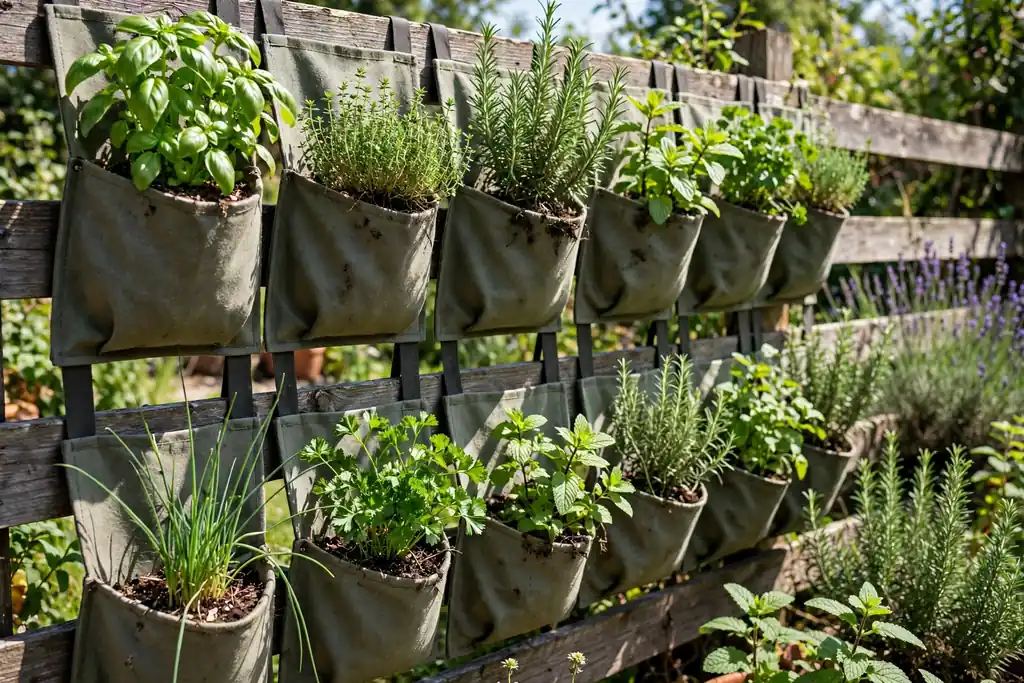
Hang fabric or felt pocket planters on a sunny fence for a herb wall that needs no floor space at all. A fence pocket wall suits a small garden, a balcony fence, or a narrow side passage, and it brings herbs to eye level for easy picking. Fill each pocket with potting mix, plant one herb per pocket, and water slowly so each pocket soaks evenly.
Plant compact herbs such as thyme, chives, parsley, and trailing oregano, and keep mint in a pocket on its own so it cannot spread to neighbors. Water pocket walls often, since shallow pockets dry fast in sun and wind, and check the fence fixings, since a planted wall is heavy when wet. Replace the mix each year, and bring tender herbs inside before frost.
31. Herb Bed Outside the Kitchen Window
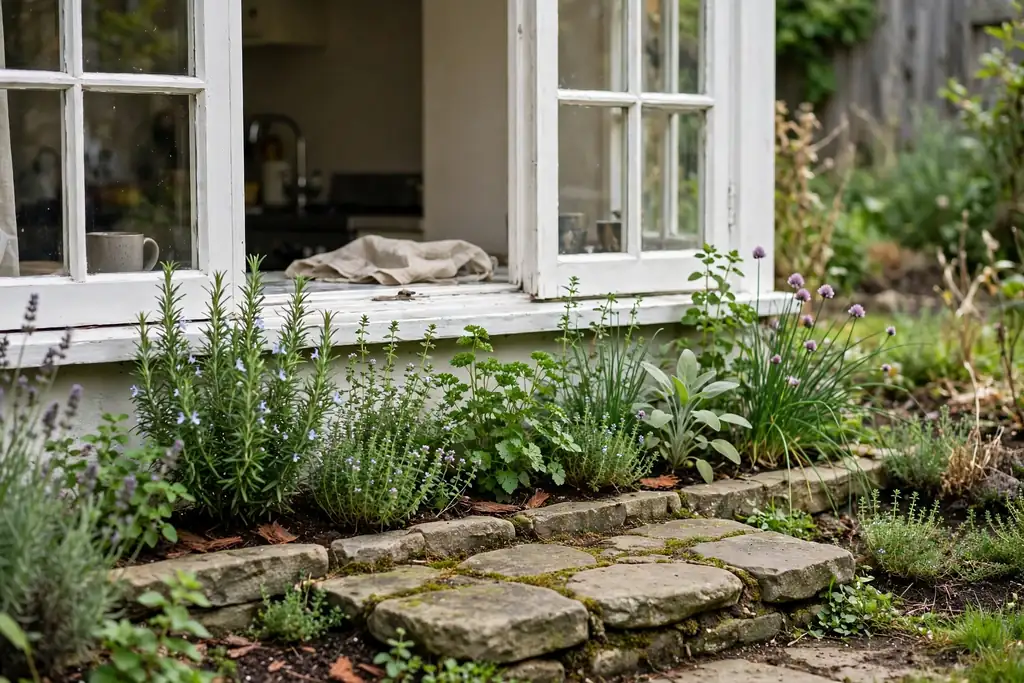
Plant a narrow herb bed outside the kitchen window so you can see the herbs from inside and pick them in a few steps. A window bed suits a house with a small garden strip beside a wall, and it keeps herbs in the sunniest spot near the house, where walls reflect heat. Plant parsley, chives, thyme, and sage in the bed, and keep taller rosemary at the end, where it will not block the window.
Leave a flat stone or a narrow path beside the bed for standing while you pick, and keep the bed clear of the house wall so air moves and damp does not build up. If the window looks onto a patio, a seat close by lets you pick and rest in one trip, and these garden bench ideas show how to choose a spot first and match the seat to it. Water the bed well in hot weather, since soil near a wall dries fast.
32. Cold Frame Herb Garden for Cold Months
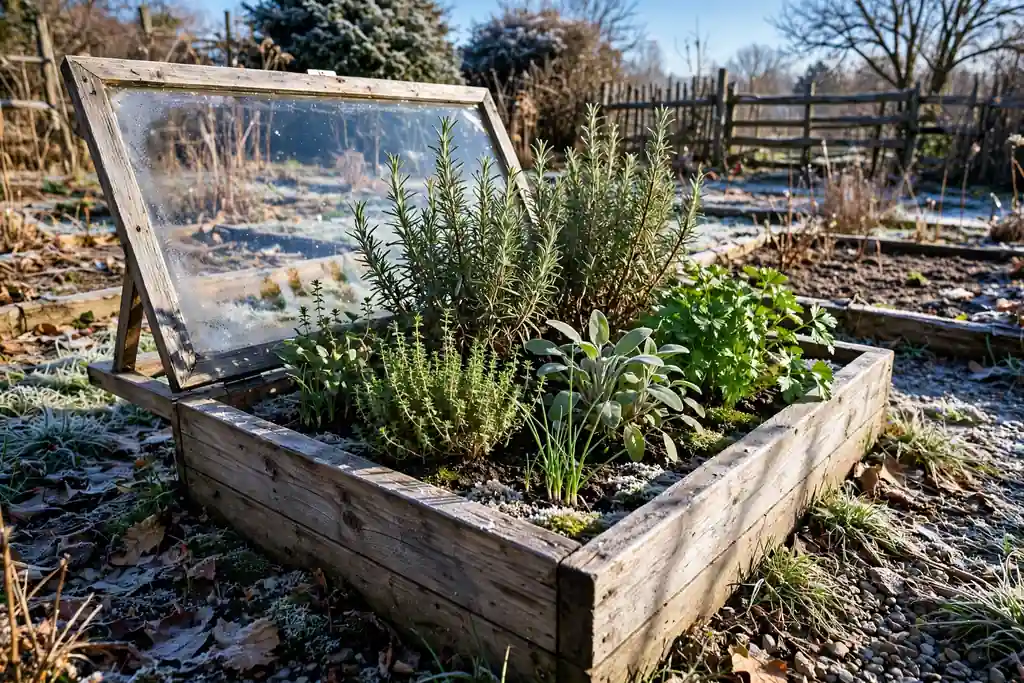
Use a cold frame to grow parsley, chives, thyme, and winter savory through cold months and to start tender herbs early in spring. A cold frame suits a gardener who wants fresh herbs past the first frost, and it protects plants from wind and heavy rain without heating. Place the frame in a sunny, sheltered spot, and open the lid on mild days so plants do not overheat.
Water cold frame herbs sparingly in winter, since cold soil stays wet longer, and close the lid before frost at night. Start basil and other tender herbs in the frame in spring, once frost risk has passed, and harden them off by opening the lid for longer each day before moving them outside. Keep the glass clean so light reaches the plants, and check for slugs in damp weather.
33. Herb and Flower Companion Bed
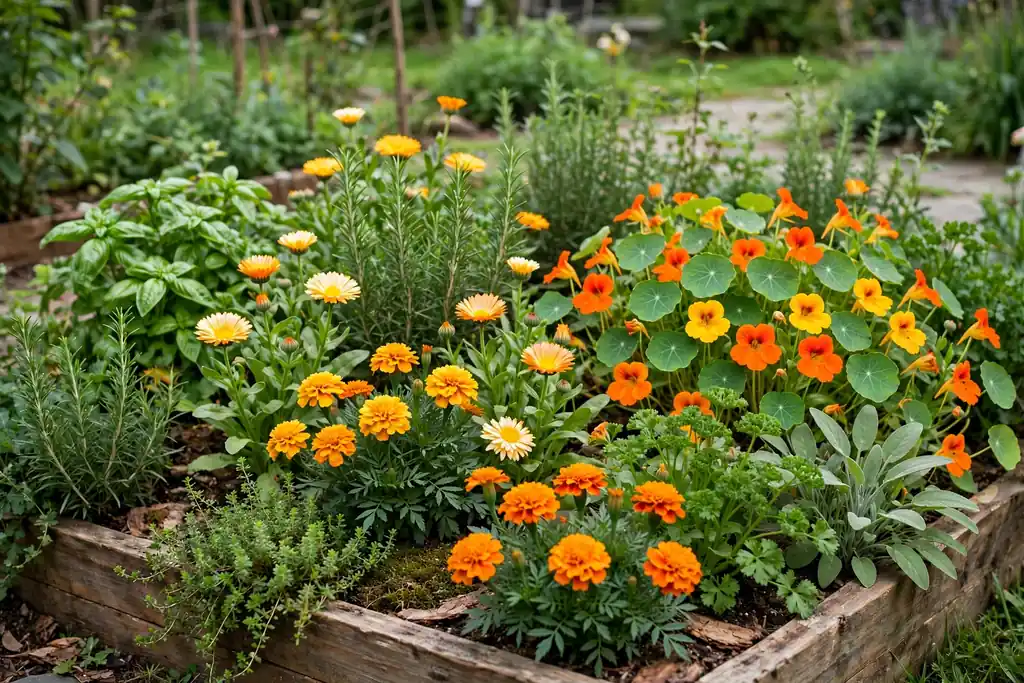
Mix herbs with flowers such as marigolds, nasturtiums, calendula, and sweet alyssum in one bed for color, scent, and pollinators alongside cooking leaves. A companion bed suits a cottage garden, a vegetable garden edge, or a front garden where a plain herb bed would look bare. Plant herbs in groups, and fill gaps with flowers, so the bed looks full from spring to autumn.
Pick herbs often to keep them bushy, and deadhead flowers to keep blooms coming. Leave some flowers to set seed for next year, and let a few herbs flower for bees, as in the pollinator border earlier in this list. Water the bed evenly, since flowers and herbs share the same soil, and replace annual flowers each spring with fresh plants.
Conclusion
A good herb garden starts with the herbs you actually cook with, not with the largest bed you can build. Pick one idea from this list that fits your space, whether that is a windowsill row, a pot cluster by the door, or a raised bed near the kitchen, and get those first herbs growing well. Once picking becomes part of cooking, you can add a wall, a spiral, or a second bed with confidence, knowing what each herb needs. Keep the garden close, water pots often, pick little and often, and let a few herbs flower for bees. Save this list on Pinterest before your next garden trip, and work through it one area at a time.
FAQs
Which herbs are easiest for a beginner herb garden?
Start with mint in its own pot, chives, parsley, thyme, and rosemary, since these cope with a range of conditions and forgive a missed watering better than tender basil. Give them sun, drainage, and regular picking, and add basil, coriander, and dill once the first group is thriving. Keep the garden small at first, with three to five herbs, so watering and picking stay easy.
How much sun do most culinary herbs need?
Most culinary herbs need at least six hours of sun a day, and Mediterranean herbs such as rosemary, thyme, sage, and lavender do best in full sun with free draining soil. Parsley, mint, chives, and lemon balm cope with part shade, and they suit a north facing bed or a spot with morning sun only. If a spot gets less than four hours of sun, grow herbs indoors under a grow light or choose shade tolerant herbs only.
Why is mint always grown in its own pot?
Mint spreads by underground stems and can take over a bed, a planter, or a path edge in one season, crowding out slower herbs. Growing mint in its own pot, or in a pot sunk into a bed with the rim above soil level, keeps its roots contained while still giving you plenty of leaves. Check pot grown mint each year, since it can escape through drainage holes if the pot sits on open soil.
How often should potted herbs be watered?
Water potted herbs when the top inch of soil feels dry, which can mean daily in hot, windy weather and only every few days in cool, cloudy weather. Water slowly until water runs from the drainage holes, then empty the saucer so pots do not sit in water. Pots dry faster than beds, and hanging baskets and pocket planters dry fastest of all, so check small containers first on hot days.
Can herbs grow indoors all year?
Yes, with enough light. A bright south facing windowsill suits chives, parsley, and mint, while basil and other tender herbs do better with a grow light in winter, when daylight is short. Keep indoor herbs away from radiators, water when the top of the soil feels dry, and turn pots often so growth stays even. Replace annual herbs each year, since indoor plants tire faster than outdoor plants.
What is the best soil for herbs in pots?
Use a free draining potting mix, not heavy garden soil, which compacts in pots and holds too much water around herb roots. For Mediterranean herbs, mix in extra grit or perlite for sharper drainage, and for leafy herbs such as parsley and mint, use a mix with more compost to hold moisture. Refresh potting mix each spring, since old mix loses structure and food, and feed lightly through the growing season as the mix label directs.