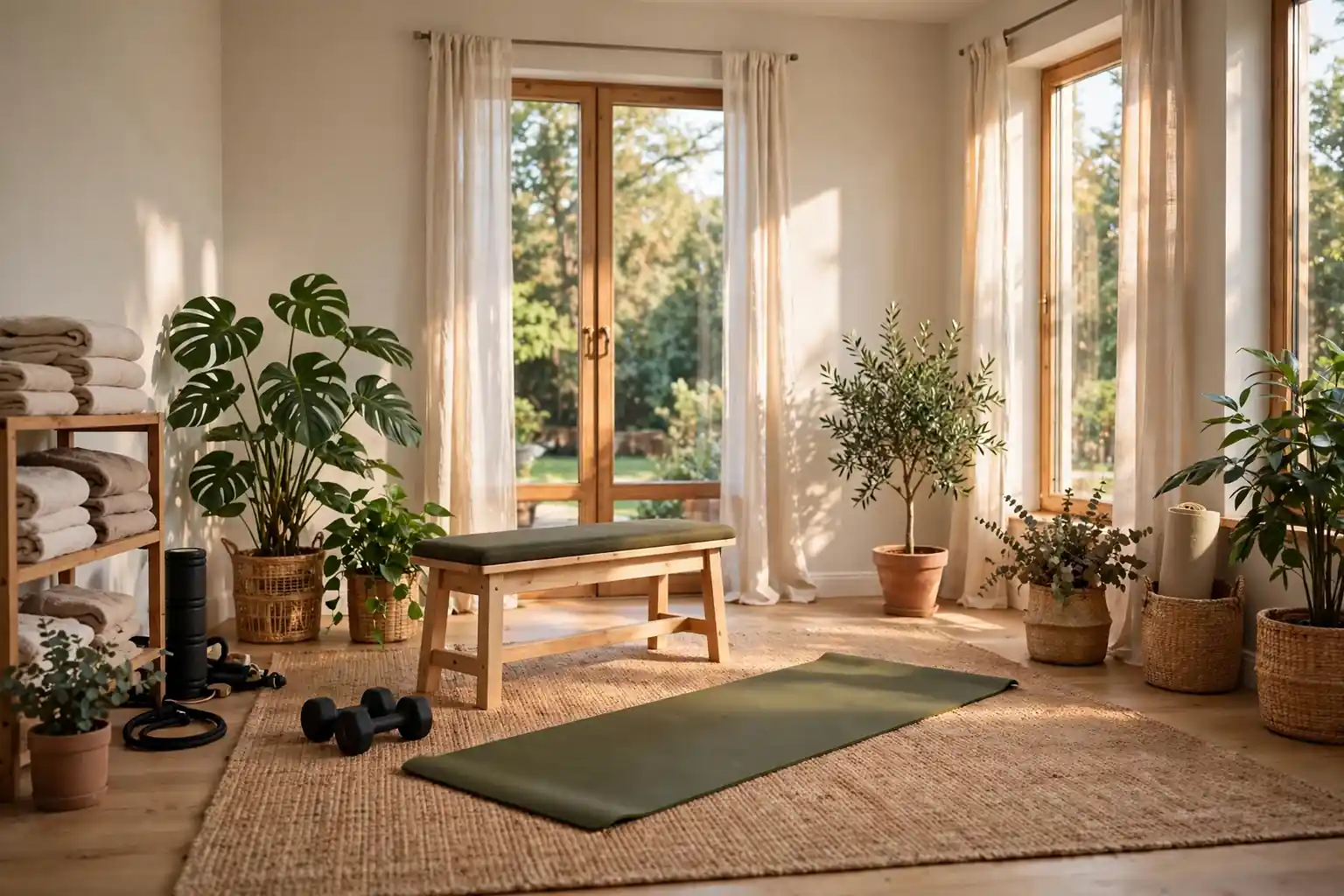
Category: Small Spaces

Space-saving layouts, storage, and decorating ideas for compact homes.

  • 33 Home Gym Ideas for a Welcoming, Lived-In Look

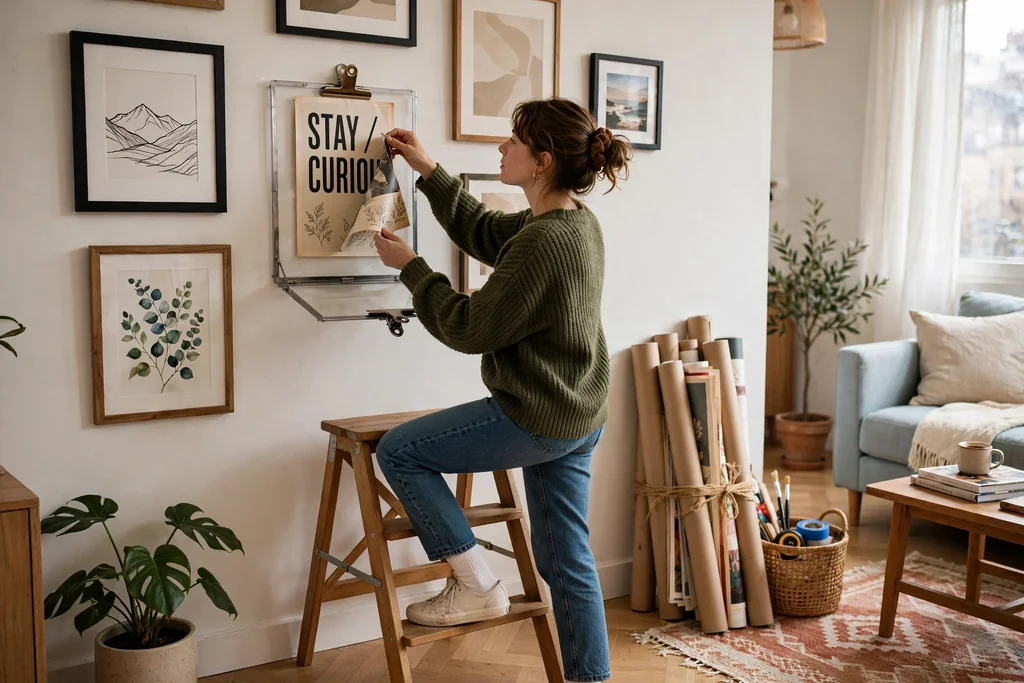
    33 Home Gym Ideas for a Welcoming, Lived-In Look

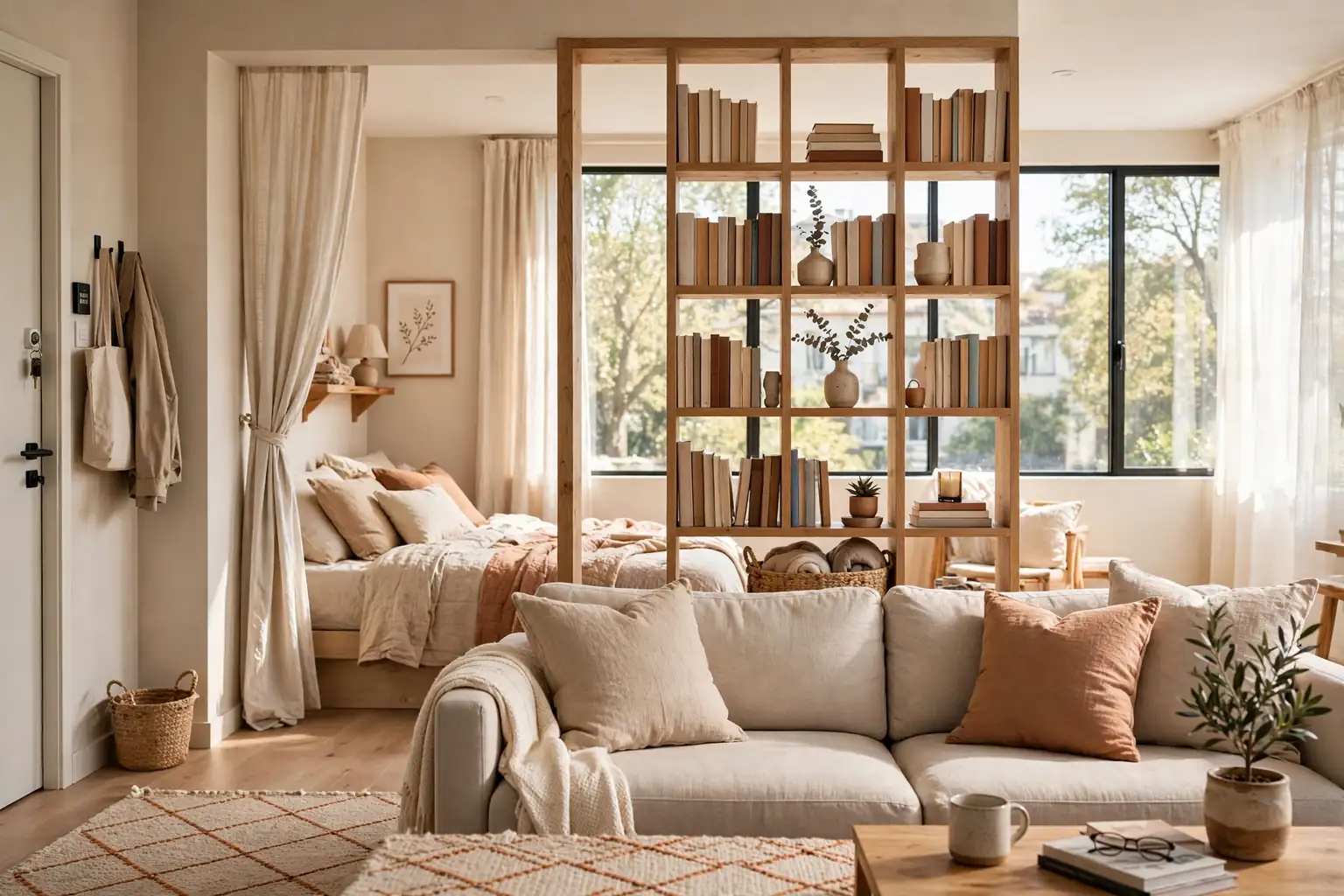
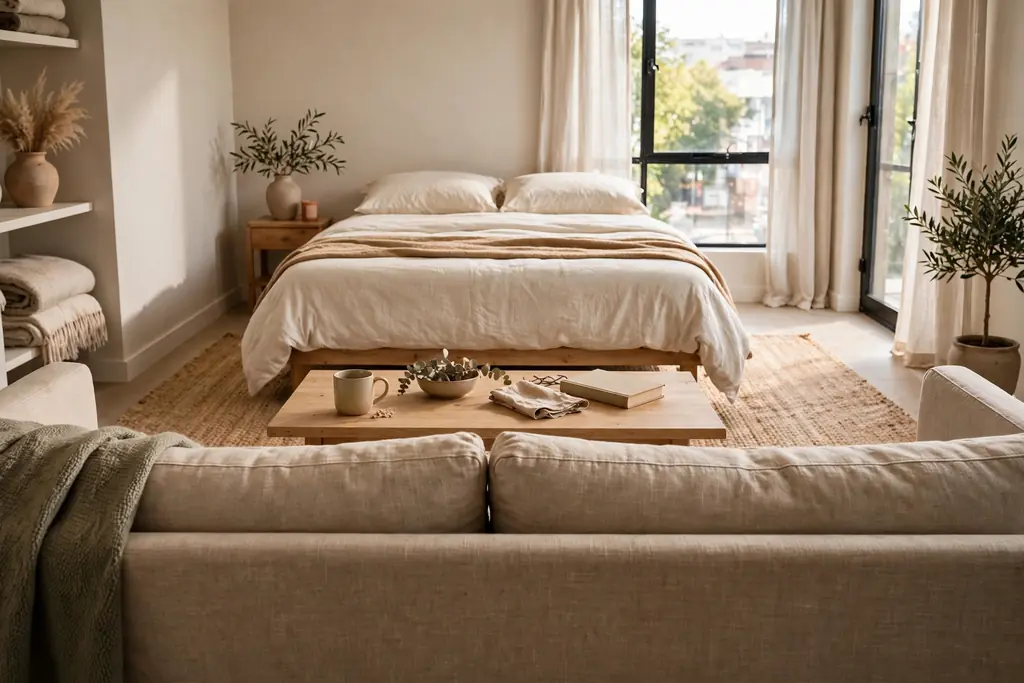
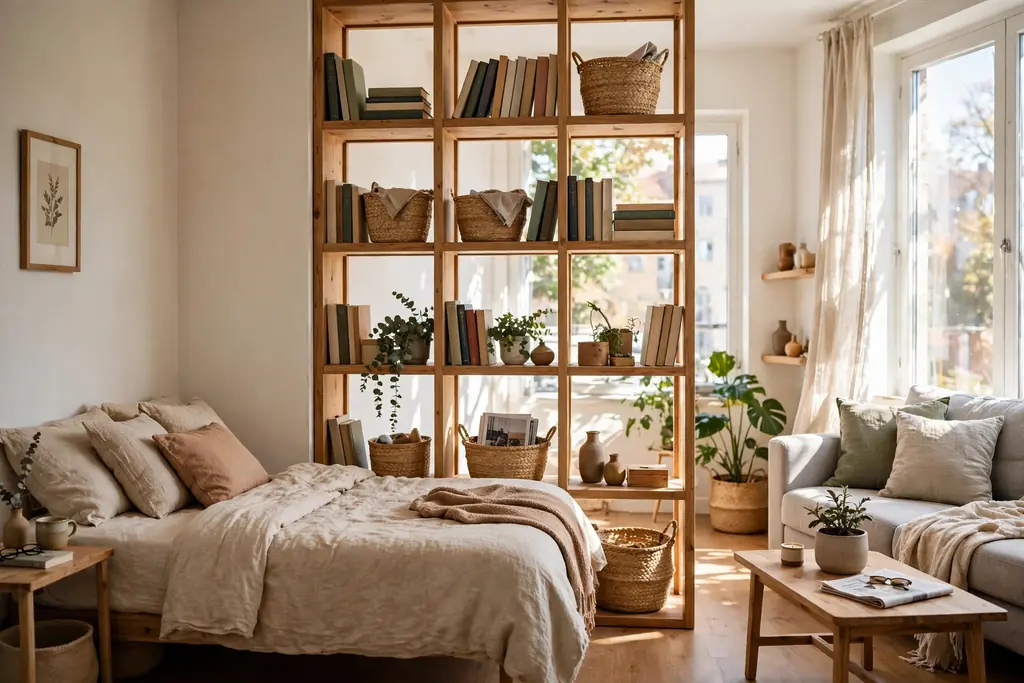
    A home gym works best when it feels like part of your home, not a spare room full of equipment you avoid. Warm light, a soft rug, a plant, and a chair you actually sit in can make the difference between a corner you use daily and one you walk past. These 33 home gym ideas cover small corners, spare rooms, garages, and basements, plus storage, lighting, and small comforts that keep workouts simple. Start with the space you have and the equipment you will truly use. For small rooms, the zoning advice in these studio apartment decorating ideas helps a gym corner share space with living or sleeping areas.

    Key Takeaways

    • Start with one clear zone, even if it is only a mat and a rug, and keep the walking route into it clear.
    • Choose equipment you will use at least three times a week before buying anything large or fixed.
    • Put small gear in closed storage and keep only daily items visible, so the room still feels like home.
    • Layer light: daylight or a bright lamp for workouts, plus a softer lamp for stretching and cool downs.
    • Use warm materials such as wood, cotton, wool, and plants to soften rubber, metal, and plastic.
    • Leave space to stretch, sit, and store a towel and water, since comfort is what brings you back tomorrow.

    1. Quiet Corner Nook with a Rug
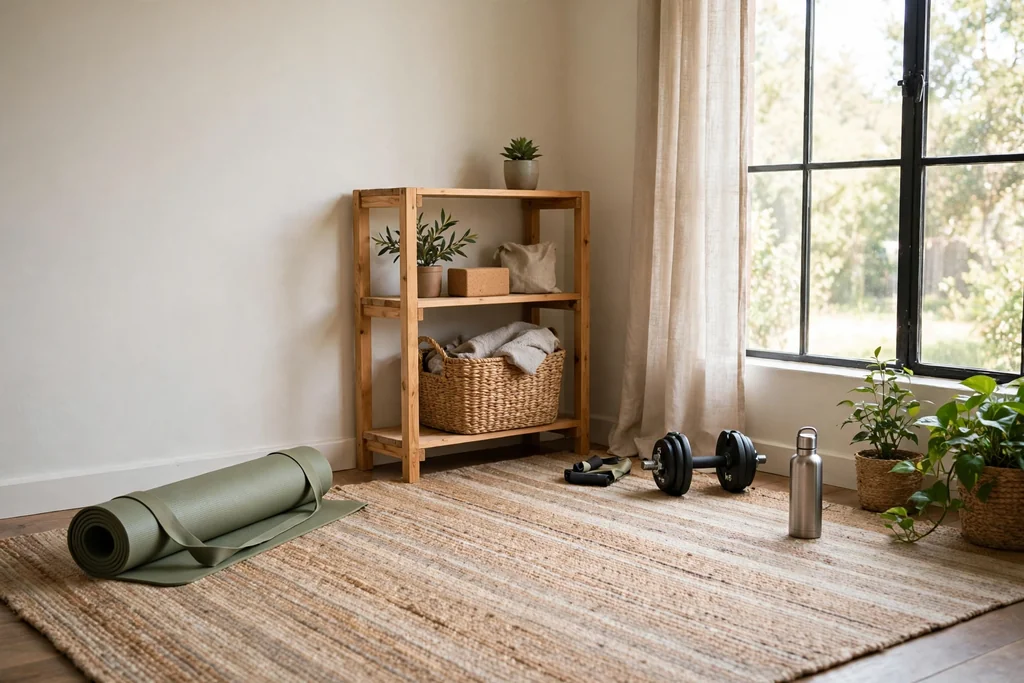
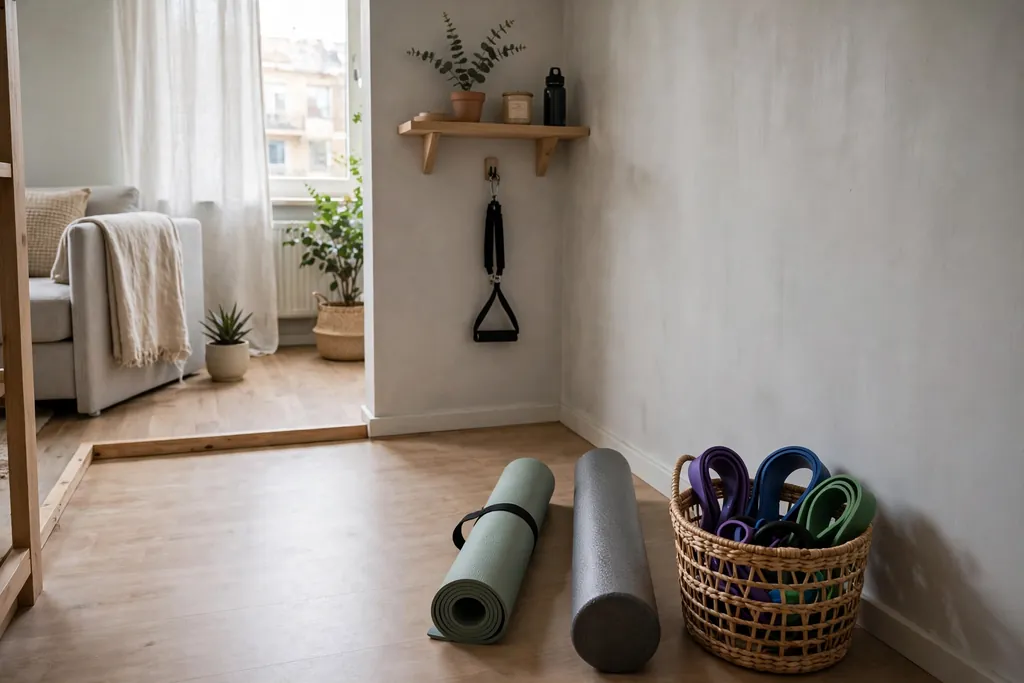
    Quiet home gym corner with a large rug, a rolled mat, and a small shelf.

    Claim one quiet corner with a large rug, a mat, and a small shelf, and treat it as your gym even if the rest of the room stays as it is. The rug marks the zone, cushions your feet, and makes the corner feel like a room within a room. This suits renters and small homes, since nothing needs to be fixed to the wall.

    Keep the corner near a window or a lamp if you can, and add a basket for bands, a towel, and a water bottle. Roll the mat out only when you train, and fold it away if the corner also serves guests. A rug with a low pile is easier to clean and safer under a mat than a thick shag rug.

    2. Spare Bedroom Turned Full Gym Room
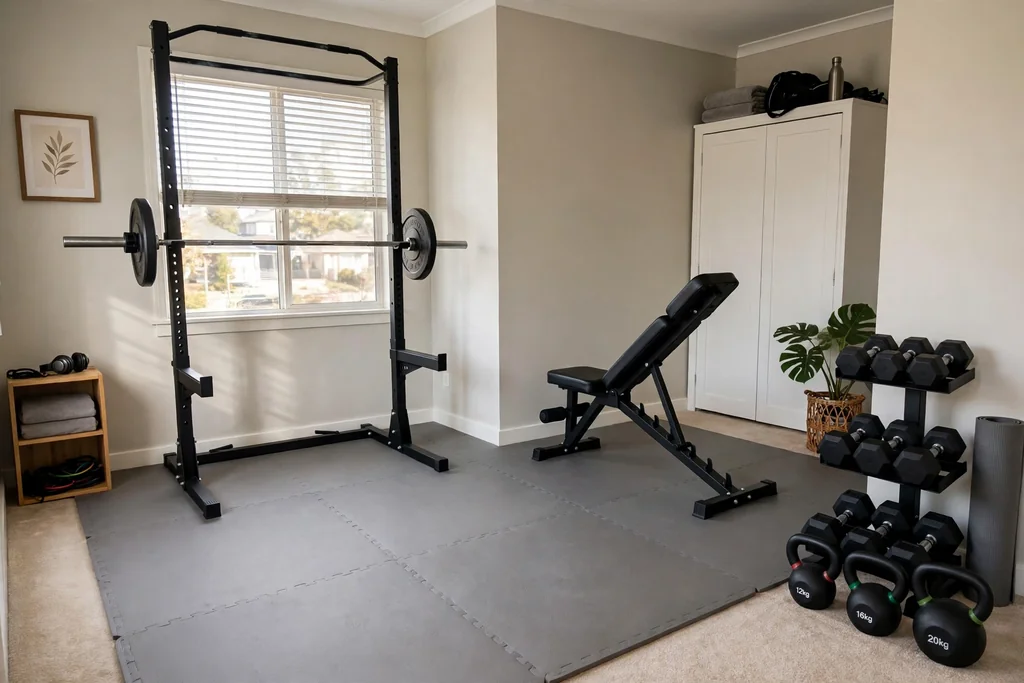
    Spare bedroom turned into a gym room with a bench, rack, and clear floor space.

    Turn a spare bedroom into a full gym room by clearing the bed and giving each type of training its own wall: cardio by the window, strength along one wall, and stretching in the clear middle. A spare room lets you leave equipment out, which removes the setup step that often stops a workout before it starts.

    Keep a chair and a small table in the room too, so it still feels lived in rather than bare. Use the closet for gear storage, with bins on shelves for small items. If guests still need the room sometimes, choose foldable equipment and a foldaway bed, so the room can change roles in an evening.

    3. Garage Corner with Rubber Flooring
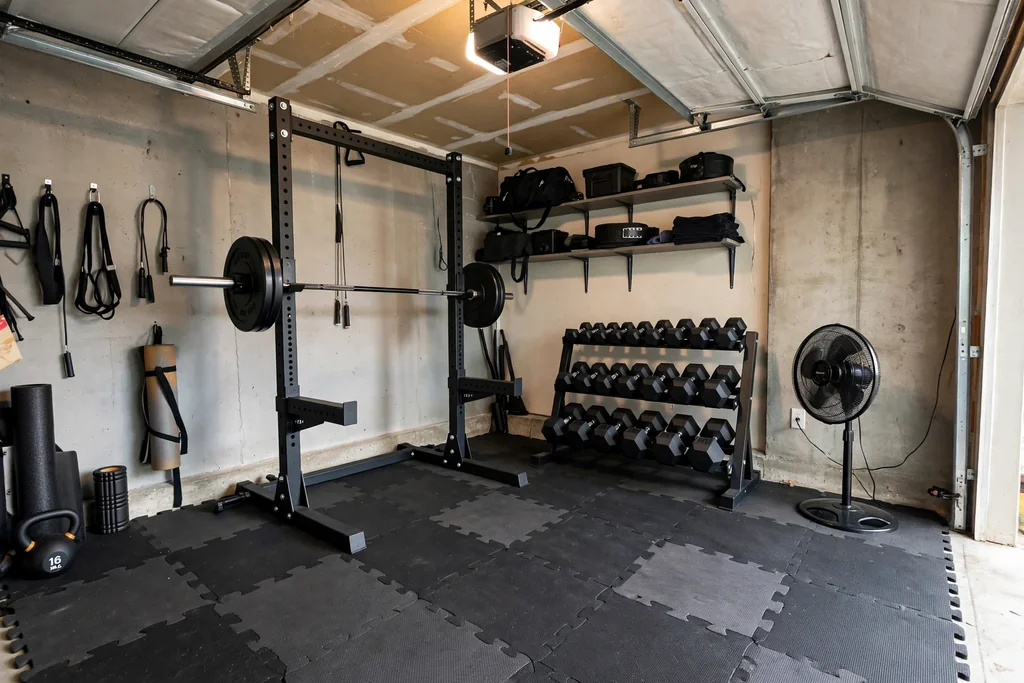
    Garage gym corner with rubber floor tiles, a rack, and a fan.

    Set up a gym corner in the garage with interlocking rubber tiles over the concrete floor. Rubber protects the floor, softens dropped weights, and gives grip for shoes, which matters more in a garage than in a carpeted room. Start with one corner, not the whole garage, so parking and storage still work.

    Add a fan for summer, a small heater for cold mornings if your garage allows it, and bright overhead light, since garages are often dim. Keep gear on a rack or shelf off the floor, away from damp and dust. A rug on top of the rubber near the stretching area adds warmth under bare feet.

    4. Basement Zone with Bright Lighting
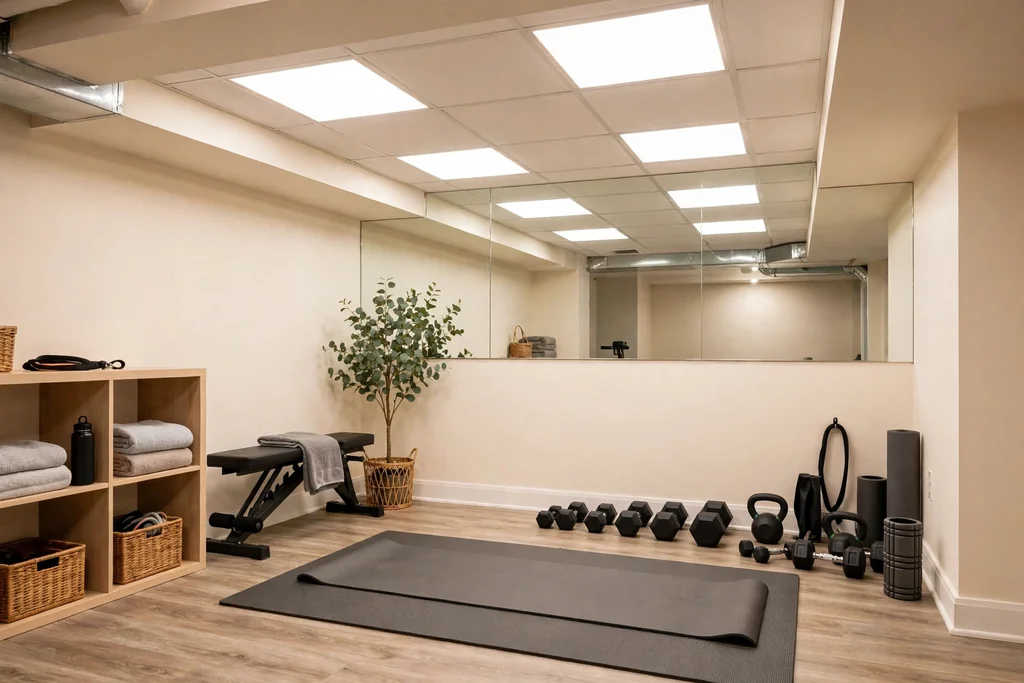
    Bright basement gym zone with pale walls, ceiling lights, and a mirror.

    Make a basement gym zone feel welcoming with bright, even lighting first, since low ceilings and small windows can make a basement feel closed in. Use two or three light sources, such as ceiling lights plus a floor lamp, and paint the walls a pale warm white so light bounces around the room.

    Keep the layout open in the middle for floor work, with equipment along the walls. A dehumidifier helps in damp basements, and a rug over the cold floor makes stretching far more pleasant. Add a mirror on one wall, since it helps with form and makes the space feel larger.

    5. Living Room Gym Behind a Curtain
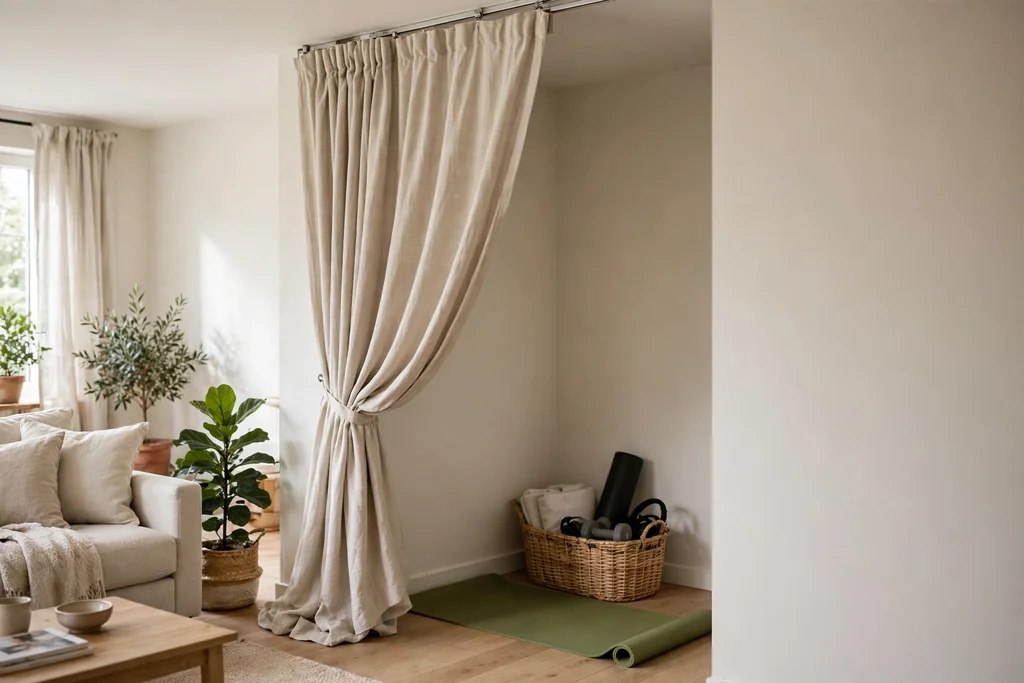
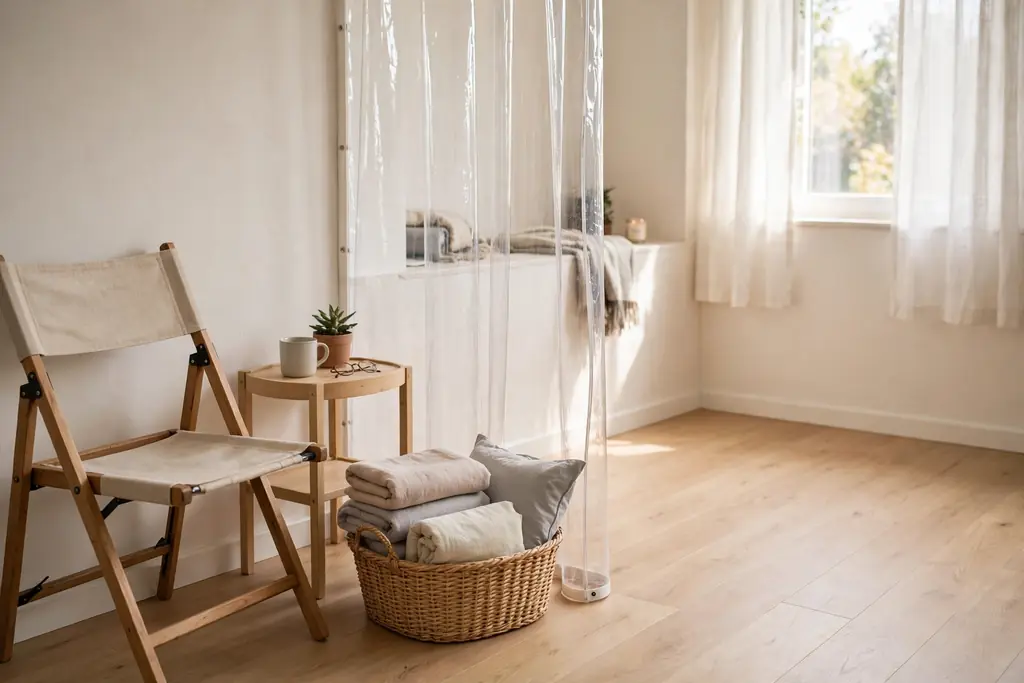
    Living room gym corner hidden behind a soft neutral curtain.

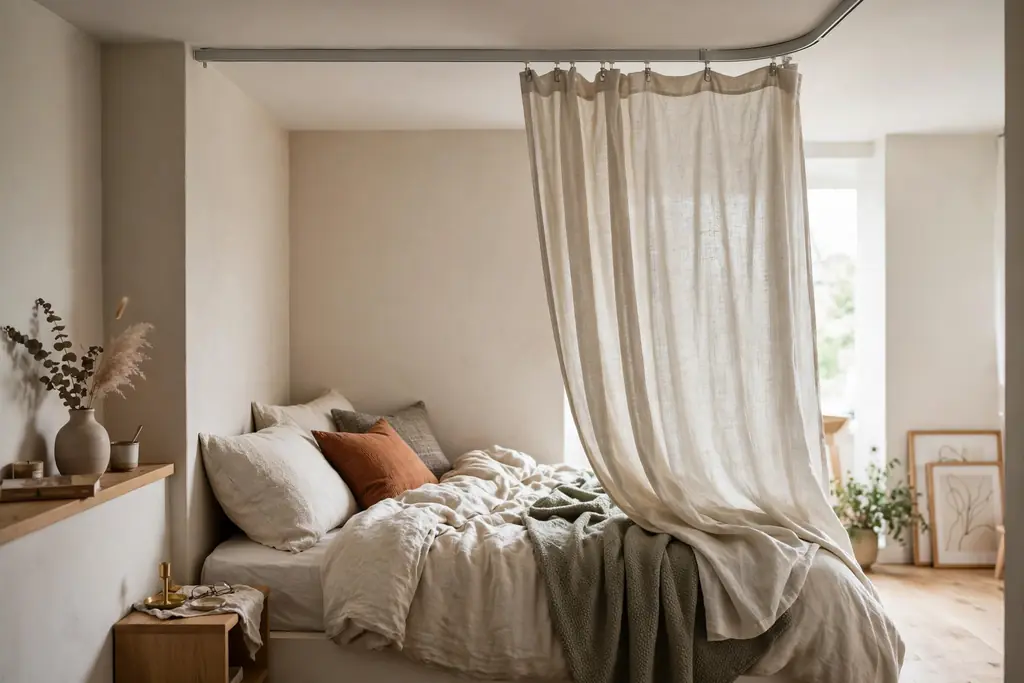
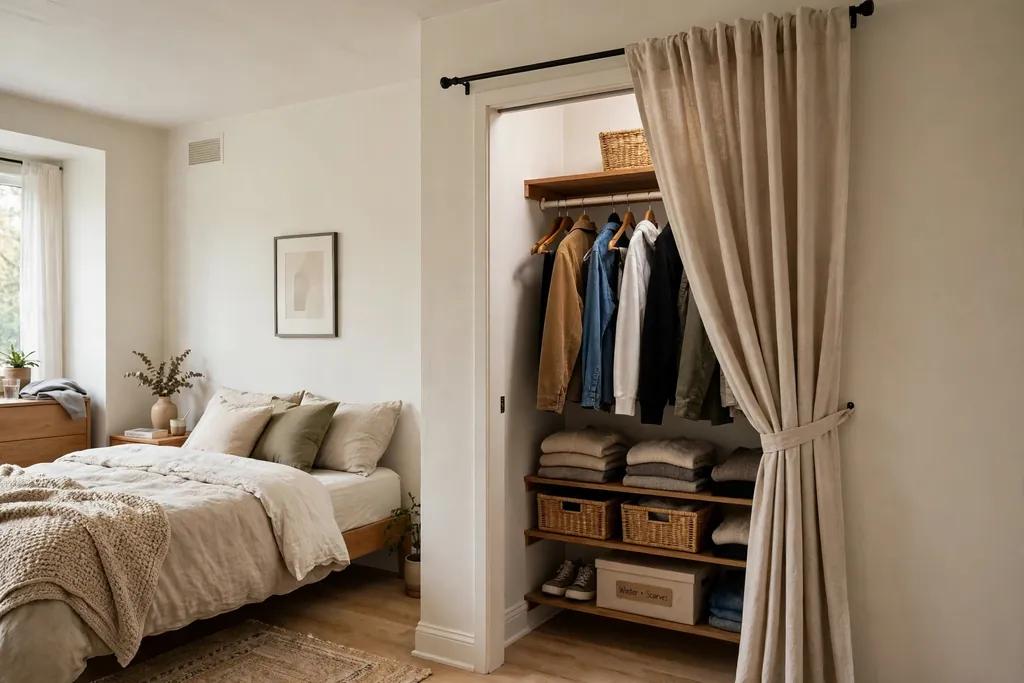
    Hide a living room gym behind a ceiling track curtain, so you can close it away when guests visit and open it in seconds for a workout. The curtain works like a soft wall, and it suits a corner with a mat, bands, and a few dumbbells that would otherwise sit in view all day.

    Choose a washable curtain in a warm neutral that matches the room, and extend the track past the gym zone so the curtain stacks neatly to one side. Keep the gym gear in a basket or on a low shelf behind the curtain, so closing it truly tidies the room. This is a good fit for the divider ideas in these cozy apartment living room ideas.

    6. Fold Away Wall Gym in a Small Room
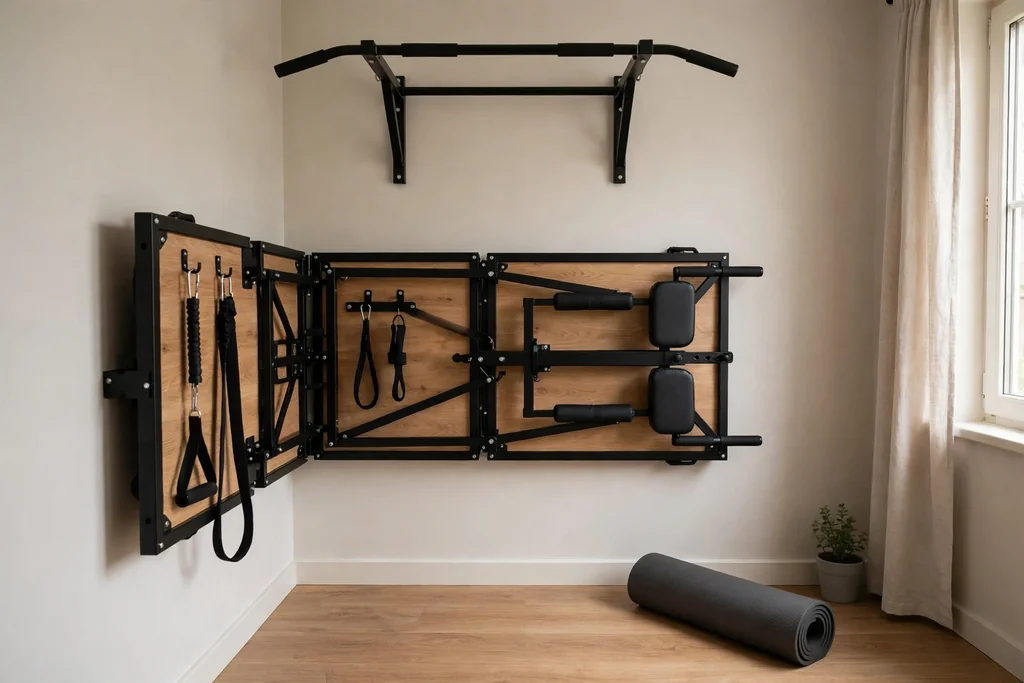
    Small room with a fold away wall gym unit and a rolled mat beside it.

    Use a fold away wall unit with a pull up bar, dip bars, or a fold down bench that folds flat when not in use. Wall gyms suit small rooms because the floor stays free for the rest of the day, and the workout zone appears only when you need it.

    Fix the unit into studs or with fixings rated for your wall type, and follow the maker instructions closely, since these units carry body weight. Keep a mat rolled beside the unit and a small hook for bands, so setup takes under a minute. If wall fixing is not allowed, a freestanding rack gives a similar result with more floor space used.

    7. Dumbbell Rack Beside a Window
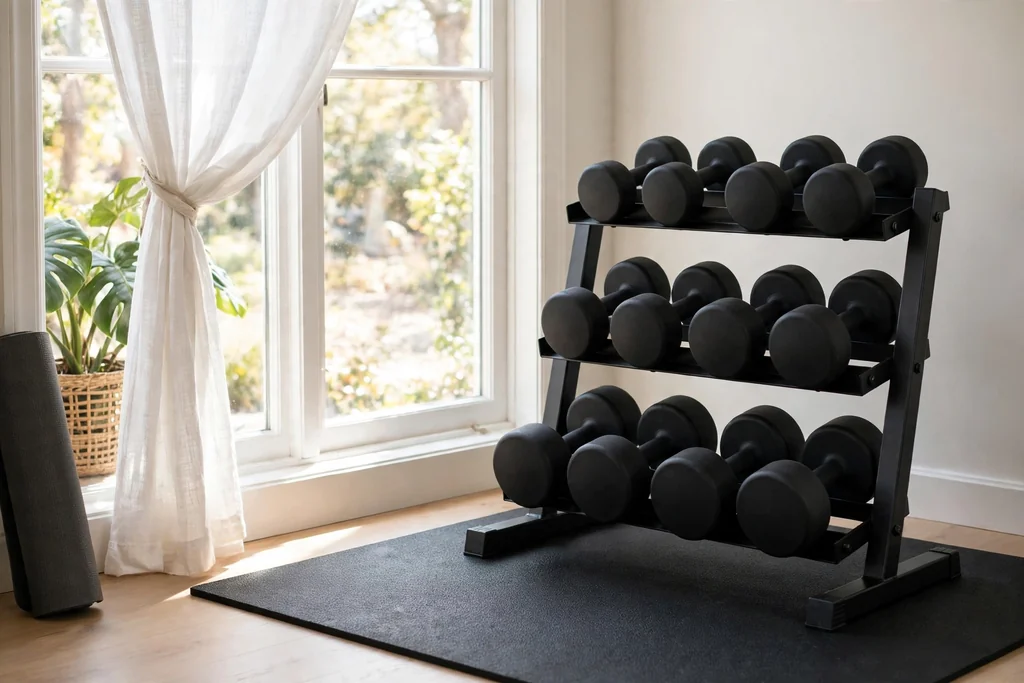
    Compact dumbbell rack beside a bright window in a home gym.

    Place a compact dumbbell rack beside a window, where daylight makes the weights easy to see and the corner feels pleasant rather than gloomy. A tiered rack keeps pairs in order by weight, so you are not hunting through a pile on the floor before each set.

    Choose a rack sized to the weights you own now, with room for one heavier pair as you progress. Keep the floor under the rack clear and use a rubber mat beneath it to protect wood or tile. Wipe handles weekly, since hand sweat builds up on metal and rubber grips.

    8. Yoga and Stretching Corner
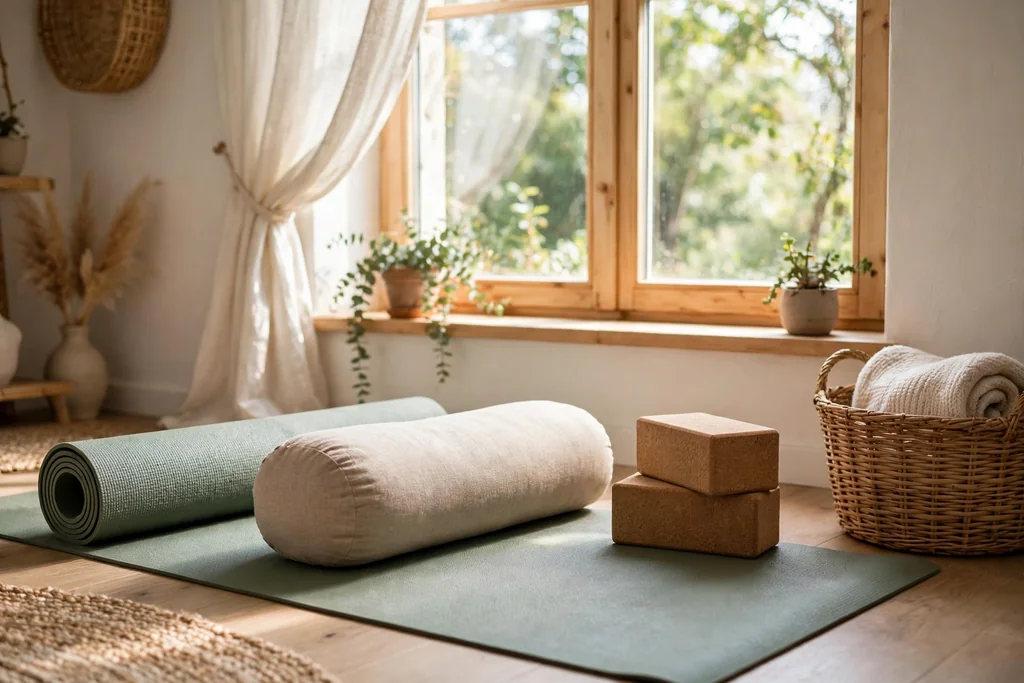
    Yoga corner with a mat, bolster, blocks, and a basket by a window.

    Build a yoga and stretching corner with a good mat, a bolster or firm cushions, blocks, and a strap, all stored in one basket or on a low shelf. A dedicated stretching corner invites short daily sessions, not only long workouts, which is where flexibility gains actually come from.

    Place the corner where you can see out of a window or toward a calm wall, and keep the floor clear of clutter so you can move freely. A soft lamp for evening stretching helps the body wind down, and a washable mat cover keeps the setup fresh. Keep the props you use weekly within reach, and store extras elsewhere.

    9. Cardio Corner with a Bike or Treadmill
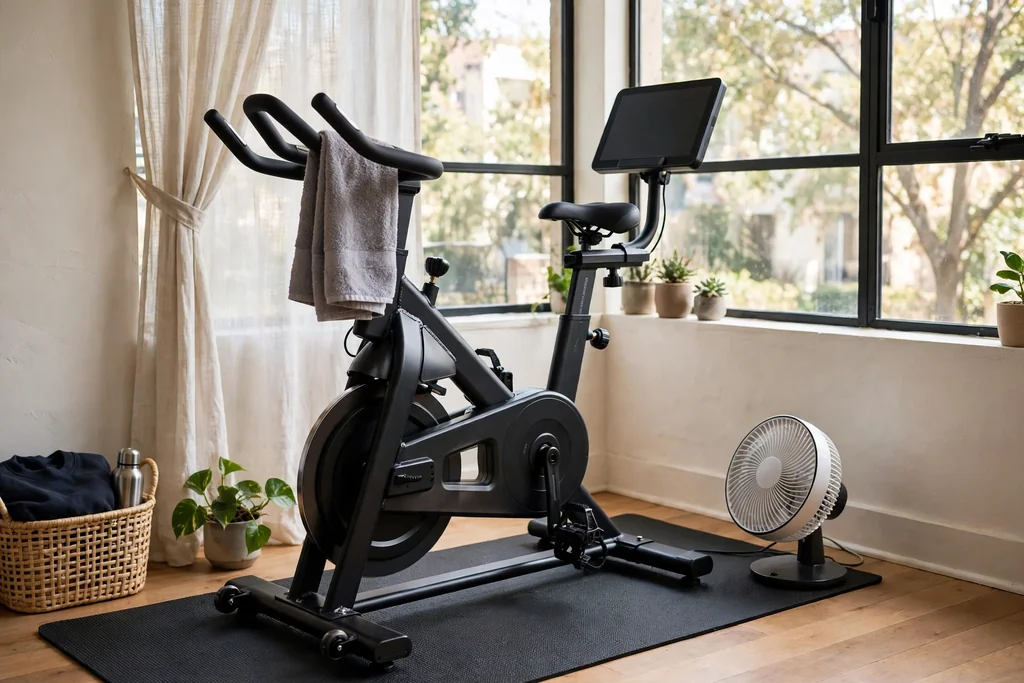
    Cardio corner with an exercise bike, a mat beneath it, and a small fan.

    Give cardio its own corner with one machine, a mat beneath it, and a small fan, rather than squeezing a machine into a walkway. One machine you enjoy beats three you avoid, and a clear corner makes it easier to step on and start.

    Face the machine toward a window, a television, or a bookshelf, since a blank wall gets dull fast. Keep a towel on the handlebar hook and a bottle on a small stool nearby, so you do not stop mid session to fetch them. Leave space around the machine for safe mounting and dismounting, following the maker guidance.

    10. Strength Station with a Bench and Rack
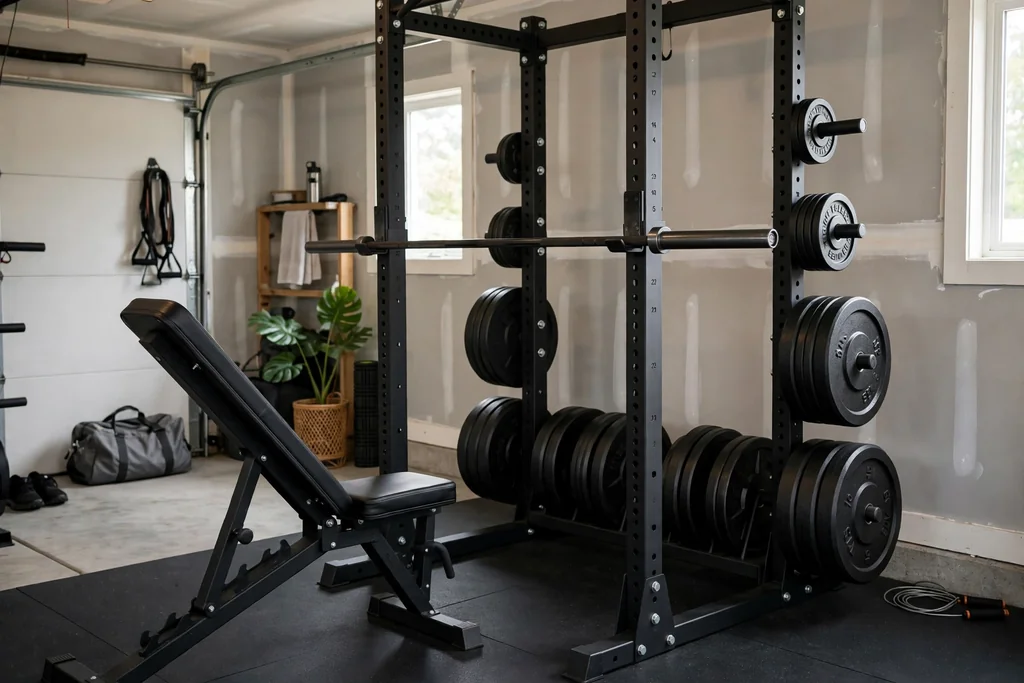
    Strength station with an adjustable bench, rack, and plates on pegs.

    Set up a strength station with an adjustable bench and a squat rack or sturdy stand along one wall, with weight plates stored on pegs or a low rack. Keeping the heavy gear in one station stops plates from spreading across the room, and it gives lifting a clear, safe footprint.

    Check the ceiling height before buying a rack, and leave room to step back from the bench. A rubber floor under the station protects the floor and gives grip. Keep a notebook or phone stand nearby for tracking sets, and tidy plates back onto the rack after each session, so the next workout starts clean.

    11. Resistance Band Wall Station
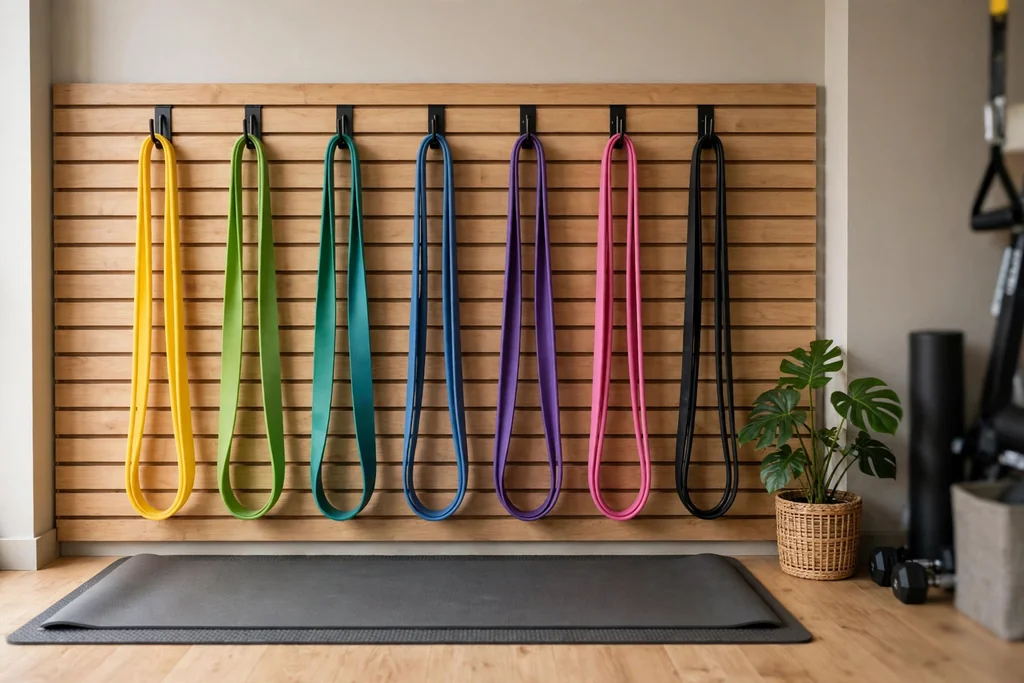
    Wall station with resistance bands hung on hooks in order.

    Fix a resistance band anchor to a wall or door frame mount, with bands hung on hooks in order of resistance, for a strength setup that takes almost no floor space. Bands suit small rooms, travel style training at home, and warm ups before heavier work, and they store in a drawer when not in use.

    Label each band by resistance if the colors are hard to tell apart, and check bands for nicks before use, replacing any that look worn. Keep the anchor at a height that suits both high and low pulls, or use two anchors if your wall allows it. A mat beneath the station gives you a clear spot to stand.

    12. Kettlebell Corner on a Mat

    Kettlebell corner on a thick mat with kettlebells sorted by weight.

    Keep kettlebells in one corner on a thick mat, sorted by weight with the heaviest at the back, so you can grab one safely without bending over a pile. A kettlebell corner suits swings, carries, and squats, and it needs only a small square of floor if the ceiling is clear above.

    Choose a mat that grips the floor and stays flat, since kettlebells roll on thin mats. Keep the swing path clear of furniture and breakables, and store a towel nearby for grip. If you train barefoot, a rubber mat is kinder to feet than bare concrete or tile.

    13. Pilates and Mat Workout Zone
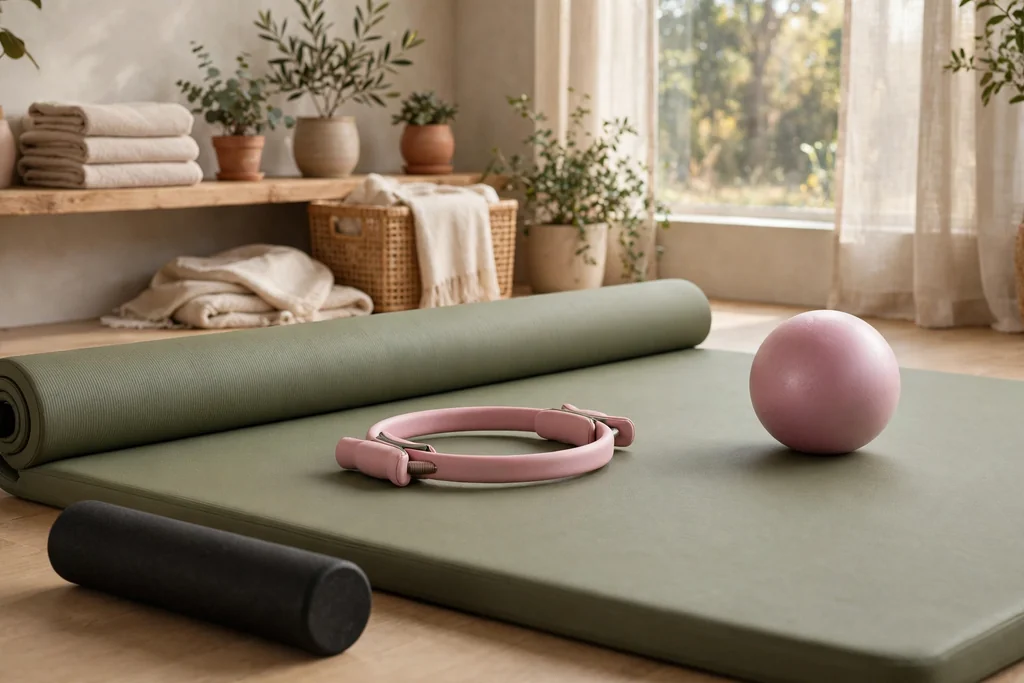
    Pilates mat zone with a thick mat, small ball, ring, and foam roller.

    Make a Pilates and mat workout zone with a thick mat, a small ball, a ring, and a foam roller, grouped on a low shelf or in a wide basket. Mat work needs floor space more than equipment, so keep this zone clear and wide rather than filling it with machines.

    A pale rug under the mat softens hard floors and marks the zone in a shared room. Keep a wall nearby for balance work, and a small mirror if you want to check alignment. Wipe the mat after each session, and air it out now and then, since mat gear picks up sweat fast.

    14. Boxing Corner with a Freestanding Bag
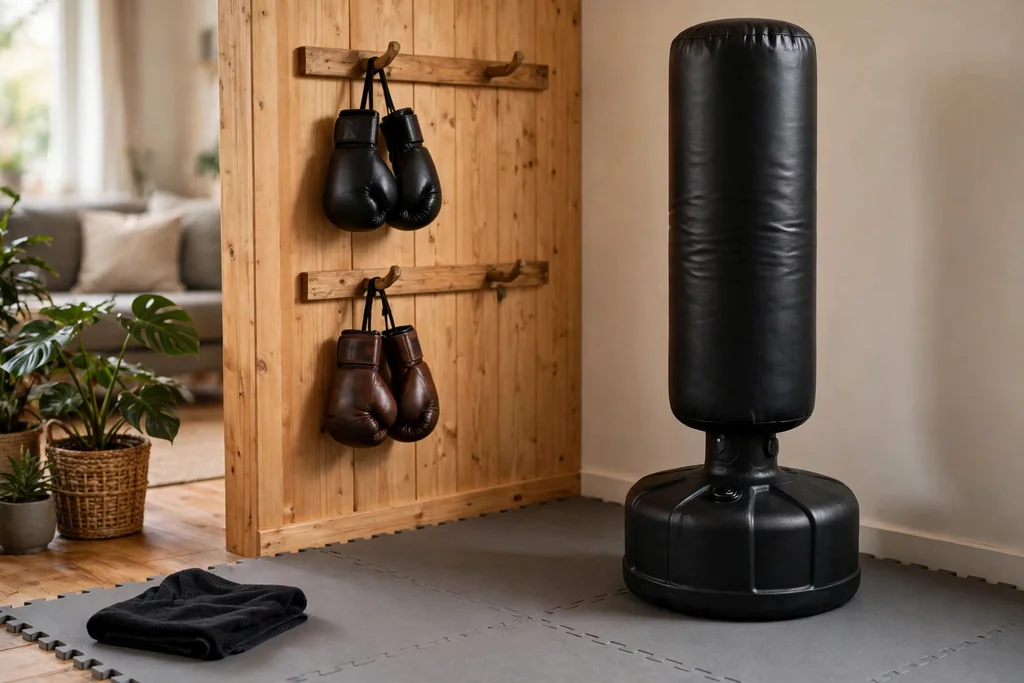
    Boxing corner with a freestanding bag, gloves on hooks, and a mat.

    Set up a boxing corner with a freestanding bag, hand wraps, and gloves hung on wall hooks, for cardio and stress relief in a small footprint. A freestanding bag suits homes better than a hanging bag for most people, since it needs no ceiling fixing and can move to a corner when not in use.

    Place the bag on a mat to stop it sliding, and leave a full step of space around it for footwork. Keep wraps and gloves on hooks so they air out between sessions, and wipe the bag surface weekly. If noise matters to neighbors below, train on a thick mat and avoid late night sessions.

    15. Pull Up Bar in a Doorway
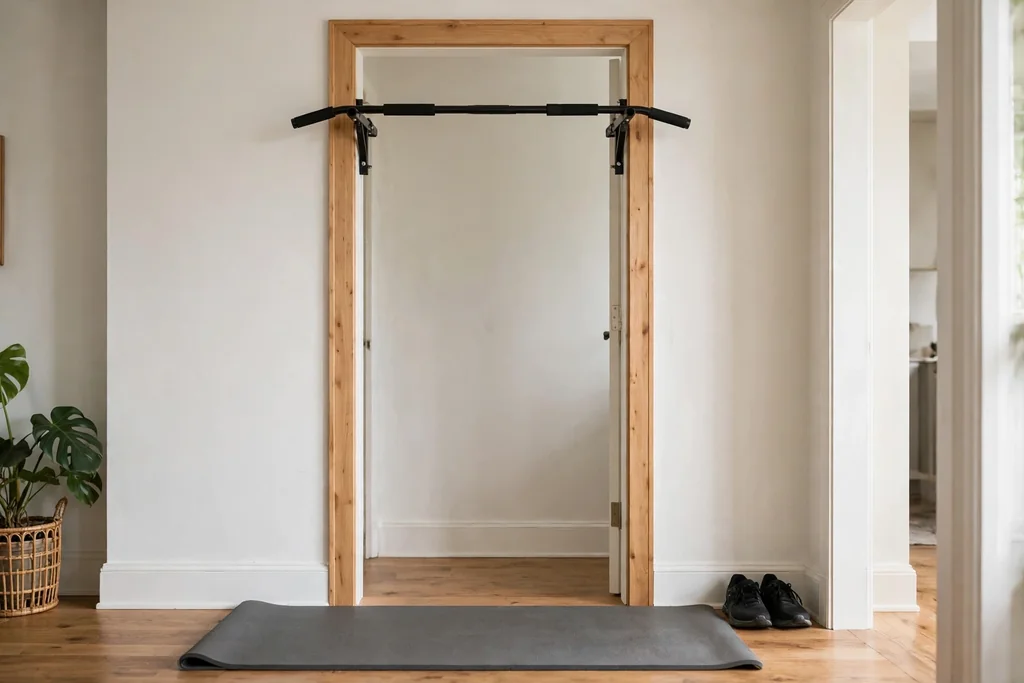
    Doorway pull up bar fitted in a home doorway with a mat below.

    Fit a doorway pull up bar for a simple strength tool that uses no floor space at all. Doorway bars suit apartments and small homes, and they let you add a few reps through the day, not only during a planned workout.

    Check that your door frame suits the bar type you choose, and follow the maker weight guidance. Keep a small step nearby if you need help reaching the bar, and remove the bar when guests need the doorway clear. Pair the bar with bands for assisted reps while you build strength.

    16. Mirror Wall for Form Checks
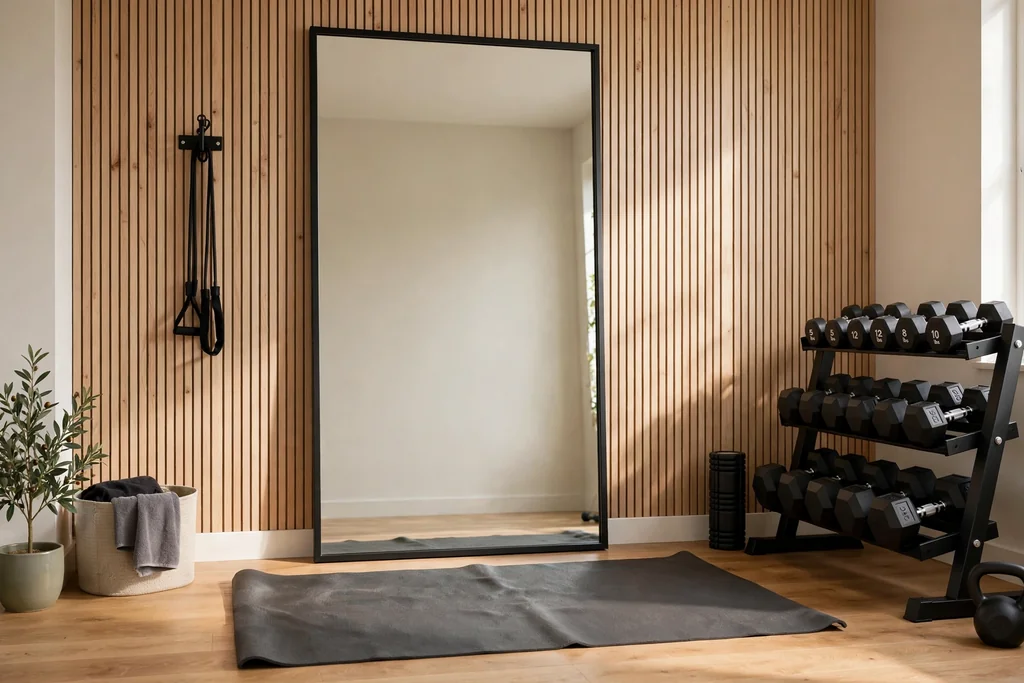
    Home gym wall with a large mirror, a mat, and dumbbells.

    Add a large mirror, or a row of mirror panels, on one gym wall, so you can check form during squats, lunges, and stretches. A mirror also bounces light around the room and makes a small gym feel larger, which helps a spare room or basement feel less closed in.

    Fix mirrors with hardware suited to their weight, or lean a large mirror securely against the wall if hanging is not allowed. Check what the mirror reflects before fixing it, aiming it toward a window or a calm wall rather than clutter. Clean the mirror weekly, since gym mirrors show dust and fingerprints fast.

    17. Open Shelving for Small Gear
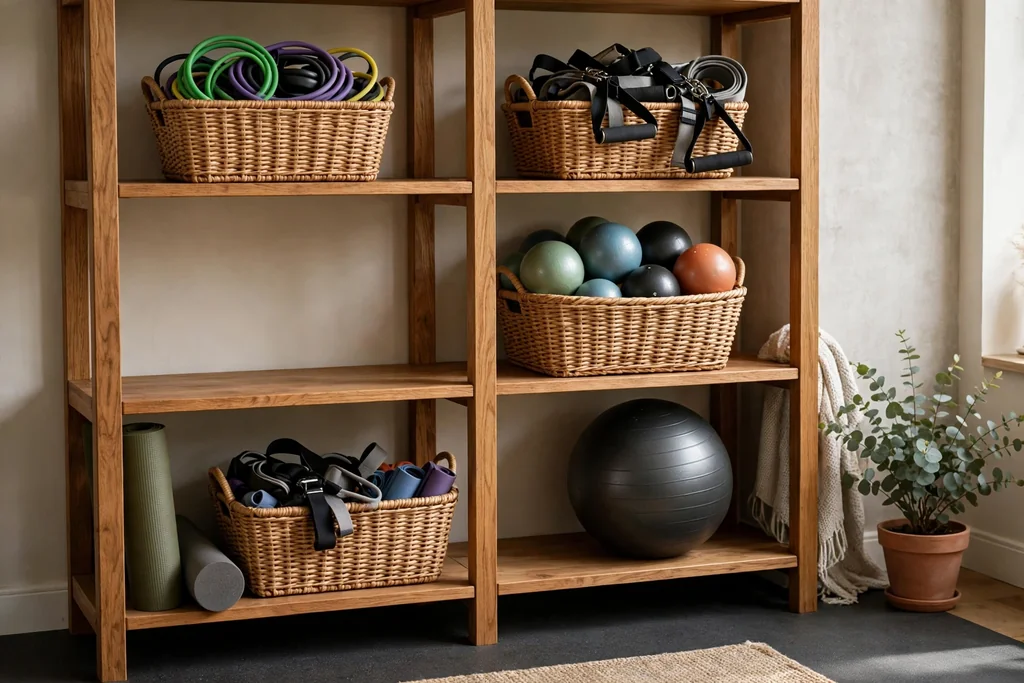
    Open gym shelves with baskets holding bands, balls, and straps.

    Use open shelves on one gym wall for small gear such as bands, balls, straps, and hand grips, grouped in baskets by type. Open shelves keep gear visible, so you reach for it instead of forgetting it in a closed box, and they use wall space that would otherwise sit empty.

    Keep heavy items low and light items up high, and leave one shelf partly empty so the wall does not look crowded. Label baskets if several people share the gym, and anchor tall shelving to the wall following the maker instructions. The basket grouping method in these bedroom storage ideas works just as well for gym gear.

    18. Rolling Cart for Workout Gear
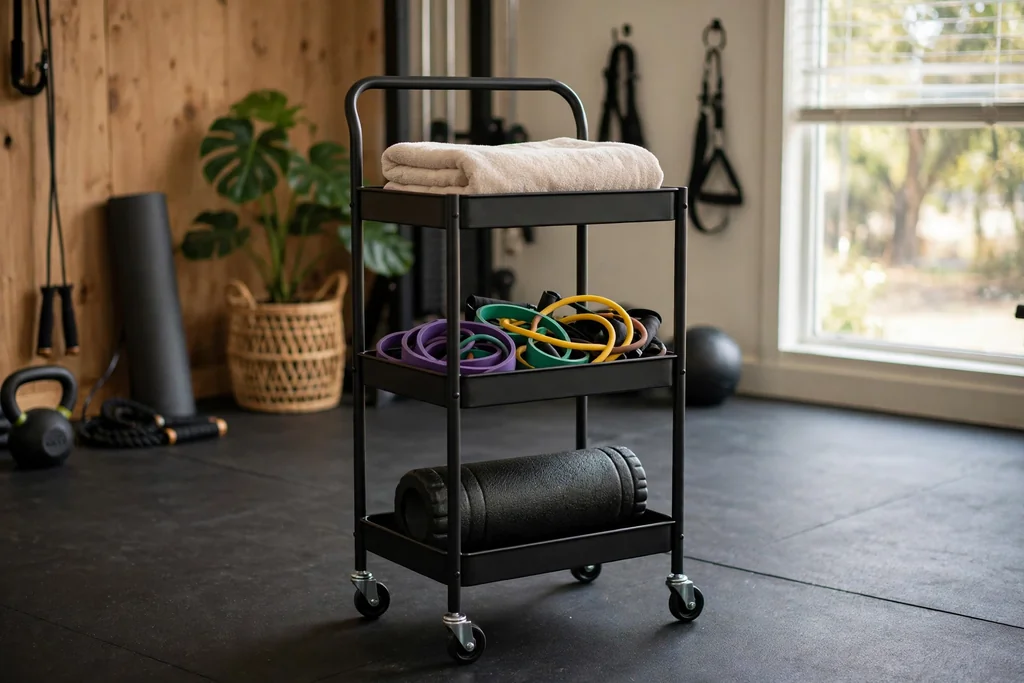
    Rolling cart with tiers holding a towel, bands, and a foam roller.

    Keep workout gear on a rolling cart with two or three tiers, so the gym can move to the living room, the patio, or a spare room as needed. The top tier can hold a towel, bottle, and phone, the middle tier bands and small weights, and the lowest tier a mat or foam roller.

    Choose a cart with locking wheels, so it stays put during a workout, and a small footprint that fits through doorways. Keep the cart to one routine at a time, such as stretching or strength, rather than loading it with everything you own. Wipe the tiers weekly, since gym carts collect dust and sweat.

    19. Wood and Warm Neutral Palette
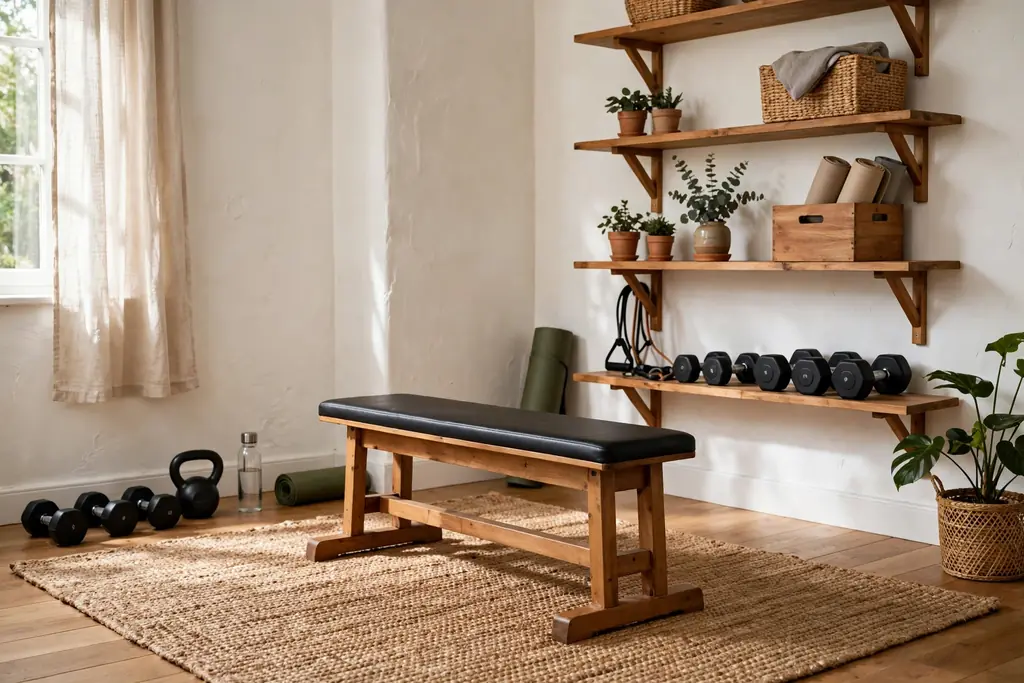
    Home gym with a wood bench, warm white walls, and a natural rug.

    Use wood and warm neutrals for the gym room: a wood bench, a warm white wall, a natural rug, and wood shelving, to soften black rubber and metal. A warm palette makes the room feel like part of the home, and it invites you in on cold mornings when a bare concrete gym would not.

    Keep the largest surfaces calm, such as walls and floors, and add color in small items like a towel, a plant pot, or a framed print. If you rent and cannot paint, a large rug, curtains, and wood furniture give the same warmth with no fixed change. Avoid painting every wall a strong color, since it can make a small gym feel busy.

    20. Plants and Natural Light
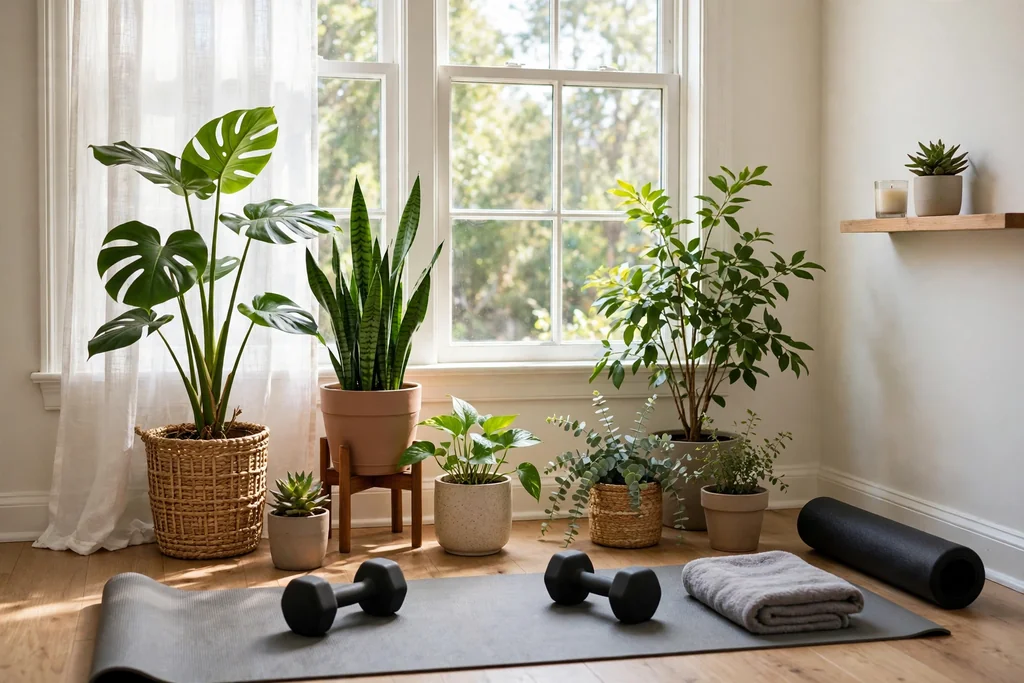
    Home gym corner with plants at different heights beside a bright window.

    Add plants and natural light to the gym corner, with a tall plant in one corner, a trailing plant on a shelf, and a small pot near the window. Plants soften hard equipment, clean up the look of a rubber floor, and make the room feel lived in rather than clinical.

    Match each plant to the light it will actually get, and use saucers under pots on wood floors. Keep plants clear of the swing path for kettlebells and the space around a treadmill, so leaves do not get knocked. Start with three or four hardy plants, and add more only once watering stays manageable.

    21. Workout Tracker on a Chalkboard or Whiteboard
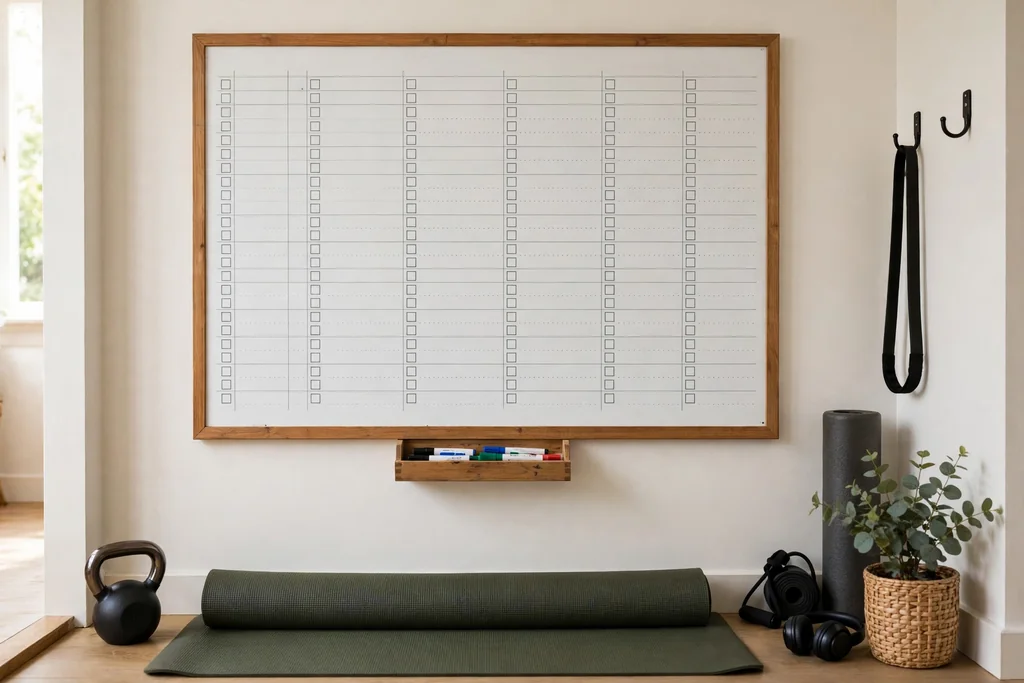
    Home gym wall with a whiteboard workout tracker and markers in a tray.

    Hang a chalkboard or whiteboard in the gym for tracking workouts, writing the week plan, and noting small wins. Seeing the plan on the wall removes the daily decision of what to do, and crossing off sessions gives a simple sense of progress.

    Keep the board at eye level near the main training spot, with markers or chalk in a small tray beneath it. Update it once a week, not daily, so it stays a plan rather than a chore. If several people share the gym, give each person a column, so plans do not get mixed up.

    22. Television or Tablet Workout Station
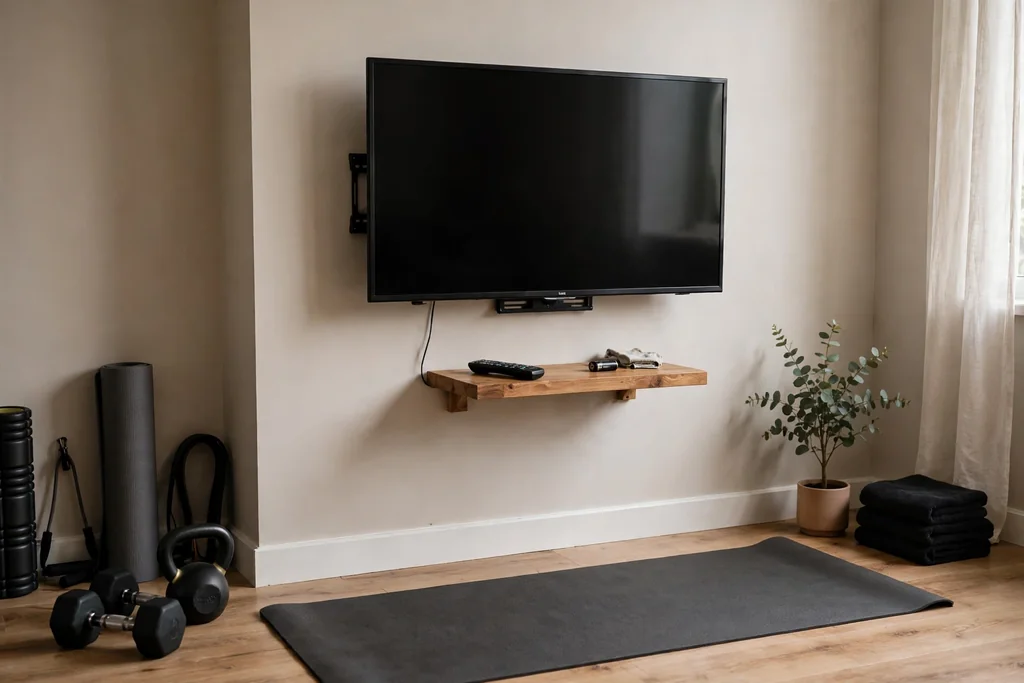
    Home gym with a television at eye level, a mat, and a small shelf.

    Mount a television or a tablet holder at eye level for follow along workouts, with a small shelf beneath it for a remote and a charger. A screen station suits cardio, dance, yoga, and guided strength sessions, and it gives a small gym a clear focal point beyond the equipment.

    Set the screen height so you can see it from a mat and from standing, and keep cables tidy with clips or a cable cover. Use a stand rather than a wall mount if you rent, and keep the volume at a level that suits others in the home. Store the tablet on the shelf after sessions, so it does not sit on the floor.

    23. Speaker and Music Corner
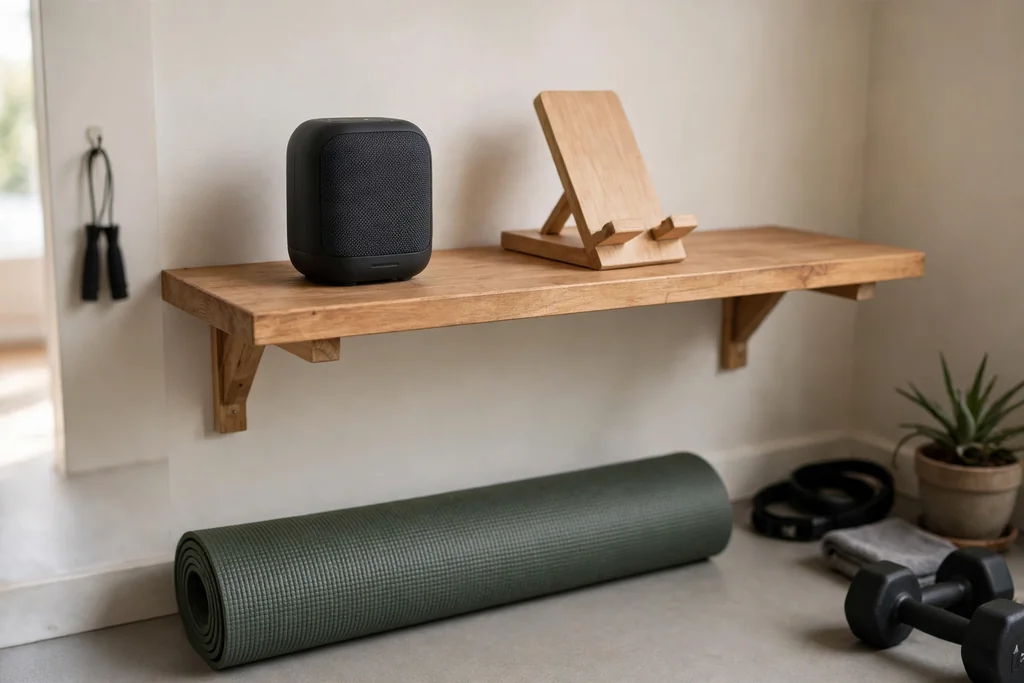
    Home gym shelf with a small speaker and a phone stand beside it.

    Place a small speaker on a shelf in the gym, with a phone stand nearby, so music or a podcast starts with one tap. Music helps many people start a workout on low energy days, and a dedicated speaker beats balancing a phone on a windowsill.

    Keep the speaker off the floor and away from sweat and water bottles, and keep the volume fair to others in the home, especially early in the morning. A small shelf at hand height works well, with a charger cable clipped beside it. If you share walls with neighbors, keep bass low and use headphones for late sessions.

    24. Recovery Corner with a Foam Roller
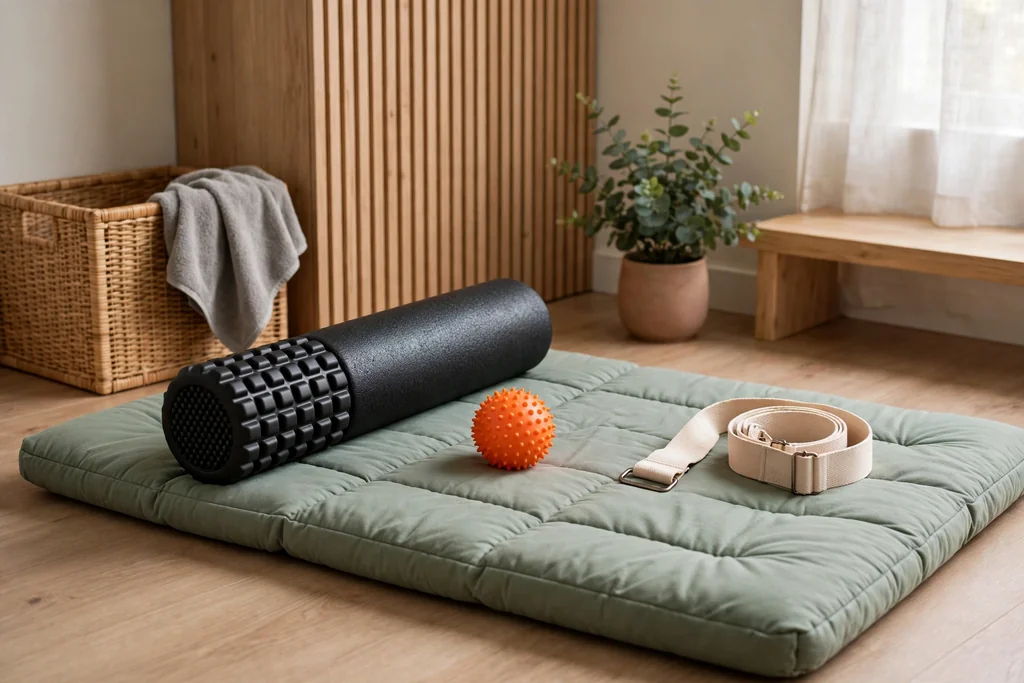
    Recovery corner with a foam roller, massage ball, strap, and soft mat.

    Make a recovery corner with a foam roller, a massage ball, a stretching strap, and a soft mat, placed where you can sit after training without moving furniture. Recovery gear is easy to skip when it lives in a closet, and a visible corner makes a five minute cool down part of the routine.

    Add a low stool or cushion to sit on, and keep the corner near a wall for supported stretches. Wipe rollers and balls after use, and replace a roller once it loses its shape. A small basket keeps the recovery tools together, so they do not drift around the room.

    25. Towel and Water Station
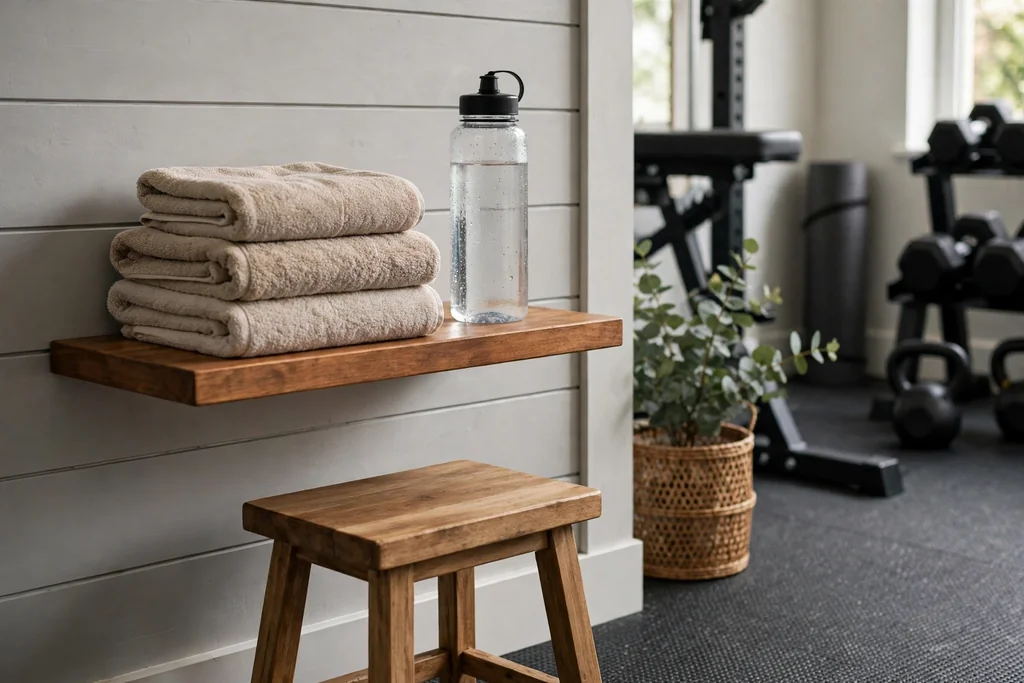
    Towel and water station with folded towels, a bottle, and a small stool.

    Set up a towel and water station on a small stool, shelf, or wall rail near the gym entrance, with clean towels folded, a bottle, and a small bin for used towels. A station stops mid workout trips to the bathroom, and it makes the gym feel cared for rather than improvised.

    Keep the station stocked once a week, with two towels per person if the gym is shared. Use a washable basket for used towels, and empty it after each training day. If space is tight, a single wall hook for a towel and a shelf for a bottle gives most of the same benefit.

    26. Shoe and Boot Tray by the Door
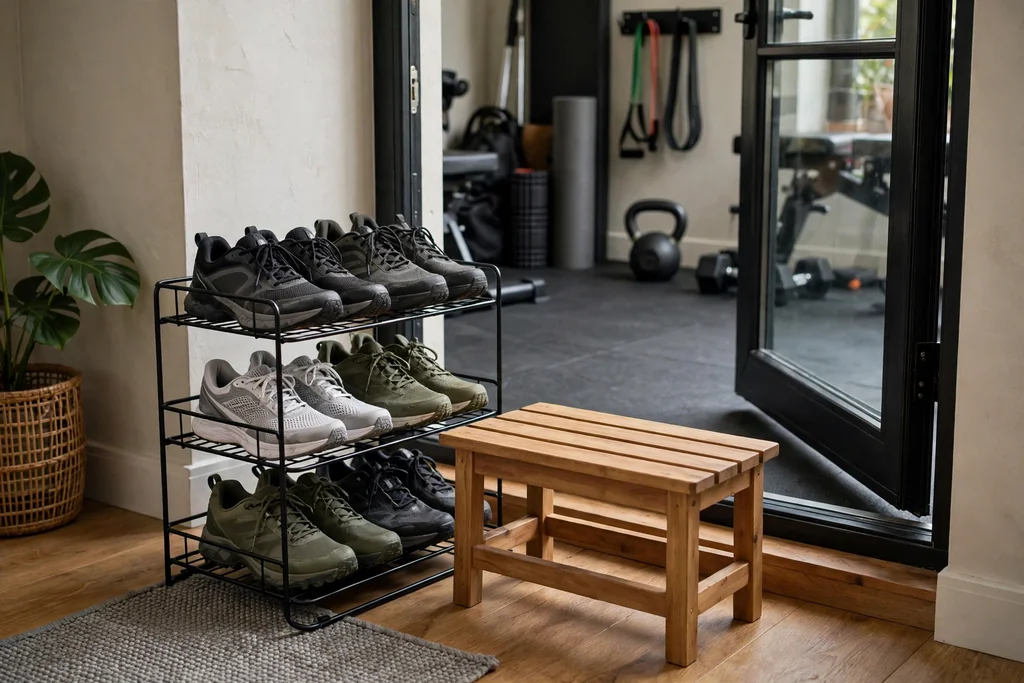
    Shoe tray by a gym door holding training shoes and a small bench.

    Place a shoe tray by the gym door for training shoes, so outdoor dirt stays out of the workout zone and shoes have one clear home. A tray also stops shoes from piling by the door, which is a common clutter point in garage and basement gyms.

    Choose a tray with a lip to catch mud and water, and wipe it weekly. Keep only training shoes on the tray, and store other shoes elsewhere, so the tray does not become general storage. If the gym shares an entry with the home, a small bench beside the tray gives a place to sit while changing shoes.

    27. Family Friendly Shared Gym Corner
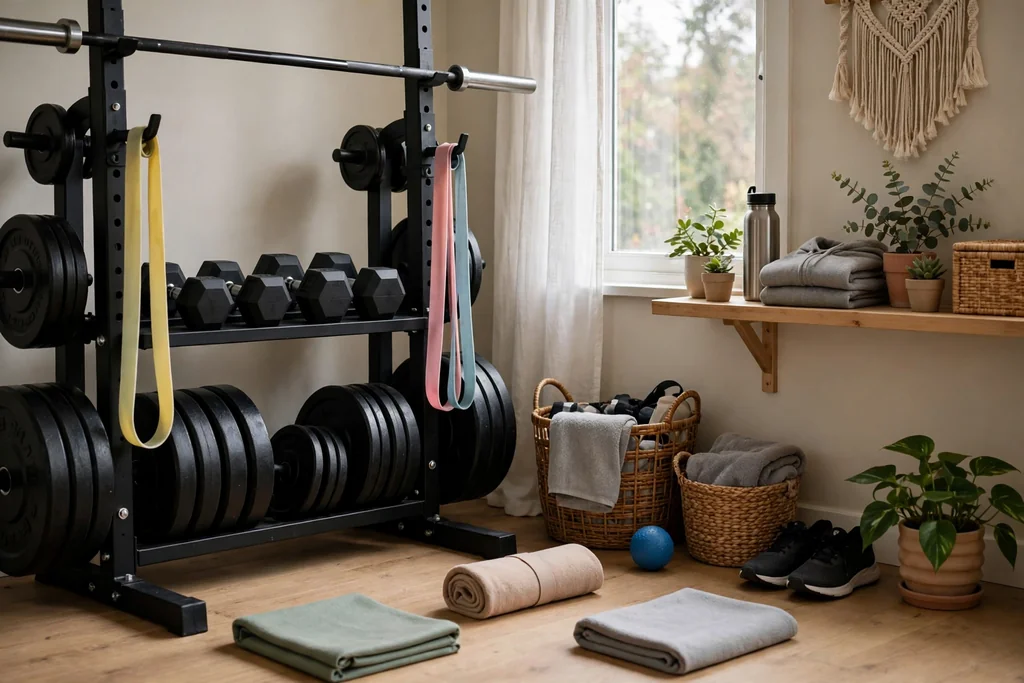
    Shared family gym corner with a rack, light bands, and small mats.

    Build a shared gym corner that works for the whole household, with adult gear on a rack, lighter bands and a small mat for younger users, and clear rules about tidying up. A shared corner works when each person has a basket or shelf, so gear does not mix and small items do not go missing.

    Keep heavy weights out of reach of small children, and store them on a low rack with plates secured. Add a simple wall chart for shared sessions, such as family stretching on weekends, so the gym feels like a shared room rather than one person’s project. Tidy the corner together after shared sessions, so it stays welcoming for the next person.

    28. Renter Friendly No Drill Setup
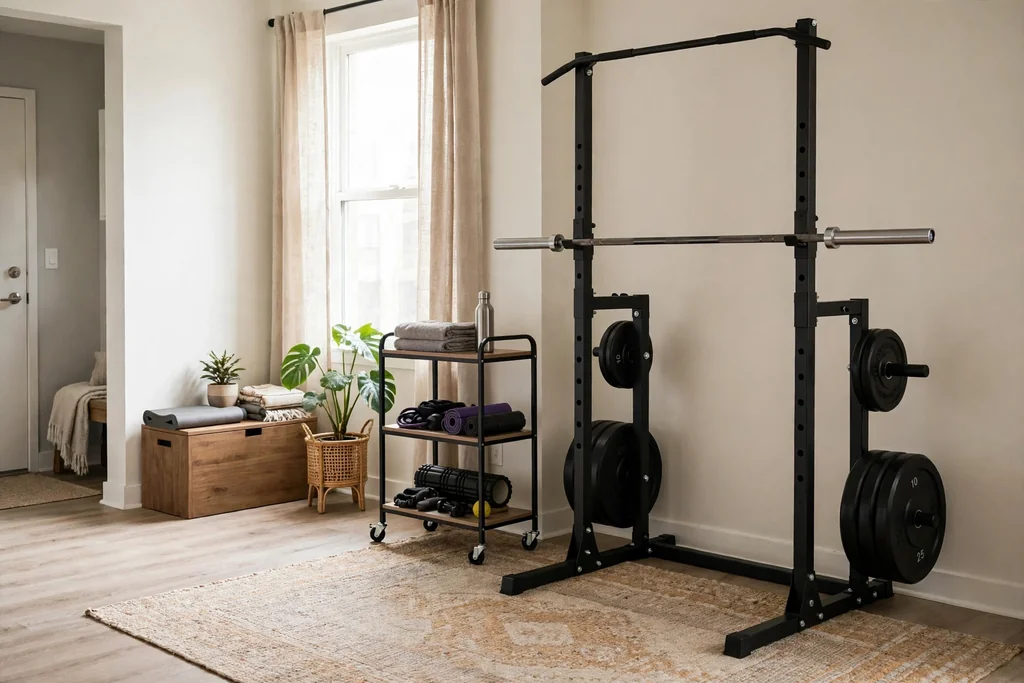
    Renter friendly gym with freestanding rack, rolling cart, and rug.

    Build a renter friendly gym with no drilling at all: a freestanding rack, a doorway pull up bar, a rolling cart, baskets, and a rug, all of which move with you. Renters often skip a home gym because they assume it needs fixed equipment, but most daily training needs no wall fixing.

    Use removable hooks for bands and towels, and lean a mirror securely against the wall instead of hanging it. Keep the old room layout in mind, so the gym packs into a few boxes at moving time. Check your lease before any fixing, and keep receipts for freestanding gear, so the setup stays simple to move.

    29. Budget Starter Kit on One Shelf
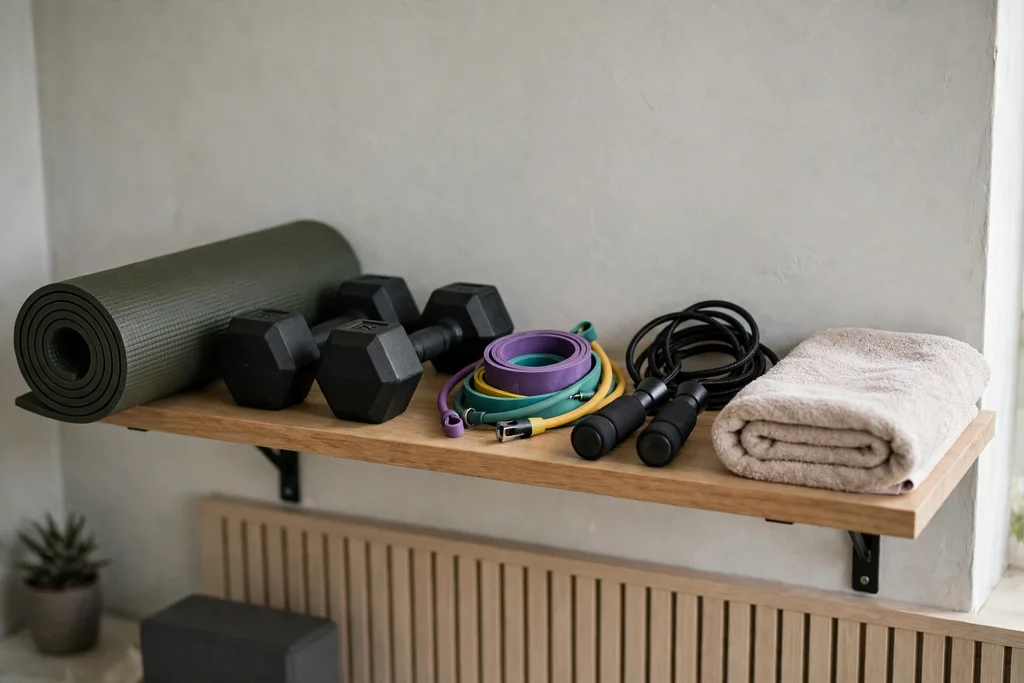
    Single shelf with a mat, dumbbells, bands, a skipping rope, and a towel.

    Start with a budget starter kit on one shelf: a mat, two sets of dumbbells, a set of bands, a skipping rope, and a towel. One shelf of gear covers strength, cardio, and stretching, and it lets you learn what you enjoy before spending on larger machines.

    Buy the mat first, since floor comfort affects every session, then add weights in pairs as you progress. Keep the shelf near the training spot, not in a distant closet, so setup takes seconds. Review the kit after a month, and add only the item that would remove a real limit in your current routine.

    30. Morning Light Workout Nook
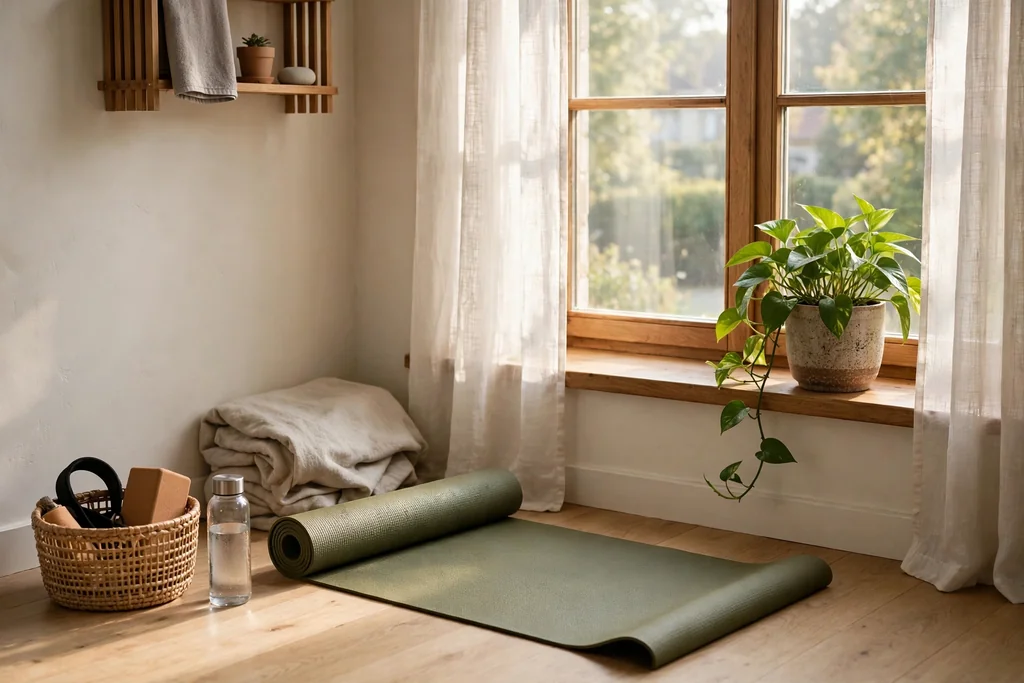
    Morning light workout nook beside a bright window with a mat and plant.

    Place the workout nook where morning light lands, such as beside an east facing window, so early sessions feel bright and alert. Morning light helps many people wake up, and a bright nook is more inviting at 6 am than a dark basement corner.

    Keep the window clear of tall equipment, so light reaches the mat, and use a light curtain for privacy rather than a heavy blind that blocks daylight. In winter, add a bright lamp on a timer near the nook, so the space still feels bright on dark mornings. A plant on the windowsill adds green to the first view of the day.

    31. Evening Wind Down Stretching Space
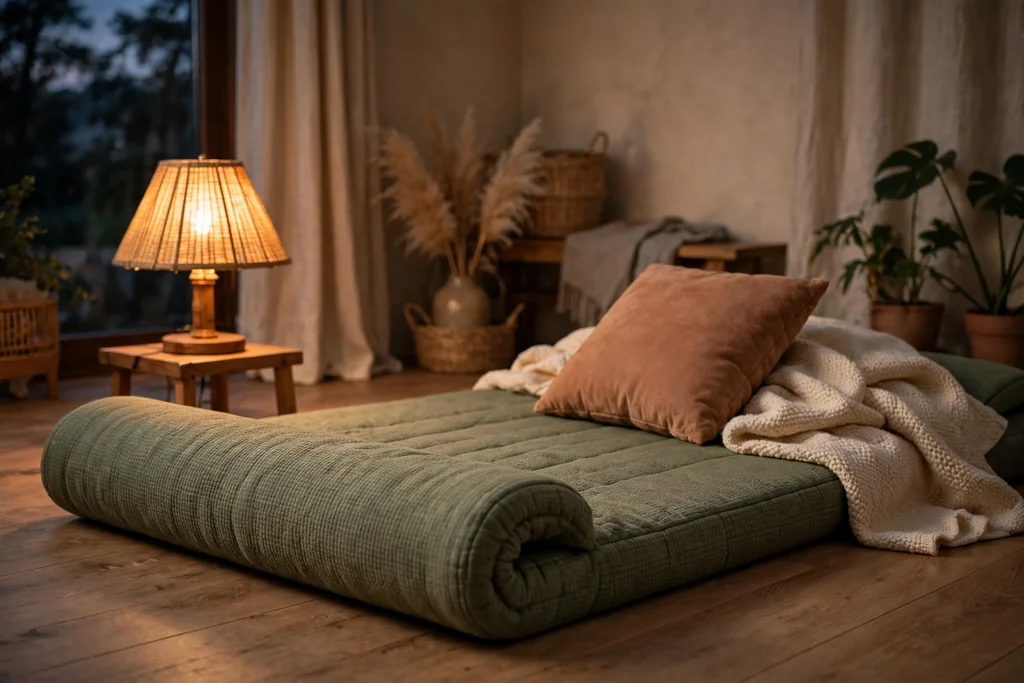
    Evening stretching space with a soft lamp, thick mat, blanket, and cushion.

    Make an evening stretching space with a soft lamp, a thick mat, a blanket, and a cushion, for gentle movement after work. Evening sessions work best when the light is low and the pace is slow, which is the opposite of a bright morning cardio corner, so keep the two moods separate if you can.

    Use the same corner as the morning nook if space is tight, and change the mood with a lamp and a blanket rather than moving furniture. Keep screens off during evening stretching, or dim them, so the body winds down. A short ten minute routine done often beats a long routine done rarely.

    32. Balcony or Patio Extension for Fresh Air
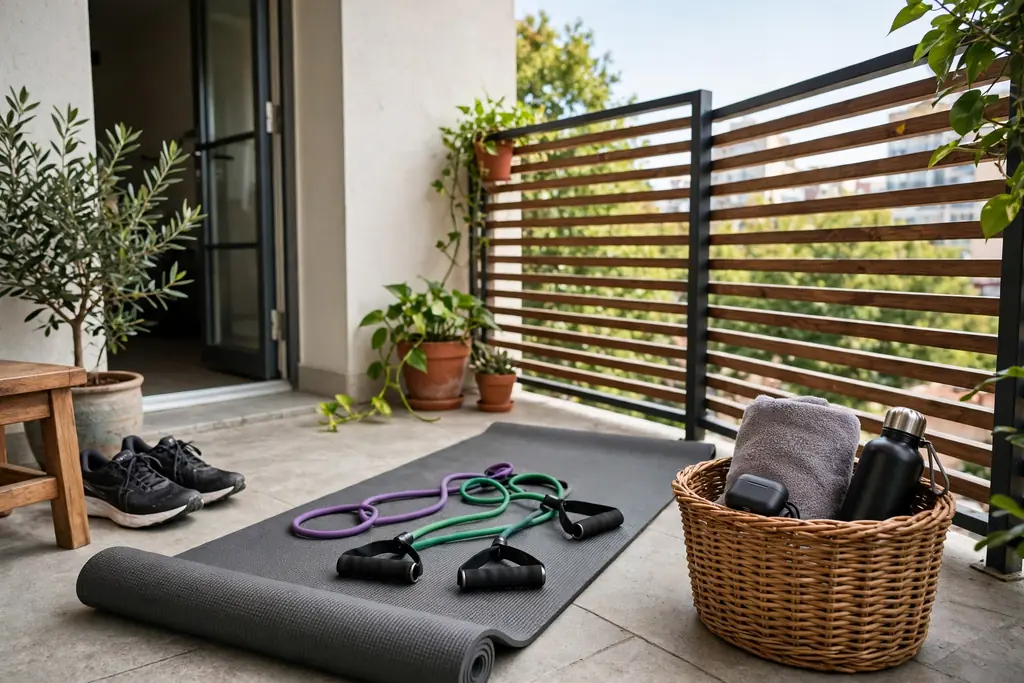
    Balcony workout spot with a mat, bands, and a basket in fresh air.

    Extend the gym to a balcony or patio in good weather, with a mat, bands, and a bottle carried out in a basket, so workouts get fresh air without a permanent outdoor setup. Outdoor sessions suit yoga, bodyweight work, and stretching, and they break the routine of training in the same room daily.

    Keep outdoor gear simple and portable, and bring it back inside after each session, since rain and sun damage mats and bands. Check the balcony floor for grip, and avoid heavy weights outdoors unless the surface suits them. A small outdoor rug marks the spot and keeps feet off hot or cold paving.

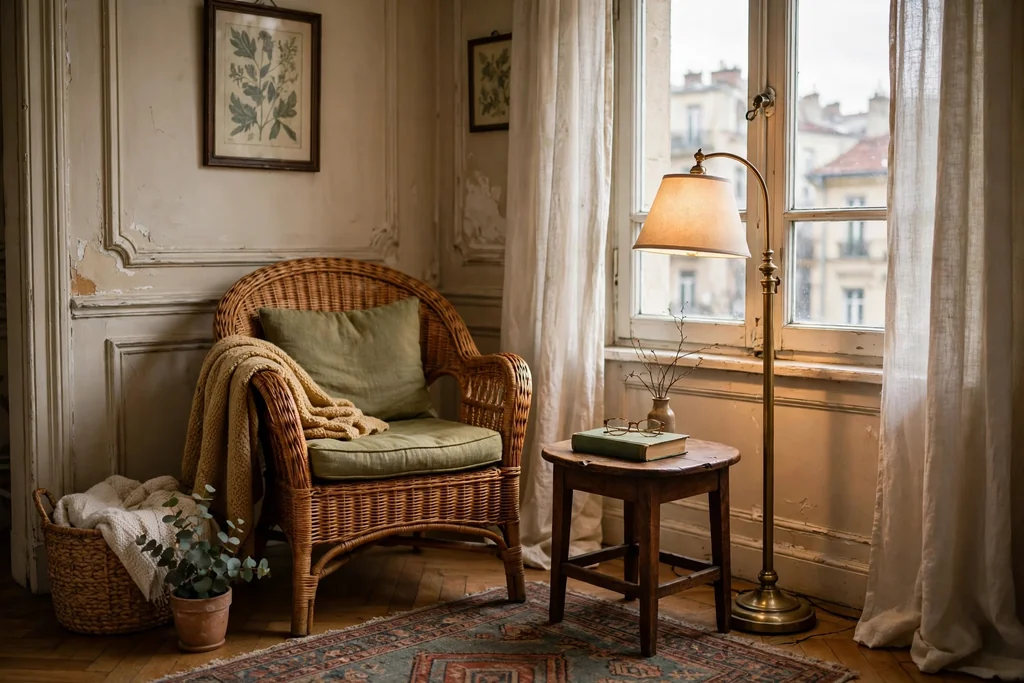
    33. Lived-In Finish with a Chair, Throw, and Prints
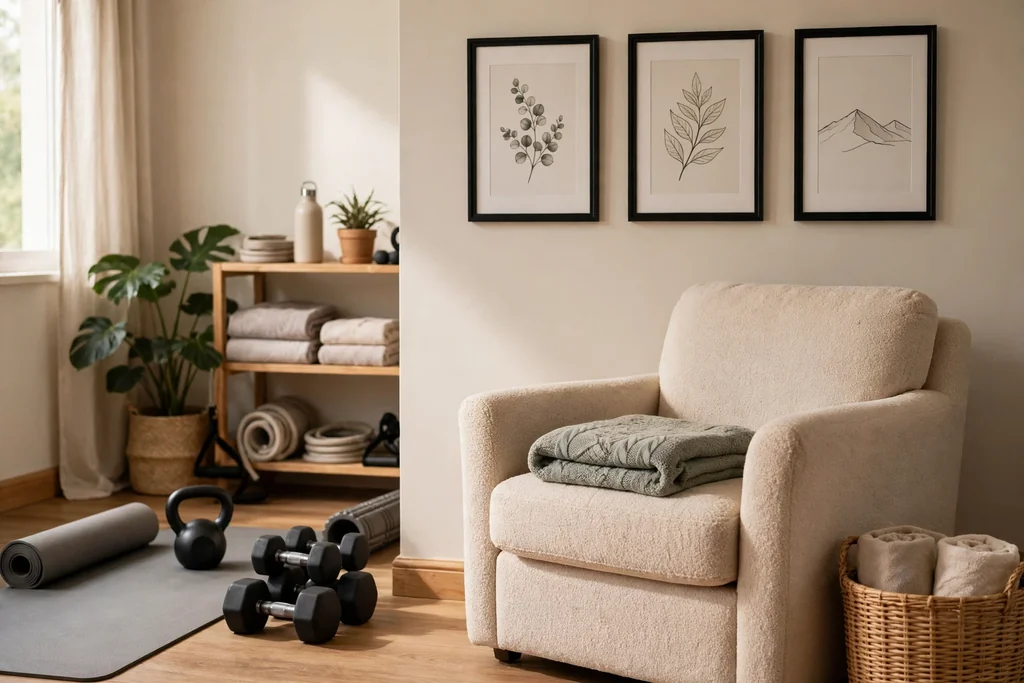
    Home gym with a comfortable chair, folded throw, basket, and framed prints.

    Finish the gym with lived-in touches: a comfortable chair for resting between sets, a throw folded over it, a basket for magazines or a book, and framed prints on the wall. These touches turn a bare equipment room into a room you enjoy being in, which is the point of a home gym.

    Choose a chair with a washable cover, since gym rooms collect sweat and dust, and keep the throw in a basket when you train, so it stays clean. Hang prints at eye level, away from swing paths and sweat zones. The goal is a room that looks used and loved, not a showroom: a book left open, a plant watered, a towel folded ready for tomorrow.

    Conclusion

    A welcoming home gym is not about owning the most equipment. It is about one clear zone, gear you actually use, storage that keeps the room calm, and warm touches that make you want to step in. Start with a rug and a mat, add the equipment for the training you enjoy, and finish with light, plants, and a place to sit and recover. Work through this list in order: zone first, then equipment, then storage, then comfort, and adjust after a week of real use. For small rooms, the zoning and storage ideas in these studio apartment decorating ideas and bedroom storage ideas pair well with the gym corners above.

    Keep this list handy for your next free hour at home, and build your gym one corner at a time: a mat today, a rack this weekend, and a chair and a plant to finish the room.

    FAQs

    How much space do I need for a home gym?

    Most people need only a mat sized area to start, roughly enough room to lie down with arms out and stand with a step in each direction. A corner with a mat, a rack, and a basket covers strength, stretching, and band work. Larger machines need their own footprint plus safe space around them, so measure the machine and the clearance the maker advises before buying. Start small, and add machines only when you have a clear spot for them.

    What is the best home gym setup for a small apartment?

    Use a corner zone with a mat, bands, a set of dumbbells, and a doorway pull up bar, all stored on a rolling cart or in baskets. Fold away and freestanding gear suits apartments better than fixed racks, since the floor stays free for the rest of the day. A curtain or an open shelf can mark the gym zone without blocking light, and a mirror on one wall helps with form in a tight space.

    How do I make a home gym feel welcoming instead of bare?

    Add warm materials and everyday comforts: a wood bench, a natural rug, plants, a soft lamp for stretching, and a chair with a throw. Keep small gear in baskets and closed storage, so only daily items stay visible, and hang a print or two at eye level. A towel and water station, plus a place to sit and recover, makes the room feel cared for, which is what brings you back daily.

    How can renters build a home gym without drilling?

    Choose freestanding and portable gear: a freestanding rack, a doorway pull up bar, a rolling cart, baskets, and a rug. Use removable hooks for bands and towels, and lean a mirror securely against the wall rather than hanging it. Check your lease before any fixing, and keep the setup to pieces that pack into a few boxes, so moving stays simple.

    What home gym equipment should beginners buy first?

    Start with a good mat, a set of light dumbbells, a set of resistance bands, and a towel. That kit covers strength, stretching, and light cardio, and it fits on one shelf. Add a foam roller next for recovery, then a bench or a kettlebell once you know which training you enjoy most. Avoid buying a large machine first, since it takes the most space and money before you know if you will use it daily.

    How do I keep a home gym tidy when it shares a room?

    Give every item a home: a rack for weights, baskets for small gear, a cart for daily items, and a tray for shoes. Put gear back after each session, and keep a weekly ten minute reset to return anything that drifted out of place. Close a curtain or fold away the mat if the room serves guests, and keep only daily items visible, so the shared room still feels like home.
  • 29 Grunge Room Ideas to Make Small Spaces Work Harder

    29 Grunge Room Ideas to Make Small Spaces Work Harder

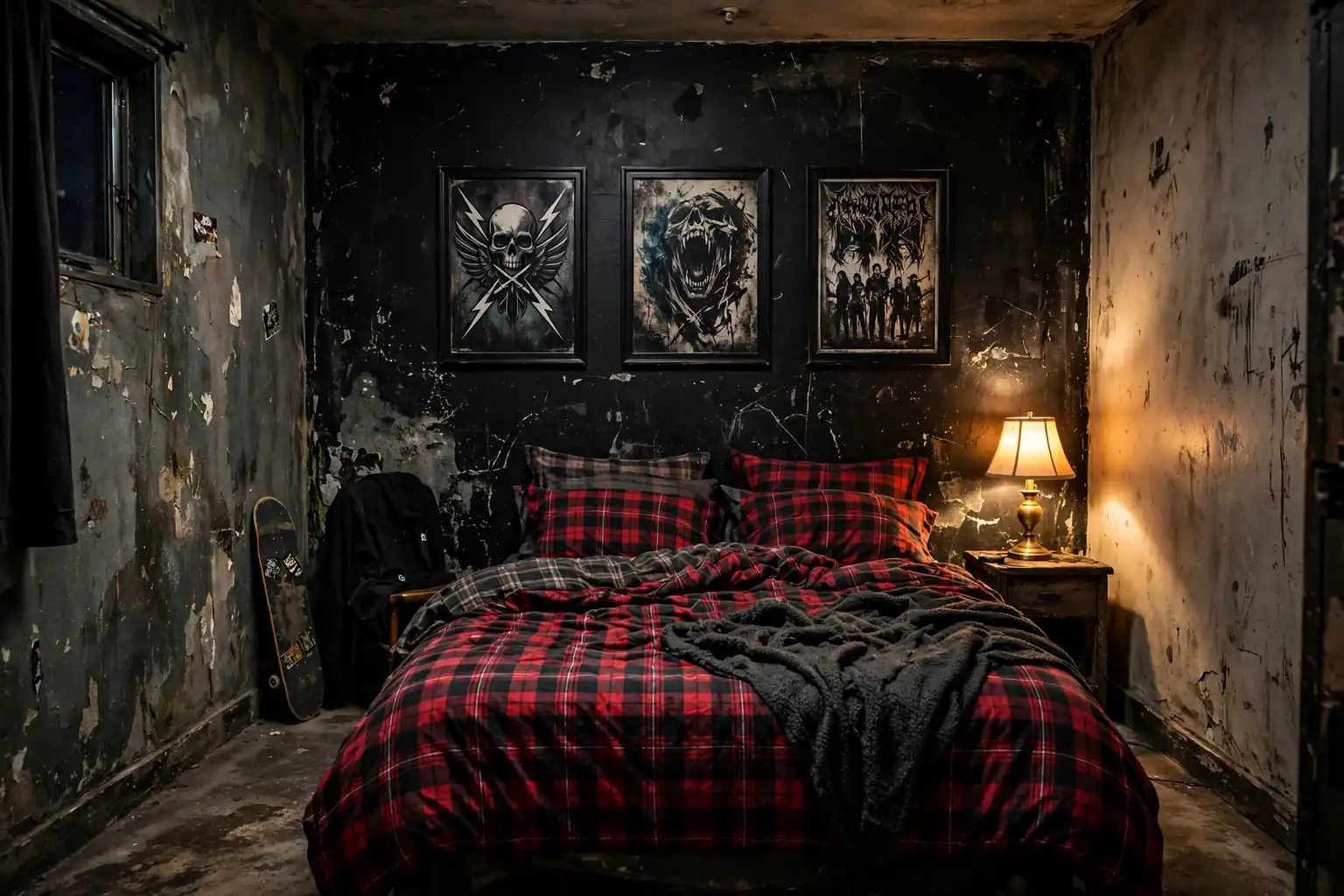
    Grunge style suits a small room because it is built from layers, not from large furniture or a full remodel. Black and charcoal, plaid, denim, worn leather, and band art give a plain rental room a clear identity, and most pieces here are thrifted, movable, or removable. To avoid clutter, each idea below does two jobs where it can: a crate that stores records and serves as a table, or a rug that zones the room and hides a tired floor. These 29 ideas cover walls, bedding, storage, seating, light, and small weekend details. Pick one strong wall, one dark base, and one music detail to start.

    Key Takeaways

    • Start with one dark base, such as a black accent wall or charcoal bedding, and keep the other walls pale so a small room still feels open.
    • Let one or two music details lead, such as posters or vinyl, and repeat black, plaid, and metal in small doses rather than on every surface.
    • Choose pieces that do two jobs in a small room: crates for storage and seating, a trunk for a table and a box, and shelves that display and store.
    • Thrift first for leather, denim, wood, and frames, since worn materials carry the grunge look better than new matching sets.
    • Keep walkways, the bed, and the desk clear, and use wall space, doors, and under-bed space for storage instead of the floor.
    • Use warm, layered light at night so a dark room feels cozy rather than gloomy, and keep one bright light for reading and work.

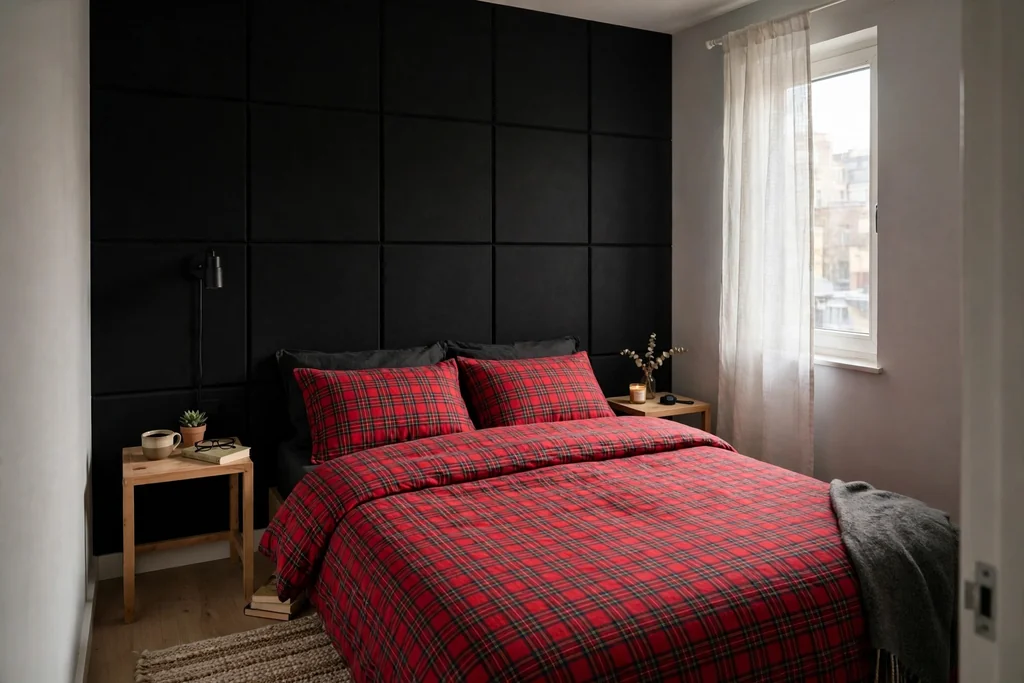
    1. Matte Black Peel-and-Stick Accent Wall

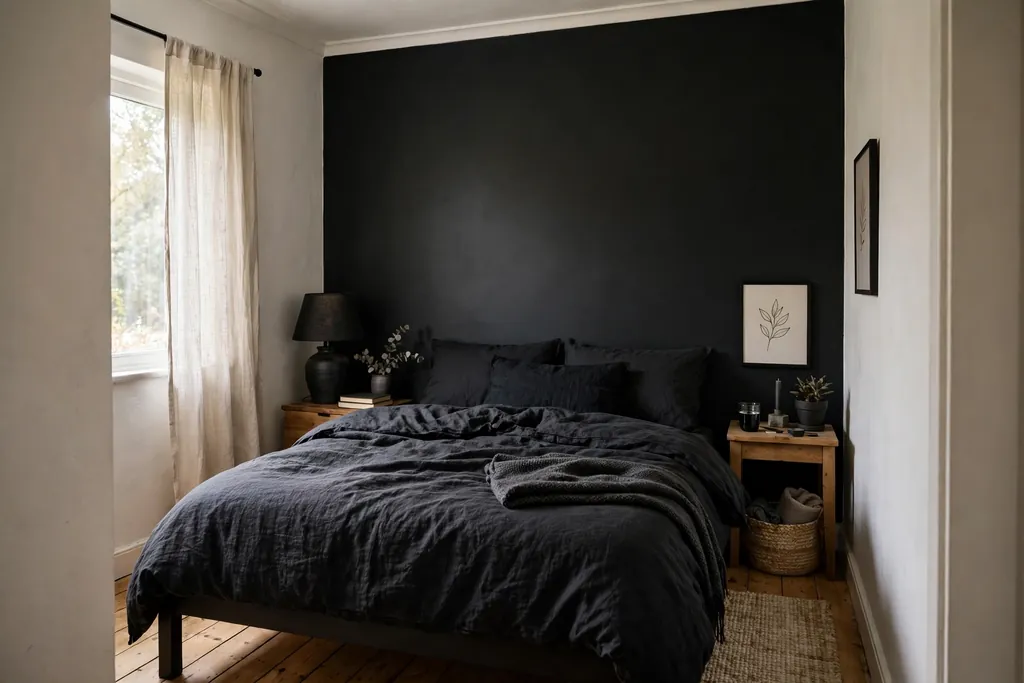
    Small bedroom with a matte black accent wall behind a bed with dark bedding.

    Cover one wall with matte black peel-and-stick panels for a dark grunge base you can remove later. One wall is enough in a small room: black behind a bed or a sofa adds depth and makes posters and records stand out, while pale walls on the other sides keep the room from closing in. This suits renters, since the panels come off when you move if you follow the maker removal steps.

    Test one panel first on your wall type, and avoid damaged paint or heavy texture where removal is harder. Keep bedding and large furniture plain black, charcoal, or wood so the wall reads as a feature, not as part of a dark pile. If a full wall feels too dark, panel only the wall behind the bed, and add a warm lamp nearby for evening balance.

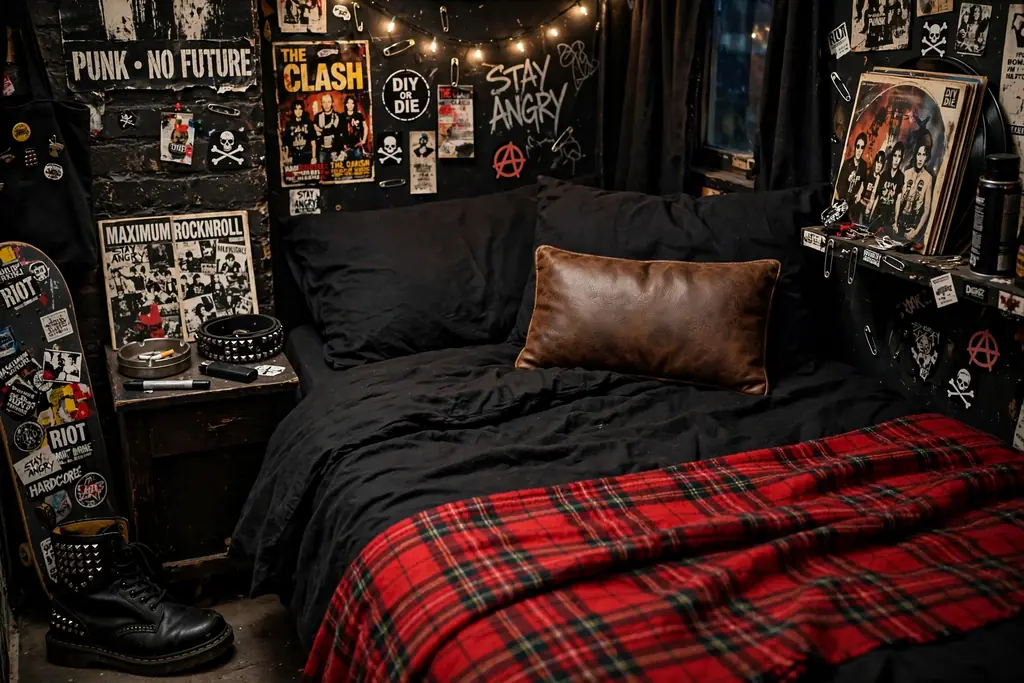
    2. Charcoal and Plaid Layered Bedding

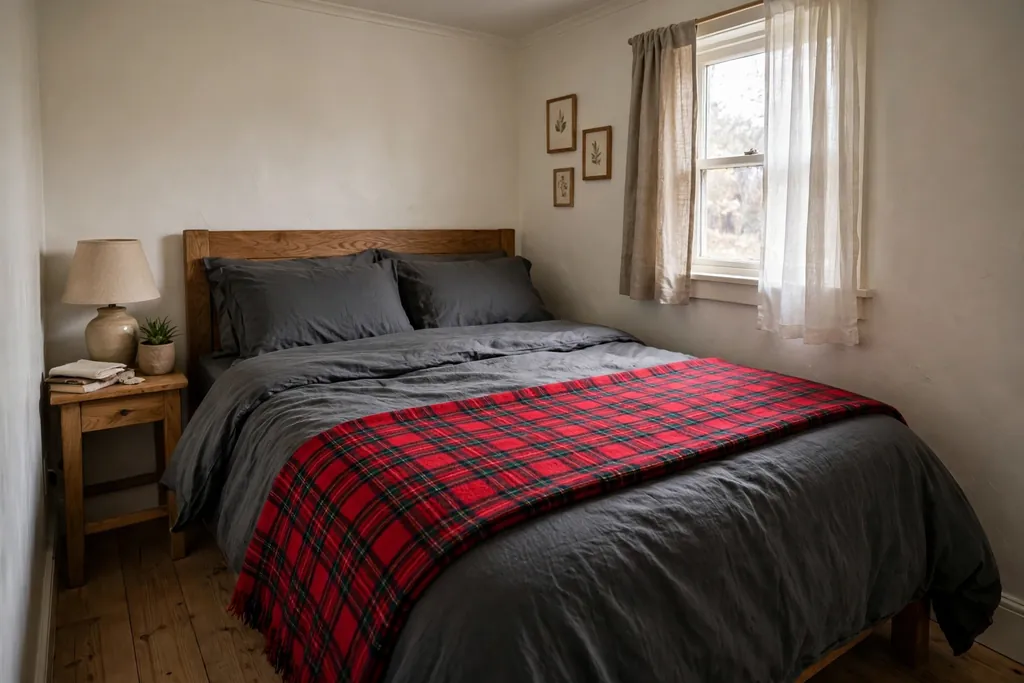
    Bed with charcoal sheets and a red plaid throw folded across the foot.

    Start with plain black or charcoal sheets, then add a plaid duvet cover or a plaid throw folded across the foot of the bed. The mix of a dark base and a strong plaid pattern gives the bed a grunge identity at once, and every layer can move to a chair or sofa when you need a change. This works in a bedroom and in a studio where the bed stays in view all day.

    Keep the palette tight, with black, charcoal, and one plaid in red or green, so the bed does not turn into a costume. Wash plaid throws separately the first time, since strong red dyes can run onto pale sheets. A plain black bed frame or a simple headboard panel lets the bedding carry the pattern, and it keeps a small room calm.

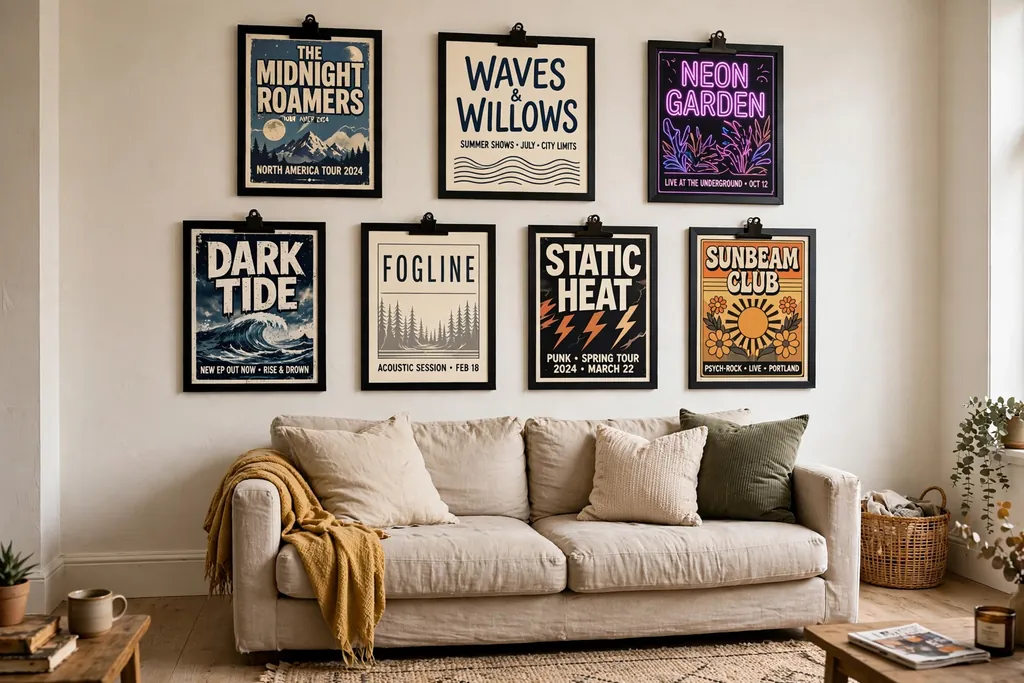
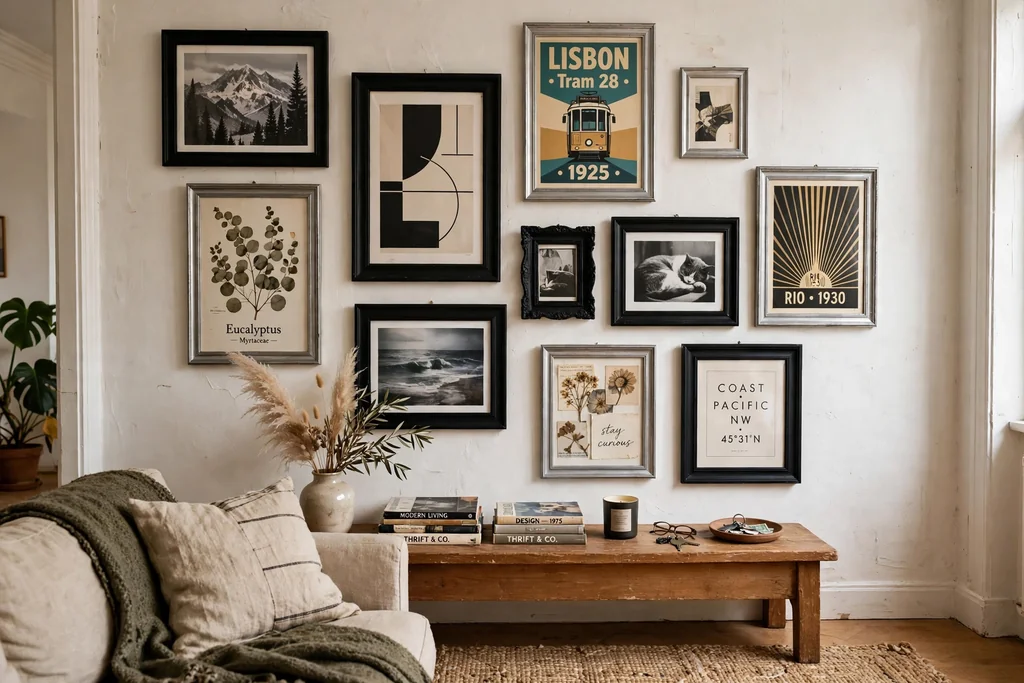
    3. Band Poster Gallery in Clip Frames

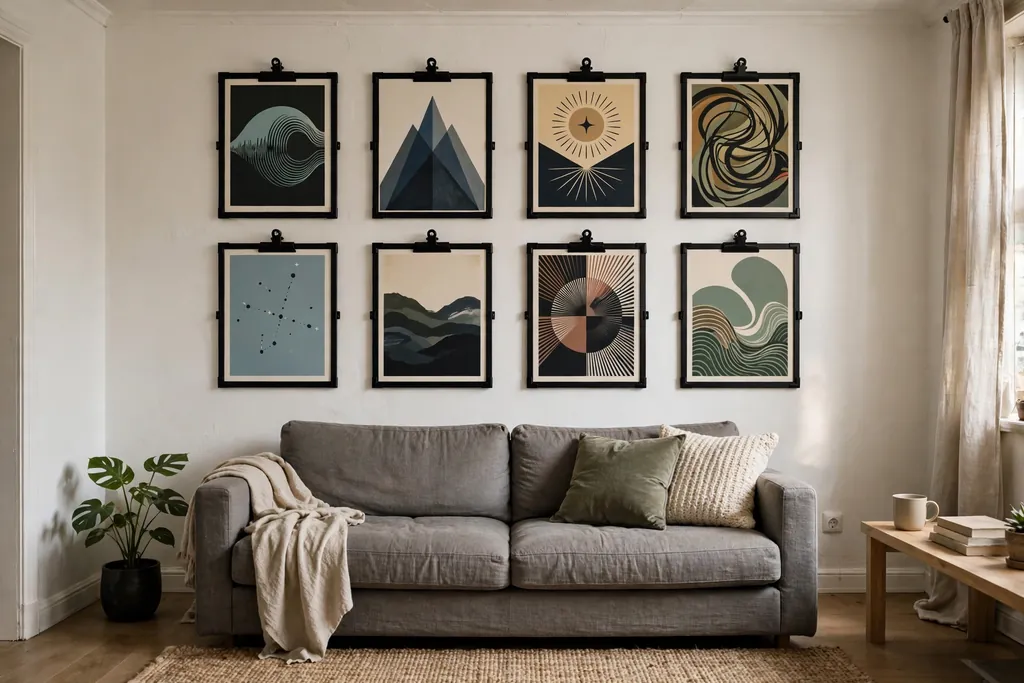
    Band posters in black clip frames arranged as a gallery wall above a sofa.

    Build a poster gallery wall with clip frames or magnetic poster hangers, so posters stay flat, protected, and easy to swap. Use removable adhesive strips rated for the frame weight, and mix band posters, gig flyers, and one large graphic print with even spacing, so the wall looks deliberate rather than pasted up in a hurry. For more bold small room wall ideas in the same spirit, see these punk apartment ideas.

    Start with posters you already love instead of buying a matching set, since a wall built from real gigs and favorite records tells your own story. Leave one gap in the arrangement on purpose, so you have a slot for the next poster and the wall does not feel finished and frozen. Keep the rest of the room plain where the gallery sits, so the posters stay the focus.

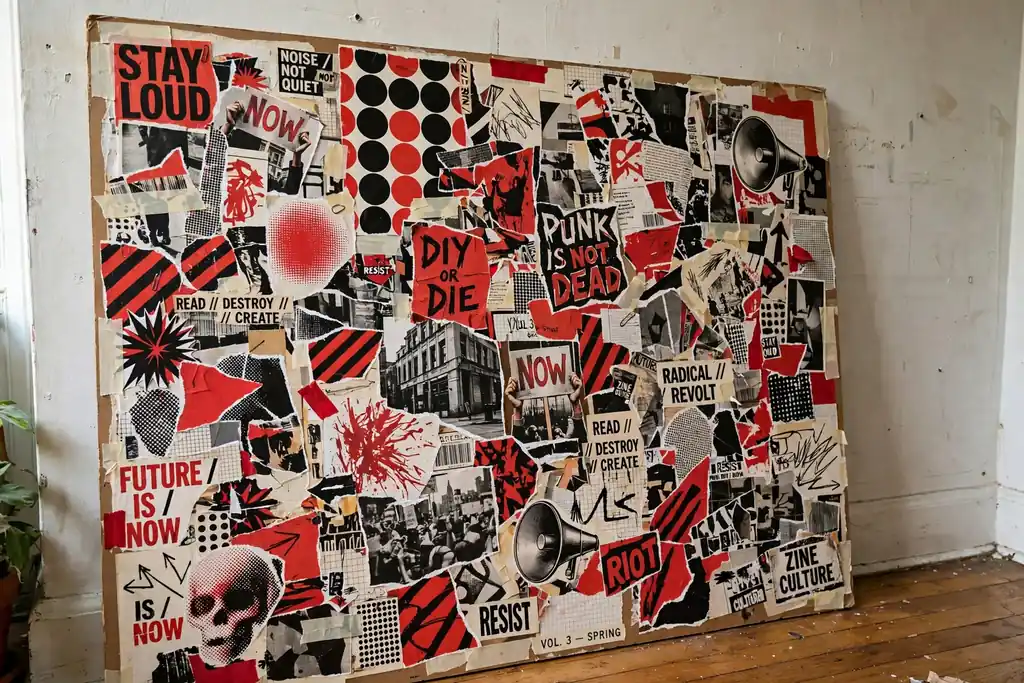
    4. Cut-and-Paste Zine Collage Board

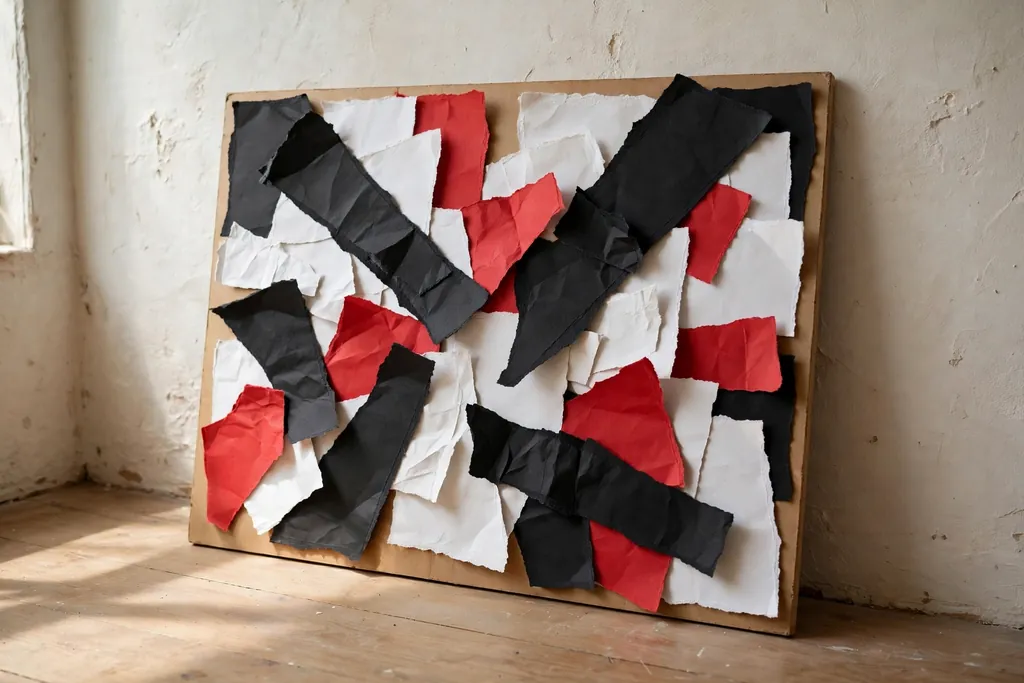
    Cut-and-paste collage board with torn black, white, and red pages leaning against a wall.

    Make a cut-and-paste collage on a large board instead of directly on the wall, which keeps it fully removable. Cover a foam board or plywood panel with torn pages from old magazines, zines, flyers, and photocopied lyrics, then seal it with a clear matte finish so the edges stay down. Lean the board against the wall or hang it from two removable hooks, and you have wall art with real texture and no damage to the plaster behind it.

    Keep the palette tight so the collage reads as one artwork instead of loose paper: black, white, red, and one metallic shade will pull even a wild mix together. Add hand-lettered words or short slogans in marker for the classic zine feel, and leave a few torn edges visible, since a neat, trimmed collage loses the energy that makes this idea work.

    5. Vinyl Sleeves on Picture Ledges

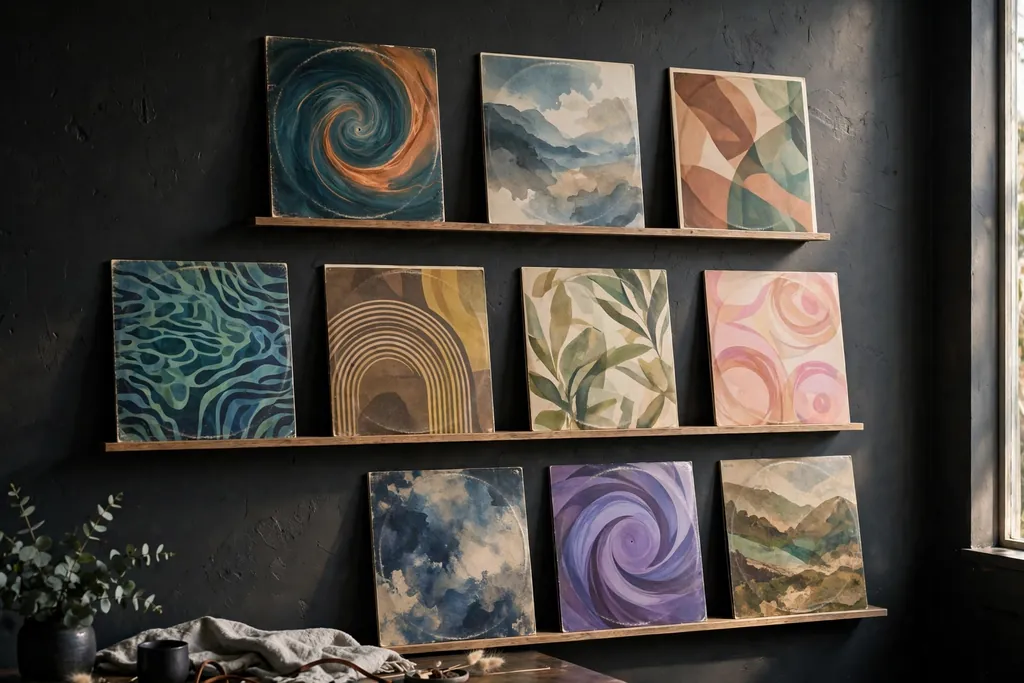
    Vinyl record sleeves displayed upright on slim picture ledges on a dark wall.

    Fix two or three slim picture ledges to one wall and stand favorite vinyl sleeves along them with the artwork facing out. Ledges show records off without a single nail through a sleeve, and you can rotate the front row whenever a new record arrives. This suits a small room because the display uses wall space, not floor space, and it turns a collection you already own into decor.

    Keep the ledges level and leave a little space at each end so the row does not look crammed. Store the records themselves in sleeves on a shelf nearby so the displayed covers stay clean. A small clip-on light above the top ledge turns the display into an evening feature without any wiring work.

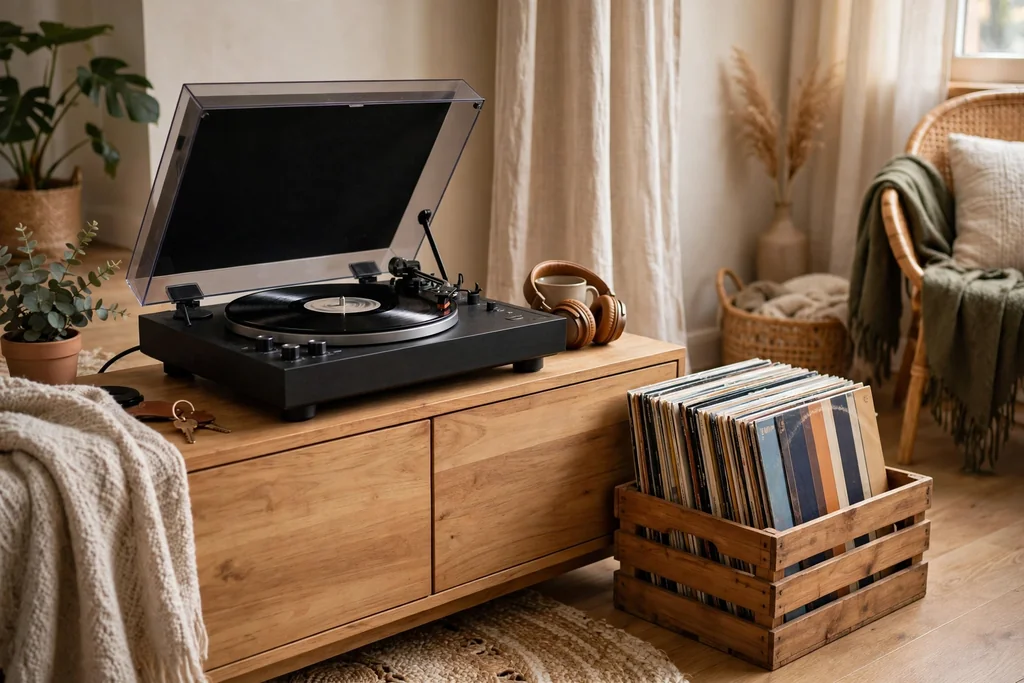
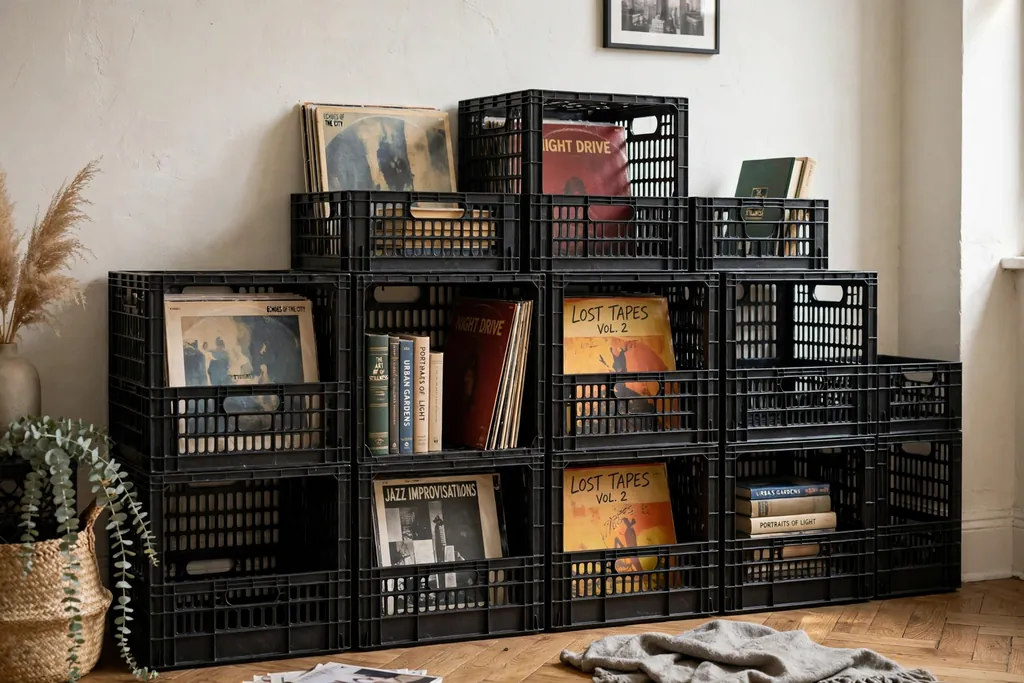
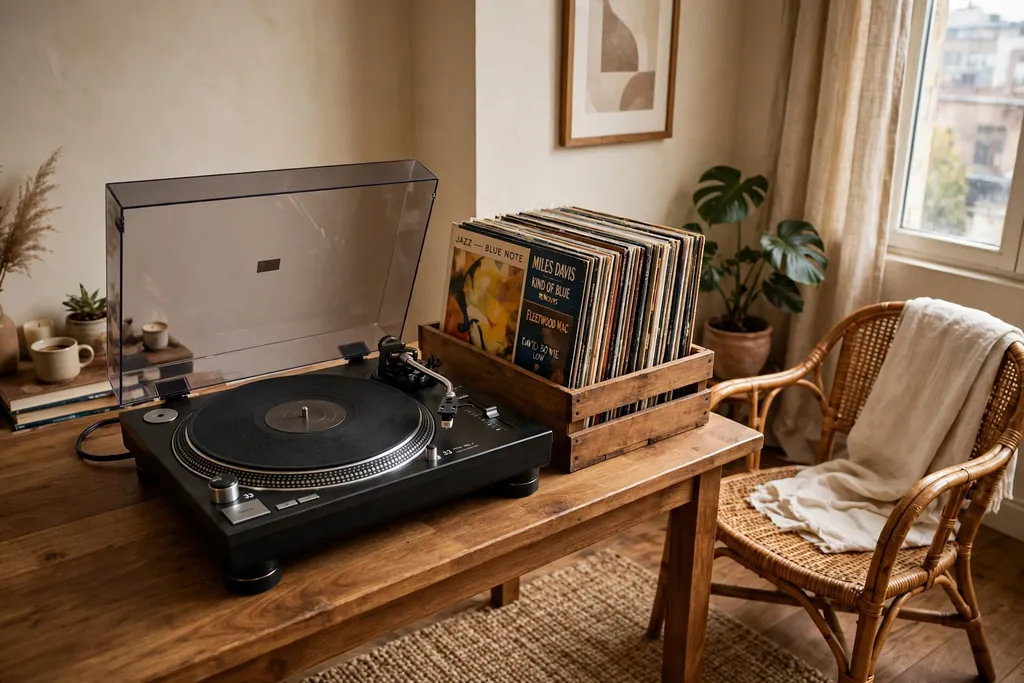
    6. Crate Record Storage That Doubles as a Side Table

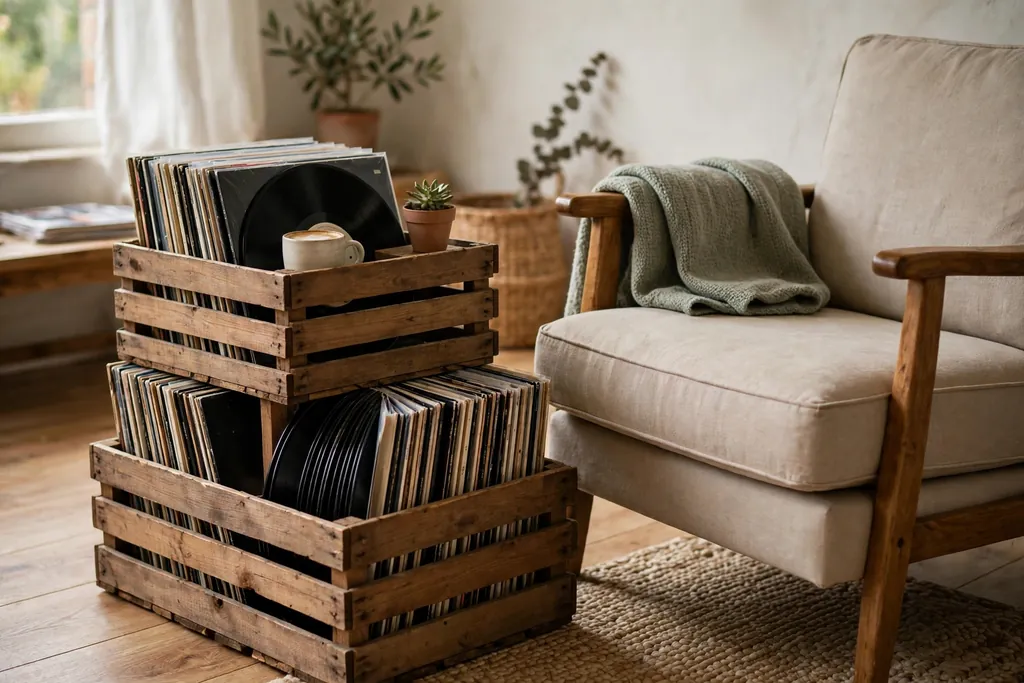
    Wooden crates holding vinyl records upright beside a chair, used as a side table.

    Stack two sturdy crates, or set one crate on short legs, to store vinyl upright and serve as a side table beside a chair or bed. Records stay easy to flip through when they stand upright, and the crate top holds a lamp, a drink, or a book. This is a strong small space move, since one piece does storage and surface work at once.

    Choose crates that fit your record size with a little room to spare, and keep heavier crates low so the stack stays stable. Label the front of each crate by genre or mood if you have a large collection, so you can find a record without pulling the whole stack apart. Sand rough crate edges first, so sleeves do not snag.

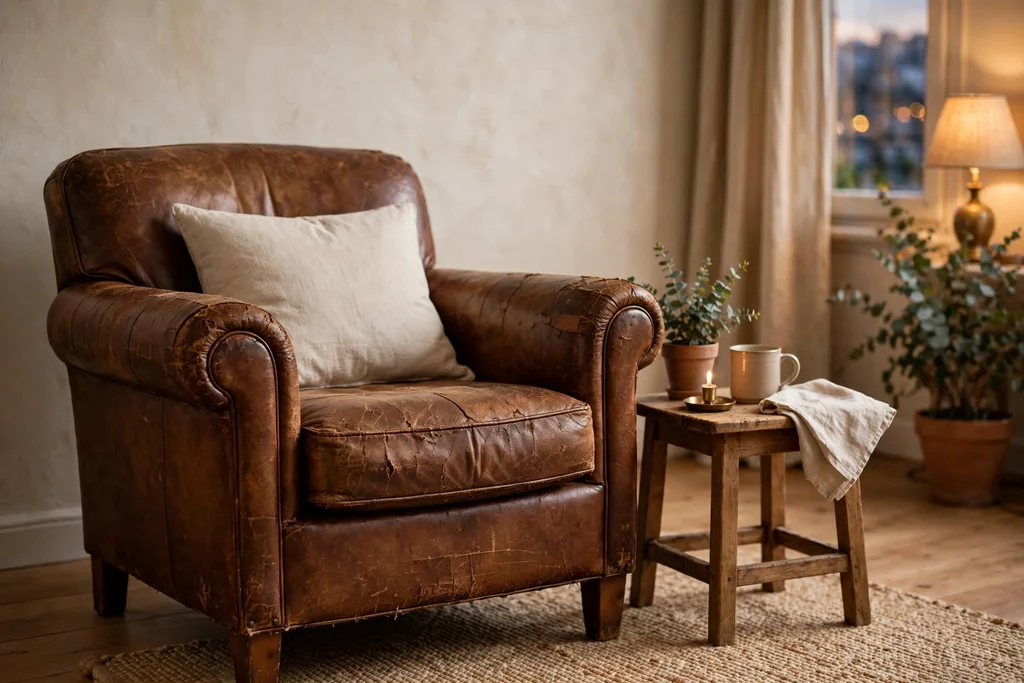
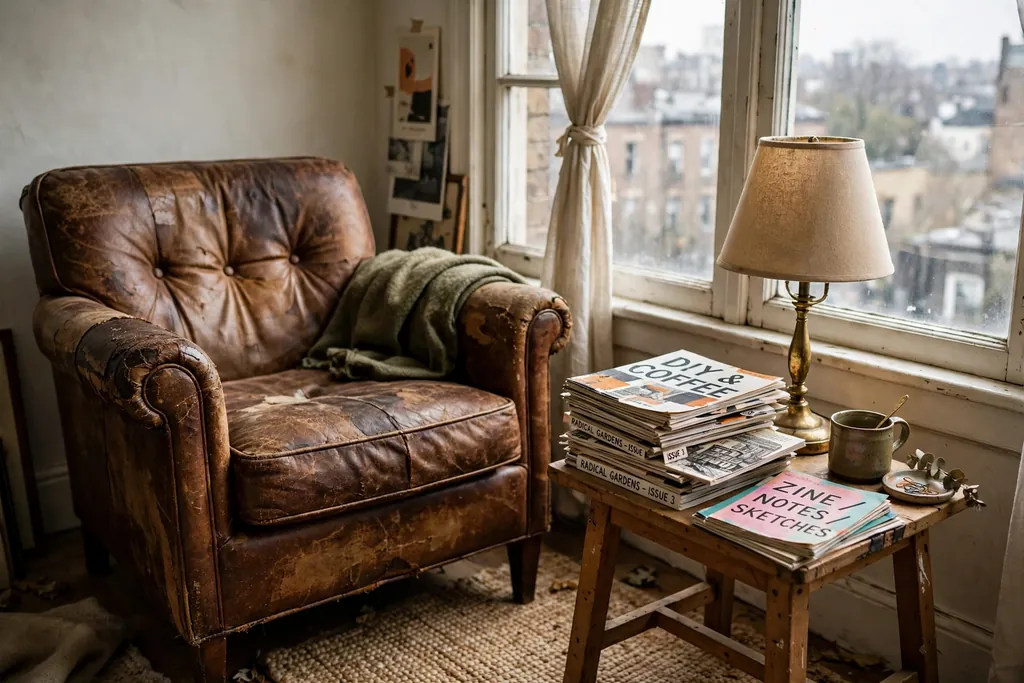
    7. Thrifted Leather Chair in a Corner

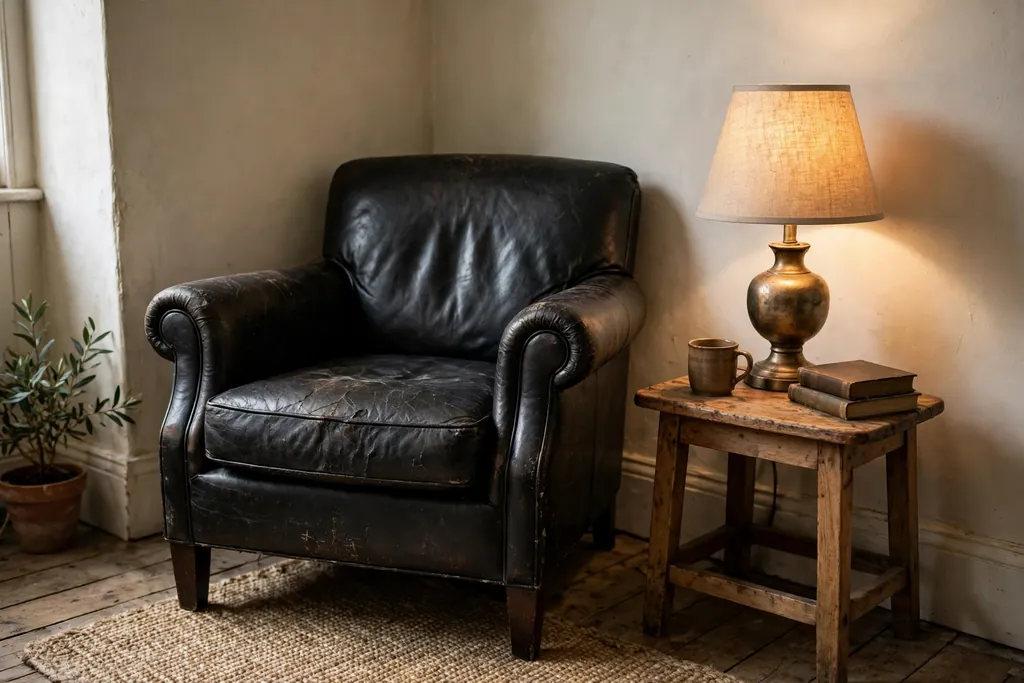
    Worn black leather chair in a corner with a small side table and a lamp.

    Place one thrifted leather or leather-look chair in a corner for seating that carries grunge character on its own. Worn leather, scuffs, and a simple shape suit the look far better than a new matching set, and a single chair fits where a sofa would crowd a small room. Pair it with a small side table and a lamp, and the corner becomes a reading or listening spot.

    Check thrifted chairs for a solid frame and springs before you buy, and clean the leather with a cloth and a cleaner made for that material. Keep the chair cover plain, and add one plaid or denim cushion rather than a full themed set. If the chair is dark, add a pale cushion or a light rug nearby so the corner does not read as a black hole.

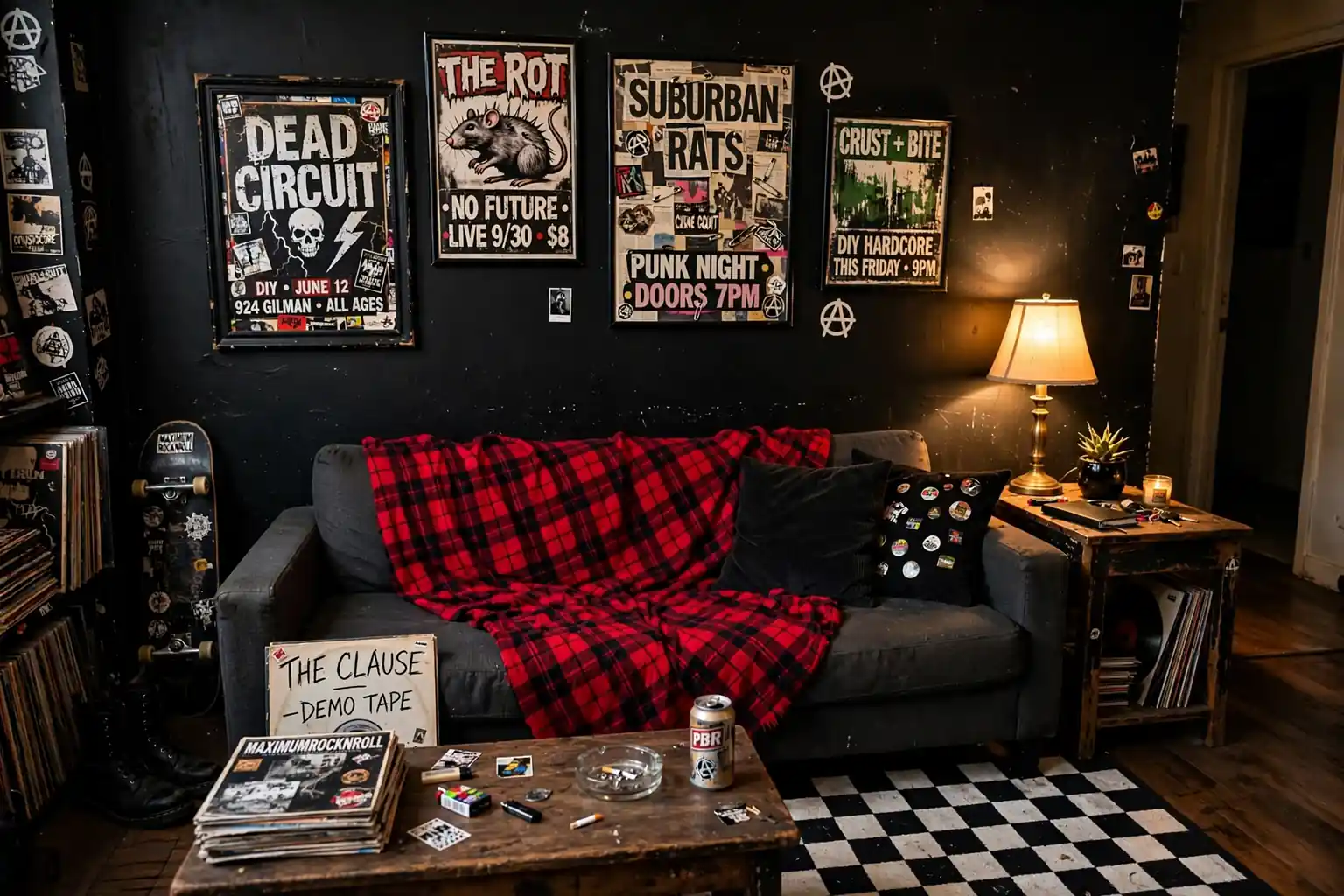
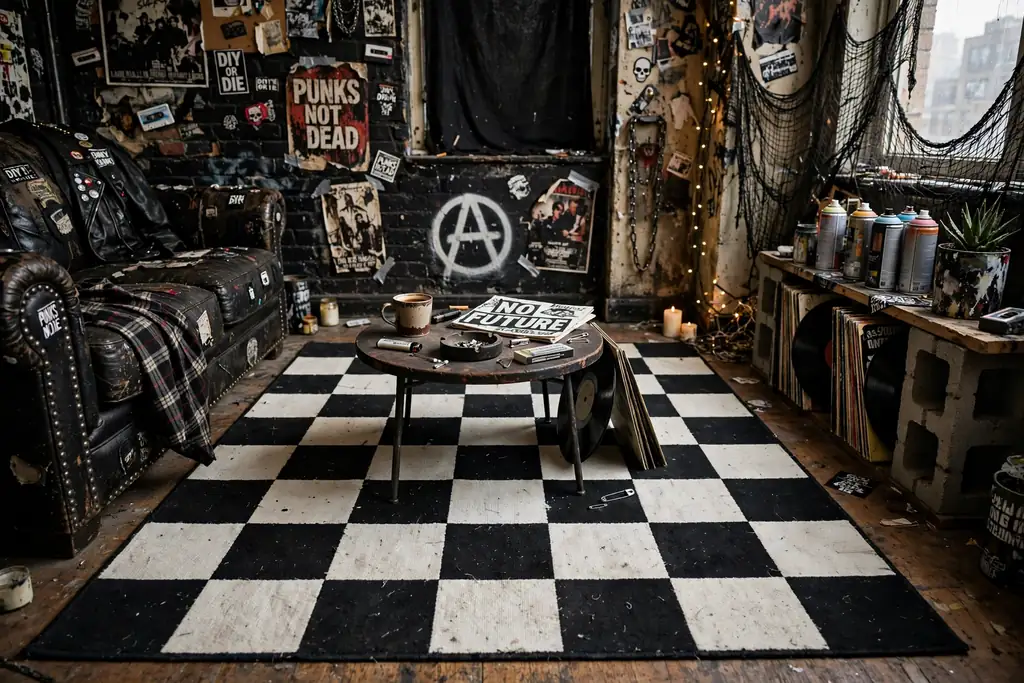
    8. Checkerboard Rug to Anchor the Room

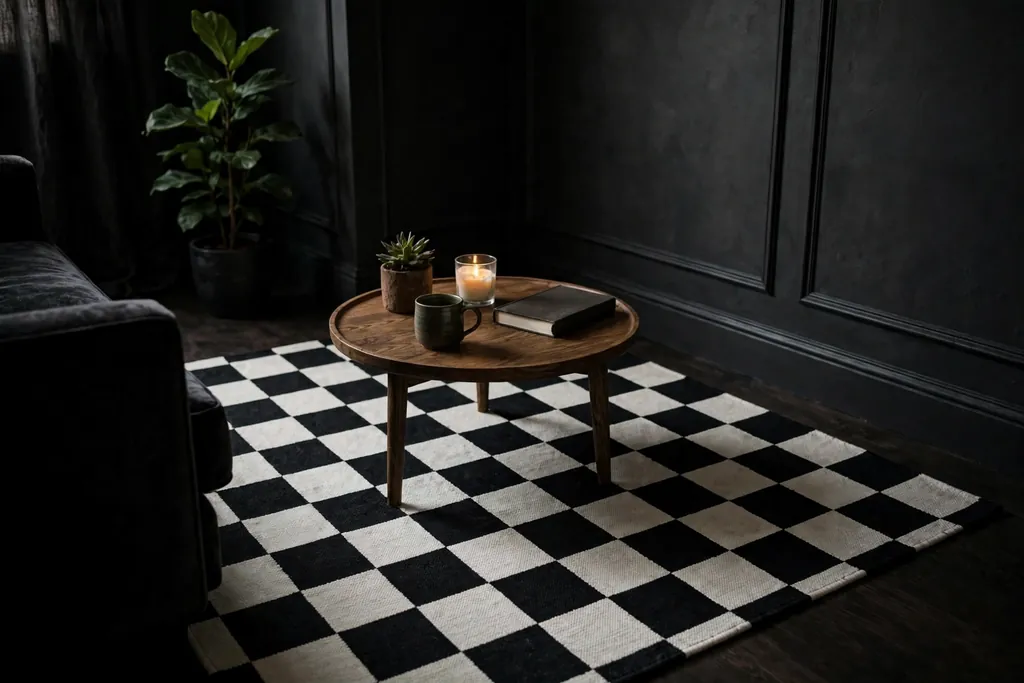
    Black and white checkerboard rug under a small coffee table in a dark living corner.

    Lay a black and white checkerboard rug under a coffee table or beside the bed to set the palette for the whole room and hide a tired rental floor. A flat weave or low pile rug suits a small space, since it is easier to clean and lets chair legs and crate shelves slide without catching. The strong pattern also zones a studio, marking where sitting ends and sleeping begins.

    Size matters more than pattern here: a rug that is too small floats in the middle of the room, while one that reaches under the front legs of a chair or bed grounds the seating area. If a full checkerboard feels loud, use a smaller checkerboard runner in the hallway or by the door, and let the main rug stay plain black. For more zoning ideas for one room homes, see these studio apartment decorating ideas.

    9. Black Metal Pipe Shelving

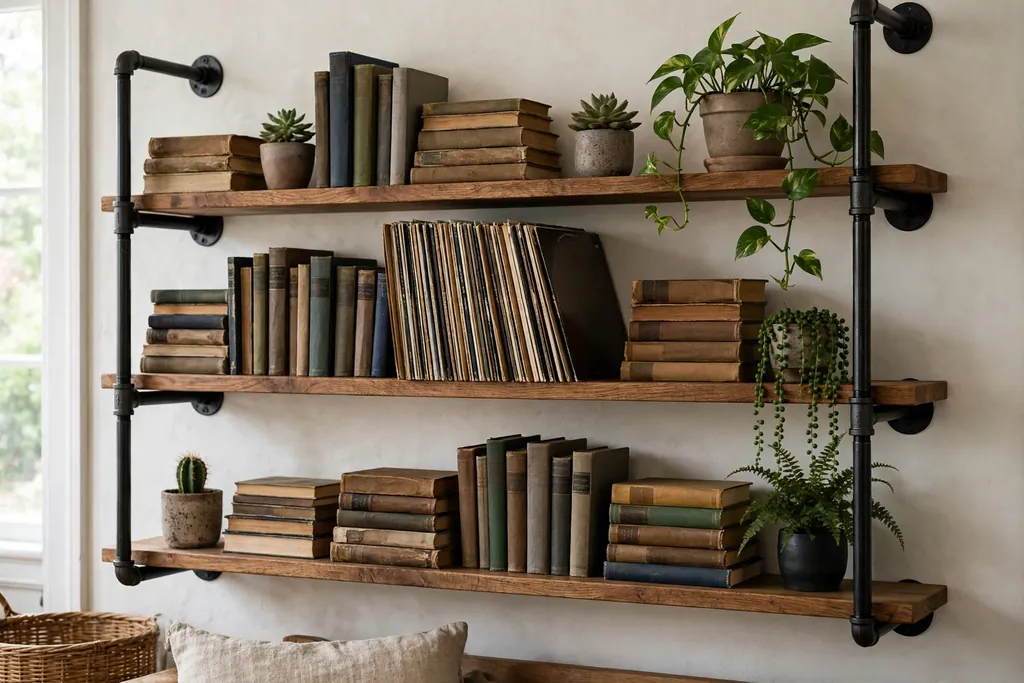
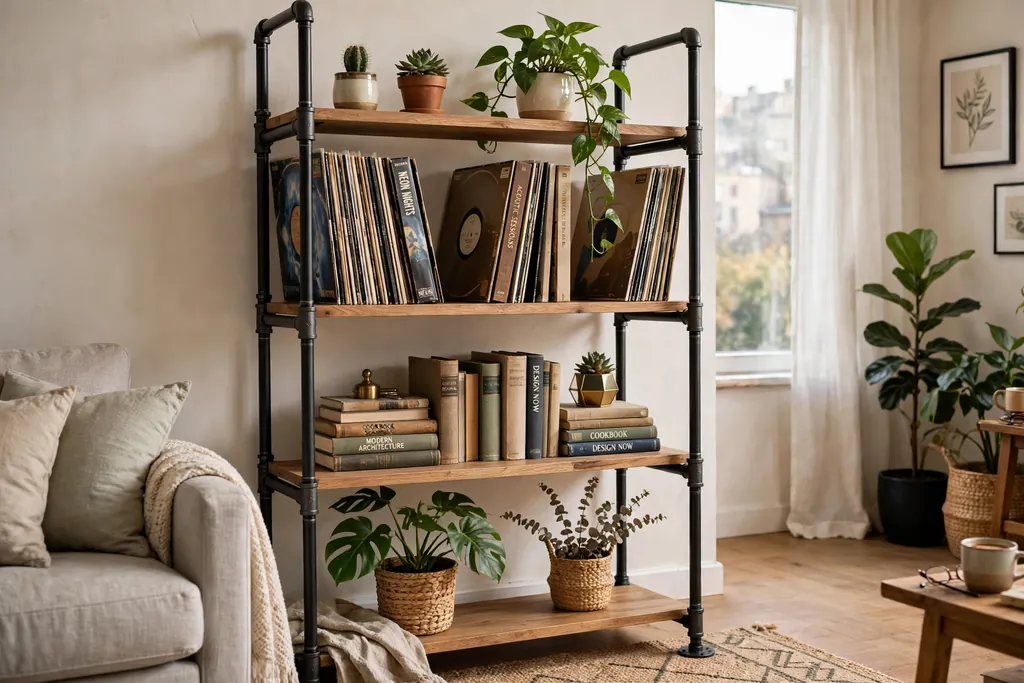
    Black metal pipe shelves with wood boards holding books, records, and plants.

    Fit black metal pipe shelving on one wall for open storage that looks industrial and holds books, records, plants, and small finds. Pipe shelves suit a grunge room because the dark metal and wood boards echo workshop and studio spaces, and open shelves use wall height that would otherwise stay empty. This works best on one wall, such as above a desk or beside the bed, rather than on every wall at once.

    Fix shelves into studs or proper anchors, and do not overload them beyond the maker rating. Put everyday items at arm height and lighter, rarely used items up high, and use closed boxes on the top shelf so the highest row looks tidy from below. Leave some open space on each shelf, so the shelves read as furniture, not as a wall of clutter.

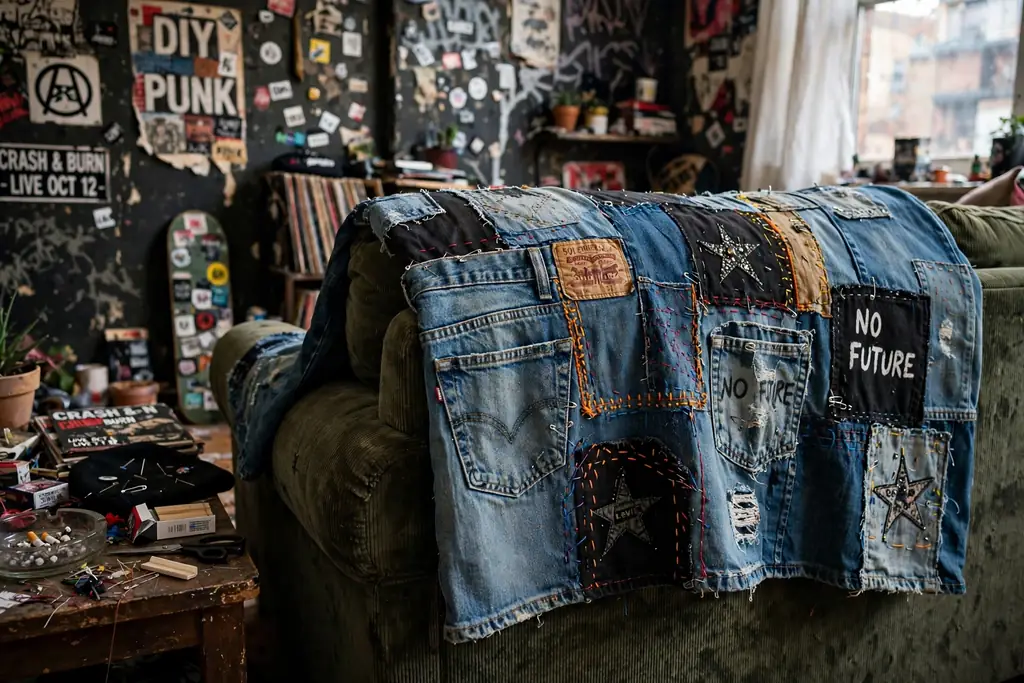
    10. Patched Denim Throw for the Sofa or Bed

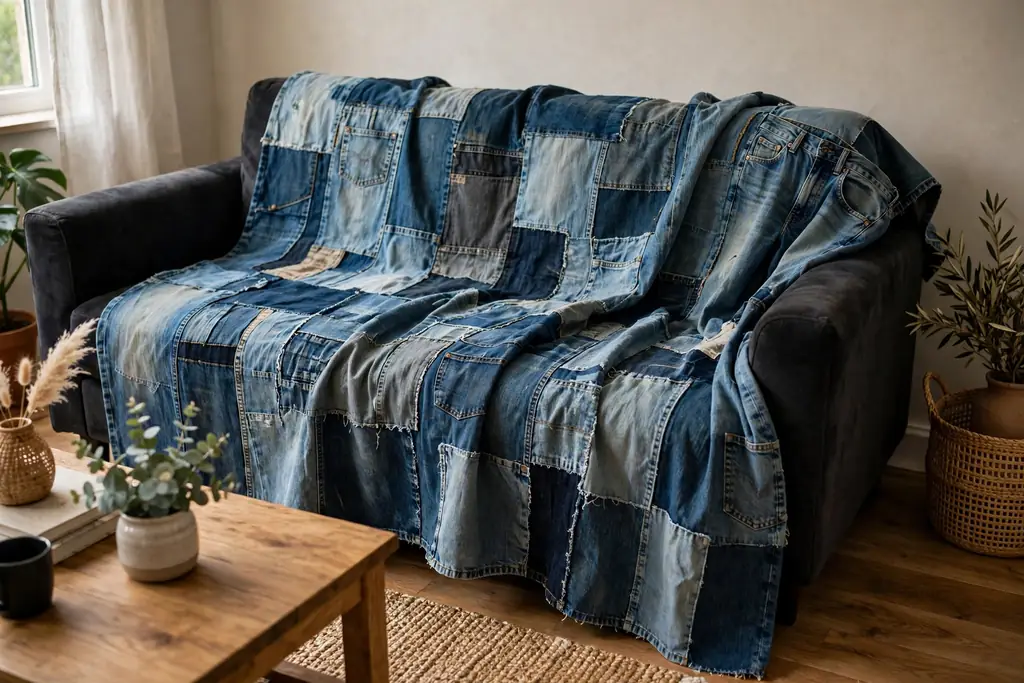
    Patched denim throw made from old jeans draped over a dark sofa.

    Make or buy a patched denim throw from old jeans, stitched together with visible seams and a few iron-on patches, for a heavy, durable blanket on a sofa or bed. Use jeans you already own or thrifted pairs, mix light and dark washes, and back the throw with a soft fleece or an old sheet so it feels good against skin. No sewing machine is needed if you use iron-on hemming tape for the joins, though stitched seams last longer.

    Leave a few pockets and seams from the original jeans in the patchwork, since they add texture and small storage for a remote or a phone. Finish the edges with a simple folded hem rather than a neat binding, since a slightly raw edge suits the material. A denim throw also survives washing well, which matters for a blanket that will live on a much-used sofa.

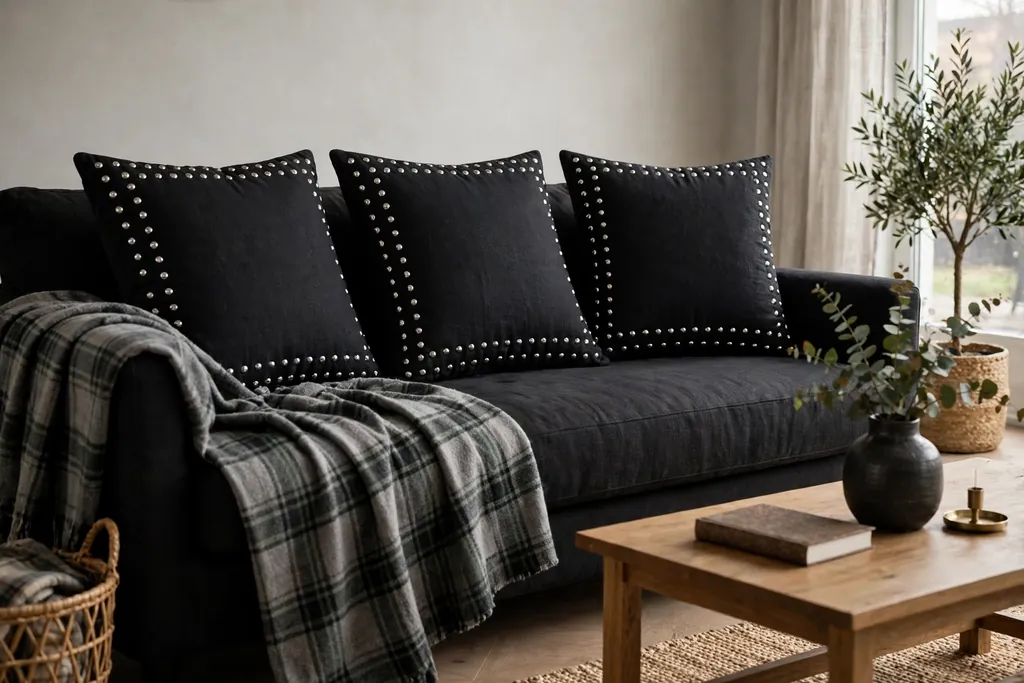
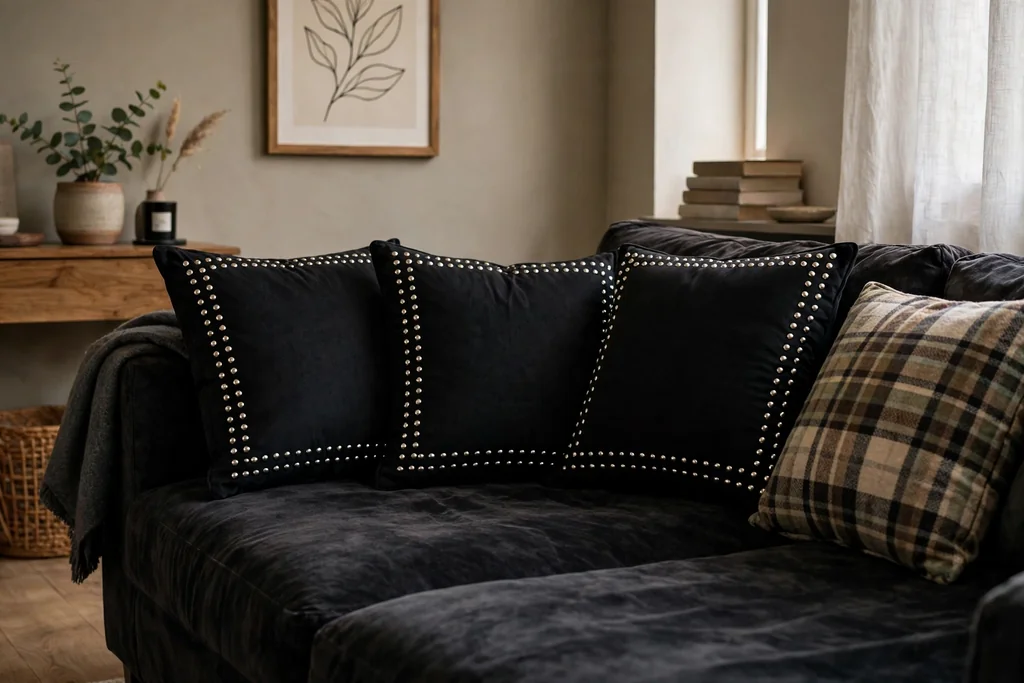
    11. Studded Cushion Covers in Small Doses

    Black cushion covers with silver studs on a dark sofa with a plaid throw.

    Add studs to plain black or charcoal cushion covers for a punk and grunge accent in an afternoon. Press or screw studs along the edges, in a border, or in one bold shape such as a star, and keep the studded cushions to one or two per sofa so seating stays comfortable rather than spiky. Studs with screw backs grip better than glue-on versions and survive washing if you remove the cover first and fasten it inside out.

    Mix one studded cover with plain velvet, denim, and plaid cushions, so texture contrast does the work. If you share the sofa with pets or small children, keep studs to the front face and the corners rather than the seat edge where hands and paws land. Keep spare studs in a small tin, so repairs are easy when one works loose.

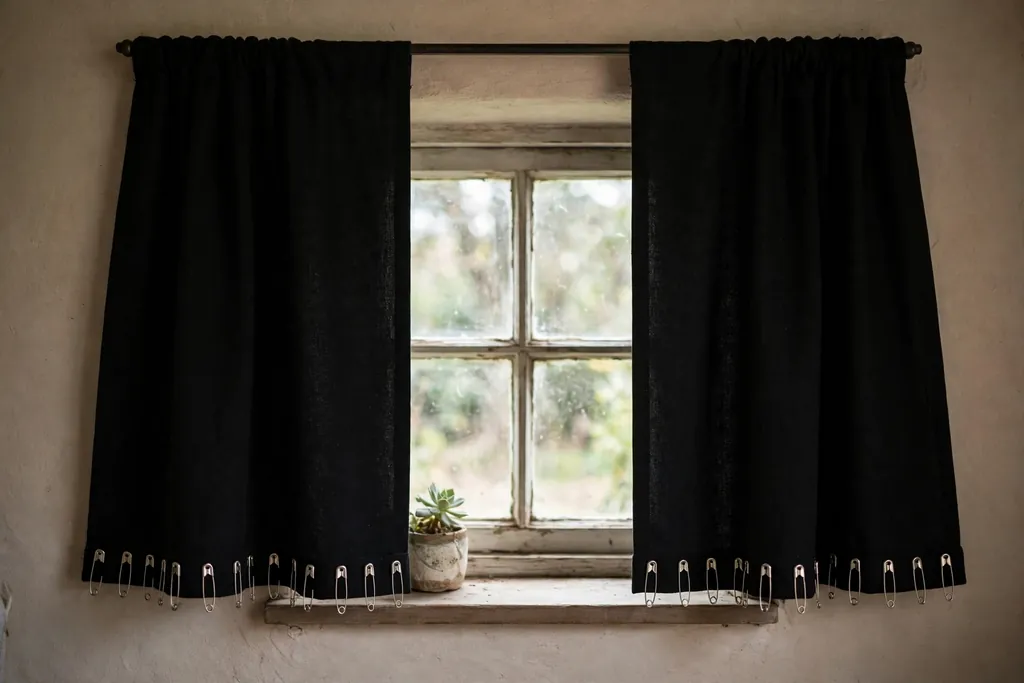
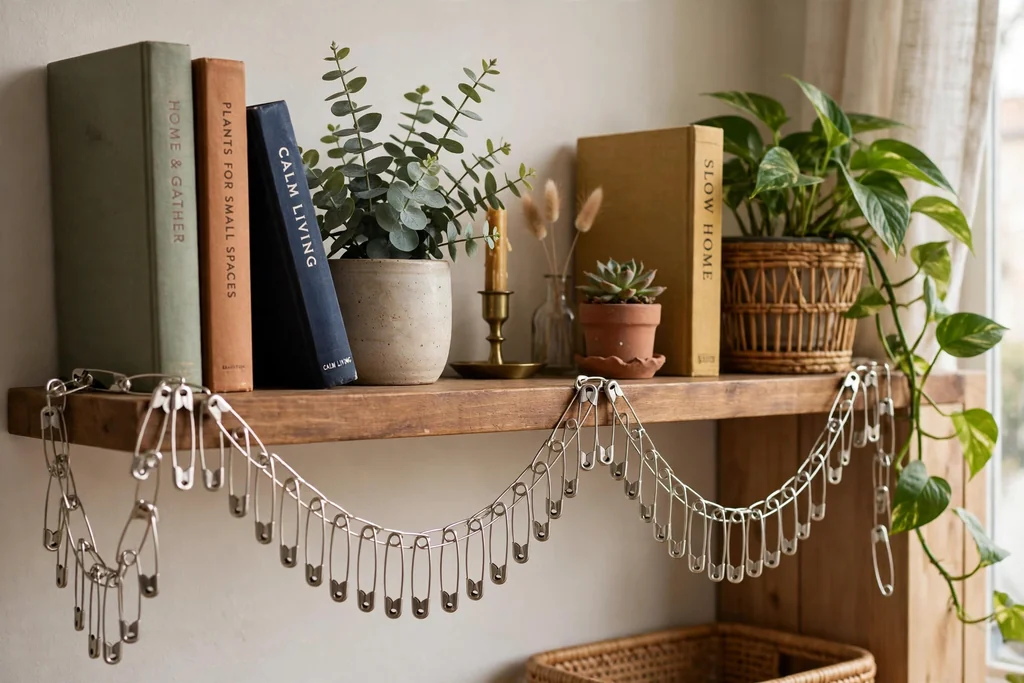
    12. Pinned Trim on Black Curtains

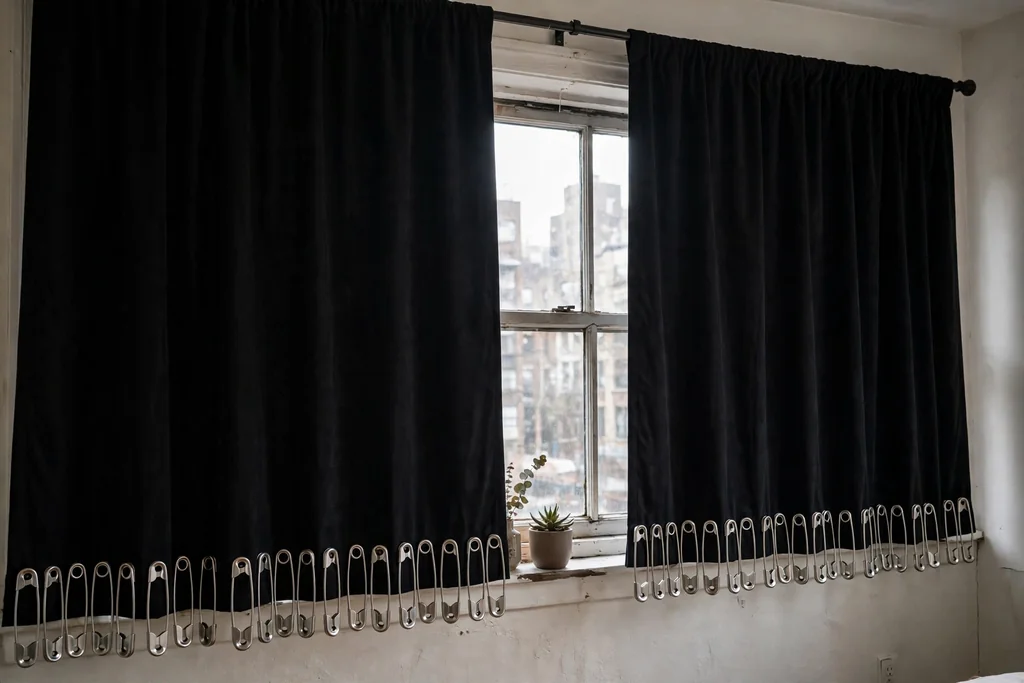
    Black curtains trimmed with silver safety pins along the hem at a small window.

    Fix a row of large silver safety pins along the bottom hem of plain black curtains, or cluster them at the tieback point where the curtain gathers. The pins catch the light, add metal to a soft textile, and come off in seconds when you want the curtains plain again or when laundry day arrives. This is a good first grunge DIY, since it costs almost nothing and changes the whole window.

    Use closed pins in a single size for a tidy row, or mix sizes for a more improvised feel, but keep them to the outer hem where they will not snag skin or bedding. If the curtains are light fabric, pin through the hem fold rather than a single layer, so the weight does not pull the fabric. Pair the curtains with a plain rod in black metal, so the pins stay the only metal detail at the window.

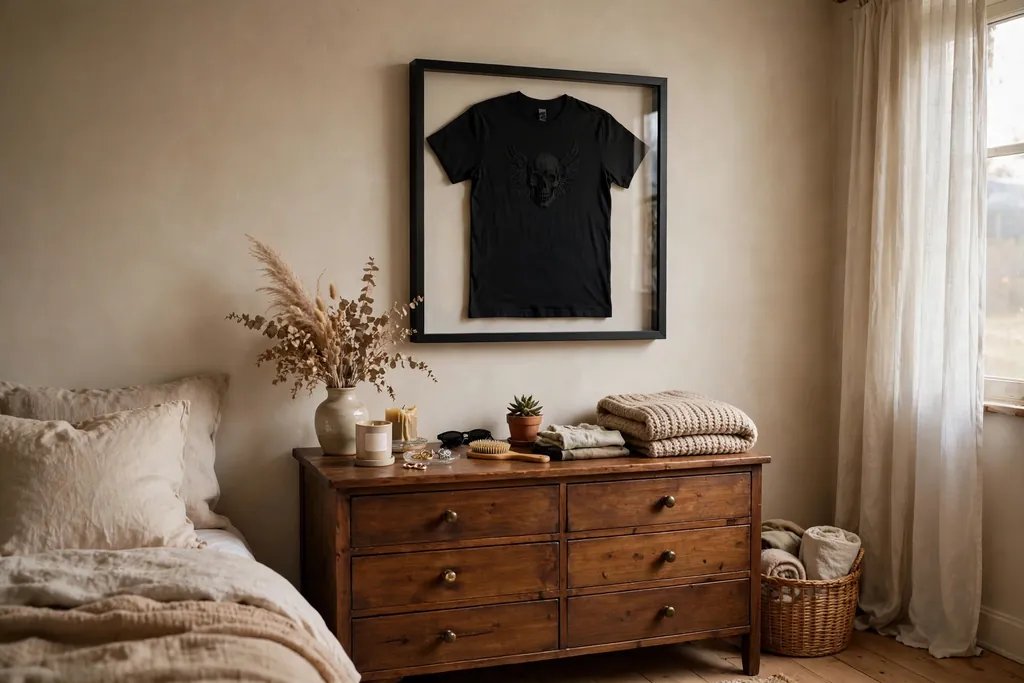
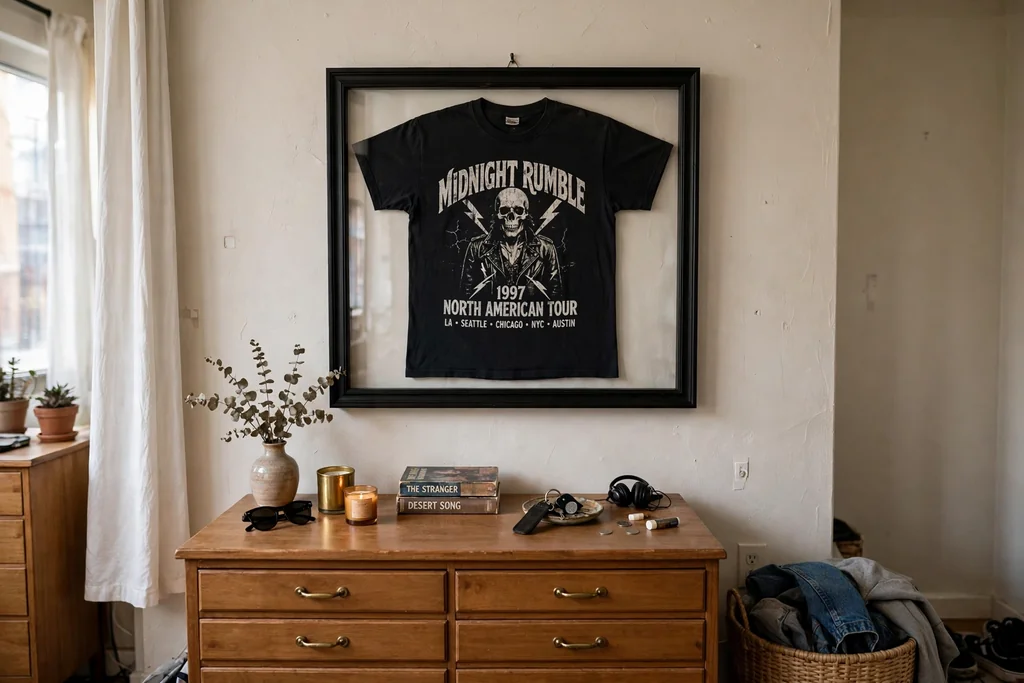
    13. Framed Band Tee as Wall Art

    Band tee framed in a black shadow box above a dresser.

    Stretch a favorite band tee over a canvas frame or mount it in a deep shadow box frame, and hang it like a print above a dresser or beside the poster wall. The graphic becomes the artwork, and the shirt itself stays safe from further wear. This works best with tees that have one strong front graphic, and a plain black frame keeps the focus on the design rather than the mounting.

    Use tees you already own before buying vintage shirts for display, since the ones tied to real gigs carry more meaning. One framed tee over a dresser is a statement, while three in a row above a sofa makes a full gallery. Keep framed tees out of direct sun, so the print does not fade over a season.

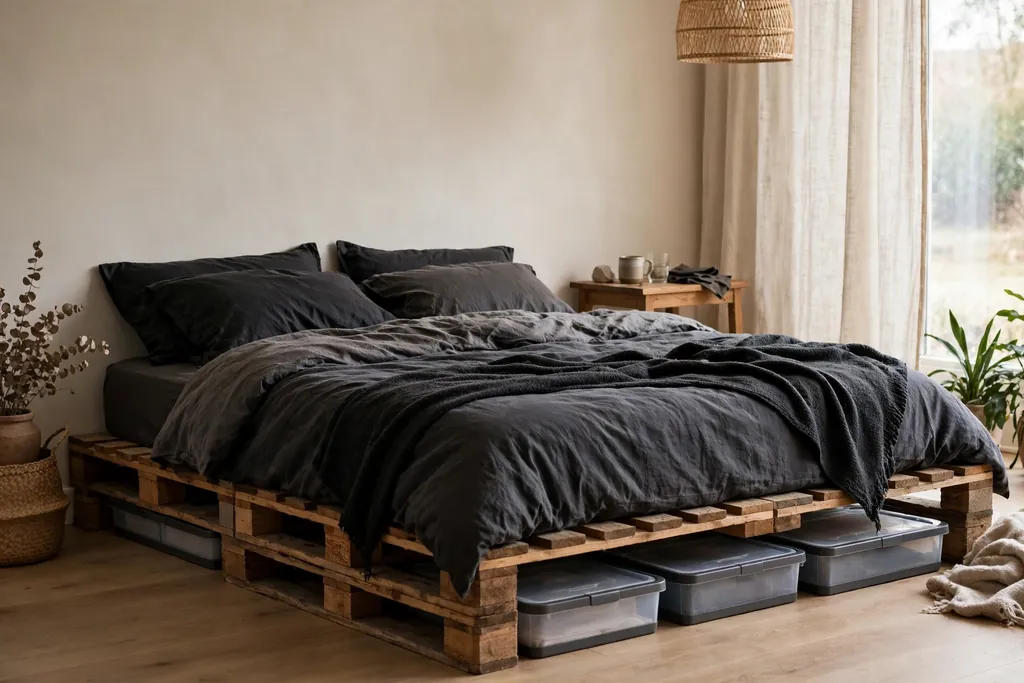
    14. Pallet Platform Bed with Under-Bed Space

    Low pallet platform bed with dark bedding and flat storage boxes underneath.

    Set a mattress on a low pallet platform for a grounded, studio-like bed that leaves room underneath for flat storage boxes. The low bed makes the room feel wider, and the raw wood suits grunge style far better than a polished frame. Sand the pallets well, and check for stamps or marks that show they are safe for indoor use before you bring them inside.

    Use a firm platform and a good mattress, since a low bed still needs proper support. Keep storage boxes low and labelled, so the space under the bed stays useful rather than becoming a dumping ground. If a pallet bed feels too rough, add a simple wood headboard panel behind it, and keep bedding in black and plaid so the bed reads as planned.

    15. Industrial Cage Pendant Light

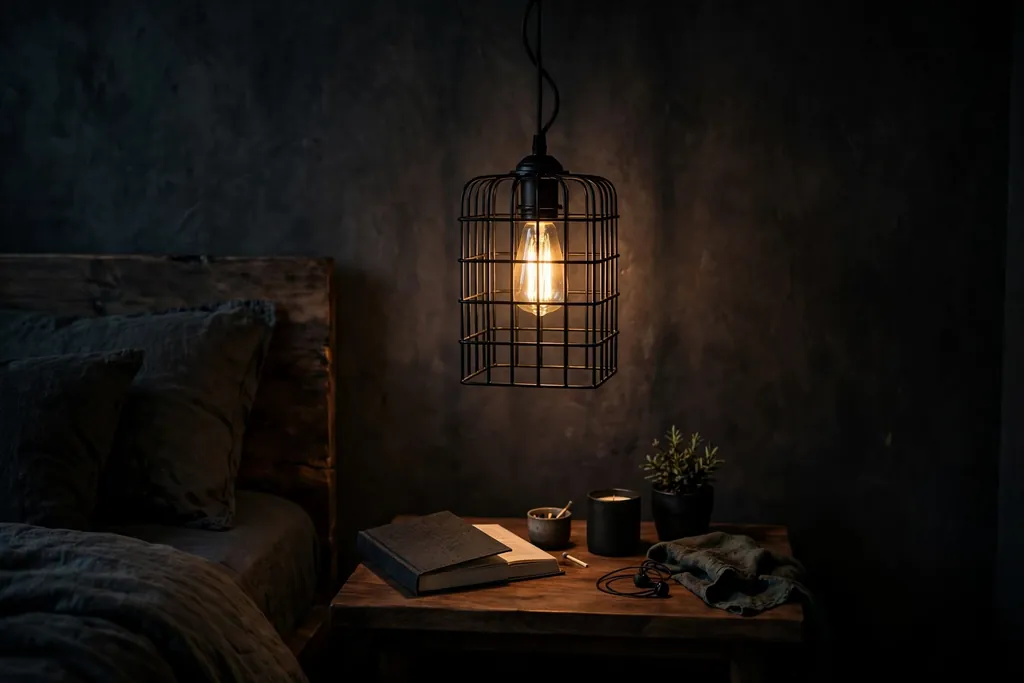
    Black metal cage pendant light hanging over a bedside table in a dark bedroom.

    Hang a black metal cage pendant over a desk, bedside table, or reading chair for a working light with an industrial edge. The open cage shows the bulb and casts patterned light, and the dark metal ties in with pipe shelves, curtain rods, and poster frames. A single pendant works over a nightstand, while a pair flanking a bed frames it well.

    Hang the pendant so its base sits well above head height when you sit up in bed, and use a warm white bulb for a soft glow. Keep the cord tidy with a small hook, and if you cannot wire a new light, a plug-in pendant with a long cord gives the same look without an electrician. Dust the cage often, since open metal collects dust in a small room.

    16. Graffiti-Style Stencil Canvas Art

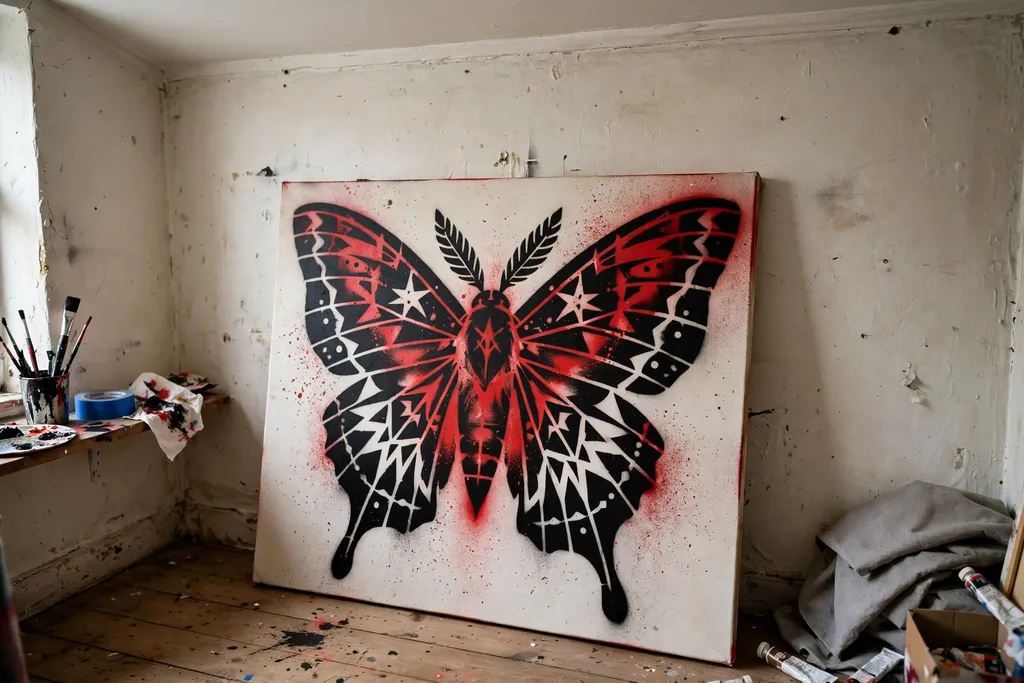
    Black and red stencil art on a canvas leaning against a wall.

    Make stencil art on canvas for the street poster look without touching the landlord walls. Cut a simple stencil from card or buy a reusable one, then spray or sponge paint it onto a plain canvas in black, white, and red. One word, one symbol, or one repeated shape is enough: a safety pin, a lightning bolt, or a band-style slogan all work at canvas size. Hang the finished canvas with a removable strip, and make a second one when you want a pair.

    Practice on scrap card first, because stencil paint bleeds if the brush is too wet. Keep the canvas palette to two or three colors, so it sits comfortably beside posters rather than competing with them. Canvases are light, cheap, and easy to carry to the next apartment, which makes them ideal renter art for a grunge room.

    17. Layered Black Curtains for Sleep and Light Control

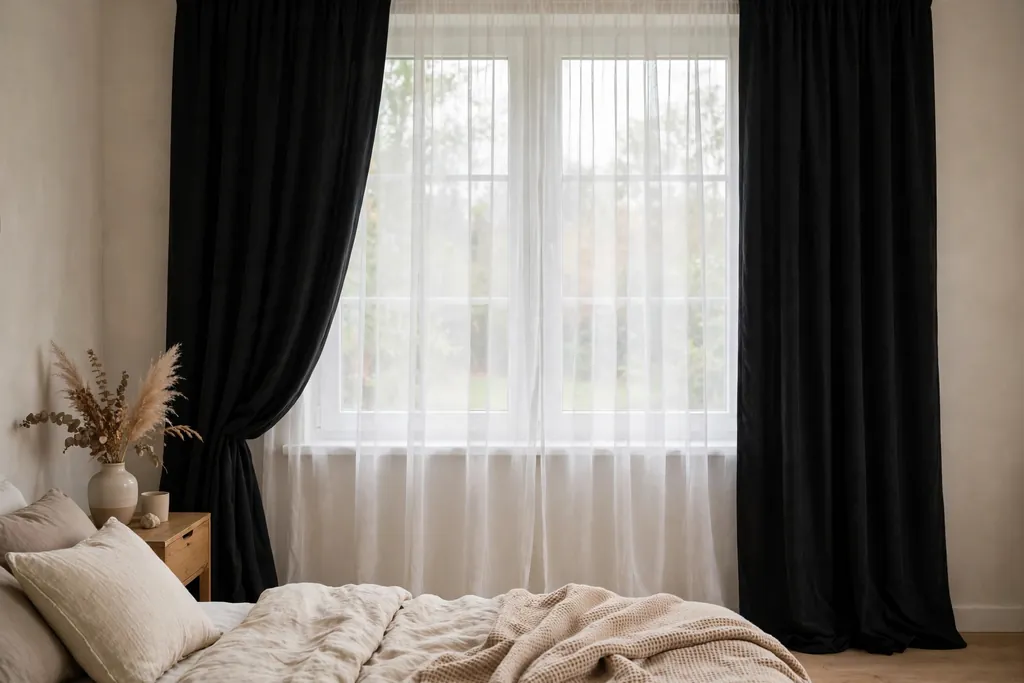
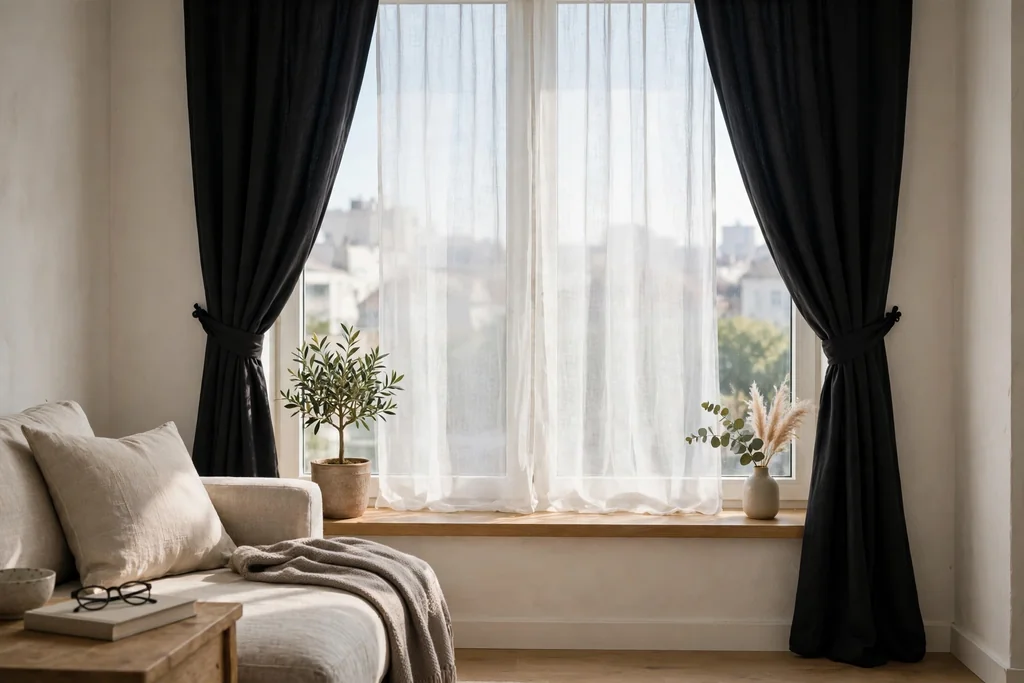
    Black blackout curtains layered over a sheer panel at a bedroom window.

    Layer black blackout curtains over a sheer panel for a window that can go dark for sleep and soft for daytime. The sheer layer keeps daylight in a small room during the day, while the black layer closes the room down at night and gives the window a strong grunge frame. This suits bedrooms and studios where one window has to serve sleep, work, and relaxing.

    Hang the curtains as close to the ceiling as possible, so the window area feels taller, and extend the rod a little past the window on each side, so curtains can stack out of the way during the day. Choose washable fabric, since window curtains collect dust and cooking smells faster than other textiles. Keep the rod in black metal, and skip extra valances that would crowd a small window.

    18. Guitar Wall Mount as Display and Storage

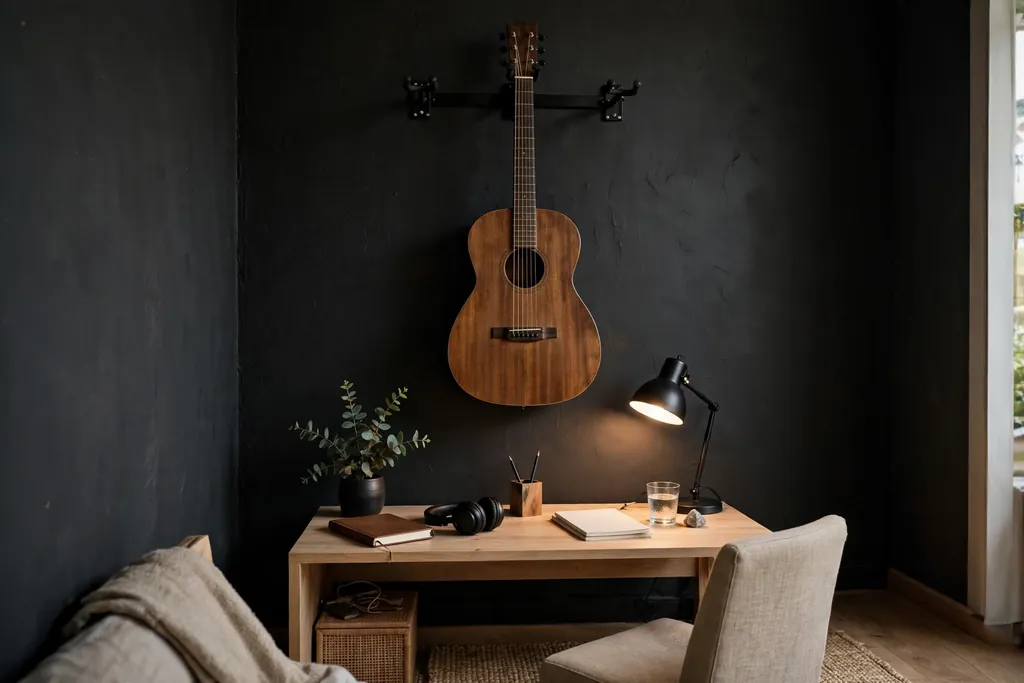
    Guitar mounted on a dark wall above a small desk in a bedroom corner.

    Mount a guitar on the wall with a proper wall hanger, so an instrument you play becomes decor and stays off the floor. A guitar on the wall suits a grunge room because it is a real music object, not a themed prop, and it frees a corner that a stand would take. Fix the hanger into a stud or a proper anchor, and keep the guitar clear of radiators, damp walls, and direct sun.

    Hang the guitar at a height where you can lift it off easily, and keep a small hook nearby for a strap or a cable, so the wall stays tidy. If you have more than one instrument, hang them in a row with even spacing, and keep the rest of that wall plain. For a softer take on music-led bedrooms, see these hippie bedroom ideas.

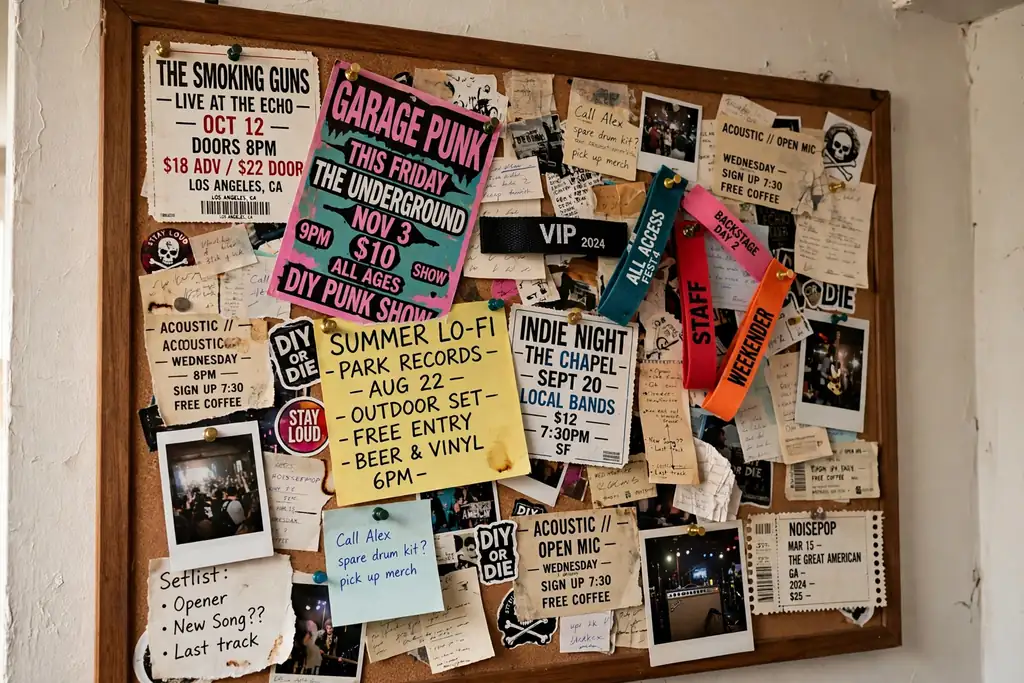
    19. Concert Ticket Board for Gigs and Flyers

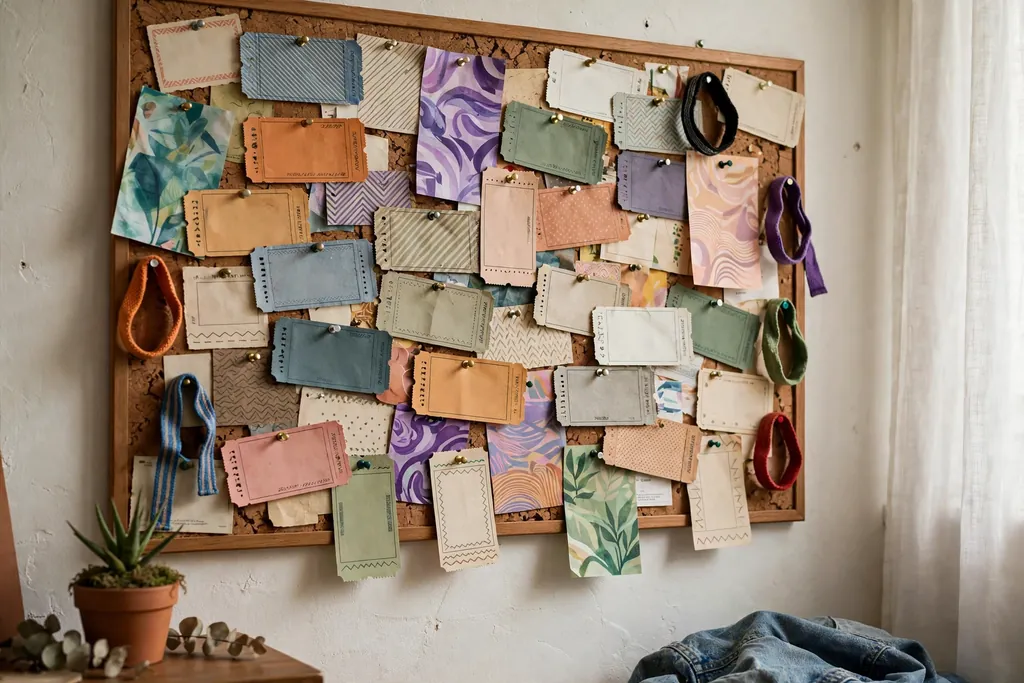
    Cork board covered with gig tickets, flyers, and wristbands on a bedroom wall.

    Attach gig tickets, flyers, and wristbands to a cork board or a fabric-wrapped board, and hang it with removable strips or lean it on a dresser. Overlapped edges and short notes about the date or the venue turn the board into a living record of shows, and it grows messier and better over time. This suits a small room because the board holds a whole collection on one wall, instead of loose paper across desks and shelves.

    Sort loosely by year or by band, rather than trying for a neat grid, since a little overlap suits the material. If a ticket is precious, pin through a corner or slip it into a clear sleeve first, so the board does not damage it. Pull the most recent tickets to the front when you add new ones, so the board stays current without a full rebuild.

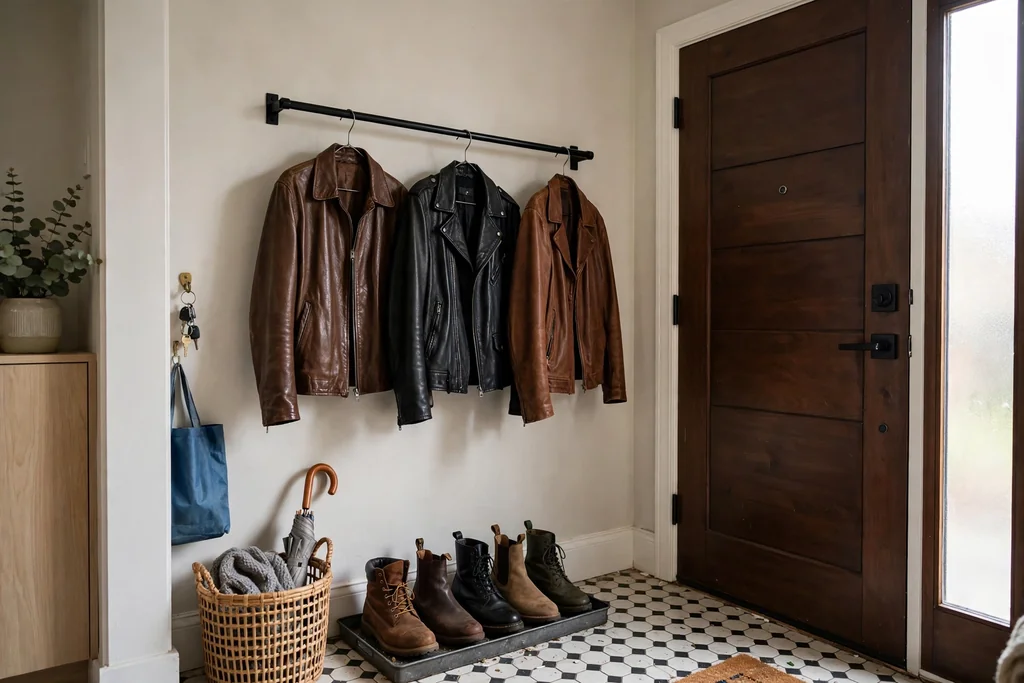
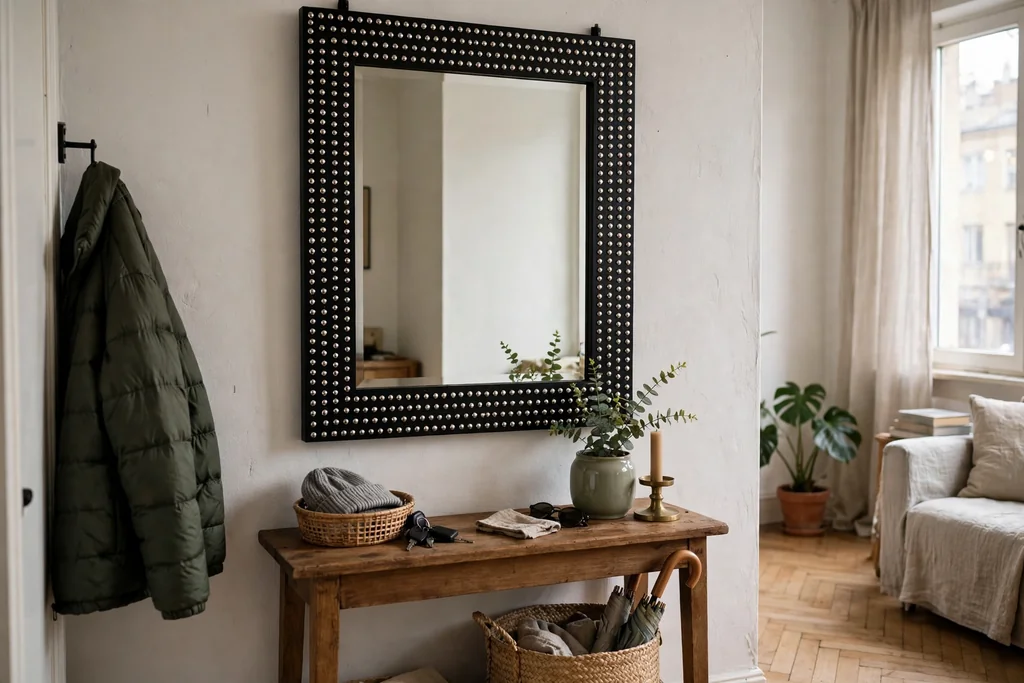
    20. Jacket Hook Rail and Boot Tray by the Door

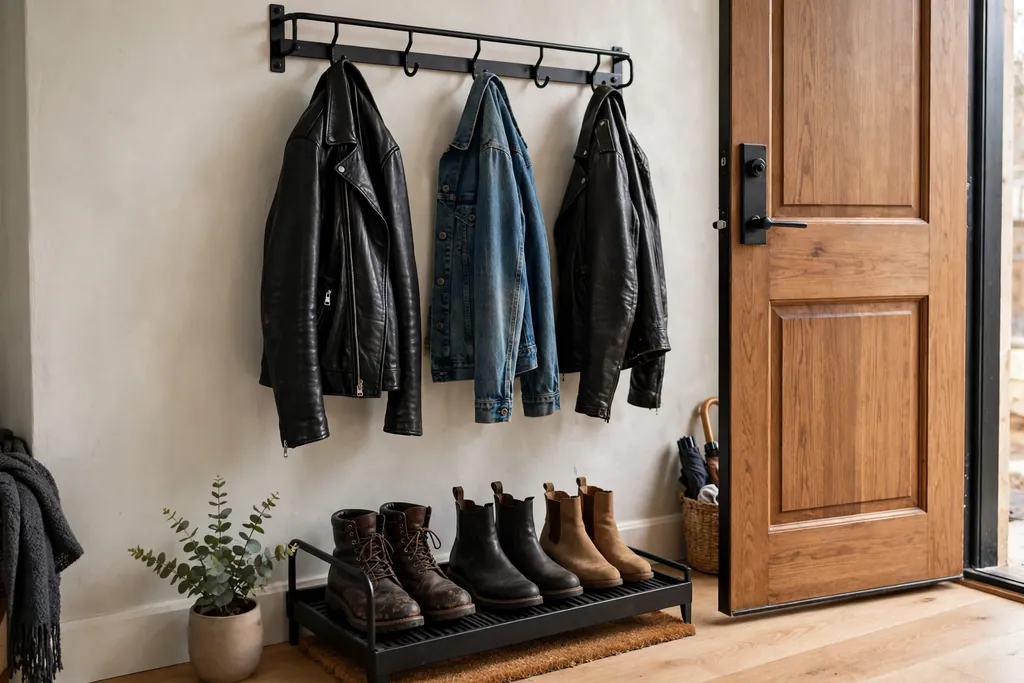
    Black metal hook rail with leather and denim jackets and a boot tray by a door.

    Fix a black metal hook rail by the door for a leather jacket, a denim jacket, and a bag, and set a boot tray below it for boots and shoes. The rail keeps heavy jackets off chairs and beds, and the tray stops mud and dust from spreading across a small room floor. This entry zone works even in a studio, since it needs only one stretch of wall by the door.

    Choose hooks rated for the weight of a leather jacket, and fix the rail into studs or proper anchors. Keep the rail to four or five hooks, so it does not become a second closet, and clear it once a week of items you are not wearing. A small mirror above the rail helps with a last check before you leave, and it bounces light into a dark entry.

    21. Dark Desk Nook with a Pegboard Wall

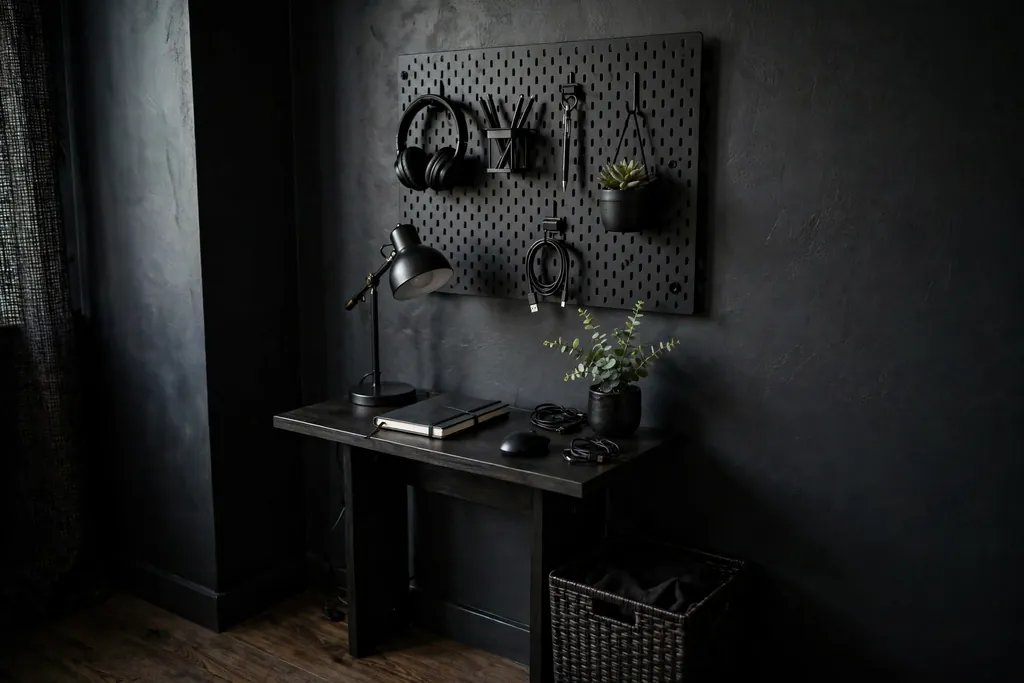
    Small dark desk nook with a charcoal wall and a black pegboard above the desk.

    Set a small desk in an alcove or against one wall, paint the wall behind it charcoal, and hang a black pegboard above it for headphones, cables, notebooks, and small tools. The dark wall marks the work zone in a small room, and the pegboard uses vertical space that a shelf stack would crowd. This suits students and renters, since the desk and board can move to the next room.

    Keep the desk surface clear as a habit, with only a lamp, a laptop, and one pen pot on top, and store the rest on the pegboard or in a drawer. Use a warm desk lamp for evening work, so the dark wall does not feel gloomy, and keep the chair light enough to tuck fully under the desk when you finish. Check that pegboard hooks hold their load, and keep cables clipped to the board edge.

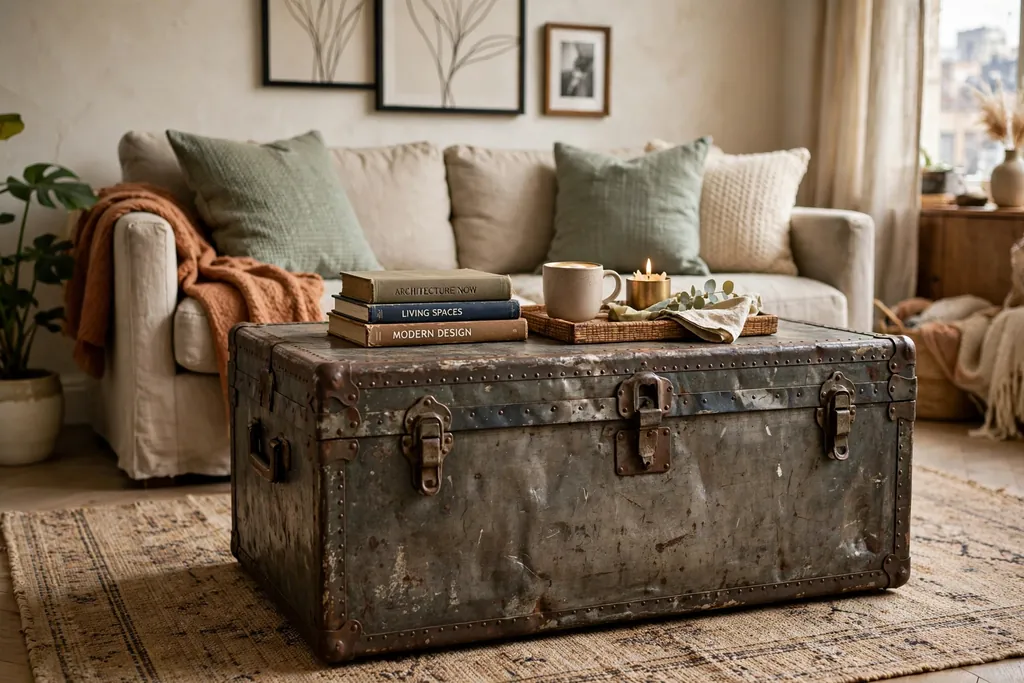
    22. Industrial Trunk Coffee Table with Storage

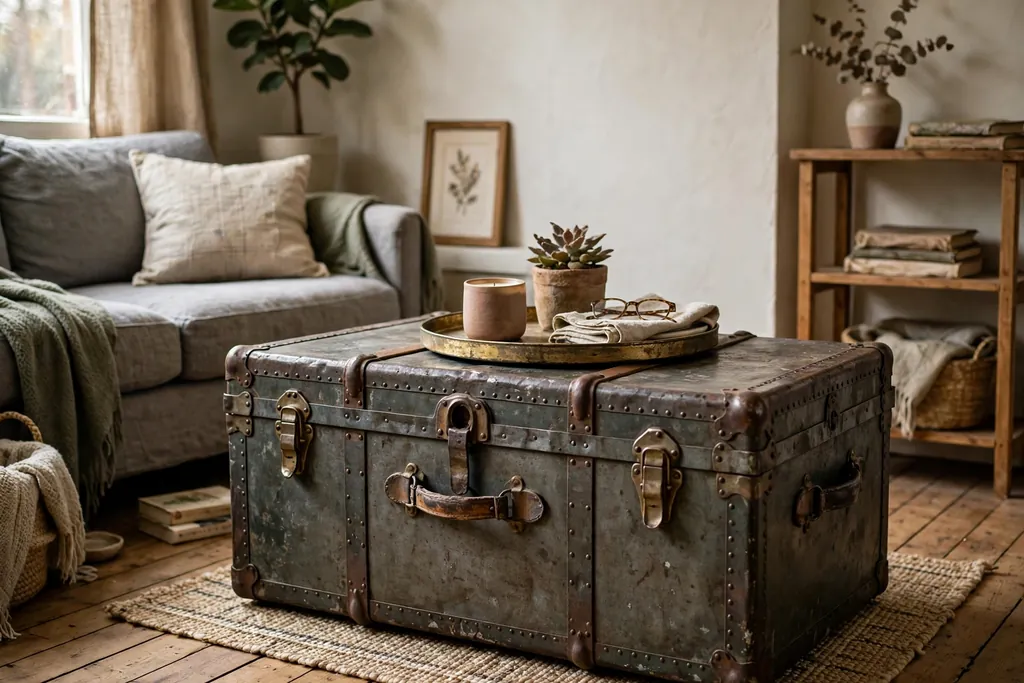
    Old metal trunk used as a coffee table with a tray on top in a small living room.

    Use an old metal or wood trunk as a coffee table, so the table also stores throws, records, or games inside. A trunk suits a grunge room because worn metal corners, scuffs, and latches carry character, and it replaces a table that would only hold drinks. Choose a trunk low enough to sit beside a sofa comfortably, and add a tray on top to keep drinks steady.

    Keep the trunk lid easy to open, and store only items you reach for often inside it, since a trunk filled with things you never use becomes a box you never open. Add small felt pads under the trunk feet, so it does not scratch wood or tile floors. If the trunk is dark, add a pale tray or a light rug under it, so the seating area does not read as one dark block.

    23. Layered Warm Lighting for a Dark Room

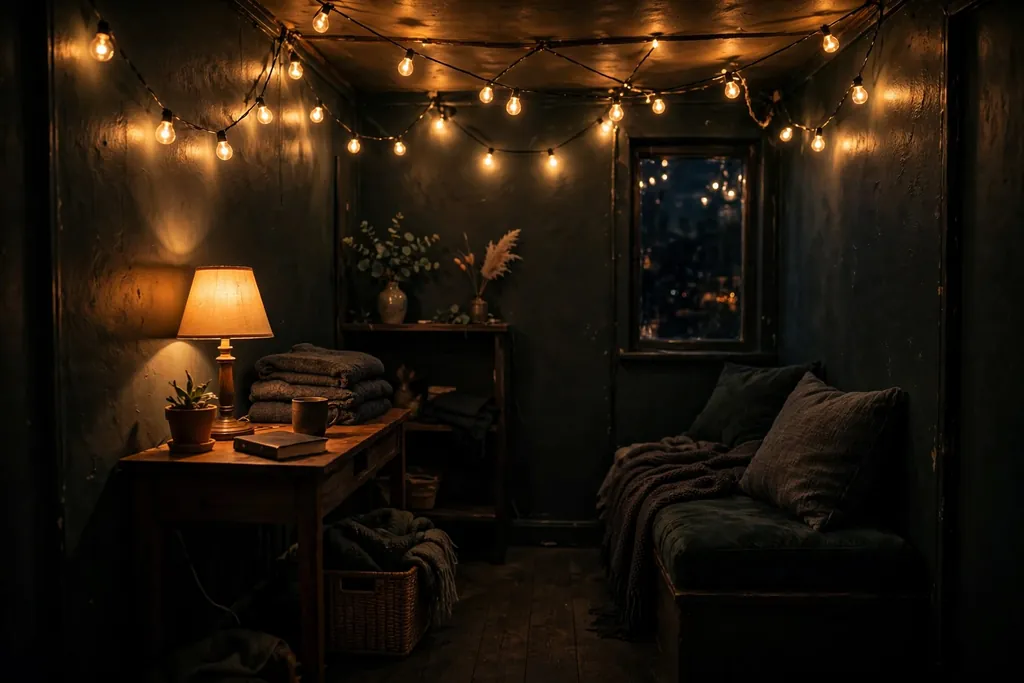
    Dark small room lit by warm lamps and string lights in the evening.

    Layer warm light at three heights, with a floor or table lamp, a string of warm white lights, and a small desk or reading lamp, instead of relying on one bright ceiling light. Warm layers make a dark grunge room feel cozy at night, and they let you change the mood from work to relaxing without repainting or moving furniture. This matters in a small room, where one harsh light can make dark walls feel flat.

    Keep string lights away from bedding and curtains, and choose LED sets that stay cool to the touch. Drape them loosely rather than pulling them tight, so the line looks relaxed, and pair them with a lamp for reading, since string lights alone are too dim for a book. Use warm white bulbs throughout, so black, plaid, and wood all read warm in the evening, not cold.

    24. Faded Band Tapestry on the Main Wall

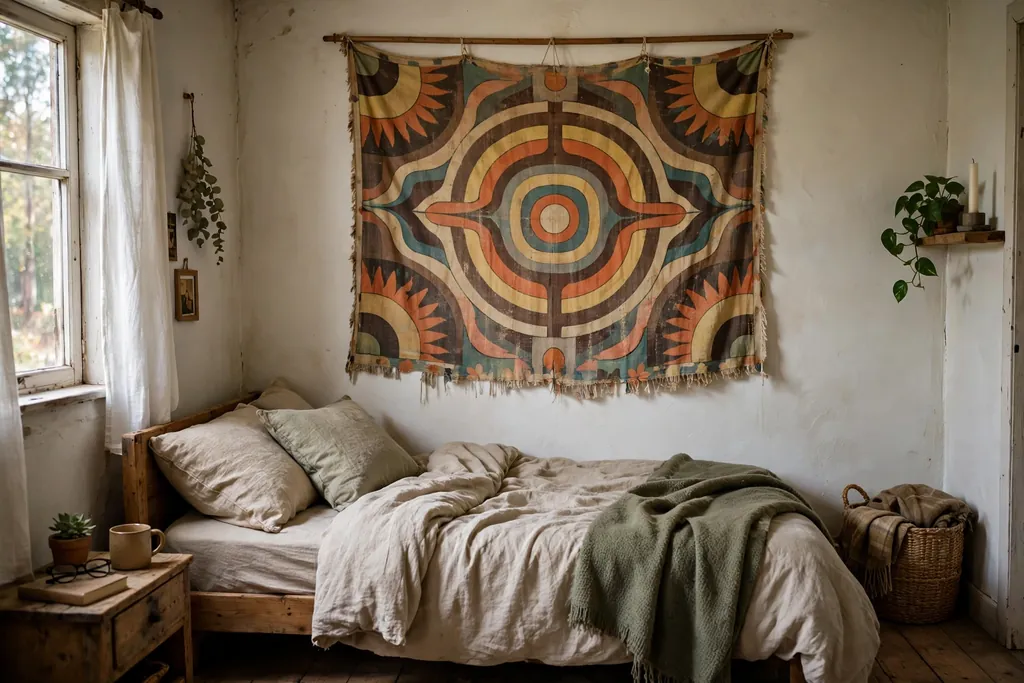
    Faded band tapestry hanging on a main wall above a bed in a small bedroom.

    Hang a large faded band tapestry or flag on the main wall for color and pattern on a grand scale, without the weight or cost of framed art. Unlike a framed print, a tapestry adds softness and a slight drape, which suits a grunge room, and it also helps a cold wall feel warmer in cooler months. Hang it with a wooden dowel or clips along the top edge, so it hangs straight.

    If the room is small, hang the tapestry on the wall you see first when you walk in, and keep the other walls plain, so the tapestry stays the focus. Choose a tapestry with a worn or faded print rather than a bright new graphic, since faded color sits better beside black walls and thrifted furniture. Wash it on a gentle cycle when it needs cleaning, and dry it flat or on a line when you can.

    25. Black Plant Pots with Hardy Plants

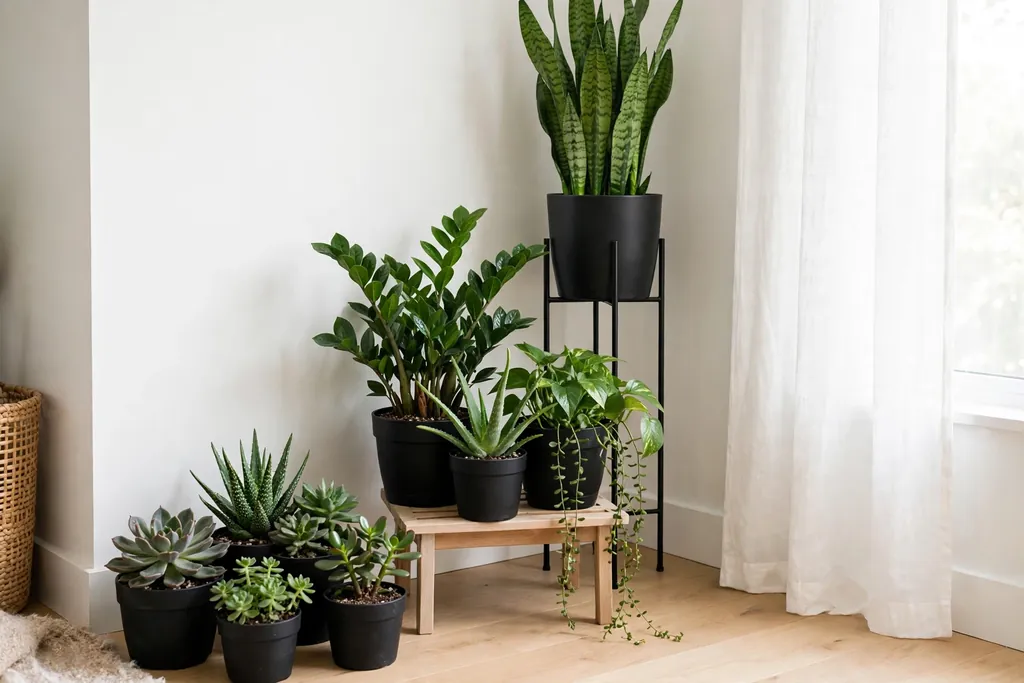
    Hardy plants in black pots grouped at three heights in a bright room corner.

    Use black pots for hardy plants, such as pothos, snake plants, and spider plants, to soften a dark grunge room with green without breaking the palette. Black pots tie plants into black walls, frames, and shelves, while the leaves add life and shape to hard corners. Group plants with similar watering needs together, and use a saucer under each pot to protect wood and shelves.

    Place tall plants on the floor, medium plants on a stool or crate, and trailing plants on a shelf, so greenery sits at three heights and does not block light. Match plants to the light the window actually gets, and rotate them every few weeks so they grow evenly toward the light. In a small room, three to five plants are enough: more than that can crowd walkways and shelves.

    26. Black-Framed Mirror to Bounce Light

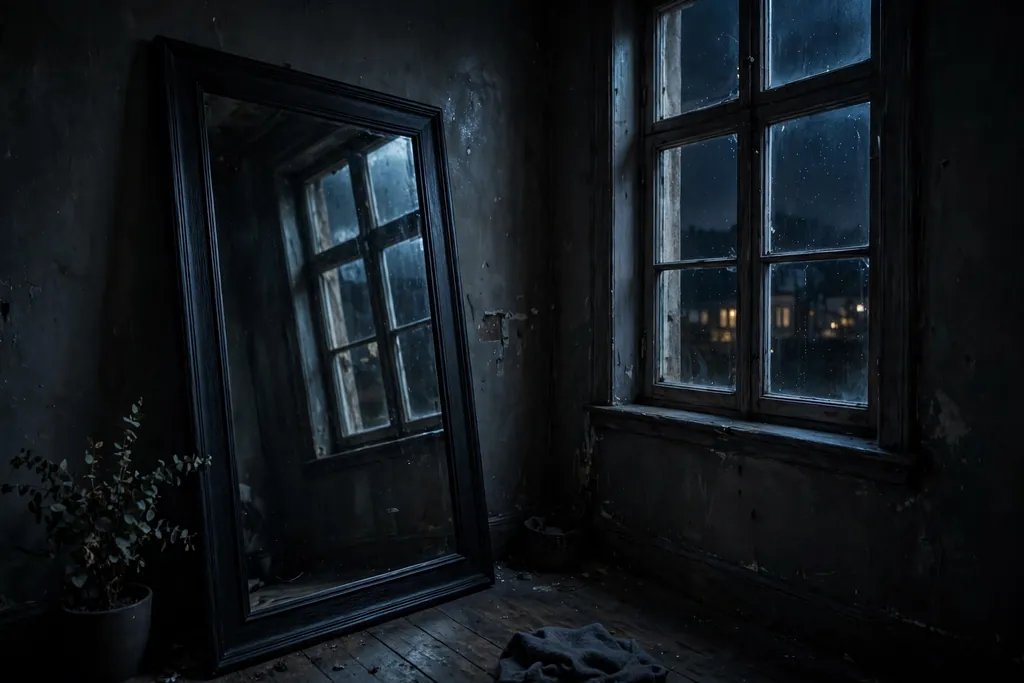
    Large mirror with a black frame leaning opposite a window in a dark small room.

    Lean or hang a large mirror with a simple black frame opposite or beside a window, so daylight bounces deeper into a dark room and the far wall feels farther away. In a small grunge room, that extra sense of depth matters, because dark walls and heavy textiles can otherwise make the room feel closed in. Lean a full length mirror against the wall if hanging is not allowed, and secure it so it cannot slide on a smooth floor.

    Check what the mirror reflects before you fix its position, since a mirror that reflects a messy corner doubles the mess. Aim it toward the window, a plant, or a calm stretch of wall for the best result. One large mirror usually works better than several small ones scattered across the room, and a plain black frame ties it into the rest of the grunge palette.

    27. Fold-Down Wall Desk for a Tiny Room

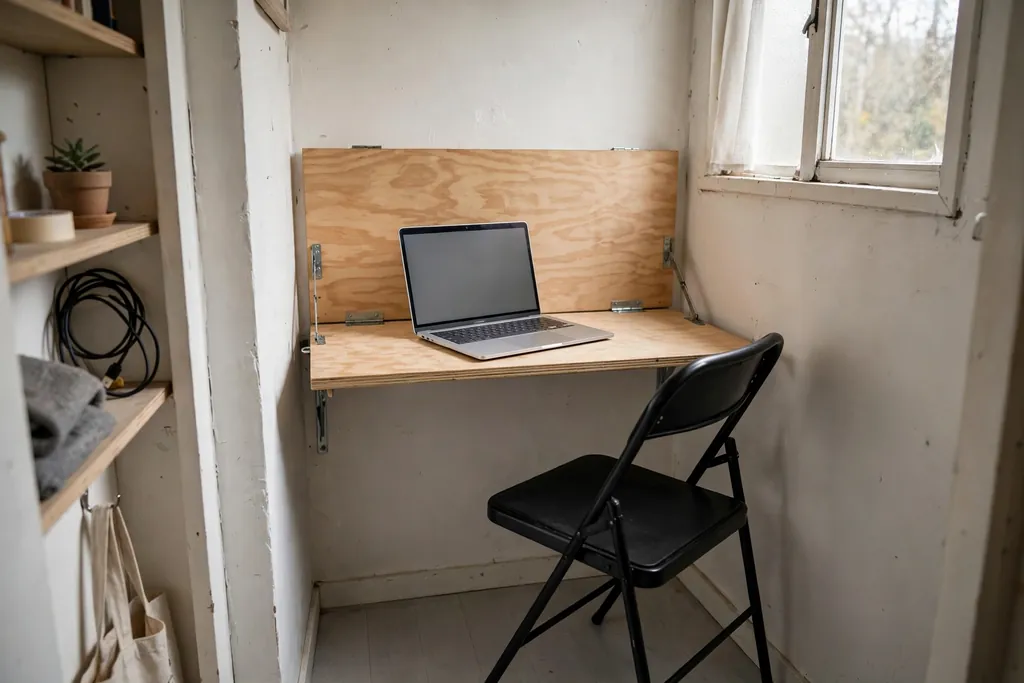
    Fold-down wall desk open with a laptop and a folding chair in a tiny room.

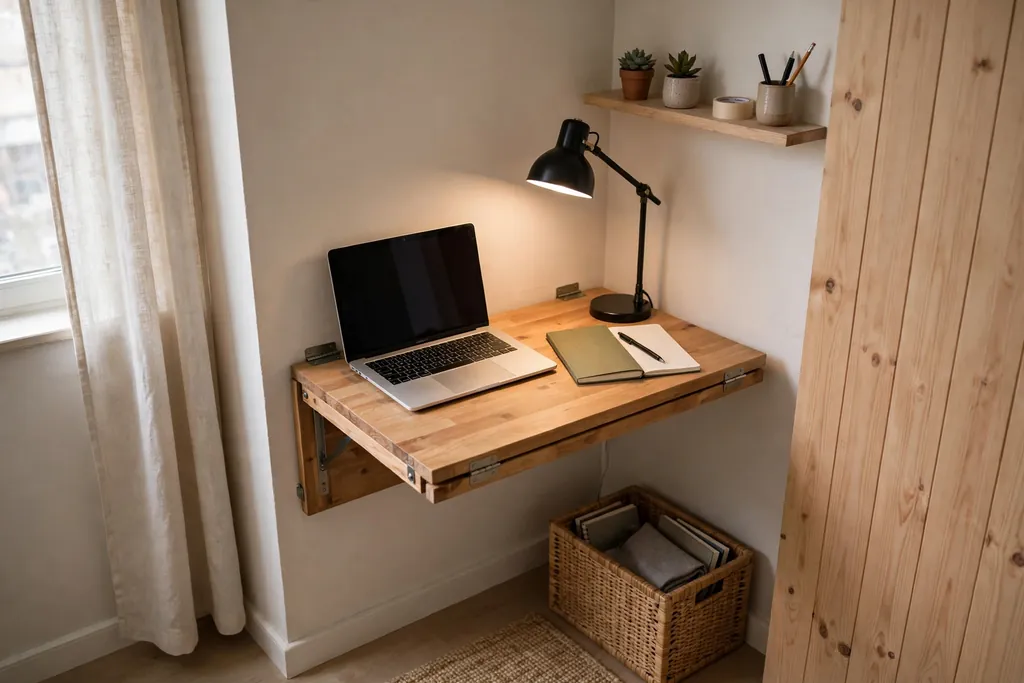
    Fit a fold-down wall desk that folds flat when you are not working, so a tiny room keeps a real work spot without a desk standing in the middle of the floor all day. Fold it down for study, work, or writing, then fold it away to free the floor for walking, exercise, or a guest mattress. A stool or folding chair stored nearby completes the setup without a full desk set.

    Fix a wall mounted desk firmly into studs or suitable wall anchors, and check the weight rating before you load it with books or a laptop. A drop leaf table on casters is a good alternative if wall fixing is not allowed, since it can roll to the wall when closed. Keep the desk clear as a habit, because a fold-away desk only helps if folding it away stays easy.

    28. Rolling Under-Bed Storage for Merch and Gear

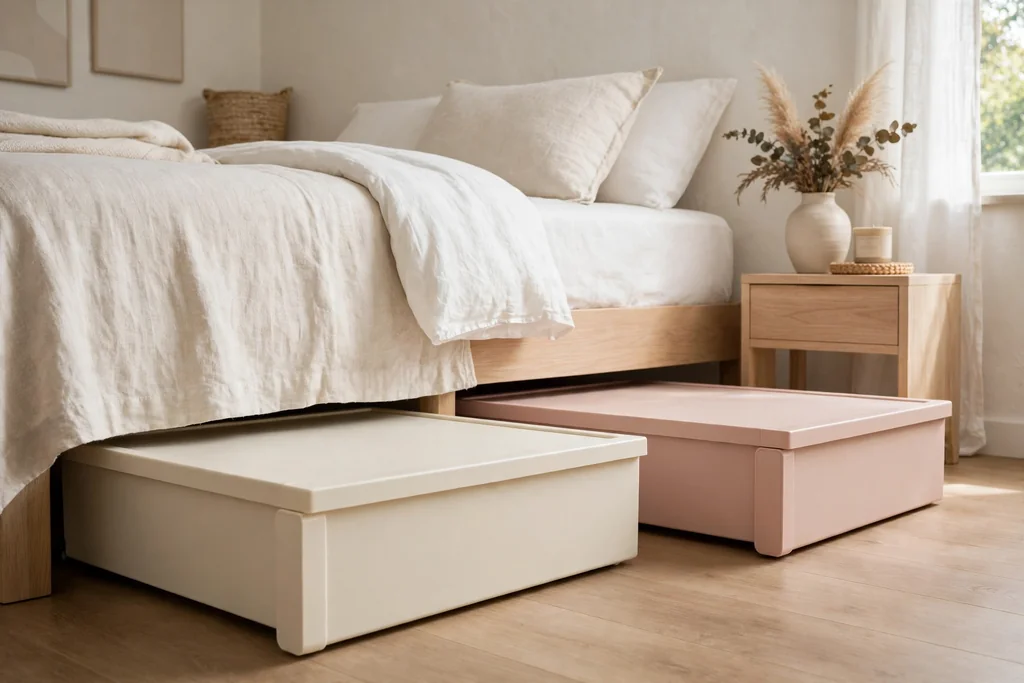
    Low rolling storage boxes sliding out from under a bed with dark bedding.

    Slide low rolling boxes under the bed for band merch, spare bedding, cables, and gear that would otherwise pile on chairs and shelves. Under-bed space is easy to overlook because it sits outside the normal line of sight, yet it is simple to use with two or three flat boxes on wheels. This works well in a bedroom and in a studio where closet space is tight.

    Keep the boxes shallow enough that they slide out without catching the bed frame, and keep them light, since pulling a heavy box from under a bed is awkward. Label each box, or keep a short list of what lives in each one, because deep storage only helps if you can find things again. Do not block the bed base vents or the walkway beside the bed when you place the boxes.

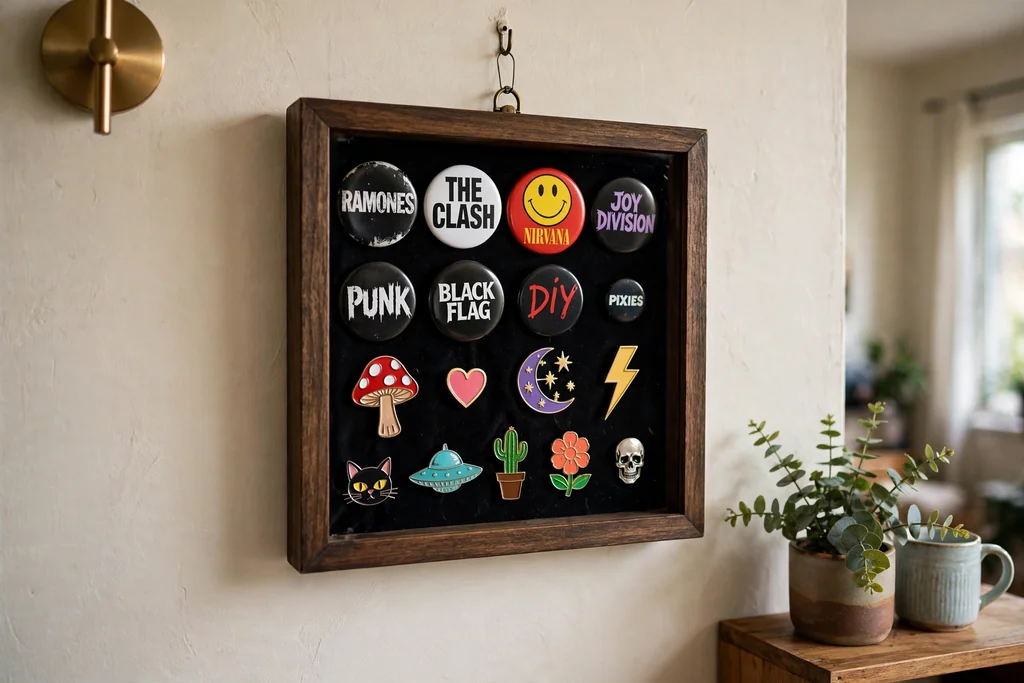
    29. Rotating Display Shelf for Small Finds

    Short shelf with a badge display, a small plant, a candle, and a record sleeve.

    Keep one short shelf as a rotating display for small grunge finds: a badge, a small plant, a candle, a photo, and one record sleeve. Rotate the shelf with the season or when a new find arrives, so a small room keeps changing without new holes in the wall or new furniture. This gives you a place for the small items that would otherwise clutter desks, windowsills, and bedside tables.

    Keep the shelf to five or six items at most, and leave breathing room between groups, so the display reads as curated, not crowded. Dust the shelf weekly, since open displays collect dust fast in a small room. When you add a new item, remove one old item to another spot, so the shelf count stays steady and the room never drifts back to clutter.

    Conclusion

    A grunge room works in a small space when dark color, music, and worn materials have a clear job and a clear limit. Start with one dark wall or one dark bedding set, add one music display, and choose storage that also serves as furniture. Keep walkways clear, light warm and layered, and displays small enough to rotate. That balance gives you the edge of grunge style, with a room that still feels easy to live in, sleep in, and work in every day.

    FAQs

    How do I make a grunge room feel cozy instead of gloomy in a small space?

    Keep one wall or one large surface dark, and keep the rest pale, then add warm light at two or three heights. Plaid bedding, a denim throw, and wood or leather pieces warm a dark palette, while a mirror opposite a window bounces daylight deeper into the room. Avoid painting all four walls black in a small room, since that can darken the space more than any single decor piece can fix.

    Can I do a grunge room in a rental without damaging the walls?

    Yes. Peel-and-stick panels, clip frames, removable strips, picture ledges fixed with the fixings your lease allows, canvas art, tapestries hung from a dowel, and freestanding furniture all give the look without permanent paint or large holes. Test one removable product first, follow the maker removal steps, and check your lease before you fix heavy shelves or a wall desk.

    What colors work best for a small grunge room?

    Black, charcoal, and dark grey make a strong base, with white or cream to keep the room open, and red or green plaid as the main pattern accent. Silver and black metal tie frames, shelves, and curtain rods together. Keep the palette to three or four colors in total, and repeat them in small doses, so the room reads as planned rather than random.

    How do I stop a grunge room from looking cluttered?

    Give every item a home, and limit open displays to one wall or one shelf at a time. Use crates, trunks, and under-bed boxes for storage, keep walkways and desk surfaces clear, and rotate small displays instead of adding to them. If a new poster, record, or find comes in, move an older piece to another spot or into storage, so the total count in view stays steady.

    Is grunge style only for bedrooms?

    No. The same ideas work in a studio, a living corner, or a small apartment room, as long as you zone the space first. A checkerboard rug, a trunk table, pipe shelves, and a poster wall can define a living area in a studio, while a fold-down desk and a jacket rail keep a work and entry zone tidy. Start with the zone you use most, and build out from there.

    How much should I spend to start a grunge room?

    Start with almost no spend by using what you already own: posters, records, tees, jackets, and old jeans. Thrift shops are the next step for leather chairs, crates, trunks, frames, and denim, since worn pieces suit the look and cost far less than new matching sets. Spend first on one dark base, such as bedding or peel-and-stick panels, and on good light, since those two changes affect the whole room at once.


  • 22 Dorm Room Color Ideas to Add Character to Your Space

    22 Dorm Room Color Ideas to Add Character to Your Space

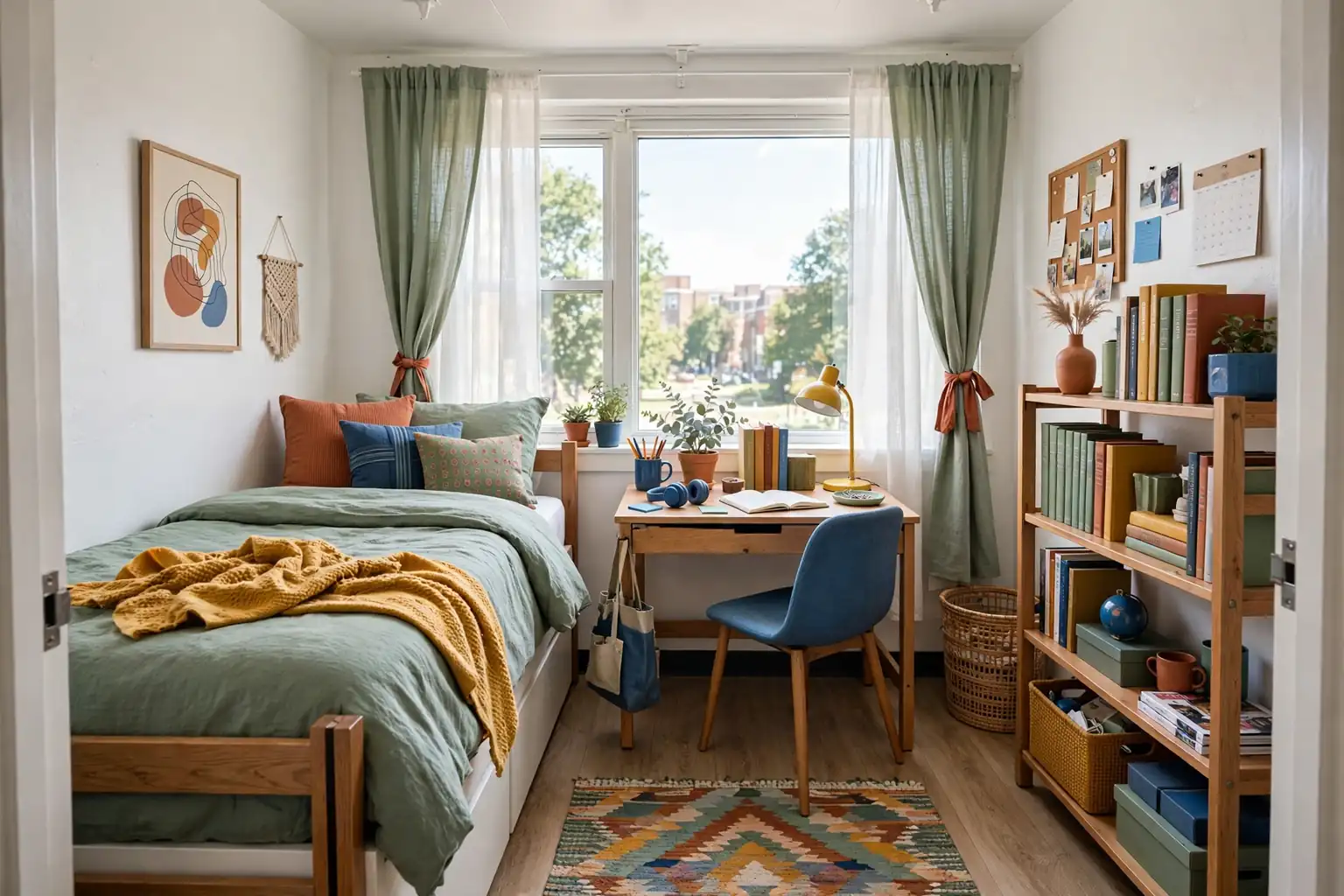
    A dorm room starts as a blank box with plain walls, standard furniture, and rules about what you can change, so color has to work through bedding, textiles, and removable pieces rather than paint. A small room responds fast to color: one strong bedding set, one accent wall, or one bright chair can set the mood for the whole space. These 22 dorm room color ideas cover walls, bedding, curtains, desks, storage, and zoning. Start with one main color, repeat it in two or three places, and keep the rest calm so the room stays easy to study and sleep in. For wider small space guidance, see these college apartment decor ideas.

    Key Takeaways

    • Start with a calm base of white, cream, or light grey, then add color through items you can move, wash, or swap.
    • Pick one main color and repeat it in at least three places, such as bedding, a cushion, and a piece of art, so the room reads as planned.
    • Favor renter friendly color: bedding, curtains, removable wallpaper, tape shapes, decals, and bins, and check your housing rules before anything fixed.
    • Use color to mark zones in a shared or studio room, with a different textile or rug color for sleeping, studying, and relaxing.
    • Keep study areas calmer than sleep areas if bright color distracts you, and save the boldest color for bedding or art you can change.
    • Choose washable fabrics for bedding, throws, and cushion covers, since dorm rooms collect dust and spills fast.

    1. Calm White Base With One Accent Color

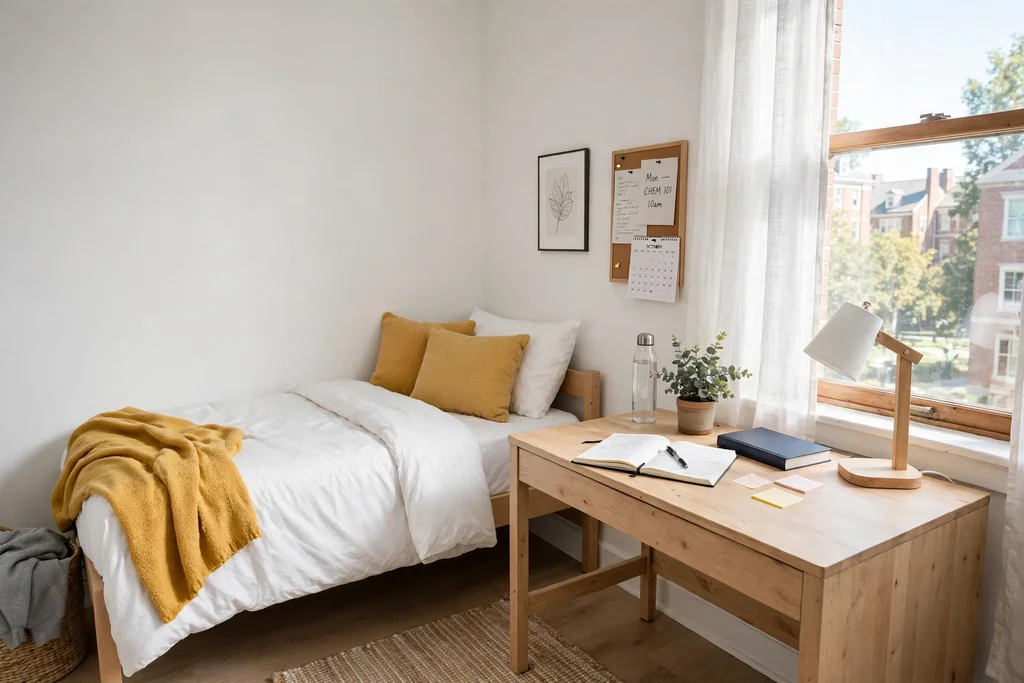
    Small dorm room with white walls, white bedding, a mustard yellow throw and cushions, and a light wood desk.

    Keep walls, bedding, and large pieces in white or cream, and add one accent color in a throw, cushions, and a small piece of art. A white base keeps a small room bright and gives you room to change the accent later without buying new furniture. Mustard, sage, or dusty blue all work as a single accent, since each one reads clearly against white without taking over.

    Repeat the accent three times and stop there: a throw on the bed, a cushion, and a print or a bin in the same tone. If every item is a different color, the room can look like a clearance pile rather than a plan. This approach also suits a shared room, since a white base leaves room for a roommate’s taste on the other side.

    2. Peel-and-Stick Accent Wall Behind the Bed

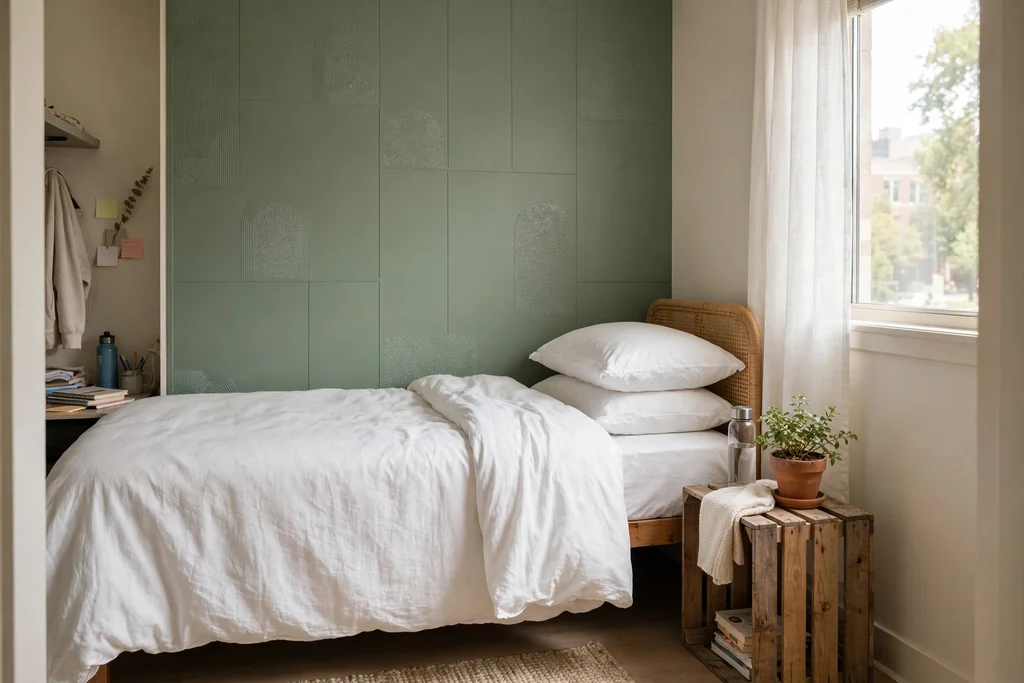
    Dorm room bed with a sage green peel-and-stick accent wall behind the headboard and white bedding.

    Cover the wall behind the bed with peel-and-stick wallpaper in sage green, soft blue, or a small scale pattern for a focal point with no paint and no repair bill at move out. One wall is enough in a dorm room, since covering every wall can make a small space feel closed in. Measure the wall first, order a little extra for pattern matching, and start at a top corner, smoothing down slowly to push out air bubbles.

    Test a small piece first, especially on textured or freshly painted walls, and follow the maker’s removal steps at the end of the term. Keep bedding mostly plain on this wall, so the pattern stays the main event. If the paper starts to lift near a humid window wall, choose a drier wall instead.

    3. Navy Bedding for a Focused Sleep Zone

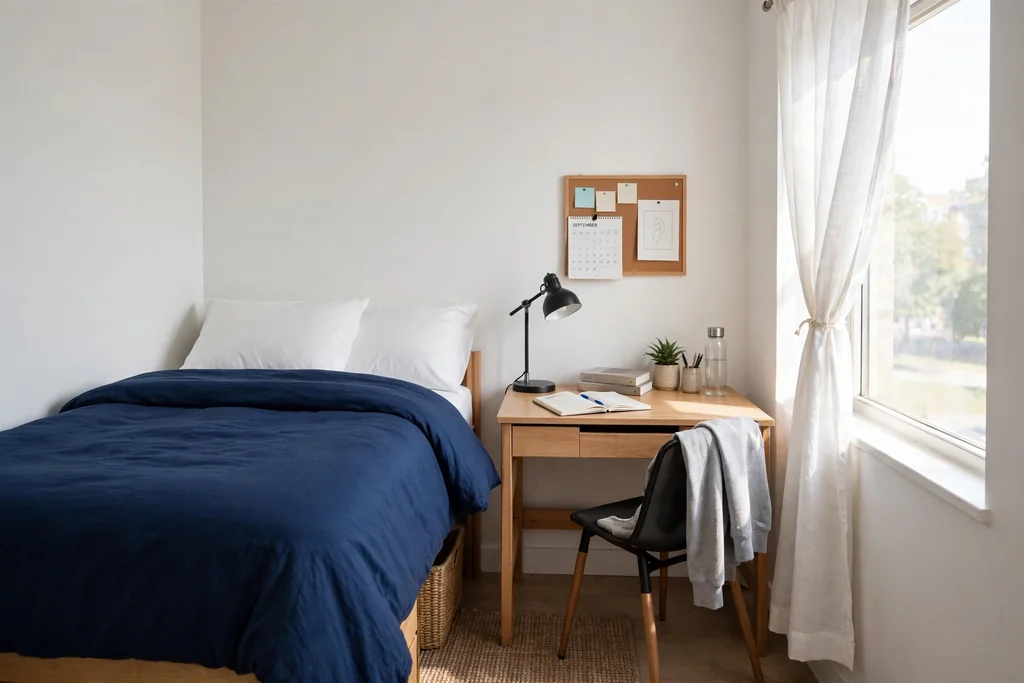
    Dorm room with a bed dressed in deep navy bedding and white pillows beside a small desk.

    Make the bed with deep navy bedding and white pillows for a sleep zone that feels settled and easy to rest in. Navy reads as a calm, grown up color in a dorm room, and it hides minor marks better than very pale bedding. White pillows keep the bed from looking dark, and a light throw folded at the foot adds a second tone.

    Pair navy bedding with white or light grey walls and a plain rug, so the bed carries the color and the rest of the room stays quiet. This suits a student who wants the room to feel calm at night and still tidy in the morning. Wash navy bedding on its own the first few times, since dark dyes can run.

    4. Terracotta Cushions and Throw on Cream Bedding

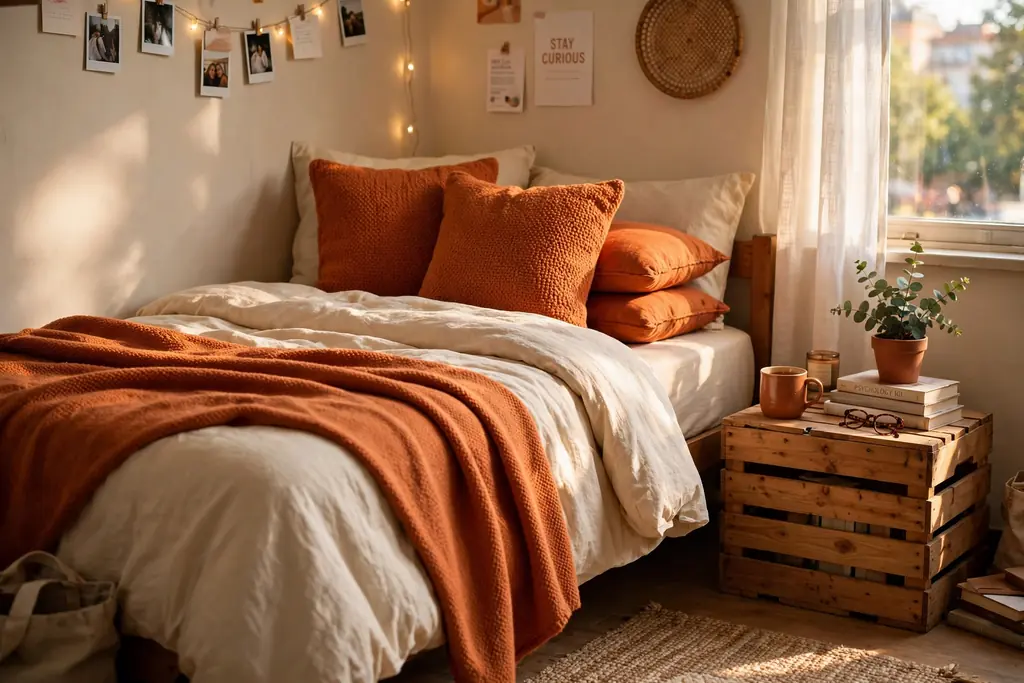
    Dorm room bed with terracotta cushions and a throw over cream bedding.

    Add terracotta cushions and a matching throw to cream bedding for warmth without painting a wall. Terracotta sits between orange and brown, so it feels warm in daylight and soft in lamp light, and it pairs well with wood furniture and plain white walls. This is a low cost change, since cushions and a throw move with you to the next room.

    Keep the rest of the bedding cream or white, and add one terracotta item elsewhere, such as a small vase or a notebook, so the color looks planned. If the room already has warm wood tones, terracotta will blend in rather than clash. Choose washable cushion covers, since bed cushions pick up daily use.

    5. Blush Pink Bedding With Cream Walls

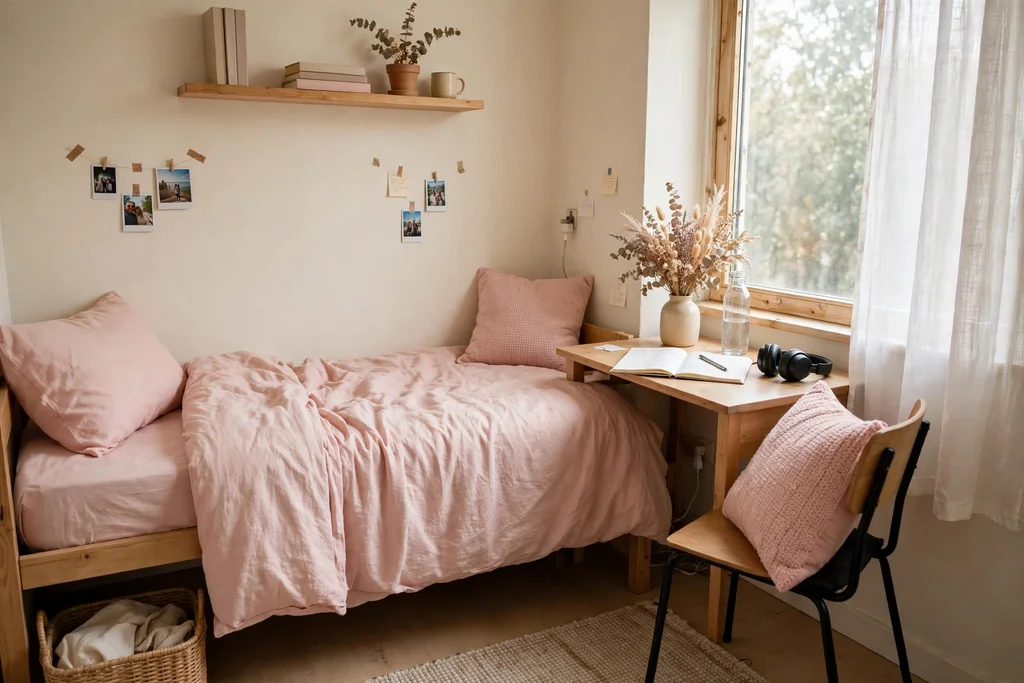
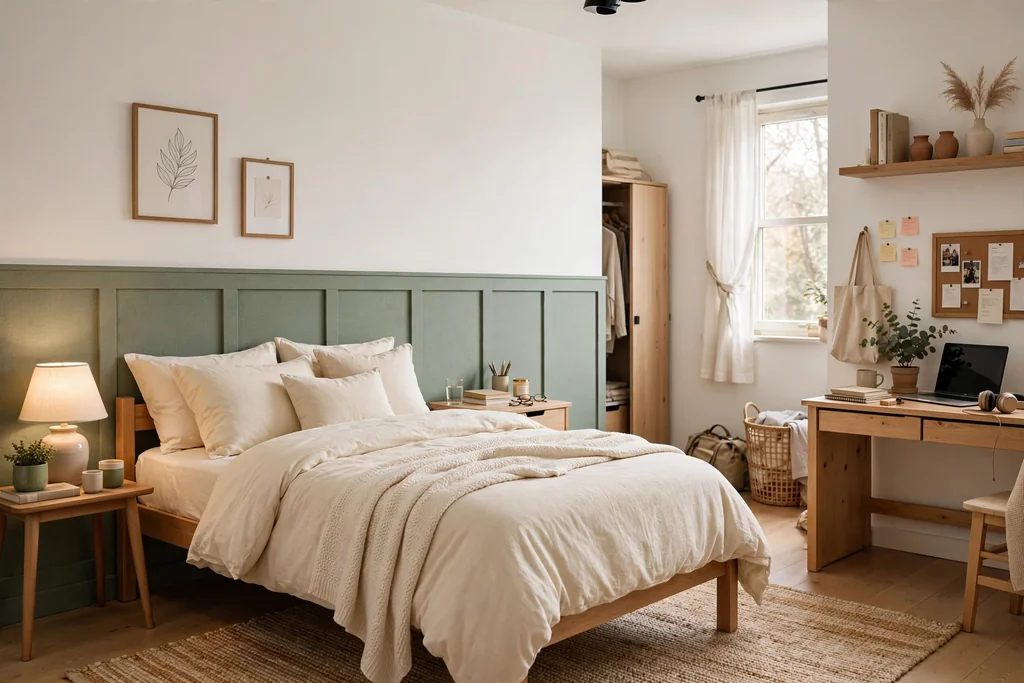
    Dorm room with blush pink bedding, cream walls, and a small vase of dried flowers on a desk.

    Use blush pink bedding against cream walls for gentle warmth that never feels loud. Blush works well in a small room because it adds color while keeping the light feel of a pale room, and it pairs with white, cream, wood, and soft grey. A blush duvet cover, one pink cushion, and a small vase of dried flowers are enough to set the palette.

    Keep other colors quiet: white lamps, a light rug, and plain curtains let blush do the work. If pink starts to feel too sweet, add one grey or white cushion to cool it down. Blush bedding also suits a room shared with a roommate, since it is soft rather than dominant.

    6. Forest Green Study Corner

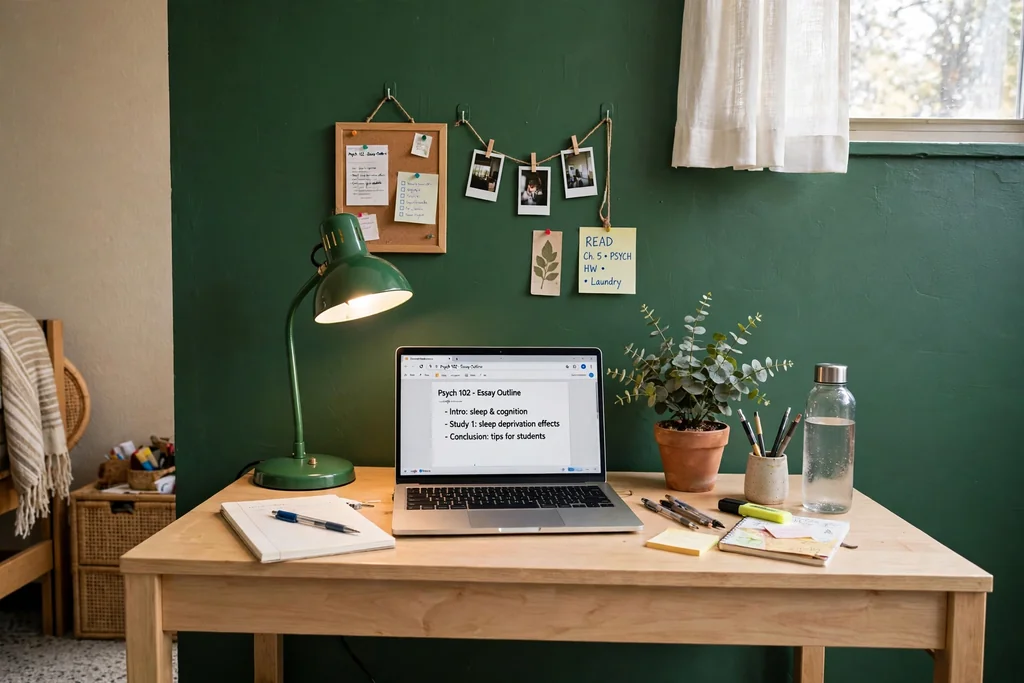
    Dorm room study corner with a forest green desk wall, a light wood desk, and a green lamp.

    Paint the study corner green in a removable way, with a green desk lamp, a green pinboard, and a plant, or a peel-and-stick panel behind the desk in forest green. Green suits a study zone because it feels steady and calm, and it marks the desk as a work spot distinct from the bed. Keep the desk surface light wood or white, so notes and books stay easy to read.

    Add a task lamp with warm white light for evening work, and keep the green to the desk zone rather than spreading it across the whole room. A small plant on the desk repeats the green in a natural way. If your housing rules forbid wall panels, a green desk chair or a green desk mat gives a similar zone effect with no wall work.

    7. Sunny Yellow Desk Accessories

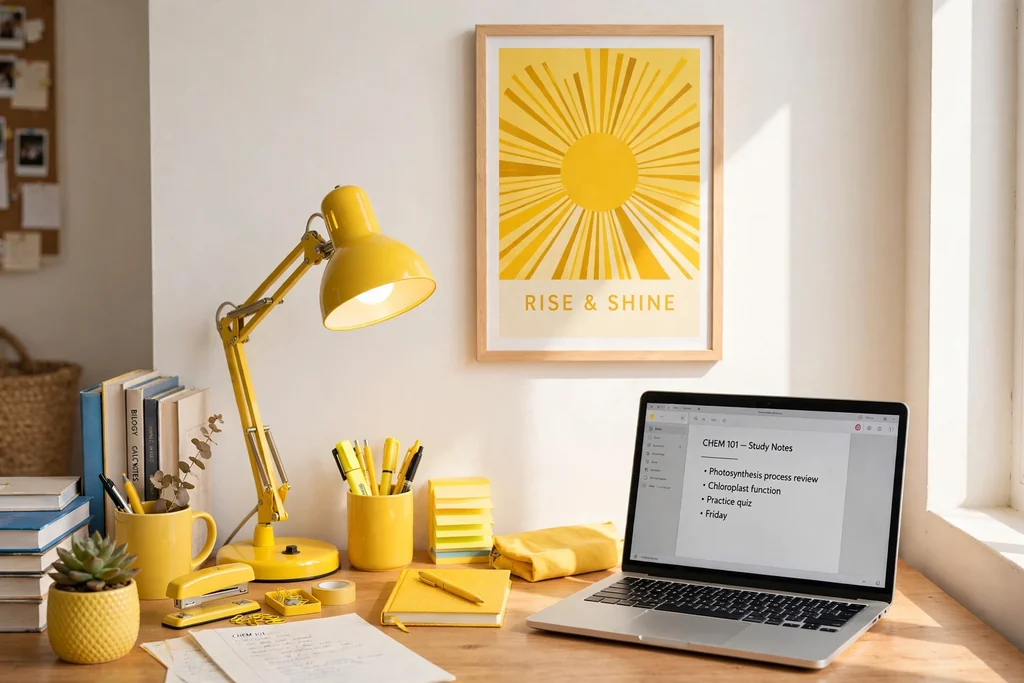
    Dorm room desk with sunny yellow accessories, a yellow lamp, and a yellow art print on a white wall.

    Brighten the desk with sunny yellow accessories: a desk lamp, a pen cup, a small tray, and one art print in yellow on a white wall. Yellow adds energy to a work spot and is easy to see in daylight, which helps a desk corner feel inviting rather than dull. Keep the desk itself plain, so the yellow items stand out as a set.

    Limit yellow to the desk zone, since yellow across a whole room can feel tiring. A yellow lamp plus a yellow pen cup and one print is enough, and the rest of the room can stay neutral. This is a good choice for a dark desk corner, where a bright accessory also helps the spot feel less gloomy.

    8. Black and White Monochrome Scheme

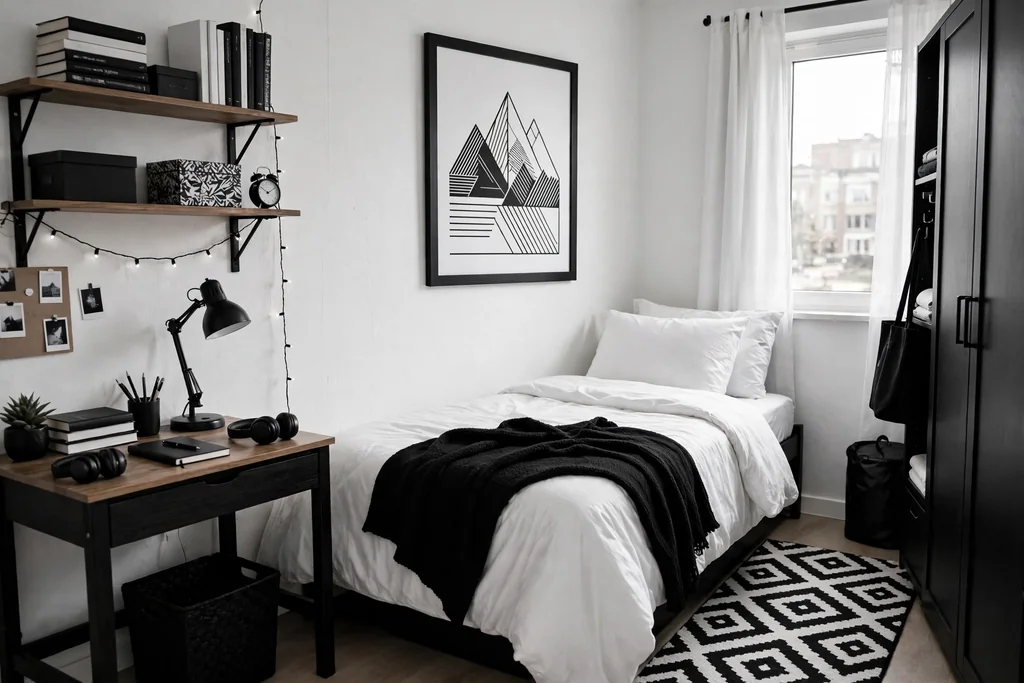
    Dorm room with black and white decor, black framed graphic art, and white bedding with a black throw.

    Use a black and white scheme for a dorm room that feels sharp and easy to keep tidy: white bedding, a black throw, black framed graphic art, and black storage bins. Monochrome suits a small room because it limits visual clutter, and it lets one texture, such as a woven throw or a framed print, carry the interest. It also pairs with any roommate’s side, since black and white clash with nothing.

    Keep the balance mostly white, with black as the accent, so the room does not feel dark. A black lamp, black frames, and a black rug edge are enough, and bedding should stay mostly white for a bright sleep zone. Add one plant for a touch of green if the scheme starts to feel too stark.

    9. Lavender Bedding With Lilac Wall Art

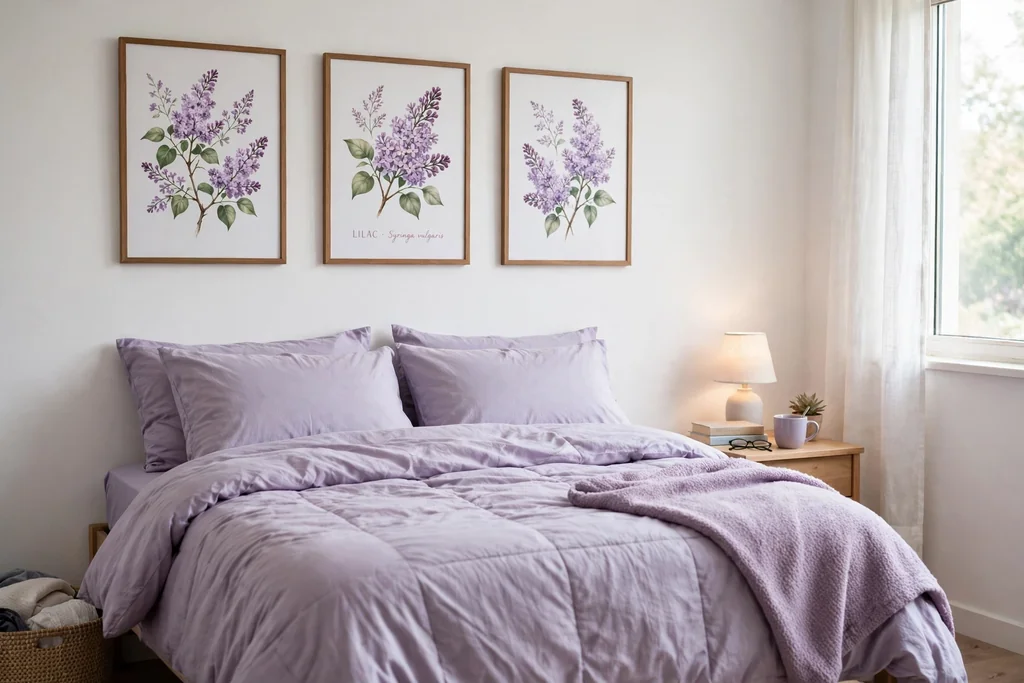
    Dorm room bed with lavender bedding and lilac wall art prints above the bed.

    Choose lavender bedding and lilac wall art prints above the bed for a calm, soft color story. Lavender is pale enough to keep a small room bright, and it pairs with white, cream, and light grey without effort. Hang two or three small prints in matching frames above the bed, rather than one large print, so the wall feels balanced over a single bed.

    Keep curtains and the rug plain, and repeat lavender once more in a small cushion or a throw. This palette suits a student who wants color that still feels restful at night. Wash lavender bedding with similar pale colors, and avoid mixing it with strong reds or oranges nearby, which can fight the soft tone.

    10. Teal Curtains and a Matching Throw

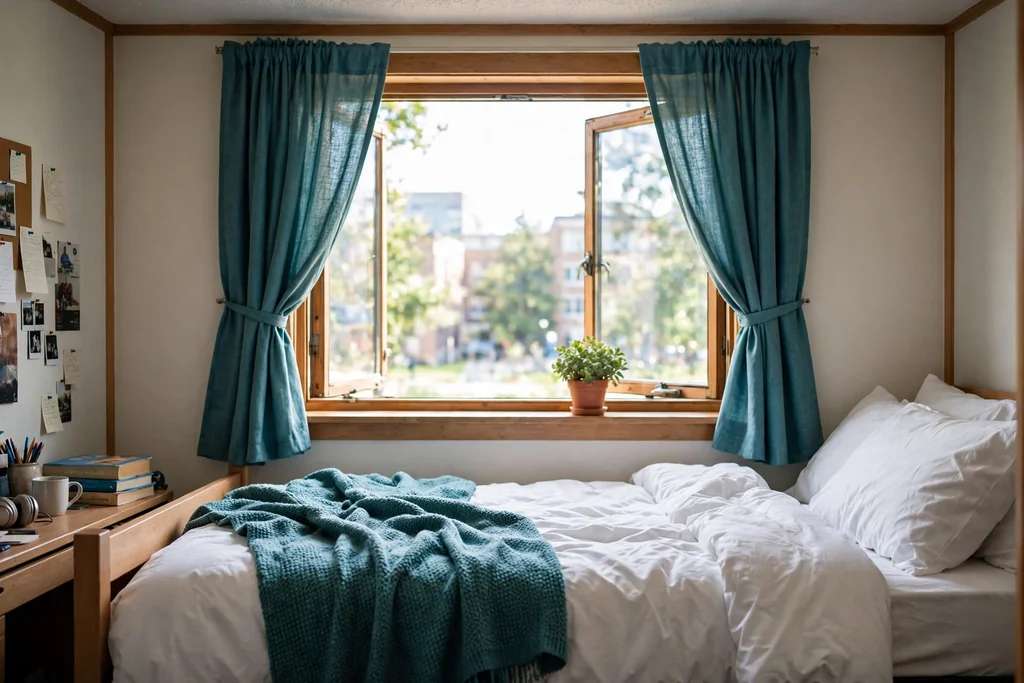
    Dorm room window with teal curtains and a teal throw on a bed with white bedding.

    Hang teal curtains at the window and add a teal throw on a bed with white bedding for color at two heights in the room. Teal works well because it is rich without being dark, and it pairs with white, wood, and soft grey. Curtains also soften a plain dorm window and give privacy at night, so they do two jobs at once.

    Choose a washable cotton or polyester curtain, and hang the rod high and wide if your housing rules allow it, so the window looks larger. For more on hanging and fabric choices, see these bedroom curtain ideas. Keep the rest of the room calm, and let teal appear only in the curtains, the throw, and one small cushion.

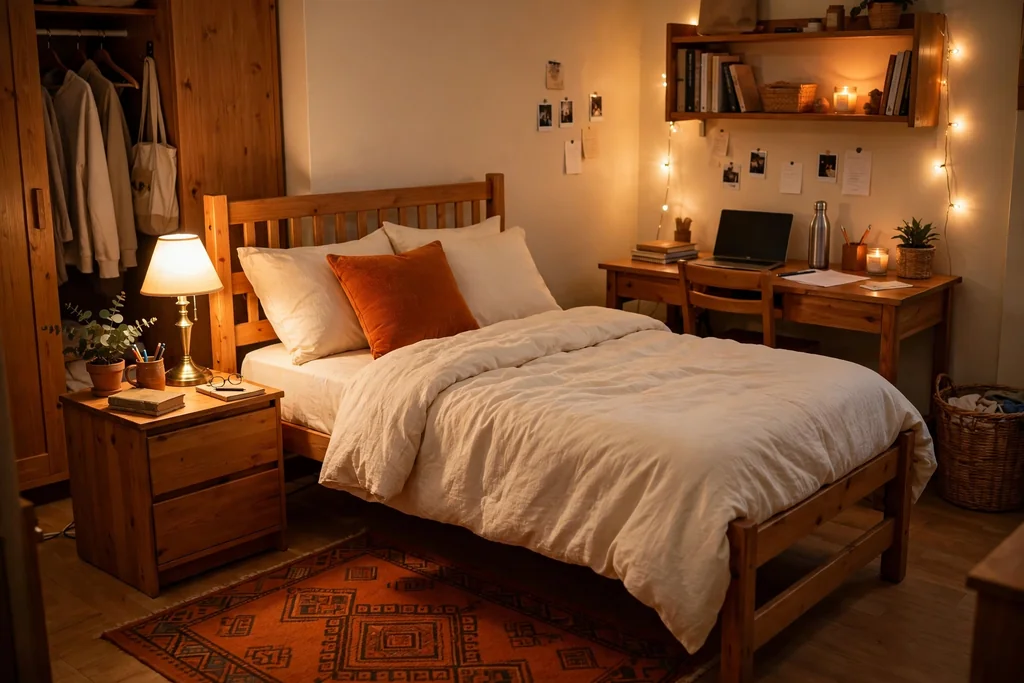
    11. Burnt Orange Rug With Wood Tones

    Warm dorm room with a burnt orange rug, wood furniture, and an orange cushion on cream bedding.

    Lay a burnt orange rug beside the bed and repeat the tone in one cushion for a warm floor level color that grounds the room. Orange at floor level feels cozy underfoot and pairs well with wood desks, wood crates, and cream bedding. A rug also protects a plain dorm floor and marks the sleep zone in a shared room.

    Choose a flat, washable rug that fits beside the bed without blocking a door or a wardrobe, and use a rug pad or rug tape underneath to stop slipping. Keep wall colors plain, since the rug already gives the room its warm note. Shake the rug outside often, since small rooms show dust fast.

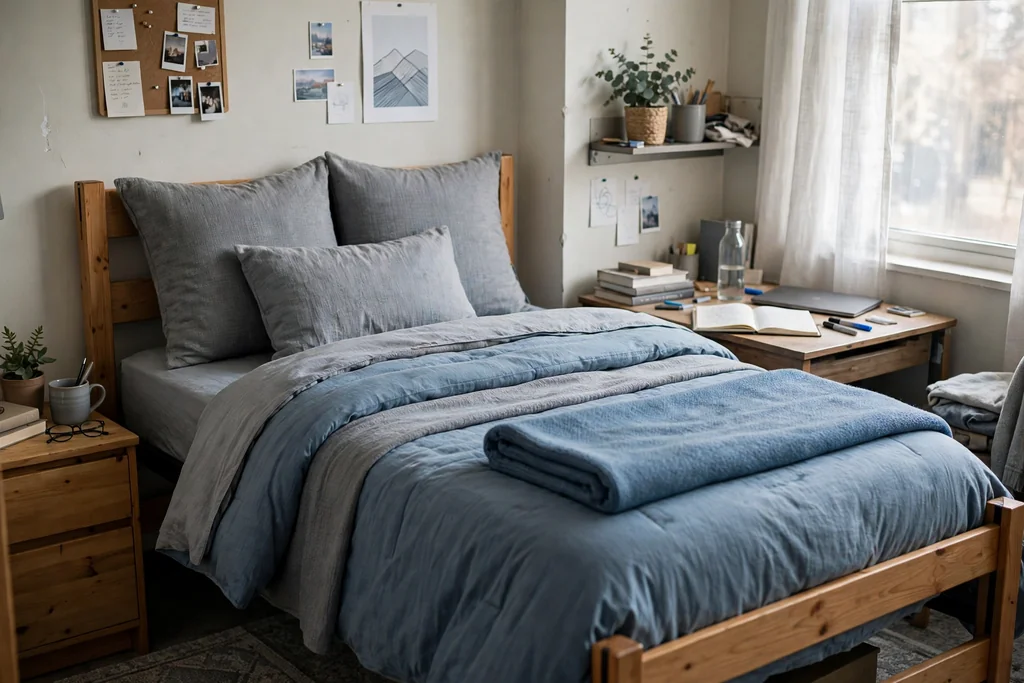
    12. Dusty Blue and Grey Layered Bedding

    Dorm room bed with dusty blue and grey layered bedding and a blue throw folded at the foot.

    Layer dusty blue and grey bedding for a soft, mixed tone bed that feels finished without a bold color. Start with a grey fitted sheet and duvet cover, add a dusty blue throw folded at the foot, and finish with grey and blue cushions. Layering gives you options across seasons, since you can remove the throw on warm nights and add it back when it cools down.

    Keep walls white or pale grey, and add one blue item elsewhere, such as a small storage bin or a print, so the bedding palette links to the room. This combination suits a student who likes color but wants the room to stay calm for sleep and study. Choose washable layers, since layered bedding needs regular washing.

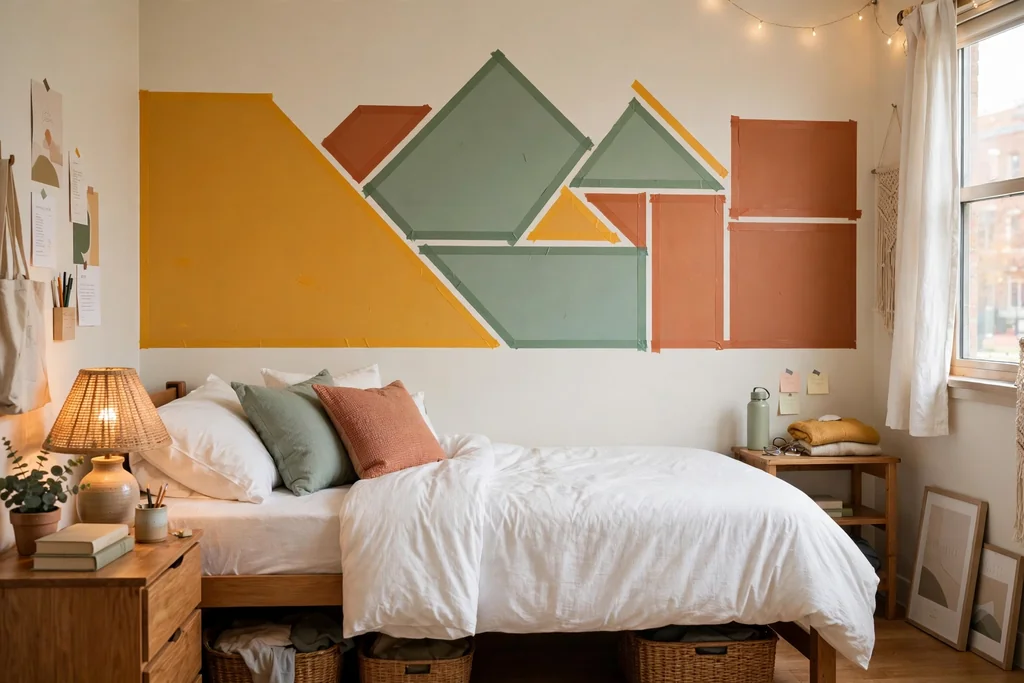
    13. Color Blocked Tape Mural Above the Bed

    Dorm room wall with a color blocked tape mural in mustard, sage, and terracotta above a bed.

    Make a color blocked mural above the bed with painter’s tape shapes in mustard, sage, and terracotta on a white wall for art you can peel off at move out. Tape shapes cost little, need no tools, and let you test a bold wall idea without paint or wallpaper. Plan the shapes on paper first, then tape large, simple blocks rather than fiddly small pieces, so the mural reads clearly from across the room.

    Press tape edges down firmly, and check your housing rules about tape on painted walls before you start. Keep bedding plain, since the mural is the wall’s main event. When you move out, peel the tape slowly and check the wall, so you leave the room as you found it.

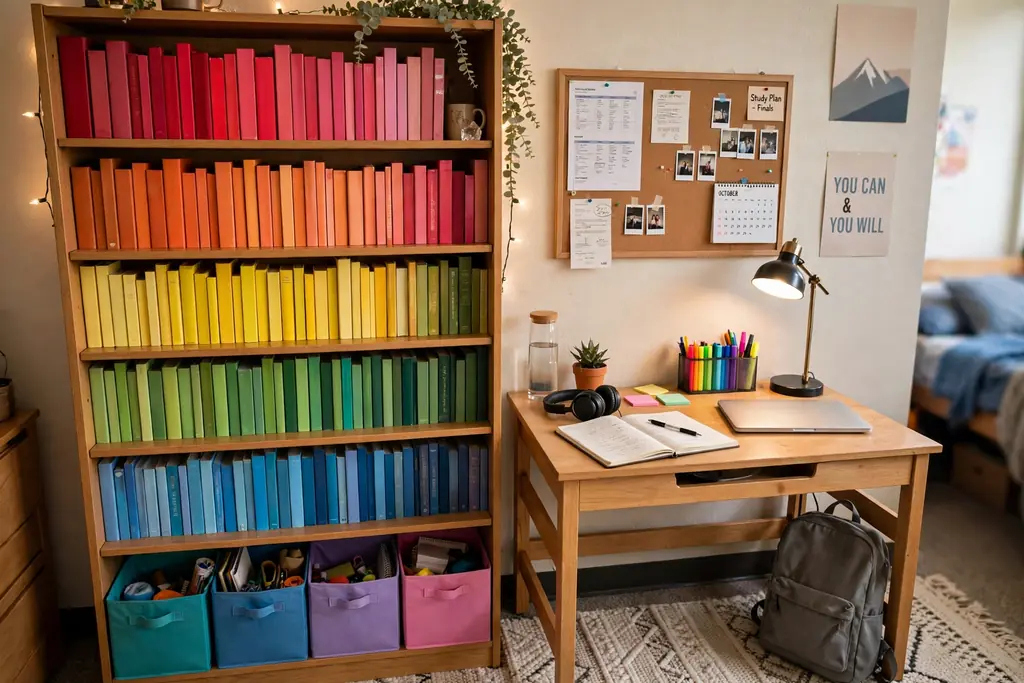
    14. Rainbow Bookshelf and Color Coded Bins

    Dorm room bookshelf with books arranged by color in rainbow order and colorful storage bins.

    Arrange books by color on a bookshelf and add color coded bins on the lower shelves for storage that doubles as decor. A rainbow shelf gives a plain dorm wall a clear color story, and it makes books easy to find by spine color. Bins in matching tones hide chargers, snacks, and small supplies, so the shelf stays tidy rather than crowded.

    Keep the rainbow to one shelf unit, and leave some breathing room between groups so the shelf does not look packed. Put heavy books low and light items high, and label bins if you share the room. This idea works best when most of your books have solid spines, since mixed busy covers can blur the rainbow effect.

    15. Half Wall Effect With Removable Panels

    Dorm room with a sage half wall effect from removable panels and a bed with cream bedding.

    Create a half wall effect by covering the lower half of one wall with removable sage panels, leaving the upper half white, for a structured look with no paint. The horizontal line gives a small room a sense of order, and the sage lower half adds color at bed and desk height, where the eye lands most. Measure the wall and mark the line with a light pencil mark or a level before you place panels, so the edge stays straight.

    Keep bedding and curtains plain, since the half wall already gives the room its structure. This suits a long, plain dorm wall that needs interest without a full accent wall. Check removal steps for the panels you use, and test one panel first on your wall type.

    16. Emerald Velvet Cushions and a Gold Lamp

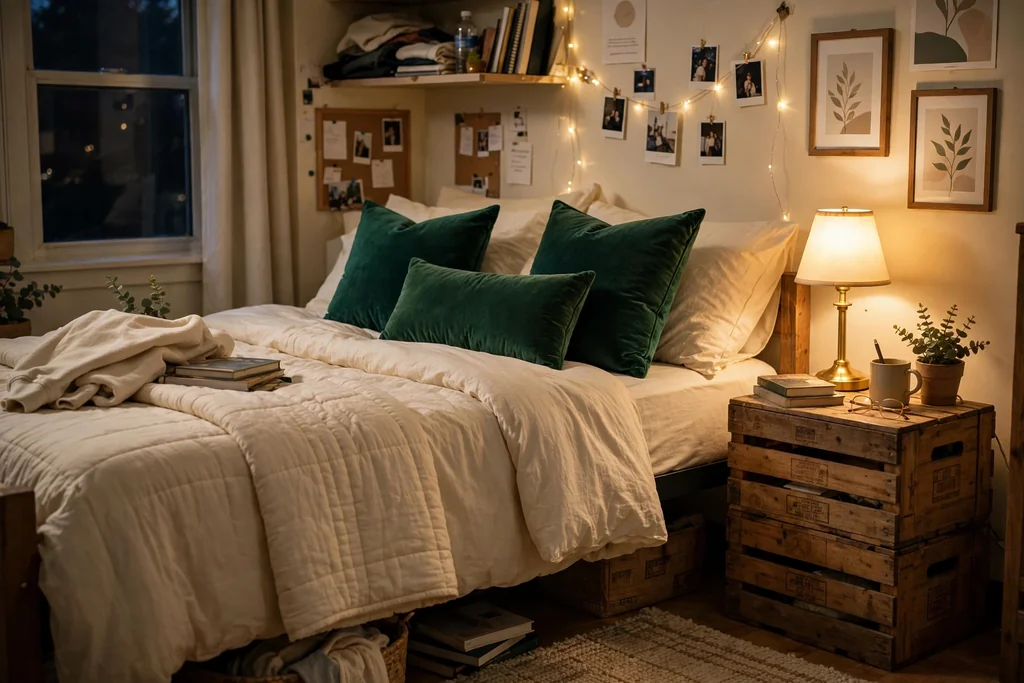
    Dorm room bed with emerald velvet cushions and a small gold lamp on a crate nightstand.

    Add emerald velvet cushions to cream bedding and a small gold lamp on a crate nightstand for a rich, evening friendly corner. Velvet adds texture as well as color, so a small amount goes a long way in a dorm room, and gold lamp light warms the green in the evening. Keep the rest of the room plain, with white walls and a light rug, so the emerald and gold read as a deliberate pair.

    Choose two velvet cushions rather than a full velvet bedding set, since velvet can feel warm in summer and needs care in washing. Check the lamp shade for heat safety, and keep the lamp clear of bedding and curtains. This combination suits a student who wants a slightly dressier bed corner without new furniture.

    17. Coral Desk Chair and Matching Lamp

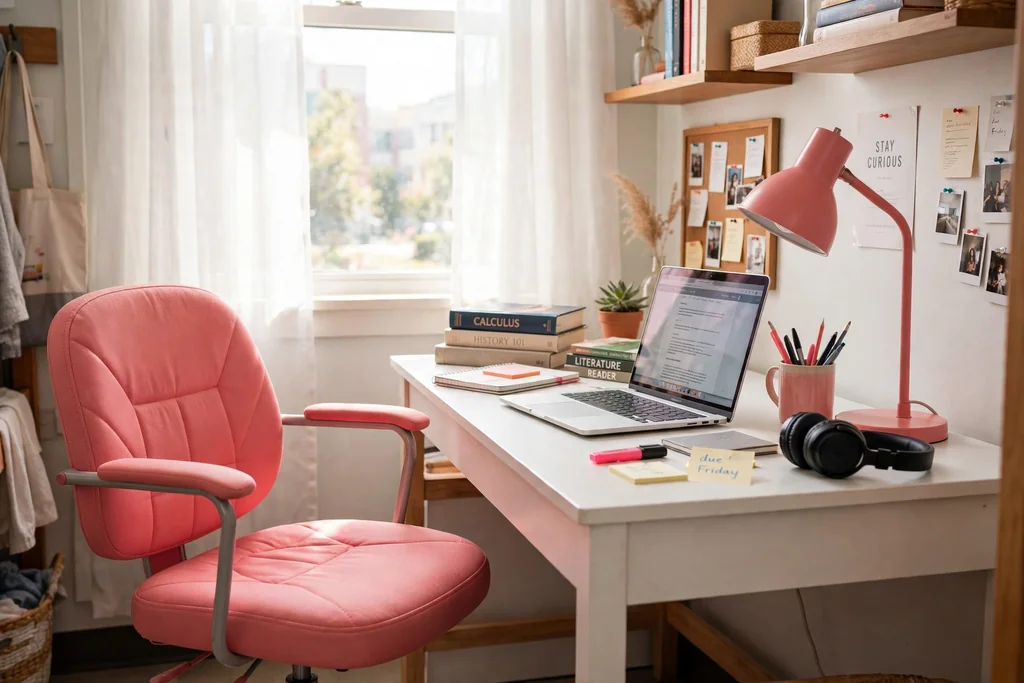
    Dorm room desk with a coral chair and a matching coral lamp beside a white desk.

    Pick a coral desk chair and a matching coral desk lamp for a work spot that feels bright and personal. A colored chair is one of the few large color moves a dorm room allows, since it is furniture you can take with you, and it marks the desk zone clearly. Pair the chair with a white desk and plain walls, so coral stays the focus of the corner.

    Keep the chair cushion washable if you can, since desk chairs take daily use, and add one coral item elsewhere, such as a pen cup, so the chair does not look isolated. If coral feels too bright on its own, pair it with white and light wood, which calm the tone. Check that the chair fits under the desk and leaves a clear walkway.

    18. Charcoal Grey Bedding With Mustard Accents

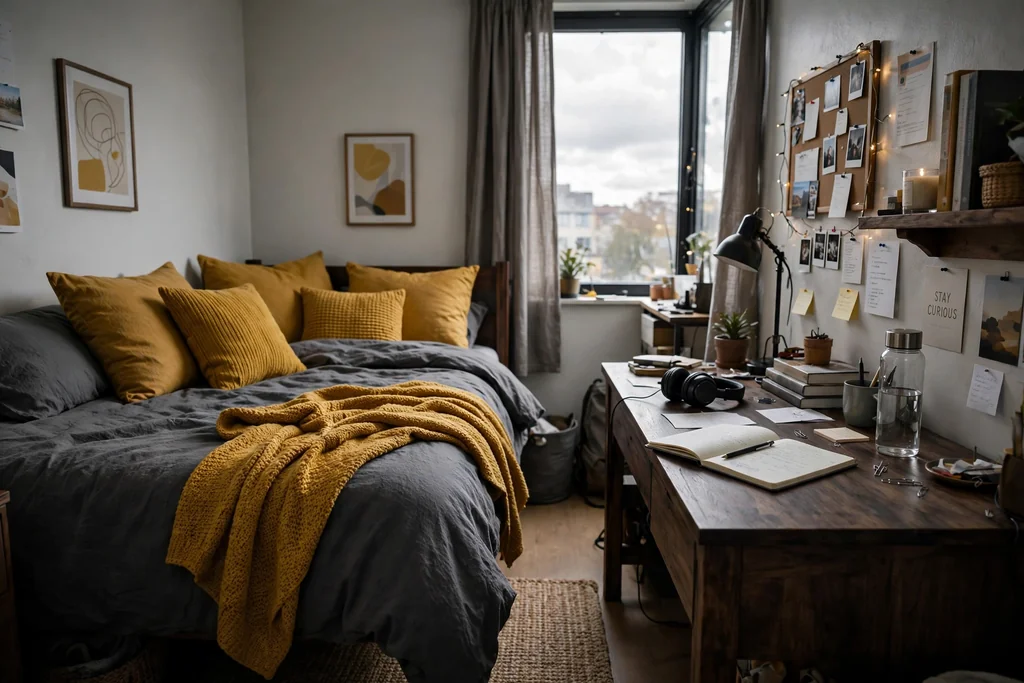
    Dorm room with charcoal grey bedding, mustard cushions, and a mustard throw.

    Use charcoal grey bedding with mustard cushions and a mustard throw for a moody but bright combination. Charcoal gives the bed depth, while mustard adds a warm lift that stops the scheme from feeling flat. This pairing suits a student who likes dark tones but still wants the room to feel welcoming in daylight.

    Keep walls white or pale grey, and add mustard only in cushions, a throw, and one small print, so the dark bedding stays balanced. Wash charcoal bedding separately at first, and avoid adding a second strong color nearby, since charcoal and mustard already give the bed a clear palette. A light rug beside the bed keeps the floor bright.

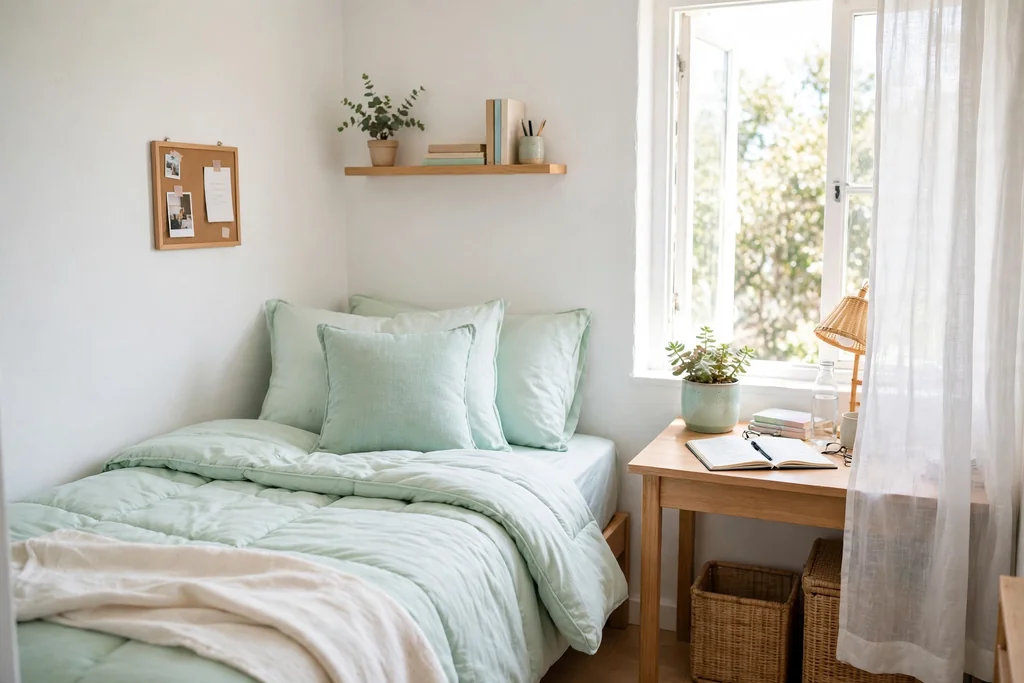
    19. Pastel Mint Bedding for a Fresh Small Room

    Fresh small dorm room with pastel mint bedding, white walls, and a small plant.

    Choose pastel mint bedding with white walls for a fresh, airy small room. Mint is pale enough to keep light bouncing around a small dorm room, and it pairs with white, cream, and light wood without effort. A mint duvet cover, one mint cushion, and a small plant on the windowsill are enough to set the palette.

    Keep curtains white or cream, and avoid strong patterns nearby, since mint works best as a soft, clean color. This palette suits a small or north facing room that needs all the brightness it can get. Wash mint bedding with similar pale colors, and add one white cushion if the mint starts to feel too cool on its own.

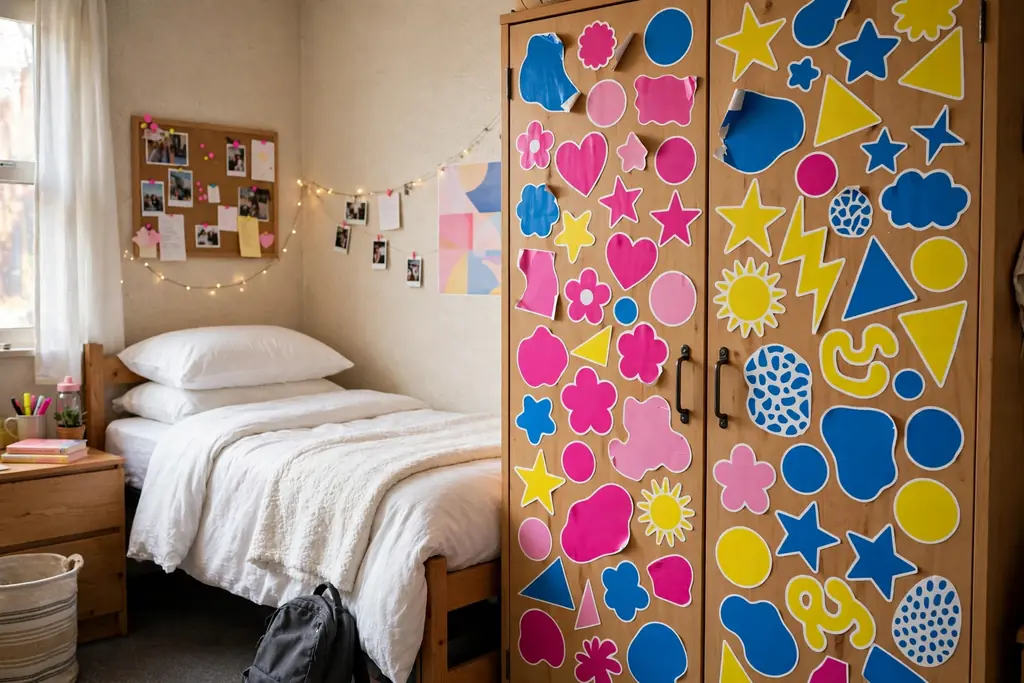
    20. Colorful Wardrobe Doors With Removable Decals

    Dorm room wardrobe doors covered with colorful removable decals in blue, yellow, and pink shapes.

    Cover wardrobe doors with colorful removable decals in blue, yellow, and pink shapes for a large color move with no paint and no damage. Wardrobe doors are often the largest plain surface in a dorm room, so decals there change the whole room at a glance. Plan the layout on the floor first, then place large shapes with even gaps, so the doors read as a set rather than a random scatter.

    Check that the decals are marked removable and test one on a hidden corner first. Keep bedding mostly plain, since the wardrobe doors already carry plenty of color. Peel decals slowly at move out, and wipe the doors clean, so the room returns to its plain state.

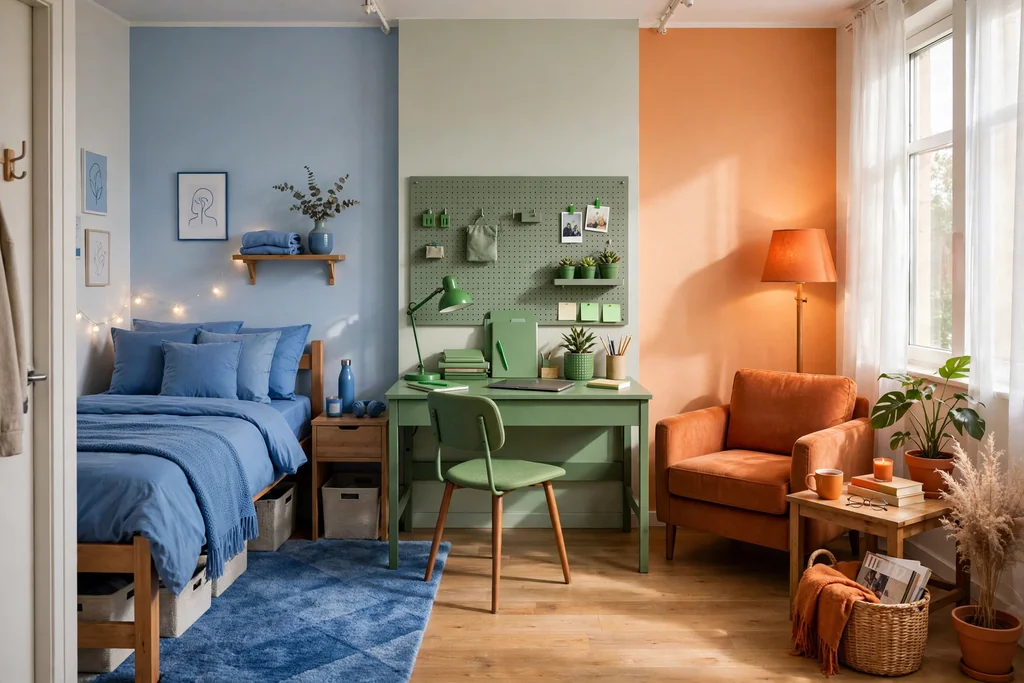
    21. Color Zoning for Sleep, Study, and Relaxing

    Dorm room divided into color zones, with blue sleep bedding, a green desk area, and an orange reading chair.

    Give each activity its own color in a shared or studio dorm room: blue bedding and a blue rug for sleep, green desk items for study, and a warm orange chair and throw for relaxing. Color zoning helps a small room feel organized, since each zone reads as its own spot even when the zones sit close together. It also helps roommates agree on boundaries, since each zone has a clear job.

    Keep each zone to one main color plus a calm base, and avoid using more than three zone colors in one room, or the room can feel busy. Repeat each zone color twice within its zone, such as a rug and bedding for sleep, so the zone feels finished. This idea pairs well with the layout guidance in these solo apartment ideas, where each daily routine gets its own spot.

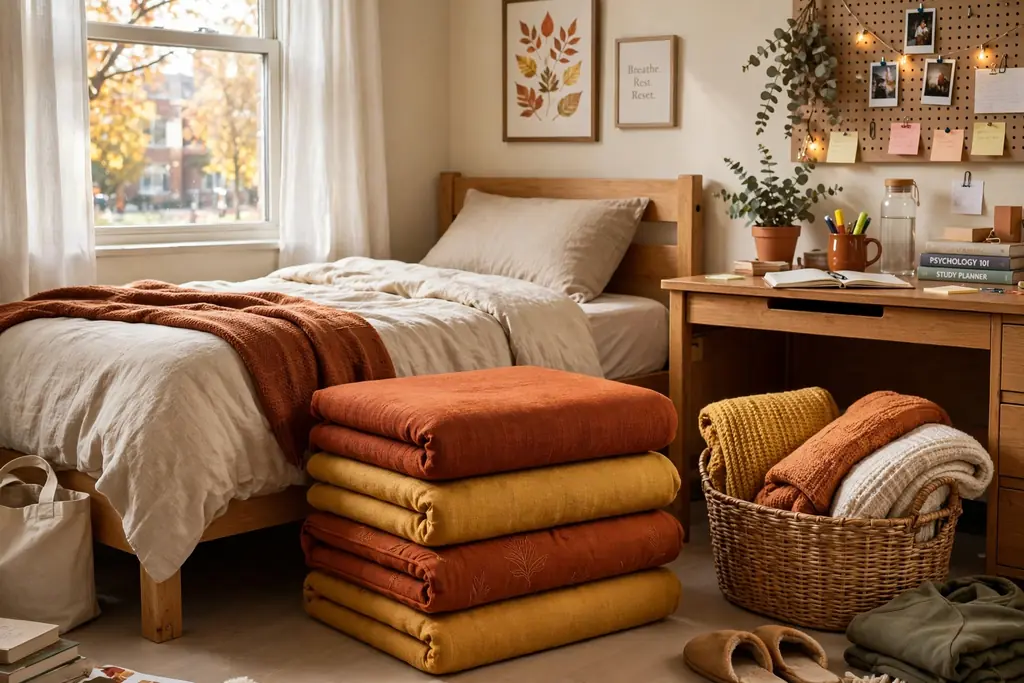
    22. Seasonal Cushion and Throw Swap

    Dorm room bed with autumn cushion covers in rust and gold stacked beside it and a basket of folded throws.

    Keep a basket of interchangeable cushion covers and throws in rust and gold for autumn, and pale blue and white for spring, so you can change the room palette in an afternoon. A seasonal swap is the cheapest way to refresh a dorm room, since covers and throws store flat in a basket under the bed and cost far less than new furniture. It also lets you test a bold color for a term without committing to it for a year.

    Store out of season covers clean and dry, and wash them before swapping, so each season starts fresh. Limit each season to one palette, such as rust and gold, rather than mixing every color you own, so the room still reads as planned. This is a good final step after the other ideas, since it lets you refresh any palette on this list.

    Conclusion

    Color in a dorm room works best when it has a clear job and a calm background. Start with a white or cream base, pick one main color, and repeat it in bedding, a cushion, and one more spot, so the room reads as planned rather than random. Renter friendly moves, such as peel-and-stick walls, tape murals, decals, curtains, and washable bedding, give you bold color with no repair bill at move out, and color zoning helps a small or shared room feel organized. Small changes, like a coral chair, a teal curtain, or a seasonal throw swap, let you test a palette before a larger change, and they move with you to the next room. Save this list for your next free afternoon, and work through it in order: base and bedding first, then one wall move, then desk and storage color, and finally the zoning and seasonal touches.

    FAQs

    What is the easiest dorm room color idea for a rented room?

    Bedding is the easiest place to start, since it needs no wall work and moves with you. Pick a duvet cover in one color you like, add a matching throw and one cushion, and keep walls and curtains plain. Curtains, a rug, and a colored desk chair are the next easiest moves, since they also need no fixed changes. Check your housing rules before anything that sticks to a wall, and test removable products on a hidden spot first.

    How many colors should I use in a small dorm room?

    Use one main color, one calm base, and at most one extra accent for a small room. A base of white, cream, or light grey keeps the room bright, the main color gives it character, and a small accent, such as gold, wood, or a second soft tone, adds depth. More than three strong colors in a small room can feel busy, especially when bedding, art, and storage all compete. Repeat the main color in three places, and keep everything else quiet.

    Can I add color to a dorm room without painting?

    Yes. Most of the ideas on this list need no paint at all. Bedding, curtains, rugs, cushions, throws, a colored chair, and color coded bins all add color with no wall work. For walls, peel-and-stick wallpaper, removable panels, tape shapes, and removable decals give you a wall color effect that peels off at move out. Always check your housing rules and test a small piece first, since wall types and paint vary.

    What dorm room colors work best in a small or dark room?

    Pale colors work best in a small or dark room, since they bounce light around. White, cream, pastel mint, blush, lavender, and dusty blue keep a room bright, while a single brighter accent, such as yellow desk items or a coral chair, adds energy without darkening the walls. Avoid covering every wall in a dark color in a small room, and keep dark tones, such as navy or charcoal, to bedding, where they can be balanced with white pillows and a light rug.

    How do I agree on colors with a roommate?

    Start with a shared calm base, such as white or cream walls and bedding, and give each person their own side or zone color. Agree on shared items, such as curtains and rugs, in a neutral tone, and let each person choose bedding and desk items for their own side. Color zoning helps here, since each zone has a clear job and a clear owner. Talk through the plan before buying, and keep shared walls to removable items you both like, so either side can change later.

    How can I change my dorm room colors each term without buying new furniture?

    Swap cushion covers and throws, which store flat and cost far less than furniture. Keep a basket of covers in two palettes, such as rust and gold for autumn and pale blue and white for spring, and change them in one afternoon. Art prints in matching frames are also easy to swap, and a new rug or curtain can refresh the room without new furniture. Wash covers before storing them, so each term starts fresh.


  • 24 Timeless Vintage Apartment Ideas That Balance Style and Comfort

    24 Timeless Vintage Apartment Ideas That Balance Style and Comfort

    A vintage apartment does not need to look like a museum. The best rooms mix old pieces with everyday comfort, so a worn wood table can hold a laptop, and a velvet chair can be the seat you reach for each evening. Timeless vintage apartment ideas work in small spaces because they rely on warm materials, soft light, and pieces with a past, rather than on matching sets or costly changes. This list of 24 ideas covers furniture, textiles, light, storage, and small renter friendly details, so you can add character one piece at a time and keep the room easy to live in.

    Key Takeaways

    • Start with one warm, useful anchor piece, such as a wood table or a rug, and let smaller vintage details support it.
    • Mix eras and materials on purpose, so wood, velvet, brass, linen, and wicker sit side by side instead of matching exactly.
    • In a small apartment, choose vintage pieces that also store, seat, or divide space, so character never costs you function.
    • Keep light warm and low where you rest, and keep the brightest light for work corners and the kitchen.
    • Use renter friendly fixes first, such as textiles, freestanding furniture, and removable hooks, before any change that needs permission.

    1. Start With a Warm Wood Base

    Small apartment living room anchored by a warm oak sideboard with plain walls and simple cushions.

    A warm wood base gives a vintage apartment its footing. Look for one solid piece in oak, walnut, or teak, such as a sideboard, a dining table, or a low bookcase, and place it where you will use it every day. The grain and wear marks do the decorating work, so the rest of the room can stay calm.

    Keep the wood finish honest rather than glossy, and pair it with plain walls and simple bedding or sofa cushions. If the piece is large, let it stand alone on its wall so it reads as an anchor, not as part of a crowded set. A single good wood piece also makes later finds easier to place, since new items only need to sit well beside it.

    2. Anchor the Room With a Vintage Rug

    Cozy apartment seating area with a faded vintage rug under a sofa and chairs.

    A vintage rug anchors a seating area in a way that bare floors cannot, and it adds pattern and warmth at floor level. Choose a rug large enough that the front legs of the sofa and chairs sit on it, even in a small living room. Faded reds, blues, or earth tones tend to sit well with wood and linen.

    If the rug is patterned, keep the sofa and cushions mostly plain so the floor pattern stays clear. A rug pad underneath stops slipping and adds softness underfoot. In a rented apartment, a rug is also one of the simplest ways to cover plain flooring without changing it, and it can move with you to the next home.

    3. Add a Tufted Velvet Sofa in a Muted Tone

    Small living room with a muted sage tufted velvet sofa and plain cushions.

    A tufted velvet sofa brings a classic vintage shape into daily use, provided the color stays muted. Sage, dusty blue, rust, or warm grey all work, and they show less wear than a pale cream. The tufting adds texture, so the sofa looks considered even with plain cushions.

    Keep the sofa size in scale with the room, since a deep vintage sofa can swallow a small apartment. A two seat version often suits an apartment better than a three seat one. Pair it with a plain throw for evenings, and brush the velvet now and then to keep the nap even where people sit most.

    4. Mix Eras Instead of Matching a Set

    Apartment corner mixing a mid century armchair with a Victorian style mirror and a wood side table.

    Mixing eras is what keeps a vintage apartment from looking like a showroom. Pair a mid century armchair with a Victorian style mirror, or set a 1970s side table beside a simple modern lamp. The mix works when the pieces share a warm tone or a material, such as wood or brass, even if their shapes differ.

    Limit the mix to two or three eras in one room, so the eye can follow the thread. If a piece feels out of place, check its scale and color first, since a chair that is too tall or too bright often causes the clash, not its age. This approach also suits a tight budget, because you can add pieces one at a time as you find them.

    5. Use an Antique Trunk as a Coffee Table

    Living room with an antique trunk used as a coffee table on a rug, with a tray on top.

    An antique trunk works as a coffee table and as hidden storage, which is a useful pairing in a small apartment. Choose a trunk with a flat lid, so cups and books sit steady, and check that the hinges and latches close cleanly. Inside, store throws, board games, or seasonal items you do not need every day.

    Place the trunk on a rug so it does not slide on hard floors, and add a small tray on top to gather remotes and coasters. If the trunk is tall, pair it with a lower sofa so the proportions stay comfortable for reaching a drink. A trunk also gives a room a story at its center, without taking up wall space.

    6. Build a Gallery Wall of Mismatched Vintage Frames

    Wall of mismatched vintage frames with prints above a sofa in a small apartment.

    A gallery wall of mismatched vintage frames turns prints, photos, and small artworks into one display. Use wood, brass, and painted frames in different sizes, and keep a common thread, such as warm tones or a similar subject, so the wall still feels planned. Hang the largest frame first, at eye level, then build outward.

    Use paper templates on the wall before you hammer nails, especially in a rented apartment where each hole counts. Leave small gaps between frames so each piece can breathe, and keep the bottom edge of the display above sofa or console height. A gallery wall suits a plain wall that needs interest without new furniture.

    7. Choose Brass and Aged Metal Lighting

    Warm apartment corner lit by a brass table lamp with an aged metal finish.

    Brass and aged metal lighting adds a warm vintage glow that plain white fittings often lack. A brass table lamp, a shaded floor lamp, or a simple pendant with a warm bulb can change how a whole corner feels in the evening. Look for aged finishes rather than shiny new brass, so the metal sits quietly with wood and linen.

    Keep the bulb warm, around the soft white range used for living rooms, and use a shade that spreads light rather than throwing a hard spot. One brass lamp per seating area is usually enough, with a second only in a reading corner. Wipe the metal with a dry cloth, and leave patina alone unless it starts to look patchy.

    8. Soften Windows With Lace or Sheer Curtains

    Bright apartment window with lace sheer curtains filtering daylight.

    Lace or sheer curtains soften a window and filter daylight, which suits the gentle mood of a vintage apartment. Hang them on a simple rod, close to the ceiling, so the window looks taller and the fabric can fall to the sill or the floor. White or cream sheers work in most rooms, and they let light in while still giving privacy during the day.

    Layer sheers under heavier curtains only if you need night privacy or warmth, and keep the heavier pair plain so the lace stays the detail. Wash sheers gently and hang them damp so they dry smooth. For more renter friendly small space ideas that use soft, movable details, see these college apartment decor ideas.

    9. Fill an Open Bookcase With Books and Collected Objects

    Open wood bookcase filled with books, a vase, and a small framed photo.

    An open wood bookcase gives vintage character and everyday storage in one piece. Arrange books by size or color in loose groups, and leave one or two shelves partly open for a vase, a clock, or a small framed photo. The mix of books and objects is what stops the shelf looking like a shop display.

    Keep heavier books low, so the case stays stable, and do not fill every shelf to the edge. A little empty space helps the eye rest and makes it easy to pull a book out. Dust the shelves when you tidy, and rotate one or two objects each season so the display stays fresh without new purchases.

    10. Paper One Accent Wall in a Classic Pattern

    Bedroom with one accent wall in a small classic floral wallpaper behind the bed.

    A classic wallpaper pattern on one accent wall, such as a small floral, a damask, or a quiet stripe, gives a vintage apartment depth without covering every wall. Choose the wall behind the bed or the sofa, where the pattern will frame the main furniture. Keep the other walls plain and in a tone pulled from the paper.

    In a rented apartment, use a removable wallpaper, and test a small piece first for adhesion and for how it looks in your light. Match the pattern scale to the room, since a large print can overwhelm a small wall, while a small print can disappear on a long one. If the wall has doors or radiators, pick a simpler pattern so the breaks in the wall do not chop the design.

    11. Seat a Mismatched Set Around a Wood Dining Table

    Wood dining table surrounded by mismatched wood and cane chairs in a small apartment.

    A wood dining table with mismatched chairs feels lived in and vintage, and it lets you build a set slowly. Start with the table, then add chairs in wood, cane, or painted finishes that share a seat height and a warm tone. The shared height matters more than matching backs, since it keeps the table comfortable to sit at.

    Check that each chair is sturdy and that its legs do not wobble, and tighten joints before you bring chairs into daily use. Add a plain table runner or simple placemats, so the chairs stay the varied detail. This idea suits a small dining corner too, where two different chairs can look intentional rather than incomplete.

    12. Create a Vintage Dressing Table Corner

    Small vintage dressing table with a mirror and stool beside a bedroom window.

    A vintage dressing table corner turns a quiet spot by a window or a bedroom wall into a useful daily station. Choose a small table with a drawer, add a mirror, and keep only the items you use each morning on top. A small stool that slides under the table saves floor space when the corner is not in use.

    Keep the mirror at a height that works while seated, and add one small lamp if the corner is dark in the morning. Store extra items in the drawer or in a small box beside the table, so the top stays clear. This corner also works as a writing spot later in the day, provided the chair height suits both uses.

    13. Hang a Woven Textile or Tapestry as Wall Art

    Woven textile hanging on a plain apartment wall above a low console.

    A woven textile or tapestry adds softness to a wall in a way that framed prints cannot, and it suits a vintage apartment because the weave itself carries texture. Hang a textile with a simple rod or clips, on a wall that gets little direct sun, so the fibers fade slowly. Choose a size that fills the wall section without touching furniture below.

    Keep the rest of that wall plain, so the textile stays the focus, and vacuum it lightly with a brush head now and then. A textile also helps soften sound in a room with hard floors, which is a useful bonus in a small apartment. If the piece is fragile or very old, hang it where it will not be brushed by passing traffic.

    14. Layer Velvet and Linen on the Bed

    Bed layered with linen sheets and a muted rust velvet throw and cushions.

    Layering velvet and linen on the bed mixes vintage luxury with everyday washability. Use linen sheets and pillowcases as the base, since linen breathes and washes well, then add a velvet throw or a velvet cushion for warmth and texture. Muted tones, such as rust, sage, or dusty blue, keep the bed calm.

    Fold the throw at the foot of the bed during the day, and remove velvet cushions at night so sleep stays comfortable. Wash linen as usual, and spot clean velvet rather than washing it often. This layering suits a small bedroom, because the bed is the largest surface in the room and the layers give it a finished look without new furniture.

    15. Place an Antique Mirror to Open a Small Entry

    Small apartment entry with a tall antique mirror in a wood frame and a key tray below.

    An antique mirror in a small entry bounces light and makes a narrow space feel wider. Hang it opposite a window or a light source where it can reflect daylight, and keep the frame in wood or aged gold so it reads as vintage rather than modern. A tall mirror also gives a last check before you leave the flat.

    Hang the mirror securely, using a fixing suited to your wall type, and keep the entry below it clear except for a small tray for keys. If the mirror is very old, check the backing and hanging wire before you hang it. A mirror works best in an entry that is otherwise plain, since a busy wall behind you will reflect as clutter.

    16. Make a Reading Corner With a Wicker or Rattan Chair

    Reading corner with a wicker chair, small side table, and floor lamp by a window.

    A wicker or rattan chair creates a light, vintage reading corner without the weight of an upholstered armchair. Place it near a window, add a small side table for a book and a drink, and keep a floor lamp close by for evening reading. A cushion in a plain fabric makes the seat comfortable for longer sits.

    Choose a chair with a sturdy frame and tight weaving, and check that it does not creak under weight. Keep the corner to those three pieces, chair, table, and light, so it stays inviting rather than crowded. This corner suits a bedroom or a living room alcove, and the chair can move to a balcony in warm weather if you have one.

    17. Display Vintage Kitchenware on Open Shelving

    Open kitchen shelving displaying enamelware, glass jars, and stoneware plates.

    Open shelving in the kitchen lets vintage kitchenware do double duty as storage and display. Use enamelware, glass jars, stoneware, and plain white plates, and group them by use, so everyday items sit at hand height and rarer pieces sit higher. Keep the shelf depth shallow enough that items do not hide behind each other.

    Wash and dry items before they go on display, and use the pieces often, since kitchenware that never gets used gathers dust. Keep the shelf count to one or two runs, so the kitchen still feels calm. This idea suits a small kitchen, because it frees cupboard space for food and cleaning items while keeping the vintage detail visible.

    18. Set Up a Record Player Corner With Vinyl Storage

    Record player on a low wood unit with vinyl records stored upright beside it.

    A record player corner gives a vintage apartment a music focus and a reason to slow down. Place the player on a stable, level surface, away from speakers that vibrate, and store records upright in a low crate or a small shelf beside it. Keep the corner near a seat, so listening feels like part of the room, not a display.

    Store records out of direct sun and away from radiators, since heat warps vinyl. Keep the player dust free with a soft cloth, and handle records by the edges. A small number of records you actually play will serve the corner better than a large collection that never leaves the shelf.

    19. Choose a Timeworn Leather Armchair

    Timeworn brown leather armchair with a plain cushion beside a small side table.

    A timeworn leather armchair adds vintage weight to a living room, and the creases and softened color are part of its appeal. Choose a chair with a frame that feels solid and leather that is soft rather than cracked, and sit in it before you buy if you can. A deep seat and a good back angle matter more than a perfect surface.

    Pair the chair with a plain cushion and a small side table, and keep it away from direct sun and radiators, which dry leather. Condition the leather only if the product guidance for that chair asks for it, and wipe spills quickly. One leather chair is usually enough in a small apartment, since leather carries a strong visual weight.

    20. Warm the Room With Fabric Lampshades

    Living room in warm evening light with linen fabric lampshades on table lamps.

    Fabric lampshades soften light and add a vintage detail that bare bulbs cannot match. Choose linen or cotton shades in cream or a muted tone, and pair them with warm bulbs in table and floor lamps. The fabric spreads light evenly, so the room feels gentle in the evening rather than harsh.

    Check that the shade size suits the lamp base, since a shade that is too small looks pinched and one that is too large can tip. Keep shades away from hot bulbs, and dust them with a dry cloth or a low suction brush. Two matching shades can tie a room together, but one shade per lamp type keeps the look relaxed.

    21. Repurpose a Sewing Table as a Desk or Console

    Small vintage sewing table used as a desk with drawers, a lamp, and a chair.

    A vintage sewing table, with its small drawers and folding top, repurposes well as a desk or a hallway console. The drawers hold pens, chargers, or keys, and the small footprint suits a wall that cannot take a full desk. Check that the table height suits a chair if you plan to work at it, or use it standing height in a hallway.

    Clear the top to one or two daily items, such as a lamp or a small tray, so the table stays useful. Tighten hinges and drawer runners before daily use, and keep heavier items low. This kind of repurposed piece adds vintage character with a clear job, which is what keeps a small apartment practical.

    22. Drape a Patchwork Quilt Over the Sofa or Bed

    Patchwork quilt draped over a sofa arm in a cozy vintage apartment living room.

    A patchwork quilt adds vintage pattern and warmth, whether it is draped over a sofa arm or folded at the foot of a bed. Choose a quilt with colors already in the room, so the patches read as a link rather than a clash. The handmade look of patchwork suits a vintage apartment because it shows care and time.

    Use the quilt as a throw for cool evenings, and fold it neatly when it is not in use so it does not look like bedding left out. Wash it gently, following its care label, and store it in a breathable bag if you put it away for a season. One quilt per room is enough, since patchwork carries a lot of pattern on its own.

    23. Use an Old Door or Shutter as a Headboard or Divider

    Bedroom with an old wood door used as a headboard behind a bed with plain bedding.

    An old door or a pair of shutters can serve as a headboard or as a freestanding divider in a studio apartment. As a headboard, fix the door securely to the wall behind the bed, with its top at a height that suits sitting up in bed. As a divider, stand it on stable feet and use it to mark a sleeping zone from a living zone.

    Sand rough edges and check for loose paint or splinters before you bring the piece into daily use. Keep the finish in wood or a muted painted tone, so it sits with the rest of the room. A divider should never block a fire exit or a radiator, and a headboard should leave room for bedside light on at least one side.

    24. Curate One Small Collection Shelf

    Single shelf with a small curated row of ceramic vases, an old camera, and a small clock.

    A small collection shelf lets vintage finds shine without turning the whole apartment into a display. Choose one shelf, and place a short row of related objects on it, such as ceramic vases, old cameras, or small clocks. The limit of one shelf forces a choice, so only pieces you truly like make the cut.

    Rotate the objects now and then, and keep the shelf dusted and uncluttered. Group objects by size, with taller pieces at the back, and leave space between them so each one can be seen. If a new find does not fit the shelf, it is a useful sign that the collection is complete for now.

    Conclusion

    A timeless vintage apartment is built one useful piece at a time, not in a single shopping trip. Start with a wood anchor or a rug, add warm light and soft textiles, then let smaller finds earn their place by doing a job. Keep the room easy to clean, easy to move through, and easy to change, so the vintage character supports daily life instead of getting in its way. Pick the idea that fits your room and your budget first, live with it for a while, and add the next piece only when you know where it will sit.

    Save this list on Pinterest before your next thrift or secondhand search, and work through it one idea at a time: furniture first, then textiles and light, then storage and small displays.

    FAQs

    How do I make a vintage apartment look timeless rather than dated?

    Keep the base simple and let vintage pieces carry the character. Use plain walls, a muted palette, and warm wood, then add one or two vintage details per area rather than filling every surface. Mix eras lightly, keep furniture in scale with the room, and remove any piece that does not serve a use or bring you real pleasure.

    What vintage pieces work best in a small apartment?

    Choose pieces that do more than one job, such as a trunk that stores and serves as a table, a bookcase that displays and stores, or a chair that moves between rooms. Small footprints help, so favor a two seat sofa, a small dressing table, and a single collection shelf over large sets. Measure doorways and the room itself before you buy anything secondhand.

    Can renters use vintage decor without changing the flat?

    Yes, most vintage decor is renter friendly, since it relies on freestanding furniture, rugs, textiles, mirrors, and lamps. Use removable wallpaper for an accent wall, paper templates before hanging art, and freestanding dividers instead of fixed changes. Check your lease before hanging heavy mirrors or fixing a headboard to the wall, and keep original fittings safe.

    How do I mix vintage and modern pieces without clashing?

    Link the pieces with a shared material or tone, such as warm wood or brass, and keep the color palette muted. Let one vintage piece lead in each area, and keep modern pieces plain so they support rather than compete. If a pairing still feels off, check scale and color first, since those two factors cause most clashes.

    Where should I start if I am on a small budget?

    Start with textiles and light, since a rug, a throw, and a fabric lampshade change a room for less than a sofa or a sideboard. Then watch for one solid wood piece secondhand, and add smaller finds, such as frames or kitchenware, as you find them. Buy slowly, and only bring home pieces that fit a spot you already have in mind.

    How do I keep a vintage apartment from feeling cluttered?

    Set a limit, such as one gallery wall, one collection shelf, and one patterned textile per room, and keep the rest of the surfaces clear. Store spare items in closed storage, like a trunk or a bookcase with doors, and rotate displays instead of adding to them. Tidy weekly, and let each new find replace, rather than join, a piece you like less.

  • 22 Solo Apartment Ideas to Make Living Alone Feel Like Home

    22 Solo Apartment Ideas to Make Living Alone Feel Like Home

    Sheet No.: 62
    Brand: Dwell Ovell (dwellovell.com)
    Author: Clara Bennett
    Parent keyword: Living Alone Vibes Apartment
    Keyphrase: living alone vibes apartment
    Slug: living-alone-vibes-apartment
    Categories: Small Spaces (primary: Small Spaces)
    Publish slot: Sept 16, 2026, 9:00am America/New_York
    Status: Draft file only (do not publish)

    A. SEO Brief

    Intent: Help a person living alone shape a small apartment that feels settled, comfortable and personal, with practical ideas for daily routines, hosting and renter friendly changes.

    Primary keyphrase: living alone vibes apartment
    Secondary terms: solo apartment ideas, living alone apartment decor, small apartment for one person, cozy solo living, renter friendly apartment ideas, apartment routines for one

    Sheet title: “7 Ways to Make a Solo Apartment Feel Like Home for More Style”
    Count note: Sheet count is 7, which is below the required minimum of more than 10 ideas, so the count is RAISED to 22. The article delivers 22 distinct numbered ideas, numbered continuously 1 to 22, and the title is retitled to match the delivered count.

    Article title / H1: 22 Solo Apartment Ideas to Make Living Alone Feel Like Home
    SEO title (59 characters): 22 Solo Apartment Ideas to Make Living Alone Feel Like Home
    Meta description (155 characters): Discover 22 solo apartment ideas for living alone, from a calm base and cozy corners to hosting and simple routines that make a small space feel like home.
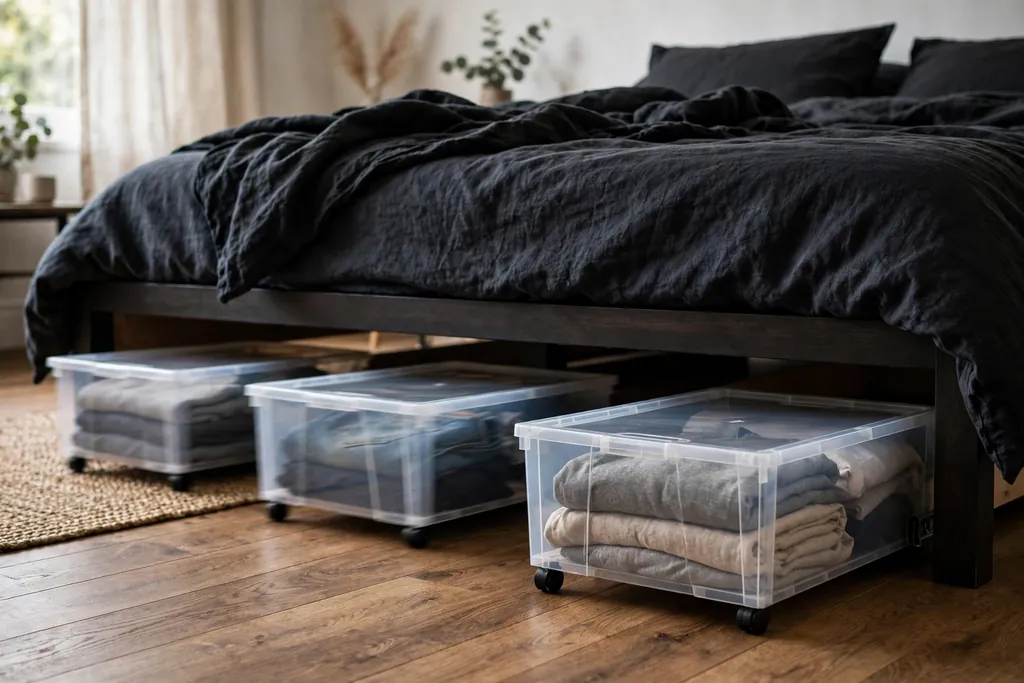
    Slug: living-alone-vibes-apartment

    Internal links used (verified live dwellovell.com URLs only):
    – https://dwellovell.com/studio-apartment-decorating-ideas/ (studio apartment decorating ideas)
    – https://dwellovell.com/cozy-apartment-living-room-ideas/ (cozy apartment living room ideas)
    – https://dwellovell.com/post-grad-apartment-ideas/ (post grad apartment ideas)
    – https://dwellovell.com/college-apartment-decor-ideas/ (college apartment decor ideas)

    Research limits: No live competitor research or search volume checks were claimed for this draft. No prices, products, measurements, statistics or brand endorsements are stated. Tips are general decorating guidance. All internal links above were fetched and verified live on dwellovell.com for this post.

    B. Complete Article

    22 Solo Apartment Ideas to Make Living Alone Feel Like Home

    Living alone gives you full say over your space, and that freedom can feel both exciting and a little empty at first. A solo apartment feels like home when it supports your real days: slow mornings, work, cooking for one, rest, and the occasional evening with friends. These 22 solo apartment ideas cover layout, comfort, storage, light and small rituals, so you can shape a place that suits one person well, without filling every corner or spending on a full redo.

    Key Takeaways

    • Start with a calm base, then add color and texture in items you can move or swap.
    • Give everyday routines a home: mornings, work, cooking, rest and tidying each deserve a spot.
    • Choose furniture and storage that do two jobs, so a small apartment stays open and easy to use.
    • Layer light, textiles and plants for warmth, rather than relying on one ceiling light or one bold change.
    • Keep hosting simple, with a table that seats a few friends and a guest setup kept in one basket.
    • Pick renter friendly options first, and check your lease before drilling, mounting or painting.

    1. Start With a Calm Base You Can Keep

    Small apartment living room with a calm warm neutral base, plain sofa and light wood floor.

    Choose plain bedding, a plain sofa cover or sofa in a neutral tone, and plain curtains, then add color through a throw, cushions and art you can swap later. A calm base keeps the room steady when you add a desk, a bookshelf or a secondhand chair in a different finish, and it makes later choices easier because large pieces already agree with each other.

    The base also saves money over time. When the large pieces are neutral, you do not need to replace them to change the mood of the room. Try one accent color in two or three small places, such as a cushion, a vase and a framed print, and leave the rest quiet so the room reads as settled rather than busy.

    2. Build a Morning Station for Slow Starts

    Small apartment kitchen counter morning coffee station with a coffee maker, mugs and a fruit bowl.

    A morning station groups everything you reach for at the start of the day in one spot: a kettle or coffee maker, mugs, tea or coffee, a small bowl for fruit, and a tray for breakfast items. Put it on one short stretch of counter, near the sink but clear of the main cooking area, so mornings stay calm even when you are short on time.

    Keep the station to daily items only. Store backup supplies in a cabinet and refill the station once a week, and use a small tray under the coffee maker to catch drips and keep the counter tidy. A hook or rail nearby holds a towel within reach, and the ritual of making a drink in the same spot each day helps the apartment feel like yours from the first hour.

    3. Carve Out a Reading Corner by the Window

    Cozy apartment reading corner by a window with an armchair, floor lamp and side table with a book.

    A reading corner needs only three things: a comfortable chair, light aimed at the page, and a surface for a drink and a book. The window end of a living room is a natural spot, since it offers daylight and a view during the day, and a chair angled slightly toward the room keeps the corner feeling part of the living space rather than cut off from it.

    Add a floor lamp behind the chair shoulder for evening reading, and a small basket beside the chair for the current book and a throw. The seating guidance in these cozy apartment living room ideas applies here too: give each regular seat its own light and a reachable surface instead of filling every gap with furniture.

    4. Make the Bed a Proper Retreat

    Neatly made bed in a small apartment bedroom with layered bedding, a throw and a wooden headboard.

    A bed frame lifts the mattress off the floor, gives under bed storage a clean edge, and makes the bedroom feel finished. Add a headboard if space allows, even a simple padded or wood panel, so sitting up to read is comfortable, and choose washable bedding in a solid color, with a lighter layer for warm nights and a warmer layer for cold ones.

    Make the bed each morning. It takes a couple of minutes and it sets the tone for the rest of the room, which matters more when you live alone because no one else will reset the space for you. Keep sleeping pillows separate from daytime cushions, and store extra bedding in one labeled bin, so the bed never doubles as a storage pile.

    5. Give the Door a Landing Zone

    Small apartment entry landing zone with wall hooks, a tray for keys, a bench and a shoe mat.

    A landing zone by the door stops bags, keys and coats from landing on the sofa or the kitchen counter. Fit a row of hooks, a small tray for keys and a wallet, and a mat or tray for shoes, and if there is no hallway, a narrow bench or a wall shelf beside the door does the same job.

    Give each item a fixed home and keep the zone to what fits there. When the hooks are full, something needs to go to its proper place, and a small mirror above the tray gives a last check before leaving, which helps on rushed mornings. Coming home to a clear entry makes the whole apartment feel calmer at the end of the day.

    6. Set a Table for One, Properly

    Small apartment dining nook with a round table set for one person by a window.

    Eating alone does not have to mean eating standing up or over the sink. Set a small table with a placemat, a real plate, a glass and, if you like, a candle, and sit down for the meal even on ordinary weeknights. A table set with care turns a solo dinner into a pause in the day rather than a task to finish.

    Keep the setup simple enough to repeat daily. Store placemats and napkins in one nearby drawer or basket, so setting the table does not become a search through cupboards, and keep the centerpiece low and moveable so the table can switch to work or a puzzle after the meal. For table styling that stays usable day to day, the ideas in these post grad apartment ideas show how one table can serve meals, work and guests.

    7. Create a Cooking Zone for One Person

    Small apartment kitchen prep zone with a cutting board, knife, mixing bowl and spice jars near the stove.

    Cooking for one works best with a clear prep zone, not just a stove. Clear one counter section, keep a cutting board, a sharp knife and a mixing bowl there, and store oils and everyday spices within one step of the stove, so weeknight cooking takes less hunting for tools and feels doable after work.

    If counter space is short, a sturdy board over the sink or a small rolling cart parked beside the counter can add prep room. Cook a little extra when you have time, and store the rest in labeled containers for the next day, so solo cooking feels planned rather than improvised. Clean as you cook and return tools to the same spot, so the next meal starts from a clear counter.

    8. Give Work a Corner That Closes Away

    Small apartment work corner with a fold down wall desk, laptop and task lamp.

    A work corner needs a boundary, even if it is only a desk against one wall and a lamp that switches off at the end of the day. Face the desk away from the bed if you can, keep work papers in one tray or drawer, and put the laptop charger in a fixed spot so cables do not spread across the room.

    A fold down desk is a good fit here, since it folds flat against the wall when you finish and leaves the room free for relaxing in the evening. At day end, close the laptop, clear the desk top and switch the task lamp off, which signals that work is done. That small closing ritual matters most when you live alone, because the room has to shift from office to home without anyone else marking the change.

    9. Hang a Gallery Wall That Tells Your Story

    Apartment living room gallery wall of framed prints in matching black frames above a small sofa.

    A gallery wall pulls a plain rental wall together, and adhesive strips or picture ledges keep it deposit friendly. Start on the floor: lay out frames in one row or a loose grid, leave even gaps, and photograph the layout before anything goes up. Mix frame sizes but keep one finish, such as black or light wood, so prints, photos and posters look like a set rather than a random collection.

    Choose pieces that mean something to you, such as travel photos, prints from a favorite artist, or photos of people you love, rather than filling frames for the sake of it. Use strips rated for the weight of each frame, press firmly, and wait the time stated on the pack before hanging. Swap one print each season if you like change, rather than rehanging the whole wall.

    10. Grow Plants at Three Heights

    Apartment living room with houseplants at three heights by a window.

    Plants bring life to a solo apartment, and placing them at three heights keeps them from crowding a single surface. A tall floor plant fills an empty corner, trailing plants on a shelf soften a storage wall, and a small potted plant on a table or windowsill adds green at eye level when you sit down.

    Match each plant to the light it will actually get, since bright direct light by a window suits different plants than a dim corner, so check the plant label before buying. Group plants that need similar watering together, use saucers under pots on wood floors, and start with three or four plants rather than a dozen so care stays manageable. Watering them on the same day each week can become a quiet, steady ritual in a home you keep alone.

    11. Layer Light for Evenings at Home

    Small apartment living room in the evening lit by warm light from a floor lamp and a table lamp.

    A single ceiling light flattens a small room and makes it feel harsh in the evening. Three levels of light work better: ambient light from a ceiling fixture or a tall floor lamp, task light from a table lamp or reading lamp where you sit, and a low glow from a small lamp on a shelf or a candle style light on a side table.

    Put the brightest light where you need to see, such as beside the reading chair, and keep the overall level soft in the evening. Dimmable bulbs or smart plugs let you shift from a bright daytime room to a calm evening one without rewiring anything, which matters in a rental where electrical changes are limited. Switch off the harsh overhead light after dinner and let the lamps set a calmer mood for the night.

    12. Add a Scent Ritual for Coming Home

    Apartment side table with a lit candle, dried flowers and a folded throw in soft evening light.

    Scent is one of the fastest ways to make a rented room feel like yours. Choose one scent for the entry or living room, such as a candle, a diffuser or a linen spray, and use it at the same point in your day, for example when you come home or while you cook dinner. Over time, that scent becomes tied to being home.

    Keep it simple and safe: place candles away from curtains, bedding and plants, never leave a flame burning when you leave the flat, and choose a scent strength that suits a small room rather than a large one. If you share walls with neighbors, a gentle scent is kinder than a strong one. One consistent scent beats several competing ones, and it costs little compared with new furniture.

    13. Keep a Hosting Table Ready for Friends

    Small apartment dining table set for four friends with simple plates and glasses.

    Living alone does not mean living without guests. A table that seats four turns takeout into a dinner with friends, and a round pedestal table suits a tight corner because chairs tuck in and no one bumps a corner leg. A small rectangular table suits a longer wall and can double as a second work surface on busy days.

    Keep a simple hosting kit in one place: placemats, napkins, a few extra glasses and a low centerpiece that can move aside. Store it together so inviting friends does not start with a hunt through cupboards, and keep the centerpiece low so people can talk across the table. A solo apartment that can welcome a few friends easily feels larger and warmer than one set up only for one person.

    14. Upgrade the Bathroom With a Shelf and Matching Set

    Tidy small apartment bathroom with a wall shelf, matching soap dispensers and rolled towels.

    A bathroom upgrade does not need a remodel. Add one shelf above the toilet or beside the mirror for daily items, replace mismatched bottles with matching dispensers for soap and lotion, and use matching towels in one color. A small tray on the counter holds items you use each morning and keeps the rest in a cabinet.

    Keep the shelf to daily items and check weight limits and fixings before mounting anything above a sink or toilet. A washable bath mat and a hook for a robe or towel also cut clutter, and a small plant that suits humidity adds a soft touch. The result is a bathroom that feels cared for, even in a basic rental, and a morning routine that starts in a tidy room.

    15. Make a Hobby Corner That Packs Away

    Small apartment hobby corner near a window with a folding table and painting supplies in a basket.

    A hobby corner keeps a pastime visible enough to use but tidy enough to live with. Choose a spot near light and storage, such as a shelf unit with one basket for supplies and a folding table that can be set up and put away. Label the basket so supplies return to the same place after each session.

    This works for painting, sewing, photography, reading or music practice. Keep the setup time under five minutes, or the hobby will stay packed away, and if the hobby needs a larger surface, use the dining table for the session and clear it fully afterward, so the room returns to normal use. A hobby corner gives solo evenings a focus beyond a screen, and a reason to look forward to time at home.

    16. Set Up a Laundry System That Runs Itself

    Apartment laundry corner with divided hampers, detergent on a shelf and a folding drying rack.

    A laundry system saves time every week. Keep a divided hamper or two labeled baskets, one for darks and one for lights, near the bedroom or bathroom, store detergent and stain remover in one spot, and hang a small rail or hooks for clothes that air dry. A folding drying rack that stores flat behind a door suits a small flat well.

    For work clothes, add a steamer or a small ironing board that folds flat. Iron or steam the next day’s outfit the night before, and put clean clothes away the same day they are washed, so laundry never becomes a chair pile by midweek. A system like this keeps a solo apartment feeling managed, even in a busy week.

    17. Tame the Closet With Labeled Bins

    Organized small apartment closet with matching hangers, folded items and labeled storage bins.

    Small closets fail when everything is tossed on one shelf and nobody knows what belongs where, and that is just as true for one person as for a shared flat. Give each category a labeled bin or a color coded box for accessories, chargers and seasonal items, and keep shared household items, such as cleaning supplies, in one clearly marked bin.

    Measure the closet before buying bins, and leave one empty bin for donations or items waiting to go elsewhere. A hanging shelf organizer works well for folded clothes in a closet with no drawers, and a quick reset once a week keeps even the best bin system from drifting. When everything has a home, tidying becomes putting things back rather than deciding where they belong.

    18. Build a Window Seat for Quiet Breaks

    Apartment window seat bench with a cushion, a book and baskets underneath beside a bright window.

    A window seat turns an otherwise empty stretch of wall into a reading spot, a dining bench, or a place to sit while you put on shoes, and the space underneath can hold shoes, bags or spare bedding. Build it from a low bench or a pair of sturdy cabinets topped with a cushion, rather than a fixed structure, if you rent.

    A cushion in a washable cover keeps the seat practical beside a window that may collect condensation or dust. Add a small shelf or a wall hook nearby for a book, a phone or a cup, so the seat works as a complete spot rather than a bare bench, and keep the cushion firm enough to sit on for an hour. Use the spot for a short break, not as extra storage, or it will fill with boxes fast.

    19. Create a Listening Corner for Music and Quiet

    Cozy apartment listening corner with a chair, a record player on a small stand and records on a shelf.

    A listening corner gives solo evenings a sound of their own. Place a comfortable chair, a small stand for a record player or speaker, and a shelf for records or books near a lamp, and keep the setup to what you actually use. The corner becomes a place to sit with music, a podcast or silence, without a screen in front of you.

    Keep cables tidy with a small basket or clip, and place the speaker where it sounds best in the room rather than pushed into a corner by default. If you play music late, keep the volume low enough for neighbors, and use headphones for late night listening. A corner set aside for listening makes time alone feel chosen rather than empty.

    20. Keep a Weekly Reset Ritual

    Tidy small apartment living room after a weekly reset with a clear coffee table and a basket for throws.

    A solo apartment stays calm with a short weekly reset, not a long deep clean. Pick one day and one hour, walk the room with a basket, and return anything that has drifted out of place: throws folded, remotes in their tray, papers filed, and surfaces wiped. A ten minute reset each evening plus a longer weekly pass keeps the room calm without a big effort.

    Pair the reset with something pleasant, such as music or a favorite drink after the work is done, so the habit sticks. The zoning approach in these studio apartment decorating ideas helps here too: when every activity has a zone, the reset is simply returning items to their zones. A home that resets easily is a home that stays welcoming, even when the week has been busy.

    21. Style One Memory Shelf, Not a Whole Wall of Clutter

    Apartment wall shelf with personal keepsakes, framed photos, a travel souvenir and a small plant.

    A memory shelf lets you show the objects that matter most without turning every surface into a display. Choose one shelf, pick five to seven items, such as a travel souvenir, a framed photo, a gift from a friend and a small plant, and leave space between them so each item can be seen.

    Rotate the shelf with the seasons or after a trip, swapping one or two items rather than rebuilding the whole display. Keep fragile items away from door swings and high traffic edges, and dust the shelf during your weekly reset. One shelf done with care says more about the person who lives there than a crowded room full of objects, and it gives guests something real to ask about.

    22. Keep a Guest Ready Basket in One Place

    Small apartment closet shelf with a guest ready basket holding clean towels and spare bedding.

    A guest ready setup means you can host an overnight guest without a scramble. Keep clean spare bedding, a towel, a spare toothbrush set and a phone charger in one basket or bin in a closet, and when a guest stays, add a small tray with water and a lamp near the sofa bed or spare mattress.

    Check the basket once a season, wash the bedding, and replace anything used, so it is always ready. For more ideas on setting up a small apartment for guests and daily life, see these college apartment decor ideas. A home that can welcome someone at short notice feels generous and settled, and it reminds you that living alone and living well with others go together.

    Conclusion

    A solo apartment feels like home when it fits the life you actually live in it. Start with a calm base and clear zones, add light, textiles and plants for warmth, and build small rituals for mornings, work, meals and rest. Keep hosting simple, keep storage honest, and let one or two personal touches, such as a gallery wall or a memory shelf, carry the character of the room. Try one or two ideas this weekend, live with them for a week, and adjust before adding more. Save this list for your next apartment refresh, and pick the solo apartment idea you want to try first.

    FAQs

    How do I make a solo apartment feel less empty?

    Start with the senses and the routines, not with more furniture. Layer light at more than one level, add textiles you can touch, place plants at different heights, and give mornings and evenings a small ritual, such as a morning drink in the same spot or a lamp switched on after dinner. A room that sounds, smells and feels lived in will feel fuller than a room that is simply filled with objects.

    What should I buy first when moving into a solo apartment?

    Buy for sleep, seating, light and storage first: a proper bed and bedding, one comfortable chair or sofa, lamps at two levels, and a way to store clothes and everyday items out of sight. Decorative pieces come after the daily basics work, since a pretty room that sleeps badly or has nowhere to put things will not feel like home for long.

    How can I host friends in a small solo apartment?

    Keep a table that seats four, a few extra glasses and plates stored together, and a low centerpiece that moves aside easily. Cook one simple shared dish or order takeout, and keep the hosting kit in one place so inviting friends does not start with a hunt through cupboards. Guests remember warmth and a clear place to sit more than a large menu or a perfect room.

    Is it worth decorating a rented solo apartment?

    Yes, if you choose changes you can take with you or remove cleanly. Rugs, curtains, cushions, art on adhesive strips, freestanding shelves and plants all change a room without damage, and they move to your next place. Check your lease before painting or drilling, photograph walls before you hang anything, and keep original fixtures so you can restore the room when you move out.

    How do I keep a solo apartment tidy without spending hours cleaning?

    Give every category a home, use baskets and trays to group small items, and run a short weekly reset plus a ten minute evening tidy. When work, cooking, laundry and hobbies each have a zone, tidying is just returning items to their zones. Remove one item for every new decorative piece you add, so the room stays comfortable instead of crowded.

    How do I make a solo apartment feel personal on a small budget?

    Use what you already own and what costs little: photos in matching frames, one accent color repeated in cushions and a vase, plants grown from cuttings, and a memory shelf with a few meaningful objects. Secondhand furniture in a calm base color also fits well, since a plain sofa cover or a coat of paint on a small table can tie mixed finds together. Personal does not mean expensive; it means chosen.

  • 30 Girly Apartment Ideas to Inspire Your Next Room Refresh

    30 Girly Apartment Ideas to Inspire Your Next Room Refresh

    A girly apartment is less about one color and more about softness, light and small personal touches. Think blush and cream, fresh flowers, pretty storage and furniture that works hard in a small space. These 30 girly apartment ideas cover the living room, bedroom, kitchenette, bathroom and entry, so you can refresh one corner at a time without a full redecoration. Pick the ideas that fit your rooms, your budget and your lease, and keep what makes the space feel like yours.

    Key Takeaways

    • Start with one anchor piece per room, such as a sofa, a bed or a table, then add soft layers around it.
    • Use blush, cream, soft pink and pale gold as a base, and repeat them in cushions, art and bedding so rooms feel connected.
    • Choose renter friendly changes first: removable wallpaper, curtains, rugs, mirrors and open rails need little or no fixing to walls.
    • Give pretty things a job: baskets, trays, jars and rails keep clutter out of sight while looking good in the open.
    • Layer light with lamps, string lights and daylight, rather than relying on one bright ceiling light.

    1. Anchor the Living Area With a Blush Velvet Sofa

    Blush pink velvet sofa with cream cushions and a folded throw in a bright apartment living room.

    A blush velvet sofa sets the tone for the whole living area. Velvet catches light softly, and the pale pink works with cream walls, wood floors and gold or brass details. Keep the sofa shape simple, with clean arms and short legs, so it suits a small apartment and leaves room for a coffee table and a side chair.

    Style it with cream cushions and one patterned cushion in a small floral or stripe. A light throw folded over one arm adds warmth without covering the color. If you rent, choose a sofa in a washable or stain resistant velvet, and keep drinks on coasters to protect the fabric.

    2. Dress the Bed With a Sheer Canopy

    Bed dressed with sheer white canopy drapes, blush floral bedding and cream cushions.

    A sheer canopy gives a bedroom a soft, romantic feel without a heavy frame. Hang light voile panels from a ceiling mounted ring or a slim four poster frame, and let them fall to just above the floor. White or pale pink voile keeps the bed bright and lets air move through the room.

    Tie the panels back during the day so the bed still feels open, and let them fall at night for a sense of enclosure. Keep bedding simple underneath, in cream or a small floral print, so the canopy stays the main feature. This works well in a rented room because a ceiling ring needs only a few small fixings.

    3. Set Up a Vanity Corner for Getting Ready

    Small vanity corner with a desk, round mirror with warm lights, stool and a tray with perfume and jewelry.

    A vanity corner turns a spare stretch of wall into a place for getting ready. Use a small desk or console table, a stool that tucks underneath, and a mirror with warm light on either side. A tray keeps perfume, a brush and daily jewelry in one place, and a small drawer or box holds the rest.

    Place the vanity near natural light if you can, so makeup and hair are easier in the morning. Keep the surface clear except for the items you use every day. A small vase of flowers or a framed print above the mirror makes the corner feel finished rather than like a desk that happens to hold a mirror.

    4. Hang a Gallery Wall of Framed Prints

    Gallery wall of framed floral and line art prints in white frames above a sofa.

    A gallery wall adds personality to a plain wall and lets you mix art, photos and quotes. Choose frames in one finish, such as white or light wood, and vary the sizes for interest. Lay the arrangement on the floor first, starting with the largest piece in the middle, then fill outward with smaller frames.

    Keep the spacing even, about a hand width between frames, and hang the center of the group at eye level from where you usually sit. Mix floral prints, line drawings and one personal photo so the wall feels collected over time. Use removable hooks or picture hanging strips if your lease limits nails.

    5. Make a Reading Nook by the Window

    Cozy reading nook by a bright window with a deep armchair, floor lamp and small side table with a book.

    A window seat or a deep armchair by the window makes a quiet corner for reading. Place the chair at a slight angle to the glass, add a floor lamp behind one shoulder, and keep a small side table within reach for a drink and a book. A cushion in the window sill or on the chair adds comfort on cold days.

    This kind of single purpose corner is the same approach used in these small living room layout ideas, where one clear job per zone stops a small room from feeling crowded. Add a basket beside the chair for books and a throw for evenings, and keep the window track clear so the window still opens for air.

    6. Style Open Shelves With Pastel Ceramics

    Open kitchen shelves styled with pastel pink and cream ceramic bowls, mugs and vases and a small plant.

    Open shelves suit a girly kitchen or living room when the display stays calm. Group pastel bowls, mugs and vases in one or two tones, and leave gaps between groups so the shelf does not look crowded. Our guide to how to style open shelves explains how to group items, mix storage with display, and keep everyday pieces within reach.

    Keep closed cupboards for the rest, including food, cleaning supplies and mismatched items. Put heavy pieces low, store the prettiest ceramics at eye level, and add one small plant or framed print per shelf for life. Wipe shelves often, since open storage gathers dust faster than closed cabinets.

    7. Add a Peel and Stick Floral Accent Wall

    Bedroom with a blush and cream floral accent wall behind a bed with plain cream bedding.

    Removable floral wallpaper gives a bedroom or living room a focal wall without paint or a long commitment. Choose a small scale floral in blush and cream so the pattern reads as soft rather than busy, and apply it to one wall only, usually behind the bed or the sofa. Smooth out air bubbles as you go, working from the top down.

    Keep the rest of the room plain so the pattern can breathe. Plain bedding, a simple rug and solid cushions stop the room from feeling crowded. When you move, peel the paper off slowly from a corner, following the maker instructions, and check the wall underneath before you leave.

    8. Layer Rugs to Zone an Open Plan Room

    Open plan apartment living area with layered cream and blush rugs marking a sofa zone.

    In a studio or open plan apartment, rugs mark where one room ends and another begins. Use a large flat weave rug under the sofa to set the living zone, and a smaller, softer rug beside the bed for the sleeping zone. Leave a border of bare floor around each rug so the rooms still read as one apartment.

    Choose rugs in related tones, such as cream, blush and pale gold, rather than matching sets. A rug pad keeps layers in place on smooth floors and adds comfort underfoot. In a dining corner, one rug large enough for pulled out chairs works better than two small ones that bunch under feet.

    9. Layer Warm Lamps and String Lights

    Apartment room in the evening lit by warm table lamps and a short string of warm white lights along a shelf.

    Warm light makes a girly apartment feel soft in the evening. Use a table lamp on a side table, a floor lamp beside a chair, and a short string of warm white lights along a shelf or headboard. Keep the bulbs warm white and use dimmers or low wattage bulbs where you can, so the light stays gentle.

    Turn off the main ceiling light in the evening and let the smaller lights do the work. String lights suit a headboard, a mirror frame or a bookshelf, but keep them away from bedding and curtains for safety. A timer plug can switch them on at dusk so you come home to a lit room.

    10. Mix Floral Bedding With Soft Textures

    Bed with blush floral bedding, a cream waffle throw folded back and linen cushions.

    Floral bedding is the fastest way to make a bedroom feel girly. Choose a duvet in a blush floral, then layer it with a cream waffle throw and a linen cushion in a solid tone. The mix of print and plain texture keeps the bed interesting without looking busy.

    Fold the duvet back a third at the top to show a second layer, and place sleeping pillows flat with two decorative cushions in front. Wash bedding in cool water and skip heavy ironing, since a slightly relaxed look suits linen and cotton. Change the throw with the seasons, using a lighter cotton in summer and a thicker knit in winter.

    11. Create a Pretty Desk Corner That Stays Tidy

    Tidy small desk corner with a slim desk, chair tucked under, wall shelf with books, a pen pot and a small plant.

    A small desk corner works best when everything has a place. Use a slim desk against a wall, a chair that slides fully underneath, and a wall shelf above for books and supplies. A pen pot, a small tray for loose items, and a cable tidy keep the surface clear for work.

    Add one pretty touch, such as a framed print, a small plant or a ceramic pen holder, and keep the rest practical. A desk lamp with warm light helps for evening work, and a closed box on the shelf hides chargers and spare cables. Clear the desk at the end of each day so the corner looks good even when you are not working.

    12. Use an Open Clothing Rail With a Curtain Cover

    Open gold clothing rail with clothes hung by color on matching hangers and a light curtain partly covering one end.

    An open clothing rail displays your favorite pieces and saves closet space. Choose a sturdy rail in gold or white, hang clothes by color or length, and leave space at each end so the rail does not look stuffed. A curtain on a small ceiling track or a tension rod in front hides the rail when guests visit.

    Keep the rail for clothes you wear often, and store out of season pieces in boxes elsewhere. Matching hangers make a clear difference to how tidy the rail looks. Place a small tray or basket below for shoes, and a hook at one end for tomorrow outfit or a bag.

    13. Grow Trailing Plants on a Window Shelf

    Trailing green plants in pastel and cream pots on a shelf below a bright apartment window.

    Trailing plants soften a window and add life to a girly apartment without taking floor space. Fit a shelf across the window or just below it, and place two or three trailing plants in pastel or cream pots. Pothos, string of hearts and trailing ivy suit bright, indirect light and forgive a missed watering.

    Water only when the top of the soil feels dry, and trim long trails back to keep the shape full. Rotate pots every few weeks so growth stays even. Keep plants clear of curtains and blinds, and use a saucer under each pot to protect the shelf from water marks.

    14. Give the Bathroom a Pretty Tray and Fresh Towels

    Apartment bathroom sink with a small tray holding soap and hand cream, folded blush towels and a single flower stem.

    A bathroom feels more cared for when daily items sit on a tray instead of scattered around the sink. Use a small ceramic or bamboo tray for soap, hand cream and a candle, and fold fresh towels in blush or white on a shelf or rail nearby. A small vase with a single stem adds a finishing touch.

    Keep the tray to three or four items so it stays easy to clean. Swap hand towels often, and store spare towels rolled in a basket if shelf space is tight. A pretty shower curtain in a soft print ties the room together, and a small bath mat in cream keeps the floor dry and warm underfoot.

    15. Build a Breakfast Nook With a Round Table

    Small breakfast nook in an apartment corner with a round table, two chairs, a bench with cushions and a small vase.

    A round table in a corner makes a breakfast nook that seats two or three without blocking a walkway. Pair it with two chairs and a bench against the wall, and add a cushion on the bench for comfort. A small vase, a placemat each, and a pendant or wall light above the table mark the nook as its own place.

    Keep the table clear between meals so it can double as a laptop spot or a place to read. A bench with storage inside holds placemats and spare napkins. If floor space is tight, choose a pedestal base rather than four legs, since it leaves more room for feet and chairs.

    16. Lean a Full Length Mirror Against the Wall

    Tall full length mirror with a slim gold frame leaning against a wall opposite a bright window, with a small plant beside it.

    A full length mirror makes a small apartment feel larger and brighter. Lean it against a wall opposite a window so it reflects daylight, and secure the top to the wall with a small fixing or strap for safety. A slim gold or white frame suits a girly room and keeps the mirror light to move.

    Use the mirror as a dressing check near the bedroom or entry, and keep the area in front of it clear. A small plant or stool beside it softens the edge, but avoid placing clutter in front of the glass, since the reflection will double it. Clean the mirror with a dry cloth to avoid streaks.

    17. Hide Clutter in Labeled Baskets and Boxes

    Woven baskets and lidded storage boxes with small labels beside a sofa, with throws folded inside one basket.

    Baskets and boxes keep a girly apartment looking calm even when life is busy. Use woven baskets for blankets and toys, lidded boxes for papers and cables, and small labeled boxes inside drawers for jewelry, chargers and spare keys. Labels matter, since you will only keep using a system you can find things in.

    Choose baskets in natural tones with a blush or cream liner, and keep one style per room so storage looks planned. Place a basket by the sofa for throws, one by the door for scarves and gloves, and one in the bedroom for laundry. Empty each basket once a month and return anything that no longer belongs there.

    18. Roll Out a Tea and Coffee Bar Cart

    Small tea and coffee bar cart with cups, a teapot, jars of tea and coffee and a small vase.

    A bar cart gives tea and coffee a home of their own and moves where you need it. Stock the top shelf with a kettle or coffee maker, cups and a small jar of tea or coffee, and use the lower shelf for spare cups, saucers and a tin of biscuits. A small tray on top keeps spills contained and makes the cart easy to tidy.

    Roll the cart beside the sofa for guests, or park it in a kitchen corner for daily use. Keep the cart to what you use each week, and store the rest in a cupboard. A tiny vase or a framed print on the top shelf makes it feel like furniture rather than just storage on wheels.

    19. Style a Bedside Table for Night and Morning

    Styled bedside table beside a bed with a small lamp, a book, a glass of water and a small dish for rings.

    A bedside table works hardest at night and first thing in the morning. Keep a lamp, a glass of water, a book and a phone charger on it, and add a small dish for rings or earrings. A drawer or a basket below holds reading glasses, hand cream and a notebook.

    Choose a table at mattress height so the lamp and water are easy to reach in the dark. Keep the lamp shade cream or blush for a soft glow, and use a warm bulb. Clear the table each morning as part of making the bed, so the bedroom starts the day tidy.

    20. Hang Sheer Curtains in Soft Layers

    Bright apartment window with sheer white curtains layered over blush floor length curtains.

    Sheer curtains soften a window, filter daylight and give privacy without blocking light. Hang a sheer panel on an inner rod, close to the glass, and a heavier curtain in blush or cream on an outer rod for evenings. Floor length curtains make a small room feel taller, so hang the rod close to the ceiling.

    Keep the sheer panels plain so they do not fight with bedding or art. Wash them a few times a year, since sheers gather dust and lose their brightness. Tie back the heavier curtains during the day to let in as much light as possible, and close them at night for warmth and privacy.

    21. Use a Picture Ledge for Rotating Art

    Slim picture ledge above a sofa holding leaning framed prints and a tiny vase.

    A picture ledge lets you change art without new holes in the wall. Fit one or two slim ledges above a sofa or desk, and lean framed prints, small canvases and a tiny vase along them. Overlap frames slightly, with larger pieces at the back and smaller ones in front, so the display feels layered.

    Swap one or two pieces with the seasons or when you find a new print you love. Keep the ledge to five or six items so it does not look crowded, and dust the frames when you change them. This suits renters well, since a ledge needs far fewer fixings than a full gallery wall.

    22. Set Up a Small Entry Zone by the Door

    Small apartment entry zone by a door with wall hooks, a small bench, a basket for shoes, a dish for keys and a mirror.

    An entry zone stops bags, keys and shoes from spreading through the apartment. Use wall hooks for coats and bags, a small bench or stool for sitting to put shoes on, and a tray or dish by the door for keys. A mirror above the hooks lets you check yourself on the way out.

    Keep the zone to the width of the door area so it does not eat into the living room. A basket below the bench holds shoes, and a hook at child height or a lower hook helps younger visitors. Empty the key dish weekly and return anything that has drifted there from other rooms.

    23. Display Jewelry and Accessories in the Open

    Jewelry displayed on a vanity with necklaces on a stand, rings in a ceramic dish and bracelets on a tray beside a mirror.

    Jewelry looks better on display than tangled in a drawer. Hang necklaces on small wall hooks or a stand on the vanity, place rings in a ceramic dish, and line up watches or bracelets on a tray. Group pieces by type and color so you can find a pair quickly in the morning.

    Keep everyday pieces within reach and store fine or rarely worn items in a closed box. A stand near the mirror saves time when you are choosing earrings, and a dish by the bed holds the pieces you take off at night. Wipe metal pieces with a soft cloth now and then to keep them bright.

    24. Mix Cushions and Throws on the Sofa

    Sofa styled with mixed cushions in blush velvet, linen and floral cotton and a soft knit throw over one arm.

    Cushions and throws are the easiest way to refresh a sofa. Start with two larger cushions in a solid blush or cream, add two smaller cushions in a floral or stripe, and finish with a soft throw folded over one arm or across the back. Odd numbers tend to look more relaxed than matched pairs.

    Mix textures rather than only colors: velvet, linen, knit and cotton each catch light differently. Keep the total to five or fewer on a small sofa so there is still room to sit. Store spare throws in a basket nearby, and swap cushion covers with the seasons for a fresh look without buying new cushions.

    25. Keep Fresh and Dried Flowers in Rotation

    Fresh pink flowers in a glass vase on a table and dried flower stems in a small vase on a dresser.

    Flowers add color and scent to a girly apartment for little cost. Keep a fresh bunch in the living room or kitchen, and dried stems in the bedroom or bathroom where steam and heat would shorten fresh flowers. Change the water every two days, trim stems at an angle, and remove leaves below the waterline.

    Use small vases in blush, cream or clear glass, and keep arrangements low on dining tables so they do not block faces. A single stem in a bud vase suits a bedside table or vanity. When fresh flowers fade, dry the best stems upside down in a dark, dry place for later displays.

    26. Fit Pretty Storage Under the Bed

    Flat lidded storage boxes in cream and blush sliding out from under a bed, with labeled ends visible.

    Under bed storage uses space that would otherwise sit empty. Use flat, lidded boxes in cream or blush for out of season clothes, spare bedding and shoes, and label each box on the end you can see. Boxes on wheels or with handles slide out more easily on hard floors.

    Keep only things you need a few times a year under the bed, and store everyday items in drawers or on rails instead. Vacuum under the bed when you change the boxes, and check that boxes fit with the bed skirt or frame sitting neatly above them. A tidy under bed area makes the whole bedroom feel calmer.

    27. Refresh the Kitchenette With Matching Jars and Linens

    Small apartment kitchenette with matching clear and pastel jars for pasta, tea and coffee and blush tea towels on a rail.

    Matching jars and linens make a small kitchenette feel planned. Decant pasta, rice, tea and coffee into clear or pastel jars with simple labels, and hang tea towels in blush and cream on a rail or hook. Keep everyday jars at the front of a shelf and spare stock behind them.

    Add a small rug in front of the sink for comfort, and a ceramic utensil pot for spoons and spatulas. Wipe jars when you refill them, and replace tea towels often so they stay fresh. This refresh needs no building work, which suits a rented kitchenette, and it makes cooking feel more pleasant each day.

    28. Hang a Beaded Pendant Over the Bed or Table

    Small beaded pendant light glowing warmly above a breakfast table in a blush apartment.

    A beaded or crystal pendant adds sparkle above a bed, a breakfast table or a vanity. Choose a small pendant that suits the scale of the room, hang it low enough to feel part of the space but high enough to clear heads and sight lines, and use a warm bulb so the beads glow rather than glare.

    If you cannot change ceiling wiring, use a plug in pendant that hangs from a ceiling hook and runs down the wall in a cord cover. Keep the rest of the lighting soft, with a lamp nearby, so the pendant is a feature rather than the only light. Dust beads with a dry cloth to keep them bright.

    29. Add Floor Cushions and a Pouf for Extra Seats

    Large floor cushions and a round pouf in blush and patterned cotton beside a sofa, with a tray on the pouf.

    Floor cushions and a pouf give a small apartment extra seats without extra chairs. Keep two or three large floor cushions in blush or patterned cotton stacked in a corner, and a pouf near the sofa as a footrest that doubles as a seat for guests. A tray on top of a firm pouf turns it into a side table.

    Choose covers you can wash, since floor seating gathers dust and spills more easily. Store cushions in a basket when they are not needed, and bring them out for film nights or visits. This setup suits small living rooms well, because seating can be put away and the floor cleared again in minutes.

    30. Fit a Soft Upholstered Headboard

    Bed with a tall soft upholstered headboard in blush velvet with channel tufting and cream and blush bedding.

    An upholstered headboard makes a bed feel finished and comfortable for reading. Choose a tall headboard in blush velvet or cream linen, with simple button or channel tufting, and fix it to the bed frame or wall following the maker instructions. The padded surface is kinder to lean against than a bare wall.

    Keep bedding in related tones so the headboard stands out without clashing. A headboard also protects the wall behind the bed from marks. If a full headboard is too much for your budget, hang two large upholstered panels behind the bed instead, which give a similar look with less cost and weight.

    Conclusion

    A girly apartment comes together one soft layer at a time. Start with an anchor piece, add rugs, curtains and light, then use baskets, trays and rails to keep the pretty parts tidy. You do not need to change everything at once, and you do not need a large budget or a large room. Pick the idea for the room you use most, live with it for a week, then add the next one. Save this list on Pinterest before your next room refresh, and start with the corner that will make your mornings or evenings feel a little softer.

    FAQs

    How can I make a girly apartment without painting the walls?

    Use removable wallpaper on one wall, curtains, rugs, bedding and art to bring in blush and cream. Mirrors and warm lamps add softness without any paint. These changes suit renters, since most can be removed or taken with you when you move.

    What colors work best for a girly apartment?

    Blush pink, cream, soft white and pale gold make a calm base that suits small rooms. Add small amounts of sage, lilac or dusty blue in cushions or art for variety. Keep the base tones repeated across rooms so the apartment feels connected rather than like a set of separate themes.

    How do I keep a small girly apartment from looking cluttered?

    Give everything a place: baskets for throws, trays for daily items, rails for clothes and boxes under the bed. Keep surfaces to a few pretty items each, and store the rest out of sight. Clear one surface a day, such as the bedside table or kitchen counter, to keep the habit manageable.

    Are girly apartment ideas suitable for rented homes?

    Yes, most ideas in this list suit rentals. Peel and stick wallpaper, curtains, rugs, mirrors, open rails, picture ledges and bar carts need little or no fixing to walls. Check your lease before drilling, and use removable hooks or strips where drilling is not allowed.

    How can I decorate a girly apartment on a small budget?

    Start with textiles, since cushion covers, throws, tea towels and bedding change a room for less than new furniture. Add a mirror, a plant and a tray next, and look for second hand frames, baskets and bar carts. Change one room at a time so spending stays spread out.

    What is the easiest first step for a girly room refresh?

    Start with bedding or sofa cushions, since they cover a large area and set the color story for the room. Add a rug and a lamp next, then a mirror or a piece of art. These four changes alone can make a room feel softer and more personal within a weekend.


  • 22 Post Grad Apartment Ideas for Homes of Every Size

    22 Post Grad Apartment Ideas for Homes of Every Size

    Life after graduation brings a new daily rhythm: work hours, a regular commute or a home desk, meals cooked at home, and friends who visit for dinner rather than a dorm party. Your apartment should support that rhythm without a full redesign or a large budget. These 22 post grad apartment ideas focus on practical upgrades first: a bed that helps you sleep, a desk that closes at the end of the day, a table that seats guests, and storage that keeps work and home life apart. Pick the change that fixes your biggest daily friction, then add the next one when it fits.

    Key Takeaways

    • Start with daily friction, not decoration: sleep, work, cooking, and entry storage come before purely decorative buys.
    • Give work a clear start and end point, even in a studio, so the whole apartment does not feel like an office after hours.
    • Choose fewer, sturdier pieces that move well to a next apartment, rather than many cheap pieces that wear out fast.
    • Make hosting easy with a table that seats four, spare seating, and a simple drinks setup.
    • Keep one calm base palette and repeat it, so pieces bought months apart still look like they belong together.

    1. Start With a Calm Base You Can Keep

    Small apartment living room with a calm neutral sofa, plain curtains and a few colored cushions.

    A calm base makes every later buy easier. Choose plain bedding, a plain sofa cover or sofa in a neutral tone, and plain curtains, then add color through a throw, cushions, and art you can swap later. This keeps the room steady when you add a desk, a bookshelf, or a secondhand chair in a different finish.

    The base also saves money over time. When the large pieces are neutral, you do not need to replace them to change the mood of the room. Try one accent color in two or three small places, such as a cushion, a vase, and a framed print, and leave the rest quiet.

    2. Replace the Futon With a Proper Sofa

    Comfortable two seat sofa with firm cushions and a light movable coffee table in a small apartment.

    A proper sofa changes how an apartment feels after work. Look for a frame that sits at a comfortable seat height, cushions that hold their shape, and a size that leaves a clear walkway around it. Measure doorways, stairs, and lift access before ordering, since a sofa that cannot get in is a costly mistake.

    If floor space is tight, a two seat sofa plus one good chair often works better than a large three seat sofa that blocks the room. Keep the coffee table light enough to move, so the seating area can shift for guests, a workout, or a board game night.

    3. Carve Out a Dedicated Work From Home Corner

    Small apartment work from home corner with a desk, laptop, supportive chair and task lamp.

    A work corner needs a boundary, even if it is only a desk against one wall and a lamp that switches off at the end of the day. Face the desk away from the bed if you can, keep work papers in one tray or drawer, and put the laptop charger in a fixed spot so cables do not spread across the room.

    Add a chair that supports a full workday, not just an hour of study. If a full office chair feels too large, a sturdy dining chair with a seat cushion and a footrest can work for shorter days. At day end, close the laptop, clear the desk top, and switch the task lamp off, which signals that work is done.

    4. Choose a Dining Table That Seats Four

    Small apartment dining corner with a round pedestal table set for four people.

    A table that seats four turns takeout into a dinner with friends. A round pedestal table suits a tight corner because chairs tuck in and no one bumps a corner leg. A small rectangular table suits a longer wall and can double as a second work surface on busy days.

    Keep the centerpiece low and moveable, so the table can switch from meals to a laptop session in a minute. Store placemats, a tablecloth, and spare napkins in one nearby drawer or basket, so setting the table does not become a search through boxes.

    5. Give Your Bed a Frame and Proper Bedding

    Neatly made bed with a wood bed frame, headboard and layered solid color bedding.

    A bed frame lifts the mattress off the floor, gives under bed storage a clean edge, and makes the bedroom feel finished. Add a headboard if space allows, even a simple padded or wood panel, so sitting up to read is comfortable. Choose washable bedding in a solid color, with a lighter layer for warm nights and a warmer layer for cold ones.

    Make the bed each morning. It takes two minutes and it sets the tone for the rest of the room. Keep sleeping pillows separate from daytime cushions, and store extra bedding in one labeled bin, so the bed never doubles as a storage pile.

    6. Build a Landing Zone for Workdays

    Apartment entry with wall hooks, a small tray for keys, a bench and a shoe mat by the door.

    A landing zone by the door stops work bags, keys, and coats from landing on the sofa or the kitchen counter. Fit a row of hooks, a small tray for keys and a wallet, and a mat or tray for shoes. If there is no hallway, a narrow bench or a wall shelf beside the door does the same job.

    Give each item a fixed home and keep the zone to what fits there. When the hooks are full, something needs to go to its proper place. A small mirror above the tray also gives a last check before leaving, which helps on rushed mornings.

    7. Set Up a Morning Station for Coffee and Breakfast

    Small kitchen counter morning station with a coffee maker, mugs, a fruit bowl and a tray.

    A morning station groups everything you reach for before work in one spot: a kettle or coffee maker, mugs, tea or coffee, a small bowl for fruit, and a tray for breakfast items. Put it on one short stretch of counter, near the sink but clear of the main cooking area, so mornings stay calm even when you are short on time.

    Keep the station to daily items only. Store backup supplies in a cabinet and refill the station once a week. A small tray under the coffee maker catches drips and keeps the counter tidy, and a hook or rail nearby holds a towel and an apron within reach.

    8. Create a Kitchen Prep Zone for Real Cooking

    Small apartment kitchen prep zone with a cutting board, knife, mixing bowl and spices near the stove.

    Cooking at home most nights needs a prep zone, not just a stove. Clear one counter section, keep a cutting board, a sharp knife, and a mixing bowl there, and store oils and everyday spices within one step of the stove. This cuts the time spent hunting for tools and makes weeknight cooking feel doable.

    For ideas on keeping open storage calm, see how to style open shelves. If counter space is short, a sturdy board over the sink or a small rolling cart parked beside the counter can add prep room. Clean as you cook and return tools to the same spot, so the next meal starts from a clear counter.

    9. Organize a Work Wardrobe Closet

    Organized apartment closet with work clothes on matching hangers and folded knitwear on a shelf.

    Post grad life often means two wardrobes in one closet: work clothes and weekend clothes. Hang work outfits together, grouped by type, and keep weekend clothes in a separate section. Use matching hangers, one shelf for folded knitwear, and a small box for belts, ties, or scarves.

    Keep tomorrow’s outfit ready the night before on one front hook or hanger. This small habit saves decision time in the morning and shows which pieces you actually wear. Move anything unworn for a full season into a storage bin, so the closet stays easy to scan.

    10. Add a Reading Chair and Lamp Corner

    Apartment reading corner with an armchair, floor lamp, small side table with a book and a basket of books.

    A reading chair gives the apartment a second seat that is not a desk chair or a sofa. Place it near a window or a lamp, with a small side table for a book and a drink, and a basket or shelf nearby for current reads. The corner becomes a place to unwind without a screen.

    Choose a chair you can sit in for an hour, with a cushion that supports your back and arms at a comfortable height. A floor lamp behind the chair lights the page without lighting the whole room, which suits evenings when someone else is sleeping or working nearby.

    11. Set Up a Simple Drinks Tray for Hosting

    Drinks tray on a sideboard with glasses, bottles, a bottle opener and a small bowl for guests.

    A drinks tray makes hosting feel easy without a full bar setup. Use a tray on a sideboard, a shelf, or a small cart, with glasses, a few bottles or mixers, a bottle opener, and a small bowl for garnishes. Keep it to what you actually serve, so the tray stays tidy between visits.

    When guests arrive, move the tray to the dining table or the seating area and return it afterward. For a larger gathering, the same tray logic scales up to a kitchen counter station, as in these thanksgiving kitchen decor ideas, where one styled zone keeps the rest of the kitchen clear for cooking and serving.

    12. Upgrade the Bathroom With a Shelf and Matching Set

    Tidy apartment bathroom with a wall shelf, matching soap dispensers and matching towels.

    A bathroom upgrade does not need a remodel. Add one shelf above the toilet or beside the mirror for daily items, replace mismatched bottles with matching dispensers for soap and lotion, and use matching towels in one color. A small tray on the counter holds items you use each morning and keeps the rest in a cabinet.

    Keep the shelf to daily items and check weight limits and fixings before mounting anything above a sink or toilet. A washable bath mat and a hook for each person using the bathroom also cut clutter. The result is a bathroom that feels cared for, even in a basic rental.

    13. Turn a Balcony or Windowsill Into a Break Spot

    Small apartment balcony with a folding chair, small table and potted plants as a break spot.

    A balcony or a wide windowsill can be a break spot away from screens. On a balcony, add a folding chair, a small table, and one or two hardy plants in pots with saucers. By a window, add a cushion on the sill or a chair pulled close, with a plant and a book within reach.

    Use the spot for a short break, not as extra storage, or it will fill with boxes fast. Check balcony rules for railings, planters, and furniture weight, and bring cushions inside in wet weather. Even ten minutes outside or by open light can reset a long workday.

    14. Hang Framed Art at Eye Level

    Apartment living room wall with framed art hung at eye level above a sofa in matching frames.

    Framed art at eye level makes a rented apartment feel settled. Hang the center of each piece about eye height when standing, group small pieces with even gaps, and use one or two frame finishes across the room so mixed prints look planned. A single larger piece above a sofa often works better than many small pieces scattered on every wall.

    Use fixings rated for the weight and follow your lease rules for nails and adhesive options. Photograph the wall before you move in and after you hang art, so move out checks are simple. Swap one print per season if you like change, rather than rehanging the whole wall.

    15. Make a Hobby Corner That Packs Away

    Small apartment hobby corner with a folding table, painting supplies in a labeled basket and a shelf near a window.

    A hobby corner keeps a pastime visible enough to use but tidy enough to live with. Choose a spot near light and storage, such as a shelf unit with one basket for supplies and a folding table that can be set up and put away. Label the basket so supplies return to the same place after each session.

    This works for painting, sewing, photography, or music practice. Keep the setup time under five minutes, or the hobby will stay packed away. If the hobby needs a larger surface, use the dining table for the session and clear it fully afterward, so the room returns to normal use.

    16. Set Up a Laundry and Ironing System

    Apartment laundry corner with divided hampers, detergent on a shelf and a folding drying rack.

    A laundry system saves time every week. Keep a divided hamper or two labeled baskets, one for darks and one for lights, near the bedroom or bathroom. Store detergent, stain remover, and a drying rack in one spot, and hang a small rail or hooks for clothes that air dry.

    For work clothes, add a steamer or a small ironing board that folds flat behind a door. Iron or steam the next day’s outfit the night before, and put clean clothes away the same day they are washed. A system like this keeps laundry from becoming a chair pile by midweek.

    17. Layer Lighting for Evenings After Work

    Small apartment living room in the evening lit by a floor lamp and a table lamp with warm light.

    Evening lighting should differ from daytime work lighting. Use a floor lamp in the seating area, a small table lamp near the sofa or bed, and warm white bulbs for relaxing hours. Switch off the harsh overhead light after dinner and let the lamps set a calmer mood.

    Keep lights away from bedding and curtains, and use a power strip with a switch for a group of lamps so you can turn them off at once. A dimmer plug or a lamp with three brightness levels helps one room shift from reading to relaxing without new wiring. Check bulb types and watt limits for each lamp before swapping bulbs.

    18. Build a Small Stretch and Workout Corner

    Small apartment workout corner with a rolled yoga mat and a basket with bands and a foam roller.

    A workout corner needs floor space, not equipment. Clear a mat sized area near a wall, store a mat rolled upright, and add a small basket for bands, a foam roller, and a water bottle. A mirror on the wall helps with form, but keep it away from door swings and secure it following manufacturer guidance.

    Use the corner for stretching, yoga, or short bodyweight sessions, and roll the mat away afterward so the room stays usable. If space is very tight, the same mat area can sit in front of the sofa, as long as the coffee table moves aside easily. A consistent spot makes a short routine easier to keep.

    19. Keep a Guest Ready Setup in One Basket

    Guest ready sofa bed in a small apartment with clean bedding, a towel and a tray with water nearby.

    A guest ready setup means you can host an overnight guest without a scramble. Keep clean spare bedding, a towel, a spare toothbrush set, and a phone charger in one basket or bin in a closet. When a guest stays, add a small tray with water and a lamp near the sofa bed or spare mattress.

    Air the bedding after the visit and wash it before it goes back in the basket, so the setup is always ready. If you have no spare bed, a good air mattress with a fitted sheet and a real pillow still feels welcoming when the bedding is clean and the sleeping spot is clear of clutter.

    20. Use a Rolling Cart as a Mobile Work Station

    Rolling work cart beside a desk with notebooks, pens, files and a charging station on its shelves.

    A rolling cart gives work supplies a home that can move. Load the top with a notebook, pens, and a laptop stand, use the middle shelf for files or reference books, and the lower shelf for a printer or charging station if you have one. Park it beside the desk during work hours and roll it to a closet or corner afterward.

    Lock the wheels when you work from the cart, and keep the top clear at night so it does not become a clutter pile. Measure doorways and gaps before buying, and choose a cart height that works with your desk chair if you plan to sit at it. This setup suits apartments where a fixed second desk would block the room.

    21. Grow a Plant Collection With a Care Schedule

    Apartment windowsill and shelf with a small collection of potted plants and a watering can nearby.

    Plants suit a longer stay, since you can build a collection over months rather than buying everything at once. Start with forgiving plants suited to your light, such as pothos, snake plants, or spider plants, and add one new plant at a time. Use pots with drainage holes and saucers to protect floors and sills.

    Write a simple care schedule: which plants need water weekly, which need it less often, and which need a brighter spot in winter. Keep a watering can and a small pair of scissors in one place, and check leaves for dust or pests during watering. A collection that survives is more satisfying than a large group bought all at once.

    22. Plan One Upgrade Per Paycheck

    Calm finished post grad apartment living room with a sofa, bookshelf, plants and warm lamps.

    One upgrade per paycheck turns a long wish list into a workable plan. List upgrades in order of daily impact, such as a better mattress topper, a desk chair, blackout curtains, or a dining set, and buy one item per pay period. Note the price range you can afford and the size limits for your rooms before shopping, so each buy fits.

    Between buys, live with the change for a few weeks and note what still bothers you. This stops impulse buys that duplicate what you own and helps you spot the next real need. Over a year, steady single upgrades build a home that fits work, rest, and hosting, without debt or a room full of half used items.

    Conclusion

    A post grad apartment does not need to look finished in the first month. It needs to work for the life you have now: a bed that helps you rest, a desk that ends the workday, a table that welcomes friends, and storage that keeps each part of the day in its place. Start with the idea that fixes your biggest daily friction, then add one upgrade at a time and live with it before buying the next piece.

    Save this list on Pinterest before your next move or room refresh, and work through it in order of impact: sleep first, then work, then cooking and hosting, then lighting and decoration. Small, steady changes add up, and the result is an apartment that feels like an adult home, not a waiting room between student life and whatever comes next.

    FAQs

    How do I decorate a post grad apartment on a tight budget?

    Start with practical upgrades that change daily life, such as bedding, a work chair, and entry storage, then add decoration one piece at a time. Buy secondhand for large items, check measurements and delivery access before ordering, and follow the one upgrade per paycheck plan in idea 22. Spend first on sleep, work, and cooking, and leave purely decorative items until those basics are covered.

    What furniture should I buy first for a first apartment after college?

    Buy a bed frame and good bedding, a proper sofa or seating set, a dining table that seats four, and a desk setup that supports a full workday. Add storage next, such as a bookshelf, closet organizers, and a rolling cart, before buying extra chairs or decorative pieces. Measure each room and doorway first, and choose pieces that can move to a next apartment.

    How can I work from home in a small post grad apartment?

    Give work a fixed corner with a desk, a supportive chair, and a task lamp, and keep work items in one tray or drawer. Face away from the bed if you can, close the laptop and clear the desk at day end, and use a rolling cart for supplies that need to move out of sight after hours. For layout help in a tight living room, see these small living room layout ideas.

    How do I make a small apartment feel more adult without a remodel?

    Use a calm base palette, framed art at eye level, matching bathroom towels and dispensers, and layered evening lighting. Replace student staples such as a futon and mismatched bedding with a proper sofa and a bed frame, and keep surfaces clear with closed storage and a landing zone by the door. These changes are mostly reversible and suit a rental lease.

    How can I host friends in a small apartment?

    Choose a dining table that seats four, keep spare seating such as folding chairs or a bench in a closet, and set up a simple drinks tray that can move to the table. Keep the centerpiece low so guests can talk across the table, clear the kitchen prep zone before guests arrive, and have a guest ready basket for overnight stays. Small gatherings work best when the host plan is simple and the room stays easy to move through.

    What should I check before fixing shelves or art to rental walls?

    Check your lease for rules on nails, screws, and adhesive fixings, and ask your landlord in writing if the rules are unclear. Use fixings rated for the weight, follow manufacturer guidance for shelves, mirrors, and tall furniture, and photograph walls when you move in. Remove adhesive items slowly following product guidance, and keep packaging and instructions for anything you mount.


    Appendix: Pinterest Package (Non-Article Appendix, Strip Before HTML Build)

    This appendix is not article content. Do not publish it as part of the article body.

    Destination URL (planned): https://dwellovell.com/post-grad-apartment-ideas/
    Graphics: 1000×1500 vertical for all five Pins.

    1. Angle: Life after college, first real home
    2. Pin title: 22 Post Grad Apartment Ideas for a First Real Home
    3. Description: From a proper sofa and a real bed frame to a work corner that closes at day end, these post grad apartment ideas help a first rented home support work, rest, and hosting.
    4. Overlay text: First Real Home: 22 Ideas
    5. CTA: Read the full list and pick your first upgrade
    6. Visual concept: Bright small apartment living area with a proper sofa, rug, and plants, vertical crop.
    7. Board suggestion: First Apartment Ideas

    8. Angle: Work from home setup that ends at day end

    9. Pin title: A Work Corner That Does Not Take Over Your Home
    10. Description: Desk zones, rolling work carts, and lighting that shifts from work to evening. One of 22 post grad apartment ideas for small studios and larger flats.
    11. Overlay text: Work Corner, Then Home Again
    12. CTA: See the work from home ideas inside the full list
    13. Visual concept: Small desk corner with a laptop, task lamp, and closed storage, vertical crop.
    14. Board suggestion: Work From Home Ideas

    15. Angle: Hosting in a small apartment

    16. Pin title: Host Dinner in a Small Apartment Without the Stress
    17. Description: A table that seats four, a simple drinks tray, and a guest ready basket. Hosting ideas from a list of 22 post grad apartment ideas.
    18. Overlay text: Small Table, Good Dinner
    19. CTA: Open the guide and plan your first dinner
    20. Visual concept: Small dining table set for four with simple place settings, vertical crop.
    21. Board suggestion: Apartment Hosting Ideas

    22. Angle: One upgrade per paycheck

    23. Pin title: One Upgrade Per Paycheck for a Post Grad Apartment
    24. Description: A steady plan for bedding, seating, storage, and lighting, without a large upfront spend. Start with sleep and work, then add hosting and decoration.
    25. Overlay text: One Upgrade at a Time
    26. CTA: Read the upgrade plan and the full list
    27. Visual concept: Calm apartment bedroom with a framed bed and layered bedding, vertical crop.
    28. Board suggestion: Apartment Budget Ideas

    29. Angle: Small spaces that still feel adult

    30. Pin title: Make a Small Apartment Feel Like an Adult Home
    31. Description: Calm base colors, framed art at eye level, layered evening light, and a tidy entry zone. Five finishing ideas from 22 post grad apartment ideas.
    32. Overlay text: Small Space, Adult Home
    33. CTA: Save this Pin and read all 22 ideas
    34. Visual concept: Evening apartment living area lit by warm lamps, vertical crop.
    35. Board suggestion: Small Space Decor

  • 22 Warehouse Loft Apartment Ideas That Feel Both Cozy and Current

    22 Warehouse Loft Apartment Ideas That Feel Both Cozy and Current

    A warehouse loft gives you generous bones: brick walls, steel columns, tall windows and one long open floor. The challenge is that the same features can feel cold, echoing and hard to arrange. These 22 warehouse loft apartment ideas keep the industrial character intact while adding warmth, quiet and clear zones for sleeping, cooking, working and relaxing. Work with the structure rather than against it, soften hard surfaces in layers, and choose furniture that can move when your routine changes.

    Key Takeaways

    • Zone the open floor first, with rugs, lighting and furniture placement, before buying decorative pieces.
    • Soften brick and steel with wood, wool, linen, plants and warm light, but leave enough raw material visible to keep the loft character.
    • Use height well: mezzanines, tall shelving and hanging storage suit lofts, while low furniture keeps sight lines open.
    • Layer light in three ways: daylight from tall windows, task light for work and cooking, and low lamps for evening.
    • Choose movable and multi-use pieces so one open room can serve as living room, office, dining room and guest space.

    1. Soften Brick With Wool, Linen and Wood

    Sofa with wool throws and linen cushions against an exposed brick wall, with a wood coffee table.

    Leave the brick visible, then warm the room around it. A wool throw over a sofa arm, linen cushions in muted tones and a wood coffee table give the eye soft places to rest without hiding the wall that makes the loft special. Keep the palette close to the brick: warm white, oak, rust, olive and charcoal work better than a loud accent that fights the masonry.

    Place the softest items where you sit and sleep, not in a neat display across the whole room. A thick throw, a lined basket for blankets and a wood tray on the table make warmth part of daily use. Washable covers matter here, because brick dust and city air settle on fabric faster than on smooth painted walls.

    2. Build a Mezzanine Sleeping Level

    Mezzanine sleeping level with a bed, wood stair and guardrail above a loft living room.

    A mezzanine turns wasted height into a bedroom and frees the main floor for living and dining. Plan the stair first, because a steep ladder suits a young, agile household but a proper stair with a handrail suits everyday use and guests. Keep a guardrail at the edge, leave headroom to sit up in bed, and check the structure and building rules before any work begins.

    Use the space under the mezzanine for storage, a desk or a wardrobe so no floor area is lost. Light the upper level with a small wall lamp and keep bedding simple, since making a bed in a low space is easier with fewer layers. A mezzanine works best when the bed is the main job upstairs and everything else stays below.

    3. Plan an Industrial Kitchen With Open Shelving

    Industrial loft kitchen with open wood and steel shelving holding plain white crockery and hanging pans.

    In a loft kitchen, open shelves suit the industrial look and keep everyday plates, bowls and glasses within reach. Pair a steel or wood shelf with plain crockery in one or two tones so the display stays calm. Our guide to how to style open shelves explains how to group items, leave gaps and mix storage with display.

    Keep closed cabinets for the rest: food, cleaning supplies and mismatched items look better behind doors. Put heavy pots low, store oils away from heat, and leave a clear stretch of counter beside the stove for prep. A rail with hooks for pans and utensils adds to the workshop feel while freeing a drawer.

    4. Divide Space With Curtains, Not Walls

    Floor to ceiling linen curtains dividing a loft bedroom from the living area.

    Floor to ceiling curtains divide a loft bedroom or work area without blocking light or air. Choose a heavy linen or cotton curtain on a ceiling track so it slides easily and hangs straight in a tall room. When open, it stacks at one side and the room reads as one space again. When closed, it gives privacy and softens sound.

    Curtains suit renters well, since a ceiling track needs far less work than a new wall. Pick a color that matches the room rather than a bold pattern, so the curtain reads as architecture, not as decoration. Add a second sheer layer if you want daylight with a softer edge during the day.

    5. Raise the Bed on a Warm Wood Platform

    Low wood platform bed with drawers and natural linen bedding in a loft bedroom.

    A low wood platform gives a loft bedroom a clear base and a warmer floor underfoot than bare concrete. The platform can hold drawers for bedding and out of season clothes, which matters in a loft with few closets. Keep the platform height modest so you can sit on the bed edge comfortably and the room still feels open above it.

    Use solid wood or a wood veneer with a matte finish, and pair it with simple bedding in natural fibers. A platform also stops the bed from drifting across a slick floor and gives a rug a clear edge to sit against. If the loft is rented, a freestanding platform avoids fixing anything to the floor or walls.

    6. Layer Rugs Over Concrete Floors

    Layered rugs over a concrete floor in a loft seating area with a sofa and wood coffee table.

    Concrete floors are durable and honest in a loft, but they feel hard underfoot and cold in winter. Layer a large flat weave rug with a smaller, softer rug on top in the seating area. The larger rug sets the zone, the smaller rug adds comfort where feet land, and the combination adds color without a wall of pattern.

    Use a rug pad so layers stay in place on a smooth floor, and leave a border of concrete visible around the edge so the room still reads as a loft. Choose rugs you can clean easily, since concrete can hold dust near doorways. In a dining area, one rug large enough for pulled out chairs works better than two small ones.

    7. Use a Steel and Glass Partition for a Bedroom

    Black steel and glass partition with a door between a loft bedroom and living room.

    A black steel frame with glass panes divides a bedroom from the living area while keeping daylight and long views. It suits lofts because it echoes the original factory windows and columns. Frosted or reeded glass on the lower panes adds privacy, while clear glass above keeps the room bright.

    Measure the opening carefully and check that the frame is fixed to sound structure, not just plasterboard. A sliding version saves swing space in a small loft, while a fixed panel with a door suits a permanent bedroom. Keep the bedroom side simple so the partition, not clutter, is the feature you see from the living room.

    8. Make a Reading Nook in a Window Bay

    Reading chair with a floor lamp and side table in a tall steel window bay.

    Tall loft windows invite a seat built into the bay or placed close to the glass. A deep chair, a floor lamp and a small side table are enough, and a cushion in the window sill turns a shallow ledge into extra seating. Keep the chair angled slightly into the room so you can look up from a book and still see the rest of the loft.

    This kind of measured, single purpose corner is the same approach used in these small living room layout ideas, where one clear job per zone stops a small room from feeling crowded. Add a basket for books and a throw for cold glass in winter, and keep the window track clear so the window still opens for air.

    9. Fit an Office Under the Mezzanine Stairs

    Compact desk with a task lamp and wall shelf fitted under wooden mezzanine stairs.

    The space under a mezzanine stair is often wasted, yet it can hold a compact desk, a chair and closed storage. Measure headroom first, and place the desk where you can stand up without hitting the stair above. A wall mounted shelf keeps books and files off the desk, and a task lamp gives focused light without lighting the whole loft.

    Close the office off with a curtain or a rolling screen when work ends, so the living room does not feel like an office in the evening. Keep cables in a single channel along the wall and use a chair that slides fully under the desk. The result is a real work zone in a footprint that would otherwise hold little more than boxes.

    10. Screen the Bathroom With Fluted Glass

    Loft bathroom screened by a fluted glass door in a dark frame, with warm tiles and a round mirror.

    Many lofts have a bathroom tucked into a corner with no window of its own. A fluted glass screen or door lets light in from the main room while keeping the bathroom private. Fluted glass blurs shapes far better than clear glass, and it still reads as an industrial material when set in a dark frame.

    Pair the screen with warm tiles, wood details and a mirror that reflects light back into the room. Keep the bathroom door or screen easy to clean, since steam and splashes reach glass quickly. If the bathroom has no fan, fix ventilation before finishes, because damp will damage wood and grout faster than style choices will matter.

    11. Anchor Dining Under Pendant Lights

    Long wood dining table with chairs and a bench under a row of black pendant lights.

    A long dining table suits a loft, but without a clear anchor it can drift in the open floor. Hang two or three pendant lights in a row above the table at a height that lights plates without blocking faces across the table. The pendants mark the dining zone even when the table is used for work or projects during the day.

    Choose a table that seats your usual group plus one guest, rather than the largest table that fits. A bench on one side saves space and seats children easily, while chairs on the other side suit adults. Keep a sideboard or rolling cart nearby for serving dishes so the table stays clear for eating.

    12. Hang a Gallery Wall on Brick

    Gallery wall of framed art prints on an exposed brick wall above a loft sofa.

    Brick makes a strong backdrop for art, but it needs a plan before you drill. Lay the frames out on the floor first, keep generous gaps between them, and use fixings rated for masonry. A single large piece often suits a loft better than many small frames, because the wall itself is already full of texture.

    Mix photography, prints and one textile piece for variety, and keep frame colors limited to black, wood or white. Hang the center of the group at eye level from the main seating position, not from the doorway. If drilling is not allowed, lean large frames on a picture ledge or against the wall on a console.

    13. Let Plants Soften Steel Columns

    Large potted plants of different heights grouped beside a black steel loft column.

    A steel column can feel stark in the middle of a room, but plants around its base change how it reads. Group two or three pots of different heights beside the column, or train a climbing plant up a freestanding support near it, rather than fixing anything to the steel itself. Large leaves break up the straight lines and add a living layer to the industrial frame.

    Choose plants that suit your light: tall windows give bright light near the glass, but the center of a deep loft may be dimmer. Check the weight of large pots on upper floors, water with a tray underneath, and rotate plants so they grow evenly. A single large plant often looks calmer than many small ones scattered around the column.

    14. Build a Storage Wall Under a Sloped Ceiling

    Fitted wood storage wall with drawers and hanging space under a sloped loft ceiling.

    Lofts often have a sloped ceiling, a duct or a low corner that looks unusable. Build storage to fit that shape: low drawers under the lowest part, hanging space where height allows, and open shelves in the middle. Custom or semi custom units use the awkward shape better than standard wardrobes that leave gaps above them.

    Keep daily clothes at easy reach and seasonal items in the lowest drawers. Label the inside of drawers if the layout is unusual, so guests and family can find things. A storage wall in wood or painted panels also softens a long brick wall and gives the room a finished edge without a full renovation.

    15. Create a Stove or Fireplace Focal Point

    Freestanding black stove with armchairs arranged in front of it on a rug in a loft.

    A freestanding stove or a simple fireplace gives a loft a gathering point and a source of real warmth in a large, drafty room. Place seating in a loose arc facing it, with a rug to mark the group, and leave clear space around the stove for safety and cleaning. Check flue, ventilation and building rules before installing any solid fuel or gas appliance, and keep flammable textiles well away.

    If a real fire is not possible, a well placed electric stove or a low media console with a warm lamp can play the same anchoring role. The point is a single focus that draws chairs together, rather than seating pushed against every wall. Keep the mantel or top simple, with one or two objects, so the fire or stove itself stays the focus.

    16. Drape the Bed for Warmth and Privacy

    Bed with a light linen drape hung from a slim dark ceiling frame in a loft bedroom.

    A simple bed canopy or a curtain hung from a ceiling frame makes a loft bedroom feel sheltered without building walls. Use light linen in summer and a heavier cotton in winter, and hang it so it can be pulled back fully during the day. The drape softens the view from the living area and cuts drafts near tall windows.

    Keep the frame slim and dark so it reads as part of the loft structure. Avoid heavy fabric that blocks light all day, and wash the drape regularly, since tall windows bring in dust. This idea suits sleepers who want privacy in an open plan without losing the sense of height that makes a loft appealing.

    17. Roll the Kitchen Island Where You Need It

    Rolling kitchen island with a butcher block top and storage below in a loft kitchen.

    A rolling island gives a loft kitchen extra counter space that can move to the dining area for serving or to the wall when the room needs to open up. Choose one with locking wheels, a solid top and storage below for boards, bowls and small appliances. Lock the wheels before chopping or placing hot pans on it.

    Size the island so two people can pass it comfortably in the kitchen zone. A butcher block top warms the steel and concrete around it, while a stainless top suits heavy cooking. Keep the top mostly clear, with one crock for utensils, so it is ready to use rather than a surface that needs clearing first.

    18. Quiet the Echo With Books and Fabric Panels

    Tall bookshelf wall full of books with fabric wall panels in a loft living room.

    Hard floors, brick and glass make lofts echo. Bookshelves full of books, fabric wall panels and heavy curtains all absorb sound and make conversation easier. Place a bookshelf on the wall opposite the main seating, and hang fabric panels where a bare wall faces a window, since sound bounces between hard parallel surfaces.

    Start with the room you use most, and test the change by talking and listening before adding more. A thick rug, upholstered chairs and a fabric headboard all help, while a single thin curtain does little on its own. Good acoustics make a loft feel smaller in a pleasant way, because voices stay close instead of traveling across the whole floor.

    19. Set Up a Proper Entry Zone

    Entry bench with storage, wall hooks with coats and a shoe tray by a loft door.

    A loft often opens straight into the living room, so coats and shoes spread across the floor. Mark an entry zone with a bench, a row of hooks and a tray or basket for shoes near the door. The bench gives a place to sit while changing shoes, and hooks keep coats off chairs and the dining table.

    Choose a bench with storage inside for bags and winter gear, and a mat that catches dirt from outside. Keep the zone shallow so it does not eat into the living area, and add a mirror or a small shelf for keys by the door. A clear entry makes the whole loft feel tidier, because clutter has a first stop instead of landing anywhere.

    20. Carve Out a Craft and Project Corner

    Craft table with a task lamp, labeled storage boxes and a pegboard with tools in a loft corner.

    A loft suits makers, because a project corner can stay set up without taking over the dining table. Use a sturdy table against a wall, good task lighting, and closed storage for supplies so the corner can be tidied in minutes. A pegboard or a set of labeled boxes keeps tools visible without leaving them spread across the room.

    Protect the floor with a mat if you work with paint, clay or glue, and keep a small bin beside the table for offcuts. When the project ends, fold the table leaf down or cover the work with a cloth so the corner reads as part of the room again. The key is a dedicated spot that does not need to be cleared for every meal.

    21. Back the Bed With a Bookcase Wall

    Bookcase wall behind a bed acting as a headboard, with books and a reading lamp.

    A bookcase wall behind the bed acts as a headboard, storage and a soft backdrop in one piece. Build it from floor to a comfortable height above the pillows, and keep the lowest shelves clear of the bed frame so bedding does not catch. Books, a few framed photos and a reading lamp on the shelf turn the wall into a useful feature.

    Secure tall bookcases to the wall following the maker instructions, especially in a loft where floors may be uneven. Keep heavy books low and leave some shelves partly empty so the wall does not look crammed. This idea suits readers well, because books are within reach and the bedroom gains storage without a separate wardrobe.

    22. Layer Evening Light for a Calmer Night Room

    Loft living room at night glowing with warm light from table lamps and a floor lamp.

    Tall windows that flood a loft by day can make it feel exposed at night. Layer evening light instead of relying on one bright ceiling fitting: table lamps at seating height, a floor lamp by a chair, and a dimmer on any overhead light. Warm white bulbs suit wood and brick better than cool white, which can make concrete look grey.

    Put lamps on separate switches or smart plugs so you can lower the light in stages as the evening goes on. Close curtains or blinds at dusk for privacy, and keep one low light on in the entry so the loft does not feel dark when you come home. The goal is a room that glows at the edges, not a single pool of light in the middle.

    Conclusion

    A cozy loft does not come from hiding its industrial roots. It comes from zoning the open floor, softening hard surfaces where you sit and sleep, and layering light so the room works by day and by night. Pick one structural idea, such as a mezzanine, a partition or a storage wall, then add two or three softer pieces, such as rugs, curtains and plants, and live with the result before adding more. Work through the list one zone at a time, and the loft will keep its character while feeling like a home.

    Save this list on Pinterest before your next loft project, and start with the zone you use most each day.

    FAQs

    Can a warehouse loft feel cozy without losing its industrial look?

    Yes, if you keep the brick, steel and tall windows visible and add warmth around them. Wool, wood, plants and warm light soften the room without covering its character. The mistake is to hide every raw surface behind paint and fabric, which removes the reason for choosing a loft in the first place.

    How do I divide a loft without building walls?

    Use rugs, lighting, furniture placement, curtains and steel and glass partitions to mark zones. Curtains and partitions give privacy while keeping light and air moving. Start with a rug and a lighting change, since those two steps alone often make a zone read clearly without any building work.

    What is the best way to reduce echo in a loft apartment?

    Add soft, dense materials where sound bounces: bookshelves, heavy curtains, fabric panels, thick rugs and upholstered seating. Place them on opposite hard surfaces rather than all on one wall. If echo remains strong after those steps, a rug pad and a fabric headboard in the bedroom are worth adding next.

    Are mezzanines worth it in a small loft?

    A mezzanine is worth it when ceiling height allows a person to sit up in bed upstairs and stand comfortably below, with a safe stair and guardrail. It suits a sleeping level best, since a full room upstairs needs more headroom and light. Check structure, fire safety and building rules before planning one, and budget for the stair, which takes more floor space than a ladder.

    How do I keep a loft bedroom private in an open plan?

    Combine methods: a curtain or a steel and glass partition for a visual barrier, a bookcase wall or a drape for softness, and a rug to mark the bedroom floor. Keep the bed area tidy, since it stays visible from the living room. For sound privacy, add curtains and soft furnishings, but accept that an open plan will never be as quiet as a closed room.

    What lighting works best in a warehouse loft?

    Layer three types: daylight from tall windows, task light for cooking, reading and work, and low lamps for evening. Use warm white bulbs, dimmers where possible, and separate switches so you can change the mood through the day. Avoid a single bright ceiling light at night, since it flattens the brick and steel that give a loft its character.


  • 22 Luxury Apartment Decor Ideas for a Welcoming, Lived-In Look

    22 Luxury Apartment Decor Ideas for a Welcoming, Lived-In Look

    Luxury in a small apartment rarely comes from one expensive piece. It comes from warm light, soft layers, clear surfaces, and a few well chosen details that make daily life feel cared for. These luxury apartment decor ideas are made for renters and modest budgets: most need no drilling into masonry, no permanent change, and no matching set. Pick the ideas that suit the room you use most, start with light and texture, and leave room for the things you actually live with, from books and blankets to a favorite mug by the chair.

    Key Takeaways

    • Start with layered, warm lighting, because light sets the mood more than any single object.
    • Use large, soft layers: a rug that fits the seating area, curtains hung high and wide, and bedding or cushions with varied texture.
    • Keep surfaces calm with hidden storage, a tray to gather small items, and breathing space on shelves.
    • Repeat one warm metal or one wood tone in small doses, rather than filling every surface with shine.
    • Let the apartment look lived in: books in use, a plant that is cared for, fresh flowers when you can, and a chair that invites sitting.

    1. Layer lamps for warm evening light

    Apartment living room in the evening lit by a floor lamp and a table lamp beside a sofa

    Overhead light alone can make a small apartment feel flat and cold. Instead, use three points of light at different heights: a floor lamp beside the sofa, a table lamp on a side table or shelf, and a small lamp or candle style light in a corner. Warm toned bulbs help the room feel calm in the evening, and a plug in dimmer or a lamp with a dimmer switch lets you lower the light for reading or conversation without changing any wiring.

    Place lamps where you actually sit, read, or cook, not just where a socket happens to be. A lamp beside the sofa gives reading light without glare on a screen, while a lamp on a console near the door makes coming home feel welcoming. If a room has only one socket in a useful spot, a short, tidy power strip hidden behind furniture can serve two lamps, provided cords stay clear of walkways and are not run under rugs.

    2. Lean a large mirror near a window

    Large leaning mirror beside an apartment window reflecting daylight and a green plant

    A large mirror placed near a window can bounce daylight deeper into a small room and make a wall feel wider. Leaning a full length mirror against a wall is often renter friendly, since it needs no heavy fixing, but it must stand on a level floor, sit against a stable wall, and stay clear of door swings and busy walkways. In a narrow hall or bedroom corner, a leaning mirror also gives a practical place to check an outfit before leaving.

    Angle the mirror so it reflects a window, a plant, or a piece of art, rather than a blank wall or a cluttered corner. That reflected view is what adds depth. If the mirror catches direct sun at one time of day, shift it slightly or add a sheer curtain to soften the glare. A simple frame in wood or warm metal keeps the look calm, and one large mirror usually works better in a small room than several small ones competing for attention.

    3. Hang curtains high and wide

    Tall linen look curtains hung high and wide over a bright apartment window

    Curtains hung close to the ceiling and wider than the window frame make a window look taller and let more light in when they are open. Use a tension rod inside the frame or a removable hook system if drilling is not allowed, and check the weight of the fabric against the fixing you choose. A linen look fabric in a soft neutral drapes well and filters light, while a heavier outer layer can be added in a bedroom for privacy and better sleep.

    Let the curtains fall to just above the floor, rather than pooling or stopping halfway down the wall, so the room looks finished and the fabric stays clean. Keep the color close to the wall color for a calm effect, or choose one warm tone from the rug or art to tie the room together. In a small room, plain fabric usually reads as more polished than a busy pattern, and it is easier to pair with cushions and throws that change with the seasons.

    4. Anchor the seating area with a large rug

    Living area with a large warm neutral rug under a sofa and armchairs

    A rug that is large enough for the front legs of the sofa and chairs to sit on it will pull a seating area together, while a rug that is too small can make the same furniture look scattered. Measure the seating zone before choosing, and leave a clear border of floor around the rug so the room still breathes. A low pile rug is easier to clean in a small apartment, and a rug pad underneath keeps it in place and adds softness underfoot.

    Choose a color that can live with daily use: a warm neutral, a soft pattern, or a tone drawn from the art on the wall. The rug does not need to match the cushions exactly. It needs to ground the furniture and add texture that bare floors lack. If the apartment has a mix of floor types, one rug in the main sitting area is often enough, and a smaller rug by the bed or door can echo the same tone without repeating the same pattern everywhere.

    5. Build a gallery wall with one large piece

    Gallery wall with one large framed print and smaller frames above a console table

    A gallery wall feels considered when one larger piece leads the arrangement and smaller frames support it, rather than many equal sized frames competing. Start with the large piece at eye level, then add two or three smaller works around it, leaving even gaps between frames. Prints, photographs, and textile art can sit side by side if they share one frame tone or one color that repeats across the group.

    Use removable picture hanging strips rated for the frame weight where drilling is not allowed, and check the wall surface first, since strips do not suit every finish. Lay the arrangement on the floor first and photograph it, so you can adjust spacing before anything goes on the wall. A gallery wall above a sofa, console, or desk works best when the total width is a little narrower than the furniture below it, which keeps the grouping feeling anchored rather than floating.

    6. Layer bedding like a hotel bed, then soften it

    Neatly layered bed with white sheets a folded blanket and soft cushions

    Start with clean, well fitted sheets, add a light duvet or cover, then fold a second blanket or quilt across the lower third of the bed. That layered look reads as hotel quality, but it stays welcoming when the top layer is soft and a little rumpled rather than pulled tight. A pair of sleeping pillows plus one or two larger square pillows gives structure at the head of the bed without turning bedtime into a daily rebuilding task.

    Keep the palette calm: white or soft neutral sheets, one warm blanket tone, and a cushion or two in a texture you like, such as cotton, linen, or a soft knit. Texture matters more than pattern here, because it is what you feel when you sit on the bed. Shake out the layers each morning, straighten the fold, and leave the bed made but not stiff, so the room feels cared for and still easy to live in.

    7. Add removable upholstered headboard panels

    Bed with soft upholstered headboard panels in warm oatmeal fabric

    If a rental bed has no headboard, or the wall behind the bed feels bare, upholstered panels can add softness without a permanent fixture. Some panels hang from a rail or hook system, others attach to the bed frame, and some simply lean against the wall behind the pillows. Choose a fabric that can be spot cleaned, and check the fixing method against your lease and wall type before buying.

    Panels work best in a calm color that pairs with the bedding, such as oatmeal, warm grey, or a soft sage, rather than a loud print that fights the cushions. Two or three panels across a double bed give a tailored look, while a single wide panel suits a smaller room. Keep the top of the panels a little above pillow height, so sitting up to read feels supported and the bed looks finished even when the pillows are stacked for the day.

    8. Make a sculptural reading chair corner

    Sculptural reading chair with a small side table and lamp in a bright apartment corner

    One comfortable chair with a clear shape can become the luxury corner of a small apartment, even when the rest of the room stays simple. Look for a chair you can sit in for an hour: good seat depth, support for the lower back, and arms at a height that lets you hold a book or cup without hunching. A curved back, a rounded boucle style fabric, or a classic wing shape each gives a distinct silhouette, so choose the shape that suits the room rather than copying a look from a photo.

    Place the chair near a window or a lamp, add a small side table for a book and a drink, and keep a throw folded over one arm. That trio, chair, table, and light, is what makes the corner usable, not just decorative. If floor space is tight, a chair with slim legs and an open base will feel lighter than a bulky recliner, and it can move to the living area when guests visit.

    9. Style bookshelves with breathing space

    Edited bookshelf with upright books horizontal stacks and open breathing space

    A bookshelf feels luxurious when it is edited, not full. Keep the books you read and love, group them in upright rows and a few horizontal stacks, and leave some empty space on each shelf so the eye can rest. A small ceramic bowl, a framed photo, or a plant can sit beside a stack, but each shelf needs only one or two objects besides books. The same grouping approach in this guide on how to style open shelves helps a shelf stay tidy instead of turning into storage that creeps outward.

    Sort by a simple rule that you can keep up, such as grouping by size or by subject, and put heavy books low. If a shelf holds items you use daily, keep them at hand height and put display pieces higher. Step back across the room after styling: if one shelf looks packed while another looks bare, move a stack or remove one object rather than adding more. A shelf that breathes makes the books themselves look better.

    10. Gather the coffee table on a tray

    Coffee table with a tray holding books a small bowl and a short vase

    A tray turns a coffee table from a scattered surface into one intentional arrangement. Choose a tray that leaves room on the table for cups and a book, then add three kinds of items at different heights: something low and flat, such as a book or magazine stack, something rounded, such as a small bowl, and something with height, such as a short vase or candle holder. Keep the total grouping compact so the table stays usable for daily life.

    Use materials that echo the room, such as wood, woven fiber, or warm metal, and keep the tray itself easy to lift so you can clear the table quickly for a meal or a game. Rotate one item with the seasons, such as fresh greenery or a different book, rather than replacing the whole arrangement. A tray also protects the table surface from rings and scratches, which matters in a rental where the furniture may need to last.

    11. Dress the dining table for everyday use

    Everyday dining table with a linen runner and a low greenery centerpiece

    A dining table looks welcoming when it is dressed for real meals, not only for guests. Start with a washable runner or placemats in a soft neutral, add a low centerpiece that does not block sightlines, and keep the rest of the table clear for serving dishes. A short vase with greenery, a shallow bowl, or a pair of candle holders at a safe distance from fabric gives the table a finished feel without making dinner awkward. These everyday dining table decor ideas show how one anchor piece and open sightlines keep a table practical.

    Choose linens you can wash easily, since a table that is hard to clean will soon be left bare. Keep chairs pushed in, wipe the surface after meals, and return the centerpiece to the middle so the table is ready for the next meal. That small reset, done daily, is what keeps a dining area feeling cared for, and it costs nothing beyond a few minutes.

    12. Style one kitchen shelf or counter run

    Kitchen shelf with matching jars a leaning wooden board and a small plant

    In a small apartment kitchen, styling one shelf or one short run of counter is more effective than decorating every surface. Choose matching canisters or jars for items you use often, such as coffee, tea, or grains, and place them in a row with space to reach each one. Add a wooden board leaning against the wall, a small plant in a pot that suits the light, and one or two everyday items in a material that repeats elsewhere, such as ceramic or wood.

    Keep the working counter near the stove and sink clear for cooking, and do not place decor where it blocks ventilation or sits close to heat. Decanting dry goods can make a shelf look calm, but label jars if the contents are not obvious, and keep anything perishable in proper sealed storage. A single styled run, kept clean and useful, makes the whole kitchen feel more considered without adding clutter to a small work space.

    13. Set a welcoming entry console vignette

    Entry console with a tray for keys a mirror above and a basket below

    The entry is the first impression of an apartment, and a small console or narrow shelf can set a calm, welcoming tone. Place a tray or small dish for keys, a mirror or piece of art above, and a basket or hook nearby for bags. A small vase with greenery or a candle style light adds warmth, but keep the surface mostly clear so mail and keys do not pile up around the decor.

    If there is no room for a console, a wall shelf at hand height plus a hook rail can do the same job in a narrow hall. Keep the entry light warm and easy to switch on when coming home, and leave floor space clear for shoes in a tray or basket by the door. An entry that works for daily arrivals will look welcoming on its own, because it is tidy, lit, and ready to use.

    14. Use warm metal in small, repeated touches

    Living room detail with warm brass lamp base picture frames and a tray

    Warm metal, such as brass or brushed gold tone, adds a sense of polish when it appears in small doses across a room. A lamp base, two picture frames, a tray edge, or a planter rim can carry the tone, and repeating it two or three times ties the room together. The key is restraint: one metal repeated sparingly reads as intentional, while metal on every surface can feel busy and cold.

    Pair warm metal with soft materials, such as wood, linen, and ceramic, so the shine is balanced by texture. In a kitchen or bathroom, a matching tap finish or cabinet pull can be part of the same story, but only change fixtures if your lease allows it and the original parts are kept safe for move out. If in doubt, keep metal to movable pieces, such as lamps, frames, and trays, which travel with you to the next home.

    15. Give one statement plant a good planter

    Large leafy plant in a ceramic planter in a bright apartment corner

    One large, healthy plant in a well chosen planter can do more for a room than several small plants scattered on every surface. Choose a plant that suits the light in your apartment, such as a tall leafy plant for a bright corner or a hardy trailing plant for a shelf, and check its care needs before buying. A ceramic, terracotta, or woven planter that fits the pot, with a saucer to protect the floor, will look far more polished than a plain nursery pot left on show.

    Place the plant where it has room to grow and where you will notice it daily, so watering and care become part of the routine. Rotate it occasionally for even growth, wipe large leaves clean, and prune dead leaves promptly. A plant that is cared for adds life and softness to a room, while a struggling plant in a corner does the opposite, so start with one plant you can keep well and add more only when the first one thrives.

    16. Turn the bathroom into a spa style reset

    Calm bathroom with folded towels a wooden tray and a small plant

    A small bathroom can feel like a spa with a few practical changes, none of which need renovation. Start with thick, clean towels in one soft color, rolled or folded neatly on a shelf or rail. Add a small wooden tray or stool beside the bath or sink for soap, a candle style light, and a small plant that likes humidity, and keep everyday bottles grouped in one basket so the counter stays clear.

    Use a shower curtain or bath mat in a calm tone that matches the towels, and keep the mirror and taps clean so light reflects well. Scent can come from a simple diffuser or a bundle of greenery hung away from direct water, but keep scented items away from open flames and check for allergies in the household. The goal is a bathroom that feels calm when you step in, with everything you need in reach and nothing extra crowding the sink.

    17. Hide everyday clutter in closed storage

    Tidy living room with a storage ottoman and lidded baskets beside the sofa

    Luxury often looks like calm surfaces, and calm surfaces in a small apartment depend on closed storage. Use a storage ottoman for blankets and chargers, lidded baskets for toys or hobby supplies, and a cabinet or box inside a closet for paperwork and cables. When everyday items have a closed home, the open surfaces can hold only the few pieces you enjoy seeing, such as a book, a plant, or a framed photo.

    Do a quick reset once a day: return items to their closed homes, wipe the main surfaces, and leave one surface, such as the coffee table or kitchen counter, mostly clear. That habit matters more than buying new storage, because even good baskets fill up if nothing leaves them. Measure doorways and closet openings before buying larger storage, and choose pieces that can serve two jobs, such as an ottoman that is also a seat or a bench that holds shoes by the door.

    18. Layer cushions and a throw by texture, not by set

    Sofa with cushions in varied textures and a folded throw over one arm

    Cushions look most welcoming when they share a color family but differ in texture, rather than arriving as an identical set. Pair a smooth linen cushion with a soft knit, a woven cotton, or a velvet touch, in tones drawn from the rug, art, or curtains. Two or three cushions on a small sofa are usually enough, and a larger sofa can carry four if one is a plain, larger square that anchors the group.

    Drape a throw over one arm or folded across a corner of the sofa, not spread flat over the whole seat, so the sofa still invites sitting. Choose a throw weight that suits the season, and wash covers regularly so they stay soft and clean. When cushions differ in texture but share warm tones, the sofa feels layered and lived in, and it is easy to swap one cushion for a seasonal color without redoing the whole room.

    19. Layer scent gently through the rooms

    Calm living room corner with a diffuser a candle style light and books

    Scent is one of the quietest ways to make an apartment feel welcoming, and it works best when it is gentle and consistent. Choose one scent family for the main living area, such as warm wood, soft citrus, or clean linen, and use it in one or two forms, such as a candle or a diffuser, rather than several competing scents in one room. Place scent near the entry or living area, where guests notice it first, and keep it subtle enough that it is noticed on arrival rather than overpowering the room.

    Follow safety basics: never leave a lit candle unattended, keep flames away from curtains, bedding, and plants, and consider flameless options in bedrooms or homes with children or pets. Ventilate the room regularly, and store scented products away from heat. A home that smells clean and calm, without a strong perfume in every corner, feels cared for in a way that decor alone cannot achieve.

    20. Keep fresh flowers or greenery in one spot

    Fresh flowers in a vase on a console table beside a window

    A single vase of fresh flowers or a bunch of greenery on a table, console, or kitchen counter adds life and color without filling the apartment with decor. Choose stems that suit the season and the vase you already own, trim them at an angle, change the water every couple of days, and remove faded stems promptly so the arrangement stays fresh. One good bunch, placed where you see it often, will be enjoyed more than several small arrangements that are hard to maintain.

    If fresh flowers are not practical every week, a hardy green stem, such as eucalyptus style greenery or a branch from a garden plant where allowed, can last longer in a vase. Keep flowers away from food preparation areas and check plant safety if children or pets can reach them. The point is not a perfect florist arrangement, but a living detail that shows the home is tended, and that changes naturally through the year.

    21. Make a tiny balcony or window ledge feel considered

    Tiny apartment balcony with a small chair a table and planters

    Even a tiny balcony, Juliet rail, or deep window ledge can become a small outdoor luxury with a few careful choices. Add one comfortable seat or a small bistro style chair if space allows, a small table or ledge shelf for a cup, and a planter or two that suit the sun and wind on that side of the building. A weather resistant cushion in a washable cover and a small outdoor light that is safe for the space make the spot usable in the evening as well as in daylight.

    Keep the balcony floor clear and check building rules about what can be hung or placed on rails before adding anything. Store cushions indoors in wet weather, and choose planters with drainage and saucers so water does not stain the floor below. A tiny outdoor spot that is clean, planted, and easy to sit in will be used far more than a larger balcony filled with storage, and it gives the apartment a sense of extra room.

    22. Carve out a small desk nook with good light

    Small desk nook with a task lamp a shelf a plant and art in an alcove

    A small desk nook can feel like a luxury when it has good light, a comfortable chair, and closed storage for work items at the end of the day. Tuck a slim desk into an alcove, against a window wall, or at the end of a living room, and add a task lamp with warm light, a small shelf or drawer for supplies, and one piece of art or a plant to make the spot pleasant. Keep the desk surface mostly clear, with only the items for the current task in reach.

    Position the desk so daylight falls from the side rather than directly behind a screen, which can cause glare, and add a curtain or blind control if the sun is strong at one time of day. At the end of work, close the drawer, stack papers in a tray, and leave the chair pushed in, so the nook blends back into the living space. That boundary between work and rest is what makes a small desk area feel considered, rather than like a workstation that has taken over the room.

    Conclusion

    A welcoming, lived in luxury apartment is not built in one shopping trip. It is built by layering warm light, soft texture, and calm surfaces, then keeping the pieces you use every day in good order. Start with the room you spend the most time in, add one idea at a time, and live with each change for a week before adding the next. Save this post on Pinterest if you want to return to these ideas as your apartment changes, and choose the details that make your home feel both polished and truly yours.

    Frequently Asked Questions

    How can I make a rental apartment look luxurious without permanent changes?

    Use movable and removable pieces: layered lamps, a large rug, curtains on a tension rod or removable hooks, leaning mirrors, upholstered panels that hang or lean, and trays, baskets, and planters that travel with you. Check your lease and wall type before hanging anything heavy, keep original fixtures safe if you swap a pull or shade, and focus on light, texture, and tidy surfaces, which change a room more than any single permanent alteration.

    What is the first luxury apartment idea to try on a modest budget?

    Start with lighting and one soft layer. Add a warm table or floor lamp beside the seat you use most, and a throw or cushion in a texture you enjoy. Those two changes affect how the room feels every evening, cost less than replacing furniture, and work in almost any small apartment. A rug is the next step if the floor feels bare, because it anchors the seating area and adds warmth underfoot.

    How do I keep a small luxury apartment from looking cluttered?

    Give everyday items a closed home, such as a storage ottoman, lidded baskets, or a cabinet, and keep open surfaces for a few chosen pieces only. Leave breathing space on shelves, use a tray to gather small items on a table, and do a short daily reset of the main surfaces. If a surface fills up again quickly, it usually needs more closed storage nearby, not more decor.

    Can luxury decor work in a very small studio apartment?

    Yes, if each piece serves a clear job and the palette stays calm. Choose furniture that can do two jobs, such as a storage ottoman or a desk that doubles as a console, repeat one warm metal or wood tone in small doses, and use mirrors, curtains hung high, and a large rug to make the main zone feel wider. Keep one corner for rest, one for work, and one clear walkway, so the studio feels zoned rather than crowded. The layout thinking in these small living room layout ideas scales well to a studio, because it starts with the main job of the room and clear routes through it.

    What colors make a small apartment feel warm and luxurious?

    Warm neutrals usually work best: soft white, oatmeal, warm grey, camel, and muted sage or clay as an accent. Add depth with texture, such as linen, wool, wood, and ceramic, rather than many bright colors at once. One warm metal tone and one wood tone, repeated sparingly, help the palette feel intentional. If you love color, use it in one place, such as art, cushions, or a throw, and keep the larger surfaces calm.

    How often should I refresh apartment decor to keep it feeling lived in?

    Refresh one small layer with the seasons, rather than redoing the room. Swap a throw or cushion cover, change the flowers or greenery, rotate art or books on a shelf, and update scent for the time of year. A short weekly tidy and a seasonal swap keep the apartment feeling cared for without constant buying, and they let the home change naturally as your routine and the light through the windows change too.


  • 32 Punk Apartment Ideas for a Cozy Seasonal Update

    32 Punk Apartment Ideas for a Cozy Seasonal Update

    Punk style in a small apartment does not need ripped walls, permanent paint, or a landlord dispute. It needs attitude, texture, and a few strong pieces you can take with you when you move. Posters in clip frames, a wall of cut-and-paste collage, thrifted leather, plaid, checkerboard, and studs all carry the look, and removable fixings keep every one of them renter-friendly. These 32 punk apartment ideas start with walls, move through textiles and furniture, and finish with cozy seasonal layers so the room feels warm as well as loud. Pick the ideas that fit your space and your lease, and build the look one wall at a time.

    Key Takeaways

    • Keep punk decor renter-friendly: use clip frames, removable strips, freestanding furniture, and peel-and-stick panels instead of anything that damages walls.
    • Start with one bold wall, then repeat black, red, plaid, and metal in smaller doses so the room reads as punk rather than cluttered.
    • Thrift first: band tees, leather chairs, trunks, crates, and old frames give the look more character than new matching sets.
    • Balance the hard edges with cozy seasonal layers: warm light, chunky throws, and plaid bedding for autumn and winter.
    • Rotate posters and small displays with the season so the apartment keeps changing without new holes in the wall.

    1. Build a Poster Gallery Wall With Clip Frames

    Band posters in black clip frames arranged as a gallery wall above a sofa

    A poster gallery is the fastest way to make a plain rental wall read as punk. Use clip frames or magnetic poster hangers so the posters stay flat, protected, and easy to swap, and hang them with removable adhesive strips rated for the frame weight. Mix band posters, gig flyers, and one large graphic print, and keep the spacing even so the wall looks deliberate rather than pasted up in a hurry. If your lease bans nails, a single picture ledge gives you the same gallery effect with only two fixings, and you can rest extra prints along it.

    Start with the posters you already love instead of buying a matching set. A wall built from real gigs, favorite records, and thrifted finds tells your own story, and it costs far less than framed art bought all at once. Leave one gap in the arrangement on purpose: it gives you a slot for the next poster and stops the wall from feeling finished and frozen.

    2. Make a Cut-and-Paste Collage Wall

    Cut-and-paste collage board with torn pages and red and black graphics

    Collage is punk’s home craft, and it works on a board rather than directly on the wall, which keeps it fully removable. Cover a large foam board or plywood panel with torn pages from old magazines, zines, flyers, and photocopied lyrics, then seal it with a clear matte finish so the edges stay down. Lean the finished board against the wall or hang it from two removable hooks, and you have a piece of wall art with real texture and no damage to the plaster behind it.

    Keep the palette tight so the collage reads as one artwork instead of loose paper. Black, white, red, and one metallic shade will pull even a wild mix of images together. Add hand-lettered words or short slogans in marker for the classic zine feel, and leave a few torn edges visible: neat, trimmed collage loses the energy that makes this idea work.

    3. Try Peel-and-Stick Black Accent Panels

    Matte black peel-and-stick panels on a bedroom wall behind plaid bedding

    A black accent wall sounds permanent, but peel-and-stick panels make it a weekend project you can reverse. Foam brick panels, wood-look planks, or plain matte panels stick to one wall and peel off when you move, provided you follow the maker’s removal steps and test a small piece first. One wall is enough in a small apartment: black behind a bed or a sofa adds depth and makes posters and records stand out sharply against it.

    Check your lease and the panel instructions before you commit to a full wall, and avoid sticking panels over damaged paint or textured wallpaper, where removal gets harder. If a full wall feels too dark, panel only the lower half or a single wide strip behind the bed, and keep the rest of the room pale so the black reads as a feature rather than a cave.

    4. Display Vinyl on Picture Ledges

    Vinyl record sleeves displayed upright on picture ledges

    Vinyl sleeves are ready-made punk art, and picture ledges show them off without a single nail through a record. Fix two or three slim ledges to one wall with the fixings your lease allows, then stand favorite sleeves along them with the artwork facing out. Rotate the front row whenever a new record arrives or the season changes, and keep the records themselves in sleeves on a shelf nearby so the displayed covers stay clean and unwarped.

    Group the sleeves by color or by era for a calmer look, or mix them wildly for a record shop wall. Either way, keep the ledges level and leave a little space at each end so the row does not look crammed. A small clip-on light above the top ledge turns the display into an evening feature without any wiring work.

    5. Frame Band Tees as Wall Art

    Band tee framed in a black shadow box above a dresser

    A favorite band tee that no longer gets worn still deserves wall space. Stretch it over a canvas frame or mount it in a deep shadow box frame, and hang it like a print: the graphic becomes the artwork, and the shirt itself stays safe from further wear. This works best with tees that have one strong front graphic, and a plain black frame keeps the focus on the design rather than the mounting.

    Use tees you already own before buying vintage shirts for display, since the ones tied to real gigs carry more meaning. One framed tee over a dresser or beside the poster wall is a statement; three in a row above a sofa makes a full gallery. Keep framed tees out of direct sun so the print does not fade over a season.

    6. Pin Tickets and Flyers to a Cork Board

    Cork board covered with gig tickets flyers and wristbands

    Gig tickets, flyers, and wristbands pile up in drawers, but pinned to a board they become a living record of shows. Cover a cork board or a fabric-wrapped board with your collection, overlap the edges slightly, and add short notes about the date or the venue in marker. Hang the board with removable strips or lean it on a dresser, and keep adding to it: the board should grow messier and better over time.

    Sort loosely by year or by band rather than trying for a neat grid, since a little overlap suits the material. If a ticket is precious, pin through a corner or slip it into a clear sleeve first so the board does not damage it. This is also an easy seasonal swap: pull the summer festival tickets to the front in June and the autumn gig stubs forward in October.

    7. Hang Painted Skateboard Decks as Art

    Three painted skateboard decks hung vertically on a wall

    Old skateboard decks make strong, narrow wall art that suits a punk apartment better than another framed print. Paint a used deck in black with a stencil, a slogan, or a simple graphic, or leave a worn deck as it is if the scratches tell a story. Hang decks vertically in a row of two or three using the truck holes and removable hooks, or lean one tall deck in a corner beside the door.

    Check secondhand shops and skate shops for cheap used decks before buying new ones to paint, and sand lightly so paint grips. Keep the graphics simple: one bold shape or word reads clearly from across the room, while a fussy design disappears on a narrow board. A deck hung above a shoe rack ties the entryway into the rest of the room.

    8. Paint Stencil Art on Canvas

    Black and red stencil art on a canvas leaning against a wall

    Stencil art gives you the street-poster look without touching the landlord’s walls. Cut a simple stencil from card or buy a reusable one, then spray or sponge paint it onto a plain canvas in black, white, and red. One word, one symbol, or one repeated shape is enough: a safety pin, a lightning bolt, or a band-style slogan all work at canvas size. Hang the finished canvas with a removable strip, and make a second one when you want a pair.

    Practice on scrap card first, because stencil paint bleeds if the brush is too wet. Keep the canvas palette to two or three colors so it sits comfortably beside posters rather than competing with them. Canvases are light, cheap, and easy to carry to the next apartment, which makes them ideal renter art.

    9. Paint Thrifted Frames Black and Silver

    Gallery wall of thrifted frames painted black and silver

    A wall of mismatched thrifted frames looks intentional once they share a finish. Collect old frames in different shapes and sizes, clean them, and spray them matte black with a few picked out in silver for contrast. Fill them with posters, flyers, photos, and collage pieces, and hang the group as one gallery: the shared finish ties wildly different contents together and hides the fact that nothing matched to begin with.

    Work outdoors or in a ventilated space when spray painting, and let frames dry fully before glazing them. Keep one or two frames empty for a while if you like the collected look: an empty frame in a gallery wall reads as a deliberate pause, and it gives you a ready slot for the next find. This is one of the cheapest ways to make a rental wall look styled rather than improvised.

    10. Add an LED Neon-Style Slogan Sign

    LED neon-style sign glowing above a sofa in a dark living room

    A neon-style LED sign gives a punk apartment its evening glow without the cost, heat, or wiring of real neon. Choose one short slogan or word in a script or block style, and mount it with the adhesive kit or stand it on a shelf. LED signs run cool, use a standard plug, and come off the wall cleanly, which makes them a safe bet for renters who want a bold focal point above a bed or a sofa.

    Keep the slogan short and personal rather than generic, since the sign becomes the room’s catchphrase. One sign is enough: two competing glowing slogans fight each other and wash out the posters nearby. Pair the sign with dimmer main lighting in the evening so the glow carries the room instead of competing with a bright ceiling light.

    11. Anchor the Floor With a Checkerboard Rug

    Black and white checkerboard rug under a coffee table

    Checkerboard is punk’s floor pattern, and a rug delivers it without touching the floorboards. A black and white checkerboard rug under a coffee table or beside the bed sets the palette for the whole room and hides tired rental carpet. Choose a flat weave or low pile rug for a small space, since it is easier to clean and lets chair legs and crate shelves slide without catching.

    Size matters more than pattern here: a rug that is too small floats in the middle of the room, while one that reaches under the front legs of the sofa or bed grounds the seating area. If a full checkerboard feels loud, use a smaller checkerboard runner in the hallway or a checkerboard mat by the door, and let the main rug stay plain black.

    12. Layer Plaid and Leather-Look Bedding

    Bed with black sheets a red plaid throw and a leather cushion

    Punk bedding works in layers rather than a matching set. Start with plain black or charcoal sheets, add a plaid duvet cover or a plaid throw folded across the foot, and finish with one leather-look cushion or a studded cushion cover. The mix of soft plaid and hard leather texture reads as punk without needing a themed bedding set, and every layer can move to the sofa in summer or come back for winter.

    Keep the palette to black, red or green plaid, and one metal accent so the bed does not turn into a costume. A plain black bed frame or a freestanding headboard panel (see Idea 29) lets the bedding carry the pattern. Wash plaid throws separately the first time, since strong red dyes can run onto pale sheets.

    13. Sew a Patched Denim Throw

    Patched denim throw made from old jeans draped over a sofa

    A patched denim throw is punk craft at its most useful: squares cut from old jeans, stitched together with visible seams and a few iron-on patches, make a heavy, durable blanket for the sofa or the bed. Use jeans you already own or thrifted pairs, mix light and dark washes, and back the throw with a soft fleece or old sheet so it feels good against skin. No sewing machine is needed if you use iron-on hemming tape for the joins, though stitched seams last longer.

    Leave a few pockets and seams from the original jeans in the patchwork: they add texture and small storage for a remote or a phone. Finish the edges with a simple folded hem rather than a neat binding, since a slightly raw edge suits the material. A denim throw also survives washing well, which matters for a blanket that will live on a much-used sofa.

    14. Make Studded Cushion Covers

    Black cushion covers with silver studs on a dark sofa

    Studs turn plain cushion covers into punk furniture in an afternoon. Buy plain black or charcoal covers, then press or screw studs along the edges, in a border, or in one bold shape such as a star or a lightning bolt. Studs with screw backs grip better than glue-on versions and survive washing if you remove the cover first and fasten it inside out. Keep the studded cushions to one or two per sofa so the seating stays comfortable rather than spiky.

    Mix one studded cover with plain velvet, denim, and plaid cushions so the texture contrast does the work. If you share the sofa with pets or small children, keep studs to the front face and the corners rather than the seat edge where hands and paws land. Spare studs in a small tin make repairs easy when one works loose.

    15. Trim Curtains With Safety Pins

    Black curtains trimmed with silver safety pins along the hem

    Safety pins are the cheapest punk trim in existence, and curtain hems are a perfect place for them. Pin a row of large silver safety pins along the bottom hem of plain black curtains, or cluster them at the tieback point where the curtain gathers. The pins catch the light, add metal to a soft textile, and come off in seconds when you want the curtains plain again or when laundry day arrives.

    Use closed pins in a single size for a tidy row, or mix sizes for a more improvised feel, but keep them to the outer hem where they will not snag skin or bedding. If the curtains are light fabric, pin through the hem fold rather than a single layer so the weight does not pull the fabric. This is a good first punk DIY: it costs almost nothing and changes the whole window.

    16. Sew Patchwork Curtains From Thrifted Fabric

    Patchwork curtains made from thrifted fabric squares at a window

    Patchwork curtains made from thrifted shirts, bandanas, and fabric scraps give a window real punk character for very little money. Cut the fabric into rough squares, join them into two panels with visible stitching, and hang them on a tension rod so no drilling is needed. The panels do not need to match each other exactly: a shared dark background or a repeated red accent will hold the pair together visually.

    Line the panels with a plain dark sheet if the room needs more privacy or darkness, since patchwork alone can be thin. Keep the panels to window length rather than floor length in a small room, where long curtains eat floor space and collect dust. Wash thrifted fabric before sewing, since mixed dyes and old finishes can mark each other.

    17. Layer Sheer and Black Curtains

    Window with a sheer panel layered behind tied-back black curtains

    Layered curtains solve the punk apartment’s light problem: black curtains alone make a small room dark all day, while sheers alone feel too soft for the look. Hang a sheer panel closest to the glass for daytime privacy and a black curtain in front for evenings and sleep, both on a tension rod or a removable hook rail. By day you get filtered light and a view of the window frame; by night the black layer closes the room down and makes lamps and the LED sign glow properly.

    Choose a plain sheer without a pattern so the black layer stays the star, and keep both layers the same length for a clean drop. This layering also helps in winter, since two layers insulate better than one and cut draughts at the window. Tie the black layer back with safety-pin tiebacks from Idea 15 for a detail that ties the window together.

    18. Build Freestanding Pipe Shelving

    Freestanding pipe shelving unit holding records books and plants

    Freestanding pipe shelving gives a punk apartment industrial storage without drilling into rental walls. A simple frame of metal pipes and wood boards stands on its own, holds records, books, and plants, and moves with you when the lease ends. Buy a kit or assemble one from pipe lengths and boards, and check the weight rating before loading the top shelves with vinyl. The same shelf-styling sense in this guide on how to style open shelves keeps a pipe shelf from turning into a cluttered stack: heavy items low, breathing space between groups, and one or two objects per section.

    Keep the wood boards plain or stain them dark rather than painting them bright, since the metal frame already supplies the industrial edge. Anchor the unit if the maker recommends it for tall frames, especially in homes with children or pets, and keep the bottom shelf for heavier items so the unit stays stable. One pipe shelf beside the listening corner (Idea 23) holds records, a speaker, and a few plants in one place.

    19. Stack Milk Crates as Modular Shelves

    Black milk crates stacked as shelves holding records and books

    Milk crates are the classic punk storage unit: cheap, stackable, and easy to rearrange when the room changes. Stack sturdy crates in a grid against one wall for records, books, and folded clothes, and zip-tie or clip them together so the stack stays steady. Paint the crates matte black for a uniform look, or leave them in mixed colors for a more improvised feel that suits a collage wall nearby.

    Store records upright in the crates with the spines facing out, since flat stacks warp and hide the covers you want to see. Keep the stack to three or four crates high unless it is fixed to the wall, and put the heaviest crates at the bottom. When you move, the crates pack your belongings and rebuild the shelf in the next apartment in an afternoon.

    20. Create a Leather Chair Reading Corner

    Worn leather armchair beside a window with a side table and lamp

    One good thrifted leather chair makes a punk reading corner that no new matching set can copy. Look for a worn armchair with a solid frame, clean and condition the leather, and place it beside a window or a lamp with a small side table and a stack of zines or paperbacks. Worn leather is a feature here, not a flaw: scuffs and creases give the chair the history that punk style values, and a throw over one arm adds the cozy layer for colder months.

    Plan the corner’s footprint before you buy, using the same measure-first thinking as these small living room layout ideas: tape the chair’s size on the floor, check the walkway stays clear, and leave room for the side table. If a full leather chair is too big for the room, a leather-look pouf or a single leather cushion on an existing chair gives the same material note in less space.

    21. Use a Trunk as a Coffee Table

    Battered metal trunk used as a coffee table in front of a sofa

    A battered trunk works as a coffee table, a blanket box, and a punk statement all at once. Secondhand shops sell old metal and wood trunks cheaply, and one in front of the sofa holds throws, board games, and spare cables out of sight. Put a tray on top for drinks so cups do not wobble on a curved lid, and keep the inside organized with one basket so the trunk stays useful rather than becoming a junk box.

    Check the lid hinges and latches before buying, and add felt pads underneath so the trunk does not scratch rental floors. A trunk with travel stickers or stenciled markings needs no extra decoration, while a plain trunk takes paint or patches well. If the trunk is too tall for comfortable use, a flat-topped one at sofa seat height is the better pick.

    22. Hang a Jacket and Boot Rail by the Door

    Entryway rail with leather jackets above boots on a tray

    Leather jackets and boots are punk decor in their own right, so give them a proper display by the door instead of hiding them in a closet. Fix a sturdy rail or a row of heavy hooks near the entry with removable fixings rated for the weight, hang one or two jackets where they can be seen, and line boots up on a tray beneath. The entry then reads as a styled part of the apartment rather than a pile of outdoor gear, and jackets stay aired and easy to grab.

    Keep the rail to the jackets you actually wear, and rotate them with the season: heavy leather in winter, a denim jacket in summer. A small dish on the rail shelf holds keys and pins, and a boot tray with raised edges keeps wet soles off the floor. If wall fixings are limited, a freestanding coat stand in black metal does the same job with no holes at all.

    23. Set Up a Turntable Listening Corner

    Turntable on a table with vinyl records stored beside it

    A listening corner gives the record collection from Idea 4 a job and the room a social center. Place the turntable on a stable, level surface away from speakers that vibrate, keep records upright beside it in crates or on a low shelf, and add one comfortable seat close enough to flip sides without standing. A small lamp with warm light makes evening listening feel intentional, and a notebook for tracking favorite tracks turns the corner into a hobby rather than a display.

    Keep the setup simple and safe: a level surface, a dust cover when the turntable is idle, and cables tucked against the wall so nobody trips. If space is tight, a wall-mounted ledge for the turntable and a crate of records below it fits a corner that a full cabinet cannot. This corner also anchors the poster wall nearby, since the music on the wall is the music playing in the room.

    24. Frame a Mirror With Studs

    Wall mirror with a black frame covered in silver studs

    A plain mirror gets a punk edge when its frame is studded, and the mirror itself brightens a small dark room. Buy a cheap framed mirror, press screw-back studs around the frame in an even row or a scattered pattern, and hang it with a fixing rated for its weight. The studs catch light from the window and the LED sign, and the mirror doubles the visual size of a small apartment while reflecting the poster wall opposite.

    Keep studs off the glass edge itself so cleaning stays easy, and check the frame is solid wood or sturdy composite before adding studs, since thin plastic frames crack under pressure. Hang the mirror where it reflects something worth seeing, such as the record ledges or the window, rather than a blank wall or a cluttered corner.

    25. String a Safety-Pin Garland Across a Shelf

    Safety-pin chain garland draped along a shelf edge

    A garland of safety pins linked together makes a cheap, flexible punk decoration for a shelf, a mirror, or a doorway. Link large silver pins into a chain, add a few small charms, buttons, or fabric scraps at intervals, and drape it along the front edge of a shelf or across a mirror frame. The garland moves easily, stores flat, and changes the look of a shelf without moving anything on it.

    Keep the garland to one shelf or one doorway so it reads as an accent rather than clutter, and use closed pins throughout so nothing snags. For a seasonal version, thread small autumn leaves cut from felt or red and black fabric scraps onto the chain in October, then strip them back to plain metal in spring. The garland also works as a curtain tieback in a pinch.

    26. Show Buttons and Badges in a Shadow Box

    Shadow box holding band buttons and enamel pins on black fabric

    Band buttons, enamel pins, and badges collect fast and vanish into drawers, but a shadow box turns them into wall art. Pin or glue them to a fabric-covered backing inside a deep frame, group them by band or by color, and hang the box near the poster wall. A shadow box keeps small items dust-free and visible, and it is easy to open and rearrange when a new badge joins the collection.

    Use a backing fabric in black or charcoal so metal badges stand out, and leave a little space around each group rather than filling every inch. If a badge is rare or signed, mount it with a pin through the backing rather than glue so it stays undamaged. One shadow box over a dresser is enough; a second box can hold ticket stubs and small photos beside it.

    27. Fill a Corner With Black Plant Pots

    Plants in matte black pots grouped in an apartment corner

    Plants soften punk’s hard edges, and black pots keep them in the palette. Group three or five plants of different heights in matte black pots in one corner, using a metal plant stand for the tallest and the floor for the largest. Trailing plants on a high shelf add green at eye level, while a single large plant beside the leather chair (Idea 20) makes the reading corner feel lived in rather than staged.

    Match plants to the light the corner actually gets, and use pots with drainage holes and saucers so watering does not mark rental floors or sills. If real plants are a struggle, one or two good faux plants mixed with real ones keep the corner green without the upkeep. Keep plants off the turntable and the record crates, where soil and water do real damage.

    28. Hang a Photo String With Clips

    Photos and postcards clipped along a wire on an apartment wall

    A string of photos clipped along a wire or cord is punk’s answer to a formal gallery wall: informal, cheap, and easy to change. Fix a wire or a length of cord across one wall with removable hooks, then clip photos, postcards, gig snaps, and small prints along it with black binder clips or metal clips. Swap photos with the season, move the string to a new wall when you rearrange, and take the whole display down in minutes when you move.

    Keep the clips evenly spaced and the photos at a similar size so the string looks deliberate rather than tangled. Print photos at home or use a cheap print service rather than risking originals on a wall that gets sun, and keep the string away from the stove or a heater where heat and grease damage prints. Two parallel strings make a fuller display on a wide wall.

    29. Add a Freestanding Studded Headboard Panel

    Freestanding black studded headboard panel behind a bed

    A freestanding headboard panel gives a bed punk structure without a single wall fixing. Cover a plywood panel or an old door in black fabric or leather-look material, add a row of studs around the edge or in a diamond pattern, and stand it behind the bed on feet or lean it securely against the wall. The panel frames the bedding from Idea 12, hides a plain rental wall, and moves with you to the next bedroom.

    Make the panel slightly wider than the bed so it reads as furniture rather than a board, and check it stands stable before leaning anything against it. If a full panel is too much work, a row of three upholstered and studded squares hung with removable strips gives a similar effect in a smaller, lighter form. Keep the stud pattern simple: a border or one shape reads clearly, while studs everywhere turn to noise.

    30. Layer Cozy Light for Dark Evenings

    Apartment corner at dusk with warm string lights and LED candles

    Punk rooms often go too dark in winter, so layer the light instead of relying on one ceiling fitting. Combine warm string lights along a shelf, a small table lamp with a warm bulb beside the chair, and battery or plug-in LED candles on the trunk table or the mantel. Warm light softens black walls and leather, makes posters readable in the evening, and gives the room a cozy seasonal feel without changing any decor.

    Keep real candles away from curtains, bedding, and posters, and use LED candles where a flame would sit near fabric. Put string lights on a timer so they switch on at dusk without thinking about it, and keep one brighter task light for reading or sewing so the cozy layers never make the room impractical. Dimmer plugs on lamps let you shift the room from bright daytime work to evening glow in one move.

    31. Swap Throws and Cushions for the Season

    Sofa dressed with a plaid throw and chunky knit cushion for autumn

    The cheapest seasonal update in a punk apartment is a throw and cushion swap, not new furniture. In autumn, bring out the plaid throw, the patched denim blanket, and a chunky knit cushion; in spring, swap them for lighter black cotton and a single red accent cushion. Store the off-season set in the trunk coffee table (Idea 21) so the swap takes ten minutes and costs nothing new.

    Keep a small box of seasonal extras with the throws: felt leaves for the safety-pin garland, a darker table runner, and the autumn gig tickets for the cork board. Rotating textiles this way keeps the room feeling current through the year, and it stops the punk look from feeling frozen in one season. Wash throws before storing them so they come out fresh for the next swap.

    32. Run a Rotating Poster Swap Each Season

    Poster being swapped inside a clip frame on a gallery wall

    A rotating poster system is the seasonal update that ties this whole list together. Keep the gallery wall frames and ledges fixed, but change the posters inside them four times a year: darker, moodier prints for autumn and winter, brighter gig posters for spring and summer. Store spare posters flat in a portfolio or rolled in a tube, and note the season on the back of each one so the swap takes minutes.

    Plan the swap around the posters you already own before buying new ones, and let one or two favorites stay up all year as anchors. A seasonal swap keeps the apartment feeling fresh without new holes, new furniture, or new spending, and it gives visitors something new to notice each time they come round. It also makes the room yours in a way a fixed gallery never quite manages.

    Conclusion

    A punk apartment works best when it is bold, personal, and easy to undo. Start with one poster wall, add thrifted leather, plaid, and metal in small doses, and keep every fixing removable so the lease stays safe. Then layer in the cozy seasonal details: warm light, heavy throws, and a poster swap that marks the change of season. The result is a small space with real attitude that still feels warm on a dark evening, and every piece in it can move with you to the next apartment. Save this list on Pinterest, pick your first three ideas this weekend, and build the room around the music and the posters you already love.

    FAQs

    How can I decorate a punk apartment without losing my deposit?

    Use removable fixings throughout: adhesive strips rated for the weight, clip frames, tension rods, freestanding furniture, and peel-and-stick panels tested on a small area first. Avoid nails, screws, and paint unless your lease allows them in writing, and photograph the walls when you move in so you have a record of their original condition. Keep heavy items on freestanding shelves rather than wall fixings, and remove adhesive products slowly following the maker’s steps when you move out.

    What colors work best for punk apartment decor?

    Black is the base, with red, white, and silver as the classic accents, plus plaid in red, green, or black and white checkerboard for pattern. Keep the palette to three or four colors across the room so the look reads as deliberate rather than chaotic, and let one strong pattern, such as plaid bedding or a checkerboard rug, carry each area. Pale walls or a single black accent wall keep small rooms from feeling too dark.

    Where can I find punk decor on a small budget?

    Thrift shops, charity shops, secondhand markets, and your own closet are the best sources: old jeans for patchwork, band tees for framing, crates for shelving, and trunks for tables. DIY projects such as collage boards, stencil canvases, studded cushions, and safety-pin trim cost very little and look more personal than bought decor. Buy new only for items where safety matters, such as fixings rated for the weight they hold and LED lights with proper plugs.

    How do I keep a small punk apartment from looking cluttered?

    Give every collection one home: posters on one wall, records on ledges or in crates, badges in a shadow box, and jackets on one rail. Leave breathing space on shelves and one empty stretch of wall, and repeat the same few colors so different objects feel connected. If a surface fills up, rotate items into storage in the trunk table rather than adding another shelf, and use the seasonal poster swap to change the room without adding to it.

    Can punk decor work in a small studio apartment?

    Yes, if you scale it to zones rather than spreading it everywhere. Use one poster wall as the focal point, one statement rug to anchor the seating area, and one leather chair or trunk as the furniture anchor, then keep the rest of the room plain. Freestanding and modular pieces such as crate shelves and pipe shelving suit studios because they divide space without building walls, and layered curtains and warm lighting keep a single room feeling cozy at night.

    How do I make a punk apartment cozy for autumn and winter?

    Layer warm light, heavy textiles, and plaid: string lights and LED candles for glow, a patched denim throw and a plaid blanket for the sofa and bed, and layered curtains to cut draughts. Swap in darker posters and autumn gig tickets on the boards, and keep one reading corner with a lamp and a throw as the warmest spot in the room. Cozy layers work best against punk’s hard edges, since leather, metal, and black walls look warmer once soft textures and warm light join them.


  • 22 Studio Apartment Decorating Ideas to Make Your Next Refresh Easier

    22 Studio Apartment Decorating Ideas to Make Your Next Refresh Easier

    A studio apartment asks one room to do a lot. It is a bedroom at night, a living room in the evening, and often a workspace and a dining spot in between. That can feel crowded, but it can also feel simple and easy to keep up once each activity has a clear place. These studio apartment decorating ideas start with zoning and layout, then cover storage, light, and small details that make a one room home feel calm. Pick the ideas that fit your floor plan and your lease, start with the bed and the main seating, and change one zone at a time so the room stays usable while you work.

    Key Takeaways

    • Give every activity a zone, even if a zone is only one rug, one chair, or one stretch of wall.
    • Use vertical storage and furniture that does two jobs so the floor stays clear for walking.
    • Keep one calm base palette across the room, then add colour and texture in items you can move.
    • Layer light at different heights instead of relying on one ceiling light for the whole room.
    • Choose renter friendly options first, such as freestanding shelves, curtains, and removable hooks, and check your lease before you drill or mount anything heavy.

    1. Zone the Room With a Rug and a Sofa Back

    Sofa with its back toward a bed, with a rug defining the seating group in a small studio apartment.

    Turn the back of the sofa toward the bed to mark where the living area ends and the sleeping area begins. A rug under the sofa and coffee table strengthens that boundary, and it gives your feet a clear signal that this part of the room is for sitting and relaxing. Keep a walkway of at least enough space to pass comfortably between the sofa and the bed, and avoid pushing furniture tight against every wall just because the room is small.

    Choose a rug large enough to sit under the front legs of the sofa and the main chair, so the seating group reads as one unit rather than scattered pieces. A flat weave rug is easier to clean and easier to slide a chair across than a thick pile rug, which matters in a room you cross many times a day. If you rent, a rug also protects the floor and adds warmth without any permanent change.

    2. Divide the Room With an Open Bookshelf

    Open wooden bookshelf dividing a bed from a living area in a studio apartment, with light passing through the shelves.

    An open bookshelf standing with its back to the bed works as a room divider that still lets light and air pass through. Unlike a solid wall or a tall wardrobe, it keeps the studio feeling open while giving the sleeping area a sense of privacy. Place books, baskets, and a few display pieces on the living room side, and keep the bedroom side tidy so it does not become a second display wall you have to maintain.

    Anchor the shelf to the wall if your lease allows it, following the maker instructions, because a tall freestanding shelf can tip. If anchoring is not allowed, choose a low, wide unit instead of a tall narrow one, and keep heavy items on the lowest shelves. Leave some open space on each shelf so the divider reads as furniture, not as a wall of clutter.

    3. Screen the Bed With a Curtain on a Ceiling Track

    Light curtain on a ceiling track partly drawn across a bed alcove in a studio apartment.

    A ceiling mounted curtain track lets you close off the bed at night and open the whole room again in the morning. This works well when a bookshelf divider would block too much light, or when the bed sits in an alcove with no room for furniture around it. Choose a fabric heavy enough to block the view of the bedding, but light enough to slide easily along the track with one hand.

    Hang the curtain as close to the ceiling as possible so the bed area feels taller, and extend the track a little past the bed on each side so the curtain can stack out of the way during the day. Washable fabric is a practical choice here, since a bed curtain collects dust and cooking smells faster than a window curtain. Check that the track fixings suit your ceiling type before you buy.

    4. Raise the Bed Onto a Storage Platform

    Raised platform bed with open storage drawers holding folded bedding in a studio apartment.

    A low platform under the bed turns dead space into useful storage without adding a single piece of furniture to the floor plan. Deep drawers in the platform can hold off season clothes, spare bedding, and bags, while the raised sleeping surface also makes the bed feel like its own zone. This idea suits studios where a wardrobe is small or missing, and where floor space is too tight for extra chests.

    Keep the platform height modest so getting in and out of bed stays comfortable, and choose drawers that open fully without hitting the wall or the rug. Label the drawers or keep a short list of what lives in each one, because deep storage only helps if you can find things again. If you move often, look for a platform that breaks down into flat panels rather than a fixed built in unit.

    5. Use a Wall Bed for a True Living Room by Day

    Closed wall bed cabinet beside a sofa in a studio apartment living layout during the day.

    A wall bed folds up into a cabinet during the day and folds down at night, which frees the whole sleeping footprint for living space. That is a real difference in a studio, where the bed can otherwise take up a third of the room around the clock. Modern wall beds often include a sofa or a desk on the front of the cabinet, so the space stays useful even when the bed is stored.

    This is a larger purchase and usually needs secure wall fixing, so check your lease and your wall type first, and have it installed by someone experienced with the system. Measure the folded down length carefully, including room to walk around the end of the bed, and keep the bedding stored on the bed itself if the design allows it. If a wall bed is out of reach, a good sofa bed is a simpler version of the same idea.

    6. Let a Daybed Do Double Duty

    Daybed dressed with cushions as a sofa against a wall in a small studio apartment.

    A daybed looks like a deep sofa during the day and sleeps like a bed at night, which makes it a natural fit for a studio with no separate bedroom. Dress it with a row of firm cushions along the wall so it reads as seating, and add a throw that you can fold away at bedtime. Guests can sit on it without feeling they are sitting on your bed, and you avoid buying both a sofa and a bed for one small room.

    Comfort matters here, because a daybed is used every day in both roles. Choose a mattress thick enough to sleep on properly, not a thin pad meant for occasional naps, and test the cushion arrangement before you commit. Keep a set of proper bed sheets folded nearby, or in a basket under the daybed, so the change from sofa to bed takes a minute rather than a search through the closet.

    7. Choose a Fold Down Dining Table

    Fold down wall table set for two with folding chairs in a studio apartment.

    A table that folds down from the wall, or a drop leaf table that folds flat, gives you a real dining spot without a table standing in the middle of the room all day. Fold it down for meals, work, or a puzzle, then fold it away to free the floor for walking, exercise, or a guest mattress. Two stackable stools or folding chairs stored nearby complete the setup without a full dining set.

    Fix a wall mounted table firmly into studs or suitable wall anchors, and check the weight rating before you load it with books or a laptop. A drop leaf table on casters is a good alternative if wall fixing is not allowed, since it can roll to the wall when closed. Keep the table clear as a habit, because a fold away table only helps if folding it away stays easy.

    8. Add a Kitchen Cart as a Moving Island

    Wooden kitchen cart on wheels beside a small apartment kitchen counter.

    A kitchen cart on wheels adds counter space, storage, and a serving surface that can move where it is needed and park out of the way when it is not. Use it as a prep surface beside the stove, a coffee station in the morning, or a side table when friends visit. Drawers or shelves in the cart can hold utensils, dry goods, or cleaning supplies that have no home in a small kitchen.

    Pick a cart that fits through the gap between your counters and your seating area, and check its height against your worktop so it feels comfortable to use. Lock at least one wheel when the cart is in use, especially on a smooth floor, and keep the top clear of items you need to reach daily. A butcher block top adds a warm surface that can double as a chopping board with proper care.

    9. Run Shelving All the Way to the Ceiling

    Open shelves running up to the ceiling above a desk in a small studio apartment.

    The wall above eye level is often empty in a studio, yet it can hold books, baskets, and items you use less often. Running shelves up to the ceiling makes the room feel taller and frees lower wall space for art, a mirror, or a work surface. This idea works best on one wall, such as the wall above a desk or beside the bed, rather than on every wall at once.

    Place everyday items at arm height and lighter, rarely used items up high, and use closed boxes on the top shelf so the highest row looks tidy from below. The grouping approach in this guide on how to style open shelves helps open shelving stay balanced instead of turning into crowded rows. Fix shelves into studs or proper anchors, and do not overload them beyond the maker rating.

    10. Use the Space Above Doors and Windows

    Single shallow shelf above an interior door holding labelled storage boxes in a small apartment.

    A single shelf above a door or a window can hold items that would otherwise sit on the floor, such as spare towels, board games, or off season accessories in labelled boxes. This spot is easy to overlook because it sits outside the normal line of sight, yet it is simple to use with one shelf and two brackets. It works well near the entry, above a bathroom door, or over a closet opening.

    Keep the shelf shallow enough that items do not hang over the edge, and keep it light, since reaching above a doorway with a heavy box is awkward. A small step stool stored nearby makes the shelf genuinely usable instead of a place where things go and are forgotten. Do not block a door swing or a window opening mechanism when you place the shelf.

    11. Place a Large Mirror Opposite the Window

    Large mirror on a wall opposite a bright window in a small studio apartment living area.

    A large mirror placed opposite or beside a window bounces daylight deeper into the room and makes the far wall feel farther away. In a studio, that extra sense of depth matters, because the room has no hallway or second room to give your eyes a break. Lean a full length mirror against the wall if hanging is not allowed, and secure it so it cannot slide on a smooth floor.

    Check what the mirror reflects before you fix its position, since a mirror that reflects a messy corner doubles the mess. Aim it toward the window, a plant, or a calm stretch of wall for the best result. A mirror with a simple frame suits most studios, and one large mirror usually works better than several small ones scattered across the room.

    12. Keep One Calm Base Colour Across Zones

    Studio apartment in soft warm neutrals with coloured cushions and a patterned rug.

    Using one calm base colour on walls, large furniture, and bedding helps a studio read as one room instead of several small rooms pushed together. Soft white, warm grey, or pale warm beige all work, and they let the zones blend rather than compete. This does not mean the room has to be plain. It means the biggest surfaces agree, so smaller items can add character without visual noise.

    Add colour in layers you can change: cushions, throws, art, a rug, or a plant pot. If you tire of an accent, you can swap those items without repainting or replacing furniture. Keep the base colour consistent into the kitchen and entry areas too, since a studio has no doors to hide a sudden colour change behind.

    13. Pick a Storage Ottoman Instead of a Coffee Table

    Fabric storage ottoman with its lid open showing folded throws, in front of a sofa.

    A storage ottoman gives you a footrest, an extra seat, and a hidden box for throws, magazines, chargers, and board games, all in the footprint of a coffee table. In a studio, that kind of double duty matters more than a table that only holds drinks. Choose an ottoman with a firm, flat lid if you still want a place to set a cup, and add a small tray to keep drinks steady.

    Measure the ottoman against your sofa height so it works comfortably as a footrest, and check that the lid opens without hitting the sofa cushions. Keep only items you reach for often inside it, because a storage seat filled with things you never use becomes a box you never open. A lighter ottoman is easier to move aside when you need floor space for guests.

    14. Use Nesting Tables You Can Move Apart

    Round wooden nesting tables pulled apart beside a sofa and an armchair in a studio apartment.

    Nesting tables stack into one small footprint when you are alone, then pull apart into two or three side tables when friends visit or when you need a surface beside both the sofa and the bed. That flexibility is hard to get from a single heavy coffee table, and it suits a room where the layout changes through the day. Keep the largest table beside the sofa and tuck the smaller ones under it or beside the bed.

    Choose tables light enough to move with one hand, with stable legs that do not wobble on a rug. Round tops are a good choice in tight walkways, since they have no sharp corners to catch a hip. If you work from the sofa sometimes, one nesting table at the right height can also serve as a laptop perch for a short session.

    15. Build a Window Seat With Storage Underneath

    Window seat bench with a cushion and woven storage baskets underneath, beside a bright window.

    A window seat turns an otherwise empty stretch of wall into a reading spot, a dining bench, or a place to sit while you put on shoes, and the space underneath can hold shoes, bags, or spare bedding. Build it from a low bench or a pair of sturdy cabinets topped with a cushion, rather than a fixed structure, if you rent. A cushion in a washable cover keeps the seat practical beside a window that may collect condensation or dust.

    Add a small shelf or a wall hook nearby for a book, a phone, or a cup, so the seat works as a complete spot rather than a bare bench. Keep the cushion firm enough to sit on for an hour, and leave the window mechanism and any radiator vents clear. In a studio with limited seating, a window seat can be the extra chair you did not think you had room for.

    16. Set Up a Small Entry Zone by the Door

    Small entry zone by an apartment door with wall hooks, a key tray, and a shoe basket.

    Even a studio needs a place for keys, a bag, shoes, and a coat, or those items will spread across the living area. A narrow console, a small bench, or a row of wall hooks beside the door creates an entry zone without a hallway. Add a small tray for keys and mail, and a basket or boot tray for shoes, so the first thing you see when you come home is order rather than a pile.

    Keep the entry zone shallow, since a deep unit beside the door can block the swing or narrow the walkway into the room. Wall hooks work well if floor space is very tight, and a mirror above the console lets you check your coat before you leave. Empty the tray once a week so it stays a landing spot, not a second storage drawer.

    17. Grow Plants Up the Wall, Not Across the Floor

    Wall mounted planters with trailing green plants above a sofa in a studio apartment.

    Plants make a studio feel alive, but large floor pots eat the very floor space you are trying to save. Wall mounted planters, a hanging rail, or a tall narrow plant stand keep greenery at eye level without blocking walkways. Trailing plants on a high shelf add softness above a desk or a sofa, and small pots on a window ledge use space that furniture cannot use anyway.

    Match each plant to the light it will actually get, and choose pots with saucers or liners so watering does not mark the wall or the floor. Start with two or three plants and learn how they do before you add more, since a crowded plant wall needs more care than a few healthy ones. If natural light is low, choose plants known for tolerating shade and check their care needs before you buy.

    18. Hide Everyday Clutter in Closed Bins and Baskets

    Open shelves holding closed woven baskets and lidded storage boxes in a studio apartment.

    Open storage shows everything, and in a studio that means the whole room shows everything. Closed bins, baskets with lids, and boxes inside open shelves hide chargers, cleaning supplies, paperwork, and hobby gear while keeping them within reach. Use one type of container per zone, such as baskets in the living area and boxes in the closet, so the room looks settled even when the contents are mixed.

    Label boxes you do not open often, and keep a rule that anything without a home gets a decision, not a new bin. Buying more containers rarely solves clutter on its own. The goal is fewer visible piles, not more hidden ones, so review the bins every few months and pass on what you no longer use. Natural baskets add texture, while plain boxes suit a shelf you want to look quiet.

    19. Hang a Picture Ledge Instead of Many Frames

    Wooden picture ledge with leaning framed art prints above a sofa in a studio apartment.

    A picture ledge lets you lean art and photos along one shelf and swap them without new holes in the wall each time. That is a clear advantage in a rental, and it also lets you layer frames of different sizes for a collected look. Place the ledge at eye level above a sofa, a desk, or a low cabinet, and keep the arrangement to a few pieces so the wall does not feel crowded.

    Secure the ledge firmly, since leaning frames can slide if the shelf tips forward, and keep heavier frames at the back where the wall supports them. Rotate the art with the seasons or when you find a new print you like, rather than adding more frames around it. One well chosen ledge usually gives a studio more personality than a full gallery wall that fights for wall space with shelves and mirrors.

    20. Layer Light at Three Heights

    Studio apartment in the evening lit by a floor lamp, a table lamp, and an under shelf light.

    One ceiling light makes a studio feel flat and can leave corners dark, while light at three heights makes the same room feel layered and calm. Use a ceiling light or a tall floor lamp for general light, a table lamp or a wall light beside the sofa and the bed for reading, and a small light under a shelf or in the kitchen area for tasks. Dimmer switches or smart bulbs, where your lease and wiring allow, let you shift from bright daytime work light to softer evening light.

    Place a lamp near each zone rather than clustering all the lights on one side of the room, and choose warm white bulbs for living and sleeping areas. Keep cords tidy with clips or a cord cover so lamps do not add tripping hazards to narrow walkways. If you cannot add wall lights, a plug in wall light or a clamp lamp on a shelf gives a similar layered effect without wiring work.

    21. Turn an Alcove Into a Compact Work Nook

    Compact desk and shelf fitted into a small alcove as a work nook in a studio apartment.

    Many studios have an alcove, a wide closet, or a shallow recess that is too small for a bed but just right for a desk. A wall mounted desk or a narrow console in that spot creates a work nook that stays out of the main walkway and can be closed off with a curtain at the end of the day. Add a shelf above the desk for books and supplies, and a task lamp so you are not working in the shadow of the room light.

    Keep the chair light enough to tuck under the desk, or choose a folding chair you can hang on the wall when work is done. The same zoning thinking used in these small living room layout ideas applies here: give the main activity the best light you can, keep the route past the nook clear, and let one corner stay soft rather than filling every inch. If the alcove has no outlet nearby, plan a safe cable route before you set up monitors or chargers.

    22. Keep One Flexible Corner for Guests and Projects

    Clear flexible corner in a studio apartment with a folding chair and a basket of guest bedding.

    A studio has no spare room, so one corner needs to stay flexible for the things that do not happen every day: a guest sleeping on an air mattress, a craft project spread out for a weekend, or a workout that needs floor space. Keep that corner free of heavy furniture, with only light pieces you can move, such as a folding chair, a small side table, and a basket that holds guest bedding. When the corner is empty, it simply gives the room breathing space, which is useful on its own.

    Store guest bedding in the storage ottoman or the platform bed drawers so setting up for a visitor takes minutes. A folding screen or the bed curtain from idea 3 can give a guest a little privacy without a permanent wall. Protect the arrangement by making it a habit: if a box lands in the flexible corner, move it to its proper home the same day.

    Conclusion

    A studio apartment works best when each part of the room has a job and nothing blocks the way between jobs. Start with zoning, using a rug, a shelf, or a curtain to mark the sleeping area, then add storage that goes up the wall and furniture that does more than one thing. Keep the base palette calm, layer the light, and leave one corner flexible for guests and projects. You do not need to use all 22 ideas at once. Pick two or three that solve your biggest daily annoyance, live with them for a few weeks, and then add the next change. A small room rewards that patient approach, and it is the fastest way to a home that feels easy to live in. If an idea here helped, save this post to your small spaces board for the next time you refresh the room.

    Frequently Asked Questions

    How do I divide a studio apartment without building a wall?

    Use furniture and soft boundaries instead of a wall. A sofa back, an open bookshelf, a curtain on a ceiling track, or a rug under the seating area can each mark a zone while keeping light and air moving through the room. Choose the divider that fits your floor plan: a bookshelf suits a long room, a curtain suits a bed in an alcove, and a rug suits a room where you want the whole space to stay open during the day.

    What is the best bed setup for a small studio apartment?

    The best setup depends on how much living space you need during the day. A wall bed frees the most floor space, a daybed works as both sofa and bed, and a raised platform bed adds storage without a second piece of furniture. If you keep a standard bed, place it where it blocks the least daylight and leave a clear walkway around at least one side so making the bed and changing sheets stays easy.

    How can I add storage to a studio apartment without it looking crowded?

    Use vertical storage, closed containers, and furniture with hidden storage, such as a platform bed, a storage ottoman, or a bench with space underneath. Keep one wall of open shelves tidy with the grouping tips in the open shelf guide linked above, and hide everyday clutter in bins and baskets. Review stored items every few months so containers hold things you use, not things you have forgotten.

    What colours work best in a studio apartment?

    One calm base colour across the large surfaces helps a studio feel like one room rather than several small zones. Soft white, warm grey, and pale warm beige are safe bases that suit most light conditions. Add stronger colour in cushions, throws, art, and rugs, which you can change without repainting. If the room gets little daylight, a warmer pale base usually feels more welcoming than a cool white.

    How do I make a studio apartment feel bigger?

    Let daylight in, keep walkways clear, and choose furniture sized to the room rather than furniture you hope to grow into. A large mirror opposite a window, light coloured large surfaces, and legs you can see under sofas and tables all help the eye travel farther. Removing one oversized piece often makes a bigger difference than adding several small decorative items.

    Can I decorate a studio apartment well as a renter?

    Yes, with renter friendly choices. Freestanding shelves, curtains on tension or ceiling tracks where allowed, removable hooks, rugs, mirrors leaned against a wall, and furniture that does two jobs all change a room without permanent work. Always check your lease before drilling, mounting heavy items, or changing fixtures, and keep the original fittings so you can restore the room when you move out.


  • 23 College Apartment Decor Ideas for a More Polished Space

    23 College Apartment Decor Ideas for a More Polished Space

    A college apartment has to do a lot in very little room: sleep, study, eat, host friends, and store everything you own. The difference between a cluttered rental and a polished one is rarely a big purchase. It is usually a clear zone for each activity, storage that stays hidden or tidy, and a few repeated finishes so the eye rests instead of jumping from one random item to the next. These 23 college apartment decor ideas are chosen for rented rooms, shared flats, and tight budgets, with an emphasis on pieces you can move, remove, or take to your next place.

    Key Takeaways

    • Give every activity a zone: sleeping, studying, eating, and relaxing each need a spot, even if the spot is only a chair and a lamp.
    • Choose renter friendly fixes first: removable wallpaper, adhesive hooks, tension rods, and leaning mirrors avoid wall damage and deposit disputes.
    • Hide the clutter, show a few favorites: closed bins, under bed boxes, and a tidy shelf beat open piles every time.
    • Repeat one or two finishes, such as light wood and black metal, so mixed secondhand finds look intentional.
    • Pick furniture that does two jobs, such as a daybed, a storage ottoman, or a rolling cart, before adding single purpose pieces.

    1. Divide a Studio With an Open Bookcase

    Open bookcase dividing a studio apartment into sleeping and living zones.

    An open bookcase makes a wall that still lets light through, which is why it suits a studio better than a solid screen. Place it with its back to the bed and its shelves facing the living side, so the sleeping area feels separate while the room stays bright. Keep the lower shelves for books and storage boxes and the upper shelves lighter, with a plant or a few framed prints, so the divider does not feel top heavy.

    Anchor the bookcase to the wall if your lease and the manufacturer guidance allow it, since a tall unit can tip. For more help deciding what goes where in a tight room, see these small living room layout ideas. If you share the flat, agree on which side each person keeps tidy, because a divider only works when both sides stay usable.

    2. Add a Peel and Stick Accent Wall Behind the Bed

    Bedroom with a patterned peel and stick accent wall behind the bed.

    Peel and stick wallpaper gives a bedroom a focal point without paint, paste, or a repair bill at move out. One wall behind the bed is enough: a soft stripe, a small scale pattern, or a plain linen look reads as deliberate, while covering every wall can shrink a small room. Measure the wall, order a little extra for pattern matching, and start at a top corner, smoothing down slowly to push out air bubbles.

    Test a small piece first, especially on textured or freshly painted walls, and follow the product instructions for removal. If the paper starts to lift at a humid window wall, choose a drier wall instead. Keep bedding and art simple on this wall, so the pattern stays the main event rather than competing with a busy headboard.

    3. Build a No Damage Gallery Wall

    Gallery wall of framed prints above a small apartment sofa.

    A gallery wall pulls a plain rental wall together, and adhesive strips or picture ledges keep it deposit friendly. Start on the floor: lay out frames in one row or a loose grid, leave even gaps, and photograph the layout before anything goes up. Mix frame sizes but keep one finish, such as black or light wood, so prints, photos, and posters look like a set rather than a random collection.

    Use strips rated for the weight of each frame, press firmly, and wait the time stated on the pack before hanging. In a shared flat, a gallery wall above a sofa or along a hallway works better than one in a bedroom doorway, where frames get knocked. Swap one print each term to keep the wall fresh without starting over.

    4. Use a Daybed as a Sofa by Day

    Daybed styled with cushions as a sofa in a small apartment.

    A daybed solves the classic studio problem: a bed that takes over the room all day. With a firm mattress, a row of large cushions along the wall, and a throw folded at one end, it reads as a deep sofa during the day and still sleeps well at night. Choose a frame with a trundle or drawers underneath if you need extra storage for bedding or out of season clothes.

    The trick is bedding discipline. Make the bed each morning, stack sleeping pillows in a closet or a large basket, and keep only the daytime cushions on show. A daybed placed against the longest wall, rather than floating in the middle of the room, leaves the most floor space for a table and chairs.

    5. Install a Fold Down Wall Desk

    Fold down wall desk open with a laptop in a small apartment corner.

    A fold down desk gives you a real work surface that disappears when class is over. Mounted at standing or sitting height on a bedroom or hallway wall, it folds flat against the wall when closed, often with a small shelf or pinboard on its outer face. Inside, keep a laptop, a notebook, and a pen cup, and nothing else, so closing it takes seconds.

    Check the wall type and fixings before you buy, and mount into studs or use fixings rated for the wall material. This idea suits a room too small for a full desk, but it is not a good spot for a heavy monitor or a printer. Pair it with a chair you can tuck elsewhere, such as a dining chair, rather than a bulky office chair that blocks the walkway.

    6. Layer Rugs to Define the Living Zone

    Layered rugs defining a seating area in a small apartment.

    Two rugs layered together can mark a living zone in a studio without building anything. Start with a larger, flat, inexpensive rug in a neutral tone, then add a smaller patterned or textured rug on top, angled slightly or centered on the seating. The base rug protects rental floors and covers worn carpet, while the top rug adds color and softness where feet actually land.

    Use a rug pad or rug tape underneath to stop slipping, and keep rug edges out of door swings and chair paths. In a shared flat, a rug also signals a shared living area versus a private bedroom corner, which helps everyone respect the boundary. Shake rugs outside regularly, since small rooms show dust fast.

    7. Roll a Kitchen Cart Into Service

    Rolling kitchen cart beside counters in a small apartment kitchen.

    A rolling kitchen cart is extra counter space, extra storage, and a serving table in one narrow piece. In a small kitchen, park it beside the fridge or against a blank wall, load the top with a cutting board and everyday cooking items, and use the shelves below for pots, dry goods, or cleaning supplies. When friends come over, roll it to the table as a drinks or snack station, then roll it back.

    Measure doorways and the gap beside your counters before ordering, and lock the wheels when you cook on it. A cart with a butcher block top is useful for prep, while a metal cart wipes clean more easily. Keep the top clear at night, so the cart does not turn into another pile of clutter.

    8. Style Open Shelves Above the Desk

    Open shelves with books and a plant above a small apartment desk.

    Shelves above a desk use wall space that would otherwise sit empty, and they keep reference books and supplies within reach without crowding the work surface. Fit one or two shelves at a height you can reach while seated, and leave the lowest shelf mostly for items you grab daily. Group books upright, add one small plant or framed photo, and leave gaps so the shelves breathe.

    For a method that keeps shelves calm rather than crowded, see how to style open shelves. Keep heavy books low and light items high, check shelf load limits, and avoid placing anything fragile directly above a laptop. If your lease forbids drilling, use a freestanding shelf unit or a desk hutch instead.

    9. Hang Curtains High and Wide

    Light curtains hung high and wide over a small apartment window.

    Hanging a curtain rod close to the ceiling and wider than the window frame makes a small window look taller and wider, and it lets more daylight in when the curtains are open. Choose a light, washable fabric that filters light rather than heavy drapes, which can overwhelm a small room and collect dust. A rod that extends past the frame on each side means the curtain panels stack on the wall, not over the glass.

    Use a tension rod inside the frame if drilling is not allowed, or adhesive rod holders rated for the curtain weight. Hem or clip curtains so they just clear the floor or the radiator, and check that they do not block heaters or vents. One pair per window, in the same fabric across the flat, looks more polished than a different curtain in every room.

    10. Swap the Coffee Table for a Storage Ottoman

    Storage ottoman with a tray in front of a small apartment sofa.

    A storage ottoman gives you a footrest, a coffee table, and a hiding place for blankets, chargers, and board games. Choose a firm topped ottoman so mugs and books sit steady, or add a tray on top of a soft one to create a stable surface. The tray also corrals remotes and coasters, so the ottoman never looks like a dumping ground.

    Size matters: the ottoman should be roughly two thirds the length of your sofa and low enough to put feet up comfortably. Inside, use one small pouch for chargers so cables do not tangle with blankets. When guests stay over, the ottoman doubles as extra seating, which is handy in a flat with no spare chair.

    11. Float a Bedside Shelf Instead of a Nightstand

    Floating shelf beside a bed holding a book and a small lamp.

    A small floating shelf beside the bed holds a phone, a book, and a glass of water without taking up floor space. This matters in a bedroom where a nightstand would block a door, a radiator, or a closet. Mount the shelf at mattress height or just above, and add a small clip on light or a wall mounted lamp so you do not need a table lamp as well.

    Keep the shelf to three or four items at most, and put chargers in a small dish so cables stay tidy. If drilling is not allowed, a bedside caddy that hangs over the mattress edge or a narrow rolling cart beside the bed gives a similar result. The goal is a clear floor for laundry baskets and bags, which pile up fast in student rooms.

    12. Tame a Shared Closet With Labeled Bins

    Closet organized with labeled storage bins and hanging clothes.

    Shared closets fail when everything is tossed on one shelf and nobody knows what belongs to whom. Give each person a labeled bin or a color coded box for accessories, chargers, and seasonal items, and keep shared items, such as cleaning supplies, in one clearly marked bin. Stack bins so labels face out, and put the most used bin at hand height.

    Measure the closet before buying bins, and leave one empty bin for donations or items waiting to go home. A hanging shelf organizer works well for folded clothes in a closet with no drawers. Agree on a quick reset once a week, because even the best bin system drifts if nobody returns items to the right box.

    13. Make a Small Dining Nook With a Round Table

    Round dining table with two chairs in a bright apartment nook.

    A round pedestal table fits a dining nook better than a rectangular table, because there are no corners to bump into and chairs tuck in neatly when not in use. Place it in a bright corner near the kitchen, add two chairs and a small bench if space allows, and keep the centerpiece low so people can talk across the table. A washable runner protects the surface during study sessions and meals alike.

    For table styling that stays usable day to day, see these ideas for everyday dining table decor. In a studio, the same table can serve as a second study spot, but keep dining items in a nearby basket so the table can switch jobs in a minute. A pendant light or a clip on lamp above the table marks the nook as its own zone.

    14. Lean a Floor Mirror Opposite the Window

    Tall leaning floor mirror opposite a window in a small bedroom.

    A leaning floor mirror opposite or beside a window bounces daylight across a dark room and makes a narrow bedroom feel wider. Choose a mirror tall enough to reflect the window and part of the room, not just the ceiling, and secure the top to the wall with a strap or hook if the manufacturer recommends it. A thin frame in black, wood, or gold keeps the mirror from dominating the wall.

    Place the mirror where it reflects something pleasant, such as plants or a tidy shelf, rather than a pile of laundry. In a shared flat, a mirror by the door also works as a last check before leaving, which frees up bathroom time in the morning. Keep the glass clean, since smudges show up fast when a mirror catches direct light.

    15. Set Up a Dedicated Study Corner

    Small study corner with a desk, task lamp, and pinboard.

    A study corner works best when it is used for study only, even if it is just a chair, a small table, and a lamp in a corner. Face the chair toward a wall or window rather than toward the bed or television, keep textbooks and chargers in one tray or shelf, and use a task lamp with a warm white bulb for evening work. A small pinboard or whiteboard above the desk holds deadlines and class times where you will actually see them.

    Keep the corner clear at the end of each study session, so the next session starts without a tidy up. Noise cancelling headphones, a water bottle, and a phone stand belong here, while snacks and gaming gear belong elsewhere. When the corner is small, a consistent routine matters more than a large desk.

    16. Hide an Open Closet Behind a Curtain

    Open closet hidden behind a plain curtain in an apartment bedroom.

    Many college apartments have closets with no doors, or doors that were removed to save space. A curtain on a tension rod inside the closet frame hides visual clutter instantly, costs little, and can be changed each year. Choose a plain fabric that matches your bedding or curtains, hang it so it just covers the opening, and keep the rod inside the frame so the curtain does not catch on passing bags.

    This is a cover, not a fix, so keep the closet itself organized with bins and hanging shelves, or the curtain will bulge and snag. A curtain also softens a room acoustically and adds a layer of texture that bare closet doors lack. If the closet holds a washer or a water heater, check ventilation and access rules before covering it.

    17. Grow Plants on the Windowsill and in a Hanging Planter

    Windowsill plants and a hanging trailing plant in a bright apartment.

    Plants make a rental feel lived in, and a windowsill plus one hanging planter give you greenery without losing floor or desk space. Start with forgiving plants suited to your light, such as pothos, spider plants, or snake plants, and use pots with drainage holes and saucers to protect sills and floors. Group three pots of different heights on the sill, and hang one trailing plant near, but not over, a walkway or a bed.

    Water only when the top of the soil feels dry, and check plant safety if pets visit the flat. A hanging planter also draws the eye upward, which helps a low ceiling room feel taller. If you travel home often, choose plants that cope with a missed watering, and ask a flatmate to check them during breaks.

    18. Use a Garment Rack as an Open Wardrobe

    Garment rack with clothes on matching hangers against an apartment wall.

    A garment rack turns clothes into a display and frees a cramped closet for shoes, bags, and bins. Choose a sturdy rack with a lower shelf, hang your most worn outfits and one or two favorite jackets at the front, and keep the rest folded or boxed. Matching hangers, in one color and material, make a mixed wardrobe look tidy at a glance.

    Edit ruthlessly: an open rack only looks good when it is not overloaded. Rotate seasonal clothes in and out, and keep a small basket on the lower shelf for shoes or a laundry bag. Place the rack against a wall, not in the middle of the room, and leave space beside it so clothes do not brush against bedding or curtains.

    19. Layer Bedding for a Bed That Looks Made

    Neatly layered bed with a duvet, throw, and cushions.

    A made bed anchors a small bedroom, and layering is the fastest way to make it look intentional. Start with washed sheets, add a light duvet in a solid color, fold a throw across the foot, and finish with two sleeping pillows plus one or two cushion covers you actually like. Washable fabrics matter here, since student bedding gets heavy use and frequent washes.

    Choose one calm color for the duvet and let the throw or cushions carry the pattern, so the bed does not clash with posters or rugs. Tuck the top sheet and duvet at the foot for a tidy edge, and shake cushions daily rather than remaking the whole bed. A bed that looks made also makes the rest of the room look tidier, even when a desk chair holds a jacket or two.

    20. Create an Entry Drop Zone by the Door

    Apartment entry with wall hooks, a key tray, and shoe mat by the door.

    An entry drop zone stops bags, keys, and shoes from spreading across the whole flat. By the front door, fit a row of adhesive or screw in hooks at staggered heights, a small tray or dish for keys and cards, and a mat or boot tray for shoes. If there is no hallway, a narrow bench or a wall mounted shelf beside the door does the same job in less space.

    Give each flatmate one hook and a small section of the tray, and keep the zone to what fits there. When the hooks are full, something needs to go to its proper home. A mirror or a small pinboard above the tray also gives you a spot for reminders, parcel notes, and outgoing mail, so nothing important gets lost in a coat pocket.

    21. Roll Seasonal Clothes Under the Bed

    Rolling storage bins pulled out from under a bed.

    Under bed rolling bins are the easiest storage to use, because you can pull them out, find what you need, and push them back without lifting anything heavy. Use flat, lidded bins on wheels for out of season clothes, extra bedding, and shoes, and label the short end that faces out. Vacuum bags inside a bin can shrink bulky winter coats, but leave room for air so zips and seams do not strain.

    Measure the clearance under your bed frame, including any slats, before buying bins. Keep everyday clothes in the closet or dresser, and reserve under bed space for items you reach for monthly, not daily, or the bins will live permanently in the middle of the floor. Clean under the bed when you swap seasons, since dust gathers there fast.

    22. Soften Overhead Light With Warm Lamps and Lanterns

    Small apartment living area lit by warm lamps in the evening.

    Harsh ceiling lights make a small apartment feel like a classroom, while warm lamps make the same room feel like home. Use a floor lamp in the living corner, a small table lamp on the desk or shelf, and a paper lantern or a string of warm white lights along a shelf or curtain rod for evening glow. Choose warm white bulbs, keep lights away from bedding and curtains, and use a power strip with a switch so you can turn a group of lamps off at once.
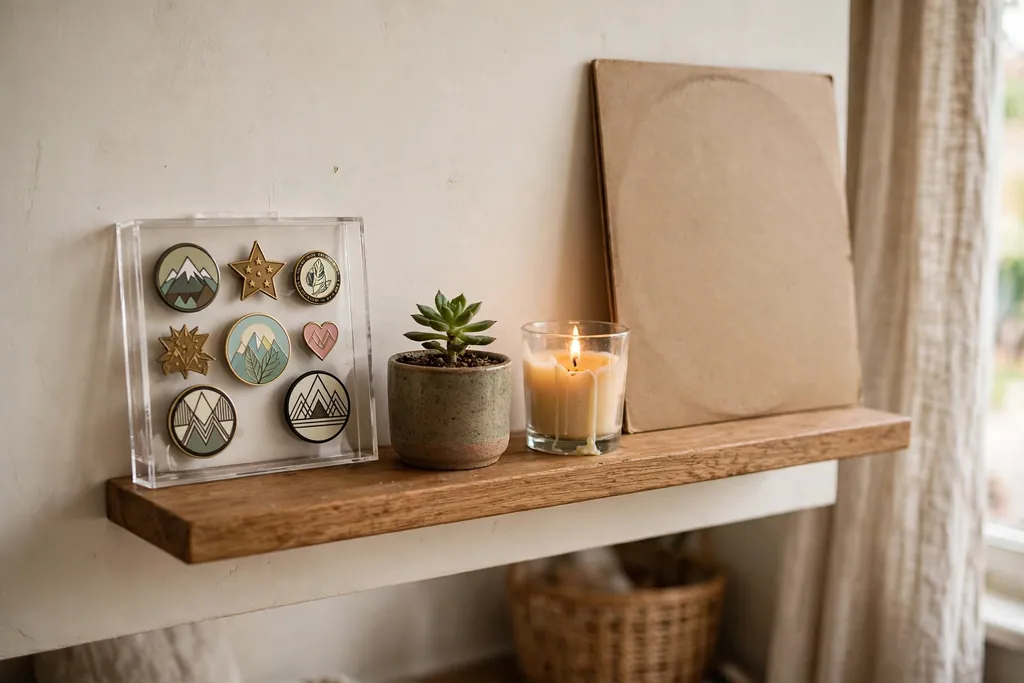
    Battery fairy lights are useful where outlets are scarce, but check that they are rated for indoor use and turn them off when you leave. Layering light also helps at night: a bright task lamp for study, a soft lamp for relaxing, and no overhead light at all after dinner gives one room two very different moods without any building work.

    23. Personalize With DIY Art and a Memory Board

    Cork memory board with photos beside DIY canvas art on a wall.

    DIY art and a memory board give a rental personality that shop bought posters alone cannot. Paint or draw a simple abstract piece on canvas, print your own photos in a consistent size, or frame a piece of fabric you like. Beside it, pin ticket stubs, postcards, photos, and notes to a cork board or a magnetic board, arranged in loose rows with space between items so the board reads as a collection, not a pile.

    This differs from a framed gallery wall because it is meant to change: swap items in and out as terms pass, and keep the board to one wall so the room does not feel covered in paper. Use pins or magnets rather than tape on painted walls, and keep anything valuable or irreplaceable in a frame or a folder instead. A memory board also makes a good gift wall for flatmates, with one section each.

    Conclusion

    A polished college apartment does not need matching furniture or a large budget. It needs a plan: zones for sleeping, studying, and eating, storage that closes or rolls away, renter friendly walls, and warm light in the evening. Start with the change that fixes your biggest daily annoyance, whether that is a cluttered closet, a dark corner, or a bed that takes over the room. Add one idea at a time, live with it for a week, and only then add the next, so each piece earns its place.

    Save this list on Pinterest before your next move or room refresh, and work through it zone by zone: entry first, then sleep, then study, then living and dining. Small, reversible changes add up, and the result is a flat that feels calm to come home to, easy to study in, and simple to hand back at the end of the year.

    FAQs

    How can I decorate a college apartment without losing my deposit?

    Use removable and non damaging methods first: adhesive hooks and strips rated for the weight, peel and stick wallpaper tested on a small area, tension rods, leaning mirrors, and freestanding furniture. Photograph the flat when you move in, keep packaging and instructions for anything you mount, and remove adhesive items slowly following the product guidance. Check your lease for rules on nails, paint, and wall mounting before you start, and ask your landlord in writing if you are unsure.

    What is the best furniture for a small college apartment?

    Choose pieces that do two jobs and move easily: a daybed, a storage ottoman, a rolling kitchen cart, a round pedestal table, and a garment rack. Measure doorways, stairwells, and lift access before buying, and prefer flat pack or secondhand pieces you can take apart for the next move. Avoid oversized sofas, heavy wardrobes, and single purpose items until you know how much floor space you truly have after a week of living there.

    How do I make a shared college apartment look tidy?

    Agree on zones and shared storage from the first week: one hook and one bin per person, a shared cleaning rota, and a rule that shared surfaces get cleared each evening. Use labeled bins in closets, a drop zone by the door, and closed storage for shared supplies. Keep personal items in bedrooms and shared items in living spaces, and do a short weekly reset together, which prevents small piles from becoming a flat wide problem.

    How can I make a small apartment feel bigger?

    Let in daylight, keep floors as clear as possible, and use light colors on large surfaces such as bedding, rugs, and curtains. Hang curtains high and wide, lean a mirror opposite a window, and choose low, leggy furniture that shows floor underneath. Use vertical storage on walls and doors, keep one clear walkway through each room, and limit large patterns to one or two accents, such as a rug or a throw, rather than every surface.

    What lighting works best in a college apartment?

    Layer warm light instead of relying on one harsh ceiling fitting. A task lamp for study, a floor or table lamp for relaxing, and a soft lantern or string lights for evenings cover most needs. Warm white bulbs feel calmer than cool white in bedrooms and living areas, while a brighter task lamp helps at a desk. Keep lights away from bedding and curtains, switch lights off when you leave, and check that any string lights are rated for indoor use.

    How do I decorate a college apartment on a tight budget?

    Start with what you already own, then add secondhand and DIY pieces one zone at a time. Thrift shops, campus buy and sell groups, and flatmate swaps are good sources for frames, rugs, lamps, and tables. Paint or cover a canvas yourself, print photos at home or at a library, and use plants propagated from cuttings. Spend first on storage and lighting, which change how a room feels most, and leave purely decorative items until the practical pieces are in place.