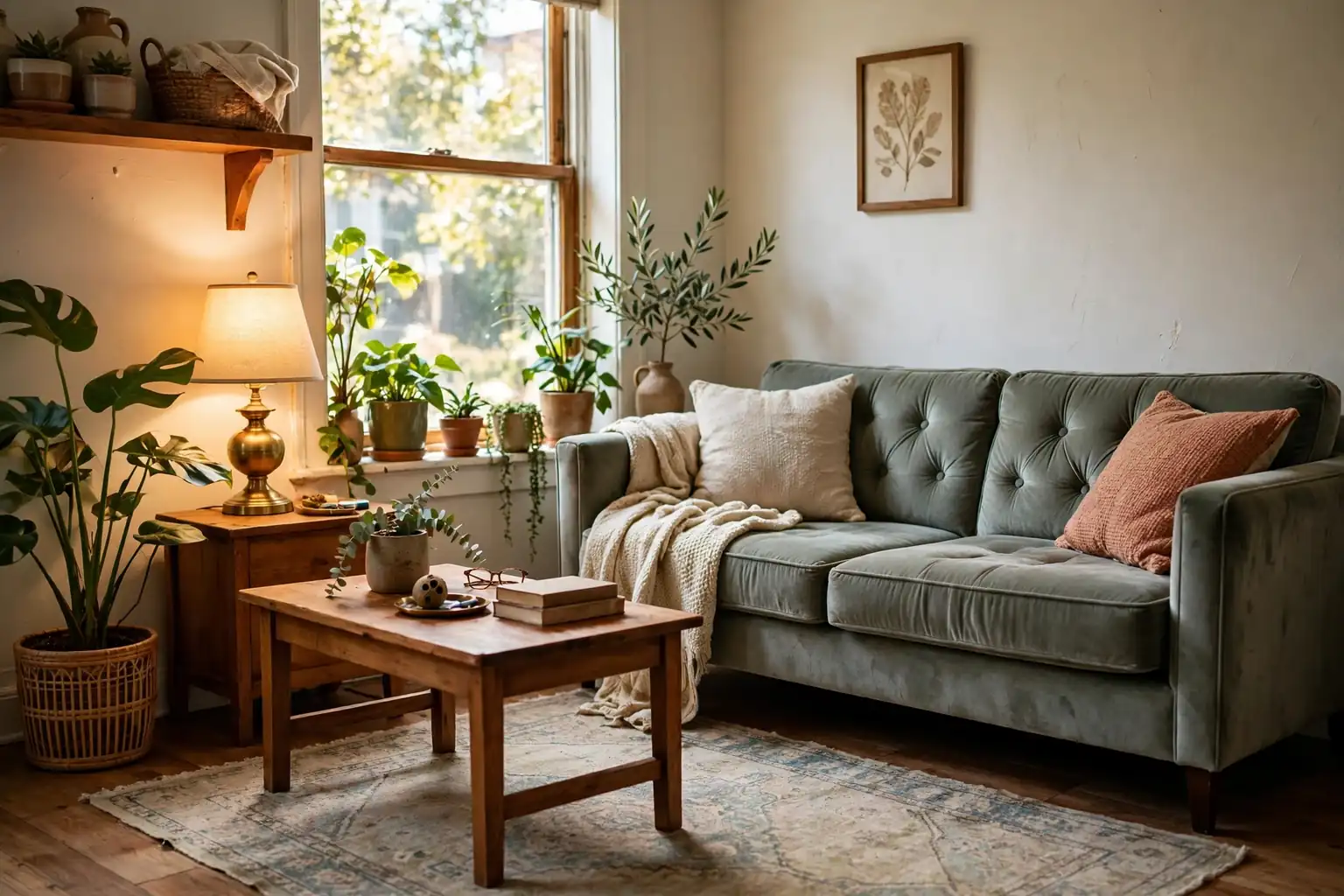
A vintage apartment does not need to look like a museum. The best rooms mix old pieces with everyday comfort, so a worn wood table can hold a laptop, and a velvet chair can be the seat you reach for each evening. Timeless vintage apartment ideas work in small spaces because they rely on warm materials, soft light, and pieces with a past, rather than on matching sets or costly changes. This list of 24 ideas covers furniture, textiles, light, storage, and small renter friendly details, so you can add character one piece at a time and keep the room easy to live in.
Key Takeaways
- Start with one warm, useful anchor piece, such as a wood table or a rug, and let smaller vintage details support it.
- Mix eras and materials on purpose, so wood, velvet, brass, linen, and wicker sit side by side instead of matching exactly.
- In a small apartment, choose vintage pieces that also store, seat, or divide space, so character never costs you function.
- Keep light warm and low where you rest, and keep the brightest light for work corners and the kitchen.
- Use renter friendly fixes first, such as textiles, freestanding furniture, and removable hooks, before any change that needs permission.
1. Start With a Warm Wood Base
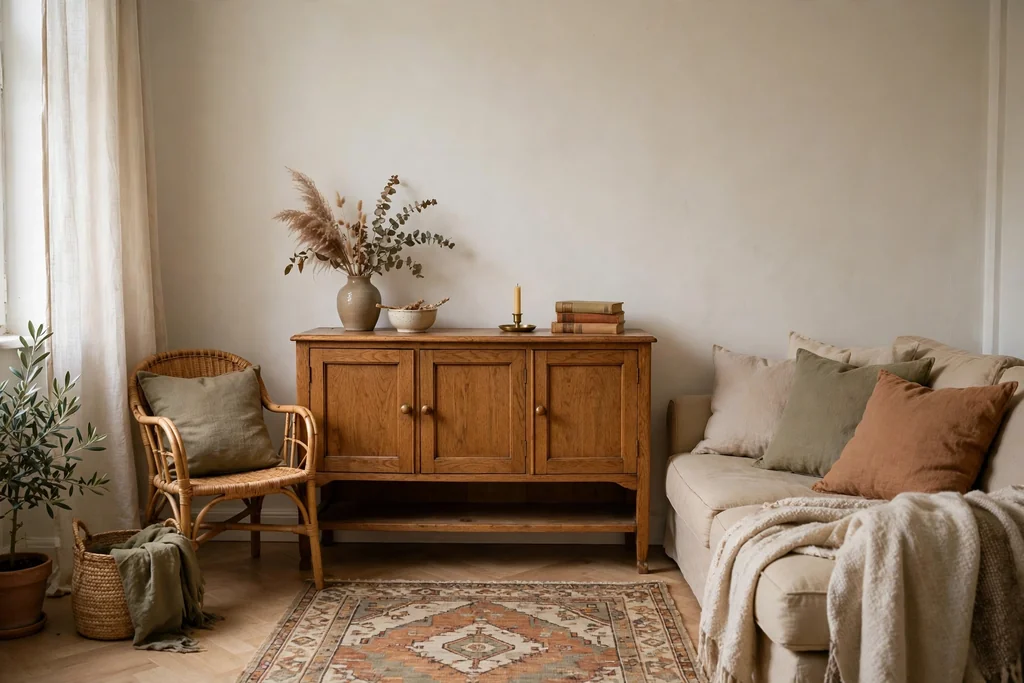
A warm wood base gives a vintage apartment its footing. Look for one solid piece in oak, walnut, or teak, such as a sideboard, a dining table, or a low bookcase, and place it where you will use it every day. The grain and wear marks do the decorating work, so the rest of the room can stay calm.
Keep the wood finish honest rather than glossy, and pair it with plain walls and simple bedding or sofa cushions. If the piece is large, let it stand alone on its wall so it reads as an anchor, not as part of a crowded set. A single good wood piece also makes later finds easier to place, since new items only need to sit well beside it.
2. Anchor the Room With a Vintage Rug
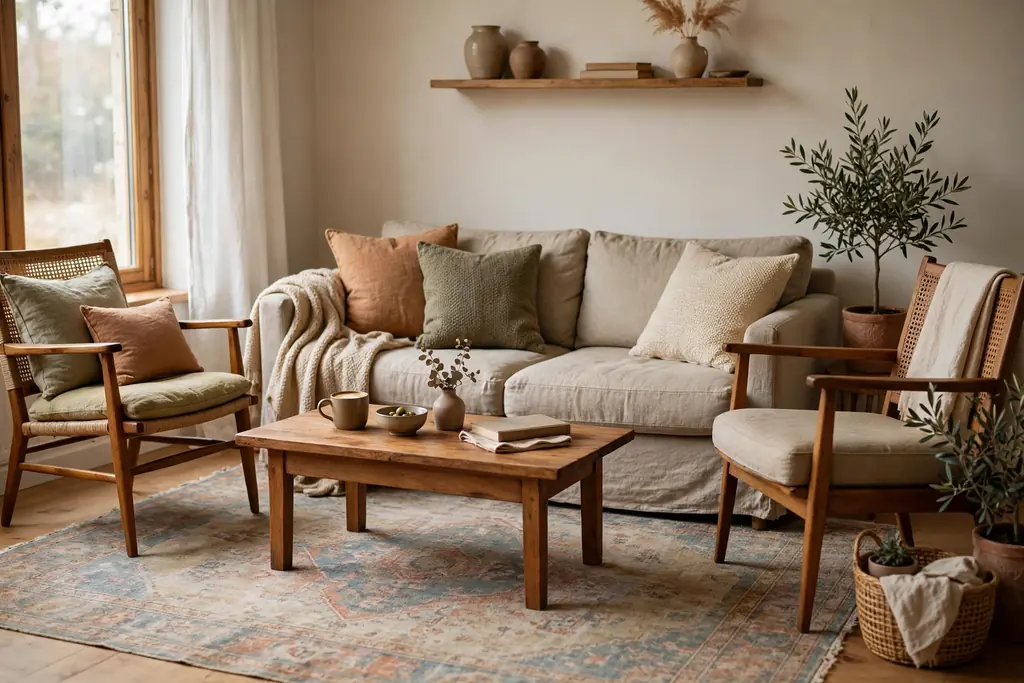
A vintage rug anchors a seating area in a way that bare floors cannot, and it adds pattern and warmth at floor level. Choose a rug large enough that the front legs of the sofa and chairs sit on it, even in a small living room. Faded reds, blues, or earth tones tend to sit well with wood and linen.
If the rug is patterned, keep the sofa and cushions mostly plain so the floor pattern stays clear. A rug pad underneath stops slipping and adds softness underfoot. In a rented apartment, a rug is also one of the simplest ways to cover plain flooring without changing it, and it can move with you to the next home.
3. Add a Tufted Velvet Sofa in a Muted Tone
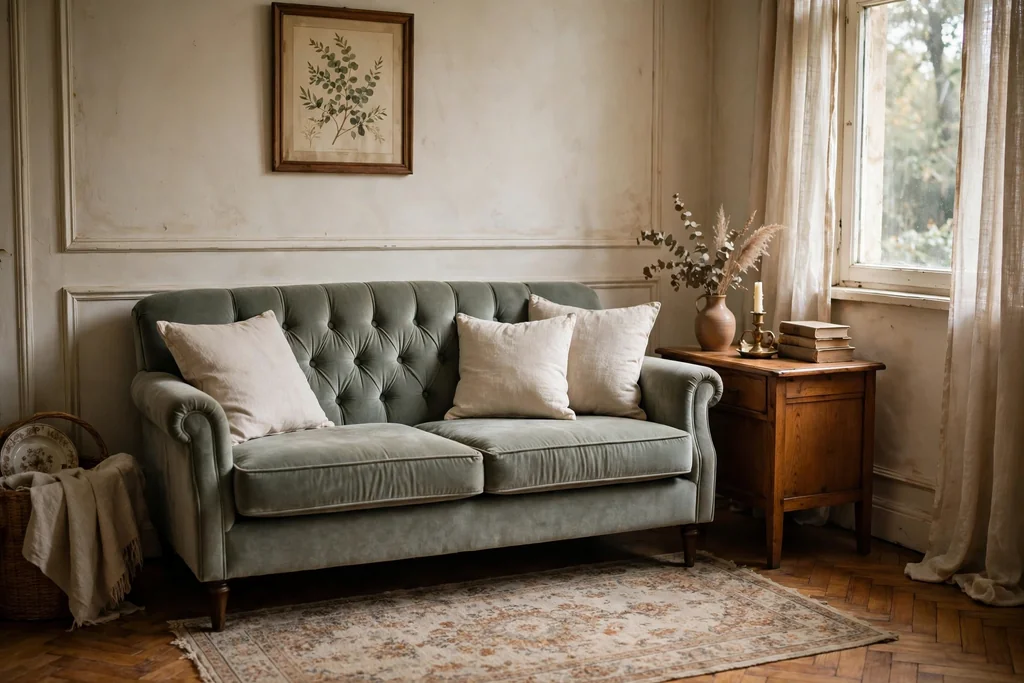
A tufted velvet sofa brings a classic vintage shape into daily use, provided the color stays muted. Sage, dusty blue, rust, or warm grey all work, and they show less wear than a pale cream. The tufting adds texture, so the sofa looks considered even with plain cushions.
Keep the sofa size in scale with the room, since a deep vintage sofa can swallow a small apartment. A two seat version often suits an apartment better than a three seat one. Pair it with a plain throw for evenings, and brush the velvet now and then to keep the nap even where people sit most.
4. Mix Eras Instead of Matching a Set
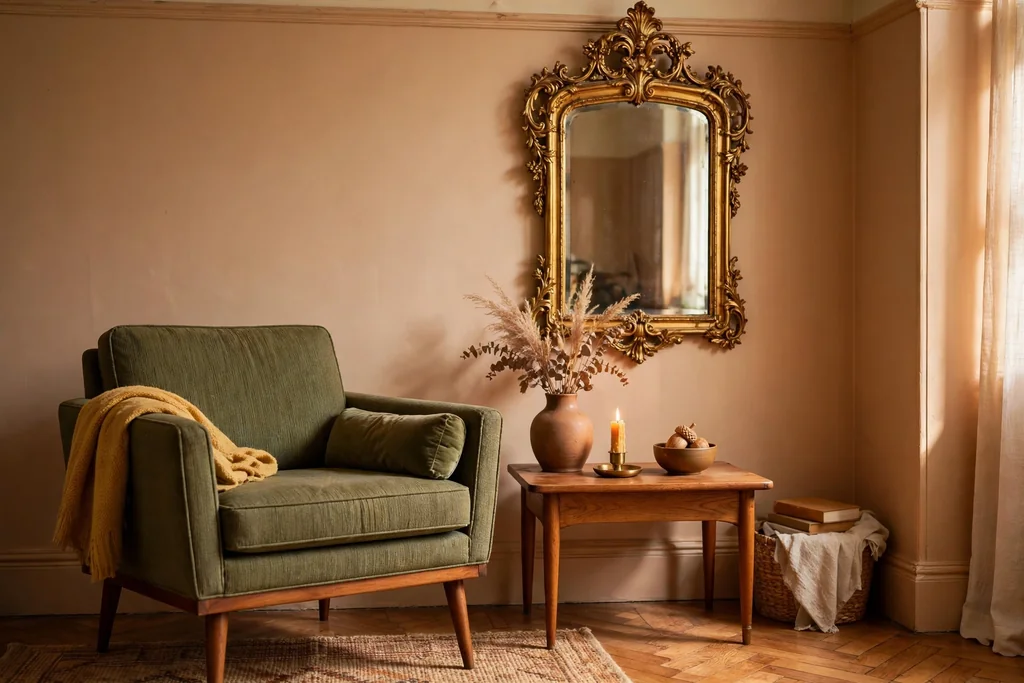
Mixing eras is what keeps a vintage apartment from looking like a showroom. Pair a mid century armchair with a Victorian style mirror, or set a 1970s side table beside a simple modern lamp. The mix works when the pieces share a warm tone or a material, such as wood or brass, even if their shapes differ.
Limit the mix to two or three eras in one room, so the eye can follow the thread. If a piece feels out of place, check its scale and color first, since a chair that is too tall or too bright often causes the clash, not its age. This approach also suits a tight budget, because you can add pieces one at a time as you find them.
5. Use an Antique Trunk as a Coffee Table
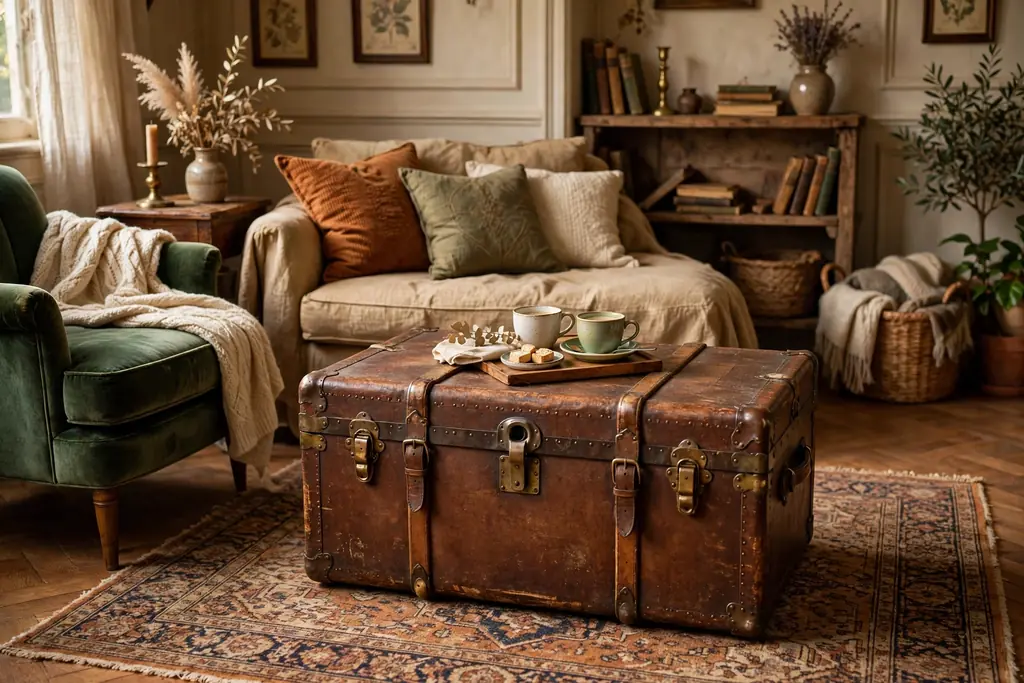
An antique trunk works as a coffee table and as hidden storage, which is a useful pairing in a small apartment. Choose a trunk with a flat lid, so cups and books sit steady, and check that the hinges and latches close cleanly. Inside, store throws, board games, or seasonal items you do not need every day.
Place the trunk on a rug so it does not slide on hard floors, and add a small tray on top to gather remotes and coasters. If the trunk is tall, pair it with a lower sofa so the proportions stay comfortable for reaching a drink. A trunk also gives a room a story at its center, without taking up wall space.
6. Build a Gallery Wall of Mismatched Vintage Frames
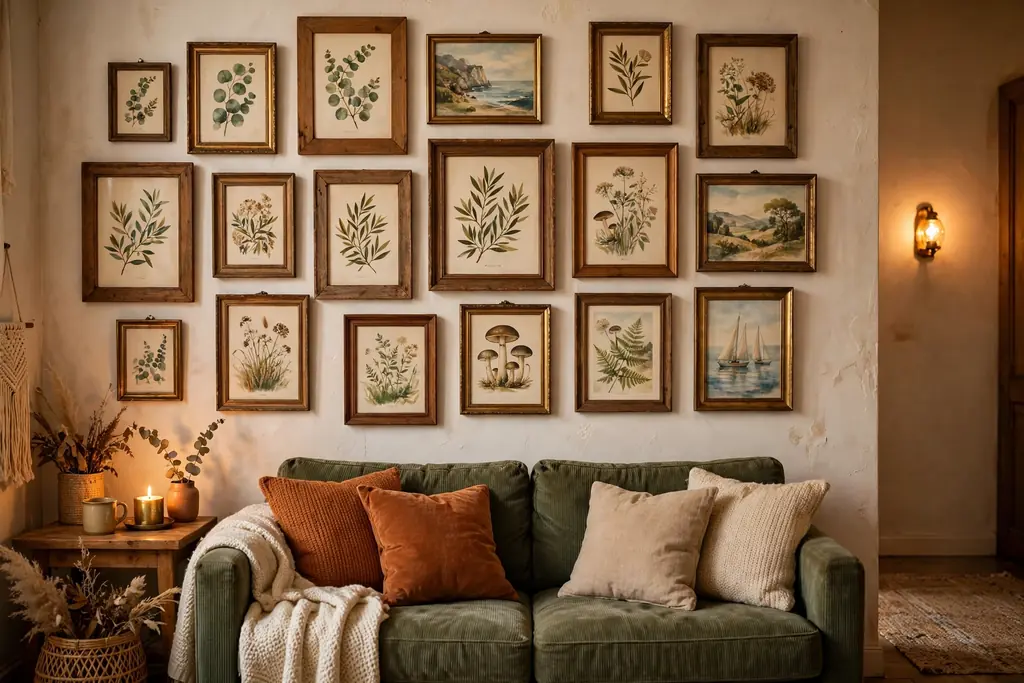
A gallery wall of mismatched vintage frames turns prints, photos, and small artworks into one display. Use wood, brass, and painted frames in different sizes, and keep a common thread, such as warm tones or a similar subject, so the wall still feels planned. Hang the largest frame first, at eye level, then build outward.
Use paper templates on the wall before you hammer nails, especially in a rented apartment where each hole counts. Leave small gaps between frames so each piece can breathe, and keep the bottom edge of the display above sofa or console height. A gallery wall suits a plain wall that needs interest without new furniture.
7. Choose Brass and Aged Metal Lighting
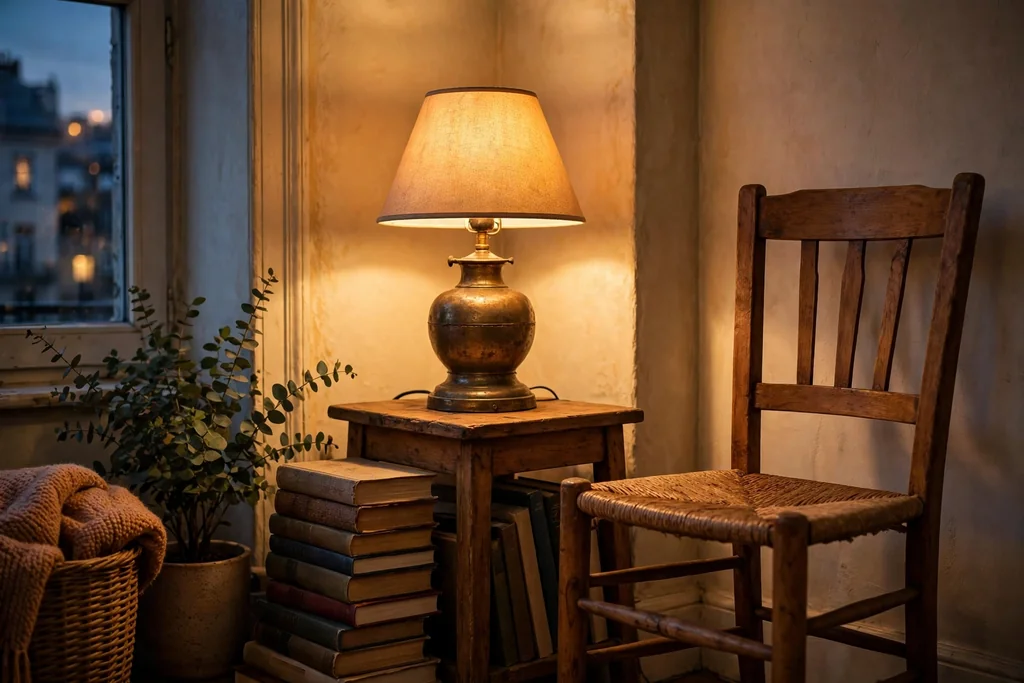
Brass and aged metal lighting adds a warm vintage glow that plain white fittings often lack. A brass table lamp, a shaded floor lamp, or a simple pendant with a warm bulb can change how a whole corner feels in the evening. Look for aged finishes rather than shiny new brass, so the metal sits quietly with wood and linen.
Keep the bulb warm, around the soft white range used for living rooms, and use a shade that spreads light rather than throwing a hard spot. One brass lamp per seating area is usually enough, with a second only in a reading corner. Wipe the metal with a dry cloth, and leave patina alone unless it starts to look patchy.
8. Soften Windows With Lace or Sheer Curtains
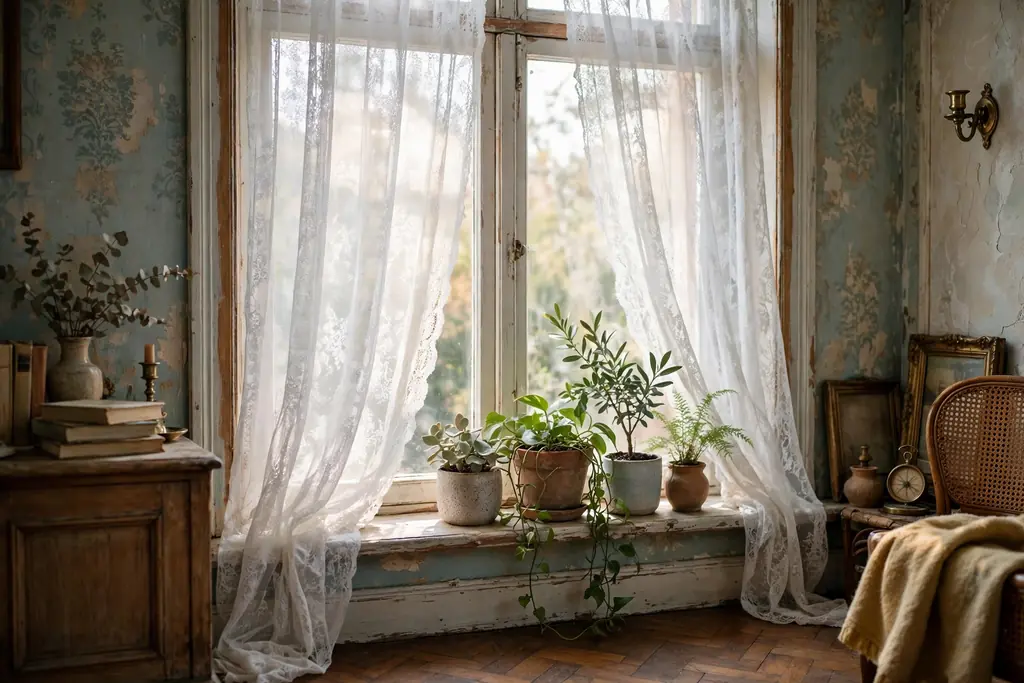
Lace or sheer curtains soften a window and filter daylight, which suits the gentle mood of a vintage apartment. Hang them on a simple rod, close to the ceiling, so the window looks taller and the fabric can fall to the sill or the floor. White or cream sheers work in most rooms, and they let light in while still giving privacy during the day.
Layer sheers under heavier curtains only if you need night privacy or warmth, and keep the heavier pair plain so the lace stays the detail. Wash sheers gently and hang them damp so they dry smooth. For more renter friendly small space ideas that use soft, movable details, see these college apartment decor ideas.
9. Fill an Open Bookcase With Books and Collected Objects
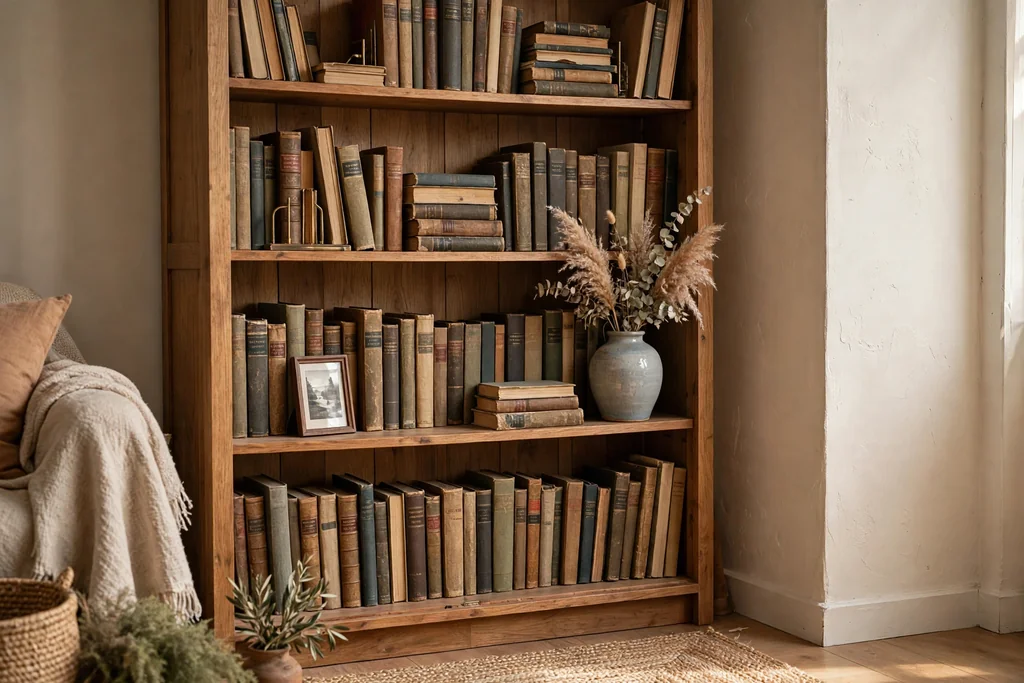
An open wood bookcase gives vintage character and everyday storage in one piece. Arrange books by size or color in loose groups, and leave one or two shelves partly open for a vase, a clock, or a small framed photo. The mix of books and objects is what stops the shelf looking like a shop display.
Keep heavier books low, so the case stays stable, and do not fill every shelf to the edge. A little empty space helps the eye rest and makes it easy to pull a book out. Dust the shelves when you tidy, and rotate one or two objects each season so the display stays fresh without new purchases.
10. Paper One Accent Wall in a Classic Pattern
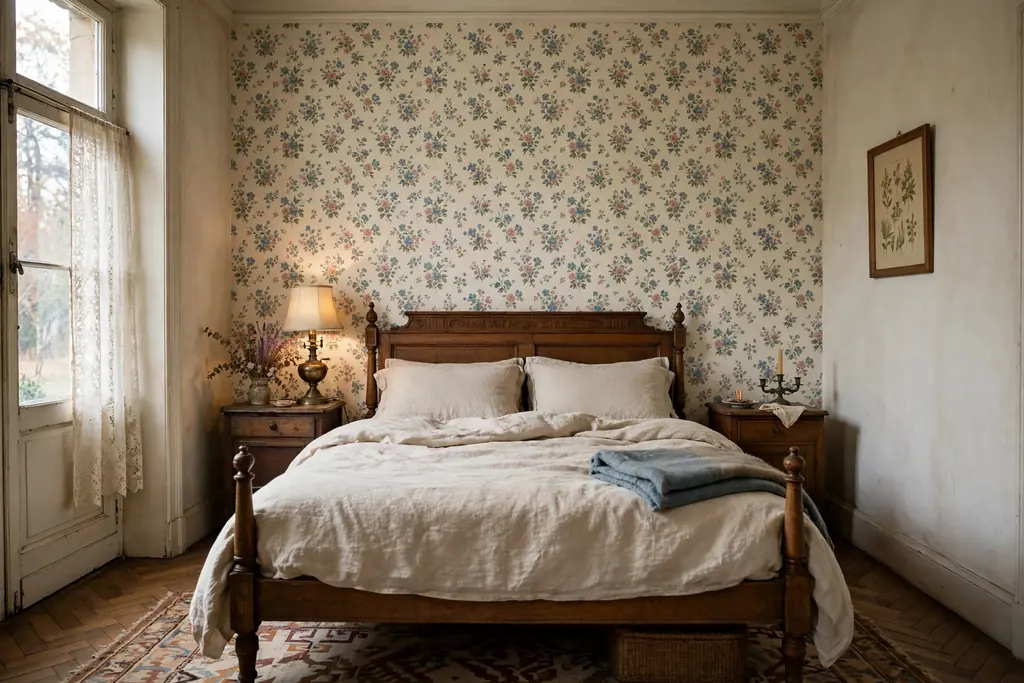
A classic wallpaper pattern on one accent wall, such as a small floral, a damask, or a quiet stripe, gives a vintage apartment depth without covering every wall. Choose the wall behind the bed or the sofa, where the pattern will frame the main furniture. Keep the other walls plain and in a tone pulled from the paper.
In a rented apartment, use a removable wallpaper, and test a small piece first for adhesion and for how it looks in your light. Match the pattern scale to the room, since a large print can overwhelm a small wall, while a small print can disappear on a long one. If the wall has doors or radiators, pick a simpler pattern so the breaks in the wall do not chop the design.
11. Seat a Mismatched Set Around a Wood Dining Table
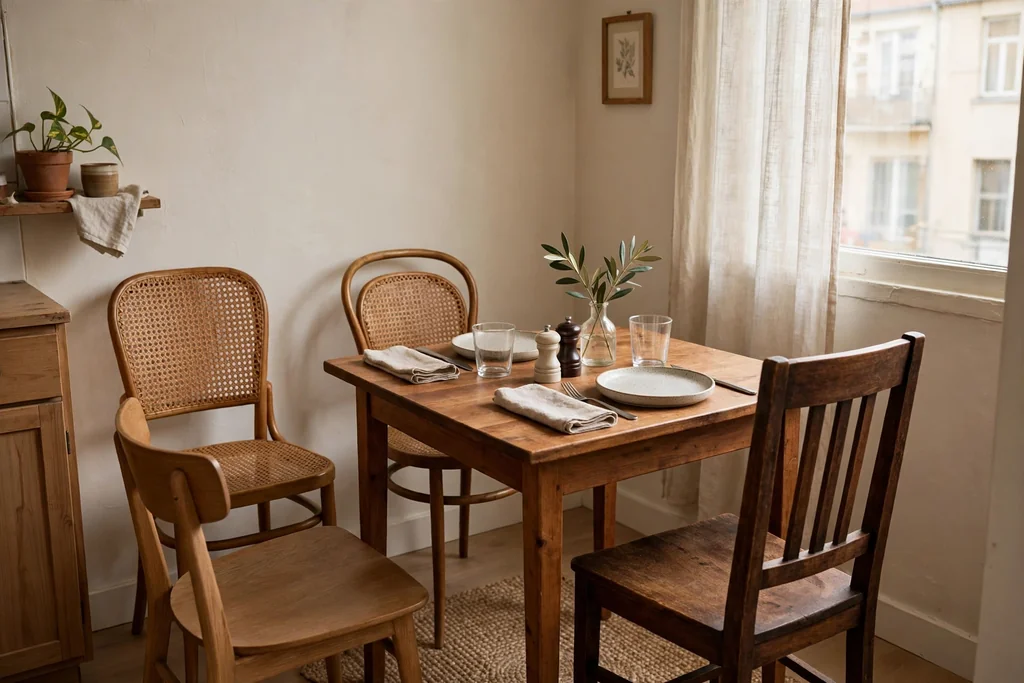
A wood dining table with mismatched chairs feels lived in and vintage, and it lets you build a set slowly. Start with the table, then add chairs in wood, cane, or painted finishes that share a seat height and a warm tone. The shared height matters more than matching backs, since it keeps the table comfortable to sit at.
Check that each chair is sturdy and that its legs do not wobble, and tighten joints before you bring chairs into daily use. Add a plain table runner or simple placemats, so the chairs stay the varied detail. This idea suits a small dining corner too, where two different chairs can look intentional rather than incomplete.
12. Create a Vintage Dressing Table Corner
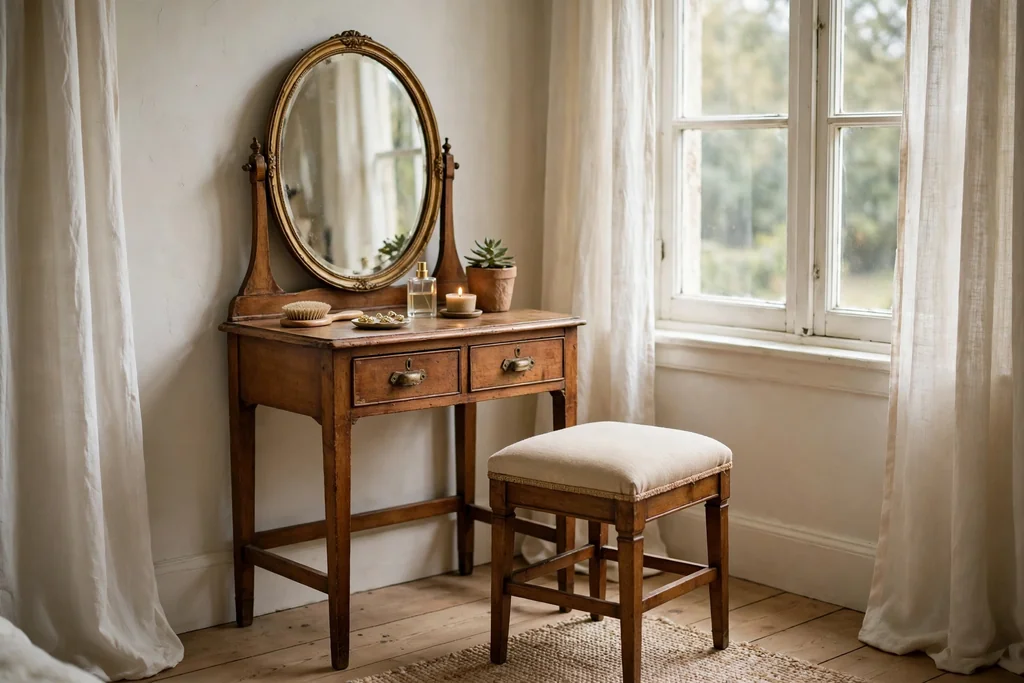
A vintage dressing table corner turns a quiet spot by a window or a bedroom wall into a useful daily station. Choose a small table with a drawer, add a mirror, and keep only the items you use each morning on top. A small stool that slides under the table saves floor space when the corner is not in use.
Keep the mirror at a height that works while seated, and add one small lamp if the corner is dark in the morning. Store extra items in the drawer or in a small box beside the table, so the top stays clear. This corner also works as a writing spot later in the day, provided the chair height suits both uses.
13. Hang a Woven Textile or Tapestry as Wall Art
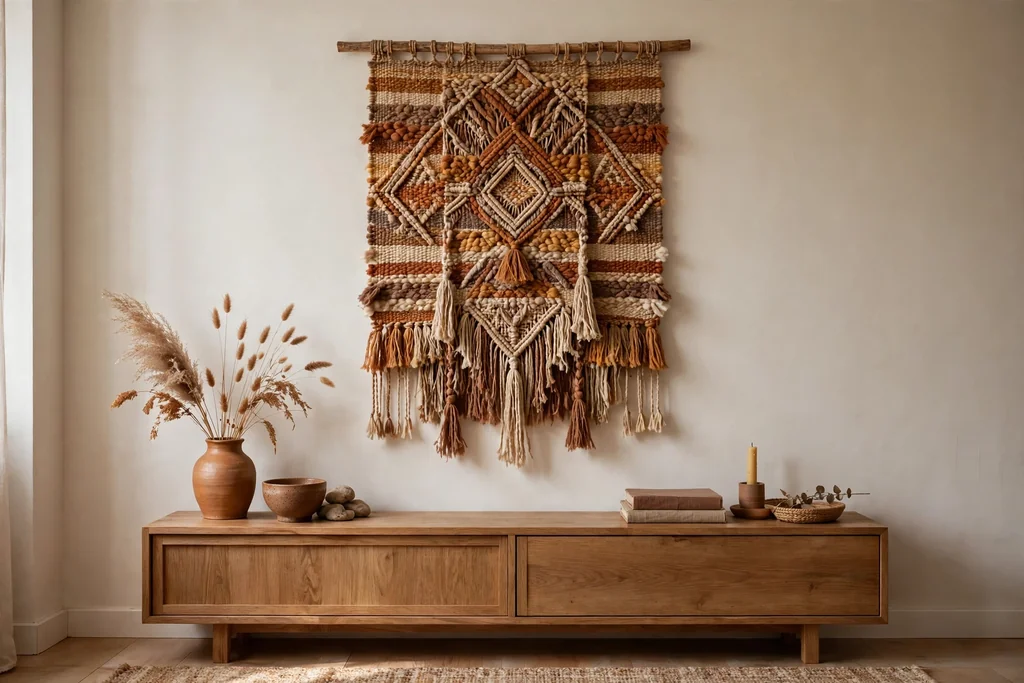
A woven textile or tapestry adds softness to a wall in a way that framed prints cannot, and it suits a vintage apartment because the weave itself carries texture. Hang a textile with a simple rod or clips, on a wall that gets little direct sun, so the fibers fade slowly. Choose a size that fills the wall section without touching furniture below.
Keep the rest of that wall plain, so the textile stays the focus, and vacuum it lightly with a brush head now and then. A textile also helps soften sound in a room with hard floors, which is a useful bonus in a small apartment. If the piece is fragile or very old, hang it where it will not be brushed by passing traffic.
14. Layer Velvet and Linen on the Bed
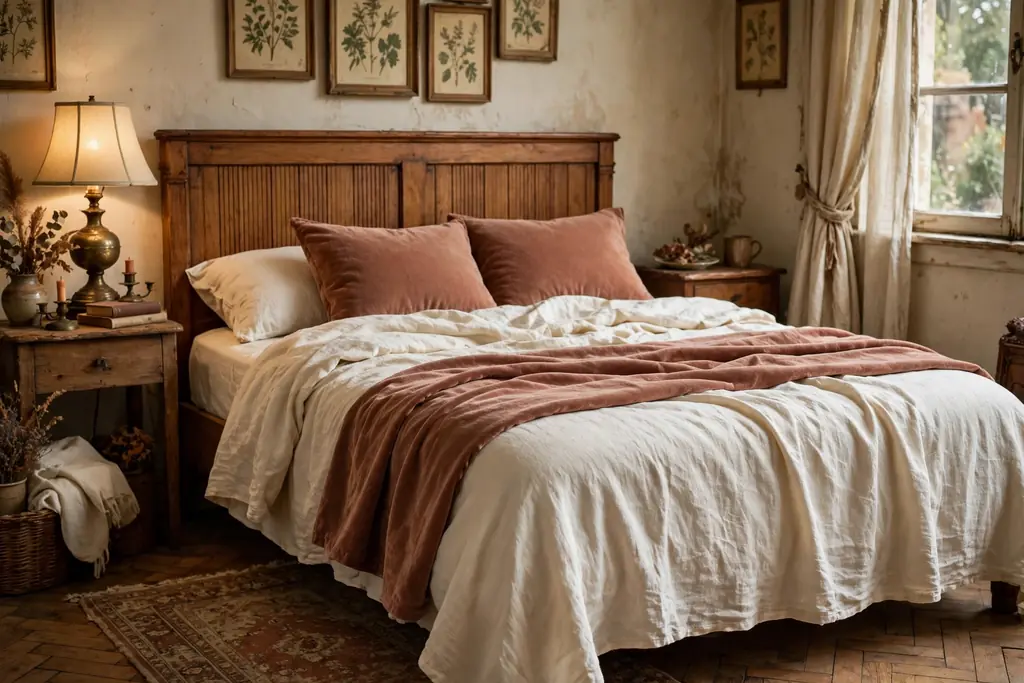
Layering velvet and linen on the bed mixes vintage luxury with everyday washability. Use linen sheets and pillowcases as the base, since linen breathes and washes well, then add a velvet throw or a velvet cushion for warmth and texture. Muted tones, such as rust, sage, or dusty blue, keep the bed calm.
Fold the throw at the foot of the bed during the day, and remove velvet cushions at night so sleep stays comfortable. Wash linen as usual, and spot clean velvet rather than washing it often. This layering suits a small bedroom, because the bed is the largest surface in the room and the layers give it a finished look without new furniture.
15. Place an Antique Mirror to Open a Small Entry
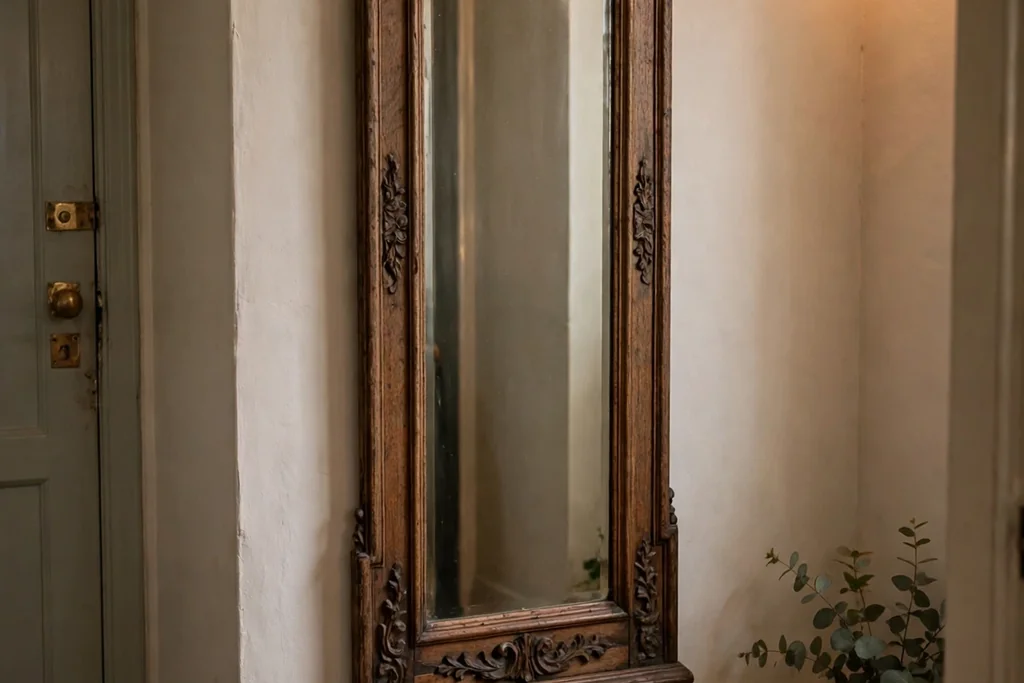
An antique mirror in a small entry bounces light and makes a narrow space feel wider. Hang it opposite a window or a light source where it can reflect daylight, and keep the frame in wood or aged gold so it reads as vintage rather than modern. A tall mirror also gives a last check before you leave the flat.
Hang the mirror securely, using a fixing suited to your wall type, and keep the entry below it clear except for a small tray for keys. If the mirror is very old, check the backing and hanging wire before you hang it. A mirror works best in an entry that is otherwise plain, since a busy wall behind you will reflect as clutter.
16. Make a Reading Corner With a Wicker or Rattan Chair
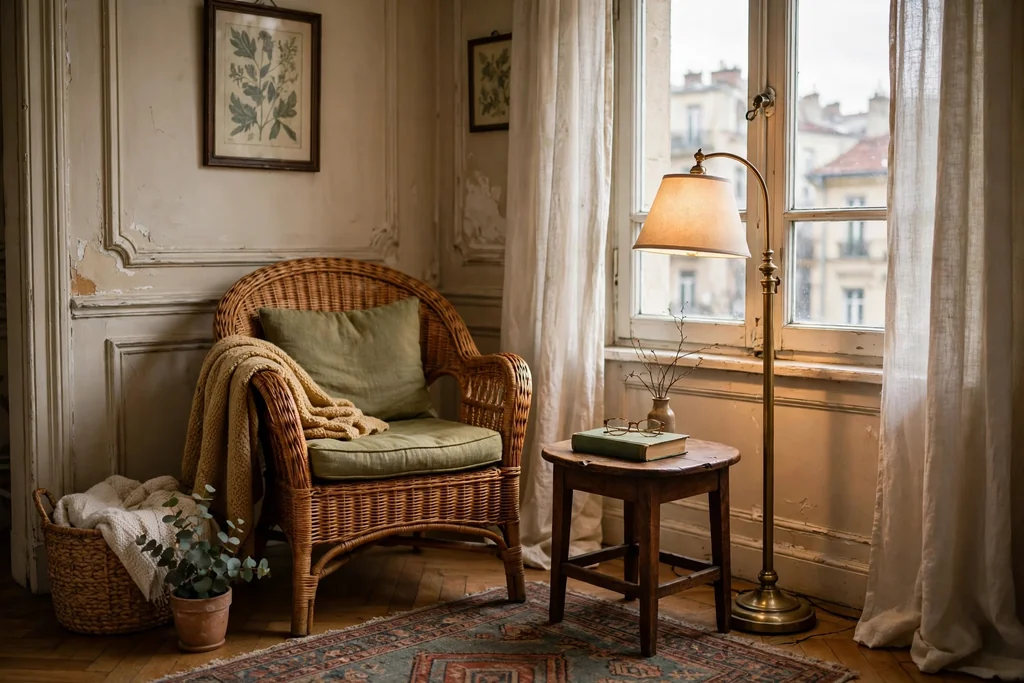
A wicker or rattan chair creates a light, vintage reading corner without the weight of an upholstered armchair. Place it near a window, add a small side table for a book and a drink, and keep a floor lamp close by for evening reading. A cushion in a plain fabric makes the seat comfortable for longer sits.
Choose a chair with a sturdy frame and tight weaving, and check that it does not creak under weight. Keep the corner to those three pieces, chair, table, and light, so it stays inviting rather than crowded. This corner suits a bedroom or a living room alcove, and the chair can move to a balcony in warm weather if you have one.
17. Display Vintage Kitchenware on Open Shelving
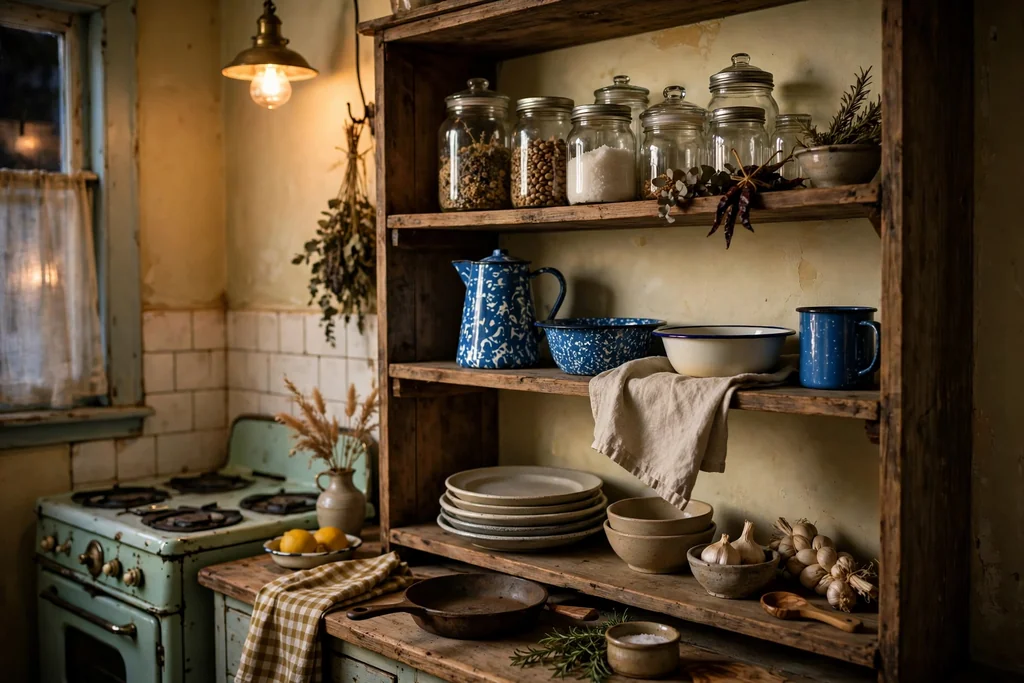
Open shelving in the kitchen lets vintage kitchenware do double duty as storage and display. Use enamelware, glass jars, stoneware, and plain white plates, and group them by use, so everyday items sit at hand height and rarer pieces sit higher. Keep the shelf depth shallow enough that items do not hide behind each other.
Wash and dry items before they go on display, and use the pieces often, since kitchenware that never gets used gathers dust. Keep the shelf count to one or two runs, so the kitchen still feels calm. This idea suits a small kitchen, because it frees cupboard space for food and cleaning items while keeping the vintage detail visible.
18. Set Up a Record Player Corner With Vinyl Storage
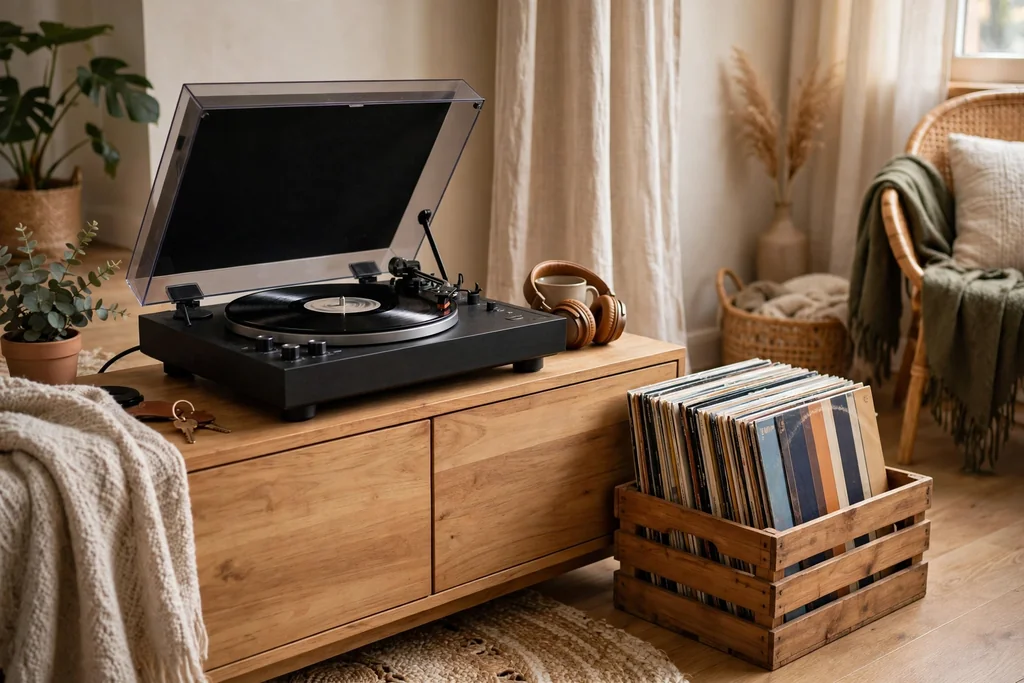
A record player corner gives a vintage apartment a music focus and a reason to slow down. Place the player on a stable, level surface, away from speakers that vibrate, and store records upright in a low crate or a small shelf beside it. Keep the corner near a seat, so listening feels like part of the room, not a display.
Store records out of direct sun and away from radiators, since heat warps vinyl. Keep the player dust free with a soft cloth, and handle records by the edges. A small number of records you actually play will serve the corner better than a large collection that never leaves the shelf.
19. Choose a Timeworn Leather Armchair
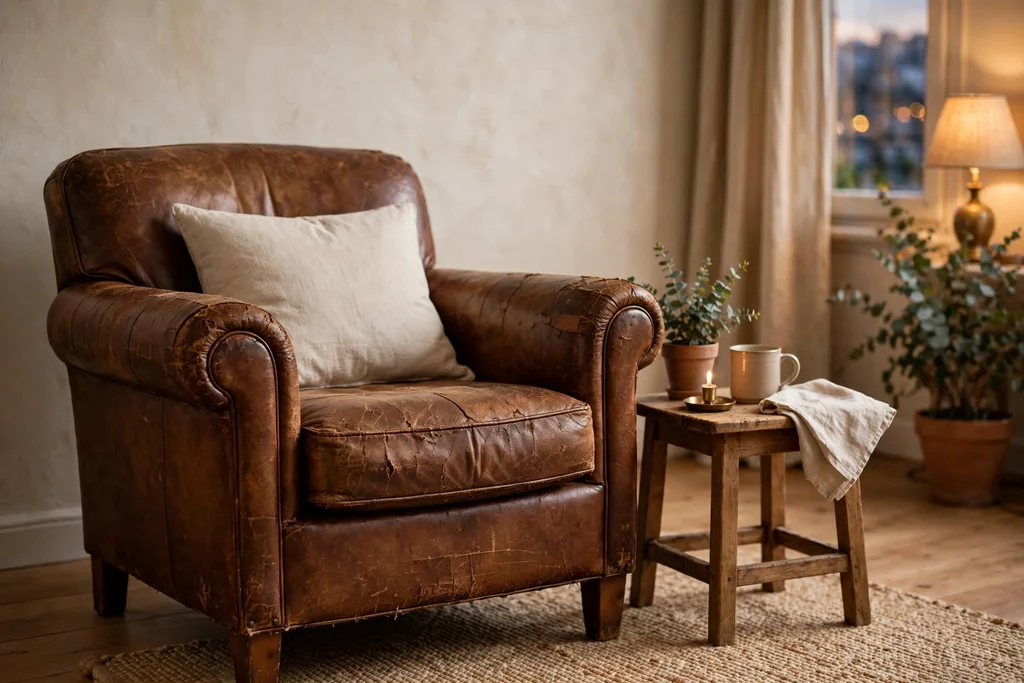
A timeworn leather armchair adds vintage weight to a living room, and the creases and softened color are part of its appeal. Choose a chair with a frame that feels solid and leather that is soft rather than cracked, and sit in it before you buy if you can. A deep seat and a good back angle matter more than a perfect surface.
Pair the chair with a plain cushion and a small side table, and keep it away from direct sun and radiators, which dry leather. Condition the leather only if the product guidance for that chair asks for it, and wipe spills quickly. One leather chair is usually enough in a small apartment, since leather carries a strong visual weight.
20. Warm the Room With Fabric Lampshades
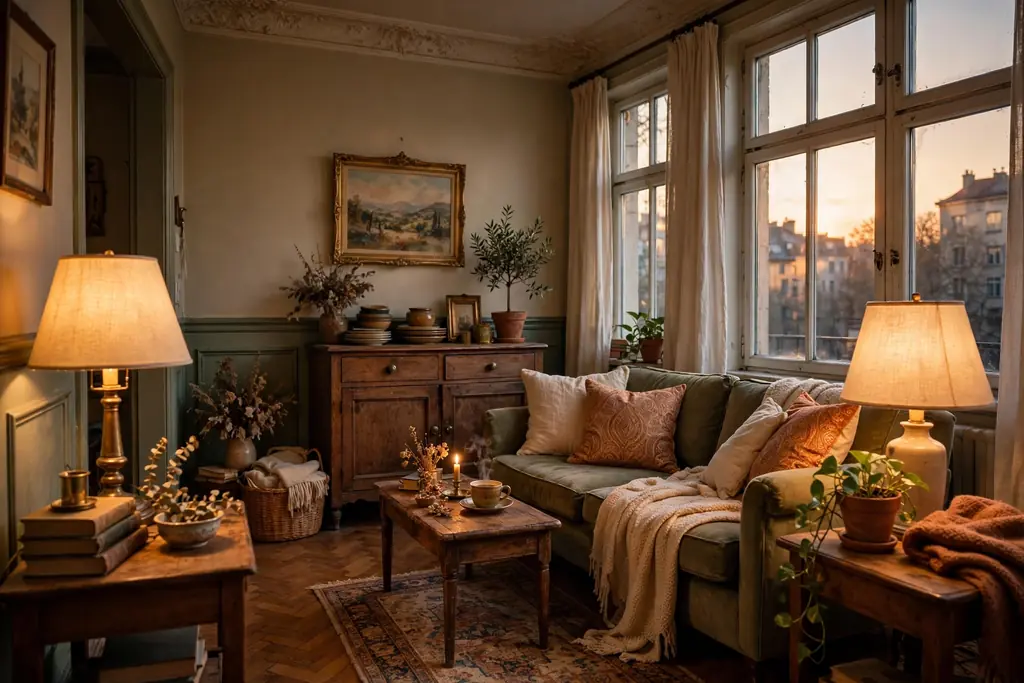
Fabric lampshades soften light and add a vintage detail that bare bulbs cannot match. Choose linen or cotton shades in cream or a muted tone, and pair them with warm bulbs in table and floor lamps. The fabric spreads light evenly, so the room feels gentle in the evening rather than harsh.
Check that the shade size suits the lamp base, since a shade that is too small looks pinched and one that is too large can tip. Keep shades away from hot bulbs, and dust them with a dry cloth or a low suction brush. Two matching shades can tie a room together, but one shade per lamp type keeps the look relaxed.
21. Repurpose a Sewing Table as a Desk or Console
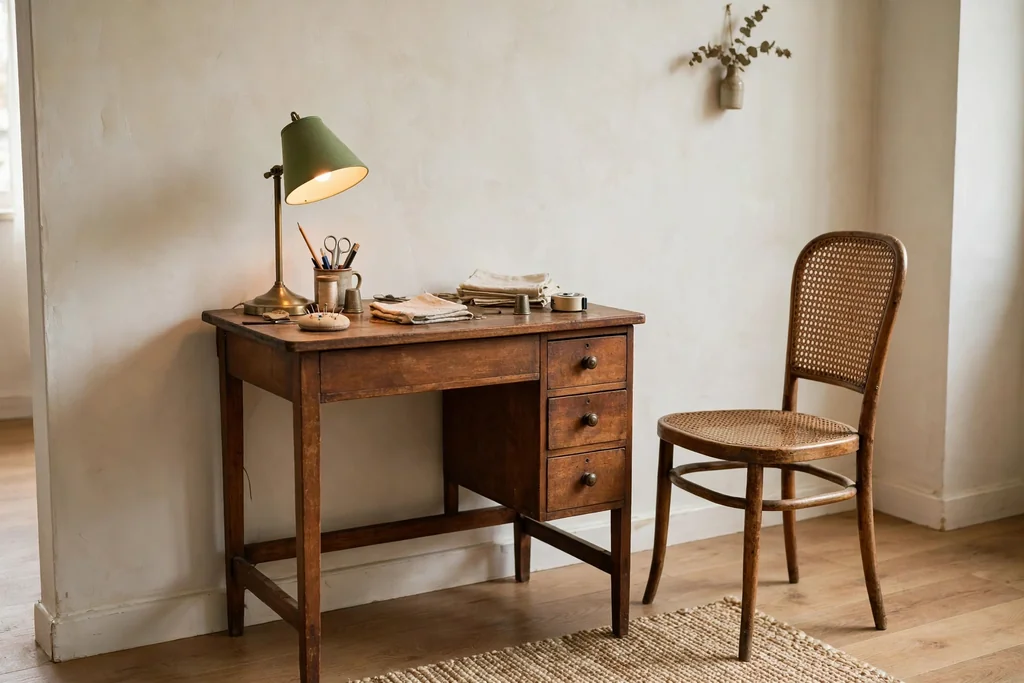
A vintage sewing table, with its small drawers and folding top, repurposes well as a desk or a hallway console. The drawers hold pens, chargers, or keys, and the small footprint suits a wall that cannot take a full desk. Check that the table height suits a chair if you plan to work at it, or use it standing height in a hallway.
Clear the top to one or two daily items, such as a lamp or a small tray, so the table stays useful. Tighten hinges and drawer runners before daily use, and keep heavier items low. This kind of repurposed piece adds vintage character with a clear job, which is what keeps a small apartment practical.
22. Drape a Patchwork Quilt Over the Sofa or Bed
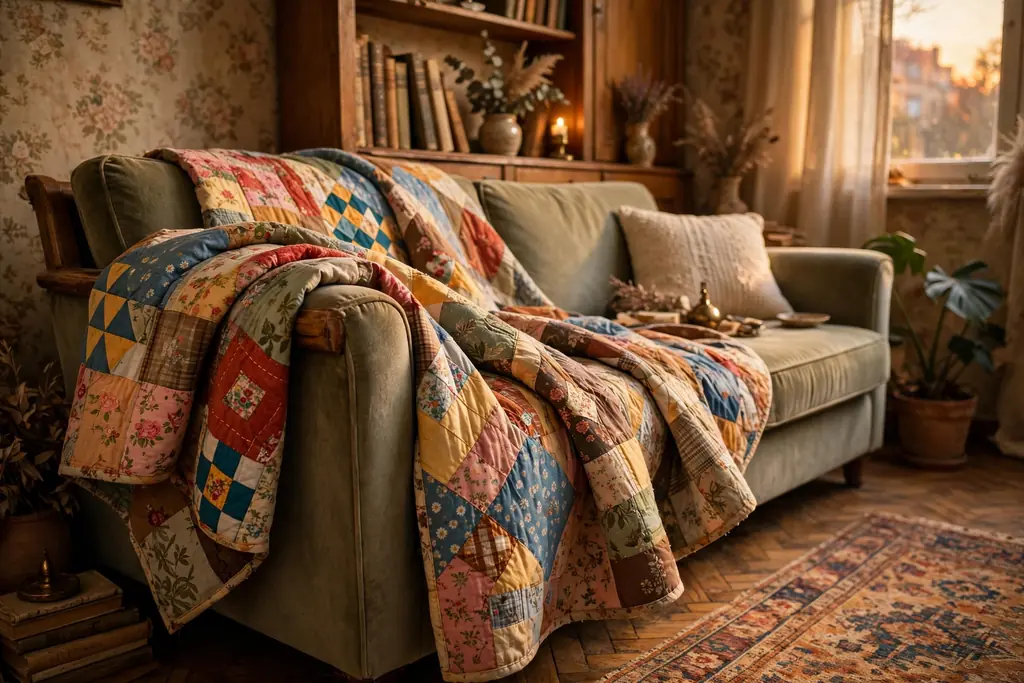
A patchwork quilt adds vintage pattern and warmth, whether it is draped over a sofa arm or folded at the foot of a bed. Choose a quilt with colors already in the room, so the patches read as a link rather than a clash. The handmade look of patchwork suits a vintage apartment because it shows care and time.
Use the quilt as a throw for cool evenings, and fold it neatly when it is not in use so it does not look like bedding left out. Wash it gently, following its care label, and store it in a breathable bag if you put it away for a season. One quilt per room is enough, since patchwork carries a lot of pattern on its own.
23. Use an Old Door or Shutter as a Headboard or Divider
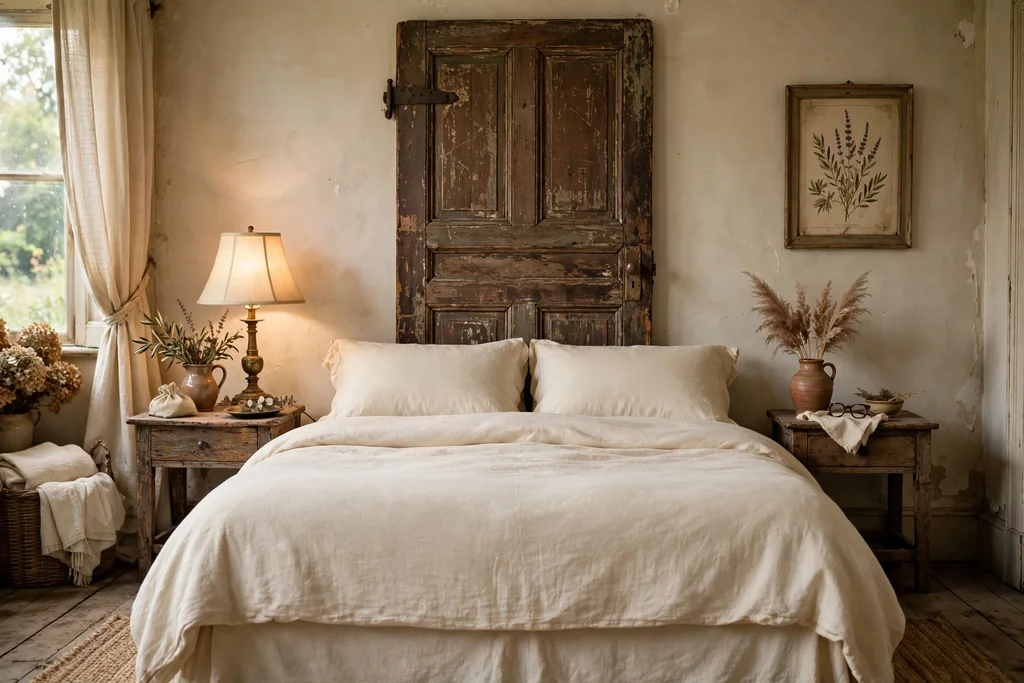
An old door or a pair of shutters can serve as a headboard or as a freestanding divider in a studio apartment. As a headboard, fix the door securely to the wall behind the bed, with its top at a height that suits sitting up in bed. As a divider, stand it on stable feet and use it to mark a sleeping zone from a living zone.
Sand rough edges and check for loose paint or splinters before you bring the piece into daily use. Keep the finish in wood or a muted painted tone, so it sits with the rest of the room. A divider should never block a fire exit or a radiator, and a headboard should leave room for bedside light on at least one side.
24. Curate One Small Collection Shelf
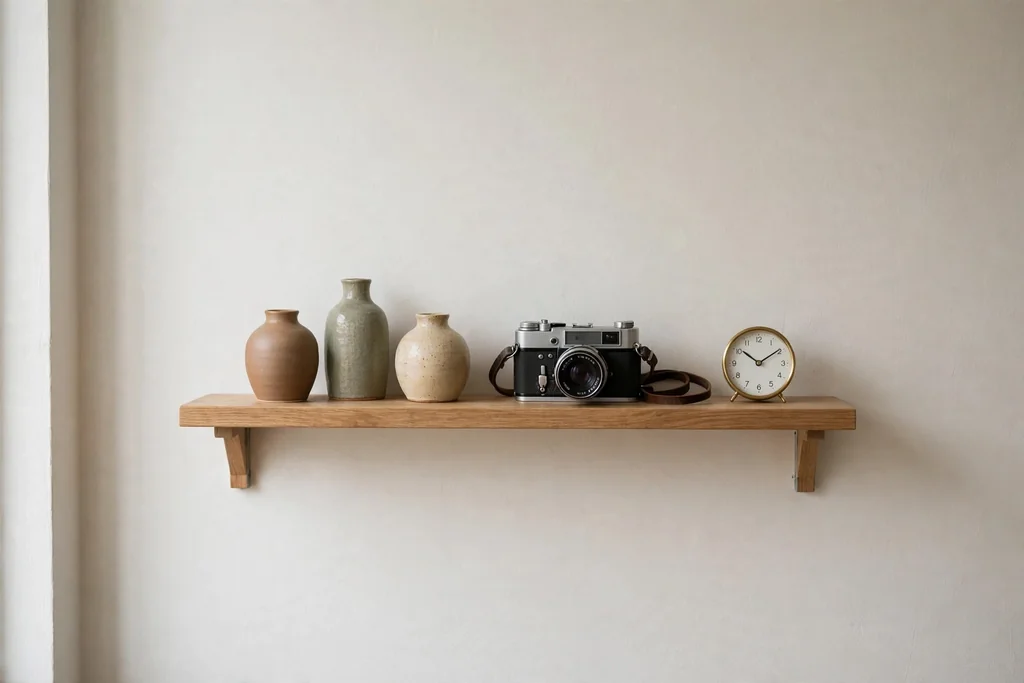
A small collection shelf lets vintage finds shine without turning the whole apartment into a display. Choose one shelf, and place a short row of related objects on it, such as ceramic vases, old cameras, or small clocks. The limit of one shelf forces a choice, so only pieces you truly like make the cut.
Rotate the objects now and then, and keep the shelf dusted and uncluttered. Group objects by size, with taller pieces at the back, and leave space between them so each one can be seen. If a new find does not fit the shelf, it is a useful sign that the collection is complete for now.
Conclusion
A timeless vintage apartment is built one useful piece at a time, not in a single shopping trip. Start with a wood anchor or a rug, add warm light and soft textiles, then let smaller finds earn their place by doing a job. Keep the room easy to clean, easy to move through, and easy to change, so the vintage character supports daily life instead of getting in its way. Pick the idea that fits your room and your budget first, live with it for a while, and add the next piece only when you know where it will sit.
Save this list on Pinterest before your next thrift or secondhand search, and work through it one idea at a time: furniture first, then textiles and light, then storage and small displays.
FAQs
How do I make a vintage apartment look timeless rather than dated?
Keep the base simple and let vintage pieces carry the character. Use plain walls, a muted palette, and warm wood, then add one or two vintage details per area rather than filling every surface. Mix eras lightly, keep furniture in scale with the room, and remove any piece that does not serve a use or bring you real pleasure.
What vintage pieces work best in a small apartment?
Choose pieces that do more than one job, such as a trunk that stores and serves as a table, a bookcase that displays and stores, or a chair that moves between rooms. Small footprints help, so favor a two seat sofa, a small dressing table, and a single collection shelf over large sets. Measure doorways and the room itself before you buy anything secondhand.
Can renters use vintage decor without changing the flat?
Yes, most vintage decor is renter friendly, since it relies on freestanding furniture, rugs, textiles, mirrors, and lamps. Use removable wallpaper for an accent wall, paper templates before hanging art, and freestanding dividers instead of fixed changes. Check your lease before hanging heavy mirrors or fixing a headboard to the wall, and keep original fittings safe.
How do I mix vintage and modern pieces without clashing?
Link the pieces with a shared material or tone, such as warm wood or brass, and keep the color palette muted. Let one vintage piece lead in each area, and keep modern pieces plain so they support rather than compete. If a pairing still feels off, check scale and color first, since those two factors cause most clashes.
Where should I start if I am on a small budget?
Start with textiles and light, since a rug, a throw, and a fabric lampshade change a room for less than a sofa or a sideboard. Then watch for one solid wood piece secondhand, and add smaller finds, such as frames or kitchenware, as you find them. Buy slowly, and only bring home pieces that fit a spot you already have in mind.
How do I keep a vintage apartment from feeling cluttered?
Set a limit, such as one gallery wall, one collection shelf, and one patterned textile per room, and keep the rest of the surfaces clear. Store spare items in closed storage, like a trunk or a bookcase with doors, and rotate displays instead of adding to them. Tidy weekly, and let each new find replace, rather than join, a piece you like less.