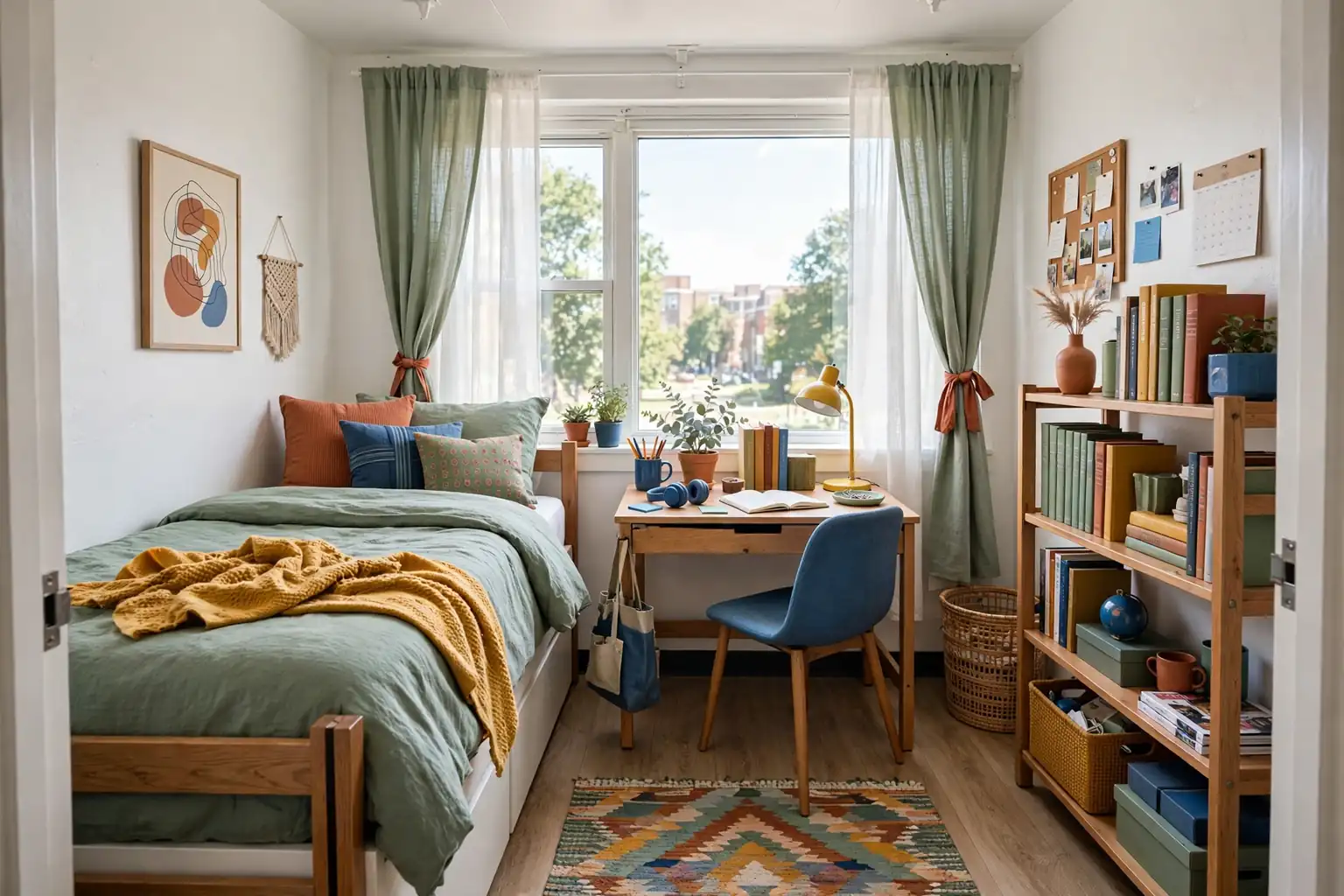
A dorm room starts as a blank box with plain walls, standard furniture, and rules about what you can change, so color has to work through bedding, textiles, and removable pieces rather than paint. A small room responds fast to color: one strong bedding set, one accent wall, or one bright chair can set the mood for the whole space. These 22 dorm room color ideas cover walls, bedding, curtains, desks, storage, and zoning. Start with one main color, repeat it in two or three places, and keep the rest calm so the room stays easy to study and sleep in. For wider small space guidance, see these college apartment decor ideas.
Key Takeaways
- Start with a calm base of white, cream, or light grey, then add color through items you can move, wash, or swap.
- Pick one main color and repeat it in at least three places, such as bedding, a cushion, and a piece of art, so the room reads as planned.
- Favor renter friendly color: bedding, curtains, removable wallpaper, tape shapes, decals, and bins, and check your housing rules before anything fixed.
- Use color to mark zones in a shared or studio room, with a different textile or rug color for sleeping, studying, and relaxing.
- Keep study areas calmer than sleep areas if bright color distracts you, and save the boldest color for bedding or art you can change.
- Choose washable fabrics for bedding, throws, and cushion covers, since dorm rooms collect dust and spills fast.
1. Calm White Base With One Accent Color
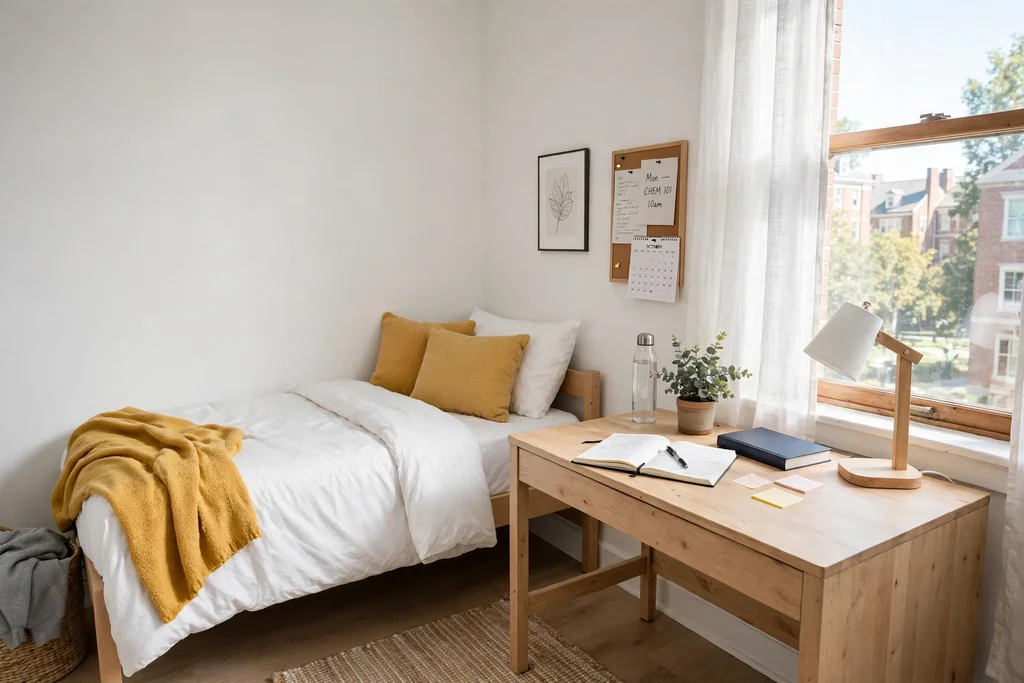
Keep walls, bedding, and large pieces in white or cream, and add one accent color in a throw, cushions, and a small piece of art. A white base keeps a small room bright and gives you room to change the accent later without buying new furniture. Mustard, sage, or dusty blue all work as a single accent, since each one reads clearly against white without taking over.
Repeat the accent three times and stop there: a throw on the bed, a cushion, and a print or a bin in the same tone. If every item is a different color, the room can look like a clearance pile rather than a plan. This approach also suits a shared room, since a white base leaves room for a roommate’s taste on the other side.
2. Peel-and-Stick Accent Wall Behind the Bed
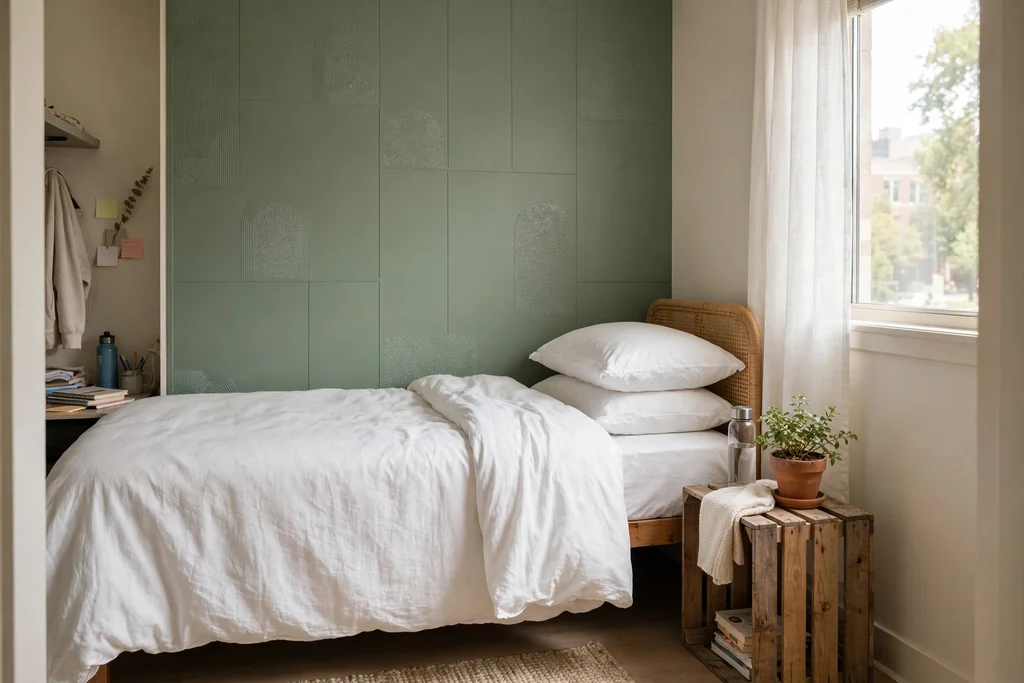
Cover the wall behind the bed with peel-and-stick wallpaper in sage green, soft blue, or a small scale pattern for a focal point with no paint and no repair bill at move out. One wall is enough in a dorm room, since covering every wall can make a small space feel closed in. Measure the wall first, order a little extra for pattern matching, and start at a top corner, smoothing down slowly to push out air bubbles.
Test a small piece first, especially on textured or freshly painted walls, and follow the maker’s removal steps at the end of the term. Keep bedding mostly plain on this wall, so the pattern stays the main event. If the paper starts to lift near a humid window wall, choose a drier wall instead.
3. Navy Bedding for a Focused Sleep Zone
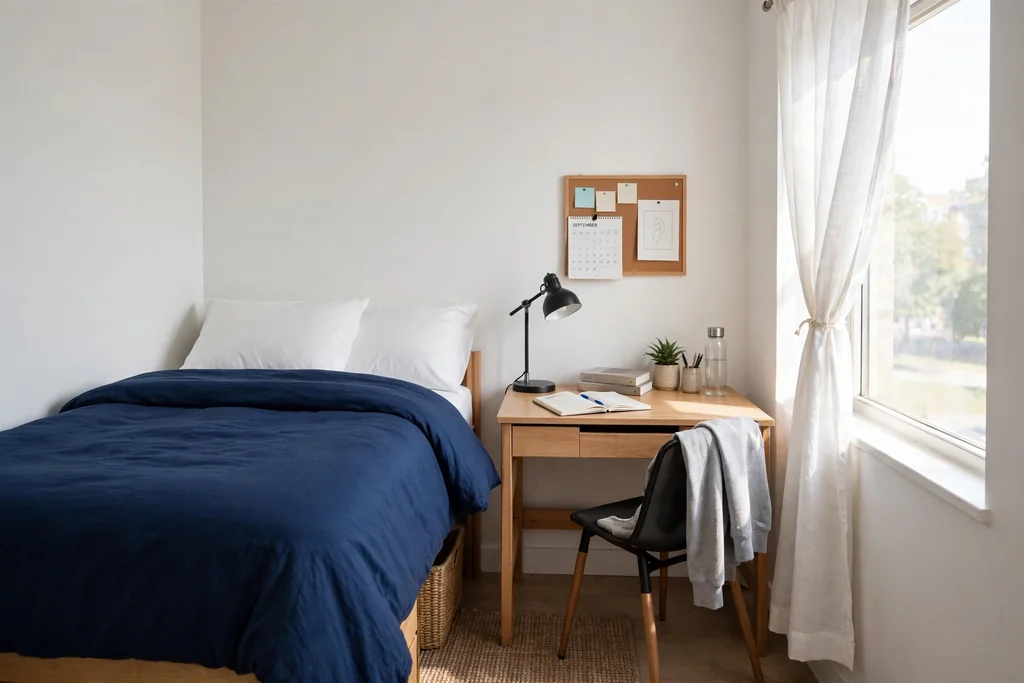
Make the bed with deep navy bedding and white pillows for a sleep zone that feels settled and easy to rest in. Navy reads as a calm, grown up color in a dorm room, and it hides minor marks better than very pale bedding. White pillows keep the bed from looking dark, and a light throw folded at the foot adds a second tone.
Pair navy bedding with white or light grey walls and a plain rug, so the bed carries the color and the rest of the room stays quiet. This suits a student who wants the room to feel calm at night and still tidy in the morning. Wash navy bedding on its own the first few times, since dark dyes can run.
4. Terracotta Cushions and Throw on Cream Bedding

Add terracotta cushions and a matching throw to cream bedding for warmth without painting a wall. Terracotta sits between orange and brown, so it feels warm in daylight and soft in lamp light, and it pairs well with wood furniture and plain white walls. This is a low cost change, since cushions and a throw move with you to the next room.
Keep the rest of the bedding cream or white, and add one terracotta item elsewhere, such as a small vase or a notebook, so the color looks planned. If the room already has warm wood tones, terracotta will blend in rather than clash. Choose washable cushion covers, since bed cushions pick up daily use.
5. Blush Pink Bedding With Cream Walls
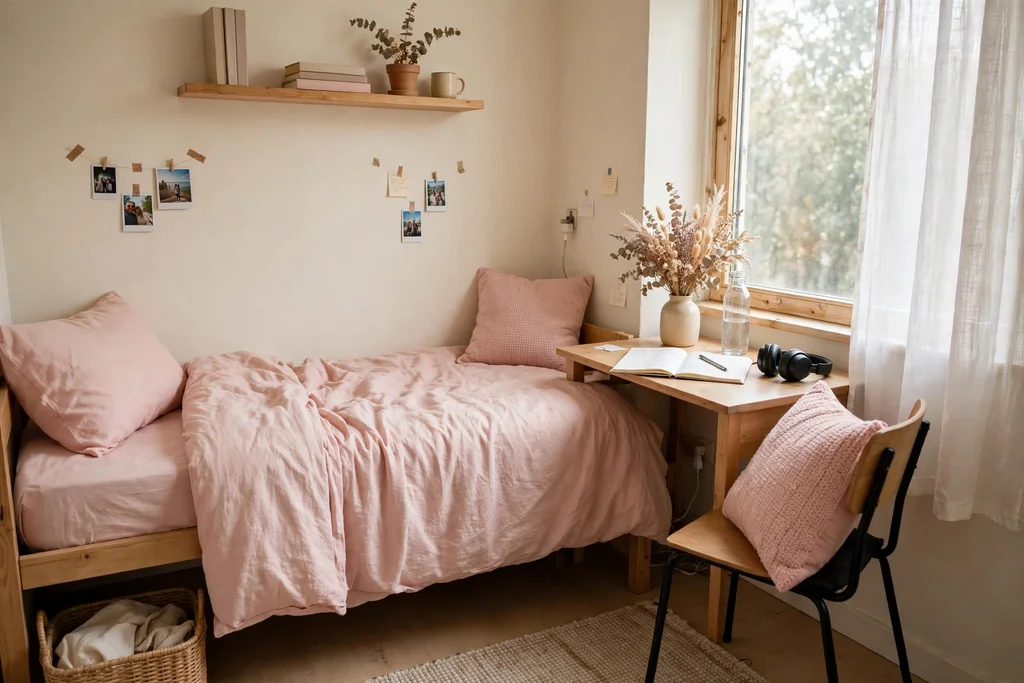
Use blush pink bedding against cream walls for gentle warmth that never feels loud. Blush works well in a small room because it adds color while keeping the light feel of a pale room, and it pairs with white, cream, wood, and soft grey. A blush duvet cover, one pink cushion, and a small vase of dried flowers are enough to set the palette.
Keep other colors quiet: white lamps, a light rug, and plain curtains let blush do the work. If pink starts to feel too sweet, add one grey or white cushion to cool it down. Blush bedding also suits a room shared with a roommate, since it is soft rather than dominant.
6. Forest Green Study Corner

Paint the study corner green in a removable way, with a green desk lamp, a green pinboard, and a plant, or a peel-and-stick panel behind the desk in forest green. Green suits a study zone because it feels steady and calm, and it marks the desk as a work spot distinct from the bed. Keep the desk surface light wood or white, so notes and books stay easy to read.
Add a task lamp with warm white light for evening work, and keep the green to the desk zone rather than spreading it across the whole room. A small plant on the desk repeats the green in a natural way. If your housing rules forbid wall panels, a green desk chair or a green desk mat gives a similar zone effect with no wall work.
7. Sunny Yellow Desk Accessories

Brighten the desk with sunny yellow accessories: a desk lamp, a pen cup, a small tray, and one art print in yellow on a white wall. Yellow adds energy to a work spot and is easy to see in daylight, which helps a desk corner feel inviting rather than dull. Keep the desk itself plain, so the yellow items stand out as a set.
Limit yellow to the desk zone, since yellow across a whole room can feel tiring. A yellow lamp plus a yellow pen cup and one print is enough, and the rest of the room can stay neutral. This is a good choice for a dark desk corner, where a bright accessory also helps the spot feel less gloomy.
8. Black and White Monochrome Scheme
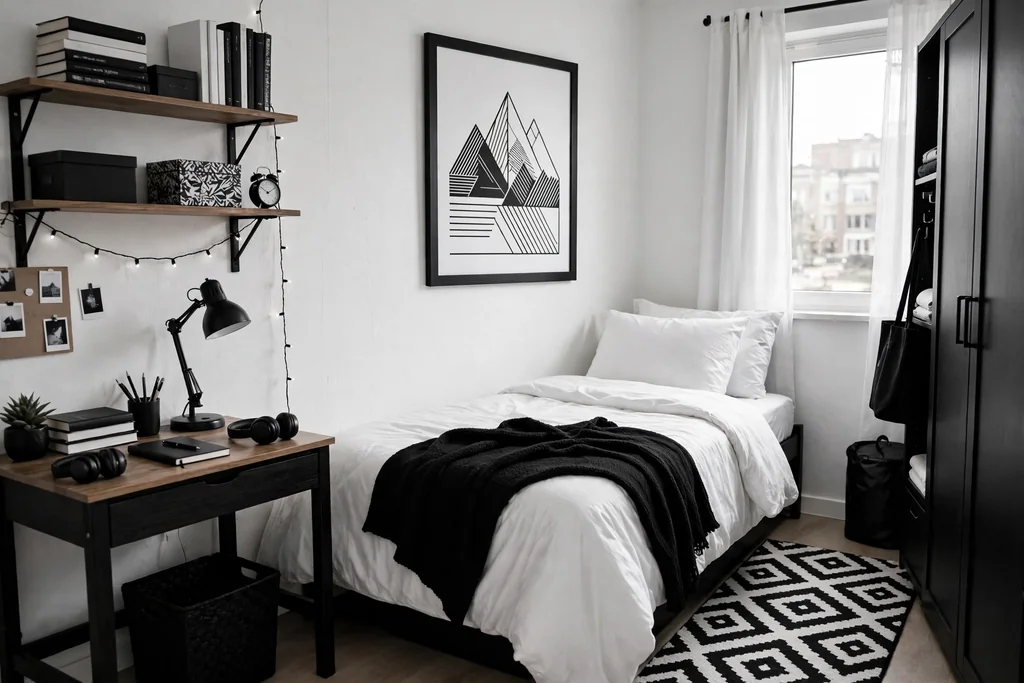
Use a black and white scheme for a dorm room that feels sharp and easy to keep tidy: white bedding, a black throw, black framed graphic art, and black storage bins. Monochrome suits a small room because it limits visual clutter, and it lets one texture, such as a woven throw or a framed print, carry the interest. It also pairs with any roommate’s side, since black and white clash with nothing.
Keep the balance mostly white, with black as the accent, so the room does not feel dark. A black lamp, black frames, and a black rug edge are enough, and bedding should stay mostly white for a bright sleep zone. Add one plant for a touch of green if the scheme starts to feel too stark.
9. Lavender Bedding With Lilac Wall Art
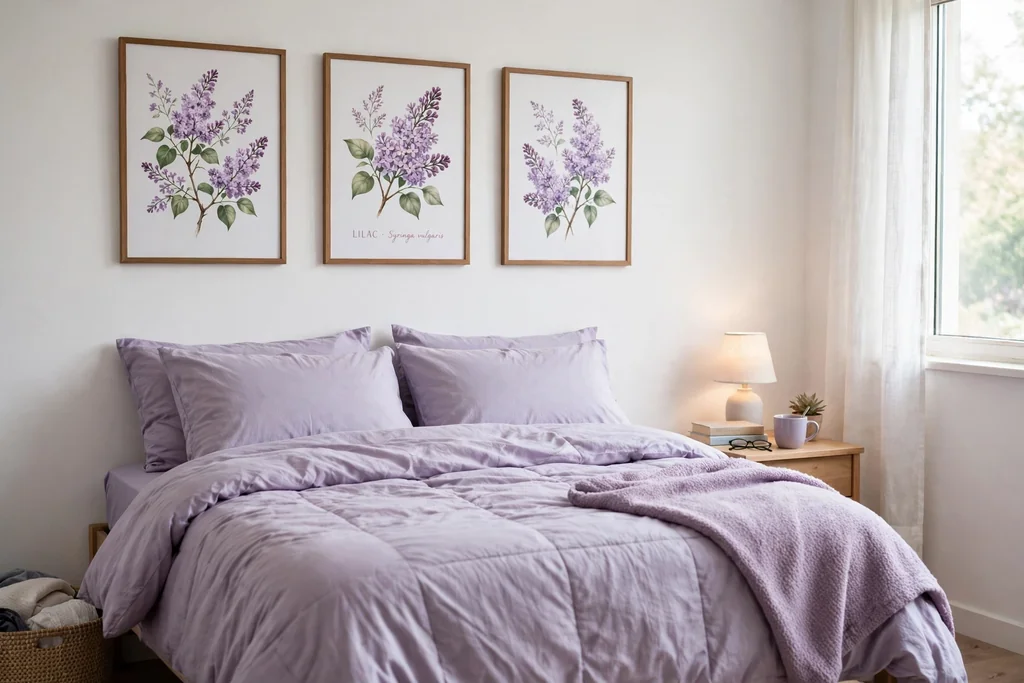
Choose lavender bedding and lilac wall art prints above the bed for a calm, soft color story. Lavender is pale enough to keep a small room bright, and it pairs with white, cream, and light grey without effort. Hang two or three small prints in matching frames above the bed, rather than one large print, so the wall feels balanced over a single bed.
Keep curtains and the rug plain, and repeat lavender once more in a small cushion or a throw. This palette suits a student who wants color that still feels restful at night. Wash lavender bedding with similar pale colors, and avoid mixing it with strong reds or oranges nearby, which can fight the soft tone.
10. Teal Curtains and a Matching Throw
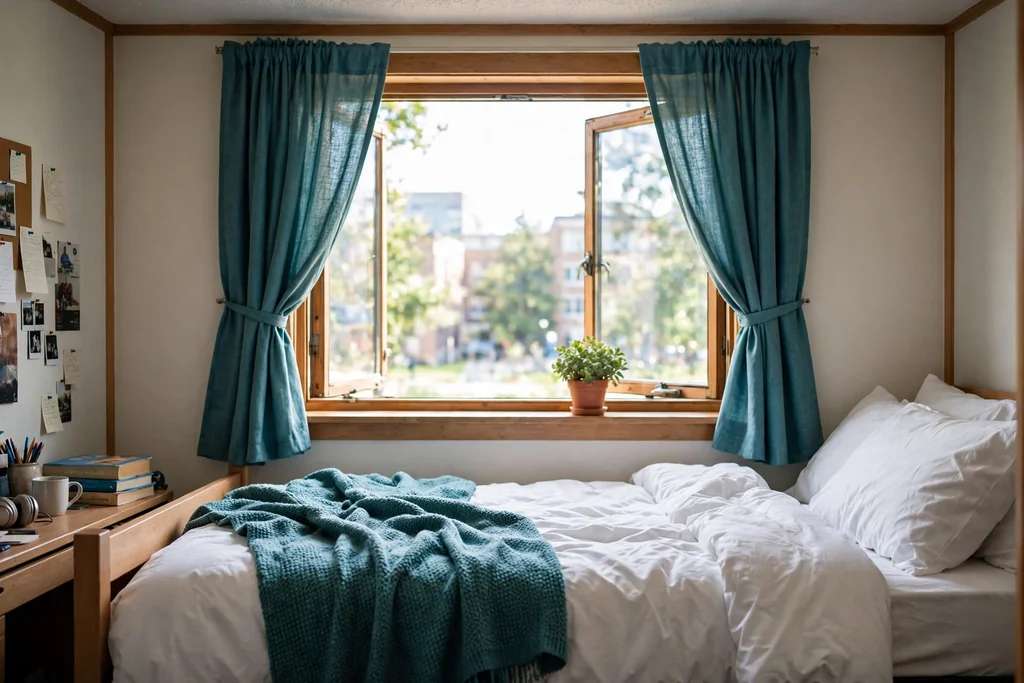
Hang teal curtains at the window and add a teal throw on a bed with white bedding for color at two heights in the room. Teal works well because it is rich without being dark, and it pairs with white, wood, and soft grey. Curtains also soften a plain dorm window and give privacy at night, so they do two jobs at once.
Choose a washable cotton or polyester curtain, and hang the rod high and wide if your housing rules allow it, so the window looks larger. For more on hanging and fabric choices, see these bedroom curtain ideas. Keep the rest of the room calm, and let teal appear only in the curtains, the throw, and one small cushion.
11. Burnt Orange Rug With Wood Tones
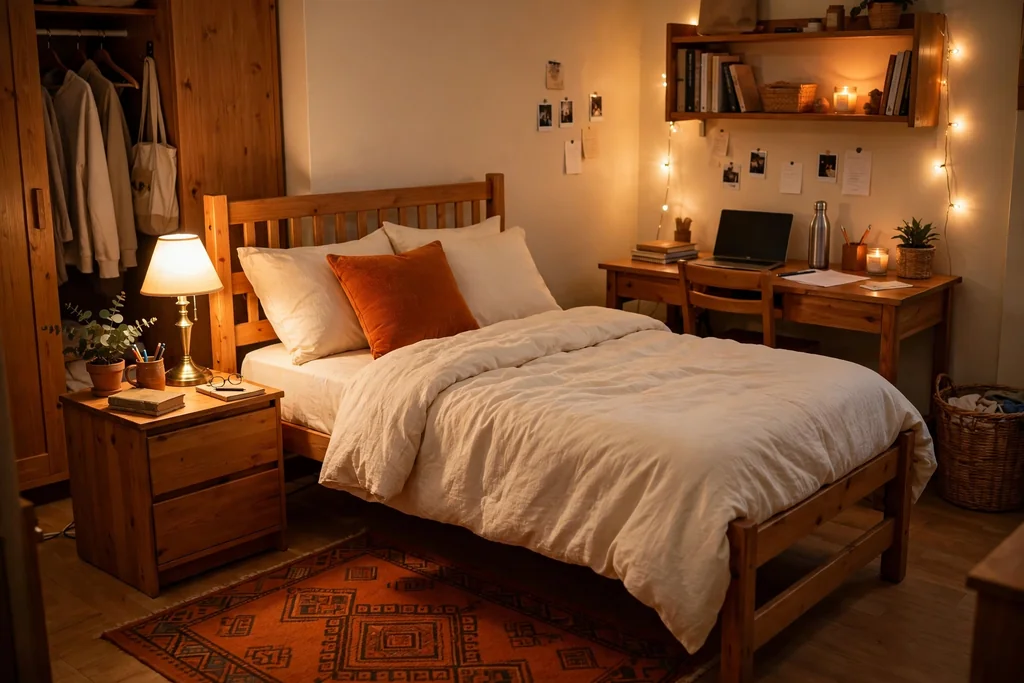
Lay a burnt orange rug beside the bed and repeat the tone in one cushion for a warm floor level color that grounds the room. Orange at floor level feels cozy underfoot and pairs well with wood desks, wood crates, and cream bedding. A rug also protects a plain dorm floor and marks the sleep zone in a shared room.
Choose a flat, washable rug that fits beside the bed without blocking a door or a wardrobe, and use a rug pad or rug tape underneath to stop slipping. Keep wall colors plain, since the rug already gives the room its warm note. Shake the rug outside often, since small rooms show dust fast.
12. Dusty Blue and Grey Layered Bedding
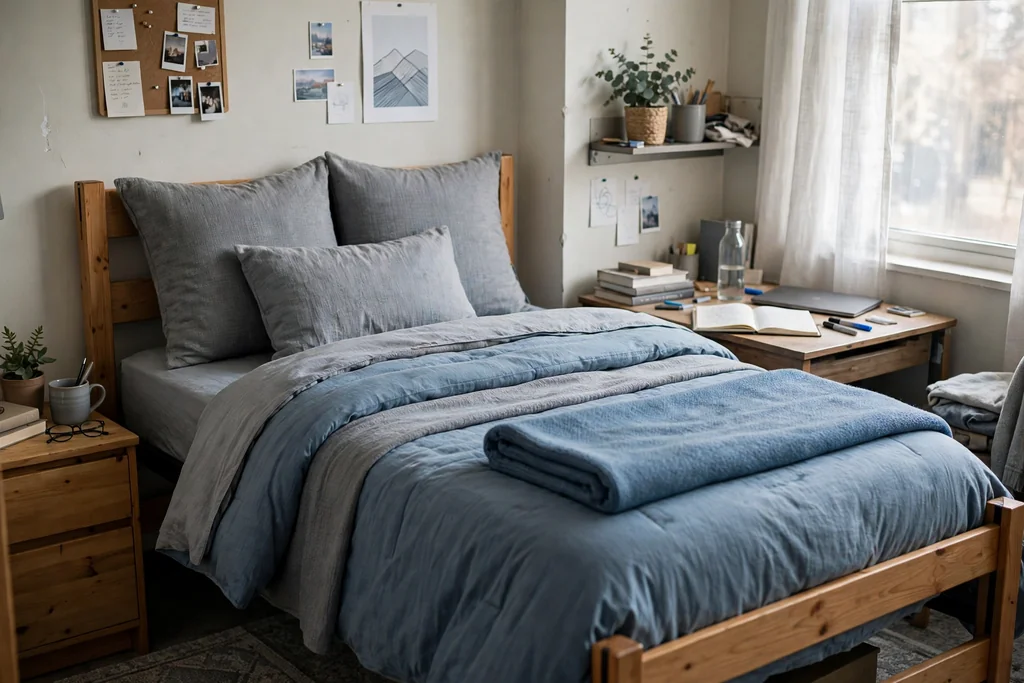
Layer dusty blue and grey bedding for a soft, mixed tone bed that feels finished without a bold color. Start with a grey fitted sheet and duvet cover, add a dusty blue throw folded at the foot, and finish with grey and blue cushions. Layering gives you options across seasons, since you can remove the throw on warm nights and add it back when it cools down.
Keep walls white or pale grey, and add one blue item elsewhere, such as a small storage bin or a print, so the bedding palette links to the room. This combination suits a student who likes color but wants the room to stay calm for sleep and study. Choose washable layers, since layered bedding needs regular washing.
13. Color Blocked Tape Mural Above the Bed
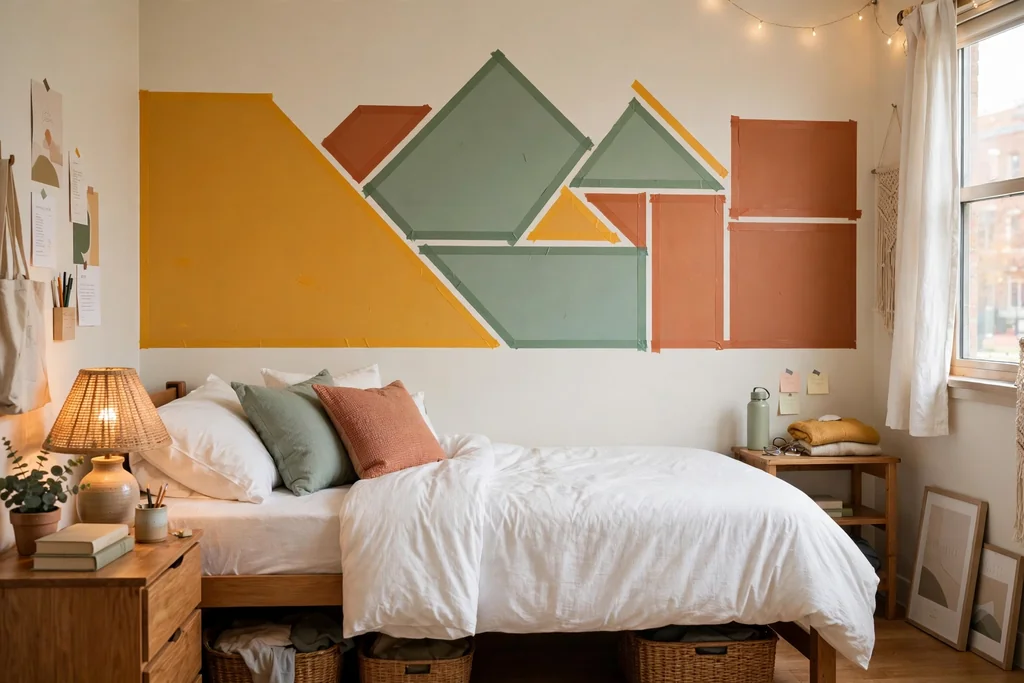
Make a color blocked mural above the bed with painter’s tape shapes in mustard, sage, and terracotta on a white wall for art you can peel off at move out. Tape shapes cost little, need no tools, and let you test a bold wall idea without paint or wallpaper. Plan the shapes on paper first, then tape large, simple blocks rather than fiddly small pieces, so the mural reads clearly from across the room.
Press tape edges down firmly, and check your housing rules about tape on painted walls before you start. Keep bedding plain, since the mural is the wall’s main event. When you move out, peel the tape slowly and check the wall, so you leave the room as you found it.
14. Rainbow Bookshelf and Color Coded Bins
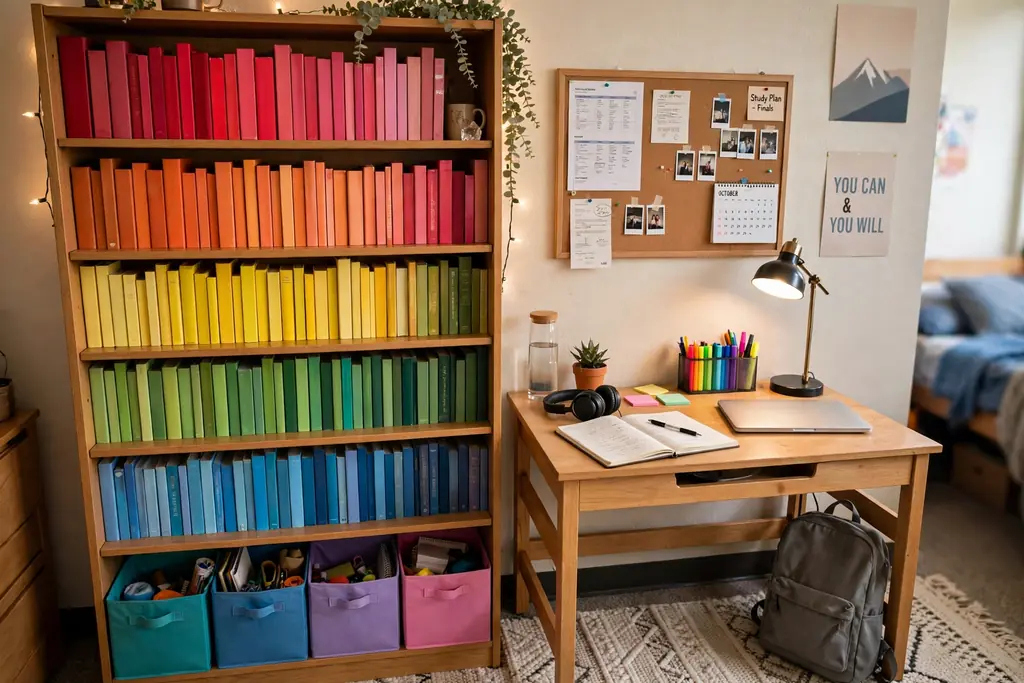
Arrange books by color on a bookshelf and add color coded bins on the lower shelves for storage that doubles as decor. A rainbow shelf gives a plain dorm wall a clear color story, and it makes books easy to find by spine color. Bins in matching tones hide chargers, snacks, and small supplies, so the shelf stays tidy rather than crowded.
Keep the rainbow to one shelf unit, and leave some breathing room between groups so the shelf does not look packed. Put heavy books low and light items high, and label bins if you share the room. This idea works best when most of your books have solid spines, since mixed busy covers can blur the rainbow effect.
15. Half Wall Effect With Removable Panels
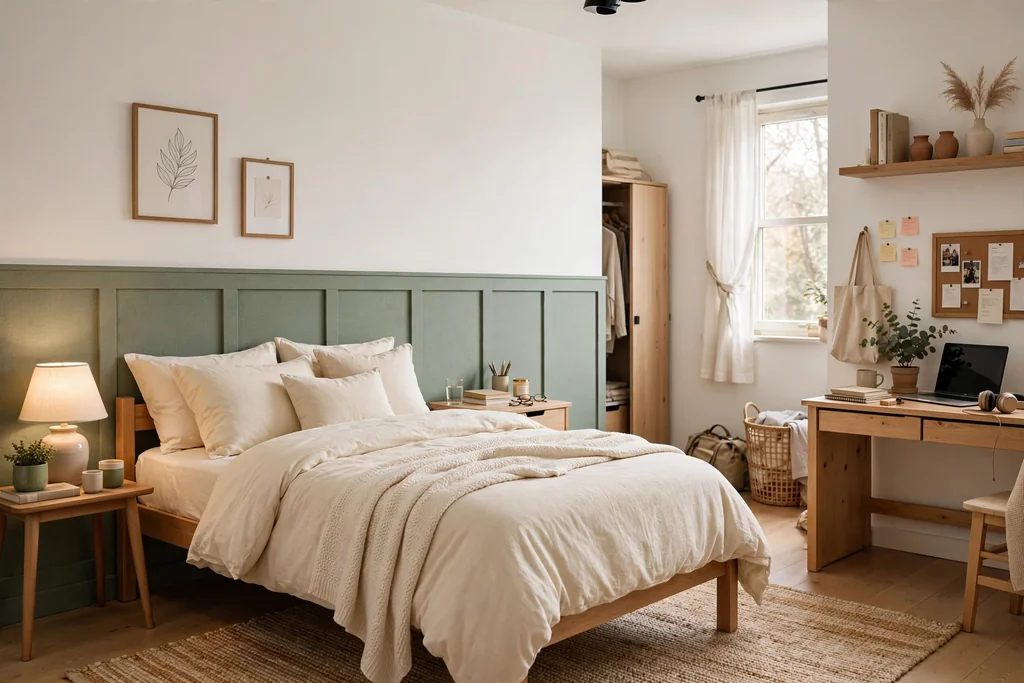
Create a half wall effect by covering the lower half of one wall with removable sage panels, leaving the upper half white, for a structured look with no paint. The horizontal line gives a small room a sense of order, and the sage lower half adds color at bed and desk height, where the eye lands most. Measure the wall and mark the line with a light pencil mark or a level before you place panels, so the edge stays straight.
Keep bedding and curtains plain, since the half wall already gives the room its structure. This suits a long, plain dorm wall that needs interest without a full accent wall. Check removal steps for the panels you use, and test one panel first on your wall type.
16. Emerald Velvet Cushions and a Gold Lamp
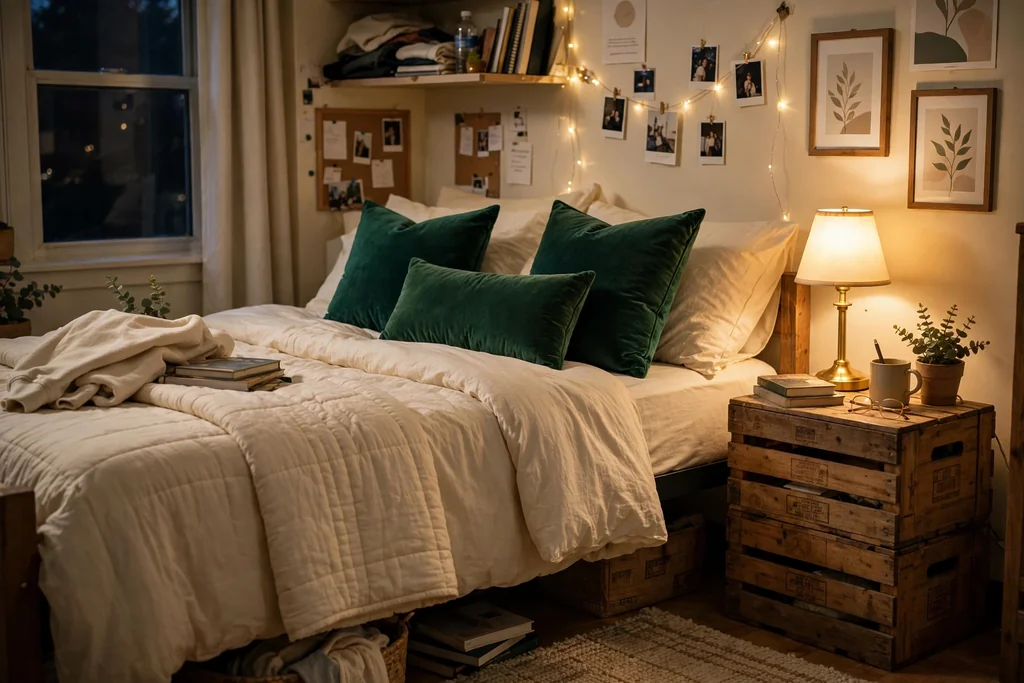
Add emerald velvet cushions to cream bedding and a small gold lamp on a crate nightstand for a rich, evening friendly corner. Velvet adds texture as well as color, so a small amount goes a long way in a dorm room, and gold lamp light warms the green in the evening. Keep the rest of the room plain, with white walls and a light rug, so the emerald and gold read as a deliberate pair.
Choose two velvet cushions rather than a full velvet bedding set, since velvet can feel warm in summer and needs care in washing. Check the lamp shade for heat safety, and keep the lamp clear of bedding and curtains. This combination suits a student who wants a slightly dressier bed corner without new furniture.
17. Coral Desk Chair and Matching Lamp

Pick a coral desk chair and a matching coral desk lamp for a work spot that feels bright and personal. A colored chair is one of the few large color moves a dorm room allows, since it is furniture you can take with you, and it marks the desk zone clearly. Pair the chair with a white desk and plain walls, so coral stays the focus of the corner.
Keep the chair cushion washable if you can, since desk chairs take daily use, and add one coral item elsewhere, such as a pen cup, so the chair does not look isolated. If coral feels too bright on its own, pair it with white and light wood, which calm the tone. Check that the chair fits under the desk and leaves a clear walkway.
18. Charcoal Grey Bedding With Mustard Accents
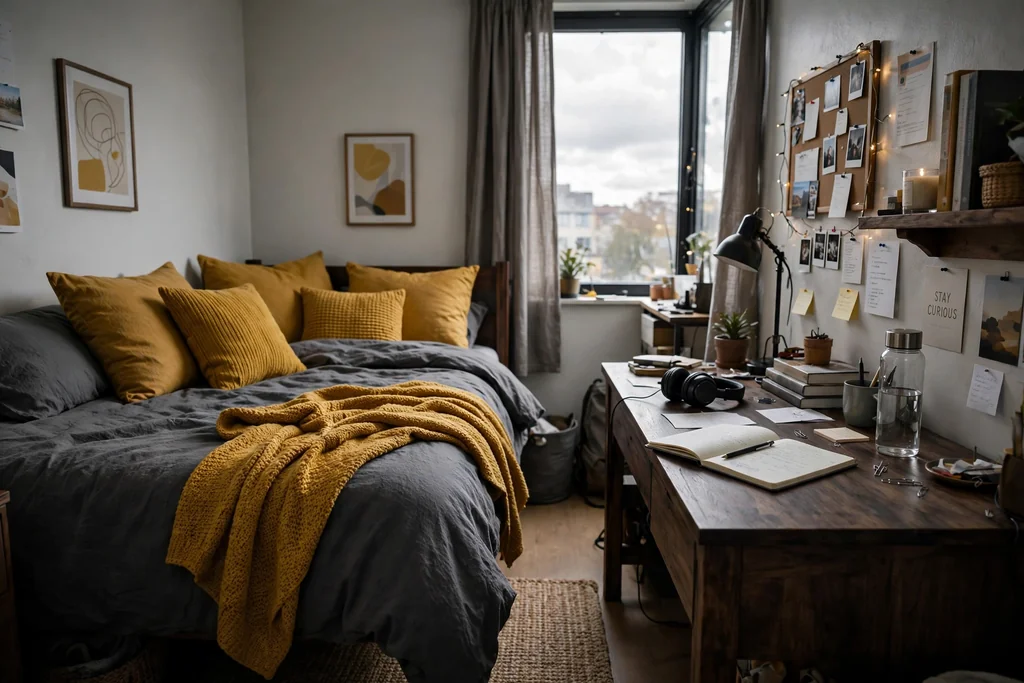
Use charcoal grey bedding with mustard cushions and a mustard throw for a moody but bright combination. Charcoal gives the bed depth, while mustard adds a warm lift that stops the scheme from feeling flat. This pairing suits a student who likes dark tones but still wants the room to feel welcoming in daylight.
Keep walls white or pale grey, and add mustard only in cushions, a throw, and one small print, so the dark bedding stays balanced. Wash charcoal bedding separately at first, and avoid adding a second strong color nearby, since charcoal and mustard already give the bed a clear palette. A light rug beside the bed keeps the floor bright.
19. Pastel Mint Bedding for a Fresh Small Room
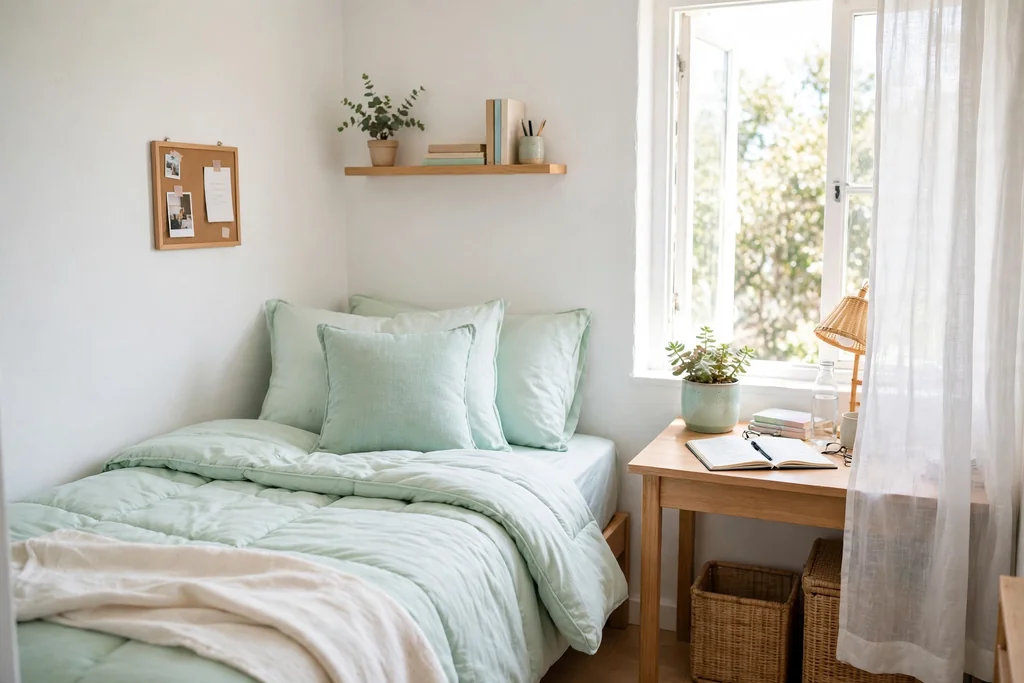
Choose pastel mint bedding with white walls for a fresh, airy small room. Mint is pale enough to keep light bouncing around a small dorm room, and it pairs with white, cream, and light wood without effort. A mint duvet cover, one mint cushion, and a small plant on the windowsill are enough to set the palette.
Keep curtains white or cream, and avoid strong patterns nearby, since mint works best as a soft, clean color. This palette suits a small or north facing room that needs all the brightness it can get. Wash mint bedding with similar pale colors, and add one white cushion if the mint starts to feel too cool on its own.
20. Colorful Wardrobe Doors With Removable Decals
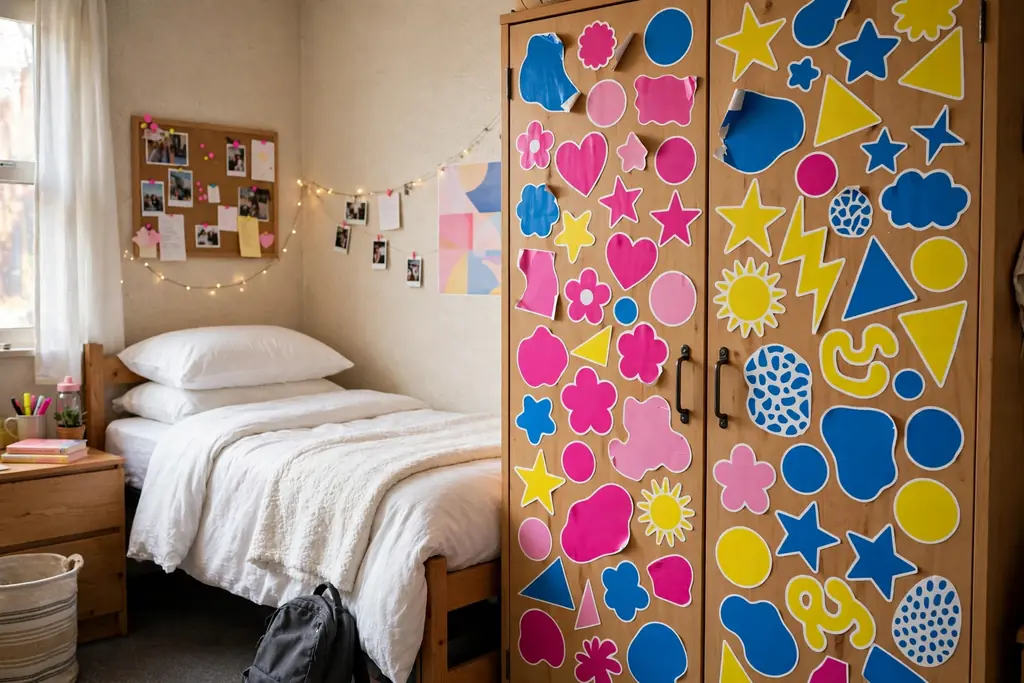
Cover wardrobe doors with colorful removable decals in blue, yellow, and pink shapes for a large color move with no paint and no damage. Wardrobe doors are often the largest plain surface in a dorm room, so decals there change the whole room at a glance. Plan the layout on the floor first, then place large shapes with even gaps, so the doors read as a set rather than a random scatter.
Check that the decals are marked removable and test one on a hidden corner first. Keep bedding mostly plain, since the wardrobe doors already carry plenty of color. Peel decals slowly at move out, and wipe the doors clean, so the room returns to its plain state.
21. Color Zoning for Sleep, Study, and Relaxing
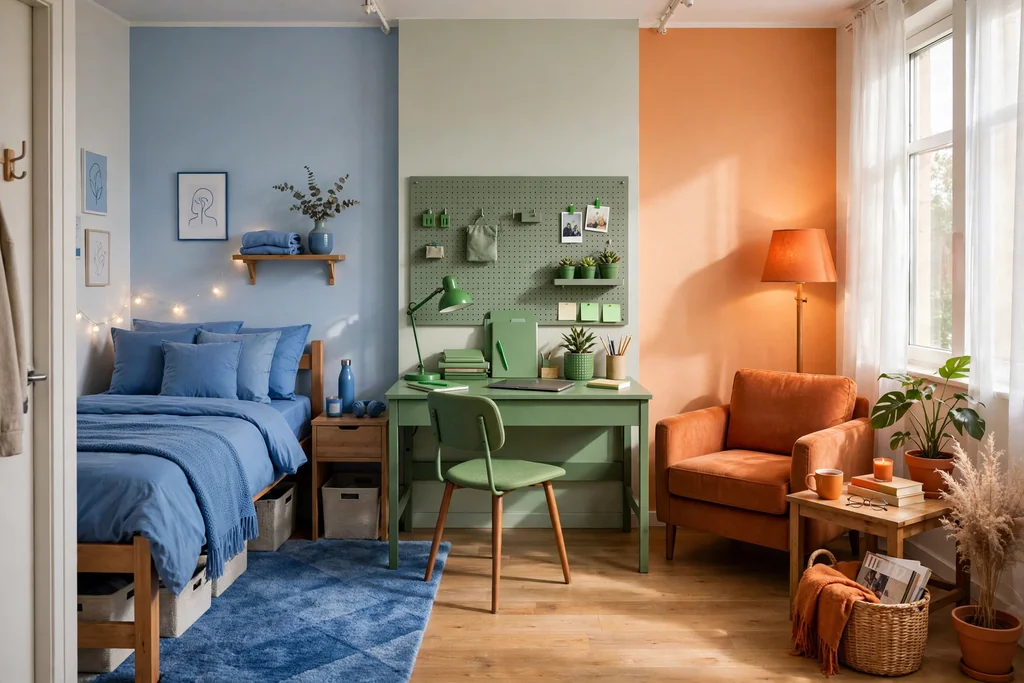
Give each activity its own color in a shared or studio dorm room: blue bedding and a blue rug for sleep, green desk items for study, and a warm orange chair and throw for relaxing. Color zoning helps a small room feel organized, since each zone reads as its own spot even when the zones sit close together. It also helps roommates agree on boundaries, since each zone has a clear job.
Keep each zone to one main color plus a calm base, and avoid using more than three zone colors in one room, or the room can feel busy. Repeat each zone color twice within its zone, such as a rug and bedding for sleep, so the zone feels finished. This idea pairs well with the layout guidance in these solo apartment ideas, where each daily routine gets its own spot.
22. Seasonal Cushion and Throw Swap

Keep a basket of interchangeable cushion covers and throws in rust and gold for autumn, and pale blue and white for spring, so you can change the room palette in an afternoon. A seasonal swap is the cheapest way to refresh a dorm room, since covers and throws store flat in a basket under the bed and cost far less than new furniture. It also lets you test a bold color for a term without committing to it for a year.
Store out of season covers clean and dry, and wash them before swapping, so each season starts fresh. Limit each season to one palette, such as rust and gold, rather than mixing every color you own, so the room still reads as planned. This is a good final step after the other ideas, since it lets you refresh any palette on this list.
Conclusion
Color in a dorm room works best when it has a clear job and a calm background. Start with a white or cream base, pick one main color, and repeat it in bedding, a cushion, and one more spot, so the room reads as planned rather than random. Renter friendly moves, such as peel-and-stick walls, tape murals, decals, curtains, and washable bedding, give you bold color with no repair bill at move out, and color zoning helps a small or shared room feel organized. Small changes, like a coral chair, a teal curtain, or a seasonal throw swap, let you test a palette before a larger change, and they move with you to the next room. Save this list for your next free afternoon, and work through it in order: base and bedding first, then one wall move, then desk and storage color, and finally the zoning and seasonal touches.
FAQs
What is the easiest dorm room color idea for a rented room?
Bedding is the easiest place to start, since it needs no wall work and moves with you. Pick a duvet cover in one color you like, add a matching throw and one cushion, and keep walls and curtains plain. Curtains, a rug, and a colored desk chair are the next easiest moves, since they also need no fixed changes. Check your housing rules before anything that sticks to a wall, and test removable products on a hidden spot first.
How many colors should I use in a small dorm room?
Use one main color, one calm base, and at most one extra accent for a small room. A base of white, cream, or light grey keeps the room bright, the main color gives it character, and a small accent, such as gold, wood, or a second soft tone, adds depth. More than three strong colors in a small room can feel busy, especially when bedding, art, and storage all compete. Repeat the main color in three places, and keep everything else quiet.
Can I add color to a dorm room without painting?
Yes. Most of the ideas on this list need no paint at all. Bedding, curtains, rugs, cushions, throws, a colored chair, and color coded bins all add color with no wall work. For walls, peel-and-stick wallpaper, removable panels, tape shapes, and removable decals give you a wall color effect that peels off at move out. Always check your housing rules and test a small piece first, since wall types and paint vary.
What dorm room colors work best in a small or dark room?
Pale colors work best in a small or dark room, since they bounce light around. White, cream, pastel mint, blush, lavender, and dusty blue keep a room bright, while a single brighter accent, such as yellow desk items or a coral chair, adds energy without darkening the walls. Avoid covering every wall in a dark color in a small room, and keep dark tones, such as navy or charcoal, to bedding, where they can be balanced with white pillows and a light rug.
How do I agree on colors with a roommate?
Start with a shared calm base, such as white or cream walls and bedding, and give each person their own side or zone color. Agree on shared items, such as curtains and rugs, in a neutral tone, and let each person choose bedding and desk items for their own side. Color zoning helps here, since each zone has a clear job and a clear owner. Talk through the plan before buying, and keep shared walls to removable items you both like, so either side can change later.
How can I change my dorm room colors each term without buying new furniture?
Swap cushion covers and throws, which store flat and cost far less than furniture. Keep a basket of covers in two palettes, such as rust and gold for autumn and pale blue and white for spring, and change them in one afternoon. Art prints in matching frames are also easy to swap, and a new rug or curtain can refresh the room without new furniture. Wash covers before storing them, so each term starts fresh.