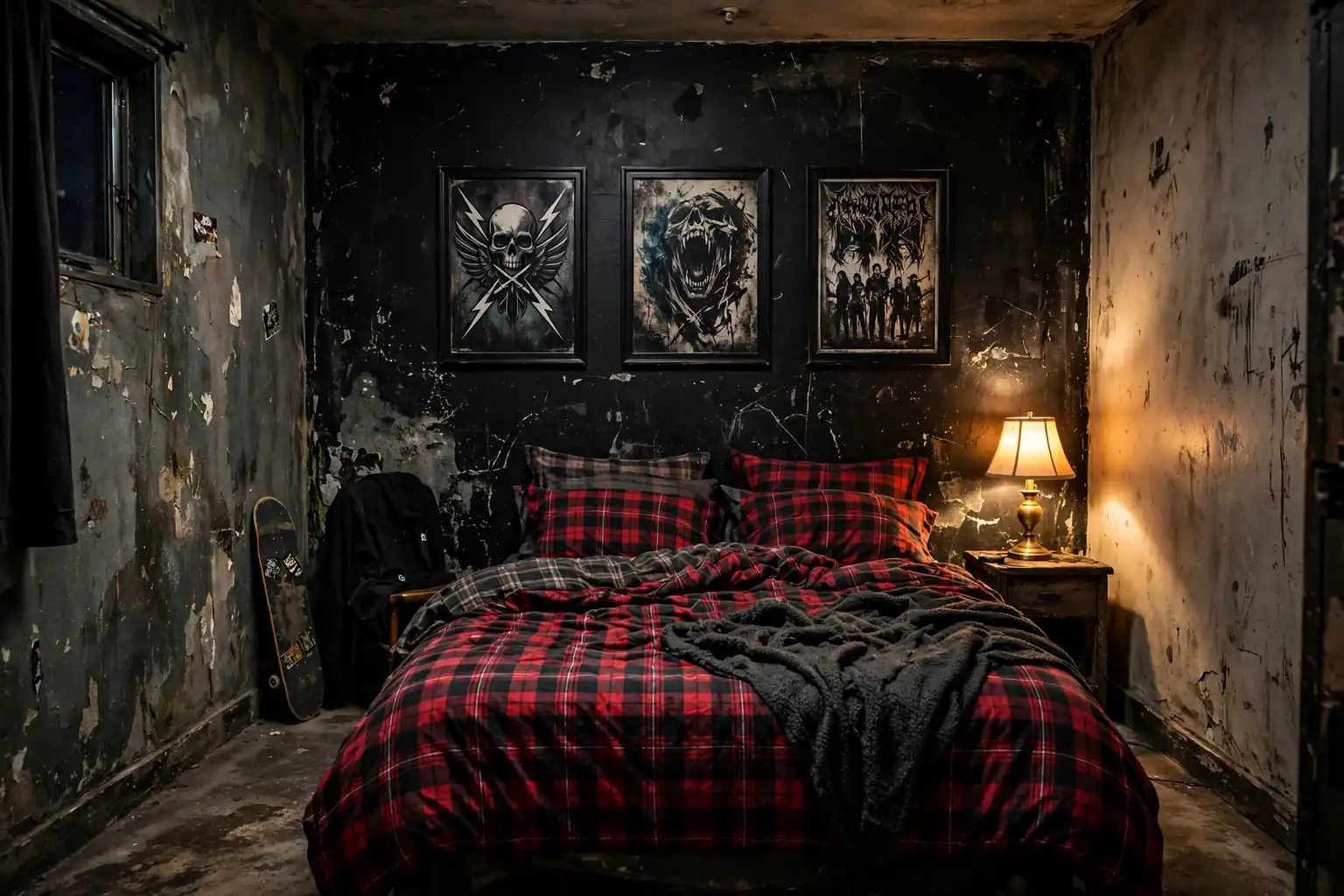
Grunge style suits a small room because it is built from layers, not from large furniture or a full remodel. Black and charcoal, plaid, denim, worn leather, and band art give a plain rental room a clear identity, and most pieces here are thrifted, movable, or removable. To avoid clutter, each idea below does two jobs where it can: a crate that stores records and serves as a table, or a rug that zones the room and hides a tired floor. These 29 ideas cover walls, bedding, storage, seating, light, and small weekend details. Pick one strong wall, one dark base, and one music detail to start.
Key Takeaways
- Start with one dark base, such as a black accent wall or charcoal bedding, and keep the other walls pale so a small room still feels open.
- Let one or two music details lead, such as posters or vinyl, and repeat black, plaid, and metal in small doses rather than on every surface.
- Choose pieces that do two jobs in a small room: crates for storage and seating, a trunk for a table and a box, and shelves that display and store.
- Thrift first for leather, denim, wood, and frames, since worn materials carry the grunge look better than new matching sets.
- Keep walkways, the bed, and the desk clear, and use wall space, doors, and under-bed space for storage instead of the floor.
- Use warm, layered light at night so a dark room feels cozy rather than gloomy, and keep one bright light for reading and work.
1. Matte Black Peel-and-Stick Accent Wall
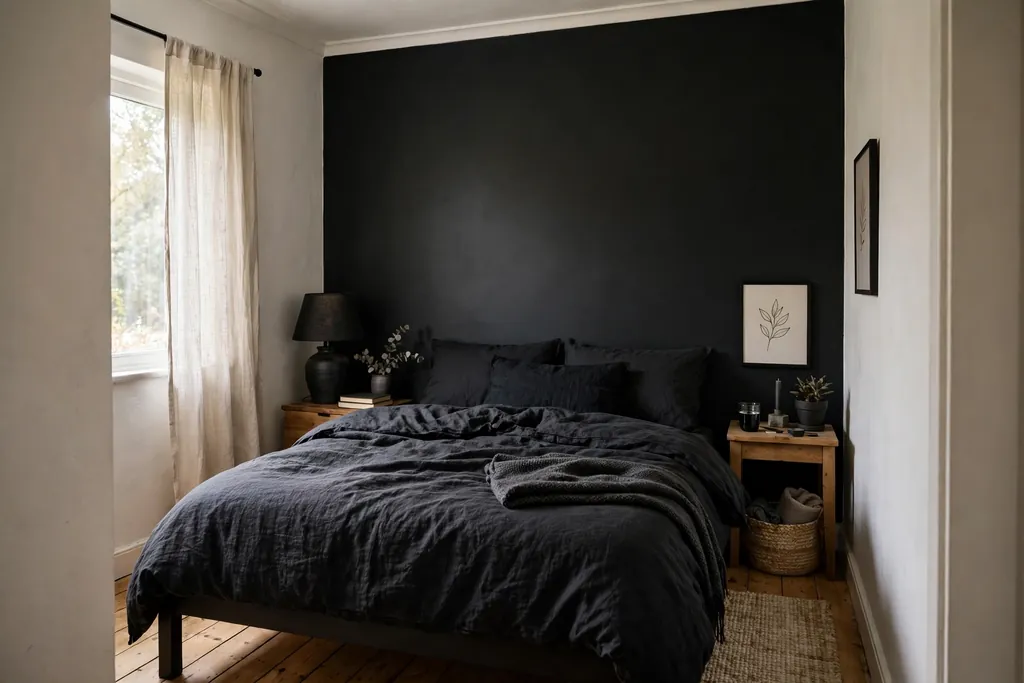
Cover one wall with matte black peel-and-stick panels for a dark grunge base you can remove later. One wall is enough in a small room: black behind a bed or a sofa adds depth and makes posters and records stand out, while pale walls on the other sides keep the room from closing in. This suits renters, since the panels come off when you move if you follow the maker removal steps.
Test one panel first on your wall type, and avoid damaged paint or heavy texture where removal is harder. Keep bedding and large furniture plain black, charcoal, or wood so the wall reads as a feature, not as part of a dark pile. If a full wall feels too dark, panel only the wall behind the bed, and add a warm lamp nearby for evening balance.
2. Charcoal and Plaid Layered Bedding
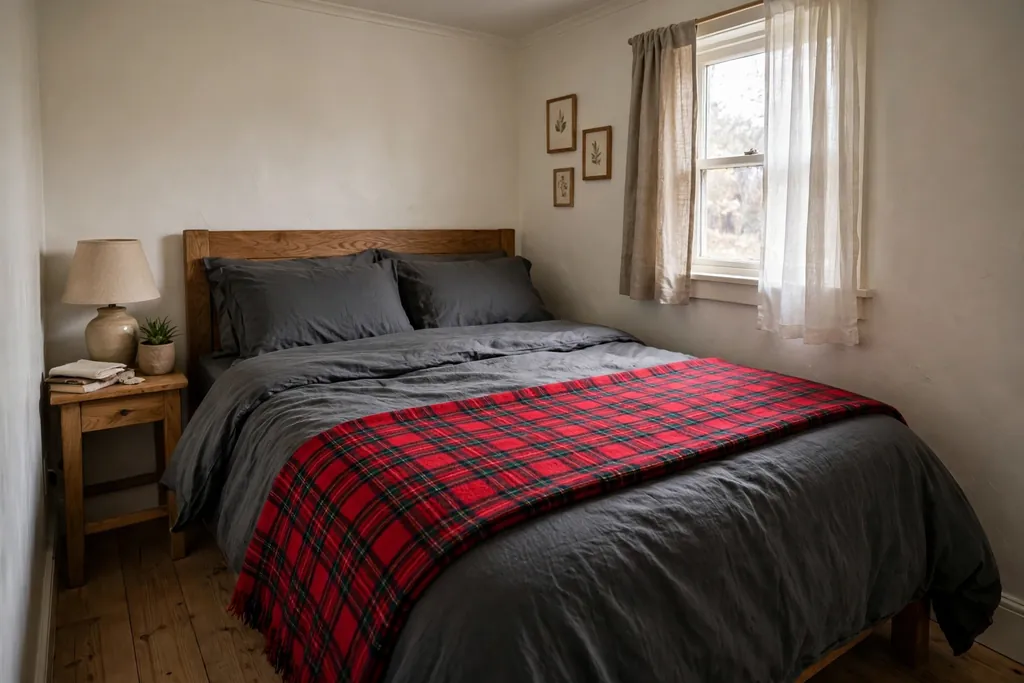
Start with plain black or charcoal sheets, then add a plaid duvet cover or a plaid throw folded across the foot of the bed. The mix of a dark base and a strong plaid pattern gives the bed a grunge identity at once, and every layer can move to a chair or sofa when you need a change. This works in a bedroom and in a studio where the bed stays in view all day.
Keep the palette tight, with black, charcoal, and one plaid in red or green, so the bed does not turn into a costume. Wash plaid throws separately the first time, since strong red dyes can run onto pale sheets. A plain black bed frame or a simple headboard panel lets the bedding carry the pattern, and it keeps a small room calm.
3. Band Poster Gallery in Clip Frames
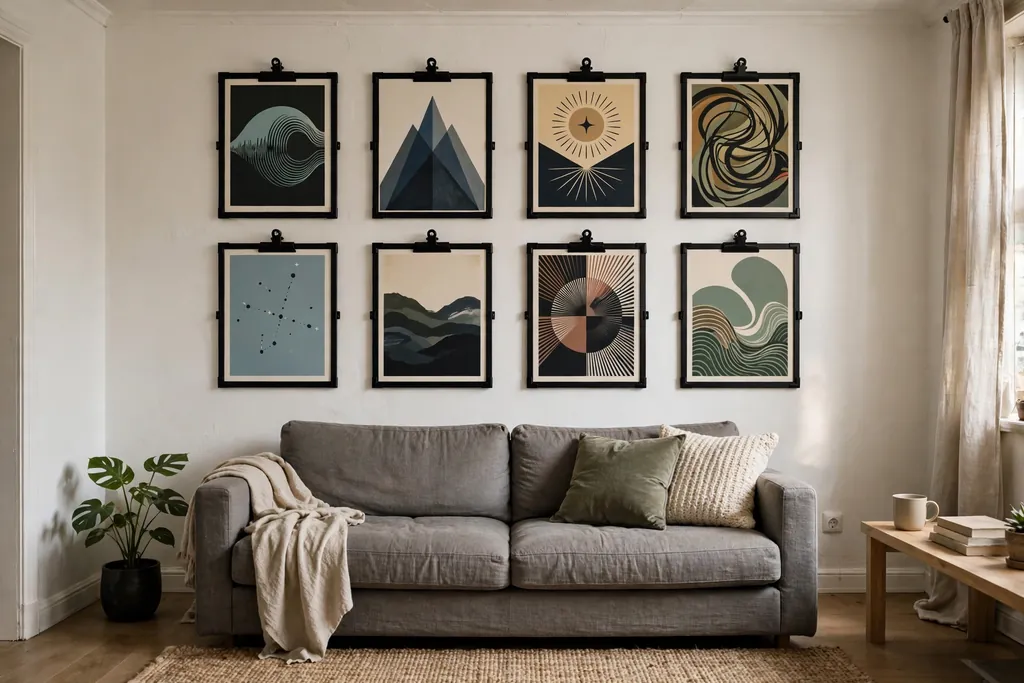
Build a poster gallery wall with clip frames or magnetic poster hangers, so posters stay flat, protected, and easy to swap. Use removable adhesive strips rated for the frame weight, and mix band posters, gig flyers, and one large graphic print with even spacing, so the wall looks deliberate rather than pasted up in a hurry. For more bold small room wall ideas in the same spirit, see these punk apartment ideas.
Start with posters you already love instead of buying a matching set, since a wall built from real gigs and favorite records tells your own story. Leave one gap in the arrangement on purpose, so you have a slot for the next poster and the wall does not feel finished and frozen. Keep the rest of the room plain where the gallery sits, so the posters stay the focus.
4. Cut-and-Paste Zine Collage Board
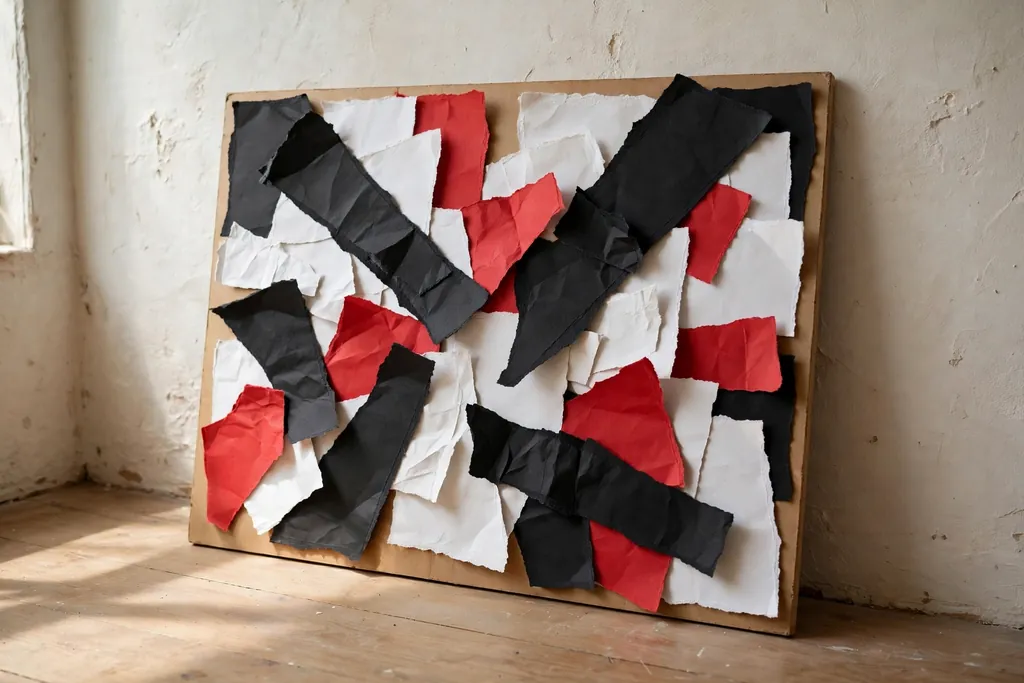
Make a cut-and-paste collage on a large board instead of directly on the wall, which keeps it fully removable. Cover a foam board or plywood panel with torn pages from old magazines, zines, flyers, and photocopied lyrics, then seal it with a clear matte finish so the edges stay down. Lean the board against the wall or hang it from two removable hooks, and you have wall art with real texture and no damage to the plaster behind it.
Keep the palette tight so the collage reads as one artwork instead of loose paper: black, white, red, and one metallic shade will pull even a wild mix together. Add hand-lettered words or short slogans in marker for the classic zine feel, and leave a few torn edges visible, since a neat, trimmed collage loses the energy that makes this idea work.
5. Vinyl Sleeves on Picture Ledges

Fix two or three slim picture ledges to one wall and stand favorite vinyl sleeves along them with the artwork facing out. Ledges show records off without a single nail through a sleeve, and you can rotate the front row whenever a new record arrives. This suits a small room because the display uses wall space, not floor space, and it turns a collection you already own into decor.
Keep the ledges level and leave a little space at each end so the row does not look crammed. Store the records themselves in sleeves on a shelf nearby so the displayed covers stay clean. A small clip-on light above the top ledge turns the display into an evening feature without any wiring work.
6. Crate Record Storage That Doubles as a Side Table
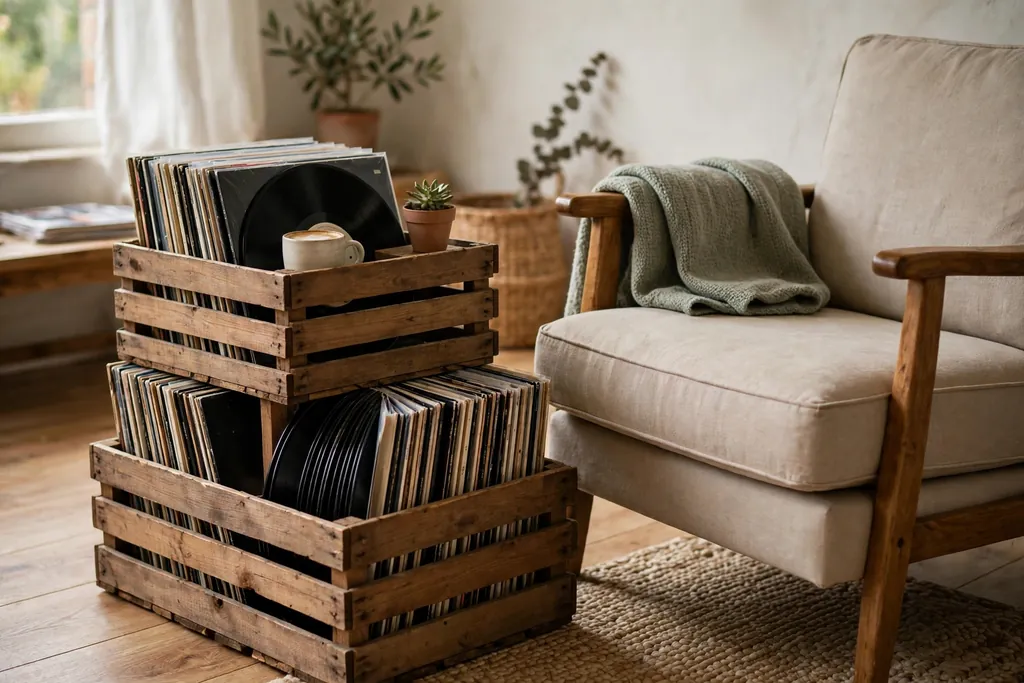
Stack two sturdy crates, or set one crate on short legs, to store vinyl upright and serve as a side table beside a chair or bed. Records stay easy to flip through when they stand upright, and the crate top holds a lamp, a drink, or a book. This is a strong small space move, since one piece does storage and surface work at once.
Choose crates that fit your record size with a little room to spare, and keep heavier crates low so the stack stays stable. Label the front of each crate by genre or mood if you have a large collection, so you can find a record without pulling the whole stack apart. Sand rough crate edges first, so sleeves do not snag.
7. Thrifted Leather Chair in a Corner
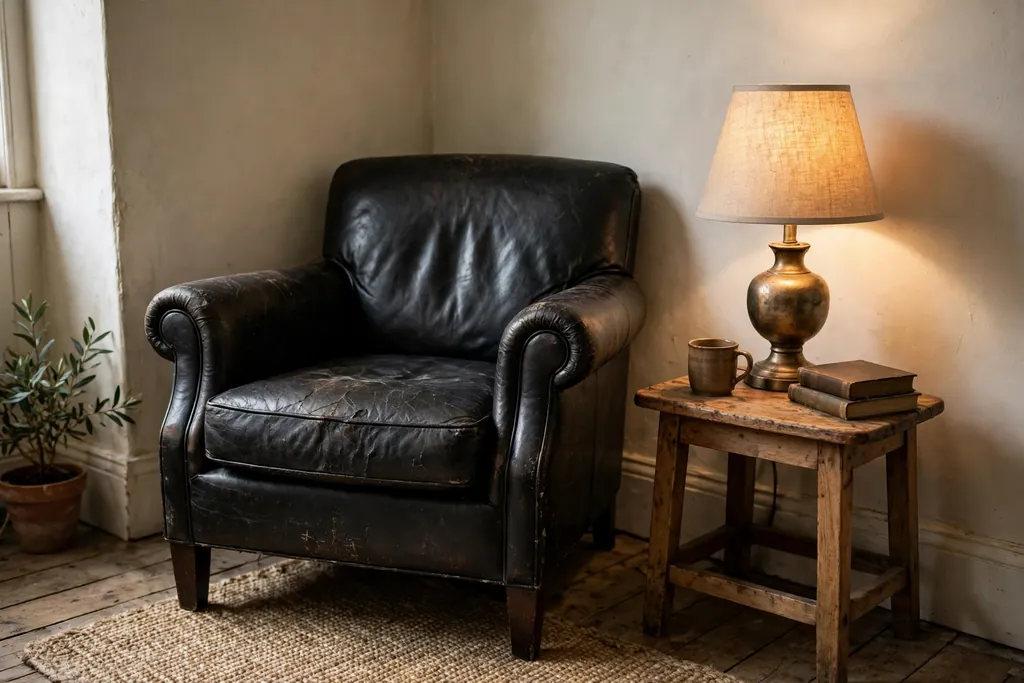
Place one thrifted leather or leather-look chair in a corner for seating that carries grunge character on its own. Worn leather, scuffs, and a simple shape suit the look far better than a new matching set, and a single chair fits where a sofa would crowd a small room. Pair it with a small side table and a lamp, and the corner becomes a reading or listening spot.
Check thrifted chairs for a solid frame and springs before you buy, and clean the leather with a cloth and a cleaner made for that material. Keep the chair cover plain, and add one plaid or denim cushion rather than a full themed set. If the chair is dark, add a pale cushion or a light rug nearby so the corner does not read as a black hole.
8. Checkerboard Rug to Anchor the Room
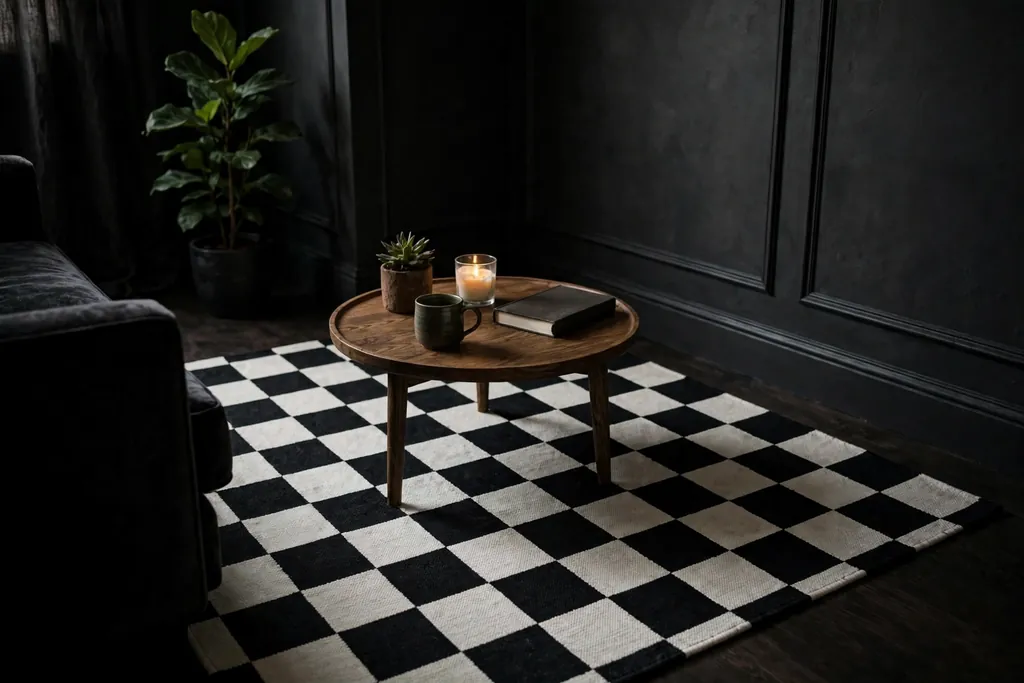
Lay a black and white checkerboard rug under a coffee table or beside the bed to set the palette for the whole room and hide a tired rental floor. A flat weave or low pile rug suits a small space, since it is easier to clean and lets chair legs and crate shelves slide without catching. The strong pattern also zones a studio, marking where sitting ends and sleeping begins.
Size matters more than pattern here: a rug that is too small floats in the middle of the room, while one that reaches under the front legs of a chair or bed grounds the seating area. If a full checkerboard feels loud, use a smaller checkerboard runner in the hallway or by the door, and let the main rug stay plain black. For more zoning ideas for one room homes, see these studio apartment decorating ideas.
9. Black Metal Pipe Shelving
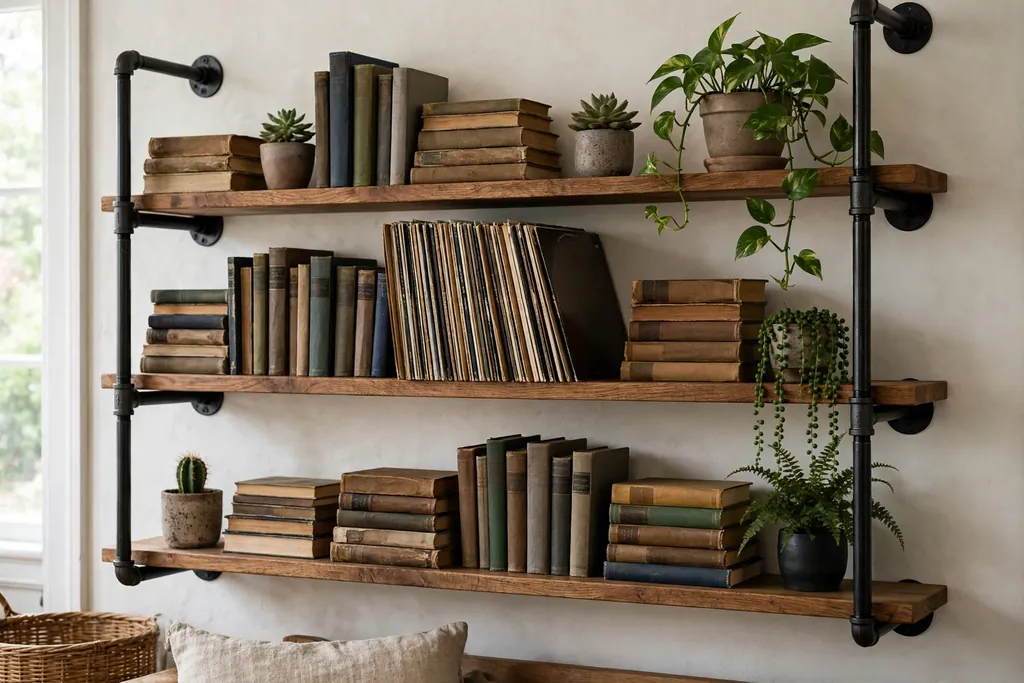
Fit black metal pipe shelving on one wall for open storage that looks industrial and holds books, records, plants, and small finds. Pipe shelves suit a grunge room because the dark metal and wood boards echo workshop and studio spaces, and open shelves use wall height that would otherwise stay empty. This works best on one wall, such as above a desk or beside the bed, rather than on every wall at once.
Fix shelves into studs or proper anchors, and do not overload them beyond the maker rating. Put everyday items at arm height and lighter, rarely used items up high, and use closed boxes on the top shelf so the highest row looks tidy from below. Leave some open space on each shelf, so the shelves read as furniture, not as a wall of clutter.
10. Patched Denim Throw for the Sofa or Bed
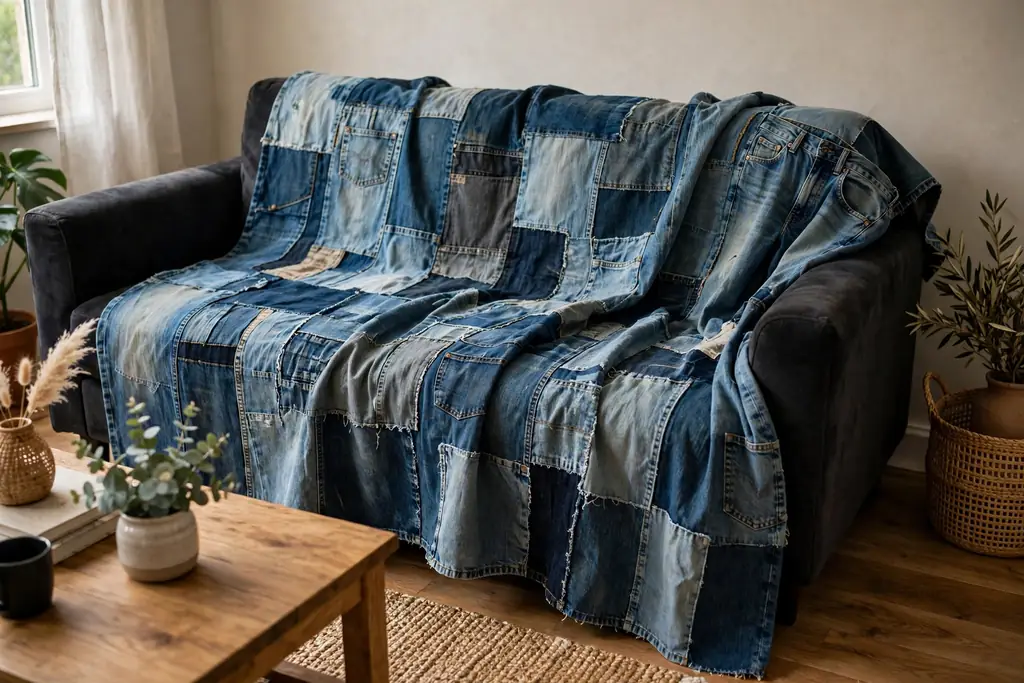
Make or buy a patched denim throw from old jeans, stitched together with visible seams and a few iron-on patches, for a heavy, durable blanket on a sofa or bed. Use jeans you already own or thrifted pairs, mix light and dark washes, and back the throw with a soft fleece or an old sheet so it feels good against skin. No sewing machine is needed if you use iron-on hemming tape for the joins, though stitched seams last longer.
Leave a few pockets and seams from the original jeans in the patchwork, since they add texture and small storage for a remote or a phone. Finish the edges with a simple folded hem rather than a neat binding, since a slightly raw edge suits the material. A denim throw also survives washing well, which matters for a blanket that will live on a much-used sofa.
11. Studded Cushion Covers in Small Doses
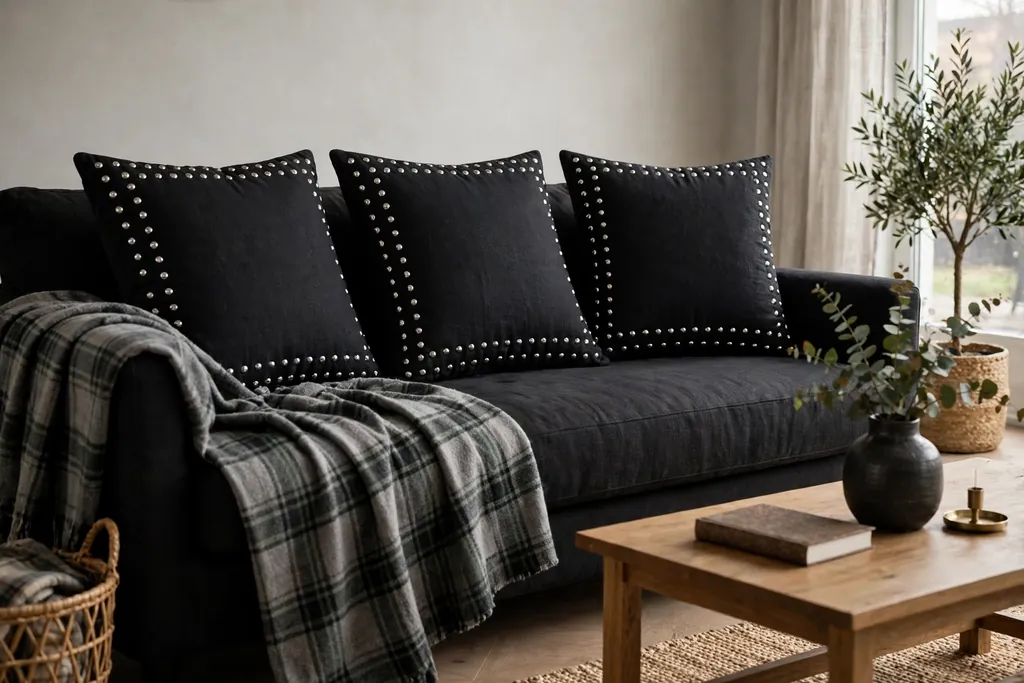
Add studs to plain black or charcoal cushion covers for a punk and grunge accent in an afternoon. Press or screw studs along the edges, in a border, or in one bold shape such as a star, and keep the studded cushions to one or two per sofa so seating stays comfortable rather than spiky. Studs with screw backs grip better than glue-on versions and survive washing if you remove the cover first and fasten it inside out.
Mix one studded cover with plain velvet, denim, and plaid cushions, so texture contrast does the work. If you share the sofa with pets or small children, keep studs to the front face and the corners rather than the seat edge where hands and paws land. Keep spare studs in a small tin, so repairs are easy when one works loose.
12. Pinned Trim on Black Curtains
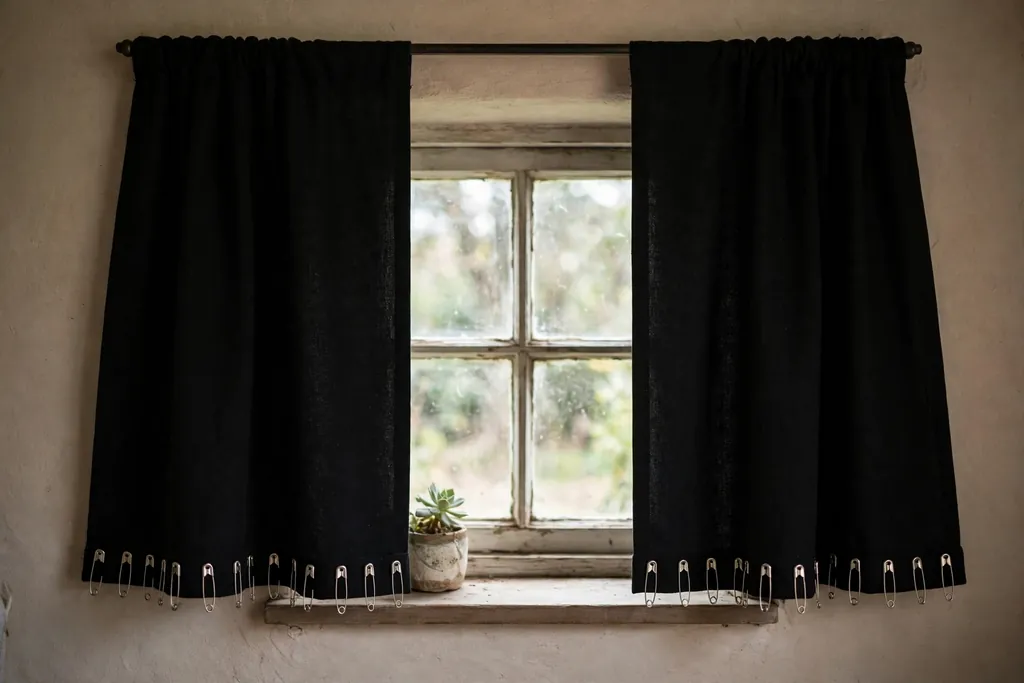
Fix a row of large silver safety pins along the bottom hem of plain black curtains, or cluster them at the tieback point where the curtain gathers. The pins catch the light, add metal to a soft textile, and come off in seconds when you want the curtains plain again or when laundry day arrives. This is a good first grunge DIY, since it costs almost nothing and changes the whole window.
Use closed pins in a single size for a tidy row, or mix sizes for a more improvised feel, but keep them to the outer hem where they will not snag skin or bedding. If the curtains are light fabric, pin through the hem fold rather than a single layer, so the weight does not pull the fabric. Pair the curtains with a plain rod in black metal, so the pins stay the only metal detail at the window.
13. Framed Band Tee as Wall Art
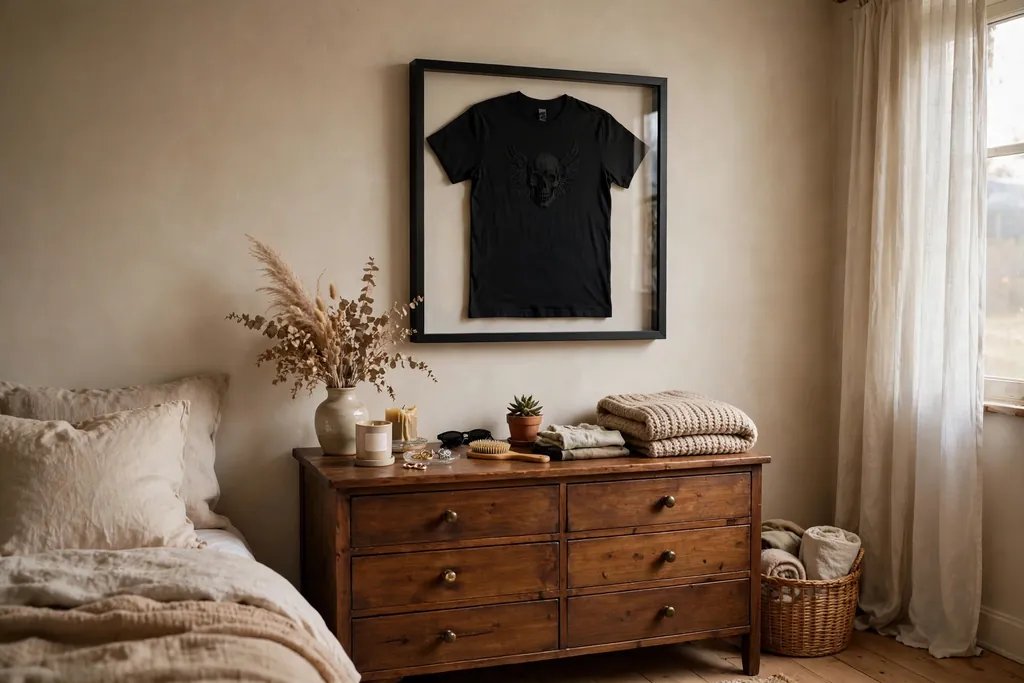
Stretch a favorite band tee over a canvas frame or mount it in a deep shadow box frame, and hang it like a print above a dresser or beside the poster wall. The graphic becomes the artwork, and the shirt itself stays safe from further wear. This works best with tees that have one strong front graphic, and a plain black frame keeps the focus on the design rather than the mounting.
Use tees you already own before buying vintage shirts for display, since the ones tied to real gigs carry more meaning. One framed tee over a dresser is a statement, while three in a row above a sofa makes a full gallery. Keep framed tees out of direct sun, so the print does not fade over a season.
14. Pallet Platform Bed with Under-Bed Space
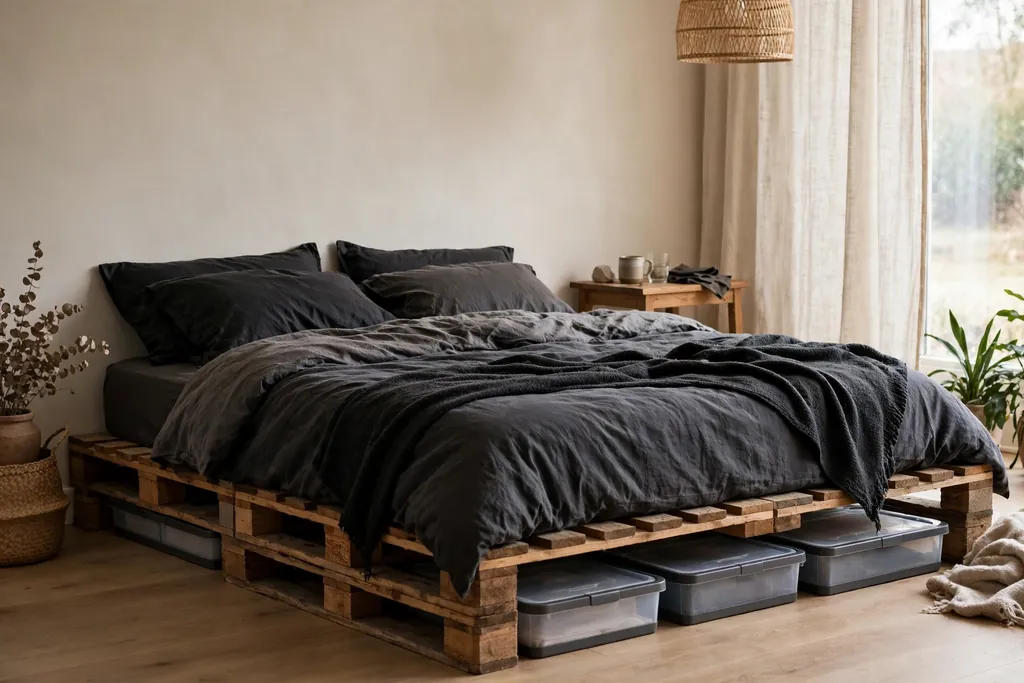
Set a mattress on a low pallet platform for a grounded, studio-like bed that leaves room underneath for flat storage boxes. The low bed makes the room feel wider, and the raw wood suits grunge style far better than a polished frame. Sand the pallets well, and check for stamps or marks that show they are safe for indoor use before you bring them inside.
Use a firm platform and a good mattress, since a low bed still needs proper support. Keep storage boxes low and labelled, so the space under the bed stays useful rather than becoming a dumping ground. If a pallet bed feels too rough, add a simple wood headboard panel behind it, and keep bedding in black and plaid so the bed reads as planned.
15. Industrial Cage Pendant Light
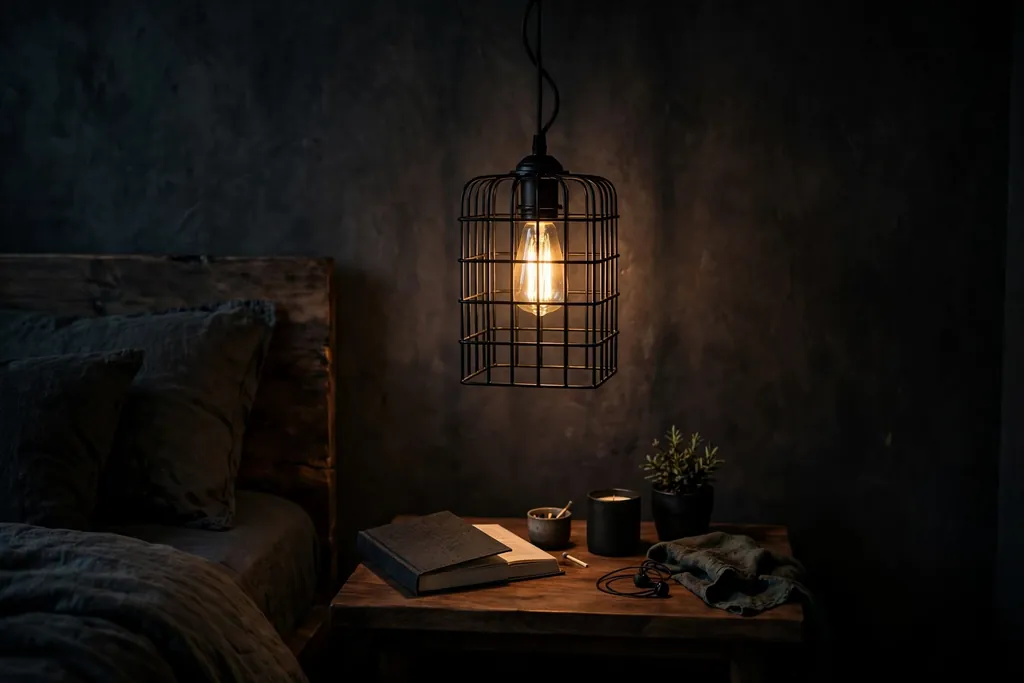
Hang a black metal cage pendant over a desk, bedside table, or reading chair for a working light with an industrial edge. The open cage shows the bulb and casts patterned light, and the dark metal ties in with pipe shelves, curtain rods, and poster frames. A single pendant works over a nightstand, while a pair flanking a bed frames it well.
Hang the pendant so its base sits well above head height when you sit up in bed, and use a warm white bulb for a soft glow. Keep the cord tidy with a small hook, and if you cannot wire a new light, a plug-in pendant with a long cord gives the same look without an electrician. Dust the cage often, since open metal collects dust in a small room.
16. Graffiti-Style Stencil Canvas Art
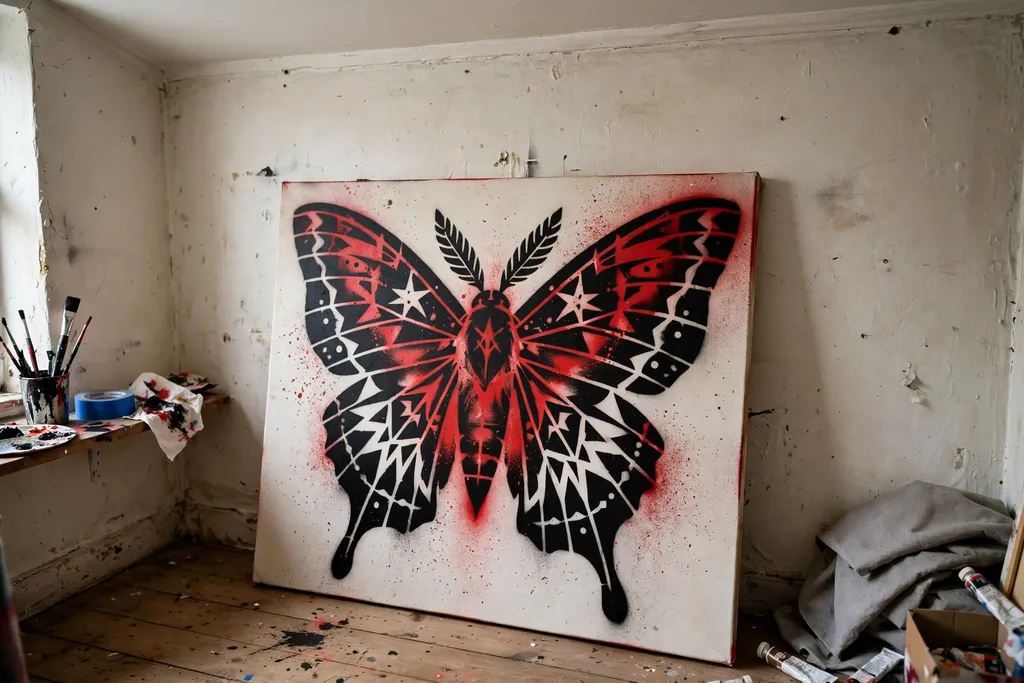
Make stencil art on canvas for the street poster look without touching the landlord walls. Cut a simple stencil from card or buy a reusable one, then spray or sponge paint it onto a plain canvas in black, white, and red. One word, one symbol, or one repeated shape is enough: a safety pin, a lightning bolt, or a band-style slogan all work at canvas size. Hang the finished canvas with a removable strip, and make a second one when you want a pair.
Practice on scrap card first, because stencil paint bleeds if the brush is too wet. Keep the canvas palette to two or three colors, so it sits comfortably beside posters rather than competing with them. Canvases are light, cheap, and easy to carry to the next apartment, which makes them ideal renter art for a grunge room.
17. Layered Black Curtains for Sleep and Light Control
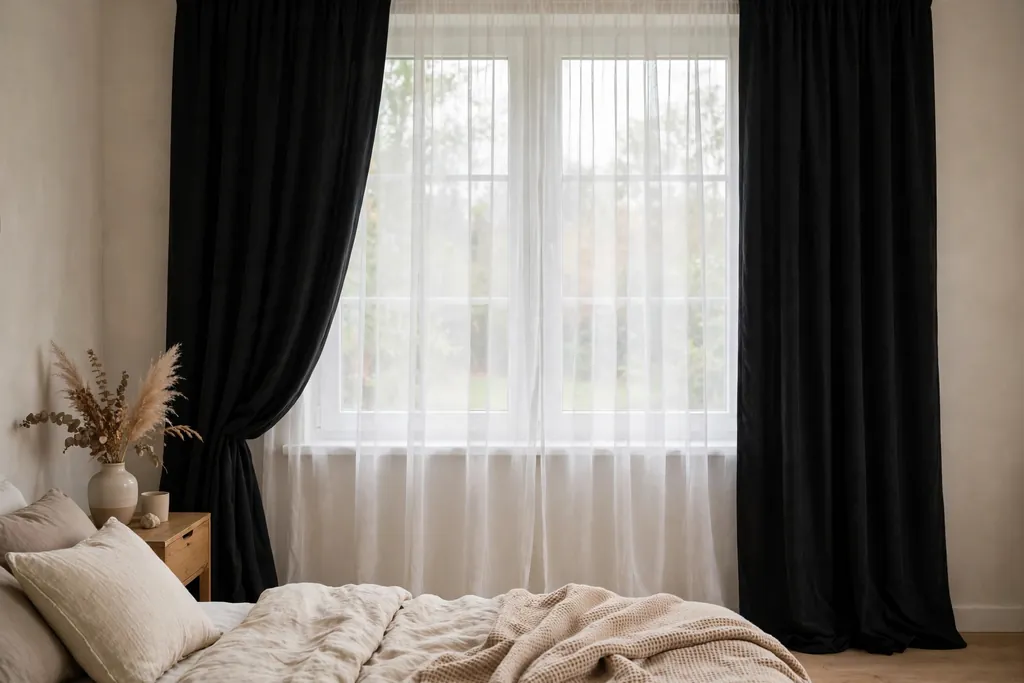
Layer black blackout curtains over a sheer panel for a window that can go dark for sleep and soft for daytime. The sheer layer keeps daylight in a small room during the day, while the black layer closes the room down at night and gives the window a strong grunge frame. This suits bedrooms and studios where one window has to serve sleep, work, and relaxing.
Hang the curtains as close to the ceiling as possible, so the window area feels taller, and extend the rod a little past the window on each side, so curtains can stack out of the way during the day. Choose washable fabric, since window curtains collect dust and cooking smells faster than other textiles. Keep the rod in black metal, and skip extra valances that would crowd a small window.
18. Guitar Wall Mount as Display and Storage
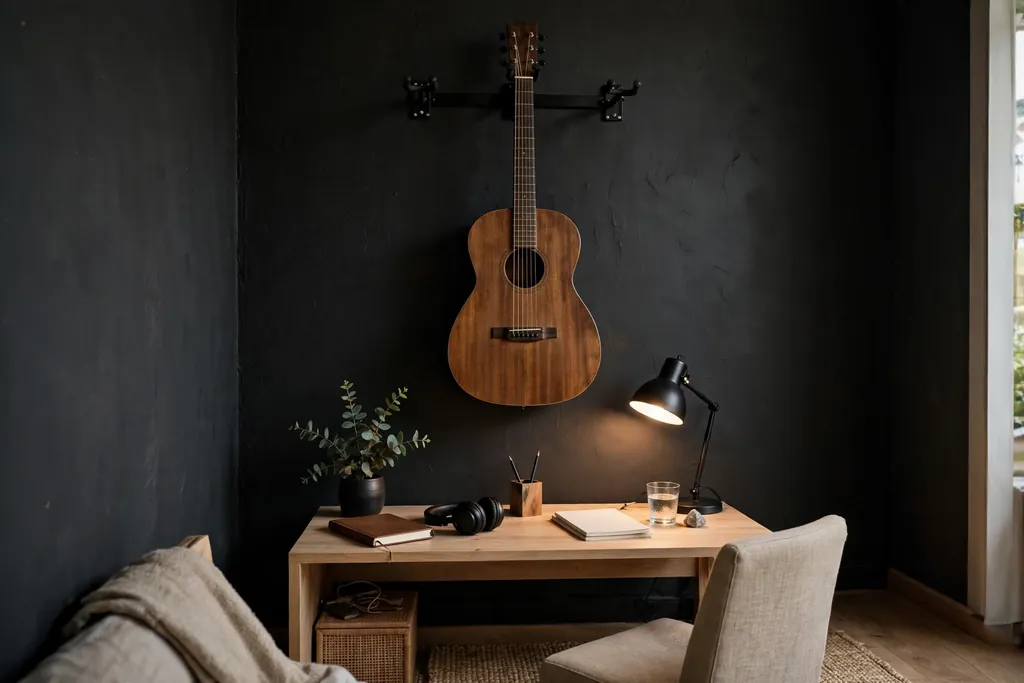
Mount a guitar on the wall with a proper wall hanger, so an instrument you play becomes decor and stays off the floor. A guitar on the wall suits a grunge room because it is a real music object, not a themed prop, and it frees a corner that a stand would take. Fix the hanger into a stud or a proper anchor, and keep the guitar clear of radiators, damp walls, and direct sun.
Hang the guitar at a height where you can lift it off easily, and keep a small hook nearby for a strap or a cable, so the wall stays tidy. If you have more than one instrument, hang them in a row with even spacing, and keep the rest of that wall plain. For a softer take on music-led bedrooms, see these hippie bedroom ideas.
19. Concert Ticket Board for Gigs and Flyers
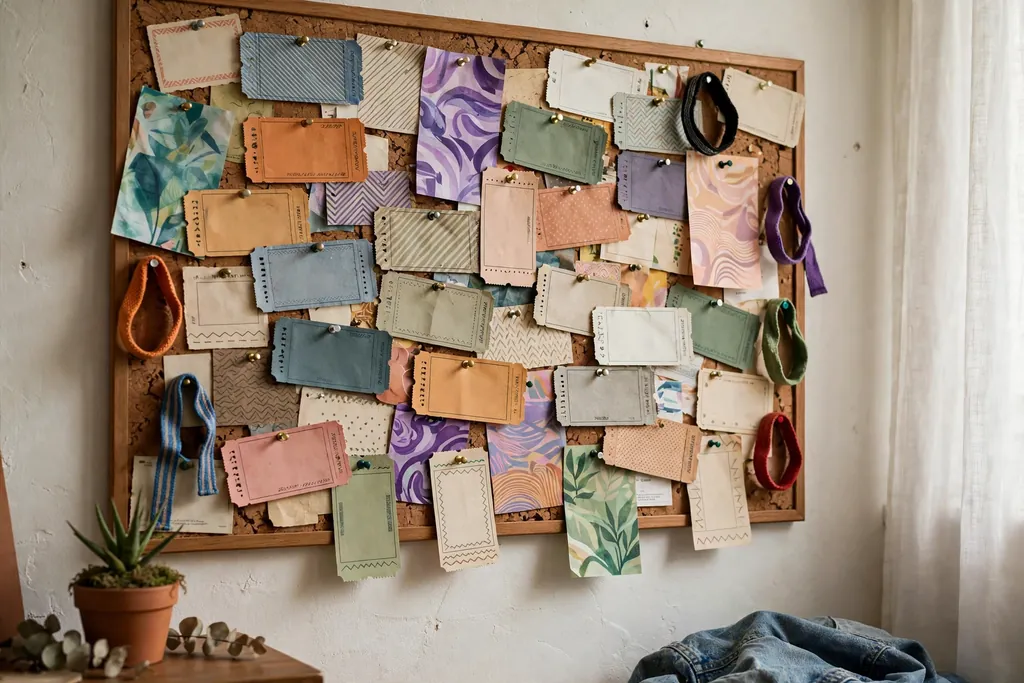
Attach gig tickets, flyers, and wristbands to a cork board or a fabric-wrapped board, and hang it with removable strips or lean it on a dresser. Overlapped edges and short notes about the date or the venue turn the board into a living record of shows, and it grows messier and better over time. This suits a small room because the board holds a whole collection on one wall, instead of loose paper across desks and shelves.
Sort loosely by year or by band, rather than trying for a neat grid, since a little overlap suits the material. If a ticket is precious, pin through a corner or slip it into a clear sleeve first, so the board does not damage it. Pull the most recent tickets to the front when you add new ones, so the board stays current without a full rebuild.
20. Jacket Hook Rail and Boot Tray by the Door
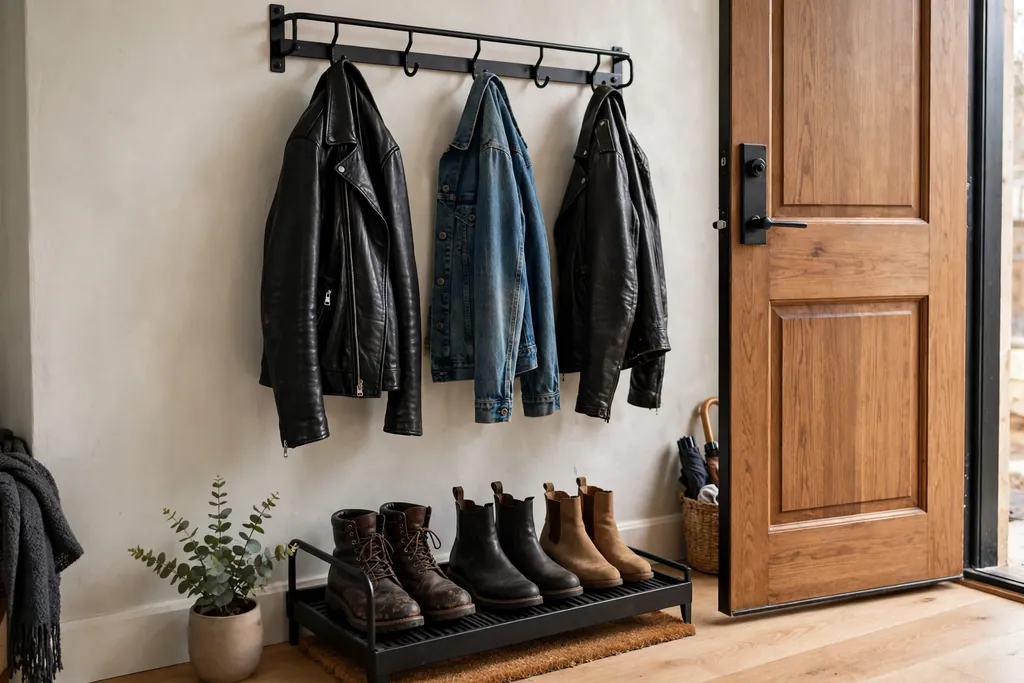
Fix a black metal hook rail by the door for a leather jacket, a denim jacket, and a bag, and set a boot tray below it for boots and shoes. The rail keeps heavy jackets off chairs and beds, and the tray stops mud and dust from spreading across a small room floor. This entry zone works even in a studio, since it needs only one stretch of wall by the door.
Choose hooks rated for the weight of a leather jacket, and fix the rail into studs or proper anchors. Keep the rail to four or five hooks, so it does not become a second closet, and clear it once a week of items you are not wearing. A small mirror above the rail helps with a last check before you leave, and it bounces light into a dark entry.
21. Dark Desk Nook with a Pegboard Wall
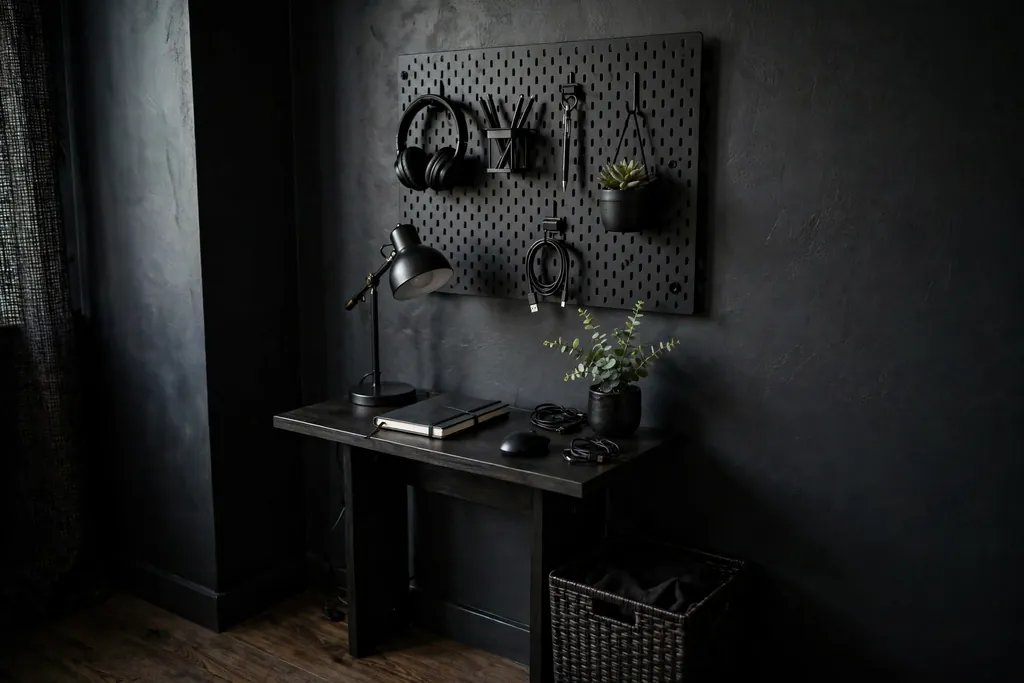
Set a small desk in an alcove or against one wall, paint the wall behind it charcoal, and hang a black pegboard above it for headphones, cables, notebooks, and small tools. The dark wall marks the work zone in a small room, and the pegboard uses vertical space that a shelf stack would crowd. This suits students and renters, since the desk and board can move to the next room.
Keep the desk surface clear as a habit, with only a lamp, a laptop, and one pen pot on top, and store the rest on the pegboard or in a drawer. Use a warm desk lamp for evening work, so the dark wall does not feel gloomy, and keep the chair light enough to tuck fully under the desk when you finish. Check that pegboard hooks hold their load, and keep cables clipped to the board edge.
22. Industrial Trunk Coffee Table with Storage
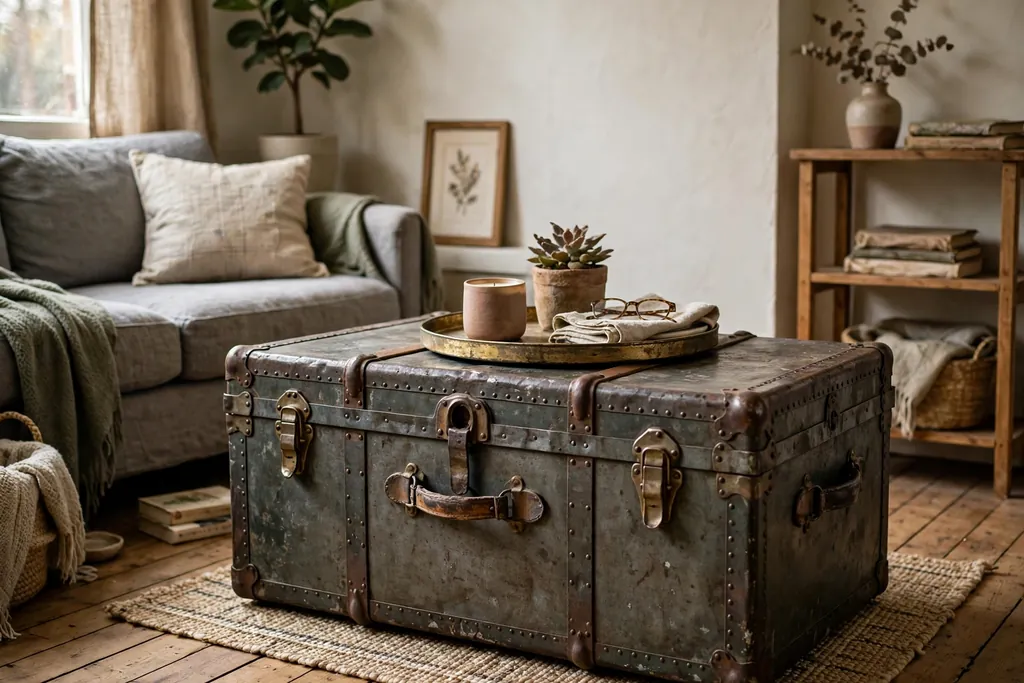
Use an old metal or wood trunk as a coffee table, so the table also stores throws, records, or games inside. A trunk suits a grunge room because worn metal corners, scuffs, and latches carry character, and it replaces a table that would only hold drinks. Choose a trunk low enough to sit beside a sofa comfortably, and add a tray on top to keep drinks steady.
Keep the trunk lid easy to open, and store only items you reach for often inside it, since a trunk filled with things you never use becomes a box you never open. Add small felt pads under the trunk feet, so it does not scratch wood or tile floors. If the trunk is dark, add a pale tray or a light rug under it, so the seating area does not read as one dark block.
23. Layered Warm Lighting for a Dark Room
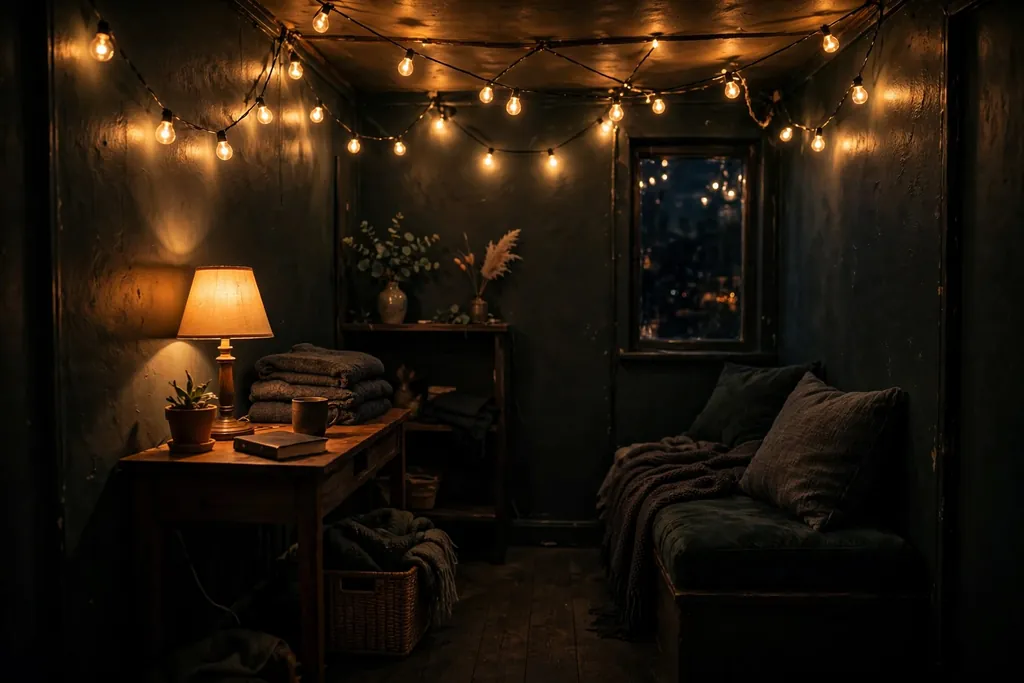
Layer warm light at three heights, with a floor or table lamp, a string of warm white lights, and a small desk or reading lamp, instead of relying on one bright ceiling light. Warm layers make a dark grunge room feel cozy at night, and they let you change the mood from work to relaxing without repainting or moving furniture. This matters in a small room, where one harsh light can make dark walls feel flat.
Keep string lights away from bedding and curtains, and choose LED sets that stay cool to the touch. Drape them loosely rather than pulling them tight, so the line looks relaxed, and pair them with a lamp for reading, since string lights alone are too dim for a book. Use warm white bulbs throughout, so black, plaid, and wood all read warm in the evening, not cold.
24. Faded Band Tapestry on the Main Wall
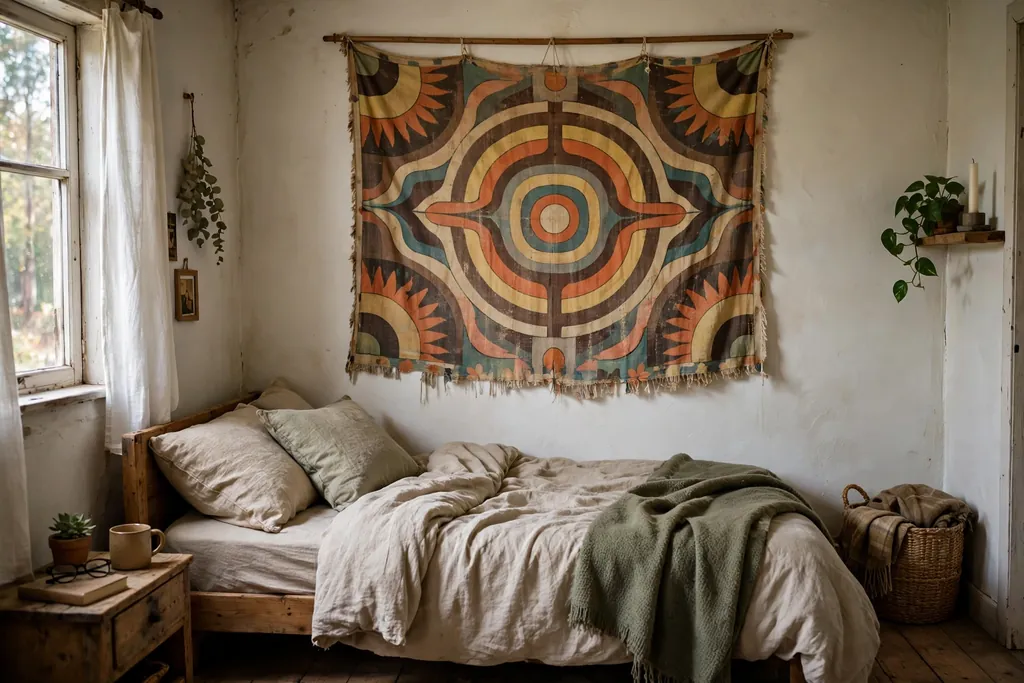
Hang a large faded band tapestry or flag on the main wall for color and pattern on a grand scale, without the weight or cost of framed art. Unlike a framed print, a tapestry adds softness and a slight drape, which suits a grunge room, and it also helps a cold wall feel warmer in cooler months. Hang it with a wooden dowel or clips along the top edge, so it hangs straight.
If the room is small, hang the tapestry on the wall you see first when you walk in, and keep the other walls plain, so the tapestry stays the focus. Choose a tapestry with a worn or faded print rather than a bright new graphic, since faded color sits better beside black walls and thrifted furniture. Wash it on a gentle cycle when it needs cleaning, and dry it flat or on a line when you can.
25. Black Plant Pots with Hardy Plants
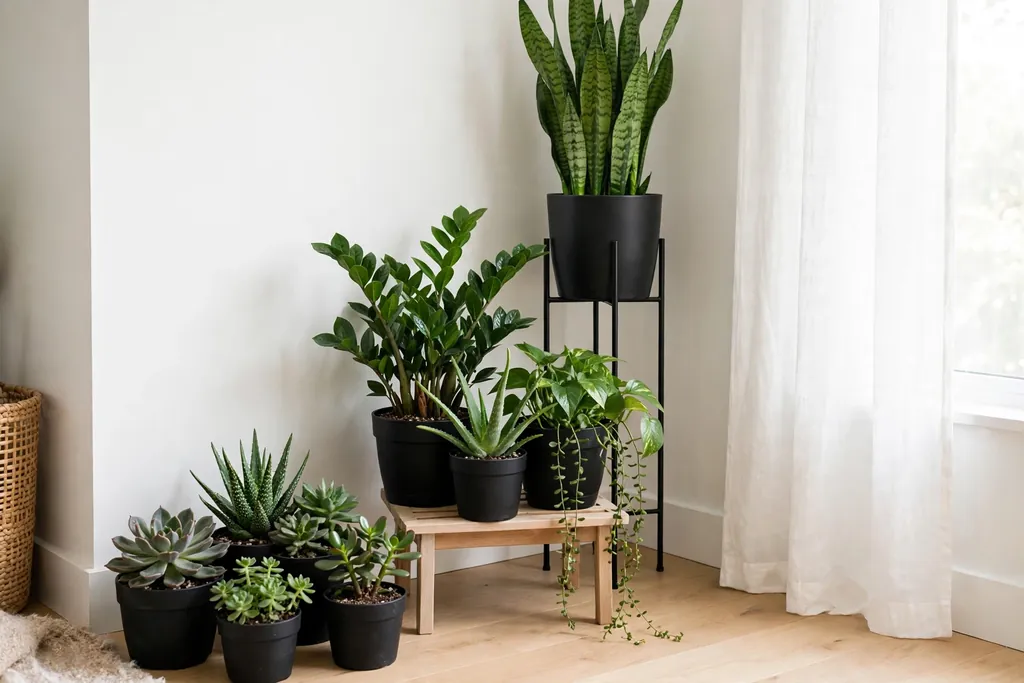
Use black pots for hardy plants, such as pothos, snake plants, and spider plants, to soften a dark grunge room with green without breaking the palette. Black pots tie plants into black walls, frames, and shelves, while the leaves add life and shape to hard corners. Group plants with similar watering needs together, and use a saucer under each pot to protect wood and shelves.
Place tall plants on the floor, medium plants on a stool or crate, and trailing plants on a shelf, so greenery sits at three heights and does not block light. Match plants to the light the window actually gets, and rotate them every few weeks so they grow evenly toward the light. In a small room, three to five plants are enough: more than that can crowd walkways and shelves.
26. Black-Framed Mirror to Bounce Light
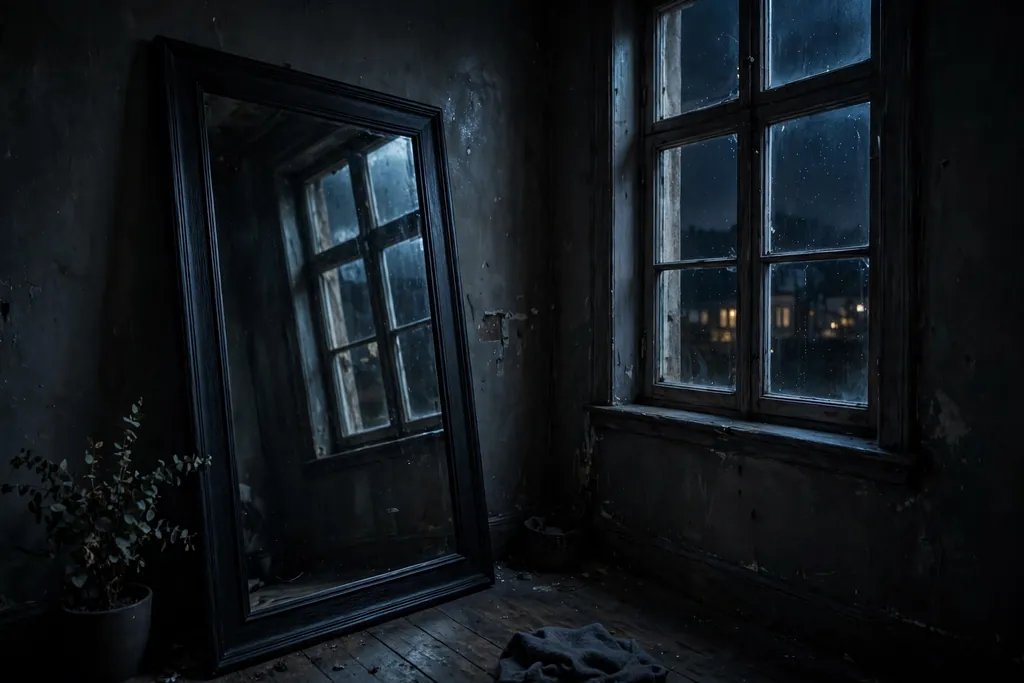
Lean or hang a large mirror with a simple black frame opposite or beside a window, so daylight bounces deeper into a dark room and the far wall feels farther away. In a small grunge room, that extra sense of depth matters, because dark walls and heavy textiles can otherwise make the room feel closed in. Lean a full length mirror against the wall if hanging is not allowed, and secure it so it cannot slide on a smooth floor.
Check what the mirror reflects before you fix its position, since a mirror that reflects a messy corner doubles the mess. Aim it toward the window, a plant, or a calm stretch of wall for the best result. One large mirror usually works better than several small ones scattered across the room, and a plain black frame ties it into the rest of the grunge palette.
27. Fold-Down Wall Desk for a Tiny Room
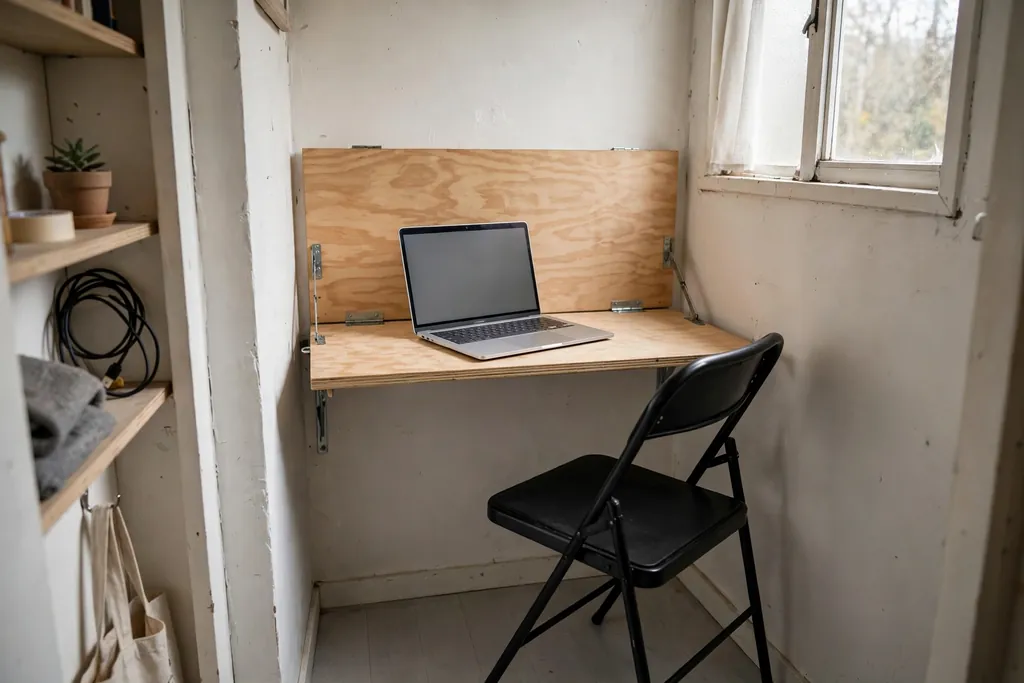
Fit a fold-down wall desk that folds flat when you are not working, so a tiny room keeps a real work spot without a desk standing in the middle of the floor all day. Fold it down for study, work, or writing, then fold it away to free the floor for walking, exercise, or a guest mattress. A stool or folding chair stored nearby completes the setup without a full desk set.
Fix a wall mounted desk firmly into studs or suitable wall anchors, and check the weight rating before you load it with books or a laptop. A drop leaf table on casters is a good alternative if wall fixing is not allowed, since it can roll to the wall when closed. Keep the desk clear as a habit, because a fold-away desk only helps if folding it away stays easy.
28. Rolling Under-Bed Storage for Merch and Gear
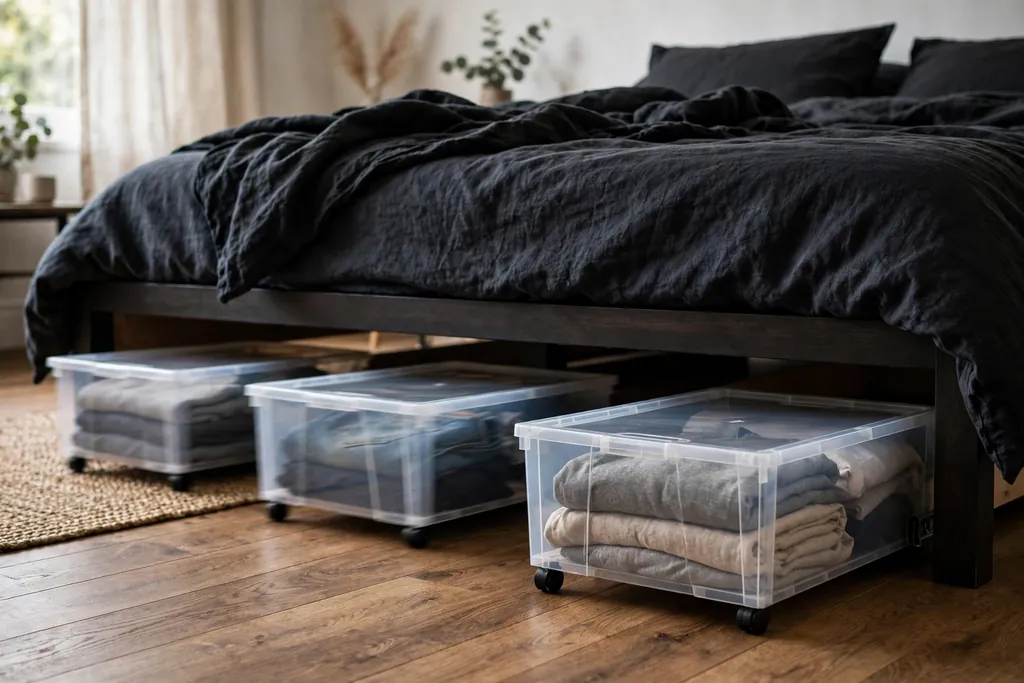
Slide low rolling boxes under the bed for band merch, spare bedding, cables, and gear that would otherwise pile on chairs and shelves. Under-bed space is easy to overlook because it sits outside the normal line of sight, yet it is simple to use with two or three flat boxes on wheels. This works well in a bedroom and in a studio where closet space is tight.
Keep the boxes shallow enough that they slide out without catching the bed frame, and keep them light, since pulling a heavy box from under a bed is awkward. Label each box, or keep a short list of what lives in each one, because deep storage only helps if you can find things again. Do not block the bed base vents or the walkway beside the bed when you place the boxes.
29. Rotating Display Shelf for Small Finds
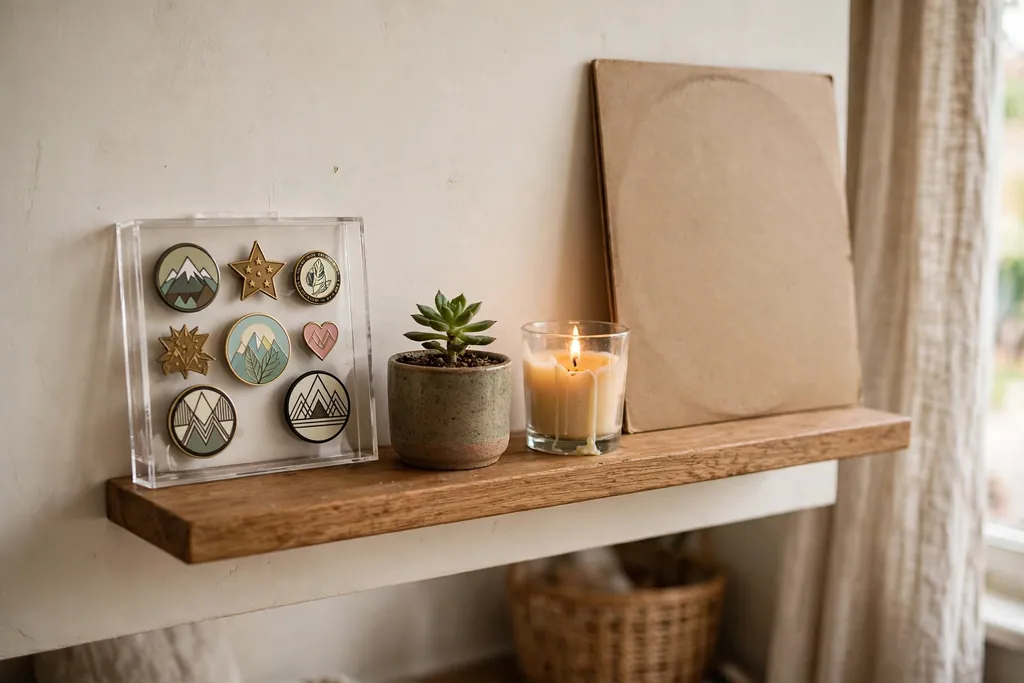
Keep one short shelf as a rotating display for small grunge finds: a badge, a small plant, a candle, a photo, and one record sleeve. Rotate the shelf with the season or when a new find arrives, so a small room keeps changing without new holes in the wall or new furniture. This gives you a place for the small items that would otherwise clutter desks, windowsills, and bedside tables.
Keep the shelf to five or six items at most, and leave breathing room between groups, so the display reads as curated, not crowded. Dust the shelf weekly, since open displays collect dust fast in a small room. When you add a new item, remove one old item to another spot, so the shelf count stays steady and the room never drifts back to clutter.
Conclusion
A grunge room works in a small space when dark color, music, and worn materials have a clear job and a clear limit. Start with one dark wall or one dark bedding set, add one music display, and choose storage that also serves as furniture. Keep walkways clear, light warm and layered, and displays small enough to rotate. That balance gives you the edge of grunge style, with a room that still feels easy to live in, sleep in, and work in every day.
FAQs
How do I make a grunge room feel cozy instead of gloomy in a small space?
Keep one wall or one large surface dark, and keep the rest pale, then add warm light at two or three heights. Plaid bedding, a denim throw, and wood or leather pieces warm a dark palette, while a mirror opposite a window bounces daylight deeper into the room. Avoid painting all four walls black in a small room, since that can darken the space more than any single decor piece can fix.
Can I do a grunge room in a rental without damaging the walls?
Yes. Peel-and-stick panels, clip frames, removable strips, picture ledges fixed with the fixings your lease allows, canvas art, tapestries hung from a dowel, and freestanding furniture all give the look without permanent paint or large holes. Test one removable product first, follow the maker removal steps, and check your lease before you fix heavy shelves or a wall desk.
What colors work best for a small grunge room?
Black, charcoal, and dark grey make a strong base, with white or cream to keep the room open, and red or green plaid as the main pattern accent. Silver and black metal tie frames, shelves, and curtain rods together. Keep the palette to three or four colors in total, and repeat them in small doses, so the room reads as planned rather than random.
How do I stop a grunge room from looking cluttered?
Give every item a home, and limit open displays to one wall or one shelf at a time. Use crates, trunks, and under-bed boxes for storage, keep walkways and desk surfaces clear, and rotate small displays instead of adding to them. If a new poster, record, or find comes in, move an older piece to another spot or into storage, so the total count in view stays steady.
Is grunge style only for bedrooms?
No. The same ideas work in a studio, a living corner, or a small apartment room, as long as you zone the space first. A checkerboard rug, a trunk table, pipe shelves, and a poster wall can define a living area in a studio, while a fold-down desk and a jacket rail keep a work and entry zone tidy. Start with the zone you use most, and build out from there.
How much should I spend to start a grunge room?
Start with almost no spend by using what you already own: posters, records, tees, jackets, and old jeans. Thrift shops are the next step for leather chairs, crates, trunks, frames, and denim, since worn pieces suit the look and cost far less than new matching sets. Spend first on one dark base, such as bedding or peel-and-stick panels, and on good light, since those two changes affect the whole room at once.