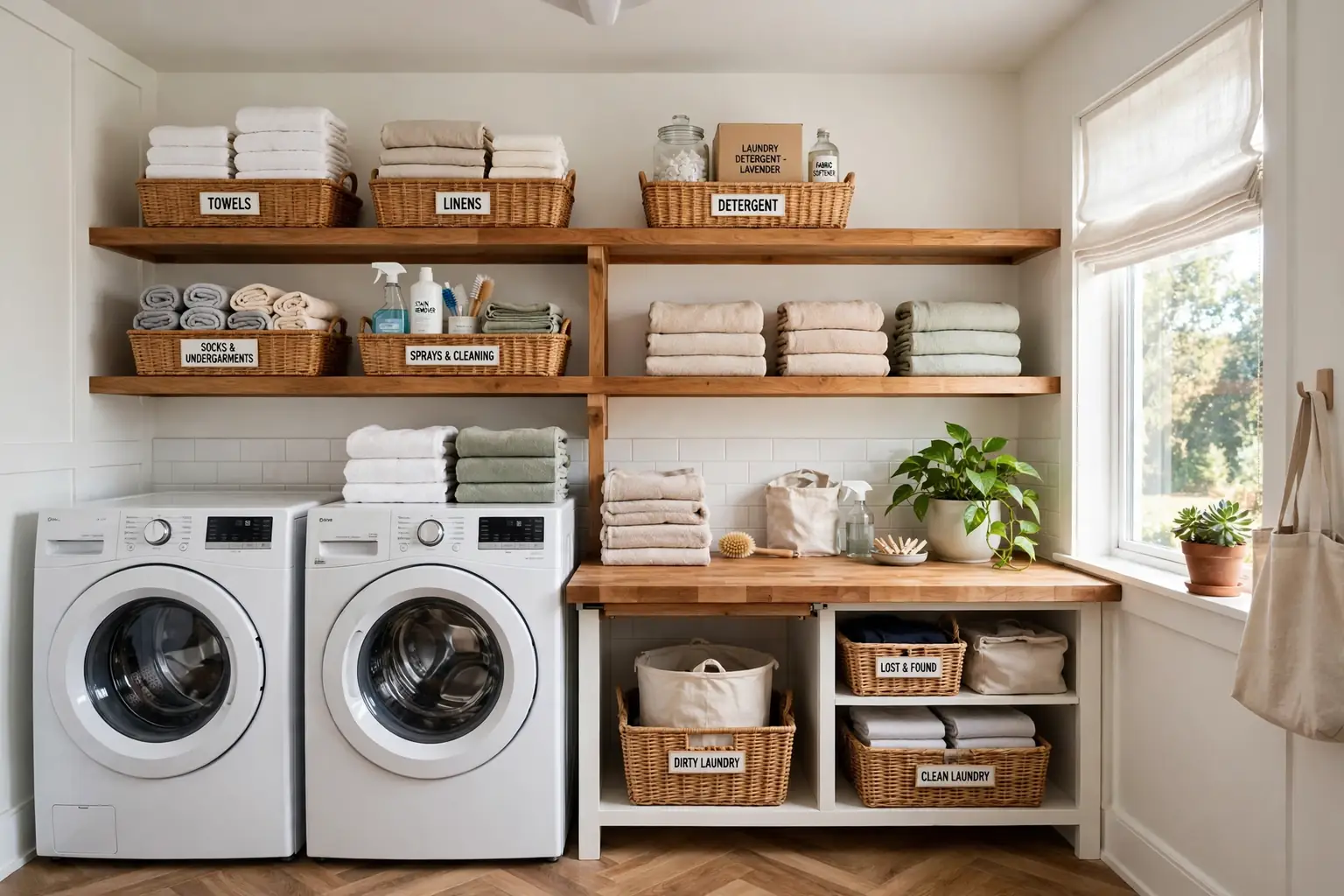
A laundry room works hard, yet it often gets the least planning in the house. Clothes pile on the washer, detergent bottles crowd the shelf, and clean towels end up in a heap because nothing has a set home. These 31 smart laundry room organization ideas fix that with storage that suits small rooms, rentals, and family homes alike. You will find wall storage, sorting stations, folding spots, drying options, and small habits that keep the room tidy between wash days. Start with the clutter point that bothers you most, then add one idea at a time.
Key Takeaways
- Give every group a home: detergent, towels, hampers, drying clothes, and small supplies each need one set spot.
- Use the walls and the space above the machines first, since floor space in a laundry room is usually scarce.
- Sort at the source with labeled bins, so wash day starts with loads already grouped.
- Keep daily items at easy reach and move seasonal or bulky items to a high shelf.
- Add one folding surface and one drying option, since those two jobs cause most of the pileups.
- Label bins and review the room once a season, so new items do not quietly take over.
1. Open Shelves Above the Machines
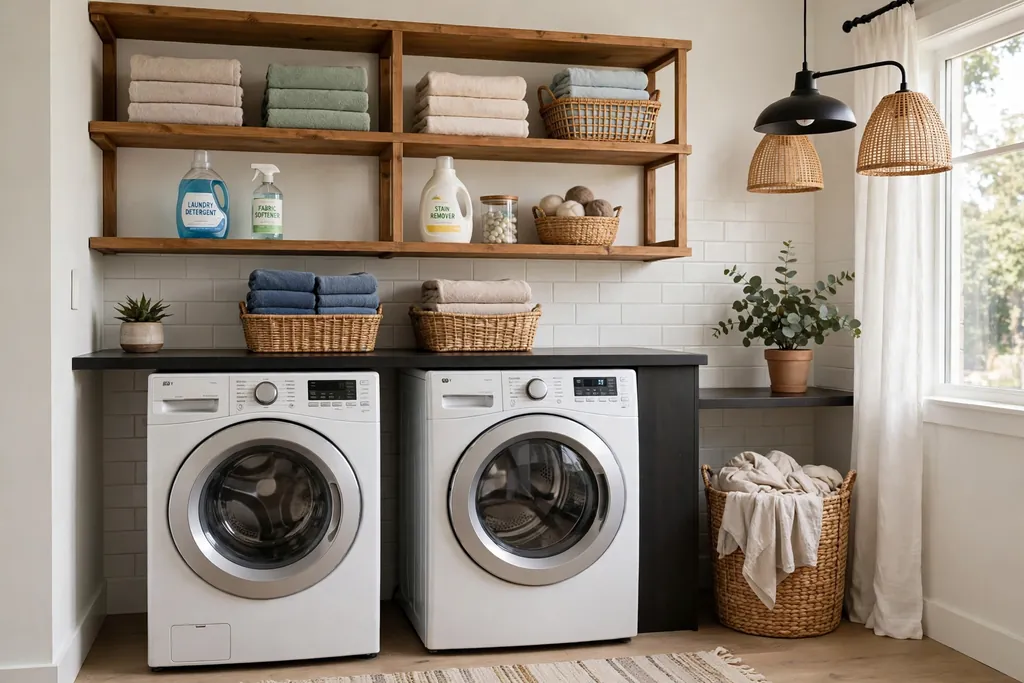
Fit two open shelves above the washer and dryer for detergent, folded towels, and baskets you reach for every wash day. Open shelves keep daily items visible, so you can see at a glance what needs refilling, and they cost less than cabinets. Keep the lowest shelf high enough to load the machines without bumping your head, and leave a clear gap above the machines for hoses and lids.
Group items by job on each shelf: washing supplies on one, towels and cloths on another. Use matching baskets for small items, so the shelves read as tidy rather than crowded. For wall storage lessons that carry over well here, these kitchen wall storage ideas show how to group items and leave breathing room on open shelves.
2. Closed Cabinets Above the Machines
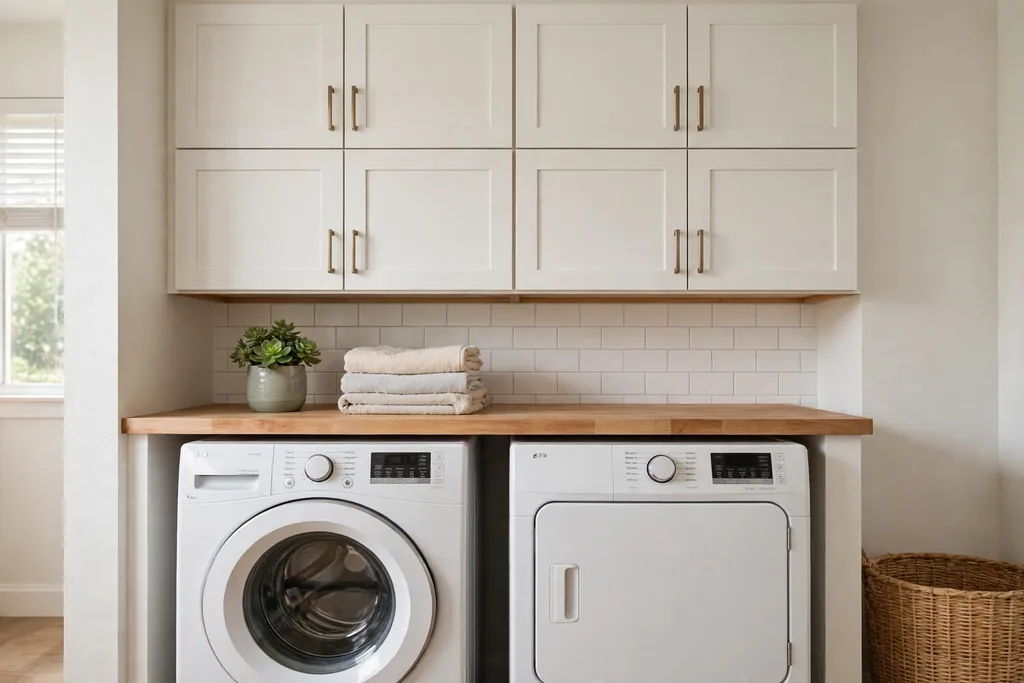
Choose closed cabinets above the machines when you want a calmer look or need to keep supplies away from children and pets. Doors hide mismatched bottles, spare parts, and cleaning products, which matters in a room guests may pass through. Pick shallow cabinets that still clear the machine lids, and fix them into studs or with fixings rated for the load.
Keep one shelf inside each cabinet for daily supplies and a higher shelf for spares. Label the inside of a door with a short list of what lives where, so family members put things back in the right place. Closed cabinets pair well with one open shelf below them for the two or three items you grab every load.
3. Floor-to-Ceiling Storage Tower
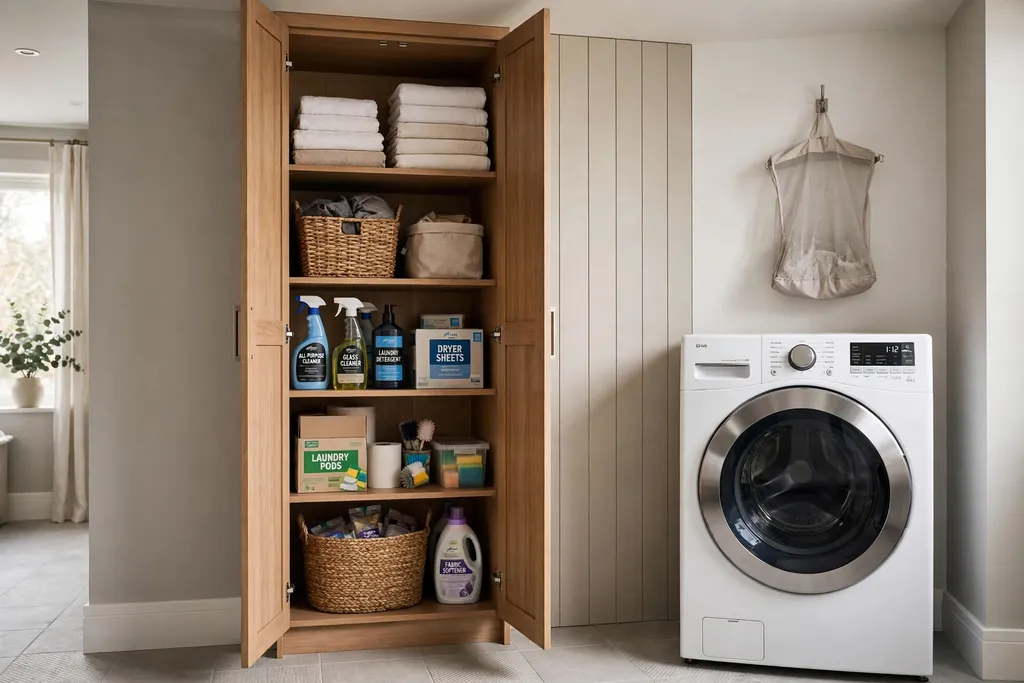
Add a tall, narrow storage tower beside the machines to hold towels, bedding, ironing supplies, and bulk detergent in one unit. A tower uses vertical space that a short cabinet wastes, and it keeps the room from spreading into other rooms. Measure the width, the door swing, and the space needed to pull the machine out for service before you order.
Plan the inside from the top down: rarely used items high, daily towels at eye level, and heavy detergent low. Leave one shelf partly empty at the start, so new supplies have a place. A tower with doors keeps dust off folded towels, which matters in a room where lint is always in the air.
4. Slim Pull-Out Pantry Between the Machines
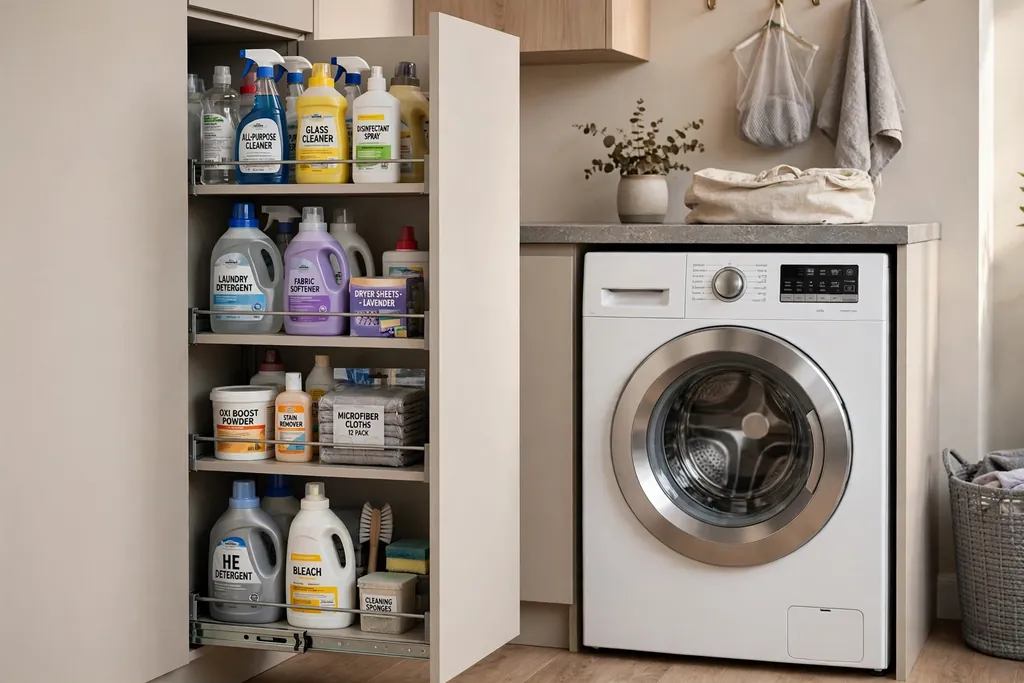
Fit a slim pull-out pantry in the gap beside a machine for detergent, stain spray, and cleaning bottles. The whole unit slides out, so you can see every bottle without reaching to the back of a deep cupboard. Measure the gap, the skirting boards, and the machine door swing first, since pull-outs need a clear path to open fully.
Group bottles by job, such as washing, stain care, and freshening, and put heavy bottles low. Wipe the shelves now and then, since drips from detergent bottles collect fast. If the gap is too narrow for a fitted unit, a slim freestanding pull-out cart gives much of the same benefit.
5. Rolling Cart in the Side Gap
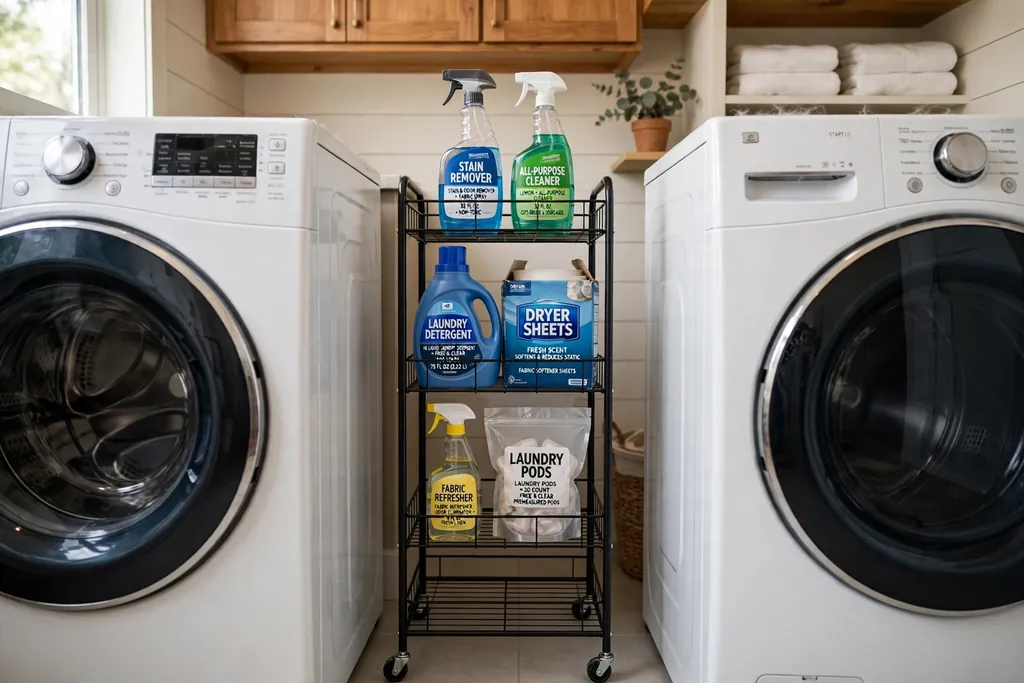
Slide a slim rolling cart into the side gap beside the washer or dryer for supplies you use every load. A cart moves out for cleaning, moves to the folding spot when needed, and costs little compared with fitted storage. Choose a cart with wheels that lock, so it stays put while you pull a bottle from it.
Use the top tier for daily detergent and dryer sheets, the middle for stain care, and the lowest for spare supplies. Keep the cart narrow enough to slide without scraping the machine, and do not overload it, since a heavy cart is hard to move and can mark the floor. Wipe the tiers weekly, since laundry rooms collect lint and drips.
6. Labeled Bins on Open Shelves
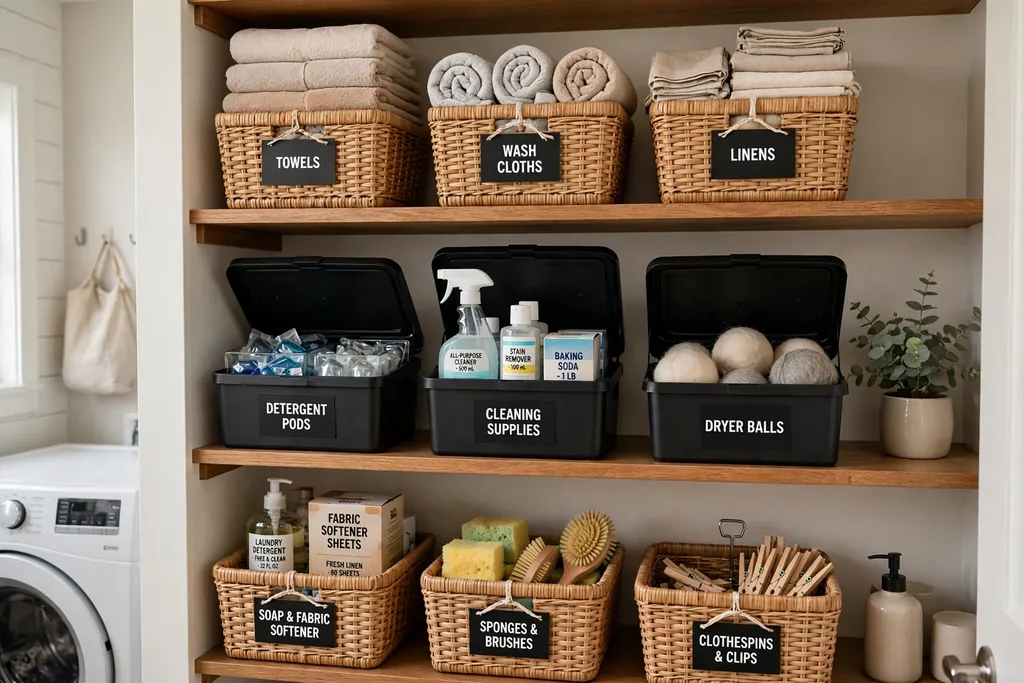
Place matching labeled bins on open shelves for towels, cloths, pegs, and small supplies, so each group has a visible home. Labels stop the slow drift where one bin ends up holding a mix of everything, and they help everyone in the house put things back correctly. Use short, plain labels such as towels, cloths, pegs, and spares.
Keep bins light enough to lift with one hand, and store heavy detergent elsewhere. Line a bin with fabric if it holds small items that slip through the weave. Replace a bin when it frays or cracks, since a damaged bin snags towels and looks untidy even when it is full.
7. Clear Jars for Detergent, Pods, and Powders
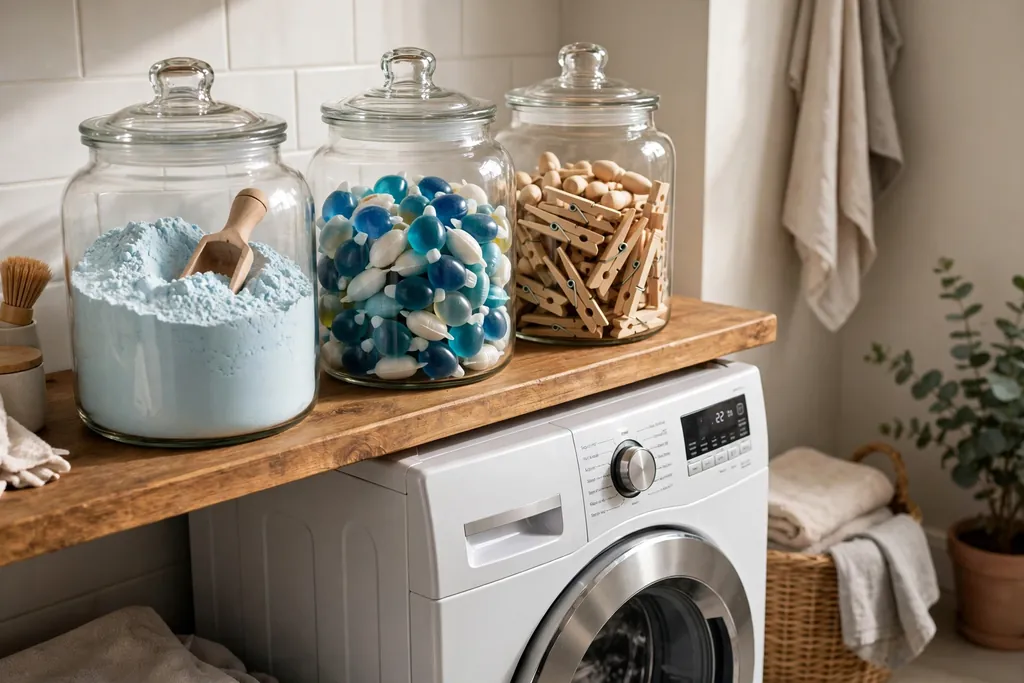
Decant detergent powder, pods, and pegs into clear jars on a shelf, so you can see stock levels and grab the right product fast. Clear jars also stop half empty boxes from collapsing and spilling across a shelf. Use jars with lids that close firmly, and keep them out of reach of small children, since detergent pods and powders need safe storage.
Label each jar with the product name and the dose, since powders and pods can look alike once they leave their boxes. Keep a small scoop in the powder jar, and refill jars from bulk packs stored in a cabinet. Wash and dry jars fully before refilling, so damp powder does not clump.
8. Fold-Down Wall Drying Rack
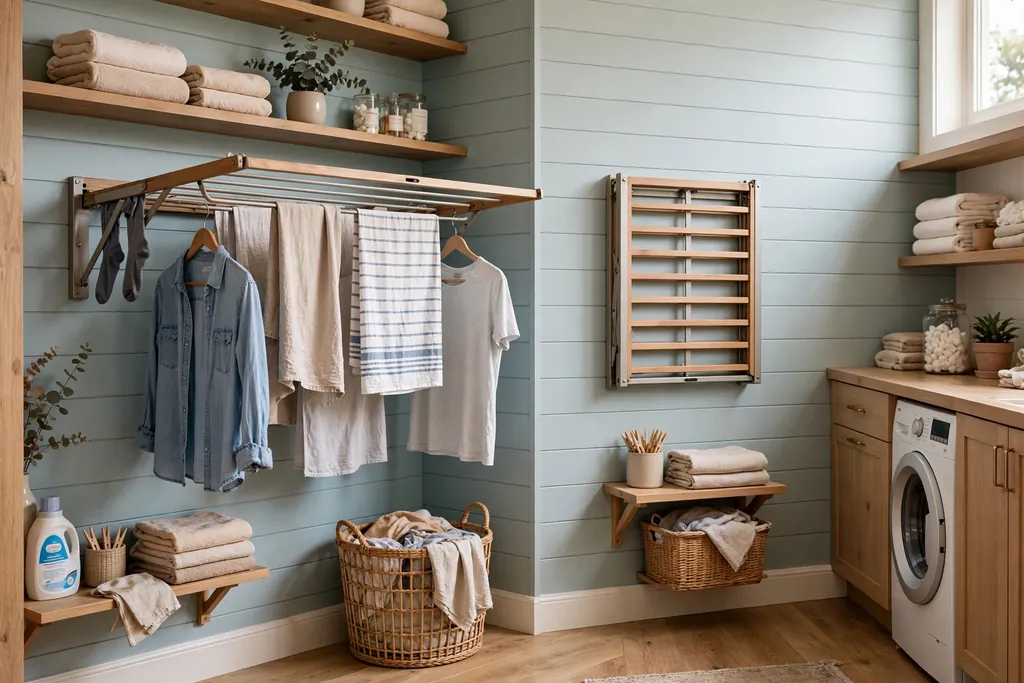
Fix a fold-down drying rack to the wall for clothes that cannot go in the dryer. It folds flat when not in use, so it suits small rooms where a freestanding rack would block the walkway. Fix it into studs or with fixings rated for wet clothes, which weigh more than dry ones, and site it where drips will not fall on clean laundry.
Hang items with space between them, so air moves and clothes dry faster. Keep the rack clear of the machine doors and the folding counter, so you can still move around the room. Fold it away after clothes dry, and wipe the bars now and then to stop dust settling on damp fabric.
9. Retractable Clothesline Across the Room
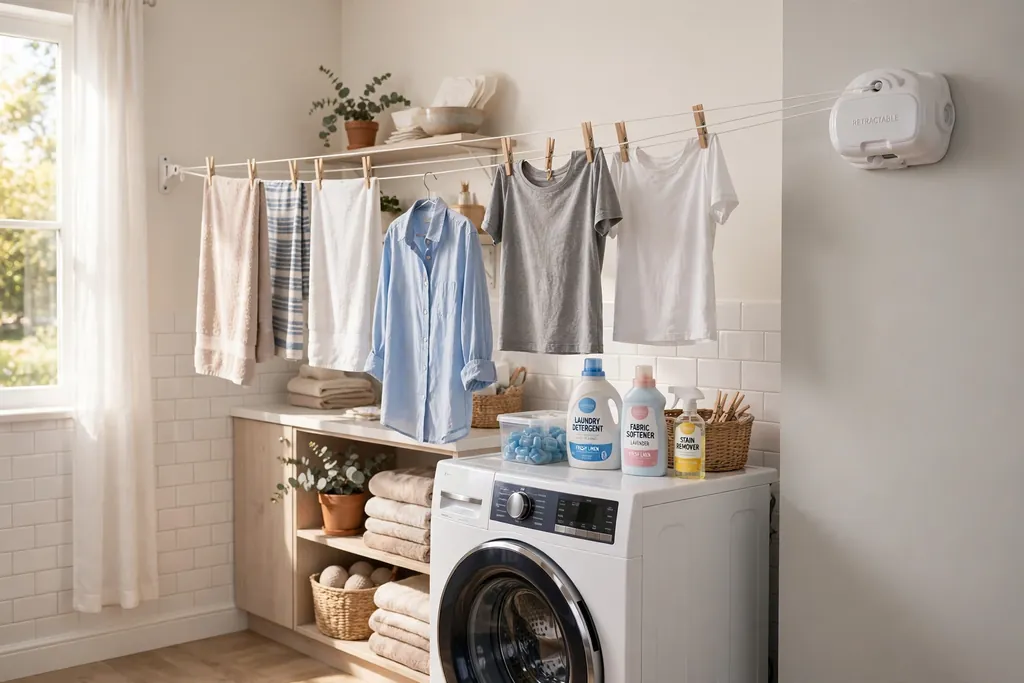
Stretch a retractable clothesline across the laundry room for a drying line that disappears when wash day ends. It suits rooms with a clear wall-to-wall run and no room for a permanent rack. Fix both ends firmly, and test the line with a wet load before you rely on it, since a sagging line drops clothes onto the floor.
Use the line for shirts, towels, and items that benefit from air drying, and retract it once clothes are dry so the room feels open again. Keep the line clear of shelves and light fittings, and wipe it before use if the room is dusty. A retractable line also works well above a bathtub in a combined laundry and bathroom space.
10. Hanging Rod for Air-Dry Clothes
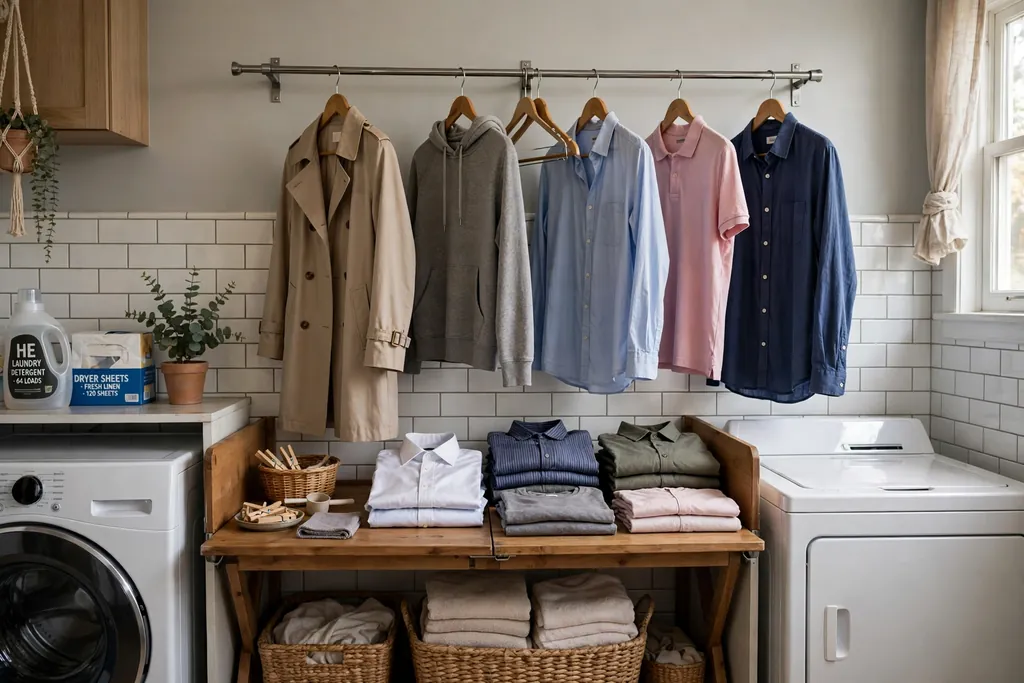
Mount a hanging rod on the wall or under a shelf for shirts and delicates on hangers. A rod keeps air-dry clothes off chairs and door handles, and it lets you move a whole load to the closet in one trip. Fix the rod into studs, since a rod full of wet clothes carries real weight, and leave clearance below for the longest garment.
Hang clothes with a small gap between hangers, so air reaches each piece. Keep a few empty hangers on the rod, so you are not hunting for one when a load finishes. If wall space is short, a short rod inside a tall cabinet gives the same benefit for a smaller number of items.
11. Over-Door Rack for Sprays and Small Supplies
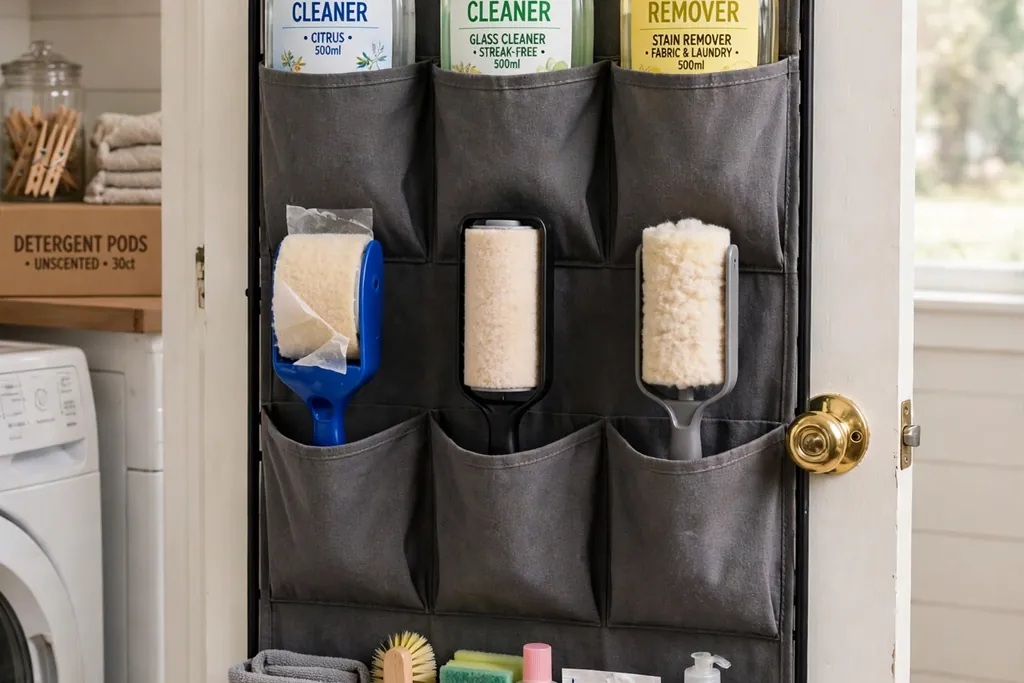
Hang an over-door rack on the laundry room door for spray bottles, lint rollers, and small supplies. It uses space that otherwise holds nothing, needs no drilling, and keeps supplies visible when you walk in. Choose a rack with a flat profile, so the door still closes fully and does not mark the frame.
Limit the rack to items you use weekly, since an overloaded door is hard to open and looks messy. Put the heaviest bottle lowest, and keep the top hooks for light items such as a lint roller. If the door is used often, choose a rack with a soft backing to protect the door surface.
12. Pegboard Wall for Brushes and Tools
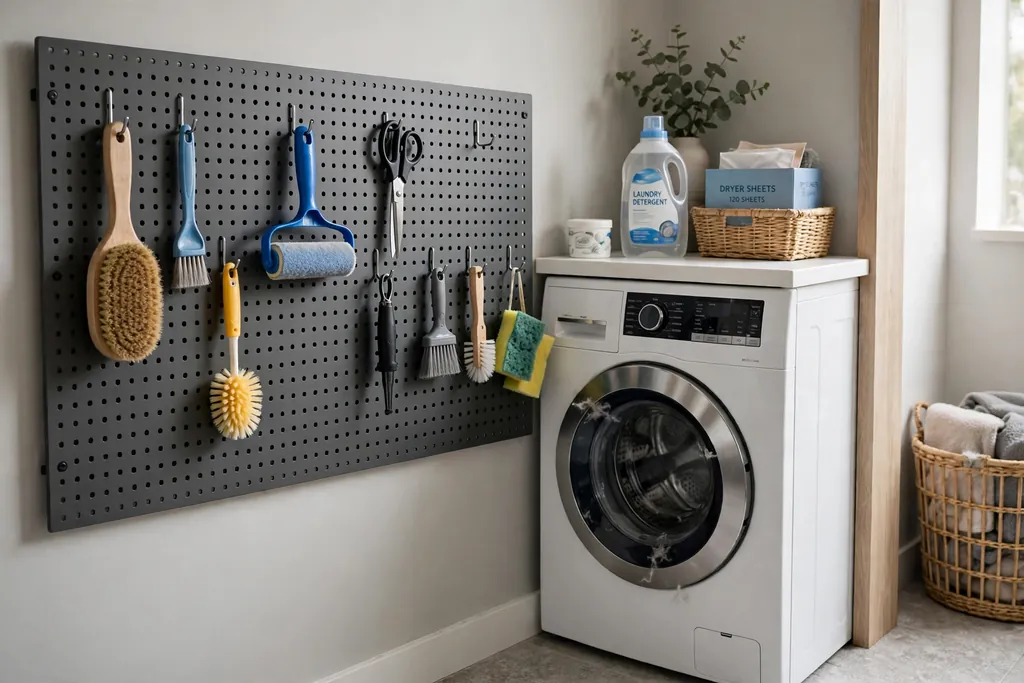
Fix a pegboard to a free wall for brushes, a lint roller, scissors, and small laundry tools. Hooks move as your tool set changes, so the board stays useful even when supplies change. Paint or stain the board to match the room, and frame the edges so it looks finished rather than like a workshop offcut.
Plan the layout on the floor first, with the most used tools at easy reach and heavier items low. Leave space around each item, so you can lift it off without knocking its neighbor. A small shelf or cup at the base of the board holds a timer, a stain pen, and other small tools that do not hang well.
13. Magnetic Caddy on the Side of a Machine
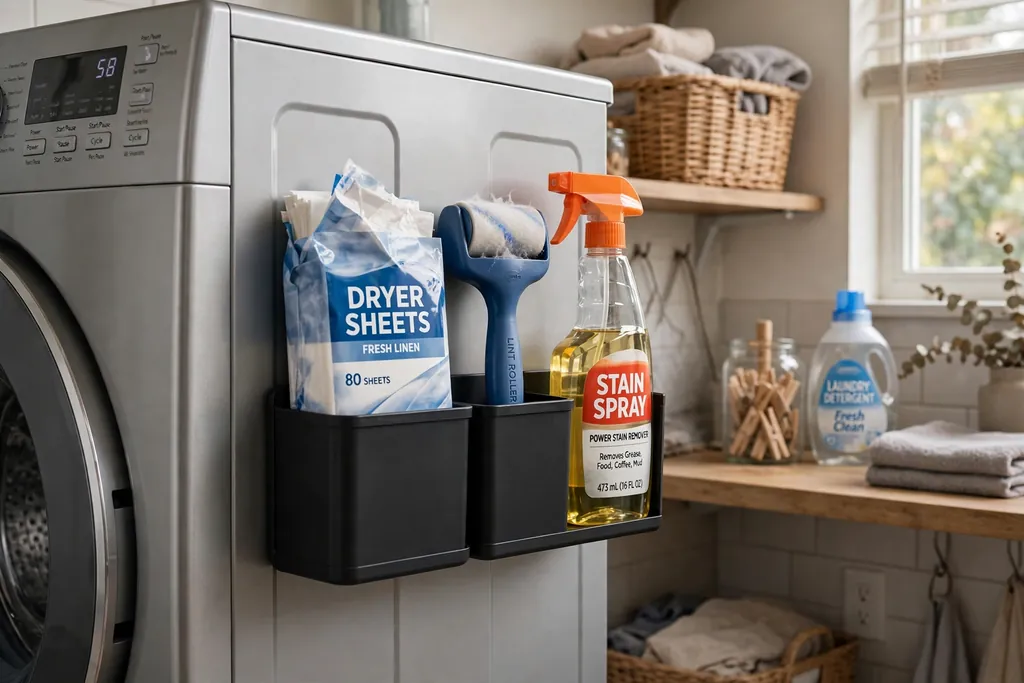
Attach a magnetic caddy to the side of a metal washer or dryer for dryer sheets, a lint roller, and stain spray. It keeps the most used small items within arm’s reach of the machine, without taking shelf or counter space. Check that your machine side is magnetic first, since some machines have a nonmagnetic finish, and keep the caddy light.
Use one pocket for dryer sheets, one for a lint roller, and one for stain spray, so each item has a set slot. Wipe the caddy now and then, since lint settles on flat surfaces near a dryer. If the caddy slides when you pull an item, move heavier items to a shelf and keep only light items in the caddy.
14. Folding Counter Over Front-Load Machines
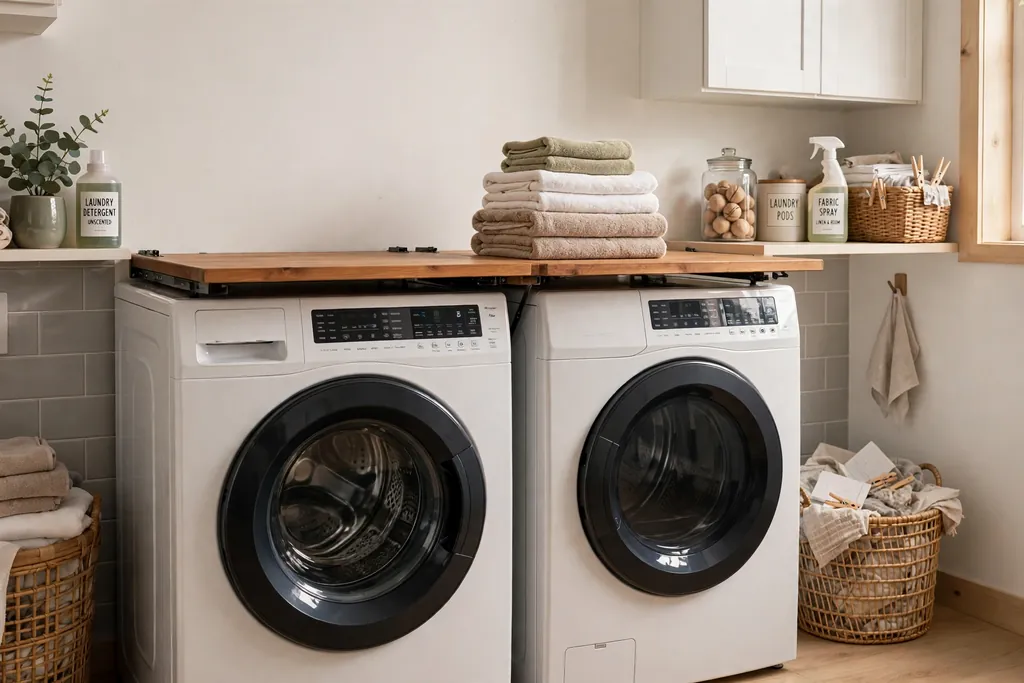
Fit a wooden counter over front-load machines to create a folding surface at a comfortable height. A counter stops clean clothes from piling on the machines themselves, and it gives you a clear place to fold each load as it finishes. Measure the machine depth and leave room for hoses and ventilation, and check the machine manual before fitting a fixed counter.
Keep the counter mostly clear, with only a small basket for pegs or a spray bottle at one end. Fold straight from the dryer onto the counter, then carry folded stacks away, so the surface is ready for the next load. Wipe the counter after folding, since lint and stray socks collect there fast.
15. Fold-Down Folding Table
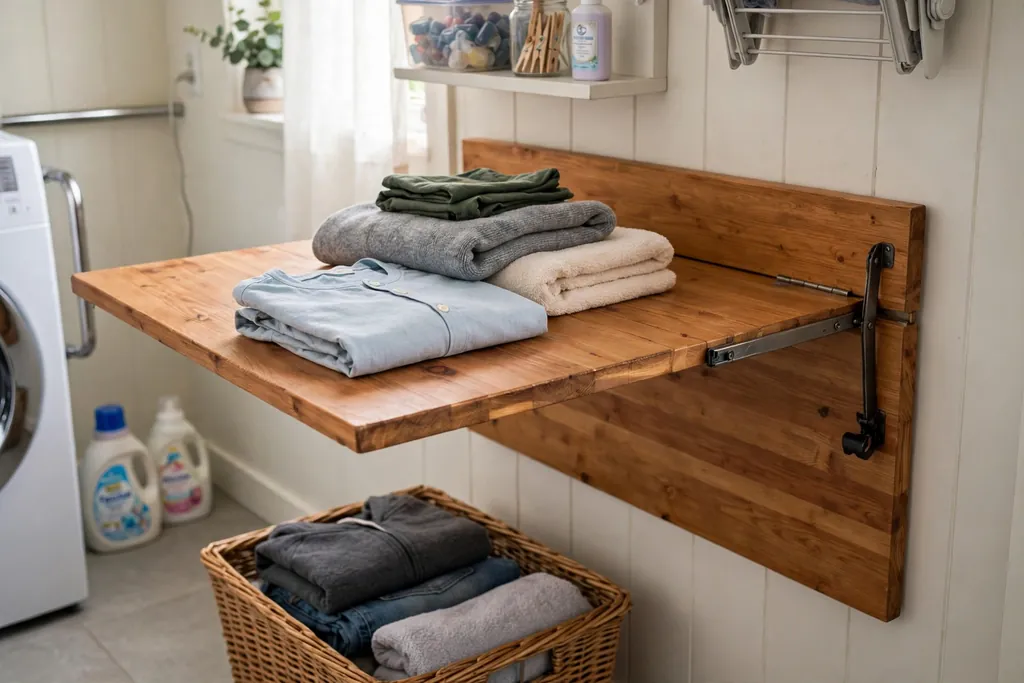
Fix a fold-down table to a free wall when a fixed counter will not fit. It folds flat when not in use, which suits small rooms and hallways where the laundry area shares space with a walkway. Fix it to studs, since it must hold a pile of clothes and leaning elbows, and choose a size that fits the room without blocking a door.
Fold it down only when the room is clear of through traffic, so no one walks into the open edge. Keep a basket below it for clothes waiting to be folded, and fold the table away after each session so the room stays open. A small shelf above the table holds pegs and a spray bottle within reach.
16. Pull-Out Ironing Board in a Drawer
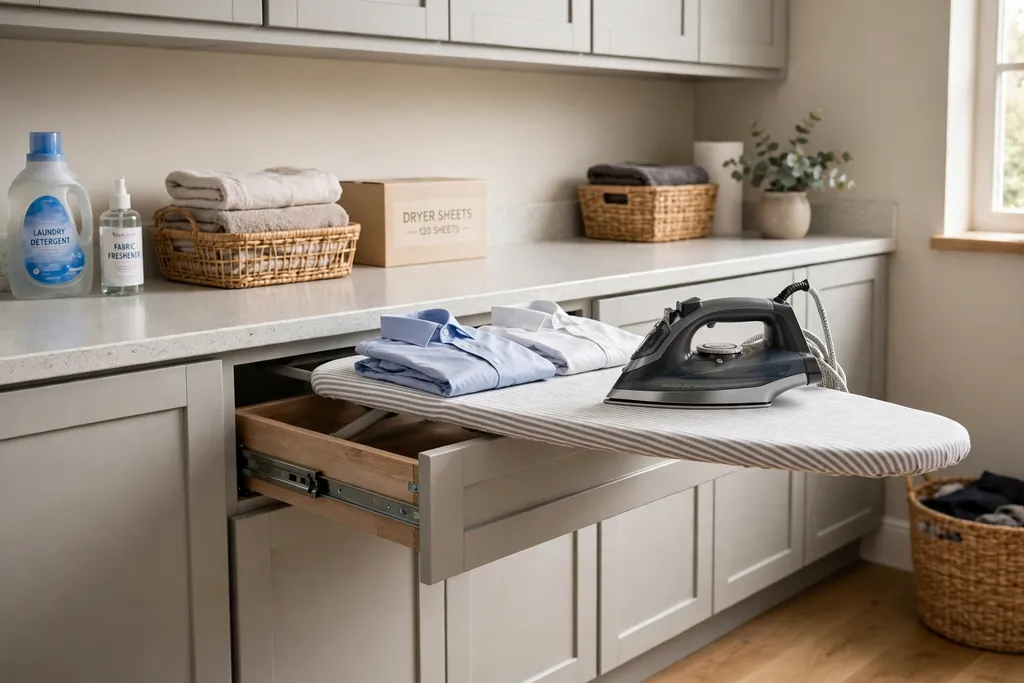
Fit a pull-out ironing board in a drawer under the counter for ironing without storing a full board. It slides away when not needed, which suits small rooms where a standing board would live in the way. Measure the drawer depth and the board length first, since the board must fit fully inside when closed.
Keep the iron in a heat safe spot nearby, and let the board cool before sliding it back in. A pull-out board suits quick touch ups and small loads, while a full board still suits a large ironing session. If a pull-out board will not fit, a compact tabletop board stored upright in a tall cabinet is a good second choice.
17. Three-Bin Sorting Station
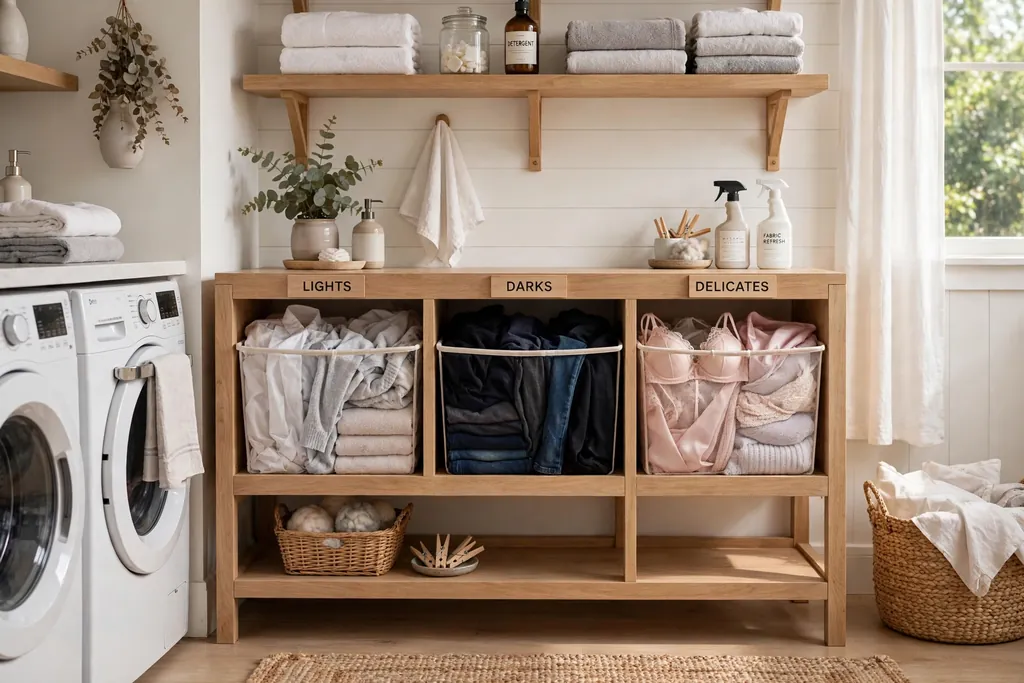
Set up three bins labeled lights, darks, and delicates, so each load is sorted before wash day. Sorting at the source saves time, stops a dark sock from joining a white load, and makes wash day a matter of carrying one bin to the machine. Place the station where dirty clothes naturally arrive, such as near the laundry door or the hallway.
Use bins that are easy to carry or that lift out of a frame, and empty each bin as soon as it fills. Wash the bins now and then, since dirty laundry leaves a smell in fabric bins. If three bins will not fit, start with two, one for lights and one for darks, and add a small delicates bag that hangs on a hook.
18. Tilt-Out Hamper in a Cabinet
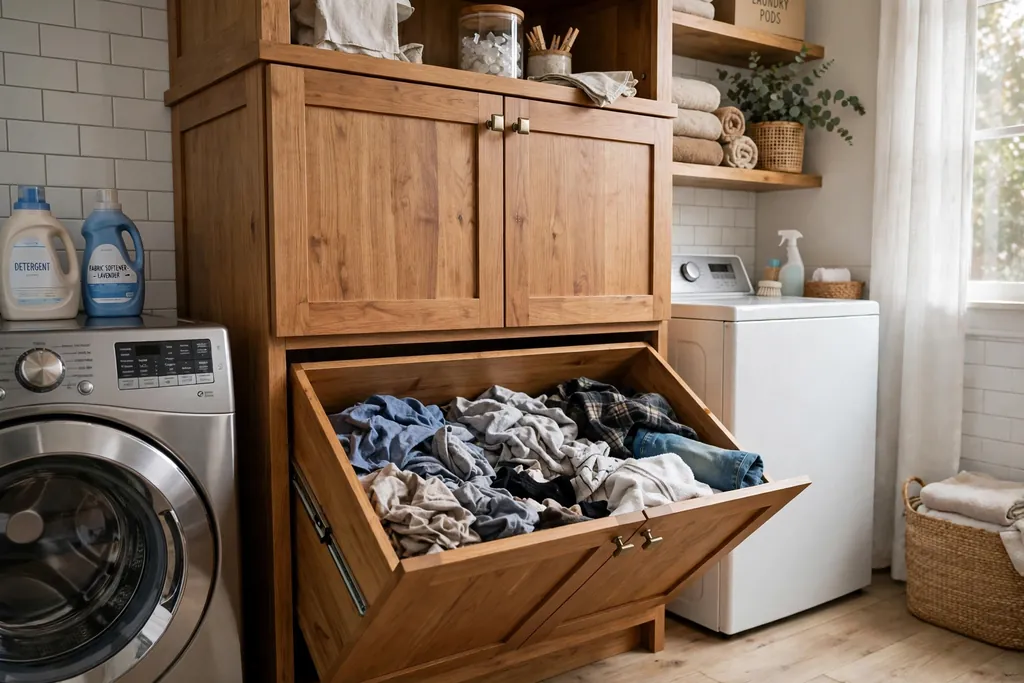
Build or buy a cabinet with a tilt-out hamper to hide dirty laundry behind a furniture front. The hamper tilts open for loading and closes to hide the pile, which keeps the room looking tidy even between wash days. Choose a hamper bag that lifts out for carrying to the machine, and wash the bag regularly.
Keep the cabinet near the machines, so the trip from hamper to washer is short. Do not overload the hamper, since a full bag is heavy and can strain the tilt mechanism. A tilt-out hamper suits a laundry room that doubles as a hallway or a bathroom, where an open hamper would always be on view.
19. Cubby Shelf for One Basket Per Person
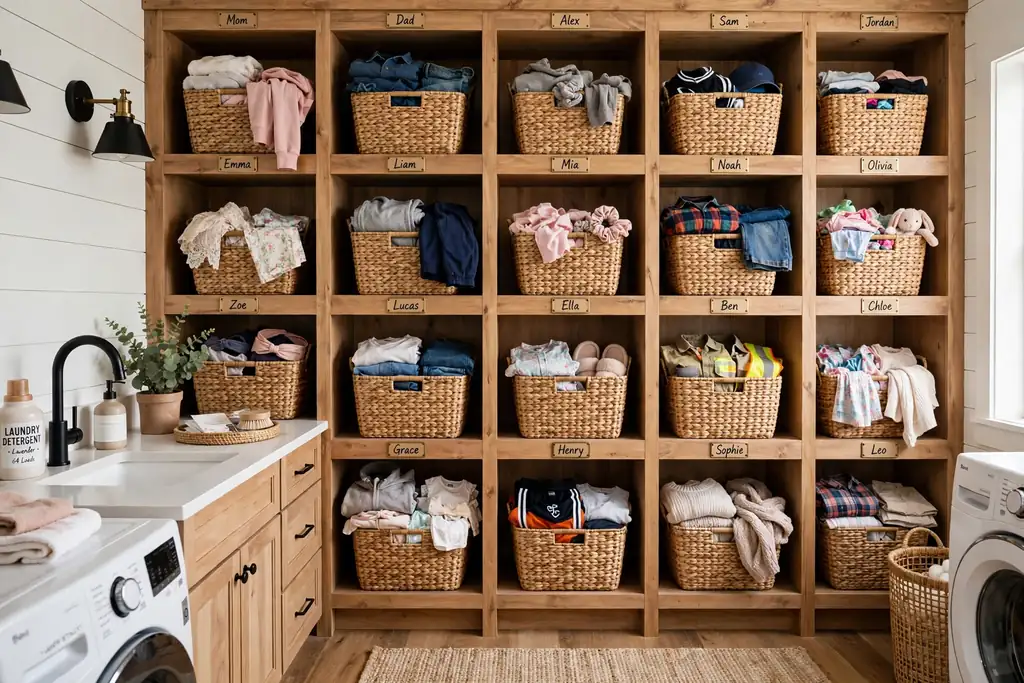
Build a cubby shelf with one basket per person for clothes waiting to be washed or folded. Each person has a set cubby, so clean clothes do not mix and dirty clothes do not pile on the floor. Label each cubby with a name or a color, and keep the baskets the same size so the shelf looks planned.
Empty each cubby on wash day, and return folded clothes to the same cubby, so the owner can collect them easily. Keep the cubbies at a height everyone can reach, or give children lower cubbies and adults higher ones. A cubby shelf also works well in a mudroom that shares space with laundry.
20. Lost Sock and Small Items Basket
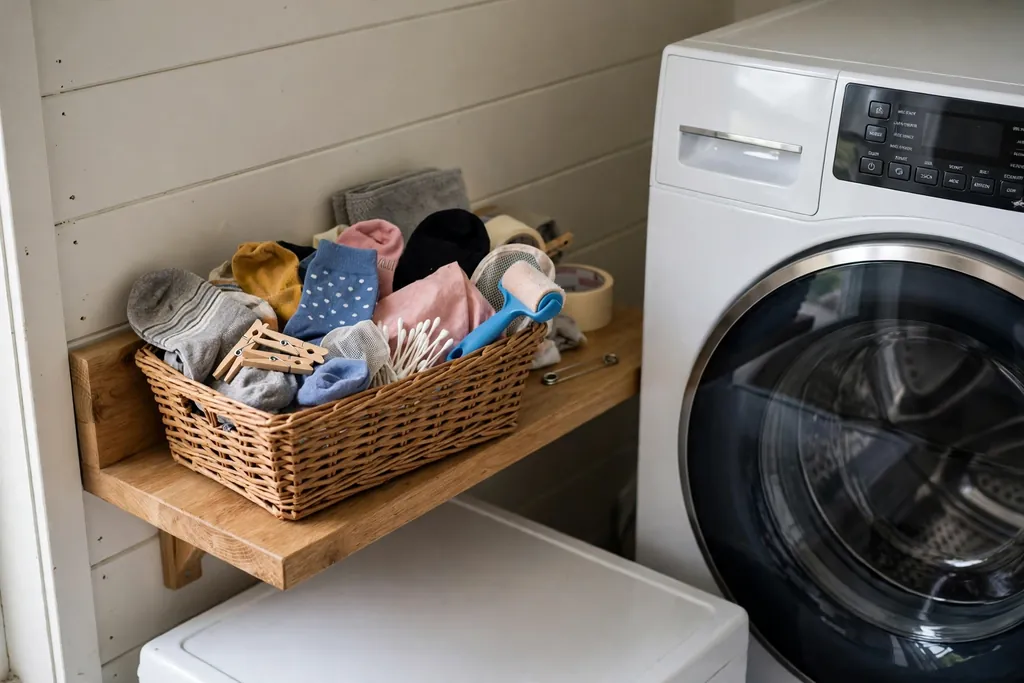
Keep a small basket on a shelf for single socks, hair ties, and small items found in the washer or dryer. A set spot for strays stops them from piling on the machine or getting thrown away, and it gives you one place to check when a sock goes missing. Empty the basket once a month, and pair up what you can.
Put the basket near the machines, where strays are found, and keep it small, so it does not become another junk basket. If a sock stays single for a season, it is fair to let it go. A small basket also suits coins and buttons found in pockets, which you can return to their owner from one place.
21. Stain Treatment Caddy by the Machine
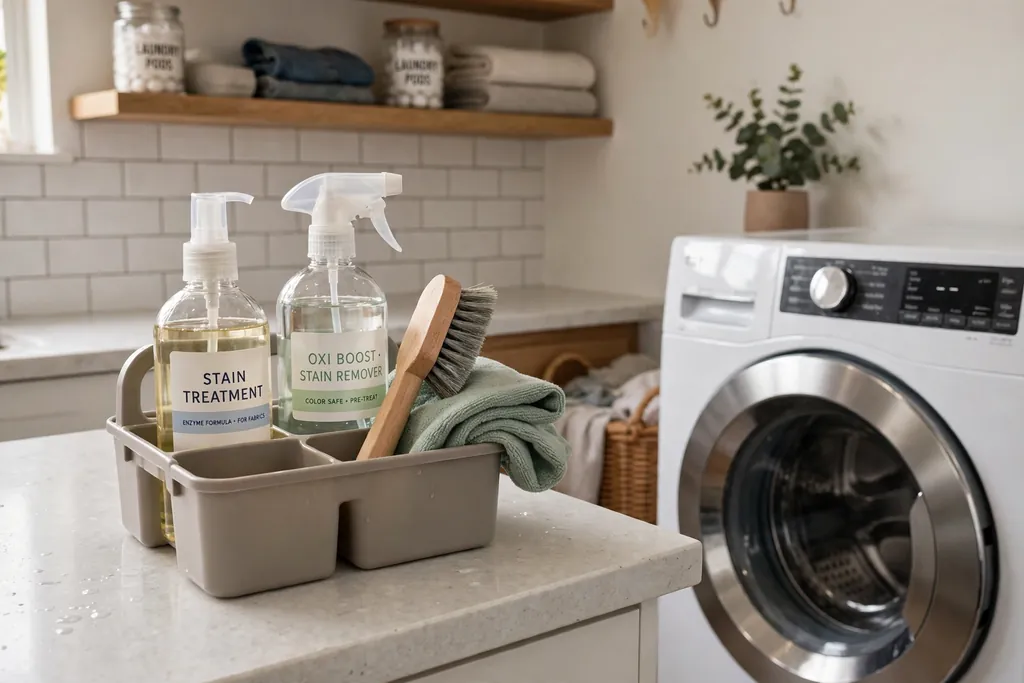
Keep a stain treatment caddy by the machine with spray, a brush, a cloth, and a stain guide card. Treating a stain at once works better than treating it after a wash, and a caddy means you do not hunt for supplies while the stain sets. Keep the caddy in one spot, such as on the counter end or in the pull-out pantry.
Use the caddy only for stain care, so it stays stocked and ready. Refill the spray before it runs out, and replace a worn brush, since a stiff brush can damage fabric. Keep stain products out of reach of small children, and follow the care label on each garment before treating it.
22. Drawer Dividers for Small Laundry Supplies
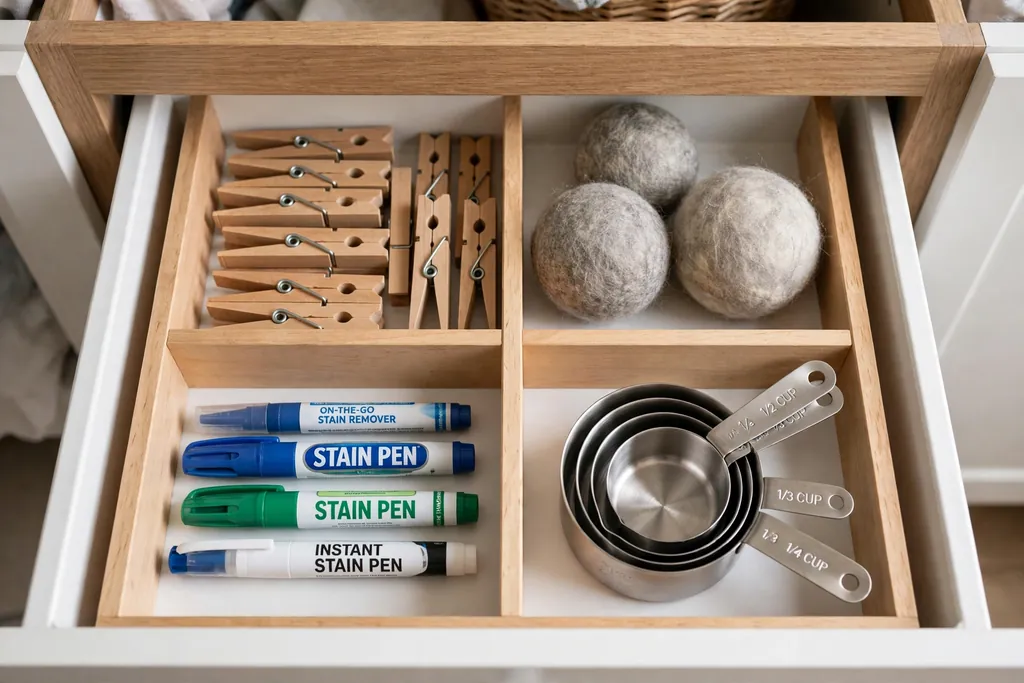
Fit dividers in a laundry drawer for pegs, dryer balls, stain pens, measuring cups, and spare buttons. Dividers stop small supplies from sliding into one mixed pile, and they make a drawer work much harder without new furniture. Use adjustable dividers or small boxes inside the drawer, and sort by job, so you can see each group at a glance.
Keep only laundry supplies in the drawer, and move anything you reach for less than once a month elsewhere. Wipe the drawer now and then, since lint and powder settle in drawers near a washer. If the drawer is deep, use shallow trays on top for the smallest items, so nothing hides at the bottom.
23. Under-Sink Organizer for Cleaning Bottles
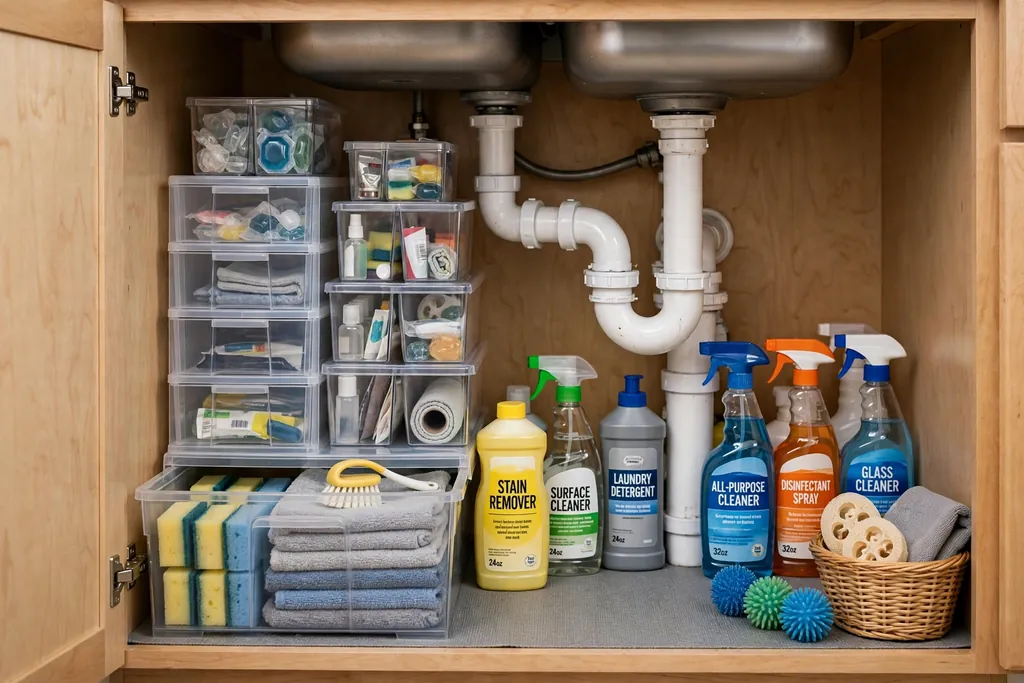
Fit stacked organizers under the laundry sink for cleaning bottles, sponges, and gloves, arranged around the pipes. The space under a sink is often wasted, yet it sits close to water and drains, which suits cleaning supplies. Measure around the pipes first, and choose organizers that slide out, so bottles at the back stay reachable.
Group bottles by job, keep the most used ones at the front, and put a small tray under any bottle that drips. Wipe the organizers now and then, since leaks and drips collect under sinks. Keep products that must stay out of reach of children in a cabinet with a latch, rather than an open under-sink shelf.
24. Shelves in a Stacked Machine Closet
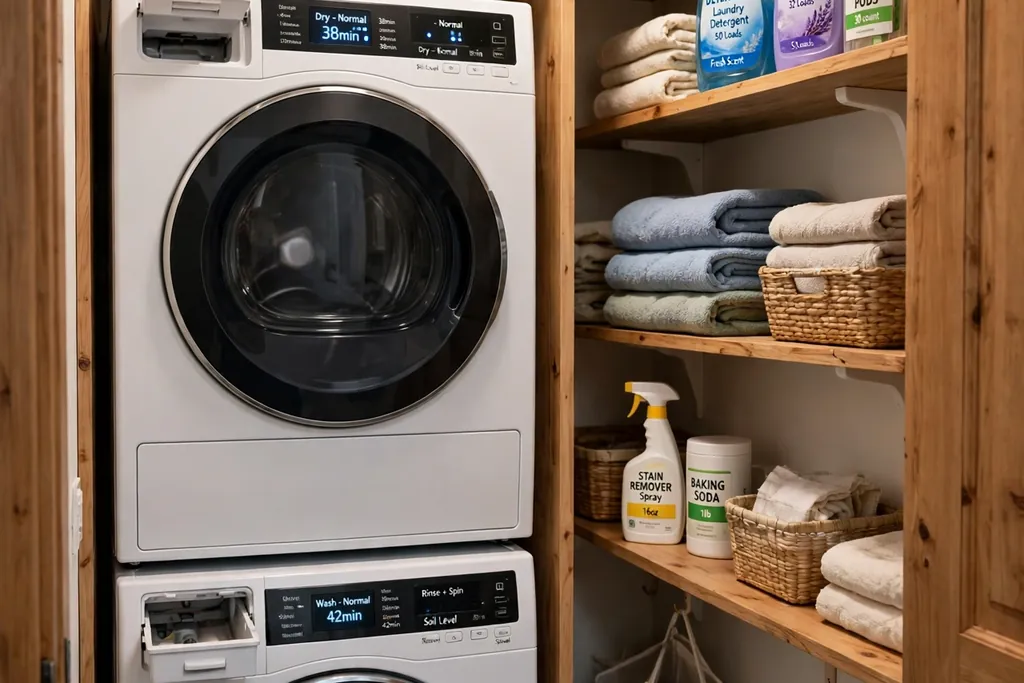
Add shelves above and beside stacked machines in a closet for baskets, detergent, and folded towels. A stacked closet has little floor space, so shelves do most of the storage work, and they keep supplies close to the machines. Fix shelves into studs, leave room to pull the machines out for service, and keep the top shelf for light items only.
Use small baskets on the shelves for pegs and dryer sheets, so nothing falls behind the machines. Keep a step stool nearby if the top shelf is high, so you actually use it instead of piling items on the floor. For small space planning that applies here too, these small kitchen remodel ideas show how to use height and corners when floor space is short.
25. Hanging Pockets on the Inside of a Cabinet Door
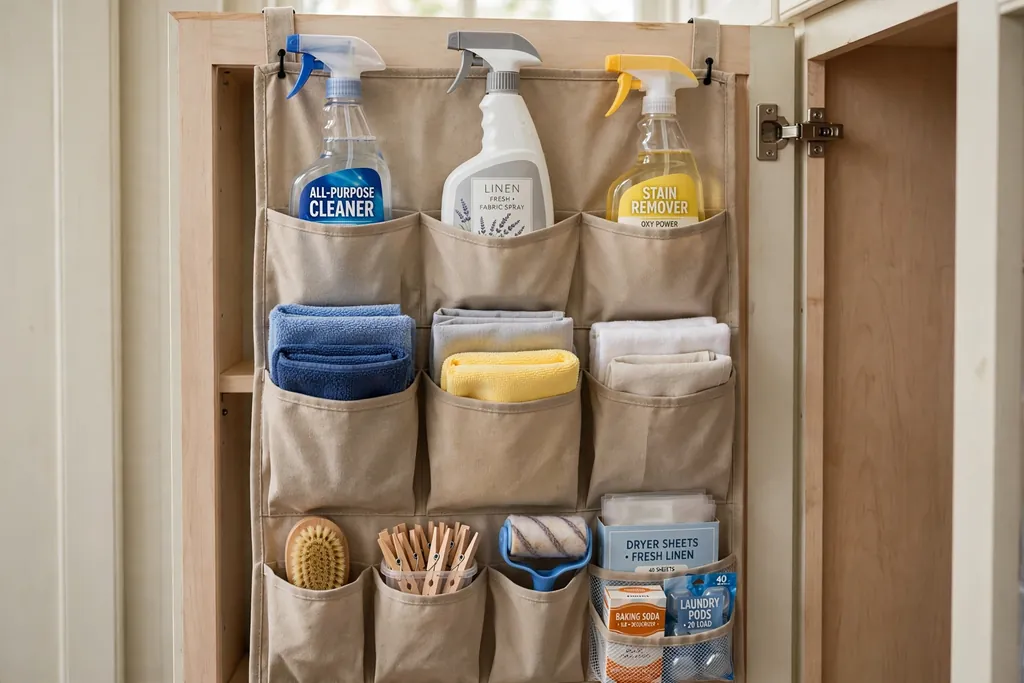
Hang a pocket organizer on the inside of a cabinet door for spray bottles, cloths, and small supplies. The pockets use space that otherwise holds nothing, keep supplies hidden when the door closes, and cost little. Choose pockets sized to your bottles, so tall bottles do not tip out when the door moves.
Keep the heaviest bottles low in the pockets, and check the door hinges now and then, since added weight can loosen them over time. Use one pocket per group, such as stain care, freshening, and cloths, so you can find an item without emptying the whole organizer. This idea suits renters, since it needs no drilling.
26. Wall Baskets for Cloths and Small Supplies
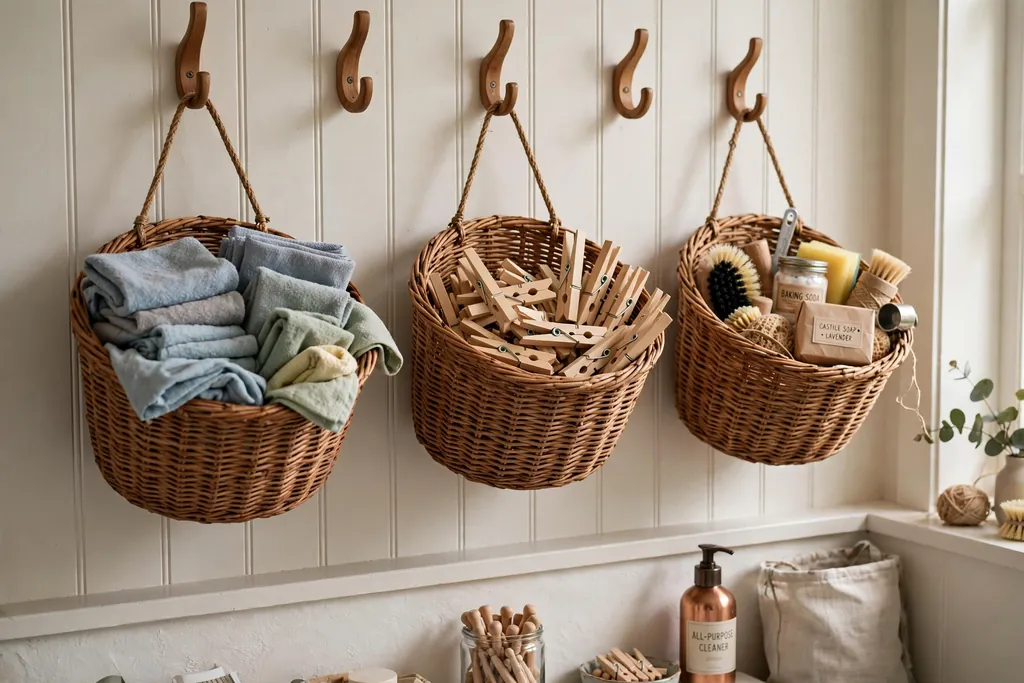
Hang woven baskets on wall hooks for cleaning cloths, pegs, and small supplies. Wall baskets keep soft items off counters and shelves, add warmth to a plain laundry room, and let you grab a cloth with one hand. Use hooks fixed into studs, since a full basket carries weight, and keep baskets at easy reach height.
Sort cloths by job, such as dusting, wiping, and polishing, with one basket per job, so you do not grab the wrong cloth. Wash the baskets now and then, since laundry rooms collect lint, and replace a basket when the weave frays. A row of matching baskets looks planned, while mixed baskets can still work if each holds one clear group.
27. Color-Coded Baskets for Each Family Member
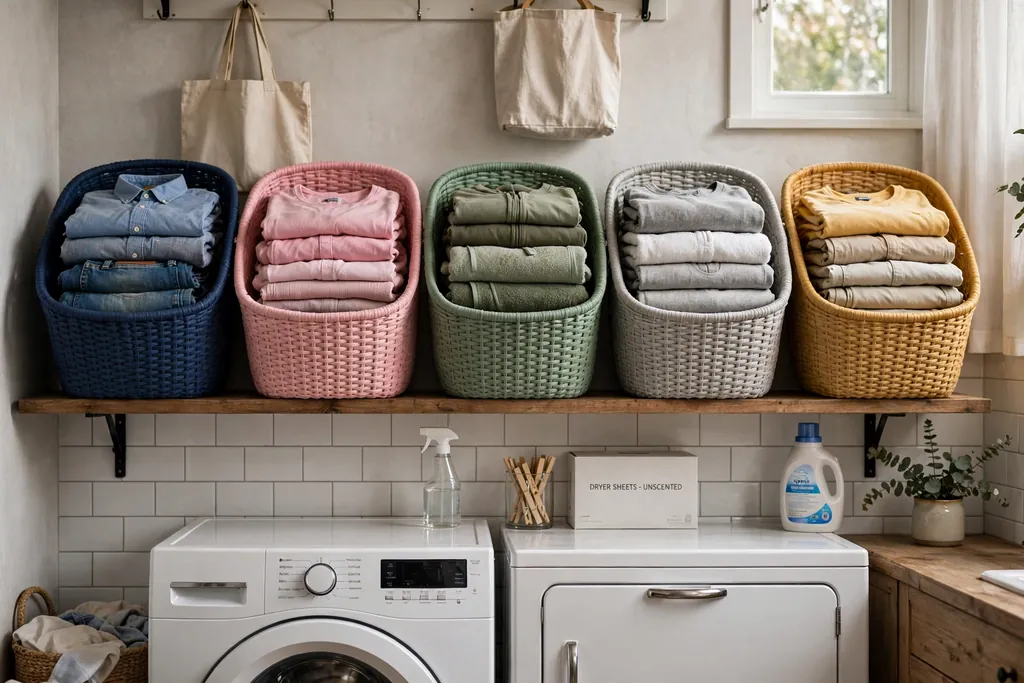
Give each family member a basket in a set color for their laundry, so loads stay separate from hamper to closet. Color coding stops mix ups, helps children take part, and makes it easy to see whose laundry is waiting. Use the same color for the hamper basket, the folding basket, and a shelf label, so the system is clear at a glance.
Keep the baskets the same size and shape, so they stack or sit neatly on a shelf. Empty each basket on wash day, and return folded clothes in the same basket, so the owner can put them away. If the household is large, use two colors per person, one for dirty laundry and one for clean, to keep the flow clear.
28. High Shelf Bin for Seasonal and Bulky Items
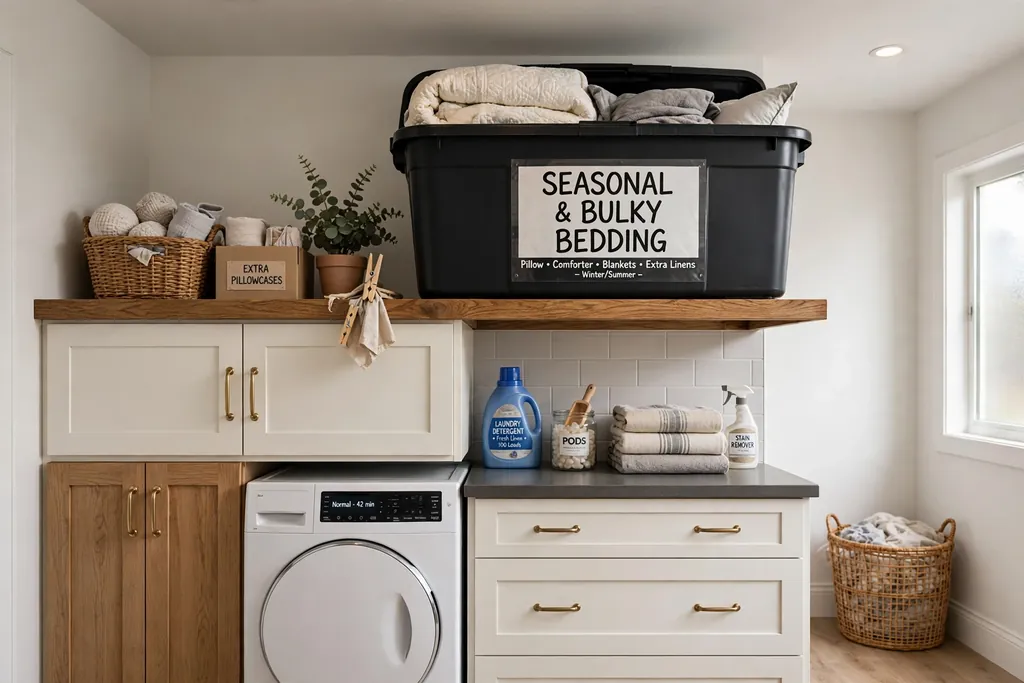
Place a large labeled bin on a high shelf for seasonal bedding, beach towels, and bulky items you use a few times a year. High storage keeps bulky items out of daily circulation, while still keeping them in the laundry room where they are washed and stored. Label the bin clearly, so you do not open three bins to find one item.
Use a bin with a lid, to keep dust off bedding, and keep it light enough to lift down safely, or use a step stool. Review the bin once a year, and move out items you did not use, so the high shelf does not become a store for things no one needs. Keep the bin clear of pipes and vents, so air still moves around it.
29. Shelf Dividers for Folded Linens
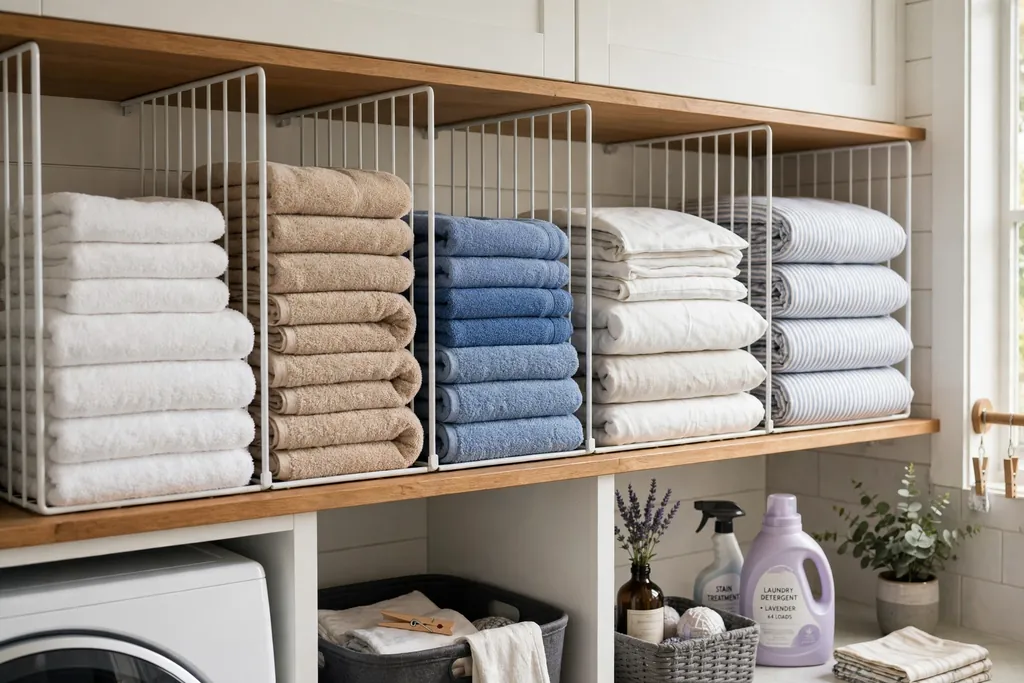
Fit shelf dividers on linen shelves to keep stacks of towels and bedding upright and separated. Dividers stop tall stacks from toppling into each other, and they make it easy to pull one towel without disturbing the rest. Use dividers sized to your shelf depth, and sort stacks by type, such as bath towels, hand towels, and bedding.
Leave one section partly empty, so new towels have a place without pushing older stacks over. Fold towels to a similar size, so stacks sit evenly between dividers. For storage grouping ideas that work for linens as well as clothes, these bedroom storage ideas show how matching bins and dividers keep shelves calm.
30. Pet Wash Supply Bin
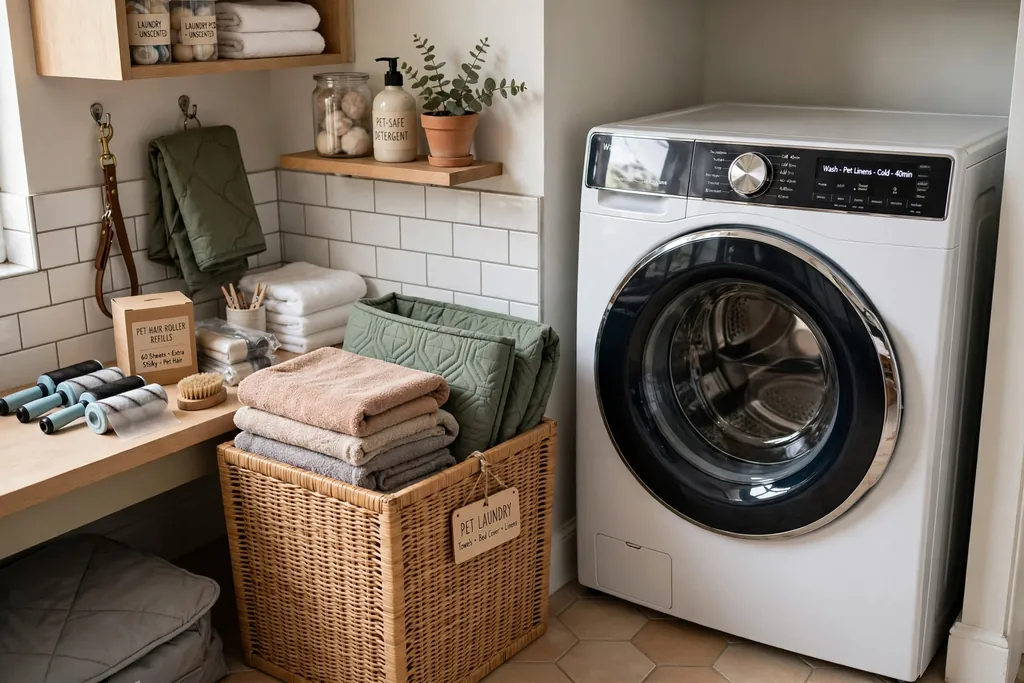
Keep a separate bin for pet towels, pet bed covers, and pet hair rollers, so pet laundry does not mix with family laundry. Pet hair and smells transfer easily in a shared wash, and a set bin makes it easy to run pet items as their own load. Label the bin clearly, and keep it near the machines, where pet items are washed.
Wash pet items on their own, check pockets and seams for treats or small toys, and clean the lint filter after a pet load, since pet hair clogs it fast. Keep a spare pet towel in the bin, so a muddy walk does not leave you hunting for a clean one. Replace the bin if it starts to hold a smell, even after washing.
31. Chalkboard Laundry Plan and Care Notes
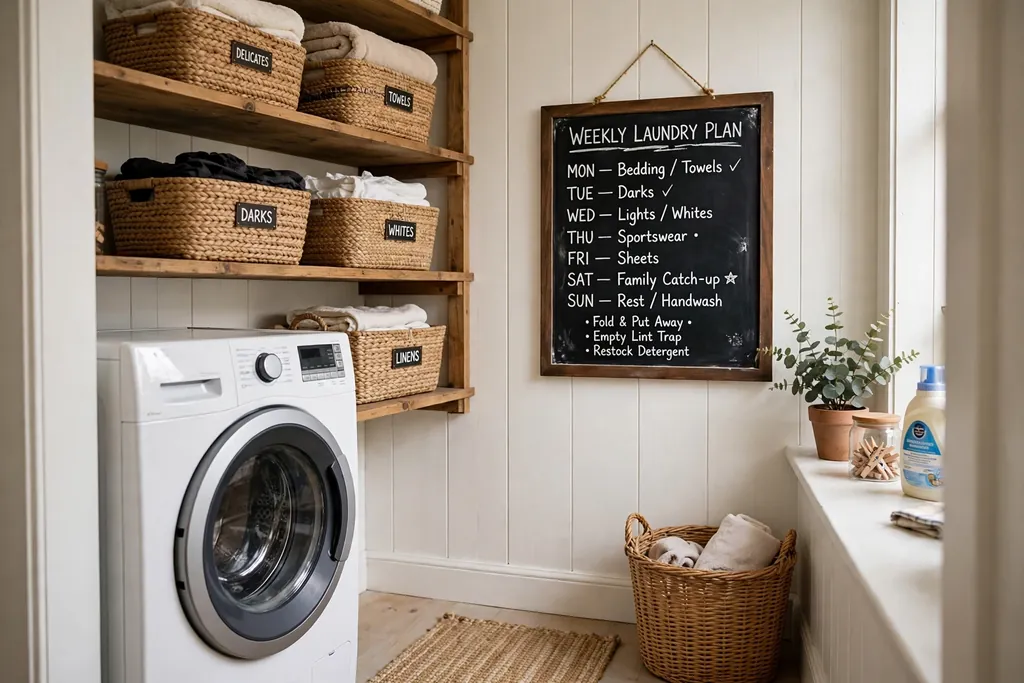
Hang a small chalkboard in the laundry room for the weekly wash plan, care notes, and a running list of supplies to buy. A fixed plan stops the pileup where every load waits until the weekend, and care notes stop a wool sweater from joining a hot wash. Write the plan at the top, care notes in the middle, and the shopping list at the bottom.
Wipe the board clean each week, so old items do not linger and get bought twice. Keep the board near the machines, with chalk or chalk markers in a small cup hung alongside. A magnetic chalkboard adds a second use, holding care labels and school notes with magnets, as long as paper stays clear of steam from the washer.
Conclusion
A smart laundry room is not about buying more storage, it is about giving every item a set home and keeping the daily jobs easy. Start with one wall, one sorting station, and one folding surface, then add drying space and small supply storage only where a pile still forms. Measure before you buy, fix heavy storage well, and label bins so everyone in the house can keep the system going.
Pick one idea from this list today, set it where you actually do laundry, and let the room prove its worth for a week before you add the next change. Save this list on Pinterest before your next laundry room tidy, and work through it one area at a time: storage first, then sorting, then the folding and drying details that make wash day calmer.
FAQs
How do I organize a very small laundry room?
Start with the walls and the space above the machines, since floor space is usually the scarcest resource. Add one shelf or cabinet, one sorting bin, and one folding option, such as a fold-down table, before buying anything else. Keep daily items at easy reach, move seasonal items high, and review the room once a season to remove what you no longer use.
What should I store in laundry room cabinets?
Store detergent, stain care, cleaning products, spare pegs, dryer sheets, and folded towels in laundry cabinets, grouped by job. Keep daily items at eye level, spares higher, and heavy bottles low. Keep products that need safe storage, such as detergent pods, out of reach of small children, and keep a small gap between groups so you can see stock levels.
How can I keep laundry from piling up between wash days?
Sort clothes at the source with labeled bins for lights, darks, and delicates, and wash a load when a bin fills rather than waiting for a free day. Fold straight from the dryer onto a counter or table, and return folded clothes to their owner the same day. A weekly plan on a chalkboard helps, since it spreads loads across the week instead of saving them all for the weekend.
What is the best drying option for a small laundry room?
A fold-down wall rack or a retractable clothesline usually works best in a small room, since both disappear when not in use. A hanging rod suits shirts and delicates on hangers, while a small freestanding rack suits a room with floor space to spare. Hang items with space between them, so air moves and clothes dry faster, and site drying space where drips will not fall on clean laundry.
How do I stop losing socks in the laundry?
Use mesh wash bags for small socks, check pockets before washing, and keep a small lost sock basket near the machines for strays. Pair socks as soon as they leave the dryer, and check the machine seal and filter for socks that slip out of a load. Empty the lost sock basket once a month, pair what you can, and let go of singles that have waited a season.
Should laundry supplies be stored in open or closed storage?
Use both: open shelves for daily items you grab every load, and closed cabinets for mismatched bottles, spare supplies, and products that need safe storage. Open storage works best when items are grouped in matching bins, while closed storage suits rooms guests pass through. Mix the two, with daily supplies open at easy reach and spares closed above them, for a room that is both handy and calm.