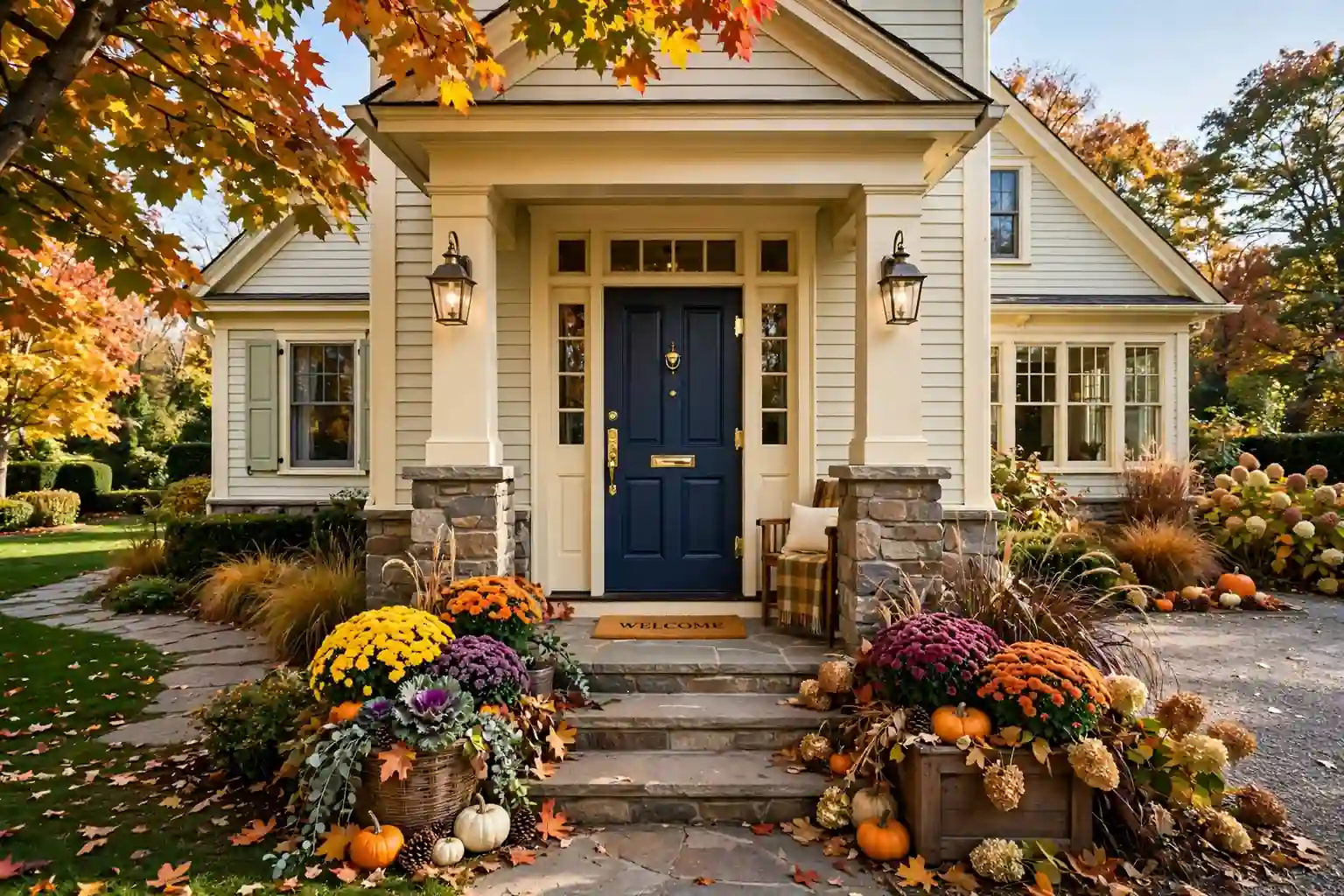
A front door sets the mood of a house before anyone steps inside, and a single coat of paint is one of the simplest ways to change that mood. The trick is choosing a color that still feels right when the porch changes around it, from spring pots to autumn leaves to a winter wreath. These 18 front door color ideas pair each shade with the house styles it suits, the hardware that flatters it, and one seasonal styling note, so the color works all year rather than for one month only. Start with your siding and light, narrow the list to three shades, and test them on the door itself.
Key Takeaways
- Match the color to the house first: deep shades suit brick and stone, soft shades suit pale siding, and mid tones suit most houses in between.
- Check the color in morning, midday, and evening light, since sun and shade change how a door color reads from the street.
- Hardware is part of the color: brass warms cool shades, black sharpens bright ones, and nickel keeps pale shades quiet.
- Keep the porch styling simple beside a strong color, and let a quiet color carry more wreath, pot, and mat detail.
- A seasonal swap of one wreath, one mat, and one pair of pots refreshes the entry without repainting.
- Use a durable exterior paint in satin or semi gloss, so the door wipes clean and holds its color through wet weather.
1. Deep Navy with Polished Brass Hardware
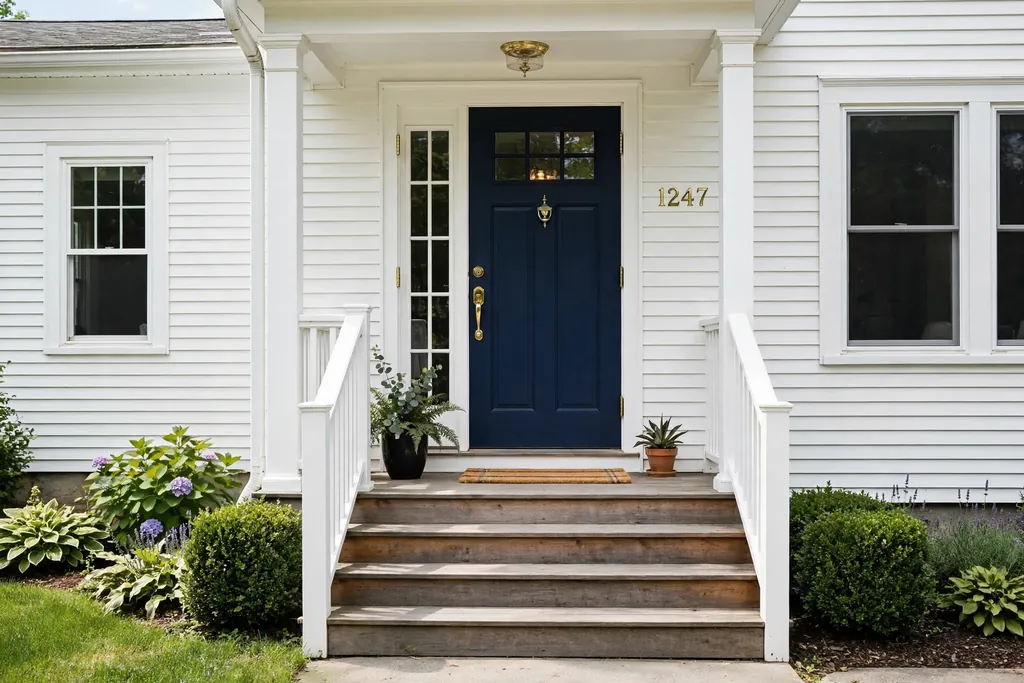
Deep navy is a steady, almost neutral blue that looks calm beside white siding, red brick, and gray stone. It suits colonial, craftsman, and traditional houses, and it stays handsome from spring through winter because it never fights the planting around it. Polished brass hardware warms the cool blue, and a brass house number or mail slot repeats that warmth without adding another color to the entry.
Keep the porch restrained beside navy: one pair of green pots, a plain mat, and a simple wreath let the door hold the focus. In autumn, a wreath of dried leaves reads clearly against the dark panels, and in winter, fresh greenery stands out just as well. Choose a semi gloss finish so the navy keeps its depth in flat midday light, and test the shade on a shaded door, since navy can read nearly black where sun never reaches it.
2. Warm Terracotta with Autumn Planters
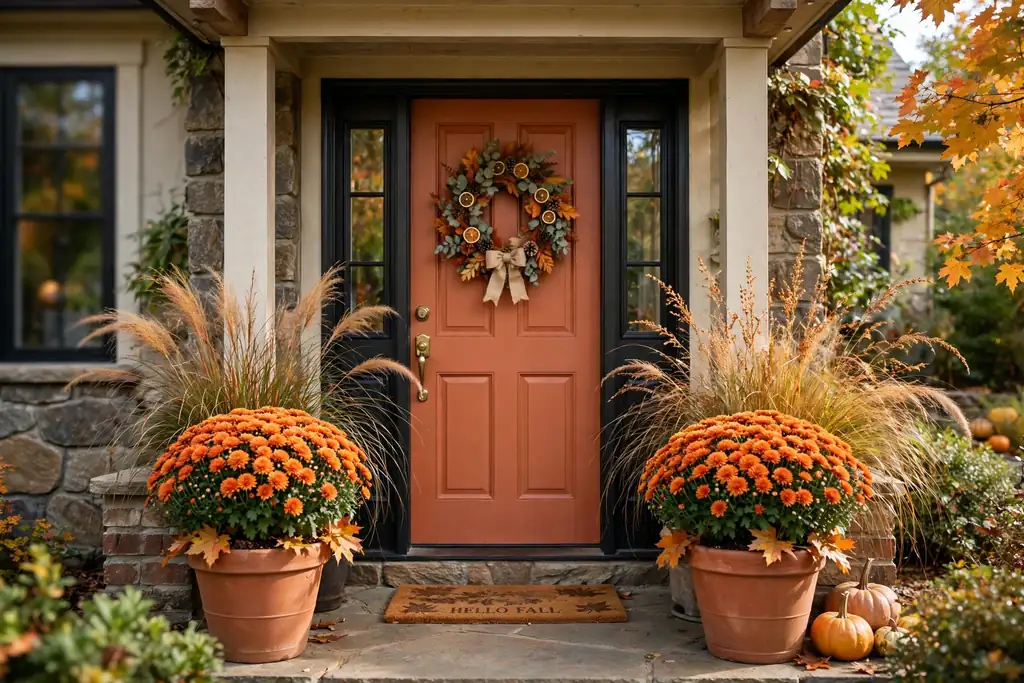
Warm terracotta brings the color of baked clay to the entry, and it feels right at home beside cream siding, warm stone, and stucco. It suits Mediterranean, Spanish inspired, and cottage houses, and it pairs naturally with the rust, gold, and green tones of autumn planting. Fill the porch pots with mums, ornamental grasses, and trailing ivy, and the door color and the planting will echo each other without matching exactly.
Terracotta also carries well into spring, when pots of tulips and fresh green herbs soften it again. Use oil rubbed bronze or matte black hardware to keep the look grounded, and a natural coir mat to repeat the earthy tone at foot level. Because terracotta is a mid depth warm shade, it shows less dust than pale colors, which makes it a practical pick for a door near a busy street.
3. Sage Green with Cream Trim for Spring
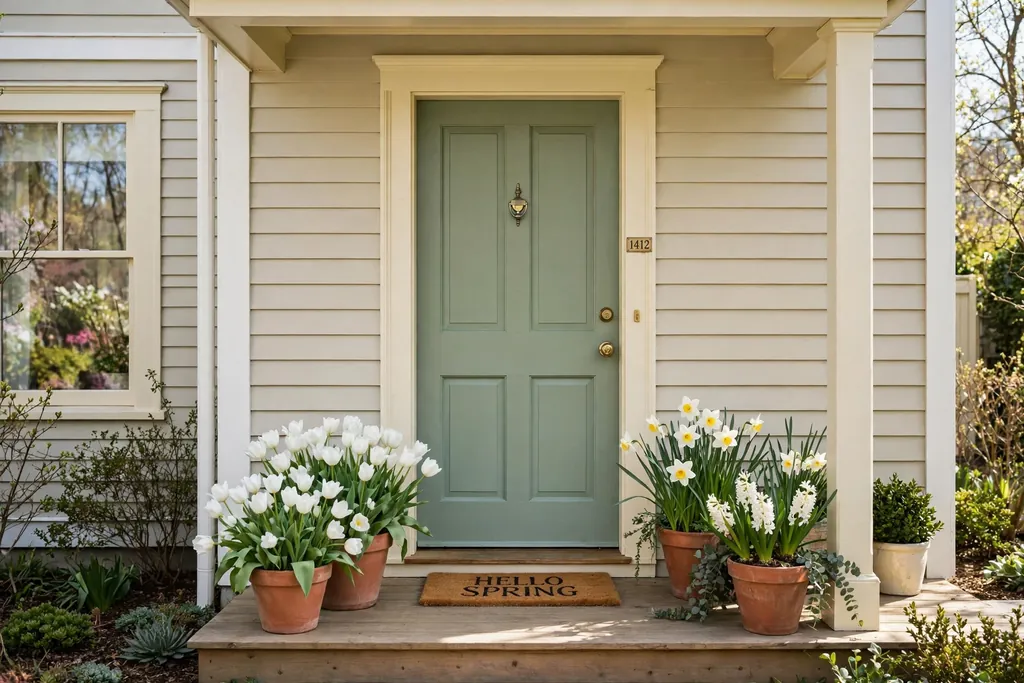
Sage green is a soft, gray leaning green that feels calm and garden-like, and cream trim keeps it from reading too cool. It suits cottages, farmhouses, and houses with white or cream siding, where a stronger green might feel too loud. In spring, sage pairs with pots of white flowers and fresh herbs, and the whole entry reads light and cared for without much effort.
Through summer and autumn, sage stays easy to live with: green wreaths blend in quietly, while a wreath of dried grasses or pale berries gives gentle contrast. Satin nickel or aged brass hardware both suit sage, so choose the finish already present on your porch light. Test sage beside your siding in daylight, since a green that leans yellow can look warmer than the sample card suggests next to warm stone.
4. Classic Black with a Wreath That Changes Each Season
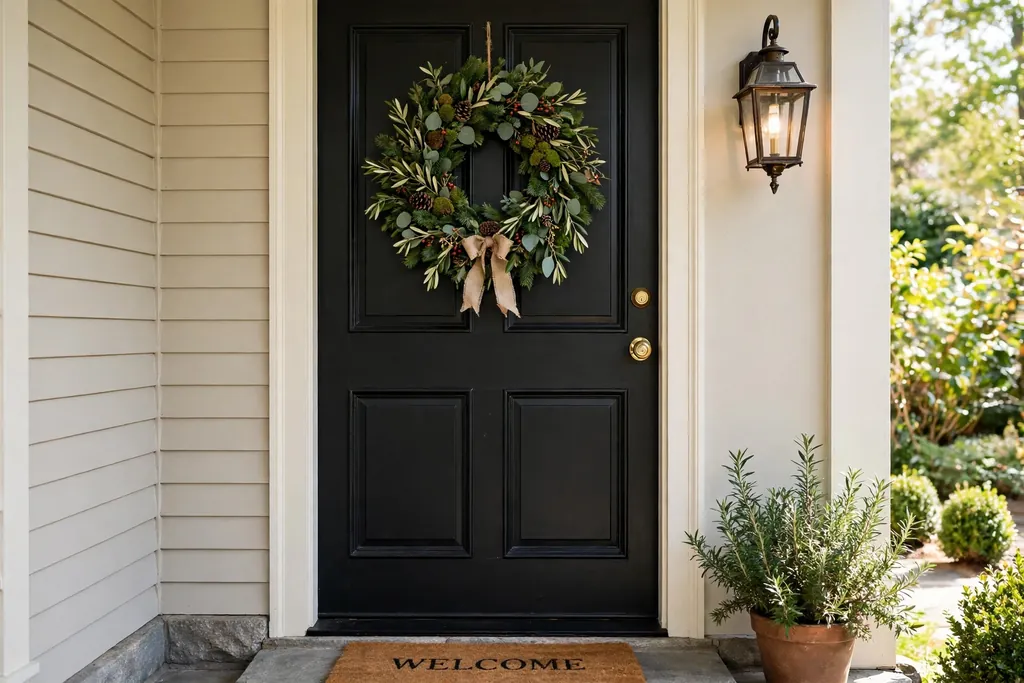
Classic black is the most flexible door color of all, since it suits nearly every house style and lets seasonal decor do the talking. A black door beside white trim reads crisp in summer, and the same door with a fresh green wreath and a lantern reads warm and welcoming in winter. The color itself never needs to change, which makes it a smart pick if you like to refresh the porch often.
The rule with black is contrast: keep the trim bright, the mat simple, and the wreath the one strong seasonal note. Brass hardware adds warmth, while matte black hardware gives a seamless, modern line. If your entry is fully shaded, check black at dusk before committing, since it can swallow panel detail in low light. A semi gloss finish helps the panels catch what light there is.
5. Buttery Yellow for a Cheerful Cottage Entry
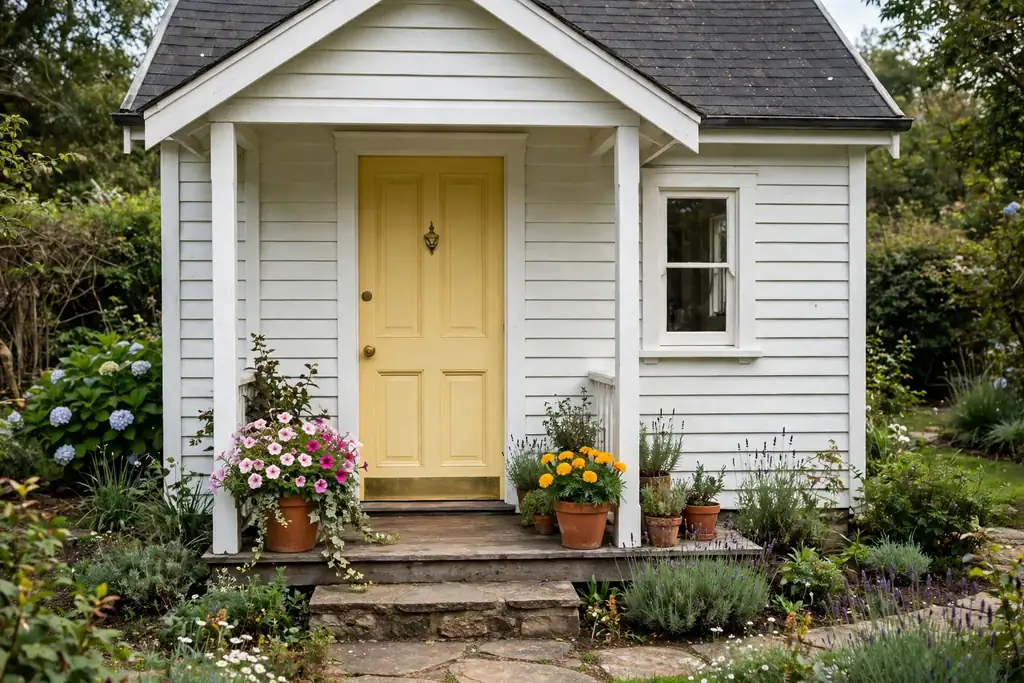
Buttery yellow is a soft, warm yellow that makes a small cottage or bungalow feel sunny even on a gray day. It suits white siding, pale brick, and houses with flower filled front beds, where the door becomes one more bloom in the garden rather than a loud accent. Pair it with white trim and a pot of white or pink flowers, and the entry feels fresh from spring through early autumn.
Keep hardware simple in satin nickel or white, so the yellow stays the single warm note. A plain mat in natural fiber grounds the color, and a simple green wreath in spring keeps the look garden-like. Buttery yellow fades faster than deeper shades on a south facing door, so choose a quality exterior paint and expect to refresh it sooner than you would a navy or black door.
6. Forest Green with Lanterns and Warm Wood
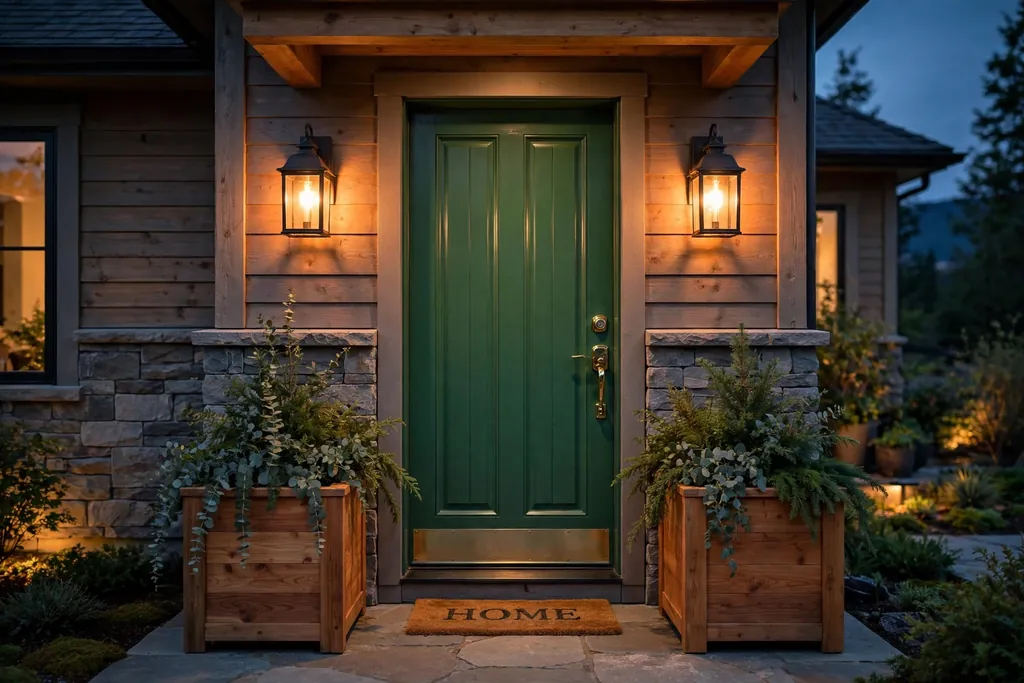
Forest green is a deep, woodland green that suits brick, stone, and houses with mature trees around them. It feels settled and traditional, and it pairs beautifully with warm wood planters, a wooden bench, and lantern light in the evening. Brass or copper lanterns beside a forest green door give the entry a warm glow that softens the deep color after dark.
In autumn, pots of gold mums and a wreath of dried leaves sit naturally against forest green, and in winter, fresh fir and pine cones need no other decoration. Keep the trim cream or white for contrast, since dark trim beside a dark door can flatten the whole entry. Forest green hides dust well, which makes it a forgiving choice for a door that faces a road or a dusty drive.
7. Cranberry Red with Winter Greenery
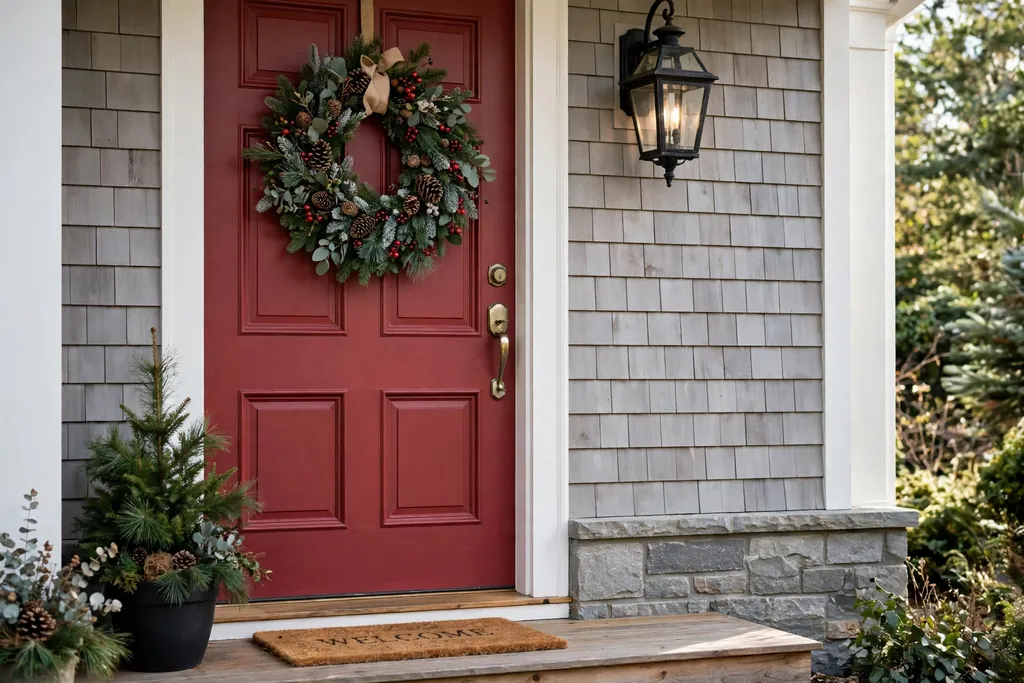
Cranberry red is a deep, slightly dark red that feels festive in winter without looking like a holiday decoration all year. It suits colonial, traditional, and brick houses, where red already appears in the masonry and the door can echo it at a deeper tone. In December, a wreath of fresh fir, pine cones, and a simple bow reads clearly against cranberry, and a pair of lanterns completes the entry.
For the rest of the year, cranberry stays dignified: spring pots of white flowers cool it down, and summer green planting keeps it from feeling heavy. Use brass hardware to warm the red, and cream trim to give it a clean edge. Test cranberry in full sun, since bright light can pull it toward a brighter red than the sample suggests, especially on a south facing door.
8. Soft White with a Seasonal Mat and Pot Rotation
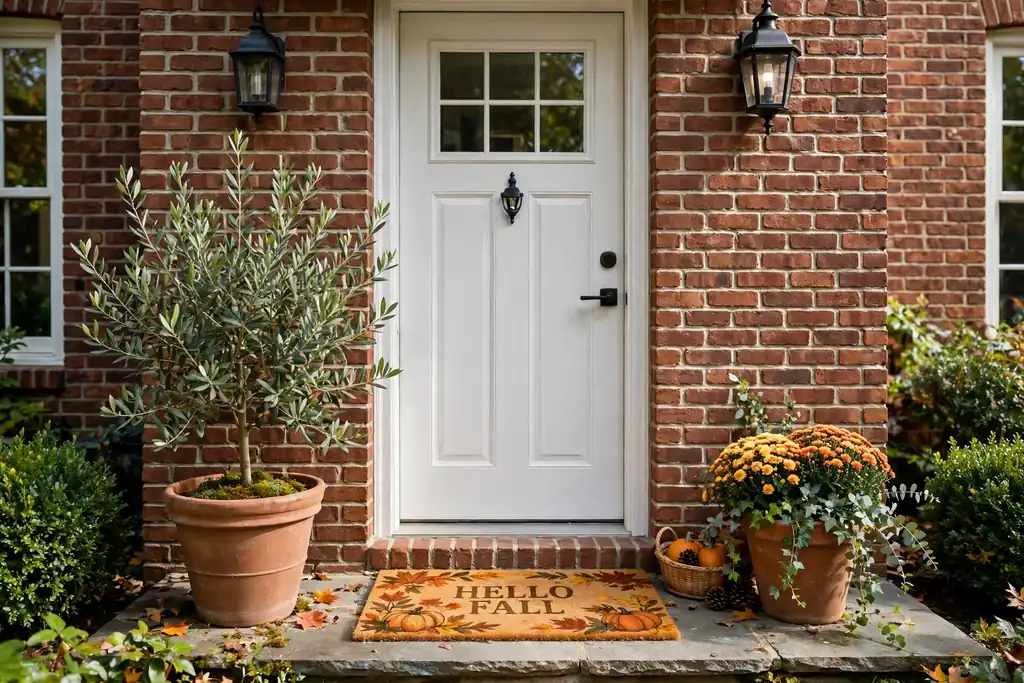
Soft white is a quiet door color that works when the house already has strong color elsewhere, such as red brick, dark shutters, or bold stone. Instead of repainting each season, rotate the mat, the pots, and the wreath: a striped mat and herb pots in spring, terracotta pots and mums in autumn, and a green wreath and lantern in winter. The door stays calm, and the seasonal notes carry the change.
Choose a warm white rather than a stark white if your siding is cream or warm stone, so the door does not look cold beside it. Matte black hardware gives a soft white door definition, while brass adds a little warmth. Soft white shows dirt and scuffs faster than deeper shades, so plan on a wipe down each season and keep touch up paint on hand for the kick plate area.
9. Teal with Natural Planters for a Fresh Summer Entry
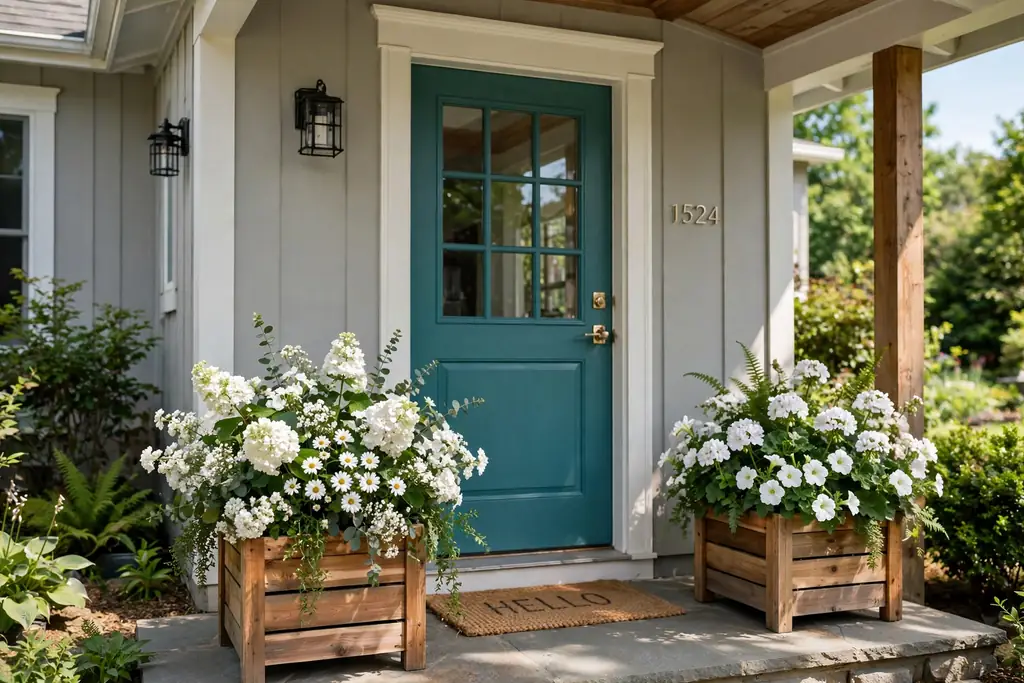
Teal sits between blue and green, rich without going dark, and it brings a fresh, coastal feel to the entry in summer. It suits stucco, coastal cottages, and white sided houses, and it pairs well with natural wood planters, woven baskets, and pale stone steps. Pots of white flowers and trailing green plants keep the look breezy rather than themed.
In autumn, teal still works if the porch planting turns to grasses and late color rather than orange tones, which can clash with its cool base. Copper or oil rubbed bronze hardware picks up warmth from brick or timber nearby. Teal is a forgiving mid depth shade that hides dust well, which makes it practical for a front door that gets daily use and little shelter from the street.
10. Plum with Gold Hardware for Rich Autumn Evenings
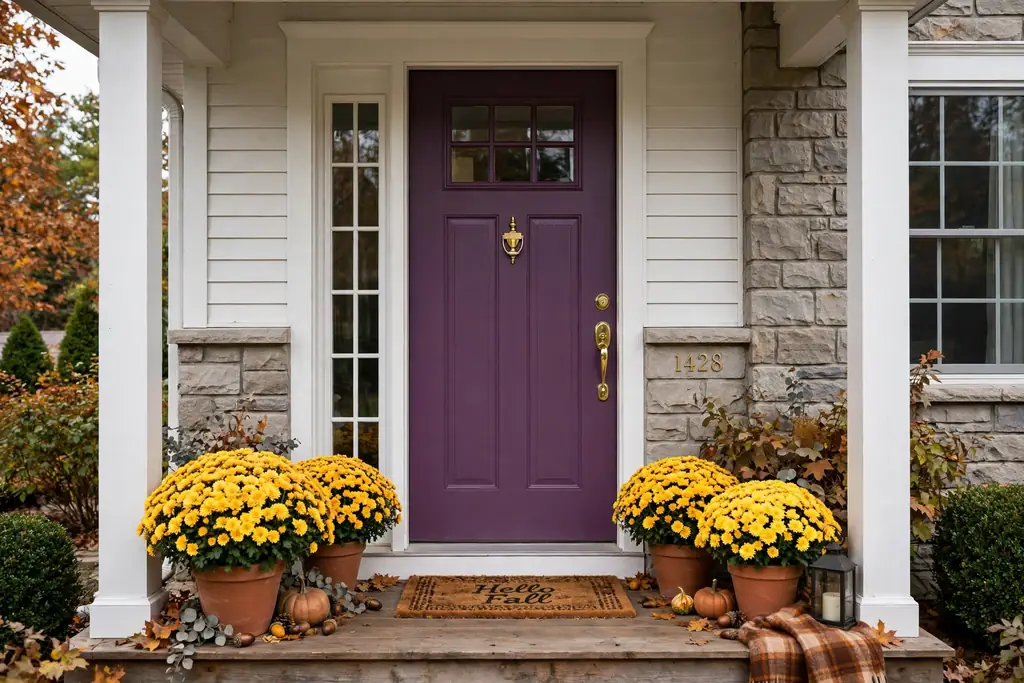
Plum is a deep purple leaning shade that feels rich and a little dramatic, best on houses that can carry one strong color note. It suits Victorian, eclectic, and arts and crafts houses, especially with dark trim or stained wood around the entry. Gold toned hardware underlines its warmth, and a lantern with warm light makes plum glow in the early dark of autumn evenings.
Pair plum with pots of gold mums and deep green foliage in autumn, and keep the rest of the porch simple so the door stays the focus. In spring, white flowers and fresh green pots lighten it again. Check plum at dusk before painting, since low light strengthens the purple note, which some owners love and others find too much for a front door.
11. Powder Blue with White Trim for a Light Entry
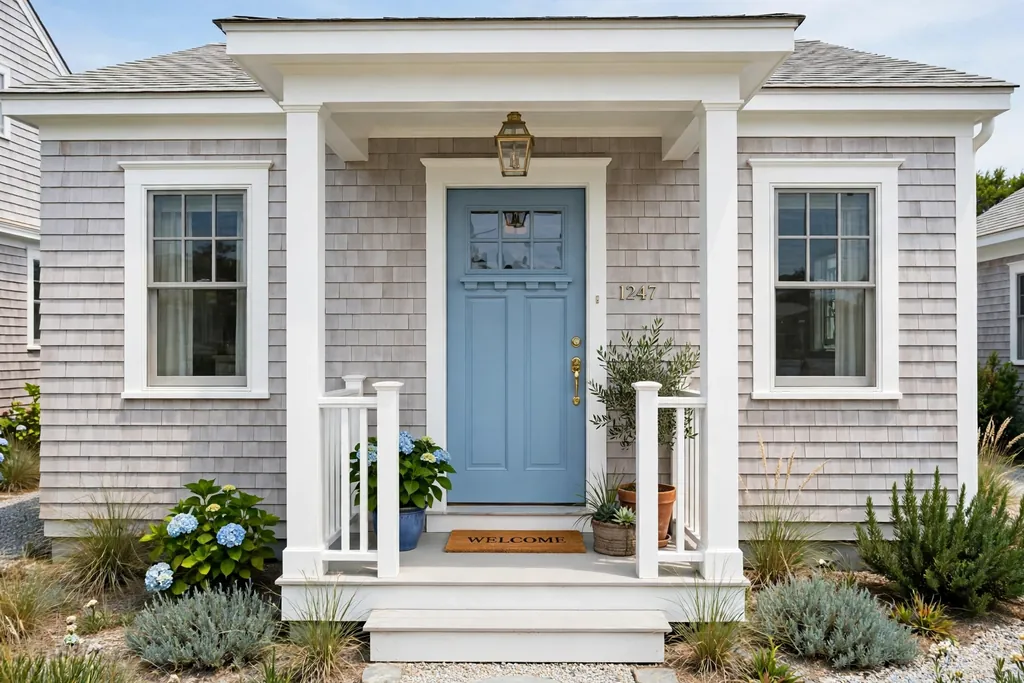
Powder blue is a pale, slightly gray blue that feels clean and quiet at the entry, and white trim gives it the contrast it needs to read as a deliberate color. It suits coastal homes, pale brick, and gray siding, where a strong door color would fight the facade. In spring, pots of white and pink flowers echo the softness, and the whole entry feels airy.
Polished nickel or chrome hardware keeps the palette cool and light. Powder blue shows dirt faster than deeper shades, so a washable semi gloss paint and a mat that actually gets used will help it stay fresh. On a very sunny facade, test one step deeper than the swatch you first pick, since pale blue can wash out to near white in strong sun.
12. Charcoal Gray with Matte Black Hardware for a Modern Entry
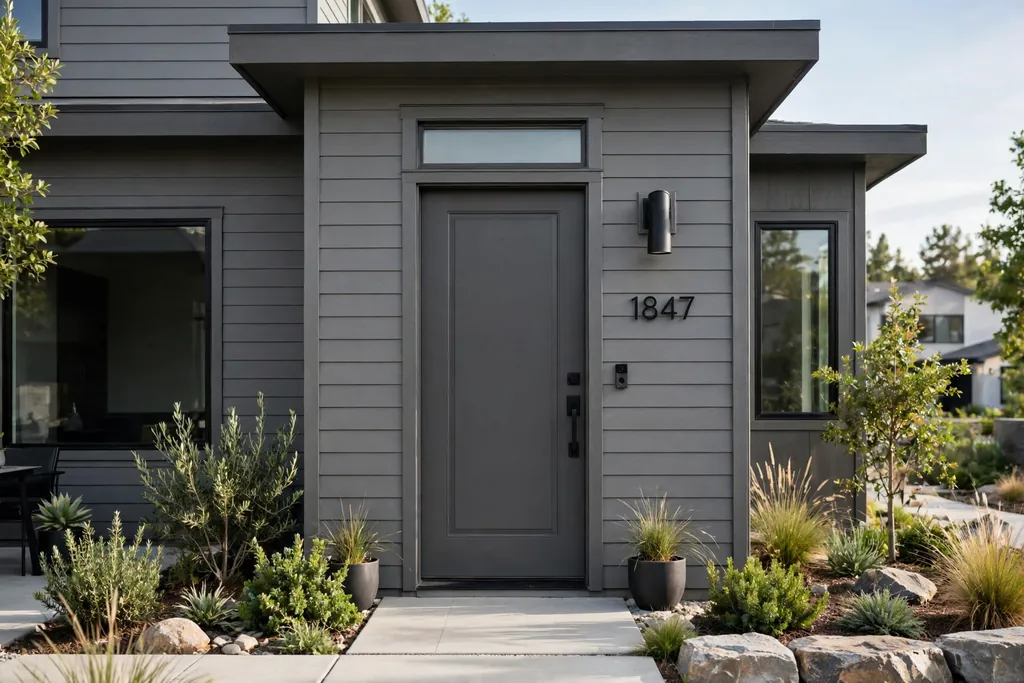
Charcoal gray is a near black gray that gives a modern or transitional house a sharp, tailored entry without the full drama of black. It suits gray siding, dark stone, and houses with black window frames, where the door can repeat the darkest tone of the facade. Matte black hardware gives a seamless look, while a single brass house number adds one clear point of contrast if you want it.
Keep the porch palette restrained beside charcoal: one pair of planters in a pale glaze, a plain mat, and a simple wreath let the door hold its clean line. In winter, fresh greenery is the one soft note the entry needs, and it reads beautifully against gray. On a north facing door, charcoal can read pure black, so confirm that is the effect you want before painting.
13. Olive Green with Terracotta Pots for a Garden Entry
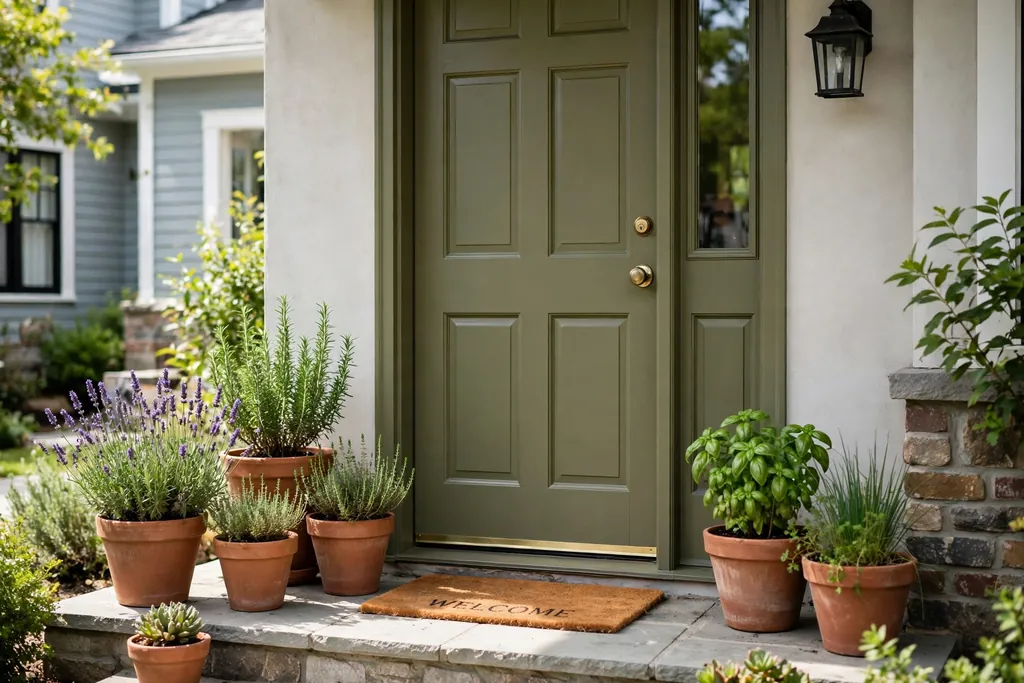
Olive green is a muted, earthy green that suits houses with gardens, stone walls, and natural materials around the entry. It feels quiet and organic, and terracotta pots beside it repeat the warm clay tone that olive needs to avoid looking flat. Herbs, lavender, and trailing plants in those pots make the entry feel like an extension of the garden rather than a separate display.
Olive pairs with aged brass or oil rubbed bronze hardware, and with a natural coir mat at foot level. Through the seasons, olive stays steady: spring herbs, summer lavender, autumn grasses, and a winter wreath of dried foliage all sit comfortably against it. Test olive beside your siding, since a green that leans yellow can look warmer than expected next to warm stone or cream trim.
14. Chocolate Brown with a Woven Basket and Warm Light
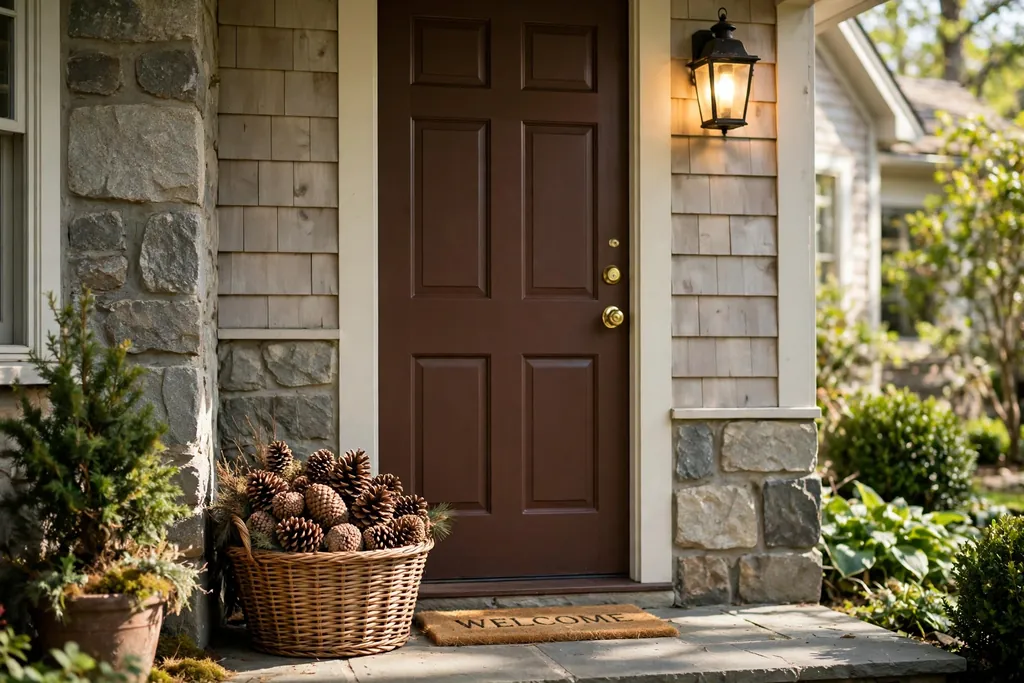
Chocolate brown is a deep, warm brown that suits rustic, craftsman, and timber framed houses, where wood already plays a large part in the facade. It feels grounded and welcoming, and a woven basket of pine cones or dried foliage beside the door repeats its natural warmth. A lantern with warm light beside a chocolate door makes the entry glow in autumn and winter evenings.
Keep the trim cream or warm white for contrast, since dark trim beside a dark brown door can flatten the entry. Brass hardware warms the brown further, while oil rubbed bronze keeps it quiet and rustic. Chocolate brown hides scuffs well, which suits a busy family entry, and it pairs naturally with a wooden bench or a pair of wooden planters that age gracefully outdoors.
15. Blush Pink with Brass Numbers for a Soft Spring Door
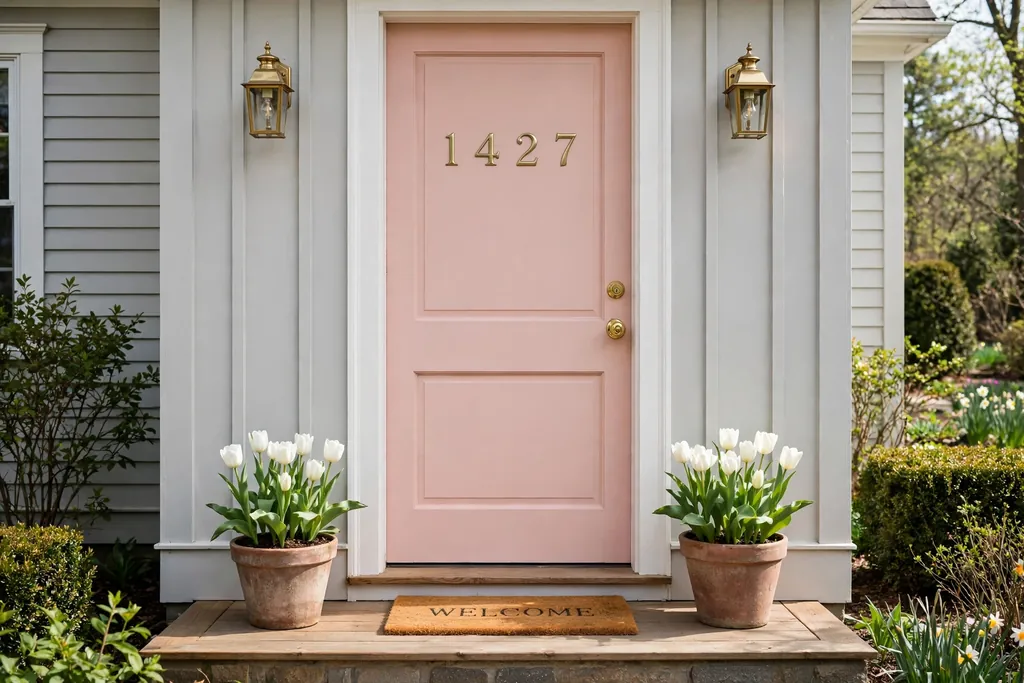
Blush pink is a pale, warm pink that suits cottages, small colonials, and houses with soft landscaping, where it reads as a gentle color note rather than a bold statement. In spring, pots of white tulips and fresh green foliage keep it fresh, and brass house numbers add a warm, jewelry-like detail against the pale panels. White trim gives blush the clean edge it needs to look deliberate.
Keep the porch simple beside blush: one pair of pale pots and a plain mat are enough, since the color itself is the decoration. In autumn, switch to pots of soft grasses rather than strong orange tones, which can clash with pink. Blush shows marks faster than deeper shades, so choose a washable semi gloss finish and expect a seasonal wipe down, especially around the handle.
16. Slate Blue Gray with Stone Steps for a Calm Entry
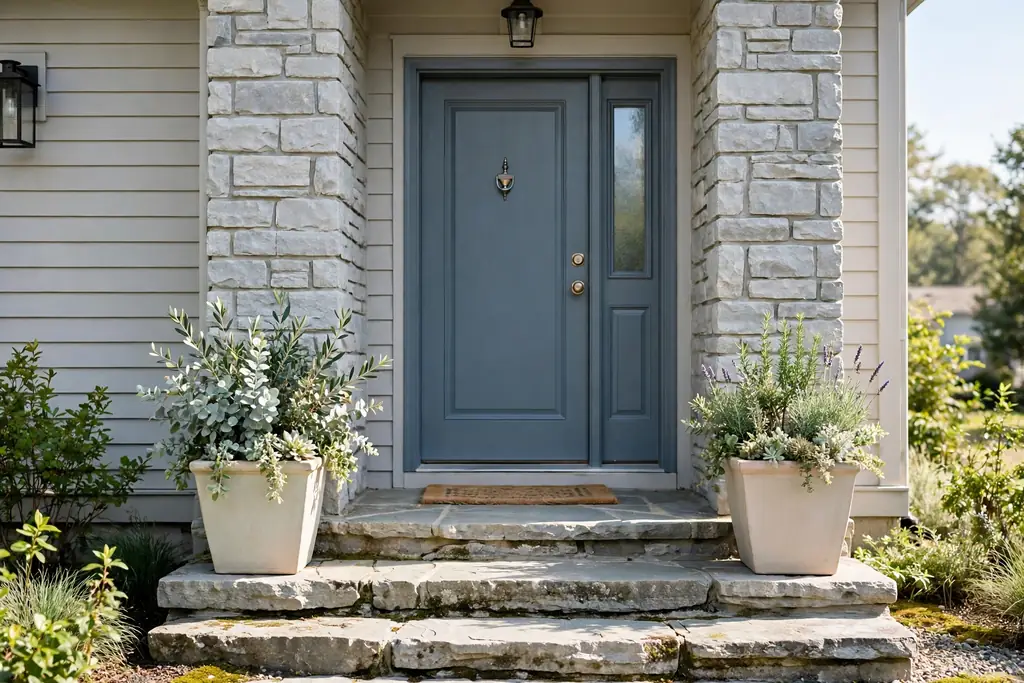
Slate blue gray is a muted blue with a strong gray base, calm and tailored from the street. It suits stone houses, gray siding, and traditional suburban facades, because it borrows color from the masonry around it. Stone steps, a pale planter pair, and a simple mat complete an entry that feels settled rather than decorated, which suits owners who prefer quiet color.
Matte black or pewter hardware fits its muted character. Slate blue gray can look flat on an overcast day, so a semi gloss finish helps it keep a little life and sheen. In autumn, a wreath of dried grasses gives gentle contrast without breaking the calm palette, and in winter, fresh greenery is the one color note the entry needs.
17. Emerald Green with a Topiary Pair for a Formal Entry
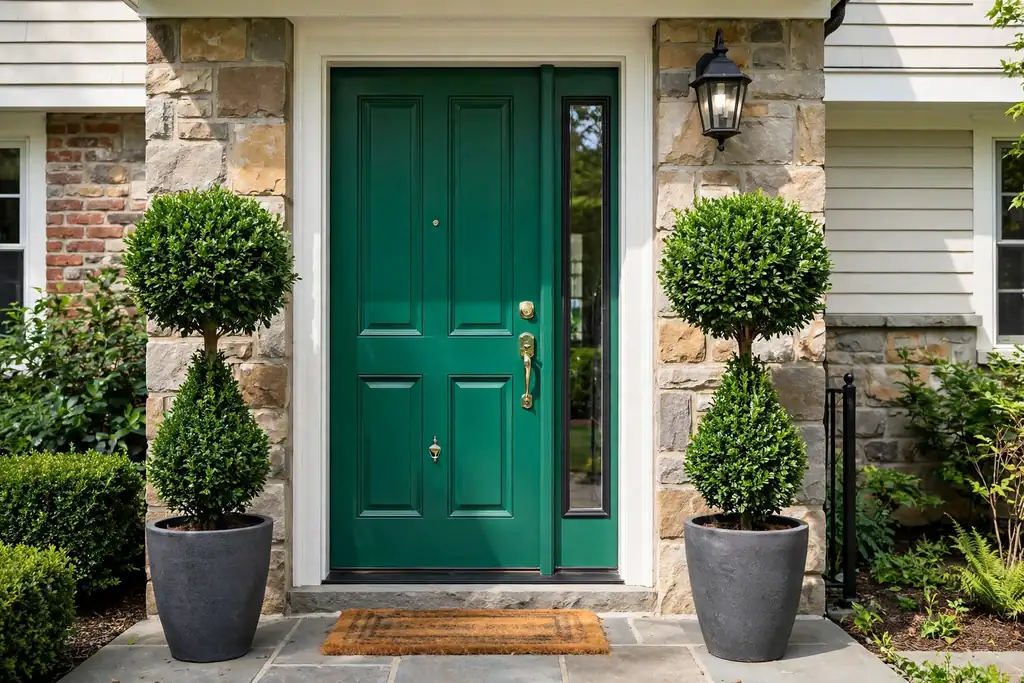
Emerald green is a clear, saturated green that suits formal houses, Georgian facades, and entries with symmetry to spare. A pair of clipped topiary trees in matching pots on either side of an emerald door makes the entry feel planned and grand, and the green of the trees echoes the door without matching it exactly. Brass hardware and a brass lantern complete the classic look.
Emerald needs tidy surroundings to shine: swept steps, trimmed pots, and a plain mat keep the focus on the door and its topiary pair. In winter, the topiary stays green, so the entry keeps its structure when flower beds go bare. For shade specific guidance on deep greens and blues, these blue front door colors show how undertone and light change a dark door color through the day.
18. Two Tone Door and Frame for Seasonal Flexibility
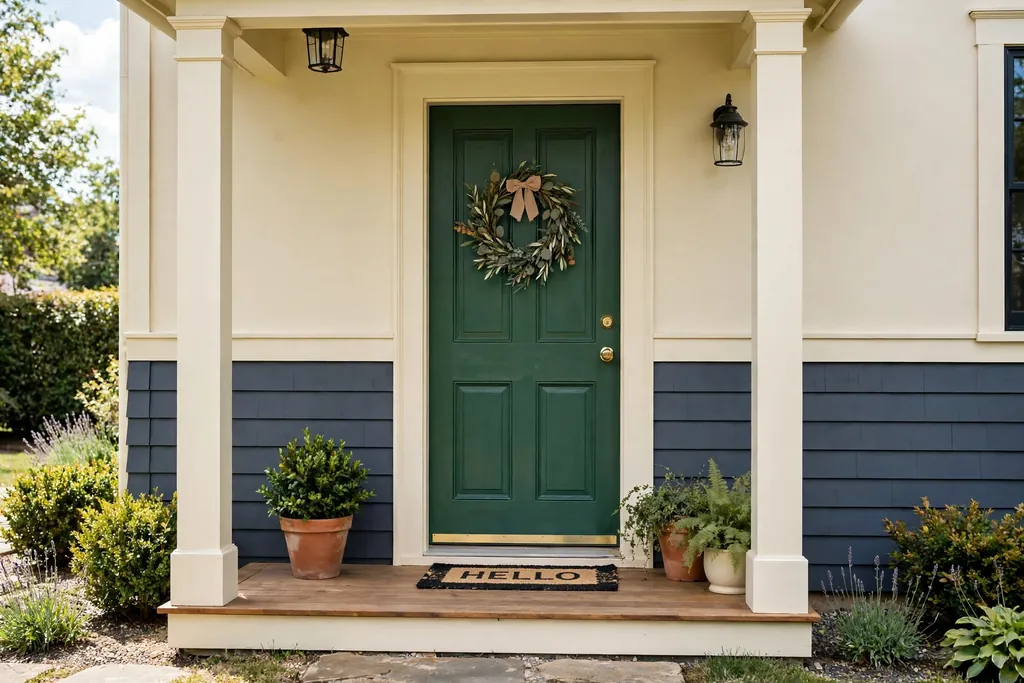
A two tone entry paints the door one color and the frame, sidelights, or trim a second, related color, which gives seasonal flexibility without repainting. Try a deep green door with cream trim, a navy door with a pale gray frame, or a black door with warm wood trim. The frame color lightens the whole entry, so a deep door color feels less heavy on a shaded porch.
This approach suits houses where a single dark color would swallow the entry, and it lets you change the seasonal mood with the wreath and pots alone, since the frame already adds a second tone. Keep the two colors close in depth, one deep and one light, rather than two strong colors competing for attention. Test both shades together on the door and frame in daylight, since a pairing that works on sample cards can shift beside your siding. For entry ideas that work inside the door as well, these kitchen entryway ideas show how one small change at a doorway can change how the whole space feels.
Conclusion
A cozy seasonal entry does not need a new door color each year. It needs one color that suits your siding, your light, and your house style, plus hardware that flatters it and a simple seasonal swap of wreath, mat, and pots. Narrow your list to three shades, test them on the actual door in morning, midday, and evening light, and choose the one that still feels right when the porch planting changes. Start with the color that fixes the weakest part of your entry, whether that is a door that disappears against the facade or one that clashes with it, and let the seasonal details follow.
Save this list on Pinterest before your next paint trip, and work through it one shade at a time: siding and light first, then hardware, then the porch details that make the entry yours through every season.
FAQs
How do I choose a front door color that works in every season?
Start with your siding, roof, and stone, then pick a color that sits comfortably beside them in all light. Deep shades such as navy, forest green, and charcoal work year round because seasonal decor changes around them. Test three samples on the actual door and check them morning, noon, and evening before you commit to a full repaint.
Should the front door color match the shutters or trim?
It does not need to match exactly, but it should relate to them. A door that repeats one tone from the shutters, the trim, or the stone looks planned, while a door that introduces a wholly new color family can feel random. If your shutters are dark, a deep door color usually sits better than a pale one, and white trim gives most door colors the contrast they need.
What finish should I use on a front door?
Satin or semi gloss is the usual pick for a front door. Both wipe clean, resist weather better than flat paint, and give the color a little life in flat light. Semi gloss shows brush marks more than satin, so use a high quality brush or spray, and level each coat carefully. A durable exterior formula matters more than the exact sheen on a door that faces sun and rain.
How often should a painted front door be repainted?
Most painted front doors hold their color for five to ten years, depending on sun exposure, shelter, and paint quality. South facing doors fade fastest, and pale colors show wear sooner than deep ones. Touch up scuffs around the handle and kick plate each season, and repaint when fading, chalking, or peeling appears rather than on a fixed schedule.
Can I paint a front door a bold color on a traditional house?
Yes, if the bold color still relates to the house. A deep red, forest green, or navy suits many traditional houses, since those shades have historic roots and sit well beside brick and stone. Keep the trim classic, the hardware simple, and the porch styling restrained, so the door reads as one confident choice rather than a collection of competing details.
What is the easiest way to refresh a front door without repainting?
Swap the wreath, the mat, and the porch pots, and clean or change the hardware. Those three changes shift the entry for a new season in under an hour, and they cost far less than paint. Clean the door first, oil the hinges, and polish the hardware, since a clean door with fresh seasonal details often looks newly painted on its own.