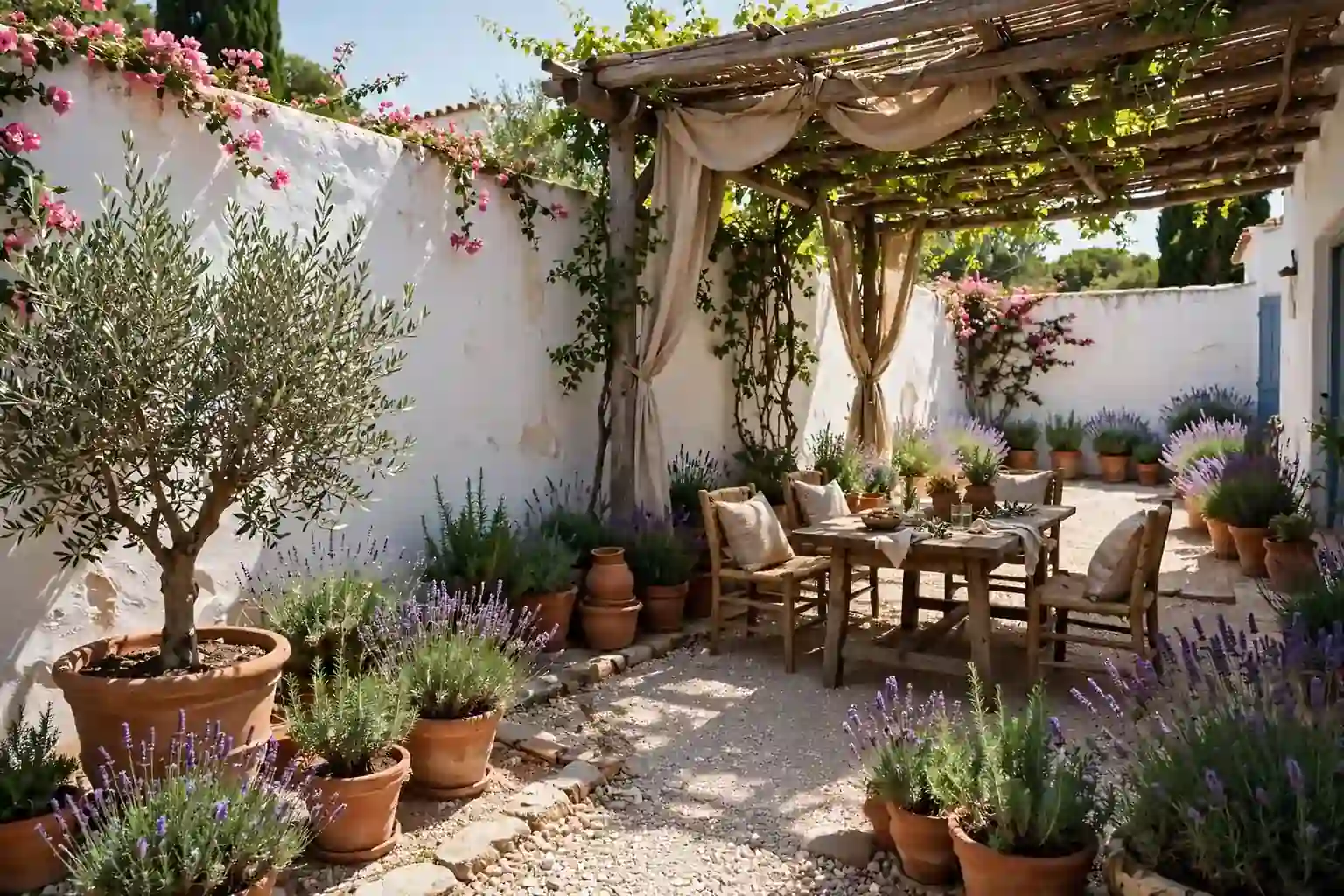
A Mediterranean garden is built on sun, scent, and simple materials: warm stone, terracotta, gravel, and plants that cope with heat and dry soil. You do not need a villa or a large plot to get the feeling. One olive tree in a pot, a lavender lined path, or a shaded seat beside a wall can carry the whole style. These 12 Mediterranean garden ideas cover courtyards, slopes, patios, and small balconies, so you can start with a single pot by the door or plan a full outdoor room. Pick the structure first, then the plants that suit your sun, soil, and watering routine. For a closely related Greek take on the same palette, see these Greek garden ideas.
Key Takeaways
- Start with structure: a tree, a pergola, a terrace, or a seating spot, then plant around it.
- Keep the palette small: warm stone, terracotta, whitewash, blue tile, and green carry the Mediterranean look without clutter.
- Choose sun and drought tolerant plants, such as olive, lavender, rosemary, citrus, and bougainvillea, for hot, dry spots.
- Use gravel, pebbles, and stone underfoot to keep beds tidy and cut down on watering and mowing.
- Pots make the style possible on a balcony or rented patio, where beds are not an option.
- Plan shade and scent for evenings: a vine, jasmine, lantern light, and a table set for long meals extend the hours you use the garden.
1. Make an Olive Tree the Focal Point of a Gravel Court
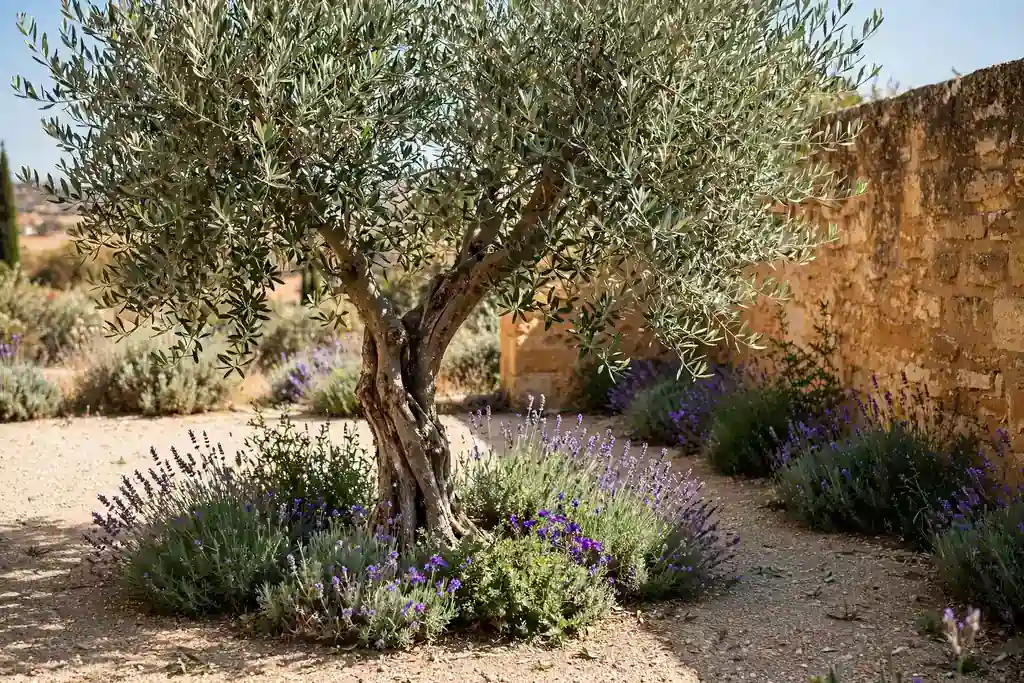
Set one olive tree in the middle of a gravel court, or in a wide pot if you have no bed, and let it anchor the whole space. The silver green leaves, gnarled trunk, and open shape read as Mediterranean at once, even before anything else is planted. Gravel underfoot keeps the court tidy, drains well after rain, and suits the dry soil olives prefer.
Choose the sunniest, most sheltered spot you have, and use a gritty, free draining mix in a pot with drainage holes. Water deeply, then let the top of the soil dry before watering again, since olives suffer more from wet feet than from a dry spell. Underplant with low lavender or creeping thyme, or leave the gravel bare with a stone edging, so the tree keeps its clear, sculptural shape.
2. Group Terracotta Pots by the Entrance
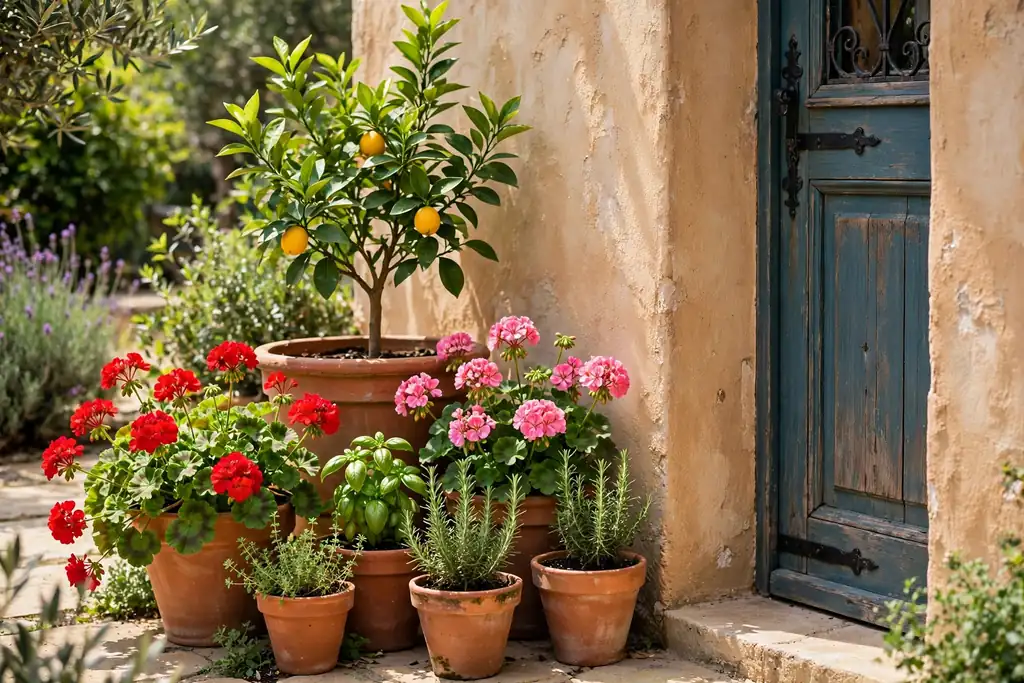
Cluster terracotta pots in two or three sizes by a door, gate, or set of steps, and fill them with geraniums, herbs, and one taller plant such as a small citrus or a bay. The warm clay tone ties the group together, while the mix of heights keeps it from looking like a row of identical pots. This is the fastest Mediterranean idea on the list, and it works on a step, a landing, or a paved front path.
Keep the planting simple so the pots themselves stay part of the picture, and use saucers on painted or stone steps to stop staining. Terracotta dries fast in sun and wind, so check the soil with a finger and water when the top feels dry. Move tender plants under cover before the first hard frost if your winters are cold, and swap summer geraniums for winter pansies or small evergreens when the season changes.
3. Line a Path with Lavender and Rosemary
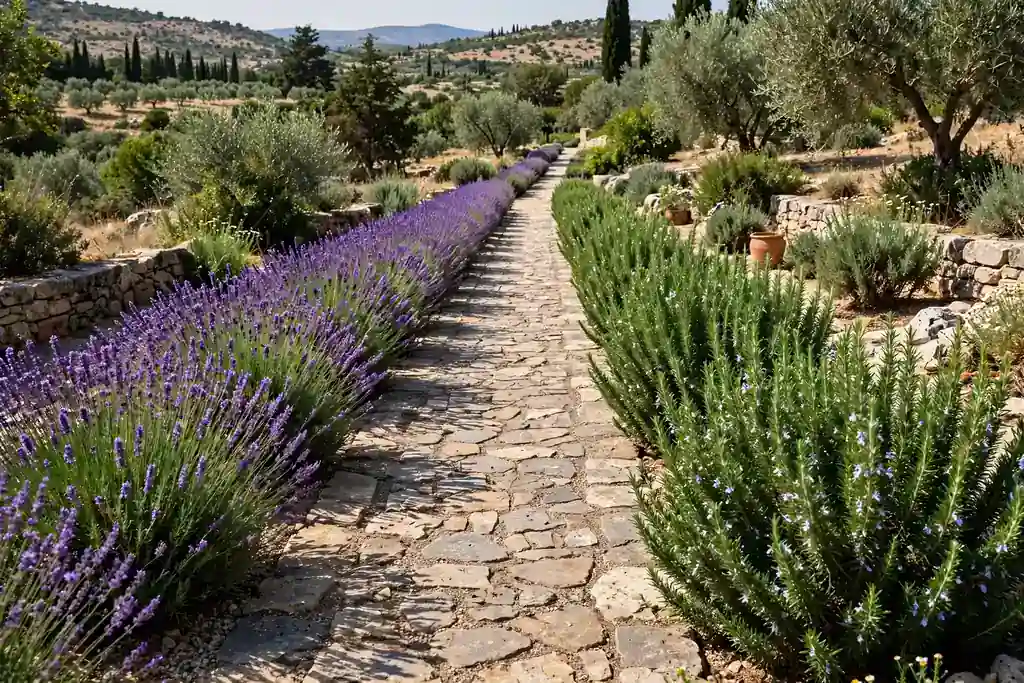
Plant lavender and rosemary along both sides of a stone or gravel path, so every walk through the garden brushes past scent and color. The two plants share the same needs, full sun and free draining soil, and their purple flowers and grey green foliage sit well against warm stone. A scented path turns a plain route from the house to a seat into a garden feature in its own right.
Space plants so air can move between them, and trim lavender lightly after flowering and rosemary after growth starts in spring, without cutting into old bare wood. Both plants need little water once settled, and bees visit them through summer, so site the path where you can enjoy the scent from a seat as well as on the move. In wet winters, raise the bed slightly or add grit to the soil, since both plants dislike sitting in water.
4. Grow a Grapevine Over a Pergola for Dining Shade
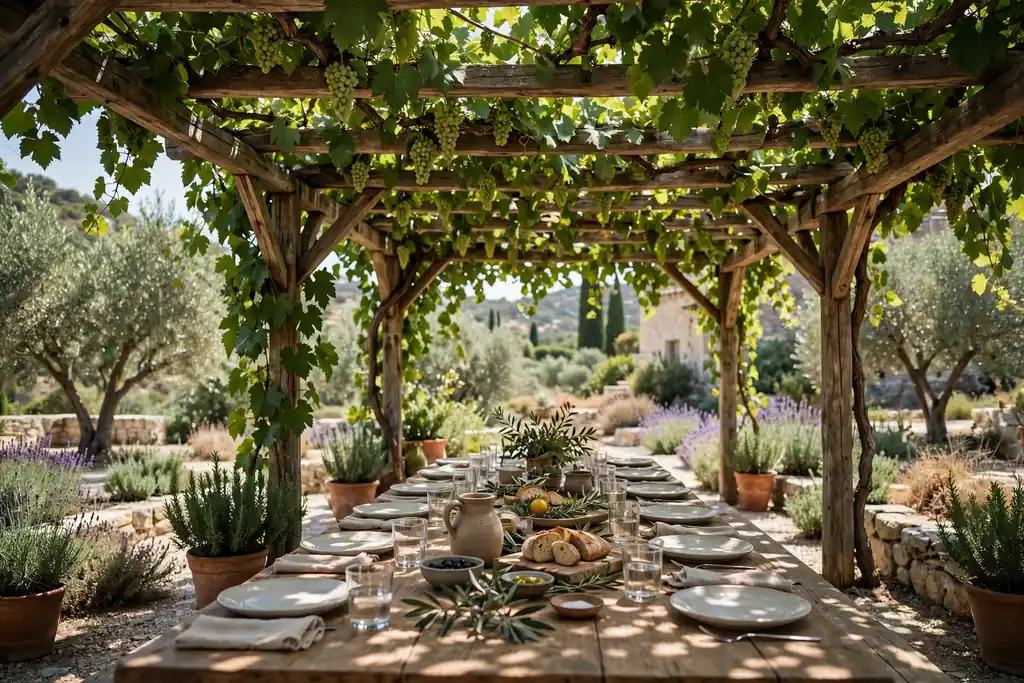
Build a wooden pergola over a dining spot and train a grapevine across the top, so summer meals happen in dappled shade that opens up again in winter after leaf fall. A vine covered pergola is the classic Mediterranean outdoor room: sturdy posts, a long table, and shade that changes with the season. Site it over a flat, level area with room to pull chairs out without hitting a post.
Run wires along the beams and train one or two main stems along them, tying in side shoots as they grow, and prune in winter to keep fruiting wood near the frame. Leave headroom so the vine can be pruned from below with a step ladder, and keep the pergola clear of roof drains and gutters. In a small garden, a single vine over a lean to frame against a wall gives the same shade on a smaller footprint.
5. Set a Tiled Fountain as the Courtyard Centerpiece
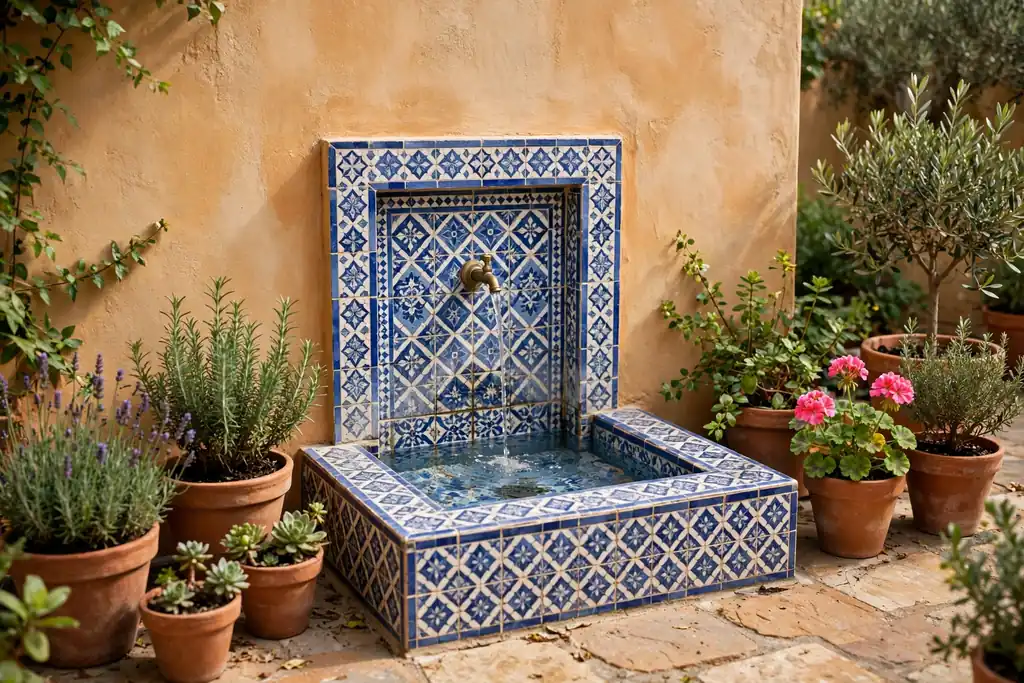
Place a small tiled fountain against a warm plaster wall, with blue and white patterned tiles and a shallow basin, and let the sound of water set the mood of a courtyard. Moving water cools the air, masks street noise, and gives a small space a clear focal point without new planting. Surround the base with pots of different heights, and keep the pump access clear for cleaning.
Top up the water in hot weather, clean the basin regularly to stop algae, and drain or cover the fountain before hard frost if it is not frost proof. If plumbing is a problem, a solar pump in a shallow tiled bowl gives a similar trickle without a mains connection. Keep the fountain out of the main walking line, so the courtyard stays easy to cross, and site it where you can hear it from the seat, not only from the path.
6. Terrace a Slope with Dry Stone Walls
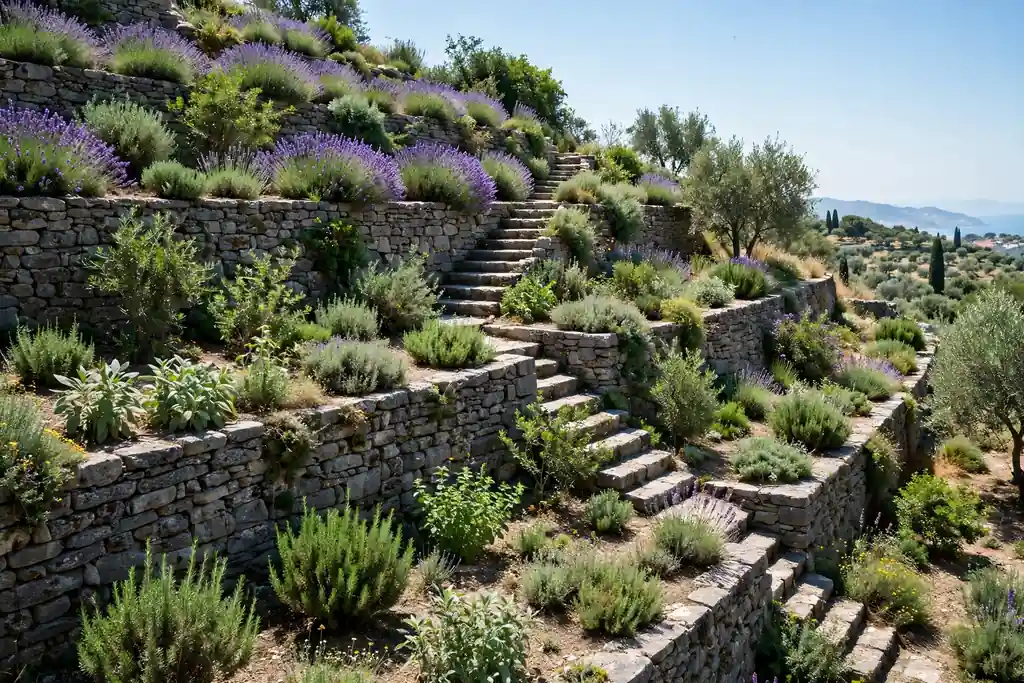
Turn a slope into usable Mediterranean levels with low dry stone walls, each level planted with herbs, lavender, and small shrubs, and stone steps joining them. Terraces stop soil washing downhill, give every plant a level patch of well drained soil, and make a steep garden far easier to work on. Start at the lowest level and build upward, so each wall has solid support.
Pack gritty soil into the gaps as you build, or tuck sedum and small thyme into existing crevices once the wall is up, since these plants need almost no soil and cope with heat reflected from stone. Keep tall walls, generally anything above knee height, in the hands of a professional, and check local rules before you build. For more stepped layouts, see these tiered garden ideas, which cover stone, timber, and planted terraces in detail.
7. Grow Citrus Trees in Large Pots on the Patio
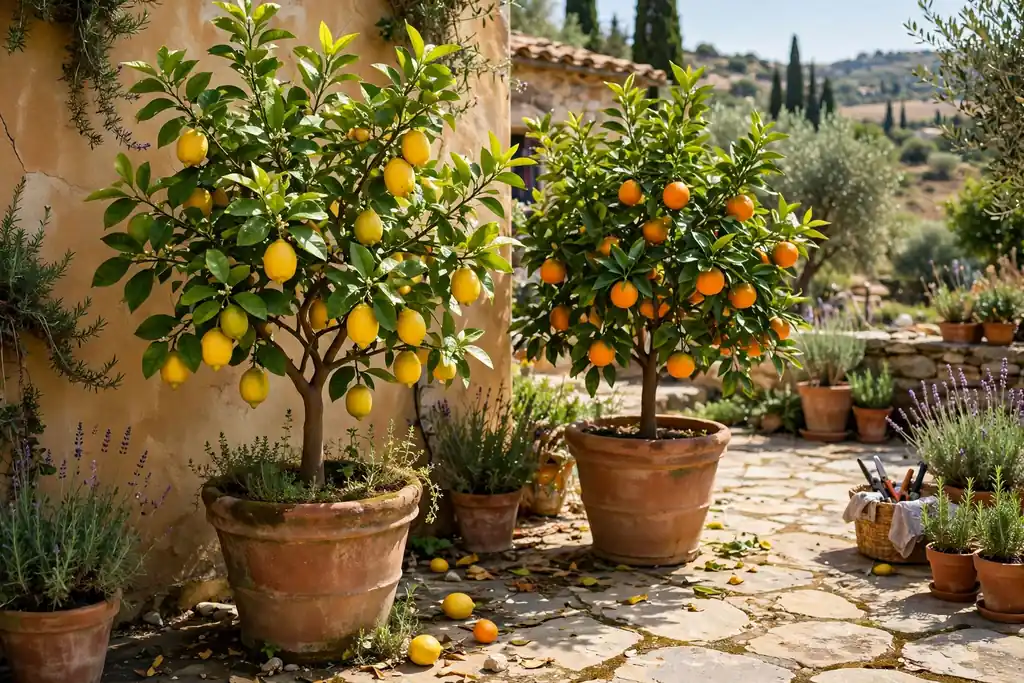
Grow a lemon or orange tree in a large terracotta pot on a sunny patio, and you get blossom scent in spring, glossy leaves all year, and fruit you can pick from your own doorstep. Citrus in pots suits renters and small gardens, since the tree moves with you and needs no bed. Choose the sunniest, most sheltered spot, and use a pot with drainage holes and a free draining mix.
Water deeply, then let the top of the mix dry before watering again, and feed during the growing season following the product label. Move the pot indoors or wrap it if your winters are cold, since citrus is tender and a hard frost can damage leaves and fruit. Underplant with trailing thyme or small stones for a finished surface, and prune lightly to keep an open shape that lets light reach the fruit.
8. Cover a Sunny Wall with Bougainvillea Color
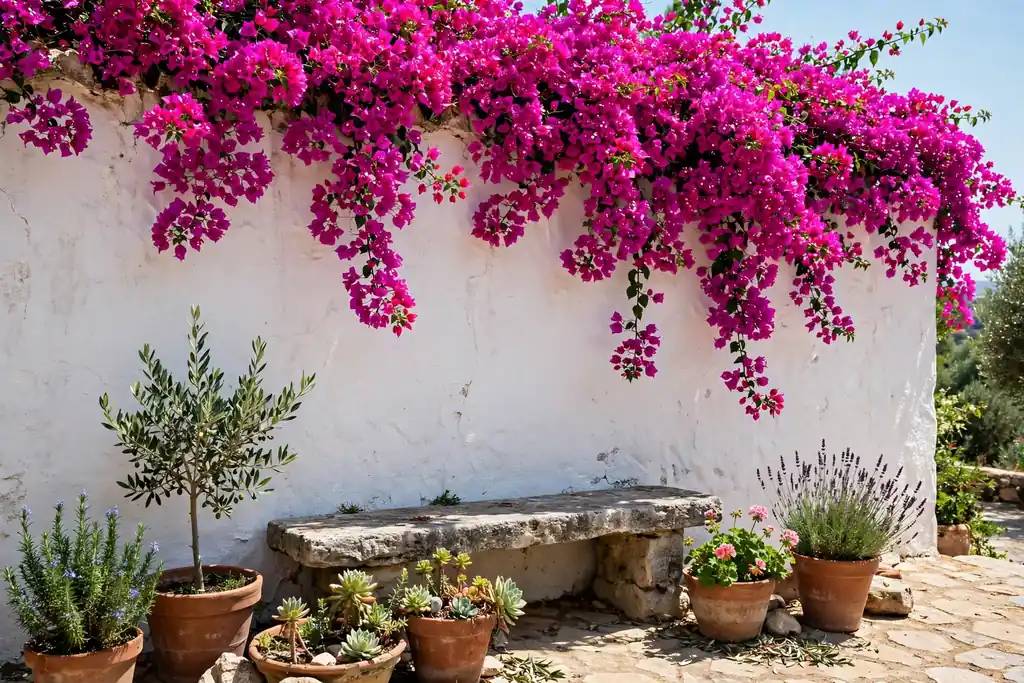
Train bougainvillea up a sunny wall, on wires or a trellis fixed firmly to the surface, and let its bright magenta, orange, or pink bracts do the work of a whole flower bed. A flowering wall gives color at eye level and above, needs little ground space, and suits a courtyard, a side passage, or the front of a house. Plant on the sunny side so flowers face the path or seat, and prune after flowering to keep growth off gutters and walkways.
Bougainvillea needs full sun and free draining soil, and it flowers best when it is not overwatered. In cold areas, grow it in a large pot and move it under cover for winter, so you keep the color without risking the plant. Fix the support firmly, since a mature vine is heavy, and keep side shoots trimmed back from doors and windows so the wall stays easy to use and maintain.
9. Plant a Kitchen Herb Bed by the Door
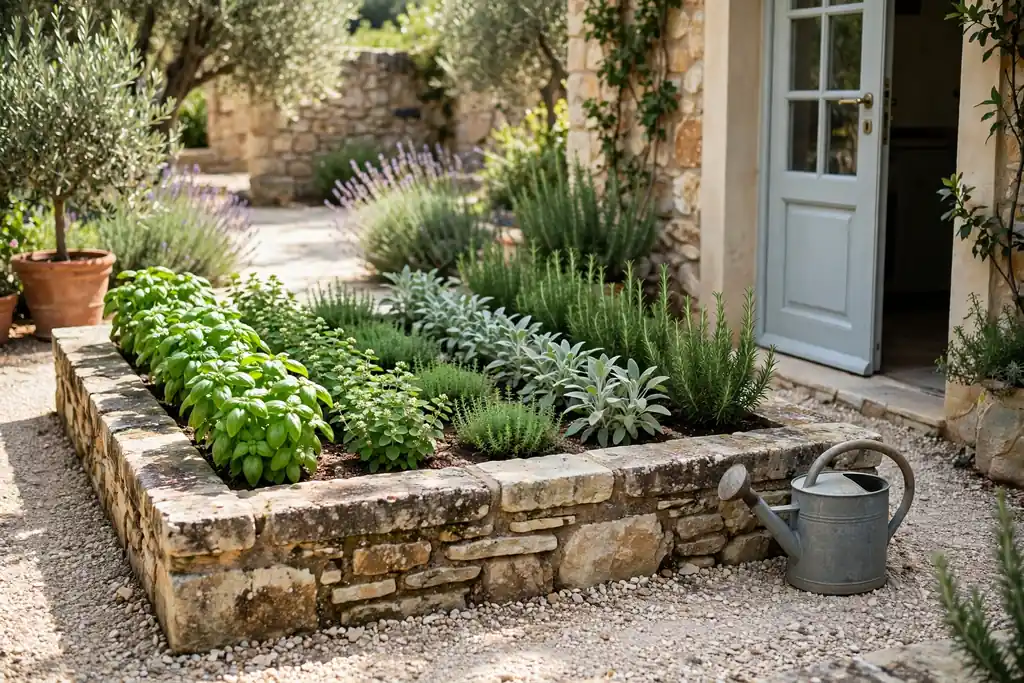
Plant a raised herb bed near the kitchen door with basil, oregano, thyme, sage, and rosemary, so picking for a meal takes a minute rather than a trip across the yard. Mediterranean herbs share the same needs, sun and free draining soil, and they give scent, cooking leaves, and flowers for bees from one small bed. Keep mint in its own pot, since it spreads fast and will crowd its neighbors.
Harvest little and often, snipping stems in the morning, and replace woody plants every few years when they stop producing fresh growth. A stone or terracotta edging keeps the bed tidy and stops soil washing onto paths in heavy rain. Label herbs while they are young, since many look alike before they flower, and put the herbs you use daily nearest the door, with less used plants further along the bed.
10. Build an Outdoor Cooking Corner with a Clay Oven
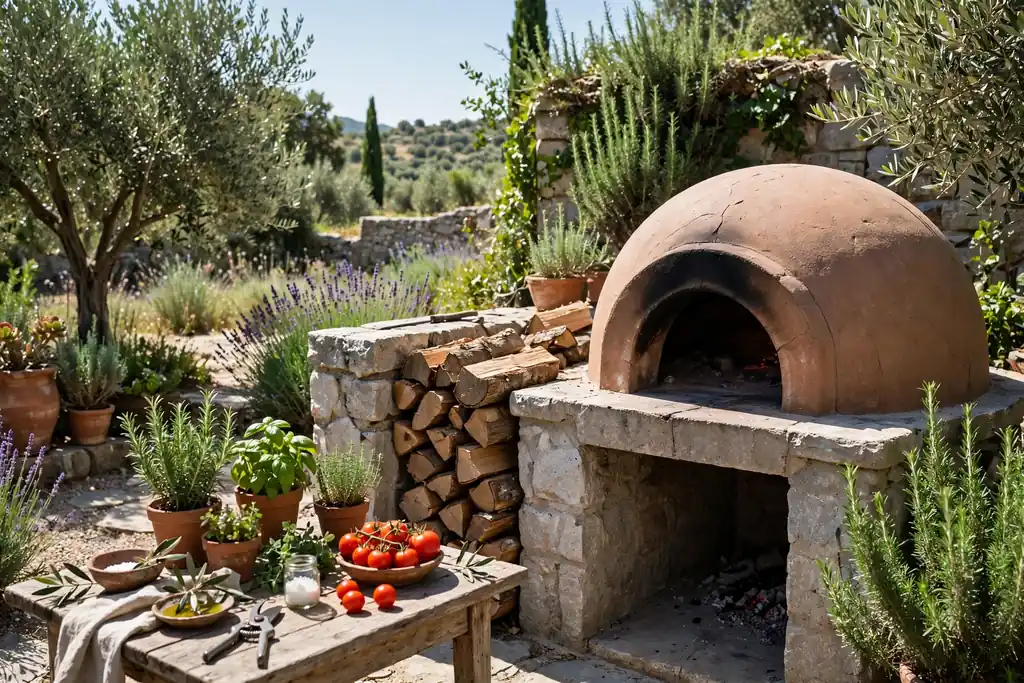
Set up an outdoor cooking corner with a domed clay oven or a simple grill, a stone worktop, and storage for firewood, so summer cooking moves outside and the garden gains a working heart. A cooking corner suits a sheltered spot near the house, with a flat, level surface and room to carry food and plates without crossing a lawn. Keep the oven clear of overhanging branches and fences, and follow the maker guidance for heat clearance and safe use.
Add a small table for herbs, tomatoes, and oil, a shelf for plates, and a hook for tools, so everything for a meal is within reach. A herb pot or two beside the worktop keeps flavoring close at hand, and a simple shade sail or vine frame above the work area makes midday cooking comfortable. Store cushions and table linen indoors overnight, and sweep ash and leaves from the corner so it is ready without a long tidy up.
11. Frame a View or Entrance with Cypress Trees
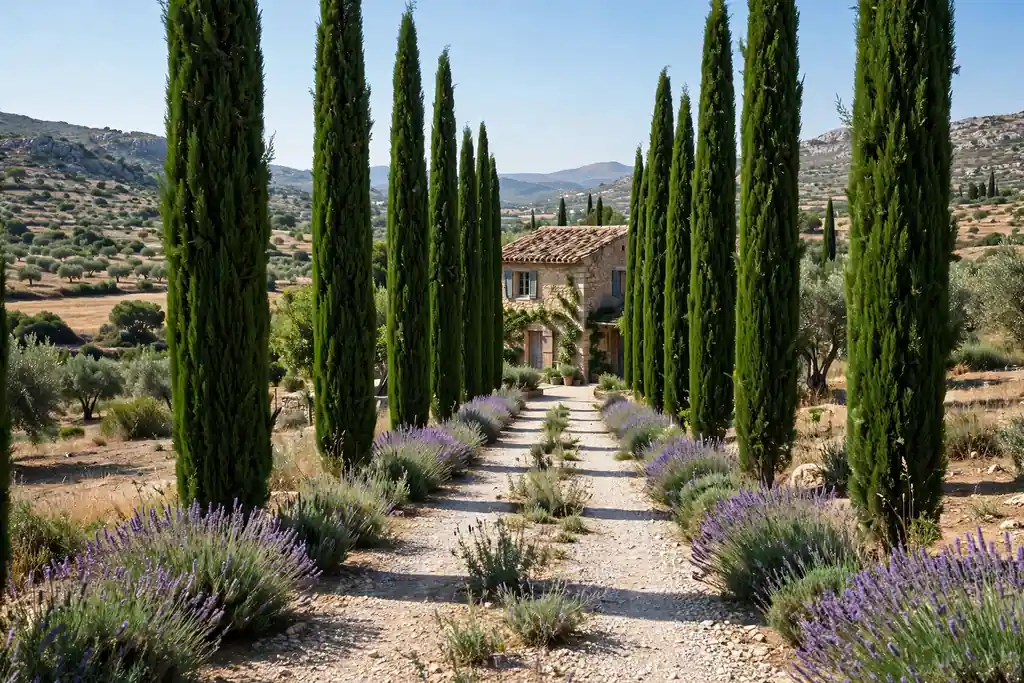
Plant tall, slender cypress trees in a pair by a gate, or in a loose row along a path, to frame a view and give the garden its vertical lines. Cypress trees are the classic Mediterranean punctuation mark: dark green, narrow, and formal, they draw the eye along a path and make a flat garden feel designed. They suit entrances, drive edges, and the ends of a long border, where their height can be seen from the house.
Give each tree room for its mature spread, and avoid planting them hard against a wall or fence, since they need air movement to stay healthy. Cypress trees need sun and well drained soil, and they cope with heat and wind once established. Underplant with lavender or gravel at their feet, so the base looks finished, and keep the path beside them clear of fallen needles in autumn so the surface stays safe to walk on.
12. Light an Evening Courtyard with Lanterns and Jasmine
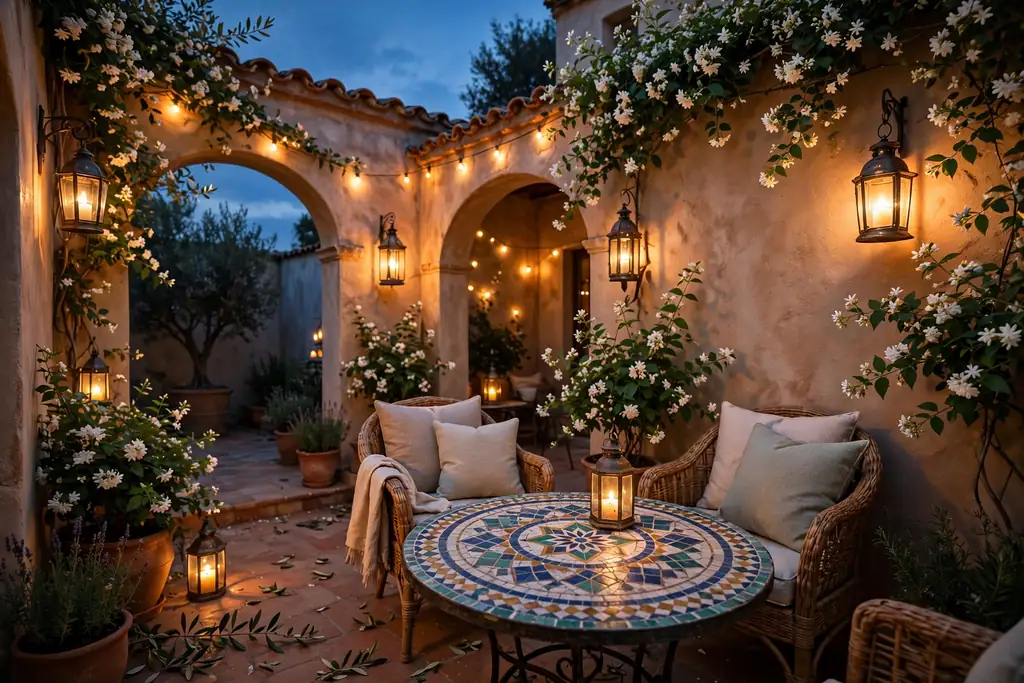
Finish the garden for evenings with lanterns on a table and along a wall, a mosaic topped table with chairs, and jasmine planted where you sit, so the space stays inviting after sunset. Mediterranean gardens are used most in the evening, when the air cools and scent carries, and warm lantern light on plaster walls gives a courtyard its best hours. Keep the lighting low and warm, with candles or solar lanterns rather than harsh overhead lights.
Plant jasmine at the base of a wall or post near the seat, tie stems in as they grow, and prune after flowering to keep it tidy. Jasmine needs sun for the best flowers, but its roots prefer cool, moist soil, so mulch the base and water in dry spells. Set the table where it catches the last sun and the first lantern light, and keep a basket or box nearby for cushions, so the evening seat is ready in a minute.
Conclusion
A Mediterranean garden with character is not about owning the largest plot or the rarest plants. It is about one clear structure, a small palette of warm materials, plants that love sun and dry soil, and a seat you actually use in the evening. Start with the idea that fits your space best, an olive tree, a pot cluster, a scented path, or a pergola, and add a second idea once the first is settled. The related planting and color advice in these Greek garden ideas pairs well with the courtyard, terrace, and pot ideas above.
Keep this list handy for your next free hour outside, and build your Mediterranean garden one clear step at a time: structure first, then scent and shade, then the evening light that makes the whole space feel like a place to linger.
FAQs
What plants suit a Mediterranean garden in a cold climate?
Choose hardy plants for the structure, such as lavender, rosemary in a sheltered spot, sedum, and ornamental grasses, and grow tender stars such as olive, citrus, and bougainvillea in large pots you can move under cover for winter. A sunny wall, a sheltered corner, and free draining soil all raise your chances, since cold plus wet soil damages more plants than cold alone. Check the hardiness of each variety before buying, and protect pots with wrapping or a cold frame in hard frost.
How often should I water a Mediterranean garden?
Water deeply but infrequently, so roots grow down rather than staying near the surface. Most established Mediterranean plants, including olive, lavender, and rosemary, need little water once settled, and they suffer more from constant wet soil than from a dry spell. Pots dry faster than beds, so check pot soil with a finger and water when the top feels dry, especially in wind and heat. Water the soil, not the leaves, in the morning or evening, and mulch gravel or stone surfaces to hold moisture.
Can I make a Mediterranean garden on a small balcony?
Yes, pots make the style possible with no bed at all. Use one olive or citrus tree in a large pot as the focal point, add terracotta pots of lavender, rosemary, and geraniums, and finish with a small chair and a lantern. Fix pots so wind cannot move them, use a free draining mix, and water more often than a ground bed, since pots dry fast. A trellis panel with jasmine or a climbing rose gives a wall of green without taking floor space.
Should I use gravel or lawn in a Mediterranean garden?
Gravel suits the style better in most cases, since it drains well, needs no mowing, keeps beds tidy, and matches the dry, sunny character of the Mediterranean. Use gravel for courts, paths, and around pots, and keep a small lawn only where you truly use it for play or sitting. Edge gravel with stone or timber so it stays in place, and lay a weed membrane beneath it to cut down on weeding in the first season.
How do I get shade in a Mediterranean garden without a large tree?
Use a pergola with a grapevine, a shade sail over a seating area, or a tall pot grown olive or bay that can be moved to where shade is needed. A vine pergola gives seasonal shade that opens in winter, while a sail gives instant cover and can come down in storms. Site any shade over the seat you use at midday, not over a path you only cross, and leave headroom for pruning and for carrying food and drinks beneath it.
What is the cheapest way to start a Mediterranean garden?
Start with pots and seed, not structures. A cluster of terracotta pots with herbs and geraniums, a packet of lavender seed or a few small plants along a path, and gravel over an existing paved area give the look for a modest outlay. Add one larger plant, such as a small olive in a pot, once the pots are settled, and save structures such as a pergola or terrace for a later season. Reuse stone, timber, and pots you already own, and repeat one material so a small garden still reads as a planned space.