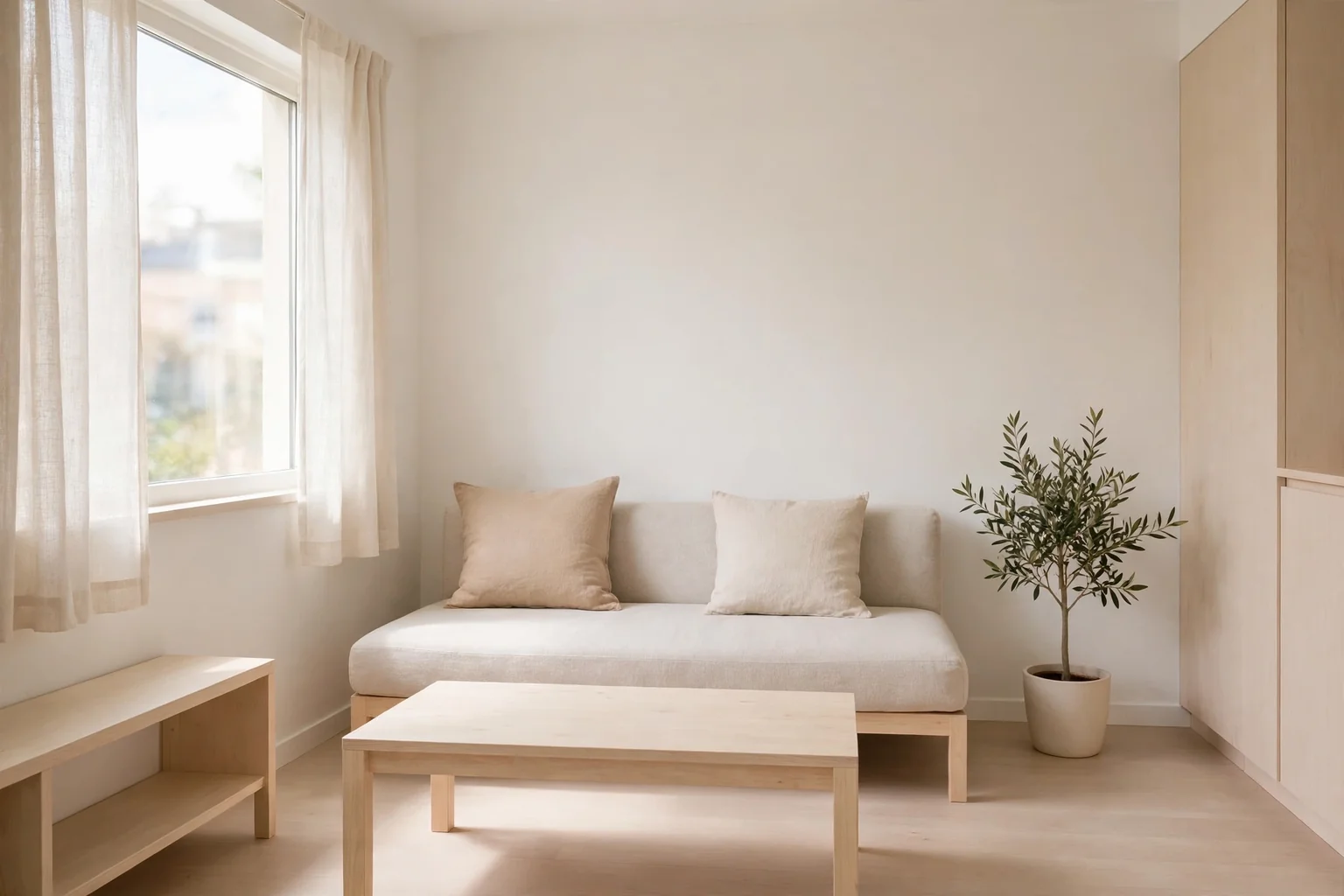
A small apartment feels calm when every piece has a clear job and nothing extra crowds the floor. Minimalist decorating is not about empty rooms. It is about choosing fewer, better pieces, keeping surfaces clear, and giving storage a fixed place so daily life stays easy. These 24 minimalist small apartment ideas cover colour, furniture size, storage, light, and simple zones for sleeping, working, eating, and relaxing. Start with the spot that bothers you most, such as a cluttered entry or a sofa that is too large, then add one idea at a time and live with it before you change more.
Key Takeaways
- Keep one calm base palette across the apartment, so rooms read as one home rather than a set of competing corners.
- Choose furniture sized for the room, with clear walkways, rather than pieces borrowed from a larger home.
- Give every item a home, and favour closed storage for the things you do not need to see every day.
- Use height, mirrors, and light to make a small room feel open, without adding more furniture.
- Keep only one or two display pieces per surface, and move the rest into closed storage or out of the home.
- Review the apartment once a week, since small rooms show clutter faster than large ones.
1. Keep One Calm Base Palette
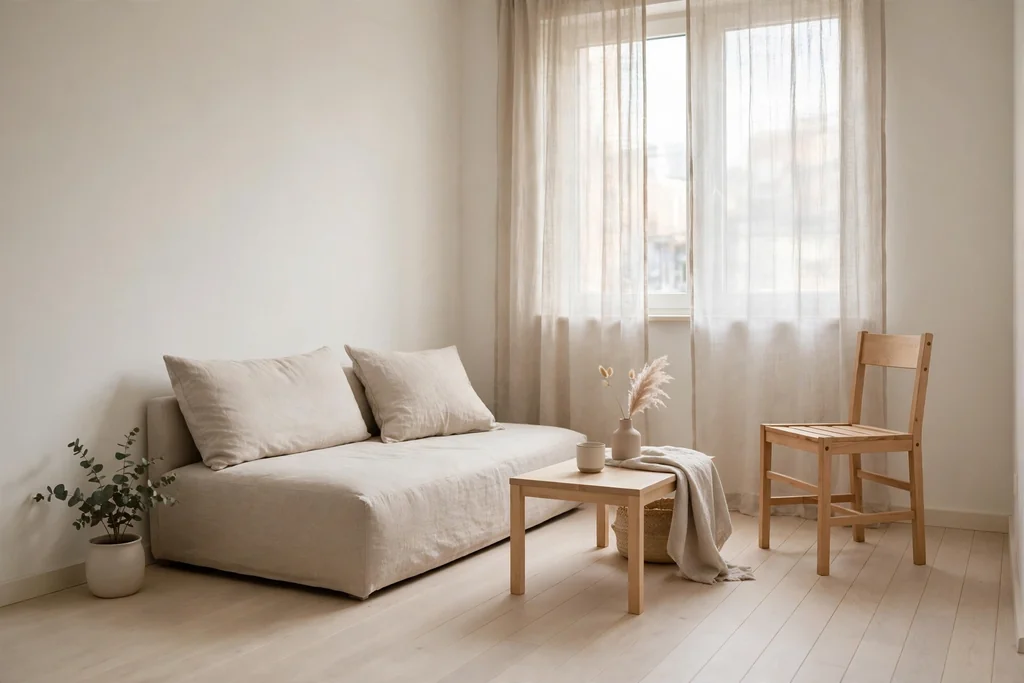
Use one calm base colour on walls, large furniture, and bedding, such as warm white, pale grey, or soft beige. When the biggest surfaces agree, the apartment reads as one calm room instead of several small areas competing for attention. This base also makes it easier to change accent items later, since cushions, art, and a rug can change without repainting or replacing furniture.
Add colour in small, movable layers: a cushion, a throw, a plant pot, or a framed print. Keep the base colour consistent from the living area into the entry and sleeping area, since a small apartment has few doors to hide a sudden colour change behind. If a wall colour already works, build around it rather than starting again.
2. Choose Right-Size Furniture
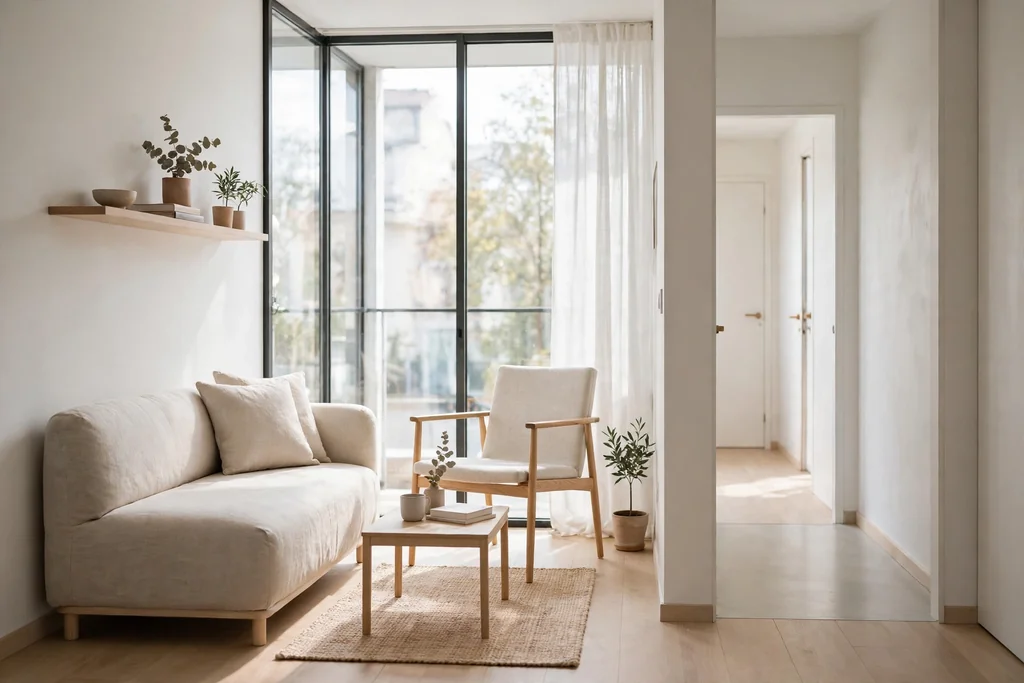
Measure the room and the doorways before you buy, then choose furniture made for apartments rather than full-size pieces. A low, slim sofa, a narrow armchair, and a small side table leave room to walk, sit, and open doors without squeezing past corners. In a small room, a piece that is slightly too large affects every other choice, from rug size to storage placement.
Leave a clear walkway through the main path of the room, and check that drawers, doors, and chairs can open fully. Furniture with visible legs also helps, since floor showing beneath a sofa or cabinet makes the piece look lighter. If a piece blocks a path, it is too large for that spot, even if it fits on paper.
3. Let One Sofa Do Two Jobs
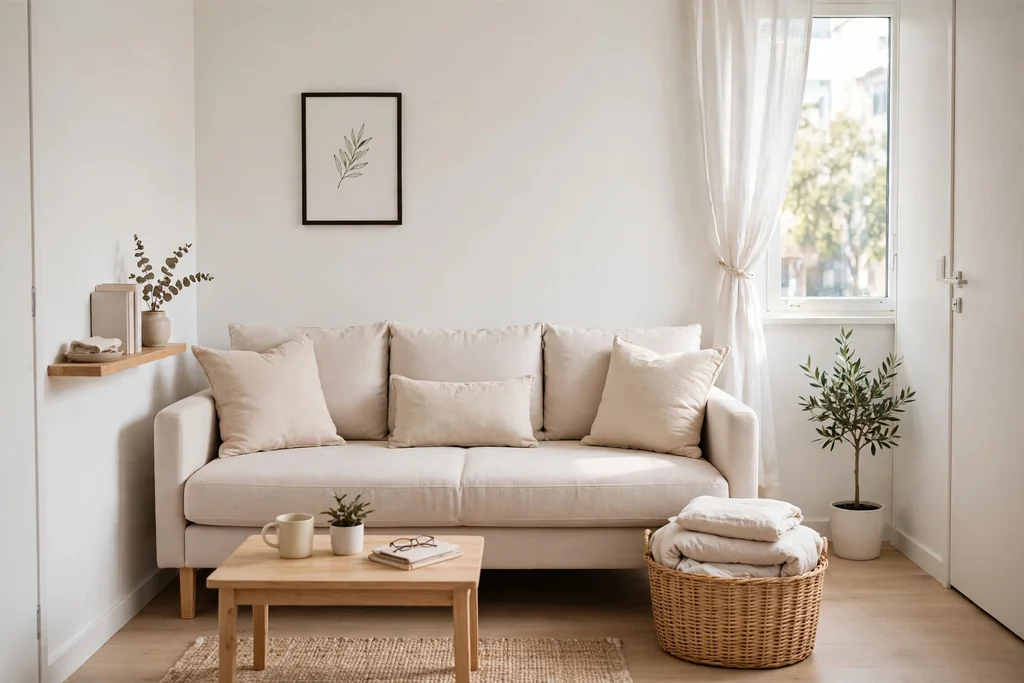
Choose a sofa that also works as a bed, or a daybed that reads as seating by day, when the apartment has no guest room. A sofa bed gives visitors a real place to sleep without a second bed taking up floor space all week. A daybed suits a studio or a small living room where the same piece must serve both sitting and sleeping.
Dress a daybed with firm cushions along the wall so it reads as a sofa during the day, and keep proper sheets folded nearby for the night. For a sofa bed, test the fold-out action before you buy, and store bedding close to the sofa so changing it over stays quick. This one change can free a whole corner for a desk, a reading chair, or clear floor.
4. Favour Closed Storage
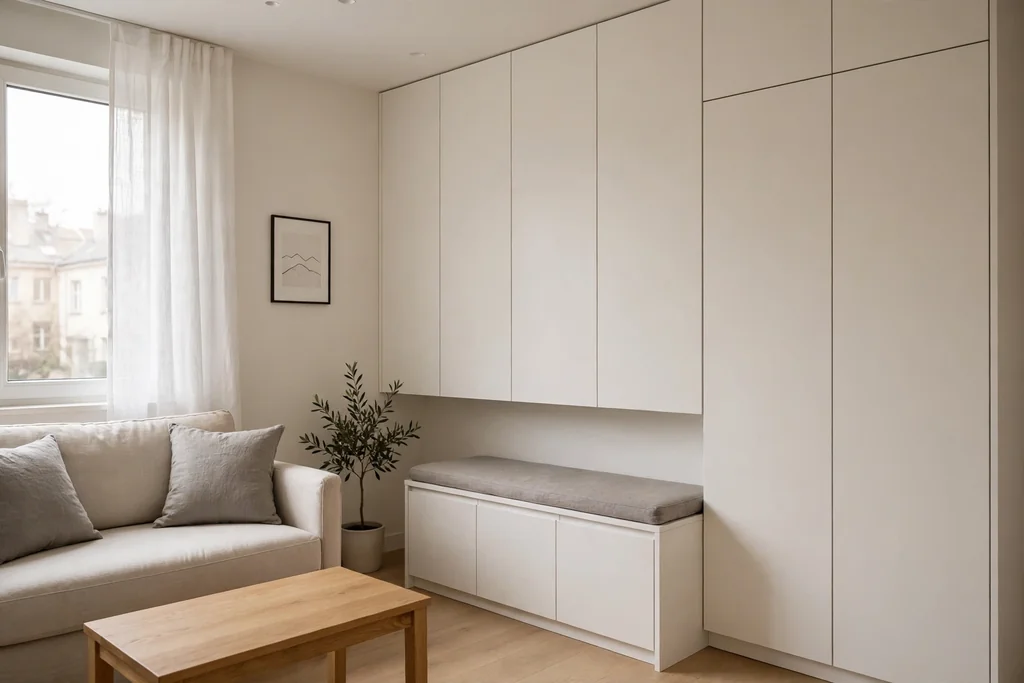
Use closed storage for most everyday items, so surfaces stay clear even when the cupboards are full. Cabinets with plain fronts, a storage bench, and a closed media unit hide chargers, games, spare linens, and paperwork without adding visual noise. Closed storage suits a minimalist apartment well, since the room stays calm even on a busy day.
Sort each closed unit by use, such as one cabinet for cleaning supplies and another for linens, and label the inside of a door if more than one person uses it. Keep one open shelf or one tray for daily items only, such as keys and a phone charger, so the open spot does not grow into a pile. When a cabinet fills up, that is a signal to pass on items you no longer use.
5. Run Shelving to the Ceiling
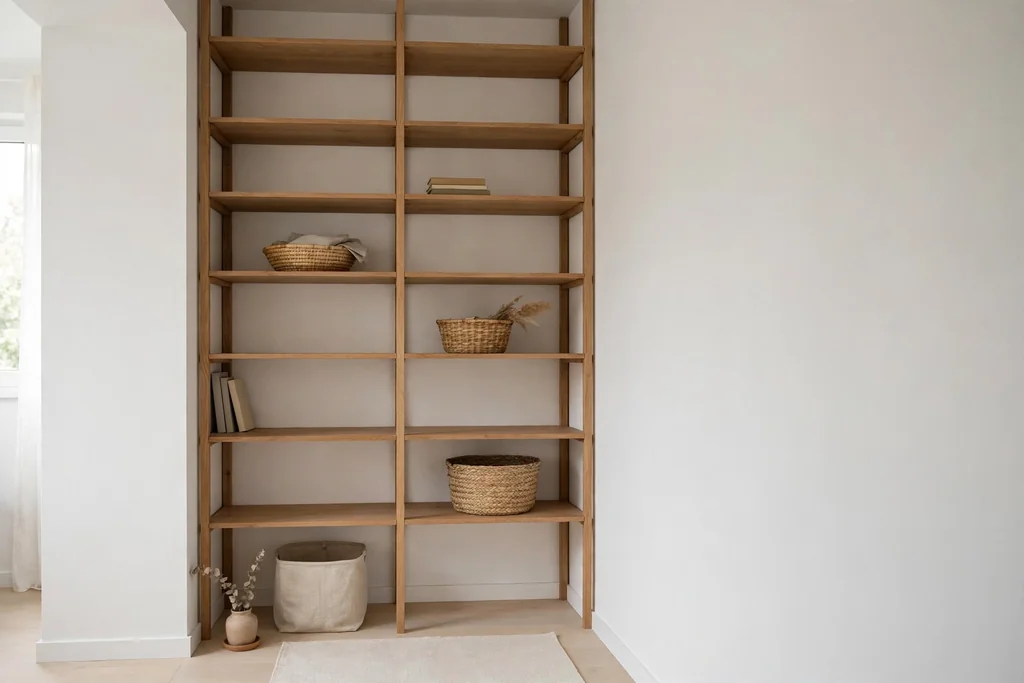
Run shelves up to the ceiling on one wall, such as the wall above a desk or beside the bed, to use height that often stays empty. High shelves hold books, baskets, and items you use less often, and they free lower wall space for art, a mirror, or a work surface. One tall run of shelves usually works better than shelves on every wall, which can make a small room feel boxed in.
Put everyday items at arm height and lighter, rarely used items up high, and use closed boxes on the top shelf so the highest row looks tidy from below. Fix shelves into studs or proper anchors, and do not overload them beyond the maker rating. A small step stool stored nearby makes the top shelf genuinely usable.
6. Add a Fold-Down Desk
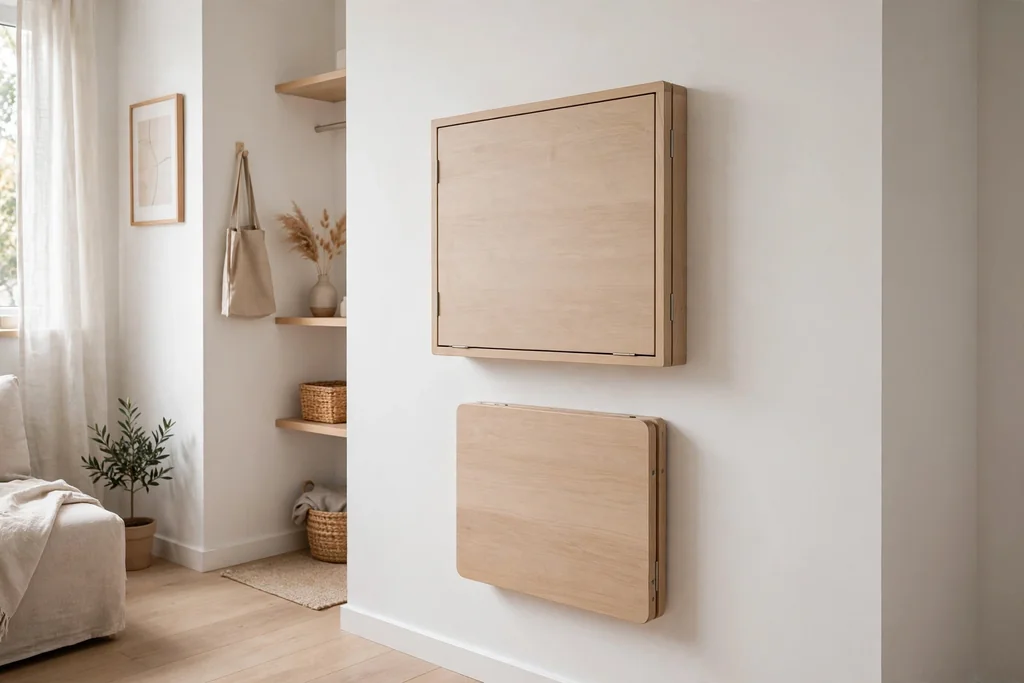
Fit a fold-down desk on the wall for work, study, or bills, and fold it away when the workday ends. A wall desk gives you a real work surface without a desk standing in the middle of the room all day, which matters in a small apartment where one room must serve several jobs. Two small shelves above it can hold notebooks and chargers.
Fix a wall desk firmly into studs or suitable wall anchors, and check the weight rating before you load it with books or a laptop. Keep the desk clear as a habit, since a fold-away desk only helps if folding it away stays easy. If wall fixing is not allowed, a slim console table that doubles as a desk gives a similar result with no drilling.
7. Place a Mirror Opposite the Window
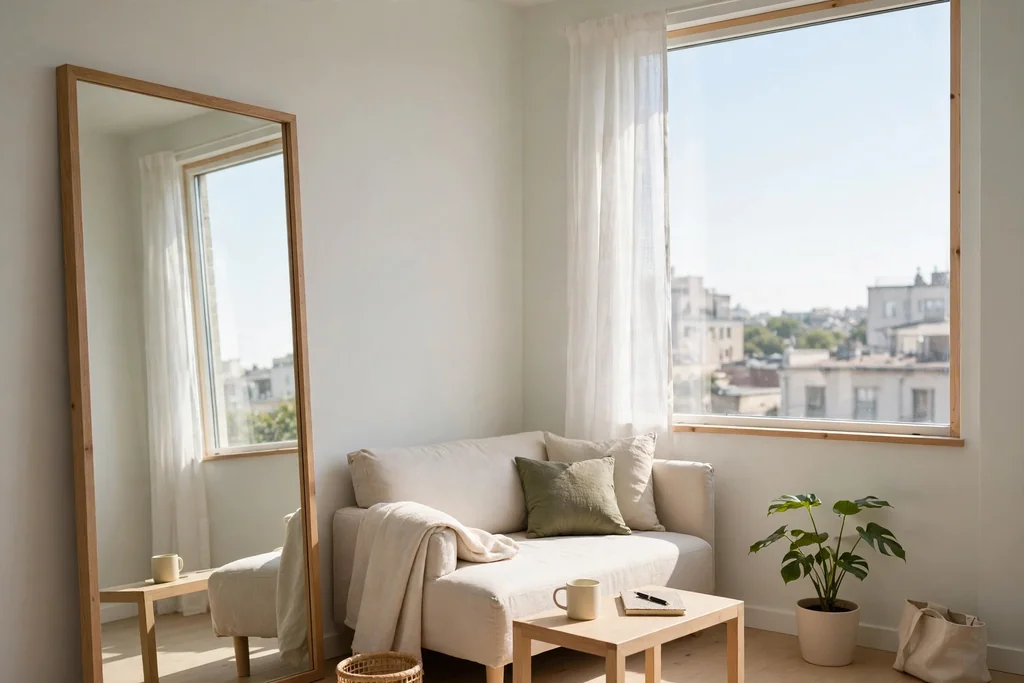
Place a large mirror opposite or beside a window to bounce daylight deeper into the room and make the far wall feel farther away. In a small apartment, that extra sense of depth matters, since there is no hallway or second room to give your eyes a break. Lean a full-length mirror against the wall if hanging is not allowed, and secure it so it cannot slide on a smooth floor.
Check what the mirror reflects before you fix its position, since a mirror facing a messy corner doubles the mess. Aim it toward the window, a plant, or a calm stretch of wall for the best result. A mirror with a simple frame suits most apartments, and one large mirror usually works better than several small ones scattered across the room.
8. Divide With an Open Bookshelf
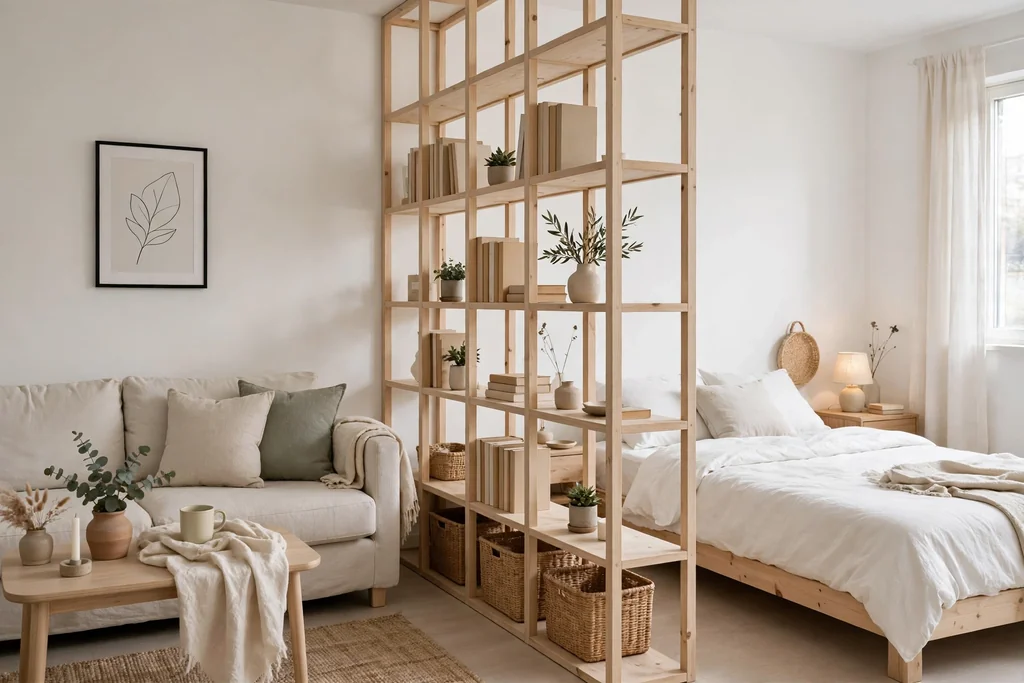
Use an open bookshelf as a soft divider between living and sleeping areas in a studio or a one-room apartment. Unlike a solid wall or a tall wardrobe, an open shelf still lets light and air pass through, while giving the sleeping area a sense of privacy. Place books, baskets, and a few display pieces on the living side, and keep the bedroom side tidy so it does not become a second display wall.
Anchor the shelf to the wall if your lease allows it, following the maker instructions, since a tall freestanding shelf can tip. If anchoring is not allowed, choose a low, wide unit instead of a tall narrow one, and keep heavy items on the lowest shelves. For more zoning ideas in a one-room home, these studio apartment decorating ideas show how rugs, curtains, and shelves can mark each zone.
9. Use Sheer Curtains for Soft Light
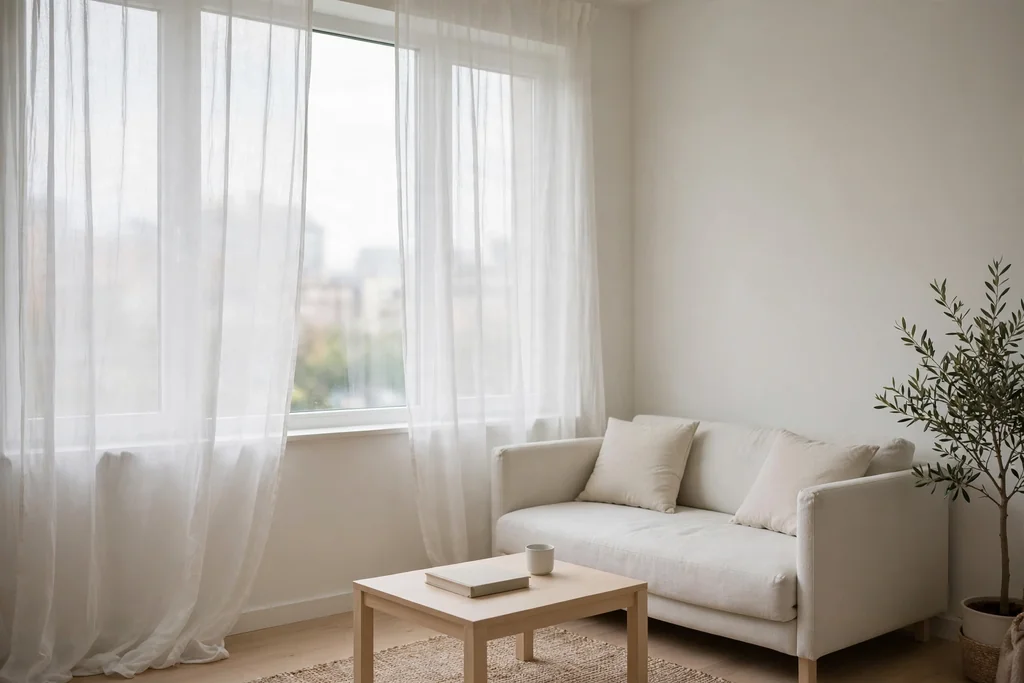
Hang sheer curtains at the window to soften daylight and give privacy without blocking light. Sheers suit a minimalist apartment because they add softness without heavy fabric, dark colour, or a busy pattern competing with the room. They also let you keep the window mostly uncovered during the day, which helps a small room feel open.
Hang the curtain rod close to the ceiling and a little wider than the window, so the window looks taller and the curtains stack clear of the glass when open. Choose a washable fabric, since window curtains collect dust, and keep the same treatment on windows in one open room so the space reads as planned. If you need darkness for sleep, add a simple blind behind the sheer layer.
10. Pick a Round Table for Dining
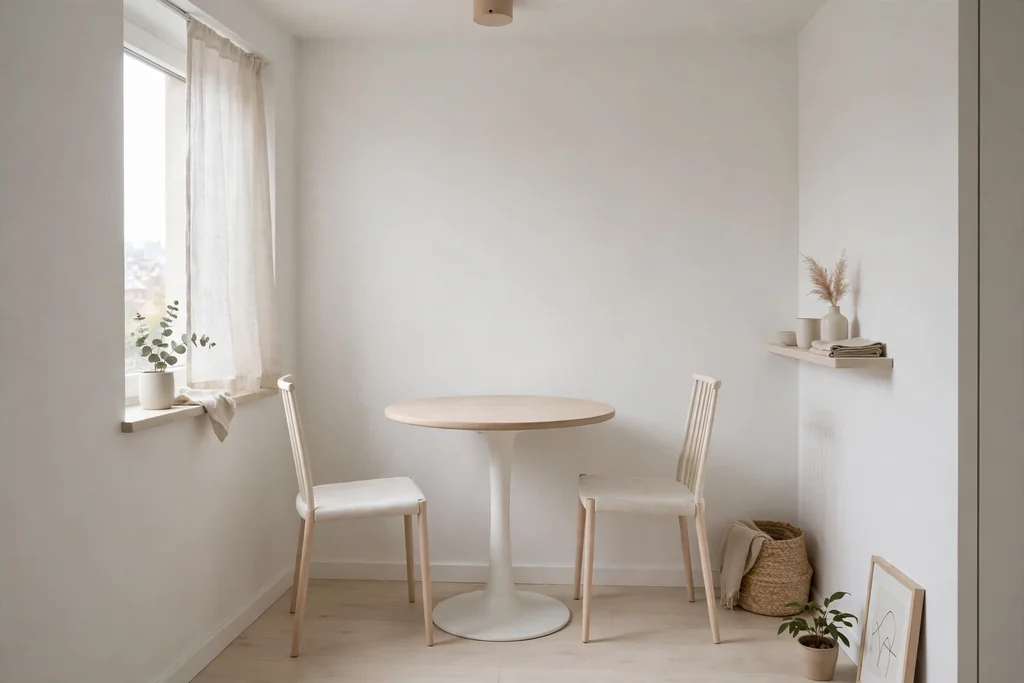
Choose a round pedestal table for dining in a small apartment, since the round shape has no sharp corners to bump into and a single central leg leaves room for chairs on all sides. A small round table seats two to four people in a tight corner, and chairs can tuck fully underneath when the meal ends. This keeps the dining spot from taking over the living area.
Place the table where chairs can pull out without hitting a wall or a sofa, and keep the tabletop clear between meals with only a small vase or candle as a centrepiece. If you often host more people, an extendable round table gives extra seats on occasion without a large table standing in the room every day. For rooms that must hold both a sofa and a table, these small living room dining room combo ideas cover shared layouts and storage.
11. Set Up a Simple Entry Zone
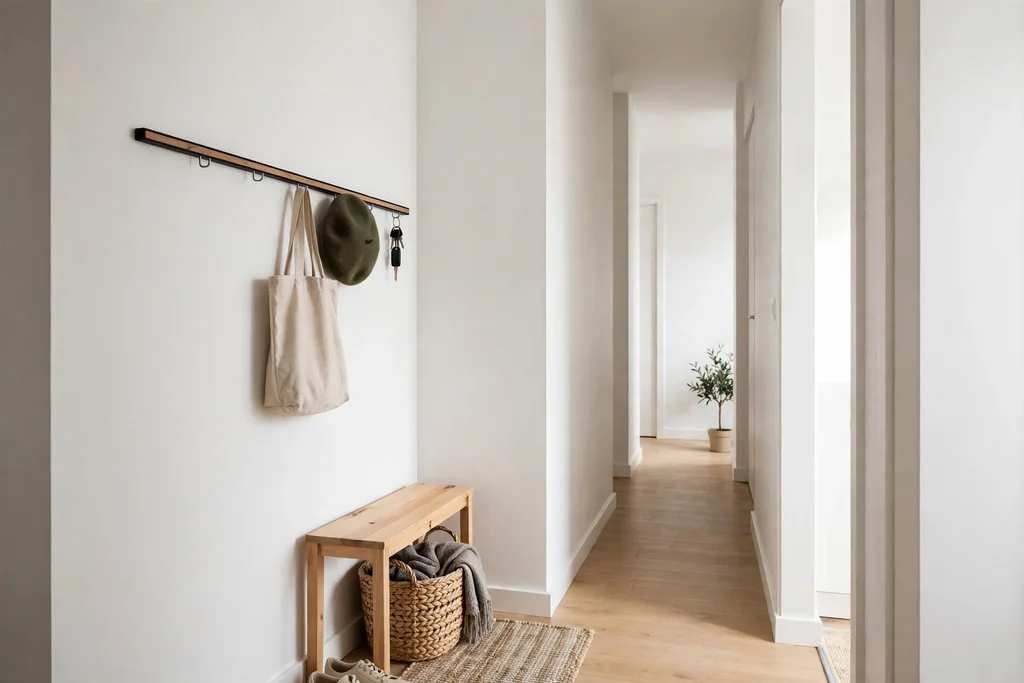
Give the entry a simple zone with a hook rail, one small bench or stool, and one basket for shoes or bags. Without a zone, coats, keys, and parcels land on the first chair or table inside the door, and that clutter spreads into the living room. A defined entry stops the mess at the door, even when the entry is only a short stretch of wall.
Keep the zone to the items you use daily, and move seasonal coats and spare bags into closed storage elsewhere. A small tray or dish for keys and a hook at a height children can reach, if children live in the home, make the zone work for everyone. Check the zone each evening, since a one-minute reset keeps it from growing back into a pile.
12. Choose a Low Platform Bed
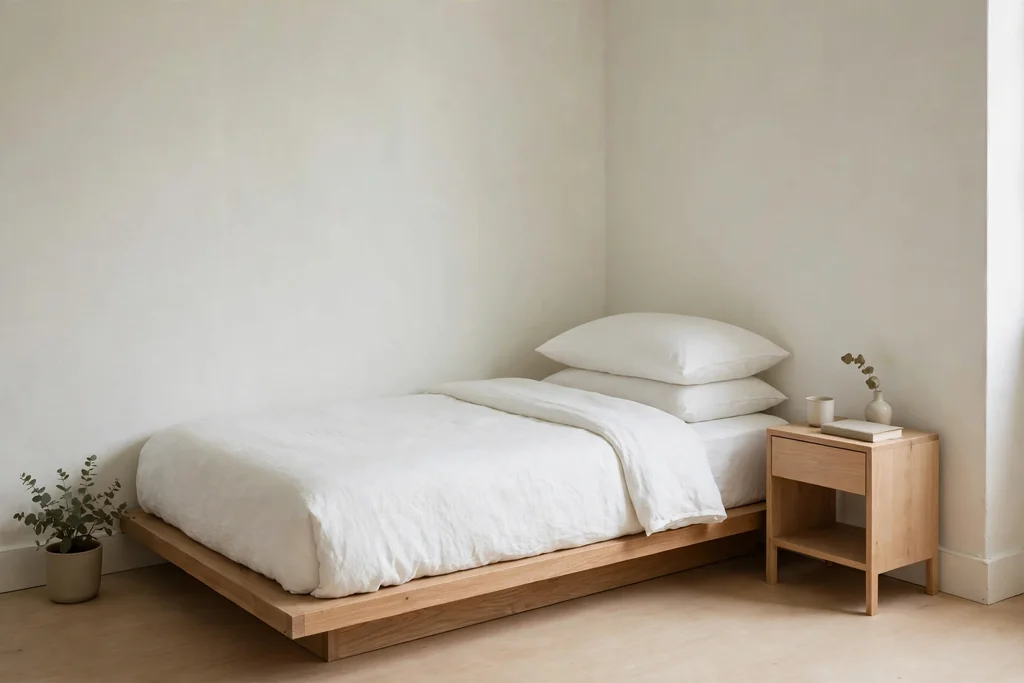
Choose a low platform bed for a small sleeping area, since a low frame keeps the room feeling open and leaves wall space above the bed for a shelf or a single print. A platform bed also avoids a bulky headboard and a tall frame competing with the rest of the room, which helps a small bedroom or a studio corner feel calm at night.
Use the space under the platform for flat storage boxes if the design allows it, and keep bedding in one calm colour so the bed reads as a quiet block rather than a busy pattern. For more bedroom storage that keeps the room restful, these bedroom storage ideas cover under-bed drawers, wardrobes, and closed nightstands. Keep the bedside to one lamp and one book, and move chargers and clutter into a drawer.
13. Use Nesting Tables You Can Move
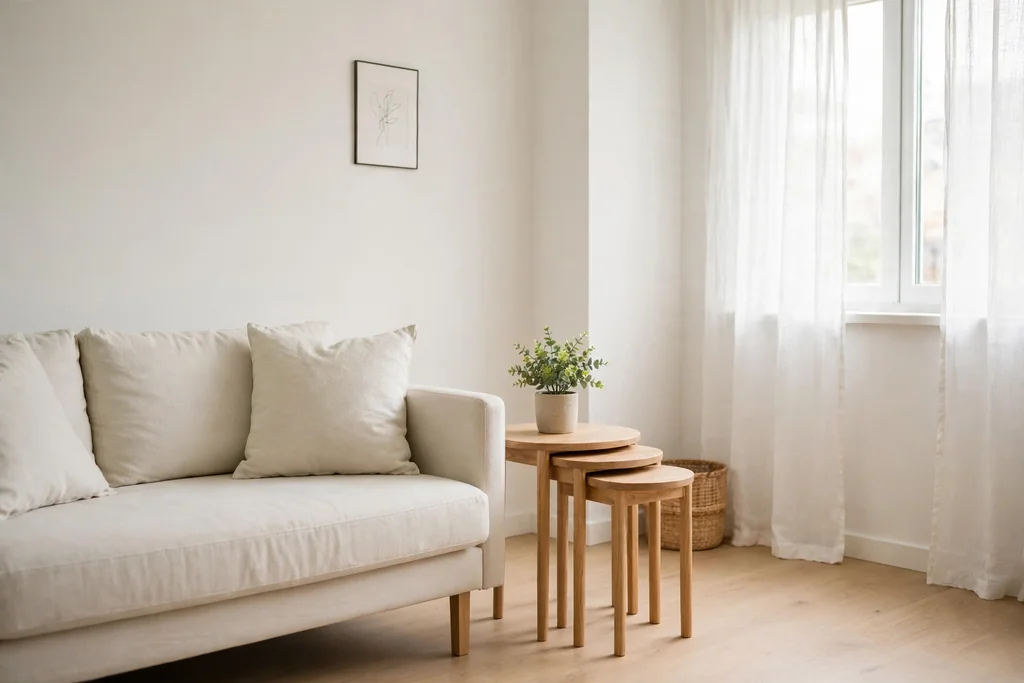
Use nesting tables beside the sofa instead of one heavy coffee table, since they stack into a small footprint when you are alone and pull apart into two or three side tables when friends visit. That flexibility suits a room where the layout changes through the day, from work to rest to guests, without buying extra furniture for each use.
Choose tables light enough to move with one hand, with stable legs that do not wobble on a rug. Round tops are a good choice in tight walkways, since they have no sharp corners to catch a hip. Keep the largest table beside the sofa and tuck the smaller ones under it or beside the bed, so they are close when needed and out of the way when not.
14. Keep Kitchen Fronts Flat and Plain
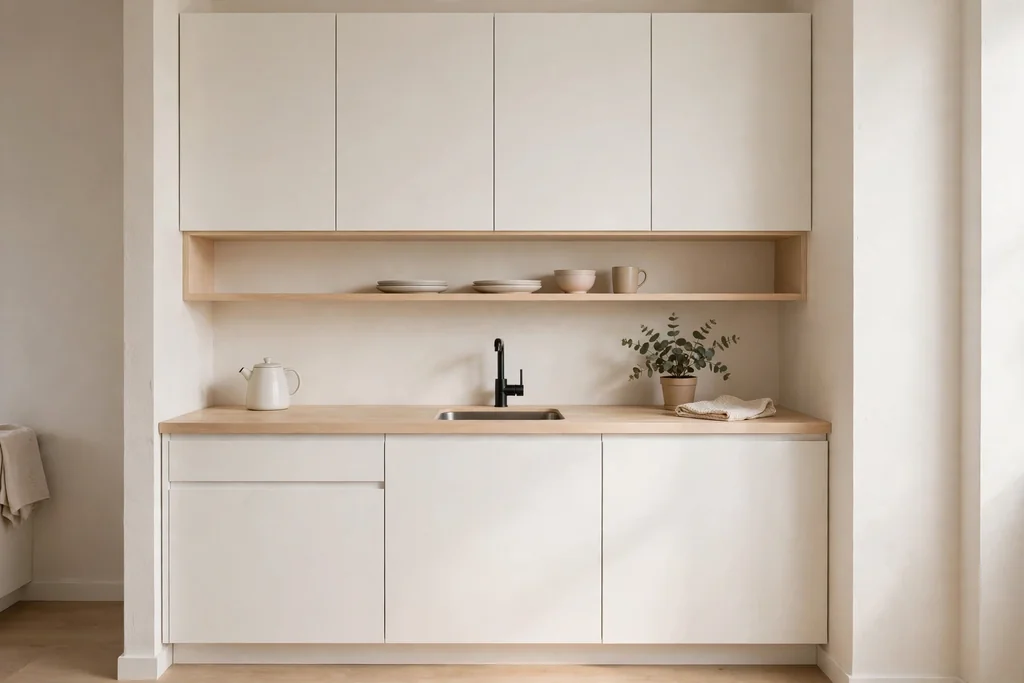
Choose flat, plain kitchen fronts in one light colour, with simple handles or handle-free doors, to keep a small kitchen calm. Busy door profiles, mixed finishes, and open racks full of mixed items make a small kitchen look crowded fast, even when it is tidy. Plain fronts let the worktop and a few daily items take the focus instead.
Keep only daily items on the worktop, such as a kettle and a chopping board, and store the rest behind closed doors. Group items inside cabinets by use, such as cooking in one cabinet and baking in another, so you open one door for one task. If a full kitchen change is not possible, painting or replacing only the most visible fronts can give a similar calm effect.
15. Fit a Floating Vanity in the Bathroom
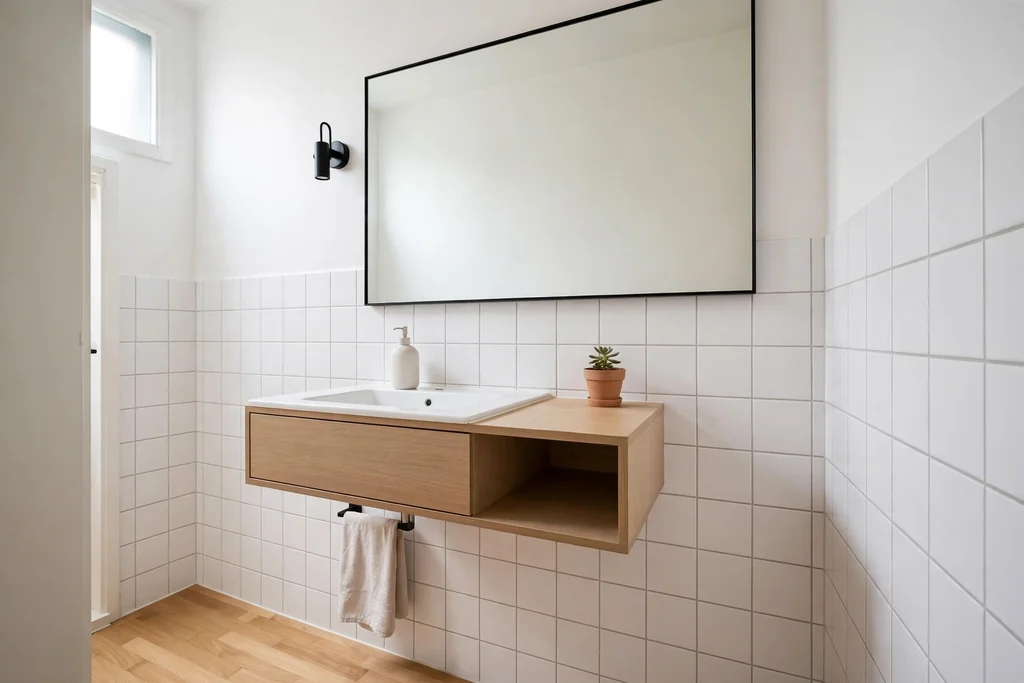
Fit a floating vanity in a small bathroom, since floor showing beneath the unit makes the room look larger and cleaning the floor becomes easier. A floating vanity with one drawer and a simple mirror above it gives a place for daily items without a bulky cabinet filling the wall. Keep the counter to a soap dish, a toothbrush holder, and one small plant or candle at most.
Store spare supplies in a closed cabinet or a basket on a high shelf, rather than on the vanity top, so the bathroom stays calm on busy mornings. Choose a vanity depth that leaves a clear path to the door and the shower, and check the plumbing position before you buy. A large mirror above the vanity also bounces light around a small bathroom, much like a mirror in a living room.
16. Layer Light at Different Heights
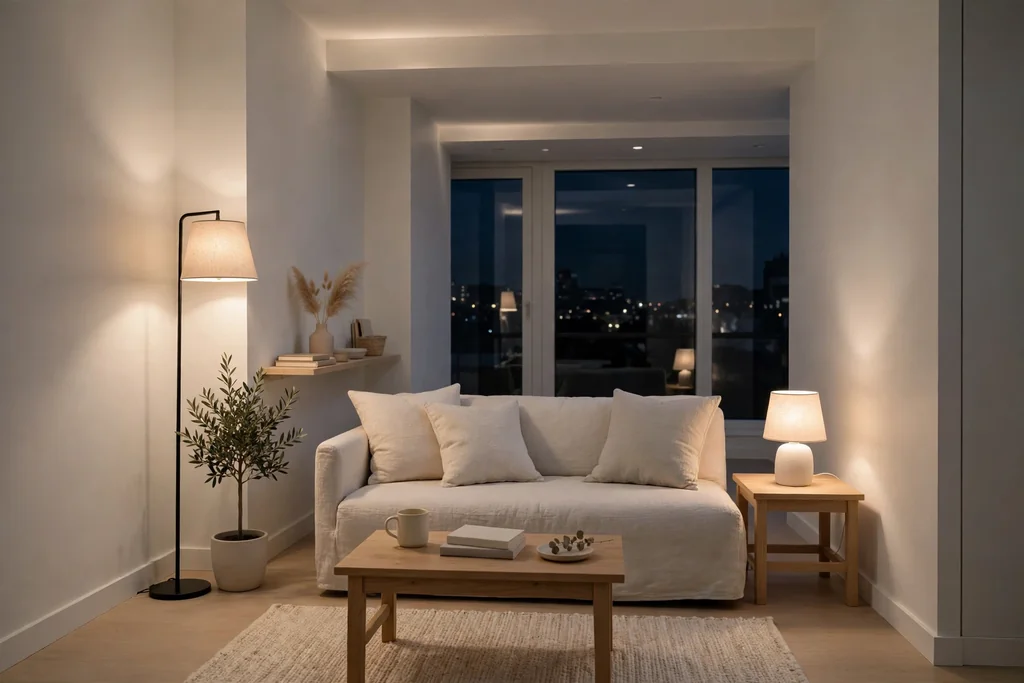
Layer light at different heights instead of relying on one ceiling light for the whole apartment. A floor lamp beside the sofa, a small table lamp on a shelf, and a task light at a desk or kitchen counter each serve one job, and together they make a small room feel warm in the evening without harsh overhead light. Dimmer switches, where already fitted, let you lower the light for rest and raise it for cleaning.
Keep lamp shades in one calm colour family, and choose warm bulb tones across the room so zones do not clash. Place lights where you actually sit, read, and work, rather than centring them on the ceiling alone. If floor space is tight, a wall lamp or a clip-on shelf light gives layered light without a lamp base taking up floor room.
17. Hang One Large Artwork
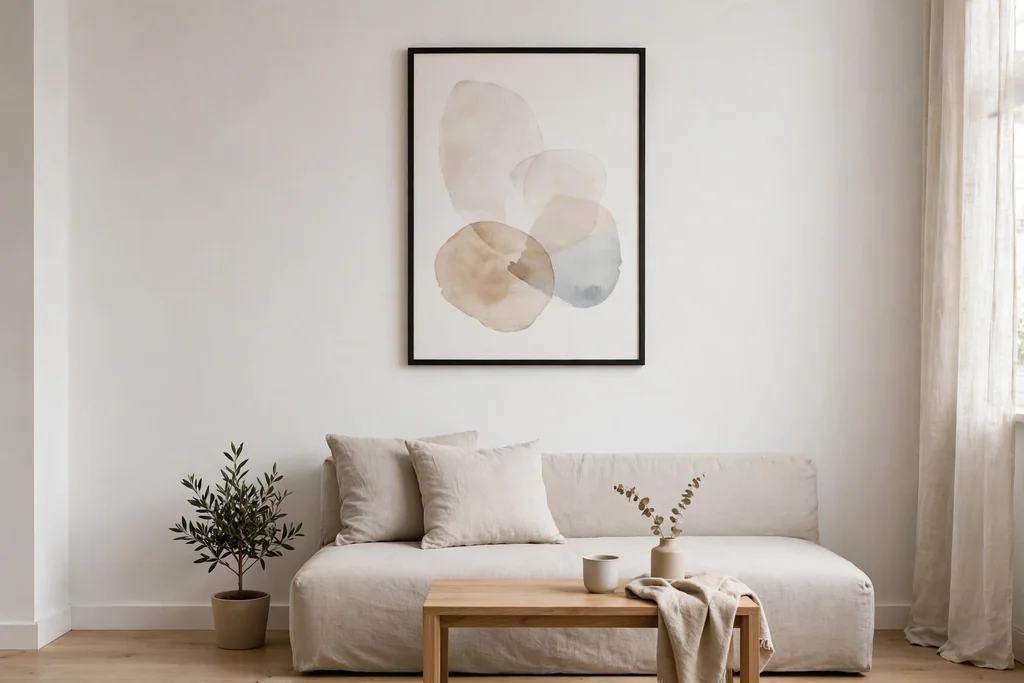
Hang one large artwork on the main wall instead of many small frames scattered across the room. One large piece gives the eye a clear focus and leaves the rest of the wall calm, which helps a small apartment feel planned rather than crowded. A single print, photograph, or textile in a simple frame suits most rooms and is easy to change later.
Hang the centre of the artwork at eye level from a standing position, and leave blank wall around it so the piece has room to breathe. If you love a collection, group it in one tight grid on one wall only, rather than spreading small frames across every wall. Keep the frame style simple and consistent with the room, so the art adds interest without adding noise.
18. Add Warmth With Natural Texture
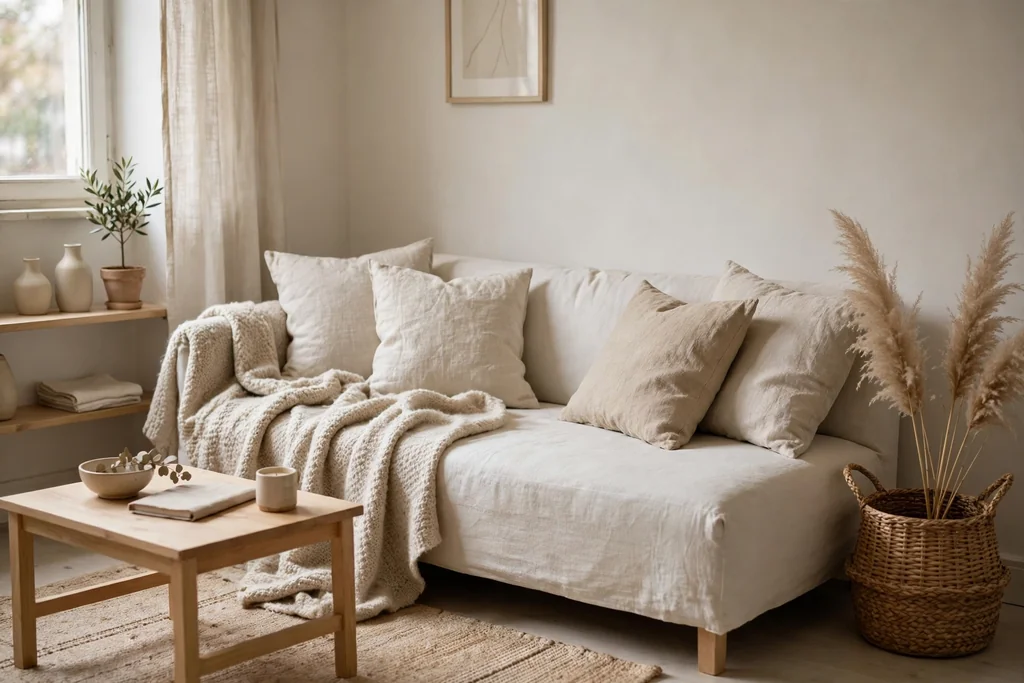
Add warmth with natural texture instead of extra colour or pattern, using linen, wool, cotton, wood, and woven baskets. Texture gives a minimalist room depth without clutter, since a linen cushion, a wool throw, and a wooden tray each feel different to the eye and to the touch while staying in one calm palette. This is a good way to keep a pale room from feeling cold or bare.
Limit texture to a few places: bedding, sofa cushions, a rug, and one or two baskets. Too many textures in one room can feel as busy as too many colours, so repeat one or two materials across the apartment for a planned look. Choose washable covers where possible, since textured fabrics in a small home are used daily and need regular cleaning.
19. Build a Window Seat With Storage
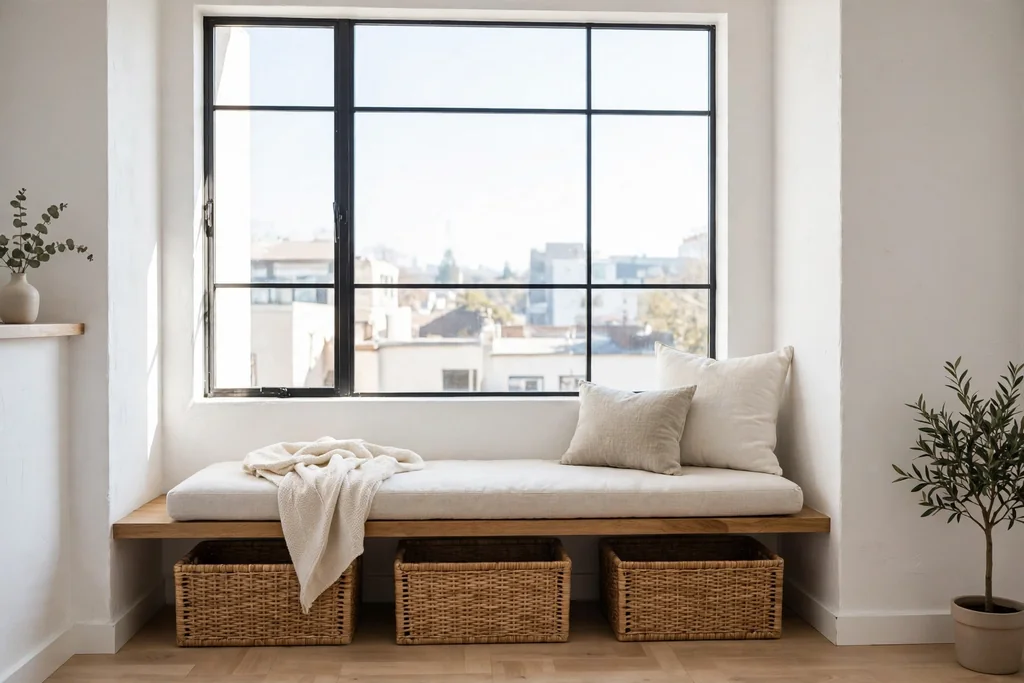
Build a window seat from a low bench or a pair of sturdy cabinets topped with a cushion, and use the space underneath for shoes, bags, or spare bedding. A window seat turns an otherwise empty stretch of wall into a reading spot, a dining bench, or a place to sit while you put on shoes, without adding a separate chair and a separate storage unit.
Add a small shelf or a wall hook nearby for a book, a phone, or a cup, so the seat works as a complete spot rather than a bare bench. Keep the cushion in a washable cover, since a seat beside a window collects sun and dust, and keep the cushion firm enough to sit on for a full meal or a long read. If you rent, a freestanding bench gives most of the same benefit with no fixed building work.
20. Add a Slim Rolling Cart
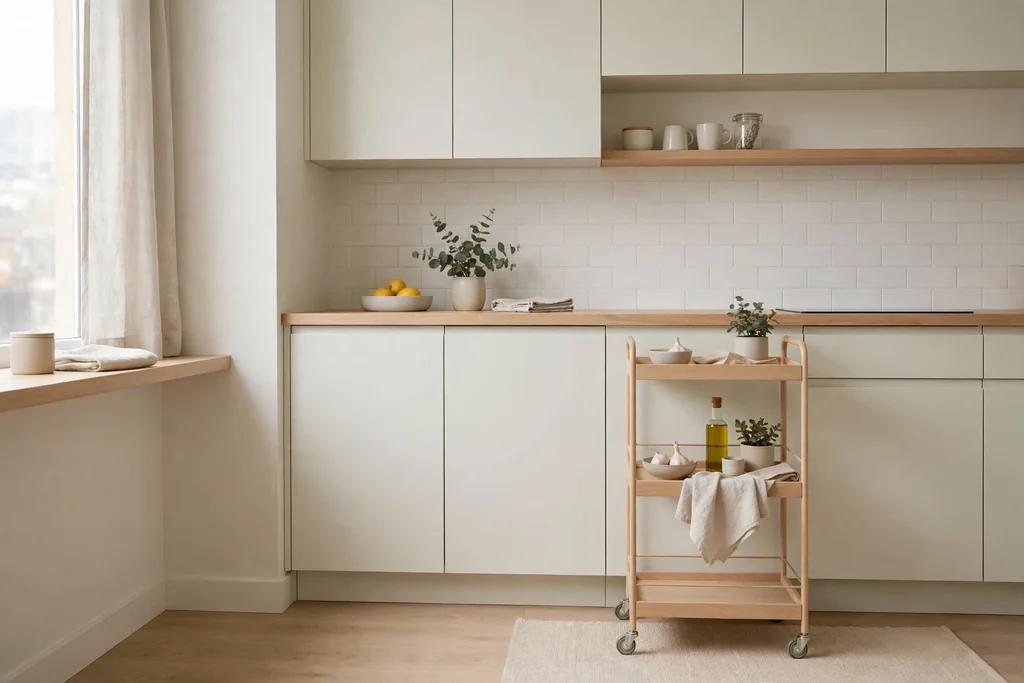
Add a slim rolling cart to a small kitchen or bathroom, since it adds a work surface and storage that can move where it is needed and park out of the way when it is not. Use it as extra counter space beside the stove, a coffee station in the morning, or a side table when friends visit. Shelves or drawers in the cart can hold utensils, dry goods, or cleaning supplies that have no home in a small kitchen.
Pick a cart that fits through the gap between your counters and your seating area, and check its height against your worktop so it feels comfortable to use. Lock at least one wheel when the cart is in use, especially on a smooth floor, and keep the top clear of items you need to reach daily. A cart with a plain finish in the kitchen palette will blend in rather than add a new colour to the room.
21. Use Matching Baskets for Open Storage
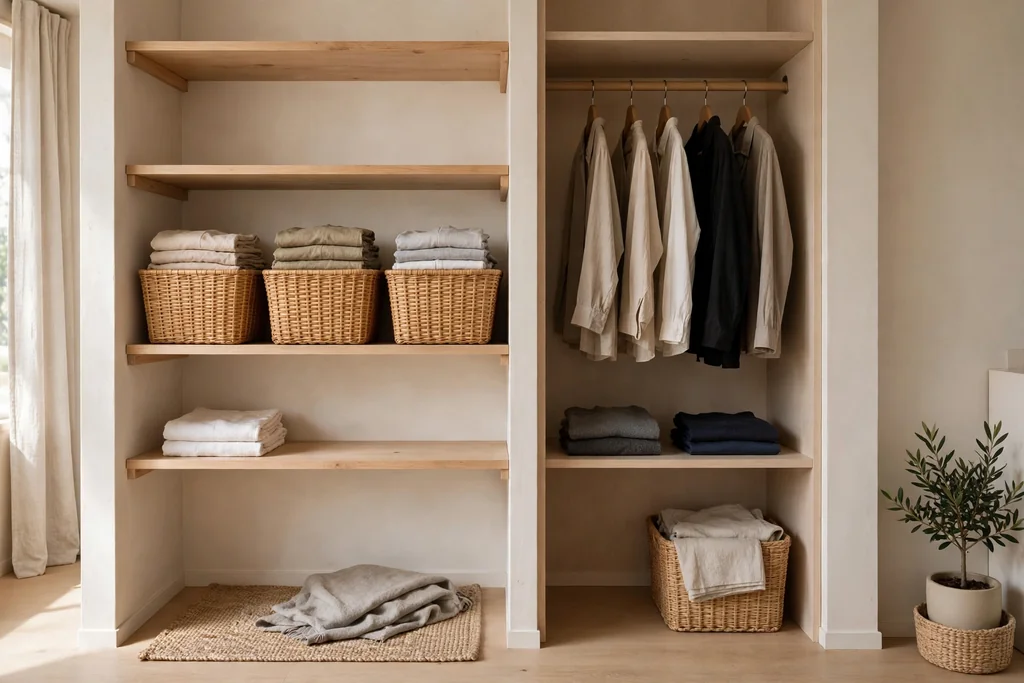
Use matching baskets on open shelves or in a closet, so open storage reads as planned rather than patched together. Baskets of one material, such as woven seagrass or cotton, in no more than two sizes, give closed storage without doors and let you pull out one basket instead of searching a whole shelf. Label the front of each basket, so everyone in the home knows where items belong.
Sort baskets by type, such as scarves in one, chargers in another, and spare linens in a third, and keep each basket light enough to lift with one hand. Replace a basket when the weave frays, since a damaged basket snags clothes. Open shelves with baskets suit a room that needs soft texture as well as order, and they work well in closets, entry zones, and bathroom shelves.
22. Keep the Balcony Simple
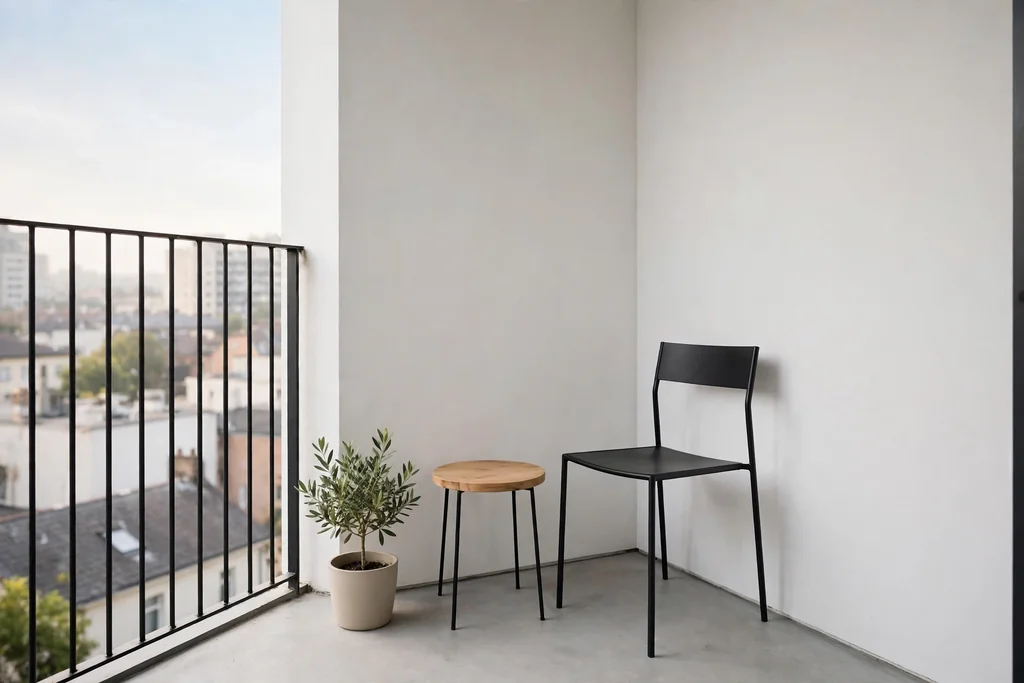
Keep a small balcony simple with one slim chair, one small table, and one plant, rather than a full outdoor set that crowds the space. A balcony in a small apartment works best as a single-purpose spot: morning coffee, evening air, or a place for one plant to grow. One chair also leaves room to step outside, water plants, and clean the floor without moving furniture each time.
Choose weatherproof pieces that fold or stack, so the balcony can clear quickly in bad weather or when you need the space for drying laundry. Keep the balcony floor mostly clear, and store cushions inside when not in use, since a small outdoor space shows clutter from inside the apartment too. If the balcony is tiny, a rail-mounted table and one folding chair give a seat without any floor-hungry furniture.
23. Screen the Bed With a Curtain
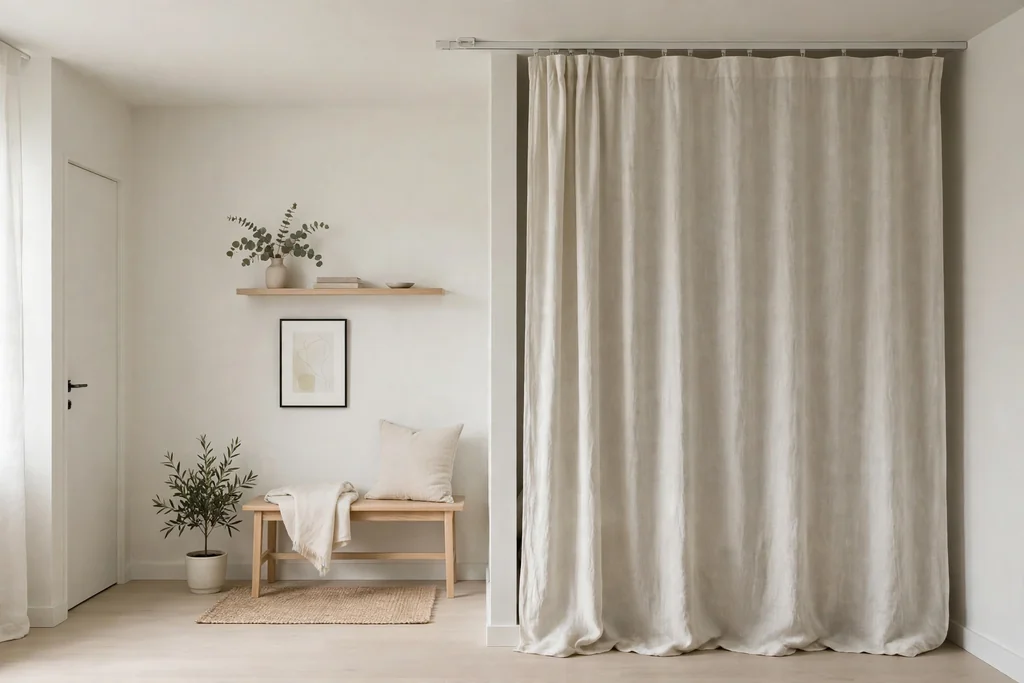
Screen a bed alcove with a curtain on a ceiling track, so you can close off the sleeping area at night and open the whole room again in the morning. This works well in a studio where a bookshelf divider would block too much light, or where the bed sits in an alcove with no room for furniture around it. A curtain also softens the edge between sleeping and living without building a wall.
Hang the curtain as close to the ceiling as possible so the bed area feels taller, and extend the track a little past the bed on each side so the curtain can stack out of the way during the day. Choose a fabric heavy enough to block the view of the bedding, but light enough to slide easily with one hand. Washable fabric is a practical choice, since a bed curtain collects dust and cooking smells faster than a window curtain.
24. Run a Short Weekly Reset
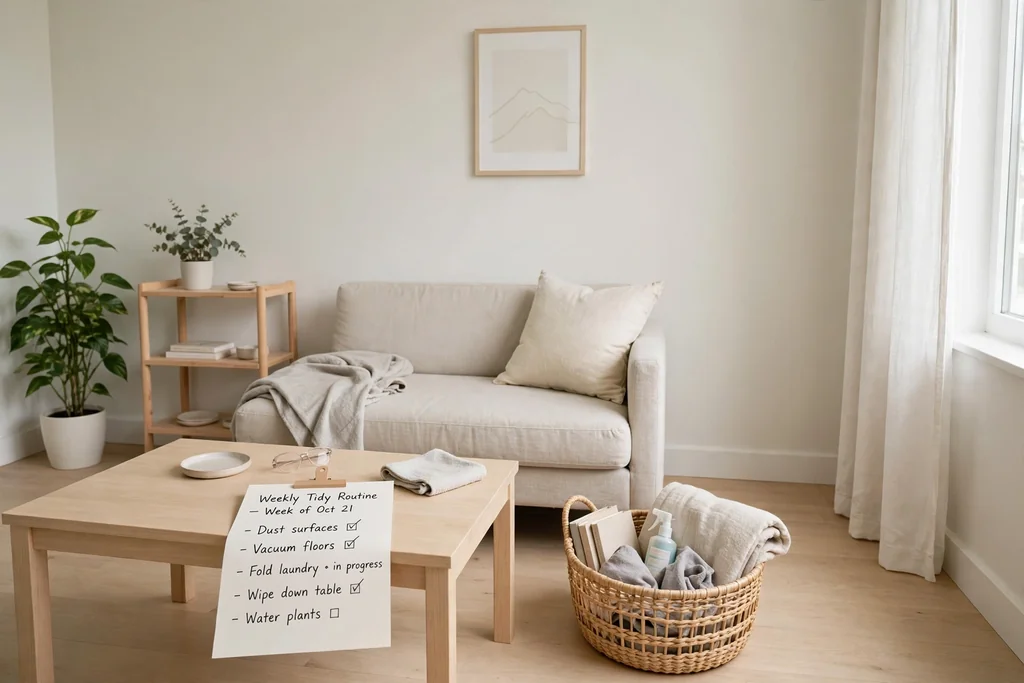
Run a short weekly reset to keep a minimalist apartment calm, since small rooms show clutter faster than large ones. Set aside fifteen minutes once a week to return items to their homes, clear surfaces, wipe the kitchen and bathroom tops, and check the entry zone. A regular reset stops small piles from growing into a full tidy-up, and it makes daily life easier during the week.
Use one basket for the reset: carry it through the apartment, collect items that belong elsewhere, and put each one away before the basket goes back to its home. At the end of the reset, check for one item to pass on, donate, or recycle, so the apartment does not slowly refill. A weekly reset works best when it stays short and regular, rather than long and rare.
Conclusion
A minimalist small apartment works when the base stays calm, the furniture fits the room, and every item has a home. You do not need to change everything at once. Pick the idea that solves your biggest daily frustration, whether that is a cluttered entry, a sofa that is too large, or a kitchen with no clear surface, and live with that change for a week. Then add the next idea that fits your space, your lease, and your budget. Small, steady choices keep the apartment easy to live in, easy to clean, and easy to enjoy. Save this guide to revisit when you move, redecorate, or need a fresh idea for one corner at a time.
FAQs
1. What is the first step for a minimalist small apartment?
Start by clearing one surface and one storage spot, such as the entry and a single drawer, before you buy anything. Measure the room, list what you use daily, and give those items fixed homes first. Once daily items have places, it becomes clear what is extra and what still needs a storage solution.
2. How do I keep a minimalist apartment from feeling cold?
Use warm base colours, such as warm white or soft beige, and add natural texture through linen, wool, wood, and woven baskets. Layer light at different heights, add one plant, and keep one large artwork rather than bare walls everywhere. Warmth in a minimalist home comes from texture and light, not from filling every surface.
3. Can I make a small apartment minimalist while renting?
Yes. Focus on freestanding furniture, removable hooks, curtains, rugs, baskets, and rolling carts, and check your lease before you drill or mount anything heavy. A fold-down desk, a bookshelf divider, and a curtain for a bed alcove can all work without permanent changes, and they move with you to the next home.
4. How much storage does a minimalist apartment need?
It needs enough closed storage for daily items, seasonal items, and cleaning supplies, plus one open spot for items you reach for every day. Measure what you own before you buy storage, and keep one shelf or drawer partly empty at the start, so new items have a place without pushing older items onto surfaces.
5. What furniture should I avoid in a small apartment?
Avoid oversized sofas, heavy coffee tables with no storage, and single-purpose pieces that block walkways or door swings. If a piece forces you to squeeze past it daily, or if it holds only one small job, a smaller or multipurpose piece usually serves the room better. Test door, drawer, and chair clearance before you commit.
6. How often should I tidy a minimalist small apartment?
Do a one-minute reset each evening for the entry and kitchen surfaces, and a short weekly reset for the whole apartment. Small rooms show clutter quickly, so frequent short resets work better than a long tidy-up once a month. During the weekly reset, pass on one item you no longer use to stop the home slowly refilling.