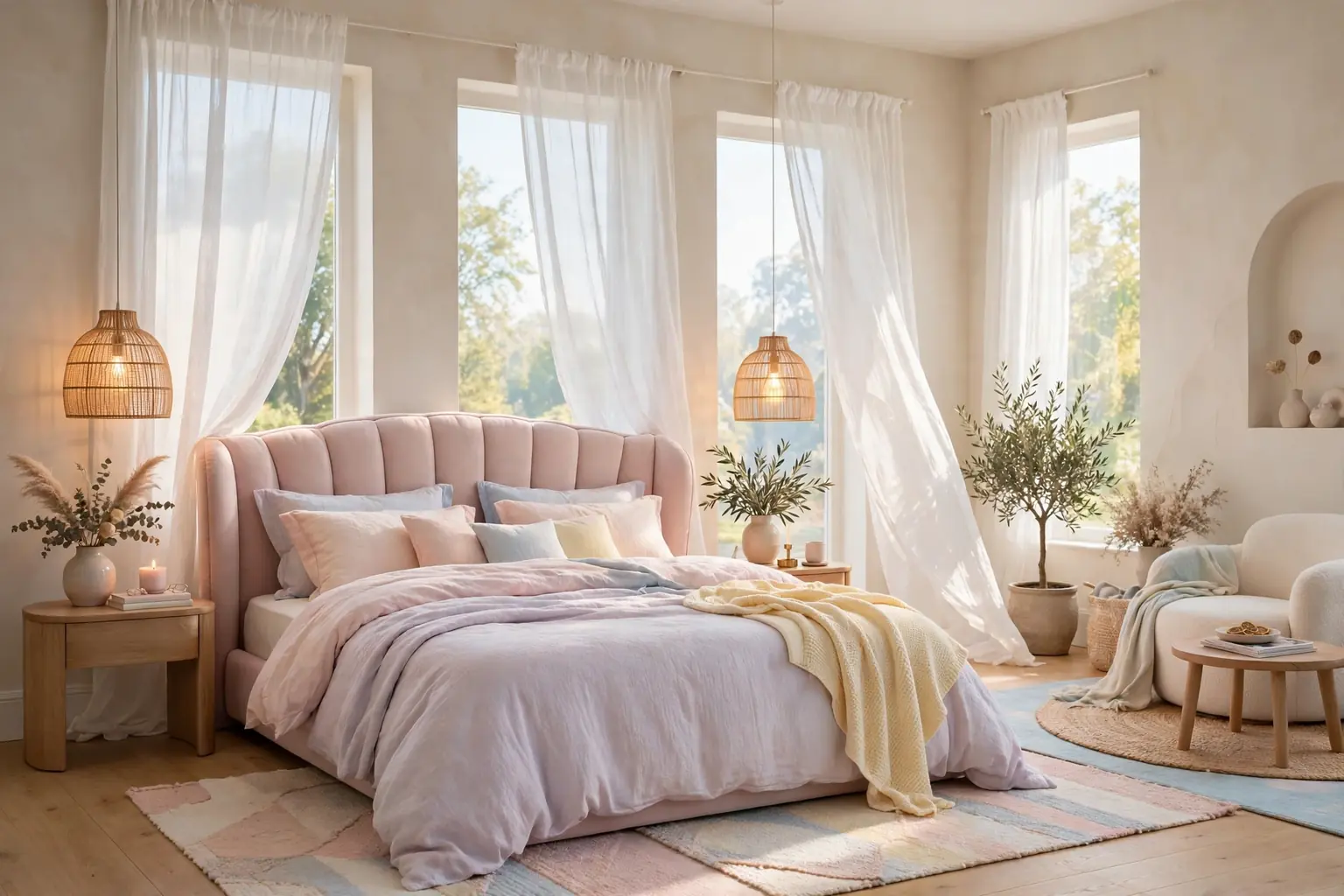
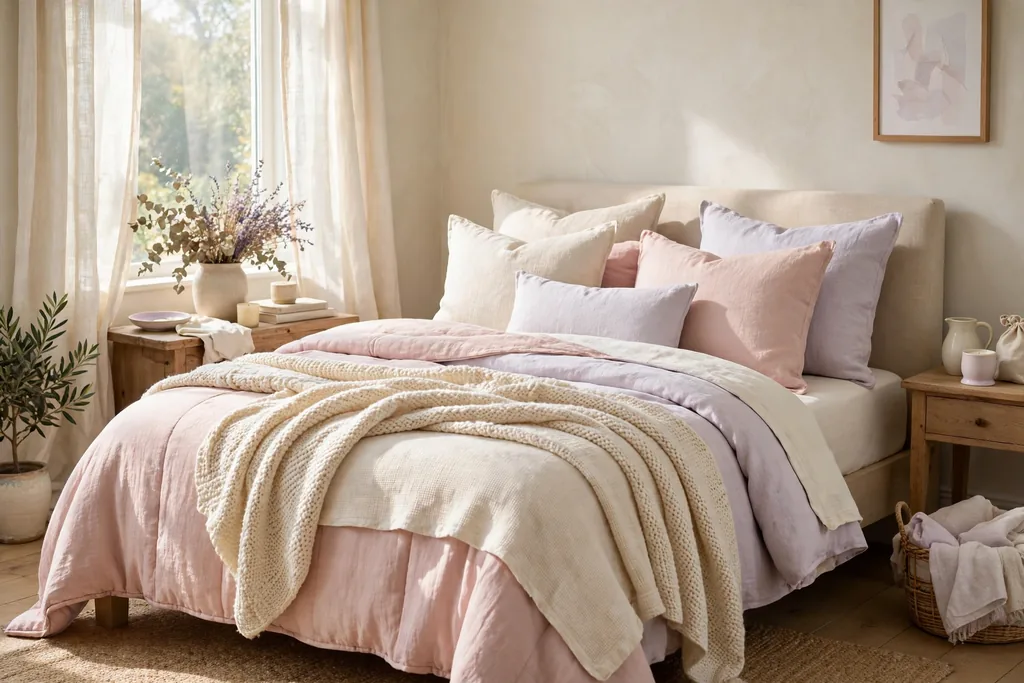
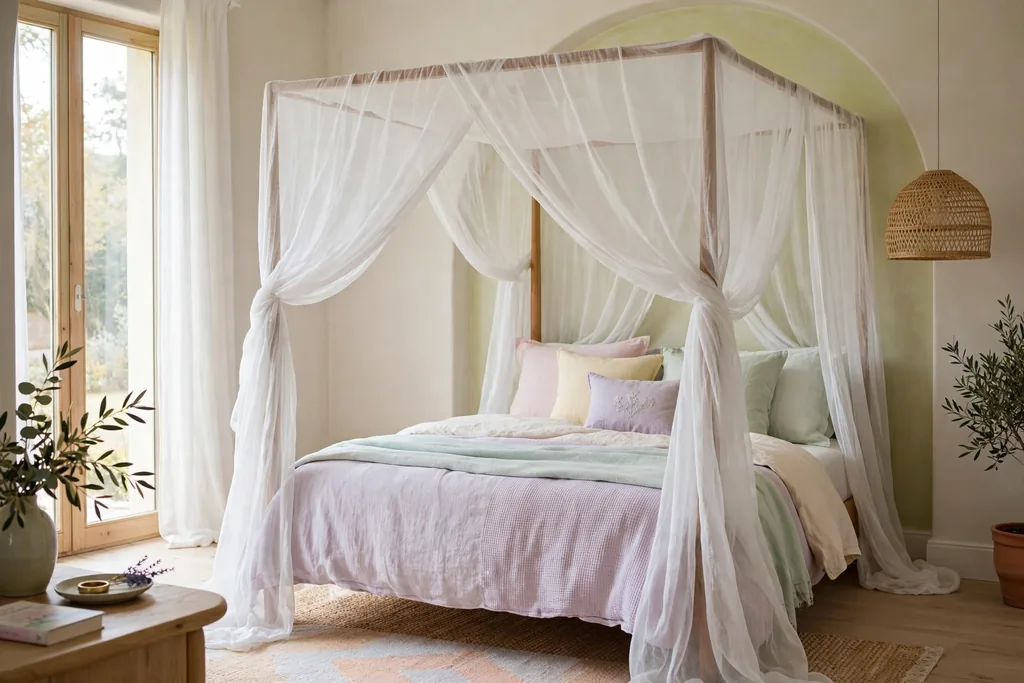
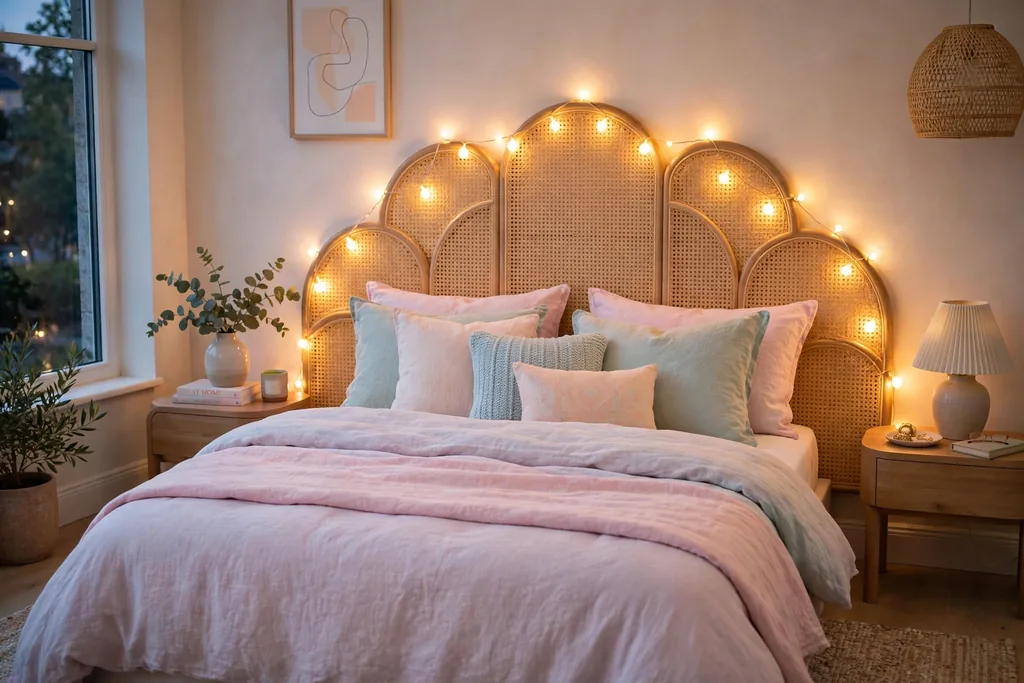
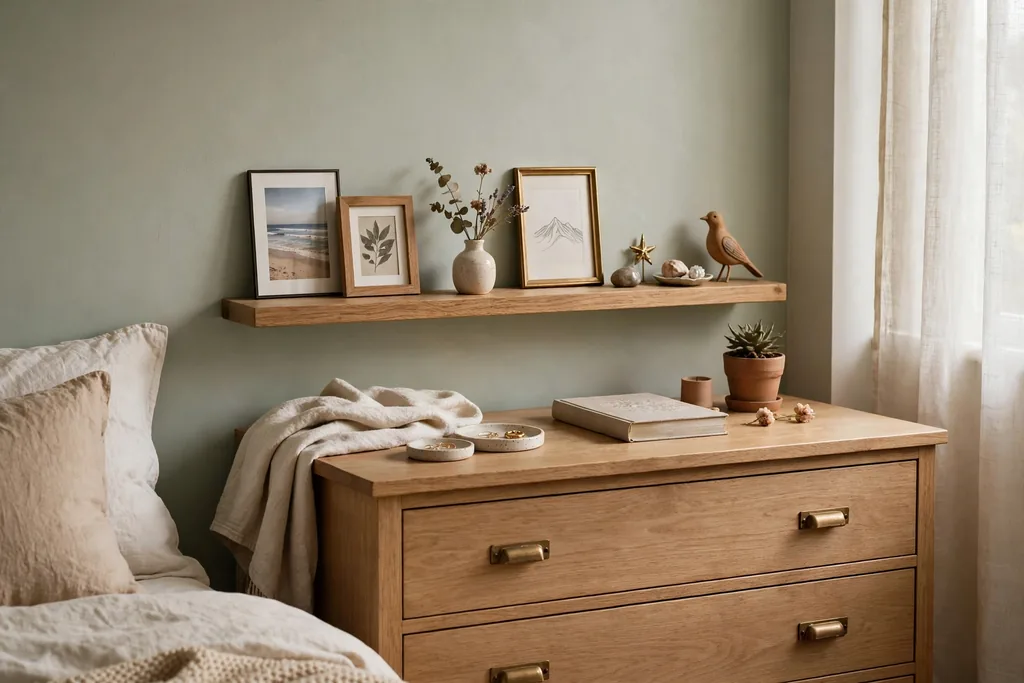
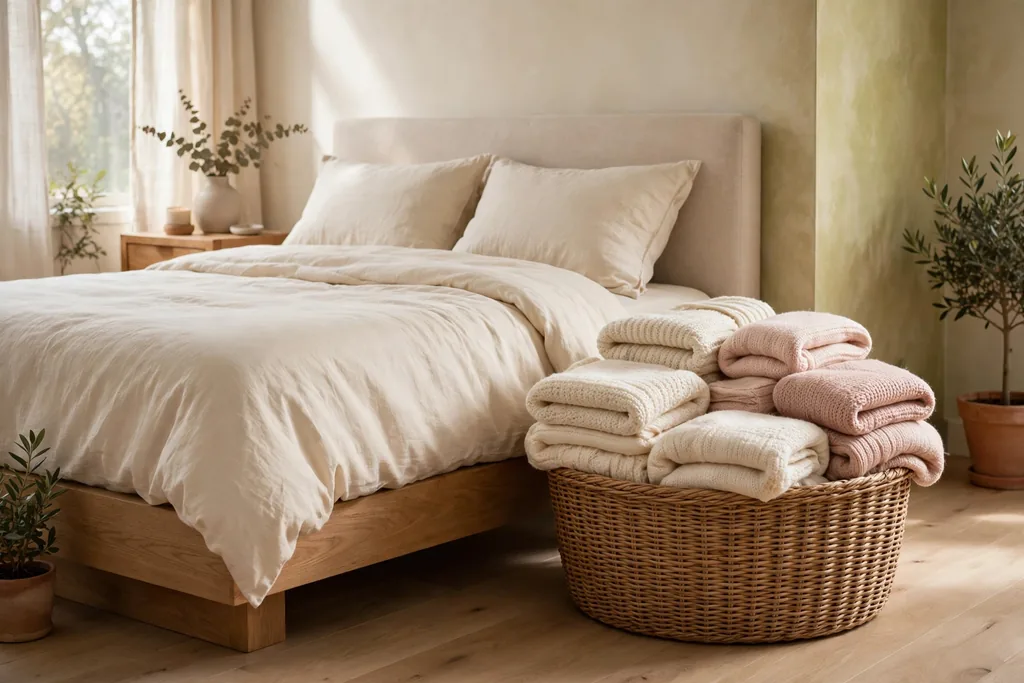
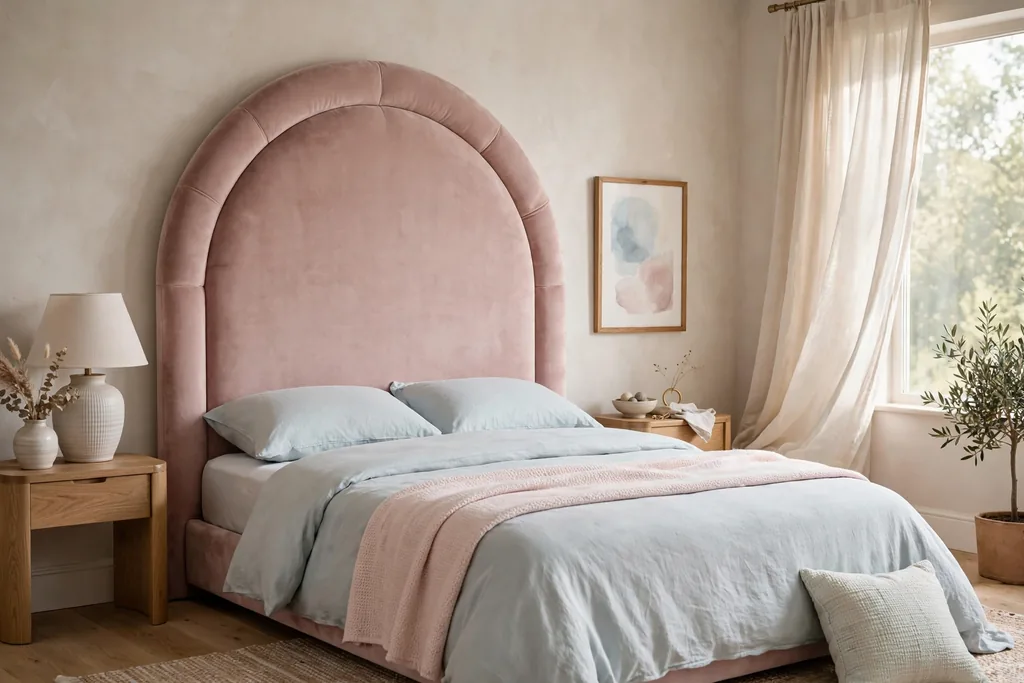
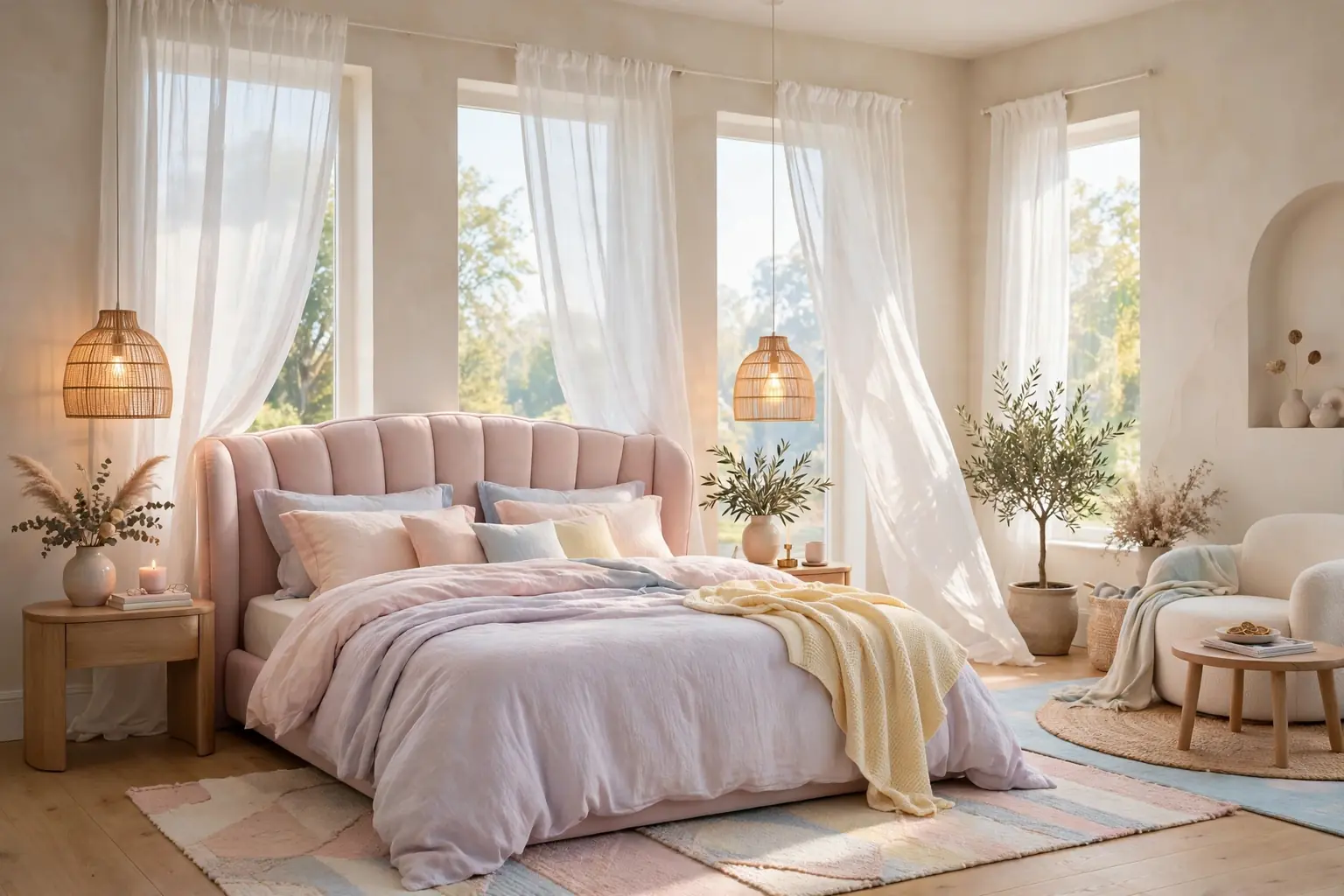
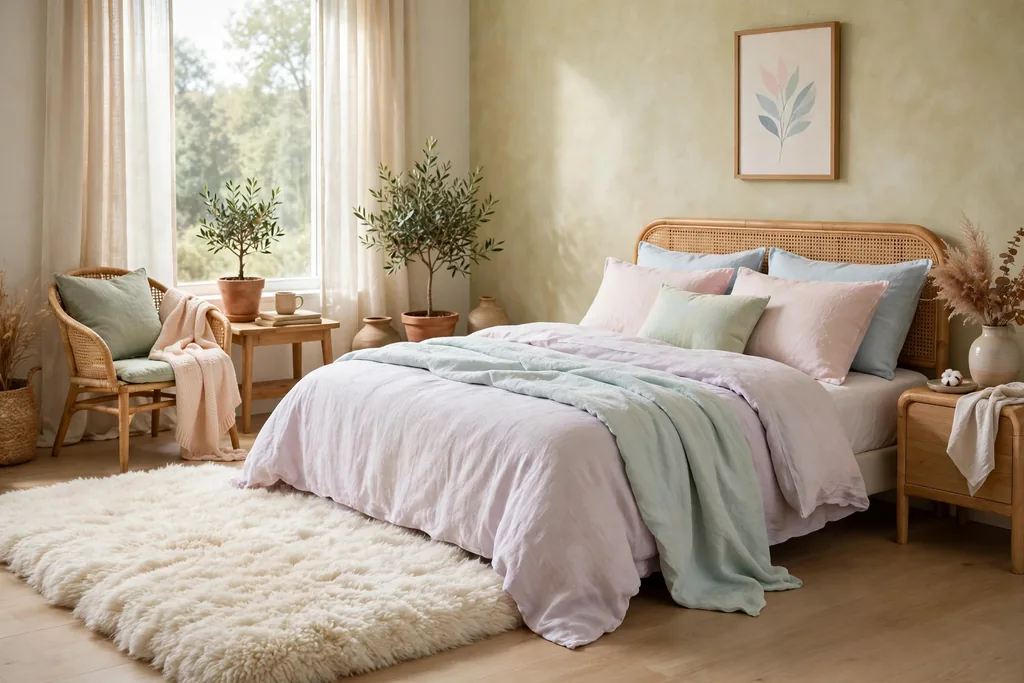
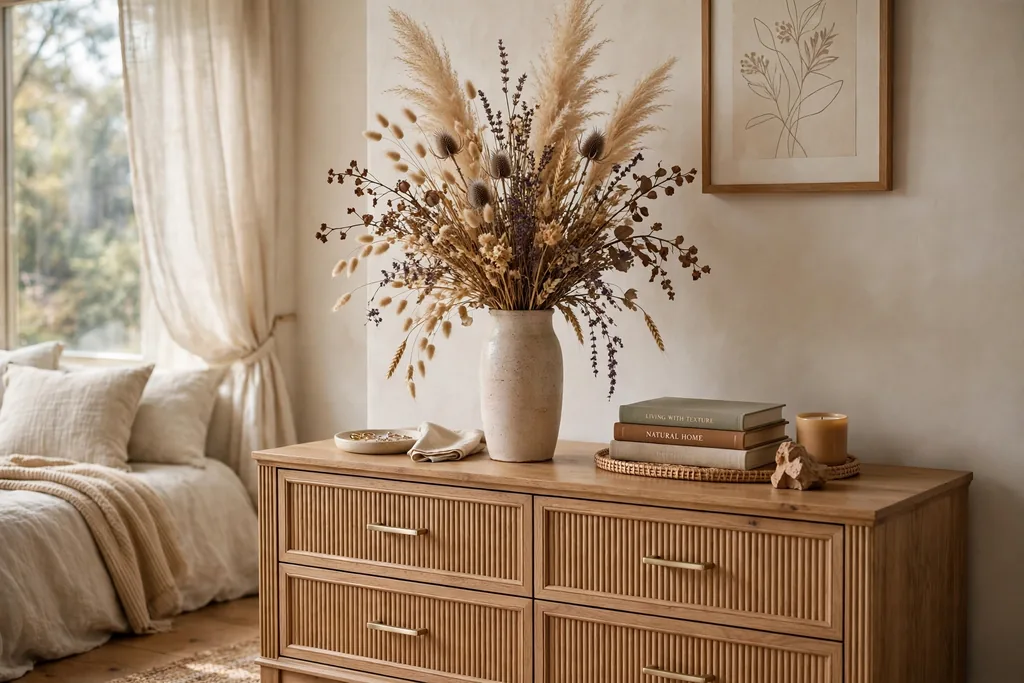
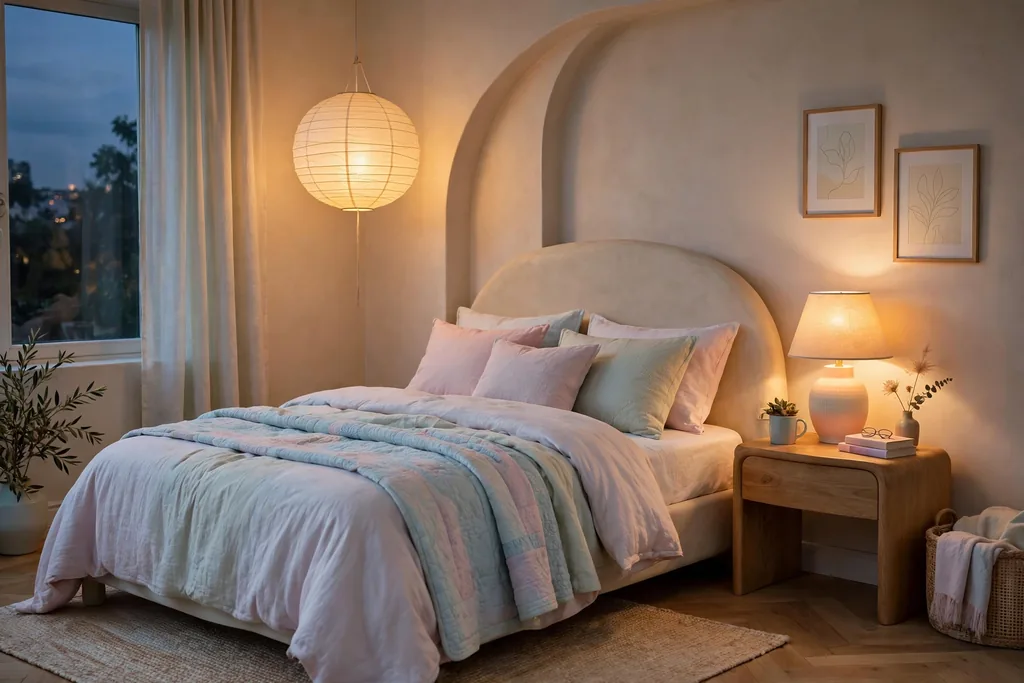
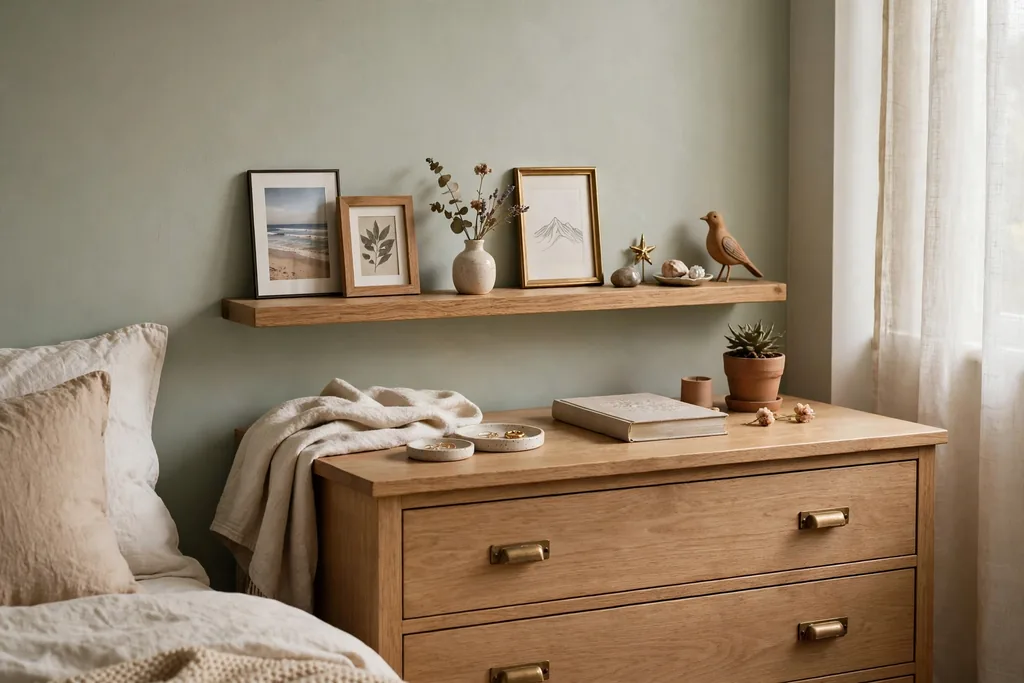
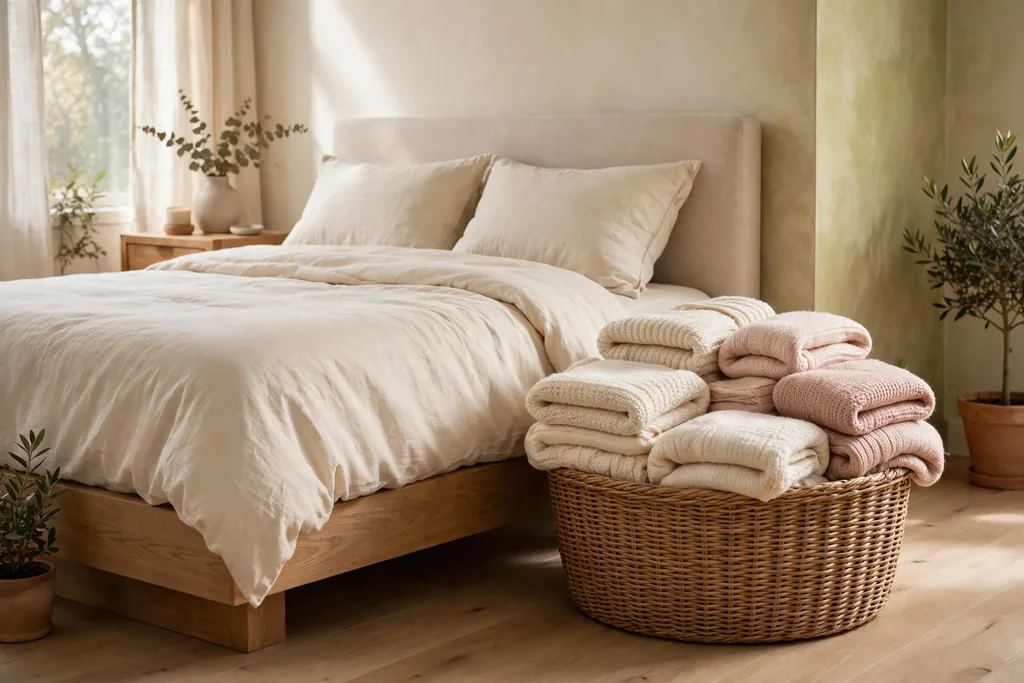
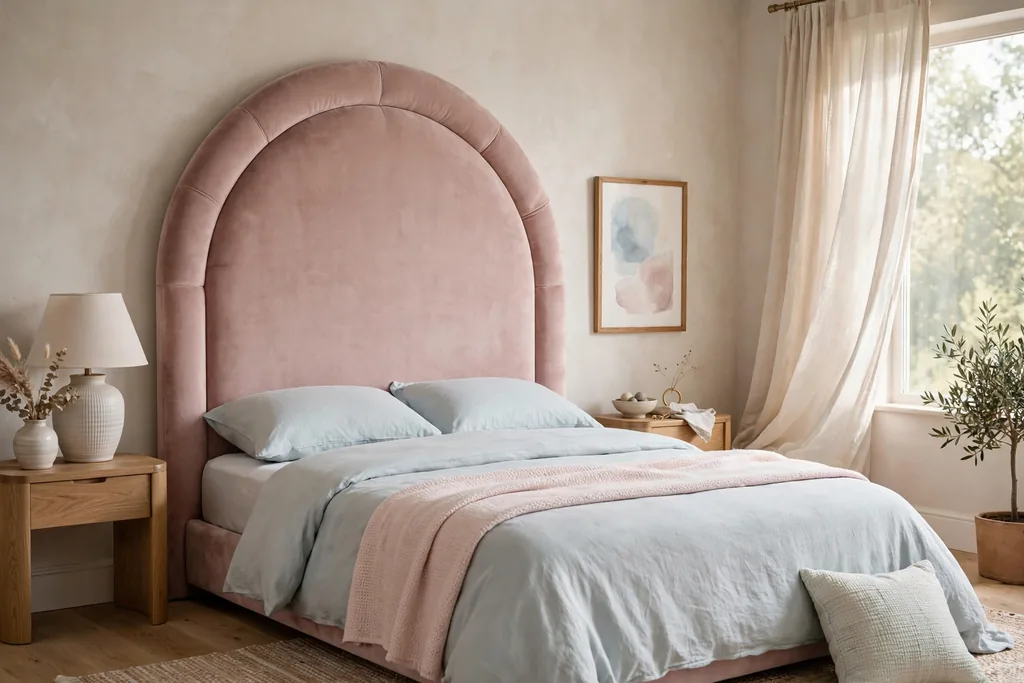
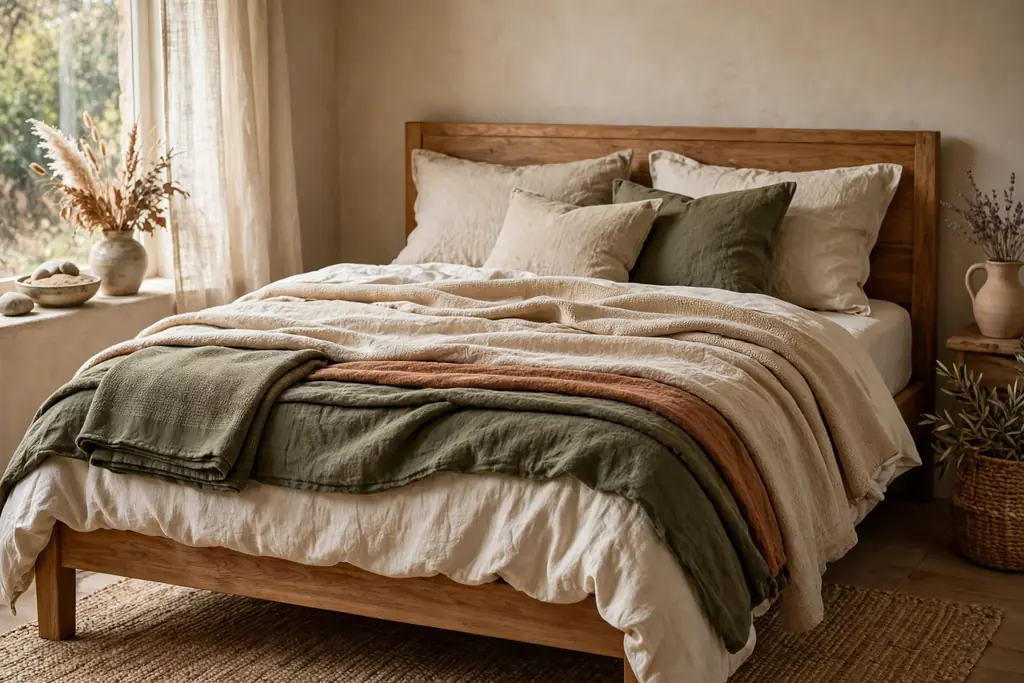
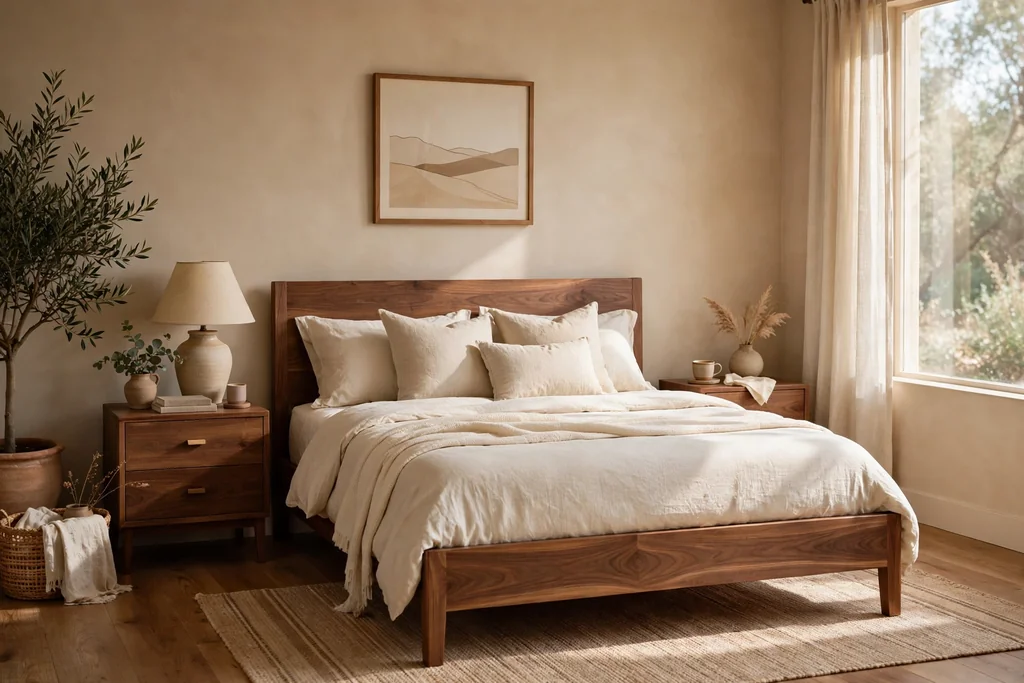
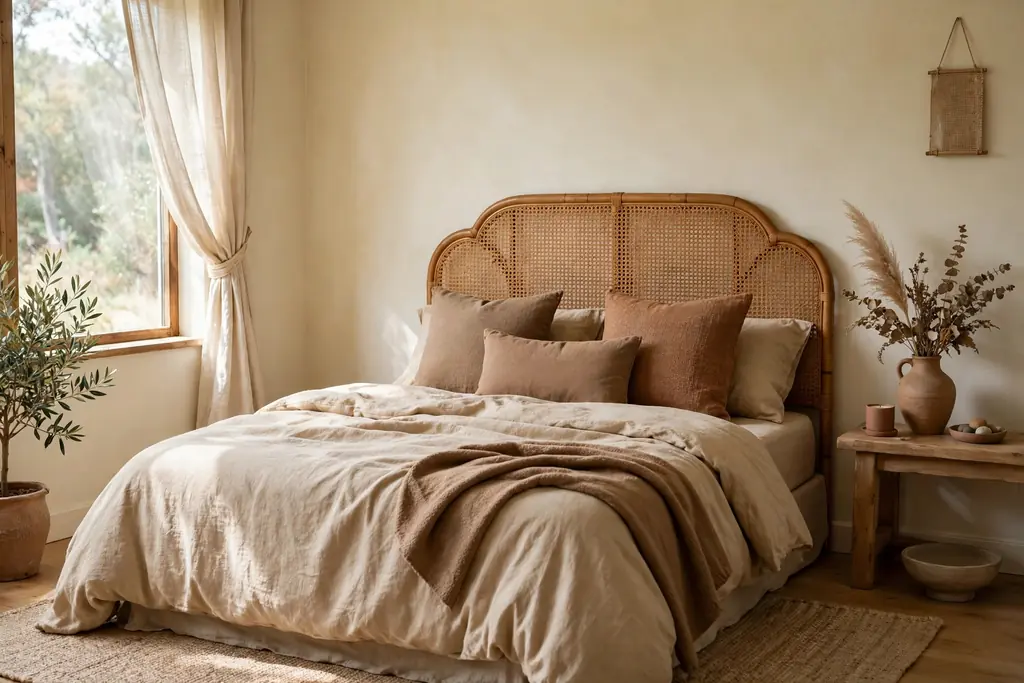
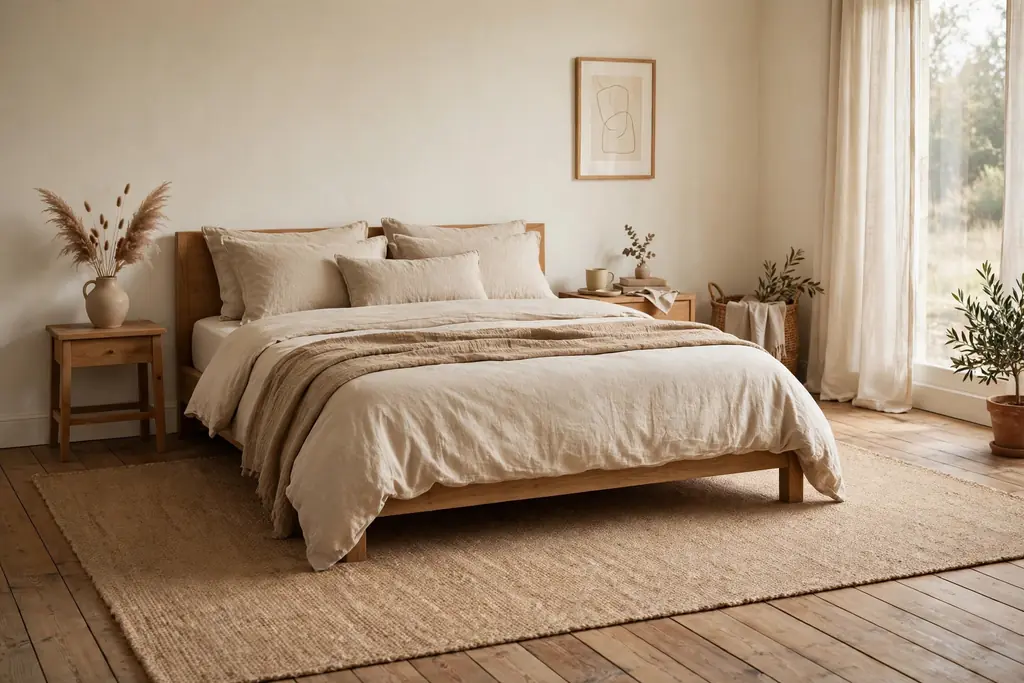
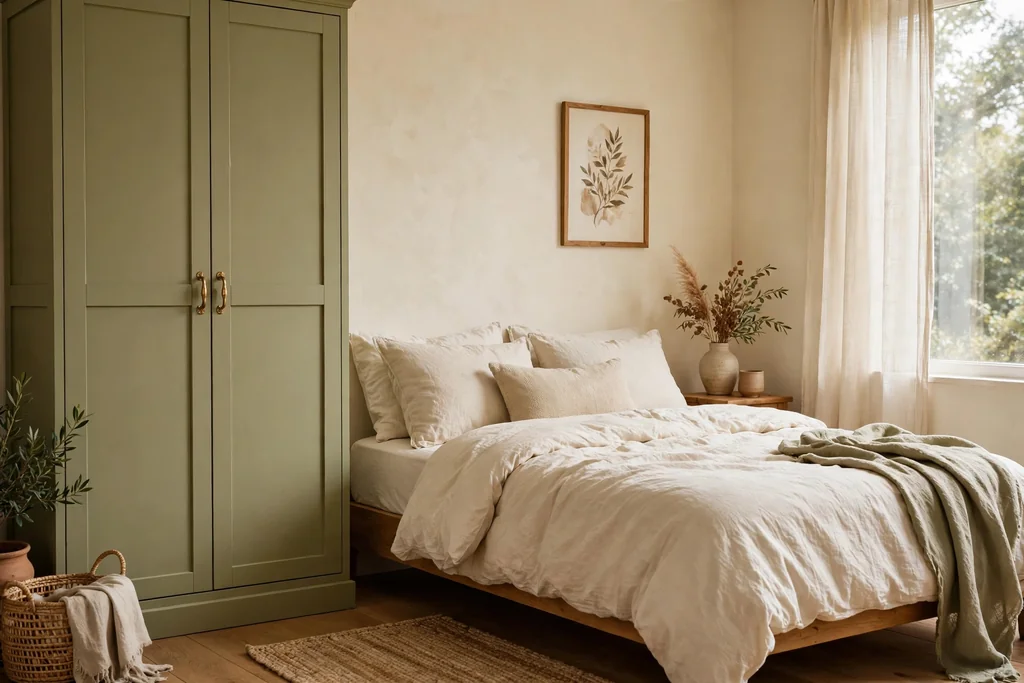
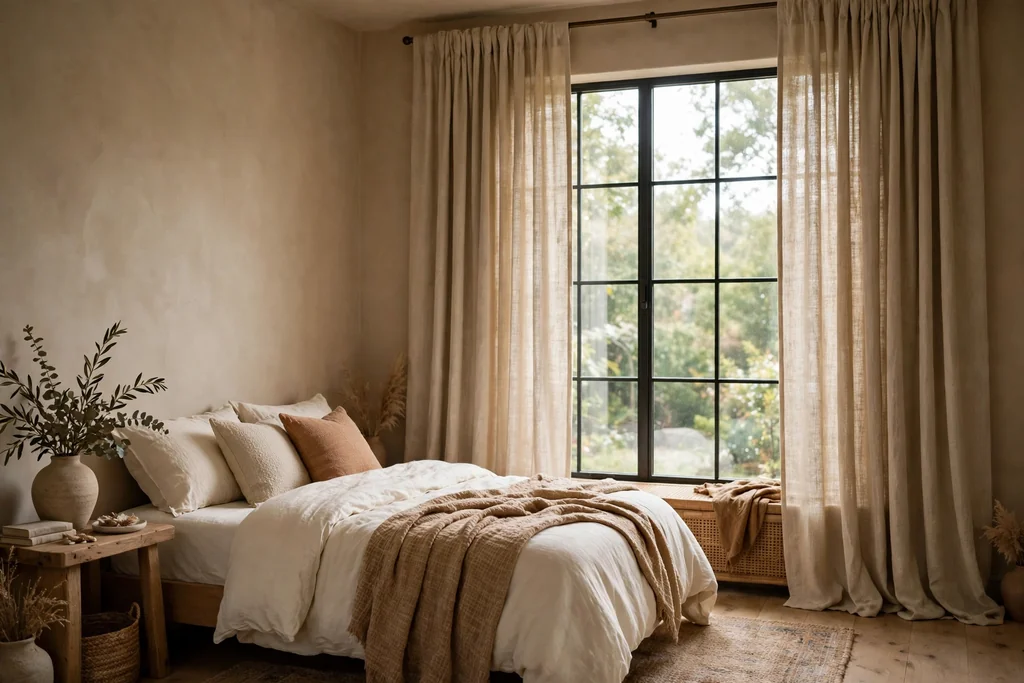
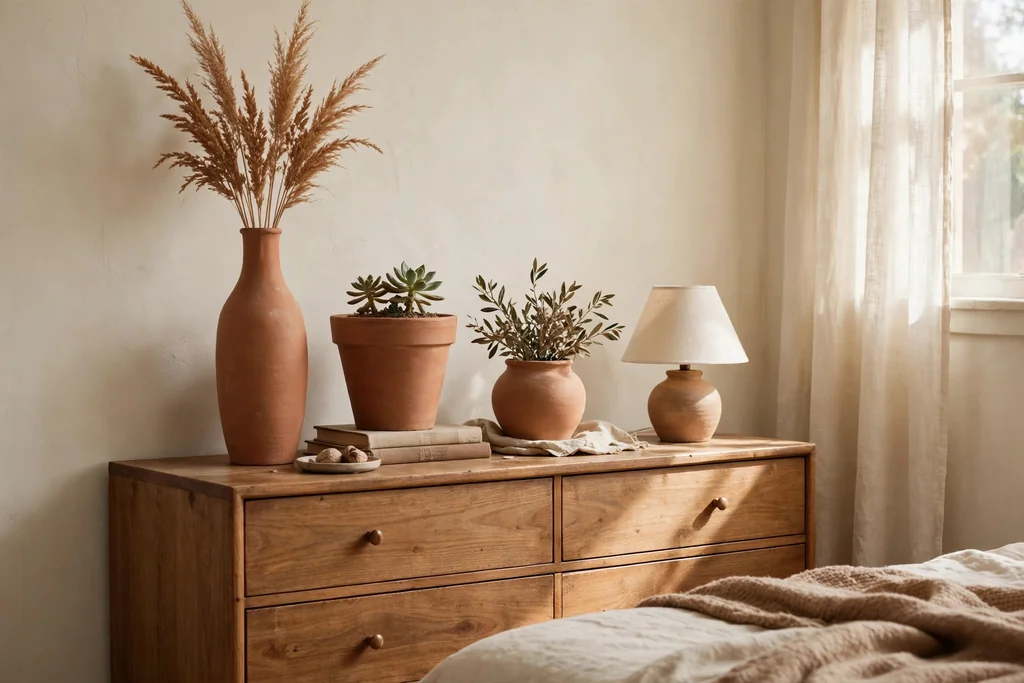
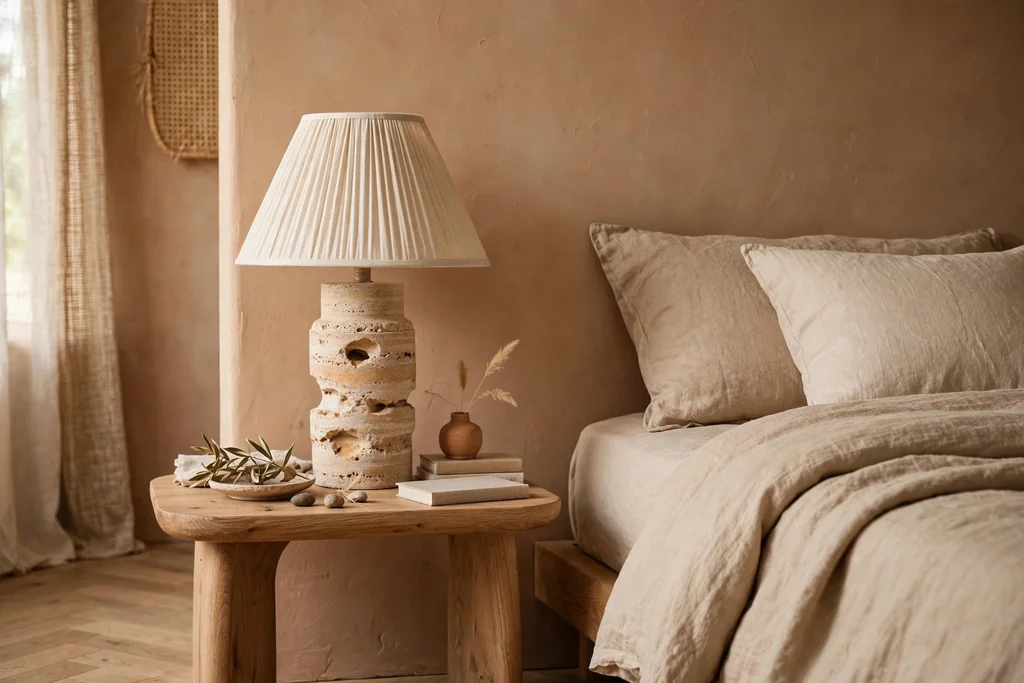
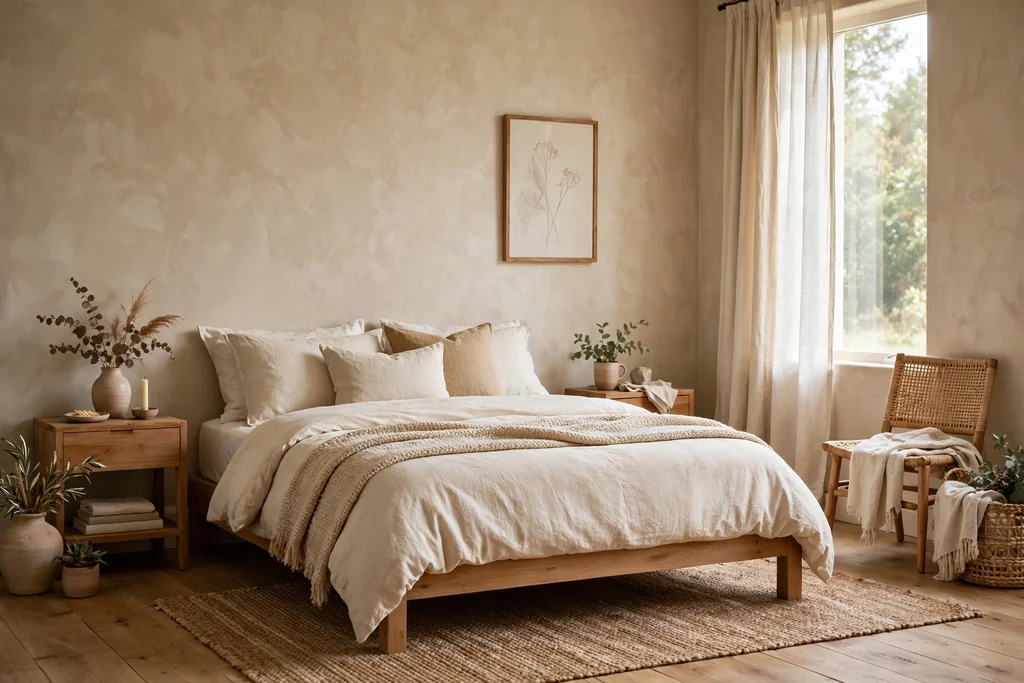
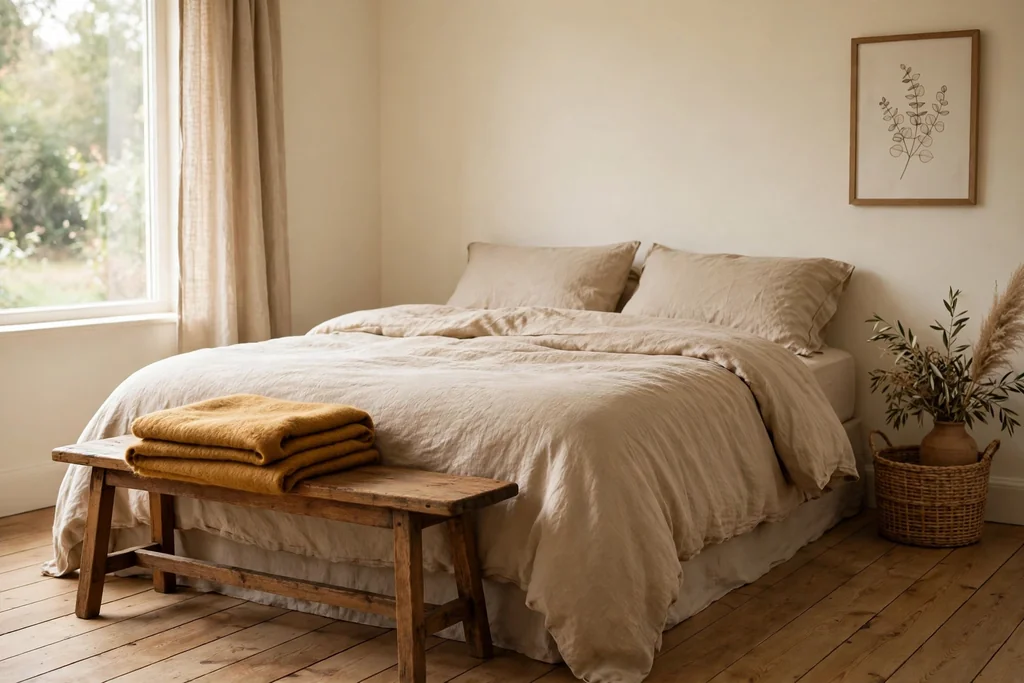
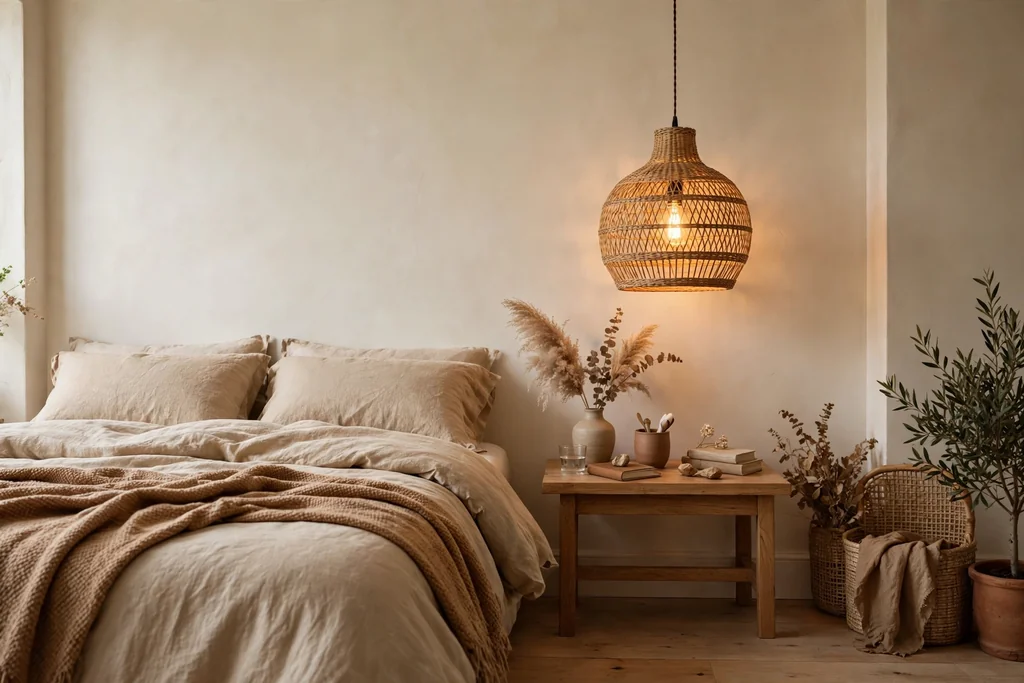
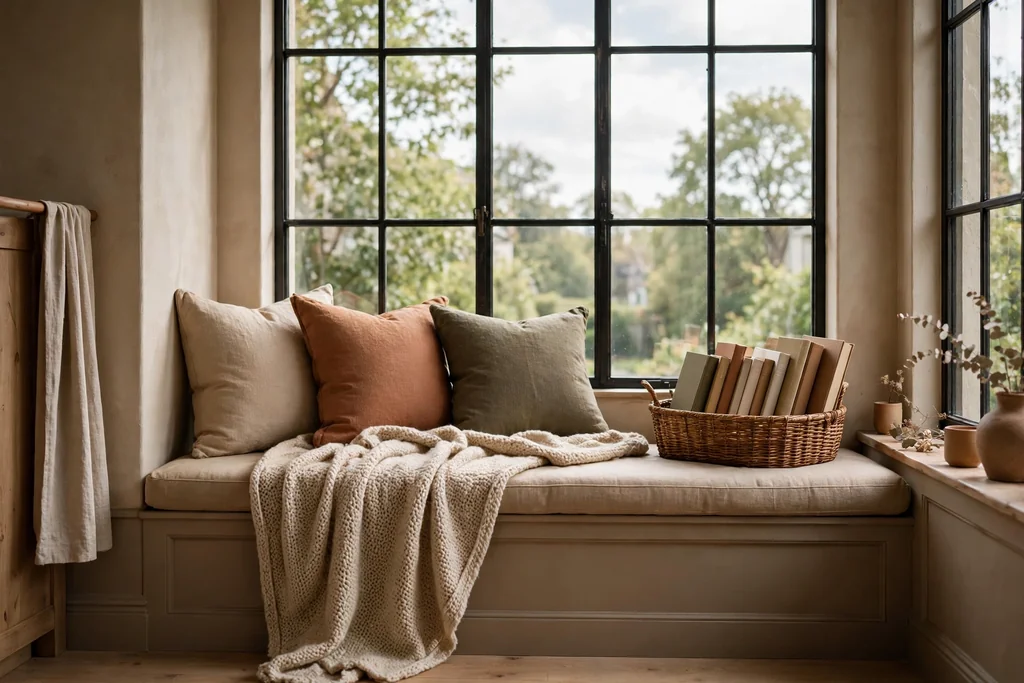
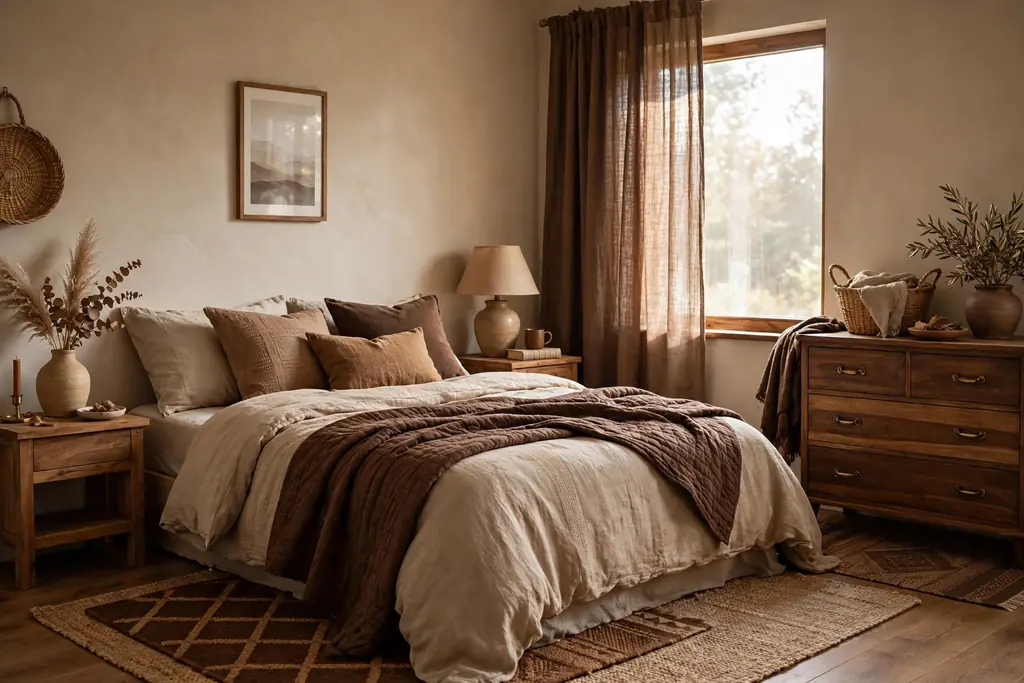
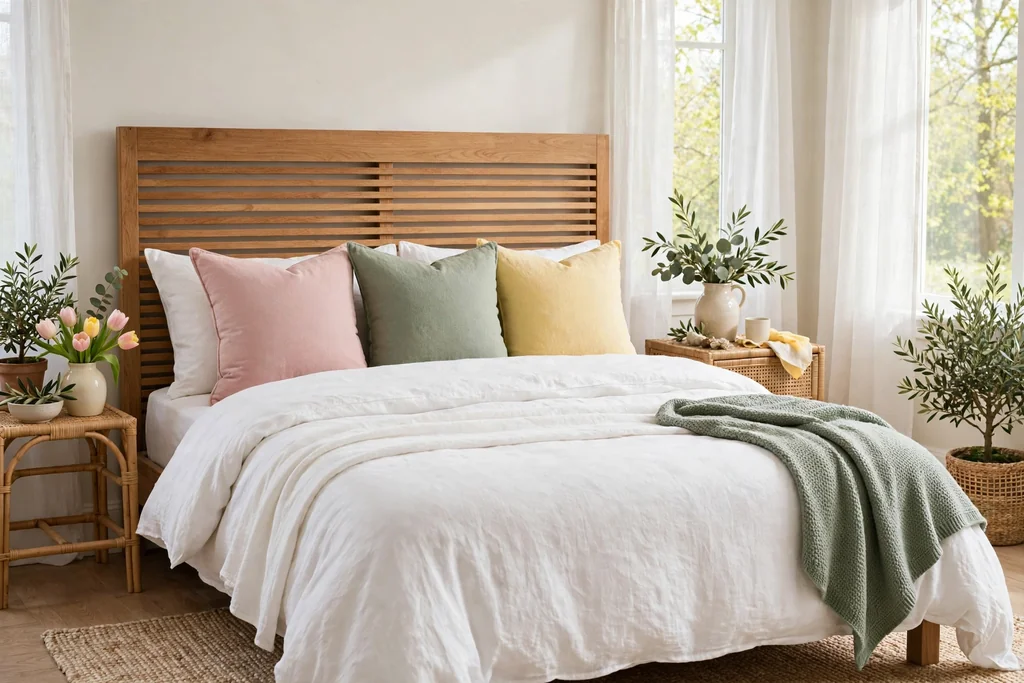
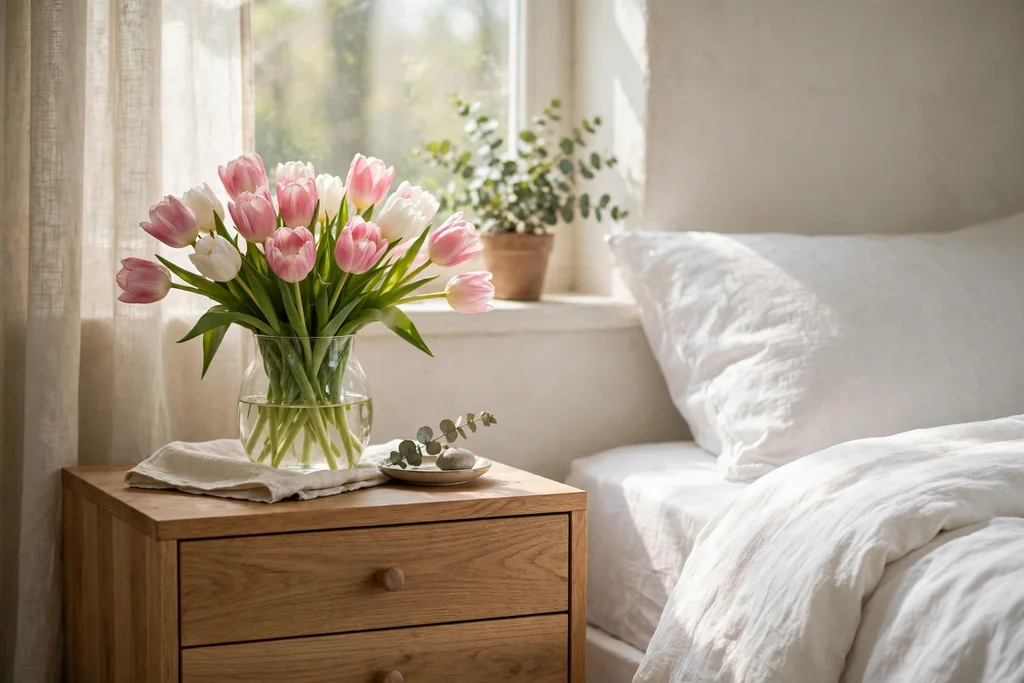
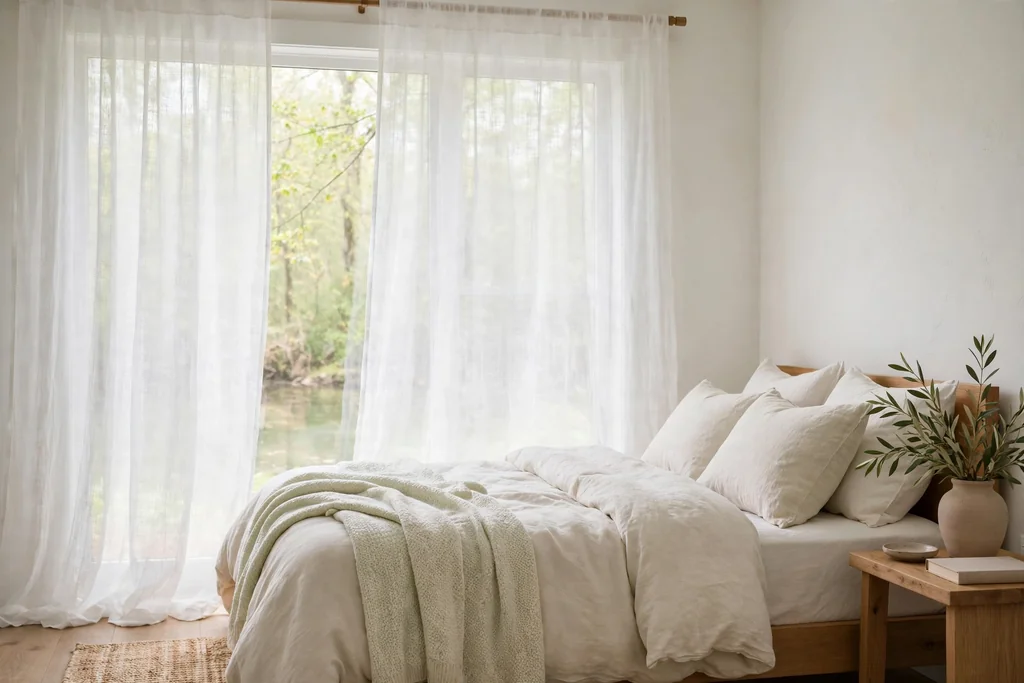
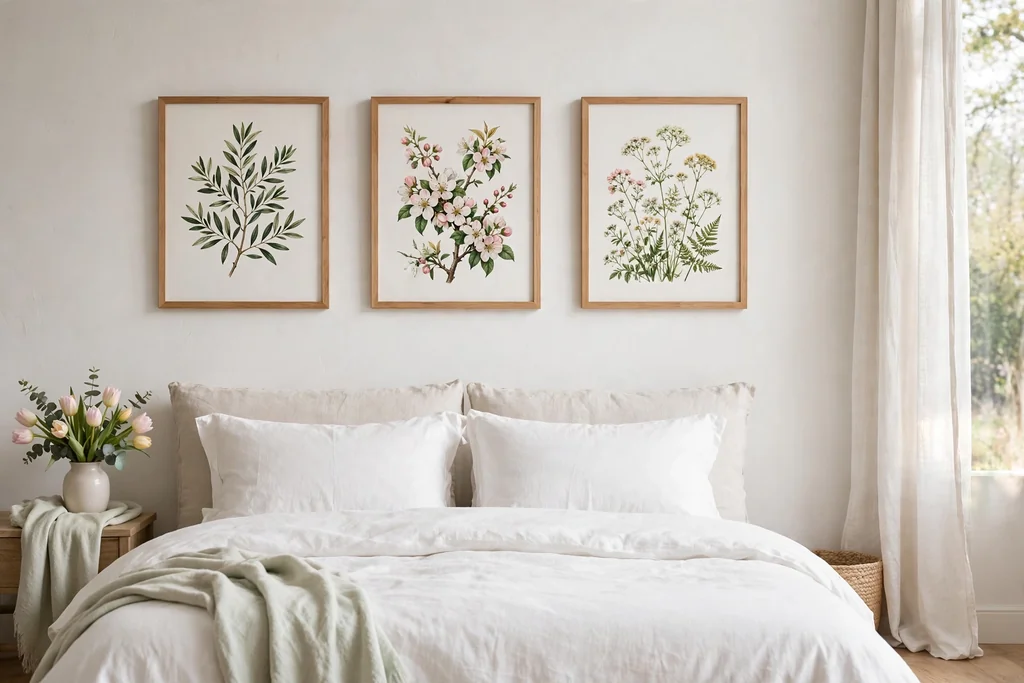
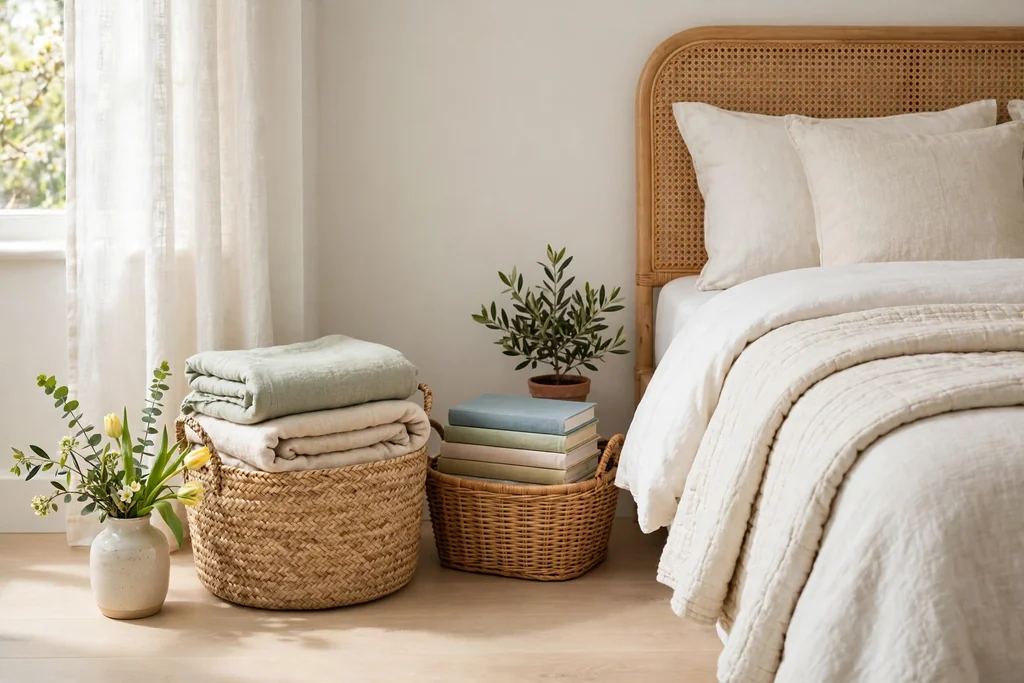
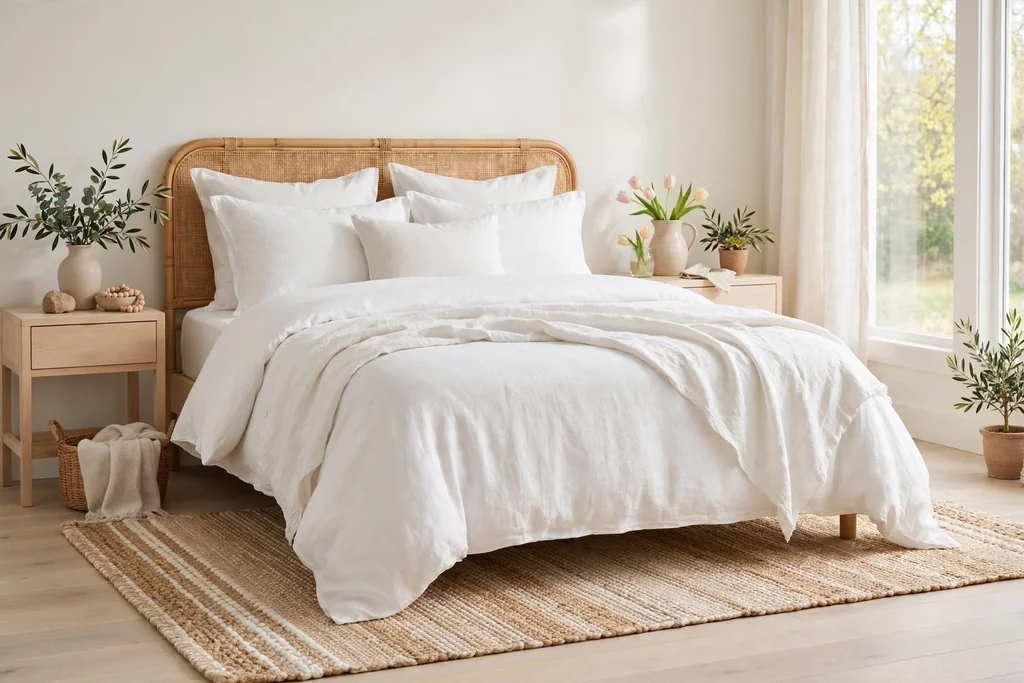
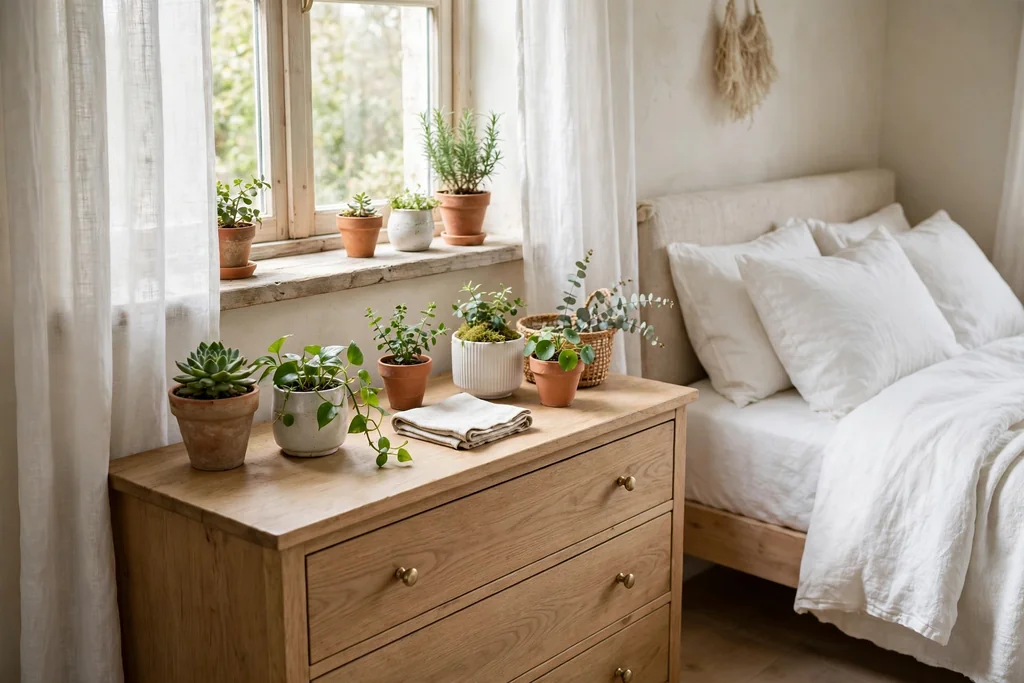
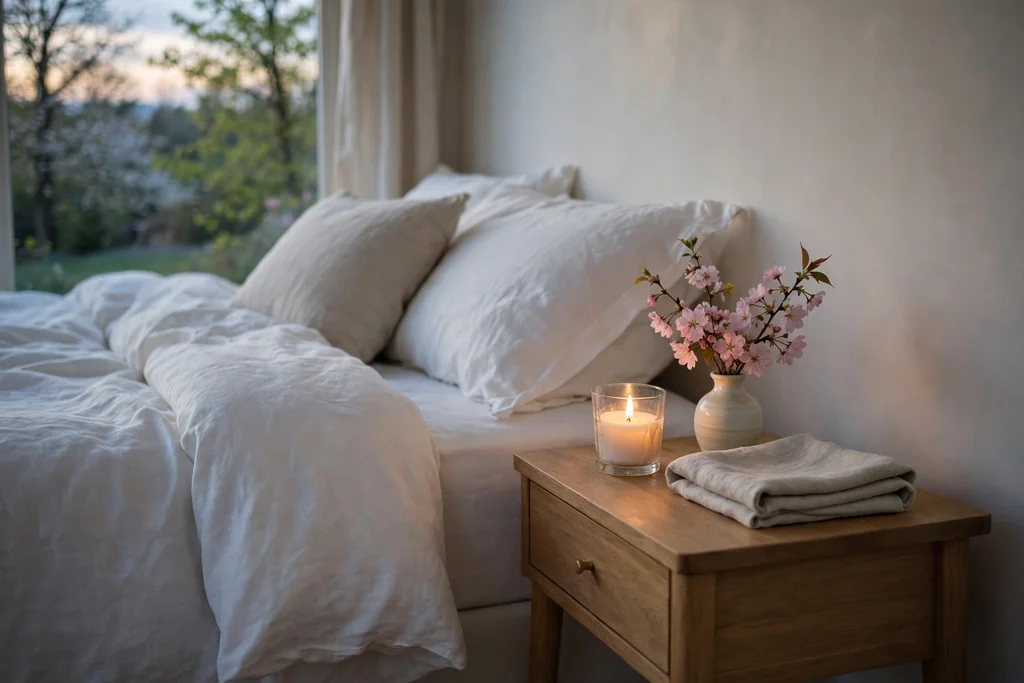
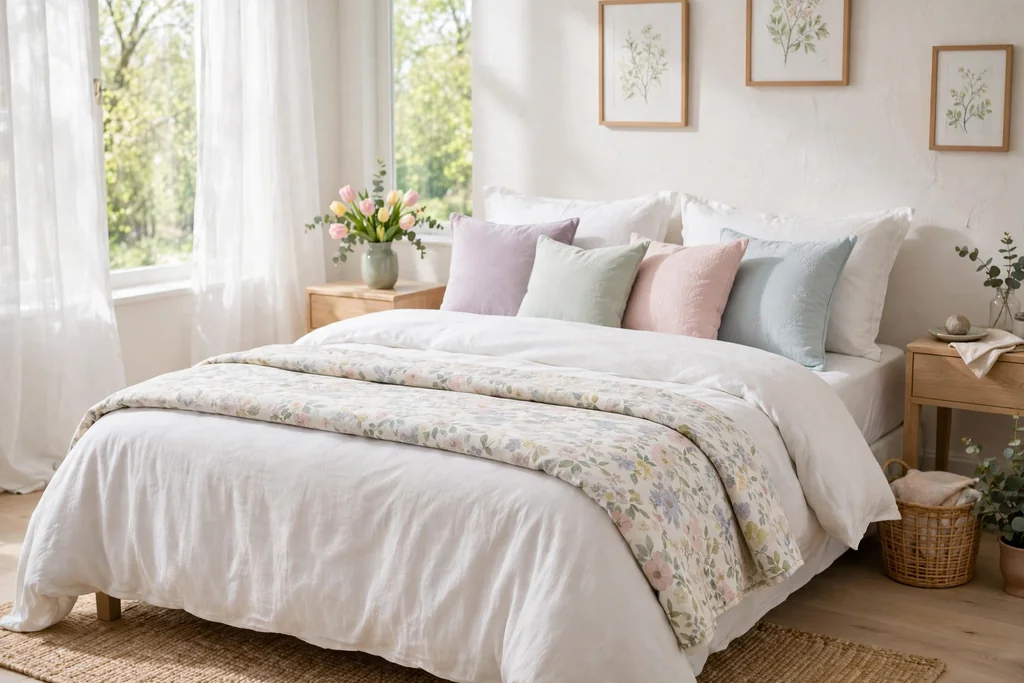
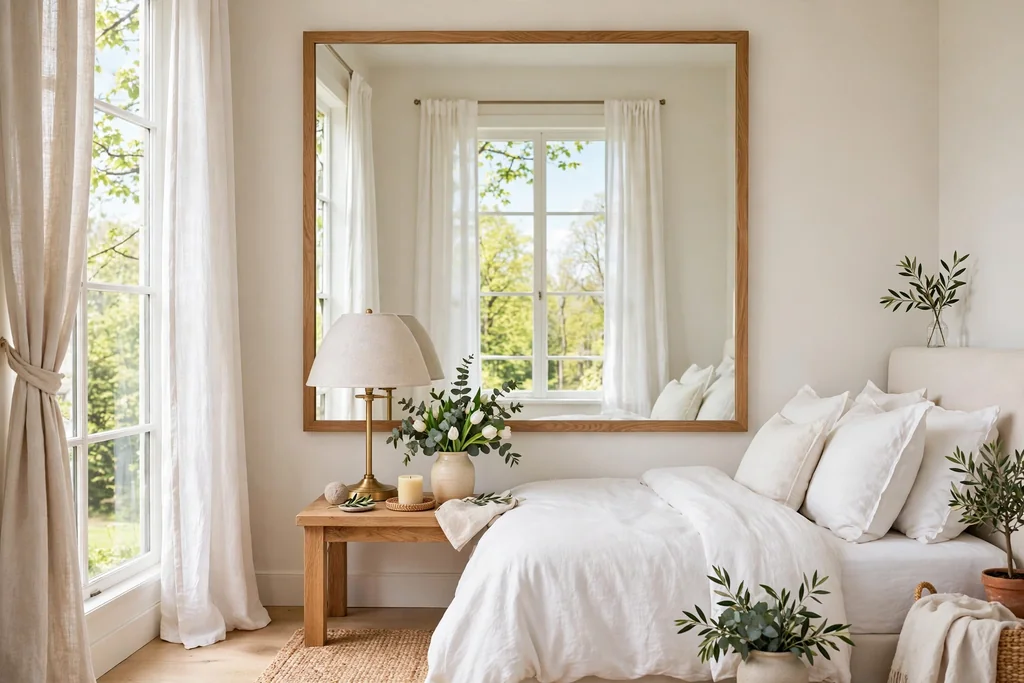
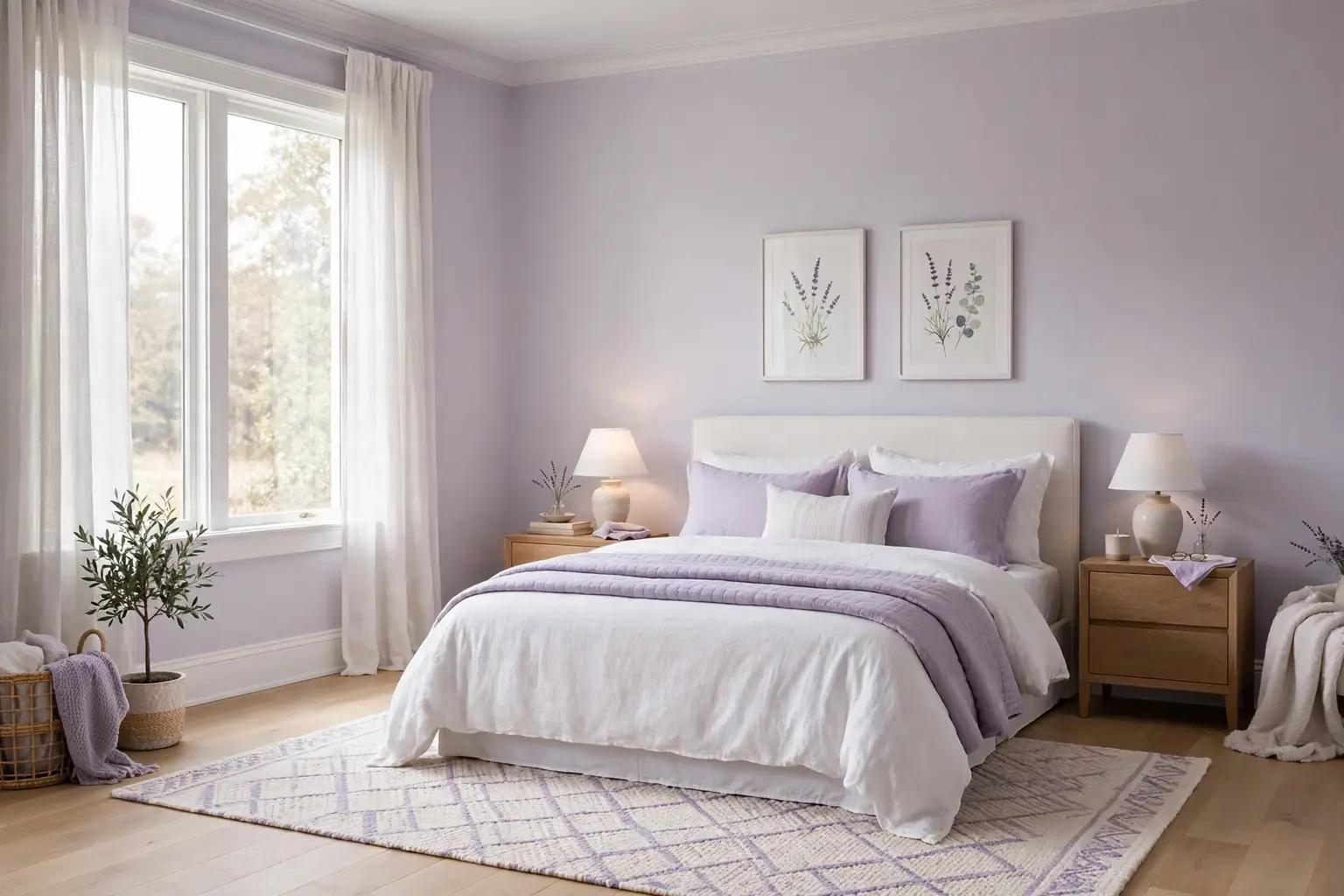
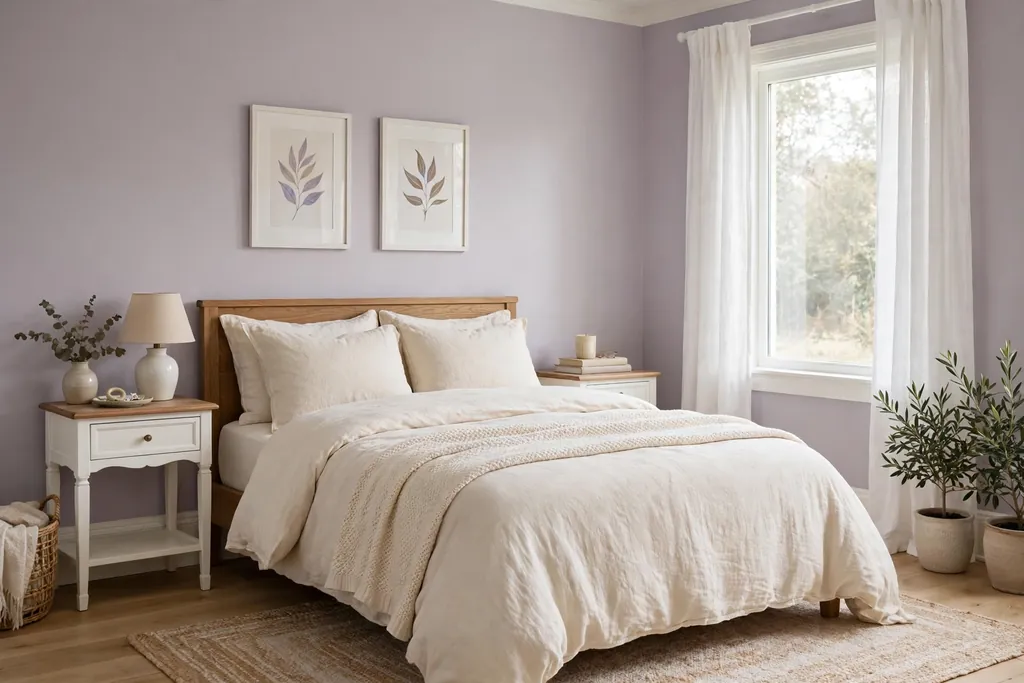
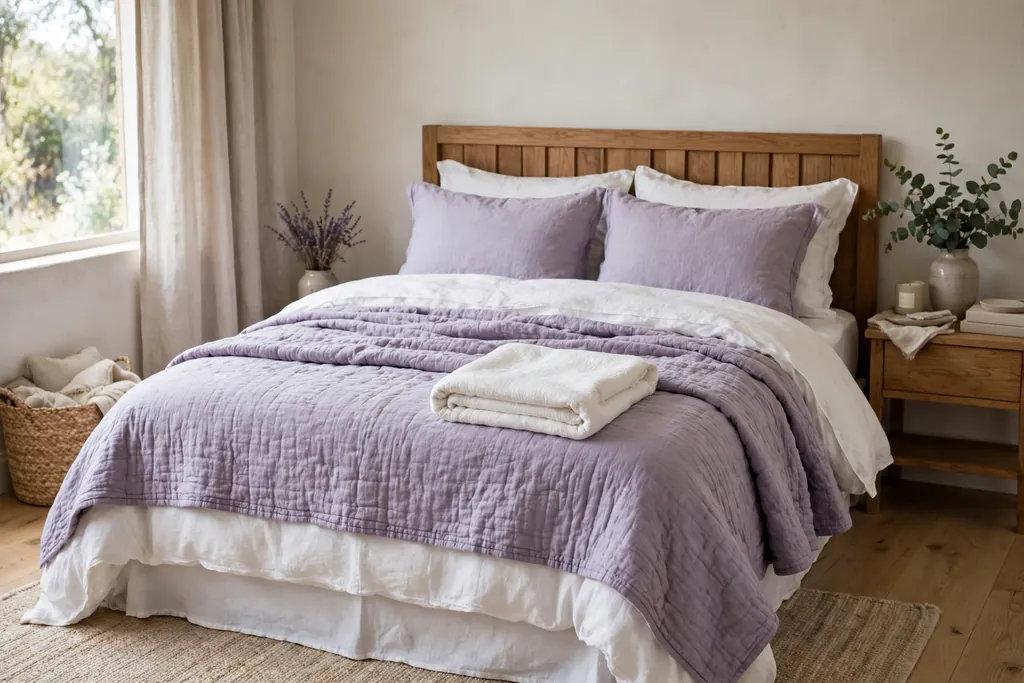
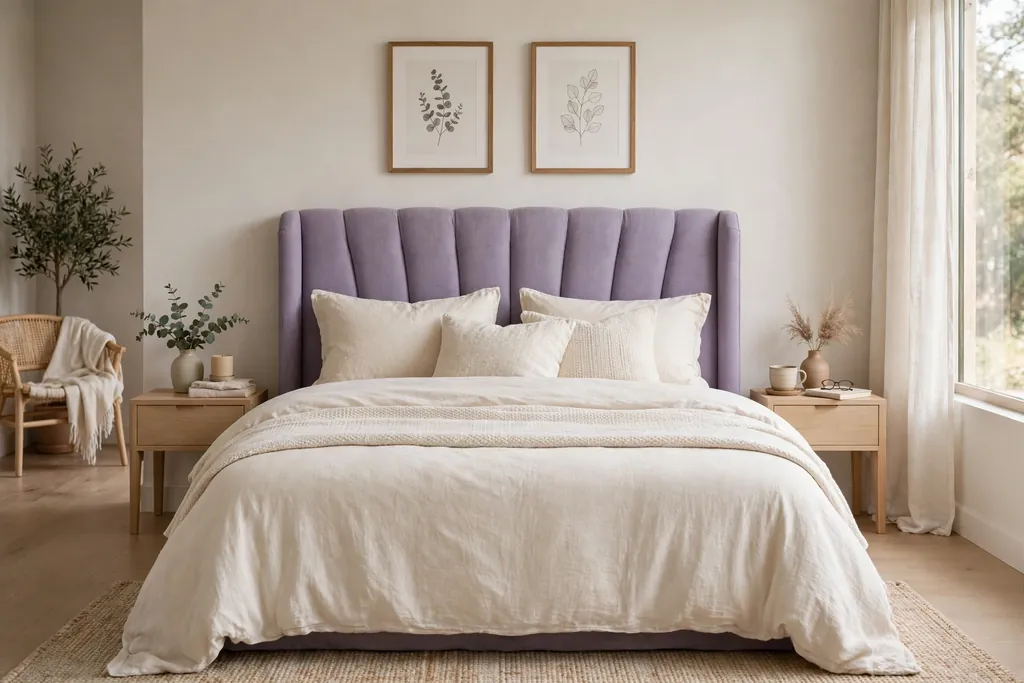
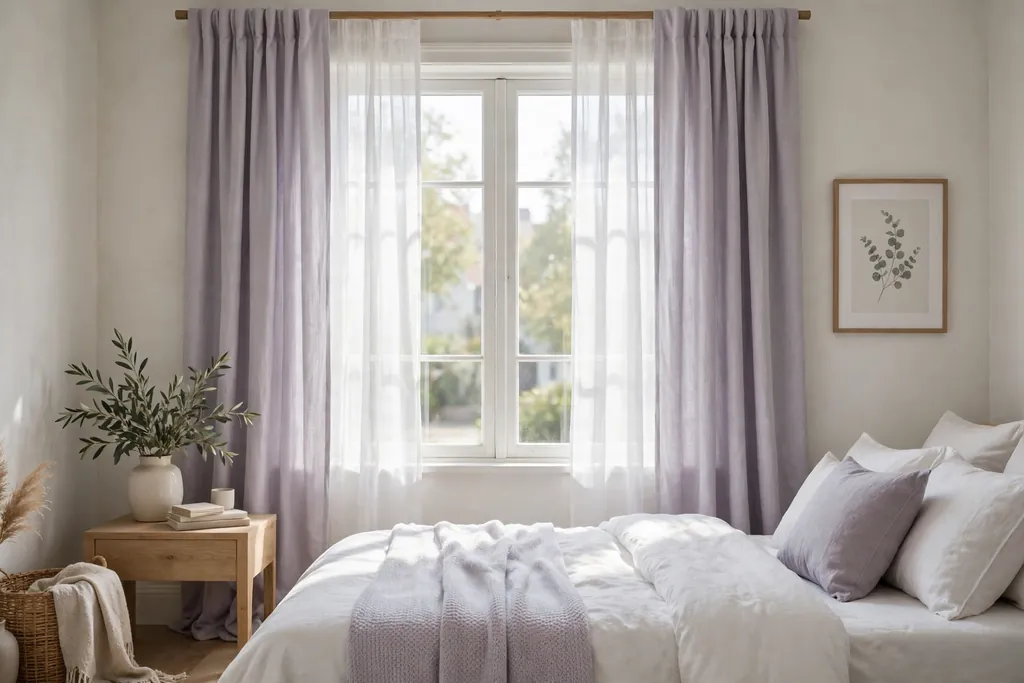
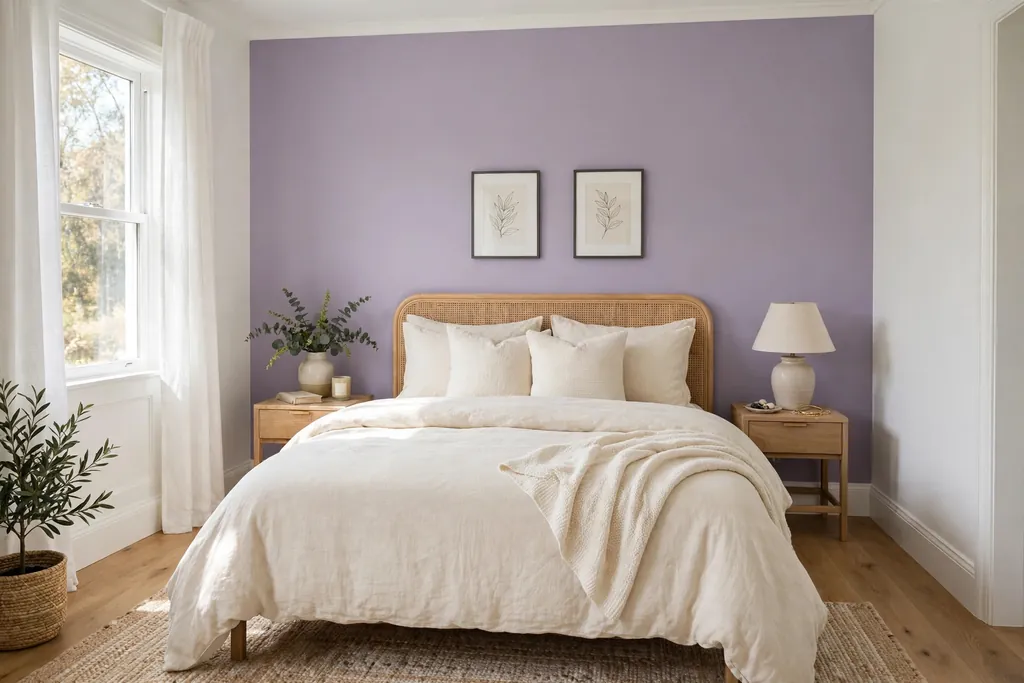
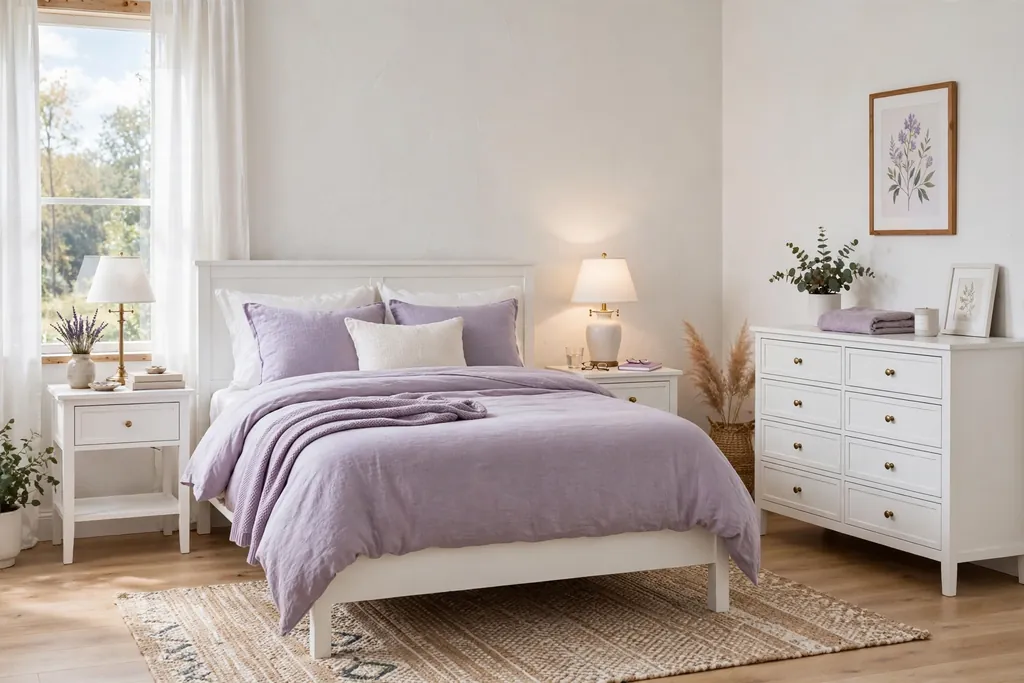
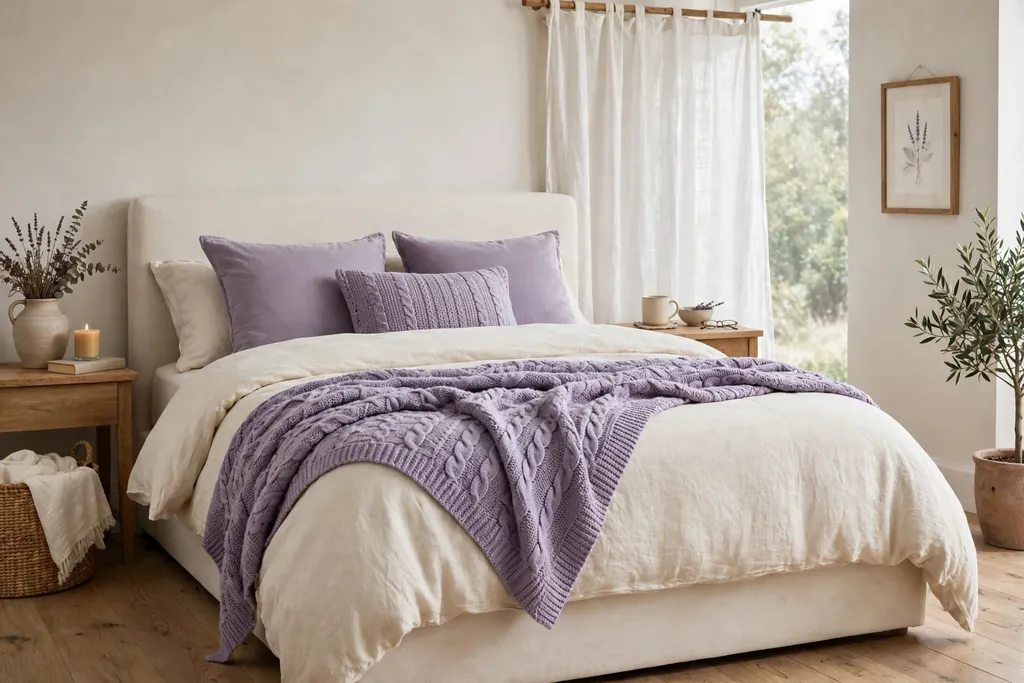
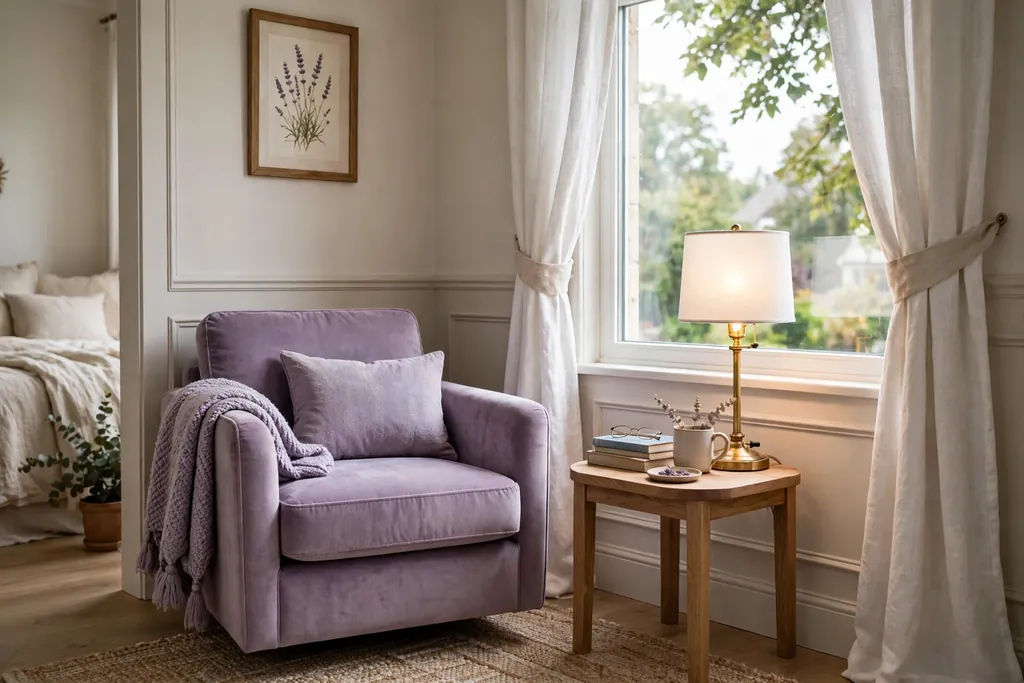
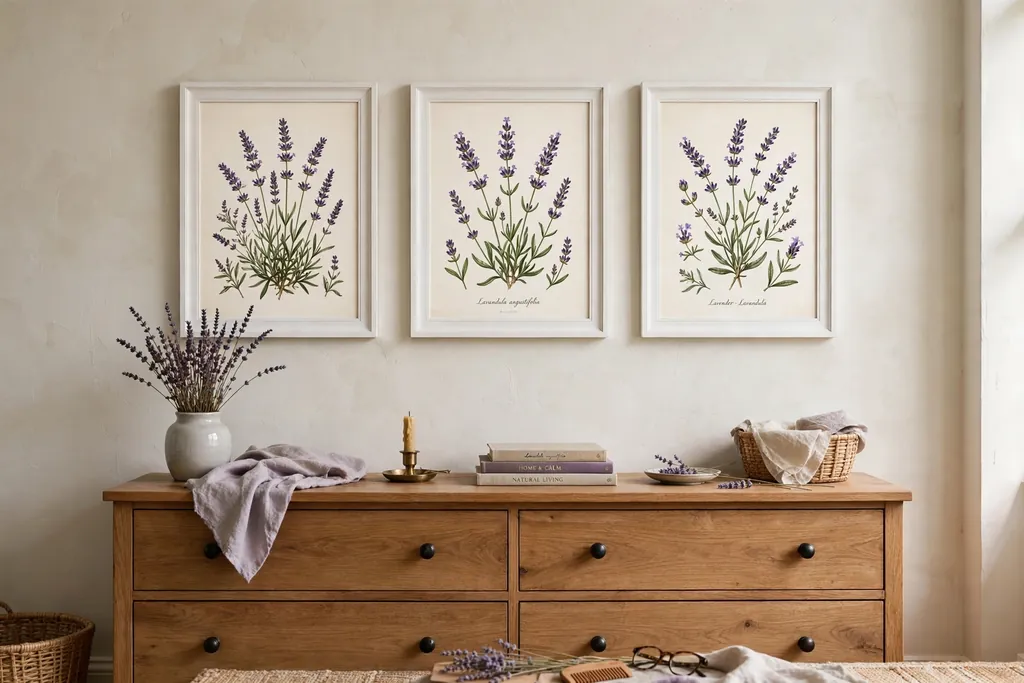
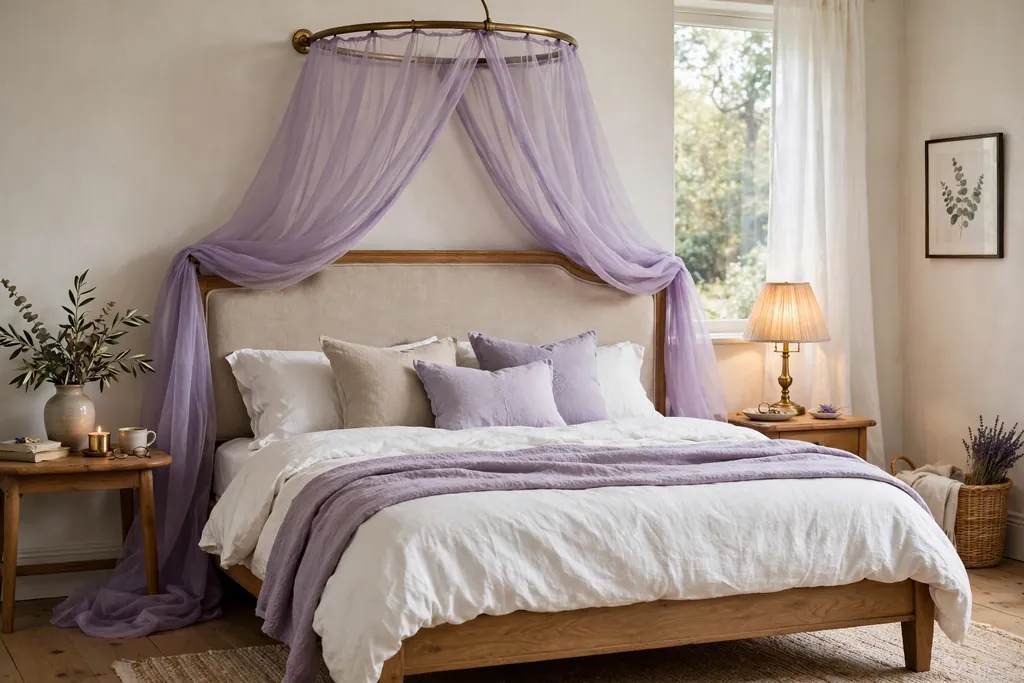
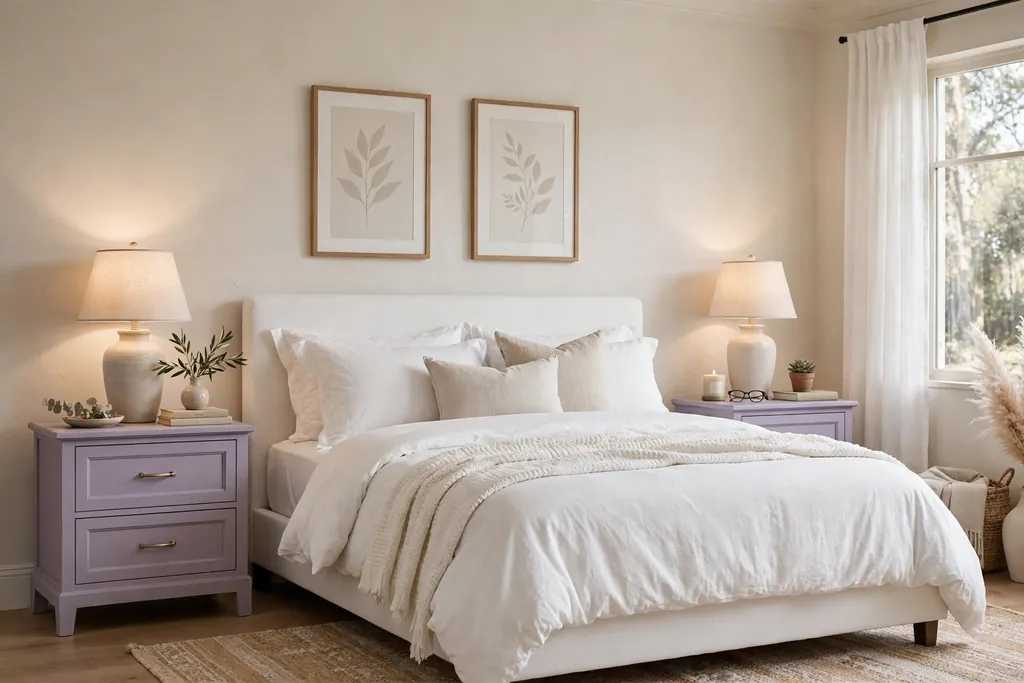
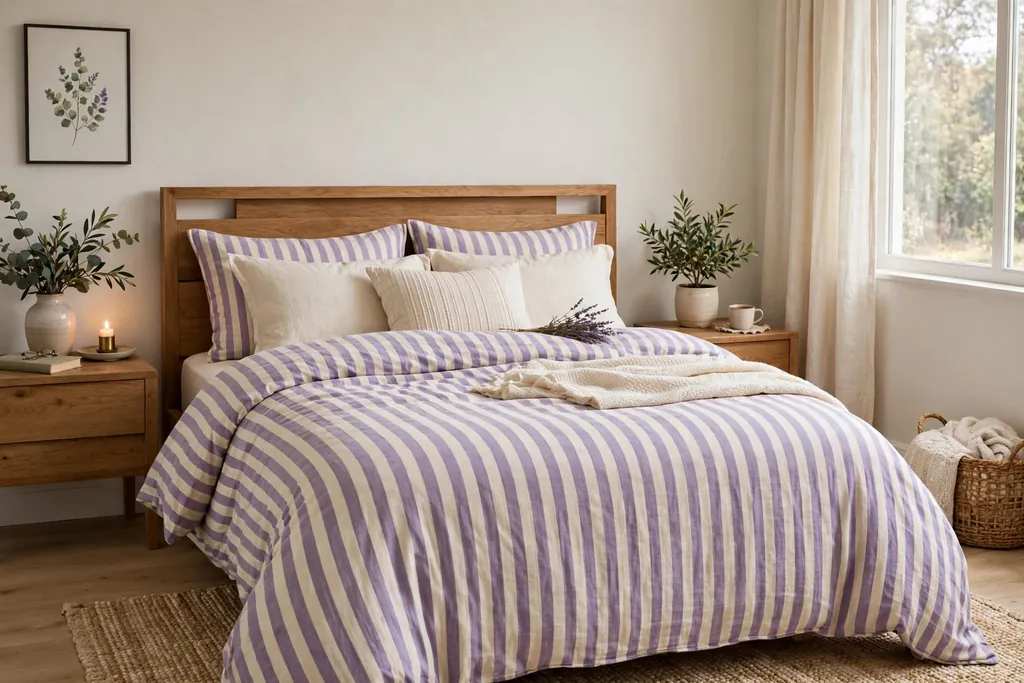
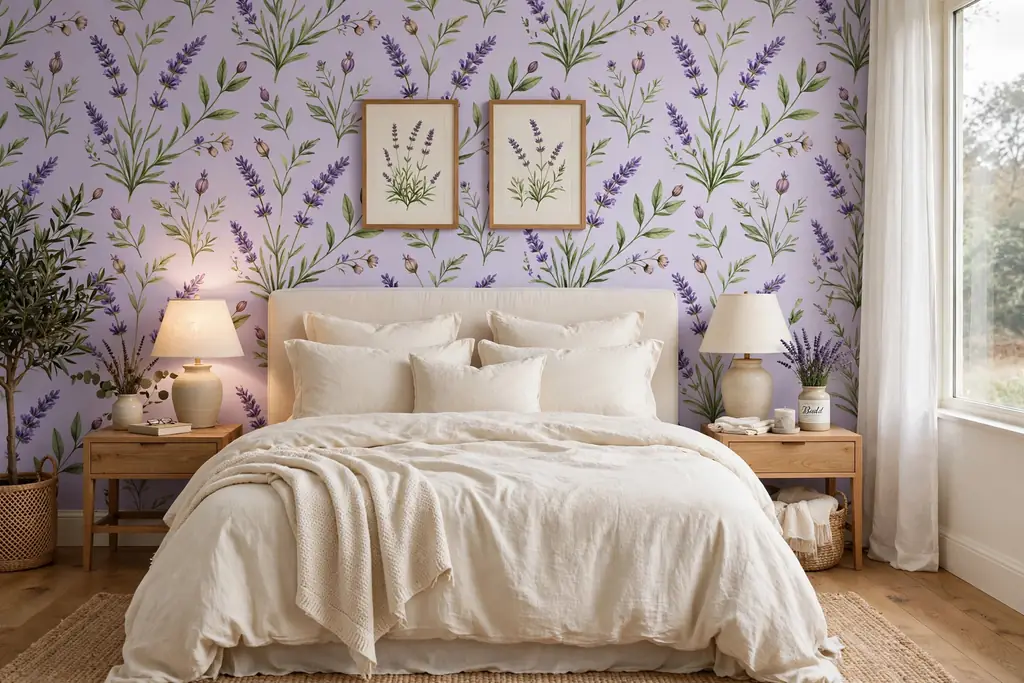
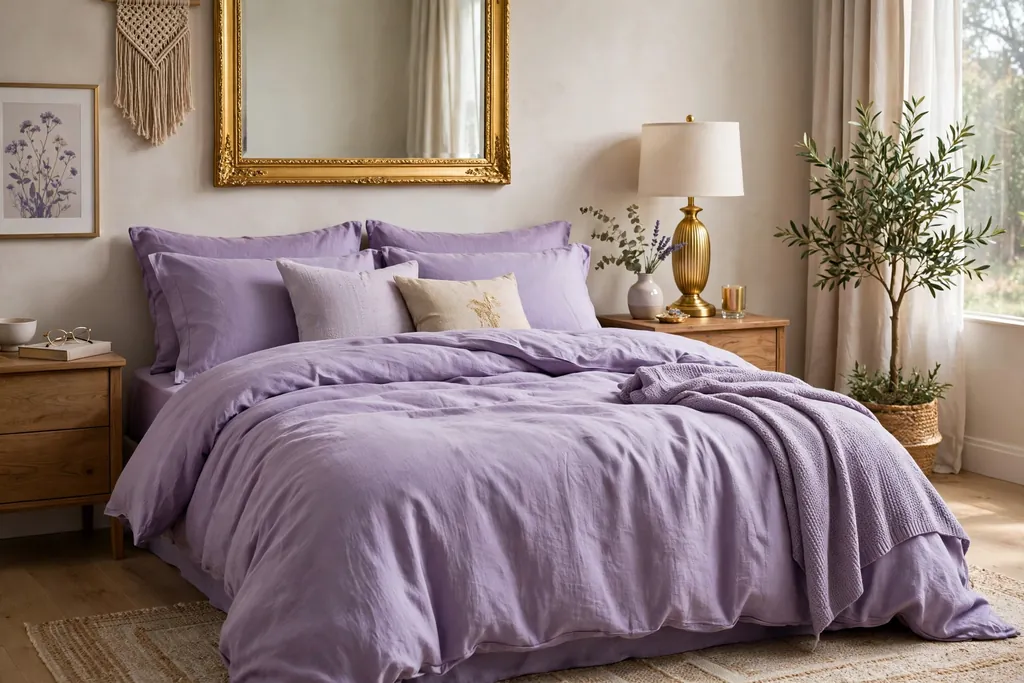
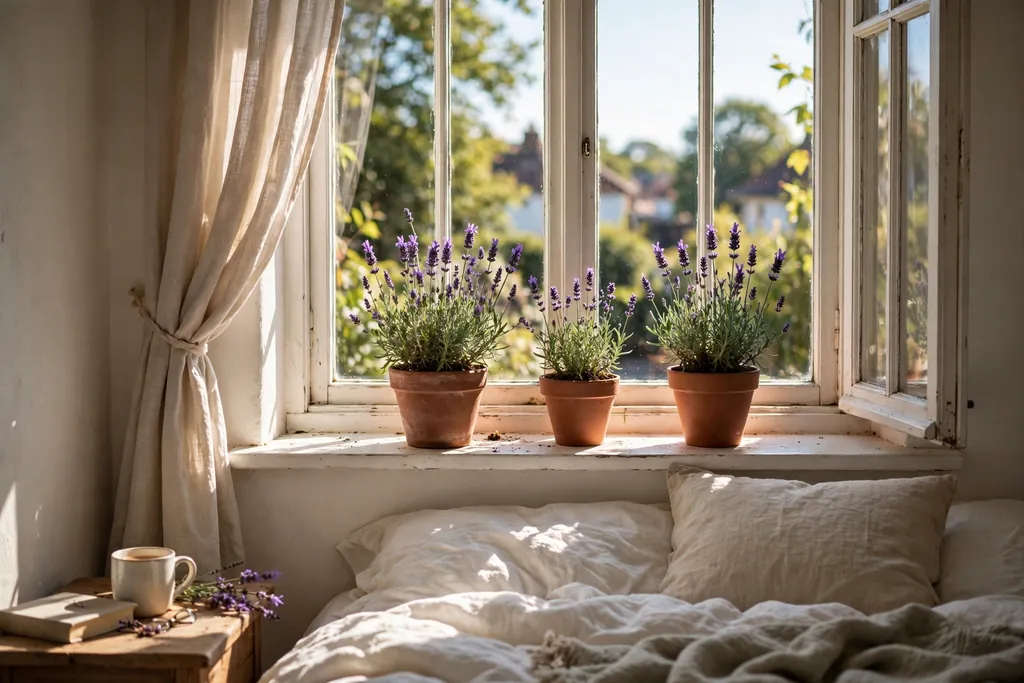
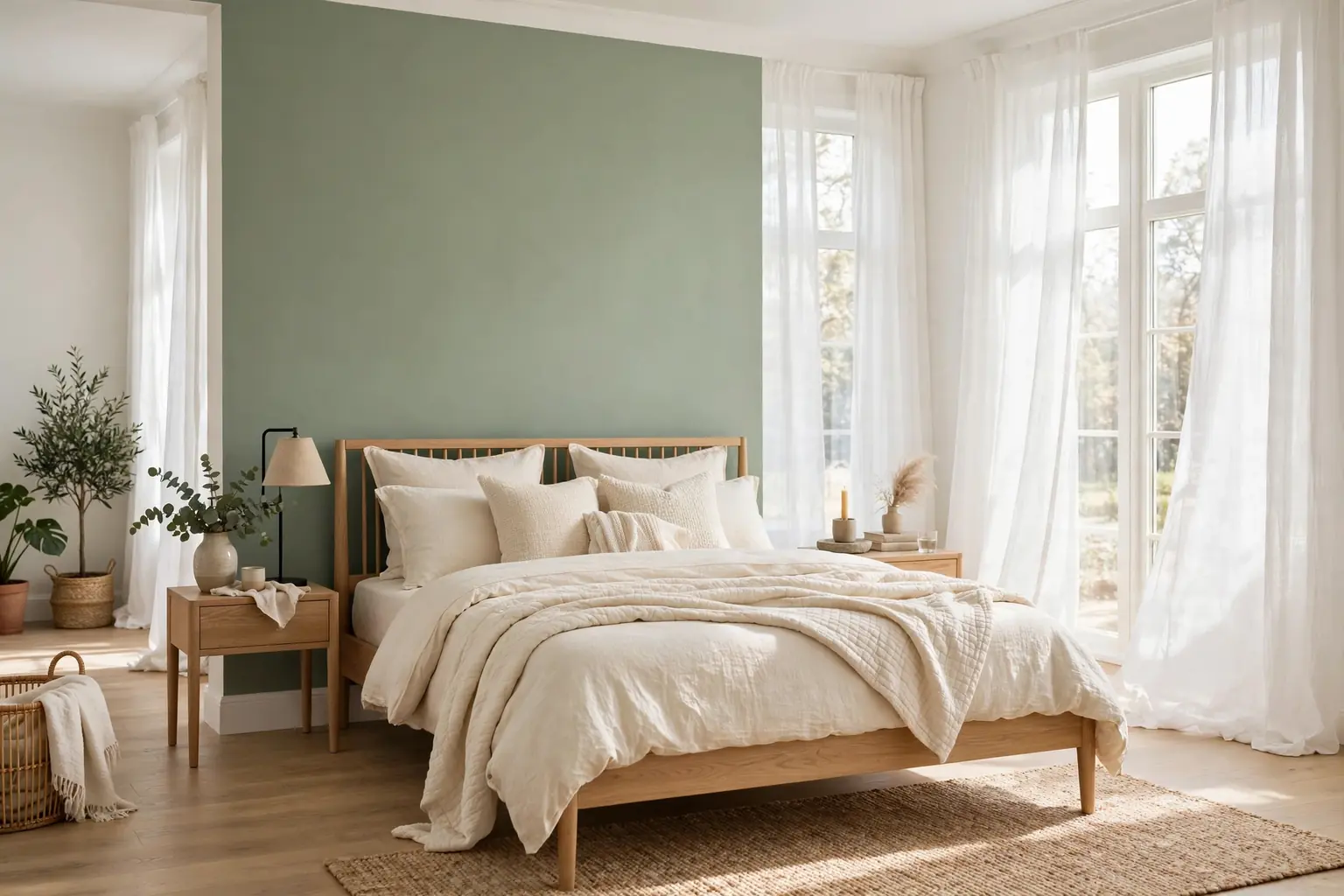
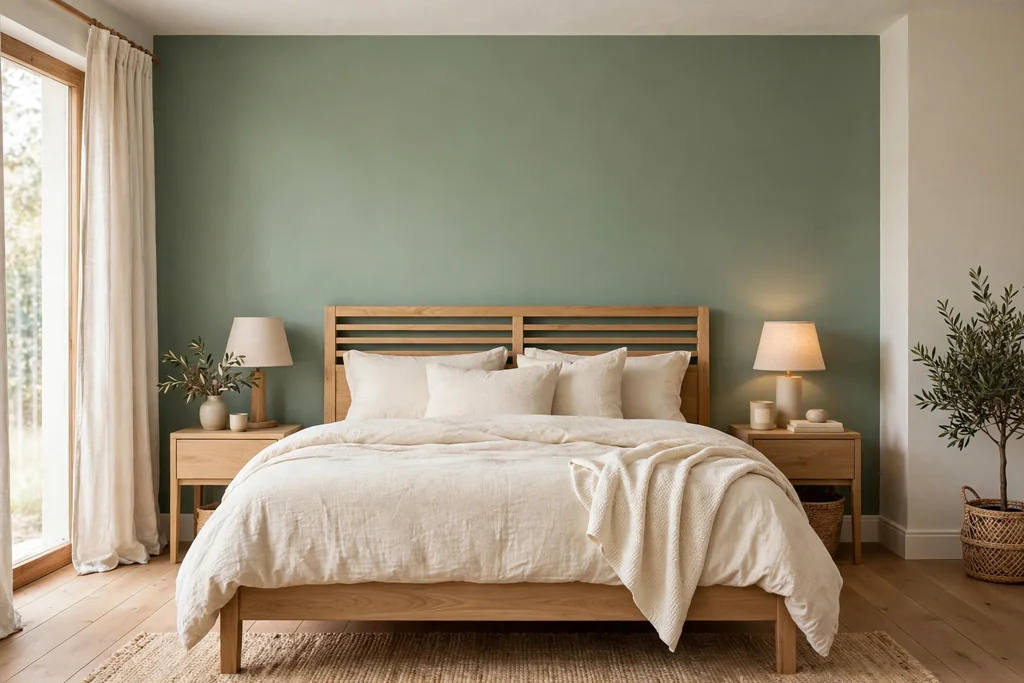
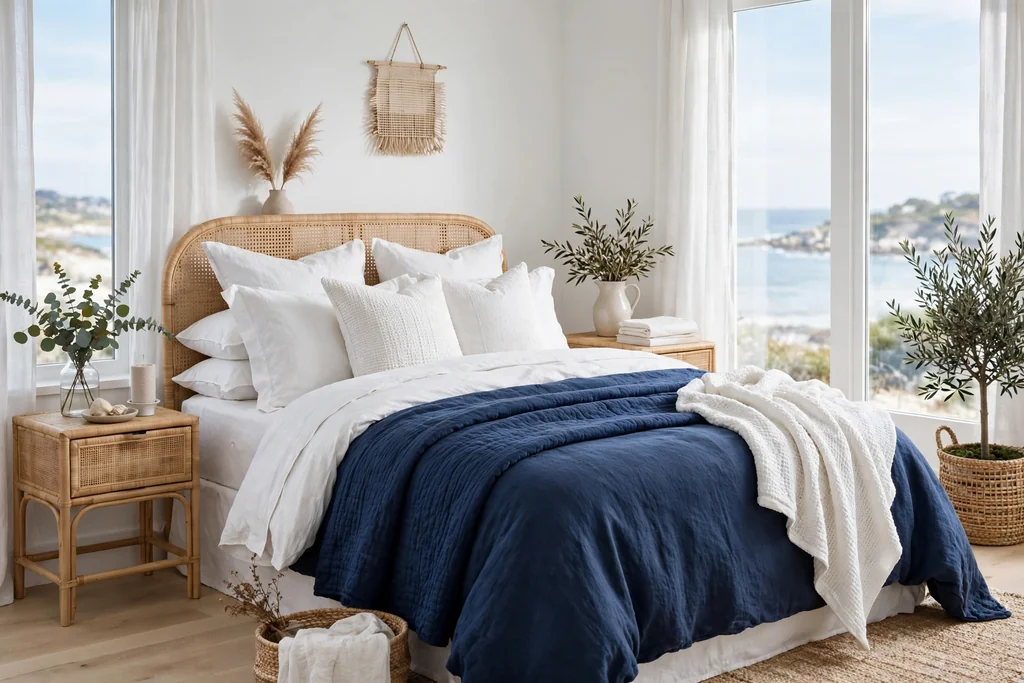
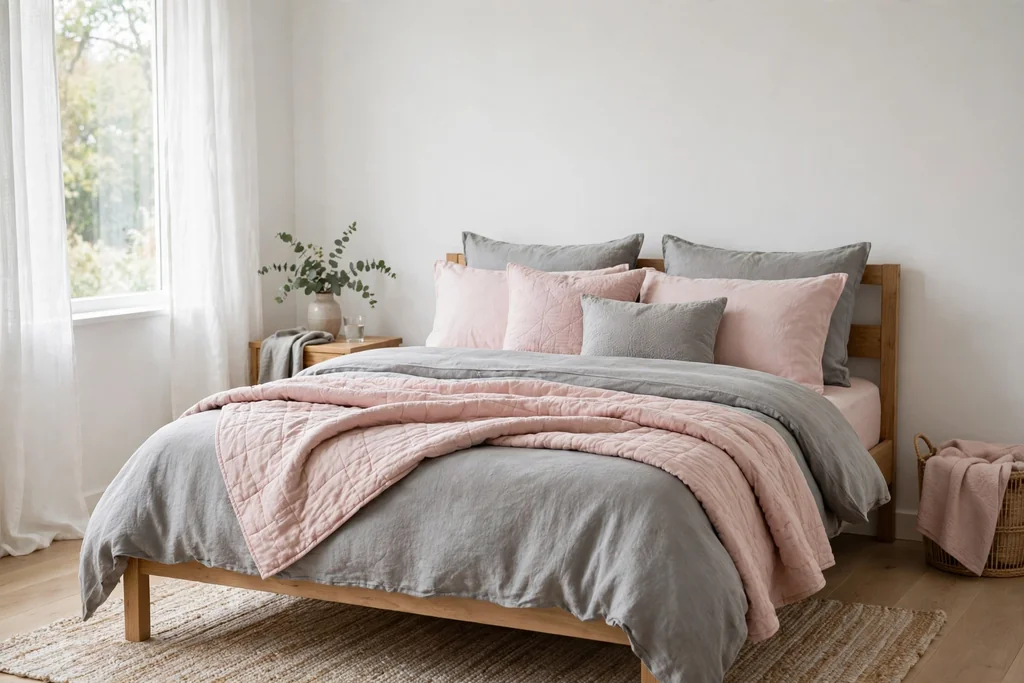
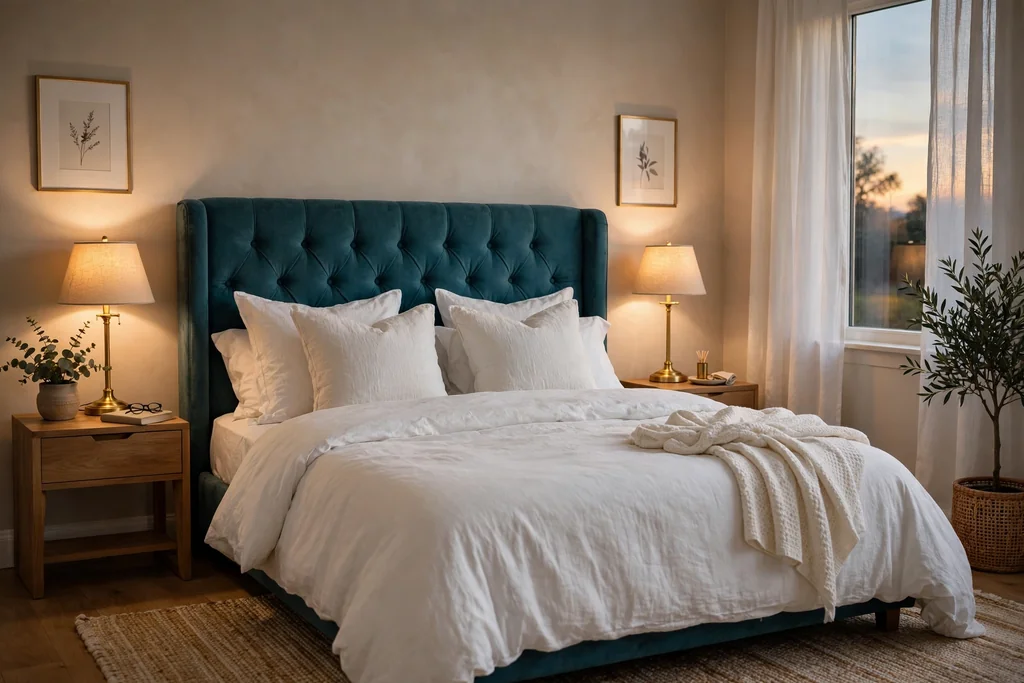
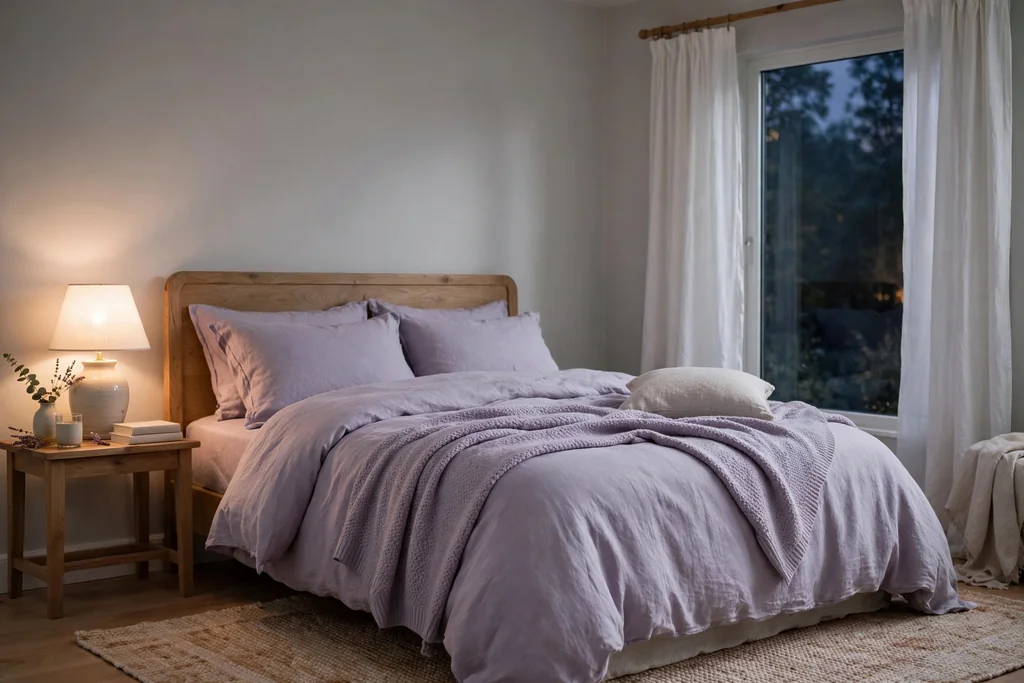
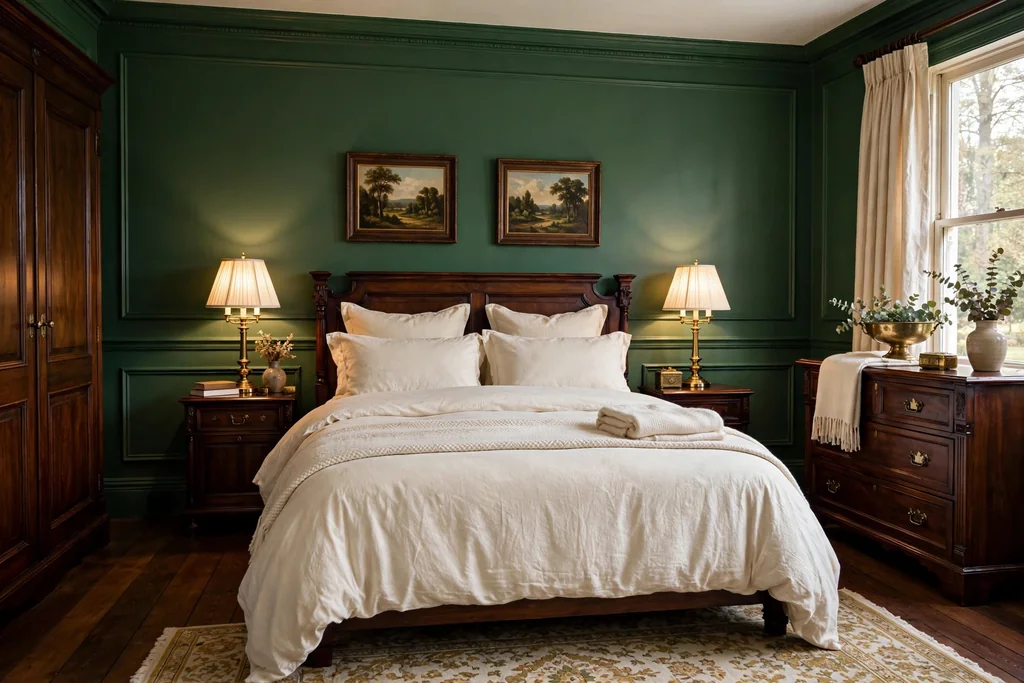
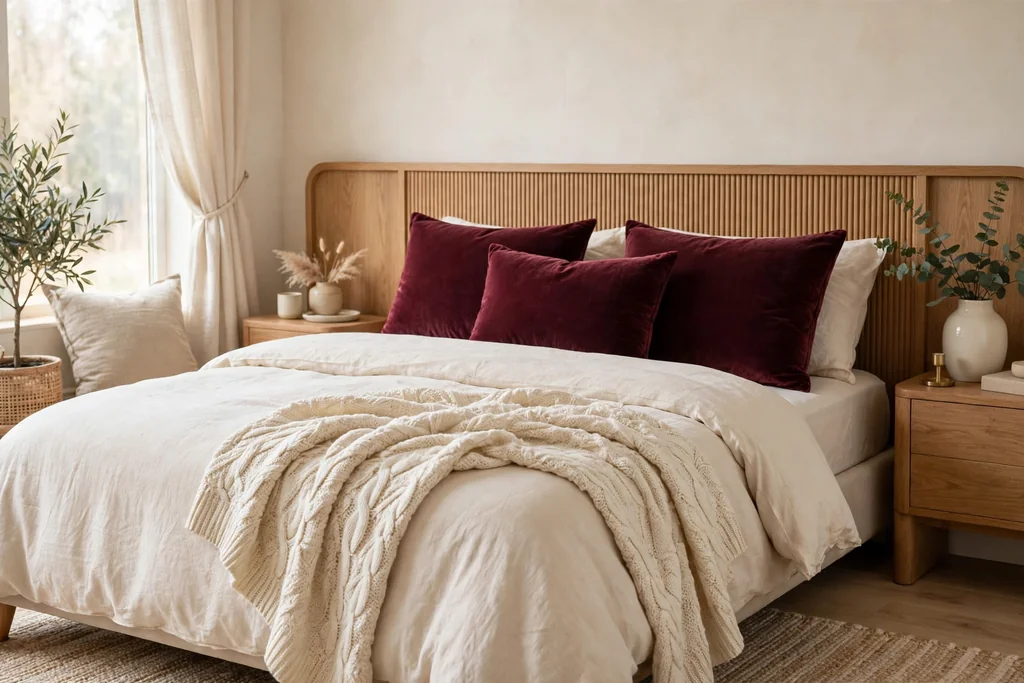
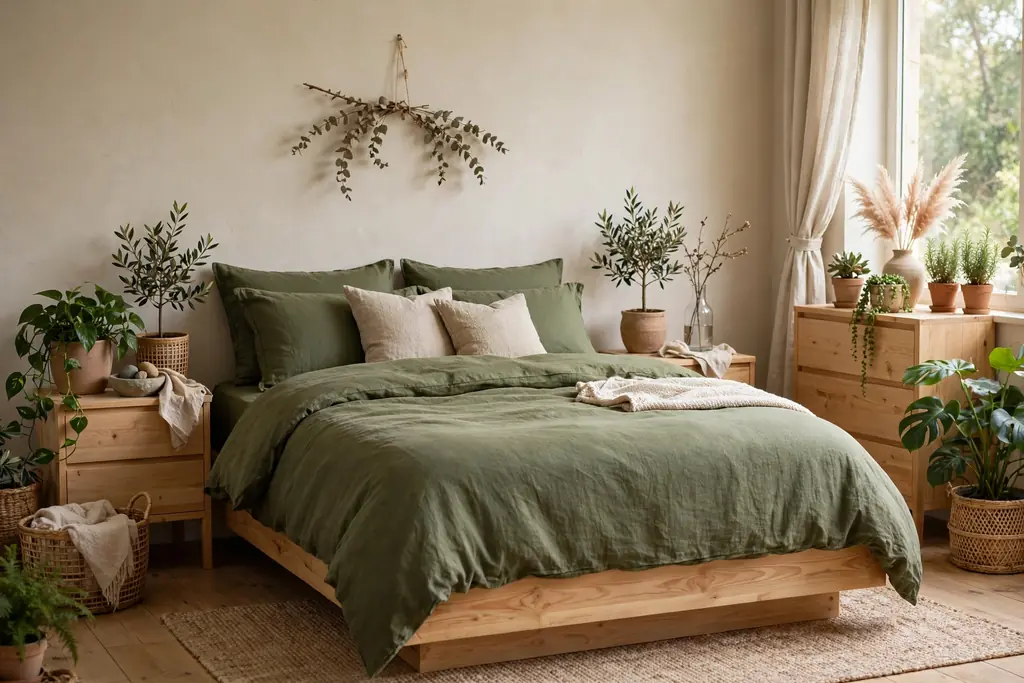
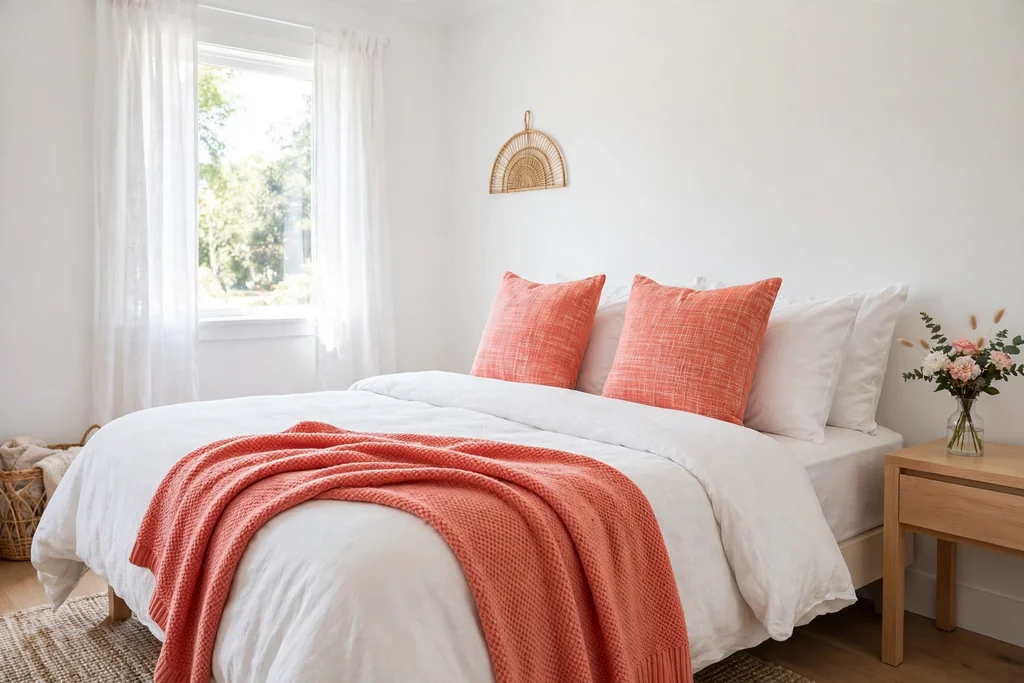
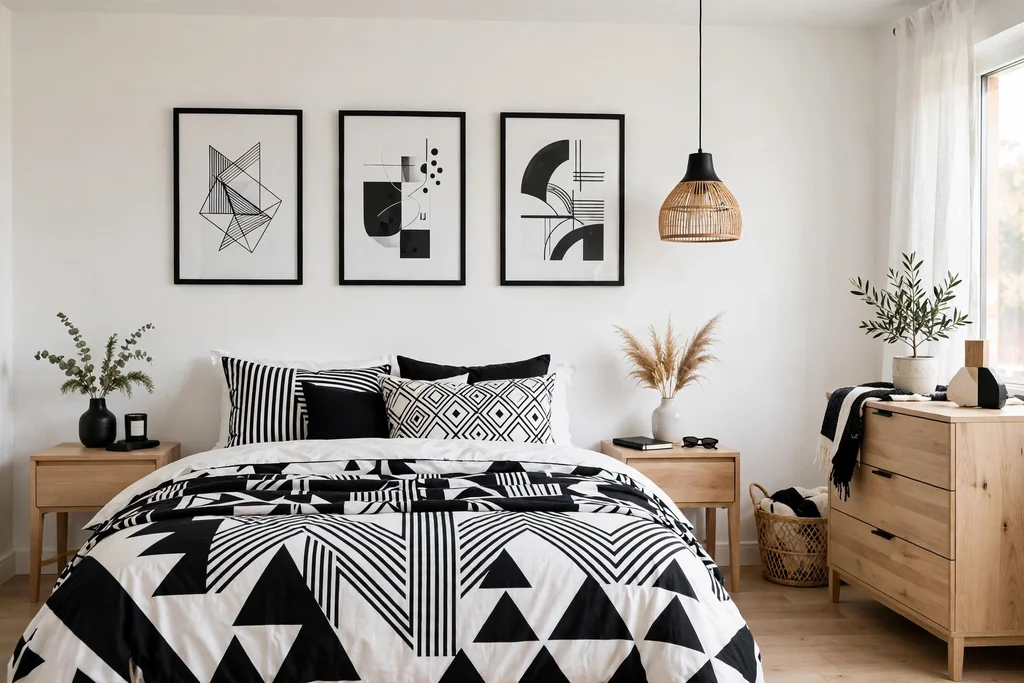
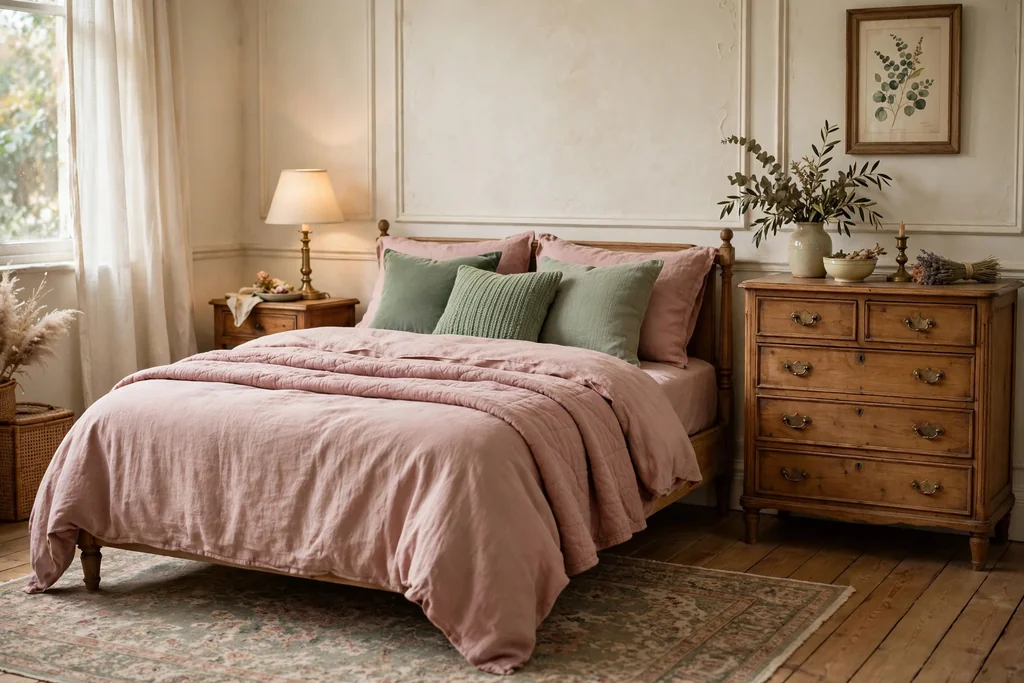
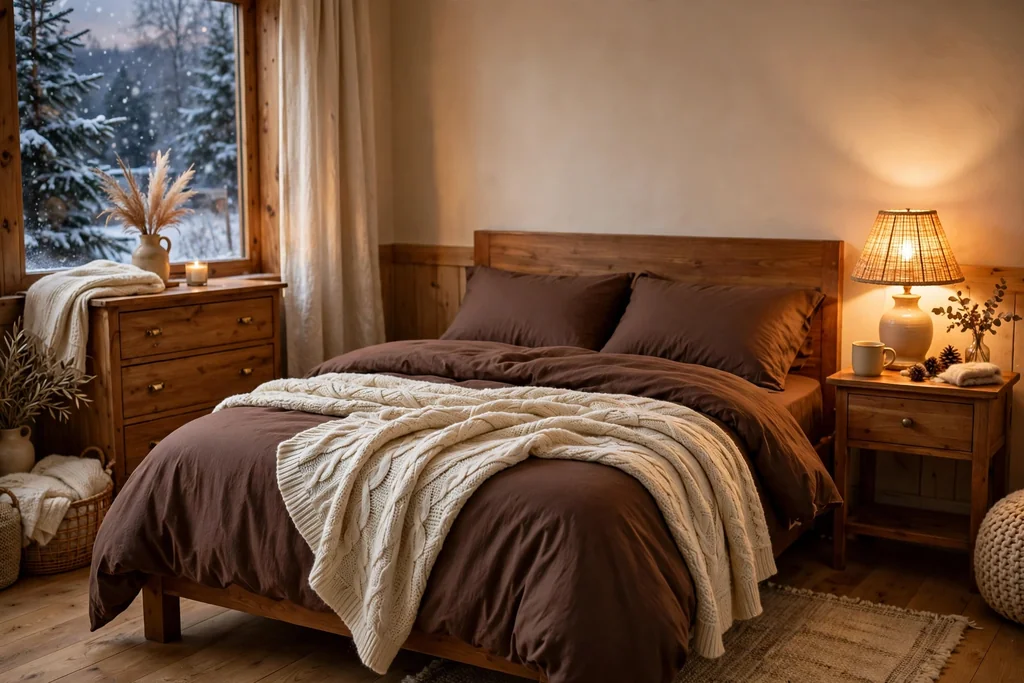
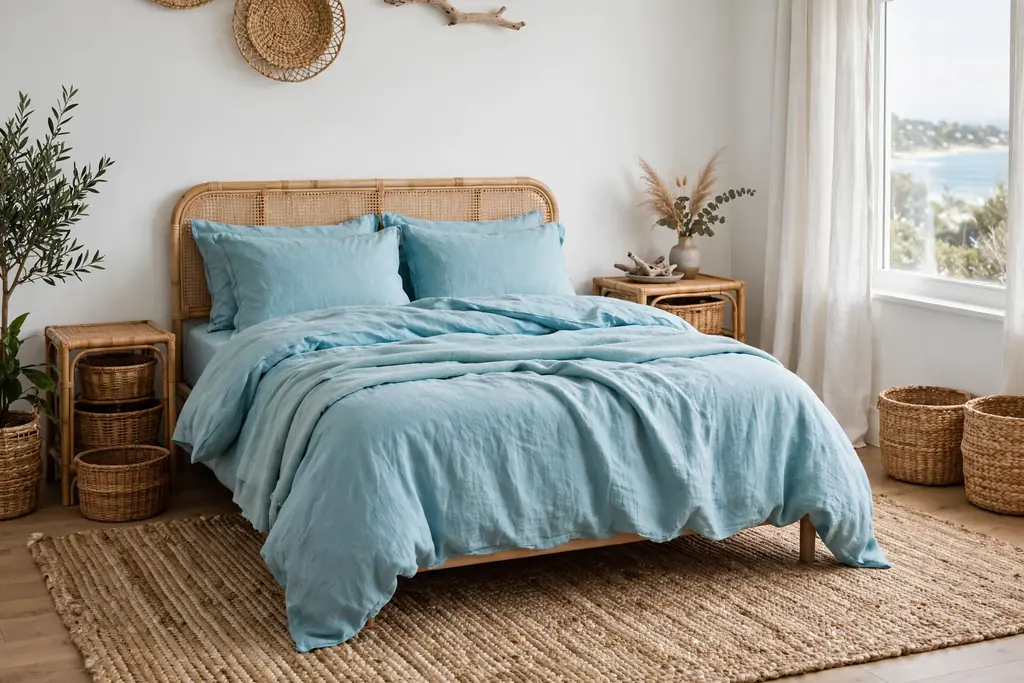
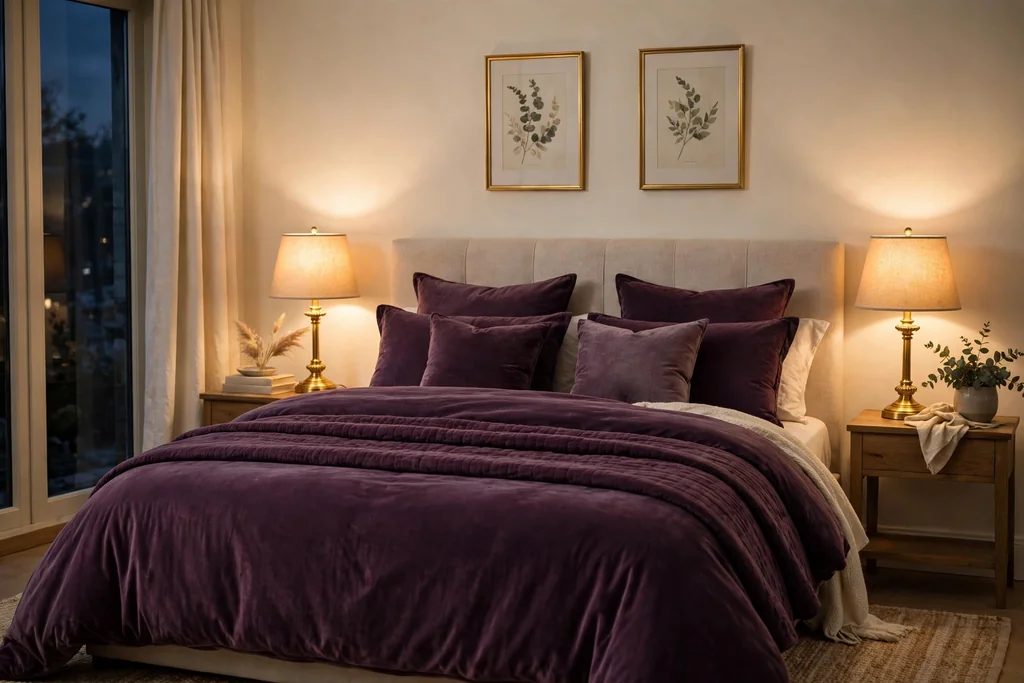
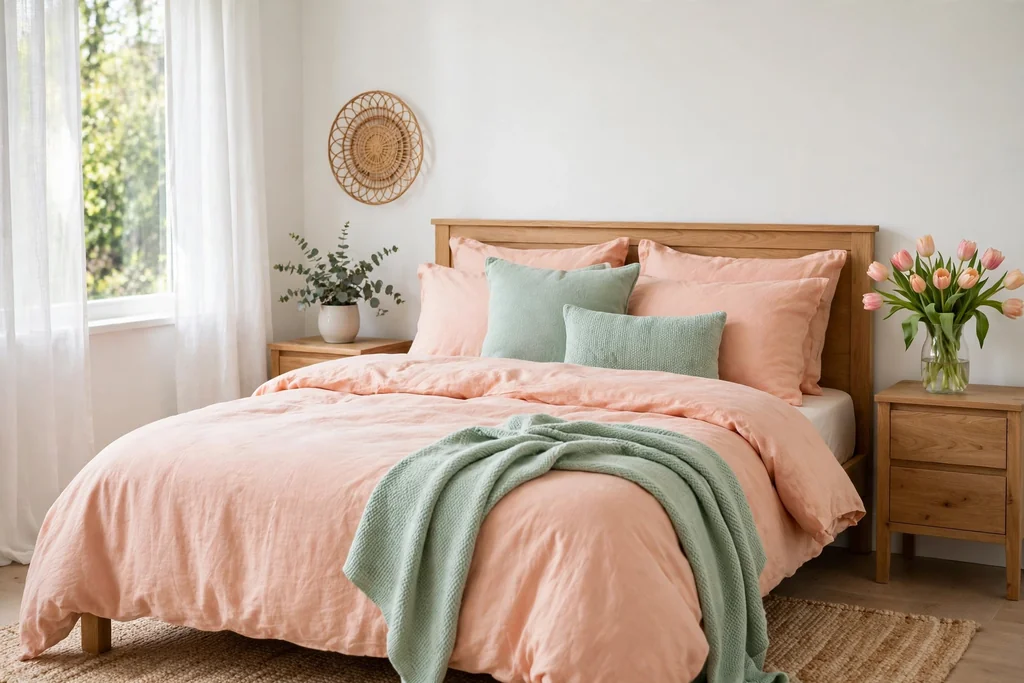
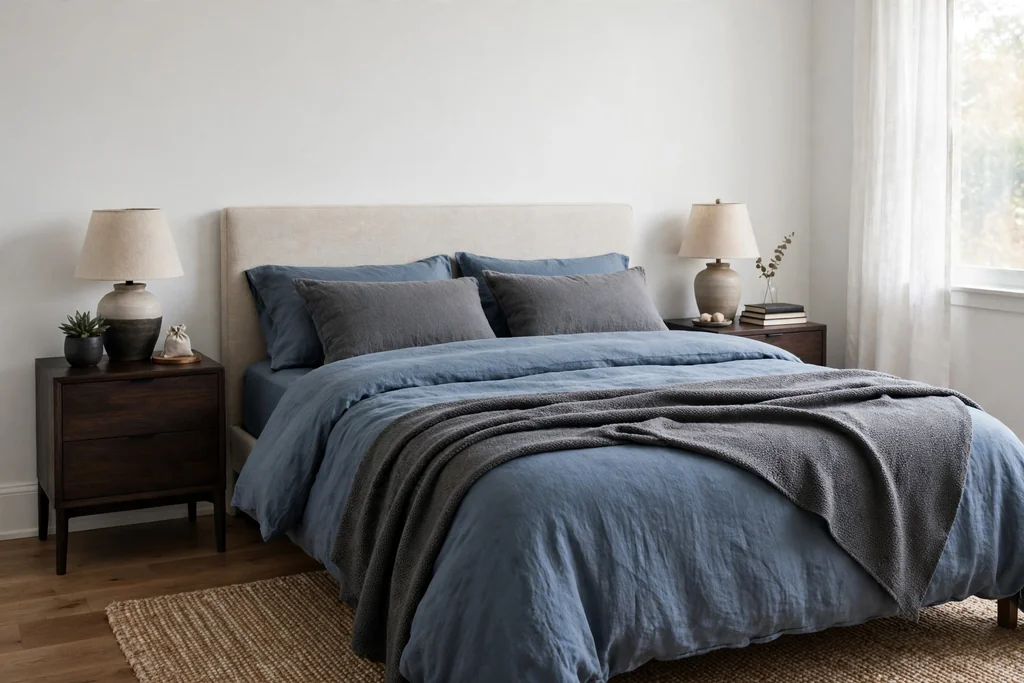
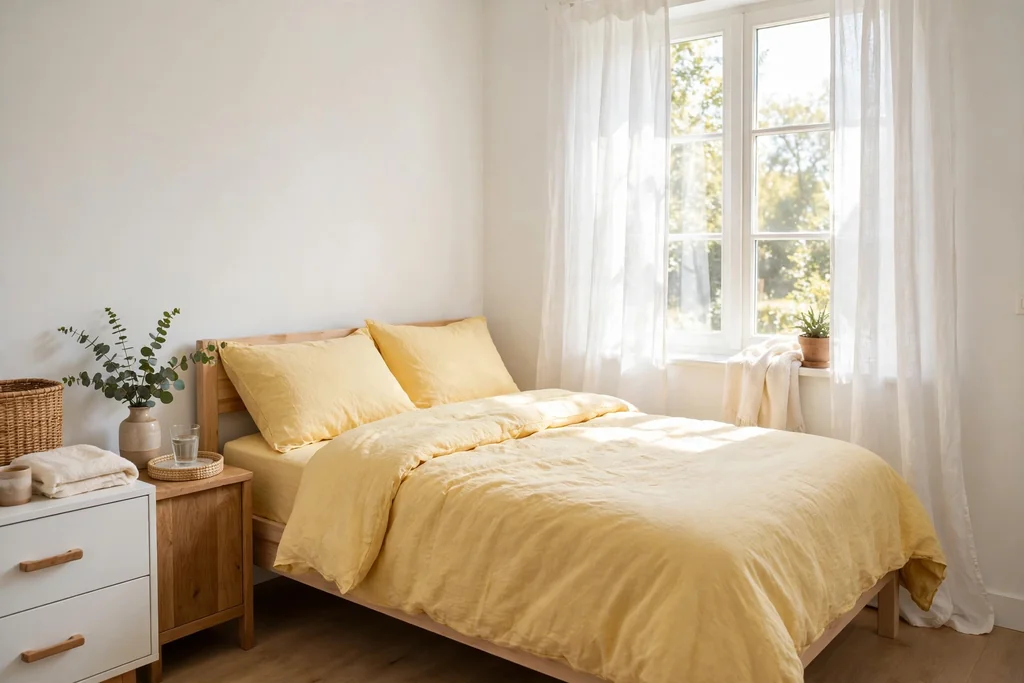
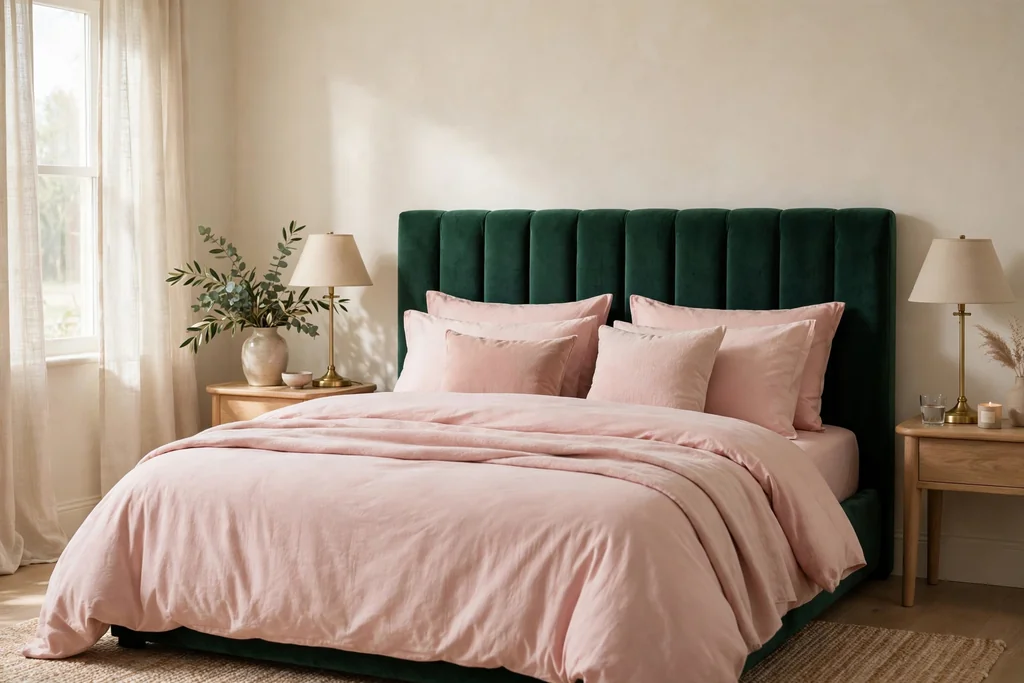
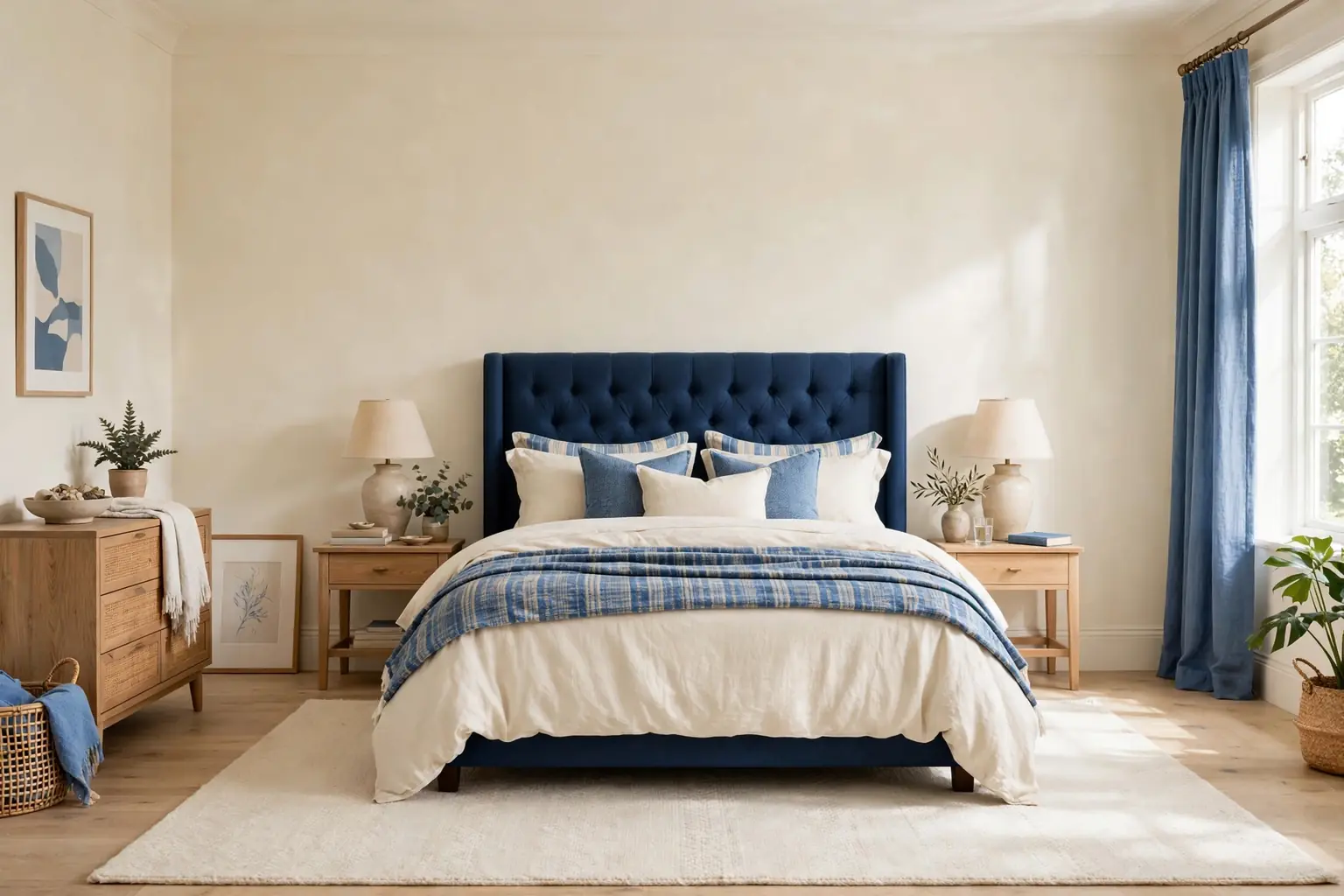
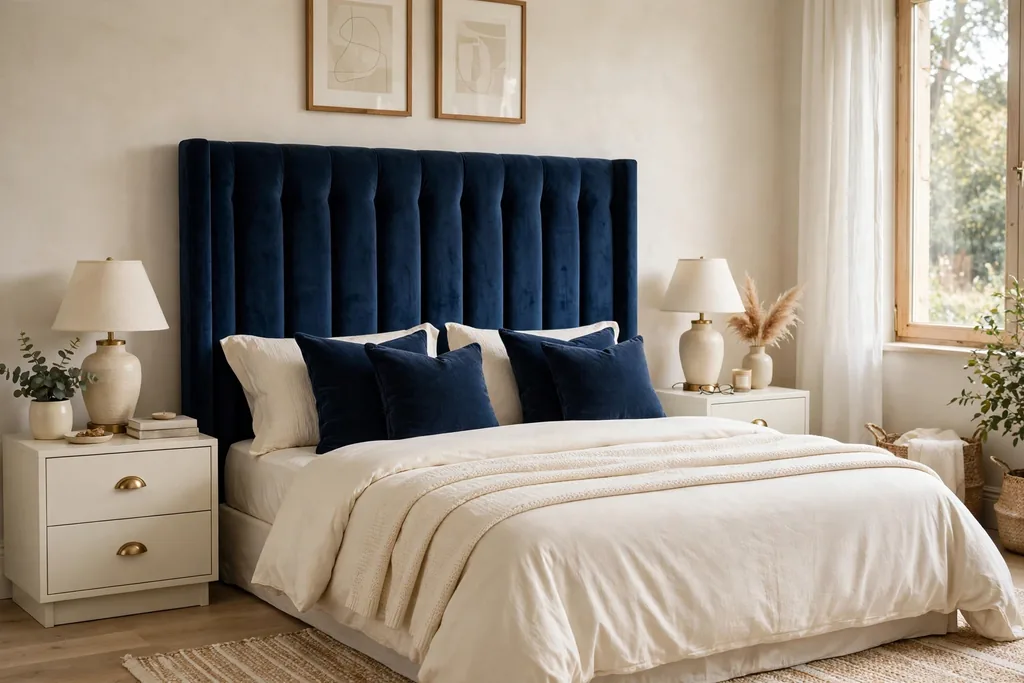
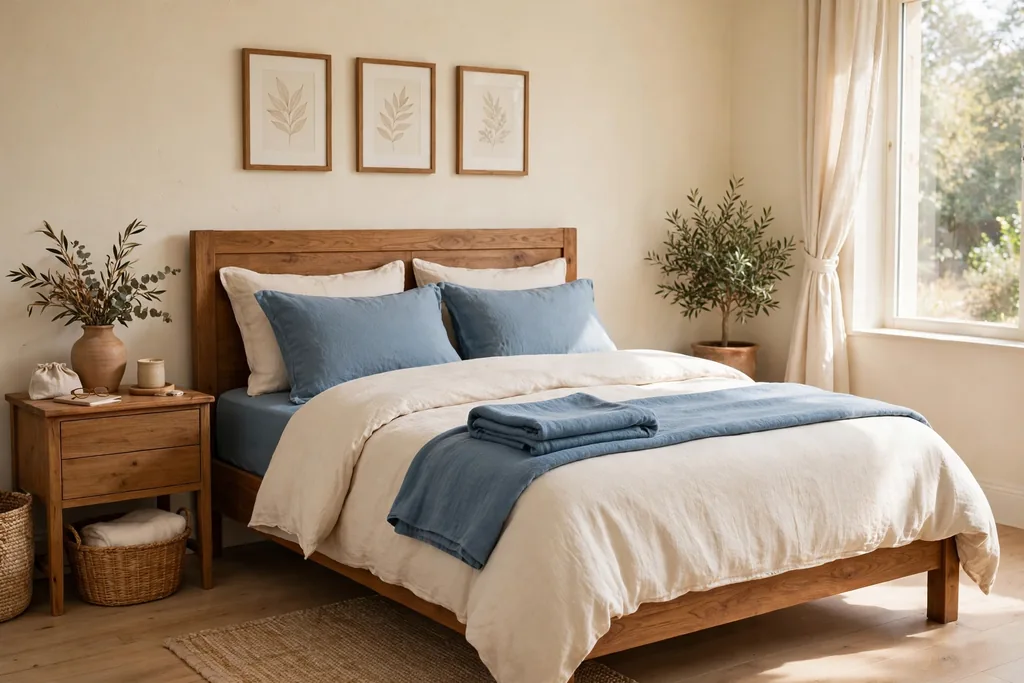
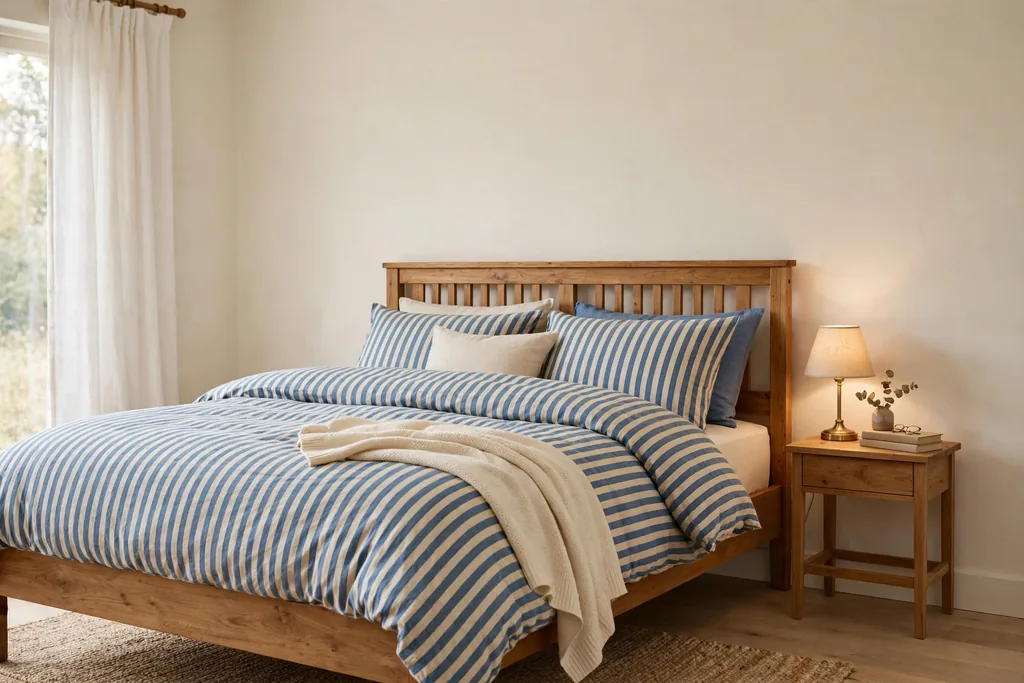
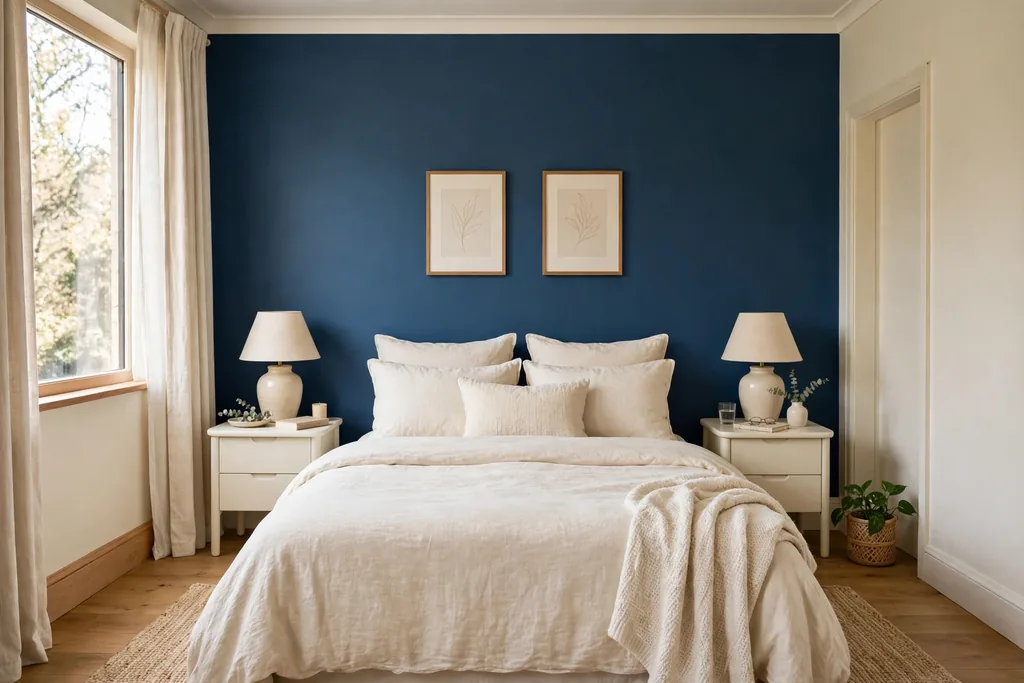
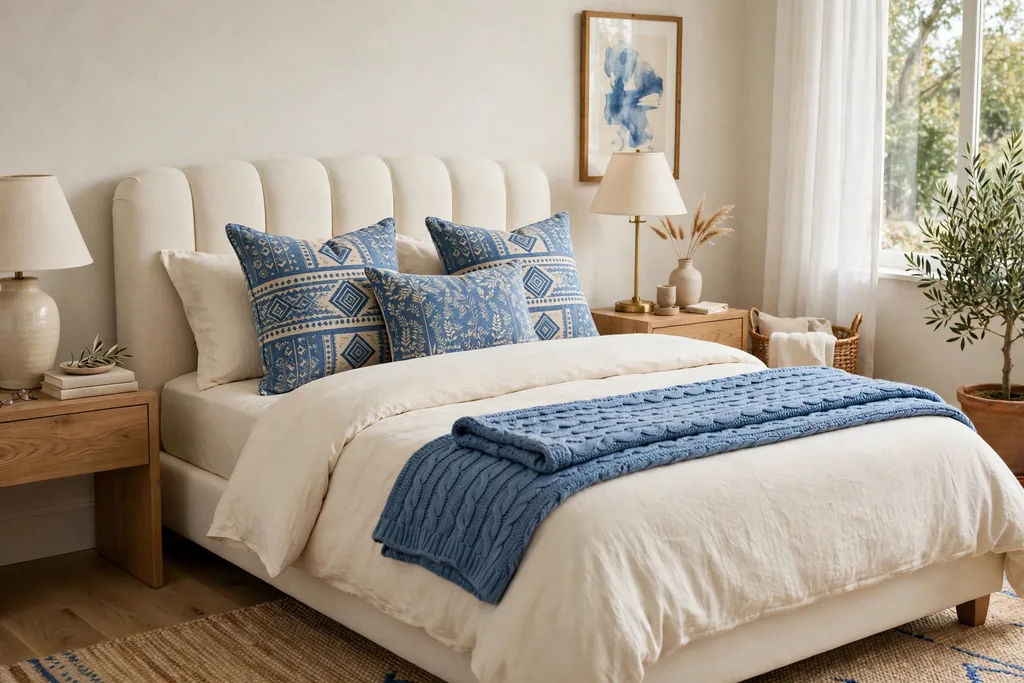
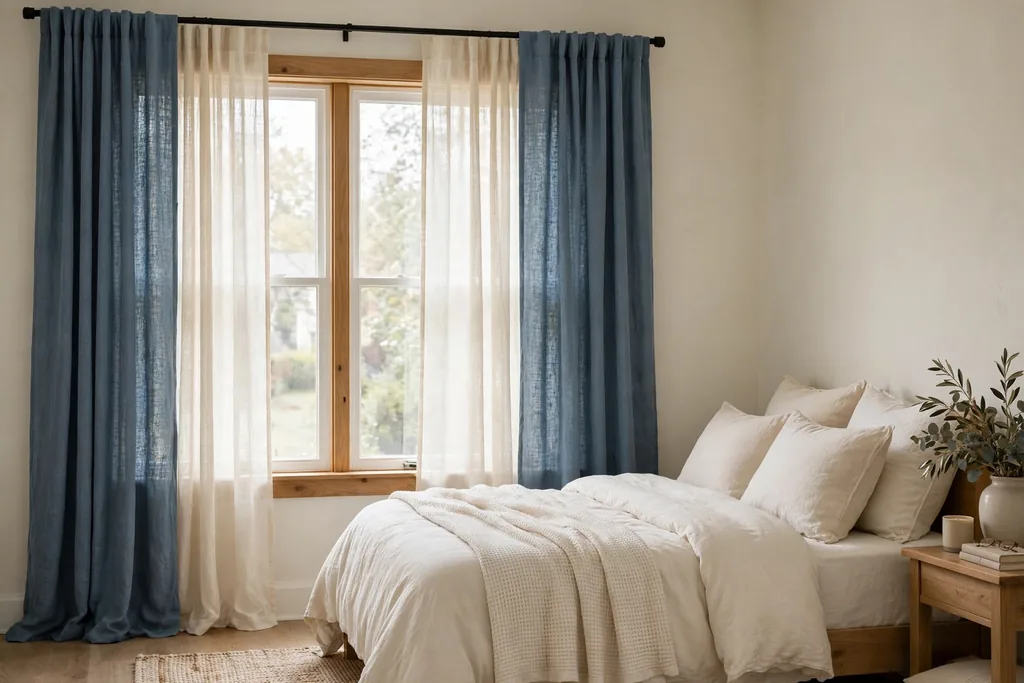
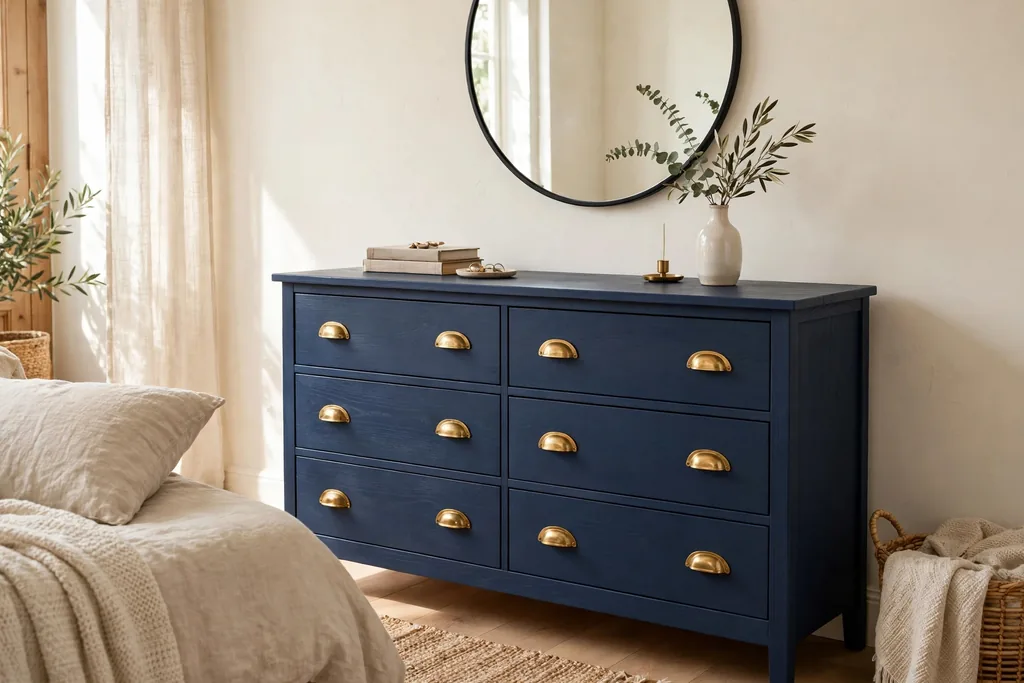
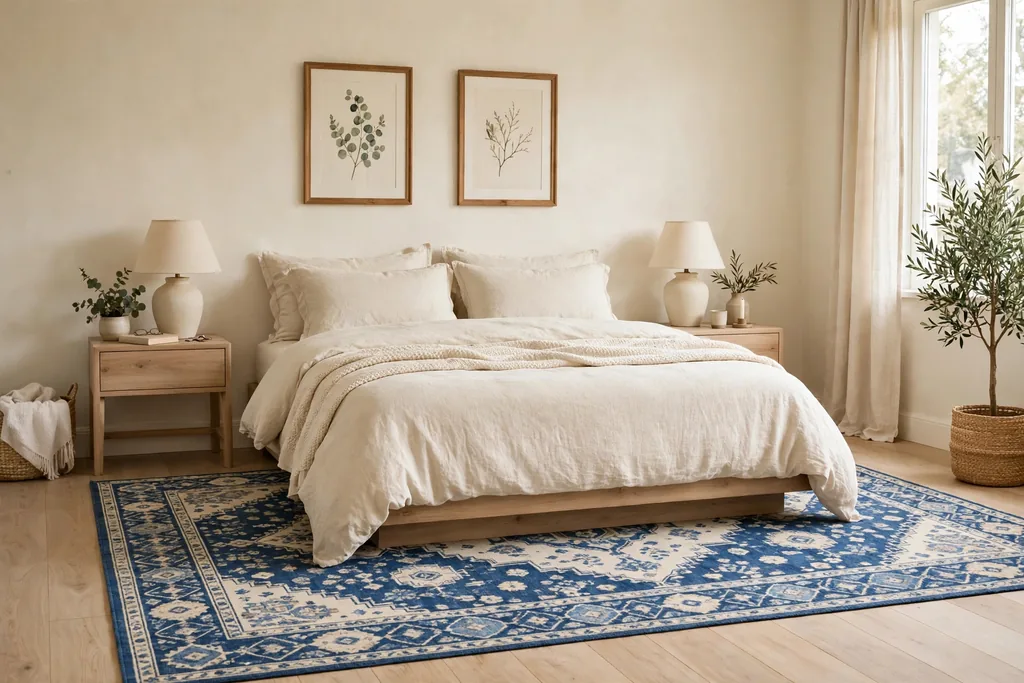
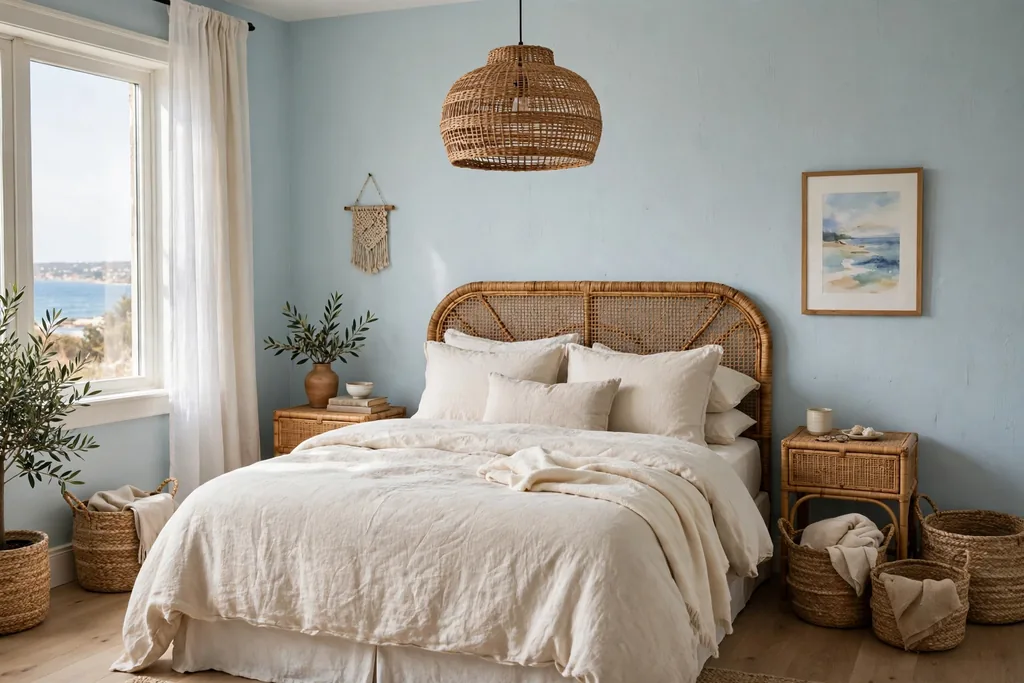
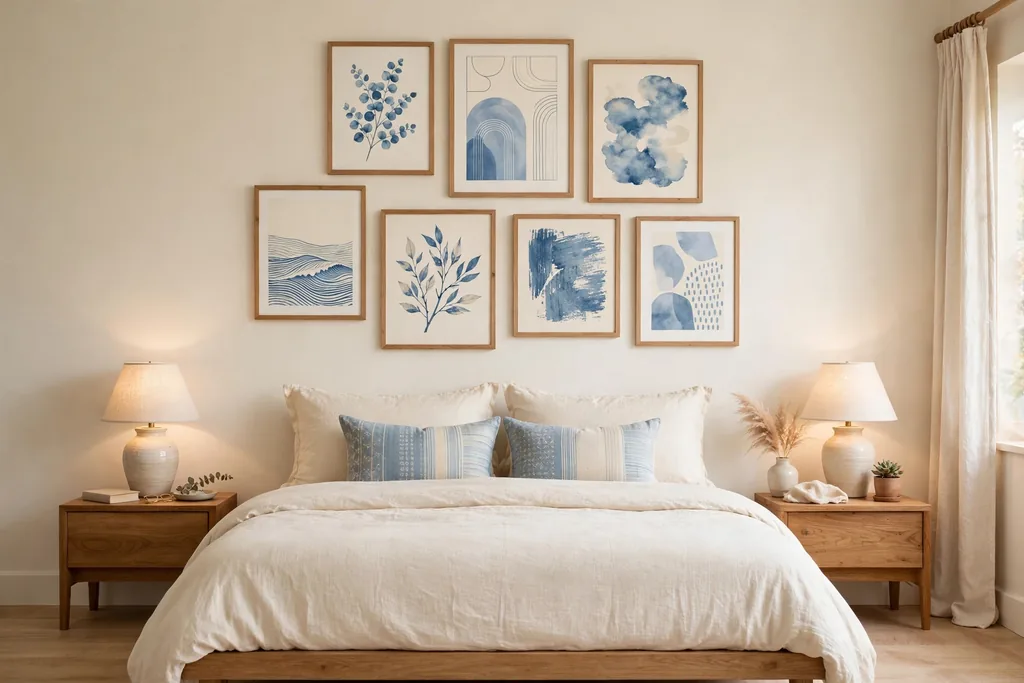
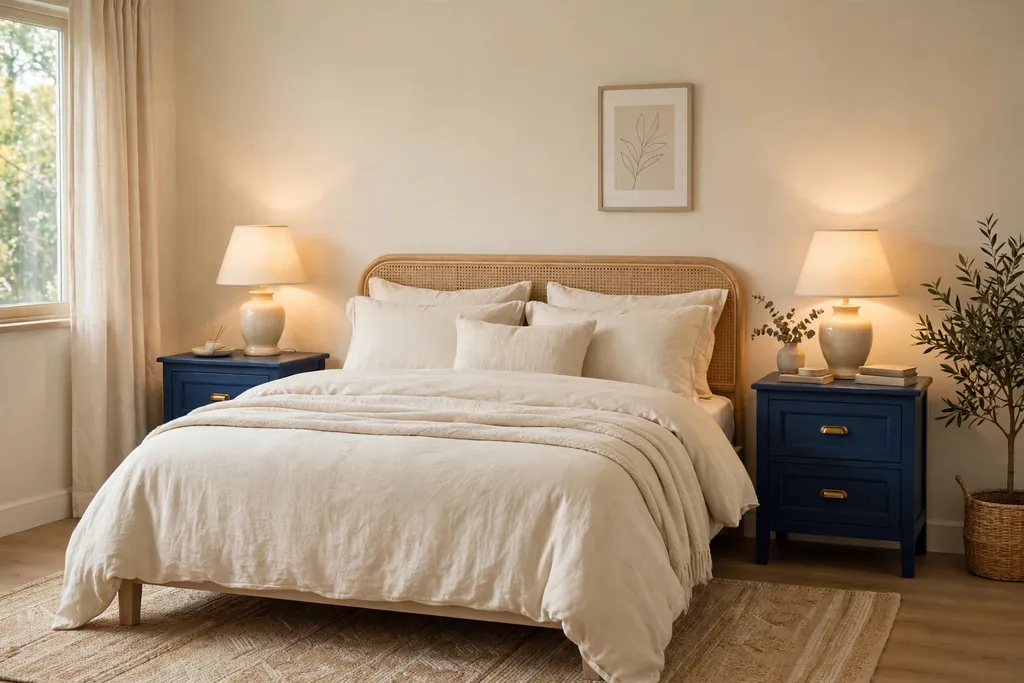
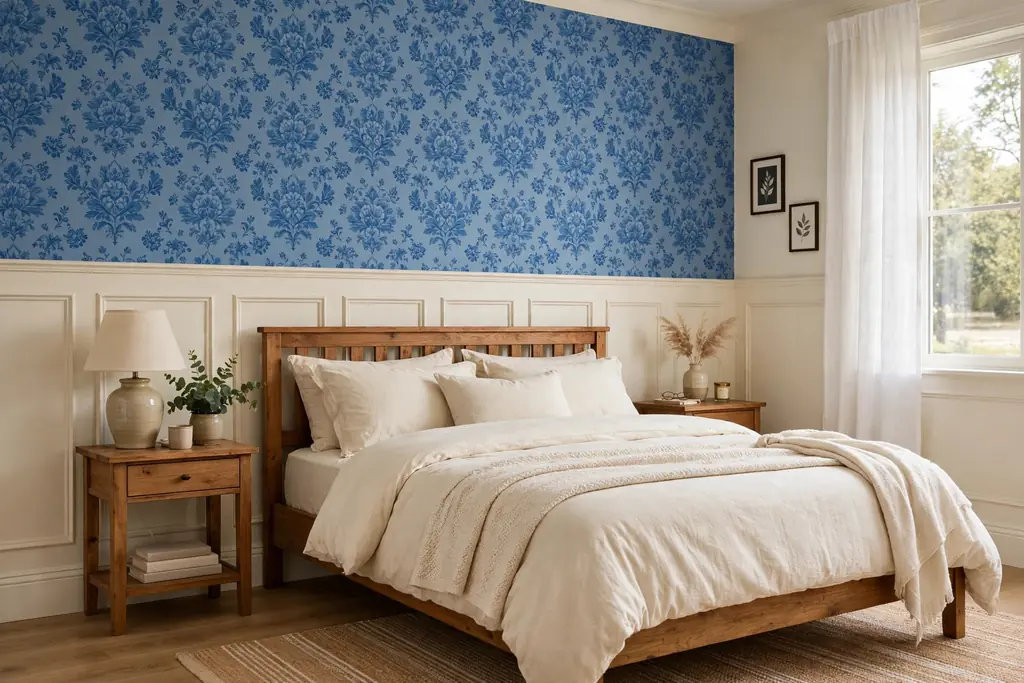
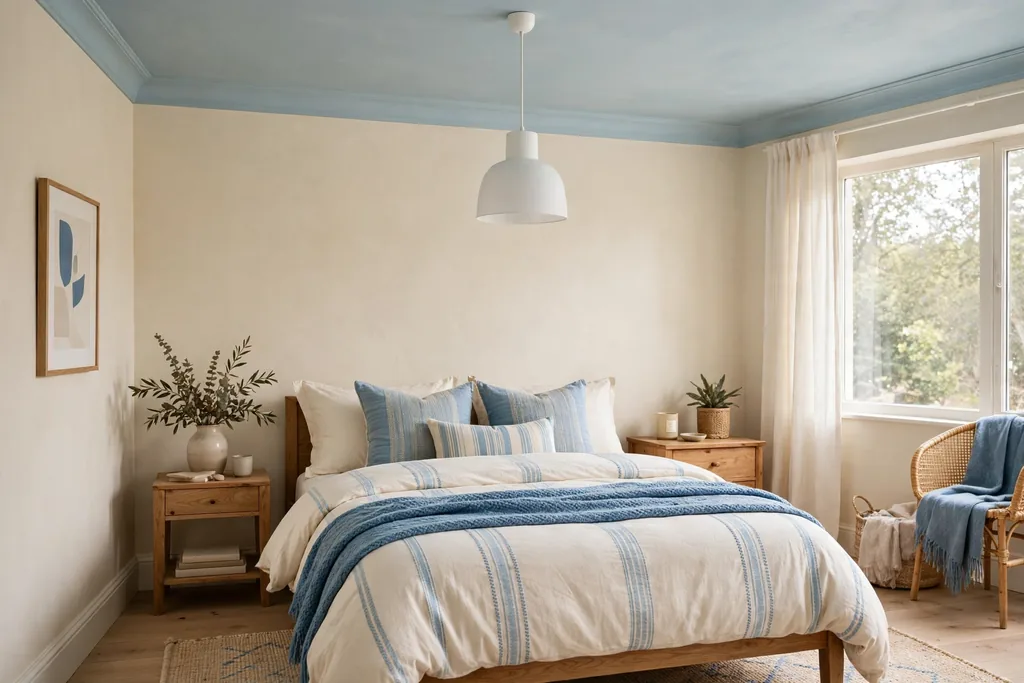
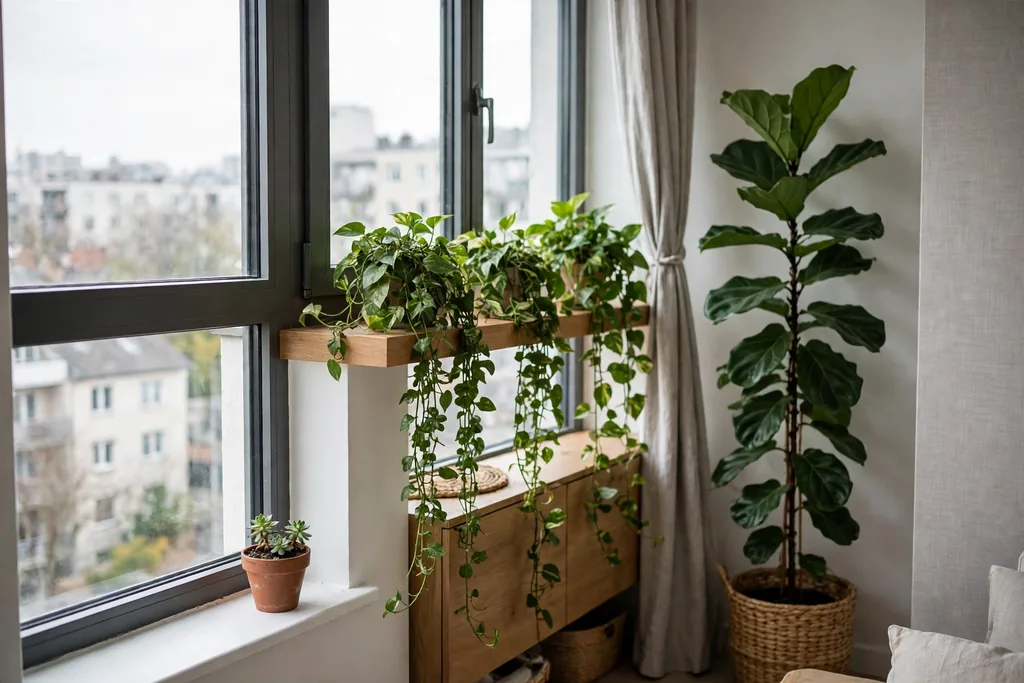
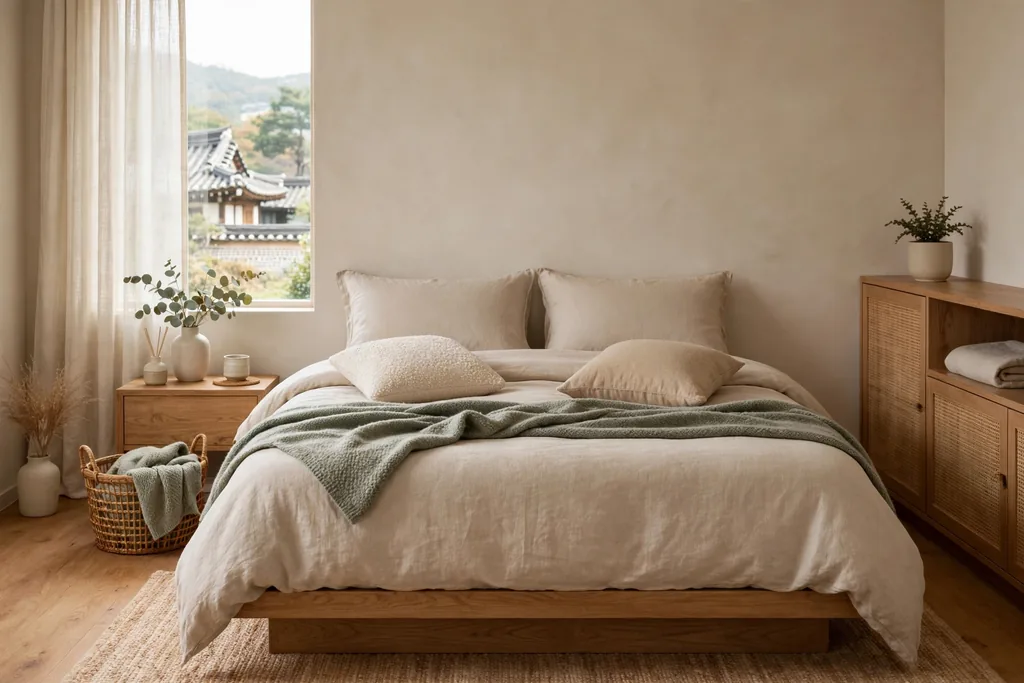
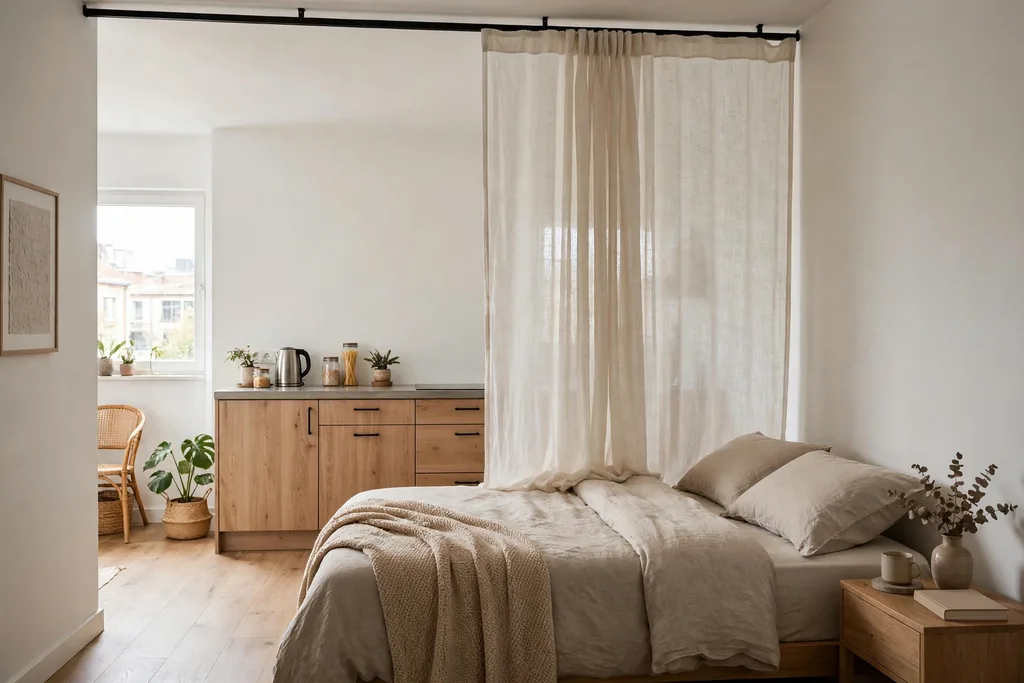
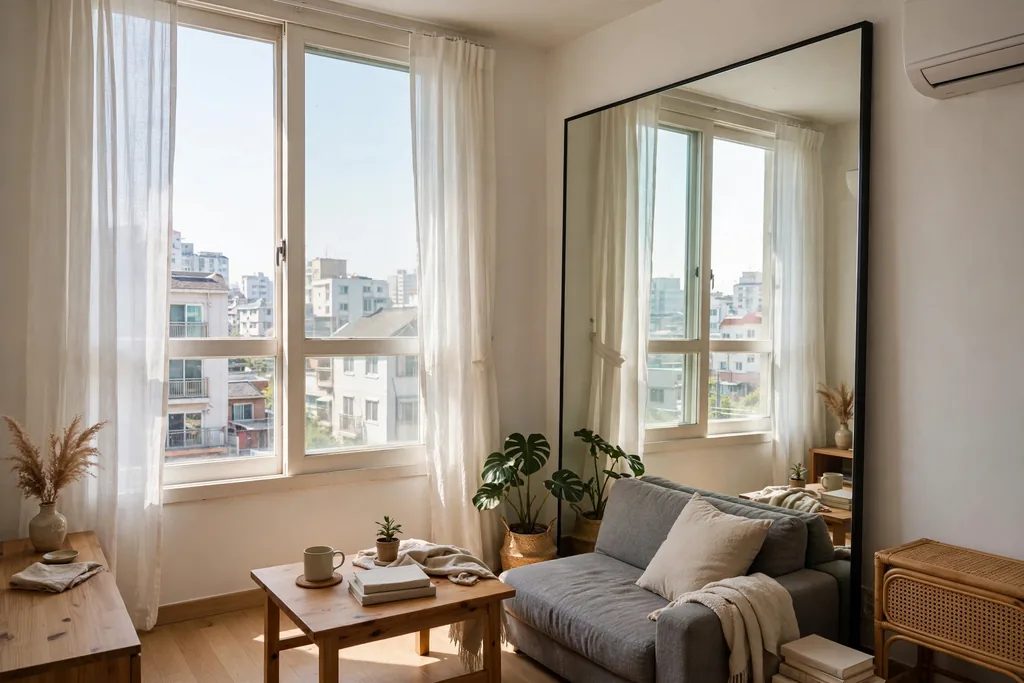
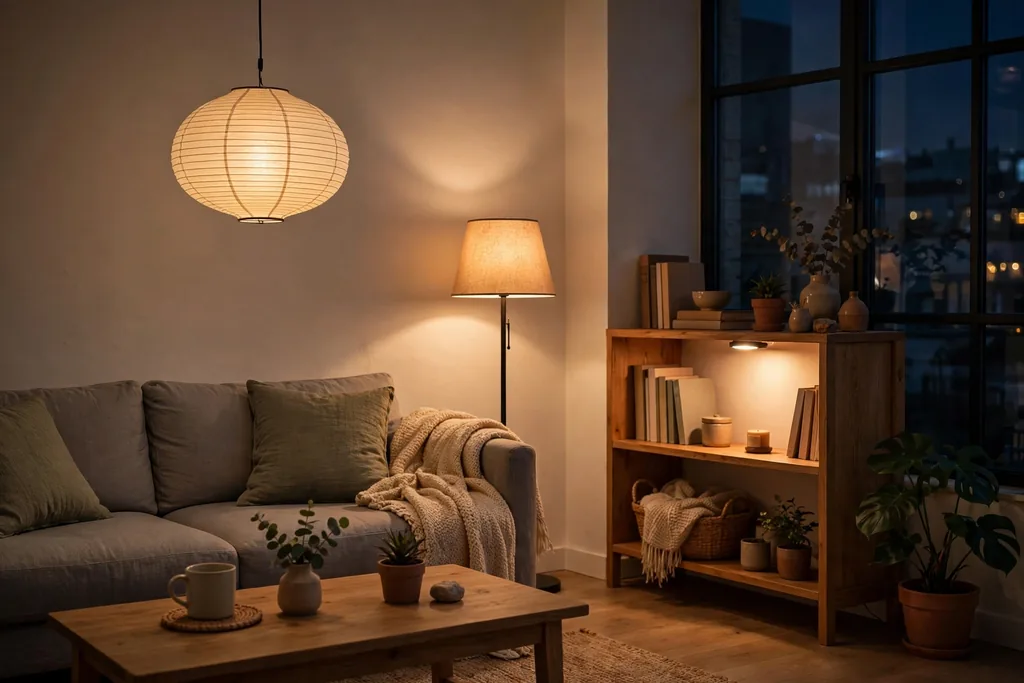
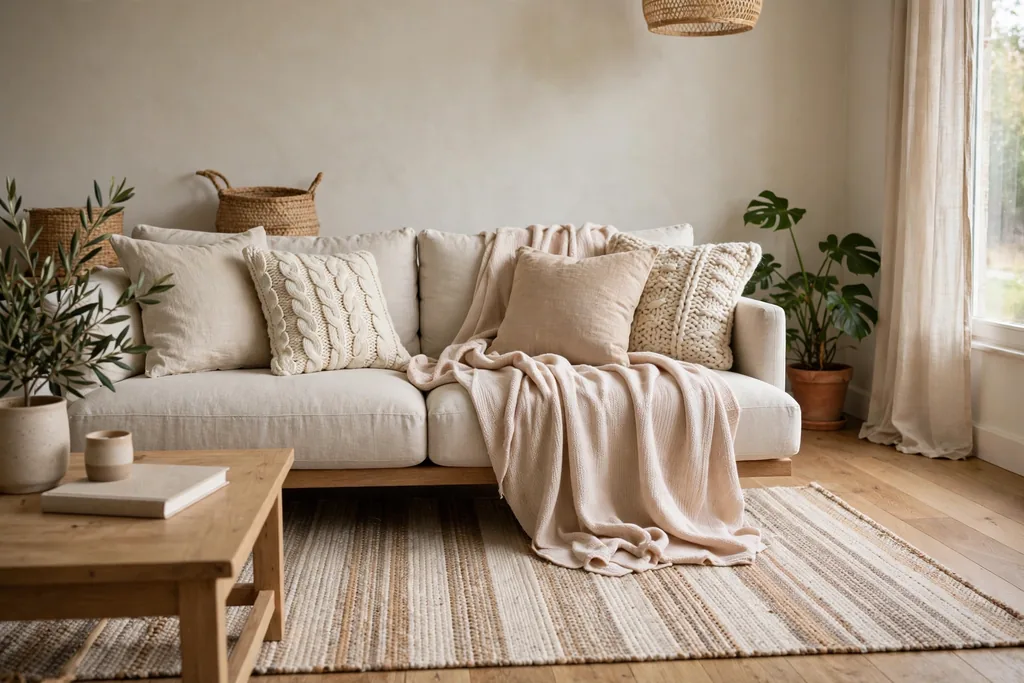
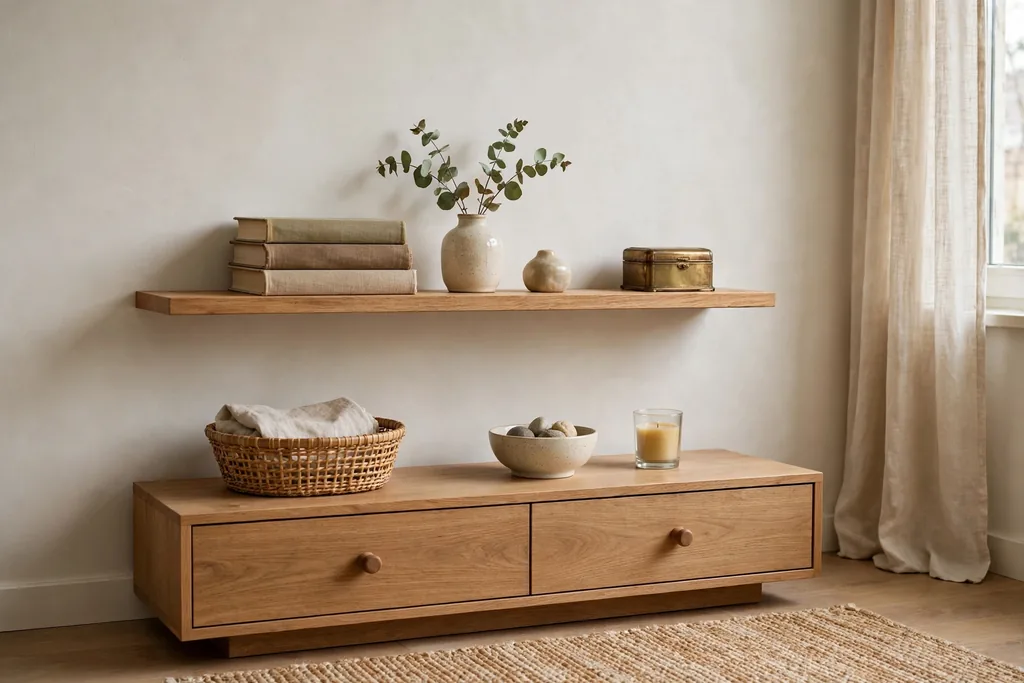
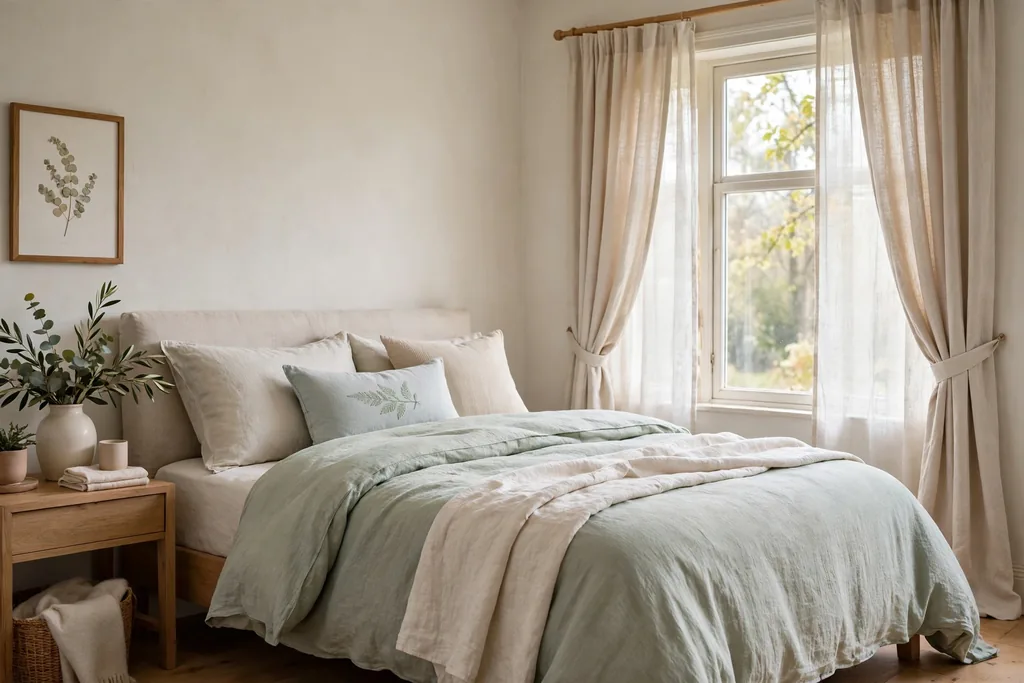
A dreamy bedroom is less about one showpiece and more about soft layers that work together. Pale color, gentle light, touchable fabric, and a few personal details can make a plain room feel calm and full of character. These 14 dreamy aesthetic bedroom ideas cover bedding, light, walls, windows, and small corners, so you can start with one easy change or build a fuller look over time. Keep the palette close, repeat one or two textures, and leave some surfaces clear so the room still feels restful. For a warm neutral base to pair with pastel layers, see these beige bedroom ideas.
Key Takeaways
Start with a close palette of two or three soft colors, such as blush, cream, and pale sage, and repeat them in bedding, curtains, and art.
Layer texture before adding color: linen, knit, velvet, sheer fabric, and a soft rug keep a pale room interesting.
Use warm, low light in the evening, from bedside lamps, string lights, or a paper lantern, instead of one bright ceiling light.
Give the room one clear focal point, usually the bed or the wall behind it, and keep the other walls quiet.
Add character in small, changeable ways first, such as art, throws, and a reading corner, before painting or buying large furniture.
Keep nightstands and floors mostly clear, so soft layers read as calm rather than cluttered.
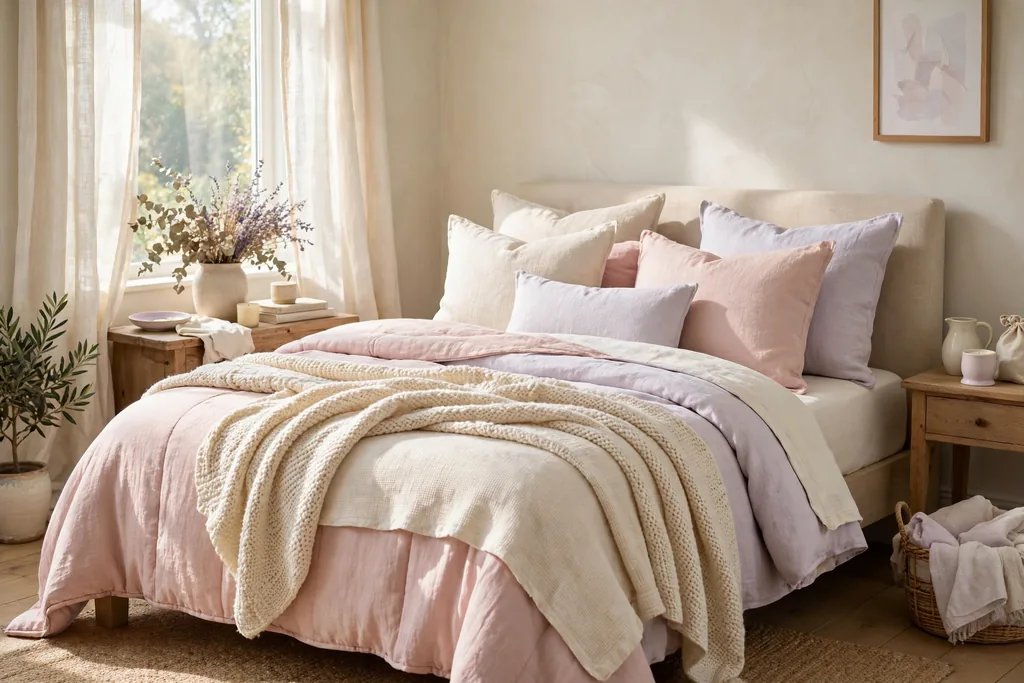
1. Layer Pastel Bedding in Soft Tones
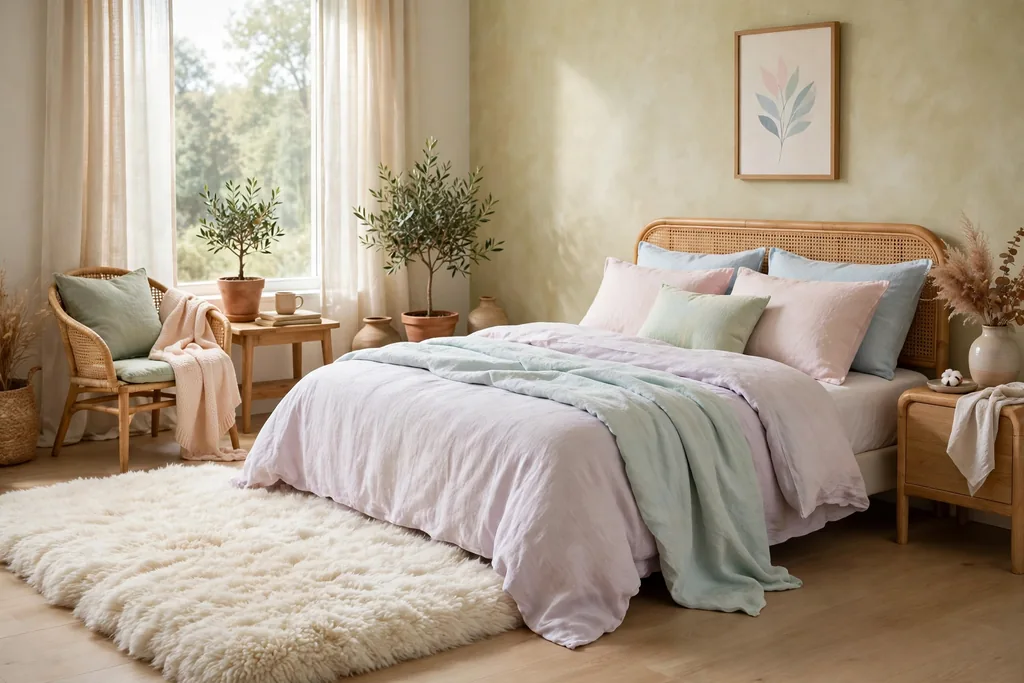
Build the bed in pale layers, starting with white or cream sheets, then a blush or pale lilac duvet, and a folded knit throw at the foot. Add cushions in linen and cotton, in tones close to the duvet, so the bed looks soft and finished without a strong pattern. This suits almost any bedroom, since it needs no paint or tools, and it is easy to change by season.
Keep the palest shade near your face and the deeper pastel at the foot, which gives the bed a gentle sense of depth. Wash cushion covers and throws on a regular cycle, since pale fabric shows dust and marks sooner than dark fabric. If pastel bedding feels too sweet on its own, add one natural wood or white piece nearby to ground it.
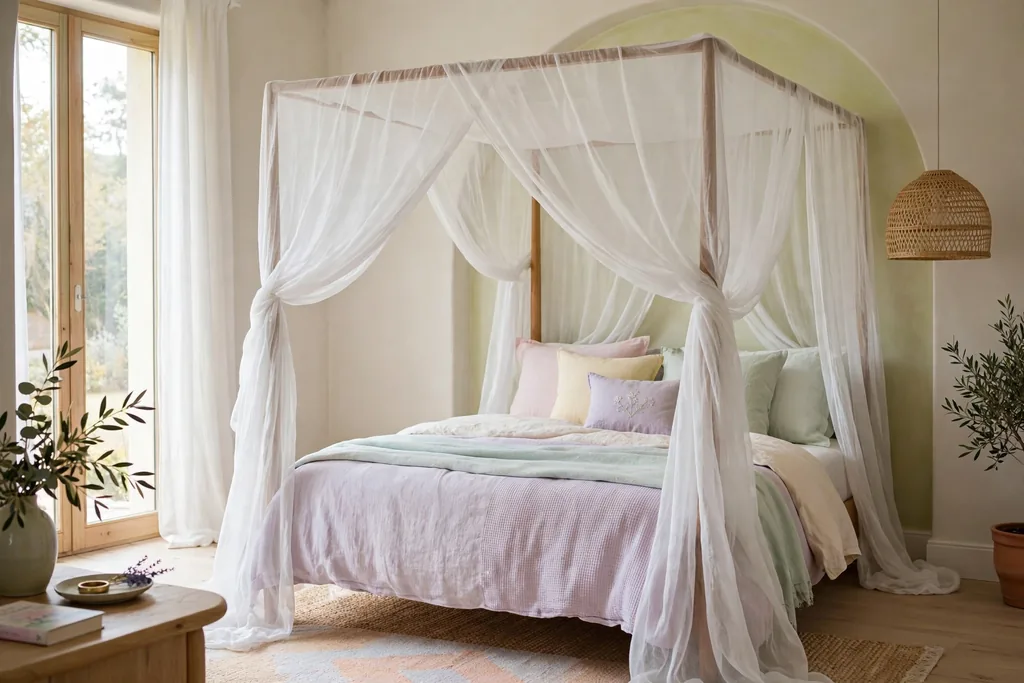
2. Hang a Sheer Canopy Over the Bed
Drape sheer white or blush fabric from a ceiling hoop, a wall mounted frame, or four slim posts to make a light canopy over the bed. The fabric softens the room, frames the bed, and adds a sense of privacy without blocking light or air. This suits a bedroom with a plain ceiling and a bed that needs a focal point.
Hang the fabric so it falls clear of pillows and lamps, and keep the canopy fabric light enough to move slightly with air from a window. Wash or shake out the panels often, since sheer fabric collects dust. If a full canopy feels too much, drape sheer fabric on one side of the bed only, or use a half canopy behind the headboard.
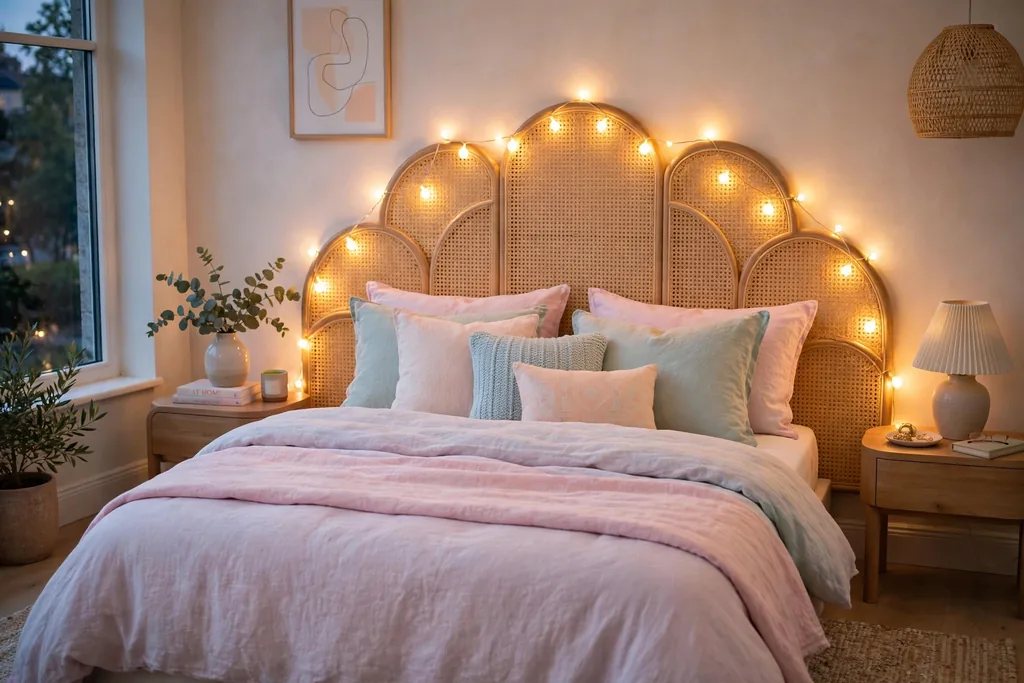
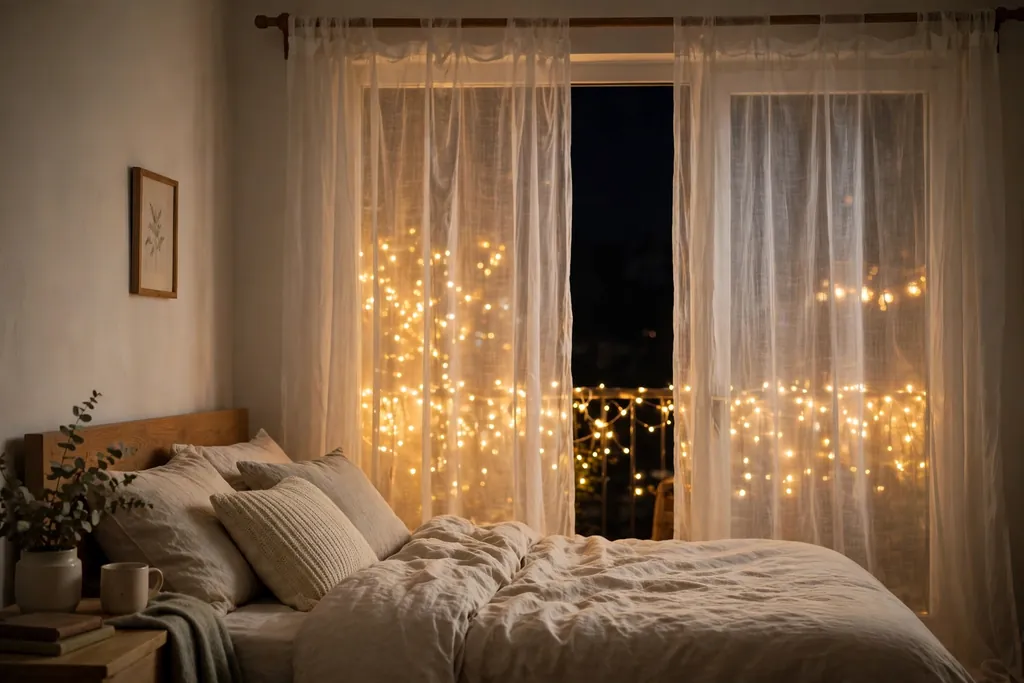
3. Add Warm String Lights Along the Headboard
Run warm white string lights along the headboard, around a window frame, or along a picture ledge for soft evening light. The small bulbs give a gentle glow that suits reading and winding down, and they cost little to add. This suits a bedroom where the main ceiling light feels too harsh at night.
Use battery lights with a timer, or plug in lights with a cord kept tidy along the wall, and keep bulbs clear of bedding and curtains. Choose warm white rather than cool white, since cool light can make soft colors look grey. If string lights feel too playful for a main bedroom, use them only inside a reading corner or along one shelf.
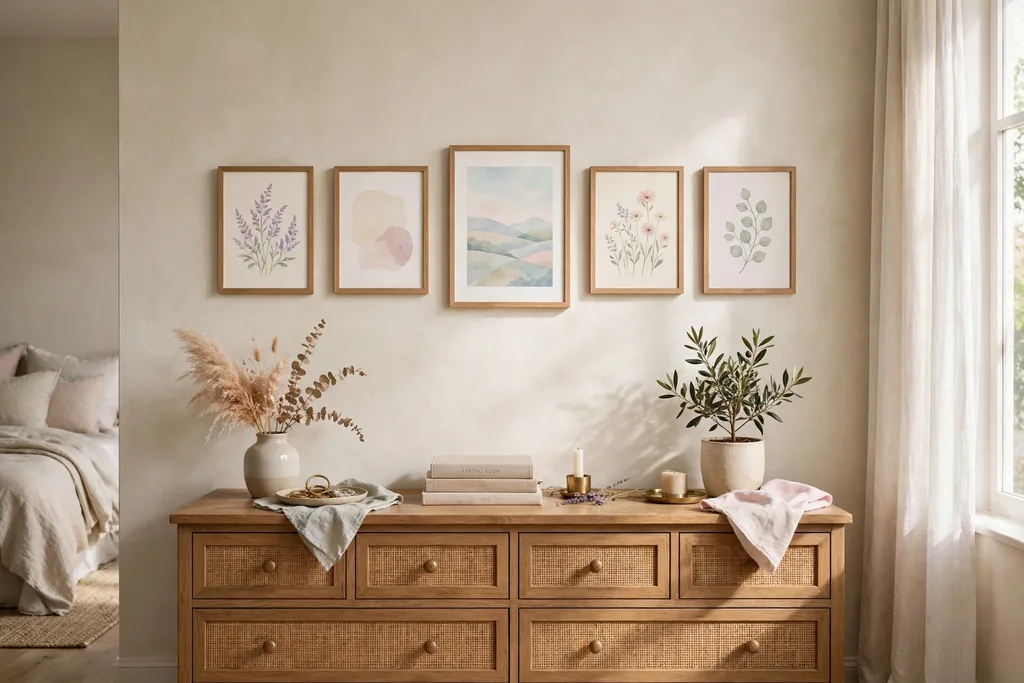
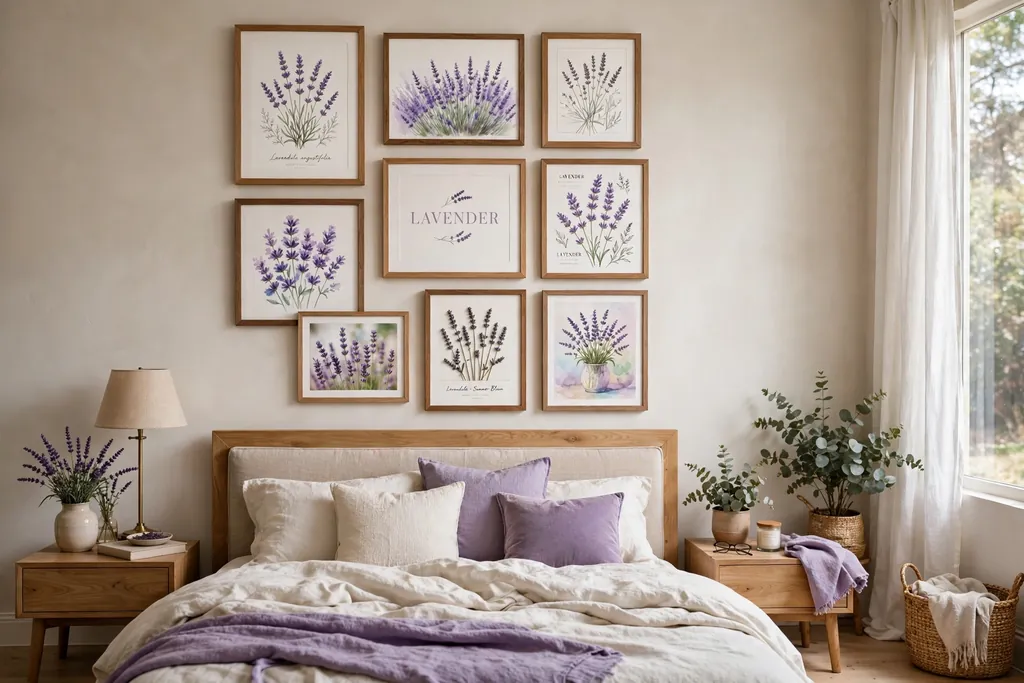
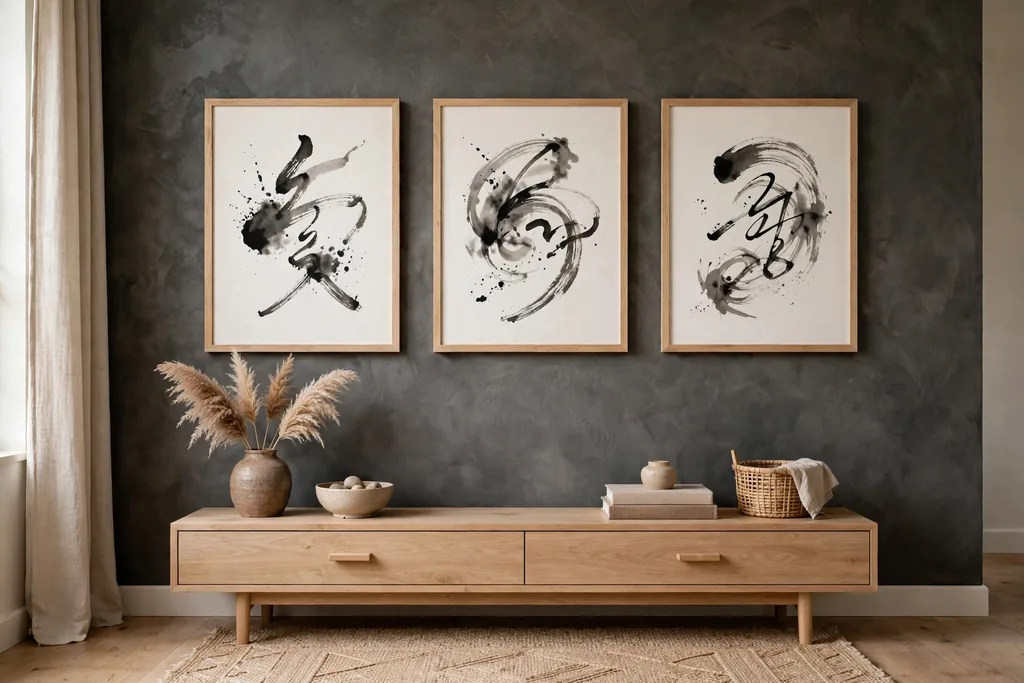
4. Build a Soft Gallery Wall in Pastel Prints
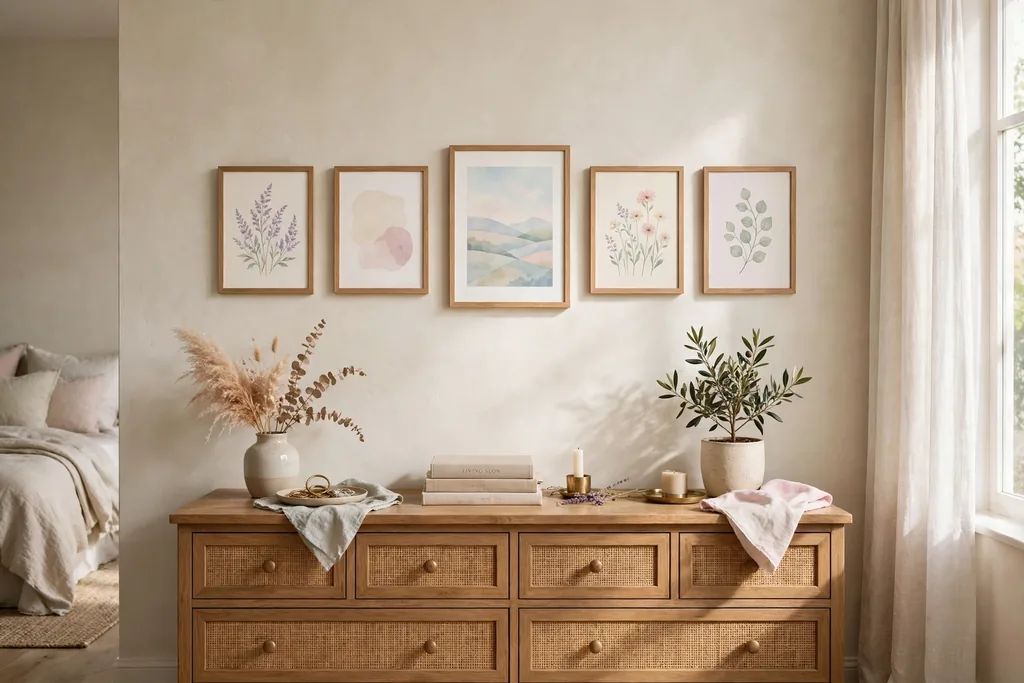
Hang a small gallery of framed prints in blush, cream, sage, and soft gold above a dresser or beside the bed. Mix landscapes, botanical prints, and simple line drawings, but keep the palette tight so the wall feels calm. This suits a bedroom with one blank wall that needs personality without a bold feature color. For more wall layouts, from grids to ledges, see these bedroom wall art ideas.
Lay the frames on the floor first, plan even gaps, and hang the middle frame at eye level. Use matching or close toned frames so the prints, not the frames, carry the look. If you rent, use picture hanging strips for light frames, and keep the largest print in the center so the arrangement feels balanced.
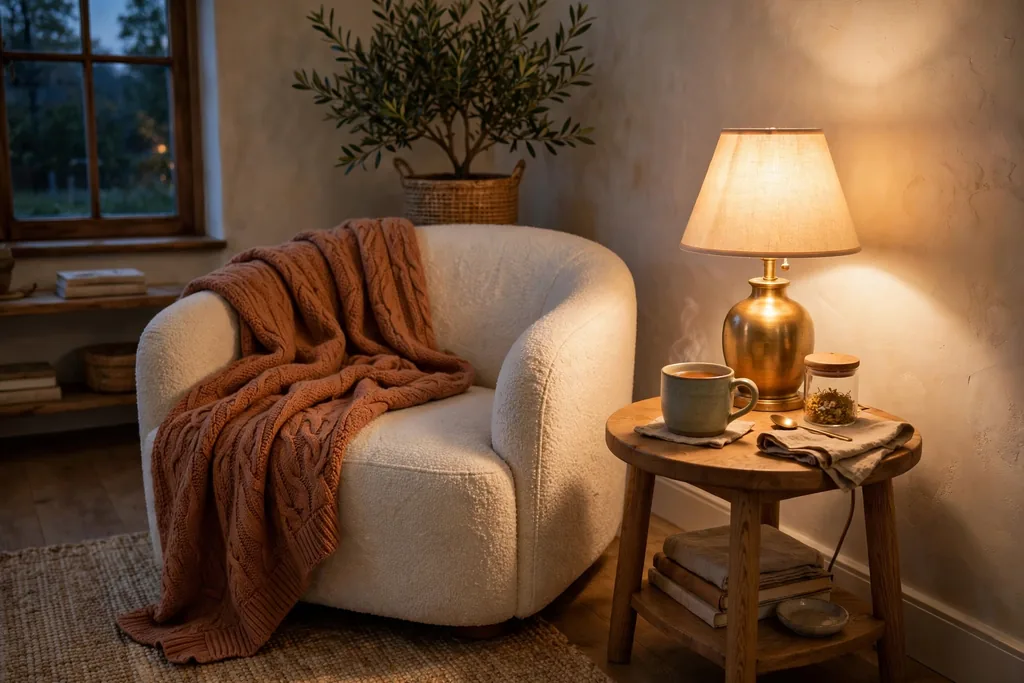
5. Make a Cozy Reading Nook by the Window
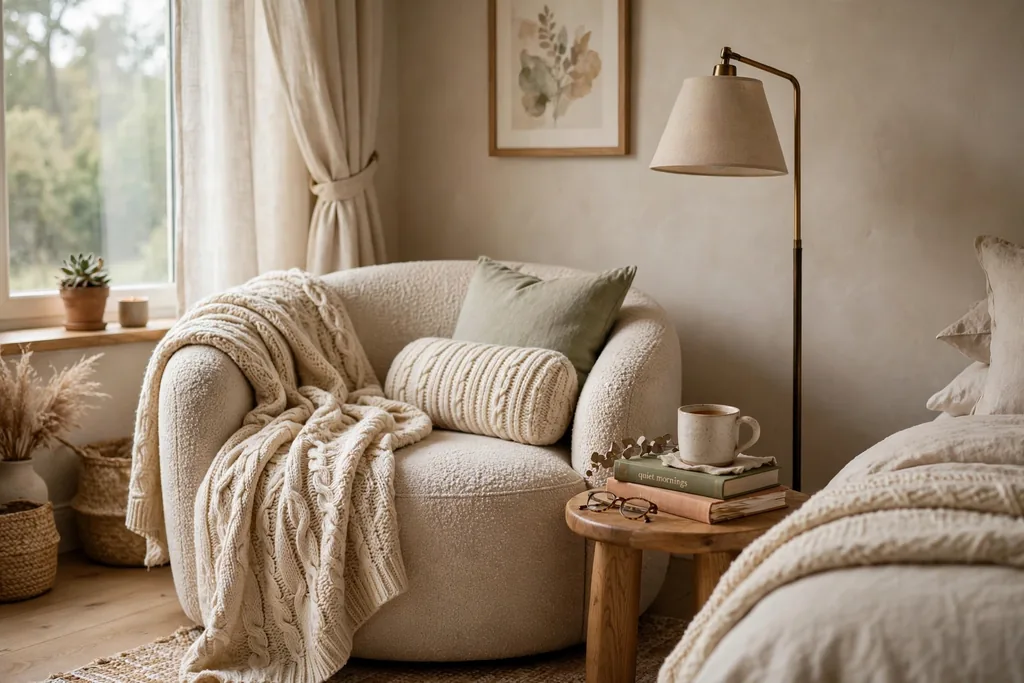
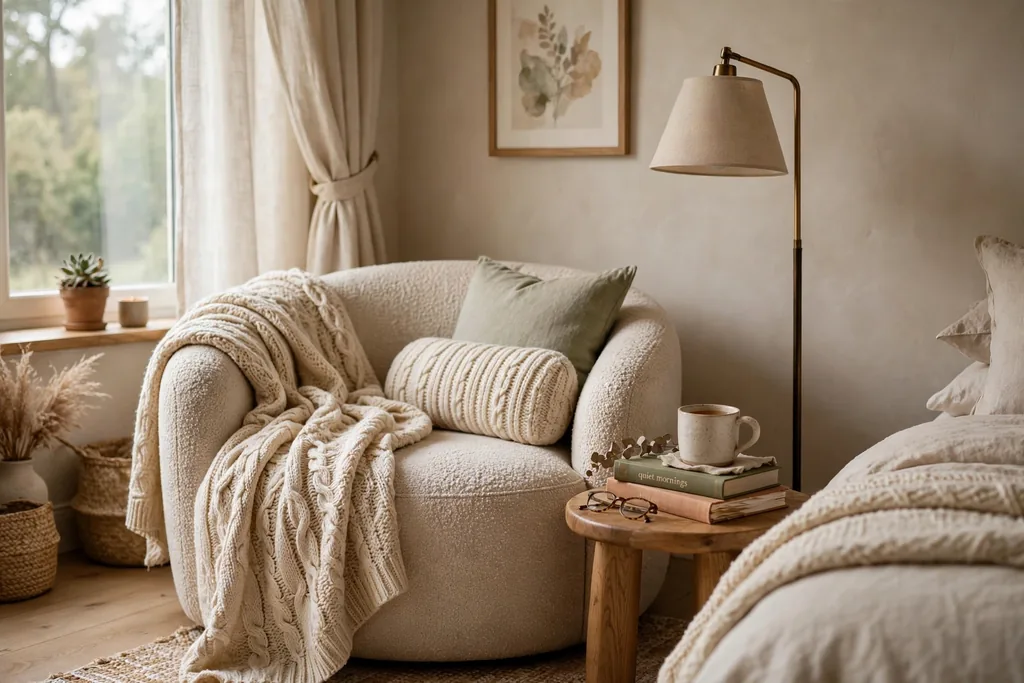
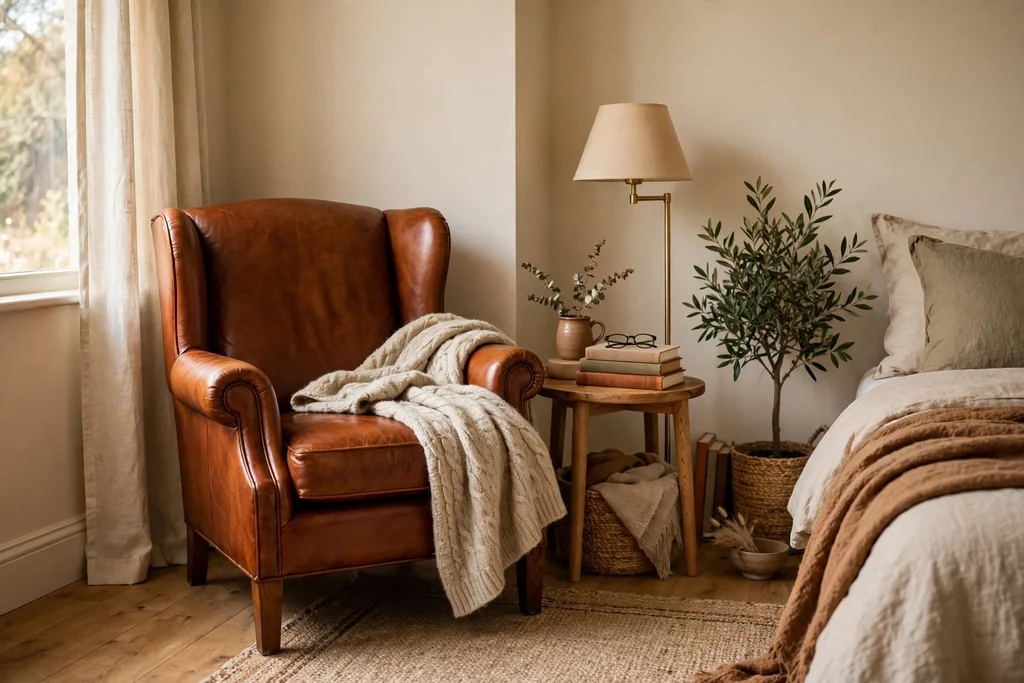
Place a soft chair, a small side table, and a warm floor lamp in a window corner to make a reading nook inside the bedroom. Add a knit throw over the chair arm and a small rug underfoot, so the corner reads as its own place. This suits a bedroom with a window corner that currently holds nothing but a laundry basket or a plant.
Choose a chair deep enough to sit in for an hour, not a stiff accent chair that looks good but stays empty. Keep a basket beside the chair for current books, so the corner stays tidy without a full bookcase. If the window gets strong sun, a sheer curtain panel on that side softens the light for reading.
6. Dress the Window With Flowing Sheer Curtains
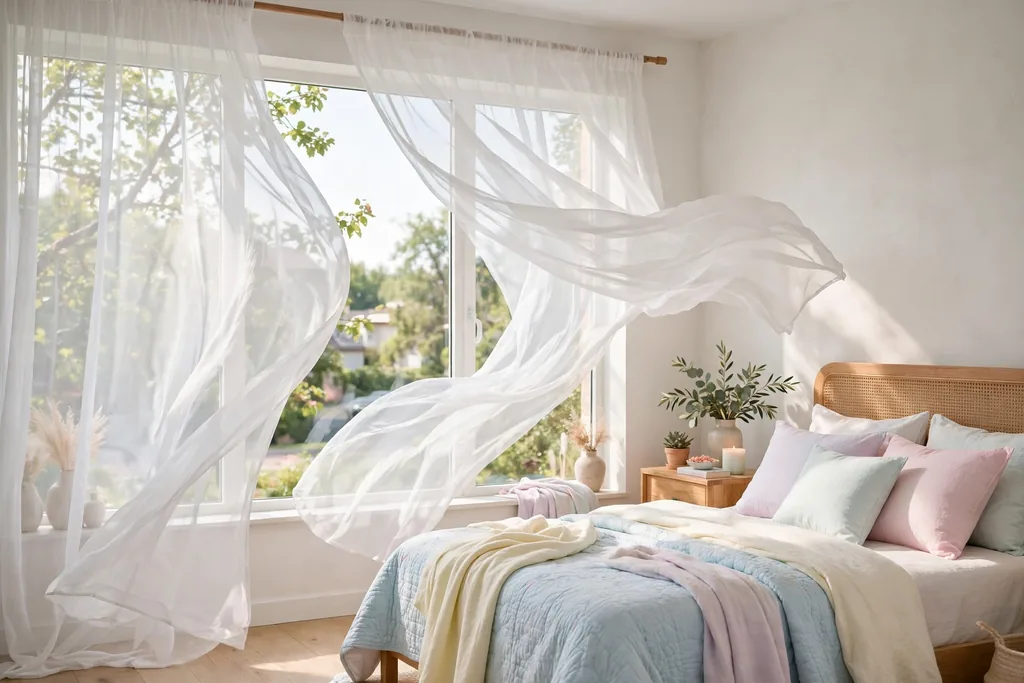
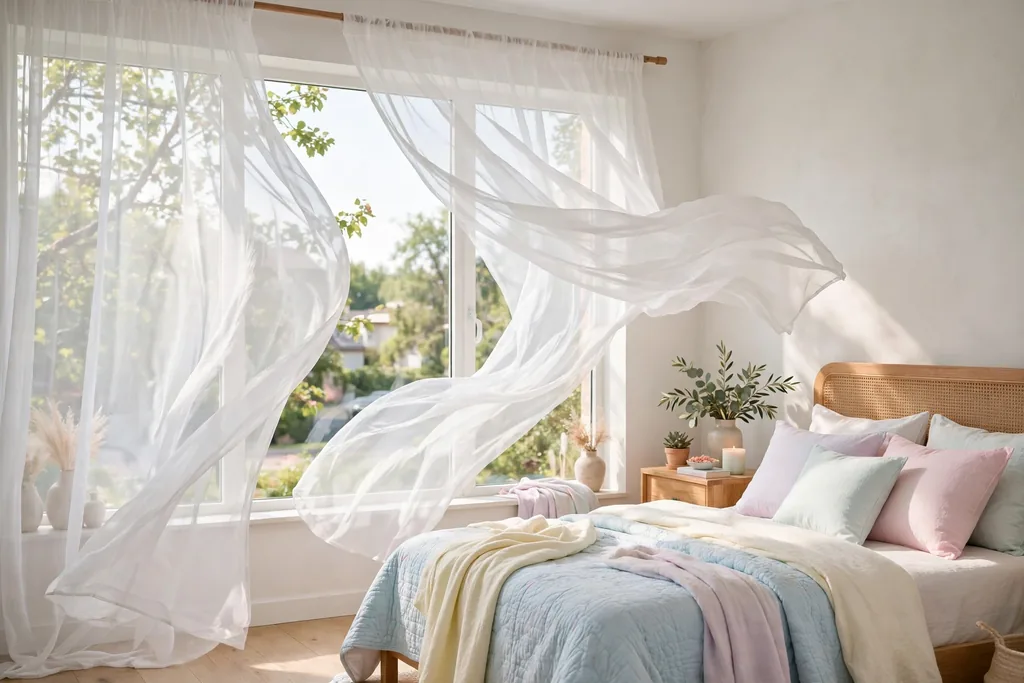
Hang sheer curtains in white or pale blush from a rod set high and wide, so daylight filters softly into the room. Sheer fabric makes a small bedroom feel lighter and gives daytime privacy, while still letting you see the shape of the window. This suits a bedroom where heavy drapes would make the room feel closed in. For more window treatments, from linen panels to layered pairs, see these bedroom curtain ideas.
Let the panels fall to just above the floor, so they move a little with air from the window, and keep the rest of the window plain. Wash the panels often, since sheer fabric shows dust more than heavier fabric. Pair sheers with a simple blind or a blackout panel behind them if you need full darkness at night.
7. Set Up a Vintage Style Vanity Corner
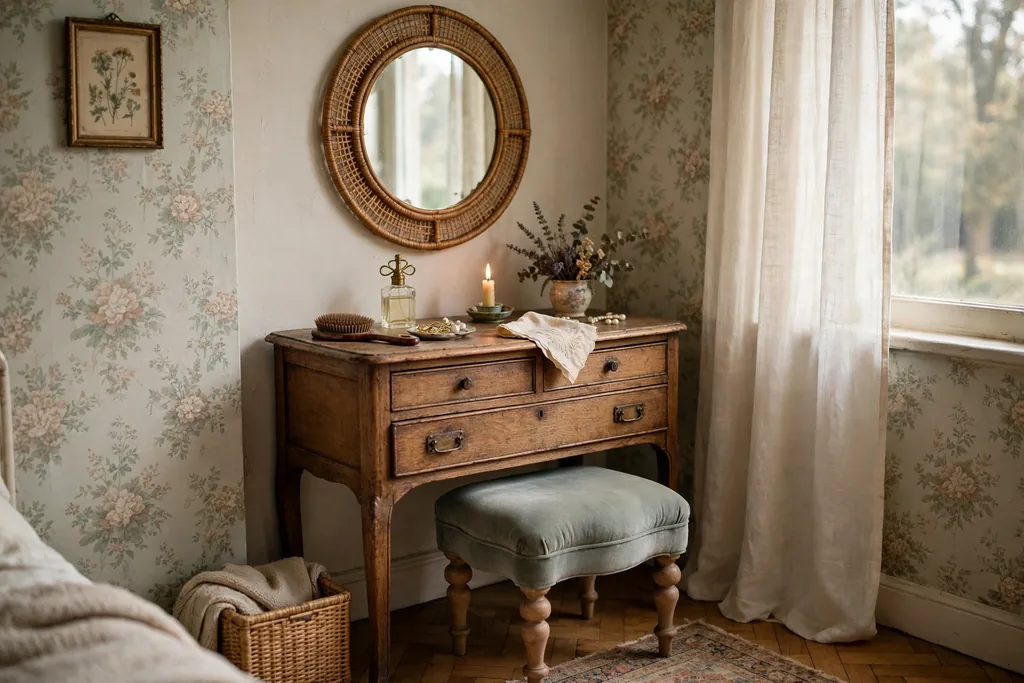
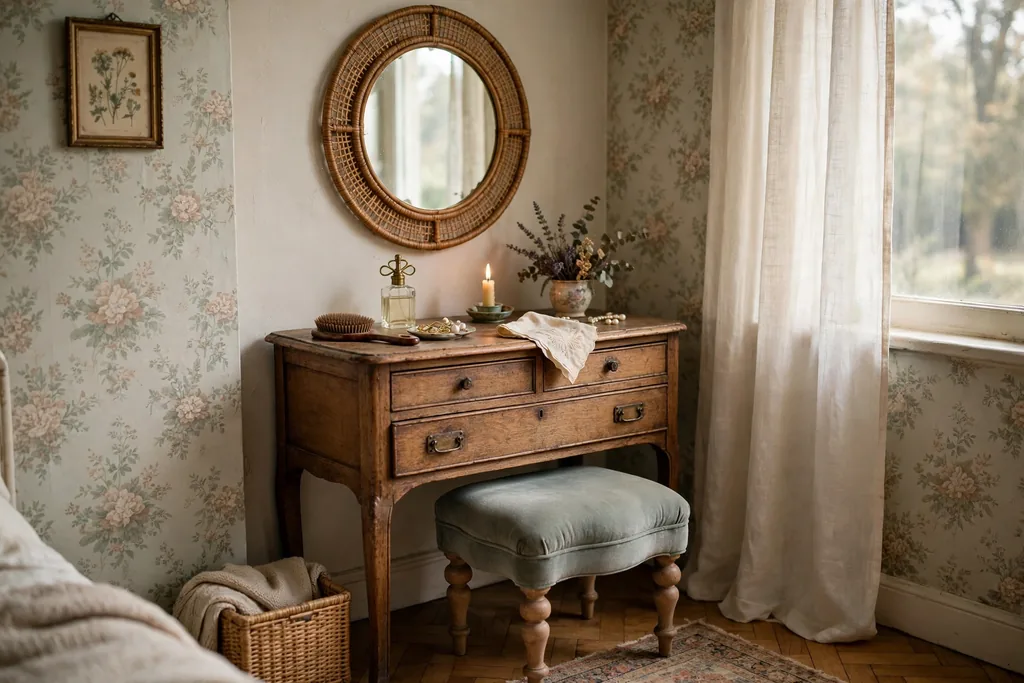
Place a small dressing table, a round or arched mirror, and a soft stool in a quiet corner to make a vanity area. Keep the table surface to daily items only, such as a brush, a small tray, and one vase, so the corner stays pretty and useful. This suits a bedroom with an unused corner near a window, where daylight helps for getting ready.
Choose a table with at least one drawer, so small items stay out of sight, and add a warm lamp or a pair of small lights beside the mirror for evening use. Keep the chair or stool light enough to tuck under the table when not in use. If floor space is short, use a wall mounted shelf and a leaning mirror instead of a full table.
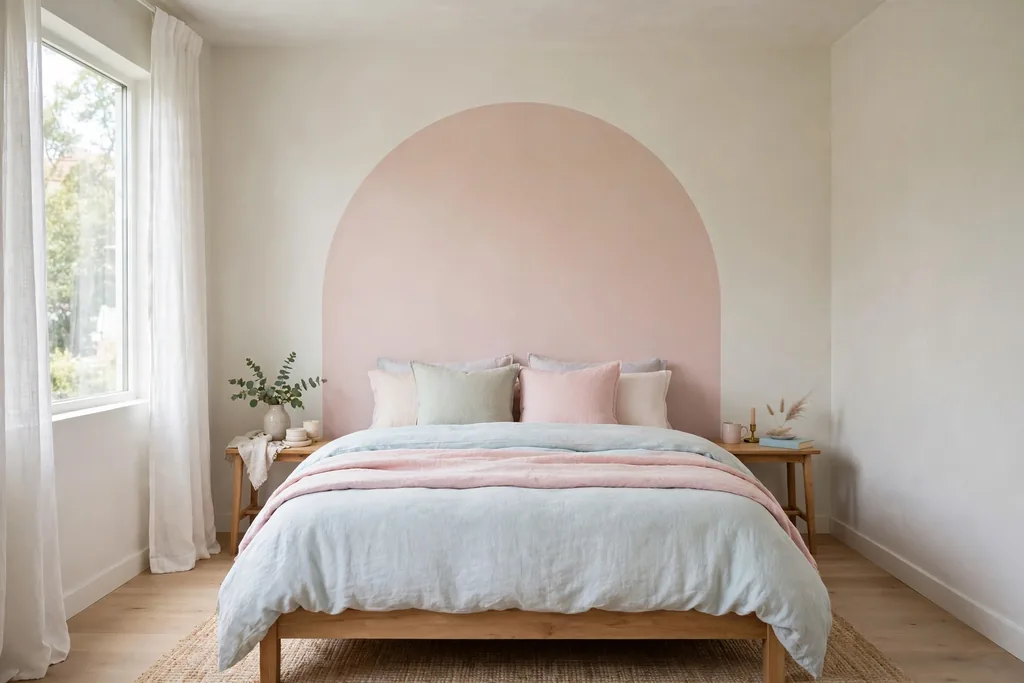
8. Paint a Soft Pastel Arch Behind the Bed
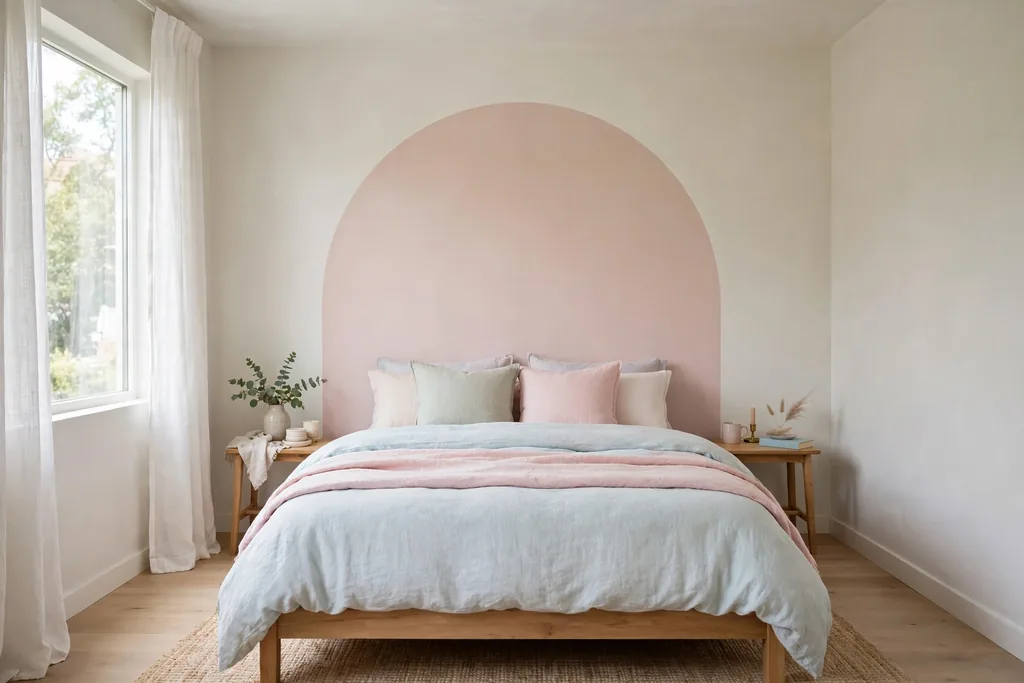
Paint a wide arch shape in blush, sage, or pale lilac on the wall behind the bed to give the room a gentle focal point. The arch frames the headboard, adds color without painting the whole room, and suits a bedroom with plain white walls. Mark the shape with painter tape first, and use a large brush or roller for the main fill.
Keep bedding and art quiet near the arch, so the painted shape stays the focus, and repeat the arch color once more in a cushion or throw. If you rent or want a changeable version, use a large painted canvas panel or removable wall decals in the same arch shape. Test the color in morning and evening light before you commit, since pastel paint shifts through the day.
9. Lay a Cloud Soft Rug Beside the Bed
Place a thick, soft rug beside the bed, or partly under it, so the first step in the morning lands on something warm. A high pile or shag style rug in cream, blush, or pale grey adds texture at floor level and makes a hard floor feel softer. This suits a bedroom with wood or laminate floors, where a bare floor can feel cold.
Choose a low enough pile near the door swing, and use a rug pad underneath so the rug does not slip. Vacuum often, since pale rugs show dust and foot marks, and shake out a smaller rug outside when you can. In a small room, one runner on the side you use most gives the benefit without covering the whole floor.
10. Style Dried Flowers in a Tall Vase
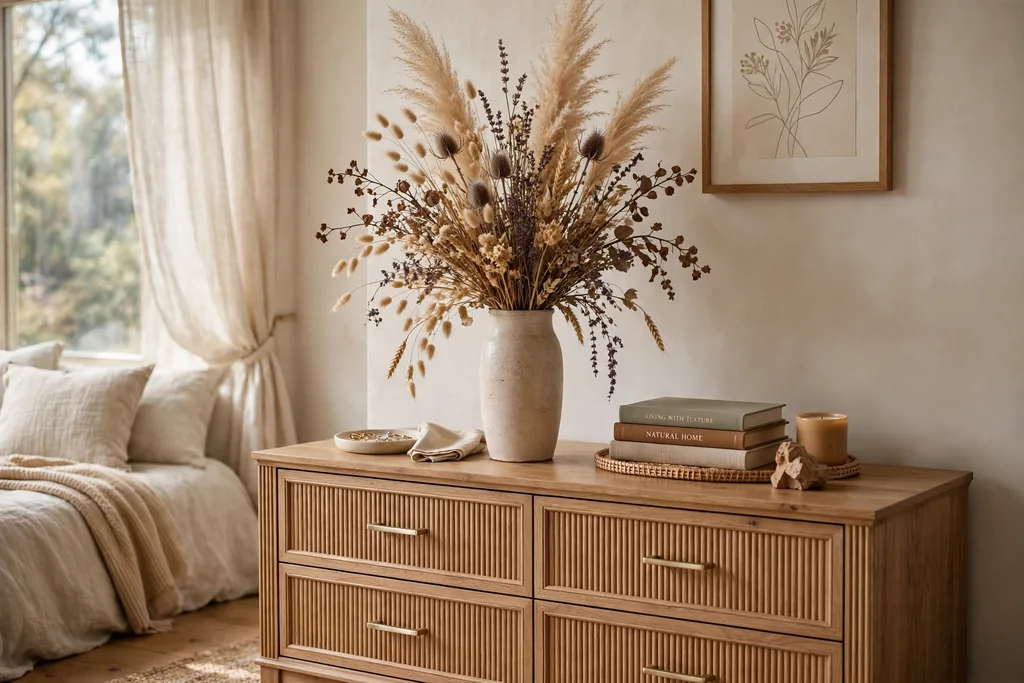
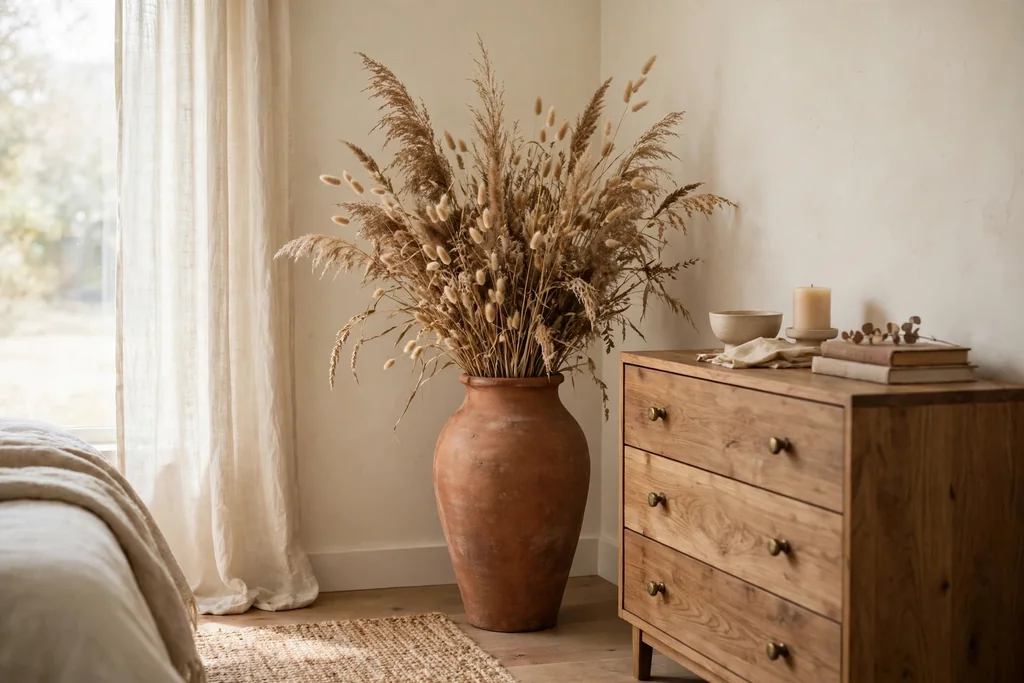
Arrange dried flowers, pampas stems, or dried lavender in a tall ceramic or glass vase on a dresser or nightstand. Dried stems add height, soft color, and a natural shape, and they last far longer than fresh flowers. This suits a bedroom where you want a gentle botanical touch without daily care.
Keep the arrangement to one vase and a few stems, so it reads as calm rather than busy, and keep stems clear of lamps and candles. Dust dried stems gently with a soft brush or a cool hair dryer setting, since they collect dust over time. If dried flowers trigger allergies in your home, use paper flowers or a simple green plant in the same vase instead.
11. Glow With a Paper Lantern or Soft Bedside Lamp
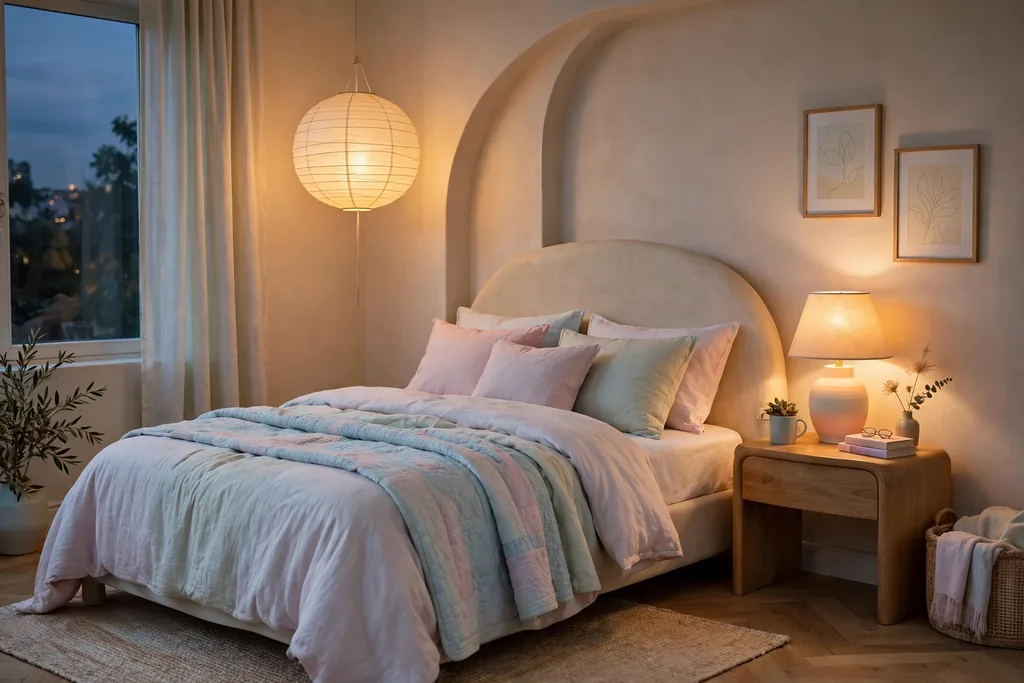
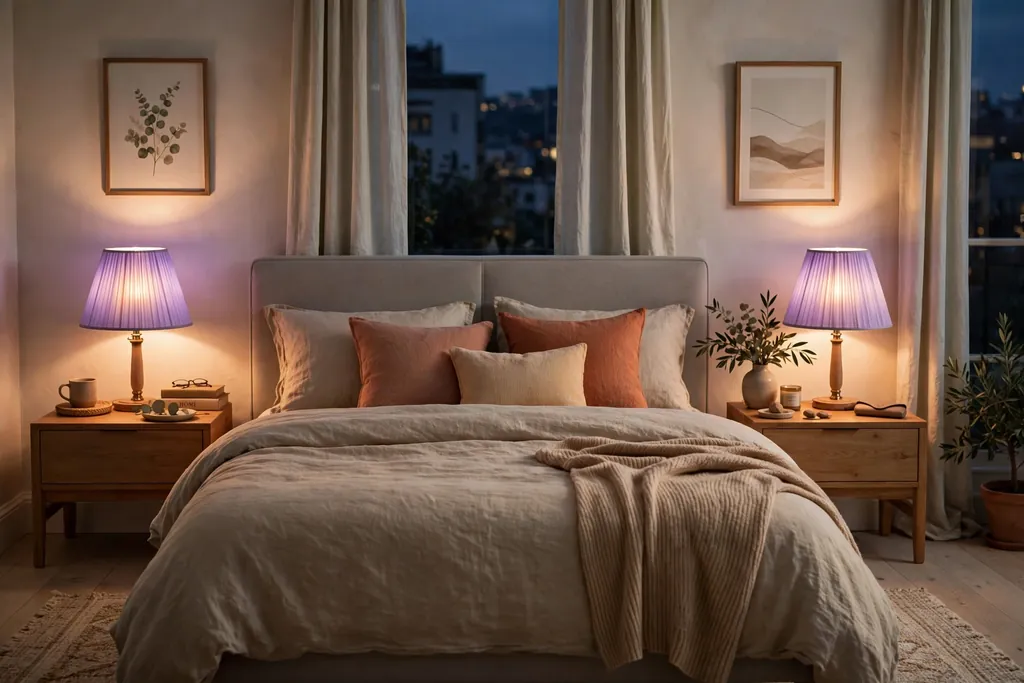
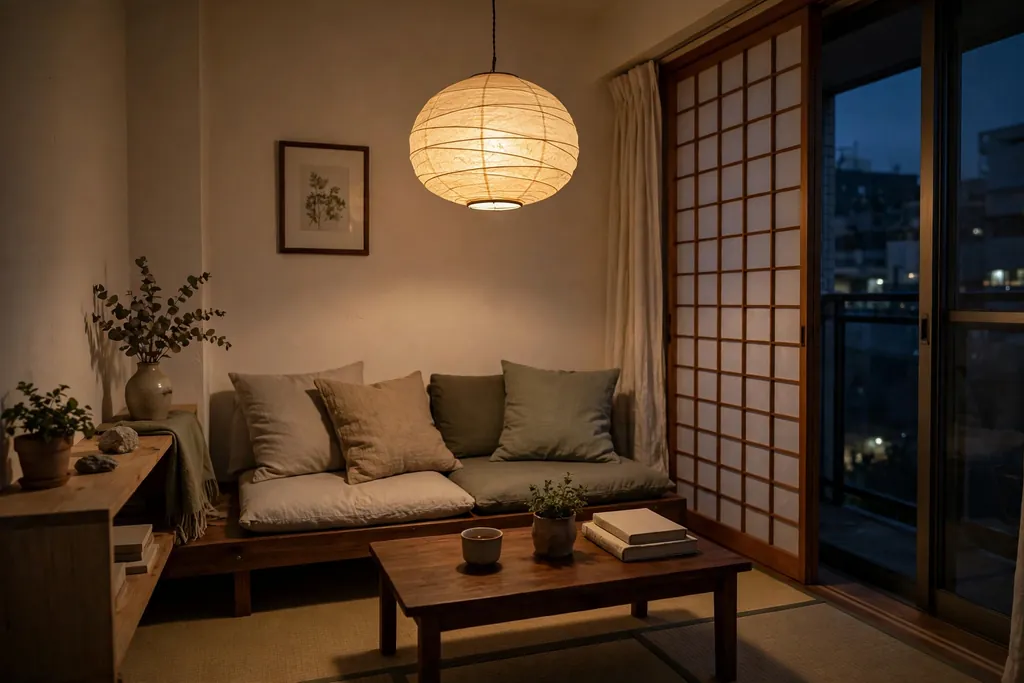
Replace a harsh overhead light with a paper lantern, a linen shaded lamp, or a pair of warm bedside lamps for evening use. Soft, diffused light flatters pale colors and makes the room feel settled at night. This suits a bedroom where you read, rest, or get ready in the evening and want light that feels gentle.
Put lamp switches where you can reach them without getting up, and use warm bulbs so pastel bedding and walls stay warm in tone. Keep lamp shades in warm white or cream, and avoid cool white bulbs, which can make soft colors look grey. If a paper lantern is your main light, hang it clear of bedding and curtains, and pair it with a small bedside lamp for reading.
12. Display Keepsakes on a Picture Ledge
Fit one or two picture ledges above a dresser or along a side wall, and stand small framed photos, a tiny vase, and one or two keepsakes on them. Ledges let you layer items without a fixed gallery layout, and you can swap a photo or print in minutes. This suits a bedroom where you want personal character without filling every wall.
Keep larger pieces at the back and smaller ones in front, and leave one end of the ledge empty so the display does not look packed. Use ledges deep enough for frames to stand safely, and keep heavy items on a lower shelf. If the ledge fills up, remove one item before adding another, so the display stays calm.
13. Keep a Basket of Knit Throws Within Reach
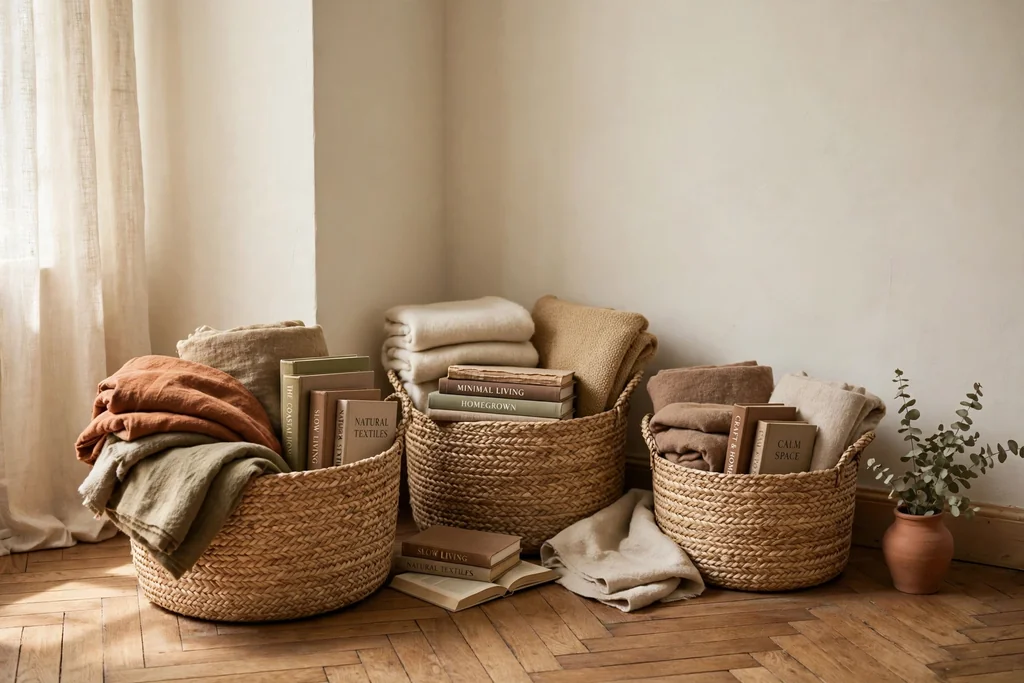
Place a woven basket beside the bed or chair, filled with one or two knit or fleece throws in cream, blush, or soft grey. A basket keeps comfort close for reading or cool evenings, without spreading blankets across the floor. This suits a bedroom where you like to layer up in the evening but want the room to stay tidy.
Choose a basket with handles if you move it for cleaning, and limit it to throws you use each week. Fold each throw the same way, so the basket looks neat rather than stuffed. If the basket starts to collect random items, empty it during a weekly reset and return only the throws and one book.
14. Choose an Arched Upholstered Headboard in Blush Velvet
Fit an arched headboard in blush velvet or a soft bouclé to give the bed a gentle, rounded focal point. The curved top softens a rectangular room, and the plush fabric adds texture that plain wood cannot. This suits a bedroom where the bed sits against a long blank wall and needs one clear piece of character.
Measure the headboard width against the bed and the wall, since a headboard that is too narrow looks lost and one that is too wide crowds the nightstands. Pair it with plain bedding and one or two cushions in a deeper tone, so the fabric stays the focus. Vacuum velvet gently with an upholstery tool, since plush fabric traps dust over time.
Conclusion
A dreamy aesthetic bedroom comes together when soft color, gentle light, and touchable texture repeat in small ways through the room. Start with the layer you notice most, usually bedding or light, then add a wall idea, a window layer, and one personal corner. Keep the palette close, leave surfaces clear, and let one idea lead, so the room feels calm and full of character rather than crowded. For a warm, relaxed bedroom scheme built on low light and layered textiles, see these hygge bedroom ideas.
Save this list before you start, and work through it one idea at a time: bedding and light first for a quick change, then walls, windows, and a reading or vanity corner when you have a weekend to spare.
FAQs
What makes a bedroom look dreamy?
A dreamy bedroom usually combines a close palette of soft colors, layered textures such as linen, knit, and velvet, warm low light, and a few personal details. The key is restraint: repeat two or three colors and textures, keep surfaces mostly clear, and give the room one focal point, usually the bed or the wall behind it.
What colors work best for a dreamy aesthetic bedroom?
Soft, muted colors work best, such as blush pink, cream, pale lilac, soft sage, and warm white. These shades look gentle in both daylight and lamplight, and they pair well with natural wood, white furniture, and linen. Use a deeper tone, such as dusty rose or taupe, in small doses, for cushions or a throw, so the room keeps some depth.
How can renters create a dreamy bedroom without painting?
Renters can carry the look through bedding, curtains, art, and light, with no paint or wiring. Layer pastel bedding, hang sheer curtains and string lights, use picture ledges and hanging strips for art, and add a rug, a basket of throws, and a vase of dried flowers. A painted canvas panel can stand in for a painted arch behind the bed.
How do I keep a dreamy bedroom from looking cluttered?
Limit each surface to a few items, and give every decorative piece a clear place. Keep nightstands to a lamp, a book, and one small tray or vase. Use closed storage for chargers and small items, a basket for throws, and ledges for keepsakes, so soft layers stay visible while everyday clutter stays hidden.
What lighting is best for a dreamy bedroom?
Warm, low, layered light works best: bedside lamps with warm bulbs, a paper lantern or linen shaded lamp, and warm string lights along a headboard or shelf. Avoid a single bright ceiling light in the evening, and avoid cool white bulbs, which can make soft colors look grey. A dimmer, where available, helps you shift from daytime light to evening glow.
Can a small bedroom still feel dreamy?
Yes. In a small bedroom, focus on the bed, the window, and one wall, and keep the rest of the room plain. Use sheer curtains to keep light coming in, a soft rug on one side of the bed, layered pastel bedding, and one gallery wall or ledge. Light colors, clear floors, and a single focal point make a small room feel soft rather than crowded.
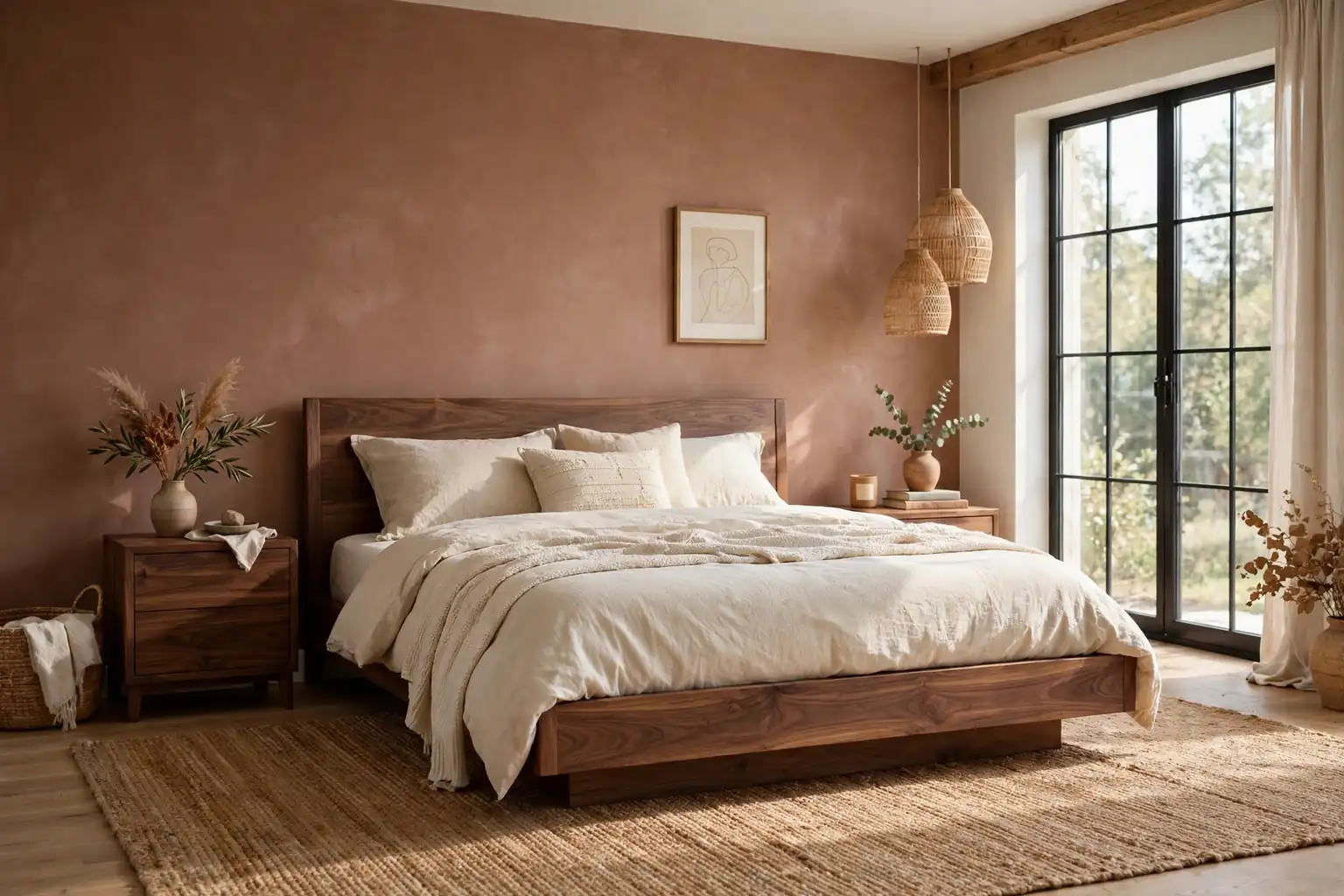
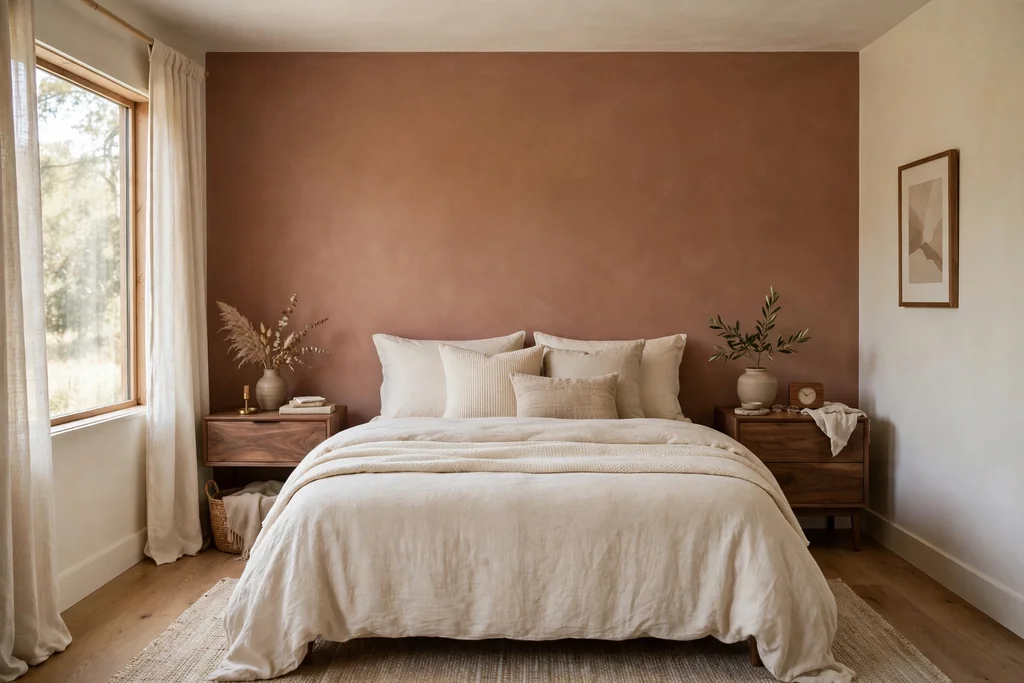
An earthy bedroom starts with colors pulled from soil, clay, sand, stone, and leaves. Terracotta, ochre, olive, taupe, and warm brown feel calm because they sit close to nature, and they pair well with wood, linen, wool, and woven texture. These 22 stylish bedroom ideas with earthy tones cover walls, bedding, furniture, rugs, curtains, storage, plants, and light, so you can plan a full room or pick one change at a time. Start with the layer you see first when you walk in, repeat each tone at least twice, and keep one darker accent for shape. For a warm neutral base to compare against these earth tones, see these beige bedroom ideas.
Key Takeaways
Start with a warm neutral base of cream, sand, or soft taupe, then add two or three earth tones, such as terracotta, olive, and warm brown.
Repeat each earth tone at least twice, for example terracotta on a wall and in a vase, so the room looks planned rather than random.
Mix textures at every step: linen, wool, wood grain, rattan, jute, and stone keep a muted palette from looking flat.
Use natural wood as the main furniture material, and keep metal finishes warm, such as brass or aged bronze.
Change bedding, curtains, and cushions first for a quick refresh with no paint, and save walls and wardrobes for a weekend project.
Keep light warm and low in the evening, since warm bulbs suit clay, wood, and ochre far better than cool white light.
1. Paint a Terracotta Accent Wall Behind the Bed
A terracotta accent wall behind the bed gives an earthy bedroom its clear focal point in one weekend step. Choose a muted clay red, closer to baked earth than to bright orange, and keep the other walls in warm cream or sand so the terracotta stays rich without closing the room in. The wall frames the bed the way a large piece of art would, and it suits a room where you want warmth but not a full repaint.
Keep bedding mostly cream, sand, and warm white, with one terracotta cushion or throw to link the bed to the wall. Use a matte finish so the wall does not shine under lamplight, and paint the trim in the same warm white as the other walls for a clean edge. Test a large swatch in morning and evening light first, since terracotta shifts a lot between cool daylight and warm lamps.
2. Layer Bedding in Sand, Clay, and Olive
Layered bedding in sand, clay, and olive is the fastest earthy refresh, because the bed takes up the most visual space in the room. Start with cream or ivory sheets, add a sand colored quilt or coverlet, then fold a clay or olive throw across the foot of the bed. Finish with cushions in linen, cotton, and wool, so each layer feels different to the touch even though the colors stay close to nature.
This suits any bedroom, rented or owned, since it needs no paint or tools. Keep the palest shade closest to your face and the deepest earth tone at the foot, which gives the bed a natural sense of depth. Wash the throw and cushion covers on a regular cycle, since pale sand shows dust and marks sooner than darker tones.
3. Choose a Warm Walnut Bed Frame
A warm walnut bed frame grounds an earthy bedroom, because dark wood adds depth that pale walls and linen cannot give on their own. Use a simple walnut frame with a plain headboard, add walnut nightstands in the same tone, and keep one wood tone across the main pieces so the room reads as calm rather than busy. A wooden bench at the foot of the bed can repeat the tone without adding more furniture.
This suits a bedroom with pale floors or cream walls, where wood stops the room from looking washed out. Match the wood to your floor if you can: warm walnut with warm sand, paler oak with cooler taupe. Keep the wood finish matte or satin rather than high gloss, which can look harsh next to soft linen and wool.
4. Add a Rattan Cane Headboard
A rattan cane headboard adds a natural, relaxed layer to an earthy bedroom, and it works well with both wood and linen. The open cane weave lets light through, so the room keeps its airy feel, while the warm cane tone links to jute, baskets, and wood elsewhere in the room. Pair it with cream or sand bedding and one or two cushions in clay or olive, and keep the wall behind it plain so the texture stands out.
This suits a bedroom that leans casual, coastal, or bohemian, and it pairs well with warm cream walls. Measure the headboard width against the bed and the wall, since a headboard that is too narrow looks lost and one that is too wide crowds the nightstands. Dust woven cane with a dry cloth or a soft brush, and keep it out of damp corners, since cane can warp.
5. Lay a Large Jute Rug Under the Bed
A large jute rug under the bed anchors an earthy bedroom and warms up a hard floor, which matters in a room where the palette could otherwise feel flat. Lay a rug large enough to extend well beyond each side of the bed, so your feet land on natural fiber in the morning, and use a rug pad underneath so it does not slip on smooth floors. The rough jute texture contrasts well with soft linen bedding above it.
This suits a bedroom with wood or laminate floors, and it works best when the rug stays plain, with a simple border at most, so the texture does the work. Keep the rug pile low near the door swing, and vacuum jute with a brush head, since jute sheds fibers at first. Shake the rug outside when you can, and spot clean marks early so they do not set.
6. Paint a Wardrobe in Soft Olive Green
Painting a wardrobe in soft olive green turns storage into part of the earthy scheme, rather than a block of furniture that fights it. Use a muted, grey toned olive, with simple brass or wood handles, and keep the walls in warm cream so the olive reads as a calm natural note. A few open shelves at one end, for books and a plant, stop the wardrobe wall from feeling too solid.
This suits a bedroom with no built in closet, or a room where clothes and bedding need a proper home. Plan the interior before the doors: hanging space at one end, drawers in the middle, and high shelves for seasonal bedding. For more calm green bedroom planning, see these sage green bedroom ideas. Measure door swings and drawer pulls carefully, since a wardrobe that blocks a walkway will annoy you daily.
7. Hang Sand Linen Curtains High and Wide
Sand linen curtains hung high and wide soften a bedroom window and make the ceiling feel higher, especially in a small room. Hang the rod close to the ceiling and wide enough that the curtains clear the window frame when open, so daylight still fills the room. Linen filters light softly, which suits earthy walls, since harsh light can make clay and ochre look washed out.
Choose a sand tone a shade deeper than the walls so the curtains read as a deliberate layer, not a match that disappears. For more hanging guidance, see these bedroom curtain ideas. Line the curtains if the room faces a street at night, and wash the linen panels before hanging, since washed linen softens and keeps its size after later washes.
8. Style Terracotta Pottery on the Dresser
A small group of terracotta pottery on a dresser adds an earthy, handmade note in one easy step. Choose three pots or vases in different heights, in plain terracotta or a matte clay glaze, and group them at one end of the dresser with space around them, rather than lining them up in a row. Leave the rest of the dresser top mostly clear, with a lamp and a small tray, so the pottery stays the focus.
This suits a bedroom where the walls are already earthy and you want a matching detail at hand height. Use one pot for dried grasses, leave one empty, and use the third for small items such as a watch or keys, so the group looks useful as well as decorative. Dust unglazed terracotta with a dry cloth, since it marks easily when wet, and keep the pots away from the edge where they could be knocked.
9. Use Travertine Stone Bedside Lamps
Travertine stone bedside lamps bring a quiet, natural weight to an earthy bedroom, and the pale stone veining suits sand, cream, and clay tones. Choose a pair of lamps with simple stone bases and plain linen shades in cream or warm white, and keep the lamp height close to the headboard height so the light falls well for reading. The stone adds a cool, solid contrast to soft bedding and woven texture.
This suits a bedroom where the furniture is mostly wood and fabric, and you want one harder material for balance. Keep the shades plain, since a patterned shade would fight the stone veining, and use warm white bulbs so the stone glows softly in the evening. Wipe the stone with a dry cloth, and avoid placing a lamp where a drink could spill onto the base.
10. Place a Cognac Leather Reading Chair
A cognac leather reading chair gives an earthy bedroom a warm, lived in seat for reading, dressing, and quiet moments. Place the chair in a corner near a small side table and a floor lamp, with a wool throw over one arm and a basket of books beside it. Cognac leather sits well with walnut wood, terracotta, and olive, and it gains character with use, so small marks become part of the look rather than flaws.
Check the chair frame and joints before daily use, and choose a seat deep enough to sit in for an hour, not a stiff accent chair that looks good but stays empty. Keep the seat height low enough that your feet rest flat on the floor, and add a footstool if they do not. A small side table for a book and a drink keeps everything within reach, so the corner becomes a real second use for the room.
11. Try Limewash Walls in a Soft Clay Tone
Limewash walls in a soft clay tone give an earthy bedroom texture that flat paint cannot give. The wash leaves gentle movement and depth across the wall, with lighter and darker patches that shift through the day, and a clay tone keeps the effect warm rather than grey. Use limewash on all four walls in a pale clay, or on the bed wall only with cream on the other walls, and keep bedding plain so the wall texture stays visible.
This suits a bedroom where a flat accent wall feels too plain but wallpaper feels too busy. Follow the limewash maker’s method for coats and drying time, and test a patch on a hidden wall first, since limewash looks different wet and dry. Keep the finish matte, pair it with wood and linen, and avoid a second strong pattern nearby, so the wall texture has room to breathe.
12. Fill a Tall Vase with Dried Grasses
Dried grasses and branches in a tall vase bring an earthy, outdoor note indoors without the care a large plant needs. Choose a tall terracotta or stone vase, fill it with pampas, dried wheat, or bare branches in warm tan and gold tones, and place it in a corner or beside the dresser where it will not be brushed every time you walk past. The height draws the eye up and softens a plain wall.
Keep the vase on the floor, not on a high shelf, so it cannot fall, and keep dried stems away from heaters and open flames. Shake the grasses outside now and then to remove dust, and trim any stems that shed heavily. If the room already has a lot of texture, keep the grasses simple, with one type of stem rather than a mixed bunch, so the arrangement stays calm.
13. Store Bedding and Books in Woven Baskets
Woven baskets in seagrass, cotton rope, or wicker give an earthy bedroom soft, natural storage that fits the scheme. Use one large basket for spare blankets, one medium basket for books or magazines, and a small basket on the dresser for everyday items. Baskets with handles are easy to carry to the washing pile or to another room, and open tops let you see what is inside at a glance.
Keep baskets on the floor or on low shelves, never stacked high where they could topple, and check woven edges for sharp ends before use. A basket that holds only one category stays tidy far longer than a single large box that collects everything. Label baskets with a simple tag if you share the room, so each person knows where their things belong.
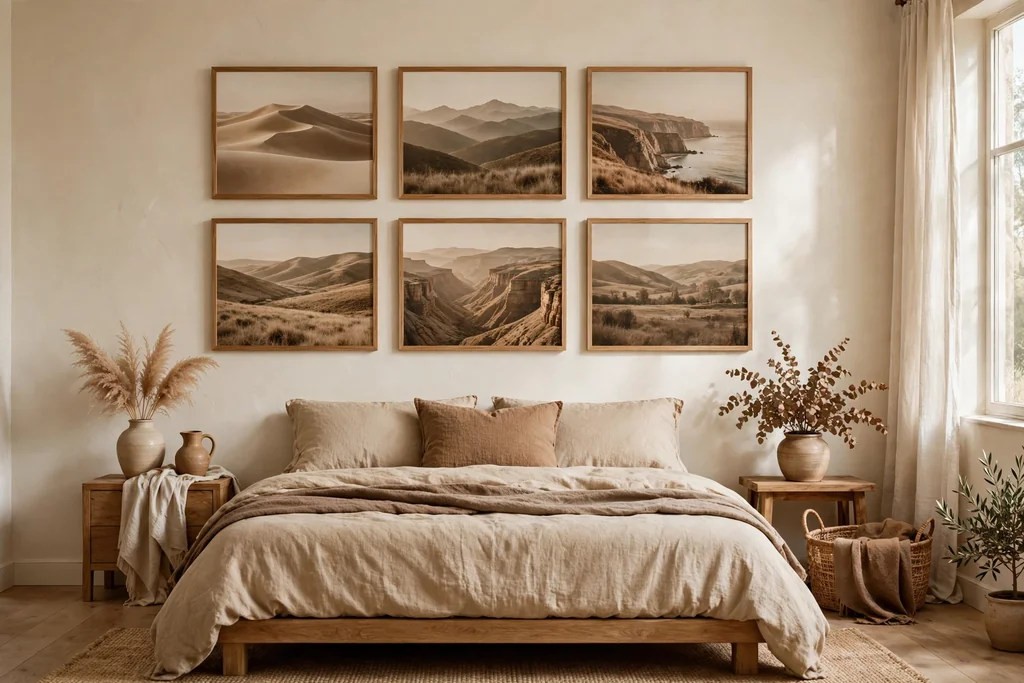
14. Hang an Earth Tone Landscape Gallery
A gallery of landscape prints in earth tones adds personality to a bedroom without adding color that fights the scheme. Choose prints in terracotta, ochre, sage, and warm brown, with simple wood or black frames, and hang them in a loose grid above the bed or along one wall. Mix desert scenes, hills, and abstract earth shapes, but keep the palette tight so the wall feels calm.
This suits a bedroom with a large blank wall that needs interest but not a bold feature color. Lay the frames on the floor first and plan the spacing, leaving equal gaps between frames, then hang the middle frame at eye level. Use picture hanging strips if you rent, and keep the largest frame in the center so the arrangement feels balanced. Swap one print with the seasons if you want a small change without redecorating.
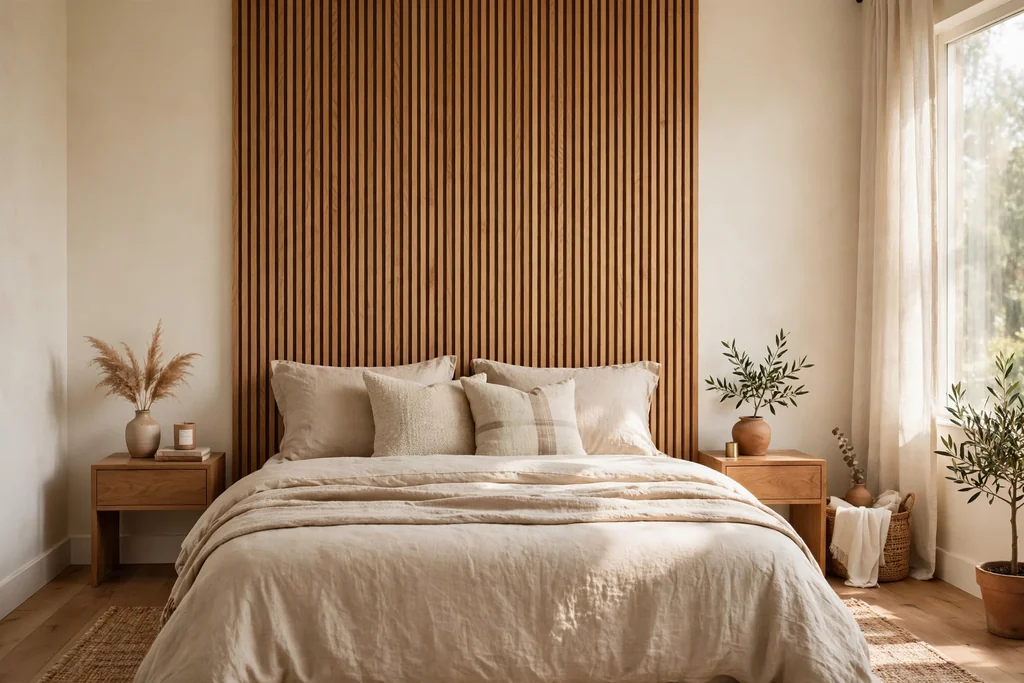
15. Fit a Vertical Wood Slat Feature Wall
A vertical wood slat wall behind the bed adds warmth, rhythm, and shadow to an earthy bedroom, without a new color. Fit slim slats in warm oak or walnut, spaced evenly, from floor to ceiling or from the headboard up, and keep the wall behind the slats in a warm cream or sand so the gaps read as soft shadow. The wood grain and the repeated lines give a plain wall structure that suits modern and rustic rooms alike.
Measure the wall first and plan the slat widths on paper, so the outer slats match and the bed sits centered between them. Fix the slats firmly, and keep the headboard simple, since a busy headboard would fight the slat pattern. Dust the slats with a soft brush or a dry cloth, since dust collects in the gaps, and keep the rest of the wall plain so the slat wall stays the focus.
16. Mix Rust, Ochre, and Clay Cushions
A cushion mix in rust, ochre, and clay gives the bed its earthy color story without repainting or buying new bedding. Start with two large cushions in plain sand or cream, add two medium cushions in rust and ochre, and finish with one small cushion in clay or a simple earth stripe. The mix works because the colors share a warm base, so they sit together even though no two cushions match exactly.
Keep the cushion fabrics varied, such as linen, cotton, and wool, so the bed feels soft to the touch as well as to the eye. Use washable covers where you can, since cushions near the head of the bed see daily use, and store spare covers in a basket so a seasonal swap takes minutes. If the bedding is already patterned, keep the cushions plain, so the bed does not gain two competing patterns at once.
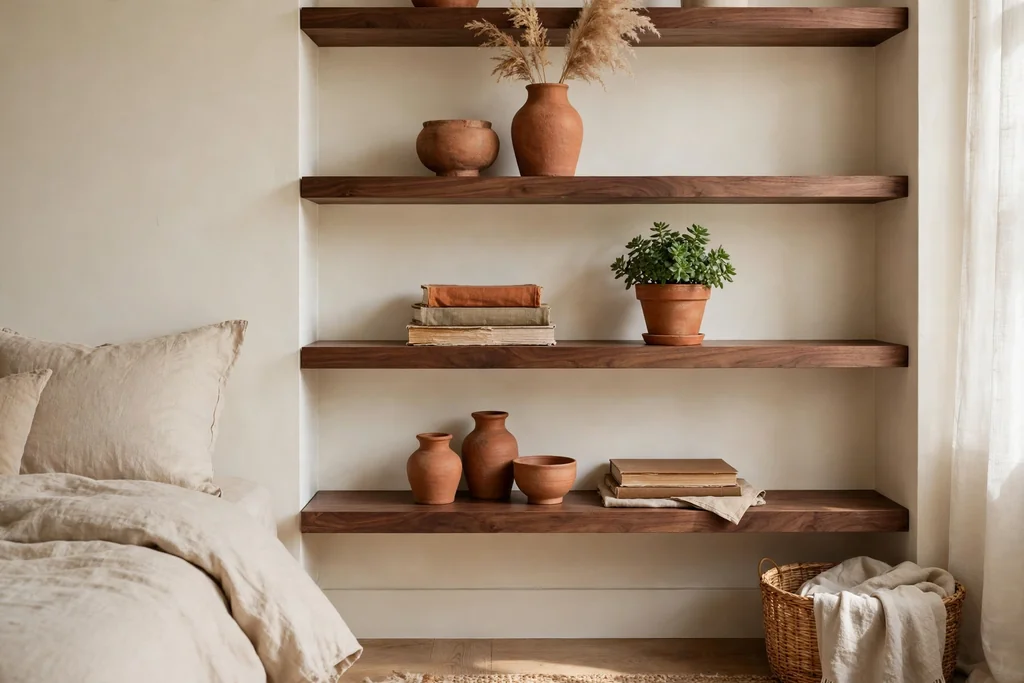
17. Add Open Wood Shelving for Ceramics and Books
Open wood shelving in warm oak or walnut gives an earthy bedroom display space for ceramics, books, and plants, without a closed cabinet taking over the wall. Fit two or three shelves on one wall, with a picture ledge depth that holds books upright, and fill them with a small rotation of items: a terracotta pot, a stack of books, a stone object, and a trailing plant. Leave one shelf partly empty, so items can be moved without a struggle.
Fix the shelves firmly to the wall, since books and ceramics are heavy, and keep heavy items on the lowest shelf. Group items in odd numbers, and repeat one earth tone across the shelves, such as terracotta in a pot and a book spine, so the display looks planned. Dust open shelves regularly, since they collect dust faster than closed storage, and swap one or two items with the seasons to keep the display fresh.
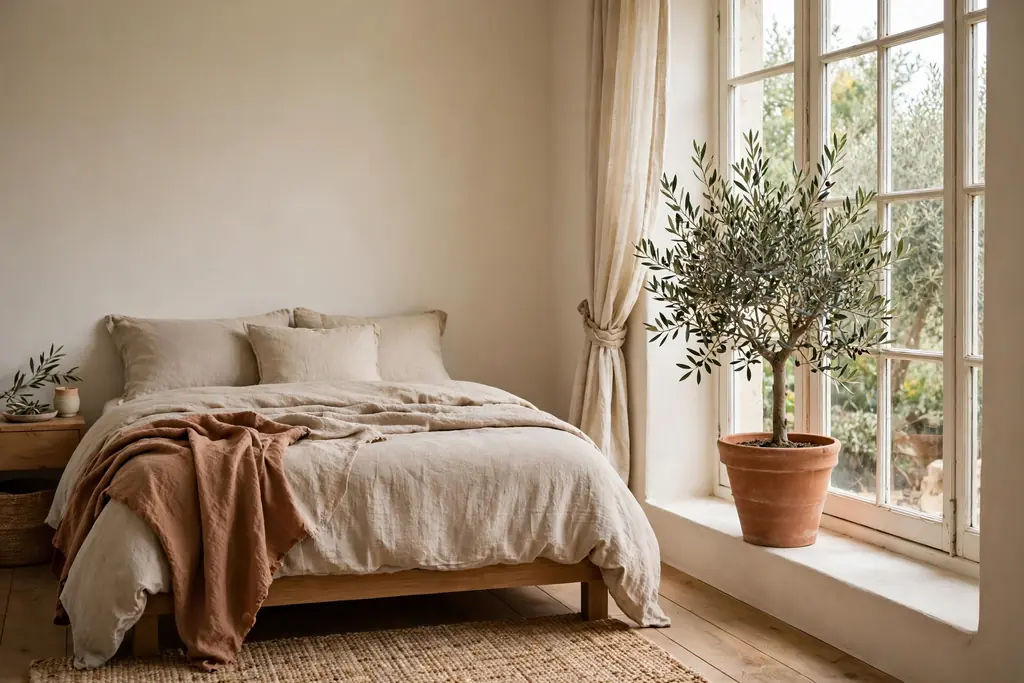
18. Grow a Potted Olive Tree by the Window
A potted olive tree by the window brings living green into an earthy bedroom and suits the Mediterranean side of the palette. Choose a young tree in a terracotta pot, place it where it gets bright daylight but stays clear of radiators and curtain cords, and keep the pot on a tray so watering does not mark the floor. The silvery green leaves sit well with sand walls, walnut wood, and clay pottery.
Check the light and water needs for your tree before you buy, since olive trees need bright light and soil that dries between waterings. Prune lightly to keep the shape compact, and rotate the pot now and then so the tree grows evenly toward the light. If the room gets little daylight, use a hardy indoor plant in the same terracotta pot instead, so the earthy styling stays even if the plant changes.
19. Set a Wood Bench at the Foot of the Bed
A wood bench at the foot of the bed gives an earthy bedroom a useful landing spot for folded throws, a bag, or tomorrow’s clothes. Choose a bench in walnut or warm oak to match the bed frame, with a simple slatted or solid top, and add a folded wool throw in ochre or clay across one end. The bench marks the end of the bed and keeps the room tidy, since items have a place other than the bed itself.
This suits a bedroom with enough floor space to walk around the bench without squeezing past it. Measure the bench length against the bed width, since a bench that is too long crowds the room and one that is too short looks lost. Keep the bench top mostly clear, with the throw and one small basket at most, so it stays useful rather than becoming a second storage pile.
20. Hang a Woven Rattan Pendant Light
A woven rattan pendant light over a bedside table, a reading chair, or the center of the room adds a warm, natural glow to an earthy bedroom. The open weave throws soft patterned shadows in the evening, and the cane tone links to a rattan headboard, baskets, and jute elsewhere in the room. Choose a medium pendant with a warm bulb, hung high enough to clear heads and doors, and keep the rest of the ceiling plain.
Check the wiring and ceiling fixing before you hang any pendant, and have an electrician look at it if the wiring looks worn or the fitting is heavy. Pair the pendant with a small bedside lamp for reading, so you are not relying on the ceiling light alone. Dust the weave with a soft brush, since woven textures collect dust in the gaps, and keep the pendant away from curtain fabric.
21. Build an Earth Tone Window Seat Nook
An earth tone window seat nook turns a bedroom window into a quiet sitting spot with cushions in sand, clay, and olive. Build or buy a low seat under the window, add a thick seat cushion in warm sand linen, then layer back cushions in clay and olive, with a wool throw folded at one end. A small basket of books beside the seat and a wall light above it make the nook usable in the evening as well as in daylight.
This suits a bedroom with a window wall that currently holds nothing but a radiator cover or an empty corner. Keep the seat depth generous enough to sit with legs up, and add a storage box under the seat for spare throws or books, so the nook stays tidy. If the window gets strong sun, use washable cushion covers, since sun and dust fade pale sand faster than darker earth tones.
22. Plan Tone on Tone from Sand to Chocolate
A tone on tone earthy bedroom uses shades from sand to chocolate across walls, bedding, curtains, and rugs, and it works because the small steps between shades create depth. Start with sand walls or bedding, move to warm taupe for the main furniture and curtains, and finish with chocolate cushions, a throw, and art frames. No single piece stands out sharply, but the room as a whole feels layered and finished.
This suits a bedroom where you want a calm, hotel like feel without a feature wall or a bright accent. The risk is flatness, so vary texture at every step: smooth cotton sheets, nubby wool, matte paint, woven baskets, and wood grain, all in earth tones. Stand back and check the room in daylight: if two shades blend into one, swap one item a shade darker or lighter. This is the most forgiving earthy scheme, since a new cushion or throw can shift the balance without a big change.
Conclusion
An earthy bedroom works best when the base stays warm and pale, the textures stay natural, and the earth tones stay limited to a few clear colors. Start with the bed wall and the bedding, since those two areas get seen every day, then add wood, jute, rattan, and pottery one layer at a time. Keep light warm, repeat each tone twice, and leave some plain space on the walls and the dresser, so the room feels restful rather than crowded. With those basics in place, you can shift the room with the seasons, swapping a throw or a cushion, without a full redecoration.
Save this list on Pinterest before you start, and work through it one idea at a time: bedding first for a quick refresh, then curtains and rugs, then walls and storage when you have a weekend to spare.
FAQs
What colors count as earthy tones for a bedroom?
Earthy tones are colors pulled from nature: sand, cream, taupe, terracotta, clay, ochre, warm brown, olive, and sage. Start with cream or sand on the large surfaces, add one stronger earth tone, such as terracotta or olive, on the bed wall or the bedding, and repeat that tone once in a cushion or a vase. Keep bright or neon colors out of large areas, so the room stays calm for sleep.
How do I keep an earthy bedroom from looking dull?
Mix textures at every step, since a muted palette needs texture for depth. Pair smooth cotton sheets with nubby wool, matte paint with wood grain, and soft linen with rough jute or woven rattan. Add one darker accent, such as walnut or chocolate, in a few small places, and let warm light do some work in the evening, since warm bulbs suit clay and wood far better than cool white light.
Can I create an earthy bedroom in a small room or a rental?
Yes. A small room suits an earthy palette, since pale sand walls, linen curtains, and a jute rug keep it feeling light. In a rental, use bedding, curtains, cushions, baskets, and pottery for the main changes, and skip paint or fixed shelving, so the changes are furniture and fabric rather than permanent work. Keep one main earth tone and one natural texture, and the room will read as earthy without a full renovation.
What is the easiest earthy bedroom change with no paint?
Change the bedding first, since the bed takes up the most visual space. Layer cream sheets, a sand quilt, and a clay or olive throw, then add cushions in rust and ochre. Add sand linen curtains and a jute rug next, then finish with terracotta pottery and woven baskets. Those four layers give a clear earthy look with no tools and no paint.
Which wood tones suit an earthy bedroom best?
Warm woods suit an earthy bedroom best: walnut, warm oak, and mid tone pine all sit well with sand, clay, and olive. Keep one wood tone across the main pieces, such as the bed and nightstands, so the room reads as settled rather than busy. Keep the finish matte or satin rather than high gloss, which can look harsh next to soft linen and wool.
How much earthy color should I use in a bedroom?
Use earth tones on about two or three layers, such as the bed wall, the bedding, and one accent, and keep the rest of the room in warm neutrals. Repeat each earth tone at least twice, for example terracotta on a wall and in a vase, so the color looks planned. If the room starts to feel heavy, swap one dark item for a paler sand version, and add a plant or a cream cushion to lift the palette.
A bedroom at Christmas should feel calm first and festive second. The room still has to work for sleep, so the best displays sit on the bed, above the headboard, on a dresser, or around a window, rather than filling every surface. Start with one clear palette, add one larger piece such as a wreath or a garland, then add small details only where they will be seen and easy to tidy. These 28 Christmas decor ideas for bedroom spaces cover classic, rustic, minimal, and glamour looks, plus small room and guest room options. Pick one idea as your base and borrow details from two or three others, rather than trying to use them all at once.
Key Takeaways
Choose one palette for the whole room, such as red and green, white and gold, or blue and silver, and repeat it in the bedding, the garland, and one small accent.
Start with the bed, since it fills the most space, then add a headboard garland or a wreath above it as the main focal point.
Keep lights low and warm at night, and use battery or flameless options near bedding, paper, and dried greenery.
Leave clear space on nightstands and dressers for daily items, so the room still works for sleep and dressing.
For small rooms, use one strong piece, such as a mini tree or a wreath, instead of many small ornaments spread across the room.
Pack ornaments, lights, and garlands in labelled boxes after the season, so the same display is easy to repeat next year.
1. Classic Red and Green Bedding with a Matching Throw
Swap the usual bedding for a red and green set, such as a deep green duvet cover with red pillowcases, and finish it with a folded throw at the foot of the bed. The bed is the largest surface in the room, so a bedding change alone sets the season without adding clutter to shelves or walls. Keep the rest of the room plain, with white or cream sheets showing at the top, so the colors read as a choice rather than a pile of patterns.
Add one red cushion and one green cushion, and leave the other pillows in plain cream or white. If the room already has strong wall color, use red and green only on the bed and keep the walls and curtains neutral. Wash the seasonal set before storing it, and keep it in a separate bag so it is easy to find next December.
2. Mini Tree on the Dresser or Nightstand
Place a small tabletop tree on a dresser, a chest, or a wide nightstand, where it can be seen from the bed without blocking a lamp or a mirror. A tree between 30 and 60 centimetres tall suits most bedroom furniture, and a plain pot or a woven basket keeps it steady. Add a few small ornaments in one color, plus a short string of battery lights, and leave the base clear so the tree does not push daily items off the surface.
Keep the tree away from curtains and bedding, and check that the lights do not warm the branches. A mini tree also works well in a guest room, where a full tree would take too much floor space. At the end of the season, keep the ornaments in a small box with the tree, so the set stays together.
3. Evergreen Garland Draped Over the Headboard
Drape a full evergreen garland along the top of the headboard and let it dip slightly at each end for a soft line. The headboard is a natural frame for greenery, and it puts the display where it is seen from the doorway and from the bed. Use a garland that is slim enough to sit flat, fix it with removable hooks or clips, and keep it clear of pillows so loose needles do not land on the bedding.
Add warm white fairy lights woven loosely through the garland, and keep the wall above it plain or hung with one simple print. For a similar use of greenery in another room, these Christmas mantel decor ideas show garlands, candles, and stockings arranged along a shelf. In a bedroom, skip candles near the garland and use battery lights instead.
4. Stockings Hung from Wall Hooks by the Bed
Hang stockings from sturdy wall hooks beside the bed or on a bedroom door, rather than from a mantel the room may not have. One or two stockings are enough in a bedroom, and matching stockings in the room palette keep the look tidy. Hang them at a height where they can be seen but not brushed by bedding, and keep the hooks fixed to a stud or a fixing rated for the weight.
Leave stockings empty or light until Christmas Eve, since a heavy stocking can pull a hook loose overnight. This idea suits a child’s bedroom or a shared room, where each person can have a named stocking. If wall fixings are not allowed, use an over door hook or a freestanding coat stand in a corner.
5. Plaid Throw and Cushions on Plain Bedding
Keep the main bedding plain, in white, cream, or soft grey, and add Christmas color with one plaid throw and one or two plaid cushions. Plaid reads as winter fabric at once, so a small dose is enough to set the season while the room stays calm. Choose one plaid pattern and repeat its colors in a plain cushion or a curtain tieback, rather than mixing several plaids.
Fold the throw into a wide band across the foot of the bed so its pattern shows clearly, and fluff the cushions each morning so the bed still looks made. A plaid throw also works as an extra layer on cold nights. If the room already has a patterned rug, use a plaid in muted tones so the two patterns do not compete.
6. White and Gold for a Polished, Light Look
Style the bedroom in white and gold for a light, polished Christmas look: white bedding, gold cushion covers or a gold throw, and gold ornaments on a small tree or garland. White keeps the room bright in short winter days, and gold adds warmth without the weight of deep red. Use matte gold and shiny gold together, so the display has depth rather than one flat shine.
Keep the gold to three places, such as the bed, the dresser, and the window, and leave the rest of the room white or pale wood. Warm white lights suit this palette better than cool white, which can make gold look harsh. This idea suits a room with light walls and simple furniture, where a darker palette might feel heavy.
7. Flocked Mini Tree in a Bedroom Corner
Place a small flocked tree in a bedroom corner, where its snowy branches give winter color even in a warm climate. A flocked tree needs few ornaments, since the flocking itself is the main detail, so add only white, silver, or clear ornaments and warm white lights. Set it in a plain pot or basket, and keep a clear path around it so it is not brushed when passing.
Shake the tree outdoors before bringing it inside, since loose flocking sheds, and keep it away from heaters and radiators. A flocked tree suits a room with pale bedding and white furniture, where a green tree might stand out too sharply. Store it in a bag after the season to keep flocking from spreading to other stored items.
8. Oversized Wreath Above the Bed
Hang one large wreath centered above the headboard as the main focal point of the room. A wreath between 50 and 70 centimetres wide suits a double bed, while a smaller wreath suits a single bed. Choose an evergreen wreath with a simple bow, and hang it high enough to clear the pillows, using a fixing rated for its weight and kept clear of the bed.
Keep the wall around the wreath plain, so the wreath reads as one strong piece rather than part of a crowded gallery. A wreath also works above a dresser or a bedroom door, where a headboard display is not possible. If you use a fresh wreath, expect it to dry and drop needles, so check the fixing and clear fallen needles often.
9. Fairy Lights Behind Sheer Curtains
Hang warm white fairy lights behind sheer bedroom curtains for a soft glow that shows from inside the room and from outside at night. Fix the lights to the curtain rod or the window frame, not to the curtain fabric, and let the sheer fabric soften the light. This idea gives the room a festive feel without adding objects to shelves or floors.
Use a timer or a remote so the lights switch off at bedtime without reaching behind the curtains. Keep the lights clear of heavy drapes and bedding, and check that plugs and wires do not trail across a walkway. In a small room, curtain lights can replace a separate light display, leaving surfaces clear.
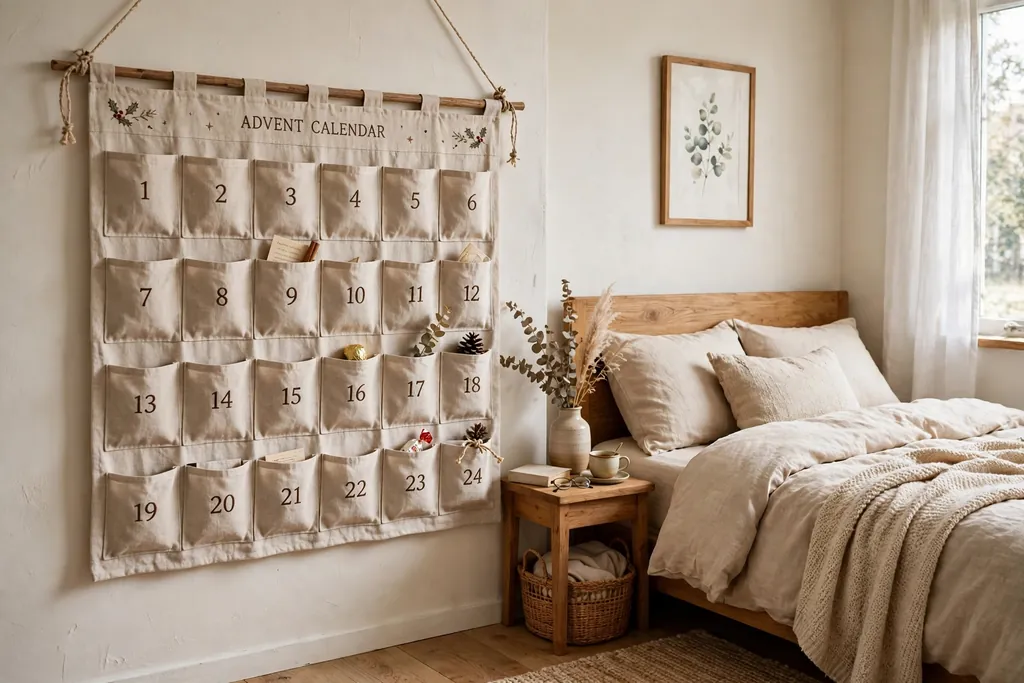
10. Advent Calendar Display on the Bedroom Wall
Hang an advent calendar on the bedroom wall, using a fabric calendar with pockets, a wooden calendar with drawers, or a simple string of numbered envelopes. A wall calendar gives the room a daily December detail without taking shelf space, and it suits a child’s room or a shared room where each person can take turns opening a pocket. Hang it at a height that is easy to reach, and fix it with hooks that suit the wall type.
Keep the calendar to one wall, and leave the rest of the wall plain so the display stays readable. Refillable pockets work well year after year, and small notes or treats can replace bought fillers. At the end of December, fold or pack the calendar flat so it stores neatly.
11. Christmas Village Scene on the Dresser
Set a small Christmas village on a dresser, using three to five houses, a few trees, and a short string of battery lights, rather than a large set that covers the whole surface. A village gives the dresser a clear scene to look at, and it reads well from the bed. Place the tallest house at the back, smaller houses in front, and leave clear space at one end for daily items such as a watch or a book.
Use battery lights inside one or two houses only, so the scene glows without a tangle of wires. Keep the village away from the dresser edge, where houses could be knocked off, and dust it with a soft brush. This idea suits a room with a wide dresser and plain walls, where a detailed scene has room to be seen.
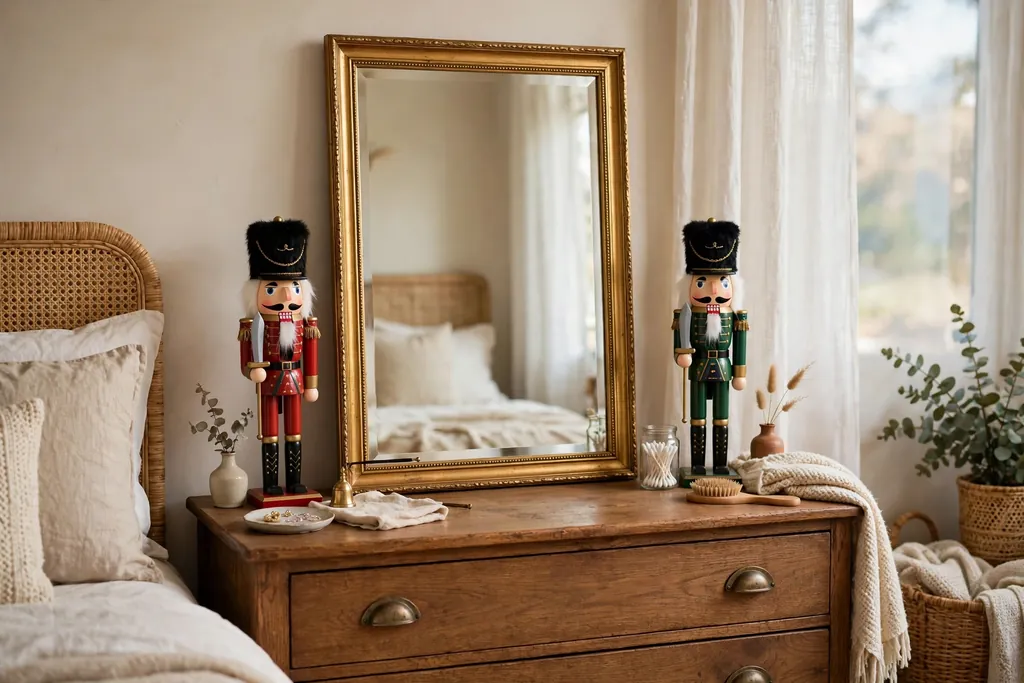
12. Nutcracker Pair Flanking the Dresser or Door
Place a pair of nutcrackers on either side of a dresser mirror, a bedroom door, or a wide chest for a classic, symmetrical Christmas detail. Matching nutcrackers frame a mirror or a doorway well, and they suit a room with traditional furniture and deep colors. Choose a height that suits the furniture, and set them on a tray or a mat so they do not scratch the surface.
Keep the rest of the dresser simple, with one small plant or candle group, so the nutcrackers stay the focus. If the room is small, use one nutcracker on a nightstand instead of a pair. Pack nutcrackers upright after the season, with padding around painted details, so they last for many years.
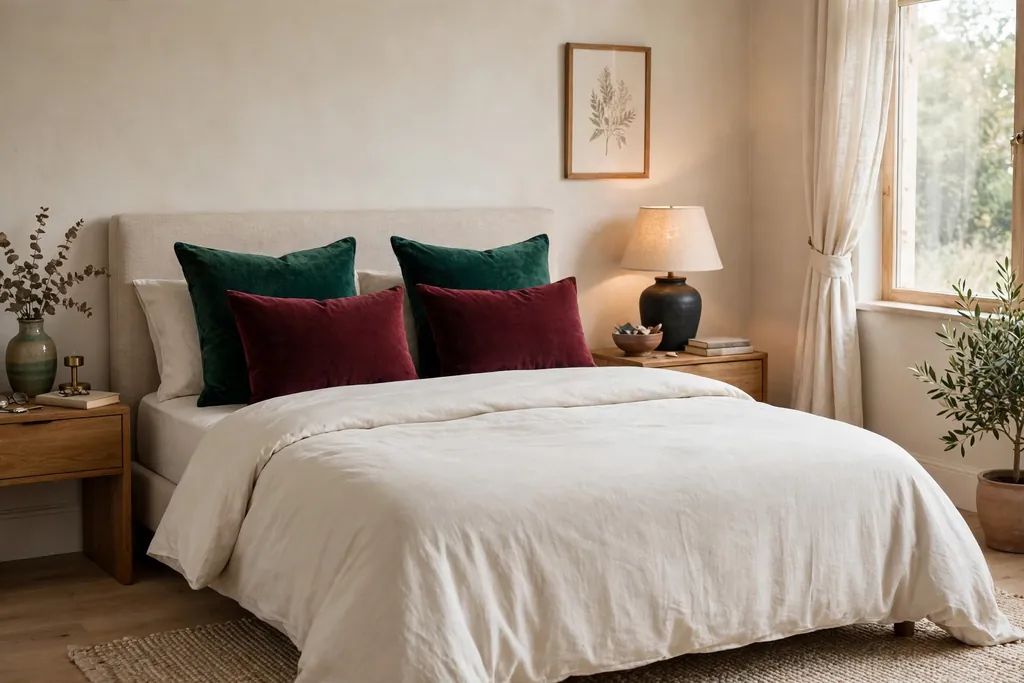
13. Velvet Cushions in Jewel Tones
Add velvet cushions in jewel tones, such as emerald, burgundy, or navy, to plain bedding for a rich look that still feels calm. Velvet adds soft texture next to smooth cotton bedding, and jewel tones suit rooms with dark wood or deep wall colors. Use two or three velvet cushions in one or two tones, not every jewel tone at once, and keep the rest of the bedding plain.
Pair velvet cushions with a plain throw in a matching tone, and keep the wall art simple so the colors are not fighting a busy print. If the room is small, use jewel tones in the cushions only, and keep the garland or wreath plain green, so the display does not darken the whole room. Check cushion care labels before washing velvet covers.
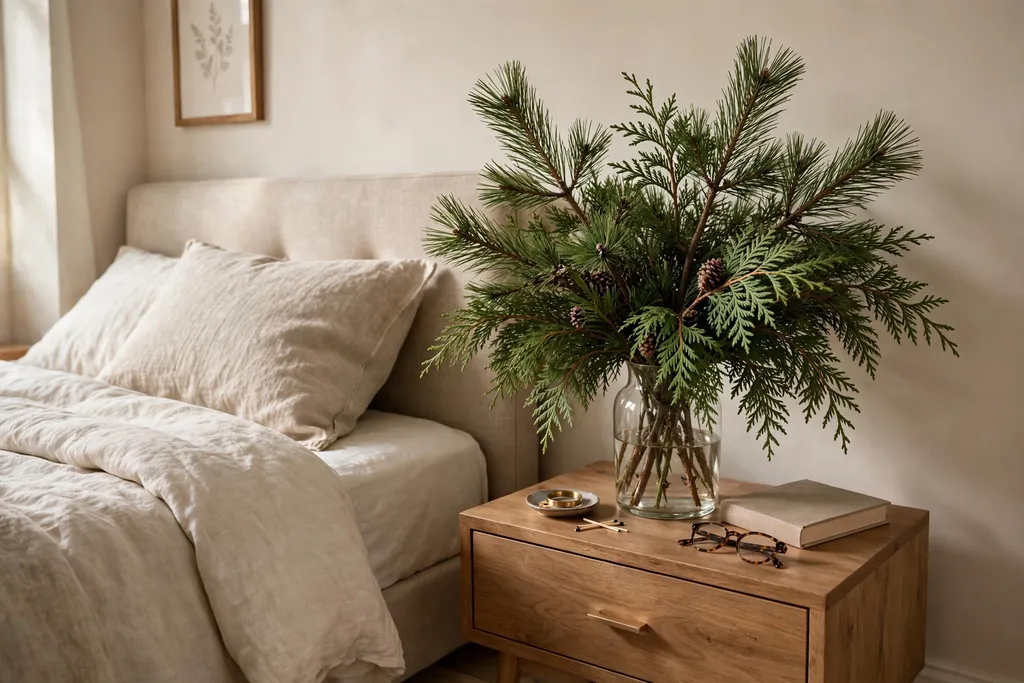
14. Pine and Cedar Branches in a Bedside Vase
Place a few cut pine or cedar branches in a heavy vase on a dresser or a nightstand for winter shape and scent without a full display. Trim the stems, use fresh water if the branch type needs it, and set the vase away from bedding and heat sources. Keep the arrangement simple, with space around it so the surface still works for daily items.
This idea suits a room where a garland would be too much, or a guest room that needs only a small seasonal touch. If scent bothers a household member, use bare branches or dried stems with no added fragrance. Replace branches when they dry and shed heavily, and clear fallen needles from the surface often.
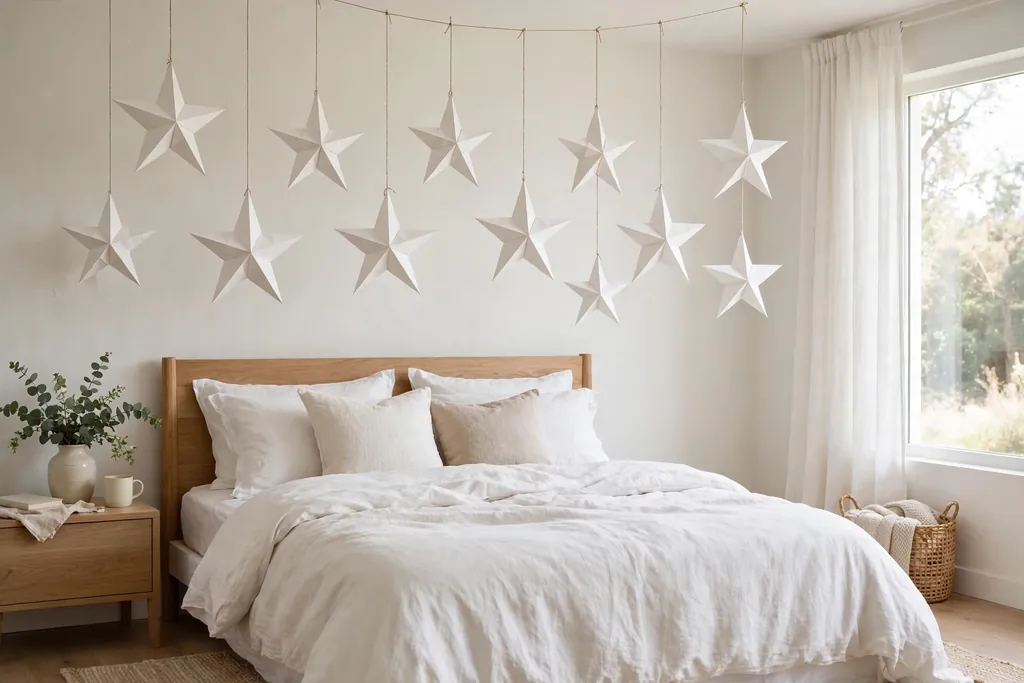
15. Paper Stars and Snowflakes Above the Bed
Hang paper stars, paper snowflakes, or a simple paper garland above the bed for a light, handmade Christmas detail. Paper pieces give height and shape without a heavy frame, and they suit rooms with pale walls and simple furniture. Use stars in two sizes, with the largest at the center, and fix them with removable hooks or clips that suit the wall finish.
Keep all paper well away from candles, lights that give off heat, and heaters, and use battery lights only near paper. Paper pieces are light, so they are easy to hang in a rented room, and they store flat in a folder after the season. This idea also works in a child’s bedroom, where children can help make the stars.
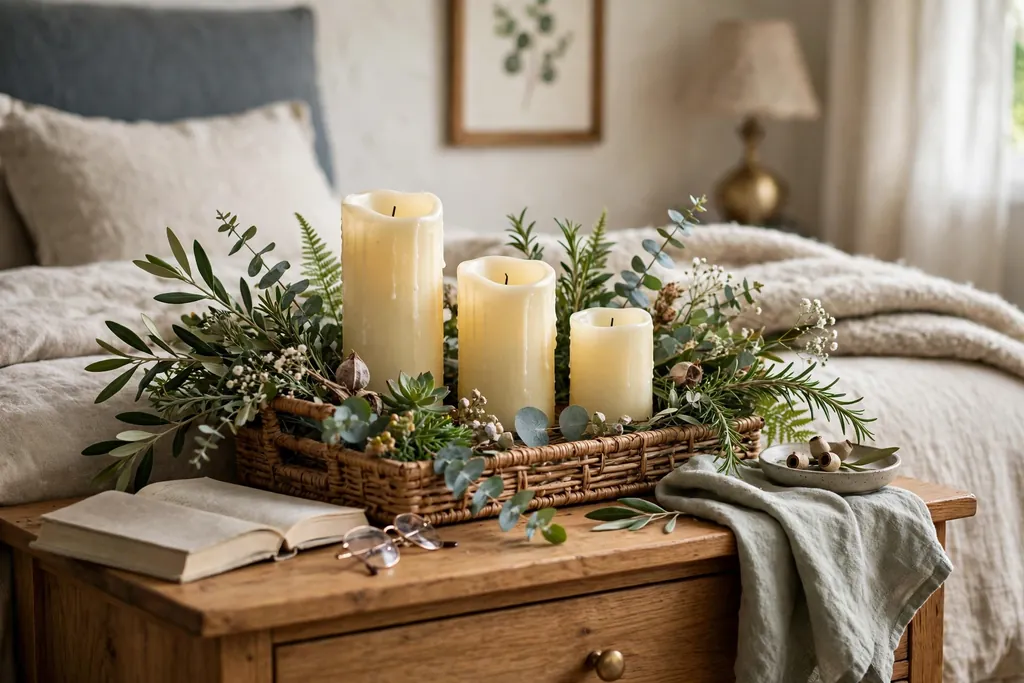
16. Candle Tray on the Nightstand with Flameless Candles
Set a small tray on one nightstand with flameless candles, a tiny sprig of greenery, and a book or a watch, for a calm evening display. Flameless candles give the glow of candlelight with less risk near bedding and paper, which matters in a bedroom. Use candles of two heights on a tray, so the group reads as one display and the tray catches any small items.
Keep the tray to one nightstand only, and leave the other nightstand clear for a lamp and water. Choose warm white flameless candles rather than flickering colors, so the light stays restful. This idea pairs well with a plain garland or a wreath, where the candle tray is a small detail rather than the main display.
17. Christmas Quilt Folded at the Foot of the Bed
Fold a Christmas quilt, or a quilt in red, green, or a winter pattern, across the foot of the bed as a clear seasonal layer. A folded quilt adds pattern, weight, and color in one step, and it is easy to pull up on a cold night or fold back in the morning. Smooth it flat each day so the fold stays crisp, and let its colors guide one smaller accent in the room, such as a cushion cover.
Use a quilt you already own before buying a new one, and keep the main duvet cover plain so the quilt stands out. If a quilt feels too warm over a duvet, lay it over the foot third of the bed only. A quilt also suits a guest room, where it can be left folded and ready for visitors.
18. Candy Cane Stripes in Cushions and a Throw
Use red and white candy cane stripes in one cushion and a folded throw for a playful Christmas accent that stays tidy. Stripes read clearly at a small scale, so one striped cushion and one striped throw are enough, with the rest of the bedding in plain white or cream. Keep the stripes to the bed only, and leave the walls, curtains, and dresser plain, so the pattern does not compete with itself.
This idea suits a child’s bedroom or a guest room, where a playful touch is welcome without a full theme. Fold the throw into a band so the stripes show in one clear line, and keep the striped cushion at the front of the pillow stack. Wash striped items before storing them, since red dye can transfer to pale bedding if stored damp.
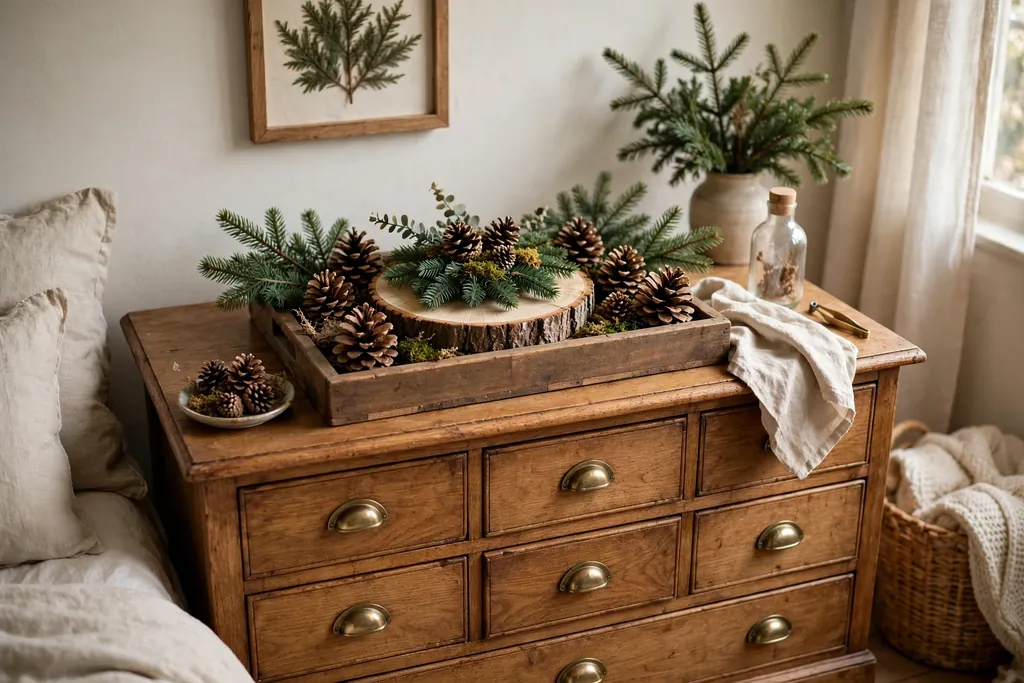
19. Woodland Tray with Pinecones and Wood Slices
Build a woodland display on a tray on a dresser or a chest, using pinecones, a wood slice, a short branch, and a small sprig of evergreen. A tray keeps the display contained and easy to move for cleaning, and natural textures do the work without shiny ornaments. Set the wood slice under a flameless candle at one end, scatter pinecones along the tray, and leave clear space at the other end for daily items.
This idea suits rooms with wood floors, warm neutrals, and simple furniture. Keep pinecones and wood away from open flame, and use flameless candles if you want light in the display. A linen cloth under the tray can catch fallen needles, and it lifts off easily for cleaning.
20. Blue and Silver Icy Palette
Style the bedroom in blue and silver for a cool, icy Christmas look: pale blue bedding or cushions, silver ornaments on a mini tree, and white fairy lights. Blue and silver suit rooms with grey, white, or pale wood, and they feel calm in a bedroom used for sleep. Keep the palette to white, pale blue, silver, and natural wood, and skip red entirely if you want the icy look to read clearly.
Add silver in small places, such as a cushion cover, a picture frame, or a tray, rather than covering the bed in metallic fabric. Warm white lights can soften a cool palette in the evening, while cool white lights keep it crisp in daylight. This idea suits a north facing room, where a cool palette matches the natural light.
21. Scandinavian Minimal White, Wood, and Stars
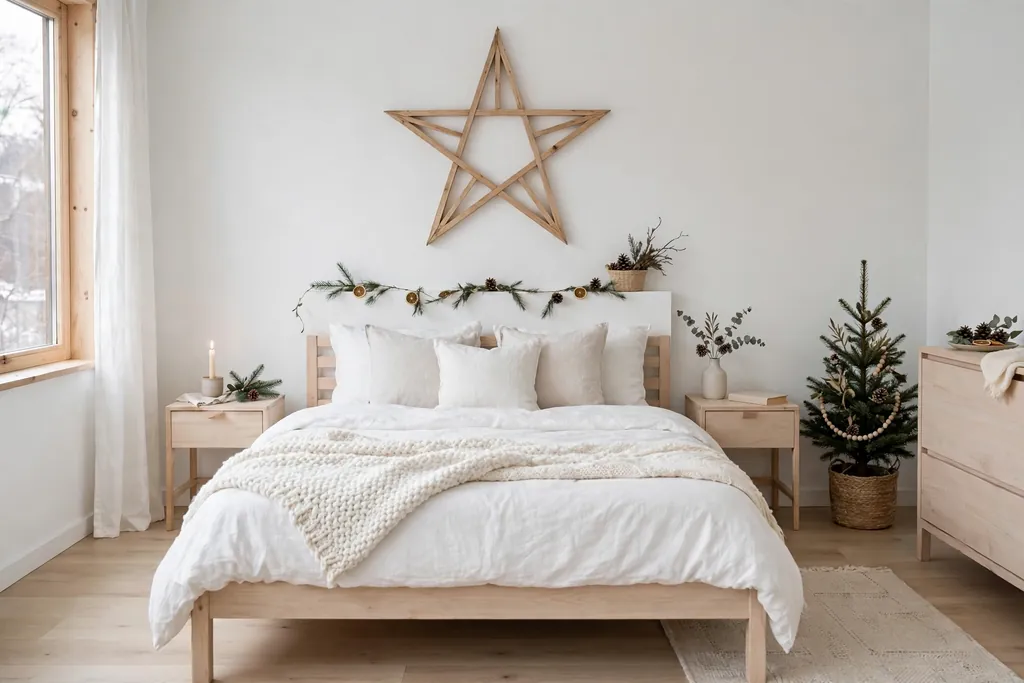
Keep the Christmas bedroom almost bare, with white bedding, pale wood accents, and a few paper or wooden stars, for a calm Scandinavian look. This style relies on space, not filling, so the bed, one wreath or star, and one small tree or branch are enough. Use warm white lights, so the pale display still feels warm in the evening, and keep the nightstands clear apart from a lamp and a book.
Choose natural materials, such as linen, cotton, and light wood, and skip shiny ornaments and heavy garlands. A single wooden star on the wall above the bed can be the whole wall display. This idea suits a small room, where a minimal display keeps the room feeling open, and a rented room, where light pieces and removable hooks do the work.
22. Rustic Cabin Bedding with Knit and Lantern
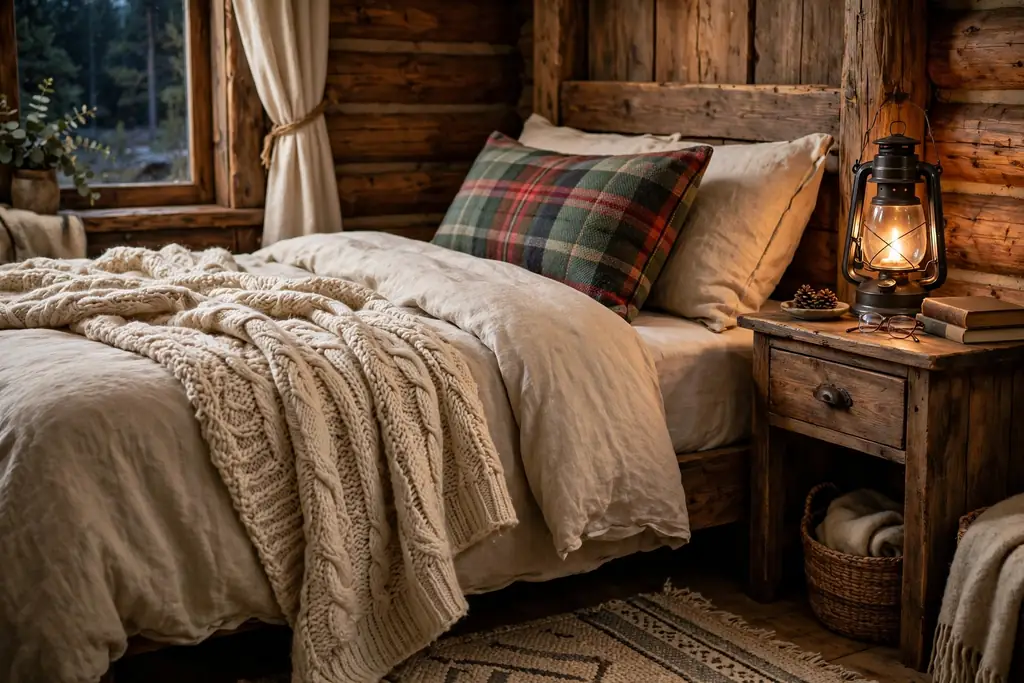
Style a rustic cabin bedroom with a knit throw, a plaid cushion, and a lantern with a flameless candle on the dresser or nightstand. Knit adds soft texture next to plain bedding, plaid adds winter color, and a lantern gives height without a tall frame. Keep the colors to cream, natural wood, soft green, and one red or plaid accent, so the room feels warm rather than busy.
Use a flameless candle inside the lantern, and keep knit items away from any real flame. A plain wooden tray under the lantern protects the surface, and a woven basket beside the bed can hold the extra throw. This idea suits rooms with wood furniture and warm neutrals, and it pairs well with the layered bedding approach in these winter bedroom ideas, adjusted for December.
23. Seasonal Art Swap Above the Dresser
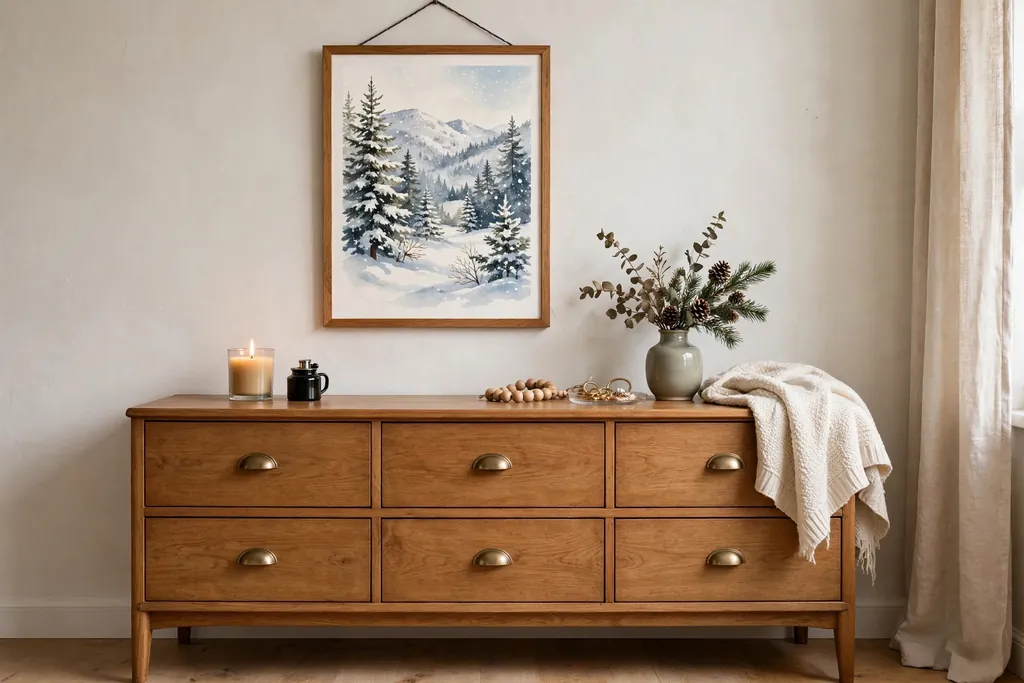
Swap one framed print above the dresser or bed for a seasonal print, such as a winter landscape, a simple tree print, or a framed piece of wrapping paper in the room palette. An art swap changes the room in one step, without adding objects to surfaces, and it is easy to reverse after the season. Choose a print in the same frame size, so no new fixings are needed, and keep the rest of the wall plain.
This idea suits a room where shelves and surfaces are already full, or a rented room where wall fixings are limited. Keep the seasonal print simple, with one clear image and muted colors, so it reads as decor rather than a poster. Store the usual print flat behind furniture or in a portfolio, so it is easy to swap back in January.
24. Garland Framing the Bedroom Mirror
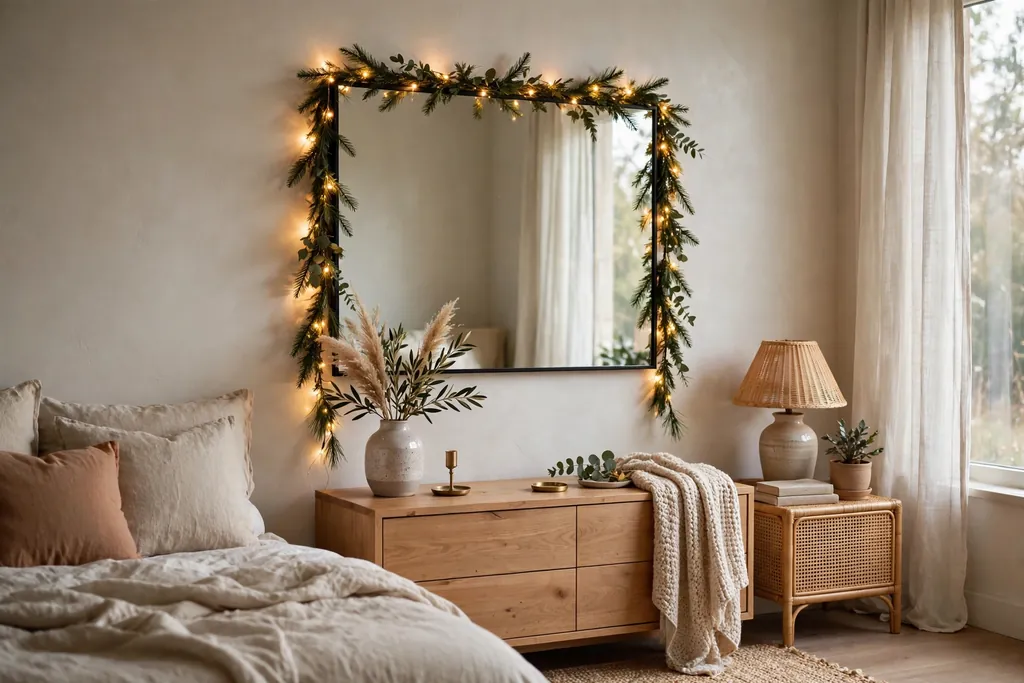
Drape a slim garland around a bedroom mirror, on a dresser or a wall, for a festive frame that also reflects the lights in the room. A slim garland suits a mirror better than a full one, since it does not block the glass, and warm white fairy lights woven through it double the glow in the reflection. Fix the garland with removable clips, and keep it clear of the mirror edges where it could slip.
Keep the dresser below the mirror simple, with one small tree or candle tray, so the framed mirror stays the focus. This idea suits a room with a large mirror and plain walls, where a garland frame has room to be seen. Check the clips often, since a garland that slips can cover the mirror or fall onto the dresser.
25. Wreath on the Bedroom Window
Hang a wreath on the bedroom window, inside the glass, for a display that is seen from the bed and from outside at night. Use a suction hook or a removable hook on the window frame, and choose a wreath size that leaves the window usable for light and air. A simple evergreen wreath with a bow suits most windows, while a wreath with lights adds glow after dark.
Keep the curtains simple, so the wreath is not hidden behind heavy drapes, and keep the wreath clear of radiators below the window. This idea suits a room with a large window and a plain wall, where a wall wreath would compete with the bed. If the window opens often, use a light wreath that will not swing into the glass.
26. Garland and Bells on the Bedroom Doorway
Hang a garland across the top of the bedroom doorway, with a small bell or a bow at the center, for a festive entry to the room. A doorway garland marks the season as you enter, without taking floor or shelf space, and it suits a room where the walls are already used for art or storage. Fix the garland with removable hooks on the door frame, and keep it high enough to walk under without brushing it.
Use a slim garland for a narrow doorway, and keep the ends short so they do not catch on the door. A single bell gives a soft sound when the door moves, but skip bells in a room used by light sleepers. This idea also works on a wardrobe door or a closet frame, where a doorway display is not possible.
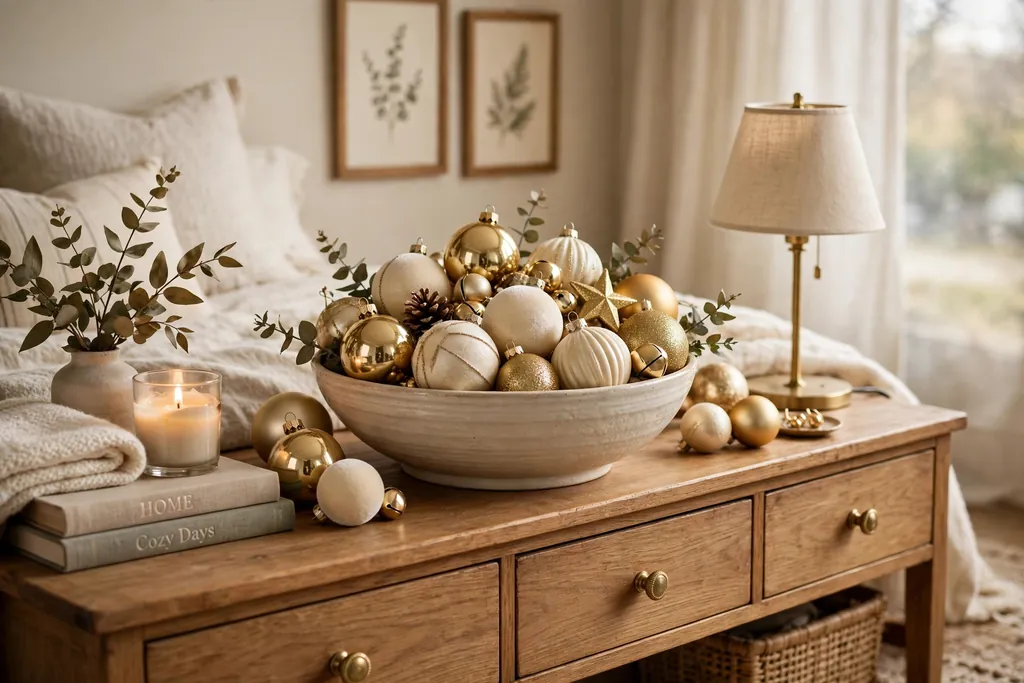
27. Ornament Bowl as a Dresser Centrepiece
Fill a shallow bowl on the dresser with ornaments in the room palette, such as gold and cream balls, or red and green balls, for a simple centrepiece that takes little space. A bowl display is easy to make, easy to tidy, and easy to change, since ornaments can be swapped without moving furniture. Choose ornaments in two colors only, and mix matte and shiny finishes so the bowl has depth.
Set the bowl on a small tray or cloth, so it does not scratch the dresser, and keep it away from the edge where it could be knocked off. This idea suits a room with a small dresser, where a village or a tree would crowd the surface, and a guest room, where a bowl can be set out quickly before visitors arrive. Pack ornaments in tissue after the season to keep finishes safe.
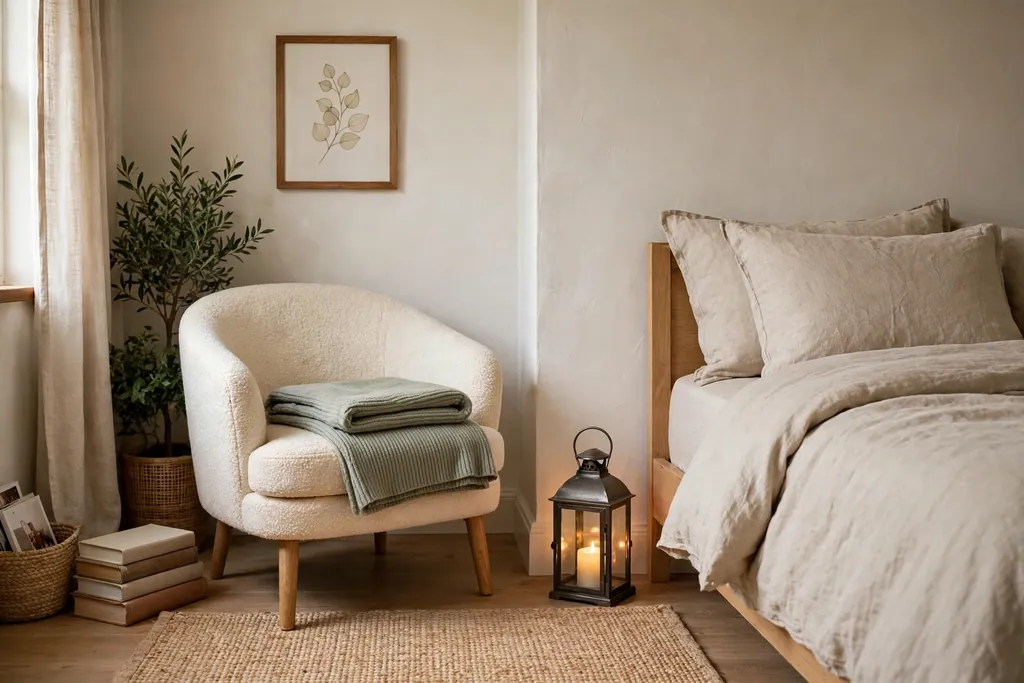
28. Calm Reading Nook with Lantern and Throw
Create a small reading nook in a bedroom corner, with a chair, a folded throw, a flameless lantern, and a small stack of books, for a quiet December corner. Angle the chair toward the light, leave a small surface for a cup or a book, and keep the route to the bed clear. A throw over one chair arm and a lantern on a nearby table give the corner a seasonal feel without a full display.
This nook gives a shared room a second seat for dressing or quiet time, and it suits a main bedroom where the bed should stay clear for sleep. In a very small bedroom, use a padded stool and a wall lamp instead of a full chair. Keep the nook to three things, a seat, a throw, and a light, so it stays calm rather than becoming storage.
Conclusion
A polished Christmas bedroom usually comes from a few linked choices, not from filling every surface. Start with the bed, with a bedding change or a folded quilt, then add one larger piece, such as a garland over the headboard, a wreath above the bed, or a mini tree on the dresser. Keep the palette to one or two colors, keep lights low and warm, and leave clear space for sleep and dressing. Pick one idea as your base, borrow details from two or three others, and leave the rest for next year.
Save this list on Pinterest for the next December weekend, and work through it one area at a time: bed, walls and windows, then dresser and small corners.
FAQs
How can I decorate a bedroom for Christmas without making it feel cluttered?
Start with the bed and one focal point, such as a wreath or a headboard garland, and leave the other surfaces mostly clear. Choose one palette, repeat it in two or three places only, and skip small ornaments that need dusting or tidying each day. A room that still works for sleep will feel more polished than a room filled with displays.
What is the easiest Christmas bedroom idea to try first?
Change the bedding or add a folded throw and one cushion in a Christmas color. A bedding change takes minutes, it sets the season for the whole room, and it is easy to reverse. Add a mini tree or a wreath next, only if the room still feels plain after the bedding change.
Are fairy lights safe to use in a bedroom at Christmas?
Use lights made for indoor use, keep them clear of bedding, curtains, and paper, and switch them off at bedtime or use a timer. Battery lights and flameless candles reduce risk near bedding and dried greenery. Check wires for damage before use, and do not run wires across walkways or under rugs.
How do I decorate a small bedroom for Christmas?
Use one strong piece, such as a wreath above the bed, a mini tree on the dresser, or lights behind sheer curtains, instead of many small items. Keep the palette light, leave the floor clear, and use wall and window displays rather than floor displays. A small room with one clear display will feel festive without feeling crowded.
Can I use a real tree or fresh garland in a bedroom?
A small fresh tree or garland can work, but keep it away from heaters, radiators, and bedding, and expect it to dry and drop needles. Water a fresh tree base if it has one, clear fallen needles often, and remove the display when it dries heavily. A faux garland or tree is a simpler choice for a bedroom, since it needs no water and sheds less.
How can I make a Christmas bedroom feel polished rather than themed?
Limit the palette to one or two colors plus neutrals, use plain bedding with one patterned throw or cushion, and keep ornaments to one or two finishes, such as matte and shiny gold. Leave clear space on nightstands and dressers, use warm low light, and swap one piece of art rather than adding many themed objects. A restrained display reads as polished, while a room filled with themed items can feel busy.
Spring is a good time to lighten a bedroom, because the room has usually carried heavy bedding, dark colors, and closed curtains all winter. You do not need a full redecorate to get that lighter feel. A change of bedding, a vase of fresh flowers, and curtains that let daylight in can shift the whole room in one afternoon. These 11 ways to style a spring bedroom cover bedding, color, flowers, light, storage, and scent, so you can pick the ideas that suit your room and your budget. Start with the bed, then move to the windows and the walls, and finish with the small details.
Key Takeaways
Start with the bed: light cotton or linen bedding in white or cream changes the room faster than any other single swap.
Keep spring color soft and limited: one or two pastels, repeated in cushions, a throw, and art, read as planned rather than busy.
Let daylight in: sheer curtains, a clear windowsill, and a mirror opposite the window all help a bedroom feel brighter.
Use fresh flowers and potted plants for a spring note that you can change weekly, without committing to a new color scheme.
Clear winter layers first: baskets for heavy throws and spare blankets keep the room tidy while spring layers take their place.
Finish with scent and small details: a candle, fresh linen, and a tidy nightstand make the refresh feel complete.
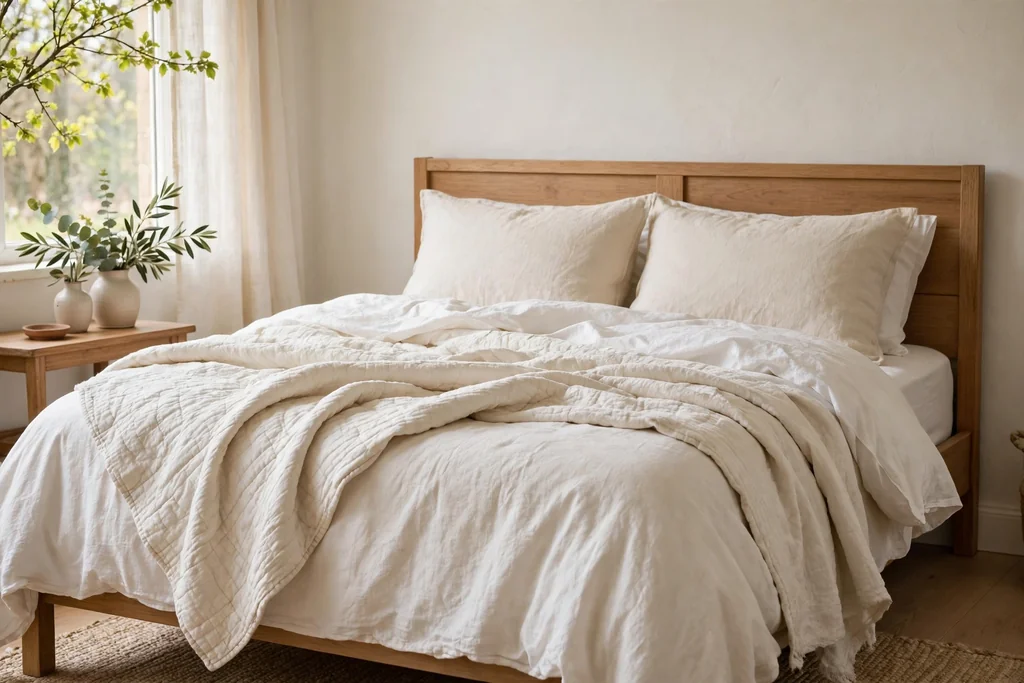
1. Swap in Light Cotton and Linen Bedding
Take off heavy winter bedding and dress the bed in light cotton or linen in white, cream, or a very pale grey. Start with fresh sheets, add a light duvet or coverlet, and fold a thin cotton throw across the foot for cooler nights. Linen softens with washing and drapes loosely, while cotton stays crisp and is easy to wash, so either fabric suits a spring bed.
This swap suits every bedroom, rented or owned, since it needs no tools and no paint. Keep one warm layer close by, such as a folded blanket in a basket at the foot of the bed, so a cool night does not mean remaking the bed. Wash the winter bedding before you store it, and keep it in a clean, dry bag so it is ready when the weather turns again.
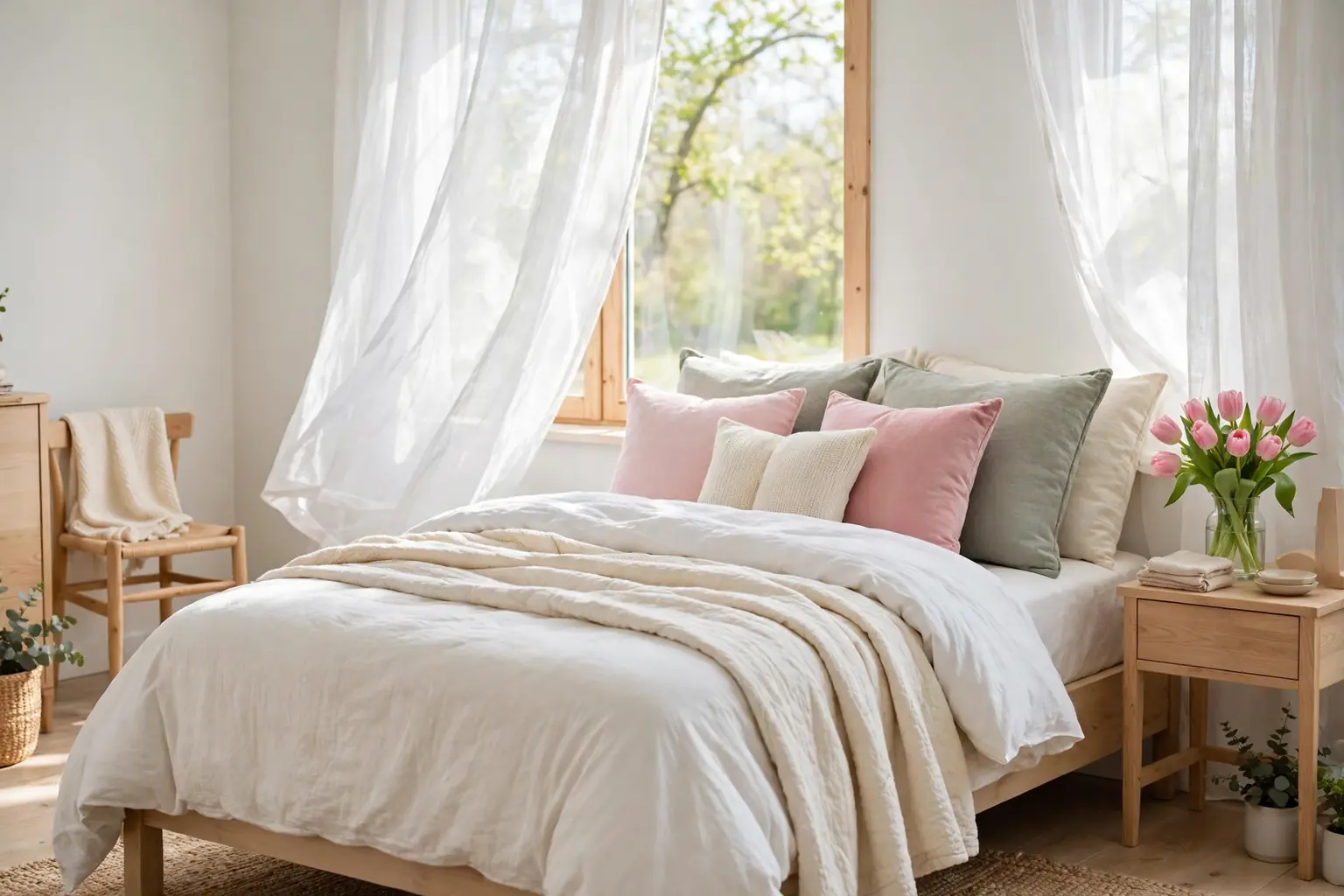
2. Add Pastel Cushions in Blush, Sage, and Butter Yellow
Add two or three cushions in soft pastels, such as blush pink, sage green, and butter yellow, against white or cream bedding. Pastels give the bed a spring note without a strong color commitment, and they are easy to swap again in summer or fall. Choose cushions in different textures, such as linen, cotton, and a light knit, so the bed has depth even though the colors stay pale.
Keep the rest of the bed plain, so the pastels carry the color, and repeat one pastel once more in the room, in art or a small vase, so the color looks planned. For a calm green to pair with blush and butter yellow, see these sage green bedroom ideas. If your room already has a strong wall color, use only one pastel family, such as blush and cream, so the bed does not compete with the walls.
3. Put Fresh Tulips on the Nightstand
A small vase of fresh tulips on the nightstand is the quickest spring detail in a bedroom, because it adds color, shape, and a living plant in one step. Choose one color, such as soft pink, white, or coral, and use five to seven stems in a low jar or a small jug, so the vase does not block a lamp or a book. Tulips keep growing after they are cut and bend toward the light, so the arrangement will change shape over a few days.
Change the water every two days and trim the stems at an angle to keep tulips fresh for up to a week. Keep the vase clear of books and charging cables, and set it on a small tray or saucer if the nightstand is wood, so water marks do not form. When the tulips fade, swap them for daffodils, ranunculus, or a sprig of blossom, and keep the same vase so the nightstand styling stays settled.
4. Hang Sheer Curtains for Soft Daylight
Hang sheer white or cream curtains at the bedroom window to soften daylight while keeping daytime privacy. The loose weave lets light through in a gentle wash, so a small or north facing bedroom feels brighter, while the view from outside is blurred. Sheers suit a bedroom where you wake with the light and do not need full darkness in the morning.
Hang the rod high and wide enough that the panels clear the window frame when open, so daylight still fills the room. Pair sheers with a blackout lining or a second panel if you need darkness for sleep, and wash the sheer panels often, since pale fabric shows dust sooner than heavier fabric. For more fabrics, lengths, and hanging tips, see these bedroom curtain ideas.
5. Swap in Botanical Prints for Spring
Swap heavy winter art for botanical prints in soft green, cream, and pale pink for spring. Choose leaf studies, fern shapes, or simple flower line drawings in plain wood or white frames, and hang them above the bed or along one wall. Botanical prints give a room a garden note without a new color scheme, and they suit plain walls and solid bedding best.
Lay the frames on the floor first and plan the spacing, leaving equal gaps between frames, then hang the middle frame at eye level. Keep the palette tight, with no more than three colors across the prints, so the wall feels calm rather than crowded. Store the winter art flat and wrapped, so you can swap it back in fall without damaged frames or glass.
6. Tidy Away Winter Layers With Woven Baskets
Use woven baskets in seagrass, rattan, or cotton rope to store heavy throws, spare blankets, and winter layers that no longer suit the bed. Place one large basket at the foot of the bed for throws, and a smaller basket beside the bed or in a corner for books and magazines. Baskets keep useful items close without adding closed furniture, and their natural texture suits a spring room.
Keep the baskets mostly tidy, with one folded throw visible at the top, so they read as storage rather than clutter. Dust woven pieces with a dry cloth or a soft brush, and keep them out of damp corners, since natural fibers can warp. Label nothing, since baskets work best when you can see and reach what is inside at a glance.
7. Lay Down a Light Rug in Jute or Cotton
Lay a light rug in jute, cotton, or a pale flat weave under or beside the bed to warm up a hard floor for spring. A natural jute rug adds a sand tone that links light wood furniture and woven baskets, while a washable cotton rug suits a bedroom that gets bare feet, pets, or open windows. Let the rug extend well beyond each side of the bed, so your feet land on it first thing in the morning.
Choose a low pile you can vacuum easily, and use a rug pad on smooth floors to stop slipping. Keep the rug pile low near the door swing, and vacuum with a brush head, since natural fibers shed at first. If the room is small, a runner beside the bed gives the same soft landing with less floor covered than a full rug under the bed.
8. Add Potted Plants to the Windowsill and Dresser
Add small potted plants to the windowsill, the dresser, or a bedside table for greenery that lasts longer than cut flowers. Choose easy plants in terracotta or plain white pots, such as a trailing pothos, a small fern, or a potted herb like mint, and group two or three pots of different heights together. The green softens hard furniture and links the room to the garden outside.
Set each pot on a saucer to protect wood surfaces, and water only when the top of the soil feels dry, since most indoor plants suffer more from overwatering than from dry soil. Keep plants clear of heavy curtains and radiators, and turn the pots every week or so, so growth stays even toward the light. If you have pets, check that each plant suits your household before you bring it into the bedroom.
9. Freshen the Air With a Gentle Spring Scent
Freshen the bedroom air with a gentle spring scent, such as a linen spray on bedding, a candle in a glass holder, or a small dish of dried lavender on the dresser. Scent is one of the fastest ways to mark a seasonal change, because it greets you each time you walk into the room, and it needs no new furniture or paint. Choose one scent, such as fresh linen, light floral, or green herbs, and use it in one place only, so the room does not carry competing smells.
Keep candles clear of curtains, bedding, and books, and never leave a lit candle burning in an empty room. Open the window for a short while each morning as well, since fresh air does more for a stuffy bedroom than scent alone. If you share the room, agree on one scent that suits you both, and skip strong or heavy fragrances that can feel tiring overnight.
10. Fold a Floral Throw Across the Foot of the Bed
Fold a light floral throw across the foot of the bed for a spring pattern that you can remove in minutes. Choose a small or medium scale floral in two or three soft colors, such as pink, green, and cream on a white ground, so the pattern reads as fresh rather than loud. A floral throw suits a plain bed best, where white or cream bedding gives the pattern room to show.
Keep the rest of the bed mostly solid, with pastel cushions in one color pulled from the throw, so the pattern and the cushions link without competing. Fold the throw neatly each morning, since a throw left in a heap can make an otherwise tidy bed look untidy. Wash the throw as advised on the label, and store it folded in a basket when you want a plainer bed for a guest room.
11. Bounce Daylight With a Mirror and Pale Lamp Shades
Place a large mirror opposite or beside the window, and swap dark lamp shades for pale linen shades, to bounce daylight and soften evening light in a spring bedroom. A mirror reflects both light and the view outside, which helps a small or dark bedroom feel brighter, while pale shades let lamp light spread softly instead of pooling in one spot. Together, these two changes lift the room without moving any furniture.
Hang the mirror at eye level and keep what it reflects tidy, since a mirror doubles whatever sits opposite it, including clutter. Choose warm white bulbs for the lamps, and put the switches where you can reach them without getting up. For a room that leans further into light colors and natural texture, see these coastal bedroom ideas. Keep mirror glass clean, since dust shows more on a mirror than on a painted wall.
Conclusion
A spring bedroom comes down to light layers, soft color, and a few living details, used with restraint. Start with light bedding, add pastel cushions and a floral throw, let daylight in through sheer curtains, and finish with fresh flowers, potted plants, and a tidy nightstand. Keep surfaces mostly clear, store winter layers in baskets, and warm the evenings with pale lamp shades, so the room feels bright by day and restful at night. Work through these 11 ideas in order, one afternoon at a time, and keep only the changes that suit the way you actually sleep and wake in the room.
Save this list for your next free hour in the bedroom, and start with the bed and the windows before you buy anything new. Small, seasonal swaps are often enough, and they leave the room easy to change again when summer arrives.
FAQs
How do I style a spring bedroom without repainting?
Start with bedding, cushions, curtains, and art, since those cover the largest surfaces in the room and need no paint. Light cotton or linen bedding, pastel cushions, sheer curtains, and botanical prints can shift a room in one afternoon. Save paint for a later project, and test any paint sample in morning and evening light first, since spring daylight can change how a color reads.
What colors work best for a spring bedroom?
White, cream, and pale grey work best as a base, with one or two pastels, such as blush pink, sage green, butter yellow, or pale blue, as accents. Keep the main palette pale, with color on cushions, a throw, art, or a vase, and add natural wood and woven texture for warmth. Test fabric samples beside your bedding and floor before committing, since white and pastels shift a lot through the day.
How do I keep fresh flowers looking good in a bedroom?
Change the water every two days, trim the stems at an angle, and keep the vase out of direct sun and away from radiators. Tulips last about a week with fresh water, while daffodils and ranunculus need the same care. Remove any stem that fades, so it does not cloud the water for the rest, and swap the whole bunch weekly for a fresh spring note.
Can I style a small spring bedroom?
Yes. In a small bedroom, pick fewer ideas and repeat them well: light bedding, one pastel accent, sheer curtains, and one vase of flowers are often enough. Keep the floor clear, use baskets for storage, and hang a mirror to bounce daylight, since clutter and dark layers make a small room feel smaller. Skip a large rug and a gallery wall if floor and wall space are tight, and use a bedside runner and one framed print instead.
How do I make a spring bedroom feel calm, not busy?
Limit the palette to a pale base plus one or two pastels, and limit pattern to one place, such as a floral throw or botanical prints, but not both at full strength. Keep surfaces mostly clear, with a lamp, a book, and a vase on the nightstand, and store spare items in baskets. Step back and remove one item from each surface if the room still feels crowded, since a calm room usually needs less, not more.
When should I swap winter bedding for spring layers?
Swap when nights feel mild enough for a light duvet or coverlet plus a folded throw, rather than on a fixed calendar date, since spring weather varies by region and by room. Keep a folded blanket in a basket at the foot of the bed for cooler nights, so you can add warmth without remaking the bed. Wash and store the winter bedding clean and dry, so it is ready when cold weather returns.
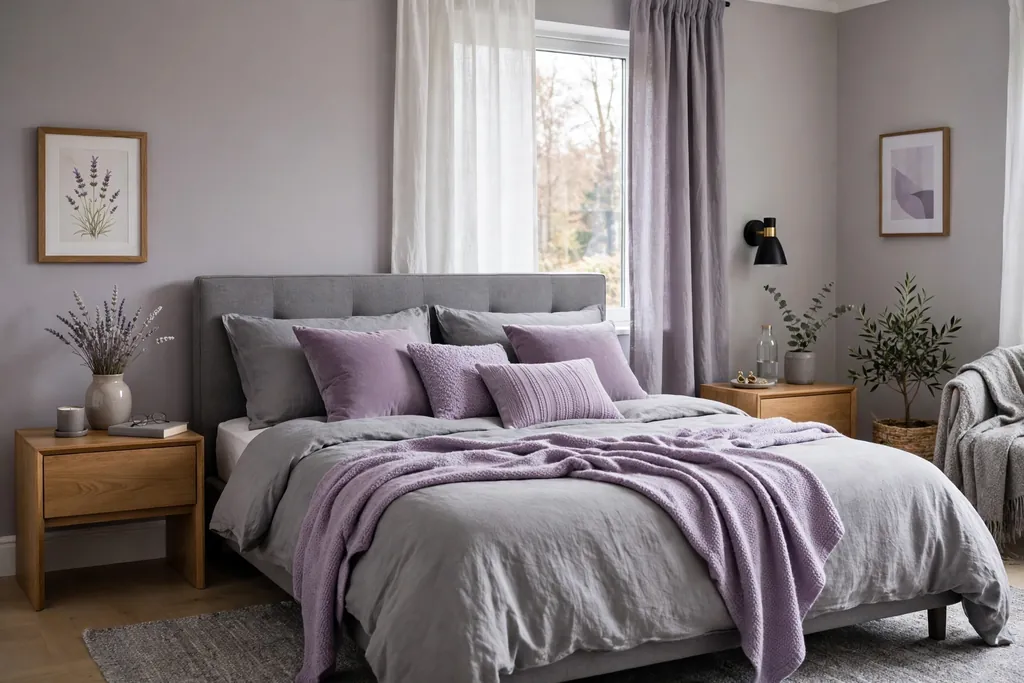
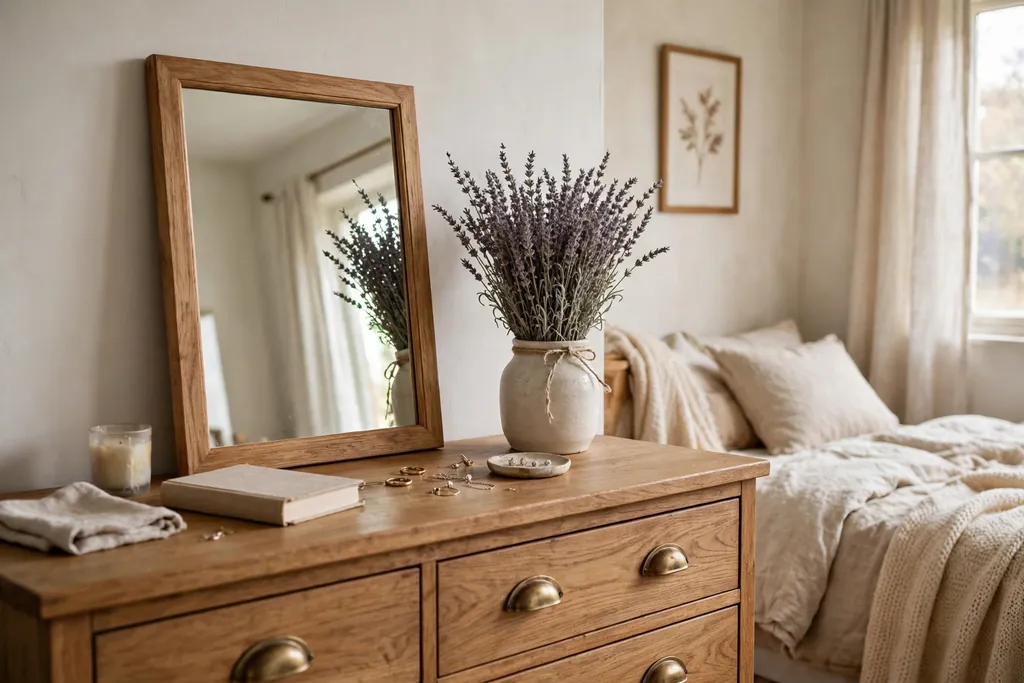
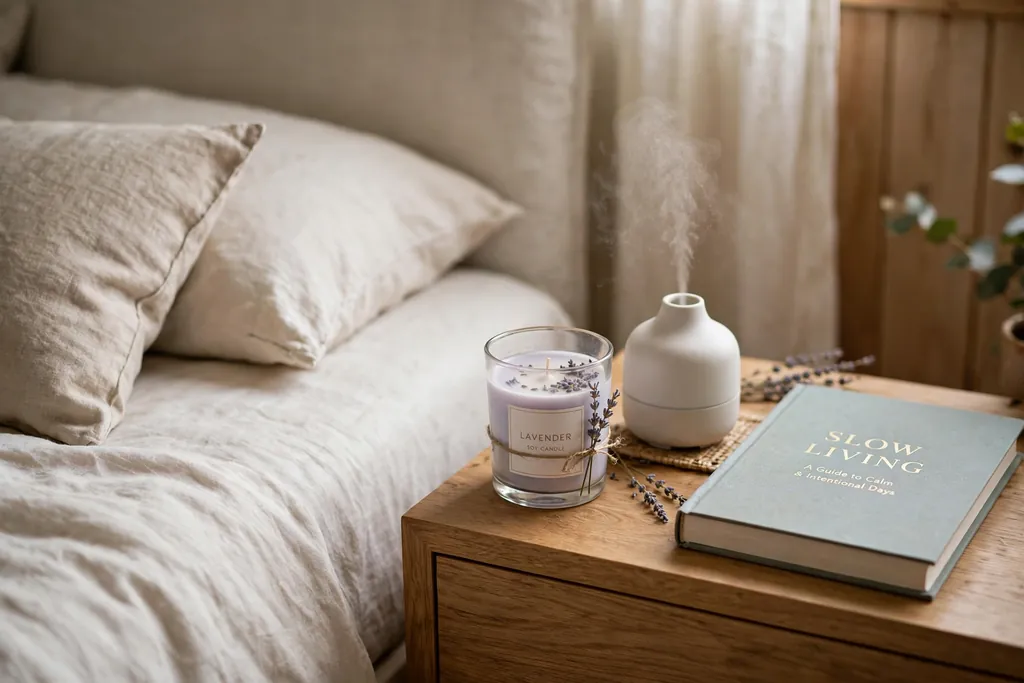
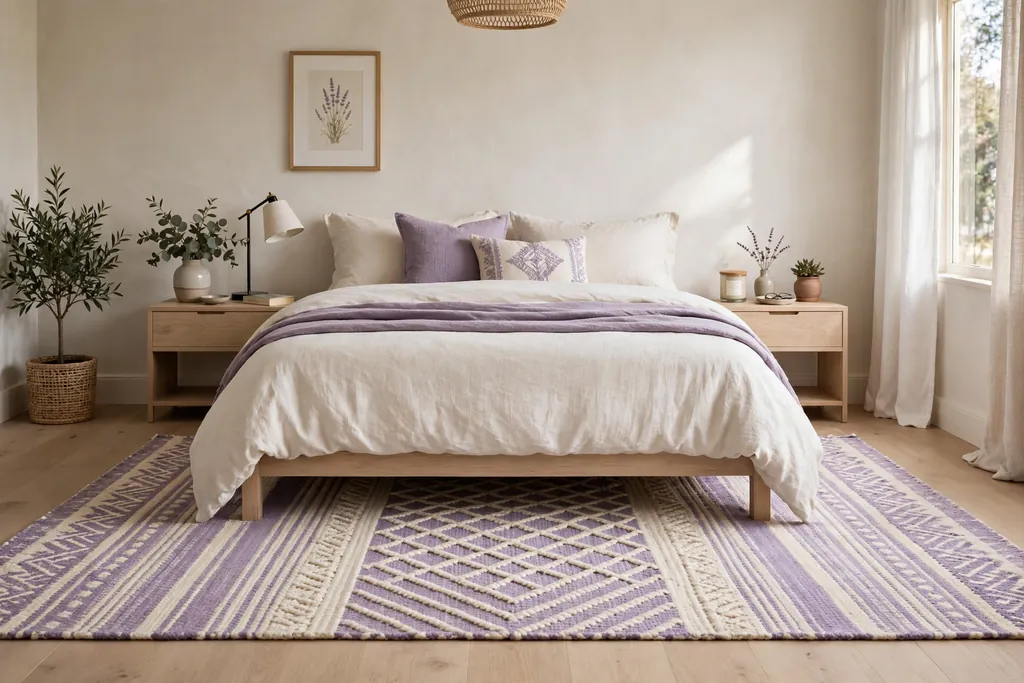
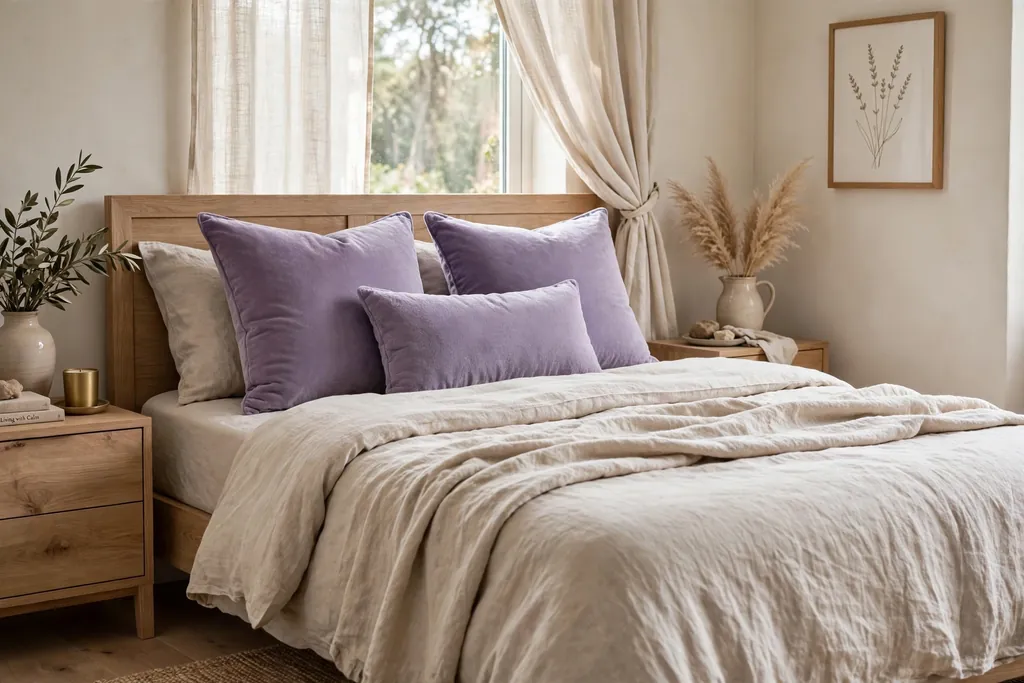
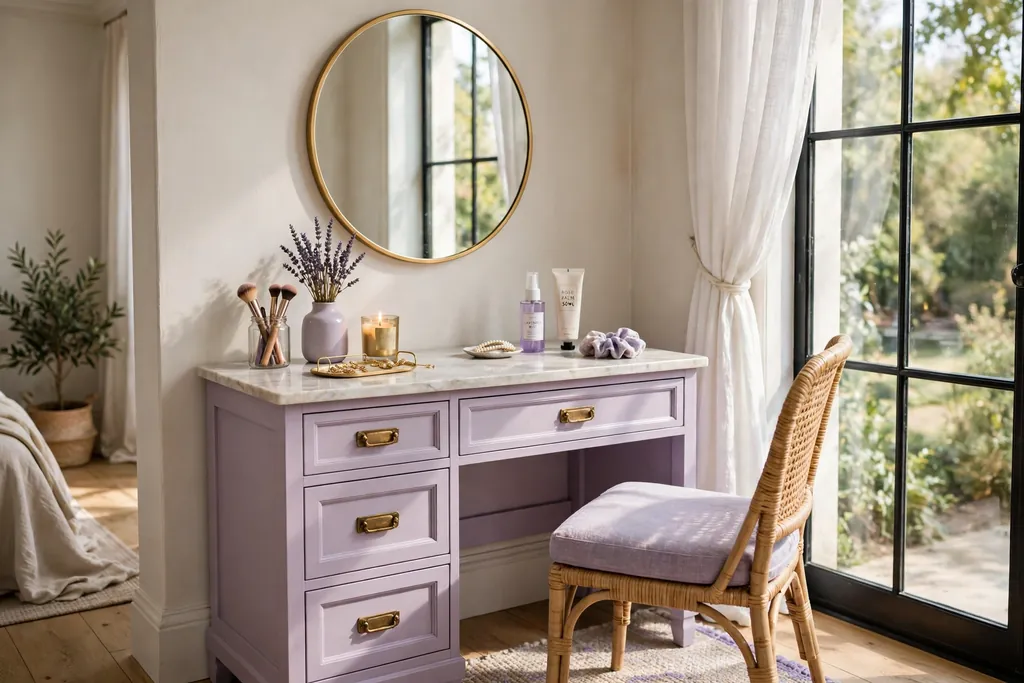
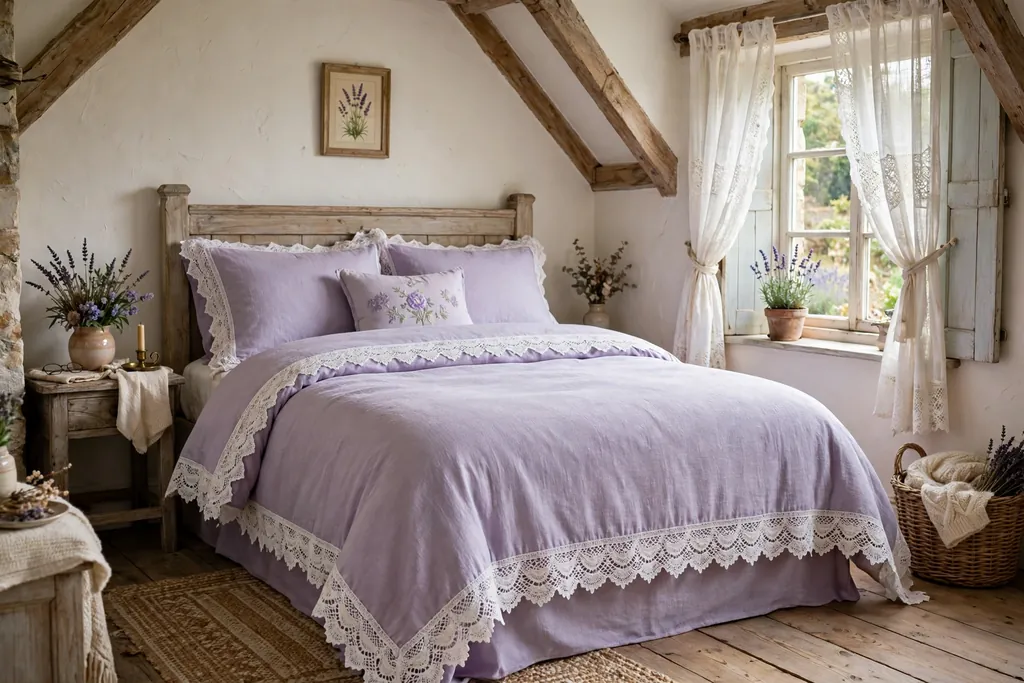
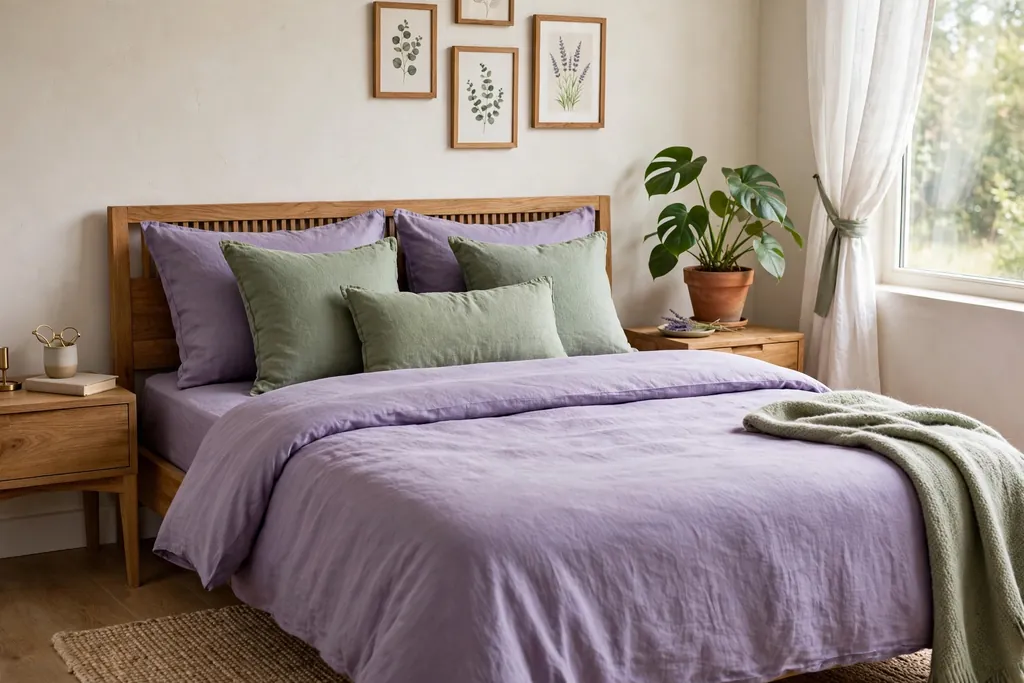
Lavender brings a soft, restful color to a bedroom without the weight of a deep purple. Used in pale tones, it pairs well with white, grey, cream, and light wood, and it works on walls, bedding, curtains, and small accents alike. These 27 ways to design a serene lavender bedroom cover paint, furniture, textiles, light, storage, and scent, so you can start with one layer or plan a fuller room. Begin with the change you notice first when you walk in, then add one more layer at a time. For a muted green scheme that pairs well with lavender, see these sage green bedroom ideas.
Key Takeaways
Pick one main lavender tone and repeat it in two or three places, so the room reads as planned rather than scattered.
Keep the base pale: white, cream, soft grey, and light wood let lavender stay restful instead of loud.
Test paint and fabric samples in morning and evening light, since lavender shifts between cool and warm tones through the day.
Mix textures, such as linen, cotton, velvet, wool, and wood, so a soft palette still has depth.
Change bedding, curtains, and cushions first for a quick refresh with no paint, and save walls and furniture for a weekend project.
Keep nightstands, dresser tops, and floors mostly clear, so the color can do its quiet work without visual clutter.
1. Soft Lavender Walls with White Trim
Soft lavender walls with white trim give a bedroom a gentle wash of color from every angle. A pale lavender, close to grey, keeps the room bright in daylight and calm in lamplight, while white trim marks the edges cleanly. This suits a main bedroom with good daylight, where you want color on the walls but still want the room to feel open and restful.
Test a large swatch on the wall behind the bed and on a wall facing the window, since the same paint can look quite different in each spot. Keep the ceiling white and the bedding mostly cream or white, so the lavender has room to breathe. Choose a matte or eggshell finish, so the walls do not shine under lamplight.
2. Lavender and White Layered Bedding
Lavender and white layered bedding is the fastest lavender change, because the bed takes up the most visual space in the room. Start with white or cream sheets, add a lavender duvet or quilt, and fold a white throw across the foot. The two tones give the bed depth without a pattern, and the layers let you adjust warmth through the night.
Keep the palest shade closest to your face and the lavender toward the foot, which gives the bed a natural sense of order. Add cushions in linen and cotton, not all in the same fabric, so the bed feels soft to the touch as well as to the eye. Wash the throw and cushion covers on a regular cycle, since pale lavender shows marks sooner than darker colors.
3. A Lavender Upholstered Headboard
A lavender upholstered headboard gives the bed a soft focal point that makes the room feel dressed even when the walls stay plain. The padded shape adds comfort for reading in bed, and the fabric catches light in a way flat paint does not. Pair it with cream bedding and one or two cushions in a deeper lavender, and keep the wall behind it plain so the texture stands out.
This suits a bedroom where the bed sits against a long blank wall. Measure the headboard width against the bed and the wall, since a headboard that is too narrow looks lost and one that is too wide crowds the nightstands. Vacuum the fabric gently with an upholstery tool, since soft fabric can trap dust over time.
4. Pale Lavender Curtains with Sheer Panels
Pale lavender curtains with sheer panels soften daylight and add a fabric layer that hard surfaces lack. The sheer layer filters light gently during the day, while the lavender panels can close at night for privacy and a deeper color. This suits a bedroom window that needs both soft morning light and a calm evening look.
Hang the rod close to the ceiling and wide enough that the panels clear the window frame when open, so daylight still fills the room. Choose a lavender a shade deeper than the walls so the curtains read as a deliberate layer. For more window ideas that soften a bedroom, see these bedroom curtain ideas.
5. A Lavender Accent Wall Behind the Bed
Paint the wall behind the headboard in a soft lavender, and keep the other walls white or warm cream, so the bed has a clear focal point without the whole room going purple. The accent wall frames the bed the way a large piece of art would, and it suits a room where you want color but not a full repaint. A muted, grey toned lavender works better here than a bright purple, since the wall sits behind you for much of the day and should stay restful.
Keep the bedding mostly cream or white, with one lavender cushion or throw to link the bed to the wall. Choose a matte or eggshell finish so the wall does not shine under lamplight, and paint the trim in the same white as the other walls for a clean edge. If the room is small, keep the ceiling white, so the accent wall adds depth without lowering the room.
6. White Furniture with Lavender Bedding Accents
White furniture with lavender bedding accents keeps a bedroom bright while still giving it a clear color story. A white bed frame, dresser, and nightstands act as a quiet base, and lavender bedding, cushions, and a throw supply the color. This suits a rented room or a room you refresh often, since the furniture stays the same while the textiles change.
Keep one white tone across the main pieces, so the group reads as planned rather than mixed. Repeat the lavender in at least two places on the bed, such as the duvet and one cushion, so the color does not look like an afterthought. Dust white furniture weekly, since pale surfaces show marks fast.
7. A Lavender Throw and Cushions on a Neutral Bed
A lavender throw and cushions on a neutral bed give you lavender in its smallest, easiest dose. The bed stays in white, cream, or soft grey, and the lavender pieces add color at the foot and among the pillows. This suits a bedroom where you are unsure about lavender, since a throw and two cushions are easy to swap out.
Fold the throw across the lower third of the bed, or drape it over one corner, and keep the rest of the bed plain so the color stands out. Choose cushions in two textures, such as linen and velvet, in close lavender tones, so the group feels layered rather than flat. Store a spare throw nearby, so a fresh look is a quick swap rather than a chore.
8. A Lavender Reading Chair in the Corner
Place a lavender upholstered chair in a corner with a small side table and a reading lamp, so the bedroom gains a second use that is still quiet. The chair gives you a place to read or dress that is not the bed, and the lavender color marks the corner as its own place. A cushion in cream and a throw over the chair arm keep it inviting.
This suits a bedroom with a window corner that currently holds nothing but a laundry basket. Choose a chair deep enough to sit in for an hour, not a stiff accent chair that looks good but stays empty. Keep a basket beside the chair for current books, so the corner stays tidy.
9. Lavender Botanical Prints in White Frames
Lavender botanical prints in white frames add a quiet focal point to pale bedroom walls without adding strong color. Prints of lavender stems, leaves, or simple flower shapes suit the theme directly, and the white frames link the wall to pale furniture. This suits a plain bed wall or a wall above a dresser that needs interest without wallpaper.
Choose three to five prints in similar sizes, and hang them in matching frames at eye level on one wall. Leave breathing room between frames, and center the group on the bed or dresser rather than scattering prints around the room. Use fixings suited to the wall and the weight, and avoid hanging heavy frames directly above pillows.
10. A Lavender and Grey Palette for a Calm Base
A lavender and grey palette keeps a bedroom calm by pairing a soft purple with a cool neutral. Grey walls, bedding, or a rug ground the lavender, so the purple reads as gentle rather than sweet. This suits a bedroom shared by two people with different tastes, since grey keeps the scheme grown up and easy to live with.
Use grey for the larger surfaces, such as the rug or the bedding base, and lavender for the smaller layers, such as cushions, a throw, and art. Keep the grey soft and warm toned rather than cold charcoal, so the room does not turn chilly. Add light wood in one or two pieces to warm the pairing.
11. Dried Lavender Bundles in a Vase on the Dresser
Dried lavender bundles in a vase on the dresser add color, texture, and a light scent with no watering and no upkeep. The slim stems and small buds suit a small dresser top, where a large bouquet would crowd the mirror or lamp. This suits a bedroom that needs one natural detail, and it works in any season.
Stand two or three small bundles in a plain ceramic or glass vase, and keep the rest of the dresser top to two groups at most: light and one tray. Shake the bundles outside now and then to clear dust, and replace them when the buds start to shed. Keep dried stems away from open flames, since dried plant material catches fire easily.
12. A Lavender Candle and Diffuser on the Bedside
A lavender candle or diffuser on the bedside adds scent to the evening routine, which suits a bedroom meant for winding down. The scent layer works with the visual lavender in bedding or art, so the room feels planned through more than one sense. This suits a bedside that already stays mostly clear, since scent needs only one small item.
Keep the candle or diffuser on the side away from bedding, and follow the maker guidance on use and refill. Choose one scent item rather than three, so the room smells light rather than heavy. Put the item on a small tray with a book, and move everything else elsewhere, so the bedside stays calm at night.
13. A Lavender Rug on Light Wood Floors
Lay a large rug in lavender and cream under the bed to ground the room and warm up a hard floor. The rug adds a block of color at ground level, which balances lavender walls or lavender bedding above, and it gives bare feet a soft place to land in the morning. Choose a low pile you can vacuum easily, and let the rug extend well beyond each side of the bed.
This suits a bedroom with wood or laminate floors, and it works well when the rug pattern is quiet, such as a border or a simple stripe, rather than a busy print. Use a rug pad on smooth floors to stop slipping, and keep the rug pile low near the door swing. A washable rug is worth choosing if the room gets pet traffic or muddy shoes.
14. A Lavender Bed Canopy or Draped Bed Crown
A lavender bed canopy or draped bed crown gives the bed a soft, enclosed feel without a heavy four poster frame. Sheer lavender fabric hung from a crown or a ceiling mount falls gently around the head of the bed, so the sleeping area feels separate from the rest of the room. This suits a bedroom with a plain bed that needs one romantic detail.
Hang the fabric so it clears the pillows and does not pull when you sit up, and keep the panels light enough to move with air from the window. Wash the fabric often, since sheer panels near a bed collect dust and lint. If a full canopy feels too much, a single draped panel behind the headboard gives a similar effect with less fabric.
15. Lavender Painted Nightstands Beside a White Bed
Paint a pair of nightstands in lavender and keep the bed white, so the color sits at bed height where you see it last at night. This is a lower risk change than painting a wall or a wardrobe, since two small pieces are easy to repaint later. The lavender nightstands link to a lavender cushion or throw on the bed, and the white bed keeps the room bright.
Repeat one handle finish across both nightstands, such as brass or matte black, to tie them together. Keep the tops mostly clear, with a lamp, a book, and a glass of water, so the painted color stays visible. If the two nightstands do not match, paint them the same lavender and they will read as a pair.
16. Lavender and Cream Striped Bedding
Lavender and cream striped bedding adds pattern to a plain bedroom without a bold print. The stripes give the bed direction and rhythm, and the cream keeps the lavender soft. This suits a bedroom with white walls and solid furniture, where the bed needs one clear pattern to anchor the room.
Keep curtains and the rug mostly plain when the bedding is striped, and repeat one lavender tone in a single cushion. A busy stripe on both bedding and curtains can make a small room feel crowded. For a calmer result, choose stripes in two close tones, such as cream and pale lavender, rather than high contrast stripes.
17. Lavender Botanical Wallpaper on One Wall
Hang a lavender botanical wallpaper on the bed wall for pattern that paint alone cannot give. A lavender stem or leaf print in lavender, cream, and a touch of soft green adds a garden note to the room, and it suits a bedroom where the furniture is plain and the bedding is solid. Keep the other walls in a plain cream or pale lavender pulled from the paper, so the pattern has room to breathe.
Use the wallpaper on one wall only, and keep curtains and bedding mostly solid, so the room does not gain two competing patterns at once. Order an extra roll for matching and future repairs, since batches can vary. If you rent, look for a peel and stick paper that your lease allows, and test a sample in your light before you commit to the full wall.
18. Lavender Velvet Cushions for Soft Texture
Lavender velvet cushions add a rich texture that flat cotton cannot give, and they suit a bedroom that feels a little plain in the evening. Velvet catches lamplight in a way that makes the bed look dressed, even when the rest of the room is simple. Pair velvet cushions with linen bedding, so the bed mixes a smooth and a soft pile fabric.
Keep cushions to three or four, in two close lavender tones, so making the bed stays quick. Vacuum velvet gently with an upholstery tool, since the pile can trap dust over time, and keep cushions clear of direct sun if the color matters to you. If velvet feels too warm for summer, swap it for linen in the same tones and bring the velvet back in cooler months.
19. A Lavender Dressing Table and Vanity Corner
A lavender dressing table and vanity corner gives a bedroom a tidy place for morning routines, separate from the bed. A small table in lavender paint or with lavender accessories, a mirror, and a chair turns an empty wall into a useful spot. This suits a bedroom with a wall near a window, where daylight helps for getting ready.
Keep the table top to three groups at most: a mirror, a tray for daily items, and one small vase. Use the drawers or a small basket for items you use less often, so the top stays clear. Match the chair cushion to the bedding in one lavender tone, so the corner links to the rest of the room.
20. Lavender Bedding with White Lace Trim for a Cottage Feel
Lavender bedding with white lace trim gives a bedroom a gentle cottage feel, with soft color and a delicate edge. The lace adds detail to plain lavender pillowcases and a duvet cover without a strong pattern, and it suits a room with wood furniture and simple curtains. This suits a guest room or a country style bedroom where a relaxed look matters more than a crisp one.
Keep the lace to the pillow edges and the top edge of the duvet, so the trim reads as a detail rather than a theme. Pair the bedding with white curtains and one solid lavender cushion, and avoid adding a second lace pattern nearby. Wash the bedding on a gentle cycle, since lace trims wear faster than plain hems.
21. Lavender Paired with Sage Green Botanical Touches
Lavender paired with sage green gives a bedroom a garden palette that feels natural rather than staged. Sage cushions, a throw, or a plant beside lavender bedding link the purple to leaves and stems, so the room reads like a garden in soft tones. This suits a bedroom with plants, wood furniture, or a view of a garden.
Use lavender as the main color and sage as the smaller accent, so the two do not compete. Keep the sage muted and grey toned, and repeat it in two places, such as a cushion and a plant pot. Avoid a third strong color nearby, since lavender and sage already give the room plenty of character.
22. A Lavender Gallery Wall Above the Bed
Hang a gallery of framed prints in lavender tones above the bed for wall interest that needs no paint. Choose prints in lavender, cream, and soft grey, with simple white or light wood frames, and hang them in a loose grid or a single row. Mix lavender stem studies, abstract washes, and line drawings, but keep the palette tight so the wall feels calm.
This suits a bedroom with a large blank wall that needs interest but not a feature color. Lay the frames on the floor first and plan the spacing, leaving equal gaps between frames, then hang the middle frame at eye level. Use picture hanging strips if you rent, and keep the largest frame in the center so the arrangement feels balanced.
23. Lavender Storage Baskets and Boxes
Lavender storage baskets and boxes turn open storage into calm storage in a lavender bedroom. Use baskets or fabric boxes in lavender and cream, in one material and two sizes at most, for throws, scarves, and spare bedding, and place them beside the bed, under a bench, or on a shelf. Matching containers make a group of items read as one planned set rather than clutter.
Label the front of each box if more than one person uses the room, and keep baskets light enough to lift with one hand. Line a basket with fabric if it holds small items that slip through the weave. For more closed storage planning, see these bedroom storage ideas.
24. Lavender Lampshades for Soft Evening Light
Lavender lampshades give a bedroom soft evening light in a color that matches the rest of the room. The shade tints the glow gently, so bedside lamps feel warm and calm rather than stark, and the shade itself adds color even when the lamp is off. This suits a bedroom where the walls stay white and the color lives in textiles and small pieces.
Choose shades in a pale lavender, since a deep shade can dim the light too much for reading. Match the two bedside shades, so the bed looks balanced from the door, and keep the lamp bases in one finish, such as white ceramic or light wood. Check that the shade clears the bulb as the maker advises, since fabric shades need space from heat.
25. A Lavender Window Seat with Soft Cushions
A lavender window seat with soft cushions gives a bedroom a reading spot and a color block in one built piece. Use the seat for spare bedding and books beneath the cushion, and keep the cushion in a washable lavender cover, since window seats collect sun and dust. Choose a seat depth that lets you sit with your back against the wall comfortably.
Keep the window area clear of heavy items, so you can open the window and clean the glass. A small shelf or a wall hook beside the seat holds a book and a cup, so the seat top stays free for sitting. If a built seat is not possible, a low bench under the window with lavender cushions gives most of the same benefit.
26. Lavender and Gold Accents for Gentle Warmth
Lavender and gold accents add gentle warmth to a cool purple palette, so the room does not feel cold in the evening. Gold appears in small doses, such as a mirror frame, drawer handles, a lamp base, or a picture frame, while lavender stays on the larger surfaces. This suits a bedroom with white walls and lavender bedding, where one warm metal thread pulls the room together.
Match the gold to one finish across the small pieces, such as brushed brass, rather than mixing bright and aged gold. Keep the gold to a few small items, since too much metal can make a calm room feel busy. If gold feels too yellow beside your lavender, pick a brushed or aged finish rather than a bright polished one.
27. Potted Lavender by the Bedroom Window
Potted lavender by the bedroom window adds living color and scent that matches the room theme exactly. A pot or two of lavender on the sill or on a small stand beside the window gives you green leaves and purple buds in season, and it suits a sunny window where the plant gets direct light for part of the day. This suits a bedroom where you want nature in the room without a large plant taking floor space.
Water only as the plant needs it, and check that the pot drains, so water does not mark the sill or floor. Turn the pot now and then, so growth stays even toward the light. Keep plants out of reach if pets chew leaves, and check that a plant suits your home before you bring it in.
Conclusion
A serene lavender bedroom comes from restraint: one main lavender tone, a pale base, soft textures, and clear surfaces. Start with bedding, curtains, or cushions if you want a quick change, then move to walls, furniture, or a reading corner when you have a weekend to spare. Add scent and plants last, since those small layers work best once the larger surfaces are settled. For a calmer room built on the same quiet principles, see these zen bedroom ideas. Save the ideas that fit your room, test samples in your own light, and build the lavender bedroom one calm layer at a time.
FAQs
1. What shade of lavender works best in a bedroom?
A pale lavender close to grey or lilac works best for most bedrooms, since it stays bright in daylight and calm in lamplight. Test a large swatch on two walls, one facing the window and one facing away, since the same paint can look quite different in each spot. Avoid bright or deep purples on all four walls, since strong color can feel heavy by evening.
2. Does lavender go with grey, white, and wood?
Yes. White and cream keep lavender bright, soft grey grounds it, and light wood warms the pairing. Use grey for larger surfaces and lavender for smaller layers, or keep the walls white and let lavender live in bedding and curtains. Add one wood tone across the bed frame and nightstands, so the room reads as settled.
3. How do I add lavender without painting a wall?
Change bedding, curtains, cushions, and a rug first, since textiles carry color with no tools and no lasting change. Add lavender art, a throw, storage baskets, or dried lavender on the dresser for smaller doses. If you want a wall effect without paint, try peel and stick wallpaper on one wall, if your lease allows it.
4. Will lavender make a small bedroom feel smaller?
A pale lavender on all walls, with a white ceiling and white trim, usually keeps a small room feeling open. A single lavender accent wall behind the bed can add depth without closing the room in. Keep furniture pale, mirrors clear of clutter, and bedding mostly light, so the color adds interest rather than weight.
5. What colors pair well with lavender in a bedroom?
White, cream, soft grey, sage green, and light wood pair well with lavender, and small touches of brushed gold add warmth. Keep the palette to lavender plus two neutrals, so the room stays calm. Avoid adding a second strong color, such as bright pink or deep red, since it can fight the lavender rather than support it.
6. How do I keep a lavender bedroom calm instead of busy?
Repeat one lavender tone in two or three places, keep patterns to one surface at a time, and leave nightstands and dresser tops mostly clear. Mix textures, such as linen, velvet, and wood, rather than adding more colors or prints. If the room starts to feel busy, remove one patterned item and one small decor piece, then live with the simpler version for a week.
Color is the fastest way to change how a bedroom feels, and you do not need to repaint the whole room to feel the difference. A new bedding set, a painted accent wall, a different curtain color, or two cushions in a fresh pairing can shift a room from flat to calm, or from cold to warm. These 22 amazing bedroom color combos cover light and dark rooms, small and large spaces, and quiet and bold moods. Each combo tells you where the colors should go and how much of each to use. Start with the combo that fixes what bothers you most. For a calm green pairing to compare, see these sage green bedroom ideas.
Key Takeaways
Pick two main colors and one small accent at most, so the room reads as planned rather than busy.
Put the lighter color on the largest surfaces, such as walls and bedding, and save the deeper color for smaller areas.
Repeat each color at least twice, in bedding and curtains, or in cushions and art, so the pairing looks linked.
Test paint and fabric samples in morning and evening light before you commit, since colors shift a lot during the day.
Change bedding, cushions, and curtains first for a no-paint refresh, and save walls and furniture for a weekend project.
Keep the ceiling white or very pale, so even a bold wall color does not make the room feel low or closed in.
1. Sage Green and Cream on a Painted Accent Wall
Sage green and cream give a bedroom a calm, nature led mood without making the room feel dark. Paint the wall behind the bed in a soft, grey toned sage, and keep the other walls warm cream, so the bed has a clear focal point and the room stays bright. Cream bedding with one sage cushion links the bed to the wall, and light wood furniture keeps the pairing soft rather than cold.
Keep the sage muted rather than bright, since a strong green behind the bed can feel restless at night. Use a matte or eggshell finish so the wall does not shine under lamplight, and paint the trim in the same cream as the other walls for a clean edge. If the room is small, paint only the bed wall and keep the ceiling white, so the accent adds depth without lowering the room.
2. Navy Blue and White for a Crisp Coastal Bed
Navy blue and white make a bedroom feel crisp, clean, and easy to wake up in. White walls and white sheets form the base, while navy appears in a duvet cover, a throw folded across the foot of the bed, and one or two cushions. The contrast is clear but not loud, and it suits a room with good daylight, where the white can bounce light around.
Keep navy to bedding and small accents rather than all four walls, since a full navy room can feel dark by evening. A striped navy and white cushion, or a navy throw on a chair, repeats the color a second time without adding another pattern. Wash navy bedding apart from white pieces at first, so the dark dye does not dull the white layers.
3. Blush Pink and Soft Grey in Layered Bedding
Blush pink and soft grey give a bedroom a gentle, restful mood that suits a main bedroom or a guest room. Build the bed in layers: grey sheets and a grey duvet, with a blush throw folded across the lower half and one blush cushion at the front. The pink adds warmth, the grey keeps it from feeling sweet, and the pairing works with white walls and light wood.
Keep the blush pale and dusty rather than bright, and limit pink to the bed so the rest of the room stays calm. A grey bedside lamp base or a grey rug border repeats the grey away from the bed, so the colors feel spread through the room. If pink starts to feel strong, swap the blush cushion for a grey one and let the throw carry the pink alone.
4. Charcoal Grey and Mustard in a Reading Corner
Charcoal grey and mustard make a strong, warm pairing that works best in a small, defined area rather than across a whole room. Set a charcoal armchair in a corner with mustard cushions and a mustard throw, plus a small side table and a reading lamp. The dark chair grounds the corner, the mustard adds a warm glow, and the rest of the bedroom can stay pale and plain.
Repeat the mustard once more, in a framed print or a small cushion on the bed, so the corner does not look cut off from the room. Keep the charcoal to the chair and one other item at most, such as a storage basket, since too much dark furniture can make a small room feel heavy. This pairing suits a bedroom with a window corner that currently holds nothing but a laundry basket.
5. Terracotta and Warm White with Clay Textures
Terracotta and warm white bring an earthy, sunlit mood to a bedroom, and they suit rooms with wood floors and woven textures. Warm white walls form the base, while terracotta appears in bedding, cushions, and clay pots on a dresser or windowsill. The pairing feels warm without being dark, and it links well to rattan, jute, and light wood.
Use terracotta in layers of texture rather than one flat block of color: a terracotta throw, a woven cushion, and a clay pot give the color depth. Keep the white warm, not blue white, so the two tones sit well together in evening light. If the room gets little sun, keep terracotta to bedding and pots, and let the warm white walls carry the light.
6. Teal and Gold on an Upholstered Headboard
Teal and gold give a bedroom a rich, evening mood that still feels restful. Choose a teal upholstered headboard as the focal point, keep the bedding white or cream, and add gold in small doses: lamp bases, a picture frame, or drawer handles. The teal supplies the color, the gold adds warmth, and the pale bedding keeps the room from feeling dark.
Keep gold to two or three small pieces with the same finish, either brushed or polished, so it reads as one thread rather than a mix of metals. A teal cushion on the bed repeats the headboard color at a smaller scale, and a plain wall behind the headboard lets the color and texture stand out. Vacuum the headboard gently now and then, since velvet and woven fabrics hold dust.
7. Lavender and Pale Grey for a Calm Evening Room
Lavender and pale grey make a bedroom feel quiet at night, which suits a room used mainly for rest. Pale grey walls form a soft base, lavender appears in bedding and one cushion, and white sheets keep the bed bright. The pairing is gentle rather than bold, and it works well with silver or brushed nickel fittings and plain curtains.
Keep lavender pale and dusty, since a bright purple can feel busy under lamplight. Use warm bulbs in bedside lamps, because cool light can make lavender look grey and flat. If you want a little more interest, add a lavender stem in a vase on the dresser, and keep the rest of the surfaces plain so the color stays calm.
8. Forest Green and Brass in a Traditional Bedroom
Forest green and brass give a bedroom a settled, traditional feel that suits dark wood furniture and paneled walls. Paint one wall in deep forest green, or use green bedding against cream walls, and add brass in lamp bases, a mirror frame, or drawer pulls. The green adds depth, the brass adds a warm glow, and cream bedding keeps the room from feeling closed in. For a calmer take on the same layered approach, see these elegant bedroom ideas.
Repeat the brass in at least two places, so one brass lamp alone does not look random. Keep the green to one wall or to bedding, not both, unless the room is large with good daylight. Wipe brass with a soft cloth to keep the finish even, and check care guidance for lacquered pieces before using any cleaner.
9. Sky Blue and Sand for a Light Morning Room
Sky blue and sand make a bedroom feel light and fresh in the morning, and they suit a room with a window that gets early sun. White or very pale walls form the base, sky blue appears in bedding and curtains, and sand appears in a rug, a woven basket, or a wooden bed frame. The pairing reads as airy, and it suits a small room, since neither color is dark or heavy. For more window treatments in this palette, see these bedroom curtain ideas.
Hang sky blue curtains high and wide, so the panels stack clear of the glass when open and daylight still fills the room. Keep the sand tone warm and natural, such as light oak or jute, rather than a yellow beige that fights the blue. If the room faces north and gets cool light, warm up the sand with a wooden frame or a woven throw, so the blue does not feel cold.
10. Burgundy and Cream with Velvet Cushions
Burgundy and cream give a bedroom a warm, rich mood that suits colder months and rooms with plain furniture. Cream bedding forms the base, burgundy appears in two or three velvet cushions and a throw folded across the foot of the bed, and the walls stay cream or soft white. Velvet adds depth without pattern, and a small number of cushions keeps the bed easy to make.
Put zip covers on the cushions, so you can wash them and swap colors by season. Keep sleeping pillows clear at night, and store decorative cushions in a basket or on a bench while you sleep, so the bed stays practical. If burgundy feels strong, use it in cushions only and keep the throw cream, so the deep color reads as one accent.
11. Olive Green and Beige in a Nature Led Room
Olive green and beige make a bedroom feel grounded and calm, and they suit rooms with plants, wood, and woven textures. Beige walls form a warm base, olive appears in bedding, a throw, or a painted dresser, and light wood furniture links the two tones. Potted plants on a windowsill or dresser repeat the green in a living form, so the palette feels natural rather than staged.
Keep the olive muted and grey toned, since a bright green can feel harsh next to beige. Use linen and cotton for bedding, and add one woven basket for throws or spare bedding, so texture does the work that pattern would do. If the room is dark, keep olive to bedding and plants, and let beige walls and a pale rug carry the light.
12. Coral and White for a Bright Guest Room
Coral and white make a guest bedroom feel bright and welcoming without a full repaint. White walls and white bedding form the base, coral appears in cushions, a throw, and a small vase of flowers on the dresser, and the room stays fresh in daylight. The pairing suits a small guest room, since the white keeps it open and the coral gives it a clear identity.
Keep coral to soft, warm tones rather than bright orange, and limit it to the bed and one dresser detail, so the room does not feel loud. A coral cushion on a white chair, or a coral print in a plain frame, repeats the color a second time. When guests leave, the coral pieces are easy to swap for another accent, so the room can change mood with little effort.
13. Black and White with One Wood Tone
Black and white give a bedroom a clear, graphic look, and one wood tone keeps it from feeling hard or cold. White walls and white bedding form the base, black appears in picture frames, a lamp base, and one cushion, and light oak in the bed frame and nightstands adds warmth. The pairing suits a room with plain furniture, where strong contrast can carry the design.
Keep black to small, repeated details rather than large blocks, such as a black headboard wall or black bedding, which can dominate a small room. Match the wood tone across the bed, tables, and shelves, so the pieces read as one planned group. Leave breathing room on walls and surfaces, since a graphic palette needs empty space to look calm.
14. Dusty Rose and Sage in a Soft Vintage Room
Dusty rose and sage give a bedroom a soft, vintage mood that suits older furniture and floral details. Cream walls form the base, dusty rose appears in bedding and a cushion, sage appears in a throw or a painted nightstand, and light wood keeps the room warm. The two muted tones sit well together because neither is bright, and the pairing works with lace, linen, and simple floral prints.
Keep both colors dusty and muted, and use one as the main color and the other as the accent, rather than splitting them evenly. A rose duvet with a sage throw, or sage bedding with rose cushions, reads more calmly than equal blocks of both. If you add a floral print, pick one that shares a rose or sage tone with the bedding, so the pattern links to the room.
15. Chocolate Brown and Cream for a Warm Winter Bed
Chocolate brown and cream make a bedroom feel warm and sheltered, which suits winter and rooms with wood floors. Cream walls and cream sheets form the base, chocolate appears in a duvet cover or a knit throw, and warm lamplight deepens the brown in the evening. The pairing feels cozy without pattern, and it suits a room where the bed is the clear focus.
Layer the brown in textures: a knit throw, a woven cushion, and a wood bed frame give the color depth without a second strong tone. Keep the cream warm, not stark white, so the two tones sit well together under warm bulbs. If the room is small, keep chocolate to bedding and one cushion, and let cream walls and a pale rug keep the space open.
16. Aqua and White with Woven Textures
Aqua and white give a bedroom a breezy, coastal mood that suits summer and rooms with rattan or jute. White walls and white bedding form the base, aqua appears in a duvet cover, cushions, or curtains, and woven textures in a jute rug, rattan baskets, and a woven pendant add warmth. The pairing feels light, and it suits a room with good daylight, where the white can reflect light.
Keep aqua pale and watery rather than bright turquoise, so the room stays restful at night. A jute rug under the lower half of the bed grounds the palette, and a woven basket for throws repeats the natural texture. If the room gets cool light, add one warm wood piece, such as a bedside table, so the aqua does not feel cold.
17. Plum and Gold for an Evening Glow Room
Plum and gold give a bedroom a rich evening mood that suits a room used for reading and rest after dark. Cream walls form the base, plum appears in bedding and cushions, and gold appears in lamp bases, a mirror frame, or a small tray on the dresser. Warm bulbs make the gold glow and deepen the plum, so the room feels settled in the evening.
Keep plum to bedding and cushions, not all four walls, unless the room is large with strong daylight. Match the gold finish across the pieces you choose, and keep the rest of the room plain, so the pairing reads as one planned accent. Store extra plum cushions in a basket at night, so the bed stays easy to get into.
18. Peach and Mint in a Fresh Spring Bedroom
Peach and mint give a bedroom a fresh, spring mood that suits a room with white furniture and good daylight. White walls form the base, peach appears in bedding and a cushion, mint appears in a throw, a painted stool, or a vase, and the two pastel tones keep the room light. The pairing suits a guest room or a small bedroom, since neither color is dark or heavy.
Keep both tones pale and soft, and use one as the main color on the bed and the other in small accents, so the room does not feel like two competing pastels. A peach duvet with a mint throw, or mint bedding with peach cushions, reads more calmly than equal blocks. Add one bunch of fresh stems in a plain vase, and keep the rest of the surfaces clear.
19. Slate Blue and Charcoal for a Quiet Room
Slate blue and charcoal give a bedroom a quiet, settled mood that suits a room where rest comes first. White or pale grey walls form the base, slate blue appears in bedding, charcoal appears in a throw and cushions, and dark wood nightstands add warmth. The pairing is muted rather than bold, and it works well with plain curtains and a low pile rug.
Keep charcoal to soft furnishings rather than walls or large furniture, since a dark block can make a small room feel heavy. A slate blue duvet with a charcoal throw gives the bed depth, and a charcoal cushion repeats the dark tone at a smaller scale. Use warm bulbs in the evening, so the blue does not turn cold under cool light.
20. Butter Yellow and White for a Sunny Small Room
Butter yellow and white give a small bedroom a sunny mood without a strong, bright yellow that can feel harsh. White walls form the base, butter yellow appears in bedding, cushions, and one curtain panel or throw, and light wood furniture keeps the room warm. The pairing suits a room with little daylight, since the pale yellow adds warmth that the white alone cannot give.
Keep the yellow buttery and pale, close to cream, rather than a school bus yellow, and limit it to the bed and one accent, so the room stays calm. White curtains hung high and wide help the window look larger, and a pale rug under the bed softens the floor. If yellow starts to feel strong, swap one cushion for white and let the bedding carry the color alone.
21. Rust and Denim Blue in a Relaxed Rustic Room
Rust and denim blue give a bedroom a relaxed, rustic mood that suits wood furniture, plaid or plain linen, and woven rugs. Cream or warm white walls form the base, rust appears in bedding and a throw, denim blue appears in cushions and a chair cover or curtains, and a wood bed frame links the two tones. The pairing feels lived in rather than formal, and it suits a room with natural light and simple furniture.
Keep rust warm and earthy, and denim blue muted rather than bright, so the two tones sit well together. A rust throw on a denim covered chair, or denim cushions on a rust bed, repeats each color a second time. Avoid adding a third strong color nearby, since rust and denim already give the room plenty of warmth and contrast.
22. Emerald and Blush for a Bold but Soft Finish
Emerald and blush give a bedroom a bold finish that still feels soft, and they suit a room that needs one clear statement. Cream walls form the base, emerald appears in a velvet headboard or a painted dresser, blush appears in bedding and cushions, and the pairing balances a deep jewel tone with a pale, warm pink. The contrast is clear, but the blush keeps the emerald from feeling dark.
Keep emerald to one large piece, such as the headboard or the dresser, and let blush carry the bed, so neither color fights the other. A blush throw on an emerald chair, or an emerald cushion on a blush bed, repeats each tone at a smaller scale. If the room is small, keep emerald to the headboard only, and let cream walls and pale bedding keep the space open.
Conclusion
A bedroom color combo works when each color has a clear job and a clear place. Put the lightest color on the largest surfaces, use the deeper color in smaller doses, and repeat each color at least twice, so the room looks planned rather than patched together. Test samples in your own light, change bedding and cushions first for a quick refresh, and save walls and furniture for a weekend project. Pick one combo from this list, try it on the bed first, and live with it for a week before you add the next layer. For ideas on keeping swapped bedding and spare cushions tidy, see these bedroom storage ideas. The right pairing will make the room feel new, even when nothing else changes.
FAQs
How many colors should a bedroom palette have?
Two main colors and one small accent at most work best for most bedrooms. A larger palette can look busy, since bedding, curtains, rugs, and art each add their own tones. Start with a light base color for walls and bedding, add a deeper second color in cushions or a throw, and keep a third color to small details such as a frame or a vase. If the room starts to feel crowded, remove one accent color and let texture, such as linen, wool, and wood, add interest instead.
How do I test a color combo before I paint?
Paint large swatches on two walls, one facing the window and one facing away, and live with them for a few days in morning and evening light. Hold fabric samples for bedding and curtains next to the swatches, since paint alone does not show how the full room will look. If you are not ready to paint, try the combo in bedding and cushions first, which is easy to swap, and paint only after the bedding pairing feels right in your light.
Can I mix warm and cool colors in a bedroom?
Yes, as long as one side leads and the other stays in small doses. A warm cream wall with a cool slate blue bed, or a cool grey wall with a warm terracotta throw, can work well, since the contrast adds interest. Keep the tones muted rather than bright, repeat each color at least twice, and use warm bulbs in the evening, so cool tones do not feel cold. If the mix starts to feel unsettled, remove the smallest accent and let the two main colors carry the room.
What is the easiest no-paint way to try a new color combo?
Change the bed first, since it is the largest surface in the room. Swap the duvet cover, add a throw in the new accent color, and change two cushions to match. Curtains are the next easiest change, since one pair in the new color can shift the whole wall. Keep walls, furniture, and rugs as they are, and live with the bedding change for a week before you decide whether to paint or buy larger pieces.
How do I keep a bold color combo calm?
Use the bold color in one place only, such as a headboard, one wall, or bedding, and keep the rest of the room pale and plain. Limit patterns to one item, keep surfaces mostly clear, and use warm, layered light in the evening rather than one bright ceiling light. A bold color with pale walls, plain curtains, and a low pile rug reads as a clear accent, while the same color on every surface can make a room feel loud and hard to rest in.
When should I change bedroom accent colors?
Change accents when the season changes, when the room starts to feel tired, or when a new bedding set or curtain pair makes the old accents clash. Small swaps, such as cushions, throws, and a vase, are enough for most refreshes, and they cost less than repainting. Store out of season bedding and cushions in a labeled basket or drawer, so the next swap is quick and the spare pieces stay clean.
Blue and cream is a pairing that rarely goes wrong in a bedroom. Blue brings a cool, restful note, while cream keeps the room warm and soft, so the result feels calm without feeling cold or flat. The balance comes from deciding where each color leads: a navy headboard or a blue wall can anchor the room, while cream bedding, curtains, and lampshades soften the edges around it. These 13 blue and cream bedroom ideas cover headboards, bedding, walls, furniture, curtains, rugs, art, and lighting, so you can start with one change or plan a full room refresh. Test paint and fabric samples in daylight and lamplight before you commit, since both blue and cream shift a lot with light.
Key Takeaways
Let one color lead per surface: a blue anchor, such as a headboard or one wall, with cream around it keeps the room balanced.
Mix at least two blues, such as navy and dusty blue, so the scheme has depth instead of one flat shade.
Keep large surfaces cream, including bedding and walls, when the room is small or short on daylight.
Repeat blue three times in a room, such as bedding, art, and a rug, so the color looks planned.
Warm the scheme with wood, rattan, and warm white lamps, since blue and cream alone can feel cool.
Start with bedding or curtains for a quick refresh, and save walls and large furniture for a bigger project.
1. Navy Velvet Headboard with Cream Bedding
Start with a navy velvet headboard if you want a clear blue anchor without repainting the room. The deep blue gives the bed wall a strong center, while cream bedding keeps the bed itself light and inviting. A channel or buttoned design adds texture, so the headboard reads as soft furniture rather than a flat panel. This suits a main bedroom where the bed sits against a long blank wall and needs a focal point.
Keep the bedside tables cream or pale wood so the headboard stands out cleanly, and add navy cushions to link the headboard to the bedding. Measure the headboard width against the bed and the wall, since a headboard that is too narrow looks lost and one that is too wide crowds the bedside tables. Vacuum velvet gently with an upholstery tool, since the pile can trap dust over time.
2. Cream Walls with Dusty Blue Bedding Layers
Paint the walls warm cream and layer dusty blue bedding on top for a soft, restful scheme that works in almost any bedroom. Cream walls bounce light around the room, while blue sheets, a blue throw, and blue cushions add color exactly where you look first: the bed. This suits a small room or a room with one window, since the pale walls keep the space feeling open.
Start with cream or ivory sheets, add a cream duvet, then fold a dusty blue throw across the foot of the bed and finish with two blue cushions. Keep the palest shade closest to your face and the blue at the foot, which gives the bed a natural sense of depth. Wash the throw and cushion covers on a regular cycle, since pale cream shows marks sooner than darker colors.
3. Blue and Cream Striped Bedding
Choose blue and cream striped bedding for a classic pattern that adds interest without a second print elsewhere in the room. Stripes read as crisp and orderly, which suits a bedroom that needs structure, and the cream in the stripe keeps the pattern light. A wooden bed frame and plain cream walls let the bedding do the talking, so the room stays calm rather than busy.
Keep the rest of the bedding plain, with one cream throw folded at the foot, and repeat the blue once more in a small item, such as a cushion or a vase. If the stripe feels strong, pick a narrower stripe or a softer dusty blue, which reads more gently in a small room. This is a renter friendly change, since bedding needs no tools and can move to another room later.
4. Deep Blue Accent Wall Behind the Bed
Paint one deep blue accent wall behind the bed for a bold backdrop that makes cream bedding glow. The dark wall gives the room depth, while cream bedside tables, cream lamps, and cream bedding stop the blue from feeling heavy. This suits a bedroom with good daylight, since light keeps the blue lively rather than gloomy.
Keep the other walls cream and hang two simple framed prints on the blue wall so the bed zone feels finished. Test a large painted sample on the wall and look at it in morning and evening light before painting the whole wall, since deep blues shift a lot with light. If you rent and cannot paint, a large blue tapestry or a set of blue framed prints can give a similar anchor without paint.
5. Cream Upholstered Bed with Blue Patterned Cushions
Pick a cream upholstered bed and dress it with blue patterned cushions for a soft base you can recolor with the seasons. The cream frame and cream bedding act as a quiet background, while patterned cushions in blue add personality in a small, changeable dose. A blue knit throw folded at the foot links the cushions to the rest of the bed.
Mix two cushion patterns that share one blue, such as a geometric print and a small floral, and keep the rest of the room plain so the patterns have room to breathe. This suits a reader who likes to refresh a room often, since cushions and a throw cost less and take less effort than new furniture. Fluff and rotate the cushions regularly so the filling stays even.
6. Dusty Blue Curtains Layered Over Cream Sheers
Hang dusty blue linen curtains over cream sheer panels for a window that works in both daytime and nighttime. Open the blue panels in the morning for soft light through the sheer, then close them at night for privacy and a darker room for sleep. This pair suits a bedroom on a busy street, where daytime privacy and nighttime darkness both matter.
Use a double rod so each layer moves on its own, and hang the rod high and wide so the window looks larger and the panels clear the glass when open. Keep the sheer in cream and choose the blue panel in a tone from your bedding, so the layers look linked when closed. For more curtain fabrics, lengths, and hanging tips, see these bedroom curtain ideas. Wash sheer panels often, since pale cream shows dust more than a heavier fabric.
7. Painted Navy Dresser with Brass Handles
Paint a wooden dresser navy and add brass handles for a furniture piece that anchors a cream room. The dark blue gives the dresser presence, while brass handles add warmth that keeps the navy from feeling cold. A round mirror above it and a small vase on top finish the corner without adding more furniture.
Keep the wall behind the dresser cream so the navy stands out cleanly, and leave the top mostly clear, with a book, a small tray, and one vase. Sand and prime the dresser before painting, and use a paint made for furniture so the finish holds up to daily drawer use. If brass feels too warm, brushed gold handles give a similar effect with a softer shine.
8. Blue and Cream Patterned Rug Under the Bed
Lay a large blue and cream patterned rug under the bed to ground the room and pull the whole scheme together. The pattern links the bed to the floor, while cream bedding above it keeps the room light, and the rug gives bare feet a soft landing first thing in the morning. This suits a bedroom with wood or laminate floors, where a rug adds warmth and cuts echo.
Choose a rug large enough to extend beyond each side of the bed, and use a rug pad underneath so the layers do not slip. Keep the rug pile low near the door swing, and vacuum with a brush head on a regular cycle. If the pattern is bold, keep the bedding mostly plain so the rug can be the one patterned piece in the room.
9. Coastal Blue Walls with Rattan and Cream Linen
Pair pale blue walls with a rattan headboard and cream linen bedding for a coastal take on the blue and cream scheme. The pale blue reads as fresh in daylight, rattan adds woven warmth, and cream linen keeps the bed soft and relaxed. Woven baskets beside the bed hold throws and books without adding closed furniture.
Keep the palette tight: pale blue walls, cream bedding, and rattan in two or three spots, so the room stays calm. Dust woven pieces with a dry cloth or a soft brush, and keep rattan out of damp corners, since it can warp. For a wider coastal palette, including sand tones and sea blues, see these coastal bedroom ideas. A sea view is not needed: the palette and textures do the coastal work on their own.
10. Blue and Cream Gallery Wall Above the Bed
Hang a gallery wall of blue and cream prints above the bed for personality without painting a wall or buying new furniture. Choose prints in navy, dusty blue, cream, and soft grey, with simple wood frames, and hang them in a loose grid so the wall feels calm rather than crowded. Mix abstract shapes, botanical prints, and simple line drawings, but keep the palette tight.
Lay the frames on the floor first and plan the spacing, leaving equal gaps between frames, then hang the middle frame at eye level. Use picture hanging strips if you rent, and keep the largest frame near the center so the arrangement feels balanced. Swap one print with the seasons if you want a small change without redecorating the whole room.
11. Navy Nightstands with Cream Lamps
Choose navy nightstands with cream lampshades for a bedside pair that adds color at a small scale. The navy tables frame the bed, while cream lamps give warm, even light for reading, which a single ceiling light rarely does. Brass or wood handles on the drawers add a warm note that links the tables to the rest of the room.
Keep the nightstand tops clear apart from a lamp, a book, and a glass of water, so the tables stay useful rather than turning into piles. Choose warm white bulbs, and put the switches where you can reach them without getting up. If one side of the bed has less space, a single navy table with a wall light above it keeps the look balanced.
12. Blue Patterned Wallpaper Above Cream Wainscoting
Fit blue patterned wallpaper above cream wainscoting on the bed wall for a classic look with clear structure. The wallpaper adds pattern at eye level, while the cream panels below it keep the lower wall calm and easy to clean. A wooden bed frame and cream bedding let the wall be the feature, so the rest of the room can stay plain.
Keep the wallpaper to one wall, and let the other walls stay cream, so the pattern does not crowd the room. Order a sample first and look at it in daylight and lamplight, since blue prints shift a lot with light. If you rent, a paste the wall paper that strips cleanly, or a set of framed wallpaper panels, gives a similar effect without a full wall commitment.
13. Soft Blue Ceiling with Warm Cream Walls
Paint the ceiling a soft pale blue and keep the walls warm cream for a gentle surprise overhead that does not dominate the room. The blue ceiling reads as sky on a bright day, while cream walls keep the room grounded and warm. A white pendant light hangs cleanly against the blue, and cream bedding below ties the scheme together.
Keep the blue pale rather than mid tone, since a ceiling color looks darker once it covers a large area, and test a large sample overhead before committing. Paint the cornice or trim in the same blue or in cream, and keep the choice consistent around the room so the edge reads as planned. This suits a bedroom with white or cream trim, where the ceiling can be the one unexpected color.
Conclusion
A blue and cream bedroom works best when blue has a clear job and cream softens everything around it. Start with the layer you notice most, usually the bed or one wall, then add the second color in two or three smaller spots, such as cushions, curtains, or a rug. Keep the palette tight, let daylight in, and warm the room with wood, rattan, and warm lamps, so the scheme feels calm and lived in rather than cold. For a softer, warm neutral base to pair with blue accents, see these beige bedroom ideas.
Save this list on Pinterest before you start, and work through it one idea at a time: bedding first for a quick refresh, then curtains and rugs, then walls and furniture when you have a weekend to spare.
FAQs
What is the best blue to pair with cream in a bedroom?
Navy works best as an anchor, such as a headboard or one wall, while dusty blue and pale blue work best in larger doses, such as bedding, curtains, or a ceiling. Use navy in one or two spots and dusty blue in soft layers, so the room has depth without feeling dark. Test samples in daylight and lamplight, since blue shifts a lot with light.
Can blue and cream work in a small bedroom?
Yes, if cream leads and blue stays in smaller doses. Keep walls and bedding cream, and add blue through cushions, a throw, art, or one nightstand. A pale blue ceiling or pale blue curtains also work in a small room, since they add color without shrinking the walls. Avoid a dark blue on all four walls in a small room.
How do I keep a blue and cream bedroom from feeling cold?
Warm the scheme with wood, rattan, and warm white lamps. A wooden bed frame, a woven rug, and lamps with cream shades add warmth that blue alone cannot give. Keep at least one warm material in the room, and choose warm white bulbs for the evening, so the room feels restful at night.
Should the bedding or the walls carry the blue?
Bedding is the easier first step, since it covers the largest surface and can change with the seasons. Walls suit a reader who wants a lasting anchor, such as one deep blue accent wall behind the bed. If you are unsure, start with bedding, live with it for a few weeks, and paint a wall only if the room still needs a stronger blue note.
What metal finish suits blue and cream bedrooms?
Brass and warm gold suit the scheme best, since they warm up cool blue and sit well against cream. Use one finish in three places, such as drawer handles, a lamp base, and a mirror frame, and keep other metals out of the room where you can. Brushed nickel also works if you prefer a cooler finish, but mix it with wood so the room does not feel cold.
How much pattern should a blue and cream bedroom have?
One patterned piece is enough in most rooms, such as striped bedding, a patterned rug, or a gallery wall. Keep the rest of the room mostly solid, so the pattern has room to stand out. If you mix two patterns, make sure they share one blue, and keep one pattern large scale and the other small scale, so they do not compete.
A Japanese apartment feels calm because every piece has a clear job and the floor stays open. Low furniture, natural wood, soft paper light and one well placed plant can make a small room feel larger, quieter and easier to keep tidy. These 14 Japanese apartment design ideas adapt those habits for rented rooms and small homes, without a remodel. You will find tatami zones, shoji screens, genkan entries, hidden storage and flexible rooms that change from day to night. Start with one idea, such as clearing the floor or adding a low table, and let the rest follow at your own pace.
Key Takeaways
Keep the floor open first, then add furniture. Empty floor space is part of the design, not wasted space.
Choose low, light furniture in natural wood so sight lines stay clear across a small room.
Give every item a closed home, so surfaces stay clear and tidying takes minutes.
Use soft, layered light from paper lamps and low lamps instead of one harsh ceiling light.
Add nature in small doses: one plant, one branch, or a view framed by a clear window.
Let one room do two jobs with sliding screens, a foldaway table, or a futon that stores away by day.
1. Tatami Zone for Floor Living
Lay a tatami mat, or a woven rush rug that echoes tatami, in one clear corner to mark a floor living zone. This spot becomes the place for tea, reading, or sitting with friends, and it changes how the whole room feels because the floor itself becomes seating. Keep the zone free of tall furniture so the low line of sight stays open.
Add floor cushions, called zabuton, and a small tray for cups, and remove shoes before stepping onto the mat, as you would on real tatami. A woven mat is easier to clean and move than fixed flooring, which suits renters. If the room is carpeted, a firm mat on top still gives a clear edge and a sense of place.
2. Shoji Screens for Soft Light
Use a shoji screen, or a freestanding screen with translucent paper panels, beside a window or across a doorway to soften daylight. Shoji screens spread light evenly through a room and give privacy without blocking the sun, which matters in a small apartment where a solid curtain can darken the whole space.
Place the screen where it catches morning or afternoon light, and keep the path behind it clear so it can slide or fold easily. A lightweight freestanding screen needs no wall fixing, so it suits rented homes. Choose a simple wooden frame and plain paper, and avoid patterned screens that compete with the calm palette of the room.
3. Low Platform Bed in a Sleeping Nook
Set a low platform bed, or a futon on a low wooden base, in the quietest corner of the room to create a sleeping nook that feels grounded. A low bed keeps the ceiling height visible and makes a small bedroom feel taller, while the simple frame leaves room for a plant or a small shelf beside it.
Keep bedding in warm white, soft grey, or pale beige, and fold a throw at the foot of the bed instead of piling cushions. If space is very tight, a futon that rolls away by day frees the same floor for living space, which is the flexible approach used in many Japanese homes. The zoning advice in these studio apartment decorating ideas helps a sleeping nook share a room with living and work zones.
4. Low Wooden Table with Floor Cushions
Place a low wooden table, called a chabudai in a traditional setting, at the centre of the tatami zone for meals, work, and conversation. Sitting on floor cushions around a low table keeps the room open, and the table itself becomes a gathering point that does not block views across the apartment.
Choose a table with a plain wood top and simple legs, sized so everyone can reach the centre without stretching. Store the cushions in a basket or on a low shelf when the table is not in use, so the zone stays clear. A foldaway low table gives the same effect in a room that also needs floor space for exercise or guests.
5. Genkan Entry with a Step and Shoe Storage
Create a genkan style entry by marking a clear shoe zone just inside the door, with a low step, a tray, or a different rug from the main floor. This small change keeps outdoor dirt out of the living area and gives every arrival a clear first step: shoes off, shoes stored, then step into the home.
Use a slim shoe cabinet, a low bench with baskets beneath, or wall hooks for a bag and a coat, keeping the entry to one tidy group. A tray catches wet shoes, and a small dish holds keys. Keep the entry clear of parcels and extra coats, since a calm entry sets the tone for the rest of the apartment.
6. Hidden Storage Behind Flat Doors
Hide storage behind flat, handle free doors or simple curtain panels so clothes, cleaning items, and spare bedding stay out of sight. Japanese apartments often use large closets, called oshiire, with plain doors that blend into the wall, and the same idea works with a freestanding wardrobe or a closet fitted with plain fronts.
Sort each closet by use, with daily items at hand height and seasonal items up high, and label boxes inside so nothing needs a long search. The basket and bin grouping in these bedroom storage ideas works well inside a plain closet too. Leave one shelf partly empty, so new items have a place instead of landing on a chair.
7. Washi Paper Lighting for a Soft Glow
Light the room with washi paper lamps, paper lanterns, or a lamp with a plain fabric shade that spreads a soft glow. Paper light feels warm and even, and it suits evening meals, reading, and quiet time far better than a single bright ceiling light in a small room.
Layer the light at two or three heights: a floor lamp or paper lantern at seating height, a small table lamp beside the bed, and daylight through a shoji screen by day. Use warm bulbs and a dimmer where you can, and keep lamp shades plain so the light, not the lamp, is the focus. Paper shades need care near heat, so check the bulb guidance for your lamp.
8. Natural Wood and Bamboo Accents
Bring in natural wood and bamboo through a bench, a tray, a shelf, or chopstick rests and small bowls, rather than through large new furniture. Wood grain, bamboo, and woven fibres add warmth and texture to a room that might otherwise feel plain, and they age with small marks that suit a lived in home.
Keep the wood tones close together, such as light oak, pale bamboo, and warm walnut in small doses, so the room reads as one calm palette. A wooden tray on the low table, a bamboo mat in the entry, and a wood frame on the wall are enough. Avoid glossy or heavily patterned finishes, which can make a small room feel busy.
9. One Focal Plant and a Framed View
Choose one focal plant, such as a small pine, a bamboo stem in a ceramic vase, or a bonsai on a low stand, and place it where you see it from your main seat. One plant, given a clear spot and a plain pot, draws the eye and brings nature indoors without filling every surface with greenery.
Frame the view too: keep one window clear of clutter, or hang one simple print of a mountain, a river, or a branch on an otherwise plain wall. Match the plant to the light it will actually get, use a saucer under the pot, and start with one plant before adding more. A single strong plant beats a crowded shelf of plants that are hard to care for.
10. Warm Neutral Palette with Linen and Cotton
Use a warm neutral palette of soft white, warm beige, pale grey, and muted clay on walls, bedding, and large furniture, then add texture with linen, cotton, and wool. Texture, rather than strong colour, gives a Japanese apartment its warmth: a linen cushion, a cotton throw, a wool rug, and a woven basket each feel different to touch.
Keep strong colour to one or two small accents, such as a dark ceramic vase or a deep green plant pot, and repeat that accent in one other spot so the room feels linked. If you rent and cannot paint, a large rug, curtains in a warm neutral, and bedding in the same palette give the same calm base with no fixed change.
11. Sliding Fusuma Panels for a Flexible Room
Use sliding panels, a ceiling track curtain, or a freestanding screen to divide one room into two zones that can open again in seconds. Fusuma panels are opaque sliding doors in a traditional home, and a modern version lets a sleeping nook close at night and open into the living area by day.
Keep the divider light and simple, with plain panels that slide easily on a track, and leave a clear walking route around one end so the division never feels like a wall. A curtain on a ceiling track gives a softer, renter friendly version of the same idea. The divider guidance in these cozy apartment living room ideas shows how an open divider can mark a boundary without blocking light.
12. Compact Kitchen with Clear Counters
Keep kitchen counters clear by storing appliances in one cabinet, using a tray for daily items, and giving every tool a fixed spot. Japanese apartment kitchens are often compact, so they work because only daily items stay out: a kettle, a cutting board, and a small tray for oils or tea.
Use vertical storage inside cabinets, such as shelf risers and hooks on the inside of doors, and a rolling cart that parks beside the counter when extra prep space is needed. Wipe counters after cooking and return items to their cabinet the same evening, so the kitchen stays ready for the next meal. A clear counter also makes a small kitchen feel larger and calmer.
13. Engawa Style Window Seat and Balcony Link
Turn the strip beside the window into an engawa style seat, with a low bench, a cushion, and a clear view outside, so the room feels linked to the balcony or the street. This narrow seat works for morning tea, reading, or putting on shoes, and it gives a small apartment a breathing space at its edge.
Keep the seat cushion in a washable cover, add a small shelf or hook nearby for a book and a cup, and keep the window glass clear so daylight reaches deep into the room. If you have a balcony, carry a mat and a small table outside in good weather, then bring them back in, so the outdoor space extends the room without a permanent setup.
14. Tokonoma Alcove with One Rotating Display
Set aside one small alcove, shelf, or wall niche as a tokonoma style display, with one object at a time: a vase with a single branch, a small ceramic bowl, or one framed print. Rotating the display with the seasons, or when you find a new piece, keeps the room feeling fresh without buying new furniture.
Keep the alcove plain, with a clear background and no other objects competing for attention, and place it where you pass it daily, such as beside the entry or at the end of a hallway. Change the display only when the season changes or the branch fades, so the single object gets time to be noticed. This quiet focal point sums up the whole approach: less on show, more noticed.
Conclusion
A Japanese apartment design is not about buying a full set of new furniture. It is about an open floor, low furniture, natural materials, soft light, and storage that keeps surfaces clear. Start with the floor and the entry, add a low table and a paper lamp, and finish with one plant and one display that you truly notice. Work through this list one idea at a time, live with each change for a week, and keep only the ideas that make daily life easier. For small rooms, the zoning and storage ideas in these studio apartment decorating ideas and bedroom storage ideas pair well with the Japanese habits above.
Keep this list handy for your next room refresh, and save it to your apartment decorating board on Pinterest so you can find the tatami zone, shoji screen, and genkan ideas when you are ready for the next change.
FAQs
How can I make a small apartment feel Japanese without a remodel?
Start with the floor, the light, and the storage. Clear one floor zone, add a low table and floor cushions, swap a harsh ceiling light for a paper lamp and a low lamp, and hide clutter behind plain doors or baskets. A warm neutral palette, one plant, and natural wood accents complete the look with no drilling or painting, and each change can be reversed when you move.
What is a tatami room, and can I use tatami in a rented apartment?
A tatami room is a room floored with woven rush mats, used for sitting, eating, and sleeping on the floor. In a rented apartment, a woven rush rug or a set of tatami style mats laid over the existing floor gives a similar zone without fixing anything down. Remove shoes before stepping on the mat, keep it dry, and vacuum it gently, and move it easily when you need the floor for other uses.
What is the difference between shoji and fusuma screens?
Shoji screens are translucent, with paper over a wooden lattice, so they soften light and give privacy while still letting daylight through. Fusuma panels are opaque sliding panels, used as doors or room dividers that close a space fully. In a small apartment, a shoji style screen suits a window or a light divider, while a fusuma style panel or a ceiling track curtain suits a sleeping nook that needs full privacy at night.
How do I keep a Japanese style apartment tidy every day?
Give every item a closed home and follow a short daily reset: shoes in the genkan cabinet, dishes back in the kitchen cabinet, cushions in their basket, and the low table cleared after meals. Keep only daily items visible, and do a ten minute reset each evening so clutter never builds up. A room with few visible items is easier to tidy than a room with open shelves full of small objects.
What colours and materials suit a Japanese apartment?
Warm neutrals suit the base: soft white, warm beige, pale grey, and muted clay, with natural wood, bamboo, linen, cotton, wool, paper, and ceramic for texture. Keep strong colour to one or two small accents, such as a dark vase or a green plant pot, and repeat it once elsewhere in the room. Plain finishes and visible wood grain matter more than pattern, so choose simple fabrics and matte surfaces.
Can a Japanese apartment design work with a sofa and a television?
Yes, if you keep the low, open feel. Choose a low sofa with slim legs, a low media bench instead of a tall unit, and a plain wall behind the television with one small display beside it. Keep cables hidden, keep the floor in front of the sofa clear, and use a paper lamp for evening viewing instead of a bright ceiling light. The room can still feel calm when the largest pieces sit low and surfaces stay clear.
A Korean apartment often works hard in a small footprint, with one room serving as a living room, a dining spot, and a place to rest. That inviting look is not about buying new furniture. It comes from low lines, warm wood, soft layers, and light that stays gentle in the evening. These 29 Korean apartment design ideas cover the living room, bedroom, kitchen, entry, and balcony, with storage and seating that suit rented and compact homes. Start with one calm base and one comfortable seat, then add layers that fit your routine. For small space layout basics, the zoning ideas in these studio apartment decorating ideas pair well with the room by room ideas below.
Key Takeaways
Start with a calm base of warm white, soft beige, and light wood, then add color in cushions, throws, and art you can move.
Keep furniture low and light in look, so a small room keeps its sense of height and air.
Give every daily routine a spot: sleeping, eating, working, reading, and coming home each deserve a small zone.
Layer light at more than one level, with a paper lamp, a floor lamp, and a small warm light for evenings.
Use hidden storage and furniture that does two jobs, so surfaces stay clear and the room stays easy to tidy.
Add soft texture and one or two plants, rather than filling every shelf, to keep the room warm without clutter.
1. Warm Wood and White Base
Pair warm white walls with light wood floors and furniture to set a calm base for the whole apartment. Light wood on a bed frame, a low table, or open shelves adds warmth without darkening a small room, and white walls keep daylight moving through the space. Keep the largest pieces in these two tones, so smaller items in soft beige, sage, or muted blue can sit against them without clashing.
If you rent and cannot change floors or wall color, get the same base from a large light rug, light wood toned furniture, and plain white or cream bedding. Repeat the wood tone in two or three places, such as a shelf, a frame, and a tray, so the room reads as planned rather than random. Avoid mixing many dark and light wood tones in one room, since that can make a small space feel busy.
2. Low Platform Bed With Storage
Choose a low platform bed to give the bedroom a grounded, restful feel and to free up visual height above the bed. A low frame suits a small bedroom because it leaves more wall visible, which makes the room feel taller, and it pairs well with a simple padded headboard or a plain wall with one piece of art. Keep bedding in soft, solid colors with one folded throw at the foot of the bed.
Use drawers or boxes under the platform for off season clothes, spare bedding, or bags, so the room needs one less chest of drawers. Measure the platform height before you buy, so you can sit on the edge of the bed with ease and so drawers open fully without hitting a rug. Keep the top of the bed made each morning, since a low bed is the first thing the eye meets in a small bedroom.
3. Floor Seating Corner for Relaxed Living
Build a floor seating corner with thick floor cushions, a low tray table, and a soft rug for reading, tea, and quiet evenings. Floor seating suits a Korean inspired living room because it keeps the eye line low and leaves the room feeling open, and it can be packed away when you need floor space for guests or exercise. Choose cushions with firm filling and washable covers, so the corner stays comfortable and easy to keep fresh.
Place the corner near a window or a wall with a shelf for books and a cup, and add a small basket for throws so the corner works as a complete spot. If sitting on the floor is hard on your knees, add a low backrest cushion or a short bench beside the cushions for support. Keep the rug large enough for all the cushions, so the corner reads as one seating group rather than scattered pads.
4. Warm Floor Layers Inspired by Ondol Living
Take inspiration from ondol floor living by making the floor itself a comfortable place to sit and rest. Use a thick rug over a soft underlay, warm slippers by the door, and a low table for meals or tea, so the floor feels like part of the living space rather than just a surface to walk on. This approach suits apartments with hard floors, which can feel cold in winter and echoey all year.
Add a washable rug in the living area and a smaller rug beside the bed, and keep a pair of indoor slippers at the entry so the floor stays clean for sitting. If your home has underfloor heating, check the rug maker guidance for heat suitability before you buy a very thick rug. A floor level lifestyle works best when the floor is kept clear, so store shoes, bags, and chargers off the floor in a basket or cabinet.
5. Sliding Doors and Light Room Dividers
Use a sliding door, a light curtain, or an open shelf unit to divide a studio or a long room without blocking daylight. A divider that slides or hangs gives you privacy for sleep or work when you need it, and opens the room again during the day, which matters in a one room home. Choose a light material, such as pale wood slats, sheer fabric, or an open shelf, so light still reaches both sides.
Hang a ceiling track curtain if a solid divider would block too much light, and extend the track past the bed or desk so the curtain stacks out of the way. An open shelf divider adds storage as well as a boundary, but keep the shelves partly open so the room does not feel walled in. Check your lease before fixing a track to the ceiling, and use a freestanding screen if fixing is not allowed.
6. Paper Lantern Light for Soft Evenings
Hang a paper lantern or place a paper shaded lamp in the living room or bedroom for soft, even evening light. Paper shades spread light gently and hide the harsh point of a bare bulb, which helps a small room feel calm after dark. Choose a warm white bulb and a shade size that suits the room, since a very large lantern can dominate a small ceiling.
Hang the lantern over a seating area or a low table, not over a walkway where it could be bumped, and keep it clear of curtains and bedding. A floor standing paper lamp works well in a corner where ceiling hanging is not allowed, and it can move with you when you rearrange the room. Pair the paper light with one smaller lamp, so you can read without turning on a bright overhead light.
7. Built In Look Wardrobe Wall
Give the bedroom a built in look by running wardrobes or tall cabinets along one full wall in a single color. A wall of matching doors reads as architecture rather than a row of separate wardrobes, and it hides clothes, bedding, and bags behind closed fronts. Keep handles simple and the color close to the wall color, so the wall feels calm rather than heavy.
If built in units are not possible in a rental, use two matching freestanding wardrobes with a top board or a curtain rail across them to link the look. Inside, use boxes and hanging shelves to sort clothes by season or use, since a tidy inside makes the outside easier to keep closed. Leave one section for daily clothes at hand height, and store off season items up high or under the bed.
8. Fold Away Table for Dining and Work
Use a fold down wall table or a drop leaf table so a small apartment can have a real dining spot without a table standing in the middle of the room all day. Fold it down for meals, study, or a puzzle, then fold it away to free the floor for walking or guests. Two stackable stools or folding chairs stored nearby complete the setup without a full dining set.
Fix a wall table firmly into studs or suitable anchors, and check the weight rating before you load it with books or a laptop. A drop leaf table on casters is a good choice if wall fixing is not allowed, since it can roll to the wall when closed. Keep the table clear as a habit, because a fold away table only helps if folding it away stays easy, and keep a small tray for condiments so meals do not spread across the whole surface.
9. Balcony Turned Into a Tea Nook
Turn a small balcony into a tea nook with a low stool, a small side table, and one or two pots, so the balcony becomes a daily pause rather than a storage ledge. Many Korean apartments have a balcony used for laundry or storage, and carving out even a chair sized corner for sitting gives that space a second job. Choose weather resistant pieces that can stay outside, and bring cushions in when rain is forecast.
Keep the nook to what fits without blocking the door or a drying rack, and add a small tray for a teapot and cups so the spot feels ready to use. A trailing plant or a small herb pot adds green without taking floor space, and a wind screen or a tall pot can cut drafts on an open balcony. Check building rules before fixing anything to the railing, and keep the route from the door clear for safety.
10. Compact Kitchen With Open Shelves
Open up a compact kitchen with one run of open shelves for daily bowls, cups, and jars, while keeping less used items behind closed doors. Open shelves make a small kitchen feel less boxed in, and they put daily items within one reach, which speeds up cooking and tidying. Keep the shelf display to items you use weekly, in matching or plain colors, so the shelf reads as tidy rather than crowded.
Place heavy items low and light items high, and anchor shelves firmly following the maker instructions. Group similar items together, such as bowls in one stack and mugs in one row, and leave a little empty space at the end of each shelf. A small rail under the shelf for utensils or cups adds storage without another shelf, and a tray on the counter can hold oils and sauces used daily.
11. Entryway Shoe Cabinet and Bench
Set a low shoe cabinet with a bench top by the front door, so shoes, keys, and bags have a home the moment you come in. A bench top gives you a seat for putting on shoes, and closed cabinet doors hide footwear that would otherwise spread across the entry floor. Add a small tray or dish on top for keys and a hook row above for coats and bags.
Measure the entry before you buy, and leave a clear path from the door into the room, since a cabinet that blocks the walkway will be worked around rather than used. Keep daily shoes in the cabinet and off season shoes in a box elsewhere, so the cabinet never overflows. A mirror above the bench gives a last check before leaving and bounces light into a narrow entry.
12. Window Reading Nook With Deep Cushions
Make a window reading nook with a deep cushion on a low bench or a wide sill, a throw, and a small shelf for books. A window seat uses a stretch of wall that often stays empty, and it gives the apartment a quiet corner for reading, looking out, and slow mornings. Choose a cushion with a washable cover, since a seat beside a window collects dust and light fading faster than other seats.
Add a small wall lamp or a clip light for evening reading, and keep a basket beside the seat for the current book and a throw. If a built in bench is not possible, a low storage bench pushed against the window wall does the same job and adds a place for shoes or bags underneath. Keep the window opening clear, and check that cushions do not block a vent or a radiator.
13. Low Sofa and Low Coffee Table Living Room
Choose a low sofa with slim arms and a low coffee table to keep the living room feeling open and grounded. Low furniture leaves more wall visible above it, which helps a small room feel taller, and it suits floor cushions and a low rug layered beside it. Pick a sofa depth that lets you sit with feet on the floor, and a coffee table height that sits just below the seat height for easy reach.
Keep the coffee table surface mostly clear, with one tray for remotes and a small plant or candle, so the room stays easy to tidy. A sofa with raised legs shows more floor underneath and can make the room feel lighter, while a sofa close to the floor reads cozier and more grounded. The seating guidance in these cozy apartment living room ideas shows how one rug and a floated seating group can define the living zone in a small home.
14. Plants at Different Heights by the Window
Place plants at three heights near a window: a tall floor plant in a corner, trailing plants on a shelf, and a small pot on the sill or a side table. Plants at different heights keep green from crowding one surface, and they soften the straight lines of shelves and window frames. Match each plant to the light it will actually get, since a bright window suits different plants than a dim corner.
Start with three or four plants rather than a dozen, so watering stays manageable, and group plants that need similar water together. Use saucers under pots on wood floors, and wipe leaves now and then so they stay healthy in a small room. A tall plant can also screen a view you do not love, while trailing plants soften a shelf edge without taking floor space.
15. Neutral Bedding With One Soft Accent
Dress the bed in neutral bedding in white, cream, or soft beige, then add one accent color in a throw and two cushions. A neutral bed makes a small bedroom feel restful and lets you change the mood by swapping only the throw and cushions, rather than buying new bedding. Choose natural feeling fabrics such as cotton or linen blends, with a lighter layer for warm nights and a warmer layer for cold ones.
Keep sleeping pillows separate from daytime cushions, and store extra bedding in one labeled box so the bed never doubles as a storage pile. Make the bed each morning, since a made bed sets the tone for the whole bedroom, especially in a studio where the bed is visible from the living area. Fold the throw at the foot of the bed so it looks intentional rather than tossed aside.
16. Wall Mounted Desk for a Work Corner
Mount a fold down or slim wall desk in a quiet corner to give work a clear home that closes away at the end of the day. A wall desk needs little floor space, and closing it at night marks the shift from work to rest, which matters when the living room is also the office. Mount it at a comfortable writing height, and keep a small shelf above it for a laptop, notebook, and charger.
Choose a chair that slides fully under a nearby table or folds flat, so the work corner does not block the room when work ends. Keep work papers in one tray or drawer, and put the charger in a fixed spot so cables do not spread across the floor. If wall fixing is not allowed, a narrow console table against the wall with a laptop stand gives a similar corner without drilling.
17. Curtain Divider for a Studio Sleeping Zone
Hang a curtain from a ceiling track to close off the sleeping zone in a studio at night and open the whole room again in the morning. A curtain divider is softer and lighter than a solid screen, and it can be drawn in seconds, which suits a room that changes jobs through the day. Choose a fabric heavy enough to block the view of the bedding, but light enough to slide easily with one hand.
Hang the curtain as close to the ceiling as possible so the sleeping area feels taller, and extend the track a little past the bed on each side so the curtain stacks out of the way during the day. Washable fabric is a practical choice, since a bed curtain collects dust and cooking smells faster than a window curtain. Keep the curtain clear of a heater or a lamp, and check the track fixings suit your ceiling type before you buy.
18. Large Mirror Opposite the Window
Place a large mirror opposite or beside a window to bounce daylight deeper into the room and make the far wall feel farther away. In a small apartment, that extra sense of depth matters, because the room has no hallway or second room to give your eyes a break. Lean a full length mirror against the wall if hanging is not allowed, and secure it so it cannot slide on a smooth floor.
Check what the mirror reflects before you fix its position, since a mirror that reflects a messy corner doubles the mess. Aim it toward the window, a plant, or a calm stretch of wall for the best result. One large mirror usually works better than several small ones scattered across the room, and a simple frame in light wood or black suits most Korean inspired rooms.
19. Layered Warm Light for Evenings
Layer light at three levels for evenings: a soft ceiling or paper light for the whole room, a floor or table lamp where you sit, and a low glow on a shelf or side table. A single ceiling light flattens a small room and feels harsh after dark, while layered light lets you shift from a bright daytime room to a calm evening one. Use warm white bulbs throughout, so the levels agree rather than clash.
Put the brightest light where you need to see, such as beside the reading chair, and keep the overall level soft in the evening. Dimmable bulbs or smart plugs let you change the mood without rewiring, which matters in a rental where electrical changes are limited. Switch off the harsh overhead light after dinner and let the lamps set a calmer mood for the night, with a small light left on near the entry for coming home.
20. Textile Layers for Warmth Without Clutter
Layer textiles for warmth: a flat weave rug to anchor the seating, a softer rug or throw on top in the sitting zone, and cushions in two textures such as linen and knit. Hard apartment floors can feel cold and echoey, and textiles soften them faster than new furniture. Start with the rug, since it defines the seating group, then add a throw folded over one sofa arm and cushions that repeat one accent color.
Choose washable covers where you can, since apartment seating sees daily use, and shake out or vacuum the layers regularly so they stay fresh. Limit strong color to two or three accents, such as a cushion, a piece of art, and a plant pot, and repeat those accents in more than one spot so the room feels connected. Remove one item for every new decorative piece you add, and the room will stay warm rather than crowded.
21. Display Shelf for Books and Keepsakes
Dedicate one shelf, not every shelf, to books and keepsakes, so display feels chosen rather than crowded. A single display shelf with books, a small vase, and one or two meaningful objects gives the room personality without filling every surface. Arrange books in a mix of upright rows and one flat stack, and leave empty space at one end so the shelf looks intentional.
Keep the rest of the shelving for closed storage or plain daily items, so the display shelf stands out. Rotate the display with the seasons or when you find a new print, rather than adding more objects each time. Use a picture ledge for art you can swap easily, which suits renters who want to limit holes, and lean the largest frame at the back with smaller frames in front.
22. Dining Nook With Bench Seating
Build a dining nook with a bench against the wall and a small table, so a tight corner can seat three or four people without a full dining set. A bench tucks close to the wall, needs no chair clearance behind it, and can hold storage underneath for placemats or board games. Pair it with one or two chairs on the open side, so people can slide in and out with ease.
Keep the table size modest, with room for plates and a low centerpiece that people can talk across, and store extra placemats and napkins in a nearby drawer or basket. A cushion on the bench makes a long meal comfortable, and a washable cover keeps it practical near food. Site the nook near the kitchen if you can, so carrying food is short, and keep the route to the table clear.
23. Bathroom With Warm Wood and Closed Storage
Warm up a plain bathroom with light wood accents, such as a wood framed mirror, a wood tray, and a wood stool, paired with closed storage for toiletries. Wood softens tile and white fittings, and closed storage keeps counters clear, which matters most in a small bathroom. Choose wood items made for damp rooms, and wipe them dry after showers so they last.
Add a wall shelf above the toilet or beside the mirror for daily items, with matching dispensers so the shelf reads as tidy. Keep towels rolled on the shelf or in a basket, and store backup supplies in a cabinet rather than on the counter. A small plant that suits humidity, placed where it will not be splashed, adds green without taking counter space, and a warm light bulb keeps the room from feeling clinical.
24. Balcony Drying and Laundry System
Set up a tidy laundry system on the balcony or in a utility corner, with a folding drying rack, a basket for clean laundry, and a small shelf for supplies. Many small apartments dry clothes indoors or on a balcony, and a planned system keeps that daily job from taking over the living room. Choose a rack that folds flat against the wall when not in use, and keep pegs and hangers in one small box.
Sort laundry into one basket for washing and one for folding, so clean clothes do not pile on chairs. If the balcony is the drying spot, keep the rack clear of the tea nook seat and the door route, and bring clothes in before evening damp sets in. A lidded basket for dirty laundry near the bathroom or bedroom stops piles from forming in the living area, and a weekly laundry day keeps the system working.
25. Seasonal Bedding and Curtain Swap
Swap bedding and curtains with the seasons to change the feel of the apartment without buying new furniture. Use lighter cotton bedding and sheer curtains in warm months, and warmer bedding with heavier curtains in cold months, so the room suits the weather and feels fresh twice a year. Store the off season set in one labeled box under the bed or on top of the wardrobe.
Choose curtain colors that match the bedding accent, so the swap feels planned across the room, and wash the stored set before you pack it away. A seasonal swap is also a good time to check cushions, throws, and rugs for wear, and to rotate the display shelf. Keep the swap to one afternoon, and put the new set on the bed and windows the same day, so the room changes in one clear step.
26. Hidden Storage in Every Room
Give every room one piece of hidden storage: a storage ottoman in the living room, a platform bed in the bedroom, a bench with a lid in the entry, and a cabinet in the bathroom. Hidden storage keeps daily clutter out of sight without adding more furniture to the floor plan, and it makes tidying a matter of putting things back rather than deciding where they belong. Choose pieces with lids or doors that open fully without hitting nearby furniture.
Keep only items you reach for often inside each hidden store, because a storage seat filled with things you never use becomes a box you never open. Label boxes inside wardrobes and cabinets, and do a short reset once a week, walking each room with a basket and returning anything that has drifted out of place. When everything has a home, a small apartment stays calm even on busy days.
27. Calligraphy and Print Accent Wall
Create one accent wall with framed Korean calligraphy, a Hangul print, or a simple landscape print in a plain frame, rather than covering every wall with art. One focused wall gives the room a cultural anchor and a talking point, while the other walls stay calm and give the eye rest. Choose prints in muted colors that match the room accent, and keep frames in one finish, such as light wood or black, so the group reads as a set.
Hang the group at eye level above a sofa, a low console, or the bed, and lay the frames on the floor first to test the layout before anything goes up. Use adhesive strips or picture ledges if drilling is not allowed, and check the weight rating for each frame. Leave one wall in the room free of art, so the accent wall stands out and the small room does not feel crowded.
28. Small Kitchen Table for One or Two
Set a small round table for one or two people in the kitchen corner or by a window, so everyday meals have a proper place even when a full dining room is missing. Eating at a table, even a small one, turns a solo dinner into a pause in the day rather than a task finished standing up. Choose a pedestal base, so chairs tuck in and no one bumps a corner leg, and keep the centerpiece low and moveable.
Store placemats and napkins in one nearby drawer, so setting the table does not become a search through cupboards, and keep the table clear between meals so it can switch to work or a puzzle. The solo living ideas in these solo apartment ideas show how one small table can serve meals, work, and guests in a home for one person. A round table also suits a tight corner, since it has no sharp corners to catch a hip in a walkway.
29. Evening Wind Down Corner With Tea
Finish the apartment with an evening wind down corner: a comfortable chair or floor cushion, a small side table for tea, a warm lamp, and a basket for a book and a throw. A wind down corner gives the end of the day a place of its own, separate from the work corner and the dining table, so evenings feel slower and more restful. Keep the corner away from screens where possible, or turn the main screen off when you sit there.
Set a simple tea ritual for the corner: a teapot or mug, a small tray, and a place for the cup when you finish, so the corner is ready each evening without setup. Add a candle style light or a dim lamp, and keep the throw folded in the basket so the corner looks inviting even when empty. Use the corner for reading, tea, and quiet talk, and let it be the last lit spot in the apartment before bed.
Conclusion
A Korean apartment feels cozier when the base stays calm, the furniture stays low, and every daily routine has a small, clear spot. Start with warm wood and white, one comfortable seat, and layered light, then add the storage, textile, and balcony ideas that solve your biggest daily frustrations. Try one or two ideas this weekend, live with them for a week, and adjust before adding more. Pick the idea that fits the room you use most, set it where you will actually sit, eat, or sleep, and let the rest of the apartment grow around it one calm layer at a time. Save this list on Pinterest before your next home trip, and work through it one room at a time.
FAQs
How can I make a small Korean apartment feel cozy without clutter?
Start with a calm base of warm white and light wood, then add warmth through textiles and light rather than more objects. Use a rug to anchor seating, layer light at more than one level, and give every everyday item a home in closed storage. Add one accent color in cushions and art, and remove one item for every new decorative piece you bring in, so the room stays warm rather than crowded.
What colors work best for a Korean apartment?
Warm white, soft beige, and light wood form a calm base that suits small rooms and daylight. Add muted accents such as sage, soft blue, dusty pink, or warm grey in cushions, throws, and art, and repeat one accent in two or three spots so the room feels connected. Keep strong color to small, moveable items, so you can change the mood without repainting or replacing large furniture.
Is low furniture practical in a small apartment?
Yes, when it is chosen for comfort as well as looks. A low platform bed, a low sofa, and a low table leave more wall visible, which helps a small room feel taller, and they pair well with floor cushions and rugs. Check seat heights before you buy, add a backrest cushion for floor seating if needed, and keep walkways clear, so low furniture feels restful rather than hard to use.
How do I add Korean style to a rental without permanent changes?
Use renter friendly pieces first: freestanding shelves, curtains on a track or tension rod, picture ledges, rugs, paper lamps, and low furniture that moves with you. Avoid drilling, painting, or changing fixed fittings until you check your lease, and use adhesive strips rated for the weight of each frame. A calm base, warm wood tones, and soft light give the Korean inspired feel without any permanent work.
What is the easiest Korean apartment idea to start with?
Start with bedding, light, and one rug. Swap in neutral bedding with one soft accent throw, add a paper shaded lamp for warm evening light, and lay a rug that anchors the main seating group. These three changes affect how the room feels every day, need no building work, and cost less than new furniture. Once that base works, add a floor seating corner or a display shelf one step at a time.
How can I store more in a Korean apartment without adding bulky furniture?
Use furniture that does two jobs and storage that hides away: a platform bed with drawers, a storage ottoman, a bench with a lid in the entry, and a wardrobe wall with closed doors. Take storage up the wall on one wall only, keep heavy items low, and use boxes inside cabinets so each category has a home. A short weekly reset keeps hidden storage working, since a tidy inside is what keeps the outside looking calm.