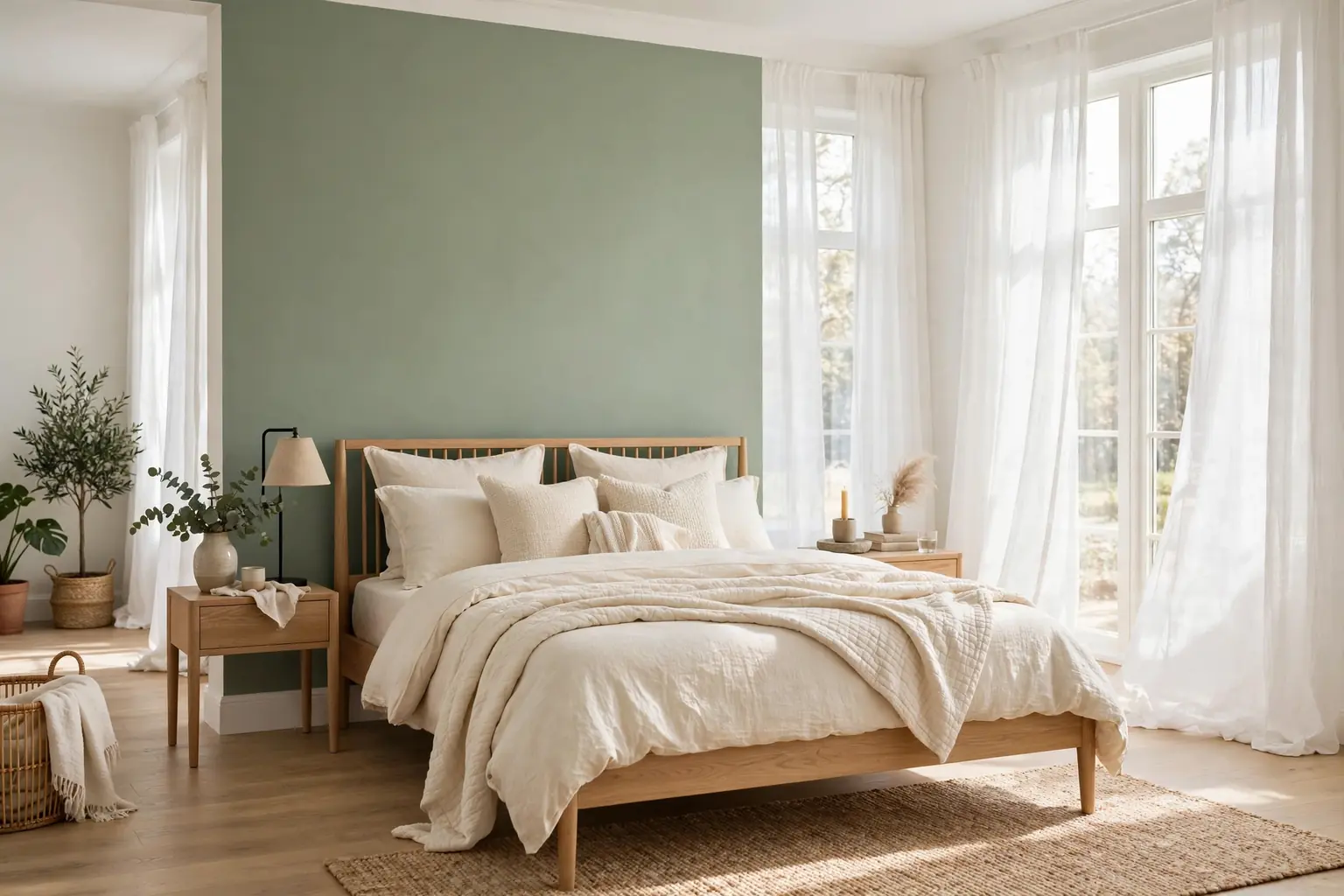
Color is the fastest way to change how a bedroom feels, and you do not need to repaint the whole room to feel the difference. A new bedding set, a painted accent wall, a different curtain color, or two cushions in a fresh pairing can shift a room from flat to calm, or from cold to warm. These 22 amazing bedroom color combos cover light and dark rooms, small and large spaces, and quiet and bold moods. Each combo tells you where the colors should go and how much of each to use. Start with the combo that fixes what bothers you most. For a calm green pairing to compare, see these sage green bedroom ideas.
Key Takeaways
- Pick two main colors and one small accent at most, so the room reads as planned rather than busy.
- Put the lighter color on the largest surfaces, such as walls and bedding, and save the deeper color for smaller areas.
- Repeat each color at least twice, in bedding and curtains, or in cushions and art, so the pairing looks linked.
- Test paint and fabric samples in morning and evening light before you commit, since colors shift a lot during the day.
- Change bedding, cushions, and curtains first for a no-paint refresh, and save walls and furniture for a weekend project.
- Keep the ceiling white or very pale, so even a bold wall color does not make the room feel low or closed in.
1. Sage Green and Cream on a Painted Accent Wall

Sage green and cream give a bedroom a calm, nature led mood without making the room feel dark. Paint the wall behind the bed in a soft, grey toned sage, and keep the other walls warm cream, so the bed has a clear focal point and the room stays bright. Cream bedding with one sage cushion links the bed to the wall, and light wood furniture keeps the pairing soft rather than cold.
Keep the sage muted rather than bright, since a strong green behind the bed can feel restless at night. Use a matte or eggshell finish so the wall does not shine under lamplight, and paint the trim in the same cream as the other walls for a clean edge. If the room is small, paint only the bed wall and keep the ceiling white, so the accent adds depth without lowering the room.
2. Navy Blue and White for a Crisp Coastal Bed

Navy blue and white make a bedroom feel crisp, clean, and easy to wake up in. White walls and white sheets form the base, while navy appears in a duvet cover, a throw folded across the foot of the bed, and one or two cushions. The contrast is clear but not loud, and it suits a room with good daylight, where the white can bounce light around.
Keep navy to bedding and small accents rather than all four walls, since a full navy room can feel dark by evening. A striped navy and white cushion, or a navy throw on a chair, repeats the color a second time without adding another pattern. Wash navy bedding apart from white pieces at first, so the dark dye does not dull the white layers.
3. Blush Pink and Soft Grey in Layered Bedding
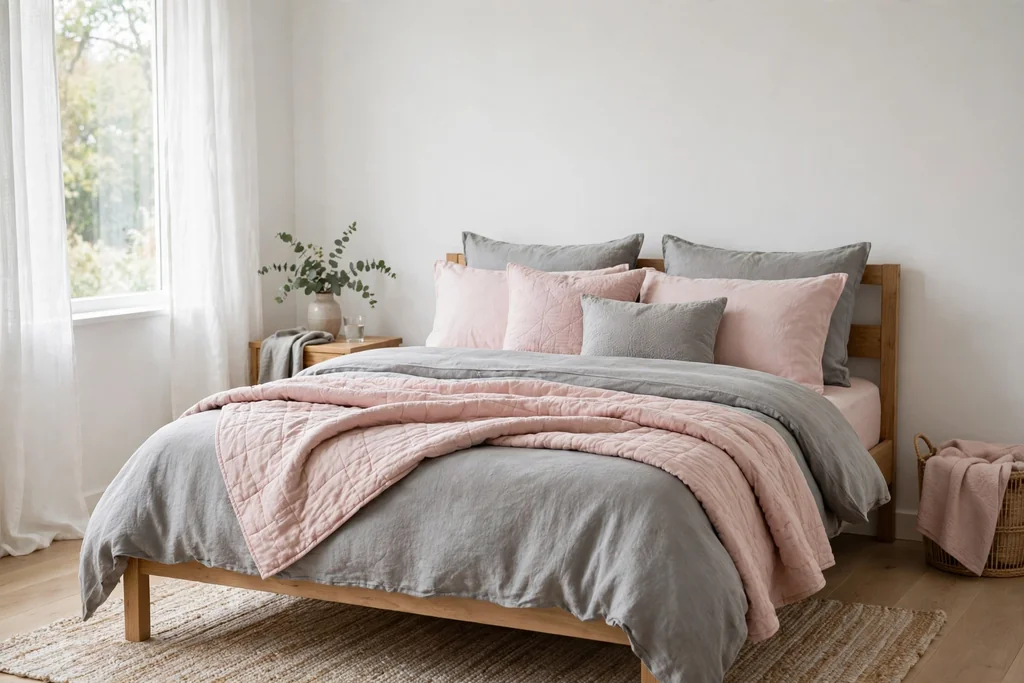
Blush pink and soft grey give a bedroom a gentle, restful mood that suits a main bedroom or a guest room. Build the bed in layers: grey sheets and a grey duvet, with a blush throw folded across the lower half and one blush cushion at the front. The pink adds warmth, the grey keeps it from feeling sweet, and the pairing works with white walls and light wood.
Keep the blush pale and dusty rather than bright, and limit pink to the bed so the rest of the room stays calm. A grey bedside lamp base or a grey rug border repeats the grey away from the bed, so the colors feel spread through the room. If pink starts to feel strong, swap the blush cushion for a grey one and let the throw carry the pink alone.
4. Charcoal Grey and Mustard in a Reading Corner

Charcoal grey and mustard make a strong, warm pairing that works best in a small, defined area rather than across a whole room. Set a charcoal armchair in a corner with mustard cushions and a mustard throw, plus a small side table and a reading lamp. The dark chair grounds the corner, the mustard adds a warm glow, and the rest of the bedroom can stay pale and plain.
Repeat the mustard once more, in a framed print or a small cushion on the bed, so the corner does not look cut off from the room. Keep the charcoal to the chair and one other item at most, such as a storage basket, since too much dark furniture can make a small room feel heavy. This pairing suits a bedroom with a window corner that currently holds nothing but a laundry basket.
5. Terracotta and Warm White with Clay Textures

Terracotta and warm white bring an earthy, sunlit mood to a bedroom, and they suit rooms with wood floors and woven textures. Warm white walls form the base, while terracotta appears in bedding, cushions, and clay pots on a dresser or windowsill. The pairing feels warm without being dark, and it links well to rattan, jute, and light wood.
Use terracotta in layers of texture rather than one flat block of color: a terracotta throw, a woven cushion, and a clay pot give the color depth. Keep the white warm, not blue white, so the two tones sit well together in evening light. If the room gets little sun, keep terracotta to bedding and pots, and let the warm white walls carry the light.
6. Teal and Gold on an Upholstered Headboard
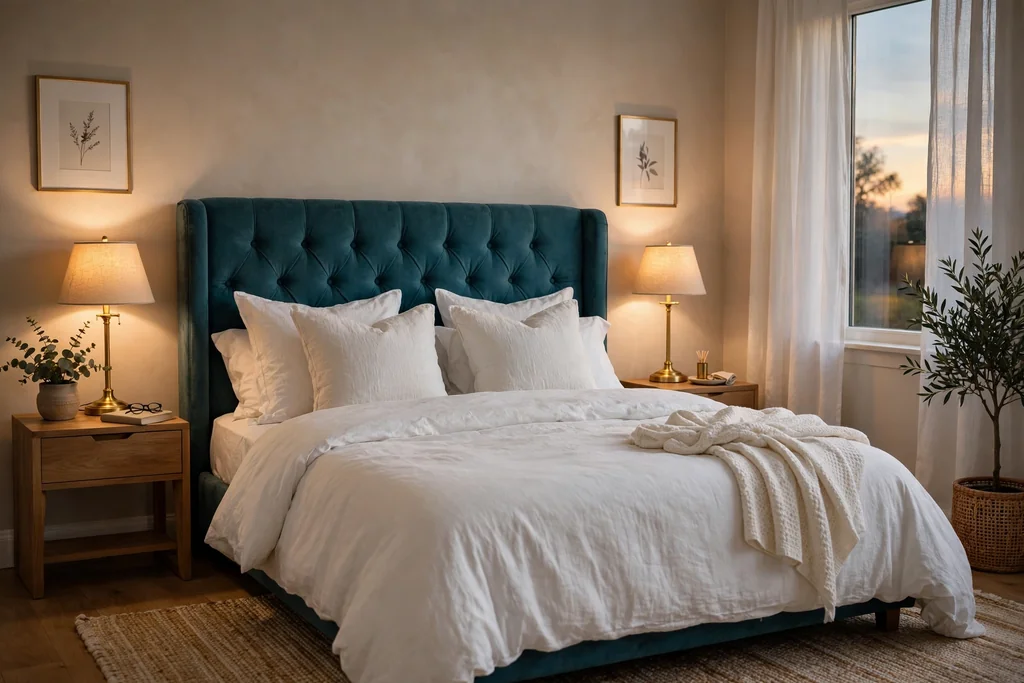
Teal and gold give a bedroom a rich, evening mood that still feels restful. Choose a teal upholstered headboard as the focal point, keep the bedding white or cream, and add gold in small doses: lamp bases, a picture frame, or drawer handles. The teal supplies the color, the gold adds warmth, and the pale bedding keeps the room from feeling dark.
Keep gold to two or three small pieces with the same finish, either brushed or polished, so it reads as one thread rather than a mix of metals. A teal cushion on the bed repeats the headboard color at a smaller scale, and a plain wall behind the headboard lets the color and texture stand out. Vacuum the headboard gently now and then, since velvet and woven fabrics hold dust.
7. Lavender and Pale Grey for a Calm Evening Room
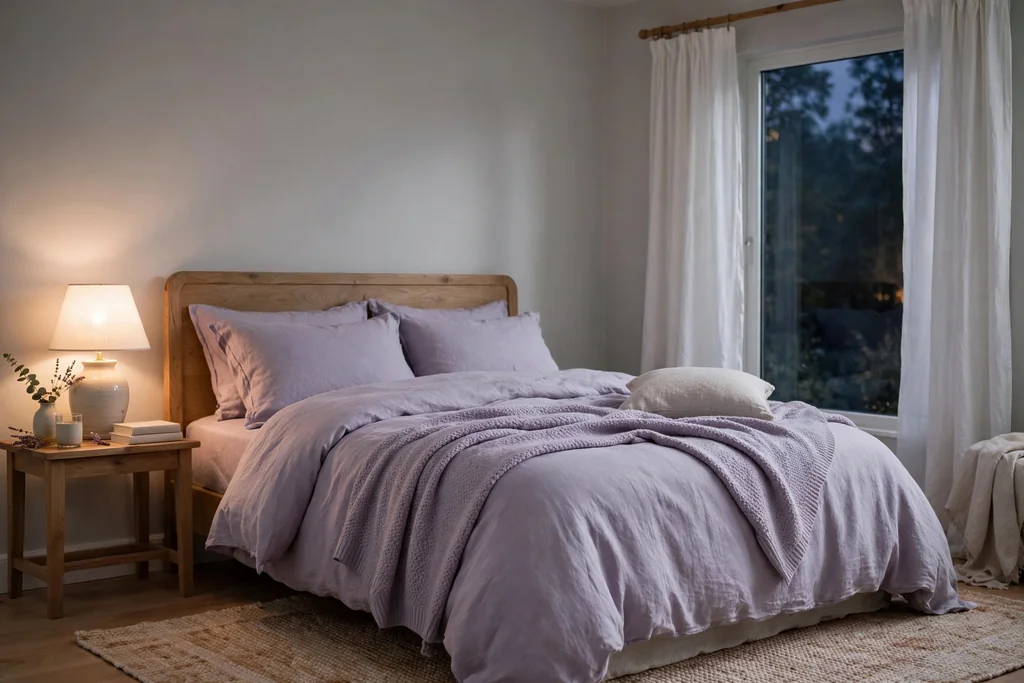
Lavender and pale grey make a bedroom feel quiet at night, which suits a room used mainly for rest. Pale grey walls form a soft base, lavender appears in bedding and one cushion, and white sheets keep the bed bright. The pairing is gentle rather than bold, and it works well with silver or brushed nickel fittings and plain curtains.
Keep lavender pale and dusty, since a bright purple can feel busy under lamplight. Use warm bulbs in bedside lamps, because cool light can make lavender look grey and flat. If you want a little more interest, add a lavender stem in a vase on the dresser, and keep the rest of the surfaces plain so the color stays calm.
8. Forest Green and Brass in a Traditional Bedroom
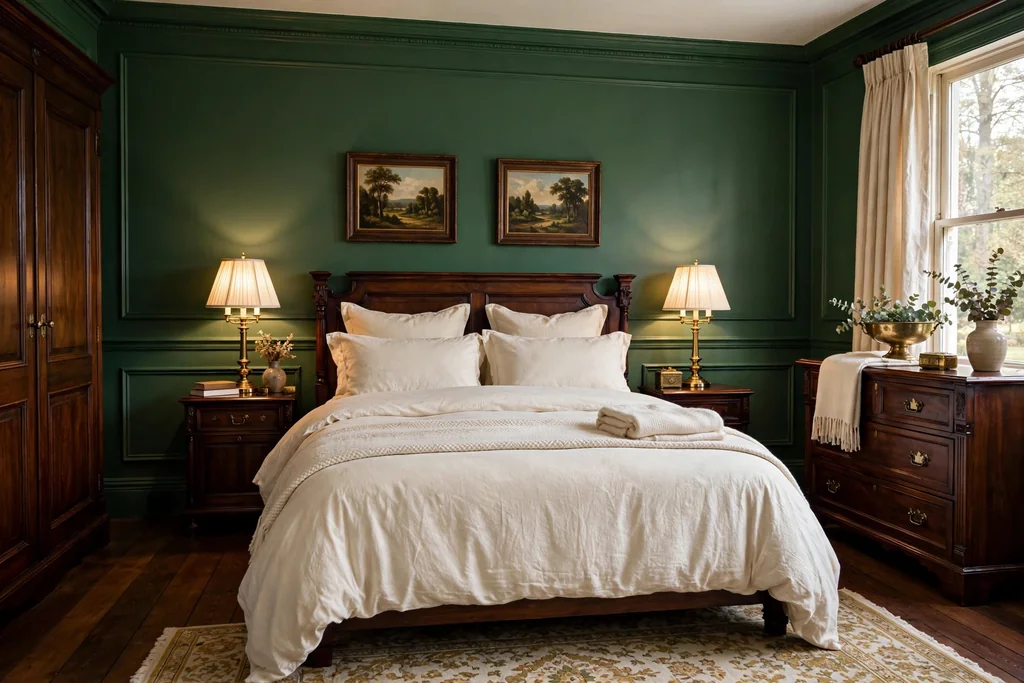
Forest green and brass give a bedroom a settled, traditional feel that suits dark wood furniture and paneled walls. Paint one wall in deep forest green, or use green bedding against cream walls, and add brass in lamp bases, a mirror frame, or drawer pulls. The green adds depth, the brass adds a warm glow, and cream bedding keeps the room from feeling closed in. For a calmer take on the same layered approach, see these elegant bedroom ideas.
Repeat the brass in at least two places, so one brass lamp alone does not look random. Keep the green to one wall or to bedding, not both, unless the room is large with good daylight. Wipe brass with a soft cloth to keep the finish even, and check care guidance for lacquered pieces before using any cleaner.
9. Sky Blue and Sand for a Light Morning Room

Sky blue and sand make a bedroom feel light and fresh in the morning, and they suit a room with a window that gets early sun. White or very pale walls form the base, sky blue appears in bedding and curtains, and sand appears in a rug, a woven basket, or a wooden bed frame. The pairing reads as airy, and it suits a small room, since neither color is dark or heavy. For more window treatments in this palette, see these bedroom curtain ideas.
Hang sky blue curtains high and wide, so the panels stack clear of the glass when open and daylight still fills the room. Keep the sand tone warm and natural, such as light oak or jute, rather than a yellow beige that fights the blue. If the room faces north and gets cool light, warm up the sand with a wooden frame or a woven throw, so the blue does not feel cold.
10. Burgundy and Cream with Velvet Cushions

Burgundy and cream give a bedroom a warm, rich mood that suits colder months and rooms with plain furniture. Cream bedding forms the base, burgundy appears in two or three velvet cushions and a throw folded across the foot of the bed, and the walls stay cream or soft white. Velvet adds depth without pattern, and a small number of cushions keeps the bed easy to make.
Put zip covers on the cushions, so you can wash them and swap colors by season. Keep sleeping pillows clear at night, and store decorative cushions in a basket or on a bench while you sleep, so the bed stays practical. If burgundy feels strong, use it in cushions only and keep the throw cream, so the deep color reads as one accent.
11. Olive Green and Beige in a Nature Led Room

Olive green and beige make a bedroom feel grounded and calm, and they suit rooms with plants, wood, and woven textures. Beige walls form a warm base, olive appears in bedding, a throw, or a painted dresser, and light wood furniture links the two tones. Potted plants on a windowsill or dresser repeat the green in a living form, so the palette feels natural rather than staged.
Keep the olive muted and grey toned, since a bright green can feel harsh next to beige. Use linen and cotton for bedding, and add one woven basket for throws or spare bedding, so texture does the work that pattern would do. If the room is dark, keep olive to bedding and plants, and let beige walls and a pale rug carry the light.
12. Coral and White for a Bright Guest Room
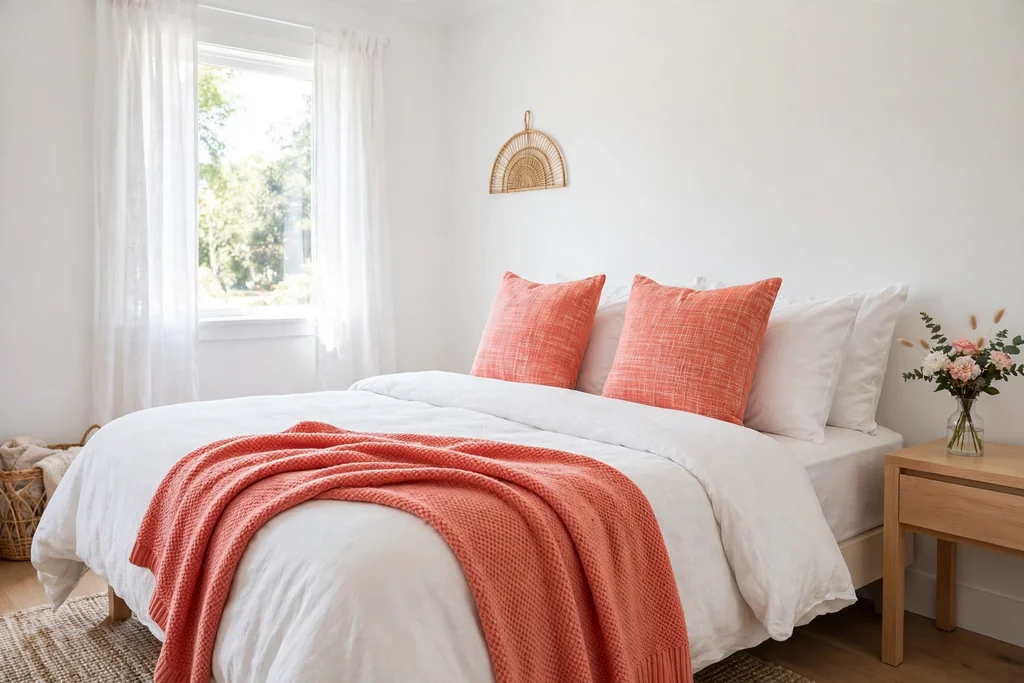
Coral and white make a guest bedroom feel bright and welcoming without a full repaint. White walls and white bedding form the base, coral appears in cushions, a throw, and a small vase of flowers on the dresser, and the room stays fresh in daylight. The pairing suits a small guest room, since the white keeps it open and the coral gives it a clear identity.
Keep coral to soft, warm tones rather than bright orange, and limit it to the bed and one dresser detail, so the room does not feel loud. A coral cushion on a white chair, or a coral print in a plain frame, repeats the color a second time. When guests leave, the coral pieces are easy to swap for another accent, so the room can change mood with little effort.
13. Black and White with One Wood Tone

Black and white give a bedroom a clear, graphic look, and one wood tone keeps it from feeling hard or cold. White walls and white bedding form the base, black appears in picture frames, a lamp base, and one cushion, and light oak in the bed frame and nightstands adds warmth. The pairing suits a room with plain furniture, where strong contrast can carry the design.
Keep black to small, repeated details rather than large blocks, such as a black headboard wall or black bedding, which can dominate a small room. Match the wood tone across the bed, tables, and shelves, so the pieces read as one planned group. Leave breathing room on walls and surfaces, since a graphic palette needs empty space to look calm.
14. Dusty Rose and Sage in a Soft Vintage Room
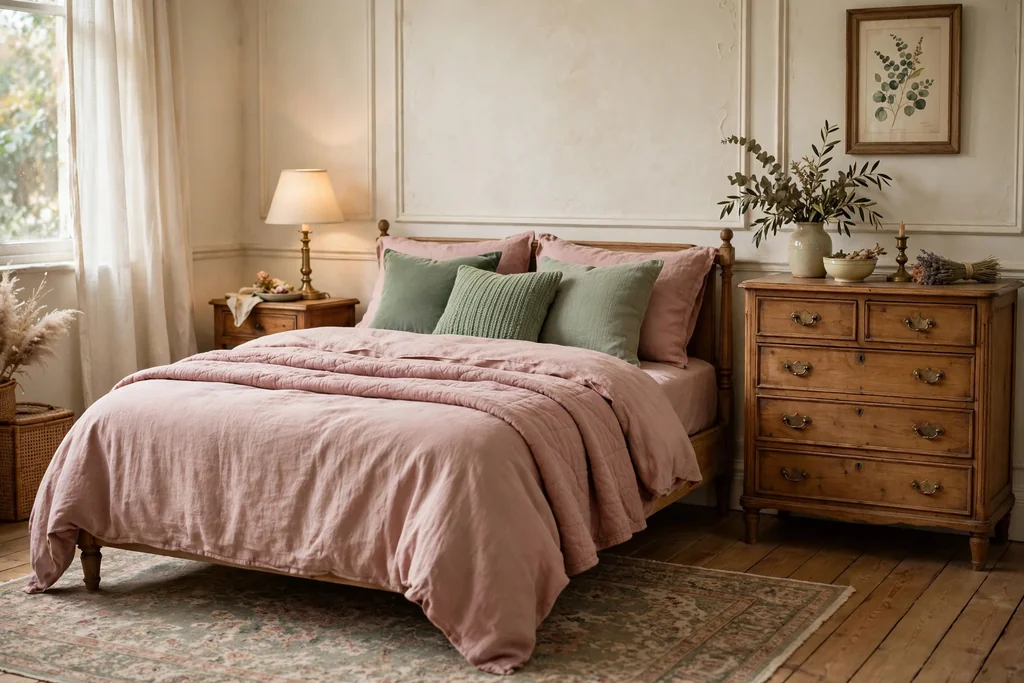
Dusty rose and sage give a bedroom a soft, vintage mood that suits older furniture and floral details. Cream walls form the base, dusty rose appears in bedding and a cushion, sage appears in a throw or a painted nightstand, and light wood keeps the room warm. The two muted tones sit well together because neither is bright, and the pairing works with lace, linen, and simple floral prints.
Keep both colors dusty and muted, and use one as the main color and the other as the accent, rather than splitting them evenly. A rose duvet with a sage throw, or sage bedding with rose cushions, reads more calmly than equal blocks of both. If you add a floral print, pick one that shares a rose or sage tone with the bedding, so the pattern links to the room.
15. Chocolate Brown and Cream for a Warm Winter Bed

Chocolate brown and cream make a bedroom feel warm and sheltered, which suits winter and rooms with wood floors. Cream walls and cream sheets form the base, chocolate appears in a duvet cover or a knit throw, and warm lamplight deepens the brown in the evening. The pairing feels cozy without pattern, and it suits a room where the bed is the clear focus.
Layer the brown in textures: a knit throw, a woven cushion, and a wood bed frame give the color depth without a second strong tone. Keep the cream warm, not stark white, so the two tones sit well together under warm bulbs. If the room is small, keep chocolate to bedding and one cushion, and let cream walls and a pale rug keep the space open.
16. Aqua and White with Woven Textures

Aqua and white give a bedroom a breezy, coastal mood that suits summer and rooms with rattan or jute. White walls and white bedding form the base, aqua appears in a duvet cover, cushions, or curtains, and woven textures in a jute rug, rattan baskets, and a woven pendant add warmth. The pairing feels light, and it suits a room with good daylight, where the white can reflect light.
Keep aqua pale and watery rather than bright turquoise, so the room stays restful at night. A jute rug under the lower half of the bed grounds the palette, and a woven basket for throws repeats the natural texture. If the room gets cool light, add one warm wood piece, such as a bedside table, so the aqua does not feel cold.
17. Plum and Gold for an Evening Glow Room

Plum and gold give a bedroom a rich evening mood that suits a room used for reading and rest after dark. Cream walls form the base, plum appears in bedding and cushions, and gold appears in lamp bases, a mirror frame, or a small tray on the dresser. Warm bulbs make the gold glow and deepen the plum, so the room feels settled in the evening.
Keep plum to bedding and cushions, not all four walls, unless the room is large with strong daylight. Match the gold finish across the pieces you choose, and keep the rest of the room plain, so the pairing reads as one planned accent. Store extra plum cushions in a basket at night, so the bed stays easy to get into.
18. Peach and Mint in a Fresh Spring Bedroom

Peach and mint give a bedroom a fresh, spring mood that suits a room with white furniture and good daylight. White walls form the base, peach appears in bedding and a cushion, mint appears in a throw, a painted stool, or a vase, and the two pastel tones keep the room light. The pairing suits a guest room or a small bedroom, since neither color is dark or heavy.
Keep both tones pale and soft, and use one as the main color on the bed and the other in small accents, so the room does not feel like two competing pastels. A peach duvet with a mint throw, or mint bedding with peach cushions, reads more calmly than equal blocks. Add one bunch of fresh stems in a plain vase, and keep the rest of the surfaces clear.
19. Slate Blue and Charcoal for a Quiet Room
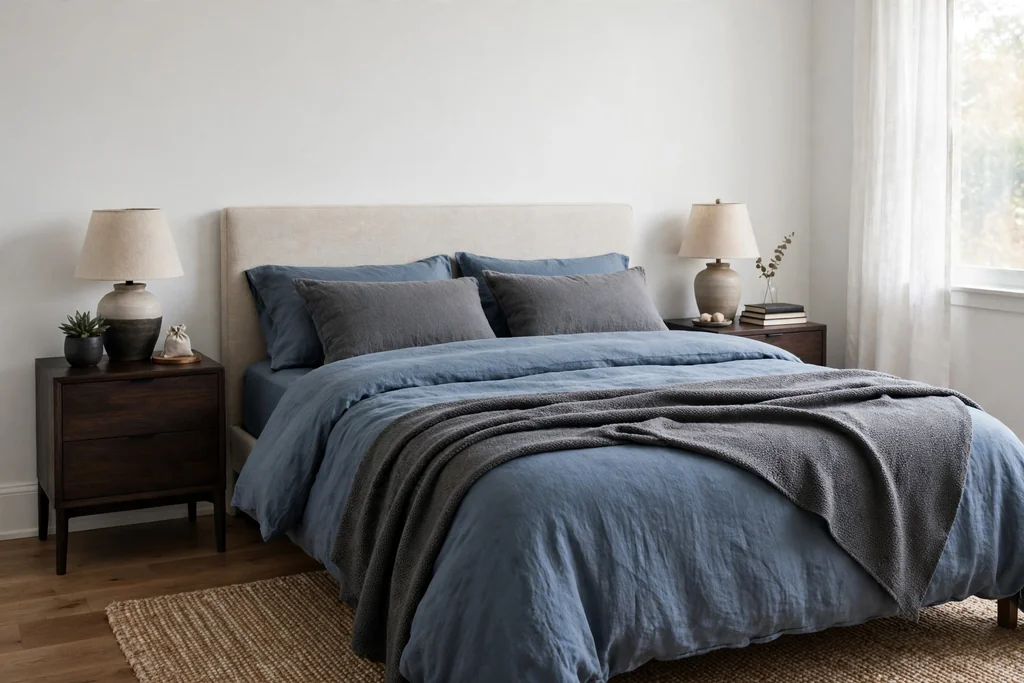
Slate blue and charcoal give a bedroom a quiet, settled mood that suits a room where rest comes first. White or pale grey walls form the base, slate blue appears in bedding, charcoal appears in a throw and cushions, and dark wood nightstands add warmth. The pairing is muted rather than bold, and it works well with plain curtains and a low pile rug.
Keep charcoal to soft furnishings rather than walls or large furniture, since a dark block can make a small room feel heavy. A slate blue duvet with a charcoal throw gives the bed depth, and a charcoal cushion repeats the dark tone at a smaller scale. Use warm bulbs in the evening, so the blue does not turn cold under cool light.
20. Butter Yellow and White for a Sunny Small Room
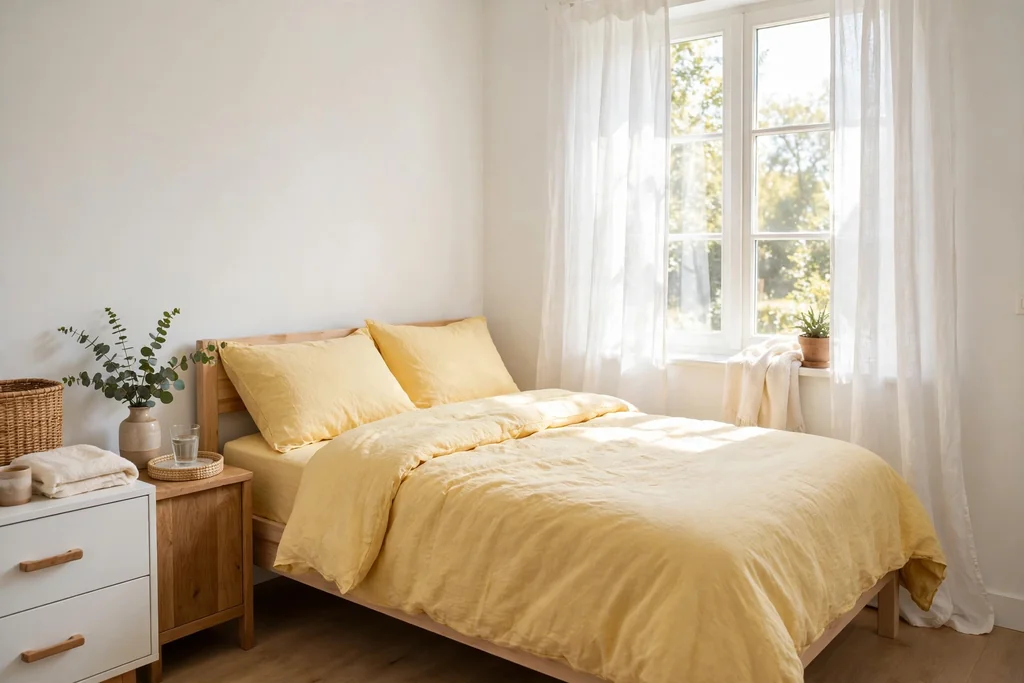
Butter yellow and white give a small bedroom a sunny mood without a strong, bright yellow that can feel harsh. White walls form the base, butter yellow appears in bedding, cushions, and one curtain panel or throw, and light wood furniture keeps the room warm. The pairing suits a room with little daylight, since the pale yellow adds warmth that the white alone cannot give.
Keep the yellow buttery and pale, close to cream, rather than a school bus yellow, and limit it to the bed and one accent, so the room stays calm. White curtains hung high and wide help the window look larger, and a pale rug under the bed softens the floor. If yellow starts to feel strong, swap one cushion for white and let the bedding carry the color alone.
21. Rust and Denim Blue in a Relaxed Rustic Room

Rust and denim blue give a bedroom a relaxed, rustic mood that suits wood furniture, plaid or plain linen, and woven rugs. Cream or warm white walls form the base, rust appears in bedding and a throw, denim blue appears in cushions and a chair cover or curtains, and a wood bed frame links the two tones. The pairing feels lived in rather than formal, and it suits a room with natural light and simple furniture.
Keep rust warm and earthy, and denim blue muted rather than bright, so the two tones sit well together. A rust throw on a denim covered chair, or denim cushions on a rust bed, repeats each color a second time. Avoid adding a third strong color nearby, since rust and denim already give the room plenty of warmth and contrast.
22. Emerald and Blush for a Bold but Soft Finish
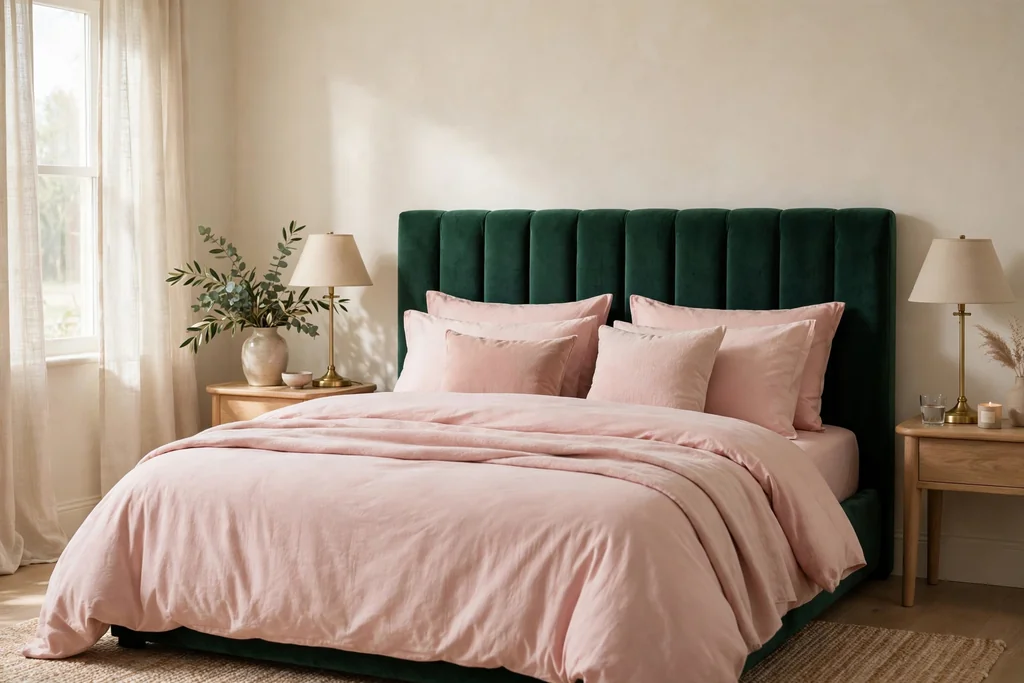
Emerald and blush give a bedroom a bold finish that still feels soft, and they suit a room that needs one clear statement. Cream walls form the base, emerald appears in a velvet headboard or a painted dresser, blush appears in bedding and cushions, and the pairing balances a deep jewel tone with a pale, warm pink. The contrast is clear, but the blush keeps the emerald from feeling dark.
Keep emerald to one large piece, such as the headboard or the dresser, and let blush carry the bed, so neither color fights the other. A blush throw on an emerald chair, or an emerald cushion on a blush bed, repeats each tone at a smaller scale. If the room is small, keep emerald to the headboard only, and let cream walls and pale bedding keep the space open.
Conclusion
A bedroom color combo works when each color has a clear job and a clear place. Put the lightest color on the largest surfaces, use the deeper color in smaller doses, and repeat each color at least twice, so the room looks planned rather than patched together. Test samples in your own light, change bedding and cushions first for a quick refresh, and save walls and furniture for a weekend project. Pick one combo from this list, try it on the bed first, and live with it for a week before you add the next layer. For ideas on keeping swapped bedding and spare cushions tidy, see these bedroom storage ideas. The right pairing will make the room feel new, even when nothing else changes.
FAQs
How many colors should a bedroom palette have?
Two main colors and one small accent at most work best for most bedrooms. A larger palette can look busy, since bedding, curtains, rugs, and art each add their own tones. Start with a light base color for walls and bedding, add a deeper second color in cushions or a throw, and keep a third color to small details such as a frame or a vase. If the room starts to feel crowded, remove one accent color and let texture, such as linen, wool, and wood, add interest instead.
How do I test a color combo before I paint?
Paint large swatches on two walls, one facing the window and one facing away, and live with them for a few days in morning and evening light. Hold fabric samples for bedding and curtains next to the swatches, since paint alone does not show how the full room will look. If you are not ready to paint, try the combo in bedding and cushions first, which is easy to swap, and paint only after the bedding pairing feels right in your light.
Can I mix warm and cool colors in a bedroom?
Yes, as long as one side leads and the other stays in small doses. A warm cream wall with a cool slate blue bed, or a cool grey wall with a warm terracotta throw, can work well, since the contrast adds interest. Keep the tones muted rather than bright, repeat each color at least twice, and use warm bulbs in the evening, so cool tones do not feel cold. If the mix starts to feel unsettled, remove the smallest accent and let the two main colors carry the room.
What is the easiest no-paint way to try a new color combo?
Change the bed first, since it is the largest surface in the room. Swap the duvet cover, add a throw in the new accent color, and change two cushions to match. Curtains are the next easiest change, since one pair in the new color can shift the whole wall. Keep walls, furniture, and rugs as they are, and live with the bedding change for a week before you decide whether to paint or buy larger pieces.
How do I keep a bold color combo calm?
Use the bold color in one place only, such as a headboard, one wall, or bedding, and keep the rest of the room pale and plain. Limit patterns to one item, keep surfaces mostly clear, and use warm, layered light in the evening rather than one bright ceiling light. A bold color with pale walls, plain curtains, and a low pile rug reads as a clear accent, while the same color on every surface can make a room feel loud and hard to rest in.
When should I change bedroom accent colors?
Change accents when the season changes, when the room starts to feel tired, or when a new bedding set or curtain pair makes the old accents clash. Small swaps, such as cushions, throws, and a vase, are enough for most refreshes, and they cost less than repainting. Store out of season bedding and cushions in a labeled basket or drawer, so the next swap is quick and the spare pieces stay clean.