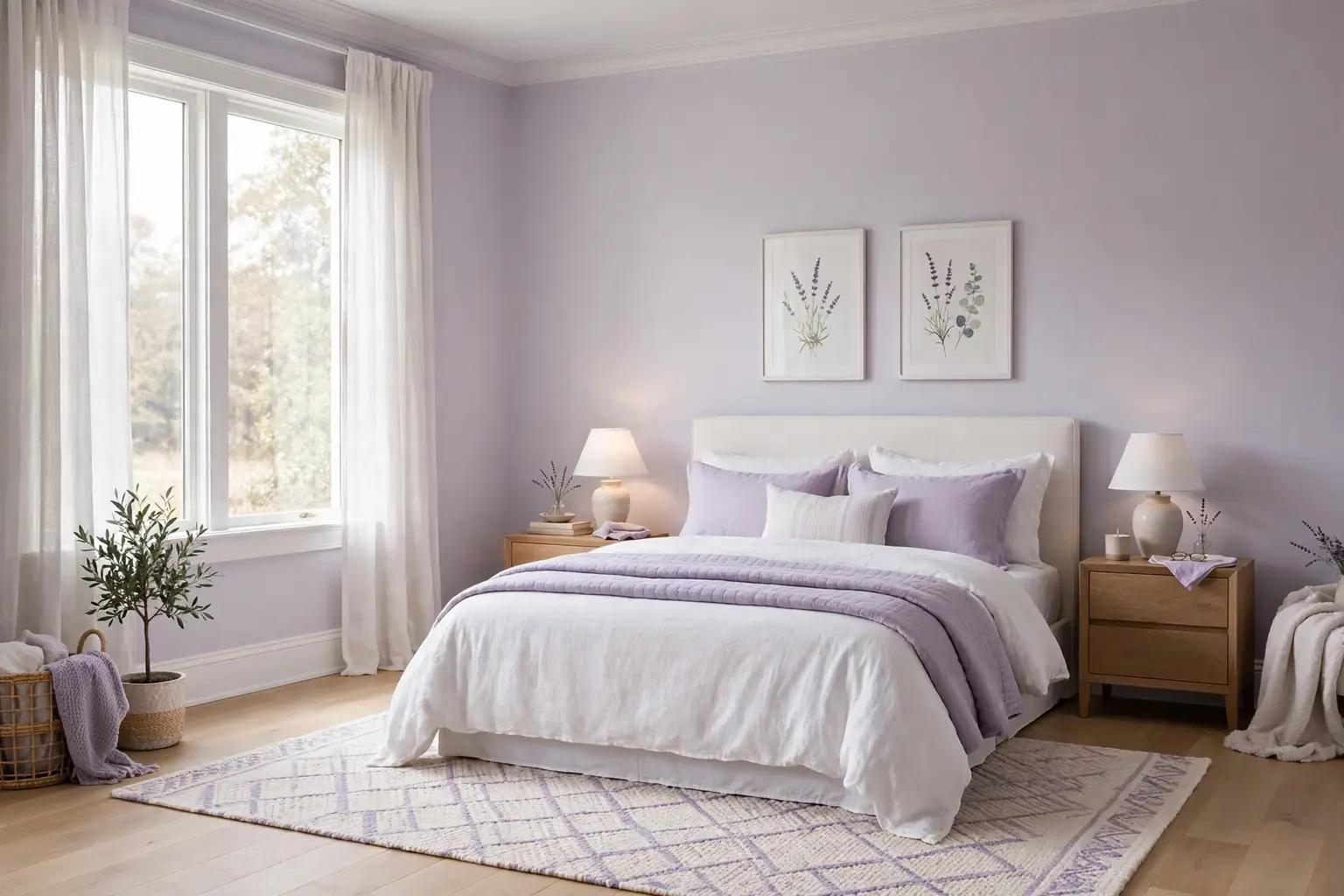
Lavender brings a soft, restful color to a bedroom without the weight of a deep purple. Used in pale tones, it pairs well with white, grey, cream, and light wood, and it works on walls, bedding, curtains, and small accents alike. These 27 ways to design a serene lavender bedroom cover paint, furniture, textiles, light, storage, and scent, so you can start with one layer or plan a fuller room. Begin with the change you notice first when you walk in, then add one more layer at a time. For a muted green scheme that pairs well with lavender, see these sage green bedroom ideas.
Key Takeaways
- Pick one main lavender tone and repeat it in two or three places, so the room reads as planned rather than scattered.
- Keep the base pale: white, cream, soft grey, and light wood let lavender stay restful instead of loud.
- Test paint and fabric samples in morning and evening light, since lavender shifts between cool and warm tones through the day.
- Mix textures, such as linen, cotton, velvet, wool, and wood, so a soft palette still has depth.
- Change bedding, curtains, and cushions first for a quick refresh with no paint, and save walls and furniture for a weekend project.
- Keep nightstands, dresser tops, and floors mostly clear, so the color can do its quiet work without visual clutter.
1. Soft Lavender Walls with White Trim
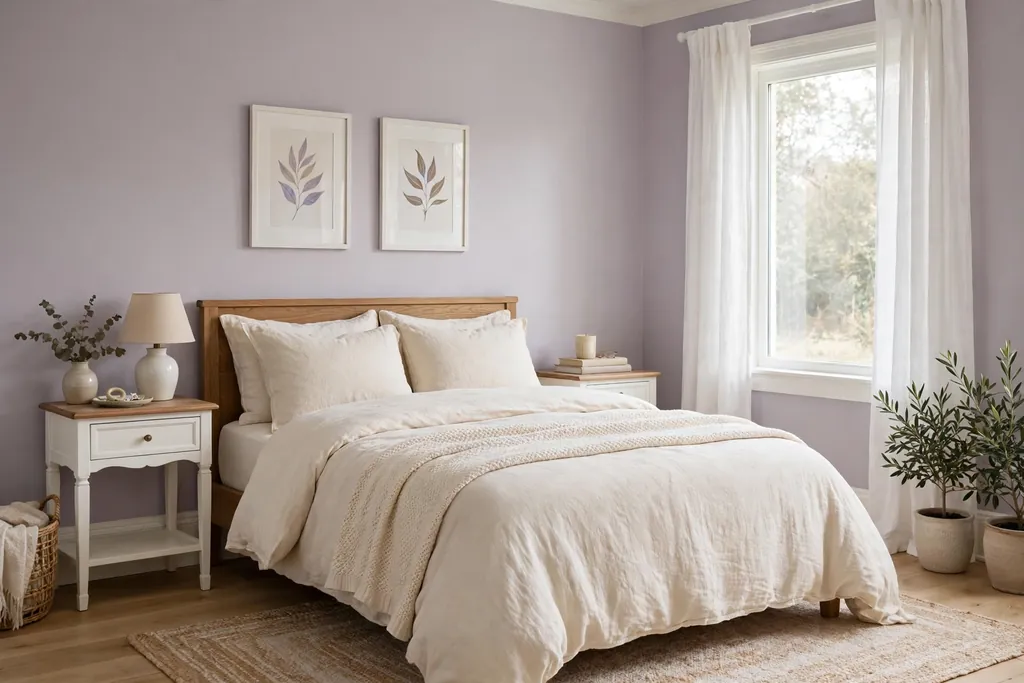
Soft lavender walls with white trim give a bedroom a gentle wash of color from every angle. A pale lavender, close to grey, keeps the room bright in daylight and calm in lamplight, while white trim marks the edges cleanly. This suits a main bedroom with good daylight, where you want color on the walls but still want the room to feel open and restful.
Test a large swatch on the wall behind the bed and on a wall facing the window, since the same paint can look quite different in each spot. Keep the ceiling white and the bedding mostly cream or white, so the lavender has room to breathe. Choose a matte or eggshell finish, so the walls do not shine under lamplight.
2. Lavender and White Layered Bedding
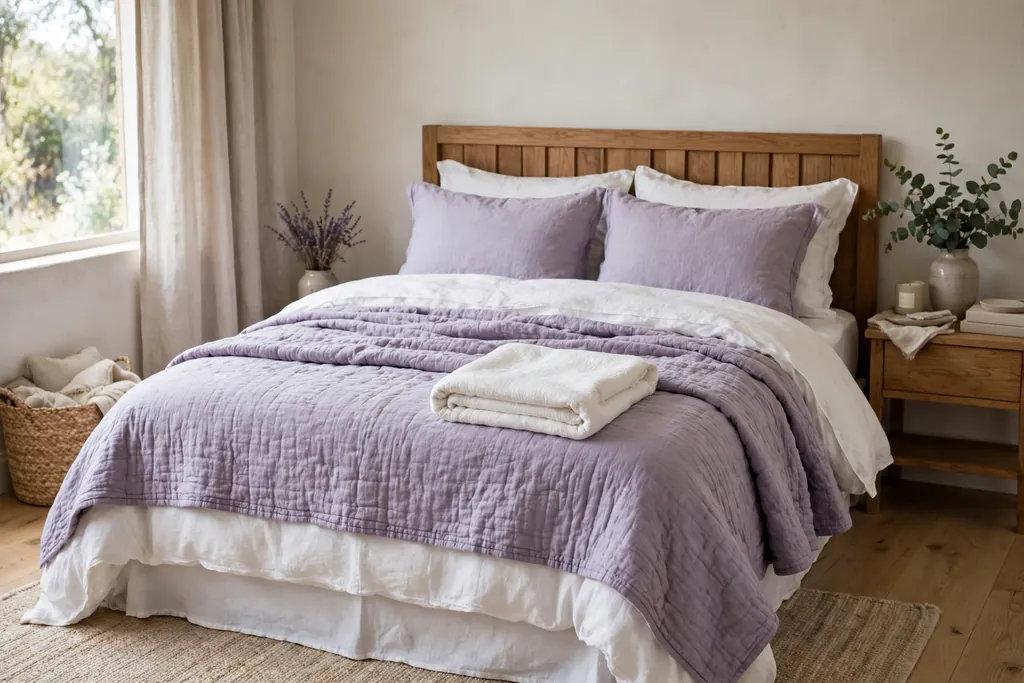
Lavender and white layered bedding is the fastest lavender change, because the bed takes up the most visual space in the room. Start with white or cream sheets, add a lavender duvet or quilt, and fold a white throw across the foot. The two tones give the bed depth without a pattern, and the layers let you adjust warmth through the night.
Keep the palest shade closest to your face and the lavender toward the foot, which gives the bed a natural sense of order. Add cushions in linen and cotton, not all in the same fabric, so the bed feels soft to the touch as well as to the eye. Wash the throw and cushion covers on a regular cycle, since pale lavender shows marks sooner than darker colors.
3. A Lavender Upholstered Headboard
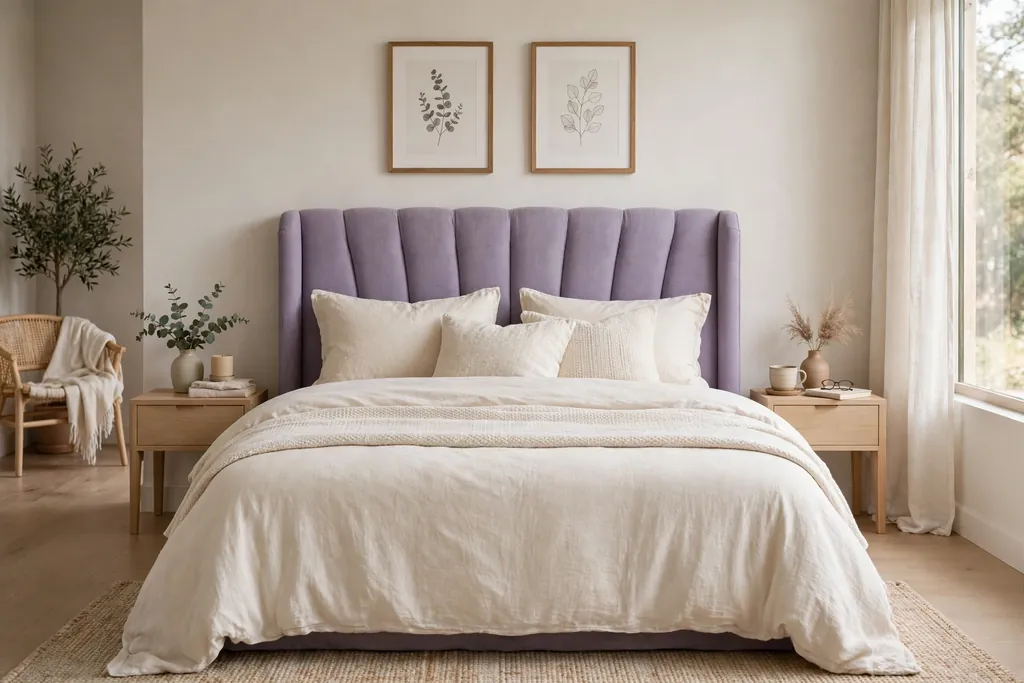
A lavender upholstered headboard gives the bed a soft focal point that makes the room feel dressed even when the walls stay plain. The padded shape adds comfort for reading in bed, and the fabric catches light in a way flat paint does not. Pair it with cream bedding and one or two cushions in a deeper lavender, and keep the wall behind it plain so the texture stands out.
This suits a bedroom where the bed sits against a long blank wall. Measure the headboard width against the bed and the wall, since a headboard that is too narrow looks lost and one that is too wide crowds the nightstands. Vacuum the fabric gently with an upholstery tool, since soft fabric can trap dust over time.
4. Pale Lavender Curtains with Sheer Panels
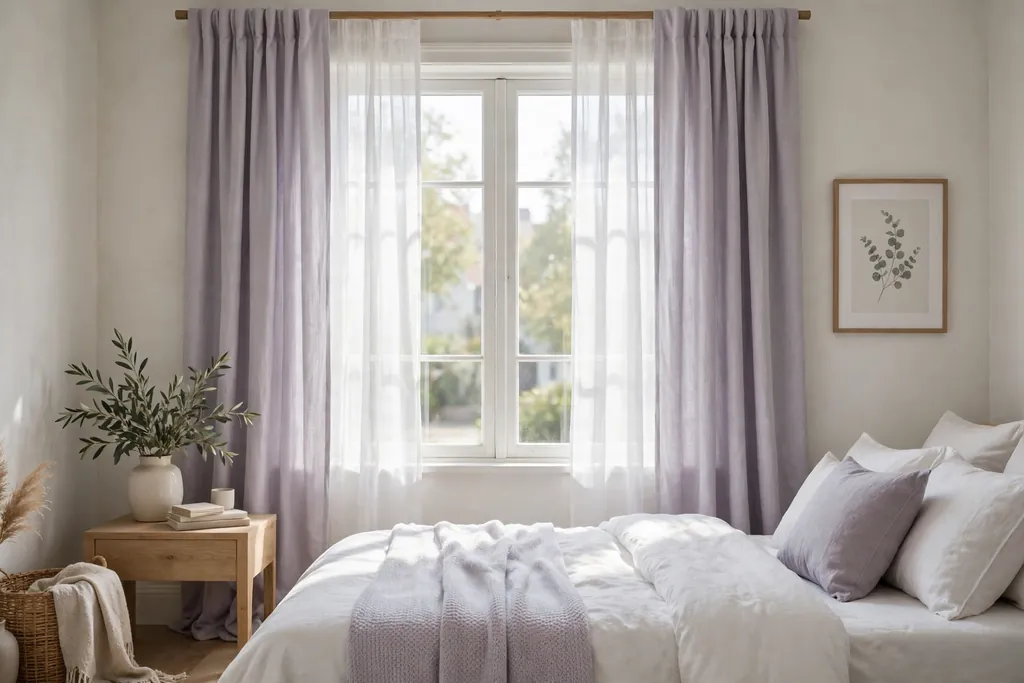
Pale lavender curtains with sheer panels soften daylight and add a fabric layer that hard surfaces lack. The sheer layer filters light gently during the day, while the lavender panels can close at night for privacy and a deeper color. This suits a bedroom window that needs both soft morning light and a calm evening look.
Hang the rod close to the ceiling and wide enough that the panels clear the window frame when open, so daylight still fills the room. Choose a lavender a shade deeper than the walls so the curtains read as a deliberate layer. For more window ideas that soften a bedroom, see these bedroom curtain ideas.
5. A Lavender Accent Wall Behind the Bed
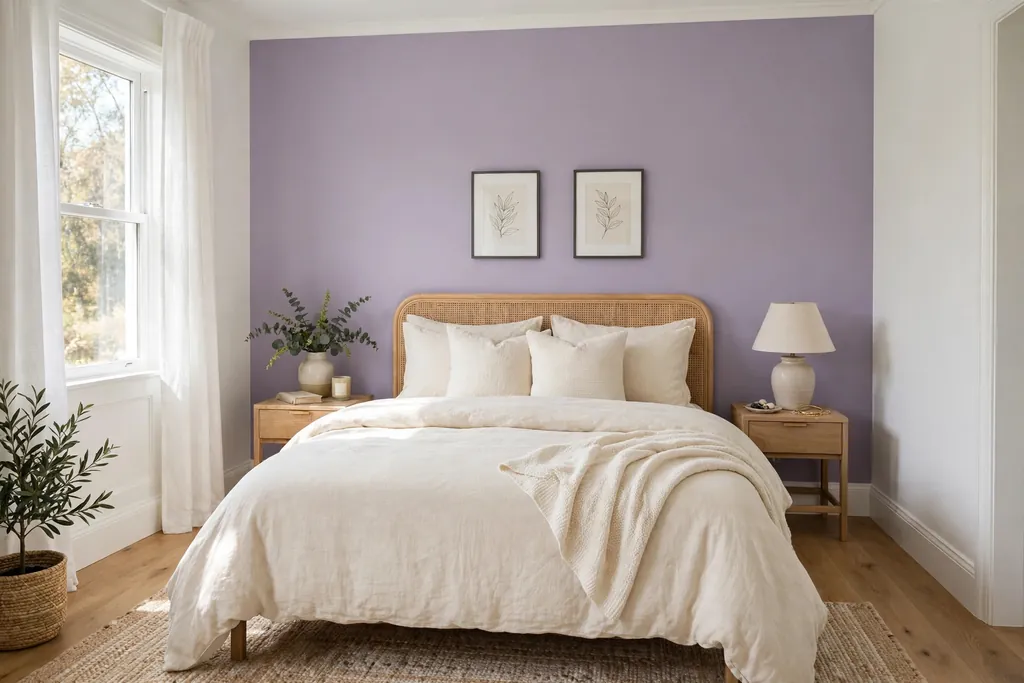
Paint the wall behind the headboard in a soft lavender, and keep the other walls white or warm cream, so the bed has a clear focal point without the whole room going purple. The accent wall frames the bed the way a large piece of art would, and it suits a room where you want color but not a full repaint. A muted, grey toned lavender works better here than a bright purple, since the wall sits behind you for much of the day and should stay restful.
Keep the bedding mostly cream or white, with one lavender cushion or throw to link the bed to the wall. Choose a matte or eggshell finish so the wall does not shine under lamplight, and paint the trim in the same white as the other walls for a clean edge. If the room is small, keep the ceiling white, so the accent wall adds depth without lowering the room.
6. White Furniture with Lavender Bedding Accents
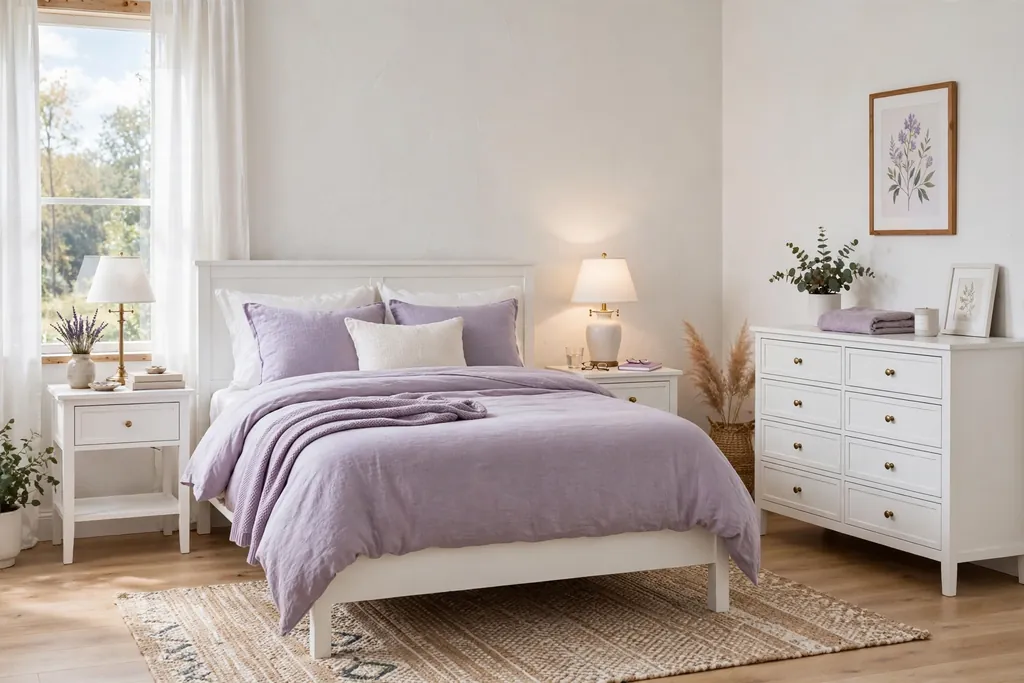
White furniture with lavender bedding accents keeps a bedroom bright while still giving it a clear color story. A white bed frame, dresser, and nightstands act as a quiet base, and lavender bedding, cushions, and a throw supply the color. This suits a rented room or a room you refresh often, since the furniture stays the same while the textiles change.
Keep one white tone across the main pieces, so the group reads as planned rather than mixed. Repeat the lavender in at least two places on the bed, such as the duvet and one cushion, so the color does not look like an afterthought. Dust white furniture weekly, since pale surfaces show marks fast.
7. A Lavender Throw and Cushions on a Neutral Bed
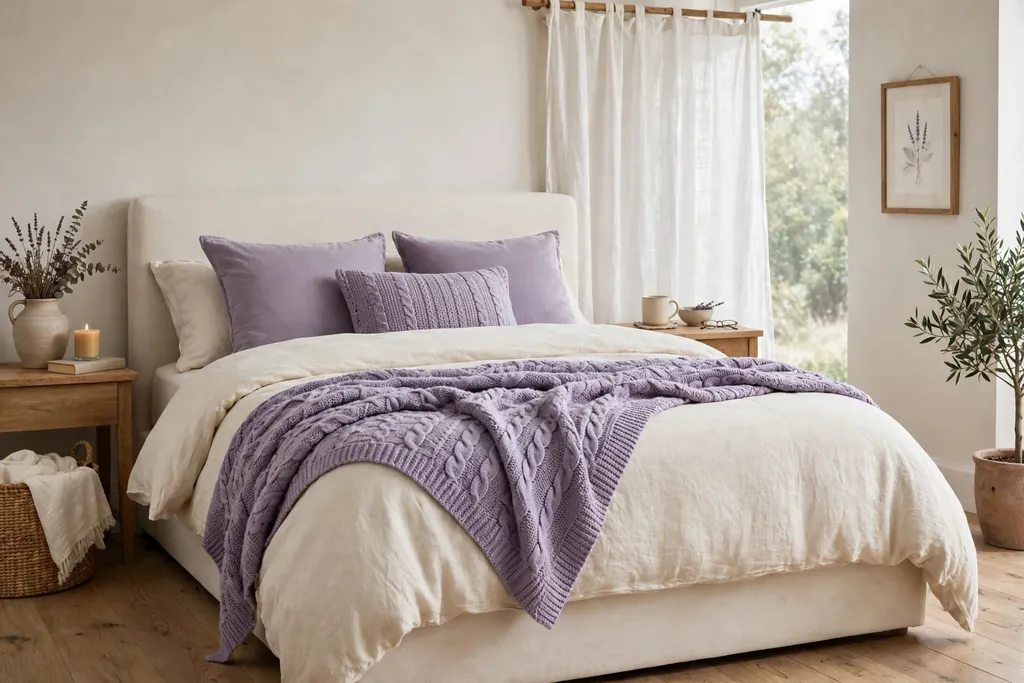
A lavender throw and cushions on a neutral bed give you lavender in its smallest, easiest dose. The bed stays in white, cream, or soft grey, and the lavender pieces add color at the foot and among the pillows. This suits a bedroom where you are unsure about lavender, since a throw and two cushions are easy to swap out.
Fold the throw across the lower third of the bed, or drape it over one corner, and keep the rest of the bed plain so the color stands out. Choose cushions in two textures, such as linen and velvet, in close lavender tones, so the group feels layered rather than flat. Store a spare throw nearby, so a fresh look is a quick swap rather than a chore.
8. A Lavender Reading Chair in the Corner
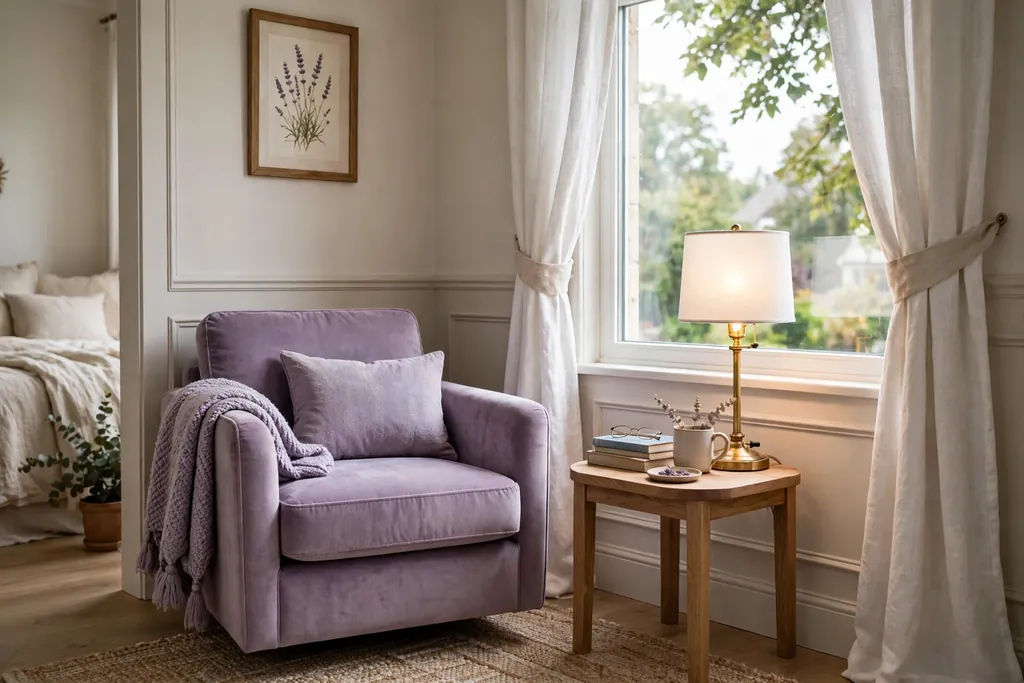
Place a lavender upholstered chair in a corner with a small side table and a reading lamp, so the bedroom gains a second use that is still quiet. The chair gives you a place to read or dress that is not the bed, and the lavender color marks the corner as its own place. A cushion in cream and a throw over the chair arm keep it inviting.
This suits a bedroom with a window corner that currently holds nothing but a laundry basket. Choose a chair deep enough to sit in for an hour, not a stiff accent chair that looks good but stays empty. Keep a basket beside the chair for current books, so the corner stays tidy.
9. Lavender Botanical Prints in White Frames
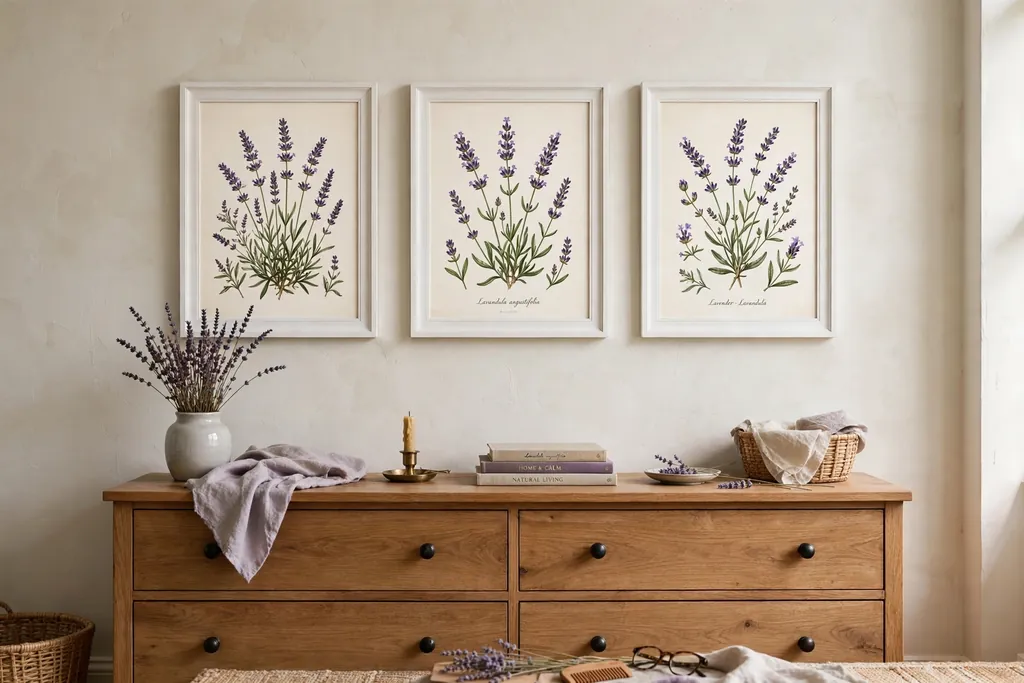
Lavender botanical prints in white frames add a quiet focal point to pale bedroom walls without adding strong color. Prints of lavender stems, leaves, or simple flower shapes suit the theme directly, and the white frames link the wall to pale furniture. This suits a plain bed wall or a wall above a dresser that needs interest without wallpaper.
Choose three to five prints in similar sizes, and hang them in matching frames at eye level on one wall. Leave breathing room between frames, and center the group on the bed or dresser rather than scattering prints around the room. Use fixings suited to the wall and the weight, and avoid hanging heavy frames directly above pillows.
10. A Lavender and Grey Palette for a Calm Base
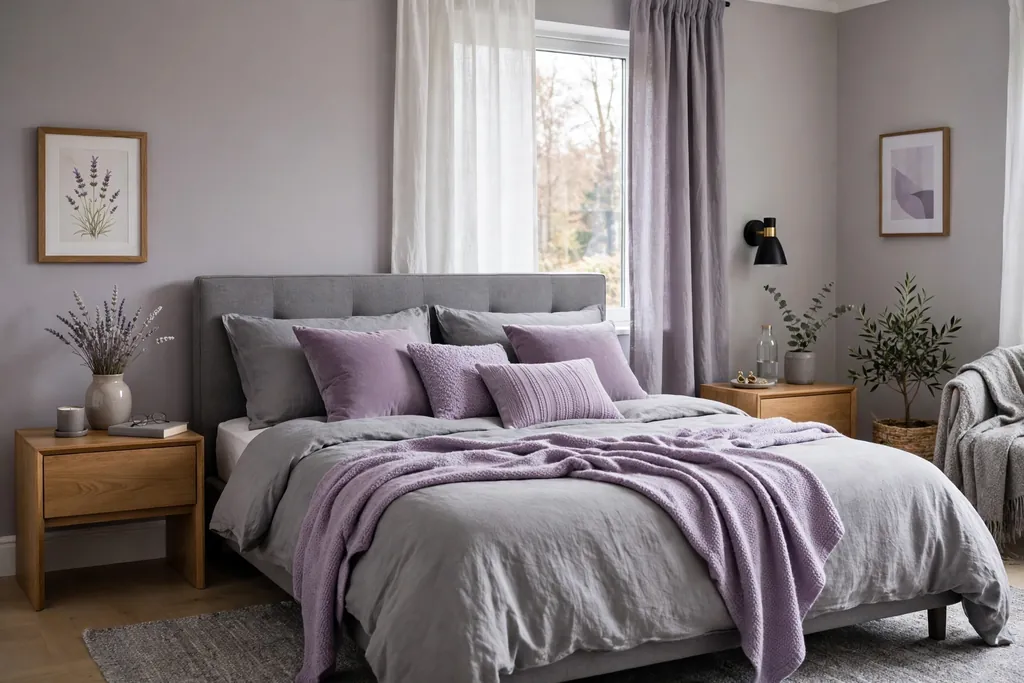
A lavender and grey palette keeps a bedroom calm by pairing a soft purple with a cool neutral. Grey walls, bedding, or a rug ground the lavender, so the purple reads as gentle rather than sweet. This suits a bedroom shared by two people with different tastes, since grey keeps the scheme grown up and easy to live with.
Use grey for the larger surfaces, such as the rug or the bedding base, and lavender for the smaller layers, such as cushions, a throw, and art. Keep the grey soft and warm toned rather than cold charcoal, so the room does not turn chilly. Add light wood in one or two pieces to warm the pairing.
11. Dried Lavender Bundles in a Vase on the Dresser
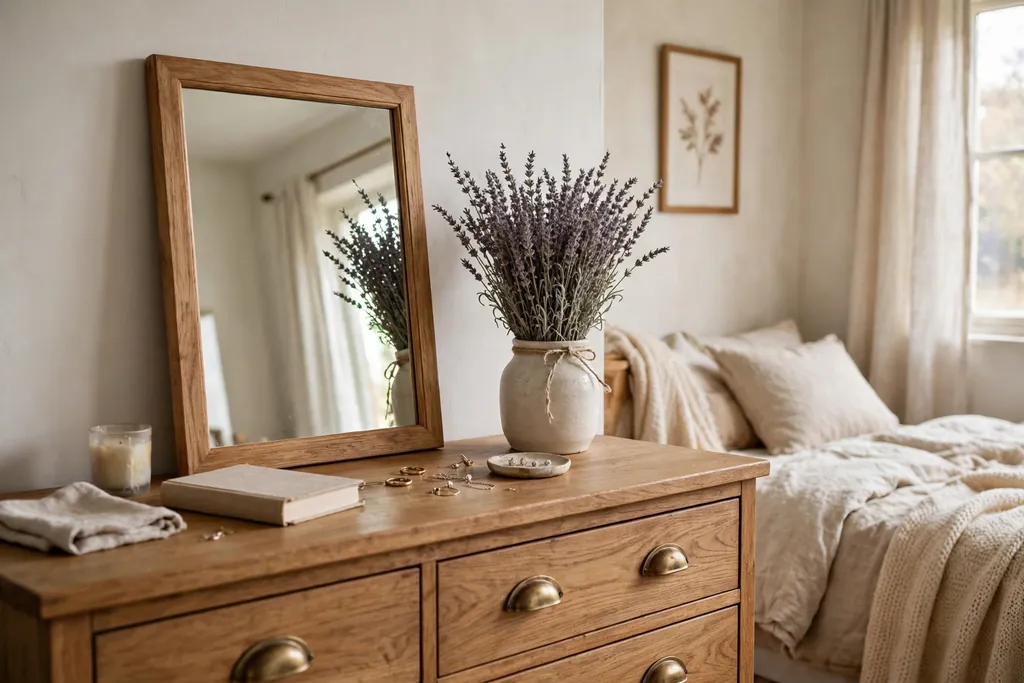
Dried lavender bundles in a vase on the dresser add color, texture, and a light scent with no watering and no upkeep. The slim stems and small buds suit a small dresser top, where a large bouquet would crowd the mirror or lamp. This suits a bedroom that needs one natural detail, and it works in any season.
Stand two or three small bundles in a plain ceramic or glass vase, and keep the rest of the dresser top to two groups at most: light and one tray. Shake the bundles outside now and then to clear dust, and replace them when the buds start to shed. Keep dried stems away from open flames, since dried plant material catches fire easily.
12. A Lavender Candle and Diffuser on the Bedside
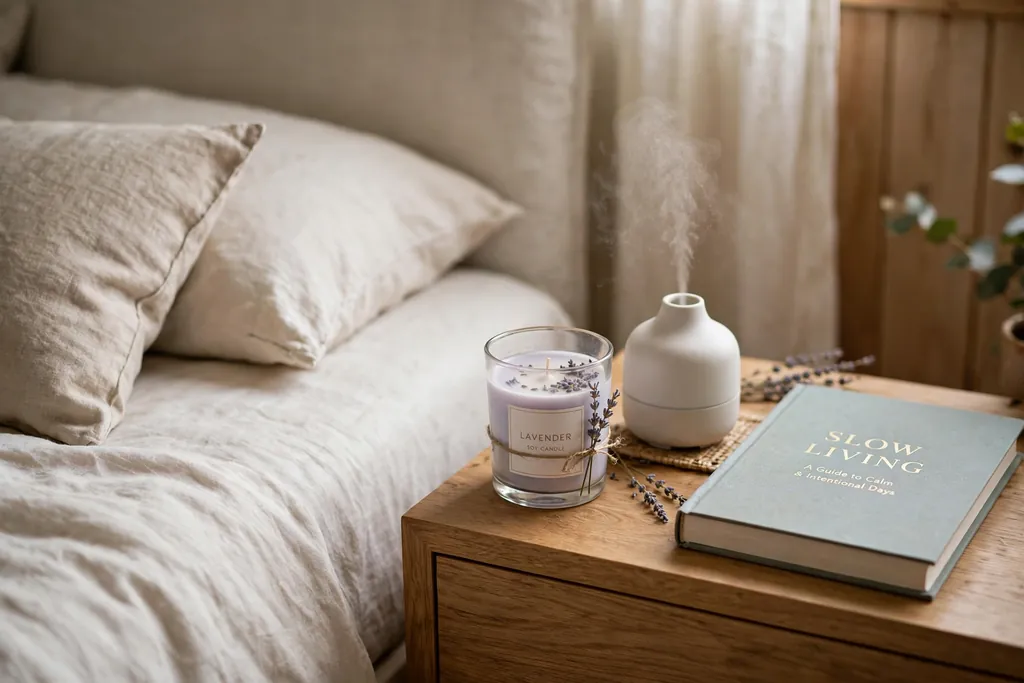
A lavender candle or diffuser on the bedside adds scent to the evening routine, which suits a bedroom meant for winding down. The scent layer works with the visual lavender in bedding or art, so the room feels planned through more than one sense. This suits a bedside that already stays mostly clear, since scent needs only one small item.
Keep the candle or diffuser on the side away from bedding, and follow the maker guidance on use and refill. Choose one scent item rather than three, so the room smells light rather than heavy. Put the item on a small tray with a book, and move everything else elsewhere, so the bedside stays calm at night.
13. A Lavender Rug on Light Wood Floors
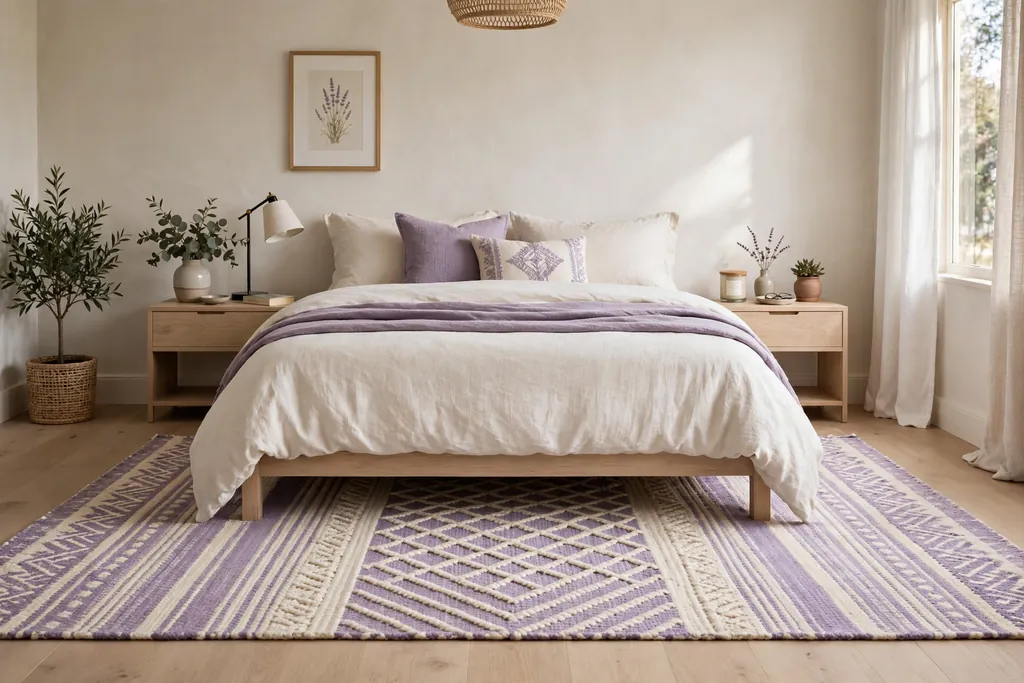
Lay a large rug in lavender and cream under the bed to ground the room and warm up a hard floor. The rug adds a block of color at ground level, which balances lavender walls or lavender bedding above, and it gives bare feet a soft place to land in the morning. Choose a low pile you can vacuum easily, and let the rug extend well beyond each side of the bed.
This suits a bedroom with wood or laminate floors, and it works well when the rug pattern is quiet, such as a border or a simple stripe, rather than a busy print. Use a rug pad on smooth floors to stop slipping, and keep the rug pile low near the door swing. A washable rug is worth choosing if the room gets pet traffic or muddy shoes.
14. A Lavender Bed Canopy or Draped Bed Crown
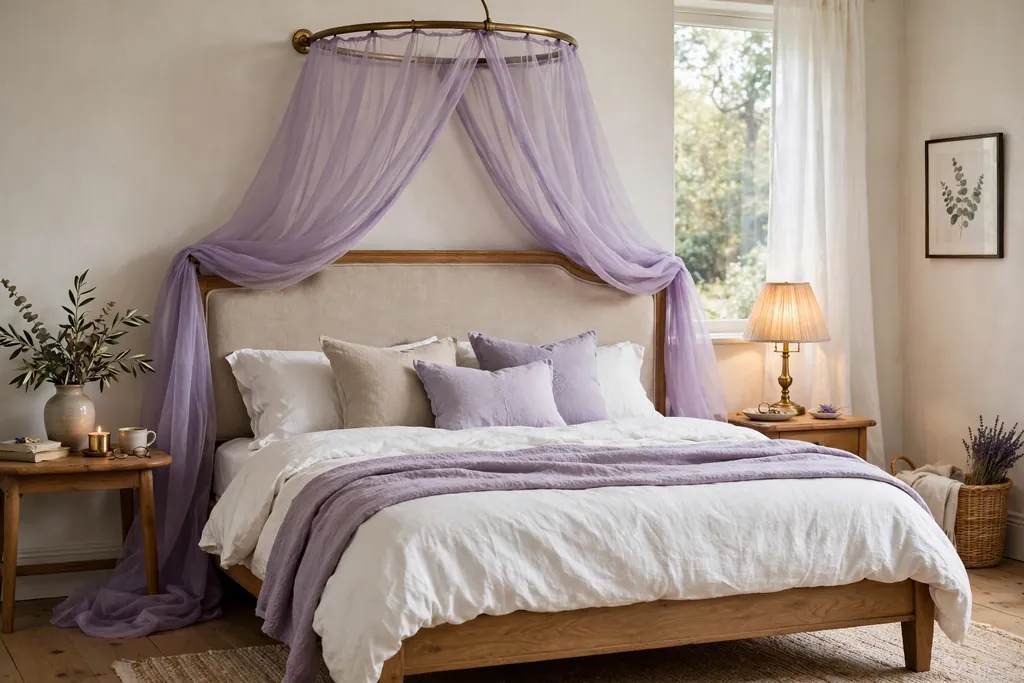
A lavender bed canopy or draped bed crown gives the bed a soft, enclosed feel without a heavy four poster frame. Sheer lavender fabric hung from a crown or a ceiling mount falls gently around the head of the bed, so the sleeping area feels separate from the rest of the room. This suits a bedroom with a plain bed that needs one romantic detail.
Hang the fabric so it clears the pillows and does not pull when you sit up, and keep the panels light enough to move with air from the window. Wash the fabric often, since sheer panels near a bed collect dust and lint. If a full canopy feels too much, a single draped panel behind the headboard gives a similar effect with less fabric.
15. Lavender Painted Nightstands Beside a White Bed
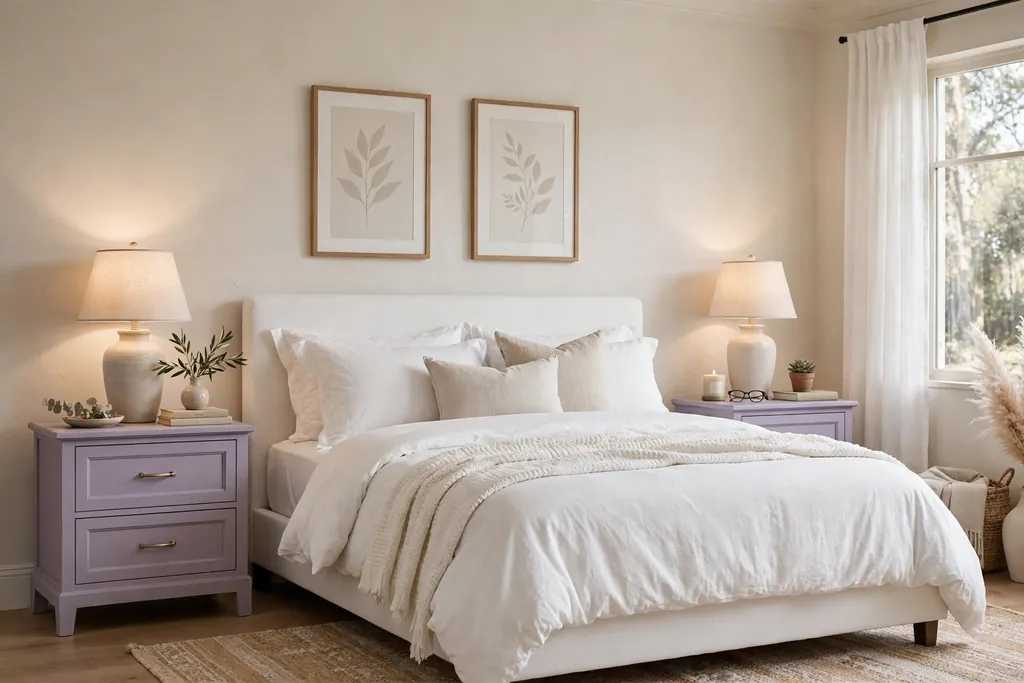
Paint a pair of nightstands in lavender and keep the bed white, so the color sits at bed height where you see it last at night. This is a lower risk change than painting a wall or a wardrobe, since two small pieces are easy to repaint later. The lavender nightstands link to a lavender cushion or throw on the bed, and the white bed keeps the room bright.
Repeat one handle finish across both nightstands, such as brass or matte black, to tie them together. Keep the tops mostly clear, with a lamp, a book, and a glass of water, so the painted color stays visible. If the two nightstands do not match, paint them the same lavender and they will read as a pair.
16. Lavender and Cream Striped Bedding
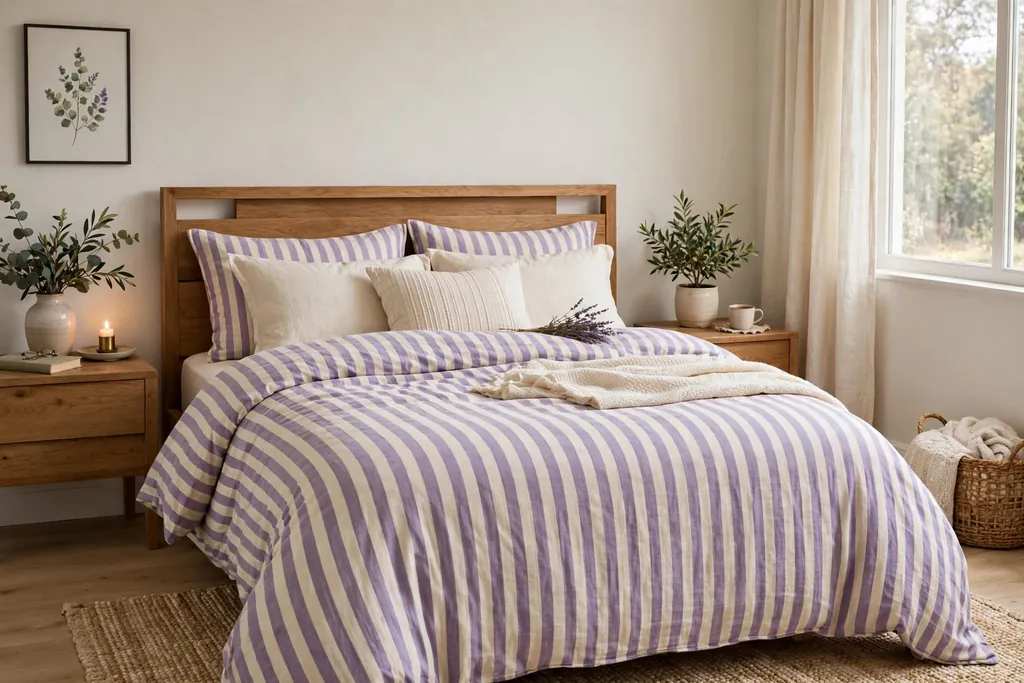
Lavender and cream striped bedding adds pattern to a plain bedroom without a bold print. The stripes give the bed direction and rhythm, and the cream keeps the lavender soft. This suits a bedroom with white walls and solid furniture, where the bed needs one clear pattern to anchor the room.
Keep curtains and the rug mostly plain when the bedding is striped, and repeat one lavender tone in a single cushion. A busy stripe on both bedding and curtains can make a small room feel crowded. For a calmer result, choose stripes in two close tones, such as cream and pale lavender, rather than high contrast stripes.
17. Lavender Botanical Wallpaper on One Wall
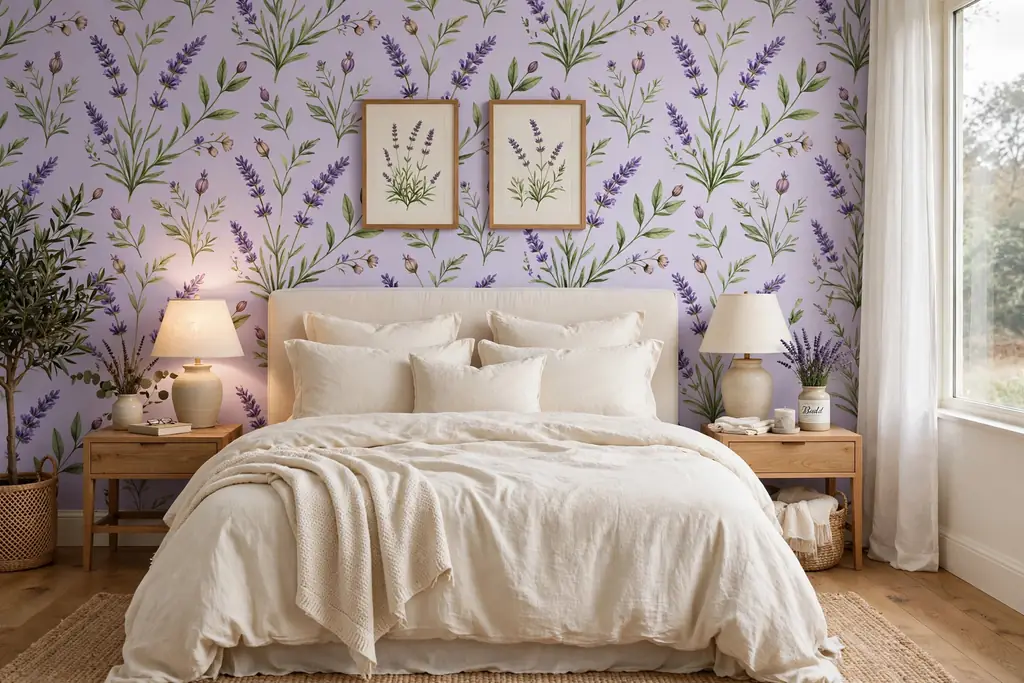
Hang a lavender botanical wallpaper on the bed wall for pattern that paint alone cannot give. A lavender stem or leaf print in lavender, cream, and a touch of soft green adds a garden note to the room, and it suits a bedroom where the furniture is plain and the bedding is solid. Keep the other walls in a plain cream or pale lavender pulled from the paper, so the pattern has room to breathe.
Use the wallpaper on one wall only, and keep curtains and bedding mostly solid, so the room does not gain two competing patterns at once. Order an extra roll for matching and future repairs, since batches can vary. If you rent, look for a peel and stick paper that your lease allows, and test a sample in your light before you commit to the full wall.
18. Lavender Velvet Cushions for Soft Texture
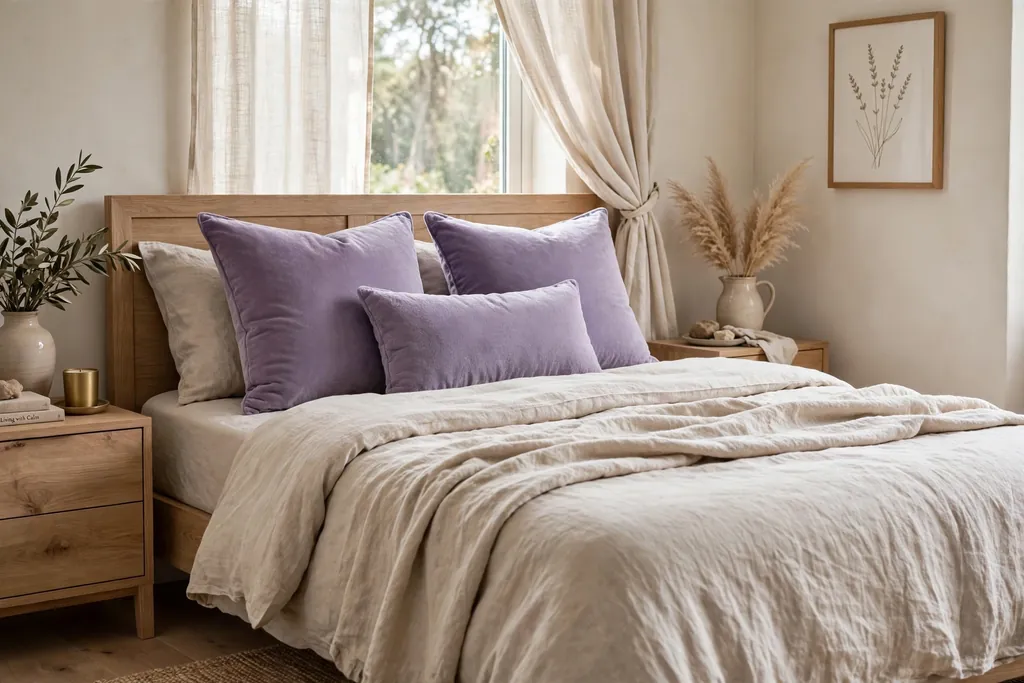
Lavender velvet cushions add a rich texture that flat cotton cannot give, and they suit a bedroom that feels a little plain in the evening. Velvet catches lamplight in a way that makes the bed look dressed, even when the rest of the room is simple. Pair velvet cushions with linen bedding, so the bed mixes a smooth and a soft pile fabric.
Keep cushions to three or four, in two close lavender tones, so making the bed stays quick. Vacuum velvet gently with an upholstery tool, since the pile can trap dust over time, and keep cushions clear of direct sun if the color matters to you. If velvet feels too warm for summer, swap it for linen in the same tones and bring the velvet back in cooler months.
19. A Lavender Dressing Table and Vanity Corner
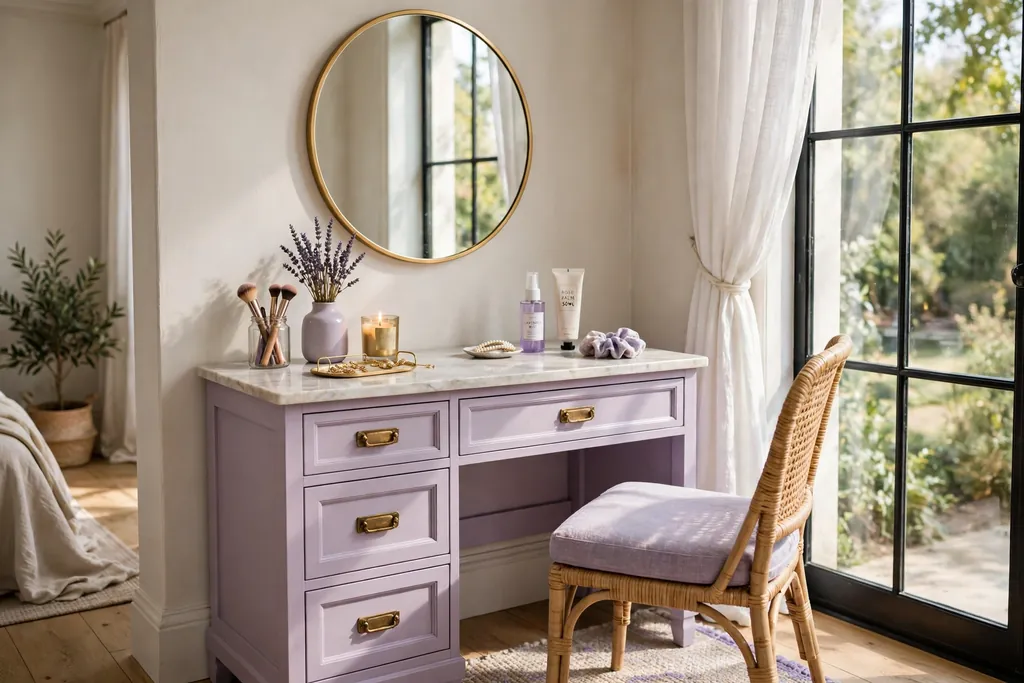
A lavender dressing table and vanity corner gives a bedroom a tidy place for morning routines, separate from the bed. A small table in lavender paint or with lavender accessories, a mirror, and a chair turns an empty wall into a useful spot. This suits a bedroom with a wall near a window, where daylight helps for getting ready.
Keep the table top to three groups at most: a mirror, a tray for daily items, and one small vase. Use the drawers or a small basket for items you use less often, so the top stays clear. Match the chair cushion to the bedding in one lavender tone, so the corner links to the rest of the room.
20. Lavender Bedding with White Lace Trim for a Cottage Feel
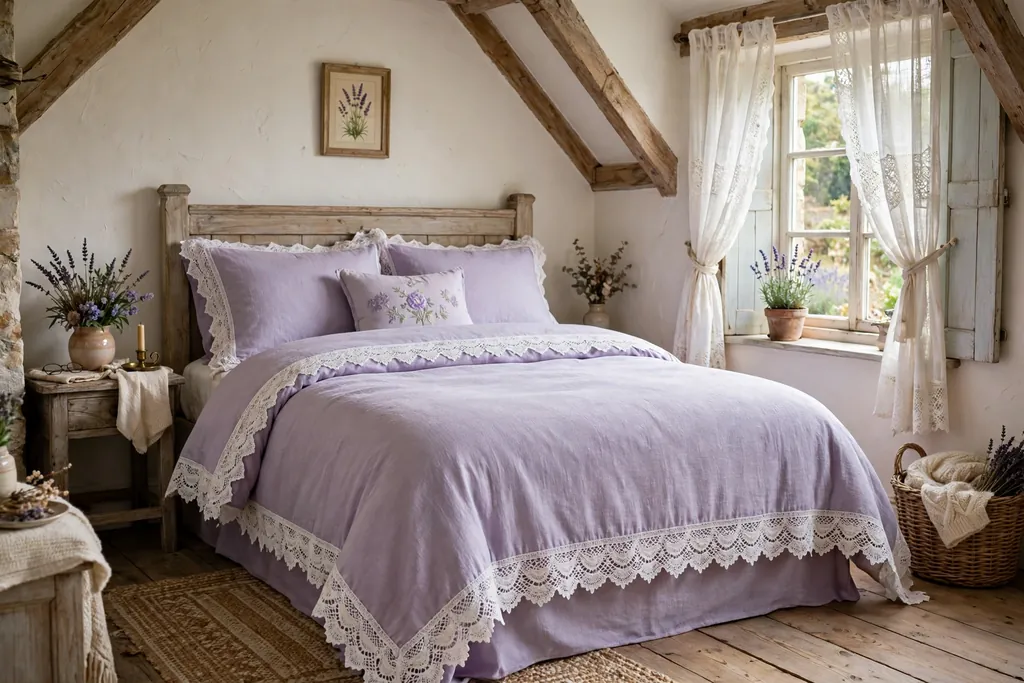
Lavender bedding with white lace trim gives a bedroom a gentle cottage feel, with soft color and a delicate edge. The lace adds detail to plain lavender pillowcases and a duvet cover without a strong pattern, and it suits a room with wood furniture and simple curtains. This suits a guest room or a country style bedroom where a relaxed look matters more than a crisp one.
Keep the lace to the pillow edges and the top edge of the duvet, so the trim reads as a detail rather than a theme. Pair the bedding with white curtains and one solid lavender cushion, and avoid adding a second lace pattern nearby. Wash the bedding on a gentle cycle, since lace trims wear faster than plain hems.
21. Lavender Paired with Sage Green Botanical Touches
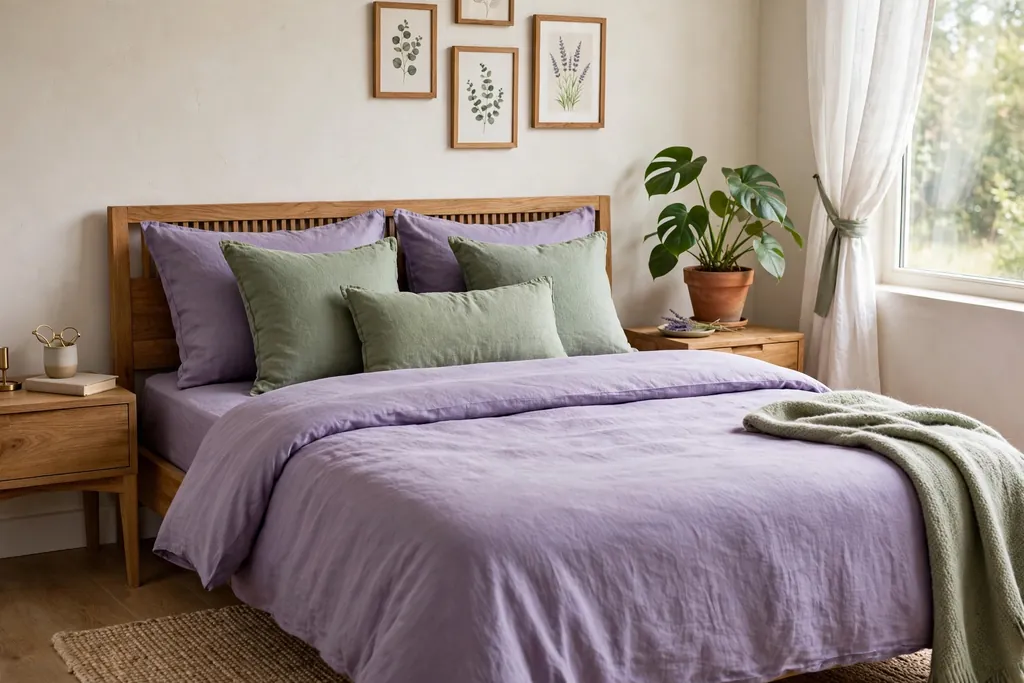
Lavender paired with sage green gives a bedroom a garden palette that feels natural rather than staged. Sage cushions, a throw, or a plant beside lavender bedding link the purple to leaves and stems, so the room reads like a garden in soft tones. This suits a bedroom with plants, wood furniture, or a view of a garden.
Use lavender as the main color and sage as the smaller accent, so the two do not compete. Keep the sage muted and grey toned, and repeat it in two places, such as a cushion and a plant pot. Avoid a third strong color nearby, since lavender and sage already give the room plenty of character.
22. A Lavender Gallery Wall Above the Bed
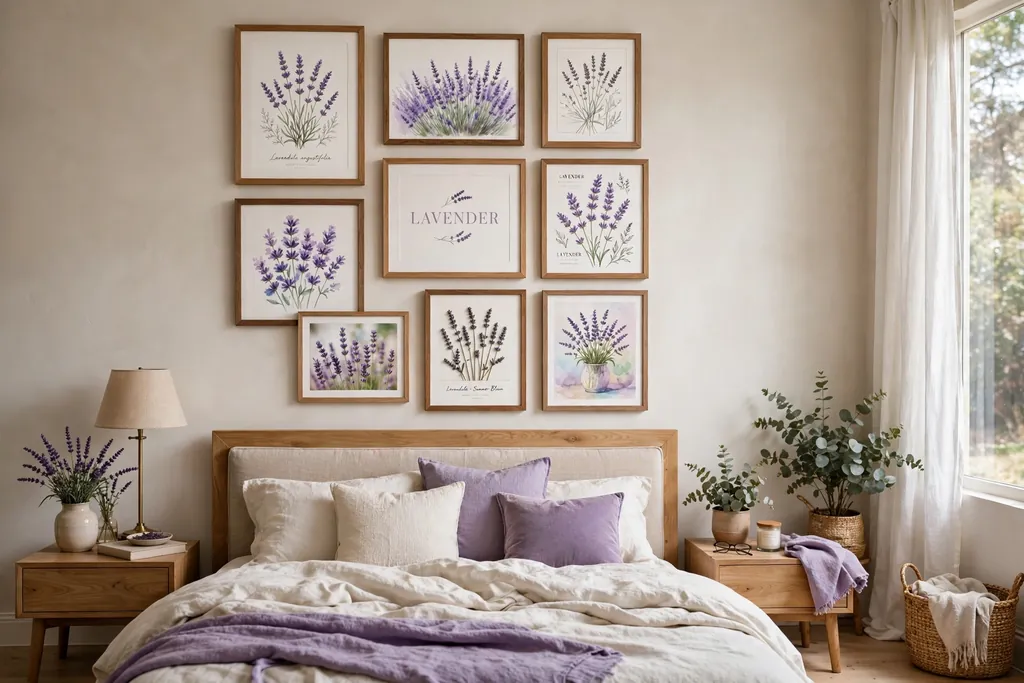
Hang a gallery of framed prints in lavender tones above the bed for wall interest that needs no paint. Choose prints in lavender, cream, and soft grey, with simple white or light wood frames, and hang them in a loose grid or a single row. Mix lavender stem studies, abstract washes, and line drawings, but keep the palette tight so the wall feels calm.
This suits a bedroom with a large blank wall that needs interest but not a feature color. Lay the frames on the floor first and plan the spacing, leaving equal gaps between frames, then hang the middle frame at eye level. Use picture hanging strips if you rent, and keep the largest frame in the center so the arrangement feels balanced.
23. Lavender Storage Baskets and Boxes
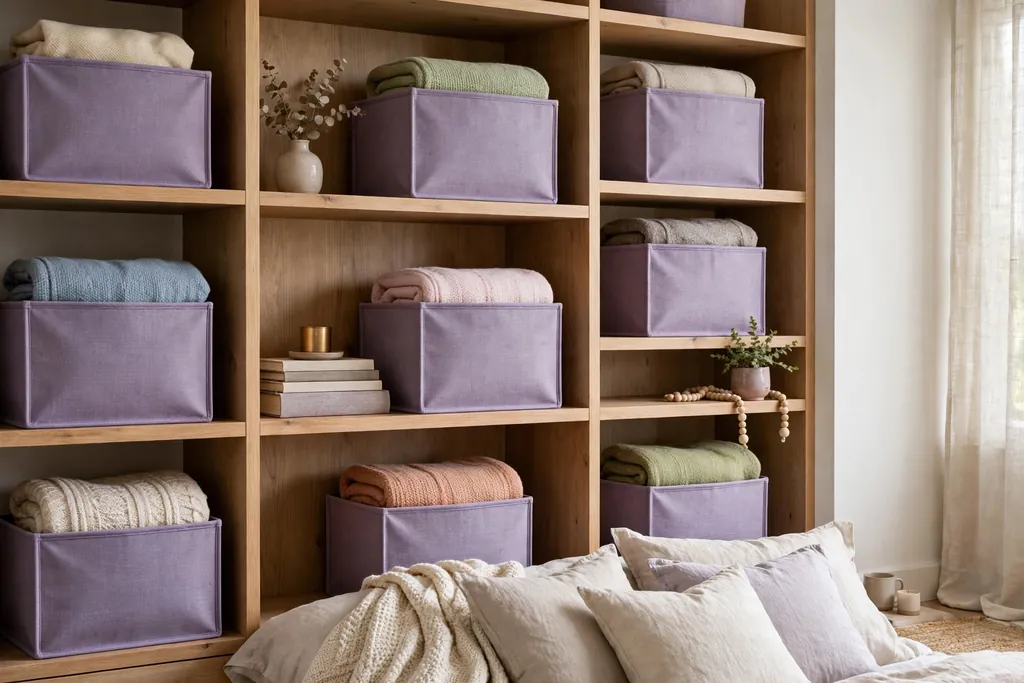
Lavender storage baskets and boxes turn open storage into calm storage in a lavender bedroom. Use baskets or fabric boxes in lavender and cream, in one material and two sizes at most, for throws, scarves, and spare bedding, and place them beside the bed, under a bench, or on a shelf. Matching containers make a group of items read as one planned set rather than clutter.
Label the front of each box if more than one person uses the room, and keep baskets light enough to lift with one hand. Line a basket with fabric if it holds small items that slip through the weave. For more closed storage planning, see these bedroom storage ideas.
24. Lavender Lampshades for Soft Evening Light
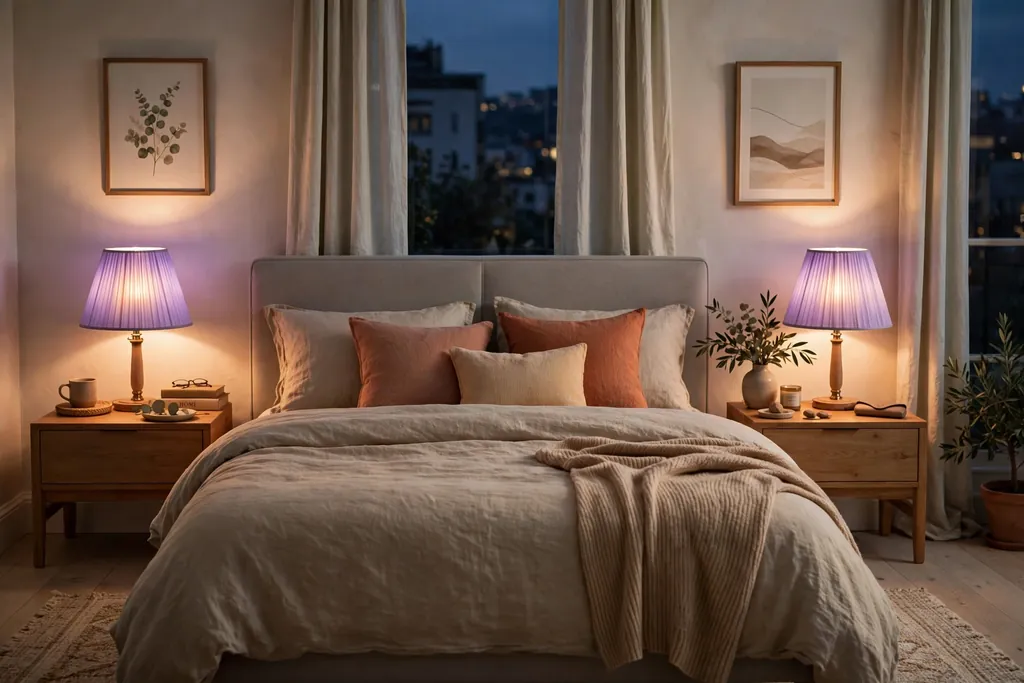
Lavender lampshades give a bedroom soft evening light in a color that matches the rest of the room. The shade tints the glow gently, so bedside lamps feel warm and calm rather than stark, and the shade itself adds color even when the lamp is off. This suits a bedroom where the walls stay white and the color lives in textiles and small pieces.
Choose shades in a pale lavender, since a deep shade can dim the light too much for reading. Match the two bedside shades, so the bed looks balanced from the door, and keep the lamp bases in one finish, such as white ceramic or light wood. Check that the shade clears the bulb as the maker advises, since fabric shades need space from heat.
25. A Lavender Window Seat with Soft Cushions
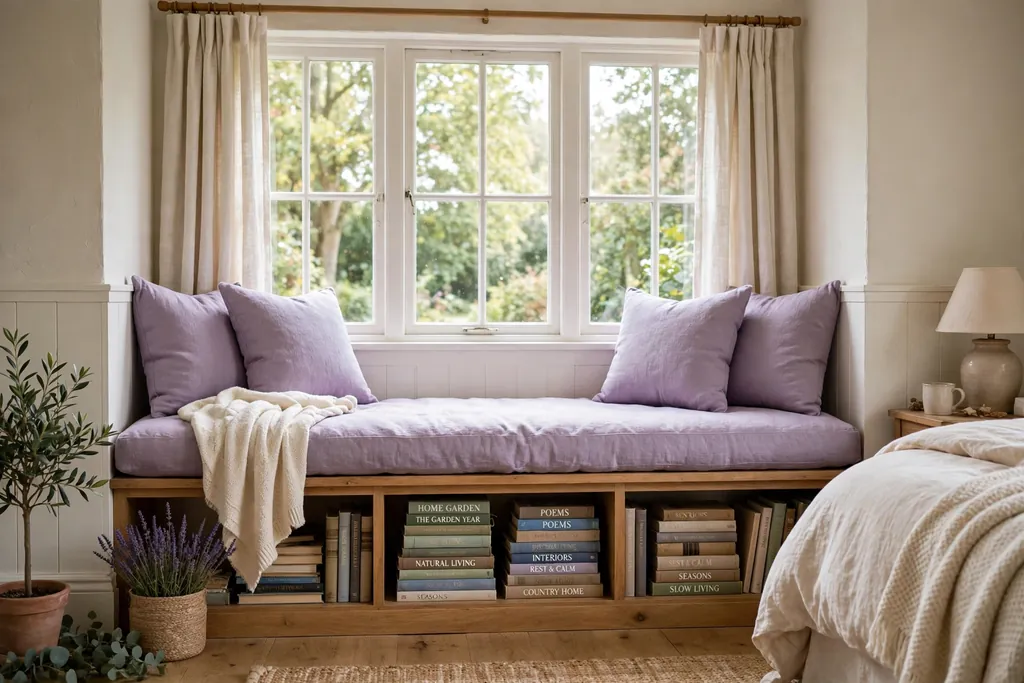
A lavender window seat with soft cushions gives a bedroom a reading spot and a color block in one built piece. Use the seat for spare bedding and books beneath the cushion, and keep the cushion in a washable lavender cover, since window seats collect sun and dust. Choose a seat depth that lets you sit with your back against the wall comfortably.
Keep the window area clear of heavy items, so you can open the window and clean the glass. A small shelf or a wall hook beside the seat holds a book and a cup, so the seat top stays free for sitting. If a built seat is not possible, a low bench under the window with lavender cushions gives most of the same benefit.
26. Lavender and Gold Accents for Gentle Warmth
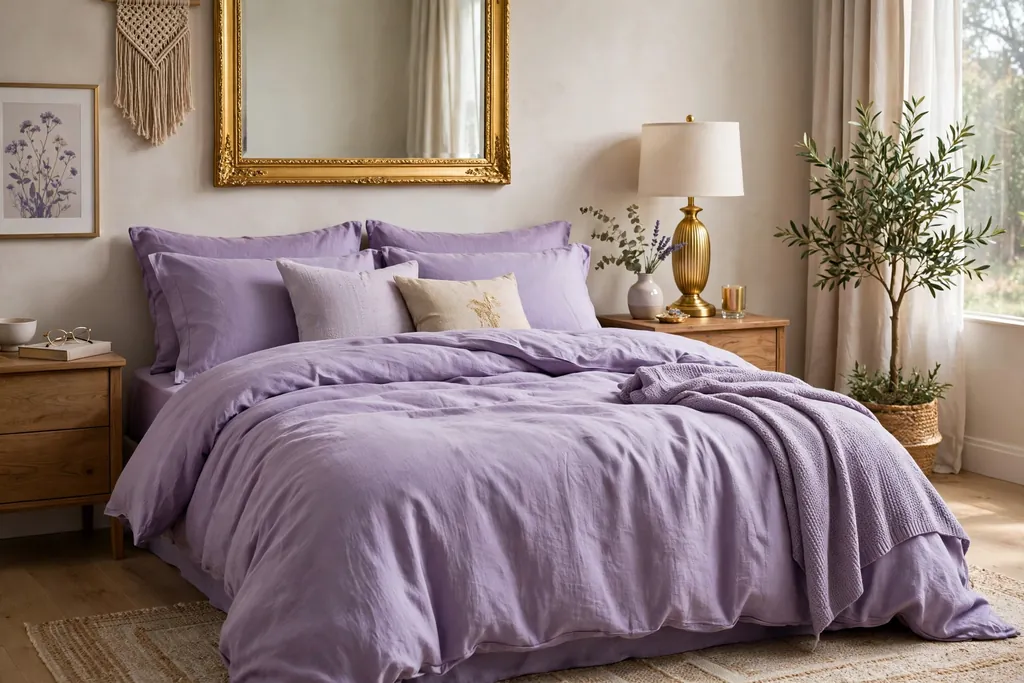
Lavender and gold accents add gentle warmth to a cool purple palette, so the room does not feel cold in the evening. Gold appears in small doses, such as a mirror frame, drawer handles, a lamp base, or a picture frame, while lavender stays on the larger surfaces. This suits a bedroom with white walls and lavender bedding, where one warm metal thread pulls the room together.
Match the gold to one finish across the small pieces, such as brushed brass, rather than mixing bright and aged gold. Keep the gold to a few small items, since too much metal can make a calm room feel busy. If gold feels too yellow beside your lavender, pick a brushed or aged finish rather than a bright polished one.
27. Potted Lavender by the Bedroom Window
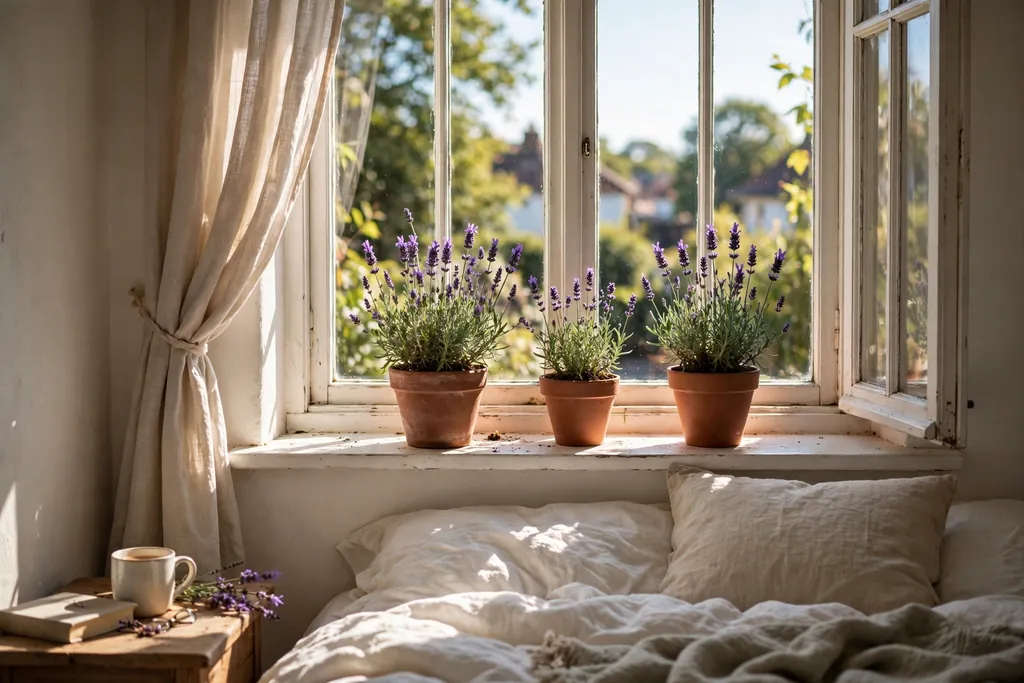
Potted lavender by the bedroom window adds living color and scent that matches the room theme exactly. A pot or two of lavender on the sill or on a small stand beside the window gives you green leaves and purple buds in season, and it suits a sunny window where the plant gets direct light for part of the day. This suits a bedroom where you want nature in the room without a large plant taking floor space.
Water only as the plant needs it, and check that the pot drains, so water does not mark the sill or floor. Turn the pot now and then, so growth stays even toward the light. Keep plants out of reach if pets chew leaves, and check that a plant suits your home before you bring it in.
Conclusion
A serene lavender bedroom comes from restraint: one main lavender tone, a pale base, soft textures, and clear surfaces. Start with bedding, curtains, or cushions if you want a quick change, then move to walls, furniture, or a reading corner when you have a weekend to spare. Add scent and plants last, since those small layers work best once the larger surfaces are settled. For a calmer room built on the same quiet principles, see these zen bedroom ideas. Save the ideas that fit your room, test samples in your own light, and build the lavender bedroom one calm layer at a time.
FAQs
1. What shade of lavender works best in a bedroom?
A pale lavender close to grey or lilac works best for most bedrooms, since it stays bright in daylight and calm in lamplight. Test a large swatch on two walls, one facing the window and one facing away, since the same paint can look quite different in each spot. Avoid bright or deep purples on all four walls, since strong color can feel heavy by evening.
2. Does lavender go with grey, white, and wood?
Yes. White and cream keep lavender bright, soft grey grounds it, and light wood warms the pairing. Use grey for larger surfaces and lavender for smaller layers, or keep the walls white and let lavender live in bedding and curtains. Add one wood tone across the bed frame and nightstands, so the room reads as settled.
3. How do I add lavender without painting a wall?
Change bedding, curtains, cushions, and a rug first, since textiles carry color with no tools and no lasting change. Add lavender art, a throw, storage baskets, or dried lavender on the dresser for smaller doses. If you want a wall effect without paint, try peel and stick wallpaper on one wall, if your lease allows it.
4. Will lavender make a small bedroom feel smaller?
A pale lavender on all walls, with a white ceiling and white trim, usually keeps a small room feeling open. A single lavender accent wall behind the bed can add depth without closing the room in. Keep furniture pale, mirrors clear of clutter, and bedding mostly light, so the color adds interest rather than weight.
5. What colors pair well with lavender in a bedroom?
White, cream, soft grey, sage green, and light wood pair well with lavender, and small touches of brushed gold add warmth. Keep the palette to lavender plus two neutrals, so the room stays calm. Avoid adding a second strong color, such as bright pink or deep red, since it can fight the lavender rather than support it.
6. How do I keep a lavender bedroom calm instead of busy?
Repeat one lavender tone in two or three places, keep patterns to one surface at a time, and leave nightstands and dresser tops mostly clear. Mix textures, such as linen, velvet, and wood, rather than adding more colors or prints. If the room starts to feel busy, remove one patterned item and one small decor piece, then live with the simpler version for a week.