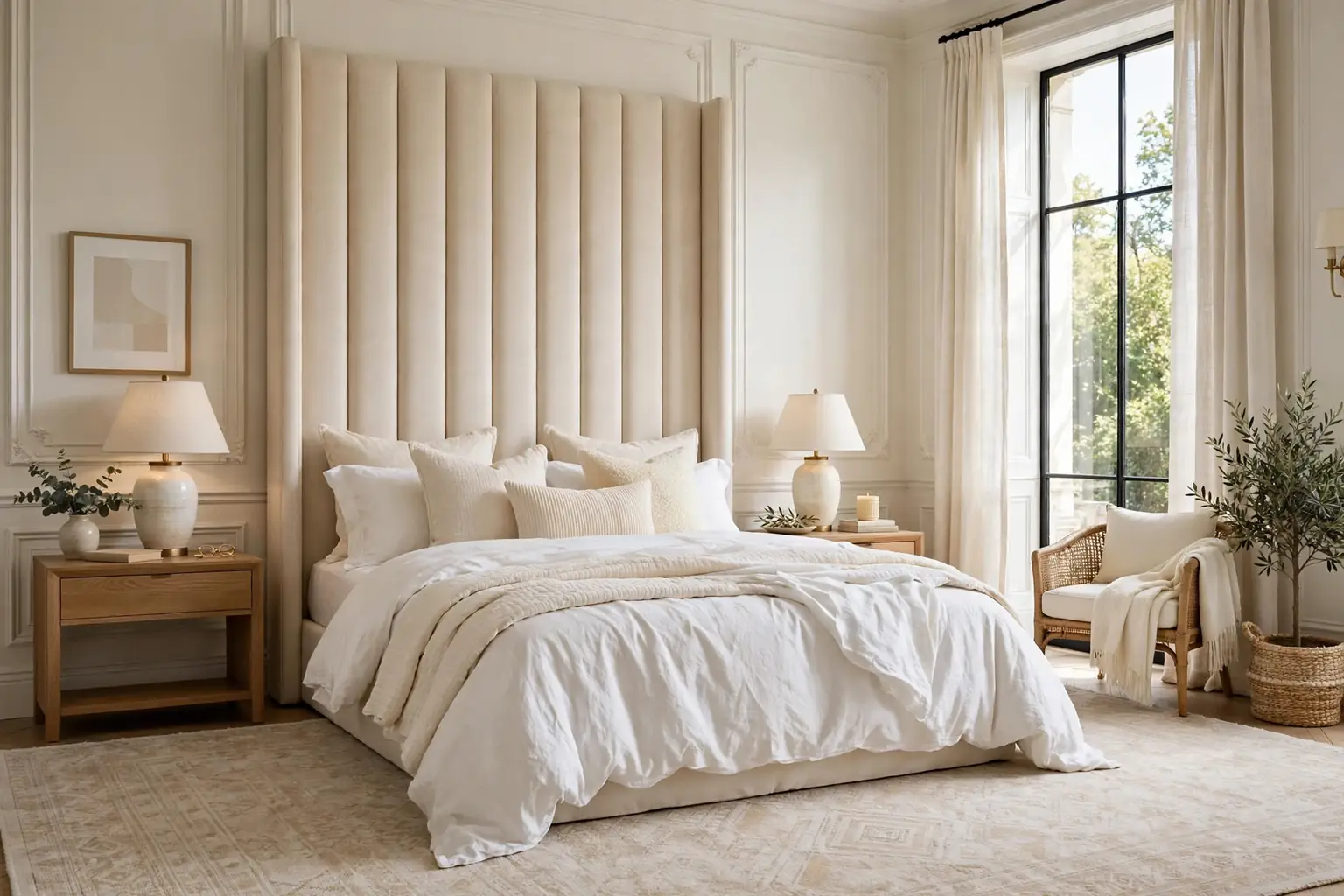
An elegant bedroom is rarely about one costly piece. It comes from calm color, good light, bedding that looks inviting, and surfaces that are mostly clear. When each corner has a clear job, the room feels restful even if it is small or simply furnished. These 18 elegant bedroom ideas cover the bed, the walls, the windows, seating, storage and small finishing touches, so you can start with one change and add more over time. Pick the idea that fixes what bothers you most, live with it for a week, then choose the next one.
Key Takeaways
- Start with a calm palette of two or three colors, then repeat each color at least twice so the room looks planned.
- Make the bed the clear focus, with layered bedding, a headboard that suits the room, and cushions kept to a small number.
- Use warm, layered light from bedside lamps and a reading light, and keep bright overhead light for tasks only.
- Give every corner a job: sleeping, dressing, reading, or storage, and keep the floor and surfaces mostly clear.
- Add detail in small doses, such as brass, velvet, framed art or fresh stems, rather than on every surface at once.
- Keep changes practical: washable covers, closed storage, and pieces you can move or swap if your taste changes.
1. Start With a Calm Neutral Palette
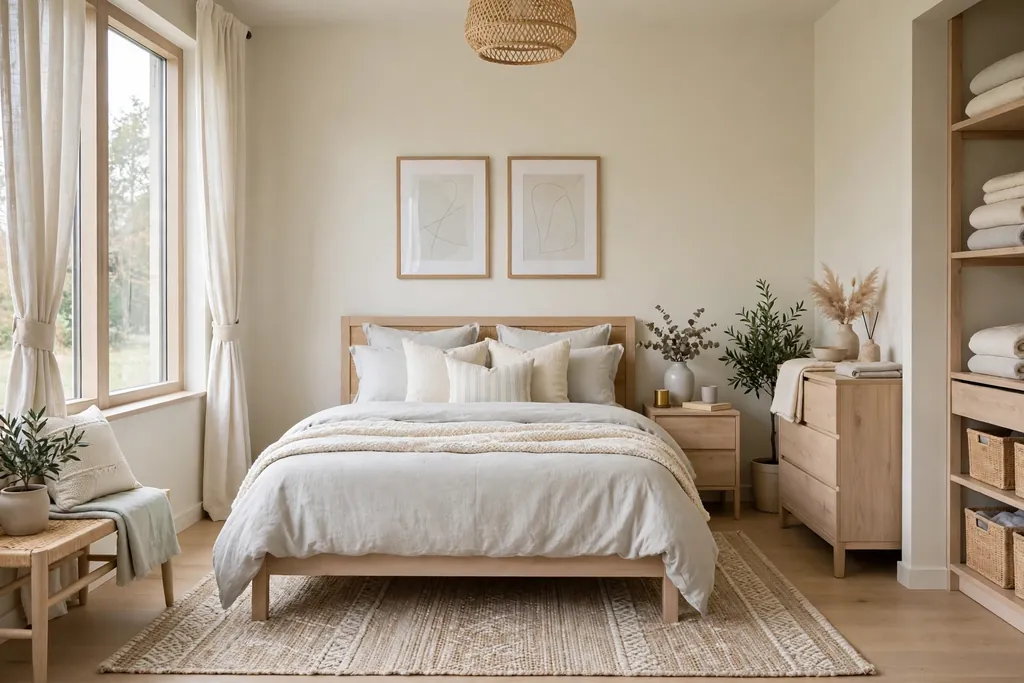
Choose two or three quiet colors for the large pieces, such as warm white, soft cream, pale grey and light wood, and use them on bedding, walls and furniture. A limited palette makes different pieces sit well together, even if they were bought at different times. It also lets one richer accent, such as deep green, navy or muted gold, stand out without making the room feel busy.
Test paint and fabric samples in daylight and evening light before you commit, since warm bulbs can deepen a pale color and cool light can make it look grey. Keep the ceiling white and the trim in a clean cream or white for a clear edge. If the room starts to feel flat, add depth with texture, such as linen, wool and wood, rather than adding another strong color.
2. Layer White and Cream Bedding
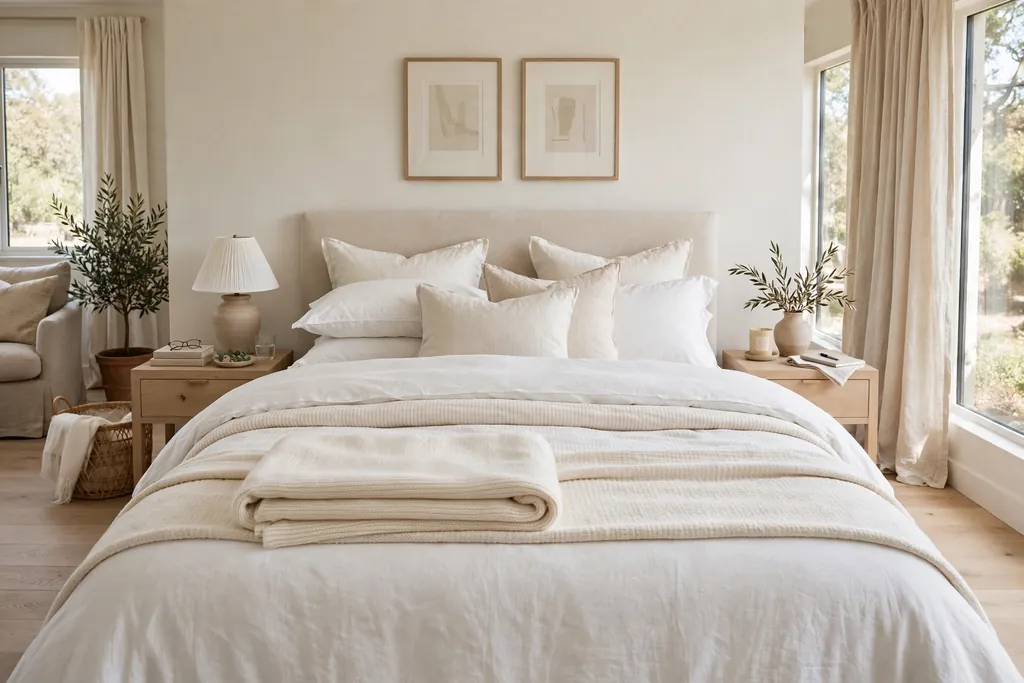
Build the bed in thin layers: plain sheets, a duvet in white or cream, and a lighter blanket folded across the lower half. Layers look inviting and let you adjust warmth during the night without remaking the whole bed. Keep the layers in close tones, so the bed reads as one calm block rather than a mix of competing colors.
Fold the top sheet back over the duvet and smooth the blanket fold each morning, so the bed looks made with little effort. For more layering guidance, see these winter bedroom ideas, which use the same staged approach for colder nights. Wash bedding in matching sets and keep a spare set folded nearby, so a fresh bed is a quick swap, not a chore.
3. Choose a Tall Upholstered Headboard
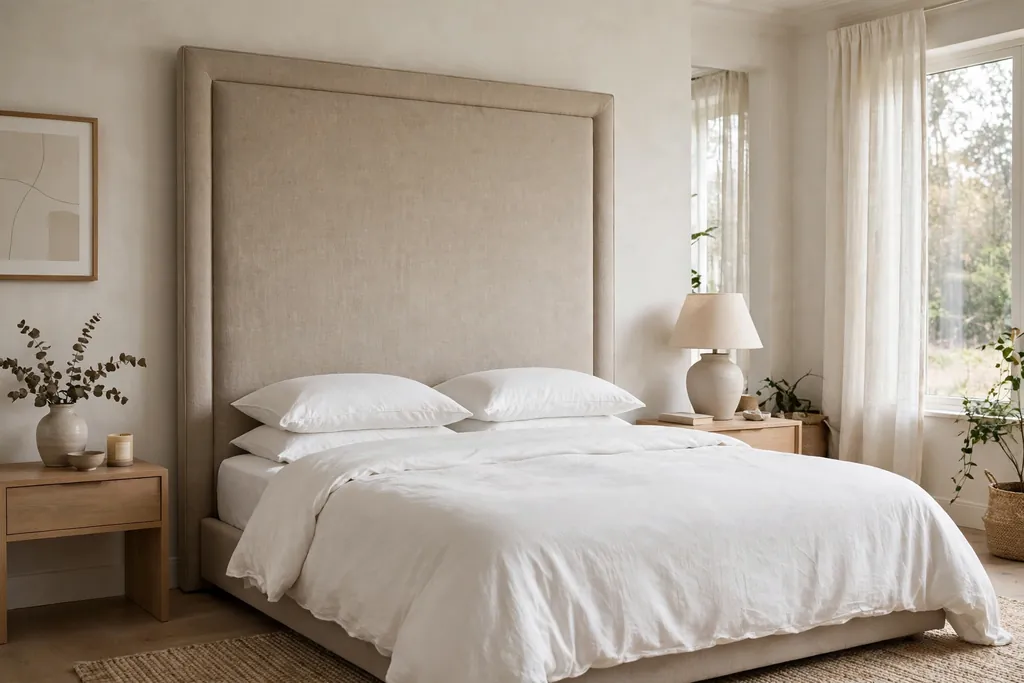
A tall headboard gives the bed a clear center and makes the wall behind it feel finished, even if the rest of the room is plain. Choose a simple shape in linen, cotton or velvet, in a color close to the bedding, so it adds softness without shouting. A padded headboard also makes sitting up to read more comfortable than a hard wall or a bare frame.
Measure the bed width and the wall space before you buy, and leave room for bedside tables on both sides. If a new headboard is not practical, a long padded cushion leaned against the wall can give a similar effect for less cost. Keep the cover removable if possible, since the area behind pillows collects dust quickly.
4. Use Matching Nightstands and Lamps for Symmetry
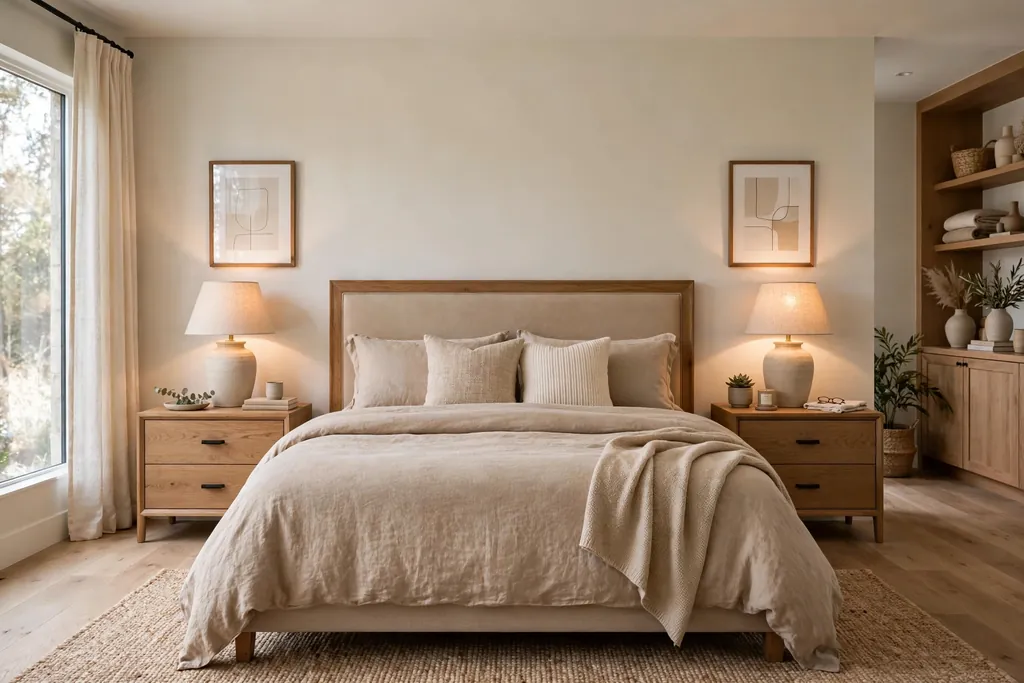
Place matching nightstands and lamps on both sides of the bed for a balanced look that reads as calm at a glance. Symmetry does not require identical decor on each table, only the same height, scale and lamp shape, so the bed sits at the center of a clear pair. This works well in small rooms, where a balanced pair stops the bed wall from looking crowded on one side.
Keep each nightstand surface mostly clear, with a lamp, a book or a glass of water, and little else. If you share the bed, let each side hold only what that person uses nightly, and move chargers and papers elsewhere. When the two sides match in height, the eye rests on the bed, which is exactly what an elegant room needs.
5. Add a Paneled Accent Wall Behind the Bed
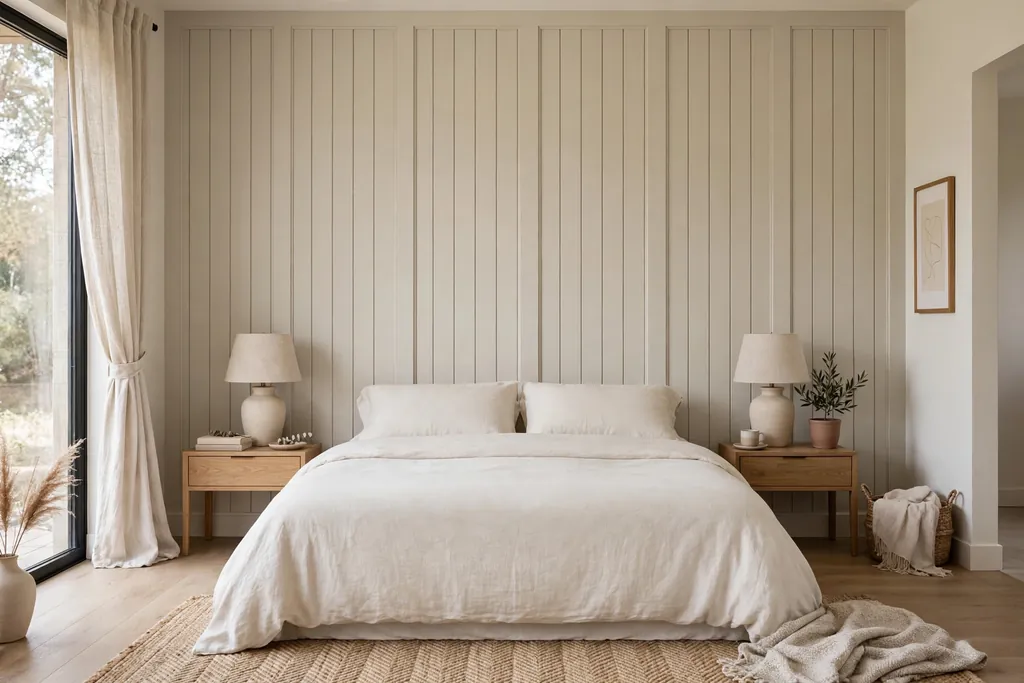
Fit simple wall panels, in wood or painted trim, on the wall behind the bed for structure without pattern. Panels add shadow and depth in daylight and look refined at night under bedside lamps. Paint them the same color as the wall for a quiet effect, or one shade deeper for a gentle frame around the headboard.
Keep the other walls plain, so the paneled wall stays the focus. Center the panels on the bed, not on the room, and stop them clear of the ceiling and the floor for a finished edge. If you rent, look for removable panel kits made for your wall type, and test one panel in a hidden spot first. This idea suits a room with a plain bed wall that needs interest without wallpaper.
6. Hang Floor Length Curtains High and Wide
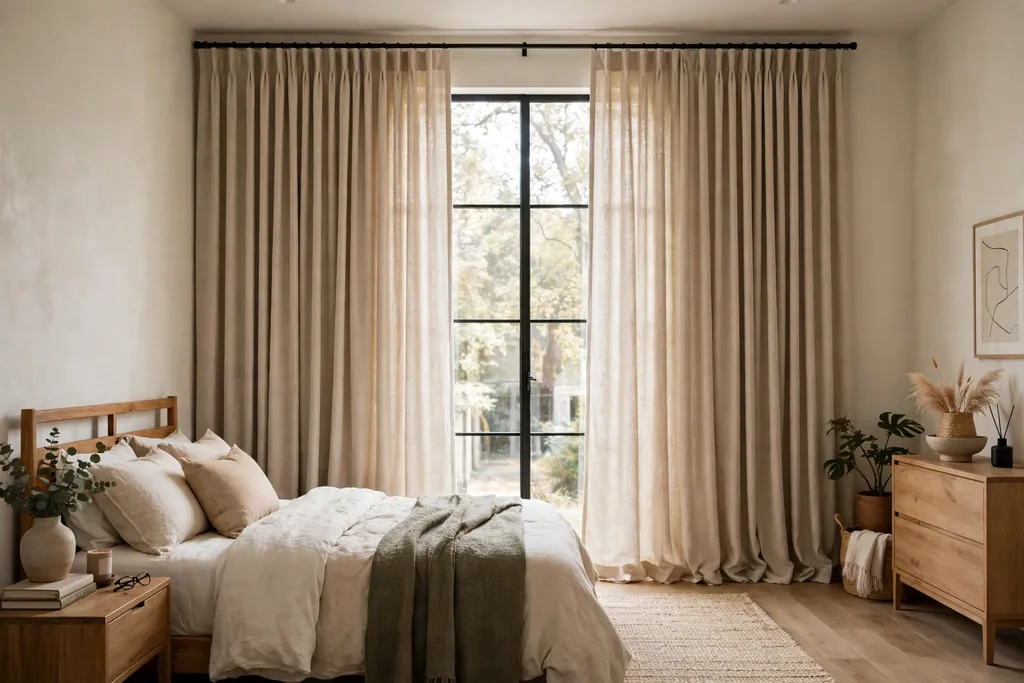
Hang curtain panels high, near the ceiling, and wide, beyond the window frame, so the window looks larger and the room feels taller. Floor length panels that just brush the floor give a finished edge, while panels that pool on the floor collect dust and can trip you in a bedroom. Choose a plain linen look or a soft cotton in a color close to the walls.
Use a sheer panel for daytime privacy and a heavier panel you can close at night, if your window needs both. Keep the curtain fabric clear of radiators and heaters, and open the panels fully during the day so the room gets full daylight. One well hung pair of curtains can change a plain bedroom more than a new piece of furniture.
7. Layer Warm Light Instead of One Bright Ceiling Light
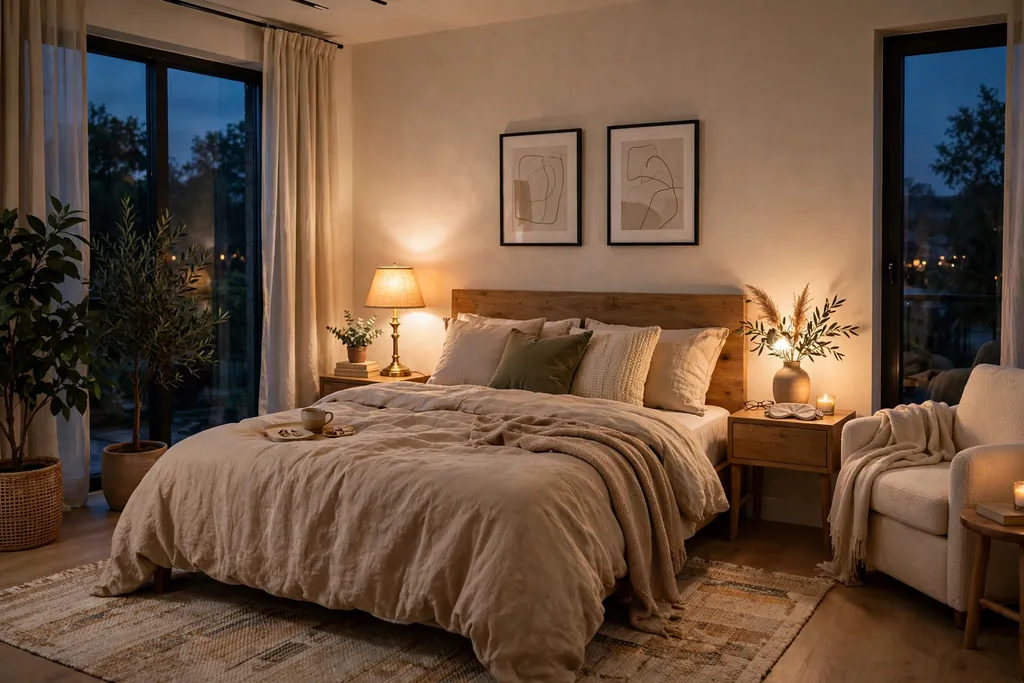
Use bedside lamps with warm bulbs for evening light, plus a reading light or a small wall light where you read, and keep the ceiling light for dressing or cleaning only. Low, warm light flatters bedding and wood, softens shadows, and helps the room feel settled before sleep. Two lamps at about bed height give even light on both sides of the bed.
Put switches or dimmers where you can reach them from the bed, so you do not cross a dark room at night. Keep bulb color consistent across the room, since mixed warm and cool bulbs make a calm palette look uneven. If space is tight, a plug in wall light frees the nightstand and still gives the same layered effect.
8. Anchor the Bed With a Large Rug
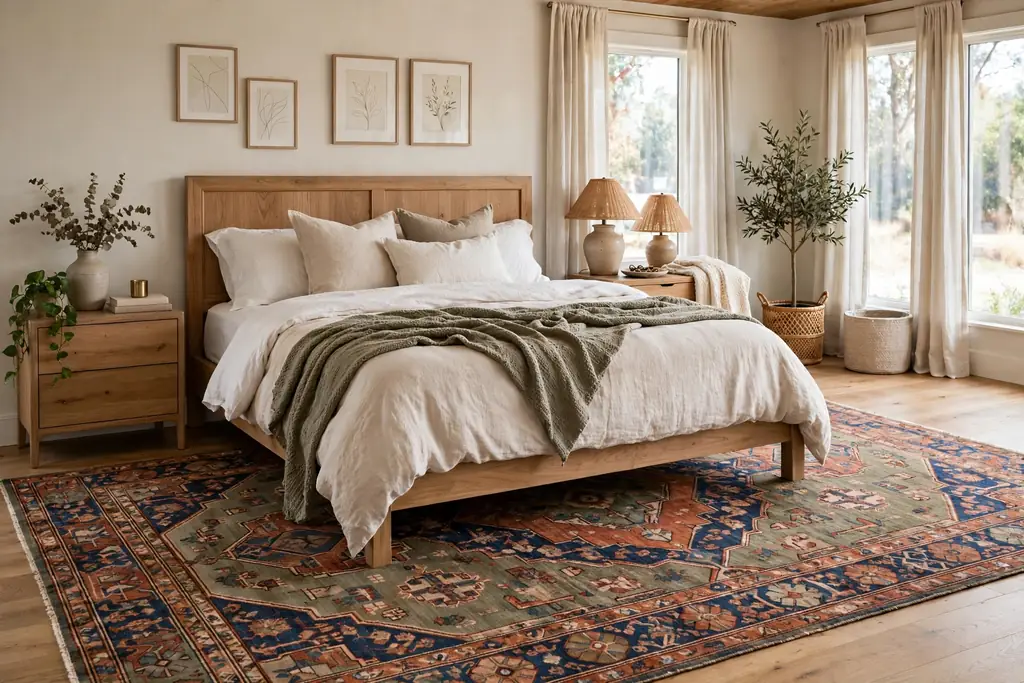
Place a large rug under the lower two thirds of the bed, extending out on both sides, so your feet land on something soft and the bed links to the rest of the room. A rug that is too small makes the bed look as if it is floating, so measure for a clear border on each side before you buy. Choose a low pile rug that doors and drawers can clear, and use a rug pad on smooth floors to reduce slipping.
Keep the rug in a plain tone or a quiet pattern that shares a color with the bedding, so it grounds the room without competing with it. For rug placement ideas that also work with patterned bedding, see these plaid bedroom ideas. In a small room, one runner on the side you use most gives the same soft first step for less cost and less cleaning.
9. Place a Bench at the Foot of the Bed
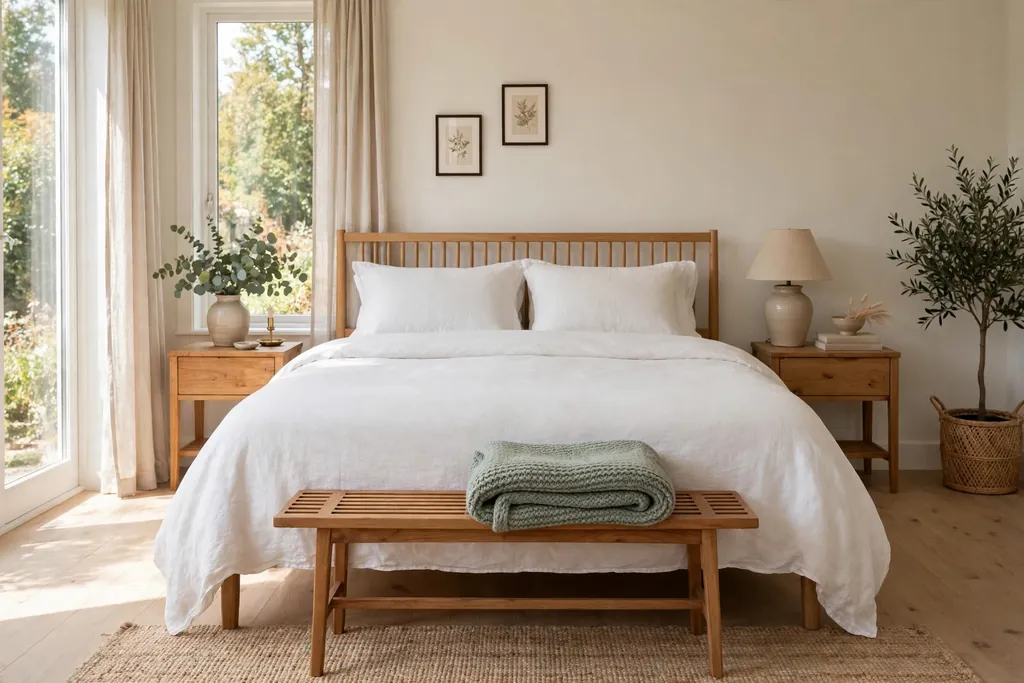
A narrow bench at the foot of the bed gives you a place to sit while dressing, lay out clothes for the morning, and set a folded throw during the day. Choose a simple wood bench, or an upholstered bench in a fabric close to the bedding, and leave clear walking space on both sides. A bench with a shelf below can also hold a blanket basket without adding another piece of furniture.
Measure the gap to the opposite wall or door first, since a bench that blocks the walkway makes the room feel smaller, not more refined. Keep the top mostly clear, with one folded throw or a single cushion, and avoid using the bench as extra storage for clothes. In a short room, a small stool or a low ottoman at one side of the foot does the same job in less depth.
10. Style the Dresser as a Simple Vignette
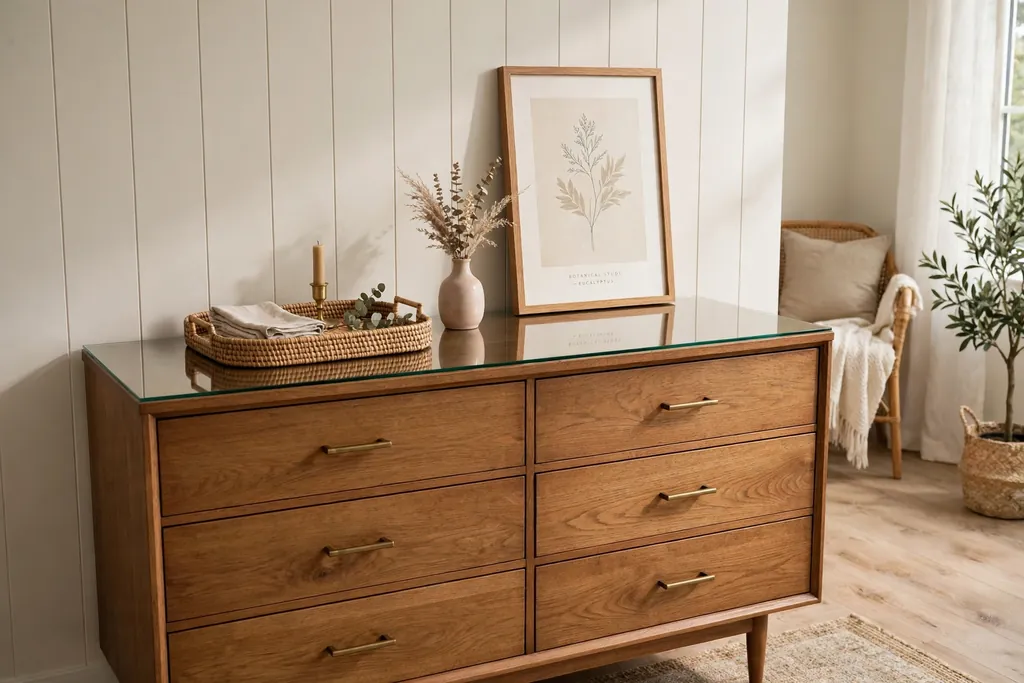
On the dresser, arrange a small group of three: a tray, a vase or a small plant, and a framed print or a book, then leave the rest of the surface clear. Groups of three look planned, and a tray makes dusting and tidying faster, since you can lift the whole group at once. Keep daily items, such as brushes and chargers, outside the group, so the vignette does not turn into storage.
Use pieces in the room palette, with one material repeated, such as wood, brass or ceramic, to tie the group together. For a seasonal take on the same grouping method, see these halloween bedroom decor ideas, which keep novelty to one item per surface. If the dresser is small, reduce the group to a tray and one object, and keep the rest of the top empty.
11. Create a Quiet Reading Corner by the Window
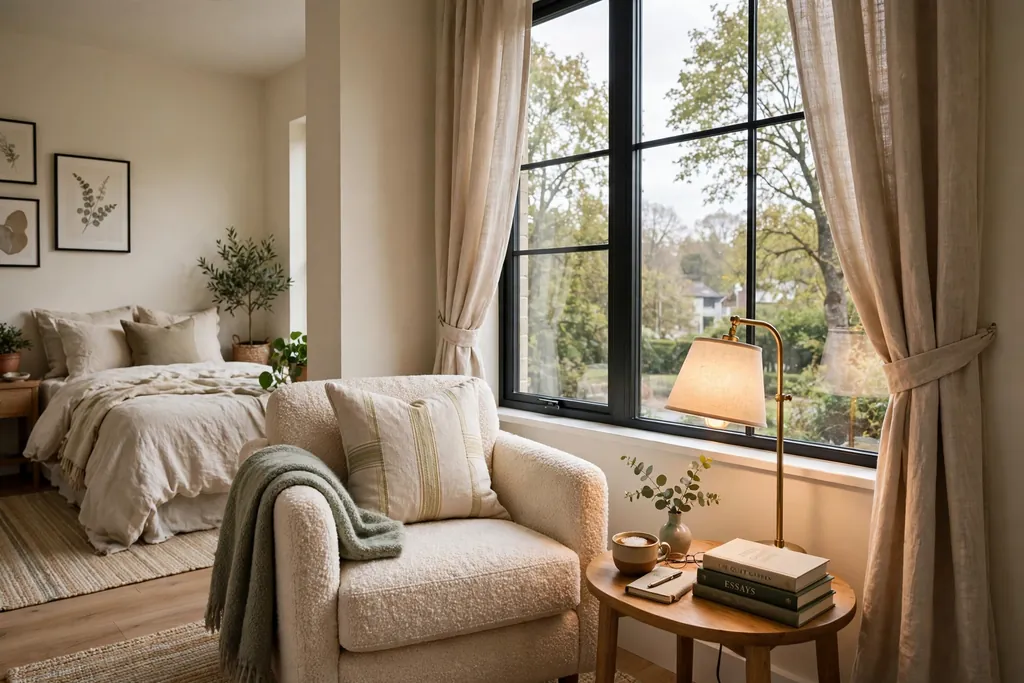
Set one comfortable chair near the window, with a cushion, a small side table and a reading lamp, to give the bedroom a second use that stays quiet. Angle the chair slightly toward the room, so it does not look pushed away, and keep it clear of clothes and bags, so it stays an invitation to sit. A floor cushion beside a low shelf works in a tight room where a full chair will not fit.
Keep the corner in the same palette as the bed, with one throw in a shared color to link the two areas. This corner borrows the same slow evening approach as these hygge bedroom ideas, with calm light and layered textiles doing the work. Leave a clear path to the bed, and choose a lamp that lights the book without shining across the room at night.
12. Hang Framed Art in Matching Frames
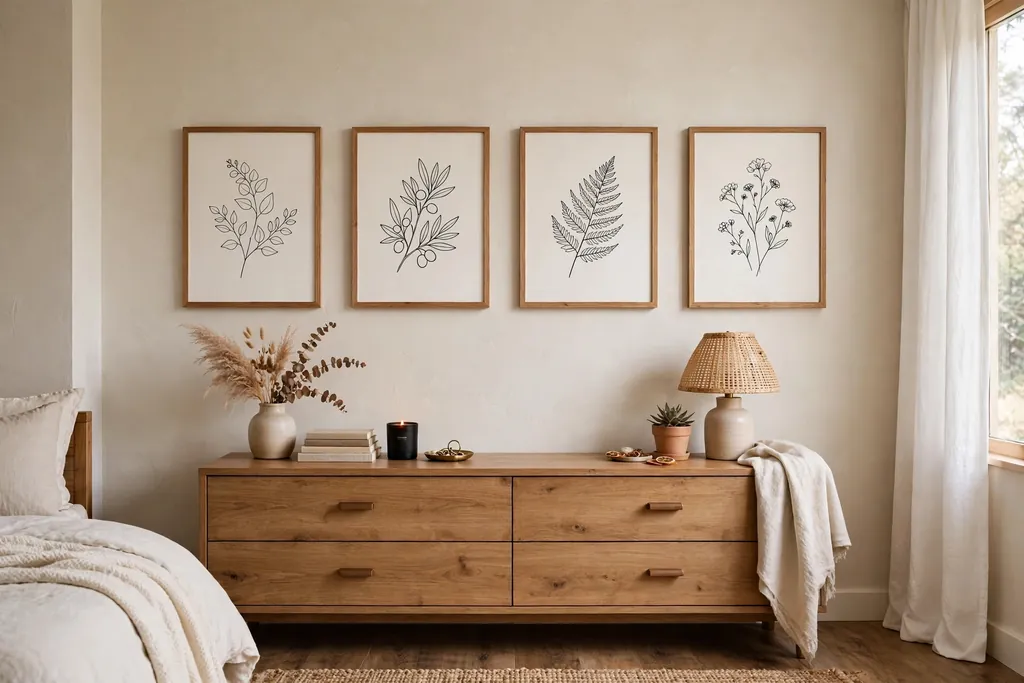
Choose three to five pieces of art, print them in similar sizes, and hang them in matching frames at eye level on one wall. Matching frames make different images look like a set, which is calmer than a mix of frame styles and sizes across every wall. Hang the group centered on the bed, a dresser or a chair, rather than scattered around the room.
Leave breathing room between frames, and keep the largest piece at the center or at one end, depending on the wall shape. Use secure fixings suited to the wall and the weight, and avoid hanging heavy frames directly above pillows where fixings could fail. If you prefer privacy, use landscapes or abstract prints in the room palette instead of portraits.
13. Add a Single Vase of Fresh Stems
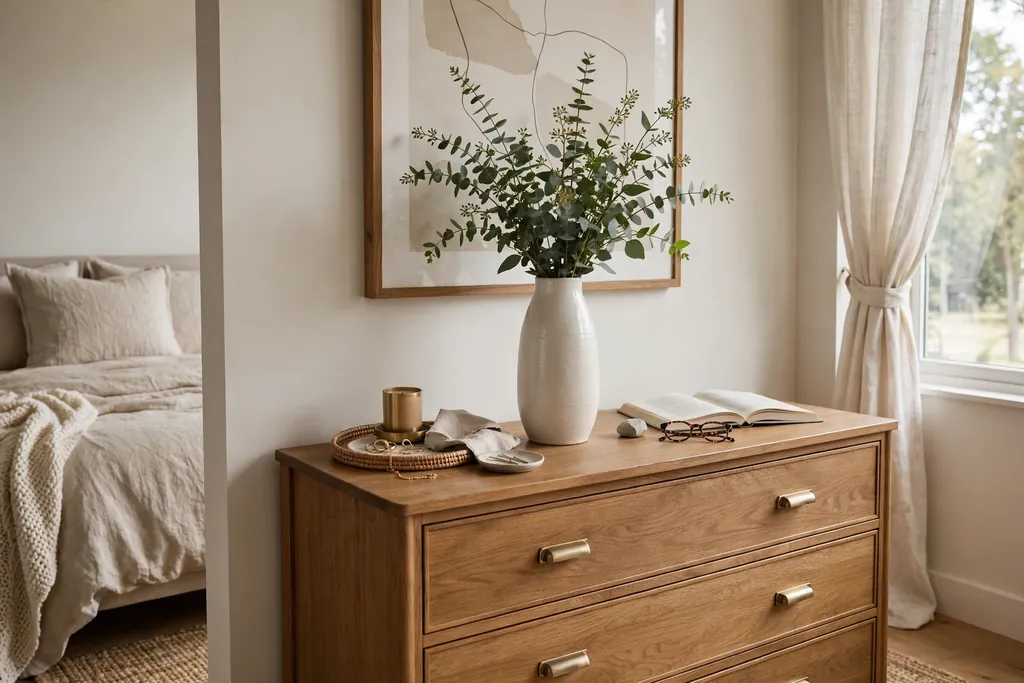
Place one vase with fresh stems, such as eucalyptus, a few garden roses or simple green branches, on the dresser or nightstand for a living detail that needs no pattern. One vase reads as refined, while small items spread across every surface can make a calm room feel cluttered. Choose a vase shape that suits the spot: tall and narrow for a dresser, short and wide for a nightstand.
Trim stems to a height that clears any mirror or shelf above, and change the water every few days so the arrangement stays fresh. Keep the vase away from the bed edge, where it could be knocked at night, and away from direct heat. If fresh stems are hard to keep, a good quality faux stem you can wipe clean gives the same shape with less care.
14. Repeat Small Brass Accents Twice
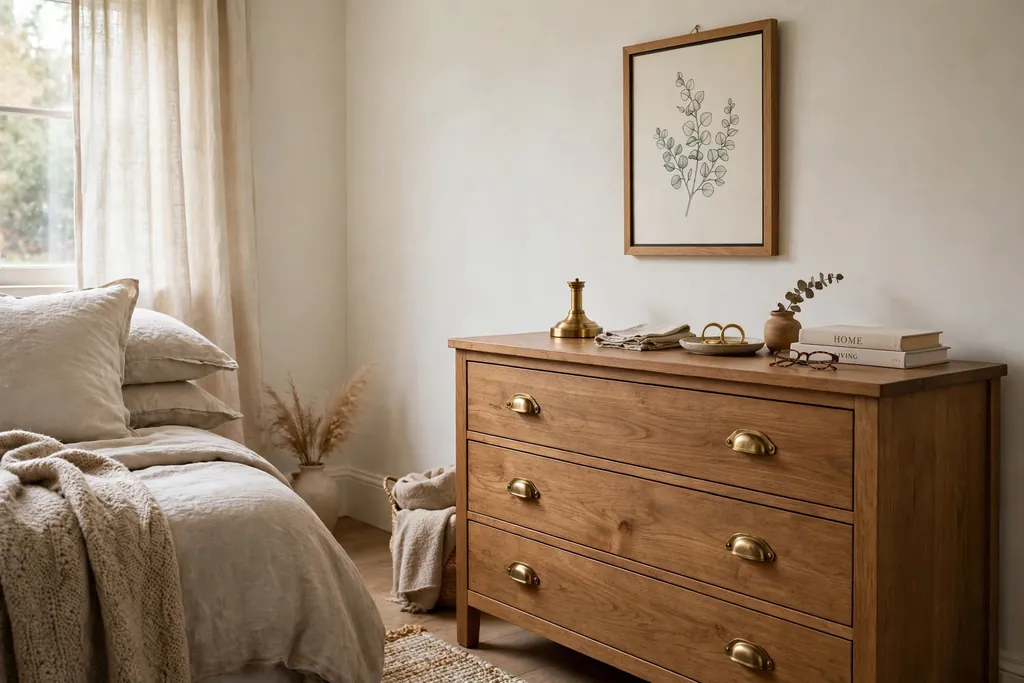
Use brass in two or three small places, such as lamp bases, drawer pulls or a picture frame, for a warm metallic note that suits a neutral bedroom. Brass works best when it is repeated, so one brass lamp alone can look random, while a lamp plus a matching frame or tray looks planned. Keep the finish consistent, either polished or brushed, across the pieces you choose.
Avoid adding brass to every surface, since too much metal can make a calm room feel hard. Pair brass with wood, linen and cream, and let it sit next to soft textures rather than next to chrome or black metal. Wipe brass with a soft cloth to keep it even, and check care guidance for lacquered pieces before using any cleaner.
15. Add Velvet Cushions in a Limited Palette
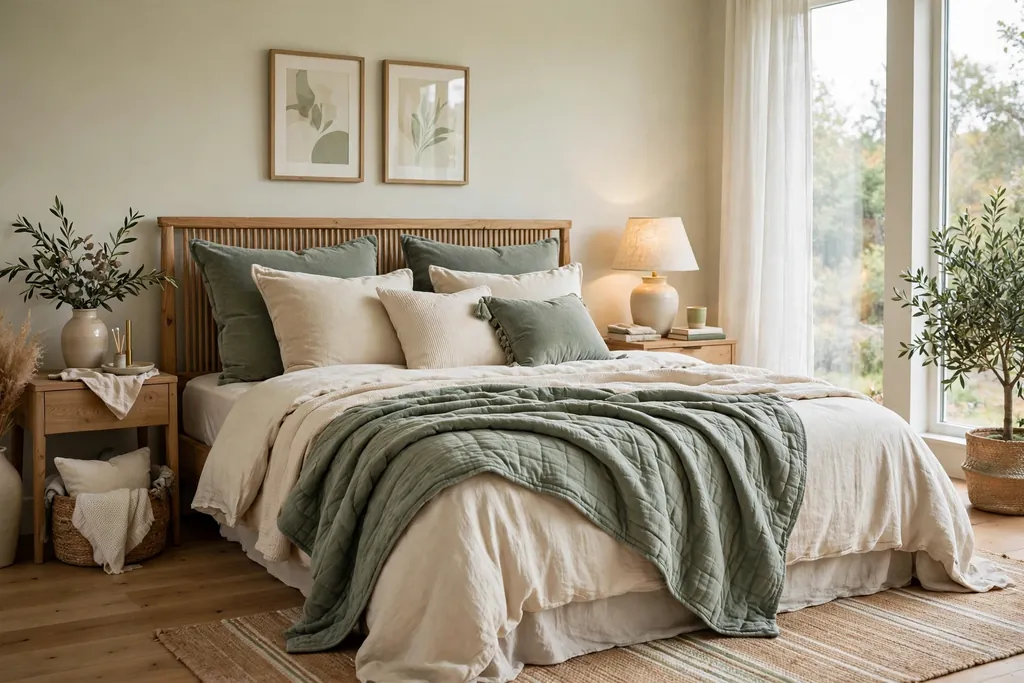
Use two or three velvet cushions on the bed, in colors already in the room, such as cream, sage or dusty rose, for softness that catches the light. Velvet adds depth without pattern, which suits an elegant room, and a small number keeps the bed easy to make. Put a zip cover on each cushion, so you can wash them and swap colors by season.
Keep sleeping pillows clear at night, and store decorative cushions in a basket or on the bench while you sleep, so the bed stays practical. For texture pairings that work with velvet, see these fall bedroom decor ideas, which mix velvet with knit and linen. If you have to move a pile to get into bed, you have too many cushions for daily use.
16. Lean a Tall Mirror to Reflect Daylight
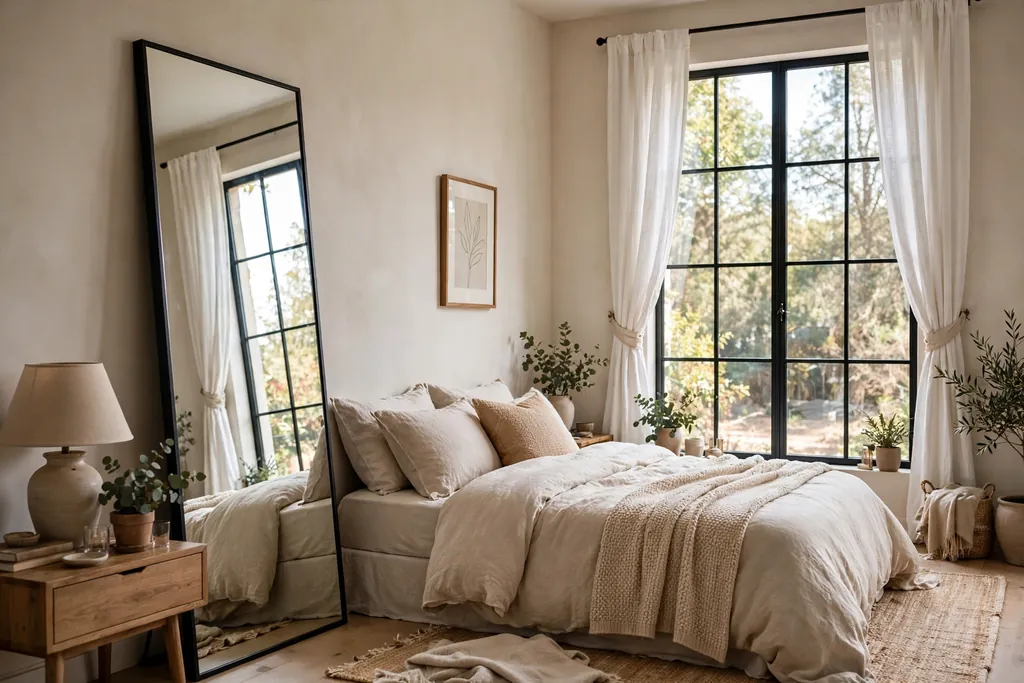
Lean a tall mirror against the wall opposite a window, or beside the bed where it catches daylight, to bounce light deeper into the room and make the space feel larger. A simple wood or brass frame suits an elegant bedroom better than a very ornate frame, which can compete with the bed. Secure the top of the mirror to the wall, even when it leans, so it cannot slip.
Keep the area in front of the mirror clear, so the reflection shows bedding or a plain wall, not clutter. A mirror also helps when dressing, since it gives a full view without a separate standing mirror. If floor space is tight, hang a tall mirror on the wall at the same spot, and keep the frame in the room palette.
17. Keep Clutter in Closed Storage
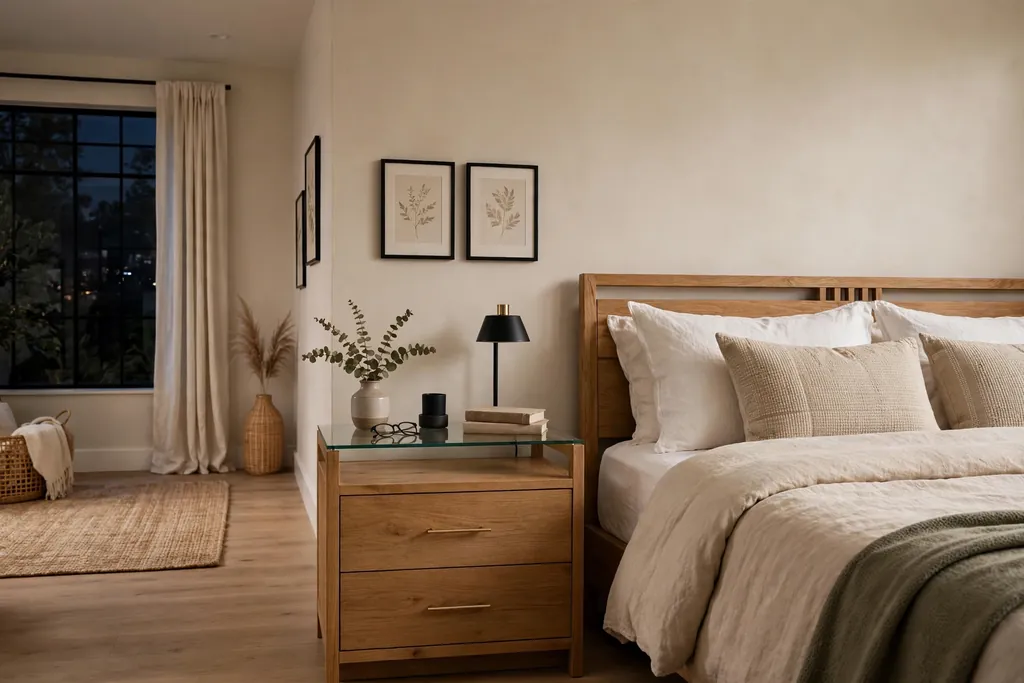
Choose nightstands, a dresser and a wardrobe with drawers or doors, so chargers, medicine, notebooks and spare bedding stay out of sight. Clear tops calm a room more than any new decor, because the bed area is what you see last at night and first in the morning. Give each nightstand one container or drawer for nightly items, and return items to it as part of your evening routine.
Use matching boxes inside open shelves, one per shelf, and measure each box before you buy, so it fits without forcing. Open storage can work if it holds only a few neat stacks, but closed storage is safer for a refined look in a busy household. Do a quick sort once a week, and move anything that has drifted onto a surface back to its drawer.
18. Set a Bedside Tray for the Evening
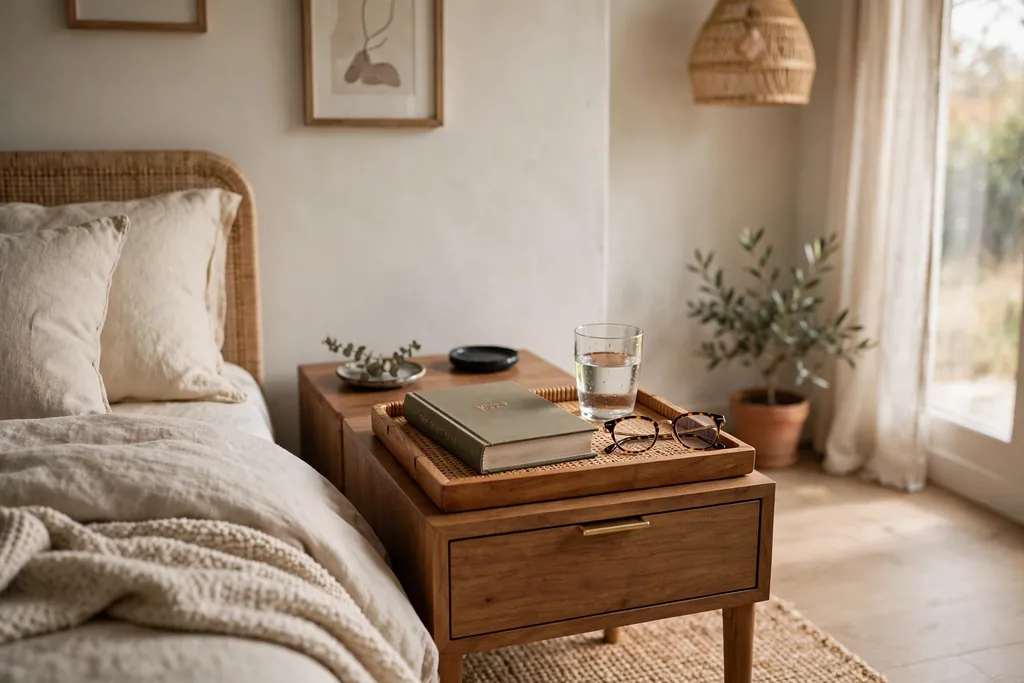
Use a small tray on the nightstand to hold only what belongs to your evening: a book, a glass of water, lip balm and your glasses. Grouping these items keeps the surface tidy and makes the routine feel settled, since everything has one place. Choose a tray with a low edge, so items do not slide off, and pick the smallest size that fits your regular items.
Keep chargers and work papers elsewhere, since a tray that is too large will collect extras and undo the calm look. Clear the tray each morning, return the book to its shelf, and wipe the tray weekly, since nightstands gather dust near bedding. This small habit protects the rest of the room, because a tidy bedside makes the whole bedroom feel more refined.
Conclusion
An elegant bedroom comes from a short list of linked choices, not from replacing everything at once. Start with a calm palette and a well made bed, then add warm layered light, a rug under the bed, and one or two refined details, such as brass, velvet or fresh stems. Keep surfaces mostly clear, give each corner a job, and live with each change before adding the next. With that balance, the room stays restful enough for sleep and polished enough to enjoy during the day. Save this list, and pick the corner you want to improve first.
FAQs
What makes a bedroom look elegant without a remodel?
A calm palette, layered bedding, warm low light and mostly clear surfaces do most of the work. Add one refined detail, such as a tall headboard, matching lamps or framed art in matching frames, and repeat each color at least twice. Avoid adding pattern and shine on every surface at once, since restraint is what makes the room read as elegant rather than busy.
What colors work best for an elegant bedroom?
Warm white, cream, pale grey, soft beige and light wood tones work best for the large pieces, with one deeper accent, such as navy, deep green or muted gold, used in small doses. Test samples in daylight and evening light, since a color that looks warm at noon can look grey at night. Keep bright colors to one small item, such as a cushion or a vase, so the room stays restful.
How many cushions should an elegant bed have?
Two sleeping pillows plus two or three decorative cushions is enough for most beds. Use different textures, such as linen and velvet, in colors already in the room, and store decorative cushions in a basket or on the bench at night. If you have to move a pile to get into bed, remove one cushion at a time until making the bed feels quick again.
Can a small bedroom look elegant?
Yes, if you keep the palette calm, the furniture scaled to the room, and the floor mostly clear. Use a tall headboard, floor length curtains hung high and wide, a large rug under the bed, and a leaning mirror to reflect daylight, all of which help a small room feel taller and less crowded. Choose closed storage over open shelves, and keep decor to one group per surface.
How do I keep an elegant bedroom practical and easy to clean?
Choose washable cushion covers, a low pile rug with a pad, closed storage for nightly items, and a bedside tray for evening essentials. Dust the dresser vignette as one group by lifting its tray, wash bedding in matching sets, and do a short evening reset: clear the nightstand, fold the throw, and return books to their shelf. Practical pieces that are easy to care for will keep the refined look longer than delicate decor.
What lighting works best in an elegant bedroom?
Warm, layered light works best: bedside lamps at about bed height for evening use, a reading light where you read, and a dimmer on the ceiling light for tasks. Keep bulb color consistent across the room, and use warm white bulbs rather than cool white, which can make soft colors look grey. Put switches within reach of the bed, so you can lower the light without crossing a dark room.