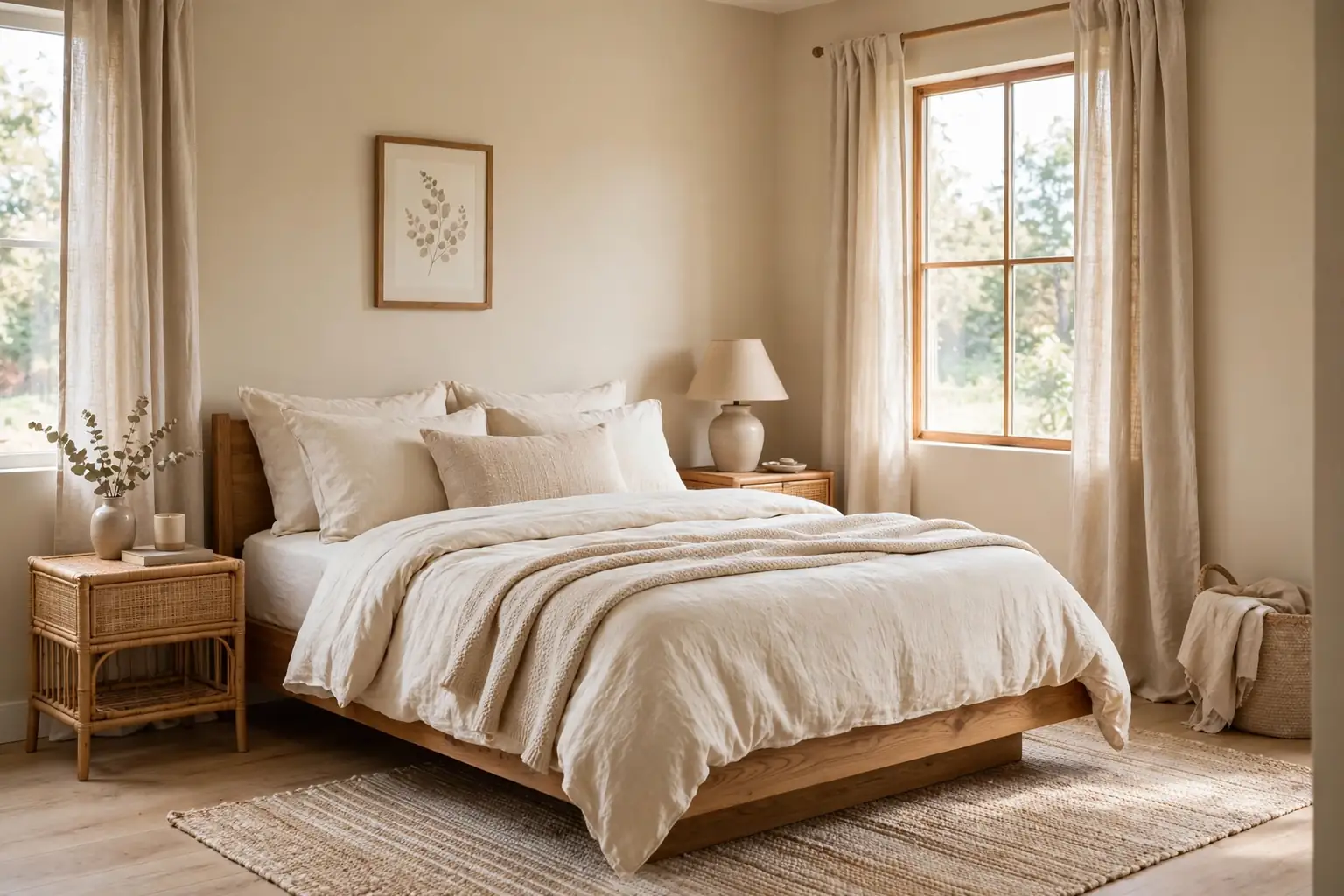
Beige gets a bad name for being boring, but a beige bedroom done well feels warm, calm, and easy to live in. The trick is not to use one flat shade everywhere. Mix warm and cool beiges, add texture through linen, wool, wood, and rattan, and let one or two quiet accents do the talking. These 13 beige bedroom ideas cover bedding, walls, furniture, storage, and small details, so you can refresh a room without repainting everything or buying a whole new set of furniture. Start with the change that will make the biggest difference in your room, then add layers until the space feels soft and finished.
Key Takeaways
- Use at least three beige tones, from pale ivory to warm taupe, so the room has depth instead of looking like one flat color.
- Add texture first: linen, wool, boucle, wood, and woven rattan keep a neutral room interesting without bold color.
- Keep accents quiet and few, such as sage green, charcoal, or natural wood, so beige stays the main color.
- Let light do some work: sheer or linen curtains and pale walls keep a beige room bright rather than dull.
- Start with bedding or curtains for a quick refresh, and save walls and wardrobes for a bigger weekend project.
1. Layer Beige Bedding in Mixed Textures
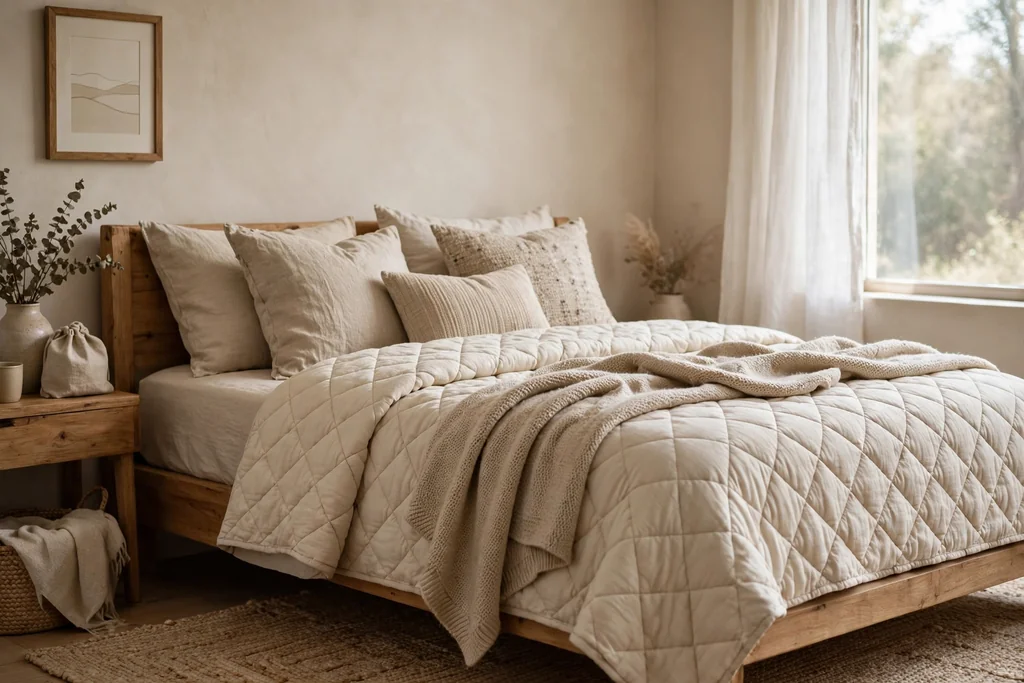
Layered beige bedding is the fastest way to refresh a bedroom, because the bed takes up the most visual space in the room. Start with cream or ivory sheets, add a beige quilt or coverlet, then fold a wool or knit throw across the foot of the bed. Finish with cushions in linen, cotton, and boucle, so each layer feels different to the touch even though the colors stay close.
This suits any bedroom, rented or owned, since it needs no paint or tools. Keep the palest shade closest to your face and the deepest beige at the foot, which gives the bed a natural sense of depth. For a calm, warm bedroom scheme to pair with soft layered bedding, see these hygge bedroom ideas. Wash the throw and cushion covers on a regular cycle, since pale beige shows dust and marks sooner than darker colors.
2. Paint Warm Beige Walls With Crisp White Trim
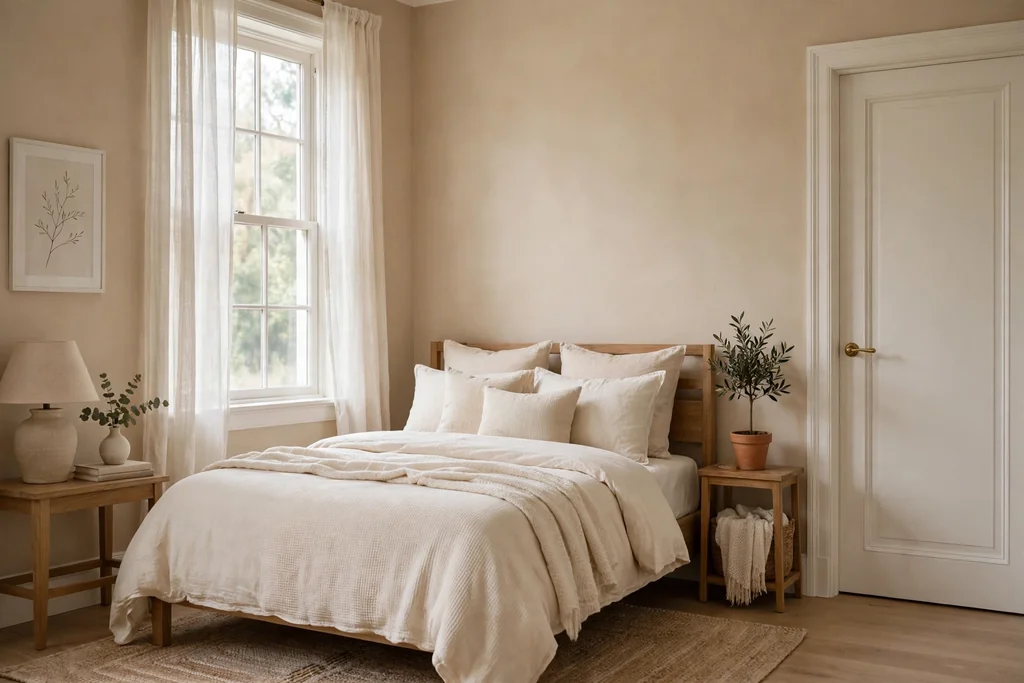
Warm beige walls with crisp white trim give a bedroom a clean frame, and the white keeps the beige from feeling heavy. Choose a warm beige with a hint of yellow or pink, rather than a grey beige, if your room gets cool light. Paint the walls, then keep skirting boards, door frames, and window trim in a bright white so the edges of the room stay sharp.
This suits a bedroom that feels dated or dark, since the change is mostly paint. Test a large swatch on the wall and look at it in morning and evening light before you commit, because beige shifts a lot through the day. For a painted ceiling idea that pairs with warm wall color, see these painted ceiling bedroom ideas. If you rent and cannot paint, the same contrast works with beige bedding against white furniture and white curtain panels.
3. Pair Beige With Natural Wood Tones

Beige and natural wood belong together, because wood adds warmth and grain to a color that can otherwise feel smooth and plain. Use a light oak or warm pine bed frame, add wooden nightstands, and keep one wood tone across the main pieces so the room reads as calm rather than busy. A wooden bench at the foot of the bed or a wood framed mirror repeats the tone without adding more furniture.
This suits a bedroom with pale floors or white walls, where wood stops the room from looking washed out. Match the wood to your floor if you can: warm wood with warm beige, paler wood with cooler beige. Keep the wood finish matte or satin rather than high gloss, which can look harsh next to soft beige fabric. A small wooden tray on the nightstand ties the scheme together in one easy step.
4. Choose a Boucle Headboard in Warm Beige
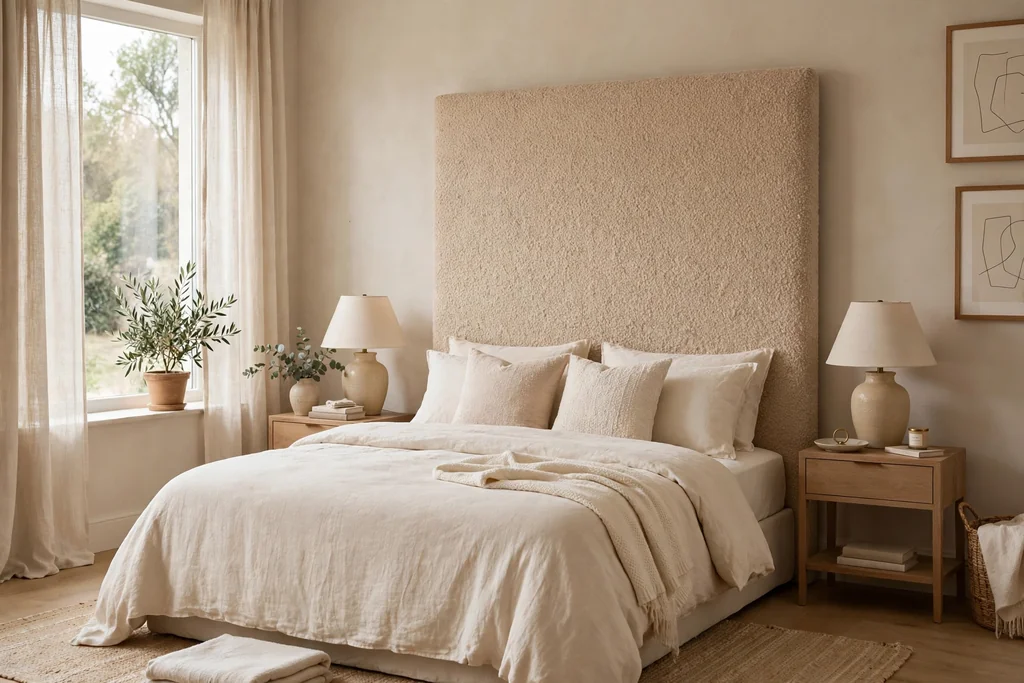
A boucle headboard in warm beige gives the bed a soft focal point and makes the whole room feel considered, even if the rest of the furniture is plain. The nubby texture catches light in a way flat fabric does not, so the headboard adds interest without a pattern or a bold color. Pair it with cream bedding and one or two cushions in a deeper taupe, and keep the wall behind it plain so the texture stands out.
This suits a bedroom where the bed sits against a long blank wall. Measure the headboard width against the bed and the wall, since a headboard that is too narrow looks lost and one that is too wide crowds the nightstands. For a refined bedroom scheme with soft upholstery, see these elegant bedroom ideas. Vacuum the boucle gently with an upholstery tool, since the loops can trap dust over time.
5. Hang Floor to Ceiling Beige Linen Curtains
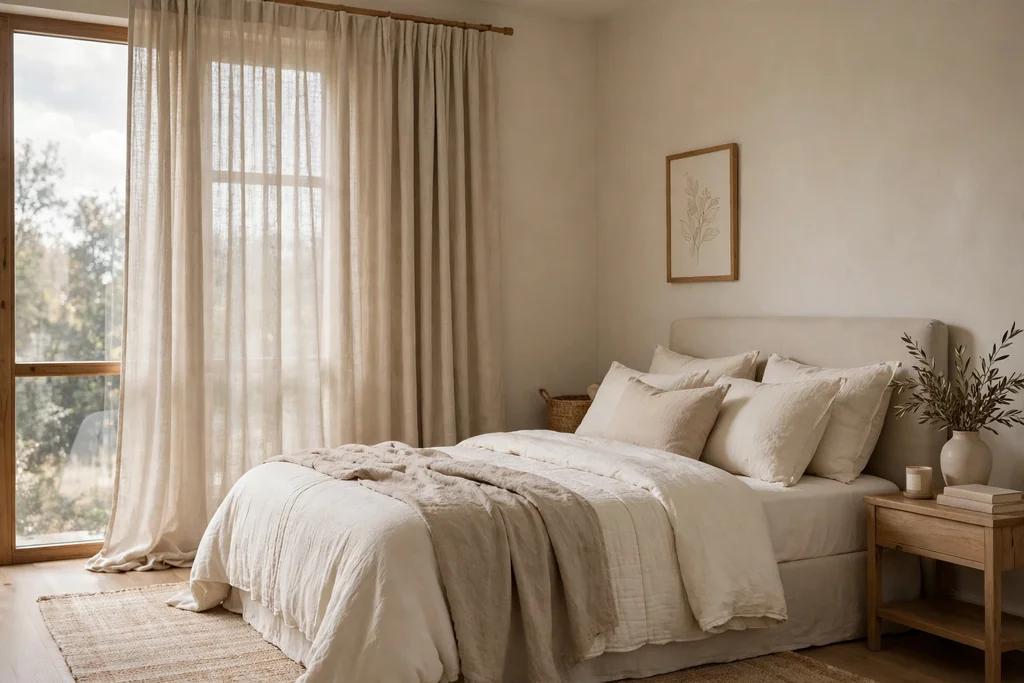
Floor to ceiling beige linen curtains soften a bedroom window and make the ceiling feel higher, especially in a small room. Hang the rod close to the ceiling and wide enough that the curtains clear the window frame when open, so daylight still fills the room. Linen filters light softly, which suits beige walls, since harsh light can make beige look washed out.
This suits a bedroom with one main window that needs both privacy and soft light. Choose a beige a shade deeper than the walls so the curtains read as a deliberate layer, not a match that disappears. For curtain ideas that soften a bedroom and add a fabric layer, see these bedroom curtain ideas. Line the curtains if the room faces a street at night, and let them puddle slightly on the floor only if you can keep the hem clean and free of dust.
6. Anchor the Bed With Layered Beige Rugs

Layered beige rugs anchor the bed and warm up a hard floor, which matters in a room where beige could otherwise feel cold. Lay a large natural jute rug under the bed, then add a softer wool rug on top, slightly off center, so the layers are visible at the sides of the bed. The jute adds texture and size, while the wool gives bare feet a soft place to land in the morning.
This suits a bedroom with wood or laminate floors, and it works well when the rug extends at least a foot beyond each side of the bed. Keep the rug pile low near the door swing, and use a rug pad underneath so the layers do not slip. Shake out the wool rug outside when you can, and vacuum the jute with a brush head, since jute sheds fibers at first.
7. Add a Quiet Sage Green Accent
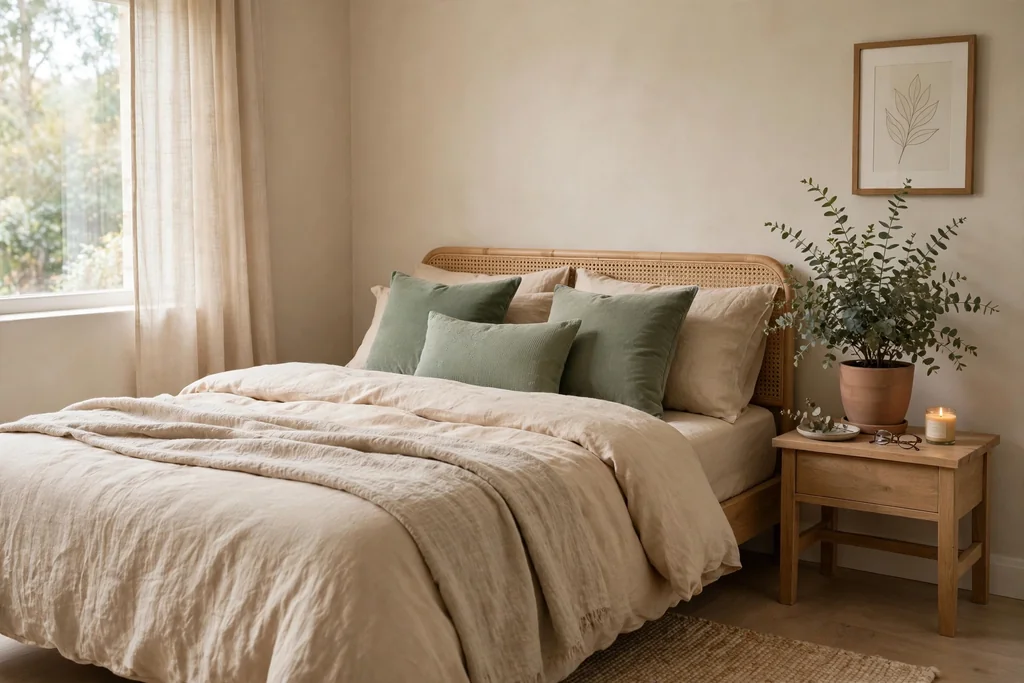
A quiet sage green accent keeps a beige bedroom from feeling one note, without breaking its calm mood. Use sage on two or three small items only, such as a cushion, a throw, and a potted plant, and leave the rest of the room beige. The green reads as a natural note, like leaves against sand, and it pairs well with wood tones and linen.
This suits a reader who likes beige but worries the room will look dull. Keep the sage muted and grey toned, not bright or minty, so it sits back rather than jumping forward. A real plant in a simple pot counts as one of your accents, and it adds life to the corner by the window. If sage does not suit your taste, dusty blue works the same way, but use only one accent color so the room stays restful.
8. Ground Beige With Charcoal and Black Accents
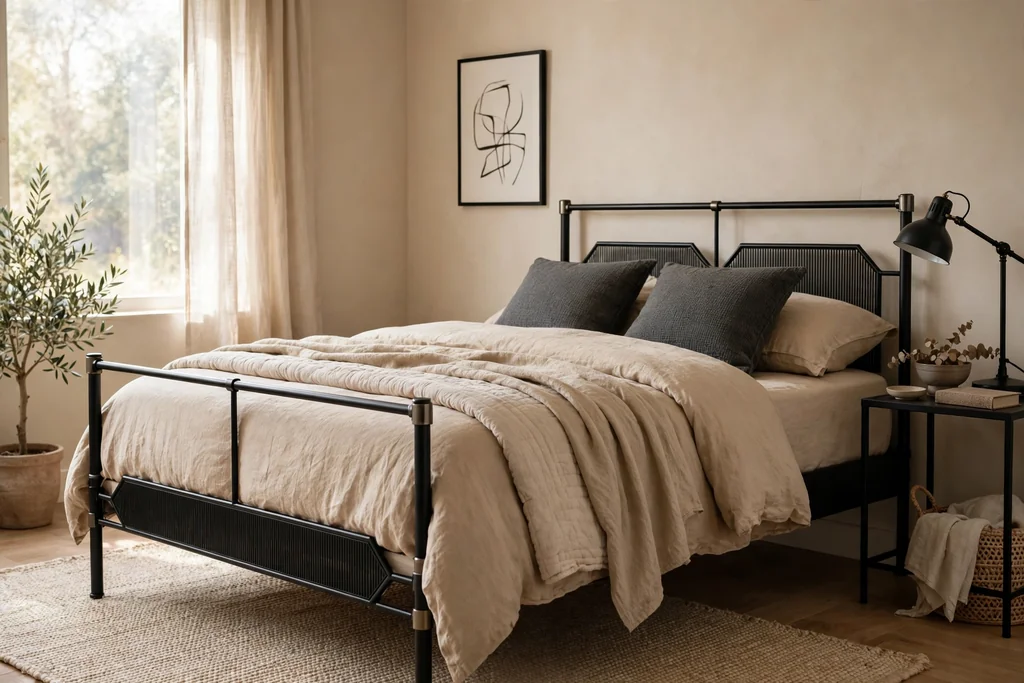
Charcoal and black accents ground a beige bedroom and stop pale colors from floating away. Use black in small, hard items, such as a metal bed frame detail, a lamp base, a picture frame, or a tray, rather than in large blocks of fabric. Two or three black touches are enough to give the room shape, while the beige still sets the mood.
This suits a bedroom that feels too soft or washed out, and it works well in a room with modern furniture. Keep the black matte rather than glossy, which looks softer next to beige linen and wool. Avoid pairing black with a busy pattern, since the contrast will feel loud in a room meant for rest. A black framed mirror over a beige dresser is a simple place to start.
9. Build a Beige Storage Wall That Blends In
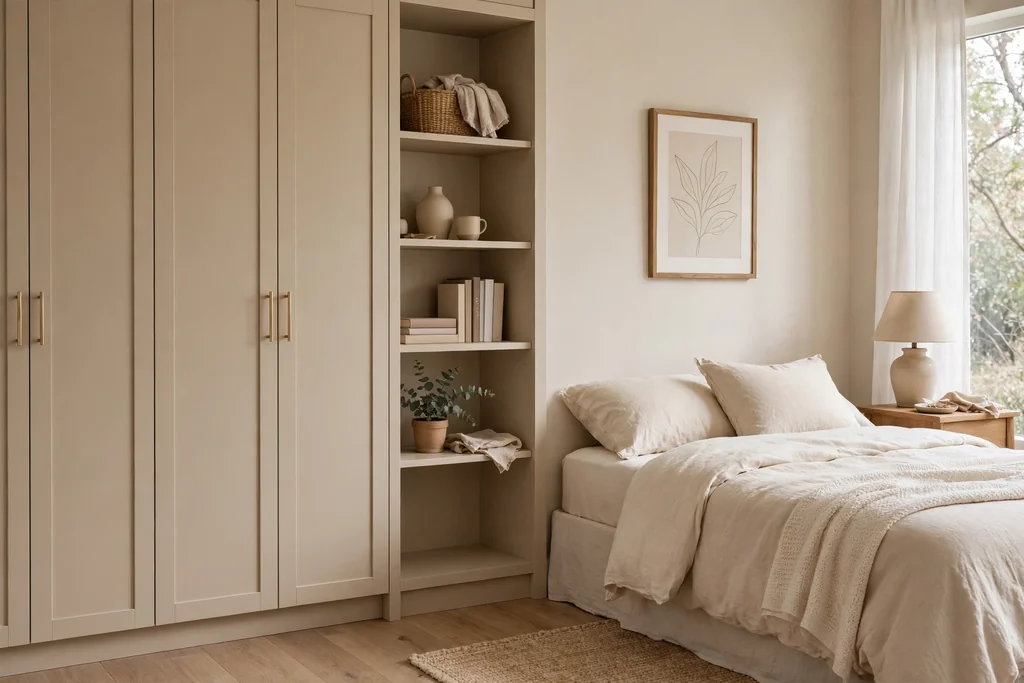
A beige storage wall gives a bedroom generous storage without a bulky wardrobe taking over the room. Use closed cabinets in a warm beige that matches the walls, with a few open shelves for books and a plant, so the wall reads as part of the room rather than a block of furniture. Handleless doors keep the surface calm, and a full height unit uses wall space that a freestanding wardrobe would waste.
This suits a bedroom with no built in closet, or a room where clothes and bedding need a proper home. Plan the interior before the doors: hanging space at one end, drawers in the middle, and high shelves for seasonal bedding. For more bedroom storage planning, see these bedroom storage ideas and these bedroom wardrobe ideas. Measure door swings and drawer pulls carefully, since a storage wall that blocks a walkway will annoy you daily.
10. Create a Beige Reading Corner by the Window
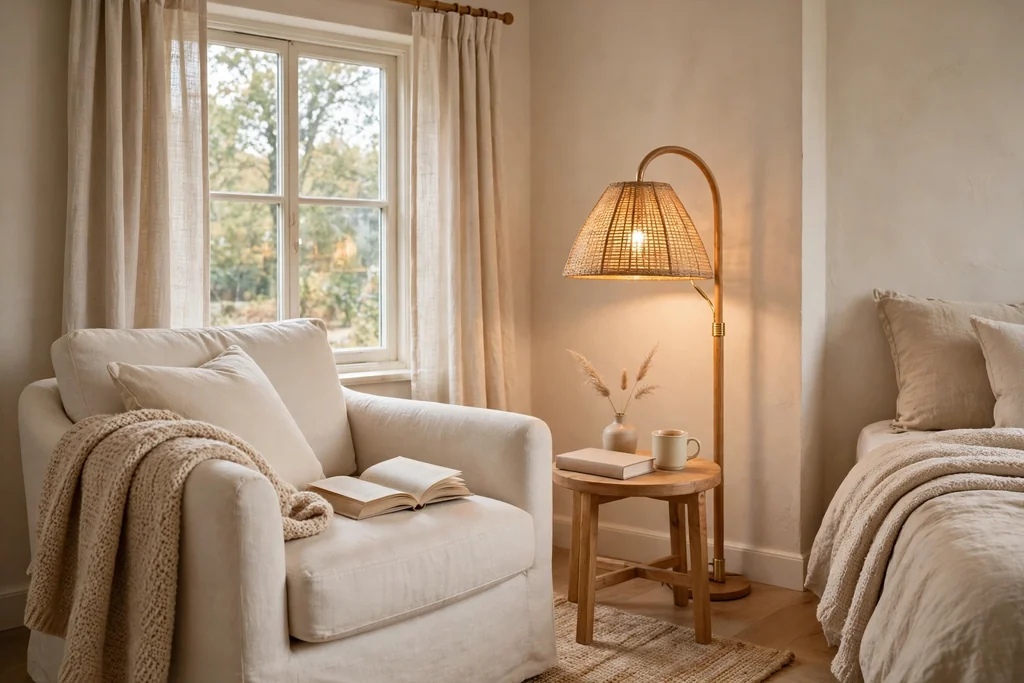
A beige reading corner by the window turns an unused corner into the most used spot in the bedroom. Place a cream armchair near the light, add a small side table for a book and a drink, and fit a warm floor lamp behind the chair for evening reading. A beige throw over the chair arm and a small rug underfoot mark the corner as its own place.
This suits a bedroom with a window corner that currently holds nothing but a laundry basket. Choose a chair deep enough to sit in for an hour, not a stiff accent chair that looks good but stays empty. Keep a basket beside the chair for current books, so the corner stays tidy without a full bookcase. If the window gets strong sun, a linen curtain panel on that side softens the light for reading.
11. Hang a Gallery Wall in Warm Neutral Art

A gallery wall in warm neutral art adds personality to a beige bedroom without adding color that fights the scheme. Choose prints in beige, cream, taupe, and soft brown, with simple wood or black frames, and hang them in a loose grid above the bed or along one wall. Mix landscapes, line drawings, and abstract shapes, but keep the palette tight so the wall feels calm.
This suits a bedroom with a large blank wall that needs interest but not a bold feature color. Lay the frames on the floor first and plan the spacing, leaving equal gaps between frames, then hang the middle frame at eye level. Use picture hanging strips if you rent, and keep the largest frame in the center so the arrangement feels balanced. Swap one print with the seasons if you want a small change without redecorating.
12. Bring In Rattan and Woven Details
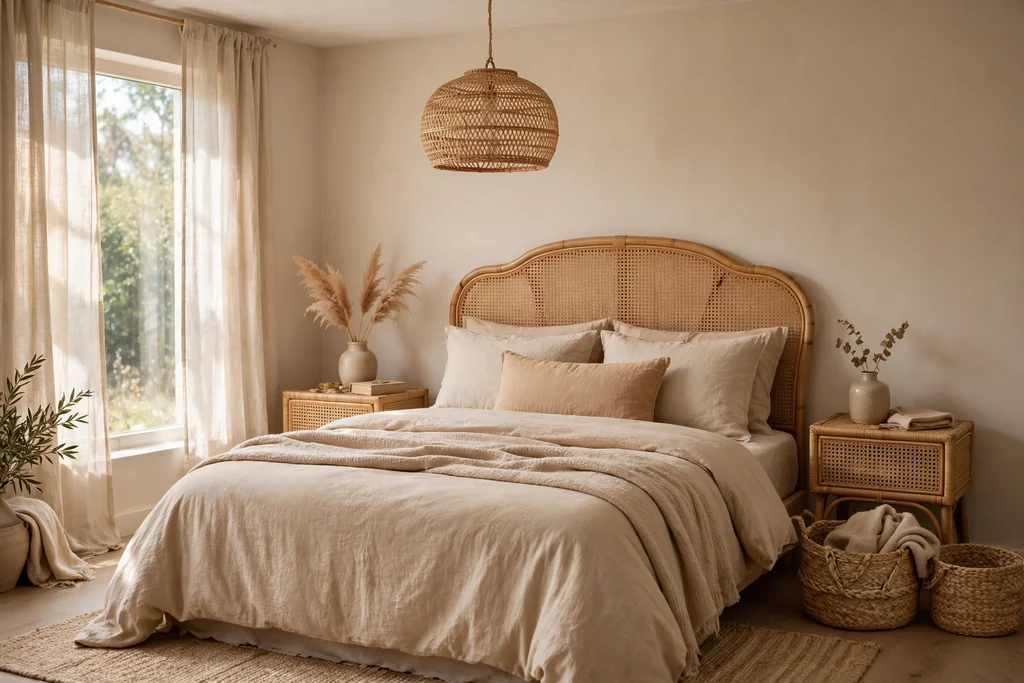
Rattan and woven details add a natural, relaxed layer to a beige bedroom, and they work well with both wood and linen. Use a rattan headboard or a woven pendant light as the main piece, then repeat the material once or twice in baskets, a tray, or a chair. The open weave lets light through, so the room keeps its airy beige feel instead of getting heavy.
This suits a bedroom that leans casual or coastal, and it pairs well with warm beige walls. For seasonal warmth in a beige room with natural textures, see these fall bedroom decor ideas. Keep rattan out of damp corners, since it can warp, and dust woven pieces with a dry cloth or a soft brush. If the room already has a lot of wood, use rattan in just one or two spots so the textures do not compete.
13. Go Tone on Tone From Ivory to Taupe
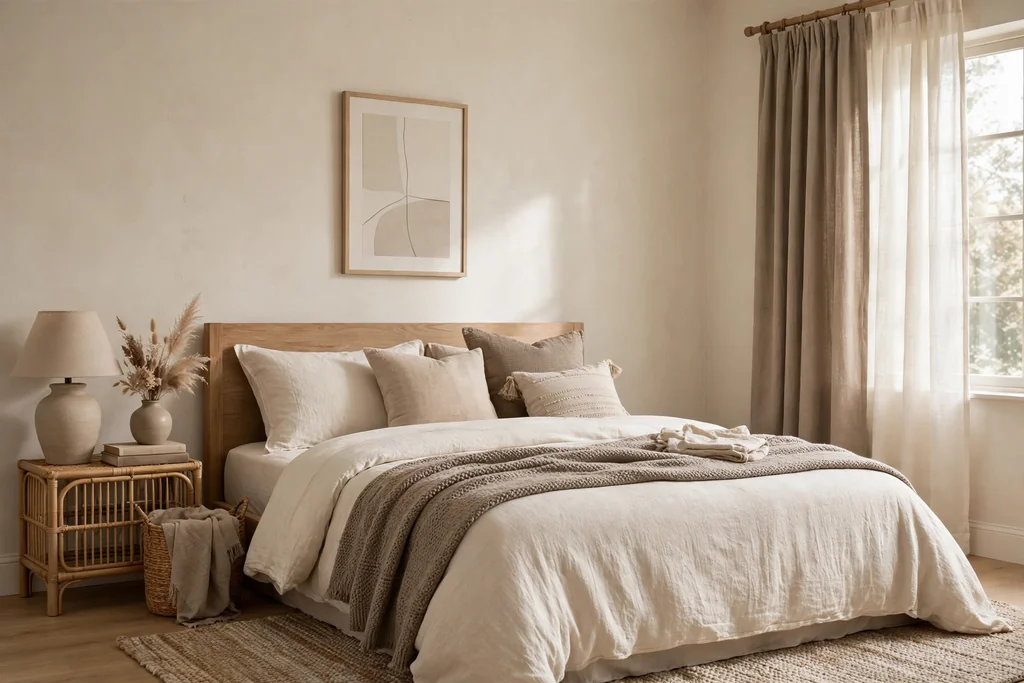
A tone on tone beige bedroom uses shades from ivory to taupe across walls, bedding, curtains, and rugs, and it works because the small steps between shades create depth. Start with ivory walls or bedding, move to warm beige for the main furniture and curtains, and finish with taupe cushions, a throw, and art frames. No single piece shouts, but the room as a whole feels layered and finished.
This suits a bedroom where you want a calm, hotel like feel without a feature wall or a bright accent. The risk is flatness, so vary texture at every step: smooth cotton sheets, nubby wool, matte paint, and woven baskets all in beige tones. Stand back and check the room in daylight: if two shades blend into one, swap one item a shade darker or lighter. This is the most forgiving beige scheme, since a new cushion or throw can shift the balance without a big change.
Conclusion
A beige bedroom works best when beige is a family of colors and textures, not a single shade repeated everywhere. Start with the layer you notice most, usually bedding or walls, then add wood, linen, and woven texture, and finish with one quiet accent. Keep the palette tight, let light in, and give each beige tone a job, so the room feels warm and restful rather than flat.
Save this list on Pinterest before you start, and work through it one idea at a time: bedding first for a quick refresh, then curtains and rugs, then walls and storage when you have a weekend to spare.
FAQs
Is beige too boring for a bedroom?
Beige only feels boring when it is one flat shade with no texture. Mix ivory, warm beige, and taupe, and add linen, wool, boucle, wood, and rattan, and the room gains depth without bold color. A quiet accent, such as sage green or charcoal, also helps, as long as it stays to a few small items.
What color goes best with beige in a bedroom?
Soft, muted colors work best: sage green, dusty blue, warm white, natural wood, and charcoal all sit well with beige. Avoid bright or neon colors in large amounts, since they fight the calm mood beige creates. Pick one accent color and repeat it in two or three small places.
Should beige bedroom walls be warm or cool?
Warm beige, with a hint of yellow or pink, suits most bedrooms, especially rooms with cool or north facing light. Cool beige, with a grey undertone, suits a bright, south facing room or a modern scheme with grey furniture. Test a large swatch in morning and evening light before you paint the whole room.
How do I keep a beige bedroom from looking dirty?
Choose washable fabrics for bedding and cushion covers, and vacuum rugs and upholstery on a regular cycle. Keep pale beige for items you can wash, such as sheets and throws, and use deeper taupe for items that are harder to clean, such as a headboard or a rug. A quick weekly tidy stops dust from dulling pale colors.
Can I mix beige with grey in a bedroom?
Yes, but keep the mix deliberate: use warm beige as the main color and cool grey as a small accent, or the reverse, rather than mixing both in equal amounts. A grey throw on beige bedding, or grey frames on a beige wall, works well. If the two colors clash, the undertone is usually the cause, so test fabrics together in daylight.
Does a beige bedroom work in a small room?
Yes, beige is a good choice for a small bedroom, since pale colors reflect light and make walls feel farther apart. Keep furniture low and pale, use floor to ceiling curtains to raise the ceiling line, and avoid dark, bulky pieces that break up the room. A large rug in a pale beige also helps the floor feel continuous.