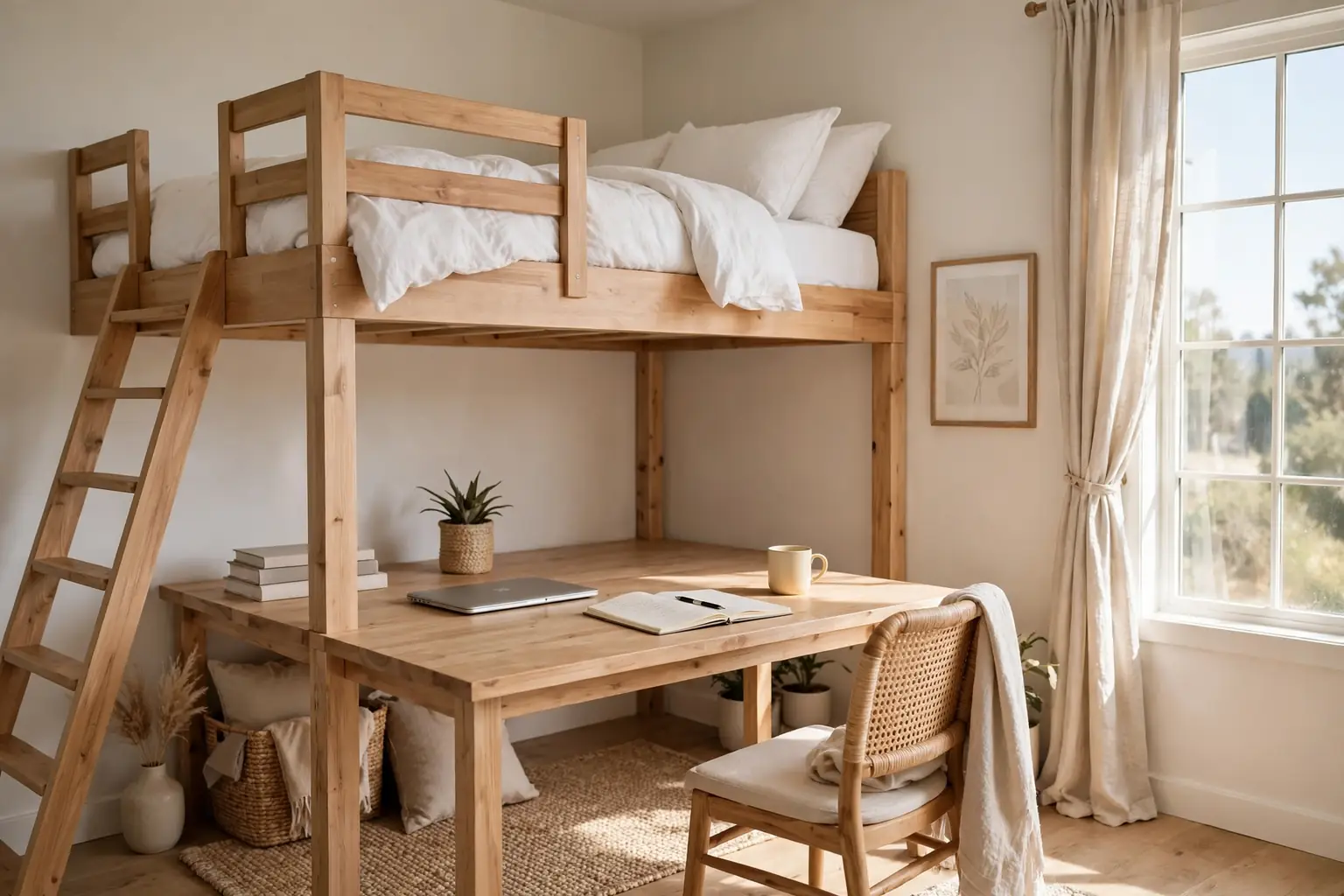
A loft bed changes how a bedroom works, because it lifts sleep overhead and hands the floor back to the rest of life. In a small room, a studio, or a shared bedroom, the open space below can hold a desk, a wardrobe, a reading chair, or a small sofa, without adding a single square foot. These 28 loft bed bedroom ideas cover desks, storage, lounges, play corners, and studio layouts, so you can pick the setup that suits your ceiling height, your budget, and who sleeps up top. Before you buy or build, measure twice: you need sitting height on the bed and standing room below, plus a ladder or stairs that feel safe in the dark.
Key Takeaways
- Measure first: you need enough sitting height above the mattress and enough standing height below the bed frame, or the loft will feel cramped on both levels.
- Give the space below the bed one clear job, such as work, storage, or rest, so it stays useful instead of turning into a dumping ground.
- Choose stairs with drawers for daily use and small children, and a fixed ladder when floor space is tight and the sleeper is steady on ladders.
- Keep the guardrail high, the mattress low profile, and the area around the ladder clear, especially for children and night time trips.
- Repeat one soft detail up top, such as a cushion, a throw, or a warm lamp, so the loft bed feels like a cozy sleeping spot and not just a platform.
1. Put a Study Desk Under a Twin Loft Bed
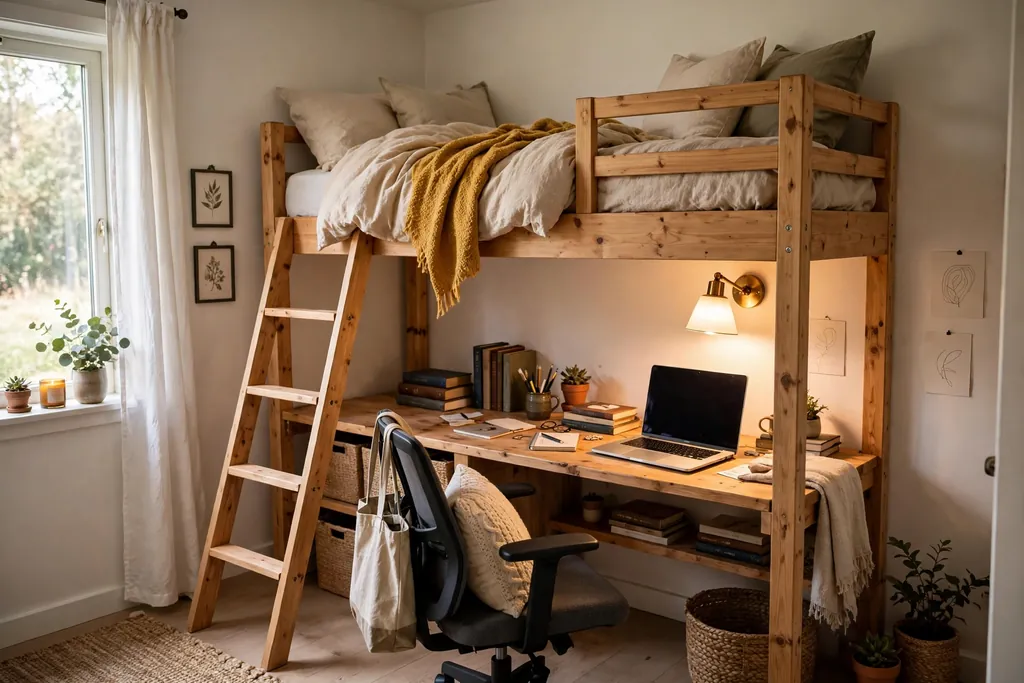
A twin loft bed with a desk below is the classic small bedroom setup, and it works because it gives one person two rooms in the footprint of one bed. Place the desk against the wall under the bed, with a chair that tucks fully underneath when not in use. A wall mounted lamp keeps the desk surface free, and a small shelf above the desk holds books and chargers within reach.
This suits a student bedroom or a home office corner where floor space is short. Keep the desk depth modest so the chair has room to pull out, and run cables along the wall to avoid a tangle at foot level. If two people share the room, give each sleeper their own desk zone rather than squeezing two chairs under one loft.
2. Fit a Wardrobe and Drawers Below the Bed
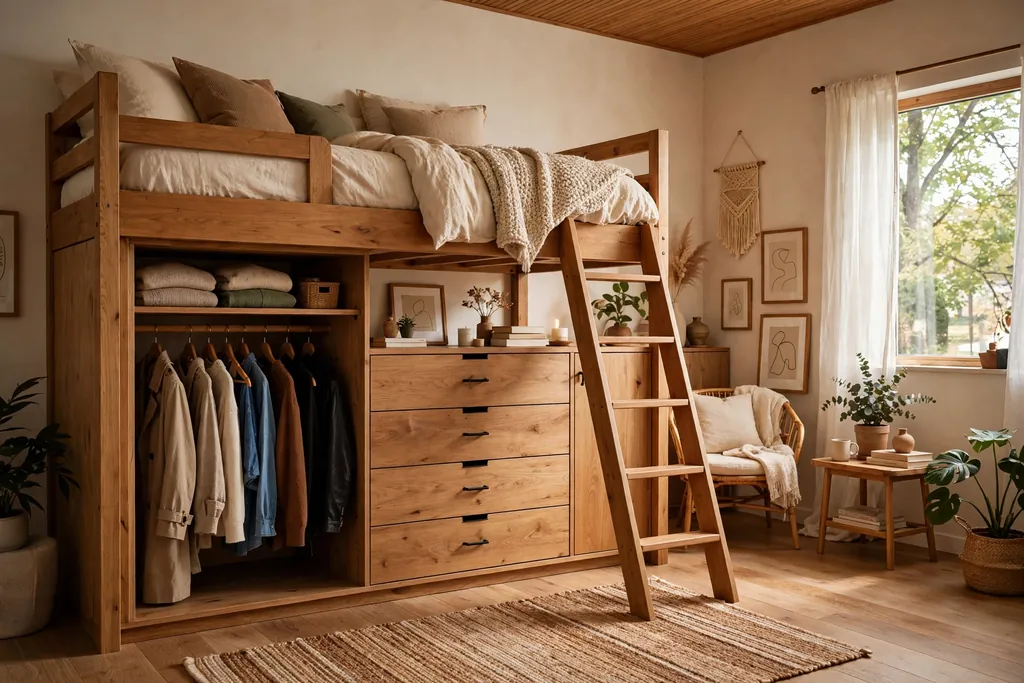
A loft bed over a wardrobe turns the dead space below into the room’s main clothing storage. Use a low wardrobe or a set of drawer units that fit under the frame with room to open doors and drawers fully. Hang the clothes you reach for daily at the front, and keep seasonal items in boxes on the top shelf of the unit.
This idea suits a bedroom with no built in closet, or a room where a freestanding wardrobe would block the window. Measure the clearance before you order, since a wardrobe that is too tall will not fit under a standard loft frame. For a similar approach to bedroom storage in a plain room, see these bedroom curtain ideas for softening a storage wall with fabric panels.
3. Build a Reading Nook Under the Loft
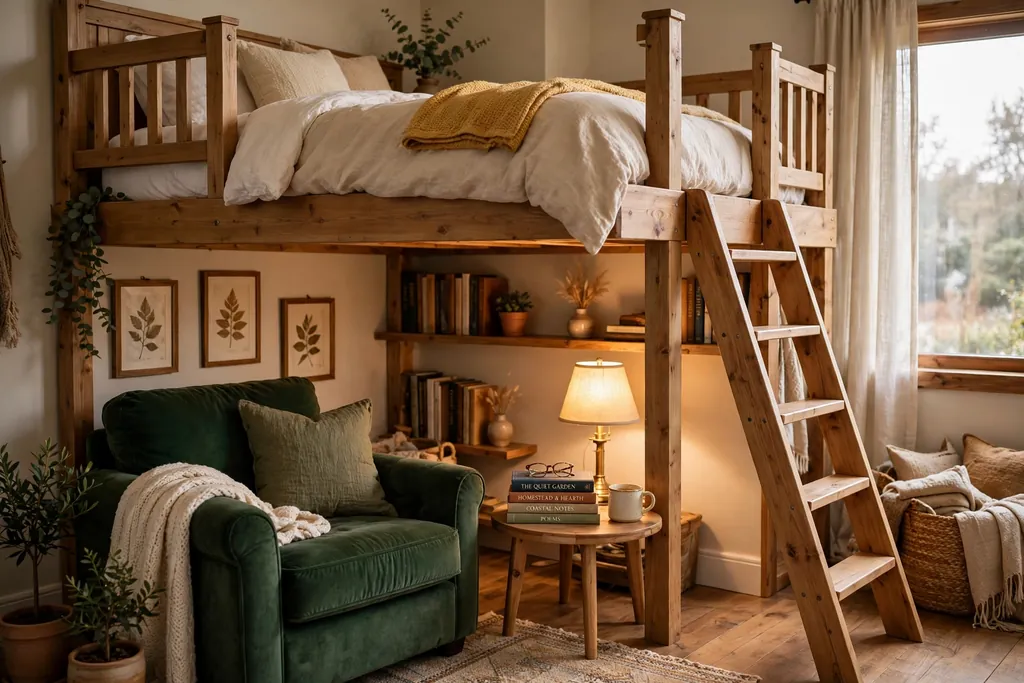
A reading nook under a loft bed gives a bedroom a quiet corner that feels separate from the rest of the room. Place a deep armchair or a pile of large floor cushions below, add a small side table for a book and a drink, and fit a warm reading lamp that you can switch on from the chair. A rug under the chair marks the nook as its own spot.
This suits readers who want a place to unwind without leaving the bedroom. Keep the nook low and soft, since headroom under a loft is limited, and choose a chair you can sink into rather than an upright office chair. A blanket draped over the chair arm makes the nook inviting on cold evenings, and a basket beside it keeps current books tidy.
4. Place a Small Sofa Lounge Below the Bed
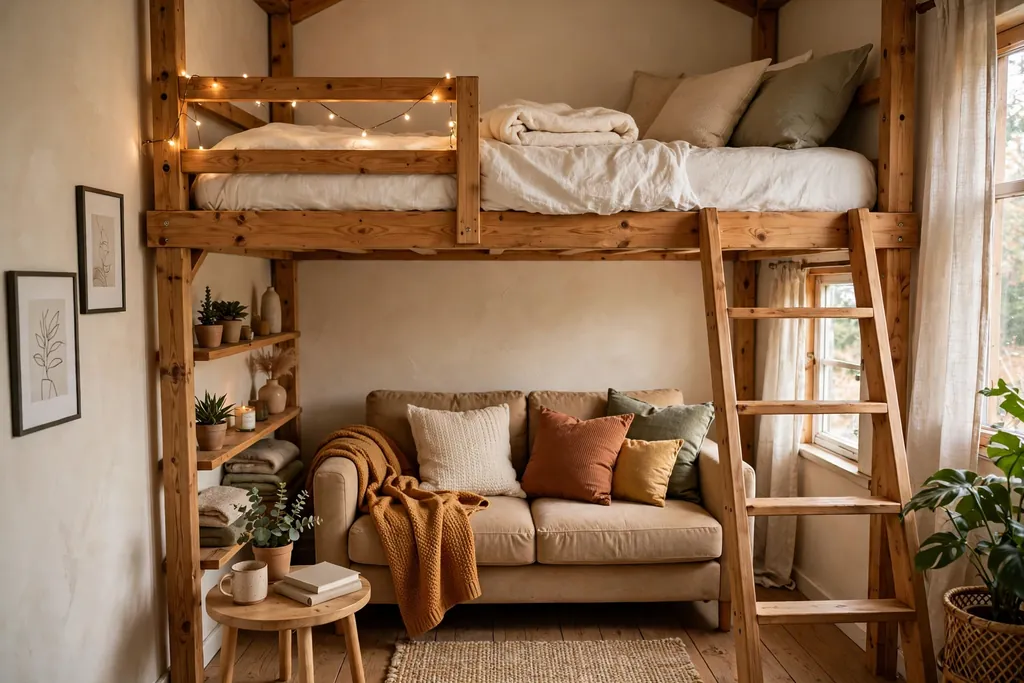
A small loveseat or a compact sofa under a loft bed turns a bedroom into a place to sit with friends, not just sleep. Pick a sofa that fits the width of the bed frame, and add two cushions and a throw so it reads as a lounge rather than spare seating. A small coffee table only works if there is room to walk around it, so keep it slim or use a side table instead.
This setup suits a teen bedroom or a studio where the bed area also serves as the living area. Keep the sofa back low so it does not crowd the bed frame, and choose a fabric that handles daily sitting. If the room is shared, agree that the lounge is a shared space while the loft above stays private to the sleeper.
5. Combine a Desk With a Bookshelf Wall Below
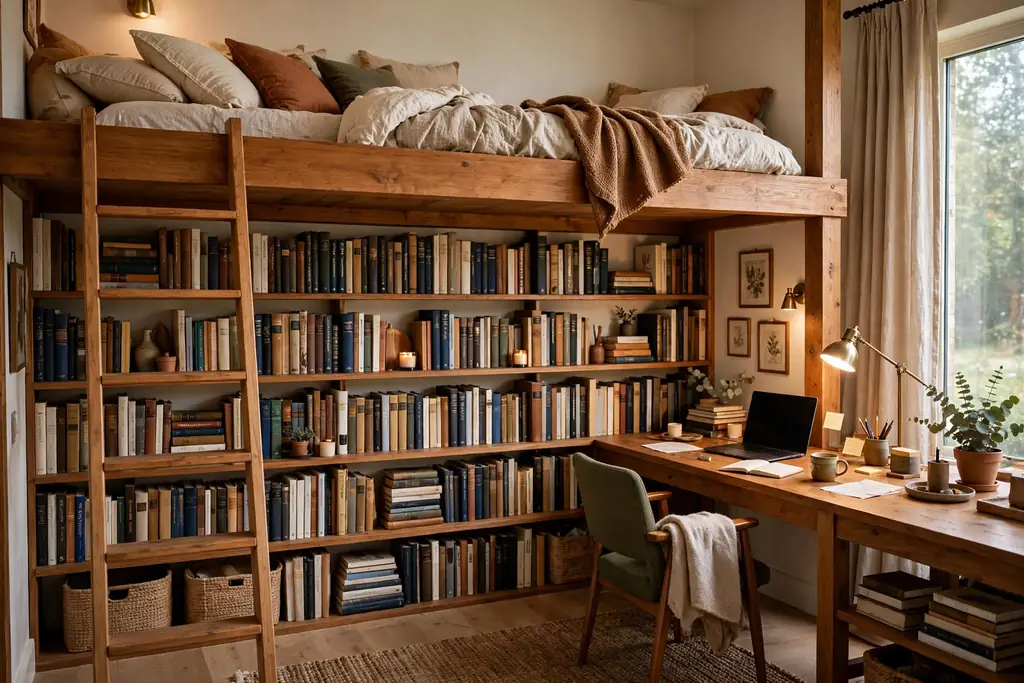
A desk paired with a full bookshelf wall below a loft bed suits a reader or a student with a large book collection. Run shelves along the wall under the bed, from desk height up to the underside of the frame, and keep the most used books at arm height from the desk chair. A desk that spans the width of the bed gives room for a laptop, a notebook, and a lamp at once.
This works best when the shelf wall is fixed to the studs and the loft frame is anchored to the wall, so nothing wobbles when books are pulled out. Leave one shelf open for a plant or a photo frame so the wall does not look like a library shelf only. Keep heavy books low, where they are easier to reach and kinder to the shelves.
6. Wrap an L Shaped Loft Into a Corner
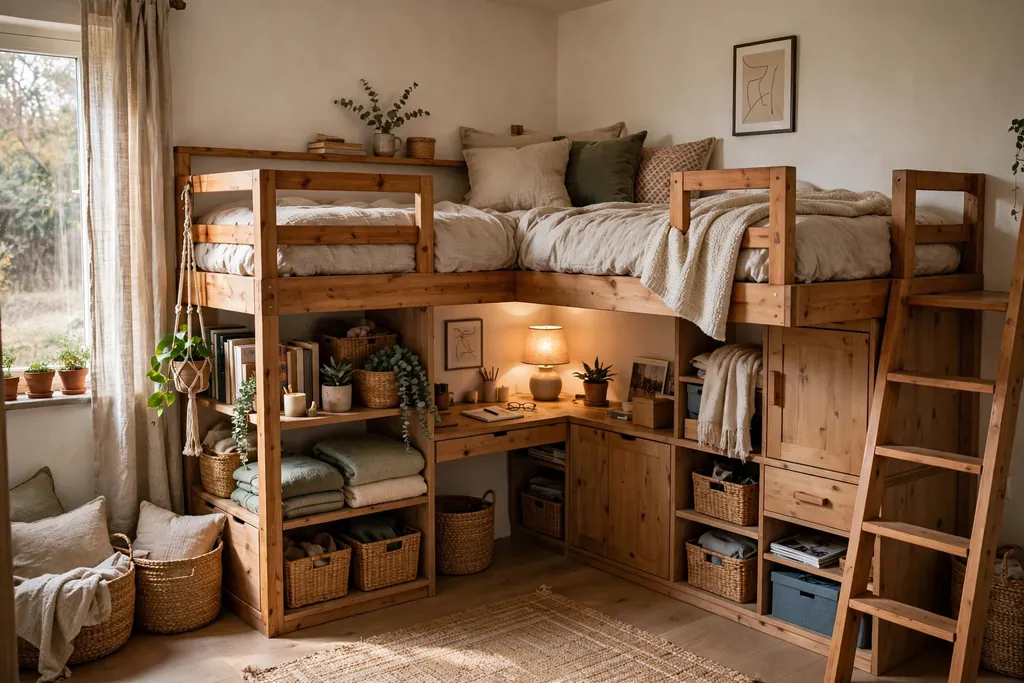
An L shaped loft bed turns an awkward corner into the most useful part of the room. The bed runs along one wall, and a return section at right angles holds a desk, shelves, or a dresser, so the corner works on two sides at once. This layout leaves the middle of the room open, which helps a small bedroom feel less boxed in.
This suits a square room where a straight loft would leave a dead corner. Plan the return section first, since its depth decides how much floor stays free, and keep the ladder or stairs on the open side where they are easy to reach. A corner loft also gives the sleeper two walls to lean against, which makes the top feel sheltered and snug.
7. Climb Stairs With a Drawer in Every Step
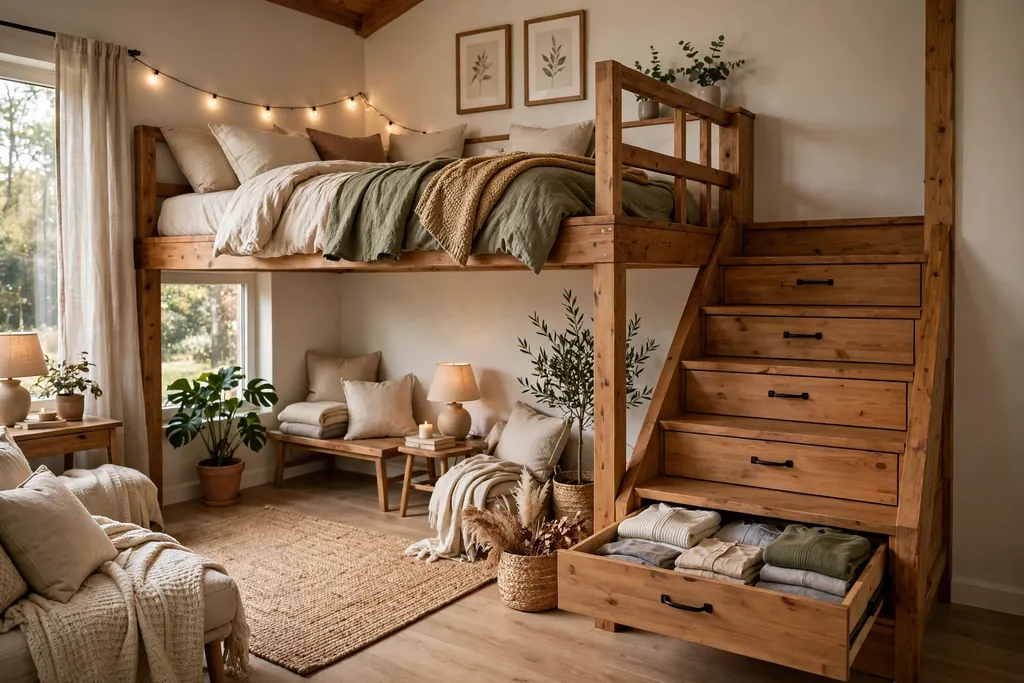
Stairs with a drawer in every step replace a ladder with storage you use every day. Each step pulls out to hold socks, chargers, books, or craft supplies, and the wider tread feels safer than ladder rungs, especially at night. Build or buy a stair unit that matches the loft height exactly, so every step rises the same amount.
This suits children, older sleepers, and anyone who climbs up half asleep. Keep the top drawer for night time items, such as a phone charger and a book, so they are close to the bed. Stairs take more floor space than a ladder, so measure the run carefully, and leave the bottom step clear of rugs that could slip underfoot.
8. Tuck a Vanity and Dressing Corner Underneath
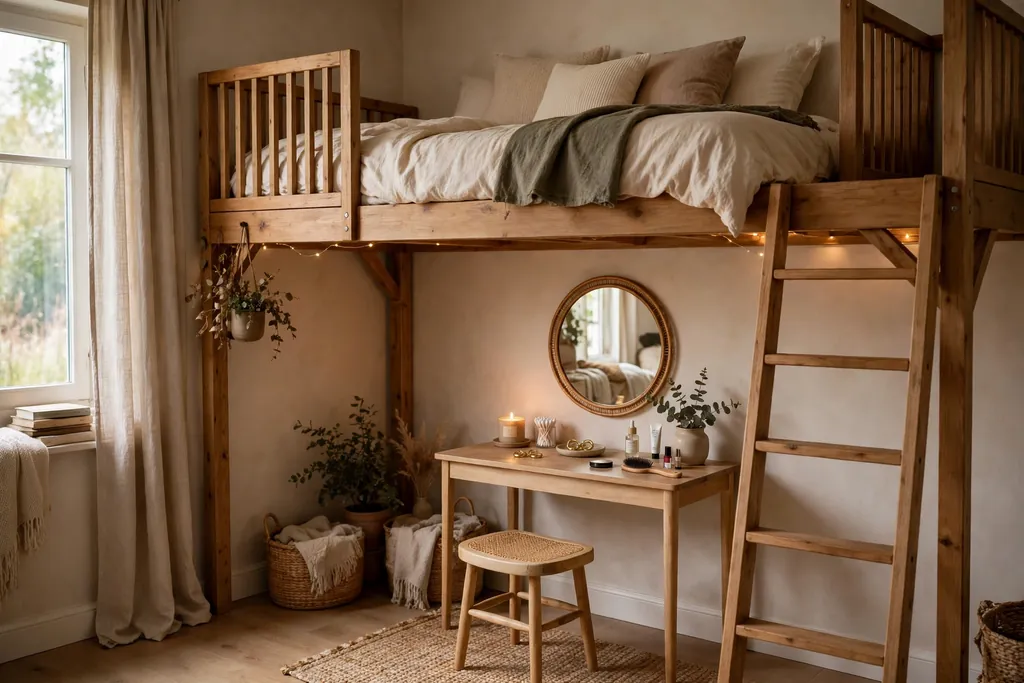
A vanity corner under a loft bed gives a bedroom a dressing area without a separate table taking up floor space. Place a narrow dressing table under the far end of the bed, add a mirror on the wall above it, and fit a small stool that slides fully underneath. A wall light on either side of the mirror gives even light for mornings.
This suits a bedroom where the main dresser would crowd the door or the window. Keep the vanity shallow so the stool has legroom, and store daily items in one drawer rather than spreading them across the table. A small tray for jewelry and a hook for a robe keep the corner tidy, and the bed above shades the mirror from harsh overhead light.
9. Keep a Play Area Below a Child Loft Bed
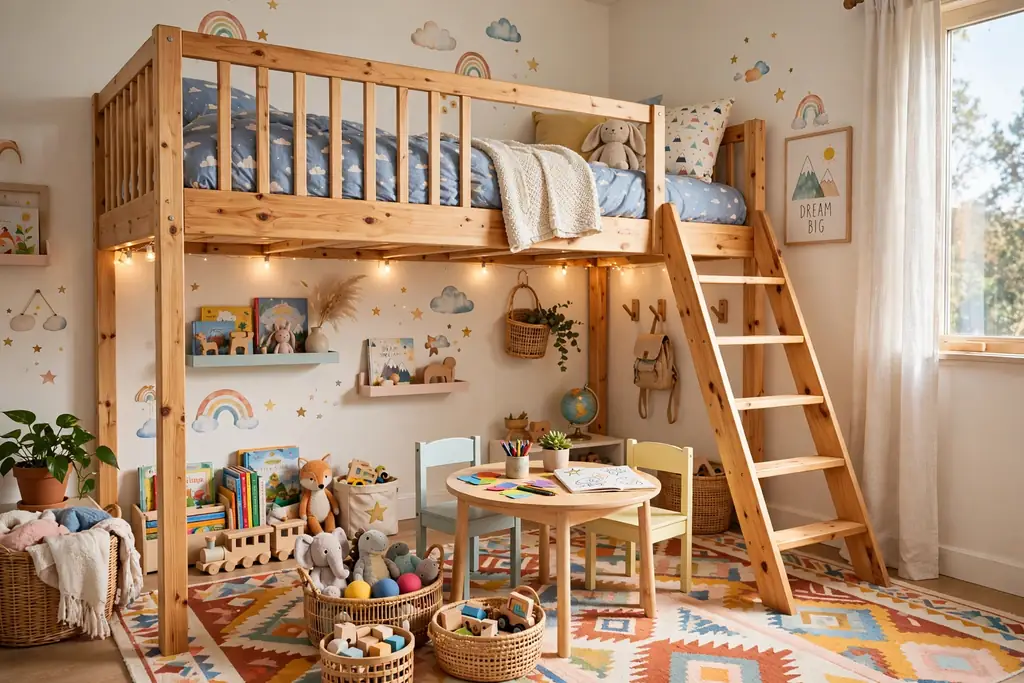
A play area below a child loft bed gives play a home base that can be tidied in minutes. Place a low rug, a basket of toys, and a small table under the bed, and let the frame act as a den roof that makes the space feel like a hideout. Keep toys in open baskets so a child can reach them without climbing.
This suits a shared kids room where floor space is shared by two children. Set a clear rule that the play area is for play and the ladder is only for the sleeper, so climbing stays safe. Choose soft, washable pieces below, since the area will see daily use, and keep the space low enough that a standing child cannot bump their head on the frame.
10. Set Up a Craft Table Under the Loft
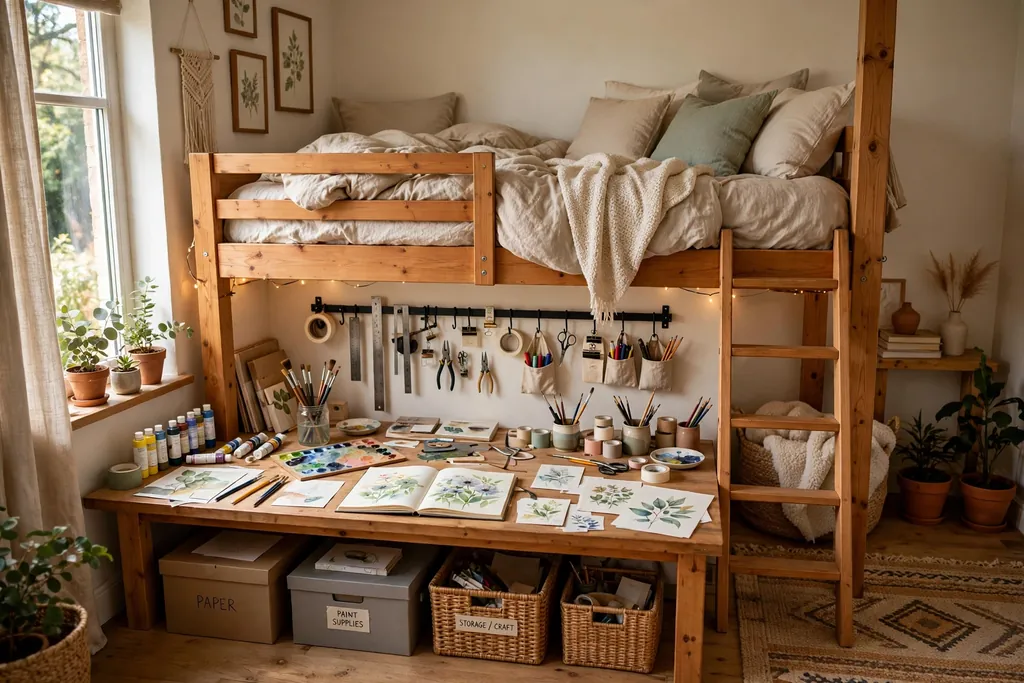
A craft table under a loft bed gives messy projects a permanent spot that does not take over the dining table. Use a sturdy table that fits the width of the bed, add a pegboard or a rail on the wall for tools, and store supplies in labeled boxes on a shelf above the table. A bright task lamp matters more here than in a reading nook, since craft work needs clear light.
This suits a maker who works in short bursts and wants to leave a project out between sessions. Cover the table with a wipe clean mat, and keep a small bin underneath for offcuts so the floor stays clear. If the room is shared, a curtain across the craft bay hides works in progress when guests visit.
11. Hang a Chair or a Swing Below the Bed
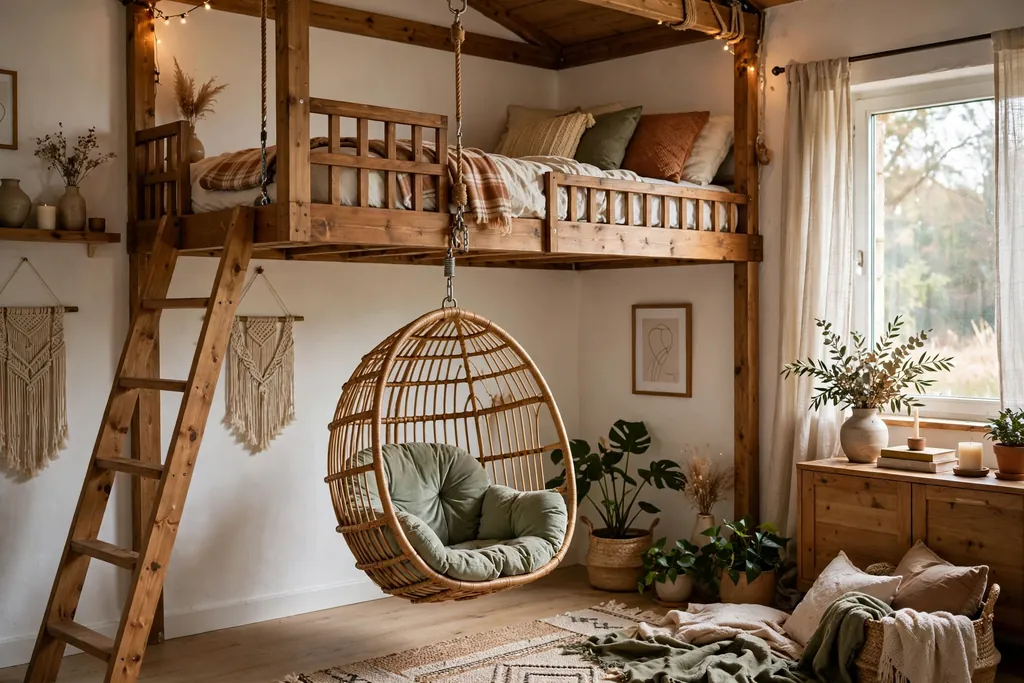
A hanging chair below a loft bed adds a gentle, swinging seat to a bedroom that has no room for a full armchair. Fix the chair to a ceiling joist or a rated beam, never to the bed frame alone, and leave enough swing room that it does not hit the desk or shelves beside it. A cushion and a throw make the chair a place to sit for a long stretch.
This suits a teen room or a small bedroom where a reading corner must fit in a single square of floor. Check the fixing weight rating and the joist position before you hang anything, and test the swing arc with the chair empty first. Keep the floor below clear, since feet need room to push off and stop.
12. Add a Daybed as a Second Sleep Spot Below
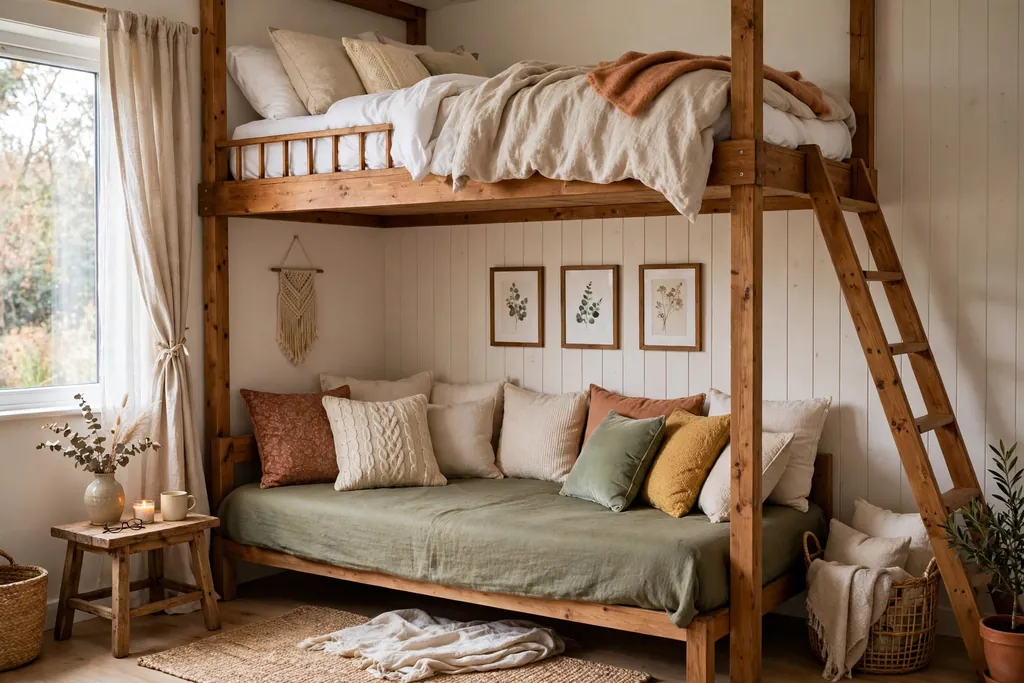
A daybed under a loft bed gives a room a second sleep spot for guests or a sibling, without a second bed frame crowding the floor. By day it reads as a sofa with cushions along the wall, and by night it becomes a bed with a quick change of bedding. Pick a daybed that slides fully under the loft so it does not block the ladder.
This suits a guest room or a shared bedroom where sleepovers happen often. Keep a second set of bedding in a drawer nearby so the changeover takes minutes, and choose a daybed mattress that is comfortable enough for a full night. If the room is small, skip a bulky coffee table in front of the daybed so guests can get in and out easily.
13. Build a Bookshelf Headboard Wall Into the Loft
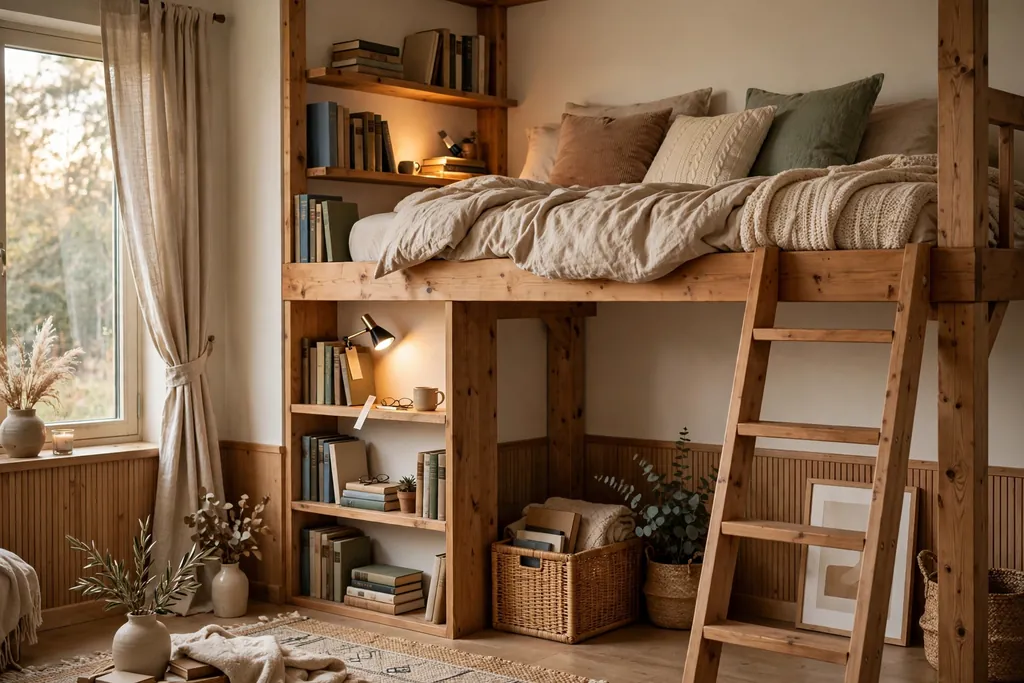
A bookshelf wall built into the headboard end of a loft bed gives the sleeper storage within arm’s reach and gives the room a finished look. Run shelves up the wall beside the bed platform, from mattress height upward, and keep a small ledge at pillow level for a phone, a glass of water, and a book. A clip on reading light on the shelf means no bedside table is needed.
This suits a small bedroom where a nightstand would block the ladder or the door swing. Fix the shelves to the wall, not just to the bed frame, so they stay steady when the sleeper leans on them. Keep the shelf above the pillow shallow, so nothing can fall onto the sleeper, and store heavier books lower down.
14. Choose a Low Loft for a Low Ceiling
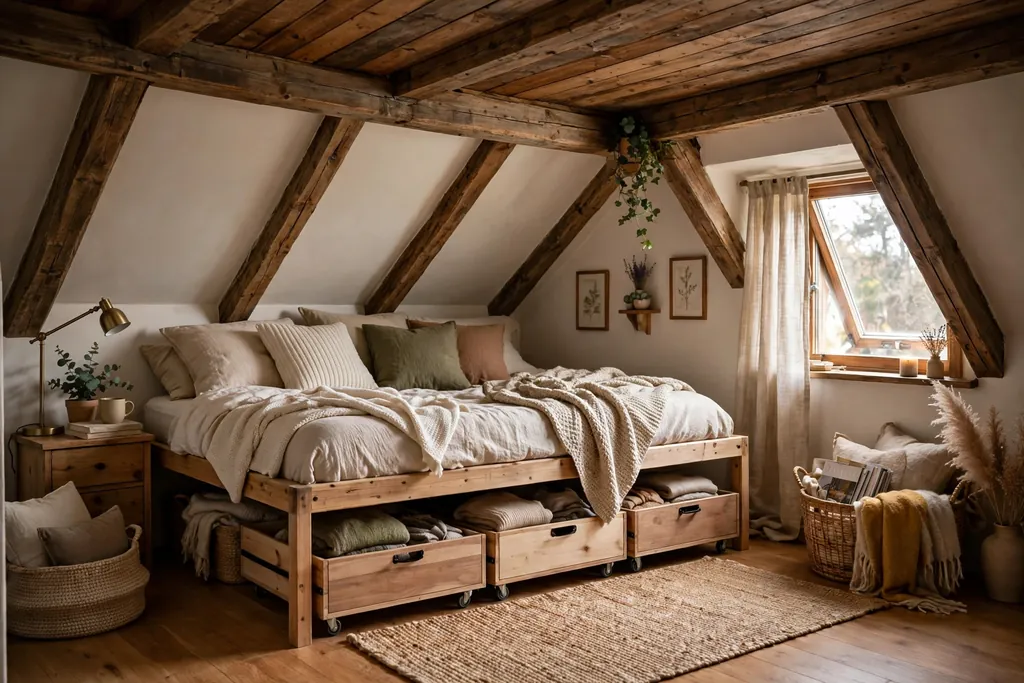
A low loft, sometimes called a mid sleeper, raises the bed just high enough for storage or a desk nook below while keeping sitting height up top. This is the right call when the ceiling is under eight feet, since a full height loft would leave the sleeper stooping. Measure from the top of the mattress to the ceiling and keep at least 30 inches of sitting room if you can.
This suits basement bedrooms, attic rooms, and older homes with low ceilings. Below a low loft, use rolling drawers or low cubbies rather than a desk chair, since standing room below will be limited. A low loft still frees floor space for storage, and it feels less exposed than a high loft, which helps younger sleepers settle.
15. Add a Slide for a Playful Kids Loft
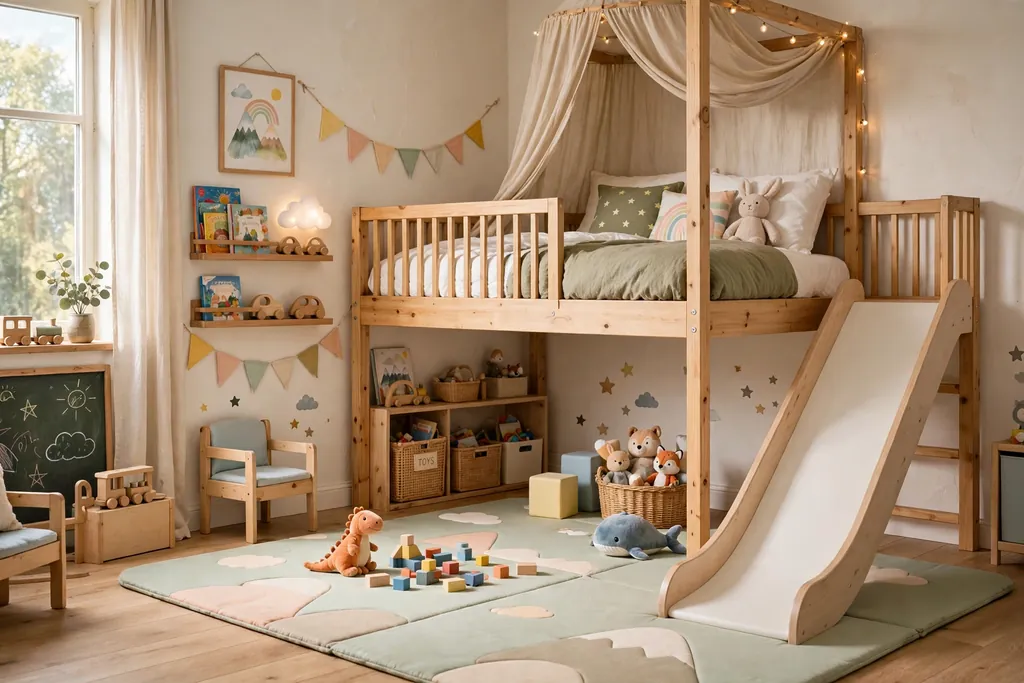
A slide beside a kids loft bed turns getting up in the morning into the best part of the day, and it gives the room a clear play feature. Fit the slide on the open side of the bed, with a soft rug or mat at the bottom, and keep the ladder on the opposite side so up and down traffic does not collide. Check that the slide is rated for the child’s weight and fixed firmly to the frame.
This suits a child’s bedroom with enough floor space for the slide run, and it works best when the rest of the room stays calm so the slide is the star. Set a rule that the slide is for daytime play only, and keep the landing zone free of toys and furniture. When the child outgrows it, most slides unbolt, leaving a standard loft behind.
16. Curtain the Space Below for a Private Hideaway
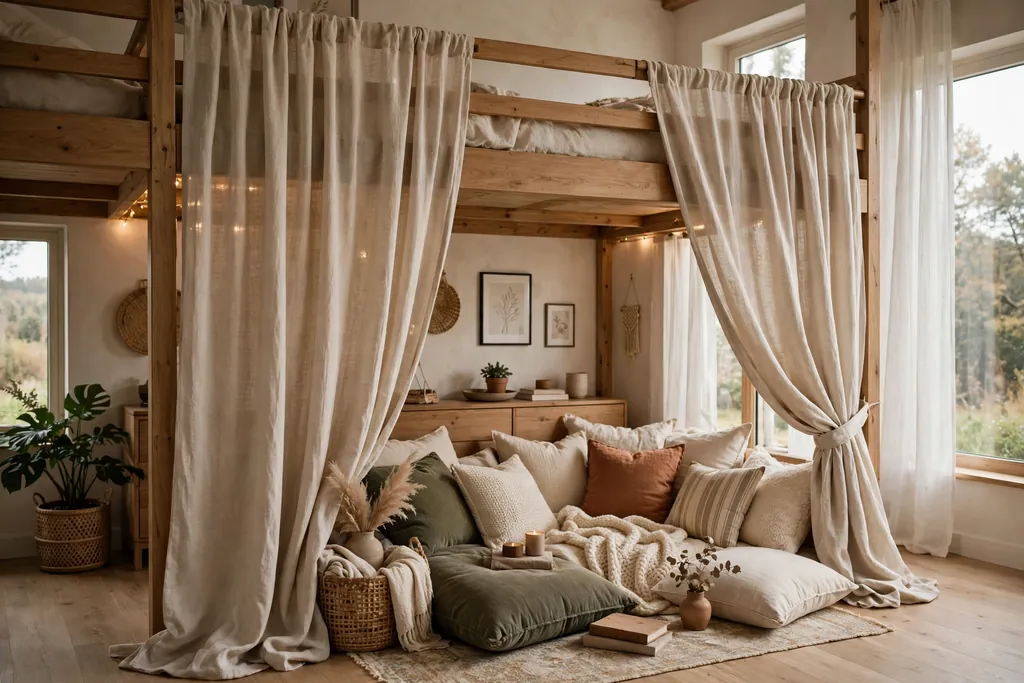
Curtains hung from the loft frame turn the space below into a private hideaway that can open or close in seconds. Use a ceiling track or a rod fixed to the frame, and choose a fabric heavy enough to hang straight but light enough to pull with one hand. A curtain gives the person below privacy for work calls, reading, or rest, even in a shared room.
This suits a shared bedroom or a studio where one person sleeps above and another works below. For curtain ideas that soften a bedroom storage wall, see these bedroom curtain ideas. Pick a washable fabric, since curtains near a desk collect dust, and keep the curtain clear of heaters and lamps. Tie backs hold the panels open during the day so the nook still gets light.
17. Fit a Breakfast Nook Under a Studio Loft
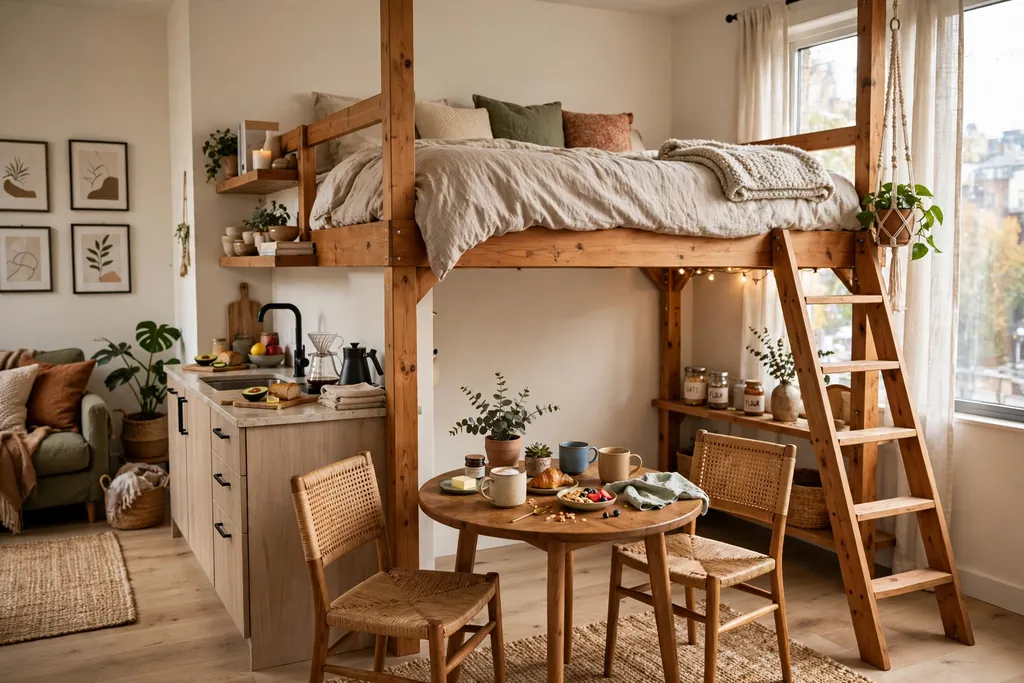
A breakfast nook under a studio loft bed gives a small apartment a place to eat that does not need a separate dining room. Place a small round table and two chairs under one end of the bed, with a wall shelf above for mugs and a small plant. A round table works better than a square one here, since it leaves walking room on all sides.
This suits a studio apartment where the bed zone and the living zone share one room. Keep the table clear of work papers so meals have their own spot, and use chairs that tuck under the table when not in use. A pendant light hung from the underside of the frame marks the nook as a dining spot, but keep it high enough that no one bumps it.
18. Use a Pull Out Desk That Slides Away
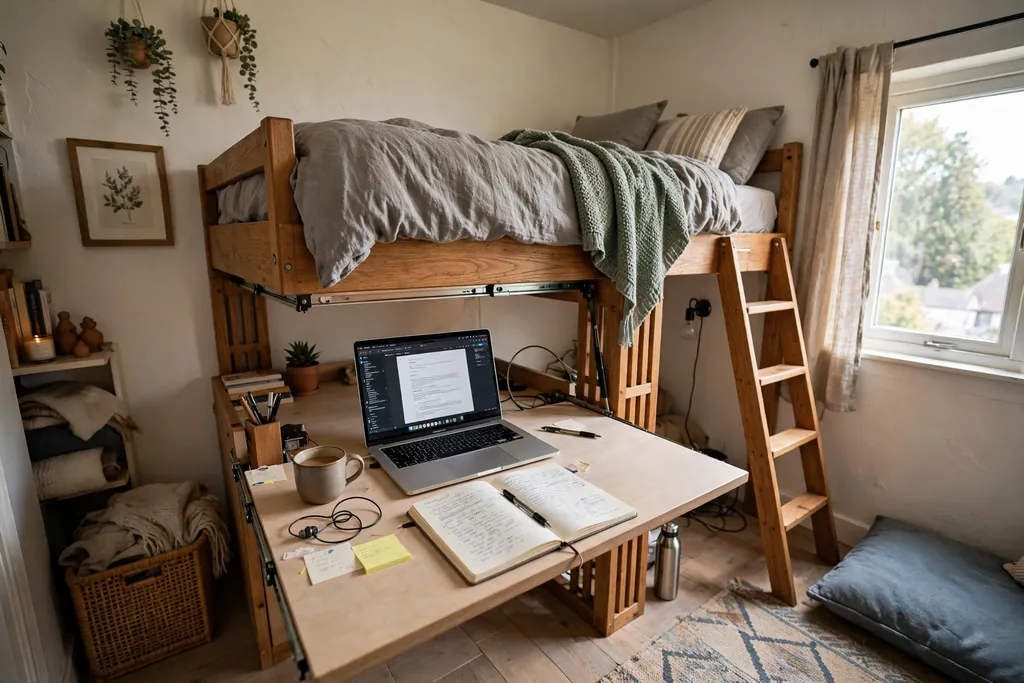
A pull out desk under a loft bed gives a work surface only when it is needed, then slides back under the bed to free the floor. Mount the desk on runners or casters so it glides out smoothly, and keep the desktop clear enough that it can slide away without clearing everything off first. A laptop, a notebook, and a lamp are about the right load for a pull out top.
This suits a room where the space below the loft must serve two jobs, such as a lounge by day and a workspace in the evening. Measure the pull out run so the desk does not hit the ladder, and lock the casters while working so the desk stays put. When the desk is tucked away, the area below reads as open floor again, which helps a small room feel larger.
19. Pick a Slim Metal Frame for a Light Look
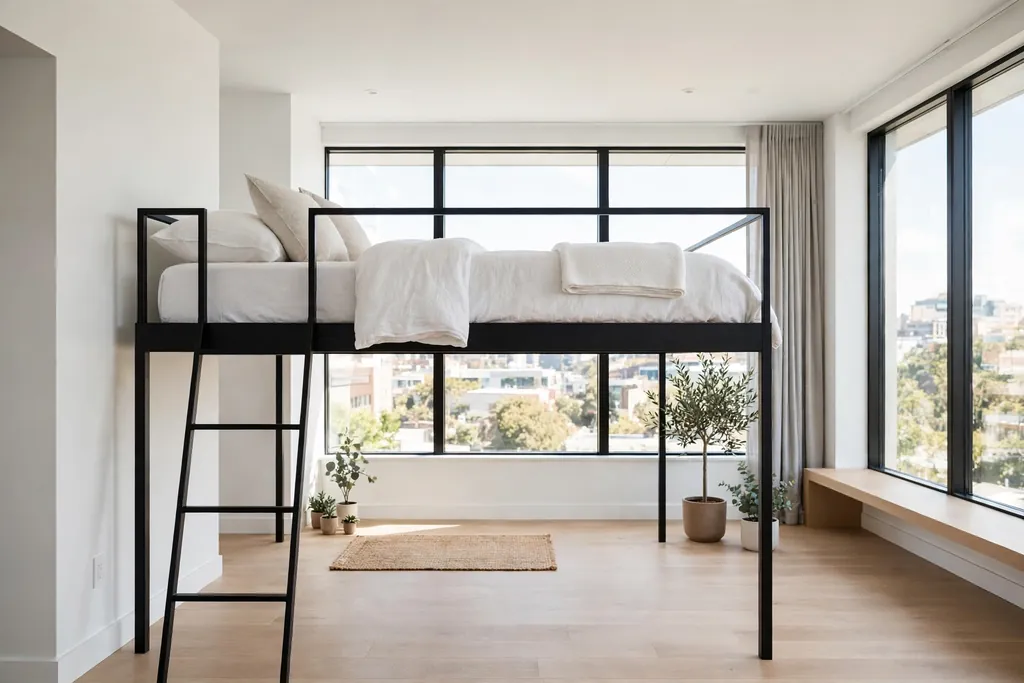
A slim metal loft frame suits a bedroom where a heavy wooden frame would look bulky. Black or white metal tubing keeps the sight lines open, so light passes through the frame and the room feels airy. Metal frames often come in standard twin and full sizes, which makes finding a mattress and bedding simple.
This suits a rented room or a first apartment, since metal frames are usually lighter to move and simpler to take apart. Check the weight rating and the rail height before you buy, and add felt pads where the frame meets the wall to stop squeaks. A metal frame pairs well with simple bedding in one calm color, which keeps the industrial look soft rather than stark.
20. Build a Warm Cabin Style Wood Loft
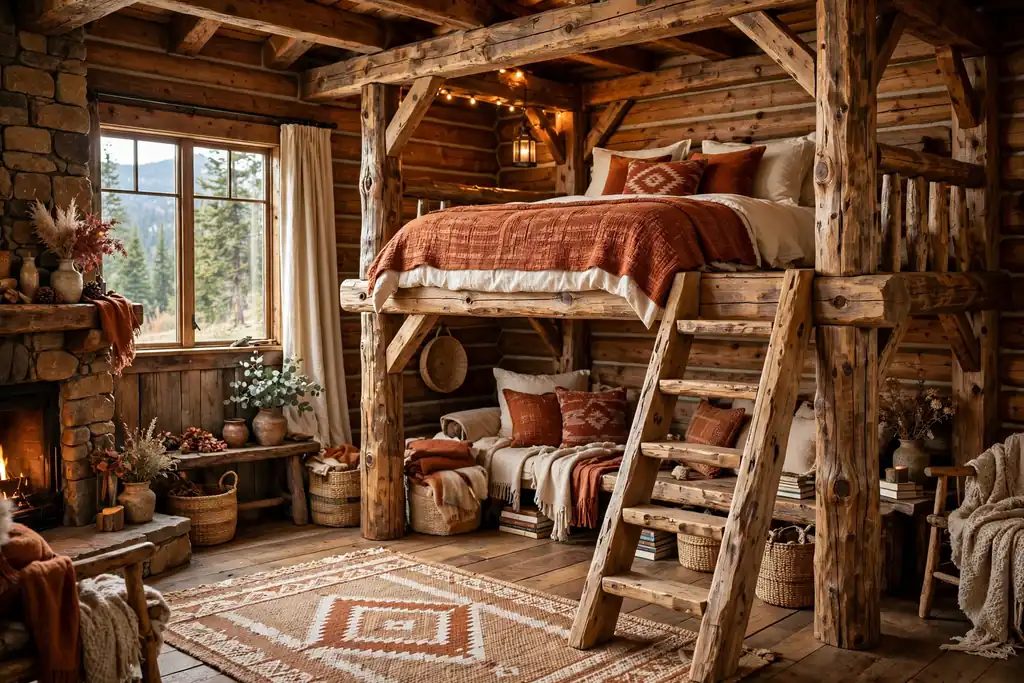
A cabin style wood loft, with chunky posts and a natural wood finish, brings warmth to a bedroom that leans rustic or woodland. Use a warm toned wood, such as pine or oak, and keep the finish matte so the grain shows. Pair it with bedding in cream, rust, or forest green, and a wool throw folded at the foot of the bed.
This suits a bedroom with other wood furniture, where the loft should blend in rather than stand out as a metal structure. For a wood rich bedroom scheme with pattern, see these plaid bedroom ideas. A wood loft is heavier than a metal one, so anchor it to the wall and check the floor can take the point loads at the posts. Sand and seal any rough edges, especially on the ladder rungs.
21. Let the Ladder Double as Open Shelving
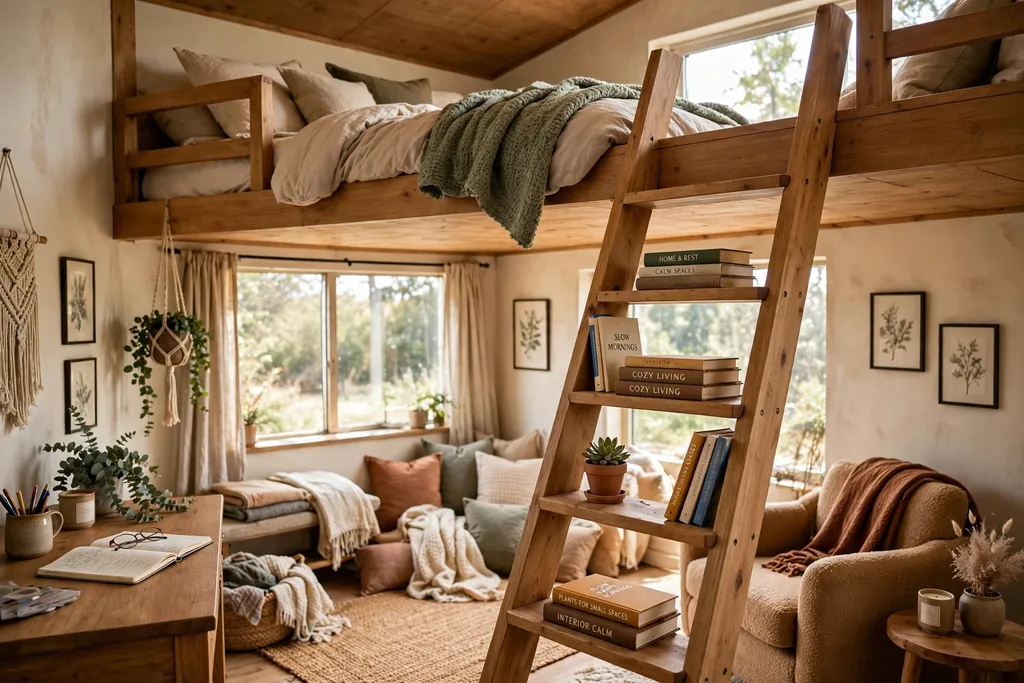
A ladder that doubles as shelving turns the climb into storage. Use a wide, flat rung ladder fixed at a slight angle, with each rung deep enough to hold a book, a plant, or a small basket. This works best as a secondary shelf rather than the main bookcase, since items must be light and stable enough not to fall when the ladder is used.
This suits a small bedroom where every surface must earn its place. Keep the rungs clear at foot height, and place display items only on the upper rungs, where feet do not land. Fix the ladder firmly at top and bottom so it never shifts under weight, and avoid glass or heavy ornaments on the rungs, since a bump could knock them down.
22. Keep a Pet Corner Under the Loft
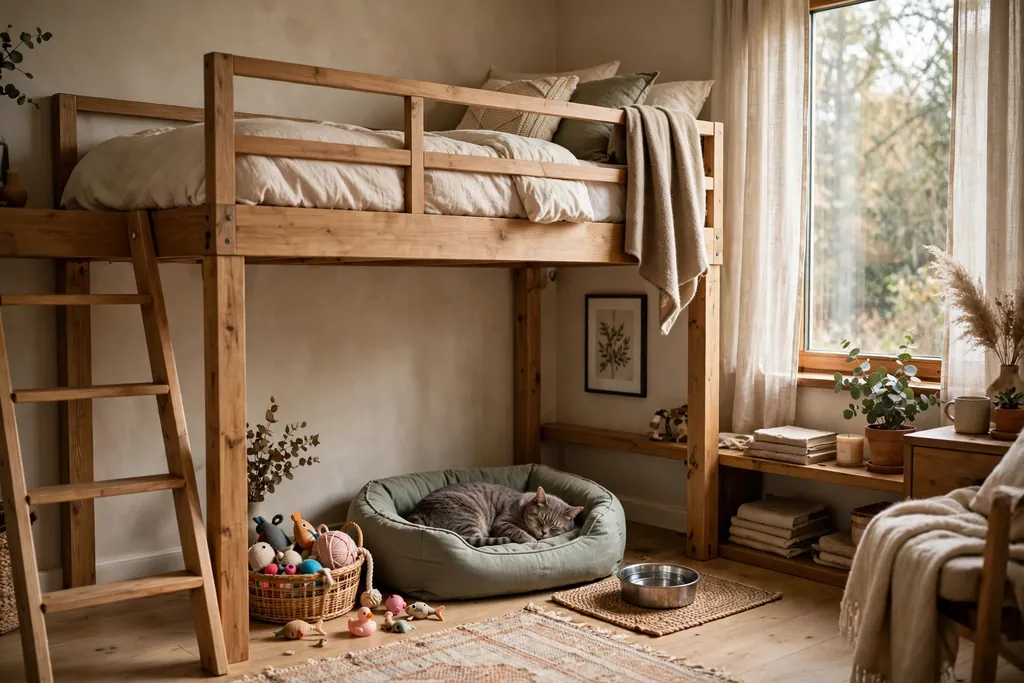
A pet corner under a loft bed gives a cat or a small dog a den of their own, tucked out of the main walkway. Place a pet bed, a water bowl on a wipe clean mat, and a small basket of toys under one end of the bed, and leave the front open so the pet can come and go freely. Cats in particular like the sheltered feeling of a space with a roof overhead.
This suits a pet owner whose bedroom is also the pet’s main room. Keep the corner away from the ladder so the pet is not underfoot on the climb, and wash the bedding and mat often to keep the area fresh. A small wall hook holds the lead and harness, so walks start from one spot and the gear never migrates across the room.
23. Fit a Fold Down Table for Flexible Use
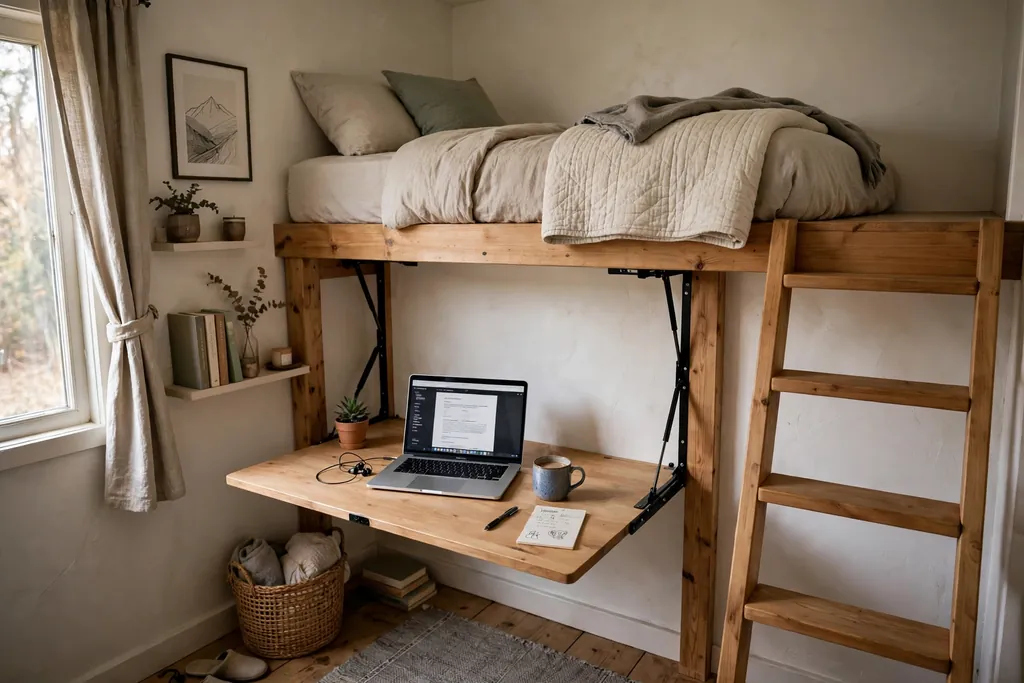
A fold down table fixed to the wall under a loft bed gives a work or dining surface that disappears when not needed. Fold it down for laptop work, homework, or a meal, then fold it flat against the wall to free the floor for a chair, a yoga mat, or play. Wall brackets must be rated for the load, and the table should lock firmly in the down position.
This suits a room where the space below the loft changes jobs through the day. Keep the tabletop clear by storing daily items on a wall shelf above, so folding it away takes seconds rather than a tidy up session. A fold down table also works well in a guest room, where it serves visitors without a permanent desk taking up space.
24. Wire in Reading Lights and a Bedside Shelf
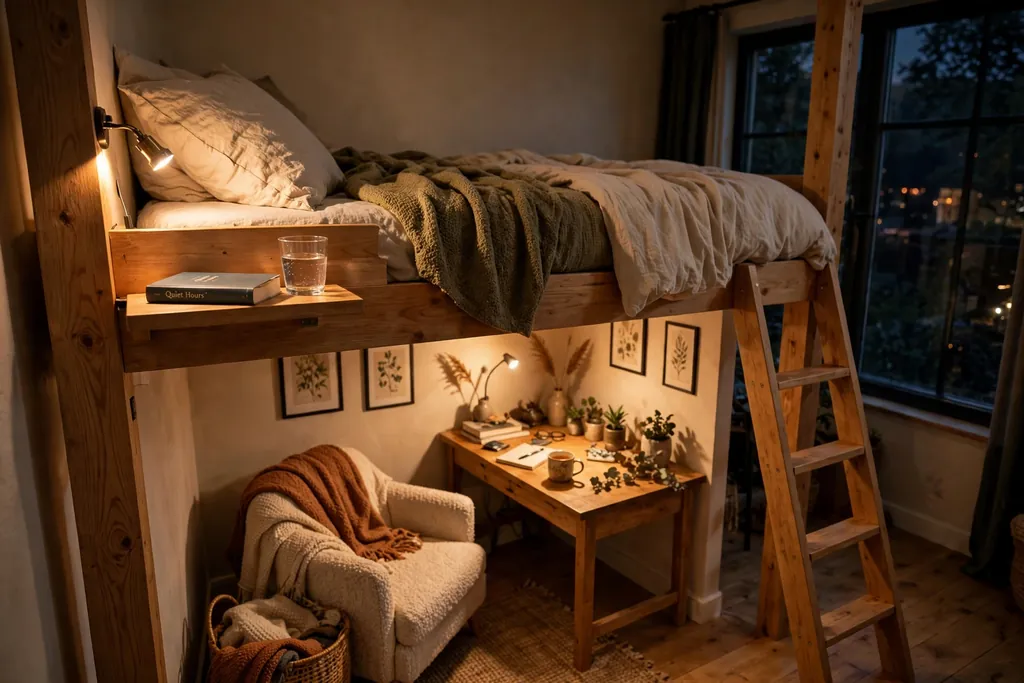
Built in reading lights and a small shelf turn a loft bed into a proper sleeping spot rather than a bare platform. Fit a warm wall light or a clip light at pillow height on each side, and add a shallow shelf for a book, a phone, and a glass of water. A switch within reach from the mattress means no climbing down in the dark to turn the light off.
This suits anyone who reads in bed, since a loft rarely has room for a nightstand. Keep the light warm and focused on the book, not the whole room, so a partner below can sleep or work undisturbed. For a calm, warm bedroom scheme to pair with soft bedside lighting, see these hygge bedroom ideas. Run cables neatly along the frame and keep them clear of the ladder.
25. Leave a Yoga and Stretch Corner Below
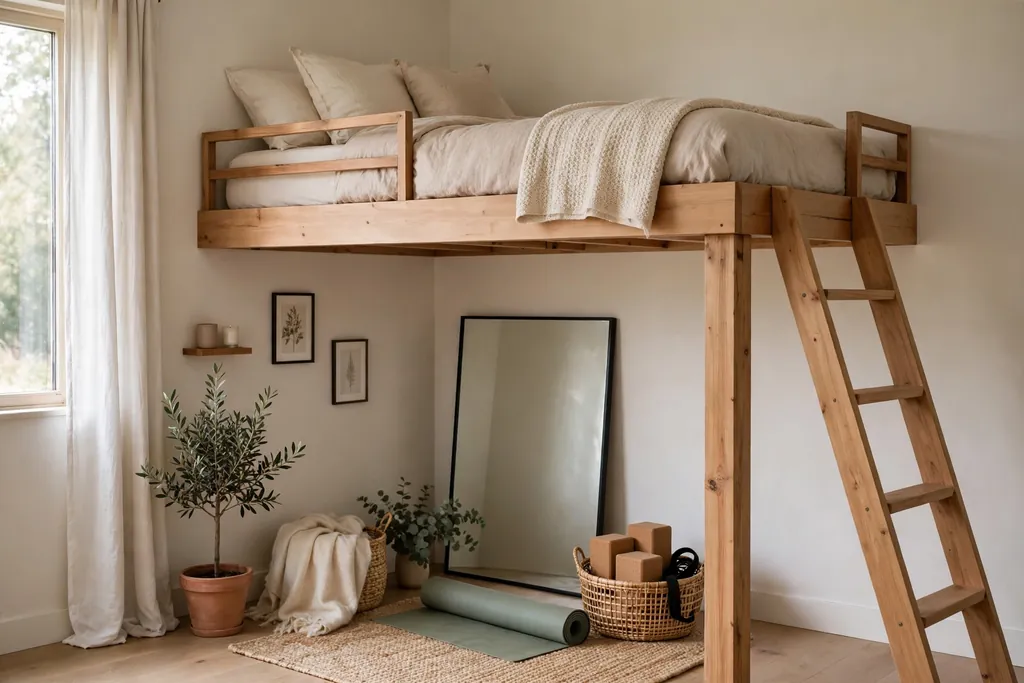
A yoga and stretch corner below a loft bed gives a bedroom a daily movement spot that needs no extra room. Keep the floor clear, roll out a mat under the bed, and store blocks and straps in a basket beside the frame. A mirror on the wall helps with form, and a small plant softens the corner so it feels like a place to unwind.
This suits a bedroom used for morning routines, since the mat can stay rolled in the corner and unroll in seconds. Check the headroom before you plan overhead stretches, since the bed frame limits standing poses, and keep floor poses and seated stretches as the main use. A cork or rubber mat grips better on a hard floor than a thin foam one.
26. Use the Loft as a Room Divider in a Studio
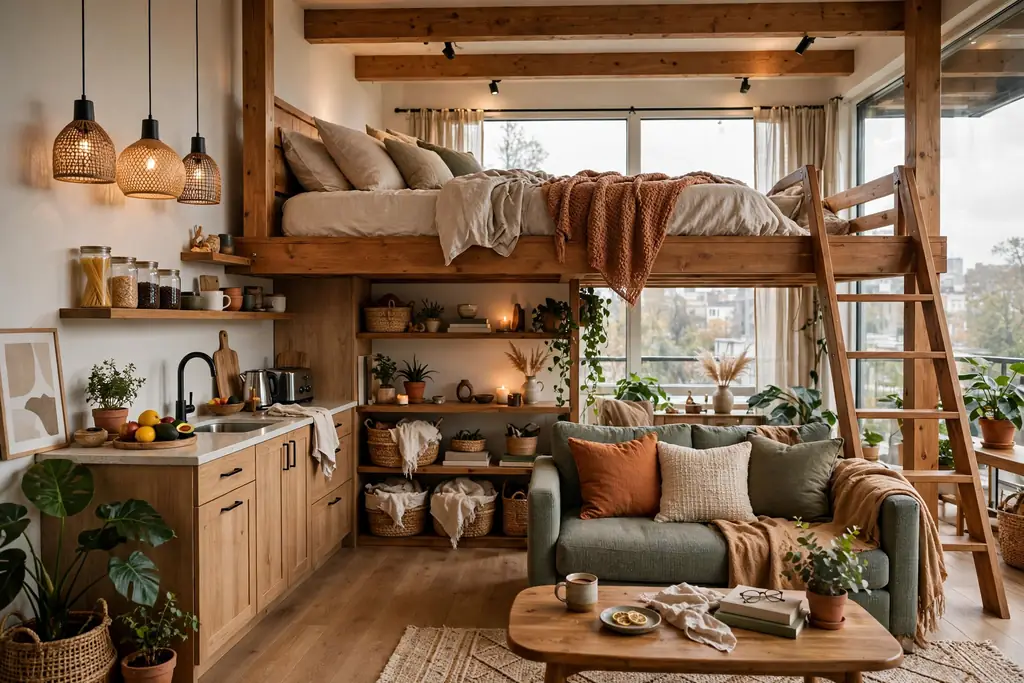
A loft bed placed across the middle of a studio acts as a room divider, splitting sleep from living without a wall. Position the bed frame at right angles to the main wall, with the ladder on the living side and a curtain or a low bookcase on the bedroom side. The space below can hold a desk or storage, while the top stays a private sleep zone.
This suits a studio apartment where a separate bedroom is not possible. Keep the divider open at the top so light still travels across the room, and avoid a solid panel that would darken one side. A rug on the living side and a different rug on the bedroom side marks the two zones clearly, even though no wall separates them.
27. Add Pantry and Kitchenette Storage Below
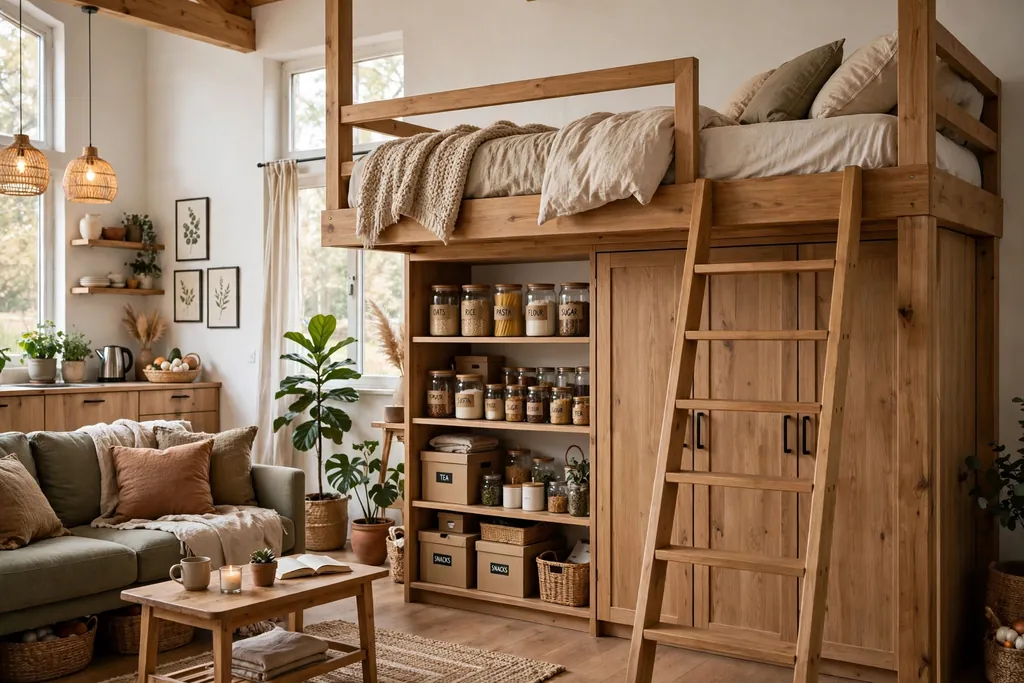
In a studio, the space below a loft bed can hold pantry and kitchenette storage that keeps cooking gear out of the living area. Use closed cabinets or a tall shelving unit with doors under one end of the bed, and keep everyday items at the front and bulk supplies behind. Closed doors matter here, since open food shelves collect dust and look busy.
This suits a small studio where kitchen storage is short and the bed area is near the kitchenette wall. Keep food storage away from heaters and damp walls, and never place a hot plate or kettle under a bed frame. For seasonal warmth in a small bedroom kitchen corner, see these fall bedroom decor ideas. Label the boxes so the right item is found without pulling everything out.
28. Dress the Guardrail With Plants and Soft Light
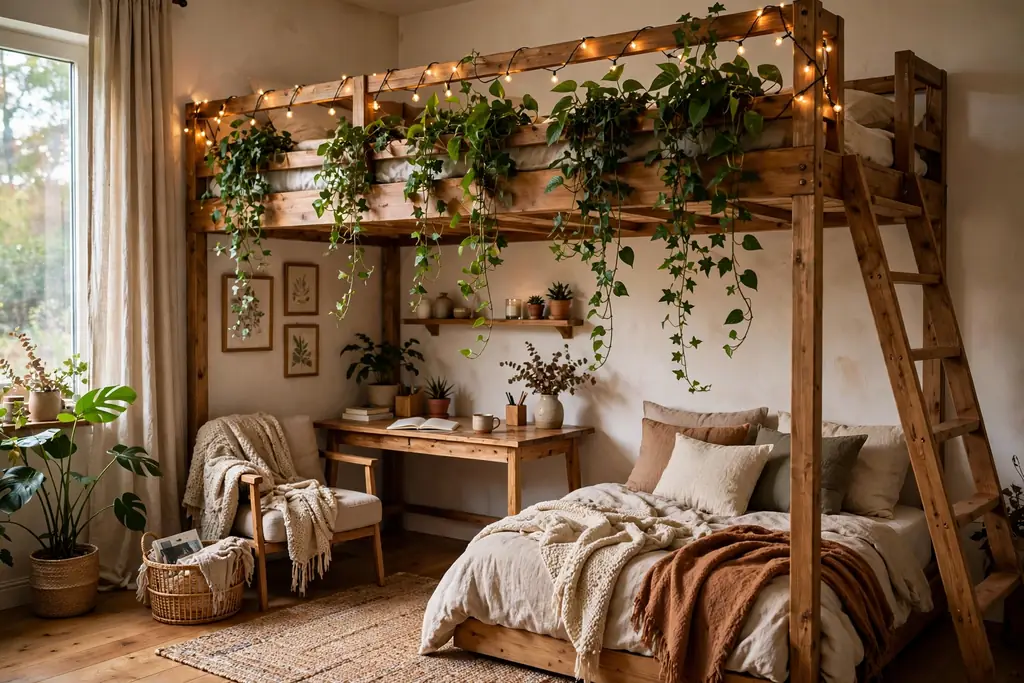
Plants and soft light along the guardrail turn a plain loft bed into a cozy focal point. Hang small trailing plants from the rail in lightweight pots, or fix a planter along the outer edge, and add a warm string of lights woven loosely through the rail. Keep pots light and secure, and choose trailing plants that forgive a missed watering.
This suits a plant lover whose bedroom needs softness above the bed line. For a winter ready version of a cozy bedroom, see these winter bedroom ideas. Water plants over a tray, never over the bedding below, and keep lights battery powered or plugged in safely away from fabric. If the sleeper is a restless mover, keep plants on the outer rail only, where they cannot be knocked onto the bed.
Conclusion
A loft bed earns its place when the space below works as hard as the bed above. Start with the measurement that matters most, the height you have, then pick one clear job for the floor below: work, storage, rest, or play. Build the access to match the sleeper, with stairs for children and nightly climbers and a ladder where floor space is tight. Keep the guardrail high, the mattress low, and the landing clear, and repeat one soft detail up top so the loft feels like a bed, not a shelf.
Save this list on Pinterest before you measure your room, and work through it one idea at a time: layout first, then access, then the soft details that make the loft feel cozy and current.
FAQs
How much ceiling height do I need for a loft bed?
You need enough room to sit up on the mattress without hitting the ceiling, and enough room to stand or sit below the frame. As a rough guide, a ceiling of eight feet or more suits a standard loft, while a lower ceiling calls for a low loft or mid sleeper. Measure from the top of your mattress, not the bed base, to the ceiling, and aim for at least 30 inches of sitting room above the mattress if you can.
Are loft beds safe for children?
A loft bed can be safe for a child old enough to climb up and down steadily, usually from around six years old, but always follow the maker’s age and weight guidance. The guardrail should run along both open sides, with a gap only at the ladder, and the mattress should sit well below the top of the rail. Keep the ladder clear, the landing free of toys, and set a rule against jumping from the top.
Can adults sleep on a loft bed?
Yes, if the frame is rated for adult weight and the ceiling height allows comfortable sitting. Check the weight limit, the rail height, and the ladder or stair width before you buy, and choose a mattress that keeps you below the top of the guardrail. Adults who get up often at night may prefer stairs with drawers over a ladder, since stairs are easier in the dark.
What is the difference between a loft bed and a bunk bed?
A loft bed has one raised bed with open space below for a desk, storage, or seating, while a bunk bed stacks two beds, one above the other. A loft suits a single sleeper who needs floor space, and a bunk suits two sleepers sharing a room. Some frames convert between the two, but check the maker’s guidance before removing a lower bunk to create a loft.
How do I stop a loft bed from squeaking?
Squeaks usually come from loose joints or metal rubbing on metal. Tighten every bolt, add felt pads where the frame meets the wall, and check that the slats sit evenly under the mattress. A rug under the posts can dampen noise on a hard floor, and a small amount of wax on wooden joints helps wood frames. If the squeak stays after tightening, check the floor itself, since an uneven floor can rock the frame.
Can I put a loft bed in a rented room?
Often yes, if the frame is freestanding and does not need drilling into the walls. Check the lease for rules on large furniture and wall fixings, and choose a frame that stands on its own posts if drilling is not allowed. Keep the original layout in mind, protect the floor under the posts with pads, and measure doorways and stairs so the frame can be moved in and out in pieces.