
Most bedrooms get their color from walls and bedding, while the ceiling stays plain white by habit. Painted ceiling bedroom ideas change that balance: the ceiling becomes a planned part of the room, whether it is a soft sage wash, a deep navy panel, or a striped pattern that draws the eye up. These 30 ideas cover colors, finishes, beams, panels, and murals, so you can pick one that suits your ceiling height, light, and budget. Test a color on a large board first, hold it up in daylight and lamplight, and paint only when you like what you see from the bed.
Key Takeaways
- Pick the ceiling color from something already in the room, such as bedding, a rug, or a cushion, so the ceiling looks linked to the rest of the scheme.
- In a low or dark room, keep the ceiling pale or glossy so it reflects light; save deep colors for rooms with good daylight or tall ceilings.
- Test paint on a large board held against the ceiling in both daylight and evening light before you commit to a full coat.
- Use one strong ceiling idea at a time. A color, a pattern, or painted beams each make a clear point on their own.
- Keep walls calmer when the ceiling is bold, and keep bedding simple when the ceiling carries a pattern.
1. Keep the Ceiling White Against Colored Walls
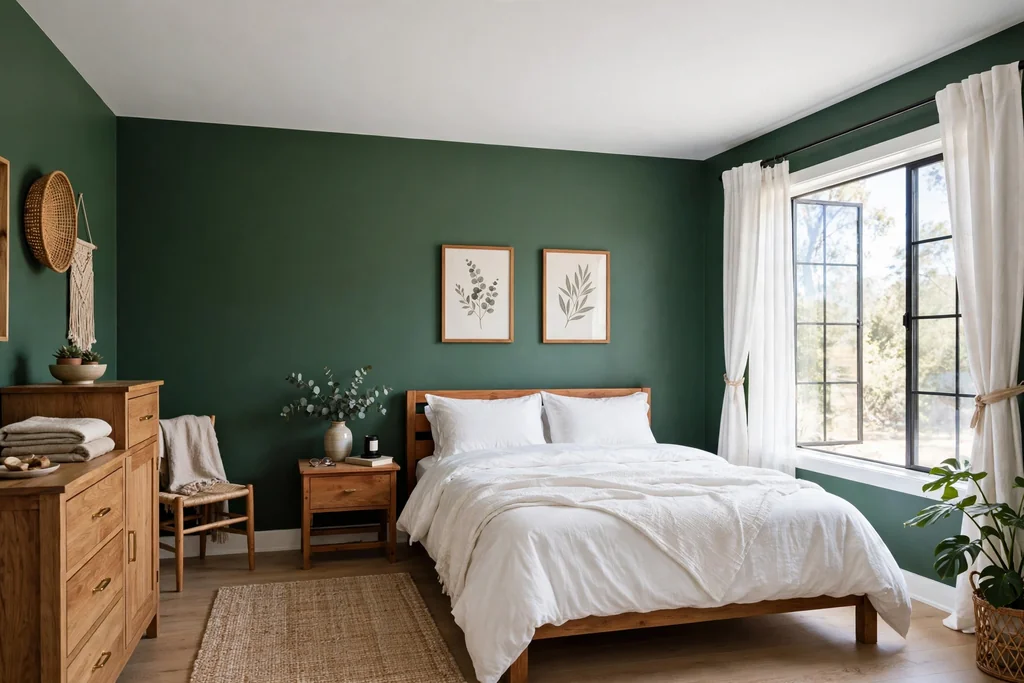
A crisp white ceiling against colored walls is the simplest painted ceiling idea, and it works because the contrast gives the room a clean top edge. Paint the walls in a color you love, then use a fresh white with the same undertone on the ceiling so the join looks sharp. This suits rooms where the walls already carry the color story and the ceiling only needs to stay bright.
Use a flat or matte white on the ceiling to hide small marks, and cut in a neat line where wall meets ceiling. If the walls are a deep tone, a white ceiling also keeps the room feeling open from the bed. This is a good starting point if you have never painted a ceiling in a color before, since you can repaint the walls later without touching the ceiling again.
2. Paint the Ceiling Soft Sage Green

Soft sage green on the ceiling brings a calm, leafy tone overhead without darkening the room. It pairs well with white or cream walls, wood furniture, and linen bedding in natural tones. Sage reads as restful in the morning and still looks gentle under warm lamplight at night, which suits a bedroom well.
Choose a muted sage rather than a bright green, and test it beside your bedding before you paint. Keep the trim white so the green has a clear edge, and repeat the sage once more in a cushion or a throw. If the room faces north and light is cool, pick a sage with a warm undertone so the ceiling does not look grey.
3. Paint the Ceiling Pale Sky Blue

Pale sky blue on the ceiling gives a bedroom an airy, open feeling, especially in a room with white walls and light wood. The color recalls a clear sky, and it works well above a bed with white or cream bedding. It is a soft change that still makes the ceiling feel planned rather than left over.
Keep the blue pale, since a stronger blue can feel cold in a room with little daylight. Pair it with white trim and plain curtains so the ceiling stays the main color note. This idea suits a small bedroom too, because a pale ceiling does not press down on the room the way a dark color can.
4. Paint the Ceiling Deep Navy

Deep navy on the ceiling adds drama and a sense of enclosure that suits a bedroom used mainly for sleep. It works best with pale walls, white bedding, and warm wood, so the dark overhead color has light surfaces to balance it. At night, navy feels cozy; in daylight, it gives the room a clear focal point above the bed.
Paint the ceiling navy only if the room has a window that brings in steady daylight, or add good bedside and overhead light so the room does not feel dim. Keep the trim white for a sharp edge, and repeat navy once in a cushion or a throw. If navy on the whole ceiling feels like too much, try it first on a tray or panel section.
5. Paint the Ceiling Warm Terracotta

Warm terracotta on the ceiling brings earthy warmth overhead and pairs well with cream walls, wood furniture, and bedding in rust or natural linen. The tone feels grounded rather than bright, so it suits a bedroom that already uses warm colors on the bed and rug. Terracotta also softens a plain white room without a full repaint of the walls.
Use a muted terracotta rather than a bright orange, and check it in evening light, where warm bulbs deepen the tone. Keep the walls pale so the ceiling stands out, and repeat the terracotta in one smaller item, such as a cushion cover. This color suits south facing rooms, where strong daylight keeps it from looking heavy.
6. Paint the Ceiling Blush Pink

Blush pink on the ceiling adds a soft, warm glow overhead and suits a bedroom with white walls, light wood, and bedding in cream or pale grey. The color is gentle enough to live with every day, and it flatters skin tones in lamplight, which helps a bedroom feel welcoming. Blush works best as a pale wash, not a strong pink.
Test the pink beside your bedding and curtains, since pink shifts a lot between daylight and warm bulbs. Keep the trim white and the walls plain so the ceiling stays calm. For a similar soft approach to bedroom color through textiles, see these fall bedroom decor ideas. If blush feels too sweet on its own, pair it with grey or natural wood to keep the room grounded.
7. Paint the Ceiling Butter Yellow

Butter yellow on the ceiling adds gentle warmth and light, which helps a bedroom that gets little direct sun. The pale yellow reads as sunny without the glare of a bright yellow, and it pairs well with white walls, cream bedding, and wood furniture. It is a good choice for a room you use first thing in the morning.
Keep the yellow pale and warm, and avoid a green leaning yellow, which can look dull in cool light. Paint a test board and check it at breakfast time, when you will see it most. If the room already has yellow bedding, use a softer yellow on the ceiling so the two do not compete.
8. Paint the Ceiling Charcoal Grey

Charcoal grey on the ceiling gives a bedroom a modern, cocooning feel without the full depth of black. It suits rooms with pale walls, light bedding, and one warm detail, such as wood nightstands or brass lamps, to stop the grey feeling cold. Charcoal also hides small ceiling marks better than white.
Use charcoal where the room has good light and a ceiling high enough that the dark tone does not press down. Keep the trim and the bedding light, and add warm bedside lamps for the evening. If you are unsure, paint one section first, such as the ceiling above the bed, and live with it for a week before painting the rest.
9. Paint the Ceiling Matte Black
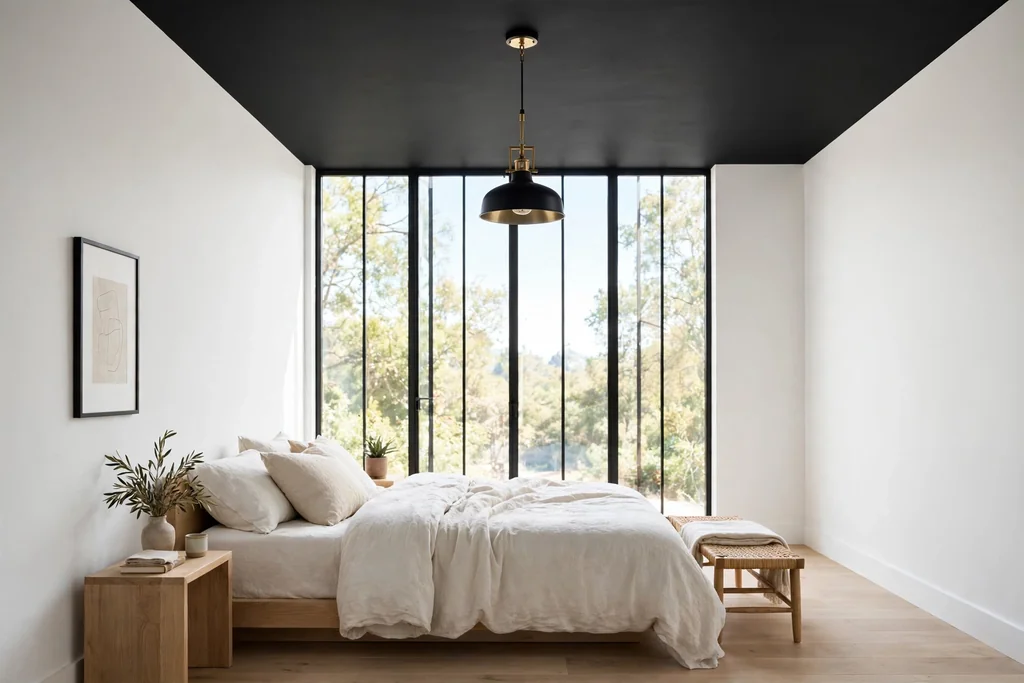
Matte black on the ceiling is a bold choice that works when the rest of the room stays light. White walls, pale bedding, and a light rug give the black overhead color something to contrast with, and the result feels dramatic rather than gloomy. Matte finish matters here, since gloss black shows every mark and reflects light in patches.
This idea suits a bedroom with tall ceilings and a large window, where the black has room to breathe. Keep the light fittings simple, in black or brass, so they sit neatly against the dark surface. If black on the whole ceiling feels risky, try it in a small bedroom first, where one tin of paint covers the area and a repaint is a short job.
10. Color Drench the Walls and Ceiling in One Color
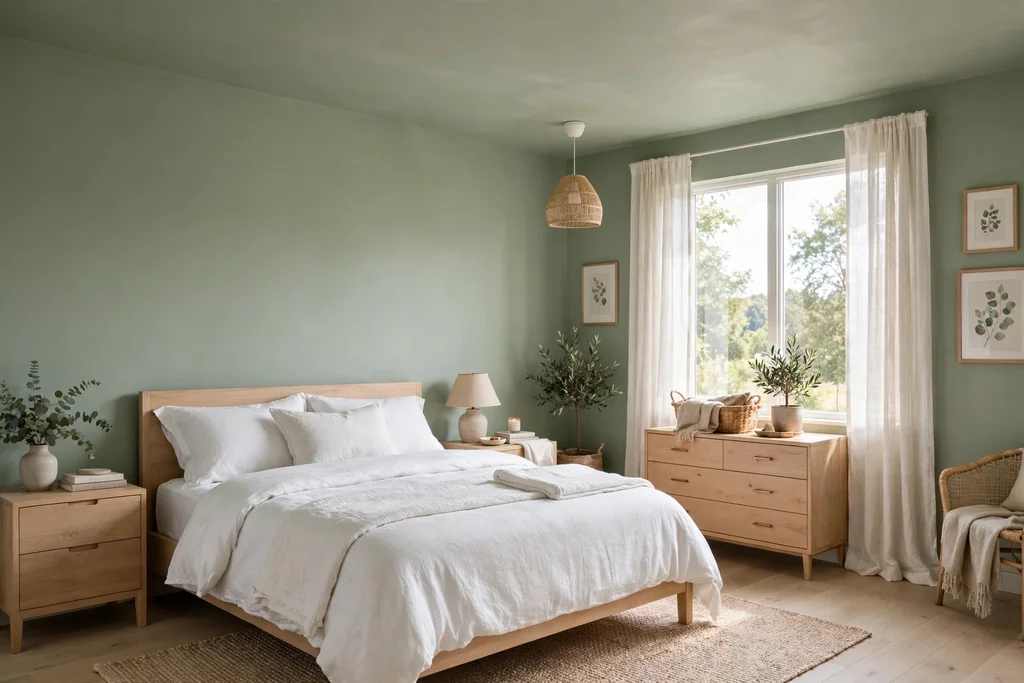
Color drenching means painting the walls and ceiling in the same color, so the room reads as one calm envelope with no hard line at the top. It works well in a soft tone, such as sage, pale blue, or warm white, and it makes a small bedroom feel less divided. Furniture and bedding then stand out against a single quiet background.
Use the same paint on walls and ceiling, but you can vary the finish, with matte on the ceiling and a slightly harder wearing finish on the walls. Keep the trim in the same color for a full drenched look, or paint it white for one crisp edge. Test the color in a corner first, since a tone that looks pale on a swatch can look much stronger across a whole room.
11. Add a Two Tone Ceiling With a Picture Rail Line
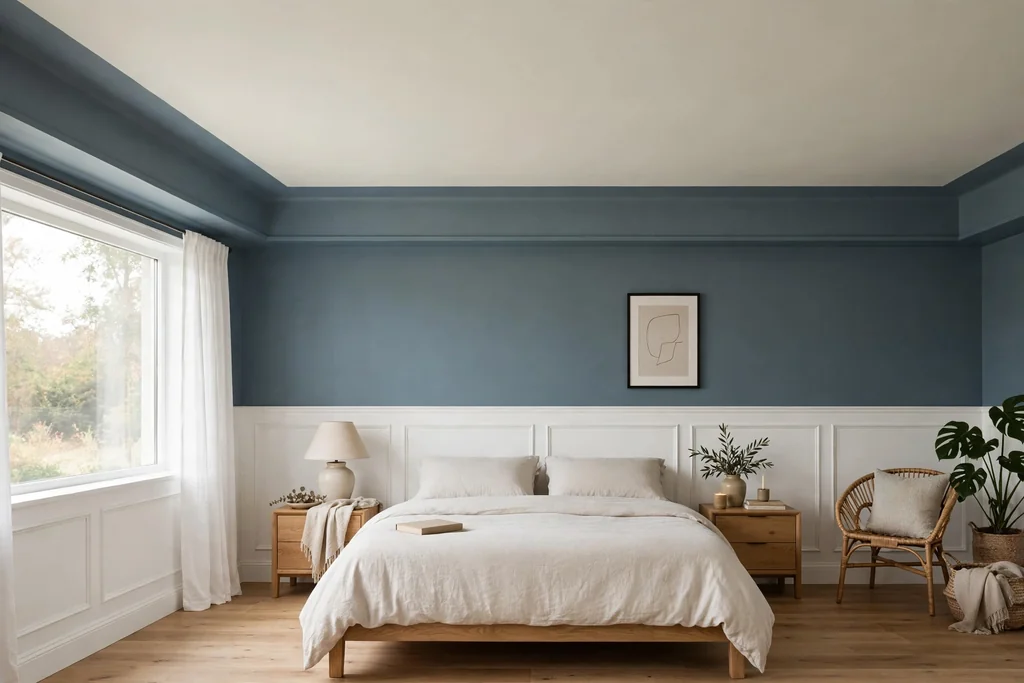
A two tone ceiling uses a painted line at picture rail height to split the wall from the ceiling color. Paint the ceiling and the top band of wall in one color, and the lower wall in another, so the room gains a clear horizontal band overhead. This gives a plain bedroom a tailored look without any new molding.
Mark the line with a level and painter tape, and keep the band depth even all the way around the room. A pale ceiling color with a deeper band below it suits a tall room, while a deep ceiling with a pale wall below suits a room that needs light at eye level. Remove the tape while the paint is still slightly tacky for a clean edge.
12. Paint Stripes Across the Ceiling

Painted stripes across the ceiling add rhythm and a clear pattern overhead, and they suit a bedroom with plain walls and simple bedding. Wide stripes in two close tones, such as white and pale blue, look calm; narrow stripes in contrasting tones look livelier. Run the stripes across the shorter side of the room to make it feel wider, or along the length to draw the eye toward the bed.
Measure and tape each stripe with care, since uneven stripes show up fast overhead. Paint the base color first, let it dry fully, then tape and paint the second color. Keep the rest of the room plain, with solid bedding and plain curtains, so the striped ceiling stays the main pattern in the room.
13. Stencil a Repeating Pattern on the Ceiling
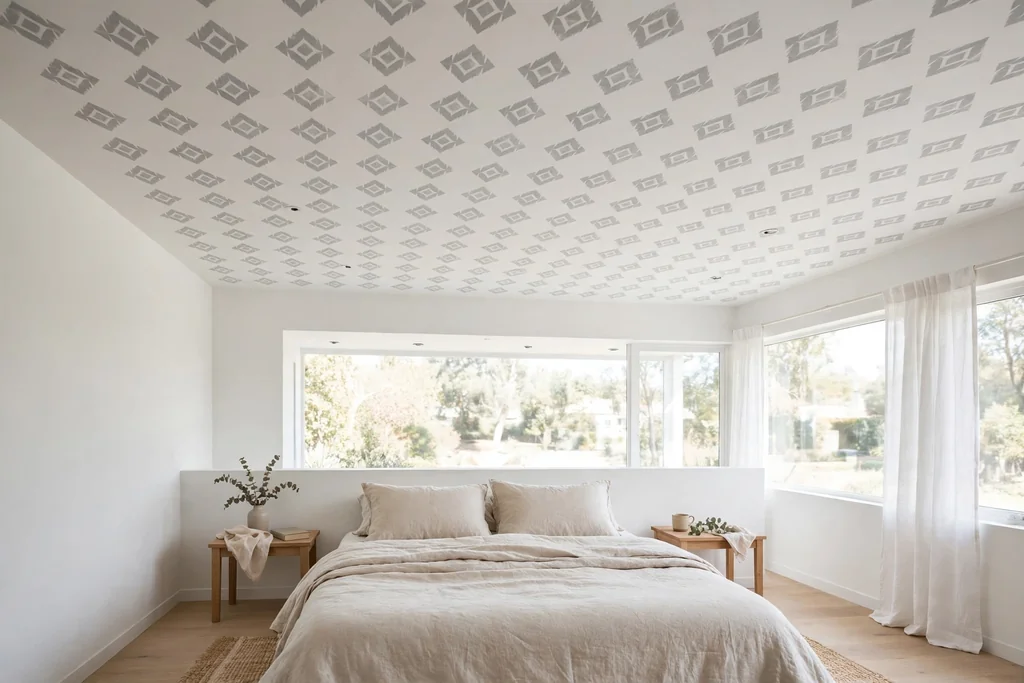
A stenciled pattern, such as a small diamond, leaf, or tile shape, adds detail to a ceiling without the cost of wallpaper. Use one stencil shape repeated in a regular grid, in a tone close to the base ceiling color for a quiet effect, or in a contrasting tone for a bolder one. This suits a bedroom where the walls are plain and the ceiling is the one place for pattern.
Practice on a board first to get the paint load right, since too much paint bleeds under the stencil edge. Use a dense foam roller or a stencil brush with very little paint, and reposition the stencil with small registration marks. Work in sections and step back often, since a pattern that looks even up close can drift across a large ceiling.
14. Paint a Ceiling Medallion Around the Light
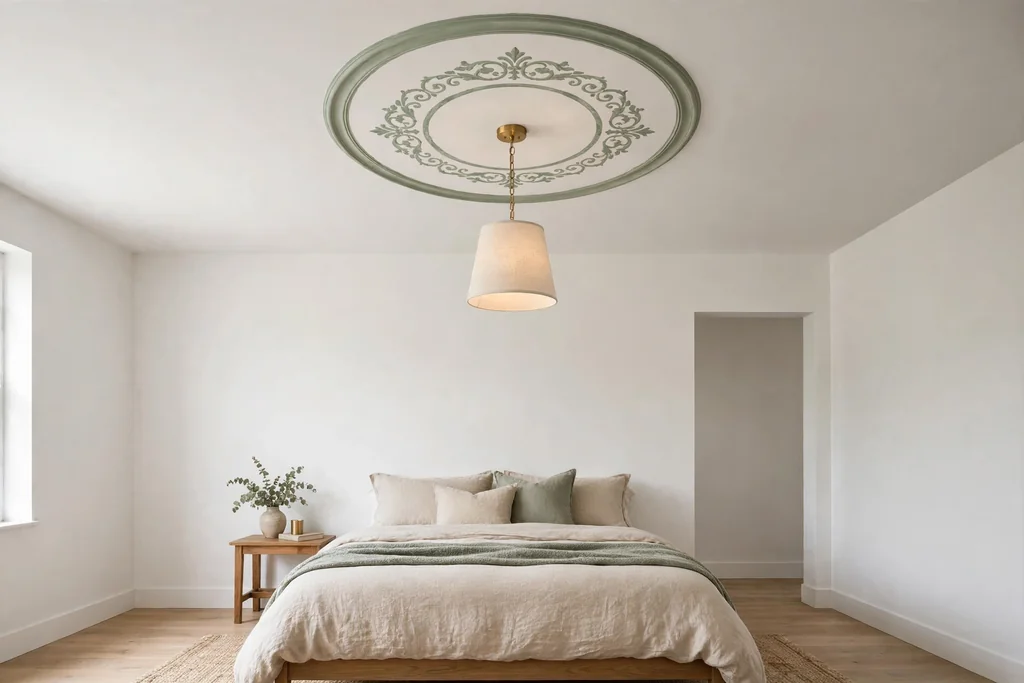
A painted medallion is a flat circle or ring painted on the ceiling around a pendant or flush light, and it frames the fitting like a piece of art. Paint the ring in a color pulled from the bedding or rug, and keep the rest of the ceiling plain so the medallion stands out. This is a low cost way to make a plain light fitting look planned.
Draw the circle with a string tied to a pencil, pivoting from the center of the fitting, and tape the edge before painting. A single ring in one color looks clean; two thin rings look more detailed. Keep the medallion size in proportion to the room, so a small bedroom gets a modest ring and a large room can take a wider one.
15. Paint Wooden Beams in a Contrasting Color

If the bedroom has exposed wooden beams, painting them in a contrasting color turns them into a feature. White beams against a colored ceiling look fresh, while dark beams against a pale ceiling add structure. The contrast draws the eye along the beams and gives a plain ceiling a clear rhythm.
Clean and lightly sand the beams first, and use a paint made for wood so the finish lasts. Paint the ceiling first, then the beams, so you can cut in neatly along each edge. If the beams are rough or uneven, a matte finish hides marks better than gloss. Keep the walls plain so the beams stay the main detail overhead.
16. Paint a Plank Ceiling White
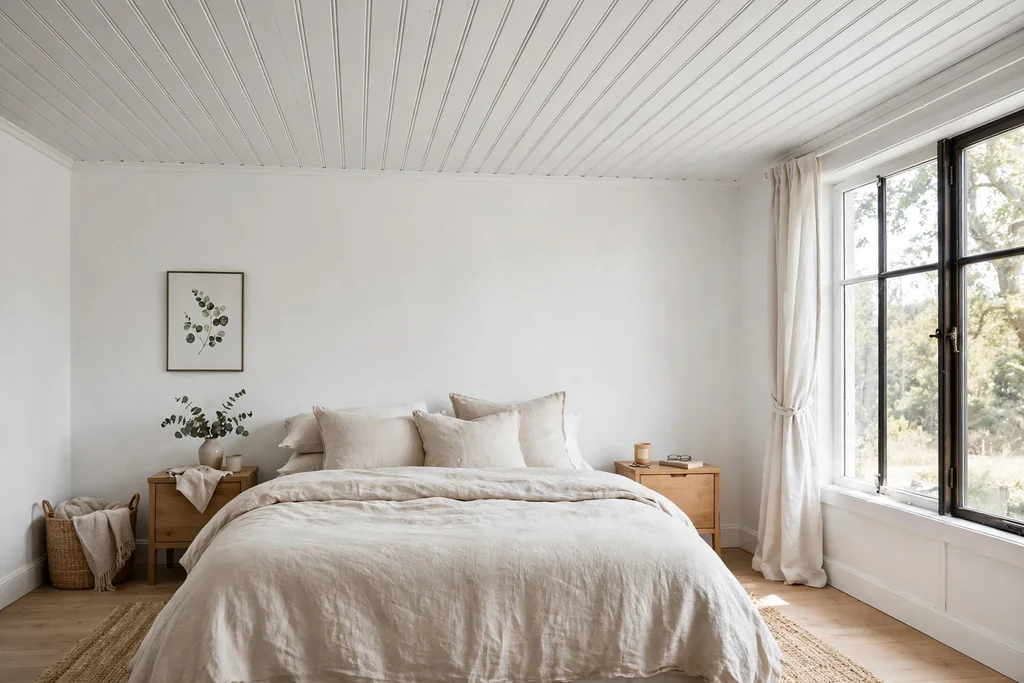
A plank or shiplap ceiling painted white keeps the texture of the boards while giving the room a bright, coastal feel. The grooves between planks add shadow and line, so the ceiling has interest even in a single color. This suits a bedroom with wood furniture and linen bedding, where texture matters more than strong color.
Paint with a brush into the grooves first, then roll the flat faces, so no bare wood shows in the gaps. Two thin coats give a more even result than one thick coat. If the planks are new wood, prime them first to stop knots showing through. White planks also suit a low ceiling, since the pale color and lines keep the room feeling open.
17. Paint Coffered Ceiling Panels in Contrasting Tones
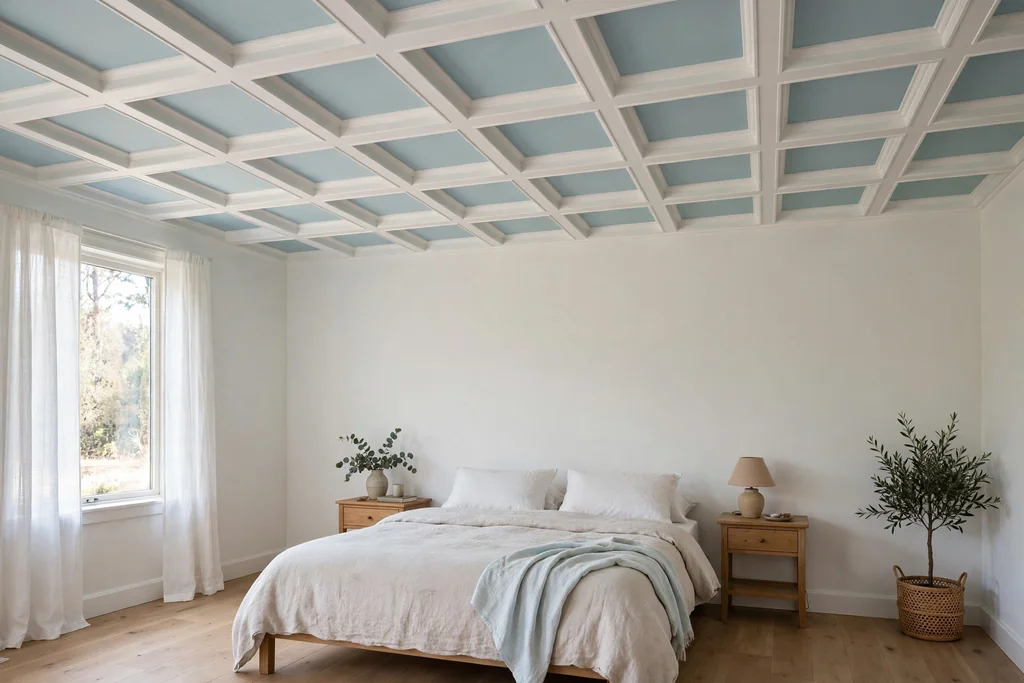
A coffered ceiling has recessed panels framed by beams, and painting the inset panels in a different tone from the frame adds depth. Try pale inset panels with white frames for a soft look, or deep inset panels with pale frames for a bolder one. The contrast makes the grid pattern clear from the bed, even in a plain room.
Paint the inset panels first, then the frames, and use a small brush for the corners where the two meet. Keep the walls plain and the bedding simple, since the coffered grid already carries a lot of visual detail. This idea suits a bedroom with a flat, high ceiling, where the grid has room to read as a pattern.
18. Paint the Inner Panel of a Tray Ceiling an Accent Color

A tray ceiling has a raised central section, and painting only that inner panel in an accent color turns it into a framed feature. The lower border stays white, so the accent panel reads like a picture overhead. This works well above a bed, where the panel sits in the center of your view when you lie down.
Pick an accent color from the bedding or rug, and keep it to the inner panel only. Add a strip of light inside the tray edge if you want the color to glow in the evening, but keep the wiring work to a qualified person if it needs new electrics. If the tray is small, a pale accent keeps the feature gentle; a large tray can take a deeper tone.
19. Paint a Sloped or Vaulted Ceiling in One Soft Tone

A sloped or vaulted ceiling can feel awkward when the angles are left white and the walls are colored. Painting the whole slope in one soft tone, such as pale sage, warm white, or light grey, pulls the angles together and makes the ceiling feel like one calm surface. The room then feels taller, since the eye is not stopped by a color change at each angle.
Use a matte finish on the slope to hide uneven plaster, and keep the lowest wall section in the same tone if the slope runs close to the floor. Pair the soft ceiling with plain bedding and light wood so the room stays calm. This idea also helps an attic bedroom, where the ceiling shape is the main feature of the room.
20. Use a High Gloss Ceiling to Bounce Light

A high gloss ceiling reflects light around the room, which helps a bedroom with one small window or a north facing aspect. The shine bounces daylight and lamplight back down, so the room feels brighter even though the color itself may be pale. Gloss also wipes clean more easily than matte paint, which helps in a room where dust settles overhead.
Prepare the ceiling well before gloss, since shine shows every dent, patch, and roller mark. Fill and sand small marks, prime evenly, and apply thin coats with a good roller. Keep the color pale, such as white, pale blue, or soft grey, since a dark gloss ceiling can look patchy. If the ceiling has marks you cannot smooth out, choose a satin finish instead.
21. Use a Matte Chalk Finish for a Soft Ceiling

A matte chalk finish gives the ceiling a soft, powdery look with almost no shine, which suits a bedroom where you want the ceiling to sit quietly in the background. The flat surface hides small marks and makes a pale color look deeper and warmer. It pairs well with linen bedding, wood furniture, and plain walls.
Apply chalk finish paint in thin, even coats, and avoid overworking one area, since the flat finish can show roller lines if it is brushed back and forth too much. Seal it only if the product guidance asks for it, since some chalk paints need a top coat in rooms with steam or dust. Keep the ceiling color pale or muted, so the soft finish reads as calm rather than dull.
22. Paint a Border Band Around the Ceiling Edge

A painted border band is a stripe of color around the edge of the ceiling, where it meets the walls, leaving the center plain. The band frames the ceiling like a picture mount and adds color without painting the whole surface. This suits a bedroom where a full colored ceiling feels like too much, but a plain white ceiling feels unfinished.
Tape a band of even width, often 15 to 30 centimeters, all the way around the room, and paint it in a color pulled from the bedding or rug. Keep the center of the ceiling white and the walls pale, so the band stands out cleanly. Measure the corners with care, since a band that narrows at a corner will be easy to spot from the bed.
23. Paint a Cloud Mural on the Ceiling

A cloud mural turns the ceiling into a soft sky, with white and pale grey clouds on a pale blue base. It suits a bedroom where you want a gentle, dreamy feeling overhead, and it works well above a bed with white bedding. The mural does not need to be realistic; soft, simple cloud shapes read clearly from below.
Paint the blue base first and let it dry, then add clouds with a sponge or a soft brush, building up thin layers for a soft edge. Keep the clouds sparse near the edges of the ceiling and fuller in the center, so the mural feels like open sky. If freehand painting feels daunting, use a large cloud stencil and repeat it in a loose pattern instead.
24. Paint a Night Sky With Stars on the Ceiling

A night sky ceiling, painted in deep navy or charcoal with small painted stars, gives a bedroom a calm evening character. It suits a room used for sleep, and it looks best when the stars are small and scattered, not crowded into rows. Glow paint is an option for the stars, but plain pale paint stars also read well in daylight.
Paint the dark base first, then add stars with a small brush or a stencil, varying the size so the sky looks natural. Keep the walls pale and the bedding simple, so the dark ceiling stays the main feature. For more cozy ideas for cold, dark evenings, see these winter bedroom ideas. For a gentler version, paint the stars only above the bed, leaving the rest of the ceiling in a plain dark tone.
25. Paint Geometric Color Blocks on the Ceiling
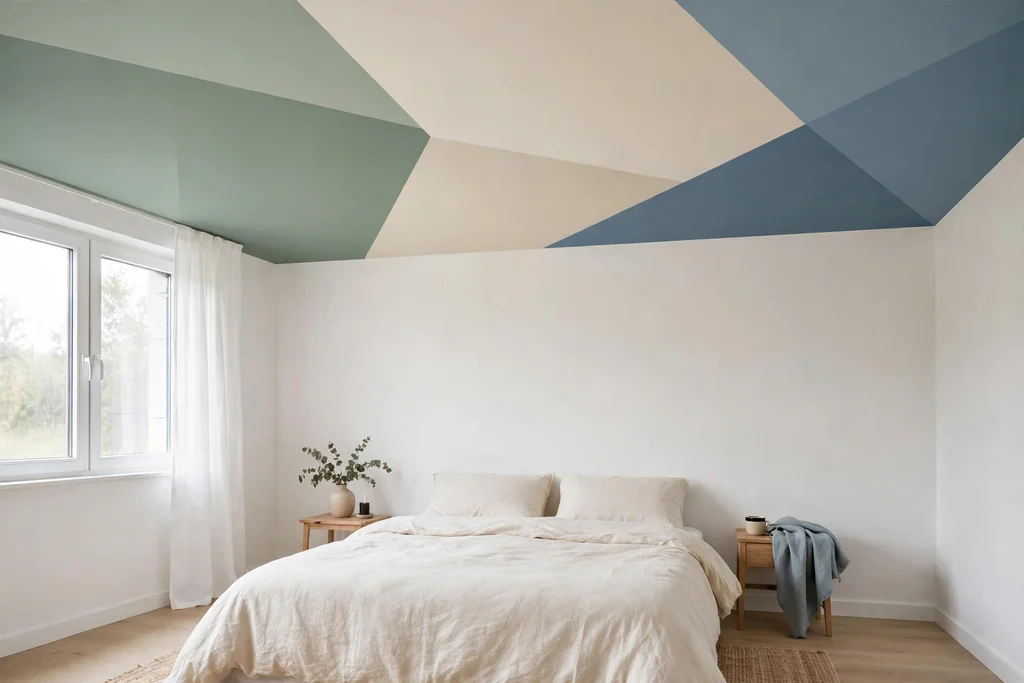
Geometric color blocks, such as large triangles, arches, or rectangles painted in two or three tones, give a ceiling a modern, graphic look. The shapes can sit above the bed as a single feature, or spread across the whole ceiling in a loose pattern. This suits a bedroom with plain walls and simple furniture, where the ceiling can carry the pattern.
Plan the shapes on paper first, and tape each shape before painting so the edges stay sharp. Use colors already in the room, such as a rug tone and a cushion tone, so the blocks look linked to the scheme. Keep the rest of the pattern in the room to a minimum, since geometric shapes plus patterned bedding can quickly look busy.
26. Paint an Ombre Gradient Across the Ceiling

An ombre ceiling fades from one color to another, often from a deeper tone at the walls to a pale tone in the center, or from the wall color into white overhead. The gradient softens the join between wall and ceiling and gives the room a gentle, blended feeling. It suits a bedroom with plain walls, where the gradual change is easy to see.
Blend the gradient while the paint is wet, working in bands and softening each join with a dry brush or a sponge. Practice on a board first, since a gradient that looks smooth in a small test can show hard bands across a large ceiling. Keep the two colors close in tone, such as sage into pale sage, for a result that is easy to live with.
27. Add Gold Painted Trim to Ceiling Molding

Gold painted trim on ceiling molding, such as a cornice or a ceiling rose, adds a warm metallic detail without painting the whole ceiling. The gold catches lamplight and frames the edge of the ceiling, which suits a bedroom with classic furniture and bedding in cream or deep tones. Use gold sparingly, on one molding line only, so it reads as a detail rather than a theme.
Paint the molding with a small brush and a metallic paint made for trim, and keep the ceiling itself plain white or pale. Wipe up any gold that strays onto the ceiling while it is still wet. If gold feels too strong, use a soft brass or antique gold tone, which sits more quietly against white paint.
28. Paint a Chalkboard Panel on the Ceiling Above a Desk Area
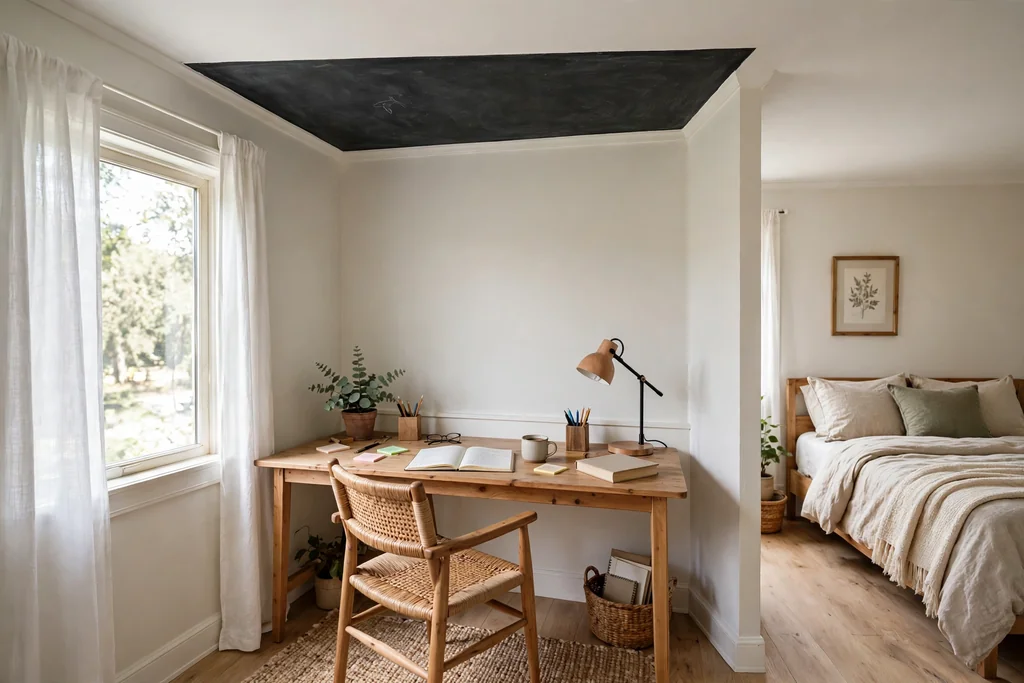
A chalkboard painted panel on the ceiling above a desk corner or a reading chair gives a bedroom a useful, playful surface. You can write a quote, a reminder, or a simple drawing on it with chalk, and wipe it clean when you want a change. This suits a bedroom that also serves as a study space, where the ceiling panel marks out one zone of the room.
Paint the panel in chalkboard paint over a primed section, and keep the panel to a modest size, such as the area above a desk, rather than the whole ceiling. Use a low dust chalk and wipe the panel with a damp cloth often, since chalk dust settles on bedding below. Keep the rest of the ceiling plain, so the dark panel reads as a clear feature.
29. Match the Ceiling to an Accent Color From the Bedding

Matching the ceiling to an accent color already in the bedding is a simple way to make the room feel pulled together. Pick one color from the duvet, a cushion, or a throw, such as dusty blue, rust, or olive, and use a softer version of it on the ceiling. The link between bed and ceiling is easy to see, and the room looks planned without a new color scheme.
Use the bedding color at a paler strength on the ceiling, since a color that looks good on fabric can look strong across a large flat surface. Repeat the accent once more in a cushion or a curtain tie, and keep the walls pale. This idea also works in reverse: choose the ceiling color first, then buy one cushion in the same tone to tie the bed to the ceiling.
30. Fit Removable Painted Ceiling Panels for a Rental
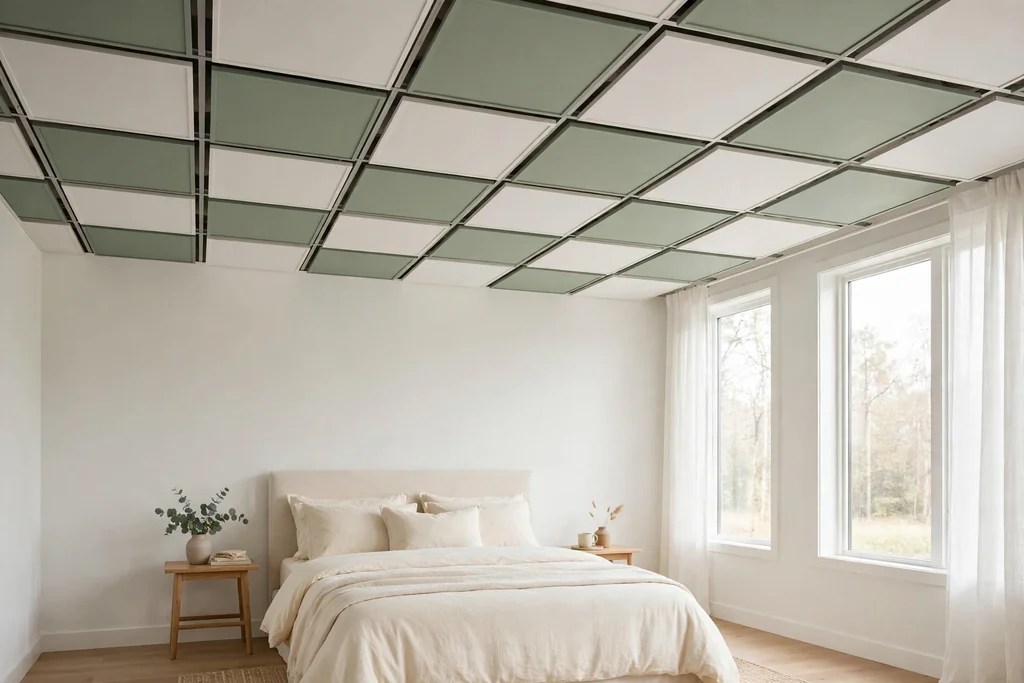
Removable painted panels are thin boards painted off site, then fixed to the ceiling with removable fixings, so a renter can add a painted ceiling without painting the ceiling itself. Paint the boards in a color or pattern you like, such as white planks, sage panels, or a striped design, and fit them in a grid that covers the main ceiling area. When you move out, the panels come down and the original ceiling stays intact.
Measure the ceiling and cut the boards to fit, leaving a small gap at the edges for removal. Use fixings rated for the board weight and suited to your ceiling type, and keep the panels light so they are safe overhead. Check your lease before fitting anything, and keep the original ceiling fittings in place. For more renter friendly bedroom ideas that avoid fixed changes, see these plaid bedroom ideas and these hygge bedroom ideas for textile led changes that come down just as easily.
Conclusion
A painted ceiling works best when it answers a real need in the room: more light, more warmth, a clearer focal point, or a pattern that plain walls cannot carry. Start with the room you have, not the boldest color in the list. Check the ceiling height, the daylight, and the bedding colors, then pick one idea, test it on a board, and paint a small section first if you are unsure. Keep the rest of the room calm, repeat the ceiling color once in a small item, and let the ceiling do its work quietly overhead.
Save this list on Pinterest before your next bedroom refresh, and work through it one idea at a time: color first, then finish and pattern, then beams, panels, and murals.
FAQs
What is the best ceiling color for a small bedroom?
A pale color works best in a small bedroom, such as white, pale sky blue, soft sage, or butter yellow. Pale colors reflect light and keep the ceiling feeling high, while deep colors can press down on a low room. If you want a deep color in a small room, try it on one panel or above the bed only, and keep the walls and bedding pale.
Do I need special paint for a bedroom ceiling?
Use a paint made for ceilings or interior walls, in a flat or matte finish for most rooms. Flat paint hides small marks and gives an even look overhead. Gloss paint suits a room that needs more reflected light, but it shows marks, so prepare the ceiling well first. Check the paint label for the surface type, and prime bare plaster or stained areas before the top coats.
Should the ceiling be lighter or darker than the walls?
In most bedrooms, a ceiling lighter than the walls keeps the room feeling open and tall. A darker ceiling suits a tall room, a room with strong daylight, or a bedroom where you want a cozy, enclosed feeling at night. If you are unsure, paint a large test board in the darker tone, hold it overhead, and check it in daylight and lamplight before you paint the full ceiling.
How do I paint a ceiling without drips and roller marks?
Work in small sections, load the roller evenly, and roll in one direction with light, overlapping strokes. Keep a wet edge as you move across the ceiling, and do not roll back over paint that has started to dry. Cover the bed and floor, use a roller with an extension pole so you can keep steady pressure, and apply two thin coats rather than one thick coat.
Can renters paint a bedroom ceiling?
Renters should check the lease first, since many leases ask you to return the room to its original color. If painting is not allowed, use removable painted panels, as in idea 30, or carry the ceiling color through bedding, curtains, and art instead. Keep any original fittings, and keep a note of the original paint color so you can restore the room if the lease asks for it.
How do I pick a ceiling color that suits my bedding?
Pick one accent color from the bedding, such as a cushion tone or a throw color, and use a paler version of it on the ceiling. Lay the bedding, rug, and a paint swatch together in daylight and check that they share an undertone, warm or cool. If the bedding is patterned, choose a plain ceiling color pulled from the smallest color in the pattern, so the ceiling supports the bed rather than competing with it.