
Spring is a good time to lighten a bedroom, because the room has usually carried heavy bedding, dark colors, and closed curtains all winter. You do not need a full redecorate to get that lighter feel. A change of bedding, a vase of fresh flowers, and curtains that let daylight in can shift the whole room in one afternoon. These 11 ways to style a spring bedroom cover bedding, color, flowers, light, storage, and scent, so you can pick the ideas that suit your room and your budget. Start with the bed, then move to the windows and the walls, and finish with the small details.
Key Takeaways
- Start with the bed: light cotton or linen bedding in white or cream changes the room faster than any other single swap.
- Keep spring color soft and limited: one or two pastels, repeated in cushions, a throw, and art, read as planned rather than busy.
- Let daylight in: sheer curtains, a clear windowsill, and a mirror opposite the window all help a bedroom feel brighter.
- Use fresh flowers and potted plants for a spring note that you can change weekly, without committing to a new color scheme.
- Clear winter layers first: baskets for heavy throws and spare blankets keep the room tidy while spring layers take their place.
- Finish with scent and small details: a candle, fresh linen, and a tidy nightstand make the refresh feel complete.
1. Swap in Light Cotton and Linen Bedding

Take off heavy winter bedding and dress the bed in light cotton or linen in white, cream, or a very pale grey. Start with fresh sheets, add a light duvet or coverlet, and fold a thin cotton throw across the foot for cooler nights. Linen softens with washing and drapes loosely, while cotton stays crisp and is easy to wash, so either fabric suits a spring bed.
This swap suits every bedroom, rented or owned, since it needs no tools and no paint. Keep one warm layer close by, such as a folded blanket in a basket at the foot of the bed, so a cool night does not mean remaking the bed. Wash the winter bedding before you store it, and keep it in a clean, dry bag so it is ready when the weather turns again.
2. Add Pastel Cushions in Blush, Sage, and Butter Yellow

Add two or three cushions in soft pastels, such as blush pink, sage green, and butter yellow, against white or cream bedding. Pastels give the bed a spring note without a strong color commitment, and they are easy to swap again in summer or fall. Choose cushions in different textures, such as linen, cotton, and a light knit, so the bed has depth even though the colors stay pale.
Keep the rest of the bed plain, so the pastels carry the color, and repeat one pastel once more in the room, in art or a small vase, so the color looks planned. For a calm green to pair with blush and butter yellow, see these sage green bedroom ideas. If your room already has a strong wall color, use only one pastel family, such as blush and cream, so the bed does not compete with the walls.
3. Put Fresh Tulips on the Nightstand
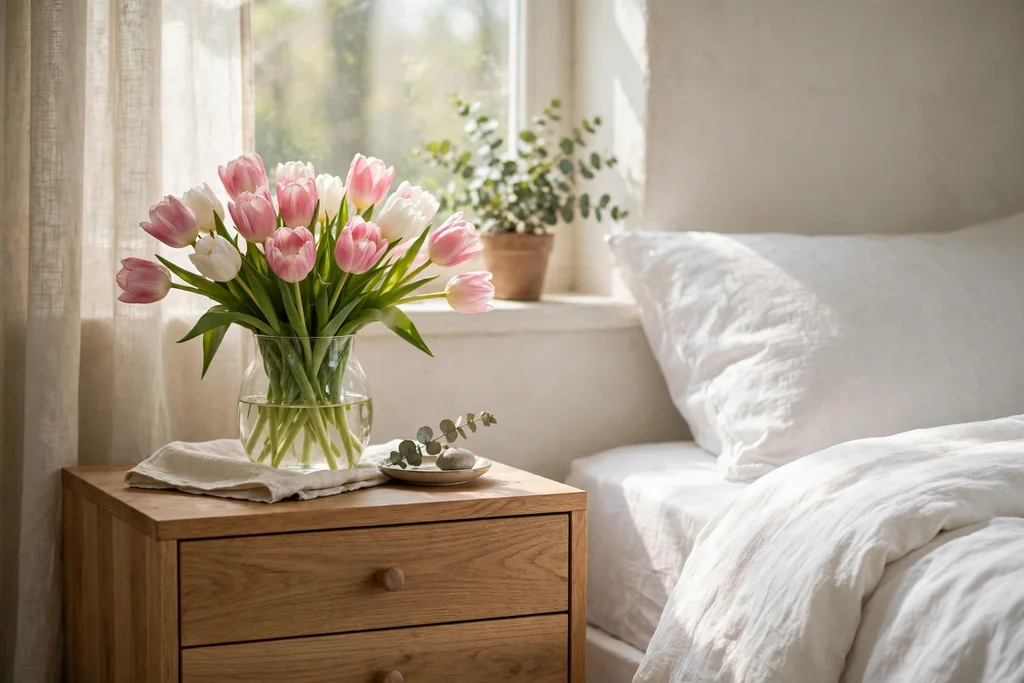
A small vase of fresh tulips on the nightstand is the quickest spring detail in a bedroom, because it adds color, shape, and a living plant in one step. Choose one color, such as soft pink, white, or coral, and use five to seven stems in a low jar or a small jug, so the vase does not block a lamp or a book. Tulips keep growing after they are cut and bend toward the light, so the arrangement will change shape over a few days.
Change the water every two days and trim the stems at an angle to keep tulips fresh for up to a week. Keep the vase clear of books and charging cables, and set it on a small tray or saucer if the nightstand is wood, so water marks do not form. When the tulips fade, swap them for daffodils, ranunculus, or a sprig of blossom, and keep the same vase so the nightstand styling stays settled.
4. Hang Sheer Curtains for Soft Daylight

Hang sheer white or cream curtains at the bedroom window to soften daylight while keeping daytime privacy. The loose weave lets light through in a gentle wash, so a small or north facing bedroom feels brighter, while the view from outside is blurred. Sheers suit a bedroom where you wake with the light and do not need full darkness in the morning.
Hang the rod high and wide enough that the panels clear the window frame when open, so daylight still fills the room. Pair sheers with a blackout lining or a second panel if you need darkness for sleep, and wash the sheer panels often, since pale fabric shows dust sooner than heavier fabric. For more fabrics, lengths, and hanging tips, see these bedroom curtain ideas.
5. Swap in Botanical Prints for Spring
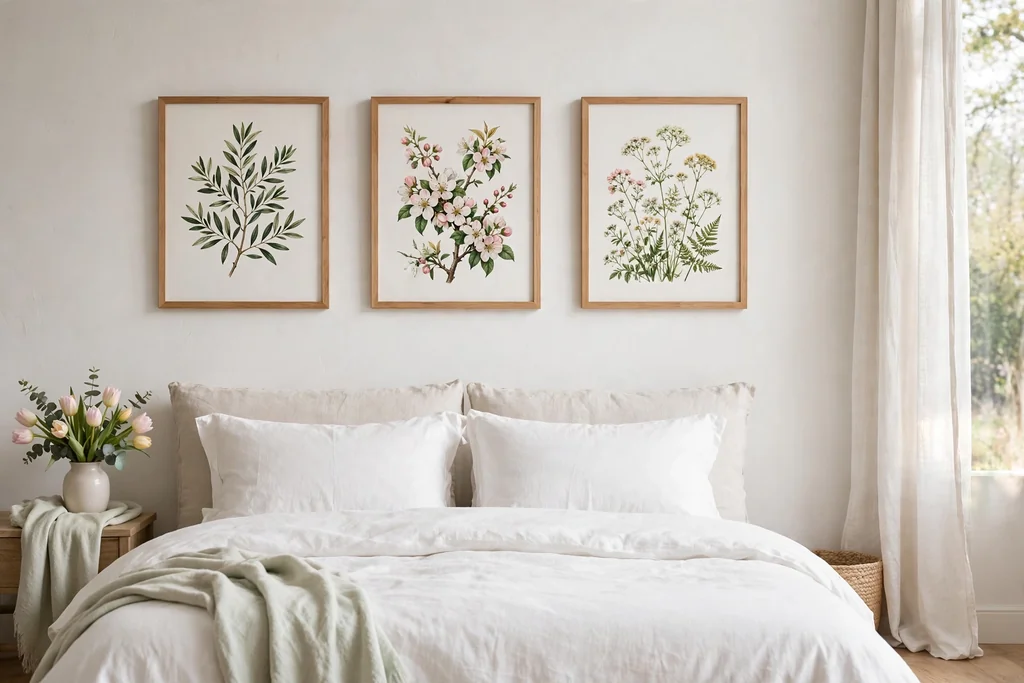
Swap heavy winter art for botanical prints in soft green, cream, and pale pink for spring. Choose leaf studies, fern shapes, or simple flower line drawings in plain wood or white frames, and hang them above the bed or along one wall. Botanical prints give a room a garden note without a new color scheme, and they suit plain walls and solid bedding best.
Lay the frames on the floor first and plan the spacing, leaving equal gaps between frames, then hang the middle frame at eye level. Keep the palette tight, with no more than three colors across the prints, so the wall feels calm rather than crowded. Store the winter art flat and wrapped, so you can swap it back in fall without damaged frames or glass.
6. Tidy Away Winter Layers With Woven Baskets

Use woven baskets in seagrass, rattan, or cotton rope to store heavy throws, spare blankets, and winter layers that no longer suit the bed. Place one large basket at the foot of the bed for throws, and a smaller basket beside the bed or in a corner for books and magazines. Baskets keep useful items close without adding closed furniture, and their natural texture suits a spring room.
Keep the baskets mostly tidy, with one folded throw visible at the top, so they read as storage rather than clutter. Dust woven pieces with a dry cloth or a soft brush, and keep them out of damp corners, since natural fibers can warp. Label nothing, since baskets work best when you can see and reach what is inside at a glance.
7. Lay Down a Light Rug in Jute or Cotton

Lay a light rug in jute, cotton, or a pale flat weave under or beside the bed to warm up a hard floor for spring. A natural jute rug adds a sand tone that links light wood furniture and woven baskets, while a washable cotton rug suits a bedroom that gets bare feet, pets, or open windows. Let the rug extend well beyond each side of the bed, so your feet land on it first thing in the morning.
Choose a low pile you can vacuum easily, and use a rug pad on smooth floors to stop slipping. Keep the rug pile low near the door swing, and vacuum with a brush head, since natural fibers shed at first. If the room is small, a runner beside the bed gives the same soft landing with less floor covered than a full rug under the bed.
8. Add Potted Plants to the Windowsill and Dresser
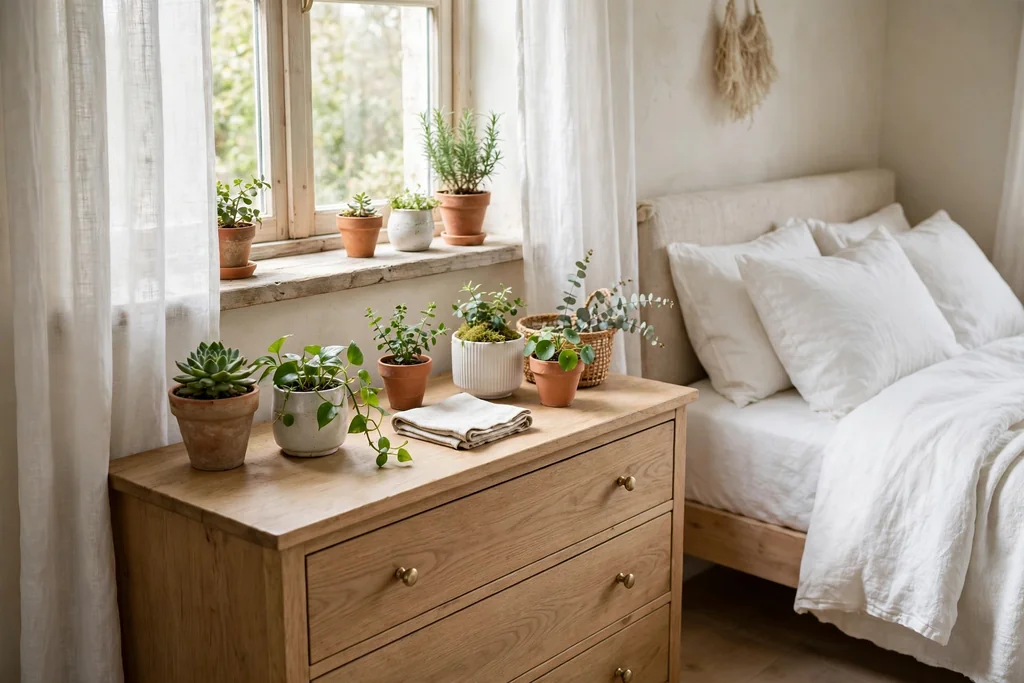
Add small potted plants to the windowsill, the dresser, or a bedside table for greenery that lasts longer than cut flowers. Choose easy plants in terracotta or plain white pots, such as a trailing pothos, a small fern, or a potted herb like mint, and group two or three pots of different heights together. The green softens hard furniture and links the room to the garden outside.
Set each pot on a saucer to protect wood surfaces, and water only when the top of the soil feels dry, since most indoor plants suffer more from overwatering than from dry soil. Keep plants clear of heavy curtains and radiators, and turn the pots every week or so, so growth stays even toward the light. If you have pets, check that each plant suits your household before you bring it into the bedroom.
9. Freshen the Air With a Gentle Spring Scent
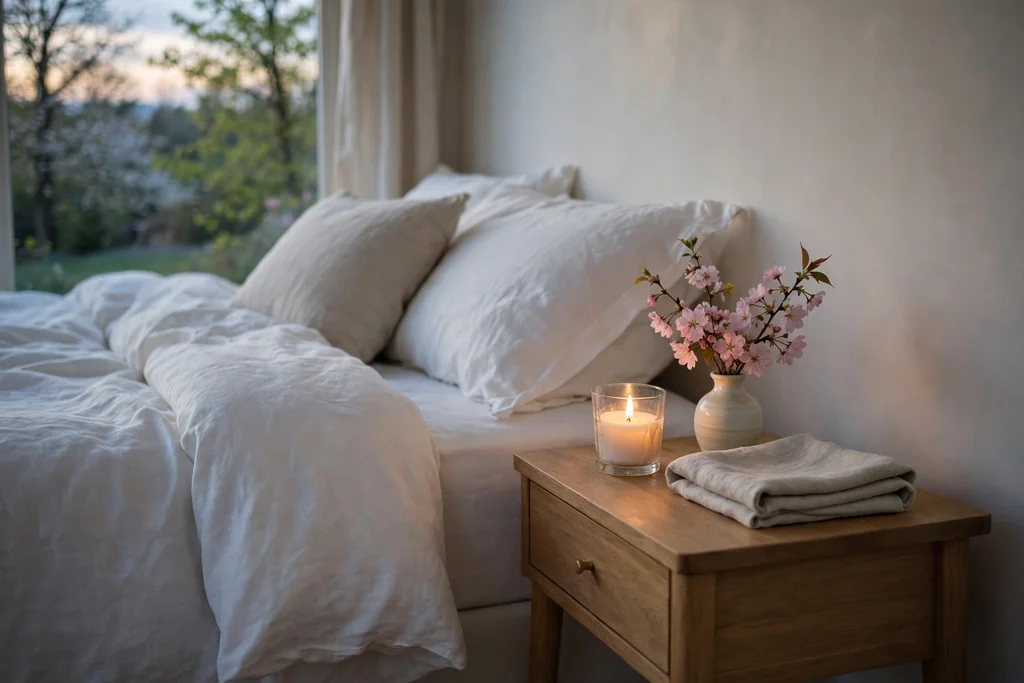
Freshen the bedroom air with a gentle spring scent, such as a linen spray on bedding, a candle in a glass holder, or a small dish of dried lavender on the dresser. Scent is one of the fastest ways to mark a seasonal change, because it greets you each time you walk into the room, and it needs no new furniture or paint. Choose one scent, such as fresh linen, light floral, or green herbs, and use it in one place only, so the room does not carry competing smells.
Keep candles clear of curtains, bedding, and books, and never leave a lit candle burning in an empty room. Open the window for a short while each morning as well, since fresh air does more for a stuffy bedroom than scent alone. If you share the room, agree on one scent that suits you both, and skip strong or heavy fragrances that can feel tiring overnight.
10. Fold a Floral Throw Across the Foot of the Bed

Fold a light floral throw across the foot of the bed for a spring pattern that you can remove in minutes. Choose a small or medium scale floral in two or three soft colors, such as pink, green, and cream on a white ground, so the pattern reads as fresh rather than loud. A floral throw suits a plain bed best, where white or cream bedding gives the pattern room to show.
Keep the rest of the bed mostly solid, with pastel cushions in one color pulled from the throw, so the pattern and the cushions link without competing. Fold the throw neatly each morning, since a throw left in a heap can make an otherwise tidy bed look untidy. Wash the throw as advised on the label, and store it folded in a basket when you want a plainer bed for a guest room.
11. Bounce Daylight With a Mirror and Pale Lamp Shades

Place a large mirror opposite or beside the window, and swap dark lamp shades for pale linen shades, to bounce daylight and soften evening light in a spring bedroom. A mirror reflects both light and the view outside, which helps a small or dark bedroom feel brighter, while pale shades let lamp light spread softly instead of pooling in one spot. Together, these two changes lift the room without moving any furniture.
Hang the mirror at eye level and keep what it reflects tidy, since a mirror doubles whatever sits opposite it, including clutter. Choose warm white bulbs for the lamps, and put the switches where you can reach them without getting up. For a room that leans further into light colors and natural texture, see these coastal bedroom ideas. Keep mirror glass clean, since dust shows more on a mirror than on a painted wall.
Conclusion
A spring bedroom comes down to light layers, soft color, and a few living details, used with restraint. Start with light bedding, add pastel cushions and a floral throw, let daylight in through sheer curtains, and finish with fresh flowers, potted plants, and a tidy nightstand. Keep surfaces mostly clear, store winter layers in baskets, and warm the evenings with pale lamp shades, so the room feels bright by day and restful at night. Work through these 11 ideas in order, one afternoon at a time, and keep only the changes that suit the way you actually sleep and wake in the room.
Save this list for your next free hour in the bedroom, and start with the bed and the windows before you buy anything new. Small, seasonal swaps are often enough, and they leave the room easy to change again when summer arrives.
FAQs
How do I style a spring bedroom without repainting?
Start with bedding, cushions, curtains, and art, since those cover the largest surfaces in the room and need no paint. Light cotton or linen bedding, pastel cushions, sheer curtains, and botanical prints can shift a room in one afternoon. Save paint for a later project, and test any paint sample in morning and evening light first, since spring daylight can change how a color reads.
What colors work best for a spring bedroom?
White, cream, and pale grey work best as a base, with one or two pastels, such as blush pink, sage green, butter yellow, or pale blue, as accents. Keep the main palette pale, with color on cushions, a throw, art, or a vase, and add natural wood and woven texture for warmth. Test fabric samples beside your bedding and floor before committing, since white and pastels shift a lot through the day.
How do I keep fresh flowers looking good in a bedroom?
Change the water every two days, trim the stems at an angle, and keep the vase out of direct sun and away from radiators. Tulips last about a week with fresh water, while daffodils and ranunculus need the same care. Remove any stem that fades, so it does not cloud the water for the rest, and swap the whole bunch weekly for a fresh spring note.
Can I style a small spring bedroom?
Yes. In a small bedroom, pick fewer ideas and repeat them well: light bedding, one pastel accent, sheer curtains, and one vase of flowers are often enough. Keep the floor clear, use baskets for storage, and hang a mirror to bounce daylight, since clutter and dark layers make a small room feel smaller. Skip a large rug and a gallery wall if floor and wall space are tight, and use a bedside runner and one framed print instead.
How do I make a spring bedroom feel calm, not busy?
Limit the palette to a pale base plus one or two pastels, and limit pattern to one place, such as a floral throw or botanical prints, but not both at full strength. Keep surfaces mostly clear, with a lamp, a book, and a vase on the nightstand, and store spare items in baskets. Step back and remove one item from each surface if the room still feels crowded, since a calm room usually needs less, not more.
When should I swap winter bedding for spring layers?
Swap when nights feel mild enough for a light duvet or coverlet plus a folded throw, rather than on a fixed calendar date, since spring weather varies by region and by room. Keep a folded blanket in a basket at the foot of the bed for cooler nights, so you can add warmth without remaking the bed. Wash and store the winter bedding clean and dry, so it is ready when cold weather returns.