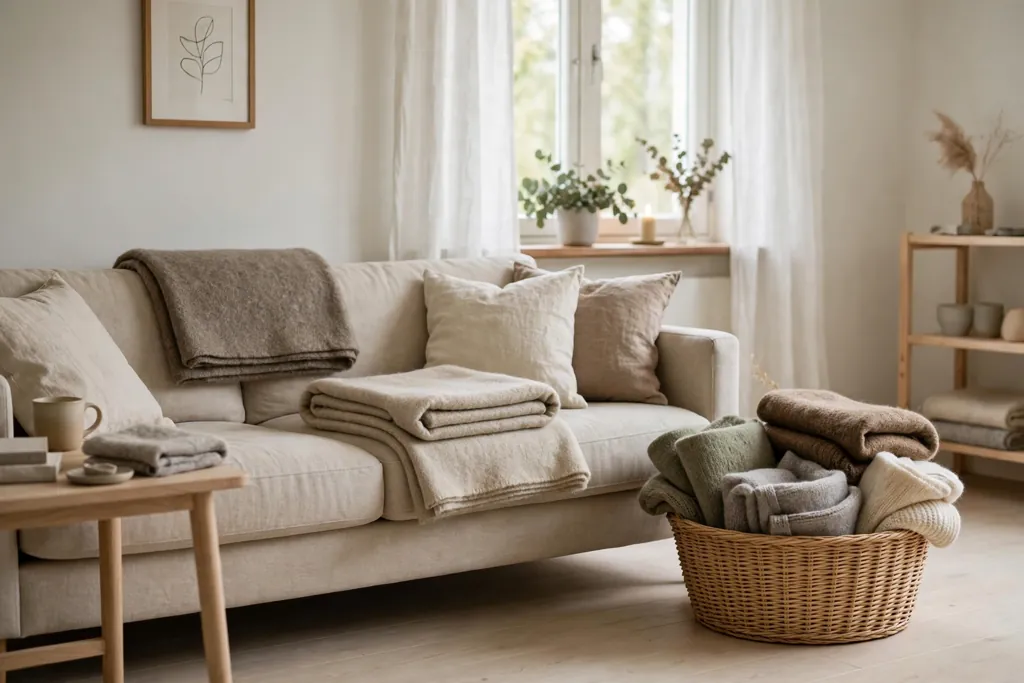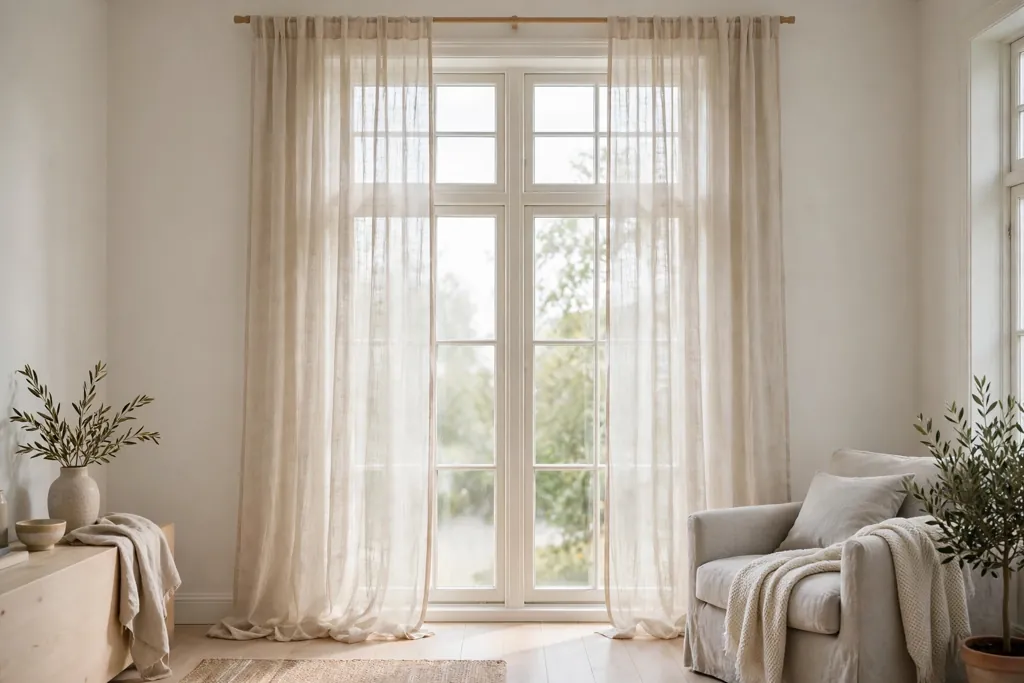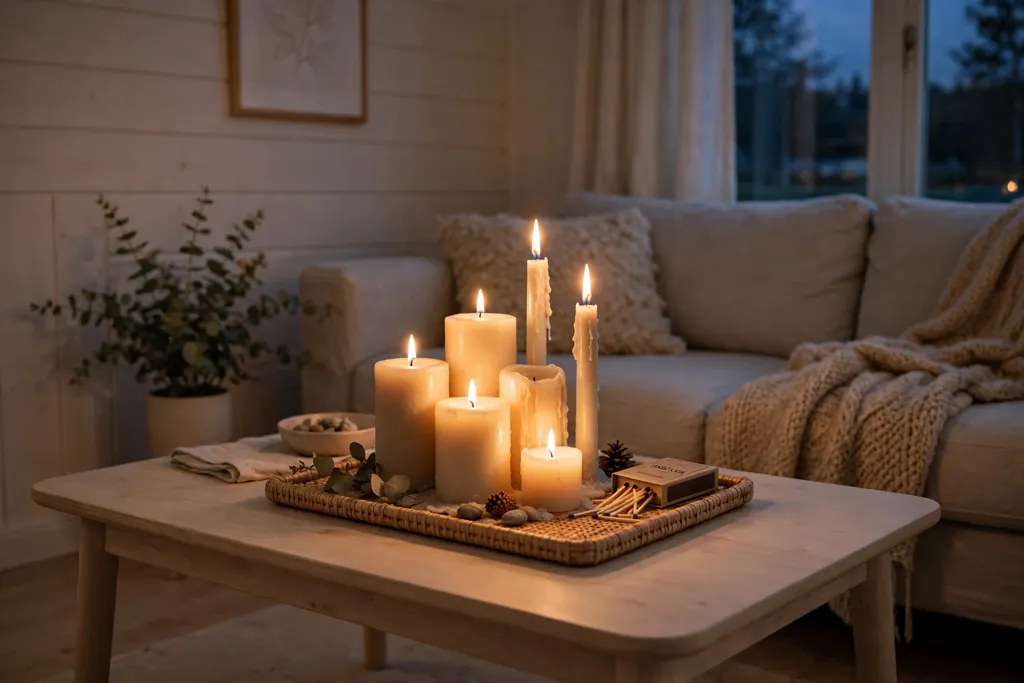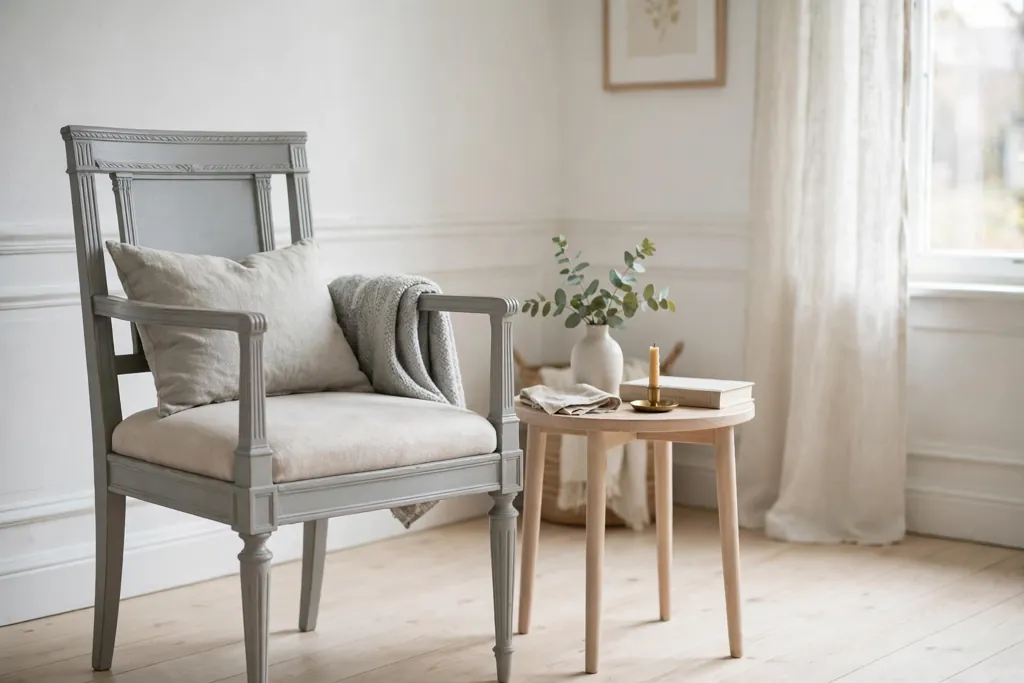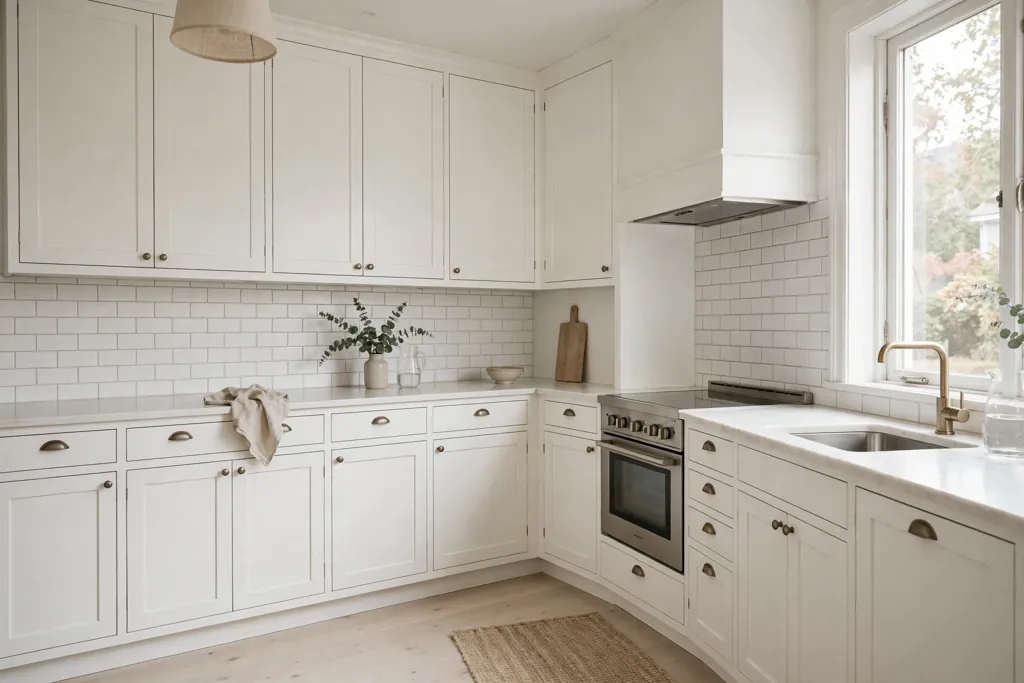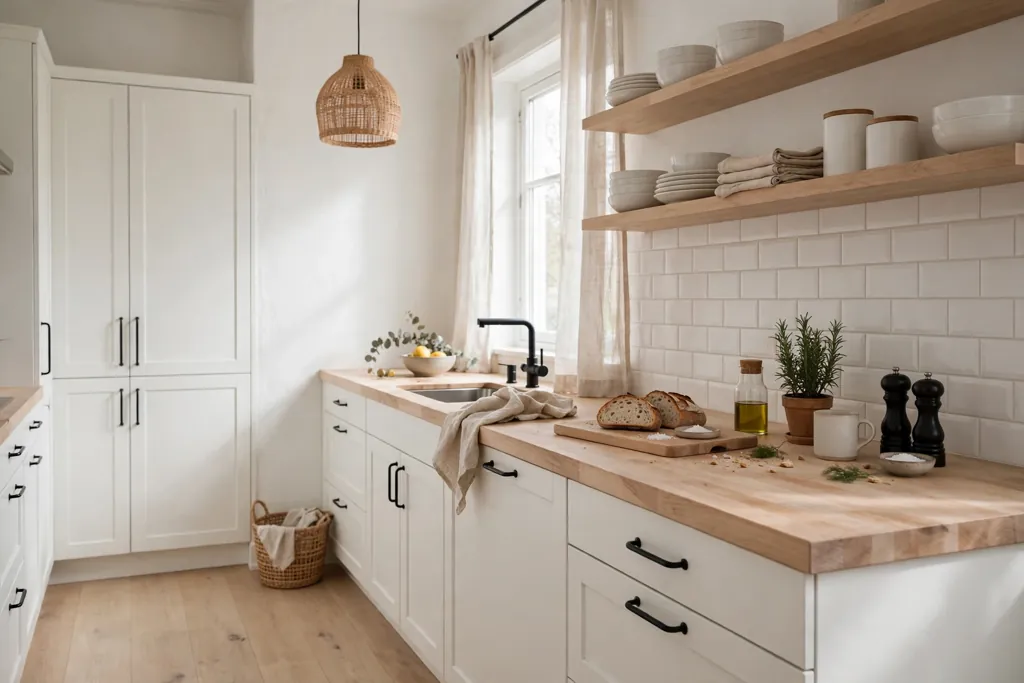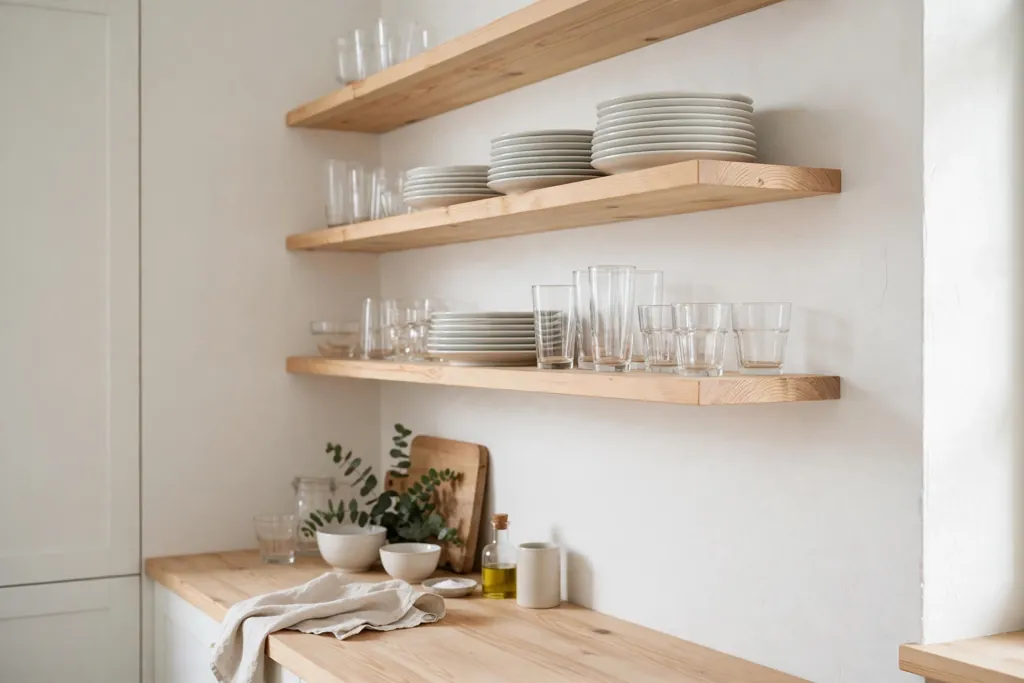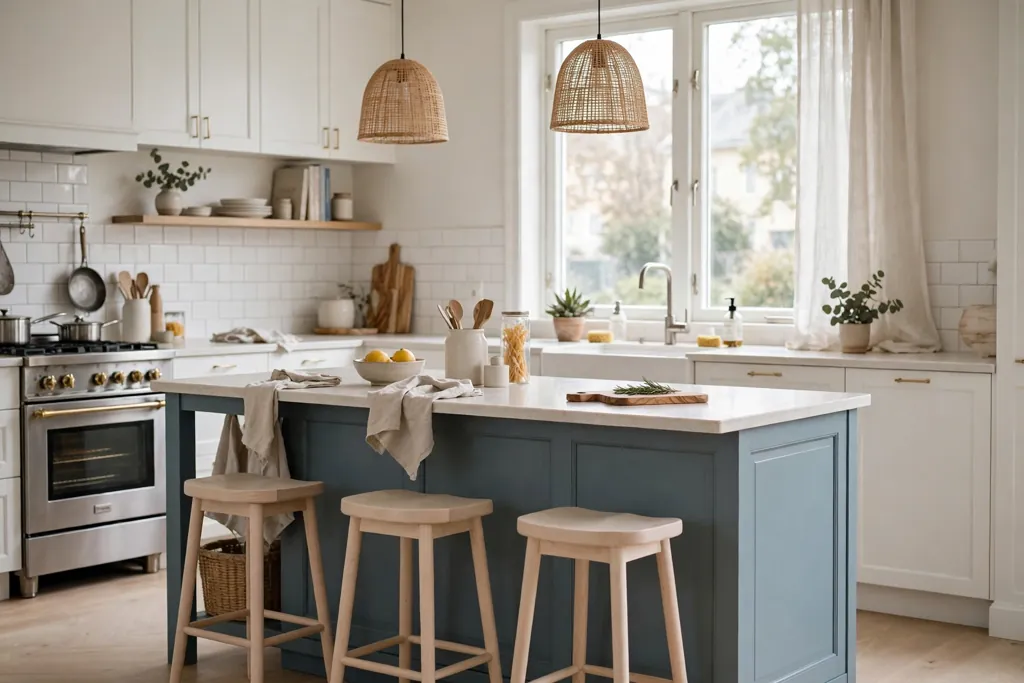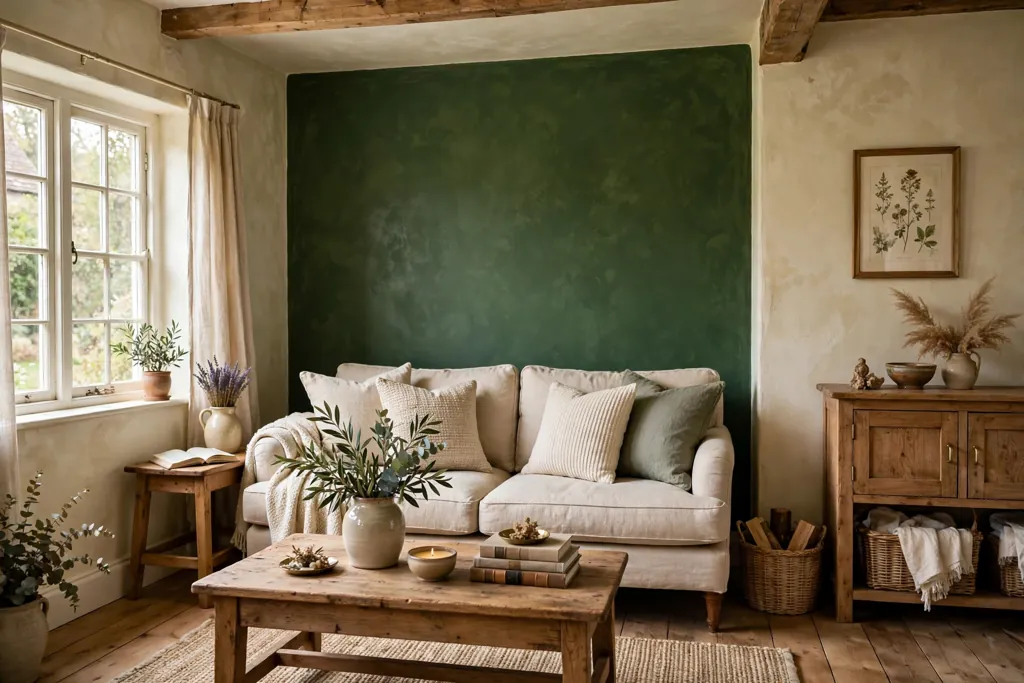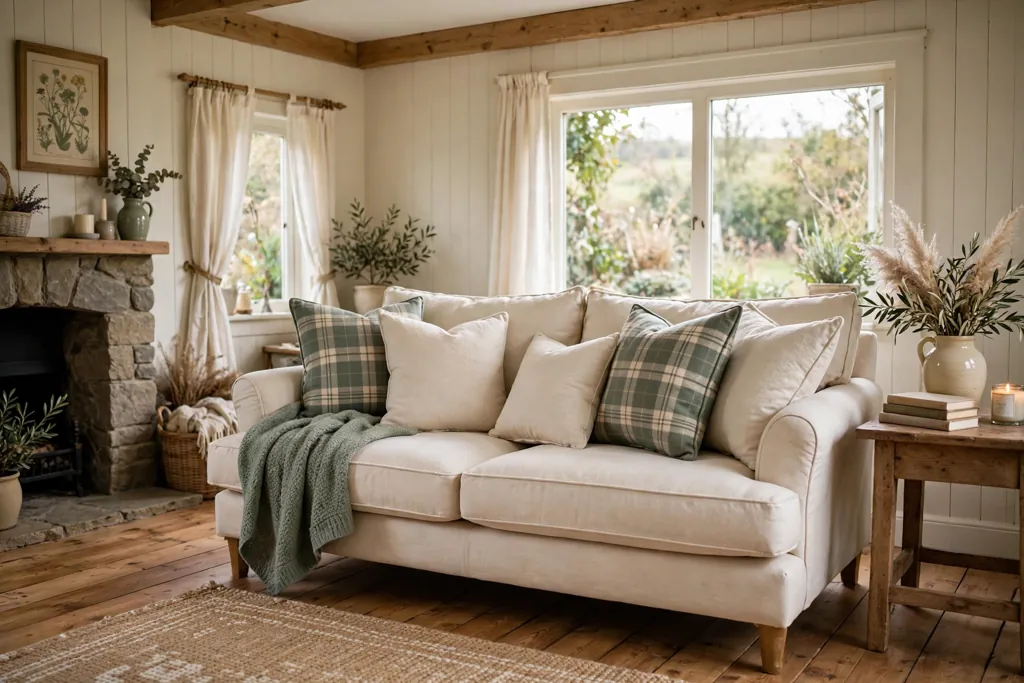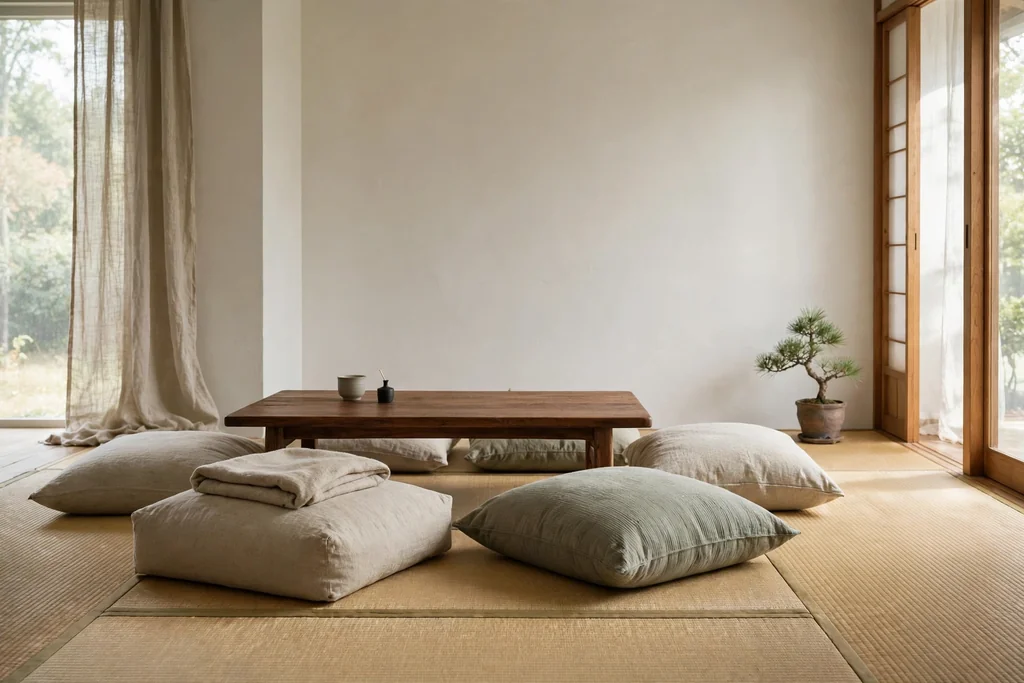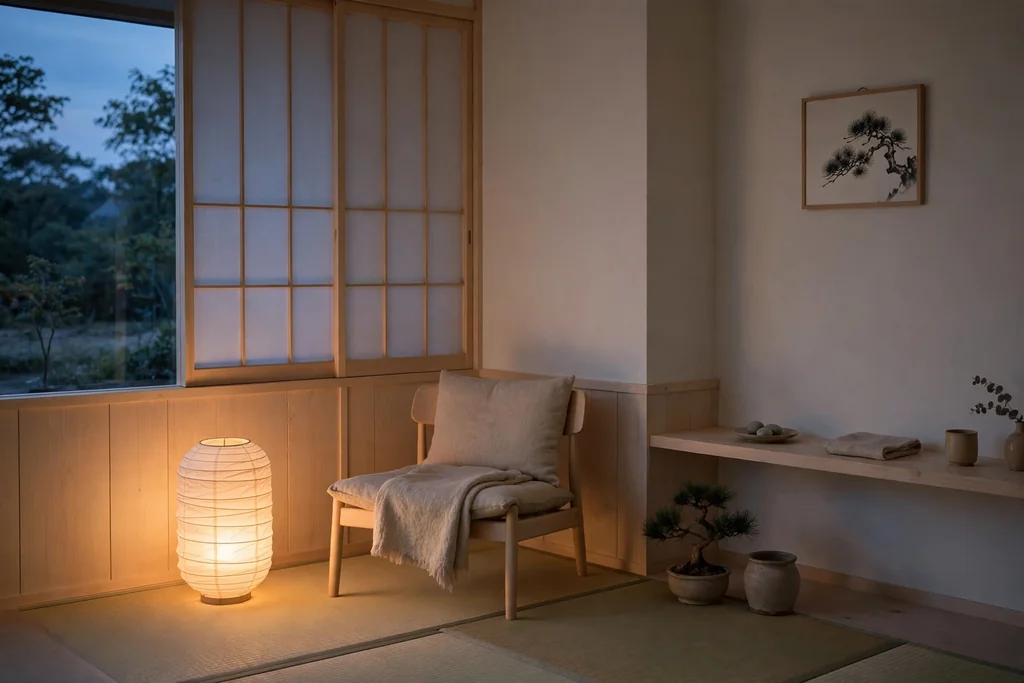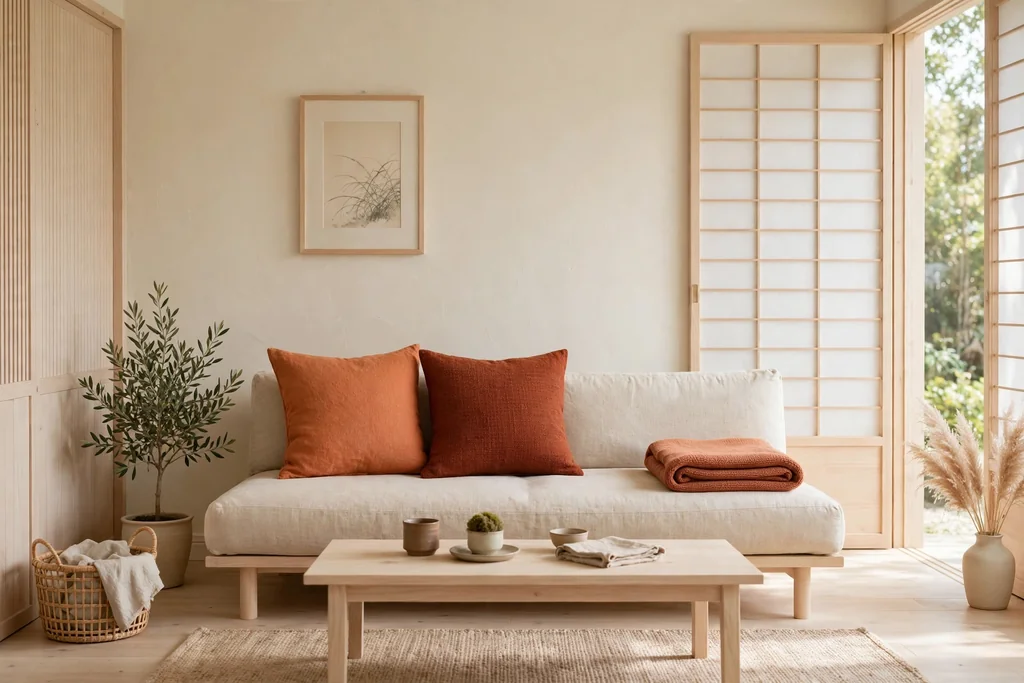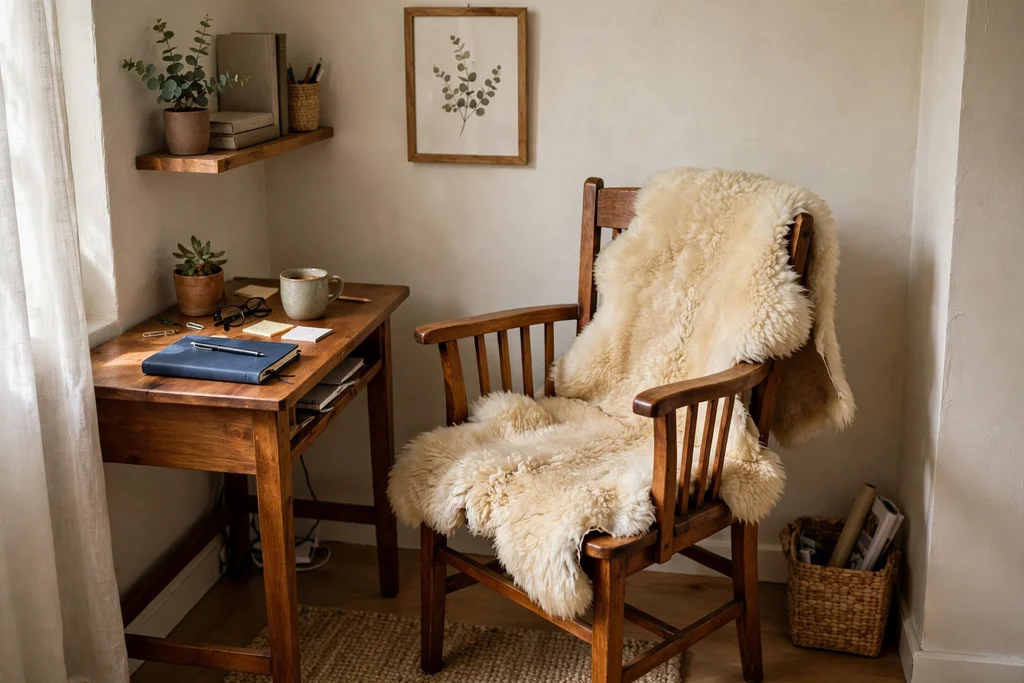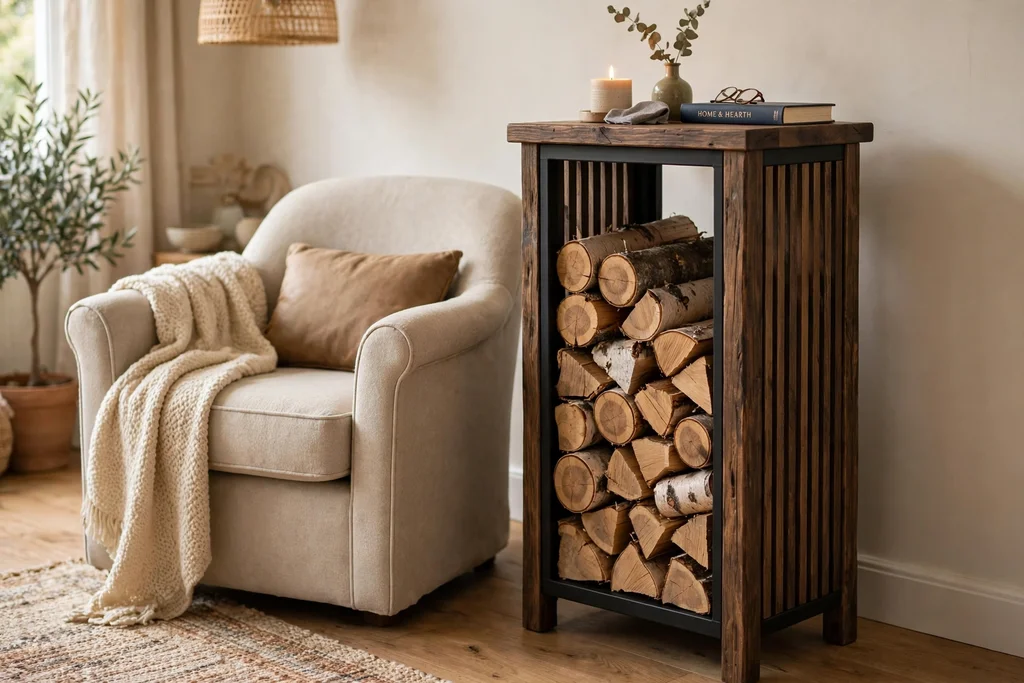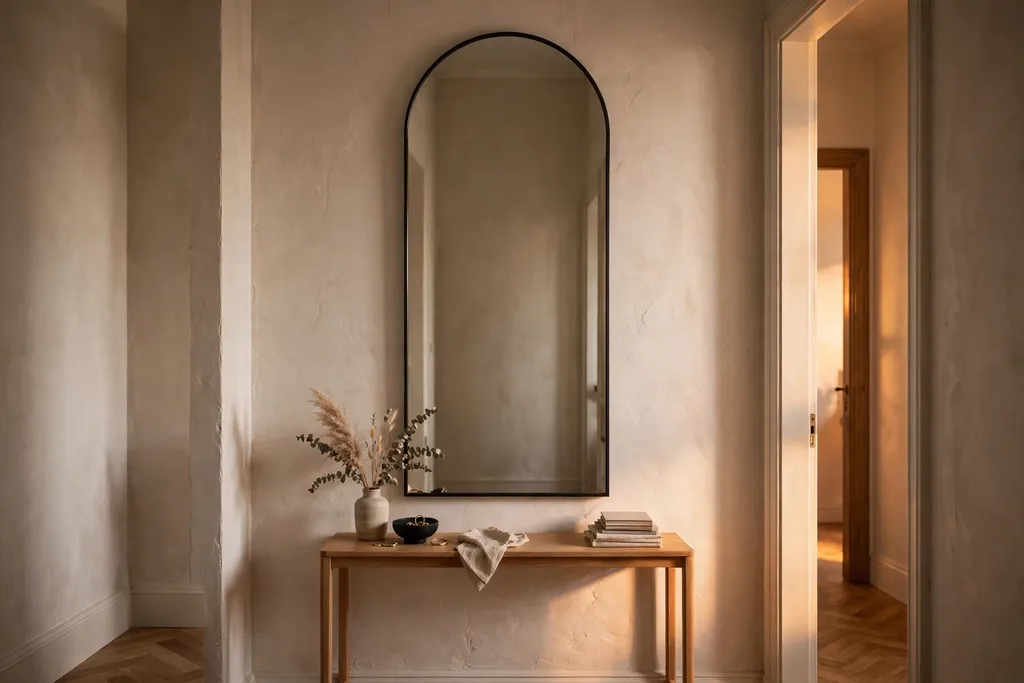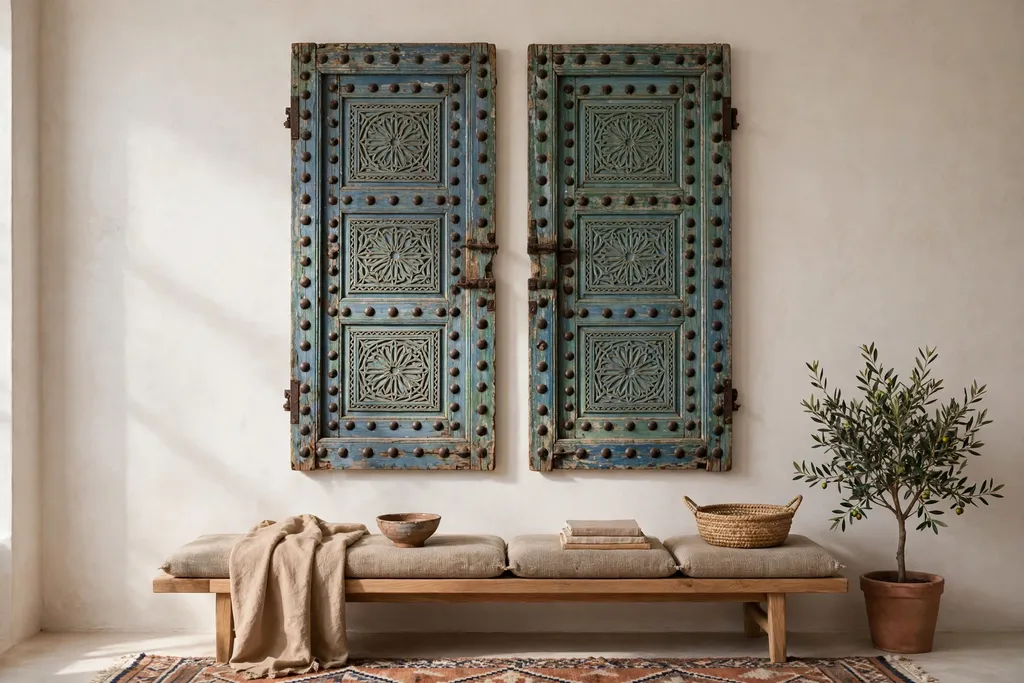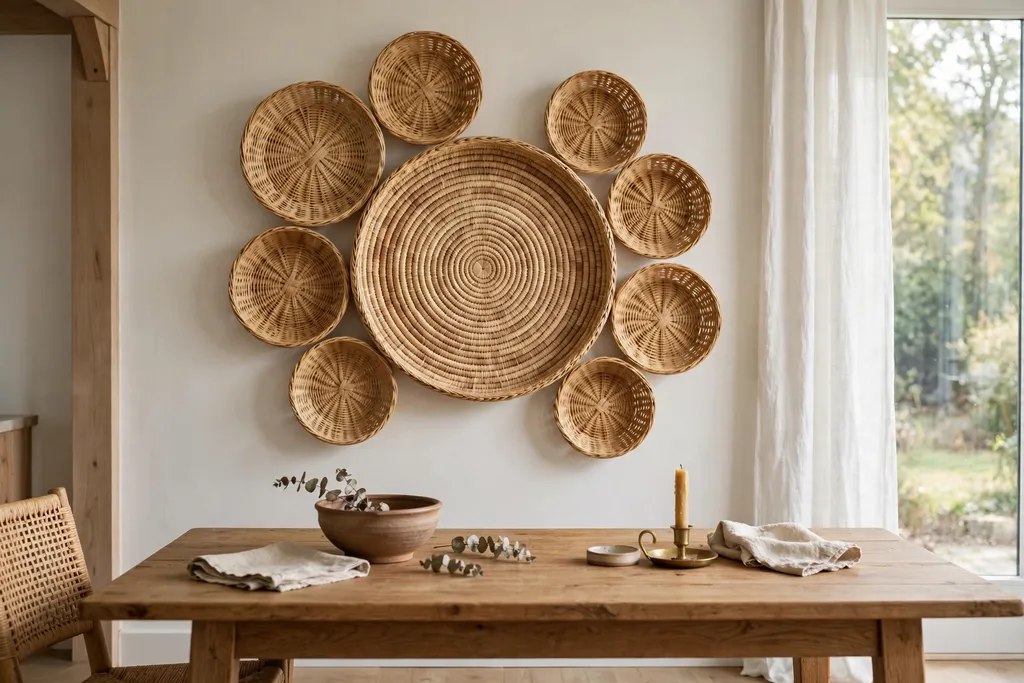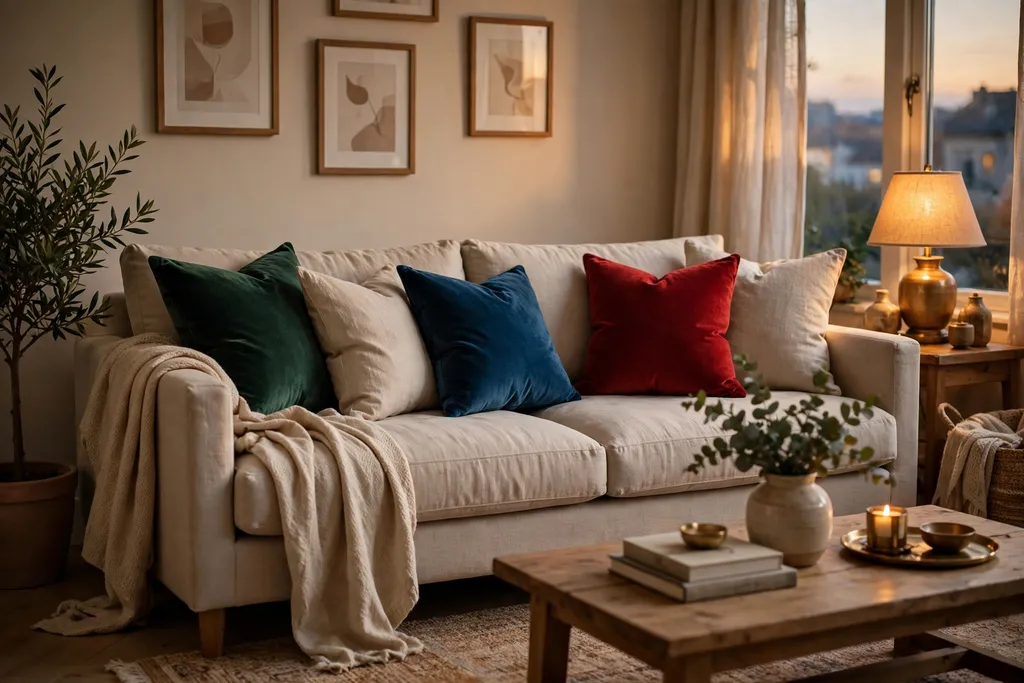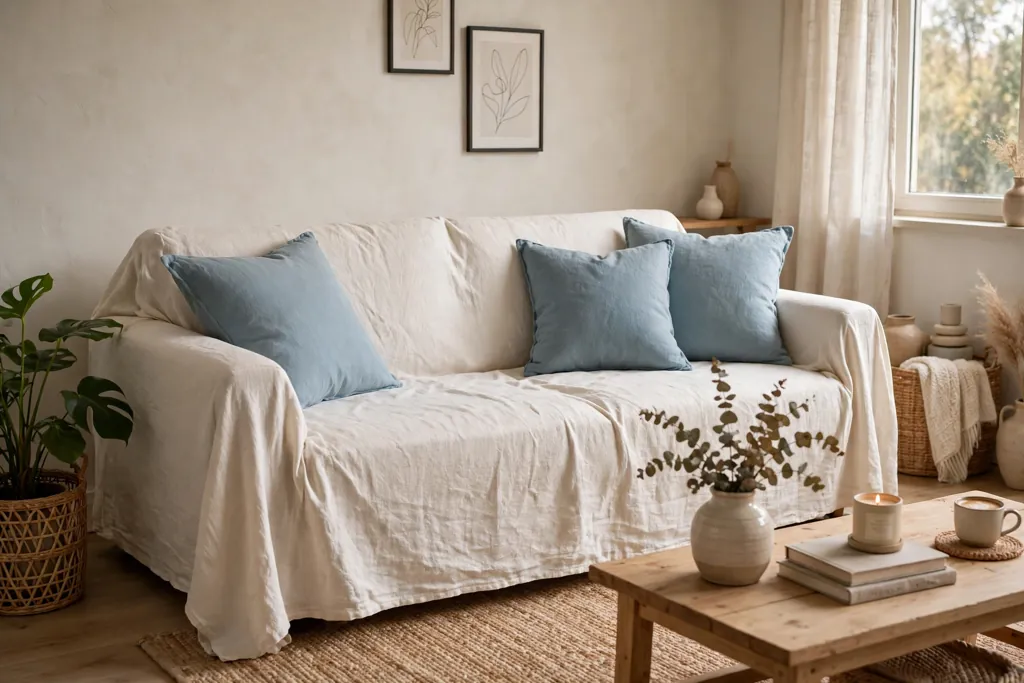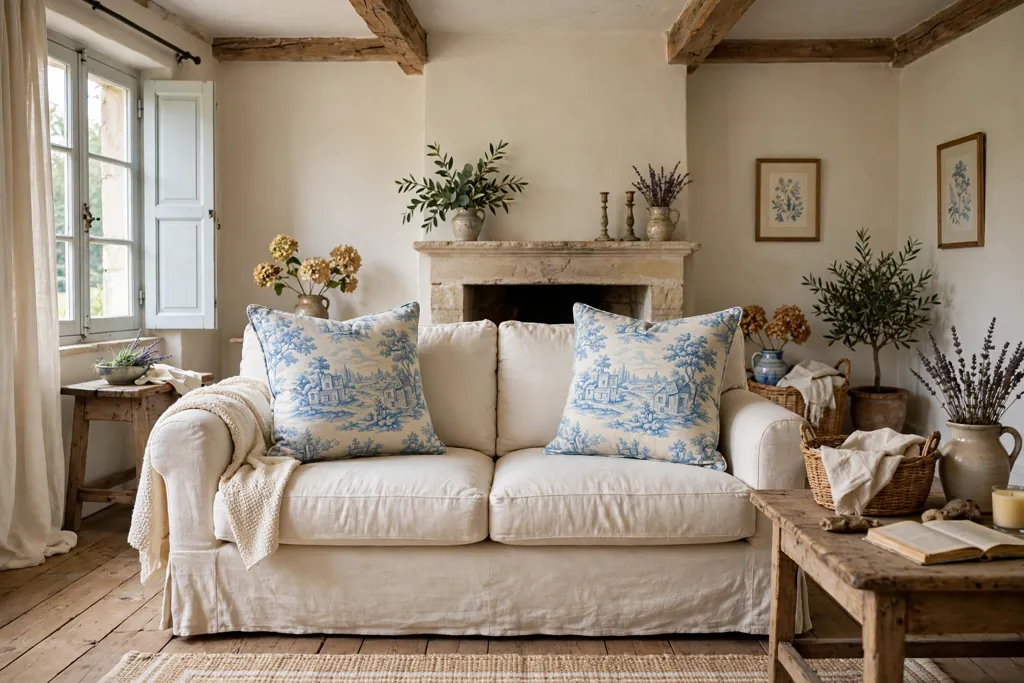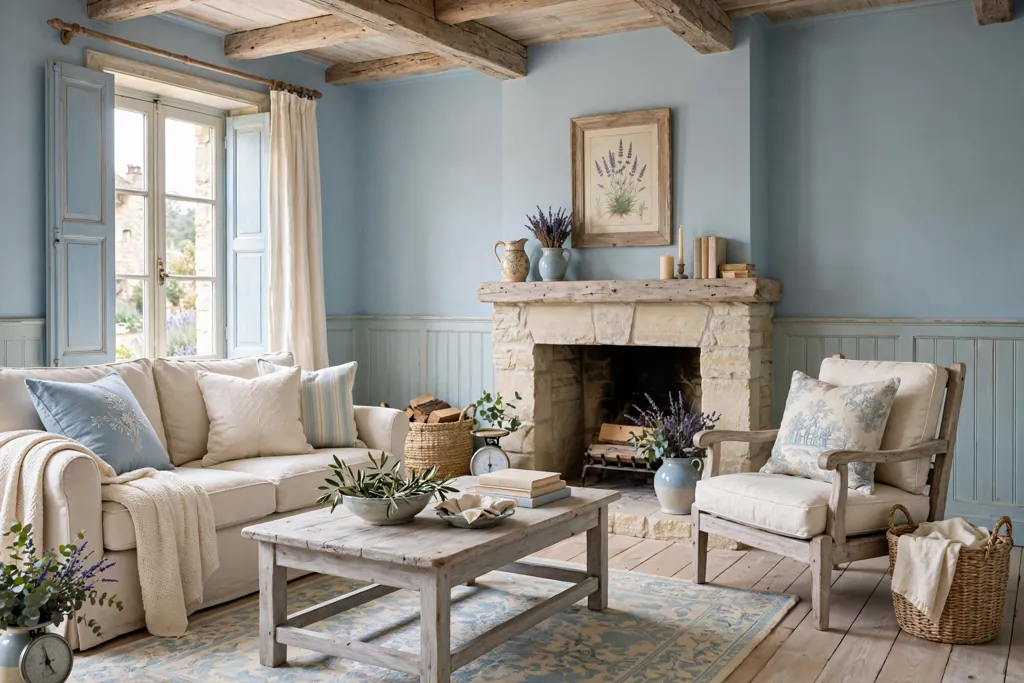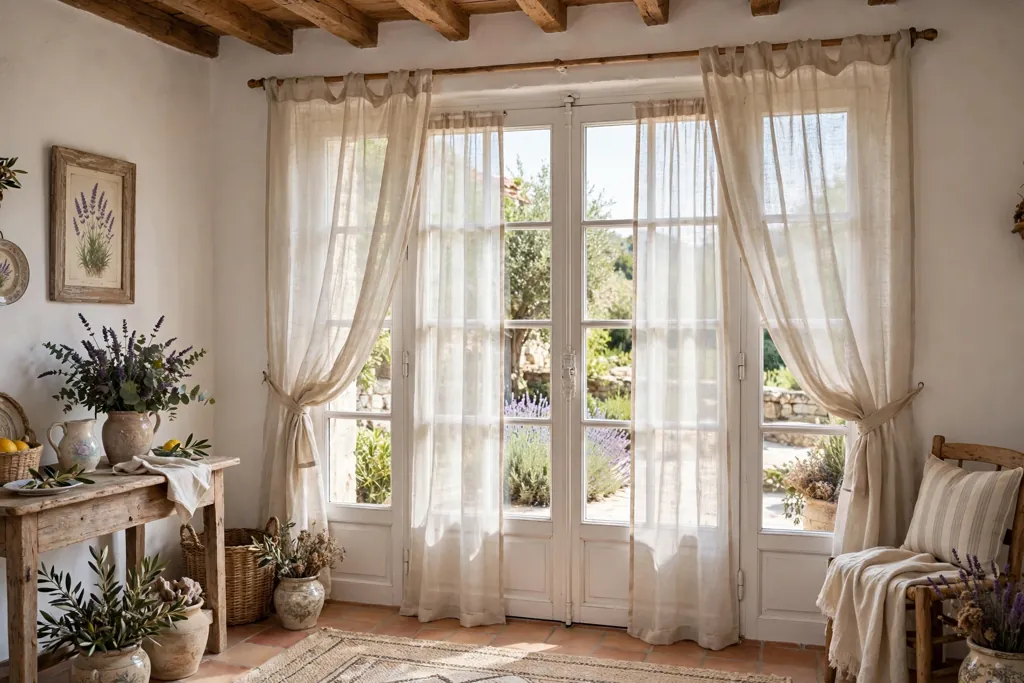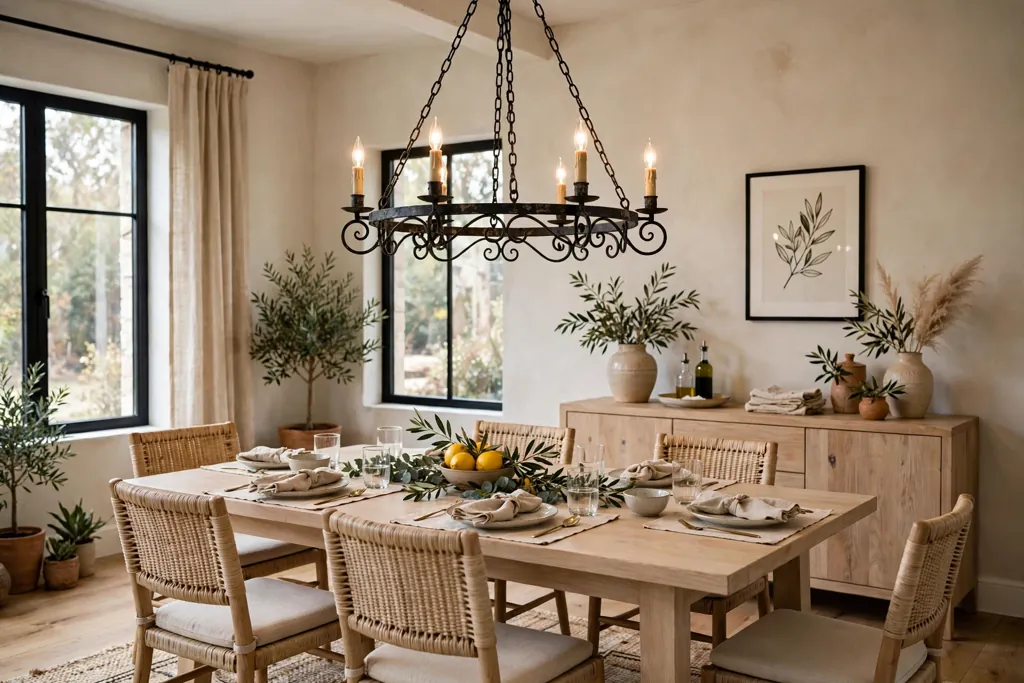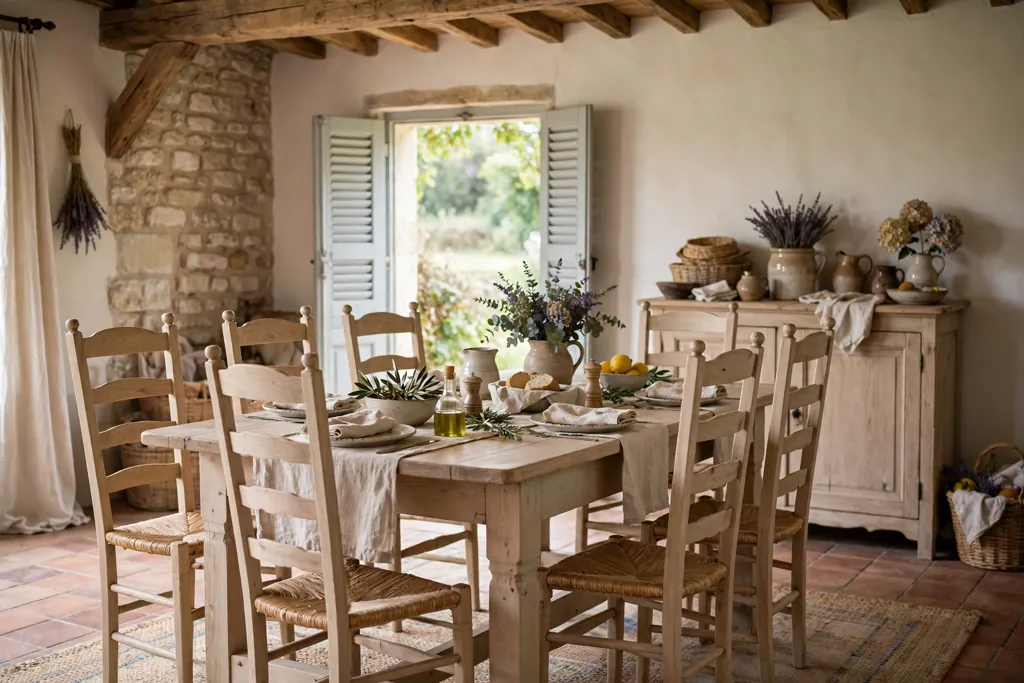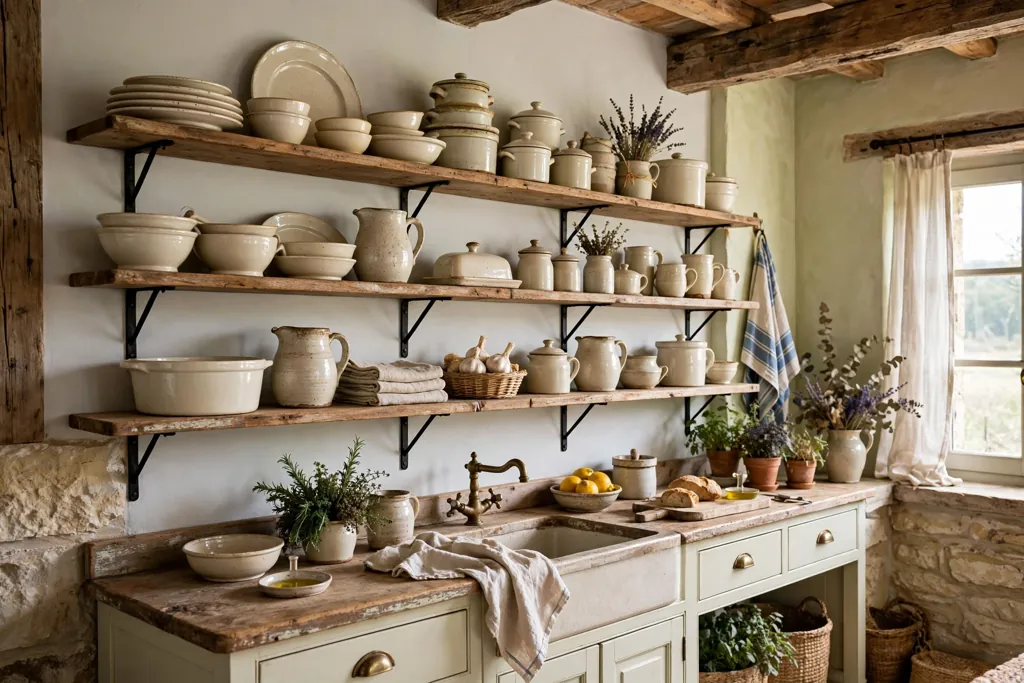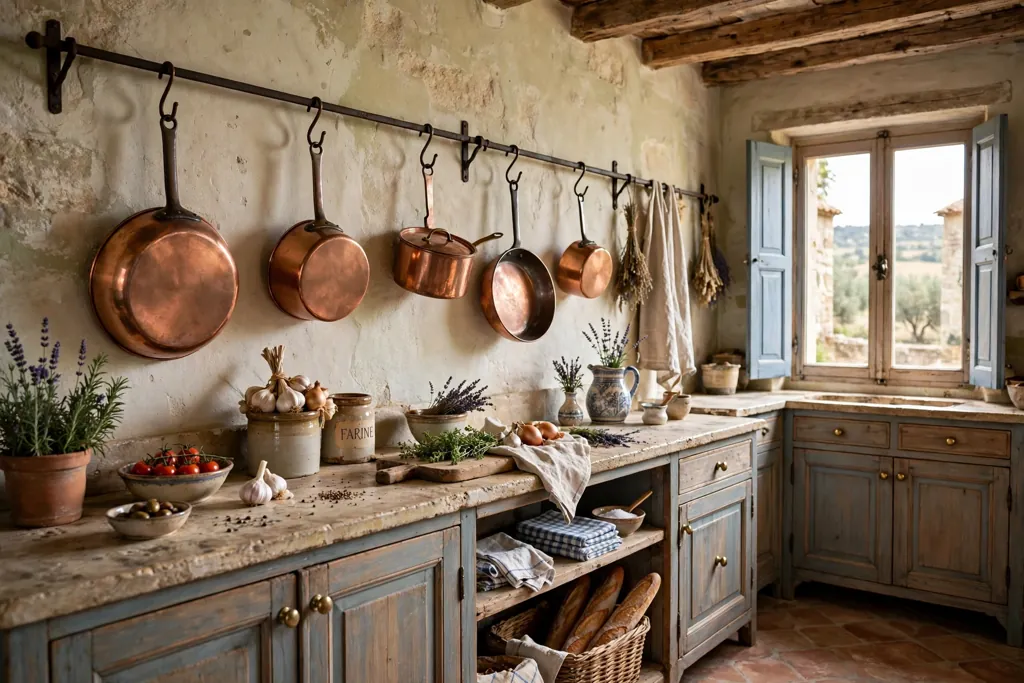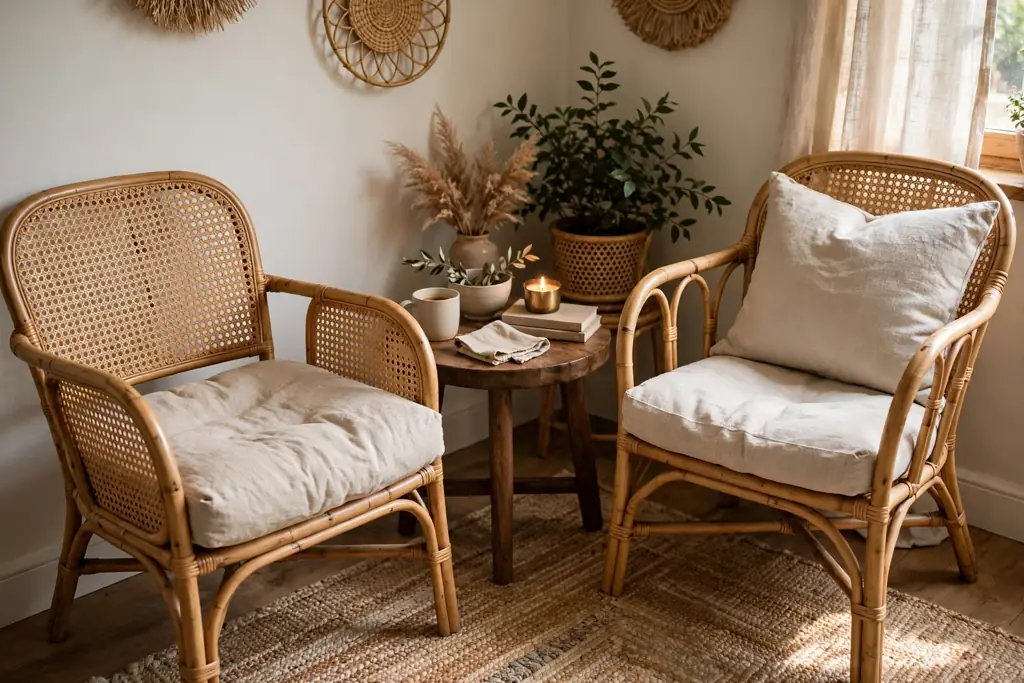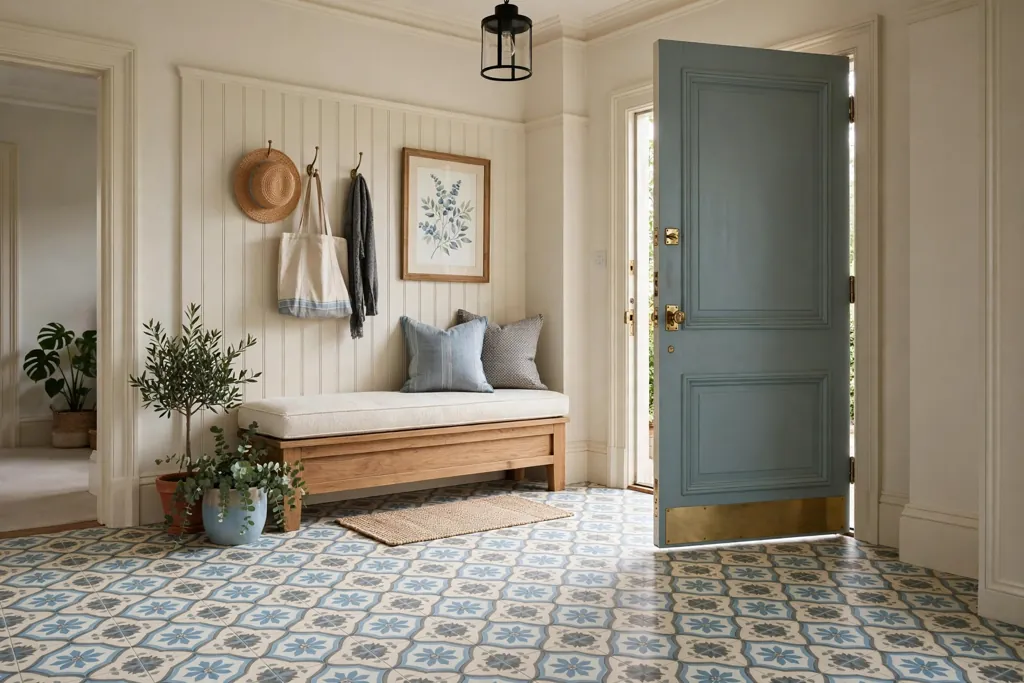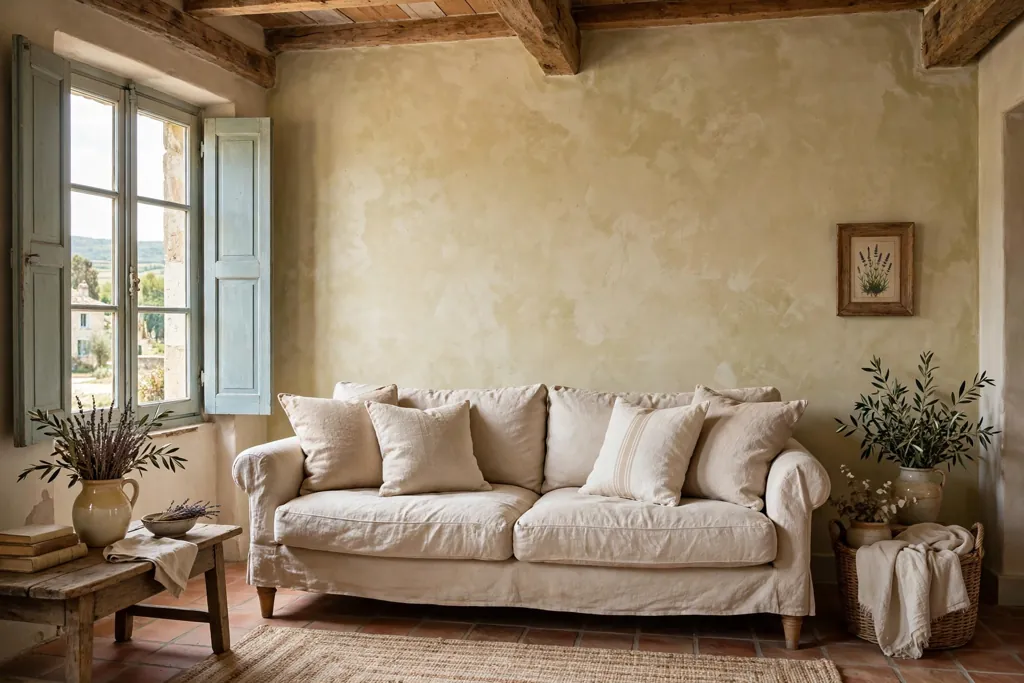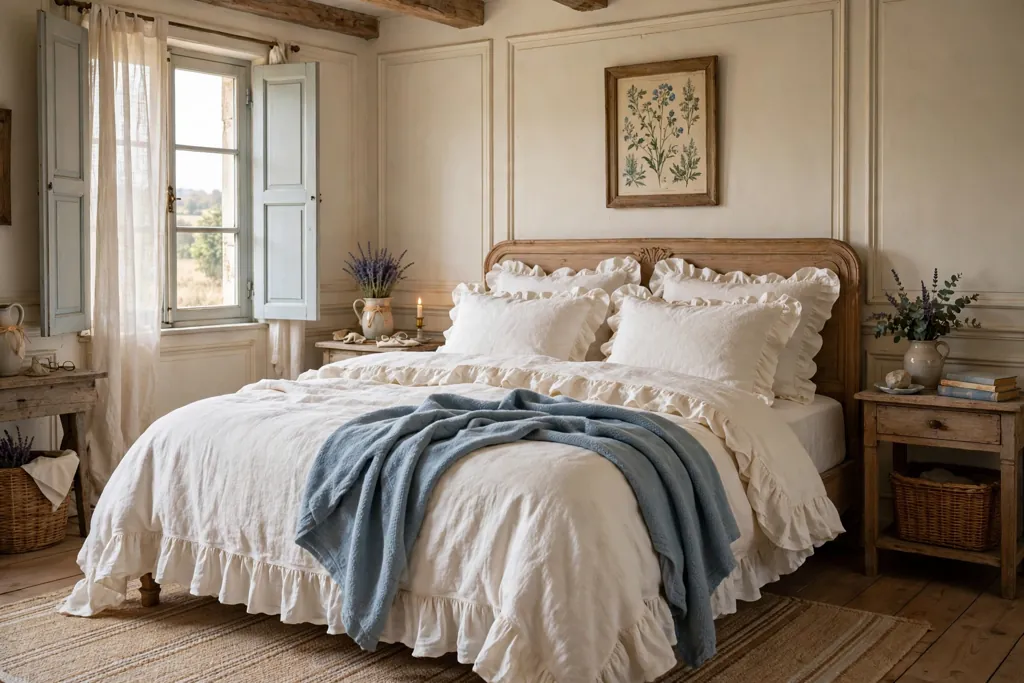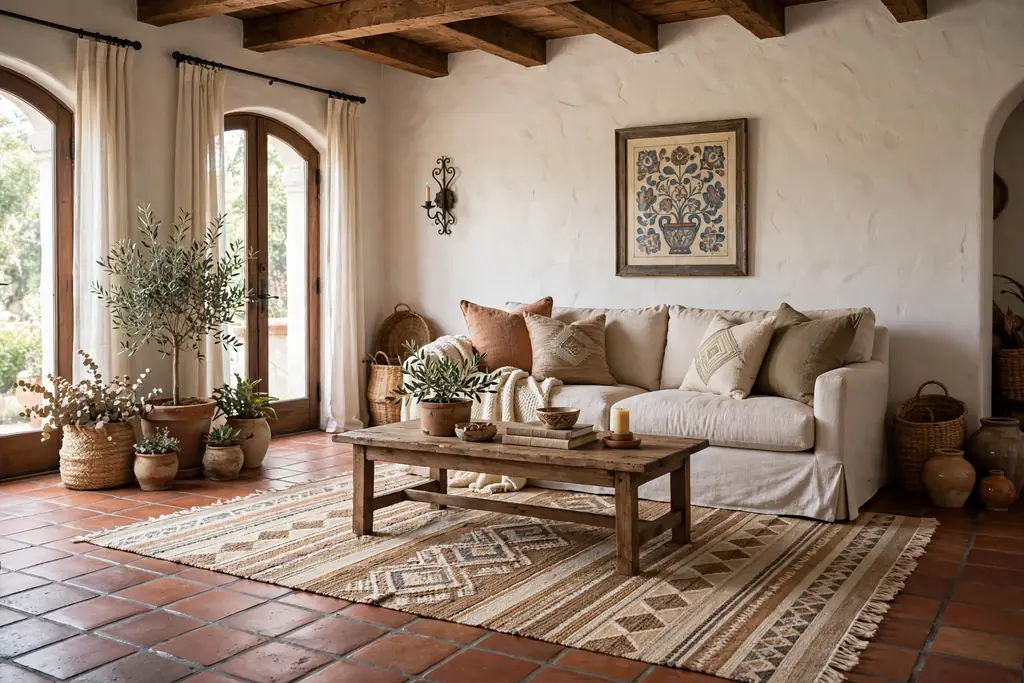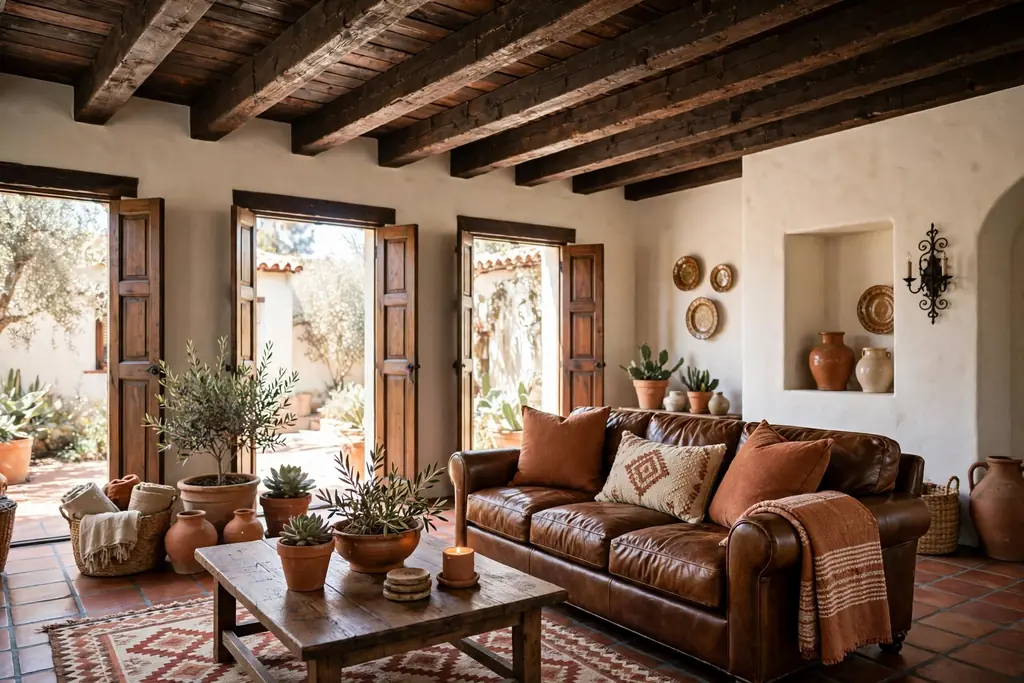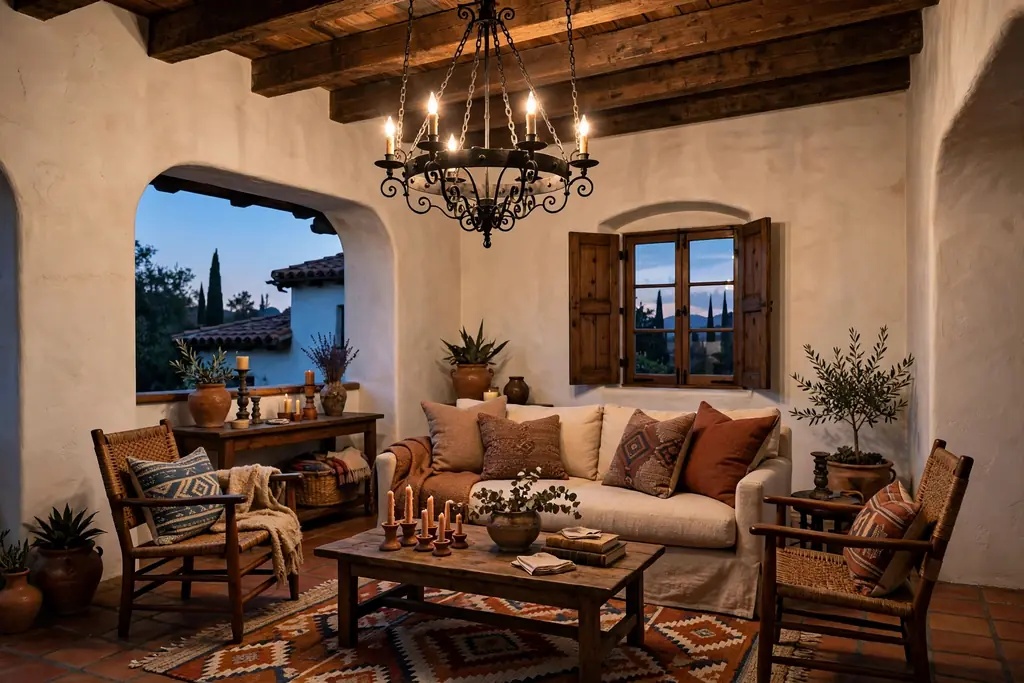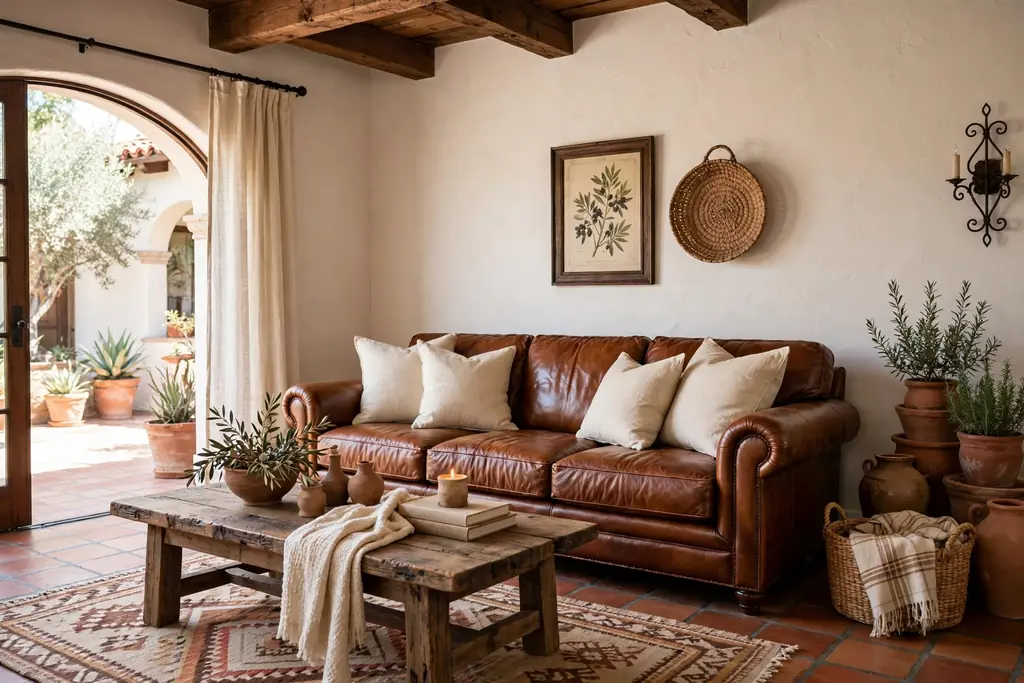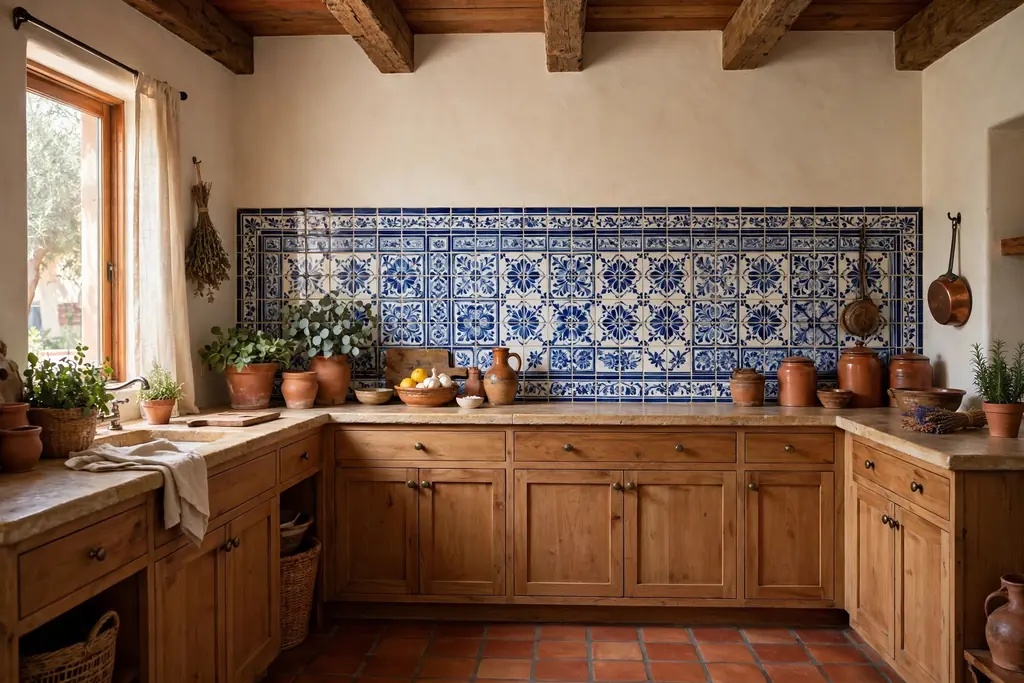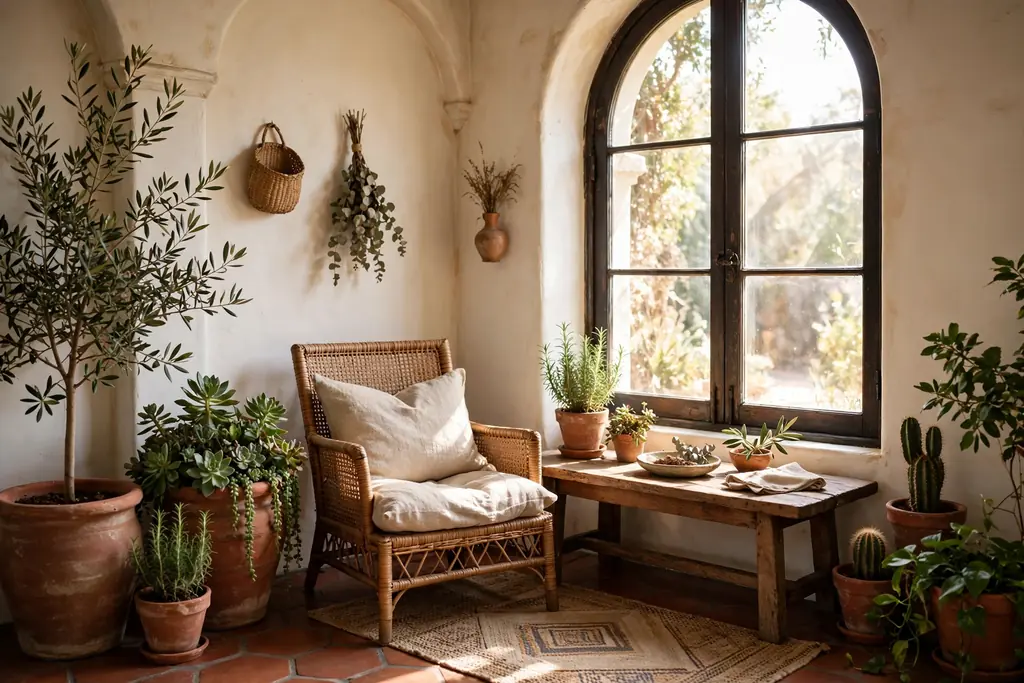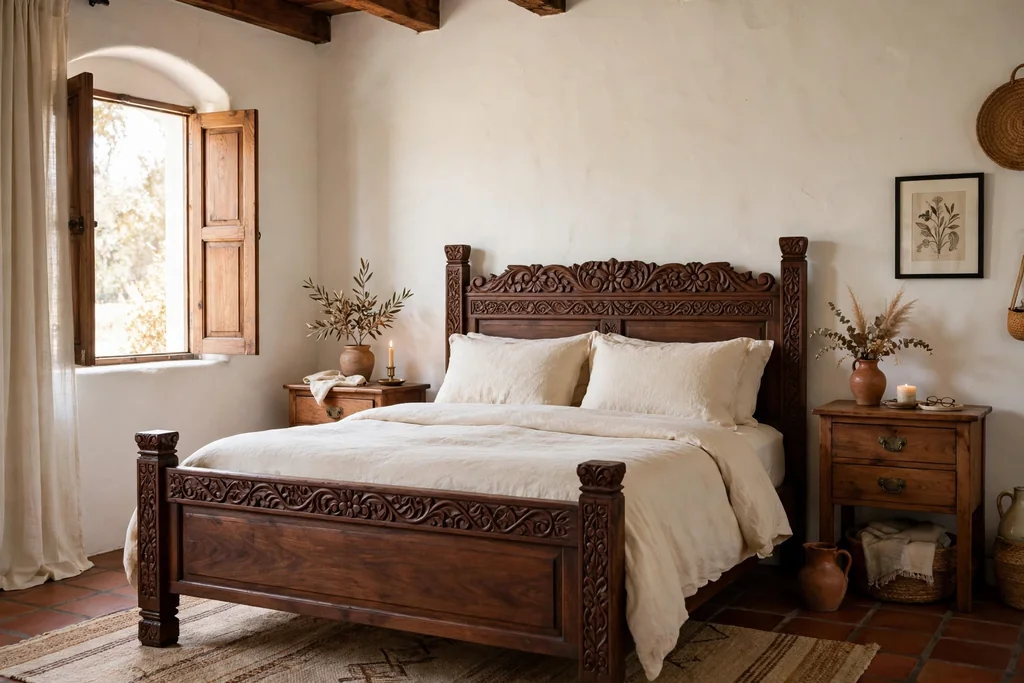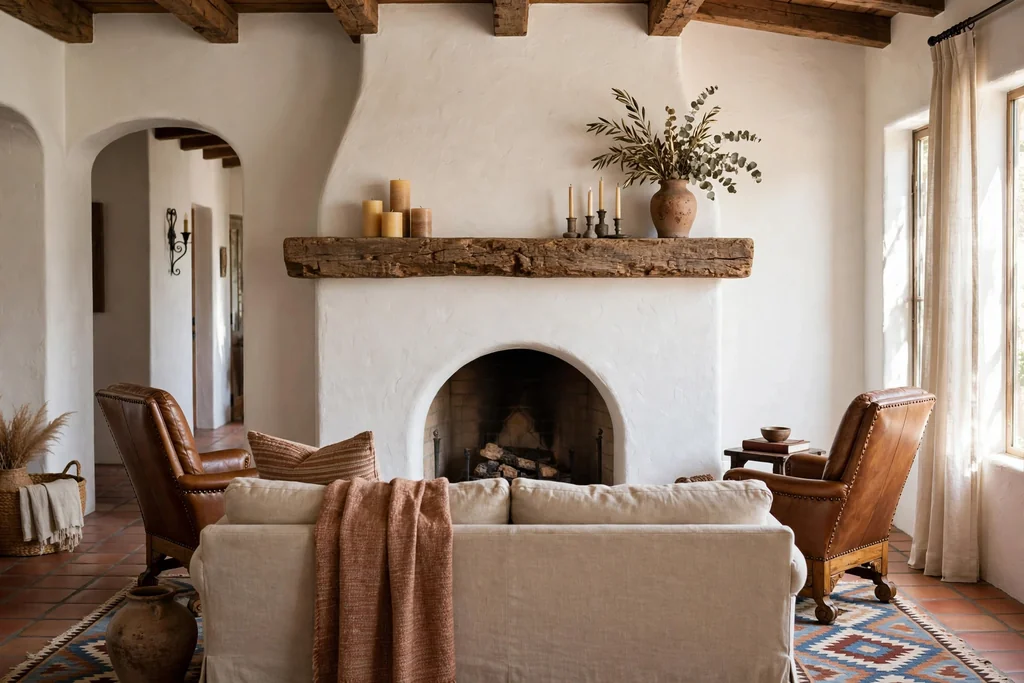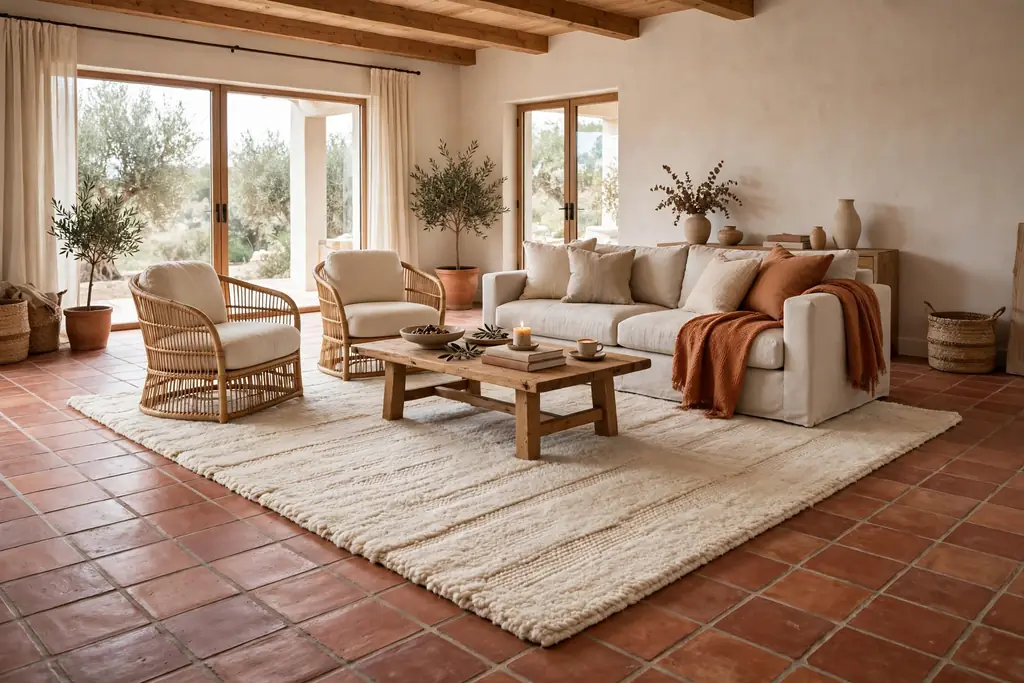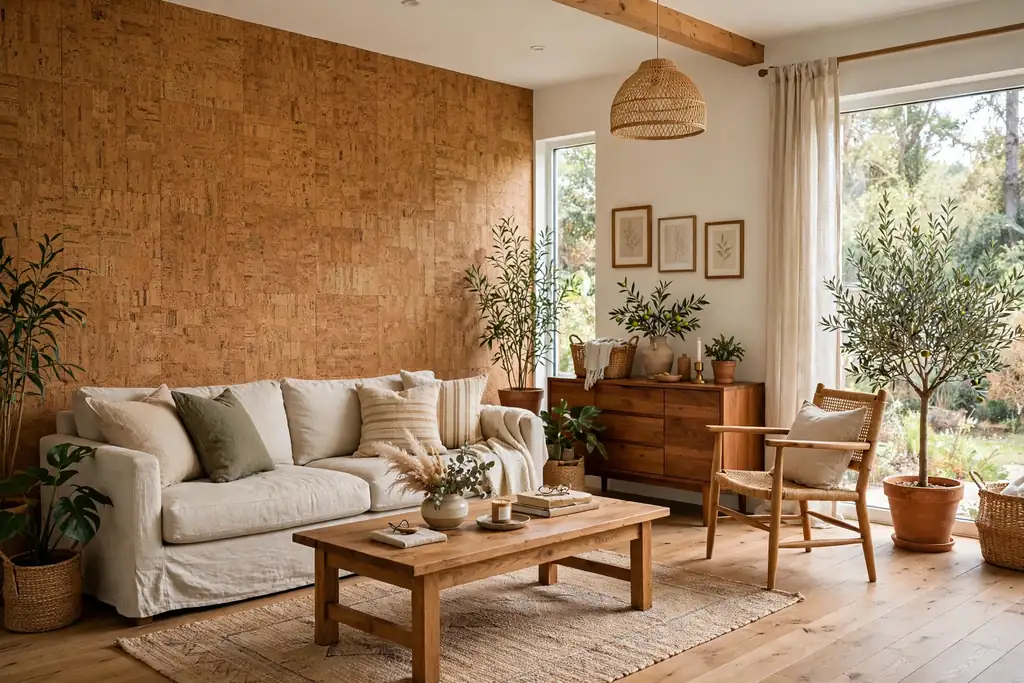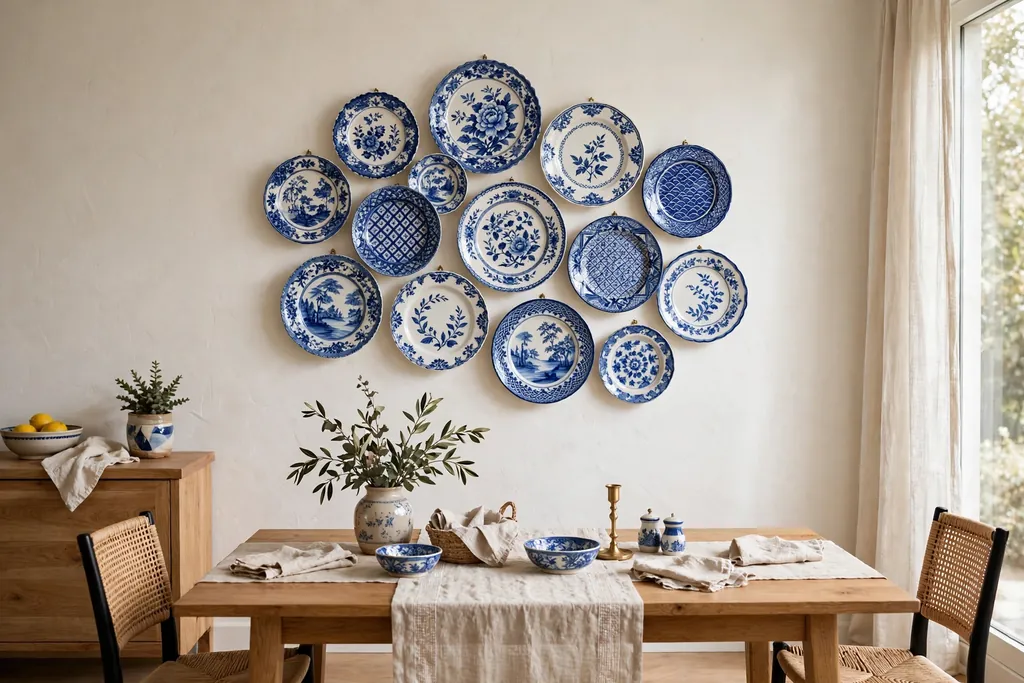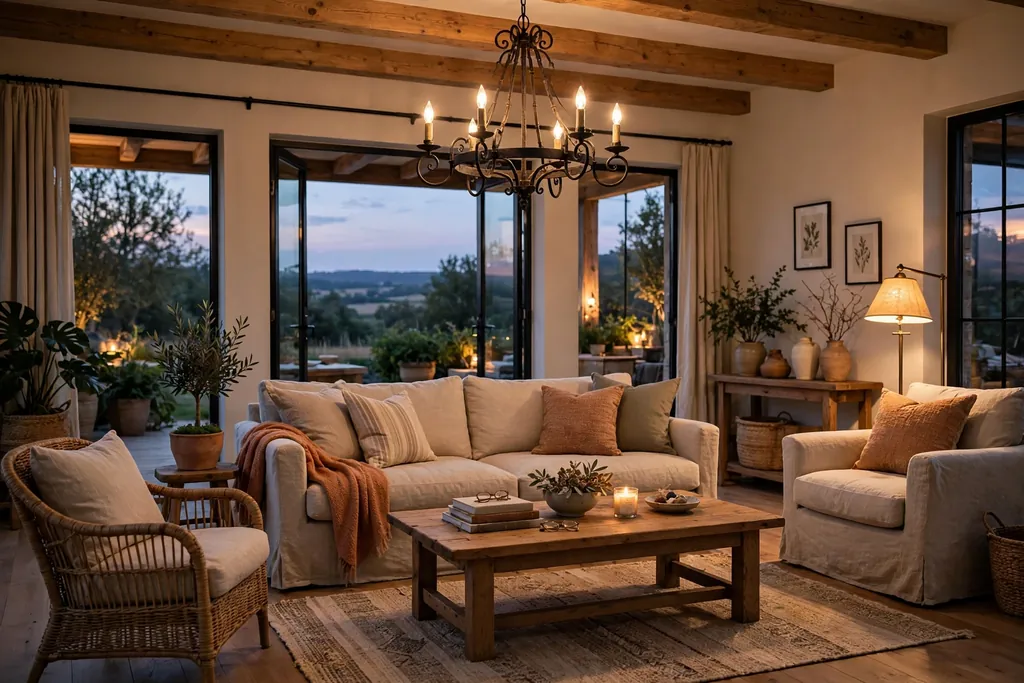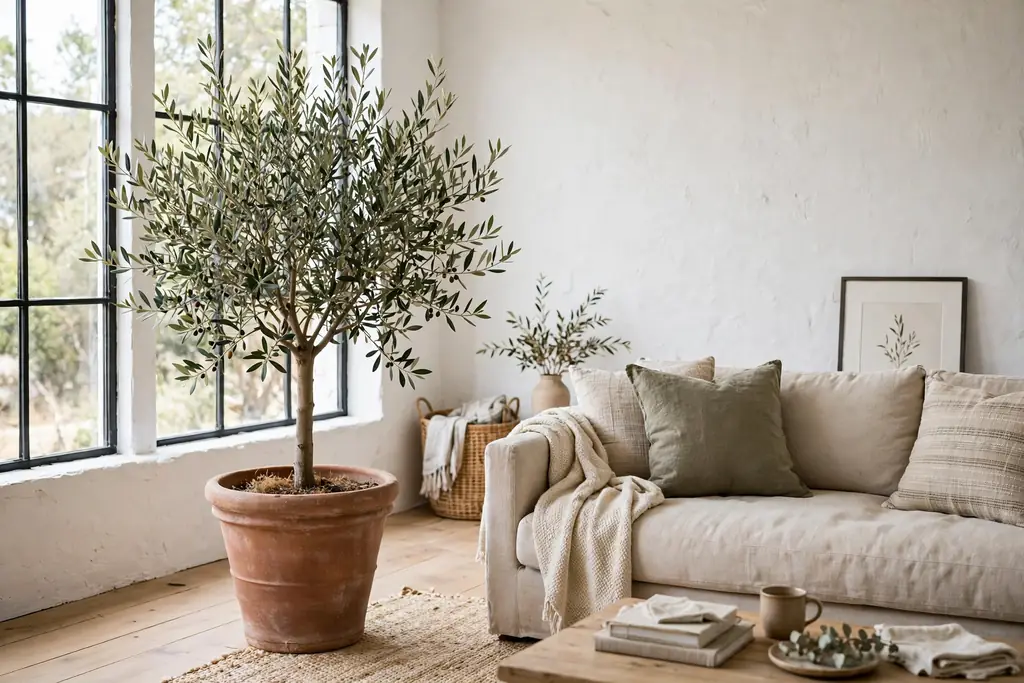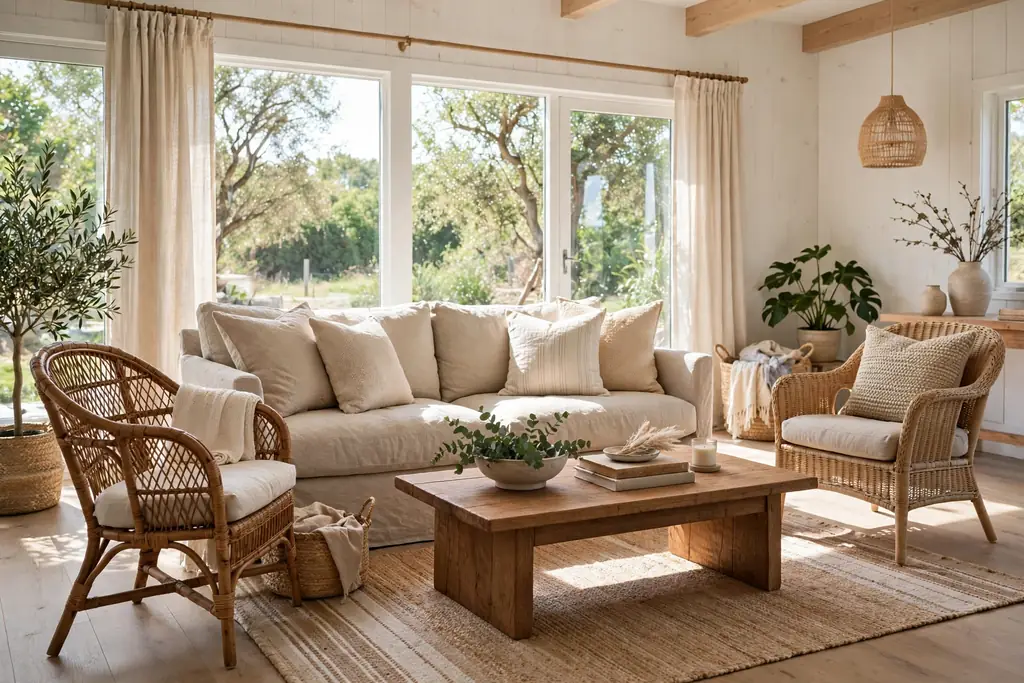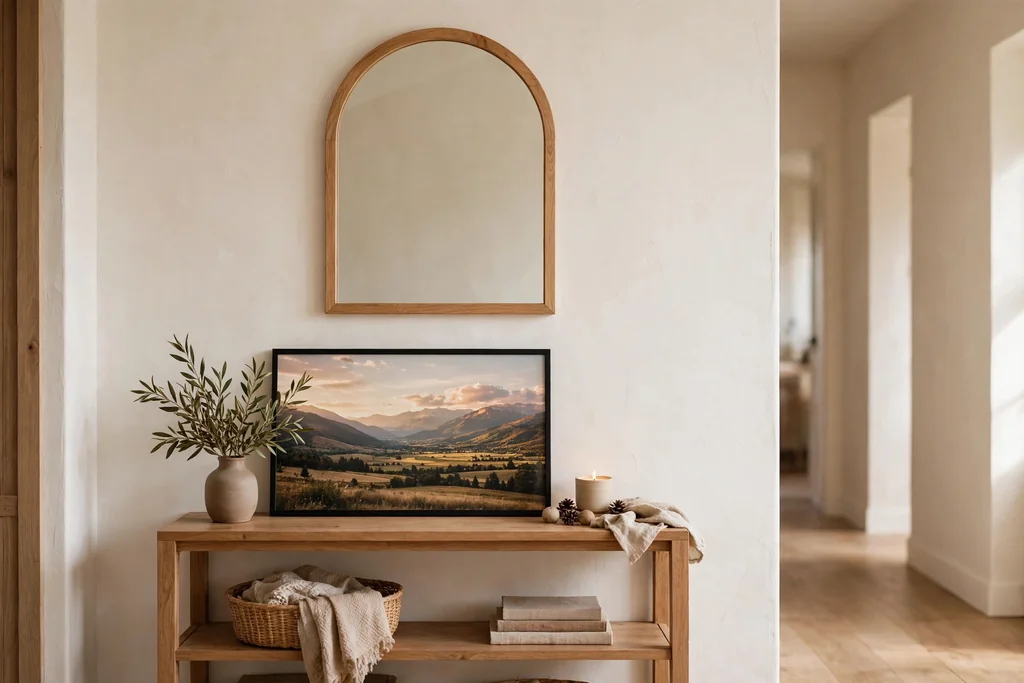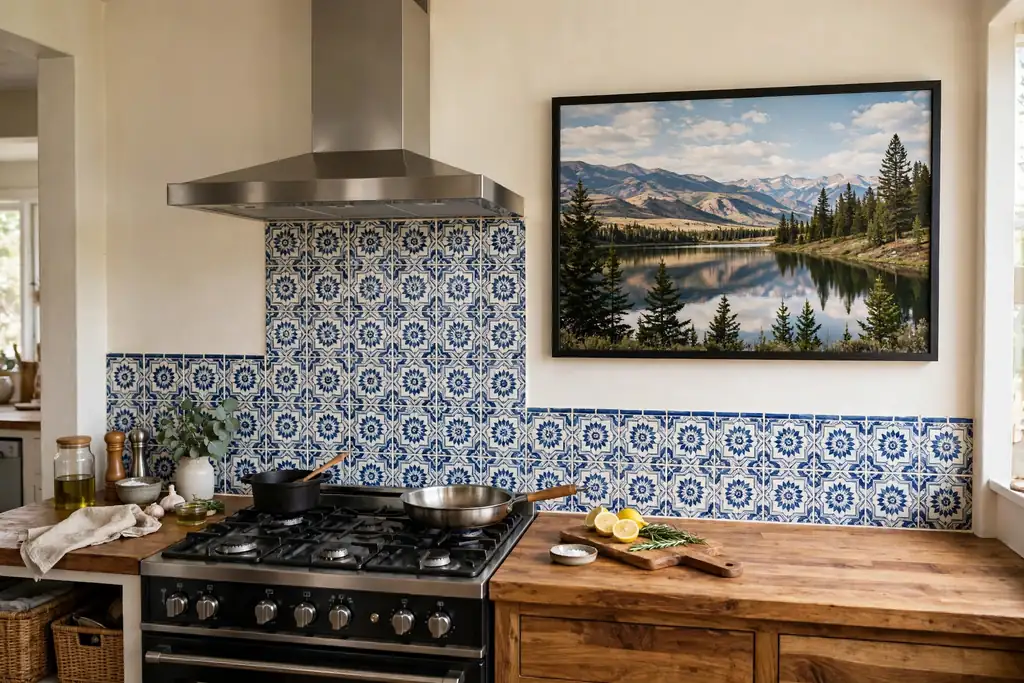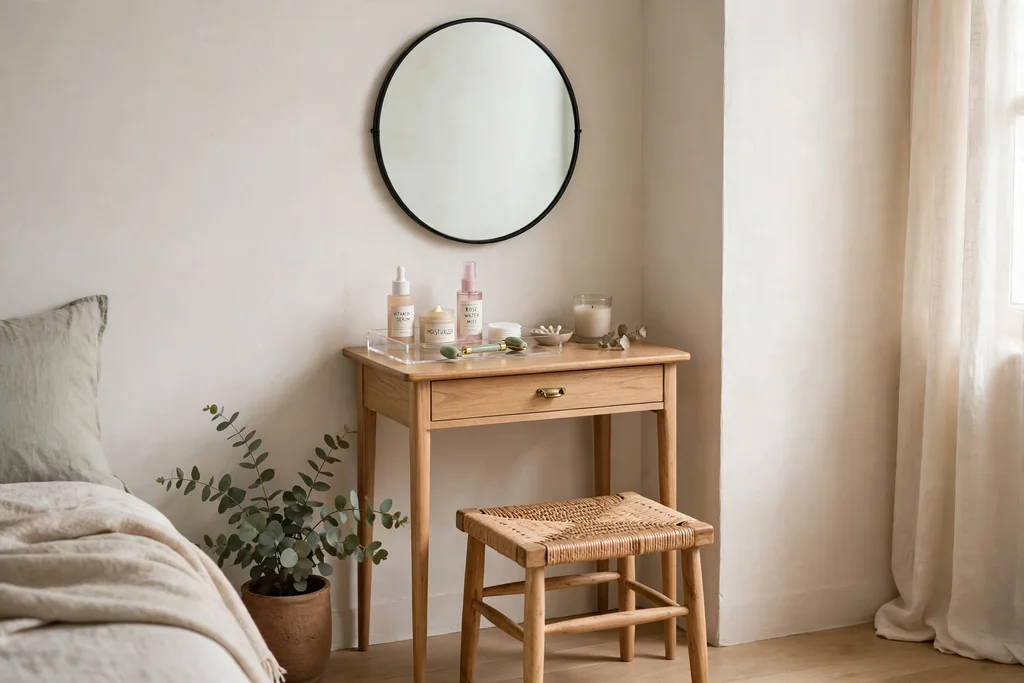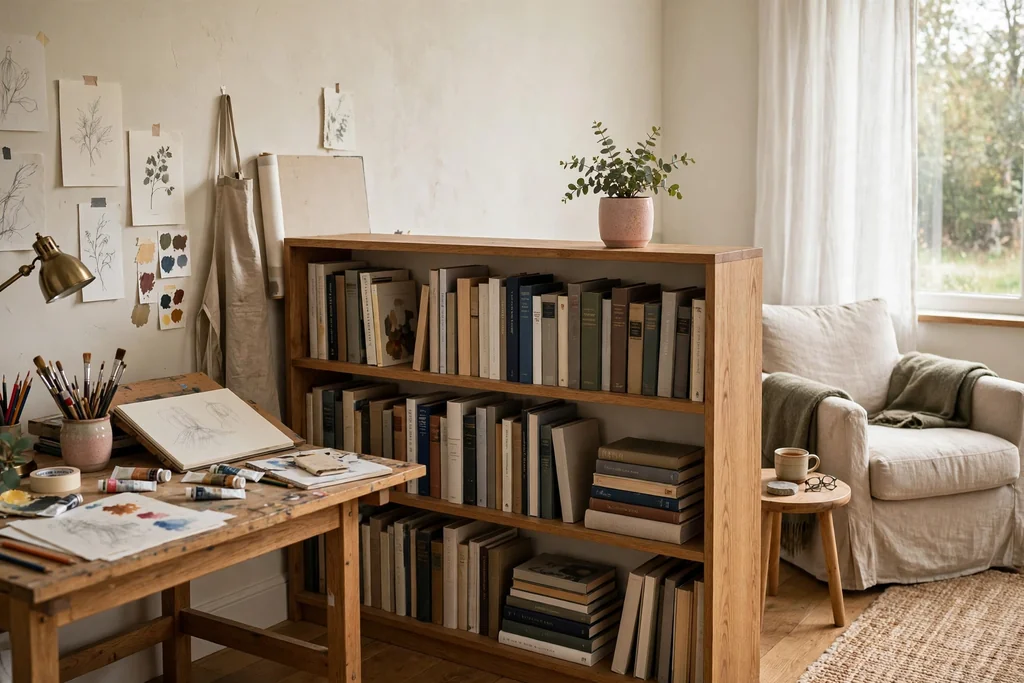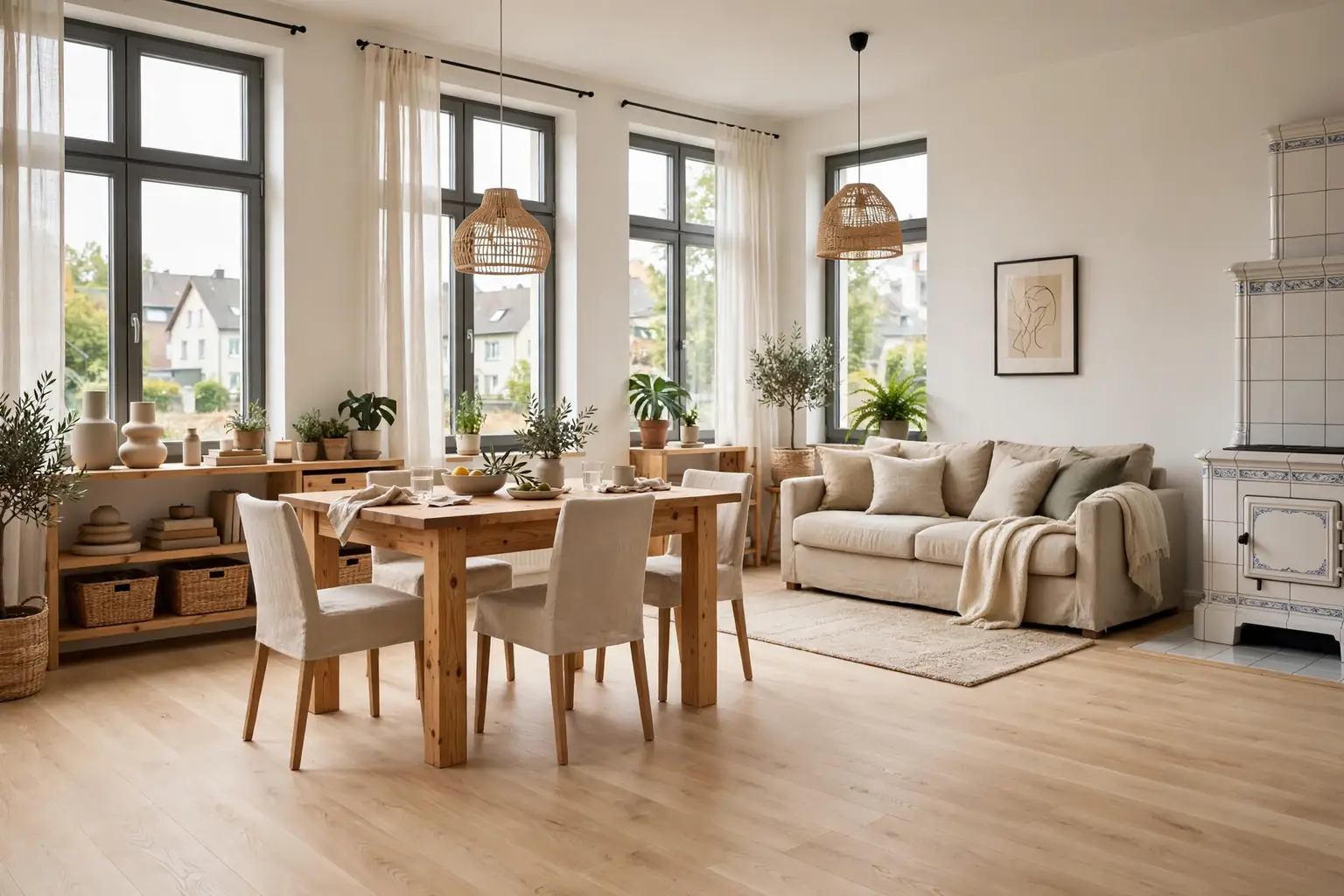
German homes often feel calm because the pieces earn their place. Pale oak, plain linen, sturdy pine, and a little blue and white pattern do most of the work, while storage stays orderly and light stays soft. These 22 German home decor ideas cover living rooms, bedrooms, kitchens, entries, bathrooms, and small balconies, so you can add one idea to a single room or build a whole home from them. Start with the room you use most, keep the palette simple, and let one practical piece, such as a long pine table or a well placed bench, shape how the room is used each day.
Key Takeaways
- Let pale oak, warm white, and soft green lead, with blue and white checks as the main pattern, so rooms feel calm rather than busy.
- Repeat wood, linen, and stoneware at least twice in a room, so the German look feels planned rather than collected at random.
- Choose furniture that works hard first, such as a bench that seats guests and holds storage, and let decoration follow function.
- Keep the entry, kitchen, and bathroom orderly with hooks, trays, and closed storage, since tidiness is part of the style.
- Use warm, layered light from lamps, lanterns, and candles, and keep overhead light soft in the evening.
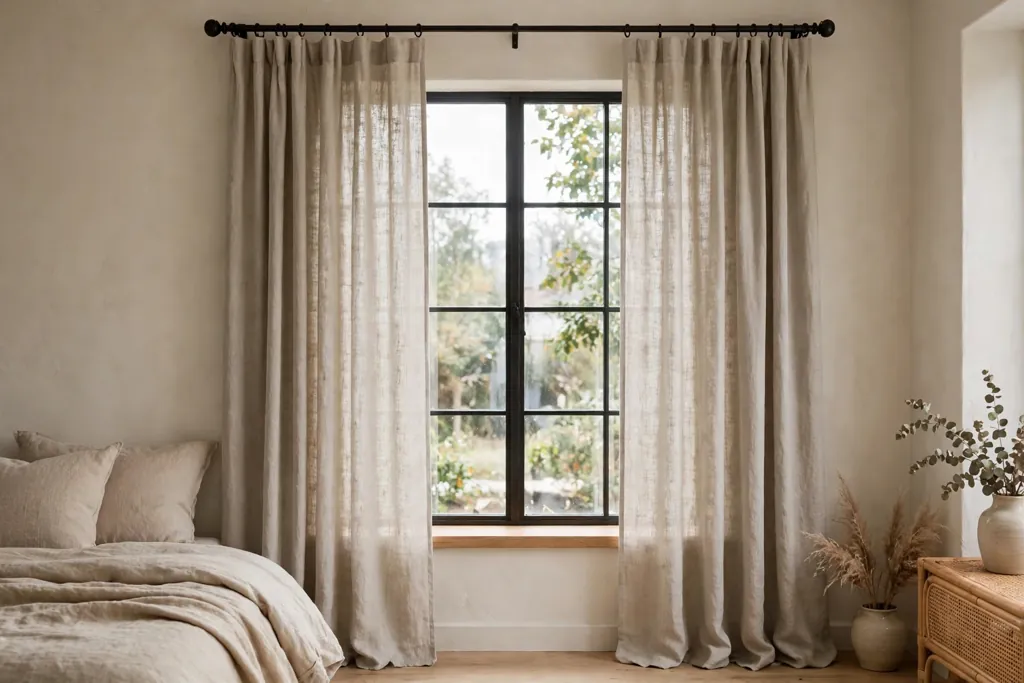
- Start with curtains, bedding, and table linens for a no-paint refresh, and save beams, tile stoves, and window boxes for a weekend project.
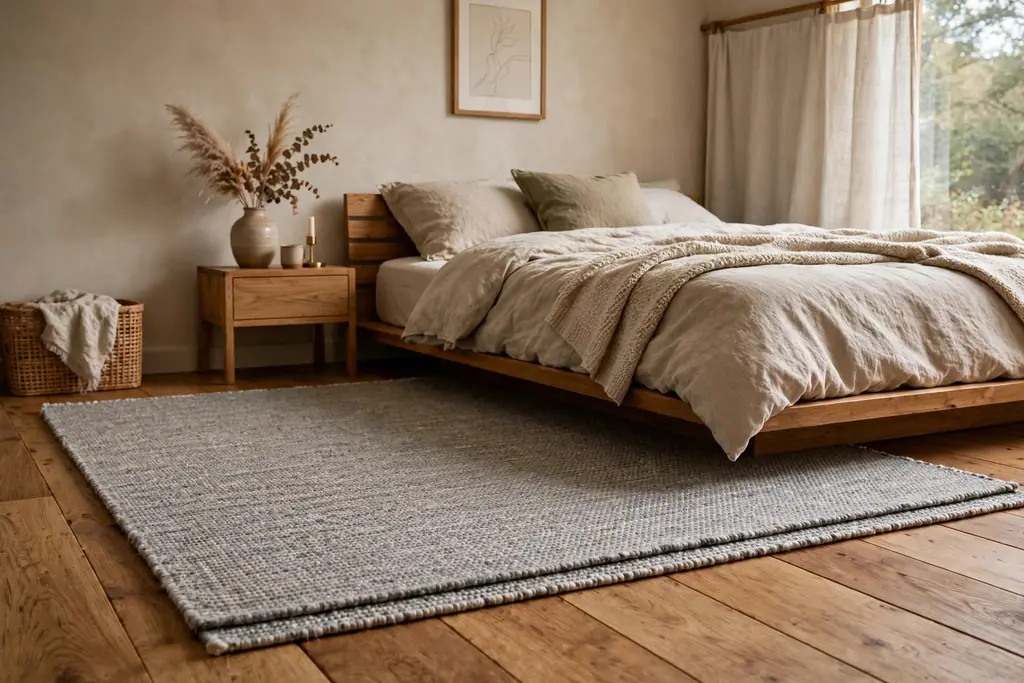
1. Start With Pale Oak Floors and Warm White Walls
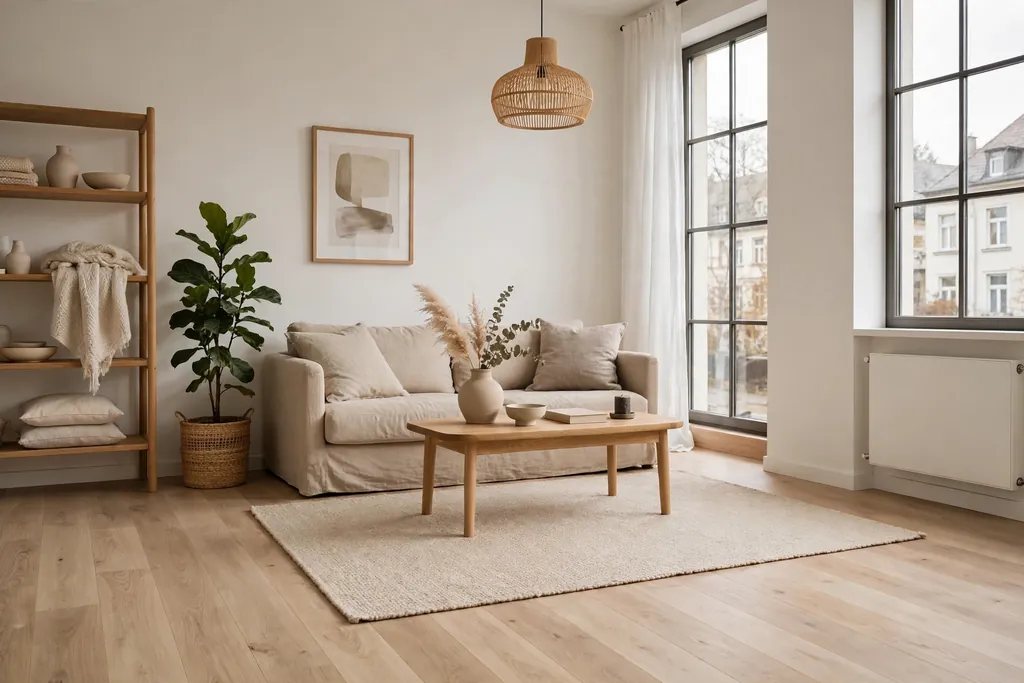
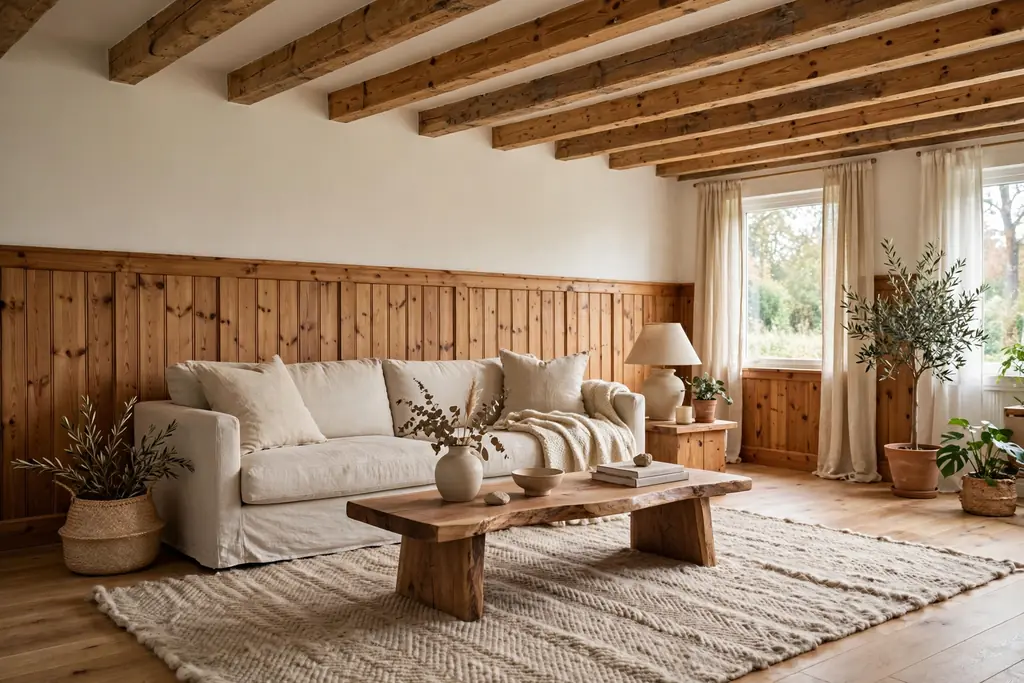
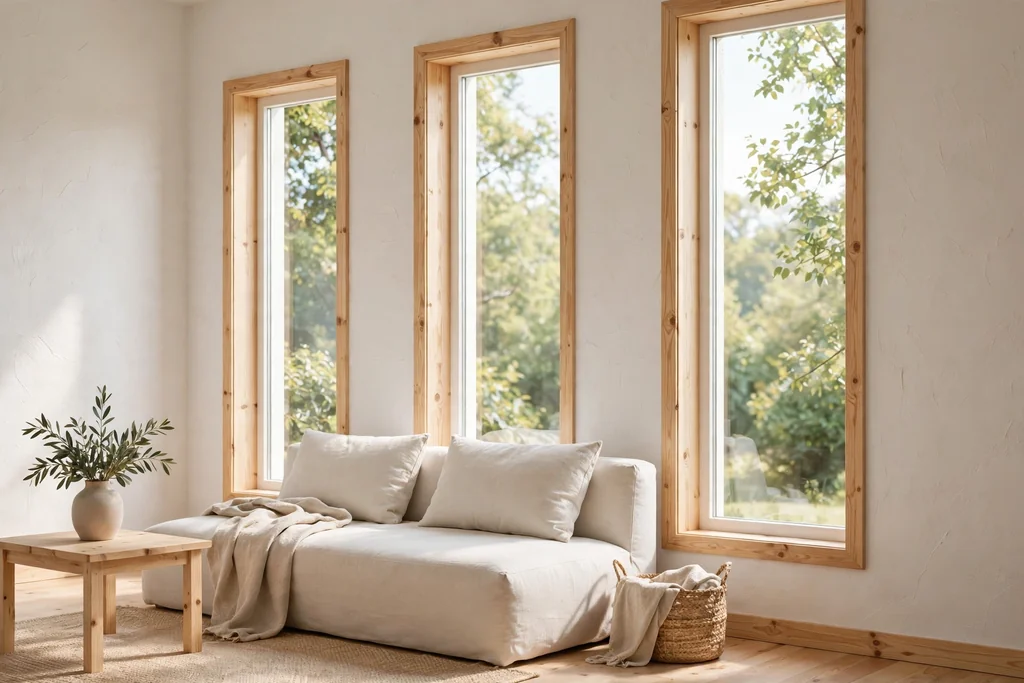
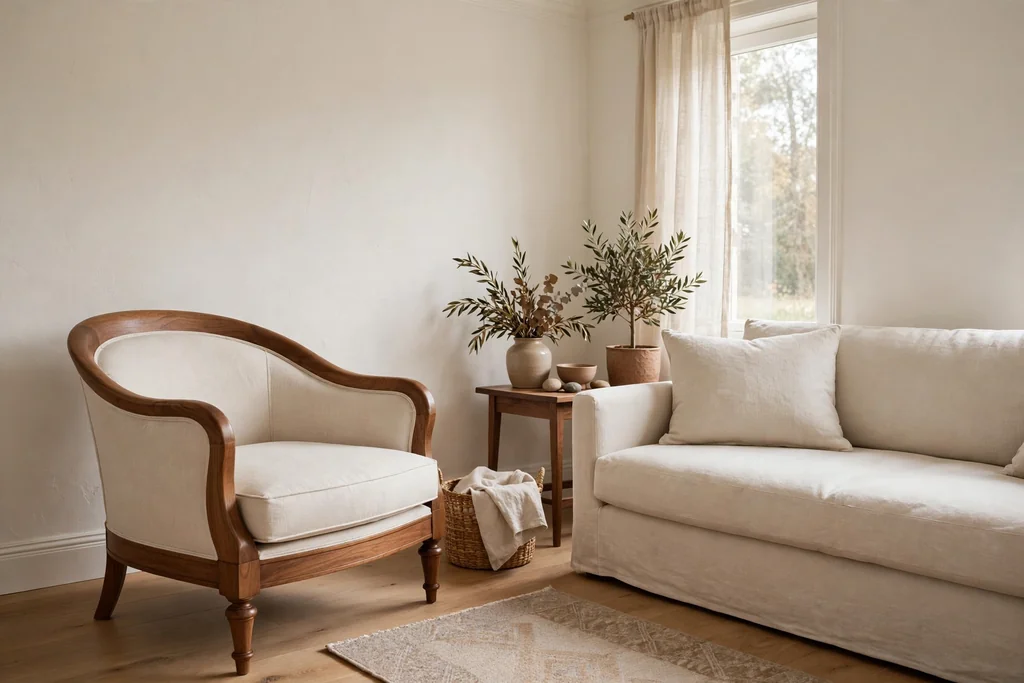
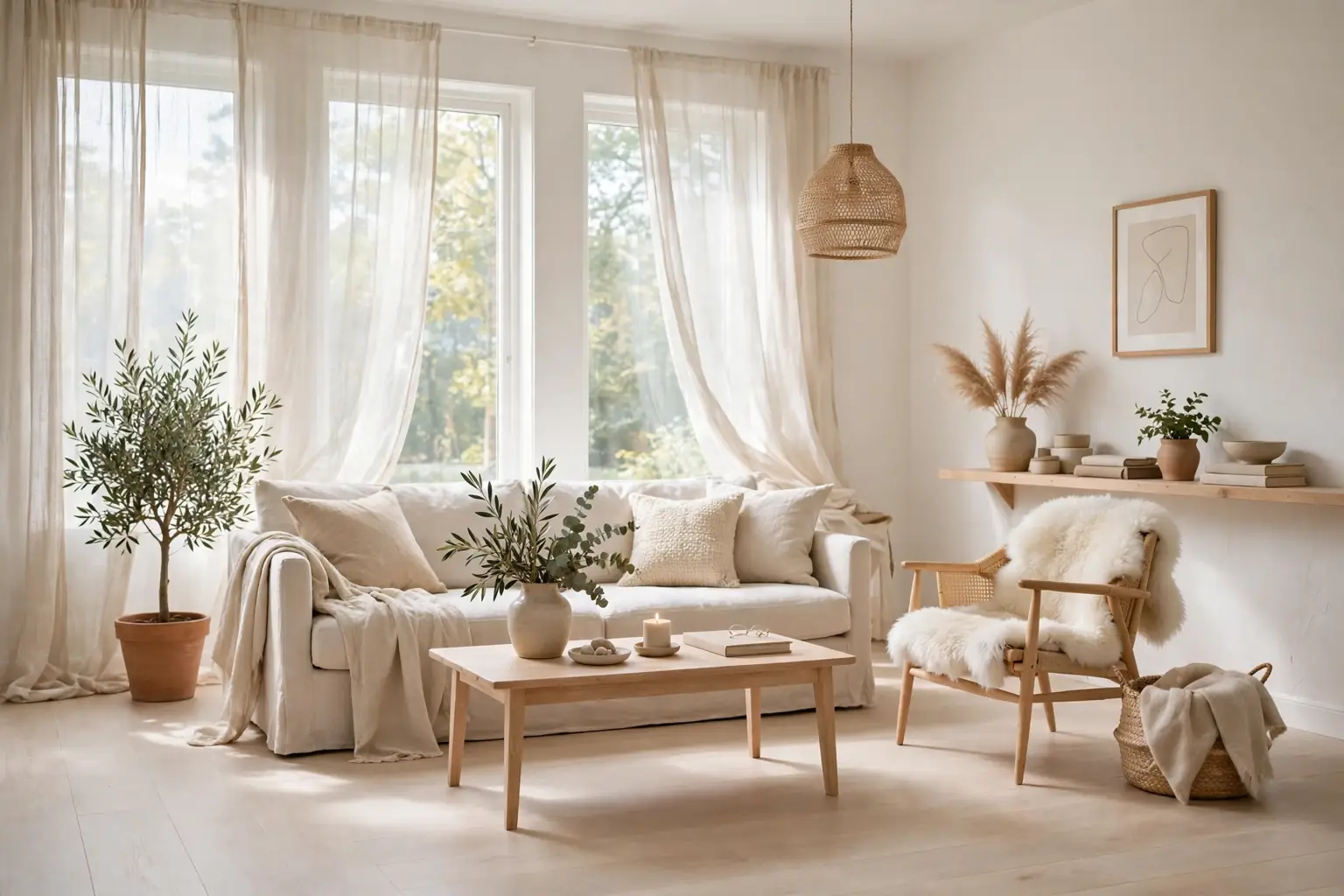
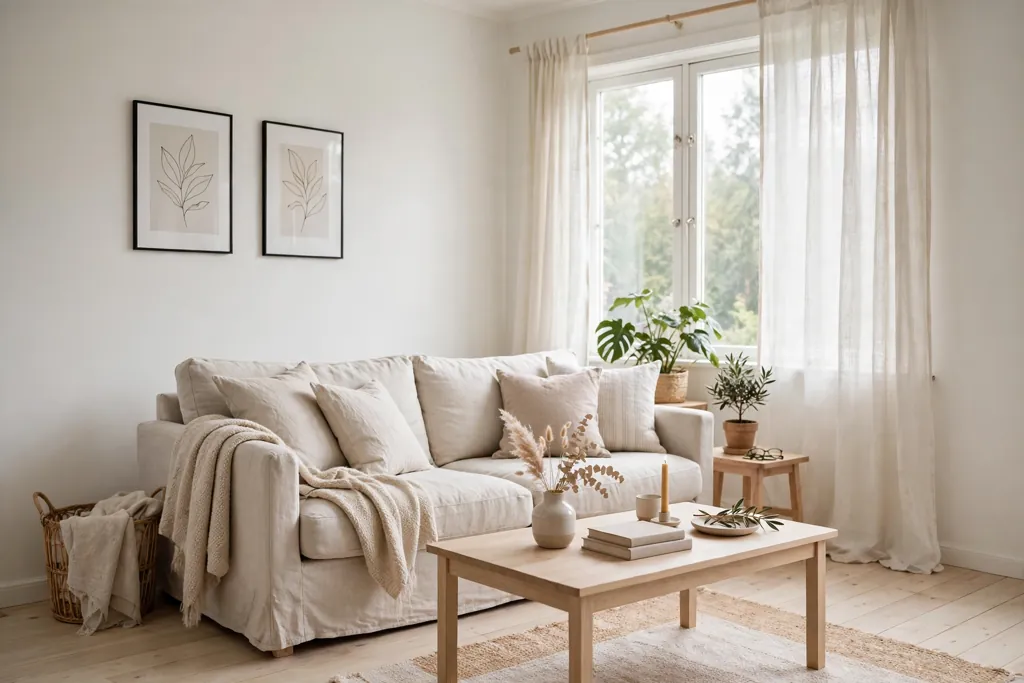
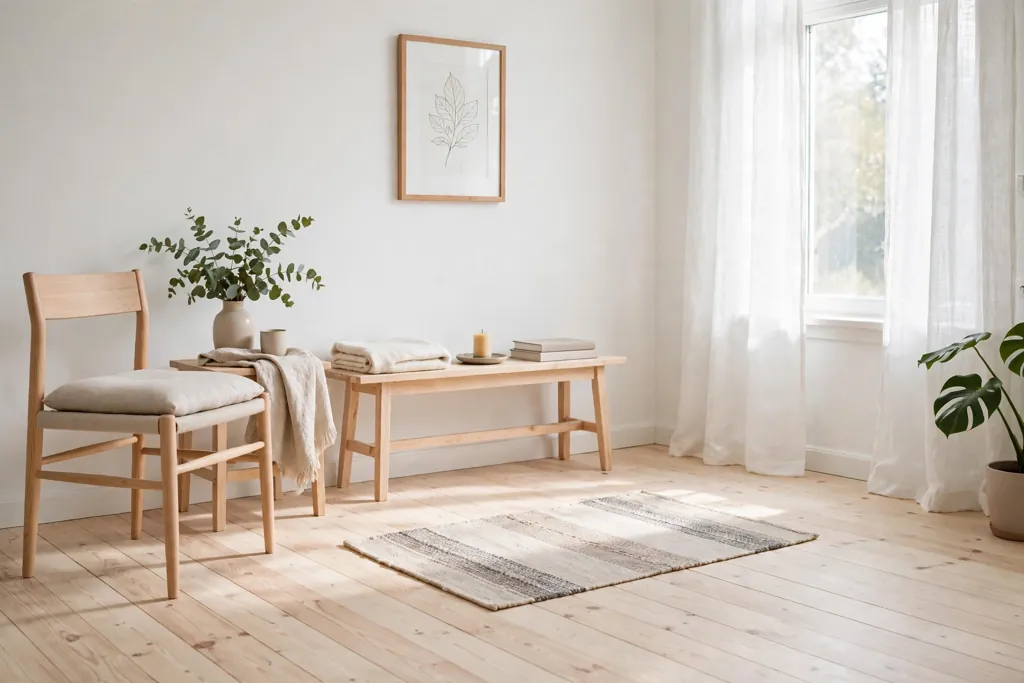
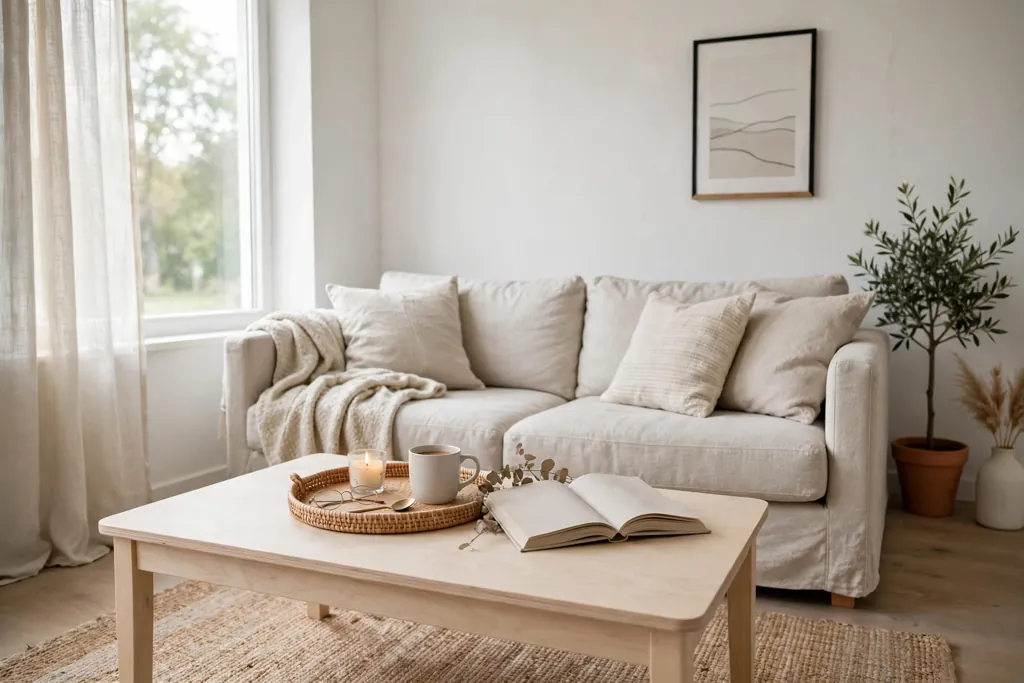
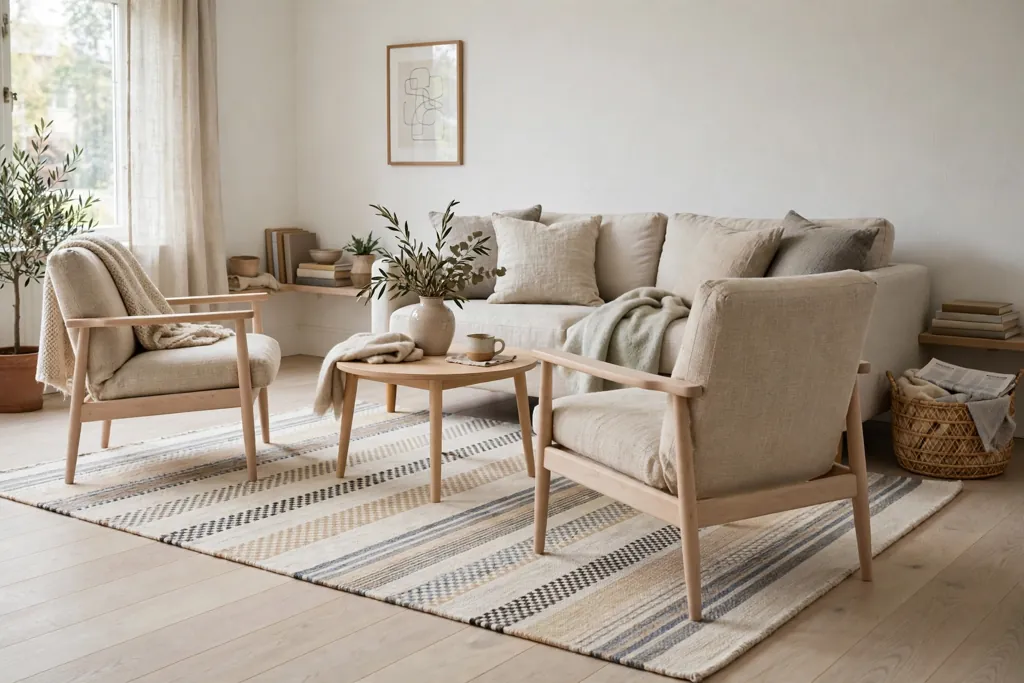
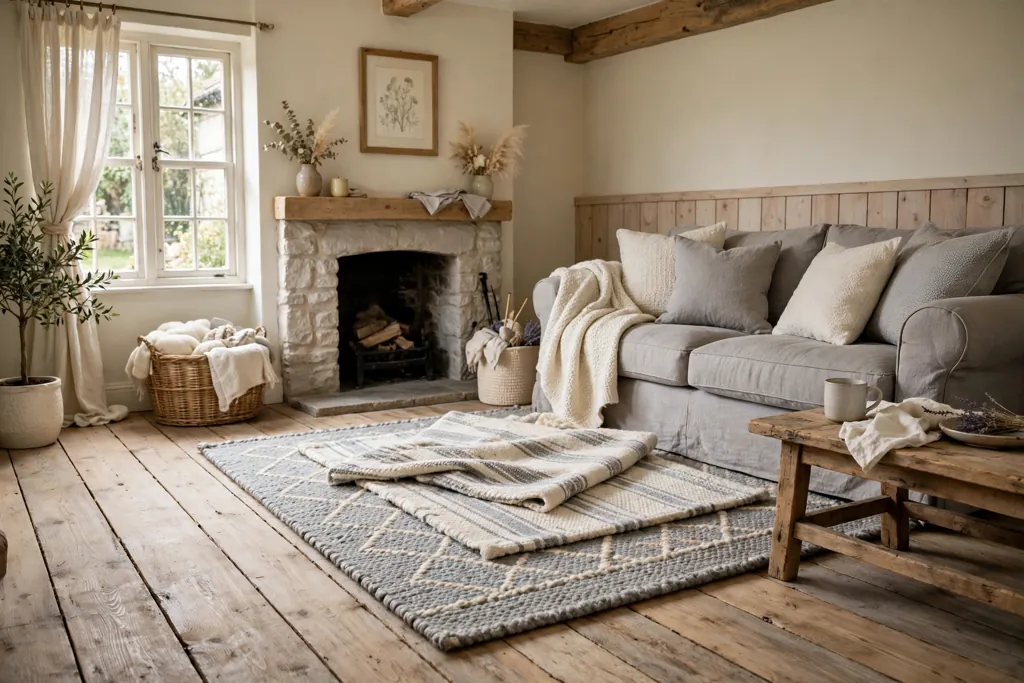
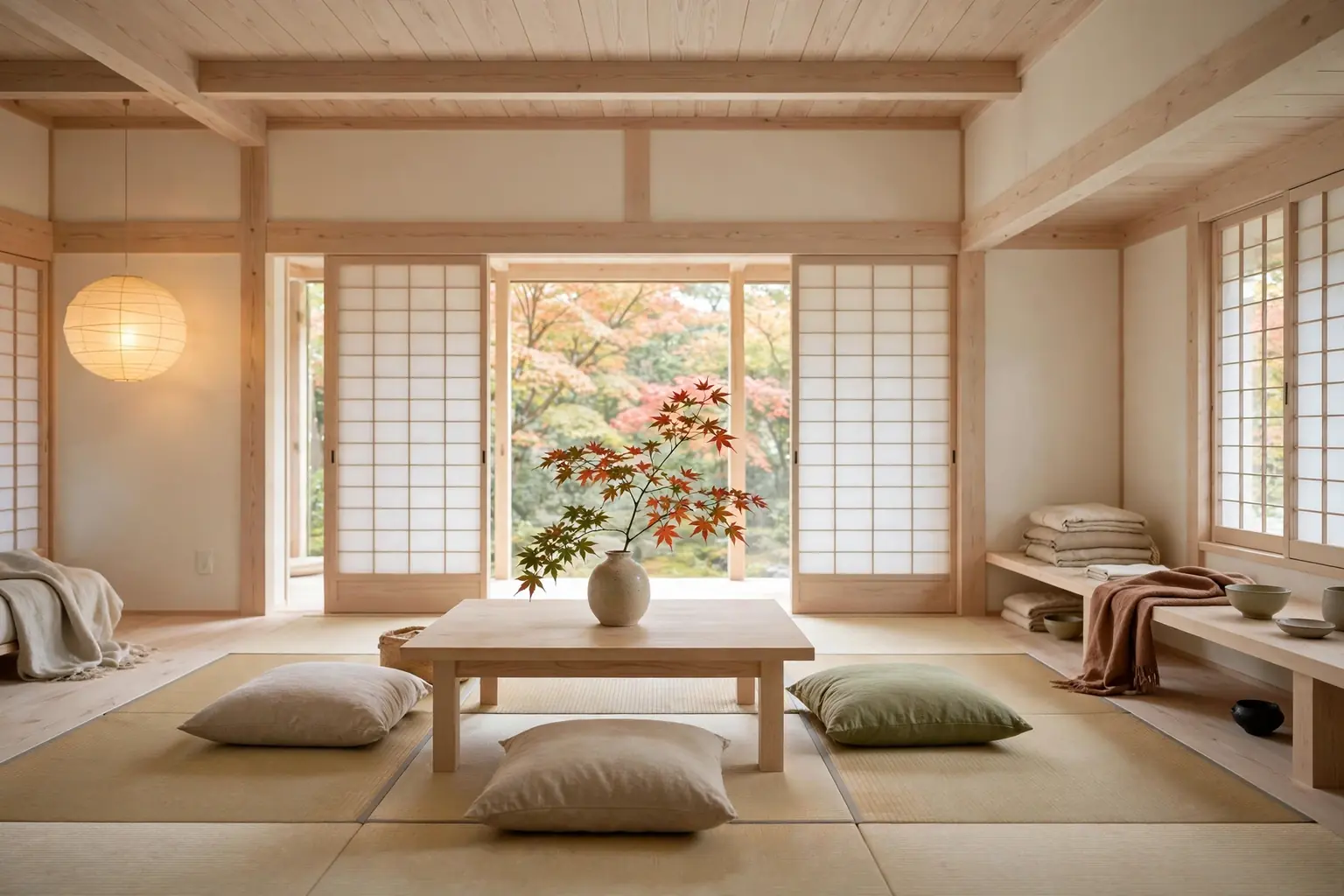
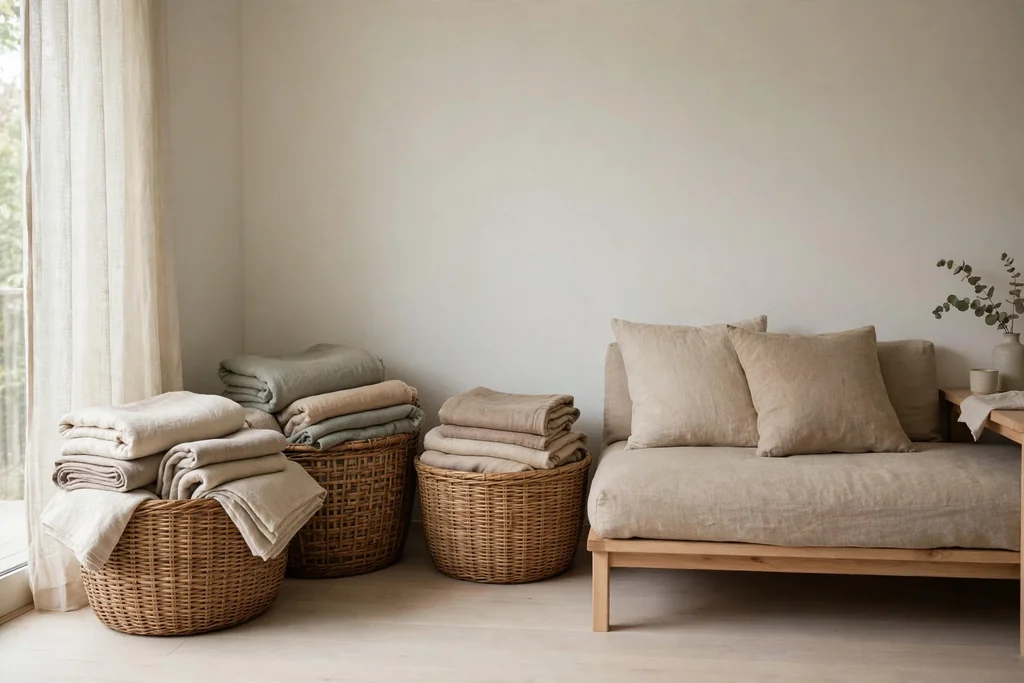
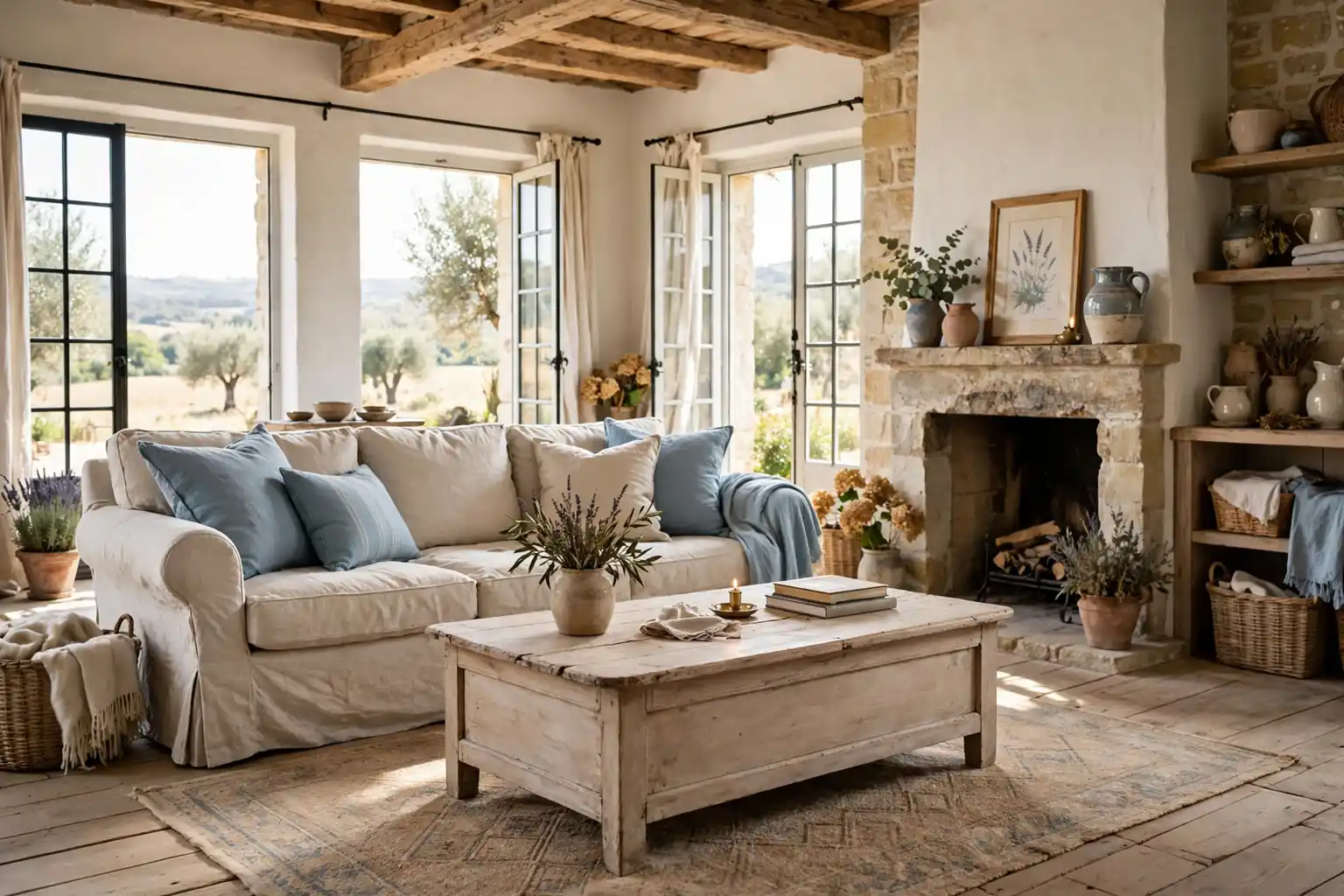
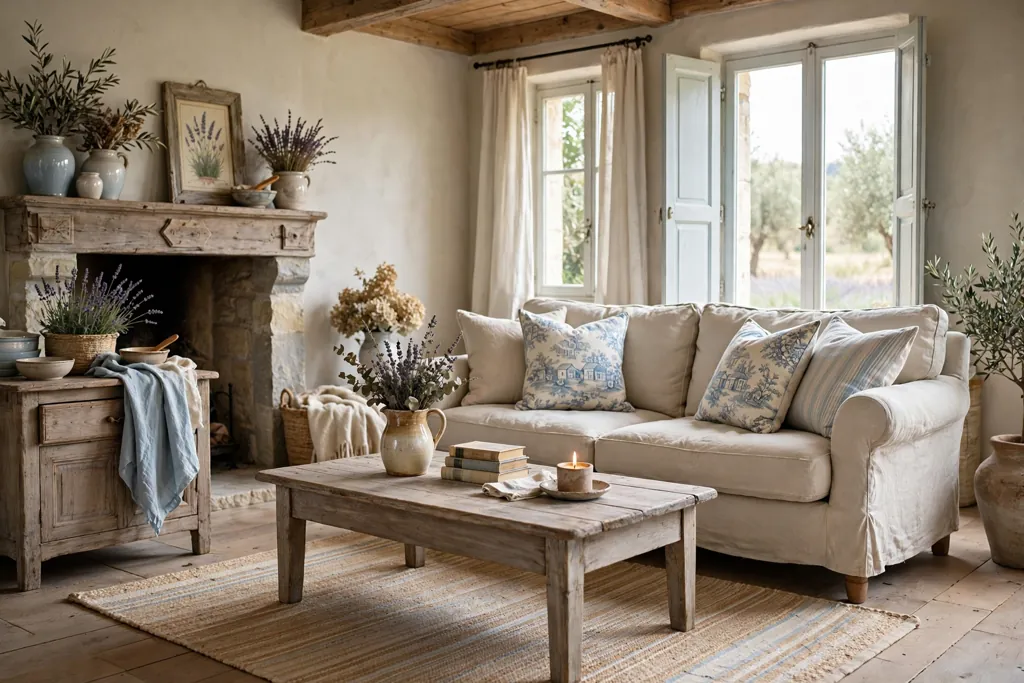
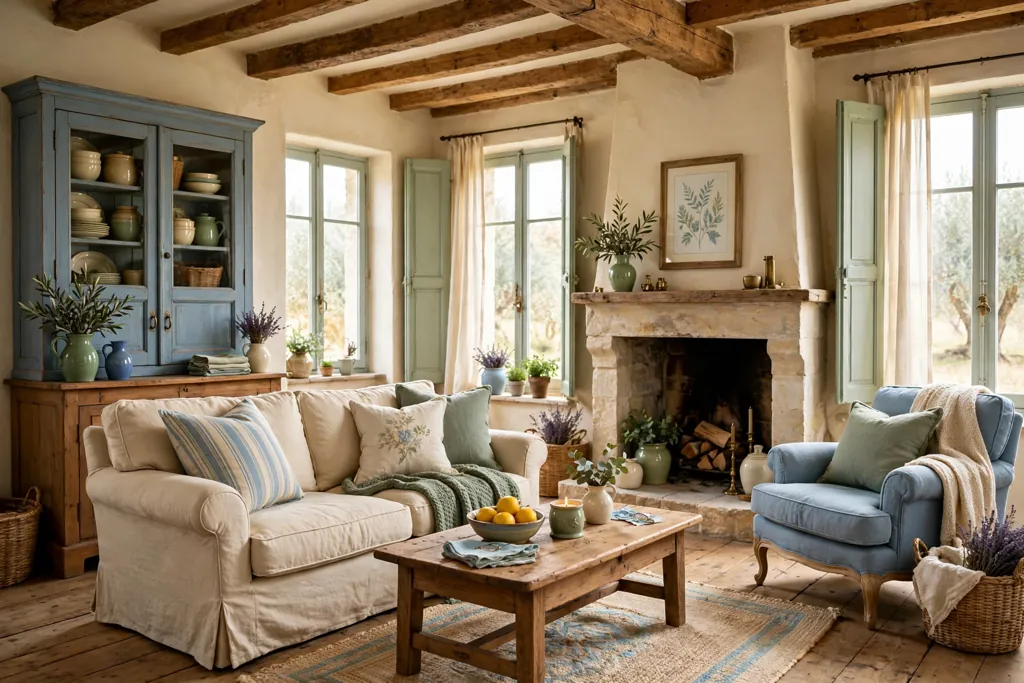
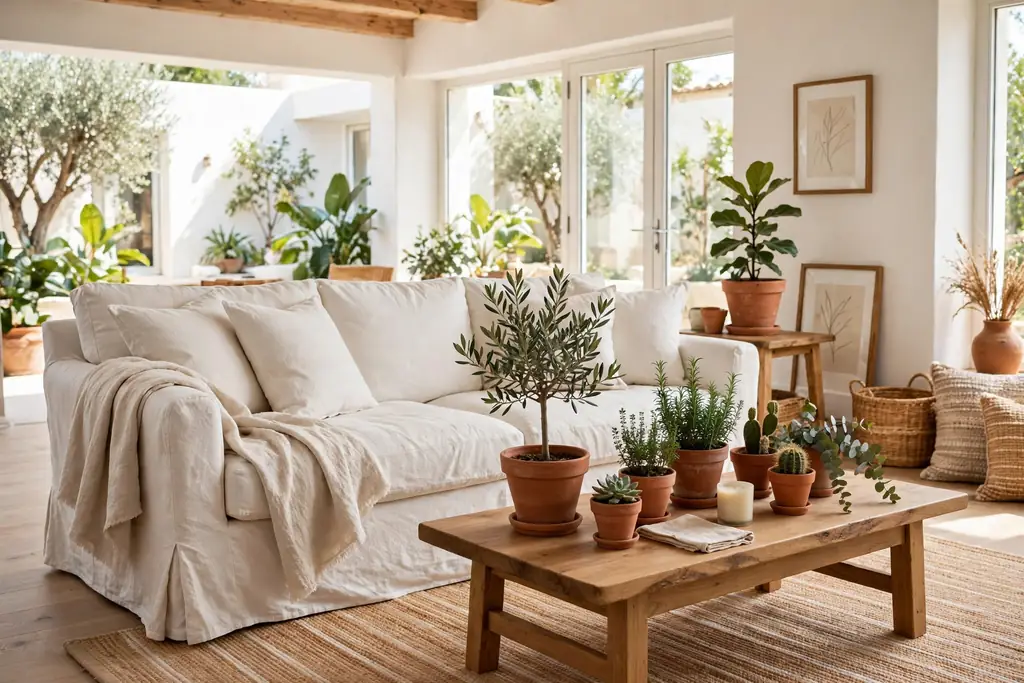
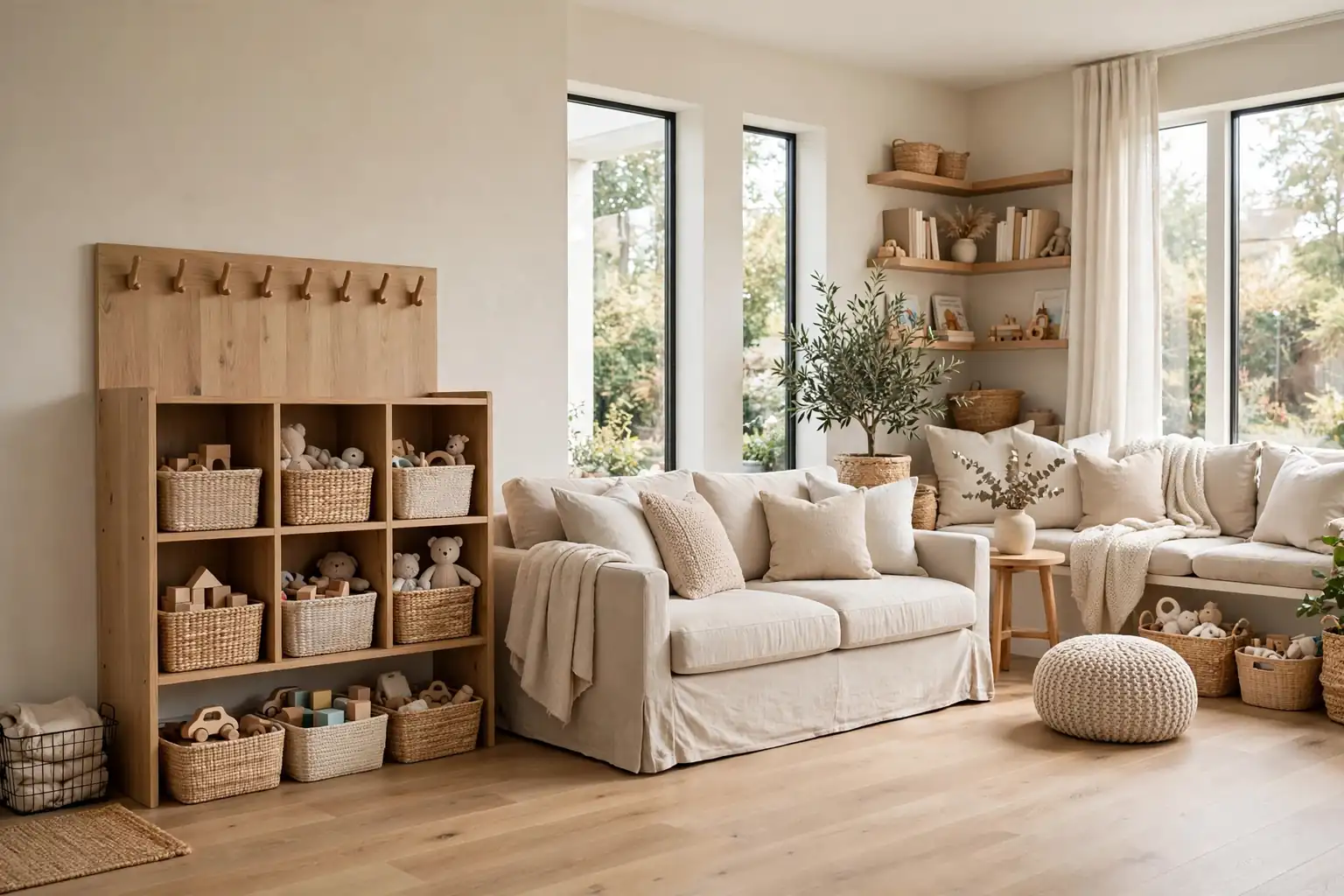
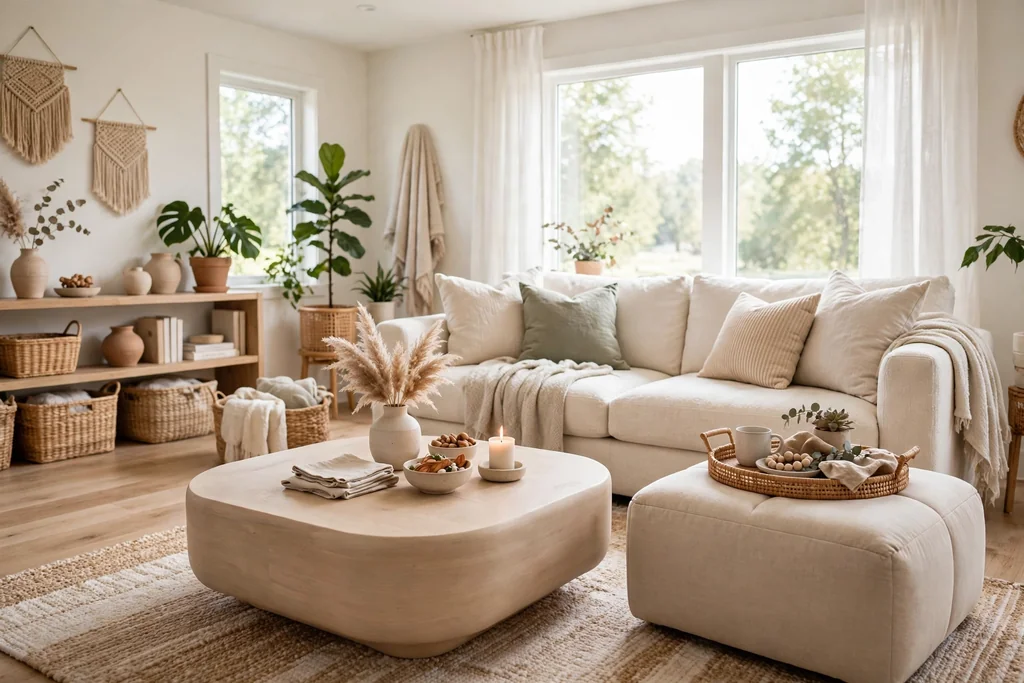
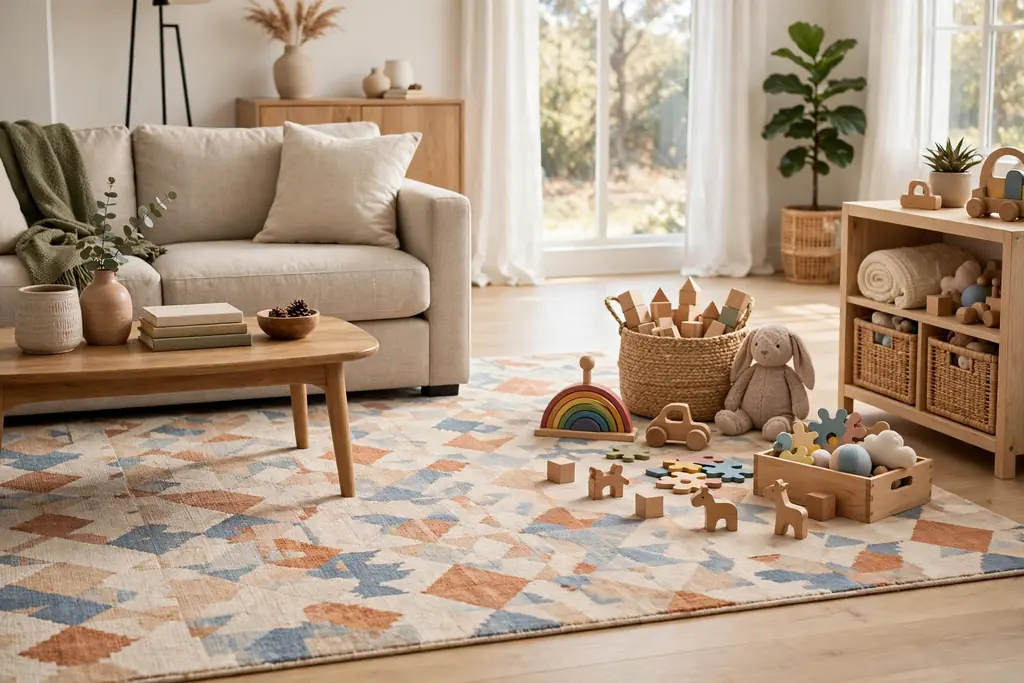
A pale oak floor with warm white walls gives a German style room a light, practical base. The oak adds warmth without darkness, and white walls keep the room bright through short winter days. This suits a living room or bedroom that feels heavy, and it works as a first step because most other German pieces, from pine furniture to blue checks, sit well on this base.
Keep the floor mostly visible, with a plain wool rug under the seating group rather than wall to wall carpet, so the wood stays part of the look. Use warm white on the walls rather than bright white, so oak and linen look soft rather than cold. If the room has dark floors already, a large pale rug and light curtains can give a similar lift without replacing the floor.
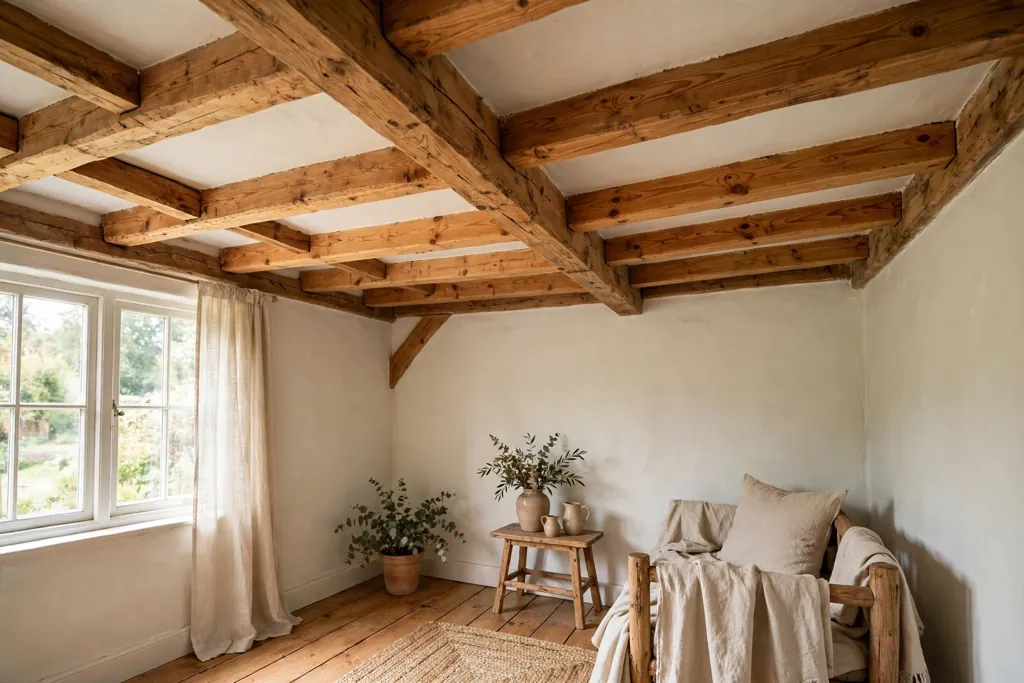
2. Add Timber Frame Beams for a Farmhouse Feel
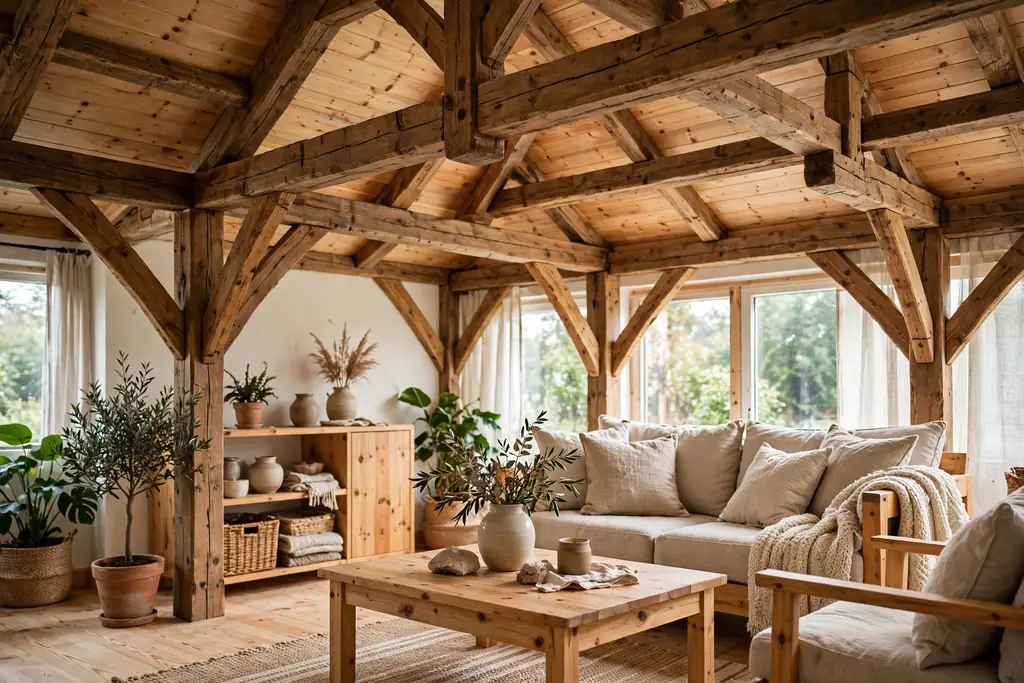
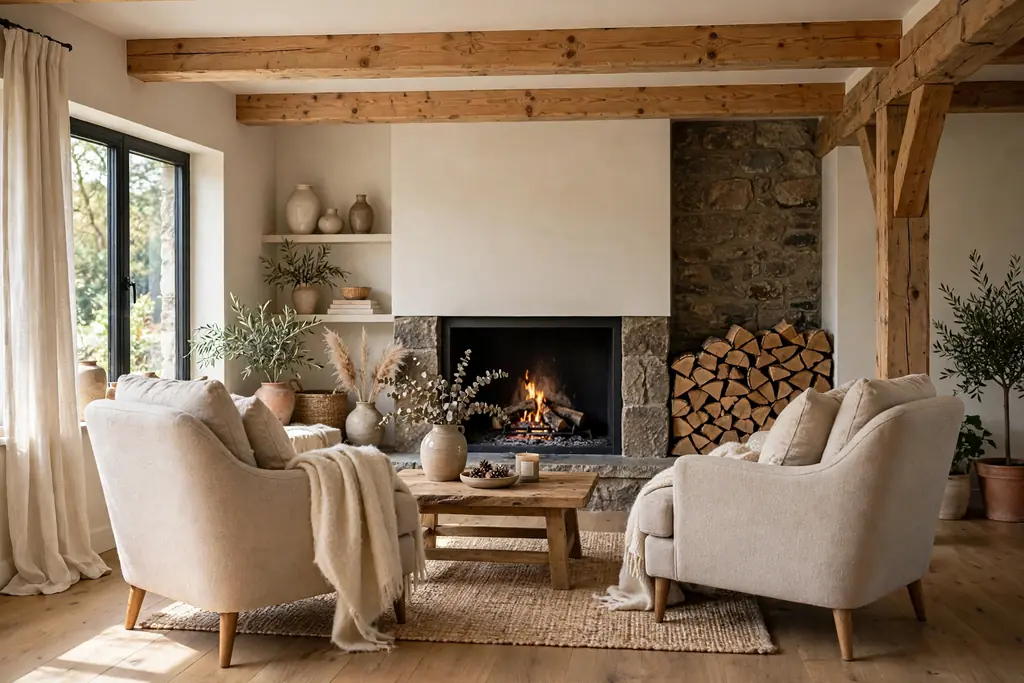
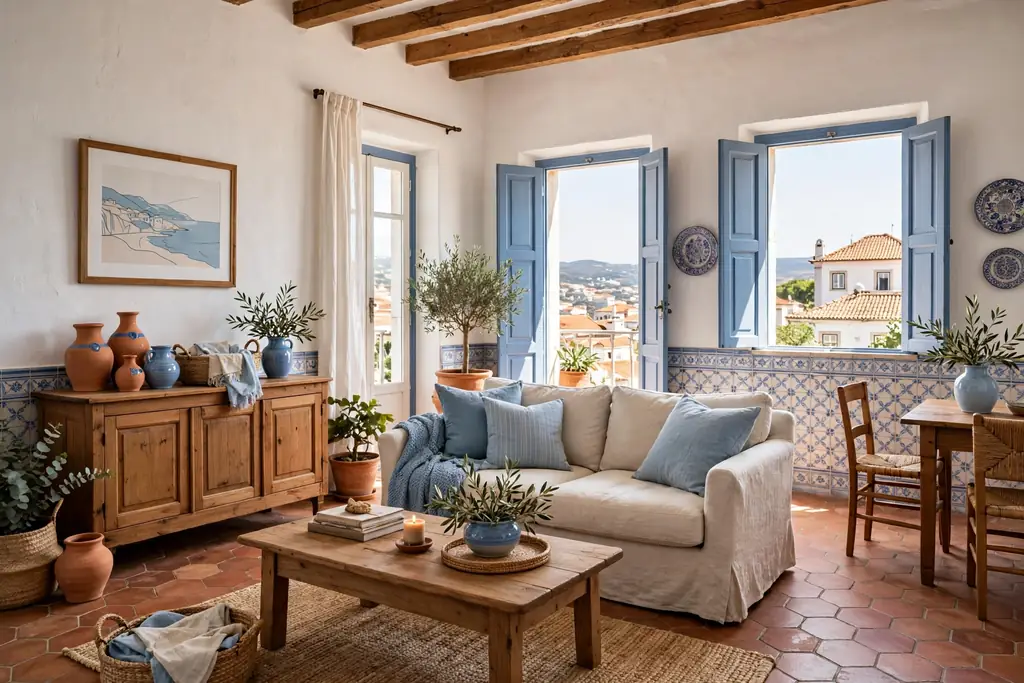
Exposed timber frame beams, or slim wood beams added to a plain ceiling, give a room the feel of a German farmhouse without a full rebuild. Dark or mid tone beams suit a room with high ceilings, while pale oak beams keep a smaller room feeling open. Beams draw the eye up and make a plain ceiling feel like part of the design.
Check the ceiling height first, since beams in a very low room can feel heavy. In a low room, use fewer, slimmer beams in pale wood, and keep the ceiling itself in warm white. Painted beams in soft cream are another option when dark wood would close the room in, and a single beam over a seating area often gives the same effect as a full ceiling of beams.
3. Hang a Cuckoo Clock as a Working Feature
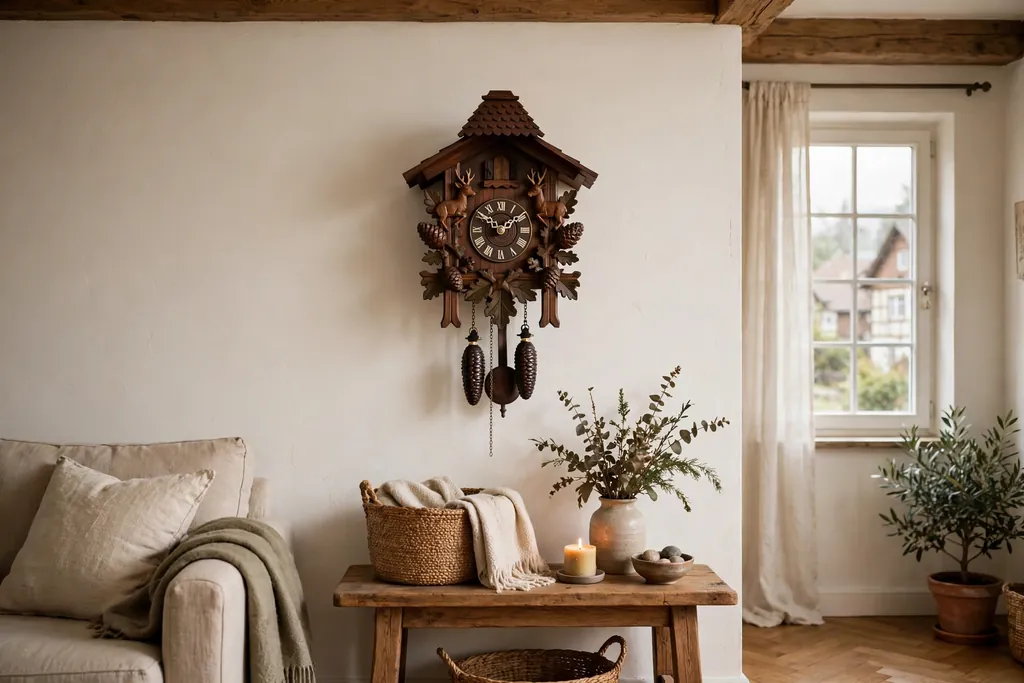
A Black Forest style cuckoo clock on a plain wall gives a living room a German feature that also tells the time. The carved wood case adds detail at eye level, while the clock itself stays useful every day. This suits a hallway wall, a living room wall, or a dining wall where a plain clock would disappear.
Hang the clock where it can be heard but not where it will wake a sleeper, and keep the wall around it mostly clear so the carving reads well. Choose a size that suits the wall, since a very large clock can crowd a small room, and a very small clock can look lost on a large wall. Wind or set the clock as the maker directs, and keep it out of strong direct sun so the wood case does not dry out.
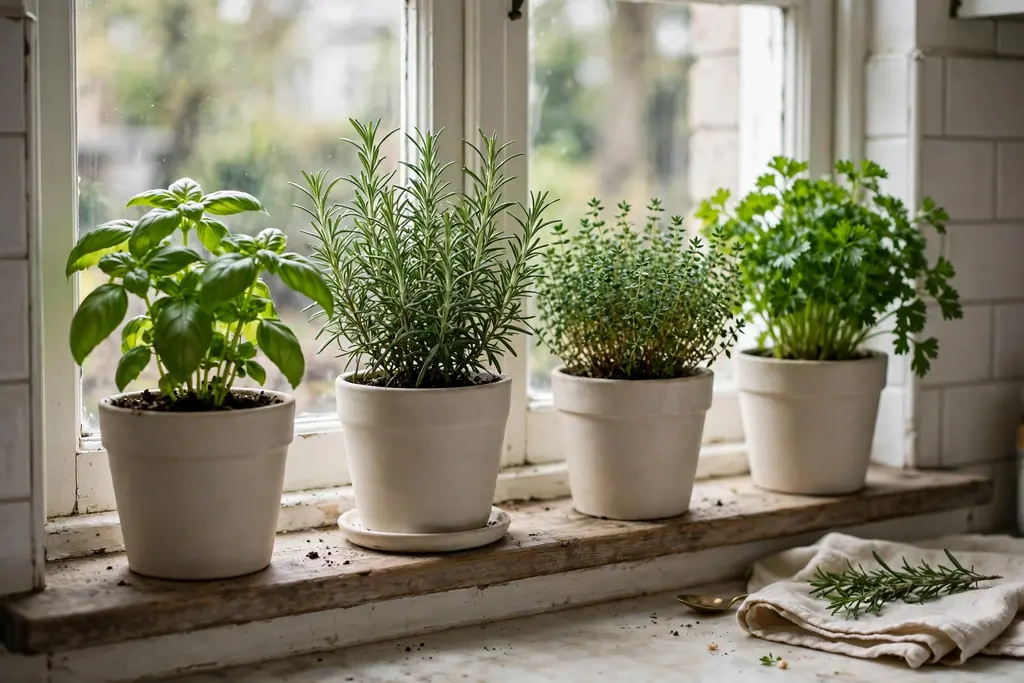
4. Fill Window Boxes With Geraniums and Herbs
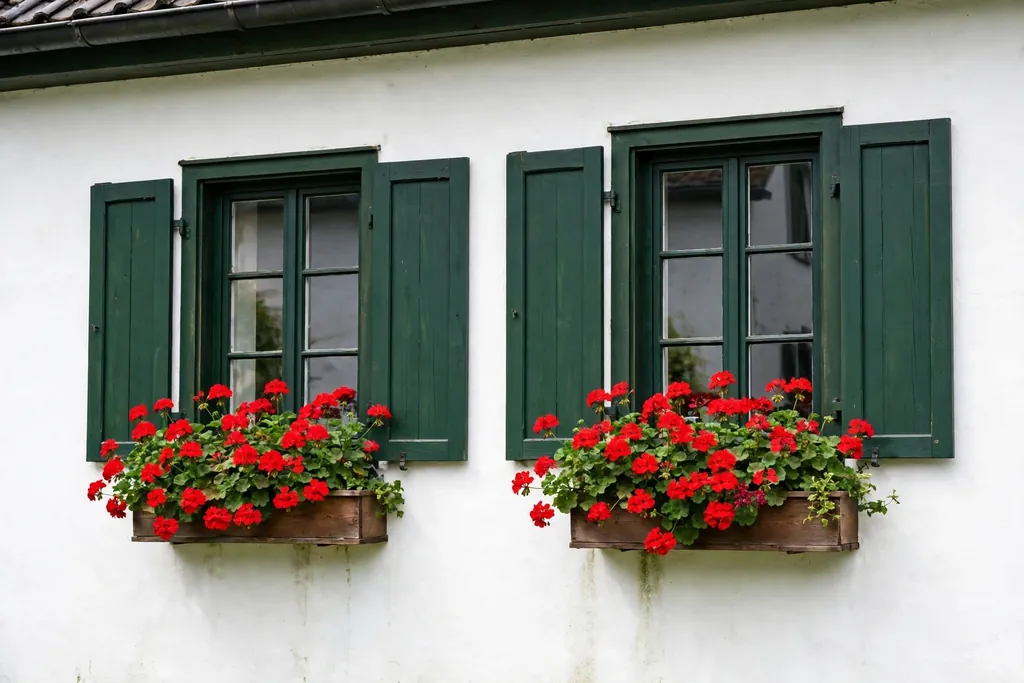
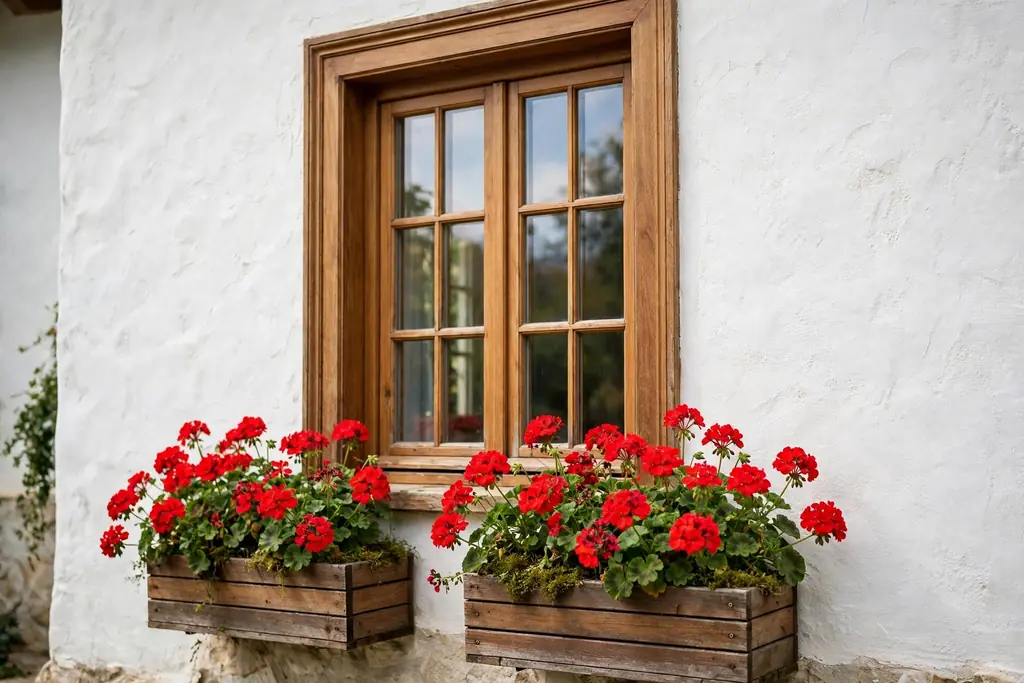
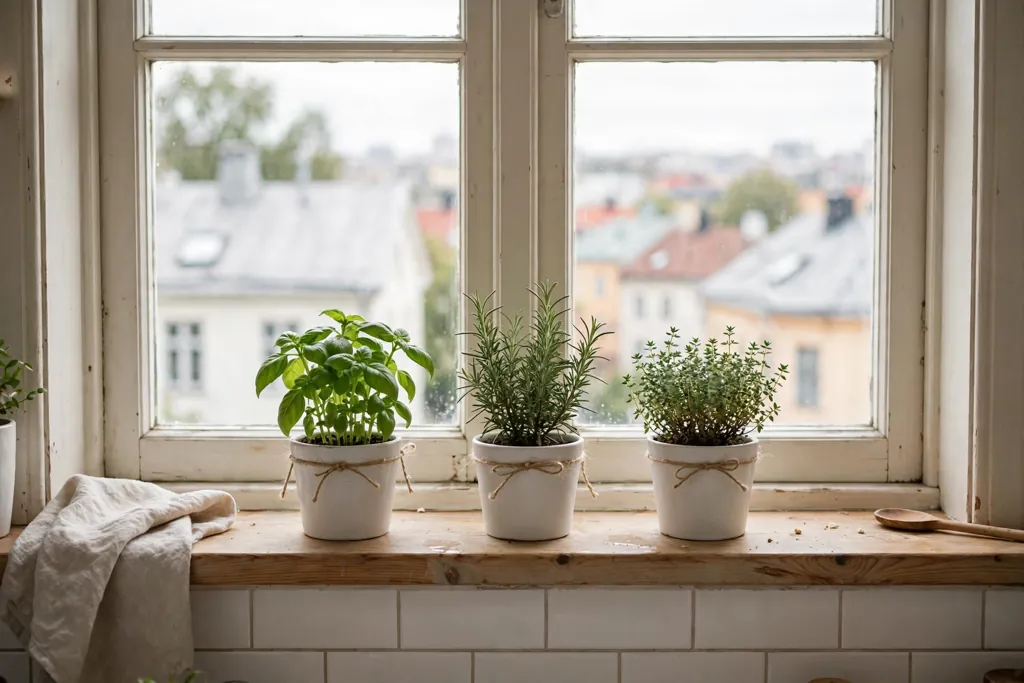
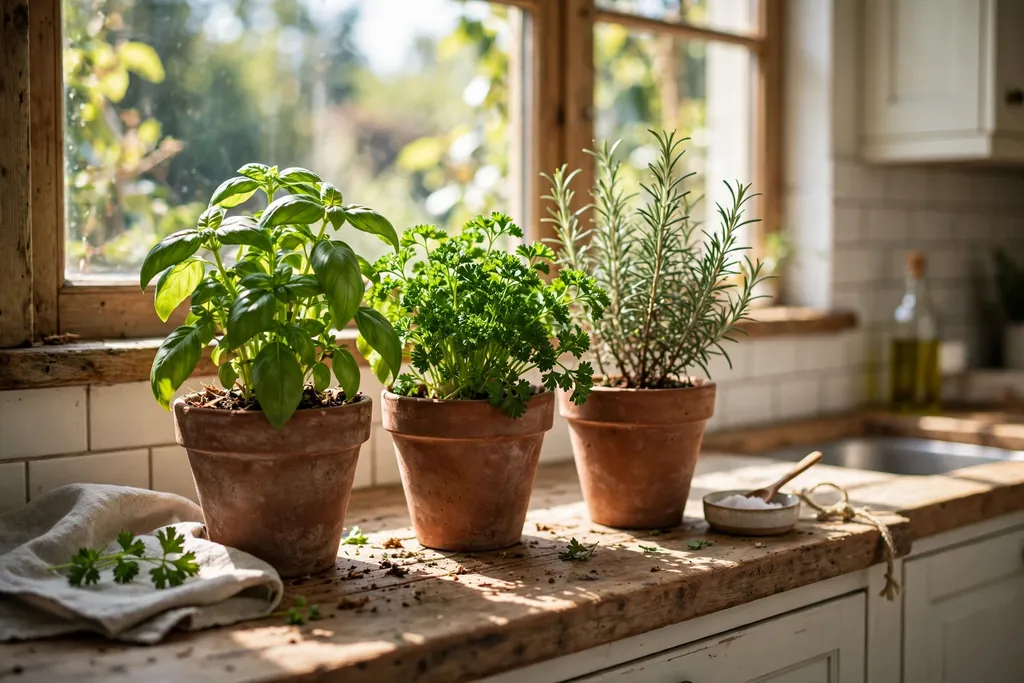
Window boxes filled with red geraniums, or with a mix of geraniums and herbs, give the outside of a German home its most familiar look. The flowers add color against white walls and wood frames, and herbs by a kitchen window stay useful for cooking. This suits a street facing window, a cottage front, or a balcony rail where a box can be fixed safely.
Fix the box with brackets rated for its full weight when watered, and use a liner with drainage holes so roots do not sit in water. Plant geraniums in sun and herbs such as parsley and chives in a spot with at least a few hours of light. Water boxes often in warm weather, since small boxes dry fast, and deadhead geraniums so they keep flowering through the season.
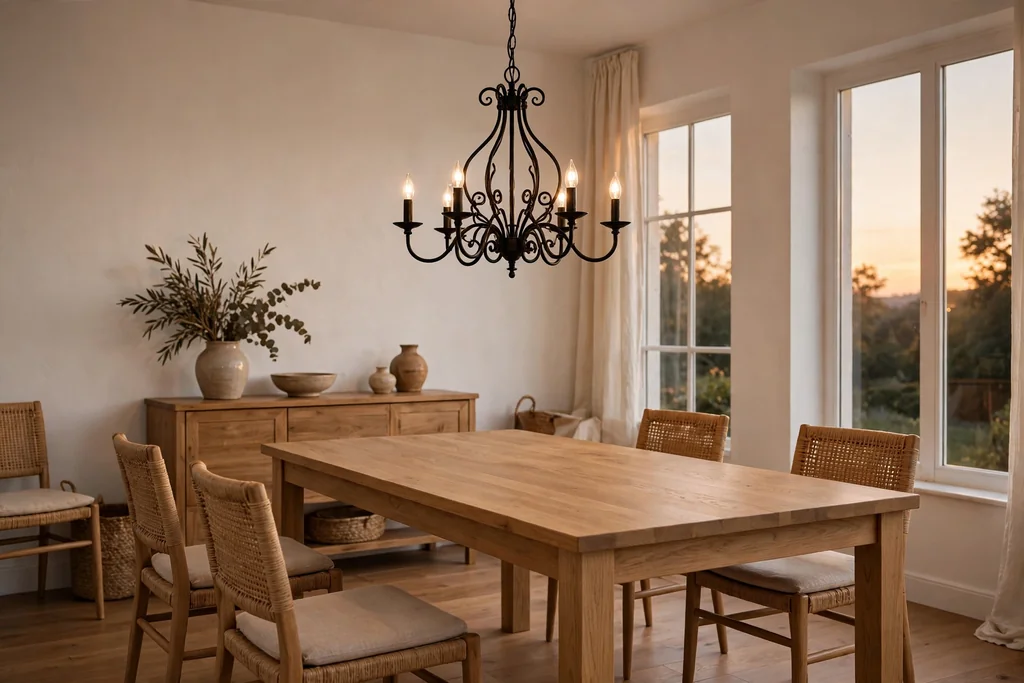
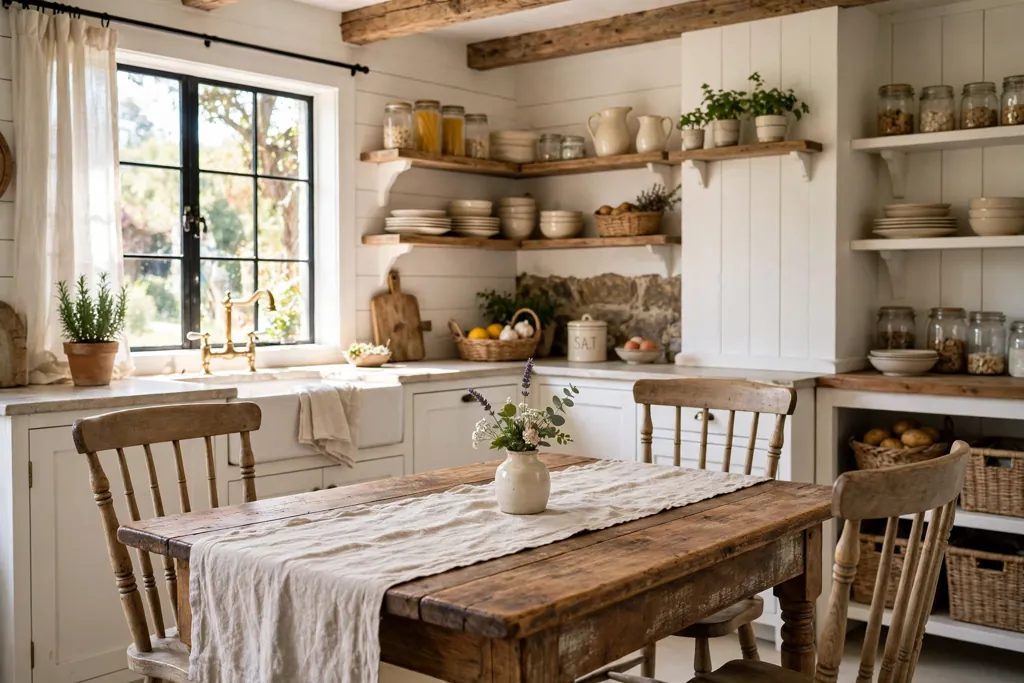
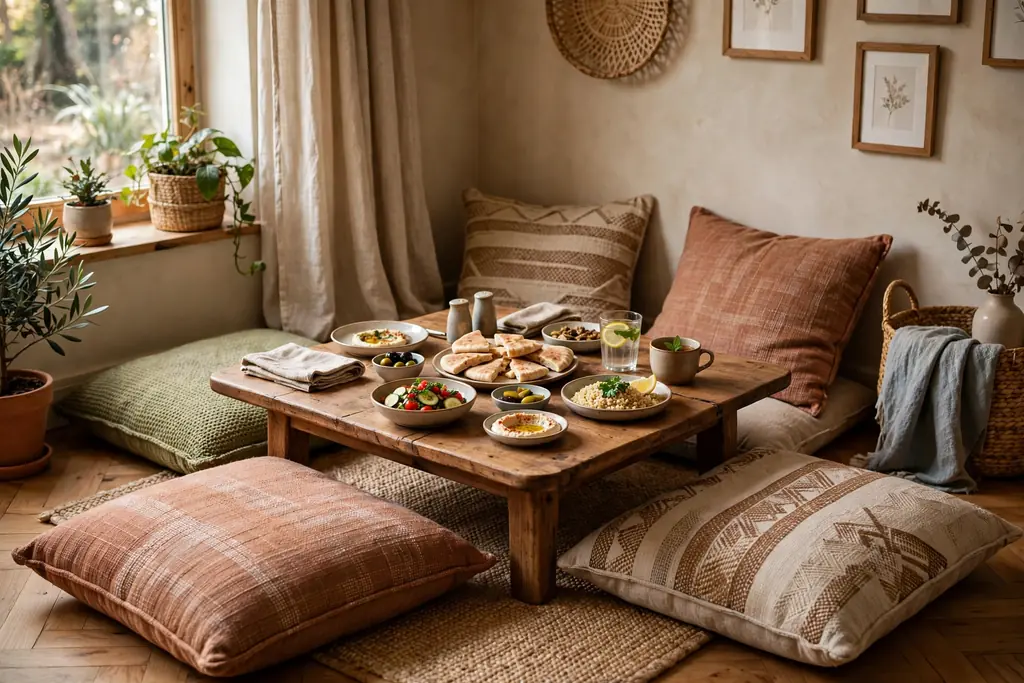
5. Center Dining on a Long Pine Table With Benches
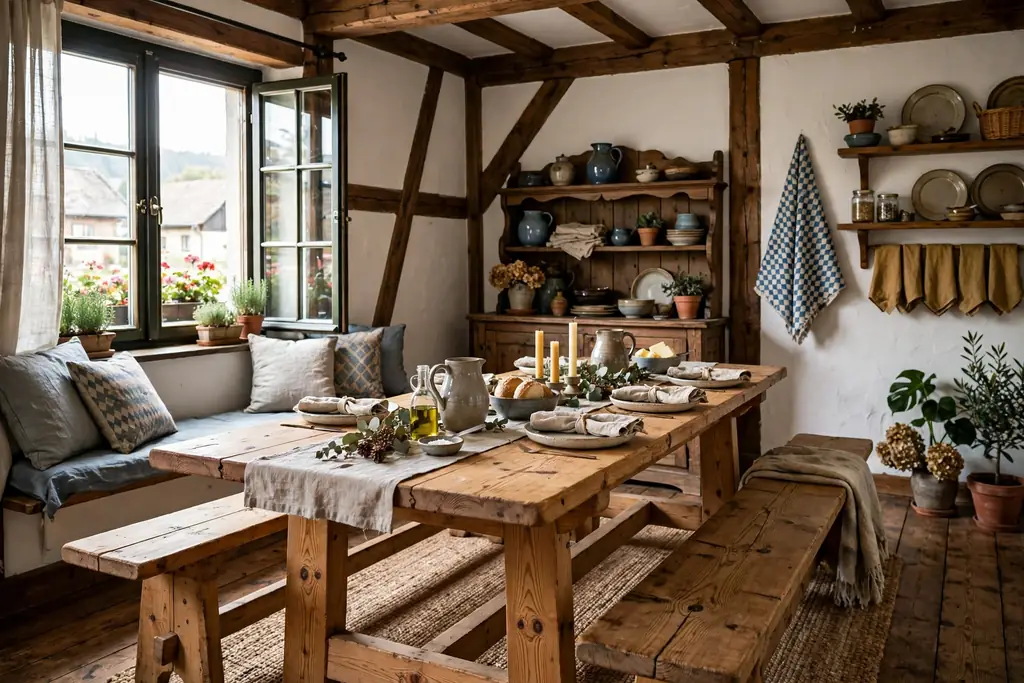
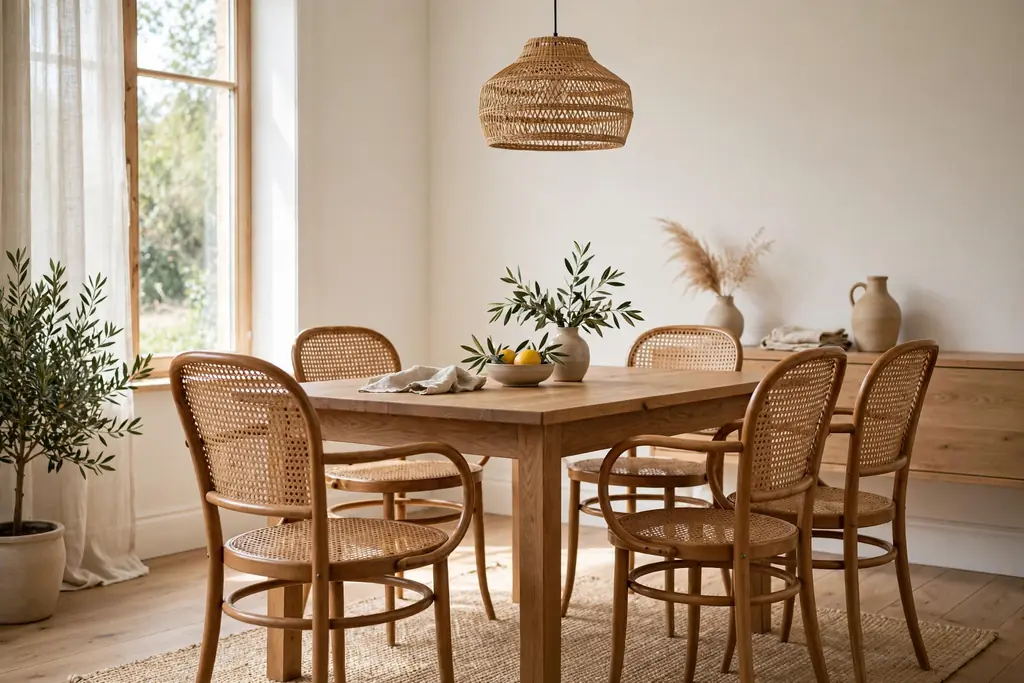
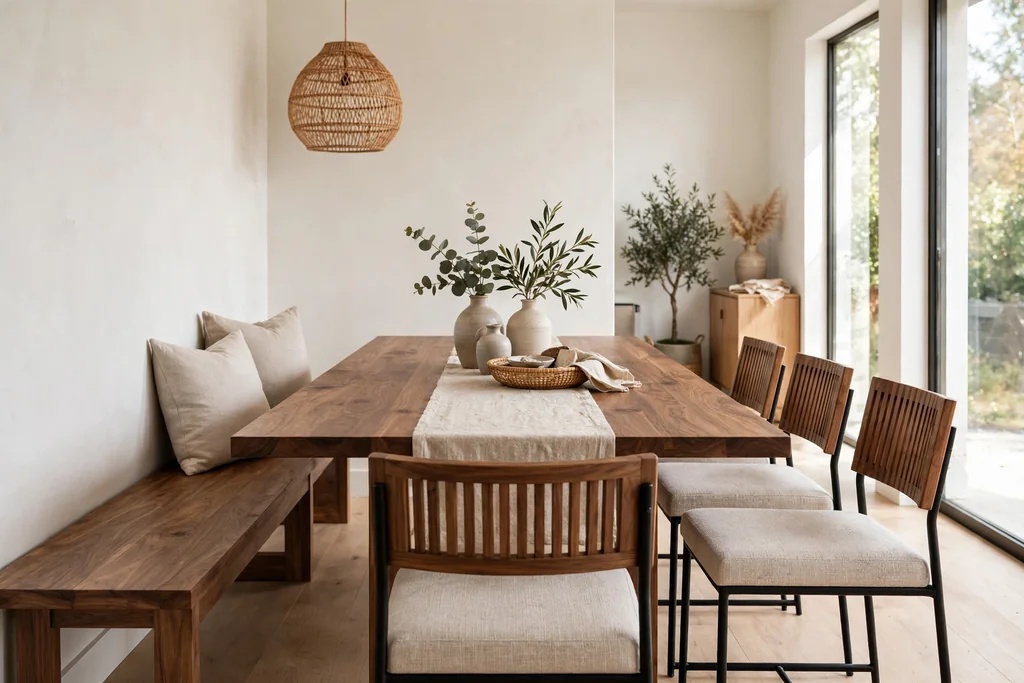
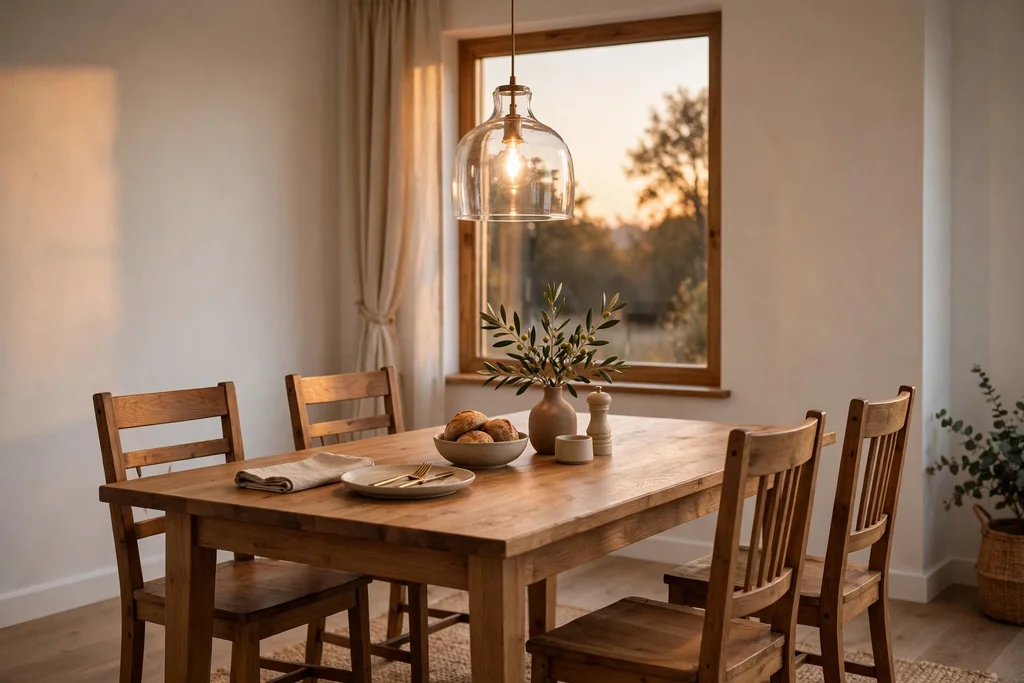
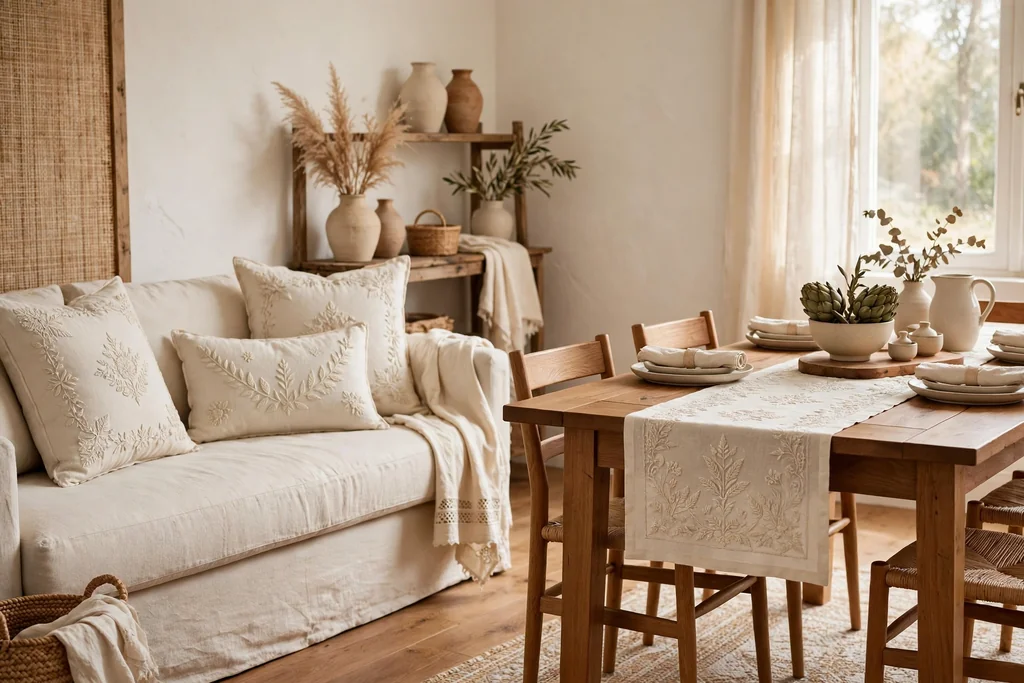
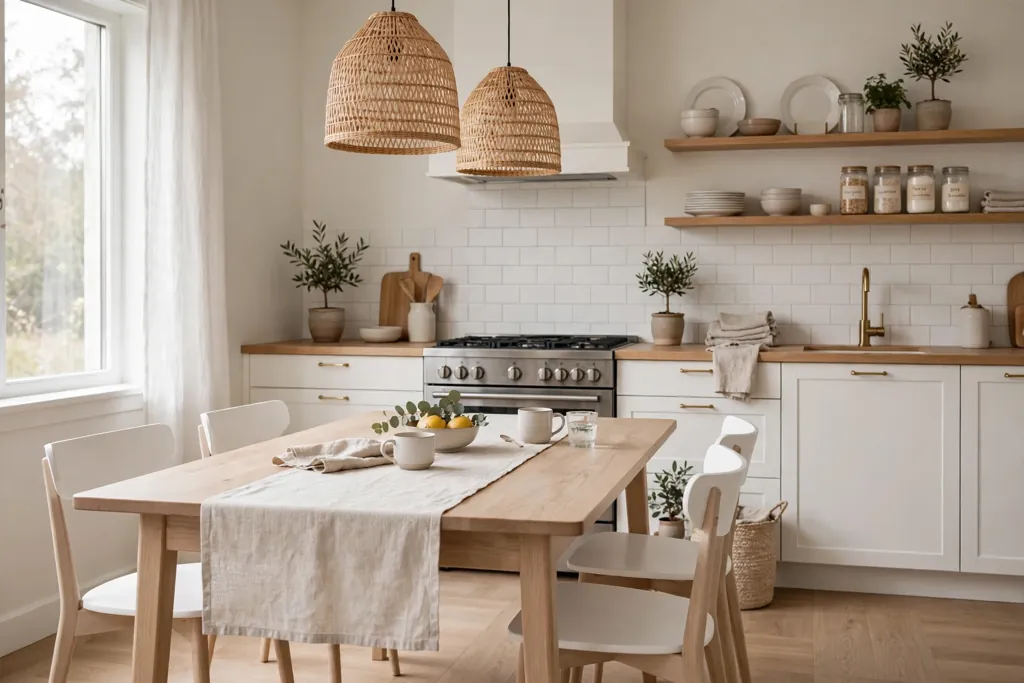
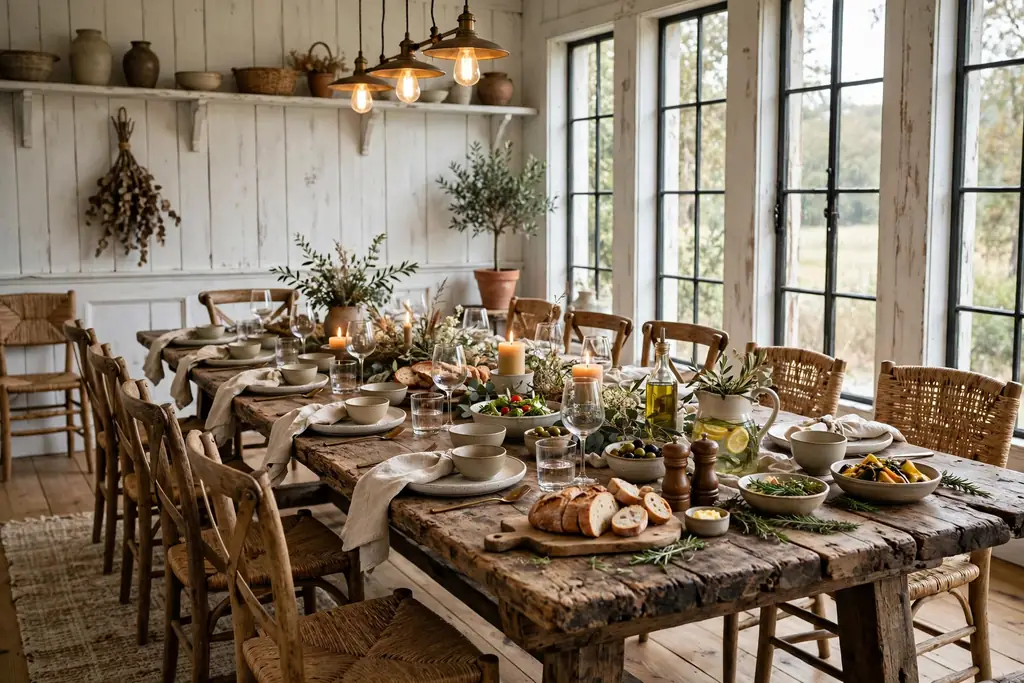
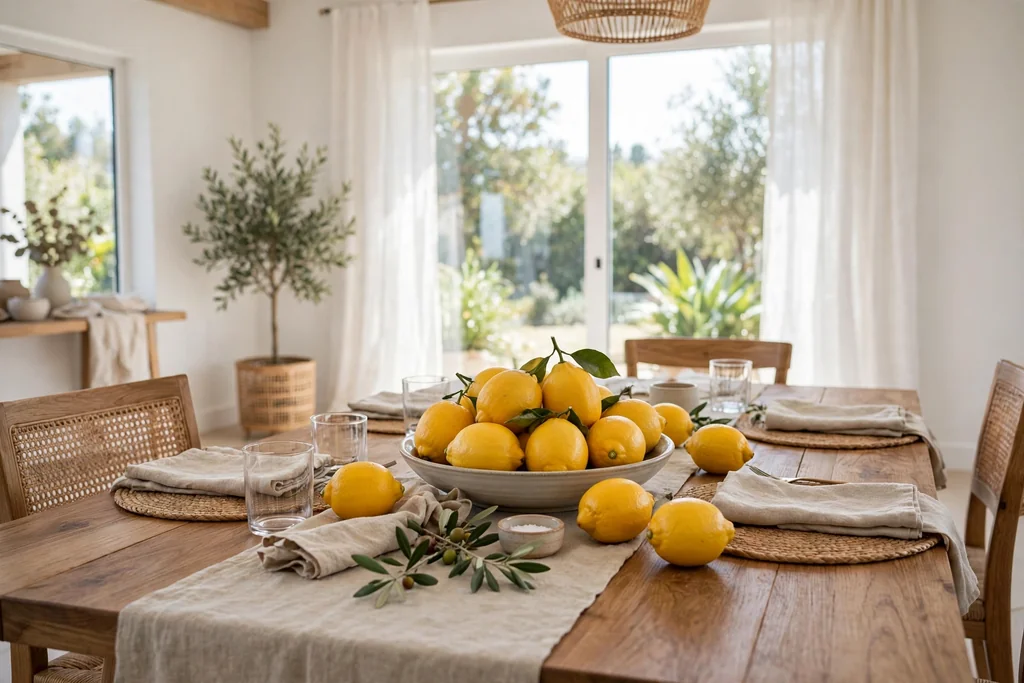
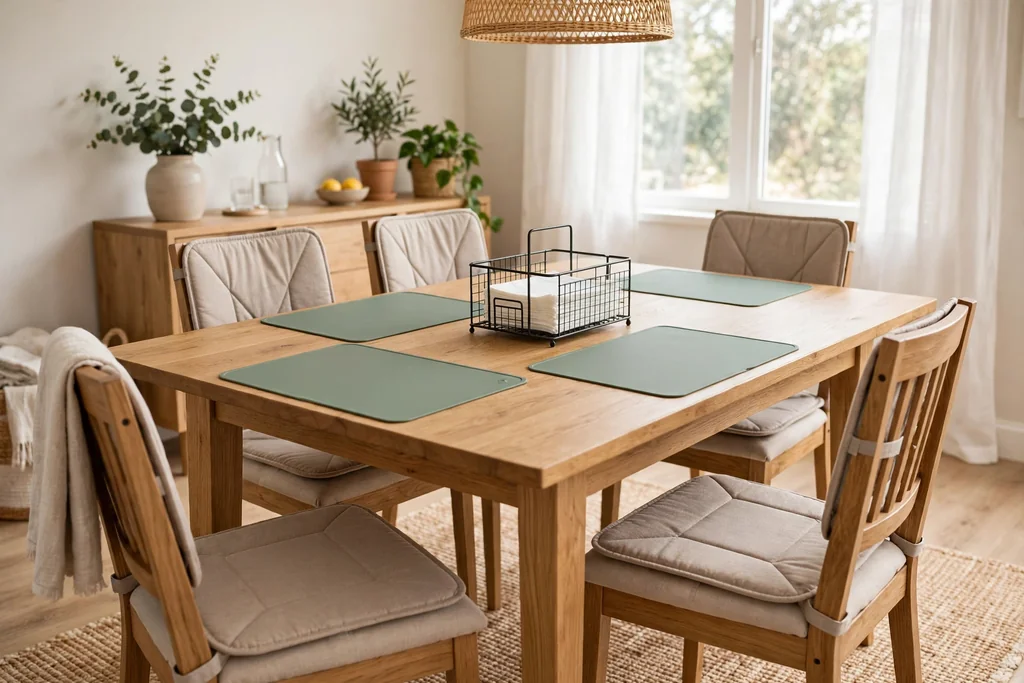
A long pine table with benches on one or both sides gives a dining room a German gathering place built for many guests. Pine shows grain and age well, benches tuck under the table when not in use, and the long shape suits family meals, homework, and board games alike. This suits a dining room or a kitchen dining space with room to pull a bench out fully.
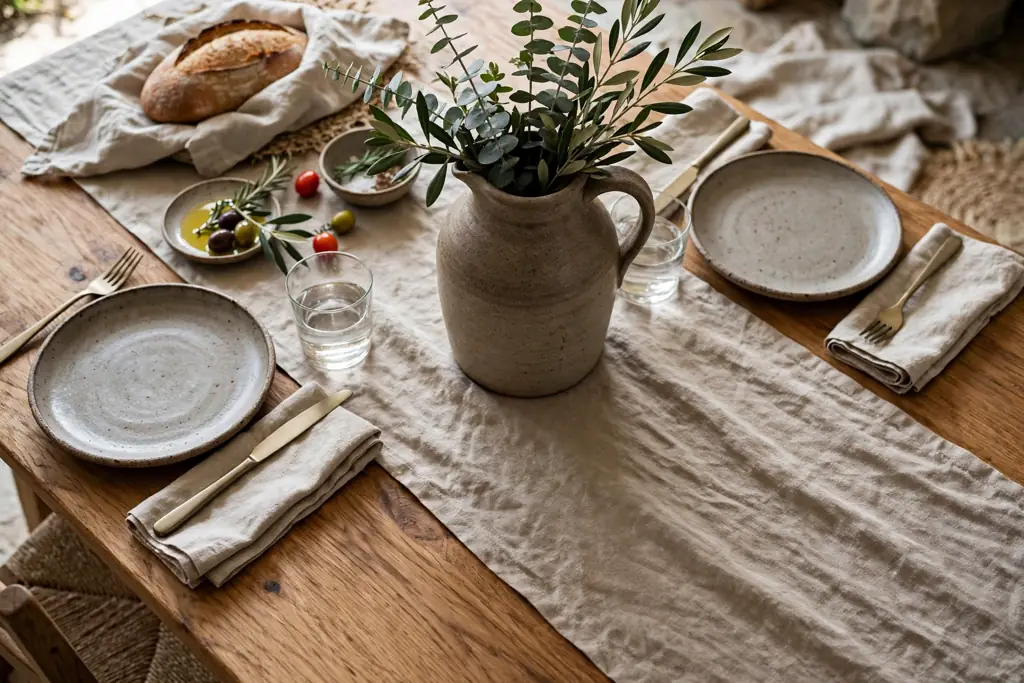
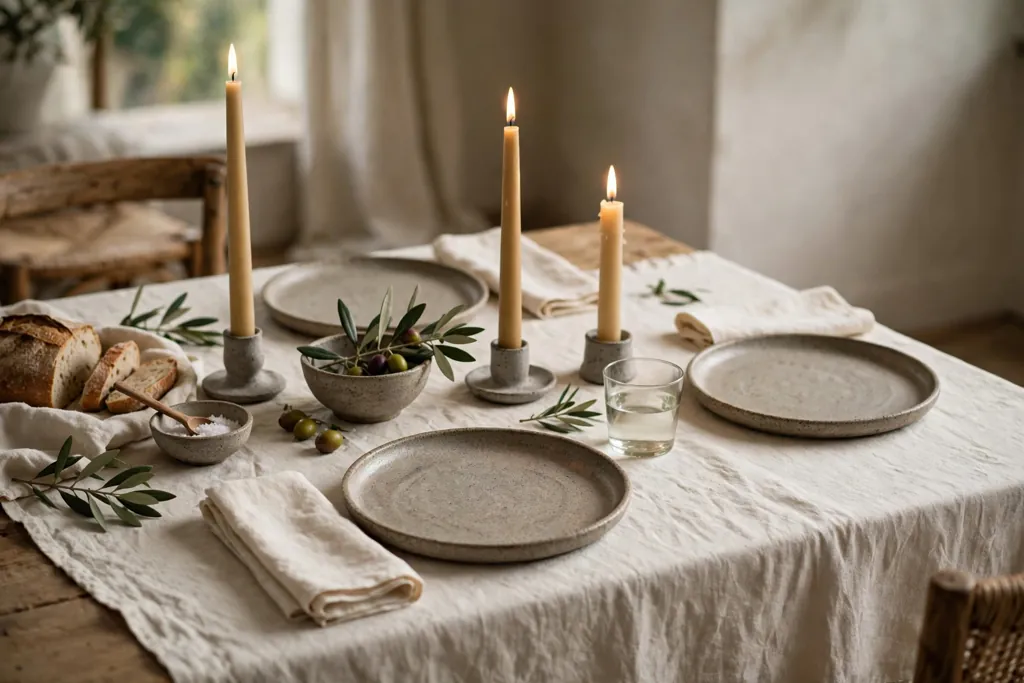
Keep the tabletop mostly clear between meals, with a linen runner and one stoneware jug, so the wood stays visible. Use placemats at meals, since pale pine marks more easily than dark wood, and keep chairs at the table ends for guests who prefer a backrest. If benches feel hard for long meals, add flat seat cushions in a blue check or plain linen, tied on so they stay in place.
6. Use Blue and White Checks in the Kitchen and Dining Room
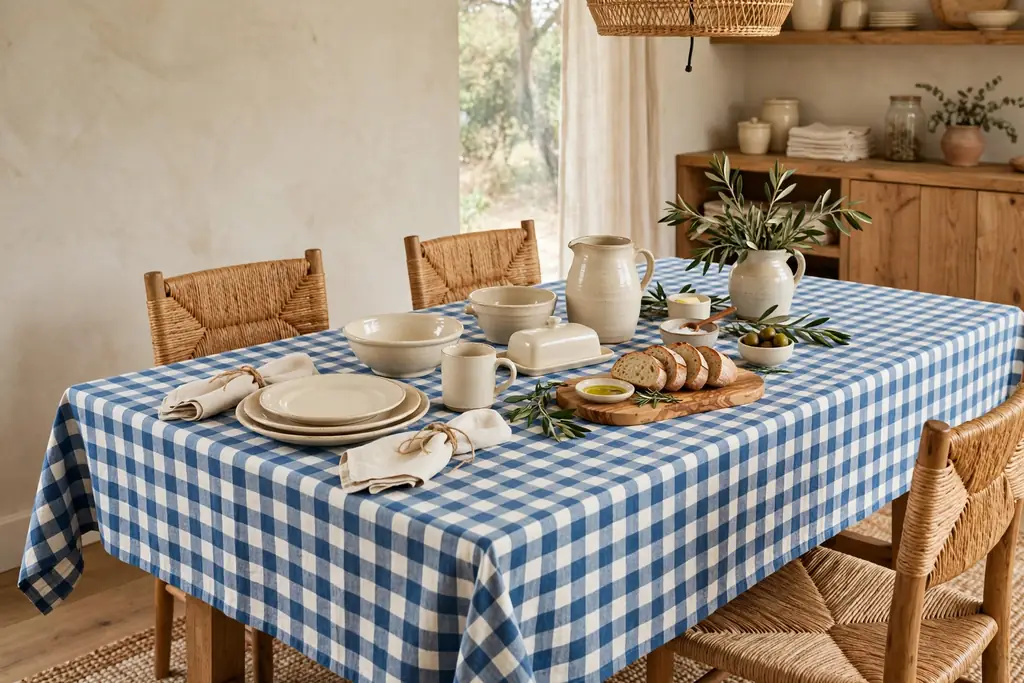
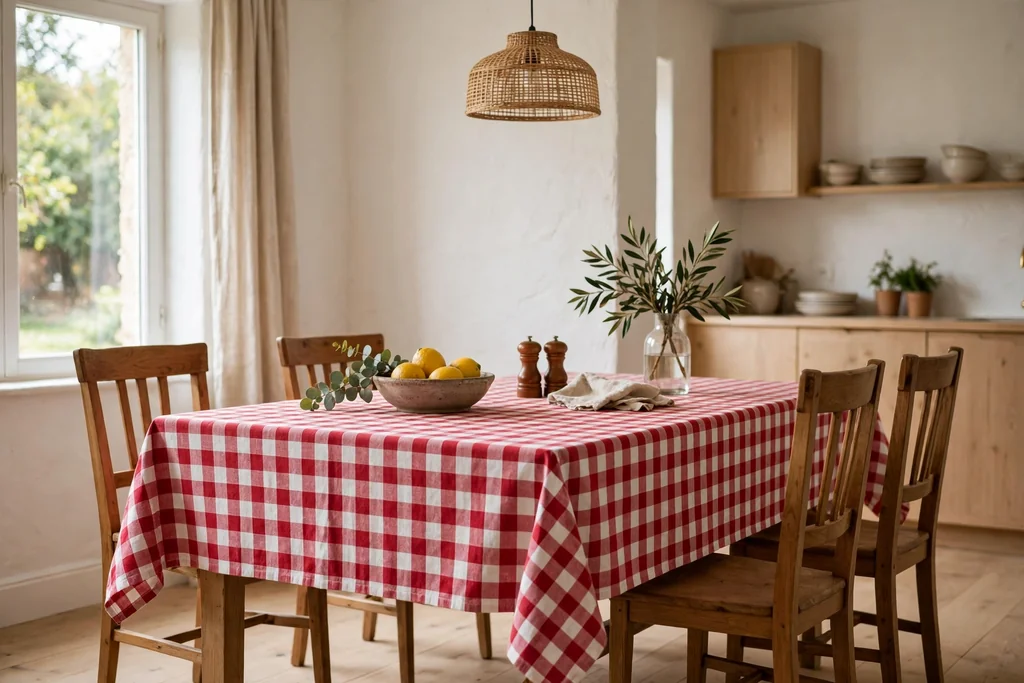
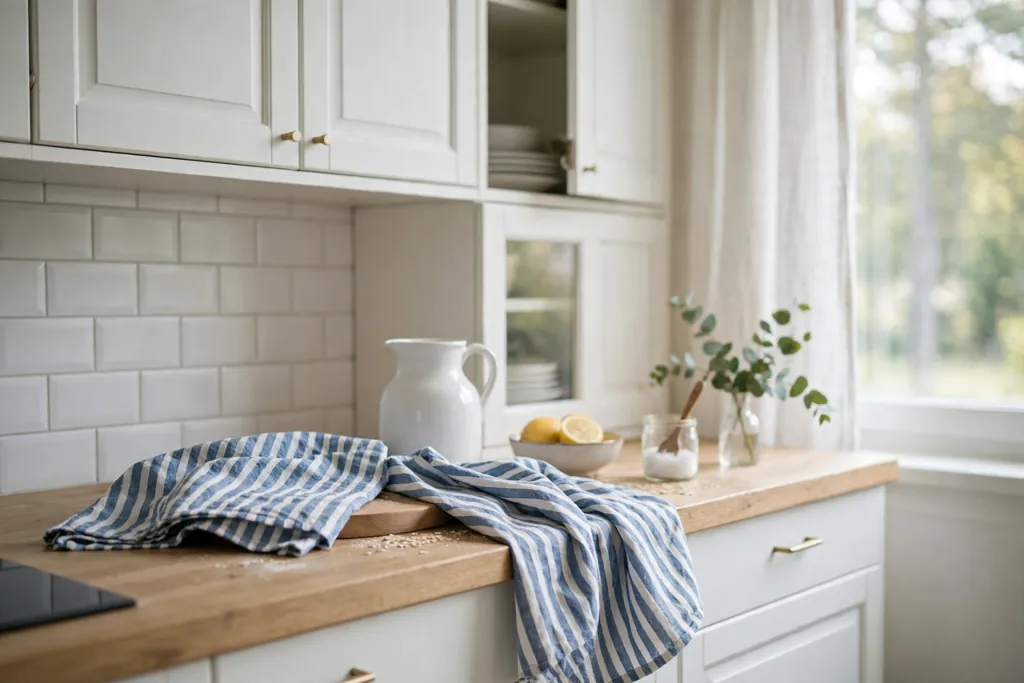
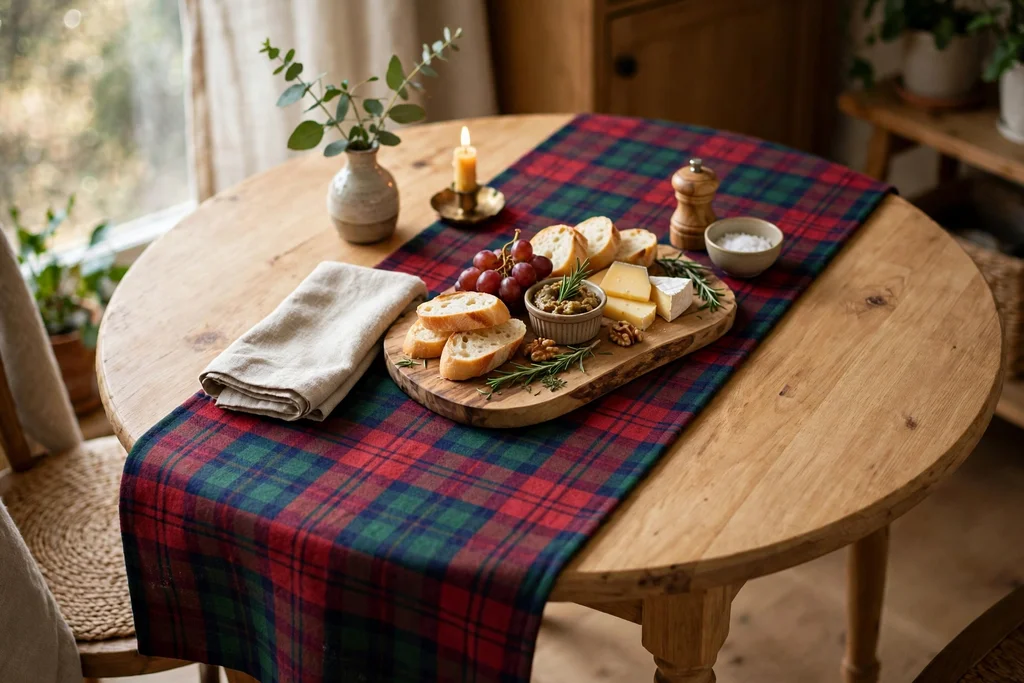
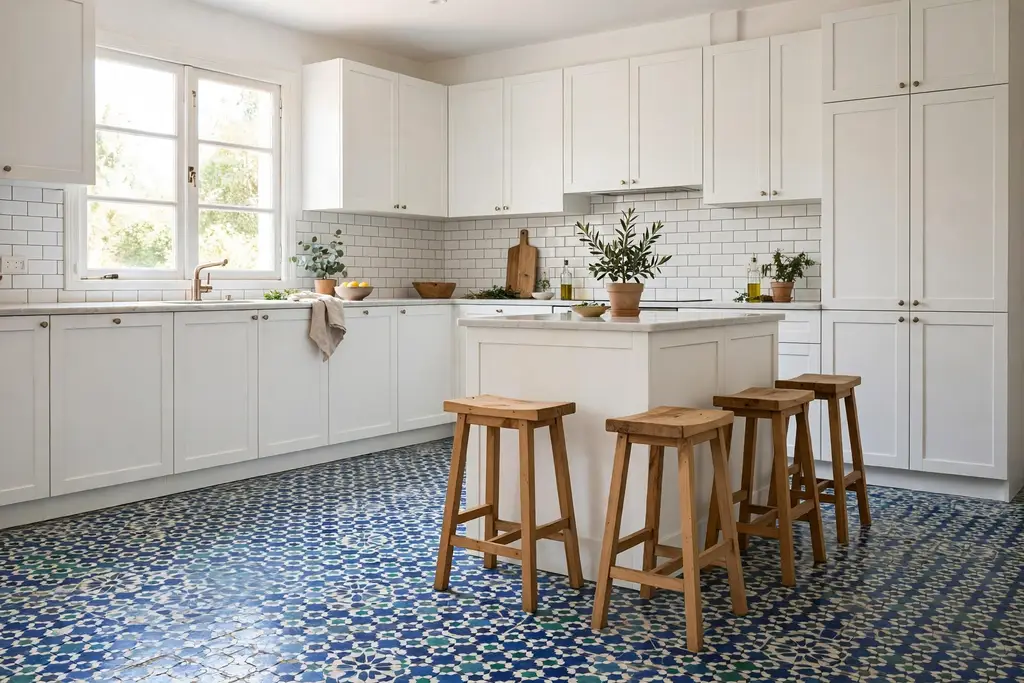
Blue and white checks, in the Bavarian style, add the clearest German pattern to a kitchen or dining room without taking over the space. Checks appear in tablecloths, seat cushions, tea towels, and curtains, and the two color pattern suits pale wood and cream walls. This suits a plain pine table, where one patterned layer can carry the interest.
Use checks in one or two places at most, such as a tablecloth and two seat cushions, and keep the rest of the table plain in cream or white stoneware. If the kitchen already has a strong pattern, use checks on a single chair or a tea towel instead, so the room does not mix two strong prints. Choose washable cotton or linen blends, since table linens and towels need frequent washing.
7. Hang Lace Cafe Curtains at the Kitchen Window
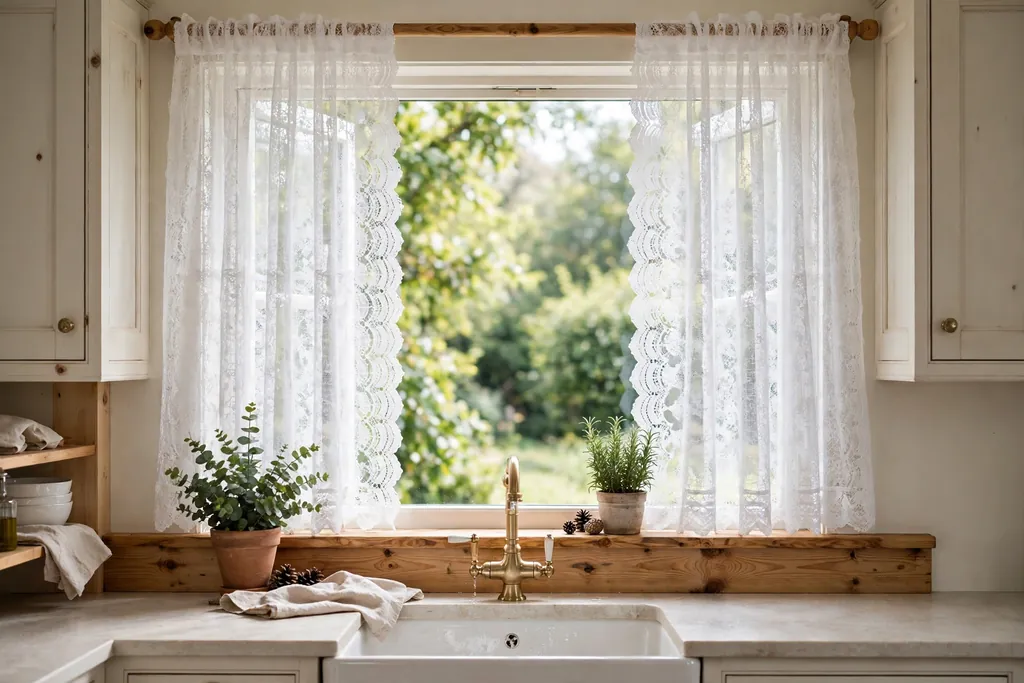
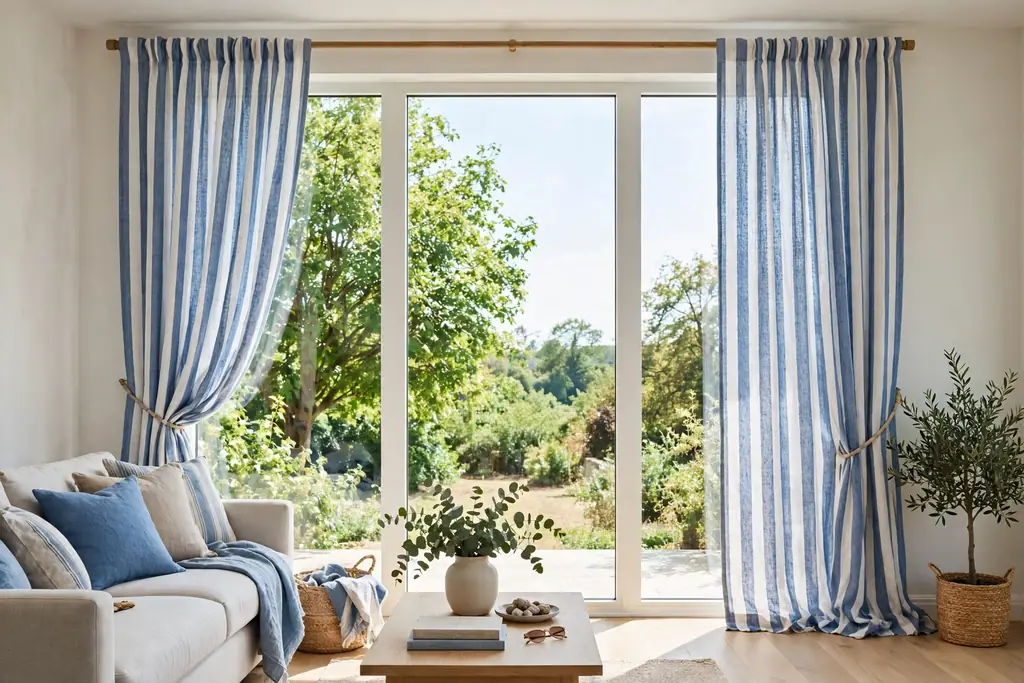
Lace cafe curtains, hung at mid height on a kitchen window, give privacy while keeping daylight and a view of the garden. The lace softens the window, suits a pine kitchen, and lets you see out over the top of the panel. This suits a kitchen window that faces a street or a neighbor, where full length curtains would block light and work space.
Hang a slim rod at mid height, and let the panels fall just below the sill, so they do not catch on taps or worktops. Keep the lace in white or cream, so it matches the frame and does not add a new color. If the window opens often, choose panels that slide easily on rings, and keep the fabric clear of the hob and any open flame.
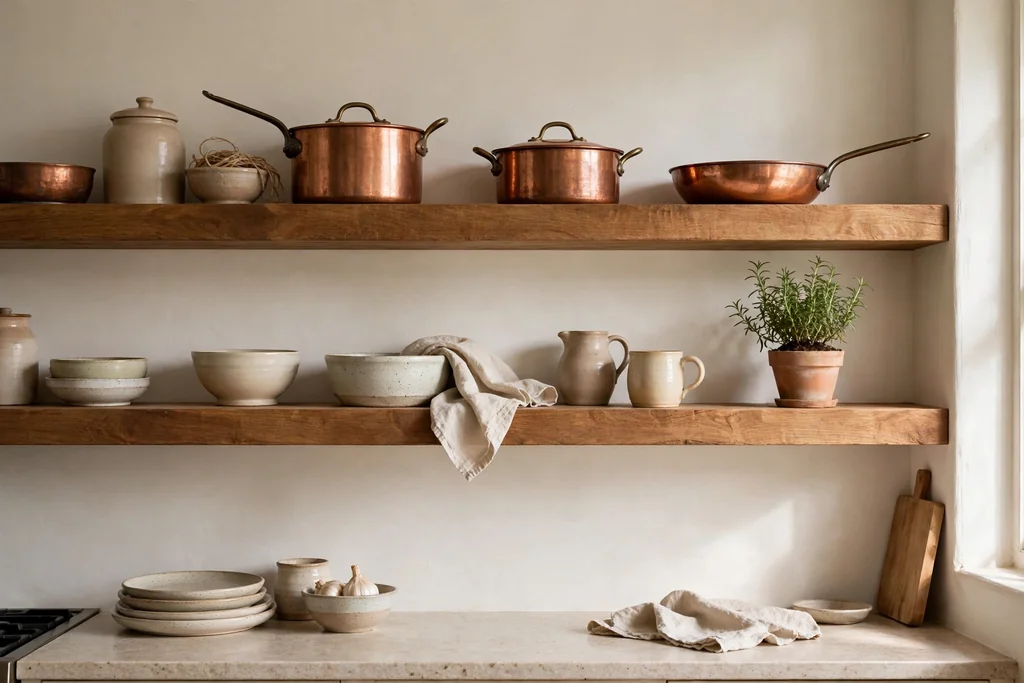
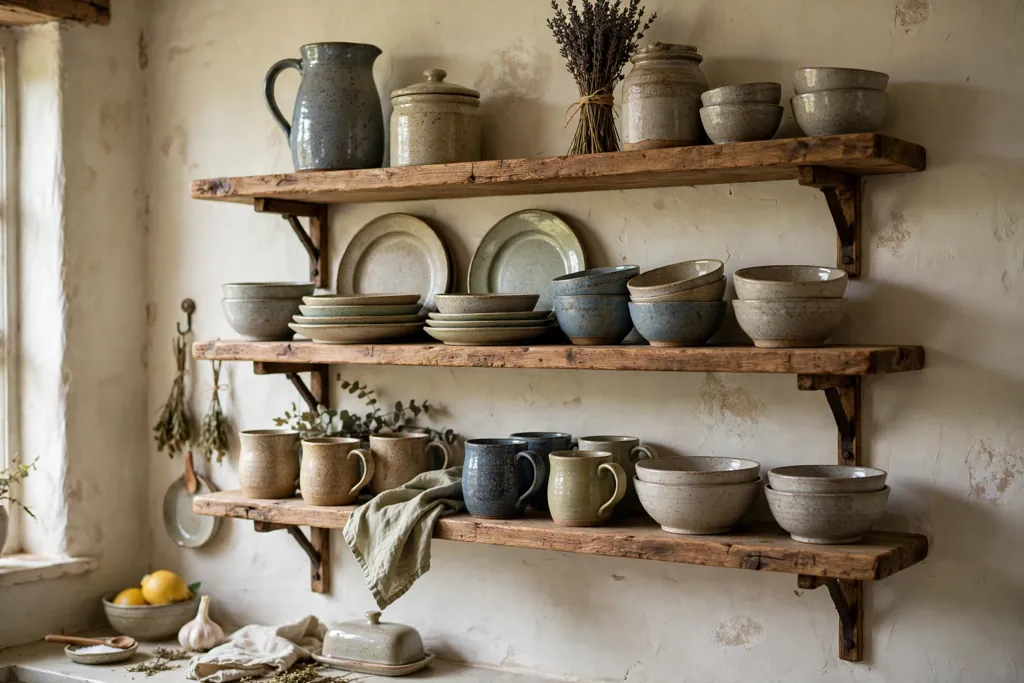
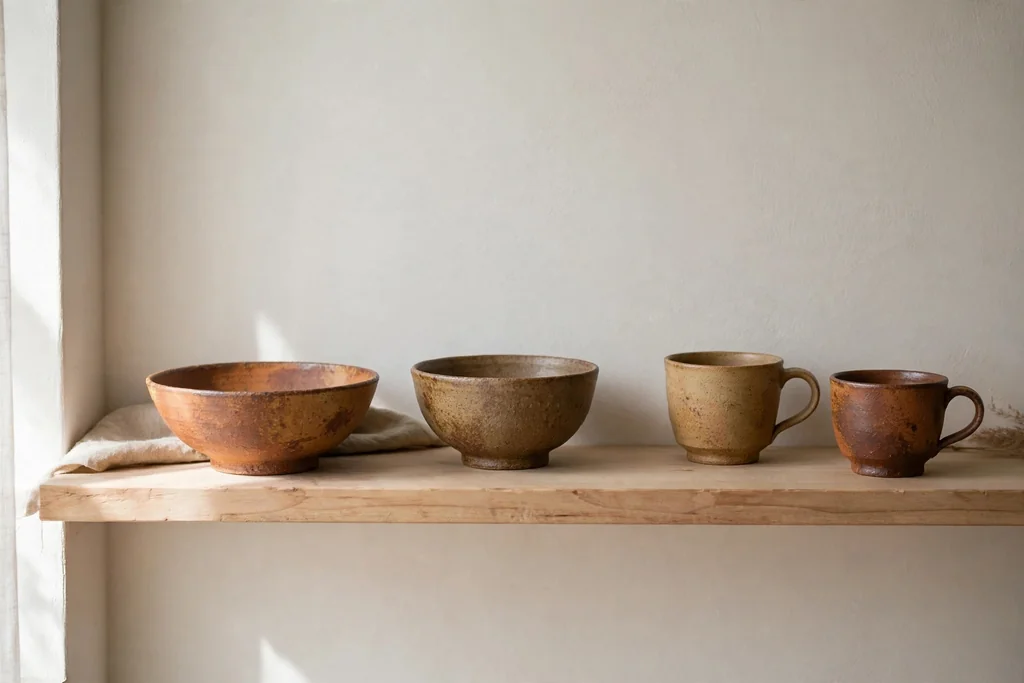
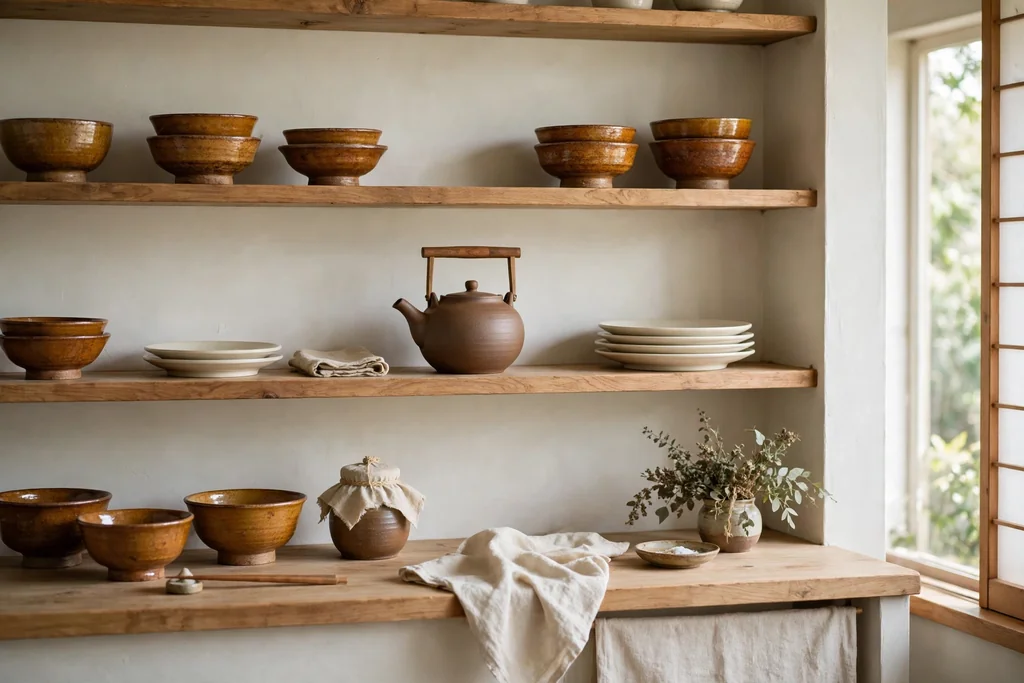
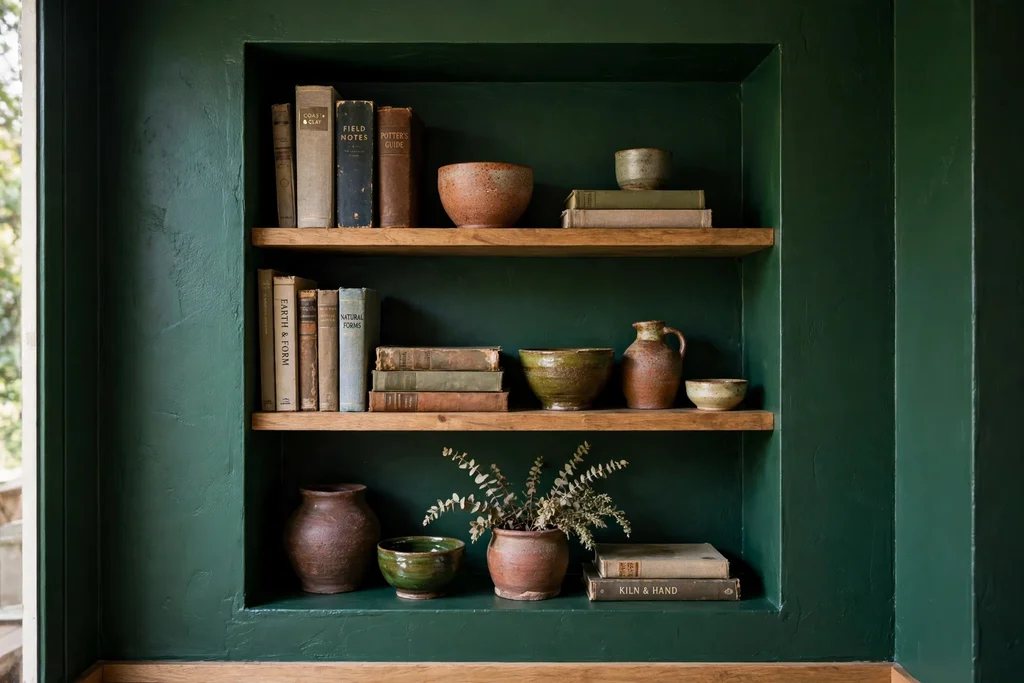
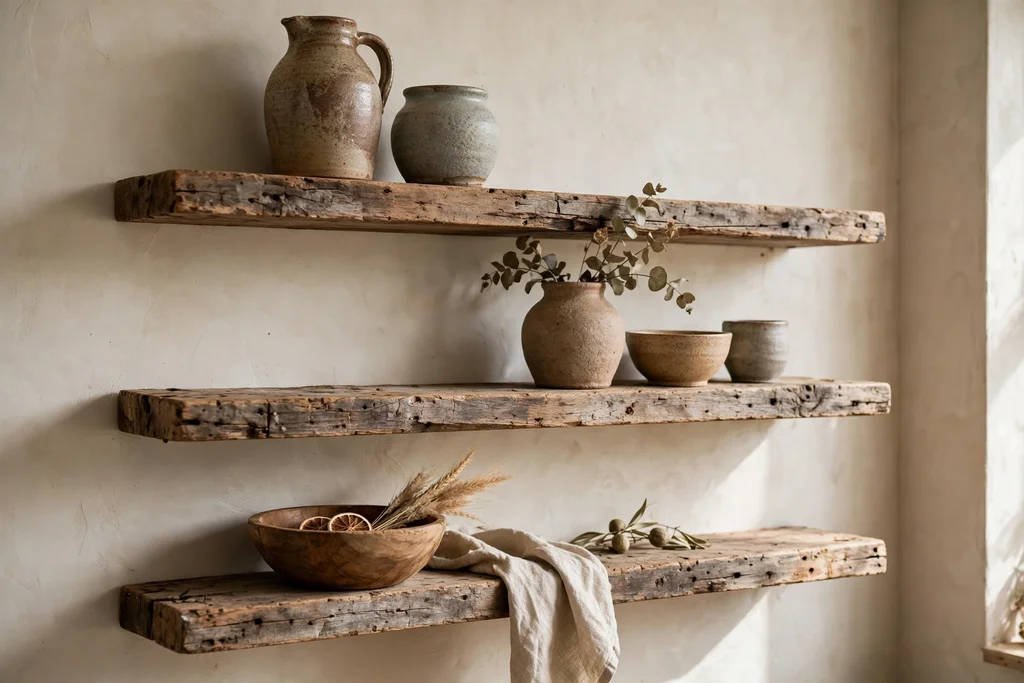
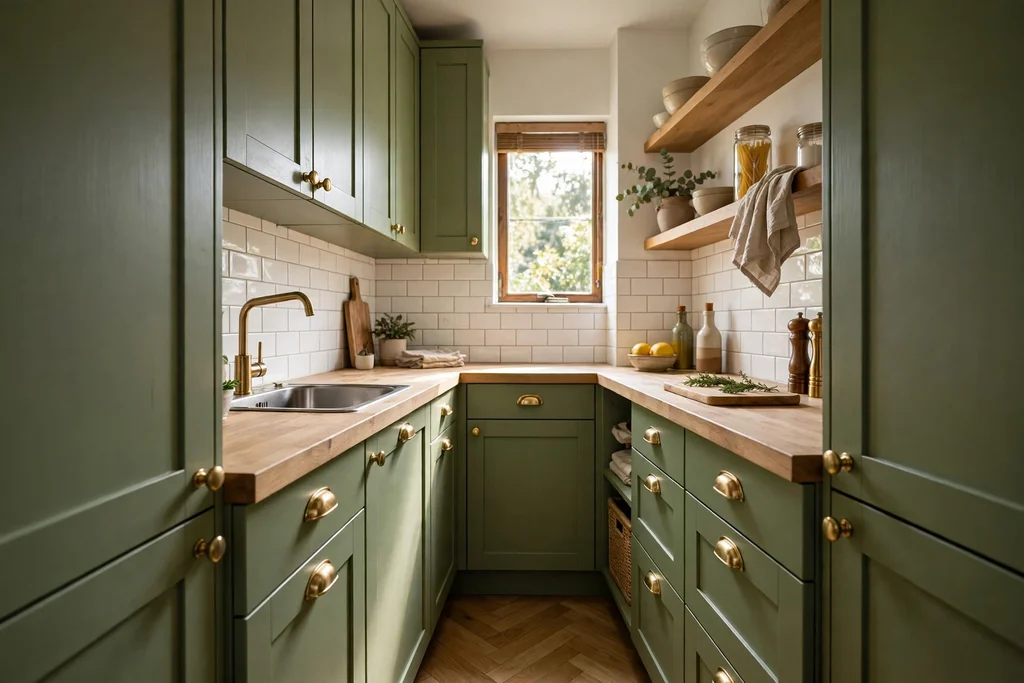
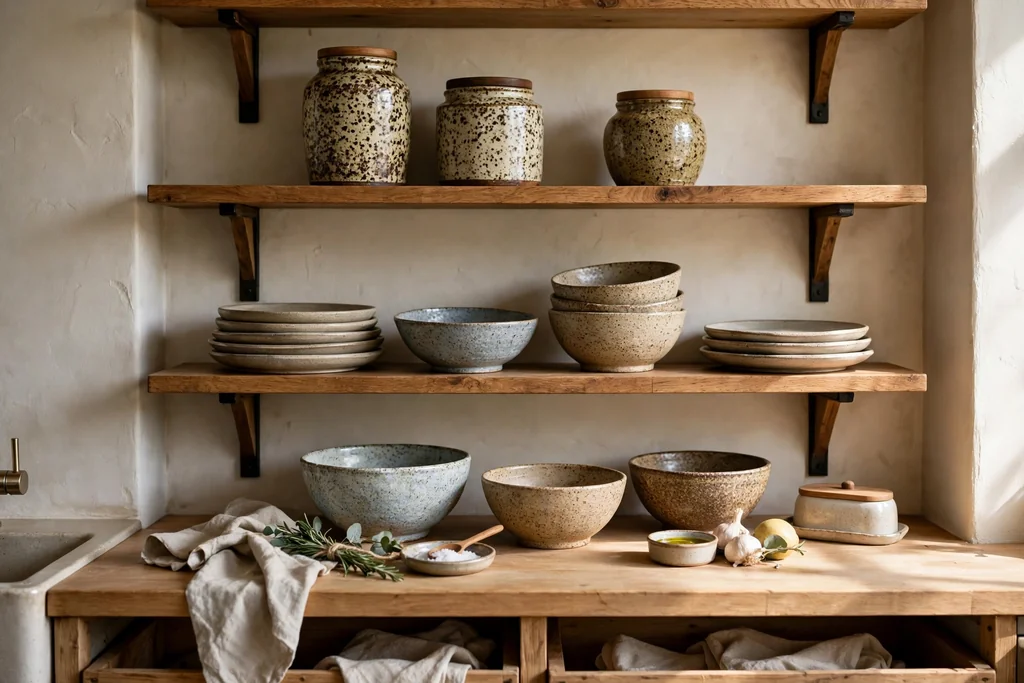
8. Display Stoneware Steins and Jugs on Open Shelves
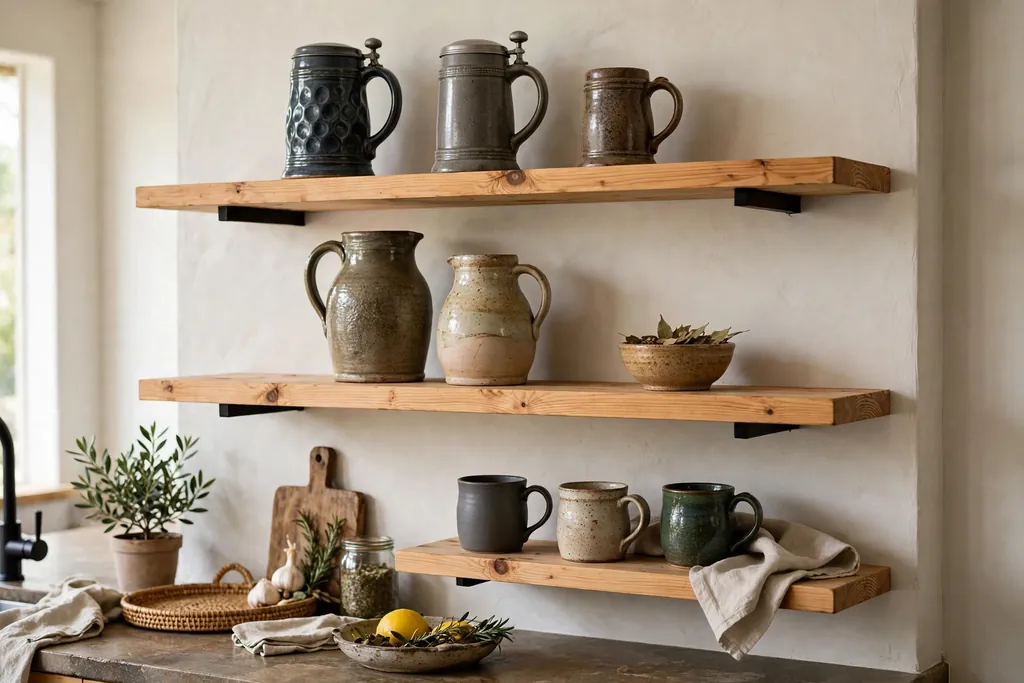
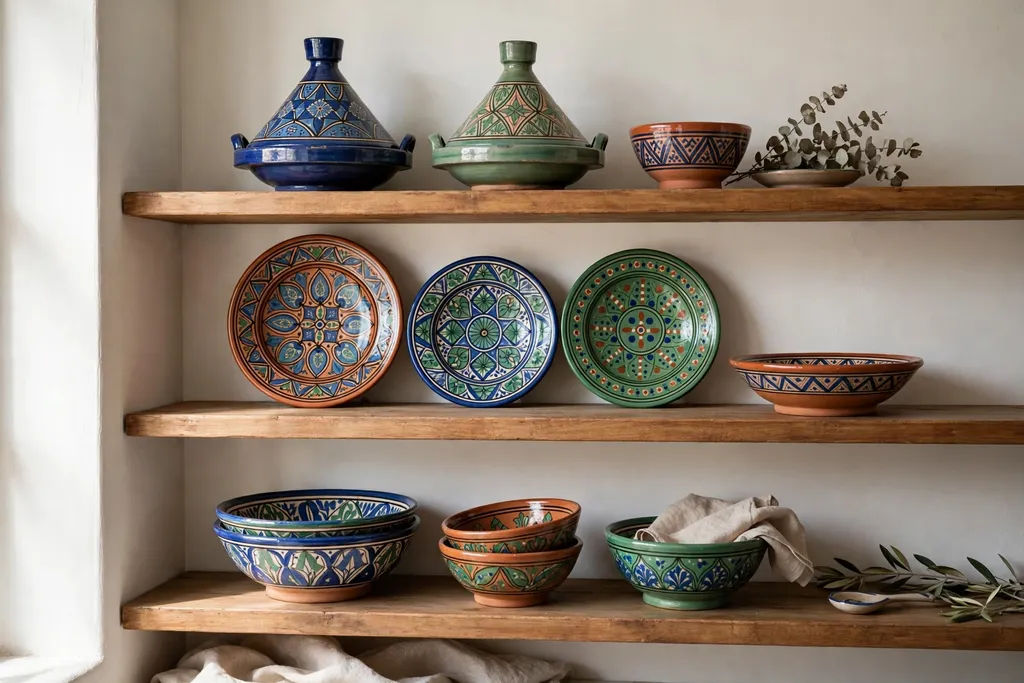
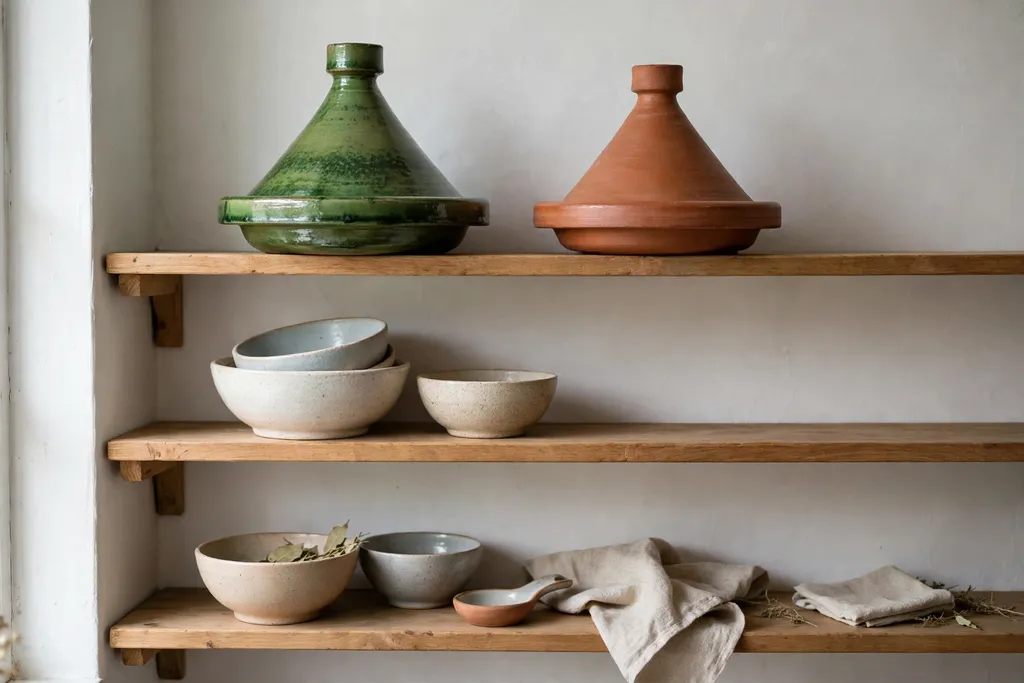
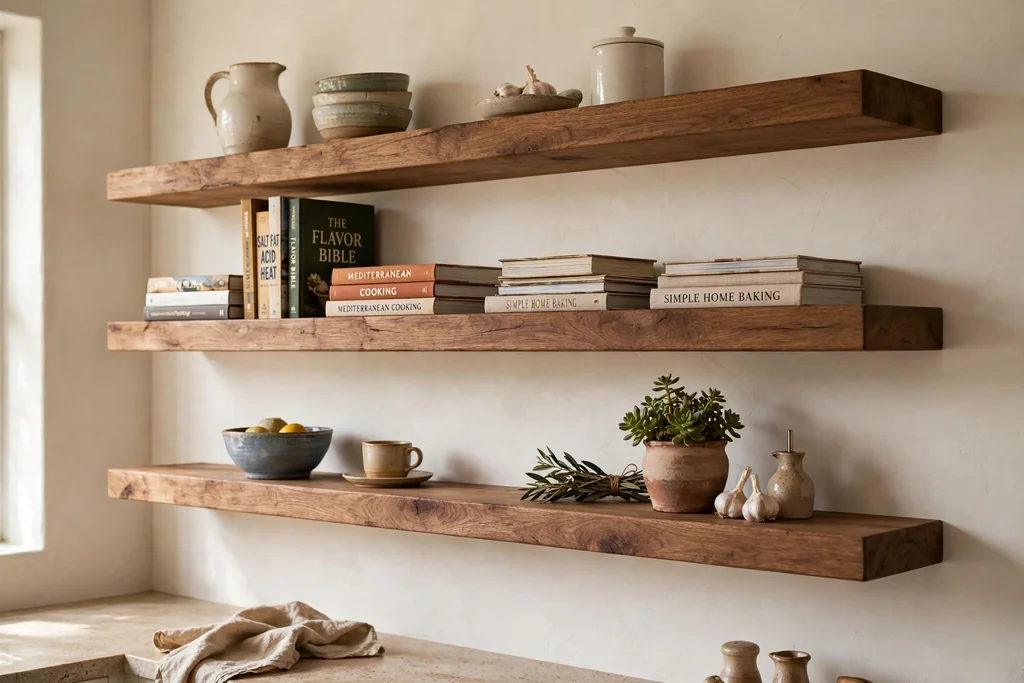
Open shelves stocked with stoneware steins, jugs, and plain mugs give a German kitchen a display that is also useful storage. Stoneware suits pine shelves and cream walls, and the solid shapes add weight to a room that might otherwise feel too pale. This suits a kitchen with one clear wall, where closed cabinets make the room feel boxed in.
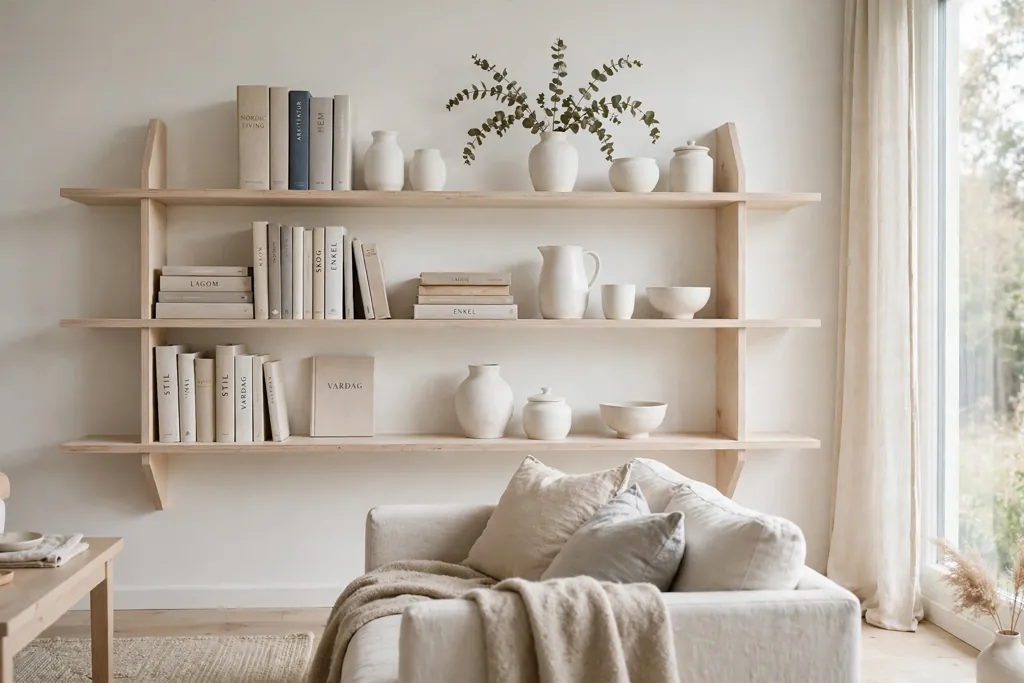
Keep shelves to two or three rows, and store only pieces you use or truly like, so the display stays tidy and dust free. Group items by type, with mugs in a single row, jugs spaced apart, and plates upright in a rack, and leave some empty space on each shelf. Wipe shelves often, since open storage collects cooking dust, and keep heavy jugs on the lowest shelf for safety.
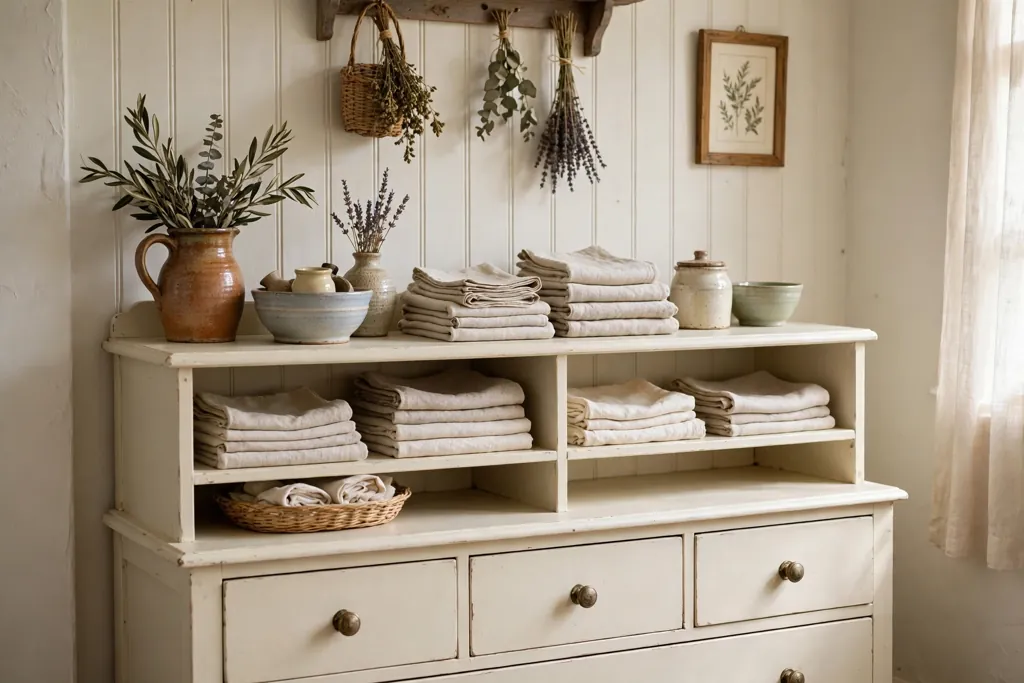
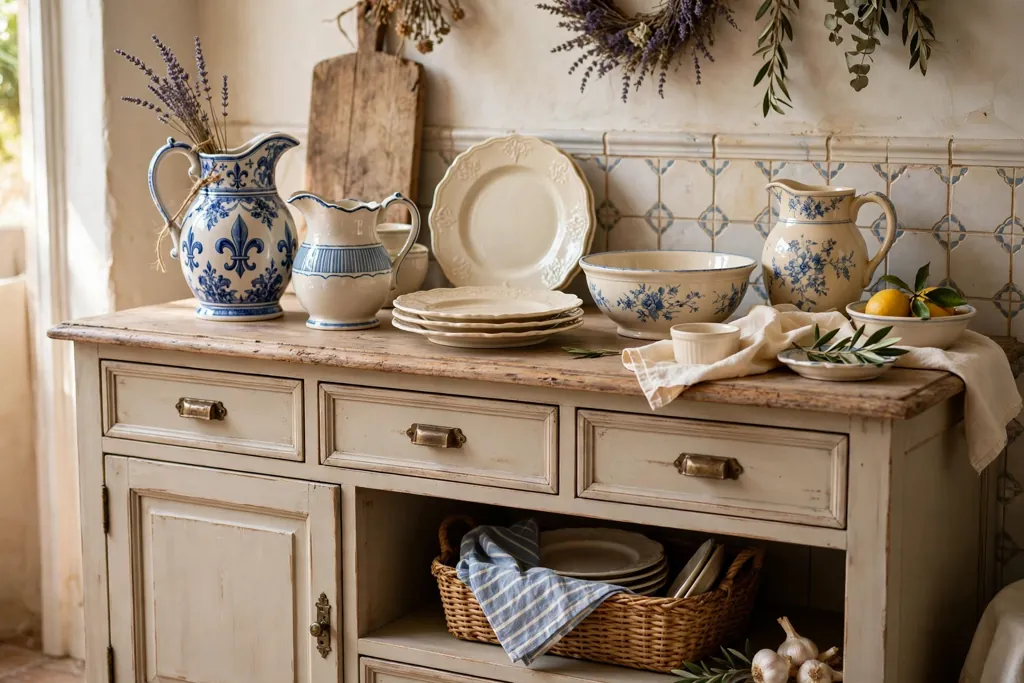
9. Style a Pine Dresser With Crockery and Glassware
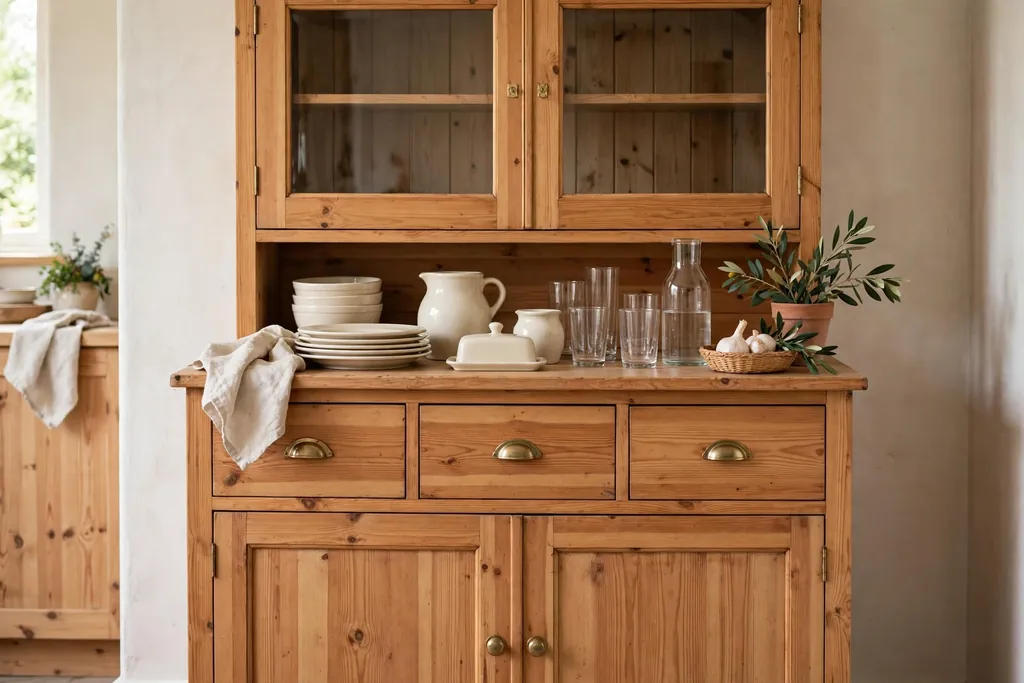
A pine dresser or hutch, styled with cream crockery, plain glassware, and a few stoneware pieces, gives a kitchen or dining room storage with German character. The dresser adds wood at wall height, while the crockery repeats cream and blue tones from the rest of the room. This suits a kitchen with one clear wall, where a dresser can stand without blocking a work zone.
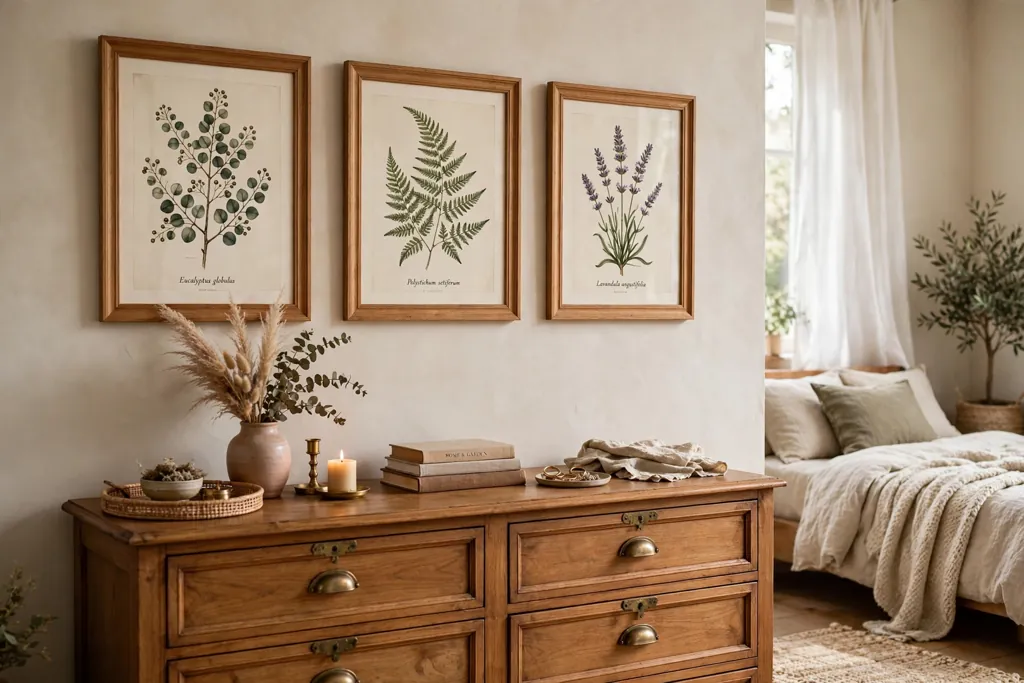
Style the dresser by use, with daily plates and bowls low, glasses and serving pieces higher, and one small plant or one framed print at the top. Leave some empty space on each shelf, so the display does not look packed, and keep heavy pitchers on the lowest shelf. Dust crockery often, since open display collects cooking dust, and wash pieces you use for food before each use.
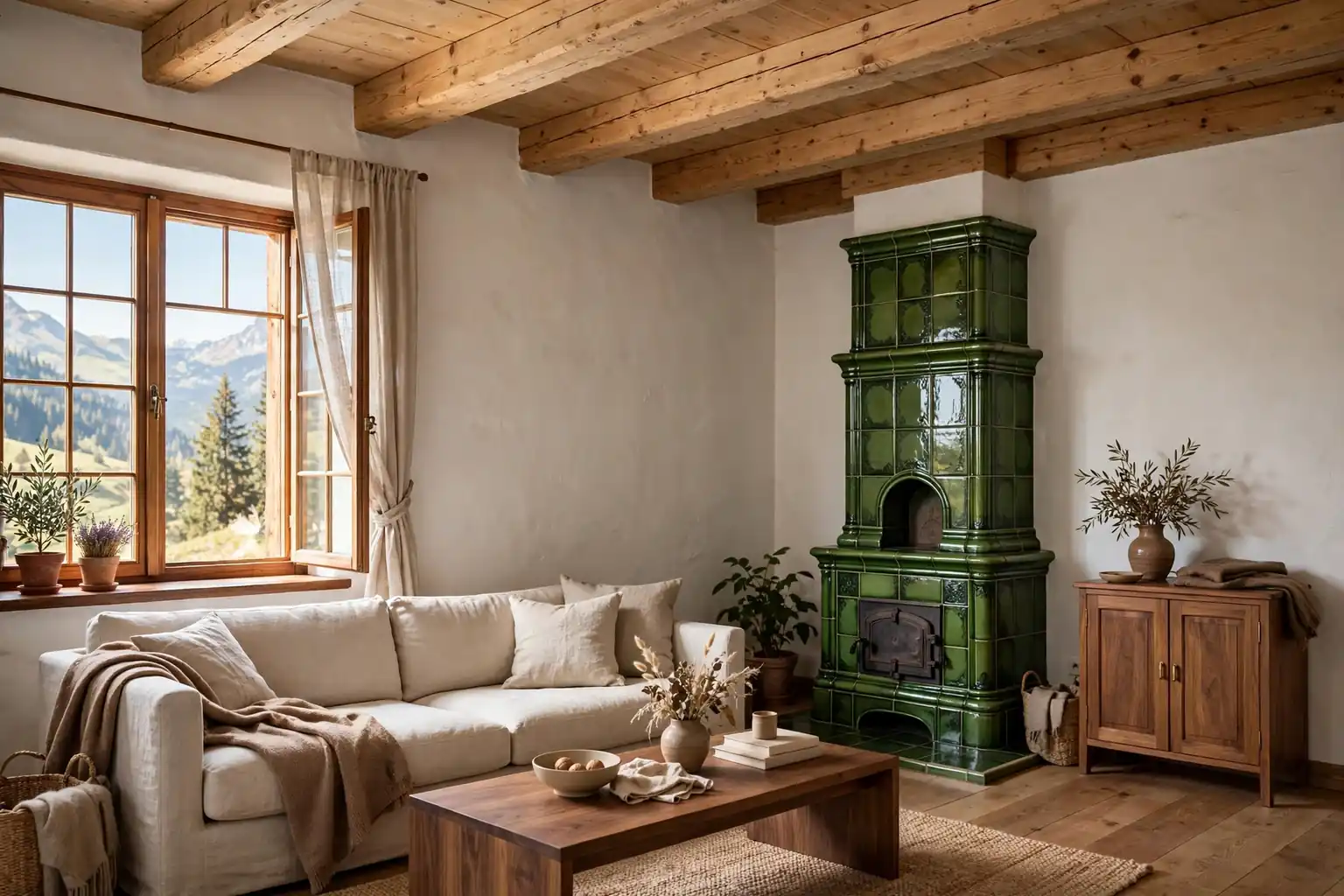
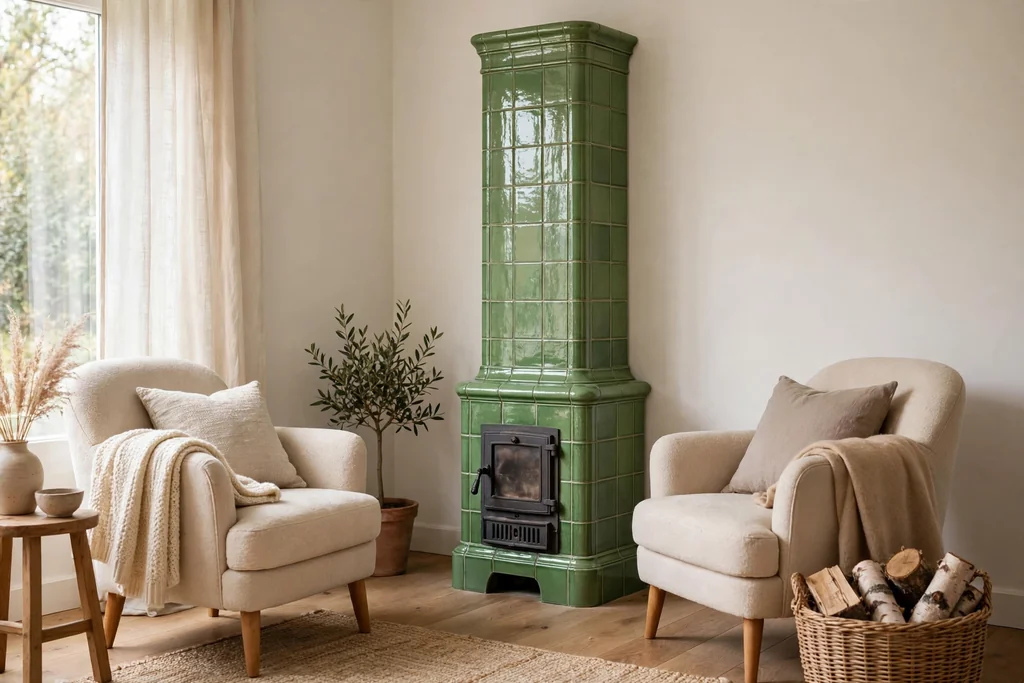
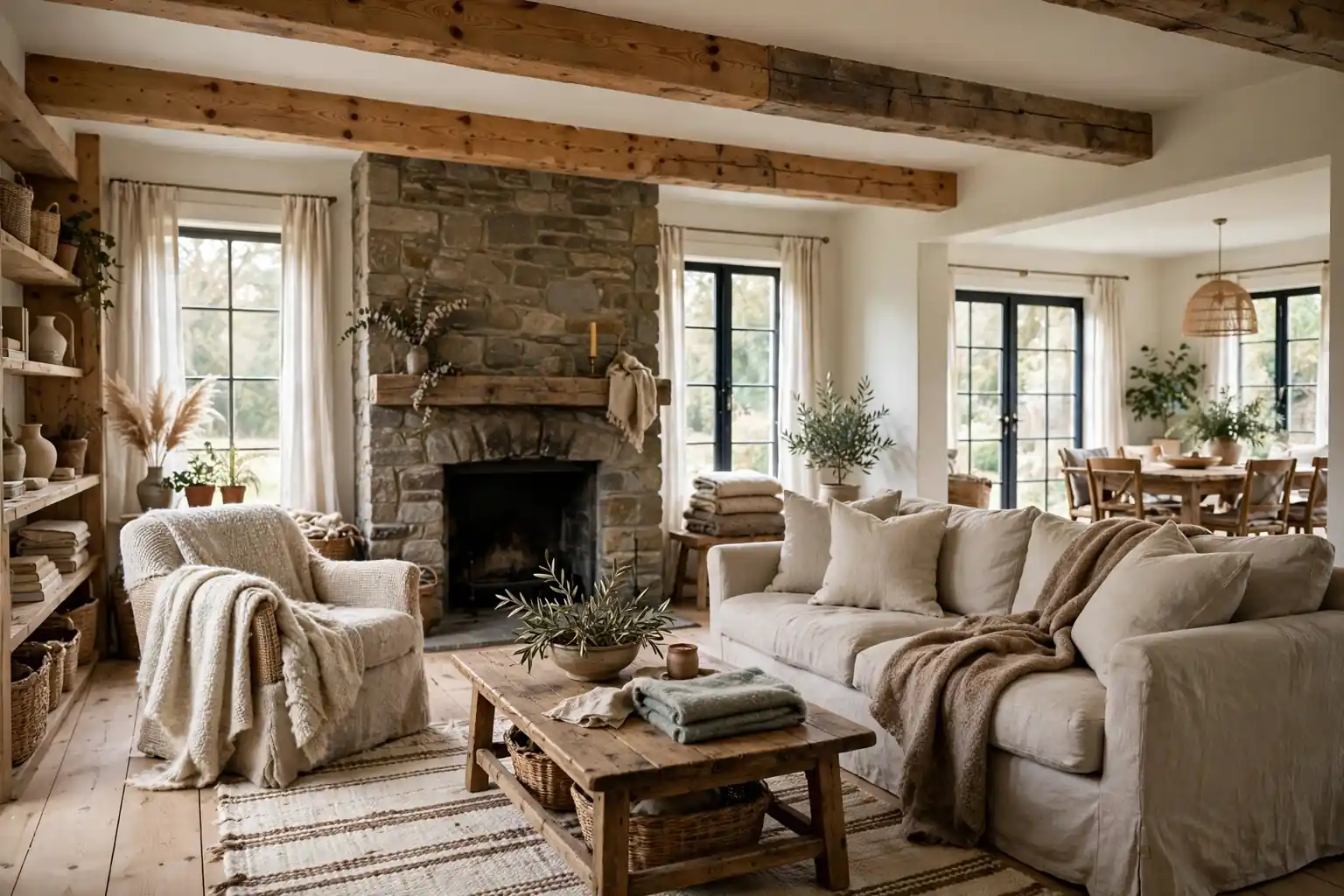
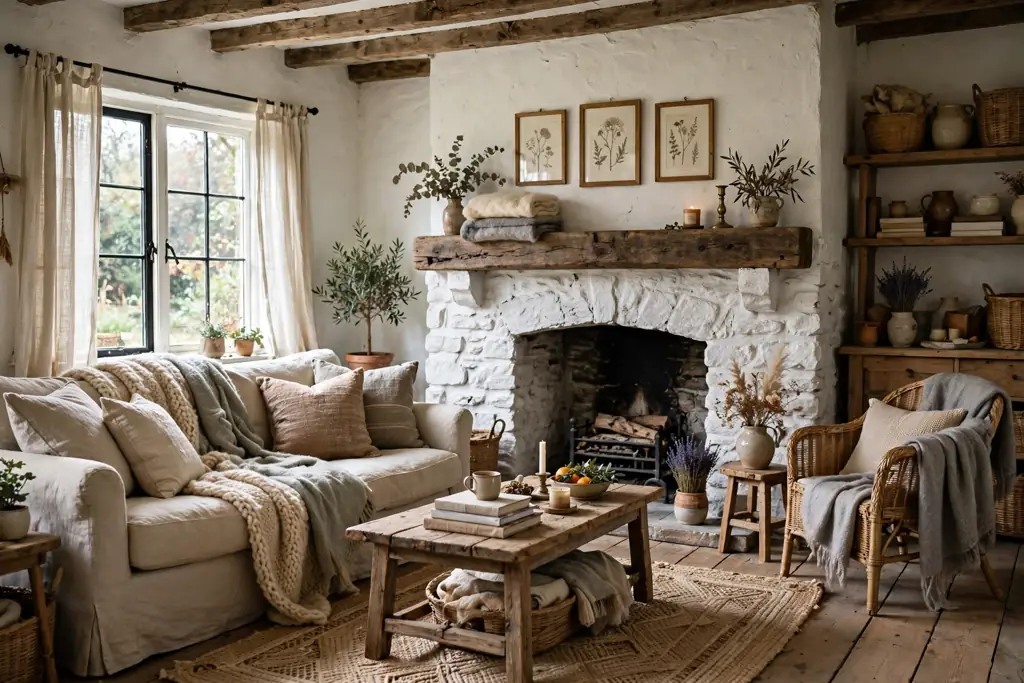
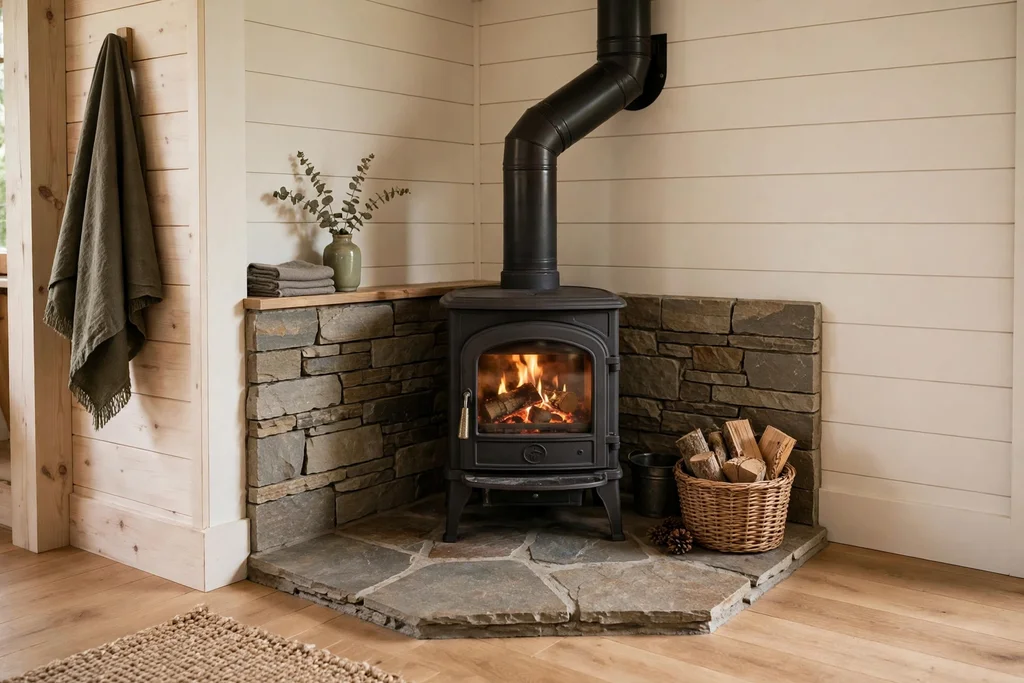
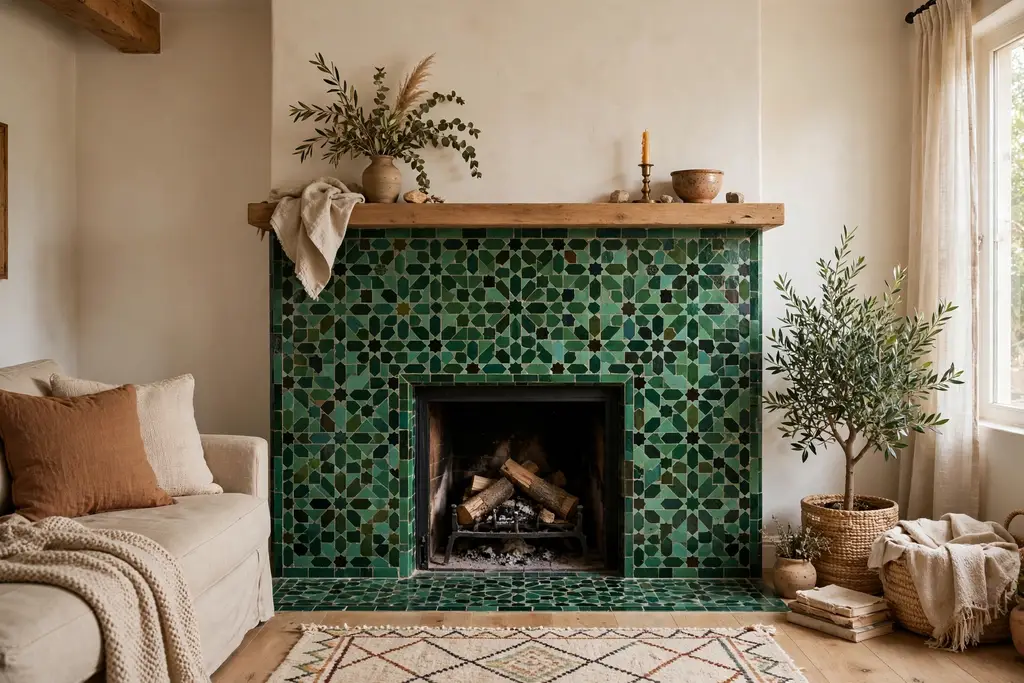
10. Build a Tiled Stove Corner for Warmth and Focus
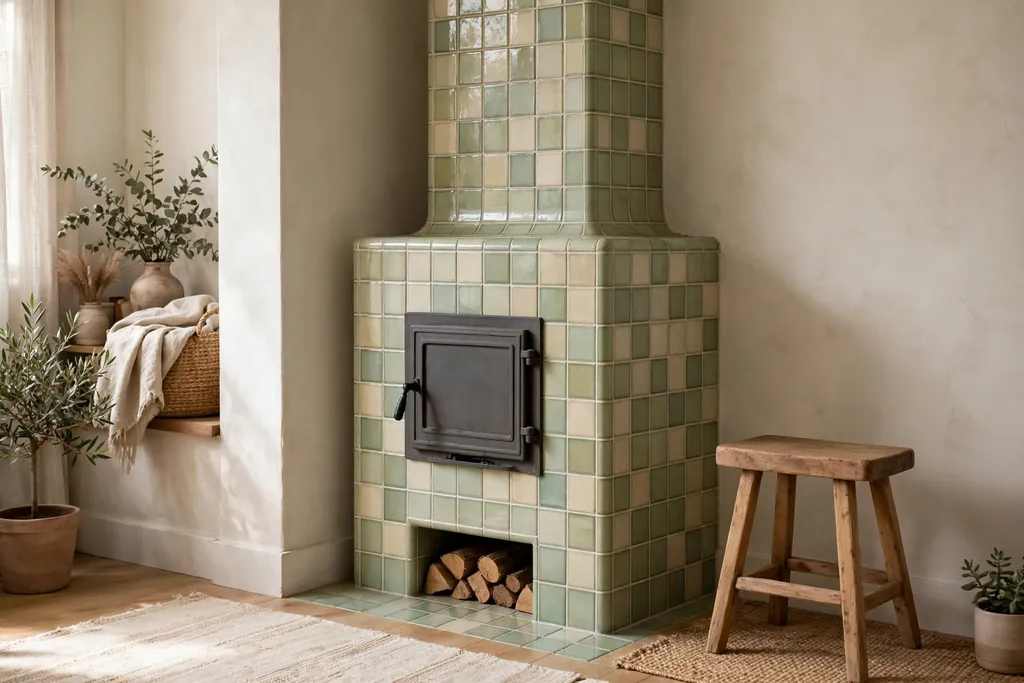
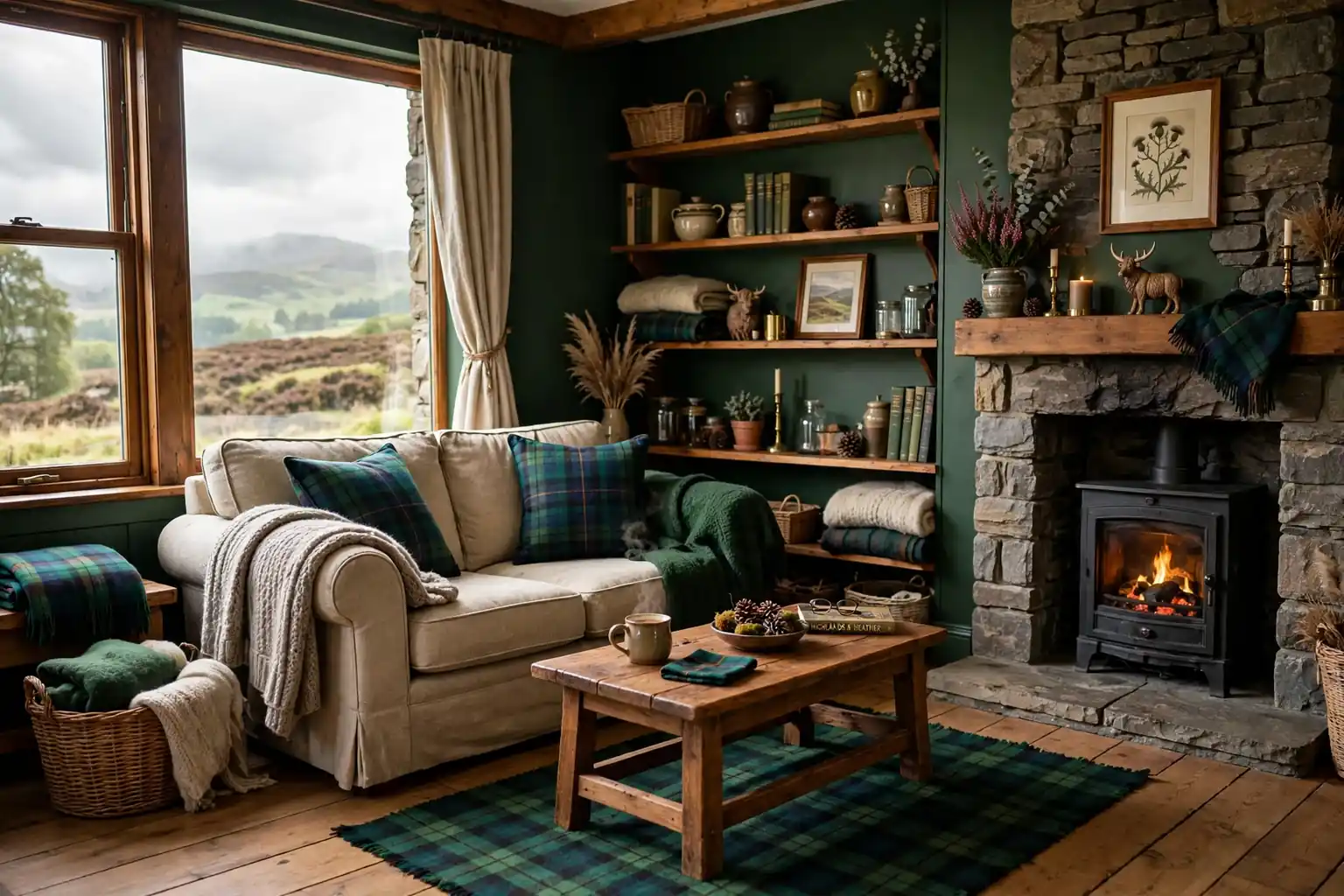
A ceramic tiled stove, or a fireplace surround faced with plain or patterned tiles, gives a living room a German focal point that also gives out steady warmth. Tiles in cream, sage, or soft blue suit pale wood and linen, and the stove shape reads as traditional even in a newer home. This suits a living room corner with floor space around it, where a plain fireplace would feel bare. For another warm European room built around plaster, wood, and tile, see these Italian home decor ideas.
Keep the surround simple, with a wood stool for books and a small stoneware dish nearby, so the tiles stay the focus. Choose a floor that can take heat, such as tile or stone, and keep curtains, throws, and baskets clear of the hot surfaces. Clean tiles with a soft cloth and a gentle cleaner, since harsh cleaners can dull a glazed finish over time.
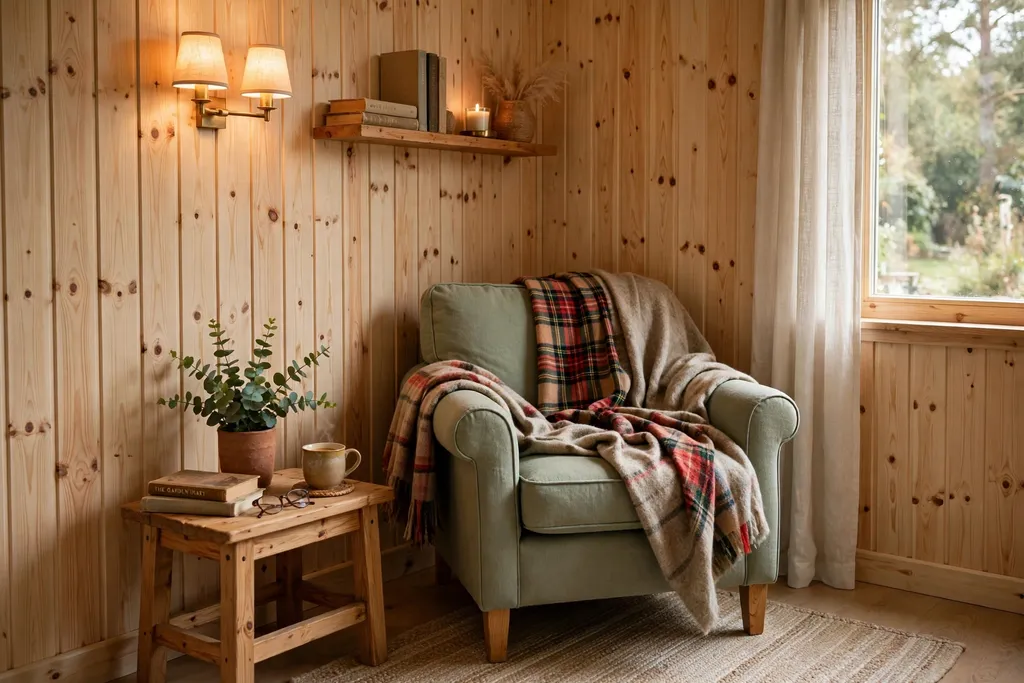
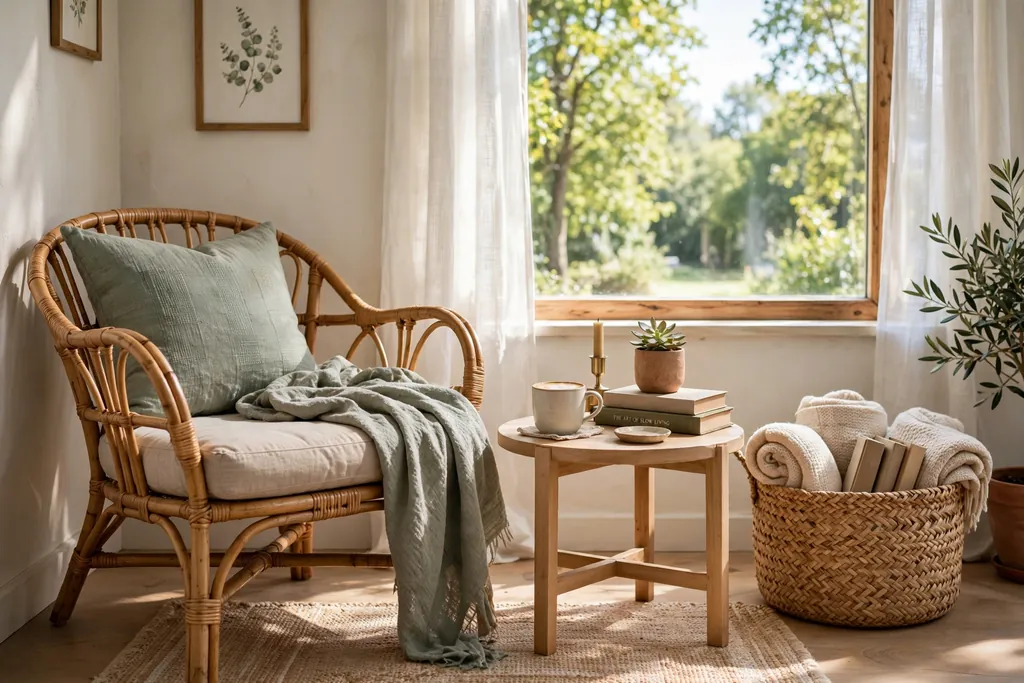
11. Make a Reading Corner With a Leather Armchair and Wool Throw
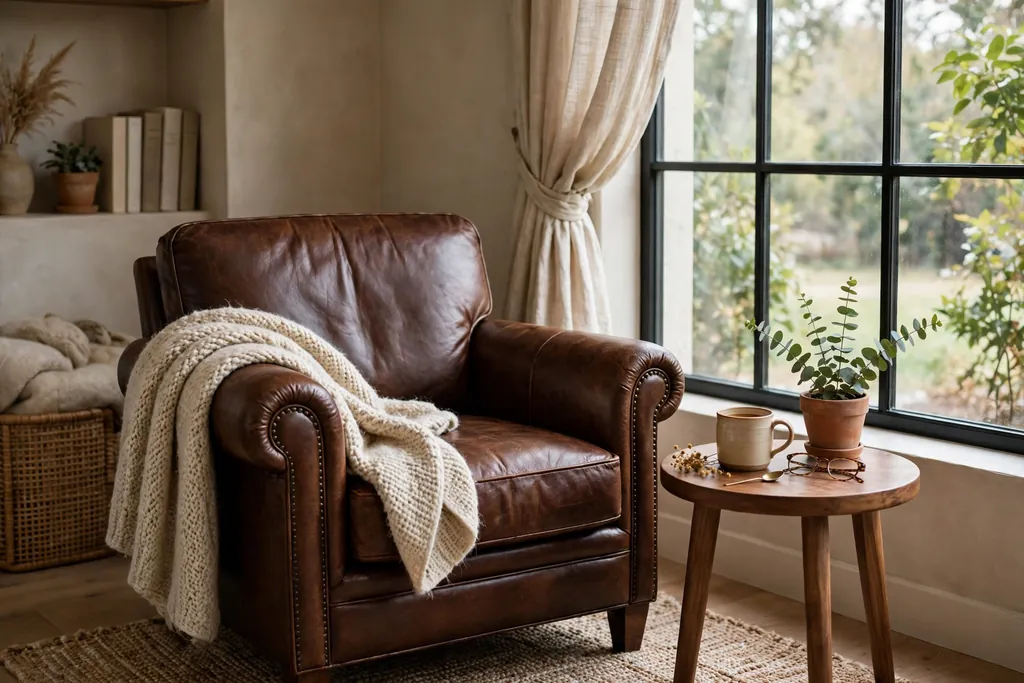
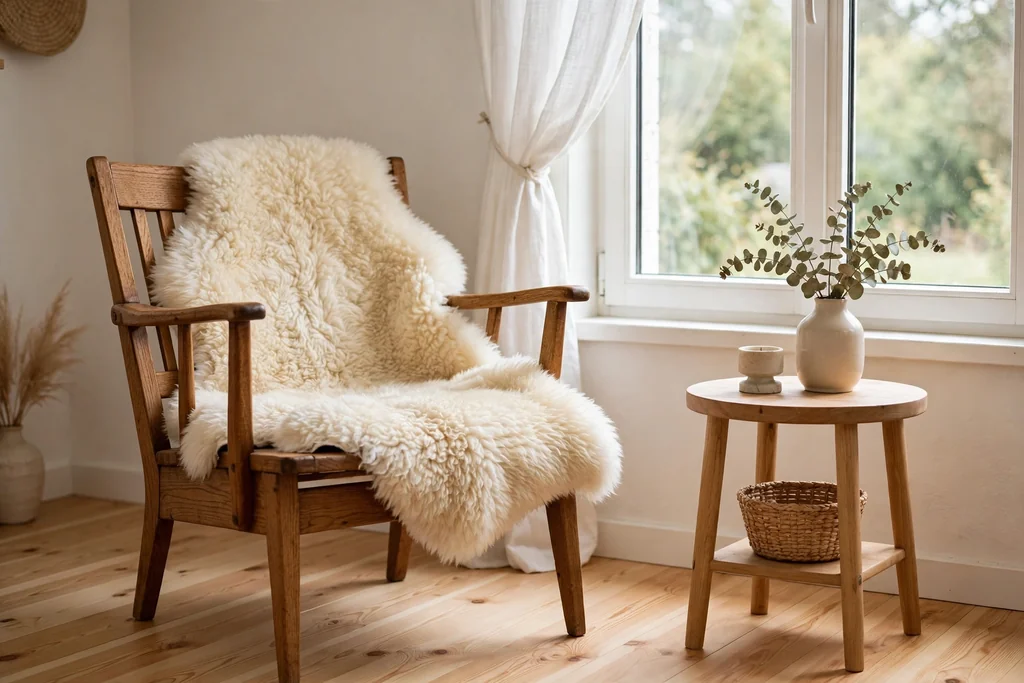
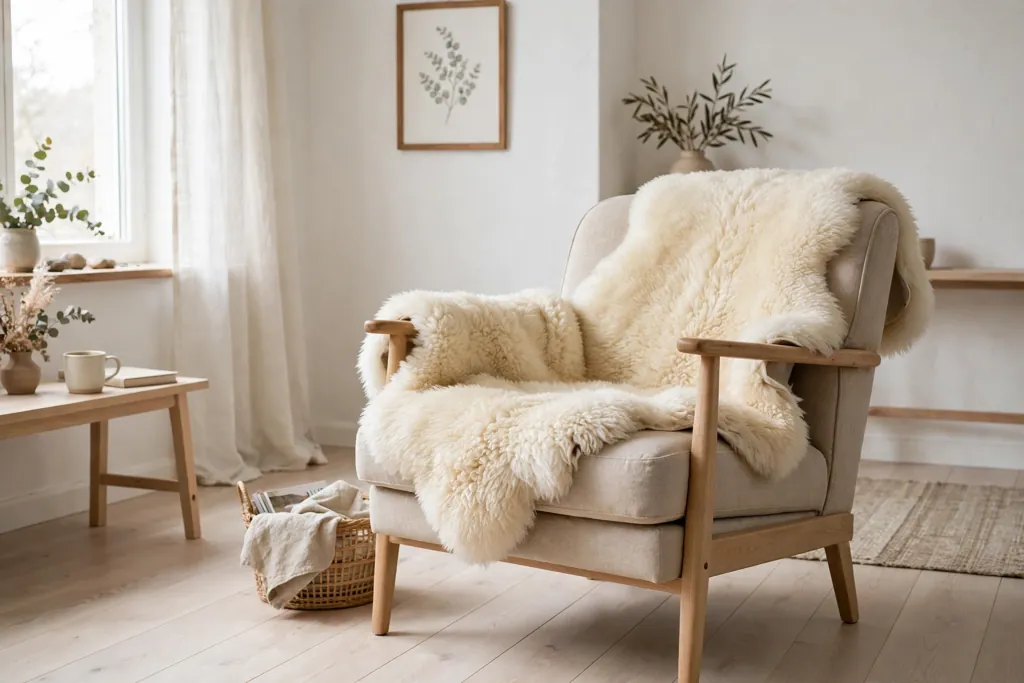
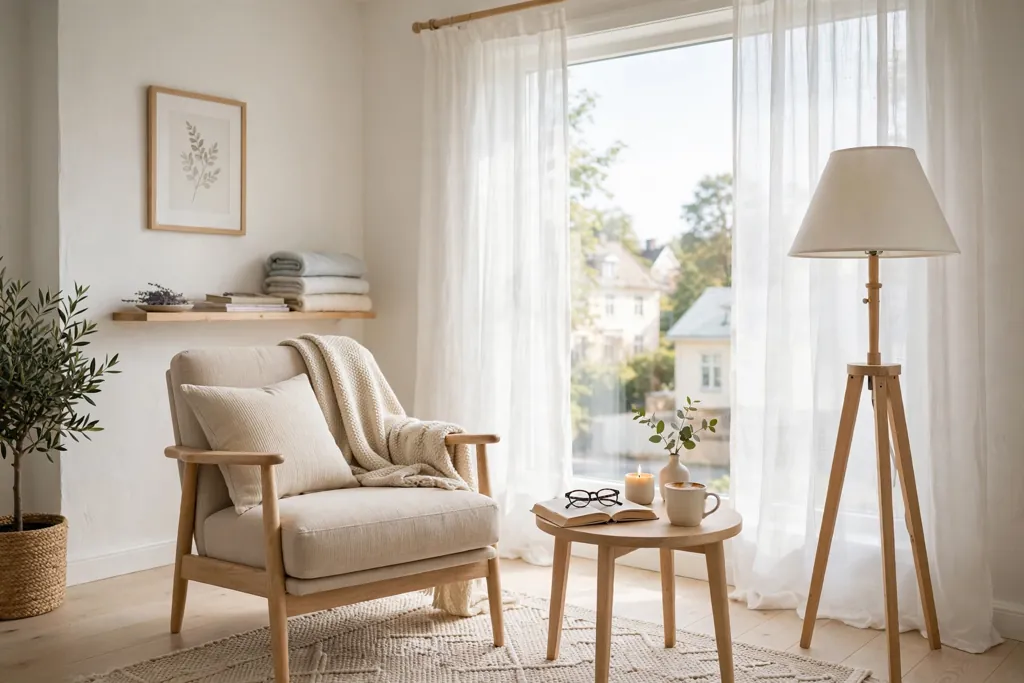
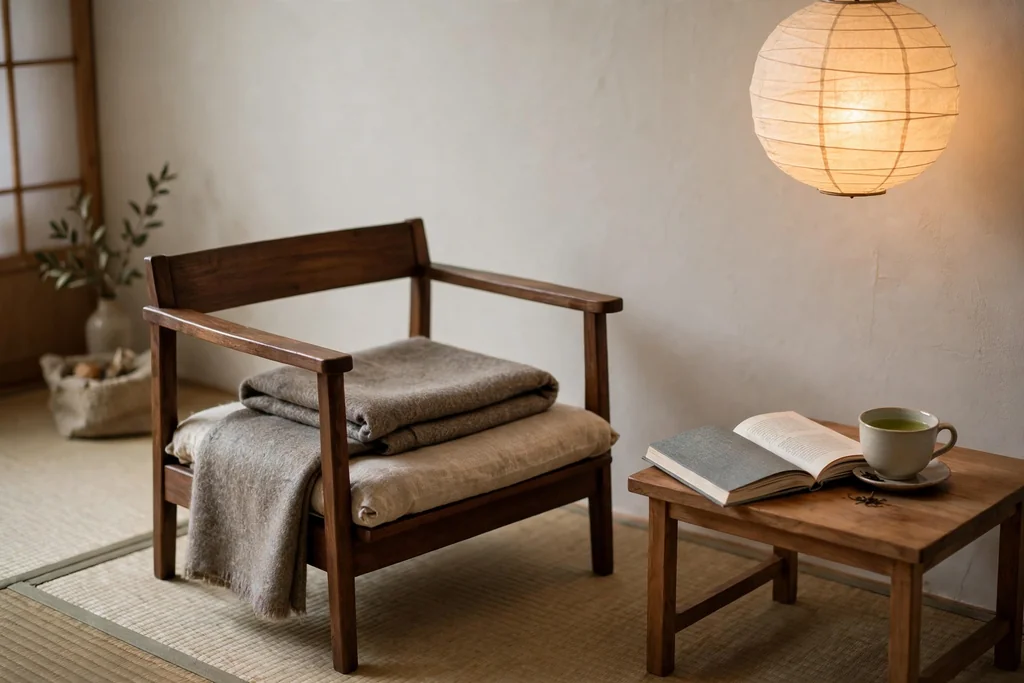
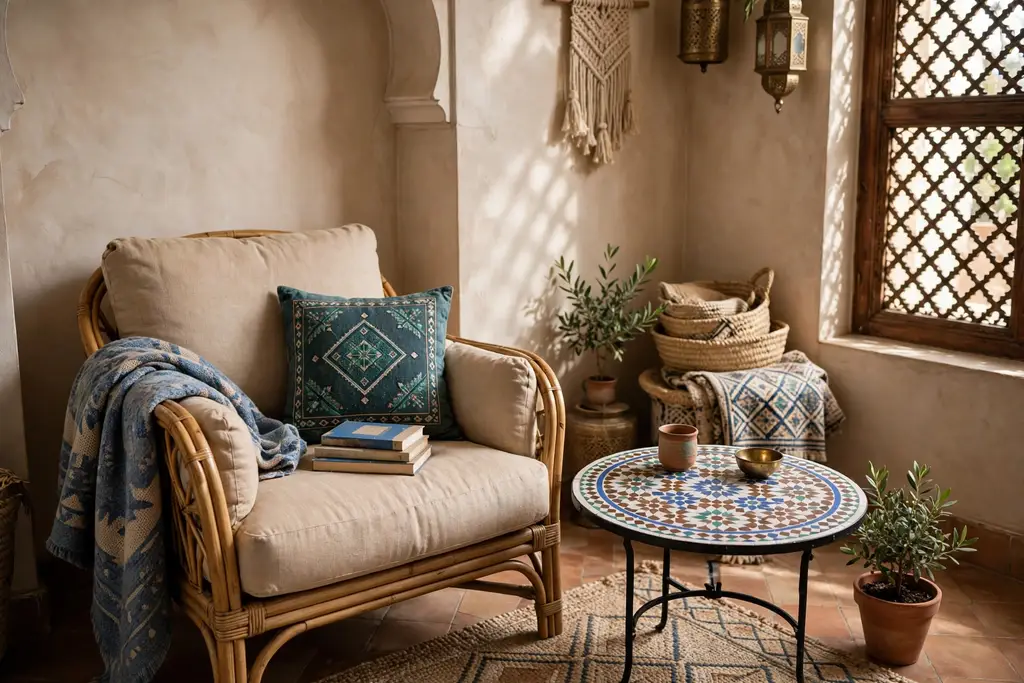
A leather armchair in cognac or dark brown, with a wool throw and a small side table, gives a living room a German reading corner that suits daily use. Leather wears well, wool adds warmth for cold evenings, and the corner gives one person a clear place to sit apart from the main sofa group. This suits a living room corner by a window, or a bedroom corner with good daylight.
Place a floor lamp or a table lamp beside the chair, so reading light falls over the shoulder rather than from behind. Keep the side table to a book, a cup, and a small lamp, so the corner stays ready rather than cluttered. Condition the leather as the maker directs, and keep the chair out of harsh direct sun so the color fades evenly, if at all.
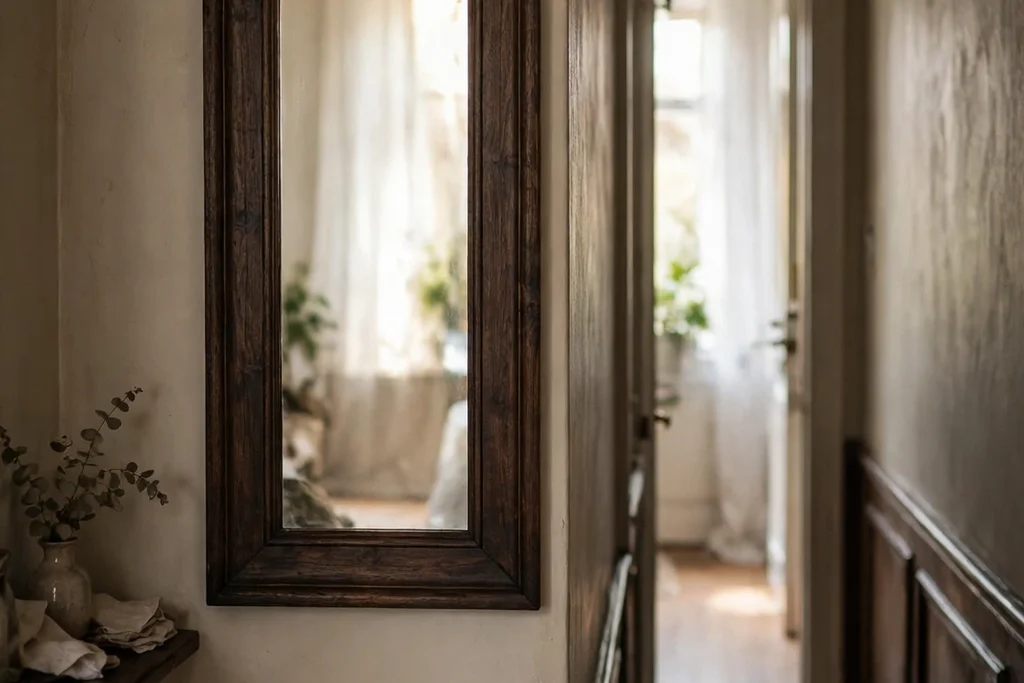
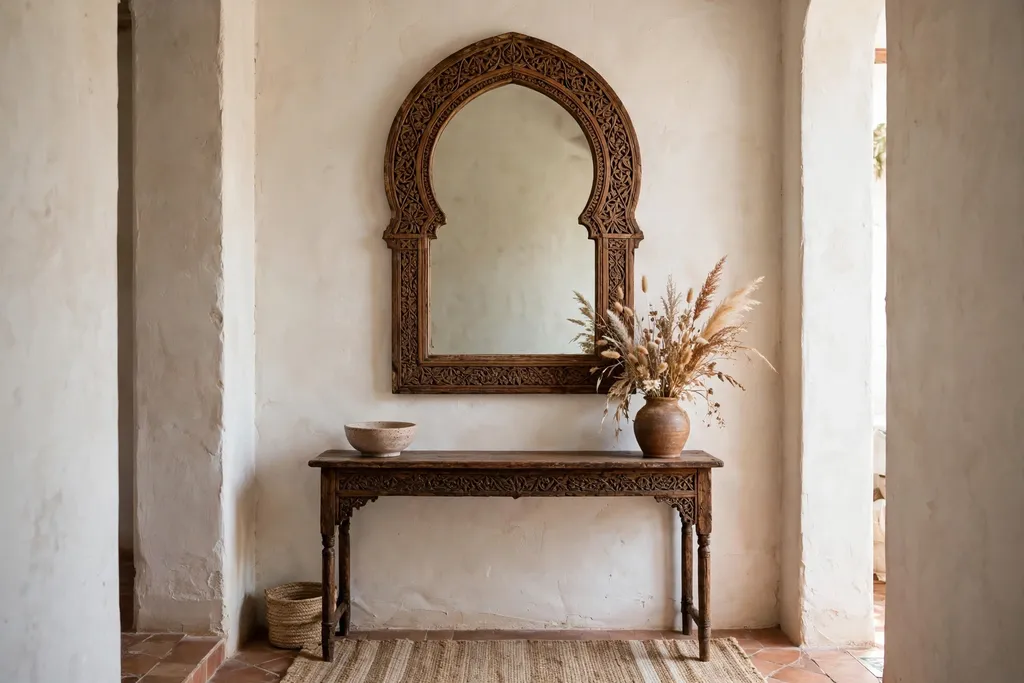
12. Show Carved Wood Accents in Small Doses
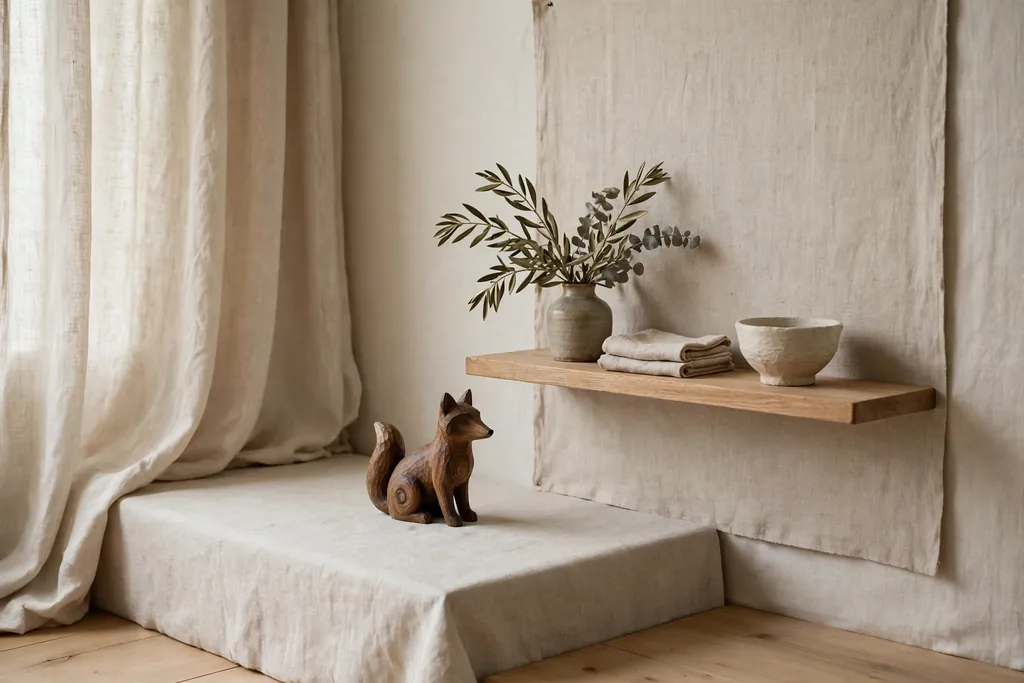
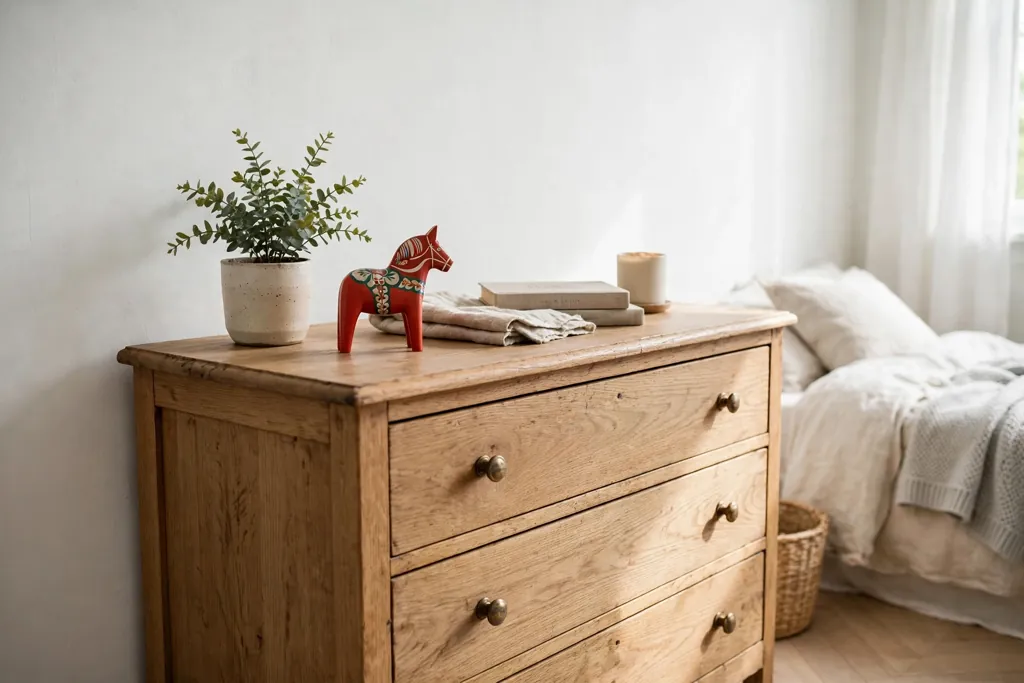
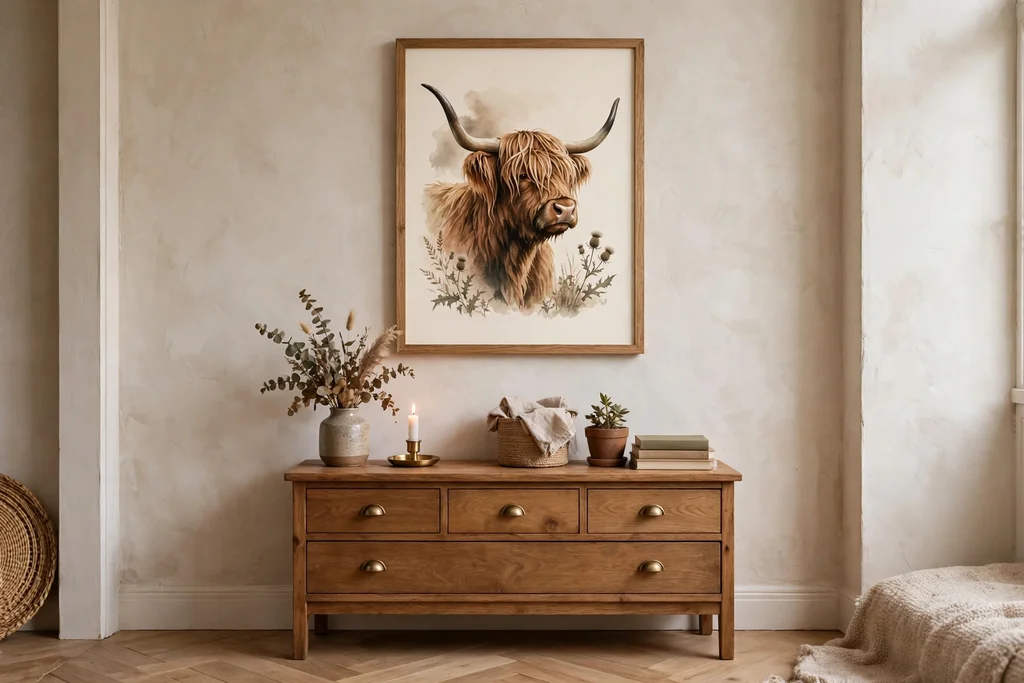
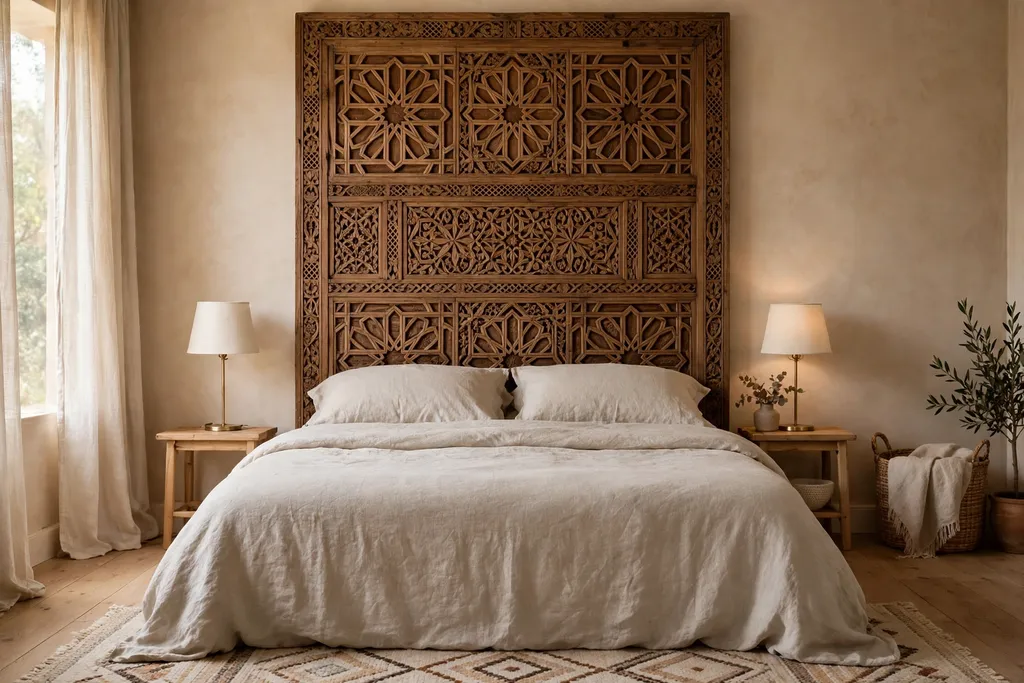
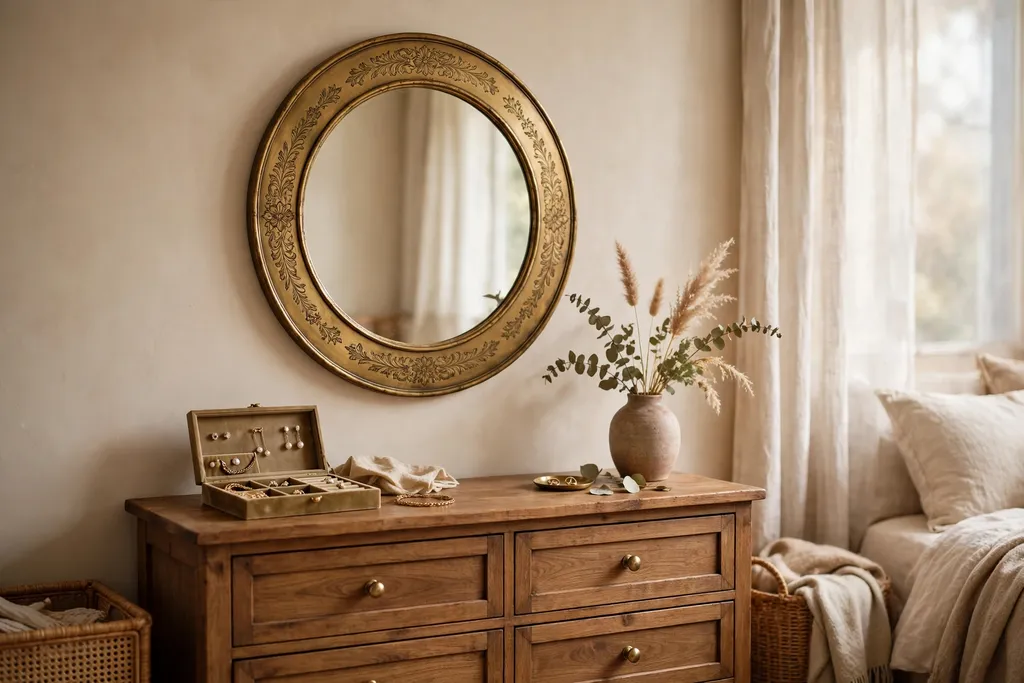
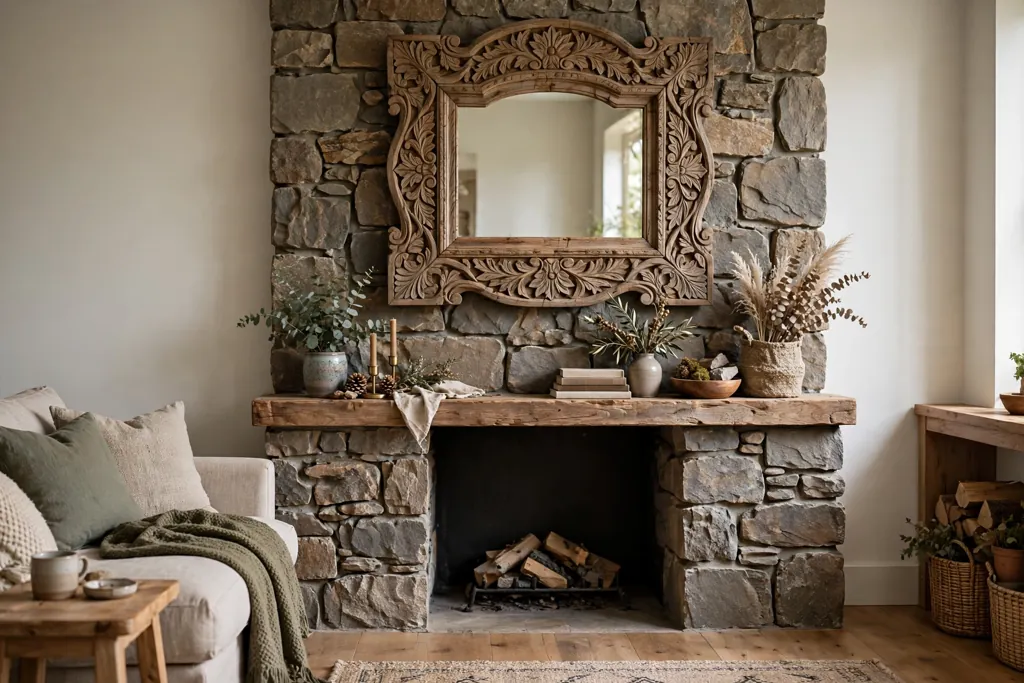
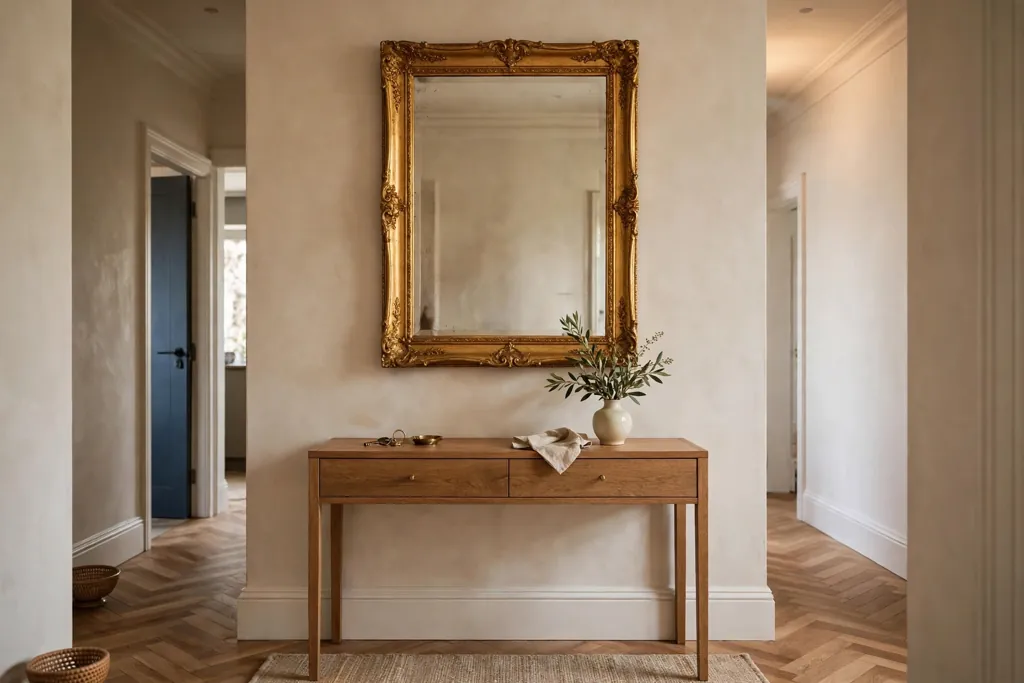
Carved wood figures, small wall carvings, or a carved mirror frame add Black Forest craft to a room in small, careful doses. One carved piece on a shelf or a wall gives detail and age, while several large carvings can crowd a room fast. This suits a living room shelf, a hallway console, or a bedroom dresser where one piece can be seen clearly.
Choose one carving as the focus, in a wood tone close to the furniture, and keep the pieces near it plain. Dust carvings with a soft brush, since dust settles in carved detail, and keep them out of damp rooms so the wood does not swell. If a carving feels too dark for the room, place it against a warm white wall, where the shape reads clearly in daylight.
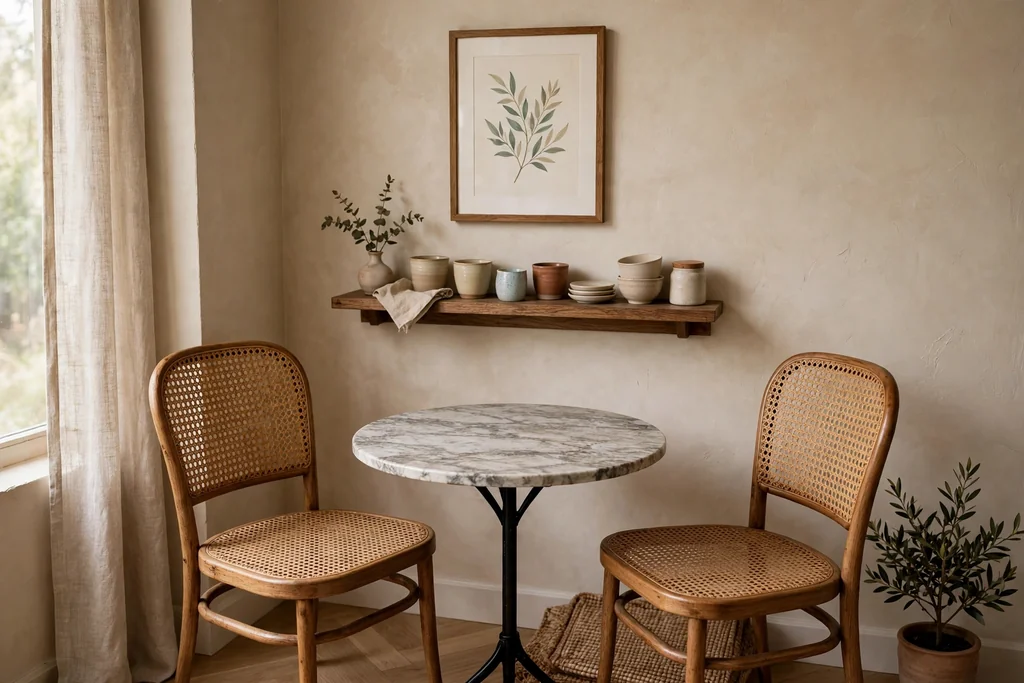
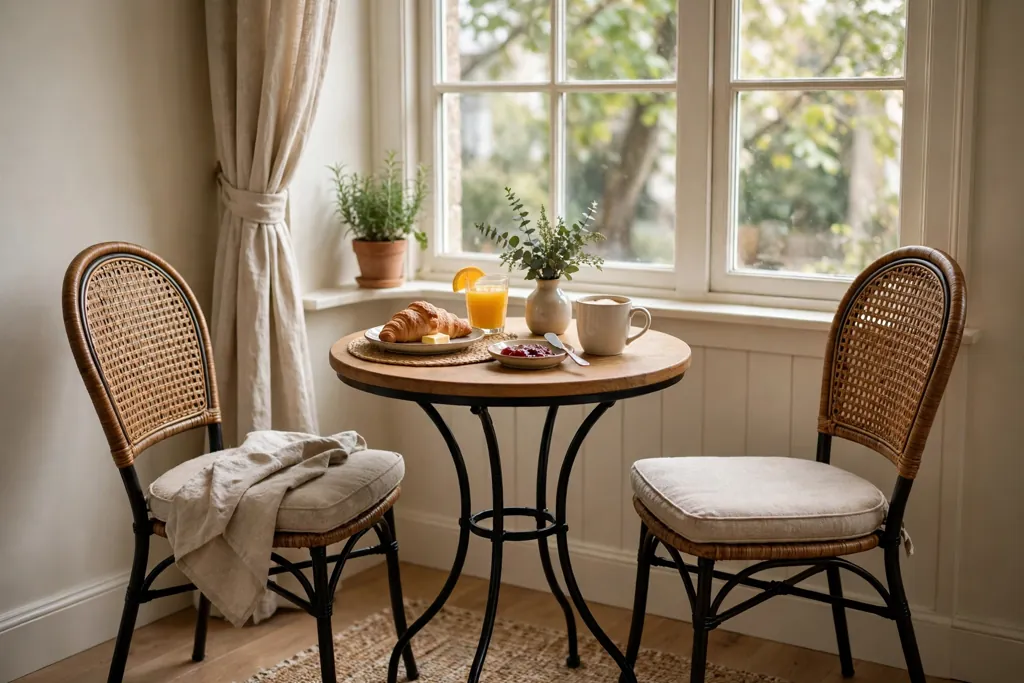
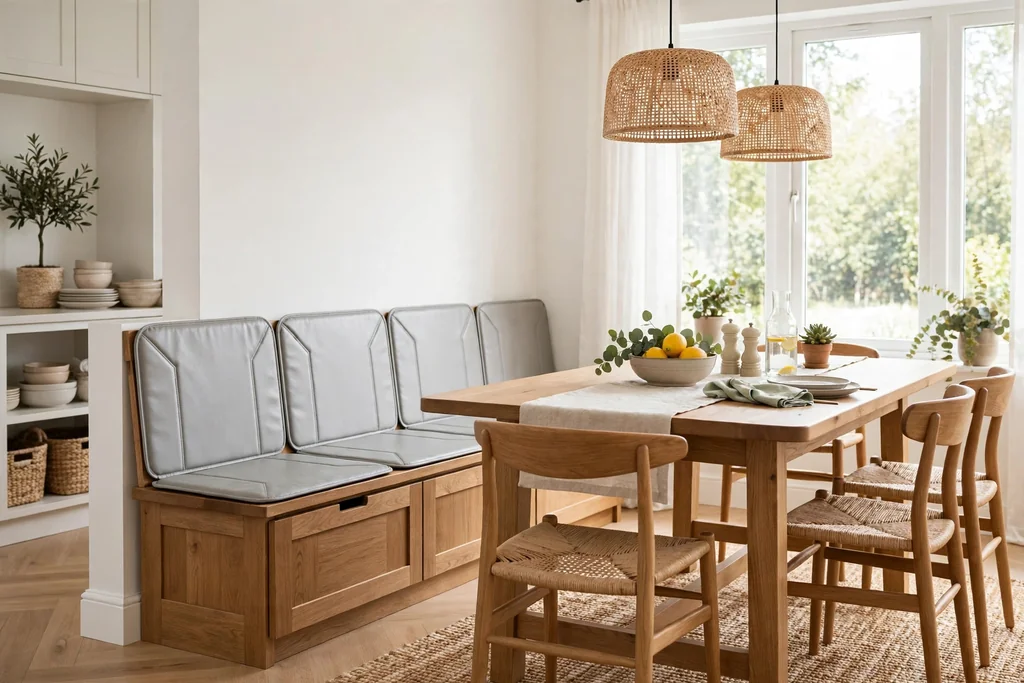
13. Build a Breakfast Corner With a Fixed Bench
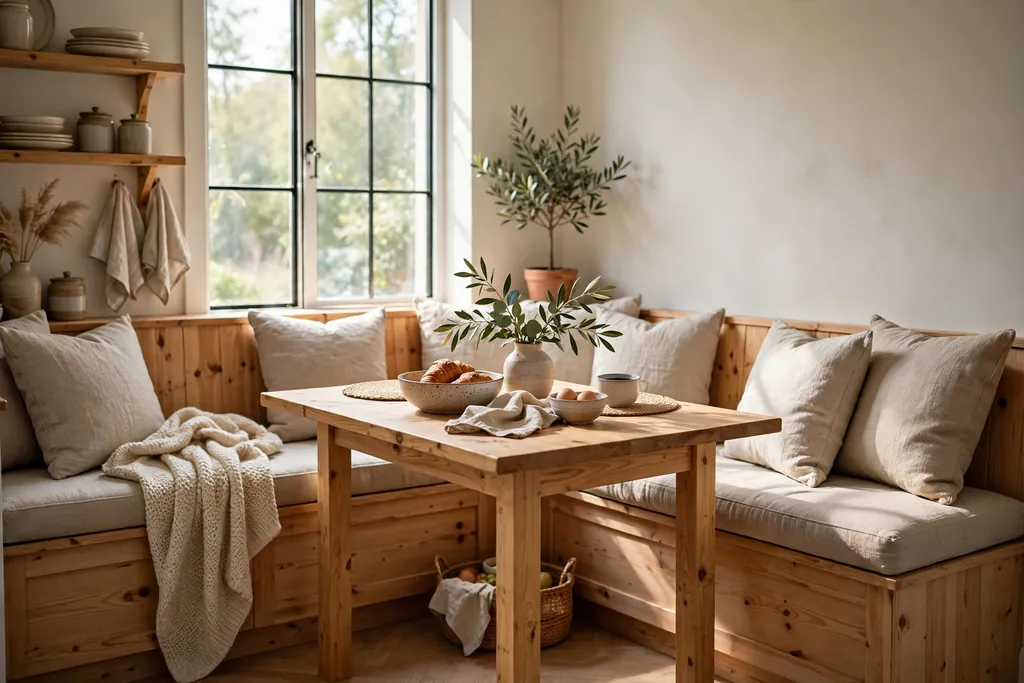
A breakfast corner with a fixed bench along two walls, a small pine table, and two loose chairs gives a kitchen a German morning spot that uses a corner well. The bench seats more people than chairs in the same space, and the base can hold storage for table linens or board games. This suits a kitchen corner by a window, where a full dining table would crowd the work zone.
Size the bench so adults can sit and stand without hitting the table edge, and add seat cushions in a blue check or plain linen for comfort. Keep the table sized to the bench, with room for two or three place settings, and keep the wall above the bench mostly clear, with one small shelf or one framed print. Wipe the bench and table after breakfast, since a corner seat collects crumbs fast.
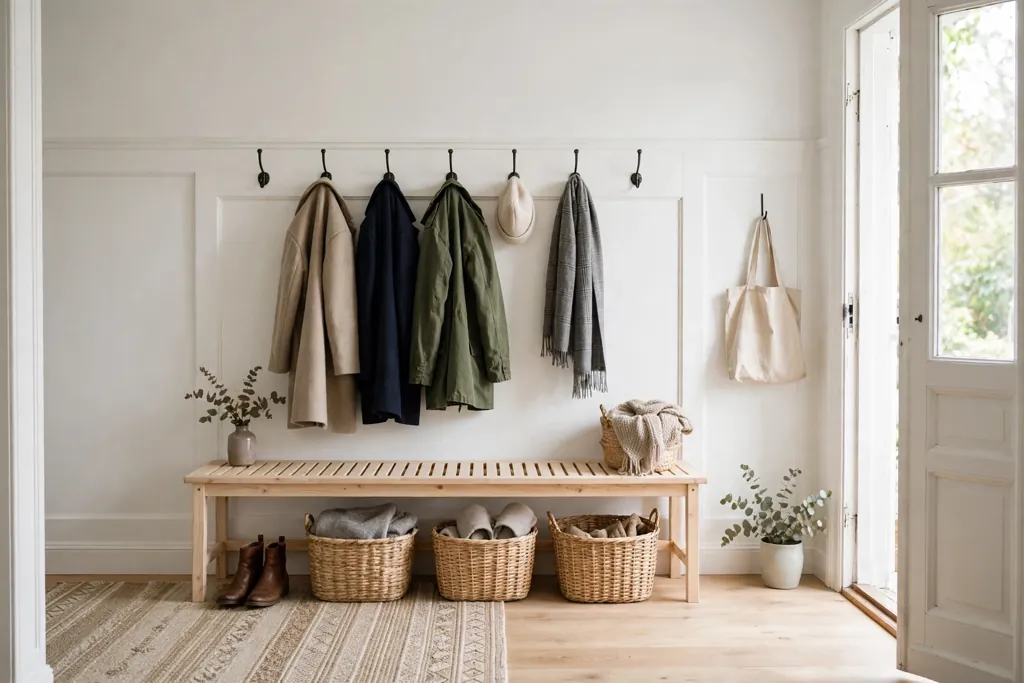
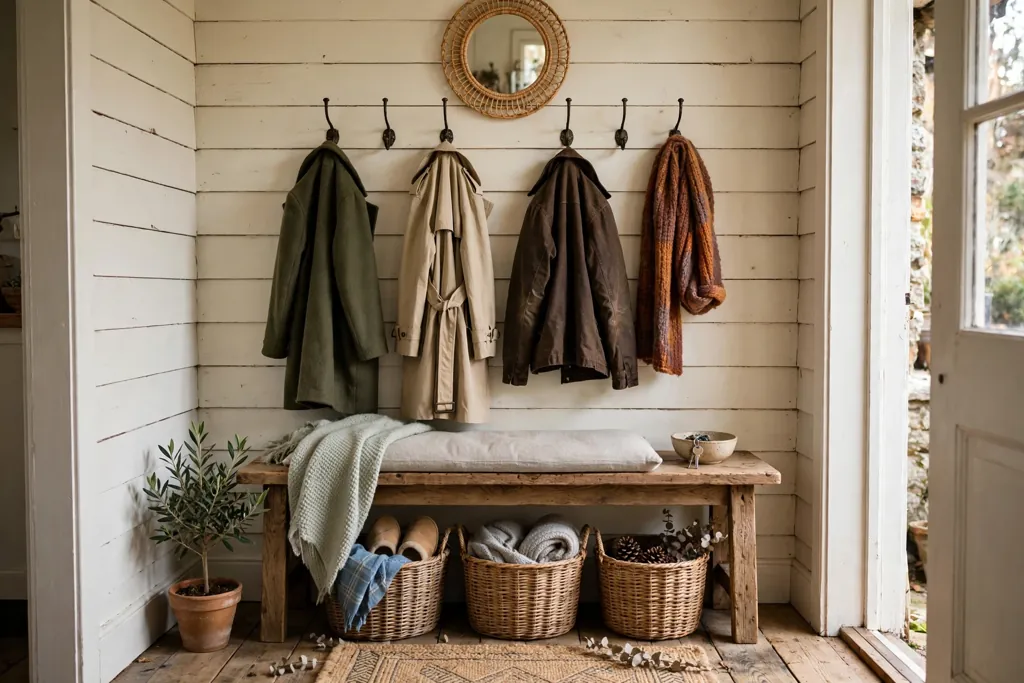
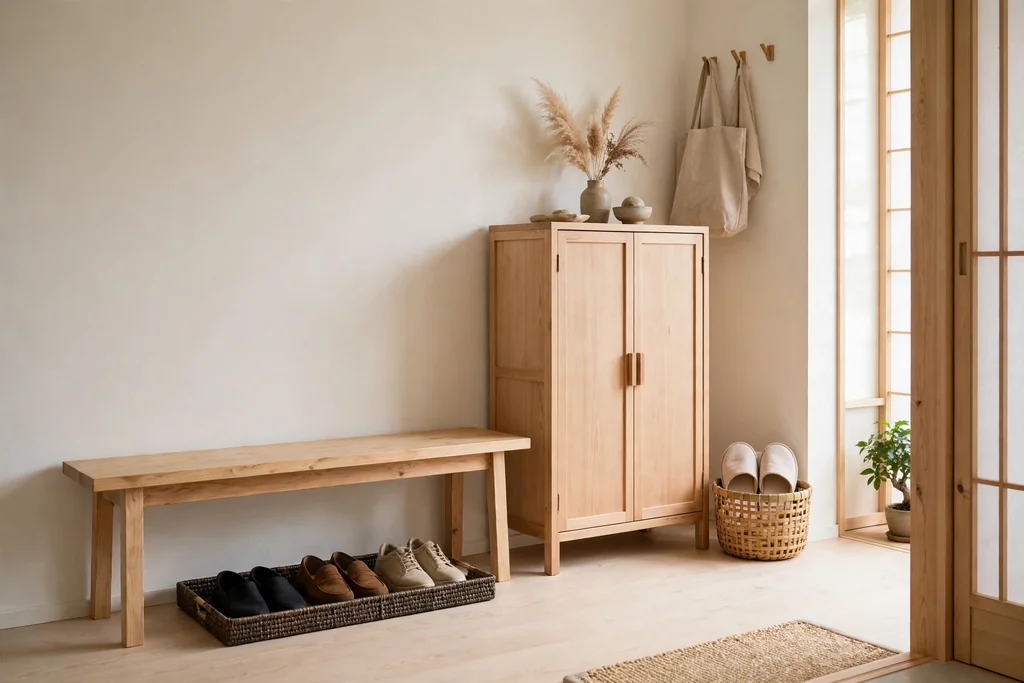
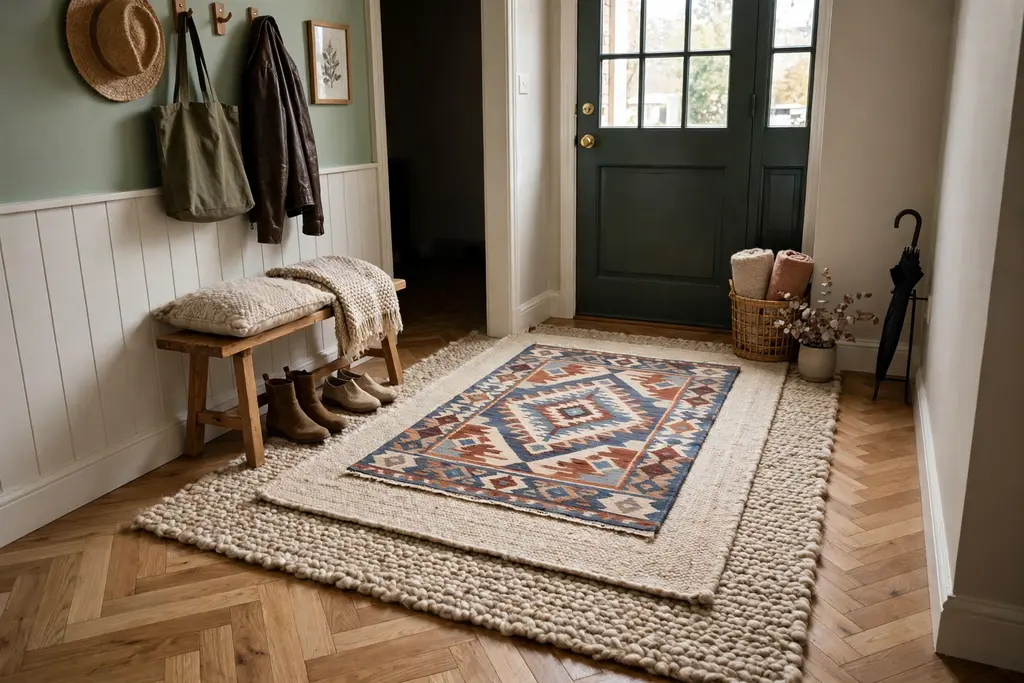
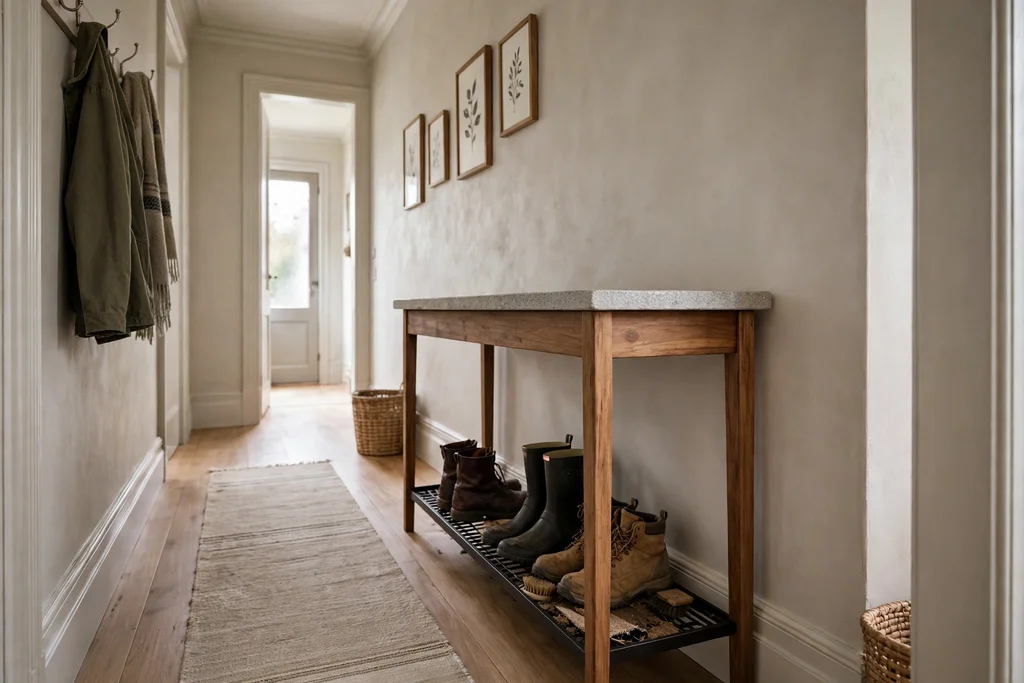
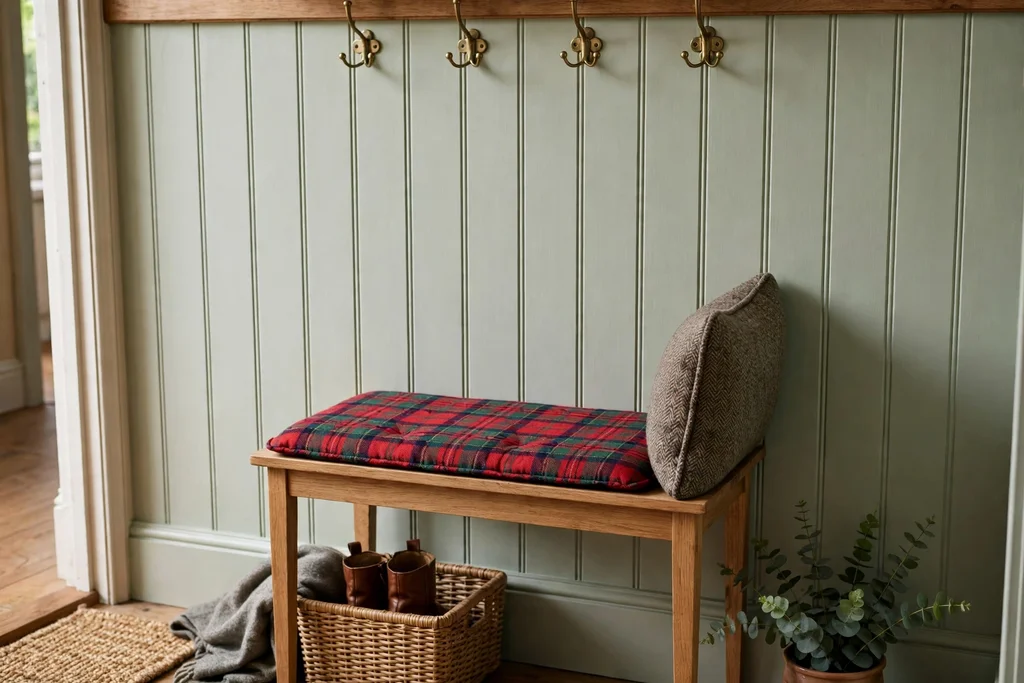
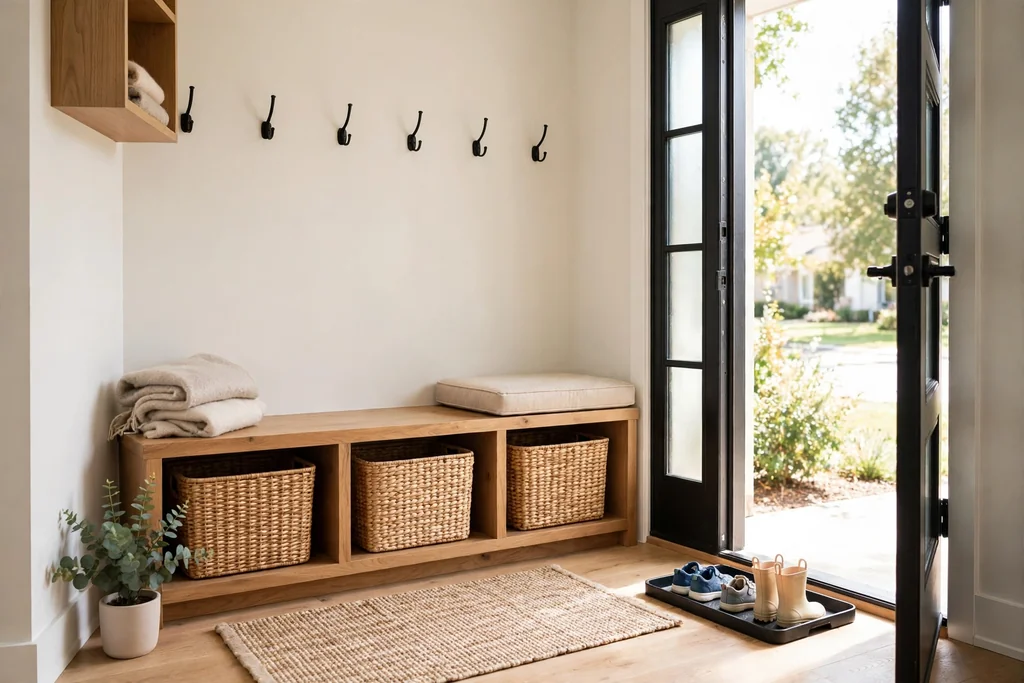
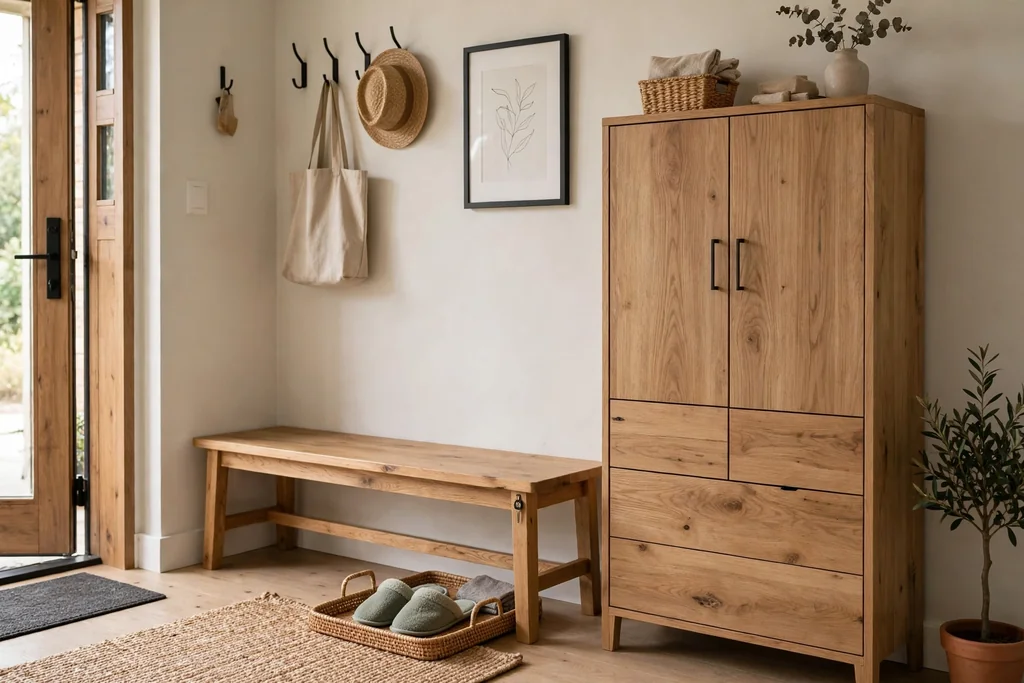
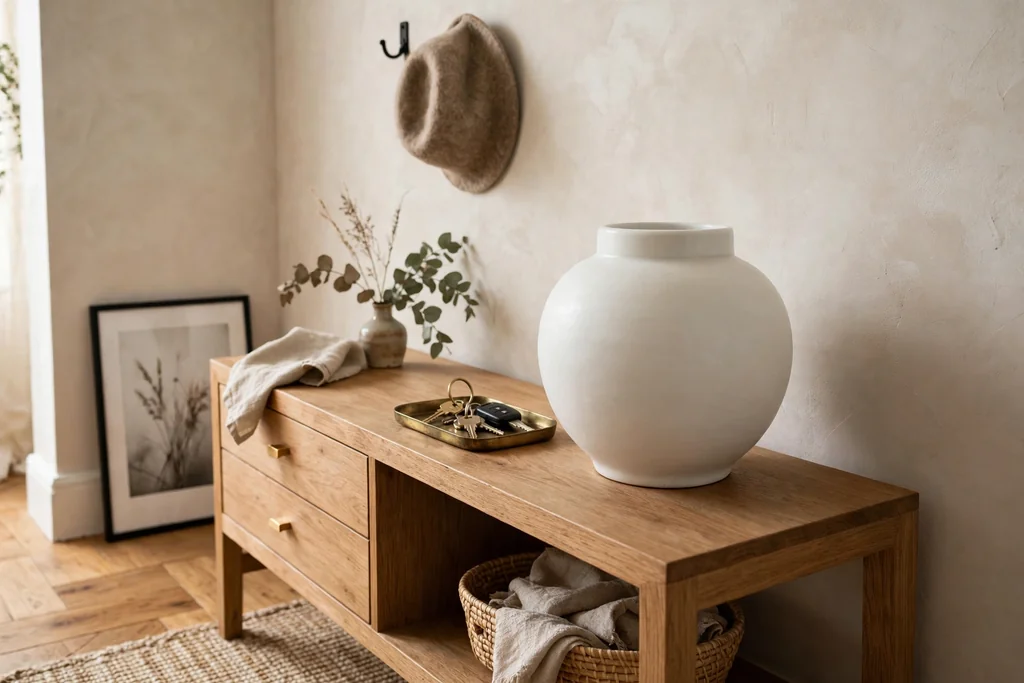
14. Keep the Entry Orderly With a Bench, Hooks, and a Boot Tray
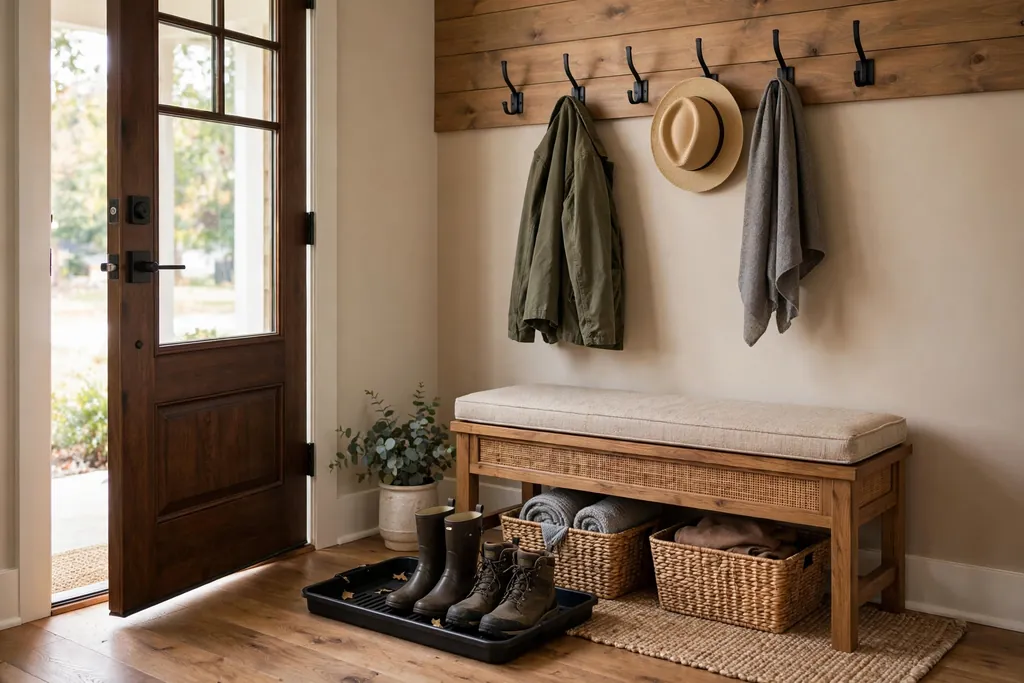
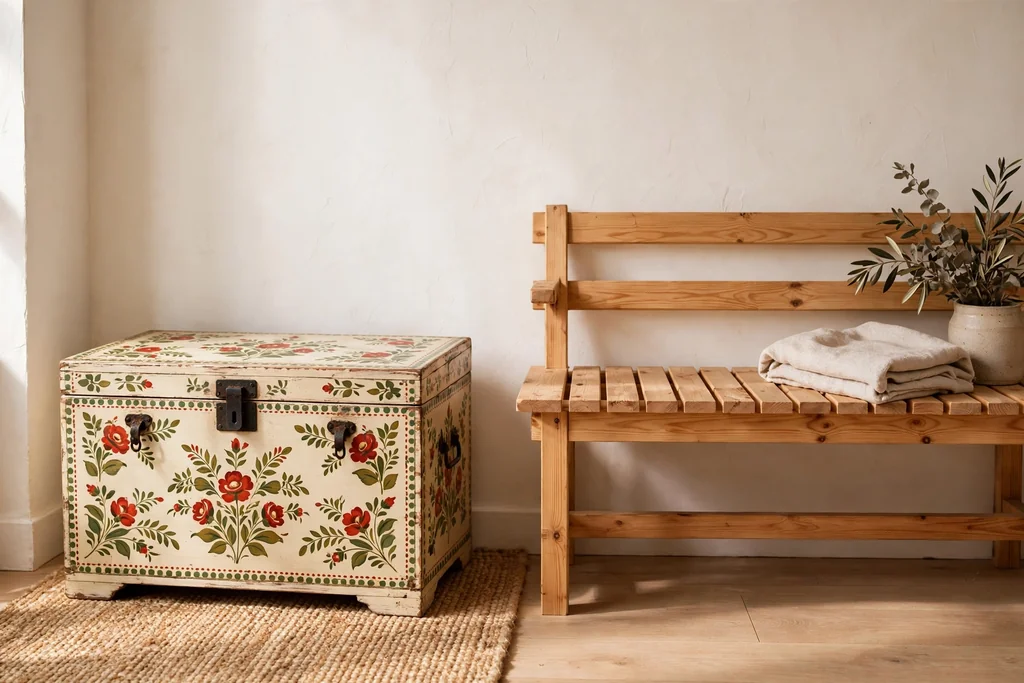
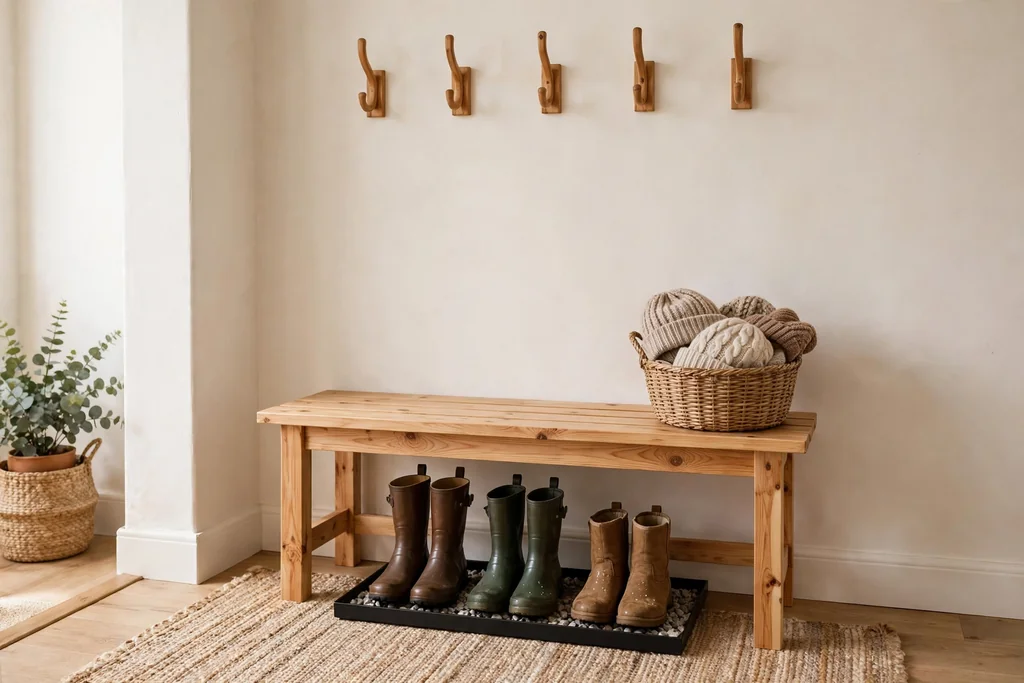
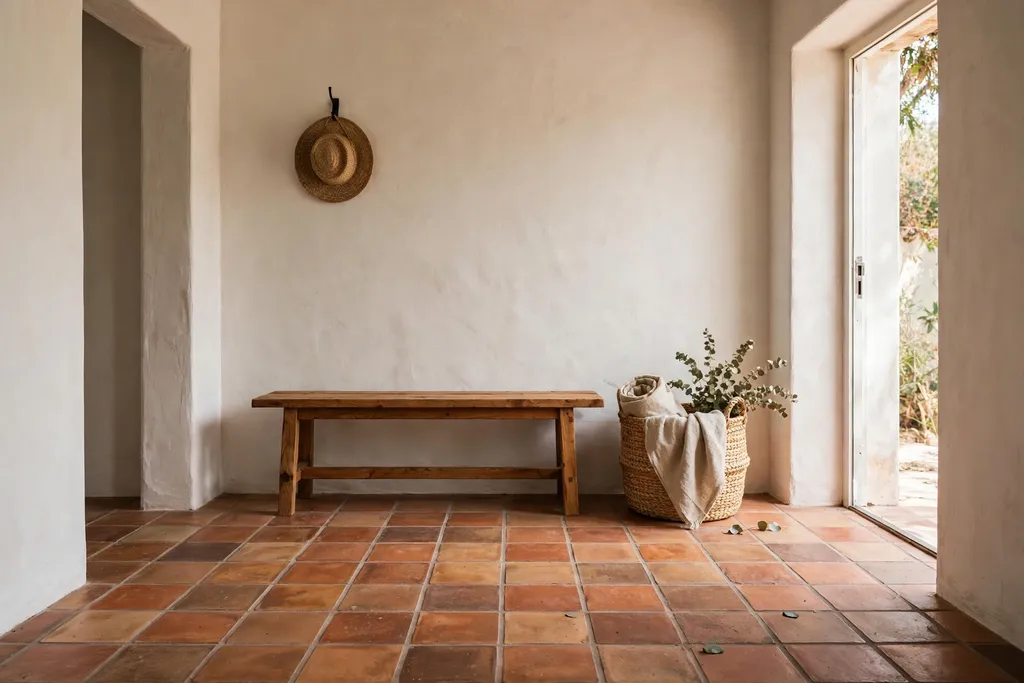
An entry with a wood bench, a row of sturdy hooks, and a boot tray gives a German home its orderly first impression. Shoes stay on the tray, coats hang on hooks, and the bench gives a place to sit while putting shoes on. This suits a front entry, a back entry, or a hallway nook where shoes and coats otherwise pile up by the door.
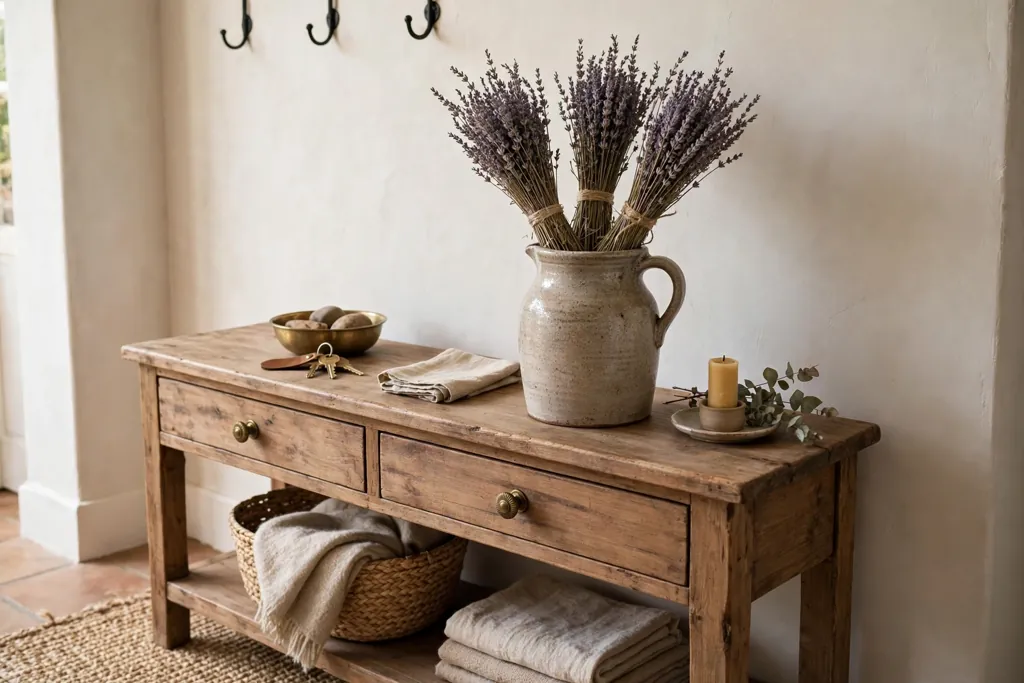
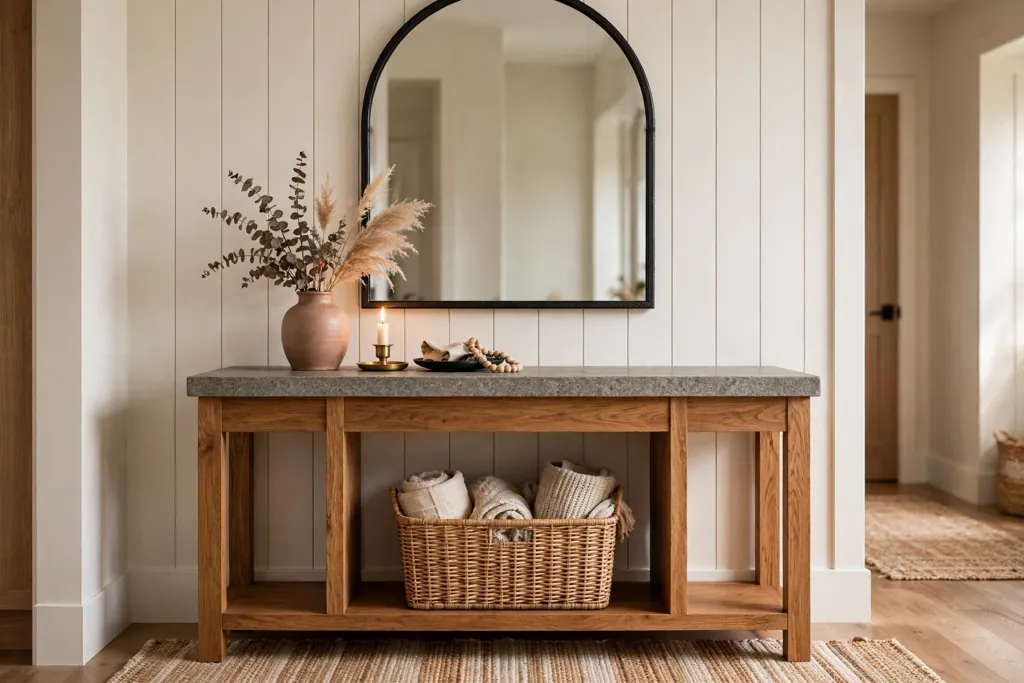
Keep hooks at two heights if children use the entry, and limit each person to one or two hooks so the wall does not fill up. Use a tray with a raised edge, in metal or rubber, so wet shoes do not mark the floor, and empty it often so it does not fill with items that belong elsewhere. Add one basket for scarves and gloves in winter, and keep the bench top mostly clear for bags and keys.
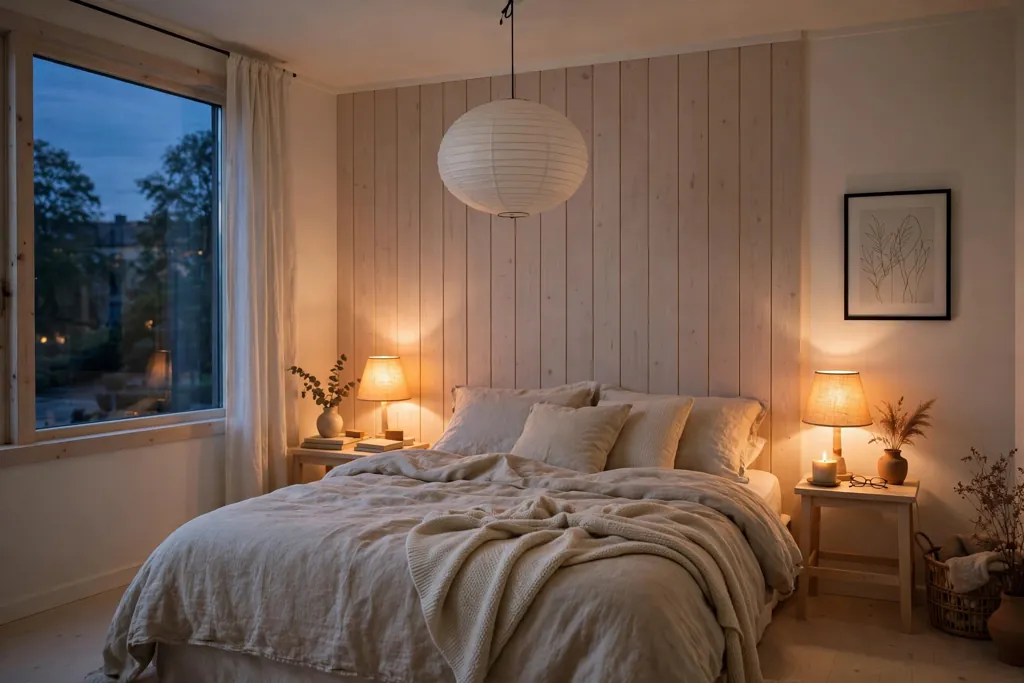
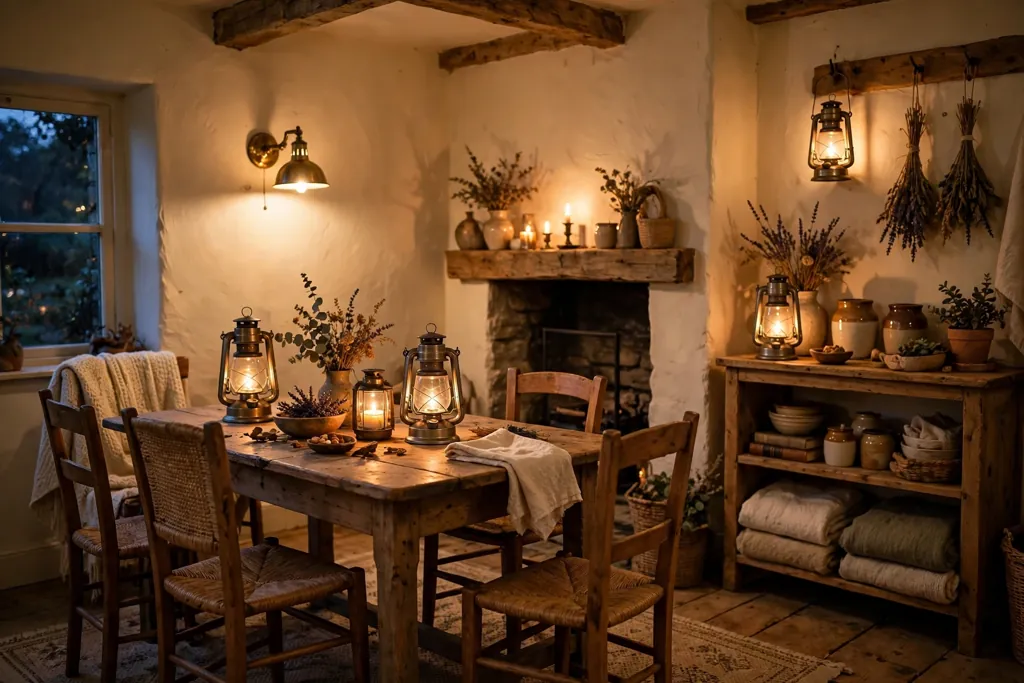
15. Layer Warm Light With Brass Lamps and Lanterns
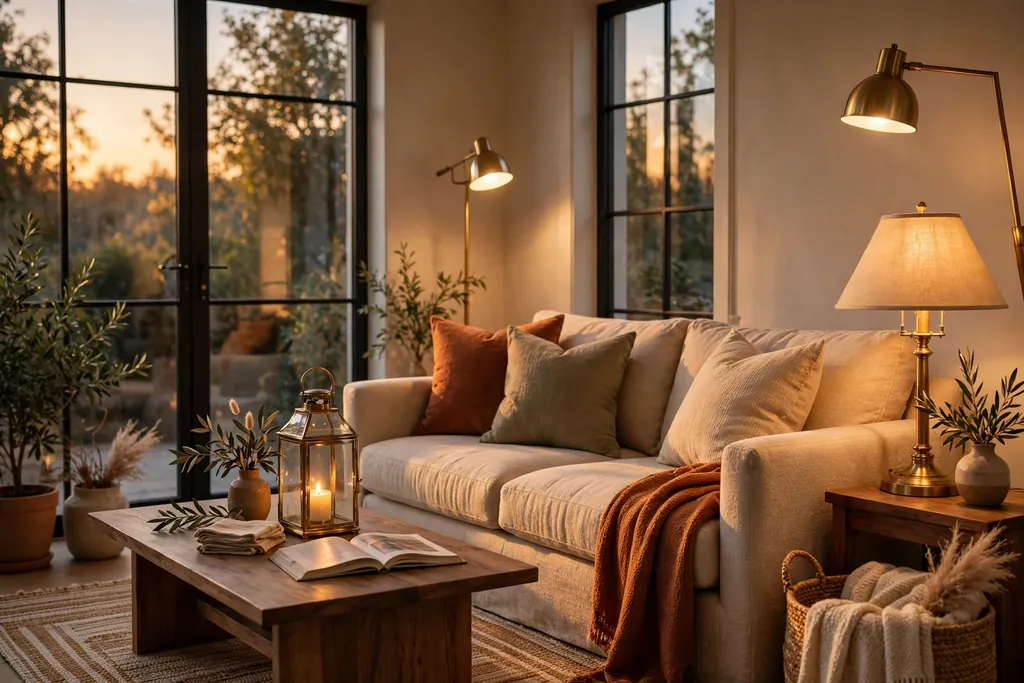
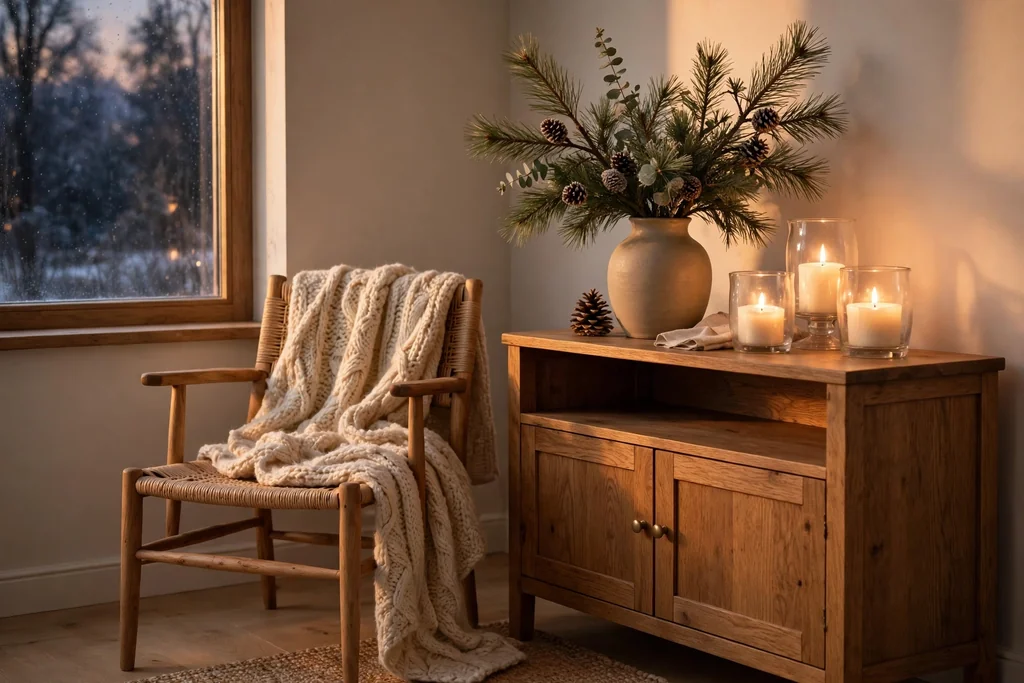
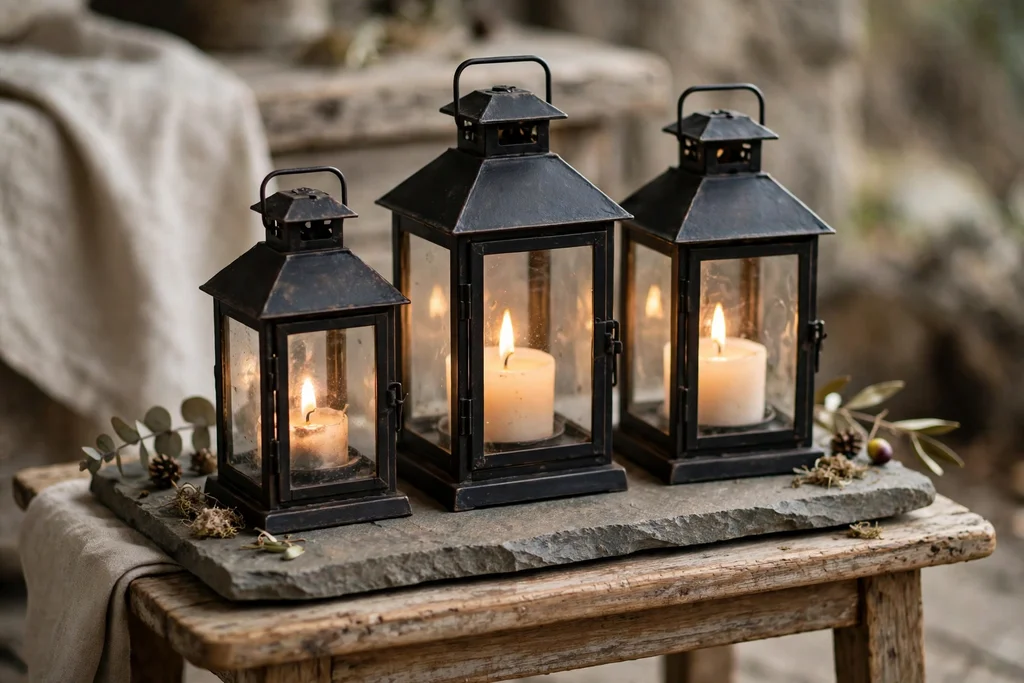
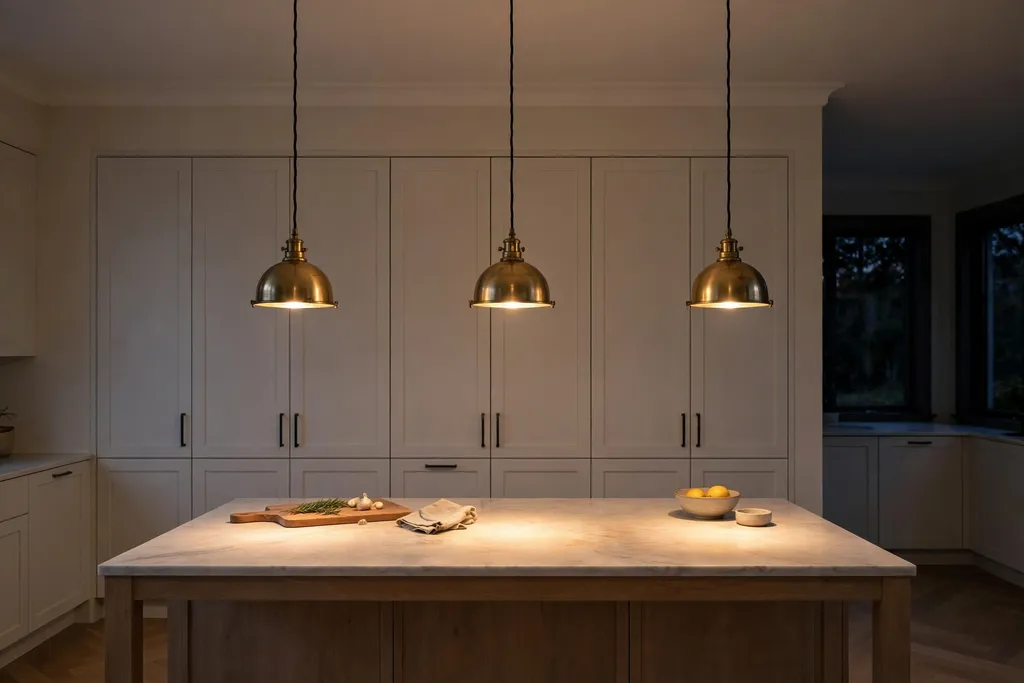
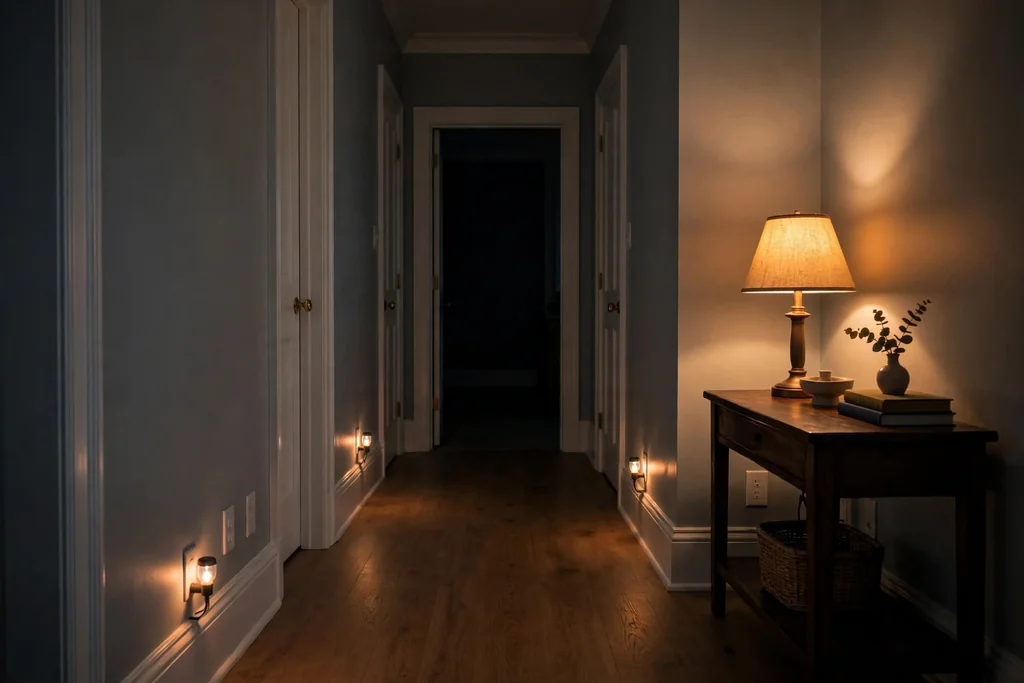
Brass table lamps, wall lamps, and glass lanterns with candles give a German room warm evening light that suits wood and linen. Brass adds a soft metal note without shine, and lantern light makes a room feel calm after dark. This suits a living room or dining room where one overhead light feels harsh in the evening.
Use warm bulbs in lamps, and place lamps where people sit, rather than lining them up along one wall. Keep lanterns clear of curtains, throws, and dried flowers, and never leave candles lit alone. Use battery candles in a lantern near fabric or in a home with children, and dust brass with a soft cloth so the finish stays even.
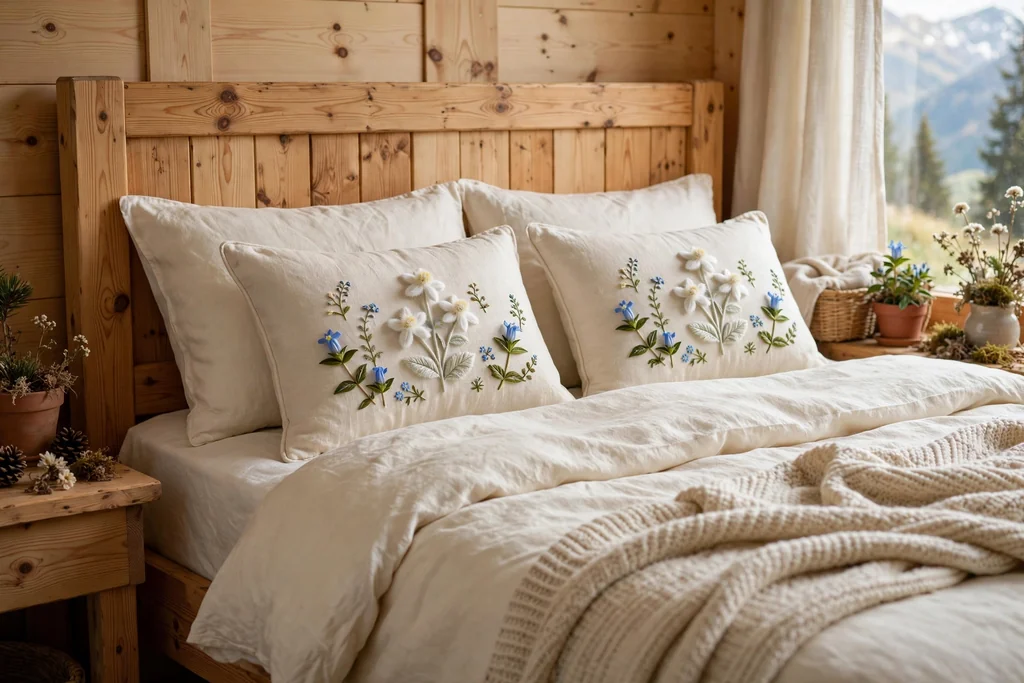
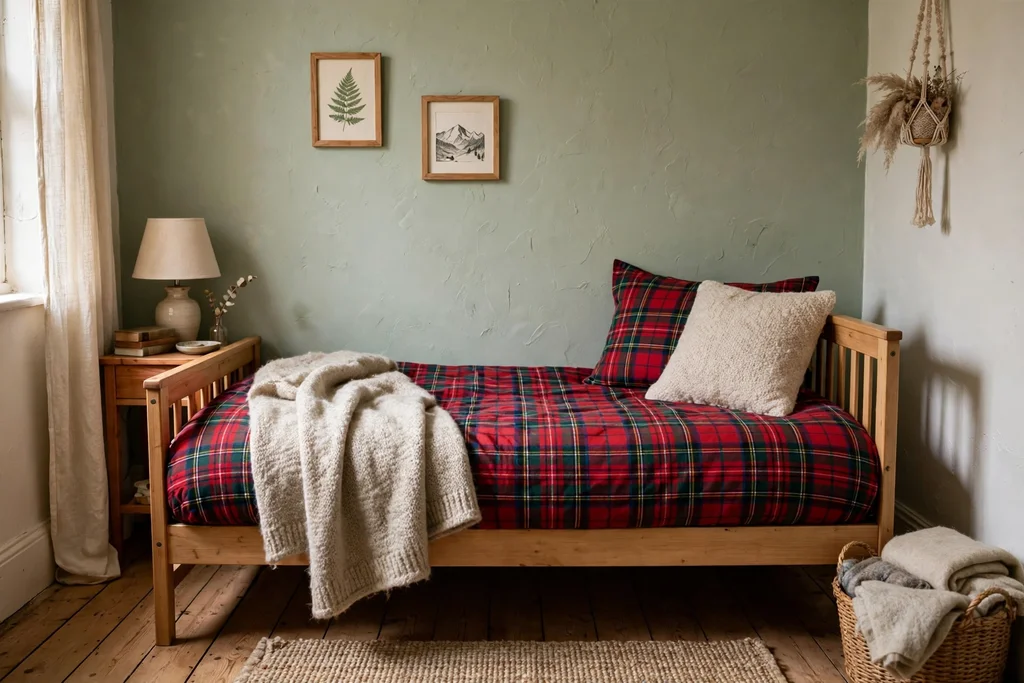
16. Dress an Alpine Bedroom in Pine, Checks, and Wool
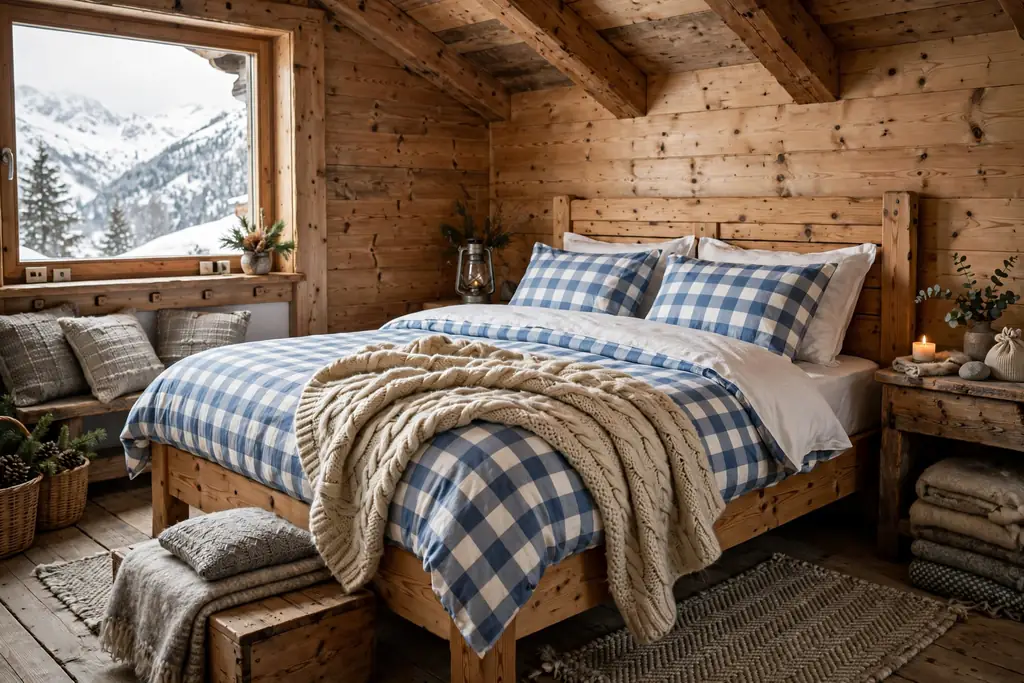
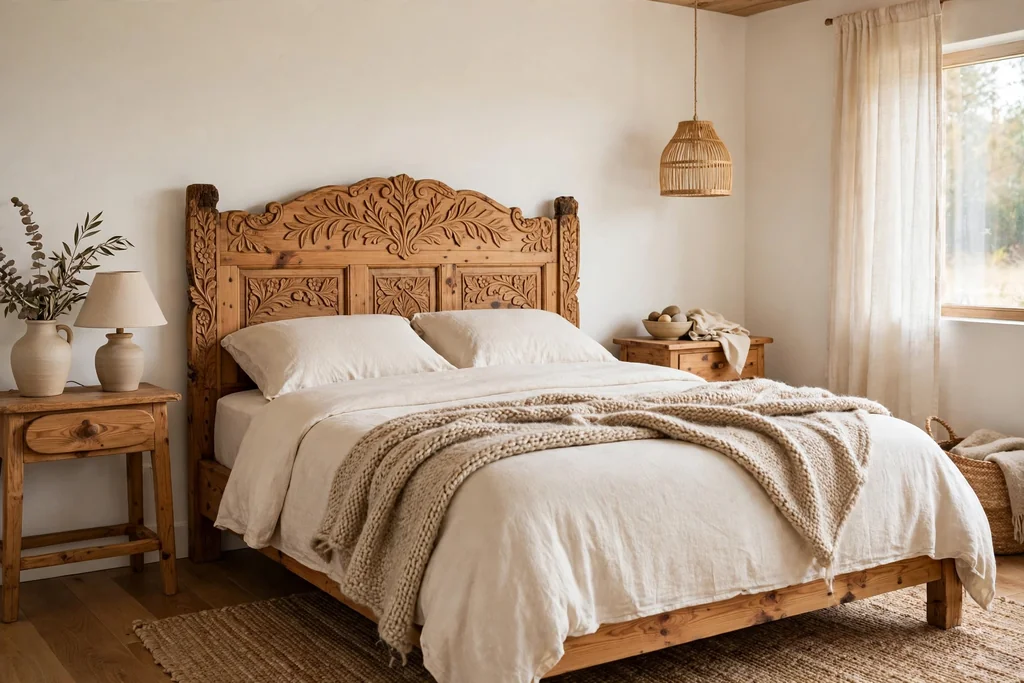
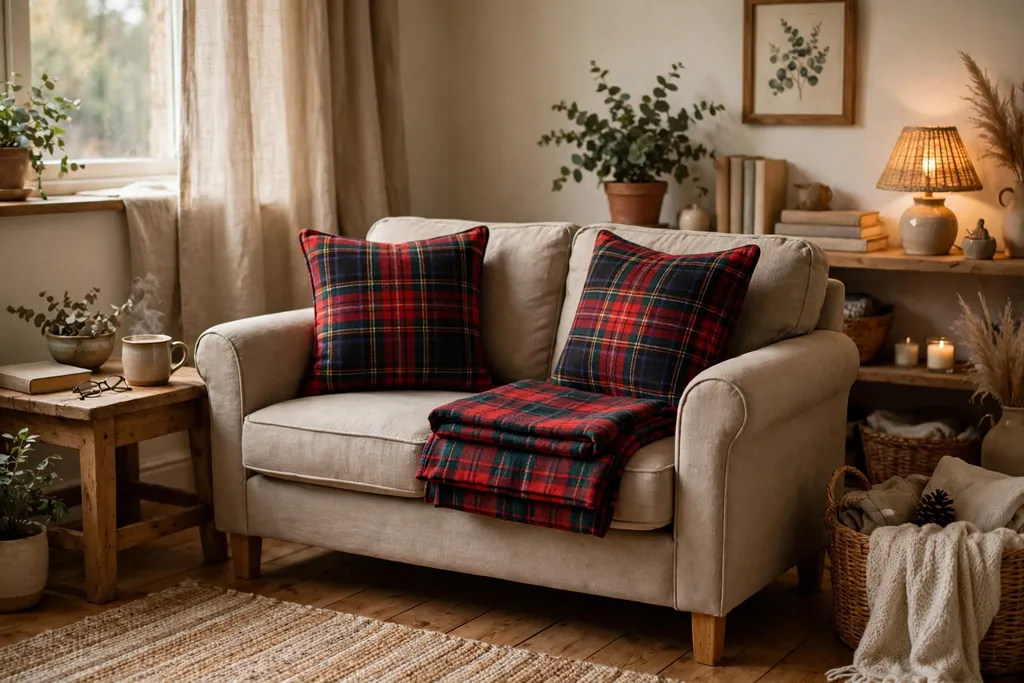
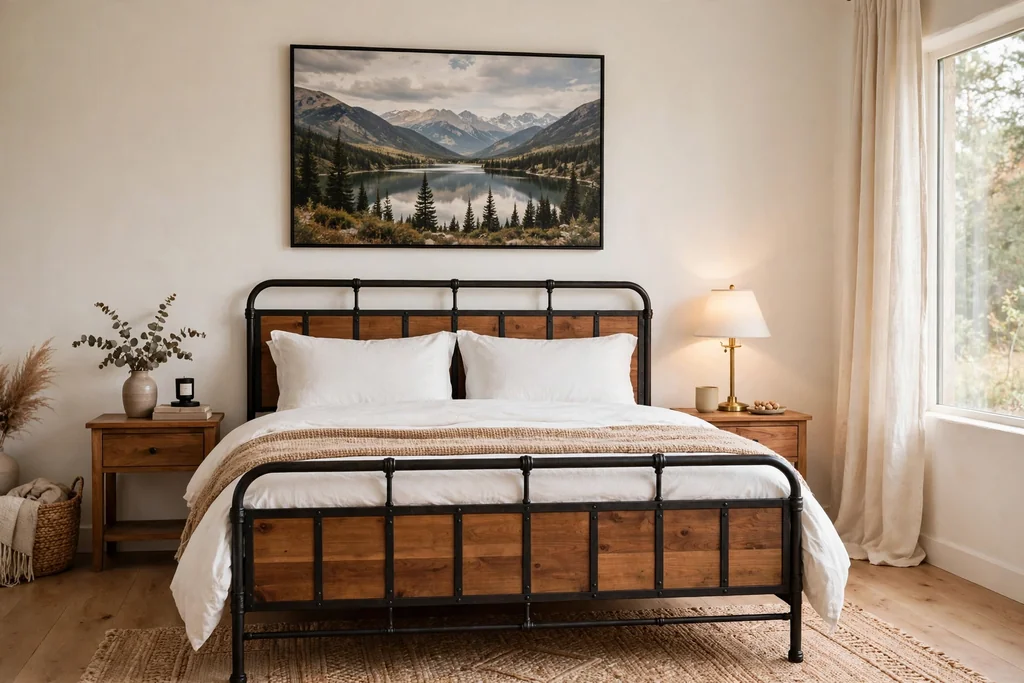
An Alpine style bedroom with a pine bed frame, checked bedding in blue or red, and a wool throw gives a bedroom a German mountain feel that still works in a plain house. Pine keeps the room light, checks add pattern at the bed, and wool adds warmth for cold nights. This suits a bedroom with a wood floor and plain walls, where the bed can be the main feature.
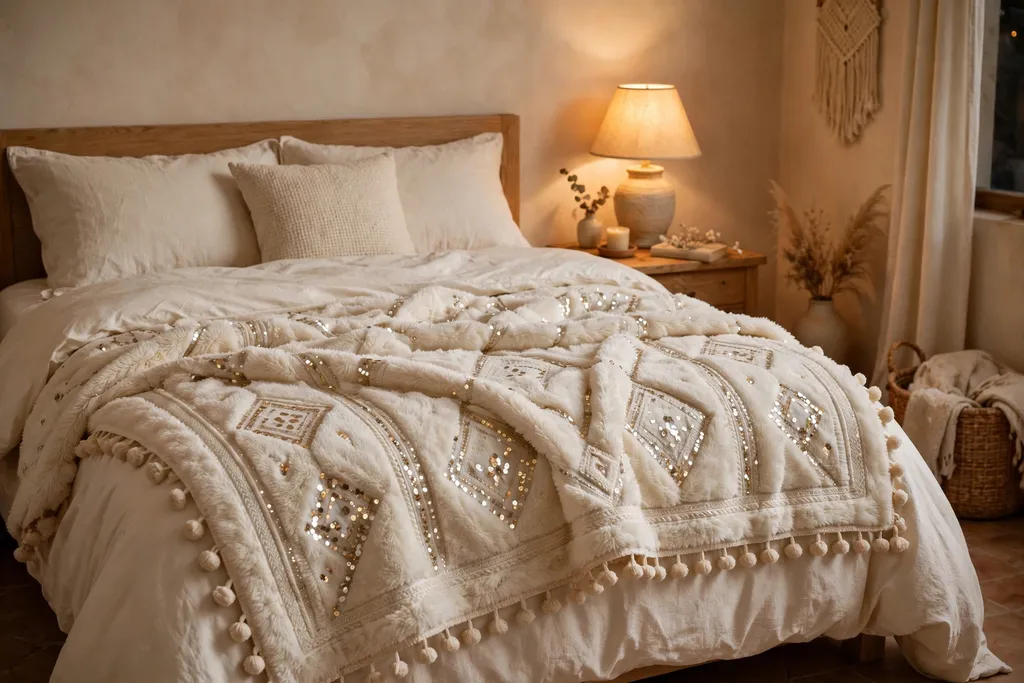
Start with plain sheets, add a checked duvet cover or a checked throw across the lower half of the bed, and keep pillows mostly plain, with one checked cushion. Add a wool throw in cream or grey for extra warmth, and keep the rest of the room plain, with a pine bedside table and one lamp. Wash bedding as advised on the label, and shake the duvet out each morning so the layers stay light.
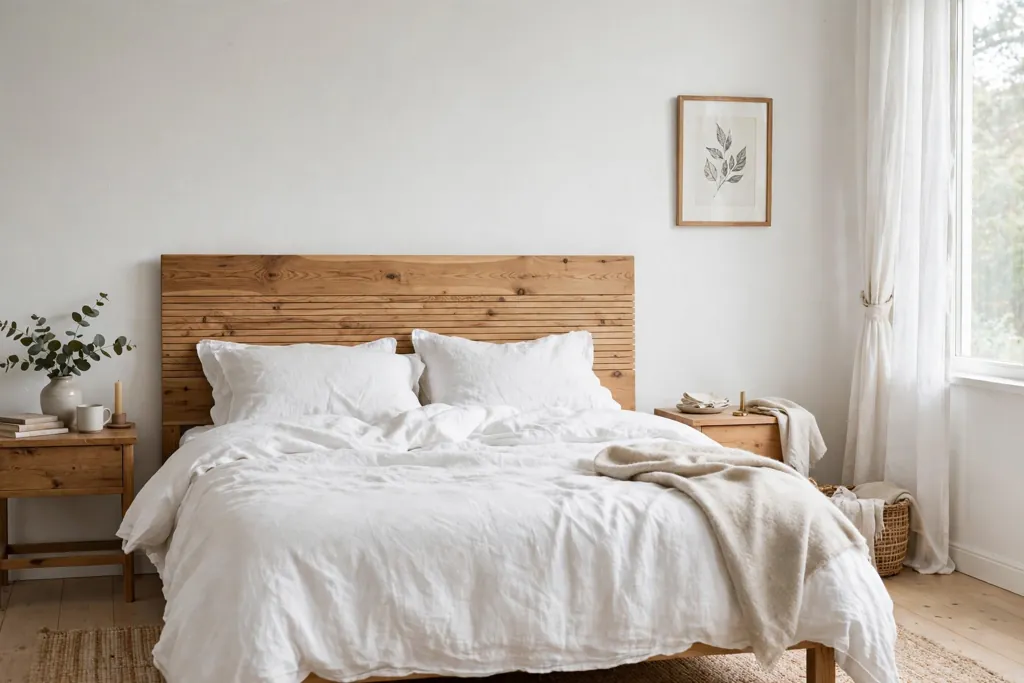
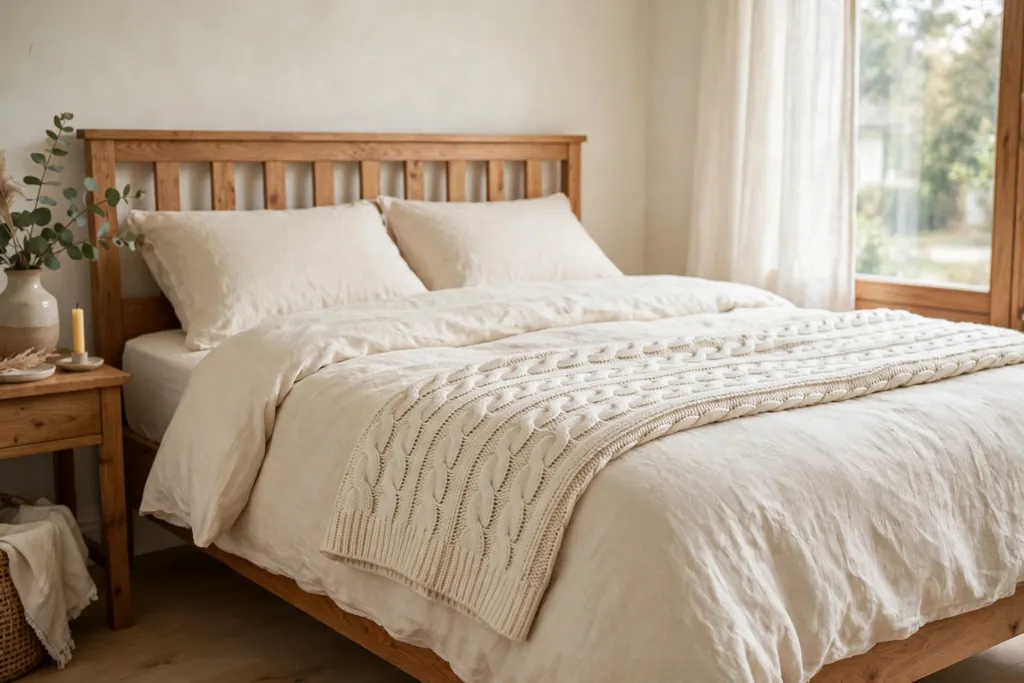
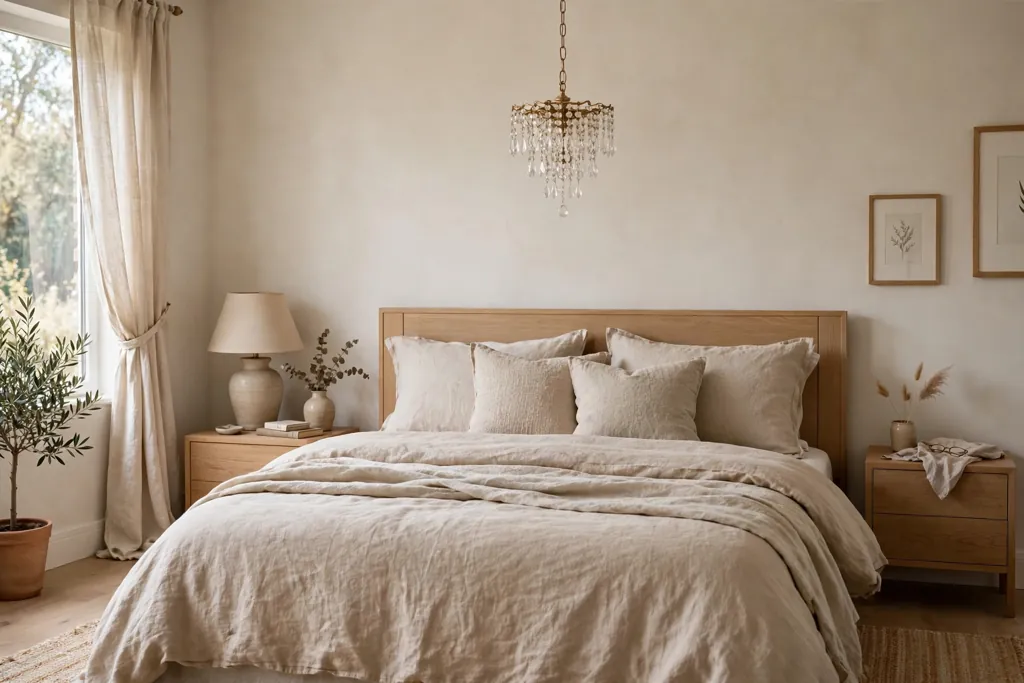
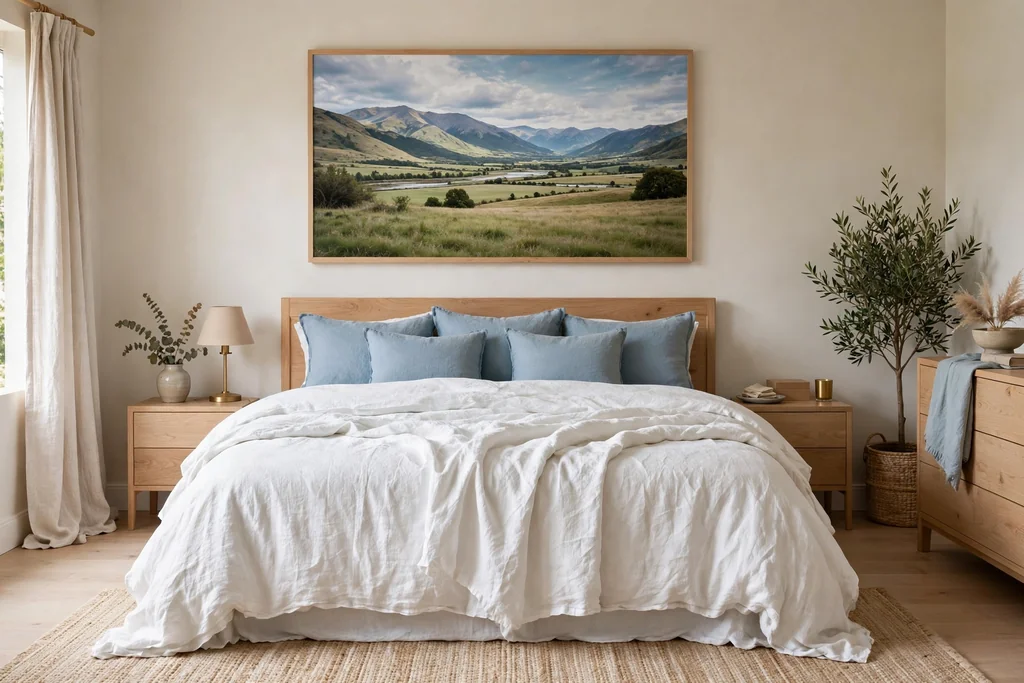
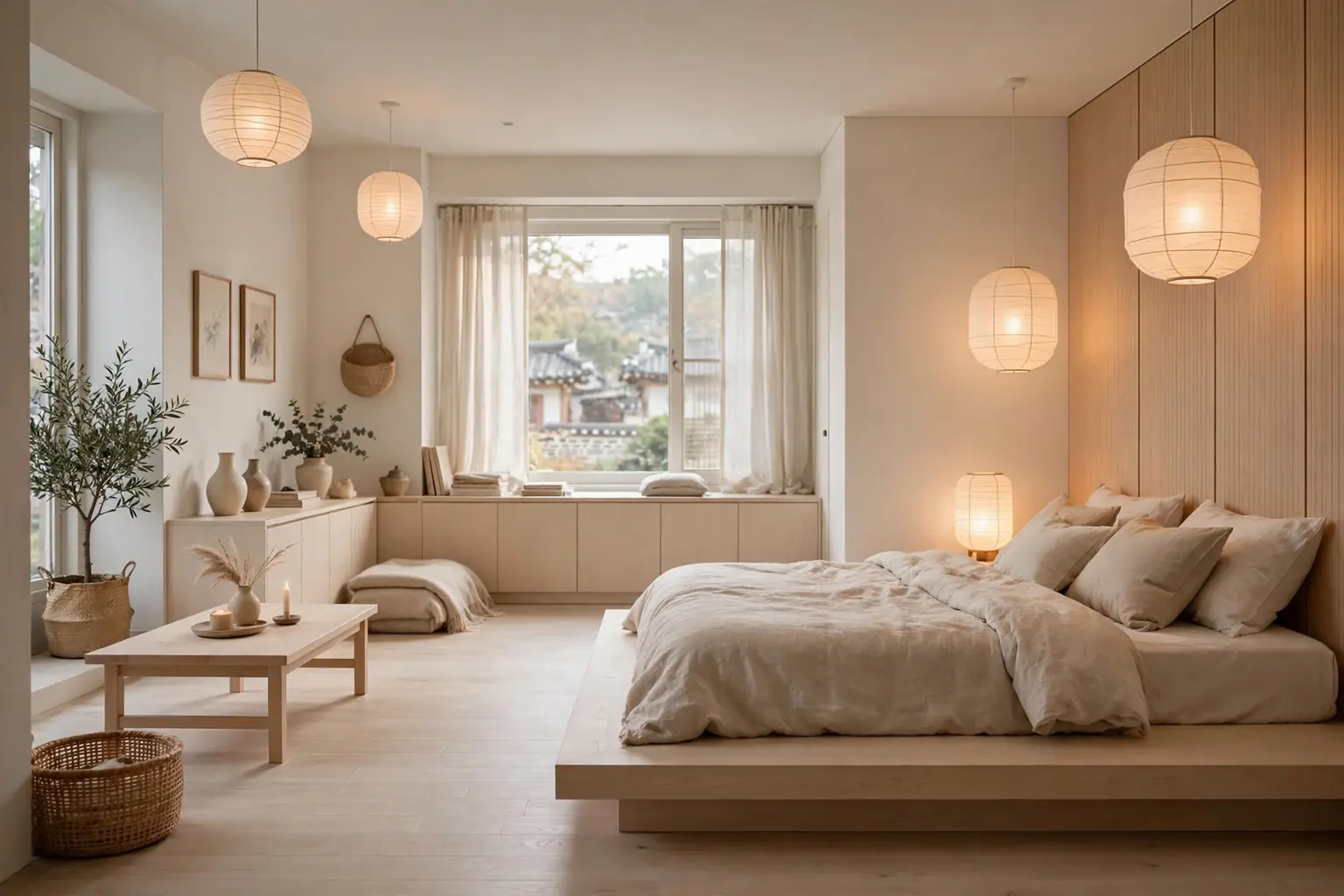
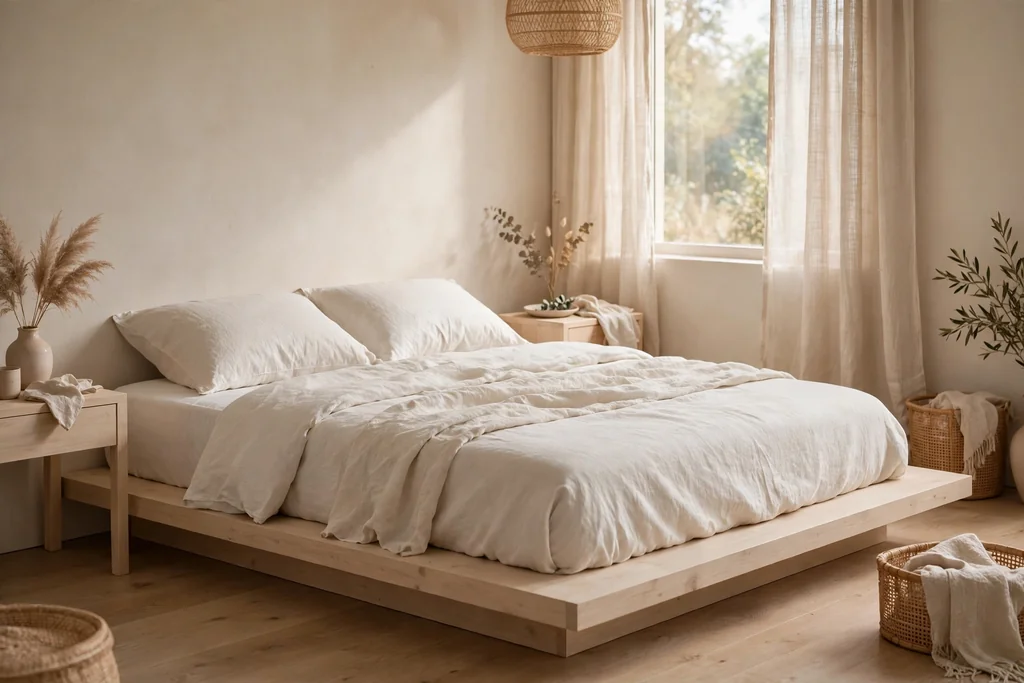
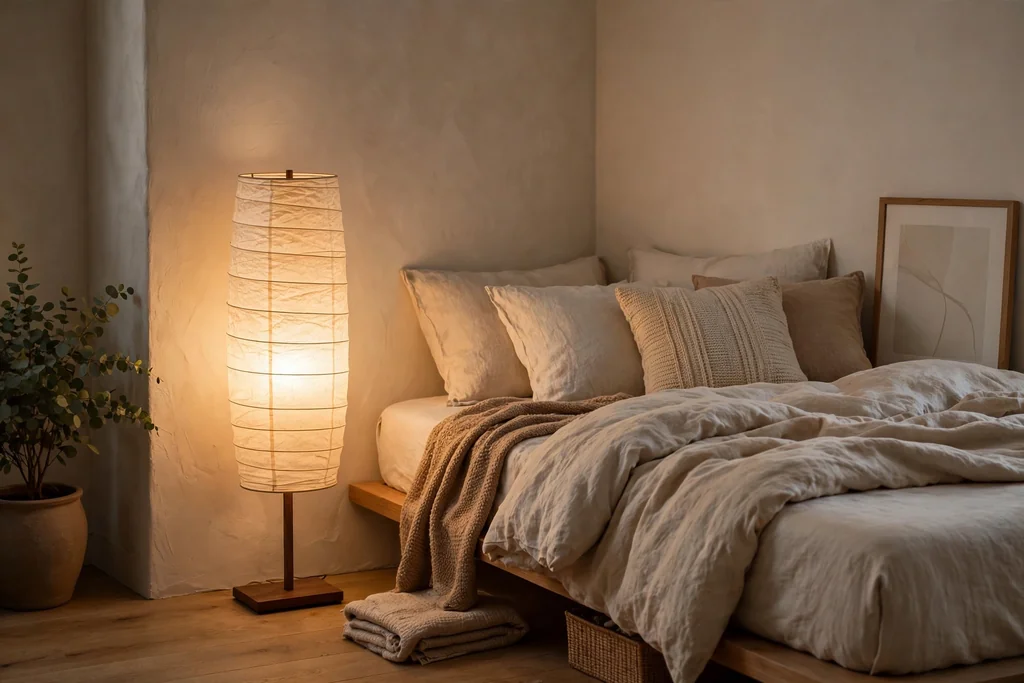
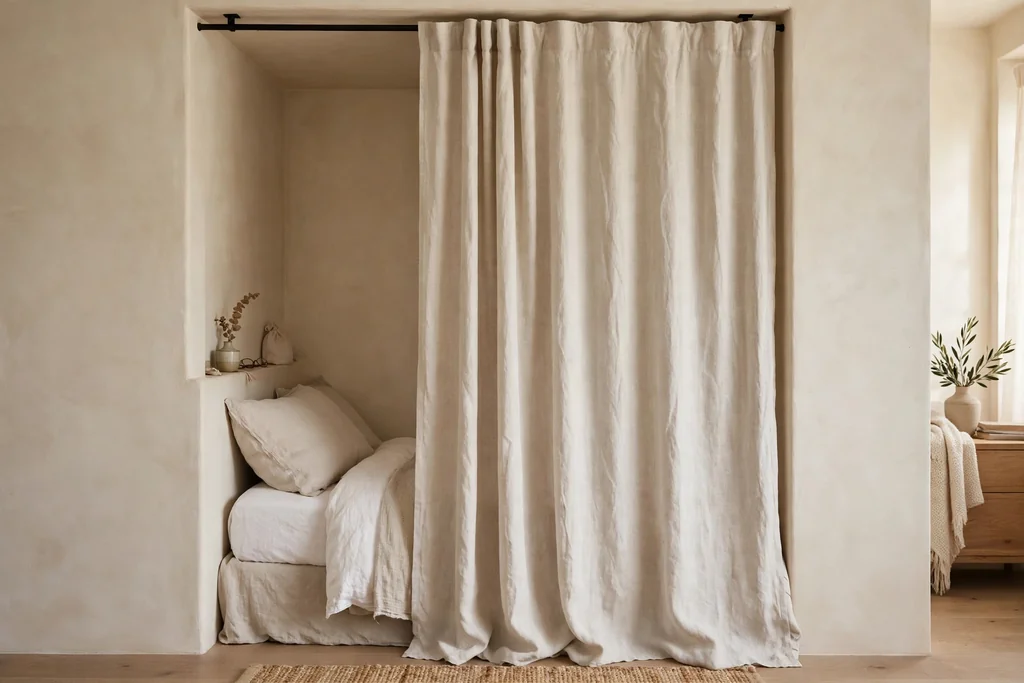
17. Layer White Linen Bedding With a Sage Throw
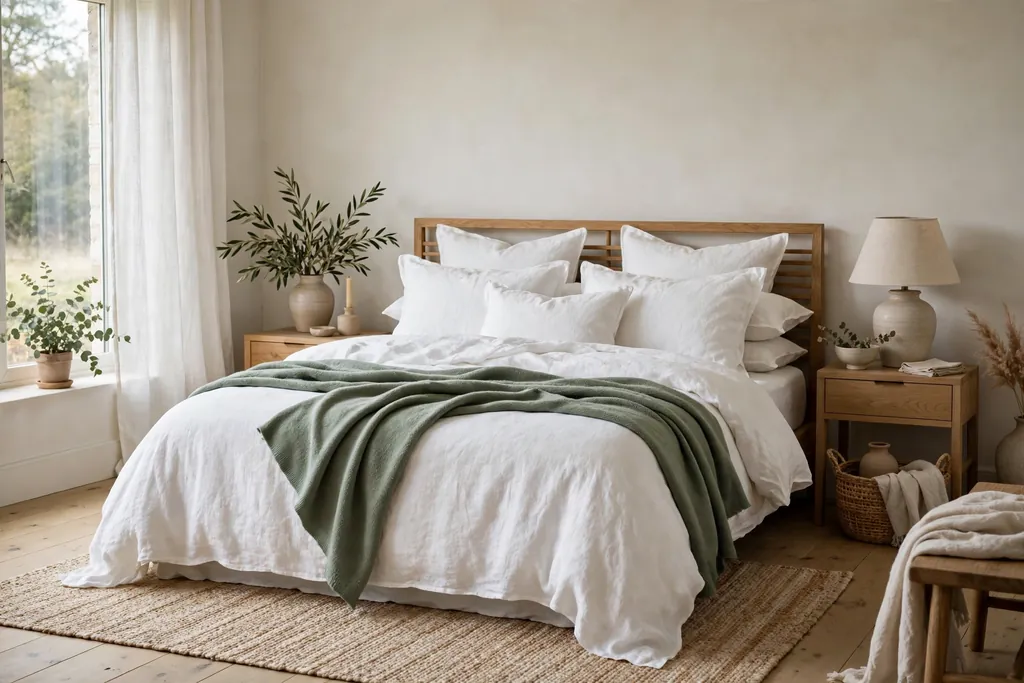
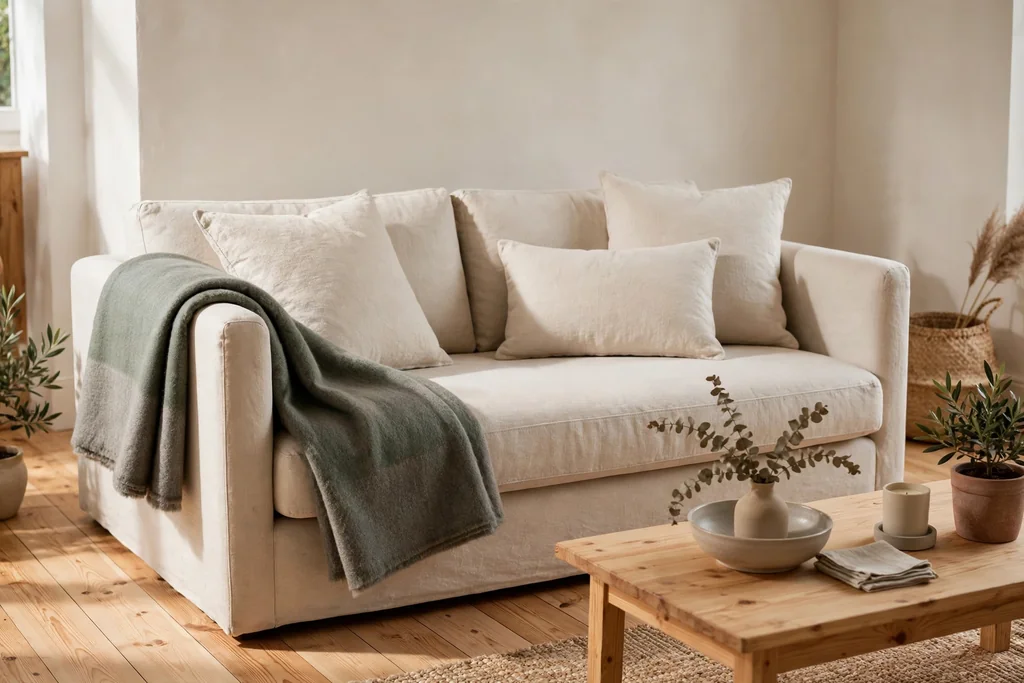
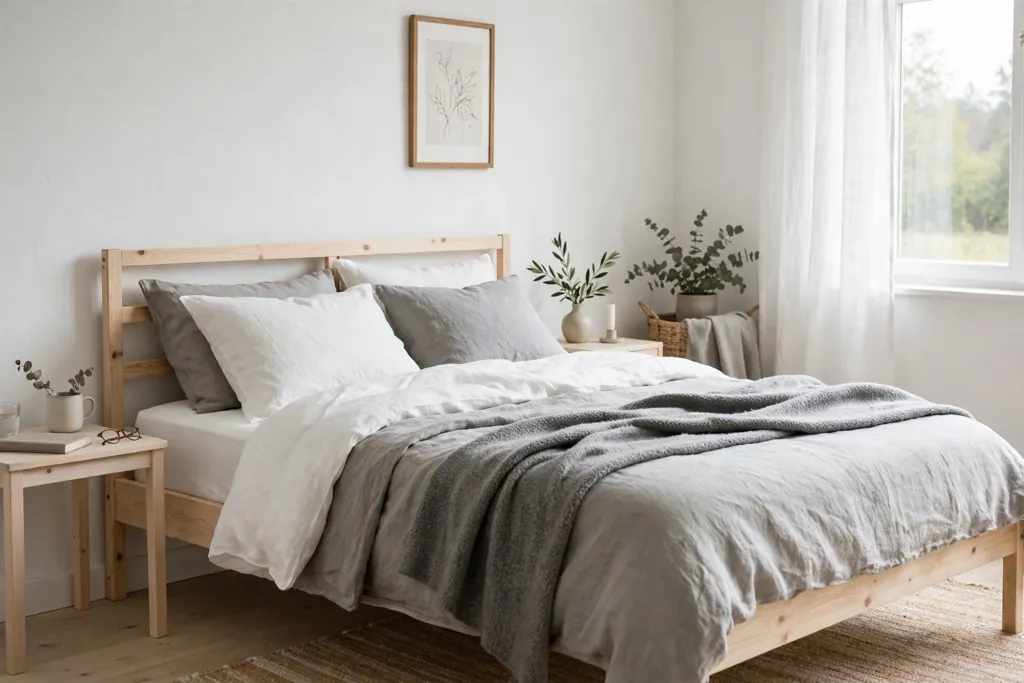
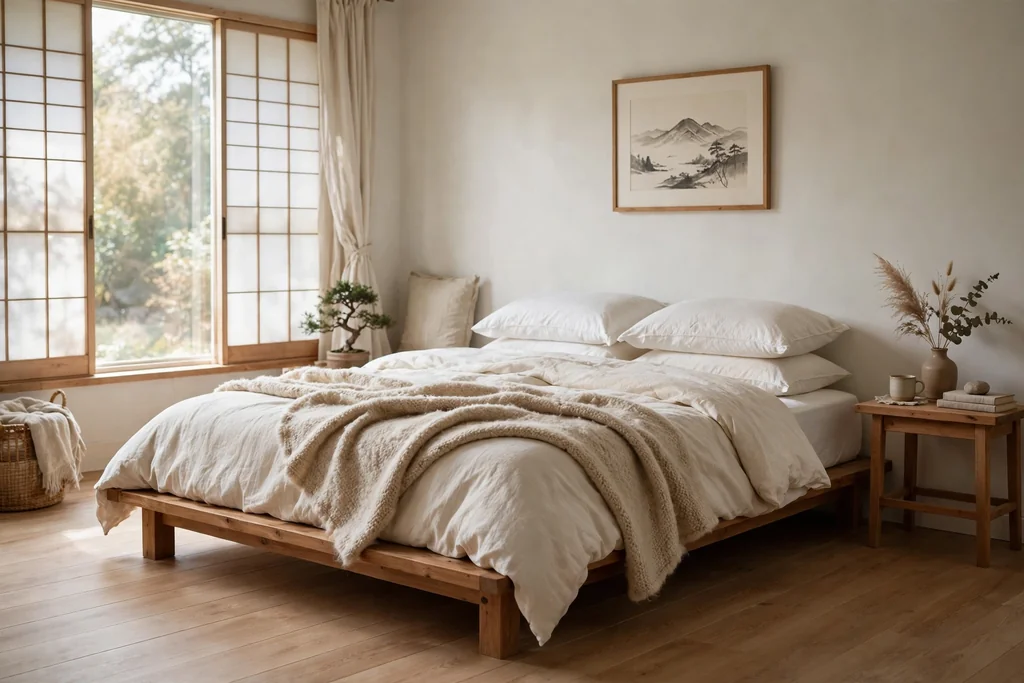
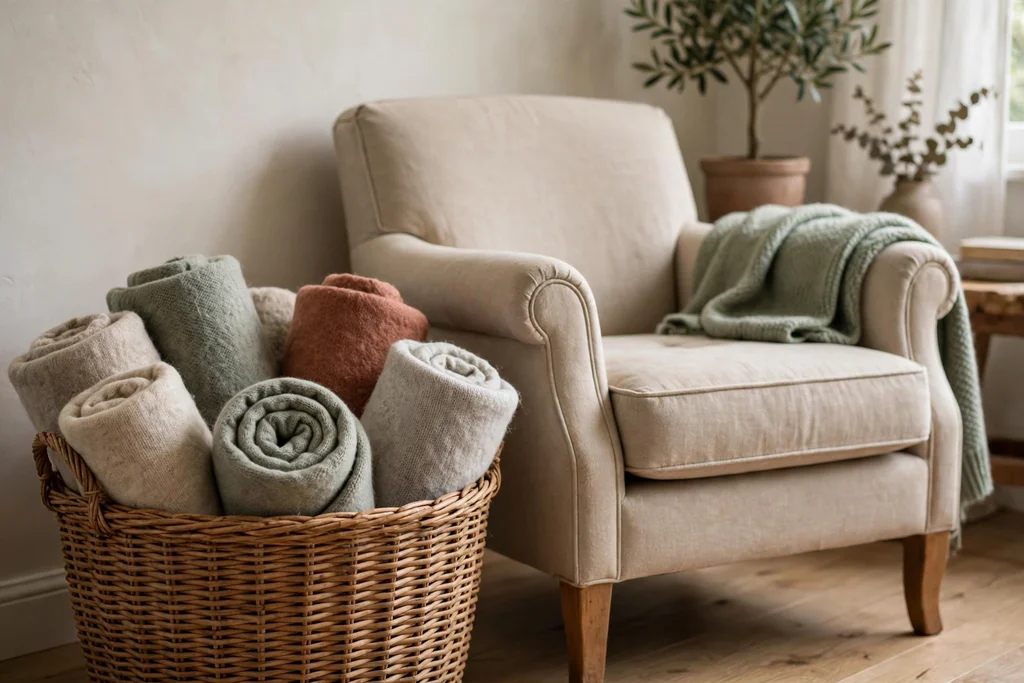
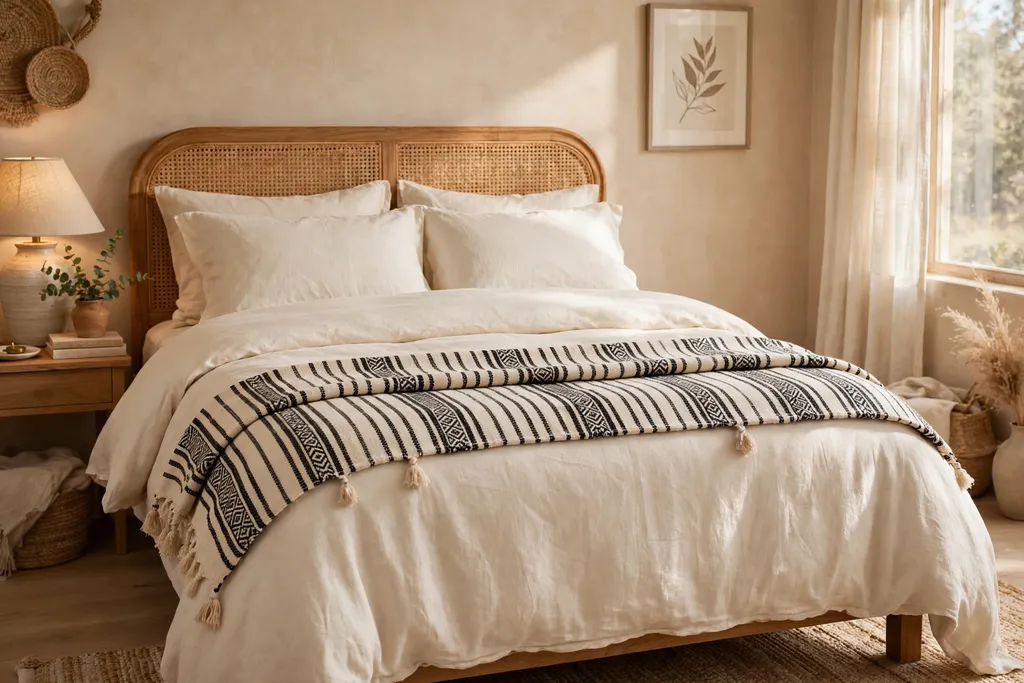
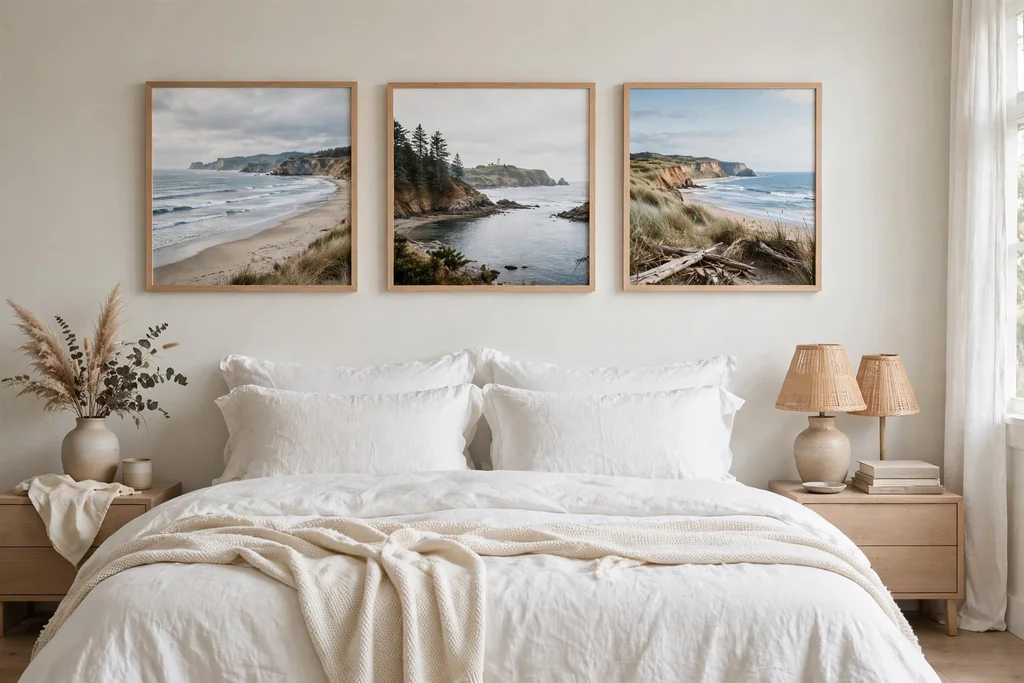
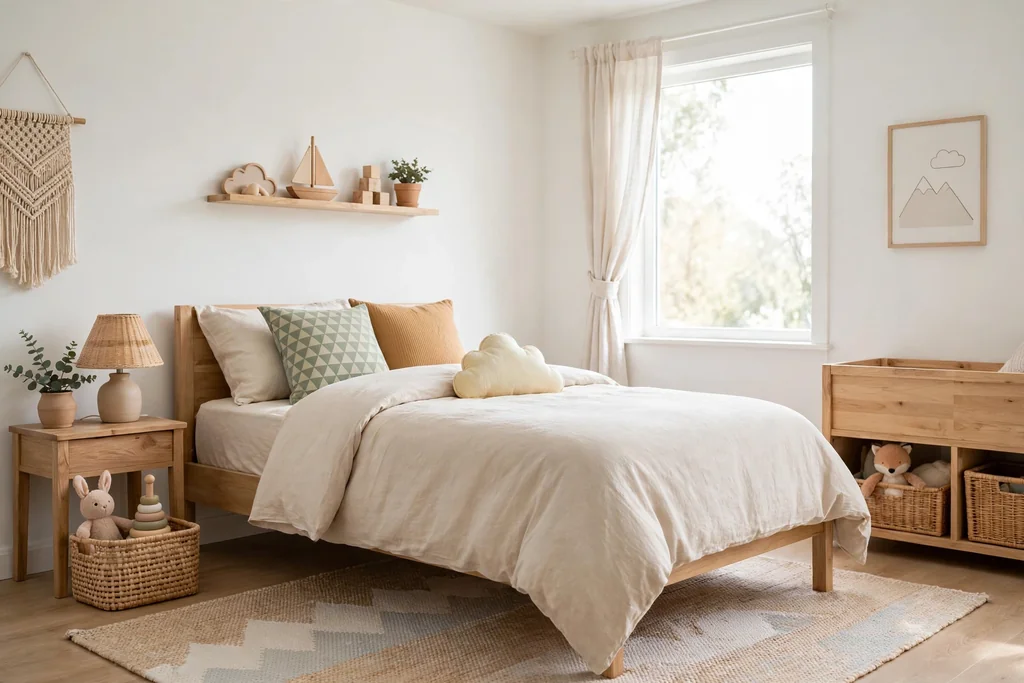
White linen bedding with a sage green throw gives a German bedroom a calm, fresh bed that suits both pine and painted furniture. Linen keeps the bed light rather than formal, sage adds a soft color taken from herbs and fields, and white sheets keep the room bright. This suits a bedroom with a pine bed frame or a white painted bed, where patterned bedding would feel too busy.
Start with a plain fitted sheet, add a linen duvet in white, then fold a sage throw across the lower half of the bed. Keep sleeping pillows plain, and add two linen pillow shams plus one cushion in a small check or plain sage. Wash linen as advised on the label, and shake the duvet out each morning so the layers stay light rather than flat.
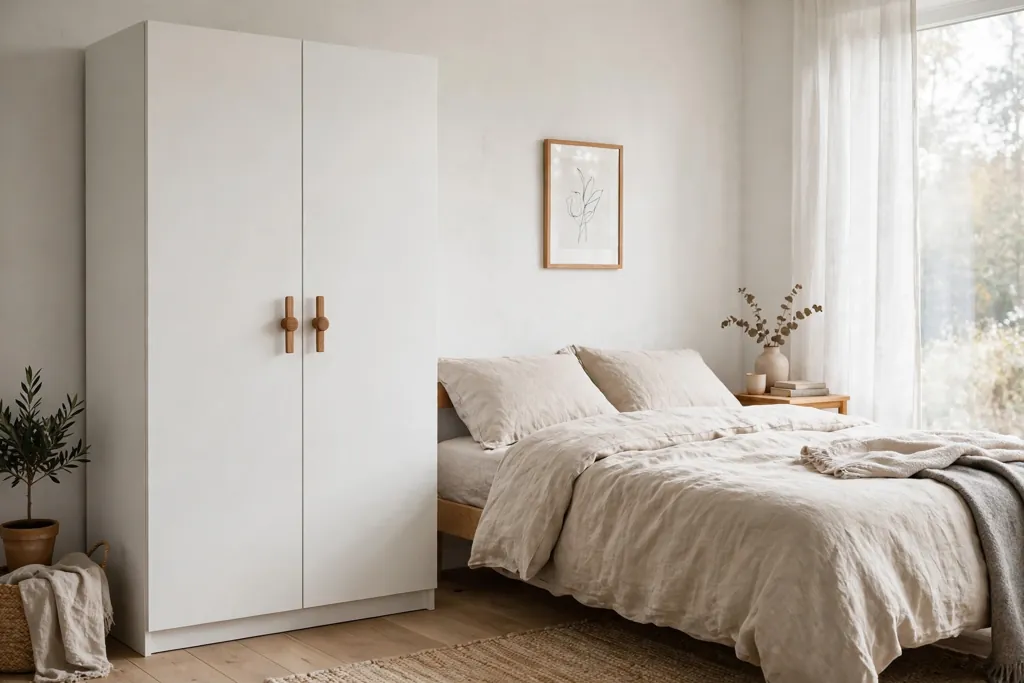
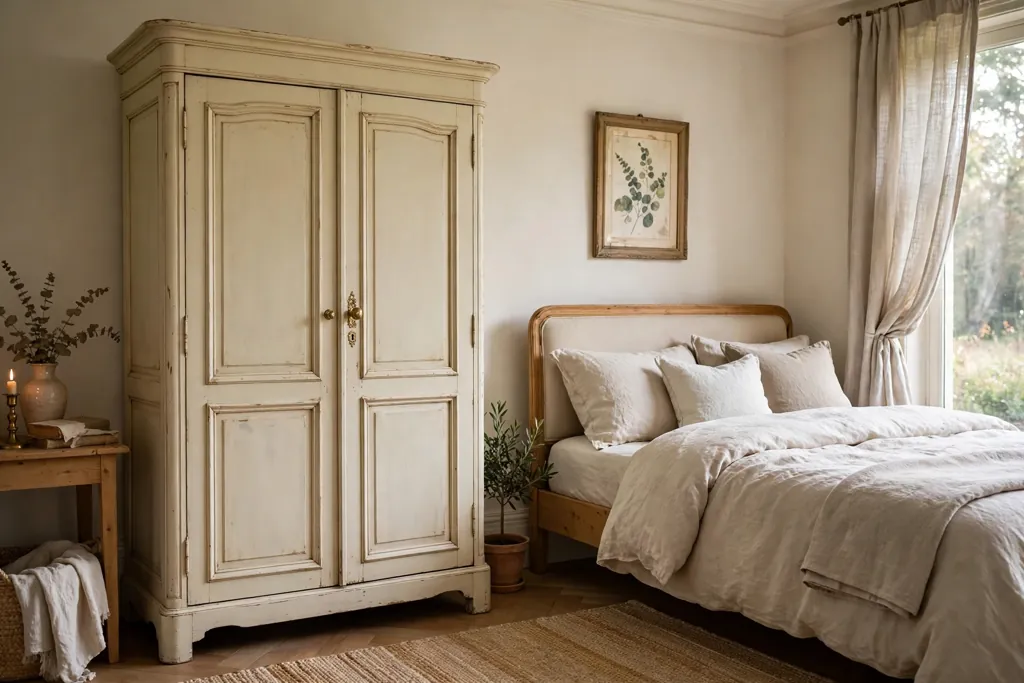
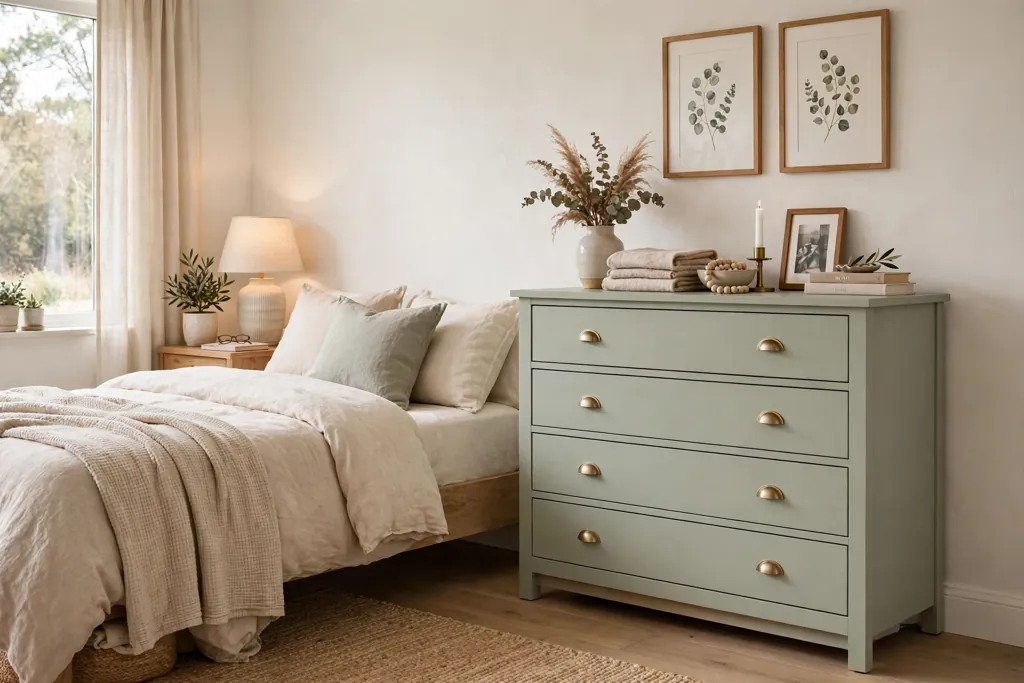
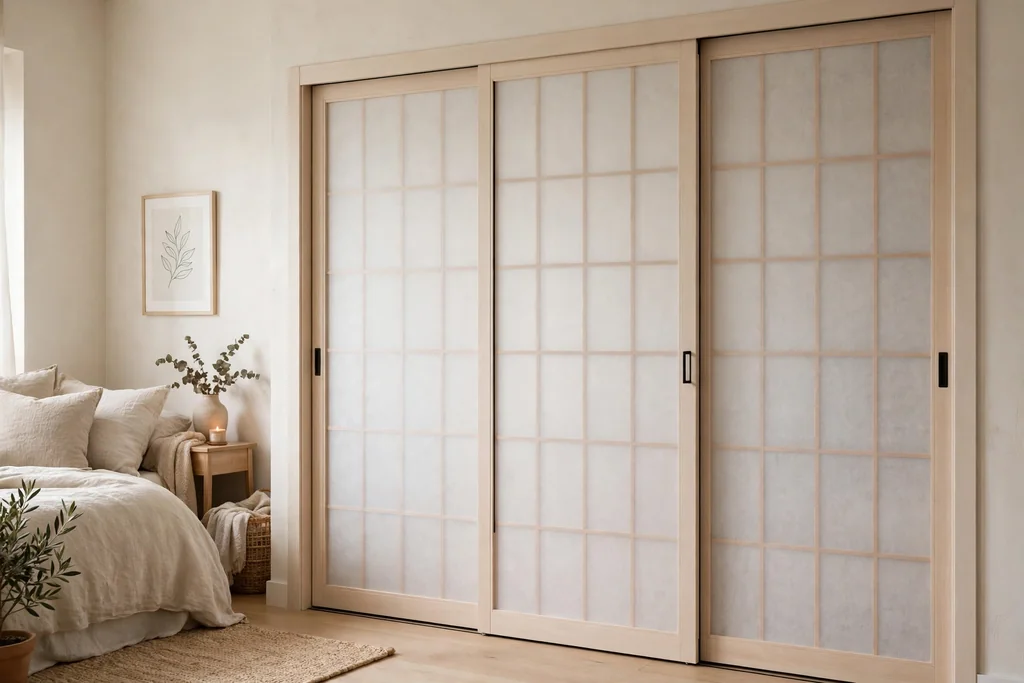
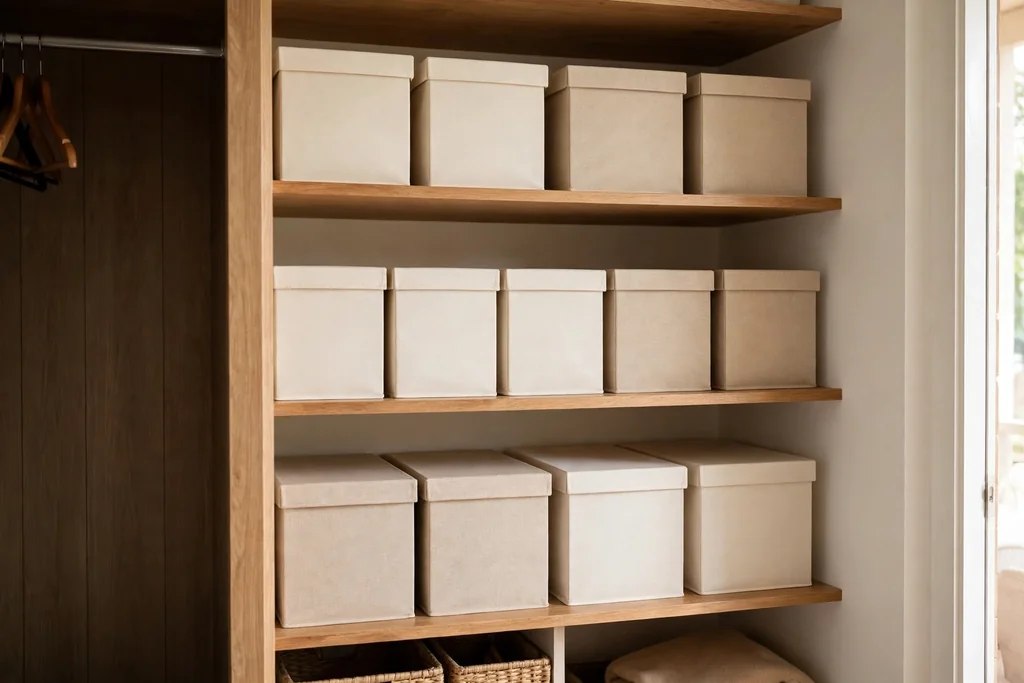
18. Store Clothes in a Tall Wooden Wardrobe
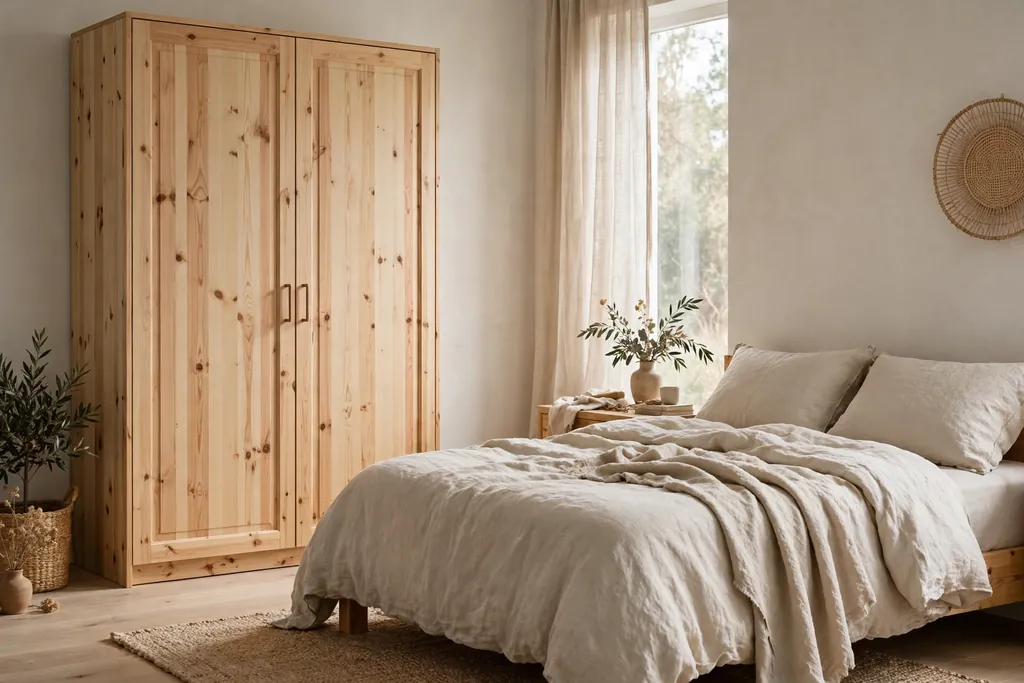
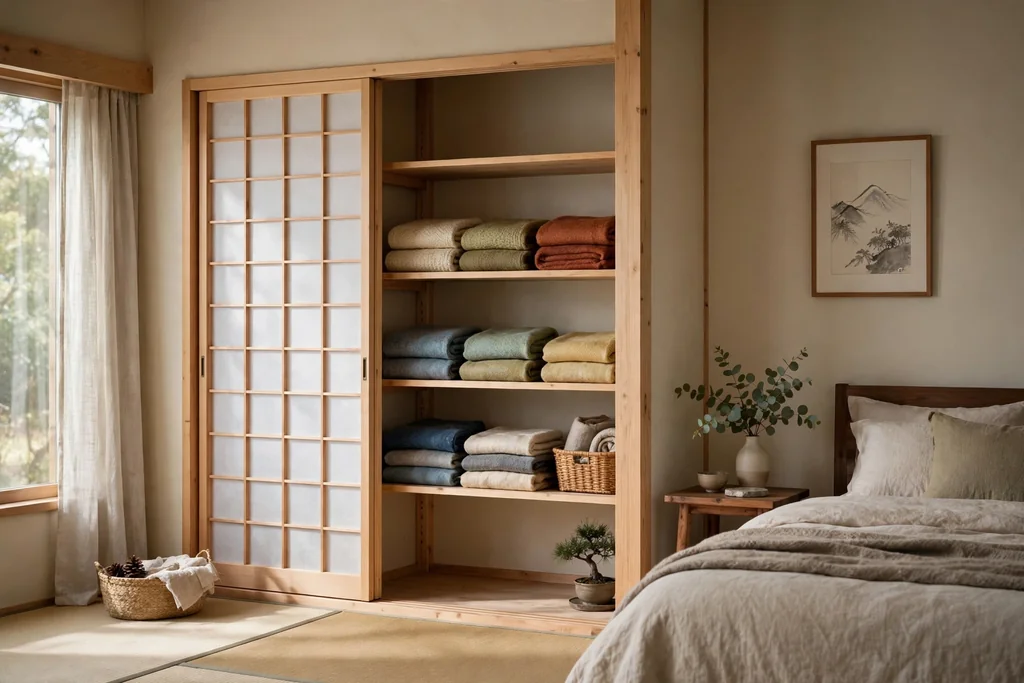
A tall wooden wardrobe in pine or painted cream gives a bedroom closed storage with German character, without a built in closet. The tall doors hide clothes and bedding, while simple panel doors and plain hardware add detail at wall height. This suits a bedroom with little closet space, or a guest room where a wardrobe is more useful than a dresser.
Check the wardrobe inside before you buy, and clean shelves and drawers well, since older pieces can carry dust or a musty smell. Keep the top mostly clear, with one small vase or one framed print, so the panels stay visible. If the doors stick, check the hinges and the floor level first, since an uneven floor often causes the problem rather than the doors themselves.
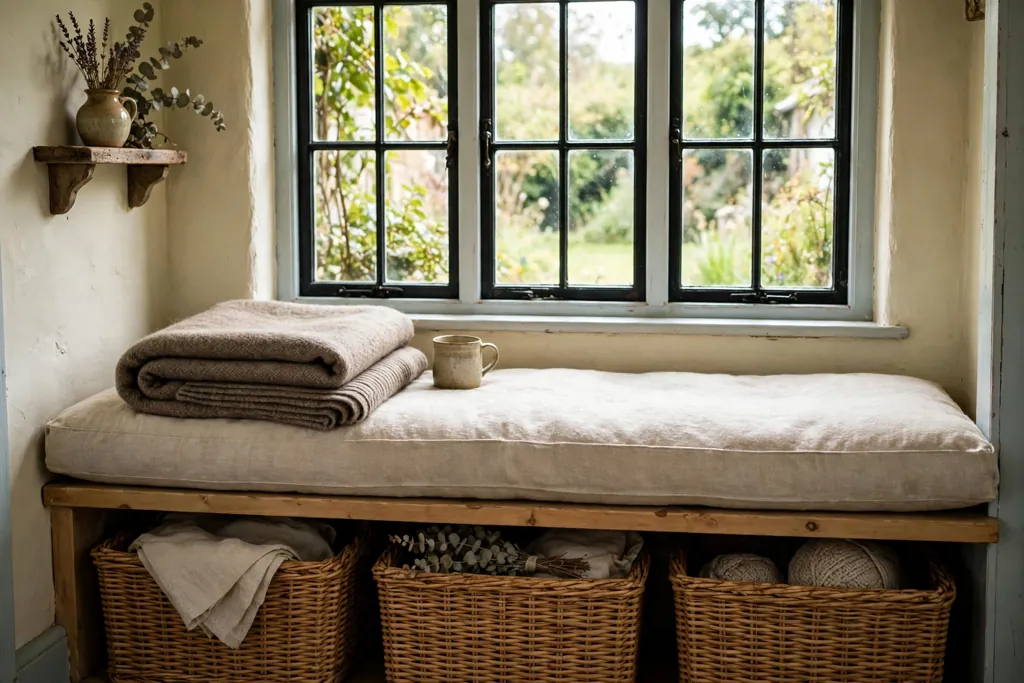
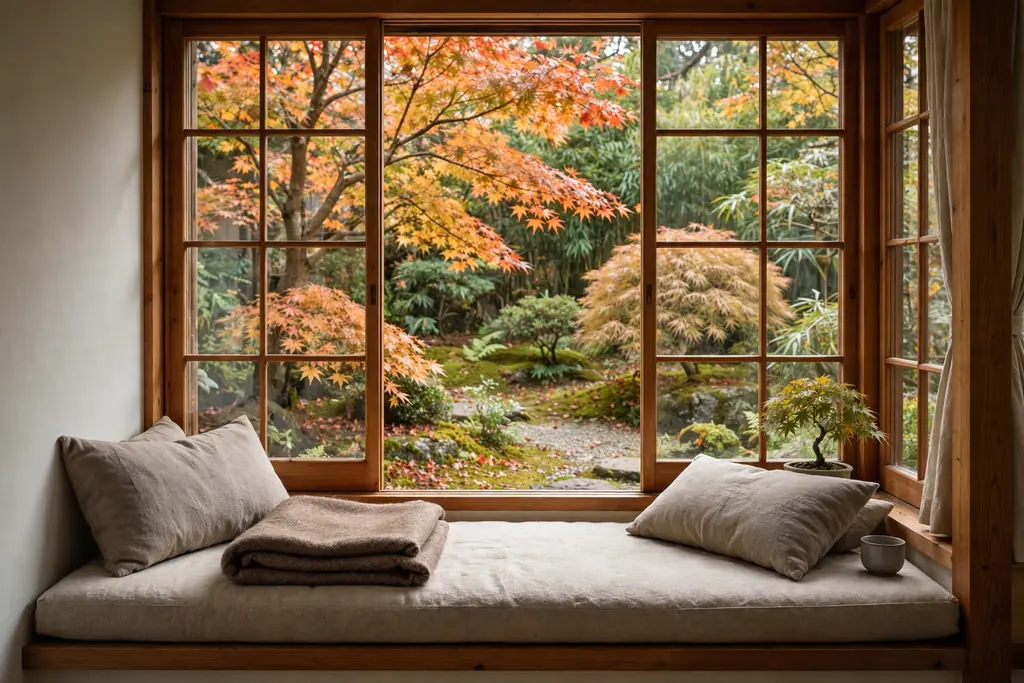
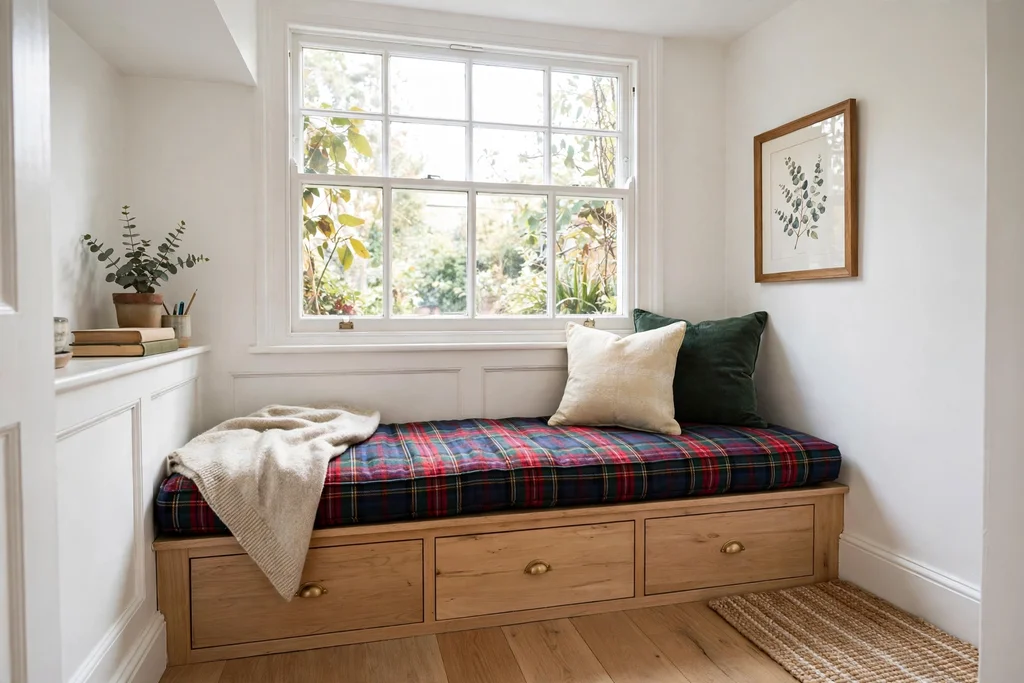
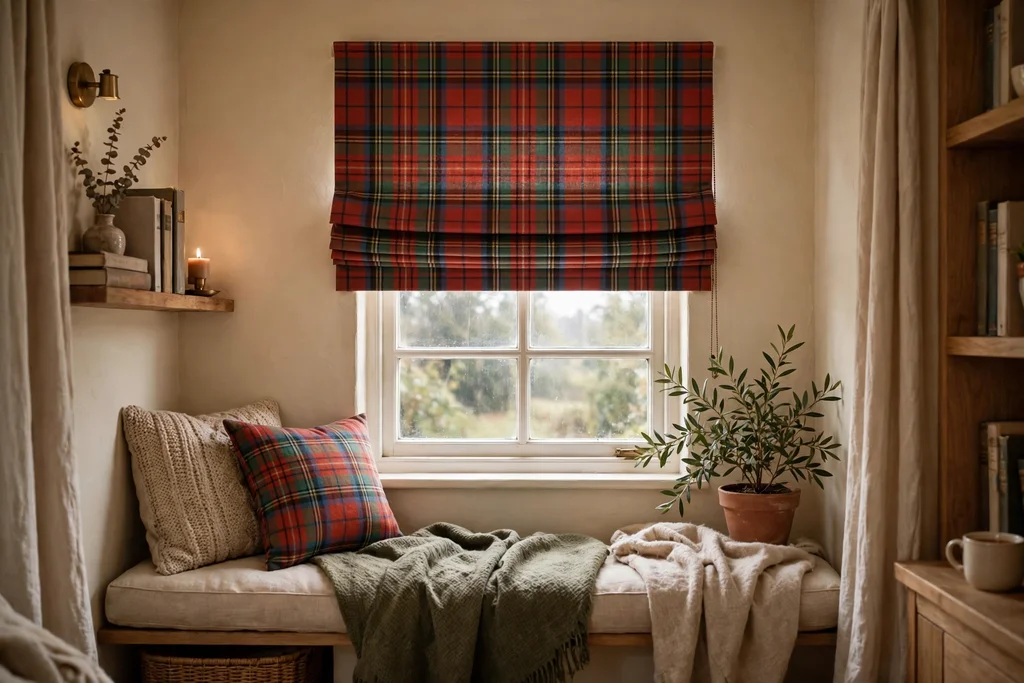
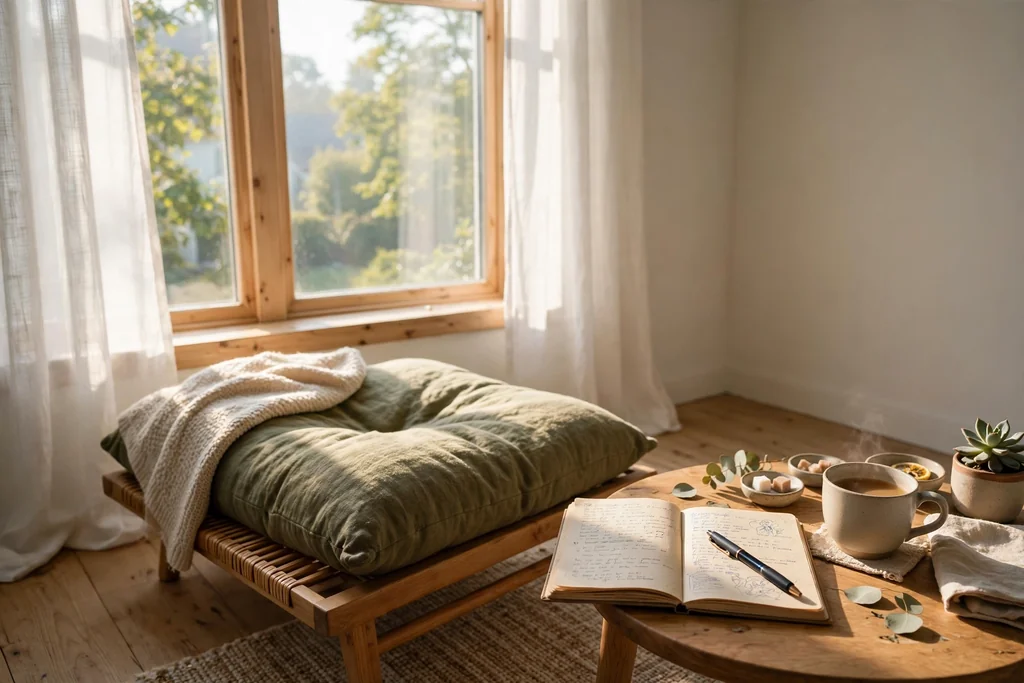
19. Add a Window Seat With Cushions and Storage
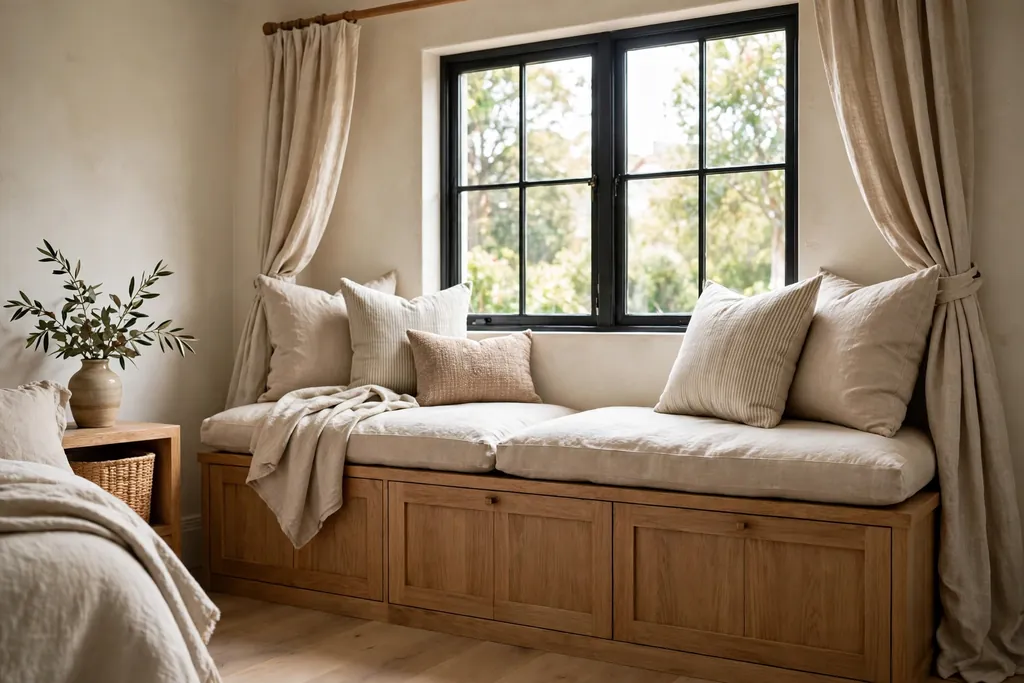
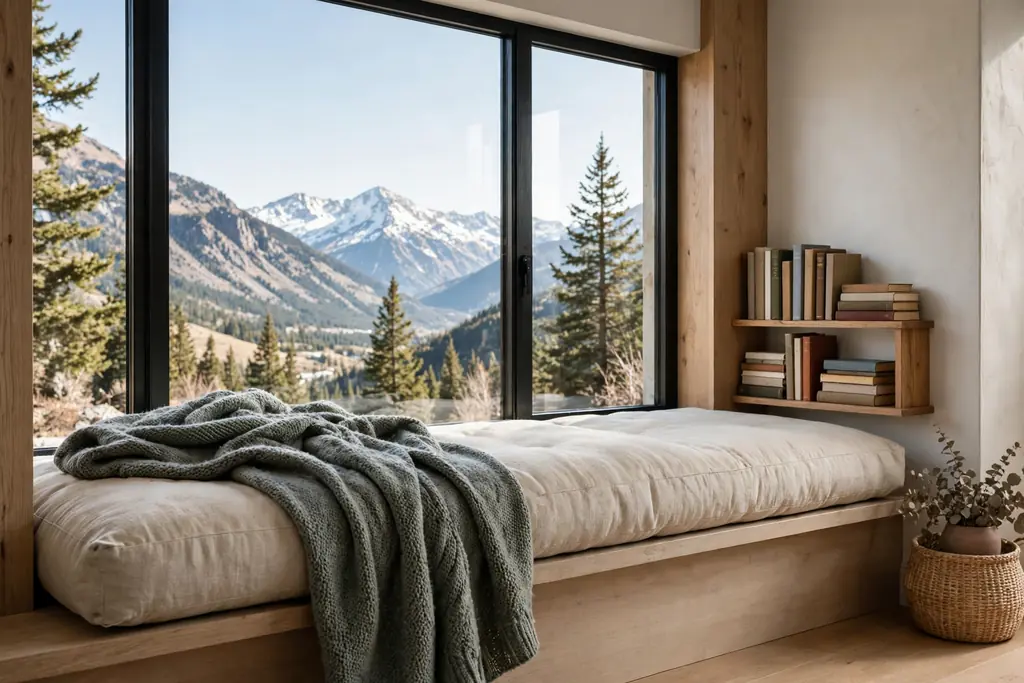
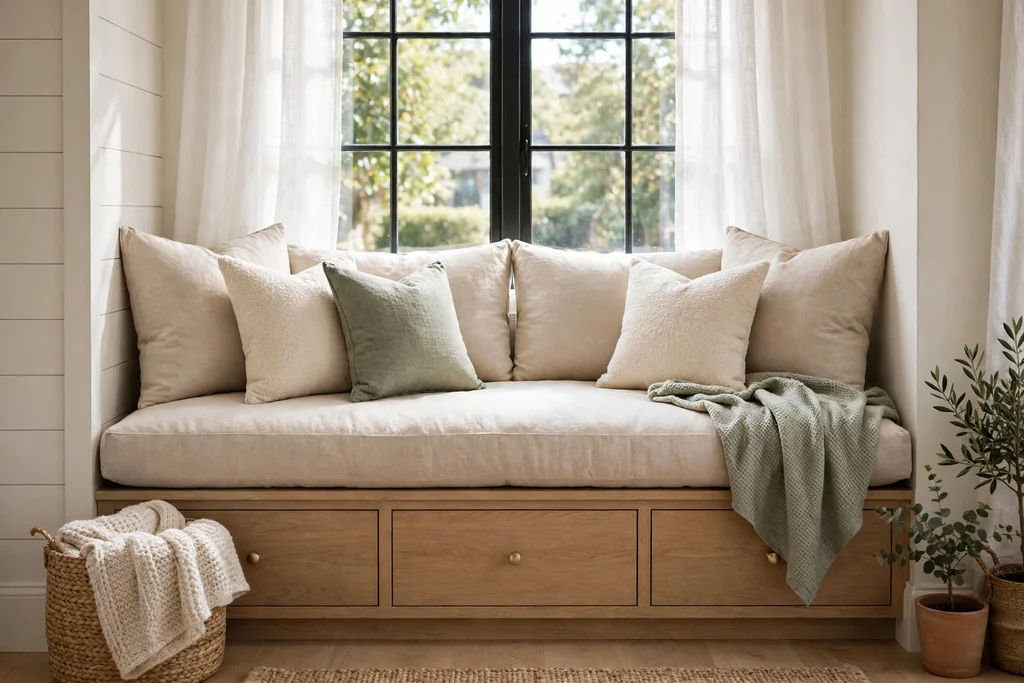
A window seat with a thick cushion, a few linen cushions, and storage below gives a bedroom a German reading spot that also hides clutter. The seat uses the space under a window well, cushions make it comfortable for reading, and the base can hold books, bedding, or seasonal clothes. This suits a bedroom with a wide window sill or a bay window, where a chair would block the light.
Build or buy a seat at a height that lets feet rest on the floor, and add a cushion in a washable fabric, since a window seat gets sun and dust. Keep cushions to two or three, in cream with one blue or sage accent, so the seat links to the rest of the room. If the window gets condensation, wipe the sill and seat base often, and keep books in a closed box inside the storage base.
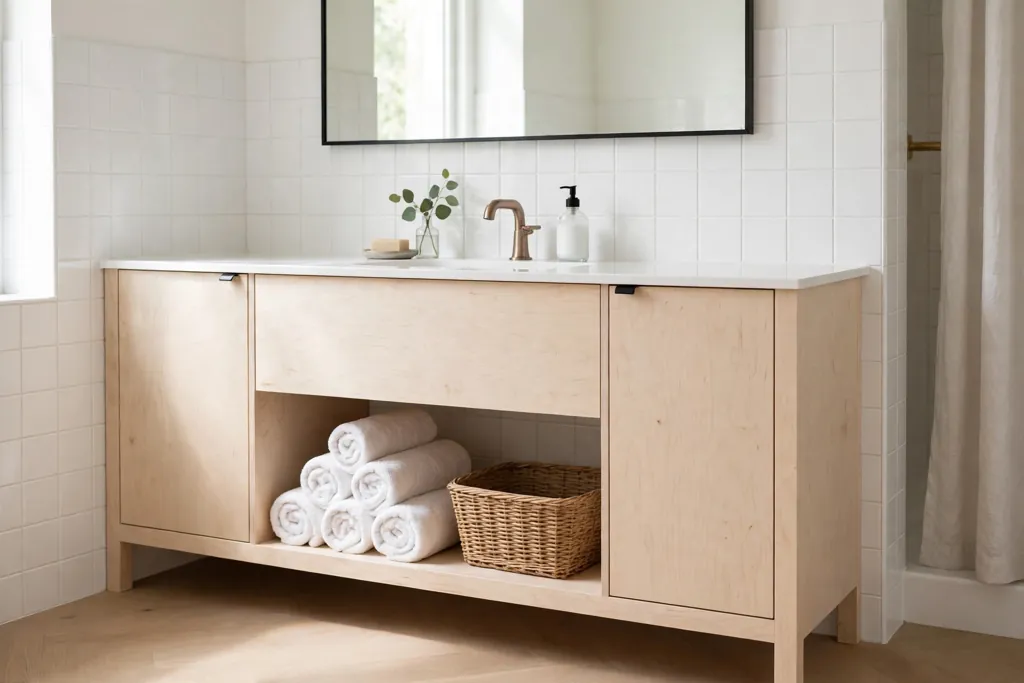
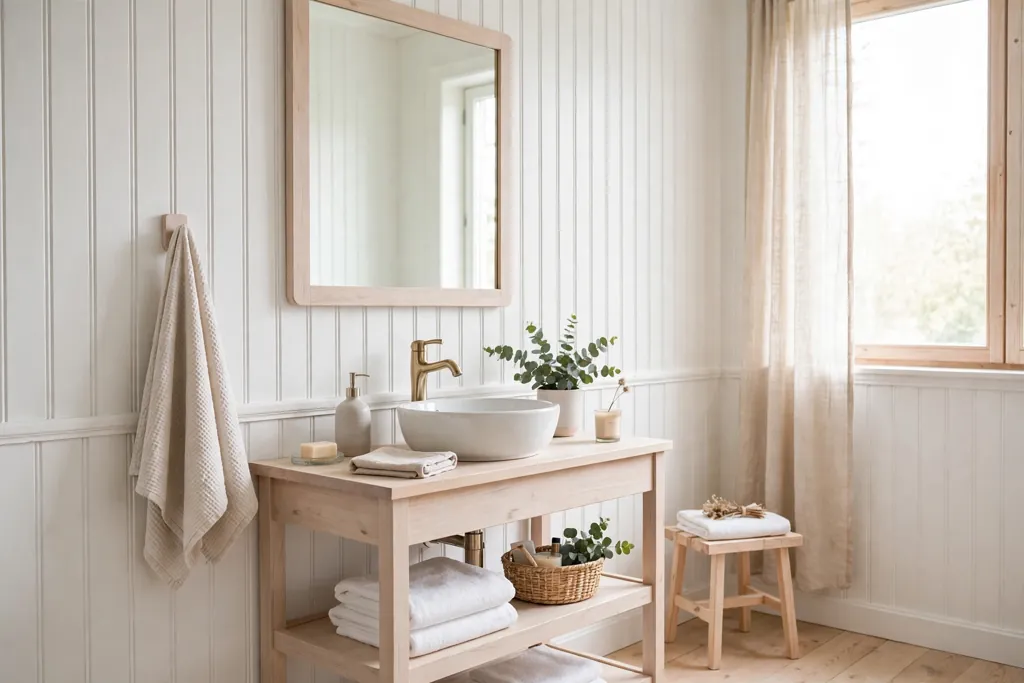
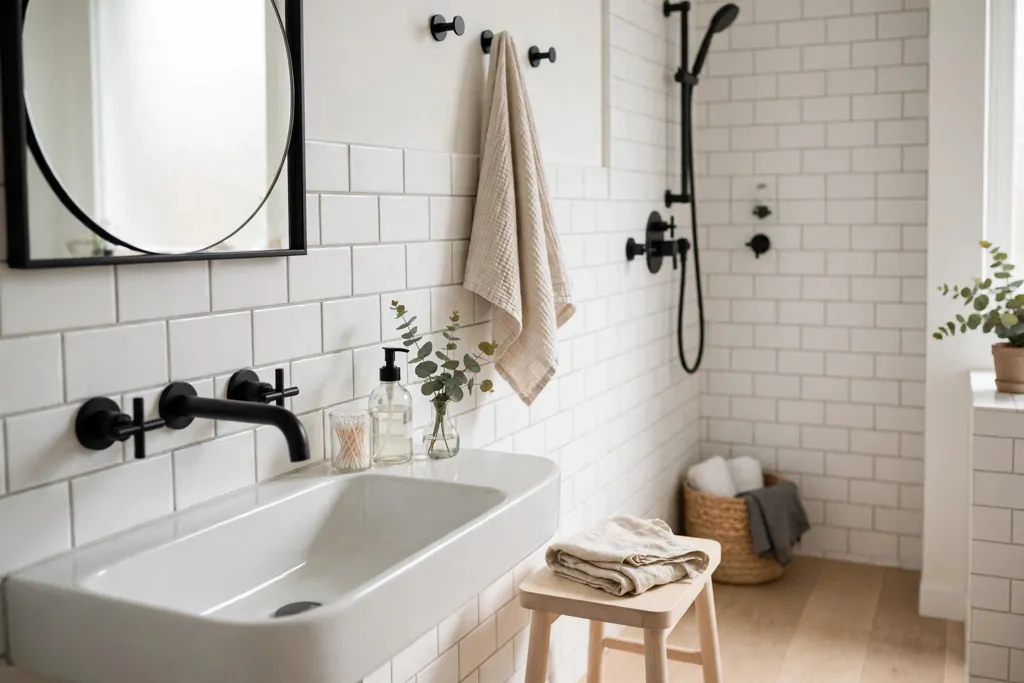
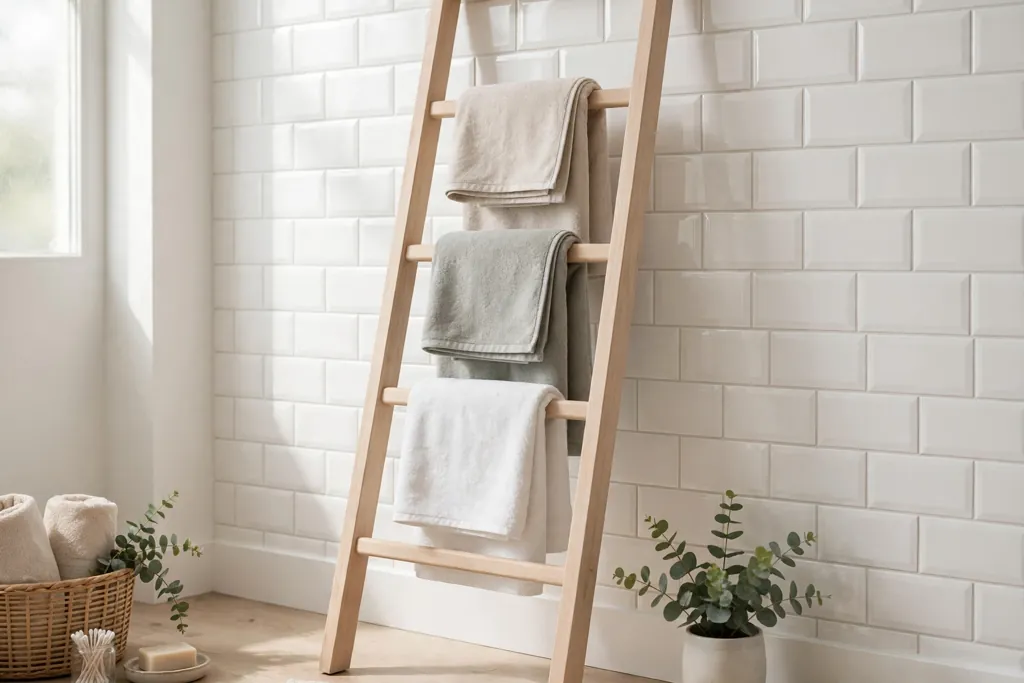
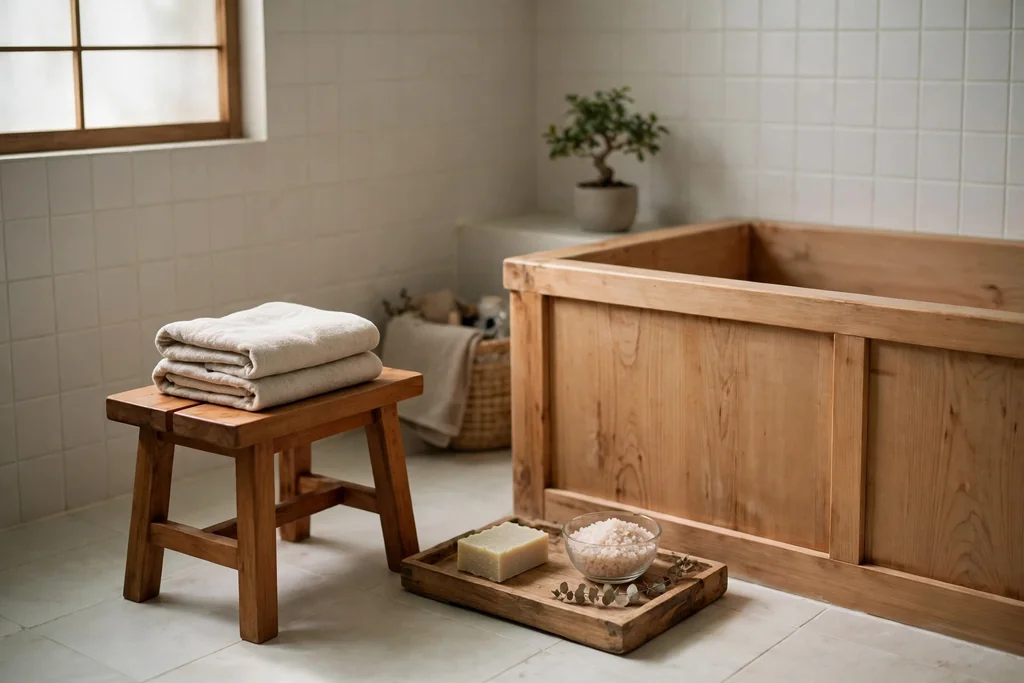
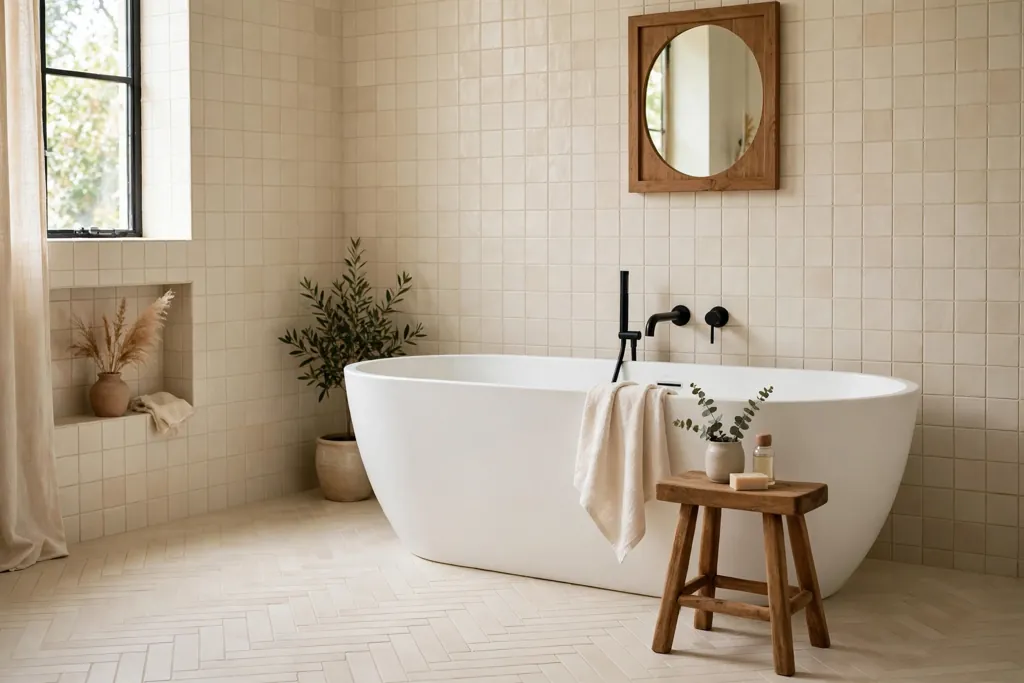
20. Keep the Bathroom Simple With Wood, Enamel, and Linen
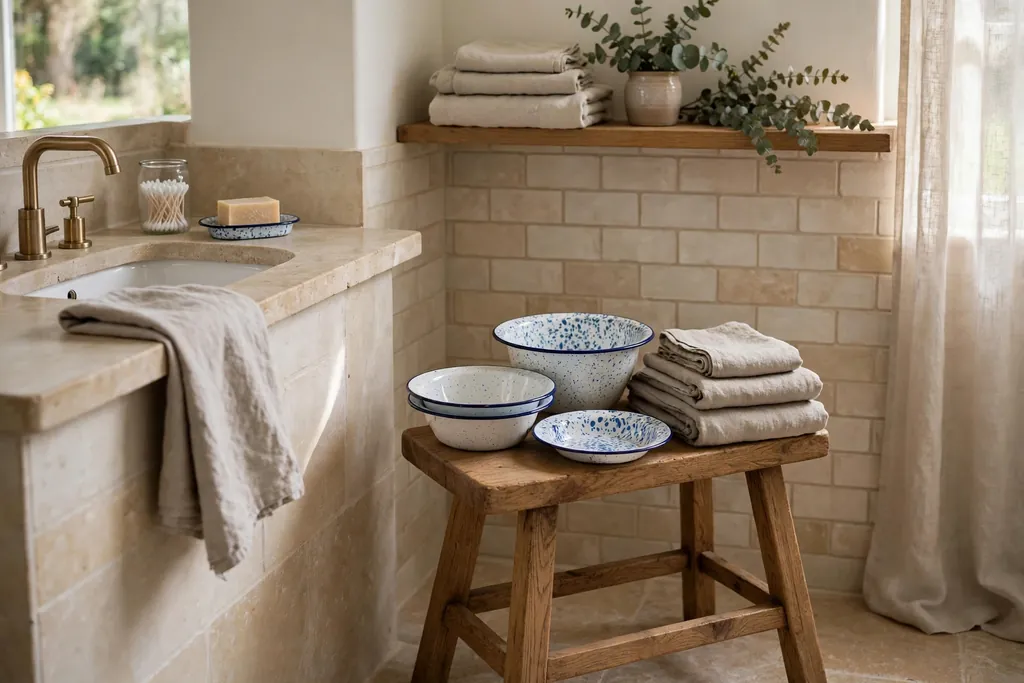
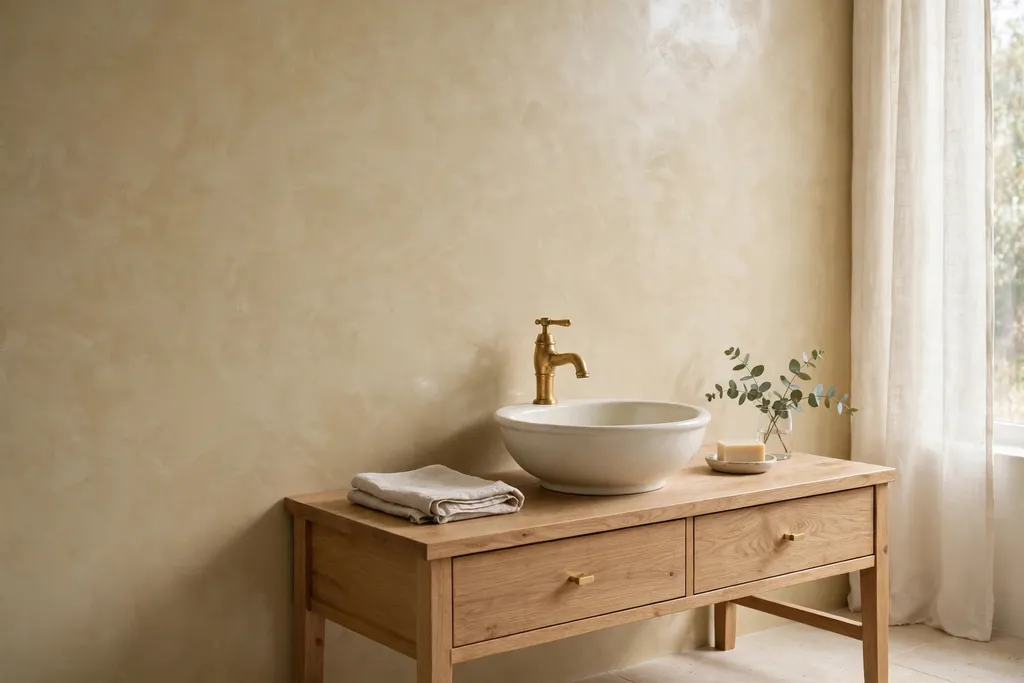
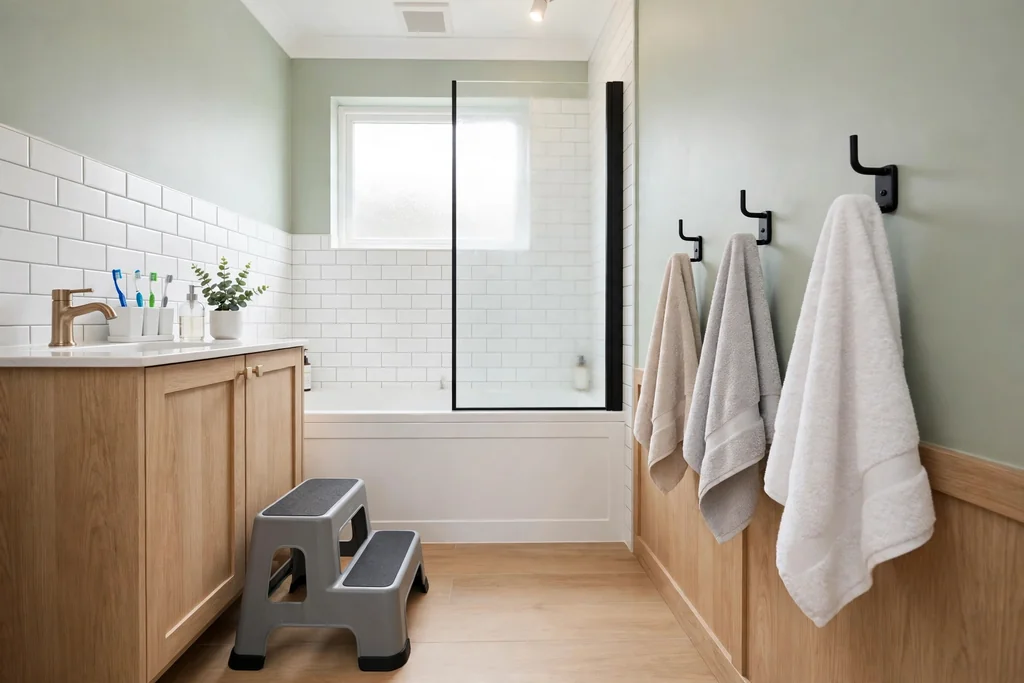
A bathroom with a wood stool, enamel dishes, and plain linen towels gives a German bathroom a simple, practical feel. Wood warms a tiled room, enamel suits a plain sink, and linen towels dry fast and look calm when folded. This suits a bathroom with plain white or cream tile, where a patterned shower curtain would add too much color.
Keep the stool beside the tub or sink for towels and clothes, and use enamel dishes for soap and small items, so the sink stays clear. Fold towels in a single color, such as white or sage, and keep one spare set in a basket or on a shelf. Wipe the wood stool after wet use, since standing water can mark wood, and wash linen towels often so they stay soft.
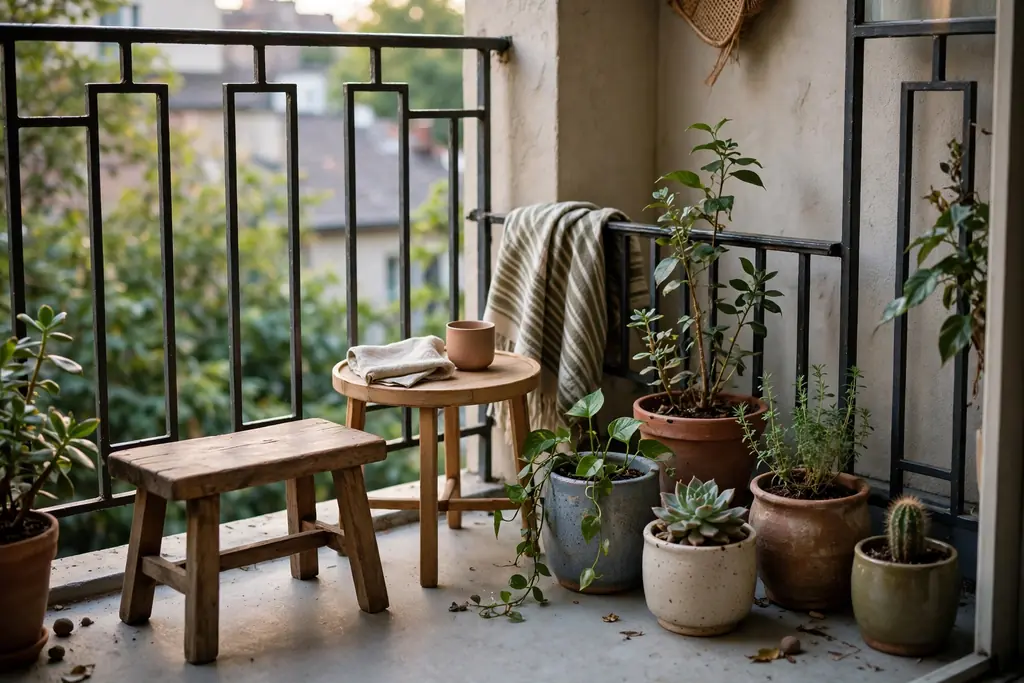
21. Set a Small Balcony Like a Biergarten Corner
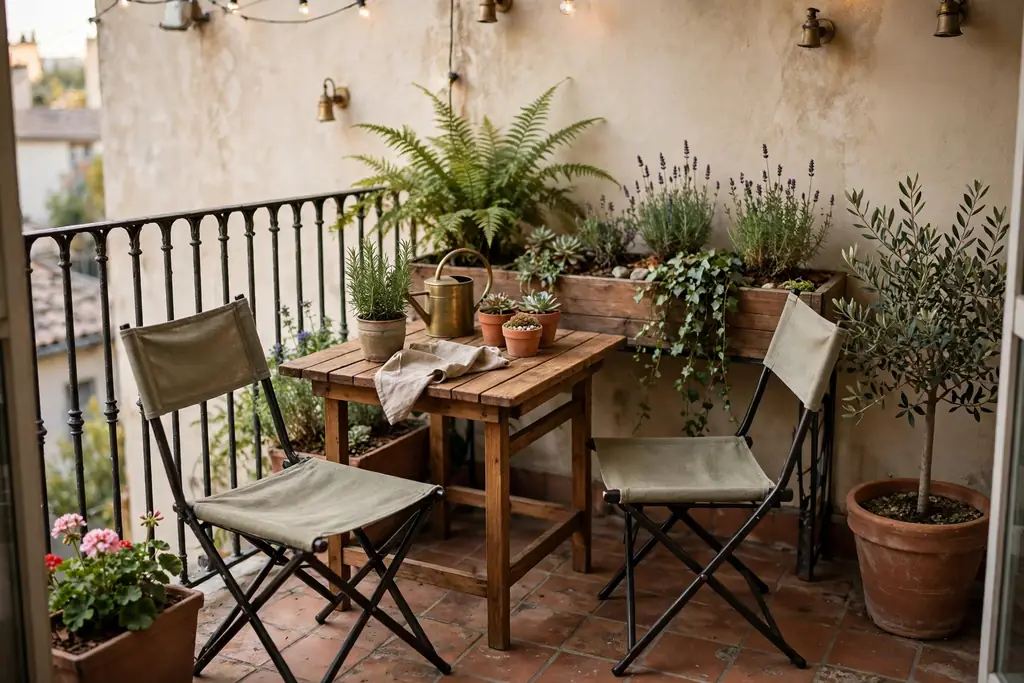
A small balcony with a folding bench or two chairs, a small wood table, and planters gives a tiny outdoor space a Biergarten feel in a few square feet. The wood table suits morning coffee and evening drinks, planters add green at the rail, and folding seats can be stored when the balcony is not in use. This suits a city balcony, a small terrace, or a garden corner where a full dining set would not fit.
Choose a table sized to the space, with chairs that fold or stack, so the walkway stays clear when the set is not in use. Add planters with herbs or geraniums, in a size the rail or floor can hold safely, and bring cushions indoors in rain. Wipe the table after wet weather, and check balcony rules before fixing planters to a rail, since some buildings limit rail loads.
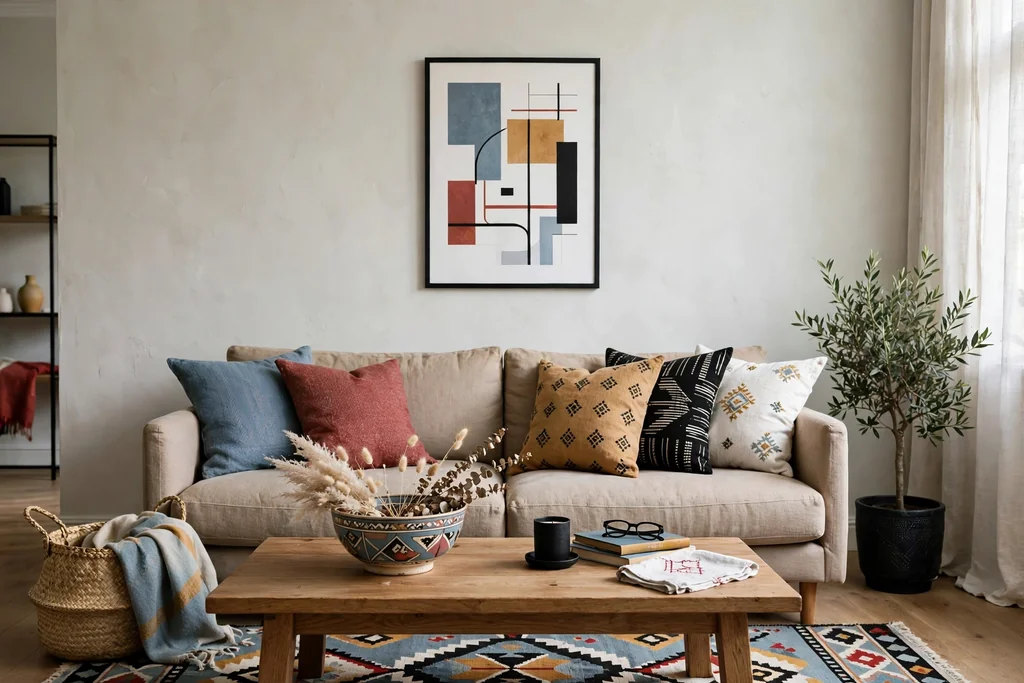
22. Carry One Calm Palette Through Every Room
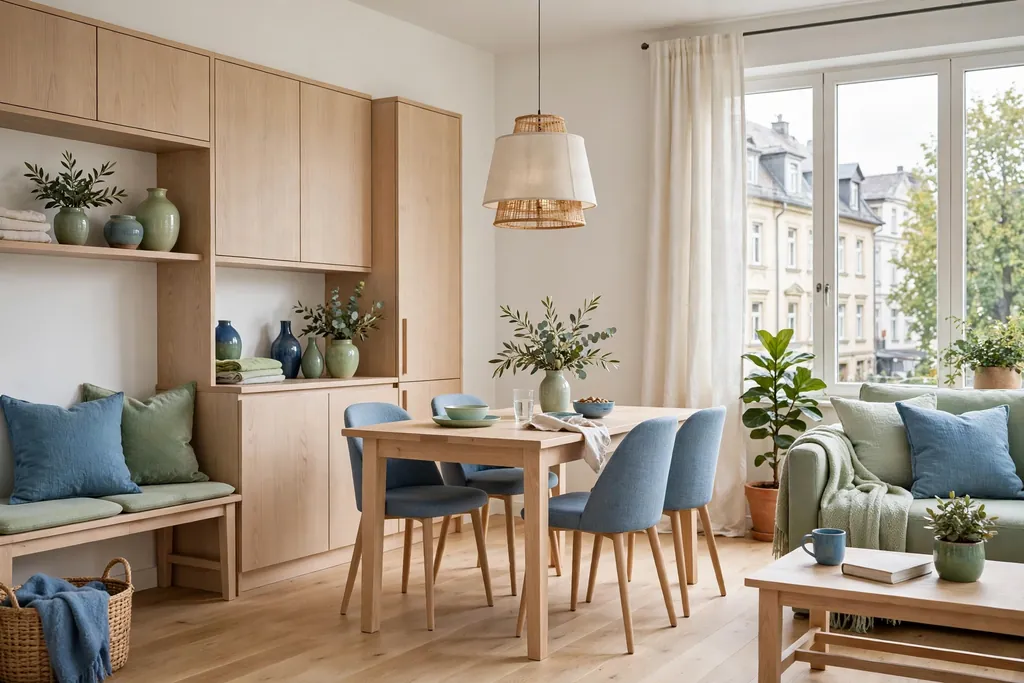
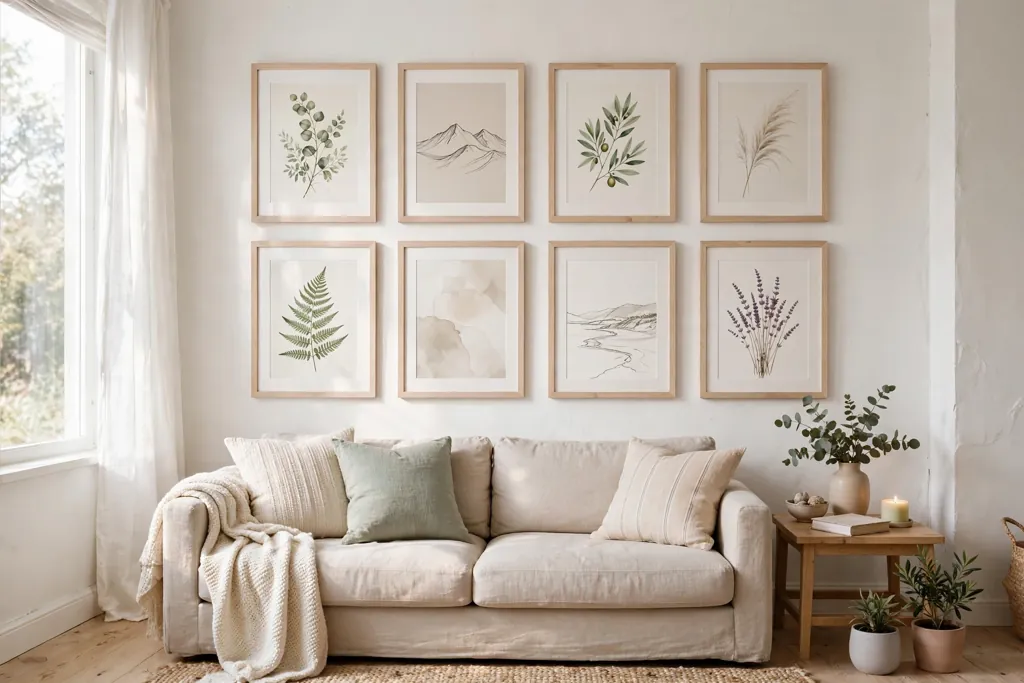
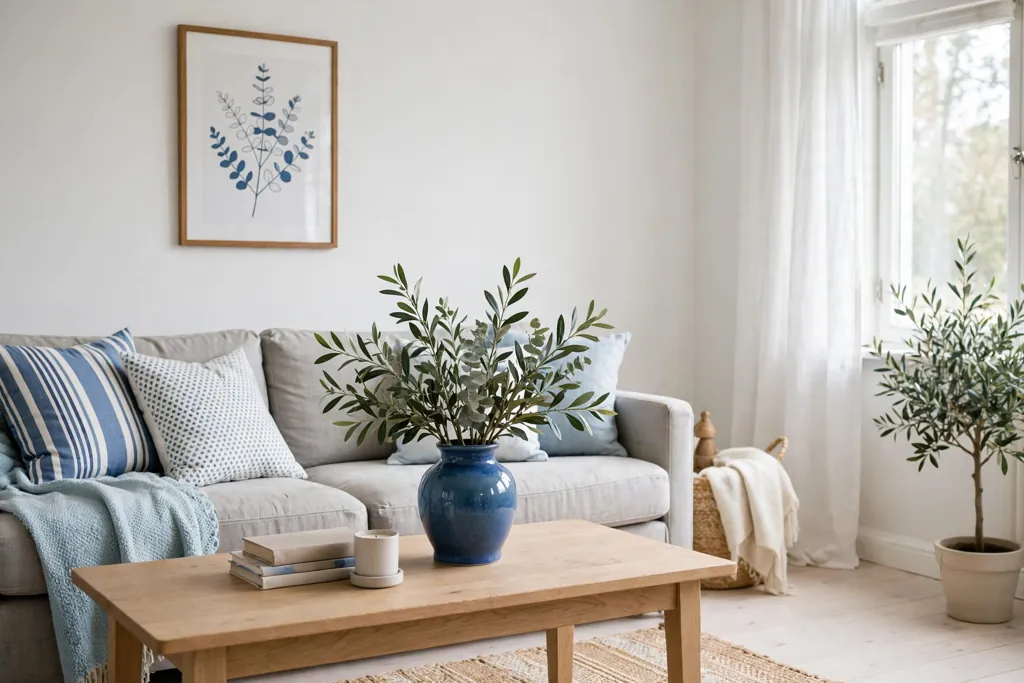
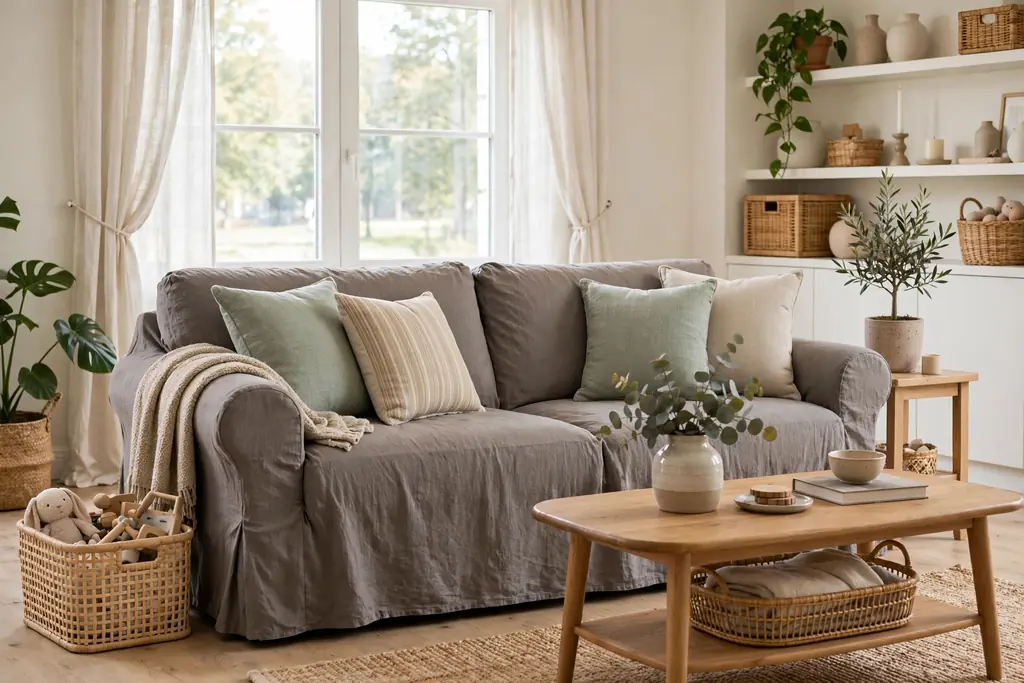
Carrying one calm palette through every room, in warm white, pale oak, soft green, and blue, is what makes a German home feel settled rather than themed room by room. The same tones in curtains, bedding, cushions, and crockery link rooms together, so the home reads as one calm place. This suits any German style home, and it is the easiest idea to apply after you have chosen furniture.
Use warm white for walls and large linen pieces, pale oak for furniture throughout, soft green for plants or a cushion, and blue for one accent in each room. Repeat each color at least twice in a room, and keep one surface plain, such as a plain rug or plain curtains, so the palette has room to breathe. If a new piece does not fit the palette, keep it out of the main rooms or save it for another space.
Conclusion
A German room that works comes from restraint as much as from pine and linen. Choose a few natural materials, keep the palette to three or four calm tones, and pick furniture that serves daily life first, from a long table to a bench by the door. Start with the room you use most, add curtains, bedding, and table linens first, then add beams, a tiled stove corner, or window boxes only where the room still feels bare. With those layers in place, the home stays warm, orderly, and easy to live in every day.
If you found an idea here that suits your home, save this post on Pinterest so you can find it again when you are ready to start. Pin the look you like most, whether it is a pine dining table, a window box of geraniums, or a cuckoo clock wall, and use it as a guide for your next weekend refresh.
FAQs
How do I keep German decor from looking too dark or heavy?
Keep the base light, with pale oak or a pale rug, warm white walls, and plain linen, and use dark wood only in small doses, such as beams, a clock case, or a chair frame. Repeat a light tone at least twice in a room, keep surfaces mostly clear, and use warm lamps in the evening, so wood reads as warm rather than heavy.
What colors work best in German home decor?
Warm white, pale oak, soft green, and blue work well, since they suit pine, linen, and stoneware without competing with them. Use warm white for walls and large linen pieces, soft green for plants or a throw, and blue and white checks for one accent, and keep darker tones to small pieces, such as hardware, frames, or a lamp base.
Can German style work in a small home or apartment?
Yes, if the layers stay light and limited. Use a pale wood tone, linen curtains, one checked accent, and one wood feature, such as a mirror frame or a small table, rather than a full beam ceiling and a tiled stove together. Keep floors clear and surfaces mostly tidy, so small rooms still feel open.
What is the easiest German change with no painting or building?
Start with curtains, bedding, and table linens. Swap to lace cafe curtains in the kitchen, add white linen bedding with a sage throw, use a blue and white checked tablecloth, and add a boot tray and hooks in the entry. These swaps add German texture in an afternoon, with no paint or tools needed.
How do I mix checks, lace, and wood carving without clashing?
Let one pattern lead, and keep the others in the same color family and at a different scale. For example, pair a blue check tablecloth with plain lace curtains, and keep carving to one item, such as a clock or a small shelf piece, rather than on every wall. If a piece has a strong pattern or a dark color, keep the pieces near it plain.
Does German decor suit a modern home?
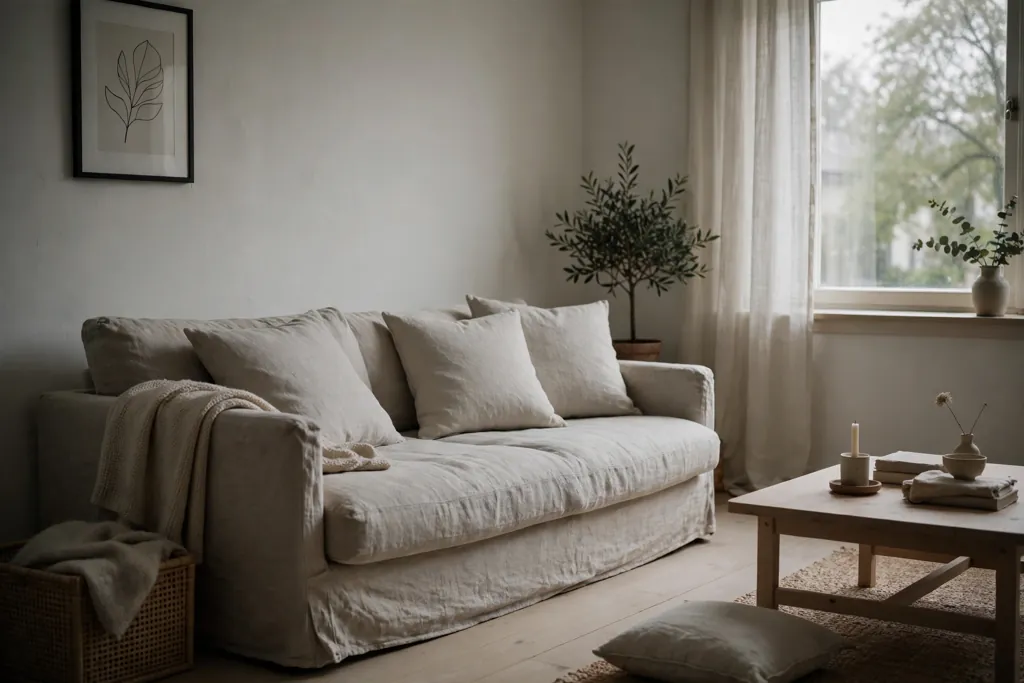
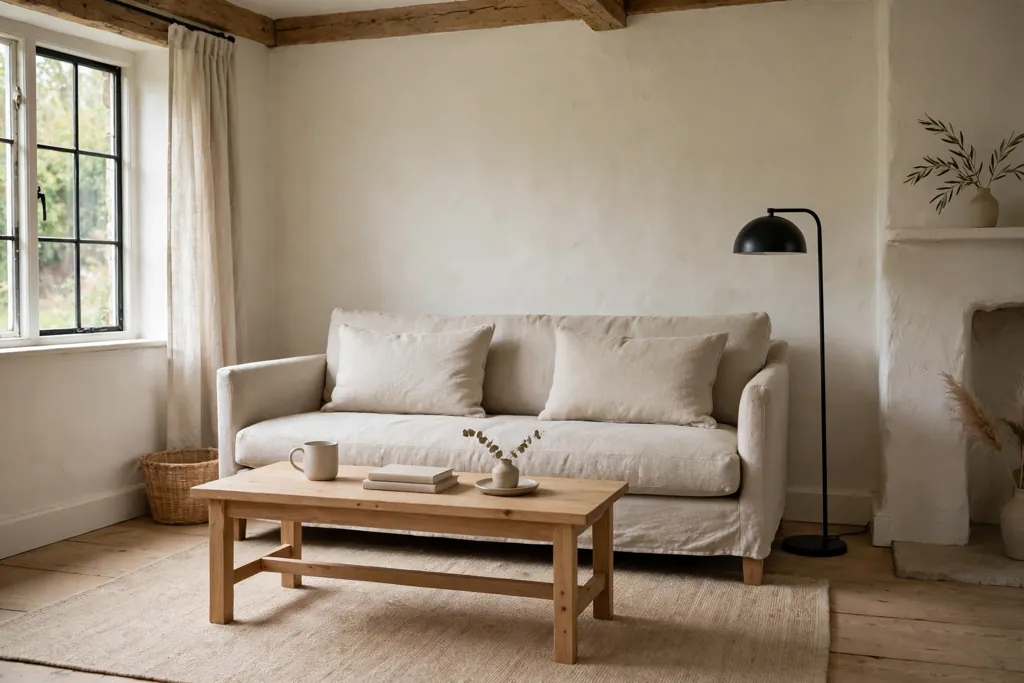
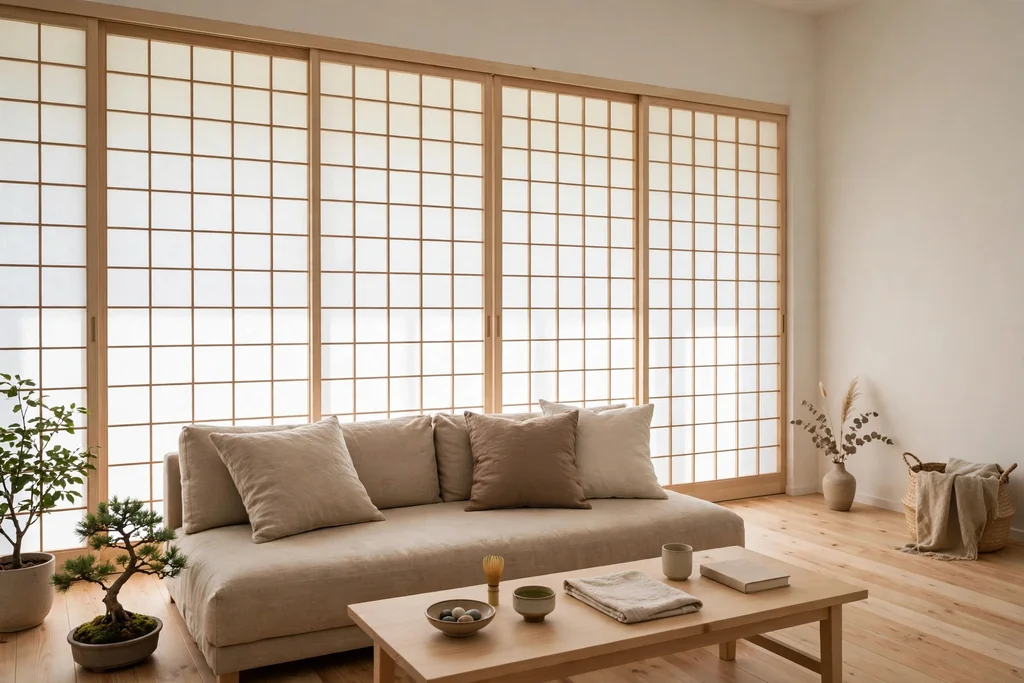
Yes, when the pieces use clean lines and a calm palette. A simple pine table, a linen sofa, matte brass lighting, and cream curtains can sit well in a modern home, since they add warmth without heavy carving or dark, ornate detail. Keep the shapes simple, and let one or two natural materials do the work.