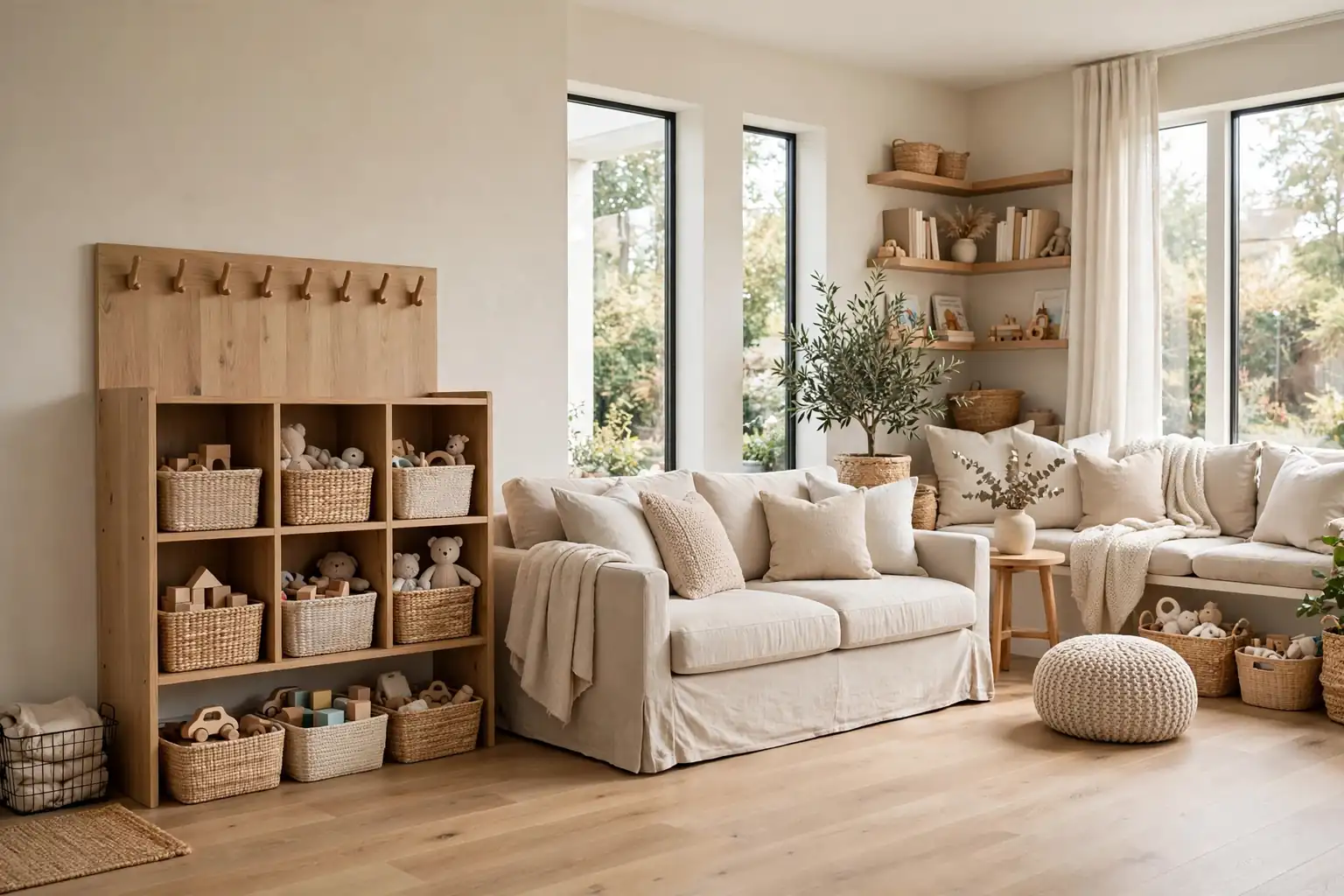
A home shared with children needs to handle spills, toys, homework, and busy mornings without looking like a playroom in every corner. The trick is to choose a calm base for the large pieces, then add child-height storage, washable surfaces, and a few fun details that children can actually use. These 22 kid friendly home decor ideas cover the entry, living room, kitchen, bathroom, bedroom, and dining area, so you can start with one room or work through the whole home. Pick the idea that solves your most repeated daily problem first, and let the rest follow as your family grows.
Key Takeaways
- Put storage at child height: low hooks, bins, and rails let children tidy up without help, which keeps rooms calmer for everyone.
- Choose washable first for the pieces children touch most: seating fabric, rugs, table surfaces, and lower wall finishes.
- Give each activity a clear zone: an entry station, a reading corner, a craft spot, and a play zone stop toys and school work from spreading everywhere.
- Use soft edges and unbreakable decor where children run, reach, and play, and keep fragile pieces high or behind closed doors.
- Keep the large pieces neutral and let children choose the changeable details, such as cushion covers, wall decals, and art on display.
- Plan for growth: adjustable rails, open bins, and removable decor can change as interests and heights change.
1. Build a Child-Height Entryway Cubby Station
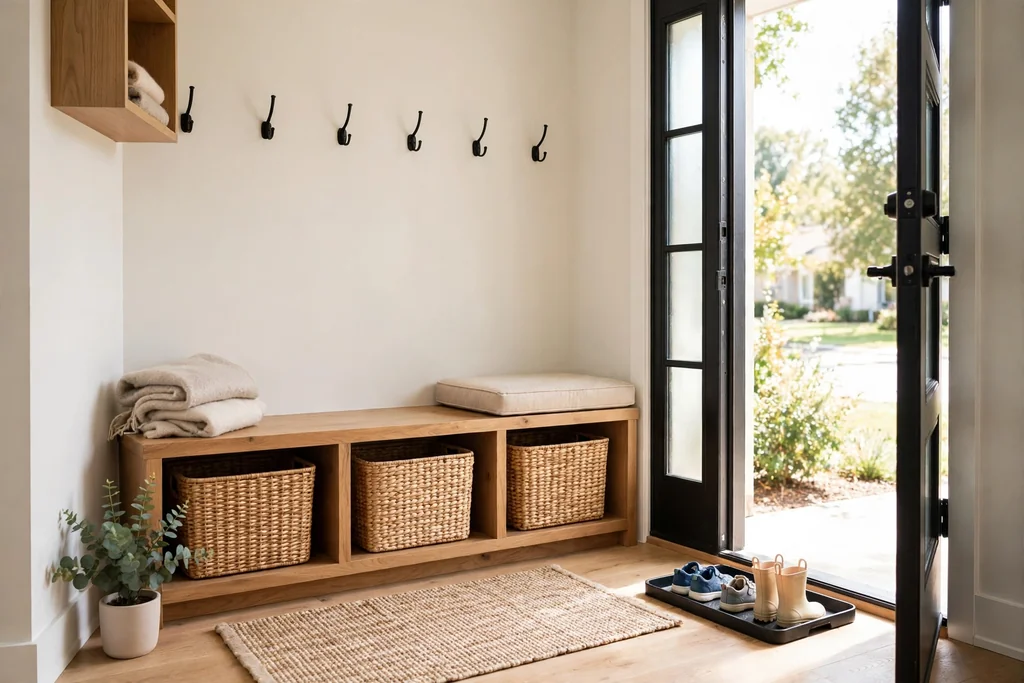
Give every child one cubby, one hook, and one bin at the entry, so coats, bags, and shoes have a clear home the moment they walk in. Set hooks at a height children can reach without climbing, add a shallow tray or boot mat below for wet shoes, and label each cubby with a name or a picture for younger children. This one station can cut down the morning search for shoes and the evening pile by the door.
Keep the station narrow if the entry is small, using a wall-mounted rail and a single bench rather than a wide unit. Place a small basket on top for hats and gloves, and empty it once a season so outgrown items do not take over. If the entry also serves guests, keep the top of the bench clear and the children’s bins below, so the space still looks tidy when visitors arrive.
2. Choose Washable Slipcovered Seating
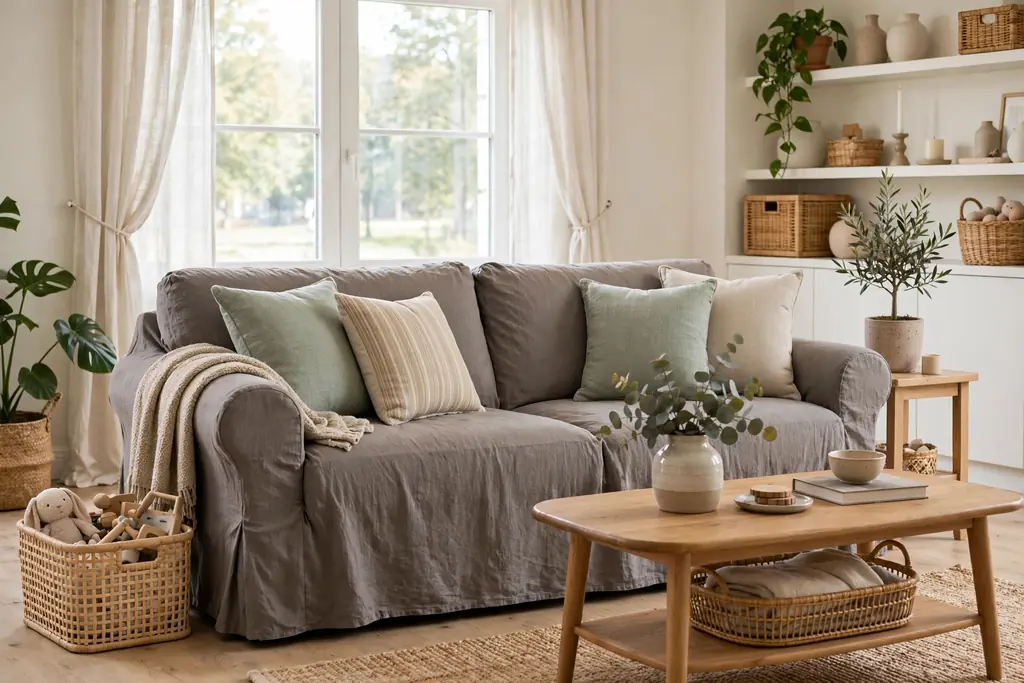
A slipcovered sofa or washable chair covers make a living room far easier to live in with children, since covers come off for washing after juice, paint, and muddy knees. Choose a tight weave cotton or a performance fabric in a mid tone, which hides marks better than very pale or very dark fabric, and check the care label before you buy so washing stays simple. Keep a spare set of cushion covers if the maker sells them, so the seat is never out of action on wash day.
Pair washable seating with cushion covers in the same fabric family, so the whole seat can be refreshed at once. A sofa with removable legs also helps, since you can lift it to retrieve lost toys and clean underneath. For more room-by-room ideas for a shared living space, see these kid friendly living room decor ideas.
3. Pick Rounded, Soft-Edge Tables
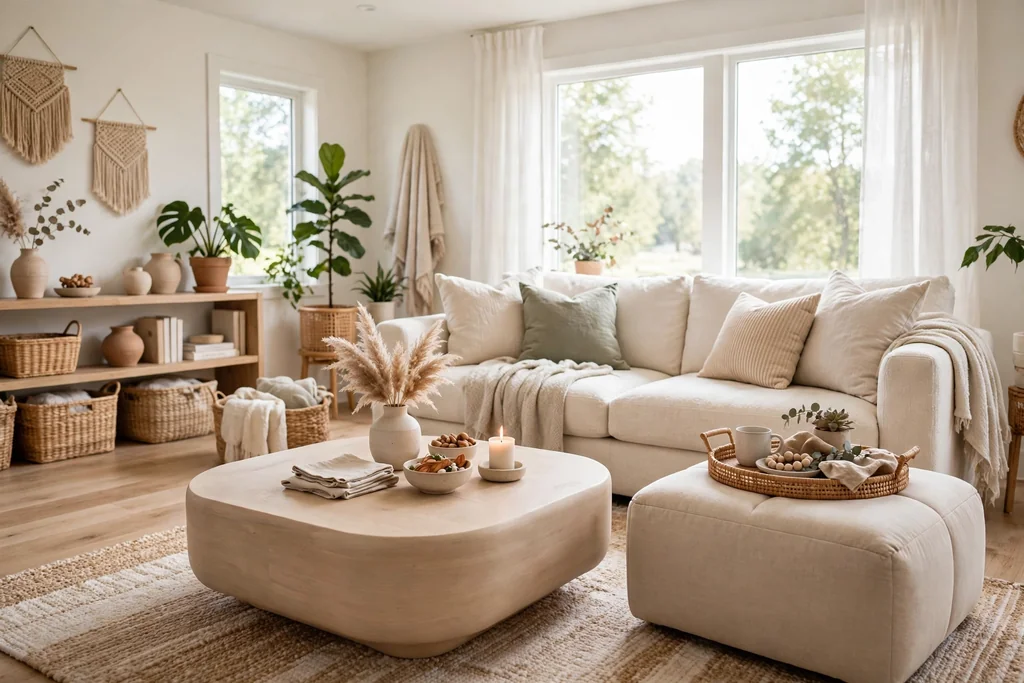
Swap sharp-cornered coffee tables and side tables for rounded shapes, padded ottomans, or tables with soft edge guards, since these are the pieces children bump into most. A round table also gives better flow in a small room, with no corner jutting into a walkway, and a firm-topped ottoman can still hold a tray for drinks and books. Check that the piece is heavy enough not to slide or tip when a child leans on it.
Keep the top mostly clear, with one tray for remotes or books, so the table stays useful for adults and safe for children. If you love a particular hard-edged table, fit soft corner guards in a matching tone and keep hot drinks on a higher side table instead. This simple swap suits toddlers learning to walk and older children racing past equally well.
4. Set Up Rolling Toy Rotation Bins
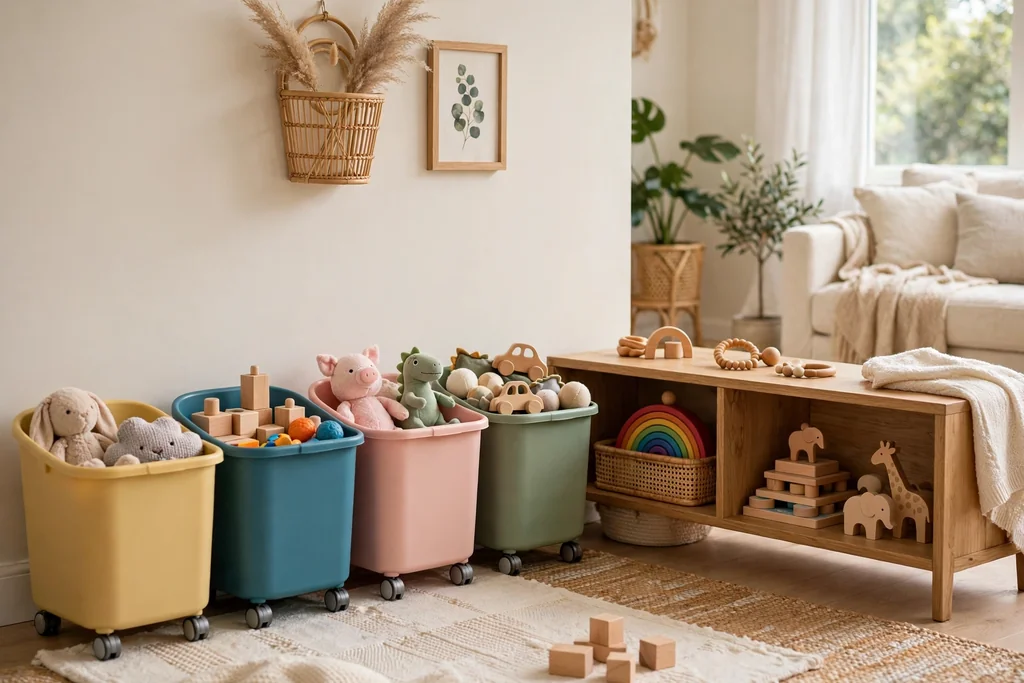
Use a set of rolling bins, one per toy category, so children can pull out one bin at a time and push it back when they finish. Label each bin with a picture and a word, such as blocks, cars, dolls, or art, so even young children can return toys to the right place. Rolling bins suit a living room or play corner because they move to where play happens and tuck under a bench or against a wall afterward.
Rotate the bins every few weeks, storing the rest out of sight, so the selection stays fresh without buying more. Keep only three or four bins out at once in a small room, and do a quick sort once a month to remove broken or outgrown toys. A short tidy routine before bedtime, with children returning items to their own bins, keeps the room calm for the evening.
5. Lay Washable Low-Pile Rugs in Play Zones
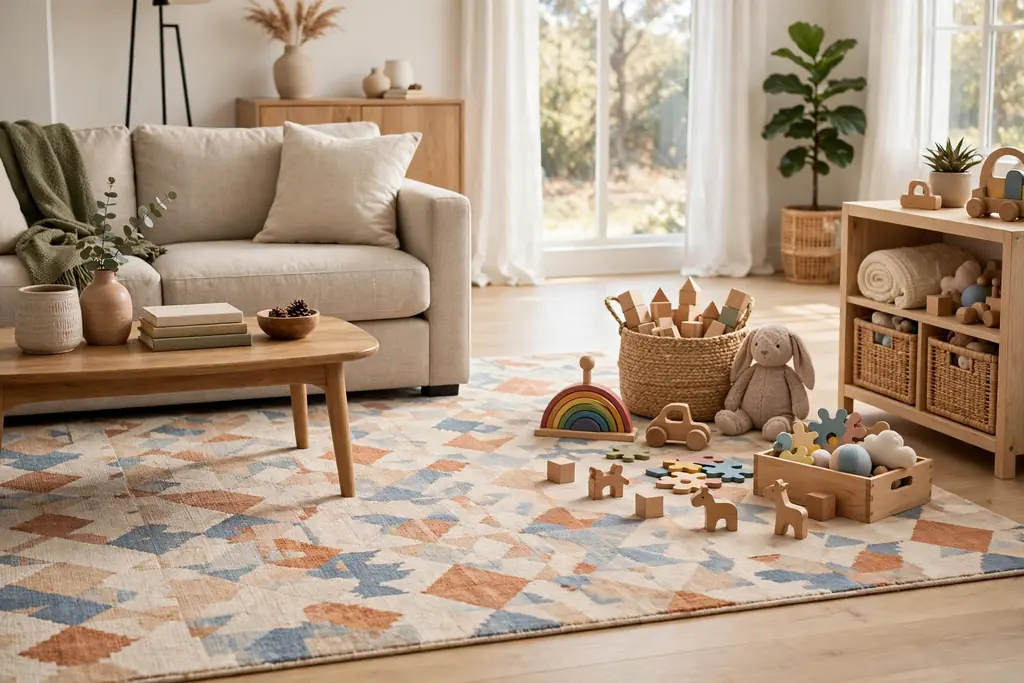
A washable, low-pile rug changes how relaxed you can be about a play zone, because spills stop being emergencies. Choose a rug large enough for the seating or play area it serves, with a busy pattern or mid tone that hides crumbs and marks between washes. A rug pad underneath stops sliding on hard floors and adds a little cushioning for floor play.
Check the washing instructions before buying, since some washable rugs need a large capacity machine or air drying. In a dining area, a washable rug under the table must be easy to lift for cleaning, so avoid a very heavy rug there. Keep a spare rug or a second pad if you want a quick swap on wash day, and vacuum the rug often so crumbs do not work into the pile.
6. Create a Reading Nook With Forward-Facing Book Shelves
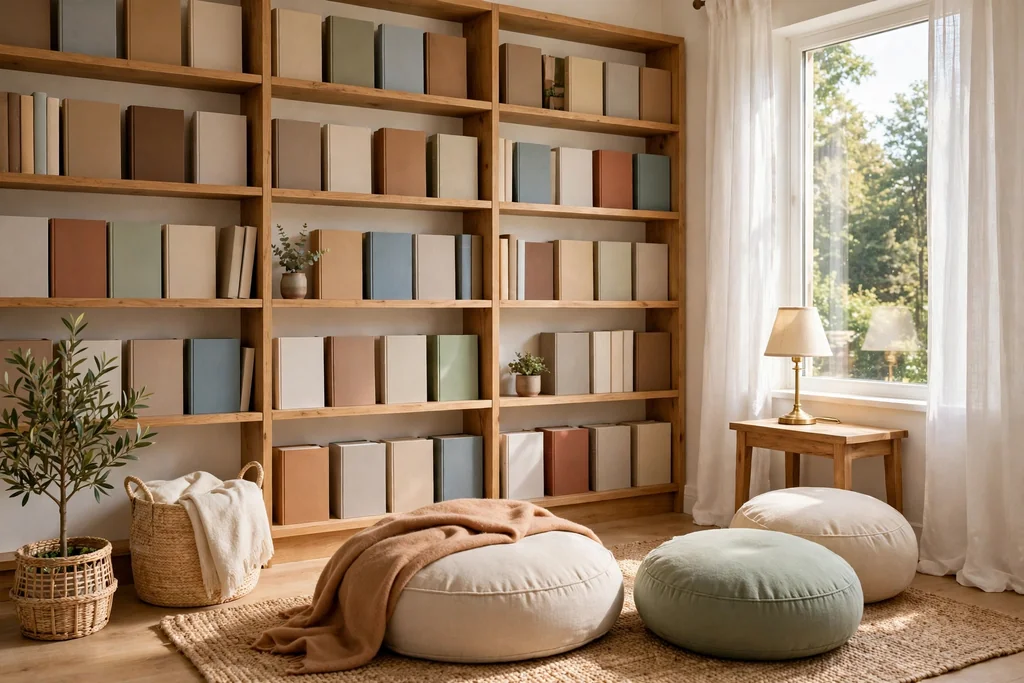
A reading nook built from forward-facing book shelves lets children see book covers and choose for themselves, which encourages reading far more than books lined up spine out. Place a low shelf or a short bookcase beside a window or a quiet corner, add two or three large floor cushions and a soft throw, and keep a small lamp nearby for evening reading. The cushions can be stacked or moved aside when adults need the floor space back.
Let children choose a few favorite books for the shelf and rotate them with the seasons, so the nook stays inviting. Washable cushion covers matter here too, since the nook will see snacks, naps, and sprawled out reading sessions. This corner also doubles as a calm-down spot, which is useful on busy days when the main seating area feels too lively.
7. Hang a Clip Rail for Rotating Kids Art
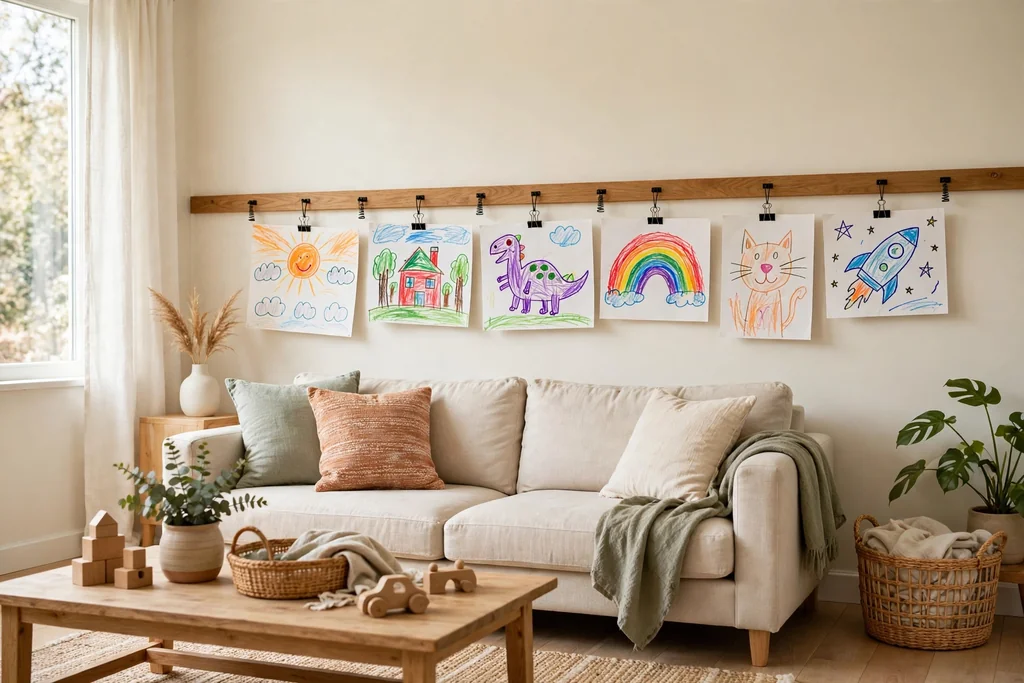
A display rail with clips turns a wall into a gallery children feel proud of, without damaging the wall with many separate fixings. Fit a wooden rail, a wire with clips, or a set of clip frames at child eye height, and swap the pieces every few weeks as new work comes home. Keeping the display to one defined wall or one stretch of wall stops art from spreading to every surface.
Use lightweight frames and fixings suited to their weight, and keep glass out of reach of very young children, or use open clip frames with no glazing. Photograph favorite pieces before they are retired, so the wall can change without losing the memory. For more wall display ideas that suit a bedroom as well as a play area, see these bedroom wall art ideas.
8. Make a Kid-Height Kitchen Snack Drawer
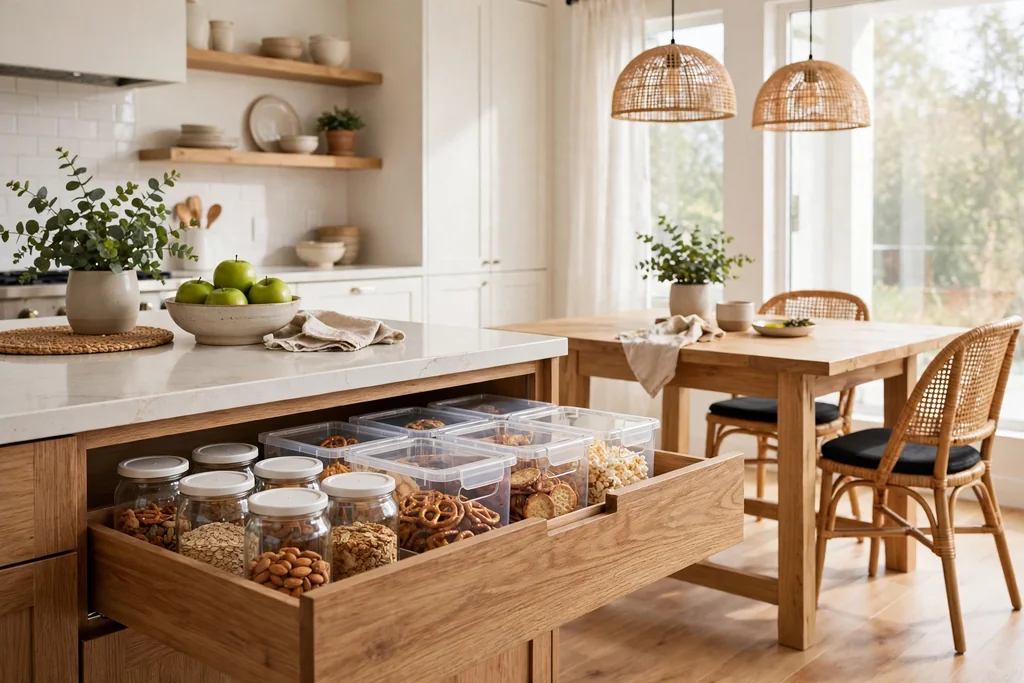
Give children one low kitchen drawer or one low shelf for their own snacks, cups, and bowls, so they can help themselves without climbing. Use small labeled jars or clear bins inside the drawer, with one bin per category, such as fruit, crackers, or cups, and keep the drawer near the table rather than near the cooker. This small change builds independence and keeps snack requests from interrupting cooking.
Refill the drawer together once a week, and check that the items inside suit the ages in the home. Keep heavy or sharp items in higher cupboards, and use a soft-close drawer if you can, so small fingers do not get caught. If kitchen space is tight, a single low shelf with a basket per child works just as well as a full drawer.
9. Use Wipe-Clean Table Surfaces and Placemats
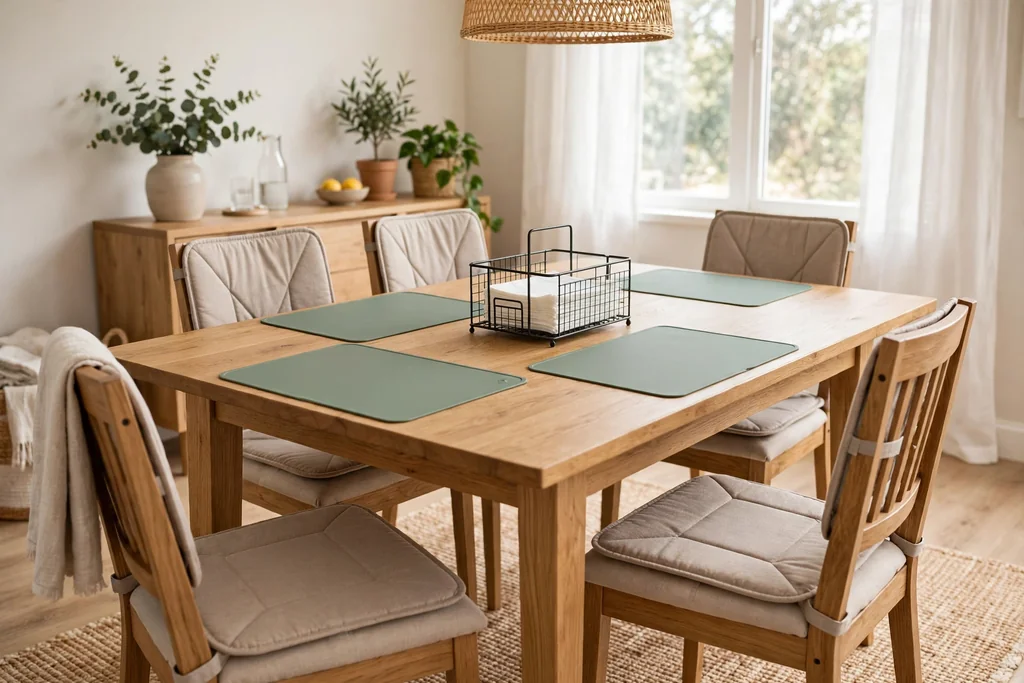
A wipe-clean table top, or a set of wipe-clean placemats on a wood table, makes family meals far less stressful, since paint, food, and glue wipe away in minutes. Choose placemats in a calm base color with one accent children like, and keep a small caddy on the table for napkins and cutlery, so setting the table becomes a job children can do. A table with a smooth, sealed finish is easier to clean than an open-grain or unsealed top.
Keep the dining chairs wipe-clean too, or use washable chair pads, since chairs take as many spills as the table. After meals, a quick wipe keeps the table ready for homework or crafts, which is useful when one table serves many jobs. Avoid a tablecloth that children can pull, and choose placemats with a non-slip backing so plates stay put.
10. Add a Bathroom Step Stool and Reachable Hooks
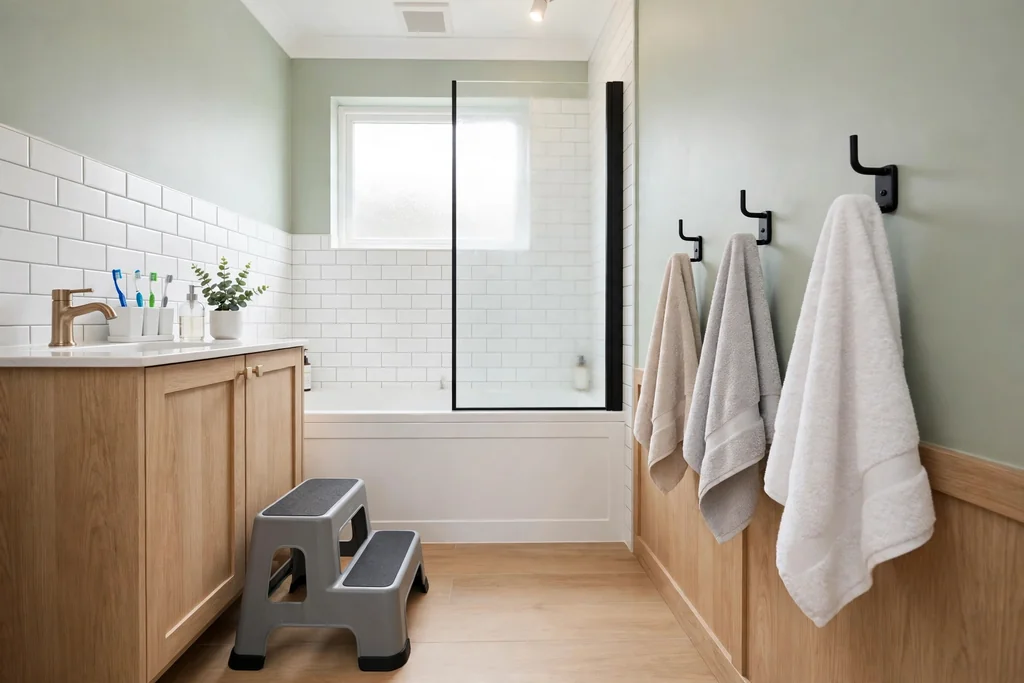
A sturdy, non-slip step stool and low towel hooks let children reach the sink, hang their own towel, and brush their teeth without help. Choose a stool wide enough for two feet, with a non-slip top and feet, and place it so it does not block the door or the bath. Hang one hook per child at shoulder height, with a small caddy or cup for toothbrushes and soap nearby.
Keep the bathroom counter mostly clear, with only the items children use daily in the caddy, and store the rest in a closed cupboard. A small mirror at child height, fixed securely, helps children see what they are doing and builds confidence. Check the stool often for wear, and replace it when children outgrow it rather than letting them climb on a wobbly seat.
11. Fit a Low Bedroom Wardrobe Rail and Open Bins
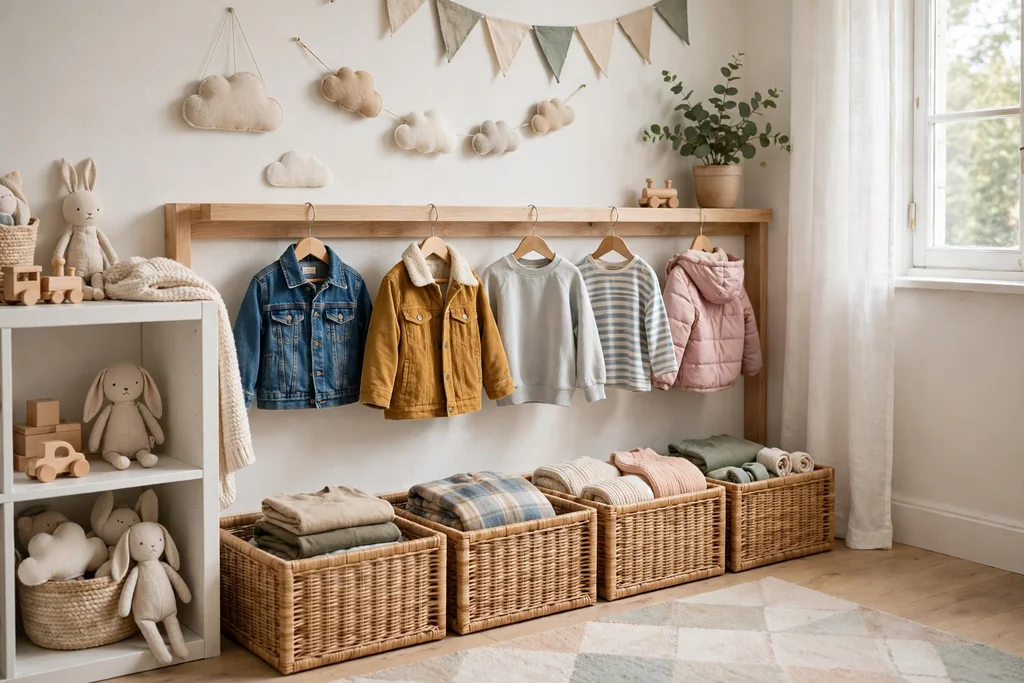
A low wardrobe rail, set at child height inside a wardrobe or on a wall rail, lets children choose and hang their own clothes, which makes mornings smoother. Pair the rail with two or three open bins below for folded clothes, pajamas, and accessories, labeled with pictures for younger children. Keep the rail to the clothes children wear most, and store out-of-season clothes higher up.
Use sturdy fixings rated for the weight of the clothes, and keep the rail clear of the door swing. As children grow, raise the rail one notch at a time, or move it to a taller wardrobe, so the system grows with them. This idea also teaches sorting early, since children learn to return each item to its own bin or hook.
12. Choose Easy-Make Bedding Children Can Manage
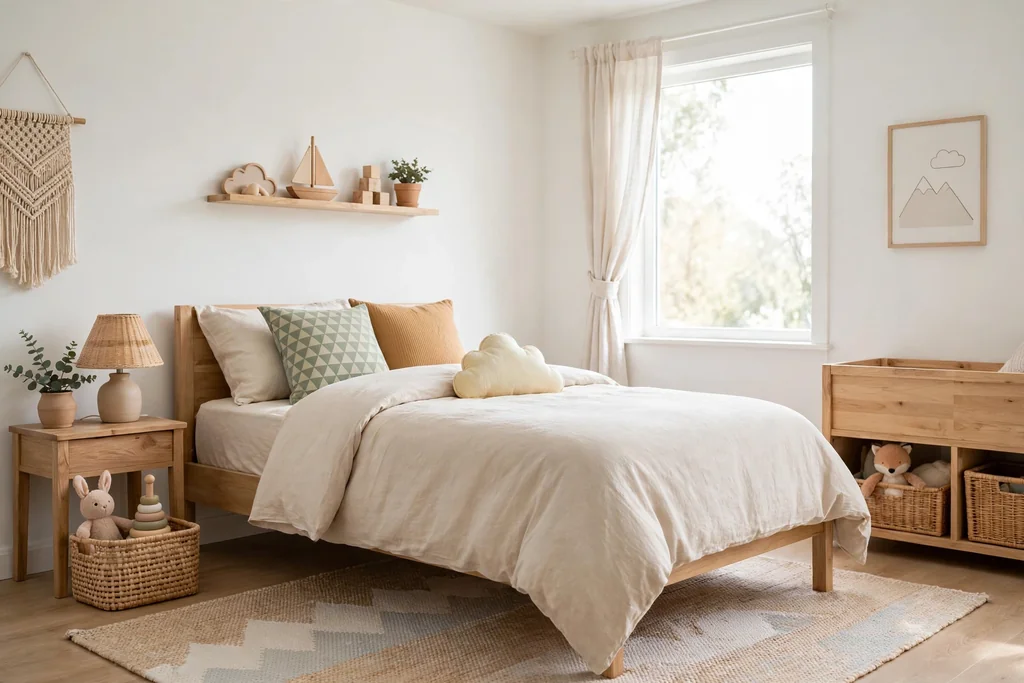
Bedding children can make themselves, such as a zip-up duvet cover, a simple flat sheet with a light quilt, or a bed with a single top layer, makes the morning routine faster and builds pride. Choose a duvet cover with a wide opening or a zip, in a washable fabric, and keep the number of decorative cushions low, so making the bed takes minutes rather than a full rearrangement. Let children pick the bedding color or pattern within a calm base, so the bed feels like theirs.
Keep a spare set of bedding in the room, in a labeled bin under the bed or on a shelf, so a nighttime accident or a wash day does not cause a scramble. Wash bedding as advised on the label, and shake the duvet out each morning so the layers stay light. A bed children can make is a bed they are more likely to keep tidy.
13. Build a Craft and Homework Caddy Station
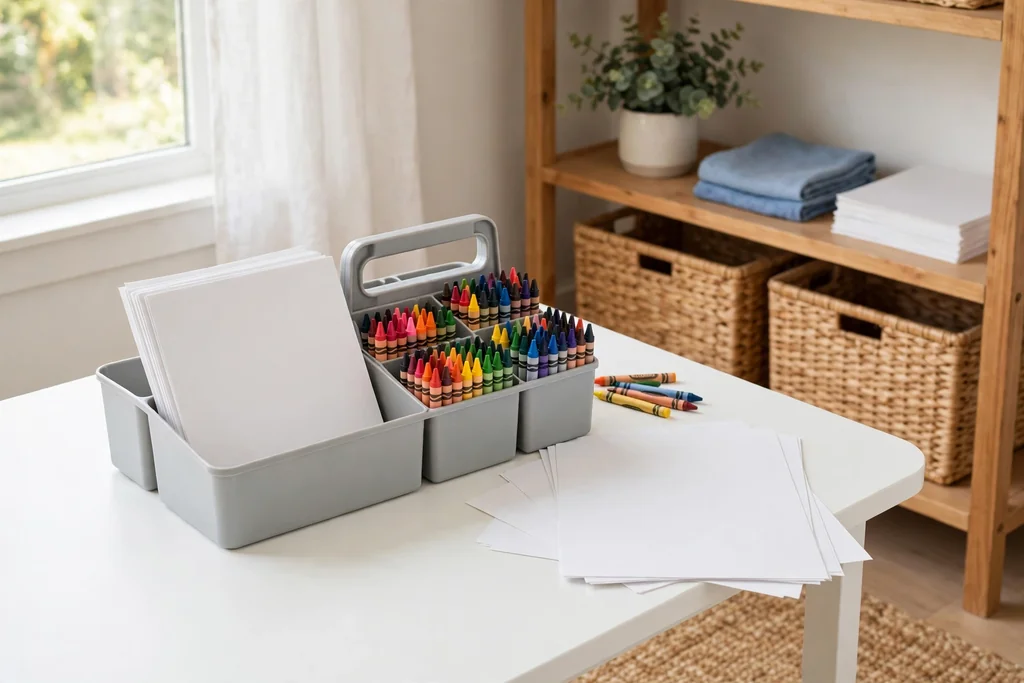
A craft and homework station built around one portable caddy keeps paper, crayons, glue, scissors, and pencils in one place children can carry to the table and put away themselves. Choose a sturdy caddy with separate sections, place it on a low shelf or a small table near daylight, and pair it with a wipe-clean table top. Keep the caddy stocked with only the supplies children use most, and store extras elsewhere.
Set a simple rule: the caddy returns to its shelf when work finishes, so supplies do not spread across the house. As children grow, the same caddy can hold homework tools, and the table can move from crafts to schoolwork without new furniture. Check scissors and glue often, and replace dried-out pens so the station stays inviting rather than frustrating.
14. Lay a Fold-Away Play Mat Zone
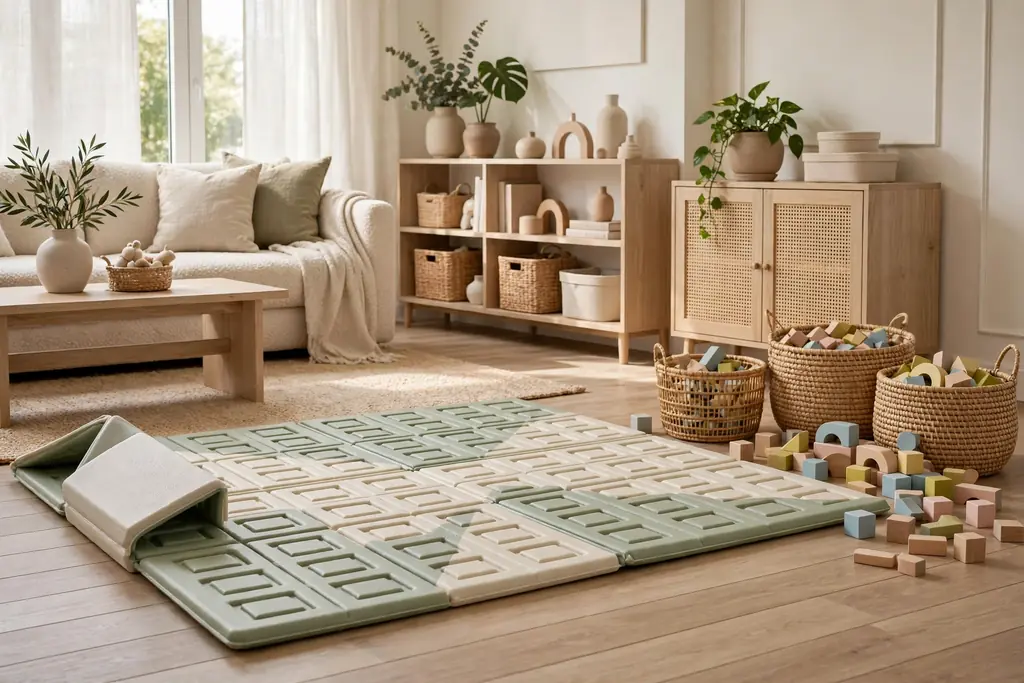
A fold-away play mat gives children a clear place to build, tumble, and sprawl, while the rest of the room stays a seating area. Use interlocking foam mats, a thick padded play rug, or a foldable mat in a pattern that suits the room, and place it beside the toy bins so play and storage stay close together. The mat also protects hard floors from dropped blocks and toy cars.
Choose mats that wipe clean and lie flat without curling edges, which can trip small feet. Foldable mats can be leaned against a wall or slid behind a sofa when guests visit, while a permanent play rug suits a room that is mainly a family space. Keep the zone away from the television stand and any tip-prone furniture, and leave a clear path around it for adults walking through.
15. Make a Window Seat With Storage Below
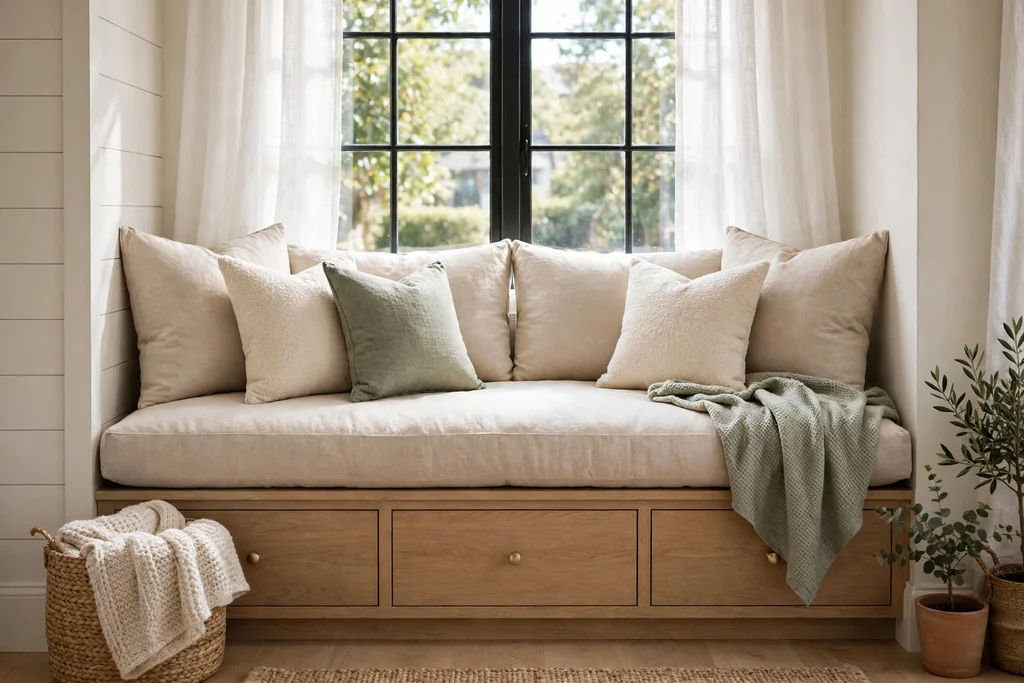
A window seat with storage below gives children a cozy reading spot and a hidden home for toys, books, or blankets in the same footprint. Build or buy a bench with a lift-up lid or drawers, add a thick cushion and two or three washable cushions, and keep a small basket of books beside it. The seat suits a bedroom, a living room, or a hallway with a wide window.
Use a lid with a soft-close hinge so small fingers do not get caught, and sort the storage inside with small bins, so the seat does not become one mixed pile. Keep the window seat clear of heavy curtains that children might pull, and use cord-free blinds nearby. This seat also works as extra seating when guests visit, which helps it earn its space in a small home.
16. Hide Clutter in a Storage Bench or Trunk
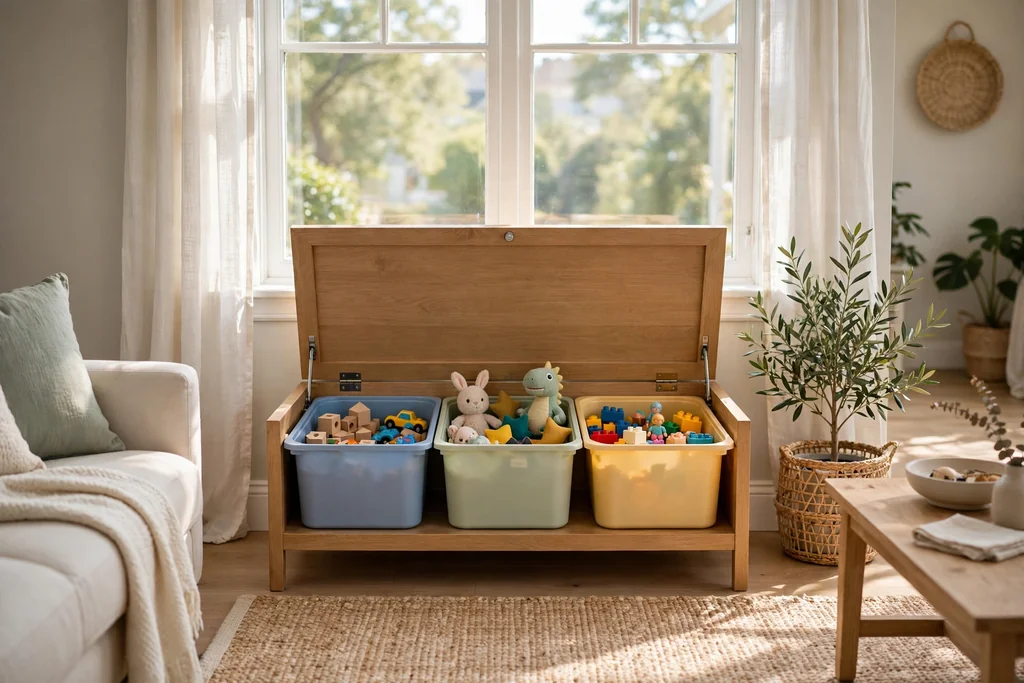
A storage bench or a sturdy trunk hides the toys that do not fit open bins, such as large sets, dress-up clothes, and sports gear. Place the bench under a window or against a wall where it can also serve as extra seating, and choose a lid with a soft-close hinge so small fingers do not get caught. Inside, use small bins to sort categories, so the bench does not become one mixed pile.
A trunk with a flat top can double as a side table, holding a lamp or a stack of books, which helps it look like adult furniture. Label the bins inside, and do a quick sort once a month to remove broken or outgrown toys. Hidden storage is what makes a family room look calm in the evening, after the open bins have done their daytime job.
17. Use Unbreakable and Soft Decor Where Children Reach
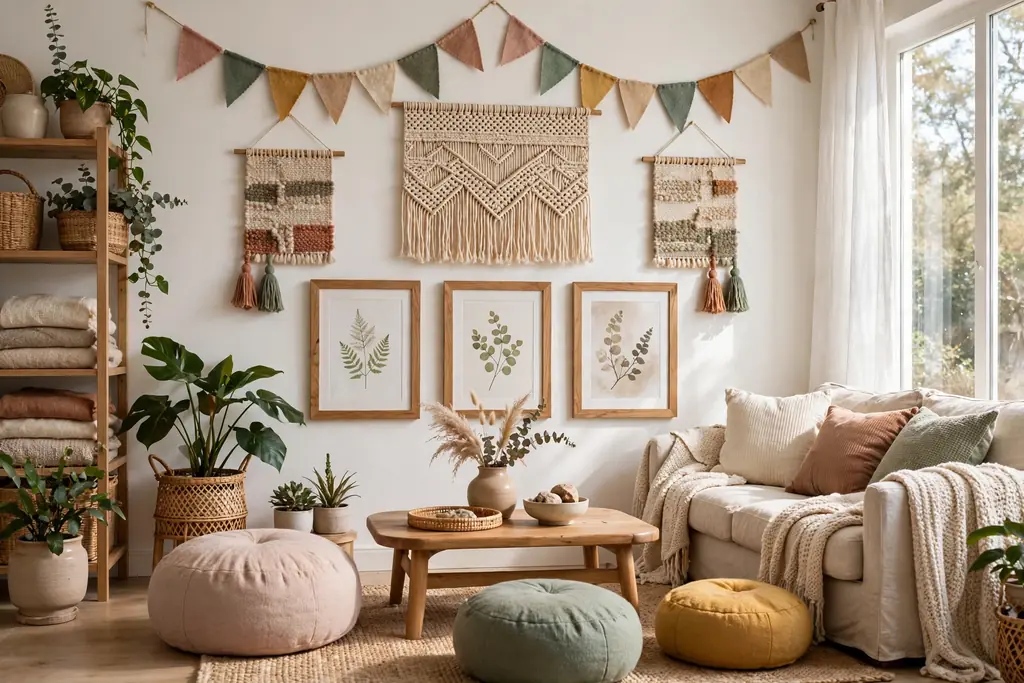
Decor that cannot break removes a whole category of worry from a family home. Swap glass vases for ceramic, wood, or metal ones, use shatterproof acrylic frames instead of glass, and hang fabric wall hangings, felt banners, or woven pieces where a child might reach. Soft poufs and floor cushions add seating and color without a single sharp edge.
Keep treasured or fragile pieces high, behind closed doors, or in a room children use less, rather than hoping children will remember not to touch them. Check that wall hangings are fixed securely and that any cords, such as those on blinds or lamps, are cord-free or safely secured out of reach. The room will still look finished, because texture, color, and shape carry the style, not fragile materials.
18. Zone Each Room With One Calm Base and One Kid Chosen Accent
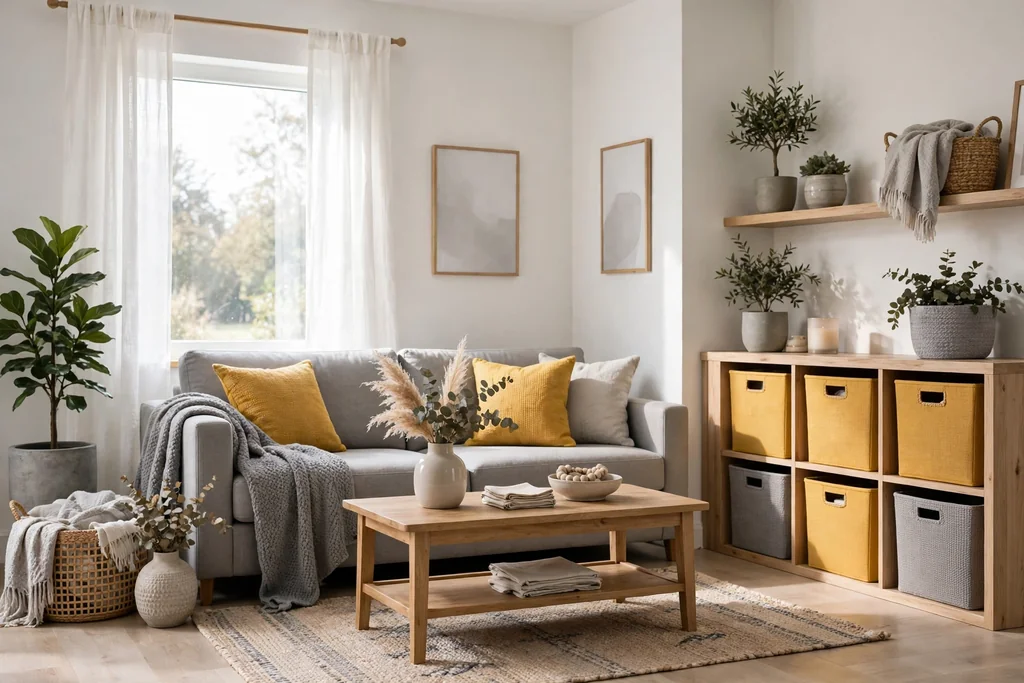
A calm base color for walls and large furniture, plus one accent color children choose for cushions, bins, or art, keeps a family home feeling adult while still feeling like theirs. Use warm white, soft grey, or pale sage for the base, and let children pick the accent from a short list, such as mustard, teal, or coral, so the choice stays workable. Repeat the accent at least twice in the room, in a cushion and a bin, or in art and a throw, so it looks planned.
When children outgrow an accent, swap only the small pieces, not the sofa or the walls, which keeps changes cheap and quick. Keep strong patterns to one or two small pieces per room, and let the rest stay plain, so the room does not feel busy. This approach also helps siblings share a room, since each child can have one accent in their own zone.
19. Use Removable Wall Decals for Changing Interests
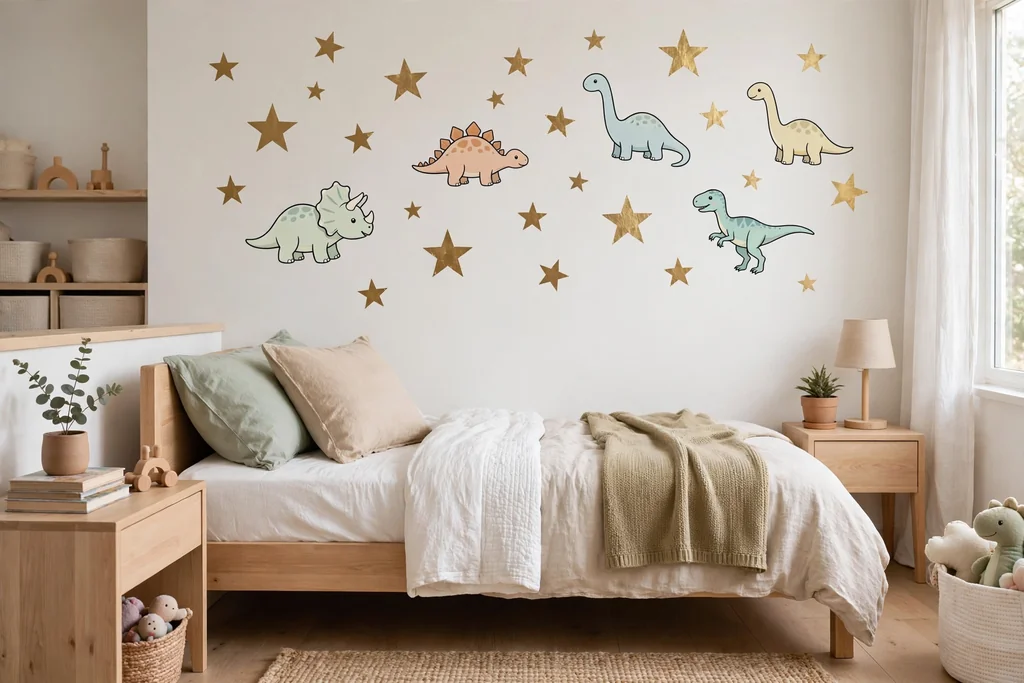
Removable wall decals let children change a room theme, from dinosaurs to stars to sports, without repainting or damaging the wall. Choose decals made for smooth walls, place them on one wall or one section, and keep the rest of the wall plain so the decals read as a feature rather than clutter. Decals suit rented homes especially well, since they peel off when you move or when interests change.
Test one decal on a small patch first, and follow the maker guidance for removal, since some walls need a gentle peel. Let children help place the decals at their own height, and photograph the display before it changes, so the memory stays even when the theme moves on. Keep decals away from heat sources and out of reach of very young children who might peel small pieces.
20. Choose Cord-Free, Dimmable Lighting and Hallway Night Lights
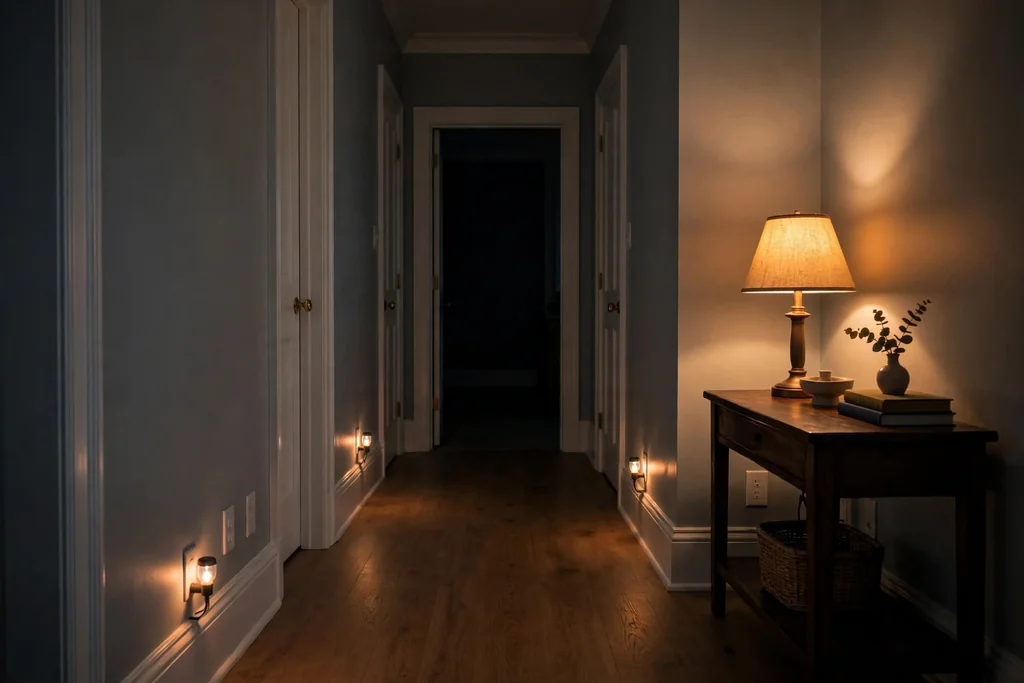
Cord-free lamps, dimmable lights, and low hallway night lights make a family home safer and calmer at night. Choose lamps with a stable base and no trailing cord in reach, use dimmers in bedrooms and living rooms so light can drop for bedtime, and place small plug-in night lights along the hallway to the bathroom. This setup helps children find their way at night without switching on bright overhead lights.
Keep lamp cords clipped to the wall or behind furniture where a cord cannot be avoided, and choose shades that do not get hot to the touch. In a child’s bedroom, a dimmable bedside lamp with a simple switch children can use builds independence at bedtime. Check night lights often, and keep spare bulbs or units so a dark hallway does not become a hazard.
21. Seat the Family on a Dining Bench With Hidden Storage
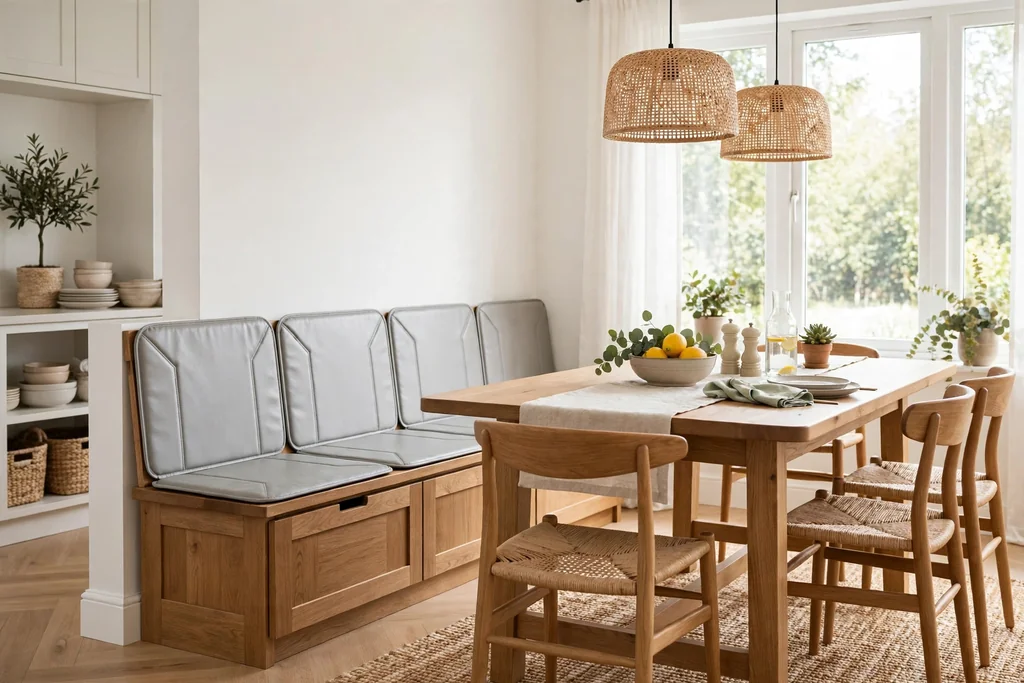
A dining bench with storage inside gives extra seating for children and guests, plus a hidden home for placemats, coloring books, or board games, in one piece. Choose a bench sized to the table, with a wipe-clean top or washable seat pads, and place it on the side where children sit, so they can slide in and out without moving chairs. Inside, use one bin per category, so the bench stays sorted.
Keep the bench against a wall if space is tight, and add a couple of cushions in the room accent color so it looks like part of the dining set rather than a storage box. A bench also helps in a small dining area, since it takes less floor space than separate chairs and tucks fully under the table when not in use. Wipe the bench after meals, and sort the storage once a month.
22. Add a Growth Chart Wall and a Memory Display Shelf
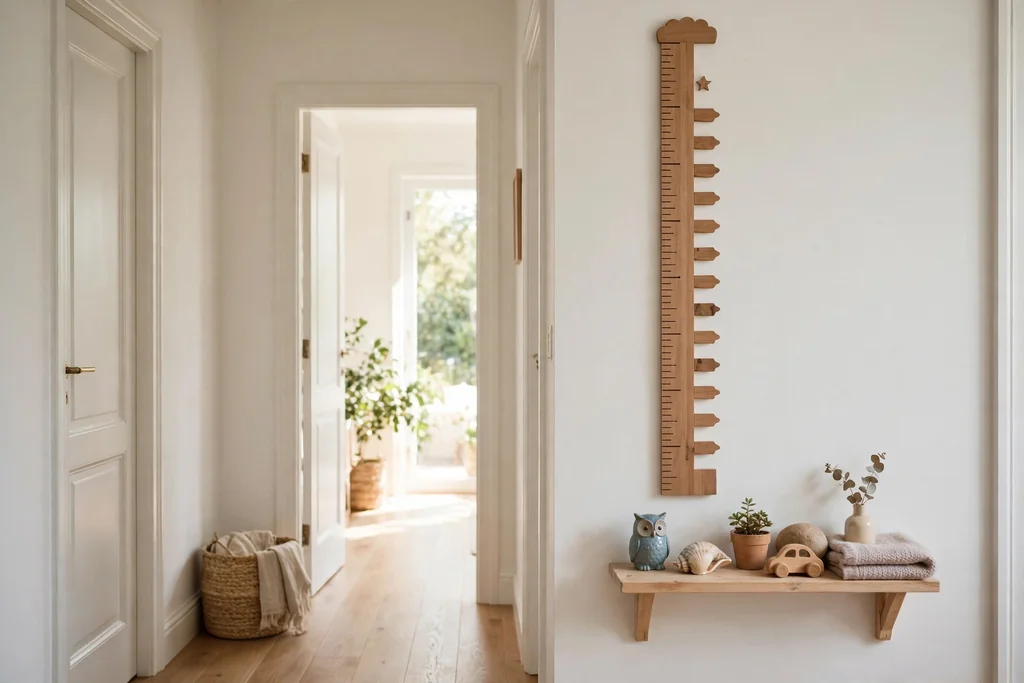
A growth chart on a wall or a door frame, plus one small shelf for favorite keepsakes, gives children a visible record of growing up without filling every surface. Use a removable growth chart, a painted ruler board, or a simple marked strip, and record heights with the date beside each mark. Place the memory shelf nearby, with room for two or three favorite items only, such as a trophy, a photo, or a handmade piece.
Rotate the shelf items as new favorites arrive, and photograph older items before they are stored, so the display can change without losing memories. Keep the shelf high enough that fragile keepsakes stay out of reach of very young children, or use soft, unbreakable items on a low shelf children can touch. This pair of ideas suits a hallway, a bedroom, or a stair wall, where the family passes it every day.
Conclusion
A kid friendly home is not a home without style, and it is not a playroom in every room. It is a shared space where washable fabrics, soft edges, low storage, and clear zones do the hard work quietly, so both adults and children can relax. Start with the entry station, the seating fabric, and one storage solution, then add the reading nook, the art rail, and the craft station as your family settles into the routine. Try one or two ideas this weekend, watch how your children use them, and adjust before adding more.
If you found an idea here that suits your home, save this post on Pinterest so you can find it again when you are ready for the next change. Pin the look you like most, whether it is a window seat, a reading nook, or an art rail, and use it as a guide for your next family refresh.
FAQs
How do I make a home kid friendly without it looking like a playroom?
Keep the large pieces neutral and washable, give toys and crafts clear low homes, and let children choose only the changeable details, such as cushion covers, wall decals, and art on display. Use one calm base color per room, repeat one accent twice, and keep fragile pieces high or behind closed doors, so the rooms still feel adult while children can use them freely.
What fabrics hold up best in a family home?
A tight weave cotton slipcover or a performance fabric rated for heavy use is usually the most practical choice, because both handle frequent cleaning. Slipcovers have the extra benefit of coming off for washing, while performance fabrics resist stains on the seat itself. Check the care label before buying, and keep a spare set of covers if the maker offers them, so seating is never out of action on wash day.
How do I keep toys from taking over the whole house?
Give every toy category one low, open home, such as a labeled bin in a cubby or a rolling bin, and keep the rest in hidden storage or rotation boxes elsewhere. Children tidy more willingly when they can see and reach the right bin, and a weekly rotation keeps the selection fresh without new purchases. A short tidy routine before bedtime, with children returning items to their own bins, keeps rooms calm for the evening.
What is the safest coffee table choice for a home with toddlers?
A soft ottoman with a tray on top is the safest common choice, since it has no sharp corners and doubles as extra seating and storage. If you prefer a table, choose one with rounded corners, a stable base that will not tip when leaned on, and a height that keeps hot drinks out of easy toddler reach. Avoid glass topped tables in the toddler years, since they show every mark and can be a hazard if broken.
How can I display my children’s art without damaging the walls?
Use a rail with clips, a wire with clips, or clip frames fixed with a small number of fixings, and rotate the pieces regularly. These options need far fewer holes than hanging each piece separately, and they let you change the display as new work arrives. Keep the display at child eye height on one wall, use lightweight frames, and photograph favorite pieces before retiring them.
How do I make a small home kid friendly without crowding it?
Pick furniture that does two jobs, such as a storage bench and a storage ottoman, and use the walls for cubbies, shelves, and art display instead of adding floor standing units. Keep one soft play zone and one clear walking route, and rotate toys so only a small selection is out at once. A calm neutral base with washable covers keeps rooms feeling adult, while the children’s pieces stay contained in their zones.