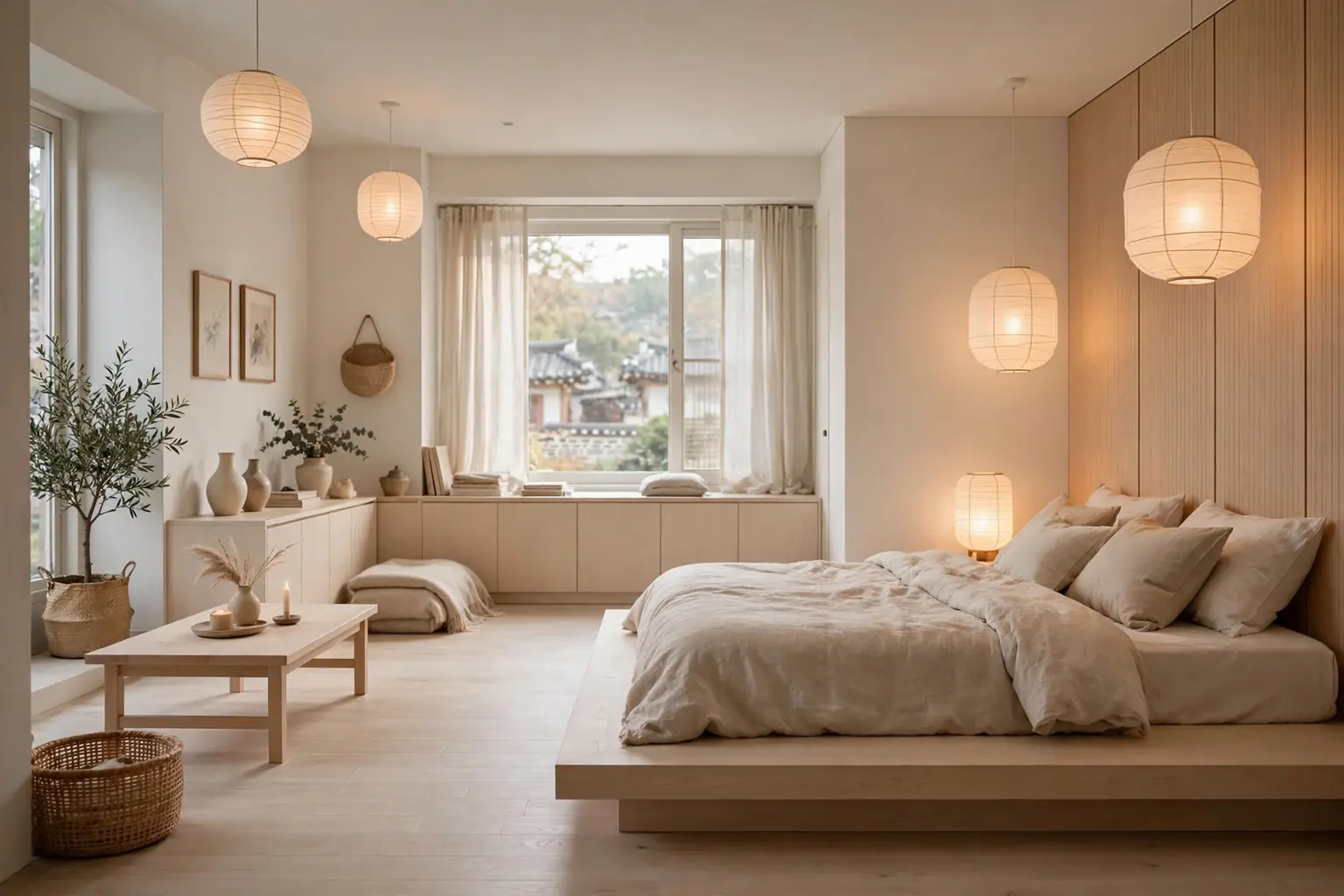
Korean home decor starts with a calm base and builds from daily habits: shoes off at the door, meals shared at a low table, tea made slowly, and light kept soft in the evening. Pale wood, warm white walls, linen, and handmade ceramics carry most of the look, while color and pattern stay in small, changeable pieces. These 18 Korean home decor ideas cover the entry, bedroom, kitchen, dining corner, balcony, and small studio layouts. Start with the room you use most, keep one or two materials as the lead, and add personal pieces only where the room still feels bare.
Key Takeaways
- Keep the base calm: warm white walls, pale wood floors, and low furniture let personal details show without clutter.
- Build around daily habits: a shoes-off entry, a tea station, and a shared meal table shape the decor more than ornaments do.
- Use color in small doses: one muted accent, a ceramic piece, or a cushion cover is easier to change than a painted wall.
- Sit low where it suits the room: a platform bed, floor cushions, and a low table make rooms feel relaxed and close to the ground.
- Repeat pale wood and plain ceramics in two or three rooms, so the whole home reads as one style rather than a set of themes.
- Leave one surface clear in every room, and keep walking routes open, so a home full of loved things still feels calm.
1. Set Up a Shoes-Off Entry With a Bench and Slippers
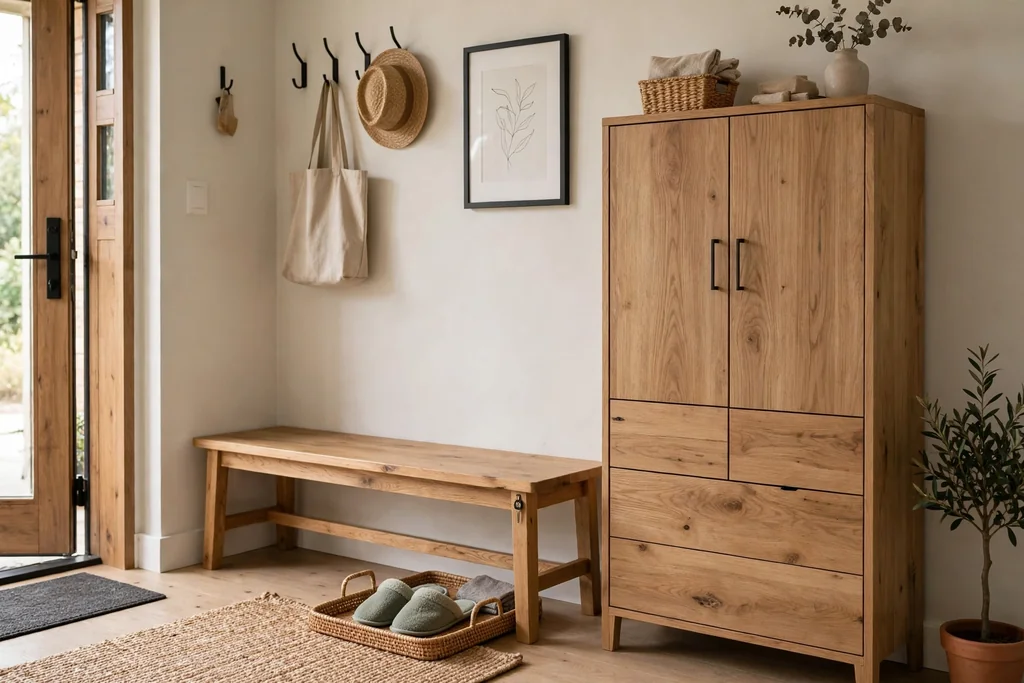
Give the entry a clear shoes-off routine: a low bench to sit on, a closed shoe cabinet or open shelf for pairs in daily use, and a basket or tray for indoor slippers. Taking shoes off at the door keeps floors clean, protects wood and rugs, and marks a small pause between outside and home, which is a daily habit in many Korean homes. This suits any home, and it matters most where the entry opens straight into a living room.
Keep the bench low and the cabinet shallow, so the entry stays easy to pass through, and add a small tray for keys and a hook for one bag. Choose indoor slippers in a washable fabric, with one pair per person and a spare pair for guests. Wipe the bench and cabinet weekly, since the entry gathers dust fast, and keep only the pairs in current use here, with the rest stored elsewhere.
2. Fit Translucent Paper-Paneled Sliding Closet Doors
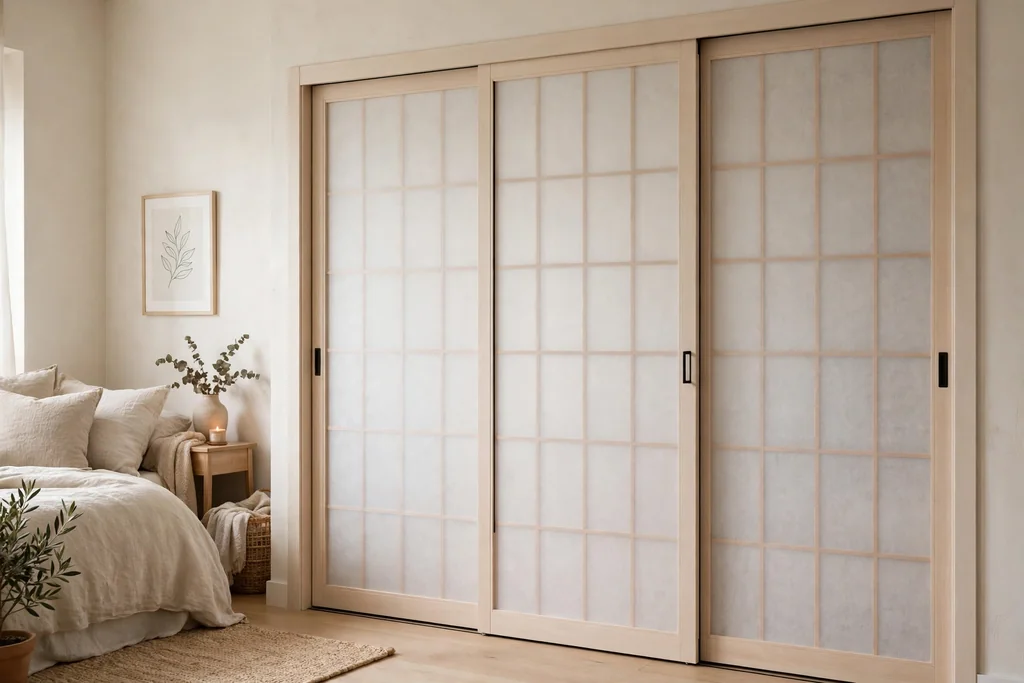
Replace a plain closet door with a sliding door that has translucent paper-style panels in a simple wood frame, in the spirit of a traditional hanok door. The panels let light pass between rooms while keeping the closet contents out of sight, and the sliding action saves the swing space a hinged door needs. This suits a bedroom or hallway closet, especially in a small home where every bit of floor space counts.
Choose panels with a soft, even glow rather than a busy pattern, and keep the wood frame in the same pale tone as other wood in the room. Check that the track runs level and the door slides fully clear, so clothes stay easy to reach. Keep the wall beside the door mostly plain, since the panel pattern already gives the room its detail. For a full living room take on this style, see these Korean living room decor ideas.
3. Choose a Low Platform Bed With Pale Linen Bedding
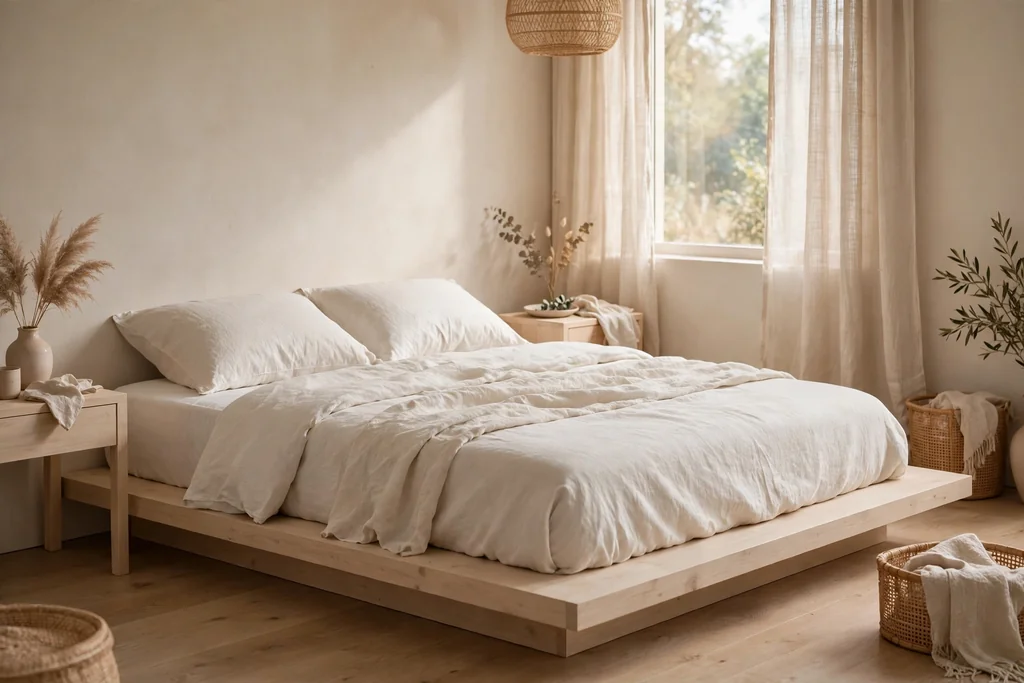
Set the bedroom around a low platform bed frame in pale wood, dressed with plain linen bedding in warm white or soft beige. Sleeping low makes a room feel grounded and calm, and the low profile leaves more wall visible, which helps a small bedroom feel larger. This suits a bedroom with pale walls and wood floors, where the bed can act as the room’s quiet center.
Keep the bedding simple: a fitted sheet, a flat sheet or light duvet, and two sleeping pillows, with one folded throw for cooler nights. Skip a tall headboard if the room is small, and use a low shelf or a small stool as a nightstand instead. Vacuum under the platform frame now and then, since a low bed gathers dust at floor level, and wash linen covers often, since pale fabric shows wear sooner than dark fabric.
4. Layer a Wool Rug Over Warm Wood in the Bedroom
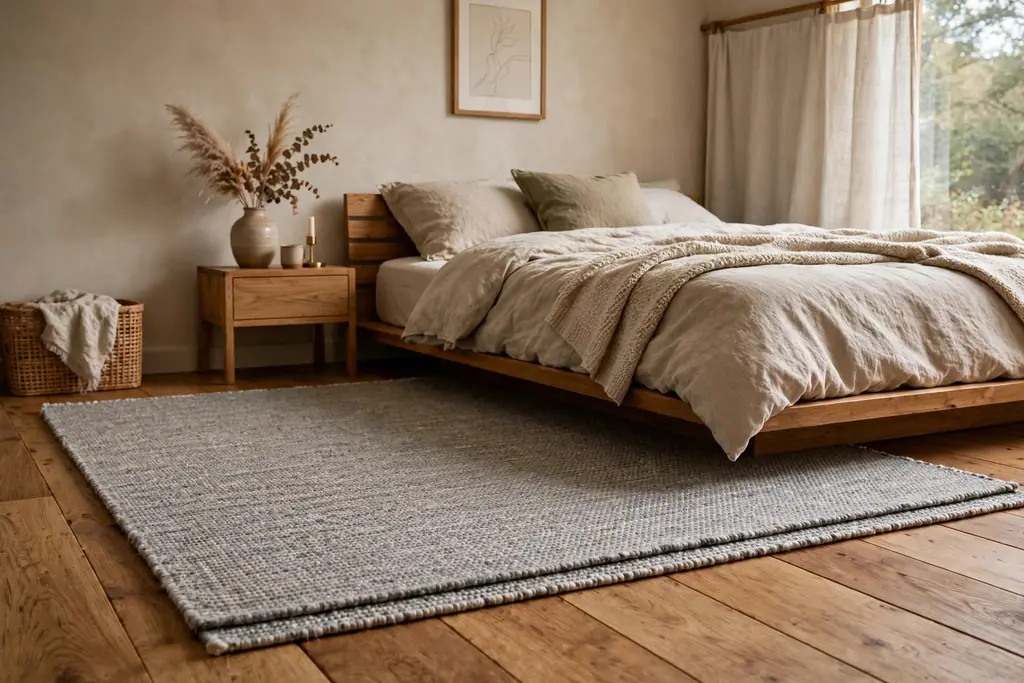
Lay a flat wool rug over a warm wood floor beside the bed, large enough to step onto first thing in the morning. The rug softens the floor underfoot and adds a layer of warmth, which suits the Korean habit of spending time close to the floor. A flat weave or low pile rug works best here, since it is easy to vacuum and does not trap dust the way a deep pile rug can.
Choose a rug in cream, soft grey, or a muted stripe, and leave a clear border of wood around it, so the floor stays part of the look. Measure the space beside the bed before buying, and tape the outline on the floor to check that drawers and doors still open. Shake the rug outside when you can, and rotate it twice a year, so wear stays even on both ends.
5. Use a Muted Five-Color Palette in Small Doses
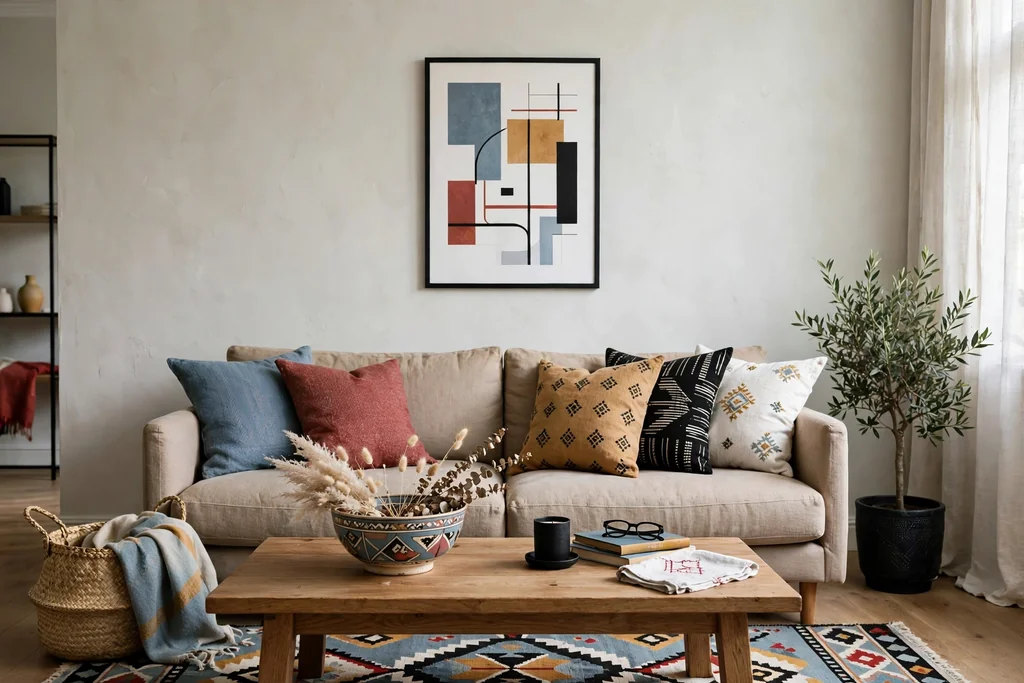
Borrow the traditional Korean five-color palette, known as obangsaek, in muted form: soft blue, warm white, muted red, black, and ochre yellow. Use these colors only in small pieces, such as a cushion cover, a ceramic bowl, a throw, or a print, against a base of warm white and pale wood. This gives a home a Korean color note without painting walls in strong colors that are hard to live with.
Pick one accent color as the lead for each room, and repeat it twice, in a cushion and a bowl, or in a throw and a print, so the accent looks planned. Keep the other four colors out of that room, or the palette turns busy. Swap the accent with the seasons if you like: ochre in autumn, soft blue in summer, and muted red only as a single small piece, such as one vase or one cushion.
6. Place a Moon Jar on the Entry Console
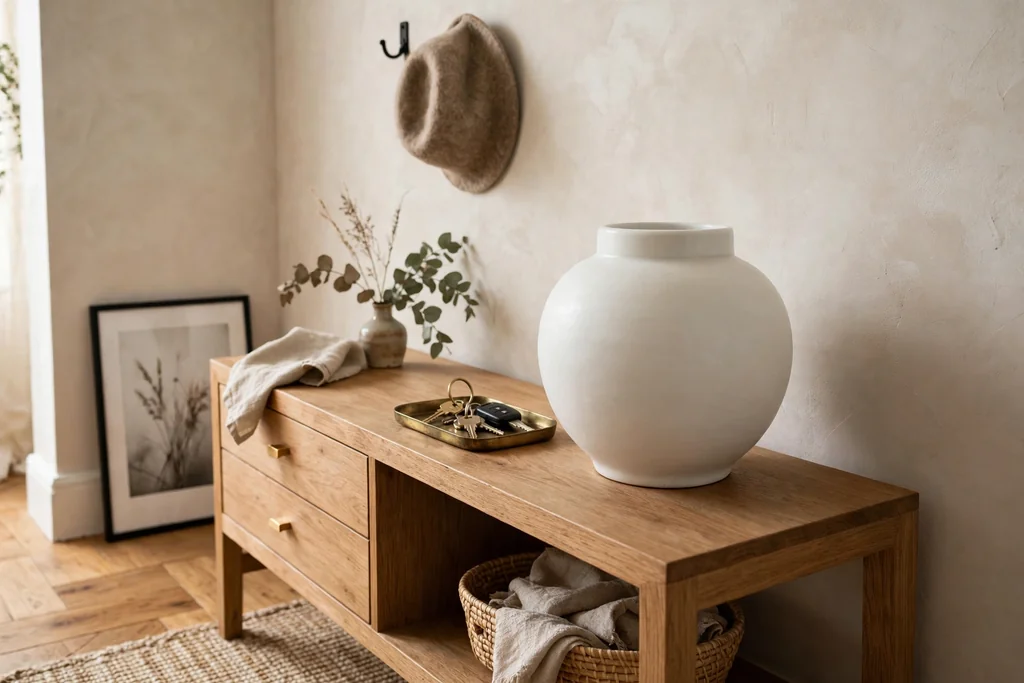
Set a single white porcelain moon jar, with its round, slightly uneven shape, on the entry console or a hallway shelf as the first thing guests see. The jar’s calm form and soft white glaze suit a pale wall and pale wood, and one strong piece makes a better statement than a shelf of small ornaments. This suits an entry, a hallway, or a living room shelf where one quiet focal point is needed.
Give the jar empty space on both sides, and keep the console mostly clear apart from a small tray for keys. Choose a jar size that fits the console, with room above it so the shape reads fully, and avoid placing it where a bag or coat could knock it. Dust it with a dry cloth, and leave it empty or with a single dried branch, since a full flower arrangement fights the jar’s simple shape.
7. Style Open Kitchen Shelves With Stoneware and Onggi Jars
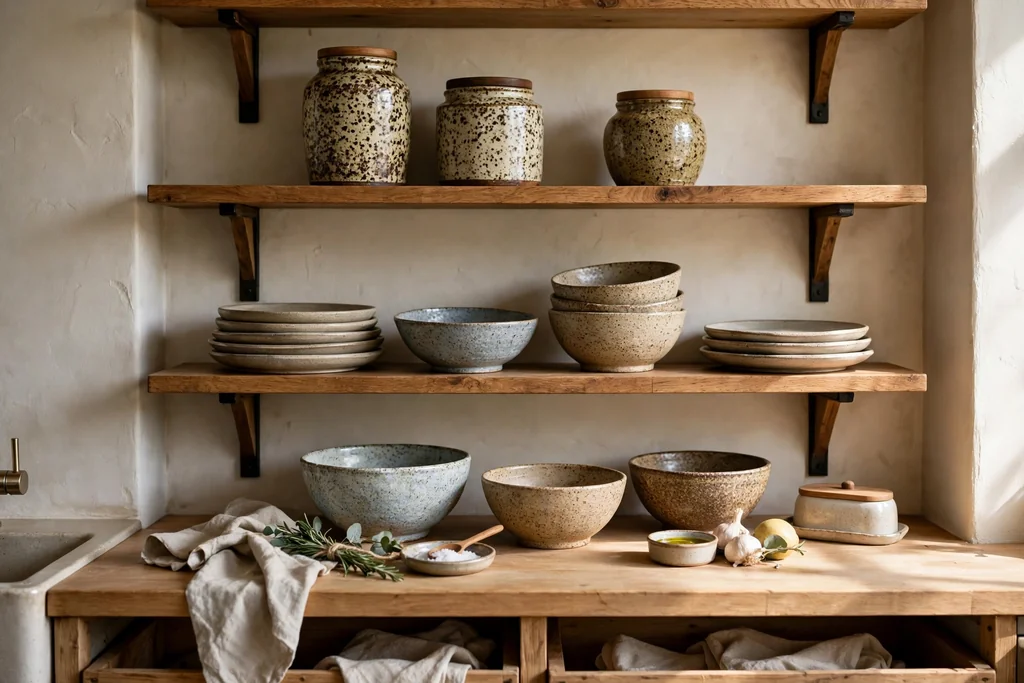
Fit two open shelves in the kitchen for everyday stoneware: plain bowls, small plates, wooden spoons, and one or two onggi-style earthenware jars with speckled glazes. Open shelves suit Korean home cooking, where bowls and side dishes are used daily, and they keep the pieces you reach for most within arm’s reach. This works best on one wall only, so the kitchen stays calm rather than crowded.
Group pieces by use, with bowls together and cups together, and leave a gap between groups so the shelf reads as tidy. Keep the heaviest jars on the lower shelf, and store rarely used pieces in a closed cabinet. Wipe the shelves weekly, since open shelves gather cooking grease, and wash jars before refilling them, so stored food stays fresh.
8. Eat at a Low Dining Table With Floor Cushions
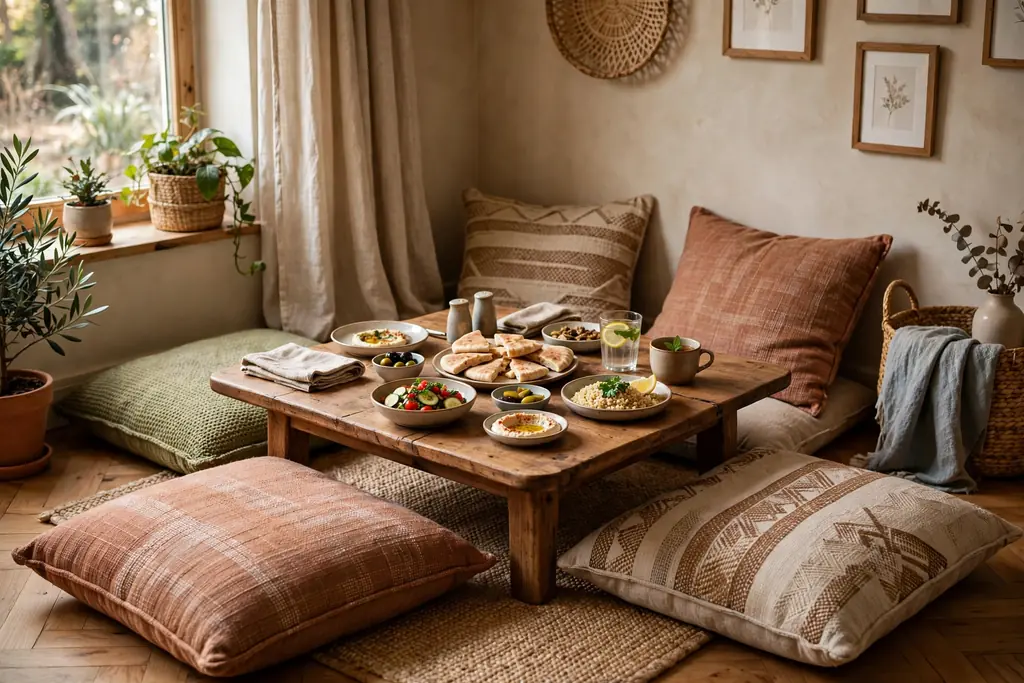
Set a low dining table with thick floor cushions for everyday family meals, in place of a tall table and chairs. Eating low slows the meal down and suits shared dishes placed in the center of the table, where everyone can reach them. This suits a dining corner or a living room corner, and it works well in a small home, where a low table doubles as a tea table between meals.
Choose cushions with firm filling and washable covers, and keep a thin backrest cushion against the wall for anyone who needs back support. Set the table at a height that lets knees fit comfortably beneath it, and keep a basket of spare cushions nearby for guests. Wipe the table after every meal, since a low table sits closer to laps and sleeves, and store cushions upright when not in use, so they keep their shape.
9. Keep a Tea Station Ready on the Kitchen Counter
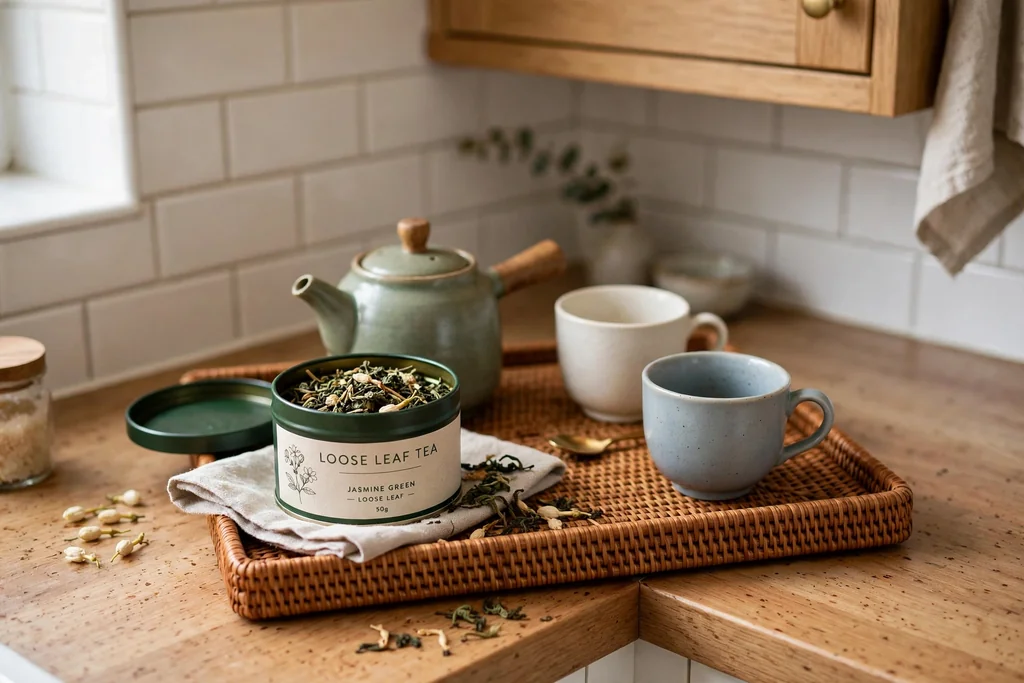
Keep a small tea station on one corner of the kitchen counter: a tray, a small teapot, two or three cups, and a tin of loose leaf tea. A set left out invites a pause in the day, and it turns tea from a chore into a short ritual. This suits any kitchen, and it works best in a corner that stays clear of cooking splashes.
Choose a plain ceramic or stoneware set in white, cream, or soft green, rather than a fussy patterned set, so it sits calmly beside other kitchen pieces. Store the tea tin out of direct sun, keep a small cloth under the tray to catch drips, and wash cups by hand if the glaze maker advises it. Refill the tin before it runs out, so the station is always ready when guests arrive.
10. Build a Skincare Vanity Corner With a Low Stool
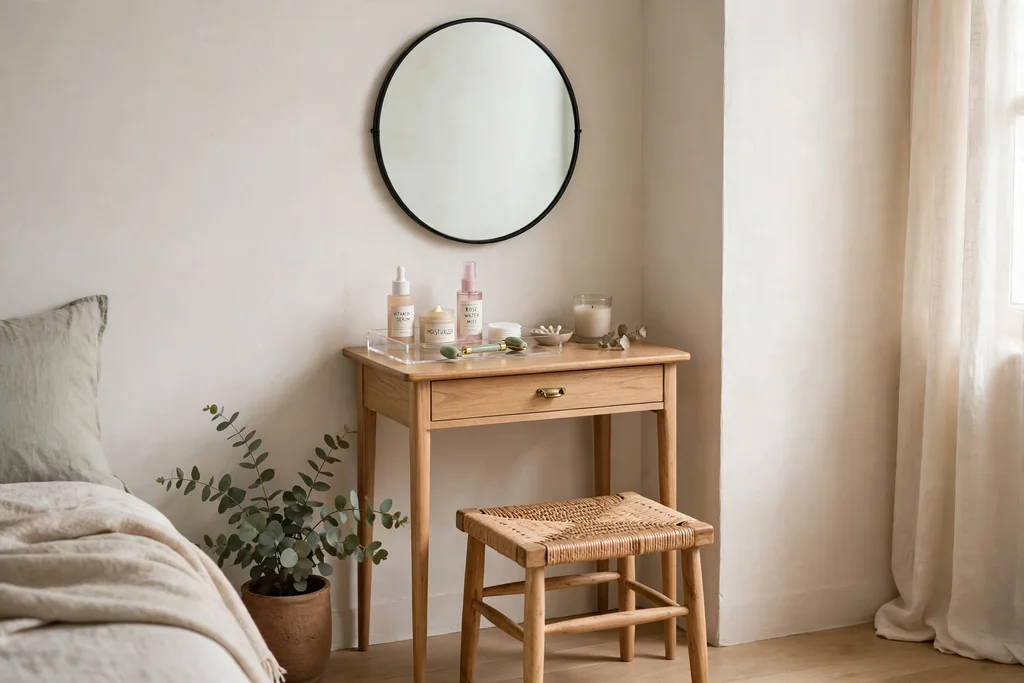
Set a small vanity corner in the bedroom with a low table or wall shelf, a round mirror, a low stool, and a tray for daily skincare. A dedicated corner keeps bottles off the bathroom counter and turns a morning and evening routine into a calm pause. This suits a bedroom corner near a window, where daylight helps for the morning routine.
Keep only daily products on the tray, with the rest stored in a closed box or drawer, and wipe the tray weekly, since creams and oils leave marks. Choose a stool height that lets feet rest flat on the floor, and a mirror large enough to see the whole face without leaning in. If the corner has no window light, add a small warm lamp at face height, so evening light stays soft and even.
11. Turn the Balcony Into a Tea and Plant Nook
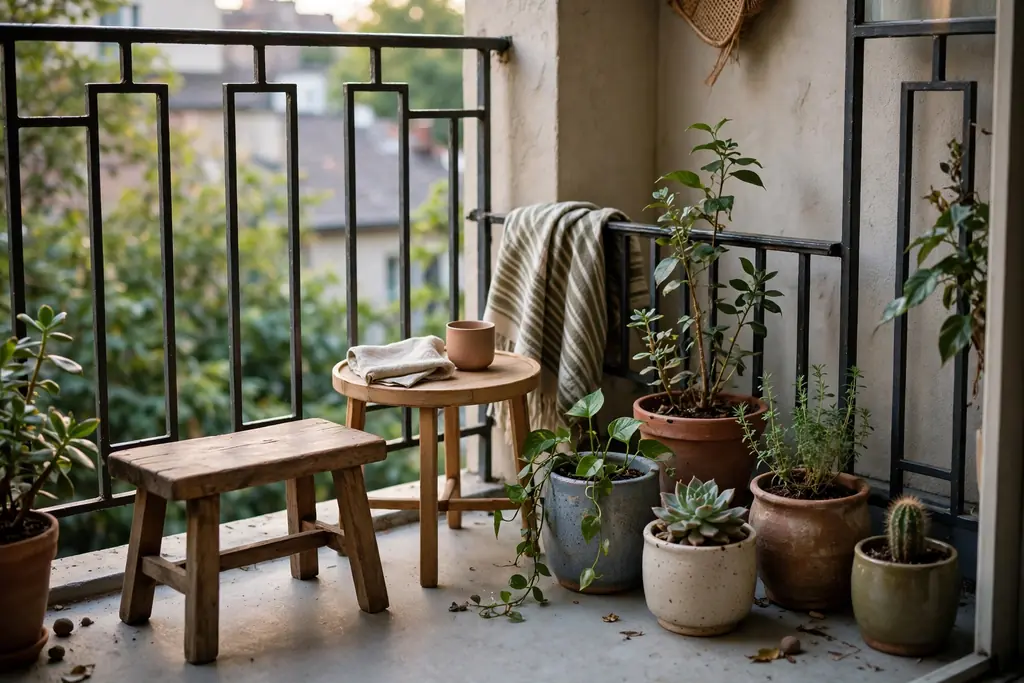
Turn a small balcony into a tea and plant nook with a low stool or folding chair, a small side table, and three or four potted plants in plain ceramic pots. A balcony nook gives a home a second sitting spot, and it suits morning tea, reading, or a short break outdoors. This works even on a narrow balcony, as long as the furniture stays light and easy to move.
Choose plants that suit the balcony’s sun level, such as herbs, leafy greens, or hardy trailing plants, and water them only when the top soil feels dry. Keep a small tray on the table for a cup and a book, and bring cushions indoors in wet weather, so they stay dry. Sweep the balcony floor weekly, since outdoor dust gathers fast, and check pot drainage, so water does not pool on the floor below.
12. Divide a Studio With a Low Bookshelf
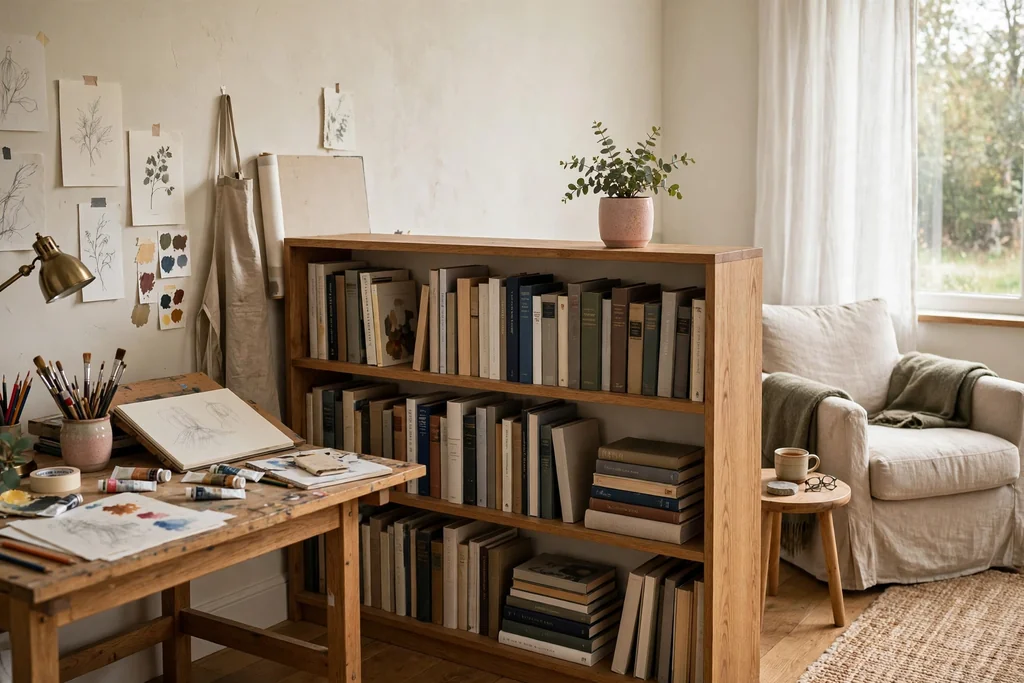
Divide a studio or open plan room with a low bookshelf set at right angles to the wall, creating a sleeping zone on one side and a living zone on the other. A low divider gives structure without blocking light or views, which matters in a small home where a tall wall would make the space feel closed in. This suits a studio flat, a large bedroom, or a shared living space.
Fill the shelf with books you actually read, plus one or two personal objects, and leave a gap on each shelf, so the rows do not look packed tight. Keep the top of the shelf mostly clear, with one plant or one small lamp, so the divider still feels open. Anchor the shelf to the wall if it is tall enough to tip, and keep walking routes clear on both sides, so the divide helps the layout rather than blocking it.
13. Stand a Paper Floor Lamp Beside the Bed
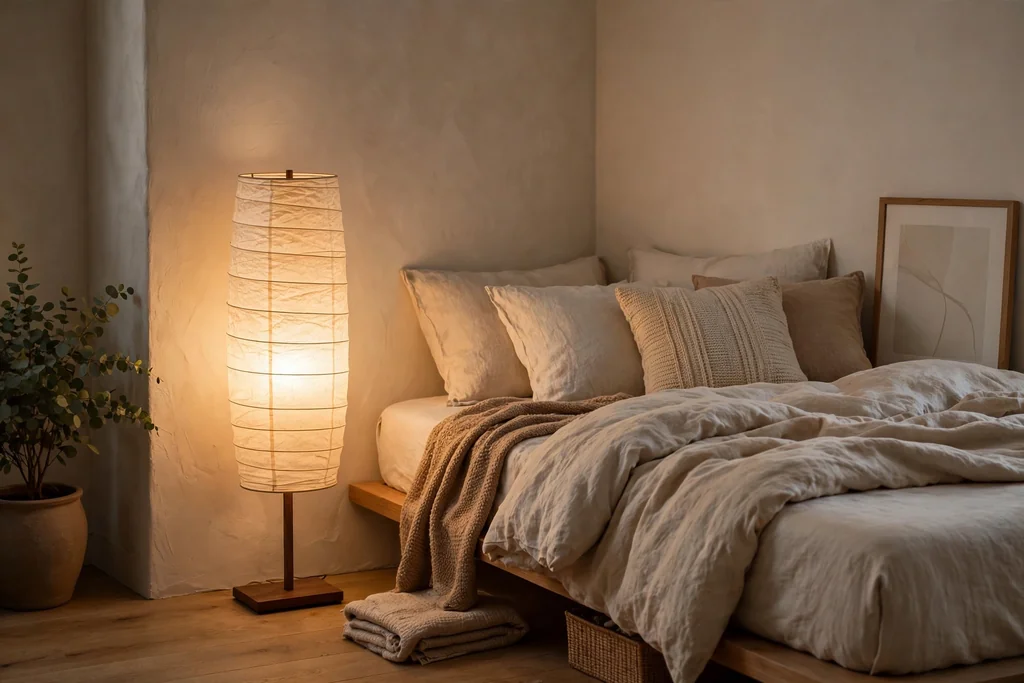
Stand a paper floor lamp beside the bed, with a plain white or warm cream shade that spreads light gently in all directions. Paper shades suit a Korean bedroom because they glow instead of glaring, which helps evening wind-down and keeps the room calm after dark. This suits a bedroom corner, a reading chair, or either side of a low platform bed.
Choose a lamp with a stable base and a warm white bulb, and add a dimmer if you can, so evening light can go softer still. Keep the shade clear of curtains and bedding, and dust it with a dry cloth, so the paper stays bright. If floor space is tight, a paper shaded table lamp on a low stool gives a similar glow in a smaller footprint. For more soft-light ideas in a wet room, see these Korean bathroom decor ideas.
14. Tidy the Closet With Cloth Storage Boxes
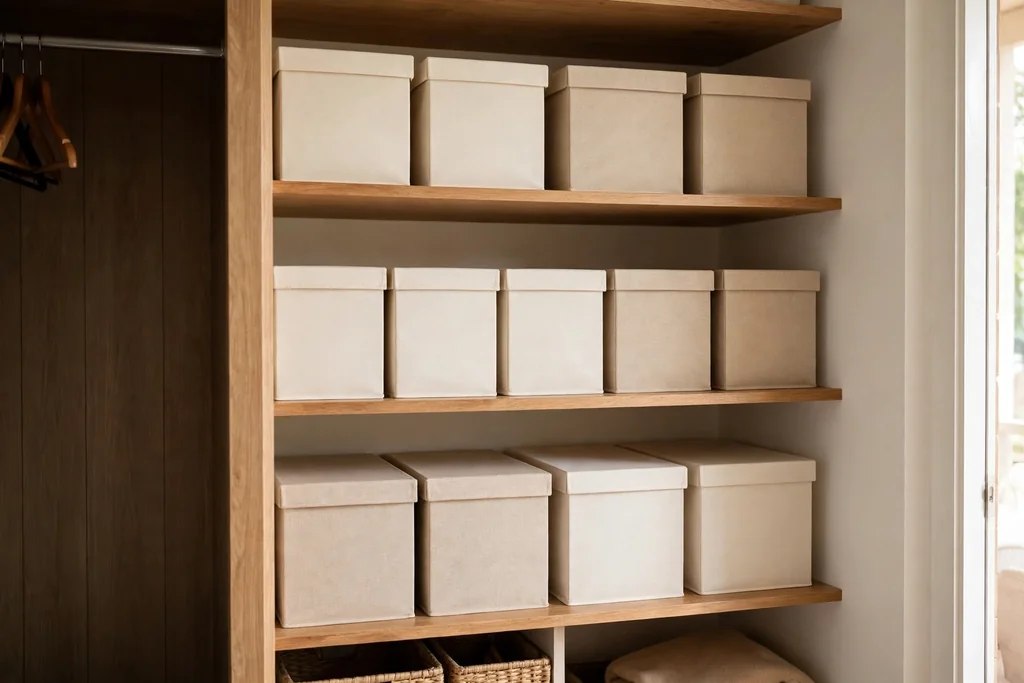
Tidy a closet with plain cloth storage boxes in cream, beige, or soft grey, one box per category, such as knitwear, accessories, or seasonal clothes. Cloth boxes soften a closet interior, hide visual clutter, and make it easy to pull out one category without disturbing the rest. This suits a bedroom closet, a hallway cupboard, or a shelf above a wardrobe.
Label each box on the front or base, so the system stays easy to use, and keep one box empty on purpose, as a fast tidy box before guests arrive. Fold clothes rather than stuffing them in, since a stuffed box loses its shape and makes items hard to find. Wash or vacuum the boxes when you change seasons, and replace any box that has lost its structure, since a sagging box makes the whole closet look untidy.
15. Grow a Herb Garden on the Kitchen Window
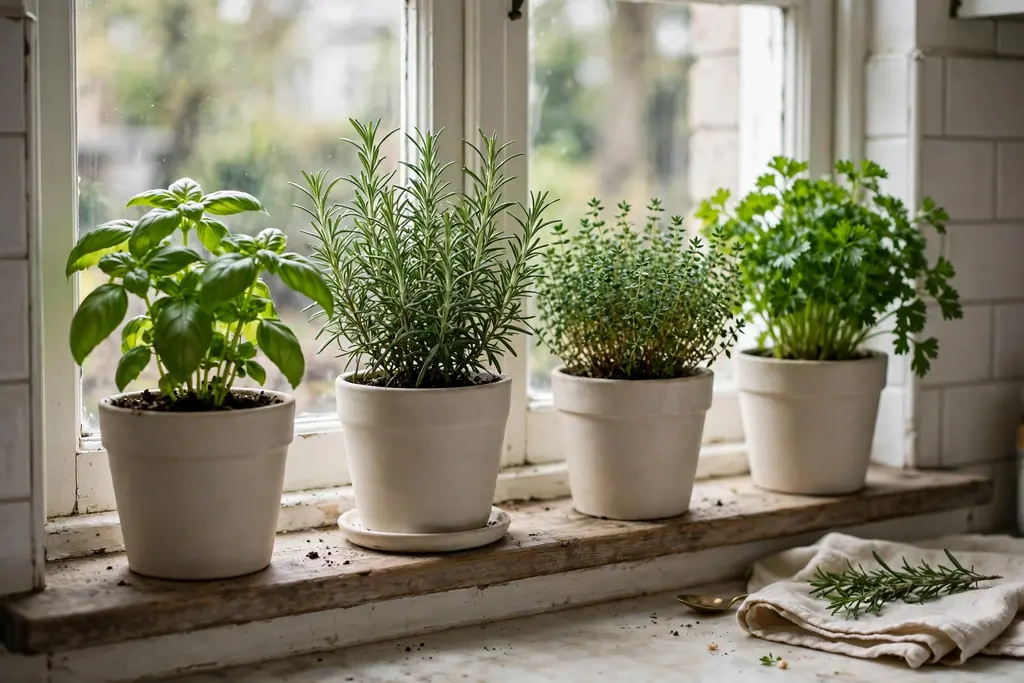
Grow a small herb garden on the kitchen windowsill in plain ceramic pots: spring onion, perilla, chives, or mint, chosen for the dishes you cook most. Fresh herbs beside the stove make daily cooking easier, and the green pots add a living note to a pale kitchen. This suits any kitchen with a bright window, and it costs far less than a full garden setup.
Choose pots with drainage holes and saucers, and water only when the top soil feels dry, since herbs dislike sitting in water. Snip leaves from the outside of each plant, so growth stays even, and rotate pots a quarter turn each week, so plants grow straight rather than leaning to the light. Replace any herb that turns leggy, and keep pots clear of the stove, so leaves stay free of cooking grease.
16. Serve Shared Meals on a Wooden Tray of Small Dishes
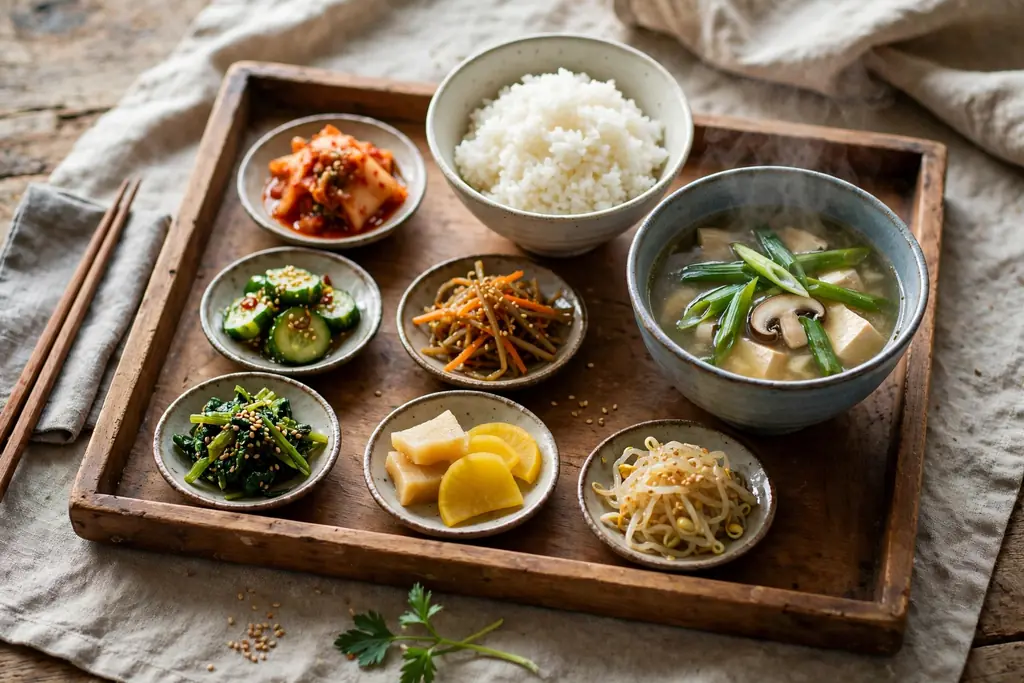
Serve family meals on a wooden tray holding small side dishes, in the style of a shared Korean table, with rice, soup, and two or three small dishes in the center. Small dishes let everyone taste a little of everything, and they turn an ordinary weeknight meal into a shared occasion. This suits a low dining table or a regular table, and it works for guests too, since extra dishes are easy to add.
Choose small bowls in one material, such as plain stoneware or wood, so the tray looks calm even with several dishes on it. Keep one dish warm, one dish fresh, and one dish pickled or crunchy, so the meal has contrast in taste and texture. Set the tray in the center with serving spoons in each dish, and clear the tray promptly after eating, since small bowls dry out fast if left standing.
17. Make a Morning Routine Corner by the Window
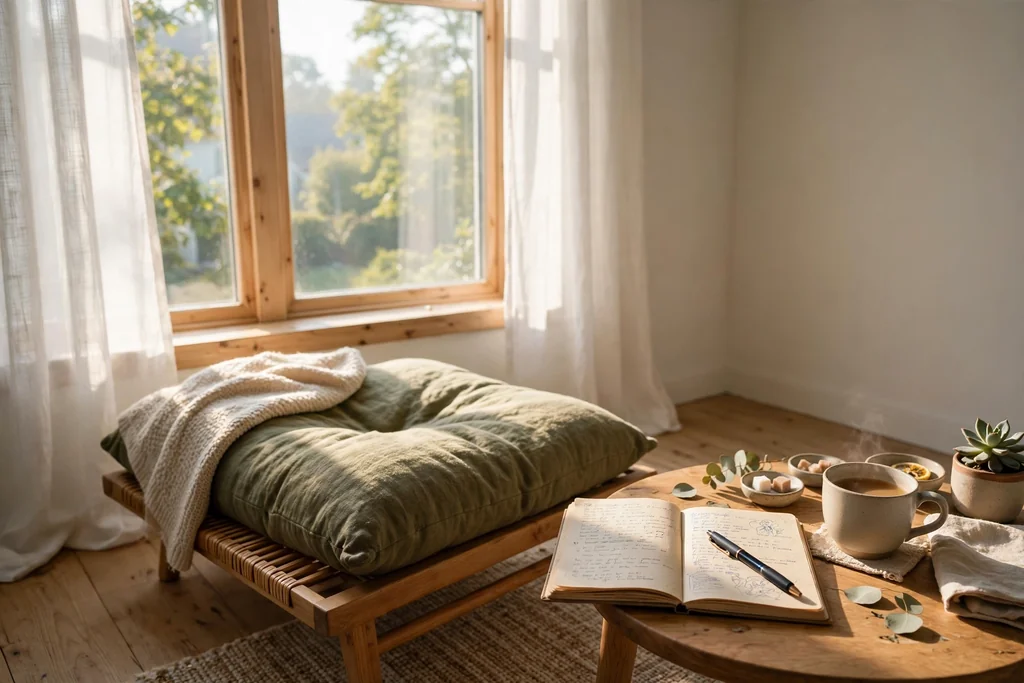
Make a morning routine corner by the brightest window with a low chair or floor cushion, a small side table, and space for a journal, a book, and a cup of tea. A corner set aside for the first quiet hour of the day gives mornings a slower start, and it suits a bedroom, a living room corner, or a wide hallway. This works best where morning light arrives early and the corner stays free of work clutter.
Keep the table mostly clear, with one book, one journal, and one pen, so the corner invites use rather than storage. Sit here before screens and chores, even for ten minutes, and keep a throw nearby for cooler mornings. Tidy the corner each evening, so it is ready at first light, and move the chair if the sun shifts with the seasons, so the light stays on the page and not in your eyes.
18. Screen a Bed Alcove With a Linen Curtain
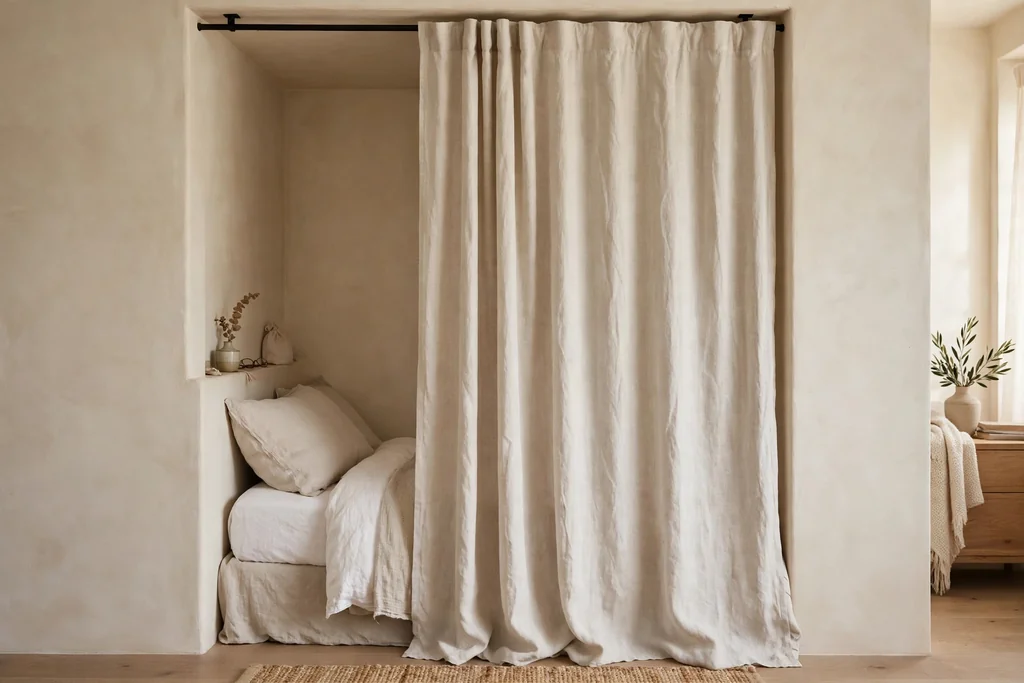
Screen a bed alcove or a sleeping corner with a plain linen curtain hung from a ceiling track or a simple rod, so the bed can be closed off from the rest of the room. A curtain divider gives privacy without building a wall, and it suits a studio, a shared room, or a large bedroom where the bed sits in view of the door. Linen falls in soft folds and lets some light pass, so the alcove stays calm rather than dark.
Hang the curtain from close to the ceiling to the floor, so the alcove feels taller, and choose white, cream, or pale grey linen for daytime privacy. Keep the curtain pulled back during the day, so the room still feels open, and draw it only for sleep or rest. Wash the curtain now and then, since pale linen shows dust faster than a darker fabric, and check the track runs smoothly, so the curtain draws without catching.
Conclusion
A fresh Korean home comes from calm bases and daily habits more than from ornaments. Keep walls pale and wood warm, sit low where it suits the room, and let one quiet piece, such as a moon jar or a paper lamp, carry each room. Start with the entry and the bedroom, since those rooms shape how the whole home feels, then add the tea station, the low table, and the balcony nook one at a time. With those layers in place, the home stays easy to live in, easy to tidy, and personal in a way that lasts past any single season.
If you found an idea here that suits your home, save this post on Pinterest so you can find it again when you are ready to start. Pin the look you like most, whether it is a platform bed, a tea station, or a balcony nook, and use it as a guide for your next weekend refresh.
FAQs
What defines Korean home decor?
Korean home decor is defined by a calm base of warm white walls and pale wood, low furniture, soft light, and personal details drawn from daily life. It favors natural materials, such as linen, ceramic, and wood, and color in small, changeable pieces, rather than bold painted walls or heavy ornament.
How do I add Korean decor to a small home without clutter?
Start with habits, not objects: a shoes-off entry, a low table, and one quiet focal piece per room. Keep walls pale, use low furniture, leave one surface clear in every room, and store the rest in closed cabinets or cloth boxes, so the home stays calm even when it holds many loved things.
What colors suit a Korean style home?
Warm white, pale wood tones, soft grey, and beige form the base, with muted accents drawn from the traditional five colors: soft blue, muted red, ochre yellow, black, and white. Use one accent color per room, repeated twice in small pieces, so the palette looks planned rather than busy.
Can Korean decor work in a rented home?
Yes, since most of these ideas need no building work. A shoes-off entry, floor cushions, a low platform bed frame, open shelves on brackets, a paper floor lamp, cloth storage boxes, and a linen curtain divider all move with you, and none of them require painting or fixed changes.
What is the easiest first Korean decor change?
Set up a shoes-off entry and a tea station. Both take an afternoon, cost little, and change how the home feels every day: the entry keeps floors clean and marks a pause at the door, while the tea station turns a daily drink into a short ritual you look forward to.
How do I mix Korean decor with furniture I already own?
Keep your existing furniture and change the layers around it: pale linen bedding, a wool rug over wood floors, plain ceramic pieces on open shelves, and a paper lamp for soft evening light. Repeat pale wood and plain ceramics in two or three rooms, so old and new pieces read as one calm style.