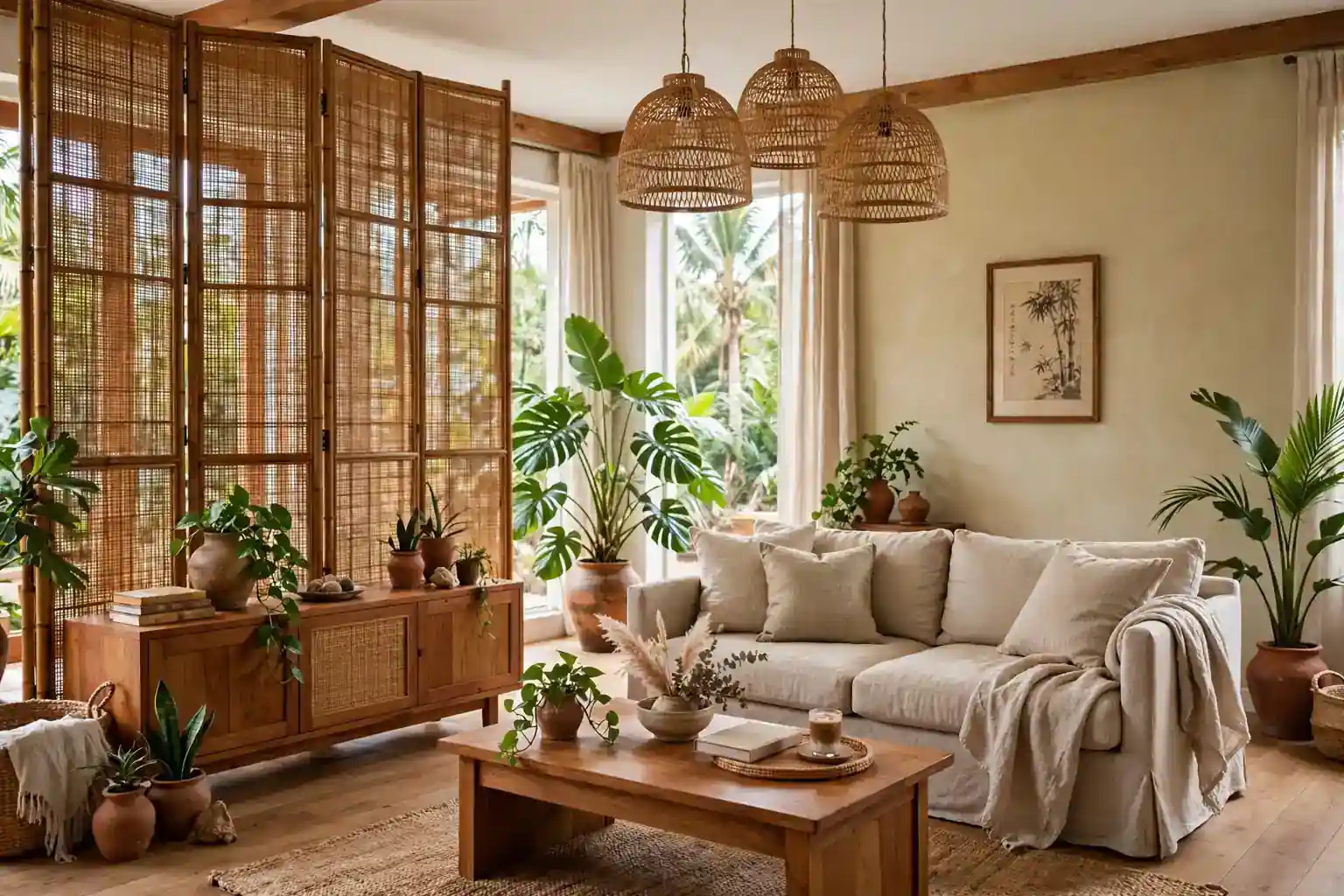
Vietnamese home decor pairs natural materials with calm, practical rooms. Bamboo, rattan, wood, cotton, silk, and clay appear again and again, softened by plants, paper light, and textiles in warm, muted colors. These 31 Vietnamese home decor ideas cover living rooms, bedrooms, kitchens, bathrooms, entries, and small spaces, so you can start with one lantern or one basket, or plan a fuller room refresh. Begin with the largest surface first, such as the seating, the floor, or the light, then add color and pattern in small, changeable pieces.
Key Takeaways
- Let natural materials lead: bamboo, rattan, wood, linen, and clay give a Vietnamese-inspired room its warmth.
- Keep the base calm with pale walls, warm wood floors, and plain bedding, so pattern and color can appear in small doses.
- Use soft, layered light: paper lanterns, rattan pendants, and low lamps suit evening rooms better than one bright ceiling light.
- Sit low when it suits the room: floor cushions, a low table, and a low bench make a space feel relaxed and welcoming.
- Add plants at different heights, from a floor plant by the window to herbs on a kitchen sill, for a lived-in tropical feel.
- Repeat one material or color at least twice, so a single bamboo piece or one blue ceramic does not look out of place.
1. Build a Low Seating Corner With Floor Cushions
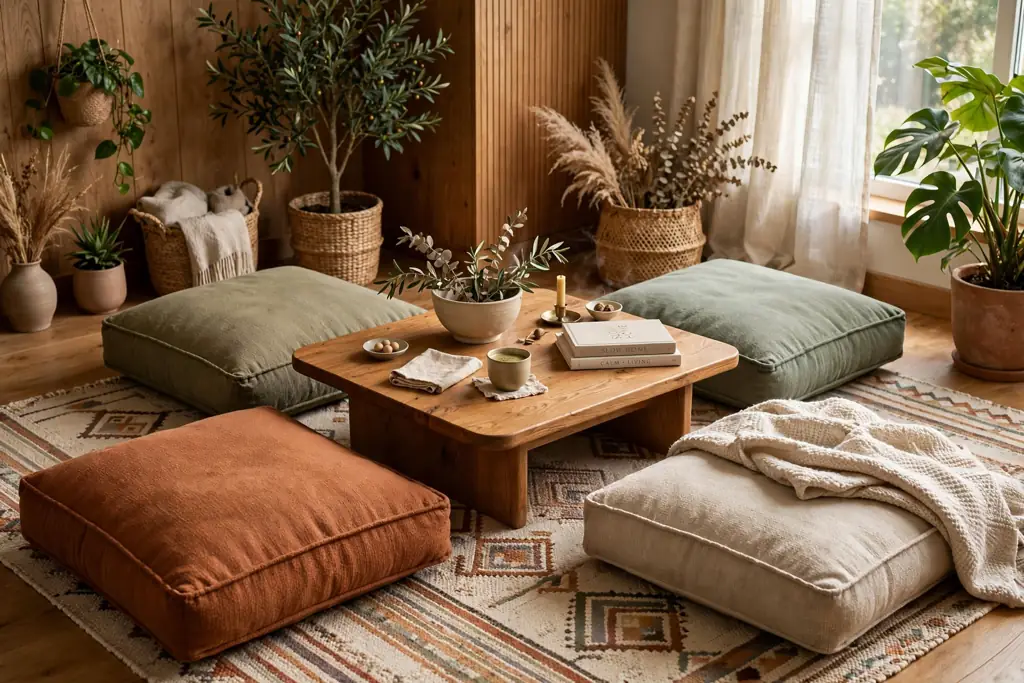
Set a low seating corner with thick floor cushions around a low wooden table, on a flatweave rug. Sitting low makes a room feel relaxed and close to the ground, and it suits tea, reading, and long talks. Choose cushions with firm filling and washable covers, since floor seats get daily use.
Place a basket of spare cushions nearby for guests, and add a low backrest cushion against the wall for anyone who needs back support. Keep a clear path around the seating group, so the low corner feels open rather than crowded. For a related low seating approach, see these Korean living room decor ideas.
2. Divide a Room With a Bamboo Screen
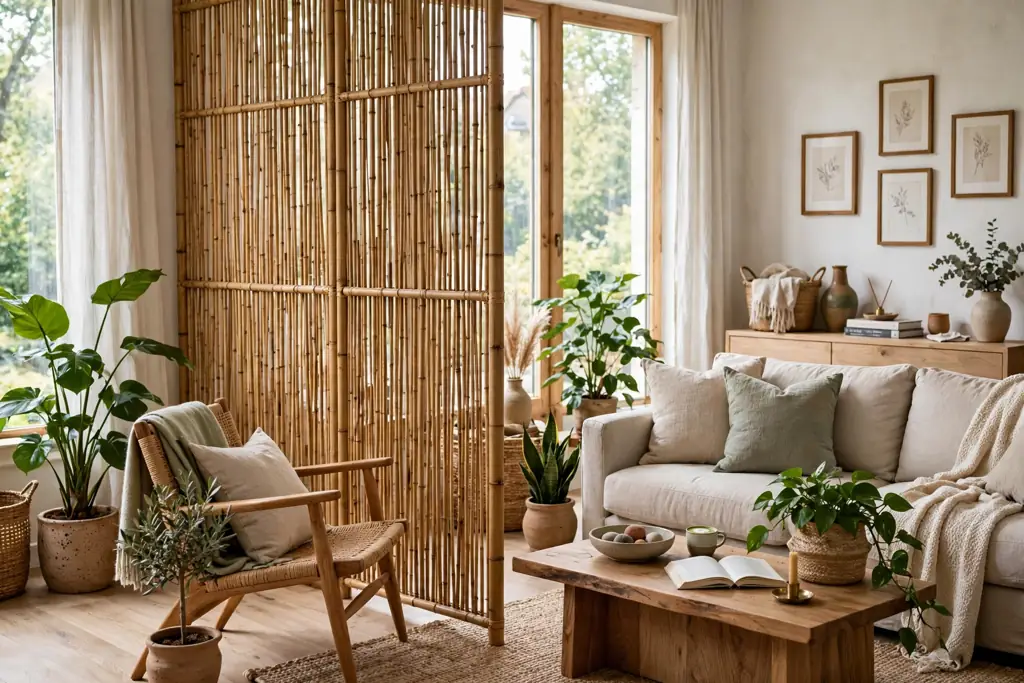
Stand a bamboo screen to divide a seating corner from a work corner or an entry path. The open weave lets light pass through, so the room gains structure without a solid wall. Choose a screen in natural bamboo with a simple grid or slat pattern.
Place the screen where it blocks a direct view of a desk or storage corner, but leaves walking routes clear. A folding screen suits a rented home, since it moves with you, while a fixed panel suits a longer term layout. Keep the screen stable on a flat floor, and clear of heaters and open flames.
3. Hang Rattan Pendant Lights Over the Table
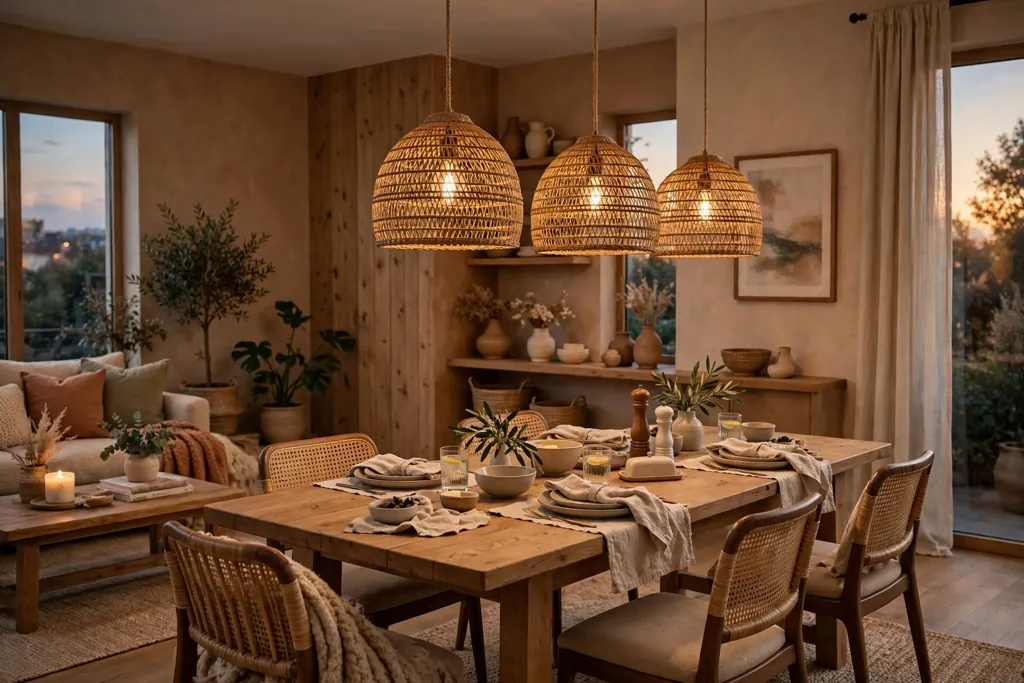
Hang one rattan pendant over a dining table or two smaller pendants over a kitchen island for warm, woven light. Rattan shades cast a soft, patterned glow and add texture at ceiling level, where many rooms stay bare. Choose a natural rattan tone and a simple round or drum shape.
Hang the pendant so its base sits above head height for standing adults, but low enough to feel part of the table group. Use a warm white bulb and a dimmer where possible, so evening light stays soft. Dust the rattan now and then with a dry cloth, and keep the shade clear of curtains and tall plants.
4. Anchor the Room With a Lacquered Wood Sideboard
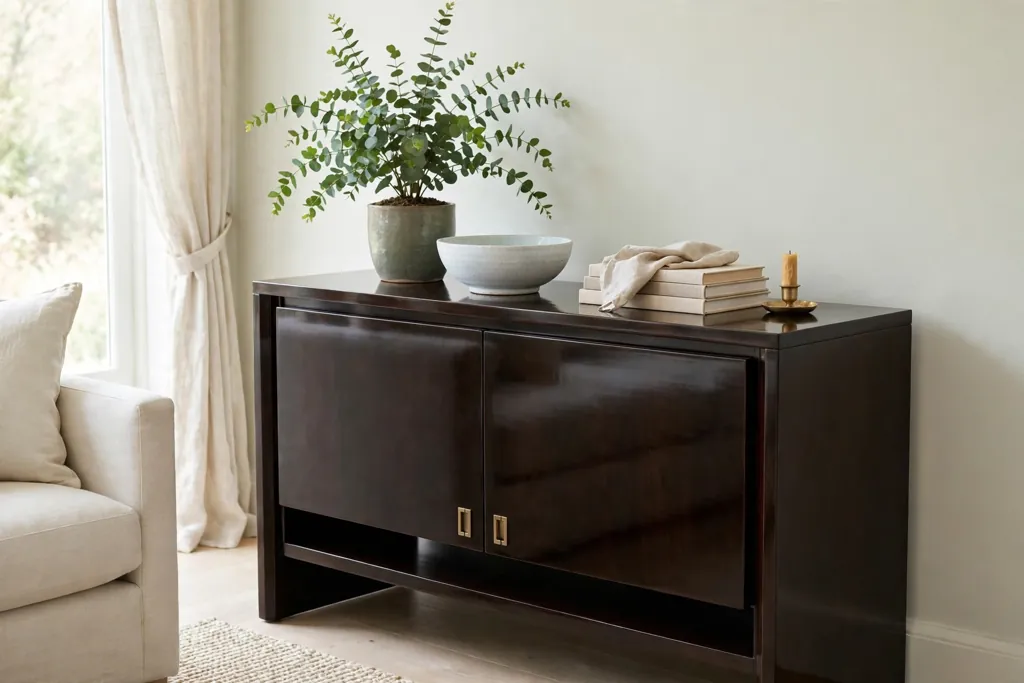
Use a lacquered wood sideboard or cabinet as the main storage piece in a living room or dining room. The smooth, dark or deep red finish gives the room a clear anchor, while plain walls and a light rug keep it from feeling heavy. Choose a simple shape with clean lines and plain handles.
Keep the top mostly clear, with one plant, one bowl, or a small stack of books, so the lacquered surface stays visible. Store board games, chargers, and table linens inside, so daily clutter stays out of sight. Wipe the surface with a soft, damp cloth, and use felt pads under any ceramic piece that might scratch it.
5. Display Blue and White Ceramics in a Group
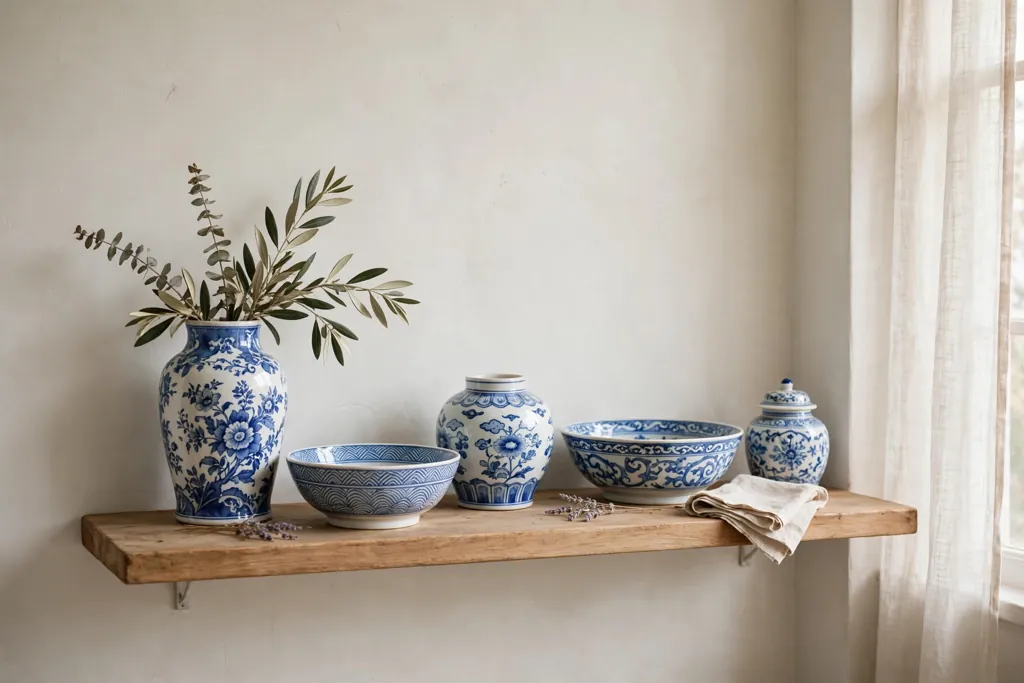
Group three or five blue and white ceramic pieces on a shelf, a sideboard, or a low table: a vase, a bowl, a small jar, or a tea cup. The blue pattern gives a plain room a clear color note, while the white glaze keeps the group light. Choose pieces in different heights, rather than a full shelf of matching items.
Give each piece space, and turn one piece slightly so its pattern catches the light. Use one bowl for a real job, such as holding keys or a small plant, so the display feels lived in rather than sealed away. Keep ceramics clear of door swings and the edge of a table where a sleeve could catch them.
6. Add Silk Cushion Covers in Warm Tones
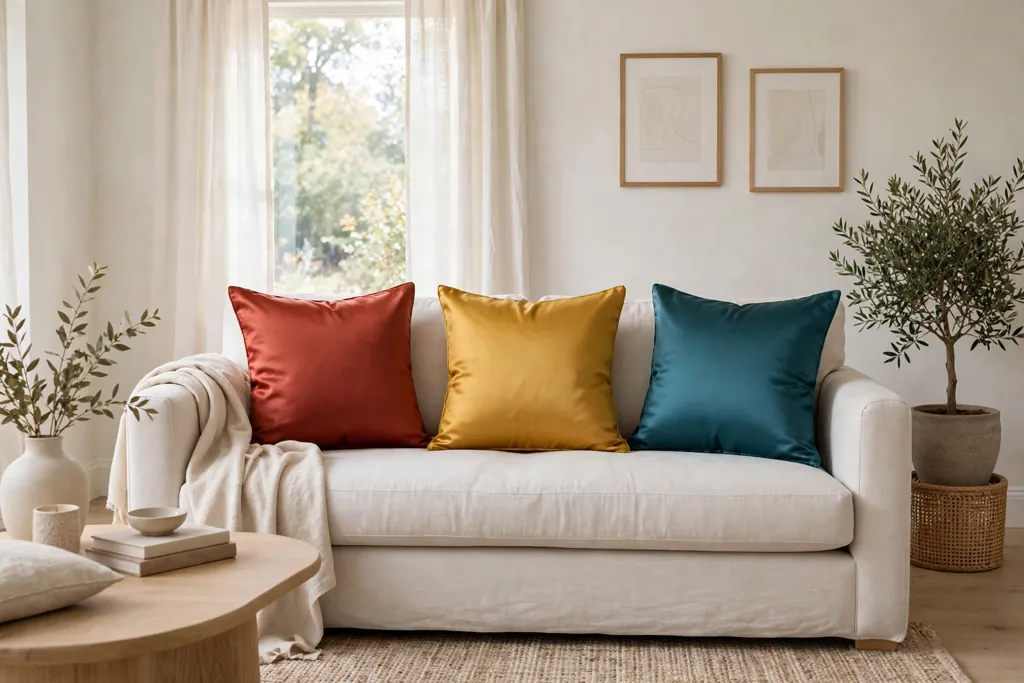
Add silk or silk-look cushion covers in warm tones, such as deep red, mustard, teal, or soft gold, on a plain sofa or bed. Silk adds a gentle sheen that suits a Vietnamese-inspired room, and because it appears only on cushions, it is easy to change with the seasons. Choose plain covers, or one simple pattern mixed with plain ones.
Place larger cushions at the back and smaller ones in front, and keep the total count modest, so seats stay usable and not buried. Follow the care label for washing, since silk needs gentler handling than cotton. If silk feels too formal for daily use, use silk-look covers on a guest bed and cotton covers on the main sofa.
7. Store Daily Things in Woven Bamboo Baskets
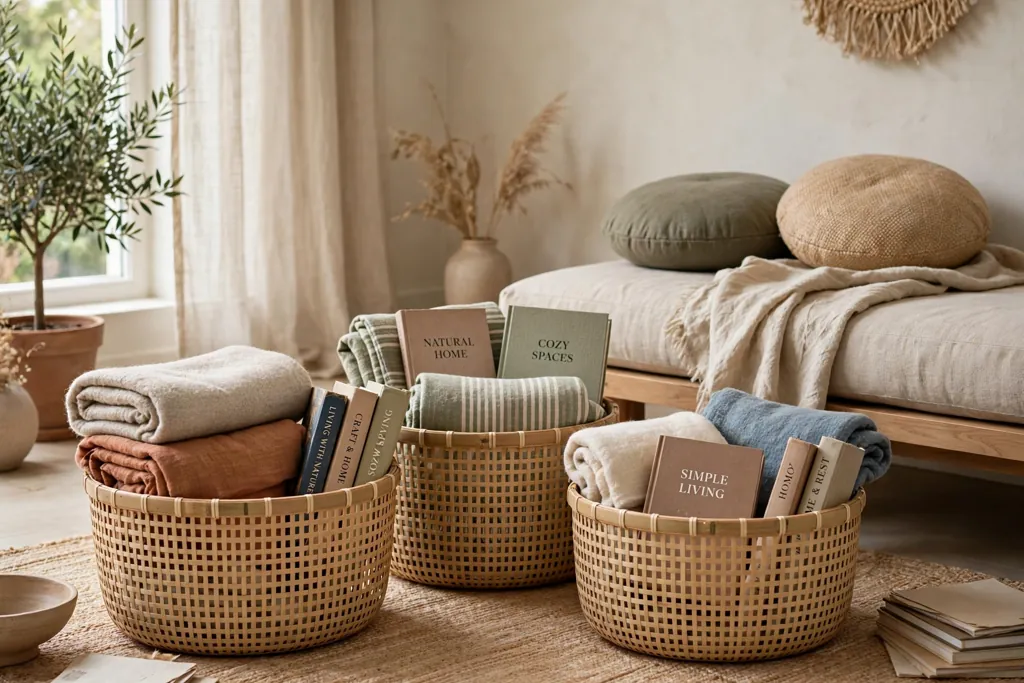
Use woven bamboo or seagrass baskets for throws, magazines, toys, and charging cables. Baskets add natural texture, hide everyday clutter, and suit a room where furniture stays low and simple. Place one large basket beside the seating group for throws, and one smaller basket near a chair for books.
Choose baskets with handles, so they can be carried for a quick tidy, and line a basket with cloth if the weave snags paper. Keep one basket empty on purpose, as a fast tidy basket before guests arrive. A basket under a low shelf or beside a low table keeps storage close without needing a tall cabinet.
8. Grow Tropical Plants in Clay Pots
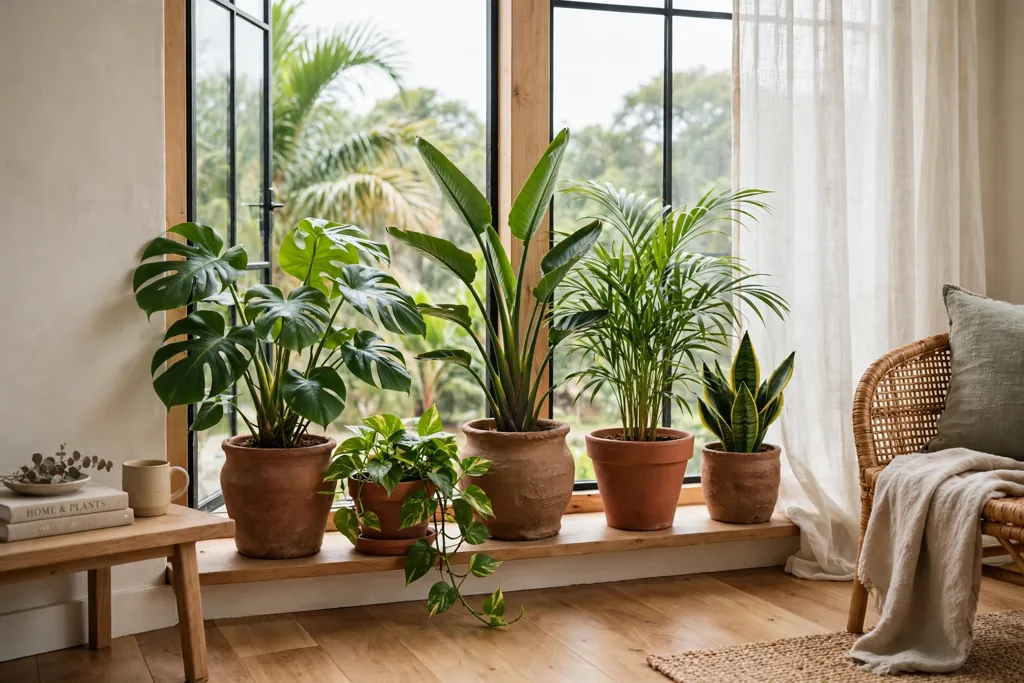
Place tropical plants, such as a monstera, a palm, or a philodendron, in clay or terracotta pots by a bright window. Green leaves soften straight lines from shelves and screens, and clay pots add an earthy tone that suits wood and rattan. Choose plants that suit your light level, and pots with drainage holes and saucers.
Water only when the top soil feels dry, and turn each pot a quarter turn every week or two so growth stays even. Keep plants clear of radiators and cold drafts, and wipe large leaves with a damp cloth now and then. One large plant usually reads calmer than many small pots scattered around the room.
9. Fit Wooden Louvered Panels at a Window
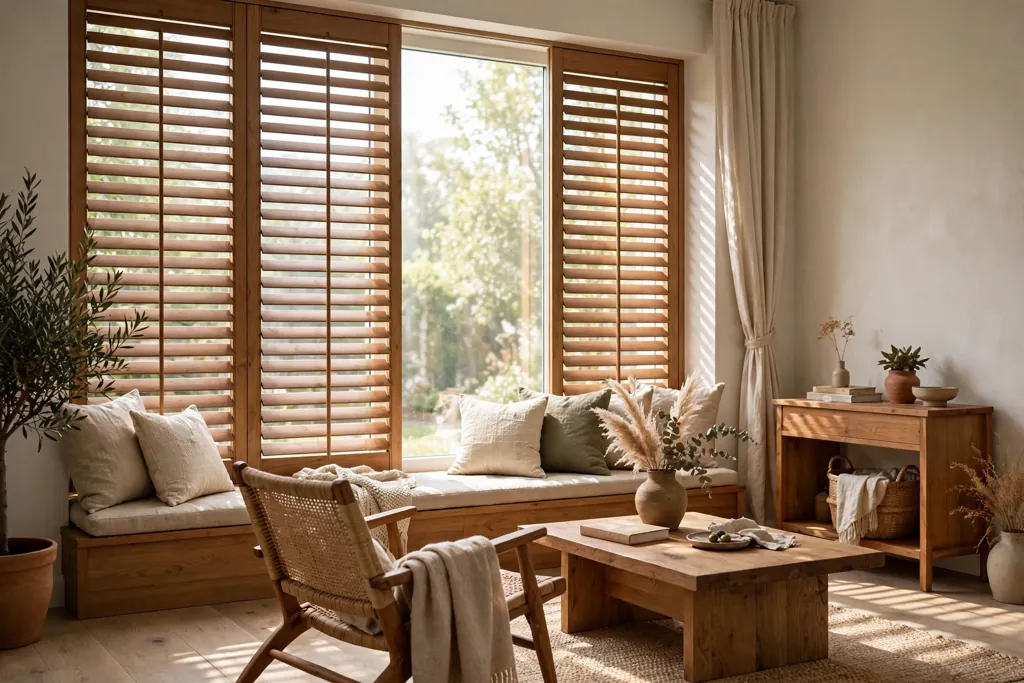
Fit wooden louvered panels or shutters at a window to control light and air while adding a warm, crafted surface. Louvers let you tilt the slats for shade or privacy without shutting out a breeze, which suits a room that gets strong sun. Choose a natural wood tone that matches the floor or the furniture.
Measure the window opening carefully, and check that the panels clear curtains, handles, and any window sill plants. Dust the slats with a dry cloth or a soft brush, since louvers gather dust in their grooves. If full shutters are too much for the room, use one louvered panel as a decorative screen beside a window instead.
10. Lay a Handwoven Flatweave Rug
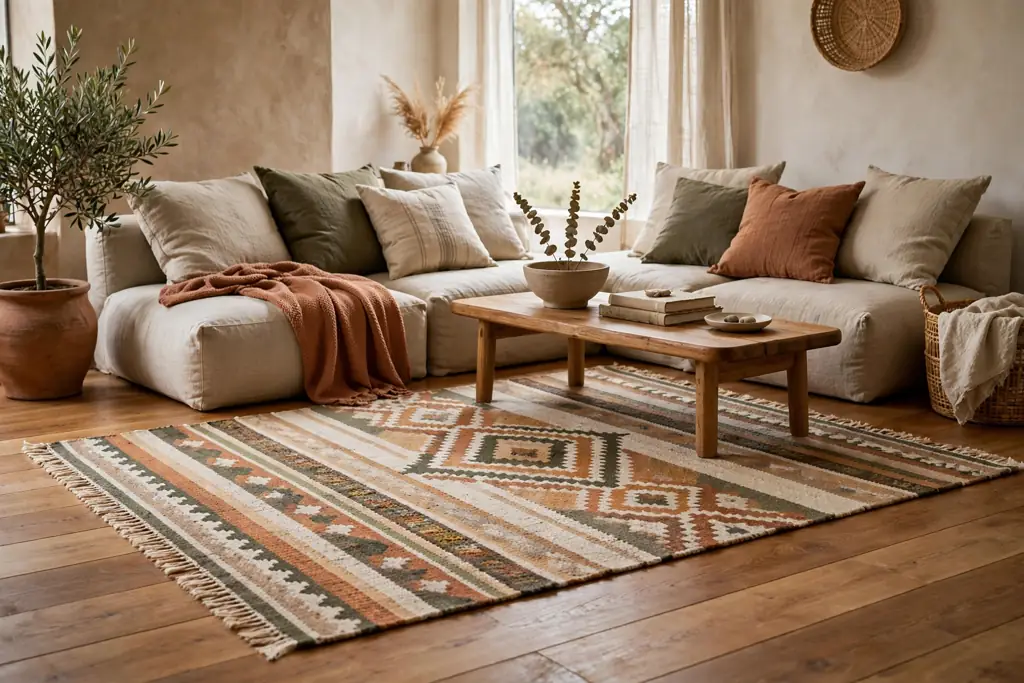
Lay a handwoven flatweave rug under the seating group, large enough for the front legs of the sofa and chairs to rest on it. A flatweave rug in cream, indigo, or a muted stripe keeps the floor feeling light, and its low pile is easy to vacuum and to move cushions across. Leave a clear border of wood around the rug, so the floor stays part of the look.
Measure the seating zone before buying, and tape the rug outline on the floor to check walking routes and door swings. Keep the rug pattern simple if cushions or a silk throw already carry pattern, and use a rug pad underneath on a smooth wood floor. For a related take on pale walls and natural layers, see these organic modern living room ideas.
11. Make a Tea Corner on a Low Table
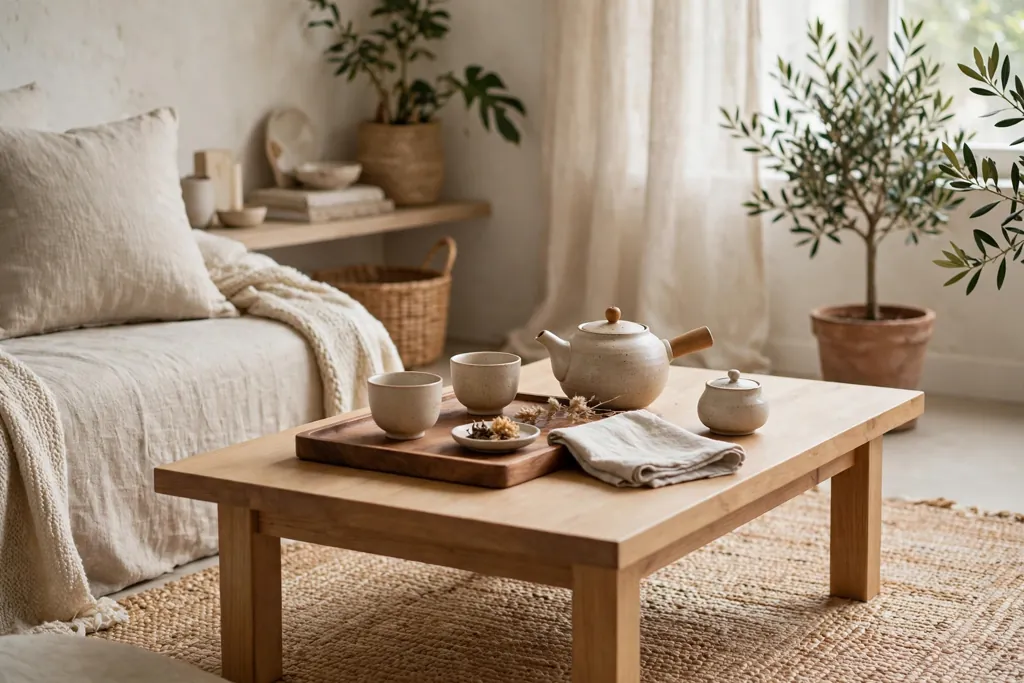
Keep a tea set ready on a low table or on a tray beside it: a small teapot, two or three cups, and a tin of loose leaf tea. A tea corner invites a pause in the day, and a set left out feels like part of daily life, not a display. Choose a plain ceramic or stoneware set in white, cream, or soft green.
Store the tea tin nearby, out of direct sun, and keep a small cloth under the tray to catch drips. Offer tea to guests from the same set, and wash cups by hand if the glaze maker advises it. Add one small plant or one simple vase to the tray, so the corner feels finished without getting crowded.
12. Light a Hallway With Hoi An Style Lanterns
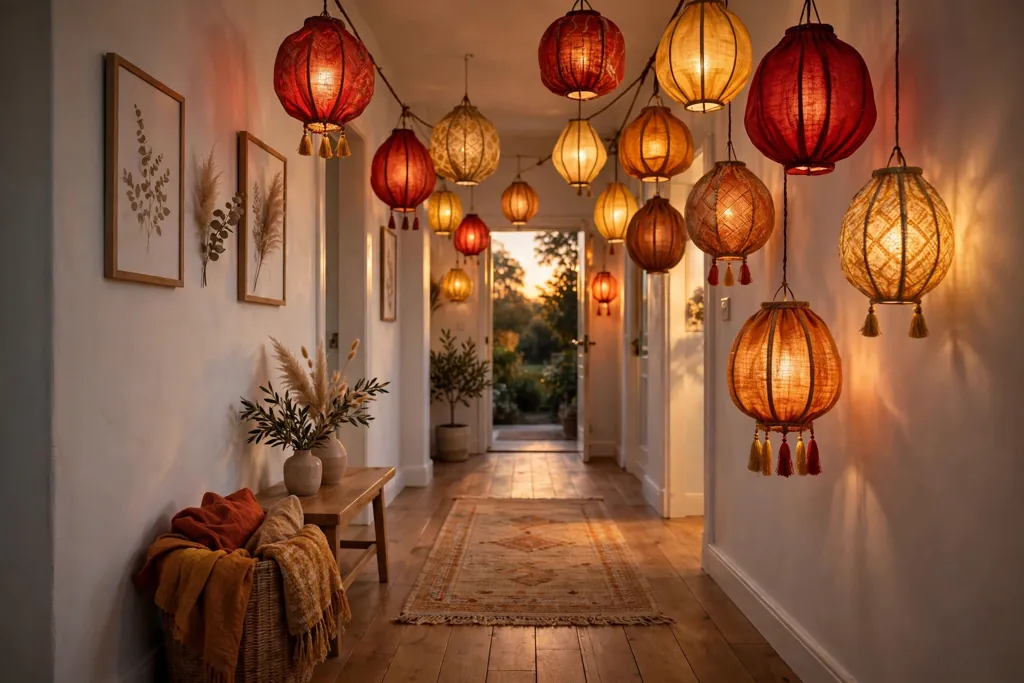
Hang fabric lanterns in a hallway or entry in warm colors, such as red, gold, or soft orange, for a welcoming glow. Lanterns in the style of those seen in Hoi An add color and shape at eye level, and they suit a narrow space where a large piece of furniture would crowd the walk. Choose one size, or two sizes that share a color.
Hang lanterns at a height that clears heads and doors, and use warm white bulbs or battery lights inside them. Keep fabric lanterns clear of heaters and open flames, and dust them gently with a dry cloth. In a small entry, two lanterns are usually enough, with a plain mirror or a small shelf to balance them.
13. Hang a Carved Wooden Wall Panel
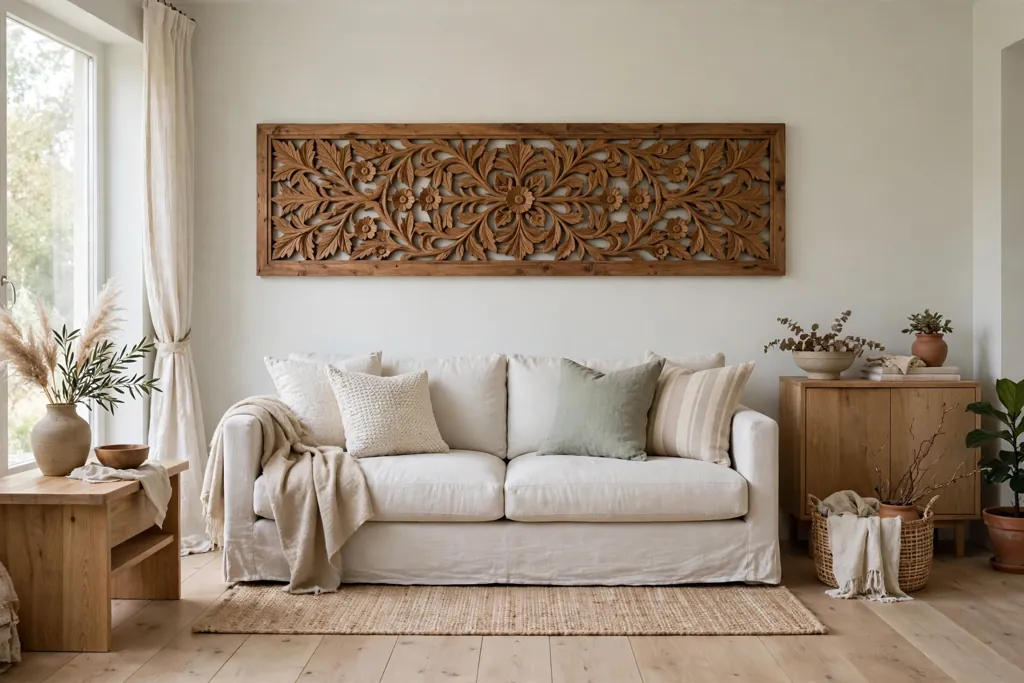
Hang one carved wooden wall panel above a sofa, a sideboard, or a bed as a focal point. Carved wood adds pattern through shape and shadow, rather than through color, so it suits a pale room well. Choose a panel with a simple floral, landscape, or geometric carving, in a wood tone that matches the furniture.
Hang the panel at eye level when seated, and leave empty wall space around it, so the carving has room to be seen. Keep the rest of that wall plain, so the panel stays the main feature. Dust carved grooves with a soft brush, since a cloth can catch on raised edges.
14. Grow Herbs in Terracotta Pots by the Kitchen Window
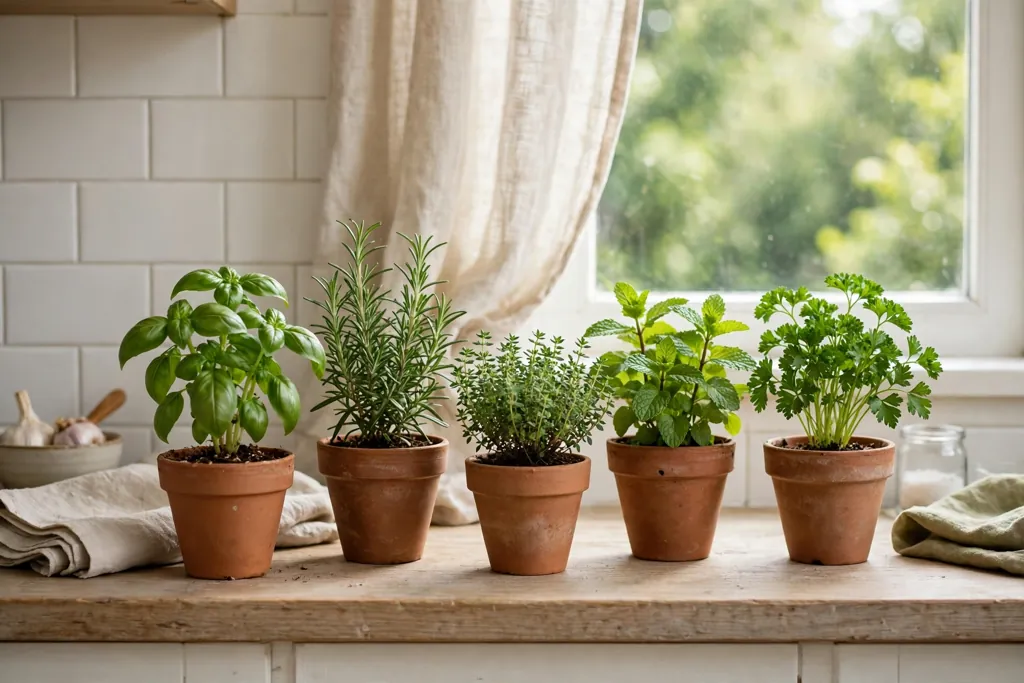
Grow herbs, such as basil, mint, coriander, and spring onion, in small terracotta pots on a kitchen windowsill or a narrow shelf. Fresh herbs are useful for cooking, and their green leaves warm a plain kitchen. Choose pots with drainage holes, and a tray underneath to protect the sill.
Water each herb by its own needs, not on one fixed schedule, since pots dry out at different rates near a window. Snip leaves from the top to keep plants bushy, and replace any plant that stops growing well. Label the pots if you grow several similar herbs, so cooking stays easy.
15. Style Open Kitchen Shelves With Ceramics and Jars
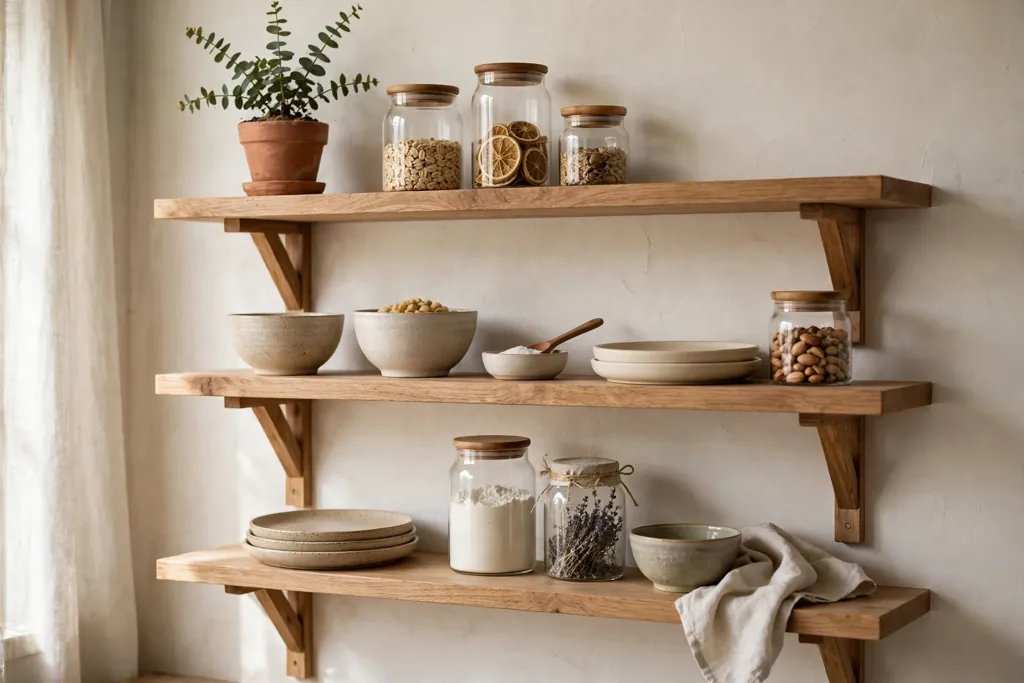
Fit open wooden shelves in a kitchen and style them with ceramic bowls, plates, glass jars, and one or two plants. Open shelves keep daily dishes within reach, and they turn useful items into part of the decor. Choose shelves in warm wood, anchored into studs or with fixings suited to your wall type.
Put heavier items low and lighter items higher, and leave gaps between groups, so the shelves read as a display, not a storage wall. Keep the items you use most at hand height, and wash shelf items now and then, since open shelves gather cooking dust. If a full open shelf feels too exposed, use one open shelf above a closed cabinet.
16. Serve Meals on Woven Trays and Bamboo Mats
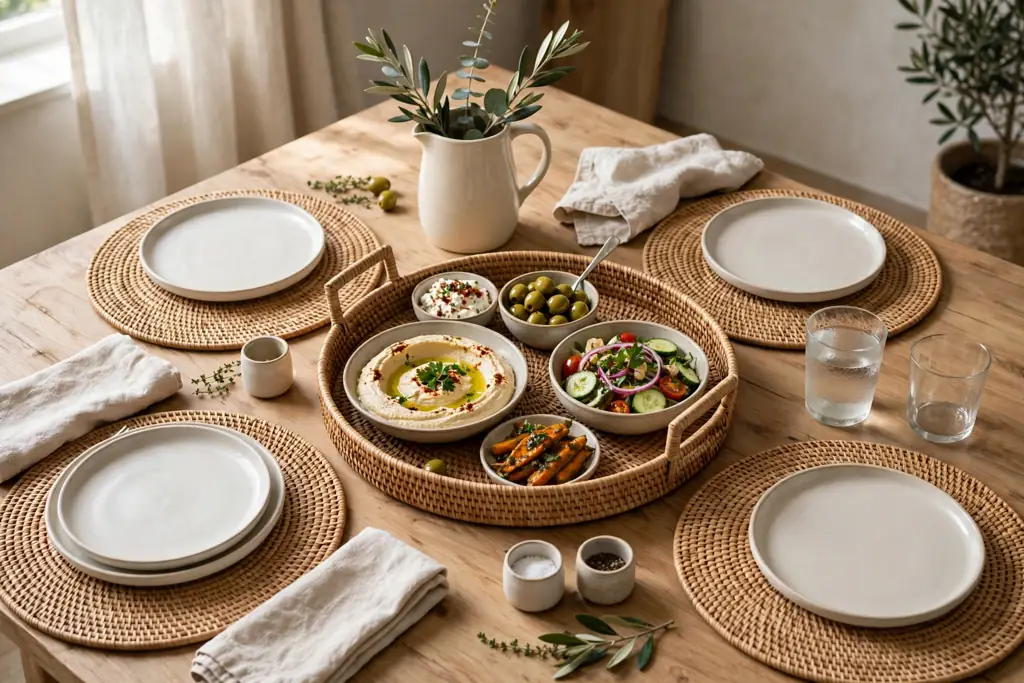
Set the dining table with woven placemats, bamboo mats, or a woven tray under shared dishes. Woven table pieces add texture to a plain table, protect wood from heat and marks, and suit shared meals where dishes sit in the middle. Choose mats in a natural tone, with a plain weave.
Wipe mats with a damp cloth after meals, and let them dry fully before stacking, so they do not hold damp. Use a tray for sauces and small bowls, so the table stays tidy during a meal. Keep the rest of the table simple, with plain plates and one small vase, so the woven texture leads.
17. Choose a Round Table With Rattan Dining Chairs
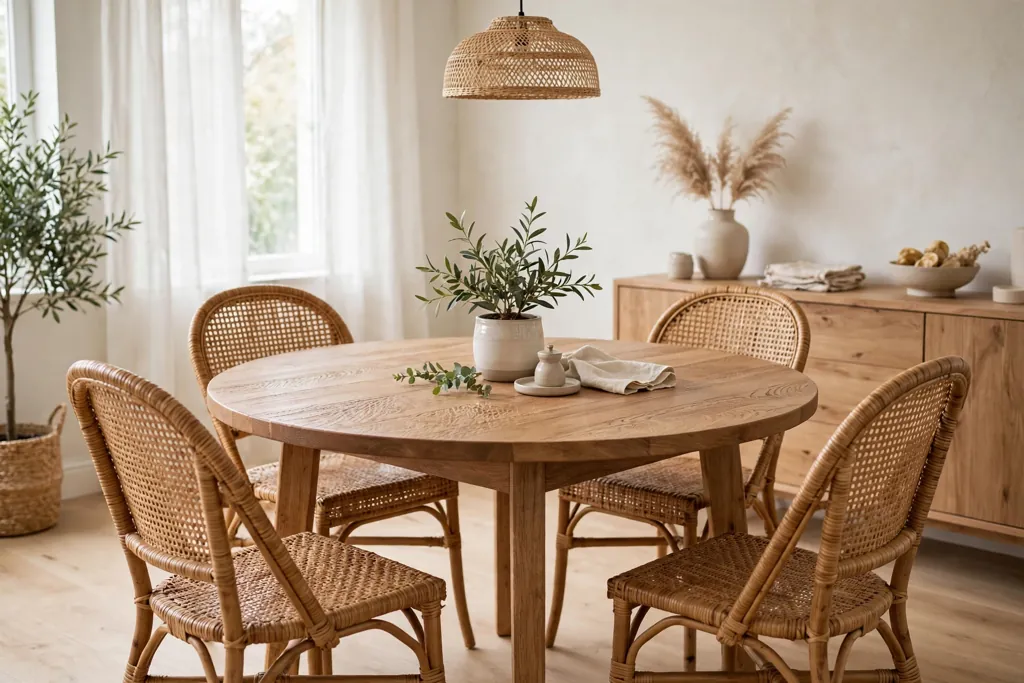
Choose a round wooden dining table with rattan dining chairs for a dining space that feels open and easy to gather around. A round table suits conversation, since everyone can see each other, and rattan chairs keep the group light in a small room. Choose a table size that leaves room to pull chairs out and walk behind them.
Add a simple centerpiece, such as a ceramic bowl with fruit or a small plant, and keep it low, so it does not block views across the table. Use seat pads in a plain cotton if rattan seats feel hard for long meals. Measure door widths before delivery, since a round tabletop is harder to move than a flat one.
18. Dress a Bed in Light Linen With an Indigo Accent
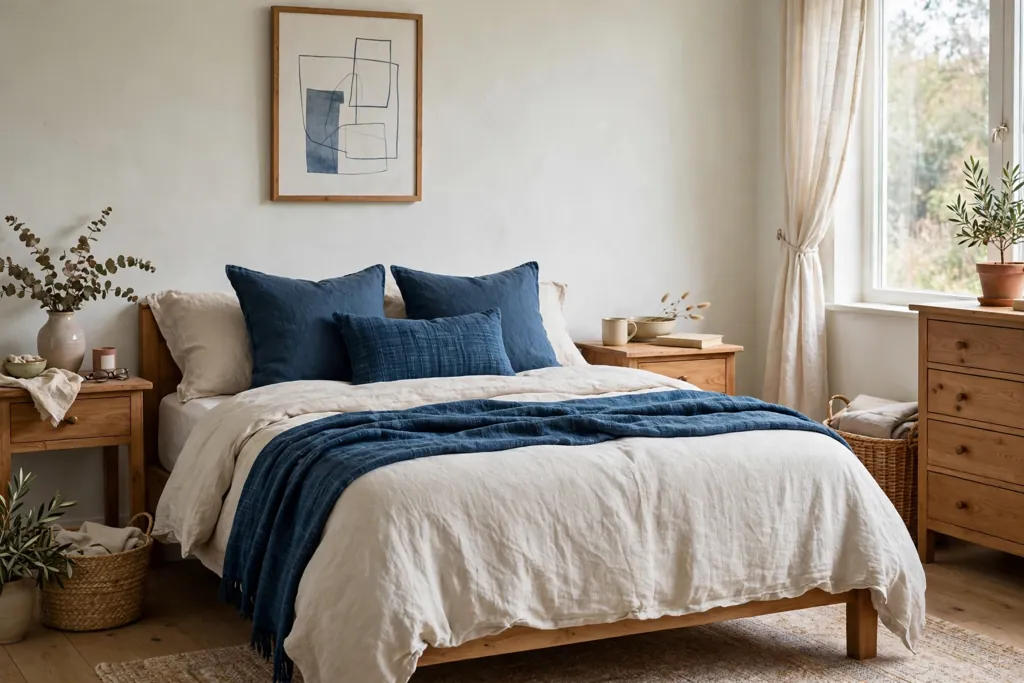
Dress a bed in light linen bedding, in white or cream, with an indigo throw or two indigo cushions as the accent. Indigo, a deep blue with a long dyeing history in Vietnam, gives a calm bedroom a clear color note without a repaint. Keep the walls warm white or very pale grey, so the blue stays the strongest color.
Layer linen sheets, a plain duvet, and the indigo throw at the foot, and keep the rug plain cream or pale grey. Wash indigo fabrics as the maker directs, since strong dye can transfer when wet. If the indigo feels too strong, swap one cushion for a cream one to soften the bed.
19. Fit a Bamboo Headboard Behind the Bed
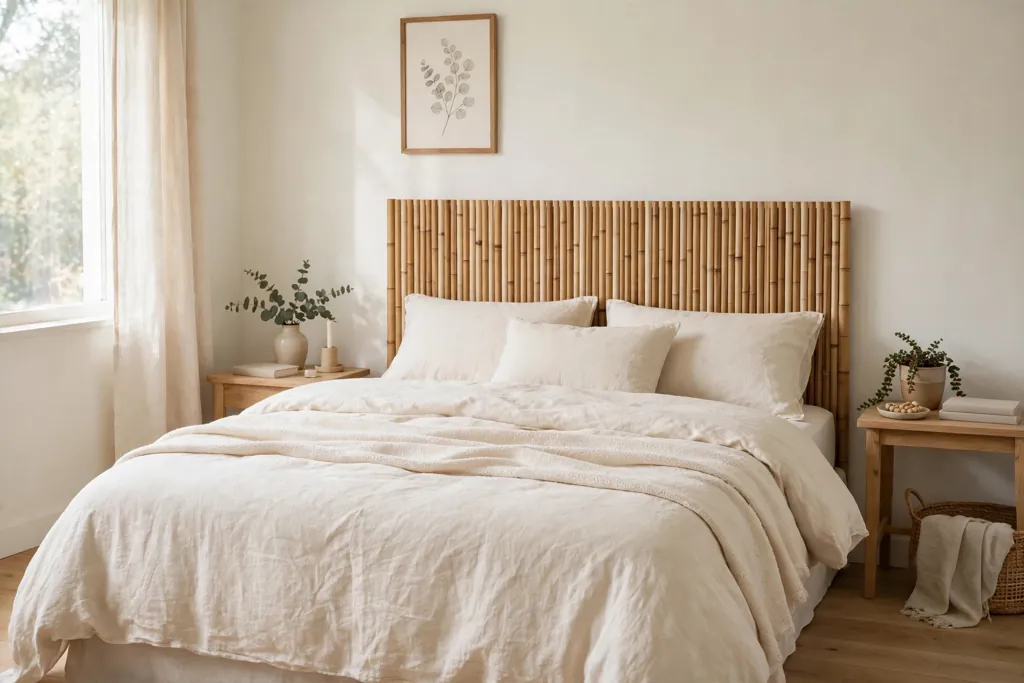
Fit a bamboo headboard behind the bed, in a simple slat, panel, or woven design, for a natural focal point that needs no paint. Bamboo adds warmth and texture to a plain bedroom wall, and its pale tone suits white, cream, and light wood furniture. Choose a headboard close to the width of the bed, so it frames the bed rather than crowding the nightstands.
Anchor the headboard firmly to the wall or the bed frame, and check that it does not wobble when you lean back. Keep bedding plain, with one bamboo-toned cushion or throw to link the bed to the headboard. Dust bamboo slats with a dry cloth, and keep the headboard clear of damp, since bamboo can mark if it stays wet.
20. Hang Sheer Cotton Curtains to the Floor
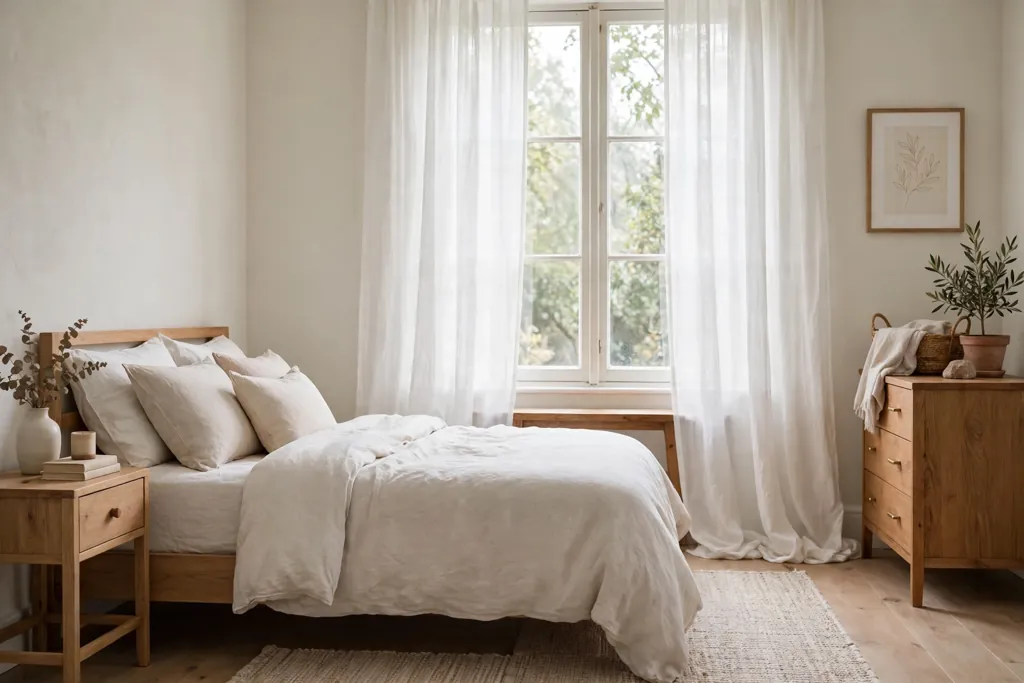
Hang sheer cotton curtains from close to the ceiling to the floor, so daylight filters in softly and the window feels taller. Sheer cotton gives daytime privacy without shutting out light, which matters in rooms that need every bit of sun. White, cream, or pale grey cotton works best.
Use a simple rod in wood or black metal, and let the curtains fall straight rather than pooling heavily on the floor. Add a heavier pair at the sides only if the room gets cold drafts or needs evening privacy. Wash the sheers now and then, since pale cotton shows dust faster than a darker curtain.
21. Add a Bamboo Bath Mat and a Wooden Stool
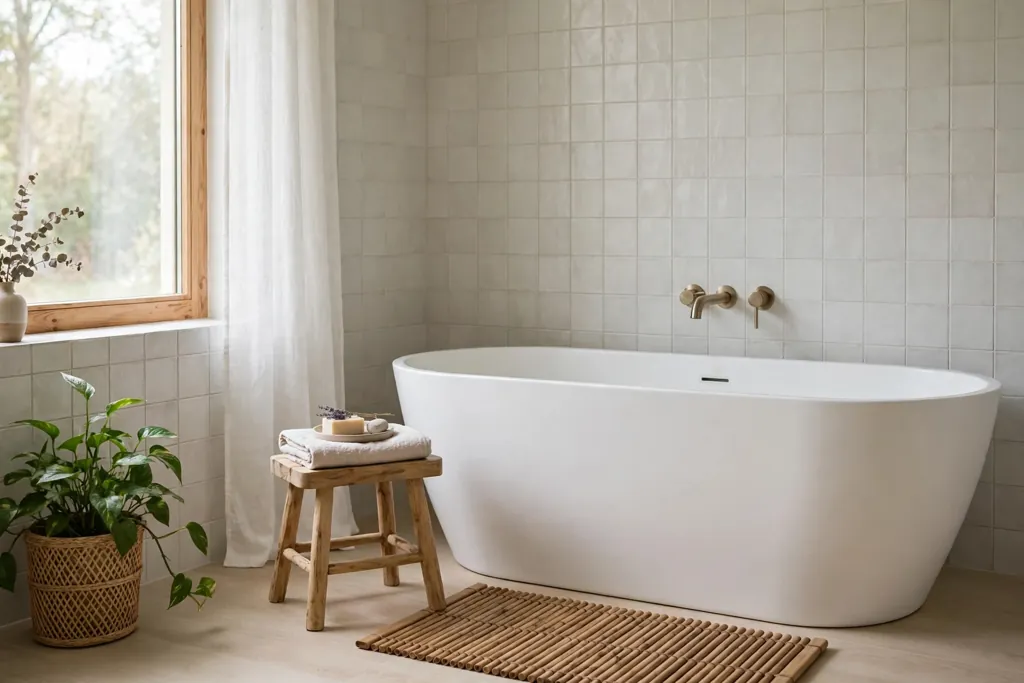
Place a bamboo bath mat on a bathroom floor and a small wooden stool beside the bath or shower for a warm, spa-like corner. Bamboo dries faster than a thick fabric mat, and a stool gives a place for a towel, a book, or bath supplies. Choose a mat with a slatted design, so water drains and air can reach the floor below.
Rinse the mat now and then, and let it dry fully between uses, so it does not hold damp. Keep the stool in a spot that stays mostly dry, and wipe it after a bath. Add one small plant that suits humidity, such as a pothos, to finish the corner without crowding it.
22. Create a Bathroom Corner With a Stone Basin and Plants
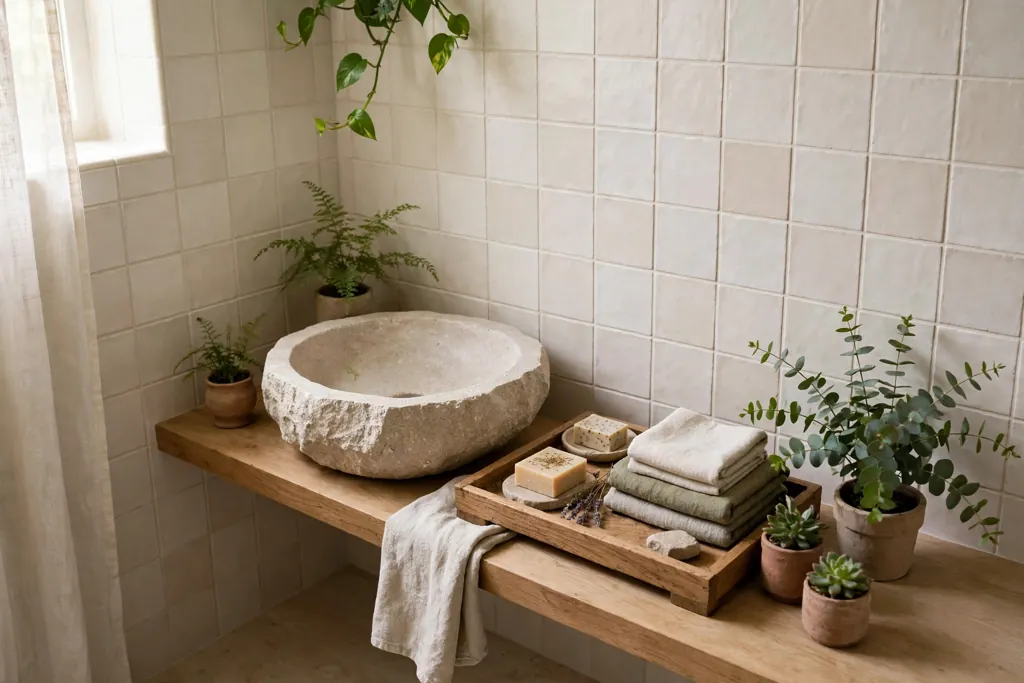
Create a calm bathroom corner with a stone or ceramic basin, a wooden tray for soap and towels, and one or two humidity-loving plants. Stone adds a solid, natural texture next to smooth tiles, while plants soften the hard surfaces of a bathroom. Choose a basin shape that fits the vanity, and a tray that keeps small items together.
Keep the counter mostly clear, with one soap dish, one small plant, and a folded towel, so the basin stays the focus. Wipe stone with a method suited to its finish, and keep plants out of direct shower spray. If a stone basin is too much for the room, use a stone soap dish and a wooden tray for a similar effect in a smaller dose.
23. Set Up an Entry Bench With Basket Shoe Storage
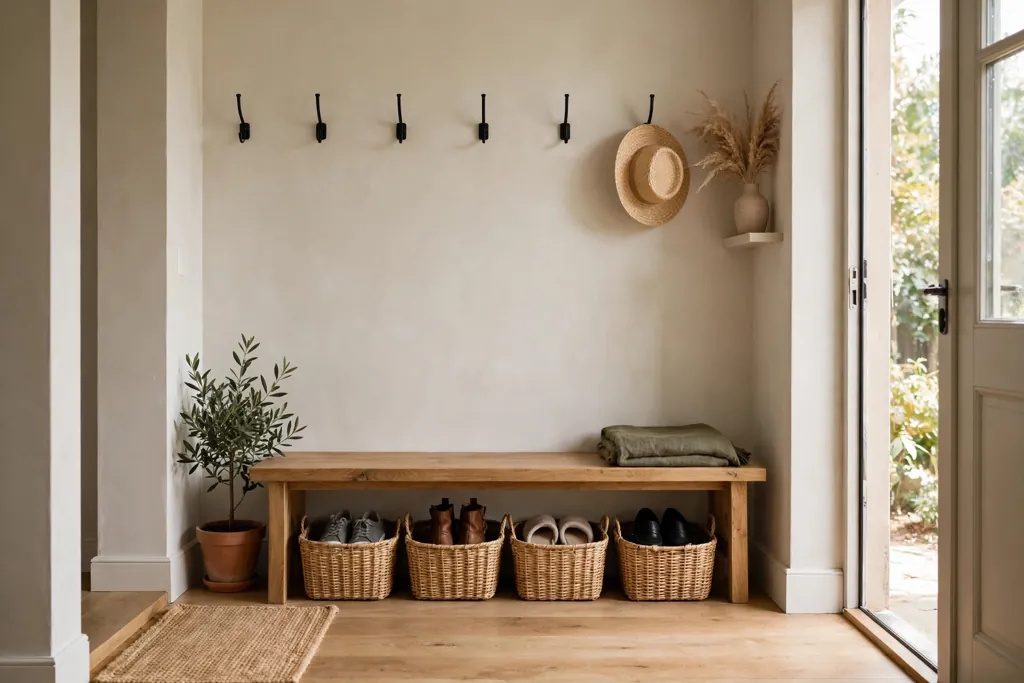
Place a low wooden bench by the front door, with woven baskets underneath for shoes, and hooks above for bags and hats. An entry bench gives a place to sit while putting shoes on, and baskets keep shoes out of the walkway. Choose a bench height that suits sitting, and baskets that slide out easily.
Keep one basket for daily shoes and one for guest shoes, so the entry stays tidy without a large shoe cabinet. Hang a small mirror above the hooks, so the entry feels brighter and more useful. Wipe the bench after wet days, and keep the floor mat beside it easy to shake out.
24. Build a Gallery Wall of Vietnamese Art Prints
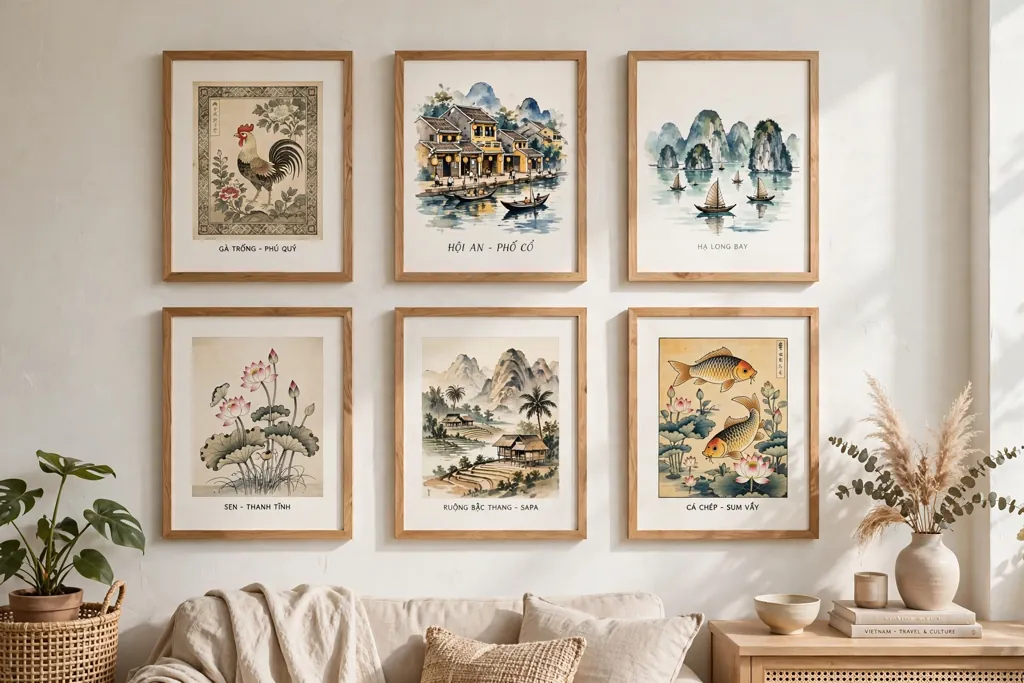
Build a gallery wall with Vietnamese art prints, such as lacquer-style paintings, village scenes, or simple botanical prints, in matching wood frames. A gallery wall adds personality and color to a plain wall, and matching frames keep several different prints looking planned. Start with three or four prints, and add over time.
Hang larger prints at eye level in the center, and smaller ones around them, with even gaps between frames. Keep the frame style consistent, in natural wood or black, so the art, not the frames, leads. Keep the wall out of direct sun, which can fade prints, and out of damp spots.
25. Make a Reading Corner With a Rattan Chair and a Floor Lamp
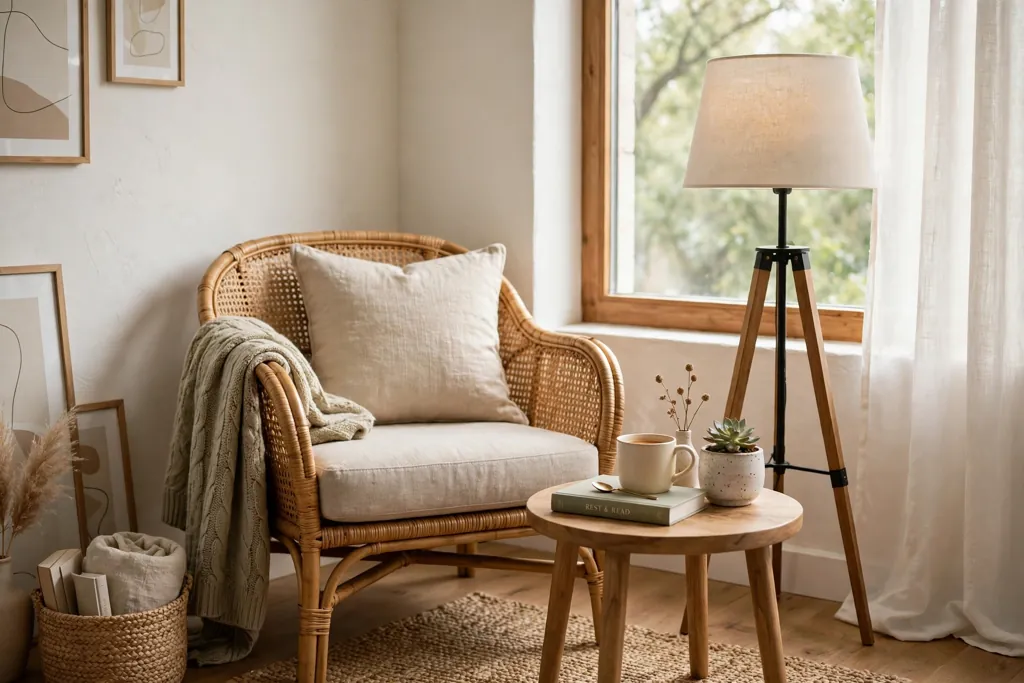
Make a reading corner with a rattan armchair, a small side table, and a floor lamp beside a window or a wall. A rattan chair adds woven texture, a lamp gives focused light, and a side table holds a book and a cup. Choose a chair with a seat pad in plain cotton, so long reading sessions stay comfortable.
Place the lamp behind or beside the chair, at shoulder height when seated, so reading light falls on the page and not into your eyes. Add a small basket for a current book and reading glasses, and keep the corner clear of other storage. For a related calm, low furniture approach, see these Japanese living room decor ideas.
26. Plant a Balcony Garden With Hanging Planters
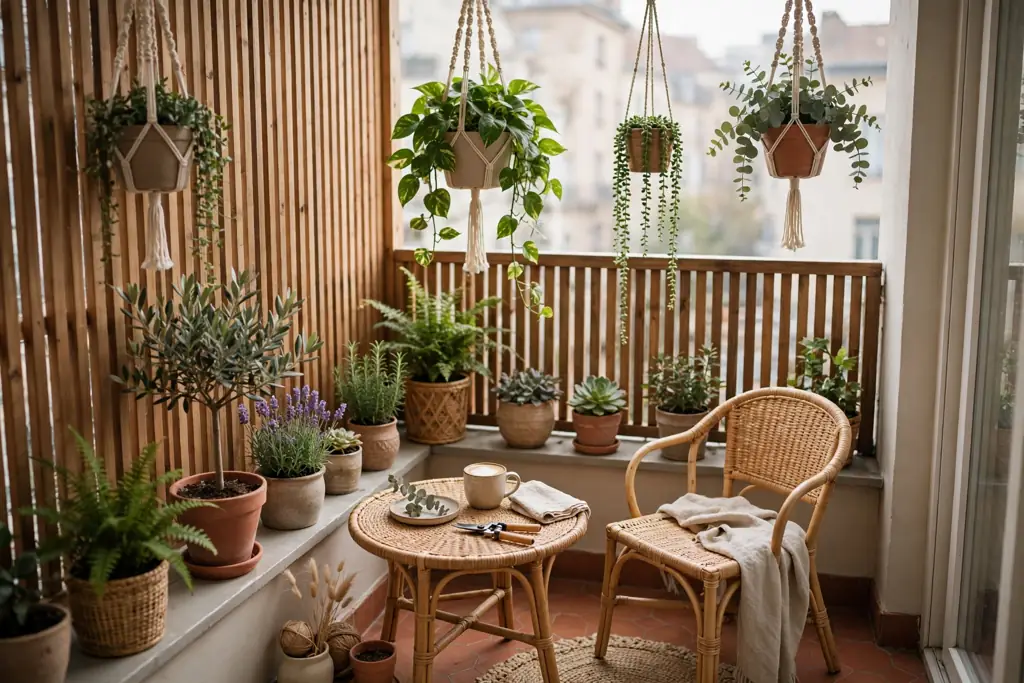
Plant a balcony garden with hanging planters, wall pots, and one or two floor pots, using herbs, trailing plants, and small flowering plants. Hanging planters use vertical space, which matters on a small balcony, and they keep the floor clear for a chair and a small table. Choose planters with drainage holes and a way to catch drips.
Water plants over a tray, let them drain, and then return them to their hooks, so water never sits on the balcony floor. Keep heavier pots low and lighter planters high, and check hooks and brackets for weight before loading them. Trim trailing stems when they reach a walkway, and use cuttings to start new plants.
27. Set Up a Home Office With a Bamboo Desk and a Paper Lamp
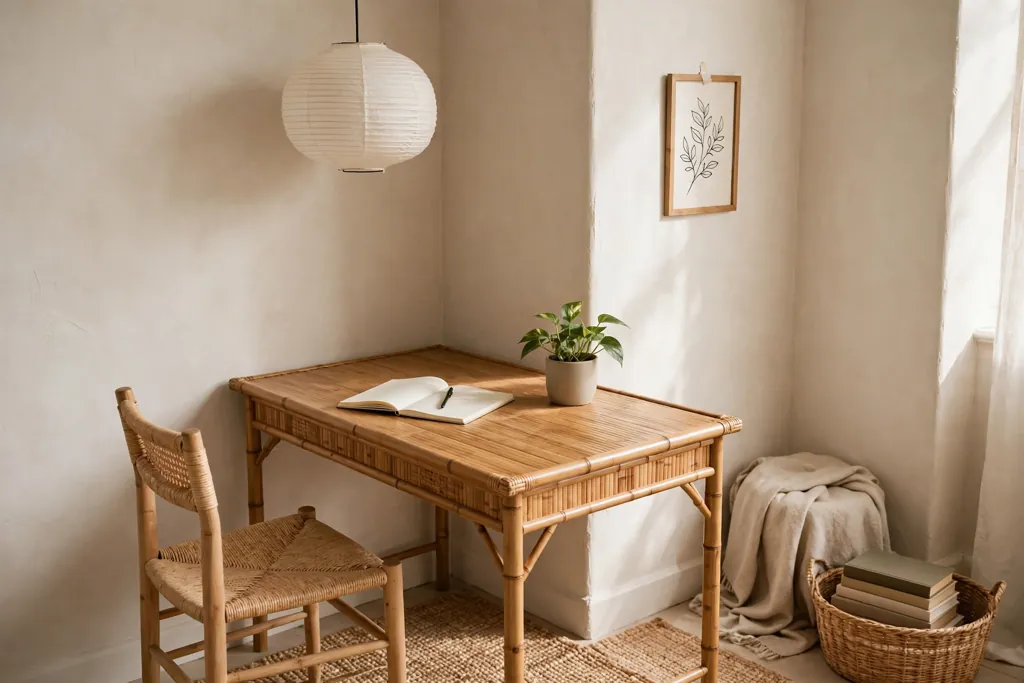
Set up a home office with a bamboo or light wood desk, a simple chair, and a paper lamp for soft task light. A light wood desk keeps a small work corner from feeling heavy, and paper light softens the glare of a screen in the evening. Choose a desk size that holds a laptop, a notebook, and one small plant, with room to write.
Keep cables tidied behind the desk, and use one drawer or one basket for notebooks and chargers, so the desk surface stays mostly clear. Place the lamp where its light falls on the work, not into your eyes, and keep paper shades clear of heaters. Add a pin board or one framed print above the desk, so the corner feels personal without getting busy.
28. Furnish a Small Room With a Folding Screen and Stackable Stools
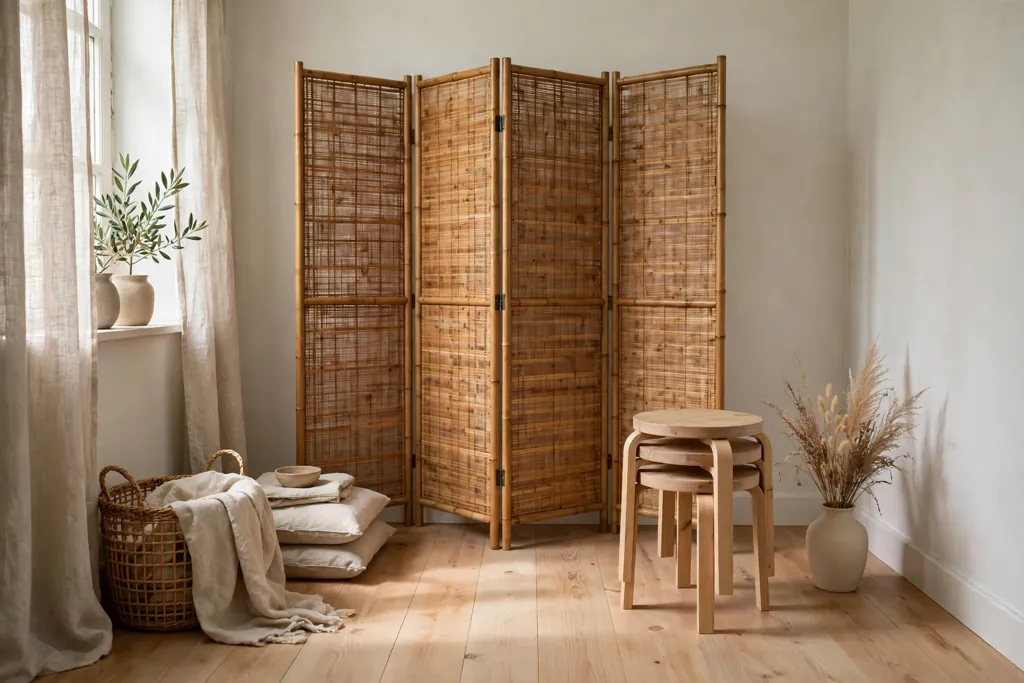
Furnish a small room with a folding bamboo screen, stackable wooden stools, and a foldable side table, so the layout can change with the day. Stackable stools give extra seats for guests without a permanent chair row, and a folding screen can hide a work corner or a storage nook in seconds. Choose stools in a wood tone that matches the table.
Stack stools neatly in one corner when not in use, and keep the screen folded flat against a wall when the room needs full floor space. Check that stools are stable before guests sit on them, and keep the table top clear, so it can fold away without a tidy first. This flexible set suits a studio, a guest room, or a small living room.
29. Display Fresh Blossom Branches and a Fruit Bowl
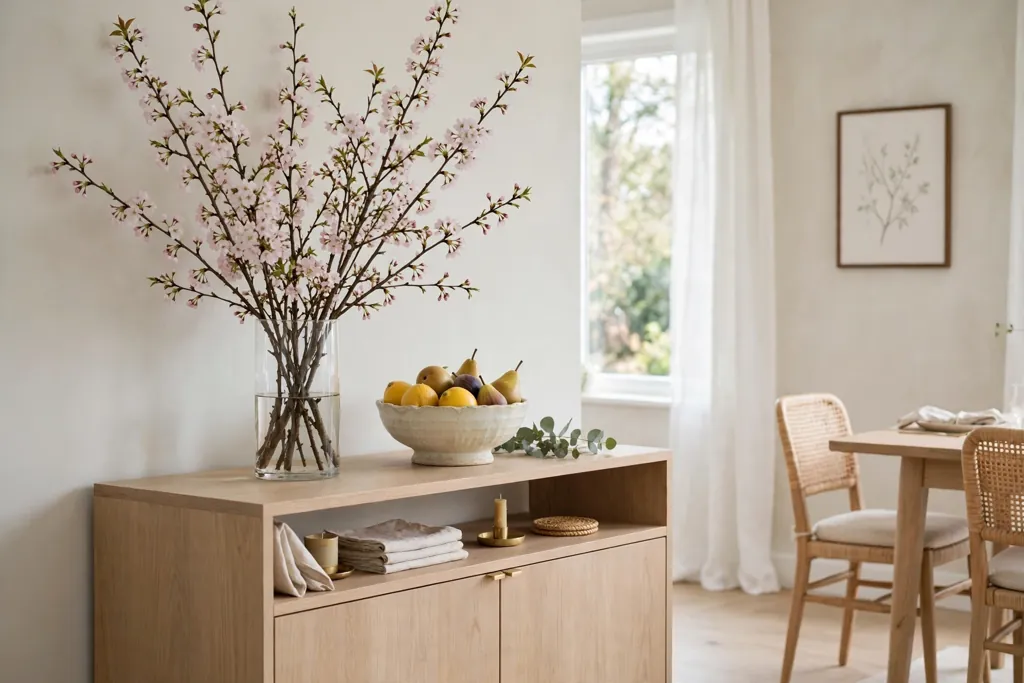
Display a tall vase with fresh blossom branches, such as peach or apricot blossom, on a sideboard or dining table, with a ceramic fruit bowl nearby. Blossom branches add height and a seasonal note, while a fruit bowl adds color and a useful daily piece. Choose branches that suit the season, and a bowl in a plain ceramic tone.
Trim stems at an angle, change the water often, and remove fading stems before they spoil the whole display. Keep the vase where it can be seen from the main seat, but clear of elbows and door swings. Refill the fruit bowl with fresh fruit, so the display stays part of daily life, not a fixed decoration.
30. Create a Low Play Corner With Woven Storage
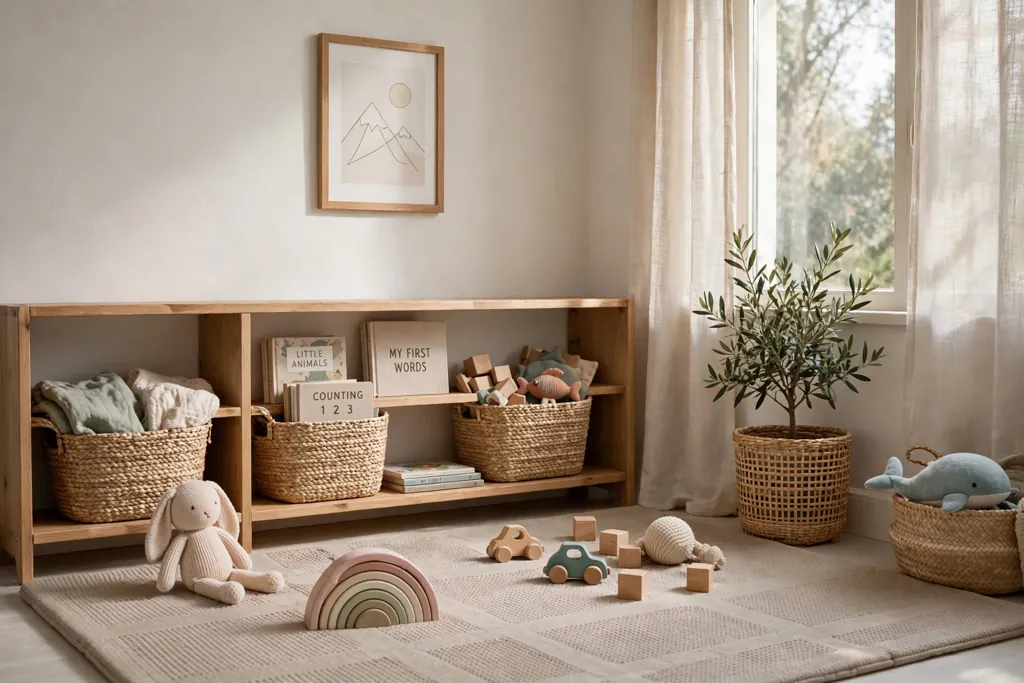
Create a low play corner with a soft play mat, low open shelves, and woven baskets for toys, books, and craft supplies. Low shelves let children reach toys and put them back, while baskets keep small pieces together and tidy. Choose a mat in a plain, washable material, and baskets with handles that small hands can carry.
Sort one basket per toy type, and keep the total toy count modest, rotating toys from a closet box when interest fades. Place the play corner near a window for daylight, but clear of doors and walkways. Wipe shelves and baskets now and then, since a play corner gathers dust and crumbs faster than a quiet room.
31. Welcome Guests With Entry Lanterns and a Woven Doormat
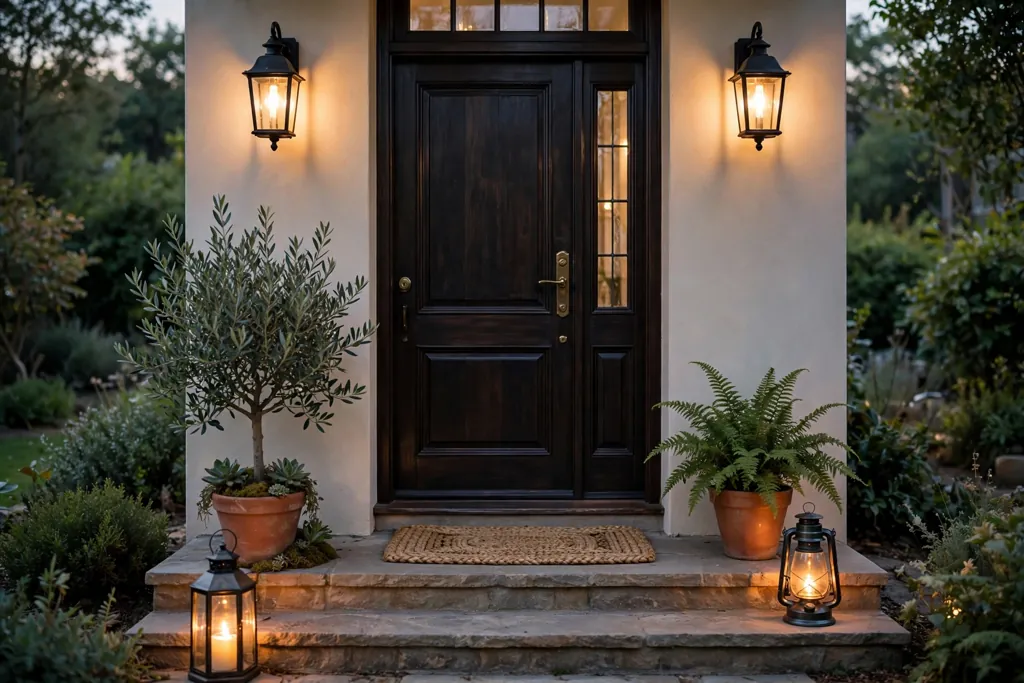
Welcome guests with two lanterns by the front door, a woven doormat, and a small potted plant on each side of the step. Lanterns give warm light in the evening, a woven mat adds texture underfoot, and plants frame the door without blocking it. Choose lanterns in a size that suits the porch, and a mat that fits the step.
Keep lanterns clear of the door swing, and use battery lights or outdoor-safe lights where mains light is not available. Shake out the mat often, and water porch plants by their own needs, since pots by a door dry out fast in sun and wind. If the porch is small, use one lantern and one plant, so the entry stays open.
Conclusion
Vietnamese home decor works best when natural materials, soft light, and useful pieces come first. Start with one strong base, such as low seating, a bamboo screen, or a lacquered cabinet, then add plants, textiles, and ceramics in small, changeable doses. Keep the palette calm, repeat one material or color at least twice, and leave some surfaces clear, so the room feels warm and lived in rather than crowded.
If you found an idea here that suits your home, save this post on Pinterest so you can find it again when you are ready to start. Save the idea you like most, whether it is a rattan pendant, a tea corner, or a balcony garden, and use it as a guide for your next room refresh, one piece at a time.
FAQs
What materials define Vietnamese home decor?
Bamboo, rattan, wood, linen, cotton, silk, and clay appear most often, with ceramic, stone, and woven fiber as supporting materials. Use one or two of these as the main materials in a room, such as bamboo and wood, and repeat them in at least two places, so the room looks planned. Pale walls and plain bedding give these materials room to show.
How do I add Vietnamese style to a small room without crowding it?
Start with small, useful pieces: a bamboo screen, a woven basket, a rattan pendant, or a set of silk cushions. Keep the walls pale and the furniture low, leave one surface clear, and use vertical space with hanging planters or wall shelves. Avoid adding a large cabinet, a full gallery wall, and a plant collection all at once in a small room.
What colors suit a Vietnamese-inspired room?
Warm, muted colors suit this style best: natural bamboo and wood tones, cream, white, indigo, deep red, mustard, teal, and soft gold. Use a pale base, such as warm white or cream, and add stronger colors in cushions, ceramics, lanterns, or a throw, so the room stays calm. Repeat each strong color at least twice, so it looks planned rather than random.
Are bamboo and rattan pieces practical for daily use?
Yes, when they are used in the right place and cared for simply. Bamboo mats and screens suit dry rooms, rattan pendants suit living and dining rooms, and woven baskets suit storage in most rooms. Keep bamboo and rattan out of damp corners, dust them with a dry cloth, and wipe spills promptly, since natural fibers can mark if they stay wet.
How do I use lantern light without making a room look busy?
Use lanterns in one place at a time, such as a hallway, an entry, or over a table, and keep the rest of the lighting plain. Choose lanterns in one size or two sizes that share a color, hang them at a safe height, and use warm white light inside them. In a small space, two lanterns are usually enough, with a plain mirror or a small shelf to balance them.
Can Vietnamese decor work in a modern home?
Yes, it works well with modern shapes, as long as the materials stay natural and the palette stays calm. Pair a bamboo desk or a rattan chair with a plain sofa, a light rug, and simple art, and let the natural texture carry the style. Avoid filling a modern room with many themed pieces at once, and add one Vietnamese-inspired piece per corner, so the room stays modern and warm.