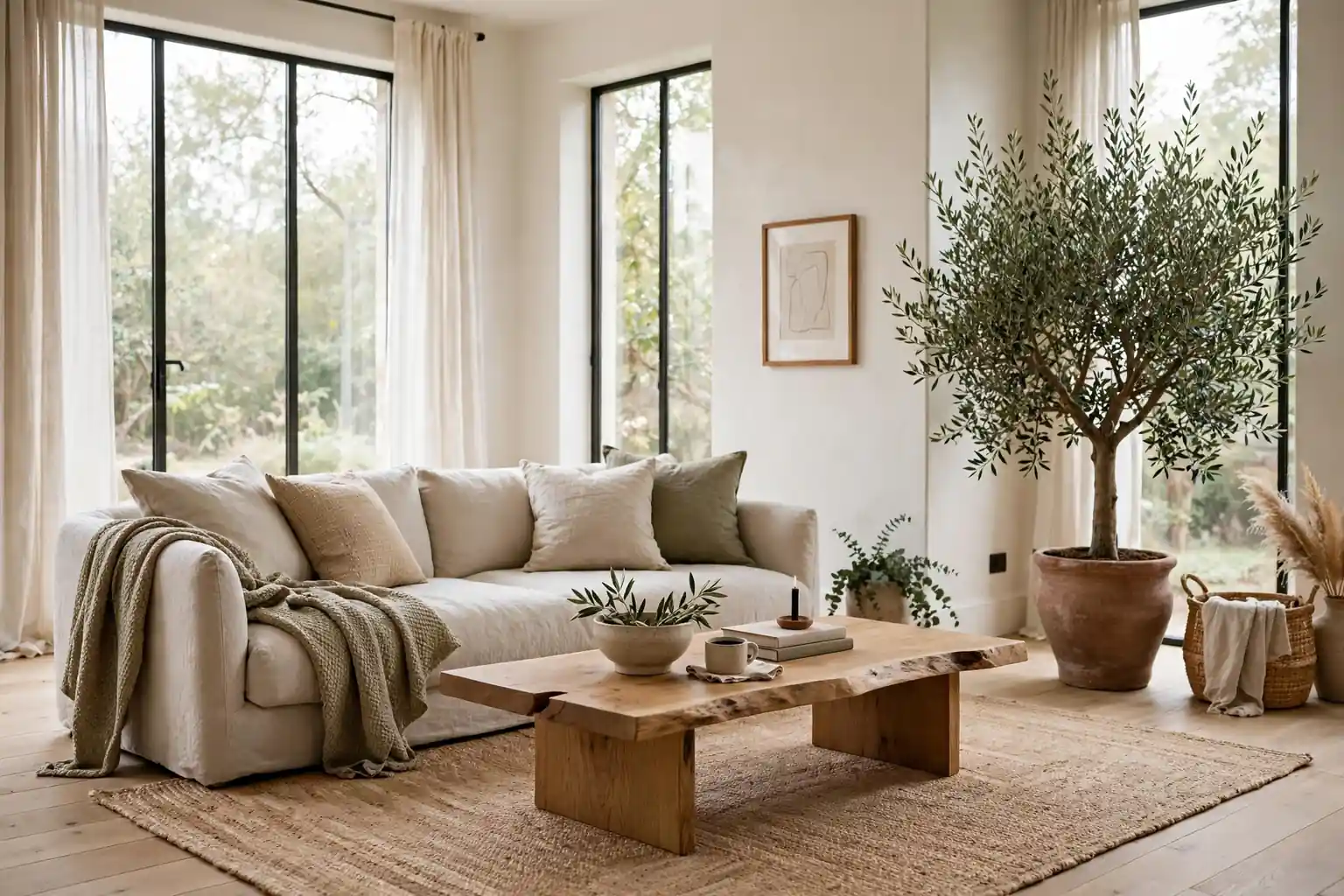
Organic modern style pairs clean modern shapes with materials that feel alive: warm oak, rough stone, soft linen, woven rattan, and green plants. The wood grain, the weave of a rug, and the curve of a chair do the quiet work, while pale walls and open floor space keep the room calm. These 34 organic modern living room ideas cover walls, seating, tables, storage, light, and plants, so you can refresh one corner or plan a full room update. Start with the largest pieces first, then add texture and greenery in layers. For a related take on pale walls and natural layers, these Swedish living room ideas show how light and wood can carry a whole room.
Key Takeaways
- Keep the base calm: warm white or pale plaster walls, wood floors, and a light sofa let natural materials stand out.
- Mix textures, not colors: linen, wool, boucle, rattan, stone, and wood give the room depth without a busy palette.
- Choose one or two wood tones and repeat them, so oak, walnut, or cane looks planned rather than random.
- Add plants at different heights: a floor tree, trailing plants on a shelf, and a small pot on a table.
- Use warm light in layers: daylight by day, plus floor lamps, table lamps, and candles in the evening.
- Leave breathing room: clear floors, a mostly clear coffee table, and shelves with gaps keep the room calm.
1. Warm White Walls with Natural Wood Trim
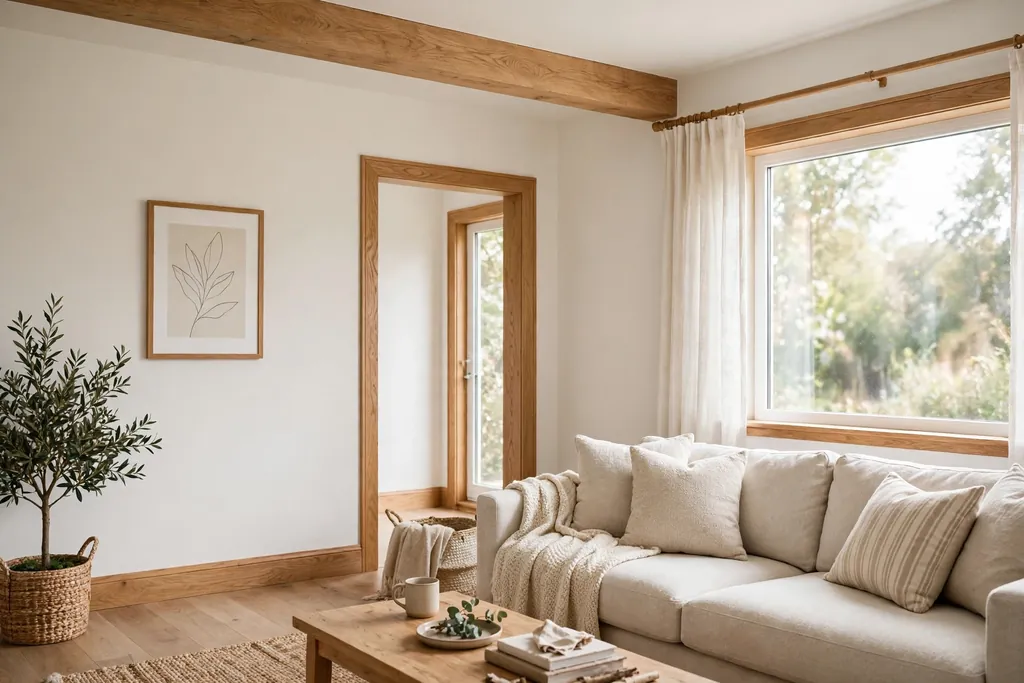
Paint the walls warm white and leave natural wood trim, beams, or door frames visible, so the room feels bright but still grounded. Warm white softens daylight, while wood trim stops the room from feeling flat or clinical. This base suits almost every other idea in this list, since linen, stone, and plants all sit well against it.
Test warm white samples in morning and evening light before painting, since the same shade can look pink in one room and grey in another. Keep the ceiling in a matching warm white, and let the wood trim stay in its natural tone rather than painting it. If you rent and cannot paint, pale linen curtains and a large wood-framed mirror can warm a cooler wall color in a similar way.
2. Low Linen Sofa in Oatmeal
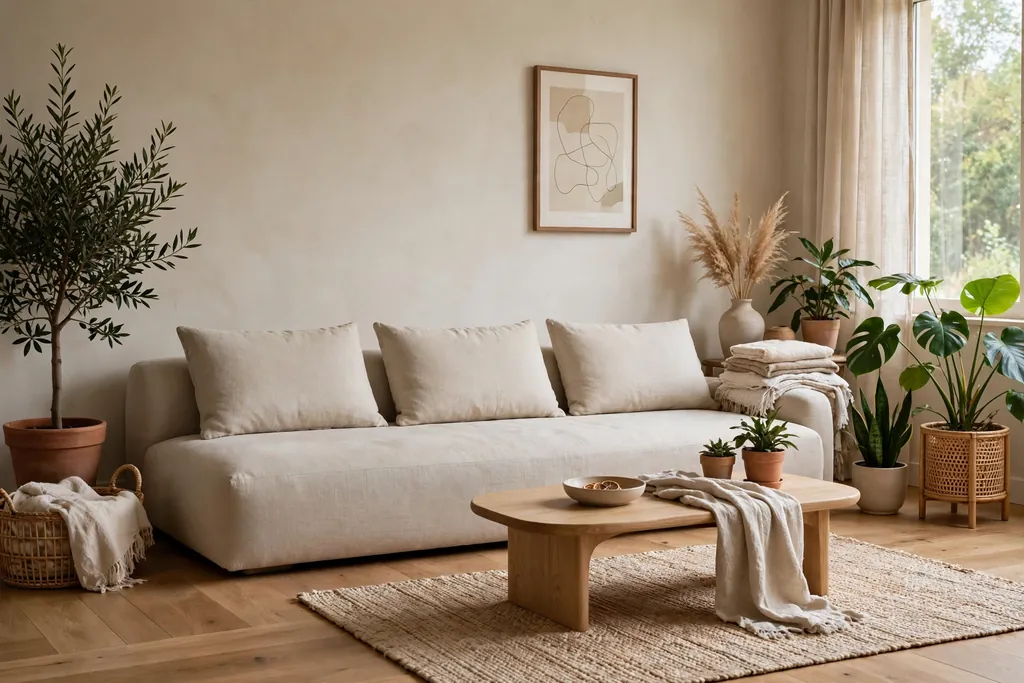
Choose a low sofa in oatmeal linen as the main seat in the room. A low back and slim arms keep the sofa from blocking light, and linen wrinkles in a way that suits a relaxed room. Oatmeal works with oak, stone, rattan, and almost any plant, so later layers are easy to add.
Pick removable, washable covers where you can, since a light sofa sees daily use. Keep the cushions plain or in a soft stripe, and let throws and one accent color add interest. Size the sofa to the rug zone, not to the wall, so there is room to walk around it and a clear path to the rest of the room.
3. Live Edge Oak Coffee Table
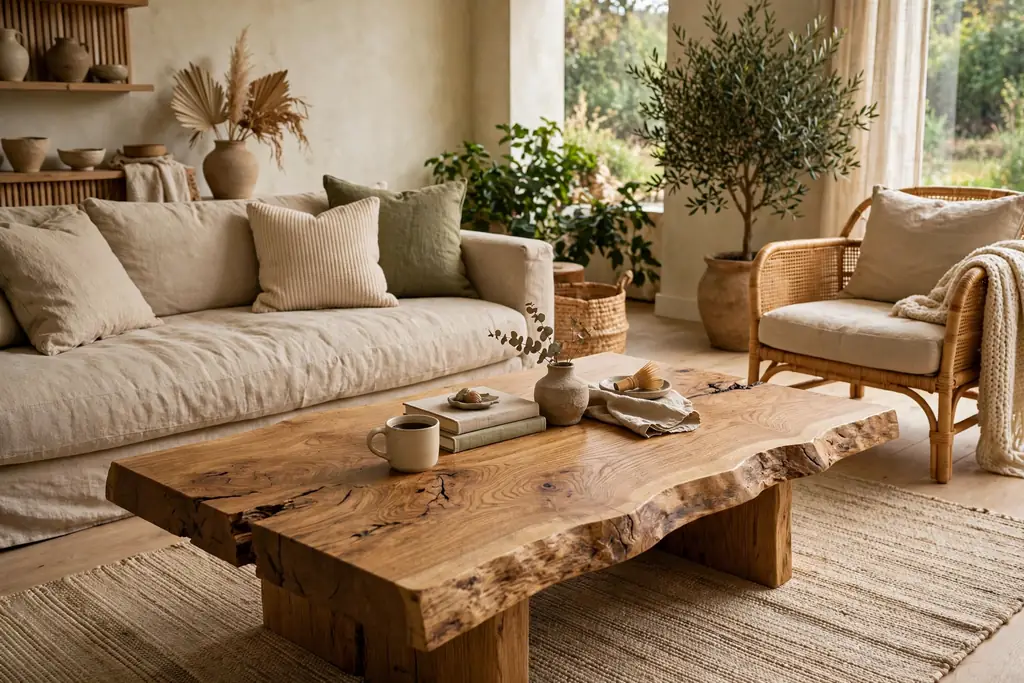
Set a live edge oak coffee table in the center of the seating group for a piece that shows the wood itself. The natural edge, visible grain, and solid top give the room a crafted focal point without any extra decoration. A rectangular or organic-shaped top both work, as long as the table height sits close to the sofa seat height.
Keep the top mostly clear, with one tray or a small group of books, so the wood stays visible. Use coasters under mugs and wipe spills promptly, since oak shows rings if liquid sits on it. A live edge table pairs well with a soft rug underneath, which stops the heavy top from feeling hard against the floor.
4. Boucle Accent Chairs
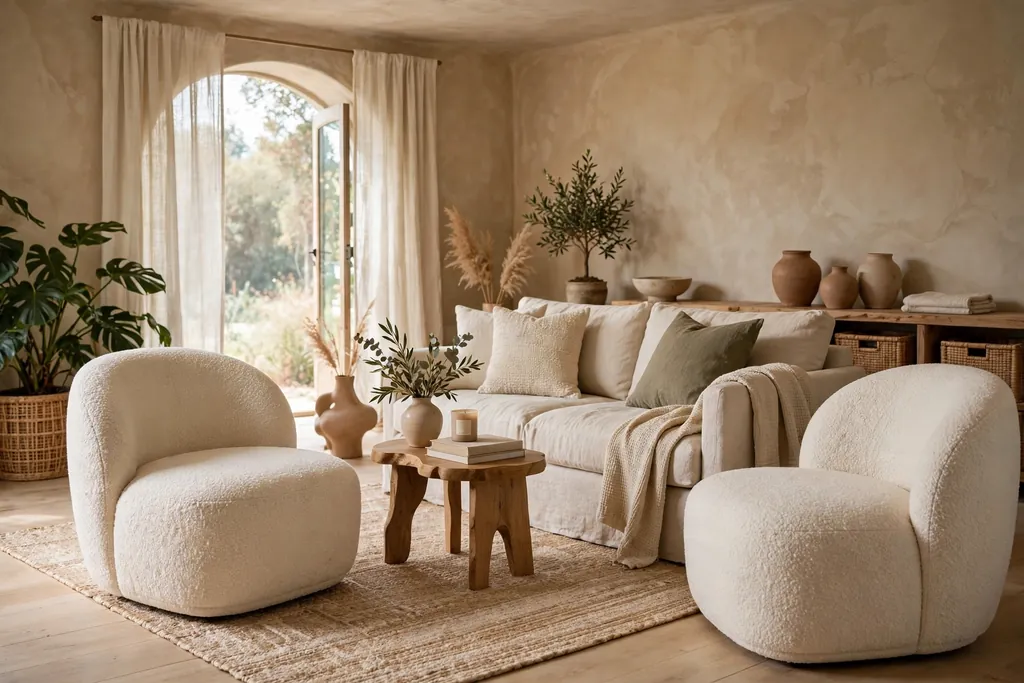
Add one or two boucle accent chairs beside the sofa for soft, rounded seats that invite a long sit. Boucle has a nubby, wool-like texture that reads as warm and touchable, and its curved shapes soften the straight lines of a sofa and a media console. Cream or oatmeal boucle keeps the palette calm.
Place the chairs at a slight angle toward the sofa, with a small side table between them for a cup or a book. Check the seat depth before buying, since deep boucle chairs suit lounging while shallower chairs suit conversation. Brush the fabric now and then to keep the loops neat, and keep the chairs out of harsh direct sun where the fabric could fade.
5. Jute Rug Under the Seating Group
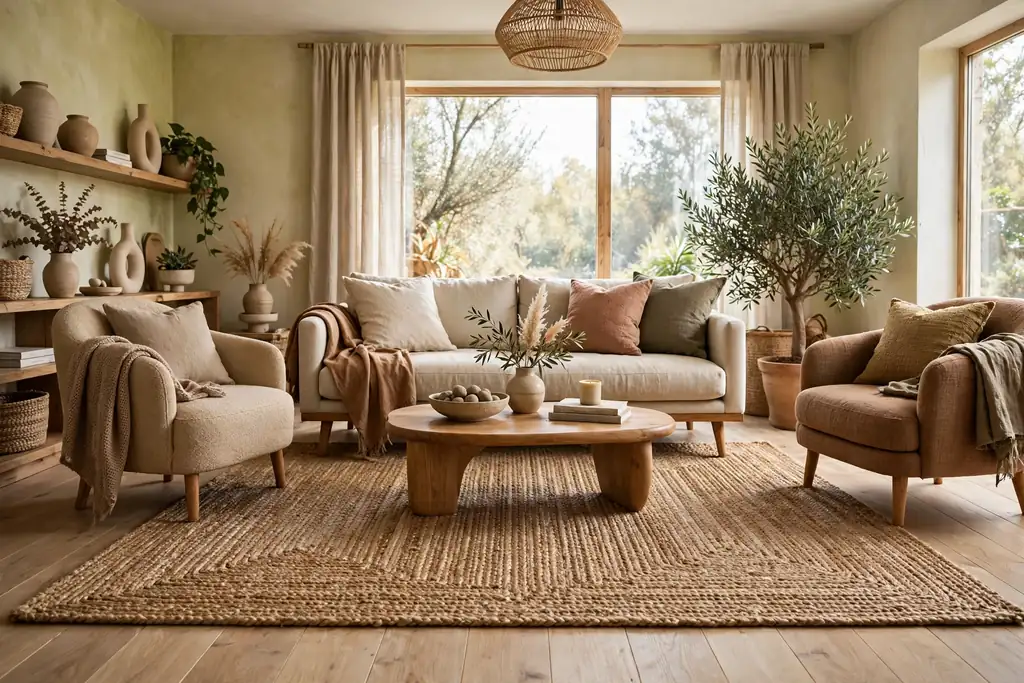
Lay a large jute rug under the seating group, big enough for the front legs of the sofa and chairs to rest on it. Jute adds a coarse, natural texture underfoot and links the seating into one zone, which matters most in an open plan room. Its sandy tone suits oak, linen, and stone without competing with them.
Measure the seating zone and tape the rug outline on the floor before buying, so doors and drawers still open freely. Use a rug pad underneath on a smooth wood floor to stop slipping. For more help with size and placement, see these living room rug ideas. Vacuum jute without a beater bar, and blot spills quickly, since natural fiber rugs stain if liquid soaks in.
6. Limewash Feature Wall
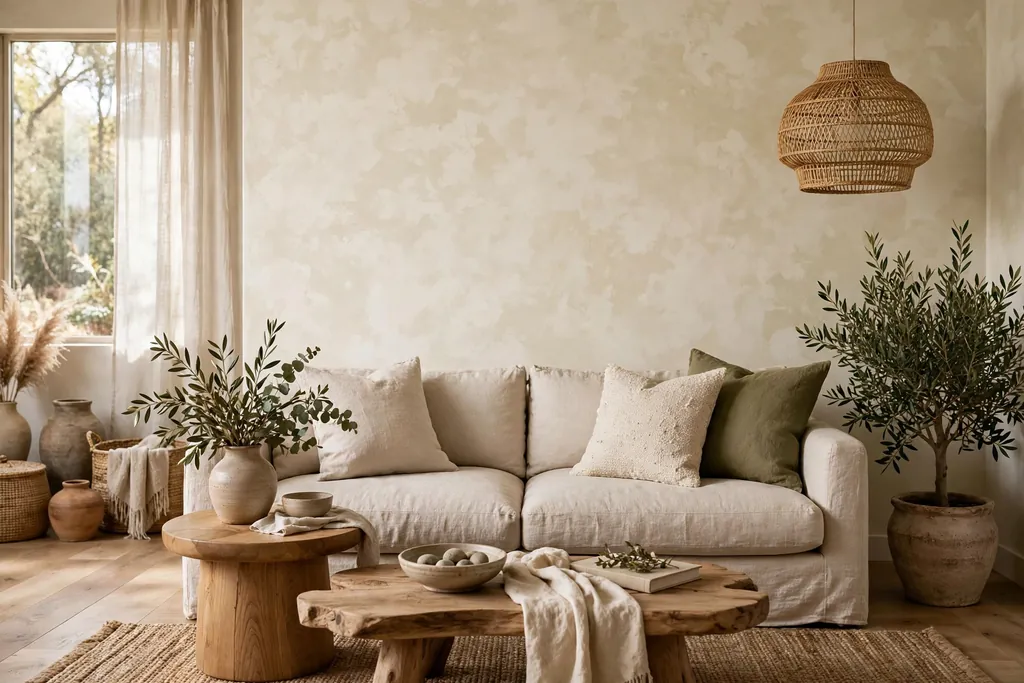
Paint one wall in limewash for a soft, chalky finish with gentle movement in the color. Limewash is not flat paint: it shows subtle brush marks and tone shifts that give a plain wall depth, which suits the organic side of this style. A warm white, clay, or pale sage limewash keeps the room calm while adding interest.
Apply limewash with a block brush in loose, crisscross strokes, following the product directions, and let each coat dry fully before the next. Keep the other walls in a plain warm white so the limewash wall stays the focus. This finish suits a sofa wall or a fireplace wall best, where the seating group frames it and the texture is seen up close.
7. Vertical Wood Slat Wall
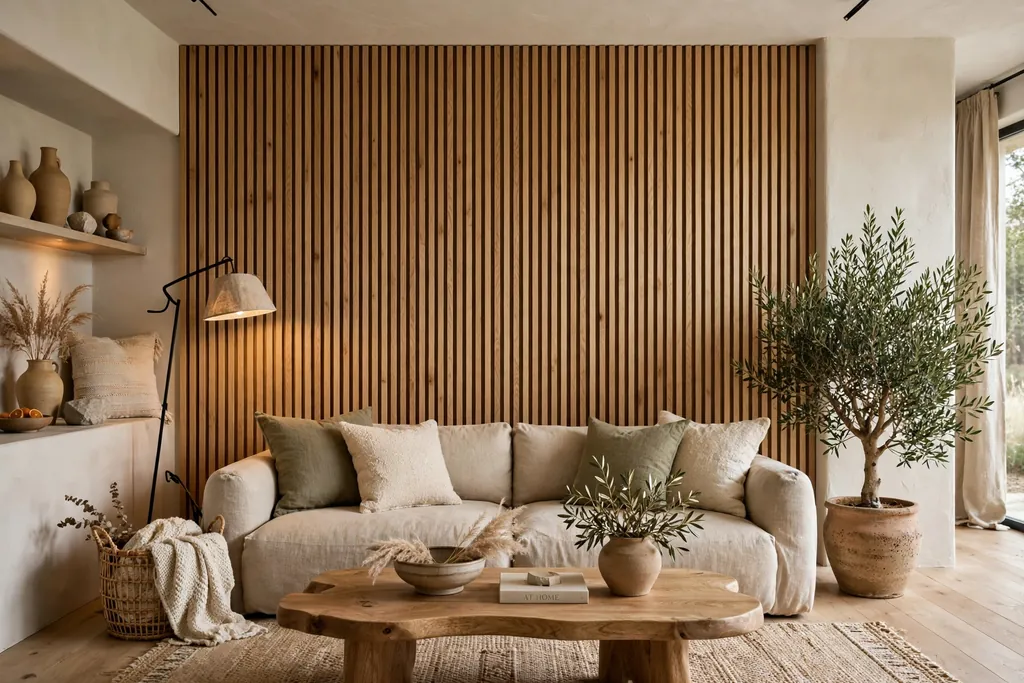
Fit vertical wood slats on one wall to add warmth, rhythm, and a sense of height. Slim oak slats, spaced evenly, give a flat wall a crafted surface that catches light and shadow through the day. The vertical lines also make a low ceiling feel taller, which helps in a small living room.
Fix slats to battens or a backing panel, and anchor them into studs or with fixings suited to your wall type. Keep the slat wall to one feature wall, such as behind the sofa or the television, so the room does not feel boxed in. Pair the slats with a plain sofa and simple art, since the wall itself is already the detail.
8. Stone Fireplace Surround
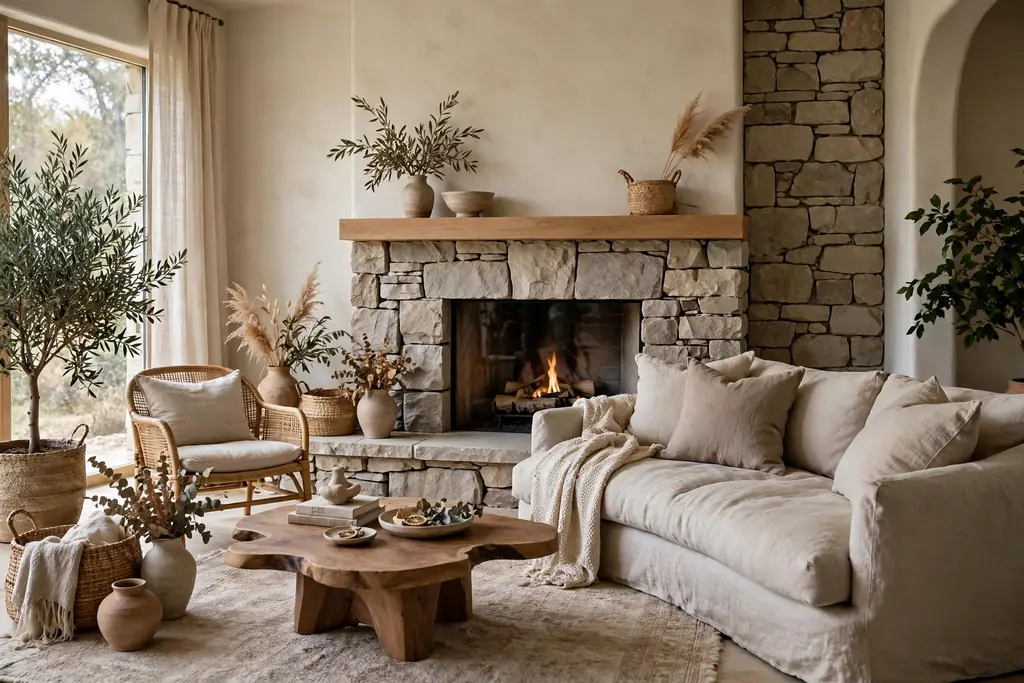
Give the fireplace a stone surround in limestone, travertine, or stacked slate for a solid, natural anchor. Stone suits organic modern rooms because it brings a rough, earthy texture next to soft linen and smooth wood. A simple, straight-lined surround keeps the look modern rather than rustic.
Keep the mantel clear or nearly clear, with one or two items such as a vase or a small stack of books, so the stone stays visible. Check fireplace safety rules and clearances before changing a surround, and hire a professional for any work that affects the firebox or chimney. If you have no working fire, a stone-clad chimney breast with candles and art can give the same grounded focal point.
9. Olive Tree in a Clay Pot
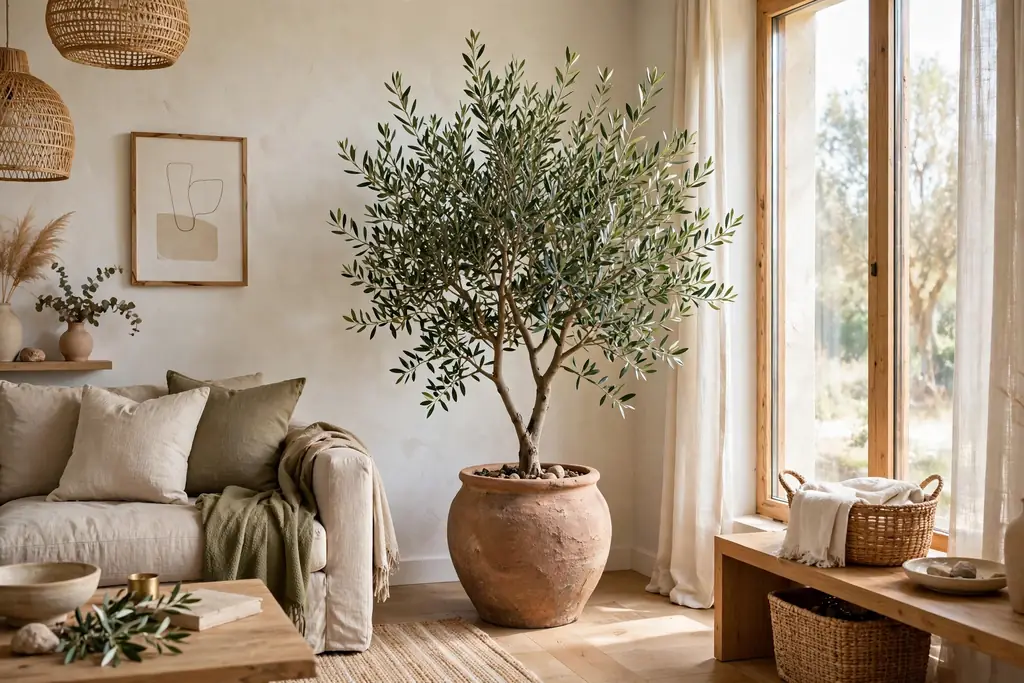
Place a potted olive tree in a large clay pot in a bright corner for a living sculpture that suits this style well. Olive trees have slim grey-green leaves and a gnarled trunk, which adds shape without a mass of dark foliage. A terracotta or unglazed clay pot keeps the look natural and lets the soil breathe.
Give the tree the brightest spot you have, ideally near a south-facing window, and water only when the top soil feels dry, since olive trees dislike wet roots. Turn the pot a quarter turn every few weeks so growth stays even. In winter, keep the tree away from cold drafts and radiators, and prune lightly to keep its shape open.
10. Trailing Plants on Open Shelves
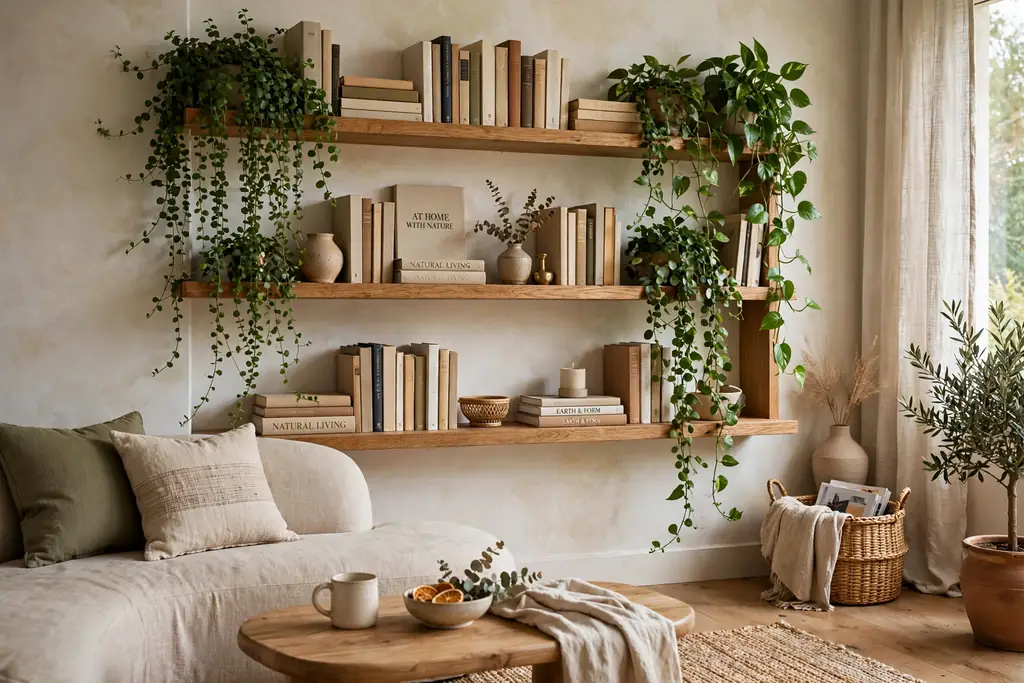
Grow trailing plants on open wood shelves so green leaves spill down the wall and soften straight shelf lines. Pothos, string of hearts, and trailing philodendron all grow well indoors and need little care beyond light and water. The shelf itself should stay simple, in oak or reclaimed wood, so the plants lead.
Water plants over a sink, let them drain, and then return them to the shelf, so water never sits on the wood. Keep trailing stems trimmed when they reach the sofa or block a walkway, and use the cuttings to start new plants. Mix one trailing plant with books and one ceramic piece per shelf, and leave gaps, so the shelf reads as a display, not a storage wall.
11. Rattan Pendant Lights
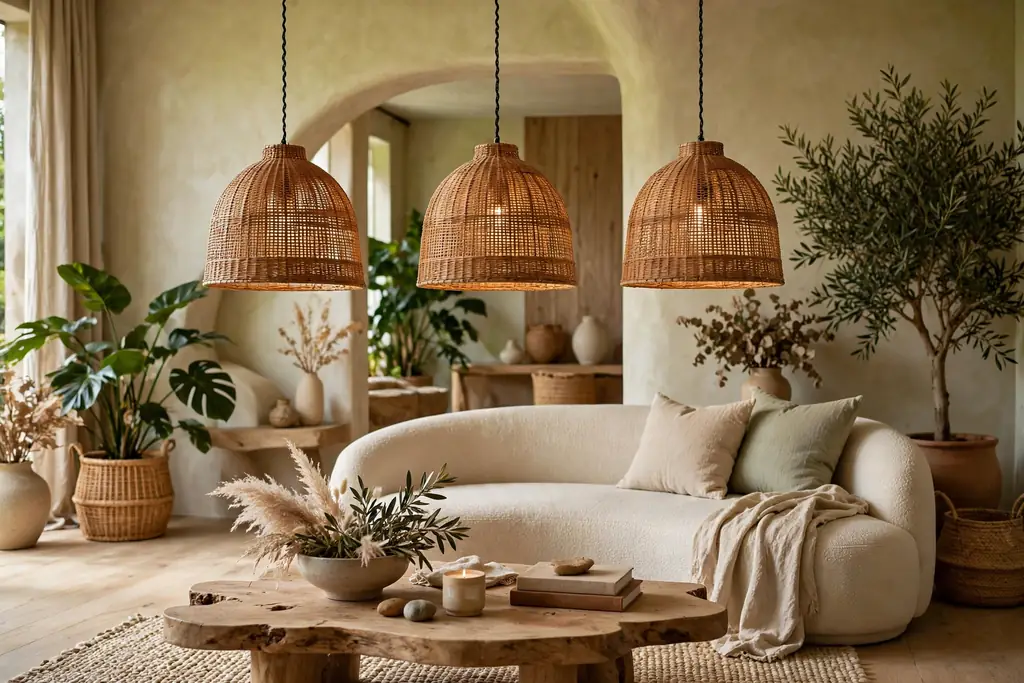
Hang rattan pendant lights over the coffee table or in a seating corner for warm, woven light that suits organic modern rooms. Rattan shades cast a soft, patterned glow and add texture at ceiling level, where many rooms stay bare. One large pendant suits a coffee table zone, while two smaller pendants suit a long console.
Hang the pendant so its base sits above head height for standing adults but low enough to feel part of the seating group. Use a warm white bulb and a dimmer where possible, so evening light stays soft. Dust the rattan now and then with a dry cloth, and keep the shade clear of curtains and tall plants for safety.
12. Woven Baskets for Throws and Toys
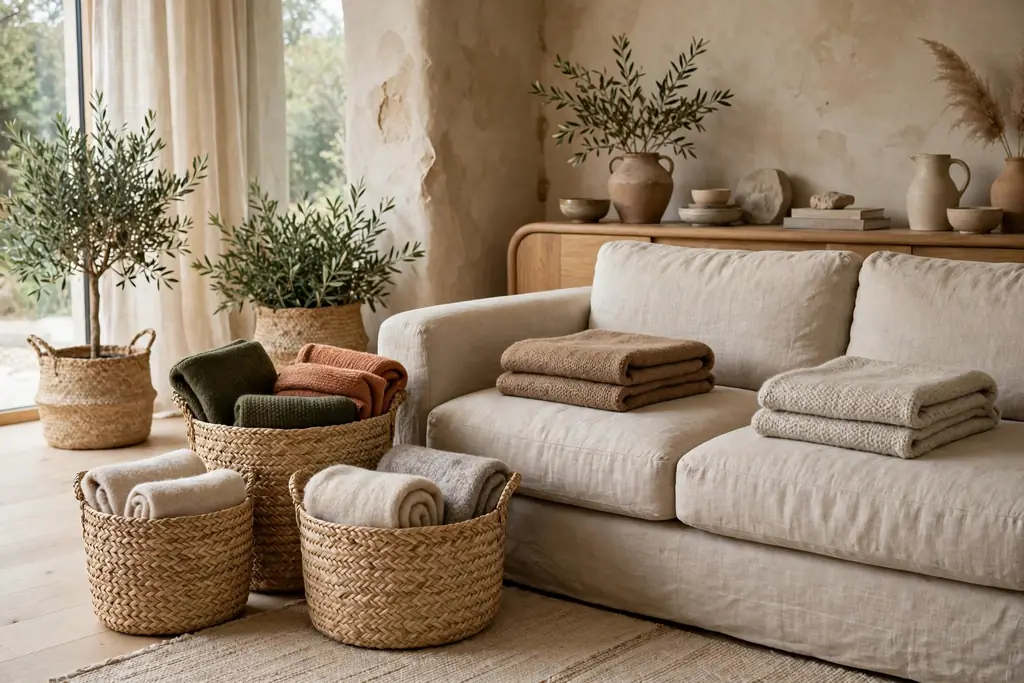
Store throws, toys, and magazines in woven baskets in seagrass, rattan, or willow, placed beside the sofa and under a side table. Baskets add natural texture and hide everyday clutter without a closed cabinet, which suits a relaxed room. One large basket for throws and one smaller basket for small items are usually enough.
Choose baskets with handles so they can be carried to the laundry or tidied quickly. Line a basket used for toys with a plain cloth if the weave snags small parts. Keep one basket empty on purpose, as a quick tidy basket for a short reset before guests arrive, so the room stays calm with little effort.
13. Travertine Side Table
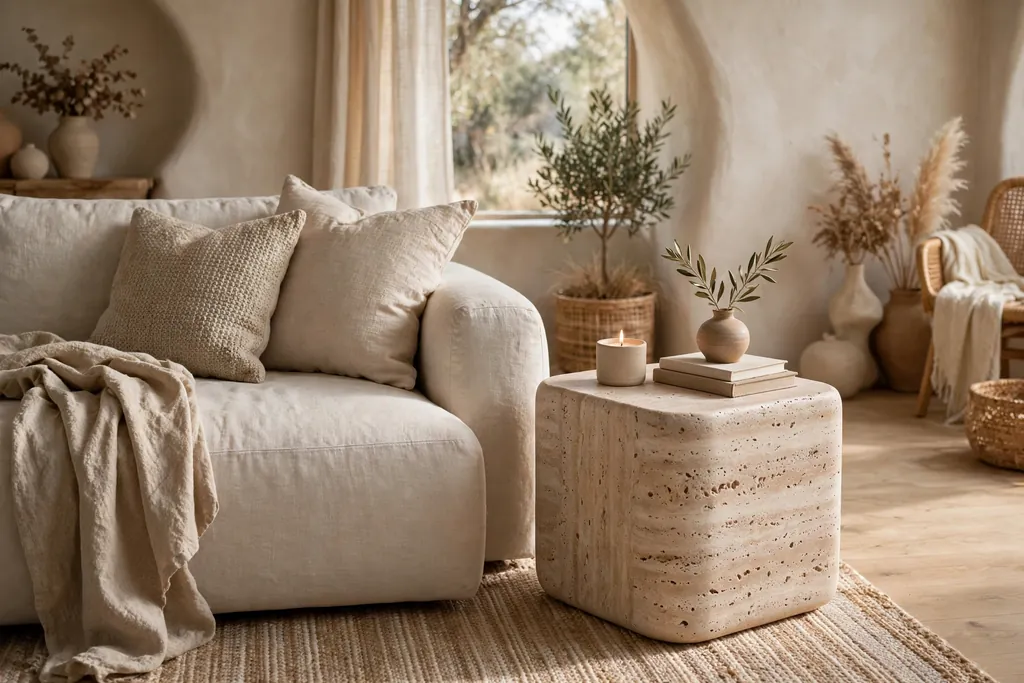
Add a travertine side table beside the sofa or a chair for a small piece of stone with a soft, pitted surface. Travertine brings a pale, earthy tone that pairs well with oak and linen, and its solid weight grounds a light seating group. A round or square top in a compact size works best, since a side table should serve one seat, not dominate the room.
Keep the top to one lamp or one small group, such as a book and a cup, so the stone stays visible. Use a coaster under mugs and wipe spills promptly, since travertine is porous and can mark. A travertine table also works beside a bed or in a hallway, so it is a piece you can move as the room changes.
14. Curved Sofa for a Soft Layout
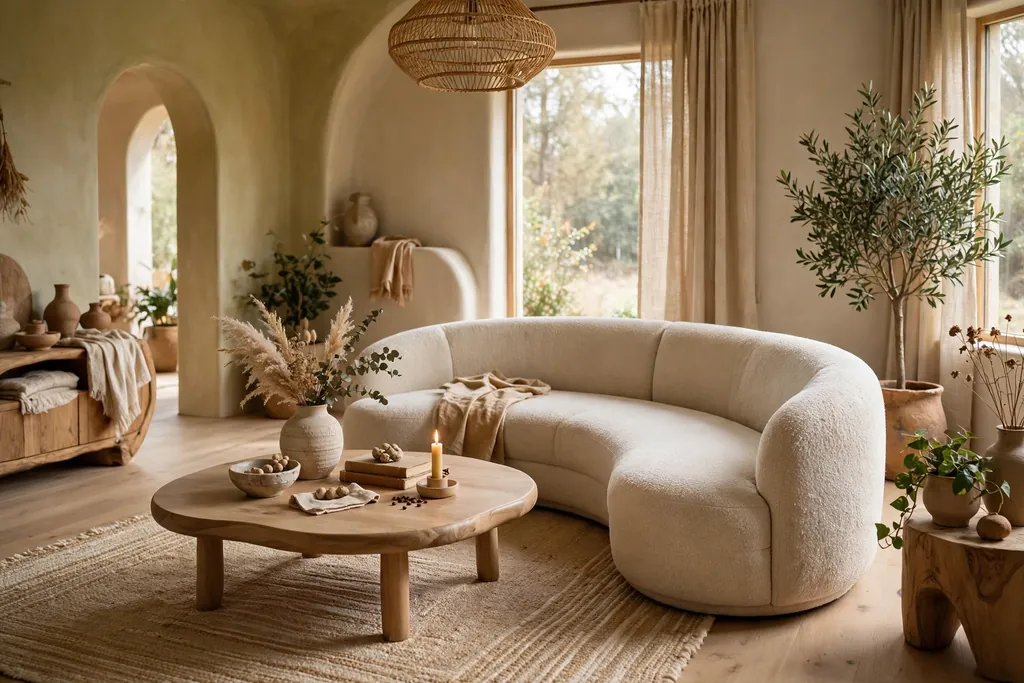
Choose a curved sofa if your room can hold one, since its rounded back softens a room full of straight walls and rectangular tables. A curved sofa suits a bay window, a round rug, or a seating group that faces a fireplace, where the curve follows the shape of the space. Keep the fabric plain, in oatmeal, cream, or pale grey linen or boucle.
Measure the curve carefully, including door widths for delivery, since a curved sofa is harder to move than a straight one. Pair it with a round coffee table rather than a rectangular one, so the shapes echo each other. Leave clear walking space around both ends, and keep the rest of the furniture simple so the sofa stays the main shape in the room.
15. Sheer Linen Curtains to the Floor
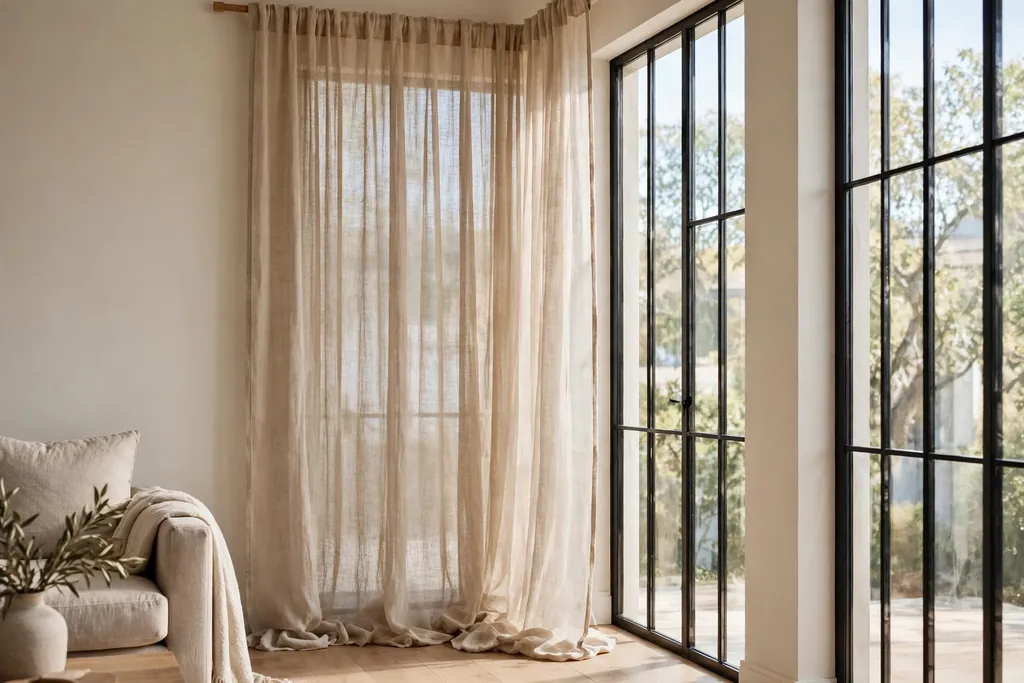
Hang sheer linen curtains from close to the ceiling to the floor, so daylight filters in softly and the window feels taller. Sheer linen gives daytime privacy without shutting out light, which matters in a room that relies on natural light for its calm feel. White, cream, or pale oatmeal linen works best.
Use a simple rod in wood or black metal, and let the curtains fall straight rather than pooling heavily on the floor. Add a heavier linen pair at the sides only if the room gets cold drafts or needs evening privacy. Wash the sheers now and then, since pale linen shows dust faster than a darker curtain.
16. Reclaimed Wood Shelves
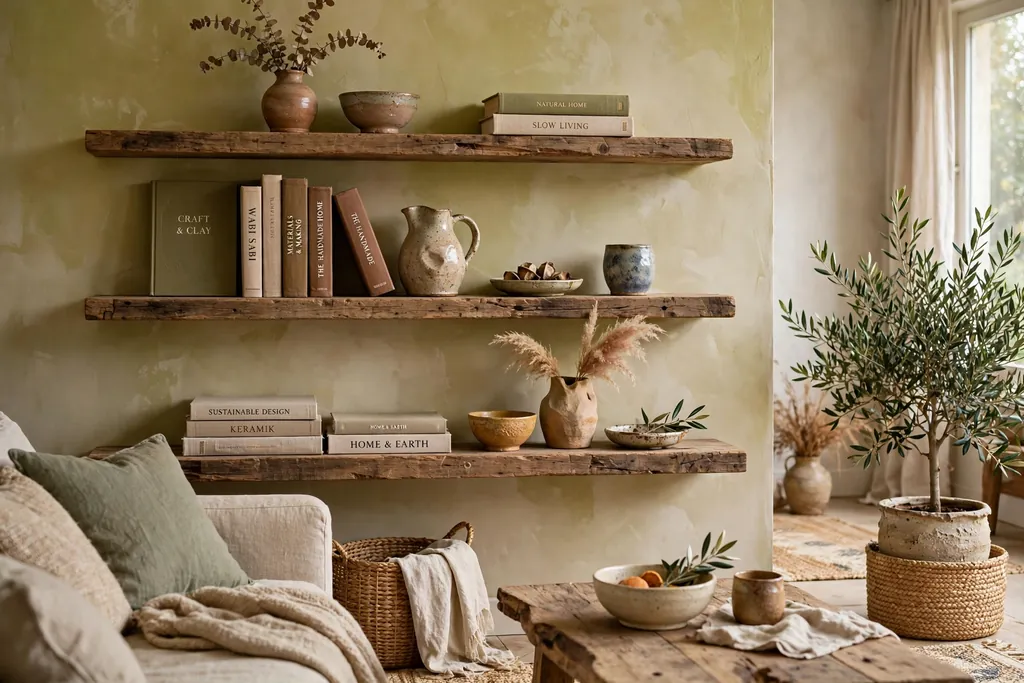
Fit reclaimed wood shelves on one wall for storage and display with visible grain, knots, and a lived-in surface. Reclaimed wood suits organic modern rooms because each board carries its own marks, which stops the room from feeling too new or too smooth. Use the shelves for books, ceramics, and a few plants, and keep them to one wall.
Anchor shelves into studs or with fixings suited to your wall type, and check the weight rating before loading them with books. Put heavier items low and lighter ceramics higher, and leave gaps between groups. Clean reclaimed wood with a dry cloth, and check for rough edges or splinters before placing items that hands touch often.
17. Terracotta Pots Grouped by the Window
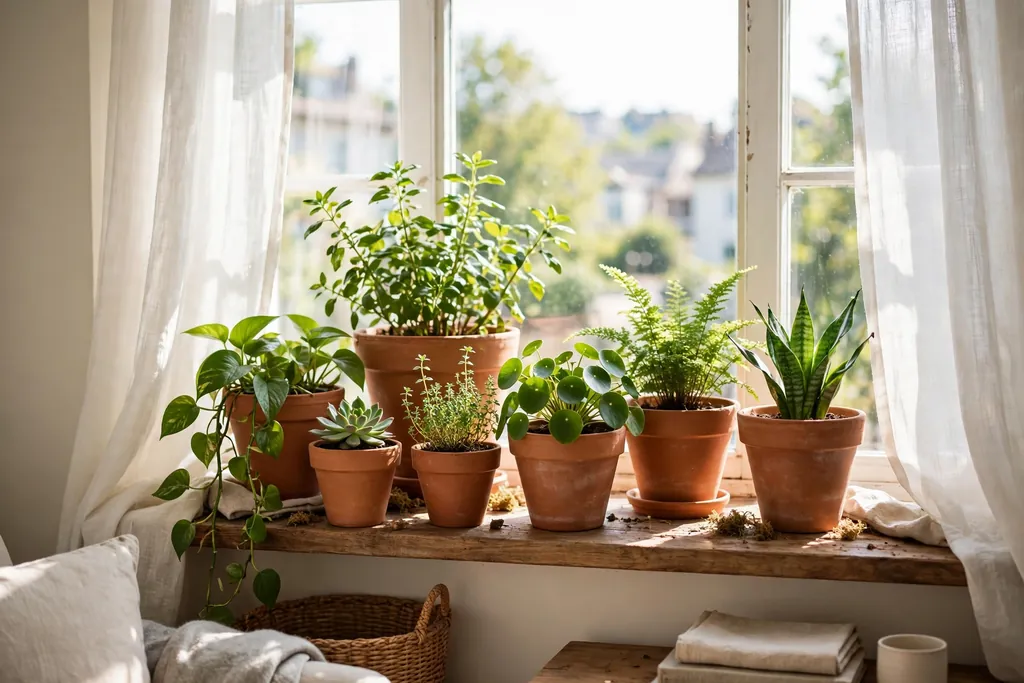
Group terracotta pots in different sizes by a bright window for a simple plant display that warms a pale room. Terracotta has a warm, earthy color and a rough surface that suits herbs, small shrubs, and trailing plants alike. Grouping pots in threes or fives, with one tall pot as the anchor, looks planned rather than scattered.
Use pots with drainage holes and saucers, and raise them slightly on feet so water drains freely and does not mark the sill or floor. Mix one tall plant, one mid-height plant, and one trailing plant in each group for a full look. Water each plant by its own needs, not on one fixed schedule, since pots dry out at different rates near a window.
18. Wool Throws and Cotton Cushions
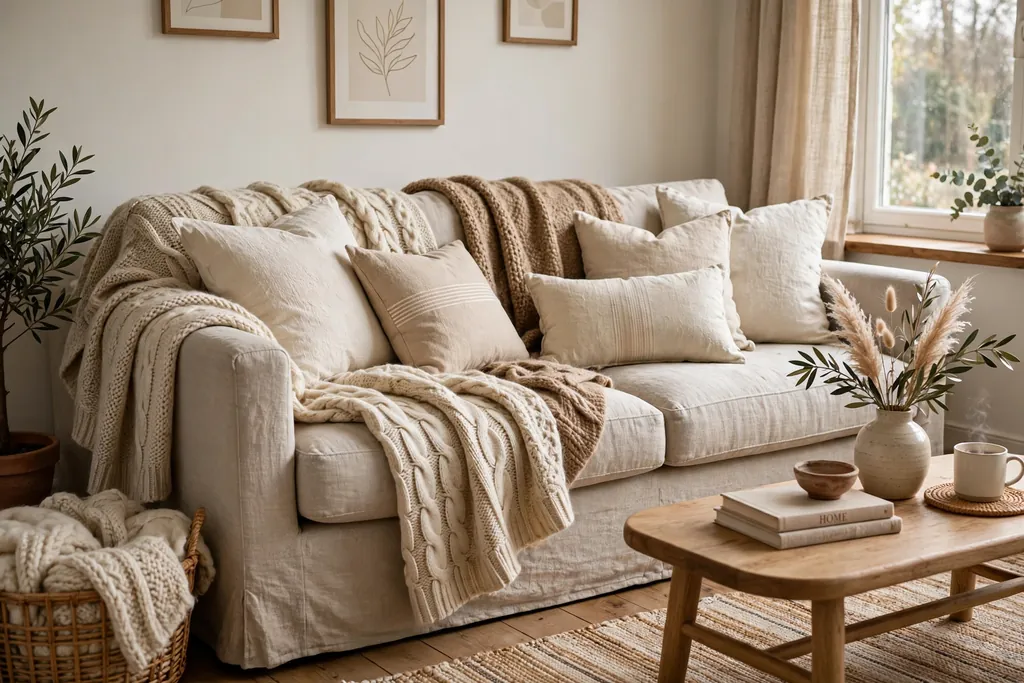
Layer wool throws and cotton cushions on the sofa for warmth you can feel as soon as you sit down. Wool throws in cream, oatmeal, or soft sage suit this style, while cotton cushions in plain linen or a soft stripe keep the mix from feeling heavy. Two throws within reach, one folded over an arm and one in a basket, are usually enough.
Choose throws and cushion covers you can wash, and vary the weave rather than the color: one smooth wool throw and one chunky knit throw give more interest than two identical pieces. Fold throws neatly rather than draping them loosely, so the sofa still looks tidy when no one is sitting there.
19. Arched Mirror Above a Wood Console
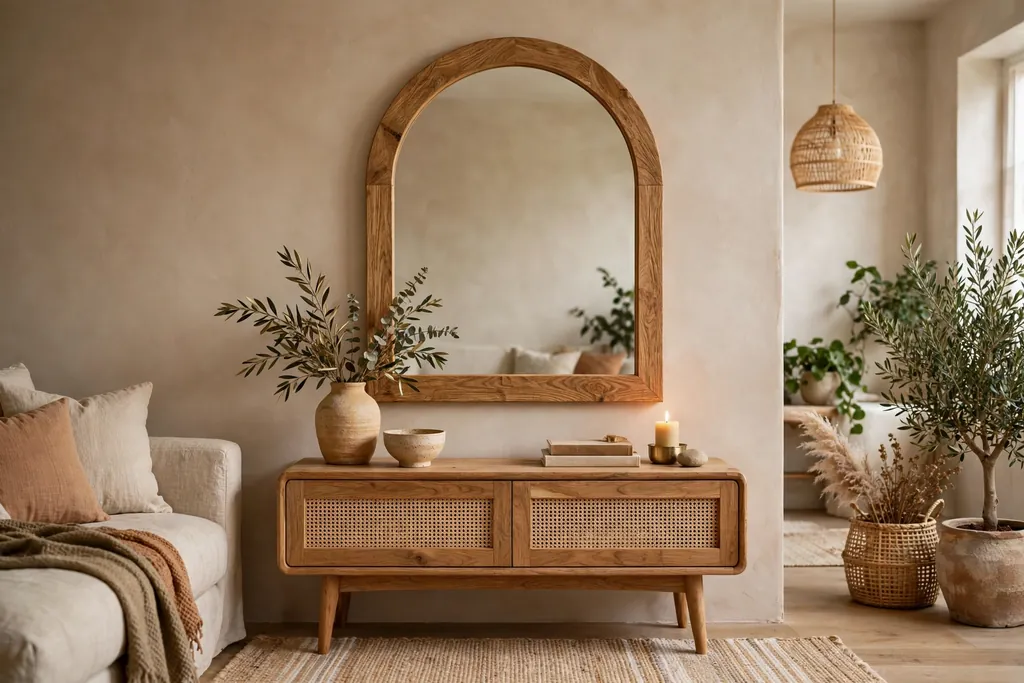
Hang an arched mirror above a wood console for a soft shape that lifts a plain wall and bounces light around the room. The arch echoes the curved shapes in boucle chairs and round tables, while the mirror itself makes a small room feel larger. A wood frame in oak or walnut ties the mirror to the rest of the furniture.
Hang the mirror so its center sits at eye level when standing, and keep the console top mostly clear, with one vase or a small stack of books. Anchor the mirror into a stud or with a fixing rated for its weight, since large mirrors are heavy. Place the mirror where it reflects a window or a plant, not a blank wall or a cluttered corner.
20. Paper and Wood Floor Lamp
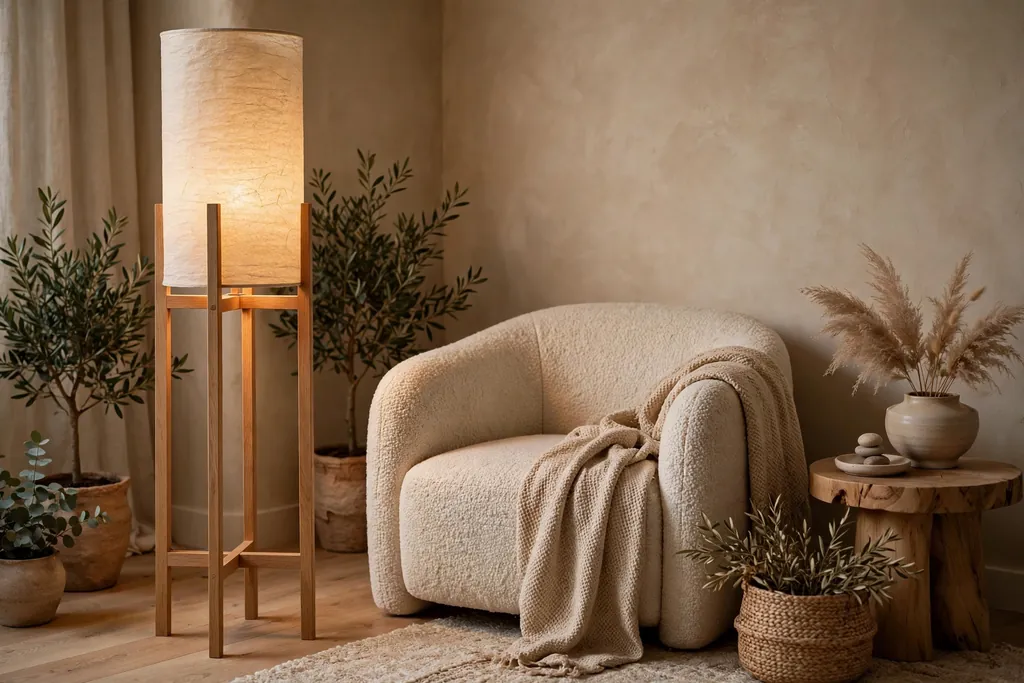
Stand a paper and wood floor lamp beside a chair or a sofa end for soft, diffused light with a natural look. A paper shade glows evenly and hides the bulb, while a wood base keeps the lamp grounded. This kind of lamp suits a reading corner, where a bright overhead light would feel too harsh.
Place the lamp behind one shoulder of the seated reader, so light falls on the book, not in the eyes. Use a warm white bulb and keep the shade clear of curtains, throws, and plants for safety. Dust the paper shade gently with a dry cloth, and replace the shade if it tears, since a damaged shade can sit too close to the bulb.
21. Handmade Clay Vases on the Mantel
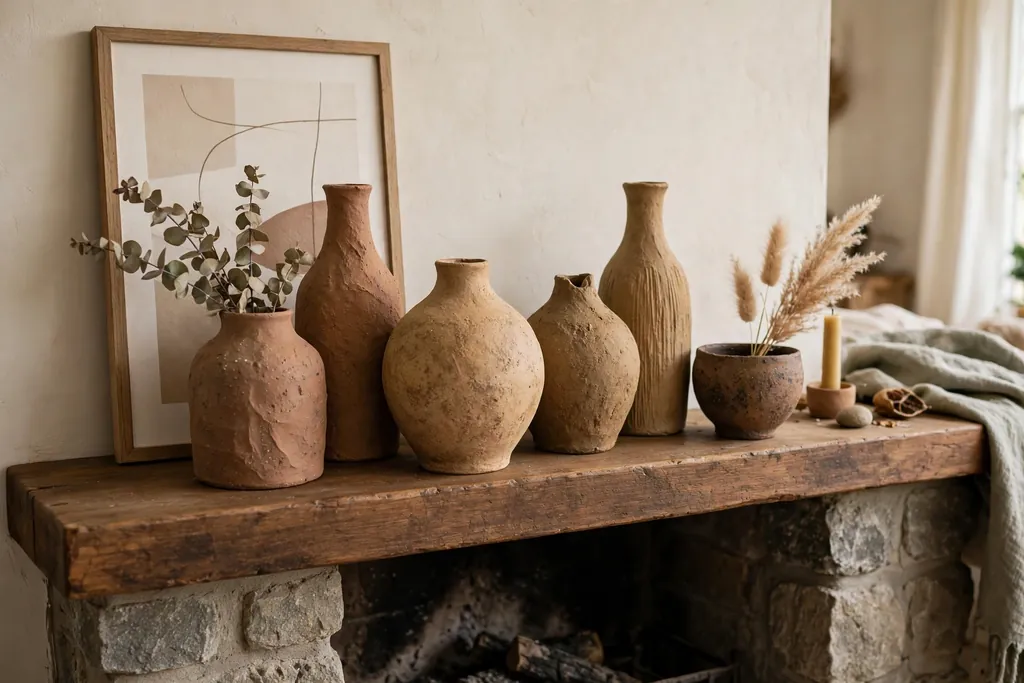
Set handmade clay vases on the mantel or a shelf for small pieces with visible hand marks, uneven rims, and soft earth tones. Handmade ceramics suit organic modern rooms because they show the maker in a way that smooth factory pieces do not. Group vases in odd numbers, with different heights, and leave one empty so the group breathes.
Keep the mantel group to three or five pieces at most, and let one vase hold a few dried stems while the others stay empty. Dust ceramics with a dry cloth, and handle them over a soft surface, since handmade pieces can be more fragile than they look. If a vase has no glaze inside, use it for dried stems only, not fresh flowers in water.
22. Firewood Niche Beside the Fireplace
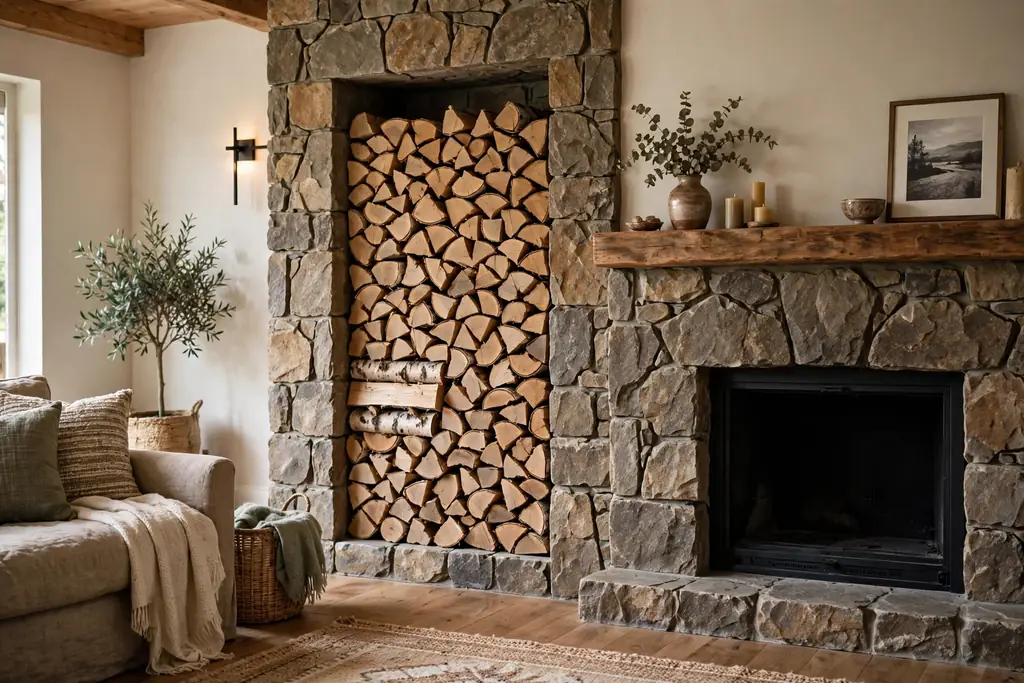
Build or set a firewood niche beside the fireplace for neat log storage that doubles as a natural display. Stacked logs add warm color and texture to a plain wall, and a niche keeps them contained rather than piled on the floor. A simple open box in oak, black metal, or plaster suits this style best.
Stack logs loosely, with air gaps, so they dry and stay free of damp, and keep the niche clear of the fire opening by a safe margin. Store only dry, seasoned wood indoors, and bring in small loads rather than filling the niche to the top. If you have no working fire, a niche filled with logs beside a candle group gives a similar warm, gathered look.
23. Gallery Wall in Pale Wood Frames
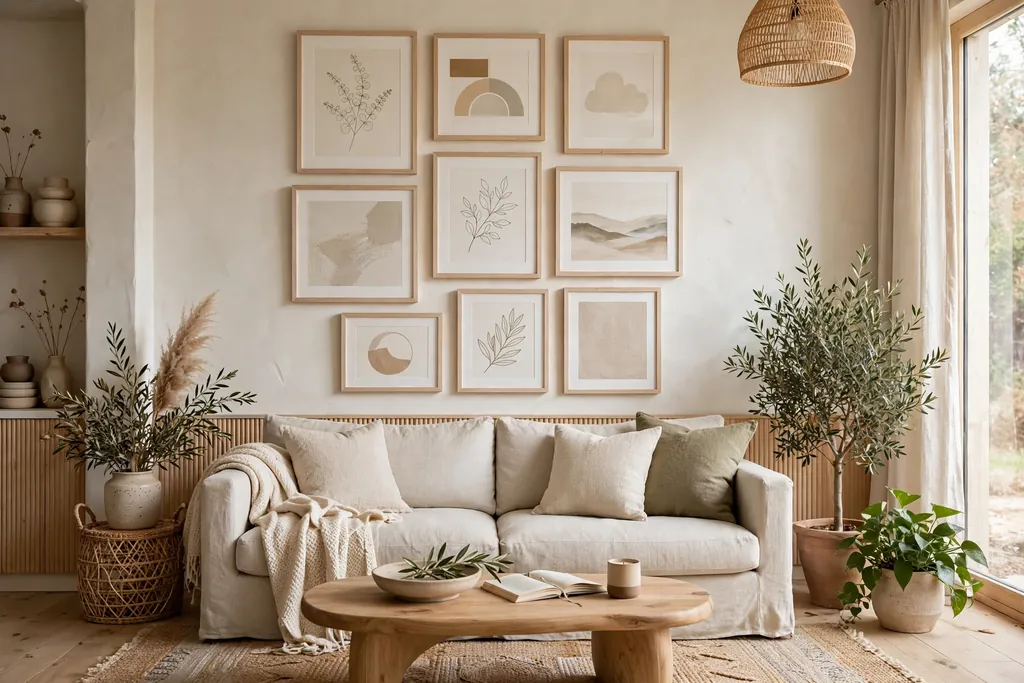
Hang a gallery wall above the sofa or along one wall, using matching frames in pale wood. A gallery wall in this style usually mixes landscapes, botanical prints, and simple abstract art, but keeps the frames consistent so the group reads as calm rather than busy. Hang the center of the group at eye level when seated, and keep the outer edges inside the width of the sofa.
Start with three or four pieces and add over time, rather than filling the wall in one go. Use art with pale backgrounds and soft colors, such as sage, clay, and sand, so the wall stays linked to the room palette. Picture ledges are a renter-friendly option, since they let you lean frames and swap them without new holes each time.
24. Reading Chair with a Sheepskin Throw
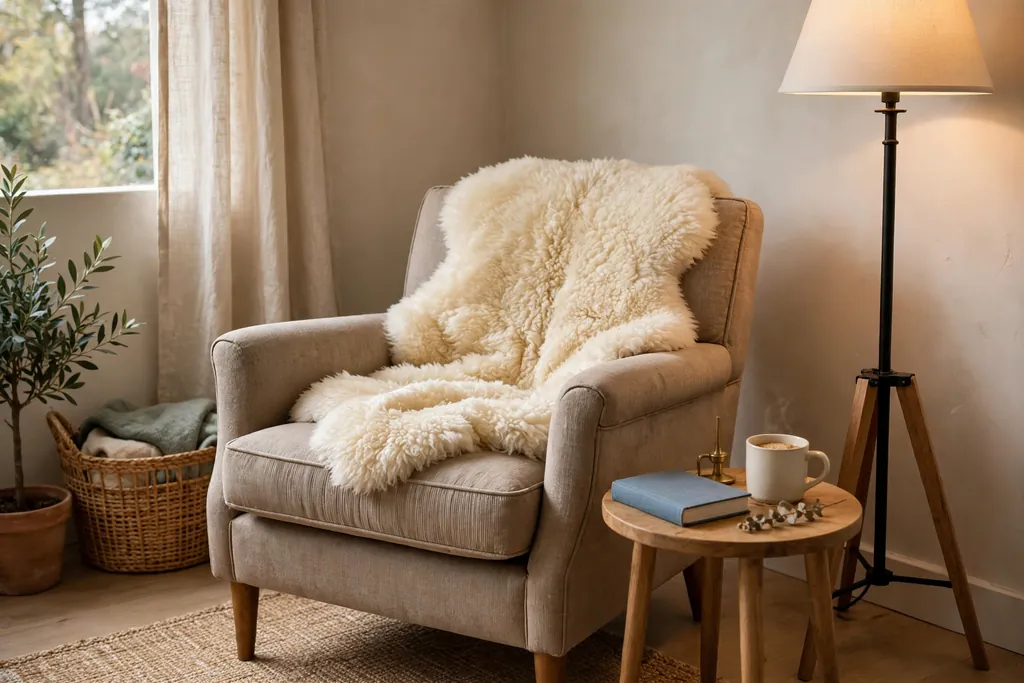
Set a comfortable armchair in a quiet corner, with a sheepskin throw over one arm and a small side table beside it, for a reading seat that feels warm at once. Sheepskin adds instant softness to a wooden or linen chair, and it is a practical layer in cooler months. Choose a chair with a seat depth that lets you sit with your feet on the floor and a book in your lap.
Add a floor lamp behind one shoulder and a basket for the current book, so the corner works as a real reading spot, not a display. Shake the sheepskin outside now and then to keep it fresh, and fold it over the chair back in warm months so the corner keeps its soft layer. Angle the chair slightly toward the room so the corner feels part of the living space.
25. Low Wood Media Console
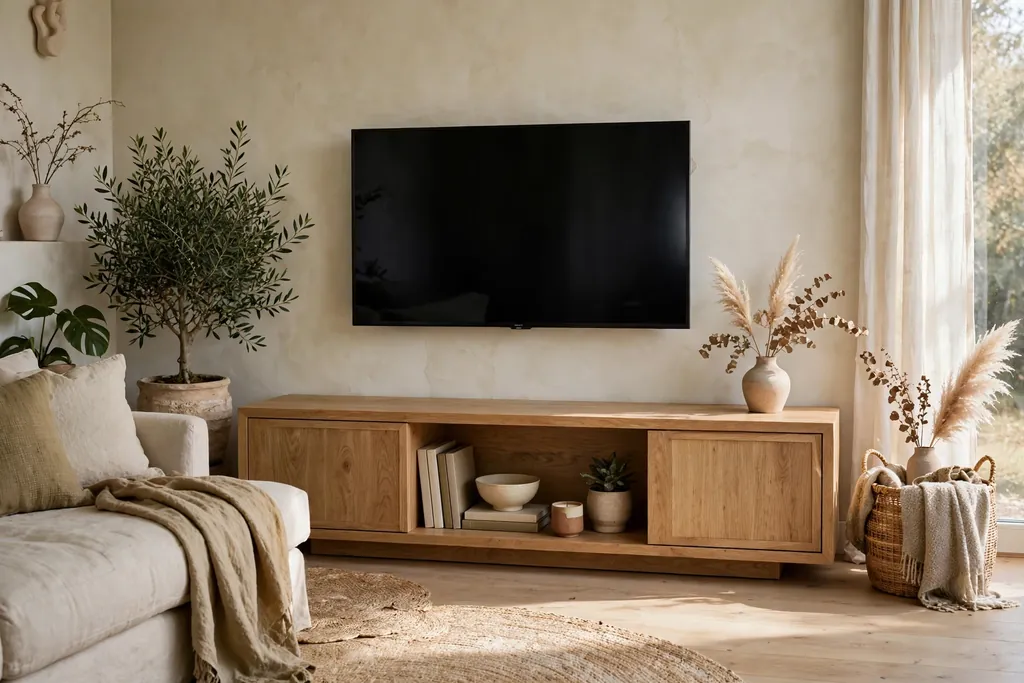
Choose a low wood media console under the television, with closed doors or drawers to hide cables and devices. A low console in oak or walnut keeps the television wall calm, and its wood tone links the media zone to the rest of the room. Closed storage matters here, since open shelves under a television tend to collect clutter.
Measure the television width and choose a console wider than the screen, so the television does not overhang the edges. Drill or use existing cable holes to keep cords out of sight, and leave ventilation gaps behind devices that give off heat. Keep the console top to one plant or one small group, so the television wall stays quiet when the screen is off.
26. Dried Pampas in a Tall Floor Vase
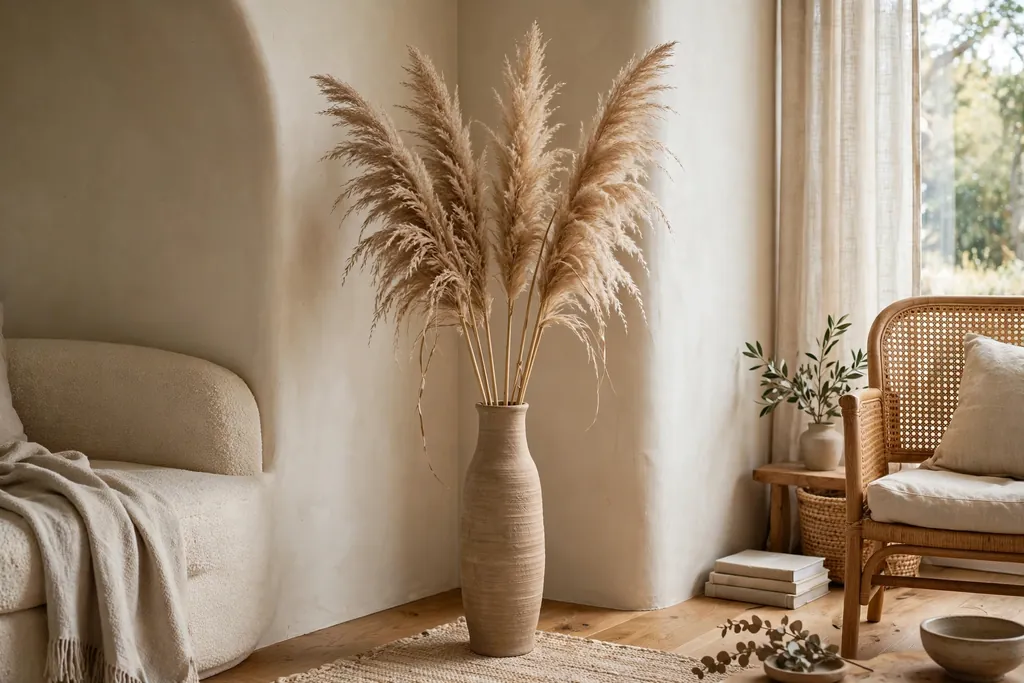
Place dried pampas stems in a tall floor vase in an empty corner for height and soft texture without daily plant care. Pampas plumes in cream or pale beige suit the organic modern palette, and a tall vase in clay, stone, or woven fiber grounds the arrangement. This suits a corner that gets little light, where a live plant would struggle.
Keep the vase away from walkways, since tall stems can tip if brushed, and add a weight inside the base if the vase feels top-heavy. Shake the stems outside before bringing them in, and keep them clear of open flames, radiators, and the fireplace. Replace the stems when they shed heavily, and dust them gently with a dry cloth between changes.
27. Coffee Table Styling with Books and a Stone Bowl
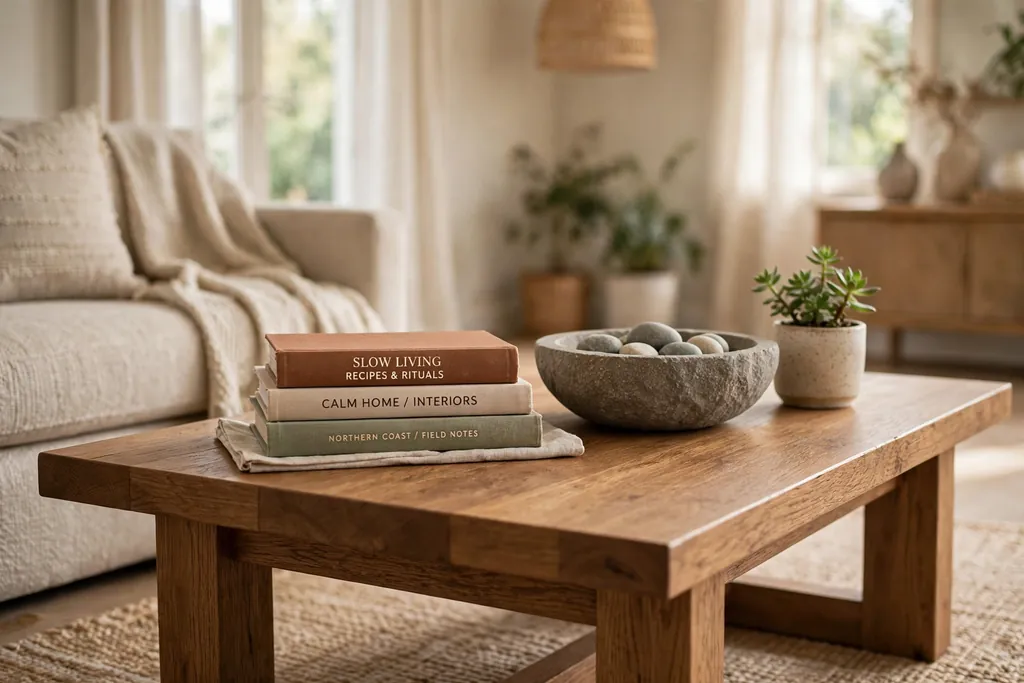
Style the coffee table with a stack of two or three large books, a low stone bowl, and one small plant or candle, and leave the rest of the surface clear. This small group gives the table a finished look without filling it, so there is still room for a mug or a phone. The stone bowl can hold remote controls or keys, which keeps small daily items in one place.
Choose books with covers you like looking at, in sizes that step down as the stack rises, and place the largest book at the bottom. Keep the top book one people can actually open, since a coffee table book earns its place by being read. For more table ideas, see these round coffee table styling ideas, which cover trays, candles, and groups for round tops as well as rectangular ones.
28. Plaster Arch Niche for Decor
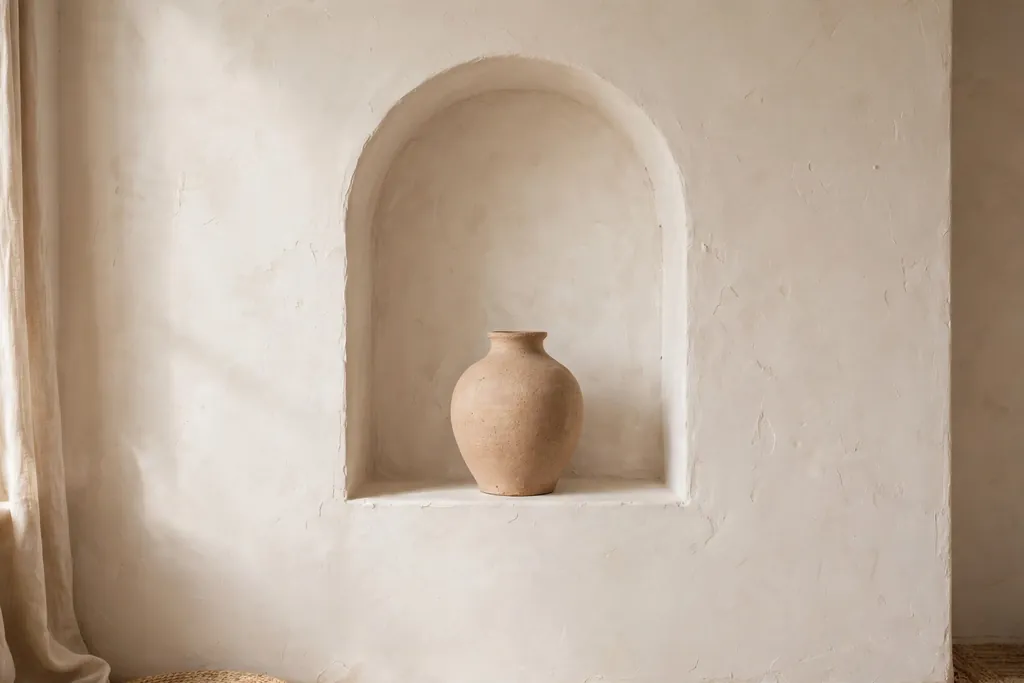
Shape or buy a plaster arch niche in a wall or as a freestanding panel, and use it to display one vase, one sculpture, or a small plant. The arch shape is a hallmark of organic modern rooms, since it softens a straight wall and frames a single piece like a picture. A plaster finish in warm white keeps the niche calm and lets the displayed piece lead.
Keep the niche to one or two items at most, since a crowded niche loses the framing effect. If you cannot alter a wall, a leaning plaster arch panel or an arched shelf gives a similar shape without building work. Dust the niche and its piece with a dry cloth, and light it with a small picture light or a nearby lamp in the evening so the arch reads after dark.
29. Handwoven Wool Rug in a Reading Corner
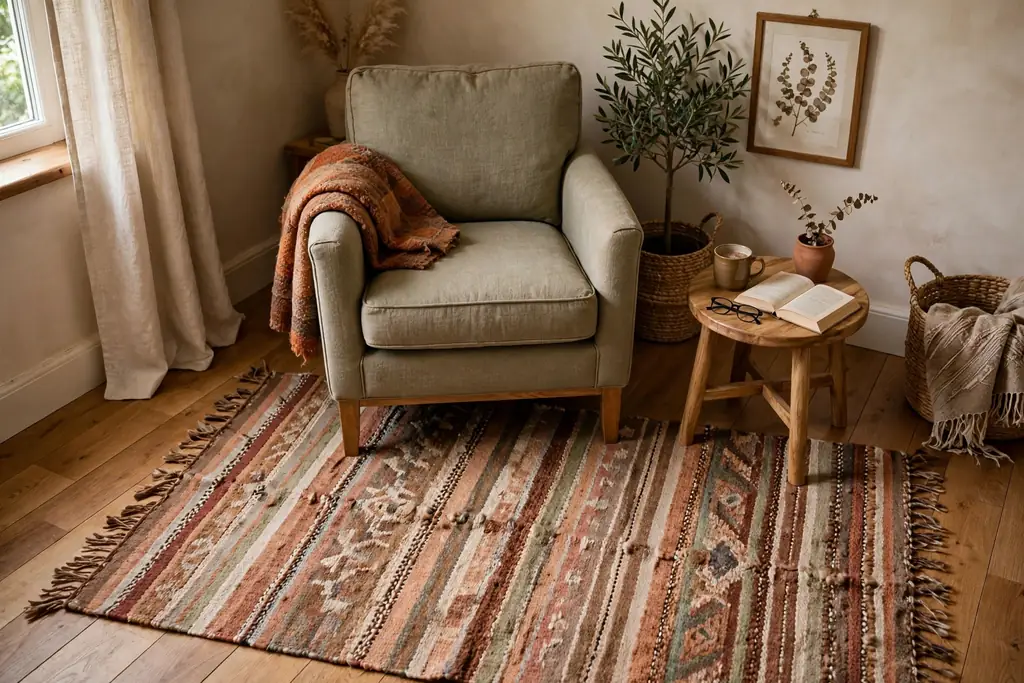
Lay a handwoven wool rug in a reading corner, under a chair and a small side table, for a soft, textured floor that marks the corner as its own zone. A handwoven rug has a visible weave and slight unevenness that suits this style, and wool feels warm under bare feet. Choose earth tones, such as oatmeal, sand, or soft sage, so the rug links to the main seating rug without matching it exactly.
Size the rug so the front legs of the chair rest on it, with room for feet to stay on the rug when seated. Use a rug pad underneath on a smooth floor to stop slipping. Vacuum wool without a beater bar on a high pile, and blot spills quickly rather than rubbing them, so the weave stays neat.
30. Cane Front Credenza
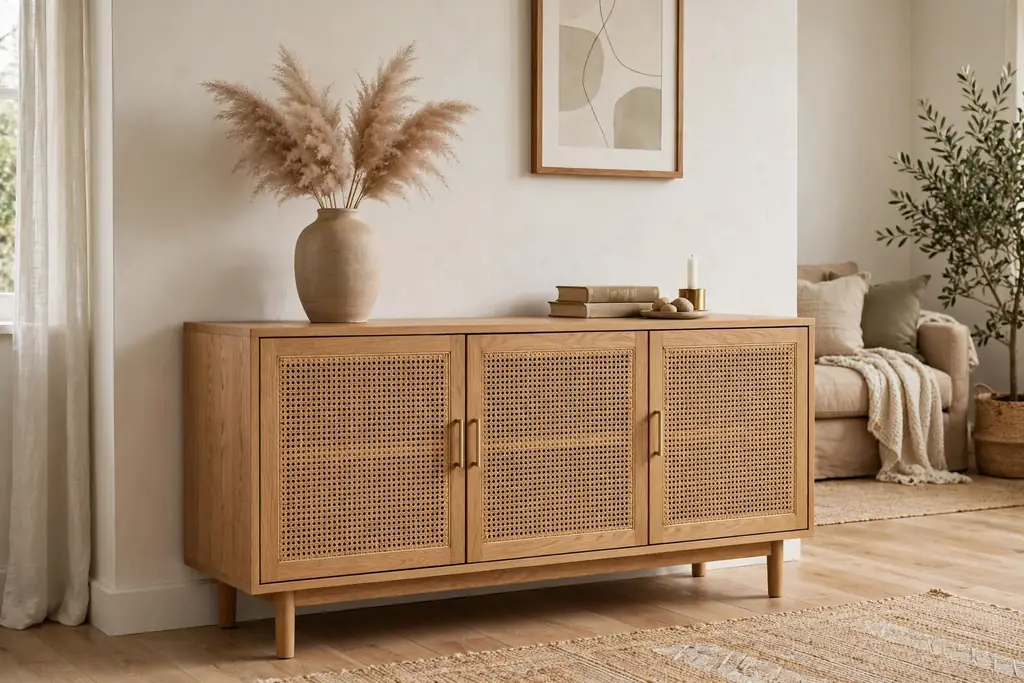
Add a cane front credenza along one wall for closed storage with a woven, natural face. Cane doors hide board games, cables, and spare throws, while the open weave keeps the piece feeling light, unlike a solid wood cabinet. A credenza in oak with cane fronts suits a living room, a dining area, or a hallway wall.
Keep the top mostly clear, with one vase or a small stack of books, so the cane stays the detail. Dust the cane gently with a dry cloth or a soft brush, and keep the credenza out of damp spots, since cane can sag if it stays wet. Check door hinges and handles before buying, since cane doors see daily use and need solid fixings.
31. Window Seat with Linen Cushions
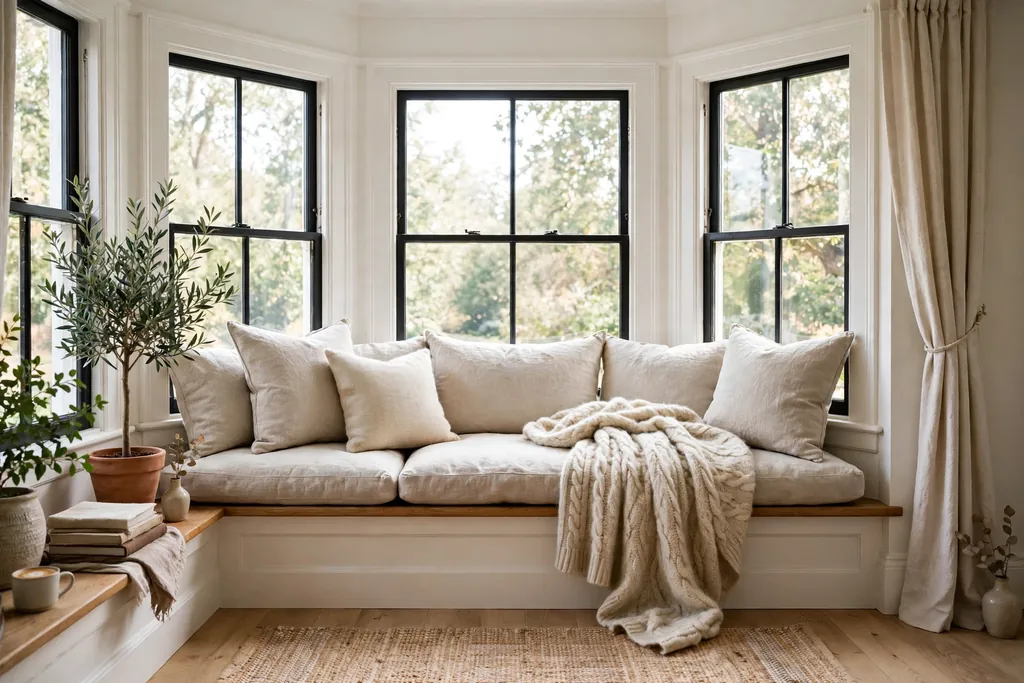
Build or dress a window seat with a thick cushion in oatmeal linen, a few cotton cushions, and a wool throw, for a sunny seat that uses a spot many rooms waste. A window seat suits a bay window, a wide sill, or a low bench under a large window, and it gives the room a second seating zone without extra floor furniture.
Choose a cushion thick enough to sit on for an hour, with a removable, washable cover, since window seats collect sun and dust. Add storage underneath the seat for throws or books where the bench allows it. Keep the window seat clear of heavy objects, and check that curtains or blinds still move freely around it.
32. Woven Wall Hanging Above the Sofa
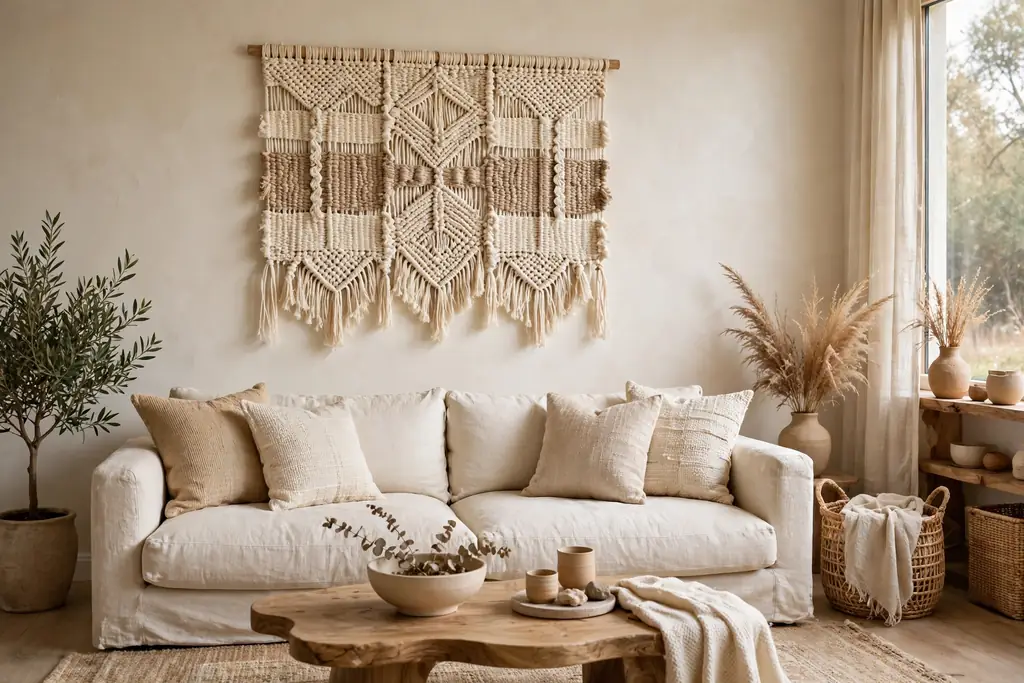
Hang a woven wall hanging above the sofa for texture at wall level that paint and framed art cannot give. A hanging in cotton, wool, or jute, in cream, sand, and soft sage, adds a handmade note and softens a large plain wall. Choose a size that sits inside the width of the sofa, so the hanging frames the seating group rather than overpowering it.
Hang the piece from a wood dowel or a simple rod, and anchor it into a stud or with a fixing rated for its weight. Keep the hanging out of direct sun where fibers could fade, and dust it gently with a dry cloth or a low vacuum setting. Pair it with plain cushions, since a woven hanging already carries the texture for that wall.
33. Sculptural Branch Arrangement
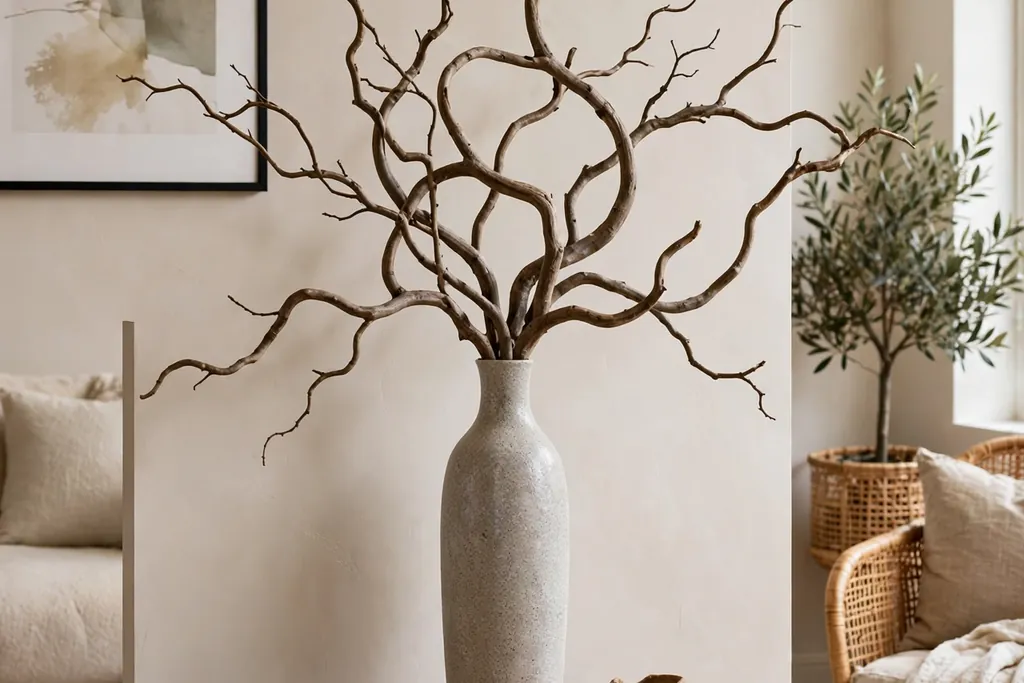
Place a sculptural branch arrangement in a tall vase on a console or a side table for height and a natural shape that needs no water. Bare branches, eucalyptus stems, or a single curved branch all work, and they suit a room where fresh flowers would wilt fast. Choose branches about one and a half times the height of the vase, and keep the number small, three to five stems, so the shape stays open.
Set the vase toward the back of the console, away from the seat where people reach most, so it is admired rather than bumped. Trim branch ends to sit firmly in the vase, and add a stone or two inside the base if the arrangement feels top-heavy. Replace branches when they dry out or shed, and keep them clear of open flames and radiators.
34. Warm Evening Lighting in Layers
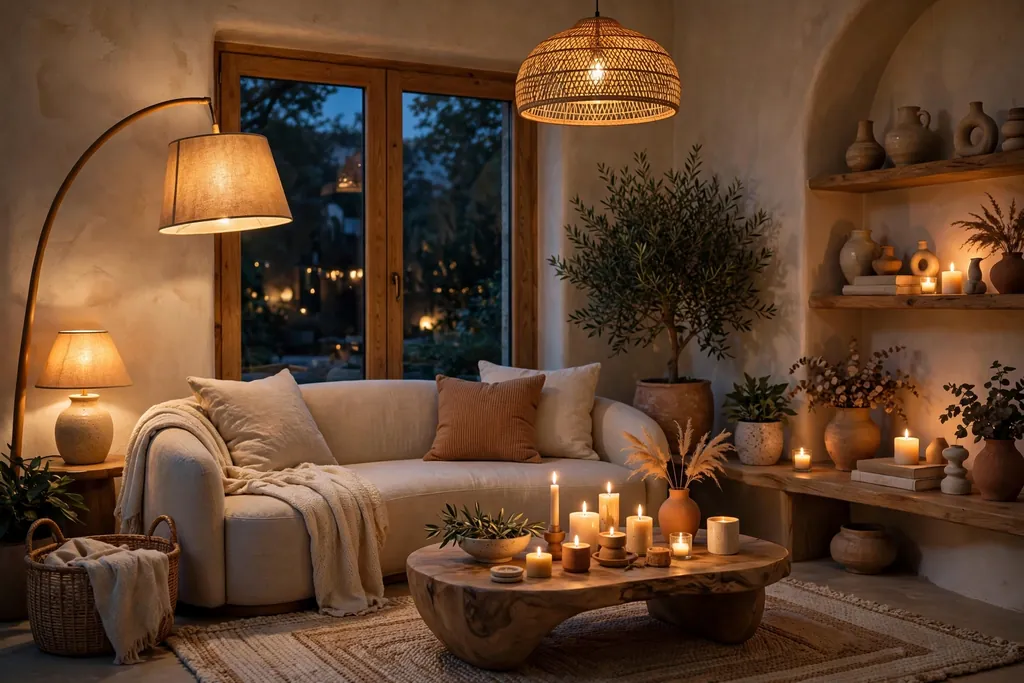
Finish the room with warm evening lighting in layers: a floor lamp by a chair, a table lamp on a side table, and candles or battery candles on the coffee table. Layered light at different heights makes a pale room feel warm after dark, while a single overhead light can feel harsh. Use warm white bulbs throughout, so the layers blend rather than clash.
Put lamps on dimmers where possible, and switch on the lowest lights first in the evening, adding more only as needed. Keep candles clear of curtains, throws, and paper, and never leave them burning in an empty room. Battery candles give a similar glow where real flames are not practical, such as a shelf near books or a high niche.
Conclusion
Organic modern living rooms work because they balance two ideas: clean modern shapes and materials that feel natural to touch. You do not need to buy everything at once. Start with a calm base, add one comfortable sofa and one wood table, then layer rugs, throws, plants, and warm light over time. Keep the palette pale, repeat one or two wood tones, and leave space around the pieces you love most. Pick the ideas that fit your room, your budget, and the way you actually live, and save this list to revisit as your room grows.
FAQs
What is an organic modern living room?
An organic modern living room pairs clean modern shapes with natural materials such as oak, stone, linen, wool, rattan, and clay. Walls stay pale, furniture lines stay simple, and texture comes from the materials themselves rather than from bright colors or busy patterns.
What colors suit an organic modern living room?
Warm white, oatmeal, cream, sand, sage, clay, and soft grey suit this style best. Keep walls and large furniture pale, then add one or two earth tones through cushions, throws, art, or a rug, so the room stays calm and the natural materials stand out.
Which sofa works best for organic modern style?
A low sofa in oatmeal or cream linen, or in soft boucle, works best, since its plain fabric and simple shape let wood, stone, and plants lead. Choose a size that fits the rug zone, with removable covers where you can, and keep cushions plain or in a soft stripe.
How do I add plants without making the room feel cluttered?
Use plants at three heights and no more: one floor tree in a corner, trailing plants on one shelf, and one small pot on a table. Group pots in odd numbers, repeat the same pot material, and leave gaps on shelves, so greenery reads as part of the design rather than as clutter.
Can organic modern style work in a small living room?
Yes, it suits small rooms well, since pale walls, low furniture, sheer curtains, and mirrors all help a room feel larger. Choose a compact sofa, one rug that fits the seating group, and closed storage such as a cane credenza, and keep floors and table surfaces mostly clear.
How do I keep an organic modern room from feeling cold?
Add warmth through touch: wool throws, cotton cushions, a sheepskin throw, a jute or wool rug, and warm layered lighting in the evening. Wood tones, woven baskets, and candles also help, since a pale room needs texture and warm light to feel lived in, not just light in color.