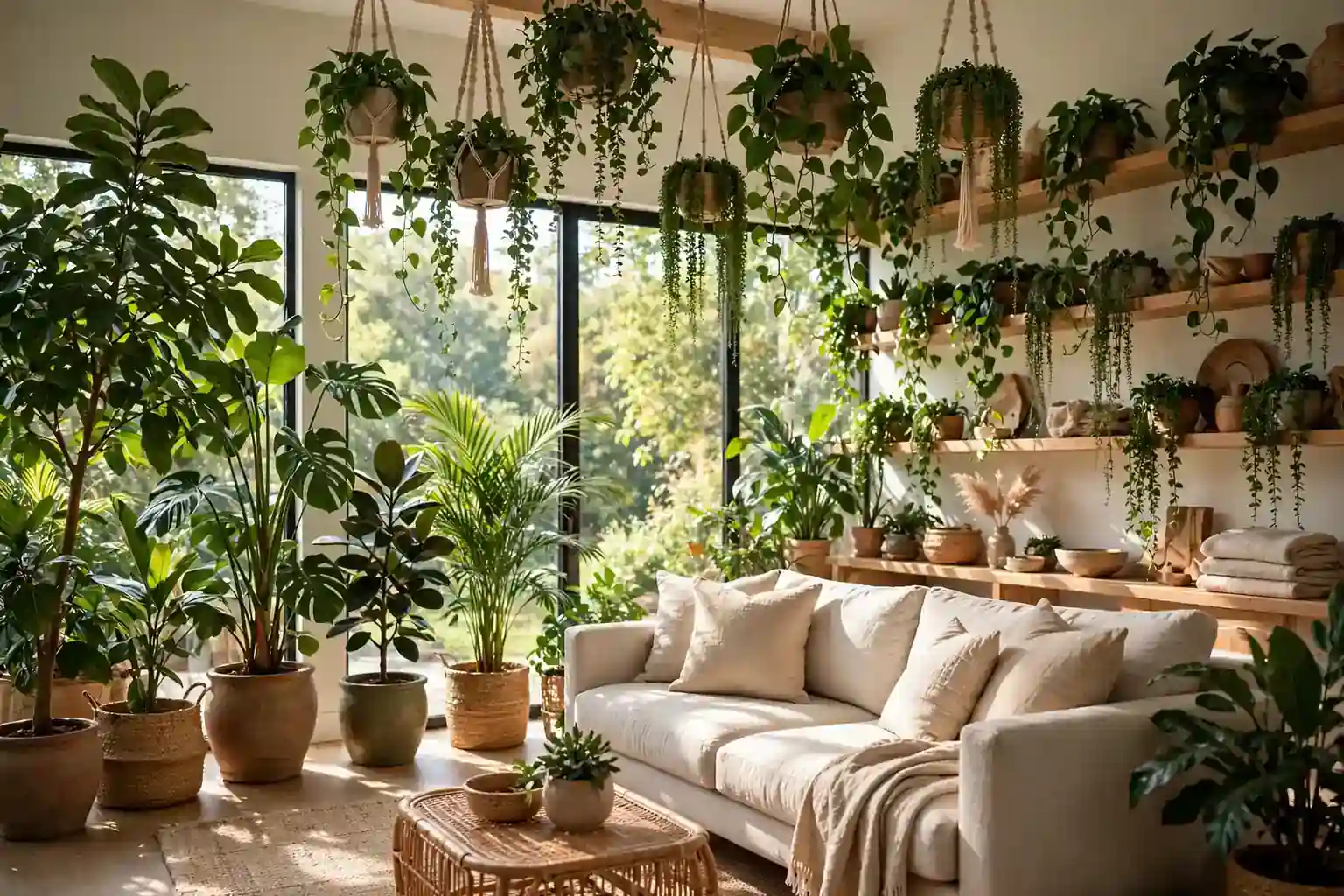
A living room full of plants feels alive in a way few other decorating choices can match. Leaves soften hard corners, add color without paint, and give a plain sofa wall a clear focal point. The trick is placing plants where they will get the light they need and where you can reach them to water and care for them. These 24 living room decor ideas for plant lovers cover tall trees, living walls, hanging planters, shelves, stands, and small care stations, for bright rooms and dark corners alike. Start with the light you have, pick one idea that fits your space, and build from there.
Key Takeaways
- Match each plant to the light it will actually get, and group plants with similar watering needs together.
- Use plants at three heights, floor, table, and shelf, so green fills the room instead of crowding one surface.
- Keep walking routes clear and plants clear of radiators, fireplaces, and swing paths for doors.
- Use saucers under every pot on wood floors, and choose pots with drainage holes.
- Start with three or four plants and add more only once watering and care stay manageable.
- Repeat one pot material or color through the room so a large collection still looks planned.
1. Statement Corner Tree
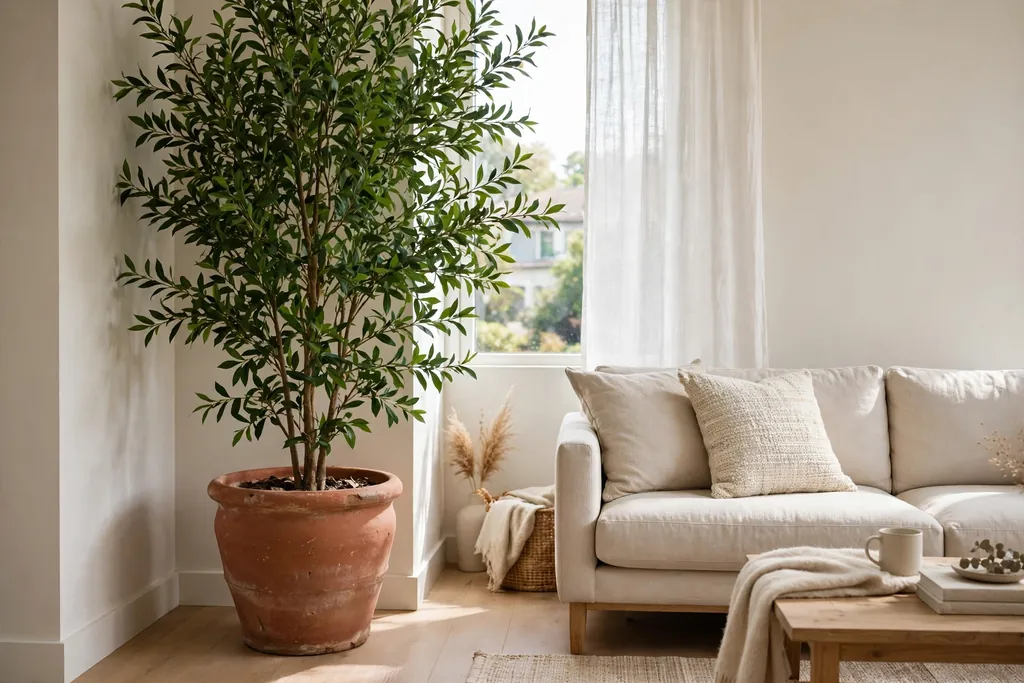
Fill an empty corner with one tall tree, such as a fiddle leaf fig, olive tree, or Kentia palm, in a large floor pot. A single tall plant gives the room a clear focal point and softens the hard angle where two walls meet, without needing a whole collection to make an impact.
Place the tree where it gets the light its label asks for, and leave space around it so leaves do not press against curtains or walls. Rotate the pot a quarter turn every few weeks so growth stays even. A basket or woven cover over a plain nursery pot makes the tree look finished at once.
2. Living Wall Panel
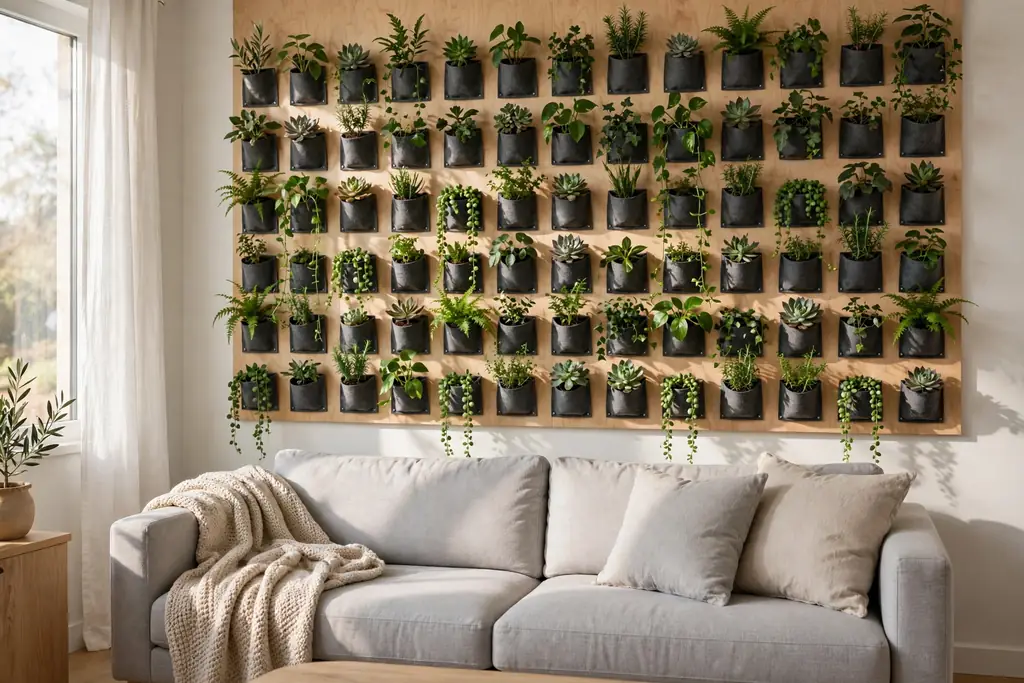
Cover one wall, or one section of a wall, with a living wall panel holding small potted plants in pockets or slots. A living wall turns plants into wall art and suits a sofa wall or a hallway wall that would otherwise stay blank.
Choose a panel system with a drip tray or a waterproof backing, and fix it into studs or with fixings suited to your wall type. Plant the top pockets with trailing plants and the lower pockets with upright plants, so the panel reads as full from top to bottom. Water from the top down and check the tray after watering, since a panel holds more water than a single pot.
3. Hanging Planters at Varied Heights
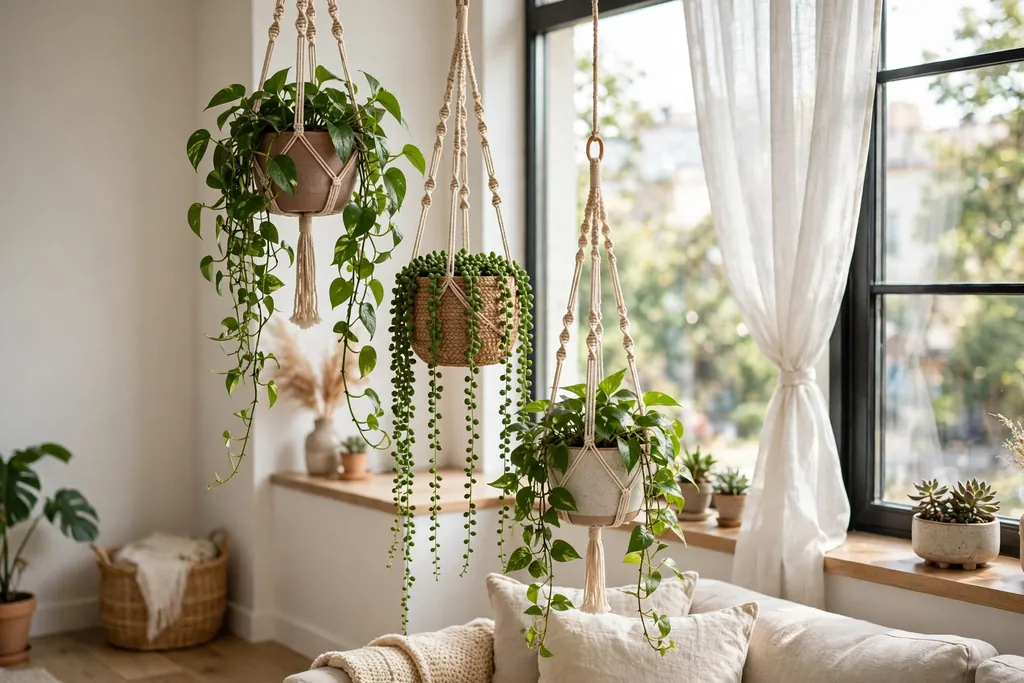
Hang planters from ceiling hooks at three different heights near a window, so trailing plants fall at staggered levels instead of lining up in a row. Hanging planters free up floor and table space, which helps in a small living room.
Use hooks rated for the weight of a watered pot, and fix them into a joist or a ceiling anchor suited to your ceiling type. Hang the longest trailers highest, so their vines do not block the window, and keep the lowest planter above head height on any walking route. A pulley or a hook you can lower by hand makes watering far easier.
4. Tiered Plant Ladder Shelf
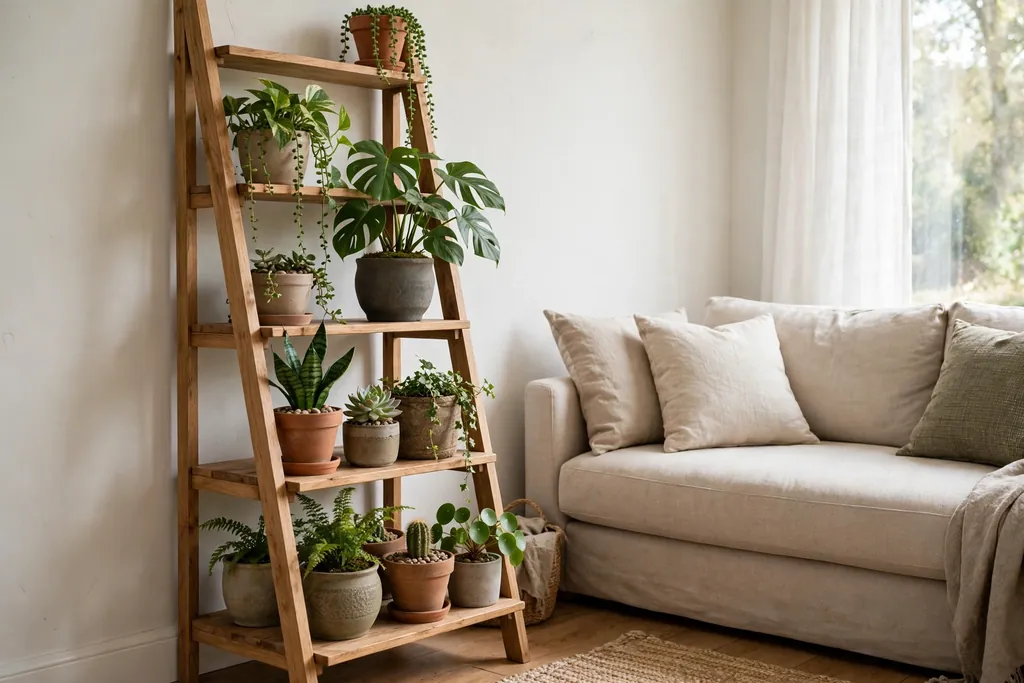
Lean a tiered ladder shelf against a wall and fill each rung with plants, tallest at the back and smallest at the front. A ladder shelf holds many plants in a narrow footprint and suits a wall beside the sofa or the television.
Anchor the top of the ladder to the wall if the maker advises it, especially in a home with children or pets. Put heavy pots on the lowest rungs and light pots higher up, and leave one rung partly empty so the shelf does not look packed. The grouping method in these cozy apartment living room ideas works well here too: start with the largest plants, vary the shapes, and leave visible gaps.
5. Sunny Window Garden
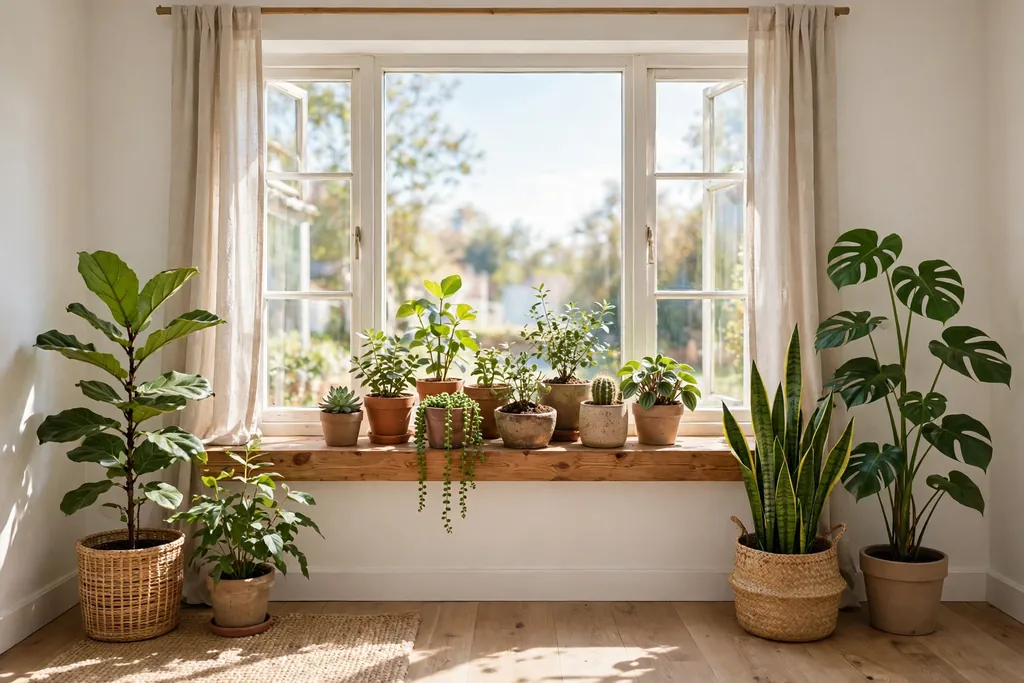
Turn a sunny windowsill and the floor beside it into a window garden, with small pots on the sill and taller pots on the floor below. A window garden gives light loving plants the bright spot they need and makes the window itself a feature.
Use a tray under sill pots to catch drips, and keep curtains clear of leaves so air can move around the plants. Rotate sill pots weekly, since the side facing the glass grows faster. In summer, watch for leaf scorch on plants pressed against hot glass, and move sensitive plants a step back from the pane.
6. Clustered Plant Stands at Different Heights
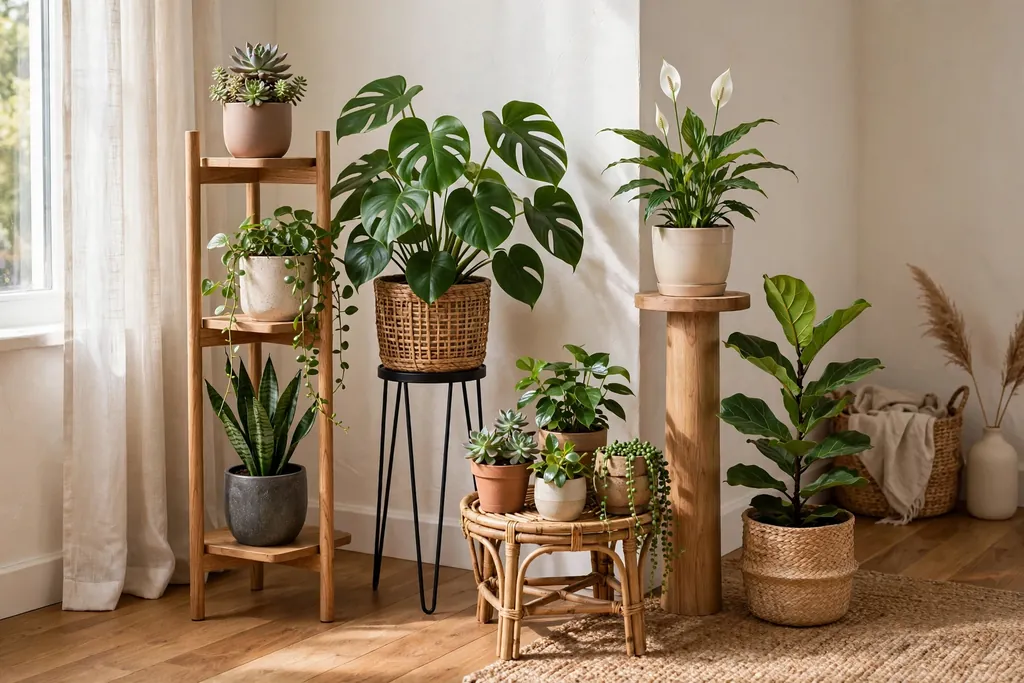
Group three or four plant stands of different heights in one corner, with one plant on each stand. Stands lift plants off the floor, vary the height of the group, and let each plant be seen instead of hiding behind its neighbor.
Choose stands in one material, such as wood, metal, or bamboo, so the group looks planned even when the plants differ. Place the tallest stand at the back and the shortest at the front, and leave a small gap between stands so you can reach each pot to water it. A cluster of stands also works beside an armchair, where it frames the seat without blocking light.
7. Trailing Plants on a High Shelf
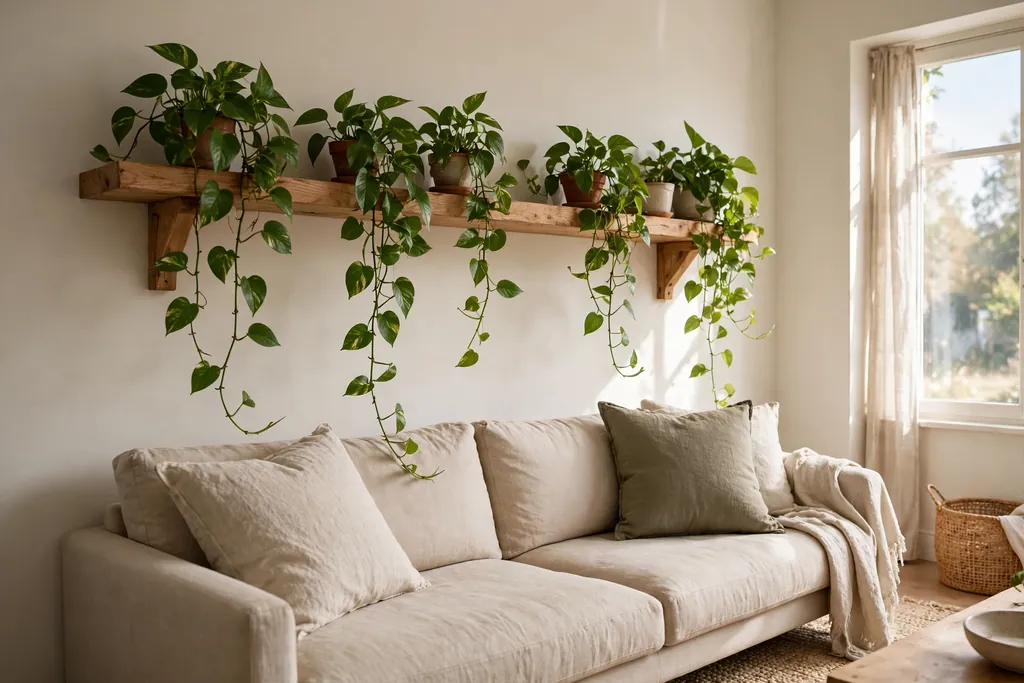
Run a high shelf along one wall and let trailing plants, such as pothos or string of hearts, spill over its edge. A high shelf keeps trailing vines out of the way while still filling the upper wall with green, which is often the emptiest part of a living room.
Fix the shelf into studs or with fixings rated for the weight of watered pots, and keep the shelf clear of picture frames that vines could cover. Trim vines when they reach the furniture below, and use the cuttings to start new plants for the propagation station in Idea 8. Wipe the shelf now and then, since high shelves collect dust fast.
8. Propagation Station on the Wall
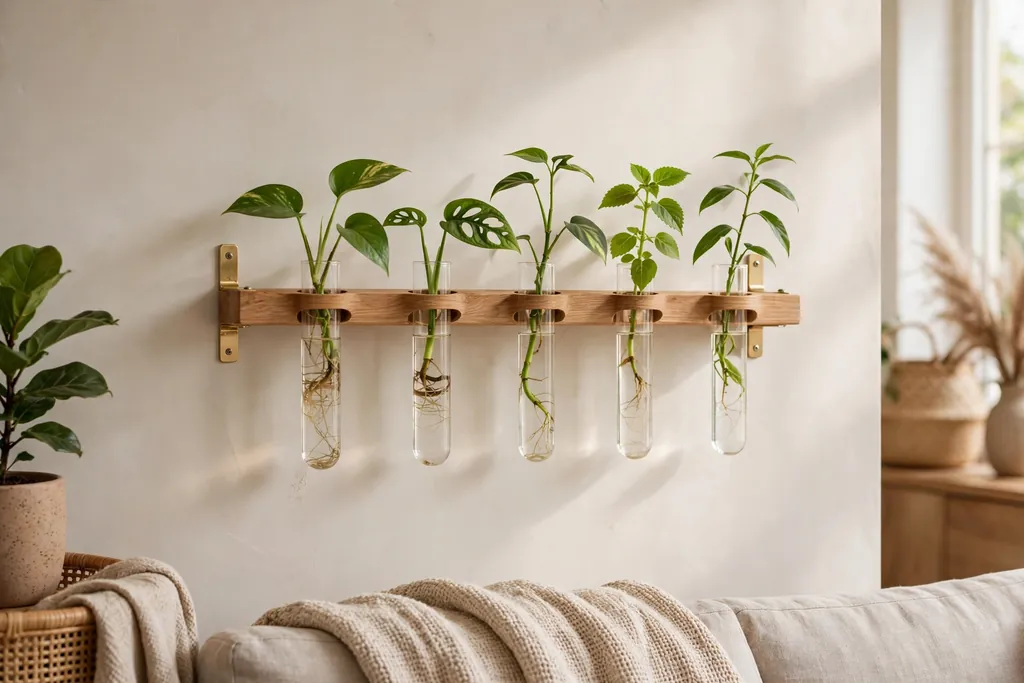
Mount a small wall rack or shelf with glass tubes or jars for cuttings, and grow new plants from your own collection in plain view. A propagation station turns plant care into a display and gives you free plants for other rooms or for friends.
Change the water in the tubes every week, and keep the station in bright indirect light rather than full sun, which heats small jars fast. Label each tube with the plant name and the date you cut it, so you know which cuttings root first. Once roots reach a few inches, pot the cuttings in soil and move them to a shelf or stand.
9. Glass Greenhouse Cabinet
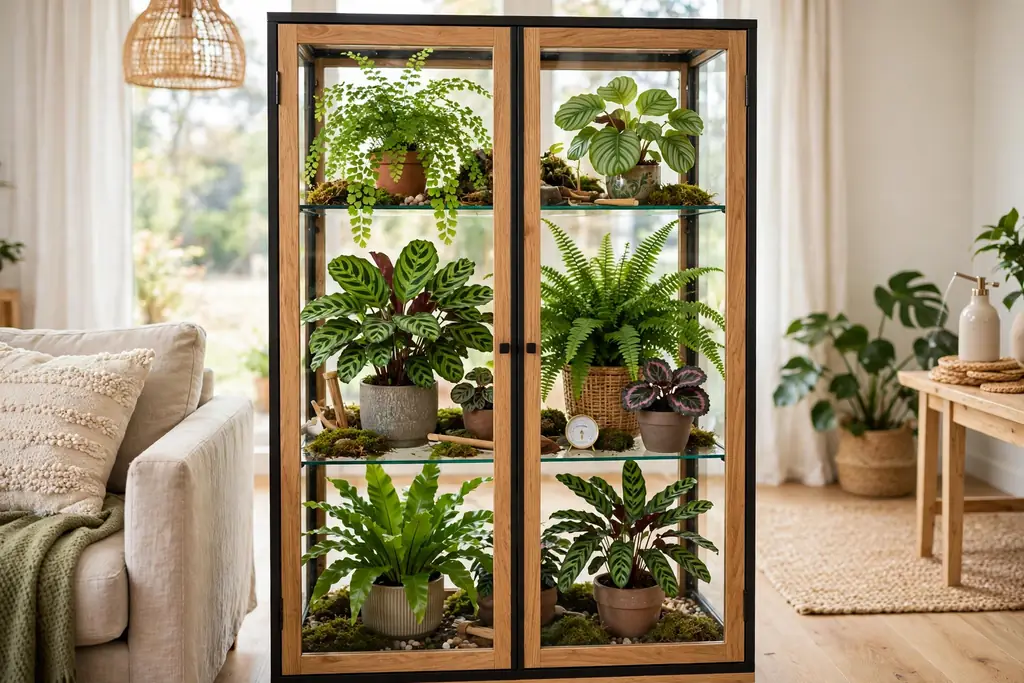
Use a glass fronted cabinet as a small indoor greenhouse for humidity loving plants such as ferns, calatheas, and orchids. The closed glass holds humidity higher than the open room, which suits plants that crisp at the edges in dry indoor air.
Add a small fan inside the cabinet for air movement, and open the doors for a few minutes most days so stale air does not build up. Keep the cabinet out of direct sun, since glass heats fast and can scorch leaves. Line the shelves with trays, and wipe the glass inside and out so the plants stay visible.
10. Large Monstera as Sofa Anchor
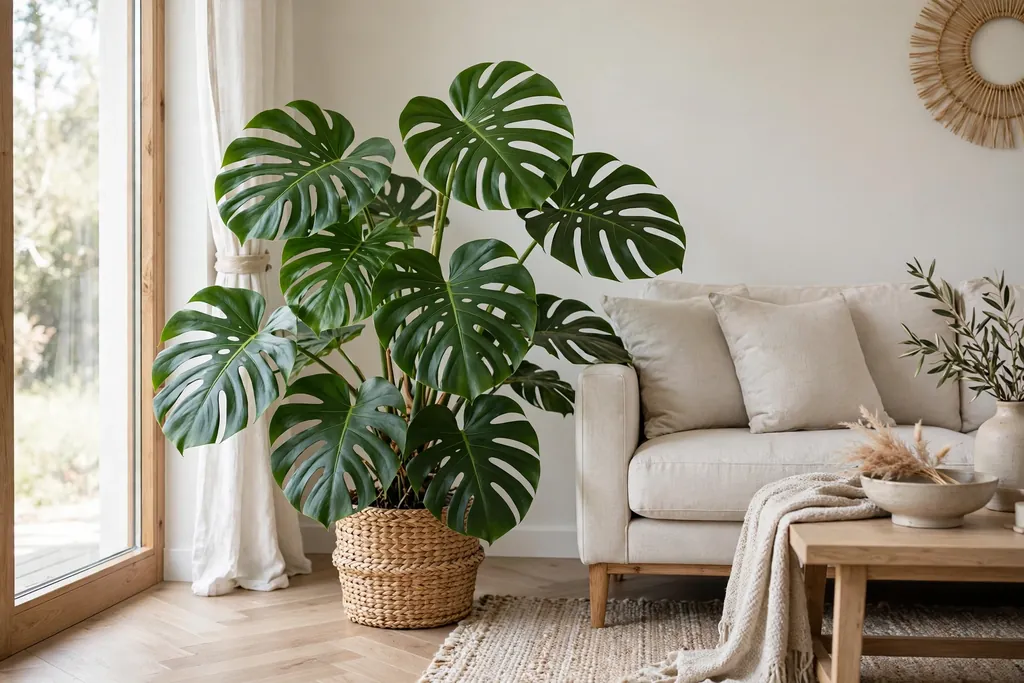
Place one large monstera beside the sofa, where its broad split leaves frame the seating group and fill the gap between the sofa and the wall. A monstera gives the room a bold leaf shape at sitting eye level, which smaller plants cannot match.
Give the monstera a moss pole or stake to climb, and tie new growth loosely to the support as it grows. Keep its leaves clear of the sofa cushions, and wipe large leaves with a damp cloth now and then so they stay glossy. A pot in a warm neutral lets the leaves carry the color, while a bright pot suits a plainer sofa.
11. Plants Framing the Fireplace
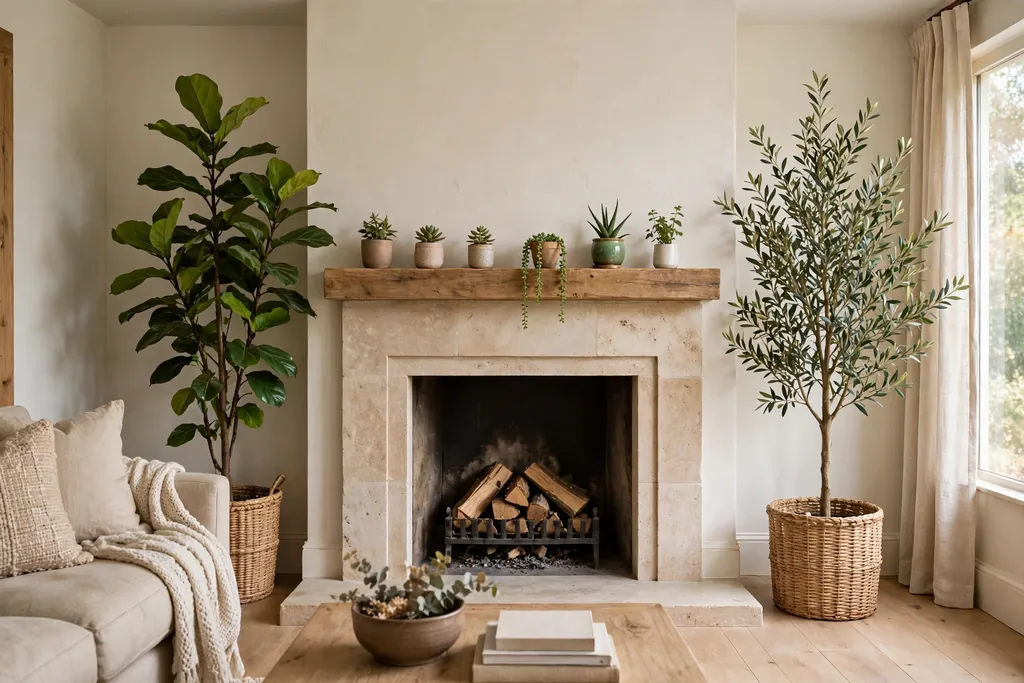
Set a tall plant on each side of the fireplace, with smaller pots on the mantel, to frame the fire as the center of the room. Plants soften the hard lines of a fireplace surround and draw the eye toward the seating group gathered around it.
Keep plants a safe distance from the fire opening and from heat, and move mantel plants away when the fire is lit. Use heat tolerant, sturdy plants on the mantel, and keep trailing vines clear of candles or flames. A pair of matching pots on the hearth sides gives symmetry, while different plants in matching pots keep the look relaxed.
12. Open Shelf Room Divider with Plants
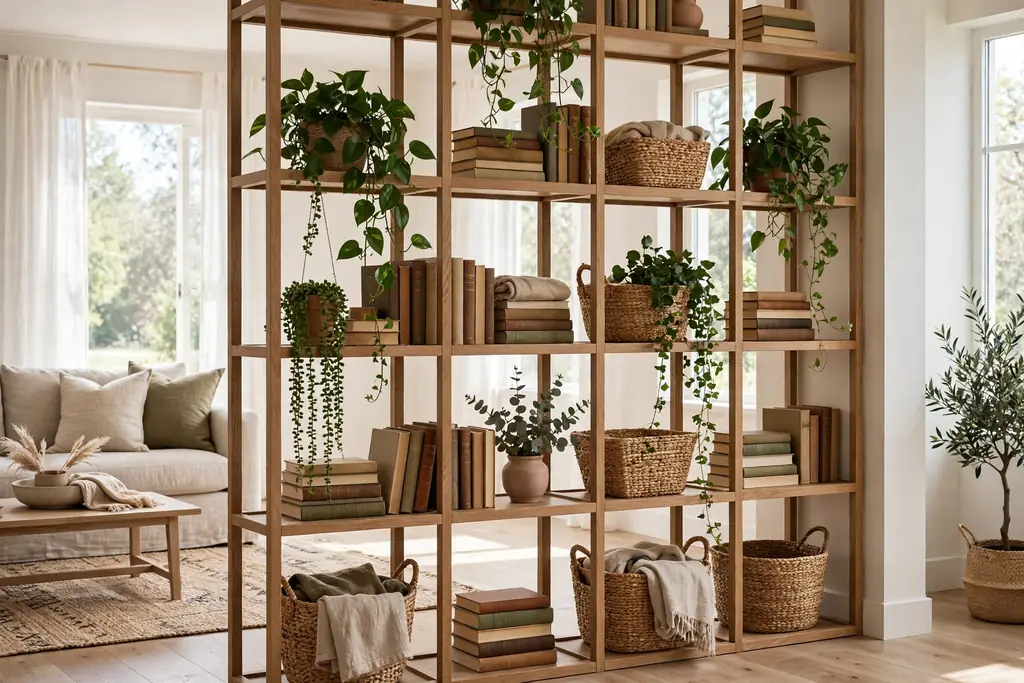
Use an open bookcase as a room divider and fill some of its cubes with plants, mixing books, baskets, and pots on the same unit. An open divider marks the living zone in an open plan room while letting light and air pass through, unlike a solid screen.
Place trailing plants on the top cubes so vines soften the top edge, and keep heavy pots low for stability. Anchor the bookcase to the floor or wall following the maker instructions, since a tall unit can tip. Leave some cubes empty or filled with books, so the divider reads as furniture with plants, not as a plant wall.
13. Coffee Table Tray Garden
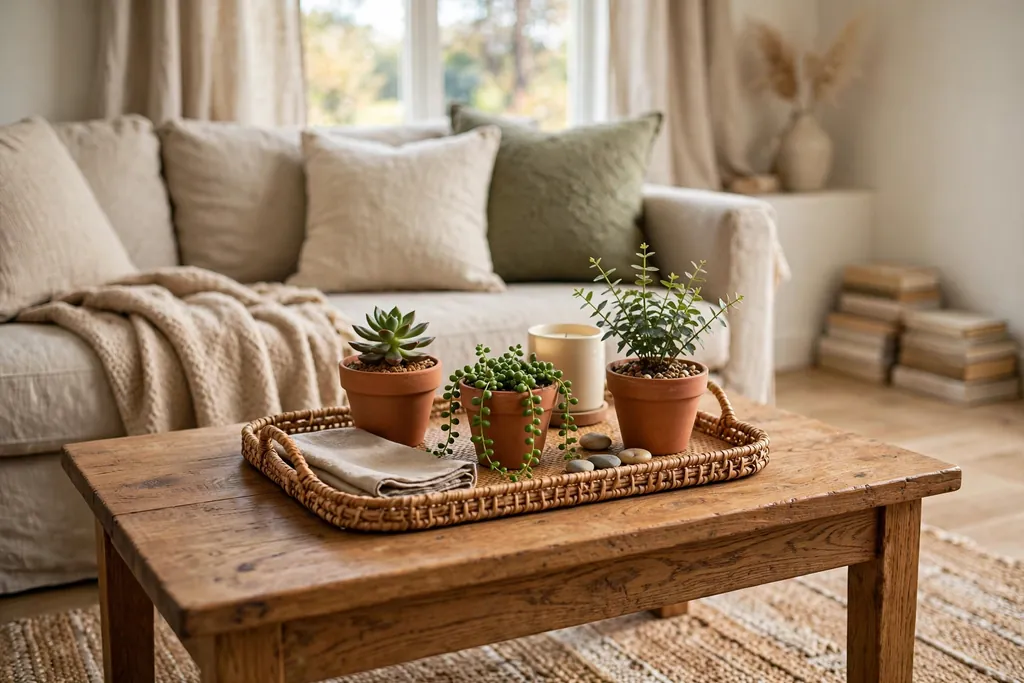
Gather three small plants on a tray on the coffee table, with a candle or a small book beside them. A tray garden brings green to the center of the seating group, where you see it every time you sit down, and the tray keeps soil and water off the table.
Choose small, slow growing plants that will not outgrow the table in a season, and keep them in pots with saucers inside the tray. Lift the tray off when you need the full table for food or games, and return it after, so the table stays useful. For help choosing the rug under the table, see these living room rug ideas.
14. Botanical Gallery Wall Paired with Live Plants
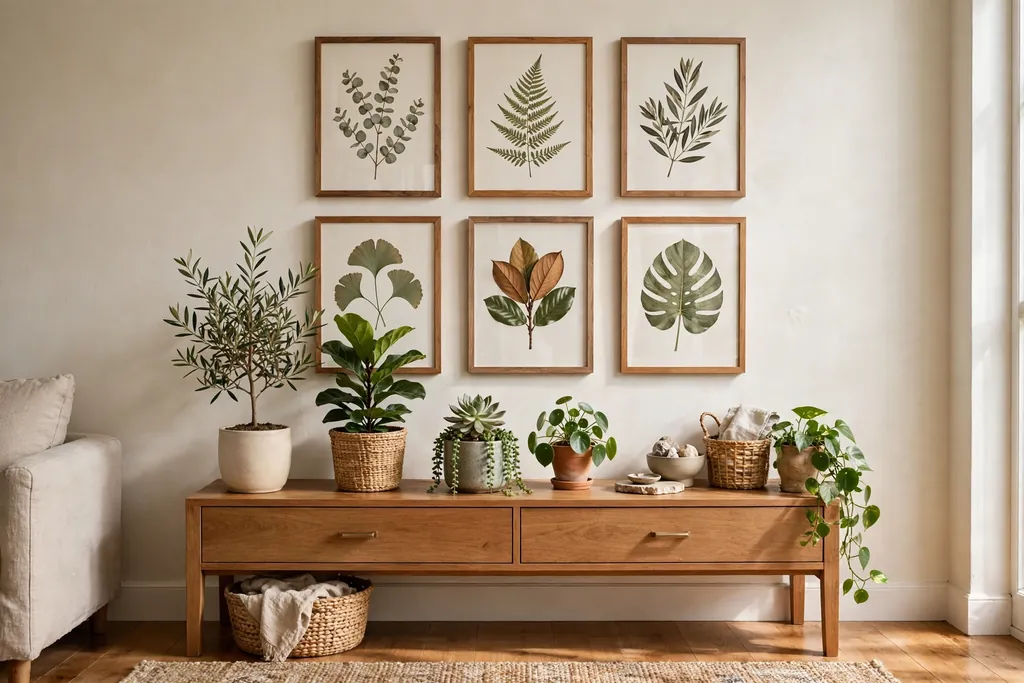
Hang framed botanical prints above a console or sofa, and place live plants on the surface below them. The prints echo the shapes of the real plants, which makes the wall feel planned, and the live plants keep the wall from looking flat.
Match the print style to the room: simple line drawings suit a calm room, while detailed vintage prints suit a room with more pattern. Keep the center of the group at eye level when seated, and keep the outer edges inside the width of the furniture below. Swap one print with the seasons if you like, and let a trailing plant soften one end of the row.
15. Reading Nook Jungle Corner
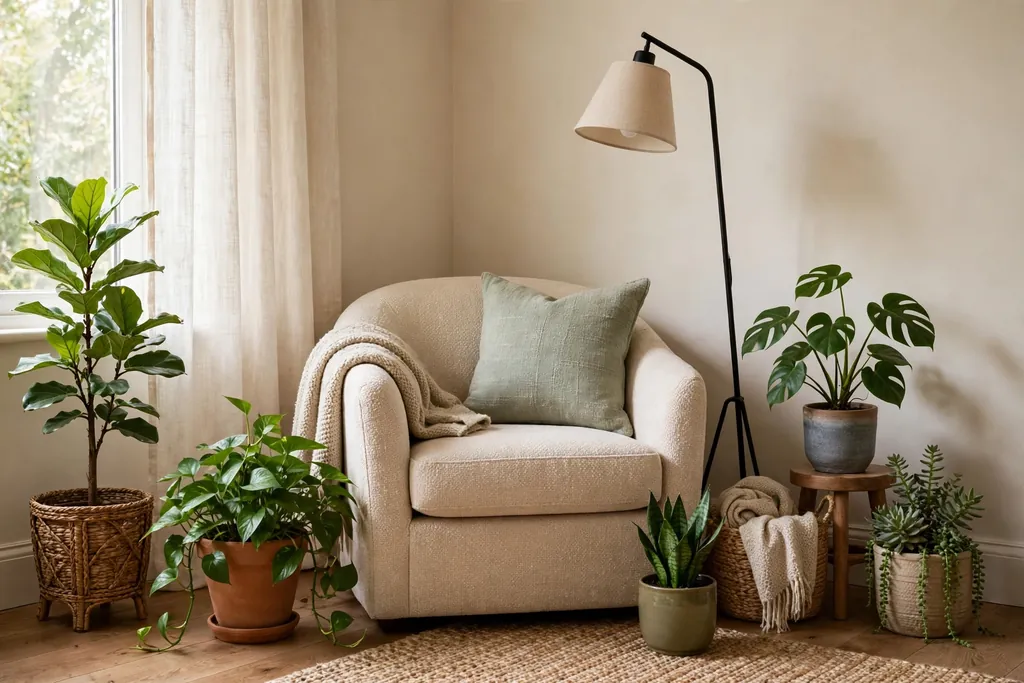
Build a reading nook in a corner with an armchair, a floor lamp, and plants at three heights around the chair. Plants make a reading corner feel sheltered, like a small indoor garden, and the chair gives you a reason to sit among them daily.
Place a tall plant behind the chair, a medium plant on a side table, and a small plant on a low stool nearby, so green surrounds the seat without blocking the lamp light. Keep the watering can and a small tray for plant tools nearby, so care fits into the same corner. A washable throw over the chair arm protects it from soil and water drips.
16. Floor Planters Beside the TV Console
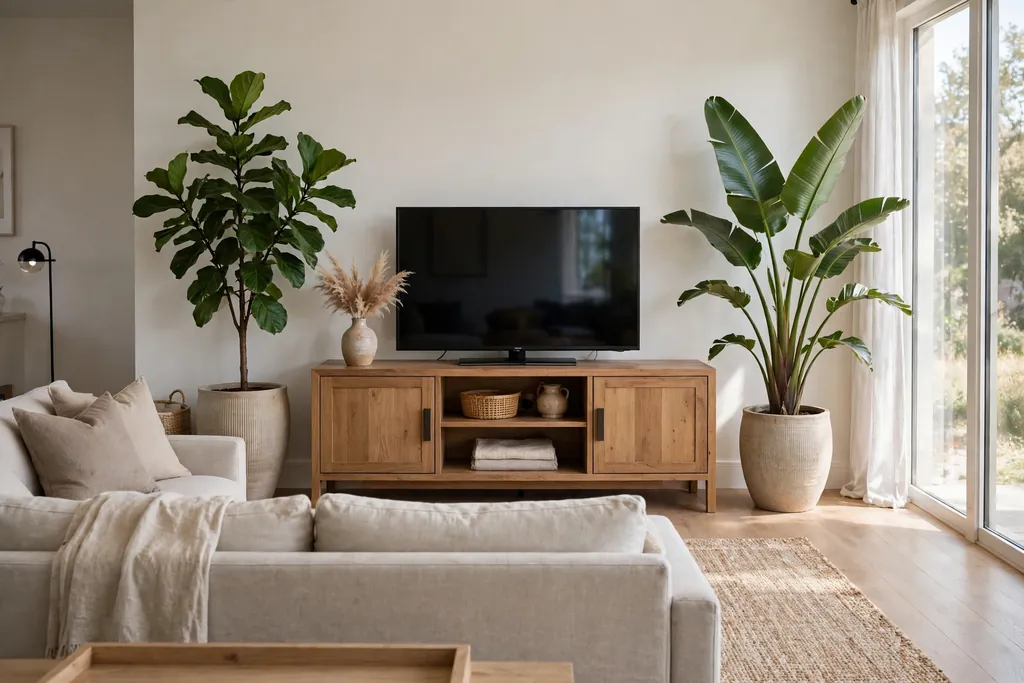
Flank the television console with two large floor planters, so the screen sits between soft green shapes instead of bare wall. Floor planters balance the wide, flat shape of a television and stop the media wall from looking like a black rectangle on a blank wall.
Choose plants tall enough to reach at least the height of the console, but not so tall that leaves block the screen from the sofa. Keep pots clear of cables and vents on the console, and use saucers under every pot on a wood floor. If the television wall gets little light, pick plants suited to low light rather than forcing sun loving plants into a dark spot.
17. Plant Pedestal Display
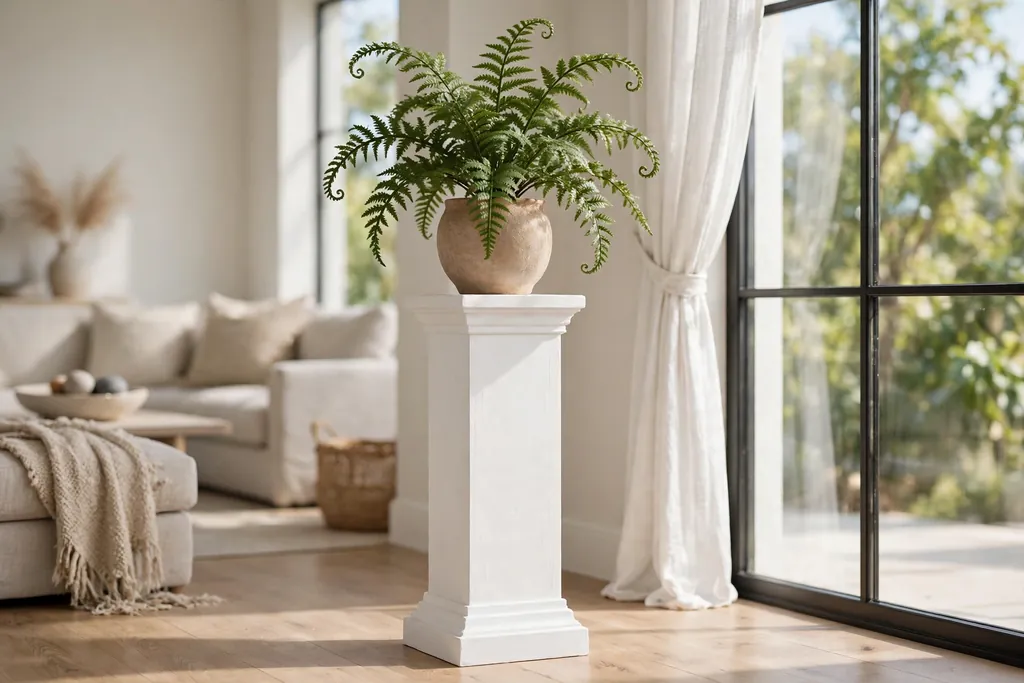
Raise one special plant on a pedestal, plinth, or tall side table, so it stands at eye level like a piece of sculpture. A pedestal suits a plant with an unusual shape, such as a sculptural cactus, a trained topiary, or a large fern, which deserves a solo spot.
Pick a pedestal sturdy enough for a watered pot, and wider than the pot base so the plant cannot tip. Keep the pedestal near a window or lamp, since a solo plant still needs the right light, and keep the area around it clear so the plant reads as a feature. Rotate the plant now and then so all sides get light.
18. Indoor Outdoor Threshold Garden by the Patio Door
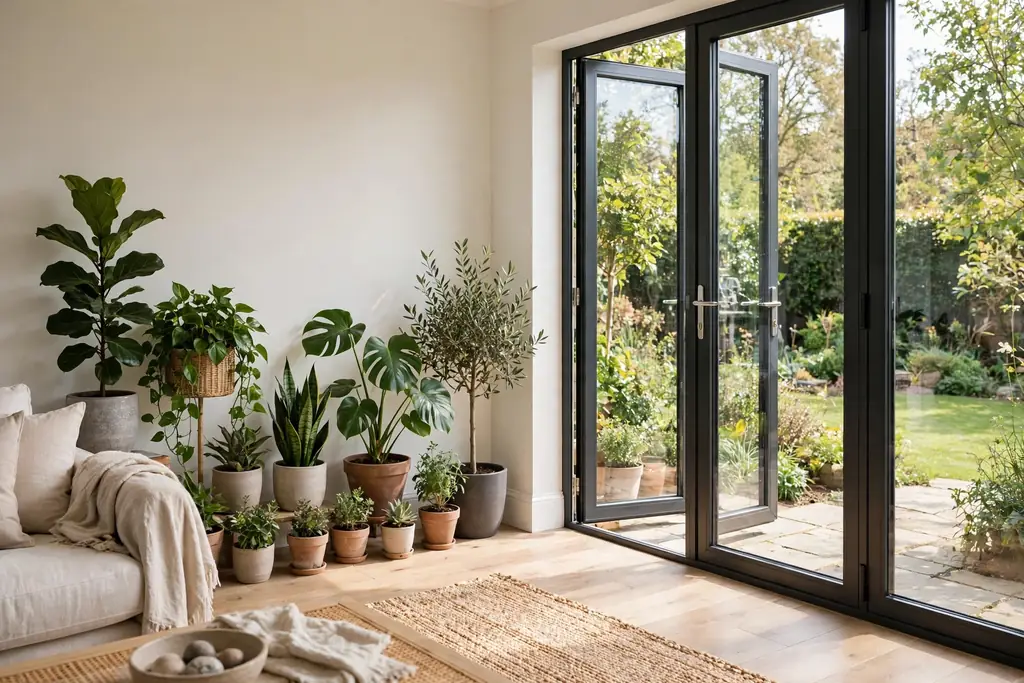
Line the wall beside a patio or balcony door with plants, so the indoor collection flows toward the outdoor space. A threshold garden blurs the line between inside and outside, and it suits rooms where the door is the main source of light.
Use weather tolerant pots near the door, since this spot gets drafts and temperature swings, and keep the walking route through the door fully clear. Place taller plants to the sides of the door and smaller plants on a bench or stool nearby, so the door itself stays easy to open. In winter, move frost sensitive plants a step farther from the glass.
19. Rotating Feature Plant on a Side Table
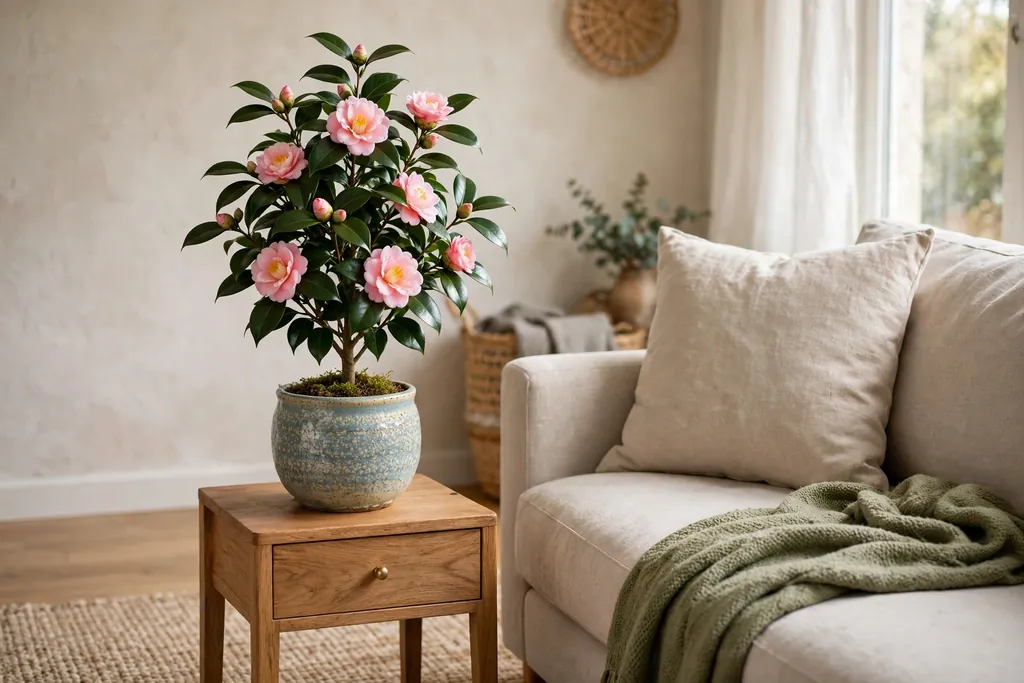
Keep one side table free for a rotating feature plant, and swap the plant every few weeks as different plants bloom, grow, or suit the season. A rotating display keeps the room feeling fresh without buying new furniture, and it gives each plant a turn in the best light.
Choose a side table with a tray or saucer to protect the top, and keep a small card beside the plant with its watering needs, so the routine stays clear when plants change. Store the plants not on display in their usual spots, and rotate on a simple schedule, such as the first weekend of each month. This idea pairs well with a propagation station, since rooted cuttings make good feature plants.
20. Low Care Plant Grouping for Beginners
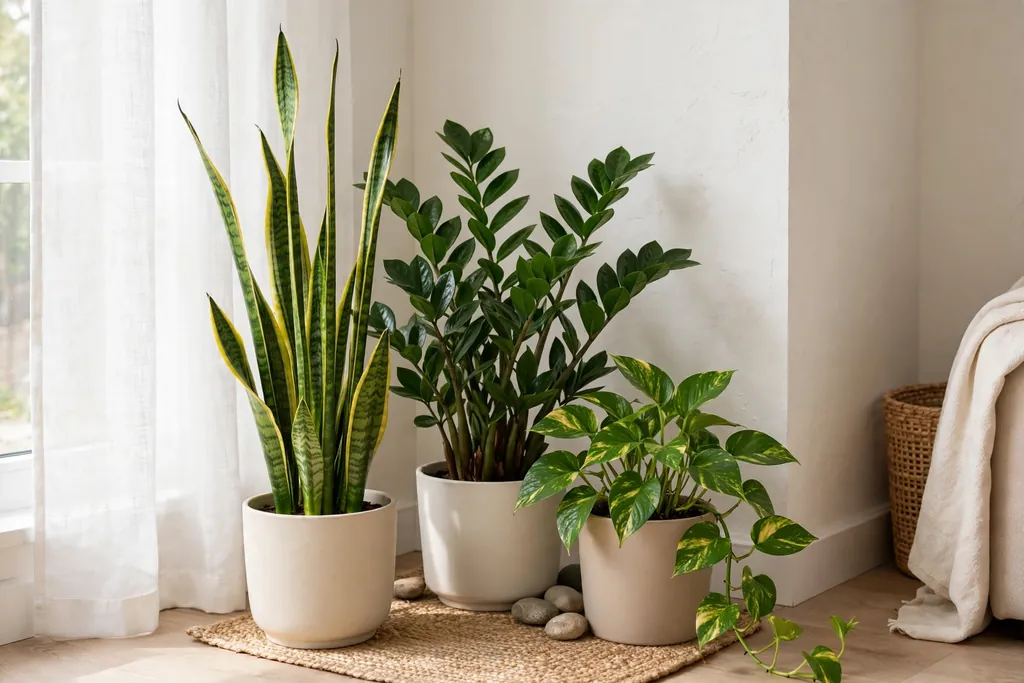
Group low care plants, such as snake plants, ZZ plants, and pothos, in one corner with a simple care card on the wall or in a notebook. A beginner grouping builds confidence, since these plants forgive a missed watering, and it keeps care simple while you learn what your room offers.
Water only when the soil feels dry a finger deep, and check each plant before watering rather than watering the whole group on a fixed day. Use pots with drainage holes and empty saucers after watering, so roots do not sit in water. Add one new plant at a time as the group thrives, rather than filling the corner at once.
21. Pet Friendly Plant Corner
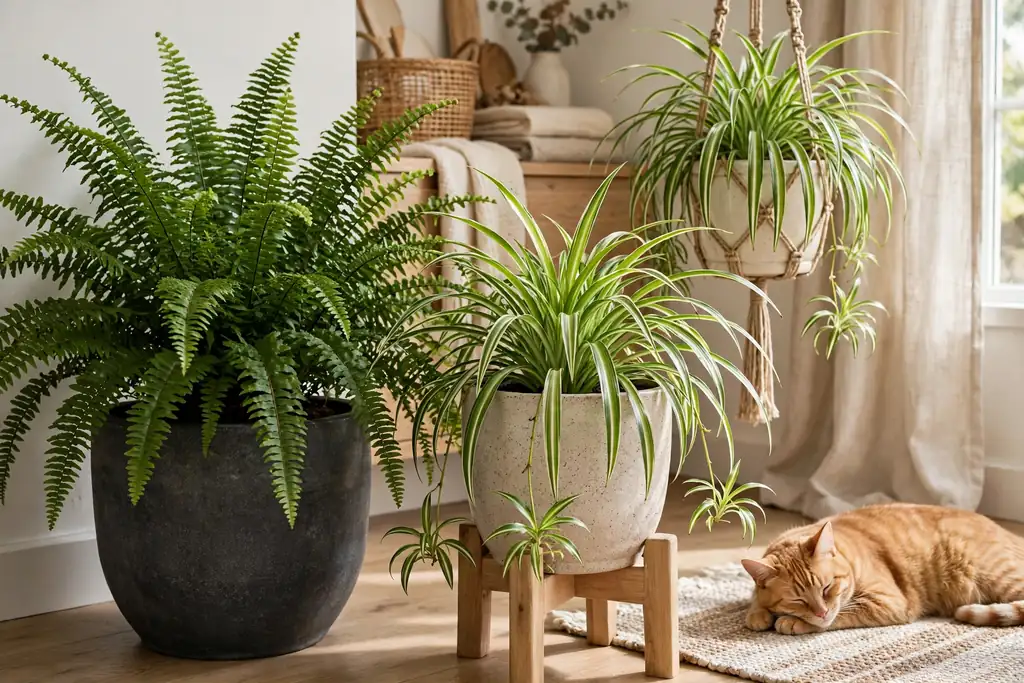
Build a plant corner using only plants known to be safer around pets, such as spider plants, Boston ferns, and calatheas, and keep it at a height pets can enjoy without knocking pots over. A pet friendly corner lets cats and dogs share the room with plants, without the worry that comes with toxic species.
Check every plant against a trusted list before buying, such as the ASPCA toxic and non-toxic plants list, since common houseplants differ widely in safety. Use heavy, stable pots that pets cannot tip easily, and keep trailing vines trimmed above pet height. If a pet shows interest in chewing leaves, move that plant higher and offer a safe alternative, such as a pot of cat grass.
22. Vertical Pocket Planters for a Small Wall
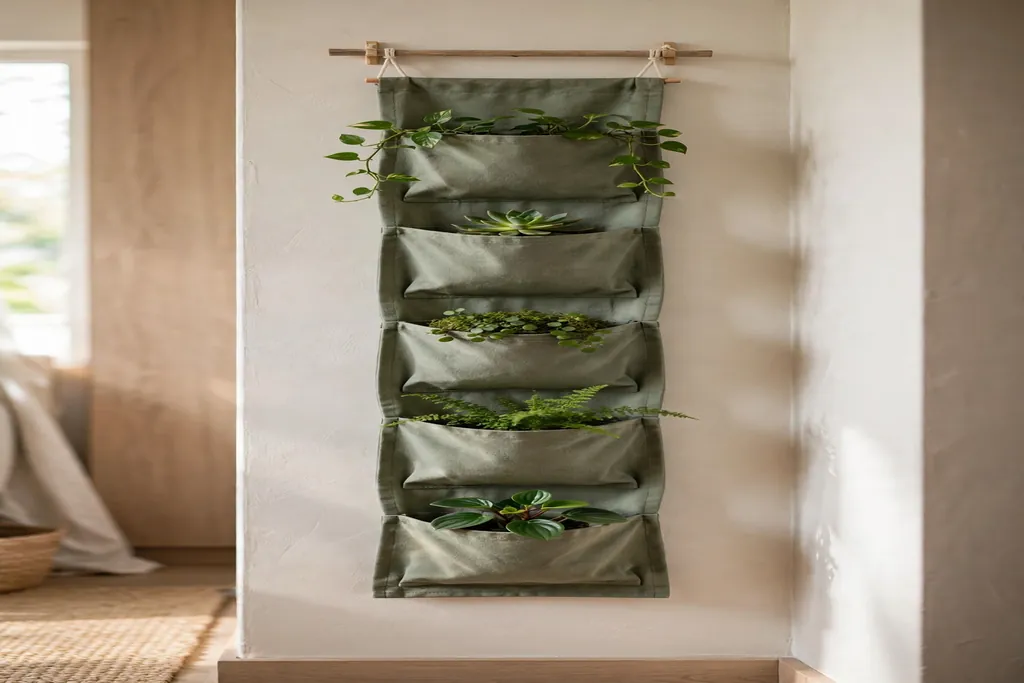
Hang a fabric or felt pocket planter on a narrow wall or the side of a bookcase, and fill each pocket with a small plant or herb. Pocket planters use vertical space that would otherwise stay empty, and they suit a small living room with little floor space.
Fix the planter with hooks or screws rated for its watered weight, and place a tray or waterproof mat behind it if the wall needs protection. Water pocket by pocket with a small can, and check the lowest pockets for drips after watering. Plant the top pockets with trailing plants and the lower pockets with upright plants, so the panel fills evenly.
23. Plant Care Station with Tools and Watering Can
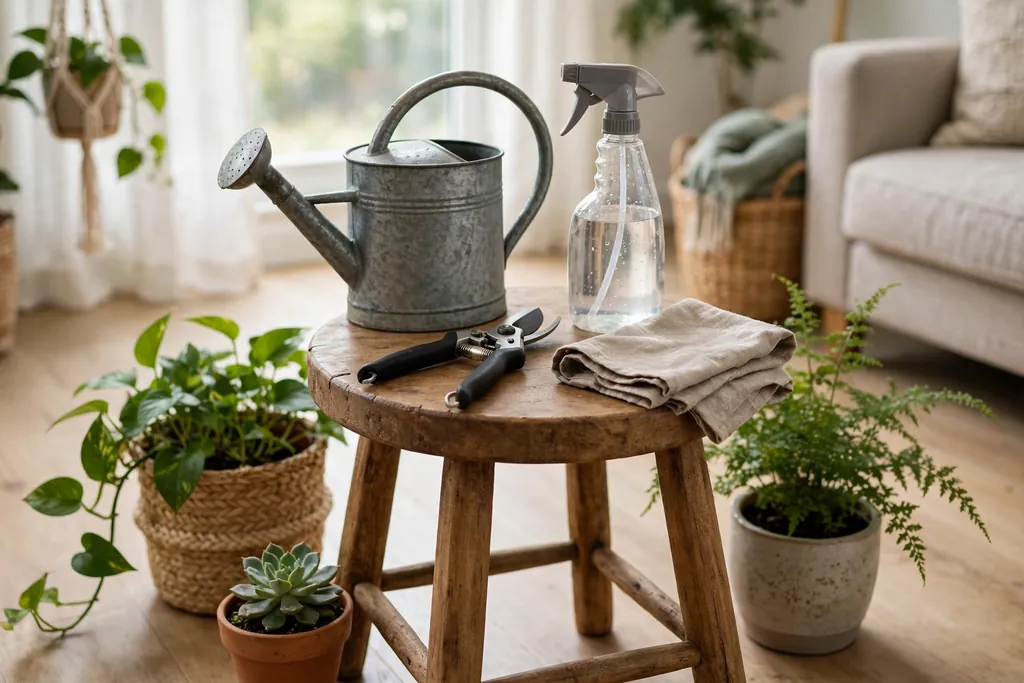
Set aside a small bench, stool, or tray near your plants for care tools: a watering can, pruning shears, a spray bottle, and a cloth. A care station keeps tools in one place, so watering and trimming take minutes instead of a search through cupboards.
Keep the station near the largest plant group, but out of the main walking route, and store shears safely out of reach of children. Wipe tools after use, and keep a small bin or bag for trimmed leaves beside the station. A care station also helps when someone else waters your plants, since everything they need sits in one spot.
24. Grow Light Corner for a Dark Room
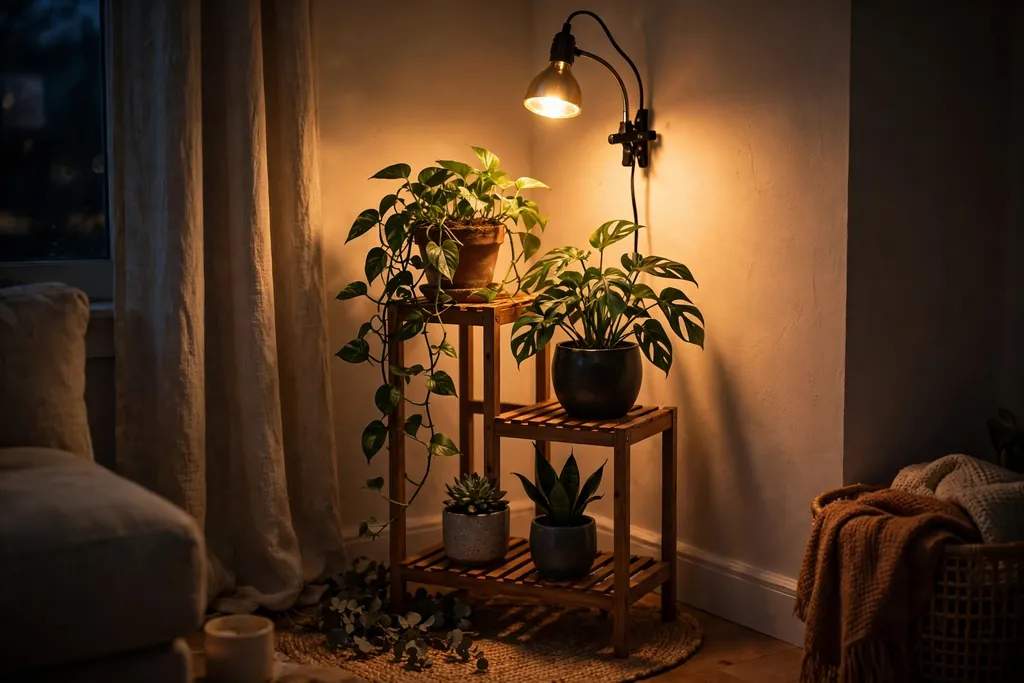
Create a plant corner in a dark room or a windowless corner using a grow light on a timer, with plants grouped under it on a stand or shelf. A grow light corner lets plant lovers keep plants in rooms that would otherwise stay green free, such as a north facing living room or a basement lounge.
Set the timer to match the needs of the plants you keep, and place the light at the distance the maker advises, since a light too close can scorch leaves. Use a simple white or warm light fixture that suits the room, rather than a harsh colored light that dominates the space at night. Group plants with similar light needs under the same light, and rotate them weekly so each plant gets even coverage.
Conclusion
A plant filled living room does not need a huge collection or a perfect room. It needs plants matched to the light you have, pots that protect your floors, and places to put plants at floor, table, and shelf height. Start with one corner tree or one shelf, learn how those plants respond to your room, and add the next idea only when care stays easy. For a calm base under your plants, the pale walls and wood floors in these Swedish living room ideas pair well with green leaves, and the sizing advice in these living room rug ideas helps a plant group sit neatly on the seating rug.
Keep this list handy, and save it to your plant decor board on Pinterest so you can find it when you are ready to add the next plant to your living room.
FAQs
How many plants should I start with in a living room?
Start with three or four plants in different sizes, and add more only once watering and care feel easy. A tall floor plant, a table plant, and a trailing shelf plant give green at three heights without filling every surface. Buying a large collection at once often leads to plants in the wrong light and a watering routine that is hard to keep up.
Which plants suit a living room with little natural light?
Snake plants, ZZ plants, pothos, and cast iron plants cope better with low light than most sun loving plants, but even low light plants need some daylight or a grow light to stay healthy. Place them near the brightest spot in the room, even if that spot is not a window, and avoid putting them in a fully dark corner. A grow light on a timer, as in Idea 24, opens up rooms that get almost no sun.
How do I keep plants from damaging wood floors and furniture?
Use pots with drainage holes and a saucer under every pot, and empty saucers after watering so water does not sit against wood. Place a tray under groups of plants on a table, and use felt pads or a waterproof mat under large floor pots. Check under pots monthly for trapped moisture, and move pots now and then so the floor beneath them can dry fully.
How often should I water living room plants?
Water based on soil dryness, not on a fixed calendar. Push a finger into the soil, and water only when the top inch or two feels dry for most houseplants, while keeping the needs of each species in mind. Water slowly until a little drains from the bottom, then empty the saucer. Plants in bright light and warm rooms dry faster than the same plants in cool, dim rooms.
Are there plants that are safe around cats and dogs?
Yes, but safety varies by species, so check each plant before buying. Spider plants, Boston ferns, calatheas, and many palms are widely listed as safer choices, while lilies, sago palms, and many common houseplants are not safe for pets. Use the ASPCA list linked in Idea 21 as a starting check, and keep any plant you are unsure about out of pet reach until you confirm it.
How do I stop a living room plant collection from looking cluttered?
Repeat one pot material or color, group plants in odd numbers, and leave empty space on shelves and tables. Place plants at three heights rather than lining them along one surface, and remove one plant for every new one you add once the room feels full. A tray, a stand, or a shelf gives a group a clear boundary, which reads as planned rather than crowded.