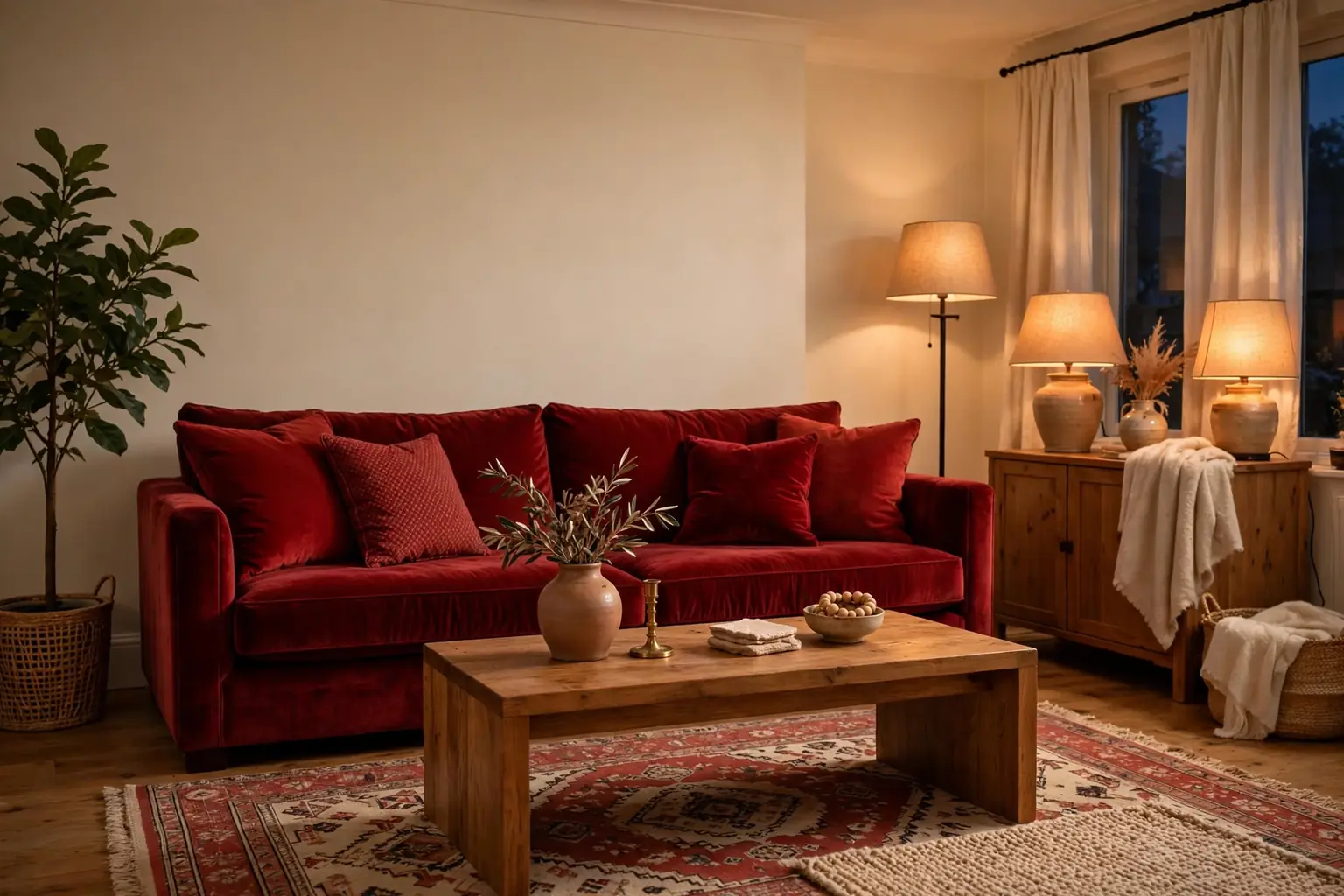
Red has a reputation for being loud, but in a living room it mostly reads as warm. A deep red sofa, a brick fireplace, or a pair of red curtains can make a plain room feel gathered and inviting, the way a lit fire does on a cold evening. The trick is to give red a clear job and a calm background: one strong piece, a few smaller repeats, and plenty of cream, wood, or grey to rest the eye. These 16 red living room decor ideas cover walls, seating, rugs, lighting, and small accents, so you can pick the version that fits your room, your budget, and how bold you want to go.
Key Takeaways
- Give red one main job per room, such as the sofa, one wall, or the rug, and repeat it in two or three smaller details so the color looks planned.
- Keep the background calm: cream, warm white, natural wood, or soft grey lets red feel cozy rather than busy.
- Pick your red with care: brick and terracotta feel relaxed, cherry and crimson feel lively, and burgundy feels rich and formal.
- Test red in daylight and lamplight before you commit, since strong reds shift a lot between the two.
- Balance a bold red piece with plain textures nearby, such as linen, wool, or plain wood, so the room stays easy to live in.
- Start small if you are unsure: cushions, a throw, or curtains let you try red before painting a wall or buying a sofa.
1. Paint One Bold Red Accent Wall
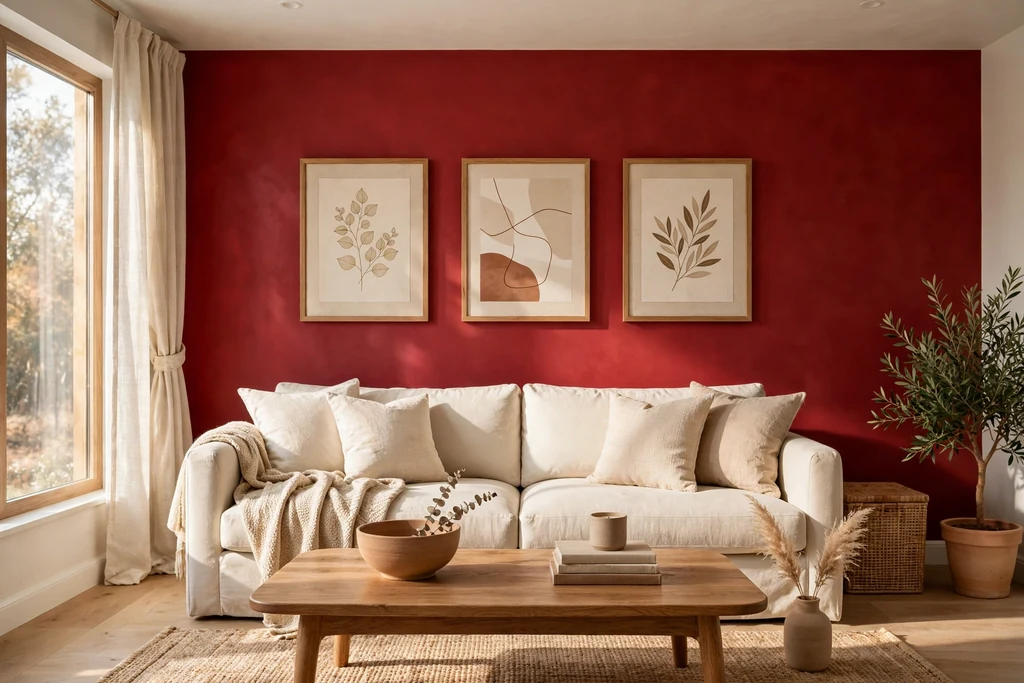
Paint the wall behind the sofa a bold red, and the whole seating group gains a backdrop that makes everything in front of it look more settled. A deep brick red or a muted crimson works better than a bright cherry red for a full wall, since it reads as warm rather than glaring. Keep the other walls cream or warm white, and let the sofa, art, and cushions sit against the red without competing with it.
Prep matters more with red than with pale paint, so use a tinted primer and two full coats for even cover. Paint a large test patch first and live with it for a few days, checking it in morning light and evening lamplight. If a full wall feels like too much, paint the wall behind open shelves or the fireplace wall only, where the red frames a feature instead of filling the room.
2. Choose a Deep Red Velvet Sofa
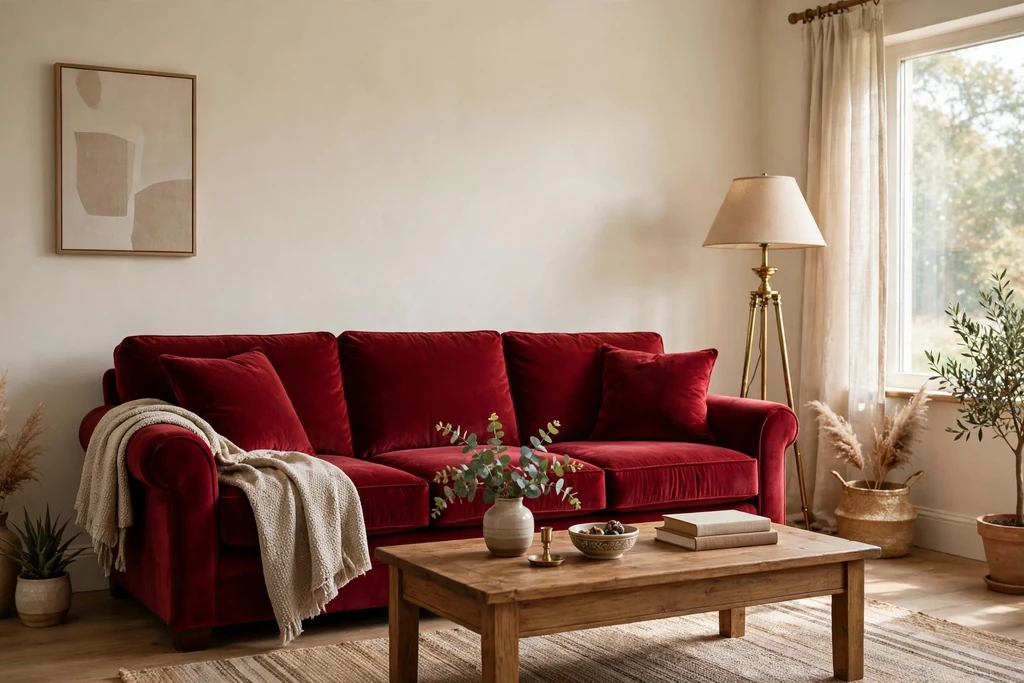
A deep red velvet sofa is the fastest way to make a living room feel warm and a little bit grand, without changing anything else in the room. Velvet catches the light softly, so the red looks rich rather than flat, and a simple three seat shape keeps the piece from feeling fussy. Pair it with cream walls, a wood coffee table, and one brass lamp, and the sofa can carry the whole color story on its own.
Keep the cushions quiet so the sofa stays the star: cream, soft grey, or a muted gold works well, with at most one patterned cushion. Velvet shows pressure marks where people sit, so brush the pile lightly and rotate the seat cushions now and then. If velvet feels too formal for daily life, a deep red sofa in a sturdy woven fabric or a washable slipcover gives the same warmth with easier care.
3. Layer Red Cushions and a Throw on a Cream Sofa
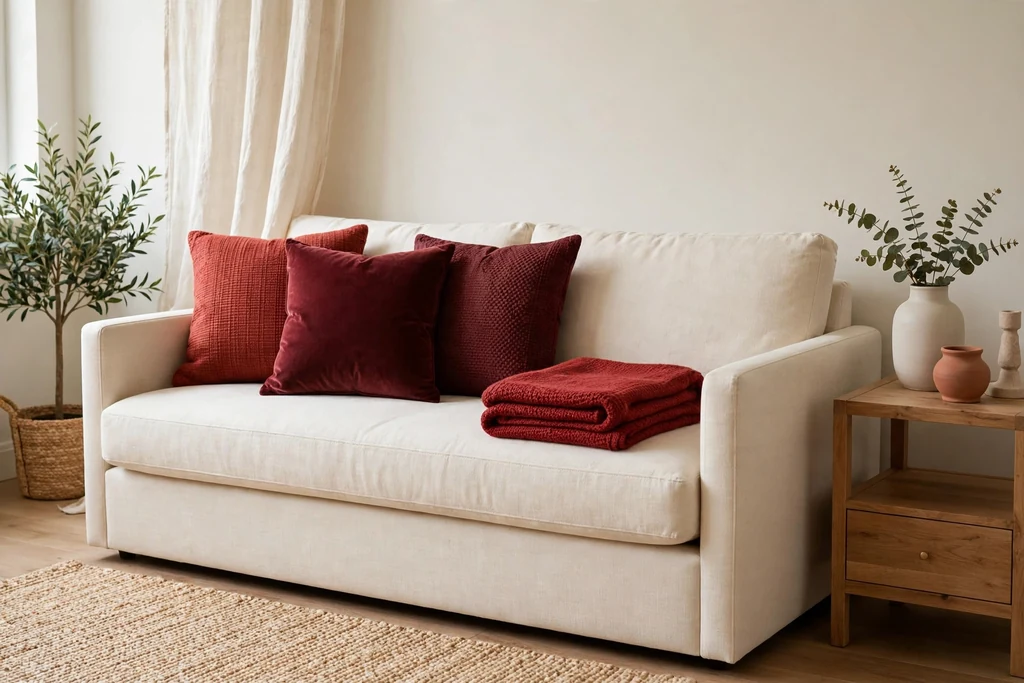
If a red sofa feels like too big a step, start with a cream sofa and layer red cushions and a throw on it. Two or three cushions in different reds, such as brick, cherry, and burgundy, plus a soft red throw folded over one arm, give the warmth of red without repainting or replacing furniture. The cream base keeps the look light, and the red details make the sofa feel dressed rather than plain.
Vary the textures so the reds do not blend into one flat block: a knit throw, a linen cushion, and a velvet cushion in related reds look collected rather than matched. Swap the covers with the seasons if you like, keeping red for autumn and winter and lighter tones for summer. This is also the easiest red idea to undo, which makes it a good first test before a bigger red commitment.
4. Let a Red Brick Fireplace Lead the Room
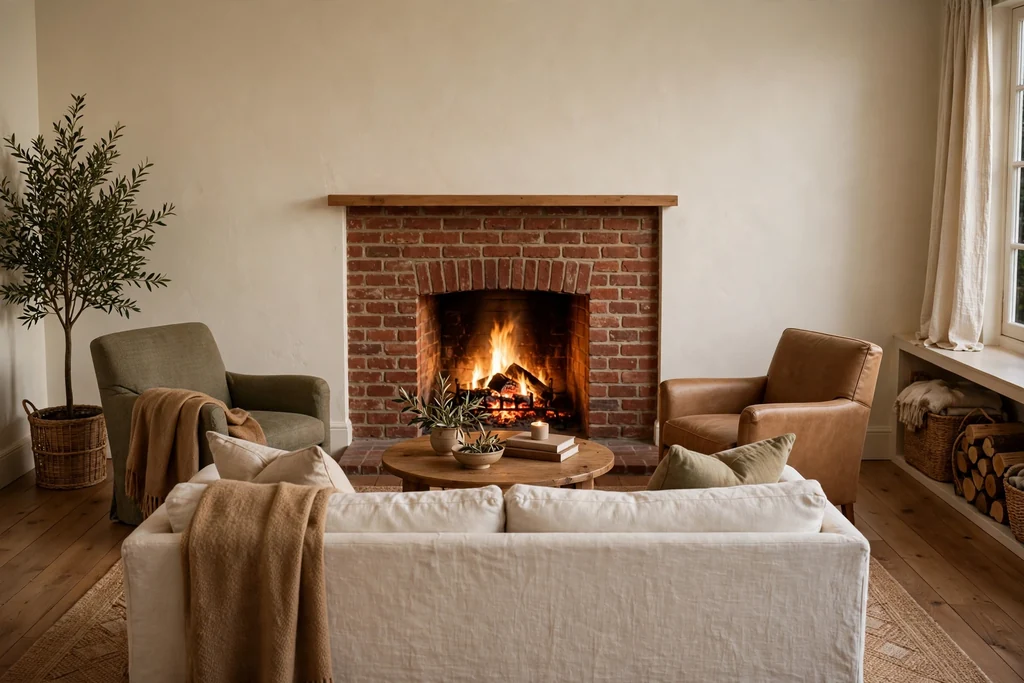
A red brick fireplace already gives a living room warmth, color, and a natural focal point, so the best move is often to let it lead and keep the rest of the room quiet. Arrange the seating to face the fireplace, with a rug and a coffee table between the chairs and the hearth, and keep the mantel simple: a mirror or one piece of art, a pair of candlesticks, and nothing that crowds the brick. Cream walls and wood furniture sit easily beside brick without fighting it.
If the brick feels too orange or too dark, a wash of diluted white paint can soften it while still showing the brick texture, but test it on a hidden spot first since it is hard to reverse. Keep soft furnishings a safe distance from the fire opening, and choose a rug that can handle the odd spark if the fire is open. A brick fireplace also pairs well with red cushions and a red throw, which echo the brick without adding a new color.
5. Anchor the Seating with a Patterned Red Rug
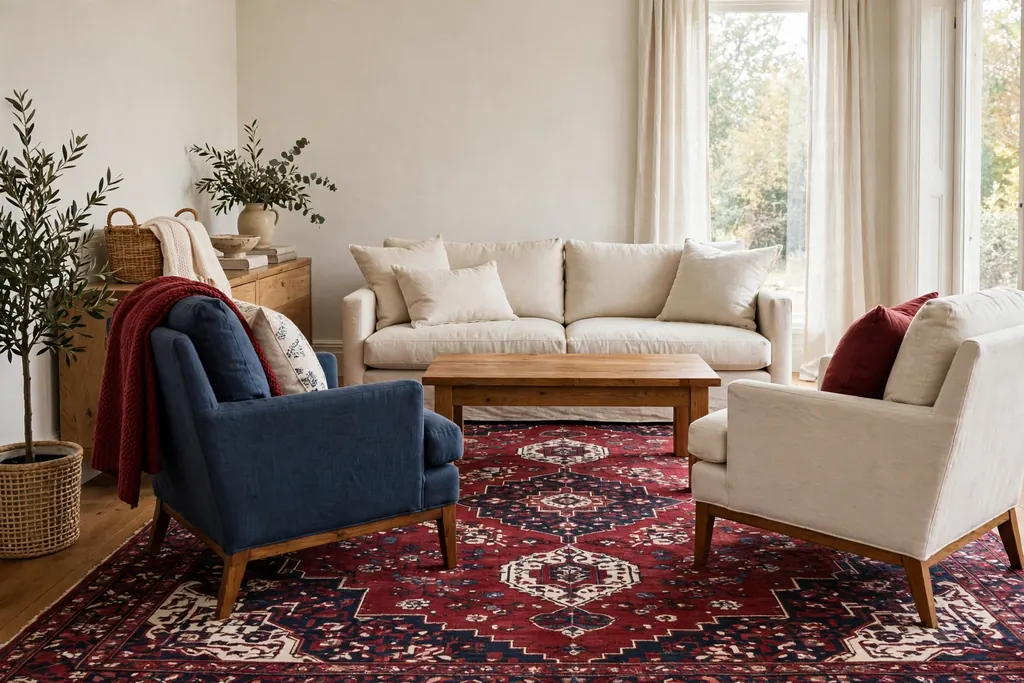
A patterned red rug anchors a seating group and gives the room its color story from the floor up, which suits rooms where the walls and sofa must stay neutral. A Persian style rug in deep reds, navy, and cream, or a simpler geometric rug in brick red and cream, both work: the pattern hides everyday marks, and the red ties the cushions, curtains, and art together. Size it so the front legs of the sofa and chairs rest on it, so the group reads as one zone. For more rug sizing and placement ideas, see these living room rug ideas.
Keep the rest of the pattern in the room quiet if the rug is busy: plain cushions, plain curtains, and one framed print are enough. A flatweave or low pile rug suits a busy room and chairs that slide, while a thicker wool rug suits a quiet reading corner. Check the red in daylight and lamplight before buying, since deep reds can look brown under warm bulbs and brighter in sun.
6. Hang Floor-Length Red Curtains
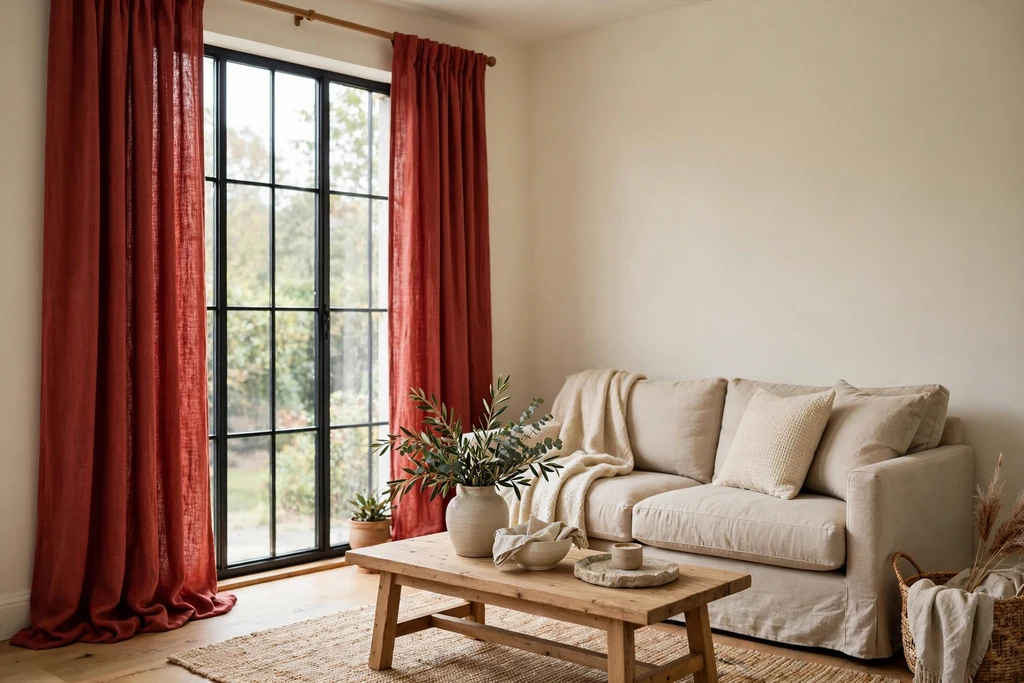
Floor-length red curtains frame a window and add warmth the moment you walk in, especially in a room with plain walls and a neutral sofa. Hang the rod close to the ceiling and let the curtains fall to the floor, so the window looks taller and the red reads as a deliberate panel of color rather than a small accent. A midweight linen or cotton in brick red or burgundy drapes well and filters light softly.
Pair red curtains with cream or warm white walls and a simple rug, so the windows carry the color and the rest of the room stays calm. In a small room, use red curtains on one window only and keep the other window dressed in cream, so the room does not feel closed in. Line the curtains if the sun is strong, since red fabric can fade faster than pale fabric in direct sun.
7. Add a Red Leather Armchair Reading Corner
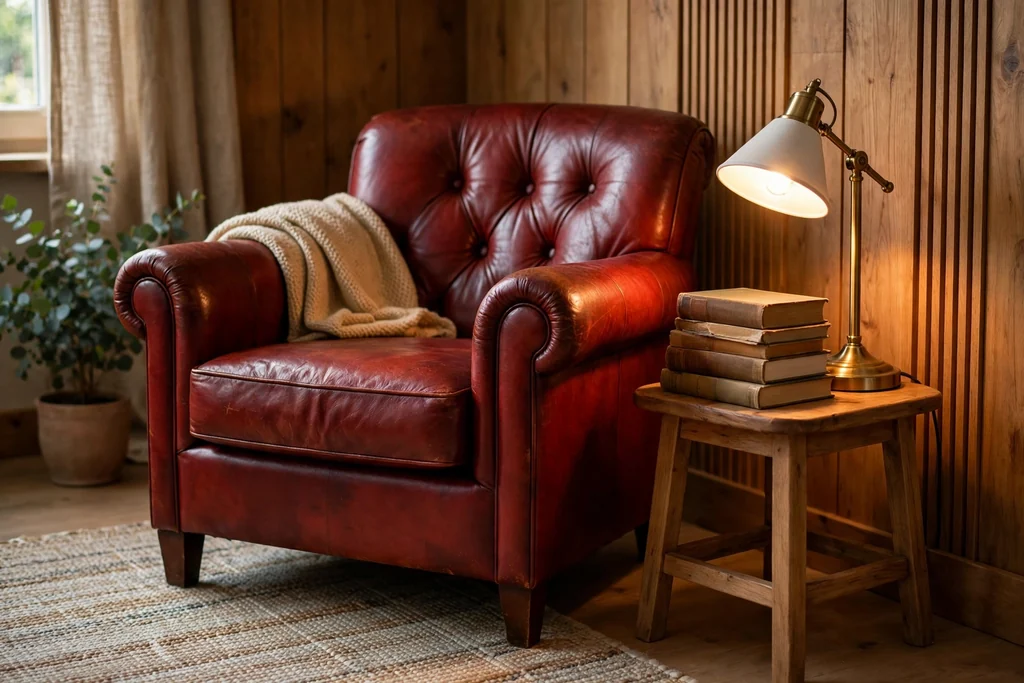
A red leather armchair in a corner, with a small side table, a reading lamp, and a stack of books, turns an unused corner into the seat everyone wants. Leather adds a texture that fabric sofas lack, and a deep oxblood or brick red leather looks warm without shouting. Angle the chair toward the room, not flat against the wall, and leave enough space beside it for a mug and a book.
Leather needs simple care: wipe spills promptly, keep it out of strong direct sun where possible, and condition it as the maker advises. If the chair is new and the rest of the room is soft and worn, a folded throw over one arm softens the contrast until the leather settles in. This idea suits a room that already has a neutral sofa, since the chair becomes the single bold seat rather than one red piece among many.
8. Build a Gallery Wall with Red Frames and Art
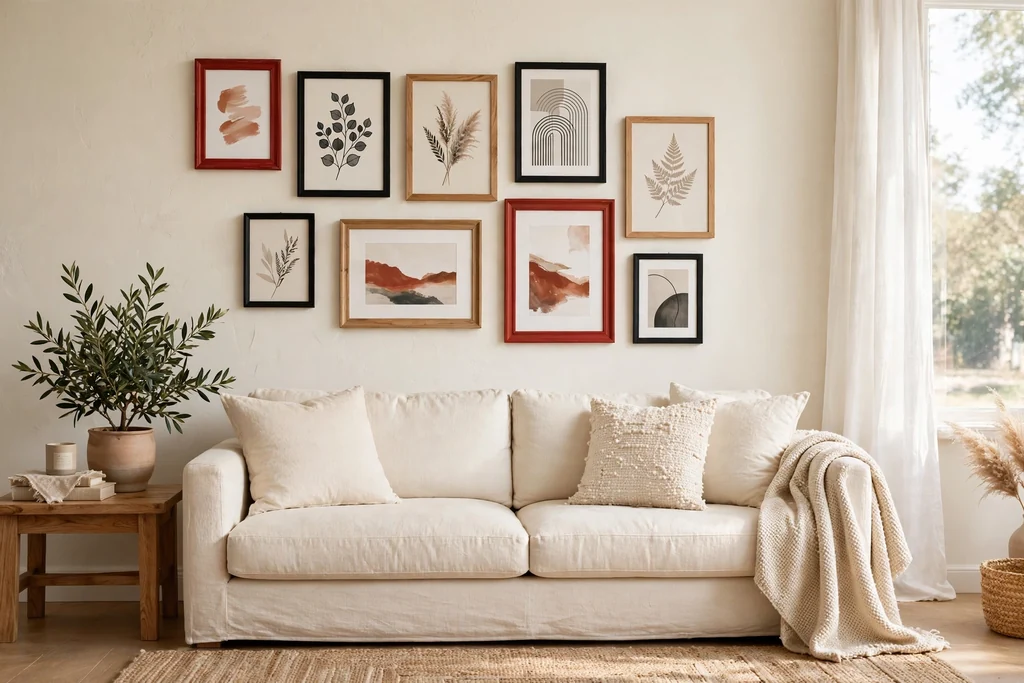
A gallery wall with red frames, or art that carries strong reds, adds color at eye level without touching the furniture or the walls. Mix two or three red frames with wood or black frames, so the red frames read as accents rather than a theme, and keep the outer edges of the arrangement inside the width of the sofa so the wall does not look wider than the seating. Hang the center of the group at eye level when seated.
Start with three or four pieces and add over time, rather than filling the wall in one go. Prints with red in them, such as landscapes with autumn trees or abstract prints in brick and cream, tie the wall to red cushions or a red rug below. For renters, picture ledges or adhesive hooks rated for the frame weight let you build the same wall without drilling a large grid.
9. Try a Glossy Red Lacquer Coffee Table
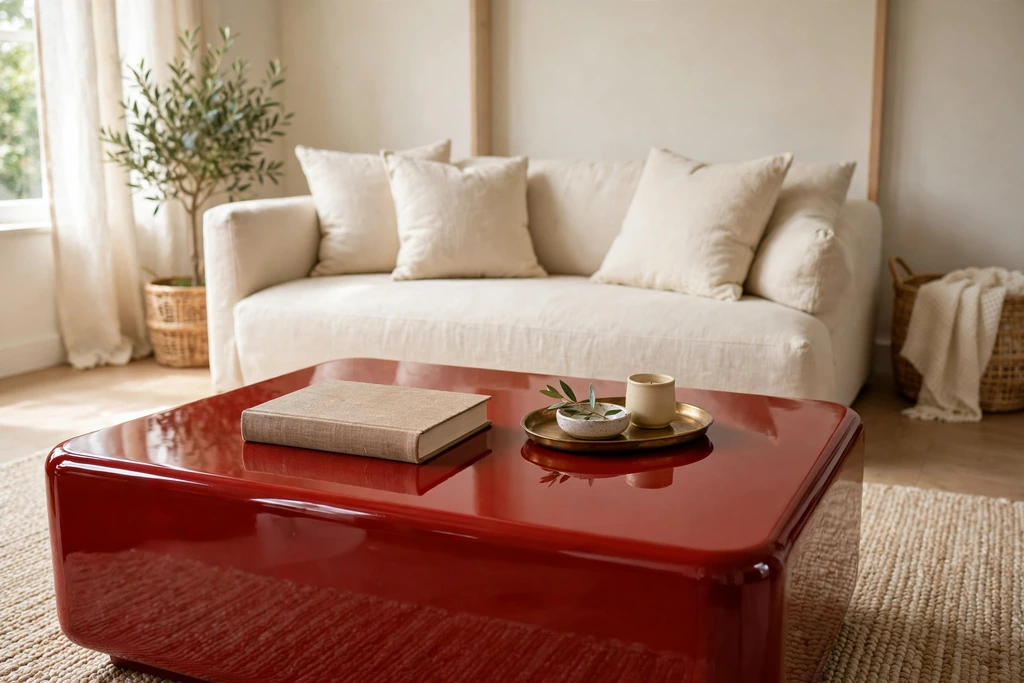
A glossy red lacquer coffee table gives a neutral seating group a single bold center, and it works like a piece of jewelry in the room: small, bright, and easy to notice. A rectangular lacquer table suits a standard sofa, while a round red table suits a small room or a sectional, since it leaves no sharp corners in the walkway. Keep the top mostly clear, with a book, a small tray, and a candle, so the red surface stays visible.
Lacquer shows dust and fingerprints more than wood, so wipe it with a soft cloth and keep coasters handy for mugs. Pair the table with a cream or grey sofa and a plain rug, so the table is the only strong red in the center of the room. If a full red table feels too bold, a wood table with a red tray, or a red lacquer side table beside the sofa, gives the same lift in a smaller dose.
10. Warm the Room with Terracotta and Natural Wood
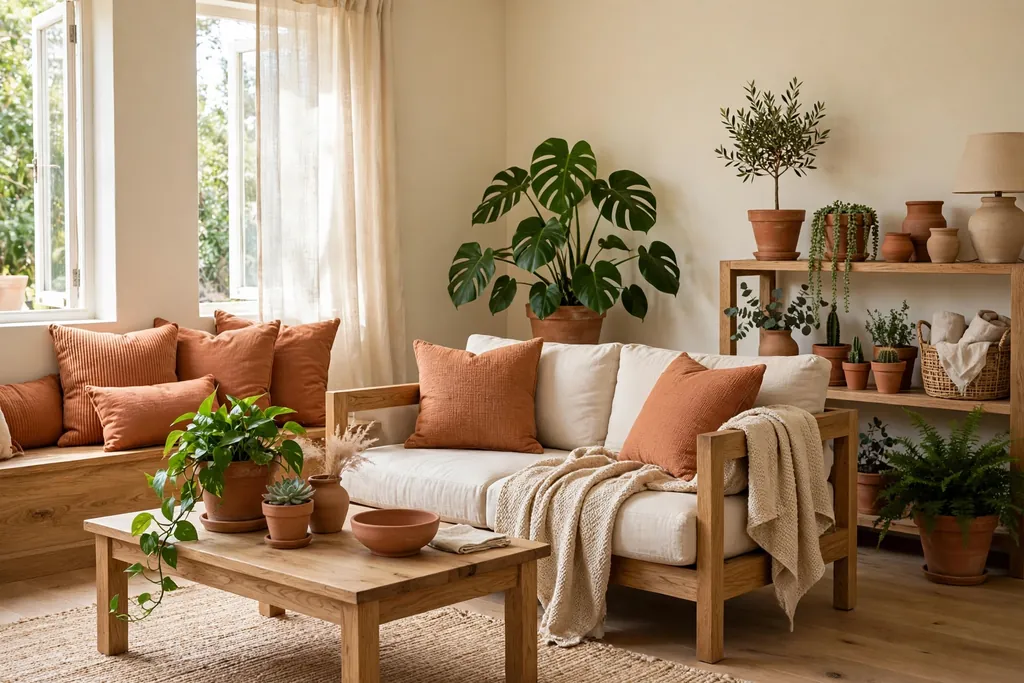
Terracotta red with natural wood is the most relaxed way to use red, and it suits rooms that should feel earthy rather than dramatic. Think terracotta cushions, a clay pot or two, a woven rug with brick red in the pattern, and oak or walnut furniture that warms the whole scheme. The red here is muted and sun baked, so it sits easily beside cream walls, linen, and plants.
Add texture to keep the palette from going flat: a chunky knit throw, a jute rug, a rough ceramic vase, and a wood coffee table each add a different surface for the eye. Keep the terracotta to two or three pieces plus one repeat, such as a cushion and a pot in the same tone, so the color feels gathered rather than scattered. This pairing suits a bright room with plants, since terracotta and green sit well together.
11. Pair Burgundy with Brass Accents
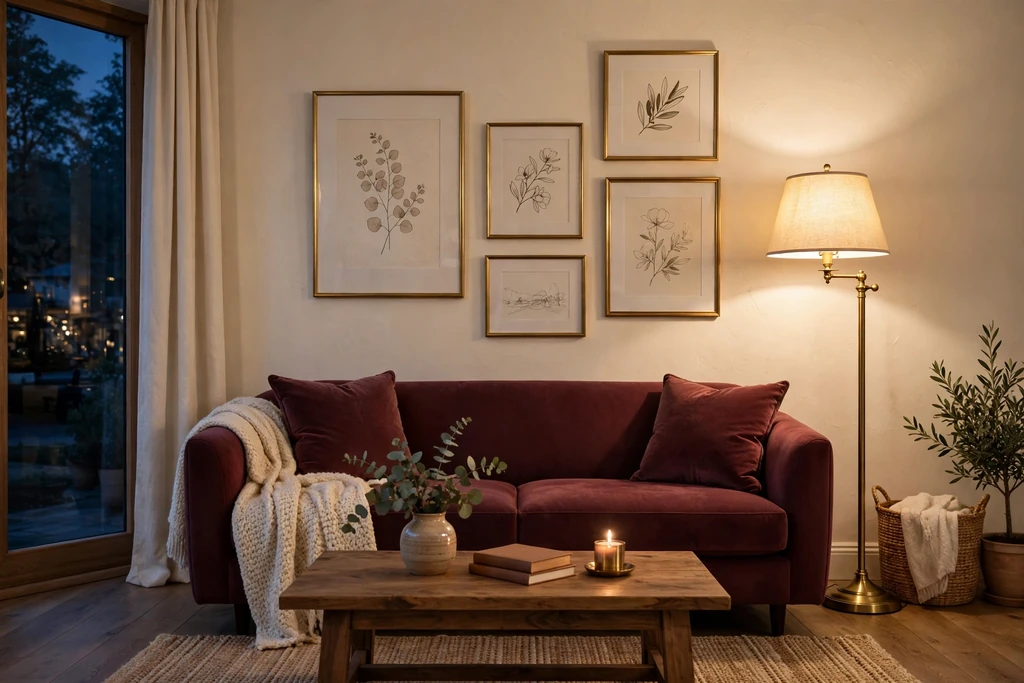
Burgundy with brass is a rich, grown up pairing that suits a formal living room or a room used for evening hosting. Use burgundy on the sofa, the curtains, or one wall, then add brass in small, repeated details: a floor lamp, picture frames, a tray, and the legs of a side table. The warm metal lifts the dark red and stops it from feeling heavy, especially in lamplight.
Keep the rest of the room simple so the pairing can lead: cream walls, a plain rug, and dark wood furniture are enough. Avoid adding a third strong color, since burgundy and brass already carry the scheme. If brass feels too shiny, brushed gold or an aged bronze gives a similar warmth with a softer finish, and it suits rooms with older furniture.
12. Paint Built-In Shelves a Rich Red
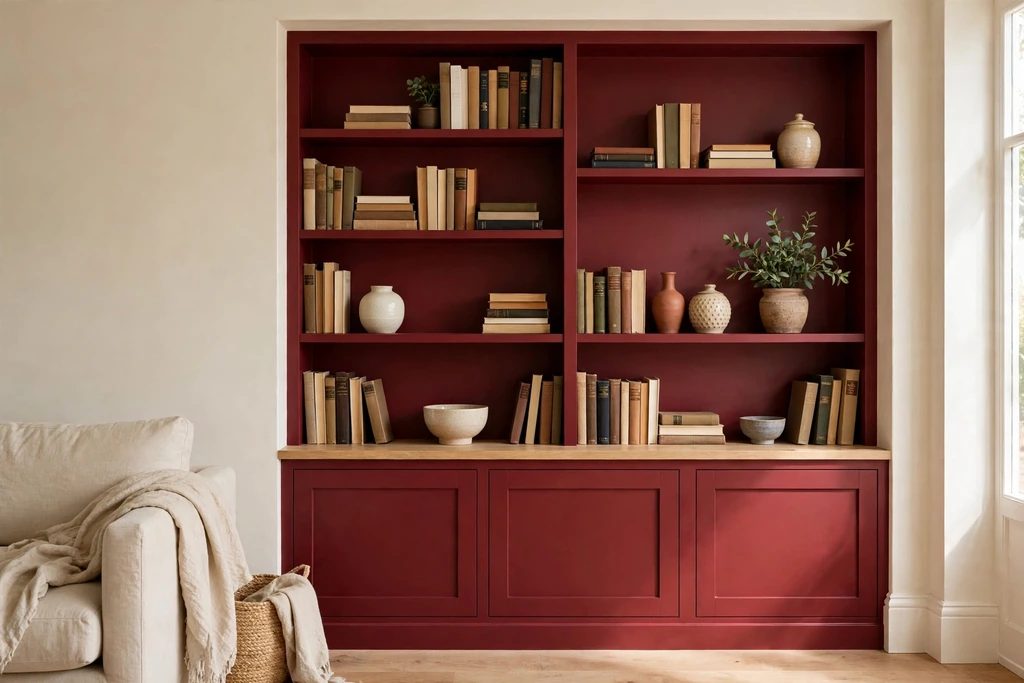
Painting built-in shelves or a bookcase a rich red turns storage into a feature wall, and it frames books, plants, and ornaments in a way plain white shelves cannot. A deep red, such as burgundy or brick, works best, since bright red on a large bookcase can feel loud. Keep the wall behind the shelves cream or warm white, and style the shelves with breathing room: group books by height, leave some open space on each shelf, and mix in a plant or a ceramic piece.
Paint the inside backs of the shelves red and the frames cream if a full red bookcase feels like too much, so the color sits behind the objects rather than around them. Put heavy books low, where they are easier to reach and kinder to the shelf. This idea suits a reader and a room where one wall would otherwise look bare, and it costs far less than new furniture.
13. Make a Statement with a Red Pendant or Lamp
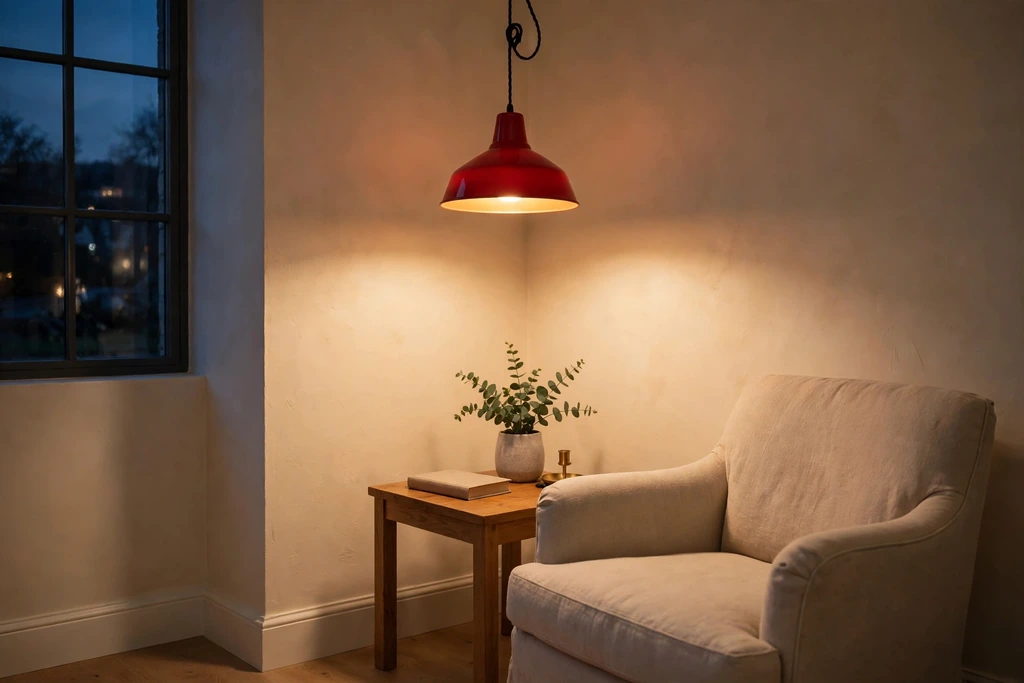
A red pendant light, or a table lamp with a red shade, adds color at a height where most rooms have none, and it glows warmly in the evening. Hang one red pendant over a side table or a reading chair, rather than in the center of the room, so it reads as a feature instead of a ceiling decoration. A red drum shade on a table lamp gives the same effect in a smaller dose and needs no wiring work.
Choose a warm white bulb, since a cool bulb can make red look harsh, and check the shade in the evening before you commit: red shades tint the light pink, which suits a cozy room but not a work corner. Pair the lamp with cream walls and a neutral sofa, and repeat the red once nearby, such as a cushion or a book spine, so the lamp looks linked to the room.
14. Use a Red Ottoman for Flexible Seating
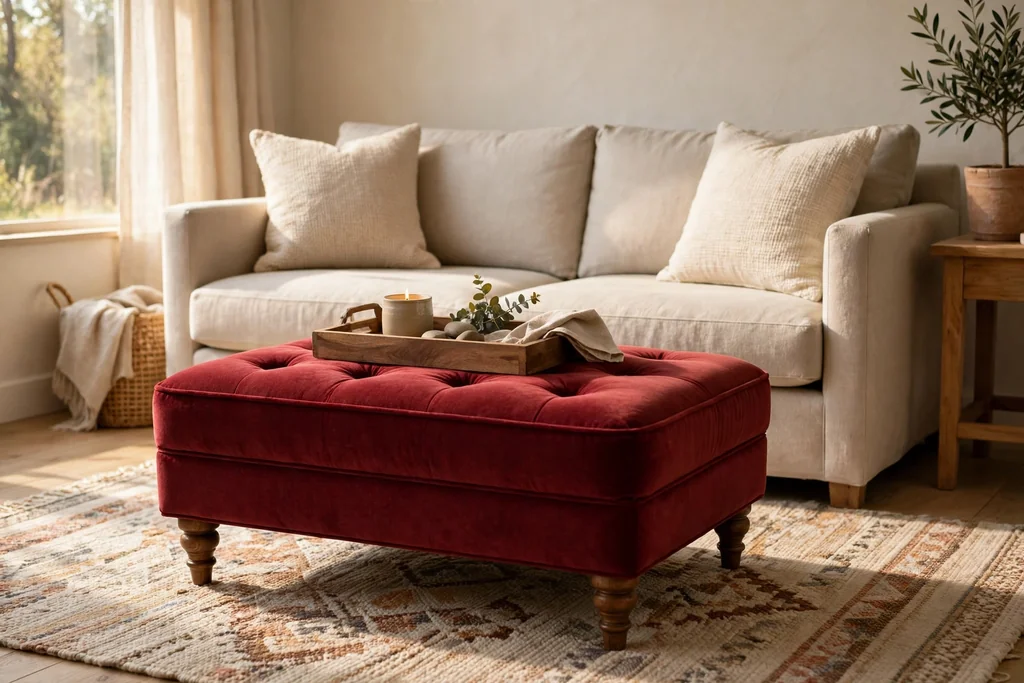
A red ottoman is one of the most flexible red pieces you can buy: it works as a footrest, an extra seat when guests visit, and a coffee table with a tray on top. A square or round ottoman in deep red fabric or leather suits a neutral sofa, and it can move around the room as the seating needs change. Keep it in proportion to the sofa, so it reads as part of the group rather than a stray piece.
Choose a fabric that suits how the ottoman will be used: a sturdy woven fabric or leather copes with feet and trays better than velvet. Add a tray when you want a stable surface for mugs, and remove it when you need the seat. If floor space is tight, a storage ottoman in red gives the same color plus a place to hide throws and magazines.
15. Balance Red Against Charcoal Grey
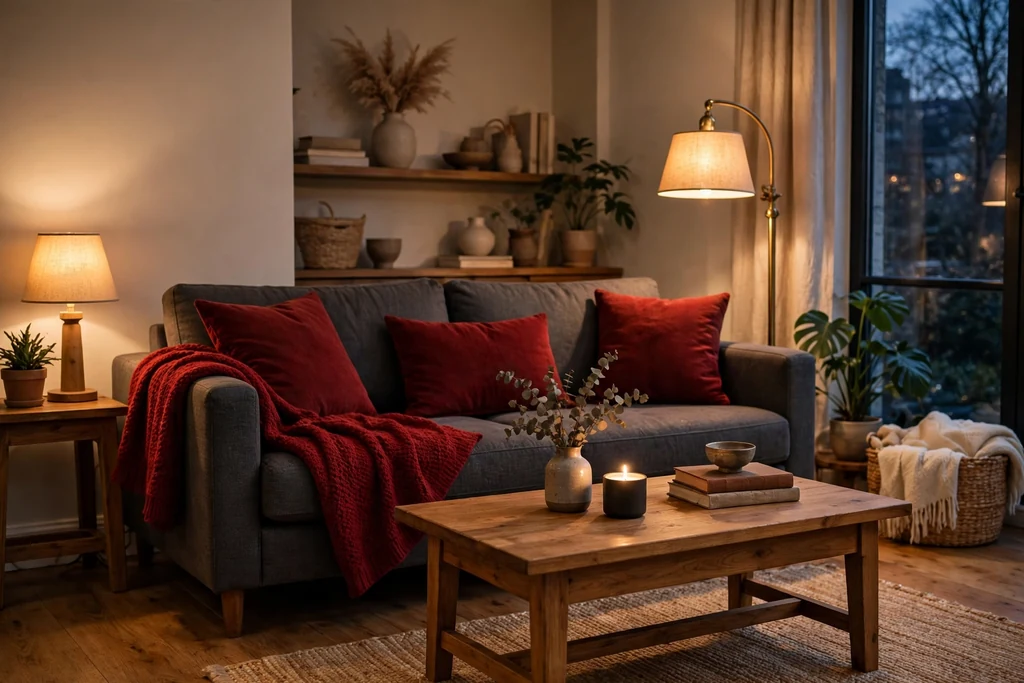
Red against charcoal grey is a modern pairing that keeps red from feeling traditional or seasonal. Use a charcoal sofa or charcoal walls as the calm base, then add red in cushions, a throw, a rug, or one chair, so the red pops without taking over. The grey grounds the red, and the red stops the grey from feeling flat, which is why the pairing works in both large and small rooms. For more ways to work a grey sofa as a base, see these grey couch living room ideas.
Keep the balance clear: grey should cover most of the room, and red should cover roughly a third or less, in two or three places. Add one warm material, such as wood or brass, so the scheme does not feel cold, and use lamps at more than one height in the evening, since dark grey absorbs light. This pairing suits a room with good daylight or strong lamps, so the charcoal stays soft rather than gloomy.
16. Keep It to One Bold Red Piece in a Small Room
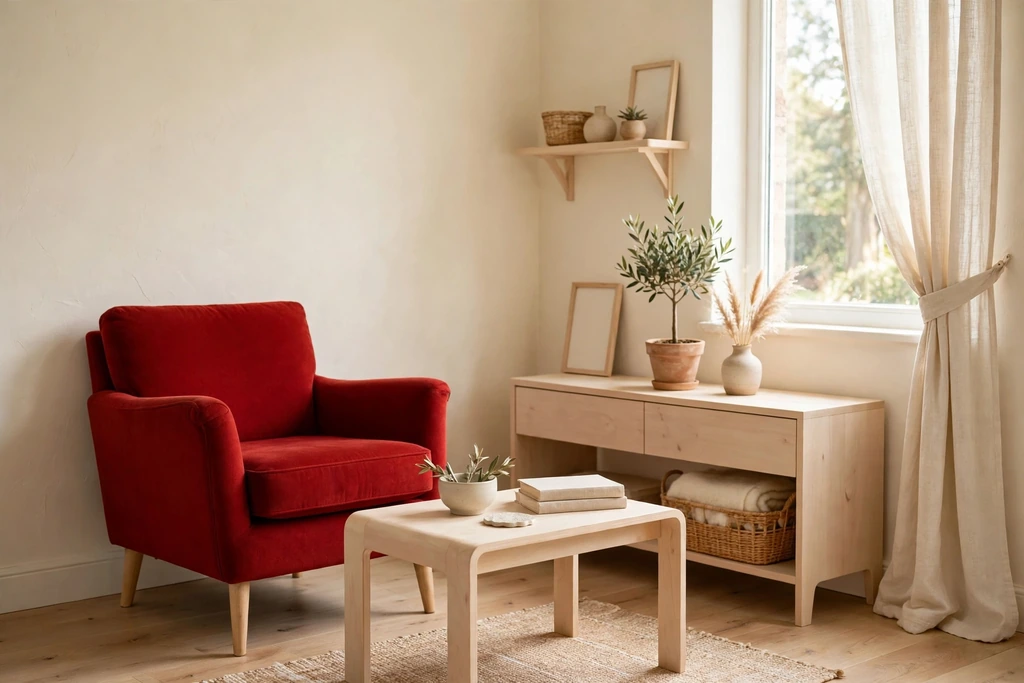
In a small living room, one bold red piece is often more effective than several, since it gives the eye a single focal point and leaves the rest of the room calm. Pick the piece that earns its place: a red armchair, a red rug, or a red accent wall, and keep everything else in cream, soft grey, or pale wood. The room then feels styled, not crowded, and the red piece reads as a choice rather than clutter.
Measure carefully before buying, and tape the footprint of a large piece on the floor so you can walk around it. Keep the walkways clear and the coffee table compact, so the red piece has room to breathe. If the room feels dark, add a mirror opposite the window and a floor lamp beside the red piece, so the color gets light from more than one direction.
Conclusion
Red works in a living room when it has a clear job and a calm background to sit against. Whether you paint one wall, buy a deep red sofa, or simply layer red cushions on a cream sofa, the same rules hold: pick your red with care, repeat it in two or three places, and keep the rest of the room quiet enough for the color to breathe. Start with the change that fits your budget and your nerve, live with it for a few weeks, and add the next red detail only if the room still asks for it. Save this guide on Pinterest to keep the ideas handy while you plan your room.
Frequently Asked Questions
What is the easiest way to add red to a living room?
Start with cushions and a throw on a neutral sofa. They cost little, need no tools, and let you test how red feels in your light before you paint a wall or buy a red sofa. If you like the effect, add curtains or a rug in the same red family next.
Does a red sofa go out of style quickly?
A deep red sofa in a simple shape, such as burgundy velvet or brick red woven fabric, ages better than a bright cherry red in a trendy shape. Keep the rest of the room neutral and classic, and the sofa can stay in place for years while you refresh cushions and throws around it.
What colors go well with red in a living room?
Cream, warm white, soft grey, charcoal, natural wood, and brass all pair well with red. Cream and wood keep red relaxed, charcoal and brass make it feel modern or formal, and soft grey lets red stand out without competing with it.
How much red is too much in a living room?
A good guide is to let red cover roughly a third or less of the room, in two or three places, with the rest in calm neutrals. If every large surface is red, the room can feel busy and tiring, so step back and check the balance in daylight and lamplight.
Can red work in a small living room?
Yes, if you keep it to one bold piece, such as a red armchair or a red rug, and keep the walls and other furniture pale. A mirror, a floor lamp, and clear walkways help the red piece read as a focal point rather than clutter.
How do I stop a red room from feeling too dark?
Use red on one wall, one sofa, or a few accents rather than on every surface, and pair it with cream walls, pale wood, and lamps at more than one height. Warm white bulbs flatter red in the evening, while daylight and a mirror opposite the window keep the room bright by day.