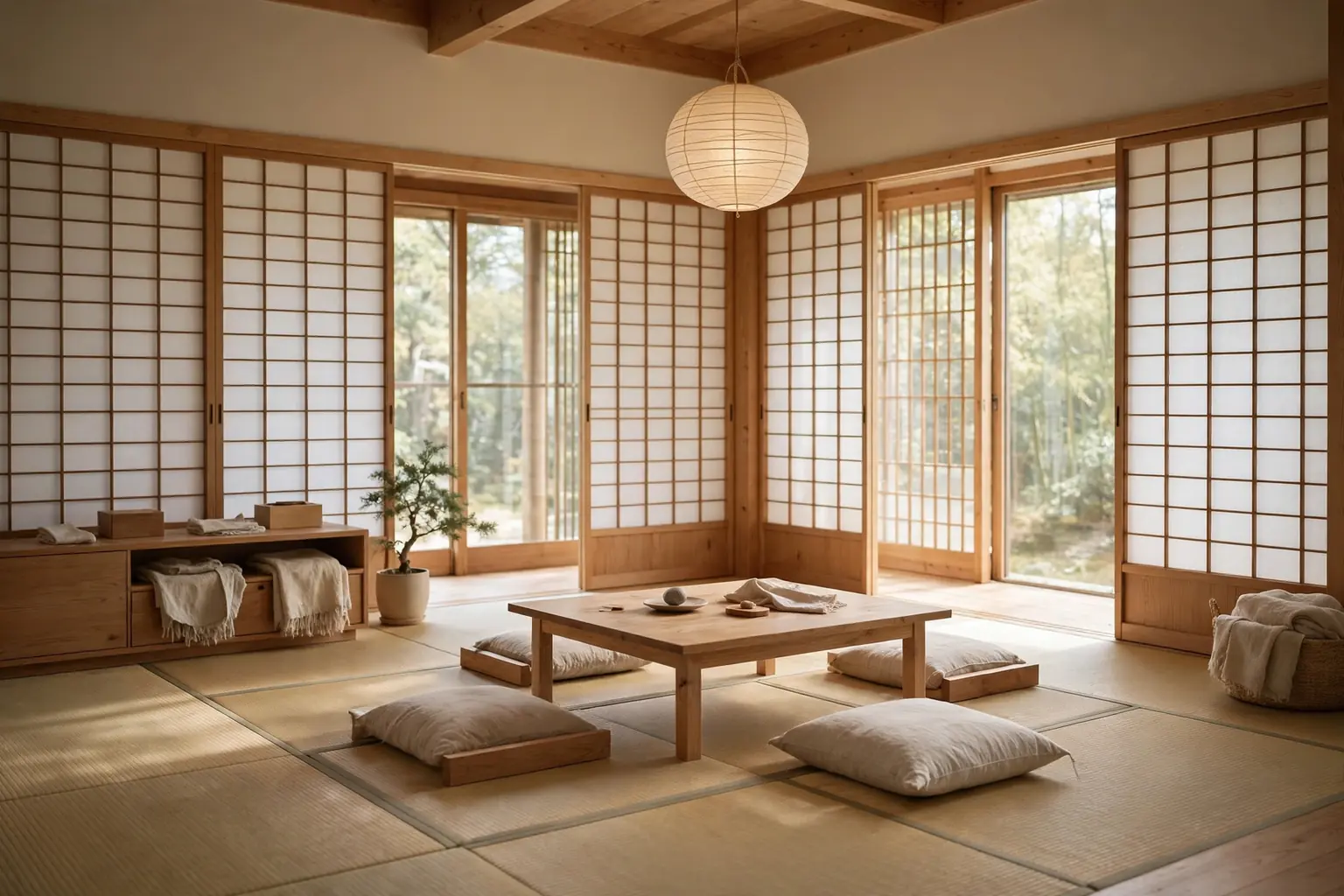
A Japanese living room earns its calm from what it leaves out as much as from what it keeps. Low furniture, natural wood, soft paper light, and one or two pieces with real meaning give the room room to breathe. These 30 Japanese living room decor ideas cover seating, screens, storage, light, plants, and small displays, so you can shape a room that suits daily life, not just a photo. Start with a low seat, a clear floor, and one quiet focal point, then add layers only where they help you rest, read, or gather.
Key Takeaways
- Keep the base quiet: warm white walls, visible wood, and a plain floor let a few strong pieces carry the room.
- Sit low and close to the floor with tatami, floor cushions, or a low sofa, and keep walking routes clear.
- Use screens, sliding doors, and hidden storage to keep clutter out of sight and the room easy to tidy.
- Layer soft light at a low level with paper lamps and pendants, rather than one bright ceiling light.
- Choose natural materials first: wood, cotton, linen, rush, bamboo, and handmade ceramics.
- Give each corner one job, such as tea, reading, plants, or display, so no corner gathers random items.
1. Build a Tatami Seating Zone
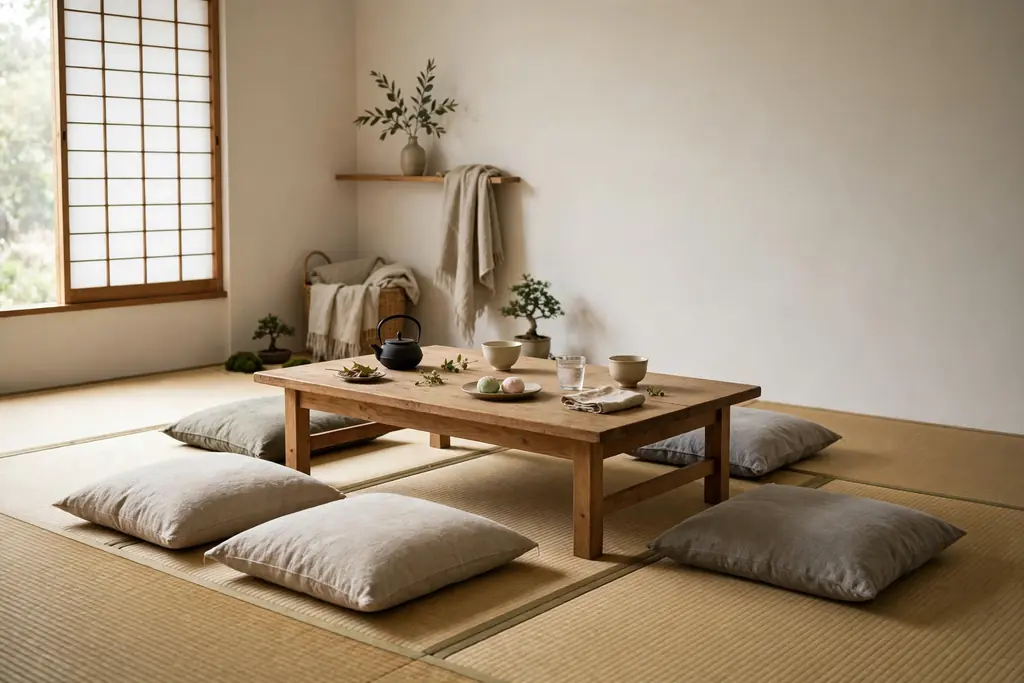
Lay tatami mats over part of the floor to mark a clear seating zone, even in a room without a full tatami floor. The woven rush surface feels soft underfoot, smells faintly of grass, and tells everyone where to sit and where to walk. A zone of four to six mats suits a low table and cushions, while two mats can frame a single reading chair.
Keep the mats dry and out of direct sun where possible, and lift them now and then to air the floor below. Use a low table and cushions on the mats, and keep shoes off them, so the zone stays clean and inviting. If full tatami mats are hard to find, a woven rush rug gives a similar texture and boundary.
2. Choose a Low Wooden Coffee Table
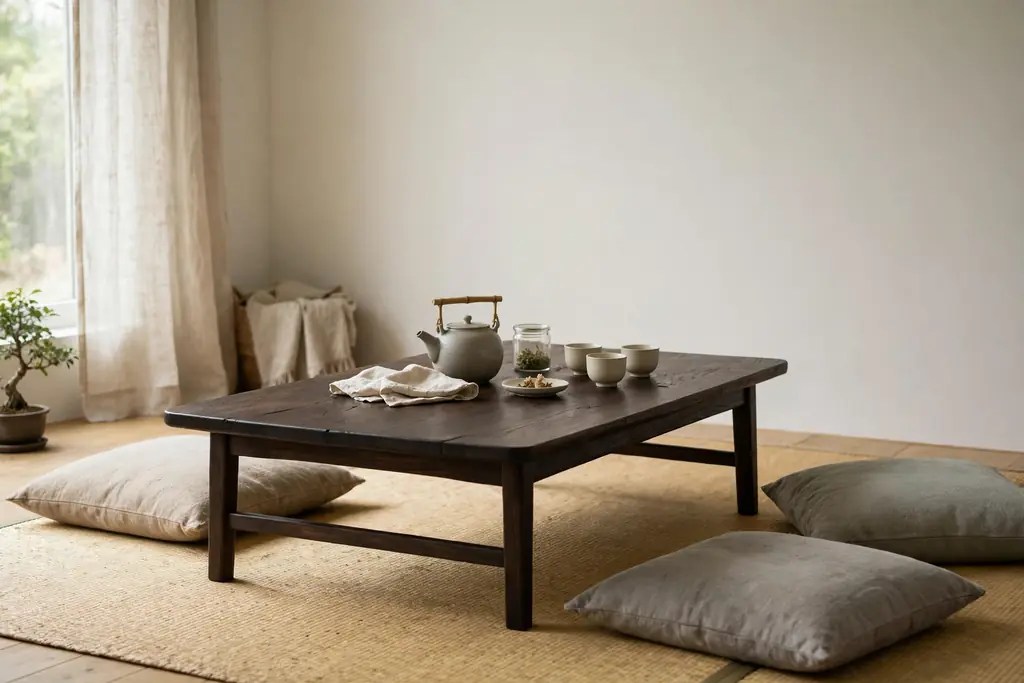
Pick a low wooden coffee table, close to knee height when seated on cushions, as the center of the room. A simple rectangular top in oak, walnut, or pine keeps the room grounded, and a plain top leaves room for a tea tray, a book, and a small vase. The low height also keeps sight lines open across the room, which helps a small room feel larger.
Choose a table with a lower shelf or a drawer if you need a place for coasters and remotes, and keep the top mostly clear. Wipe wood with a damp cloth, use felt pads under hot cups, and leave space around the table so cushions can be pulled in and out without moving furniture.
3. Add Thick Zabuton Floor Cushions
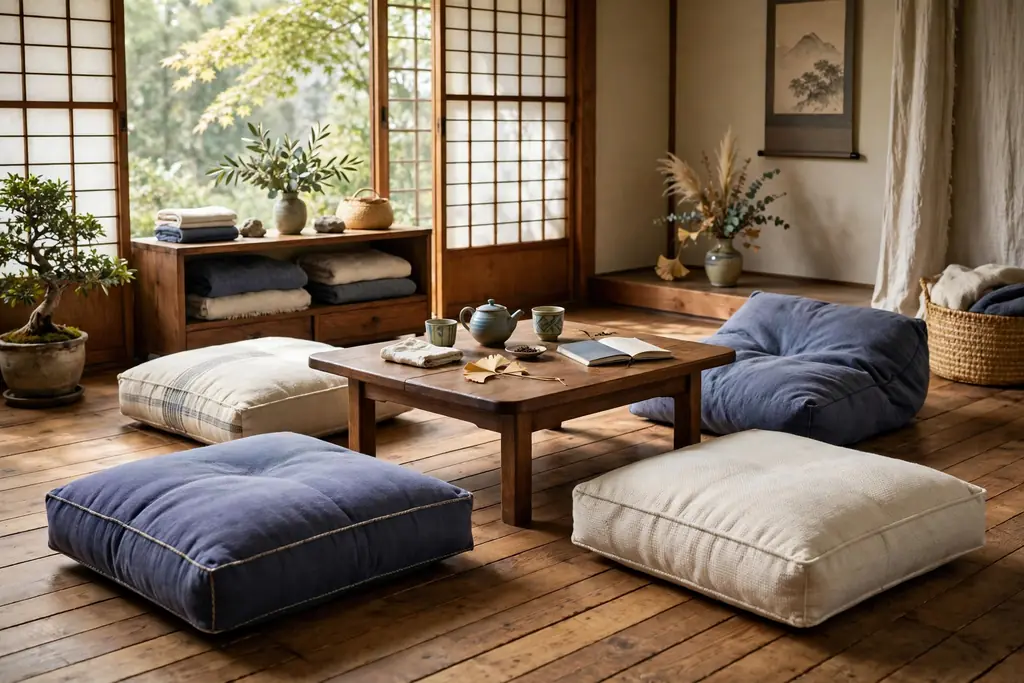
Add thick zabuton floor cushions in muted indigo, cream, or grey for seating that is soft, flexible, and easy to store. Zabuton cushions suit tatami zones, low tables, and tea corners, and they let you add seats for guests without buying more chairs. Their flat shape also stacks neatly in a closet when the room needs floor space.
Pick covers you can wash, and choose a firm fill that holds its shape rather than a soft fill that flattens at once. Keep two or three cushions out for daily use and store spares nearby, so guests can join without a search through the house. A cushion in a plain color lasts longer in the scheme than a loud pattern.
4. Divide the Room With Shoji Screens
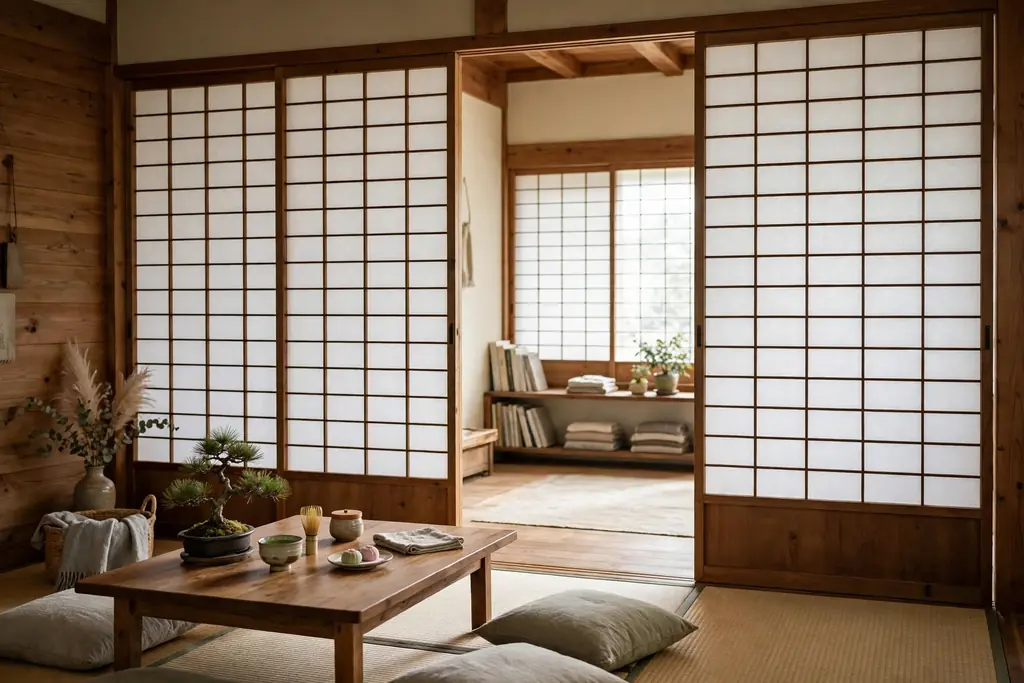
Use shoji screens, wooden frames with translucent paper panels, to divide a room, hide a work corner, or soften a doorway. The paper glows when light falls behind it, so a screen adds warmth even in daylight, and it gives privacy without a solid wall. A folding screen works in a rented home, while a sliding screen suits a room with a wide opening.
Keep screens clear of heaters and open flames, and dust the paper gently with a dry cloth. Choose a simple grid pattern and a pale paper tone, and let one screen do the dividing work, rather than filling the room with panels. A screen placed near a window also softens harsh sun.
5. Create a Tokonoma Display Alcove
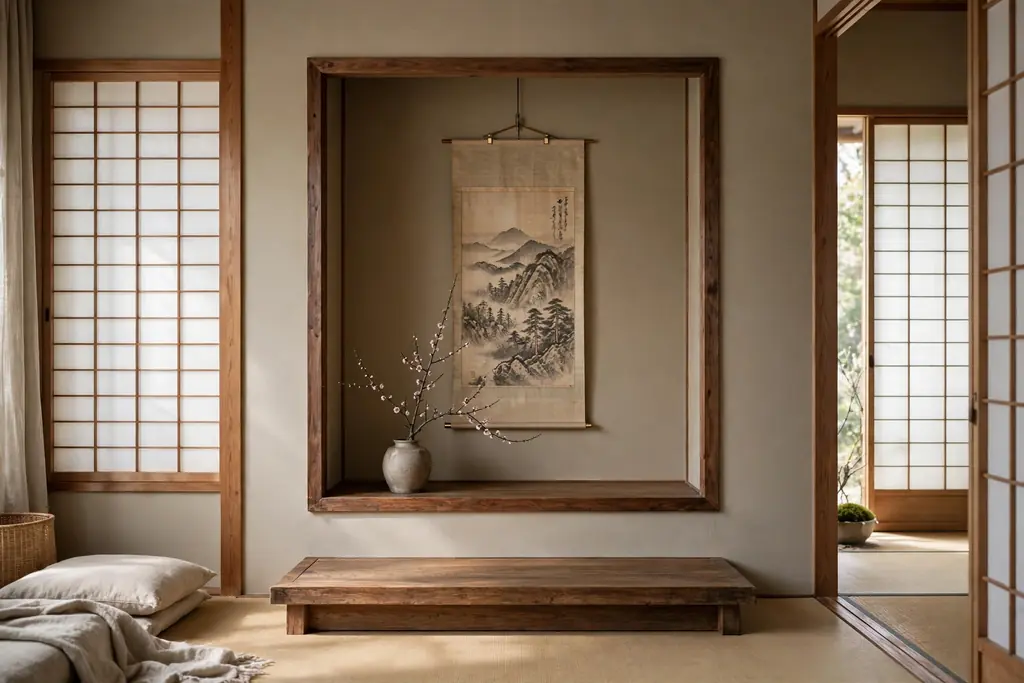
Set aside one shallow alcove, or one clear wall niche, as a tokonoma style display, with a hanging scroll, one vase, and nothing else. The point is restraint: a single branch, one piece of art, and empty space around them give the display weight. This corner becomes the quiet focal point of the room, and it works best when the rest of the room stays plain.
Change the display with the season, such as a blossom branch in spring or a bare branch in winter, and keep the alcove dust free. If you have no built in alcove, a low wooden platform against a plain wall, with a scroll above it, gives the same effect. Resist adding extra ornaments, since the empty space is part of the display.
6. Try a Simple Ikebana Arrangement
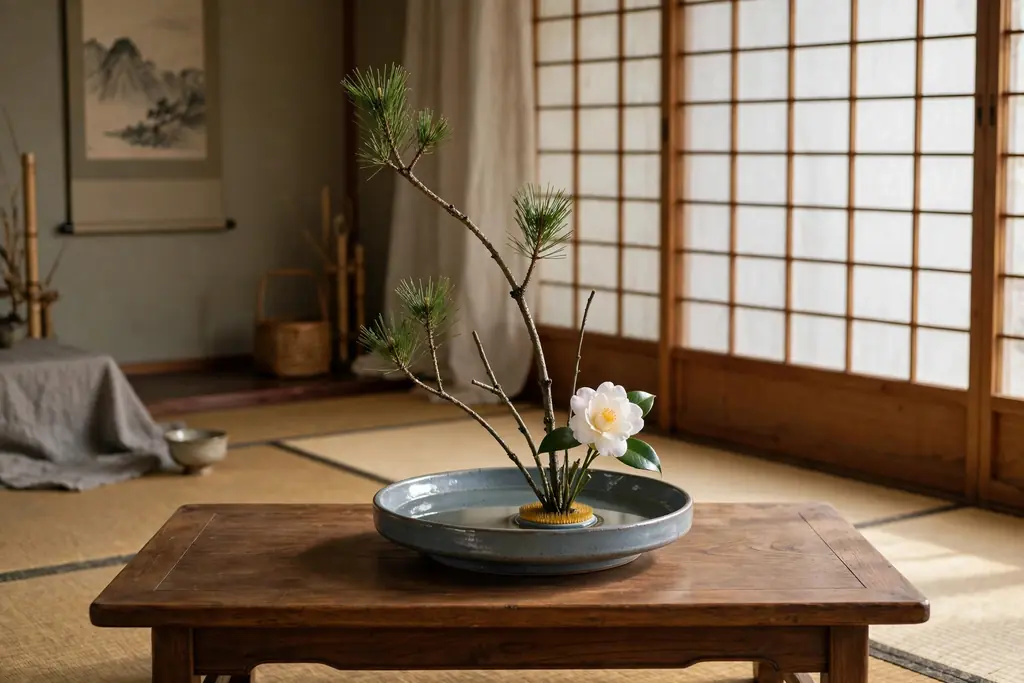
Try a simple ikebana arrangement with a few stems, one flower, and plenty of space between them, in a shallow dish or a tall vase. Ikebana values line and empty space over fullness, so three stems placed with care can say more than a large bouquet. A low arrangement suits a coffee table, while a tall branch suits a floor vase by the window.
Trim stems at an angle, change the water often, and remove fading stems before they spoil the whole display. Keep the arrangement where it can be seen from the main seat, but clear of elbows and door swings. A single branch from the garden, in a plain ceramic vase, is a good first step.
7. Make a Bonsai the Focal Point
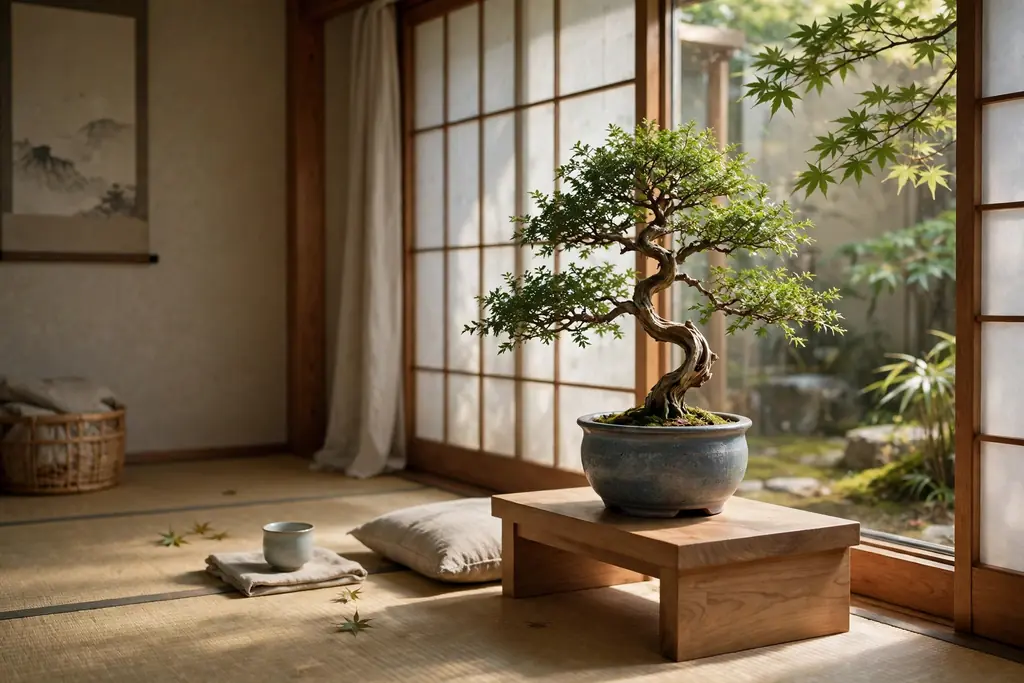
Place one bonsai tree on a wooden stand, a low table, or a windowsill, and let it be the living focal point of the room. A bonsai brings a tree shape indoors at a small scale, and its slow growth rewards regular care. Choose a species suited to indoor light in your home, and check its water, light, and pruning needs before you buy.
Keep the pot on a tray to protect wood surfaces, and turn the tree now and then so it grows evenly. A single bonsai, with a plain pot and a clear space around it, reads as a piece of art. Avoid crowding it with other plants, since a bonsai needs its own breathing room to be seen.
8. Let Natural Wood Set the Tone
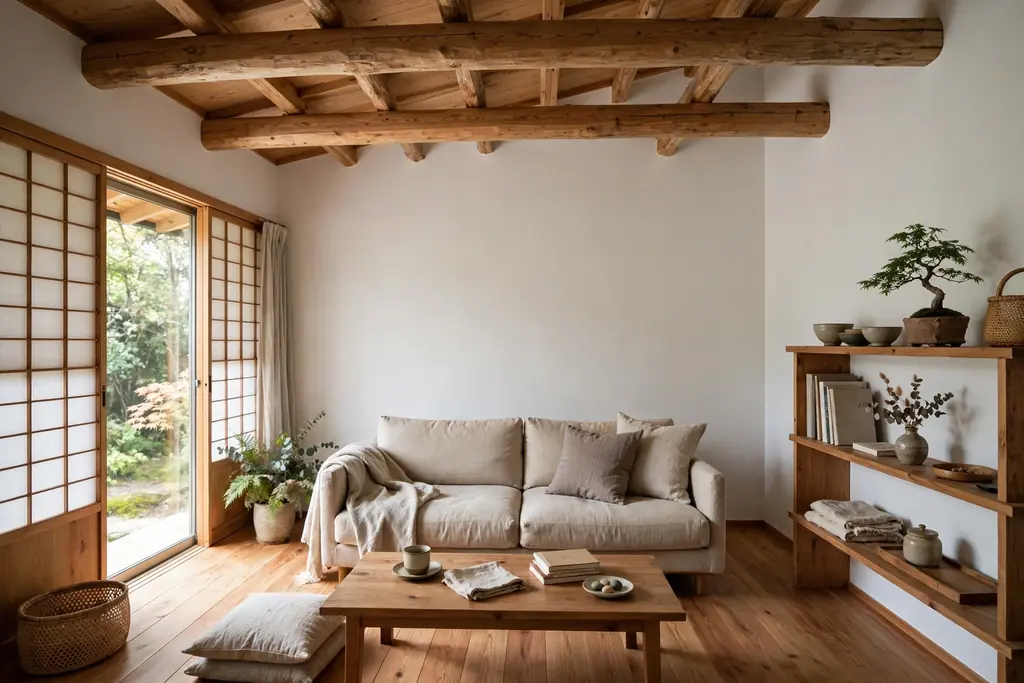
Let natural wood set the tone through floors, beams, shelves, and furniture in a warm, mid tone, rather than painted or glossy finishes. Wood grain adds pattern without color, and it links the room to the garden outside. Oak, pine, and walnut all suit a Japanese living room, as long as the tones stay close to each other.
Mix wood tones only in small steps, such as a pale floor with a mid tone table, and repeat one tone at least twice so the room feels planned. Clean wood with a method suited to its finish, and use felt pads under chairs and tables. Keep wood clear of standing water, especially near plants and tea trays.
9. Glow With a Paper Floor Lantern
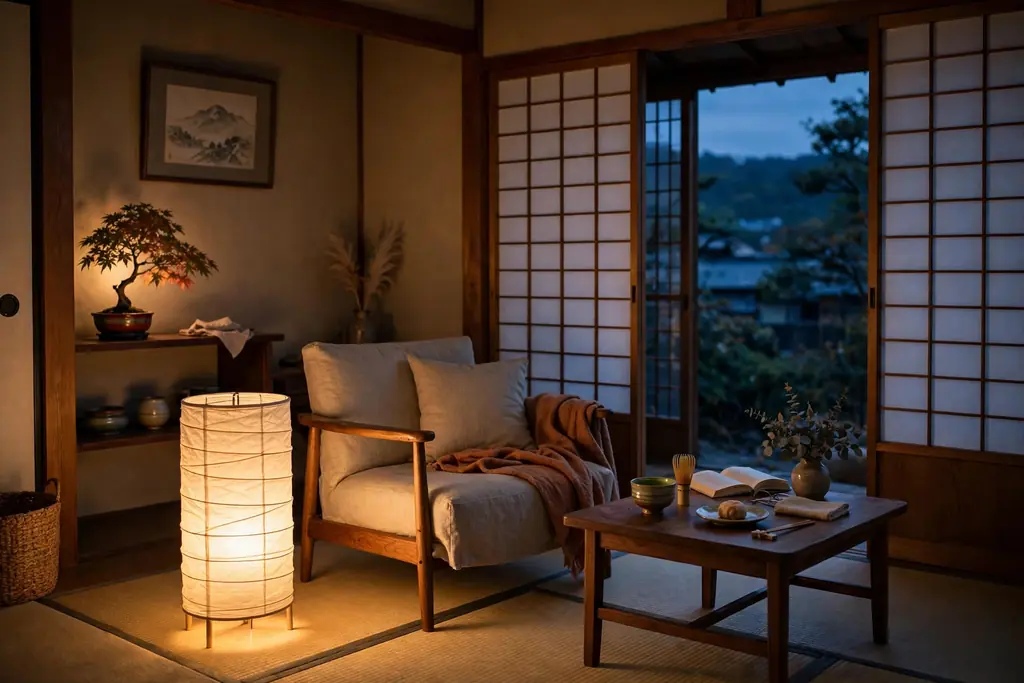
Place a paper floor lantern beside a chair or a low sofa for a warm, soft glow at sitting height. Paper diffuses light, so the lantern gives a gentle pool of light for reading, without the glare of a bare bulb. A lantern also adds a sculptural shape to a corner, even when it is switched off.
Use a bulb suited to the lantern and keep the paper clear of heat sources, candles, and curtains. Choose a warm white bulb, and place the lantern where its light falls on the seat, not in the eyes of someone across the room. One lantern per seating zone is usually enough, with a second light only in a large room.
10. Display Handmade Wabi Sabi Ceramics
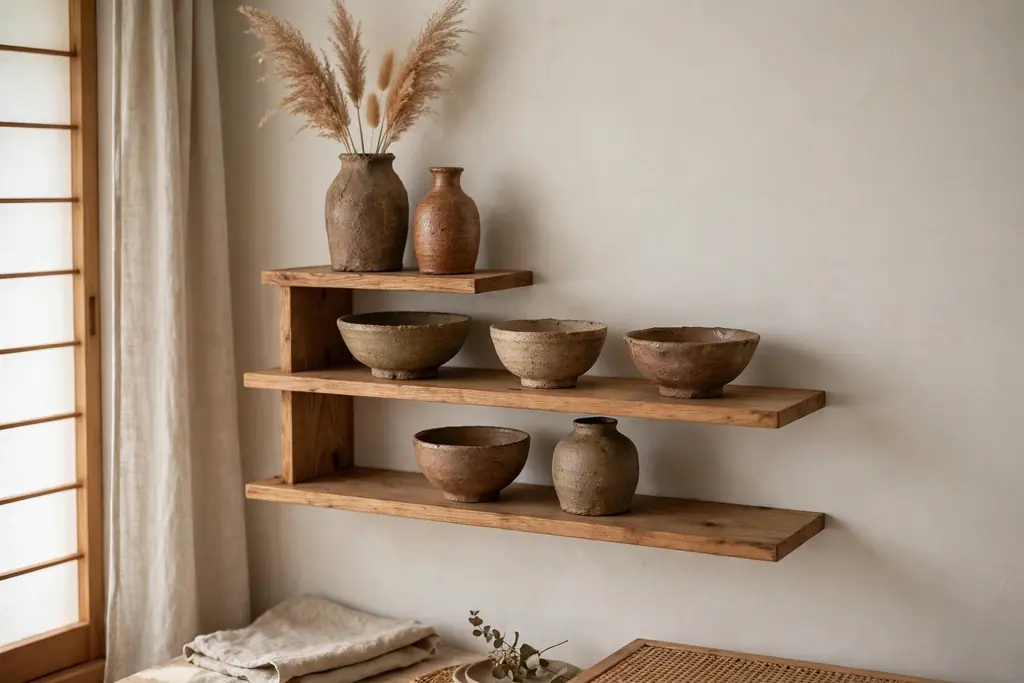
Display a small group of handmade ceramics, bowls, vases, and cups with uneven glazes and soft, earthy tones, on a shelf or a low cabinet. Wabi sabi ceramics value the marks of the maker, so a slightly uneven rim or a varied glaze is part of the appeal. A group of three to five pieces, with space between them, suits a shelf better than a crowded collection.
Use one or two of the pieces daily, such as a tea cup or a small bowl, so the display stays part of life rather than a museum shelf. Keep ceramics clear of the edge, wash them by hand where the maker advises it, and pair them with plain wood so their texture stands out.
11. Repeat Indigo Textiles in Small Doses
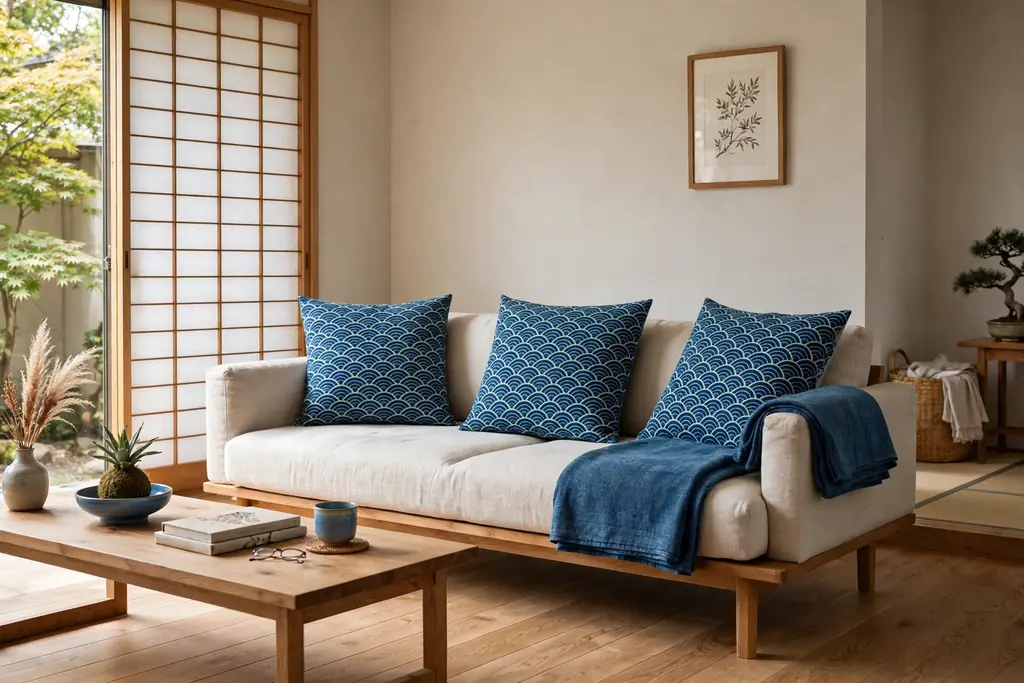
Repeat indigo textiles in small doses, such as cushions, a throw, and a table runner, against a neutral base of cream, grey, and wood. Indigo is a deep blue with a long history in Japanese dyeing, and it gives a calm room a clear accent without shouting. A pattern such as a simple stripe or a kasuri style weave adds interest while staying quiet.
Keep the indigo to three places in the room, so it reads as a plan rather than a random splash. Wash indigo fabrics as the maker directs, since strong dye can transfer when wet. If you prefer a softer look, pair indigo with pale linen rather than with white, which can make the blue feel harsh.
12. Hang a Noren Curtain in a Doorway
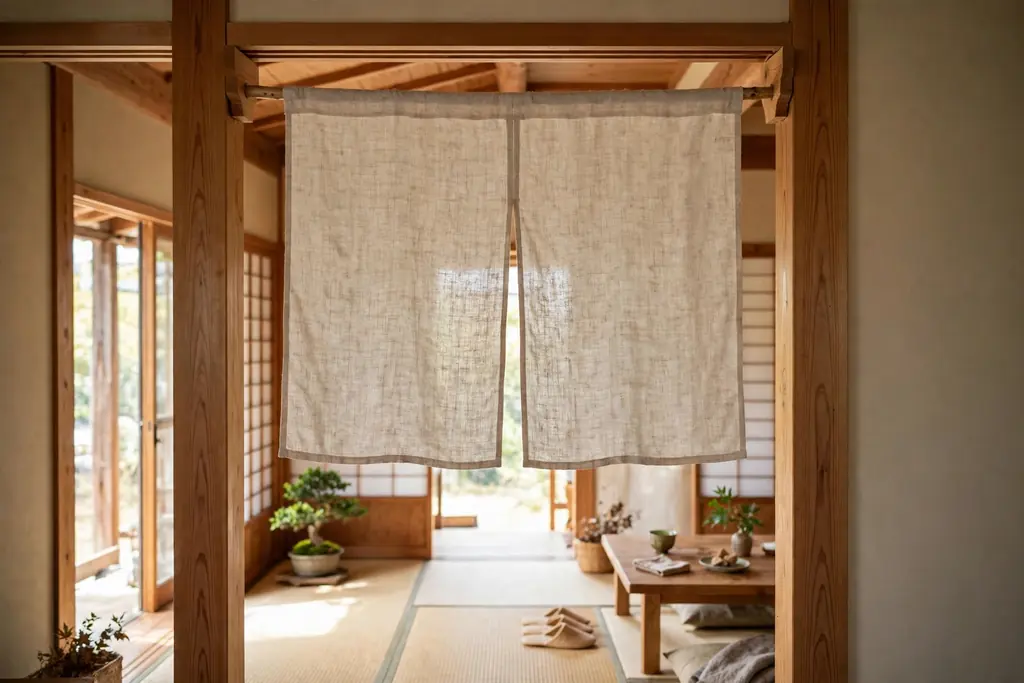
Hang a noren curtain, a short split fabric panel, in a doorway or across an open shelf to soften a threshold without a door. The split lets you walk through without pushing a full curtain aside, and the fabric adds color and texture at eye level. Natural linen, cotton, or hemp in a plain tone or a simple pattern suits a Japanese living room best.
Hang the curtain from a simple wooden rod, at a height that covers the top of the opening but leaves the lower part open for air and light. Keep it clear of heaters and cooking heat, and wash it now and then, since a doorway curtain gathers dust. A noren over a storage nook also hides clutter while keeping it easy to reach.
13. Store Daily Items in a Tansu Chest
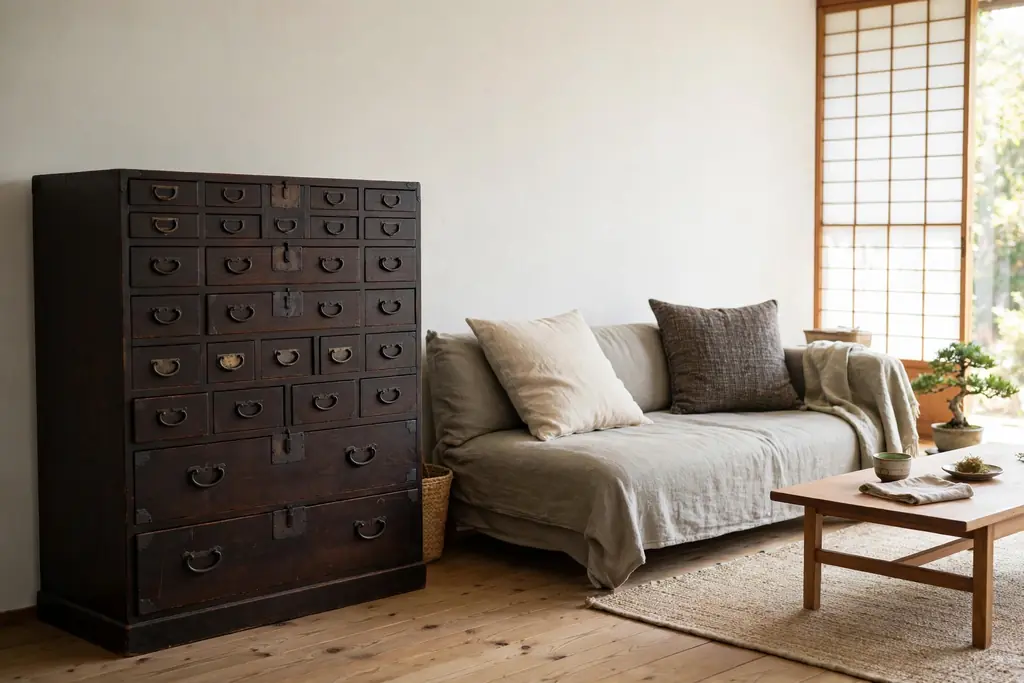
Use a tansu chest, a wooden chest with small drawers and iron handles, for daily items such as throws, games, chargers, and tea supplies. A tansu gives a room a strong, crafted anchor, and its small drawers suit the small items that otherwise pile on tables. Place it against a wall, beside a sofa, or under a window where it can be reached without blocking a path.
Sort one drawer per item type, and keep the top clear except for one plant or one small display. Check drawer runners and handles before buying secondhand, since a chest that sticks will stay unused. A tansu in a dark wood tone pairs well with pale walls and a light rug.
14. Bring in a Tall Bamboo Plant
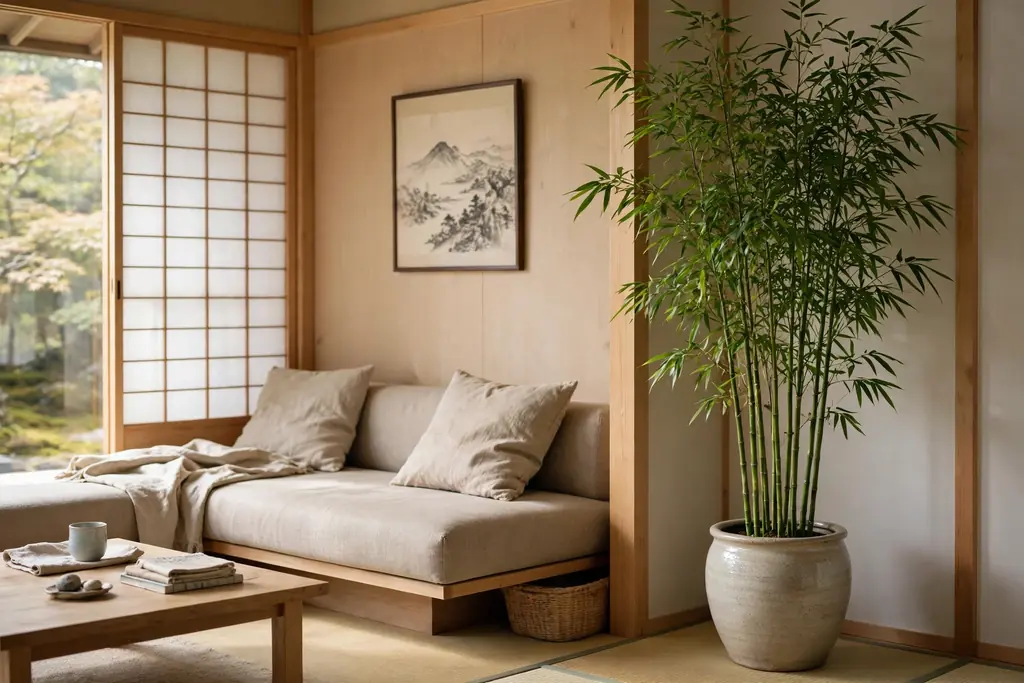
Bring in a tall bamboo plant in a simple ceramic pot for height, green color, and a gentle rustle in a breeze. Bamboo suits a Japanese living room because its straight stems and narrow leaves add structure without bulk, and it fills a bare corner without a large piece of furniture. A single tall plant often works better than several small pots scattered around the room.
Check the light and water needs of the variety you buy, since some bamboos spread fast or need bright light. Keep the pot on a tray, rotate it now and then for even growth, and prune dead stems promptly. Place bamboo where it will not block a screen, a scroll, or a window view.
15. Set Out a Mini Zen Tray Garden
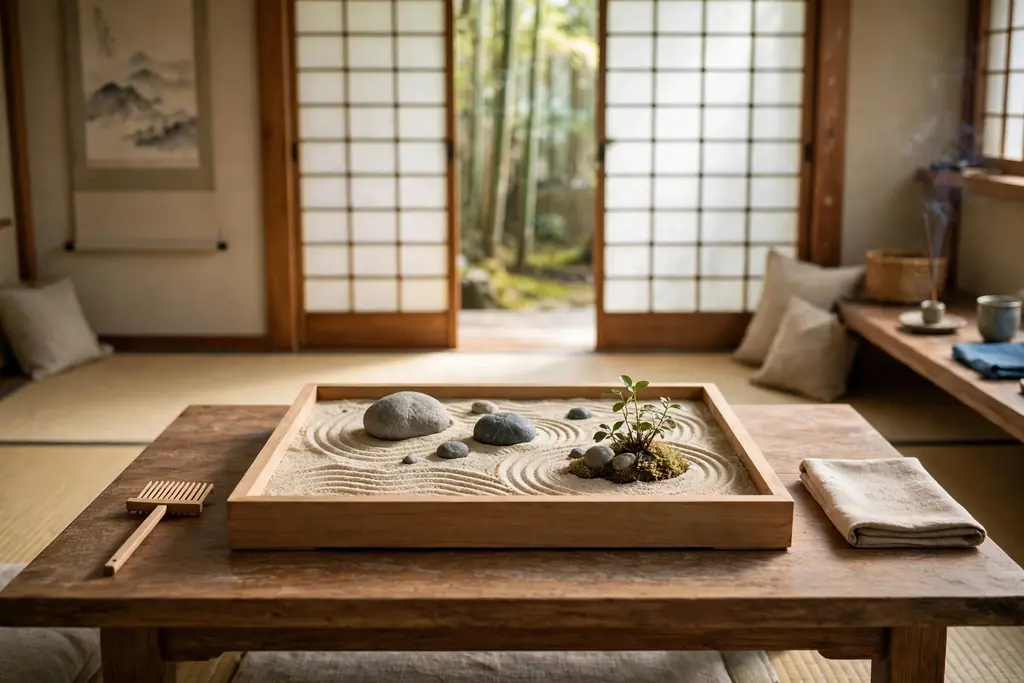
Set out a mini zen tray garden, a shallow tray with fine sand, smooth stones, and one small plant or moss patch, on a low table or a shelf. Raking the sand into simple lines is a quiet, hands on ritual, and the tray gives a table a focal point without flowers that fade in days. A tray garden suits a reading corner, a tea corner, or a desk area within the living room.
Keep the tray on a stable surface, away from the edge, and rake it with a small wooden rake or a fork. Refresh the sand if it gets dusty, and keep stones clear of the table surface so they do not scratch wood. A tray garden is a display piece, not a toy for pets or small children to scatter.
16. Hang One Sumi-e Ink Painting
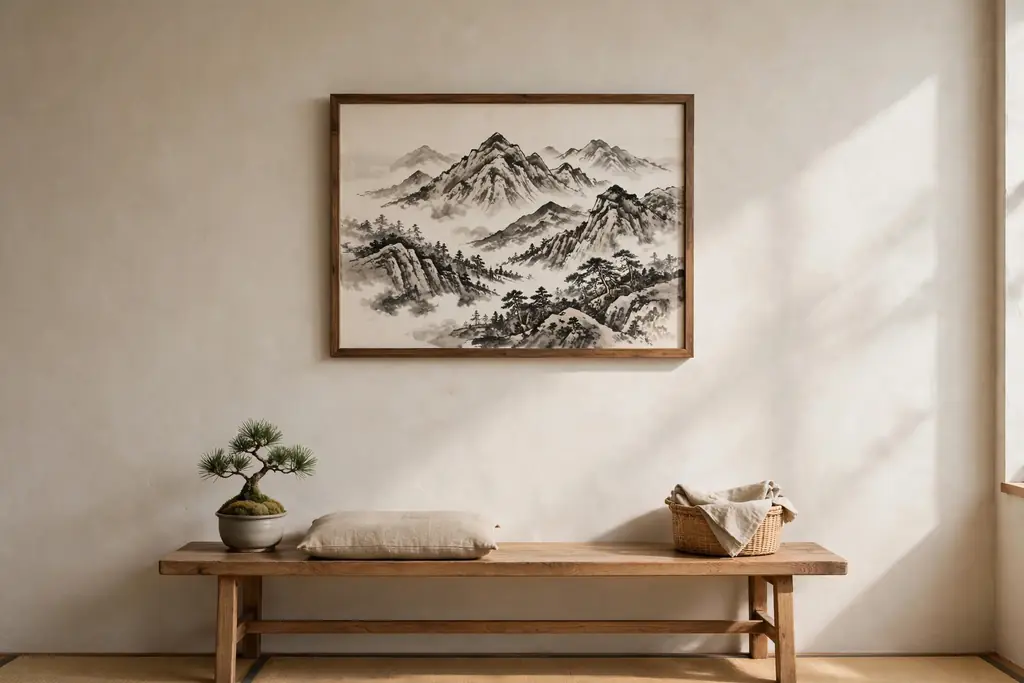
Hang one sumi-e ink painting, a black ink work of mountains, bamboo, or a bird, in a simple frame above a low bench or a sofa. Ink painting uses a few bold strokes and a lot of empty paper, so it suits a plain wall and a quiet room. One large piece often works better than a gallery wall, since it gives the eye one place to rest.
Hang the center at seated eye level, and keep the frame simple in black, natural wood, or pale wood. Keep the painting out of direct sun, which can fade paper, and out of damp spots. Pair it with a plain wall color, so the black ink stays the strongest dark note in the room.
17. Hide Clutter Behind Sliding Doors
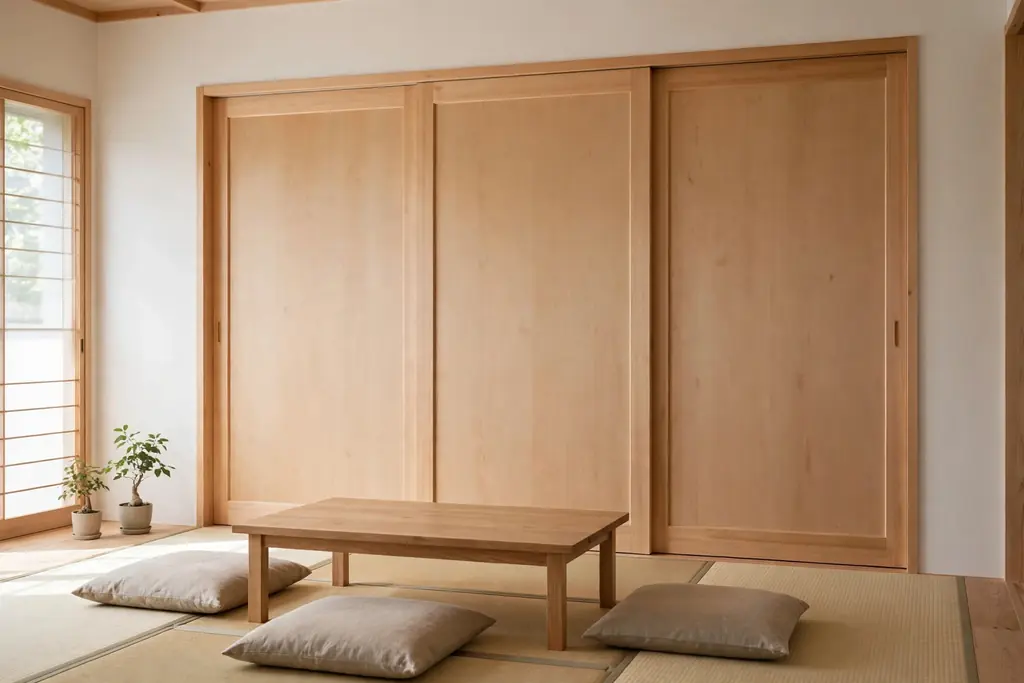
Hide clutter behind sliding doors, whether built in closets or a low cabinet with sliding panels, so the living room can be tidied in minutes. Sliding doors suit small rooms because they need no swing space, and plain wood or paper panels keep the wall calm when closed. Use the closed storage for games, chargers, blankets, and anything that does not need to be on show.
Label the inside of each door or shelf, so everyone in the house can put things back in the right place. Keep one shelf for daily items at hand height, and higher shelves for seasonal items. Check the door runners now and then, since a sticking door soon becomes a door left open.
18. Hold a Warm White and Wood Palette
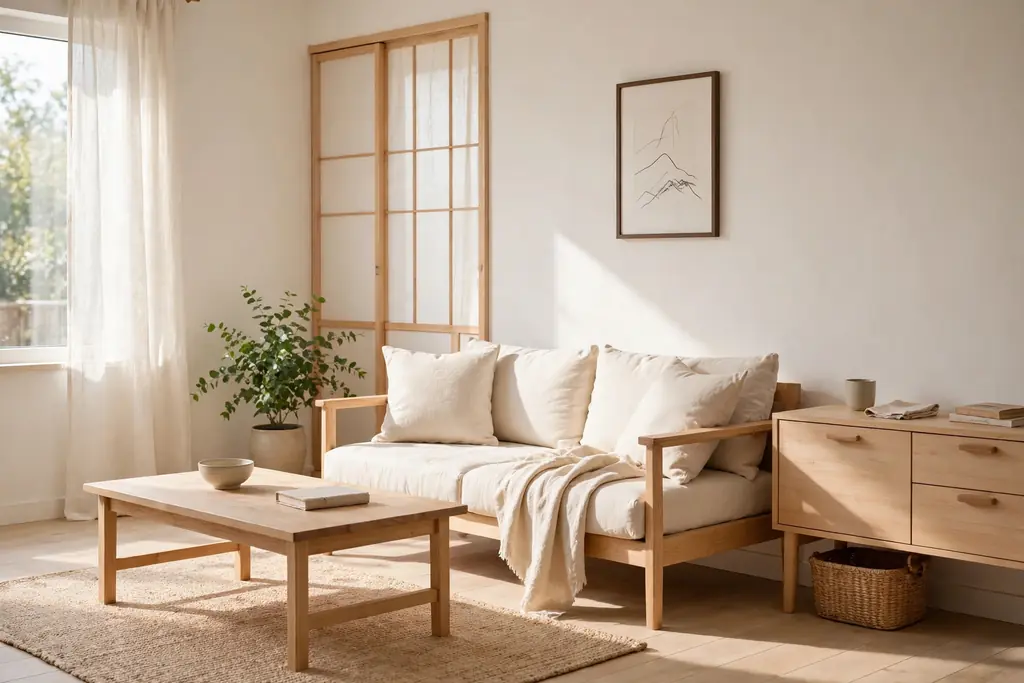
Hold a warm white and wood palette across walls, floors, and large furniture, and let smaller items carry the color. Warm white walls soften daylight, pale wood floors keep the room light, and a mid tone wood table anchors the seating group. This base makes it easy to change cushions, art, or plants with the season without repainting.
Test warm white samples in morning and evening light, since a white that looks warm at noon can look grey at dusk. Keep ceilings and trim in a matching warm white, so the room reads as one calm space. If you rent and cannot paint, pale linen curtains and a large light rug can soften a cooler wall color in a similar way.
19. Make a Tea Corner for Slow Mornings
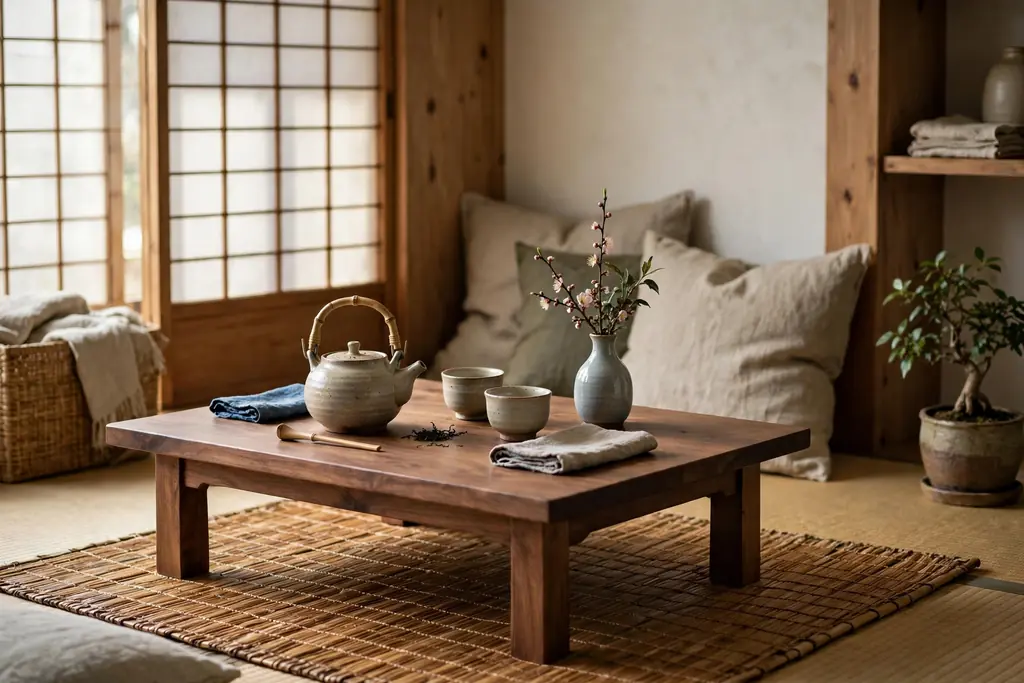
Make a tea corner in one part of the living room, with a low table, a teapot, cups, a bamboo mat, and a small vase. A tea corner gives the room a ritual: a place to sit, pour, and pause, rather than a place to pass through with a mug. Keep the corner near a window or a plant, so the view is part of the pause.
Store tea, cups, and a tray together in a basket or a tansu drawer, so setting up takes minutes. Use a tray to protect wood from spills, and keep a cloth nearby for quick wipes. A tea corner does not need a full tea set to start: a pot, two cups, and one comfortable cushion are enough.
20. Add a Kotatsu for Cold Evenings
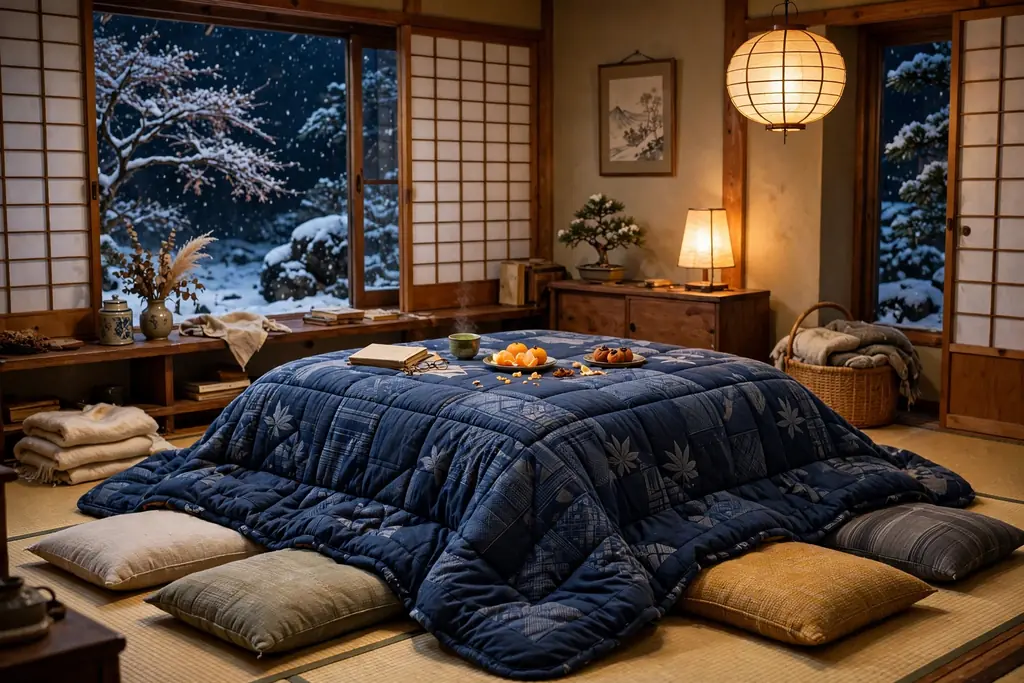
Add a kotatsu, a low table with a heater underneath and a thick quilt draped over it, for cold evenings when the room needs warmth at seat level. A kotatsu turns a low seating zone into the warmest spot in the house, and it suits families who gather on the floor. Use a quilt in a plain or lightly patterned fabric, and keep the table top clear for cups and books.
Follow the maker safety guidance for the heater, keep the quilt clear of open flames, and switch the heater off when the room is empty. In warm months, remove the quilt and use the table as a normal low table, so the piece earns its place all year. Place the kotatsu where people can sit on at least two sides.
21. Layer a Woven Rush Rug
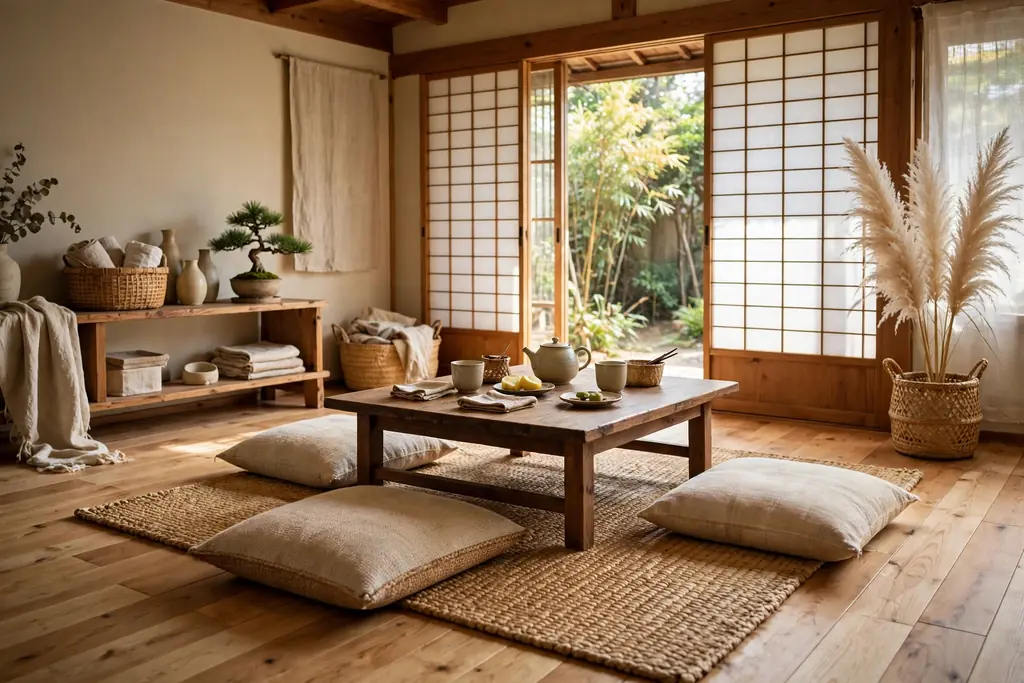
Layer a woven rush rug under the low table and cushions to define the seating zone and add a natural, slightly rough texture underfoot. A rush rug suits a Japanese living room because it echoes tatami without a full tatami floor, and its pale straw tone lifts a wood floor. For size and placement help, see these living room rug ideas.
Size the rug so the front of each cushion or chair rests on it, with a border of floor visible around the edges. Vacuum a rush rug gently, blot spills at once, and keep it out of damp spots, since natural fiber can hold moisture. If the rug is small, use it under the table only, rather than trying to cover the whole seating group.
22. Hang a Calligraphy Scroll
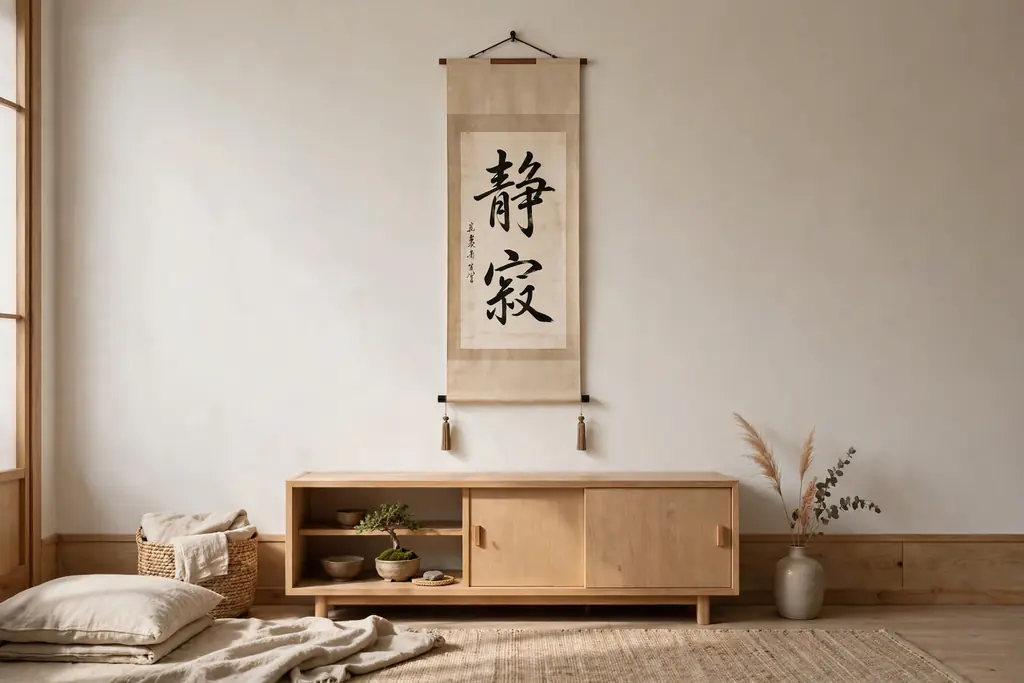
Hang a vertical calligraphy scroll, a kakejiku, on a plain wall, with a low cabinet or a plant below it. A scroll adds height to a wall and a single word or phrase to think about, and its fabric borders give it a finished look without a heavy frame. Choose a scroll whose meaning you understand and like, since it will be read often.
Hang it straight, at a height where the main characters sit at eye level when seated, and keep the wall around it clear. Roll the scroll and store it flat or upright in a dry place if you rotate displays, and keep it out of direct sun and damp air. One scroll per wall is enough in most rooms.
23. Keep Open Shelving Sparse
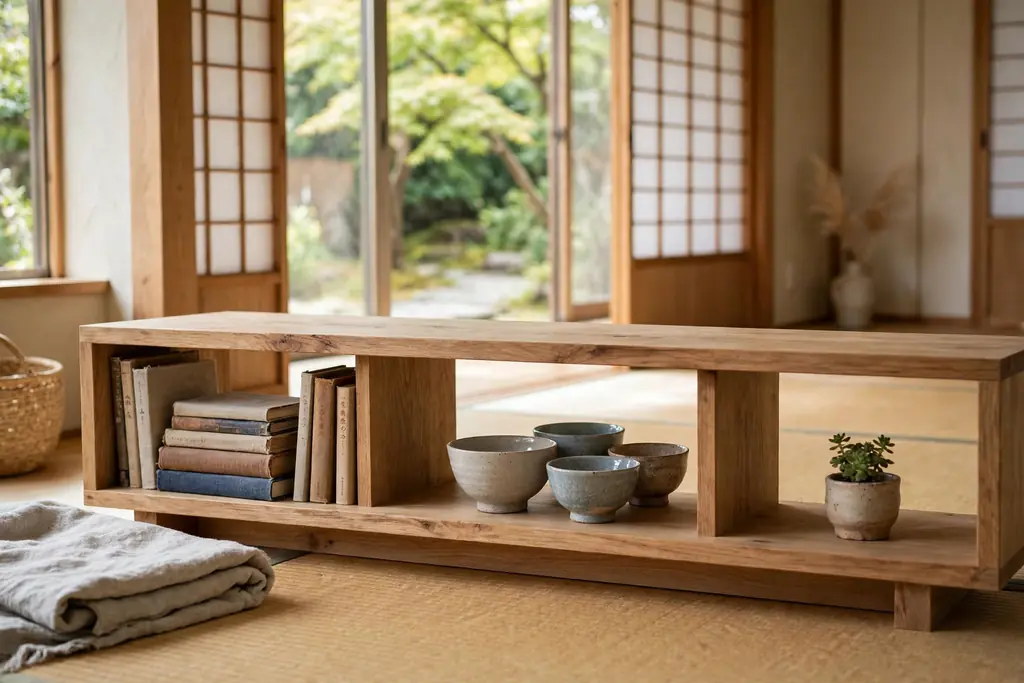
Keep open shelving sparse, with books, ceramics, and one plant arranged in small groups, with gaps between them. Open shelves suit a Japanese living room when they stay calm, since every item is on show. Group books by height, place heavier items low, and leave at least one empty stretch of shelf, so the display can breathe.
Anchor shelves firmly to the wall, check the weight rating before loading books, and dust the shelves weekly, since open storage shows dust fast. If a shelf starts to fill, move items to closed storage rather than adding a second crowded shelf. A sparse shelf is easier to tidy and easier to enjoy.
24. Build an Engawa Style Window Seat
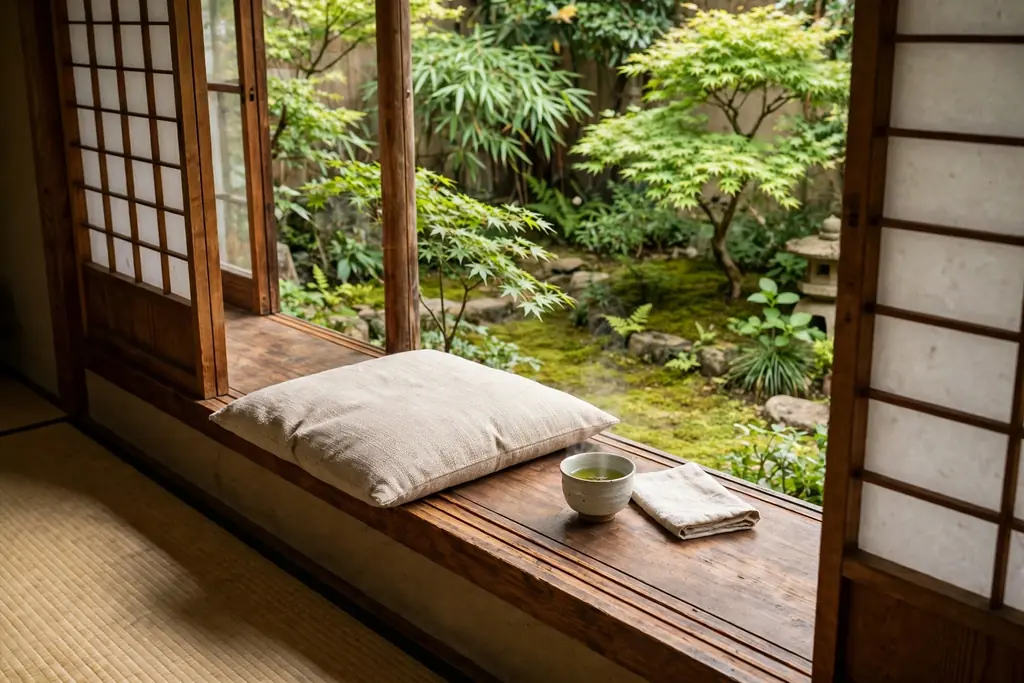
Build an engawa style window seat, a low wooden platform along a window, for sitting with a view of the garden or the street. An engawa is a veranda edge between inside and outside, and a window seat borrows that idea: a place to sit, read, and watch the weather, without a full chair. A cushion, a throw, and a small side table complete the seat.
Keep the platform low, with a clear step up and down, and add a basket below or beside it for books and throws. If the window gets strong sun, use a cushion fabric that fades slowly, and add a sheer curtain to soften glare. Angle the seat toward the room as well as the window, so it feels part of the living space.
25. Ground the Room With Charcoal Accents
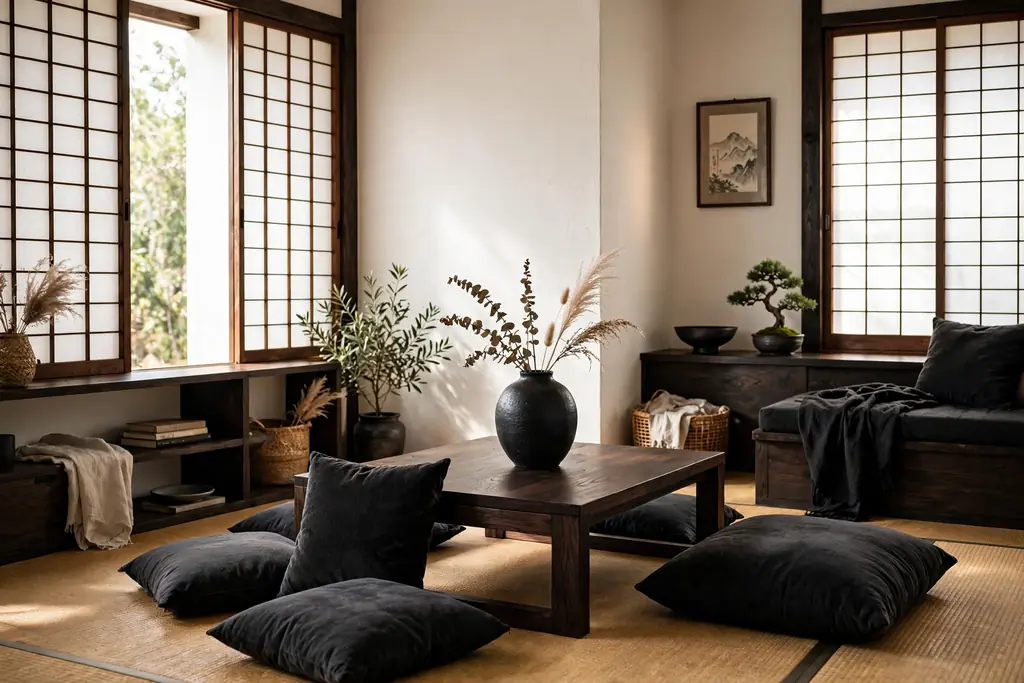
Ground the room with charcoal accents, such as dark cushions, a black ceramic vase, and dark wood frames, against warm white walls and pale wood. Charcoal is the darkest note in a Japanese palette, and a few dark pieces stop a pale room from feeling washed out. Use charcoal in three places, such as a cushion, a vase, and a frame, so the dark tone repeats like a plan.
Keep charcoal pieces matte rather than glossy, since a soft black suits wood and linen better than a shiny finish. Balance each dark piece with a light piece nearby, such as a cream cushion beside a charcoal one, so no corner feels heavy. A charcoal throw over a pale sofa is an easy first step.
26. Hang a Washi Paper Pendant
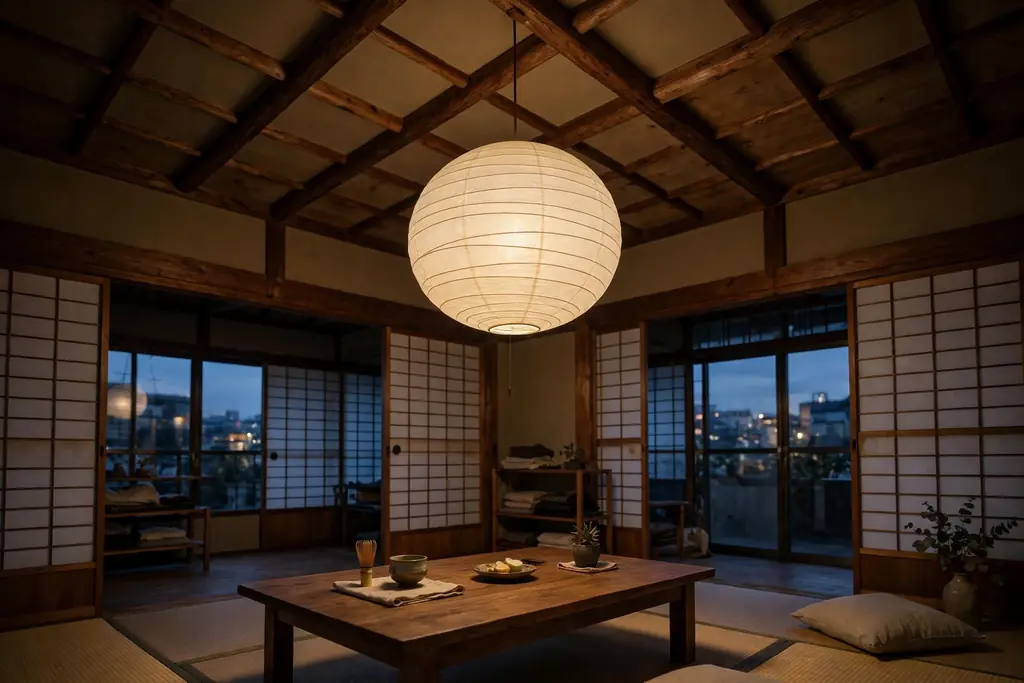
Hang a washi paper pendant, a round or lantern shaped ceiling light in translucent paper, over the low table or the main seating zone. A paper pendant spreads light softly in all directions, and its simple shape suits a low room without drawing the eye up too hard. It also gives evening light a warm, even quality that suits paper lanterns at floor level.
Hang the pendant low enough to light the table, but high enough to clear heads when standing. Use a warm white bulb, keep the paper clear of heat sources, and dust it gently with a dry cloth. One pendant over the main table, plus a floor lantern in a corner, gives most rooms enough layered light.
27. Try a Low Floor Sofa
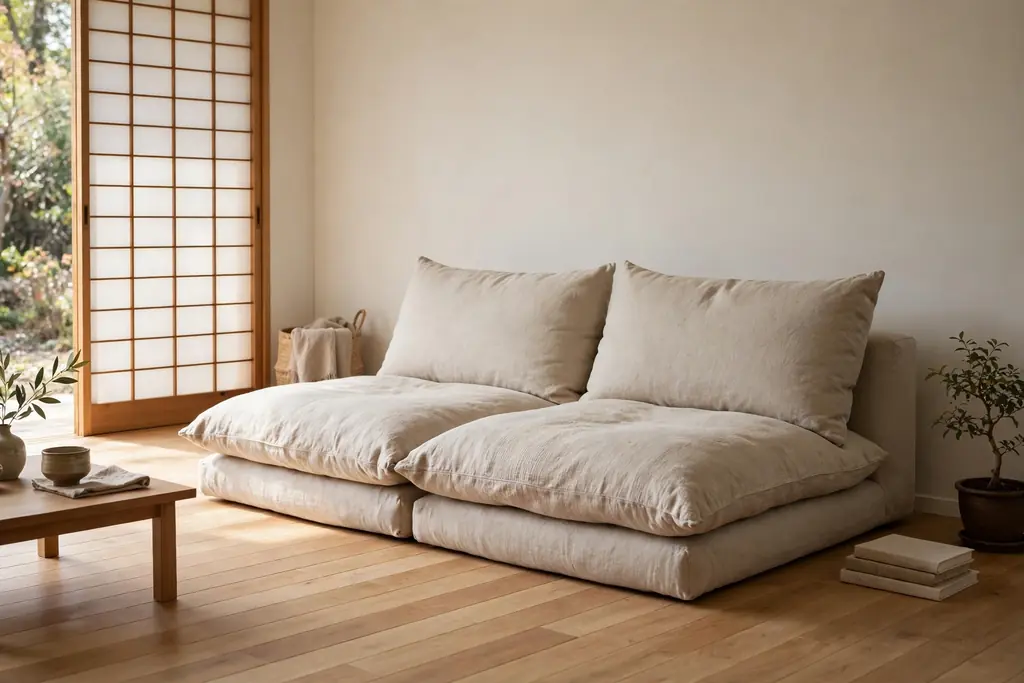
Try a low floor sofa, a sofa frame close to the floor with thick, soft cushions, for a seat that feels relaxed without full floor seating. A floor sofa suits people who like low living but want back support, and it works well in a room with a low table and a rug. Choose a simple shape, in linen or cotton, with removable covers for washing.
Keep the sofa depth generous, so legs can stretch out, and add a low side table for cups and books. Check the seat height against your low table, so cups are easy to reach. A floor sofa in a plain color pairs well with indigo cushions and a wood coffee table.
28. Place a Potted Maple by the Window
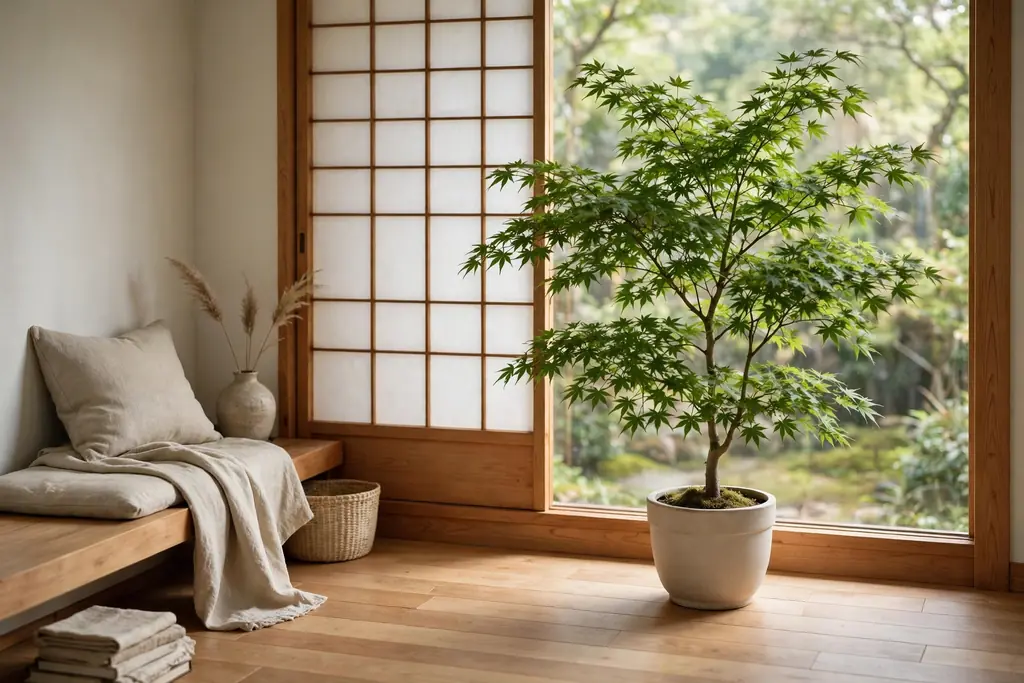
Place a potted Japanese maple by the window, in a simple pot, for soft green leaves in summer and warm color in autumn. A maple brings a garden tree indoors at a scale that suits a living room corner, and its leaves change through the year, which gives the room a seasonal rhythm. Choose a variety suited to pot life and to the light by your window.
Water as the variety requires, keep the pot on a tray, and prune lightly to keep its shape. Move the maple outside for a rest period if the variety needs a cold season, and check with a local nursery if you are unsure. One maple, with clear space around it, reads better than a crowded group of pots.
29. Rotate a Seasonal Display
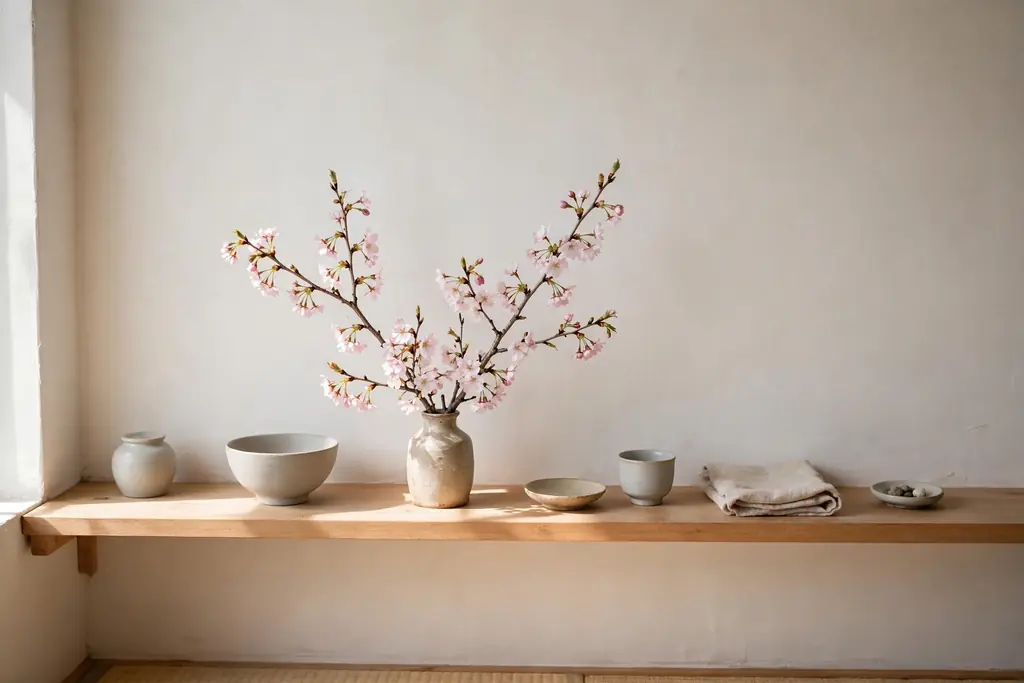
Rotate a seasonal display on one shelf or one table, changing a branch, a flower, or a small object with the season. A cherry blossom branch in spring, a green maple stem in summer, and a bare branch with a red leaf in autumn each give the room a fresh focal point, without buying new furniture. The display stays small, so the change takes minutes.
Keep the display to one vase and one or two stems, and store seasonal pieces together in a labeled box. Change the display when the season changes, not every week, so the room feels settled rather than restless. A seasonal display pairs well with a tokonoma alcove or a single shelf.
30. Layer Low Light for Evening Calm
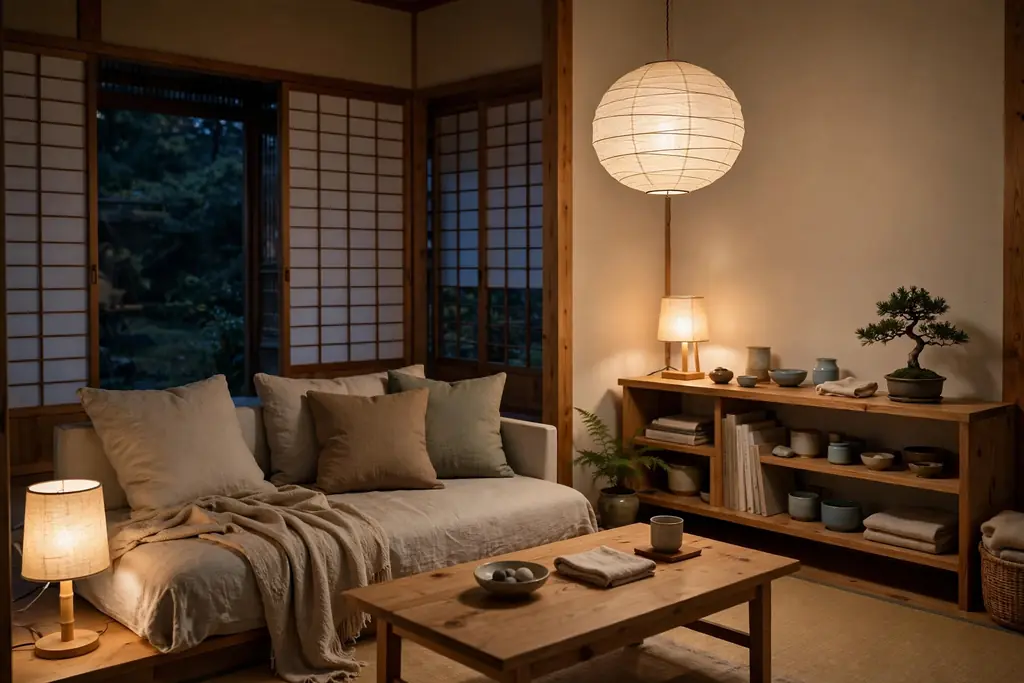
Layer low light for evening calm, with a paper pendant, a floor lantern, and one small table lamp, all at or below eye level when seated. Low light makes a room feel settled after dark, since it lights faces and tables without glaring from above. Use warm white bulbs throughout, and add a dimmer where possible, so the light can drop as the evening goes on.
Switch lights on in layers: the pendant first for general light, then the lantern for warmth, then the table lamp for reading. Keep cords out of walking routes, and use battery candles only where real flames are not practical. A room lit low, with a tidy floor and a warm seat, invites people to stay.
Conclusion
A Japanese living room does not need a full redesign to feel calm. Start with a low seat, a clear floor, and a quiet base of warm white and wood, then add one screen, one plant, and one piece of display that means something to you. Keep storage closed, light low and soft, and each corner given one clear job. Pick one idea from this list, set it where you actually sit, and add the next layer only after the first change feels right in daily use.
Save this list on Pinterest before your next room refresh, and work through it one corner at a time: seating first, then light, then the plants and displays that make the room yours.
FAQs
What is the simplest way to start a Japanese living room?
Start with a low seat, a clear floor, and a quiet wall color. Add a low table, floor cushions or a low sofa, and one plant or one piece of art, then live with that base for a while. A Japanese living room works when the base is calm, so avoid buying many small decorations at once.
Do I need tatami mats for a Japanese living room?
No, tatami mats help, but they are not required. A woven rush rug, a low table, floor cushions, and natural wood give a similar feel in a room with a wood or plain floor. If you do use tatami, keep the mats dry, keep shoes off them, and air the floor below them now and then.
How do I keep a Japanese living room from feeling empty?
Give each corner one job, such as tea, reading, plants, or display, and keep the main seating zone comfortable with cushions, a throw, and soft light. A room feels empty when it has no comfortable seat or no focal point, not when it has empty floor space. One plant, one scroll, and one warm lamp usually fill the gap.
What colors suit a Japanese living room?
Warm white, pale and mid tone wood, cream, grey, and soft green form the base, with indigo and charcoal as accents. Keep strong color to a few repeated pieces, such as cushions and a vase, so the room stays calm. Seasonal plants and branches add color that changes naturally through the year.
Are shoji screens practical in a modern home?
Yes, with care. A folding shoji screen works in a rented home, while a sliding screen suits a wide opening. Keep paper panels clear of heaters, open flames, and damp spots, and dust them gently. Shoji screens give privacy and soft light without a solid wall, and they can be moved or stored when not needed.
How can I make a small living room feel Japanese without clutter?
Use low furniture, closed storage, and one focal point per wall. A low sofa or floor cushions, a small low table, a paper pendant, and one plant give the style without filling the floor. Keep walking routes clear, store spare cushions and throws in a closet or a tansu chest, and let empty wall and floor space stay empty.