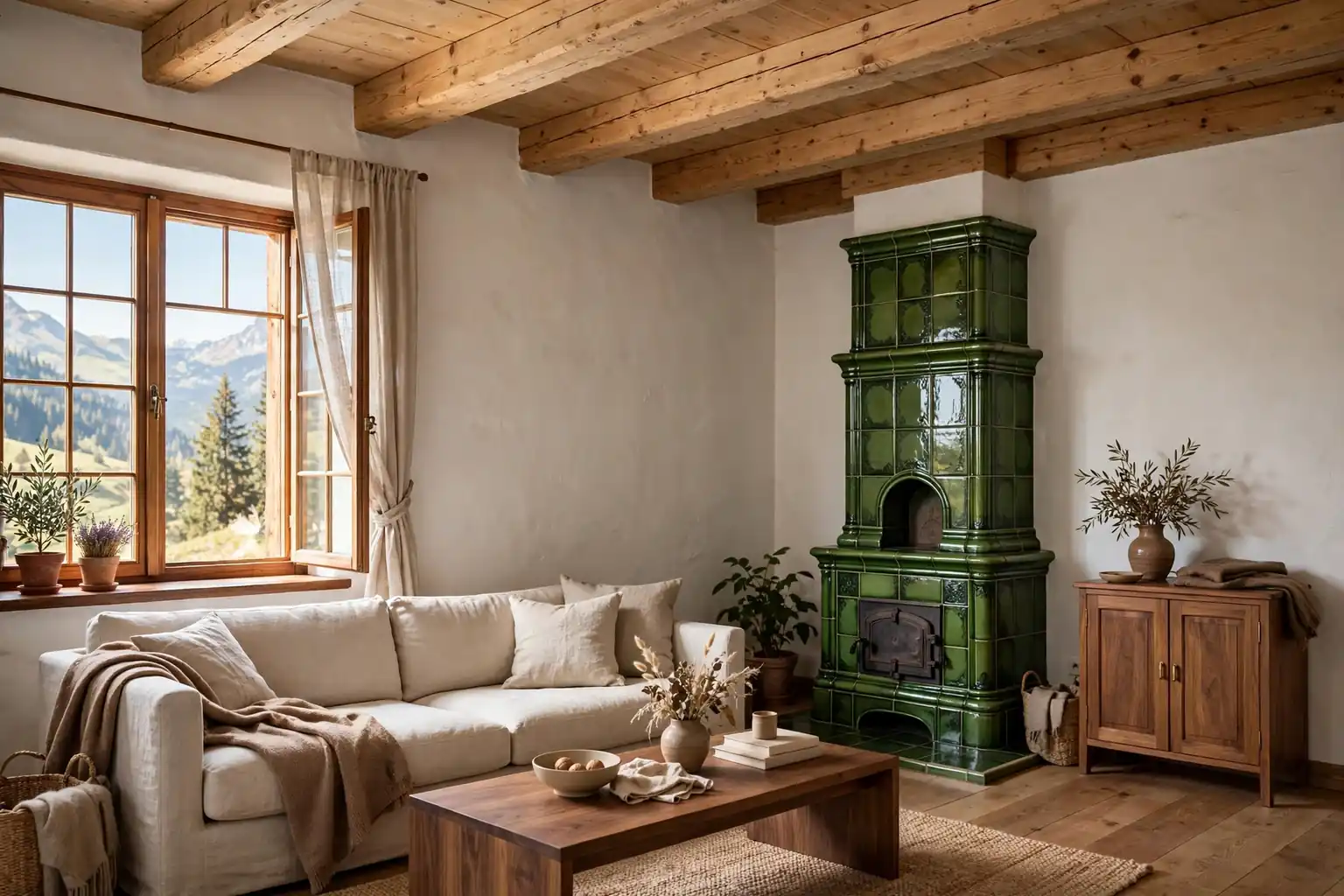
Austrian homes balance Alpine warmth with city polish. In a mountain chalet, that means pine, stone, and wool used for comfort. In a Vienna flat, it means curved Biedermeier wood, cane chairs, and a coffee corner made for long sits. These 23 Austrian home decor ideas bring both sides together, across living rooms, bedrooms, kitchens, and entryways, so you can borrow one detail or build a whole room from them. Start with warm wood and a calm base color, then add one folk or city detail at a time, and keep surfaces clear enough for daily life. For another European home style built on warm materials, see these Italian home decor ideas.
Key Takeaways
- Start with warm wood and a calm base: pine, walnut, warm white plaster, and stone set the Austrian tone before any decoration is added.
- Keep one palette through the room, such as warm white, pine, deep green, and red, and repeat it in textiles, art, and pottery.
- Give each room a clear gathering point, such as a tile stove, a fireplace, a dining table, or a coffee corner, and arrange seating to face it.
- Mix Alpine and city pieces: a carved pine bench sits well beside a cane chair, and a wool throw softens a curved Biedermeier chair.
- Use textiles for warmth you can change: loden wool, checked cotton, embroidered linen, and sheepskin add character without building work.
- Choose pieces that suit daily life first, with washable linen, sturdy wood, and storage that hides boots, books, and blankets.
1. Pine Beams and Wood Panelled Walls
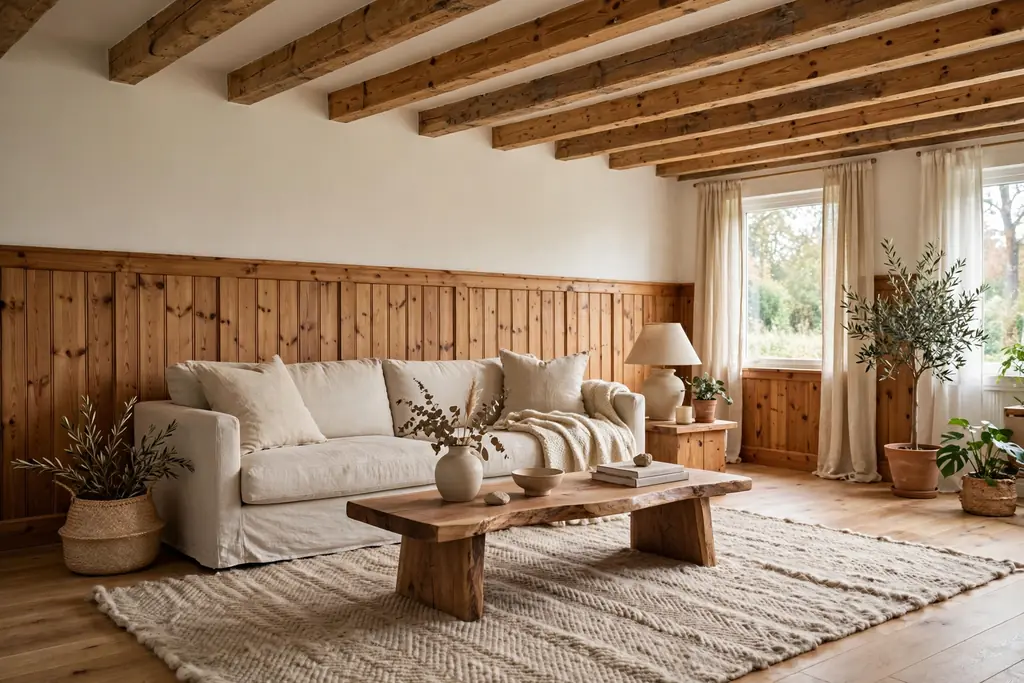
Leave pine beams exposed, or add wood panelling to one wall, to give a living room the warm shell of an Alpine chalet. Pine has a honey tone that softens white walls, and vertical or horizontal boards add texture that flat paint cannot. This suits a room with a plain ceiling or a long blank wall that needs warmth without a strong color.
Keep the ceiling and the other walls in warm white so the wood stays the main feature, and pair the panelling with a plain sofa and a wool rug. In a low room, use fewer, slimmer beams in pale pine, and keep the panelling to one wall only, so the room does not feel closed in. Dust the boards with a dry cloth, and keep wood clear of damp corners.
2. Warm White Plaster Walls With Wood Trim
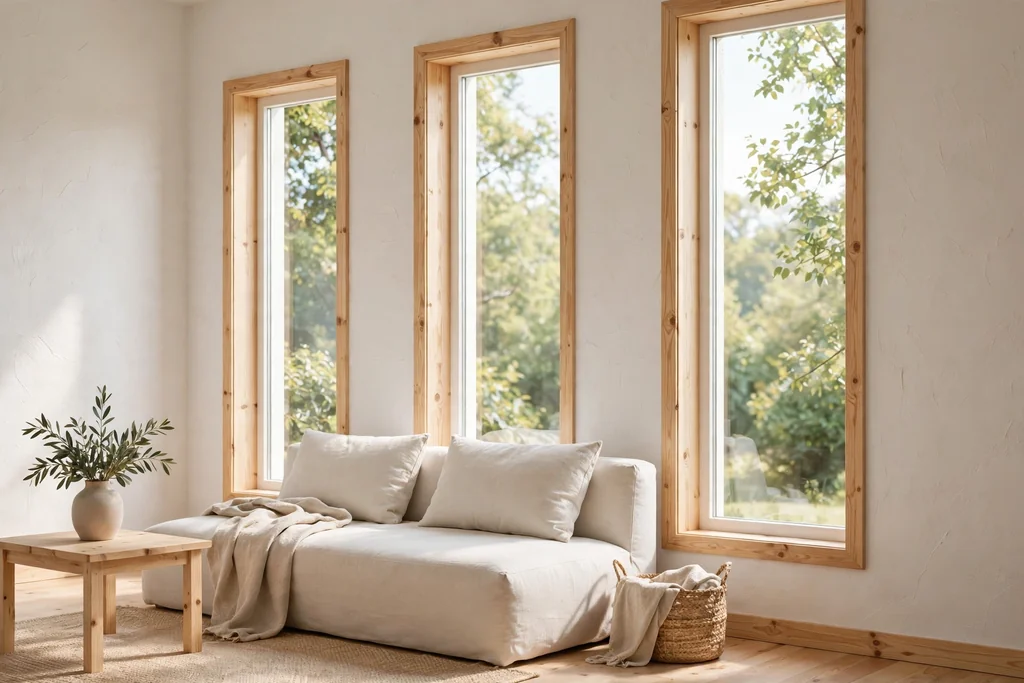
Wash the walls in warm white plaster, or a plaster look finish, and frame doors and windows with simple wood trim for a calm Austrian base. The soft, uneven plaster surface catches daylight in a way flat paint rarely does, and wood trim gives the room a finished edge without ornate moulding. This suits a newer room that feels flat, or a flat where dark wood alone would feel heavy.
Keep the trim in pine or walnut, and repeat the wood once in a coffee table or a picture frame, so the trim links to the furniture. If a full plaster finish is not practical, a textured plaster look paint gives a similar effect with less work. Test a patch in daylight and lamplight first, since warm bulbs can deepen a pale tone.
3. A Green Ceramic Tile Stove Corner
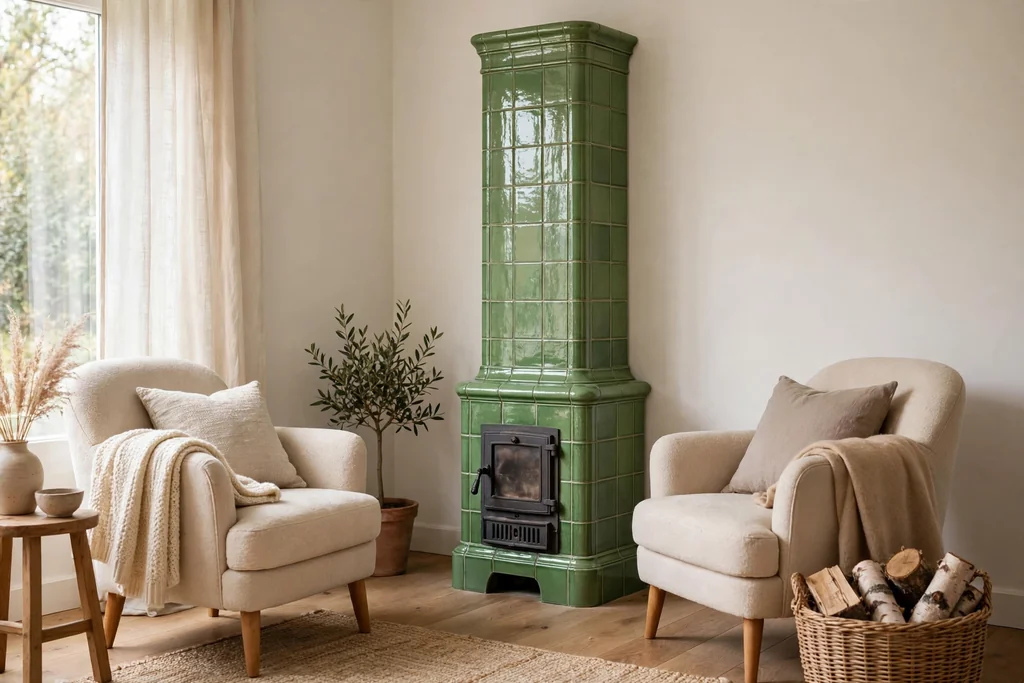
Make a green ceramic tile stove, known as a Kachelofen, or a plain wood burner in a tiled corner, the focus of one living room corner, with seating turned toward it. The tall tiled form warms a room slowly and gives it a clear heart, while the glazed green tiles add color without a bright accent wall. This suits a room that needs a gathering point in winter.
Keep the hearth area clear, use a heat safe distance for rugs, and store firewood in a neat basket rather than a loose pile. If you have no working stove, a plain mantel with candles in safe holders, a mirror, and a stack of books can give the same sense of a gathered corner. For another tiled stove corner idea, see these Swedish living room ideas.
4. Biedermeier Style Curved Wood Furniture
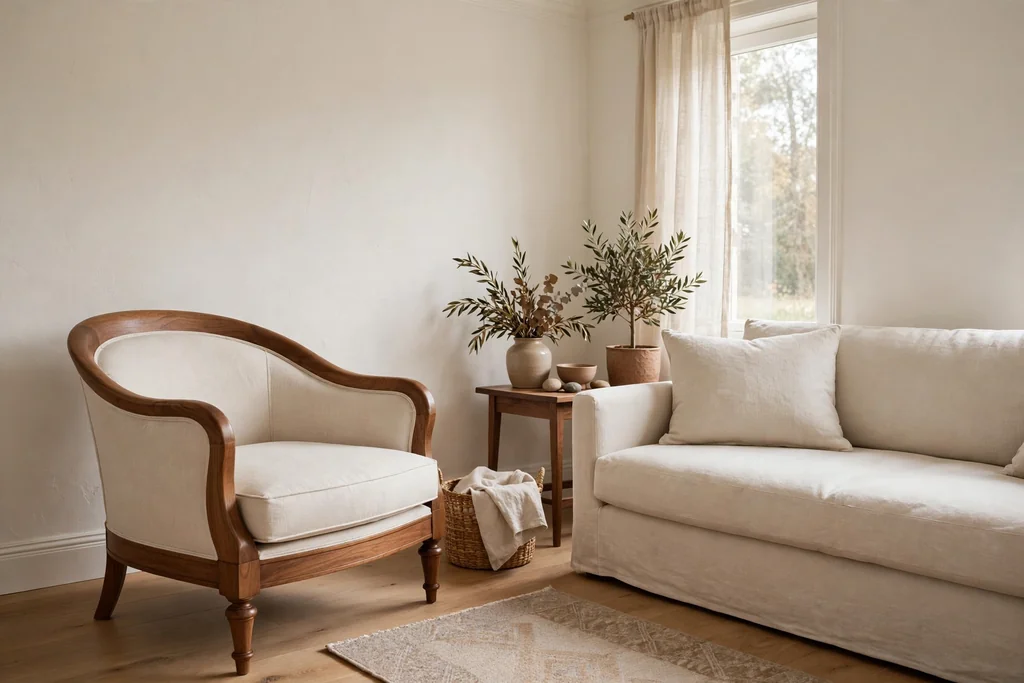
Choose one Biedermeier style piece, such as a curved back chair, a small sofa, or a walnut chest, as the refined note in the room. Biedermeier furniture is known for clean curves, pale or walnut wood, and simple lines, without heavy carving, so it suits both a city flat and a calm country room. One piece is enough in most rooms, since a full set can feel formal.
Pair the piece with plain linen upholstery and a simple rug, so the curved wood stays the detail. Check secondhand shops for a chair with good joints, since an older frame often suits this look better than a new copy. Keep the wood polished with a soft cloth, and keep the piece clear of direct sun, which can fade the finish over time.
5. Wiener Geflecht Cane Chairs
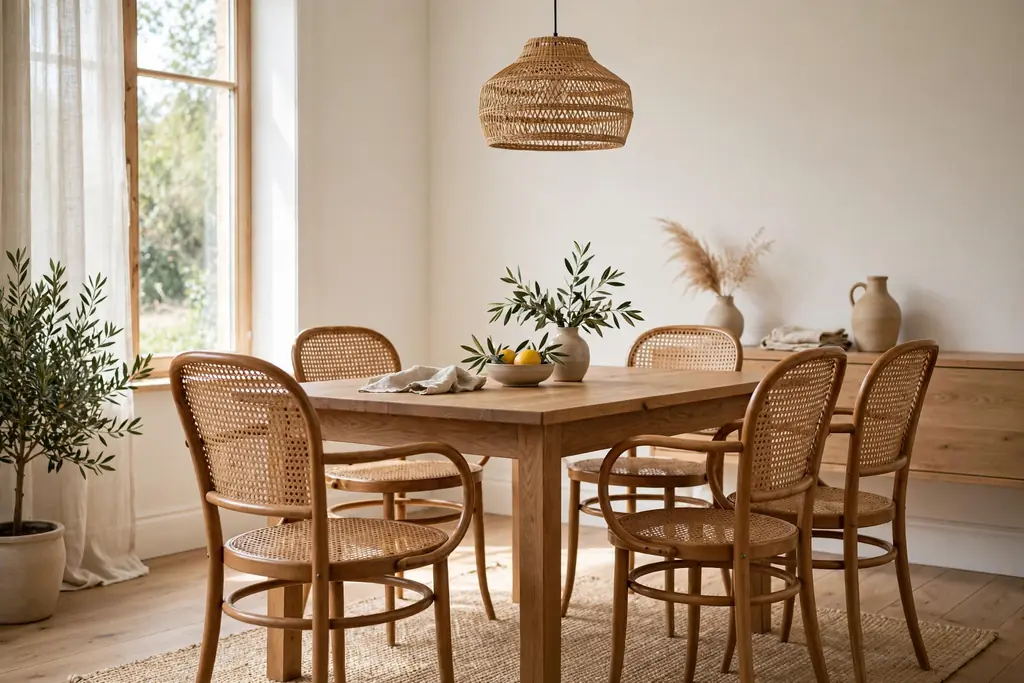
Add chairs with a woven cane seat or back, in the Wiener Geflecht pattern, around a dining table or beside a small desk. The open cane weave lightens a wood chair, lets air move through it, and adds a Vienna coffee house note without a full room change. This suits a dining area that needs extra chairs, or a reading corner where a solid chair would look heavy.
Pair cane chairs with a plain wood table and linen cushions tied to the seat, so the weave stays visible. Wipe cane with a dry or lightly damp cloth, and keep cane chairs clear of damp rooms, since the weave can slacken over time. If one chair needs repair, fix the cane panel rather than replacing the whole chair, where a repairer is available.
6. A Carved Pine Bed Frame With Linen Bedding
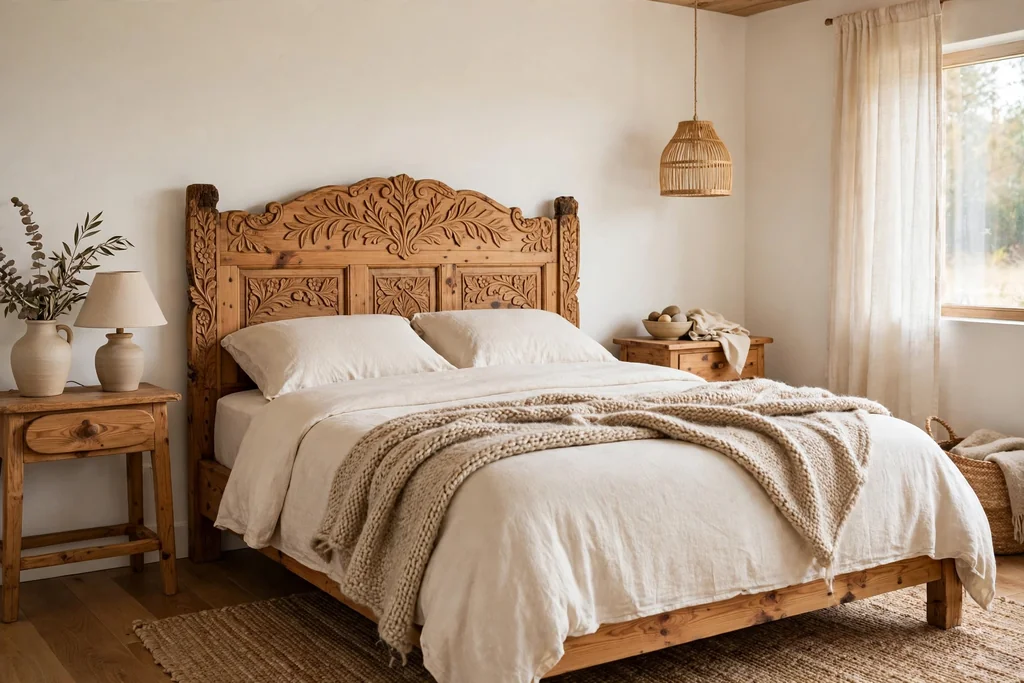
Choose a carved pine bed frame, with a simple carved headboard, and dress it in plain linen bedding for a bedroom with Alpine warmth. Pine keeps the room light, while the carved headboard gives the bed a clear presence without a full wall treatment. This suits a main bedroom where the bed is the largest piece and needs to look planned rather than bulky.
Pair the frame with cream or warm white linen, and one wool throw folded across the lower half, so the wood stays the clear accent. For more bedroom layering in a warm European style, see these Italian bedroom ideas. Keep bedside tables low and simple, so the headboard keeps its shape against the wall, and leave walking space on both sides.
7. Loden Wool Throws in Grey Green
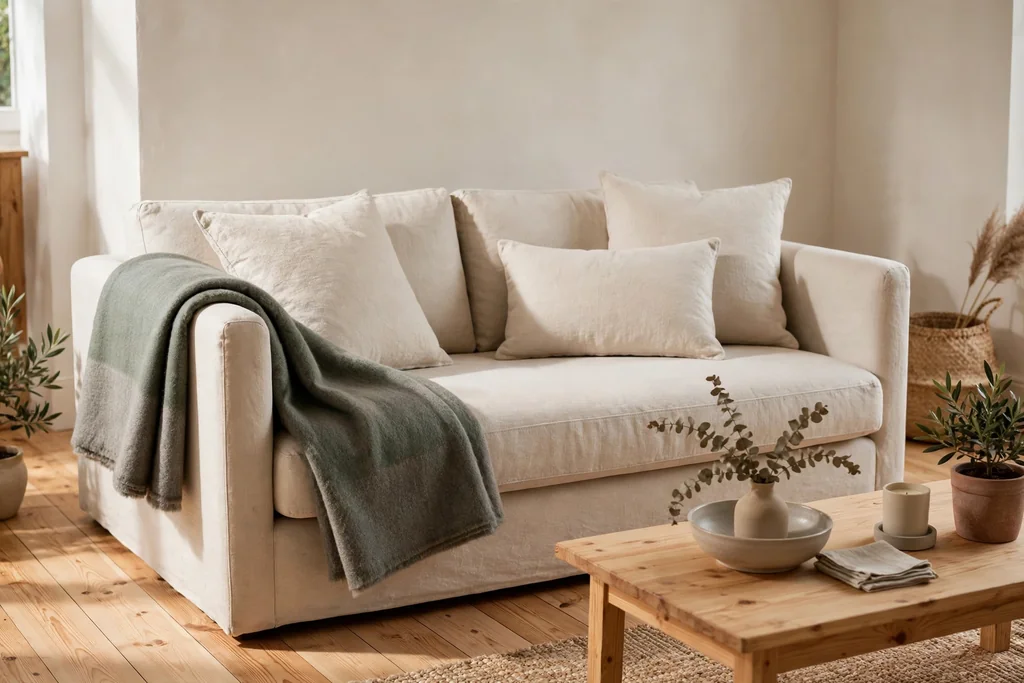
Drape a loden wool throw, in grey green or deep green, over a sofa arm or the foot of a bed for warmth you can use every day. Loden wool is dense and warm, and its muted green suits pine, walnut, and warm white without adding a bright color. This suits a room that needs a winter layer, since the throw earns its place on cold evenings.
Fold one throw over an arm, and keep a second in a basket nearby for guests, rather than piling several on one seat. Limit cushions to three or four on a standard sofa, in mixed textures rather than mixed patterns, so the seat stays comfortable. Wash throws as the maker directs, and rotate them so one set does not wear out before the others.
8. Red and White Checked Textiles
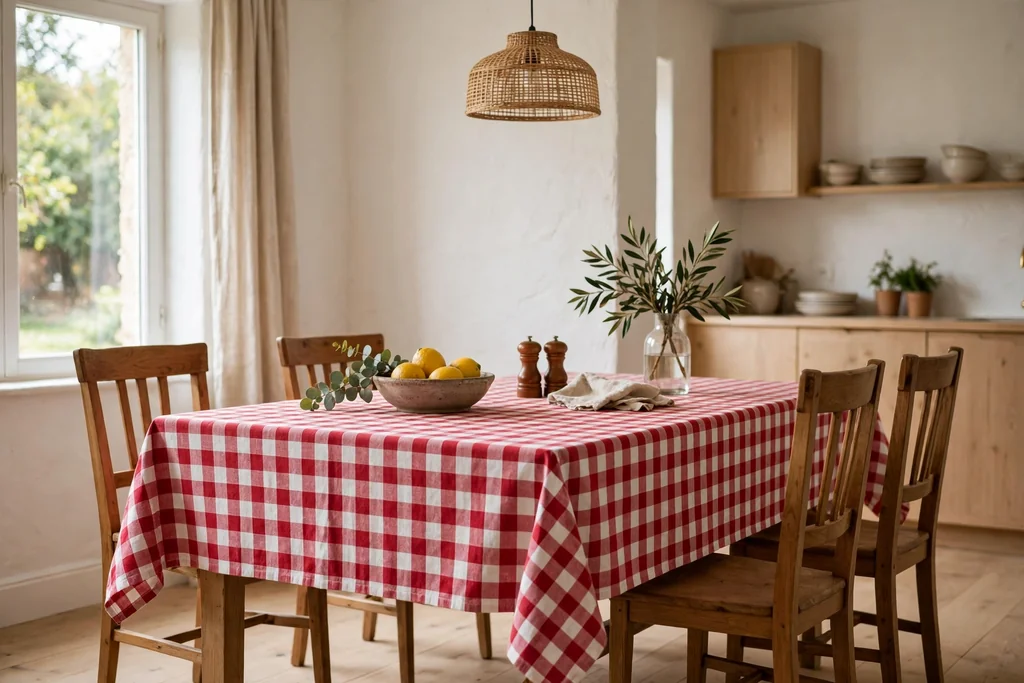
Use red and white checked cotton for tablecloths, cushion covers, or a kitchen curtain to add a Tyrolean folk note in a small, changeable dose. The check reads as cheerful and homely, and because it appears only on textiles, you can swap it out with the seasons. This suits a kitchen or a dining area that needs color without paint or new furniture.
Use the check in two or three places, such as a tablecloth, one cushion, and a tea towel, so it reads as a plan rather than a random pattern. Keep the rest of the room plain, with warm white walls and wood furniture, so the check does not compete with other patterns. Wash checked cotton on a regular cycle, since kitchen textiles show marks sooner than other fabrics.
9. Painted Folk Furniture With Floral Motifs
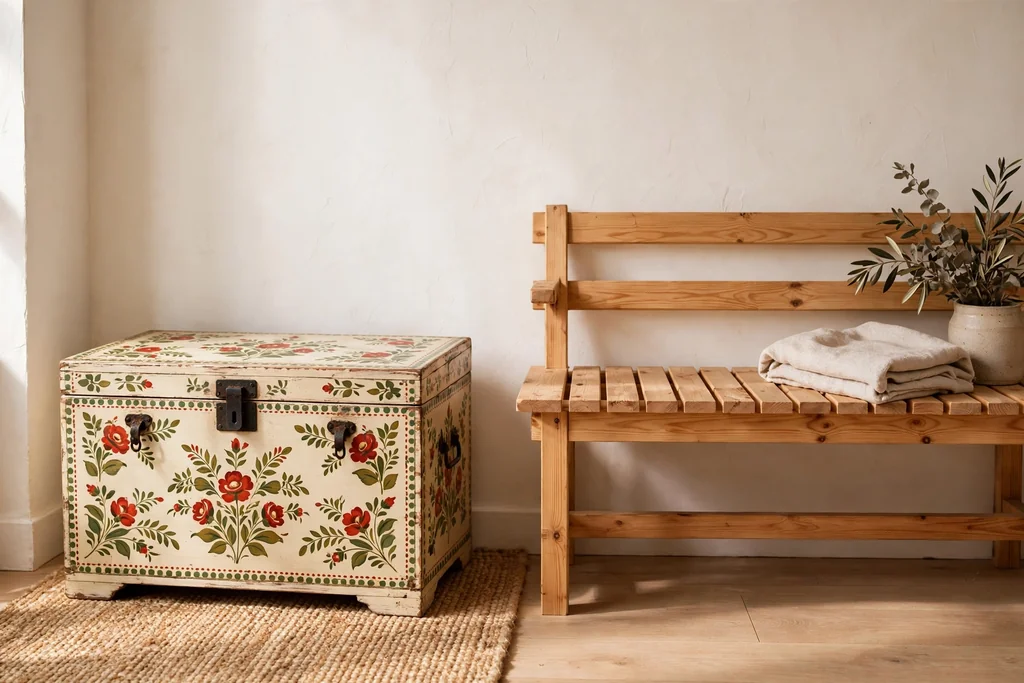
Add one painted folk piece, such as a small chest, a chair, or a wall shelf with painted floral motifs, as the handmade note in the room. Painted flowers in soft red, green, and cream suit a pine or cream piece, and the hand painted finish gives the room a craft detail that plain furniture lacks. This suits a hallway, a bedroom, or a kitchen corner where one small piece can carry the folk detail.
Place the piece where it can be seen but not bumped, such as against a short wall or beside a bed, and keep the wall behind it plain so the painting stays clear. If the piece is old, check the joints and the paint before use, and touch up only where needed, so the worn finish stays part of the look. Keep other patterns in the room quiet, so the folk painting does not fight a busy rug or curtain.
10. A Window Seat Reading Nook
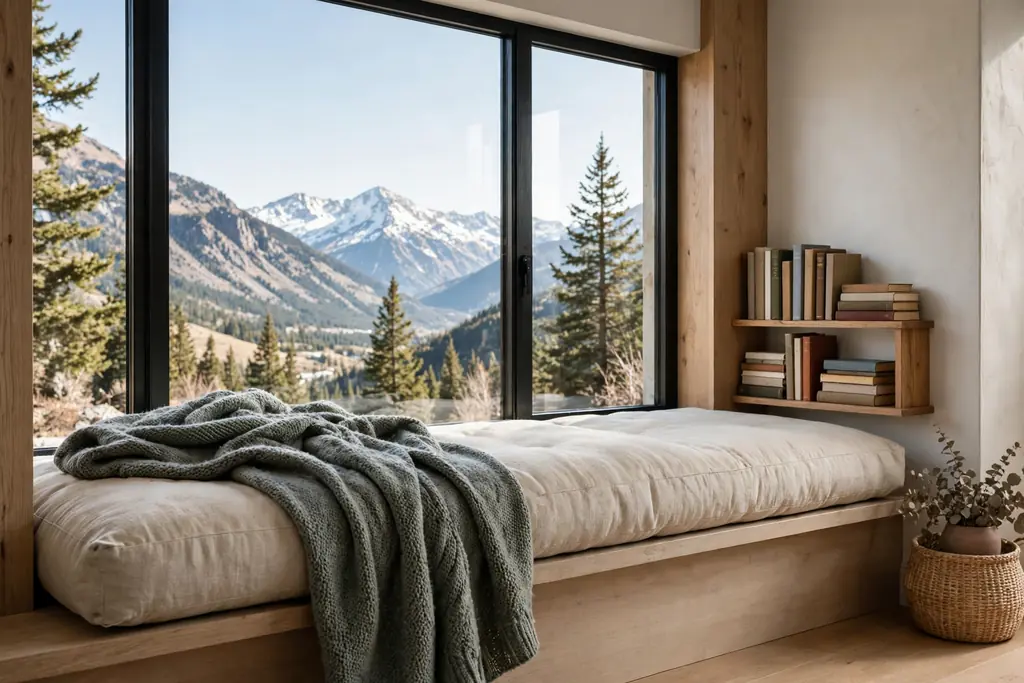
Build or dress a window seat with a thick cushion, a wool throw, and a small shelf for books, angled toward the light and the view. A window seat makes use of a corner that often stays empty, and it gives a room a seat made for quiet reading rather than for show. This suits a living room or a bedroom with a wide window and a view worth sitting beside.
Add a basket for the current book and a throw, and keep the seat surface clear for a cup, with a small side table nearby if the seat is deep. If the seat sits in direct sun, choose a fabric that fades slowly, or move the cushion a step back from the glass in strong sun. Angle a floor lamp behind one shoulder, so the nook works after dark as well as by day.
11. A Long Walnut Dining Table With Bench Seating
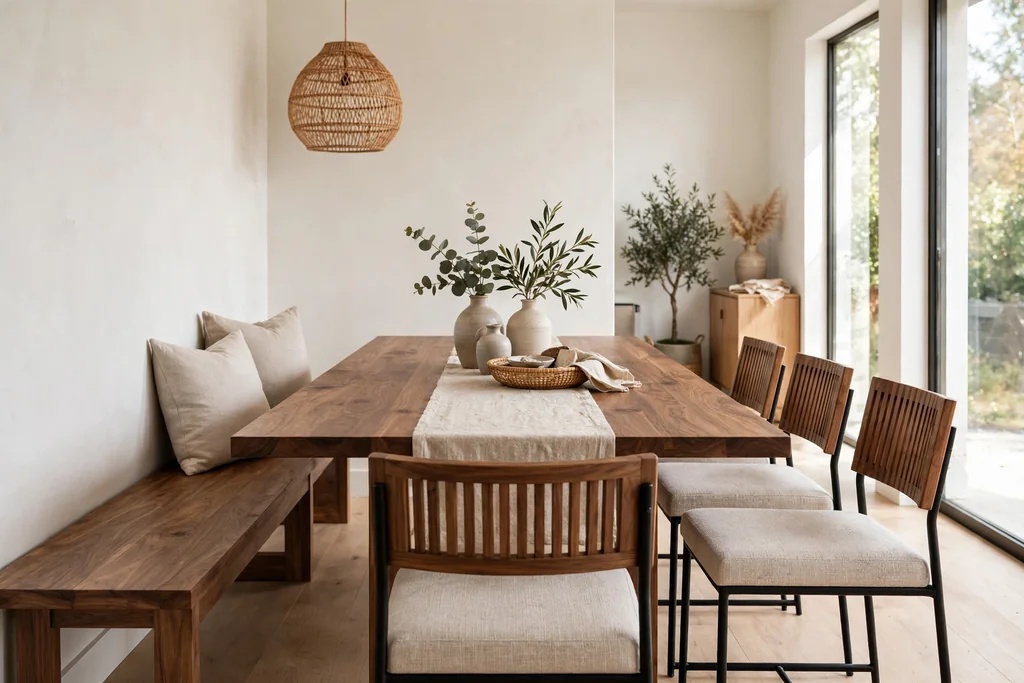
Center the dining area on a long walnut table, with a bench on one side and chairs on the other, built for slow meals and many guests. A thick wood top with visible grain feels sturdy and handmade, and a bench seats more people than the same length of chairs, which suits a household that eats together often. This suits a dining room or a kitchen dining area with room to pull the bench out fully.
Keep the tabletop mostly clear between meals, with one tray, a candle in a safe holder, and a small vase, so it stays ready for plates and homework. Choose chairs that are comfortable for a long sit, and leave enough room to pull each chair out fully. If the wood is rough, sand the top smooth and seal it so cups and glasses sit safely.
12. Open Wood Shelves With Copper Pots
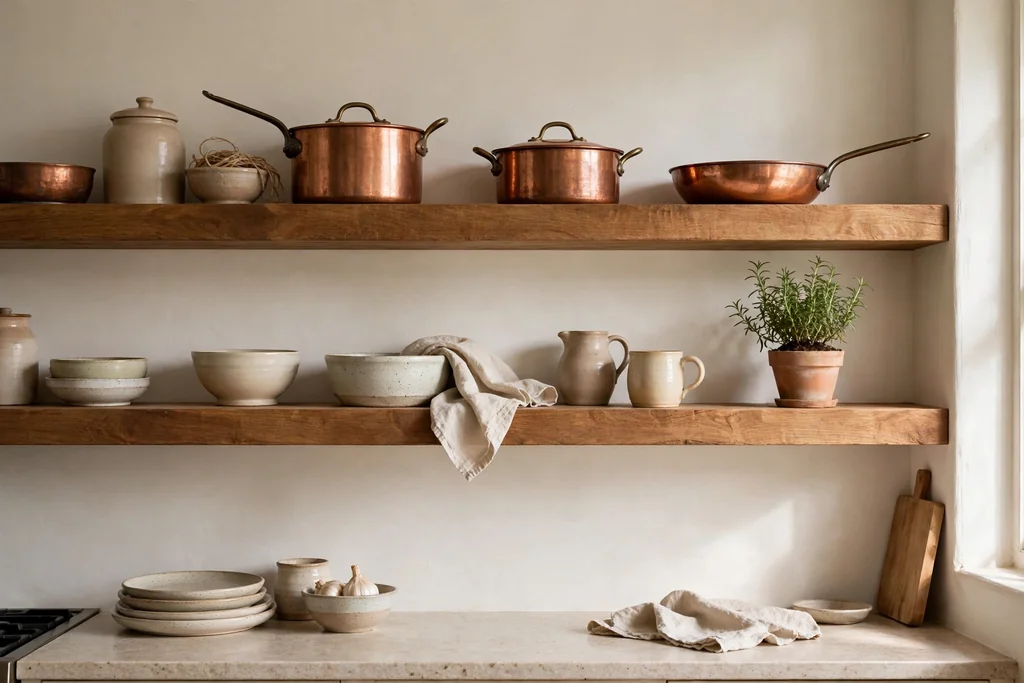
Hang open wood shelves on one kitchen wall for copper pots, ceramics, and a few herbs, and keep the display loose rather than packed. Open shelves suit an Austrian kitchen because they show the tools used daily, and copper adds a warm metal note beside pine and cream. Use thick wood shelves with simple brackets in iron or wood.
Edit the shelves hard: one row of pots hung below, a stack of bowls, a plant, and empty space between groups. If the shelves look crowded, remove a third of the objects and see how the wall breathes. Hang heavy pots low and within reach, fix shelves into studs or with fixings rated for the load, and polish copper as the maker directs.
13. A Vienna Coffee House Corner
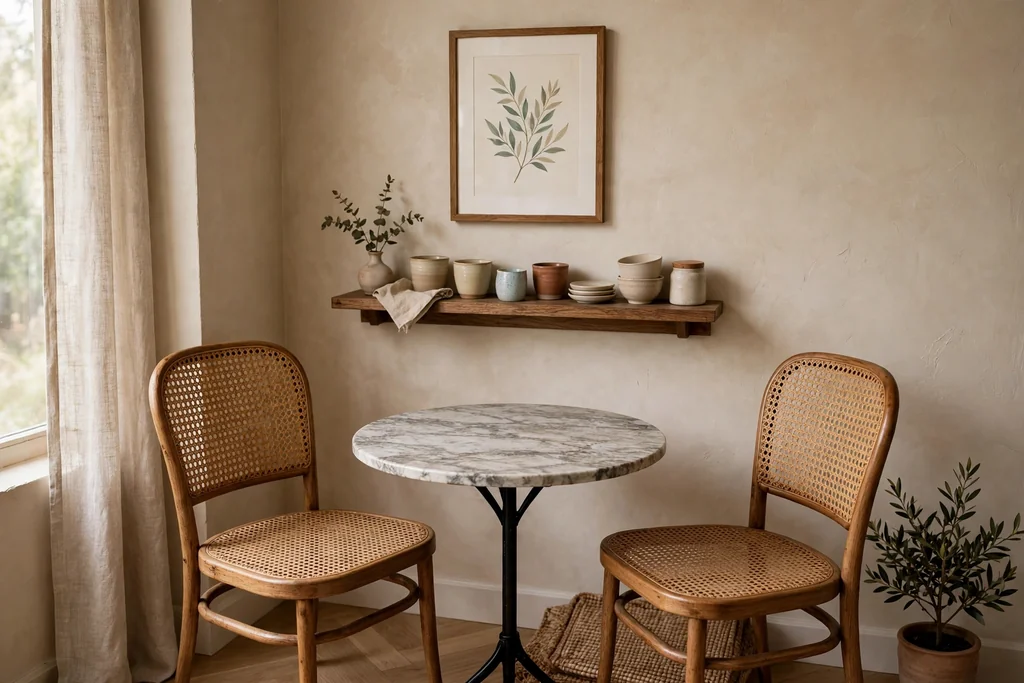
Set a small round table with a marble or wood top, two cane chairs, and a wall shelf for cups in one quiet corner, as a Vienna coffee house corner at home. The corner needs little space, and it gives the room a seat made for coffee, cake, and conversation, rather than for passing through. This suits a living room corner, a wide hallway, or a kitchen nook with good light.
Keep the table clear except for cups and a small vase, so it stays ready to use, and hang one framed print above it for a finished look. Use warm light from a wall lamp or a small table lamp in the evening, so the corner stays inviting after dark. If space is tight, a wall mounted fold down table gives most of the same benefit with less floor space used.
14. Wrought Iron Lighting and Details
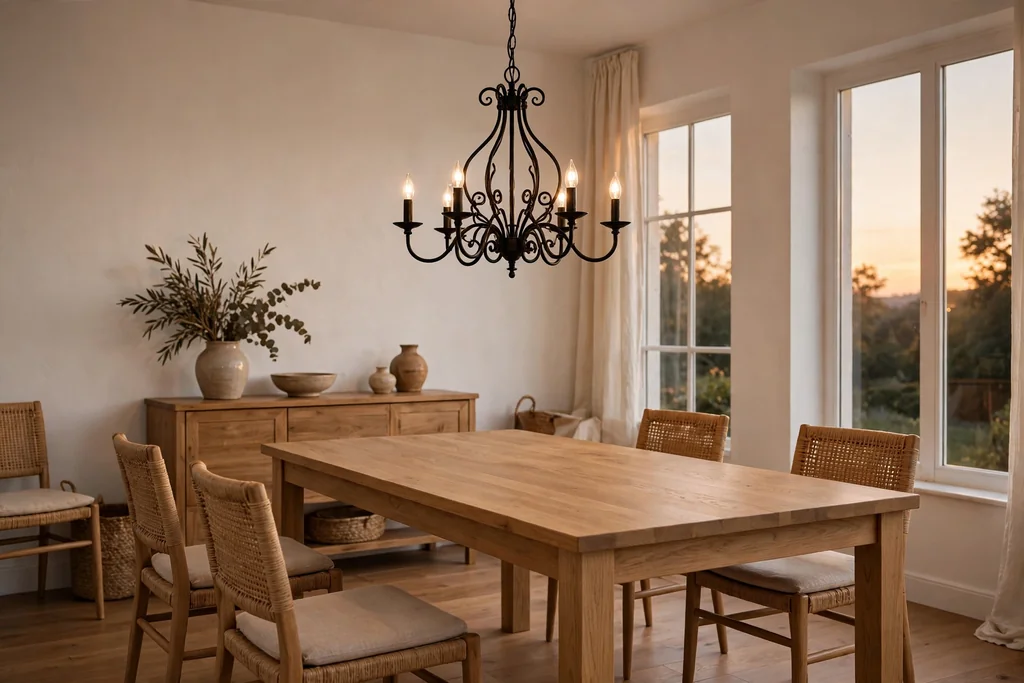
Hang a wrought iron pendant or chandelier over the dining table, or use iron curtain rods and door handles, for a handmade metal note in the room. Iron suits a room with wood beams, stone, and pine, and a simple ring or candle style fixture gives warm light without a fussy look. This suits a dining area or a hallway where one fixture can set the tone.
Hang the fixture high enough to walk under safely, and center it over the table rather than the middle of the room if the table sits off center. Use warm bulbs and a dimmer, where one is already fitted, so the light can shift from bright to soft in the evening. If the ceiling is low, choose a flush or semi flush iron fixture in the same style, so the room keeps the iron detail without losing headroom.
15. Edelweiss and Alpine Flower Embroidery
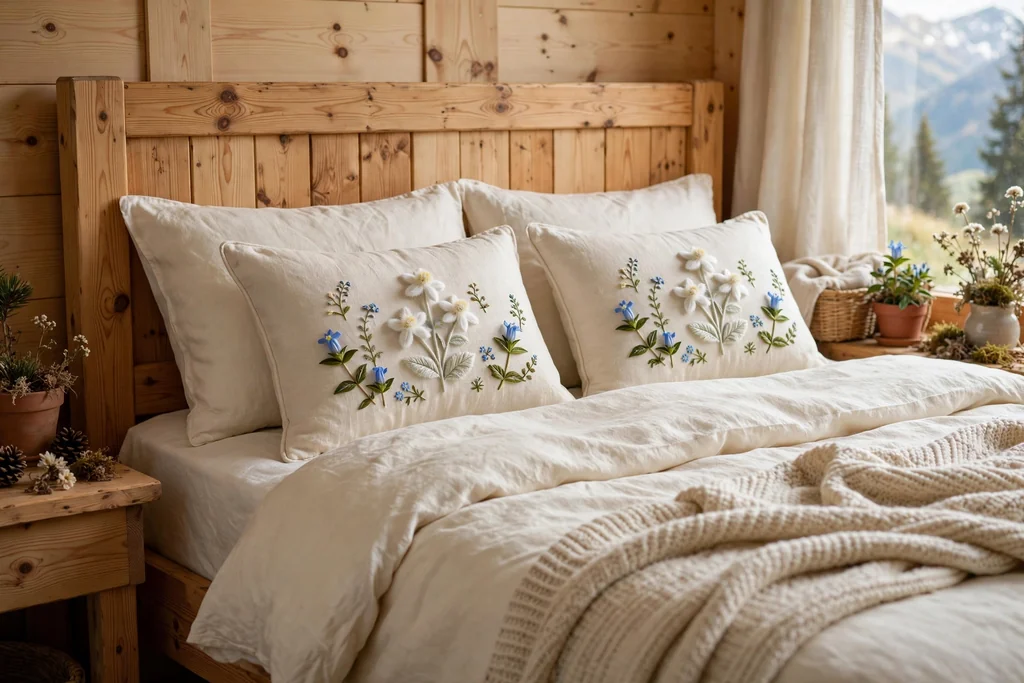
Add edelweiss and alpine flower motifs through embroidered cushions, a table runner, or framed stitch work, as a quiet folk detail. The small white and green flower shapes suit linen and wool, and they add pattern without a large print that could dominate the room. This suits a bedroom or a living room where one textile can carry the Alpine note.
Use the motif in two places, such as a cushion and a runner, and keep the rest of the bedding or sofa plain, so the embroidery stays clear. Choose linen or cotton in cream or natural tones for the base, so the stitch work reads against a calm ground. Wash embroidered pieces as the maker directs, and keep them clear of harsh sun, which can fade thread over time.
16. A Stone Fireplace With a Wood Stack
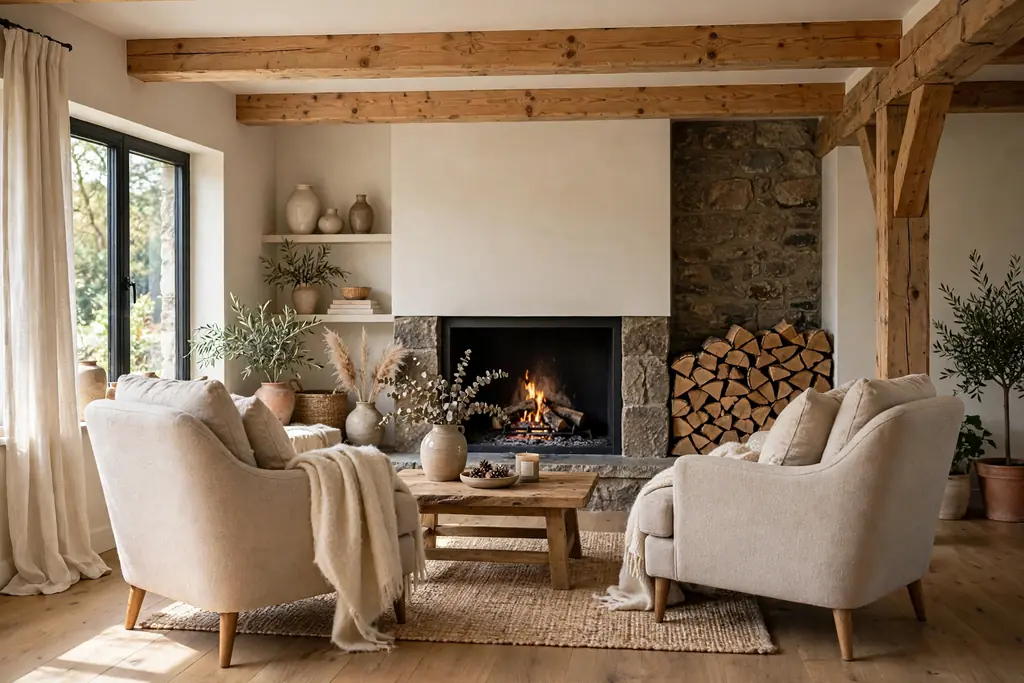
Make a stone fireplace, with a neat wood stack beside it, the focus of a living room wall, with seating turned toward the fire. Stone gives the room a solid, Alpine base, and a stacked wood pile adds a practical detail that also looks good, since it shows the fuel for the fire in an orderly way. This suits a room with a working fireplace or a plain mantel that needs a stronger presence.
Keep the hearth area clear, use a heat safe distance for rugs, and stack wood in a holder or a neat row rather than a loose pile. If you have no working fire, a plain mantel with candles in safe holders, a mirror, and a stack of books can give the same sense of a gathered wall. Keep throws and cushions clear of the fire opening for safety.
17. Window Boxes With Geraniums
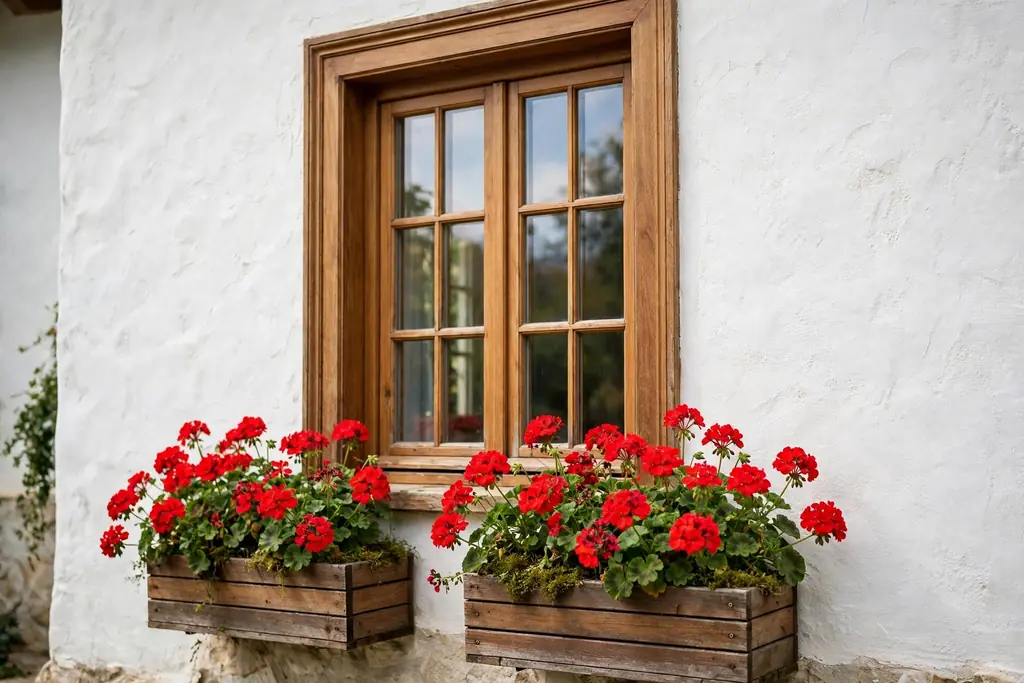
Fit window boxes with red geraniums, or other bright flowers suited to your climate, outside a window or on a balcony rail, for an Alpine house front at home. Flower boxes soften a plain facade, and the red against white plaster and wood trim gives the classic Alpine house look in a small dose. This suits a ground floor window, a balcony, or a front door step where boxes can be reached for watering.
Choose boxes with drainage holes and a sturdy bracket rated for the full weight when wet, and water only when the top of the soil feels dry. Deadhead spent flowers often, so new blooms keep coming, and bring tender plants indoors before frost where your climate requires it. Keep boxes clear of walkways, so drips do not fall on passers by.
18. Clear Glass Lighting Over the Table
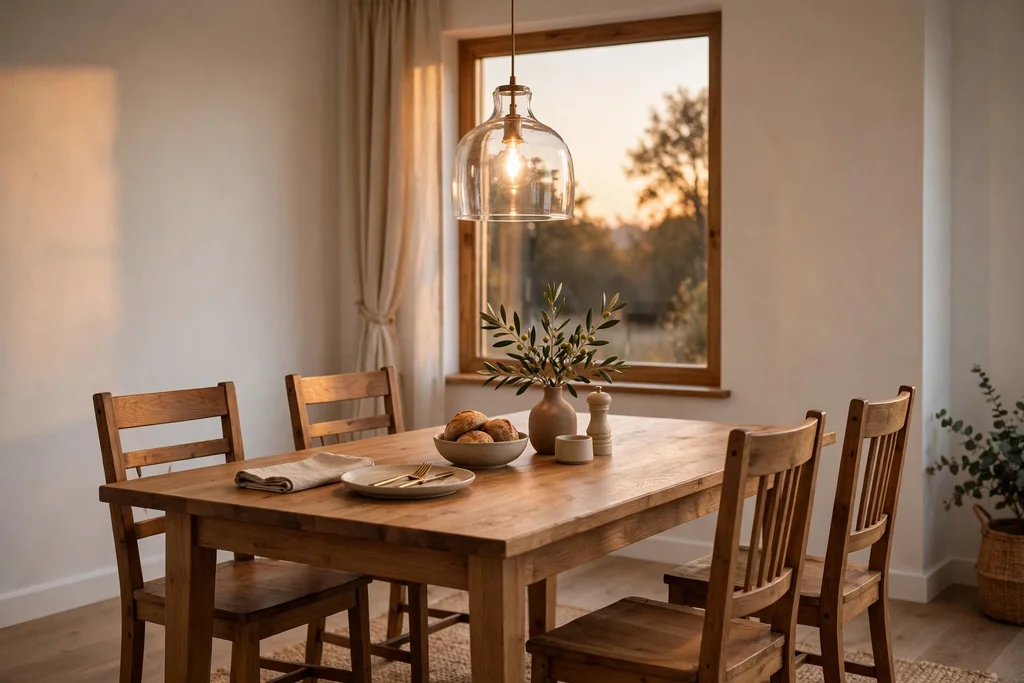
Hang a clear glass pendant or a small glass chandelier over the dining table for light that sparkles without a heavy fixture. Clear glass suits a room with walnut, pine, and linen, since it adds shine without a new color, and it keeps sight lines open across the table. This suits a dining area where a solid shade would block conversation across the table.
Hang the fixture at a height that lights the table without blocking faces, and use warm bulbs so the glass glows softly in the evening. Keep the glass clean with a soft cloth, since clear glass shows dust and fingerprints fast, and keep the fixture clear of curtains and throws. If the table is long, use two smaller pendants spaced evenly, rather than one large fixture.
19. Sheepskin Over a Wooden Chair
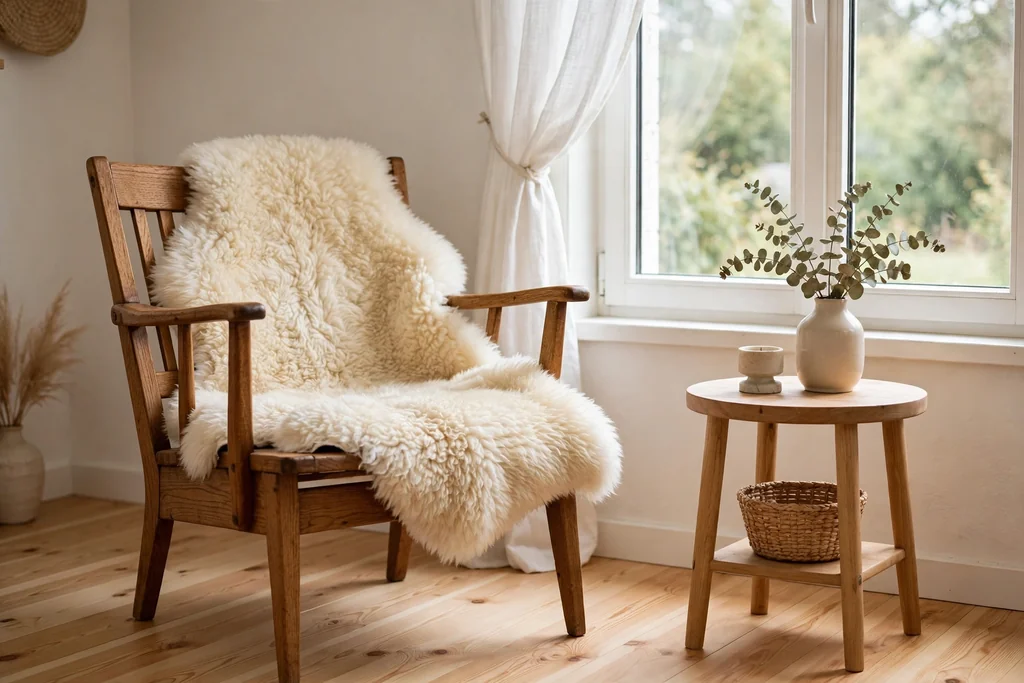
Drape a sheepskin over a wooden chair, a bench by the window, or a dining chair pulled into the living room, for instant warmth. Sheepskin adds a soft texture to a room full of smooth wood and linen, and it is a classic Alpine touch that costs far less than new furniture. This suits a chair you actually sit in, such as a reading chair or a window seat bench.
Use a real or good quality faux sheepskin in cream or natural grey, and shake it outside now and then to keep it fresh. In warm months, fold it over the chair back instead of removing it, so the room keeps its soft layer. Keep sheepskin clear of damp corners, and brush it lightly to keep the pile even.
20. Embroidered Linen Cushions and a Table Runner
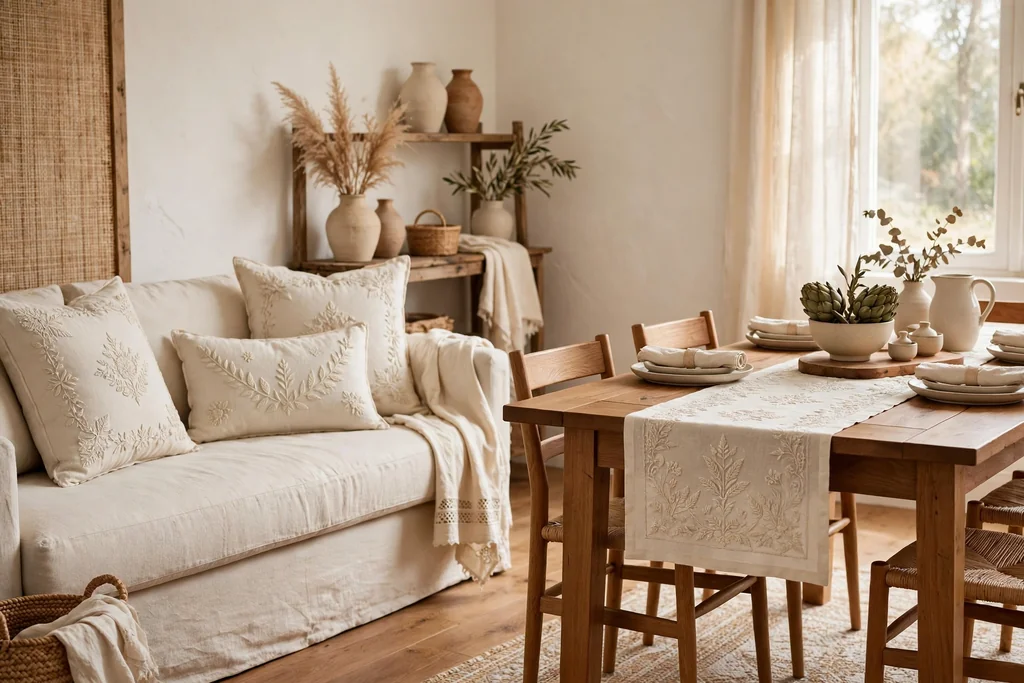
Layer embroidered linen cushions on a sofa, with a matching table runner on the dining table, for a folk detail that can be changed with the seasons. Linen in cream or natural tones gives the embroidery a calm ground, and the runner links the dining table to the sofa without a full room change. This suits a room where you want a folk note but no new furniture.
Limit cushions to three or four on a standard sofa, in mixed textures rather than mixed patterns, so the seat stays comfortable. Keep the runner centered on the table, with a plain cloth beneath it for meals, so the embroidery stays protected. Wash linen as the maker directs, and iron the runner while slightly damp for a smooth finish.
21. An Entryway Bench With Coat Hooks and a Boot Tray
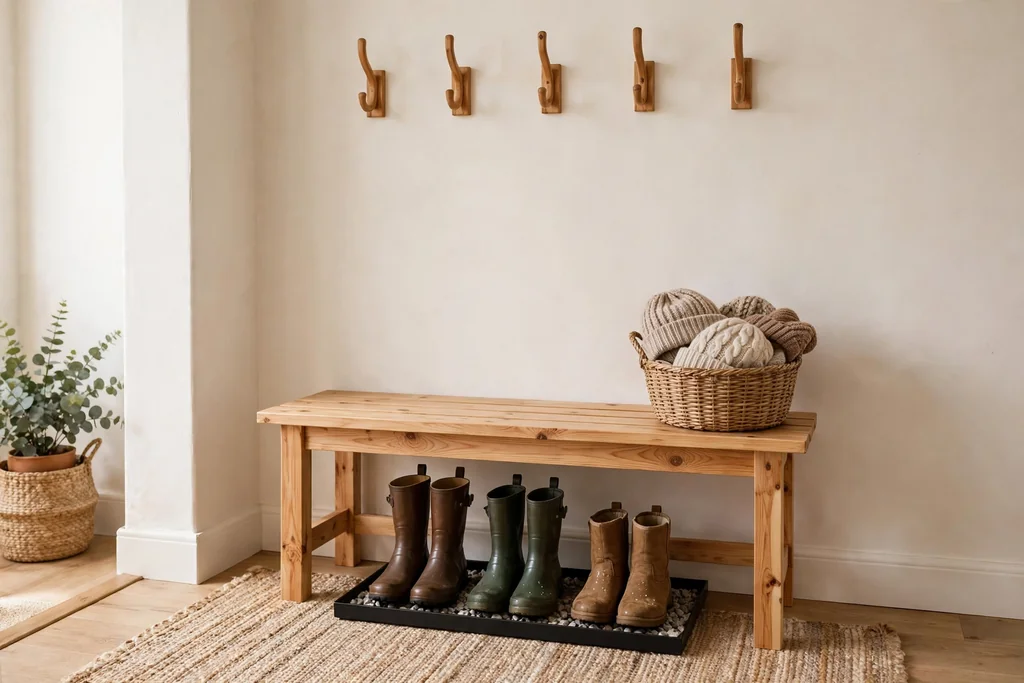
Place a pine bench in the entryway, with coat hooks above it and a boot tray below, to give coats, bags, and boots a clear home at the door. An entryway bench makes coming home easier, since it gives a seat for putting on boots and a place to set a bag, rather than a pile by the door. This suits a hallway, a mudroom, or a flat entry with one short wall.
Keep the bench top mostly clear, with one basket for hats and gloves, and keep hooks at a height every user can reach. Use a tray with a raised edge for boots, so mud and water stay off the floor, and empty the tray often in wet weather. If the entry is narrow, choose a slim bench and hooks on the wall, rather than a deep unit that blocks the walkway.
22. A Gallery of Framed Alpine Landscape Prints
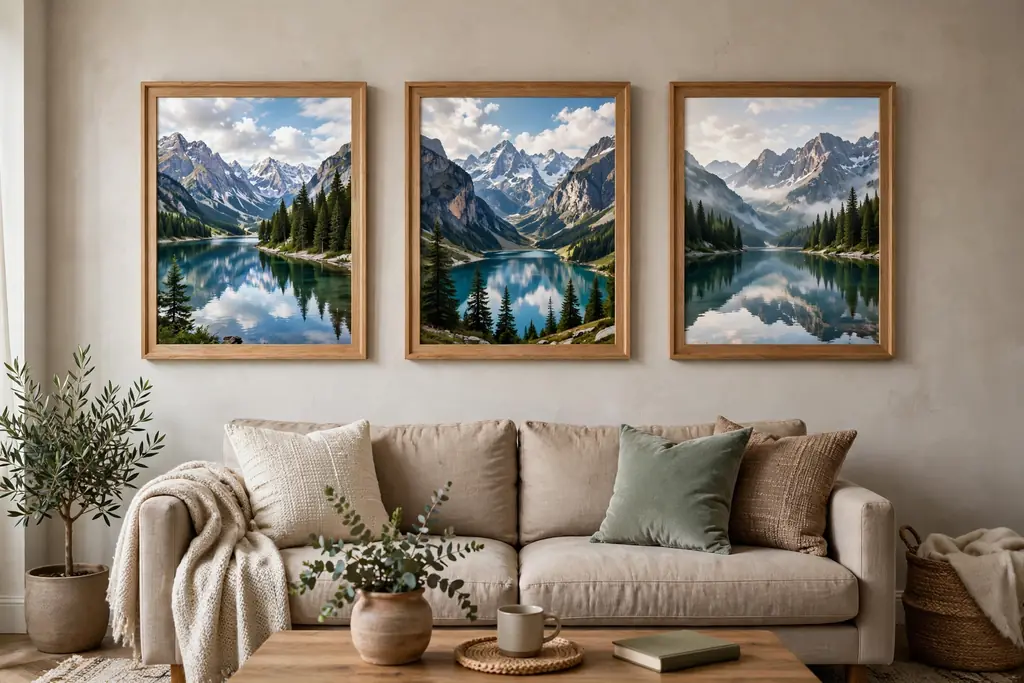
Hang a gallery of framed Alpine landscape prints, such as mountains, lakes, and village streets, on one living room wall for a clear focus. Choose three or more pieces in similar sizes, and hang them in matching wood frames at eye level, centered on the sofa or a sideboard. Matching frames make different images look like a set, which is calmer than a mix of frame styles scattered around the room.
Leave breathing room between frames, and use secure fixings suited to the wall and the weight. Avoid hanging heavy frames directly above a bed or a seat where fixings could fail, and keep the largest piece at the center of the group. If you prefer a quieter wall, use one large print above the sofa and leave the other walls plain, so the art stays the focus.
23. A Winter Corner With Pine Branches and Candles
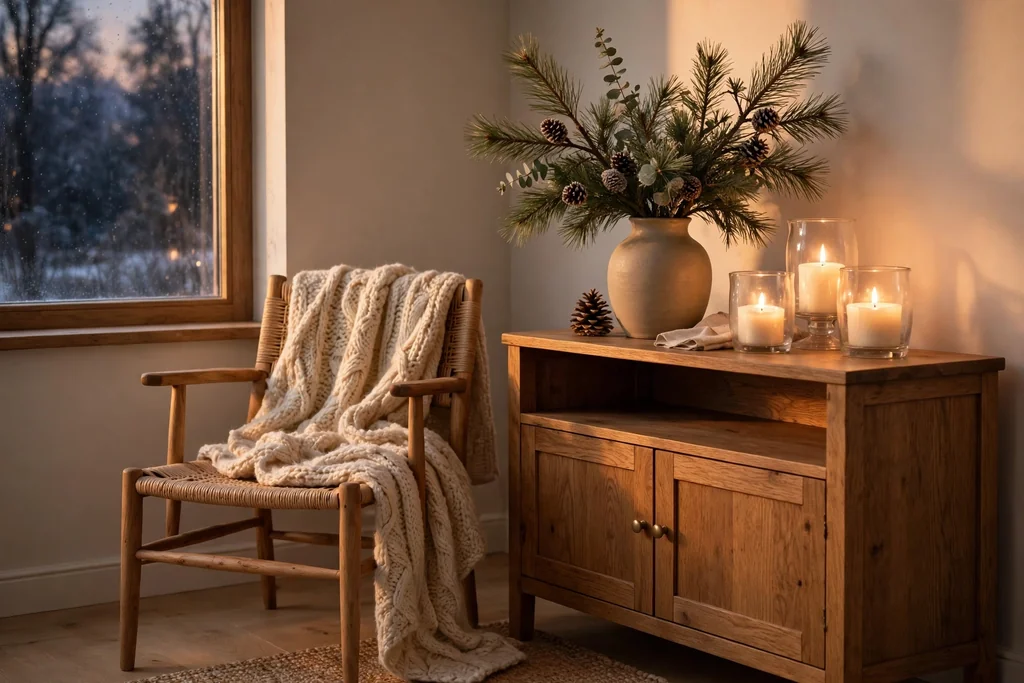
Make a winter corner with pine branches in a vase, candles in safe holders, and a wool throw on a nearby chair, for a seasonal Austrian detail that needs no new furniture. Pine branches add scent and green in winter, candles give low warm light, and the throw makes the corner a seat rather than a display. This suits a sideboard, a mantel, or a window sill in the colder months.
Use sturdy candle holders that cannot tip easily, keep candles clear of curtains, throws, and paper, and never leave them burning in an empty room. Battery candles give a similar glow where real flames are not practical, such as a shelf near books. Replace pine branches when they dry out, and keep the corner to one group of items, so it reads as calm rather than crowded.
Conclusion
Austrian home decor comes down to warm materials used with restraint: pine and walnut, warm white plaster, stone, cane, and wool, with one folk or city detail at a time. Start with the base of the room, add a gathering point such as a tile stove, a fireplace, or a coffee corner, then layer textiles that you can change with the seasons. Keep the palette to three or four tones, repeat each tone at least twice, and leave surfaces clear enough for daily life.
If you found an idea here that suits your room, save this post on Pinterest so you can find it again when you are ready to start. Save the idea you like most, whether it is a cane chair, a tile stove corner, or a window seat nook, and use it as a guide for your next refresh, one layer at a time.
FAQs
What colors suit Austrian home decor?
Warm white, pine, walnut, deep green, and red form the core palette, with cream linen and stone grey as quiet supports. Keep the base warm white or pale pine, use deep green or red in textiles and tiles, and repeat each color at least twice, so the room looks planned. Avoid adding a new bright color in every corner, since the Austrian look relies on a limited palette and natural materials.
How can I get an Alpine chalet look in a flat?
Start with wood and textiles, not building work. Add a pine bench, a wool throw, a sheepskin over a chair, and checked or embroidered cushions, and keep walls in warm white. A window seat cushion, a wood stack in a basket, and framed mountain prints add the chalet note without beams or a fireplace. If you rent, use freestanding pieces and textiles, so the look can move with you.
What is Biedermeier furniture, and how do I use it?
Biedermeier furniture is an early 1800s Central European style known for clean curves, pale or walnut wood, and simple lines, without heavy carving. Use one piece, such as a curved chair or a walnut chest, as the refined note in a room, and pair it with plain linen and a simple rug, so the wood stays the detail. A full set can feel formal, so one piece beside simpler furniture usually works better.
What is a Kachelofen, and can I copy the look without one?
A Kachelofen is a tall tiled stove, often in glazed ceramic tiles, that warms a room slowly and gives it a clear heart. If you have no working stove, copy the gathered corner with a plain mantel, candles in safe holders, a mirror, and a stack of books, with seating turned toward it. A tiled hearth, a green ceramic vase group, or a wood burner in a tiled corner can give a similar tiled note.
How do I mix Alpine folk details with city style?
Let one side lead and the other support it. In a city flat, use Biedermeier wood and cane chairs as the base, and add one folk detail, such as a checked tablecloth or an embroidered runner. In a chalet style room, use pine and stone as the base, and add one city piece, such as a cane chair or a clear glass pendant. Keep the palette shared, so folk and city pieces link through the same wood and textile tones.
How do I keep an Austrian room from feeling like a theme set?
Use folk and Alpine details in small doses, and keep most of the room plain and practical. Choose one or two themed pieces, such as a painted chest or a tile stove corner, and let the rest of the room be plain wood, linen, and warm white walls. Leave surfaces mostly clear, use pieces you actually sit on and eat at, and swap textiles with the seasons, so the room feels lived in rather than staged.