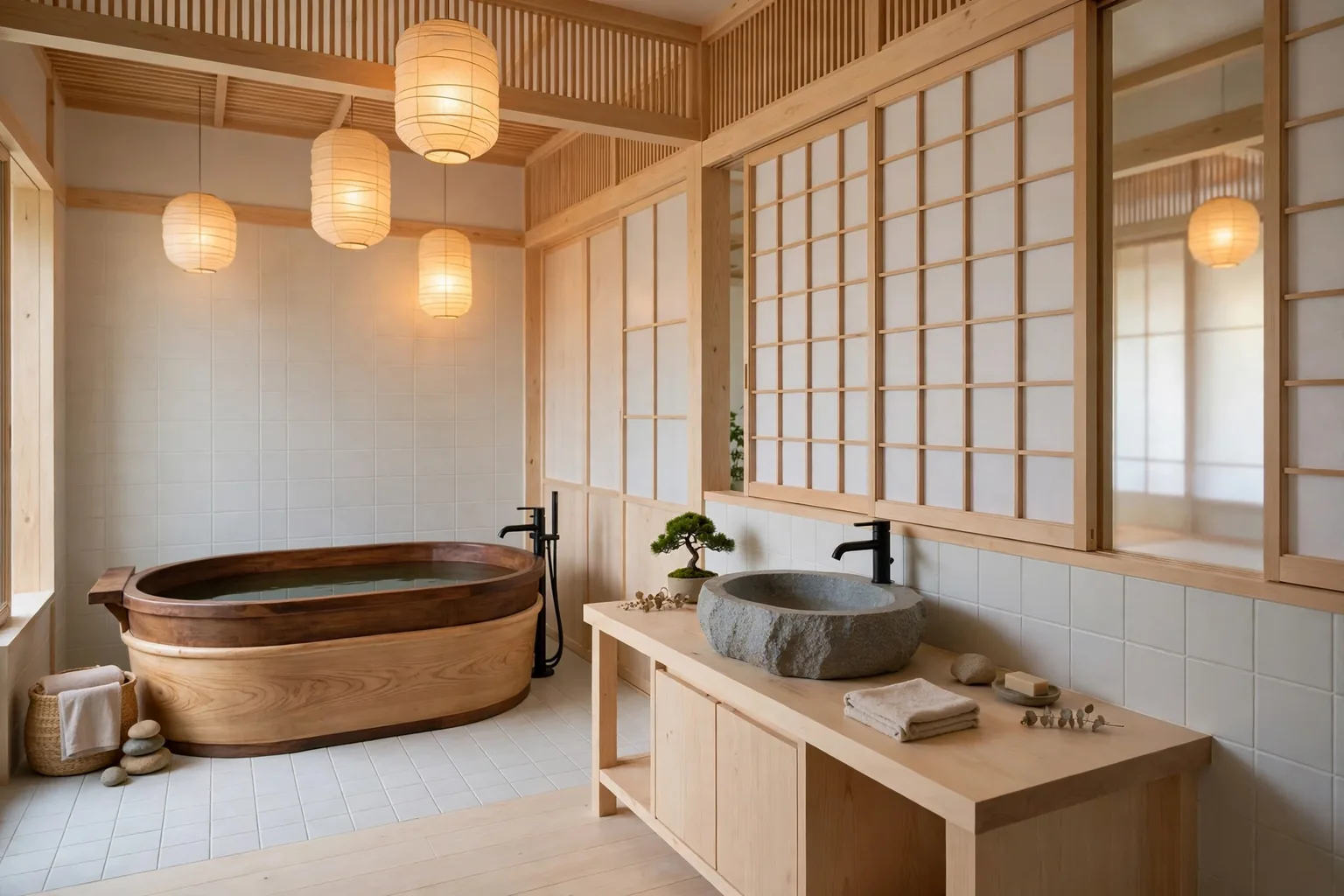
Japanese bathrooms are built around quiet routines: washing before soaking, sitting low, and letting water, wood, and light do most of the work. Natural wood, stone, bamboo, and soft paper light replace busy patterns, while each item earns its place by being used every day. These 31 Japanese bathroom decor ideas cover tubs, showers, vanities, storage, lighting, plants, and small rituals you can start this week. Begin with one material you can repeat, such as hinoki wood or bamboo, and keep counters clear so the room stays easy to clean. If you like the same calm palette in a cooler, northern style, these Swedish bathroom ideas show how pale wood and white tile create a similar restful room.
Key Takeaways
- Build the look on natural materials first: wood, stone, bamboo, cotton linen, and paper light, rather than on themed ornaments.
- Repeat one wood tone in two or three places, such as the bath mat, a stool, and a mirror frame, so the room reads as planned.
- Separate washing and soaking in your routine: a rinse area, a stool, and a deep tub make even a short bath feel unhurried.
- Keep surfaces mostly clear and store daily items in baskets or closed cabinets, since calm is the whole point of the style.
- Choose water tolerant finishes near the tub and shower, and keep untreated wood, paper, and fabric on drier walls.
- Add warmth last with soft light, a plant, and a simple soaking tray, so the room feels settled rather than crowded.
1. Deep Ofuro Soaking Tub
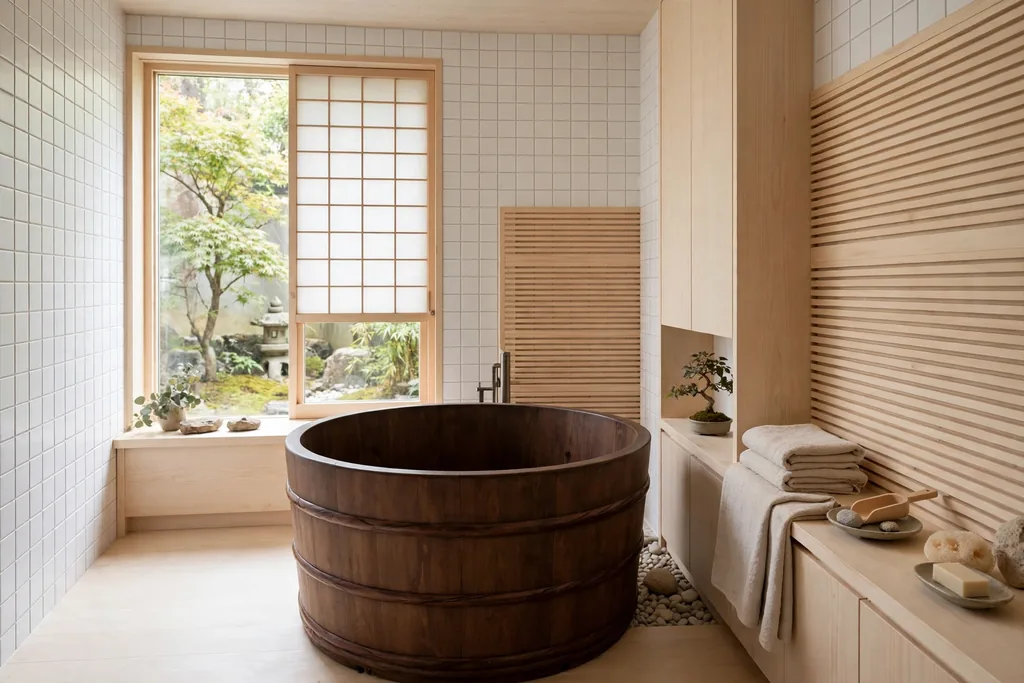
Choose a deep, compact soaking tub in the ofuro style for baths that cover the shoulders while seated upright. The tub is shorter than a standard Western tub but deeper, so it fits a small bathroom and still gives a full soak. A freestanding oval or rectangular tub in white acrylic, stone resin, or wood-look composite keeps the shape simple and the focus on the water.
Keep the floor around the tub clear, with a duckboard mat and a small stool nearby for towels and a drink. Check the floor load and the water heater capacity before fitting a deep tub, since it holds more water than a shallow tub. If a new tub is not planned, a deeper soak can be borrowed in miniature with a foot soak basin and a warm towel routine after a shower.
2. Hinoki Wood Duckboard Bath Mat
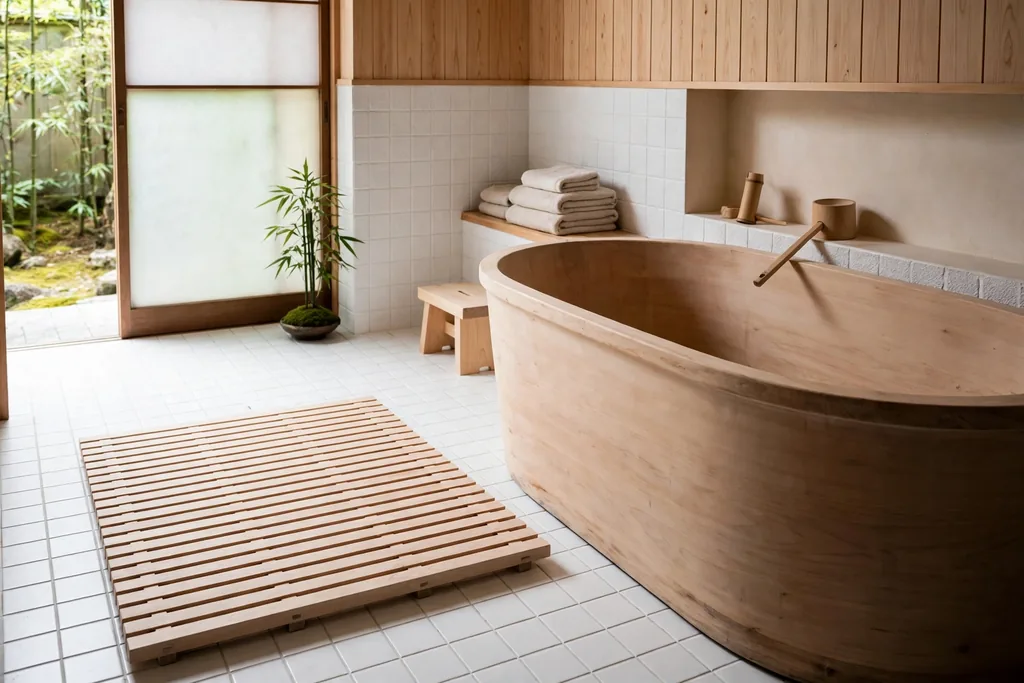
Lay a hinoki cypress duckboard mat beside the tub for a warm, scented surface underfoot. Hinoki is a pale Japanese cypress prized for baths, and its light scent suits a steamy room. The slatted boards let water drain and air move, so the mat dries faster than a thick fabric rug.
Lift the mat after baths and lean it upright to dry fully, and oil it now and then with a wood oil suited to wet rooms. Keep the mat clear of direct shower spray when possible, so it lasts longer. If hinoki is hard to find, a teak or cedar duckboard gives a similar warm wood feel with the same drainage benefit.
3. Shoji Frosted Glass Shower Screen
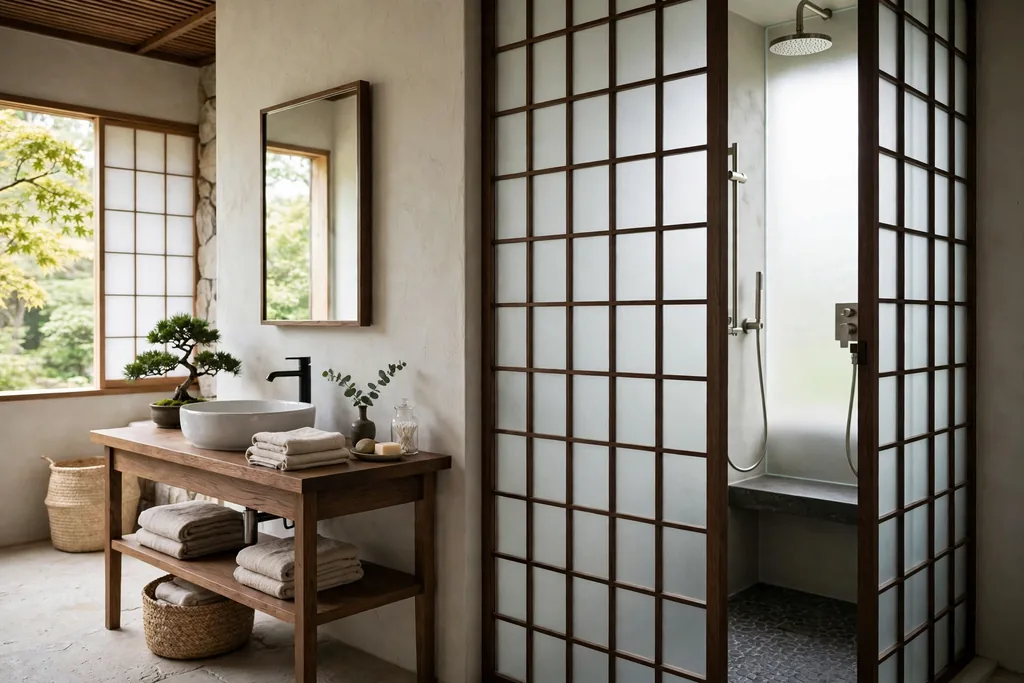
Fit a shoji-style shower screen with frosted glass panels in a slim wood or dark metal frame for privacy that still lets light through. The grid pattern reads as Japanese at a glance, while the frosted glass keeps the shower private and the room bright. A single fixed panel suits a walk-in shower, and a folding panel suits a tub with a shower above it.
Keep the frame finish matched to the taps or mirror frame, and wipe the glass weekly to stop limescale marks. Use toughened safety glass rated for bathrooms, and keep the lower track clear of soap buildup. This screen works best where the rest of the room is plain, so the grid can carry the pattern.
4. Bamboo Towel Ladder
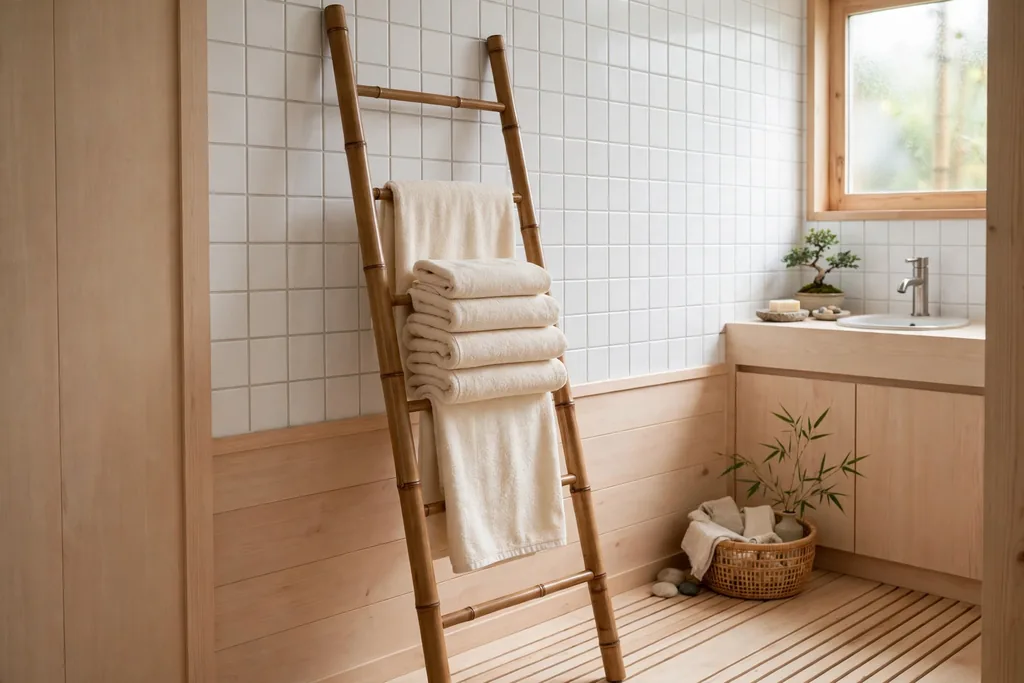
Lean a bamboo towel ladder against a spare wall for towels, a robe, and a hanging wash bag. The ladder needs no drilling, gives four or five rungs in the footprint of a towel bar, and suits a narrow wall beside the door or at the end of the tub. Bamboo keeps the look light and warm, and it copes well with bathroom humidity when dried between uses.
Put heavier towels on the lower rungs and lighter items higher up, and add small adhesive pads under the feet so it does not slide on tile. Check that the top cannot tip forward if a child pulls on it, and anchor it if your household needs that safety. A ladder also works as a drying rack for hand washed items.
5. Stone Vessel Basin
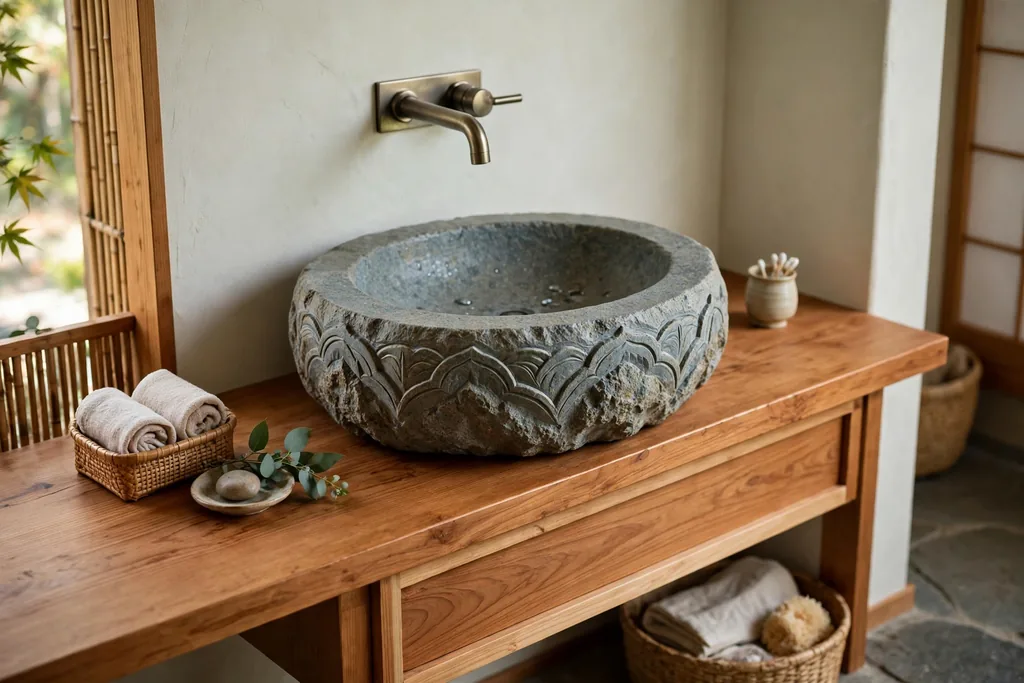
Set a carved stone vessel basin on a wood vanity for a sink that feels like a garden basin brought indoors. The rough stone texture contrasts with smooth tile and pale walls, and the bowl shape suits a single tap mounted on the wall or on a tall stand. Stone basins suit bathrooms with a plain vanity, where the basin can be the main feature.
Seal the stone at install and reseal now and then, since stone can stain from soap and toothpaste. Keep the counter clear apart from a soap dish and a small tray, so the basin stays visible. Check the vanity can carry the weight of a stone basin, and choose a basin height that leaves comfortable hand washing room.
6. River Pebble Shower Floor
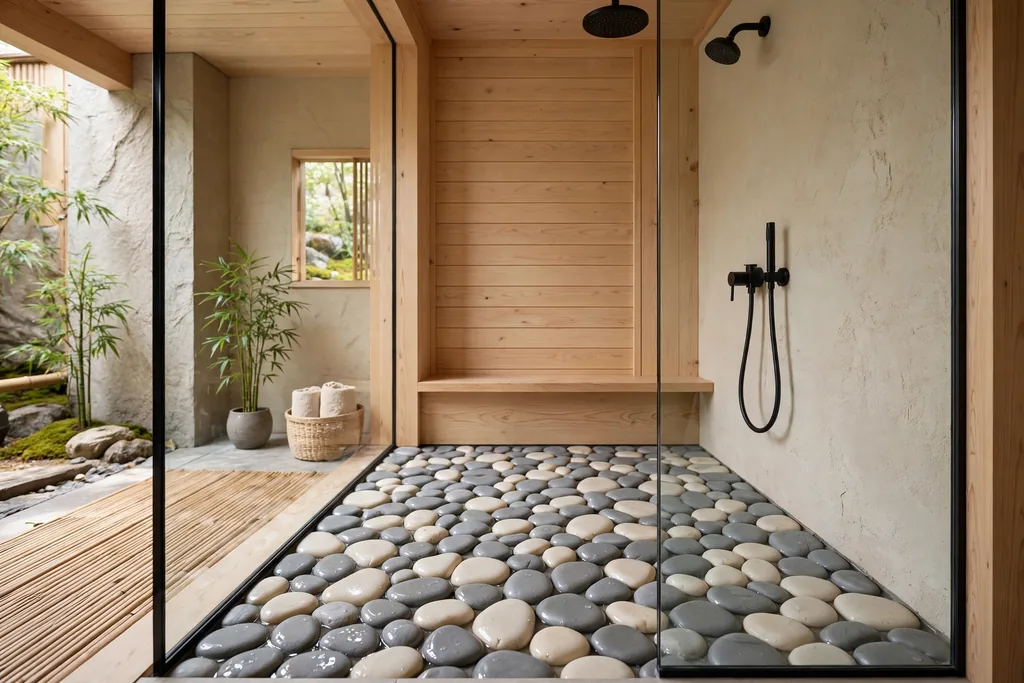
Lay smooth river pebbles as a shower floor for a surface that feels like standing in a stream bed. The rounded stones massage the feet, drain well between the gaps, and bring a natural texture that flat tile cannot match. Pebbles in soft grey, cream, and pale brown suit most bathroom palettes and hide water marks well.
Choose pebbles fixed on mesh sheets with grout rated for wet rooms, and seal the grout so it resists mildew. Test the texture barefoot before committing, since some people prefer flatter pebbles. Keep a small brush for cleaning the grout lines, and slope the floor correctly toward the drain so water never pools between stones.
7. Cedar Rinse Bucket and Stool Set
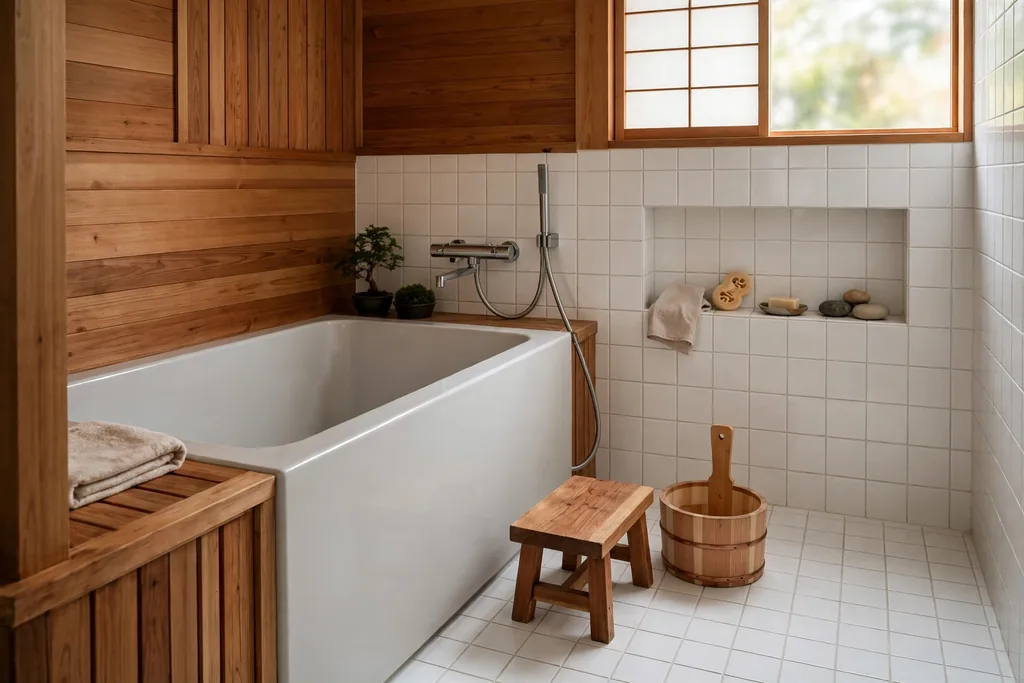
Add a cedar rinse bucket and a low washing stool for the Japanese habit of washing seated before soaking. The bucket holds warm rinse water, and the stool puts you at a comfortable height beside the tub or in the shower. Cedar copes well with humidity and stays pleasant to sit on, and the set takes very little floor space.
Keep the bucket and stool near the shower or tub, with a small shelf for soap and a washcloth. Empty and dry the bucket after use, and oil the stool now and then with a wood oil suited to wet rooms. This set suits a household that wants a slower bathing routine without changing any plumbing.
8. Washi Paper Pendant Light
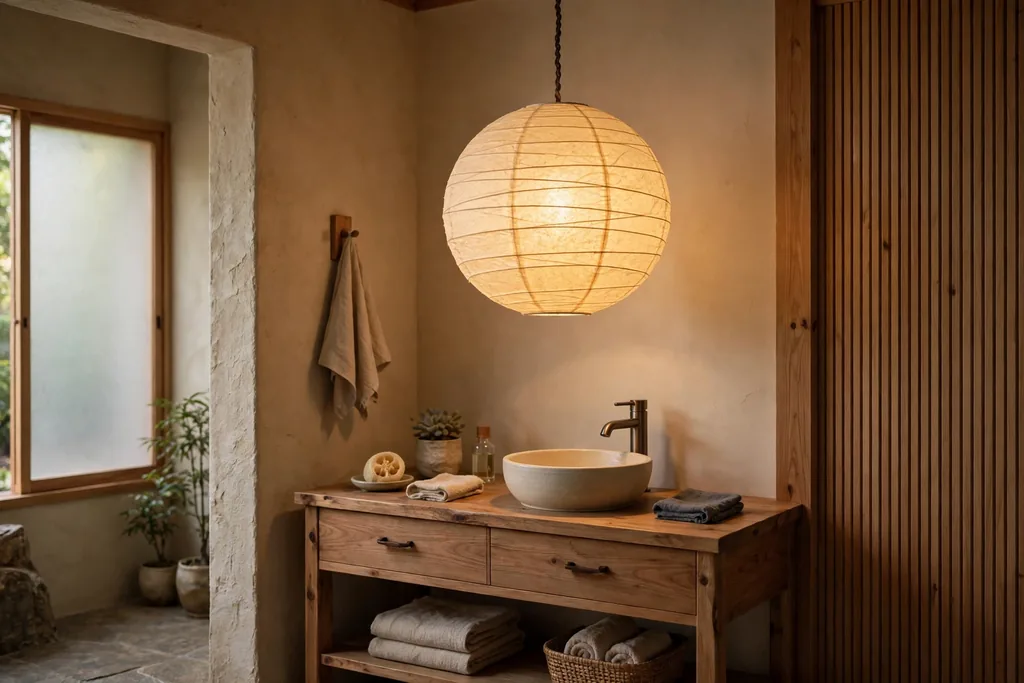
Hang a washi paper pendant light over the vanity or in a corner for soft, diffused light that flatters faces and calms the room. The paper shade glows warmly and hides the bulb, so the light feels gentle rather than clinical. A round or drum shade suits most bathrooms, while a long lantern shape suits a tall corner.
Keep the pendant clear of direct shower spray and steam paths, and choose a bulb that runs cool. Dust the shade gently with a dry cloth, and replace a stained shade rather than washing paper. If wiring a new pendant is not possible, a battery paper lantern on a high shelf gives a similar glow with no electrical work.
9. Indigo Noren Curtain
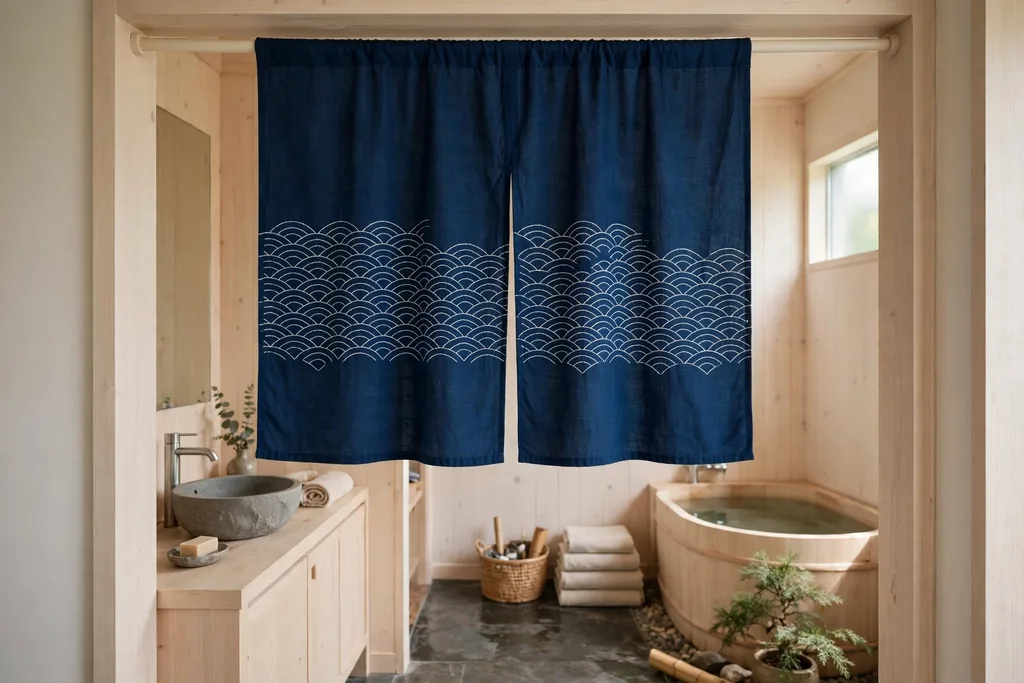
Hang an indigo noren curtain in a doorway or across open shelving for a soft fabric divider with a Japanese shopfront feel. The short split curtain covers the lower half of an opening, so it hides storage while still letting air and light pass. Indigo dye gives a deep blue that pairs well with pale wood, white tile, and stone.
Choose a washable cotton noren and wash it regularly, since bathroom humidity breeds mildew on fabric. Hang it from a slim tension rod so renters can fit it with no drilling. Keep the curtain clear of direct shower spray, and use it on a dry wall, such as over a laundry nook or a linen shelf, rather than inside the shower zone.
10. Sliding Shoji-Front Vanity Cabinets
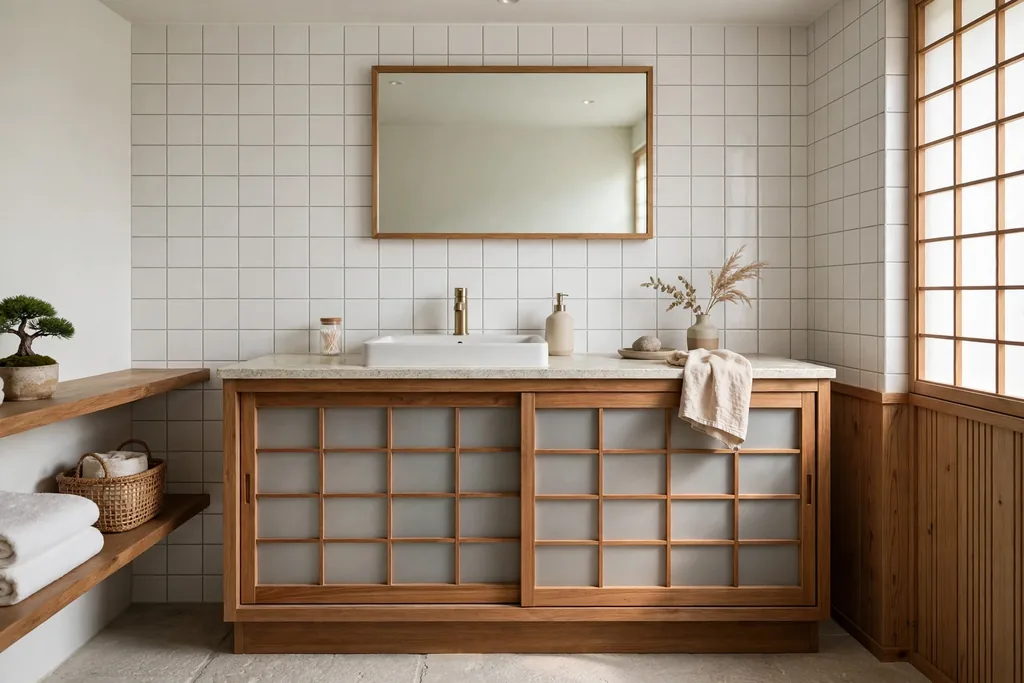
Fit vanity cabinets with sliding shoji-style fronts for storage that opens without swinging doors into a small room. The frosted panels hide toiletries while keeping the vanity light, and the sliding action suits a narrow bathroom where a door would hit the toilet or the tub. A wood frame keeps the panels warm against white tile.
Keep daily items in the front section and spare stock behind, so the most used cabinet opens first. Wipe the frames dry after steamy showers so wood does not darken over time. If a full vanity swap is too large a job, shoji-style panels fixed to an existing cabinet front give a similar look for far less work.
11. Bonsai Display Shelf
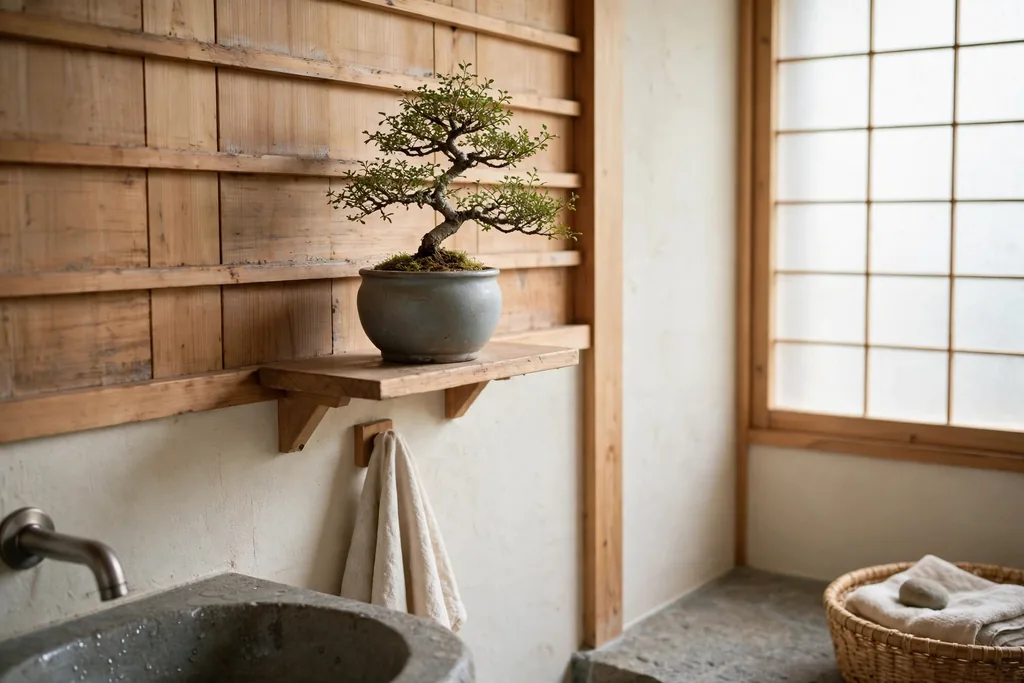
Place a small bonsai on a wall shelf or a window ledge for a living focal point that rewards slow care. A juniper or ficus bonsai suits indoor light, and a shallow ceramic pot in a muted glaze keeps the display calm. The tree adds green without taking floor space, and its pruned shape suits the tidy Japanese feel.
Keep the bonsai in bright indirect light, water it when the soil surface dries, and rotate the pot weekly so growth stays even. Choose a pot with a drainage hole and a saucer, and keep the shelf clear of direct shower spray. If bonsai care feels demanding, a small potted fern on the same shelf gives green with less pruning.
12. Charcoal and Warm Wood Palette
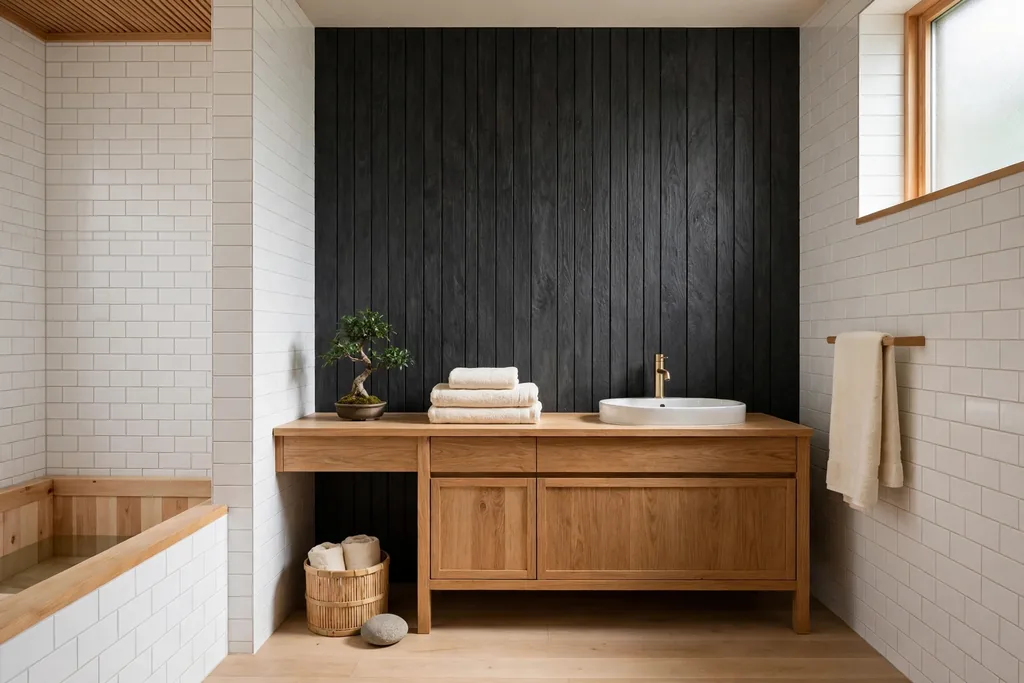
Paint the walls or one feature wall in a soft charcoal, and pair it with warm wood, white tile, and cream towels for a grounded Japanese palette. The dark wall makes wood grain stand out and gives the room depth, while pale tile and a clear mirror keep it from feeling closed in. This palette suits a bathroom with good daylight or strong warm lighting.
Test the charcoal in daylight and evening light before painting a large area, since dark paint reads darker on a wall than on a sample card. Keep the ceiling and the upper walls pale, and repeat the wood tone in the vanity and mirror frame. If full dark walls feel bold, start with charcoal on the wall behind the vanity only.
13. Bamboo Accessory Tray
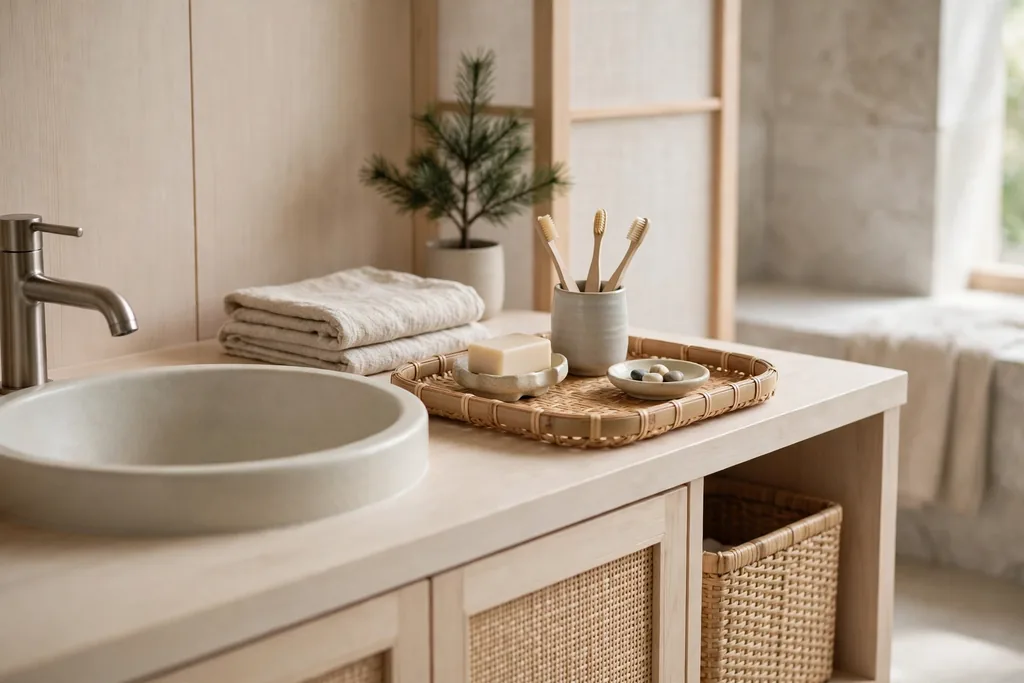
Group soap, a toothbrush cup, and a small dish on a bamboo tray beside the basin for a tidy sink zone. The tray corrals daily items into one group, so the counter stays clear and cleaning takes seconds. Bamboo suits the Japanese material palette, and a tray with a raised edge stops bottles from sliding off.
Keep the tray to daily items only, and move spare stock into a cabinet or basket. Dry the tray between uses, since standing water stains bamboo over time. A single bamboo tray can also hold a candle kept safely away from towels and curtains, plus a small stone dish, into one calm group.
14. Tatami-Look Washable Bath Rug
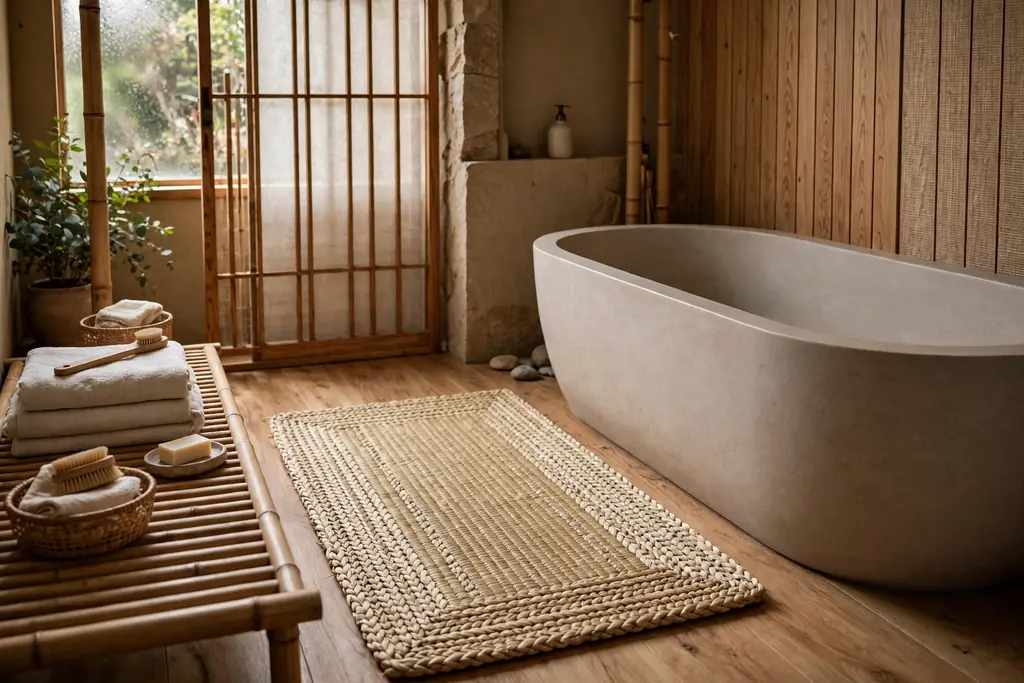
Lay a washable rug with a tatami straw look beside the tub for woven texture underfoot without real straw in a wet room. The woven pattern brings the tatami room feel into the bathroom, while a washable cotton or synthetic weave copes with splashes and laundry. A long runner suits a galley bathroom, and a square rug suits the space beside a freestanding tub.
Wash the rug often, and hang it to dry fully between uses so it never stays damp on tile. Keep a second rug in rotation so the bathroom never sits bare on wash day. Choose a rug with a non-slip backing, and keep it clear of the direct shower spray line where possible.
15. Japanese Maple Print in a Sealed Frame
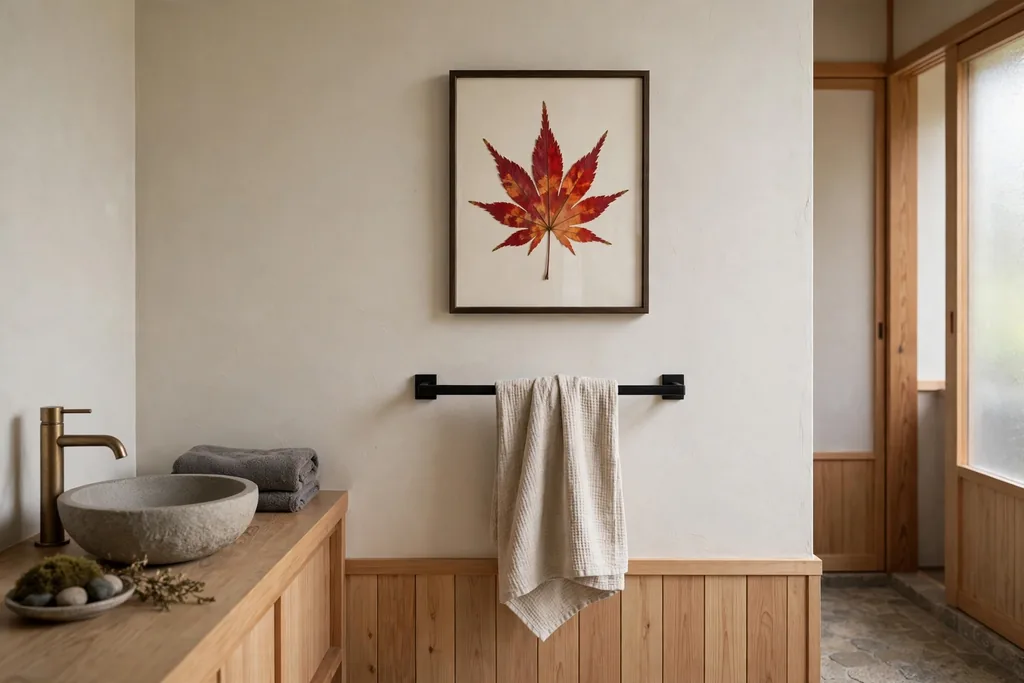
Hang a framed print of Japanese maple leaves or a simple mountain scene on the driest wall of the bathroom. The seasonal image brings nature indoors in a quiet way, and a single large print can anchor a plain wall without crowding it. Maple red or soft green suits a pale bathroom, while a black and white ink style print suits a charcoal wall.
Use a frame with a sealed back or an acrylic cover, and avoid hanging unprotected paper directly beside the shower, where steam will cockle it over time. Keep the spacing even if you hang a pair, and use adhesive strips on tile if drilling is not allowed. One print above a towel rail is an easy starting layout.
16. Open Wood Shelving with Rolled Towels
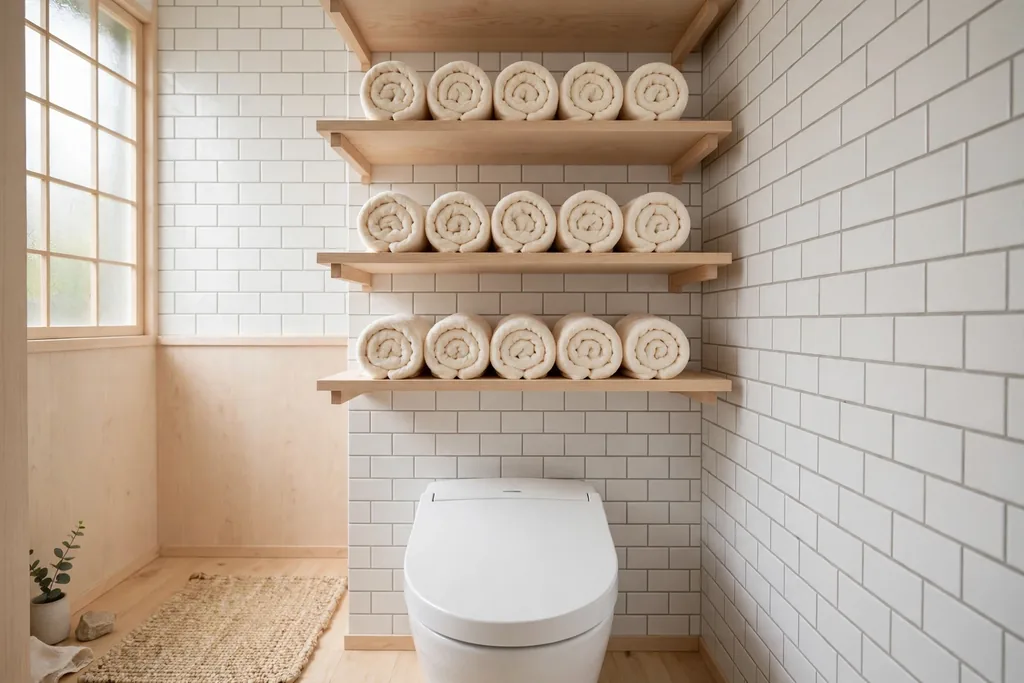
Fit two open wood shelves above the toilet or beside the vanity, and stack rolled towels onsen style for storage that looks like a spa. Rolled towels take less depth than folded stacks, and the wood shelves warm up white tile. This suits a bathroom with one free wall, where a cabinet would crowd the walkway.
Keep the shelves to towels and one basket for spare toiletries, and leave breathing room between groups so shelves read as tidy, not crowded. Dust open shelves weekly, since open storage collects cooking style film from steam and dust. Put heavier stacks low, and keep shelves clear of direct shower steam.
17. Tenugui Hand Towel Display
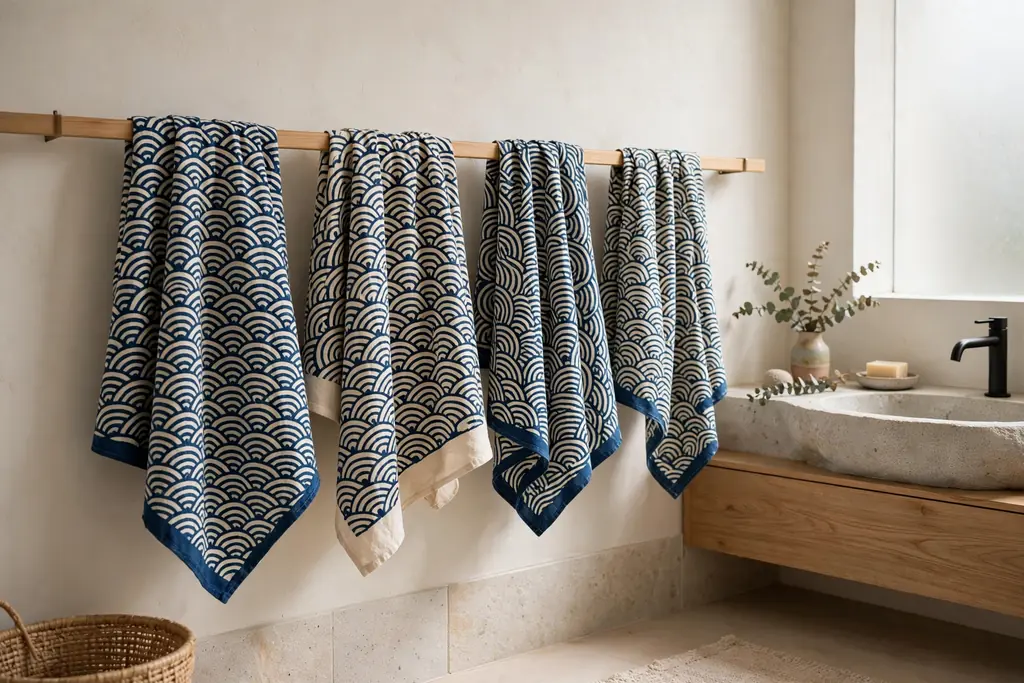
Hang tenugui hand towels on a slim rail or a set of hooks for thin, quick drying towels with Japanese patterns. Tenugui are narrow cotton towels printed with waves, cranes, fans, or simple stripes, and they dry faster than thick towels, which suits a humid bathroom. A row of two or three in one color family reads as decor as well as daily use.
Wash tenugui often, since thin cotton dries fast but shows soap marks, and rotate the display so one towel does not fade in sunlight. Keep the rail on a dry wall near the basin, not inside the shower. If patterned towels feel busy, choose plain indigo or cream tenugui and let the texture carry the interest.
18. Soaking Ritual Tray
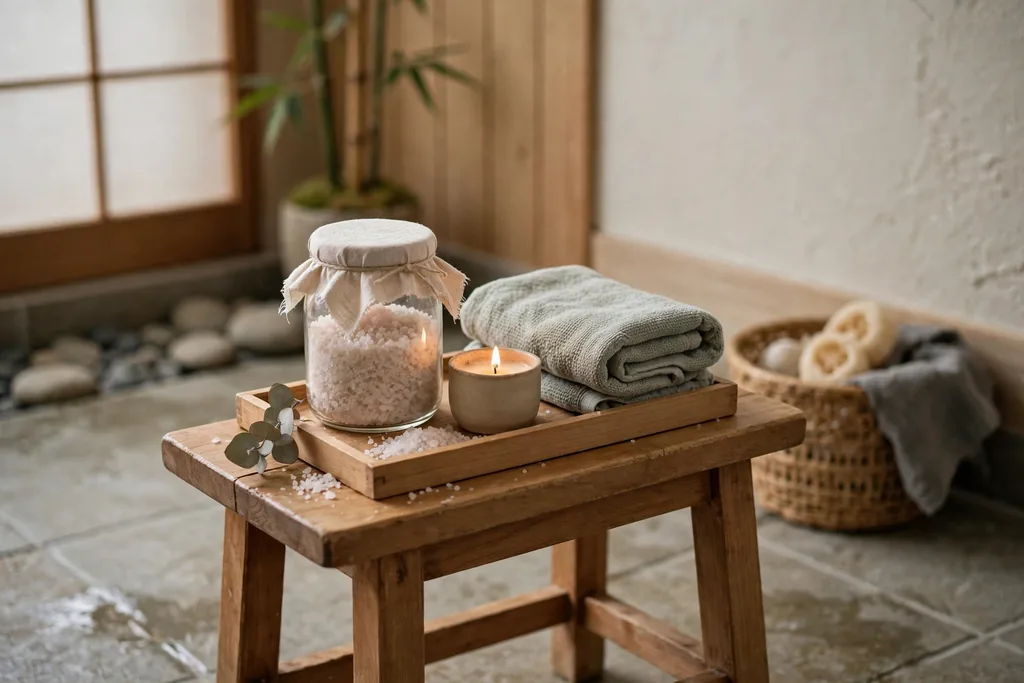
Set a small tray on the vanity or a stool with bath salts, a candle kept safely away from fabric, and a folded towel for a soaking ritual station. The tray turns bath prep into one calm step: gather salts, light the candle away from the tub edge, and lay out the towel before the water runs. A stone or ceramic tray suits the material palette and wipes clean.
Keep the tray to ritual items only, and store spare salts in a closed jar nearby. Use flameless candles if you want the glow without a live flame near fabric. Dry the tray after baths, and refill the salt jar weekly so the station stays ready rather than half empty.
19. Moss and Stone Mini Garden
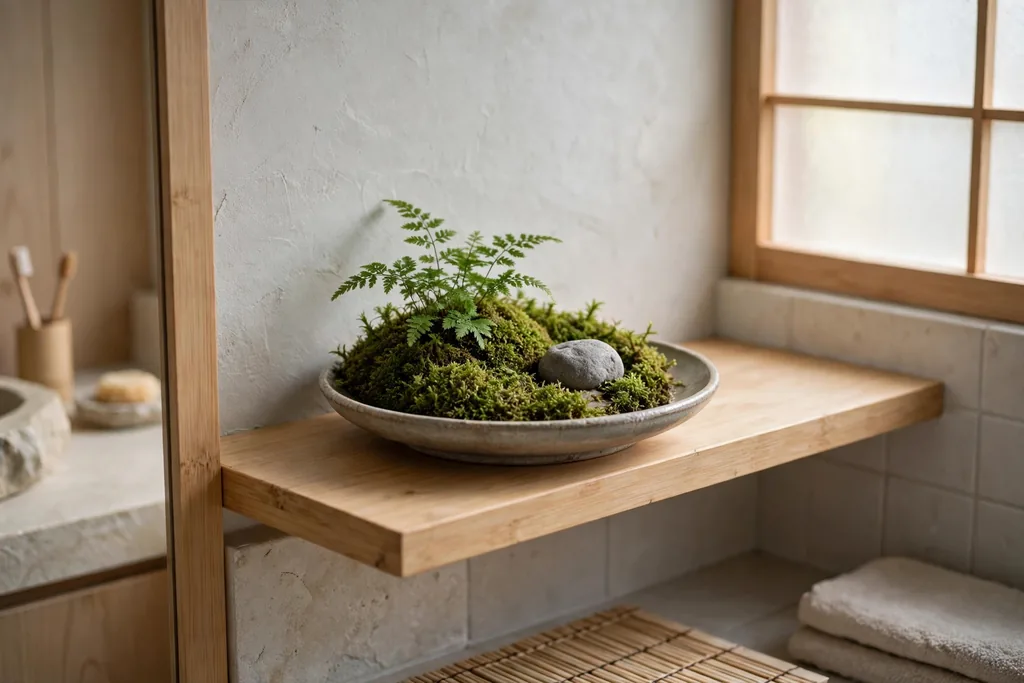
Arrange a shallow dish garden with moss, a small stone, and a miniature fern on a shelf or window ledge for a tiny landscape indoors. The moss stays green in bathroom humidity, and the stone gives the dish a garden feel with no soil mess on the counter. A dish garden suits a bathroom with indirect light and a dry shelf clear of splashes.
Mist the moss lightly when it looks dry, and keep the dish out of direct shower spray. Choose a dish with drainage or a layer of pebbles below the moss, so roots never sit in standing water. If moss care feels fussy, a single smooth stone and a small potted fern in a ceramic pot give a similar garden note.
20. Black Matte Fixtures with Wood
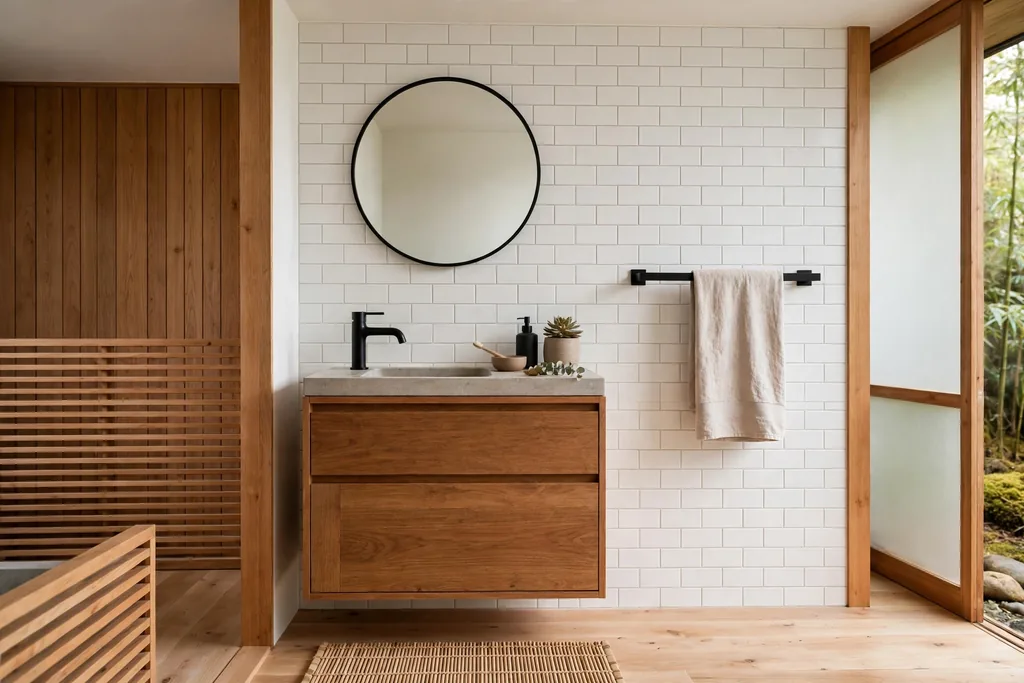
Pair matte black taps, shower fittings, and towel rails with warm wood for a crisp Japanese contrast. The black lines act like ink outlines in the room, giving character to an otherwise pale scheme without adding bright color. This is one of the cheapest ways to change the feel of a bathroom, since fittings swap without moving plumbing.
Keep the black finish consistent across the tap, showerhead, and towel rail, and repeat it once more in a mirror frame or a cabinet knob. Wipe black fittings dry after use in hard water areas, since limescale shows more on dark surfaces. If you rent, keep the original fittings in a labeled bag for move-out day.
21. Frosted Window with a Bamboo Blind
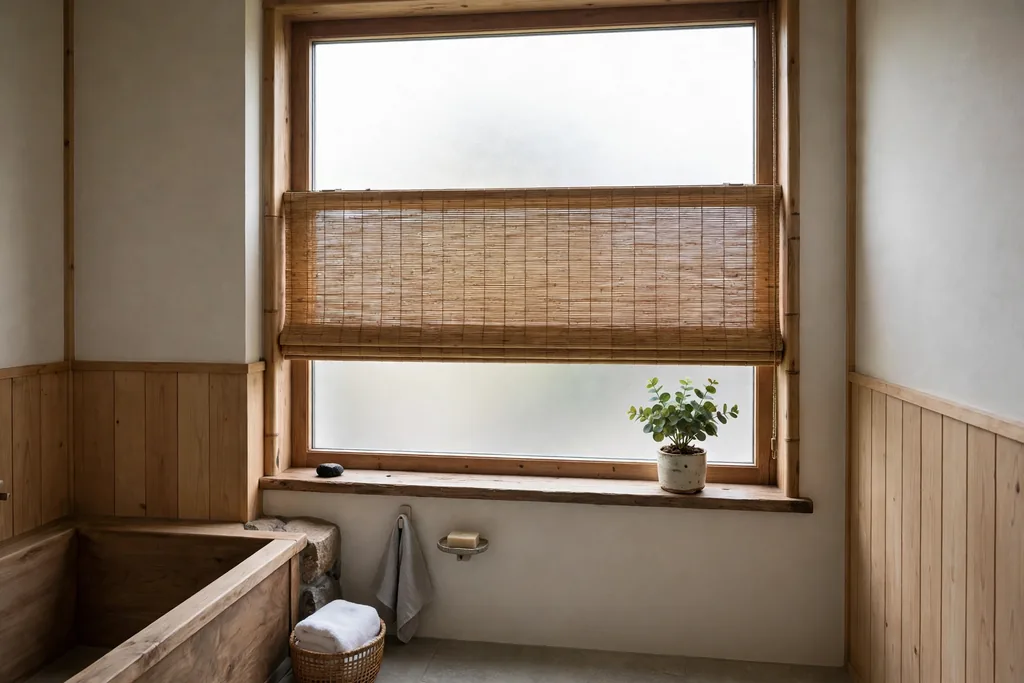
Fit frosted glass or a privacy film on the bathroom window, and add a bamboo roller blind for light, privacy, and texture in one window treatment. The frosted glass floods the room with daylight without giving neighbors a view, while the bamboo blind softens the light and adds a natural layer. Roll the blind up by day for full light, and down in the evening for privacy.
Keep the window frame painted white or pale wood, and the sill clear apart from one plant or a small stone. Open the window briefly each day, or fit a trickle vent, so steam escapes and the room stays fresh. If the window is small, a mirror opposite it bounces the light deeper into the room.
22. Wooden Bath Bridge Tray
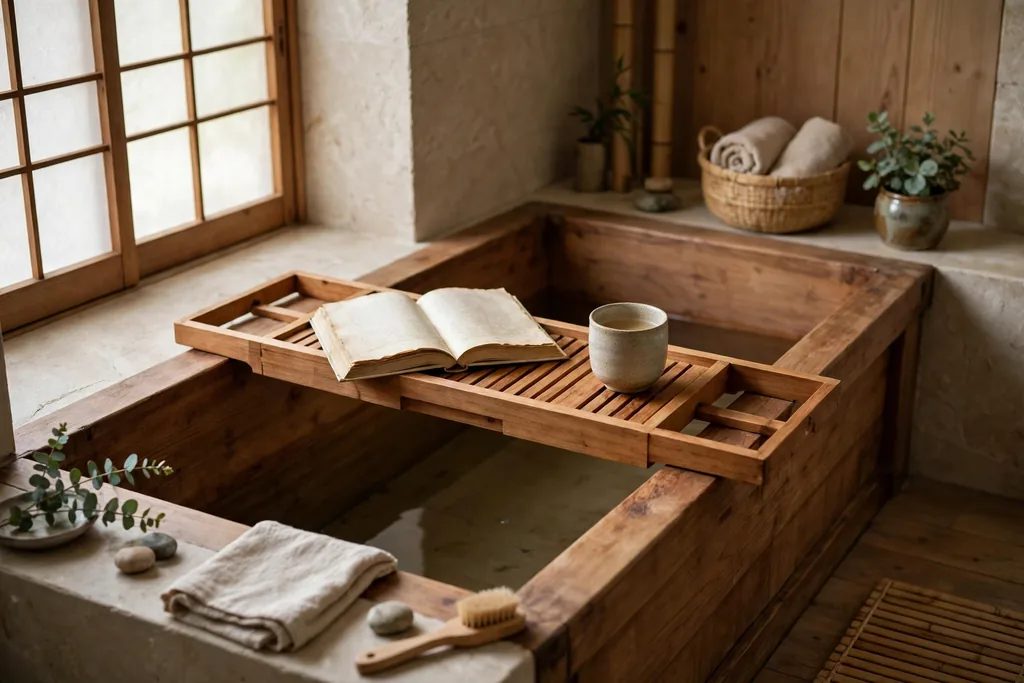
Rest a wooden bath bridge tray across the tub for a book, a cup, and a candle kept safely away from the water. The tray spans the tub width with extendable sides, and a slot or ledge keeps a book open without holding it. Wood trays need drying after each use to avoid warping, while bamboo and coated wood versions cope better with steam.
Choose a tray that fits your tub width, and look for a phone ledge that keeps electronics out of splash range. Store the tray upright behind the door when it is not in use, so it does not become a permanent clutter spot. Keep candles on a stable tray, away from towels and curtains, and use flameless candles if you want glow without a live flame near fabric.
23. Low Cedar Bench Beside the Tub
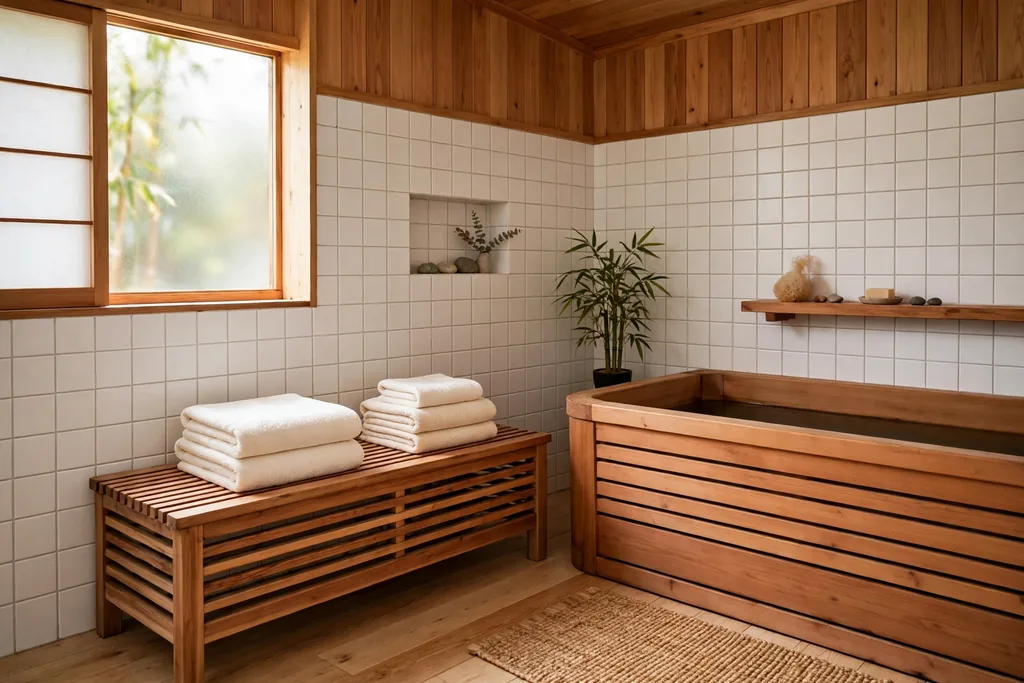
Place a low cedar bench beside the tub for a seat, a towel stack, and a place to rest clothes within reach. The bench gives the soaking area a furnished feel without a chair, and cedar copes well with humidity. A bench with slatted top drains and dries fast, and its low height suits the seated Japanese bathing style.
Leave gaps between the slats so water drains and air moves, and oil the bench now and then with a wood oil suited to wet rooms. Keep the bench away from direct shower spray so it dries fully between uses. If floor space is tight, a narrow bench that slides partly under the vanity gives the same seat with less footprint.
24. Indoor Bamboo Plant Corner
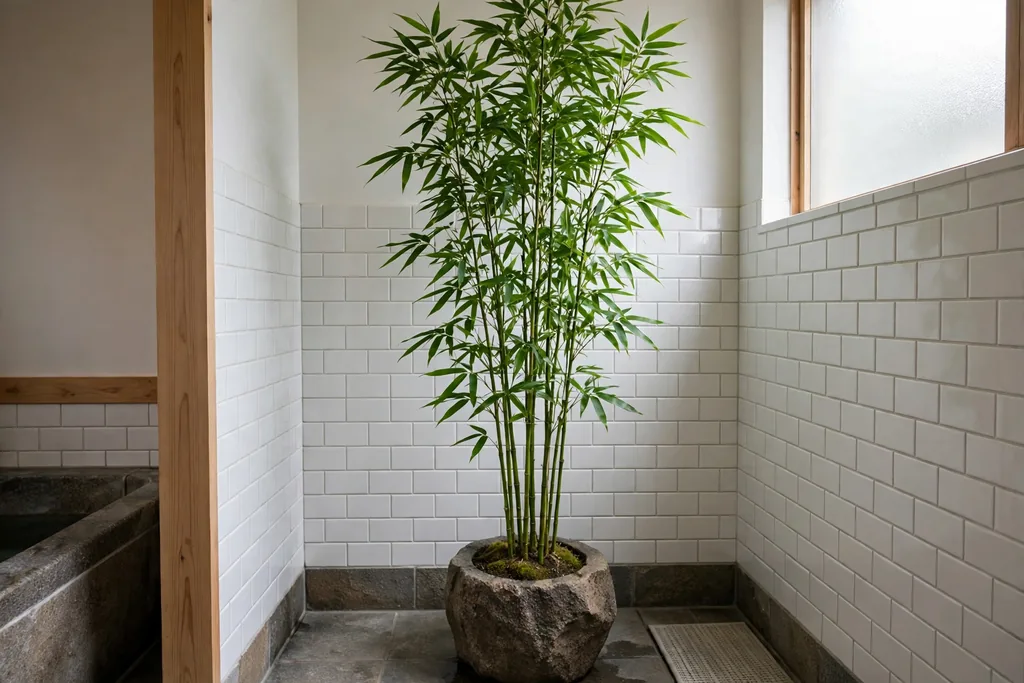
Grow a potted bamboo plant in a corner for height, green, and gentle movement without taking wall space. Bamboo suits bathroom humidity and indirect light, and a tall pot in stone or muted ceramic anchors the corner. One tall plant usually looks better than a crowded collection in a small room.
Use a pot with drainage holes and a saucer, and check the soil before watering, since bathroom air already adds moisture. Keep the plant clear of direct shower spray, and wipe leaves now and then so dust does not dull them. If the bathroom has no window, rotate the plant to a brighter room for a few days each week.
25. Dark Wood Towel Hooks
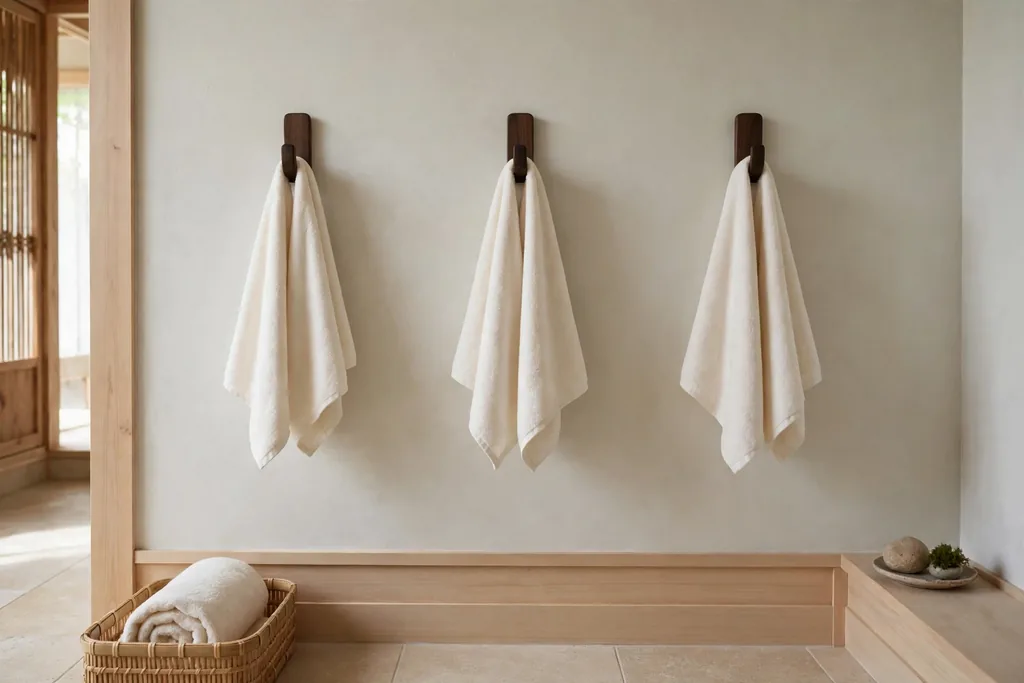
Fix a row of dark wood towel hooks on a dry wall for towels and robes that hang flat and dry fast. Hooks take less space than a rail, suit a narrow wall beside the door, and let each towel hang singly so air moves around it. Dark wood repeats the vanity or mirror frame tone and gives the wall a finished detail.
Mount hooks at a height that lets towels hang clear of the floor, and space them wide enough that towels do not overlap. Use wall anchors rated for tile if you drill, or strong adhesive hooks if your lease forbids holes. Keep one hook spare for guests, rather than crowding the row.
26. Sliding Wood Pocket Door
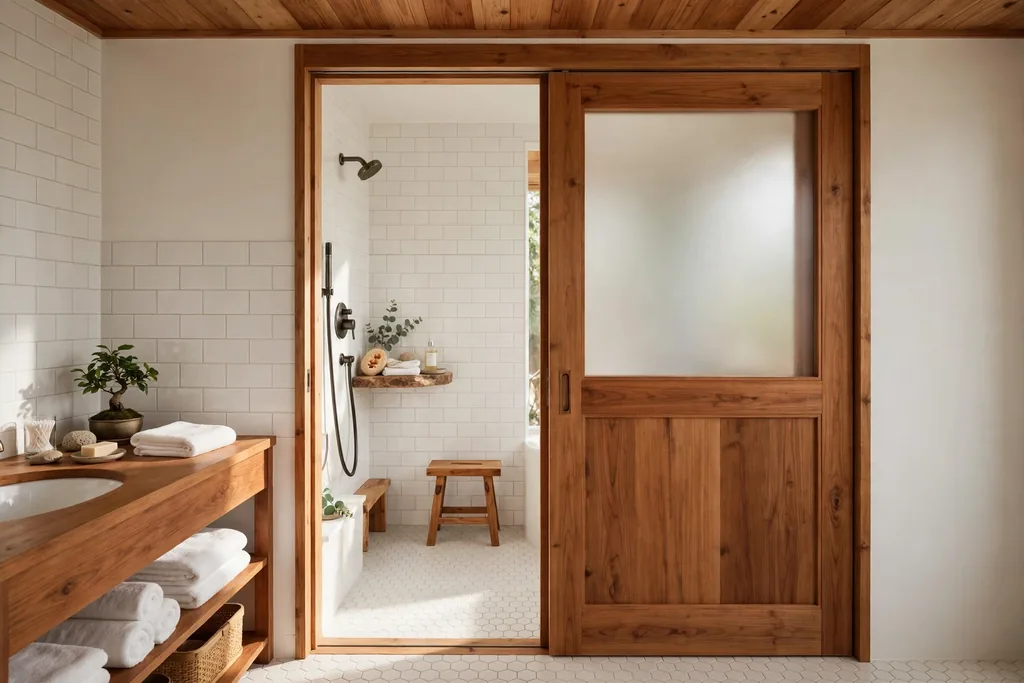
Fit a sliding wood pocket door, or a barn style sliding door on a wood track, to save the floor space a swinging door needs. The door slides into the wall or along it, so the bathroom layout gains a full door swing of usable space. A wood frame with a frosted panel keeps the Japanese feel while letting a little light pass.
Check that the wall can carry the track and that the door clears the vanity and toilet when open. Keep the track clean so the door slides smoothly, and add a soft close fitting so it never slams. If a pocket door is too large a job, a sliding curtain on a ceiling track gives part of the same space saving with far less work.
27. Rain Showerhead Over a Deep Tub
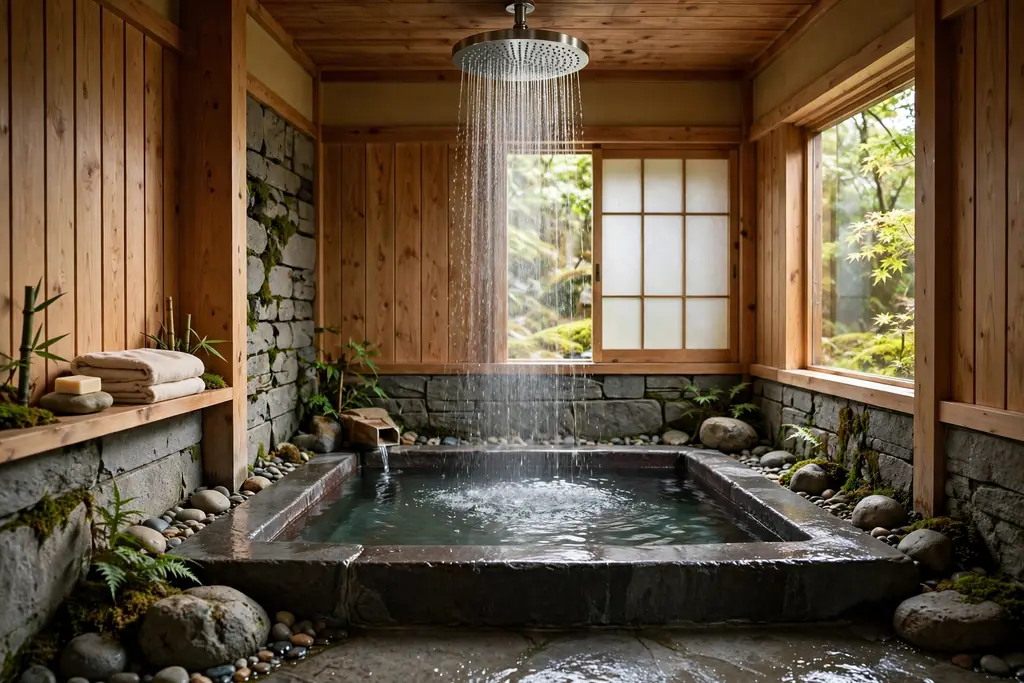
Fit a rainfall showerhead over the deep tub so one tub serves both quick showers and long soaks without a separate shower tray. The wide, even spray suits the rinse before soaking, and a hand shower on a rail adds a practical rinse for the tub and for hair washing. A ceiling or high wall mount keeps the spray clear of the tub edge.
Keep the showerhead height high enough that tall users stay under cover, and choose a thermostatic mixer so the temperature stays steady. Check water pressure before choosing a wide rainfall head, since a very wide head can feel weak on a low pressure line. Wipe the head now and then to stop limescale buildup.
28. Under-Sink Bamboo Basket Storage
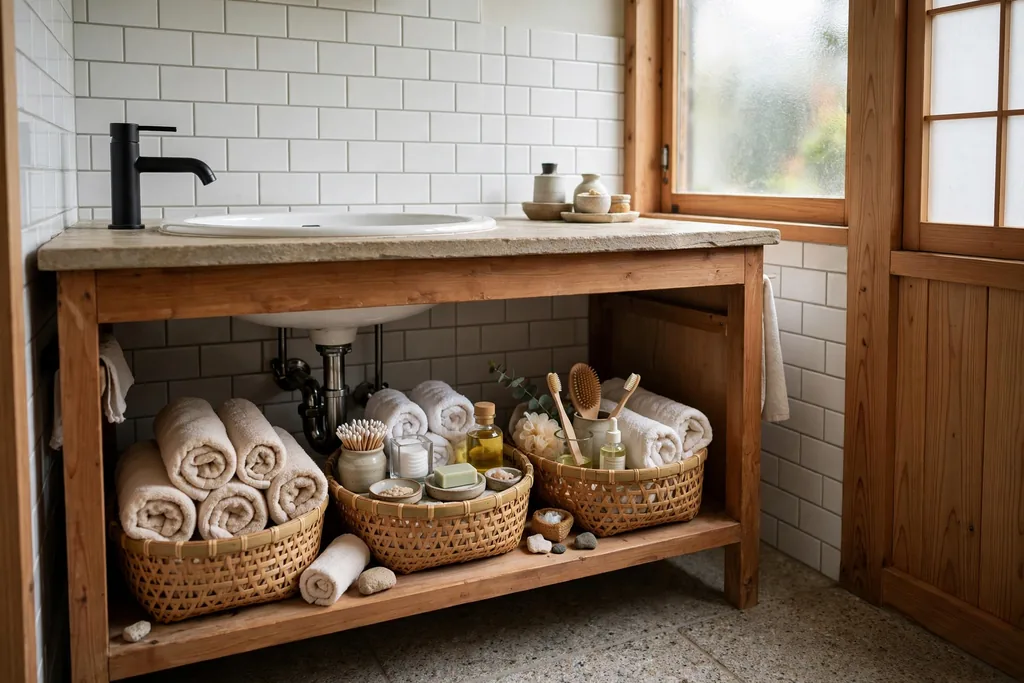
Sort toiletries and spare towels into bamboo baskets under the sink and on one shelf, so a small bathroom stays tidy without a tall cabinet. Baskets soften hard tile and porcelain, and one basket per job, such as hair care, cleaning, and spare towels, stops bottles from spreading across the counter. Bamboo copes well with bathroom humidity when kept off wet floors.
Label the base if several baskets look alike, and empty each one once a month, returning only what you actually used. Keep daily items on the counter in one small tray, and move the rest into baskets, so the basin stays clear for washing. For more renter friendly storage that needs no drilling, see these apartment bathroom ideas.
29. Soft Warm Dimmer Lighting
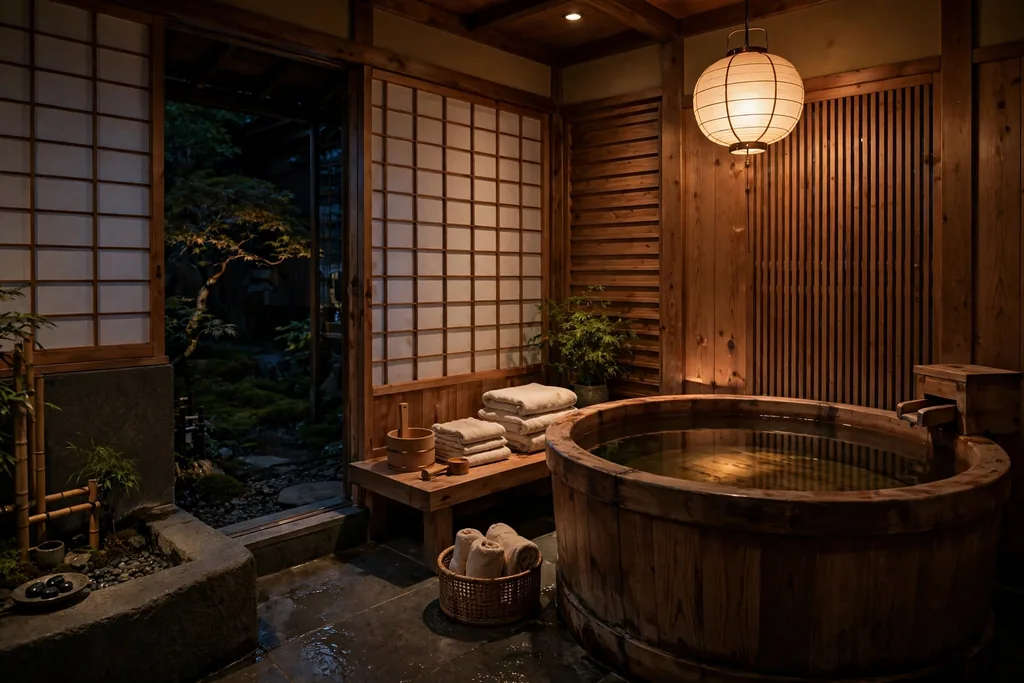
Put the main bathroom light on a dimmer, and add a warm plug-in lamp or a battery lantern on a shelf for evening soaks. Bright overhead light alone tends to feel clinical at night, while a low warm glow suits a long bath and helps the room wind down. Warm white bulbs keep wood and stone tones rich, rather than cold.
Keep all plug-in lights away from direct water spray, and choose a dimmable warm bulb so the glow stays gentle rather than glaring. A dimmer also helps with morning use, since low light suits early hours. If wiring a dimmer is not possible, a battery lantern with a remote gives a similar low glow with no electrical work.
30. Small Stone Lantern Accent
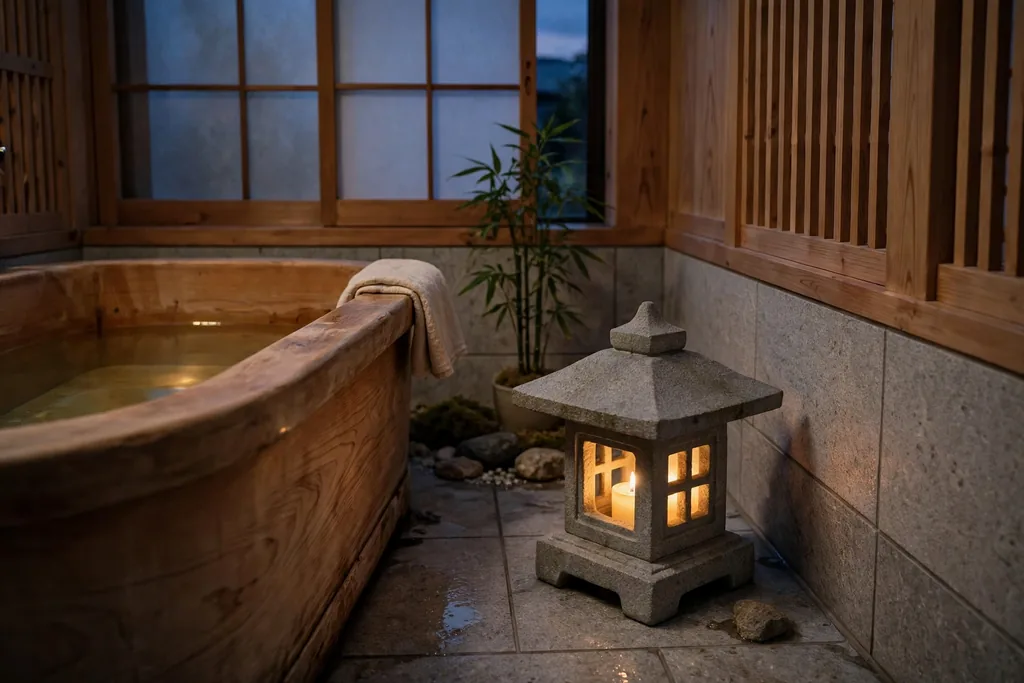
Place a small stone lantern, or a stone-look lantern with a flameless candle inside, on a shelf or in a floor corner for a garden accent indoors. The lantern shape echoes Japanese garden paths, and its glow at night gives the bathroom a quiet focal point. A small lantern suits a corner beside the tub or a shelf above the toilet, where it stays clear of splashes.
Keep the lantern stable on a flat surface, and use a flameless candle inside so there is no live flame near towels or curtains. Dust the stone now and then, and keep the lantern clear of direct shower spray. If stone feels heavy, a ceramic lantern in a muted glaze gives the same shape with less weight.
31. Minimal Linen and Wood Finishing Touches
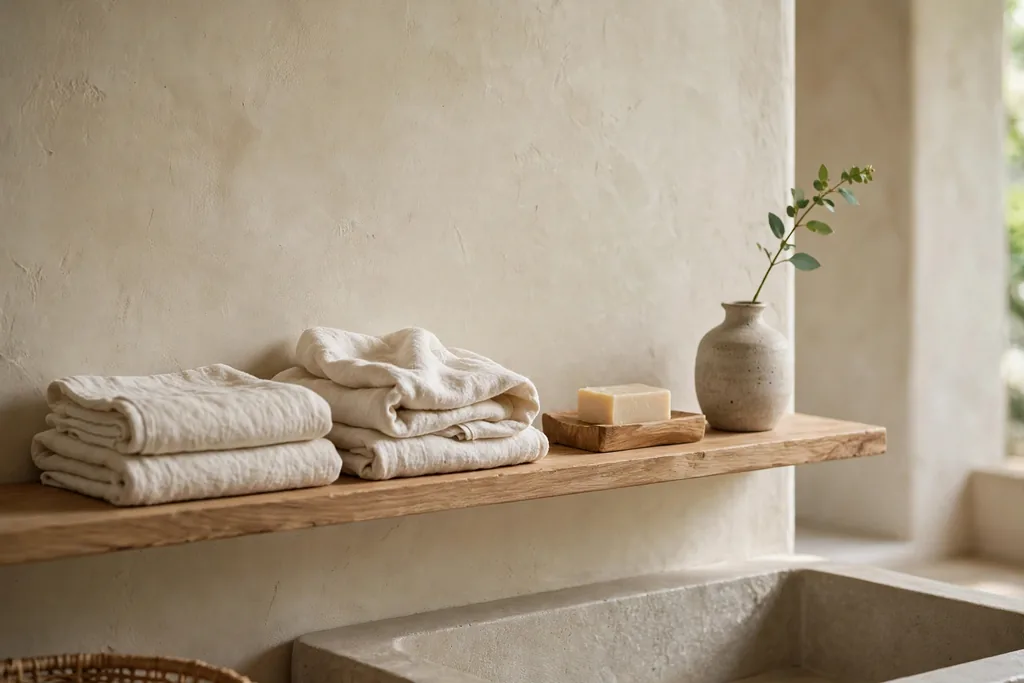
Finish the room with plain linen towels, a wood soap dish, and a single ceramic vase with one stem for touches that complete the look without clutter. The linen softens tile, the wood dish repeats the vanity tone, and one stem gives a living detail that changes with the season. Small, plain touches suit a Japanese bathroom better than a shelf of ornaments.
Keep towels in cream, oatmeal, or indigo, and repeat one of those colors on the bath mat so the soft layers read as one plan. Wash towels separately from the mat, and shake the mat out weekly to keep the pile even. Swap the stem weekly, and keep the vase on a dry shelf, so the finishing touches stay fresh rather than dusty.
Conclusion
A Japanese bathroom does not need a themed makeover, it needs better materials, a slower bathing routine, and fewer things on show. Start with a deep tub or a rinse stool, since those set how the room is used, then add one wood tone, a stone basin or pebble floor, and soft paper light. Baskets, hooks, and sliding storage handle daily clutter, while a bonsai, a moss dish, or a single stem adds living calm without crowding the walls. Test paint and tile samples in daylight and evening light, keep wood and paper clear of direct spray, and add one change at a time, checking that the door, the tub, and the basin still have a clear path. For the same warm, practical approach in a compact room, see these Irish bathroom ideas for fittings and storage that work hard in small spaces.
FAQs
What is the main idea behind a Japanese bathroom?
The main idea is a calm bathing routine built on natural materials and clear surfaces. Washing seated before soaking, using wood, stone, bamboo, and soft light, and keeping counters clear all help the room feel restful. Start with one material and one routine change, such as a rinse stool or a duckboard mat, before adding decor.
Can I get a Japanese bathroom look without replacing the tub?
Yes. Keep your existing tub and add the look around it: a hinoki or cedar duckboard mat, a bath bridge tray, a bamboo ladder, a noren curtain, and warm dimmer lighting. A cedar rinse bucket and stool set also brings the seated washing routine into any bathroom, with no plumbing change at all.
What colors work best in a Japanese bathroom?
Warm wood tones, white or cream tile, soft charcoal, stone grey, and indigo form a calm base, with green from plants as the living accent. Keep bright color to towels, a mat, or one print, so the room feels planned rather than busy, and test dark paint in daylight and evening light before painting a large area.
Is wood safe to use in a damp bathroom?
Yes, with care. Choose water tolerant woods such as hinoki, cedar, teak, and bamboo for mats, stools, and trays, seal painted wood with moisture resistant finishes, and keep paper shades and untreated wood clear of direct shower spray. Dry wood trays and mats after use, and oil them now and then with a wood oil suited to wet rooms.
How do I keep a Japanese bathroom from looking bare?
Use texture instead of ornaments: wood grain, stone, pebbles, woven rugs, linen towels, and a living plant give the room interest without clutter. One framed print, one bonsai or moss dish, and one stone lantern are enough focal points, and plain surfaces between them let each texture stand out.
What is the best storage for a small Japanese bathroom?
Use the walls and the space under the sink first: sliding vanity cabinets, open wood shelves with rolled towels, bamboo baskets, dark wood hooks, and a low bench beside the tub. One basket per job keeps bottles grouped, and a small tray on the counter holds only daily items, so the basin stays clear for washing.