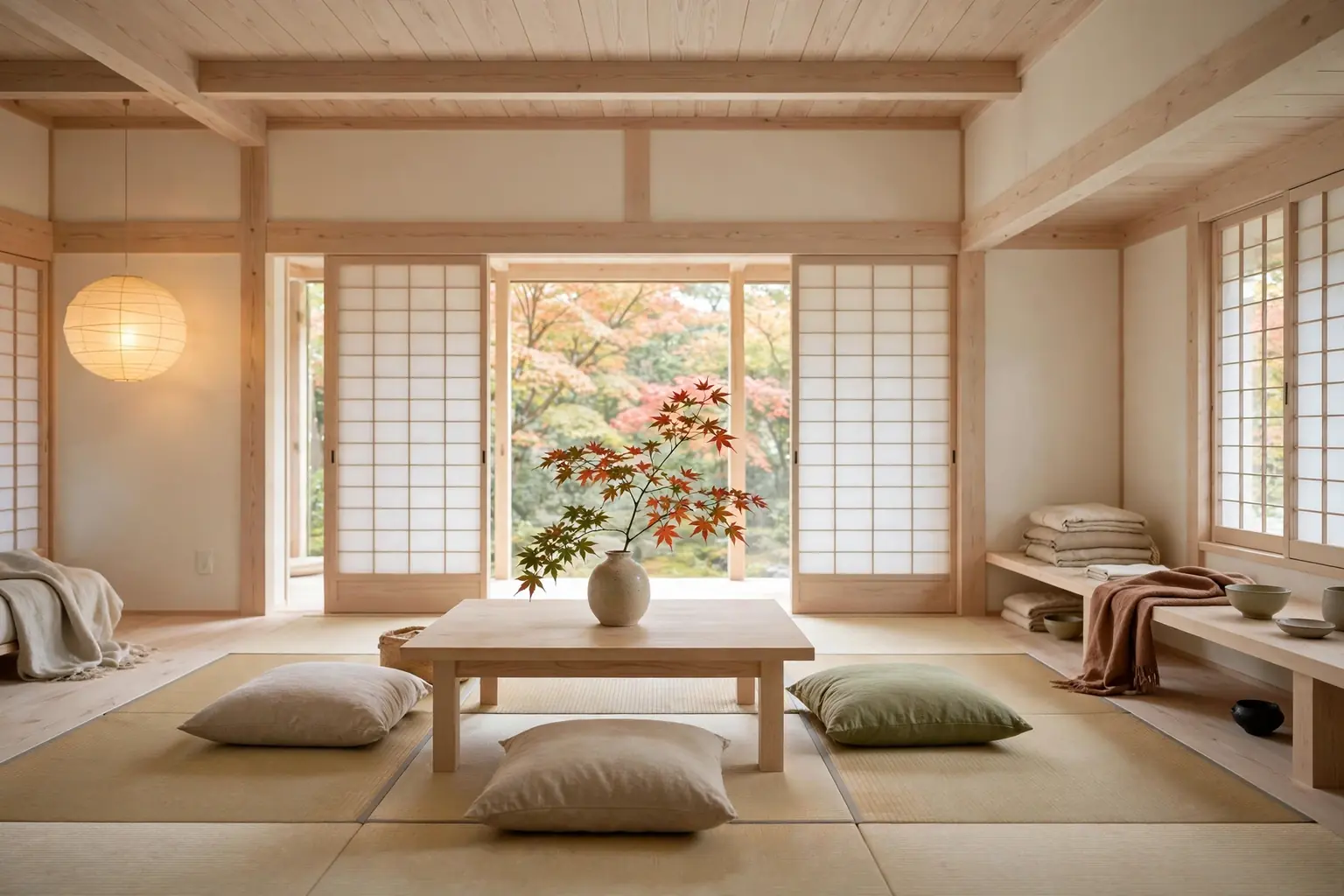
A Japanese home earns its cozy feel from quiet materials and daily habits, not from a crowded room. Pale wood, woven rush, linen, handmade ceramics, and soft paper light carry most of the look, while one seasonal branch, a warm throw, or a tea set adds the note of the moment. These 22 Japanese home decor ideas cover the entry, living room, bedroom, kitchen, bathroom corner, and small outdoor spot, so you can start with one room and add the next change only when the first one feels settled. Keep the base calm, swap the small seasonal pieces as the weather shifts, and leave one surface clear in every room.
Key Takeaways
- Keep the base calm: warm white walls, pale or mid wood, and plain floors let seasonal pieces show without clutter.
- Sit low where it suits the room: tatami, floor cushions, a low table, and a low bed make a home feel grounded and close.
- Layer light low and warm: paper lanterns, washi pendants, and lamps at sitting height suit long evenings better than one bright ceiling light.
- Swap small pieces with the season: a branch, a scroll, a noren curtain, and a set of bowls change the mood with no building work.
- Use natural materials first: wood, rush, cotton, linen, bamboo, wool, stone, and handmade ceramics warm a plain room fast.
- Give every room one clear job and one clear surface, so a cozy home stays easy to live in and easy to tidy.
1. Refresh the Genkan Entry for the Season
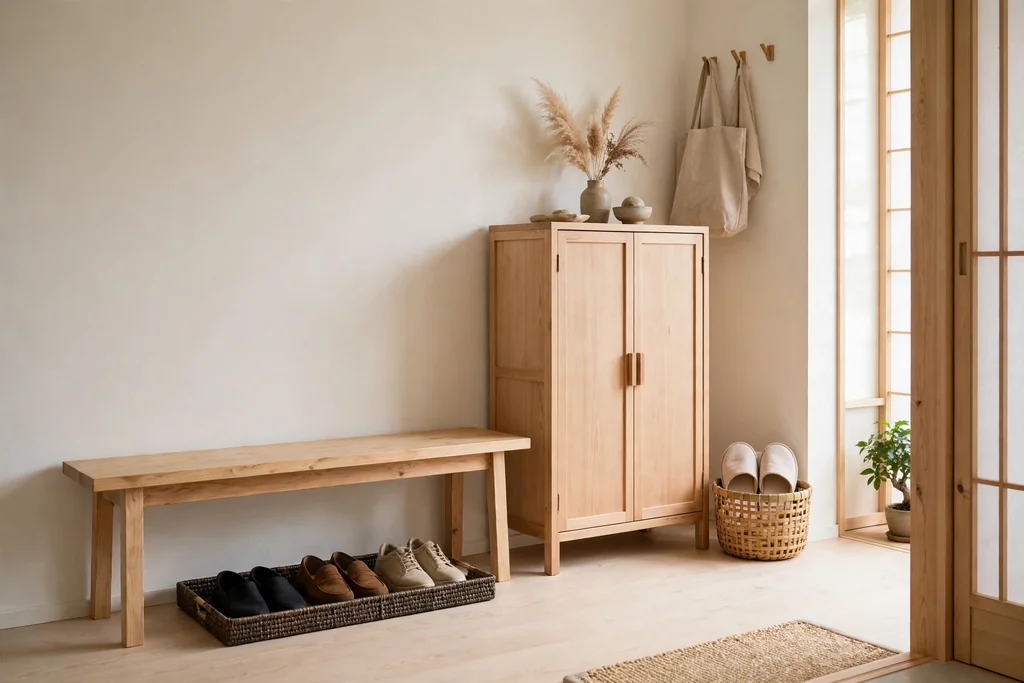
Give the entry a clear shoes-off routine for the cooler months: a low bench to sit on, a shallow tray for wet shoes, a closed cabinet for pairs in daily use, and a basket for indoor slippers. A genkan style step or mat marks the line between outside and home, keeps floors clean, and gives guests a clear place to pause. This suits any home, and it matters most where the entry opens straight into a living room.
Add one seasonal touch, such as a small vase with a branch on the bench or a woven mat in a warm tone, and keep the rest of the entry plain. Choose slippers in a washable fabric, with one pair per person and a spare pair for guests. Wipe the tray and bench weekly, since a wet season entry gathers dirt fast, and keep only the pairs in current use here, with the rest stored elsewhere.
2. Filter Cooler Light With Shoji Style Panels
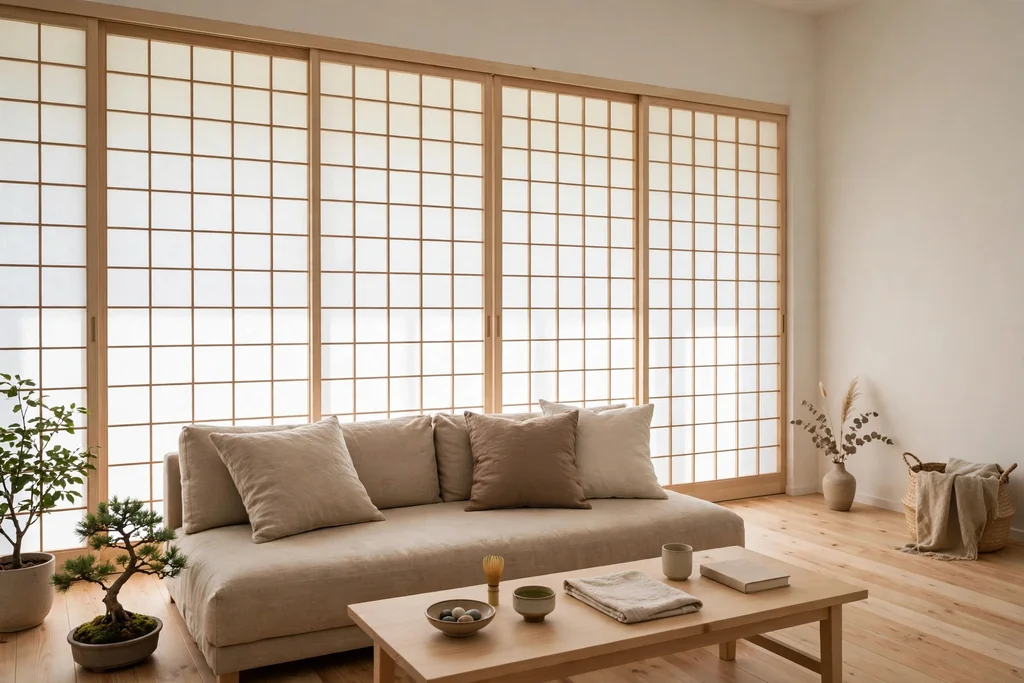
Use shoji style sliding panels, with a wood frame and a translucent panel, to soften the lower autumn light and give a room a warm glow. The panels let daylight pass while hiding a cluttered view, and they slide rather than swing, which saves floor space in a small home. A folding screen in the same style works in a rented home, while a fixed sliding panel suits a wide doorway or a closet front.
Choose a simple grid pattern and a pale paper tone, and keep the frame in the same wood tone as other wood in the room. Keep panels clear of heaters and open flames, and dust them gently with a dry cloth. Place one panel where it catches the afternoon light, since the glow does the decorating work, and keep the wall beside it mostly plain so the grid pattern stays the focus.
3. Layer a Low Platform Bed for Cooler Nights
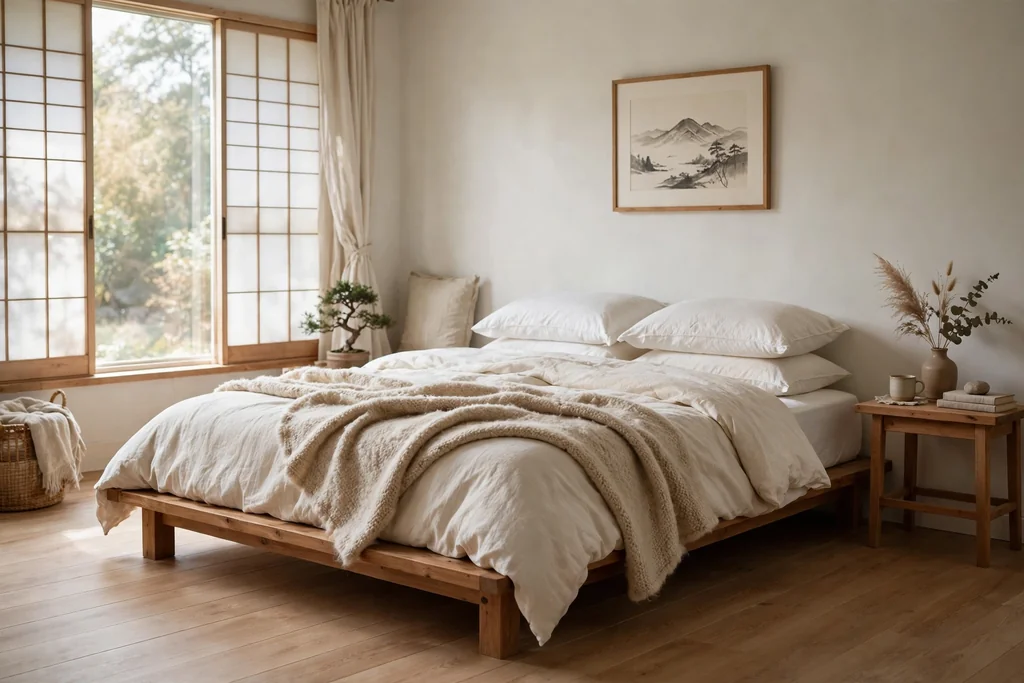
Set the bedroom around a low platform bed frame in pale or mid wood, then layer it for cooler nights: a fitted sheet, a plain duvet, a wool or cotton throw at the foot, and two sleeping pillows plus one cushion in a muted tone. Sleeping low makes a room feel grounded, and the low profile leaves more wall visible, which helps a small bedroom feel larger. This suits a bedroom with pale walls and wood floors, where the bed can act as the room’s quiet center.
Keep the bedding in a small range of colors, such as warm white, soft grey, and one muted rust or indigo, so the layers read as planned rather than piled up. Use pillow and throw covers you can wash, since bedding used every night needs a regular wash cycle. If the room is cold at night, add a second light blanket under the throw rather than a heavy patterned cover that fights the rest of the room.
4. Build a Tatami Seating Zone for Gatherings
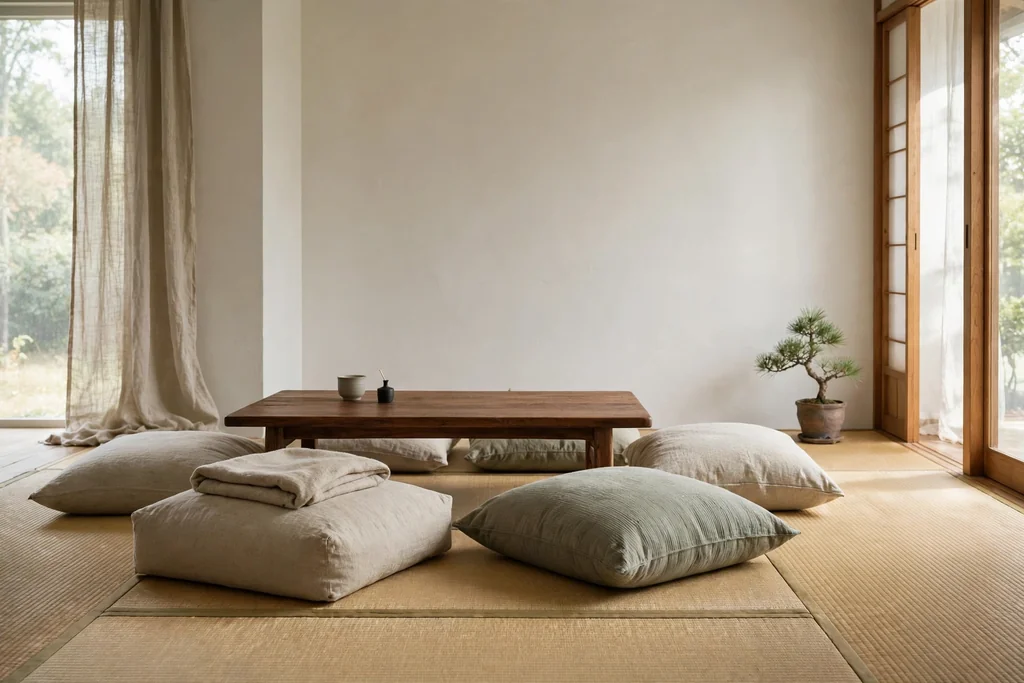
Lay tatami mats, or a woven rush rug in the same spirit, over part of the living room floor to mark a clear seating zone for family and guests. The woven surface feels soft underfoot, marks where to sit and where to walk, and gives a low table and cushions a clear home. A zone of four to six mats suits a low table and cushions, while two mats can frame a single reading chair.
Keep the mats dry and out of strong direct sun where possible, and lift them now and then to air the floor below. Use a low table and thick floor cushions on the mats, and keep shoes off them, so the zone stays clean and inviting. For a wider living room take on this style, see these Japanese living room decor ideas. If full tatami mats are hard to find, a woven rush rug gives a similar texture and boundary at a lower cost and with less care.
5. Warm Evenings With Paper Lantern Light
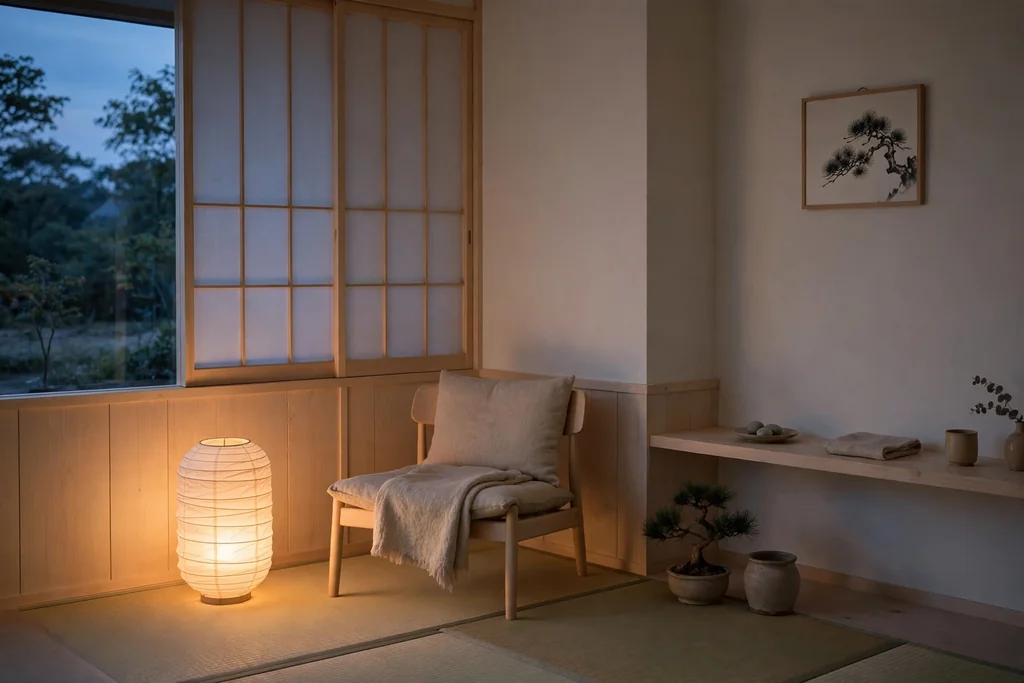
Place a paper floor lantern beside a chair or a low sofa for a warm, soft glow at sitting height through the darker months. Paper spreads light evenly, so the lantern gives a gentle pool of light for reading, without the glare of a bare bulb. A lantern also adds a simple sculptural shape to a corner, even when it is switched off, and it pairs well with a washi pendant over a table.
Use a bulb suited to the lantern and a warm white color, and keep the paper clear of heat sources, candles, and curtains. Place the lantern where its light falls on the seat, not in the eyes of someone across the room. One lantern per seating zone is usually enough, with a second light only in a large room, and a dimmer or a low watt bulb keeps the evening mood calm.
6. Set a Seasonal Tokonoma Display
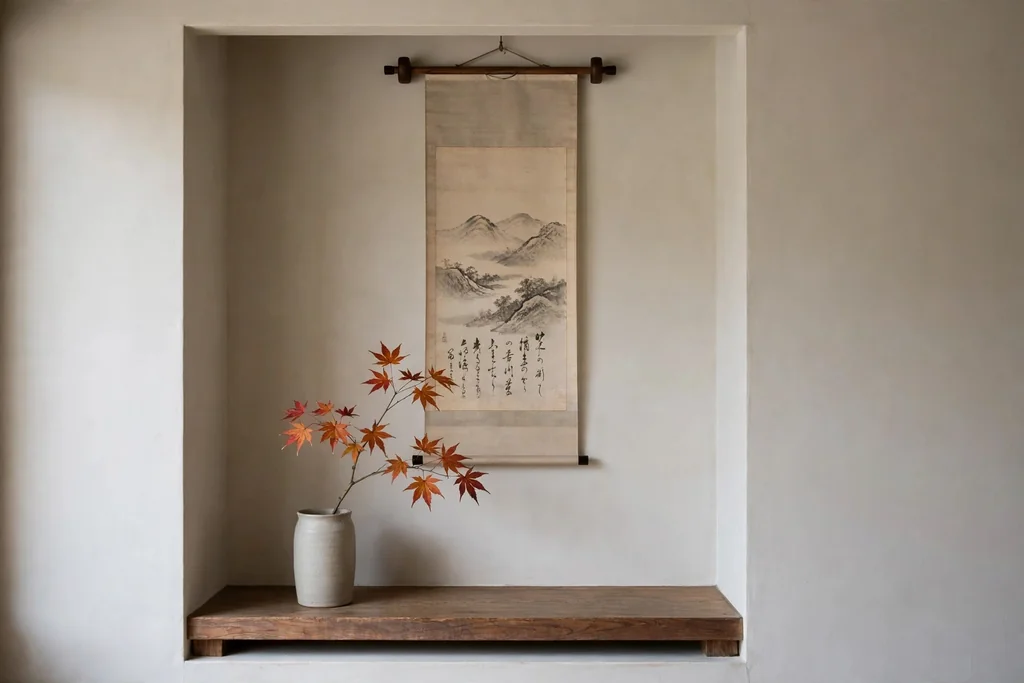
Set aside one shallow alcove, or one clear wall niche, as a tokonoma style display, with a hanging scroll, one vase, and nothing else, and change it with the season. A maple branch in autumn, a pine sprig in winter, or a blossom branch in spring gives the display its seasonal note, while the empty space around it gives the branch weight. This corner becomes the quiet focal point of the room, and it works best when the rest of the room stays plain.
Keep the alcove dust free, and change only one piece at a time, so the display never turns into a crowded shelf. If you have no built in alcove, a low wooden platform against a plain wall, with a scroll above it, gives the same effect. Resist adding extra ornaments, since the empty space is part of the display, and a single branch from the garden, in a plain ceramic vase, is a good first step.
7. Arrange Ikebana With Seasonal Stems
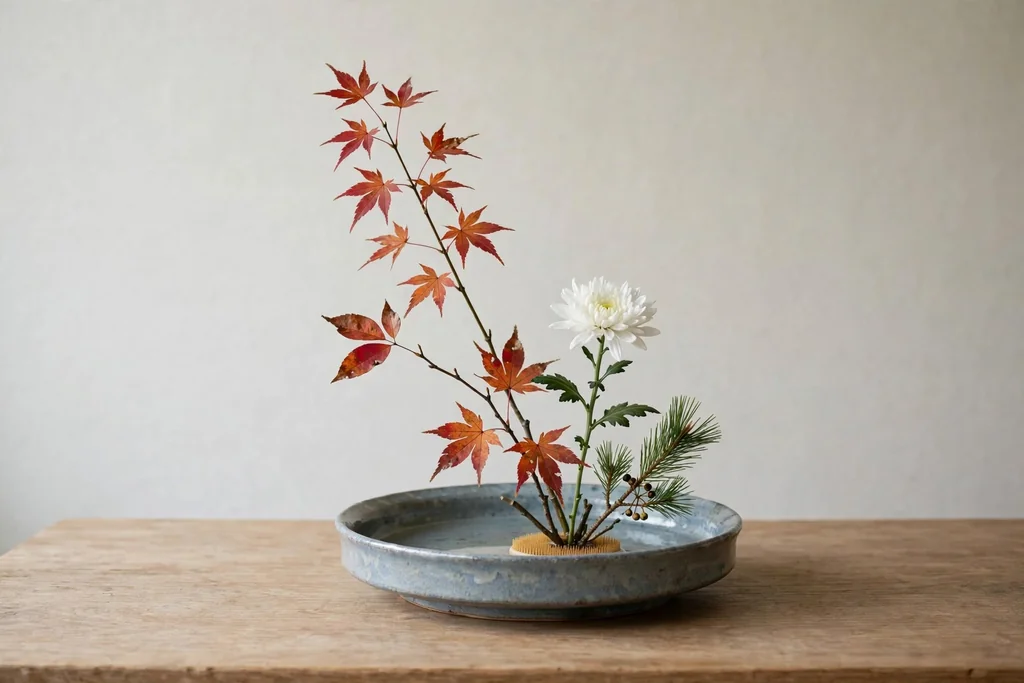
Try a simple ikebana arrangement with a few stems, one flower or none, and plenty of space between them, in a shallow dish or a tall vase. Ikebana values line and empty space over fullness, so three stems placed with care can say more than a large bouquet. A low arrangement suits a coffee table, while a tall branch suits a floor vase by the window, and a seasonal stem keeps the arrangement tied to the time of year.
Trim stems at an angle, change the water often, and remove fading stems before they spoil the whole display. Keep the arrangement where it can be seen from the main seat, but clear of elbows and door swings. Start with one branch and one flower in a plain ceramic dish, then add a second stem only if the first one leaves a clear gap to fill.
8. Give a Potted Maple a Corner of Its Own
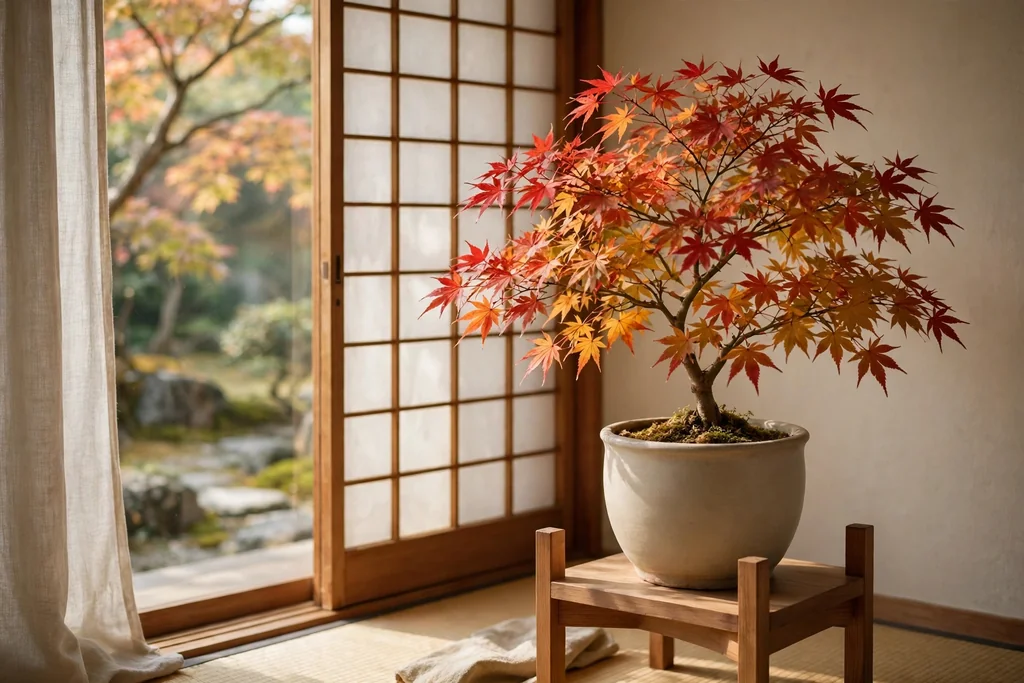
Place one potted Japanese maple on a wooden stand, a low table, or a windowsill, and let it be the living seasonal focal point of the room. A maple brings changing leaf color indoors at a small scale, from green through gold and red, and its slow growth rewards regular care. Choose a pot in a plain ceramic or stone tone, so the tree, not the pot, carries the interest.
Keep the pot on a tray to protect wood surfaces, and turn the tree now and then so it grows evenly. Check the light and water needs of the variety you buy before you bring it home, since maples vary in how much sun and water they need. Avoid crowding it with other plants, since a single tree, with a clear space around it, reads as a piece of art.
9. Swap in a Heavier Noren for Cooler Months
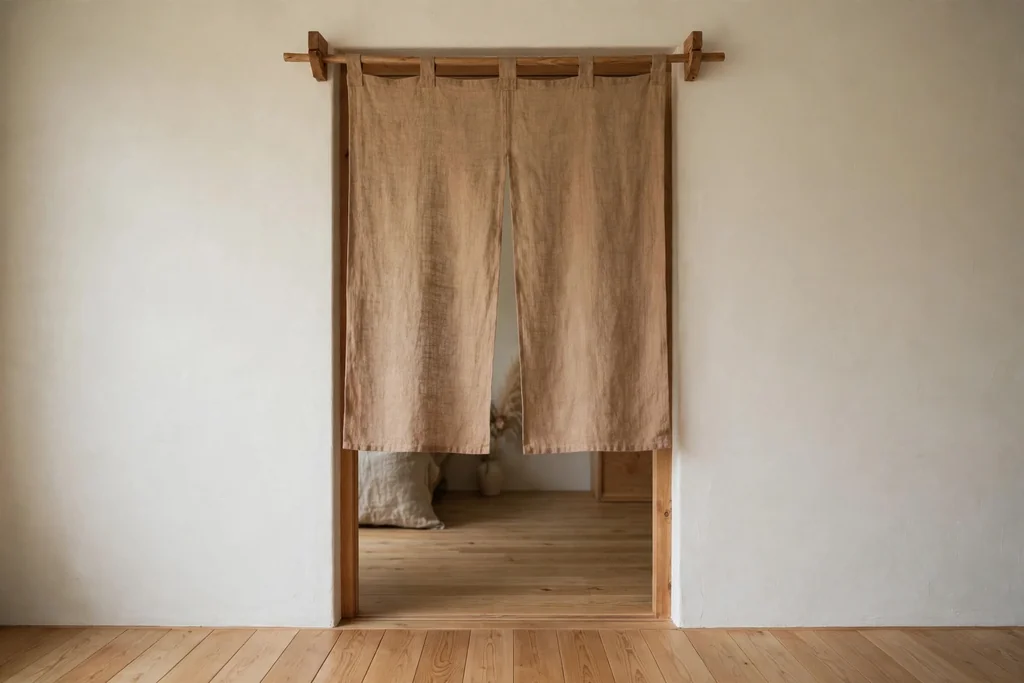
Hang a noren curtain, a short split fabric panel, in a doorway or across an open shelf, and swap it for a heavier fabric as the weather cools. The split lets you walk through without pushing a full curtain aside, and the fabric adds color and texture at eye level while cutting a draft from a cold hallway. Natural linen in summer gives way well to a thicker cotton or hemp blend in autumn and winter.
Hang the curtain from a simple wooden rod, at a height that covers the top of the opening but leaves the lower part open for air and light. Choose a plain tone or a simple pattern, such as a stripe or a small crest, in a muted color that matches the room. Wash the curtain now and then, since a doorway curtain gathers dust, and keep it clear of heaters and cooking heat.
10. Work a Warm Seasonal Palette in Small Doses
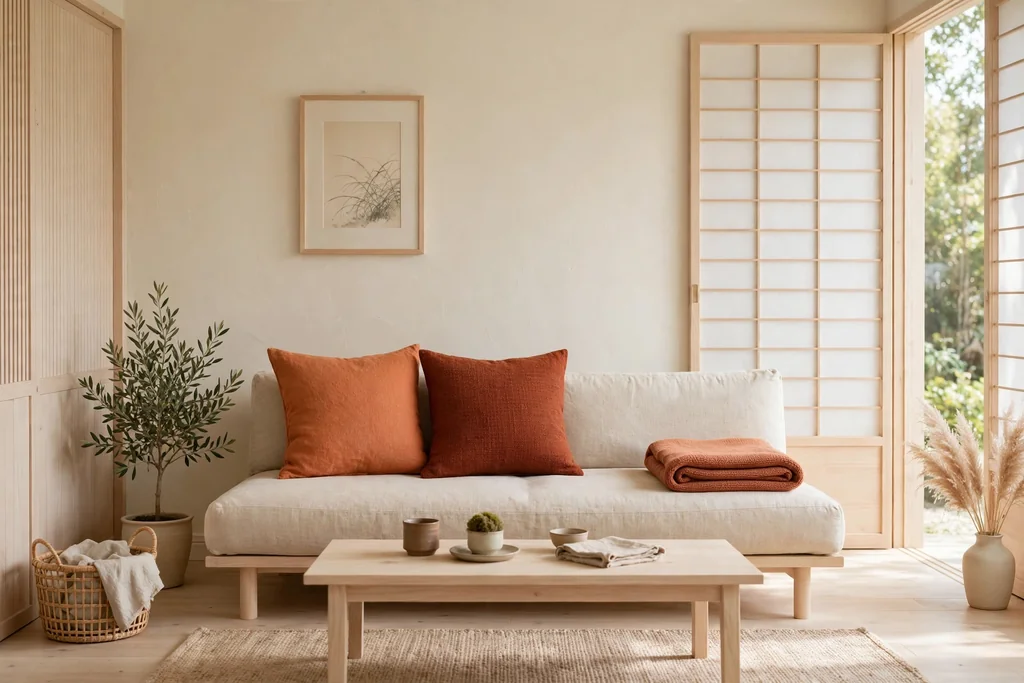
Repeat a warm seasonal palette in small doses, such as persimmon, muted rust, and soft gold, against a neutral base of cream, grey, and wood. A cushion, a throw, a ceramic bowl, and a small print can carry the palette, while walls, floors, and large furniture stay plain. This keeps the seasonal change cheap and easy to reverse, since the color sits in pieces you can swap in an afternoon.
Keep the warm colors to three places in the room, so they read as a plan rather than a random splash. Pair the warm tones with one cool note, such as indigo or soft grey, so the room does not feel too hot in color. Wash dyed fabrics as the maker directs, since strong dye can transfer when wet, and store the out of season pieces in a labeled cloth box.
11. Gather Around a Kotatsu Style Low Table
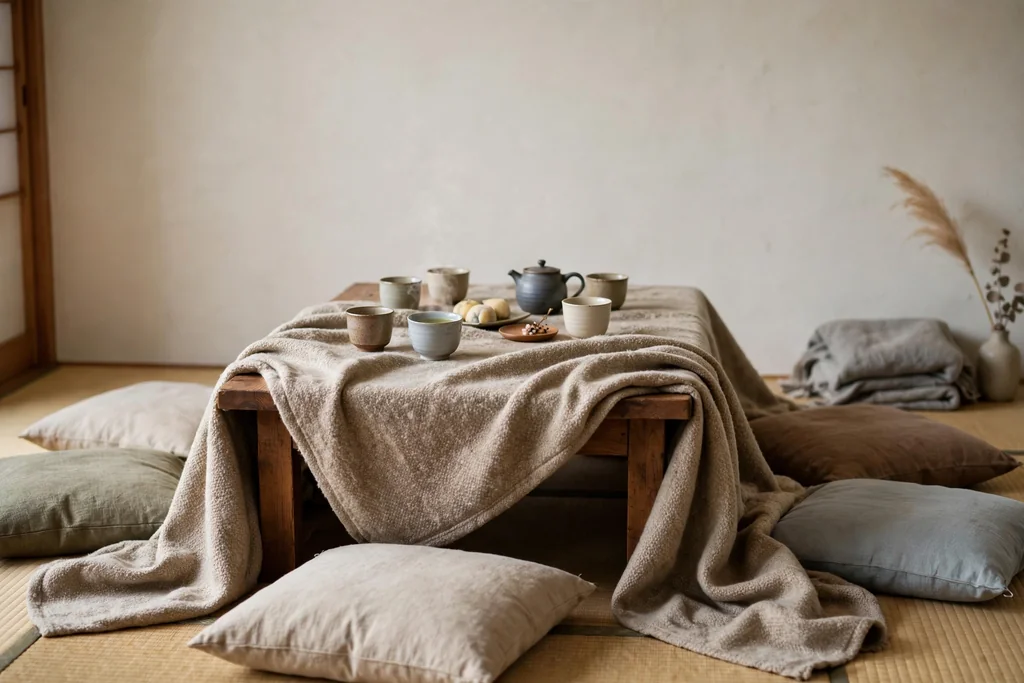
Set a low table with a thick blanket draped over it and tucked under the top, in the spirit of a kotatsu, for cozy seated meals, games, and reading in the cold months. The blanket traps warmth around seated legs, while the low height keeps sight lines open across the room and suits floor cushions or a low bench. This suits a living room or a family corner best, where people gather for an hour or more at a time.
Choose a blanket cover you can wash, since a table blanket gets daily use, and keep the table top mostly clear apart from a tea tray and a small vase. If a heated table is not practical in your home, the same low table and blanket, paired with warm socks and a hot drink, still gives the cozy seated feel. Keep the blanket clear of open flames and heaters, and fold it away in warm weather so the table can serve as a plain low table again.
12. Set a Tea Station for Roasted Seasonal Teas
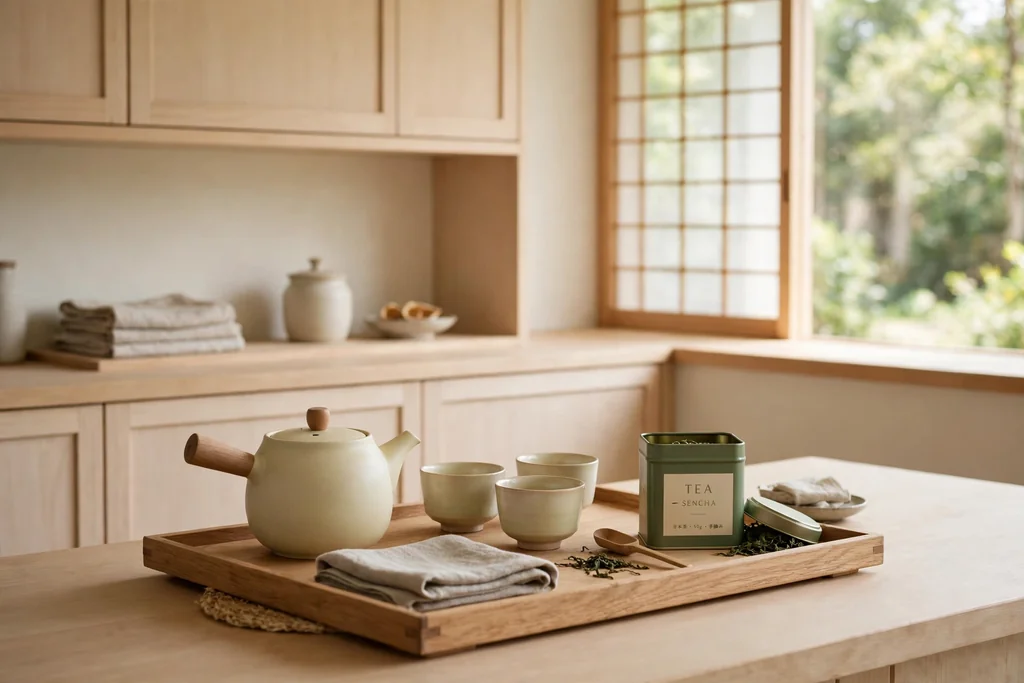
Give tea a set place for the season: a tray on the counter, a short counter run, or a single open shelf, with a teapot, two or three cups, a tin for tea leaves, and a small tray to catch drips. Roasted teas, such as hojicha, suit cooler days, and a ready station turns a daily drink into a short ritual you look forward to. Keep the teaware to a small set of matching or related pieces, so the corner stays calm when nothing extra joins it.
Keep the tea station near the kettle and away from the main cooking run, so making tea does not block cooking. Store tea in a closed tin away from heat and strong smells, and wash cups by hand where the maker advises it. A small tray under the cups lets you lift the whole corner away for cleaning, and a single seasonal cup, in a warm glaze, can mark the season without a new set.
13. Bring Out Wabi Sabi Bowls for Seasonal Meals
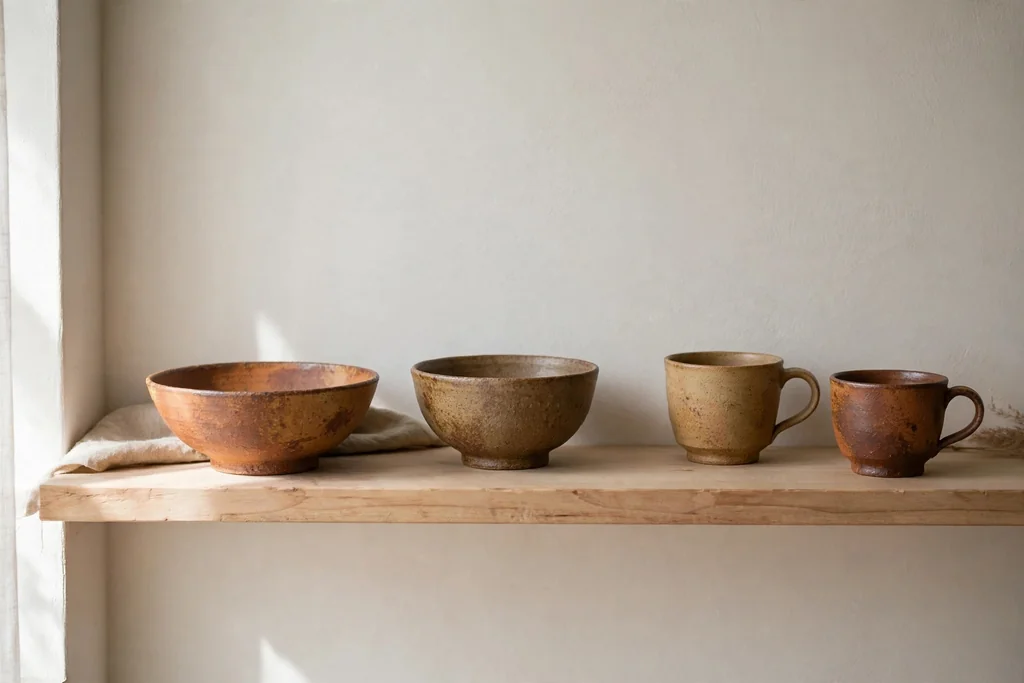
Display and use a small group of handmade ceramics, bowls, cups, and plates with uneven glazes and soft, earthy tones, for seasonal meals. Wabi sabi ceramics value the marks of the maker, so a slightly uneven rim or a varied glaze is part of the appeal. A group of three to five pieces, with space between them, suits a shelf better than a crowded collection, and using one or two pieces daily keeps the display part of life.
Pair the ceramics with plain wood, such as a wood tray or a bamboo mat, so their texture stands out. Keep ceramics clear of the shelf edge, wash them by hand where the maker advises it, and choose warm glazes, such as cream, rust, and soft brown, for autumn and winter meals. A single new bowl, in a seasonal glaze, can refresh a whole table setting without replacing the set.
14. Store Throws and Blankets in Woven Baskets
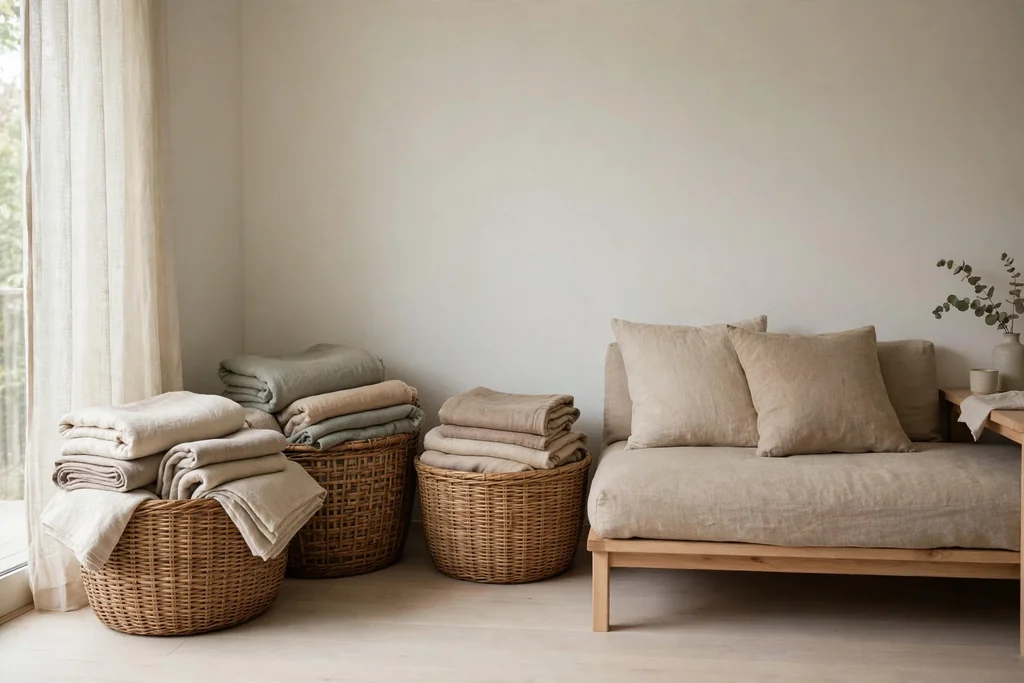
Keep throws, blankets, and extra cushions in large woven baskets by the sofa, the bed, and the reading chair, so cozy layers stay close at hand and easy to tidy. A basket gives a room a warm, crafted anchor, and its open top means a throw can be grabbed in seconds on a cold evening and folded away just as fast. This suits a living room and a bedroom best, where soft layers are used daily.
Sort one basket per room, and keep only the throws in current use in it, with the rest stored in a closet. Choose baskets in a natural tone that matches the wood in the room, and keep the top of each basket clear except for one folded throw. Shake baskets out now and then, since woven fibers gather dust, and keep them clear of damp walls and direct heater heat.
15. Frame the Garden View From a Window Seat
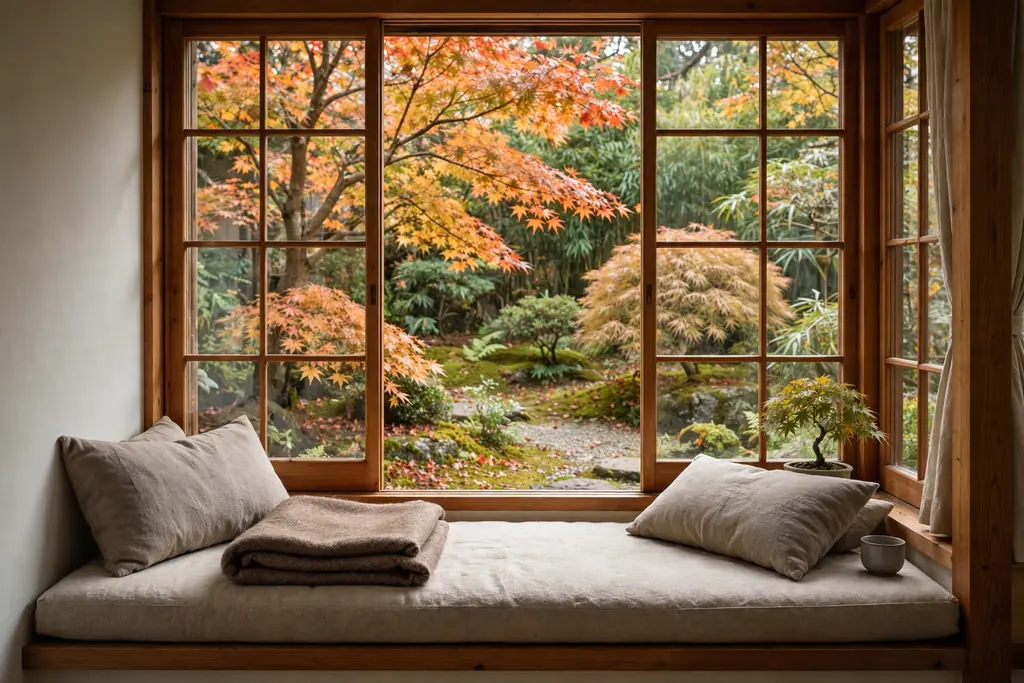
Keep one window mostly clear, with a low seat or a cushion bench beside it, so the garden becomes the room’s seasonal picture. A bare branch, falling leaves, or snow on a shrub gives the room a changing view with no new decor, and a plain linen curtain, pulled to one side, frames the view without blocking light. This suits a living room or a bedroom corner best, where a seat can sit for an hour of reading or tea.
Add a small side table for a cup and a book, and a wool throw folded on the seat for cold days. Keep the windowsill clear apart from one small plant or one stone, so the view stays the focus. Wipe the glass often in the wet season, since a clear view matters more than any object on the sill, and keep the seat cushion in a washable cover.
16. Dress Kitchen Shelves With Seasonal Ceramics
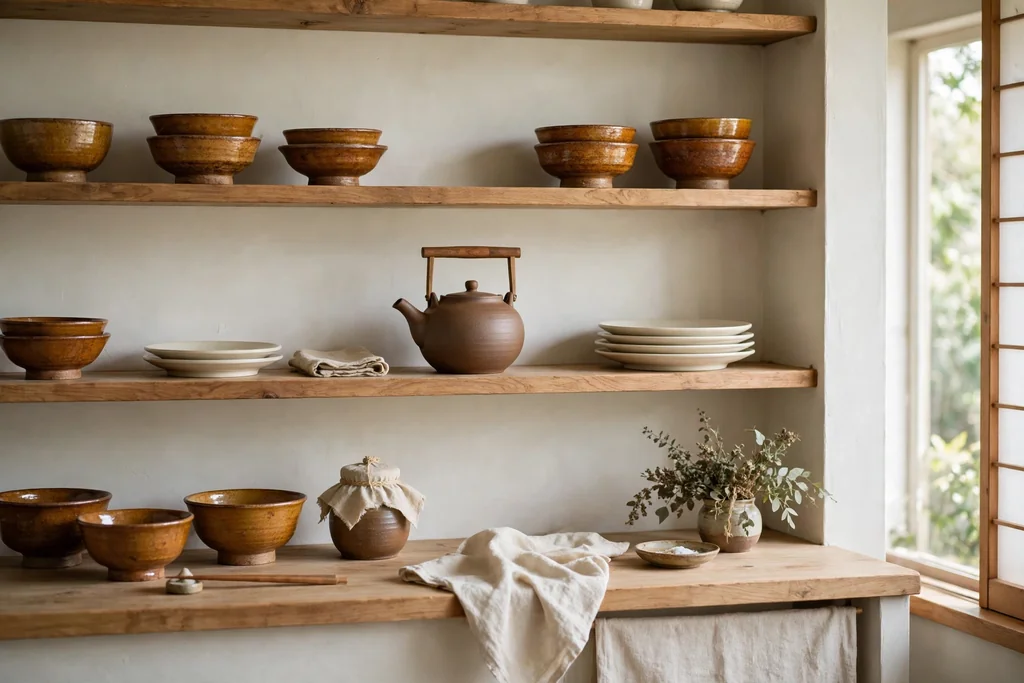
Use one or two runs of open wood shelves in the kitchen for seasonal ceramics: warm glazed bowls, a teapot, a small vase, and a stack of plates in cream and soft brown. Open shelves replace a block of upper cabinets with a lighter wall, and they suit a kitchen where daily dishes deserve an easy home. Limit each shelf to items you use weekly, in a small range of colors, and leave at least a third of each shelf empty.
Dust the shelves weekly, since open storage near cooking collects a light film faster than closed cabinets, and keep the remaining storage closed for items you use less often. For a wider kitchen take on this style, see these Japanese kitchen ideas. Add one seasonal piece, such as a persimmon toned bowl or a small pumpkin shaped dish, and swap it out when the season changes, so the shelf stays fresh with no full reset.
17. Add a Warm Bath Ritual Corner
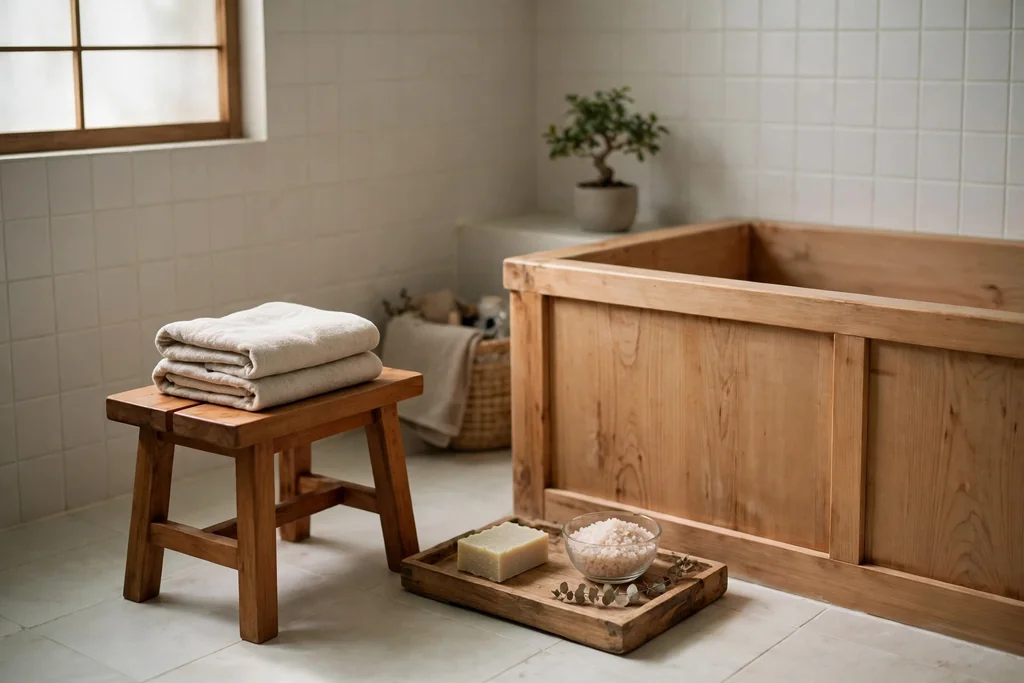
Set a warm bath ritual corner in the bathroom: a wood stool, a small bucket or basin, a folded towel, and a tray with soap and bath salts, kept on a shelf or a stool beside the tub. The corner turns a quick wash into a slower soak routine, which suits cold evenings, and it needs no plumbing change. A hinoki or cedar stool copes well with humidity, and a wood tray keeps small items grouped and easy to lift away for cleaning.
Keep the corner to daily items only, and move spare stock into a cabinet or basket. Dry the stool and tray between uses, since standing water stains wood over time. For a wider bathroom take on this style, see these Japanese bathroom decor ideas. Add a small plant on a dry shelf, out of direct shower spray, and a soft light source, such as a battery paper lantern on a high shelf, for a calm evening soak.
18. Rotate Storage Behind Sliding Doors for the Season
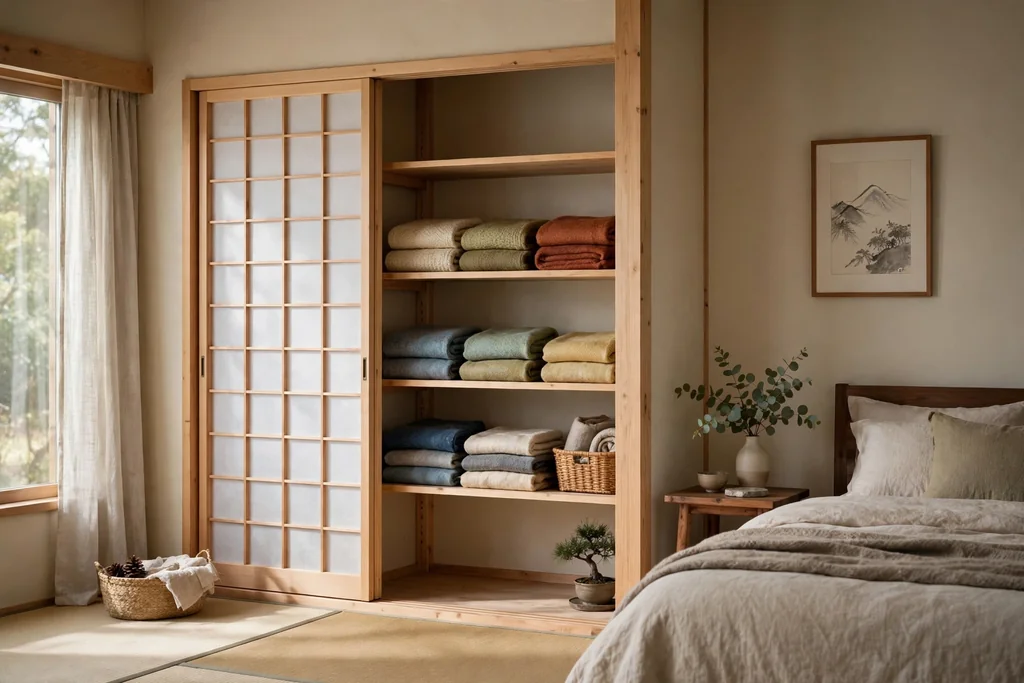
Hide seasonal rotation behind sliding doors, whether built in closets or a low cabinet with sliding panels, so the home can shift seasons in minutes. Sliding doors suit small rooms because they need no swing space, and plain wood or paper panels keep the wall calm when closed. Use the closed storage for out of season throws, cushions, and tableware, and keep the in season pieces in the front section at hand height.
Label the inside of each door or shelf, so everyone in the house can put things back in the right place. Keep one shelf for daily items, and higher shelves for seasonal items, and check the door runners now and then, since a sticking door soon becomes a door left open. Swap the front section once per season, rather than a little at a time, so the change feels like a real refresh.
19. Swap the Wall Scroll With the Season
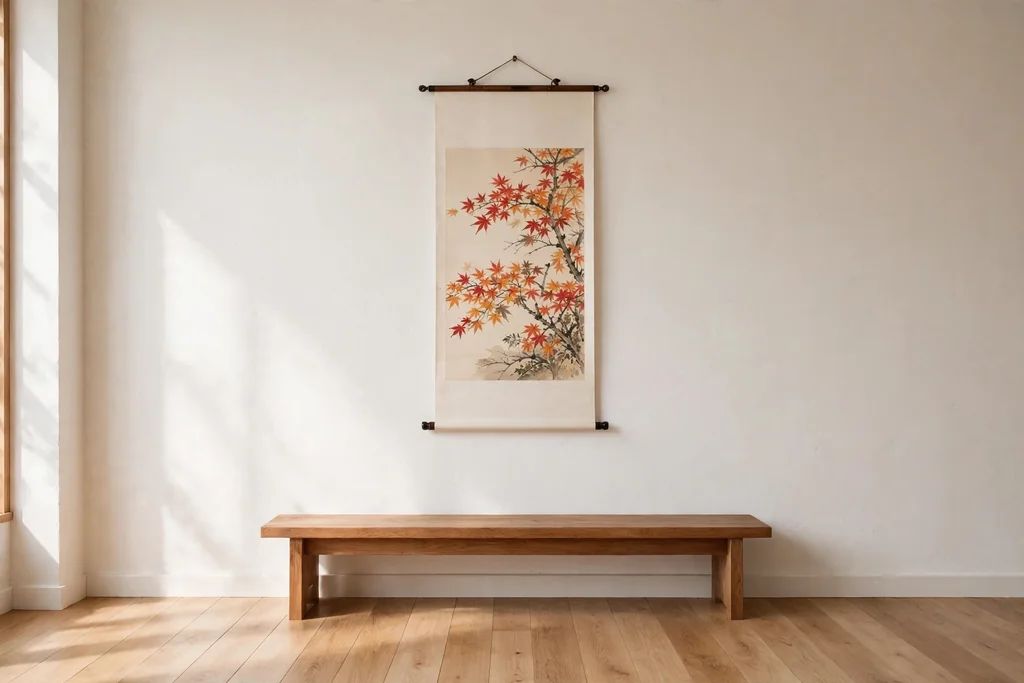
Hang one hanging scroll, a vertical work of ink, color, or calligraphy on paper or silk, in a simple mount above a low bench or a sofa, and swap it with the season. A maple scene in autumn, a pine scene in winter, or a blossom scene in spring gives a plain wall a seasonal note with no repaint and no new furniture. One large scroll often works better than a gallery wall, since it gives the eye one place to rest.
Hang the center at seated eye level, and keep the mount simple in a muted tone that matches the room. Keep the scroll out of direct sun, which can fade paper, and out of damp spots. Store the out of season scroll rolled in a dry tube or box, and handle it with clean, dry hands, so the paper and mount last for years of seasonal swaps.
20. Make a Small Zen Tray With Autumn Leaves and Stone
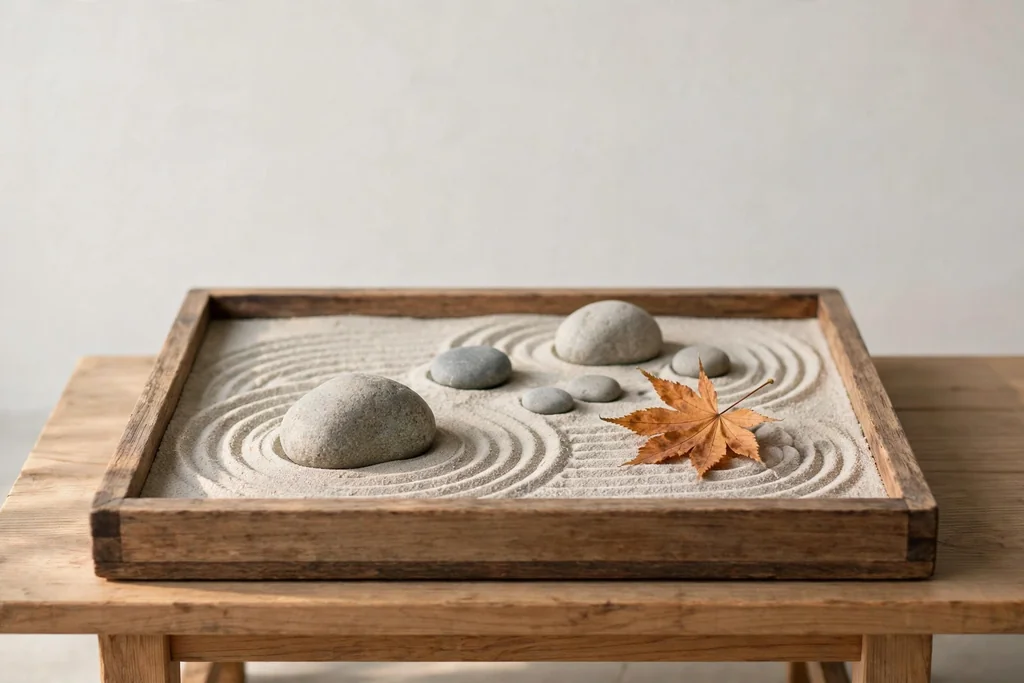
Set out a mini zen tray garden, a shallow tray with fine sand, smooth stones, and one small plant or a few autumn leaves, on a low table or a shelf. Raking the sand into simple lines is a quiet, hands on ritual, and the tray gives a table a focal point without flowers that fade in days. A tray garden suits a reading corner, a tea corner, or a desk area, and a seasonal leaf or stone keeps it tied to the time of year.
Keep the tray on a stable surface, away from the edge, and rake it with a small wooden rake or a fork. Refresh the sand if it gets dusty, and keep stones clear of the table surface so they do not scratch wood. A tray garden is a display piece, not a toy for pets or small children to scatter, and one leaf, replaced weekly, keeps the display fresh.
21. Dress a Balcony or Porch With a Stone Lantern and Evergreen
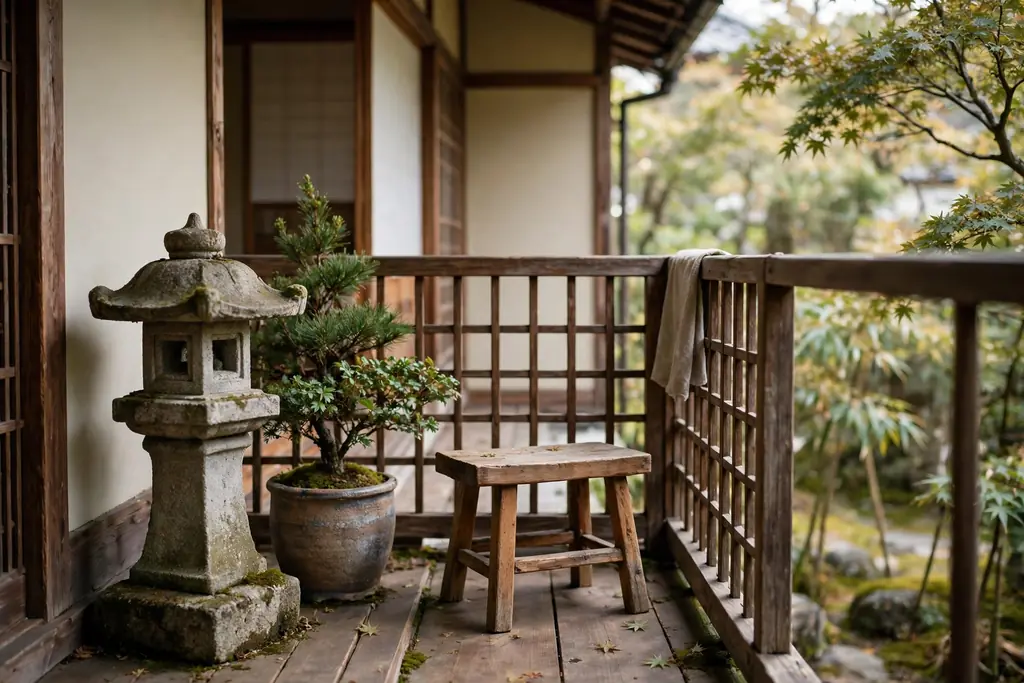
Place a small stone lantern, a potted evergreen, and a low wood stool on a balcony or porch for a Japanese garden note that lasts through the cold months. The lantern gives the outdoor spot a sculptural shape in daylight and a soft glow with a candle or a battery light in the evening, while the evergreen keeps green color when other plants fade. This suits a small balcony best, where one lantern and one pot are enough.
Keep the lantern on a stable, level base, and keep the pot on a tray to protect wood or tile floors. Water the evergreen as its type needs, and prune dead stems promptly. Keep the outdoor spot clear of clutter, so the lantern and the plant stay the focus, and bring a cushion indoors after use, since outdoor fabric fades and dampens fast in wet weather.
22. End the Day in a Low Reading Nook With a Wool Throw
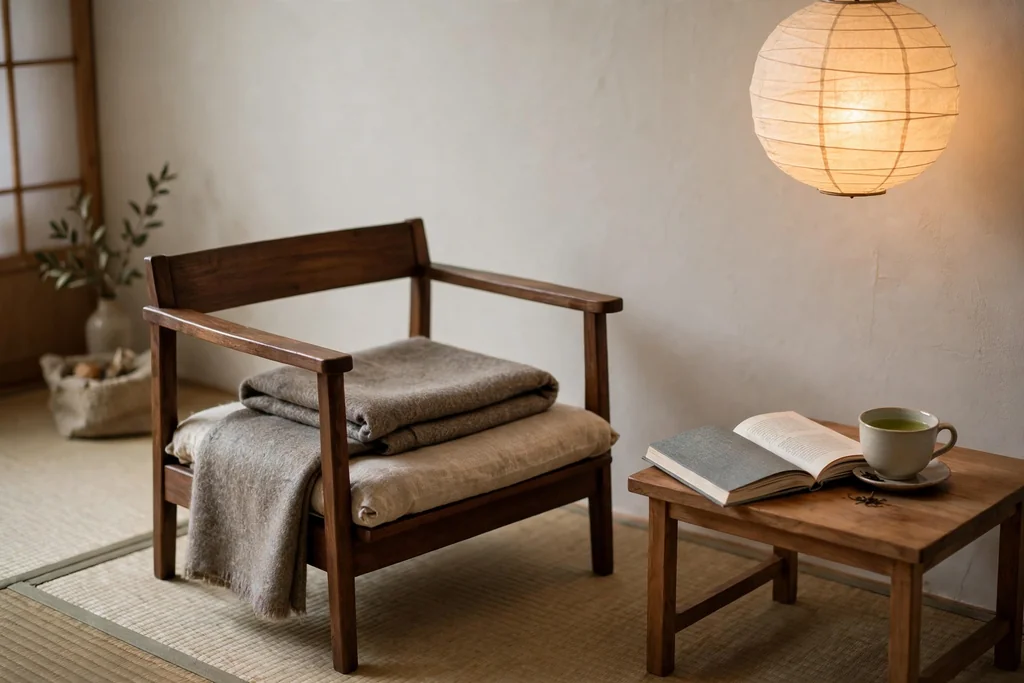
Make a low reading nook in a quiet corner: a floor cushion or a low chair, a small side table, a paper lamp at sitting height, and a wool throw folded on the seat. The nook gives the evening a set place to slow down, with a book, a cup of tea, and soft light, and it needs no new room, only a corner that is kept clear for reading. This suits a bedroom corner, a living room alcove, or a wide hallway nook.
Keep the nook to one book, one cup, and one throw at a time, so it stays inviting rather than crowded. Choose a throw in a warm, muted tone, such as rust, charcoal, or soft grey, and wash it as the maker directs. Place the lamp where its light falls on the page, not in the eyes, and keep a small basket beside the chair for the current book and the throw when the nook is not in use.
Conclusion
A cozy seasonal Japanese home comes from a calm base and small, changeable pieces, not from a full redecorating project. Keep walls pale and wood warm, sit low where it suits the room, and let one quiet piece, such as a paper lamp, a branch, or a tea set, carry each room. Start with the entry and the bedroom, since those rooms shape how the whole home feels, then add the low table, the tea station, and the reading nook one at a time. With those layers in place, the home stays easy to live in, easy to tidy, and ready to shift again when the next season arrives.
If you found an idea here that suits your home, save this post on Pinterest so you can find it again when you are ready to start. Pin the look you like most, whether it is a platform bed, a tea station, or a seasonal display, and use it as a guide for your next weekend refresh.
FAQs
What defines Japanese home decor?
Japanese home decor is defined by a calm base of warm white walls and natural wood, low furniture, soft paper light, and natural materials, such as linen, rush, bamboo, and handmade ceramics. It favors empty space, one focal piece per room, and daily habits, such as a shoes-off entry and a tea ritual, over bold painted walls or heavy ornament.
How do I make Japanese decor cozy for autumn and winter?
Layer warmth in small, changeable pieces: a wool throw on a low bed or chair, a heavier noren curtain, a paper lantern at sitting height, and a tea station for hot drinks. Keep walls and large furniture plain, so the warm layers can be added in autumn and lifted away in warm weather with no building work.
Can Japanese decor work in a small home or a rented home?
Yes, since most of these ideas need no building work. A shoes-off entry tray, floor cushions, a low platform bed frame, a folding shoji style screen, a paper floor lantern, woven baskets, and a tea tray all move with you, and none of them require painting or fixed changes. Sliding doors and open shelves on brackets also suit small rooms, since they save swing and floor space.
What colors suit a cozy seasonal Japanese home?
Warm white, pale wood tones, soft grey, and beige form the base, with muted seasonal accents, such as persimmon, rust, soft gold, and indigo, in small doses. Use one accent color per room, repeated twice in small pieces, so the palette looks planned rather than busy, and swap the accent pieces when the season changes.
What is the easiest first Japanese decor change for the season?
Set up a shoes-off entry and a tea station. Both take an afternoon, change how the home feels every day, and need no building work: the entry keeps floors clean and marks a pause at the door, while the tea station turns a daily drink into a short ritual you look forward to on cold evenings.
How do I mix Japanese decor with furniture I already own?
Keep your existing furniture and change the layers around it: plain linen bedding, a wool throw, a woven basket, plain ceramic pieces on open shelves, and a paper lamp for soft evening light. Repeat pale or mid wood and plain ceramics in two or three rooms, so old and new pieces read as one calm style, and add one seasonal branch or scroll per room for the note of the moment.