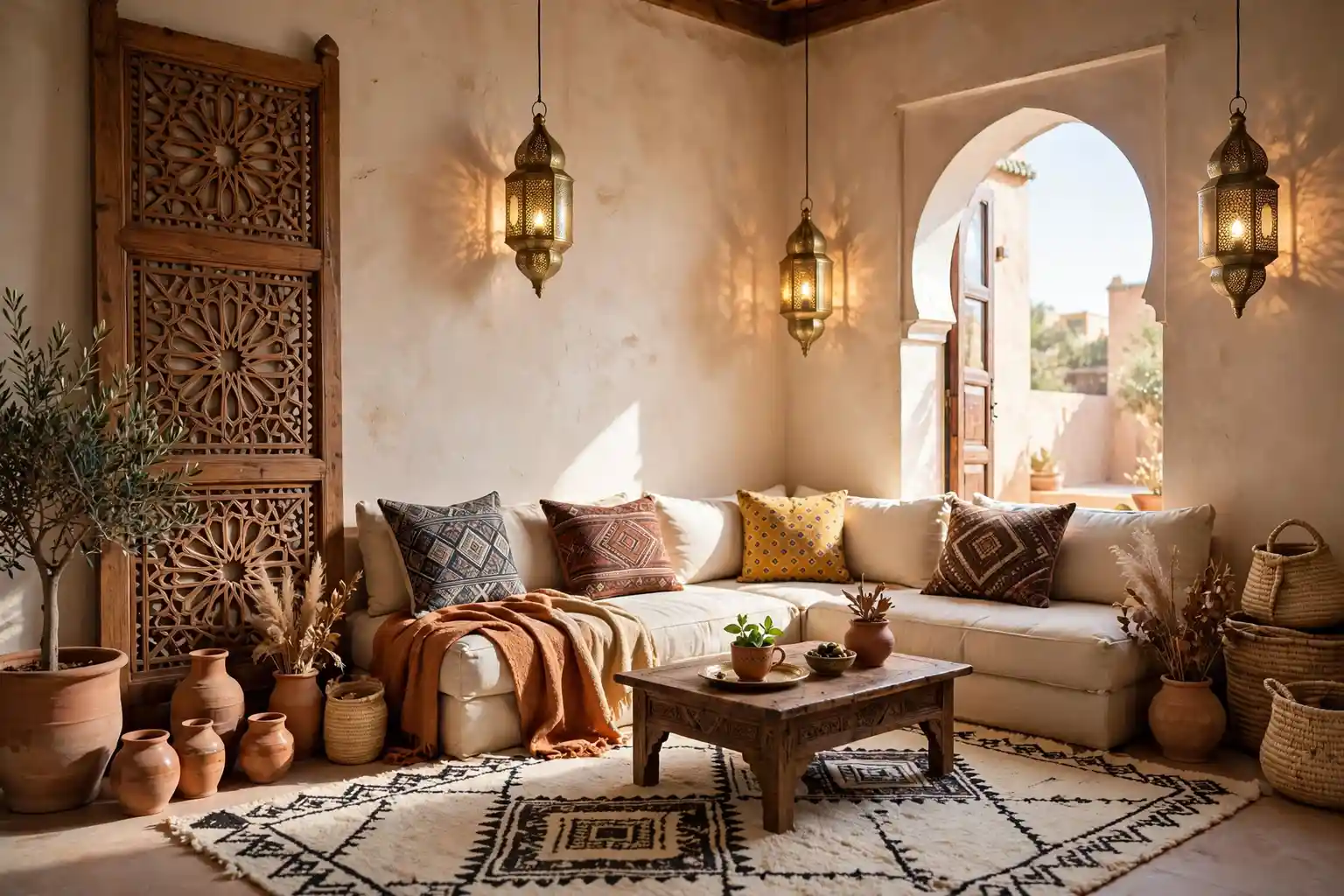
Moroccan decor is easy to recognize and hard to pin down: warm plaster walls, patterned tiles, carved wood, brass that glows in lamplight, and rugs with a hand made feel. The style works because it layers texture and pattern on a calm base, so a room feels collected over time rather than decorated in one trip. These 34 Moroccan home decor ideas cover living rooms, bedrooms, kitchens, bathrooms, and small spaces, with a mix of quick swaps and bigger projects. Start with one strong piece, such as a rug or a lantern, and add pattern slowly so each new layer has room to show.
Key Takeaways
- Start with one anchor piece per room, such as a rug, a lantern cluster, or a carved screen, then add smaller pattern around it.
- Keep walls and large furniture in warm neutrals, such as plaster white, sand, or clay, so tiles and textiles can carry the color.
- Mix no more than three strong patterns in one room, and repeat each pattern at least twice so the room looks planned.
- Use warm light, through pierced lanterns, candles, or low wattage bulbs, since Moroccan style depends on glow more than bright overhead light.
- Balance ornate pieces with plain surfaces: a carved screen needs a plain wall, and a patterned tile floor needs simple furniture.
- Shop slowly and mix old and new, since a room that looks gathered over time feels more Moroccan than a matched set bought at once.
1. Brass Tray Table on a Carved Wooden Base
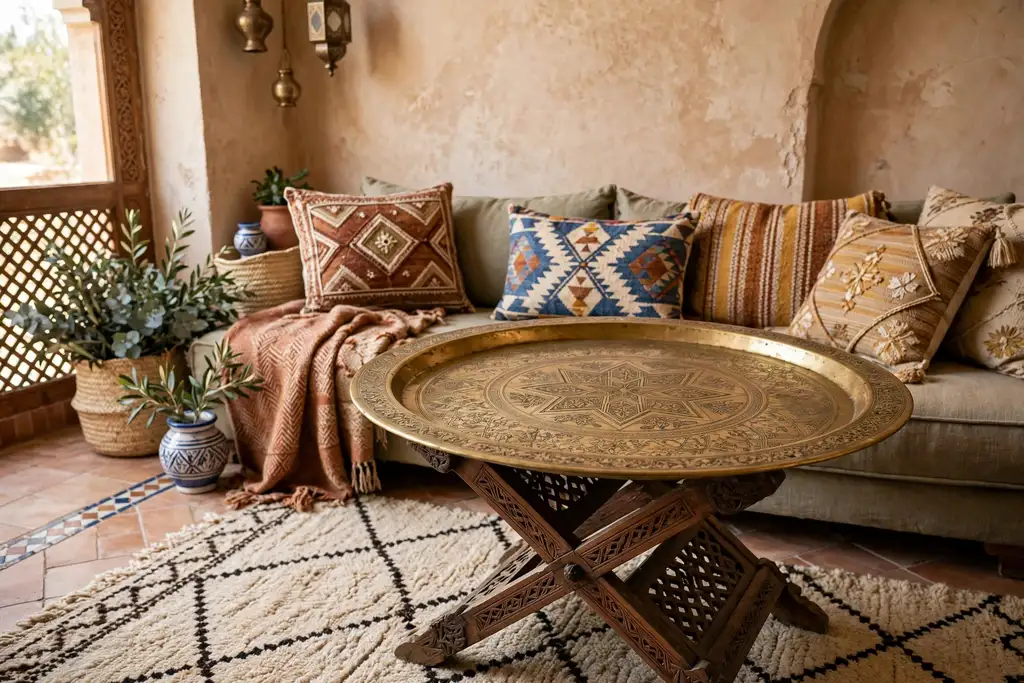
A round brass tray table on a folding carved wooden base is one of the simplest ways to bring Moroccan style into a living room. The engraved tray catches light and gives the seating area a low, relaxed center, while the base folds away when you need floor space. Set it beside a sofa or between two lounge chairs, and keep the top mostly clear except for a small tea glass or a candle.
Choose a tray with a hand engraved pattern rather than a printed one, since the small uneven lines read as craft rather than print. If the brass looks too shiny for your room, let it age naturally or rub it lightly with a soft cloth to soften the shine. For a full tray table setup, pair it with floor cushions and a low sofa, as in idea 7 below.
2. Cluster of Pierced Metal Lanterns
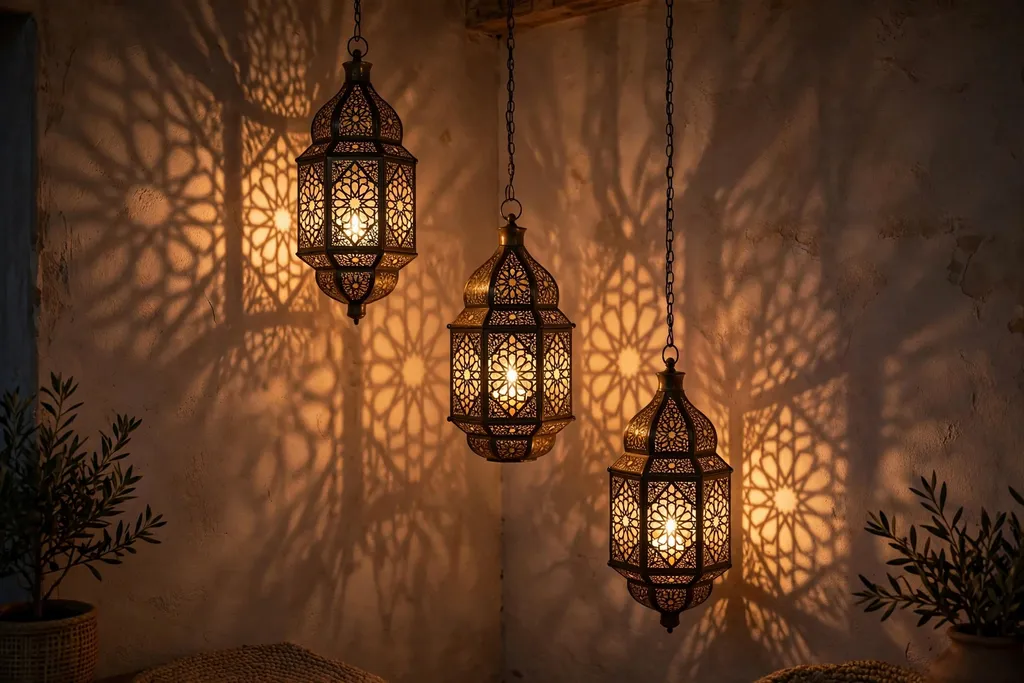
Hang three pierced metal lanterns at different heights in a corner or over a side table, and let their cut patterns throw shadows on the walls at night. The cluster works better than a single large lantern, since the mix of sizes and heights gives the light movement and depth. Use warm bulbs or real candles, and keep the cords or chains simple so the lanterns stay the focus.
Hang the lowest lantern at about eye level when seated, and the highest near the ceiling line, so the group reads as one feature. If you rent, use a ceiling hook rated for the weight and a plug in cord, or set large lanterns on the floor instead. Keep paper and fabric away from candle lanterns, and never leave a real flame burning in an empty room.
3. Beni Ourain Style Wool Rug
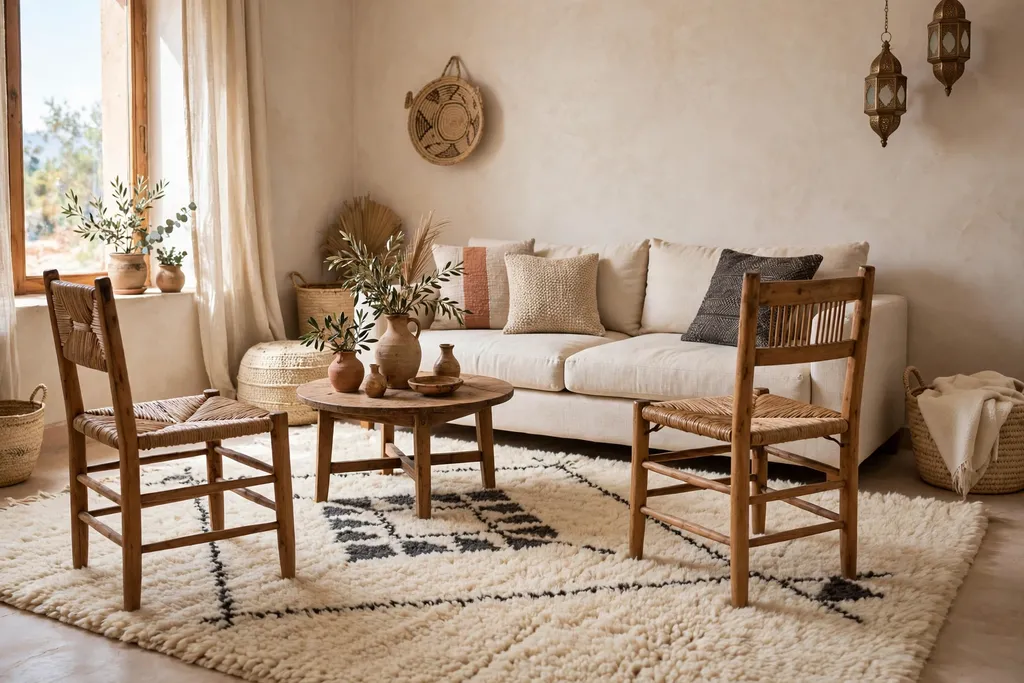
A thick cream wool rug with a simple dark geometric pattern anchors a Moroccan living room without shouting. The pile is soft underfoot, the cream base keeps the room light, and the loose pattern pairs with both plain and patterned cushions. Lay it so the front legs of the sofa and chairs sit on the rug, which pulls the seating group together.
Buy the largest size your room and budget allow, since a small rug floating in the middle of the floor breaks the room apart. If a hand knotted rug is out of reach, a good machine woven wool rug in the same cream and charcoal palette gives a similar feel. For more rug sizing and placement ideas, see these living room rug ideas.
4. Zellige Tile Fireplace Surround
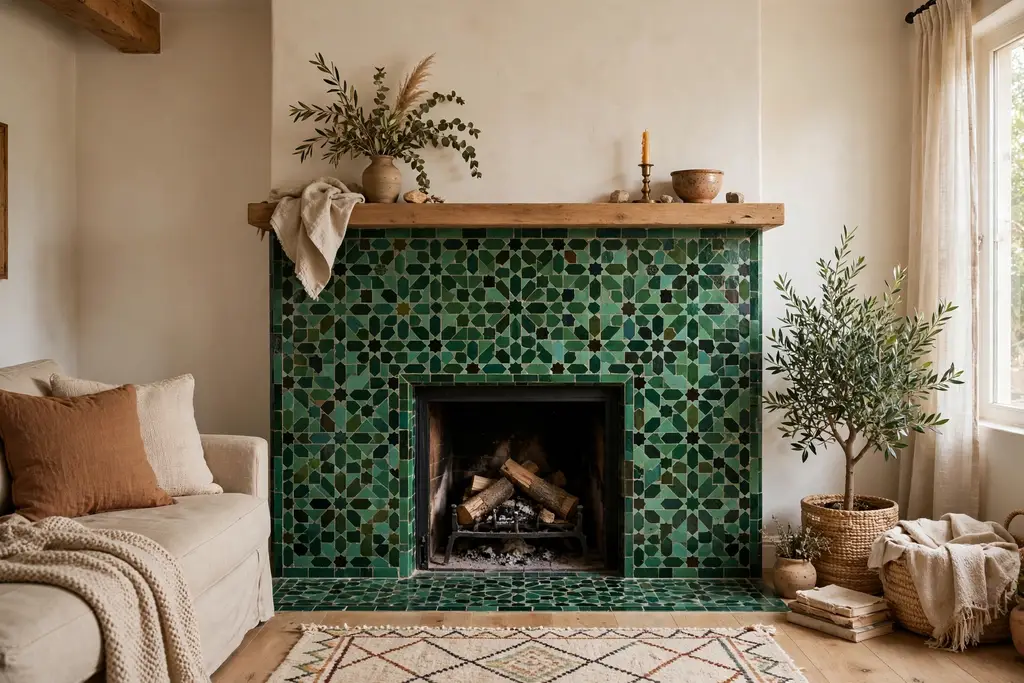
Cover a fireplace surround in zellige tiles, the small glazed Moroccan tiles with slight color shifts from tile to tile, for a feature that glows even when the fire is out. Deep green, teal, or warm terracotta all suit a living room, and the uneven glaze keeps a large tiled area from looking flat. Keep the mantel simple, in wood or plaster, so the tile does the talking.
Hire a tiler who has worked with handmade tiles before, since zellige tiles vary in thickness and need careful setting and grouting. If a full surround is too big a project, tile just the firebox opening or the hearth and paint the rest of the surround in a matching plaster tone. Wipe the tiles with a damp cloth to clean them, and avoid harsh acids on the glaze.
5. Moorish Arch Mirror in the Entry
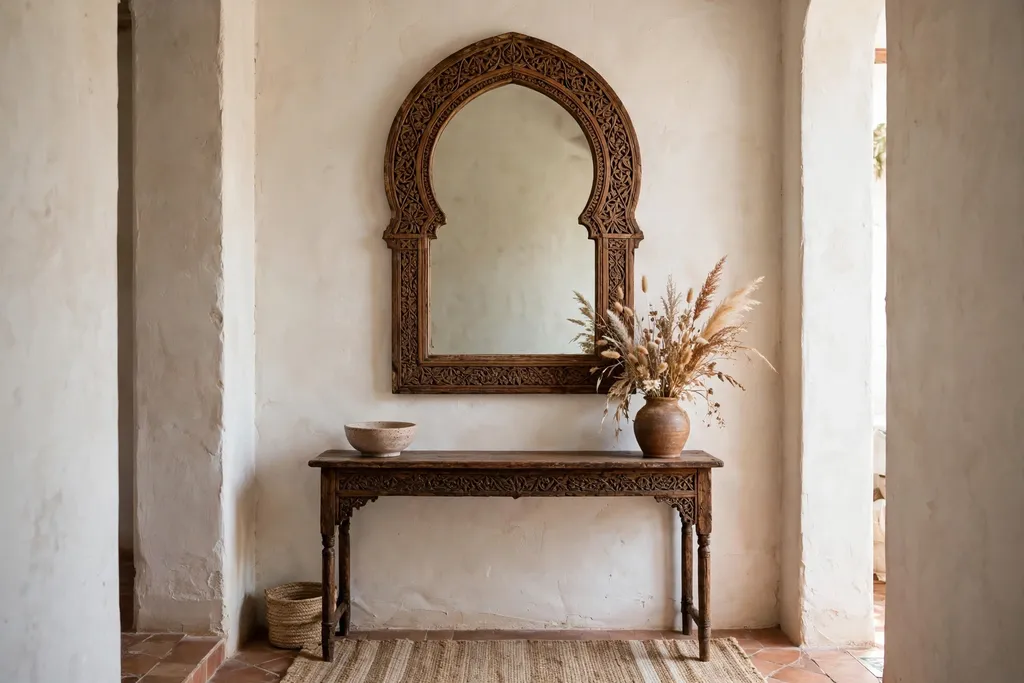
A mirror shaped as a Moorish arch, with a rounded top that curves into a point, turns a plain entry wall into a feature. The arch shape is one of the clearest Moroccan signals, and a mirror doubles light in a hall that may have little daylight. Hang it above a narrow console table, with a small bowl for keys and a vase of dried grasses beside it.
Keep the frame in carved wood, aged brass, or painted plaster, and keep the wall around it plain so the arch shape stands out. If your entry is narrow, choose a tall slim arch rather than a wide one, so the mirror adds height without crowding the walkway. A pair of small wall lights on either side gives the mirror a finished frame at night.
6. Carved Cedar Screen as a Room Divider
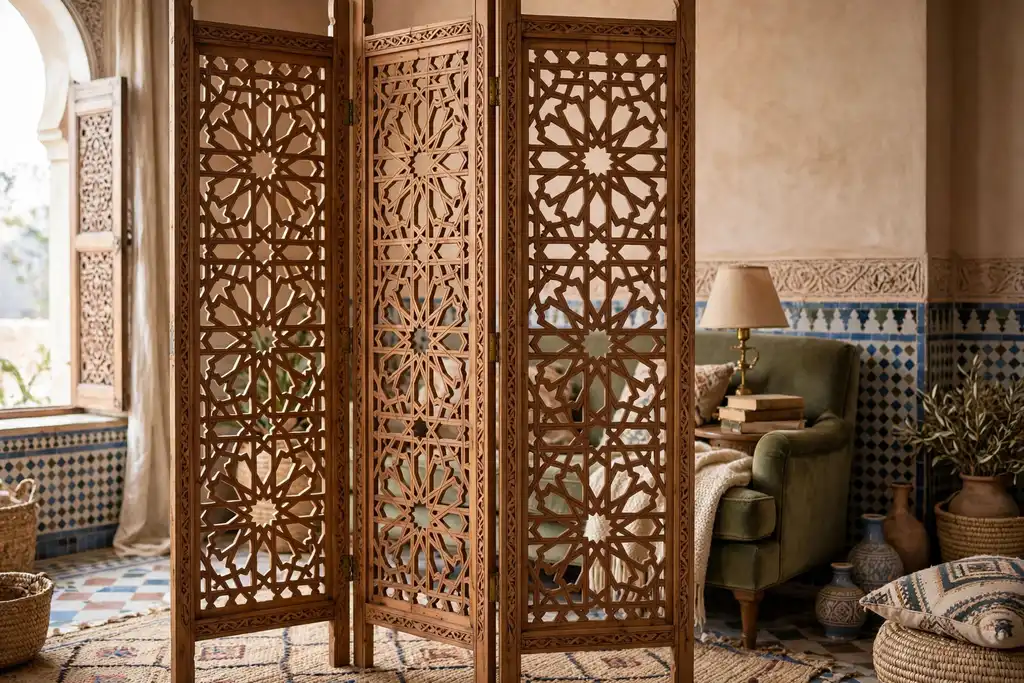
A folding carved cedar screen divides a large room or hides a work corner while adding pattern that light can pass through. The pierced carving throws soft shadows in daylight, and the wood warms a room that might otherwise feel bare. Use it to mark a reading nook in a living room, or to screen a bed in a studio apartment.
Open the screen at a slight angle rather than flat across the room, since an angled screen looks placed rather than built in. Keep the floor on both sides of the screen clear, so the divider does not become a dumping ground. If solid cedar is too heavy or costly, a lighter wood screen with a carved look panel gives a similar effect at a lower price.
7. Low Lounge With Floor Cushions
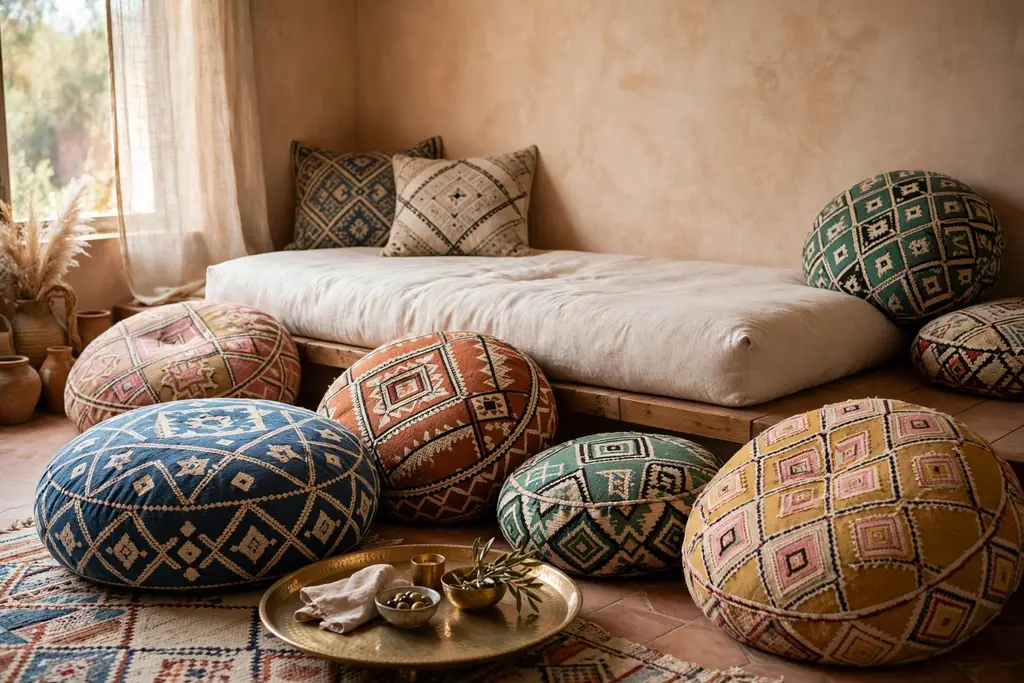
Build a low lounge along one wall with a platform base, a thick mattress top, and a row of large floor cushions in mixed patterns. The low seat changes how a room feels, making it a place to linger with tea and talk, and it suits a corner that a standard sofa would crowd. Cover the base in a plain fabric, then let the cushions carry the pattern.
Use cushion covers that zip off for washing, since floor cushions get more wear than sofa cushions. Mix one large scale pattern, one small scale pattern, and one plain texture, such as wool or linen, so the group looks collected. Add a low tray table in front, as in idea 1, and keep a basket nearby for the cushions you are not using.
8. Leather Poufs as Extra Seats
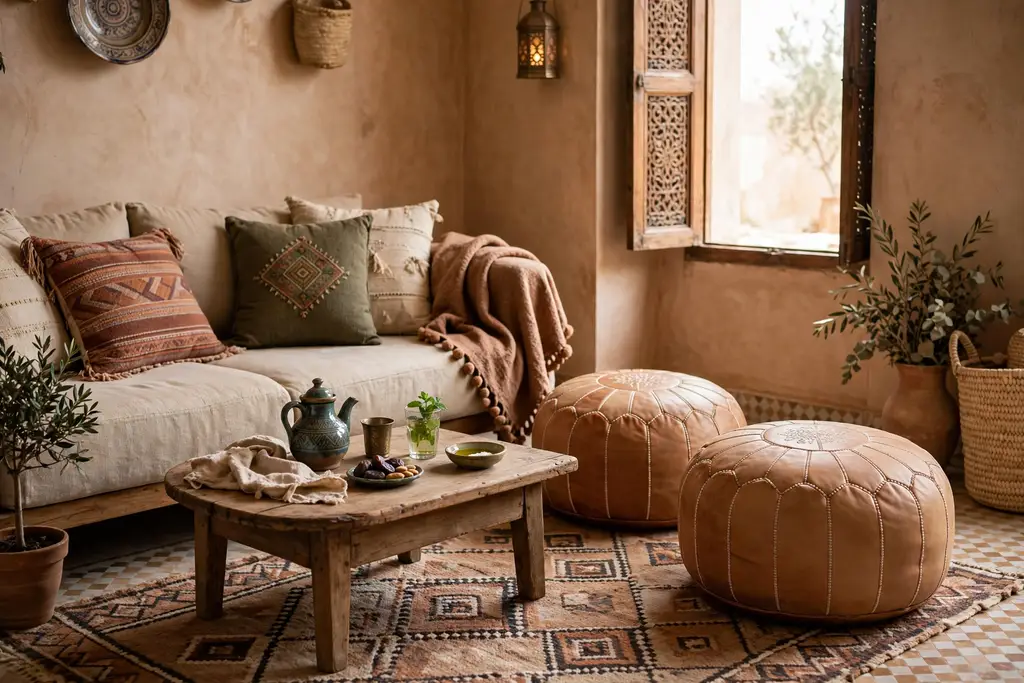
Round leather poufs in tan, dark brown, or a deep jewel color give a living room flexible seats that tuck under a console or beside a chair when not needed. The stitched panels and soft shape suit Moroccan rooms, and a pouf doubles as a footrest or a side table with a tray on top. Keep two in a living room, not six, so the room stays easy to move through.
Fill poufs firmly so they hold their shape when someone sits, and wipe leather with a damp cloth to keep it soft. If you have pets, choose a darker leather that shows scratches less, or use a woven pouf instead. Store a pouf under a console table when guests leave, so the floor stays open for daily use.
9. Terracotta Tile Entry Floor
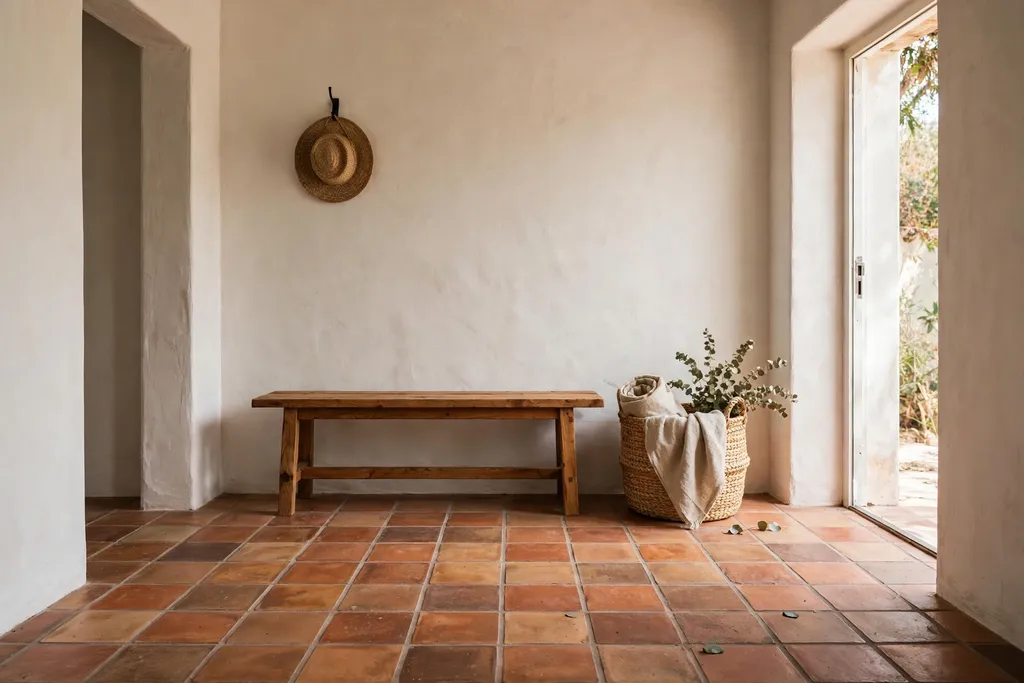
Lay unglazed terracotta tiles in an entry or mudroom for a warm floor that handles muddy shoes and still looks right with Moroccan decor. The natural color shifts from tile to tile give the floor life, and the matte surface grips better than a polished tile. Pair it with plaster walls and a wooden bench for a simple, welcoming entry.
Seal unglazed terracotta before use and reseal it each year, since the porous surface stains without a sealer. If your entry is small, use a square tile rather than a large format one, so the pattern stays in scale with the space. A plain coir mat at the door keeps most dirt off the tiles and suits the earthy palette.
10. Patterned Cement Tiles on the Kitchen Floor
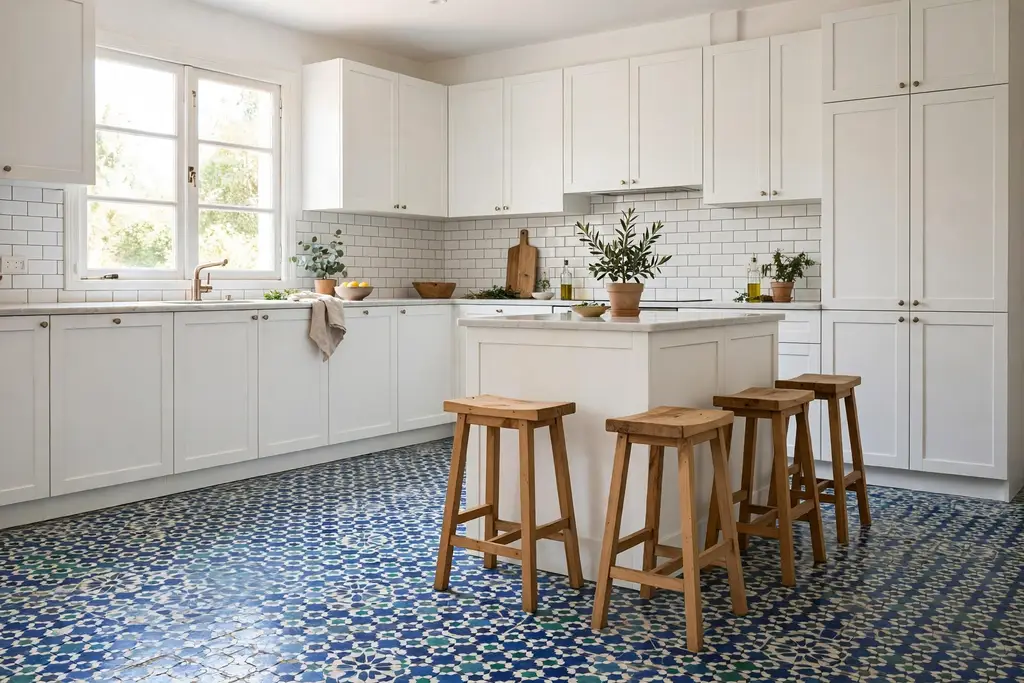
Patterned cement tiles on a kitchen floor bring Moroccan color to a hard working room without needing wall color. Choose a pattern with two or three colors from your kitchen palette, such as blue and white with a touch of ochre, and keep the cabinets plain so the floor leads. The pattern also hides crumbs and marks better than a plain floor.
Cement tiles need sealing before grouting and again after, so follow the maker instructions and test the sealer on one tile first. If a full floor is too much, tile a small zone, such as the area in front of the sink or stove, and use plain tiles elsewhere. Match the grout to the lightest tile color, so the pattern reads cleanly rather than as a grid.
11. Open Shelving With Moroccan Ceramics
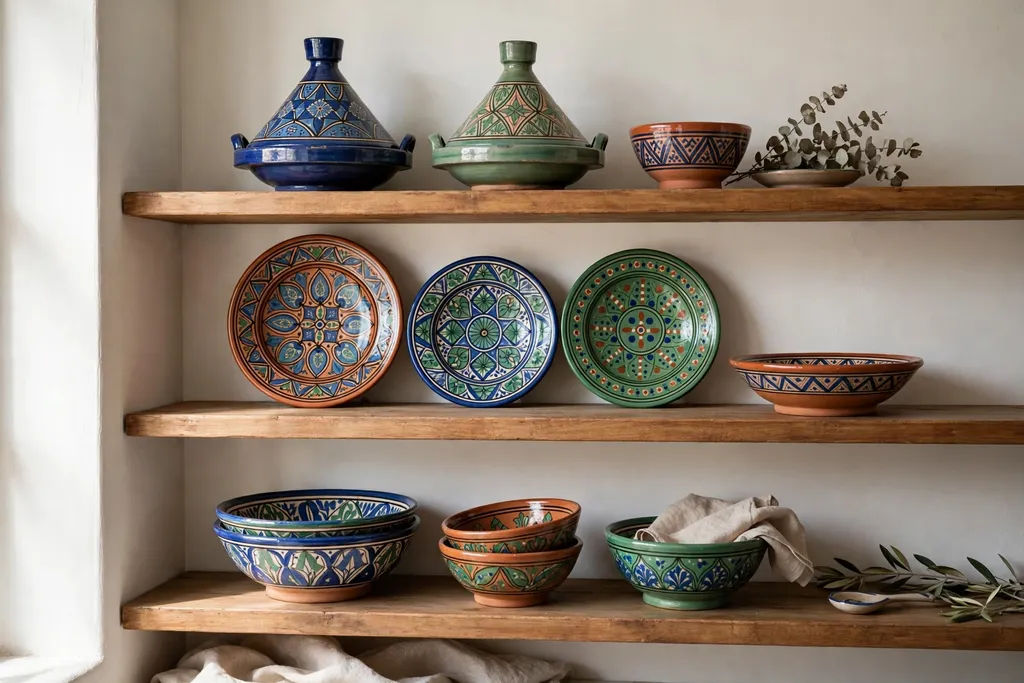
Swap one run of upper kitchen cabinets for open shelves, and display Moroccan ceramics, such as hand painted bowls, plates, and tagines, as both storage and decor. The color and pattern of the ceramics warm a plain kitchen, and open shelves make daily dishes easy to reach. Keep the shelves to two or three rows, so the display stays calm.
Group ceramics by color family, not by matching sets, and leave some empty space on each shelf so the display breathes. Put daily bowls at hand height and decorative plates higher up, where they are seen but not handled daily. Dust the shelves weekly, since open shelving shows dust sooner than closed cabinets, and keep heavy tagines on the lowest shelf.
12. Brass Pendants Over the Kitchen Island
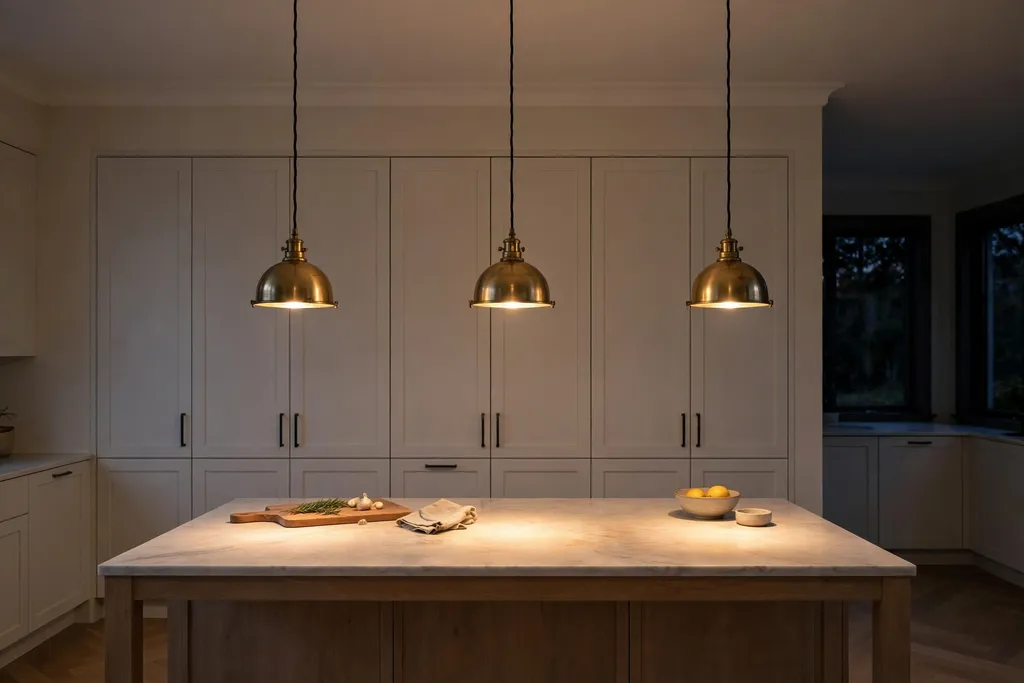
Hang two or three small brass pendant lights over a kitchen island for task light that also reads as Moroccan decor. A domed or pierced brass shade throws a warm pool of light on the work surface, and the brass echoes the tray tables and lanterns used elsewhere in the home. Hang the pendants at the same height, with the bottom of the shade above eye level when standing.
Space the pendants evenly along the island, leaving at least a hand width between the shade and the island edge at each end. Use dimmable warm bulbs, so the island can shift from prep light to evening glow. If your kitchen is small, use two pendants rather than three, since a crowded row looks fussy and blocks sight lines across the room.
13. Tadelakt Plaster Wall in the Bathroom
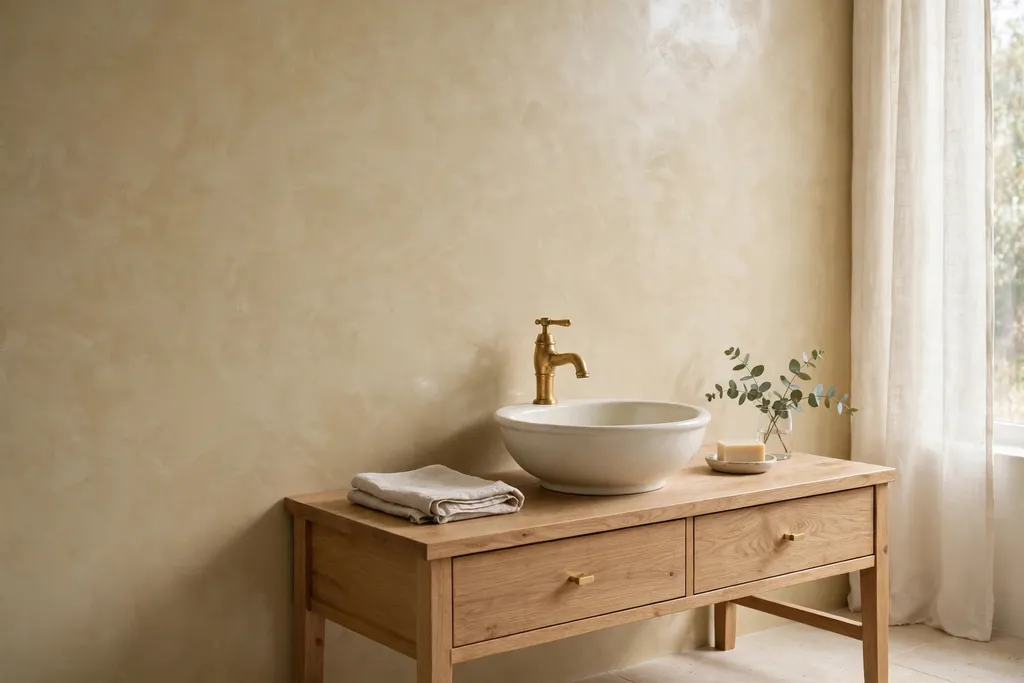
Use tadelakt, the polished Moroccan lime plaster, on one bathroom wall or inside a shower for a soft, seamless surface with a gentle sheen. The plaster feels warm to the touch, has no grout lines to clean, and suits a bathroom where tile might feel cold or busy. Choose a warm white, sand, or pale clay tone, and let the plaster be the feature of the room.
Tadelakt needs a skilled plasterer and a proper wax finish to resist water, so get references from past bathroom work before you hire. If a full tadelakt wall is out of reach, use a lime wash paint in the same tone on the walls and save the real plaster for a small niche or a basin surround. Keep cleaning gentle, with a soft cloth and mild soap, and reseal the wax as the maker directs.
14. Horseshoe Arch Niches for Display
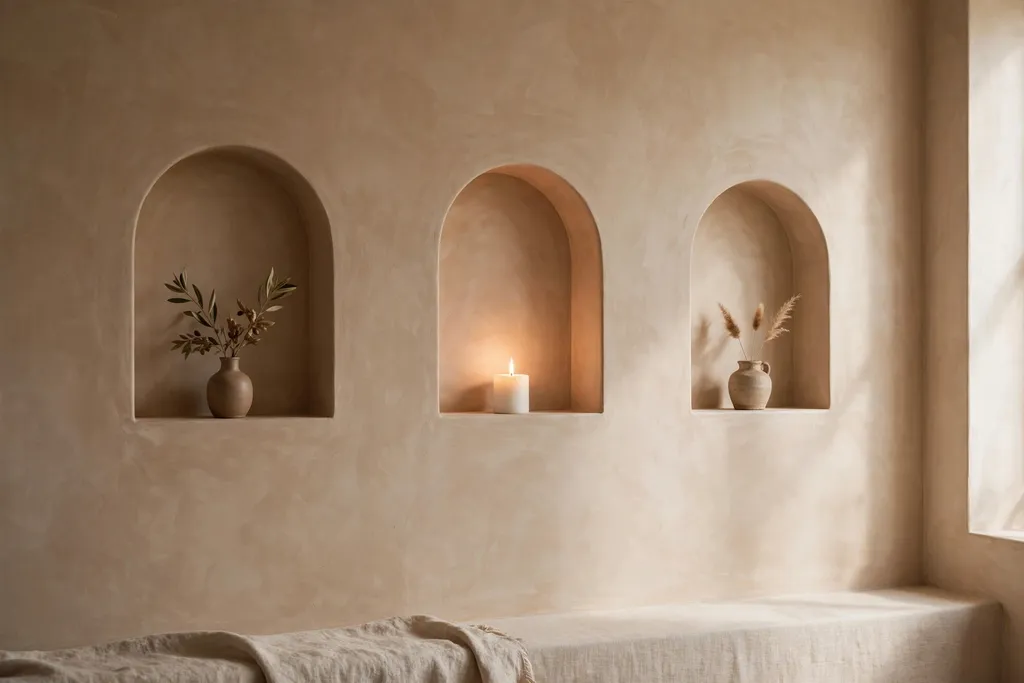
Build shallow horseshoe arch niches into a living room or hallway wall, and use them to display a vase, a candle, or a small ceramic piece. The arch shape repeats the Moorish detail from idea 5, and a lit niche at night becomes a quiet focal point. Keep each niche to one object, so the arch frames it rather than crowding it.
If cutting into a wall is not possible, build a false wall panel with arch niches, or use a freestanding arch shelf unit in the same shape. Paint the inside of the niche one shade deeper than the wall, so the arch reads clearly even in daylight. Add a small battery light or a wired picture light to one niche, and leave the others unlit for contrast.
15. Berber Throw Blankets on the Bed
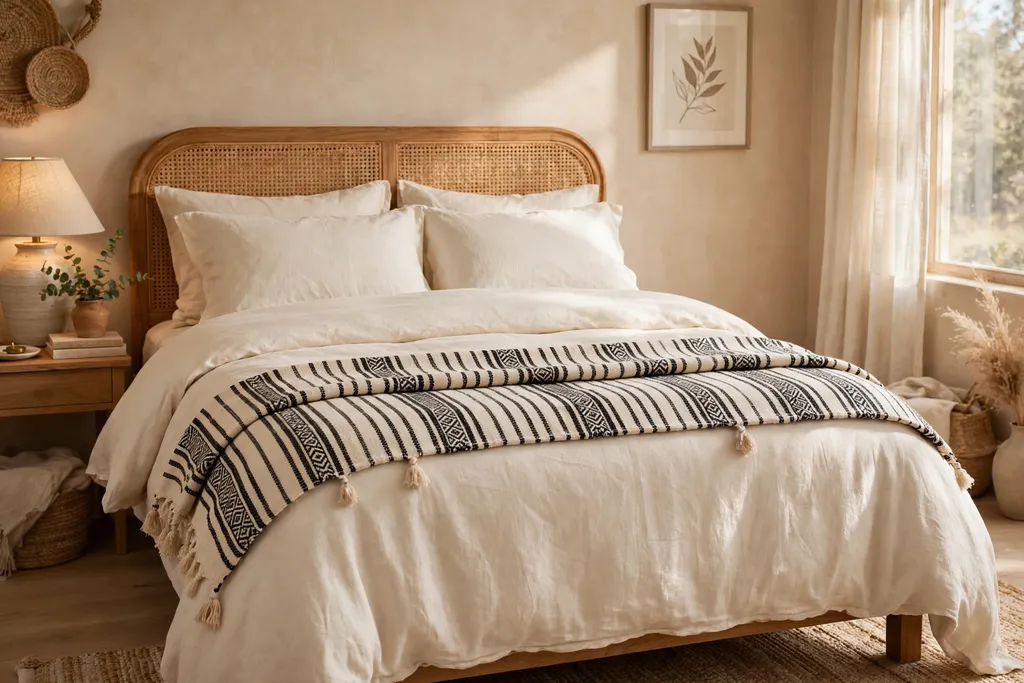
Drape a striped Berber throw blanket across the foot of the bed for a layer of pattern and warmth that you can also use on cool evenings. The woven stripes and small tassels suit a bedroom with plain bedding, and the throw is easy to swap with the seasons. Fold it in thirds across the foot of the bed, rather than spreading it flat, so the stripe pattern stays visible.
Choose a cotton or wool blend that washes well, since a bed throw gets daily handling. If your bedding is already patterned, choose a throw in one color pulled from the bedding, so the bed looks layered rather than clashing. For a calm base under the throw, keep the sheets and duvet in a warm neutral, as in these beige bedroom ideas.
16. Carved Wooden Headboard
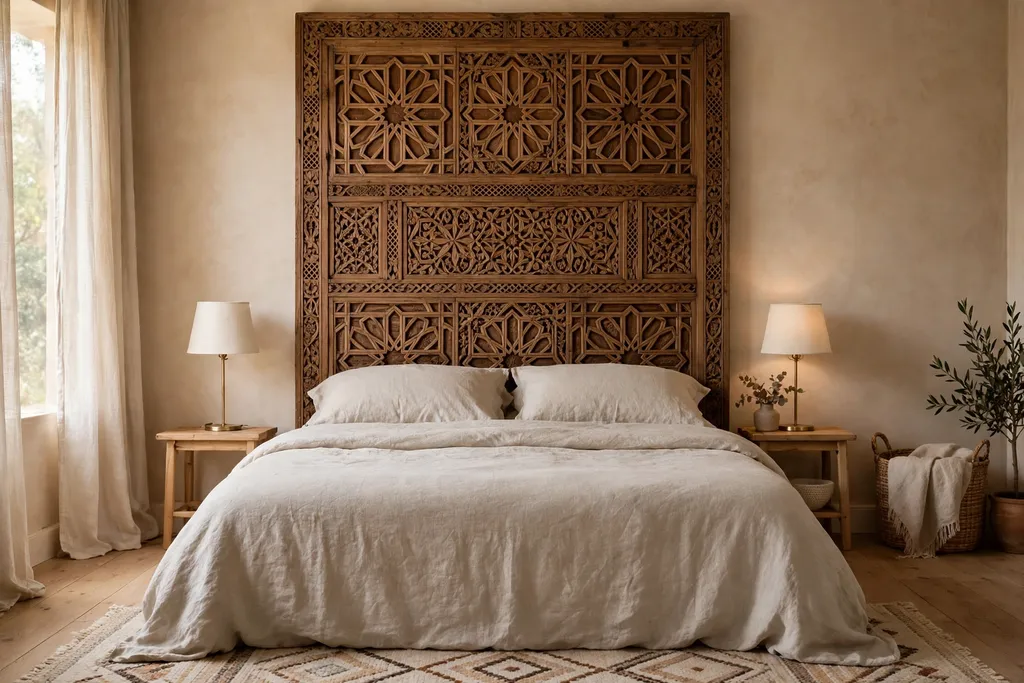
A tall carved wooden headboard, in cedar or another warm wood, gives a bedroom a Moroccan anchor without any paint or wallpaper. The carving adds pattern at the head of the bed, where the eye lands first, and the wood warms a room with plain walls. Pair it with plain linen bedding, so the headboard stays the feature.
Mount the headboard to the wall rather than the bed frame if it is heavy, and check the fixings hold the full weight. If a full carved headboard is too costly, use a carved wooden panel hung above a plain upholstered headboard, or a pair of carved door panels, as in idea 23. Keep bedside lamps simple, so the light falls on the carving without competing with it.
17. Moroccan Wedding Blanket as a Bed Cover
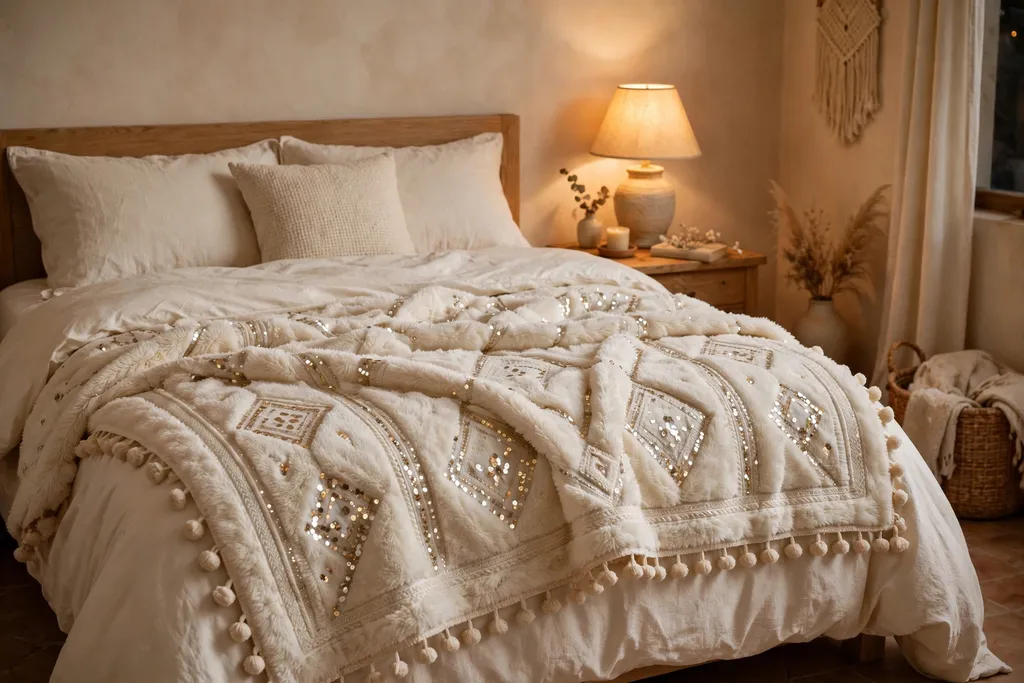
Use a handira, the Moroccan wedding blanket with sequins and soft pile, as a bed cover for a bedroom feature with real craft history. The cream base and sparkling sequins catch lamplight, and the blanket suits a plain bedroom where one rich textile can lead. Lay it over a plain duvet, folded back to show the bedding at the pillows.
Treat a handira as a decorative cover rather than a nightly blanket, since sequins snag and the pile sheds with heavy use. Air it outside rather than washing it often, and spot clean small marks with a damp cloth. If you have a light sleeper in the house, keep the sequin side up only for display, and store the blanket folded at the foot of the bed at night.
18. Painted Tile Stair Risers
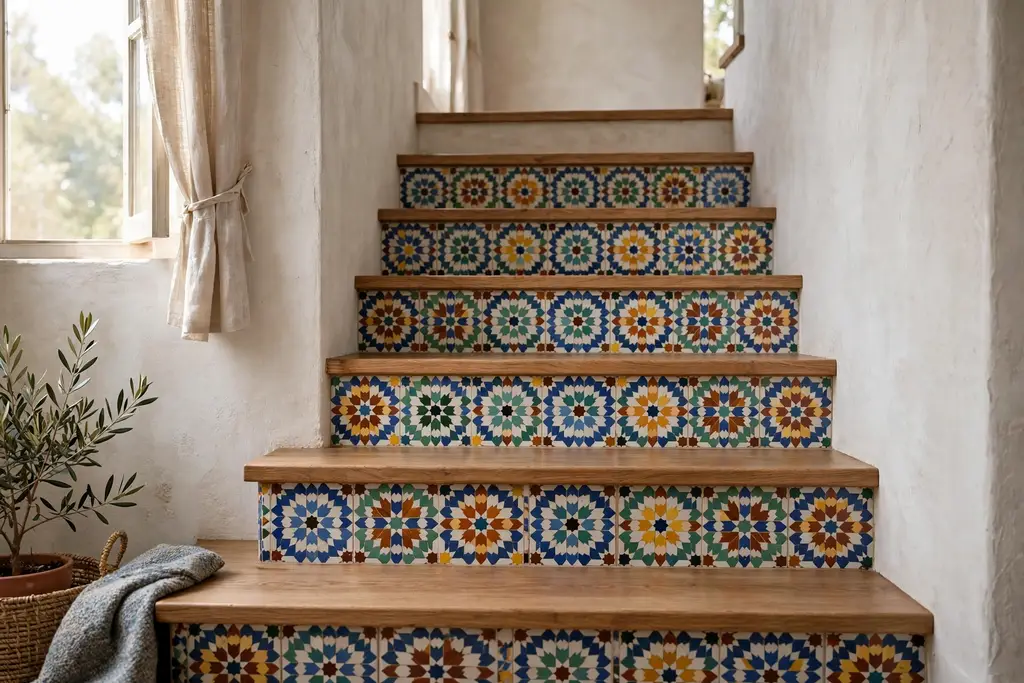
Paint or tile the stair risers, the vertical faces of each step, in a Moroccan pattern for a stairway that surprises without changing the treads. The pattern appears as you climb, and the treads stay plain wood or stone for safe footing. Use one repeating pattern for a calm look, or a mixed pattern set for a collected, souk like feel.
Use tile stickers or painted stencils if you rent or want a reversible change, and full tiles if you own and want a lasting finish. Keep the pattern colors tied to a rug or runner nearby, so the stairs connect to the rest of the hall. Test one riser first, and check the pattern reads well from both the bottom and the top of the stairs before you commit to the full flight.
19. Courtyard Plants in Terracotta Pots
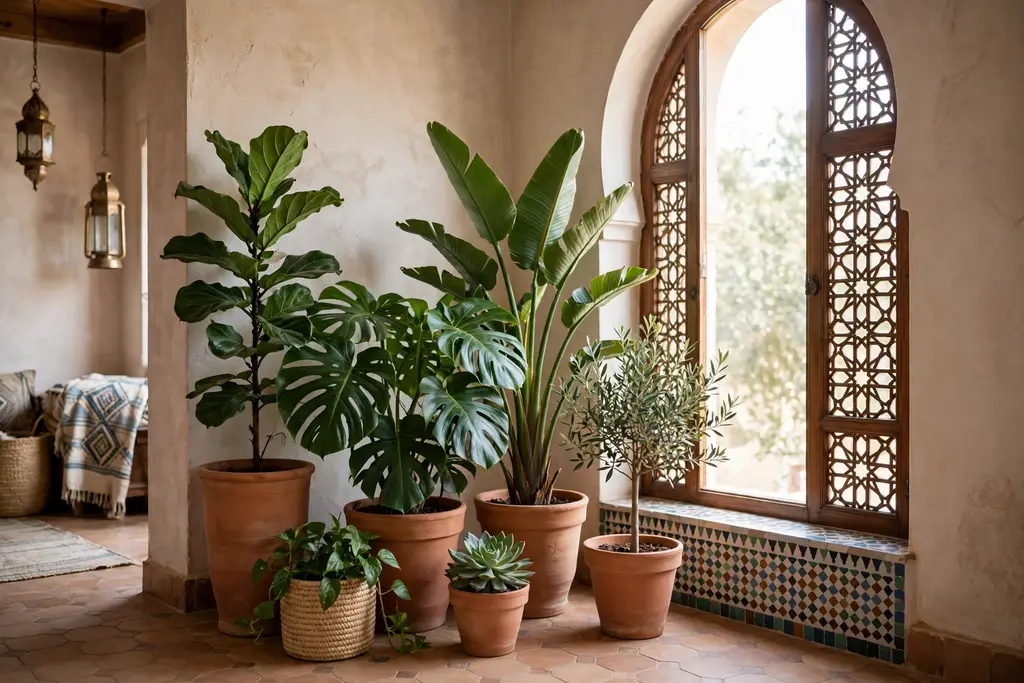
Group large plants in terracotta pots near a window or in a bright corner, echoing the planted courtyards of Moroccan homes. Olive trees, palms, and trailing plants suit the look, and the terracotta warms the green. Use pots of different heights, with the tallest at the back, so the group reads as a small garden rather than a row.
Water plants on a tray or saucer, and wipe the pots now and then, since terracotta shows water marks. If your light is low, choose plants that cope with shade, such as snake plants or pothos, and keep the pots as the Moroccan note. Add a small mosaic table among the pots, as in idea 20, to complete the courtyard feel.
20. Mosaic Side Table Beside a Chair
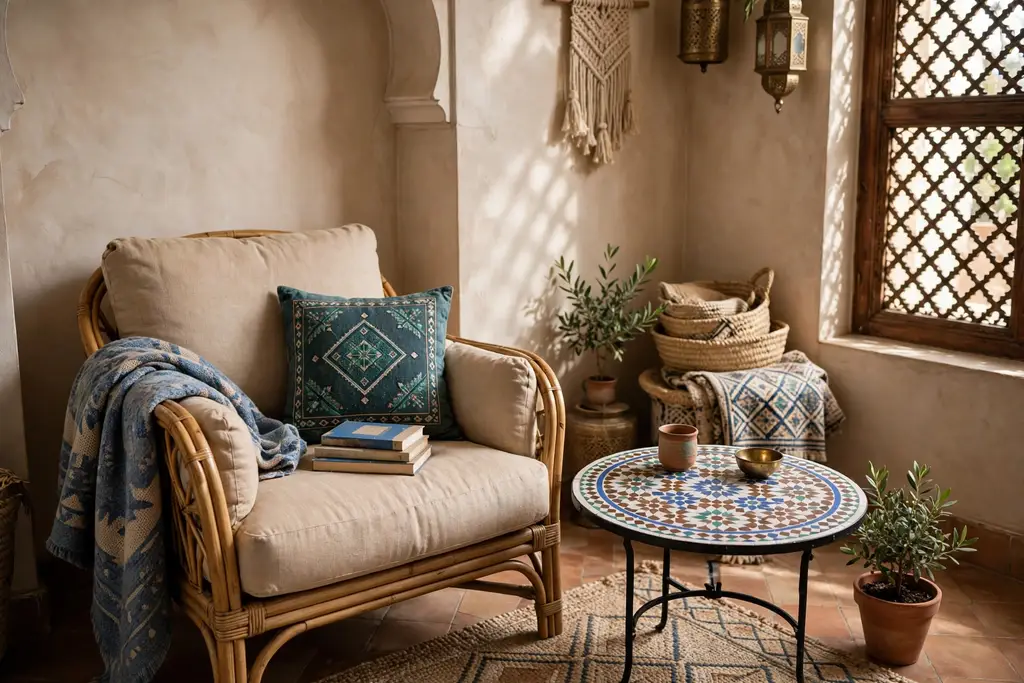
A small round mosaic side table, with a tile top in a geometric pattern, gives a reading chair a useful surface with a strong Moroccan note. The tile top wipes clean, holds a tea glass without a coaster worry, and adds pattern at a low level where the room may be plain. Choose a pattern with one color that matches your cushions, so the table ties into the room.
Check the table is steady on your floor before you buy, since a wobbly mosaic table chips at the edges. If the table will sit outdoors part of the year, seal the grout and bring it inside in freezing weather. Keep the top mostly clear, with just a candle or a small plant, so the mosaic pattern stays visible.
21. Kilim Cushions Mixed on the Sofa
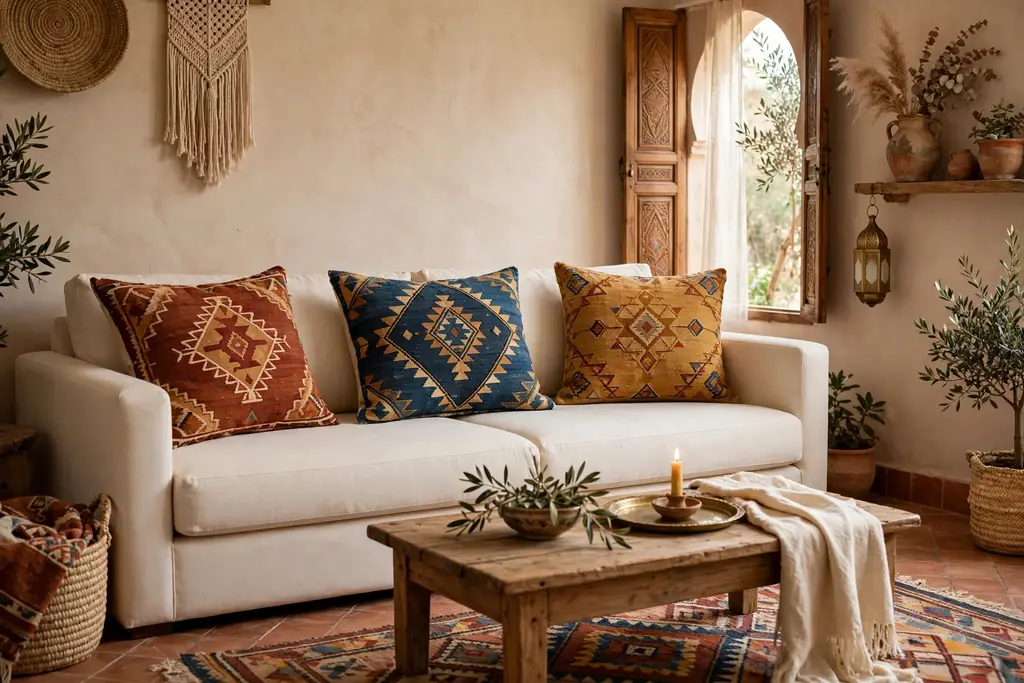
Mix kilim cushions, with their flat woven geometric patterns, on a plain sofa for a quick Moroccan refresh that costs less than new furniture. The mix of rust, indigo, ochre, and cream suits a neutral sofa, and the flat weave wears well. Use three or five cushions, in two sizes, so the group looks planned rather than piled.
Keep the sofa itself plain, and pull one cushion color into a throw or a rug, so the cushions connect to the rest of the room. If your sofa is already patterned, use kilim cushions in one color family only, so the room does not fill with competing patterns. Choose covers with hidden zips, and wash them on a gentle cycle to keep the weave flat.
22. Arched Window Mirror in the Hallway
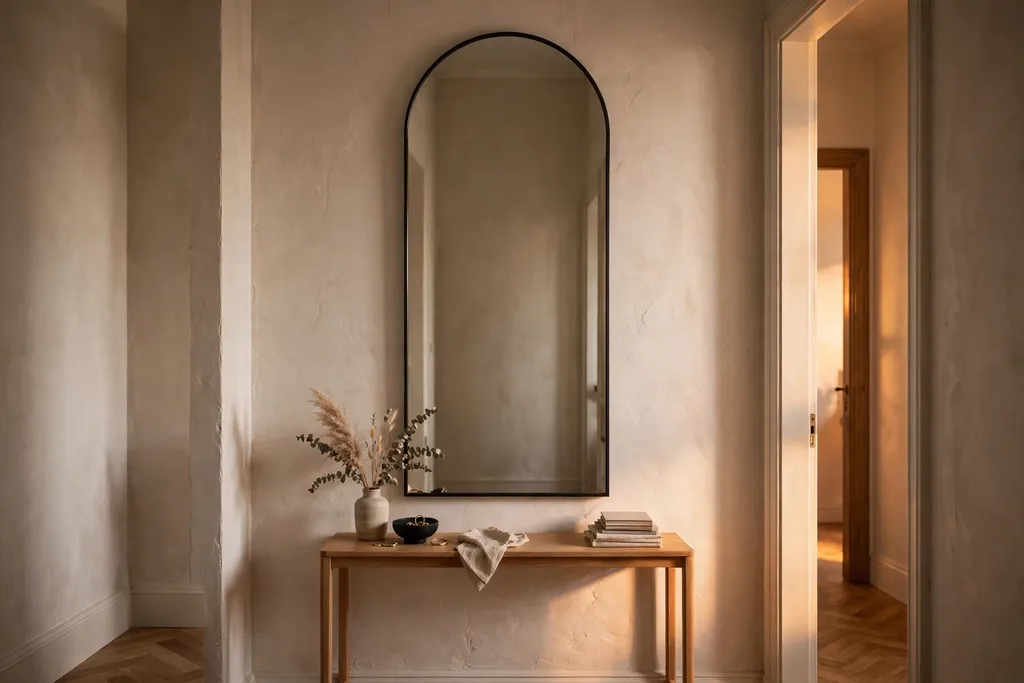
Hang a tall arched mirror on a hallway wall to bounce light down a narrow space and repeat the arch motif from ideas 5 and 14. A hallway mirror also gives a last check spot before leaving the house, and the arch shape stops the hall from feeling like a plain corridor. Hang it at a height where most adults see face and shoulders, not just the ceiling.
If the hall has no window, place the mirror opposite a doorway or a lit room, so it reflects light rather than a blank wall. Keep the frame slim in a narrow hall, so the mirror does not eat into the walkway. Pair it with a narrow console and a small bowl, as in idea 5, and keep the wall color plain so the arch stands out.
23. Old Moroccan Doors as Wall Art
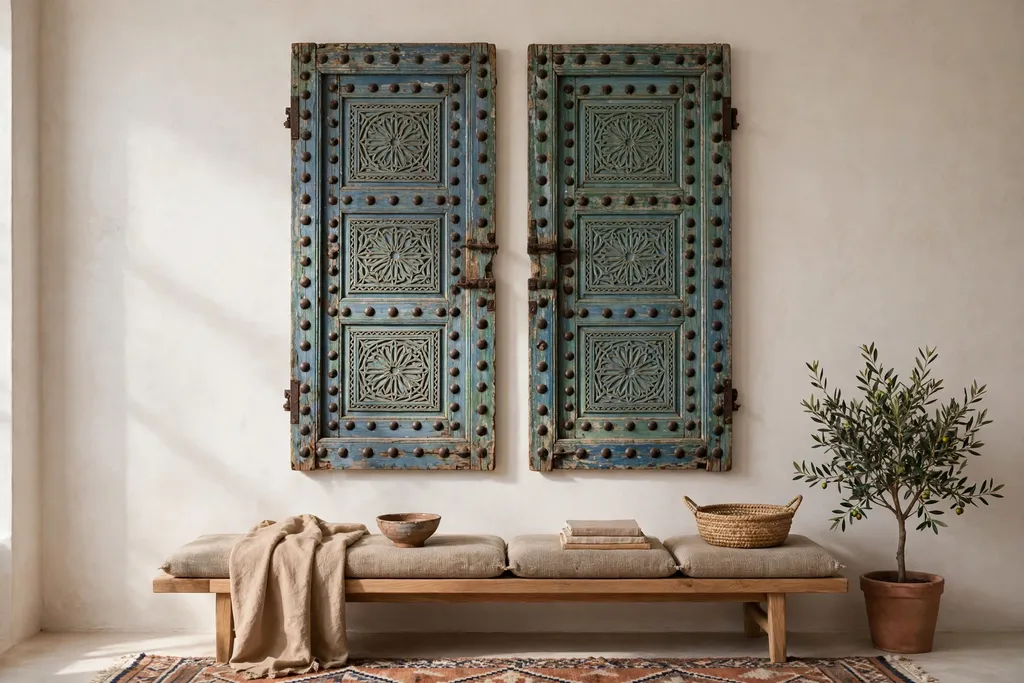
Hang a pair of old painted Moroccan doors on a large living room wall as art, or use a single door as a headboard, as a partner to idea 16. The painted panels, iron studs, and worn edges carry history that a new print cannot copy, and the tall shape suits a wall that a wide sofa or a low cabinet leaves empty. Mount heavy doors with wall fixings rated for their weight, and into studs where possible.
If real antique doors are out of reach, look for new doors made in the same style, or a large framed print of a Moroccan door. Keep the wall around the doors plain, and keep furniture low in front of them, so the full height shows. Dust the carved panels with a soft brush, since the detail traps dust.
24. Woven Basket Wall Display
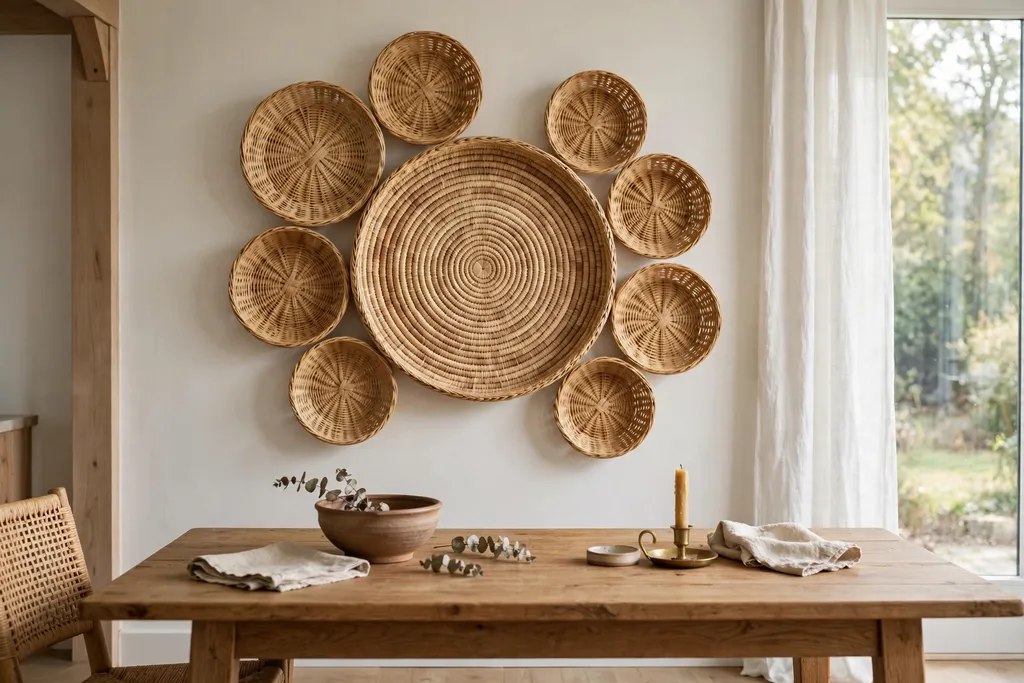
Group flat woven baskets on a dining room or living room wall in a loose cluster, mixing sizes and natural tones for a textured display that costs little. The round shapes and woven patterns suit Moroccan rooms, and the display fills a wall that is too small for art or too awkward for a mirror. Start with the largest basket in the center, then build outward with smaller ones.
Hang baskets with small nails or picture hooks, and test the layout on the floor first, photographing it before you hang. Keep the cluster to one wall, and keep the other walls in the room plain, so the display reads as a feature. For more wall display ideas that suit a bedroom version of this look, see these bedroom wall art ideas.
25. Jewel Tone Velvet Cushions
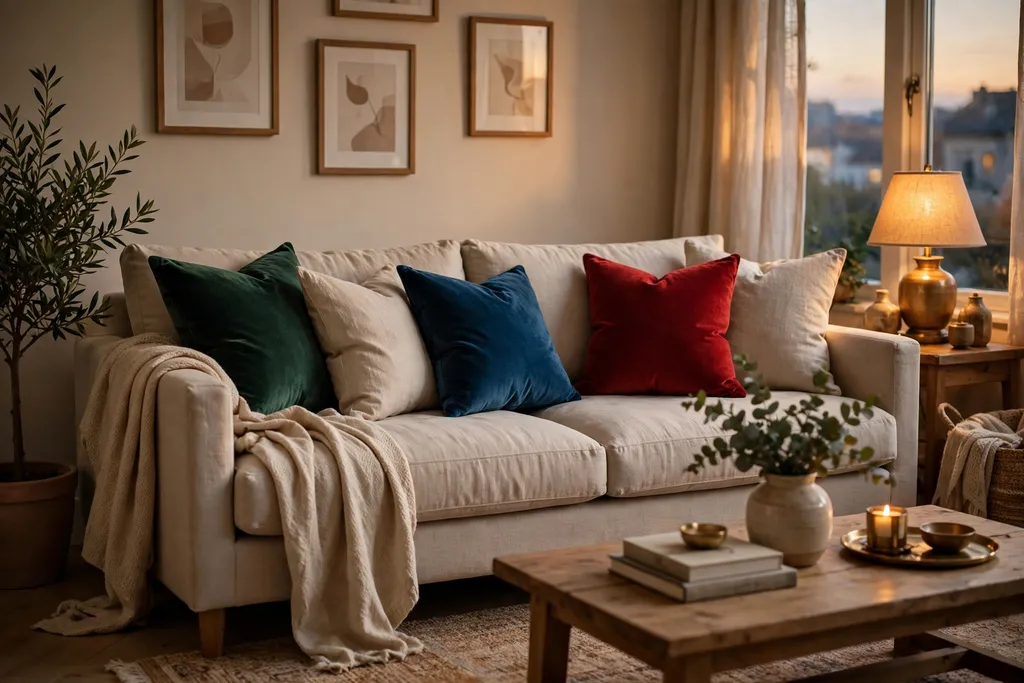
Add velvet cushions in jewel tones, such as emerald, sapphire, or ruby, to a neutral sofa or bed for a rich Moroccan note without repainting. Velvet catches light in a way that suits evening rooms, and a few jewel cushions lift a room that leans too beige. Use two or three jewel cushions mixed with plain linen ones, so the color reads as an accent.
Keep the rest of the room calm, with warm neutrals on walls and large furniture, so the jewel tones do not fight a second strong color. If you have pets or small children, choose a washable velvet or a velvet look fabric, since real velvet marks with water. Rotate the cushions now and then, so the pile wears evenly.
26. Engraved Brass Mirror in the Bedroom
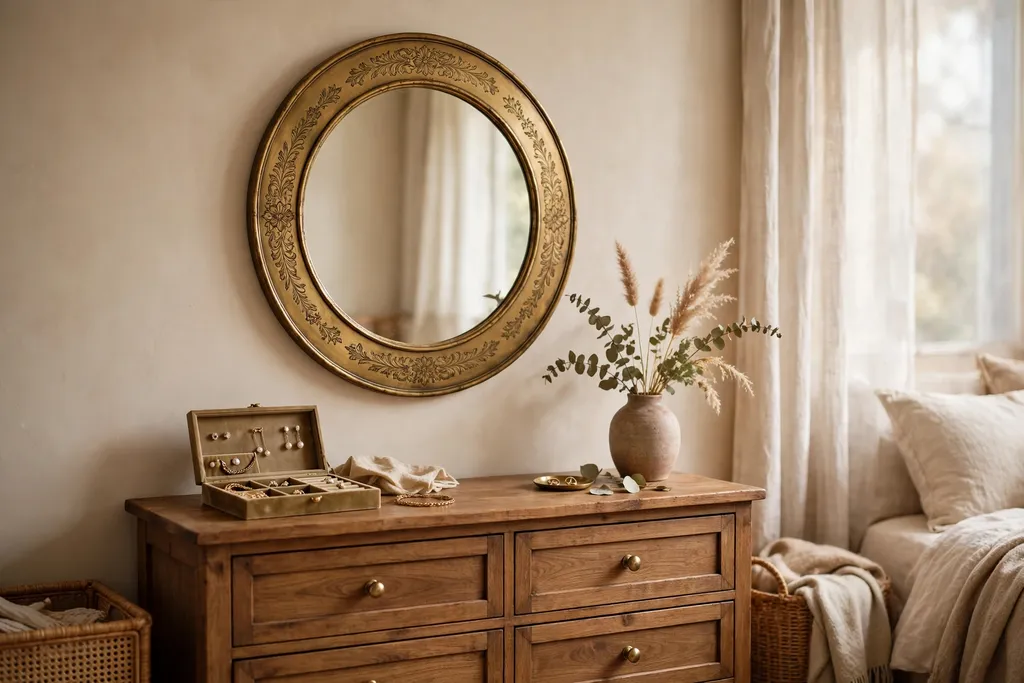
Hang a round mirror with an engraved brass frame above a bedroom dresser or a console for a Moroccan note that also serves daily use. The engraved frame catches morning light, and the round shape softens a room full of square furniture. Keep the dresser top simple, with a small tray for jewelry and a vase, so the mirror stays the focus.
Choose a mirror size that matches the furniture below it, about two thirds the width of the dresser, so the pair looks balanced. If the brass is very bright, pair it with warm wood and cream bedding, so the shine feels warm rather than cold. Wipe the brass with a dry soft cloth, and avoid polish that strips the aged finish.
27. Moroccan Rug Runner in the Hallway
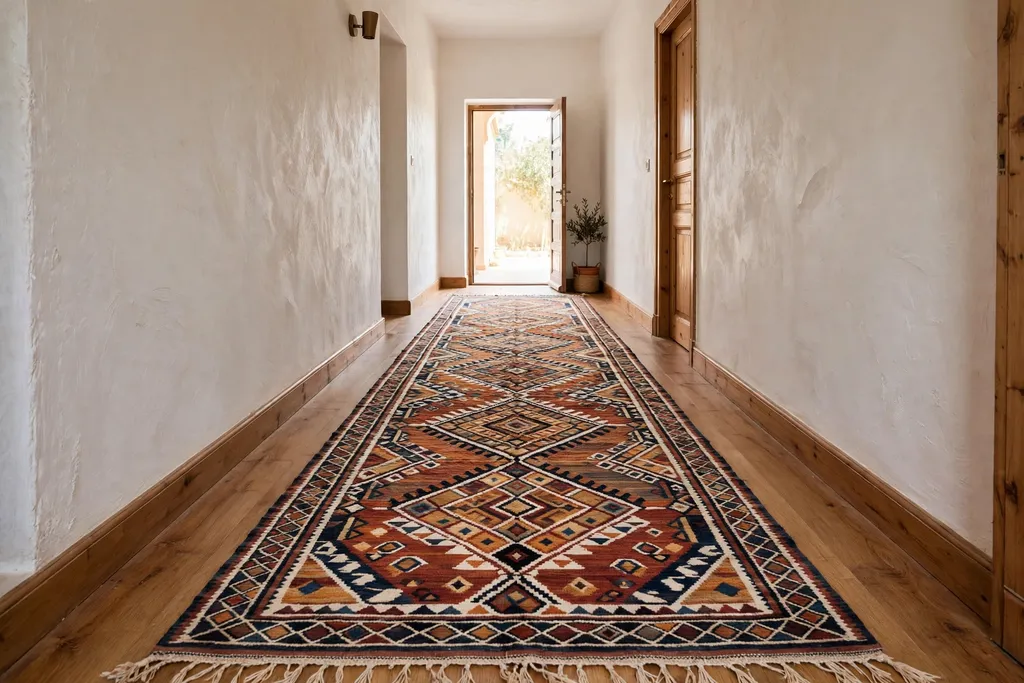
Lay a long Moroccan rug runner, with a geometric or striped pattern, down a hallway to add color and warmth to a space that often gets ignored. The runner protects the floor, softens footsteps, and pulls the eye toward the rooms beyond. Choose a runner that leaves a border of floor visible on each side, so the hall still feels wide.
Use a rug pad under the runner, so it stays flat and does not slip on smooth floors. If the hall is dark, choose a runner with a light base and a bold border, so the pattern shows in low light. Shake the runner outside weekly, since hall rugs collect dust faster than room rugs.
28. Tagine Display on Kitchen Shelving
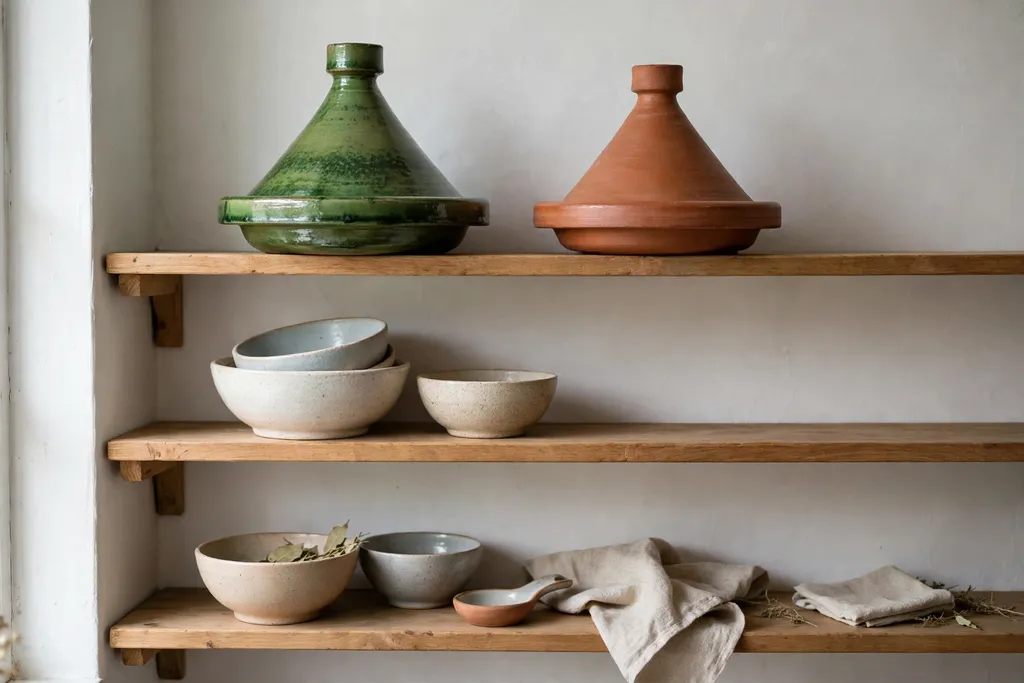
Display a few clay tagines, the conical lidded cooking pots, on open kitchen shelves as decor that can also cook. The cone shape and glazed color suit Moroccan kitchens, and a tagine on a shelf tells guests the kitchen is used for slow cooking, not just show. Keep one tagine for cooking and one or two for display, so the display stays clean.
Store tagines where they will not be knocked, with the lids beside the bases rather than stacked high. If you cook with a tagine, season it as the maker directs, and use a heat diffuser on an electric hob. Pair the display with the ceramics shelving from idea 11, keeping the shelf colors in one family so the kitchen reads as one scheme.
29. Patterned Tile Backsplash in the Kitchen
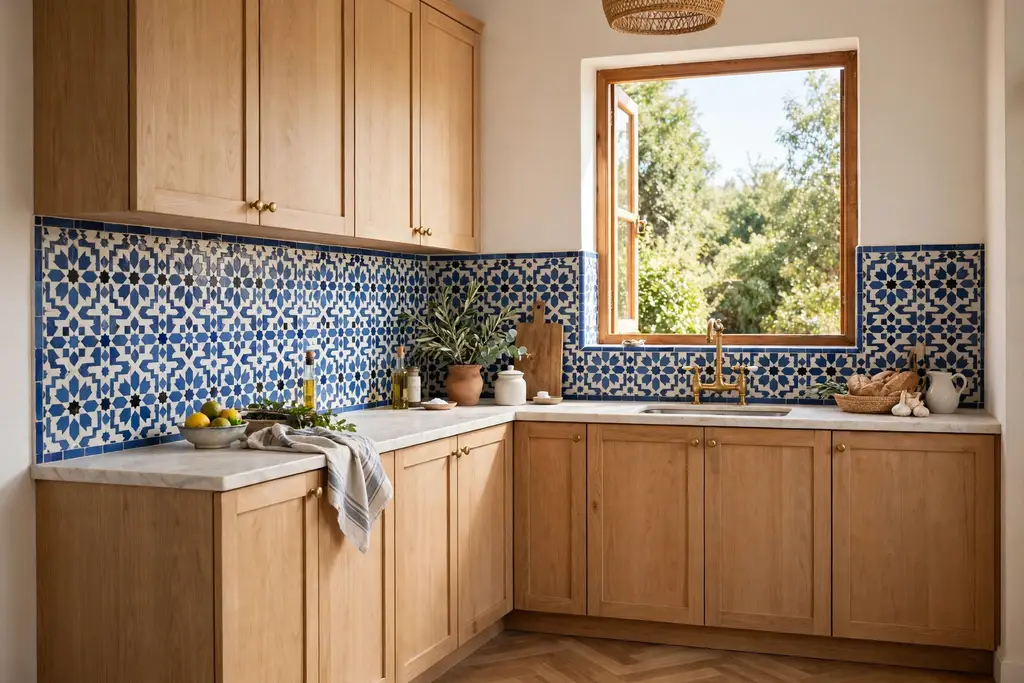
Tile a kitchen backsplash in a Moroccan pattern, such as a star and cross or a fish scale shape, for a cooking zone with color that wipes clean. The backsplash is a smaller area than a floor, so it suits a bold pattern that might overwhelm a larger surface, and it pairs well with plain cabinets. Choose a pattern with a white or cream base and one or two accent colors, so the kitchen stays bright.
Take a cabinet door or a paint sample to the tile shop, and check the tile colors against it in daylight. If a full patterned backsplash feels like too much, tile just the area behind the stove, and use plain tiles on the rest of the wall. Seal grout lines in a kitchen backsplash, since cooking splashes stain unsealed grout fast.
30. Low Round Dining Table With Floor Cushions
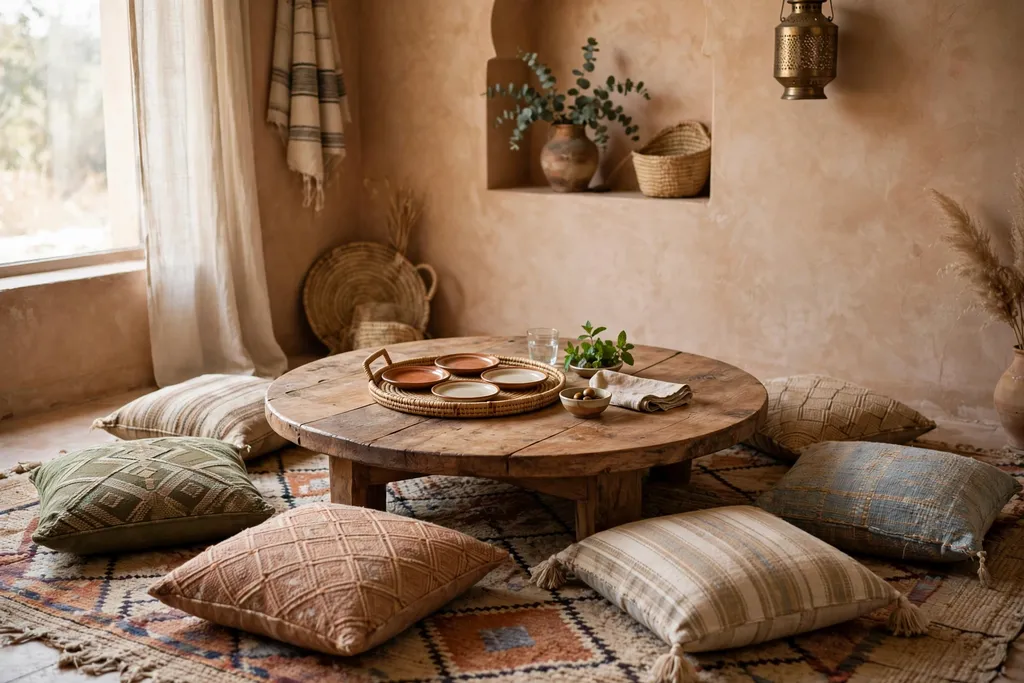
Set a low round dining table with floor cushions for a Moroccan dining setup that suits casual meals and small rooms. The low table keeps the dining area relaxed, and cushions can be stacked away when the room needs to serve another use. Use a sturdy table with a wide base, so it does not tip when someone leans on it.
Choose cushions with firm fill and washable covers, since dining cushions get food marks. If low seating is hard on knees, add a low bench on one side and cushions on the other, so guests can choose. Keep the table setting simple, with a tray, a few small plates, and a candle, so the low table does not feel cluttered.
31. Colored Glass Bottles on a Windowsill

Line a sunny windowsill with colored glass bottles in amber, green, and blue, so daylight turns them into a simple Moroccan color feature. The bottles catch light without any wiring, and the idea costs little, since old bottles and small vases work as well as bought pieces. Group them in odd numbers, with varied heights, and leave space between groups so light passes through.
Wash the bottles inside and out before display, and check the sill can hold their weight, since glass is heavy in a group. If the sill is narrow, use a shallow tray to keep the bottles from tipping, and keep the window latch clear. Swap the bottles with the seasons, using deeper colors in winter and paler ones in summer.
32. Carved Plaster Arch Around a Bed Nook
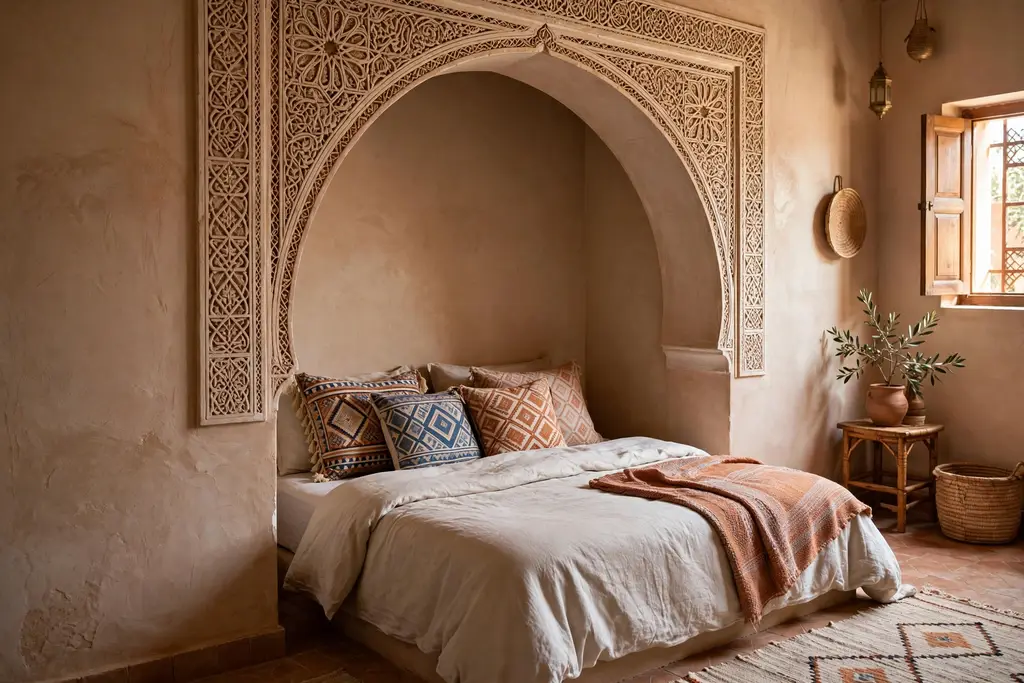
Frame a bed nook or a reading alcove with a carved plaster arch, so the bed sits inside a shallow recess with a Moroccan shape. The arch gives a small bedroom a built in feature, and it needs no extra floor space, since it uses the wall itself. Paint the inside of the nook one shade warmer than the room, so the recess reads as a cozy zone.
Hire a plasterer for a carved arch, since the shape needs a clean curve and a smooth finish. If carving is out of reach, a plain plaster arch in the same shape still gives the Moroccan note, and you can add pattern with bedding and cushions instead. Keep the bedding simple inside the nook, so the arch shape stays visible above the pillows.
33. Sheer Canopy Drapes Over the Bed
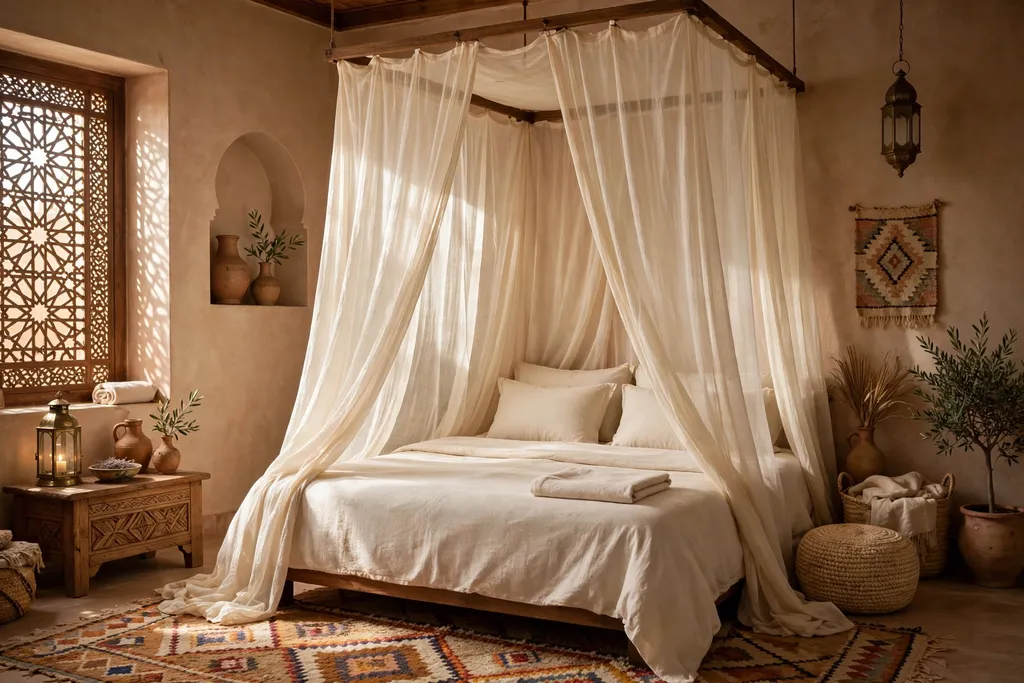
Hang sheer drapes from a ceiling frame or a four poster bed to make a soft canopy, echoing the draped beds of Moroccan riads. The sheer fabric filters morning light, gives the bed a sense of privacy, and moves gently with air from a window. Use white or cream voile, so the canopy feels light rather than heavy, and keep the fabric clear of bedside lamps.
Fix the ceiling frame into joists, not just plasterboard, since the fabric and frame carry real weight when pulled. If you rent, use a freestanding canopy frame that needs no ceiling fixings, or hang the fabric from a wall mounted rail. For more curtain and drape ideas that suit this look, see these bedroom curtain ideas. Wash the voile regularly, since sheer fabric shows dust fast.
34. Hand Painted Ceramic Basin in the Bathroom
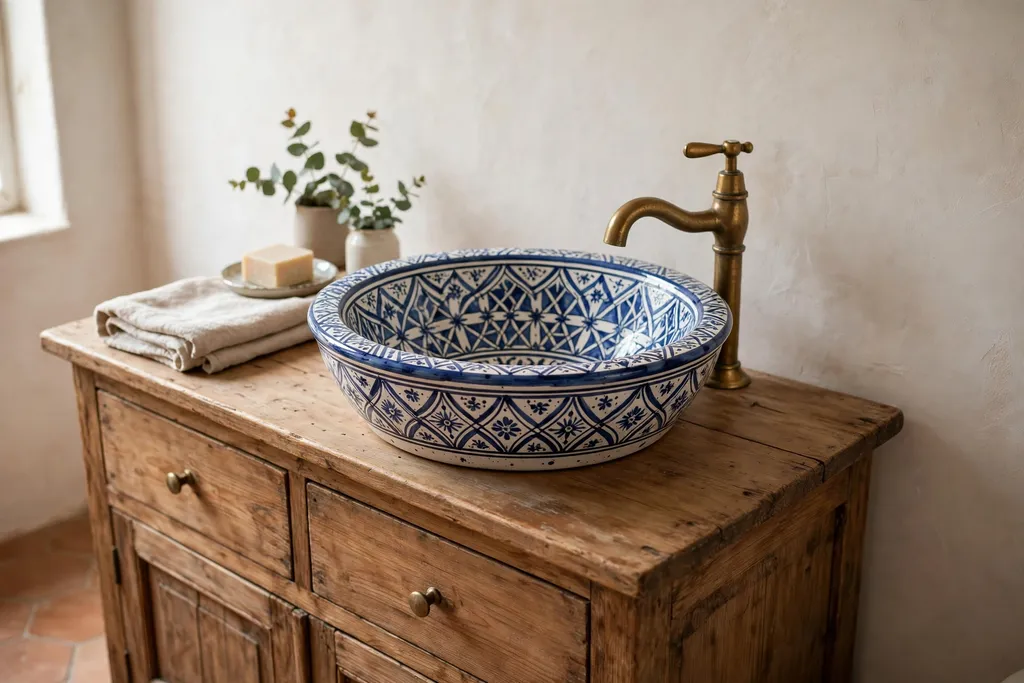
Fit a hand painted ceramic basin, with a Moroccan pattern in blue and white or green and cream, on a wooden vanity for a bathroom feature that guests notice. The basin turns a daily routine into a small pleasure, and the pattern pairs with plain walls and a simple mirror. Keep the taps simple, in brass or chrome, so they do not fight the painted pattern.
Check the basin size against the vanity and the plumbing before you buy, since hand painted basins vary in depth and drain position. Seal the basin as the maker directs, and clean it with mild soap, since harsh cleaners dull hand painted glazes. Pair the basin with the tadelakt wall from idea 13, keeping the wall tone plain so the basin pattern leads.
Conclusion
Moroccan decor rewards a slow hand. Pick one anchor, such as a rug, a lantern cluster, or a tiled feature, and let the rest of the room build around it in warm neutrals and honest materials. Keep pattern to a few strong notes per room, use warm light to let brass and glaze glow, and leave plain surfaces where the eye can rest. Whether you start with a tray table, a throw blanket, or a full tiled floor, the goal is a room that feels gathered, warm, and lived in, not staged. Save the ideas that suit your home, and add them one at a time.
FAQs
How do I add Moroccan decor without making a room look busy?
Start with one anchor piece, such as a rug or a lantern cluster, and keep walls and large furniture plain. Add pattern in small doses, through cushions, a throw, or a tray table, and stop when the room has three strong patterns at most. Plain surfaces between patterned pieces give the eye rest and keep the room calm.
What colors work best for Moroccan home decor?
Warm neutrals lead: plaster white, sand, clay, and warm wood. Accent colors come from tiles and textiles, such as deep green, teal, indigo, ochre, rust, and jewel tones like emerald and ruby. Keep the wall base neutral, and let the accent colors appear in rugs, cushions, and ceramics, so the room stays warm without feeling loud.
Is Moroccan decor expensive to achieve?
It can be done at many budgets. Low cost starts include a tray table, floor cushions, kilim cushion covers, terracotta pots, and colored glass bottles. Mid range projects include a Beni Ourain style rug, a carved screen, or a tiled backsplash. High cost projects include zellige tile work, tadelakt plaster, and antique doors, which need skilled labor.
Can Moroccan decor work in a small apartment?
Yes, and it often suits small rooms well, since the style favors low furniture, layered textiles, and warm light over large pieces. Use a rug runner in the hall, a pouf instead of an extra chair, a mirror to bounce light, and one patterned feature per room. For more small room planning, see these minimalist small apartment ideas.
How do I mix Moroccan pieces with my existing furniture?
Keep your largest furniture pieces, such as the sofa or bed, in plain fabrics, and add Moroccan notes through rugs, cushions, lanterns, and ceramics. Pull one color from a Moroccan piece into a cushion or throw elsewhere in the room, so the new pieces connect to what you already own. Avoid buying a full matched set at once, since a mixed room looks more natural.
How do I care for Moroccan tiles, brass, and rugs?
Wipe tiles with a damp cloth and mild soap, and seal grout and unglazed surfaces as the maker directs. Dust brass with a dry soft cloth, and let it age naturally rather than polishing it often. Shake rugs outside weekly, vacuum on a low setting, and blot spills at once rather than rubbing them, so the wool pile stays soft and the pattern stays clear.