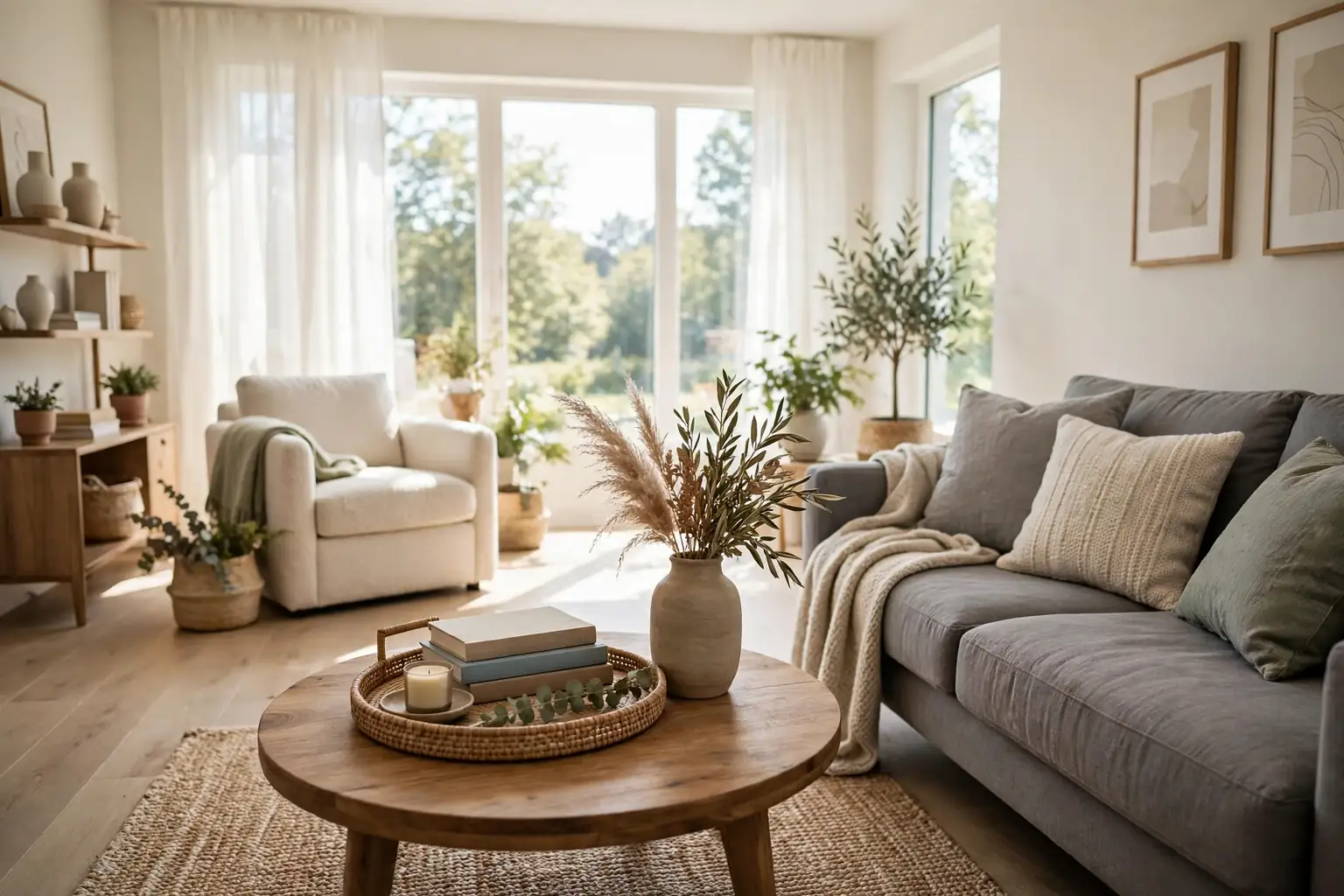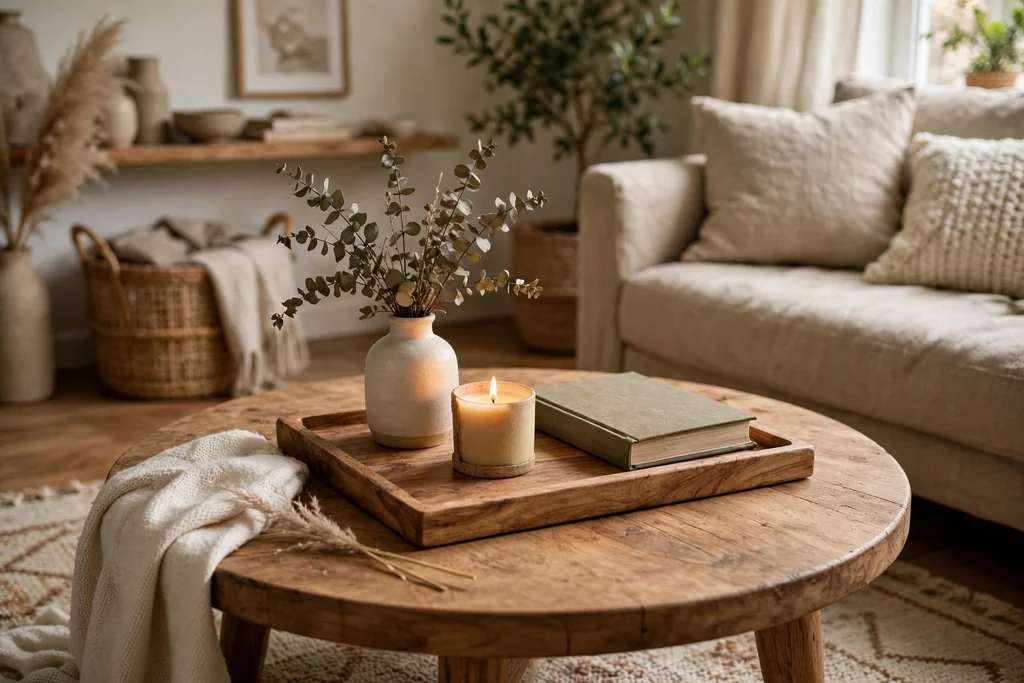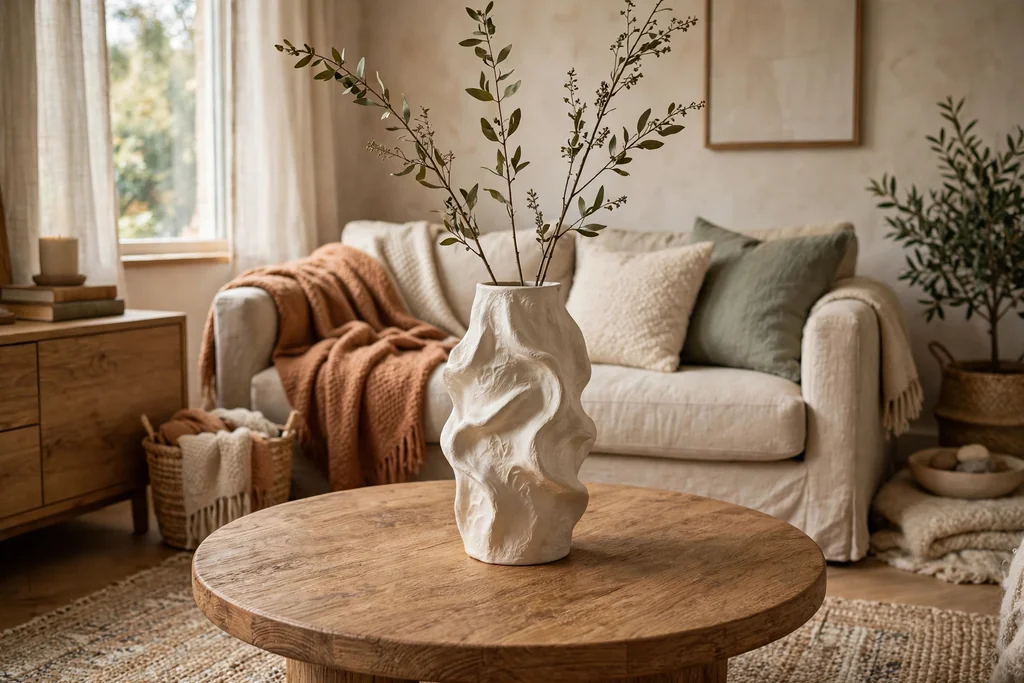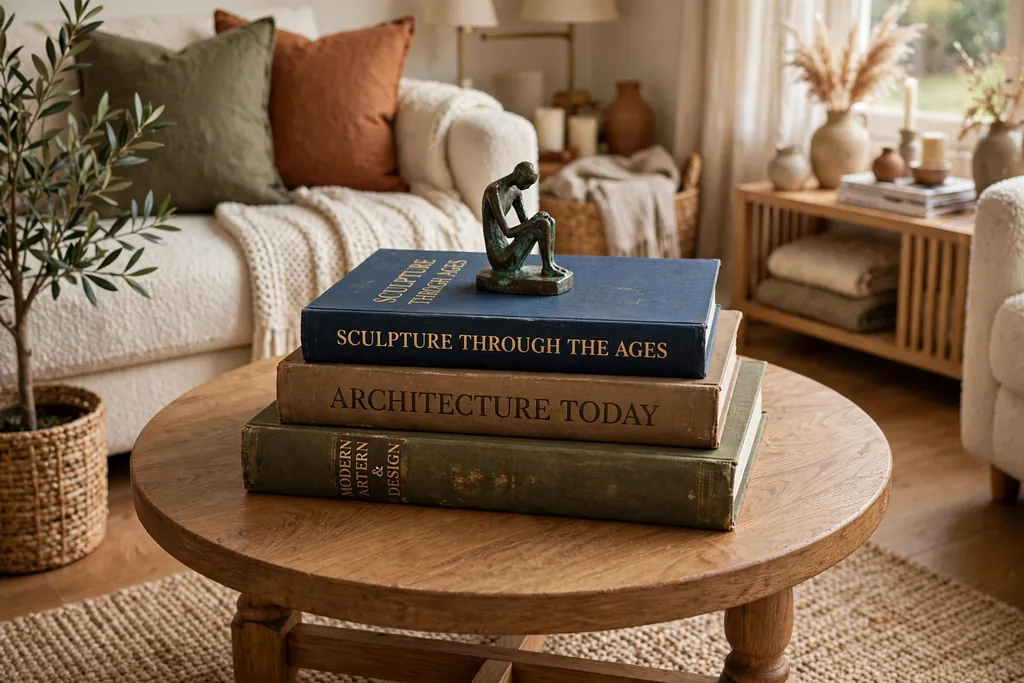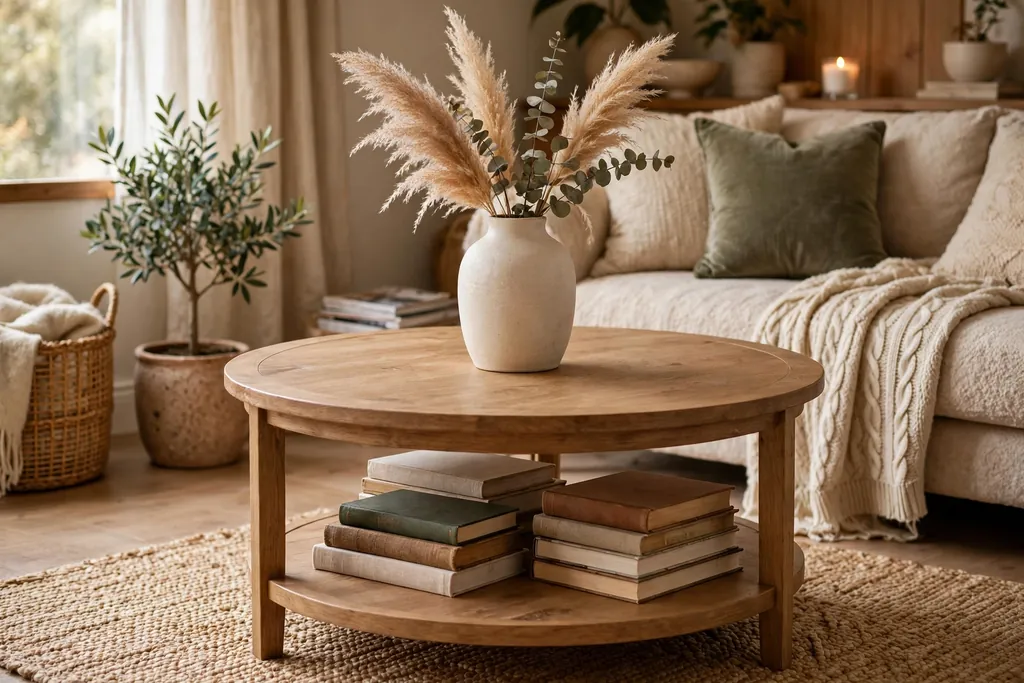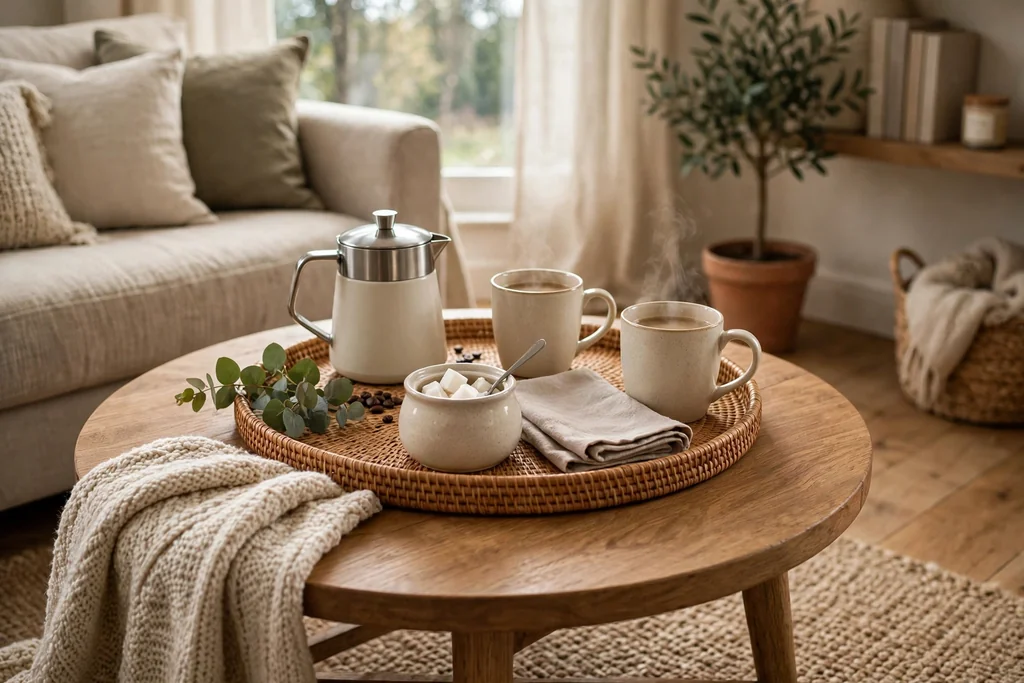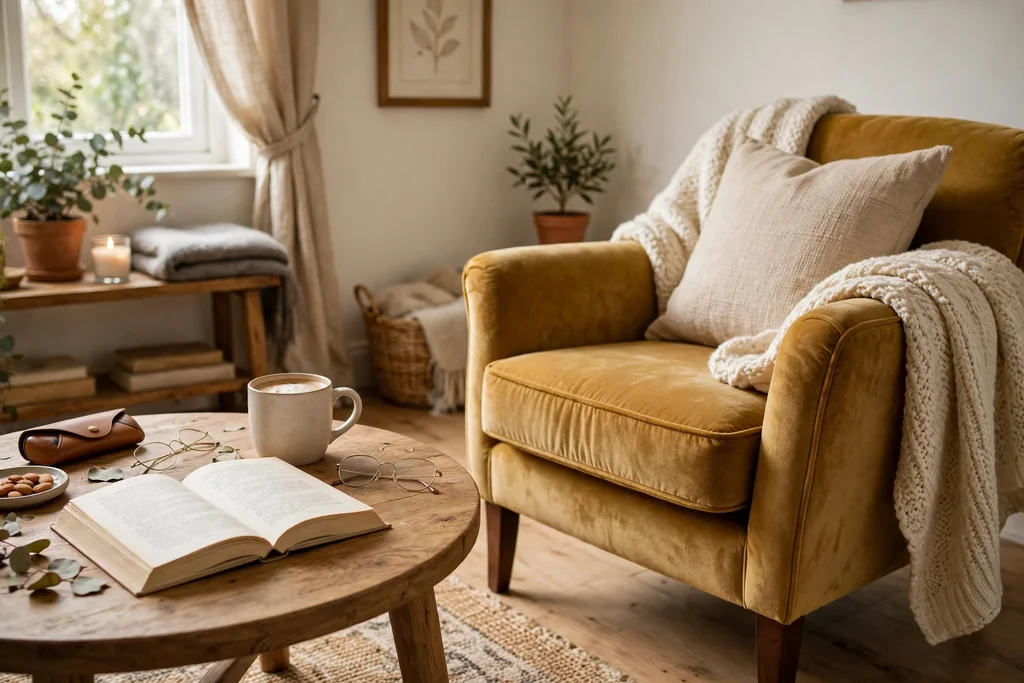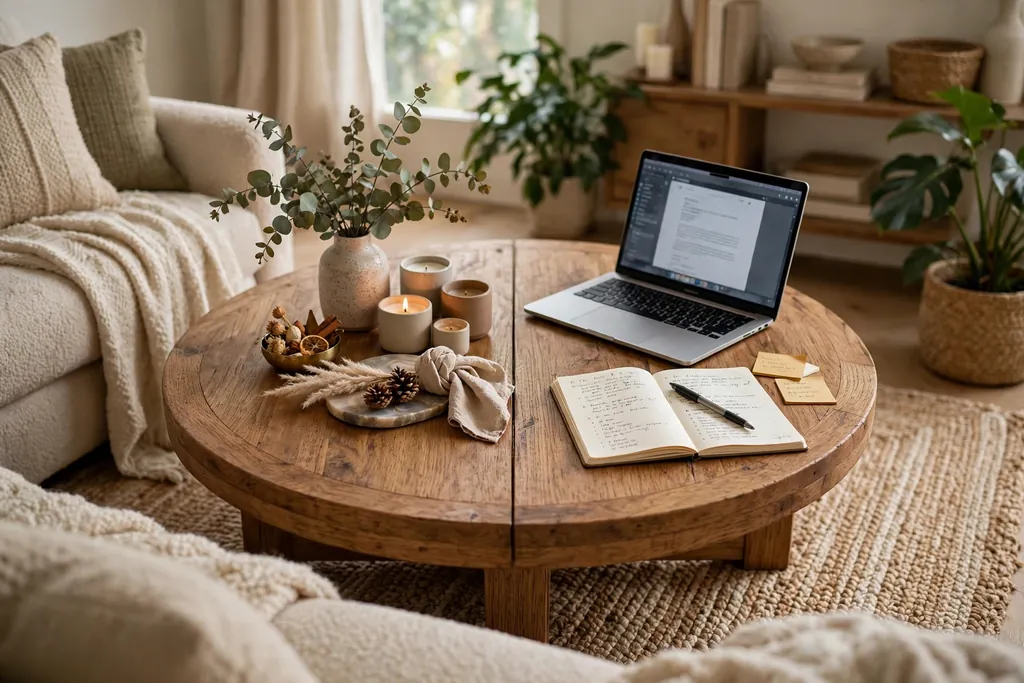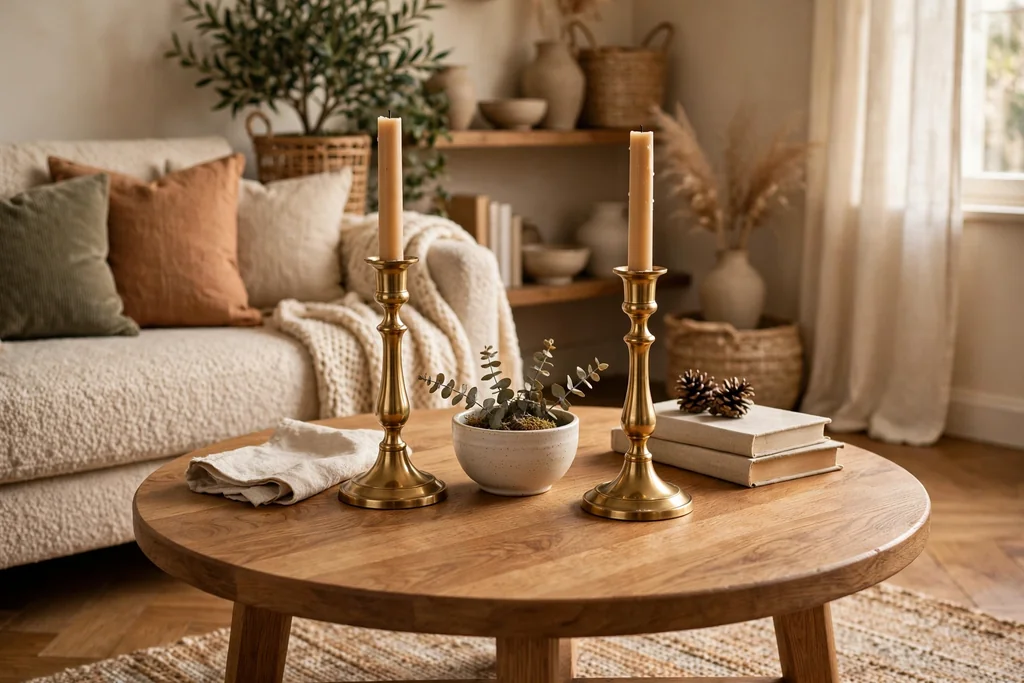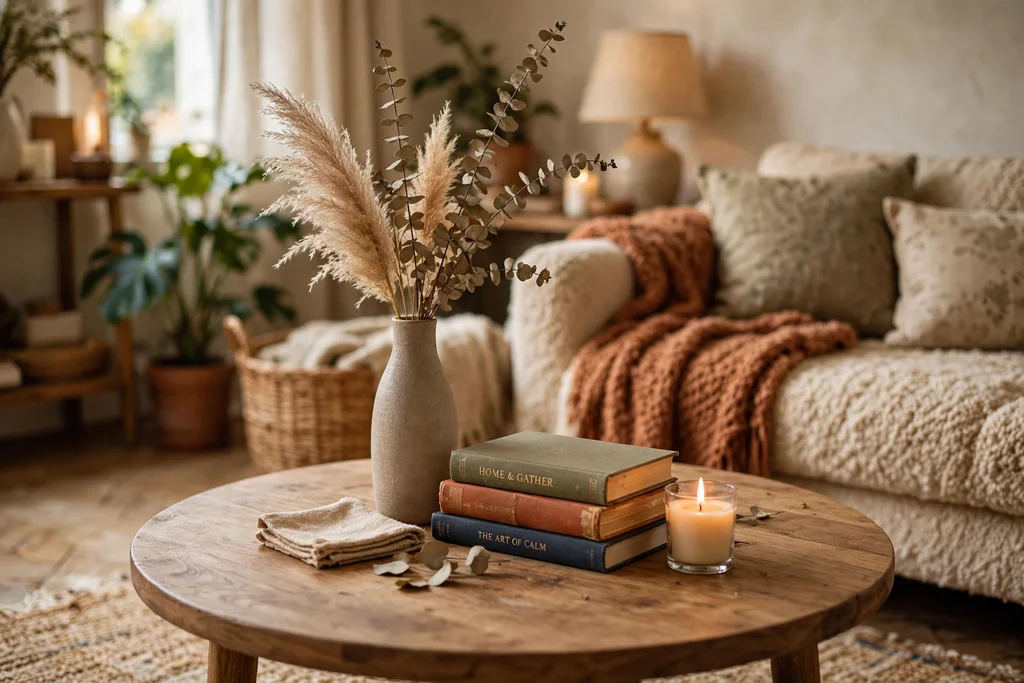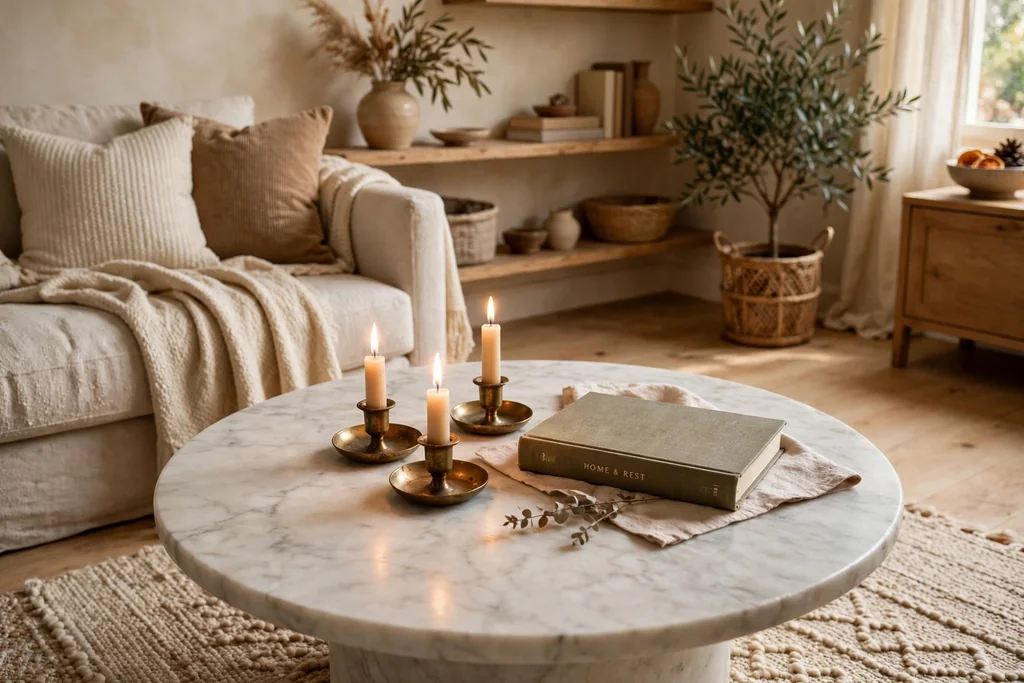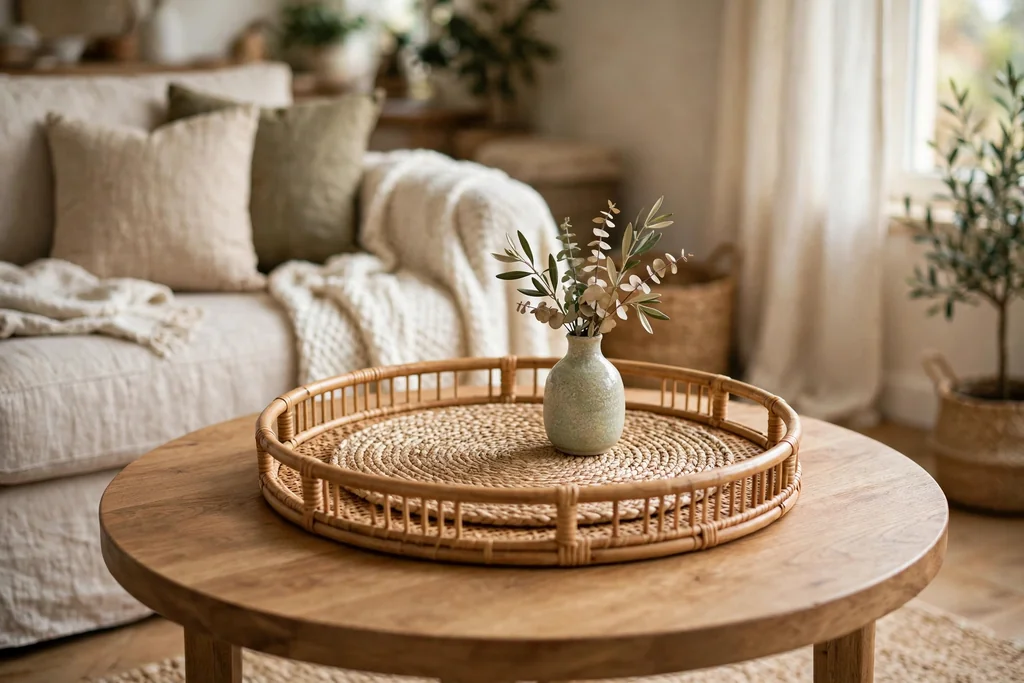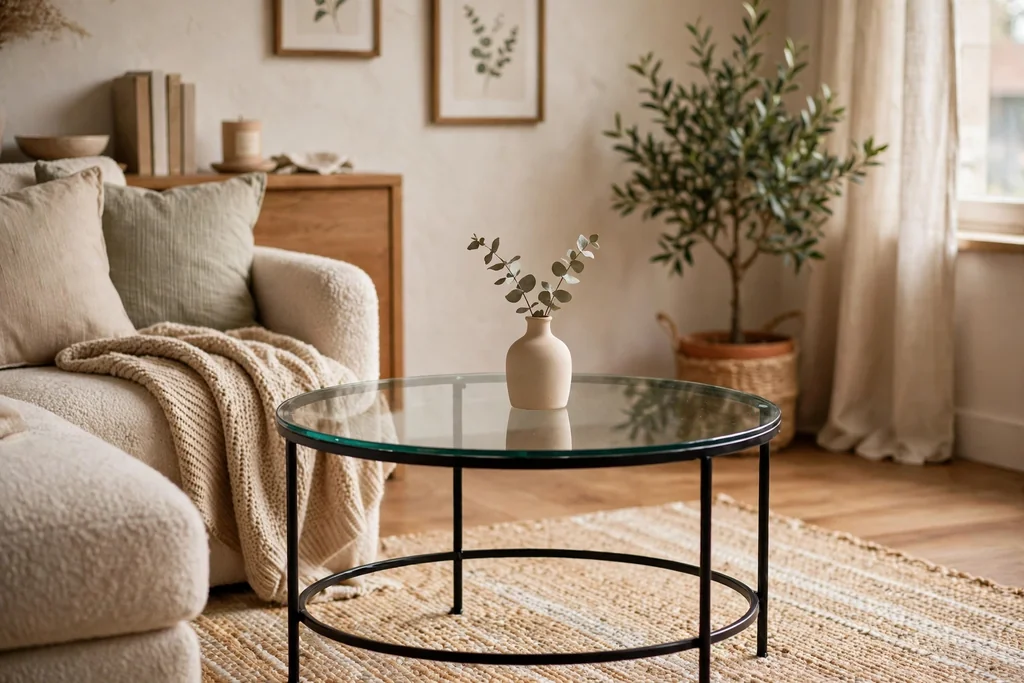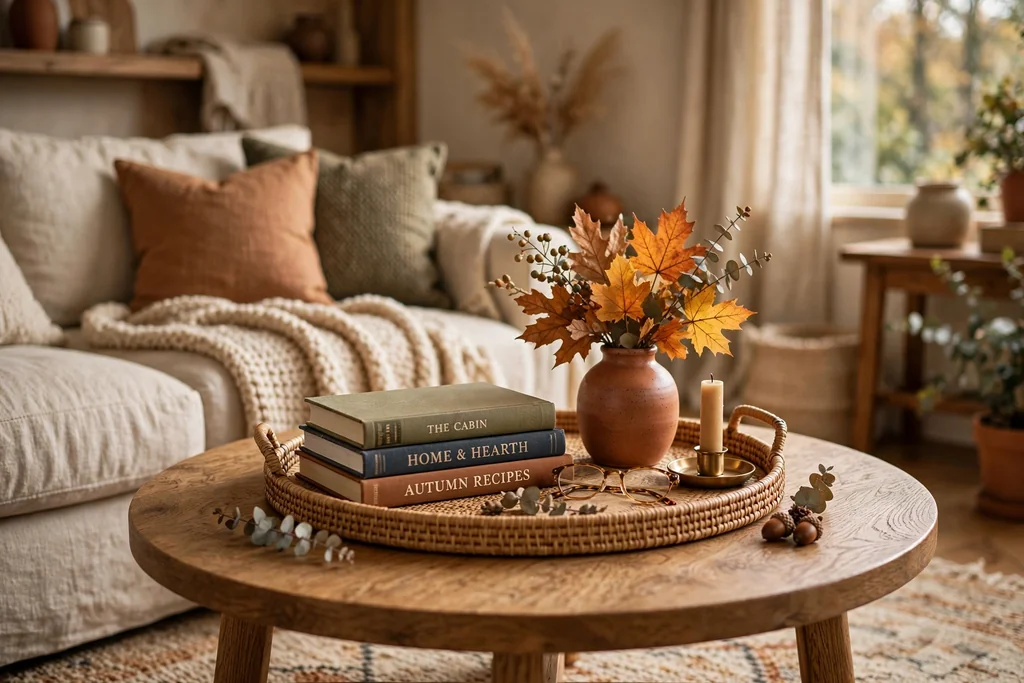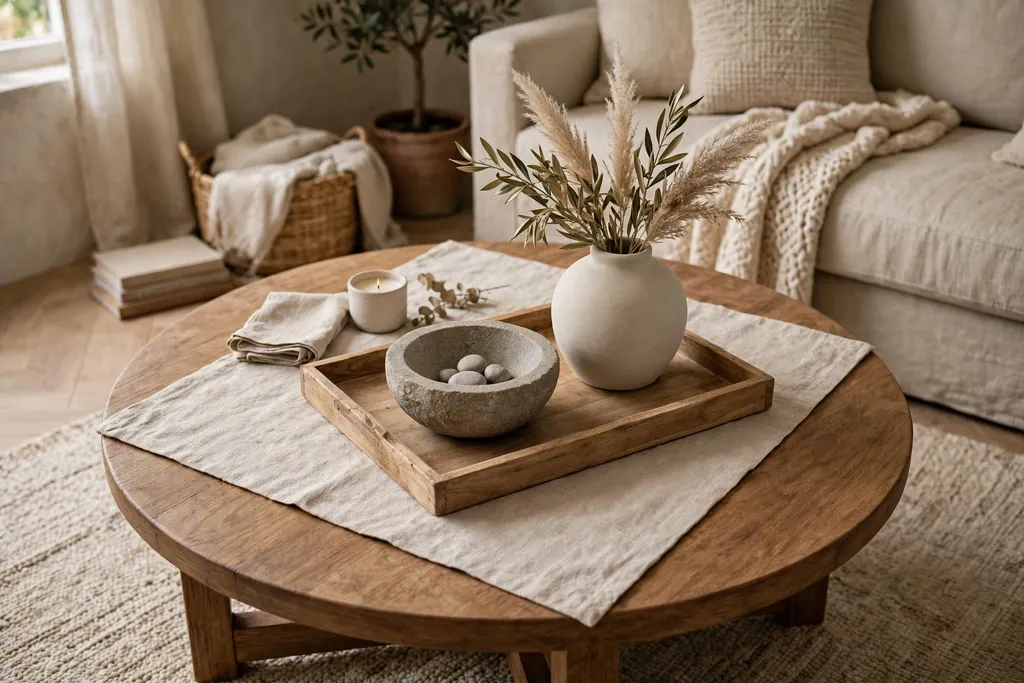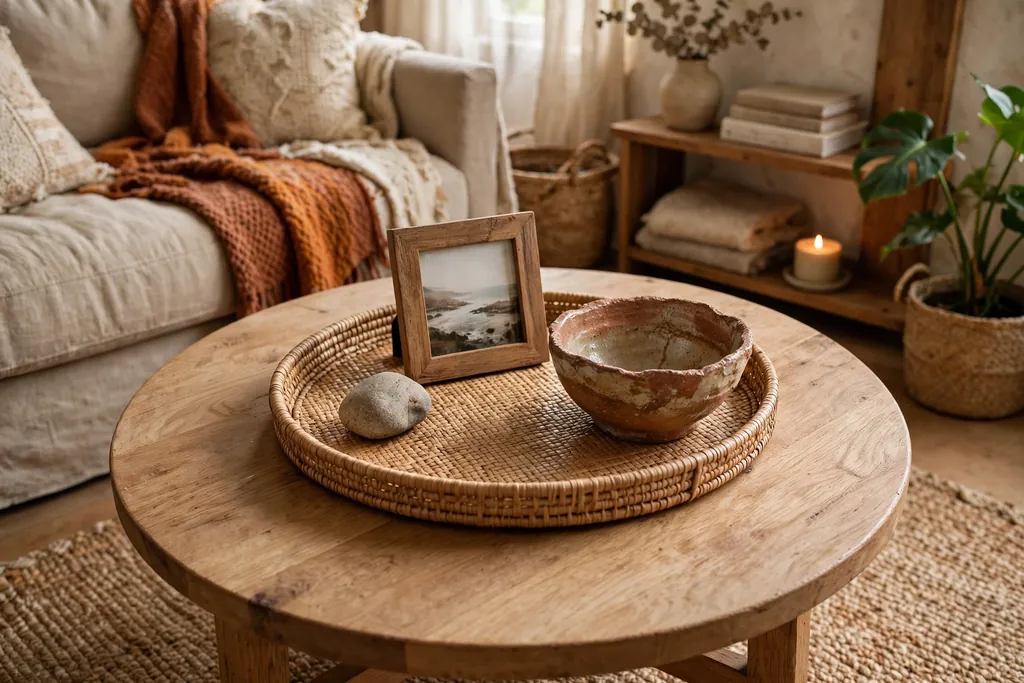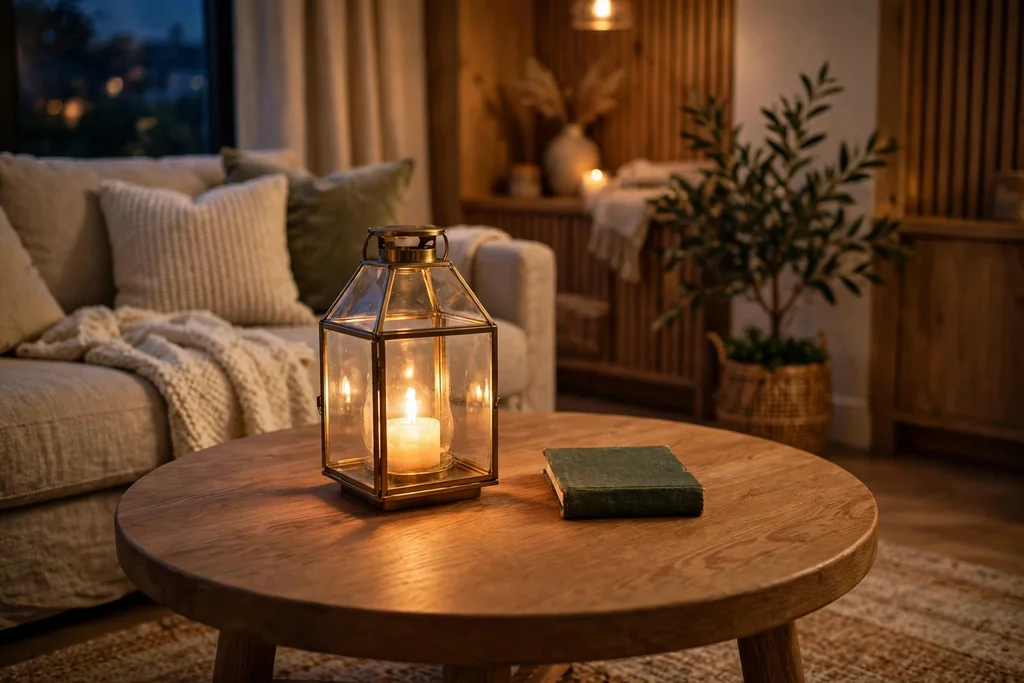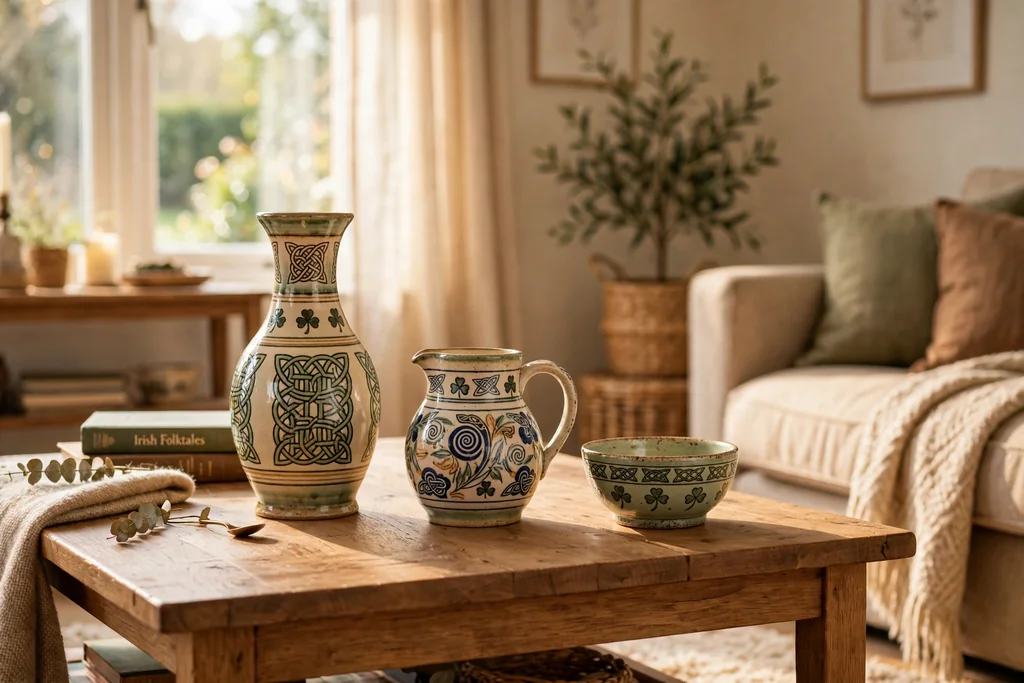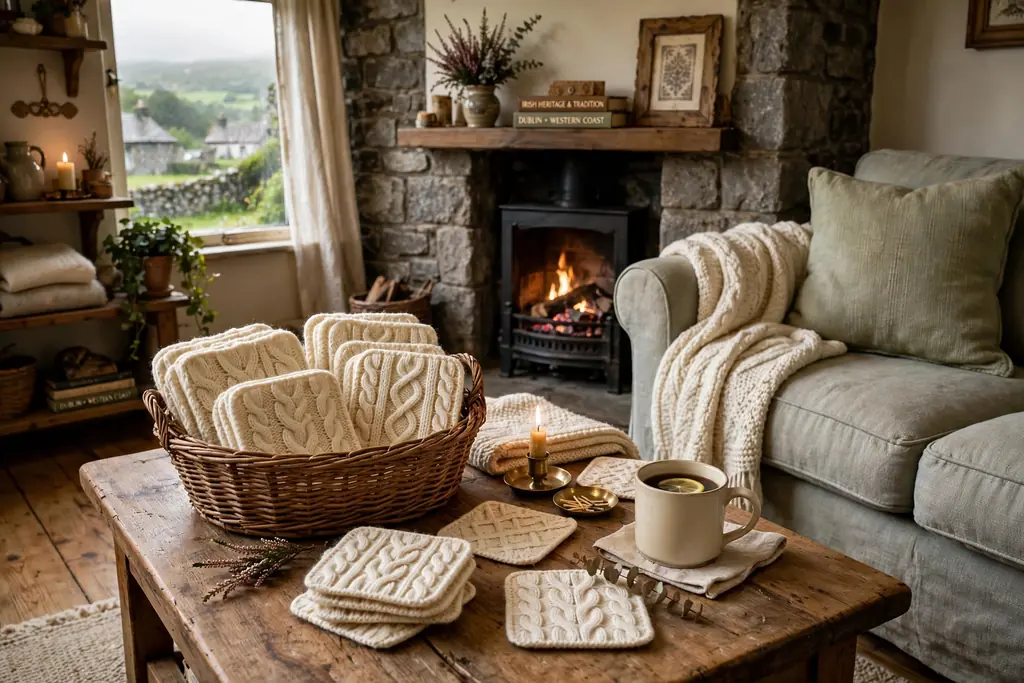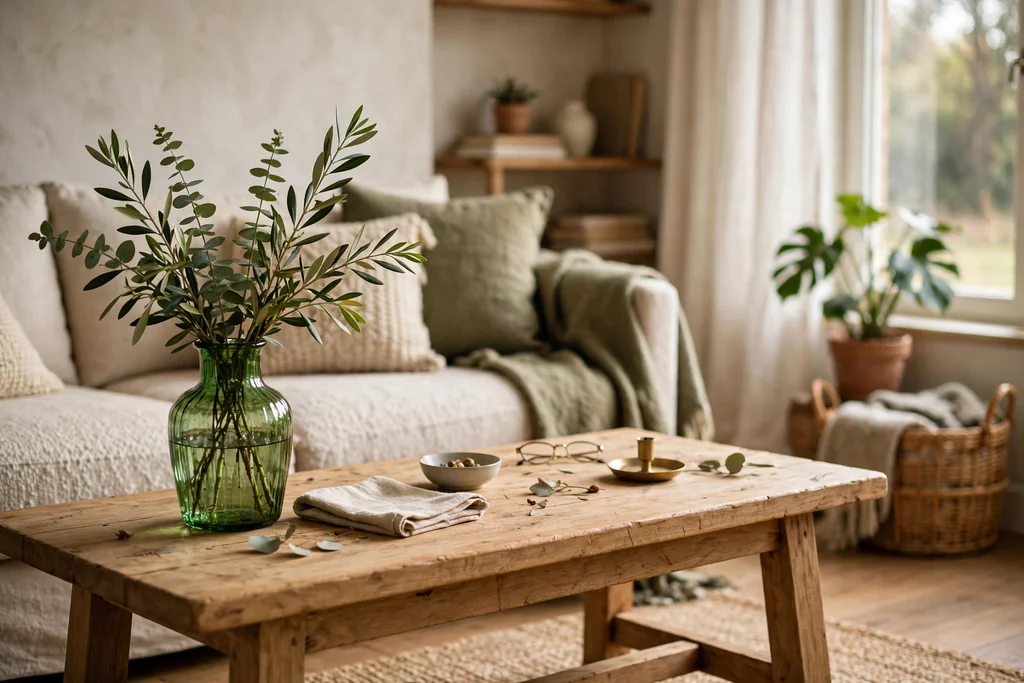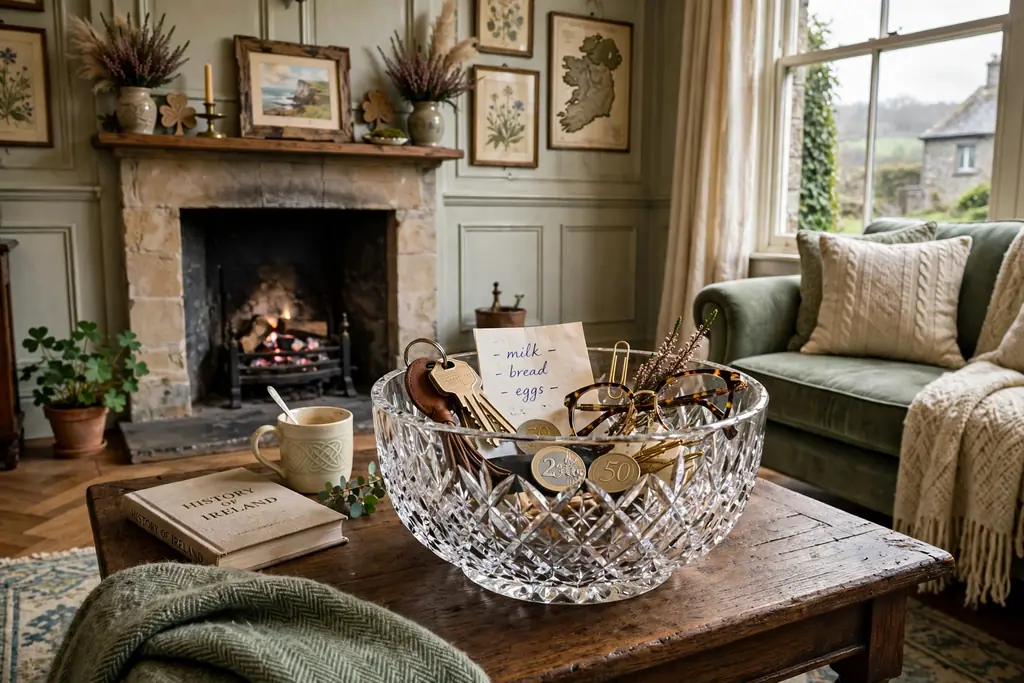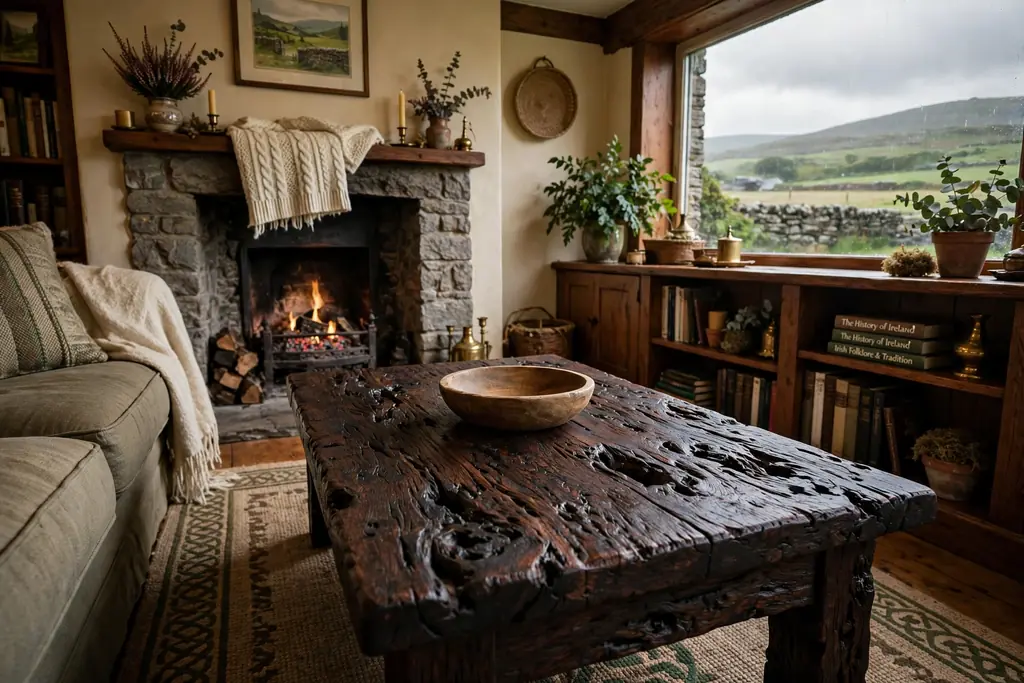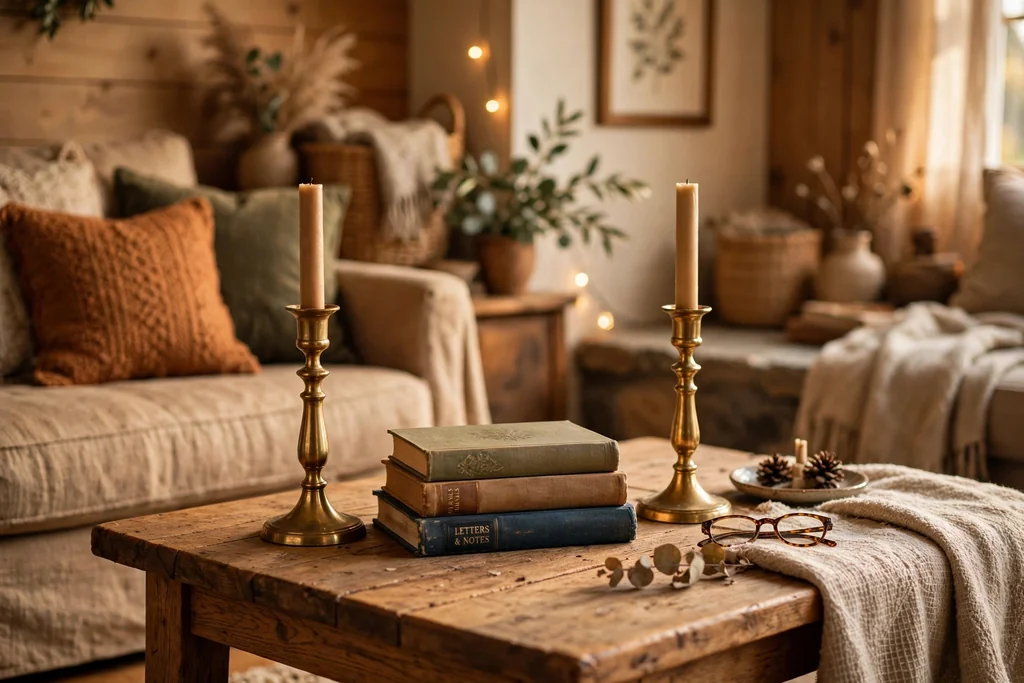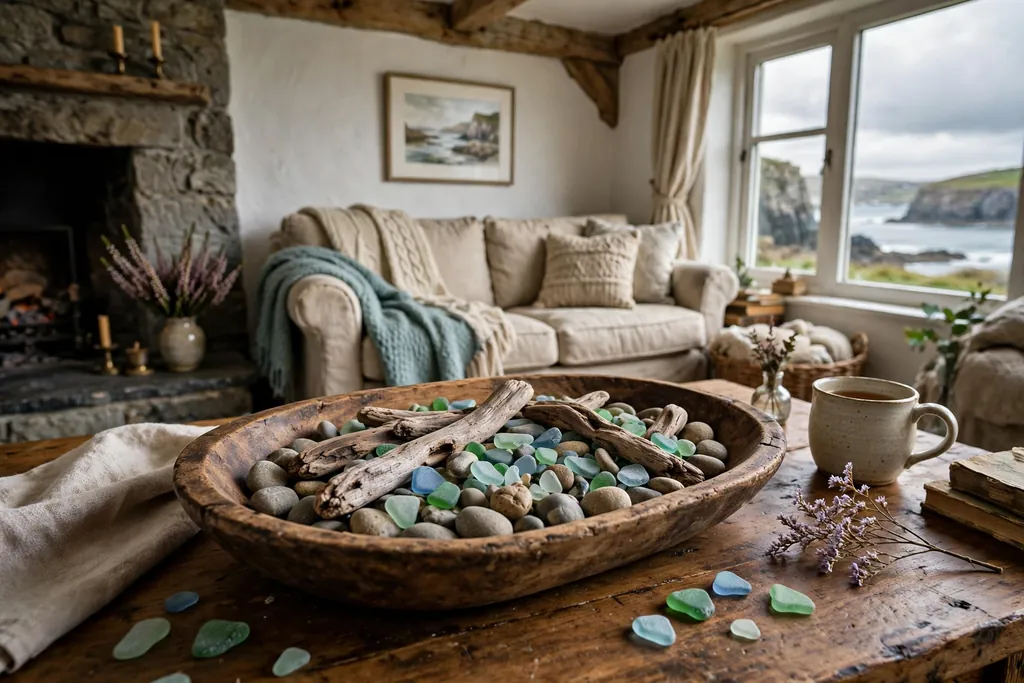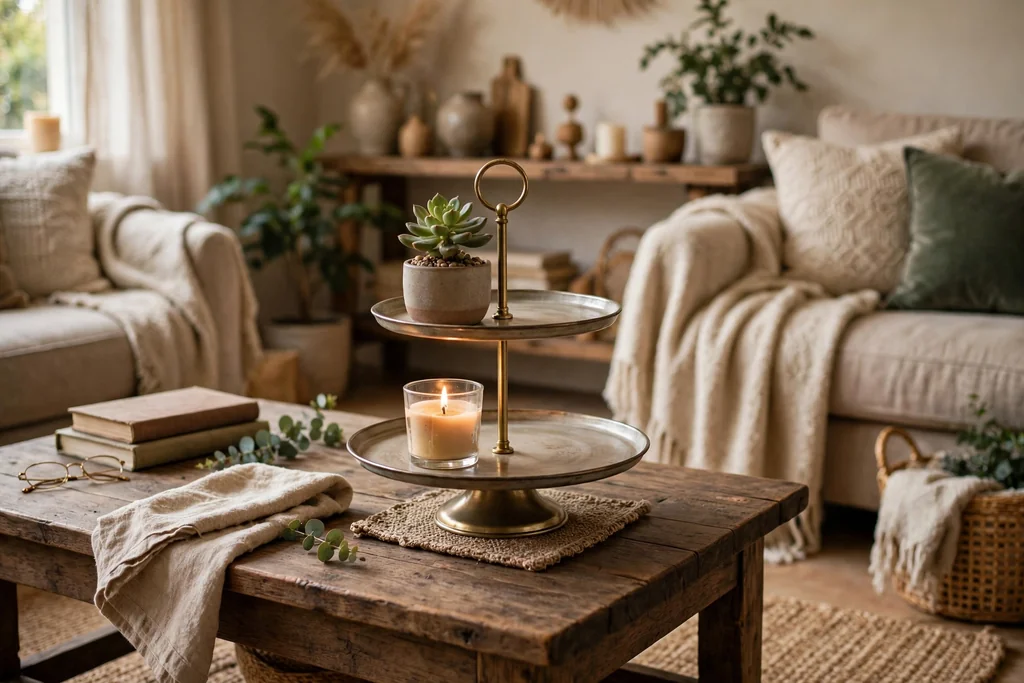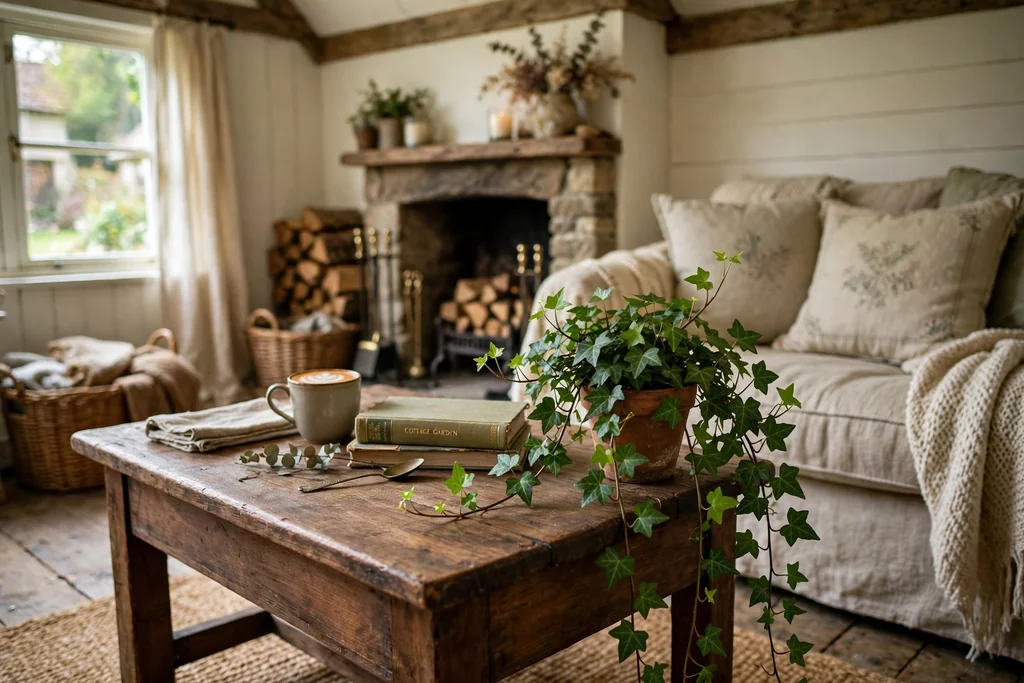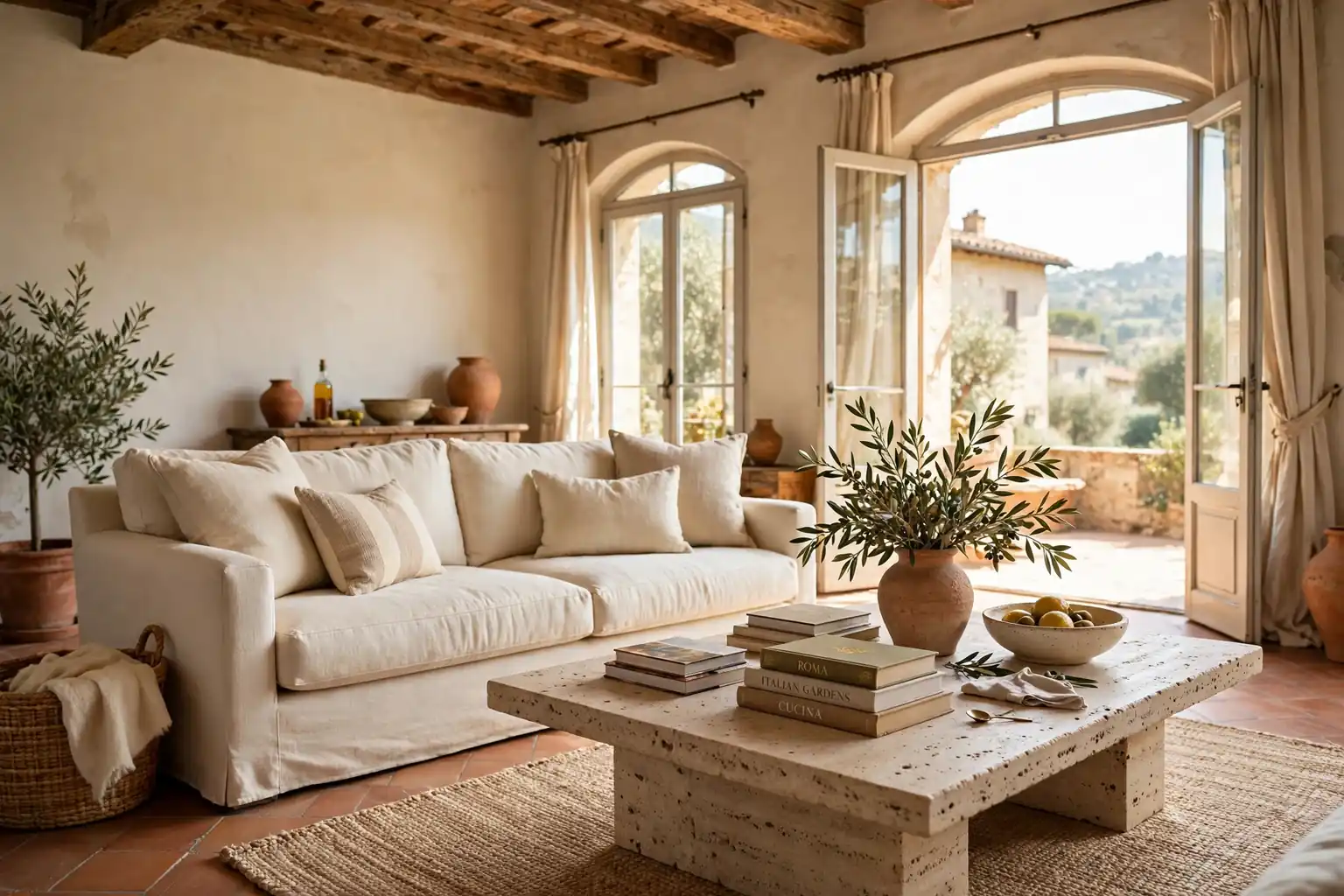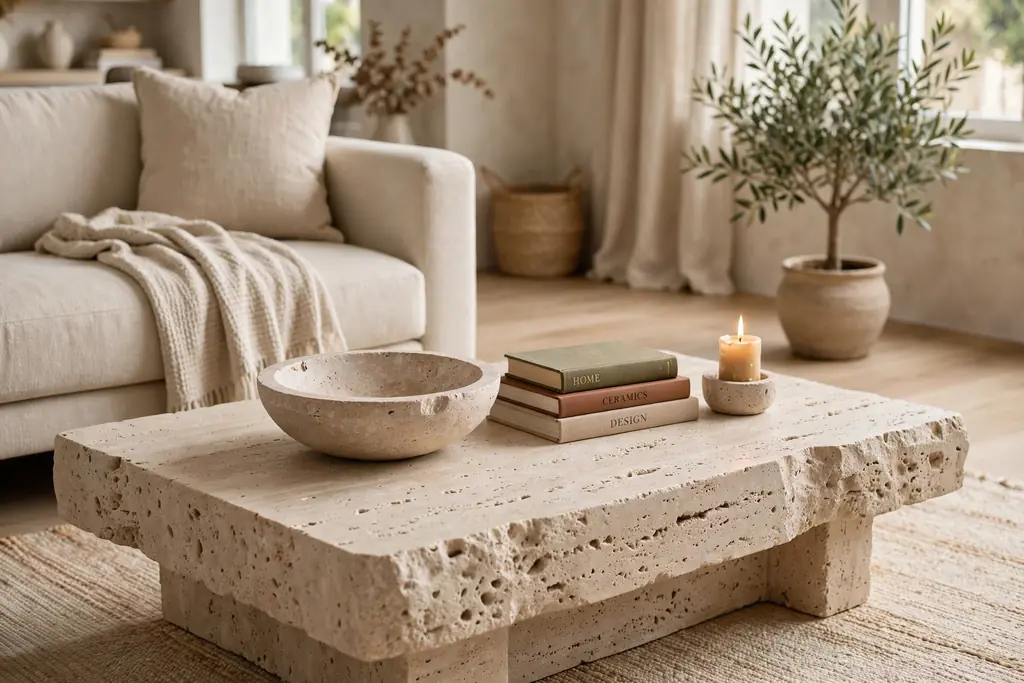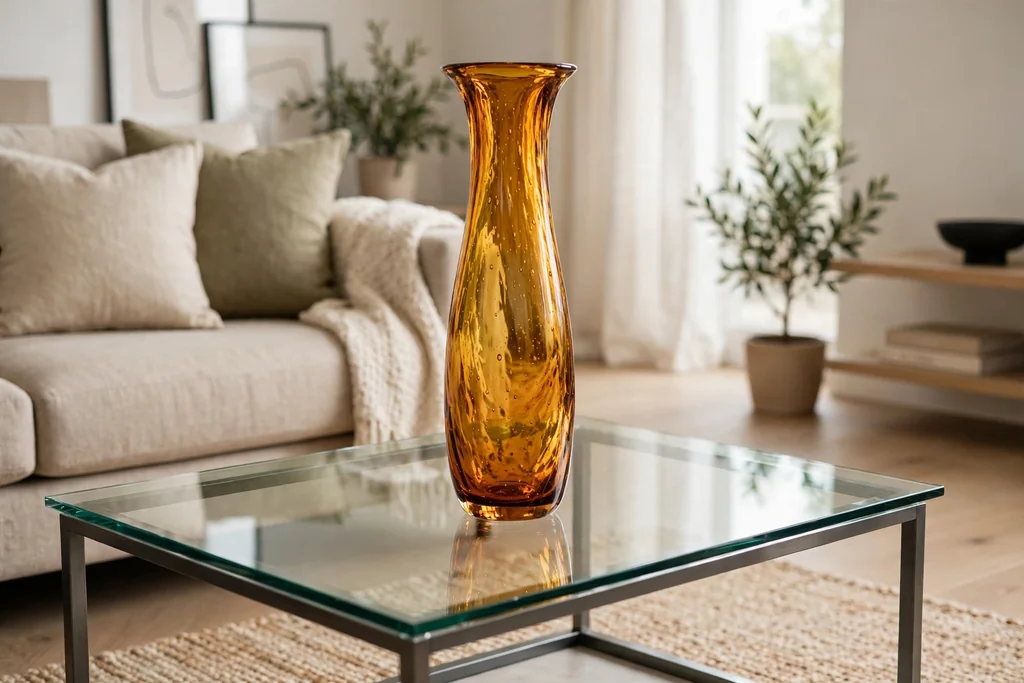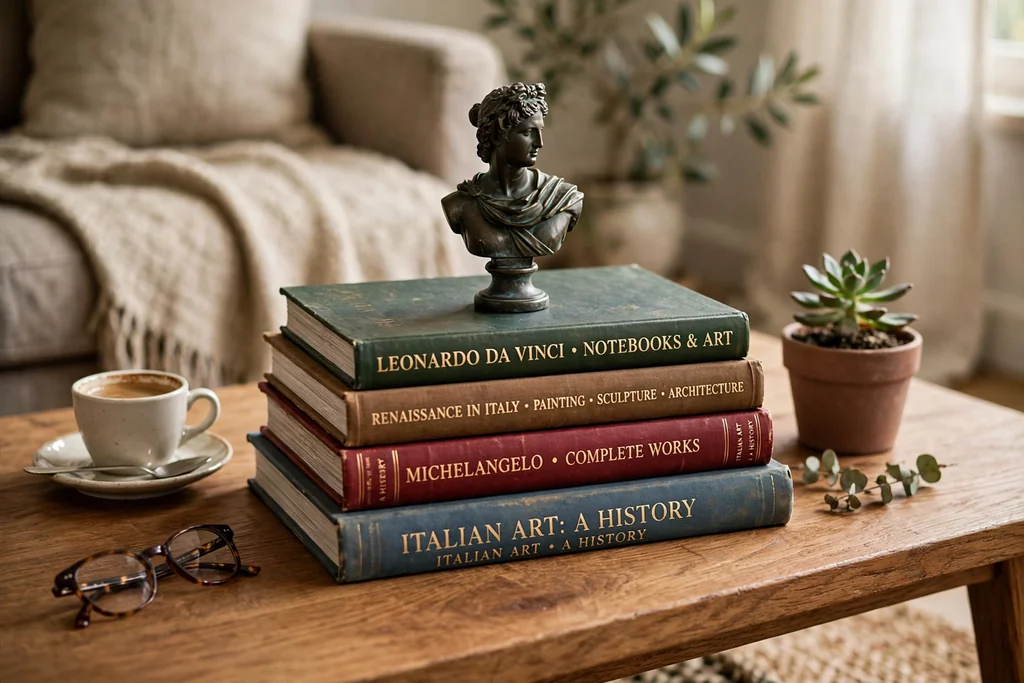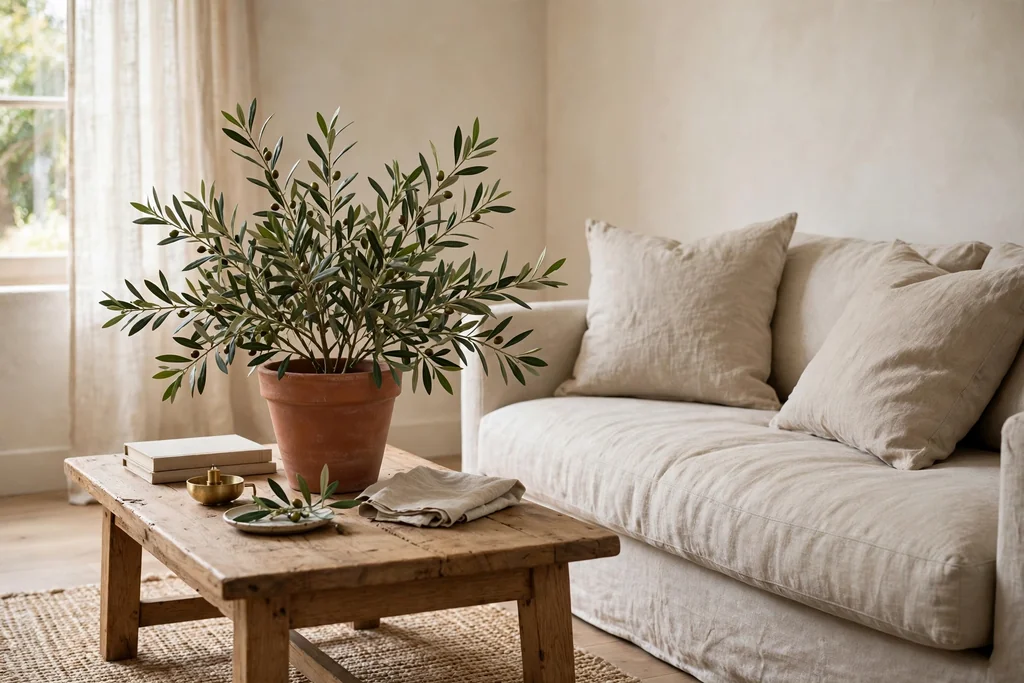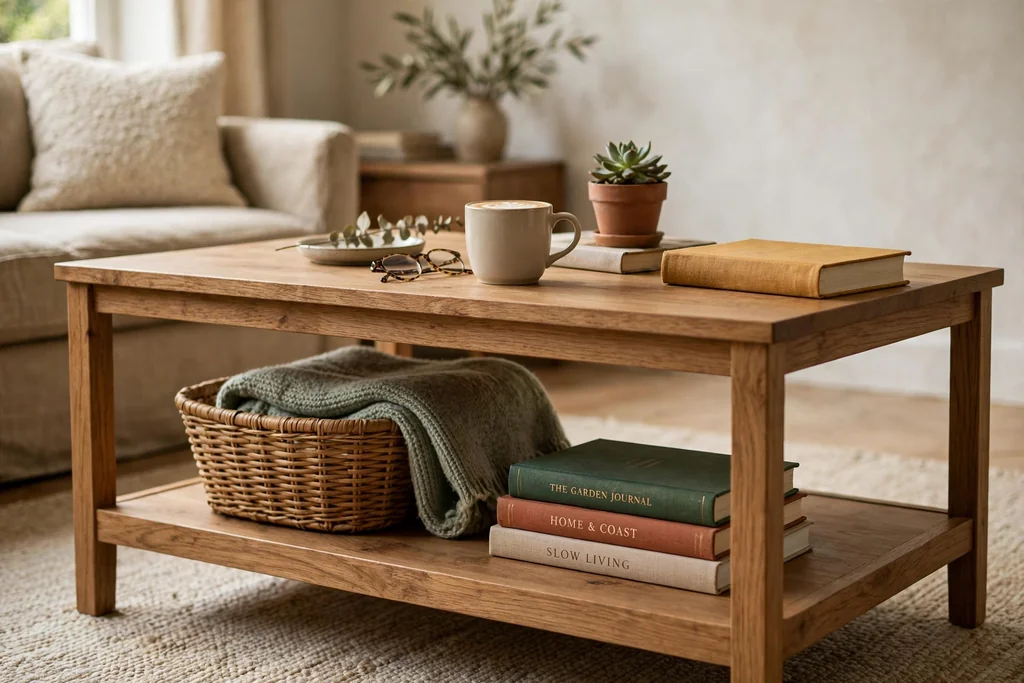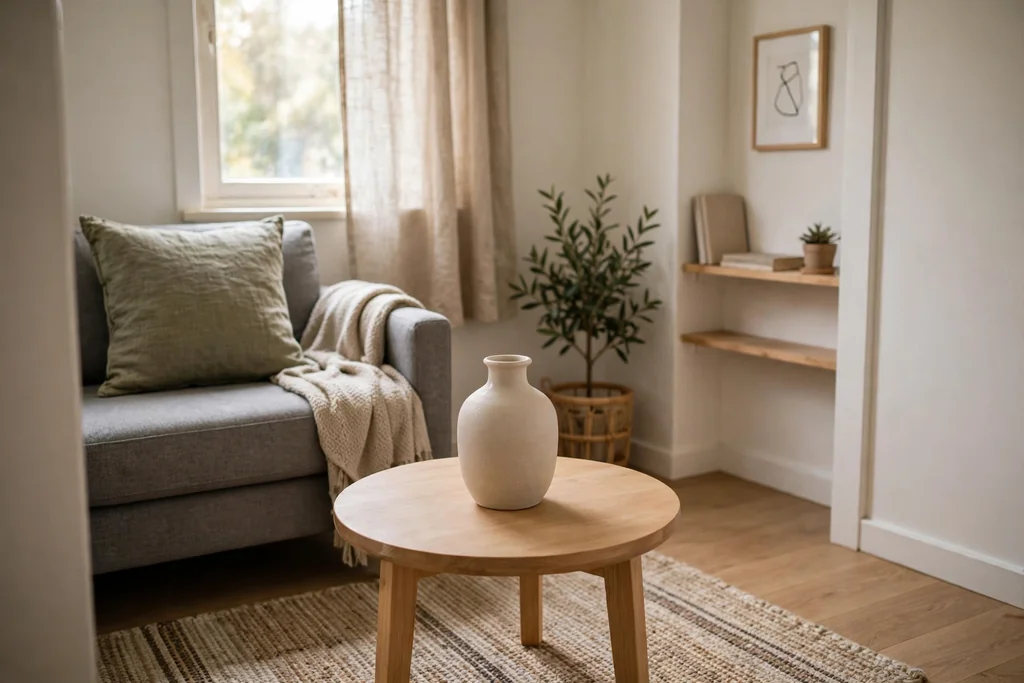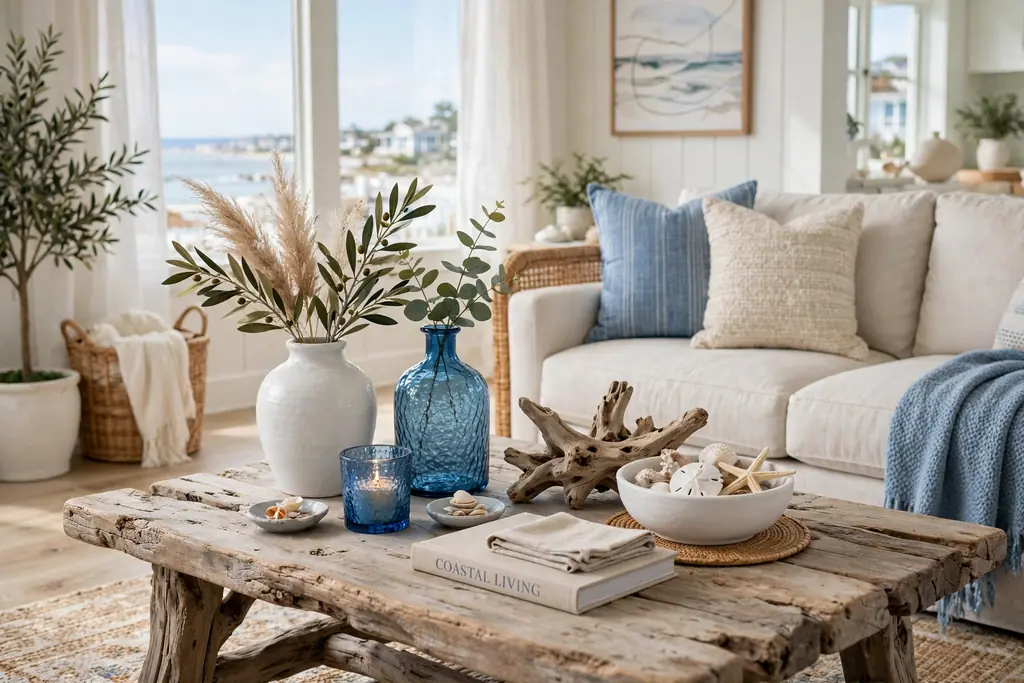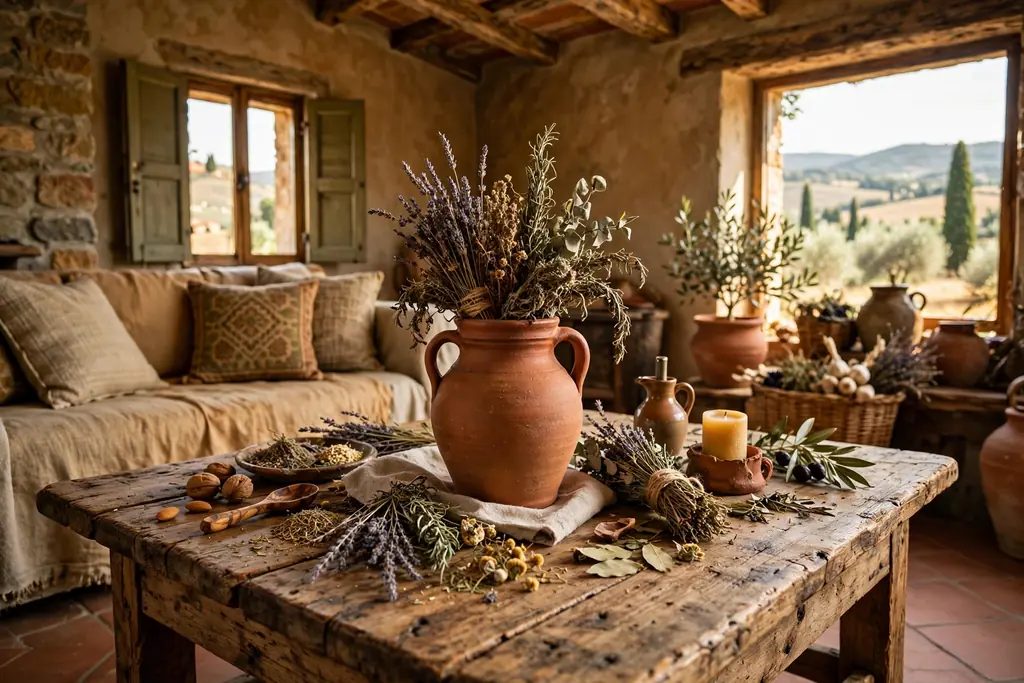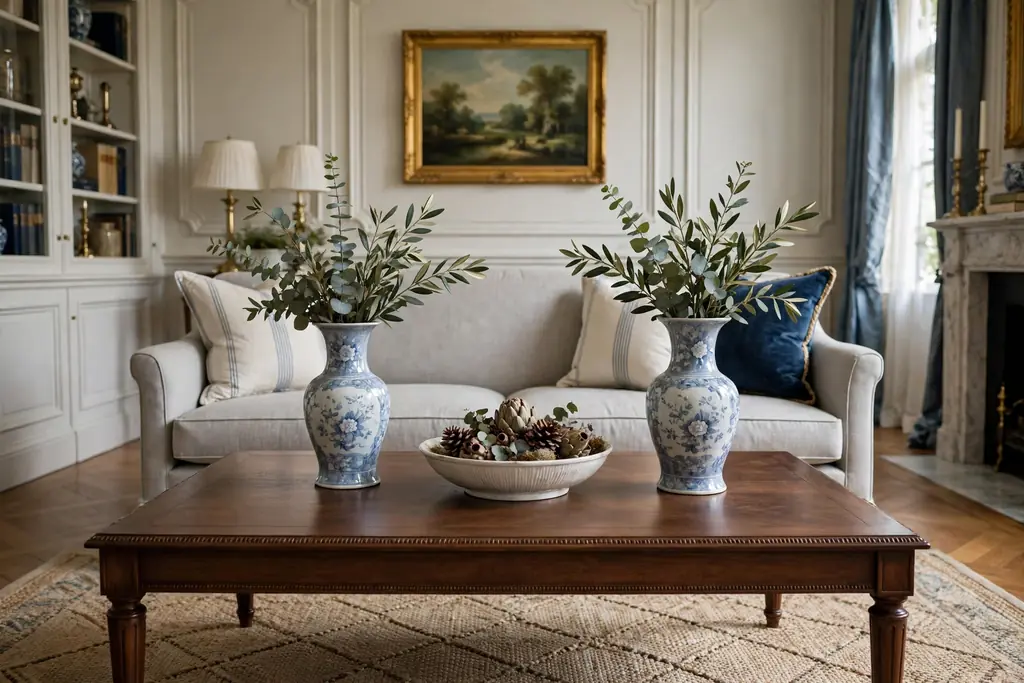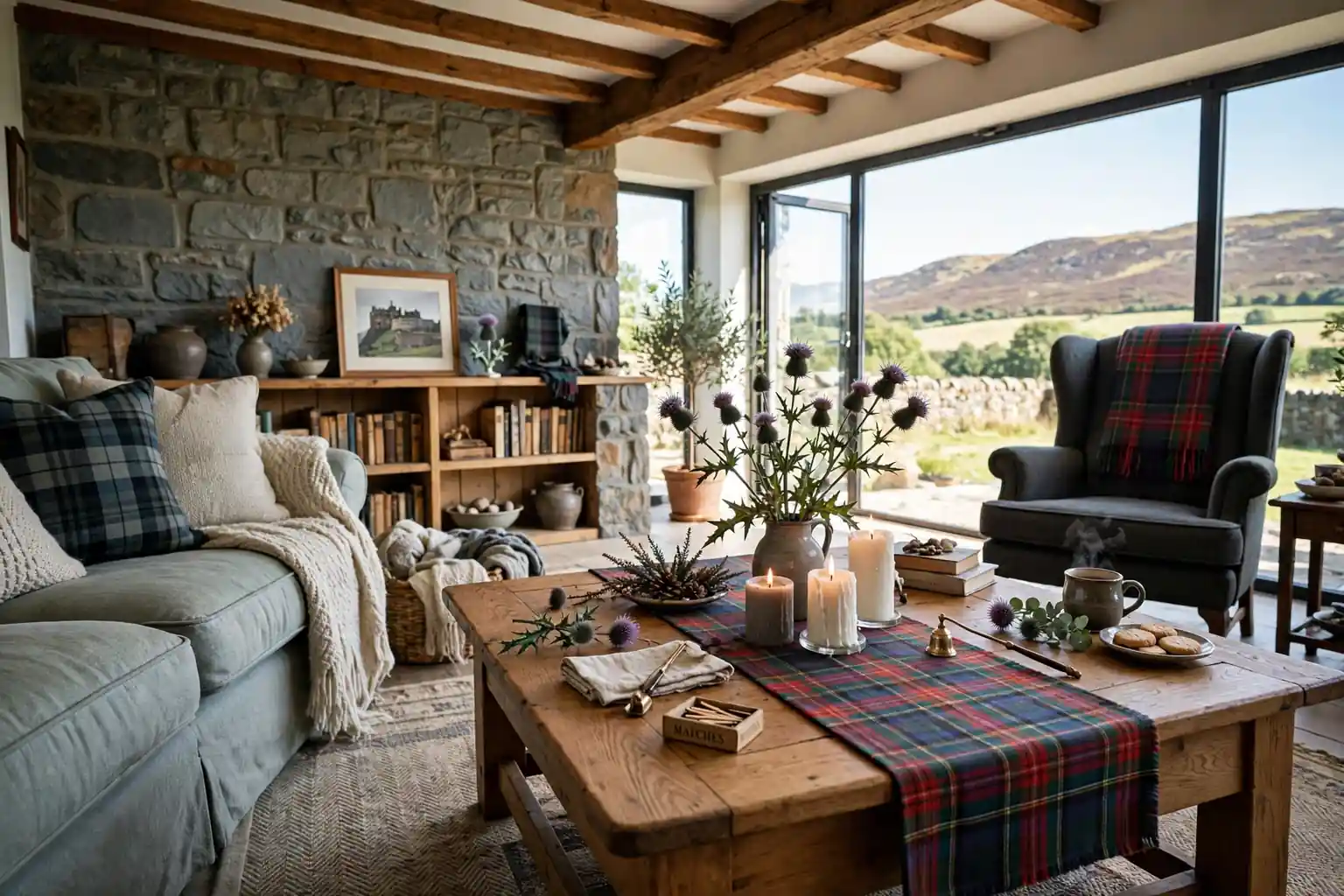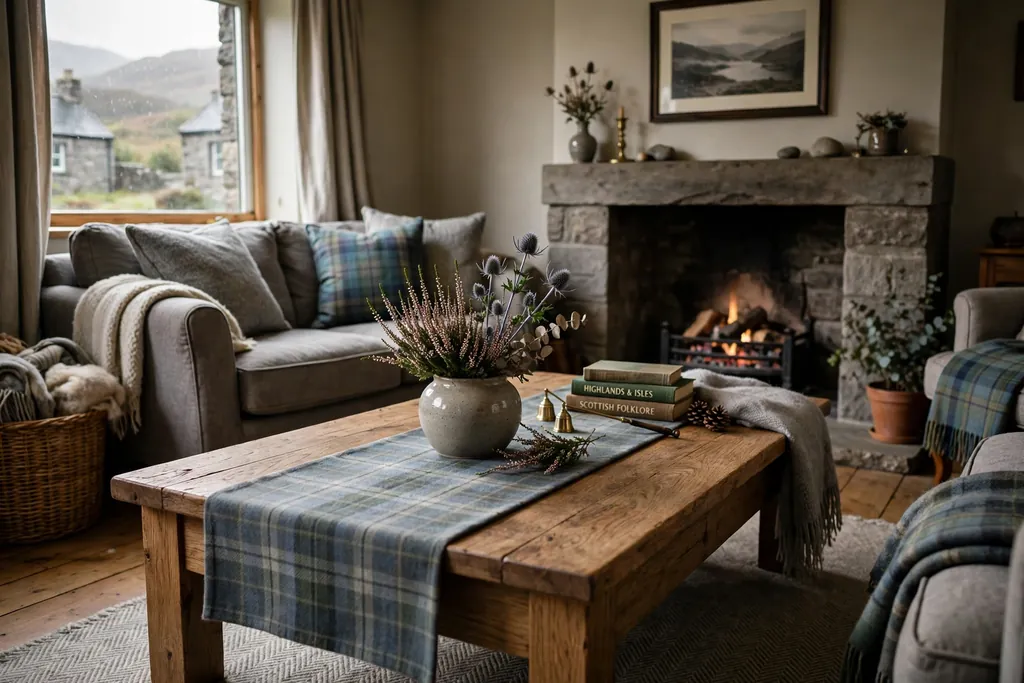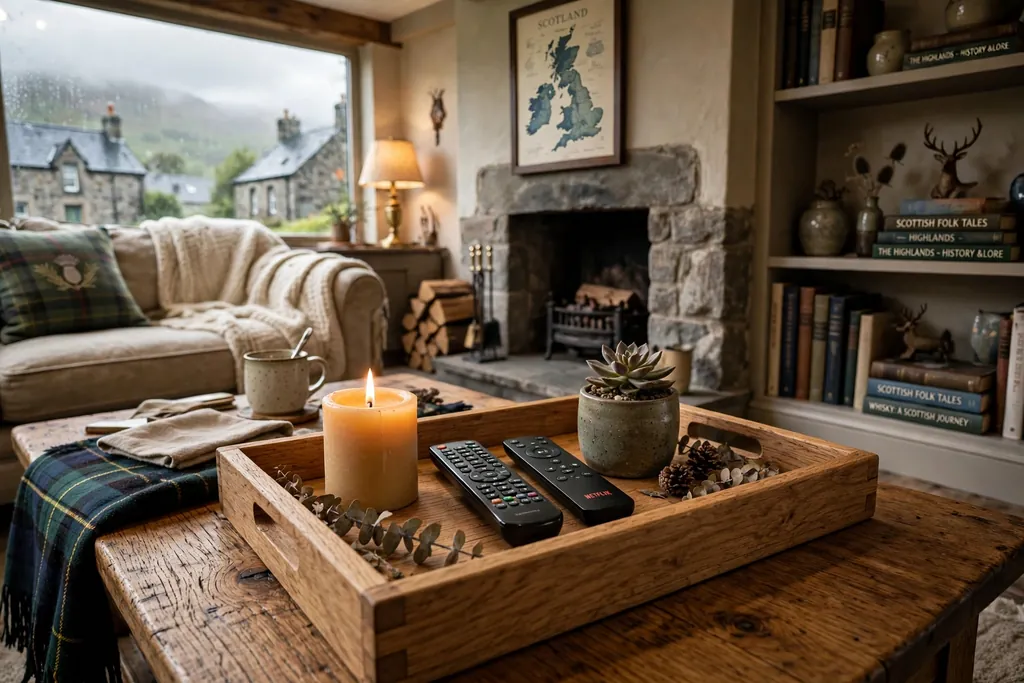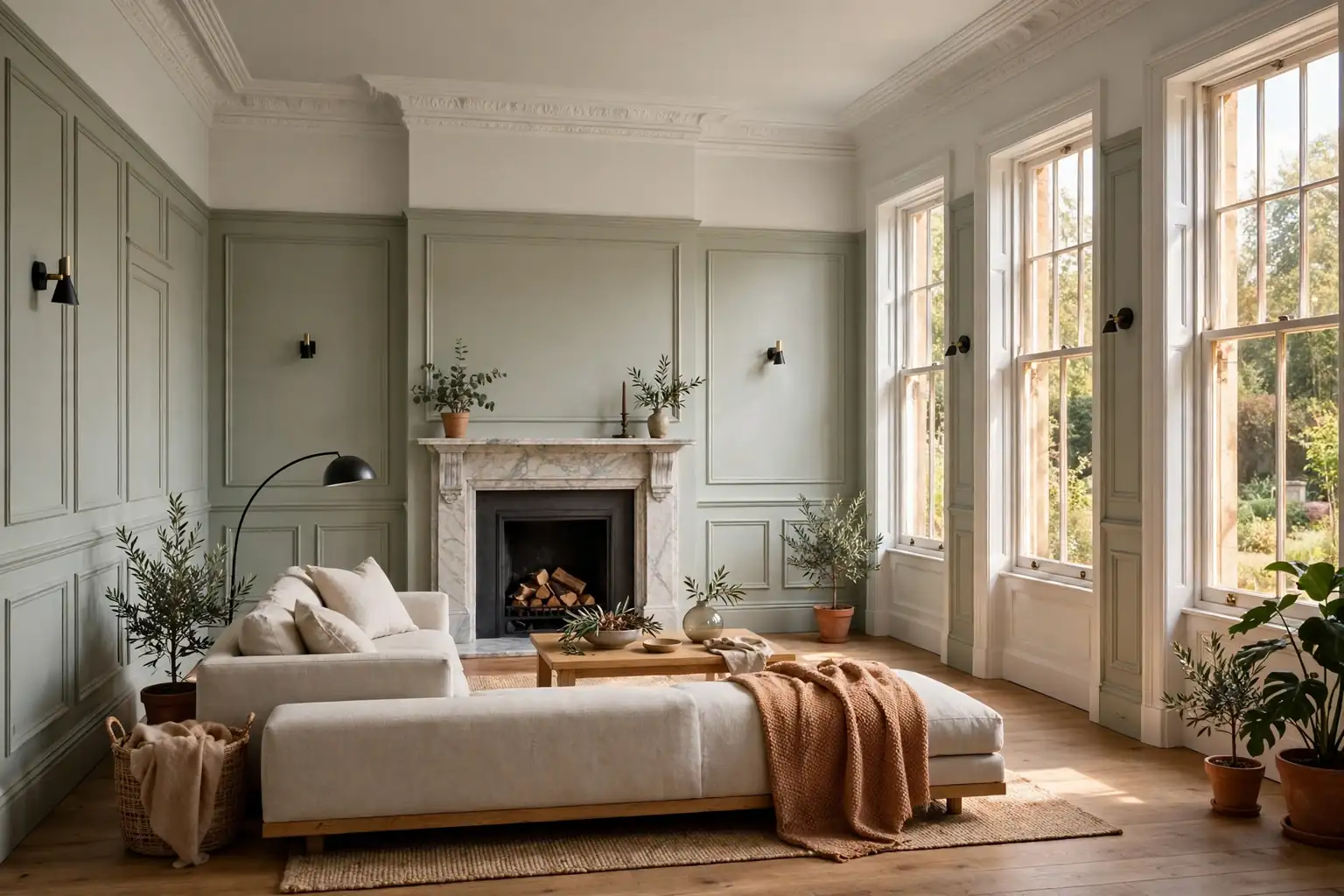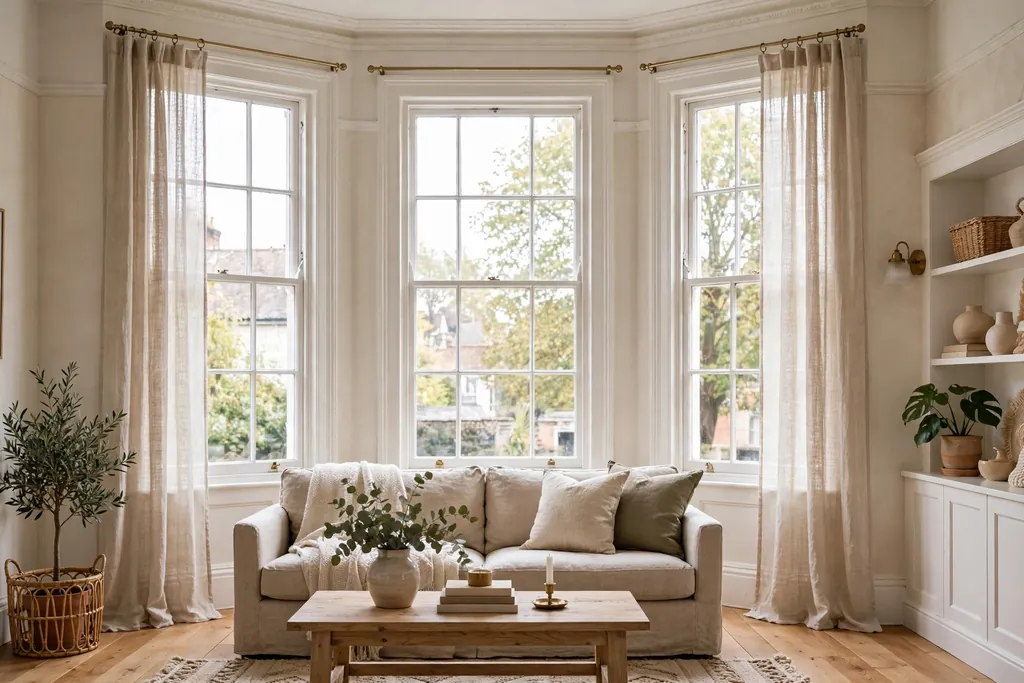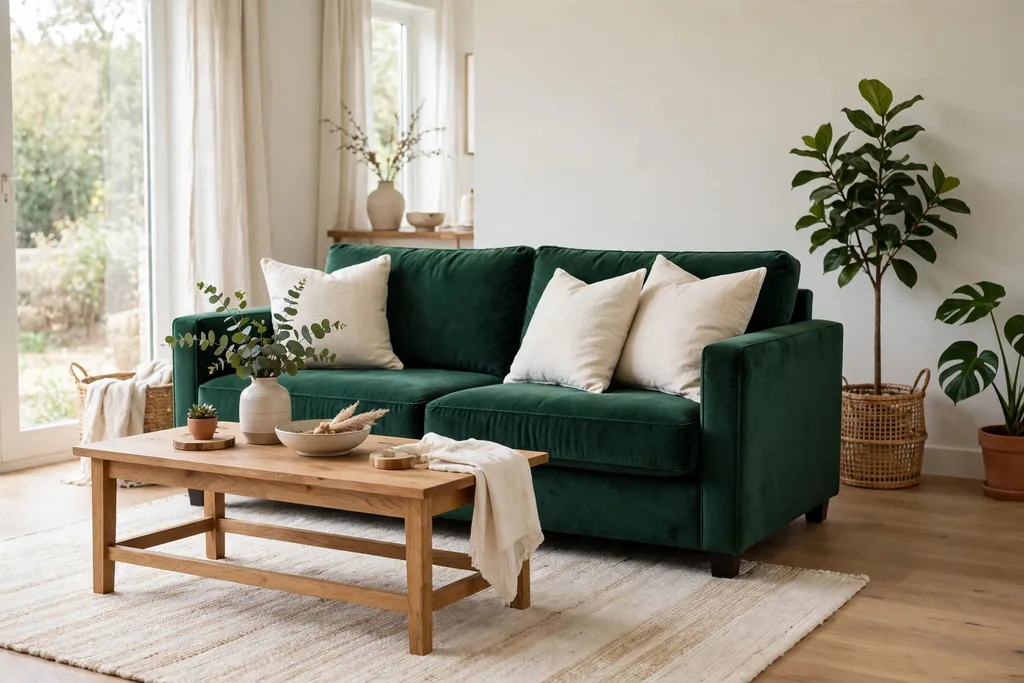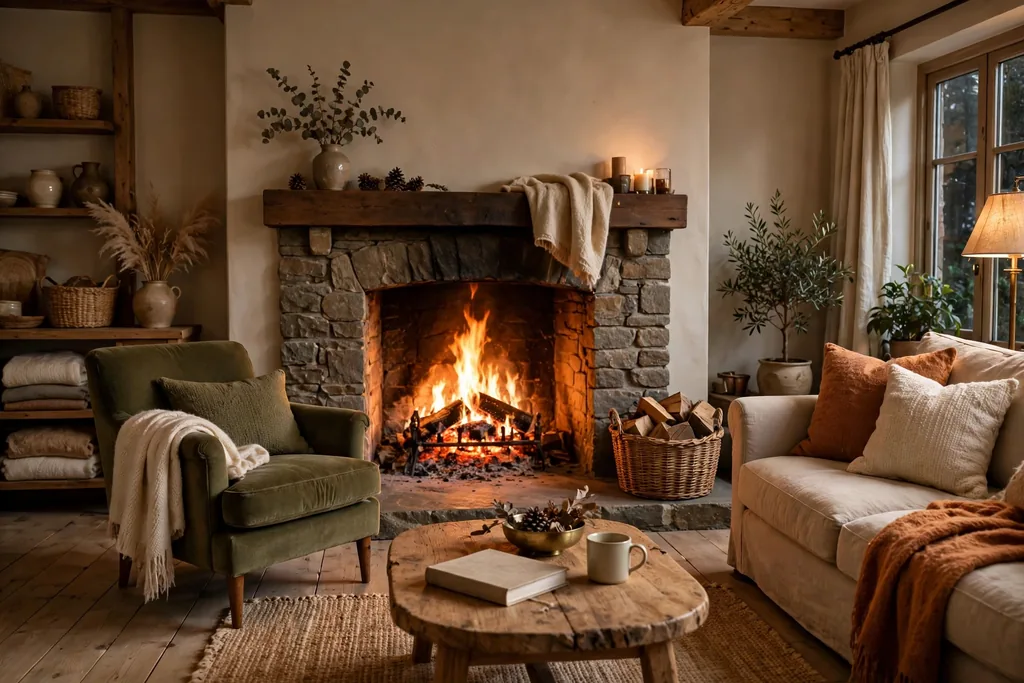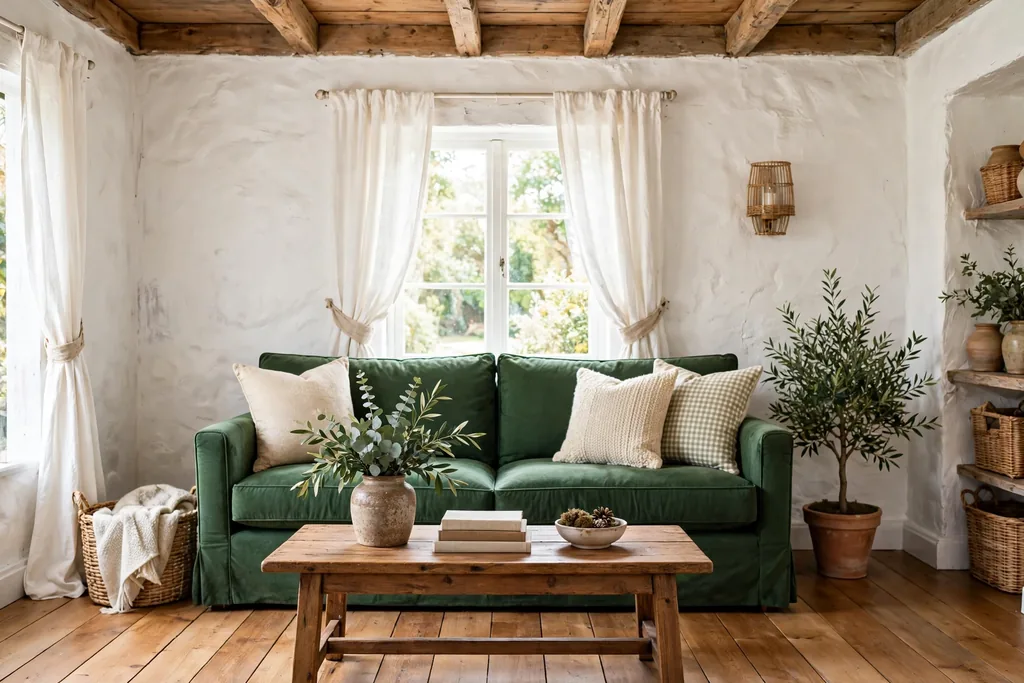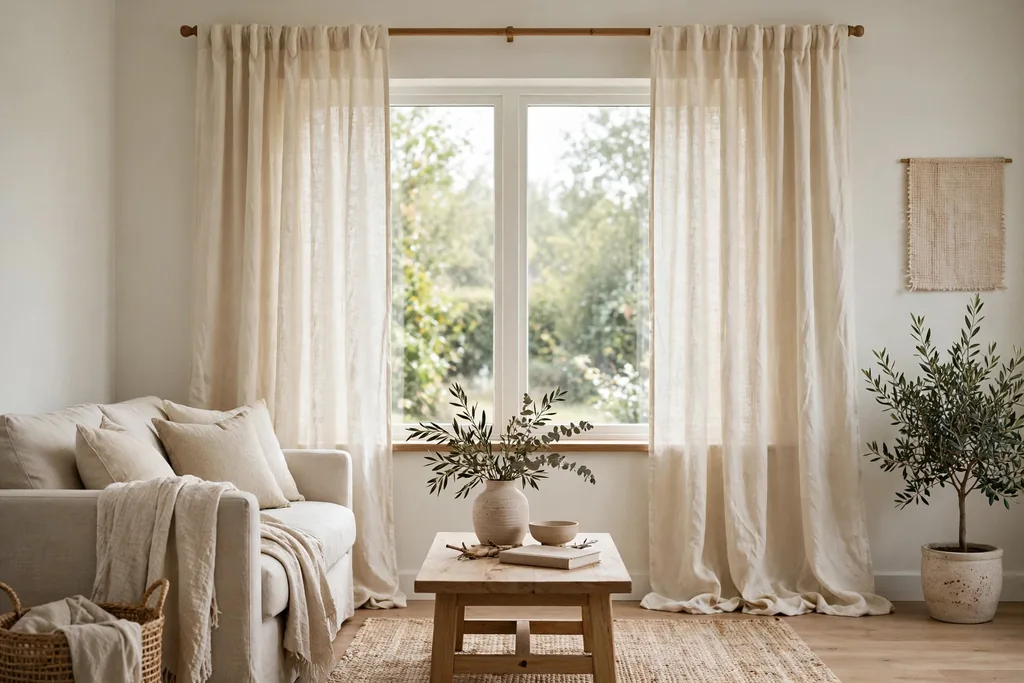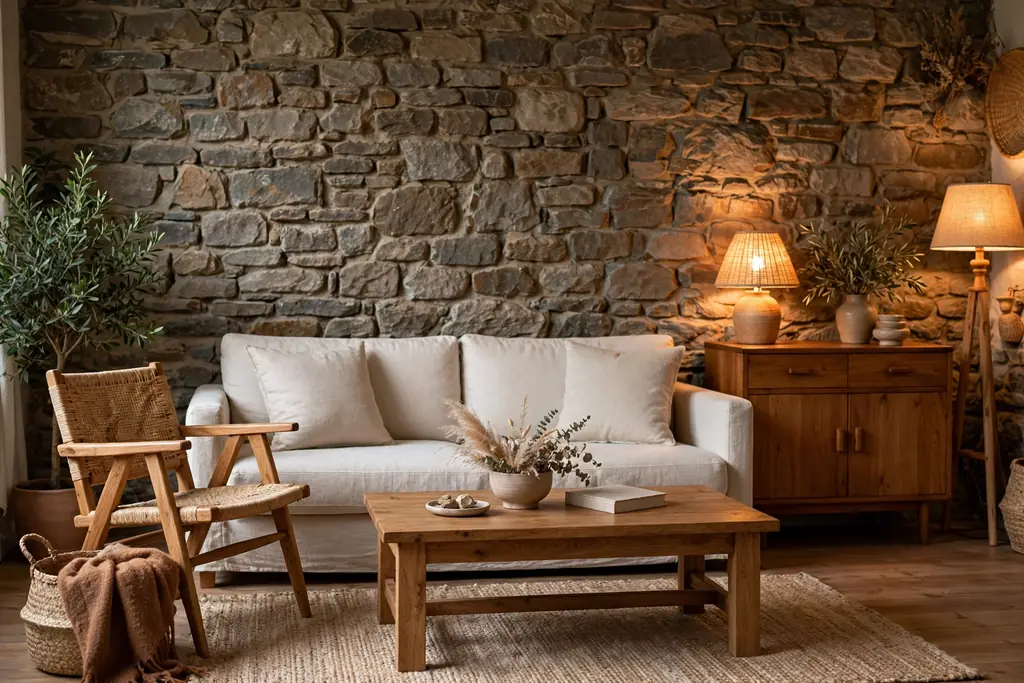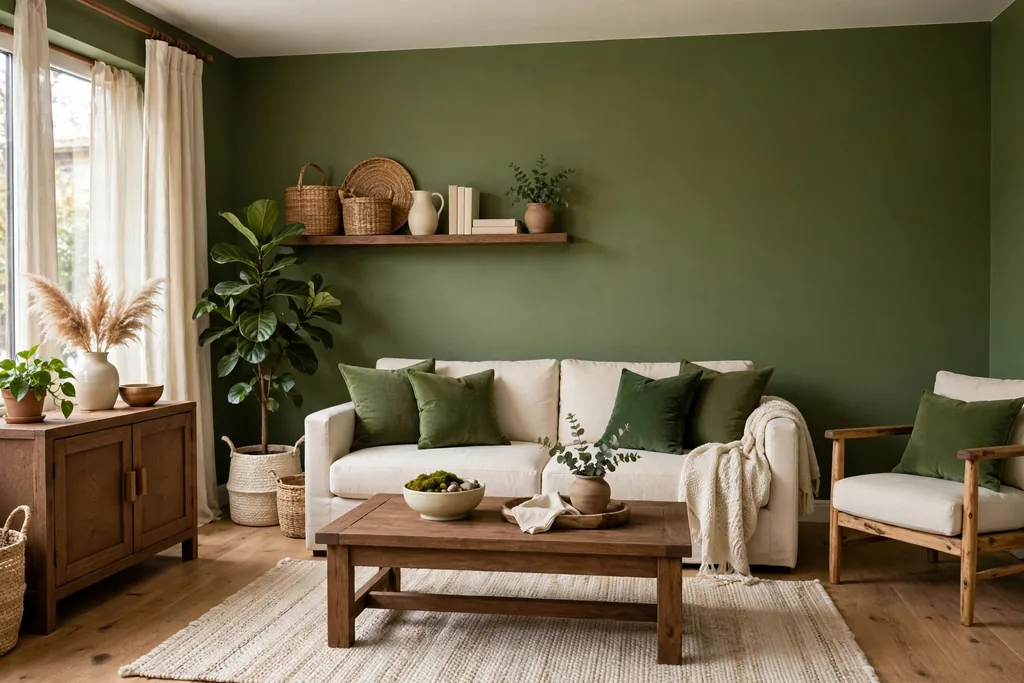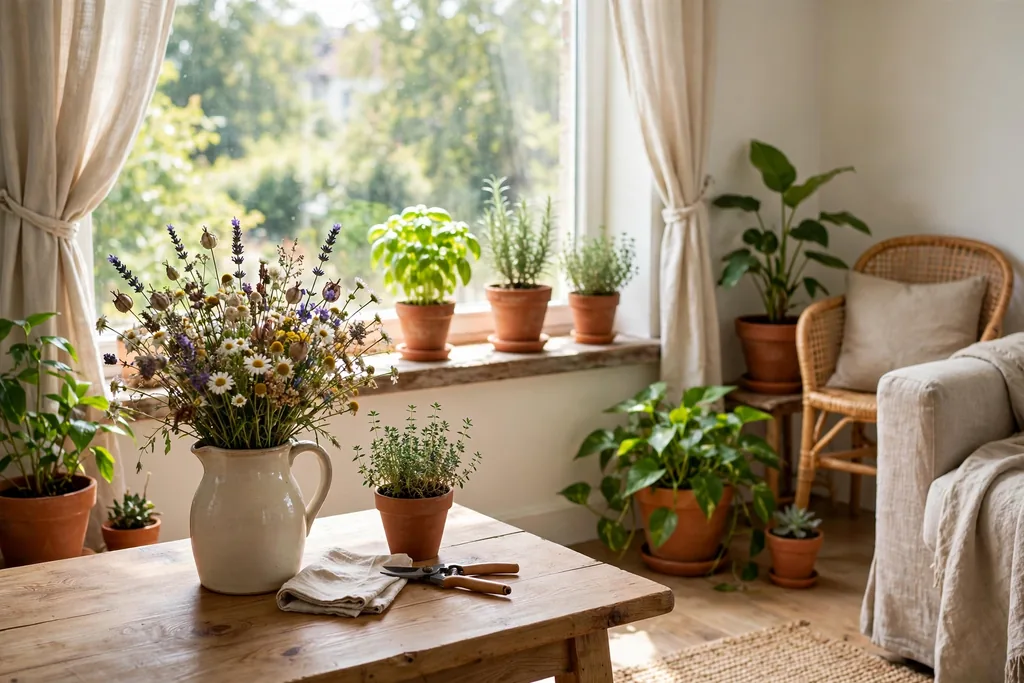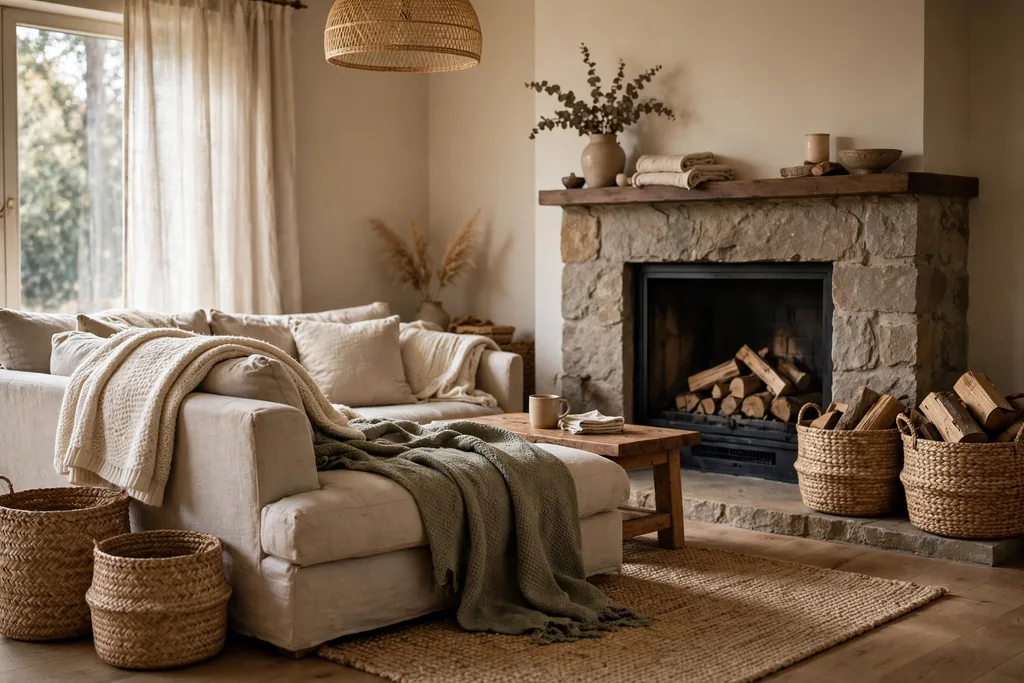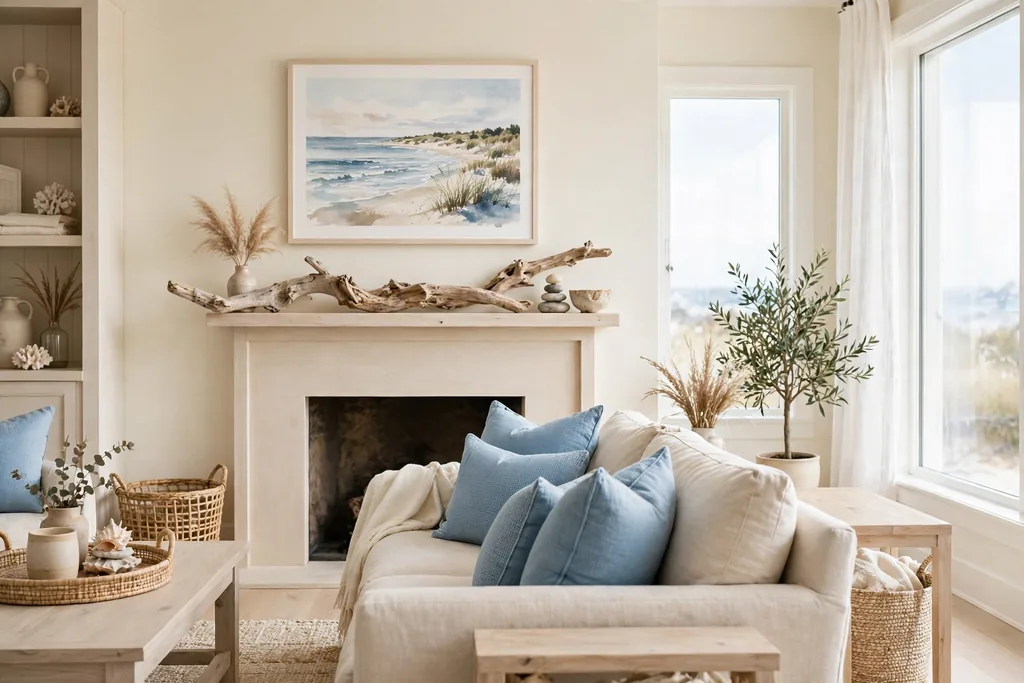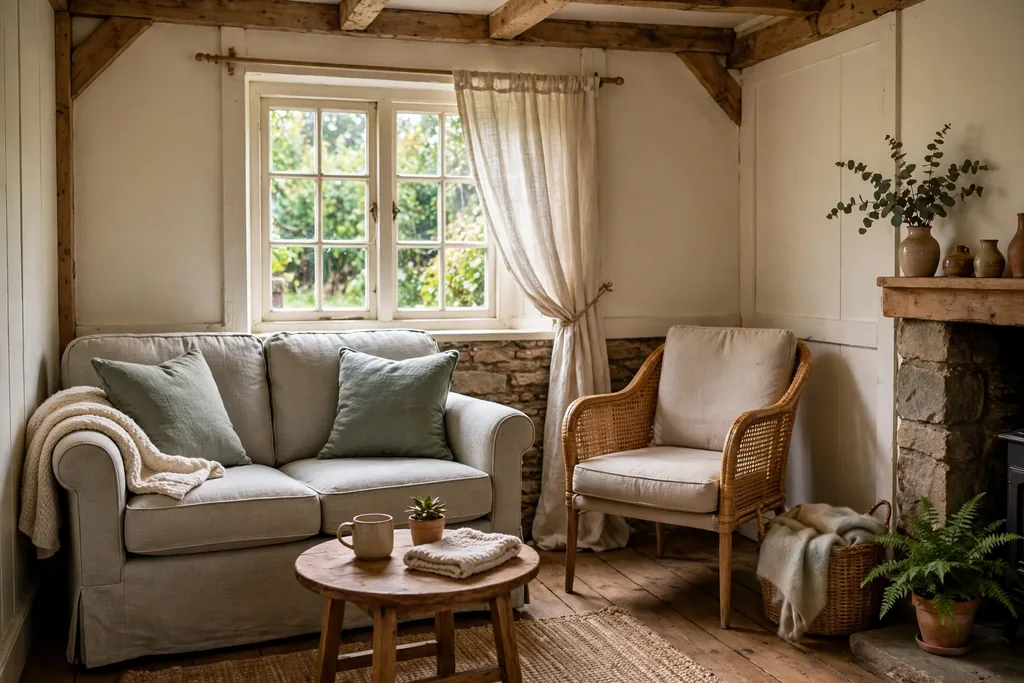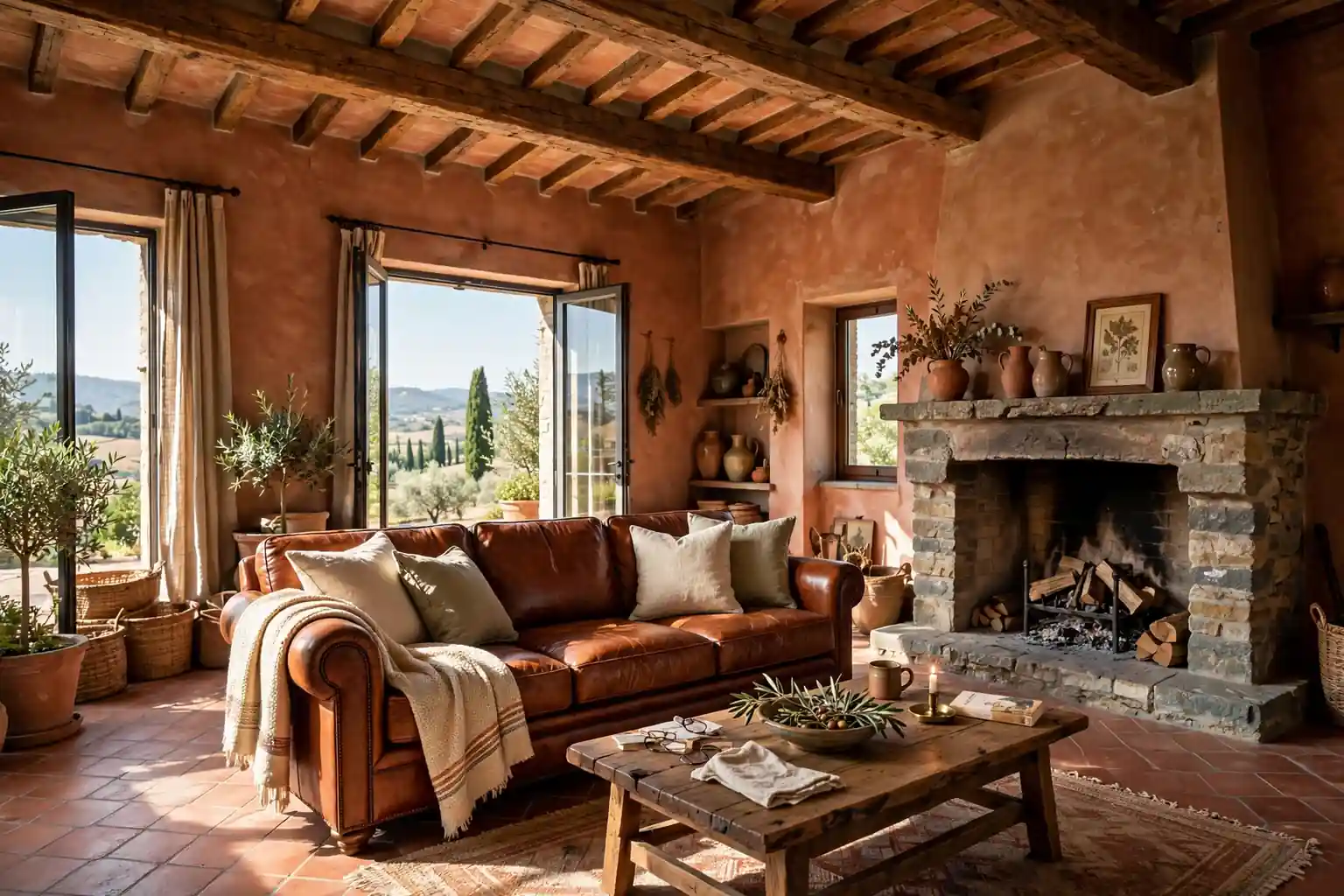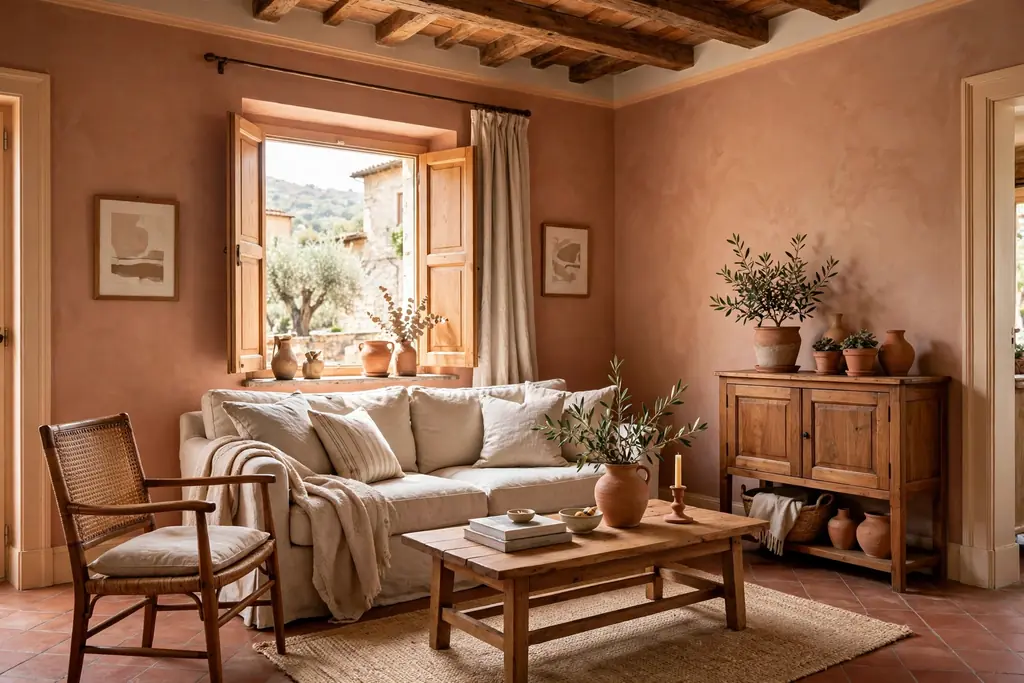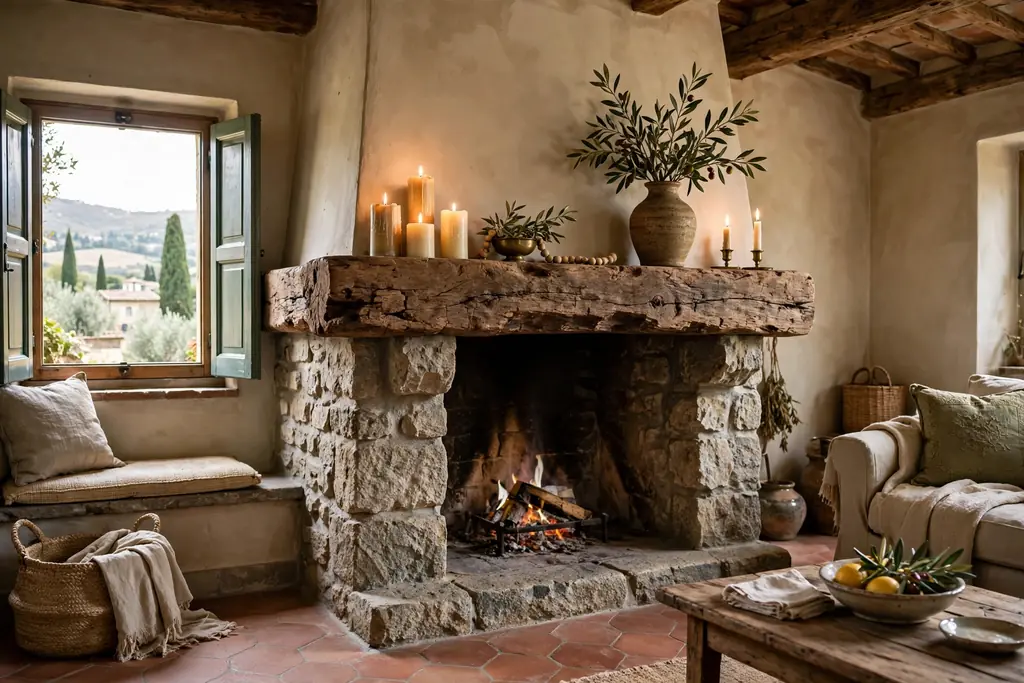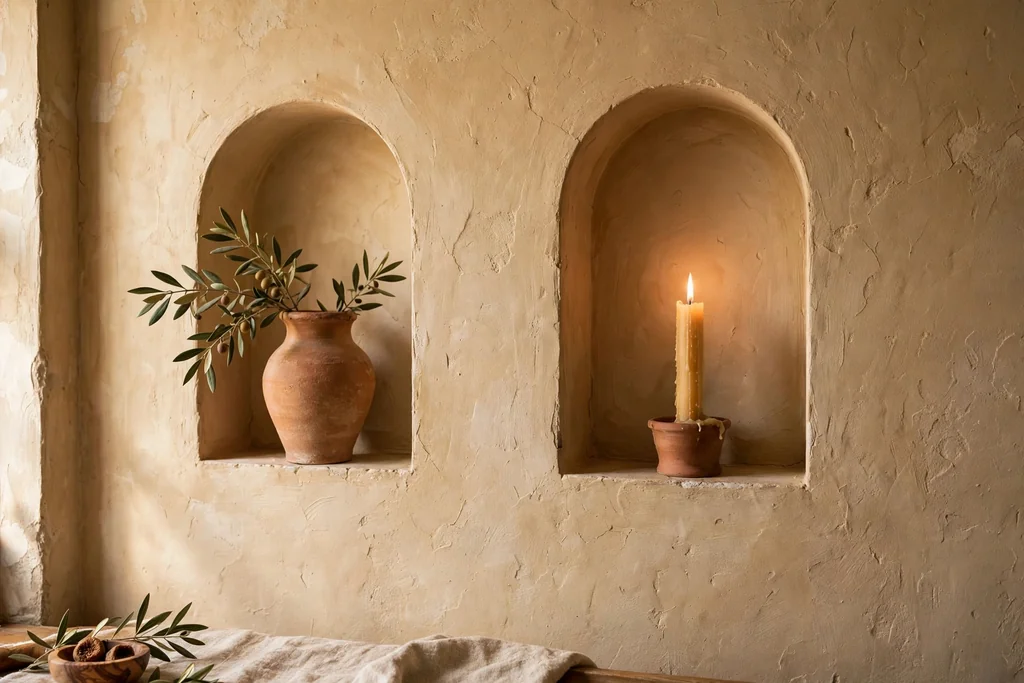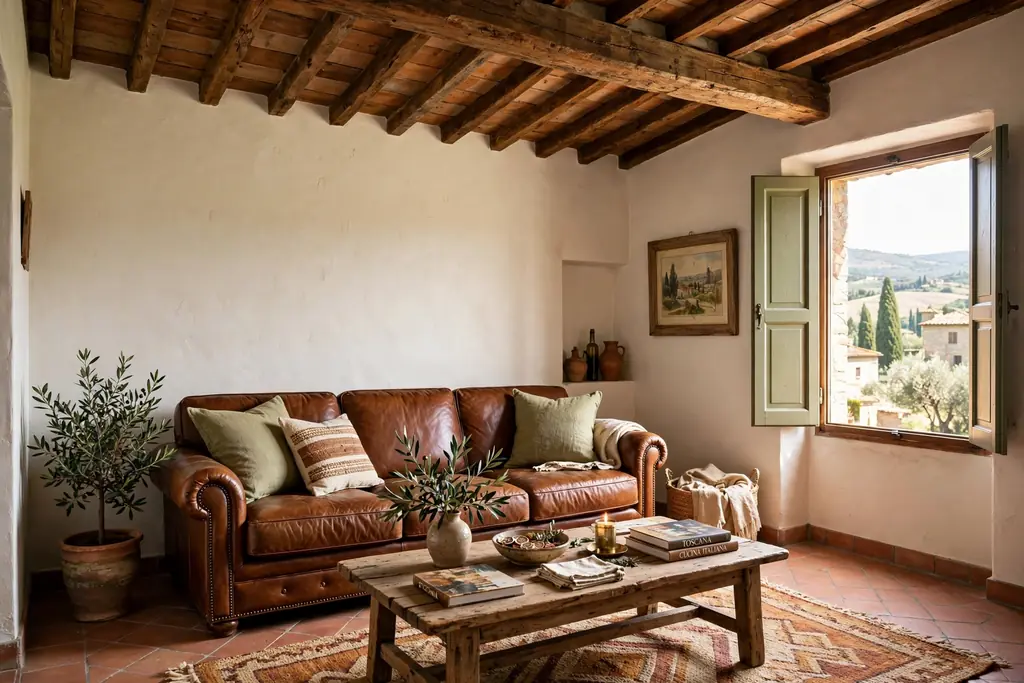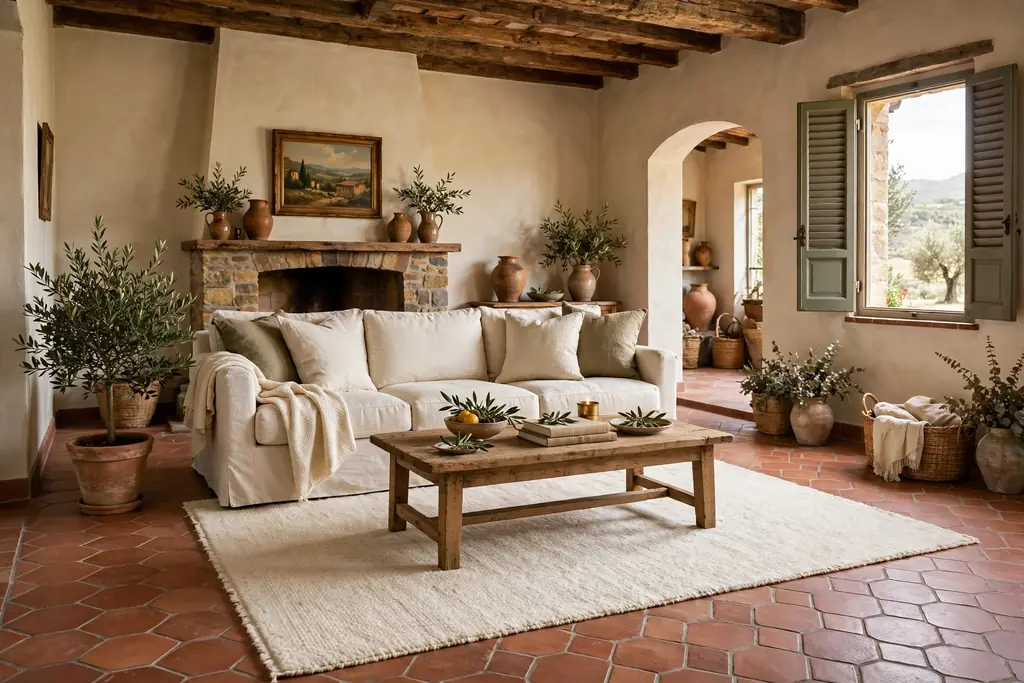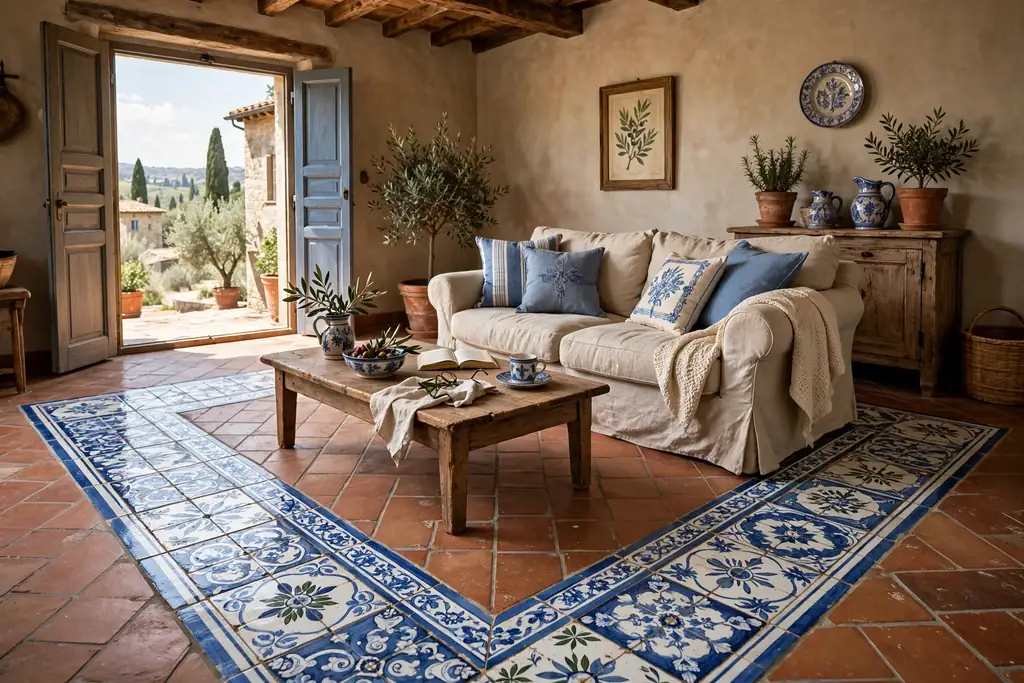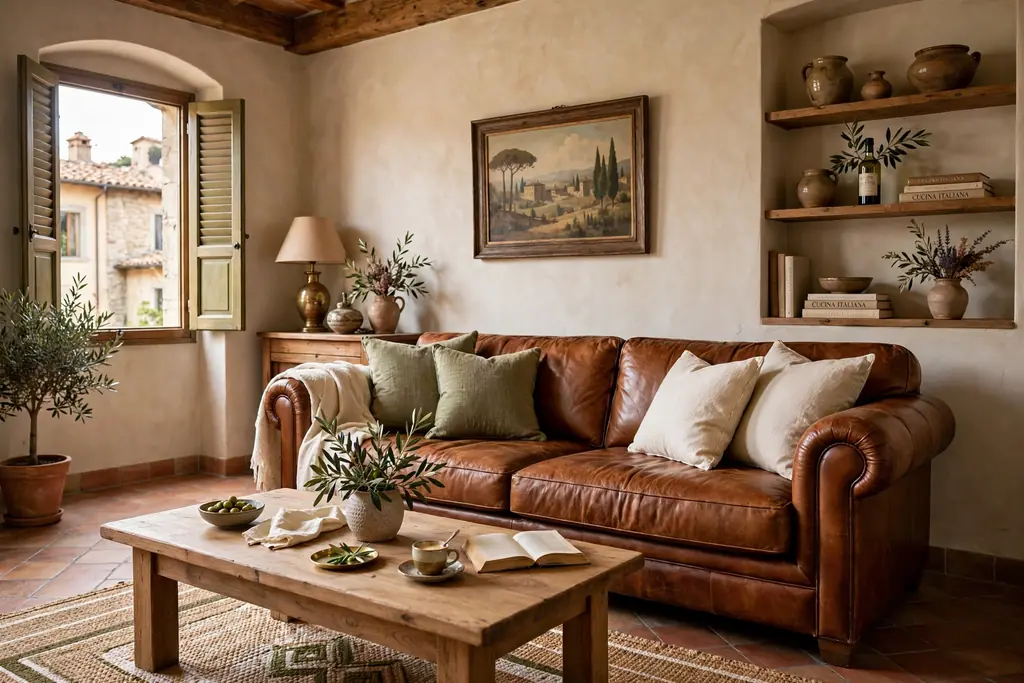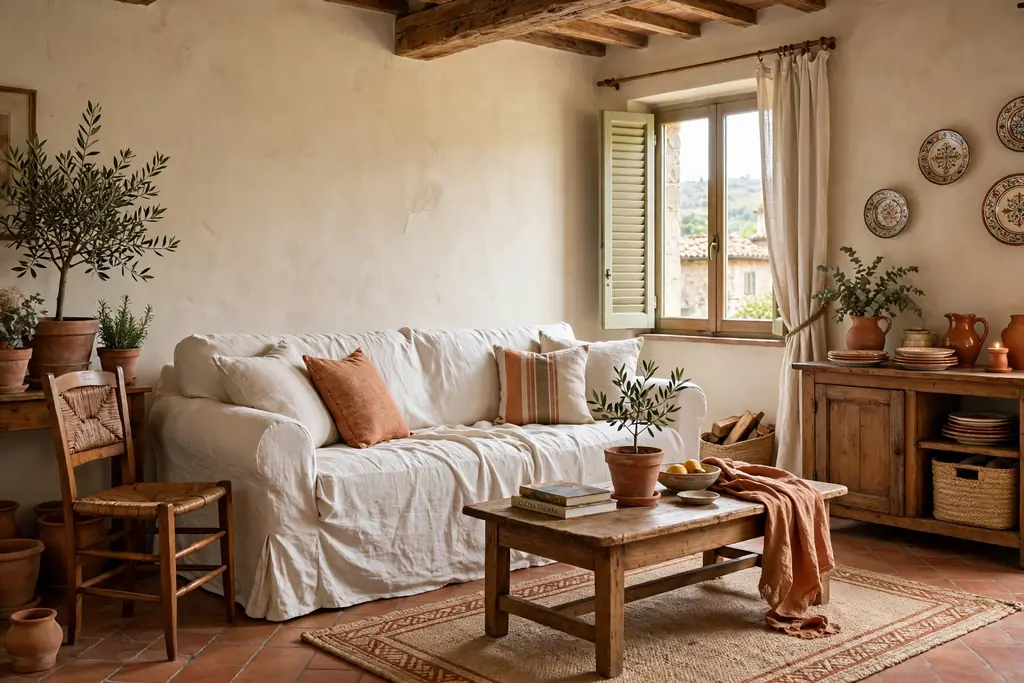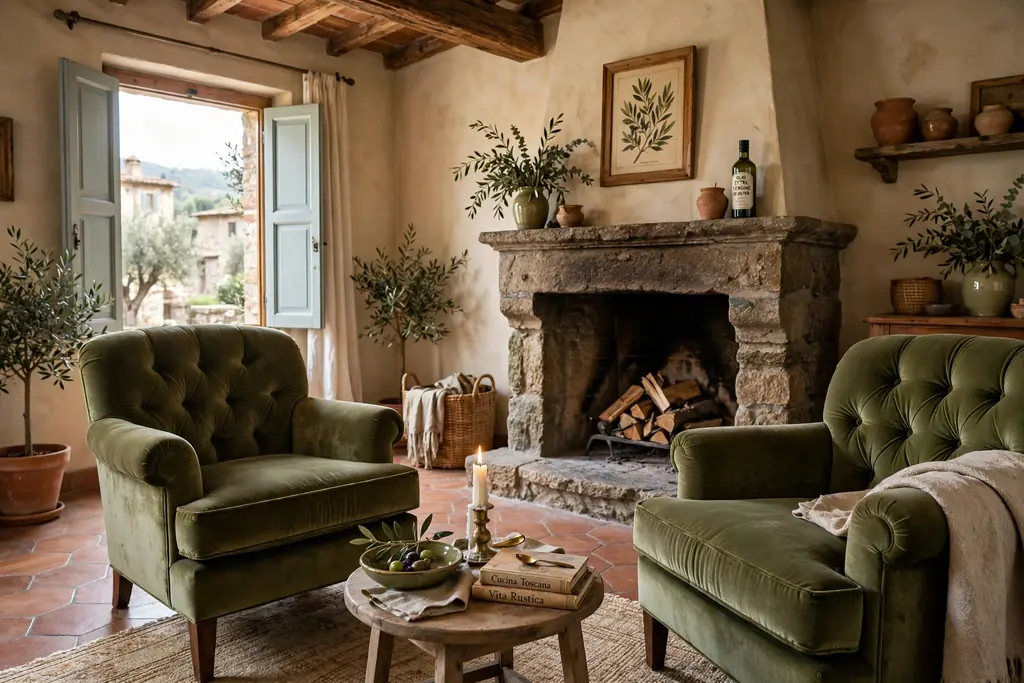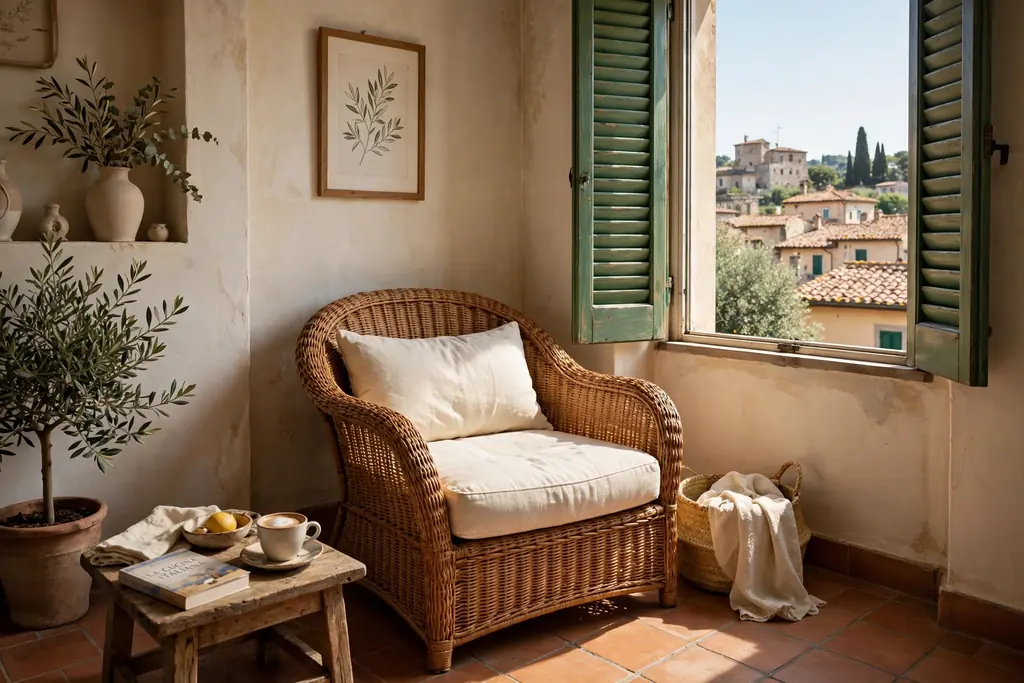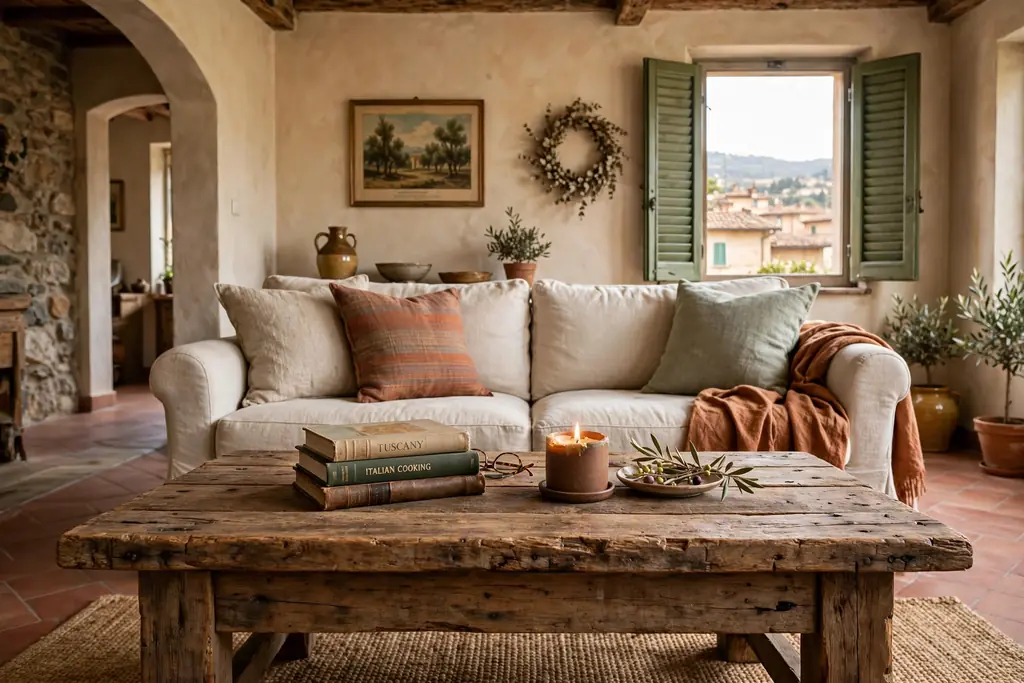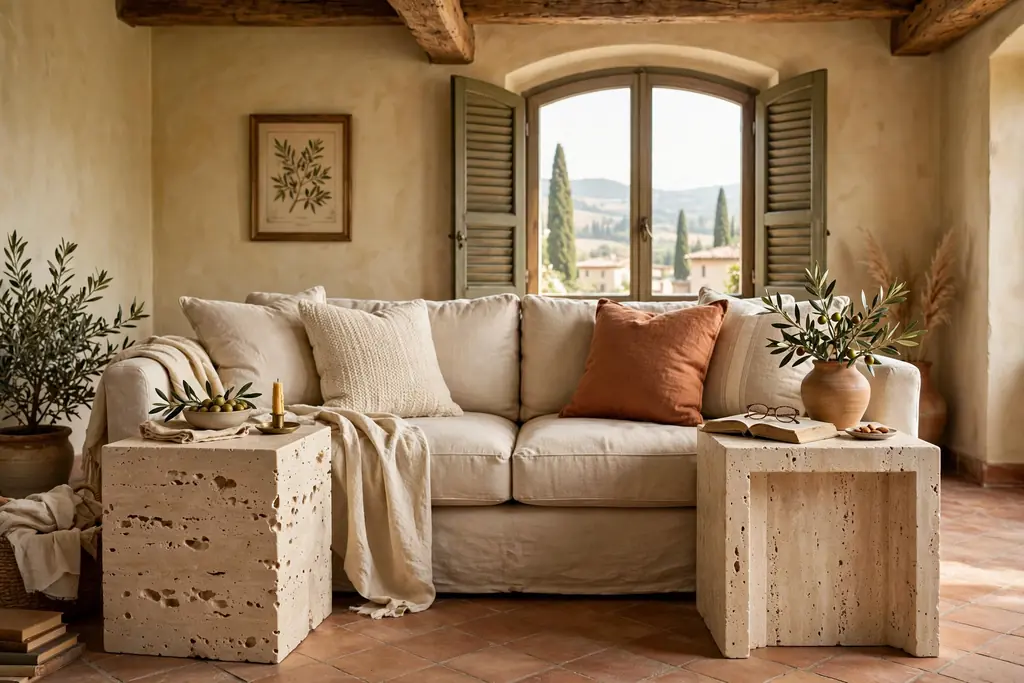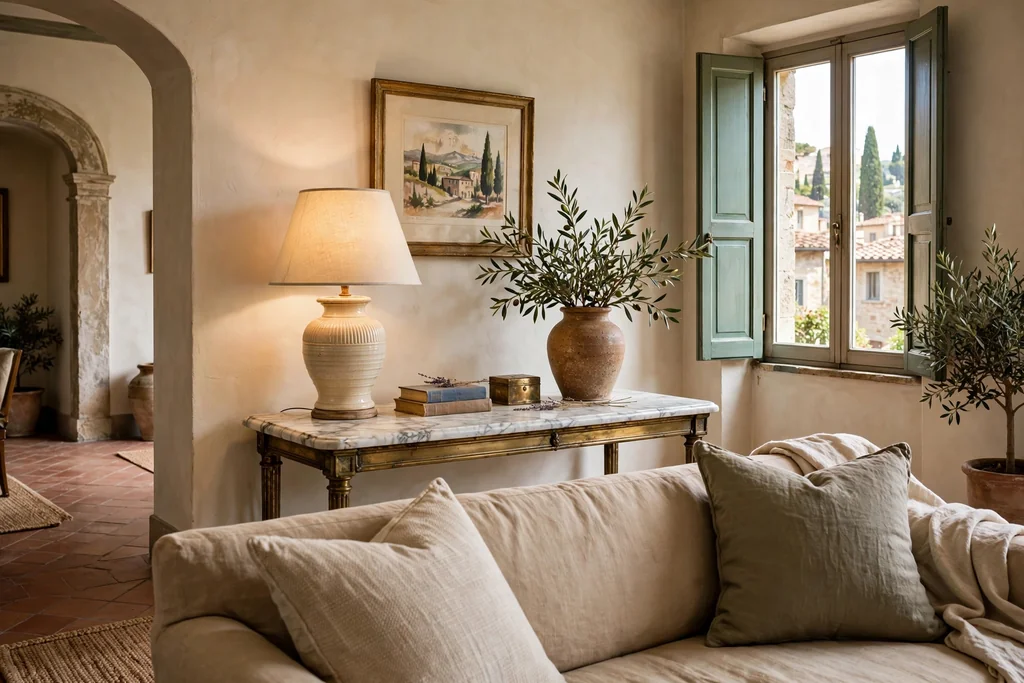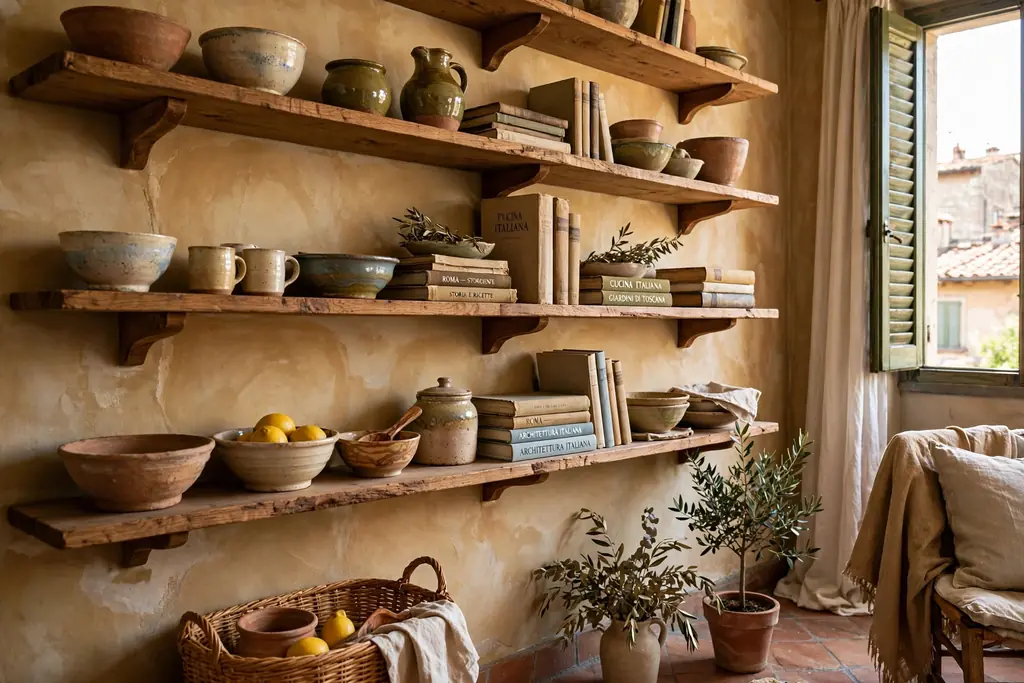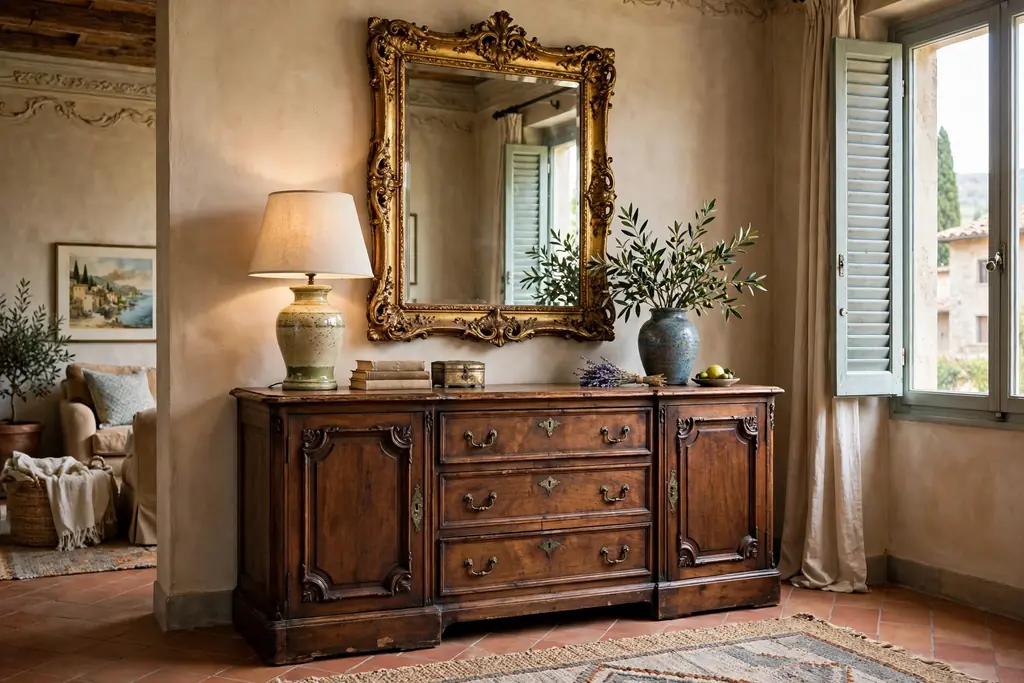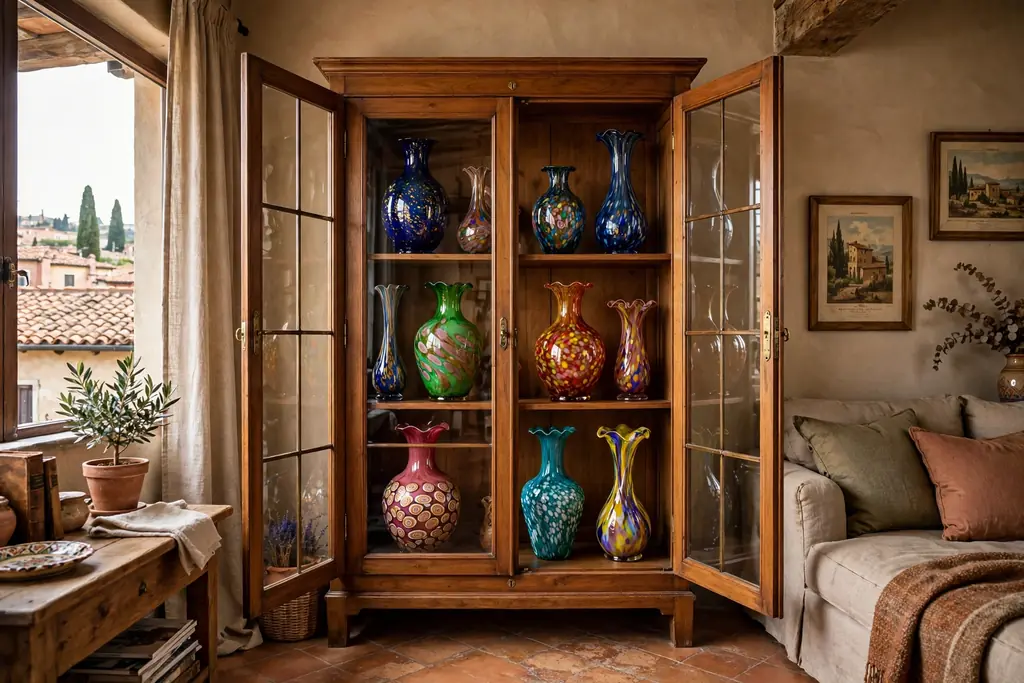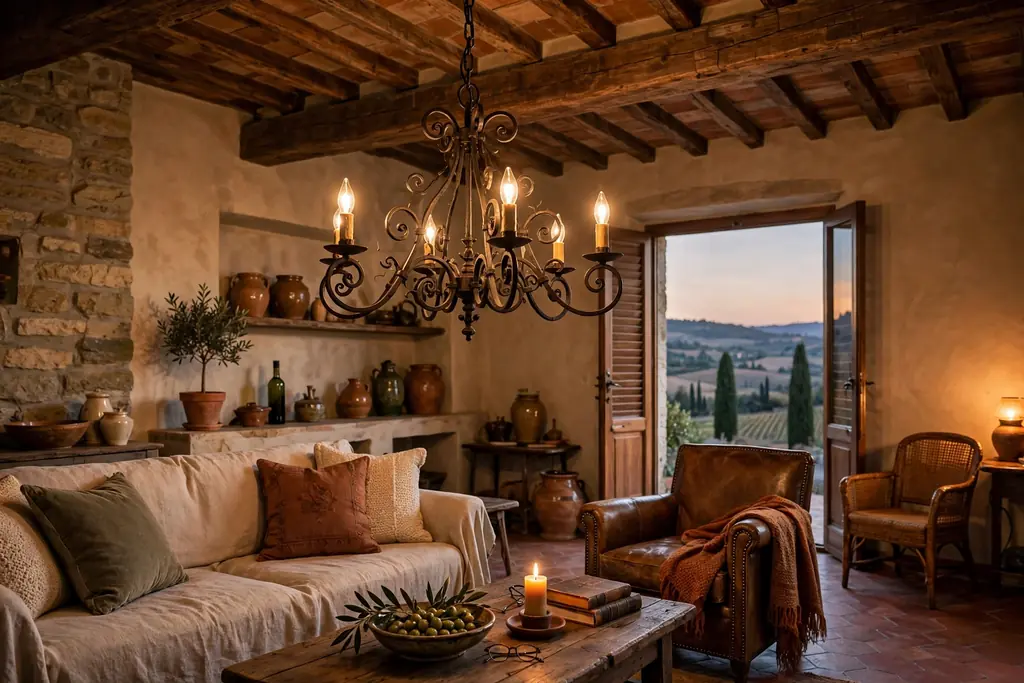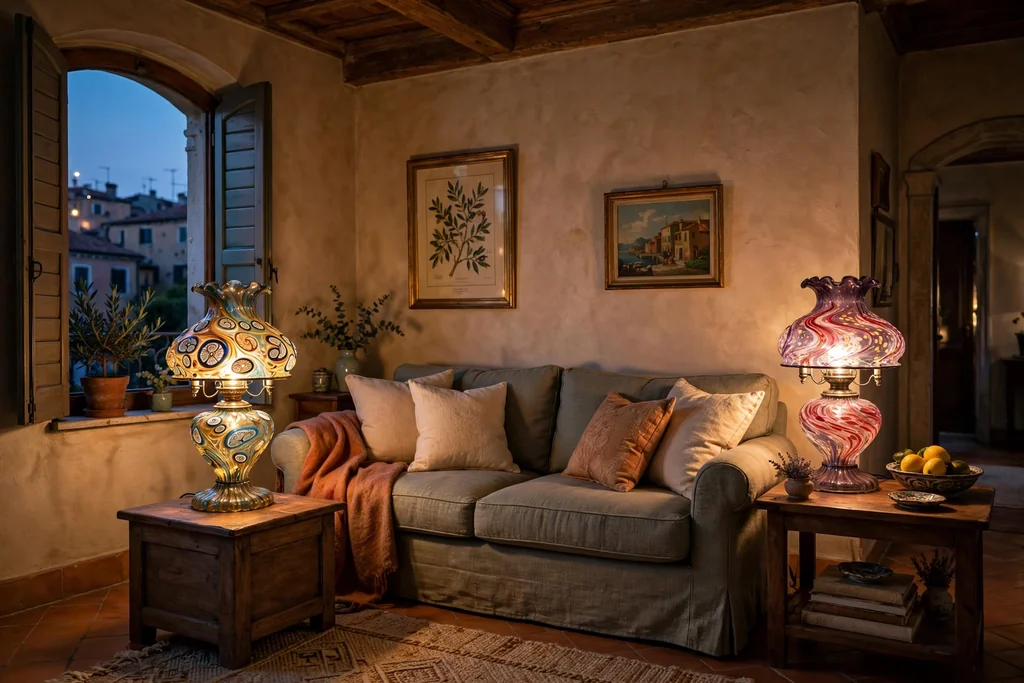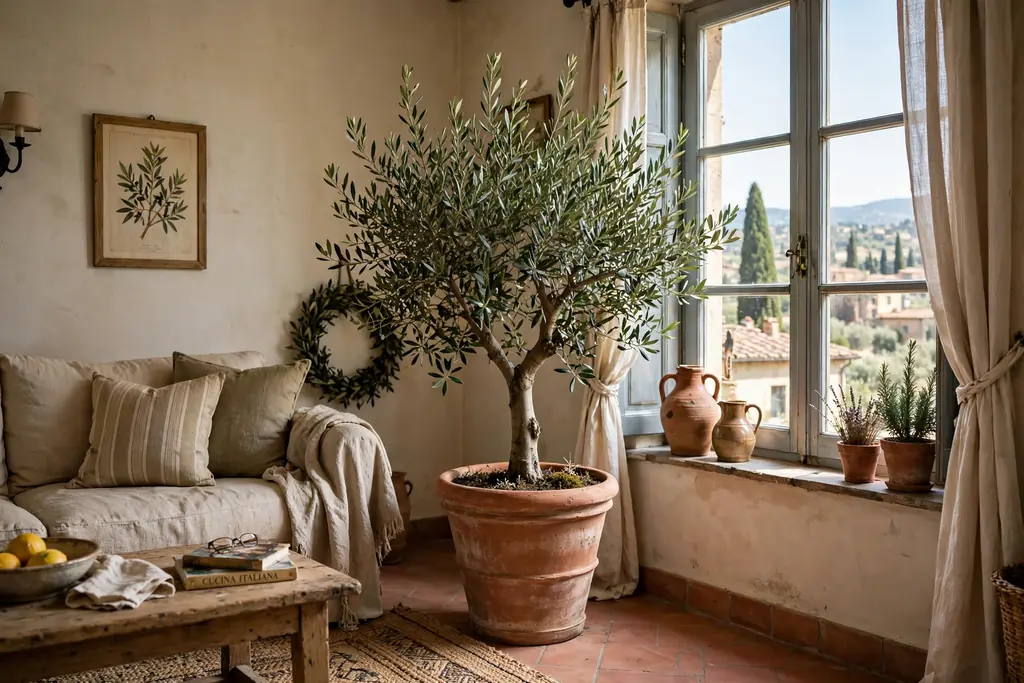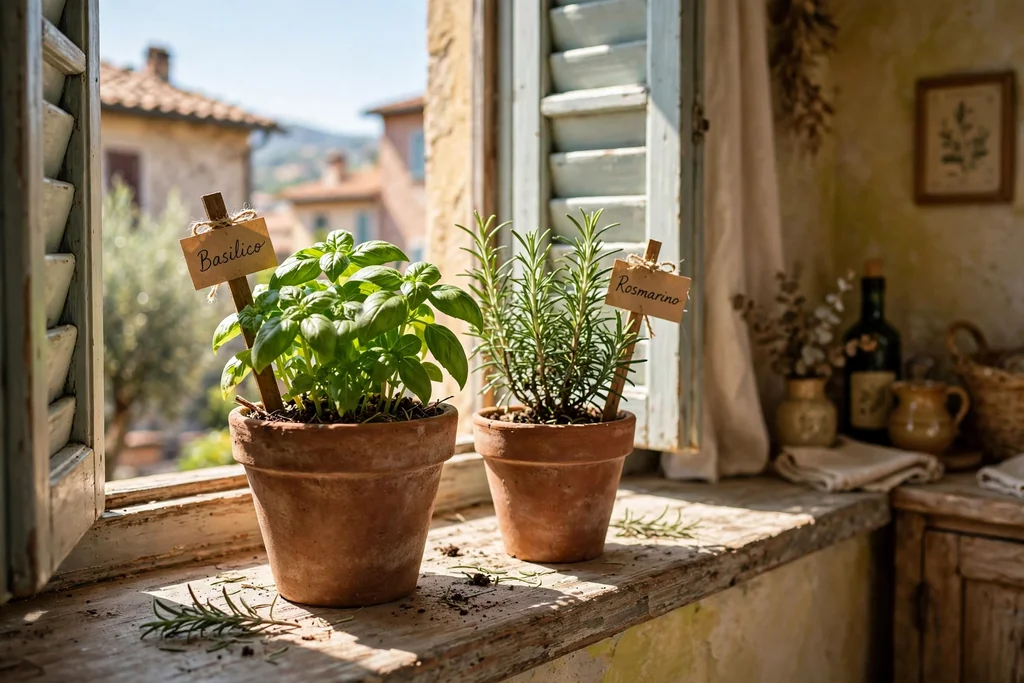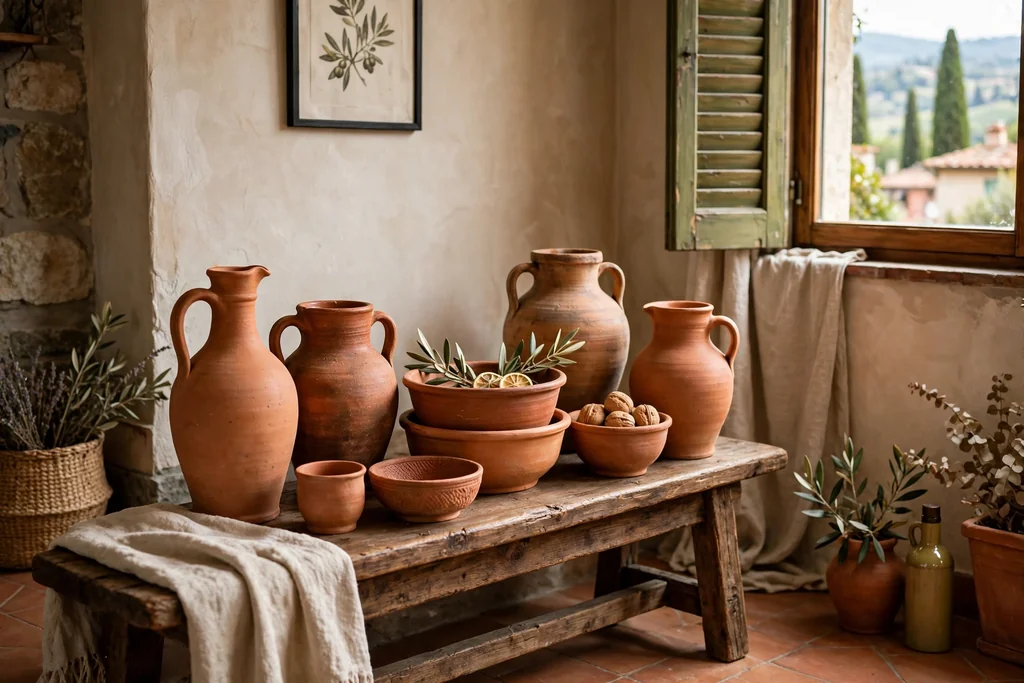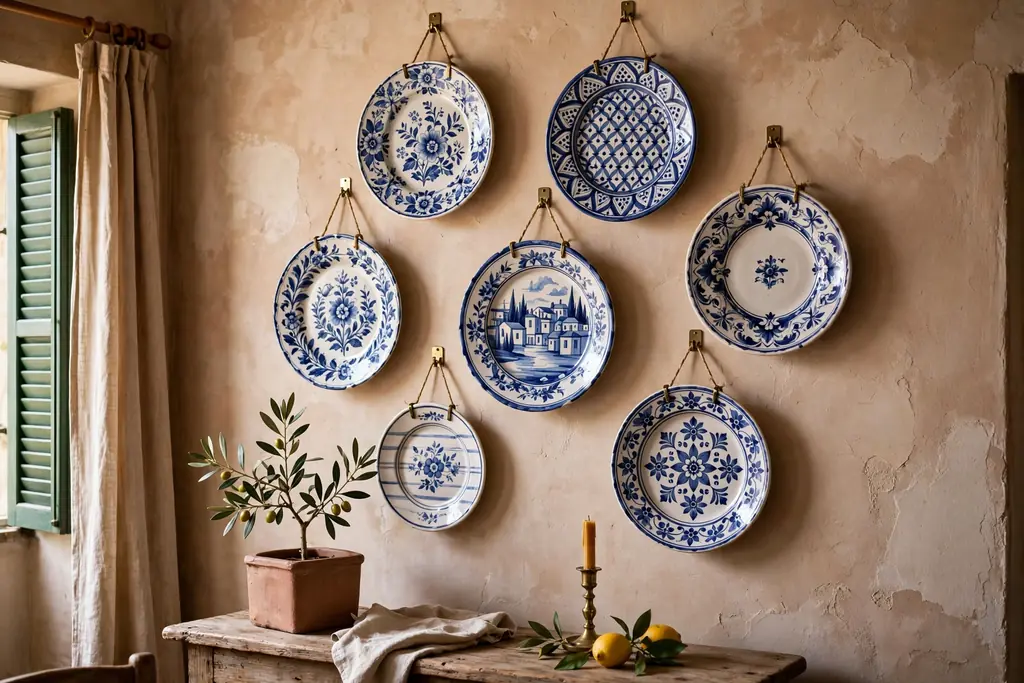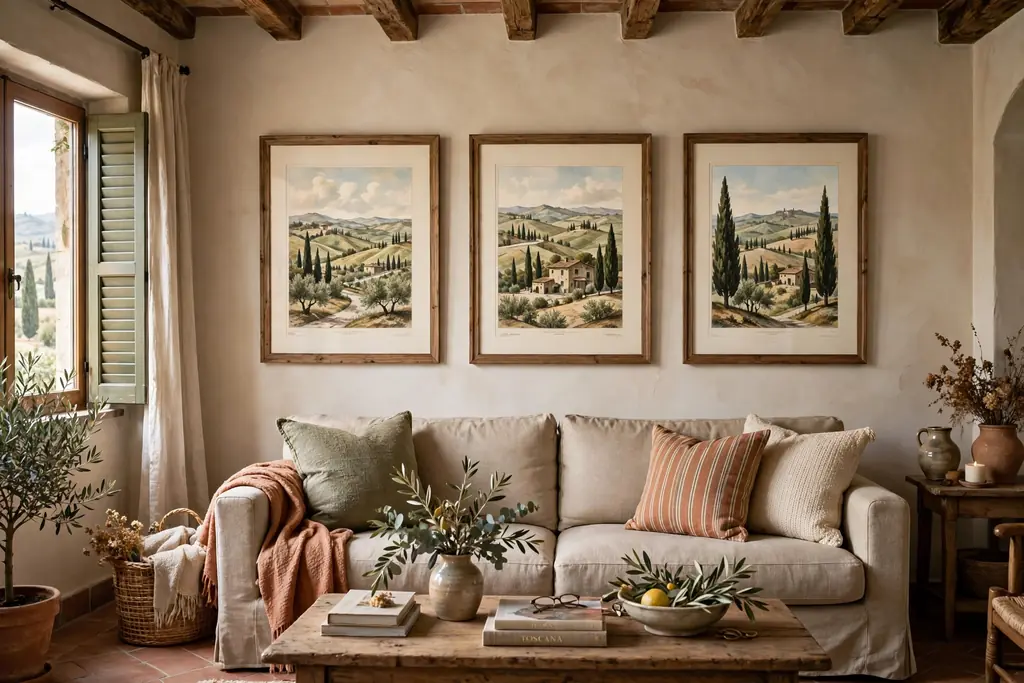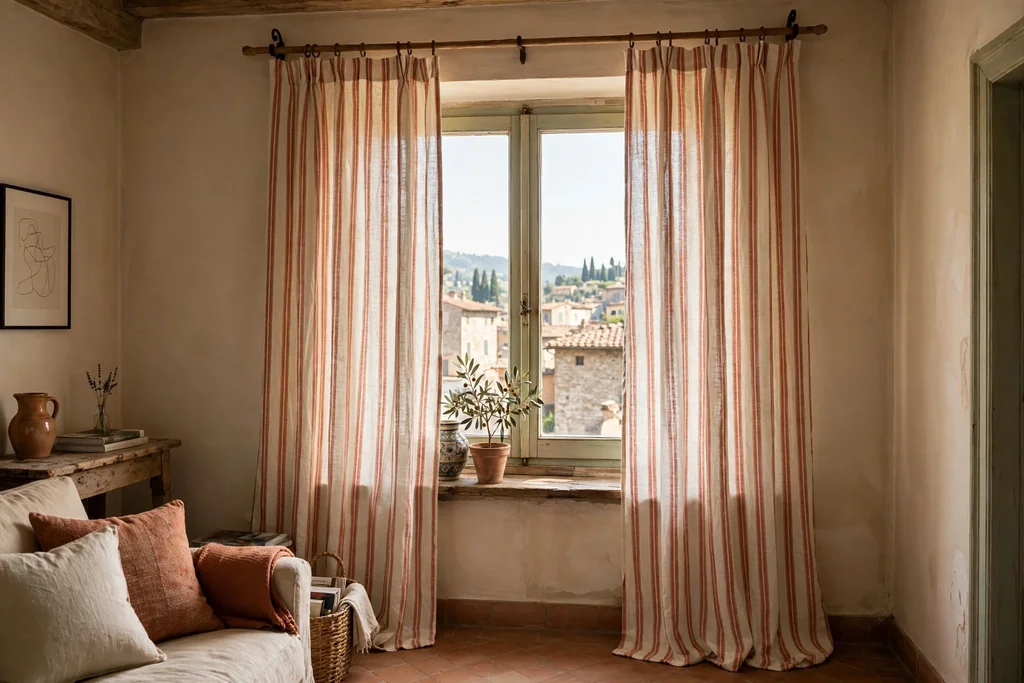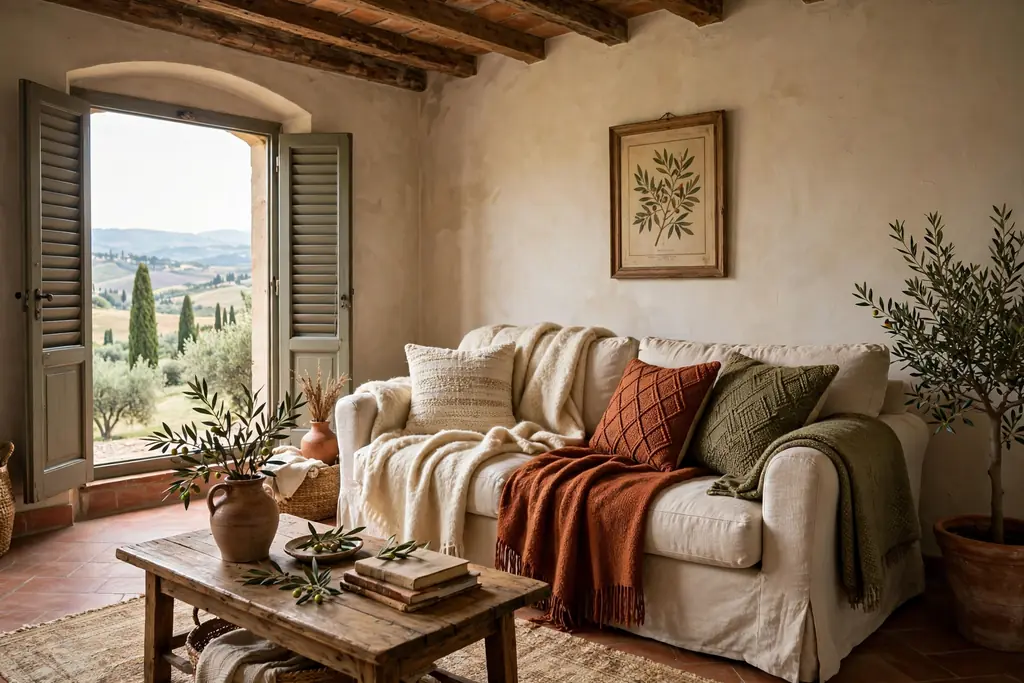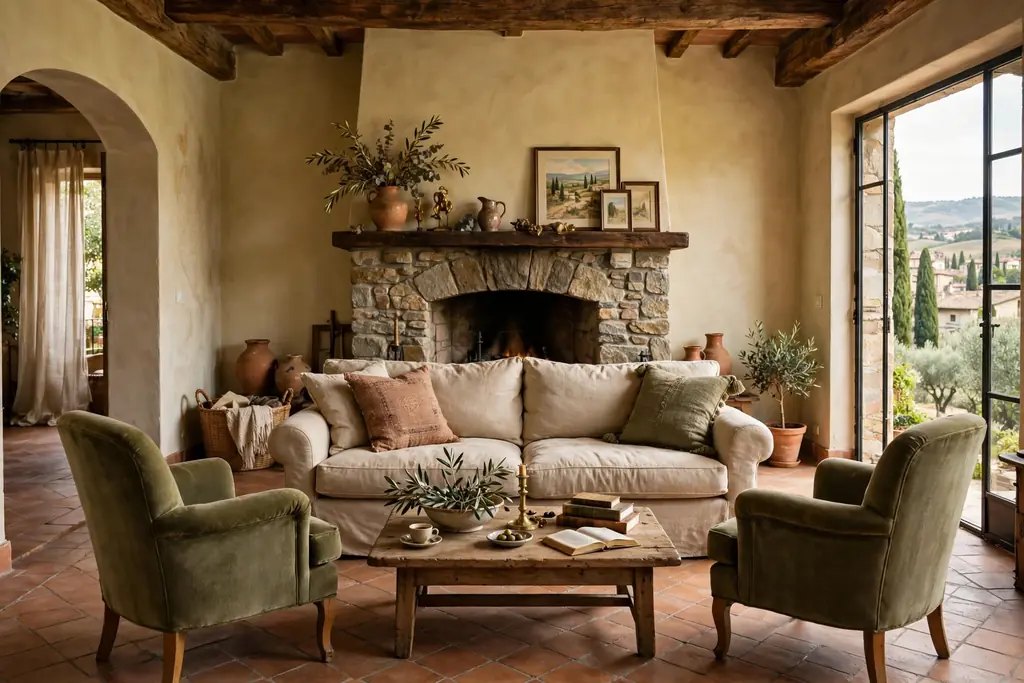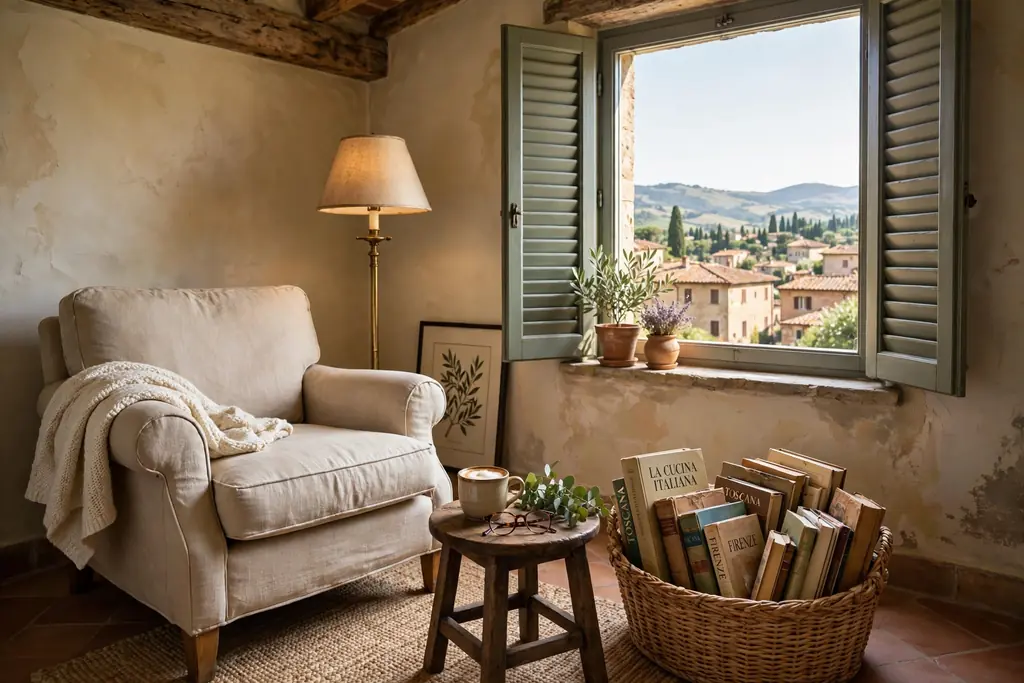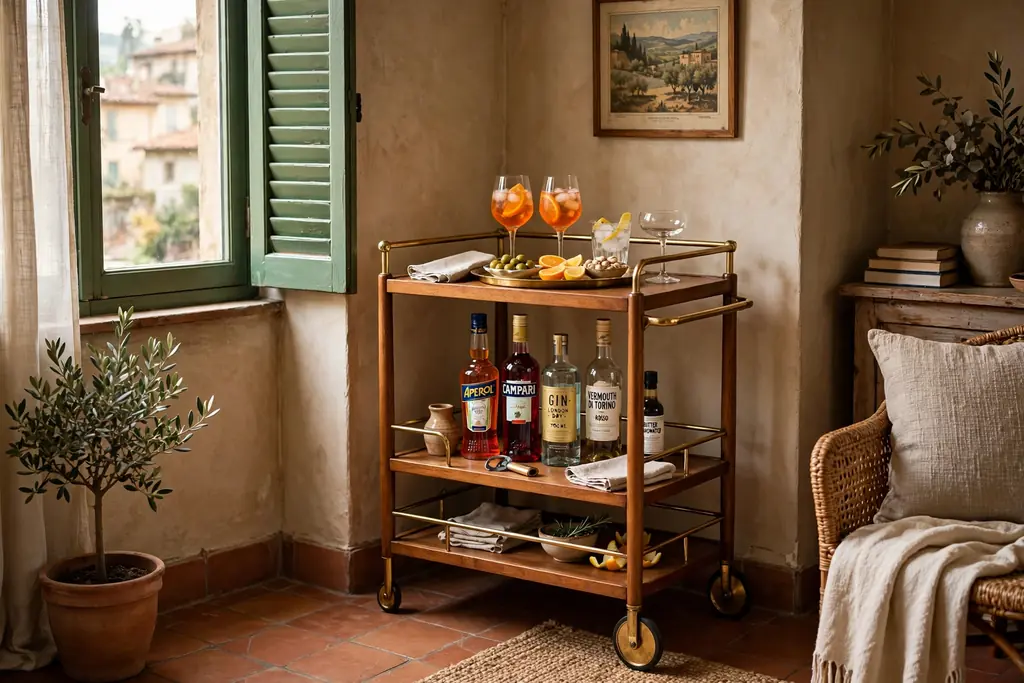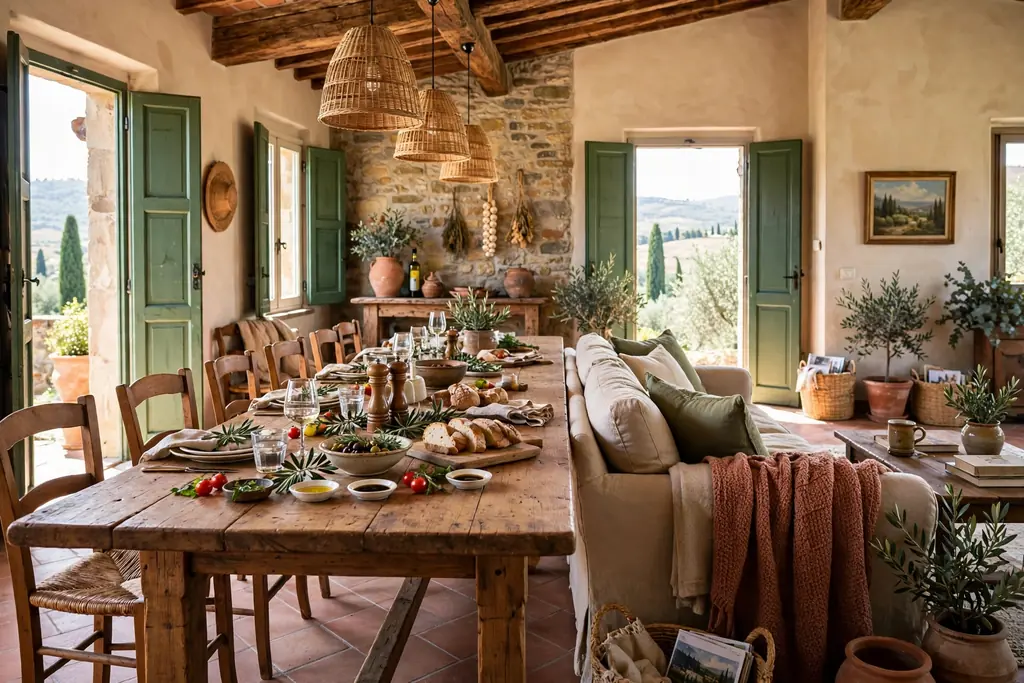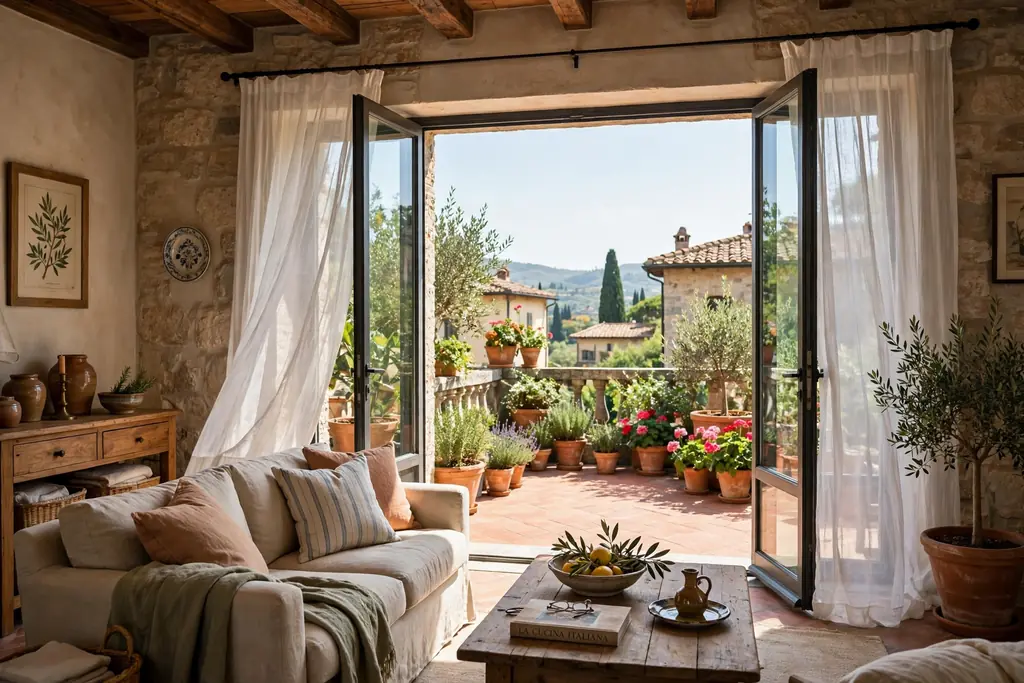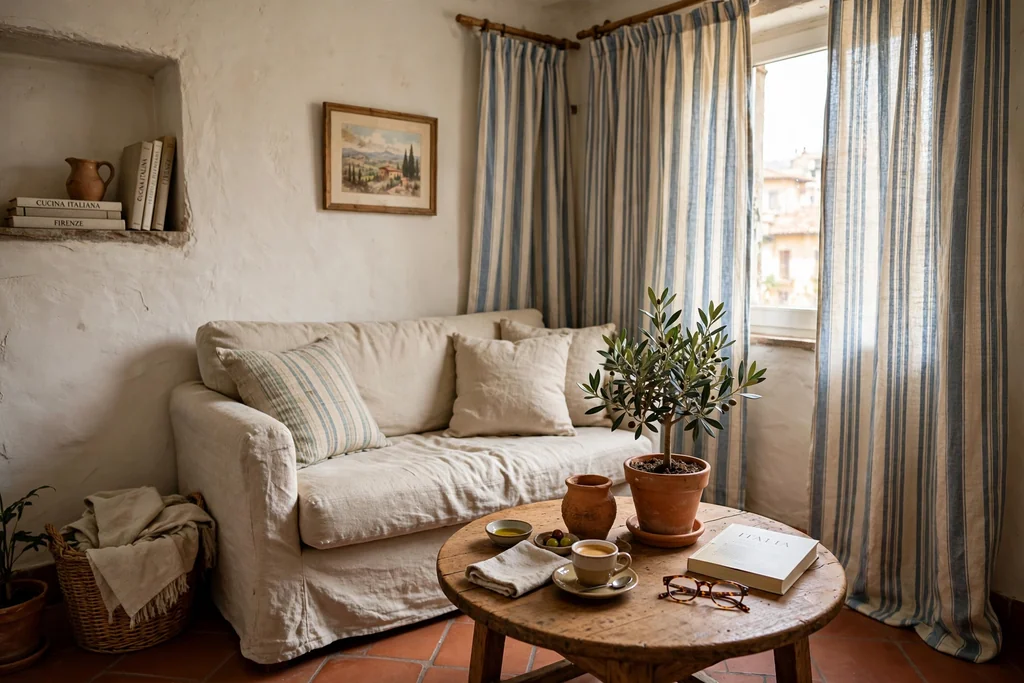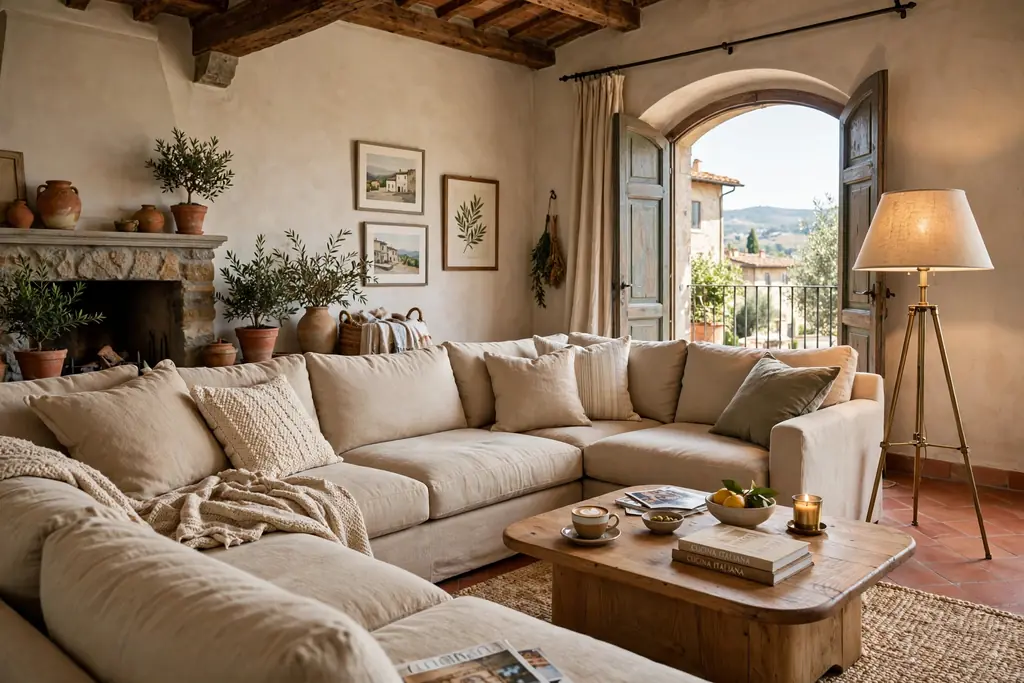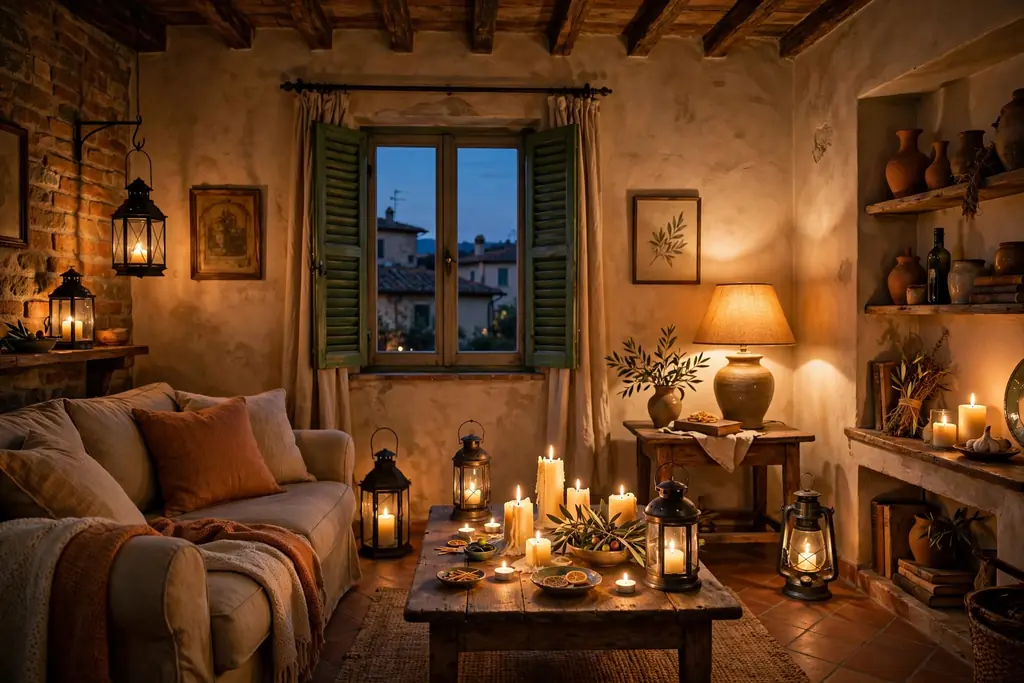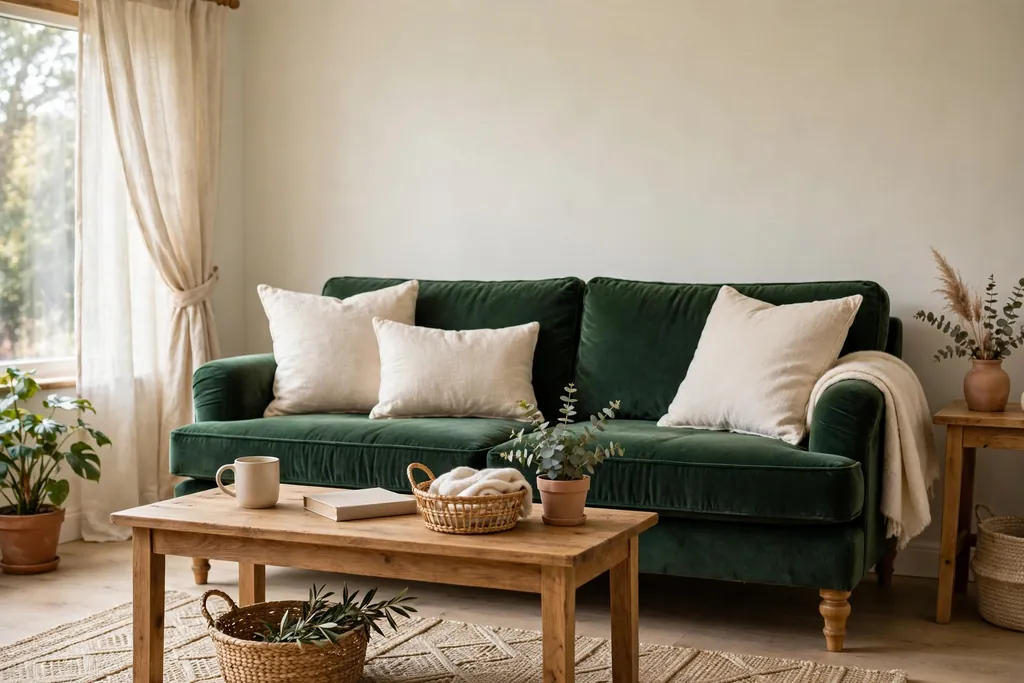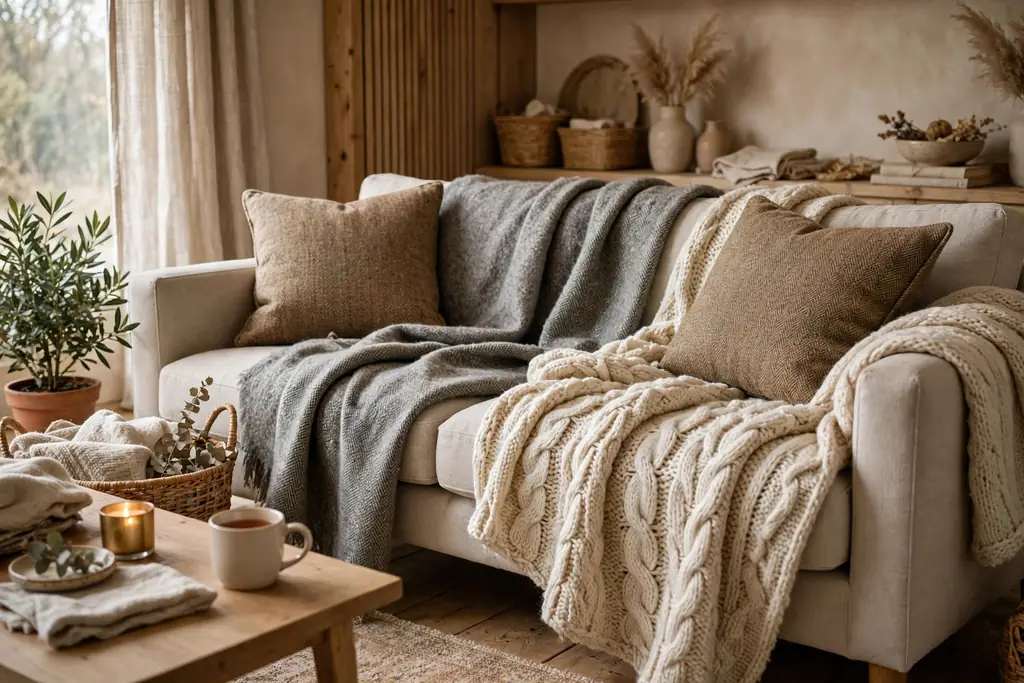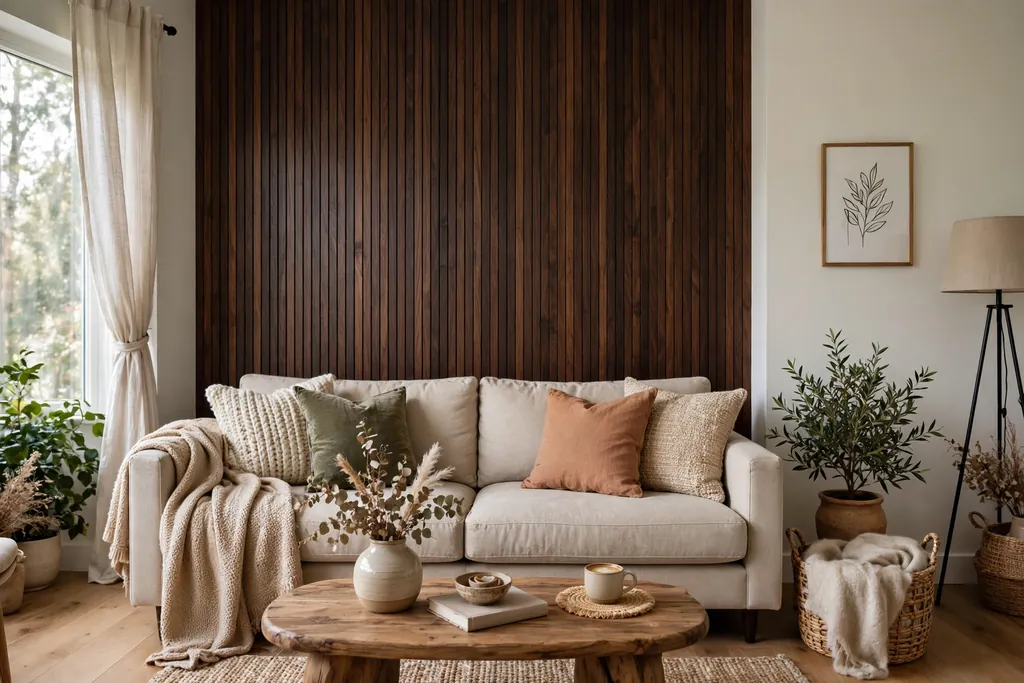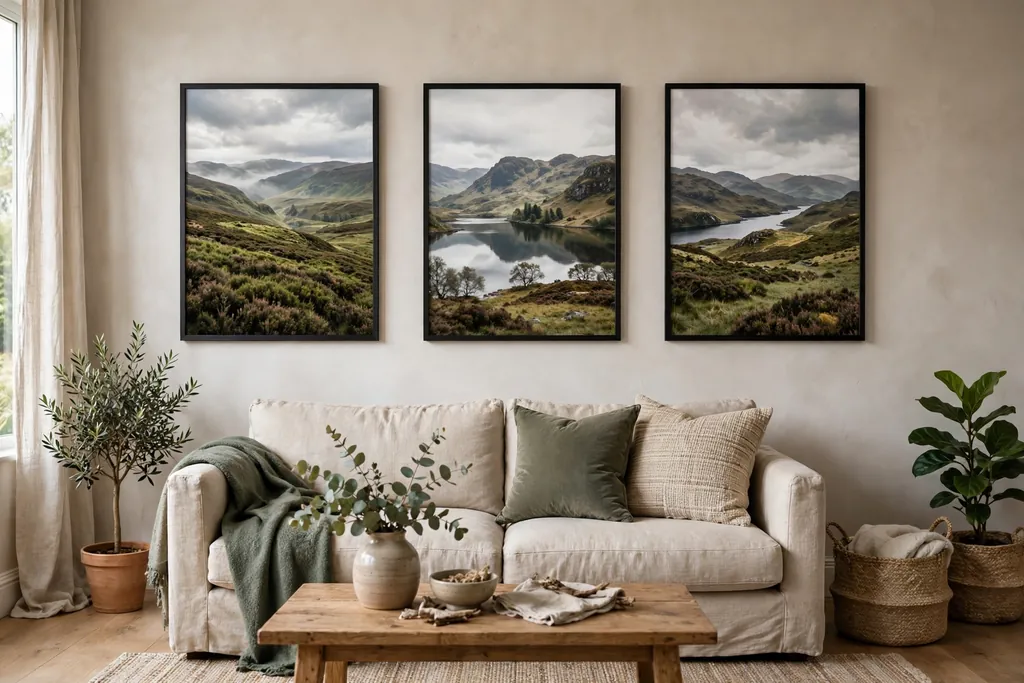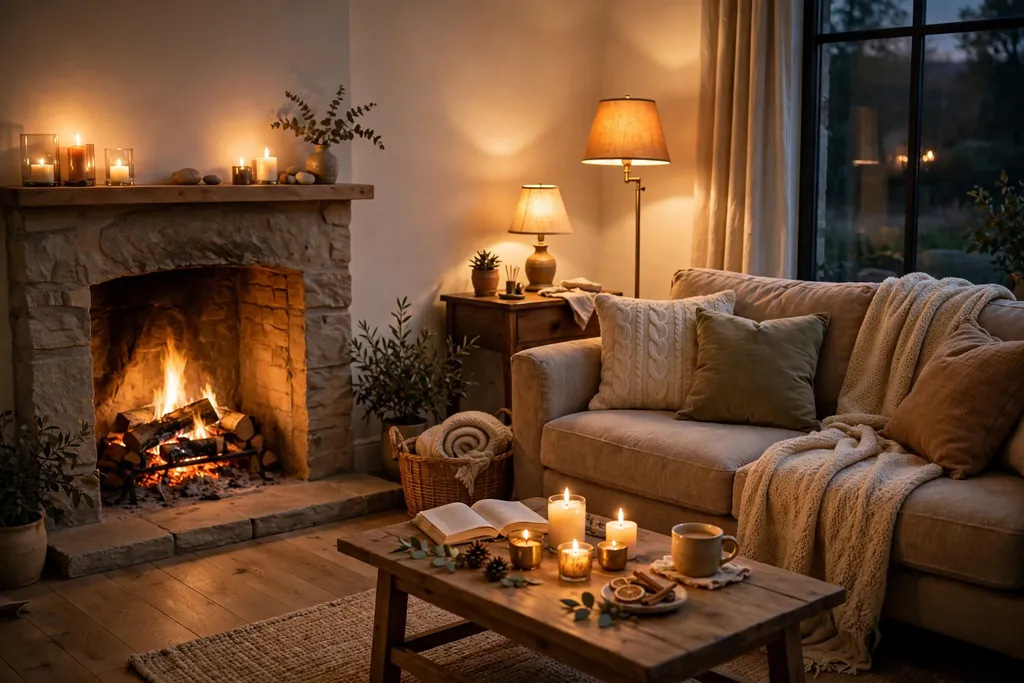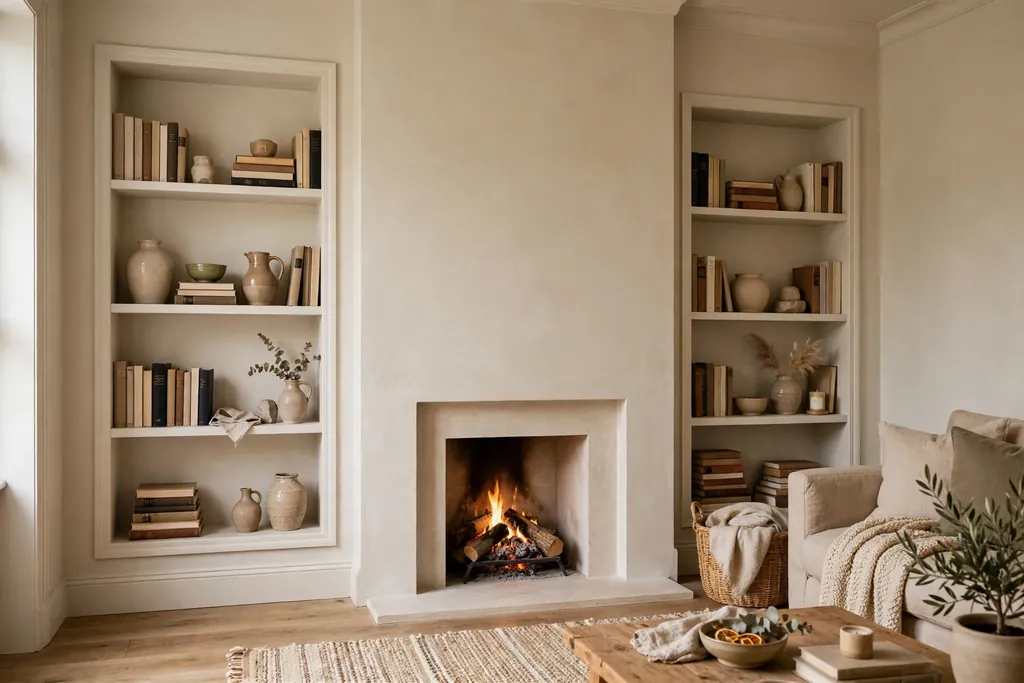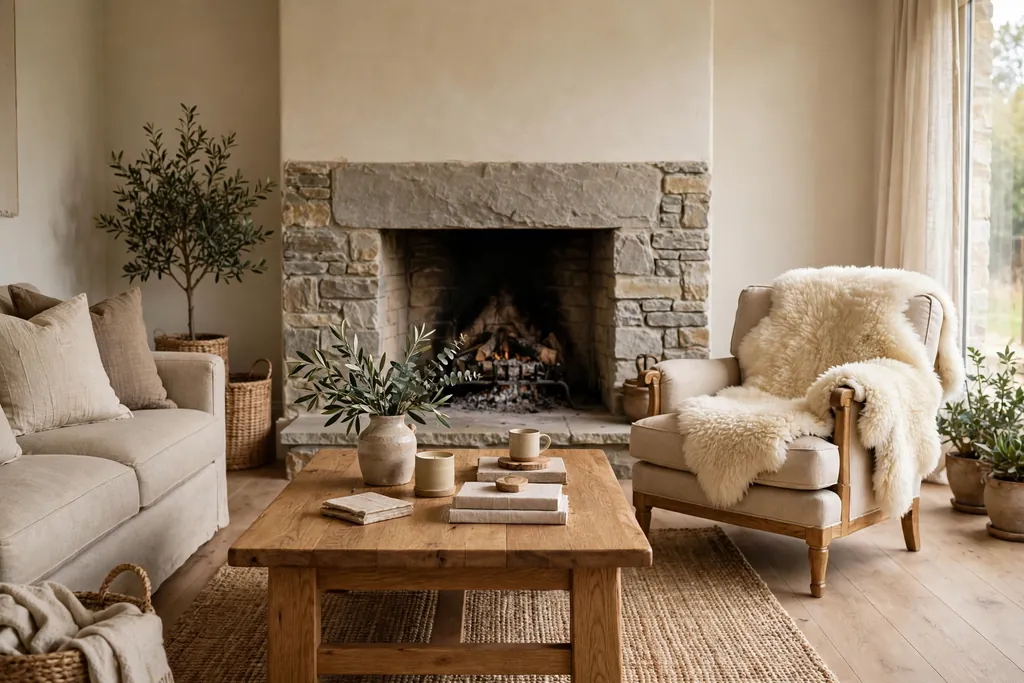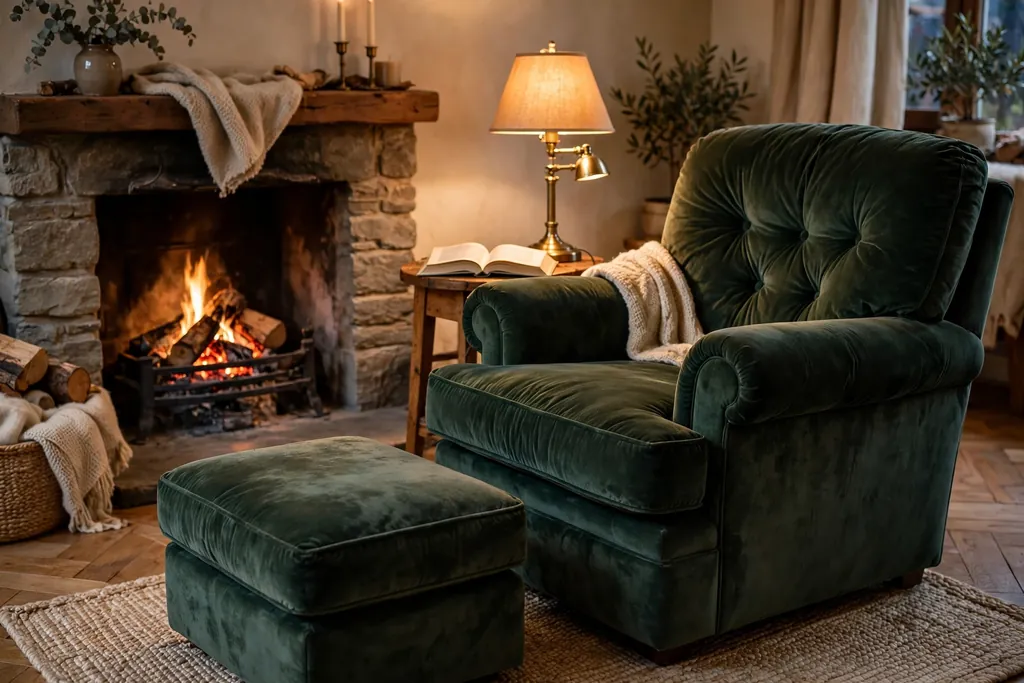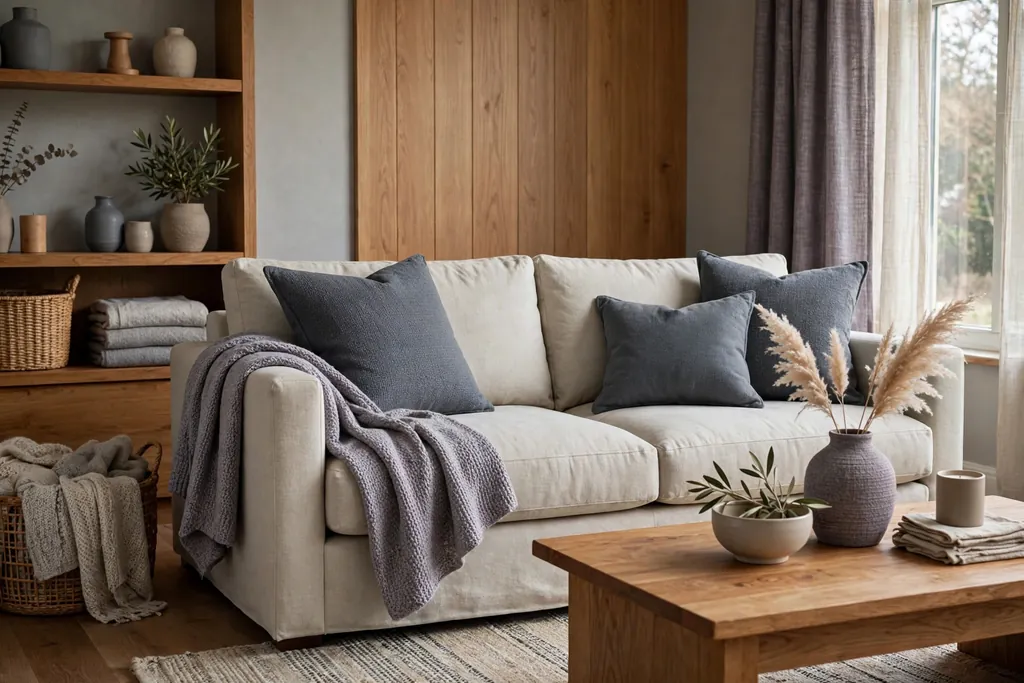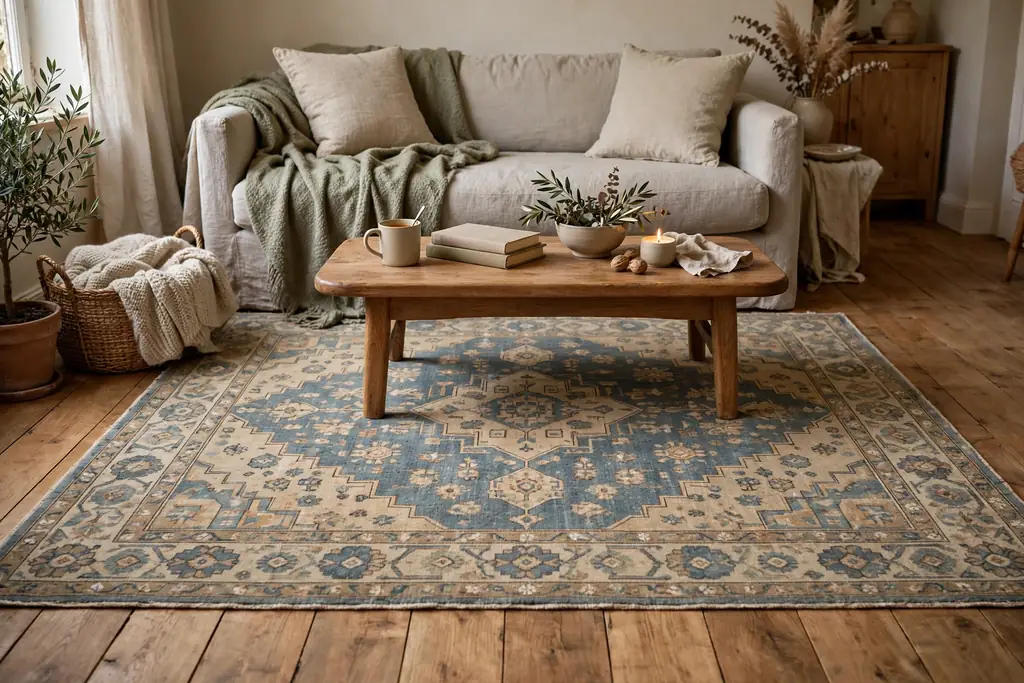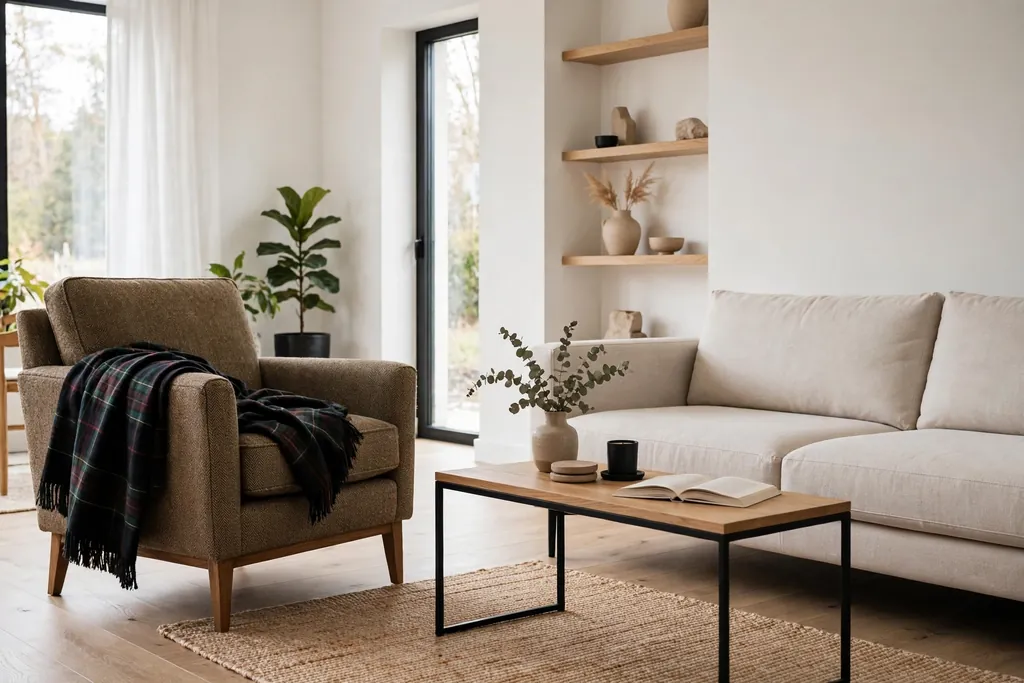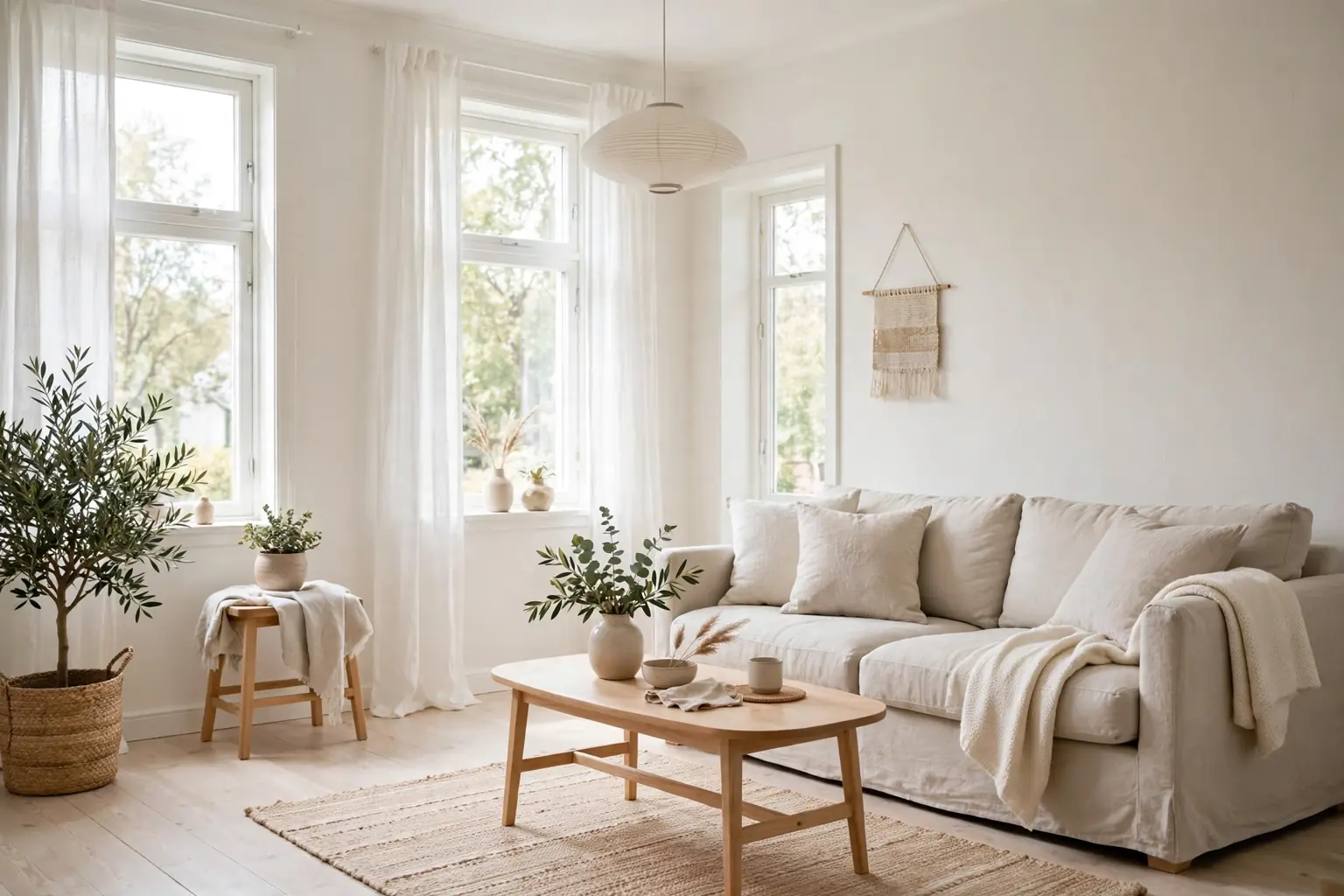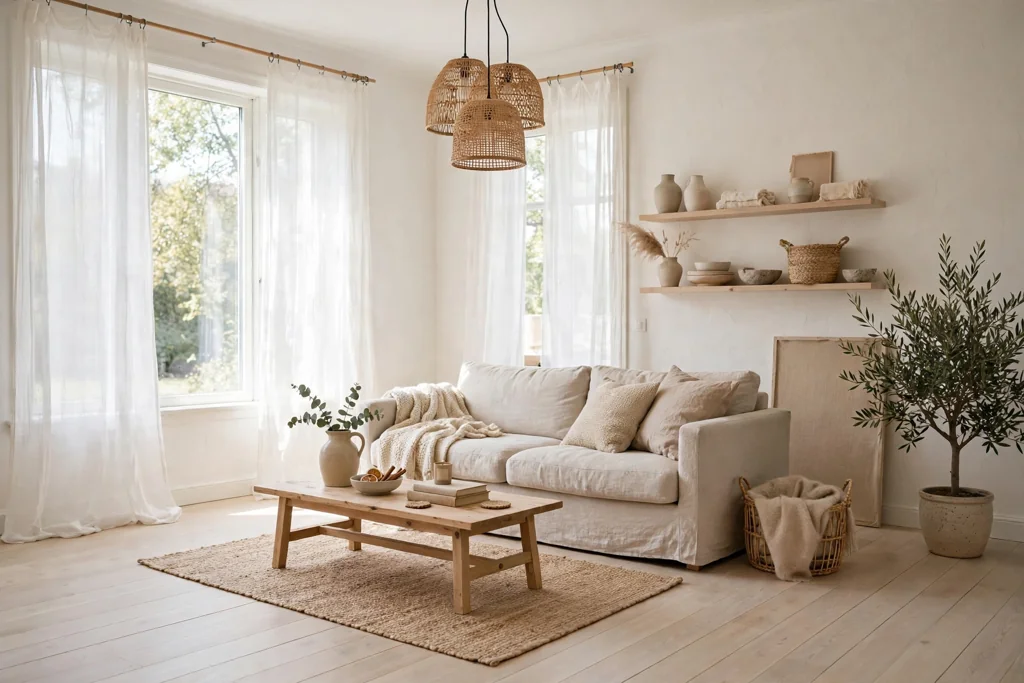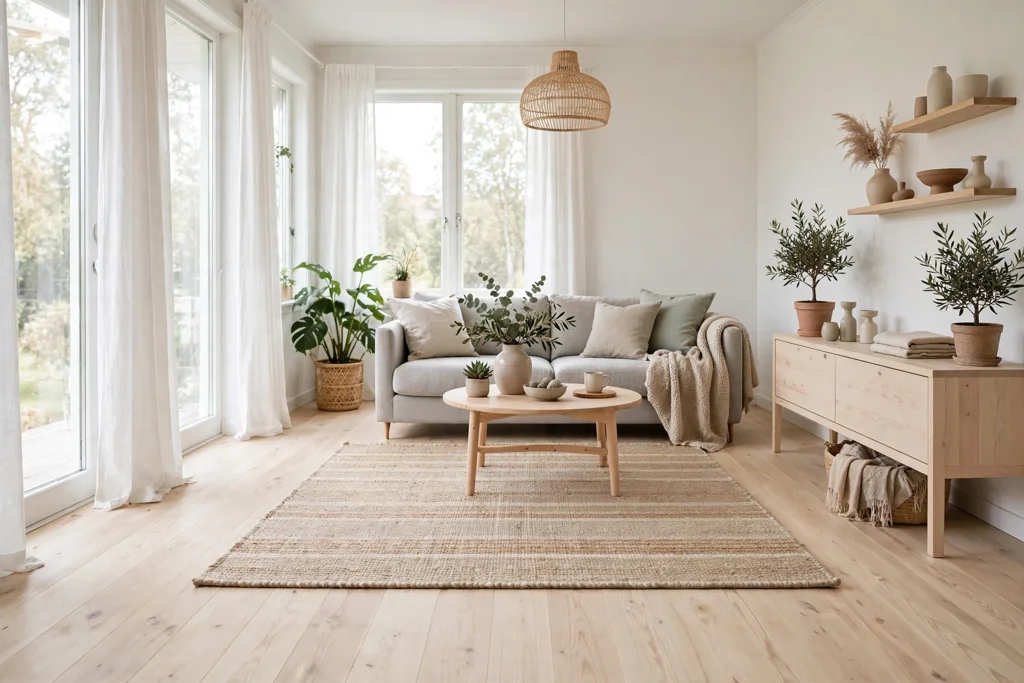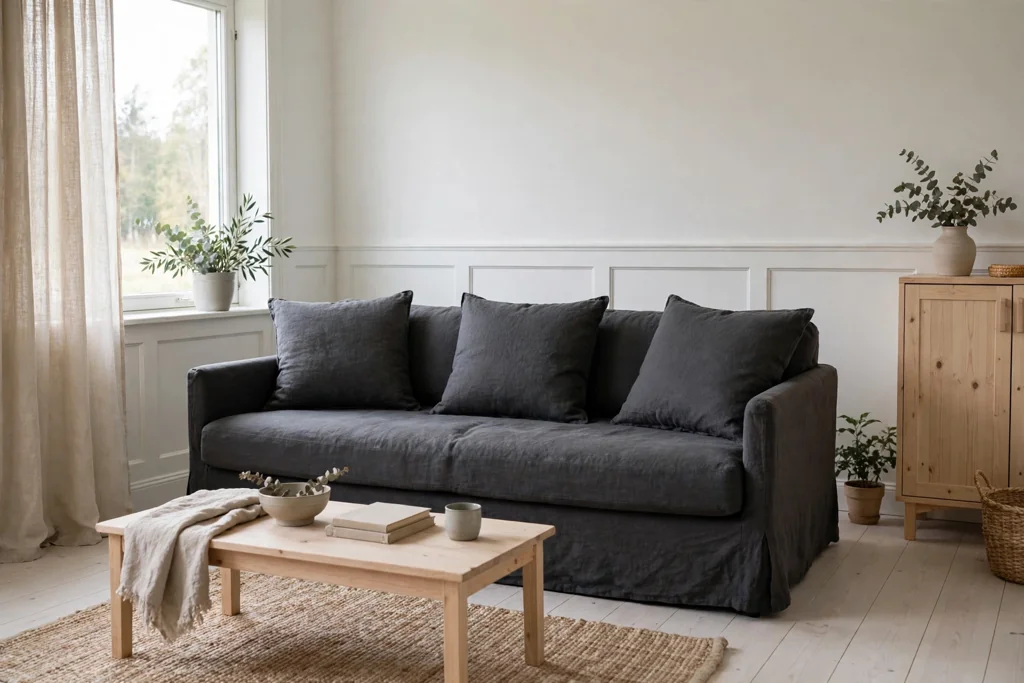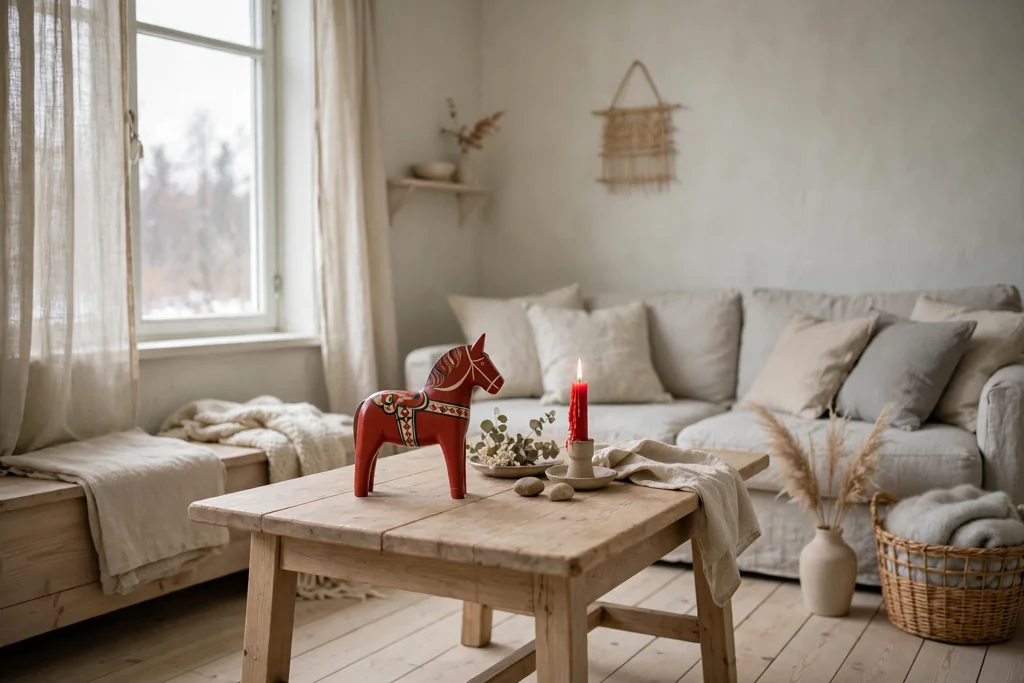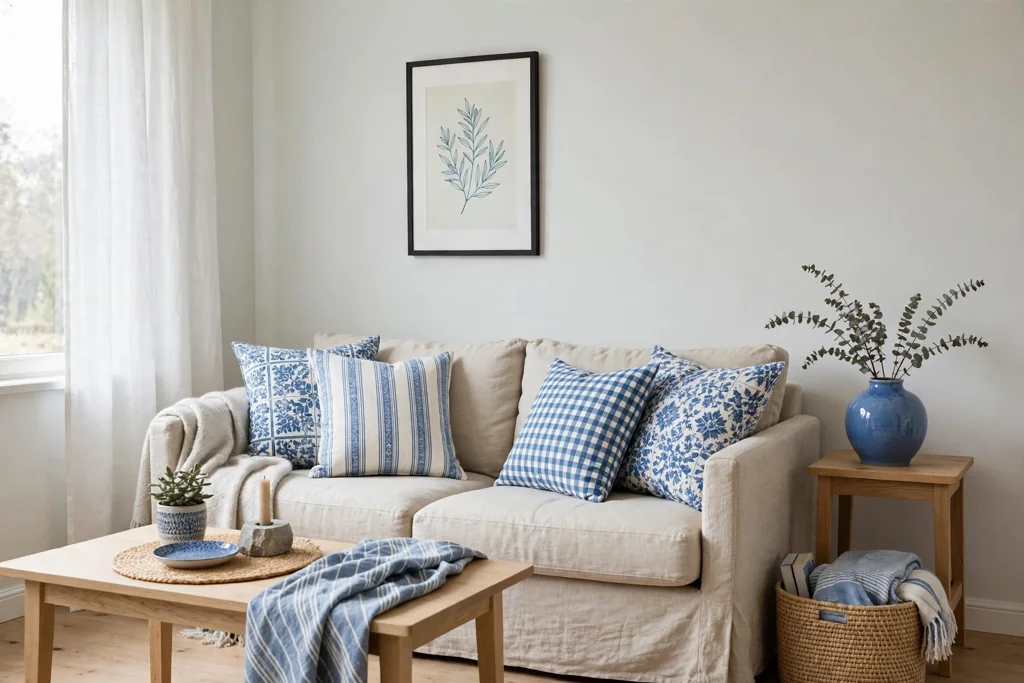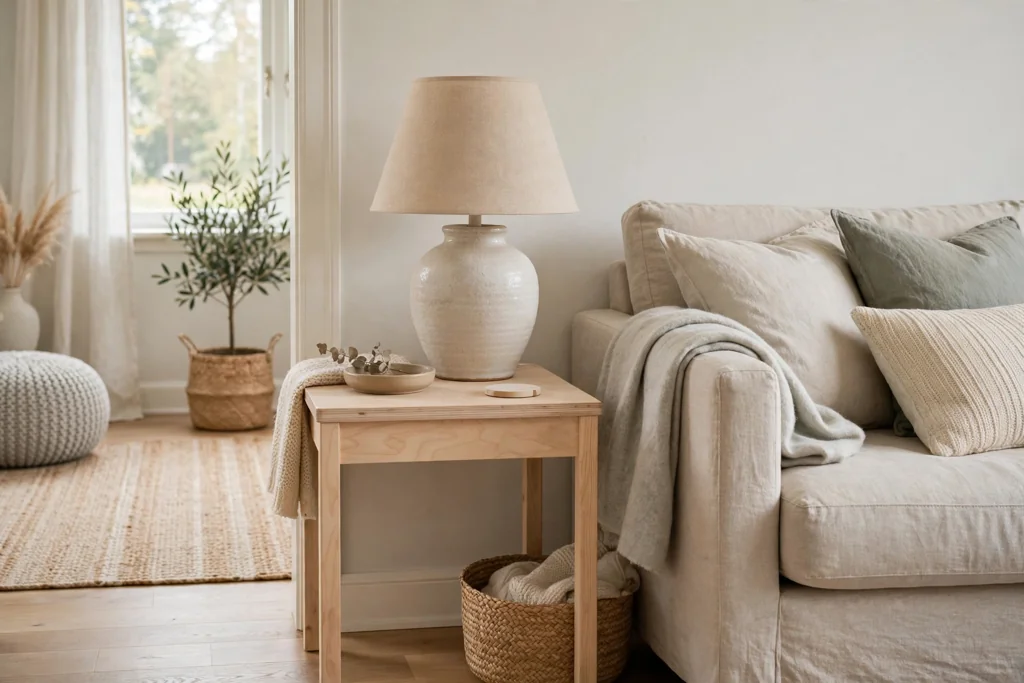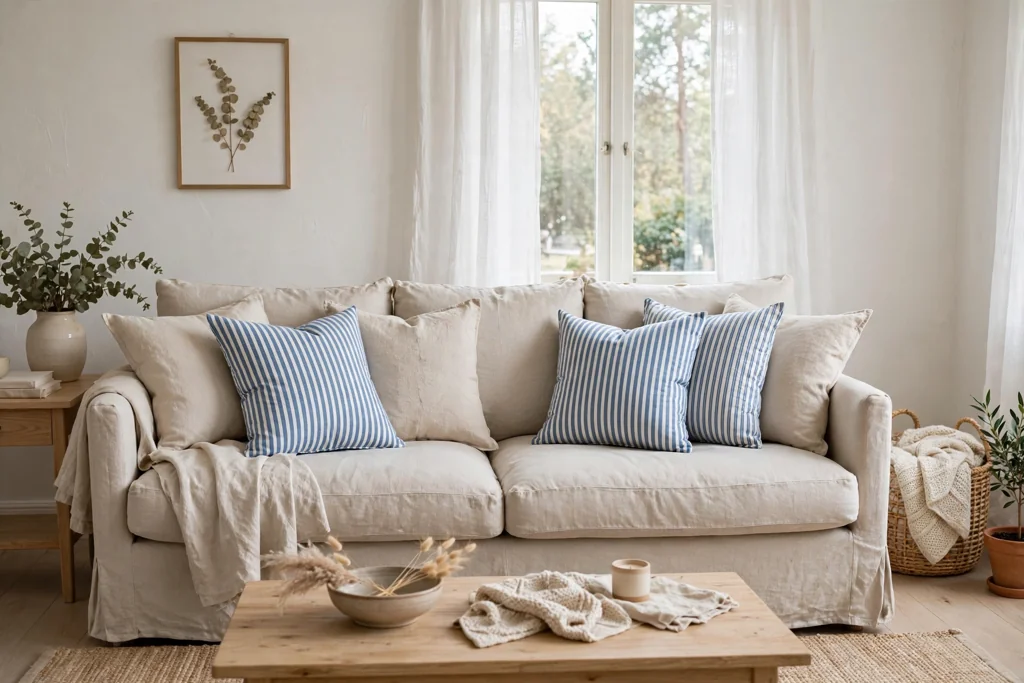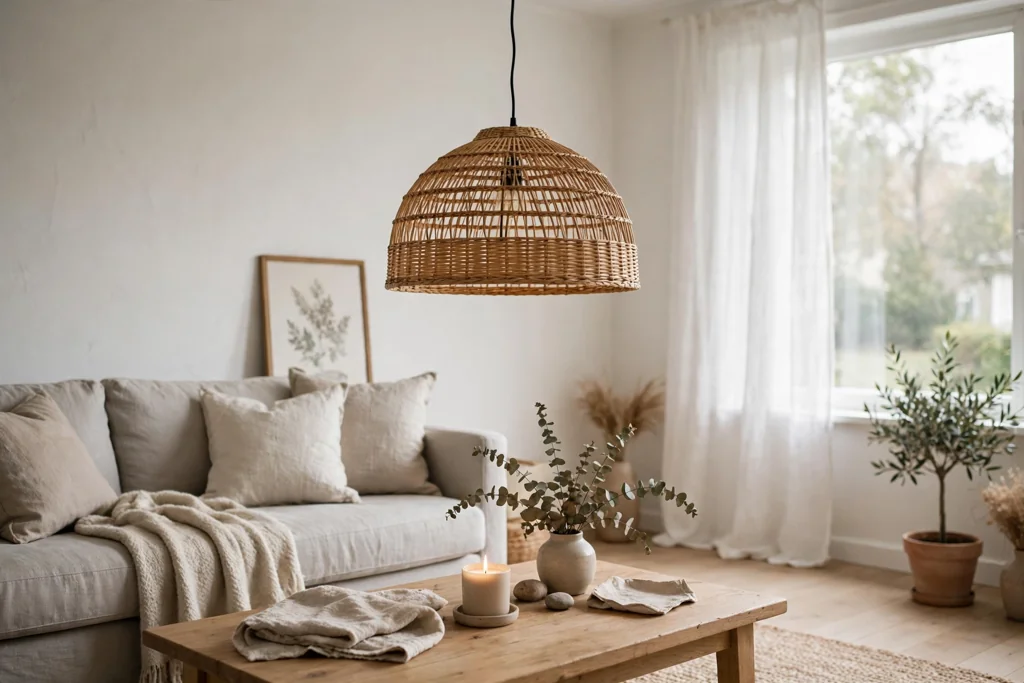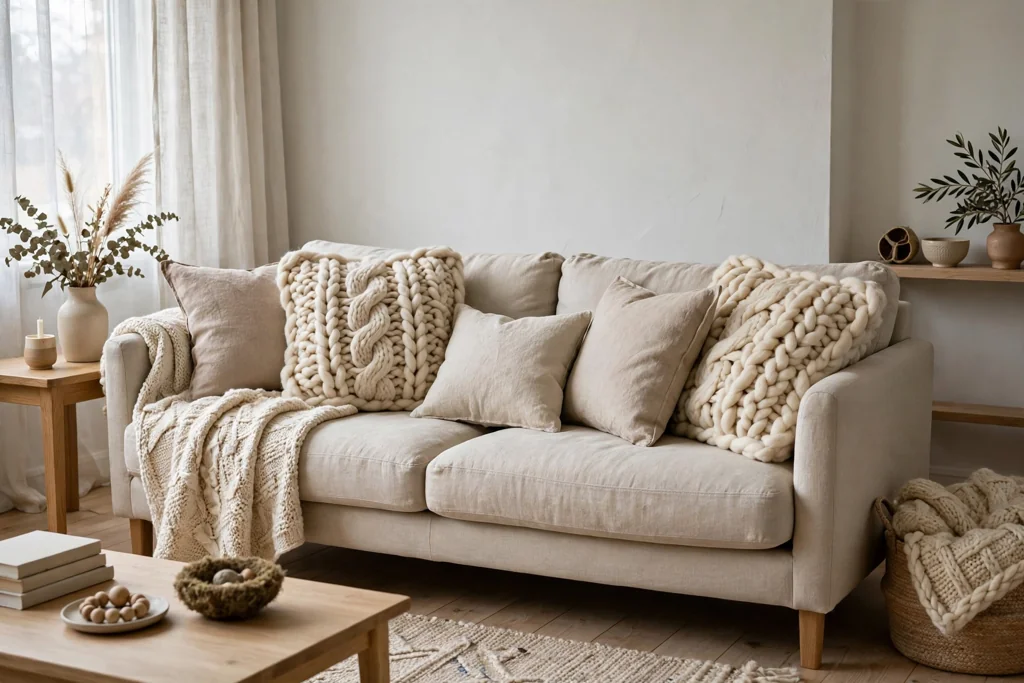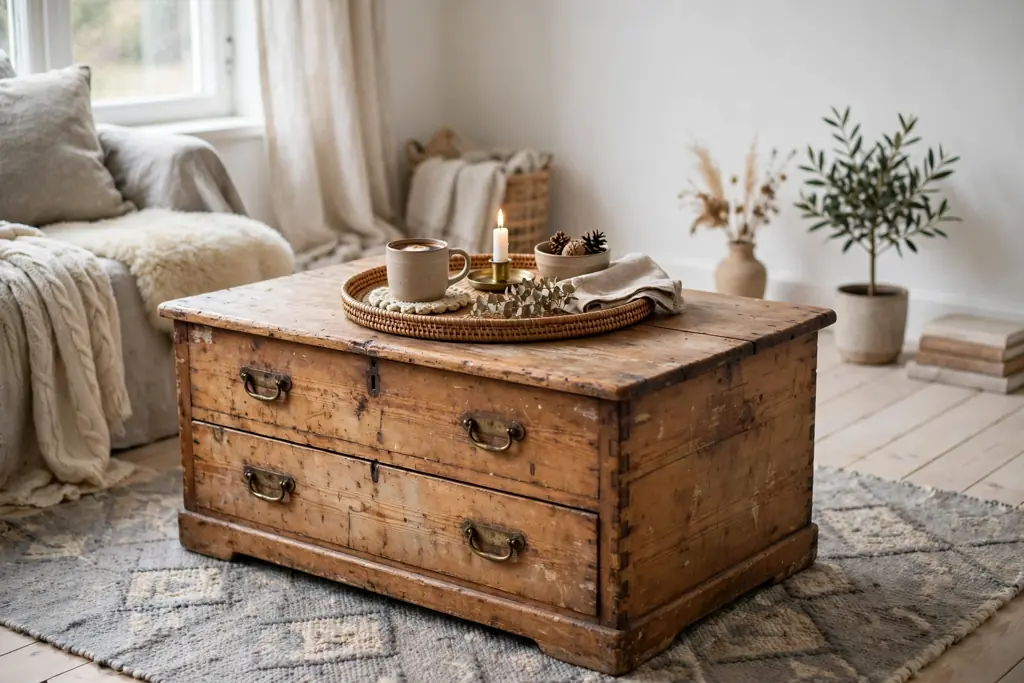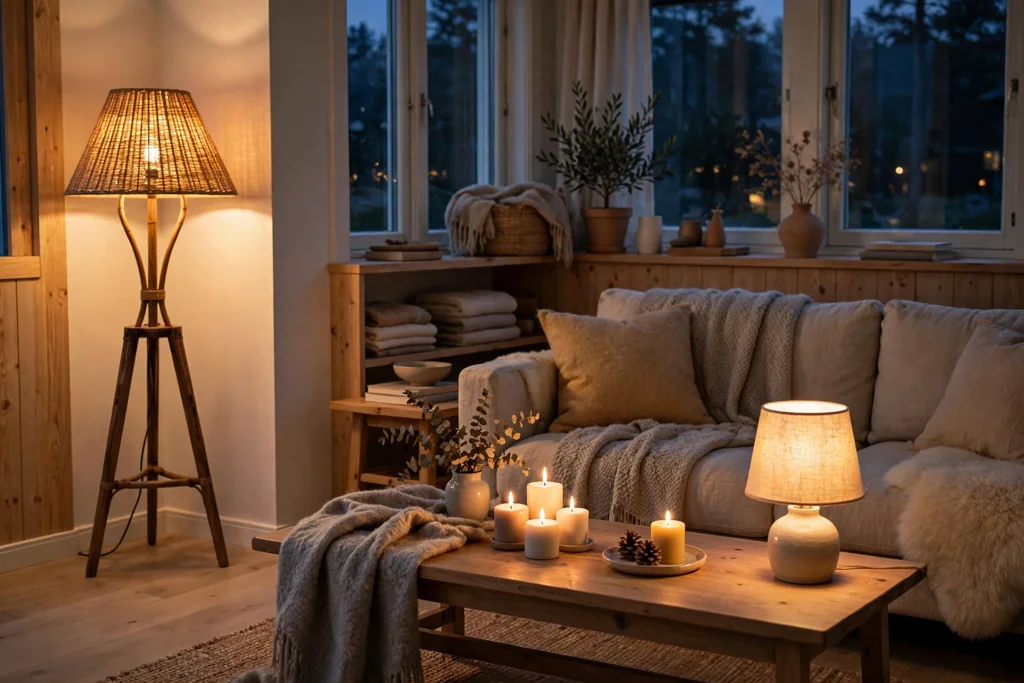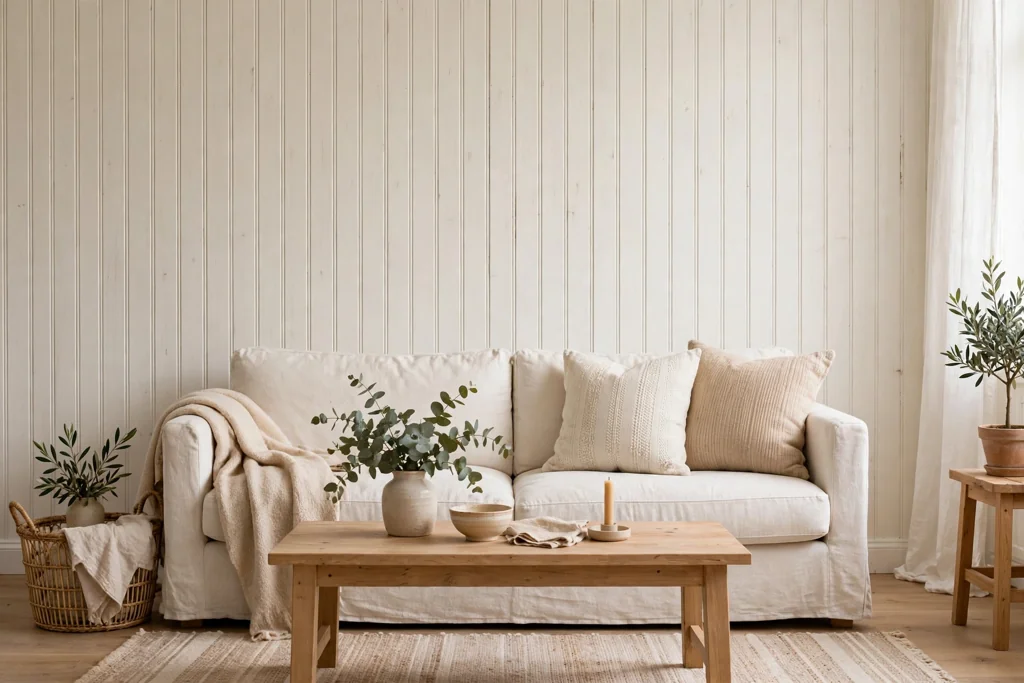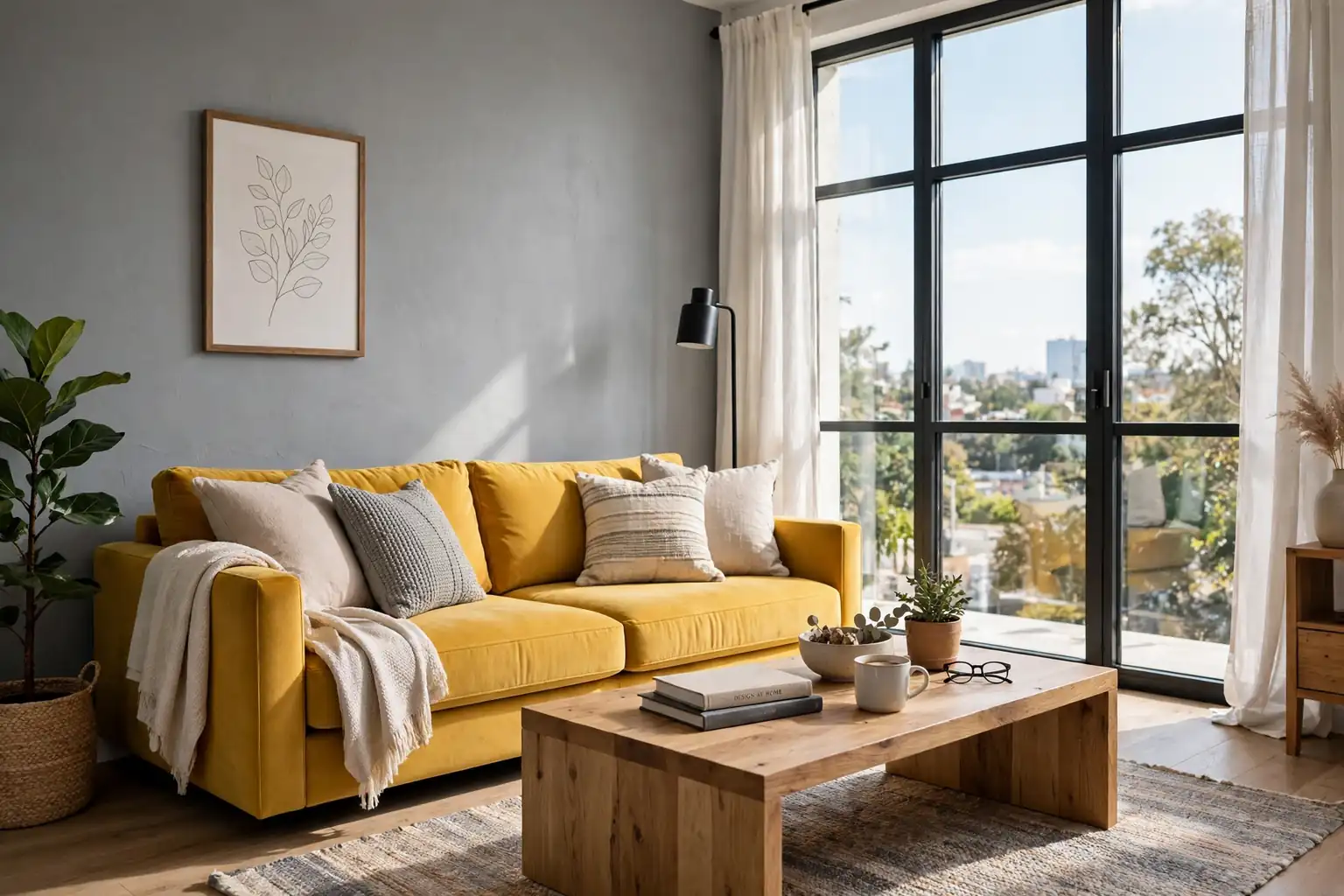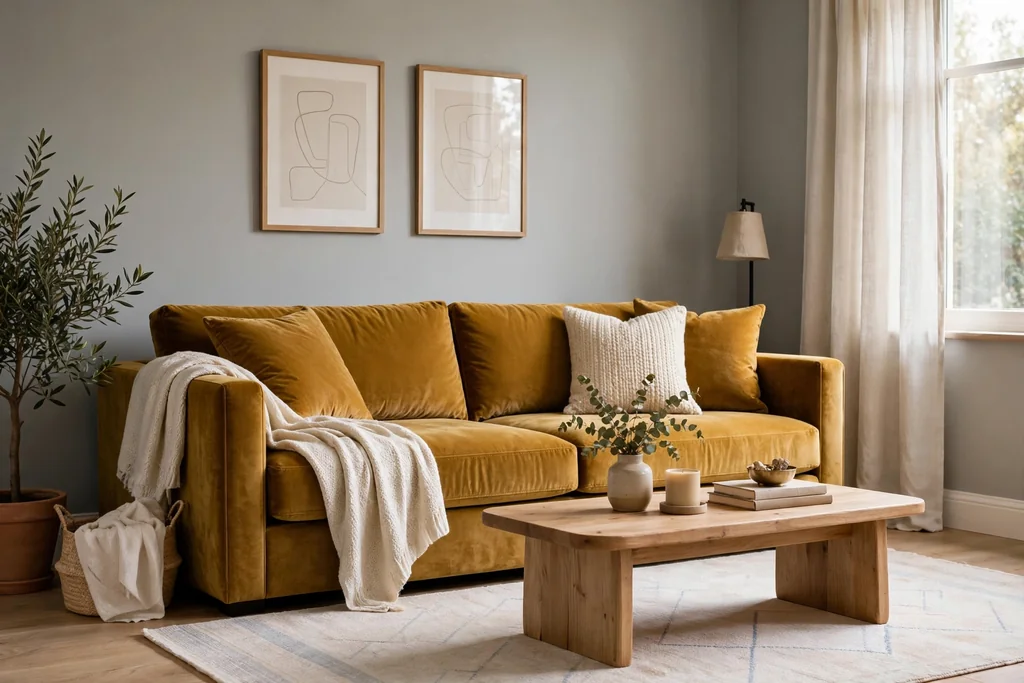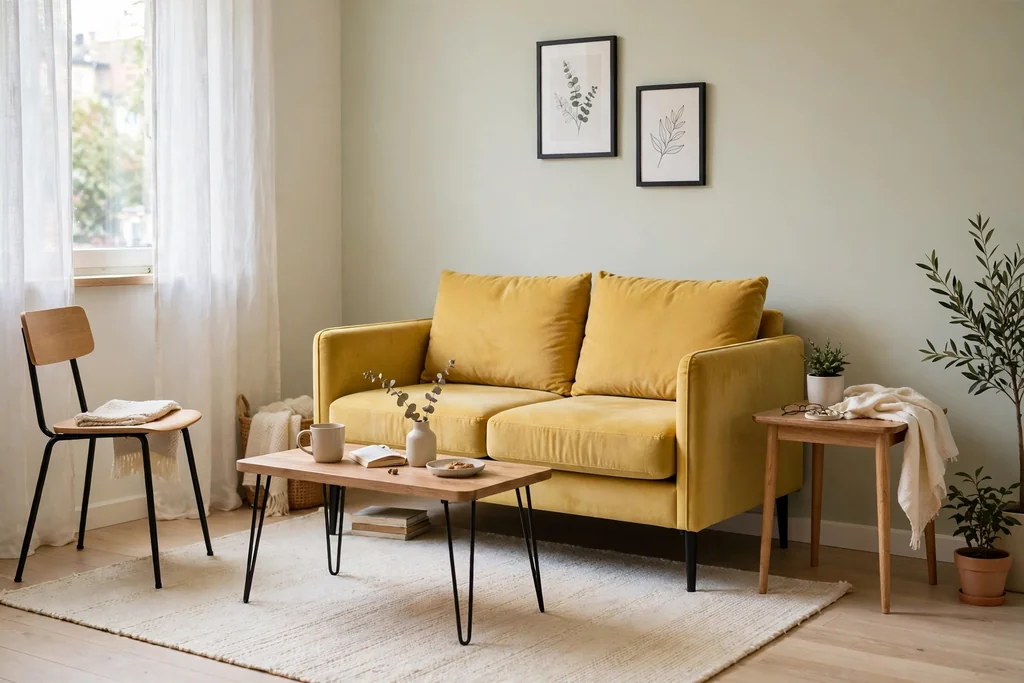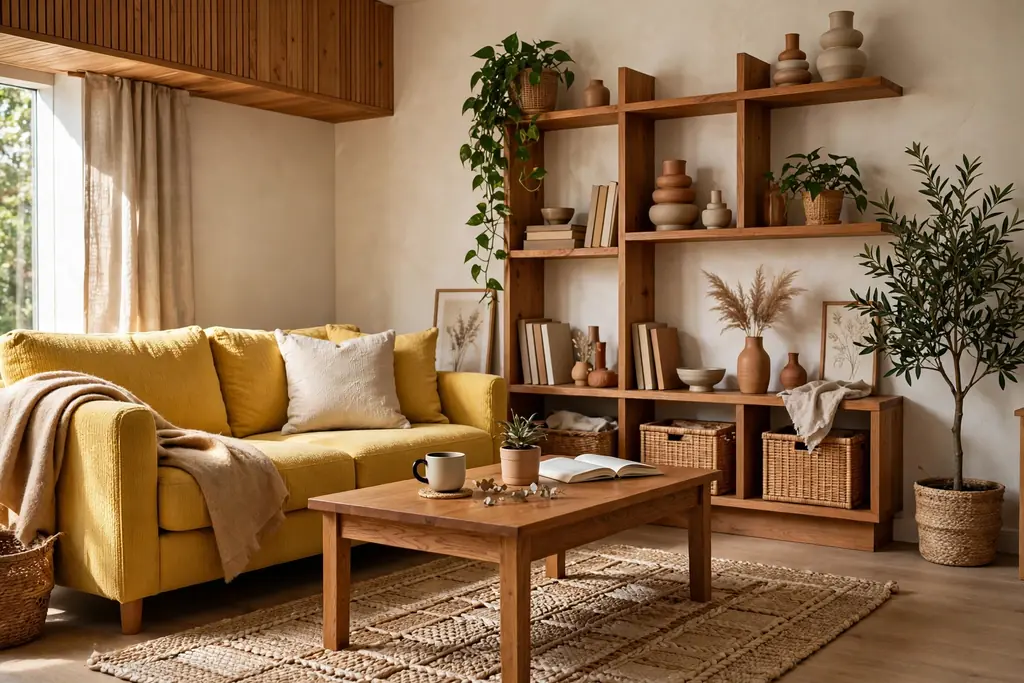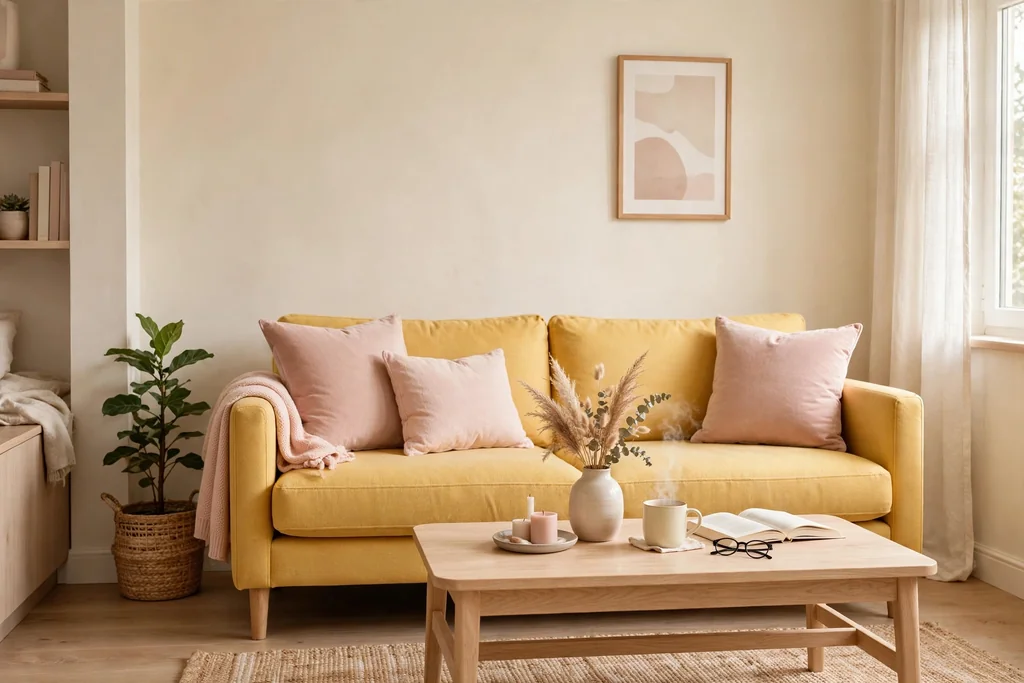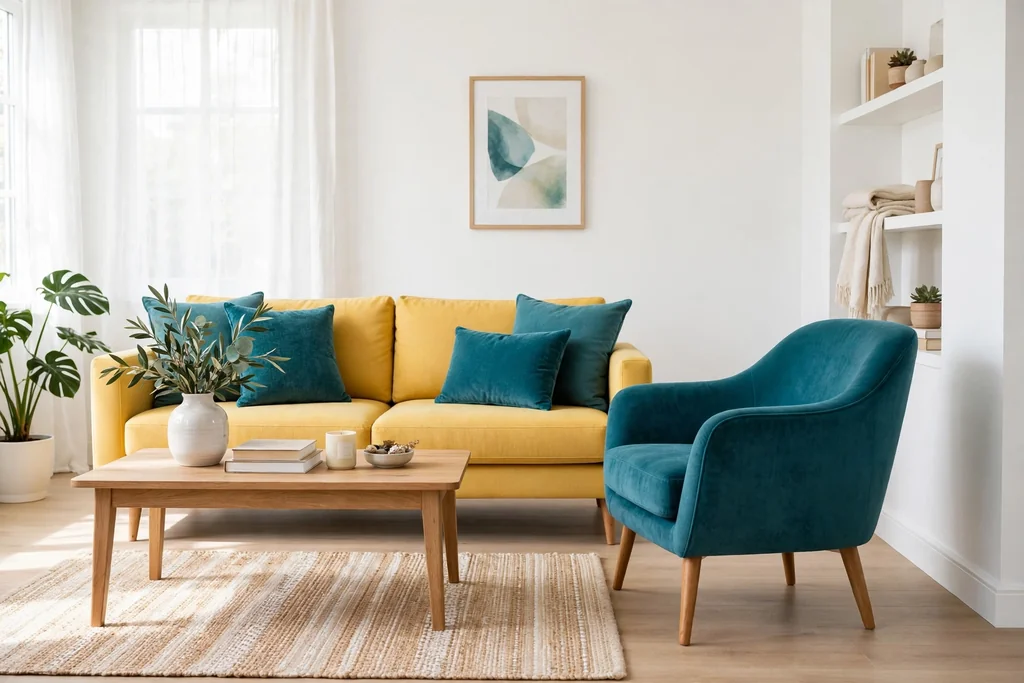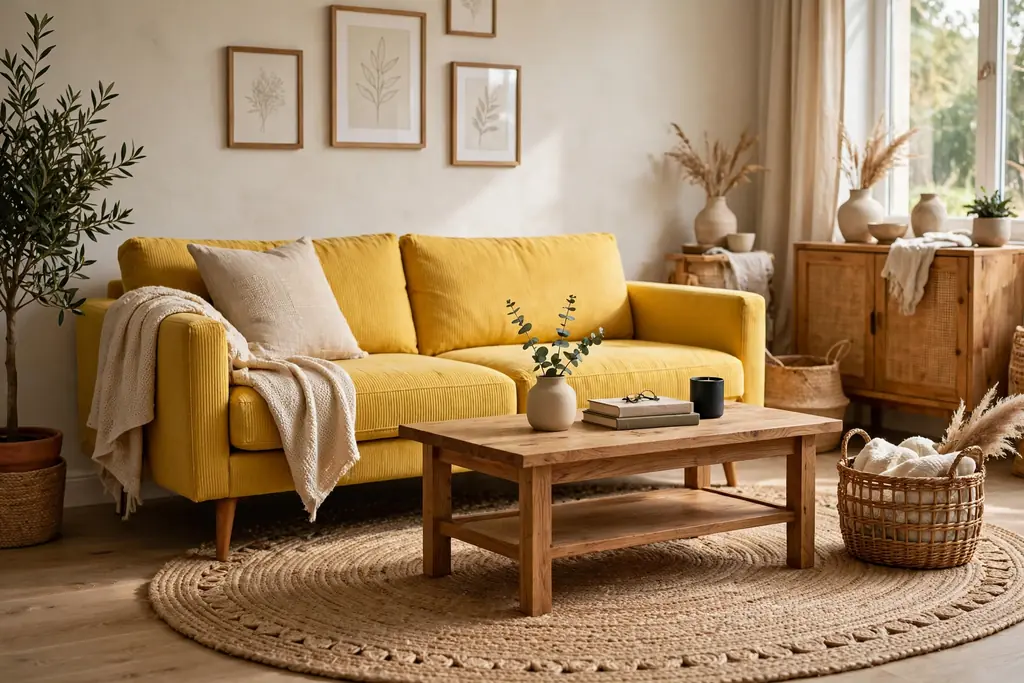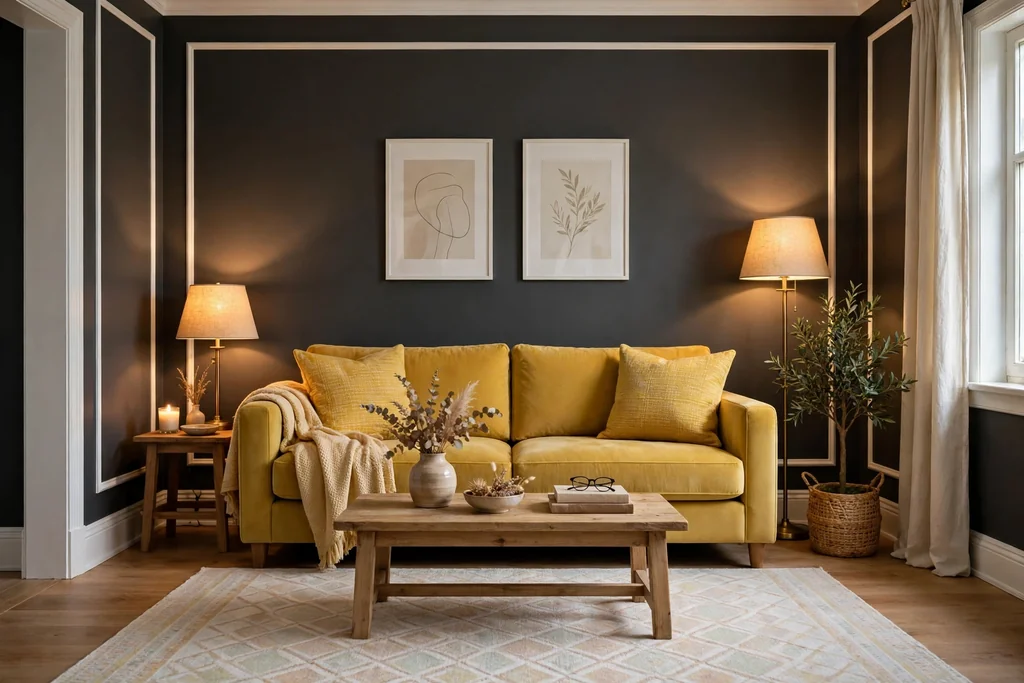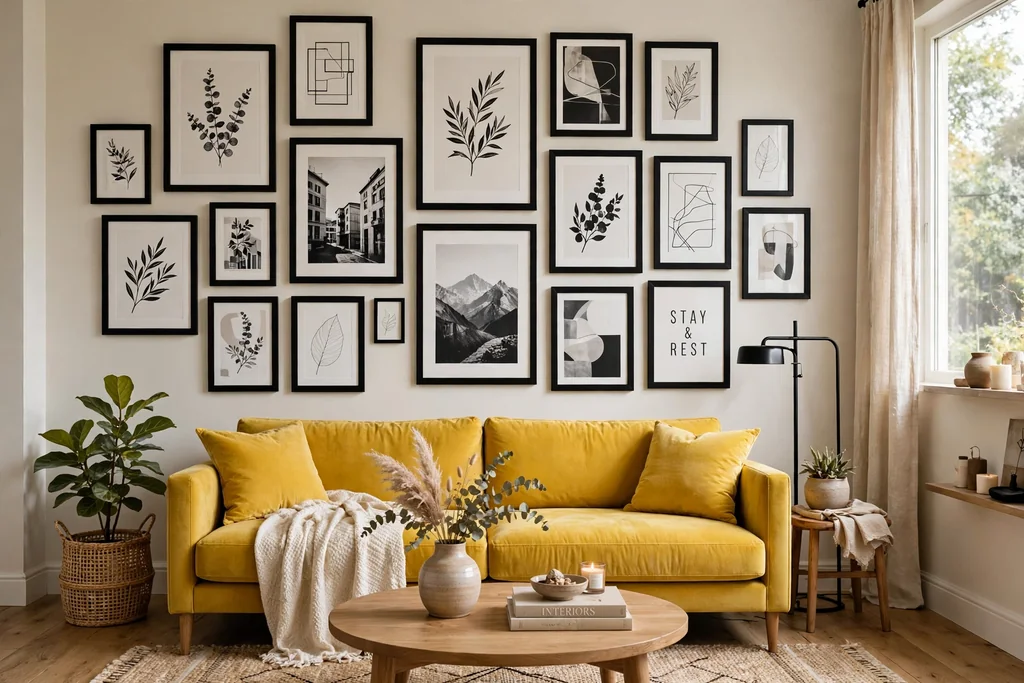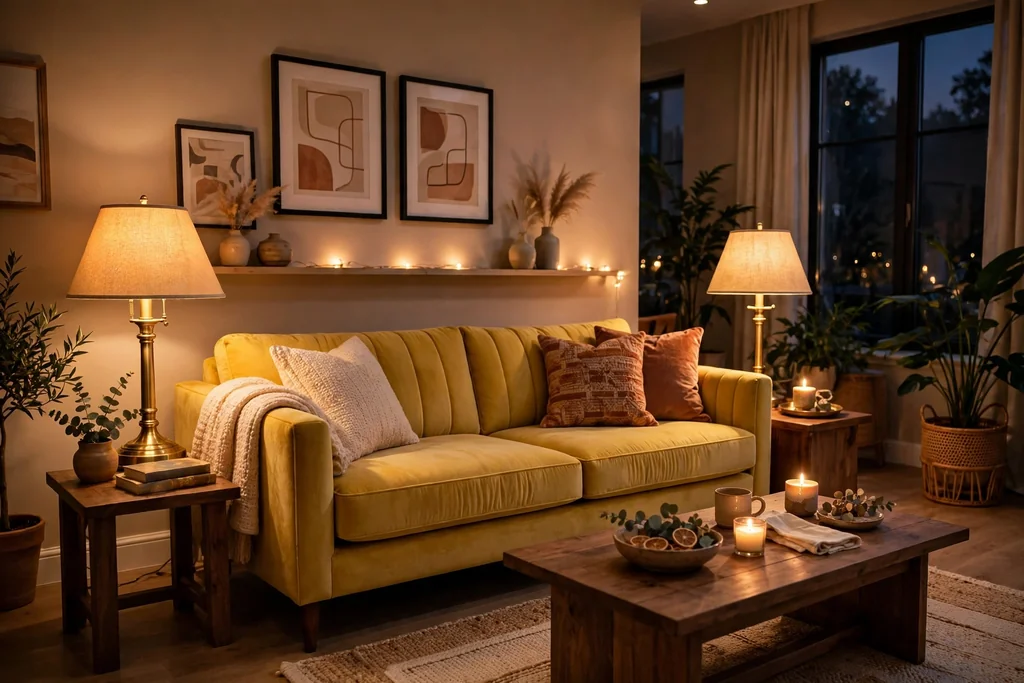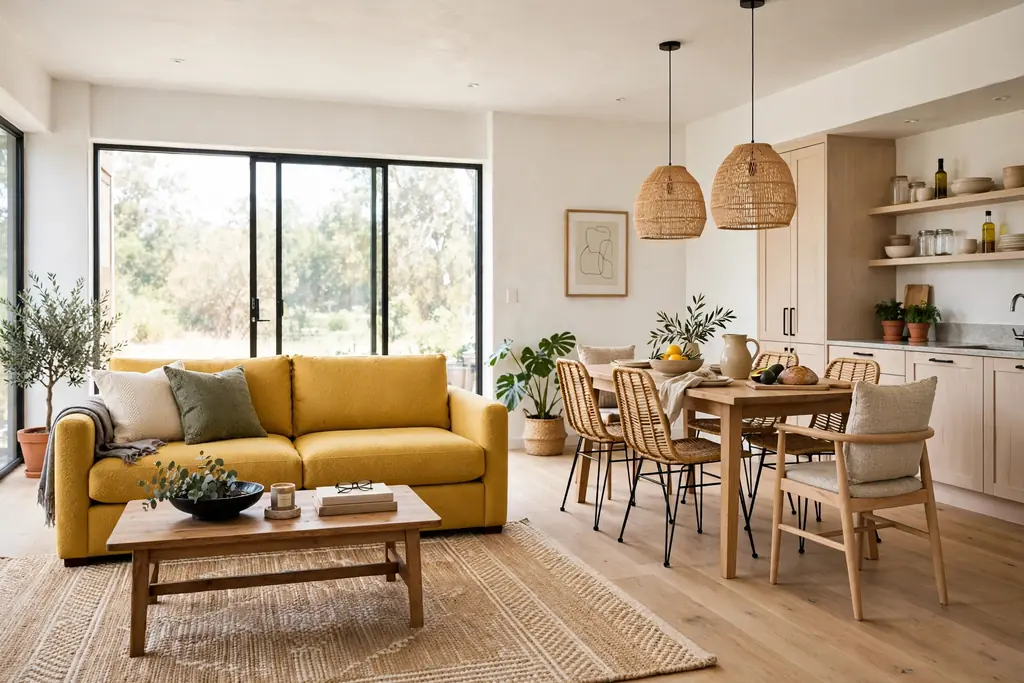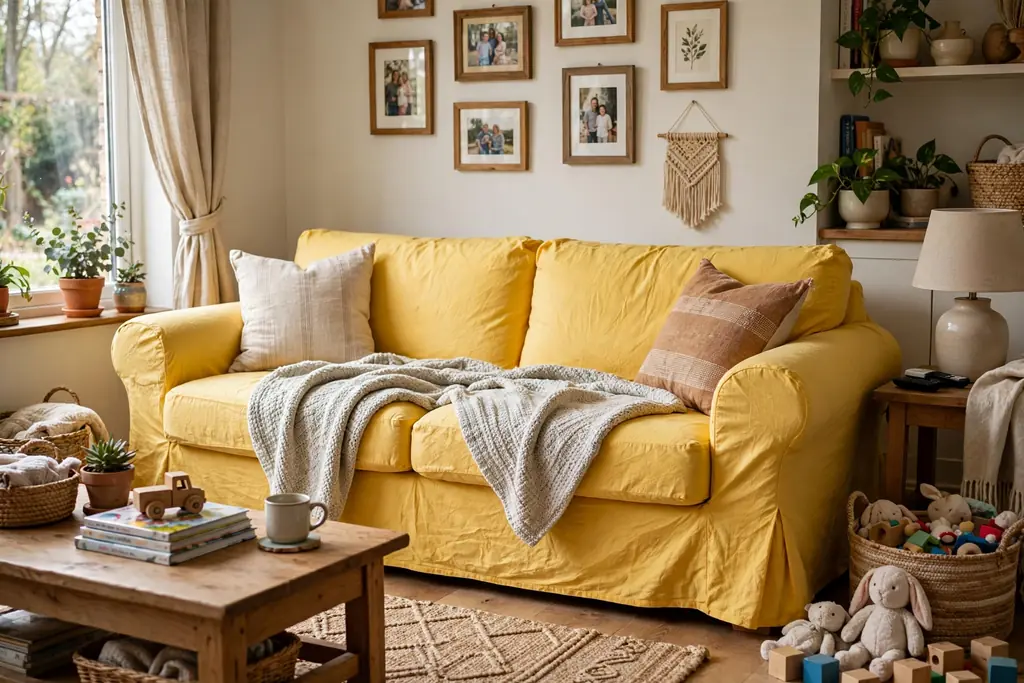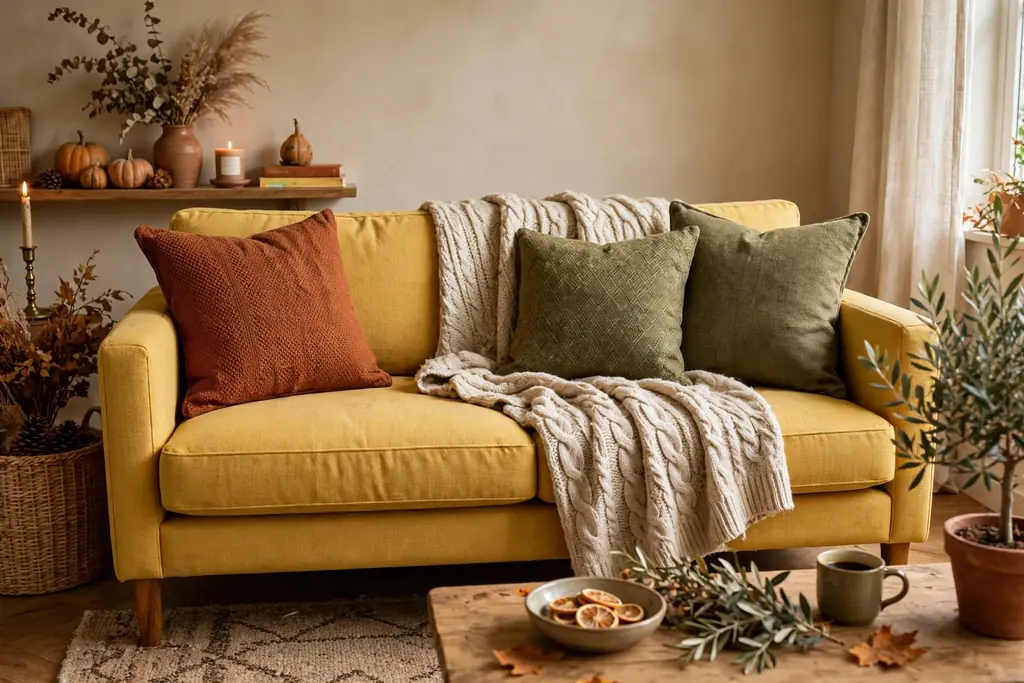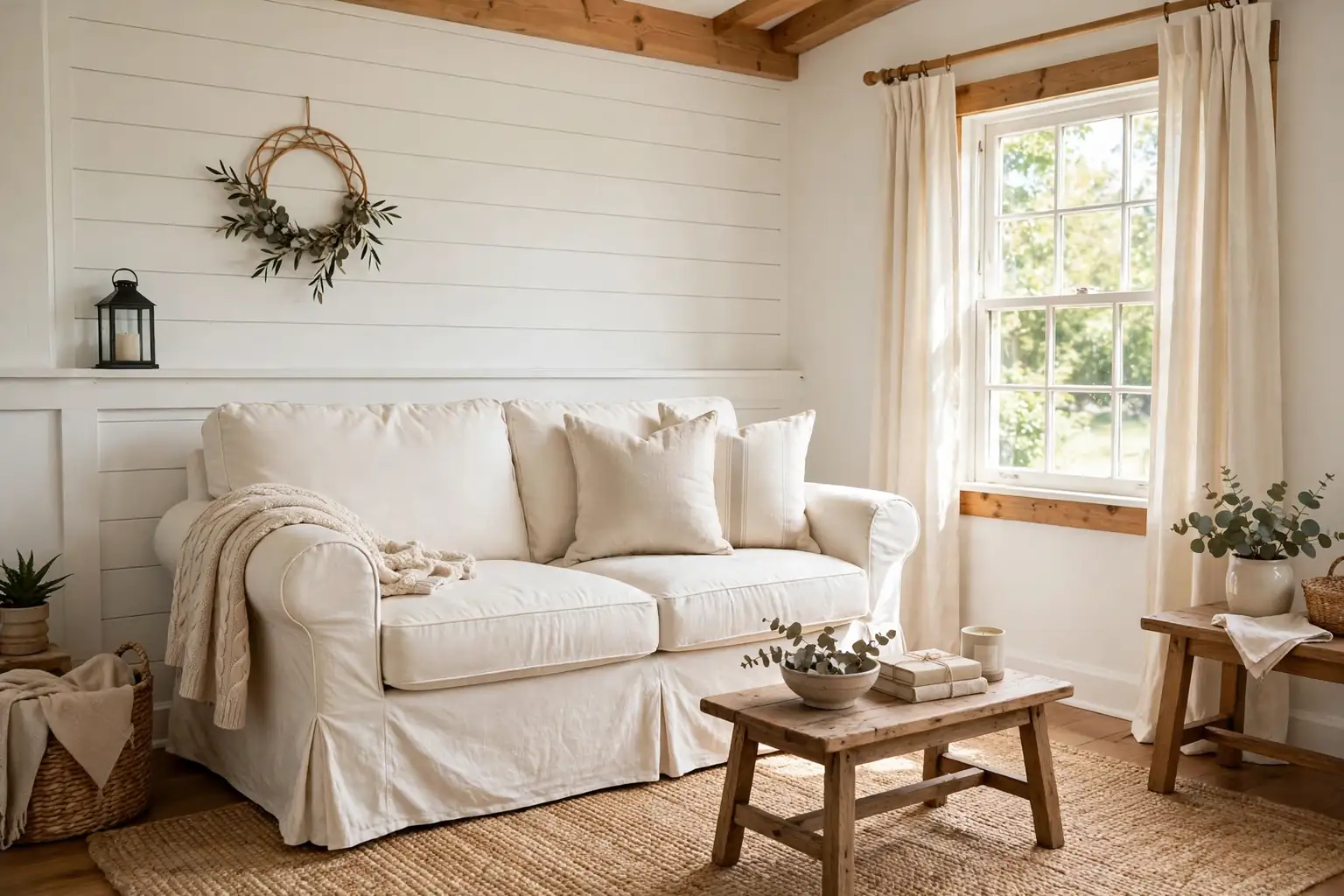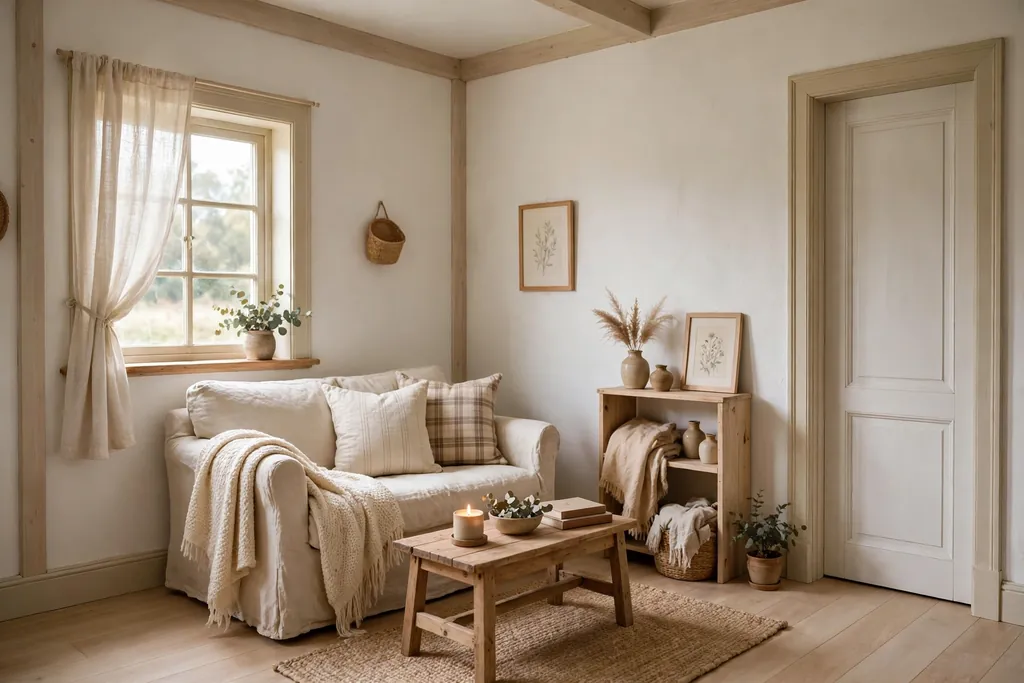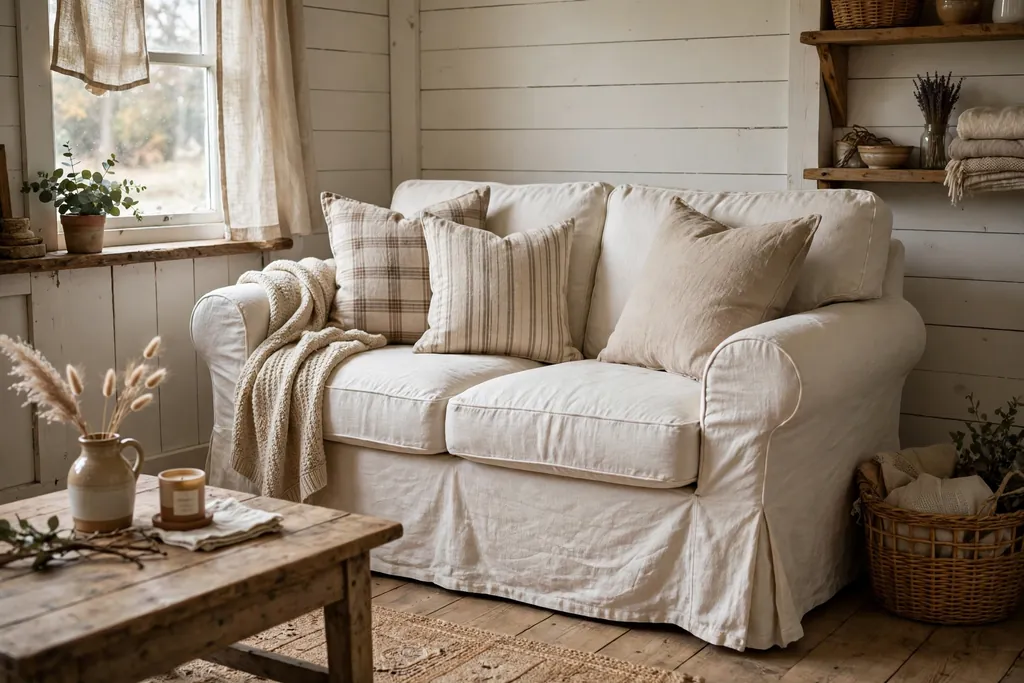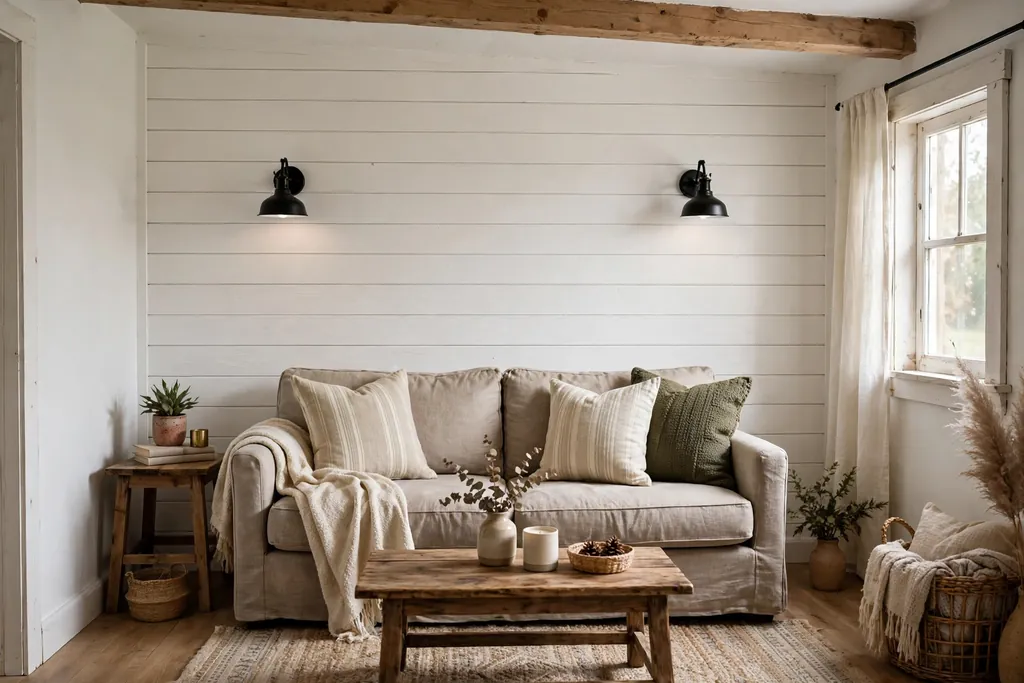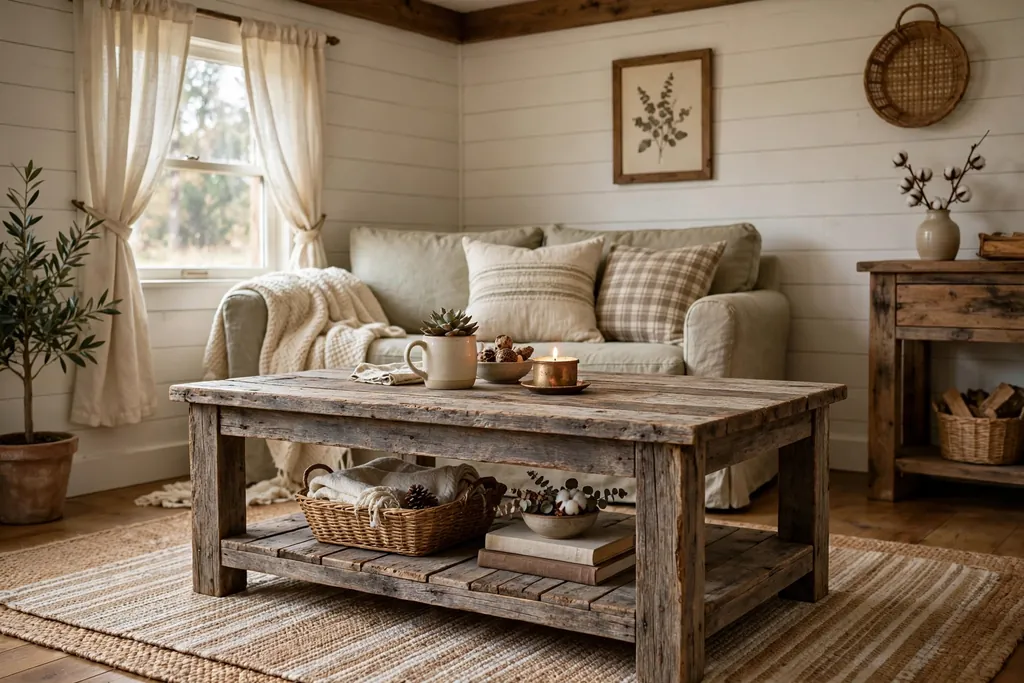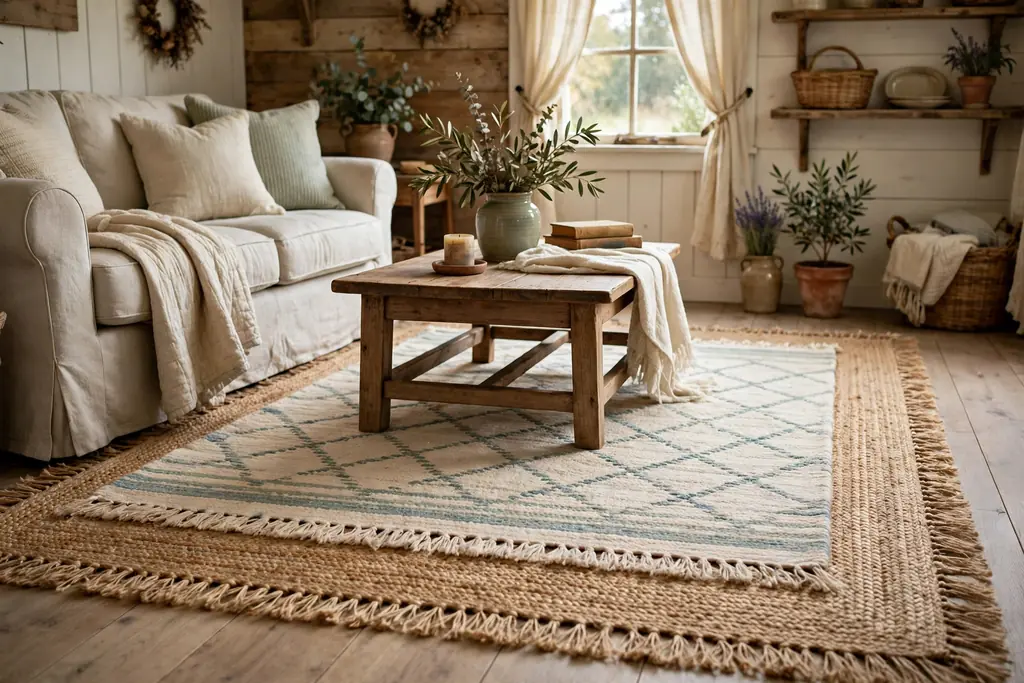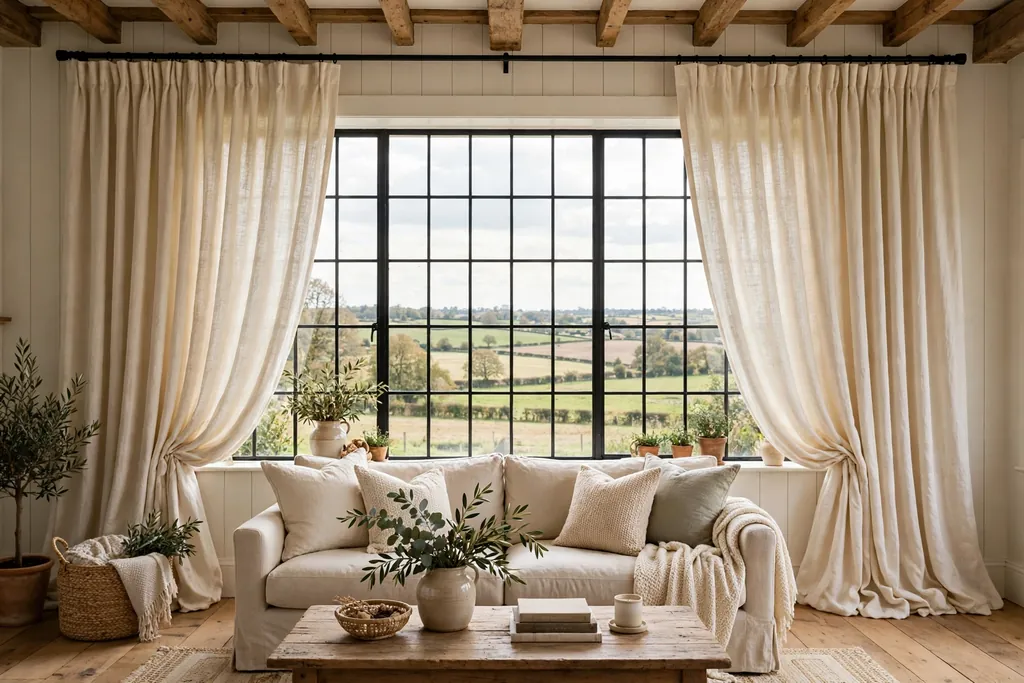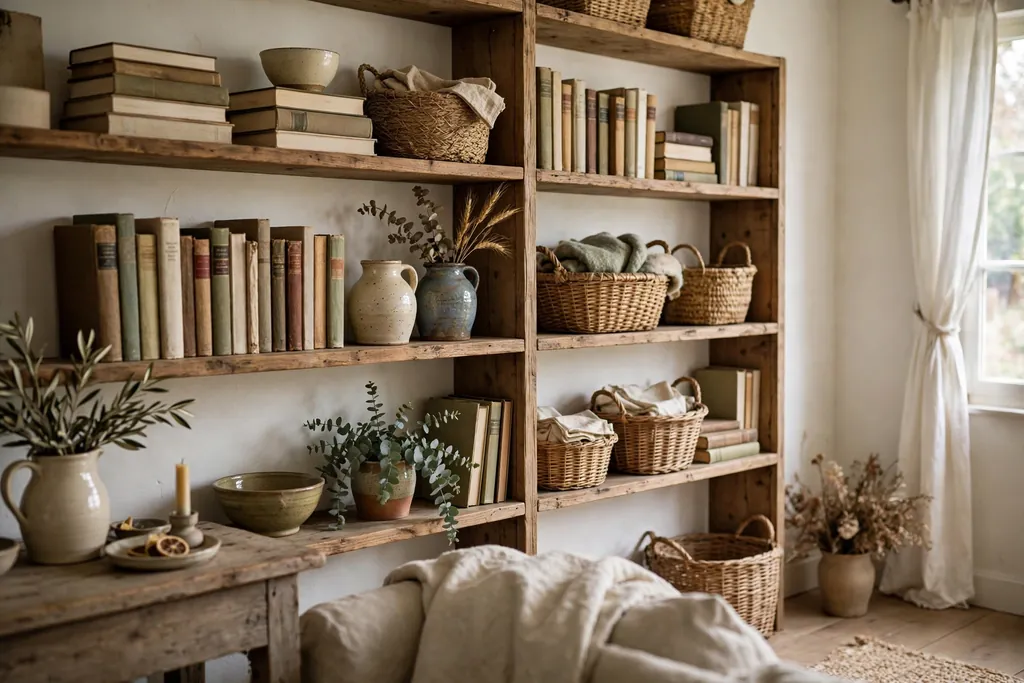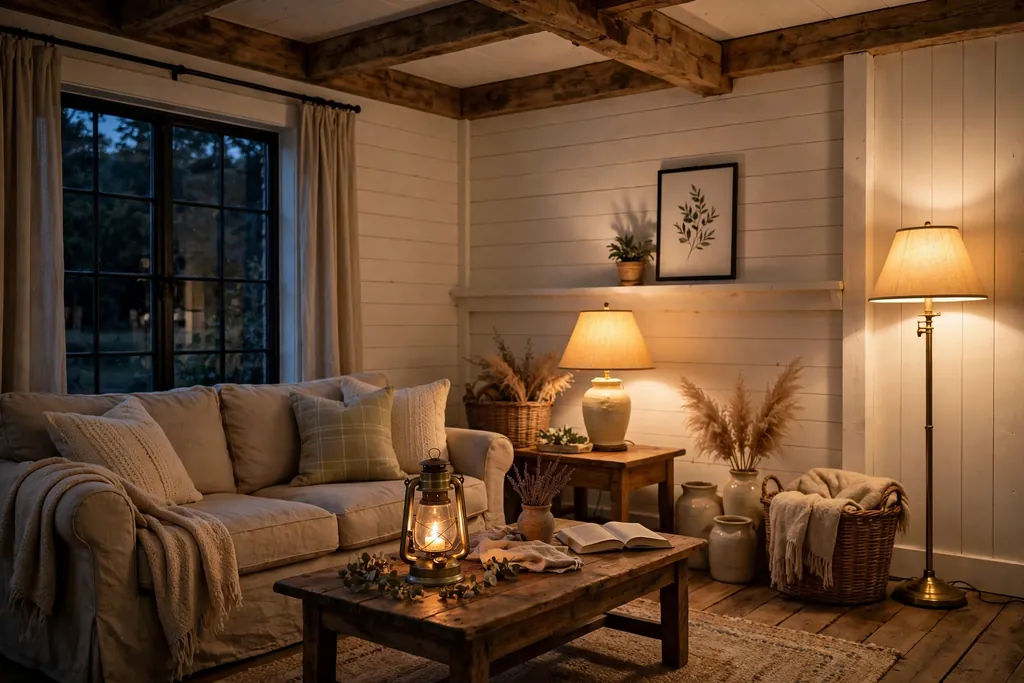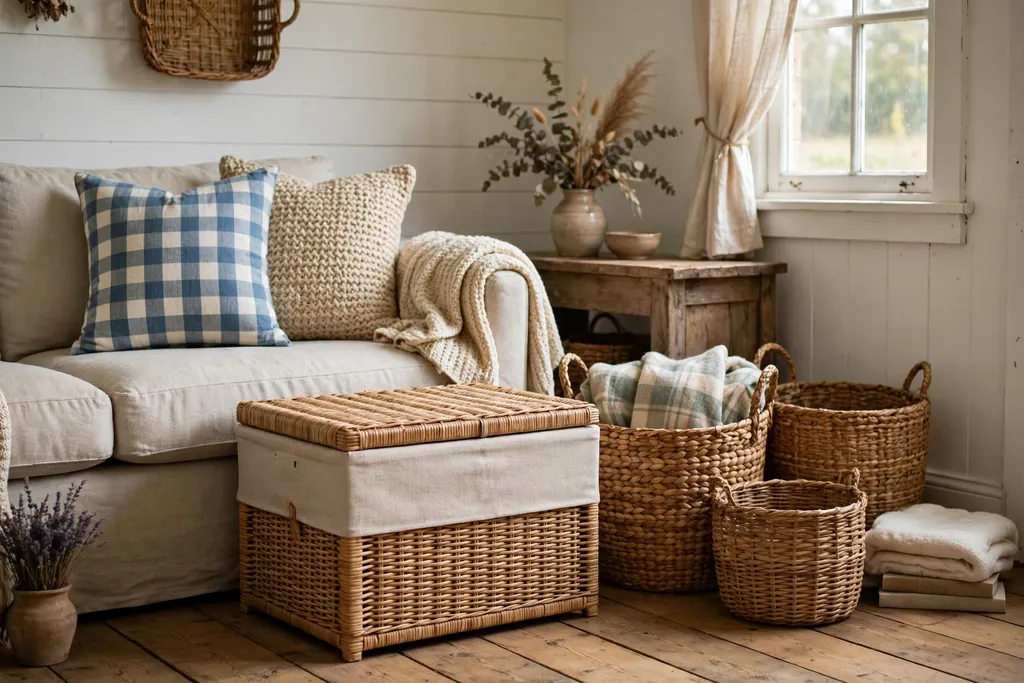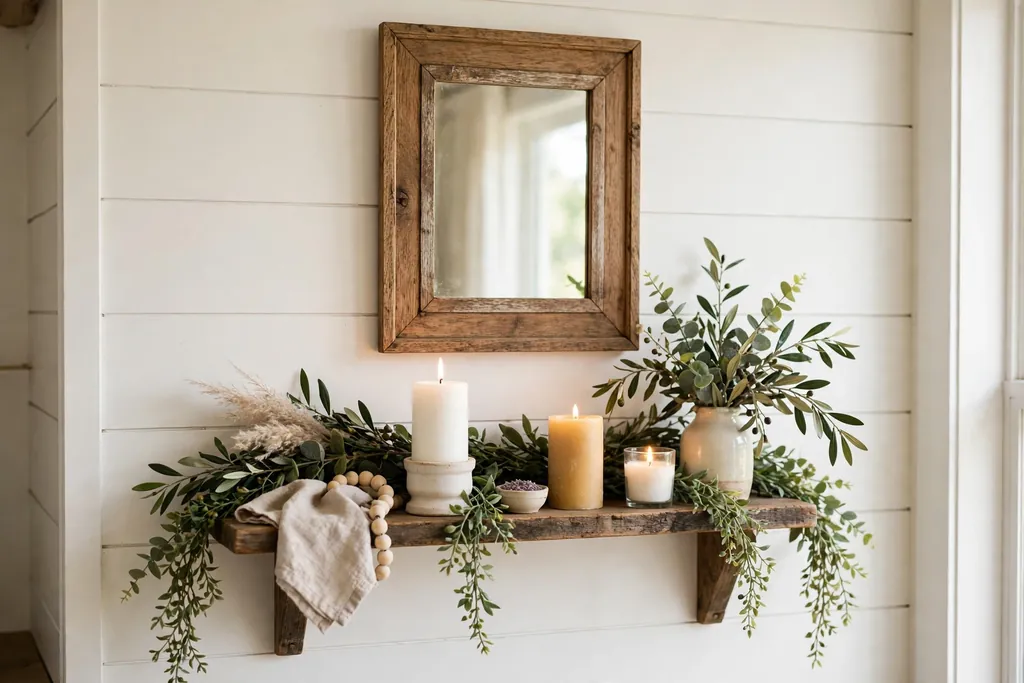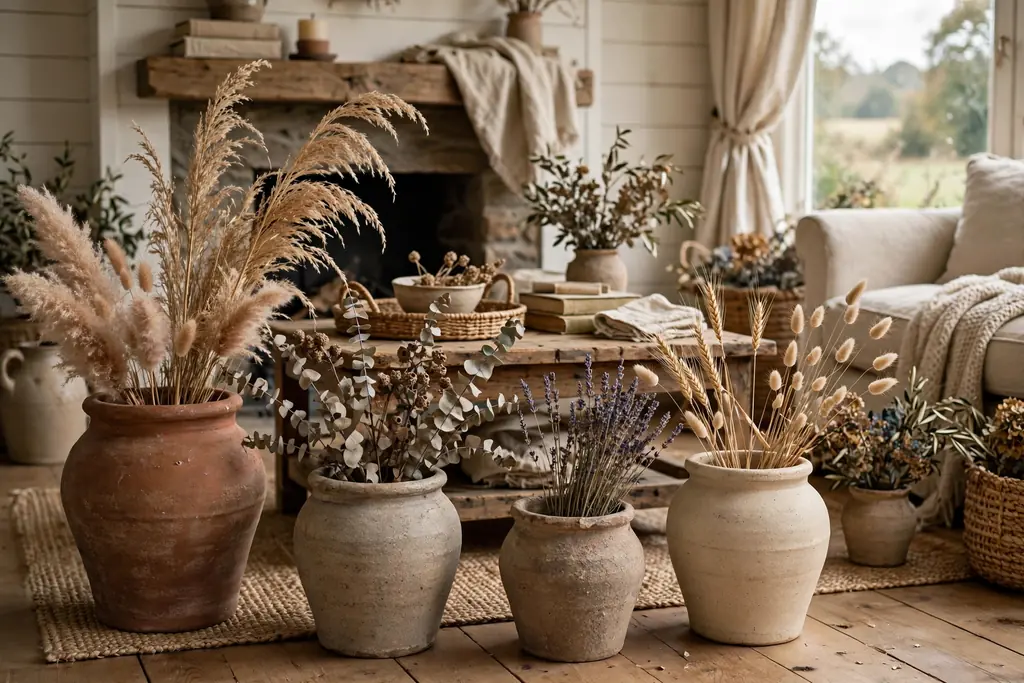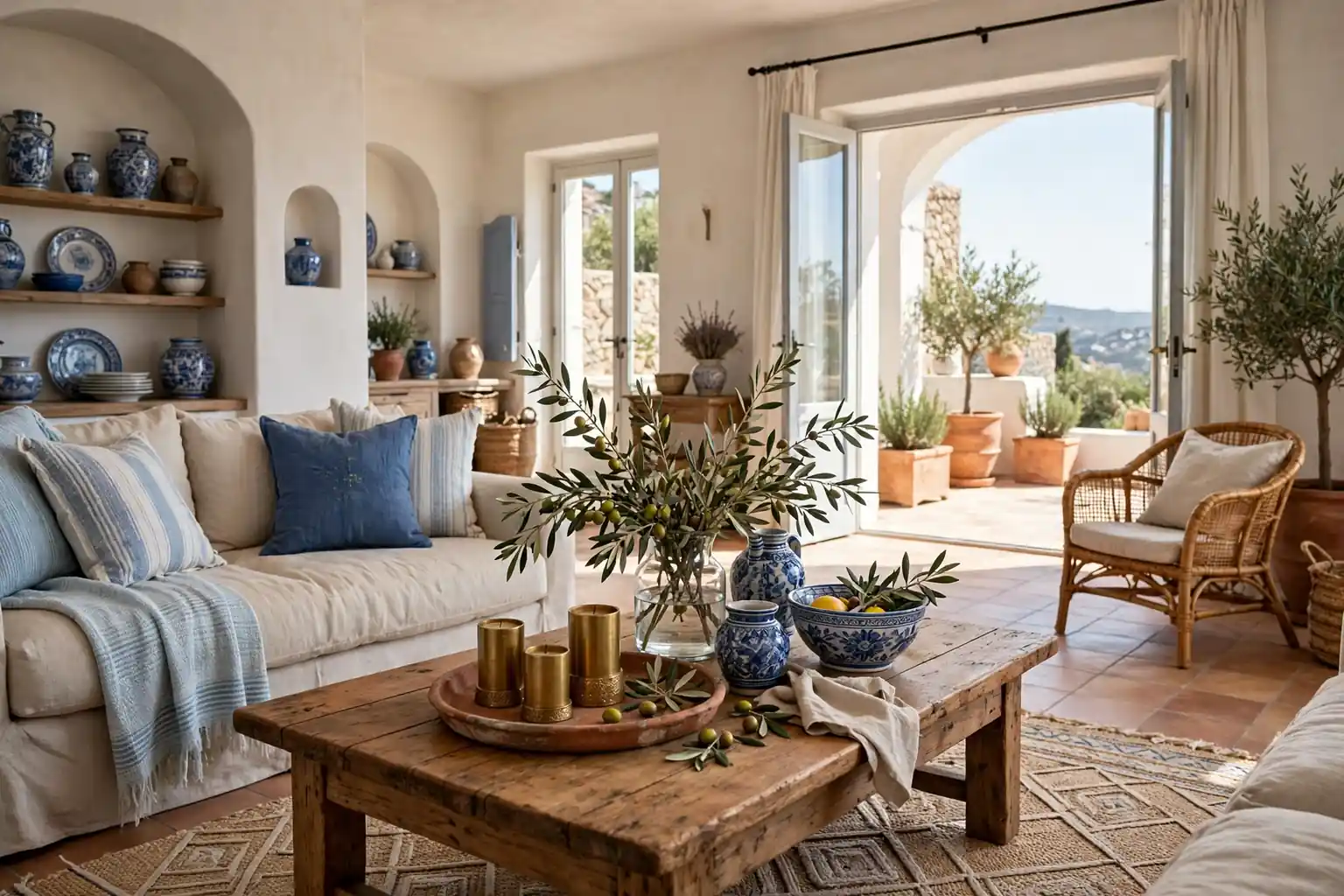
A Mediterranean coffee table feels sun warmed and easy, even in a room far from the sea. Terracotta, olive wood, woven fiber, blue glazed ceramic, and brass do most of the work, while lemons, olive branches, and herbs add life that costs little. The best tables here look gathered over time, not bought in one matching set, and they still leave room for a cup of coffee. These 22 Mediterranean coffee table styling ideas cover trays, books, candles, plants, and table bases, so you can start with one tray and build from there.
Key Takeaways
- Start with one anchor, such as a terracotta tray or a woven runner, so the table reads as one arrangement instead of scattered objects.
- Repeat the Mediterranean palette in small doses: warm terracotta, soft blue and white, natural wood, and brass, rather than adding a new color with every piece.
- Mix heights and textures: a tall branch, a low bowl, a rough woven base, and a smooth ceramic piece keep the eye moving across the table.
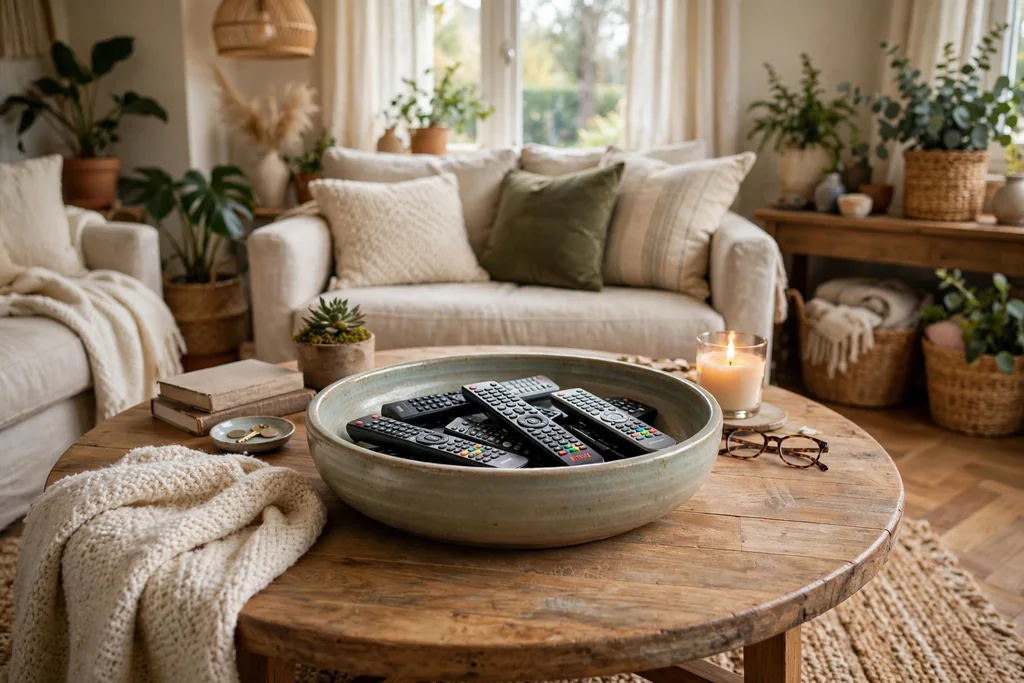
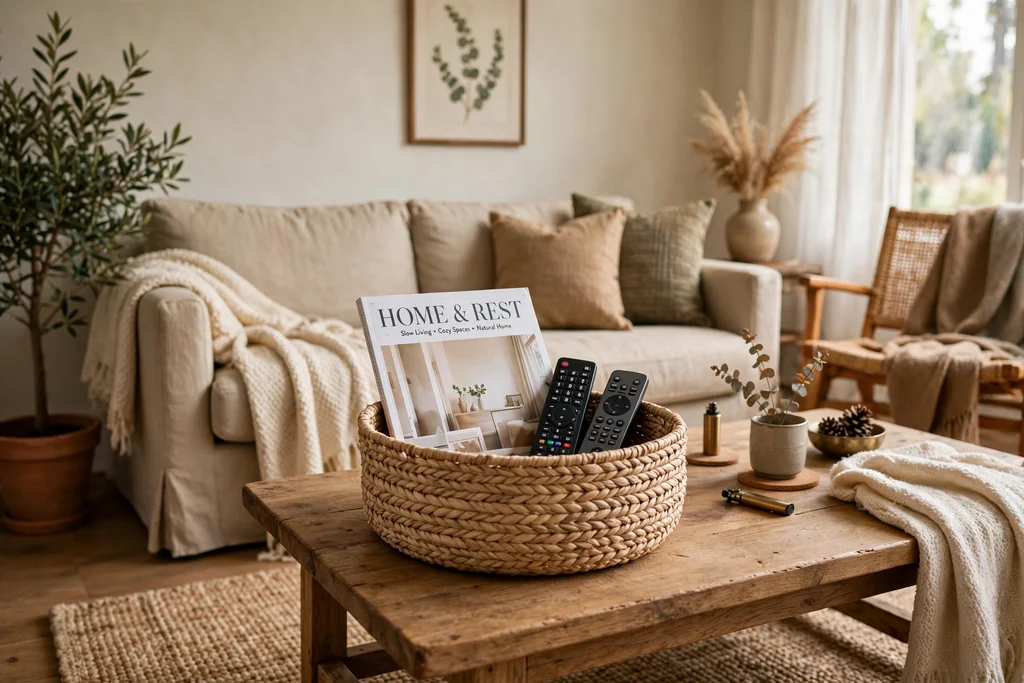
- Keep one part of the table clear for daily use, so the styling survives real life with cups, books, and remote controls.
- Use natural and edible details, such as lemons, herbs, and figs, to refresh the table by season without buying new decor.
- Group in odd numbers and vary the scale, so a vignette looks collected rather than lined up in a row.
1. Anchor the Table With a Terracotta Tray
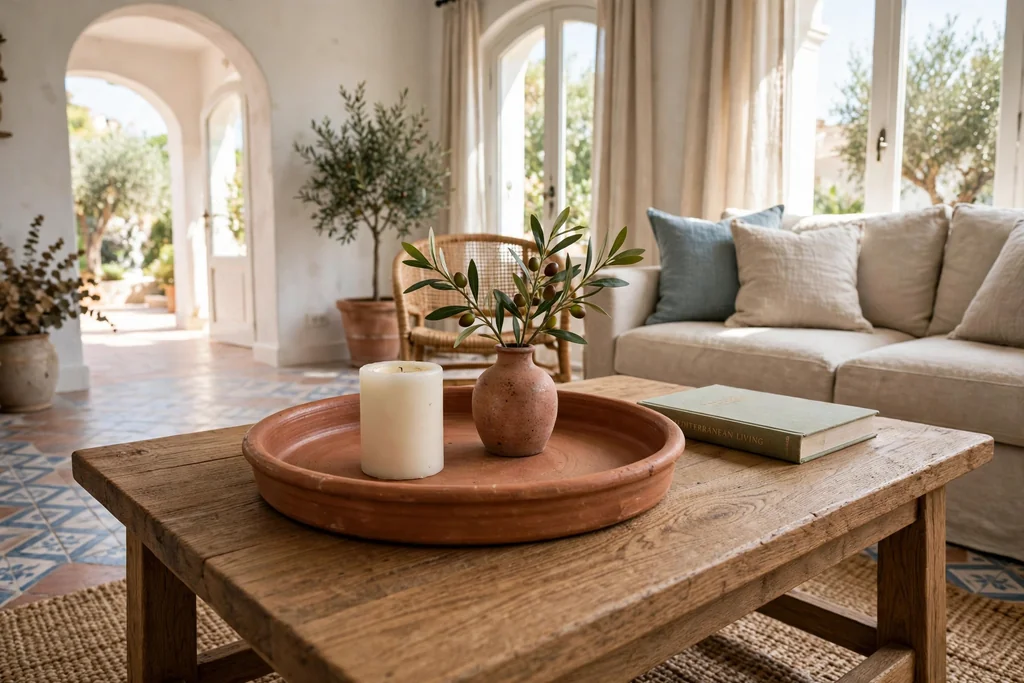
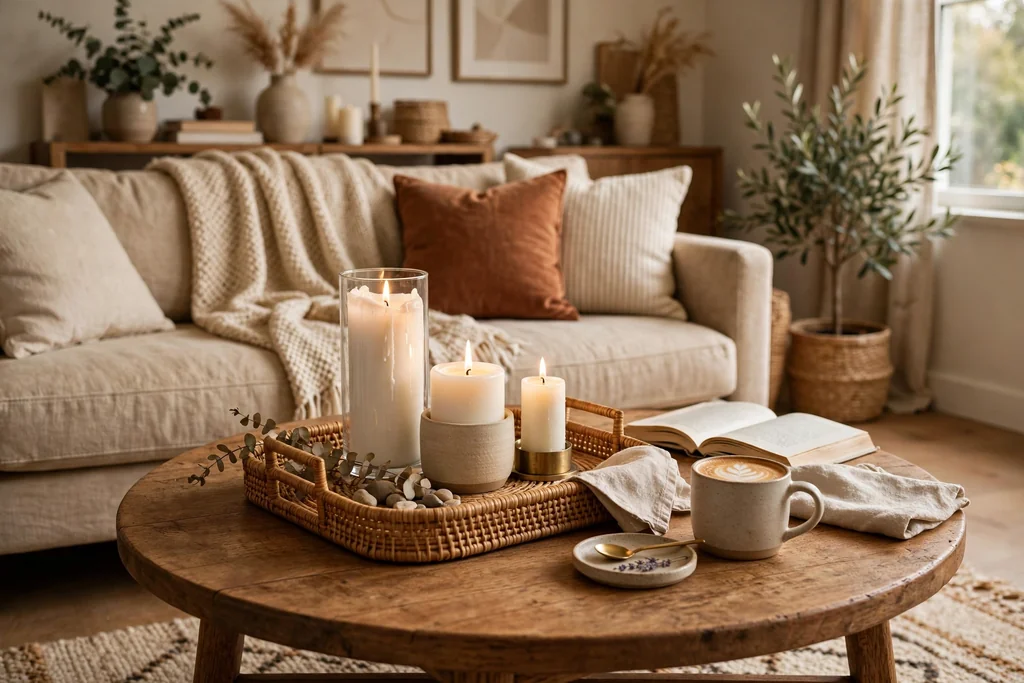
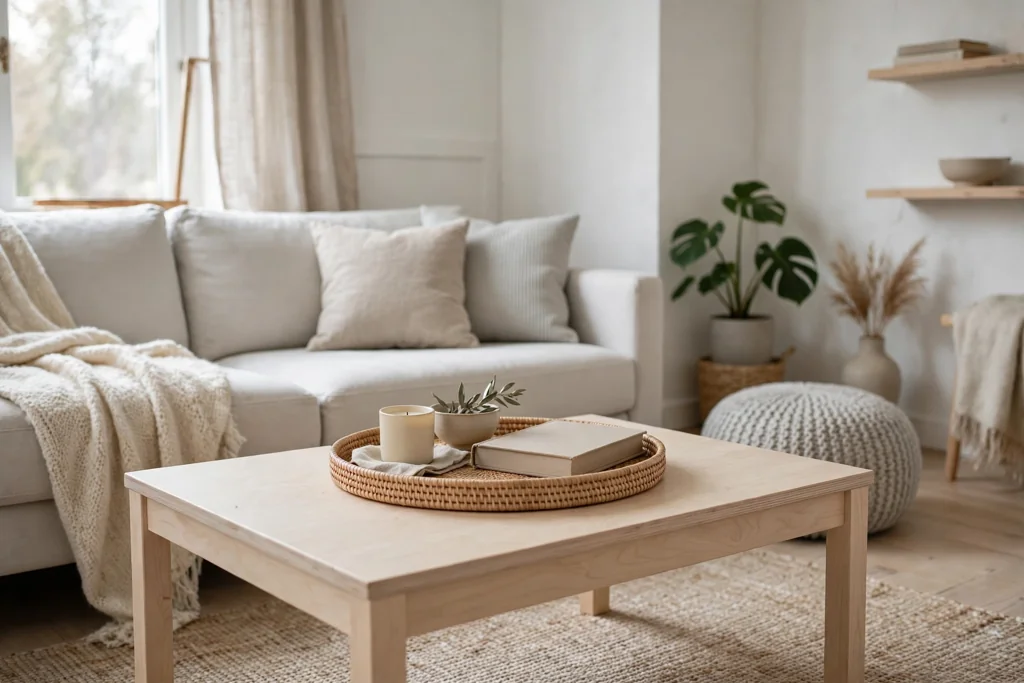
Set a large terracotta tray in the center of the table and build the rest of the styling inside it. The tray gathers candles, a small vase, and a book into one clear zone, and its warm clay color sets the Mediterranean tone at once. A round tray suits a round table, while a long rectangular tray suits a long table and leaves space at each end for cups.
Choose a tray with a low rim so items stay visible from the sofa, and keep the heaviest piece, such as a ceramic bowl, in the middle so the tray stays balanced when you lift it. A terracotta tray also warms a plain neutral sofa group, and if your sofa needs its own refresh, see these grey couch living room ideas. Wipe the tray after use, since terracotta shows water rings more than glazed ceramic.
2. Stand Olive Branches in a Tall Glass Vase
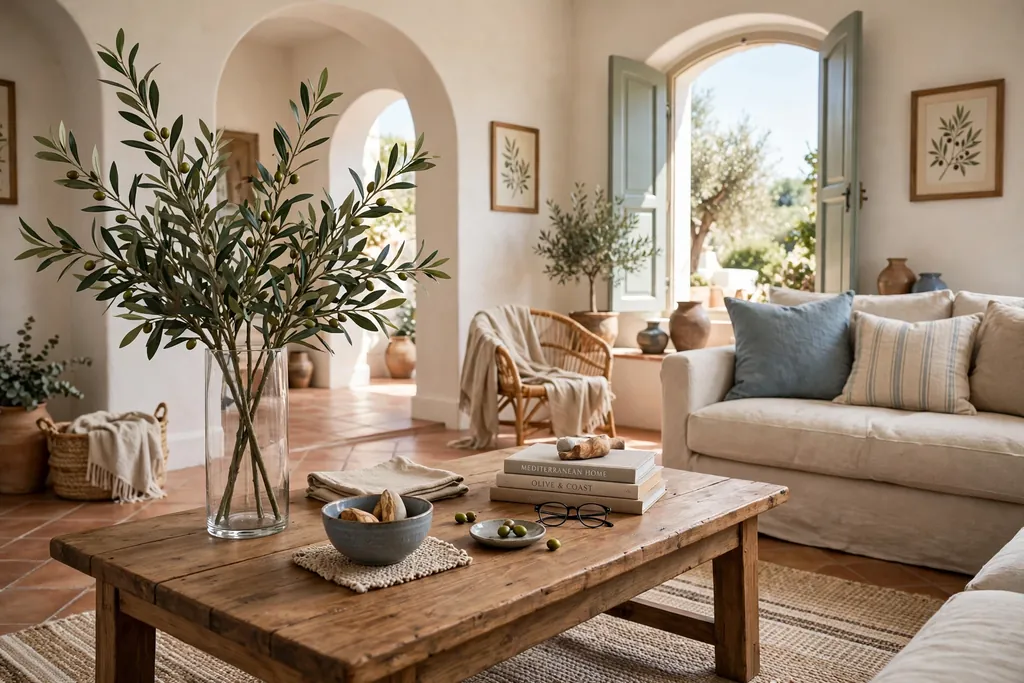
Place two or three olive branches in a tall, plain glass vase at one end of the table. The silvery green leaves and slim stems give height without blocking the view across the room, and olive branches read as Mediterranean at once, even in a modern living room. Fresh branches last well in water, and good faux branches suit a table that gets bumped often.
Trim the stems at an angle and change the water every few days to keep fresh branches looking crisp. Keep the vase narrow enough that the branches stay upright, and skip a second tall piece beside it, since one tall accent is enough on most tables. If the branches shed, a quick shake outside keeps leaves off the tabletop.
3. Stack Linen Bound Art and Travel Books
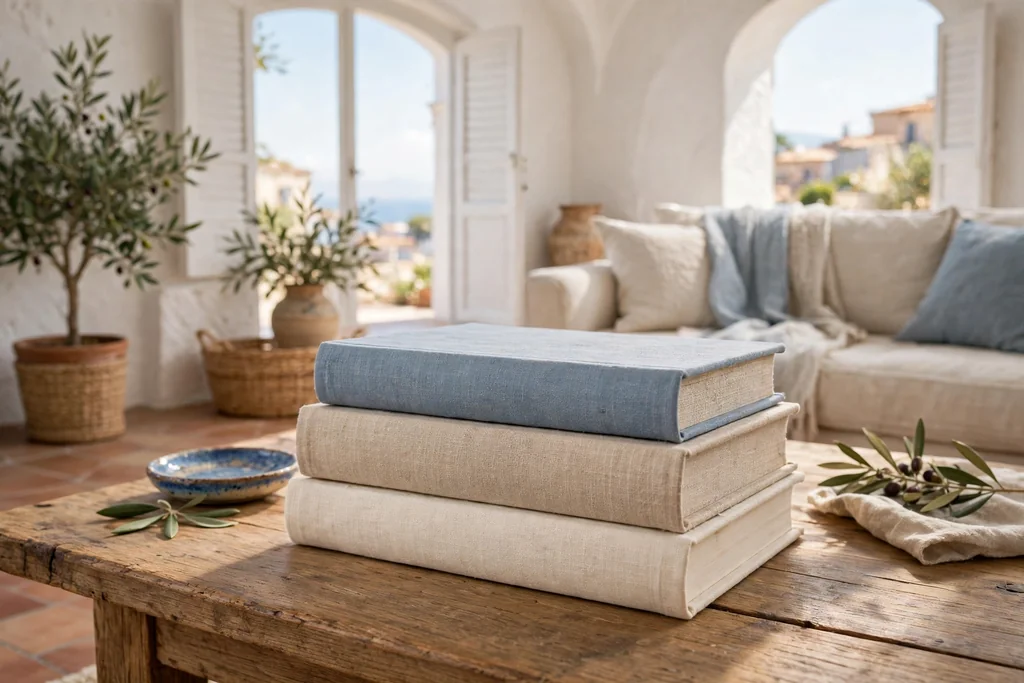
Stack two or three linen bound books on the table, largest at the bottom, with covers in cream, sand, or soft blue. Books add height for a small object on top, such as a candle or a shell dish, and their subject, art, travel, or cooking, gives guests something to open. A stack also fills a wide table without needing a large single object.
Turn the top book slightly, rather than lining the spines up exactly, so the stack looks placed rather than shelved. Keep the stack to three books or fewer on a small table, so it does not crowd out cups. Choose books you actually like, since a stack people open gets more use than a stack kept only for show.
4. Pair Wrought Iron Lanterns With Candles
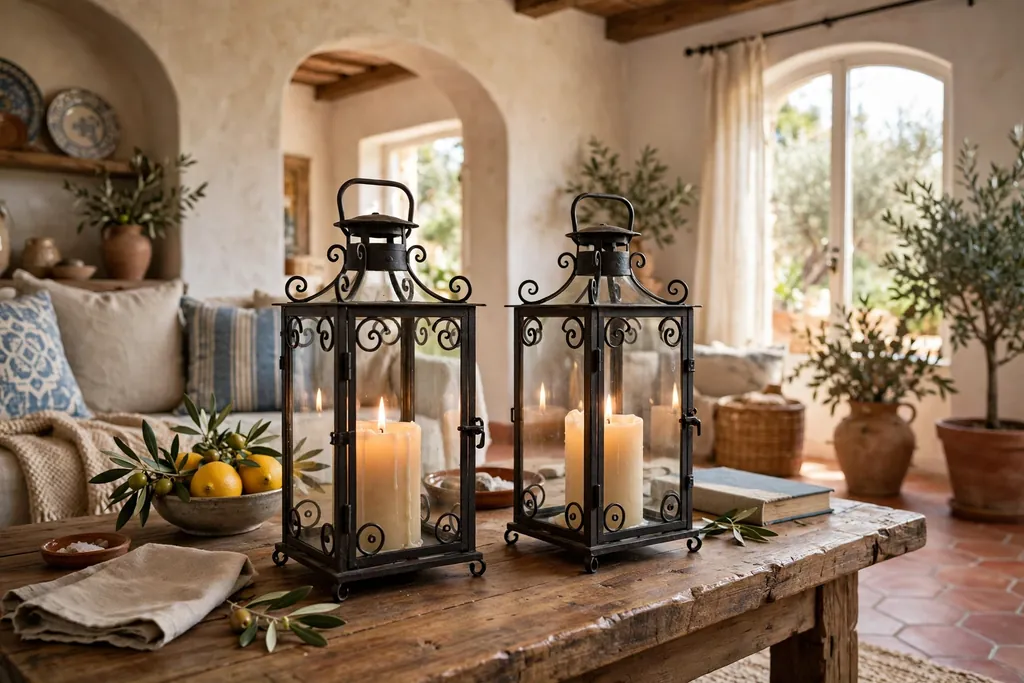
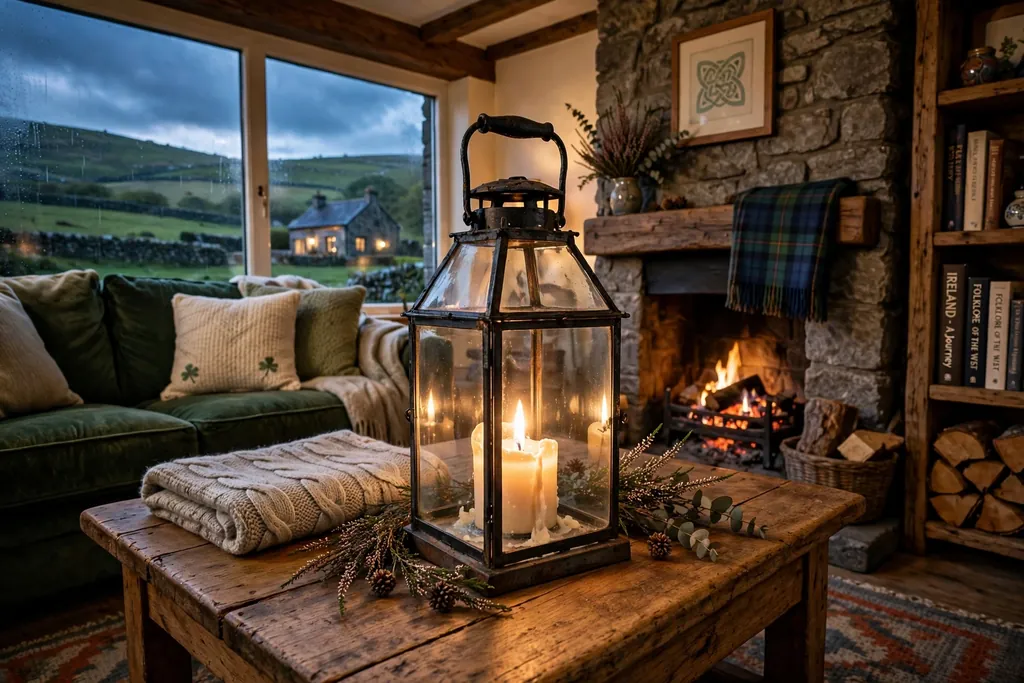
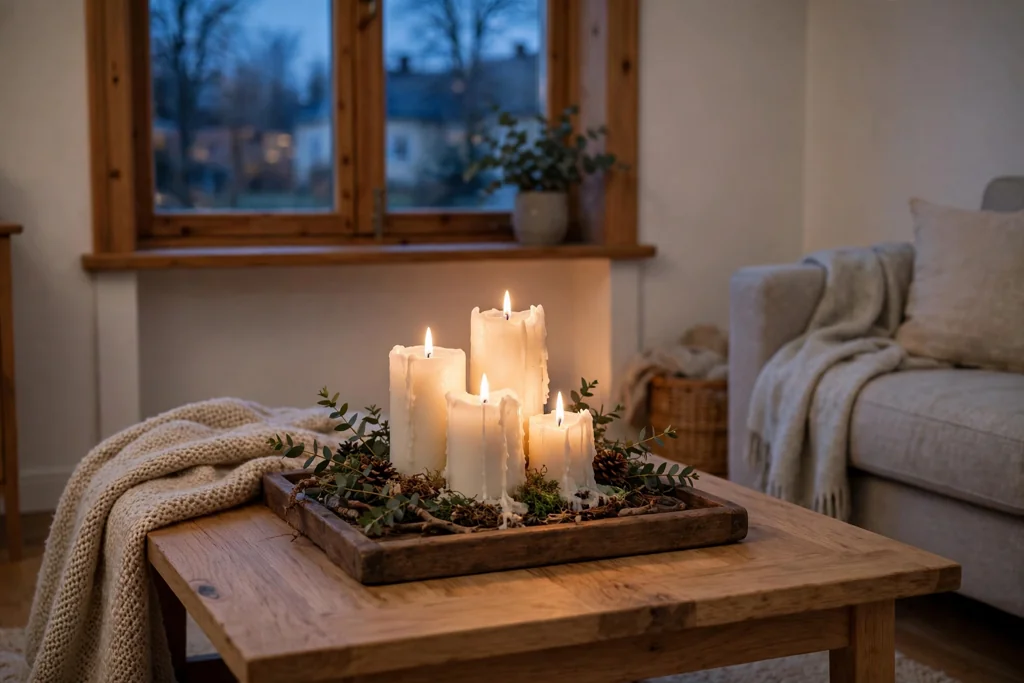
Set a pair of wrought iron lanterns on the table, one taller than the other, with a pillar candle inside each. The dark iron frames the warm candle glow and suits both rustic wood tables and plainer modern ones. Lanterns also protect the flame from drafts near a door or window, which matters on a table close to an opening.
Use plain white or cream candles so the iron stays the detail, and keep the lanterns clear of books, throws, and paper. Never leave a lit candle in an empty room, and use battery candles inside the lanterns if the table sits near curtains or small hands. Wipe iron lanterns now and then, since dark metal shows dust in bright light.
5. Center a Blue and White Ceramic Bowl
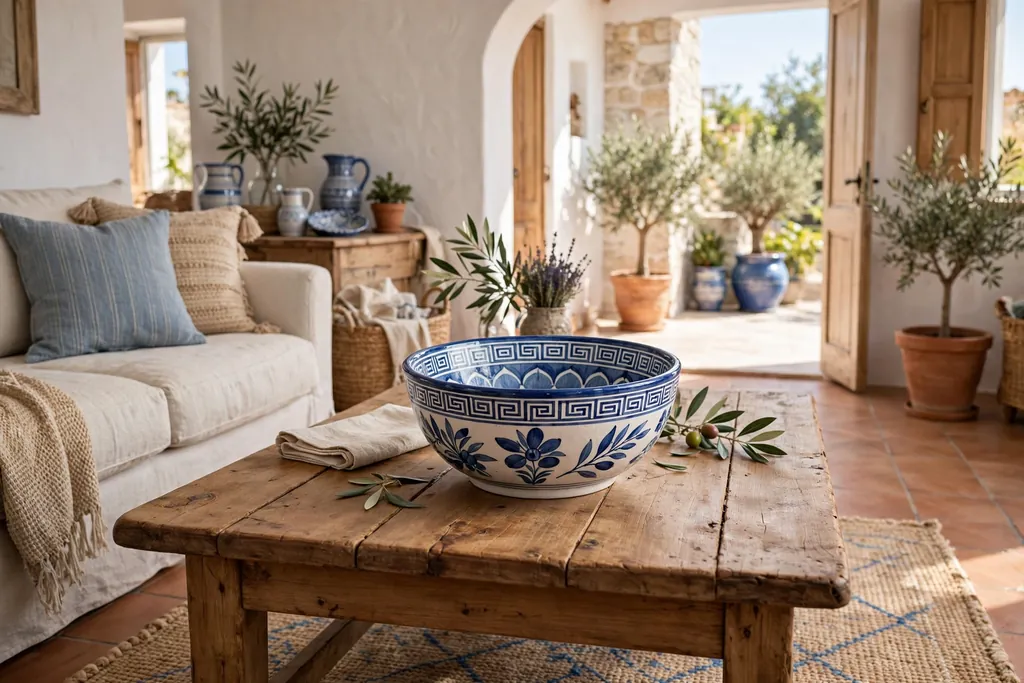
Place a blue and white ceramic bowl in the center of the table, empty or holding a few figs, and let it be the main color note. Blue and white pottery recalls Mediterranean tile and coastal ceramics, and one strong bowl anchors a table that might otherwise drift into too many small pieces. A wide, low bowl suits most tables better than a tall, narrow vase.
Keep the rest of the table quieter while the bowl leads, with plain books or a single candle beside it rather than a second patterned piece. If the bowl holds fruit, wash it before refilling and keep the fruit to a single layer so the pattern stays visible. A bowl with a small foot also lifts the pattern off the tabletop, which helps on a dark wood surface.
6. Lay a Woven Seagrass Runner Lengthwise
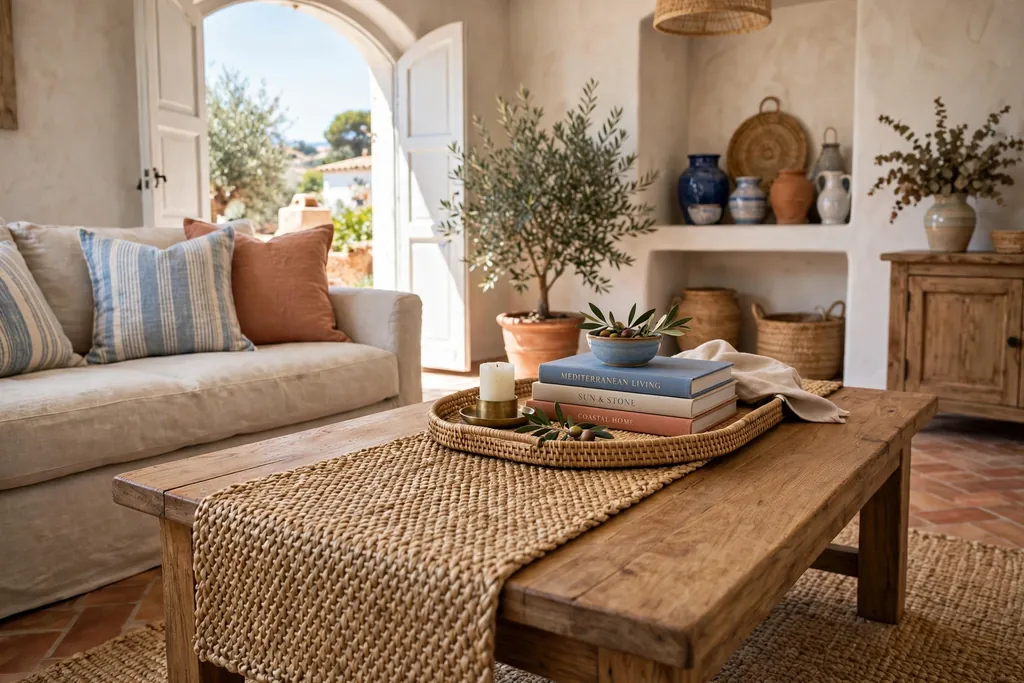
Lay a woven seagrass or jute runner lengthwise down the center of the table, under the tray and books. The runner adds a natural woven layer that softens a hard tabletop and keeps small pieces from sliding when the table is bumped. Its pale straw tone also ties the table to rattan chairs, baskets, and other woven pieces in the room.
Cut or fold the runner so it stops a few inches short of each table end, rather than hanging over the edge, since a table runner is not a floor runner. Shake it outside now and then, and blot spills at once, since natural fiber stains if left wet. If your table already has a glass top, a runner under the tray still adds warmth without hiding the table itself.
7. Fill a Shallow Bowl With Lemons
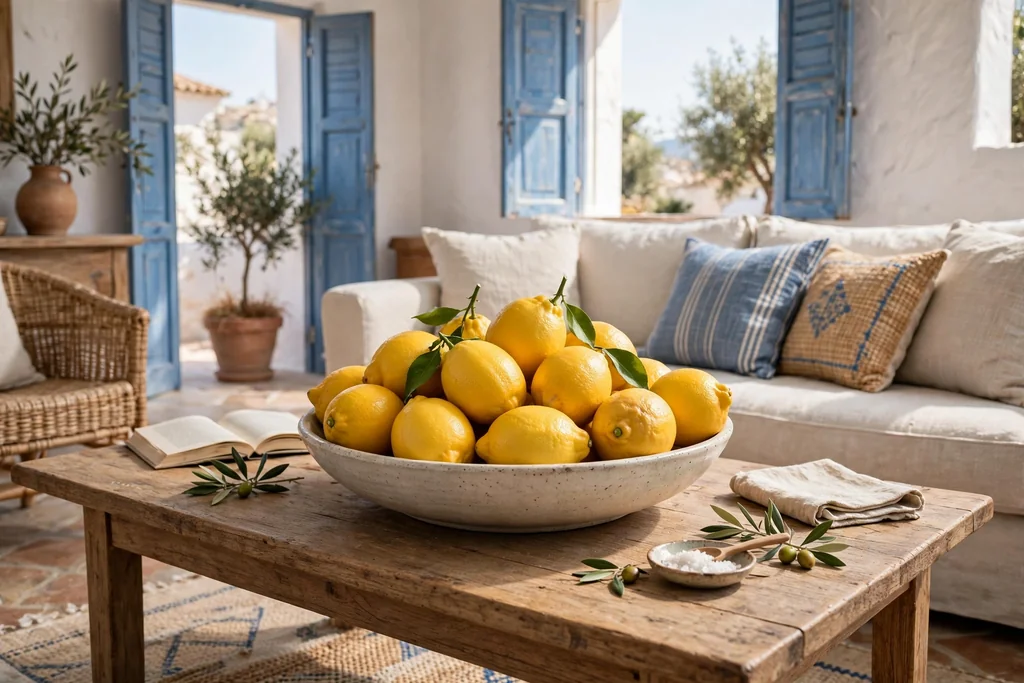
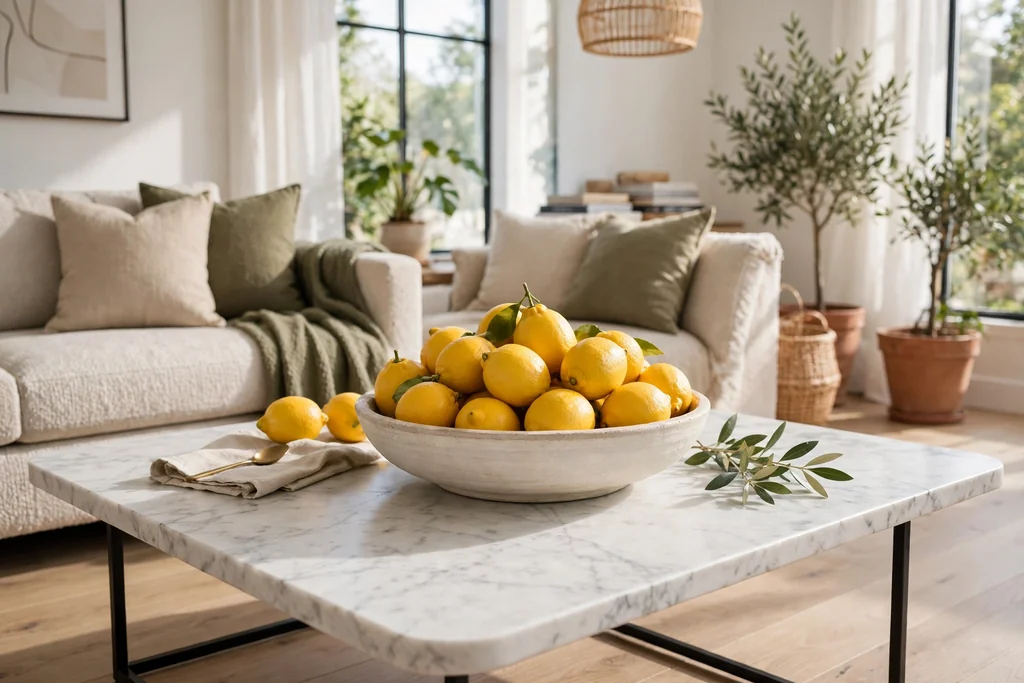
Fill a shallow wood or ceramic bowl with fresh lemons and set it where the light catches the yellow. Lemons are the quickest Mediterranean table accent: cheap, bright, and easy to replace, and their color lifts a table of terracotta and wood without a painted object. A bowl of lemons also suits a table that needs a low centerpiece, since it does not block conversation.
Use six to eight lemons for a medium bowl, and turn them so the skin, not a cut face, shows upward. Replace any lemon that softens, and wash the bowl before refilling. In cooler months, swap lemons for oranges or figs to keep the same idea with a seasonal color, and keep the bowl in the same spot so the table layout stays settled.
8. Serve Drinks on a Mosaic Tile Tray
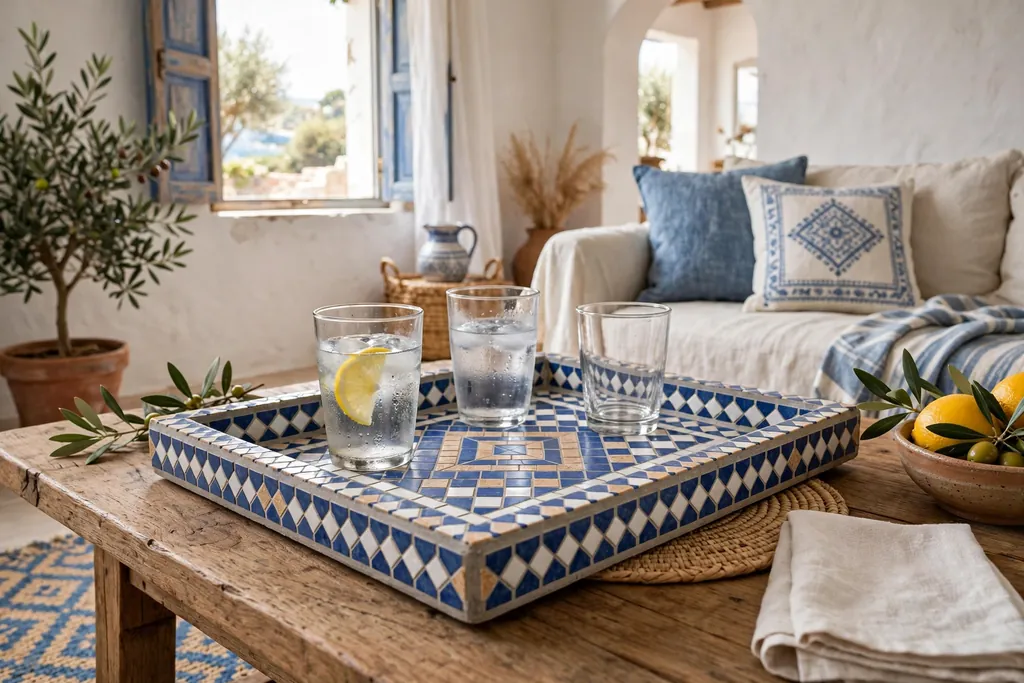
Use a small tray topped with mosaic tiles, in blue, white, and sand, as the drinks tray on the table. The tile top handles wet glasses better than wood or fabric, and its pattern gives the table a Mediterranean courtyard feel. A mosaic tray also works as a second anchor on a long table, holding glasses while the main tray holds candles and books.
Choose a tray with a rim high enough to stop a glass sliding off, and wipe the grout lines after use so spills do not stain them. Keep the tray near the sofa edge where guests can reach it, rather than in the center behind the main vignette. If you cannot find a tile tray, a plain ceramic tile set on a wood board gives a similar hard, wipeable surface.
9. Add a Driftwood Sculpture
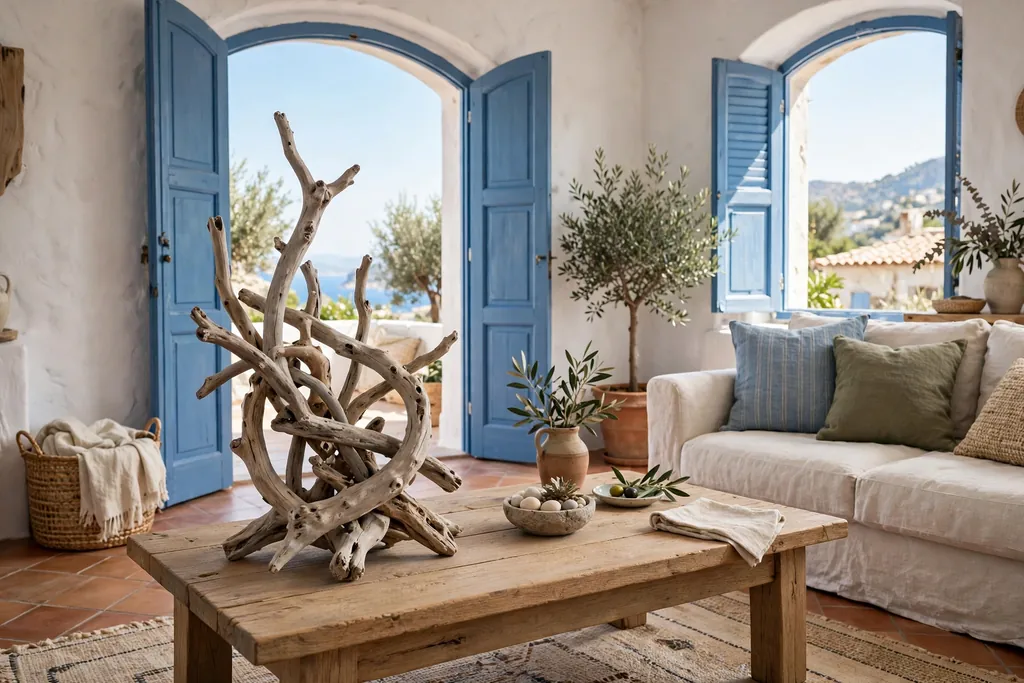
Place a single piece of driftwood, or a small carved wood sculpture, at one end of the table as a natural focal point. Weathered wood brings a coastal Mediterranean note and a rough texture that contrasts with smooth ceramics and glass. One piece is enough, since driftwood has a strong shape that can crowd a table if paired with another large natural object.
Check the piece for loose bark and sharp edges before placing it near soft furnishings, and keep it dry and clear of candle flames. A small sculpture also works on top of the book stack, where it gains height without taking extra table space. If driftwood feels too coastal for your room, a smooth olive wood carving gives the same natural note in a warmer tone.
10. Cluster Brass Candlesticks at Varied Heights
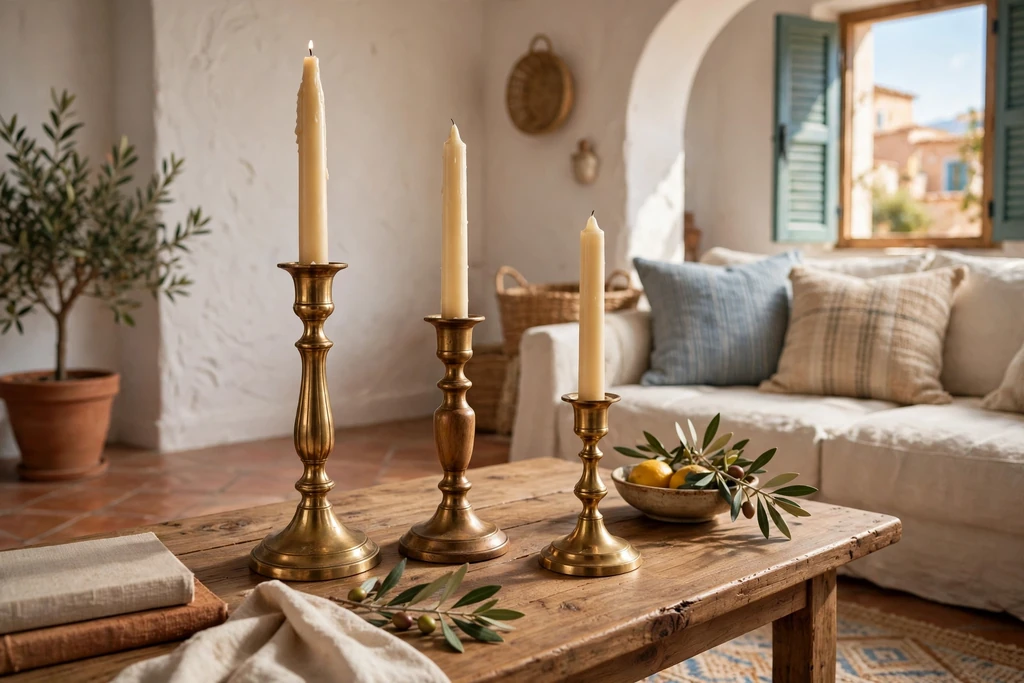
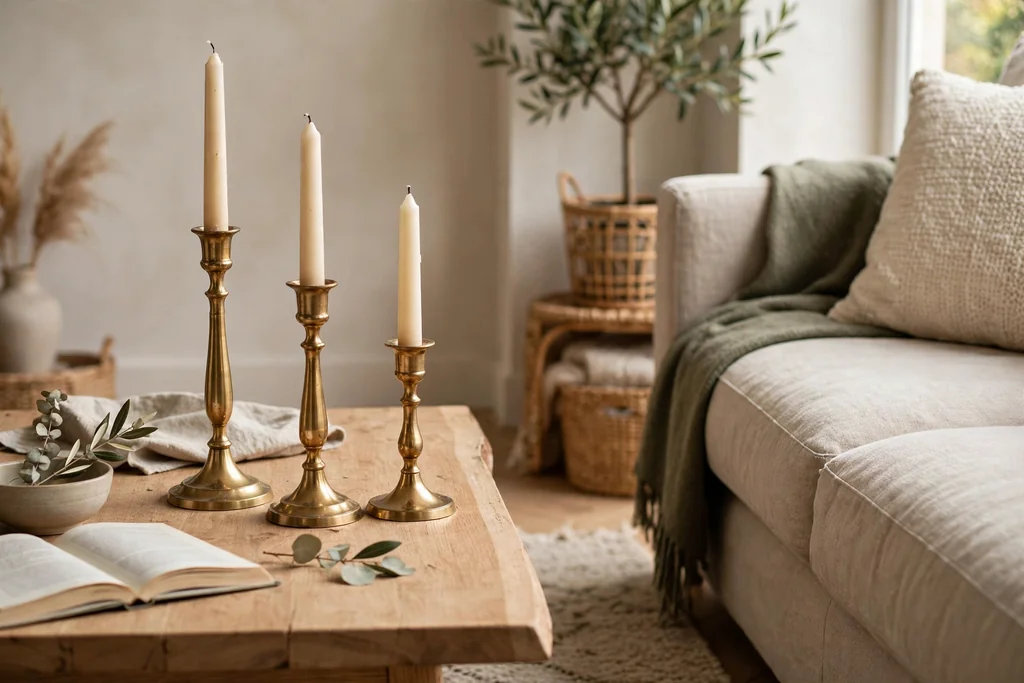
Group three brass candlesticks of different heights at one corner of the table, with plain cream taper candles. Brass adds a warm metallic note that suits terracotta and blue ceramic, and varied heights keep the group from looking like a matched set. Place the tallest candlestick at the back, so the group reads as a small cluster from the sofa.
Use drip free tapers or small candle cups to protect the tabletop, and keep the candlesticks clear of branches, books, and throws. Polish brass only as often as you like the shine; unpolished brass with a soft patina suits a rustic Mediterranean table just as well. Keep the group together when you clear the table, so it stays one vignette rather than three scattered pieces.
11. Pot Rosemary and Lavender in Small Terracotta Pots
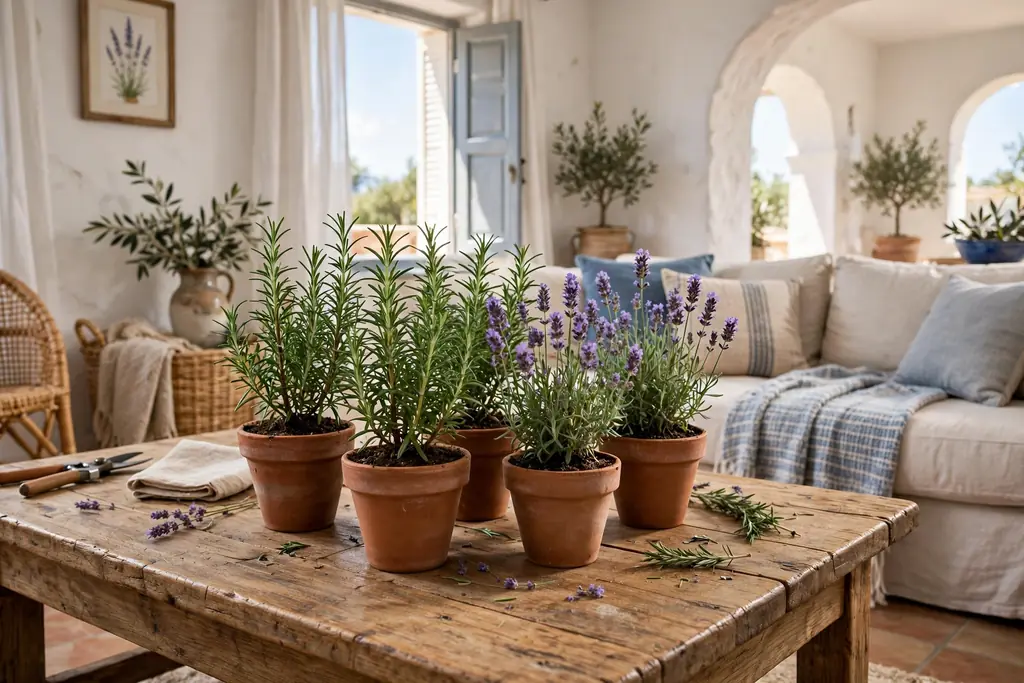
Set two small terracotta pots on the table, one with rosemary and one with lavender, in place of a cut flower arrangement. Potted herbs last far longer than cut stems, they scent the room lightly when brushed, and they suit a kitchen led living room where herbs are also useful. Terracotta pots match the tray and bowl palette without adding a new color.
Use pots with drainage holes and a small saucer under each, so water does not mark the tabletop. Give the herbs the brightest spot in the room when the table is not in use, and trim them often so they stay compact rather than leggy. If fresh herbs struggle indoors, a single potted olive sapling in a terracotta pot gives a similar Mediterranean plant note with less care.
12. Arrange Shells and Coral in a Low Dish
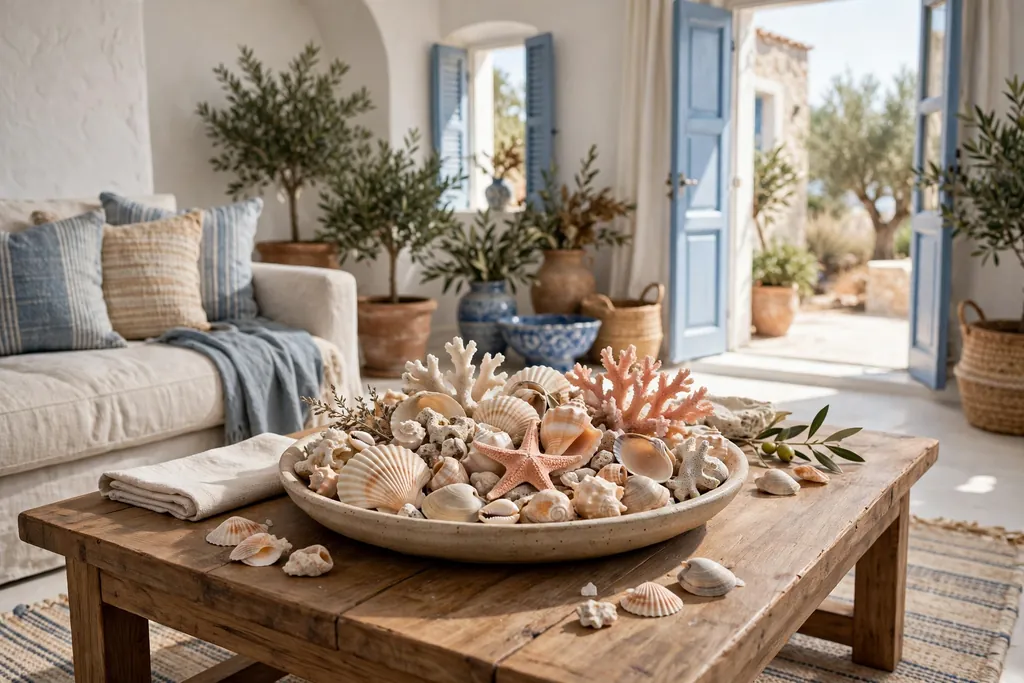
Arrange a few shells and a small piece of coral in a low, wide dish on the table, with space between each piece. Shells and coral give a coastal Mediterranean accent that suits a bright room, a seaside home, or a table that already holds blue ceramics. A low dish keeps the arrangement flat and easy to see, and it stops small pieces from rolling across the table.
Pick shells in cream, sand, and soft pink rather than dyed colors, so the dish stays natural, and dust the pieces now and then with a dry cloth. Keep the dish on the side of the table away from drinks, since shells chip if knocked by a glass. If real coral is hard to find, a carved stone or ceramic coral shape gives the same coastal form without a fragile piece.
13. Fill a Hand Painted Pitcher With Dried Lavender
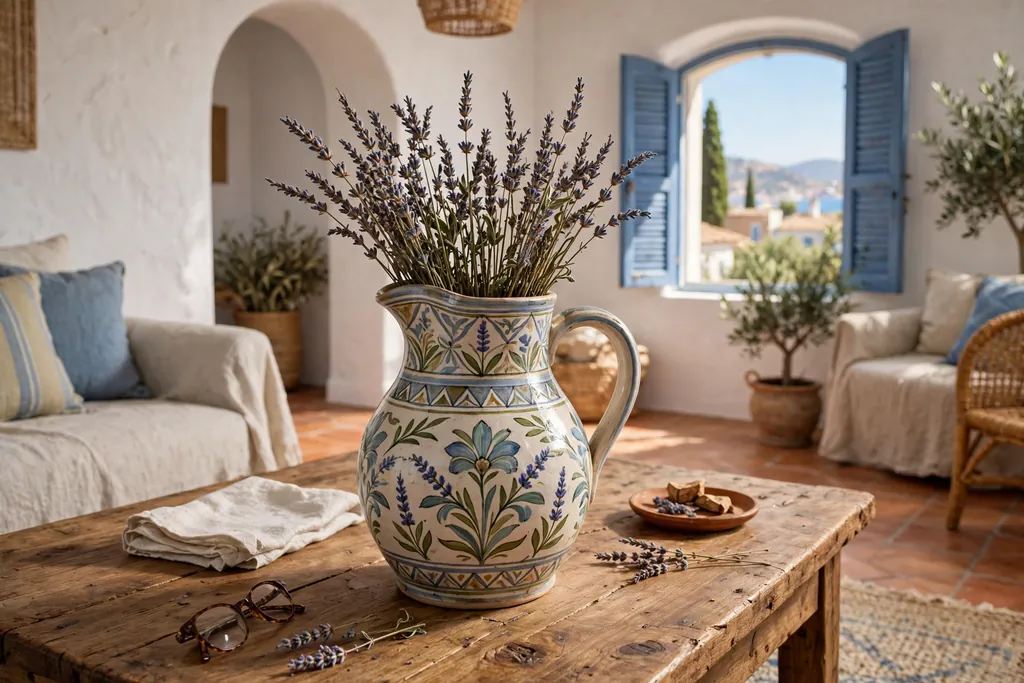
Stand a hand painted ceramic pitcher on the table and fill it with dried lavender stems, or dried wheat if lavender feels too floral. The pitcher itself is the decoration, with its painted pattern doing the work, while the dried stems add height and a soft scent. Dried stems suit a table that gets little daylight, since they need no water and do not wilt.
Keep the pitcher to one side of the table, with its handle turned so it does not snag a sleeve, and replace dried stems once they shed heavily. A pitcher also works as a water jug for guests when it is not holding stems, so keep a second use in mind before buying a purely decorative piece. Wipe painted ceramic gently, since strong scrubbing can wear a hand painted glaze over time.
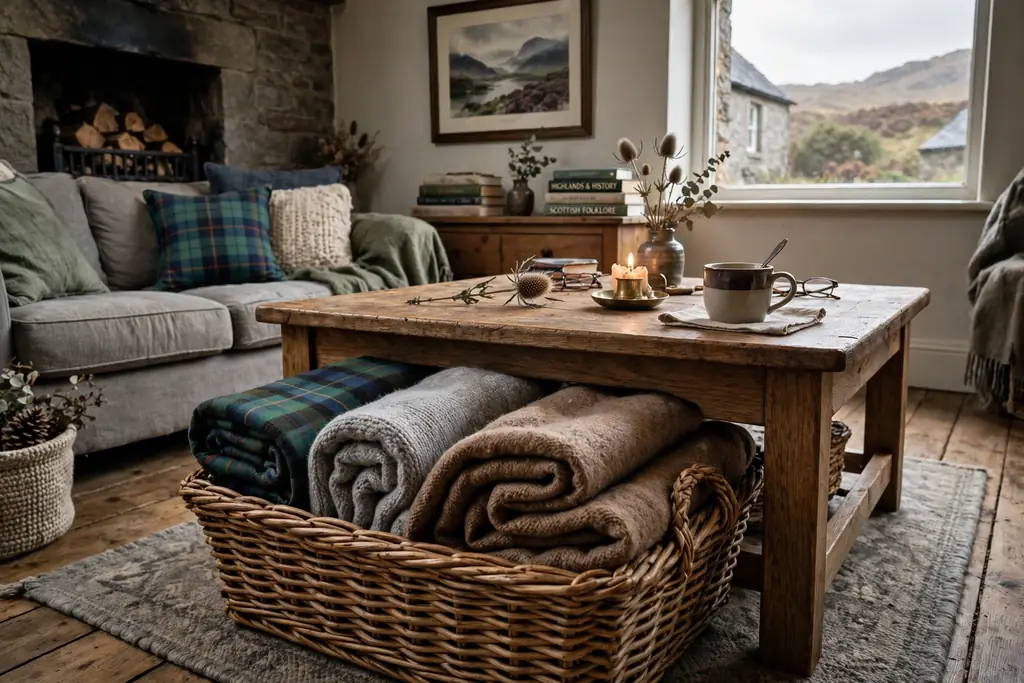
14. Stow Throws and Magazines in a Basket Beneath
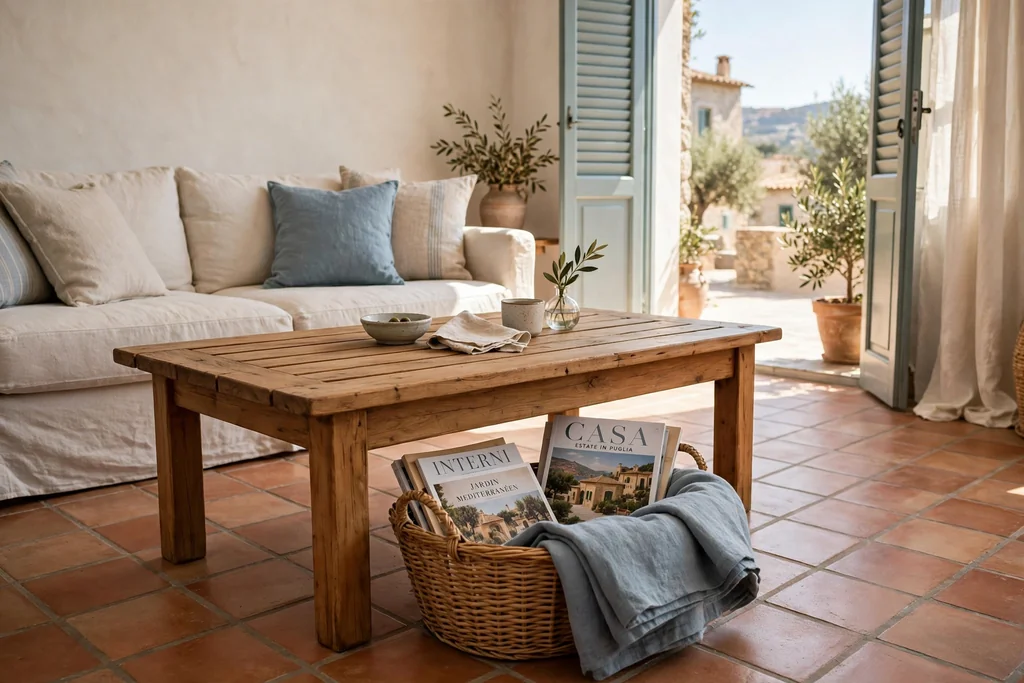
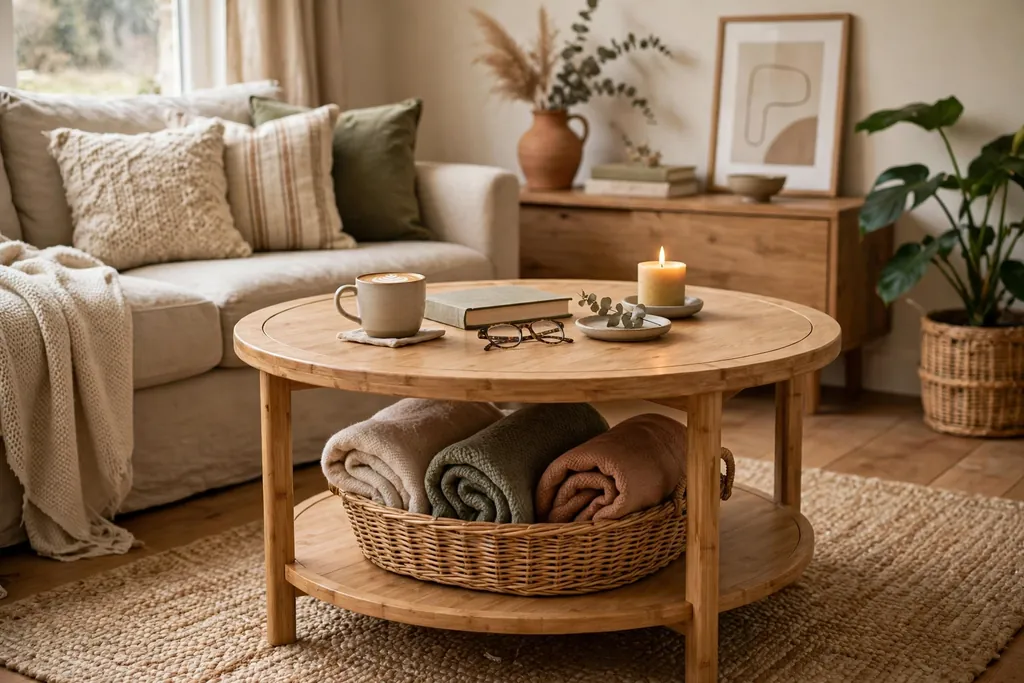
Slide a low woven basket under the coffee table, holding a folded throw and a few magazines, so the tabletop stays clear. The basket adds a second woven layer below the table and gives the styling a practical job: everything guests might want is close, but off the surface. A basket also suits a table with a lower shelf, where it keeps that shelf tidy.
Choose a basket that fits the space under the table with room to slide out easily, and keep it to one throw and three or four magazines, so it does not overflow. A basket with handles is easier to carry to the laundry or to tidy before guests arrive. If the table has no space beneath, a basket beside the sofa leg gives the same storage without crowding the tabletop.
15. Lift a Vase on a Marble Slab Riser
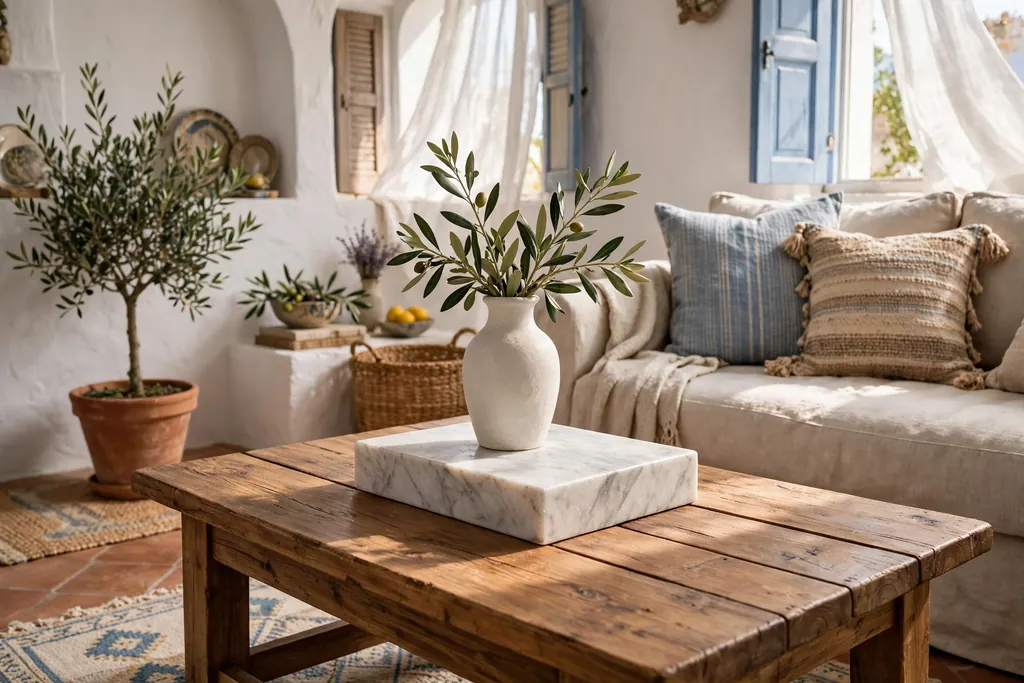
Set a small marble or stone slab on the table and place a vase or candle on top of it, lifting one piece above the rest. The riser adds a second level to a flat tabletop, so the eye moves up and down instead of across a single plane. Marble also gives a cool, smooth contrast to rough terracotta and woven fiber, which is a classic Mediterranean material mix.
Keep the slab small, no wider than the object it holds plus a small margin, so it reads as a pedestal rather than a second tabletop. Use felt pads under the slab to protect a wood table, and keep the lifted piece light, since a heavy vase on a raised slab can tip if the table is bumped. A wood board or a stack of books can serve as a riser if marble feels too formal.
16. Ground the Table With a Patterned Rug Underneath
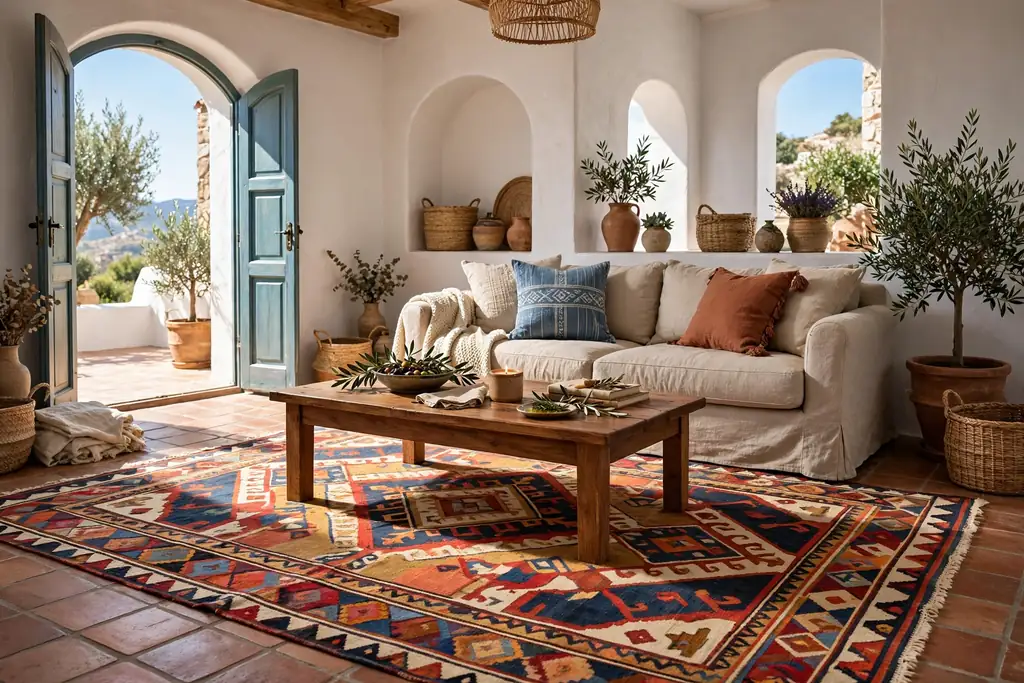
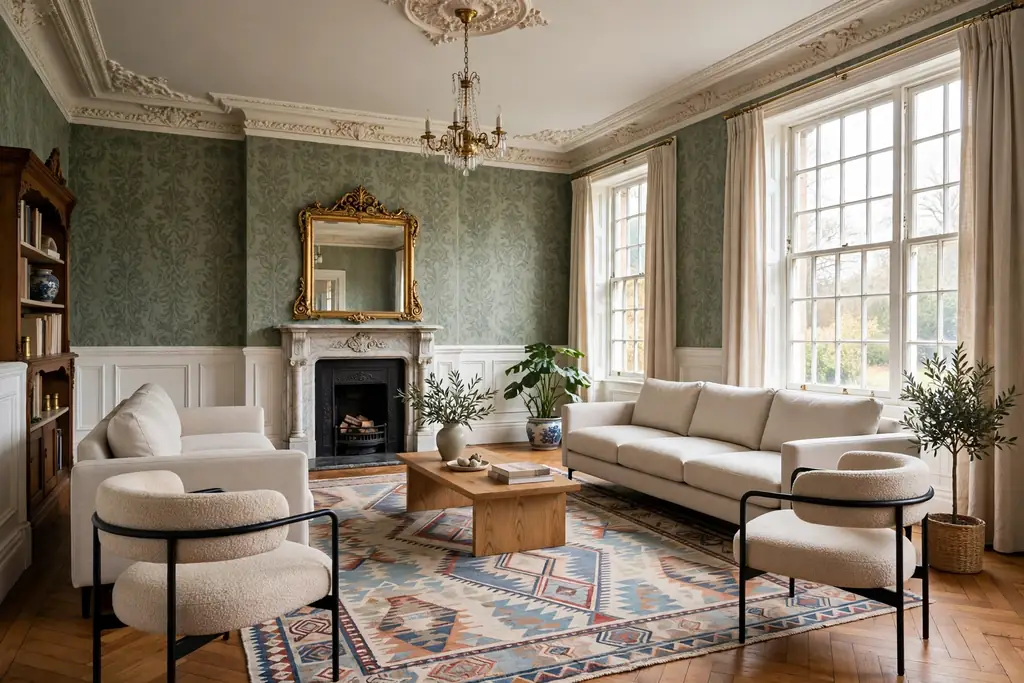
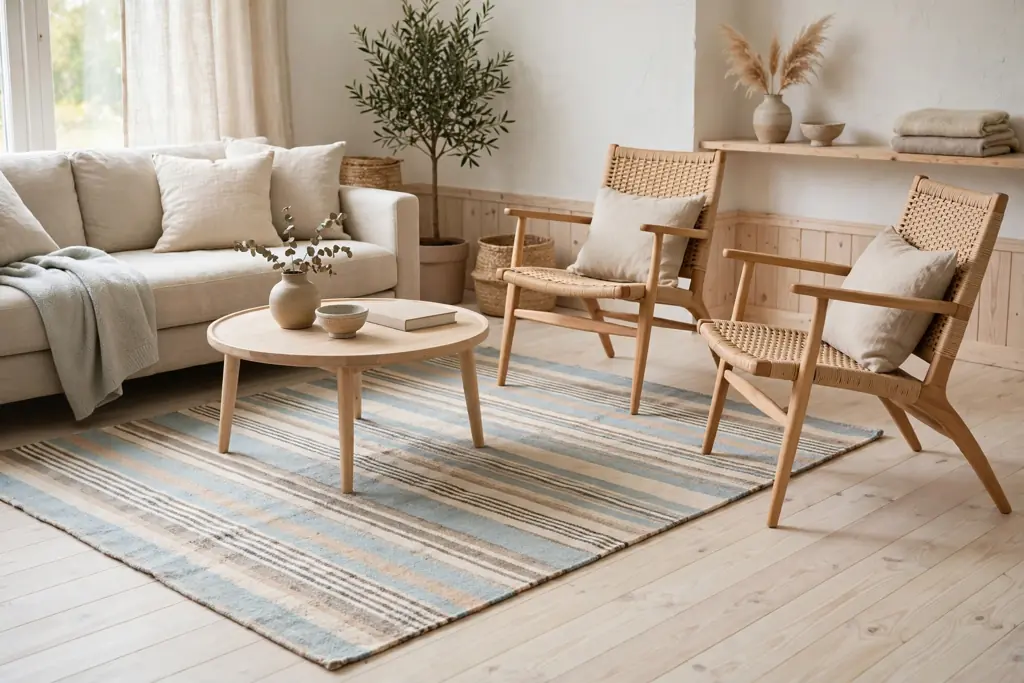
Place a patterned rug under the whole seating group, so the coffee table sits on pattern rather than on bare floor. A rug with a Mediterranean pattern, such as a faded kilim, a tile motif, or a simple geometric repeat, frames the table from below and ties the sofa, chairs, and table into one zone. The rug then carries the pattern, which frees the tabletop to stay simpler.
Size the rug so the front legs of the sofa and chairs rest on it, with the coffee table fully inside its edges. For more help with size and placement, see these living room rug ideas. Keep the tabletop calmer when the rug is busy, with plain books and one ceramic piece, so the two patterns do not compete. A low pile rug suits a coffee table best, since chair legs slide over it more easily.
17. Cover a Small Vignette With a Glass Cloche
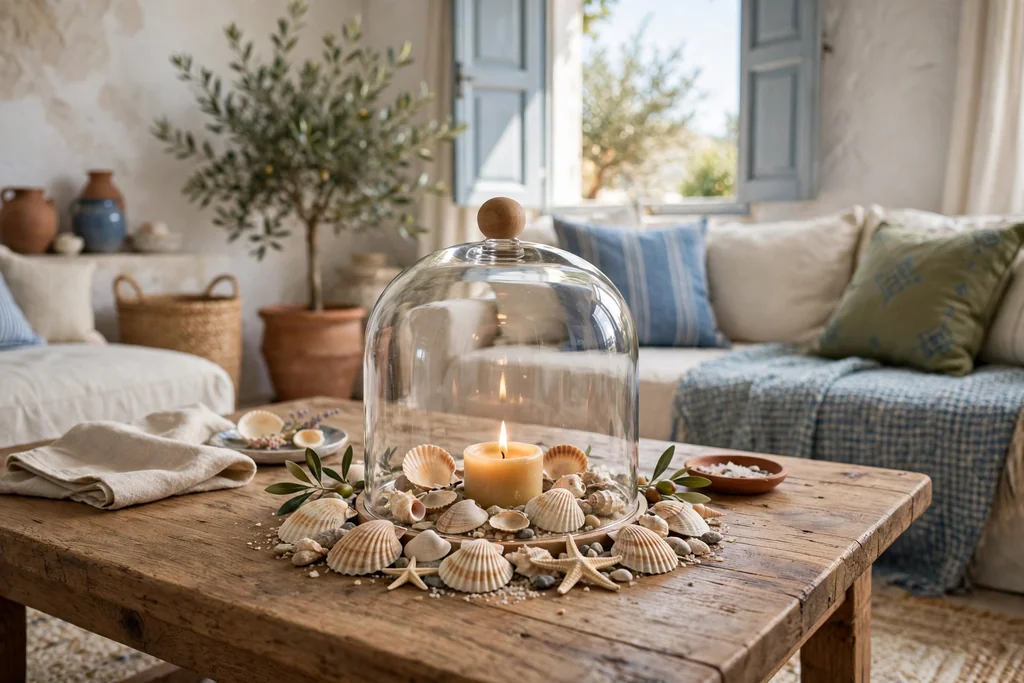
Place a glass cloche over a small vignette on the table, such as a single candle, a shell, or a tiny potted herb. The cloche turns an ordinary object into a display piece, protects it from dust and bumps, and adds a glassy highlight among terracotta and wood. A cloche also keeps a candle flame sheltered, which helps on a table near a draft.
Choose a cloche tall enough that the object inside does not touch the glass, and set it on a small plate or board so it can be lifted as one piece. Keep the cloche away from the table edge, since glass breaks if knocked to the floor. One cloche is enough on most tables; a second cloche beside it can look like a shop display rather than a lived in room.
18. Drape a Wooden Bead Garland Over the Book Stack
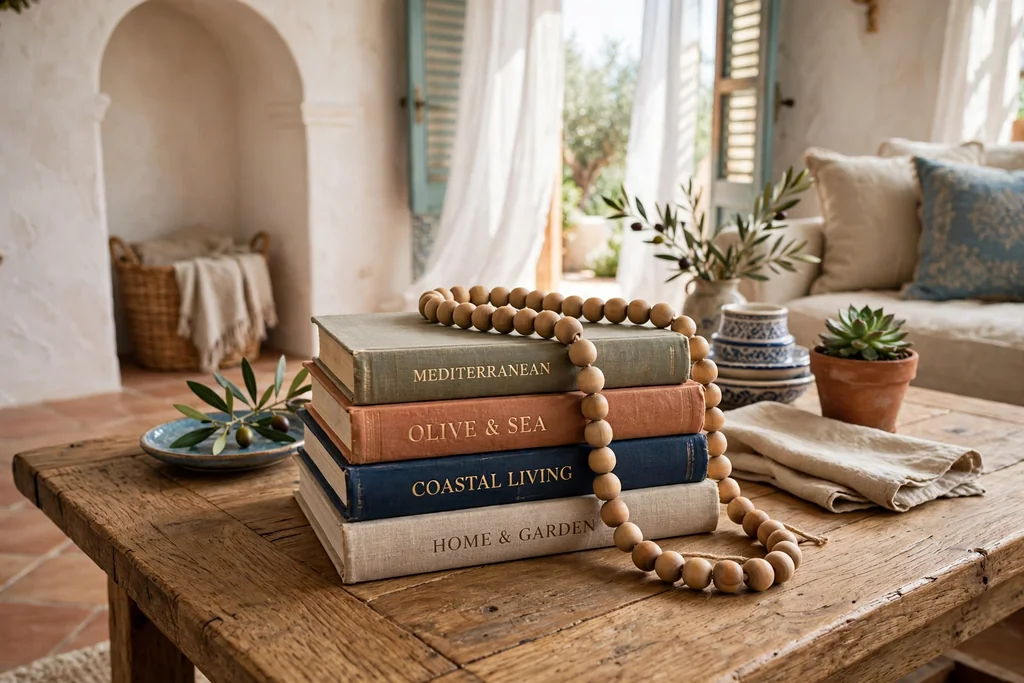
Drape a wooden bead garland across the book stack, letting one end fall over the side of the books. Beads in natural wood or whitewashed wood add a soft, tactile line that breaks up the straight edges of books and trays, and they suit a Mediterranean table because they echo olive wood and prayer bead craft. The garland is a small, cheap accent that changes a plain stack at once.
Keep the garland to one strand, and let it rest in a loose curve rather than wrapping it tightly around the books. Move it aside when you take a book from the stack, and keep it clear of candle flames, since wood beads can scorch. A tassel at the end of the garland adds a finished detail, but a plain strand suits a simpler table just as well.
19. Group Terracotta Votives in Threes
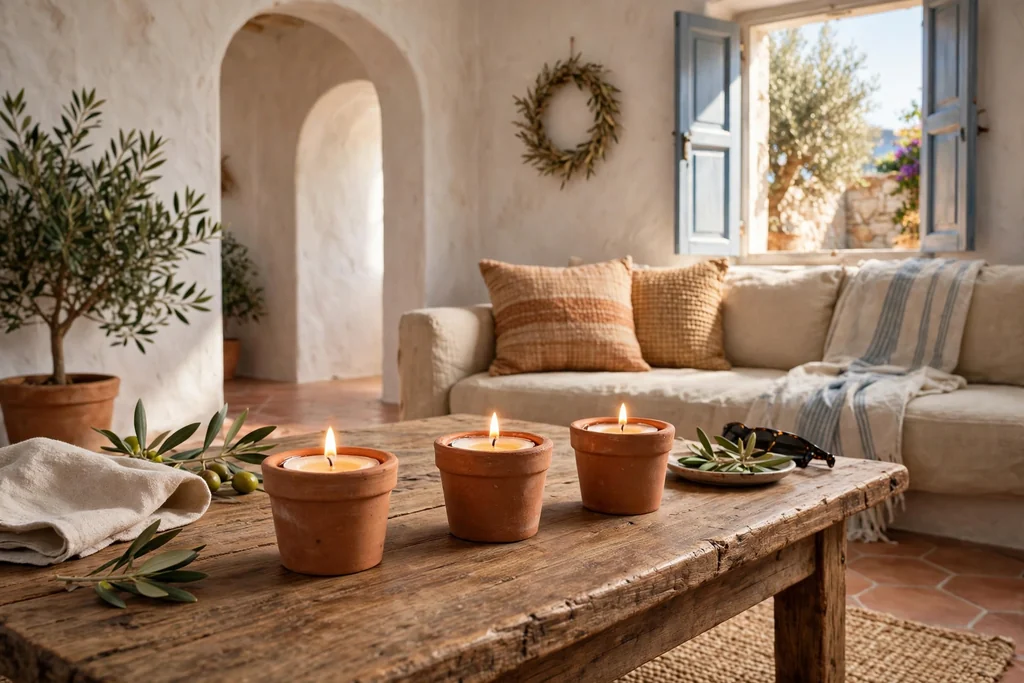
Group three small terracotta votive holders together on the table, with a tea light in each, at one end away from the main tray. Terracotta votives give a softer, earthier candlelight than brass or iron, and a group of three reads as one deliberate arrangement rather than scattered singles. Their low height also suits a table where taller candles would block the view.
Use a small plate or tray under the votives to catch wax, and keep them clear of books, runners, and dried stems. Light all three together for evening use, or light just one when the table is used for reading, so the group works at more than one brightness. Replace tea lights before they burn down fully, since a spent tea light in a terracotta cup is harder to remove once the wax sets.
20. Set an Olive Wood Board for Sharing
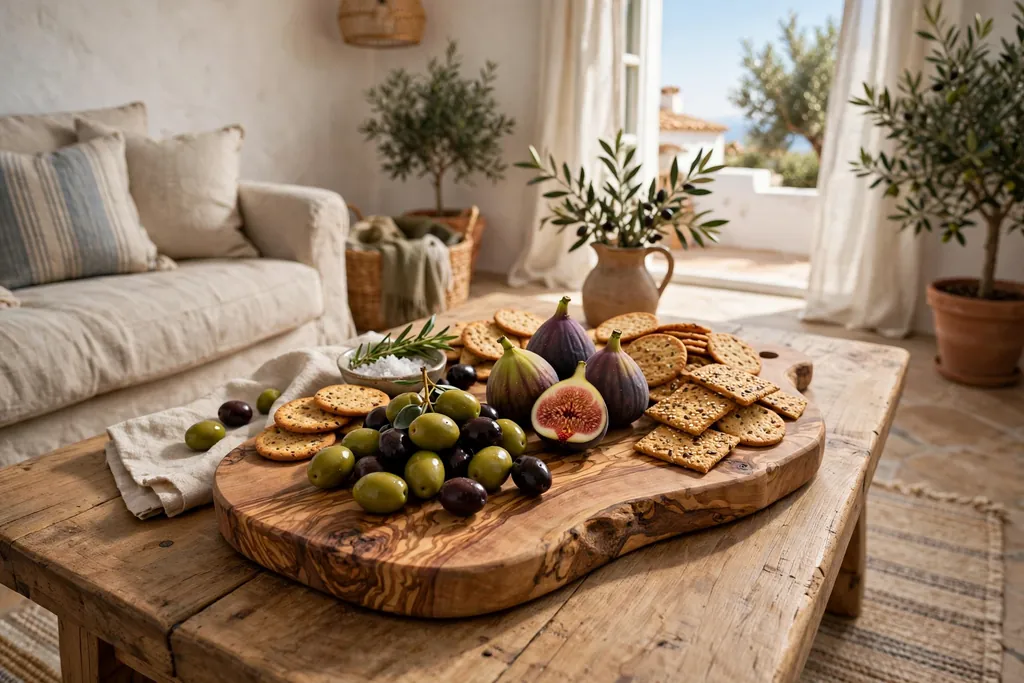
Keep an olive wood board on the table, styled with a small bowl of olives, a few figs, and a short stack of crackers when guests arrive, and left plain with a single small bowl the rest of the time. The board turns the coffee table into a sharing table, which suits Mediterranean hosting, and olive wood grain is handsome enough to stay out even when empty. A board also protects the tabletop from plates and glasses.
Choose a board sized to the table, with room for cups beside it, and oil the wood as its maker advises so it does not dry out. Wash and dry the board after food use, and never leave it soaking, since olive wood can crack if it stays wet. If the board is used daily, keep a second plain board for food, so the styled board stays free of knife marks.
21. Cluster Blue and Green Glass Bottles
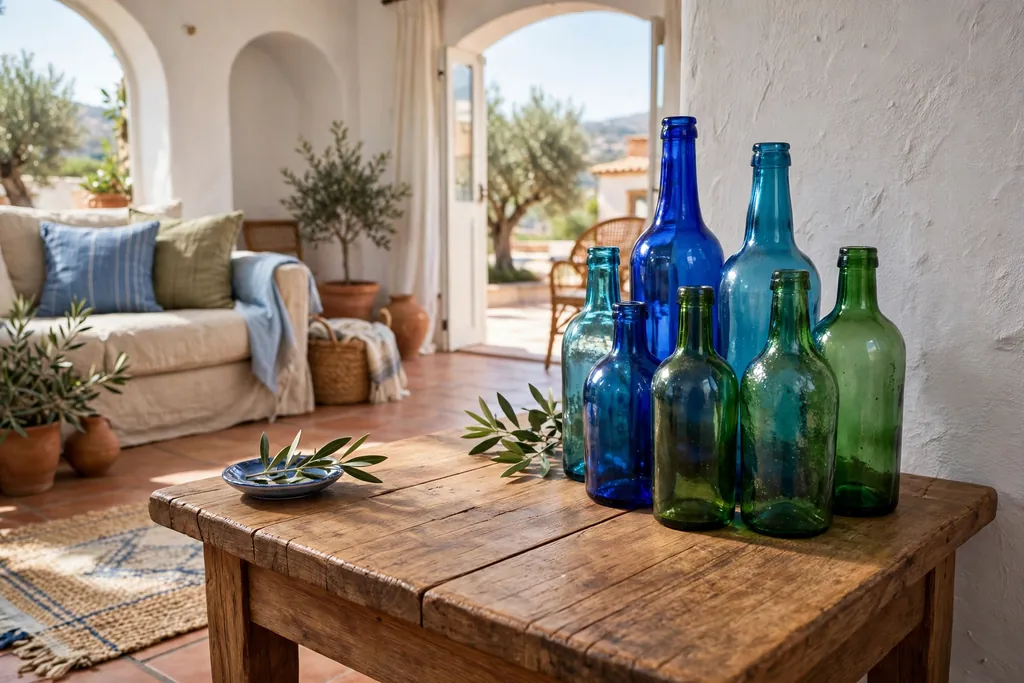
Cluster three glass bottles in blue and green, of different heights, at one corner of the table, empty or holding a single stem each. Colored glass catches daylight and lamplight, and the blue and green tones recall Mediterranean sea glass and old apothecary bottles. Bottles are also a low cost accent, since interesting shapes turn up in thrift shops and markets.
Keep the tallest bottle at the back of the group and the shortest at the front, so each bottle stays visible from the sofa. Rinse bottles before use if they hold stems, and dust them often, since colored glass shows fingerprints in bright light. If the group feels fragile near children or pets, use one sturdy bottle instead of three thin ones, and keep it away from the table edge.
22. Leave One Third of the Table Clear
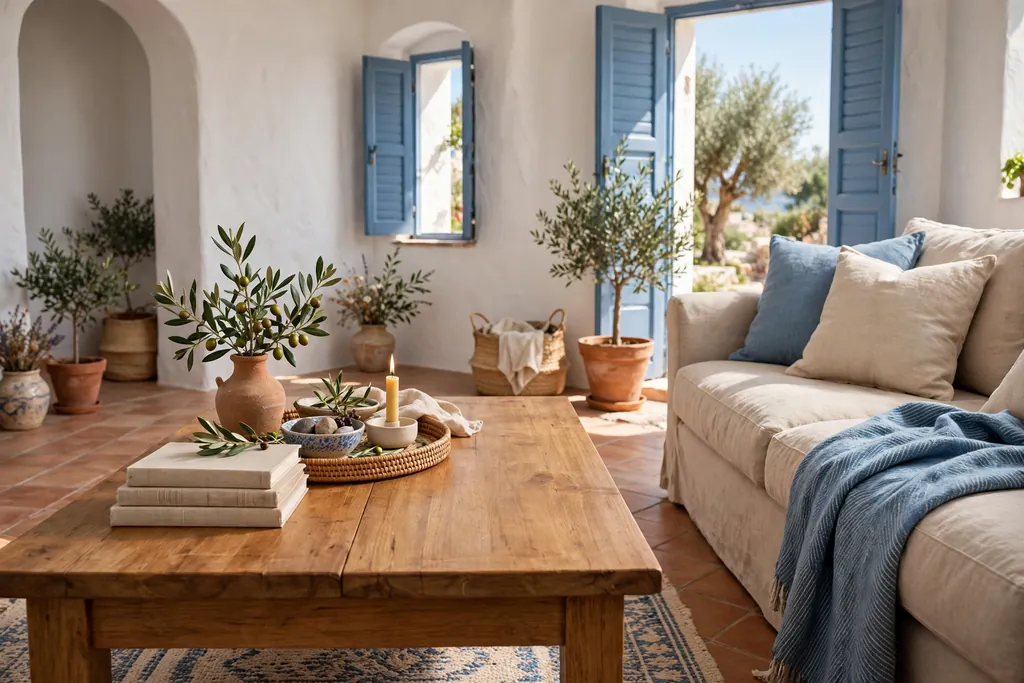
Leave about one third of the tabletop empty, on the side nearest the sofa, for cups, a book in use, and everyday items. A styled table that leaves no working space gets cleared in frustration, while a table with a planned empty zone stays styled because daily life has somewhere to go. The empty zone also gives the eye a rest between the tray, the books, and the candles.
Mark the clear zone by keeping the tray, books, and bottles to the far two thirds of the table, and resist filling the near third with one more small object. If the table is small, keep the styling to a single tray and leave the rest clear, rather than shrinking every idea to fit. A clear zone is what makes the other 21 ideas livable, not just photogenic.
Conclusion
A Mediterranean coffee table does not need a matching set or a large budget. Start with a terracotta tray or a woven runner, add one tall piece such as olive branches, one color note such as a blue ceramic bowl, and one warm light source such as brass candlesticks or terracotta votives. Keep a third of the table clear, let lemons, herbs, and figs refresh the look by season, and let the table change as you use it. Try one idea this weekend, such as a bowl of lemons or a stack of books with a bead garland, live with it for a week, and add the next layer only when the table asks for it. If an idea here helped your living room, save this post to your Mediterranean decor board on Pinterest so you can find it when you are ready for the next change.
Frequently Asked Questions
What colors work best for a Mediterranean coffee table?
Warm terracotta, sand, and natural wood form the base, with blue and white ceramics as the main color accent and brass for warmth. Keep the palette to three or four tones, so the table reads as Mediterranean rather than multicolored. A bowl of lemons or a green plant adds a fresh note without adding a new paint color to the scheme.
How do I style a Mediterranean coffee table without it looking cluttered?
Start with one anchor, such as a tray or runner, group objects in odd numbers, and leave about one third of the table clear. Vary the heights, so a tall branch, a low bowl, and a flat book stack do not compete, and remove one piece if the table feels crowded. A clear zone for cups keeps the styling in place during daily use.
Can I use Mediterranean coffee table styling in a small living room?
Yes, if you scale the ideas down: one tray instead of two anchors, a single vase of olive branches instead of a bottle cluster, and a low bowl instead of a tall arrangement. A patterned rug under the table can carry the Mediterranean pattern, which frees the small tabletop to stay simple. Keep the styling to the far side of the table and leave the near side clear for use.
What is the best tray for a Mediterranean coffee table?
A terracotta tray suits most tables, since its warm clay color sets the tone and its low rim keeps items visible. A mosaic tile tray is the better pick if the table holds drinks often, since tile handles wet glasses well. Choose a tray that fits the table with space left at each end, and keep the heaviest piece in the center so the tray stays balanced.
How do I keep fresh lemons, herbs, and branches looking good on the table?
Change the water for olive branches every few days and trim the stems at an angle, replace any lemon that softens, and give potted rosemary and lavender the brightest spot in the room when the table is not in use. Dried lavender, shells, and ceramic pieces need only a dust, so mix one or two fresh items with longer lasting pieces rather than styling the whole table with fresh material.
Do Mediterranean coffee tables suit a modern living room?
Yes, because the materials, terracotta, olive wood, woven fiber, blue ceramic, and brass, work with plain modern furniture as well as with rustic pieces. Keep the shapes simple, such as a plain glass vase, a low ceramic bowl, and a straight edged tray, and let one or two Mediterranean pieces lead rather than filling the table with themed objects. A modern room needs fewer pieces, not different ones.