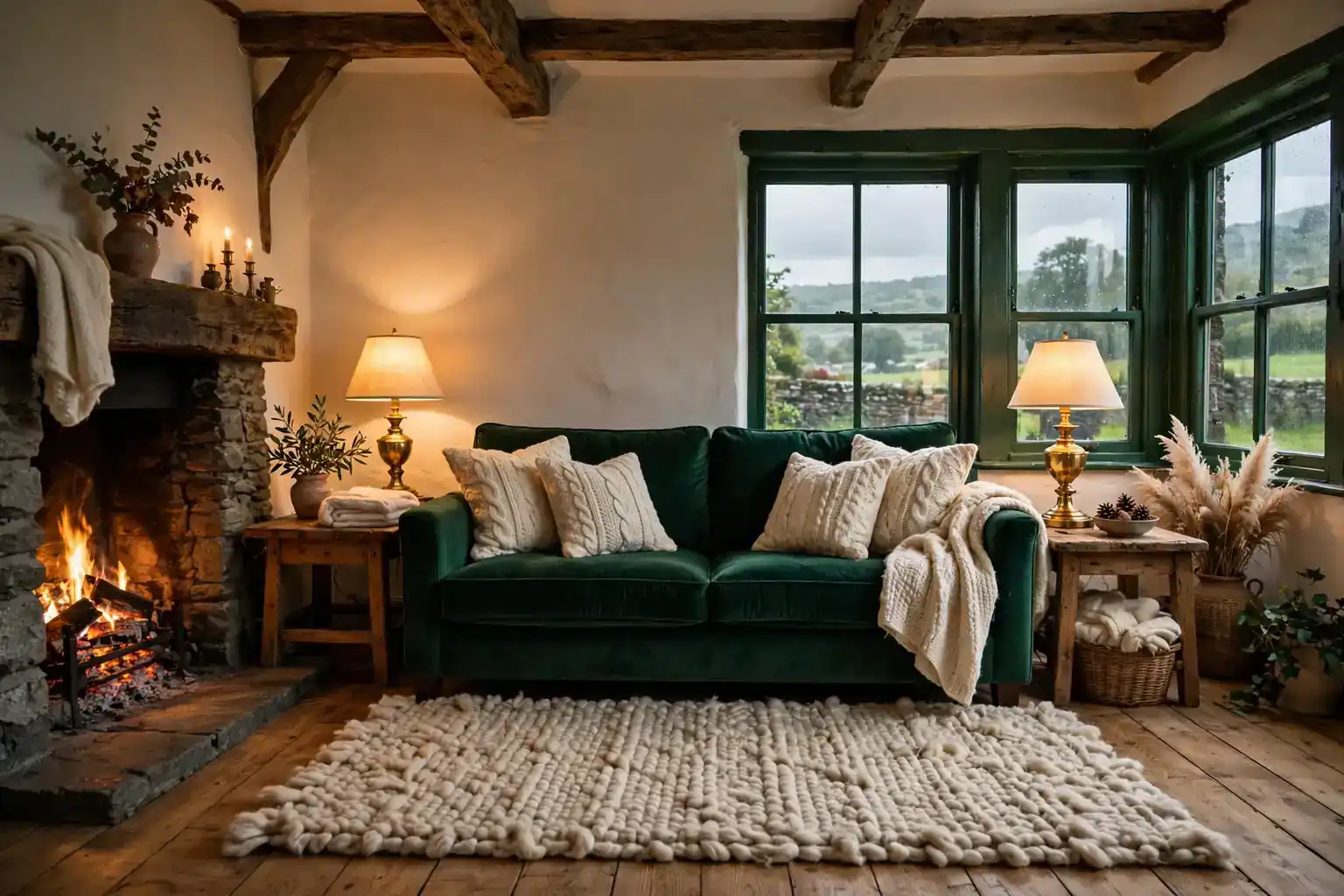
An Irish living room feels personal when it mixes warmth, texture, and a few pieces with a story, rather than copying one look from a shop window. Think of a deep green sofa beside a real fire, a wool throw for cold evenings, and art that reminds you of a place you love. These 23 Irish living room ideas cover color, seating, fireplaces, storage, lighting, and small coastal and country details, so you can pick the ones that fit your room and budget. For help grounding the seating group, these living room rug ideas show how size and placement change the feel of a room.
Key Takeaways
- Let one strong piece lead, such as an emerald sofa, a fireplace, or a stone wall, and keep the rest of the room calm around it.
- Use texture for warmth: wool, tweed, linen, Aran knit, wood, and stone do more work than extra color.
- Keep Irish details to a few well chosen pieces, so the room reads as personal, not as a set.
- Layer light at more than one height, with lamps and candles beside the fire, for dark evenings.
- Repeat a small palette of green, cream, peat brown, and warm wood through cushions, rugs, and art.
- Add one personal layer, such as family photos, books, or music, since personality comes from what you actually use and love.
1. Anchor the Room with a Deep Emerald Sofa
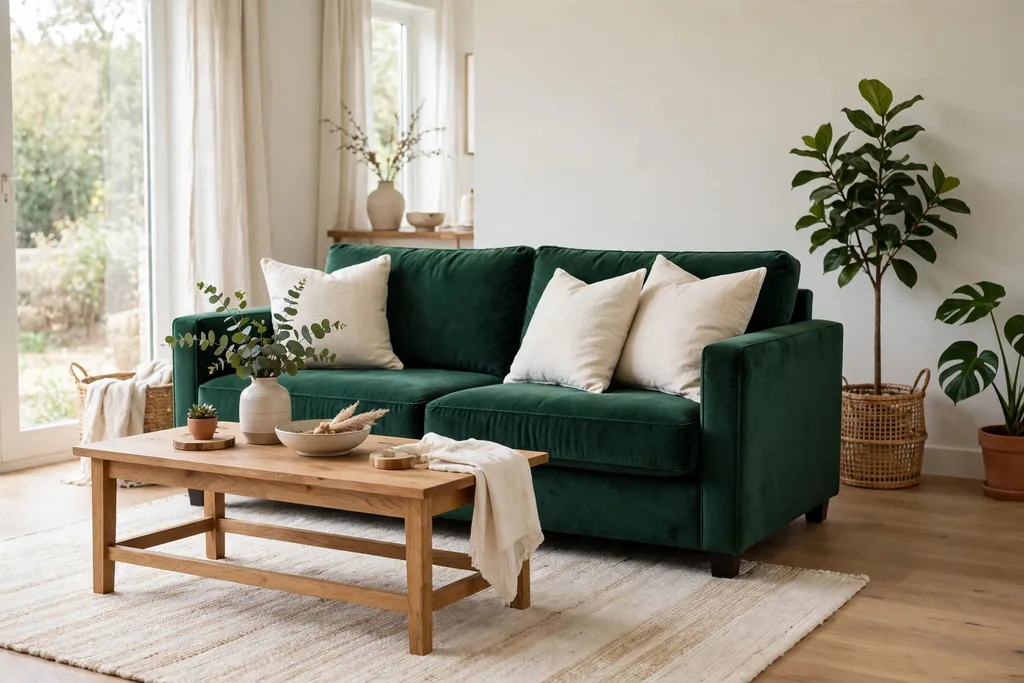
A deep emerald sofa is the simplest way to give an Irish living room a clear identity, because the color carries the whole scheme without needing a themed room. Choose a plain emerald fabric, not a patterned one, and pair it with cream cushions, a wood coffee table, and a pale rug, so the green stays rich rather than loud. The sofa then works as both the main seat and the main color in the room.
Keep the walls pale, in warm white or soft cream, so the dark sofa does not close the room in. Add one warm accent, such as a rust or mustard cushion, and keep other colors quiet. Emerald shows dust and pet hair less than a pale sofa, but it still benefits from washable cushion covers in a room used every day.
2. Make a Peat Fire or Stove the Evening Center
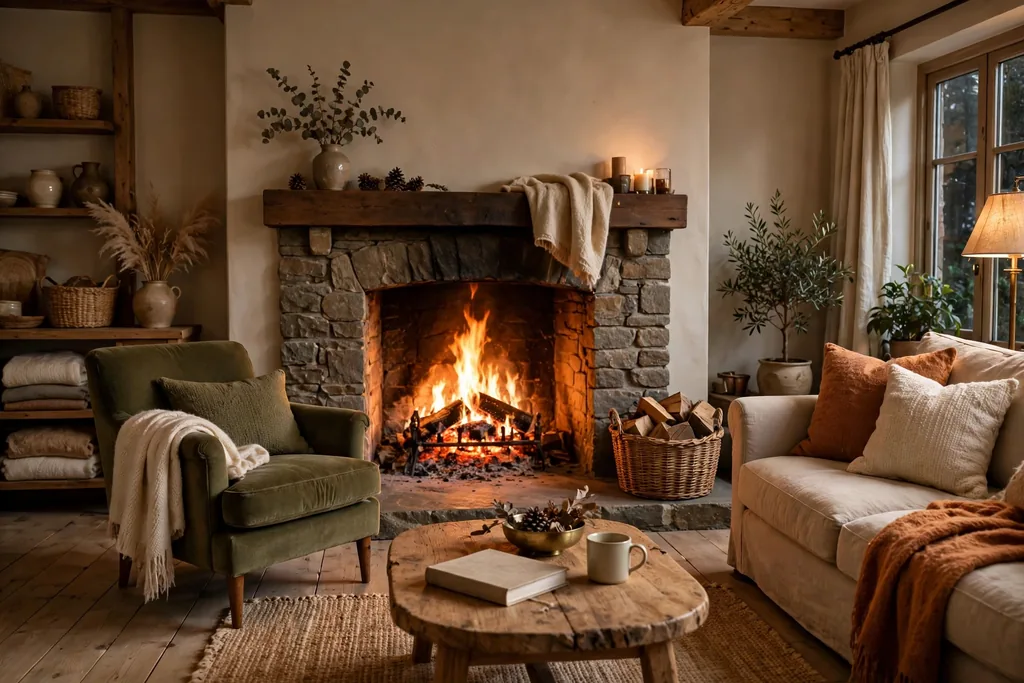
A peat fire, or a stove that burns peat style fuel where that is allowed, gives an Irish living room a scent, a glow, and a natural gathering point. Arrange the main sofa facing the fire, or at a right angle to it, with a chair on the other side, so conversation faces the hearth rather than the television. Keep a basket of fuel, a fire guard where needed, and a small log store beside the hearth.
If you have no working chimney, a freestanding stove with a proper flue, or an electric stove effect fire, gives a similar focus without building work. Keep throws, cushions, and paper clear of the opening, and follow the maker guidance for safe clearances. A simple mantel, with one mirror or one print and a pair of candlesticks, lets the fire itself stay the star.
3. Brighten the Room with Whitewashed Walls
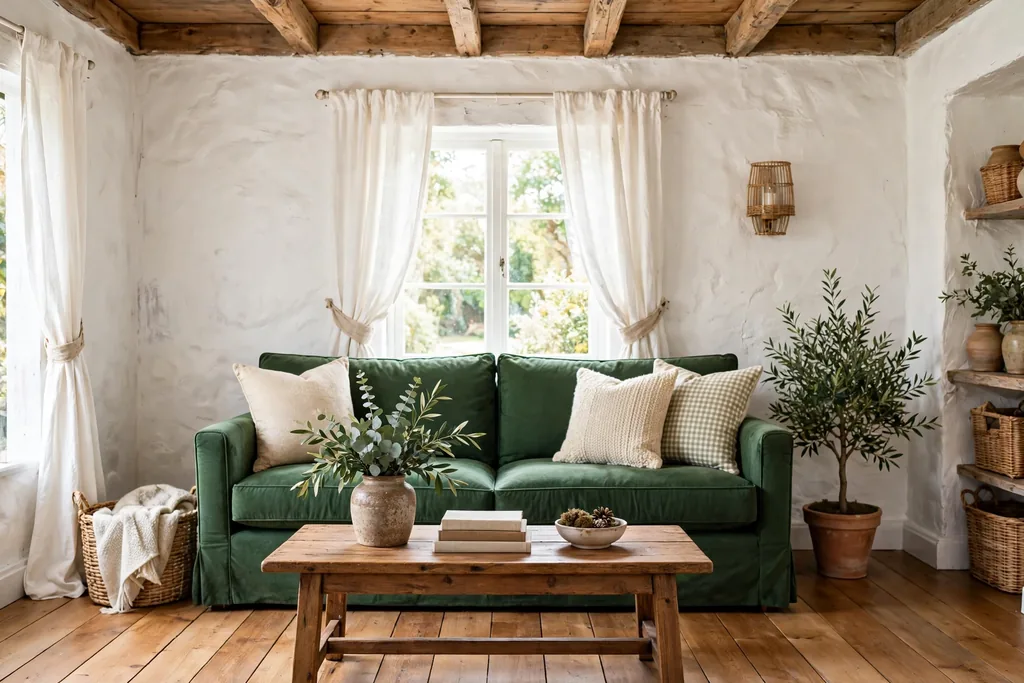
Whitewashed walls suit an Irish cottage living room because they bounce light around a small or north facing room while keeping a soft, handmade feel. Use a warm white, not a cold blue white, and leave the texture of plaster or old stone visible where you can, rather than covering it with a flat, perfect finish. The pale walls then make wood beams, a dark sofa, and wool textures stand out.
Pair whitewashed walls with warm wood floors and a rug in cream or muted green, so the room does not feel bare. If the room is large, whitewash three walls and keep one in a deeper tone, such as moss or peat brown, to hold the seating group together. Touch up marks with the same wash, since a patch in a different white shows at once.
4. Drape an Aran Knit Throw Over the Sofa Arm
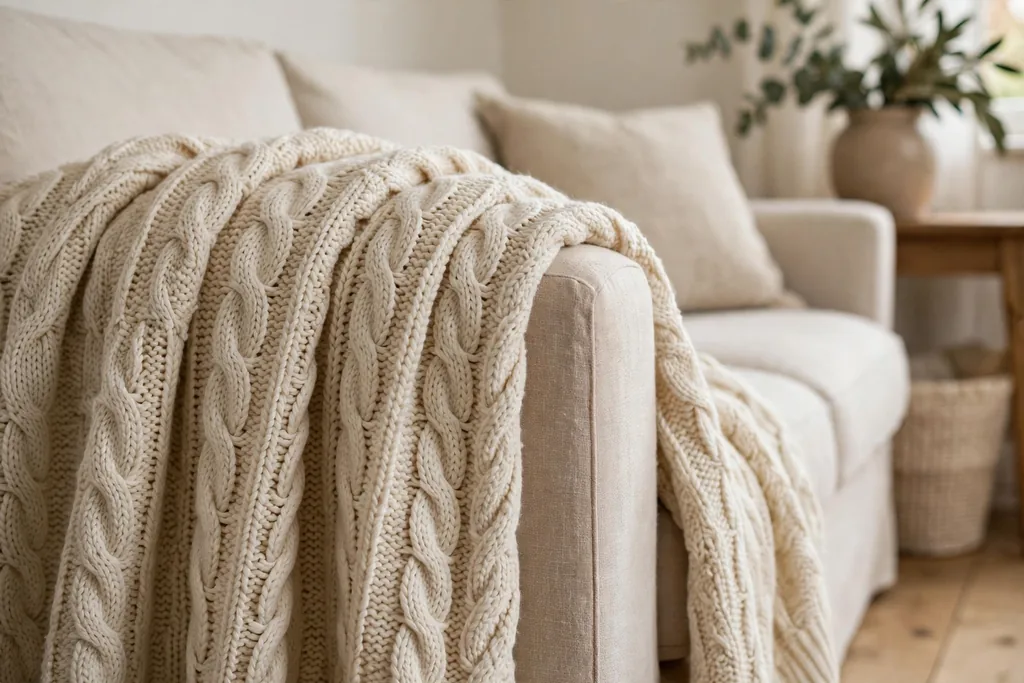
An Aran knit throw brings Irish craft into the room in the most usable way possible: it is there to be used on cold evenings, not just looked at. Choose a cream or oatmeal Aran knit with a cable pattern, and drape it over one sofa arm or fold it across the back, rather than spreading it over the whole sofa. One throw is enough, since the knit pattern is already detailed.
Pair the Aran throw with plain cushions in cream or soft green, so the knit stays the main texture. Keep a second throw in a basket nearby for guests, and wash the Aran throw as its care label directs, since wool knits hold their shape best when dried flat. This is a good first Irish detail if you rent, since it needs no paint, drilling, or new furniture.
5. Add a Donegal Tweed Armchair for Texture
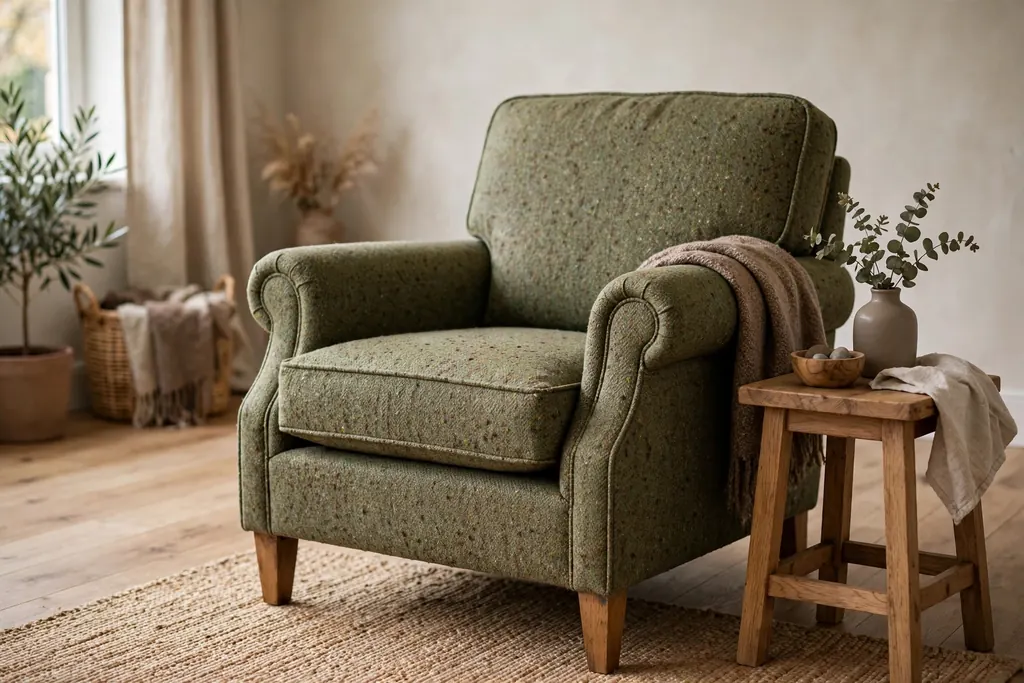
A Donegal tweed armchair adds flecked color and a sturdy, lived in texture that a plain fabric chair cannot match. Choose tweed in a muted mix, such as green, brown, and cream flecks, and place the chair at an angle to the sofa with a small side table, so it forms a reading corner rather than sitting in a row. The chair then gives the room a heritage piece without a full tweed suite.
Keep the rest of the seating plain, so the tweed does not compete with another strong pattern. A plain cushion in one color pulled from the tweed, such as moss or rust, ties the chair to the sofa. Tweed is hard wearing, which suits a chair used daily, but keep it out of strong direct sun, since the flecked colors can fade unevenly over time.
6. Lay a Thick Wool Rug Over a Wood Floor
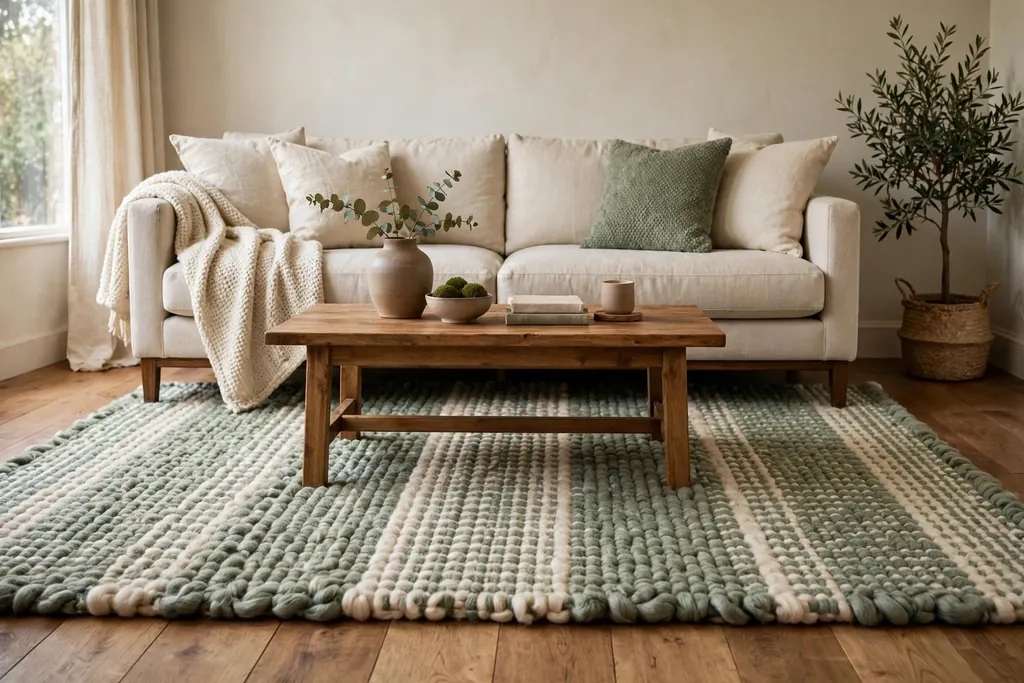
A thick wool rug over a wood floor gives an Irish living room warmth underfoot and a clear seating zone, which matters in a room with bare boards. Choose a rug large enough for the front legs of the sofa and chairs to rest on it, with a pattern in muted green, cream, and rust, or a plain rug in a warm neutral if the cushions already carry pattern. Wool handles daily wear well and feels soft in bare feet.
Keep the rug low enough that doors and chairs slide over it without catching, and use a rug pad underneath on a polished floor, so the rug does not slip. Vacuum regularly without a beater bar on a high pile, and blot spills at once rather than rubbing them. A wool rug also helps a room with hard floors feel quieter, since it softens sound as well as cold.
7. Build a Bay Window Seat for Reading and Watching the Weather
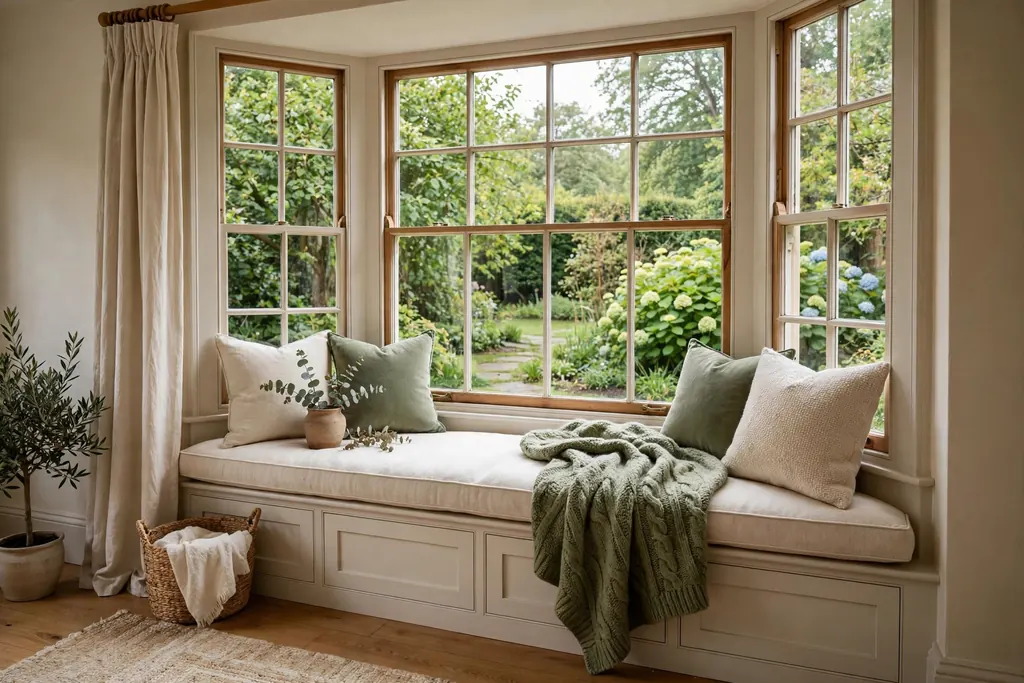
A bay window seat turns a window into the best seat in an Irish living room, a place to read, watch rain, and look out at the garden. Fit a bench across the bay with a thick cushion in a washable fabric, add back cushions in cream and green, and keep a wool throw and a small shelf of books within reach. The seat then works for one reader, or for two people sharing a quiet hour.
Use the space under the bench for storage, with lift up lids or drawers for blankets, games, and spare cushions, so the seat stays clear. Dress the window with a sheer panel for daytime privacy and a heavier curtain for night, so the seat stays usable after dark. If the window is drafty, add a draft strip and a thick cushion, since a cold seat will go unused no matter how pretty it looks.
8. Style a Dark Wood Dresser with Irish Pottery
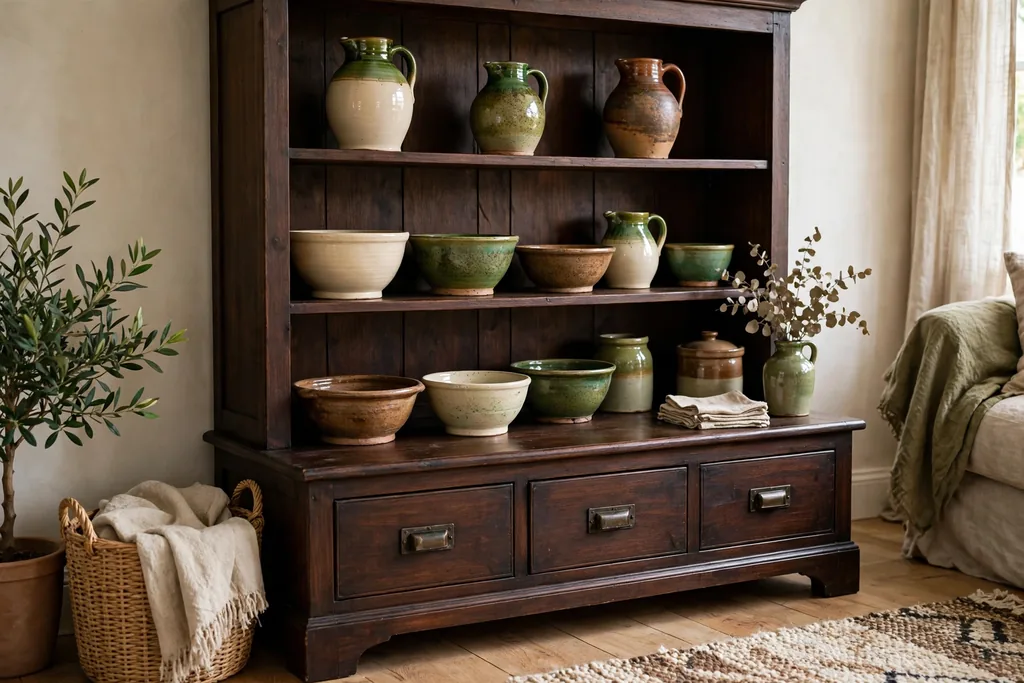
A dark wood dresser gives an Irish living room storage and display in one piece, and it suits pottery, books, and family pieces far better than a plain cabinet. Place the dresser against a wall near the dining end of the room, or beside the fireplace, and fill the shelves with a small group of Irish pottery, jugs, and bowls in cream, green, and earth tones, leaving space between pieces so each one can be seen.
Keep the dresser top mostly clear, with one jug of dried flowers or a candle group, and store everyday items in the drawers and cupboards below. Group pottery by color, not by size alone, and step back to check the shelves from the sofa, since a dresser that looks good from across the room matters more than one that looks good close up. Dust the shelves weekly, since open display collects dust fast in a room with a fire.
9. Hang Irish Landscape Prints Above the Sofa
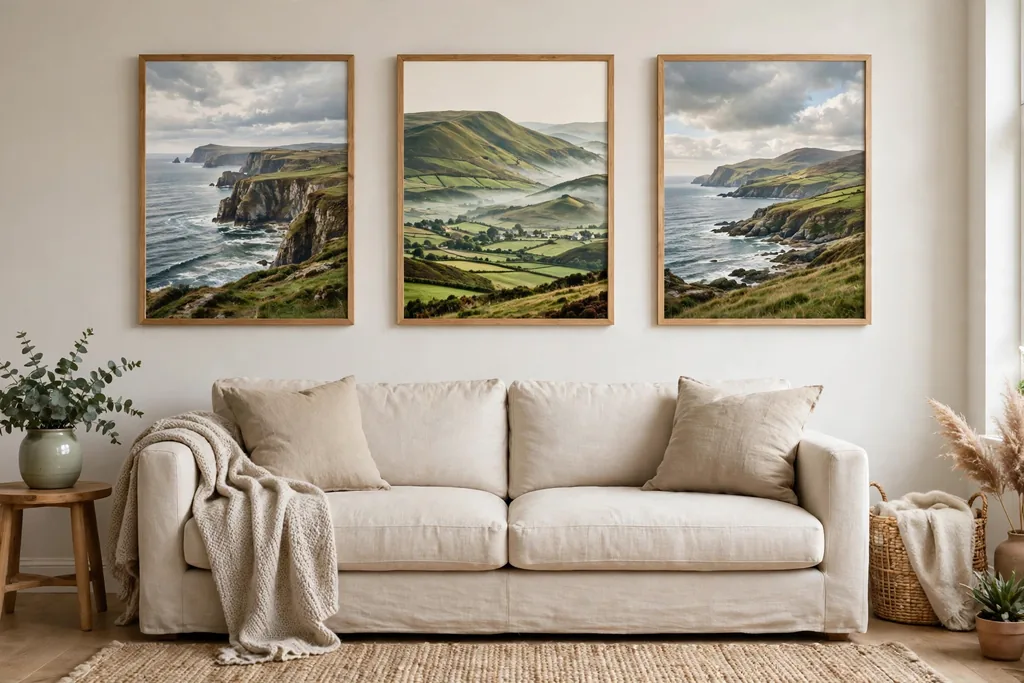
Framed prints of the Irish coast, hills, or countryside give a living room personality that is specific, not generic, because the places in the pictures mean something to the people who live there. Hang two or three prints above the sofa, in matching wood frames, with the center of the group at eye level when seated, and keep the outer edges inside the width of the sofa. A single large landscape print also works, if the wall is wide enough.
Choose prints in soft, muted colors that repeat the room palette, such as sea green, slate, and cream, rather than bright, high contrast images that fight with the sofa. Mix a coastal scene with a hill or field scene for variety, and keep the frames simple, since ornate frames can make a small wall feel busy. If you have your own photos from Ireland, print one large and frame it well, since a personal photo carries more meaning than a bought print.
10. Layer Brass Lamps and Candlelight for Dark Evenings
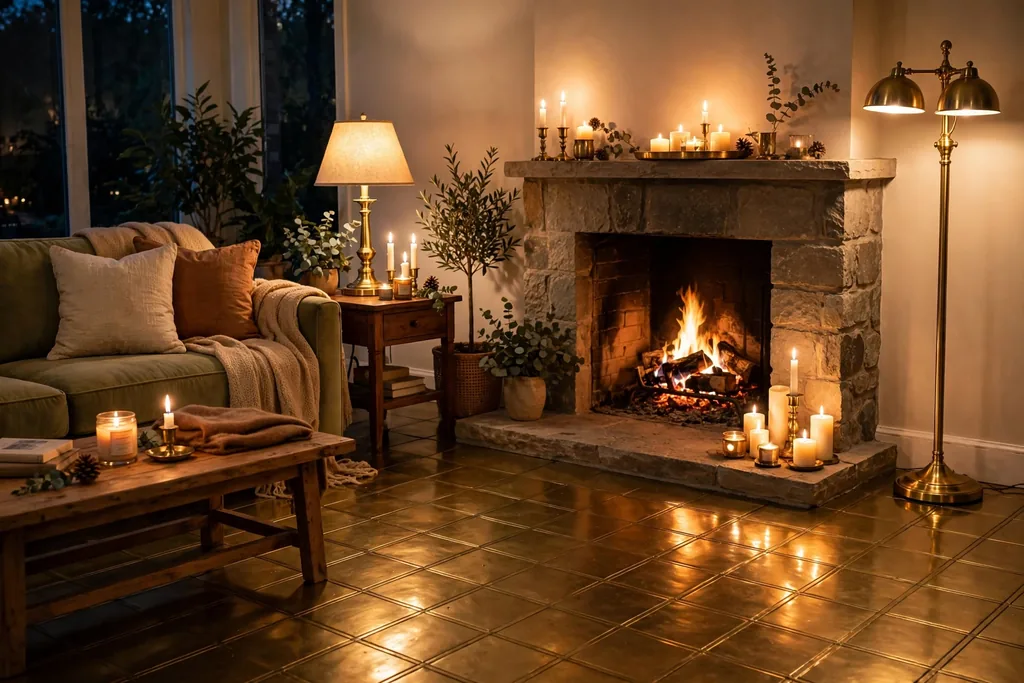
Brass lamps and candlelight suit an Irish living room because they warm the room on dark evenings in a way a single ceiling light cannot. Place a brass floor lamp beside the sofa, a brass table lamp on a side table, and a group of candles on the mantel or coffee table, and use warm bulbs throughout. The mix of heights, floor, table, and mantel, makes the room feel layered rather than flat.
Keep candle groups on a tray, away from curtains, throws, and paper, and never leave them burning in an empty room. Use dimmers or low wattage bulbs in the lamps, so the evening light stays soft, and keep one brighter lamp by the reading chair for books and crafts. Brass needs only a soft cloth now and then, and a little tarnish suits an older room better than a mirror polish.
11. Create a Fireside Reading Chair with a Footstool
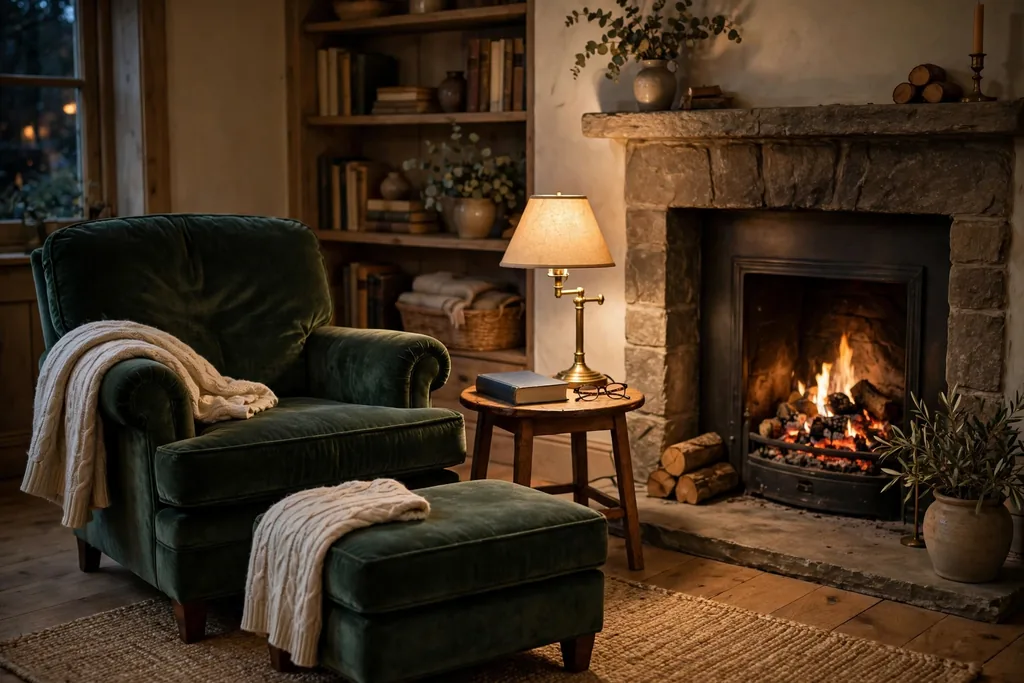
A deep fireside reading chair with a footstool and a reading lamp is the Irish living room at its most welcoming, a seat made for long evenings. Place the chair beside the fire, angled toward it, with a small side table for a book, a mug, and glasses, and a footstool that can be pushed aside when the room needs more floor space. The chair should be deep enough to curl up in, with arms at a height that supports a book.
Choose a chair fabric that suits daily use, such as wool, tweed, or a washable plain fabric, and add one cushion in a color pulled from the room, not a new color. Keep a basket of books or magazines beside the chair, so reading does not need a trip to another room. If the chair faces the television as well as the fire, angle it between the two, so neither view needs a twisted neck.
12. Bring Back the Settle Bench Beside the Fire
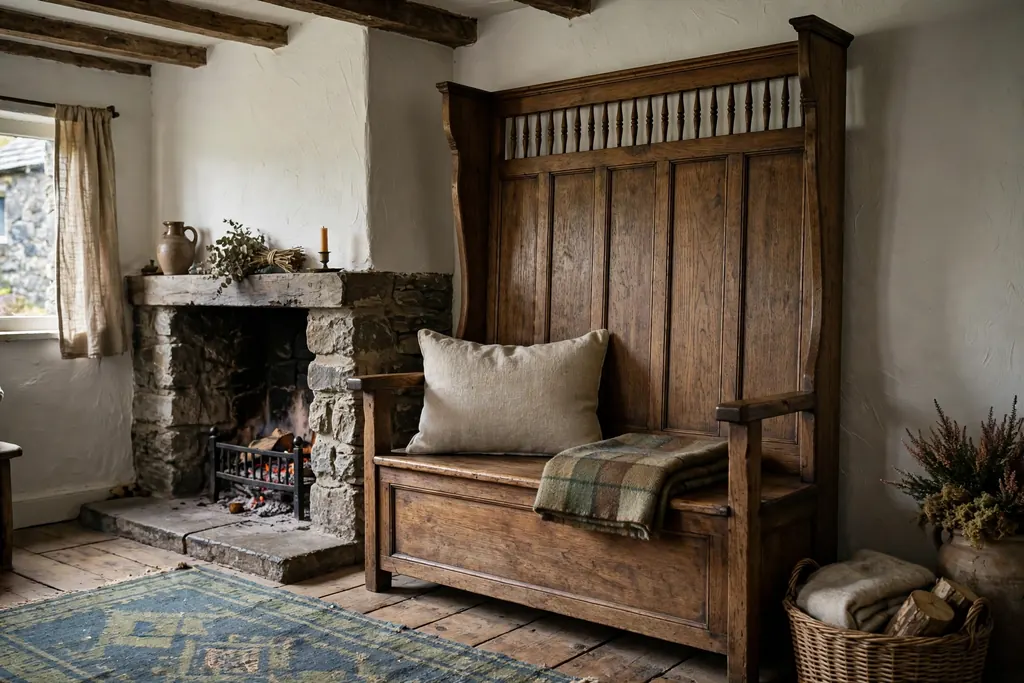
A settle bench, the tall backed wooden bench once common in Irish farmhouses, gives a living room a piece of history and a practical extra seat. Place it against a wall beside the fire, or at a right angle to the hearth, with a cushion on the seat and a folded throw over the back, so it invites sitting rather than standing as a museum piece. The high back also cuts drafts from a door behind it.
Use the settle for overflow seating when guests visit, and keep the seat clear of bags and clutter, so it stays usable. A settle in dark wood suits a cottage room, while a painted settle in cream or soft green suits a brighter room. Check the seat height before you buy, since old settles can sit low, and add a cushion if the seat feels hard after half an hour.
13. Dress Windows with Natural Linen Curtains
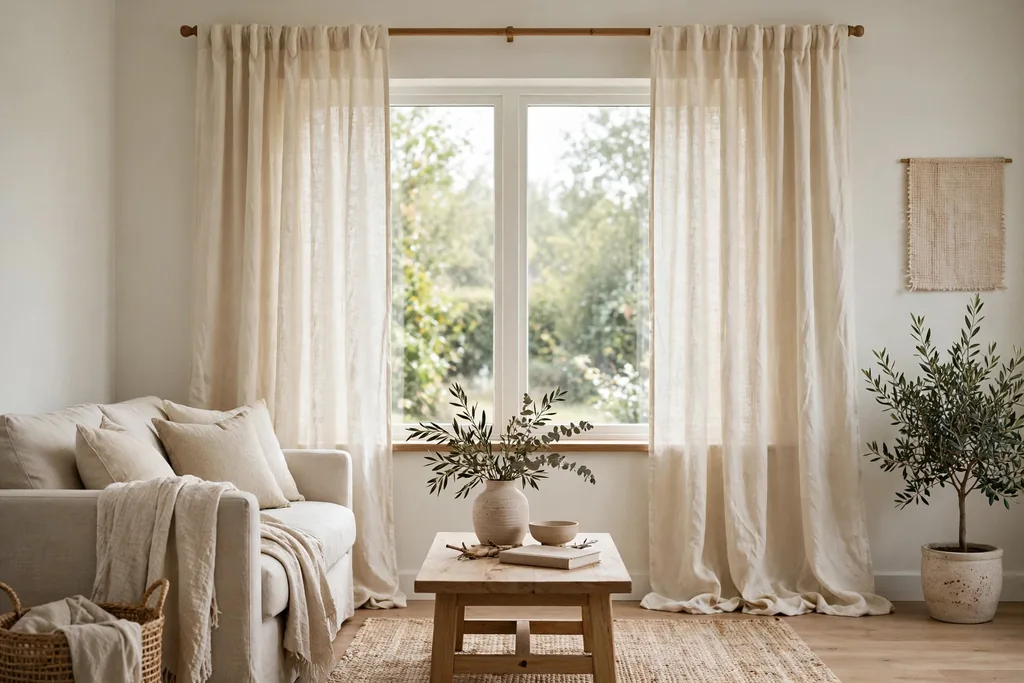
Natural linen curtains soften an Irish living room without blocking the light it needs, which matters in a room that can feel dark in winter. Hang the rod close to the ceiling and let linen panels in cream, oatmeal, or soft sage fall to the floor, with a sheer panel underneath for daytime privacy. The linen texture suits wood, wool, and stone far better than a shiny synthetic fabric.
Keep the curtains plain, so they do not compete with a patterned rug or tweed chair, and choose a washable linen blend if the curtains will be handled often. Let the panels stack to the sides of the window by day, so the full window stays open to light, and close them at night for warmth and privacy. If the window is small, a single linen panel on each side still frames it well.
14. Leave One Wall of Exposed Stone on Show
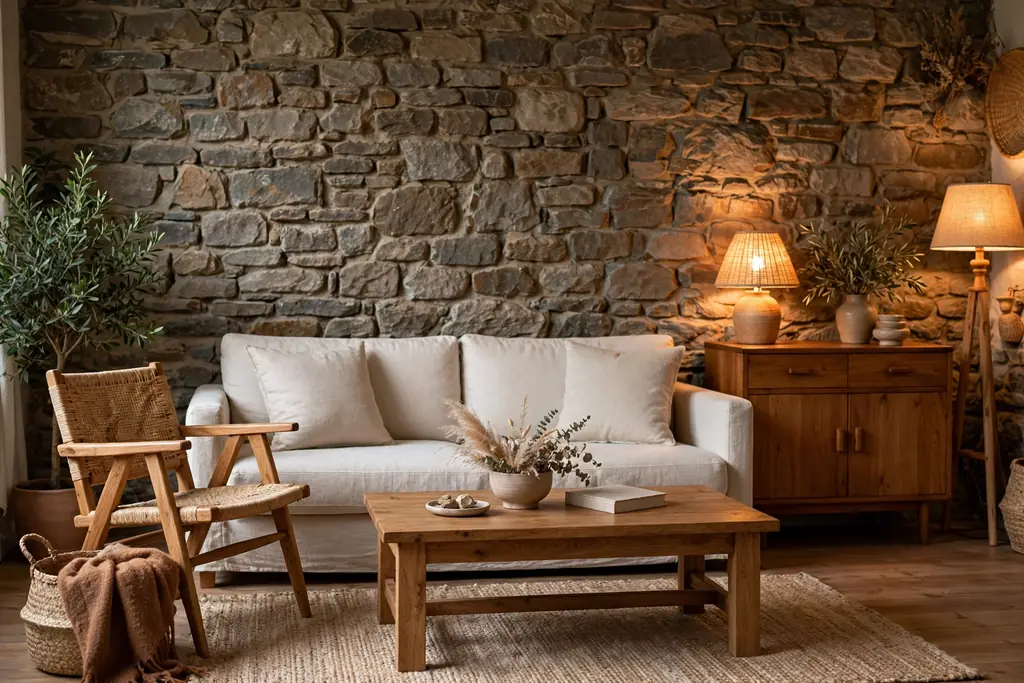
An exposed stone wall gives an Irish living room a texture no paint can copy, and it suits a cottage, a converted barn, or a house with old stone under plaster. Leave one wall bare, or strip back plaster on one wall only, and keep the furniture in front of it simple, such as a plain sofa or a wood bench, so the stone stays visible. The rough surface then becomes the room feature, with no art needed on that wall.
Keep the rest of the walls pale and plain, so the stone wall does not make the room feel heavy, and use warm lamps to bring out the stone color in the evening. Seal dusty stone if it sheds, and check for damp before you strip plaster, since a damp wall needs fixing first. If your home has no stone, a stone fireplace surround or a stone hearth gives a similar texture on a smaller scale.
15. Plan a Moss, Peat, and Cream Palette
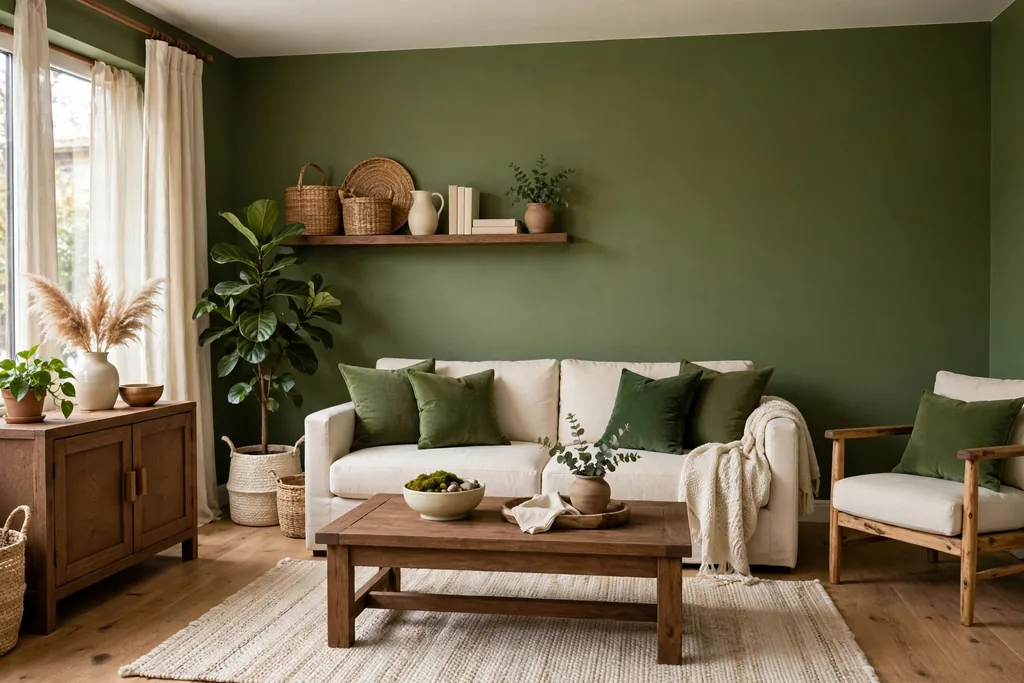
A palette of moss green, peat brown, and cream gives an Irish living room a clear plan to follow when choosing cushions, rugs, and art, without fixing every piece in advance. Use cream on the walls and the largest sofa, moss on cushions and one chair, and peat brown on wood, leather, and the rug border, so each color has a job. The palette then links old and new pieces, even if they were bought years apart.
Test the palette in daylight and lamplight before you commit, since moss can look grey in a north facing room and peat brown can look red under warm bulbs. Keep one color out of each small group, so the room does not repeat the same three colors in every corner. If you want a lift, add one rust cushion or one brass lamp, and keep it as the only warm accent.
16. Fill the Room with Wildflowers, Herbs, and Houseplants
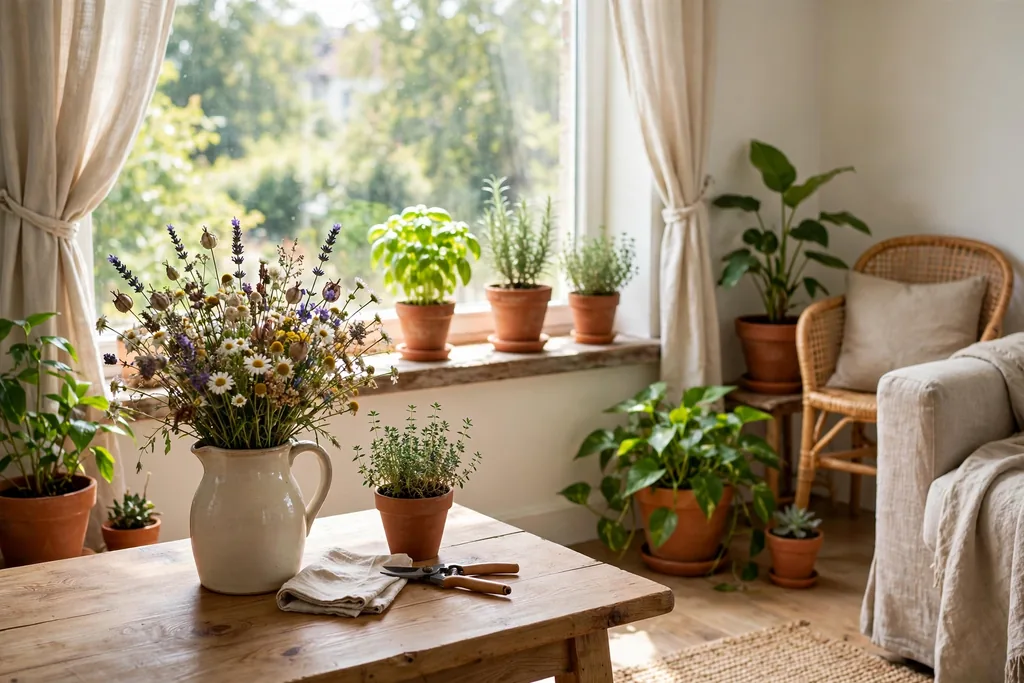
Wildflowers in a jug, potted herbs on a windowsill, and a few houseplants give an Irish living room a fresh, lived in feel that changes with the seasons. Place a tall plant in a corner, a trailing plant on a shelf, and a small pot on the coffee table, in cream, terracotta, or rattan pots, so the plant group looks planned. A jug of wildflowers or garden stems on the dresser adds color without a bought bouquet.
Choose plants that suit your light and watering habits, and check that each plant is safe for pets before placing it at sofa height. Keep plants out of the direct heat of the fire, and wipe large leaves now and then, since dust from a fire settles fast. If you have little light, a few good quality dried stems and one hardy plant still give the room a green note.
17. Make a Heritage Wall of Family Photos and Keepsakes
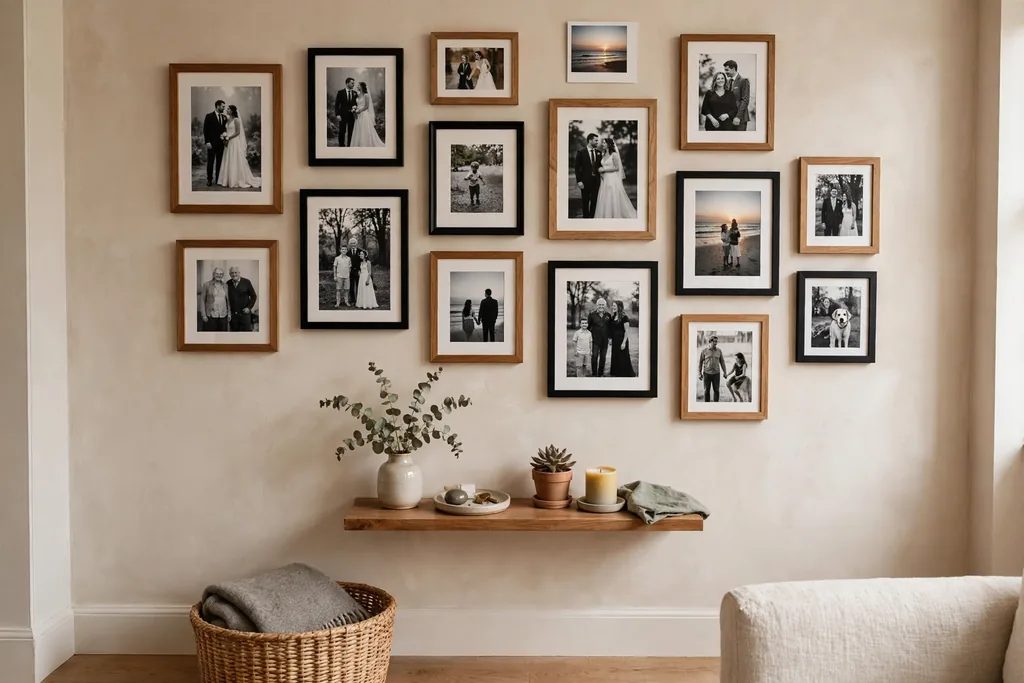
A heritage wall of family photos, old postcards, and small keepsakes gives an Irish living room the kind of personality no shop can sell, because the pictures belong to your family. Hang a group of framed photos on one wall, in matching frames, with a mix of old black and white prints and newer color photos, and leave space to add to the wall over time. A small shelf below the frames holds a keepsake or two, such as a small clock or a piece of pottery.
Keep the frames to one or two colors, such as black and wood, so the wall looks grouped rather than scattered, and hang the center of the group at eye level. Scan old photos before framing them, so the originals stay safe, and keep the wall out of strong direct sun, since light fades prints. If the wall feels crowded, remove one frame at a time until the group breathes again.
18. Set Aside a Music Corner for Sessions and Listening
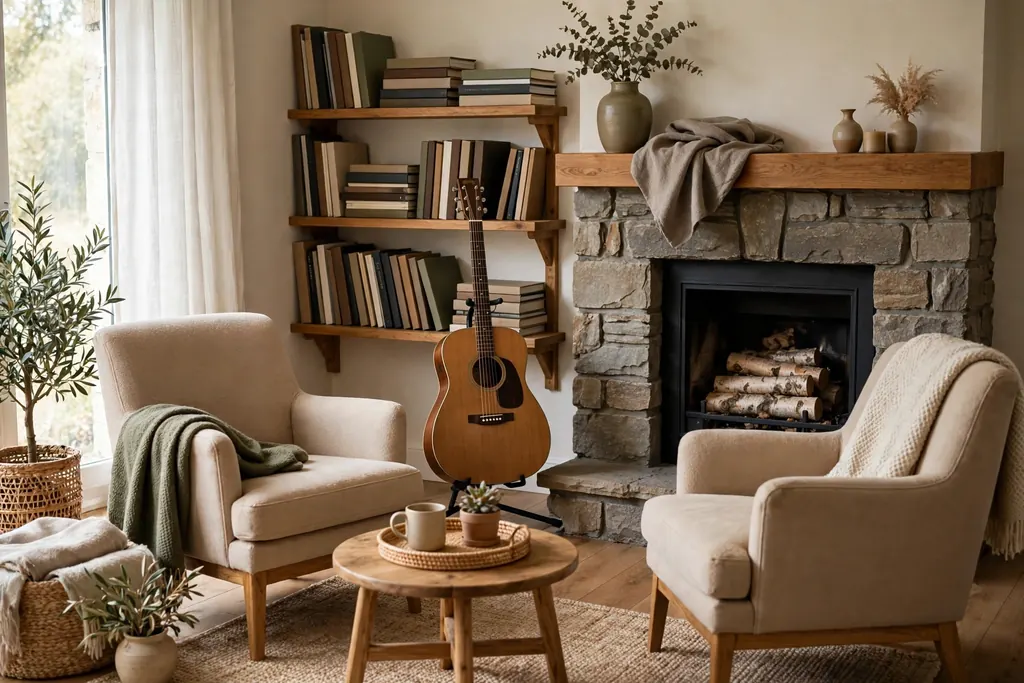
A music corner, with a guitar on a stand, a fiddle case on a shelf, or a record player on a sideboard, gives an Irish living room a reason to gather that is not the television. Place the corner near the fire, with two chairs angled toward each other, a small table for drinks, and a shelf for songbooks or records, so a session can start without moving furniture. The corner then feels like part of the room, not a stage.
Keep instruments on stands or wall hooks where they are safe from knocks and from the heat of the fire, and store sheet music in a basket or on a shelf, not in a pile on the floor. If no one in the house plays, a record player and a shelf of records give a similar listening corner, with the same two chairs and table. Keep the corner clear of clutter, so sitting down to play or listen takes seconds, not a tidy up first.
19. Style a Tea Sideboard for Everyday Hospitality
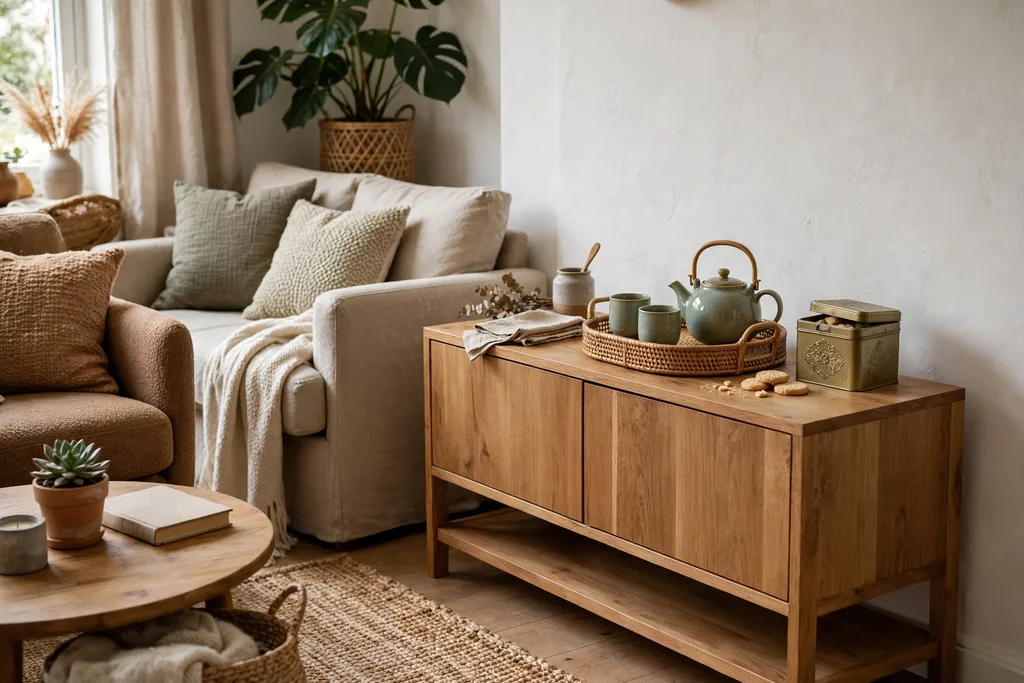
A tea sideboard, with a teapot, cups, and a biscuit tin ready to use, fits the Irish habit of putting the kettle on when someone calls. Place a low sideboard or a small table near the seating group, with a tray holding the teapot and cups, a tin for biscuits, and a small vase, so tea can be served without a trip to the kitchen for every item. The sideboard then becomes a hospitality station, not just storage.
Keep the cups you actually use on the tray, and store spares inside the sideboard, so the top stays clear enough to set down a pot. Use a wipe clean tray, since tea spills happen, and keep a folded tea towel on the sideboard for drips. If space is tight, a butler tray table that folds away gives the same tea station in a smaller footprint.
20. Tile the Hearth with a Patterned Tile Surround
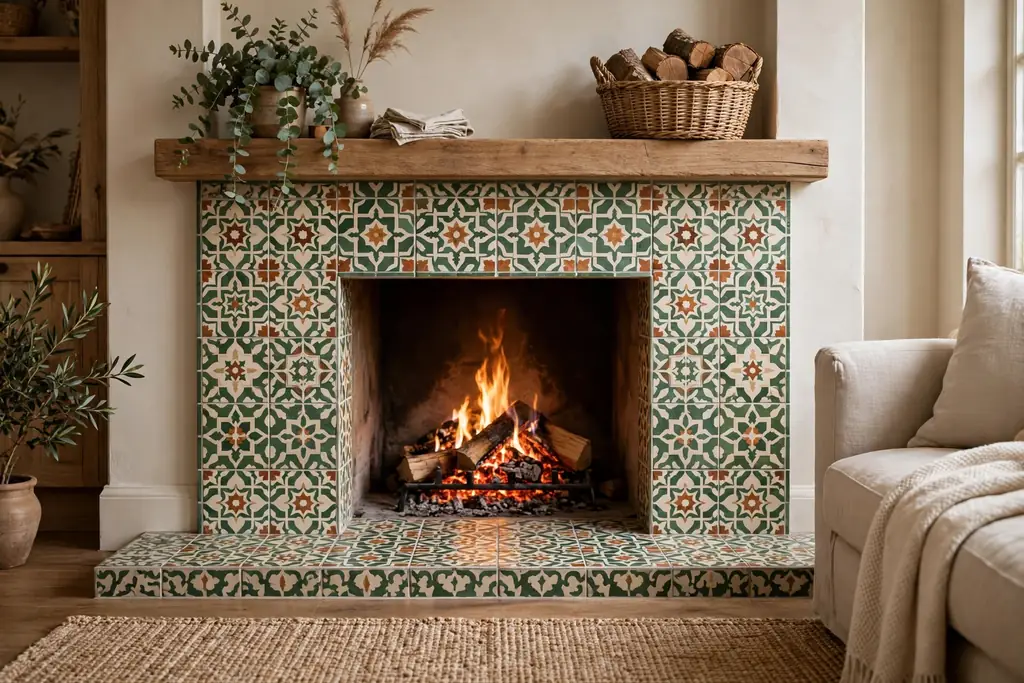
A patterned tile hearth or fireplace surround adds color and craft to an Irish living room in a small, hard wearing area. Choose tiles in a muted pattern, such as a simple geometric or floral repeat in green, cream, and rust, and tile the hearth and the fireplace cheeks, keeping the mantel and the wall above plain. The pattern then frames the fire without taking over the room.
Keep the tile pattern to one design, and use plain tiles for the rest of the surround if the pattern feels strong at full size. Tiles handle heat, ash, and spills better than paint or wood near a fire, and they wipe clean with a damp cloth. If you rent, a tile effect hearth rug or a freestanding tile panel gives a similar look without fixing tiles to the wall.
21. Use Woven Baskets for Throws, Logs, and Everyday Storage
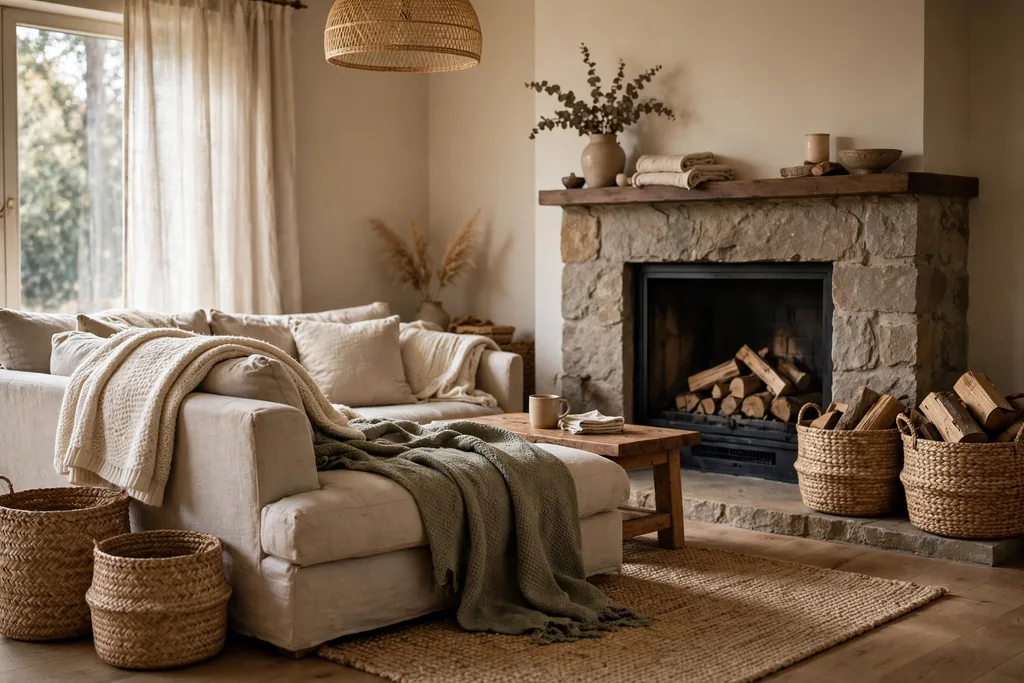
Woven baskets give an Irish living room storage that looks like part of the room, not like a plastic box pushed into a corner. Place a large basket beside the fire for logs, a medium basket beside the sofa for throws, and a small basket by the door for dog leads, gloves, or magazines, in seagrass, willow, or wicker, so the baskets share one natural material. The baskets then tidy the room while adding texture.
Keep one basket empty on purpose, so there is always a place to put a throw or a toy without starting a new pile. Line a log basket if it sheds bark, and keep baskets out of damp spots, since natural fibers hold moisture. If a basket starts to look worn, move it to a less visible spot and bring a newer one to the sofa, so the room always has one basket in good shape.
22. Add Coastal Touches from the West of Ireland
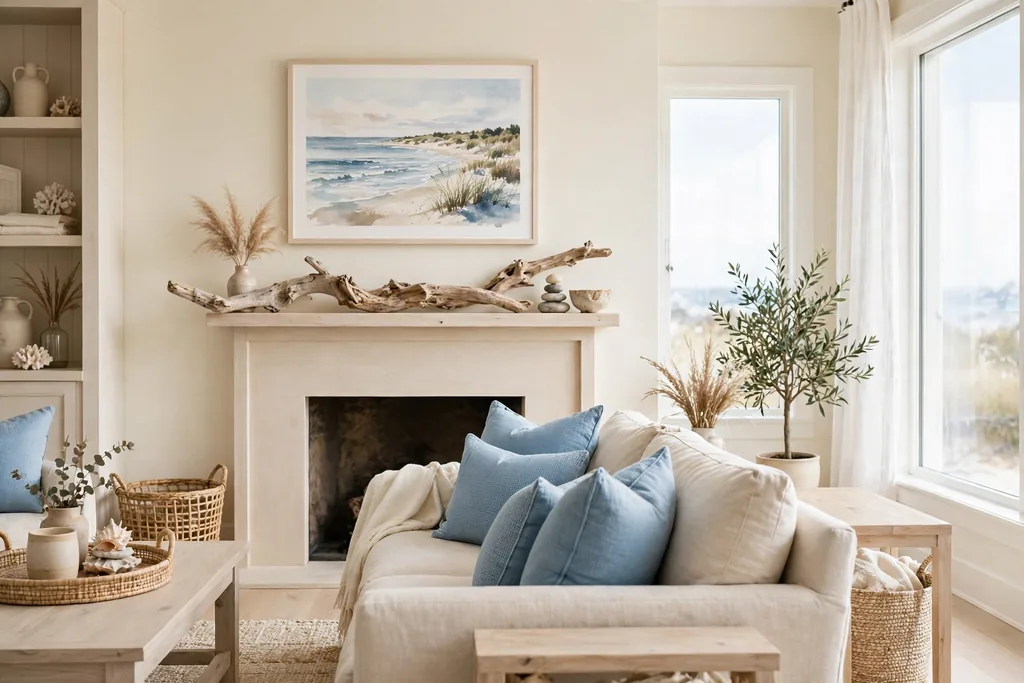
Coastal touches, such as sea blue cushions, a piece of driftwood on the mantel, and a print of the Atlantic coast, give an Irish living room a lighter, seaside feel that suits a bright room. Use sea blue and slate as accents only, on two cushions and one throw, with cream walls and pale wood, so the room stays calm rather than turning into a beach theme. A single driftwood piece or a shell in a bowl is enough, since too many coastal props quickly feel staged.
Pair coastal accents with the same natural materials as the rest of the room, wool, linen, and wood, so the coastal corner links to the cottage details beside it. Keep the coastal color out of the fireplace area, where warm browns and firelight lead, and let it live near the window, where daylight suits blue best. If you live inland, one coastal print still works, as long as the rest of the room stays Irish in palette and texture.
23. Keep Cottage Scale Furniture in a Small Irish Room
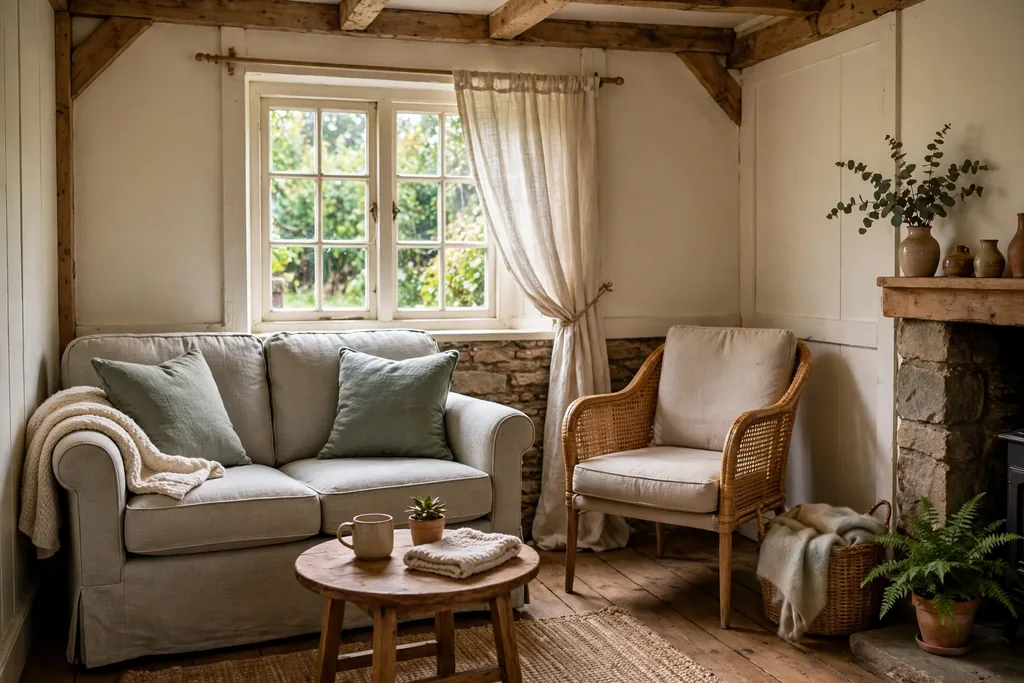
Small Irish rooms, in cottages and older houses, need furniture at cottage scale: a two seat sofa, a slim armchair, and a small round table, rather than a large sectional that fills the floor. Measure the room and the doorways first, then choose a sofa that leaves a clear walking route on at least one side, with legs that show floor underneath, so the room feels larger. A round coffee table also helps, since it leaves no sharp corners in a tight walking route.
Use multifunction pieces, such as a window seat with storage, a settle that seats two, and a sideboard that serves tea, so each piece earns its floor space. Keep large pieces against walls and small pieces in the middle, and use a rug that fits the seating group, not the whole floor, so bare boards show at the edges. For a softer sofa color to pair with the greens and browns here, see these grey couch living room ideas.
Conclusion
An Irish living room with real personality comes from a few strong choices, not from filling every surface: a deep green sofa or a stone wall, wool and tweed you actually use, firelight and brass lamps in the evening, and one personal layer, such as photos, books, or music. Start with the piece that matters most to you, whether that is the fireplace, the window seat, or the dresser, and build the rest of the room around it in cream, moss, and warm wood. Small moves, a throw, a rug, a print, let you test the look before a larger change, such as a new sofa or a tiled hearth.
Save this list for your next free hour in the living room, and work through it in order: palette and sofa first, then fireplace and rug, then lighting and storage, and finally the photos, plants, and tea sideboard that finish the room. Pin the ideas you like best, so you can find them again when you are ready to paint, shop, or rearrange.
FAQs
How do I add Irish style without making the room look themed?
Limit Irish details to a few pieces, such as an Aran throw, a tweed chair, and one landscape print, in muted colors, and keep the sofa, curtains, and rug plain. A room full of shamrocks, flags, and novelty items reads as a theme, while a few well chosen pieces in green, cream, and wood read as personal. If you already own a strong Irish piece, pair it with plain oatmeal or grey, and keep other patterns out of the same view.
What colors suit an Irish living room best?
Cream and warm white work well on walls, with moss green, peat brown, and soft slate as the main accents, plus one warm lift, such as rust or brass. This palette suits both cottage rooms and modern rooms, since it comes from landscape, wool, and wood rather than from bright paint. Keep deep color on cushions, one chair, or one sofa, and keep the walls and rug pale, so the room stays light in winter.
Can an Irish living room work in a modern flat with no fireplace?
Yes. The look comes from palette, texture, and lighting as much as from a fire. Use a deep green or grey sofa, wool and tweed layers, a patterned rug, and layered warm lamps, and add one heritage piece, such as an Aran throw or a landscape print. A simple electric stove effect fire, or a candle group on a low console, can give a focal point without a chimney.
Which fabrics suit an Irish living room best?
Wool, tweed, linen, and cotton suit the look and the climate, since they add warmth and texture. Use wool for throws and rugs, tweed for a chair or cushions, linen for curtains and lighter cushions, and cotton for washable covers in a room used daily. Keep one fabric plain for every patterned one, and choose washable covers for cushions in a room with pets or children.
How do I keep an Irish living room light in winter?
Keep walls pale, use mirrors opposite a window where one fits, and dress windows with sheer panels under heavier curtains, so daylight reaches the room by day and the curtains close at night. Add lamps at more than one height with warm bulbs, and keep the rug and sofa in light or mid tones, saving deep color for cushions and one chair. Clear surfaces also help, since clutter absorbs light.
Should I mix Irish style with other styles in the same room?
Yes, if you link the pieces with color and material. An Irish throw or tweed chair sits well beside pale wood, a plain modern sofa, or a coastal style table, as long as one palette and one wood tone run through the room. Keep the heritage pieces to a few, and let plain, modern pieces carry the larger shapes, so the mix looks planned rather than crowded.